 Recently Added:
This article was automatically translated from the original Turkish version.
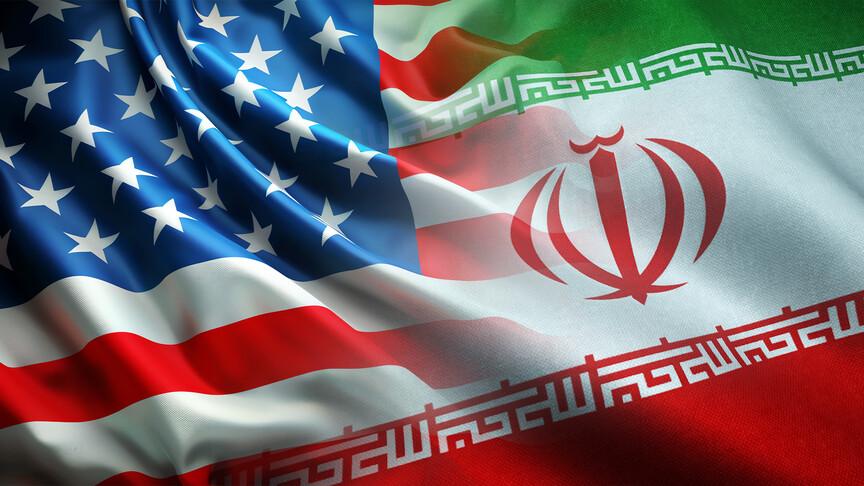
During the Iran-USA-Israel conflict, the temporary ceasefire and Islamabad negotiations encompass the two-week temporary ceasefire agreed upon between the USA and Iran on 7–8 April 2026, following the USA-Israel joint military operation that began on 28 February 2026, under Pakistan’s mediation.
The ceasefire was conditioned on Iran’s partial lifting of the blockade on the Iran-controlled Strait of Hormuz, and the 10-point plan proposed by Iran was accepted by the parties as a basis for negotiations aimed at establishing a framework for permanent peace talks.
The USA and Israel launched a joint military operation against Iran on 28 February 2026. US President Donald Trump and Israeli Prime Minister Benjamin Netanyahu argued that the operation was necessary to remove Iran as a regional threat and prevent its acquisition of nuclear weapons. International law experts, however, characterized the operation as a “provocative attack violating international law.”
Immediately after the operation, Iran began imposing a partial blockade on the Strait of Hormuz, which connects the Persian Gulf to the Gulf of Oman and through which approximately 20 percent of global oil and natural gas trade passes. This triggered severe disruptions in global energy markets, causing oil prices to surge worldwide and fuel shortages to emerge in many countries, beginning with the USA. Widespread public discontent in the USA, including among Trump’s base, intensified political pressure.
The conflict quickly spread across the region. Iran’s Lebanon-based ally Hezbollah launched attacks against Israel in support of Iran, citing the killing of Iran’s religious leader Ayatollah Ali Hamas on the first day of the war and Israel’s daily violations of the ceasefire signed in November 2024. The conflict assumed a regional dimension as Iraq-based Islamic Resistance and Houthi forces in Yemen also launched attacks against Israel. Meanwhile, Iran’s retaliatory strikes extended to Gulf states, with attacks targeting Qatar, Bahrain, Saudi Arabia and the United Arab Emirates.
By the date the temporary ceasefire was declared, approximately 2,076 people had been killed in Iran. In nearby Gulf states, 28 people died. The USA lost 13 military personnel, while 26 people were killed in Israel. In Lebanon, over 1,500 people were killed and more than one million displaced due to Israeli attacks.
Pakistan has assumed the primary mediator role in negotiations between the USA and Iran since the initial phase of the war. Egypt, Türkiye and Saudi Arabia also contributed to diplomatic efforts. China, as Iran’s largest trading partner, is reported to have pressured Tehran to return to the negotiating table.
Since March 2023, Trump has repeatedly threatened to strike Iran’s energy infrastructure but has postponed these threats with last-minute decisions. On 23 March he granted a five-day extension, and on 26 March he announced a further extension until the beginning of April. Both extensions were justified by claims of progress in negotiations.
On 7 April 2026, just five hours before Trump’s final ultimatum deadline, Pakistan’s Prime Minister Shahbaz Sharif issued a call. Sharif requested that Trump extend the deadline by two weeks and that Iran open the Strait of Hormuz as a goodwill gesture during that period. White House Press Secretary Karoline Leavitt confirmed that the president had been informed and that a response would be provided.
Approximately one and a half hours before his set deadline, on Tuesday 7 April 2026 at 18:32 Eastern US time (22:32 GMT), Trump shared his official statement via his Truth Social account. In it, he announced that the attack plan scheduled to take effect that evening at 20:00 (00:00 GMT) had been suspended.
In his statement, Trump referenced consultations with Pakistan’s Prime Minister Sharif and Chief of Army Staff Asim Munir, stating that the attack plan had been “suspended for two weeks” on the condition that Iran “fully, immediately and safely open the Strait of Hormuz.”
“We received a 10-point proposal from Iran and determined it provides a viable basis for negotiations,” he stated. The statement further emphasized that the USA had met and even exceeded all previously defined military objectives, and that near-complete agreement had been reached on nearly all points of contention with Iran. Trump underscored that the two-week period would be used to finalize a comprehensive agreement and described facilitating lasting peace in the Middle East as a great honor for himself.
US President Trump stated that the USA would assist in managing the congestion in the Strait of Hormuz. Trump described the day as “a great day for world peace,” affirming that steps would be taken to ease traffic in the Strait and that many positive developments would follow.
Iran’s Foreign Minister Abbas Araghchi, on behalf of Iran’s Supreme National Security Council, shared the official statement on the ceasefire via the X platform. Araghchi used the phrase “our powerful armed forces will cease defensive operations if attacks against Iran are halted.” He emphasized that during the two-week period, safe passage through the Strait of Hormuz would be facilitated under technical constraints and in coordination with Iran’s armed forces, and that this decision was made in line with Trump’s acceptance of Iran’s 10-point proposal as a general framework.
Iran’s Supreme National Security Council issued a more comprehensive statement. It noted that despite “complete mistrust of the American side,” Iran had decided to participate in negotiations, specifying that Iran had set a two-week timeframe for talks, which could be extended by mutual agreement. The statement also emphasized that Iran remained “ready to respond forcefully to even the smallest provocation.”
Pakistan’s Prime Minister Sharif also announced that both parties had agreed to an immediate ceasefire across all fronts, including Lebanon, and confirmed that the decision “took effect immediately.” Sharif invited both delegations to Islamabad for negotiations beginning “on Friday, 10 April 2026.”
Iranian President Masoud Pezeshkian made statements regarding the temporary ceasefire agreement reached between Iran and the USA, which also involved Israel. Pezeshkian stated that the ceasefire was shaped within a framework that recognized Iran’s core principles.
Pezeshkian characterized the agreement as the “fruit of the blood” of Iran’s former leader Ali Khamenei, who was killed in the USA and Israel’s attacks, and as a triumph of Iran’s presence on the ground. The statement emphasized that the ceasefire was not only a military outcome but also a result of political and social solidarity.
Iranian President Pezeshkian affirmed that Iran would continue to act simultaneously across diplomatic, defense and public service fronts, maintaining unity between internal and external fronts.
Iran submitted a 10-point peace plan to the White House via Pakistan, intended to serve as the framework for negotiations. Trump described the plan as a “viable basis” for talks. The points listed by Iranian state media are as follows:
1. Iran’s commitment not to acquire nuclear weapons.
2. Implementation of provisions to fully end all attacks against Iran and its allied groups.
3. Withdrawal of US military forces from bases and deployment sites in the region and prohibition of any further attacks on Iran from these locations.
4. For a two-week period, limited daily vessel passage through the Strait of Hormuz under a “Safe Passage Protocol” and in accordance with rules set by Iran.
5. Complete lifting of all primary and secondary sanctions against Iran.
6. Establishment of an investment and funding fund to compensate for damages caused by the war.
7. Recognition by the USA of Iran’s right to enrich nuclear material and opening negotiations on the level of enrichment.
8. Recognition of Iran’s authority to negotiate bilateral and multilateral peace agreements with countries in the region.
9. Expansion of a non-aggression policy to end all operations against resistance groups in the region.
10. Formal endorsement of all commitments by a binding UN Security Council resolution.
In Iran’s Persian-language version, the phrase “acceptance of enrichment” was explicitly included, but this wording was absent from the English version communicated by Iranian diplomats to journalists. Experts and analysts assessed that these demands represented Iran’s initial negotiating position and that full acceptance by the USA was unlikely.
According to Iran’s plan, vessels entitled to transit the Strait of Hormuz would be subject to fees of up to $2 million per vessel levied by Iran and Oman, with revenues designated for reconstruction costs. The plan also anticipates Iran establishing sovereignty and control over the Strait. Prior to the conflict, Iran did not possess such authority.
Democratic Senator Chris Murphy expressed grave concern over this arrangement, stating that if the agreement established Iranian sovereignty over the Strait, it would constitute a “disaster for the world.”
Following the ceasefire announcement, Netanyahu’s office stated that Israel supported Trump’s decision and endorsed the USA’s initiative to remove Iran’s “nuclear, missile and terror threat.” The White House confirmed Israel’s participation in the agreement.
However, Netanyahu stated that the two-week ceasefire did not cover Lebanon. This directly contradicts the earlier statement by Pakistan’s Prime Minister Sharif, who declared that the ceasefire applied to all fronts, including Lebanon. Israel’s ground operations in Lebanon continued after the ceasefire announcement.
President Recep Tayyip Erdoğan expressed satisfaction with the temporary ceasefire reached between the USA and Iran, which also involved Israel. Erdoğan stated that the ceasefire, announced after the conflict that had affected the region since 28 February, was a positive development.
Erdoğan emphasized the importance of the full implementation of the ceasefire on the ground and stressed that no opportunities should be given to potential provocations or sabotage attempts. He thanked all actors contributing to the ceasefire process, particularly Pakistan.
President Erdoğan noted that the region had long suffered from war, conflict and instability and expressed the hope that the Middle East would achieve peace, tranquility and stability as soon as possible. He affirmed that Türkiye would continue its efforts to promote peace at both regional and global levels.
The ceasefire announcement received widespread positive responses globally:
United Nations: UN Secretary-General Antonio Guterres welcomed the ceasefire news and called on all parties to comply with ceasefire terms to pave the way for lasting and comprehensive peace in the region. Guterres emphasized the urgent necessity of halting hostilities to protect civilians and alleviate humanitarian suffering, and praised Pakistan and other mediating countries.
Iraq: Iraq’s Ministry of Foreign Affairs welcomed the ceasefire and stressed that both the USA and Iran must fulfill their commitments to reach a lasting solution.
Lebanon: Lebanese President Joseph Aoun stated that Lebanon welcomed the temporary ceasefire between the USA and Iran, which also included Israel.
China: China welcomed the two-week ceasefire mediated by Pakistan between the USA and Iran but did not confirm any direct involvement in the process.
Russia: Kremlin Spokesperson Dmitry Peskov welcomed the temporary ceasefire between the USA and Iran, stating, “This is a very important step. We hope direct talks between Iranian and American delegations will take place in the coming days.”
Egypt: Egypt’s Ministry of Foreign Affairs assessed the ceasefire as a positive opportunity and emphasized the need to halt military operations and fully respect freedom of navigation in international waters. The ministry also announced its continued cooperation with Pakistan and Türkiye to establish security and stability in the region.
Japan: Japanese Government Spokesperson Minoru Kihara assessed the two-week ceasefire as a positive development and stated that reducing tensions in the Middle East remains Japan’s top priority.
Malaysia: Malaysia’s Ministry of Foreign Affairs characterized the ceasefire as an important step and called on all parties to comply in good faith with the agreement’s terms and to avoid actions that undermine regional stability or threaten global energy security.
Australia: Prime Minister Anthony Albanese and Foreign Minister Penny Wong stated in a joint declaration that Iran’s effective closure of the Strait of Hormuz and attacks on commercial vessels, civilian infrastructure and energy facilities had caused an unprecedented energy supply shock. The statement underscored that the longer the war continues, the greater the damage to the global economy and the heavier the human cost. Australia thanked Pakistan, Egypt, Türkiye and Saudi Arabia for their contributions to the mediation process.
New Zealand: Foreign Minister Winston Peters welcomed the ceasefire but noted that many critical steps must be taken in the coming days to achieve a lasting ceasefire.
Azerbaijan: In a written statement, Azerbaijan’s Ministry of Foreign Affairs welcomed the two-week ceasefire and commended the efforts of all mediators.
Spain: Spanish Prime Minister Pedro Sánchez expressed satisfaction with the two-week ceasefire between the USA and Iran but emphasized that diplomacy, international law and peace are now urgently needed.
Germany: Germany welcomed the two-week ceasefire between the USA and Iran. In a written statement, German Chancellor Friedrich Merz said the German government welcomed the ceasefire reached in the early hours and expressed gratitude to Pakistan for its mediation role in achieving this important agreement.
Iran’s Supreme National Security Council announced that negotiations with the USA would begin on Friday, 10 April 2026, in Islamabad, Pakistan’s capital. Iran has firmly maintained its position that negotiations will be based on its 10-point proposal. White House Press Secretary Leavitt confirmed that face-to-face talks are under consideration but reminded that only the president or the White House could officially announce confirmed details.
Iran’s Supreme National Security Council stated in its announcement that the negotiations are targeted to be completed within 15 days, with the possibility of extension by mutual agreement. The Council also emphasized that Iran had achieved its war objectives and that battlefield victories must be formally recognized at the negotiating table.
Al Jazeera. "Iran Says Talks with US Will Begin in Pakistan’s Islamabad on Friday." Accessed April 8, 2026. https://www.aljazeera.com/news/2026/4/8/iran-says-talks-with-us-will-begin-in-pakistans-islamabad-on-friday
Al Jazeera. "Iran War Live: Trump Suspends US Attacks, Tehran Agrees to 2-Week Ceasefire." Accessed April 8, 2026. https://www.aljazeera.com/news/liveblog/2026/4/7/iran-war-live-trump-warns-of-devastating-attacks-as-deal-deadline-nears
Al Jazeera. "Netanyahu Says US-Iran Ceasefire ‘Does Not Include Lebanon’." Accessed April 8, 2026. https://www.aljazeera.com/news/2026/4/8/netanyahu-says-us-iran-ceasefire-does-not-include-lebanon
Al Jazeera. "Trump Announces Two-Week Ceasefire as Iran Agrees to Reopen Hormuz Strait." Accessed April 8, 2026. https://www.aljazeera.com/news/2026/4/7/trump-suspends-iran-bombing-for-two-weeks-following-dire-threats
Al Jazeera. "World Welcomes US-Iran Ceasefire, Urges Lasting Peace in the Middle East." Accessed April 8, 2026. https://www.aljazeera.com/news/2026/4/8/world-welcomes-us-iran-ceasefire-urges-lasting-peace-in-the-middle-east
Anadolu Ajansı. "Iran: We Aim to Conclude Talks with the U.S. in Pakistan Within 15 Days." Accessed April 8, 2026. https://www.aa.com.tr/tr/dunya/iran-abd-ile-pakistanda-yapilacak-muzakerelerin-15-gun-icinde-sonuclandirilmasini-hedefliyoruz/3896941
Anadolu Ajansı. "Iranian Military: We Will Strike the Infrastructure of the U.S. and Its Allies, Depriving Them of the Region’s Oil and Natural Gas for Years, Forcing Them to Leave." Accessed April 8, 2026. https://www.aa.com.tr/tr/live-blog/iran-ordusu-abd-ve-muttefiklerinin-altyapisina-onlari-yillarca-bolgenin-petrol-ve-dogal-gazindan-mahrum-birakacak-bir-darbe-vuracagiz-ve-bolgeyi-terk-etmek-zorunda-kalacaklar/324
Anadolu Ajansı. "Pakistan Prime Minister Sharif: The Two-Week Ceasefire Also Covers Lebanon and Other Regions." Accessed April 8, 2026. https://www.aa.com.tr/tr/dunya/pakistan-basbakani-serif-2-haftalik-ateskesin-lubnan-ve-diger-bolgeleri-de-kapsadigini-belirtti/3896963
Anadolu Ajansı. "U.S. President Trump Announces Acceptance of Two-Week Mutual Ceasefire with Iran on Condition of Full Opening of the Hormuz Strait." Accessed April 8, 2026. https://www.aa.com.tr/tr/dunya/abd-baskani-trump-hurmuz-bogazinin-tamamen-acilmasi-sartiyla-iranla-iki-haftalik-karsilikli-ateskesi-kabul-ettigini-duyurdu/3896823
Axios. "Pakistan Proposes 2-Week Iran Ceasefire Ahead of Trump Deadline." Accessed April 8, 2026. https://www.axios.com/2026/04/07/iran-us-ceasefire-pakistan-two-weeks
BBC News. "What We Know About the Two-Week Ceasefire Between the US and Iran." Accessed April 8, 2026. https://www.bbc.com/news/articles/ce84z6y3ke4o
CNN. "Day 39 of Middle East Conflict — US, Israel, Iran Agree to Ceasefire Before Trump’s Deadline." Accessed April 8, 2026. https://edition.cnn.com/2026/04/07/world/live-news/iran-war-trump-us-israel
Reuters. "Iran War Live: Trump Announces Two-Week Ceasefire as Iran Says Talks to Begin Soon." Accessed April 8, 2026. https://www.reuters.com/world/iran-war-live-tehran-rejects-ceasefire-deal-trumps-deadline-reopen-strait-hormuz-2026-04-07/
The Guardian. "Explainer: What Is in Iran’s 10-Point Ceasefire Plan and Will the US Agree to It?" Accessed April 8, 2026. https://www.theguardian.com/world/2026/apr/08/iran-10-point-plan-ceasefire-donald-trump-us
During the Iran-USA-Israel conflict, the temporary ceasefire and Islamabad negotiations encompass the two-week temporary ceasefire agreed upon between the USA and Iran on 7–8 April 2026, following the USA-Israel joint military operation that began on 28 February 2026, mediated by Pakistan.
Ceasefire was conditioned on Iran’s removal of the partial blockade from the Strait of Hormuz, and the 10-point plan submitted by Iran was accepted by the parties as the basis for negotiations toward a permanent peace agreement.
USA and Israel launched a joint military operation against Iran on 28 February 2026. US President Donald Trump and Israeli Prime Minister Benjamin Netanyahu argued that the operation was necessary to remove Iran as a regional threat and prevent it from acquiring nuclear weapons. International law experts, however, characterized the operation as a provocative attack violating international law.
Immediately following the operation, Iran began imposing a partial blockade on the Strait of Hormuz, which connects the Persian Gulf to the Gulf of Oman and through which approximately 20 percent of global oil and natural gas trade passes. This triggered severe disruptions in global energy markets, causing oil prices to surge worldwide and leading to fuel shortages in many countries, particularly the USA. Widespread public discontent in the USA, including among Trump’s base, intensified political pressure.
The conflict quickly spread across the region. Iran’s Lebanon-based ally Hezbollah launched attacks against Israel in support of Iran, citing the killing of Iran’s religious leader Ayatollah Ali Hamey on the first day of the war and Israel’s daily violations of the ceasefire signed in November 2024. Attacks by Iraq-based Islamic Resistance and Houthi forces in Yemen against Israel further regionalized the conflict. Meanwhile, Iran’s retaliatory strikes also reached Gulf states, with attacks targeting Qatar, Bahrain, Saudi Arabia, and the United Arab Emirates.
By the time the temporary ceasefire was declared, approximately 2,076 people had been killed in Iran. In nearby Gulf states, 28 people died. The USA lost 13 military personnel, while 26 people were killed in Israel. In Lebanon, over 1,500 people were killed and more than 1 million were displaced due to Israeli attacks.
Pakistan assumed the primary role of mediator in negotiations between the USA and Iran from the earliest stages of the war. Egypt, Türkiye, and Saudi Arabia also contributed to diplomatic efforts. China, as Iran’s largest trading partner, was reported to have pressured Tehran to return to the negotiating table.
Since March 2023, Trump had repeatedly threatened to strike Iran’s energy infrastructure but postponed these threats at the last minute. On 23 March, he granted a five-day extension; on 26 March, he announced a further extension until the beginning of April. Both extensions were justified by claims of progress in negotiations.
On 7 April 2026, just five hours before Trump’s final ultimatum deadline, Pakistan’s Prime Minister Shahbaz Sharif issued a call. Sharif requested that Trump extend the deadline by two weeks and that Iran open the Strait of Hormuz as a gesture of good faith during that period. White House Press Secretary Karoline Leavitt confirmed that the president had been informed and would respond.
Approximately one and a half hours before his set deadline, on Tuesday, 7 April 2026 at 18:32 Eastern US time (22:32 GMT), Trump posted his official statement on Truth Social. He announced that the planned attack scheduled to take effect at 20:00 that evening (00:00 GMT) had been suspended.
In his statement, Trump referenced consultations with Pakistani Prime Minister Sharif and Pakistani Chief of Army Staff Asim Munir, stating that the attack had been “suspended for two weeks” on the condition that Iran “fully, immediately, and safely open the Strait of Hormuz”.
“We received a 10-point proposal from Iran and determined it provides a viable basis for negotiations,” he said. He emphasized that the USA had not only met but exceeded all previously defined military objectives and reached agreement on nearly all points of contention with Iran. Trump stressed that the two-week period would be used to finalize a comprehensive agreement and described facilitating lasting peace in the Middle East as a great honor for himself.
US President Trump stated that the USA would assist in regulating traffic through the Strait of Hormuz. Trump declared it a “great day for world peace,” affirmed that traffic through the Strait of Hormuz would be normalized, and indicated that many positive steps would follow.
Iran’s Foreign Minister Abbas Araghchi, on behalf of the Iranian National Security Council, shared the official statement on the ceasefire via the X platform. Araghchi stated, “If attacks against Iran cease, our powerful armed forces will end their defensive operations.” He emphasized that during the two-week period, safe passage through the Strait of Hormuz would be facilitated under technical constraints and in coordination with the Iranian Armed Forces, and that this decision was made in line with Trump’s acceptance of Iran’s 10-point proposal as a general framework.
The Iranian National Security Council issued a more comprehensive statement. It noted that despite “complete mistrust of the American side,” Iran had decided to participate in negotiations, setting a two-week timeframe for talks that could be extended by mutual agreement. The statement also emphasized that Iran was “prepared to respond forcefully to even the smallest provocation by the enemy.”
Pakistan’s Prime Minister Sharif also announced that both parties had agreed to an immediate ceasefire across all fronts, including Lebanon, and confirmed that the decision had “taken immediate effect.” Sharif invited both delegations to Islamabad on Friday, 10 April 2026 to begin negotiations.
Iranian President Masoud Pezeshkian assessed the temporary ceasefire agreement reached between Iran and the USA, which also involved Israel. He stated that the ceasefire was shaped within a framework recognizing Iran’s fundamental principles.
Pezeshkian characterized the agreement as the “fruit of the blood” of Iran’s former leader, Ali Hamey, who was killed in the USA-Israel attacks, and as a triumph of the Iranian people’s presence on the battlefield. He emphasized that the ceasefire was not only a military outcome but also a result of political and social solidarity.
Iranian President Pezeshkian stated that Iran would continue coordinated action across its diplomatic, defense, and public service sectors, maintaining unity on both internal and external fronts.
Iran submitted a 10-point peace plan to the White House via Pakistan, intended to serve as the framework for negotiations. Trump described the plan as “a viable basis for negotiations.” The points published by Iranian state media are as follows:
1. Iran’s commitment not to acquire nuclear weapons.
2. Implementation of provisions to fully end all attacks against Iran and its allied groups.
3. Withdrawal of US military forces from bases and deployment locations in the region, and prohibition of any further attacks on Iran from these bases.
4. Limited daily vessel passage through the Strait of Hormuz for two weeks under a “Safe Passage Protocol” and in accordance with rules set by Iran.
5. Complete lifting of all primary and secondary sanctions against Iran.
6. Establishment of an investment and funding fund to compensate for damages caused by the war.
7. Recognition by the USA of Iran’s right to enrich nuclear material and opening negotiations on enrichment levels.
8. Recognition of Iran’s authority to negotiate bilateral and multilateral peace agreements with regional countries.
9. Expansion of a non-aggression policy to end all operations against resistance groups in the region.
10. Formal ratification of all commitments by a binding UN Security Council resolution.
In the Persian-language version published by Iran, the phrase “acceptance of enrichment” was explicitly included, but this wording was absent from the English version communicated by Iranian diplomats to journalists. Experts and analysts assessed that these demands represented Iran’s initial negotiating position and that full acceptance by the USA was unlikely.
According to Iran’s plan, vessels entitled to passage through the Strait of Hormuz would be charged up to $2 million per vessel by Iran and Oman, with revenues designated for reconstruction costs. The plan also envisages Iran establishing sovereignty and control over the strait, a level of authority Iran did not possess prior to the conflict.
Democratic Senator Chris Murphy expressed concern that this arrangement would be extremely dangerous, arguing that if the agreement established Iranian sovereignty over the strait, it would constitute a “catastrophe for the world.”
Following the ceasefire announcement, Netanyahu’s office stated that Israel supported Trump’s decision and endorsed the USA’s initiative to remove Iran’s “nuclear, missile, and terror threat.” The White House confirmed Israel’s participation in the agreement.
However, Netanyahu stated that the two-week ceasefire did not cover Lebanon. This directly contradicted the earlier statement by Pakistan’s Prime Minister Sharif, who had declared the ceasefire effective across all fronts, including Lebanon. Israel’s ground operations in Lebanon continued after the ceasefire announcement.
According to Israeli media reports, a senior Israeli official claimed that US President Donald Trump informed Israel of the two-week ceasefire decision at the last minute. This claim raised questions about the level of coordination during the ceasefire process.
Speaking to the Israeli state television channel KAN, the official stated that the US-Iran ceasefire decision “caused shock in Israel.” The official said, “At the last moment, we received new information when everything seemed finalized.”
The Israeli military announced that, in accordance with political directives, it had ceased operations against Iran under the USA-Iran temporary ceasefire. It confirmed that prior to the ceasefire, airstrikes had targeted Iran’s missile launch capabilities. However, it emphasized that attacks against Lebanon, including ground operations, continued.
Iranian President Masoud Pezeshkian stated that the temporary ceasefire agreement reached with the USA and involving Israel was shaped within a framework recognizing Iran’s fundamental principles. Pezeshkian shared his statement on the 40th day of the war.
Pezeshkian characterized the ceasefire as the “fruit of the blood” of Iran’s former leader, Ali Hamey, killed in the USA-Israel attacks, and as a “triumph of the Iranian people’s presence on the battlefield.”
In his statement, he said: “The ceasefire, which recognizes Iran’s fundamental principles as the basis, is the fruit of the blood of our great martyr leader Hamey and the triumph of the entire people’s presence on the battlefield. Today, as always, we will stand side by side on the diplomatic, defense, street, and service fronts.”
The ceasefire announcement received widespread positive responses globally:
United Nations: UN Secretary-General Antonio Guterres welcomed the ceasefire and urged all parties to comply with its terms to pave the way for lasting and comprehensive peace in the region. Guterres emphasized the urgent need to end hostilities to protect civilians and alleviate humanitarian suffering, and praised Pakistan and other mediating countries.
Iraq: Iraq’s Ministry of Foreign Affairs welcomed the ceasefire and stressed the need for both the USA and Iran to fulfill their commitments to achieve a lasting solution.
Lebanon: Lebanese President Joseph Aoun welcomed the temporary ceasefire, mediated by Pakistan and involving Iran and Israel, and highlighted the diplomatic efforts of Türkiye, Pakistan, and Egypt in achieving it.
China: China welcomed the two-week ceasefire mediated by Pakistan between the USA and Iran but did not confirm direct involvement. Chinese Foreign Ministry Spokesperson Mao Ning stated at a regular press briefing in Beijing that Beijing had consistently advocated for a ceasefire and a political resolution to the crisis since its outset.
Russia: Kremlin Spokesperson Dmitry Peskov welcomed the temporary ceasefire between the USA and Iran, calling it “a very important step,” and expressed hope that direct talks between Iranian and American delegations would occur in the coming days.
Egypt: Egypt’s Ministry of Foreign Affairs viewed the ceasefire as a positive opportunity, emphasizing the need to halt military operations and fully respect freedom of navigation in international waters. The ministry also stated it would continue its efforts alongside Pakistan and Türkiye to establish security and stability in the region.
Oman: Oman’s Ministry of Foreign Affairs stated that the ceasefire between the USA and Iran was welcomed, and noted Oman’s appreciation for Pakistan’s efforts and the calls by all parties to end the war.
It also emphasized the need to intensify efforts to find root solutions to the crisis and permanently end war and aggression in the region.
Japan: Japanese Government Spokesperson Minoru Kihara assessed the two-week ceasefire as a positive development and stated that reducing tensions in the Middle East remained a top priority for Tokyo.
Malaysia: Malaysia’s Ministry of Foreign Affairs labeled the ceasefire an important step and called on all parties to comply in good faith with the agreement’s terms and avoid actions that threaten regional stability or global energy security.
Australia: Prime Minister Anthony Albanese and Foreign Minister Penny Wong jointly stated that Iran’s effective closure of the Strait of Hormuz and attacks on commercial vessels, civilian infrastructure, and energy facilities had caused an unprecedented energy supply shock. They emphasized that the longer the war continued, the greater the damage to the global economy and the heavier the humanitarian cost. Australia thanked Pakistan, Egypt, Türkiye, and Saudi Arabia for their contributions to the mediation process.
New Zealand: Foreign Minister Winston Peters welcomed the ceasefire but noted that many critical steps would be required in the coming days to achieve a lasting ceasefire.
Azerbaijan: Azerbaijan’s Ministry of Foreign Affairs welcomed the two-week ceasefire and commended the efforts of all mediators.
Spain: Spanish Prime Minister Pedro Sánchez expressed satisfaction with the two-week ceasefire between the USA and Iran but emphasized that diplomacy, international law, and peace were now urgently needed.
Germany: Germany welcomed the two-week ceasefire between the USA and Iran. Chancellor Friedrich Merz stated in a written statement that the German government welcomed the ceasefire reached in the early hours and thanked Pakistan for its mediation role in achieving this important agreement.
South Korea: South Korean Foreign Ministry Spokesperson Park Il welcomed the two-week ceasefire, noting that the step had paved the way for the resumption of navigation through the strategically vital Strait of Hormuz and expressed expectations for safe passage of vessels.
Kazakhstan: Kazakh President Kassym-Jomart Tokayev welcomed the two-week ceasefire mediated by Pakistan between the USA and Iran. Tokayev expressed hope that the ceasefire would be long-lasting and contribute to global trade and economic stability.
Finland: Finnish President Alexander Stubb welcomed the temporary ceasefire between the USA and Iran and affirmed support for its transformation into lasting regional arrangements.
Latvia: Latvian Prime Minister Evika Silina welcomed the two-week ceasefire and emphasized its critical importance for lasting peace.
Norway: Norwegian Foreign Minister Espen Barth Eide assessed the ceasefire as a positive development and supported the opening of diplomatic space.
Sweden: Swedish Foreign Minister Maria Malmer Stenergard welcomed the ceasefire and stated that the process must evolve into a long-term and sustainable solution.
Denmark: Danish Foreign Minister Lars Lokke Rasmussen stated that the ceasefire was an important step that could reduce global economic risks.
Estonia: Estonian Foreign Minister Margus Tsahkna welcomed the ceasefire and emphasized that the process must lead to lasting peace and stability.
Türkiye: The Ministry of Foreign Affairs stated, “We welcome the decision to declare a temporary ceasefire in the regional conflict. We emphasize the need for full implementation of the temporary ceasefire on the ground and hope all parties will adhere to the agreed understanding.” The statement stressed that dialogue, diplomacy, and mutual trust were the only path to lasting peace and confirmed Türkiye’s continued support for the success of negotiations in Islamabad, Pakistan. It added, “We congratulate our brother Pakistan for its role in this process and wish continued success to all peace initiatives.”
India: India welcomed the temporary ceasefire and expressed hope that this step would lay the groundwork for lasting peace in the region. A statement on India’s Ministry of External Affairs social media account said, “We welcome the ceasefire and hope it leads to lasting peace in West Asia.”
Italy: Italian Deputy Prime Minister and Foreign Minister Antonio Tajani characterized the two-week ceasefire between the USA and Iran as a positive development, noting that it marked an important step toward a peace agreement and had already led to a drop in oil prices below $100 per barrel, providing economic relief. Italy affirmed its continued contribution to the negotiation process and emphasized that Iran must not acquire nuclear weapons and that diplomatic solutions must remain the priority.
Vatican: Vatican State Head Pope Leo XIV assessed the temporary ceasefire as a “promising development.” The Pope said, “I welcome with joy and as a living sign of hope the announcement of a two-week ceasefire that takes immediate effect.” He stated that ending the war was possible only through dialogue and diplomacy and emphasized that the process must be supported by prayer and diplomatic efforts.
Malta: Maltese Prime Minister Robert Abela described the temporary ceasefire as a relief and source of hope for the people living in the region. Abela said, “The ceasefire reached in the early hours is a courageous development offering much-needed relief and renewed hope to the people of the region.” He affirmed Malta’s continued support for peace, dialogue, and stability.
Croatia: Croatian Prime Minister Andrej Plenković welcomed the two-week ceasefire between the USA and Iran and noted its positive impact, particularly the decline in energy prices.
Slovenia: The Slovenian government welcomed the temporary ceasefire and emphasized that the reopening of the Strait of Hormuz presented a significant opportunity for regional and global security.
Uzbekistan: Uzbekistan’s Ministry of Foreign Affairs welcomed the two-week temporary ceasefire between the USA and Iran, describing the development as a significant step toward reducing regional tensions and restoring diplomatic dialogue. The statement called on all parties to exercise restraint and achieve lasting peace through peaceful means.
African Union: The African Union welcomed the temporary ceasefire between the USA and Iran, describing the development as an important step toward reducing tensions. The statement emphasized that the ceasefire presented a critical opportunity to alleviate humanitarian impacts and strengthen the diplomatic process.
Sudan: The Sudanese government welcomed the two-week ceasefire between the USA and Iran, describing it as a positive development that could contribute to reducing regional tensions and achieving peace and stability.
South Africa: South African President Cyril Ramaphosa welcomed the temporary ceasefire between the USA and Iran, which also involved Israel. Ramaphosa said, “We hope this paves the way for a lasting solution to the conflict.” He emphasized that lasting peace could only be achieved through dialogue and mediation and called on all parties to respect international law, sovereignty, and territorial integrity.
Tajikistan: Tajikistan’s Ministry of Foreign Affairs welcomed the two-week temporary ceasefire between the USA and Iran and described the development as an important step toward long-term peace. The statement emphasized that military solutions were not viable and called on all parties to pursue diplomatic solutions within the framework of international law.
Libya: The Libyan Government of National Unity welcomed the temporary ceasefire between the USA and Iran and described the process as an important step toward lasting peace and regional security.
Colombia: Colombian President Gustavo Petro welcomed the temporary ceasefire between the USA and Iran and called on the parties to restart peace talks.
President Recep Tayyip Erdoğan expressed his satisfaction with the temporary ceasefire reached between the USA and Iran, which also involved Israel. Erdoğan stated that the ceasefire, announced after the conflict that had affected the region since 28 February, was a positive development.
Erdoğan emphasized the importance of full implementation of the ceasefire on the ground and warned against providing opportunities for provocations or sabotage attempts. He thanked all actors, particularly Pakistan, for their contributions to the ceasefire process.
President Erdoğan noted that the region had long suffered from war, conflict, and instability and expressed hope that the Middle East would soon achieve peace, tranquility, and stability. Türkiye affirmed its continued efforts to promote peace at both regional and global levels.
French President Emmanuel Macron stated that the two-week temporary ceasefire between the USA and Iran must be extended to include Lebanon. In remarks during a Defense and Security Council meeting at the Élysée Palace, Macron emphasized the importance of full implementation of the ceasefire on the ground.
Macron stated that the ceasefire must not be limited to reducing military tensions but must lay the groundwork for negotiations addressing Iran’s nuclear program, ballistic capabilities, and regional activities with a view to achieving a lasting solution.
Macron, who viewed the ceasefire as a positive development, stressed that the situation in Lebanon remained critical and said, “We want to ensure the ceasefire includes all of Lebanon.”
Macron also noted that approximately 15 countries were preparing to establish a fully defensive naval mission in coordination with Iran to facilitate maritime traffic through the Strait of Hormuz.
The Iranian National Security Council announced that negotiations with the USA would begin on Friday, 10 April 2026, in Islamabad, Pakistan. Iran maintained its firm position that negotiations would be based on its 10-point proposal. White House Press Secretary Leavitt confirmed that face-to-face talks were being considered but reminded that only the president or the White House could officially announce confirmed details.
The Iranian National Security Council’s statement set a target of completing negotiations within 15 days, with the possibility of extension by mutual agreement. The Council emphasized that Iran had achieved its war objectives and that battlefield victories must be reflected at the negotiating table. According to Iranian media, Mohammad Bagher Qalibaf, Speaker of the Iranian Parliament, will lead the Iranian delegation. The USA delegation is expected to be led by Vice President James David Vance.
On the evening of 8 April, White House Press Secretary Karoline Leavitt announced that negotiations between the USA and Iran would begin on 11 April in Islamabad and that Vice President JD Vance would lead the US delegation. Leavitt also confirmed that Steve Witkoff and Jared Kushner would participate and that discussions would address both the ceasefire agreement and core issues.
Iranian Parliament Deputy Speaker Ali Nikzad stated that Iran’s 10-point proposal would form the basis of negotiations with the USA and that no agreement would be signed if these conditions were not accepted. Nikzad said, “If the 10 conditions are not accepted, Supreme Leader Ayatollah Mucteba Hamey will not permit signing. The Secretariat of the National Security Council has obtained approval from the Supreme Leader for these 10 conditions.”
Nikzad, referring to Iran’s commitment not to produce nuclear weapons, said, “The conditions include the complete cessation of all aggression, withdrawal of US forces from the region, free passage through the Strait of Hormuz, lifting of primary and secondary sanctions, and compensation for Iran’s losses.”
Speaking in Parliament about the post-war period, Nikzad said, “With the Speaker’s agreement, we will implement reforms in the budget and, with God’s grace, make the country better than before.” He also stated that passage through the Strait of Hormuz would not return to pre-war conditions and that a fee per barrel of oil transported through the strait would be implemented.
Ali Akbar Velayati, advisor to Iran’s Supreme Leader Ayatollah Mucteba Hamey, characterized the USA’s acceptance of Iran’s conditions as a “strategic defeat.” Velayati said, “As it has been since day one, Iran’s Armed Forces remain at the highest level of readiness and will respond with a decisive and deterrent response to any violation of the ceasefire by the Hebrew-Arab-American front.”
Following the temporary ceasefire between the USA and Iran, the first ship transits through the Strait of Hormuz occurred. According to MarineTraffic data, the Liberian-flagged cargo vessel “Daytona Beach” departed from Bandar Abbas at 08:28 Turkey time and passed through the strait at 09:59. Additionally, the Greek-owned cargo vessel “NJ Earth” passed through the strait at 11:44. These developments demonstrated that maritime traffic had resumed after the ceasefire.
On 8 April, US President Donald Trump defended that the temporary ceasefire followed the achievement of all military objectives in Iran, declaring, “We have achieved a complete victory.” Trump stated that Iran’s 10-point plan provided a suitable basis for negotiations and warned that if the ceasefire and negotiation process failed, military operations could be restarted.
On the morning of 8 April 2026, multiple explosions occurred at the Iranian-owned Lavan Island oil refinery in the Persian Gulf. Initial reports in Iranian media stated that the explosions occurred immediately after the ceasefire announcement and that their cause had not yet been determined. Iranian media also reported similar unexplained explosions at the Siri Island in the Persian Gulf at the same time.
The Iranian National Petroleum Refining Company later issued an official statement offering a different assessment. The statement said, “On Wednesday around 10:00, the Lavan Oil Refinery facility on Lavan Island was the victim of a treacherous attack by enemies.” It claimed the incident was the result of an “enemy attack.” The statement confirmed a fire broke out after the explosion, emergency teams responded, and all personnel were evacuated in time, resulting in no casualties.
The statement also noted that there had been no disruption to Iran’s fuel supply and distribution network and urged the public to conserve fuel consumption. These statements suggested efforts to minimize the perceived impact on energy supply.
Meanwhile, the Israeli military denied any involvement in the incident, asserting that no attack had been carried out against the Lavan Island refinery and rejecting allegations that the facility had been targeted after the ceasefire took effect.
Iranian President Masoud Pezeshkian emphasized in a phone call with Pakistani Prime Minister Shahbaz Sharif that the temporary ceasefire reached with the USA must be implemented in accordance with the commitments of all parties. Pezeshkian characterized Iran’s participation in the ceasefire process as a “sign of responsibility.”
Pezeshkian referred to recent developments targeting Iran and stated that the attacks on Siri and Lavan islands constituted a ceasefire violation, adding, “One of the 10 conditions Iran proposed is the ceasefire in Lebanon. Iran will respond to any attack.”
During the call, Pakistani Prime Minister Sharif stressed that attacks against Lebanon must also be halted under the ceasefire and affirmed Pakistan’s readiness to continue its diplomatic efforts for regional peace and stability.
On 8 April, US Vice President JD Vance stated that following the temporary ceasefire reached with Iran and involving Israel, the USA was seeking an agreement on the basis of good faith. Vance confirmed that US President Donald Trump had instructed the negotiation team to work toward an agreement in good faith.
Vance emphasized that the ceasefire had a fragile structure and that both sides must manage the process carefully. He said, “If the Iranians are willing to work with us in good faith, I believe we can reach an agreement. But if they lie, deceive, or try to sabotage our fragile ceasefire, they will not be happy.”
Vance addressed the core elements of the ceasefire, noting that Iran had agreed to open the Strait of Hormuz and that the USA and its allies had agreed to halt attacks, stating these were the foundation of the current ceasefire. He acknowledged positive signals from Iran’s side but noted differing interpretations regarding the nature of the agreement.
Vance stated that the outcome of negotiations depended on Iran’s approach, affirming that the USA retained its military, diplomatic, and economic capacity but that the priority remained a negotiated solution.
The Islamic Revolutionary Guard Corps (IRGC), following the temporary ceasefire reached with the USA and involving Israel, stated that it does not trust the enemy and will respond to any attack with a higher level of force. The statement was issued on the 40th day of the war.
The statement emphasized the need for caution against the enemy’s “deception tactics,” stating, “The enemy has always been on the side of deception, and we do not trust its promises; we will respond to any attack with a higher level of force.”
The IRGC also stated, “America’s regional partners have seen with their own eyes the weakness of the USA and the Zionist regime (Israel). It is time for them to learn the lesson and end their cooperation with enemies of Islam.”
Following the temporary ceasefire reached with the USA and involving Israel, Iran announced that it had shot down an Israeli Hermes-900 unmanned aerial vehicle (UAV) over the skies of Lar district in Fars province. According to Iranian state television, the UAV was detected and neutralized by Iran’s integrated air defense system.
In a statement by the Islamic Revolutionary Guard Corps, a firm stance against violations of Iran’s airspace was emphasized, stating, “Any American or Zionist enemy aircraft entering Iranian airspace, even if not conducting military operations, will be considered a ceasefire violation and will receive a decisive response.”
US Defense Secretary Pete Hegseth announced that under the terms of the temporary ceasefire reached with Iran and involving Israel, Iran’s nuclear materials would be removed from the country. Hegseth said, “According to the terms, nuclear materials that Iranians are not permitted to possess will be immediately removed from Iran.”
Hegseth characterized the USA-Israel attacks as a “decisive military victory,” affirmed that the US military would not withdraw from the region, and stated that military operations could be restarted if necessary. He said, “We are not going anywhere. We will ensure Iran complies with this ceasefire, and eventually it will come to the table and make an agreement.”
In his assessment of the ceasefire, Hegseth said, “Today is a great day for world peace.” He claimed Iran had accepted the reality that it could not acquire nuclear weapons. He also argued that if Iran made a wrong move during negotiations, military targets would become more viable.
Regarding the Strait of Hormuz, Hegseth said, “The agreed and clearly stated point is this: The Strait of Hormuz is open to transit. Our military is monitoring the situation; undoubtedly their military is too, but commercial flow will continue. And what you have seen in market reactions is precisely this reality.”
US Chairman of the Joint Chiefs of Staff Dan Cane reported that since 28 February, the USA had struck over 13,000 Iranian targets and destroyed approximately 80 percent of Iran’s air defense systems.
According to Iranian media, an unnamed official stated that the temporary ceasefire reached with the USA and involving Israel covers all fronts, including Lebanon, and that Israeli attacks constitute a ceasefire violation.
The official said, “The Zionist regime (Israel) has clearly violated the ceasefire since morning by launching brutal attacks against Lebanon. If Israel continues its attacks against Lebanon, Iran will withdraw from the agreement.” He added that targets for retaliation against Israel had been identified and that limited support could be provided if the USA failed to stop Israel.
On the same evening, the Islamic Revolutionary Guard Corps announced that if Israel continued its attacks against Lebanon despite the ceasefire, a strong response would be delivered. The statement noted that Israel had launched attacks in Beirut immediately after the ceasefire announcement and described these actions as a “cruel massacre.” The IRGC said, “If attacks against Lebanon are not immediately halted, we will deliver a punishing response to the occupying aggressors in the region.”
Belgian Foreign Minister Maxime Prevot criticized Israel’s attacks on Lebanon and stressed that the temporary ceasefire between the USA and Iran must include Lebanon. During a visit to Beirut, Prevot noted that the missile strikes occurred near his location, saying, “We were at the embassy, only a few hundred meters from where the missiles hit.” He also stated that Israel had carried out widespread attacks without prior warning and affirmed Belgium’s support for initiating negotiations regarding the ceasefire in Lebanon.
According to Iranian media, on the evening of 8 April, following Israel’s attacks on Lebanon, the transit of oil tankers through the Strait of Hormuz was suspended again. The report stated that the strait, which had been expected to reopen after the USA-Iran ceasefire, had been closed once more. It also noted that two oil tankers had safely passed through the strait under Iranian authorization after the ceasefire announcement, but transit had been suspended due to recent developments.
US President Donald Trump stated that the two-week temporary ceasefire agreement reached between the USA and Iran, which also involved Israel, did not include Lebanon. In response to a question about whether Lebanon was included in the agreement, Trump said, “Yes, they were not included.”
When asked why Lebanon was excluded, Trump said, “Because of Hezbollah. They were not included in the agreement. That issue will be resolved. No problem.” In response to a question about whether Israel’s attacks on Hezbollah fell within the ceasefire, Trump replied, “This is part of the agreement; everyone knows this. It is a separate conflict.”
Iranian Foreign Minister Abbas Araghchi stated that Israel’s attacks on Lebanon violated the temporary ceasefire, saying, “The ball is in the USA’s court. The world is watching whether the USA will fulfill its commitments.”
Araghchi stated that the USA was forced to choose between the ceasefire and continuing the war through Israel, saying, “The USA must choose between the ceasefire and continuing the war through Israel. It cannot choose both.” Iranian Foreign Ministry Spokesperson Ismail Bekayi also labeled Israel’s attacks on Lebanon as an open violation of the ceasefire and warned that this situation could lead to dangerous consequences.
On his return from a visit to Budapest, Hungary, US Vice President JD Vance responded to journalists’ questions. When asked whether Israel’s continued attacks on Lebanon violated the temporary ceasefire with Iran, Vance said, “We never made such a commitment. We gave no indication that this would be the case.” Vance added, “When I boarded the plane, I needed a full report. The Israelis offered to pull back slightly in Lebanon to ensure the success of the negotiations. That is not because it is part of the ceasefire.”
Although the USA did not make such a commitment, Vance noted that if Iran wanted to break off negotiations due to Lebanon, that would be Iran’s decision, adding, “We think it is foolish, but it is their choice.” He noted increased traffic in the Strait of Hormuz and a drop in oil prices. Vance defended President Trump’s achievement of a good deal for the American people, saying, “Iranians now must take the next step; otherwise, the President will have many options to return to war.”
Vance noted that Iran’s current stockpile of enriched uranium was one of the main issues in negotiations. He stated that the USA did not want Iran to produce nuclear weapons and said, “As the President clearly stated, we want nuclear fuel. The USA has specific demands. Iranians also have things they can gain from negotiations. The more willing they are to give up, the more they will gain. The President spoke of lifting sanctions. The President spoke of economic partnerships and similar things. None of this will happen unless Iran makes a firm commitment to halt any activity close to developing nuclear weapons. The President holds all the cards. We have many options, and I believe we are in a strong position now.”
Vance mentioned that three different 10-point proposals had circulated in the media and sought to clarify the situation as someone involved in the negotiations. He said, “The first 10-point proposal was, we believe, written by ChatGPT and presented to Steve Witkoff and Jared Kushner. It was immediately discarded and rejected.”
Regarding Iranian Parliament Speaker Mohammad Bagher Qalibaf’s claim that three key points of the agreed 10-point proposal had been violated, Vance said there had been some disagreements before negotiations began. He said, “This implies there were many points of agreement, because there is a 15-point plan circulating and a 10-point plan. If they are disappointed on three points, that actually means there were many agreements.”
Vance, questioning how well Qalibaf understood English, said some of the points Qalibaf raised did not make sense in the context of the negotiations he had conducted. Vance noted that hours after Trump announced the ceasefire, Iran launched many missiles and Israel responded, saying, “That is the nature of a ceasefire. No ceasefire happens without some interruptions.”
Al Jazeera. “Iran Says Talks with US Will Begin in Pakistan’s Islamabad on Friday.” Accessed April 8, 2026. https://www.aljazeera.com/news/2026/4/8/iran-says-talks-with-us-will-begin-in-pakistans-islamabad-on-friday
Al Jazeera. “Iran War Live: Trump Suspends US Attacks, Tehran Agrees to 2-Week Ceasefire.” Al Jazeera. Accessed April 8, 2026. https://www.aljazeera.com/news/liveblog/2026/4/7/iran-war-live-trump-warns-of-devastating-attacks-as-deal-deadline-nears
Al Jazeera. “Netanyahu Says US-Iran Ceasefire ‘Does Not Include Lebanon’.” Accessed April 8, 2026. https://www.aljazeera.com/news/2026/4/8/netanyahu-says-us-iran-ceasefire-does-not-include-lebanon
Al Jazeera. “Trump Announces Two-Week Ceasefire as Iran Agrees to Reopen Hormuz Strait.” Accessed April 8, 2026. https://www.aljazeera.com/news/2026/4/7/trump-suspends-iran-bombing-for-two-weeks-following-dire-threats
Al Jazeera. “World Welcomes US-Iran Ceasefire, Urges Lasting Peace in the Middle East.” Accessed April 8, 2026. https://www.aljazeera.com/news/2026/4/8/world-welcomes-us-iran-ceasefire-urges-lasting-peace-in-the-middle-east
Anadolu Ajansı. "ABD Başkanı Trump, Hürmüz Boğazı’nda İran ile Ortak Bir Girişimi Değerlendiriyor." Accessed April 9, 2026. https://www.aa.com.tr/tr/dunya/abd-baskani-trump-hurmuz-bogazinda-iran-ile-ortak-bir-girisimi-degerlendiriyor/3898241
Anadolu Ajansı. "ABD Başkanı Trump, Hürmüz Boğazı’nın Tamamen Açılması Şartıyla İran’la İki Haftalık Karşılıklı Ateşkesi Kabul Ettiğini Duyurdu." Accessed April 8, 2026. https://www.aa.com.tr/tr/dunya/abd-baskani-trump-hurmuz-bogazinin-tamamen-acilmasi-sartiyla-iranla-iki-haftalik-karsilikli-ateskesi-kabul-ettigini-duyurdu/3896823
Anadolu Ajansı. "ABD Başkanı Trump: İran ile Gümrük Vergileri ve Yaptırımların Hafifletilmesi Konusunda Görüşüyoruz ve Görüşmeye Devam Edeceğiz, 15 Maddenin Çoğu Üzerinde Zaten Anlaşmaya Varıldı." Accessed April 9, 2026. https://www.aa.com.tr/tr/dunya/abd-baskani-trump-iran-ile-gumruk-vergileri-ve-yaptirimlarin-hafifletilmesi-konusunda-gorusuyoruz-ve-gorusmeye-devam-edecegiz-15-maddenin-cogu-uzerinde-zaten-anlasmaya-varildi-/3897820
Anadolu Ajansı. "ABD Savunma Bakanı Hegseth, Nükleer Materyallerin İran’dan Çıkartılacağını Söyledi." Accessed April 9, 2026. https://www.aa.com.tr/tr/dunya/abd-savunma-bakani-hegseth-nukleer-materyallerin-irandan-cikartilacagini-soyledi/3898144
Anadolu Ajansı. "ABD-İran Ateşkesi Sonrası Hürmüz Boğazı’ndan İlk Gemiler Geçti." Accessed April 9, 2026. https://www.aa.com.tr/tr/dunya/abd-iran-ateskesi-sonrasi-hurmuz-bogazindan-ilk-gemiler-gecti/3897660
Anadolu Ajansı. "ABD-İran Ateşkesi." Anadolu Ajansı İnfografik. Accessed April 9, 2026. https://www.aa.com.tr/tr/info/infografik/51306
Anadolu Ajansı. "Axios: ABD ile İran Arasında Barış Görüşmelerinin 10 Nisan’da Pakistan’da Yapılması Bekleniyor." Accessed April 9, 2026. https://www.aa.com.tr/tr/dunya/axios-abd-ile-iran-arasinda-baris-gorusmelerinin-10-nisanda-pakistanda-yapilmasi-bekleniyor/3897260
Anadolu Ajansı. "BM İnsan Hakları Komiseri Türk’ten Orta Doğu İçin Kalıcı Bölgesel Barış Çağrısı." Accessed April 9, 2026. https://www.aa.com.tr/tr/dunya/bm-insan-haklari-komiseri-turkten-orta-dogu-icin-kalici-bolgesel-baris-cagrisi/3897933
Anadolu Ajansı. "Beyaz Saray: ABD Başkan Yardımcısı JD Vance, Steve Witkoff ve Jared Kushner 11 Nisan’da İslamabad’da Yapılacak ABD-İran Görüşmelerine Katılacak." Accessed April 9, 2026. https://www.aa.com.tr/tr/dunya/beyaz-saray-abd-baskan-yardimcisi-jd-vance-steve-witkoff-ve-jared-kushner-11-nisanda-islamabadda-yapilacak-abd-iran-gorusmelerine-katilacak/3898539
Anadolu Ajansı. "Cumhurbaşkanı Erdoğan: Olası Tahrik ve Sabotajlara Fırsat Verilmeden Ateşkesin Sahada Tam Olarak Uygulanmasını Temenni Ediyoruz." Accessed April 9, 2026. https://www.aa.com.tr/tr/gundem/cumhurbaskani-erdogan-olasi-tahrik-ve-sabotajlara-firsat-verilmeden-ateskesin-sahada-tam-olarak-uygulanmasini-temenni-ediyoruz/3897713
Anadolu Ajansı. "Dışişleri Bakanlığı: ABD-İran Geçici Ateşkesin Sahada Tam Olarak Uygulanması Gerektiğini Vurguluyor ve Tüm Tarafların Varılan Mutabakata Bağlı Kalmasını Ümit Ediyoruz." Accessed April 9, 2026. https://www.aa.com.tr/tr/gundem/disisleri-bakanligi-abd-iran-gecici-ateskesin-sahada-tam-olarak-uygulanmasi-gerektigini-vurguluyor-ve-tum-taraflarin-varilan-mutabakata-bagli-kalmasini-umit-ediyoruz/3897268
Anadolu Ajansı. "Macron, ABD ve İran Arasındaki Ateşkesin Lübnan’ı da Kapsamasını İstiyor." Accessed April 9, 2026. https://www.aa.com.tr/tr/dunya/macron-abd-ve-iran-arasindaki-ateskesin-lubnani-da-kapsamasini-istiyor/3897271.
Anadolu Ajansı. "Pakistan Başbakanı Şerif: 2 Haftalık Ateşkesin Lübnan ve Diğer Bölgeleri de Kapsadığını Belirtti." Accessed April 8, 2026. https://www.aa.com.tr/tr/dunya/pakistan-basbakani-serif-2-haftalik-ateskesin-lubnan-ve-diger-bolgeleri-de-kapsadigini-belirtti/3896963
Anadolu Ajansı. "İran Basını: ABD ile Pakistan’daki Görüşmelerde İran’ı Meclis Başkanı Kalibaf Temsil Edecek." Accessed April 9, 2026. https://www.aa.com.tr/tr/dunya/iran-basini-abd-ile-pakistandaki-gorusmelerde-irani-meclis-baskani-kalibaf-temsil-edecek/3897374
Anadolu Ajansı. "İran Cumhurbaşkanı, ABD ile Varılan ve İsrail’i de Kapsayan Geçici Ateşkes Anlaşmasını Değerlendirdi." Accessed April 9, 2026. https://www.aa.com.tr/tr/dunya/iran-cumhurbaskani-abd-ile-varilan-ve-israili-de-kapsayan-gecici-ateskes-anlasmasini-degerlendirdi/3897615
Anadolu Ajansı. "İran Ordusu: ABD ve Müttefiklerinin Altyapısına, Onları Yıllarca Bölgenin Petrol ve Doğal Gazından Mahrum Bırakacak Bir Darbe Vuracağız ve Bölgeyi Terk Etmek Zorunda Kalacaklar." Accessed April 8, 2026. https://www.aa.com.tr/tr/live-blog/iran-ordusu-abd-ve-muttefiklerinin-altyapisina-onlari-yillarca-bolgenin-petrol-ve-dogal-gazindan-mahrum-birakacak-bir-darbe-vuracagiz-ve-bolgeyi-terk-etmek-zorunda-kalacaklar/324
Anadolu Ajansı. "İran’ın Fars Haber Ajansı: İsrail’in Lübnan’a Saldırması Nedeniyle Hürmüz Boğazı’ndan Petrol Tankerlerinin Geçişi Durduruldu." Accessed April 9, 2026. https://www.aa.com.tr/tr/dunya/iranin-fars-haber-ajansi-israilin-lubnana-saldirmasi-nedeniyle-hurmuz-bogazindan-petrol-tankerlerinin-gecisi-durduruldu/3898272
Anadolu Ajansı. “BM Genel Sekreteri Guterres, ABD ile İran Arasındaki Geçici Ateşkesten Memnun.” Accessed April 9, 2026. https://www.aa.com.tr/tr/dunya/bm-genel-sekreteri-guterres-abd-ile-iran-arasindaki-gecici-ateskesten-memnun/3897206.
Anadolu Ajansı. “İran: ABD ile Pakistan’da Yapılacak Müzakerelerin 15 Gün İçinde Sonuçlandırılmasını Hedefliyoruz.” Accessed April 8, 2026. https://www.aa.com.tr/tr/dunya/iran-abd-ile-pakistanda-yapilacak-muzakerelerin-15-gun-icinde-sonuclandirilmasini-hedefliyoruz/3896941
Axios. “Pakistan Proposes 2-Week Iran Ceasefire Ahead of Trump Deadline.” Accessed April 8, 2026. https://www.axios.com/2026/04/07/iran-us-ceasefire-pakistan-two-weeks
BBC News. “What We Know About the Two-Week Ceasefire Between the US and Iran.” Accessed April 8, 2026. https://www.bbc.com/news/articles/ce84z6y3ke4o
CNN. “Day 39 of Middle East Conflict — US, Israel, Iran Agree to Ceasefire Before Trump’s Deadline.” Accessed April 8, 2026. https://edition.cnn.com/2026/04/07/world/live-news/iran-war-trump-us-israel
Reuters. “Iran War Live: Trump Announces Two-Week Ceasefire as Iran Says Talks to Begin Soon.” Accessed April 8, 2026. https://www.reuters.com/world/iran-war-live-tehran-rejects-ceasefire-deal-trumps-deadline-reopen-strait-hormuz-2026-04-07/
The Guardian. “Explainer: What Is in Iran’s 10-Point Ceasefire Plan and Will the US Agree to It?” Accessed April 8, 2026. https://www.theguardian.com/world/2026/apr/08/iran-10-point-plan-ceasefire-donald-trump-us
In the early hours of April 10 2026 the Islamic Revolutionary Guard Corps of Iran announced that no attacks had been launched by Iranian forces against any country following the ceasefire declared with the United States. A written statement issued by Iran’s official news agency IRNA stated that reports claiming unmanned aerial vehicles and missile strikes had been carried out in the past hours against certain countries along the southern coast of the Persian Gulf did not reflect the truth.
The statement included the following: “The Iranian Armed Forces have not fired a single shot at any country since the commencement of the ceasefire. If these reports are true then these actions are undoubtedly the work of the Zionist enemy or America.” It was also emphasized that any Iranian military action against a target would be officially announced only through official channels and that any information disseminated outside official channels could not be attributed to Iran.
On the same day Trump stated that Iran was not allowing sufficient passage of oil tankers through the Strait of Hormuz and that this situation violated the agreement reached between the parties. In a social media post Trump criticized the Iranian government’s stance on the strait saying “Iran is showing a grossly inadequate even disgraceful attitude regarding the passage of oil through the Strait of Hormuz. This violates our agreement.”
Trump also addressed claims that Iran was charging fees to tankers passing through the Strait of Hormuz on April 9 stating “There are reports that Iran is charging fees to tankers passing through the Strait of Hormuz. It would be better if they were not but if they are collecting fees they should stop immediately.”
On April 10 2026 Colombian President Gustavo Petro called on Israeli Prime Minister Benjamin Netanyahu to abide by the temporary ceasefire declared between the United States and Iran. In a social media post Petro drew attention to Israel’s attacks on Lebanon and stated “Netanyahu must respect the agreed comprehensive ceasefire and uphold the rights of the Lebanese people and their territorial integrity.”
Petro further stated that international sanctions must be imposed if the ceasefire is violated adding “If the agreement is not honored the entire world must apply the necessary sanctions. What is at stake is human life.”
On the same day Pakistan’s Minister of Defense Khawaja Muhammad Asif noted that despite ongoing ceasefire negotiations Israel continued its attacks in Lebanon and characterized these actions as “genocide.” In his statement Asif described Israel as “satanic and cursed” saying “While peace talks continue in Islamabad genocide is being committed in Lebanon. Innocent civilians are being killed by Israel first in Gaza then in Iran and now in Lebanon.”
On April 10 Pakistan’s Minister of Defense Khawaja Muhammad Asif announced that Prime Minister Shehbaz Sharif was conducting diplomatic efforts to secure a ceasefire in Lebanon. Asif stated that Israel was continuing its attacks on Lebanon in violation of the ceasefire agreement and that this was increasing tensions in the region.
The statement noted that Sharif had held talks with Lebanese Prime Minister Nawaf Salam and that Lebanon was being viewed as part of the broader framework of the temporary US-Iran ceasefire. Asif emphasized that diplomatic efforts were ongoing and labeled Israel as “obstructive” in this process expressing hope that positive developments could occur in the near future.
Arab League Secretary-General Ahmed Abu Gheit stated that the temporary ceasefire between the United States and Iran must also include Lebanon. In a phone call with Lebanese Prime Minister Nawaf Salam Gheit affirmed the Arab League’s support for Lebanon against Israeli attacks.
The statement noted that the Lebanese government’s steps to strengthen state authority were supported and that diplomatic efforts aimed at finding a lasting solution to Lebanon’s conflict with Israel were being endorsed.
On April 10 claims that Iran’s negotiation delegation had entered Pakistan’s capital Islamabad were denied. In a statement published by the Fars News Agency an Iranian source stated that according to official communication with Pakistani authorities “Iran has no plan to participate in peace talks with the US side in Islamabad until a ceasefire is achieved in Lebanon.””
On the same day a telephone conversation took place between Pakistan’s Minister of Foreign Affairs Muhammad Ishaq Dar and France’s Minister of Foreign Affairs Jean-Noël Barrot. The discussion covered the US-Iran ceasefire process and regional developments.
French Minister Barrot congratulated Pakistan on its role in facilitating the ceasefire and stated that his country supported the diplomatic process aimed at achieving lasting peace and stability in the region. Both sides expressed concern over “serious ceasefire violations” in Lebanon and stressed the importance of full implementation of the ceasefire.
Extensive security measures were implemented in Pakistan’s capital Islamabad ahead of the planned talks between the United States and Iran. A “red alert” was declared across the capital and more than 10 000 security personnel were deployed to ensure the safety of the delegations attending the talks.
It was reported that security operations would be coordinated by the military with police and traffic units also involved. Special arrangements such as a “visa-on-arrival” policy were introduced to facilitate the entry of international media personnel into the country.
At 16:06 Iran’s Deputy Minister of Foreign Affairs Morteza Taheriyan outlined Iran’s position regarding negotiations for a permanent ceasefire. Taheriyan emphasized that Iran was open to diplomacy but would not accept any dialogue that paved the way for new attacks.”
The statement indicated that guarantees that attacks would not be repeated were a prerequisite for any permanent ceasefire and that the United States had agreed to begin negotiations based on Iran’s 10-point proposal. Taheriyan also described Iran’s previous strikes as “defensive operations” and stated that these operations targeted US military bases in the region.
Al Jazeera. "Iran Ceasefire: Not an Off-Ramp for the US but a Life-Saving Ejection Seat." Accessed April 10, 2026. https://www.aljazeera.com/opinions/2026/4/10/iran-ceasefire-not-an-off-ramp-for-the-us-but-a-life-saving-ejection-seat
Al Jazeera. "Iran War Live: Vance Departs for Talks in Pakistan, as Israel Bombs Lebanon." Accessed April 10, 2026. https://www.aljazeera.com/news/liveblog/2026/4/10/iran-war-live-israeli-attacks-on-lebanon-threaten-us-iran-ceasefire-talks
Anadolu Ajansı. "İran Kızılayı: ABD-İsrail’in Ülke Genelindeki Saldırılarında 125 Bin 630 Sivil Birim Hasar Gördü." Accessed April 10, 2026. https://www.aa.com.tr/tr/live-blog/iran-kizilayi-abd-israilin-ulke-genelindeki-saldirilarinda-125-bin-630-sivil-birim-hasar-gordu/627
BBC News. "Ceasefire or No Ceasefire, the Middle East's Reshuffling Is Not Yet Done." Accessed April 10, 2026. https://www.bbc.com/news/articles/cp3l4yk5rlgo
In the early hours of April 10 2026, the Islamic Revolutionary Guard Corps announced that no attacks had been carried out by Iranian forces against any country following the ceasefire declared with the United States. A written statement released by Iran’s official news agency IRNA stated that reports claiming unmanned aerial vehicles and missile strikes had been launched against certain countries along the southern coast of the Persian Gulf did not reflect the truth.
The statement included the following: “The Iranian Armed Forces have not fired a single shot at any country since the commencement of the ceasefire. If these reports are true, then these actions are undoubtedly the work of the Zionist enemy or America.” It was also emphasized that any Iranian strike against a target would be officially announced only through official channels and that any information disseminated outside official channels could not be attributed to Iran.
On the same day Trump stated that Iran was not allowing sufficient passage of oil tankers through the Strait of Hormuz and that this situation contradicted the agreement reached between the parties. In a social media post Trump criticized the Iranian government’s stance on the strait saying “Iran is showing a grossly inadequate even some would say dishonorable attitude regarding allowing passage of oil through the Strait of Hormuz. This violates our agreement.”
Trump also addressed claims that Iran was charging fees to tankers passing through the Strait of Hormuz on April 9 saying “There are reports that Iran is charging fees to tankers passing through the Strait of Hormuz. It would be better if this were not the case but if they are charging fees they should immediately stop.”
On April 10 2026 Colombian President Gustavo Petro called on Israeli Prime Minister Benjamin Netanyahu to abide by the temporary ceasefire declared between the United States and Iran. In a social media post Petro highlighted Israel’s attacks on Lebanon and stated “Netanyahu must respect the agreed comprehensive ceasefire and uphold the rights of the Lebanese people and their territorial integrity.”
Petro further stated that international sanctions must be imposed if the ceasefire is violated adding “If the agreement is not honored the entire world must apply the necessary sanctions. What is at stake is human life.”
On the same day Pakistan’s Minister of Defense Khawaja Muhammad Asif noted that despite ongoing ceasefire negotiations Israel had continued its attacks in Lebanon and characterized these actions as “genocide”. In his statement Asif described Israel as “satanic and cursed” saying “While peace talks continue in Islamabad genocide is being committed in Lebanon. Innocent civilians are being killed by Israel first in Gaza then Iran and now Lebanon.”
On April 10 Pakistan’s Minister of Defense Khawaja Muhammad Asif announced that Prime Minister Shehbaz Sharif was conducting diplomatic efforts to secure a ceasefire in Lebanon. Asif stated that Israel had continued its attacks on Lebanon in violation of the ceasefire agreement and that this was increasing tensions in the region.
The statement noted that Sharif had spoken with Lebanese Prime Minister Nawaf Salam and that Lebanon was being viewed as part of the broader framework of the temporary U.S.-Iran ceasefire. Asif emphasized that diplomatic efforts were ongoing and characterized Israel as “obstructive” in this process expressing hope for positive developments in the near future.
Arab League Secretary-General Ahmed Abu Gheit stated that the temporary ceasefire between the United States and Iran must include Lebanon. In a phone call with Lebanese Prime Minister Nawaf Salam Gheit affirmed the Arab League’s support for Lebanon against Israeli attacks.
The statement noted that the Lebanese government’s efforts to strengthen state authority were supported and that diplomatic initiatives aimed at finding a lasting solution to Lebanon’s conflict with Israel were being backed.
On April 10 claims that Iran’s negotiation delegation had entered Pakistan’s capital Islamabad were denied. In a statement issued by Fars News Agency an Iranian source stated that according to official communications to Pakistani authorities “Iran has no plan to participate in peace talks with the U.S. side in Islamabad until a ceasefire is achieved in Lebanon.”
On the same day a phone call took place between Pakistan’s Minister of Foreign Affairs Muhammad Ishak Dar and France’s Minister of Foreign Affairs Jean-Noël Barrot. The conversation addressed the U.S.-Iran ceasefire process and regional developments.
French Minister Barrot congratulated Pakistan on its role in achieving the ceasefire and stated that his country supported the diplomatic process for lasting peace and stability in the region. Both sides expressed concern over “serious ceasefire violations” in Lebanon and stressed the importance of full implementation of the ceasefire.
Extensive security measures have been implemented in Pakistan’s capital Islamabad ahead of the planned talks between the United States and Iran. A “red alert” has been declared across the capital and more than 10 000 security personnel have been deployed to ensure the safety of the delegations participating in the talks.
It was reported that security operations would be coordinated by the military with police and traffic units also involved. Special arrangements including a “visa-on-arrival” policy have been introduced to facilitate the entry of international media personnel into the country.
Iran’s Deputy Minister of Foreign Affairs Mecid Tahtrevanchi outlined Iran’s position regarding the upcoming negotiations for a lasting ceasefire. Tahtrevanchi emphasized that while Iran was open to diplomacy it would not accept any dialogue that would pave the way for new attacks.
The statement noted that for a lasting ceasefire guarantees that attacks will not be repeated are a condition and that the United States had agreed to begin negotiations based on Iran’s 10-point proposal. Tahtrevanchi also characterized Iran’s previous military actions as “defensive operations” and stated that these operations targeted U.S. bases in the region.
Iran’s Deputy Minister of Foreign Affairs Mecid Tahtrevanchi reiterated Iran’s position on the upcoming negotiations stating that it would “not accept any talks that could lead to renewed aggression by the enemy” and that for a lasting ceasefire “guarantees that attacks will not be repeated are necessary.”
The statement again noted that the United States had agreed to begin negotiations based on Iran’s 10-point proposal. Tahtrevanchi regarding Iran’s military actions stated “These bases and facilities have been used in military attacks against Iran.”
Speaker of the Iranian Parliament Muhammad Bagher Qalibaf outlined the conditions required for Iran’s participation in the planned talks in Islamabad. Qalibaf stated “A ceasefire must be achieved in Lebanon and Iran’s frozen assets must be released before negotiations begin. These two issues must be resolved before talks commence.”
On April 10 the Hatem al-Anbiya Central Command under the Iranian Armed Forces issued a statement warning that if Israel continues its attacks on Lebanon “we will respond with overwhelming and devastating force.”
The statement also said that in reference to the ceasefire process “we are as vigilant as we were during the 40-day war.” and regarding the Strait of Hormuz “we will take the management of the Strait of Hormuz to a new stage.”
On the same day it was alleged that a “tense” phone call took place between U.S. President Donald Trump and Israeli Prime Minister Benjamin Netanyahu regarding a ceasefire in Lebanon. According to the report Netanyahu reportedly understood at the end of the call that Trump could unilaterally declare a ceasefire. It was also claimed that Netanyahu had previously attempted to convince the United States to exclude Lebanon from the ceasefire’s scope.
The Israeli Prime Minister’s Office dismissed these allegations as “false news” and stated that the call had been “friendly”. No comment was issued by the White House.
Al Jazeera. "Iran War Live: US Negotiators Arrive in Pakistan for Ceasefire Talks." Accessed April 11, 2026. https://www.aljazeera.com/news/liveblog/2026/4/11/iran-war-live-us-negotiators-due-to-arrive-in-pakistan-for-ceasefire-talks
Anadolu Ajansı. "ABD Başkan Yardımcısı Vance ve Heyeti İran Görüşmeleri İçin İslamabad’da." Accessed April 11, 2026. https://www.aa.com.tr/tr/live-blog/abd-baskan-yardimcisi-vance-ve-heyeti-iran-gorusmeleri-icin-islamabadda/711
U.S. President Donald Trump, in remarks regarding the ongoing U.S.-Iran negotiations in Islamabad, pointed to uncertainty about the outcome of the process, stating, "We are in very intense negotiations with Iran. We will see what happens." Trump also asserted that regardless of the negotiations’ outcome, the United States had already "won militarily" against Iran.
Trump noted that it was unclear whether an agreement would emerge from the talks, adding, "Maybe they will reach an agreement, maybe they will not. From the American perspective, we have won." He also referred to mine-clearing operations in the Strait of Hormuz, saying, "There are probably a few mines left in the strait. We have mine-sweeping ships there. We are clearing them."
In a statement issued by the Islamic Revolutionary Guard Corps, any attempt to allow military vessels to pass through the Strait of Hormuz would be met with a firm response. The statement clarified that passage through the strait was permitted only for civilian vessels under specific regulations and denied reports that U.S. warships had passed through the strait.
It was emphasized that control of the Strait of Hormuz rests with the IRGC Navy, while it was also publicly reported that the U.S. Central Command (CENTCOM) had begun mine-clearing operations in the region.
Ismail Qaani, Commander of the Quds Force of the Islamic Revolutionary Guard Corps, stated during the negotiations that the resistance front was acting in unity despite Israeli pressure. Qaani said, "Today, the resistance is stronger and more united than ever."
He further articulated the resistance front’s stance by stating, "The Zionist regime believes it can weaken, defeat or force the resistance to surrender through pressure and killing innocent civilians."
The first session of the trilateral talks between Iran, the United States and Pakistan in Islamabad ended in the early hours of April 13. According to information reported by Iran’s official news agency IRNA, the negotiations, facilitated by Pakistan, lasted approximately 14 hours and it was decided to resume discussions in the morning.
Iranian state television stated that, in line with Pakistan’s recommendation and mutual agreement among the parties, the negotiations were paused but would continue without interruption.
After the completion of the first phase, it was noted that the technical teams of the parties exchanged feedback on texts prepared by experts. During this process, draft texts on negotiation topics were compared and the parties conveyed their positions in writing.
Iran’s Ministry of Foreign Affairs Spokesperson Ismail Bekayi, in remarks following the first session, stated that the success of the process depended on the United States avoiding "excessive demands" and "illegitimate" requests. Bekayi emphasized that the Iranian delegation had engaged in an intense and lengthy negotiation process in Pakistan.
Bekayi indicated that the main topics discussed included the Strait of Hormuz, the nuclear issue, war reparations, lifting sanctions, and the complete end of war against Iran and the region. He added, "The success of this diplomatic process depends on the other side’s seriousness and good faith, its avoidance of excessive demands and illegitimate requests, and its acceptance of Iran’s legitimate rights and interests."
The Iranian spokesperson stressed that the United States had failed to honor past commitments and that Iran had not forgotten its bad-faith behavior. He underscored that the serious crimes committed by the United States and Israel would not be forgiven.
An assessment published by Fars News Agency stated that claims in Western media of "severe tension" during the negotiations did not reflect reality.
The statement noted that, in accordance with negotiation protocol, no media representatives were present at the hotel where talks were held, and only the U.S. and Iranian negotiating delegations along with Pakistani officials were present. Therefore, reports in the foreign press about "severe tension", "handshakes between delegates" or "the arrival of a new name from Tehran" could not be verified and did not reflect the truth.
U.S. Vice President JD Vance announced that the direct negotiations between Iran and the United States in Islamabad had ended "without reaching an agreement." In his assessment following approximately 21 hours of talks, Vance stated that a number of important issues had been addressed but no concrete consensus had been achieved.
In his remarks on the process, Vance said, "We have been working on this for 21 hours and held a series of important discussions with the Iranians. That is good news. The bad news is that we did not reach an agreement. I believe this is worse for Iran than for the United States. Therefore, we are returning to the United States without an agreement."
Vance also addressed the U.S. side’s core demands, emphasizing that Iran’s nuclear program expectations had not been met, stating, "The reality is that we need a clear commitment that Iran will not pursue nuclear weapons or seek the means to acquire them." He noted that Iran had not provided a clear and binding assurance that it would not develop nuclear weapons in the long term.
Vance affirmed that the United States had clearly articulated its demands during the negotiations and that Iran had rejected them. He also confirmed that he had maintained contact with U.S. President Donald Trump throughout the process.
Vance stated that at the conclusion of the negotiations, the United States presented a draft agreement it described as its "final and best offer", adding, "We are leaving here with a very simple offer, our final and best offer. We will see whether the Iranians accept it."
According to information released by Iranian state television, the main reason for the failure to reach a common framework during the U.S.-Iran talks in Islamabad was the United States’ "excessive demands." It was noted that no agreement was reached during the approximately 21-hour negotiations, particularly on the Strait of Hormuz issue and the export of nuclear materials abroad.
It was claimed that the Iranian delegation made several efforts to guide the U.S. side toward a common ground, but U.S. demands had obstructed this process. It was stated that no common framework could be established and that the negotiations ended without results.
In his assessment of the failure of the negotiations, Iran’s Ministry of Foreign Affairs Spokesperson Ismail Bekayi stated that the process had been conducted in an atmosphere of intense distrust. Bekayi said, "Therefore, it is natural that no agreement was reached in a single meeting. No one expected otherwise."
Bekayi also emphasized that the negotiations took place after the second war initiated by the United States and Israel and following a 40-day conflict, which had deepened suspicion and doubt in the negotiation environment.
The Iranian spokesperson pointed to the inclusion of the Strait of Hormuz and regional issues on the negotiation agenda as another reason for the failure to reach an agreement, making the process more complex. It was also reported that the Iranian delegation had departed from Pakistan and no clear statement had been made regarding the future of the negotiations.
Following the failure to reach a common framework in the negotiations between Iran and the United States in Islamabad, Muhammad Ishak Dar emphasized that the continuation of ceasefire commitments by both parties was of "vital importance."
According to a statement by Pakistan’s Ministry of Foreign Affairs, Dar thanked Iran and the United States for accepting the invitation to peace talks. He noted that the Iranian delegation led by Muhammad Baqer Qalibaf and the U.S. delegation led by JD Vance had conducted approximately 24 hours of intensive negotiations in Islamabad.
Dar highlighted that lasting peace and prosperity were critical not only at the regional level but also globally, stating, "It is vital that the parties continue their ceasefire commitments." It was also reported that Pakistan thanked both sides for their support of its mediation role in achieving and sustaining the ceasefire.
A report published by Fars News Agency suggested that the Tehran administration had no plans for a new round of negotiations with the United States. According to a source close to the negotiating delegation, the U.S. delegation had been "looking for an excuse" to leave the negotiating table.
The source indicated that this reflected Washington’s unwillingness to lower its expectations and asserted that the United States had demanded gains during the negotiations that it had failed to achieve through military means during the conflict.
Speaker of Iran’s Parliament Muhammad Baqer Qalibaf, in his assessment of the Islamabad negotiations, stated that the United States understood Iran’s fundamental approach but had failed to establish trust. Qalibaf said, "The United States understands our logic and principles. It is now time for them to decide whether they can earn our trust."
Qalibaf also noted that due to two previous wars, the United States could not be trusted, and affirmed that Iran would continue to defend its national interests through both military and diplomatic means. He emphasized that diplomacy was being viewed as a method alongside military resistance.
Iranian President Masoud Pezeshkian, in remarks following the end of the negotiations, stated that the possibility of an agreement had not been entirely eliminated if the United States changed its approach. Pezeshkian said, "If the U.S. government abandons its maximalist approach and shows respect for the rights of the Iranian people, there will certainly be ways to reach an agreement."
Ali Akbar Velayati, Advisor to Iran’s Supreme Leader Ayatollah Khamenei, stated after the Islamabad negotiations that control over the Strait of Hormuz remained in Iran’s hands, saying, "The key to the Strait of Hormuz is in our hands." Velayati affirmed that Iran’s diplomatic strategy has historically aimed at safeguarding the country and emphasized that control of the strait was a strategic asset.
Iran continued to stress in its statements on the Strait of Hormuz that both military and legal control rested with Iran. In a written statement by the Islamic Revolutionary Guard Corps, it was stated that the Strait of Hormuz was under Iranian control and that civilian vessels were permitted passage only under specific regulations. The statement added, "Any military vessel attempting to approach the Strait of Hormuz under any pretext or excuse will be considered a violation of the ceasefire and will be severely punished."
In another statement by the IRGC Navy Command, it was stated that all maritime traffic in the Strait of Hormuz was under the supervision of armed forces, and that "any wrong move will trap the enemy in a deadly vortex in the Strait of Hormuz." Through these statements, Iran delivered a direct deterrent message against military activity in the Strait of Hormuz.
Meanwhile, Iranian Defense Ministry Spokesperson Reza Telayi Nik outlined Iran’s long-term position on control of the Strait of Hormuz, stating, "Control of the Strait of Hormuz will remain in the hands of Iran and the region forever." Telayi Nik also argued that U.S. and Israeli efforts to weaken Iran’s current system had failed and that this process had strengthened Iran.
U.S. President Donald Trump, in remarks following the negotiations, stated that Iran had not abandoned its nuclear objectives and declared that "the U.S. Navy will initiate a blockade of all vessels attempting to enter or exit the Strait of Hormuz." Trump made this statement via a social media platform and noted that the negotiations had lasted approximately 20 hours.
Trump argued that Iran had failed to fulfill its commitments to open the Strait of Hormuz, asserting that this situation would have serious consequences for international trade. In this context, he said, "The United States Navy will immediately initiate a blockade of all vessels attempting to enter or exit the Strait of Hormuz." He also claimed that Iran had laid mines in the strait, creating a serious risk for ship owners.
Trump announced that he had ordered the U.S. Navy to identify and stop vessels that had paid transit fees to Iran, saying, "No one who pays illegal transit fees will have the right to safe passage on the high seas." He also stated that the mines allegedly laid in the strait would be destroyed and maritime security restored.
U.S. President Trump claimed that Iran was violating international law, stating, "It would be better if they immediately began the process of opening the international waterway as they promised. They are violating every law in the book." He also referenced Iran’s nuclear program, stating that if it continued, military options would remain on the table and that Iran would not be allowed to acquire nuclear weapons.
In his remarks, Trump also touched on the possibility of broader international intervention against Iran, saying, "The blockade will begin soon. Other countries will be part of this blockade." He indicated that the United States would act with its allies and that the process could evolve into a multilateral effort.
U.S. President Donald Trump stated that NATO and Gulf countries would support the planned blockade and mine-clearing operations in the Strait of Hormuz. Trump noted that Gulf countries were providing serious support to the United States and said, "They will join as well."
Trump expressed dissatisfaction with NATO’s delayed involvement but indicated that some NATO countries would participate in mine-clearing operations. It was reported that countries including the United Kingdom were preparing to send mine-sweeping vessels.
The U.S. President also indicated that economic sanctions could be imposed on countries providing military support to Iran and stated that these countries could face a 50 percent customs tariff. This assessment was framed with potential implications for China.
Trump explicitly stated that if Iran did not abandon its nuclear program, military intervention could return to the agenda and emphasized that this would be viewed not only as a regional but as a global security issue.
Al Jazeera. "Iran War Live: US Military Says It Will Block Iranian Traffic in Hormuz." Accessed April 13, 2026. https://www.aljazeera.com/news/liveblog/2026/4/13/iran-war-live-us-military-to-block-iranian-port-traffic-in-hormuz-strait
Anadolu Ajansı. "ABD Ordusu Bugün İran Limanlarına Yönelik Deniz Ablukasına Başlıyor." Accessed April 13, 2026. https://www.aa.com.tr/tr/live-blog/abd-ordusu-bugun-iran-limanlarina-yonelik-deniz-ablukasina-basliyor/862
Anadolu Ajansı. "US Central Command Announces Blockade of All Iranian Ports as of April 13." Accessed April 13, 2026. https://www.aa.com.tr/en/live-blog/us-central-command-announces-blockade-of-all-iranian-ports-as-of-april-13/830
U.S. President Donald Trump, in a statement following negotiations with Iran in Islamabad, stated that Iran had not abandoned its nuclear objectives and declared that "the U.S. Navy will initiate the process of blockading all vessels attempting to enter or exit the Strait of Hormuz."

U.S. President Donald Trump and his son Eric Trump, 11 April 2026 - (Anadolu Agency)
In a social media post, Trump noted that the negotiations had lasted approximately 20 hours from early morning until night and emphasized Iran’s unwillingness to abandon its nuclear goals. In this context, he stated: "The United States Navy will immediately begin blockading all vessels attempting to enter or exit the Strait of Hormuz."
Trump argued that although Iran had promised to keep the Strait of Hormuz open, it deliberately failed to do so, and warned that this situation would have serious consequences for international trade and maritime security. He also drew attention to the risk of mines in the strait, saying: "Even if most of their naval forces and minelayers are completely destroyed, they claim to have laid mines in the water. They may have done so, but which ship owner would risk this?"
Asserting that Iran had failed to meet its international obligations, Trump stated: "It would be better if they immediately began the process of opening the international sea route as they promised. They are violating every law in the book."
The U.S. President announced that he had ordered the U.S. Navy to identify and stop vessels that had paid transit fees to Iran, adding: "No one who pays illegal transit fees will have the right to safe passage on the high seas." He also stated that mines allegedly laid by Iran in the strait would be destroyed.
Trump indicated that a strong response would follow any attack on the United States or "peaceful vessels", emphasizing that military intervention against Iran remained on the table. In this context, referring to Iran’s ongoing nuclear program, he assessed: "But when compared to allowing such an unstable, dangerous, and unpredictable regime to acquire nuclear power, none of these issues matter anymore."
Trump characterized Iran’s refusal to allow passage through the Strait of Hormuz on the grounds of mine presence as "blackmail". He argued that the strait could be opened under controlled conditions but that Iran had obstructed this process.
Additionally, claiming that Iran’s nuclear program had caused losses within its leadership, he stated: "Most of their leaders have been killed because of their nuclear objectives." Trump warned that the situation could quickly escalate into military conflict, declaring: "The blockade will begin soon. Other countries will also become part of this blockade."
The U.S. President affirmed that the United States was prepared for every scenario, asserting: "They will finish what remains in Iran." He reiterated: "Iran will never possess nuclear weapons." He also noted that Jared Kushner, JD Vance, and Steve Witkoff had briefed him on the negotiation process and that the Pakistani government had thanked the United States.
In a statement issued by the Command of the Islamic Revolutionary Guard Corps Navy, it was stated that all maritime traffic in the Strait of Hormuz is under the control of Iran’s armed forces. The statement declared: "Any wrong move will trap the enemy in a deadly vortex in the Strait of Hormuz."
Videos released showed an unmanned aerial vehicle (UAV) observing activity in the Strait of Hormuz, indicating that Iran’s surveillance operations in the area are ongoing.
The Islamic Revolutionary Guard Corps also announced that any military vessel approaching the Strait of Hormuz would be considered a direct violation of the ceasefire and stated: "Any military vessel attempting to approach the Strait of Hormuz under any pretext or excuse will be deemed a ceasefire violation and severely punished."
U.S. President Donald Trump announced that NATO and Gulf countries would support the blockade and mine-clearing operations targeting the Strait of Hormuz. Trump noted that Gulf countries had provided serious support to the United States, saying: "They will join us too."
The U.S. President said: "We were deeply disappointed by NATO. We were disappointed they did not come before. Now they want to come and help with the cleanup, which will not take long. As far as I understand, the United Kingdom and several other countries are sending mine-sweeping vessels."
Trump emphasized that he was considering imposing a 50 percent customs tariff on countries providing military support to Iran. Responding to a question about whether China was included, the U.S. President said: "Yes, China and likely other countries. But especially China. I have heard reports that China has supplied shoulder-fired anti-aircraft missiles to Iran. I do not always trust such reports. I do not think they will do it, perhaps they did a little at the beginning. But if we catch any country, including China, supplying military equipment to Iran, they will face a 50 percent customs tariff."
In a statement by CENTCOM, it was announced that the United States would begin its naval blockade of Iranian ports at 17:00 (Turkey Time) on 13 April 2026. The statement read: "CENTCOM forces will begin implementing the blockade on all maritime traffic entering or exiting Iranian ports at 10:00 (Eastern Time) on 13 April, in accordance with the President’s (Donald Trump) orders."
It was specified that the blockade would be applied "neutrally" against all vessels entering or exiting Iranian ports, including those in the Persian Gulf and the Gulf of Oman. However, it was clarified that vessels using the Strait of Hormuz to reach ports outside Iran or coming from those ports would not be obstructed.
Later, U.S. President Trump reiterated in a social media post that the blockade would begin at 10:00 (Eastern Time) on 13 April, stating: "The United States of America will blockade all vessels entering or exiting Iranian ports at 10:00 (Eastern Time) on 13 April. Thank you for your interest in this matter."
U.S. President Donald Trump made statements regarding the announced naval blockade targeting all vessels entering or exiting Iranian ports. While answering questions from journalists at Joint Base Andrews in Maryland, Trump indicated that other countries were also supporting the blockade plan.
In his remarks, Trump said: "Other countries are working to prevent Iran from selling oil, and this will be very effective." The importance of international cooperation in halting Iran’s oil exports was emphasized.
Referring to developments in the Strait of Hormuz, Trump stated that "very positive developments" had occurred from the U.S. perspective and claimed that the temporary ceasefire reached with Iran was "solid." It was noted that the U.S. Central Command (CENTCOM) had announced it would begin the naval blockade of Iranian ports at 17:00 Turkey time.
Australian Prime Minister Anthony Albanese made statements regarding U.S. President Donald Trump’s decision on the blockade of the Strait of Hormuz. Albanese stated that Australia had received no request to participate in the plan.
In an interview, Albanese characterized the U.S. decision to "block" the Strait of Hormuz as "unilateral." He said: "We have received no request. This decision was announced unilaterally at midnight. We were not asked to join. We have received no request we accepted." The Australian Prime Minister also stressed the need for renewed negotiations between the United States and Iran and expressed a desire to end casualties and attacks on infrastructure in the region.
Ibrahim Azizi, Chairman of the National Security Commission of Iran’s Parliament, made statements regarding the U.S. attempt to blockade the Strait of Hormuz. In a social media post, Azizi characterized U.S. claims about blockading the Strait of Hormuz as "unrealistic and a bluff." He stated: "This initiative is considered an act of war, and we will respond. Moreover, we can still reveal other cards we have not yet played."
Azizi noted that a blockade attempt against the Strait of Hormuz would further complicate the current situation and increase market volatility. He called for respect toward the Iranian people as a prerequisite for improving the current situation. Azizi also said: "Accept your defeat. Do not demand on the negotiation table what you could not win in war."
German Government Spokesperson Stefan Kornelius made statements regarding the U.S. initiative to blockade the Strait of Hormuz. Kornelius stated that this move aimed to increase pressure on Iran.
Speaking at a press conference in Berlin, Kornelius responded to a journalist’s question by saying: "The Strait of Hormuz, or as you call it, the so-called blockade, does not signify the end of this diplomatic process. We interpret this as a move to increase pressure."
Kornelius pointed out that the Strait of Hormuz had become a bargaining chip in Iran-U.S. relations and, referring to the statement by the U.S. Central Command (CENTCOM), said: "This statement refers not to a blockade of the Strait of Hormuz but to a blockade of Iranian ports."
Kornelius stated that Germany continues efforts to reduce tensions through diplomatic channels and indicated that it is making cautious plans regarding participation in the French-organized Strait of Hormuz Maritime Security Conference. However, he emphasized that international authorization and approval from the German Federal Parliament would be required for any military mission.
Kornelius also noted that preliminary assessments are underway regarding how Germany might contribute to the process and that these will be shared with France through appropriate channels. He referenced Prime Minister Friedrich Merz’s statement that Germany "could send a mine-clearing fleet" and suggested that such support would only be possible after the conflict ends.
Israeli Prime Minister Benjamin Netanyahu made statements regarding the U.S. decision to impose a naval blockade on all vessels entering or exiting Iranian ports. Netanyahu stated that Israel supports the decision.
During a Cabinet meeting, Netanyahu referred to the negotiations in Pakistan aimed at achieving a lasting ceasefire between the United States and Iran. He noted that Israel maintains constant coordination with the United States and said: "I met yesterday with U.S. Vice President JD Vance. He clearly stated that the central issue in the negotiations is the removal of all enriched uranium material and guaranteeing that no further enrichment will take place."
Netanyahu claimed that U.S. Vice President JD Vance told him: "For President (Donald) Trump and the United States, the primary focus is the removal of all enriched material and guaranteeing that no enrichment whatsoever will occur in Iran for the coming years—which could be decades. This is their focus, and of course it is also of great importance to us."
U.S. President Donald Trump, in a statement regarding the naval blockade in the Strait of Hormuz, threatened to destroy any Iranian vessels that approach U.S. naval forces.
In a social media post, Trump stated that Iranian vessels approaching the blockade established in the Strait of Hormuz would suffer the same fate as drug-smuggling vessels. He said: "If any of these vessels even approach our blockade, they will be immediately neutralized using the same destruction system we use against drug-smuggling vessels at sea."
Trump stated that 158 Iranian naval vessels lie at the bottom of the sea and that only a small number of vessels remain under Tehran’s control, which have not yet been considered threats. Emphasizing that the process would be "fast and ruthless," Trump noted that 98.2 percent of drugs entering the United States via ocean or sea routes have been intercepted by this method.
Iran’s Foreign Ministry Spokesperson Ismail Bekayi made statements regarding U.S. President Donald Trump’s threats to implement a "naval blockade" against Iran. Bekayi stated that such an initiative constitutes part of an illegal war and would have negative consequences for the global economy.
In a social media post, Bekayi said Trump’s move would harm himself and asked: "Can one win an illegal choice of war by choosing revenge against the global economy? Is it rational to cut off one’s own nose just to spite one’s face?"
It was reported that the United States has deployed more than 15 warships to the region to enforce the naval blockade of Iranian ports. A senior U.S. official speaking to the American Wall Street Journal (WSJ) confirmed that these vessels have begun their missions.
The report stated that the U.S. military has deployed more than 15 warships to relevant operational areas to implement the blockade against Iranian ports.
On 14 April, despite the U.S. announcement of a naval blockade targeting all vessels entering or exiting Iranian ports in the Strait of Hormuz, the Chinese-flagged vessel "Rich Starry" was reported to have passed through the strait.
According to data from the international vessel tracking system Marine Traffic, a Chinese-flagged vessel was observed transiting the Strait of Hormuz, despite the U.S. announcement of the blockade. The vessel was identified as belonging to a company subject to U.S. sanctions and is a medium-range tanker used to transport chemicals.
Al Jazeera. “Iran War Live: US Military Says It Will Block Iranian Traffic in Hormuz.” Al Jazeera. Accessed April 13, 2026. https://www.aljazeera.com/news/liveblog/2026/4/13/iran-war-live-us-military-to-block-iranian-port-traffic-in-hormuz-strait
Anadolu Ajansı. "İran Dışişleri Bakanlığı Sözcüsünden Trump’ın Deniz Ablukası Tehdidine Tepki." Accessed April 14, 2026. https://www.aa.com.tr/tr/dunya/iran-disisleri-bakanligi-sozcusunden-trumpin-deniz-ablukasi-tehdidine-tepki/3904238
Anadolu Ajansı. “ABD’nin Ablukasına Rağmen Çin Menşeli ‘Rich Starry’ Gemisi Hürmüz Boğazı’ndan Geçti.” Accessed April 14, 2026. https://www.aa.com.tr/tr/dunya/abdnin-ablukasina-ragmen-cin-menseli-rich-starry-gemisi-hurmuz-bogazindan-gecti/3904651
Associated Press. “US Military Says It Will Blockade Iran’s Ports as Ship Traffic Appears to Halt in Strait of Hormuz.” AP News. Accessed April 13, 2026. https://apnews.com/article/iran-us-israel-trump-lebanon-blockade-hormuz-april-13-2026-ed7a6cd4bc61dc47f317a2c82afcc1c9
US Vice President JD Vance announced early on 14 April that significant progress had been made in negotiations held between Iran and Pakistan.
Vance claimed that the Iranian delegation in Pakistan lacked the authority to finalize an agreement and therefore the US delegation withdrew from the talks. Regarding the future of the negotiations, he assessed that “in my view the ball is in Iran’s court”.
In his statement, he argued that “Iran cannot become a normal country economically unless it abandons its pursuit of nuclear weapons”. Despite no agreement being reached, Vance noted that progress had been made in the talks, adding that “We had some good discussions. I think for the first time you have seen the Iranian government and the US government meet at such a high level.”
Disagreements emerged during US-Iran negotiations regarding uranium enrichment activities. According to reports citing The New York Times, the US delegation demanded that Iran halt uranium enrichment activities for 20 years and remove all enriched uranium from the country.
In response, the Iranian government proposed a temporary suspension of uranium enrichment activities for five years. It is alleged that US President Donald Trump rejected this proposal.
The report further stated that the Tehran administration refused to accept the demand to remove enriched uranium from the country, instead offering to reduce the enrichment levels of its existing stockpiles.
After the commencement of the US naval blockade targeting the Strait of Hormuz and Iranian ports, it was determined that four vessels had passed through the Strait within the first 24 hours. According to MarineTraffic data, the Liberian-flagged dry cargo ship Christianna passed through the Strait of Hormuz at 20:16 Turkey time, unloaded its cargo at Iran’s Imam Khomeini Port, and then entered the Gulf of Oman.
The petroleum/chemical tanker Rich Starry, listed on US sanctions, was also observed passing through the Strait after the blockade began and was located in the Gulf of Oman, but was seen making a U-turn. The Cook Islands-flagged Murlikishan tanker was estimated to have passed through the Strait, headed from the Gulf of Oman toward the Persian Gulf and advancing toward Iraq. The Panama-flagged Peace Gulf tanker was reported to have entered the Strait from the Gulf of Oman and was heading toward Hamriyah Port in the United Arab Emirates.
Shortly before the blockade began, it was estimated that the Comoros-flagged Elpis tanker also passed through the Strait of Hormuz, remained in the Gulf of Oman for an extended period, and was likely to have loaded cargo at an Iranian port. Thus, a total of four vessels, two of which were on the US sanctions list, passed through the Strait during the first 24 hours of the US blockade.
US Central Command (CENTCOM) announced that more than 10,000 US Navy, Marine Corps, and Air Force personnel were participating in the blockade operation. The statement noted that these forces, alongside dozens of warships and combat aircraft, were tasked with “enforcing the blockade on vessels entering and exiting Iranian ports”.
CENTCOM announced that no vessel had breached the blockade in the first 24 hours and that six commercial vessels had returned to Iranian ports in the Gulf of Oman in compliance with US forces’ instructions. It also emphasized that the blockade was being applied “neutrally” against all vessels entering or exiting Iranian ports in the Persian Gulf and Gulf of Oman.
Following a temporary ceasefire agreed on 8 April, negotiations held on 11 April in Islamabad, Pakistan’s capital, failed to produce any outcome. It was announced that the approximately 21-hour talks ended “without reaching an agreement”. Iranian officials attributed the impasse to US “excessive demands”.
According to US officials speaking to Associated Press, both sides intend to hold another meeting before the temporary ceasefire expires. Officials stated that the process is ongoing and a new face-to-face meeting could take place on 16 April, Thursday. It was reported that the talks are expected to be held in Islamabad, though Geneva, Switzerland, is also among the possible locations. No information was provided regarding the composition of the delegations.
Meanwhile, an unnamed official from Pakistan’s Ministry of Foreign Affairs denied media reports about a second round of negotiations and stated that “No date has been set for second-round negotiations between the US and Iran.”
On the same day, US President Trump also stated that a new meeting could be held soon in Pakistan. Trump remarked that “You really need to stay there because something could happen in the next two days and we are inclined to go there. This is possible, do you know why? Because (Pakistan’s Chief of Army Staff) Marshal (Asim Munir) is doing an excellent job.”
US Vice President JD Vance stated that US President Donald Trump seeks not a limited but a “comprehensive” agreement with Iran. Vance indicated that this approach forms the foundation of ongoing negotiations and is part of a broader strategy linked to the temporary ceasefire that began on 8 April.
Regarding Trump’s approach, Vance said: “The President wants to make a big deal. What he is offering Iran is very simple. If you are ready to behave like a normal country, we are ready to treat you like a normal country economically. He does not want a limited agreement.” He also stated that the reason no agreement has yet been reached is that the US administration insists on an agreement under which Iran does not possess nuclear weapons.
Vance expressed continued optimism about the negotiations, stating: “We will continue the negotiations and make every effort to achieve this because it would be very good for the world. It would be great for our country and for everyone. That is why I will keep fighting to make it happen.” He emphasized that serious mistrust exists between the two countries and that the process will not be resolved quickly, but that negotiations will continue in good faith.
On 15 April, US President Donald Trump, in his remarks regarding the ongoing conflict with Iran, stated: “I think it is very close to ending. I see the situation as being very close to resolution.” Trump asserted that Iran wants to reach an agreement, adding: “I think they genuinely want to make a deal.”
Trump also argued that if the US had not intervened militarily against Iran, Iran could have acquired nuclear weapons, stating: “If they had a nuclear weapon in their hands, you would have to call everyone for help. You would not want to do that.”
It was reported that the US administration has not yet officially accepted the extension of the temporary ceasefire. A US official stated: “The US has not officially accepted the extension of the ceasefire. Negotiations between the US and Iran are continuing with the aim of reaching an agreement.”
Iran’s Ministry of Foreign Affairs Spokesperson Ismail Bekayi announced that a delegation from Pakistan would be hosted in Tehran in connection with the negotiations conducted in Pakistan. Bekayi stated that the basis of the negotiations is ending the war and conveying Iran’s demands, adding: “Communication continues. We will likely host a delegation from Pakistan today. In this meeting, both sides’ positions will be discussed in detail.”
Bekayi also emphasized that Iran has no intention of producing nuclear weapons, stating: “The type and level of uranium enrichment can be discussed, as we have previously declared. Iran must continue its uranium enrichment to meet its own needs.” He accused the US of using the nuclear program as a pressure tool, saying: “We know how to develop our economy. Iran has no nuclear program other than peaceful purposes. We are not pursuing nuclear weapons out of principle, not out of fear of anyone.” He also argued that the recent tensions in the Strait of Hormuz originated from the US and Israel.
Following these statements, it was reported that a high-level delegation led by Pakistan’s Chief of Army Staff Marshal Asim Munir had departed for Iran. The delegation was said to be traveling to Tehran to deliver a message from the US to Iran and to consult on the planned second round of negotiations between the two countries.
It was reported that the Pakistani delegation arrived in Tehran and was received by Iran’s Minister of Foreign Affairs Abbas Araghchi. It was stated that the delegation would engage in talks regarding the second phase of negotiations between Tehran and Washington.
According to Iranian media, Iran will make its decision on the next phase of negotiations following discussions with the Pakistani delegation. The report also noted that the ceasefire in Lebanon is being viewed as a positive development for the progress of negotiations and emphasized the importance of the US adhering to the framework previously presented.
On the same day, it was announced that Iran’s Minister of Foreign Affairs Abbas Araghchi met with Pakistan’s Chief of Army Staff Asim Munir in Tehran. The meeting was also attended by Iran’s Deputy Minister of Foreign Affairs Kazem Garibabad and Spokesperson Ismail Bekayi. No details of the discussions were released, but it was confirmed that a decision on the next phase of negotiations will be made following these talks.
Pakistan’s Prime Minister Shehbaz Sharif visited Saudi Arabia as part of diplomatic efforts related to the new round of negotiations between the US and Iran. It was reported that the Pakistani delegation had arrived in Jeddah and that Sharif was expected to meet with Saudi Crown Prince Mohammed bin Salman.
White House Press Secretary Karoline Leavitt announced that intensive negotiations are continuing regarding the extension of the temporary ceasefire between the US and Iran. Leavitt assessed that the talks are proceeding “productively”.
Leavitt denied reports that the US had formally requested Iran to extend the ceasefire, stating: “Today I saw some reports claiming we formally requested an extension of the ceasefire. That is not true. We are currently deeply engaged in these negotiations. The talks are proceeding productively.”
Referring to recent statements by US President Donald Trump, Leavitt noted that progress in the process is positive and added: “We are optimistic about the possibility of an agreement. The President mentioned this in yesterday’s interview.”
Leavitt affirmed that Pakistan’s mediation role continues and that the US is satisfied with Islamabad’s contributions to date. She also indicated that the next round of negotiations will most likely be held in Islamabad, as in previous talks.
Meanwhile, Leavitt rejected allegations that China has supplied arms to Iran, stating: “Chinese President Xi Jinping assured Trump that China has not supplied arms to Iran during this conflict.”
No timeline has been provided regarding the duration of the US naval blockade against Iranian ports, and it was stated that the decision on this matter rests entirely with US President Trump.
Anadolu Ajansı. "ABD Ablukasının İlk 24 Saatinde Hürmüz Boğazı’ndan 4 Gemi Geçiş Yaptı." Accessed April 16, 2026. https://www.aa.com.tr/tr/dunya/abd-ablukasinin-ilk-24-saatinde-hurmuz-bogazindan-4-gemi-gecis-yapti/3905441
Anadolu Ajansı. "ABD Başkan Yardımcısı JD Vance: Trump’ın İran’la Kapsamlı Bir Anlaşma Peşinde Olduğunu Belirtti." Accessed April 16, 2026. https://www.aa.com.tr/tr/dunya/abd-baskan-yardimcisi-jd-vance-trump-in-iran-la-kapsamli-bir-anlasma-pesinde-oldugunu-belirtti/3905802
Anadolu Ajansı. "ABD’nin Ablukasına Rağmen Çin Menşeli ‘Rich Starry’ Gemisi Hürmüz Boğazı’ndan Geçti." Accessed April 16, 2026. https://www.aa.com.tr/tr/dunya/abdnin-ablukasina-ragmen-cin-menseli-rich-starry-gemisi-hurmuz-bogazindan-gecti/3904651
Anadolu Ajansı. "ABD’nin Orta Doğu’ya Binlerce Ek Asker Göndereceği İddiası." Accessed April 16, 2026. https://www.aa.com.tr/tr/dunya/abdnin-orta-doguya-binlerce-ek-asker-gonderecegi-iddiasi/3906950
Anadolu Ajansı. "Beyaz Saray: İran’la Geçici Ateşkesin Uzatılmasına Yönelik Yoğun Müzakereler Sürüyor." Accessed April 16, 2026. https://www.aa.com.tr/tr/dunya/beyaz-saray-iranla-gecici-ateskesin-uzatilmasina-yonelik-yogun-muzakereler-suruyor/3907111
Anadolu Ajansı. "Güncel Gelişmeler: ABD-İsrail-İran Savaşı ve Ateşkes." Accessed April 16, 2026. https://www.aa.com.tr/tr/live-blog/guncel-gelismeler-abd-israil-iran-savasi-ve-ateskes/963
Anadolu Ajansı. "Son Gelişmeler: ABD-İsrail-İran Savaşı ve Barış Müzakereleri." Accessed April 16, 2026. https://www.aa.com.tr/tr/live-blog/son-gelismeler-abd-israil-iran-savasi-ve-baris-muzakereleri/1052
Anadolu Ajansı. "Trump, İran’da Yeni Rejimin Eskisine Kıyasla Daha Makul Olduğunu ve ‘Çok İyi Gittiklerini’ Savundu." Accessed April 16, 2026. https://www.aa.com.tr/tr/dunya/trump-iranda-yeni-rejimin-eskisine-kiyasla-daha-makul-oldugunu-ve-cok-iyi-gittiklerini-savundu/3906446
Anadolu Ajansı. "İran Dışişleri Bakanlığı Sözcüsü: Bugün Yüksek İhtimalle Pakistan’dan Bir Heyeti Ağırlayacağız." Accessed April 16, 2026. https://www.aa.com.tr/tr/dunya/iran-disisleri-bakanligi-sozcusu-bugun-yuksek-ihtimalle-pakistandan-bir-heyeti-agirlayacagiz/3906650
Anadolu Ajansı. "İran ve ABD Heyetlerinin Bir Sonraki Görüşmesinin Perşembe Günü Olabileceği İddia Edildi." Accessed April 16, 2026. https://www.aa.com.tr/tr/dunya/iran-ve-abd-heyetlerinin-bir-sonraki-gorusmesinin-persembe-gunu-olabilecegi-iddia-edildi/3904601
Anadolu Ajansı. "İran: ABD Ablukasına Karşılık Basra Körfezi, Umman Denizi ve Kızıldeniz’de İhracata İzin Vermeyiz." Accessed April 16, 2026. https://www.aa.com.tr/tr/dunya/iran-abd-ablukasina-karsilik-basra-korfezi-umman-denizi-ve-kizildeniz-de-ihracata-izin-vermeyiz/3906435
US Vice President JD Vance announced early on 14 April that significant progress had been made in negotiations conducted between Iran and Pakistan.
Vance claimed that the Iranian delegation in Pakistan lacked authority to finalize an agreement and therefore the US delegation withdrew from the talks. Regarding the continuation of negotiations, he assessed that “the ball is in Iran’s court.”
In his statement, he argued that “Iran cannot become a normal economic country unless it abandons its pursuit of nuclear weapons.” Despite no agreement being reached, Vance noted progress in the talks, stating: “We had some good talks. I think for the first time you have seen the Iranian government and the US government meet at such a high level.”
During negotiations between the US and Iran, disagreements emerged regarding uranium enrichment activities. According to reports citing The New York Times, “the US delegation demanded that Iran halt uranium enrichment activities for 20 years and remove all enriched uranium from the country.”
In response to this demand, the Iranian government offered to temporarily suspend uranium enrichment activities for five years. It is alleged that US President Donald Trump rejected this proposal.
The report further stated that the Tehran administration refused to accept the demand to export enriched uranium, instead proposing to reduce the enrichment levels of its existing stockpiles.
After the commencement of the US naval blockade targeting the Strait of Hormuz and Iranian ports, it was observed that four vessels passed through the Strait within the first 24 hours. According to MarineTraffic data, the Liberian-flagged dry cargo ship Christianna transited the Strait of Hormuz at 20:16 Turkey time, discharged its cargo at Iran’s Imam Khomeini Port, and then entered the Persian Gulf.
The petroleum/chemical tanker Rich Starry, listed on US sanctions, was also detected passing through the Strait after the blockade began and was located in the Persian Gulf, but was observed making a U-turn. The Cook Islands-flagged Murlikishan tanker is believed to have passed through the Strait, headed from the Persian Gulf toward the Gulf of Basra, and advanced toward Iraq. The Panama-flagged Peace Gulf tanker was reported to have entered the Strait from the Persian Gulf and was heading toward Hamriyah Port in the United Arab Emirates.
Shortly before the blockade began, the Comoros-flagged Elpis tanker was also observed transiting the Strait of Hormuz. It is estimated that the vessel remained in the Persian Gulf for an extended period and loaded cargo at an Iranian port. Thus, it was recorded that four vessels, two of which were on the US sanctions list, passed through the Strait during the first 24 hours of the US blockade.
US Central Command (CENTCOM) announced that more than 10,000 US Navy, Marine Corps, and Air Force personnel participated in the blockade operation. The statement indicated that these forces, alongside dozens of warships and combat aircraft, were tasked with “enforcing a blockade on vessels entering and exiting Iranian ports.”
CENTCOM announced that no vessel had breached the blockade within the first 24 hours and that six commercial vessels had returned to the Persian Gulf and re-entered Iranian ports in compliance with US forces’ instructions. It was also emphasized that the blockade was being applied “neutrally” against all vessels entering or exiting Iranian ports in the Gulf of Basra and the Persian Gulf.
Following the temporary ceasefire agreed upon on 8 April, negotiations held on 11 April in Islamabad, Pakistan’s capital, yielded no results. It was announced that the approximately 21-hour talks ended “without reaching an agreement.” Iranian officials attributed the impasse to US “excessive demands.”
According to US officials speaking to Associated Press, both parties intend to hold another meeting before the temporary ceasefire expires. Officials stated that the process is ongoing and a new face-to-face meeting could take place on 16 April, Thursday. It is expected that talks will be held in Islamabad, although Geneva, Switzerland, is also among the possible venues. No information has been provided regarding the composition of the delegations.
Meanwhile, an unnamed official from Pakistan’s Ministry of Foreign Affairs denied media reports about a second round of negotiations, stating: “No date has been set for the second round of negotiations between the US and Iran.”
On the same day, US President Trump also stated that a new meeting could be held in Pakistan in the near future. Trump remarked: “You really need to stay there because something could happen in the next two days and we are inclined to go there. This is possible, do you know why? Because (Pakistan’s Chief of Army Staff) Marshal (Asim Munir) is doing an excellent job.”
US Vice President JD Vance clarified that US President Donald Trump seeks not a limited but a “comprehensive” agreement with Iran. Vance indicated that this approach forms the foundation of ongoing negotiations and is part of a broader strategy linked to the temporary ceasefire that began on 8 April.
Regarding Trump’s approach, Vance stated: “The President wants a big deal. What he is offering Iran is very simple. If you are ready to behave like a normal country, we are ready to treat you like a normal country economically. He does not want a limited agreement.” He also stated that the reason no agreement has yet been reached is that the US administration insists on an agreement under which Iran does not possess nuclear weapons.
Vance expressed continued optimism about the negotiations, saying: “We will continue the talks and make every effort to achieve this because it would be very good for the world. It would be wonderful for our country and for everyone. That is why I will continue to fight to make it happen.” He emphasized the serious lack of trust between the two countries, but noted that while the process will not be resolved quickly, negotiations will continue in good faith.
On 15 April, US President Donald Trump, in his remarks on the ongoing conflict with Iran, stated: “I think it is very close to ending. I see the situation as being very close to resolution.” Trump asserted that Iran desires an agreement, adding: “I think they genuinely want to reach an agreement.” He further argued that if the US does not act militarily against Iran, Iran could acquire nuclear weapons, stating: “If they had a nuclear weapon, you would have to call for help for everyone there. You would not want to do that.”
It was reported that the US administration has not yet officially accepted the extension of the temporary ceasefire. A US official stated: “The US has not officially accepted the extension of the ceasefire. Negotiations between the US and Iran continue with the aim of reaching an agreement.”
Spokesperson of Iran’s Ministry of Foreign Affairs Ismail Bekayi announced that a delegation from Pakistan would be hosted in Tehran in connection with the negotiations conducted in Pakistan. Bekayi stated that the basis of the talks is ending the war and conveying Iran’s demands, adding: “Communication continues. Today we will very likely host a delegation from Pakistan. In this meeting, both sides’ positions will be discussed in detail.”
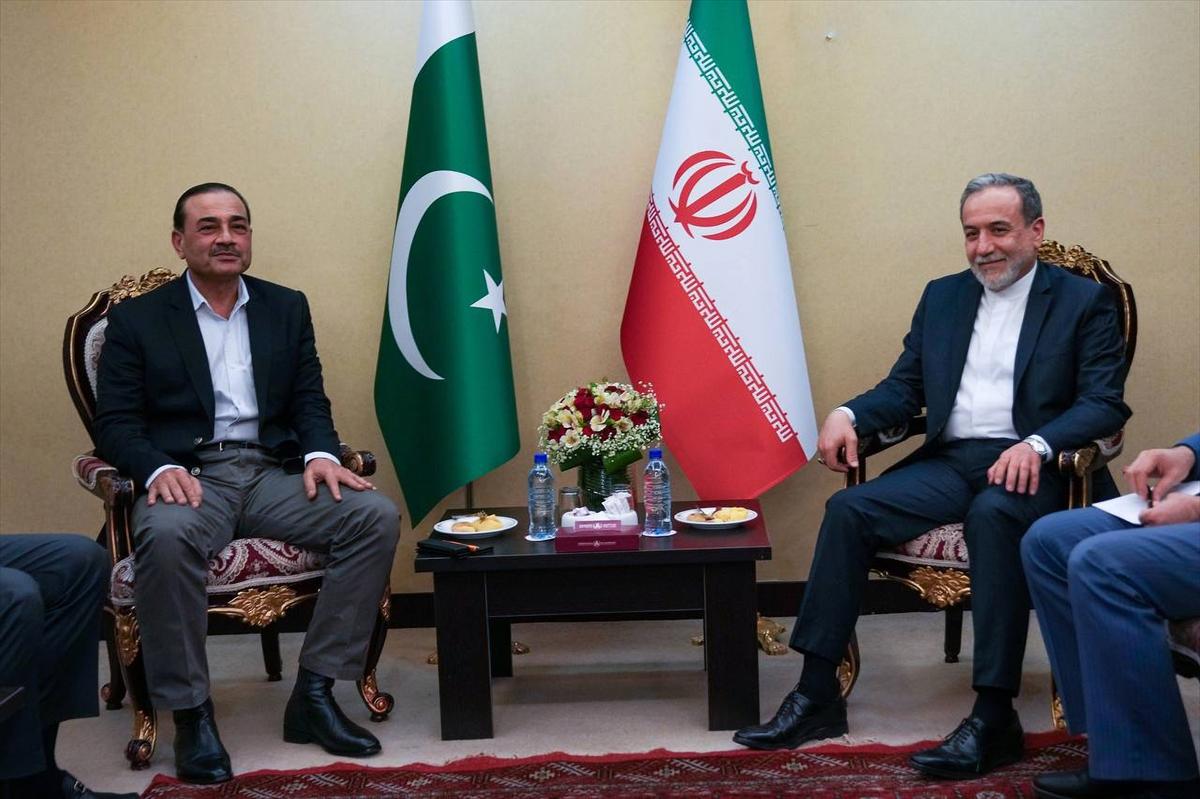
Iran’s Foreign Minister Erakçi and Pakistan’s Chief of Army Staff Munir meet in Tehran, 15 April 2026 – (Anadolu Agency)
Bekayi further emphasized that Iran has no intention of producing nuclear weapons and stated: “The type and level of uranium enrichment can be discussed, as we have previously declared. Iran must continue uranium enrichment according to its own needs.” He accused the US of using the nuclear program as a pressure tool, saying: “We know how to develop our economy. Iran has no nuclear program other than peaceful purposes. We are not pursuing nuclear weapons out of fear of anyone, but as a matter of principle.” He also asserted that the recent tensions in the Strait of Hormuz originate from the US and Israel.
Following these statements, it was reported that a high-level delegation led by Pakistan’s Chief of Army Staff Marshal Asim Munir had departed for Iran. The delegation was said to be traveling to Tehran to deliver a message from the US to Iran and to consult on the planned second round of negotiations between the two countries.
It was reported that the Pakistani delegation arrived in Tehran and was received by Iran’s Minister of Foreign Affairs Abbas Erakçi. The delegation is expected to engage in consultations regarding the second phase of negotiations between Tehran and Washington.
According to Iranian media, Iran will make its decision on the next phase of negotiations following discussions with the Pakistani delegation. The report also noted that the ceasefire in Lebanon is viewed as a positive factor for the progress of negotiations and emphasized the importance of the US adhering to the previously proposed framework.
On the same day, it was announced that Iran’s Minister of Foreign Affairs Abbas Erakçi met with Pakistan’s Chief of Army Staff Asim Munir in Tehran. The meeting was attended by Iran’s Deputy Minister of Foreign Affairs Kazim Garibabadi and Foreign Ministry Spokesperson Ismail Bekayi. No details of the discussions were released, but it was confirmed that a decision on the next phase of negotiations will be made following these talks.
Pakistan’s Prime Minister Shehbaz Sharif visited Saudi Arabia as part of diplomatic efforts related to the new round of negotiations between the US and Iran. It was reported that the Pakistani delegation had arrived in Jeddah and that Sharif was expected to meet with Saudi Crown Prince Mohammed bin Salman.
White House Press Secretary Karoline Leavitt announced that intensive negotiations are ongoing regarding the extension of the temporary ceasefire between the US and Iran. She assessed the process as “productive.”
Leavitt denied reports that the US had formally requested Iran to extend the ceasefire, stating: “Today I saw some reports claiming we formally requested an extension of the ceasefire. That is not true. We are currently deeply engaged in these negotiations. The talks are proceeding productively.”
Referring to recent statements by US President Donald Trump, Leavitt noted the process is moving positively, adding: “We are optimistic about the possibility of an agreement. The President mentioned this in yesterday’s interview.”
Leavitt affirmed that Pakistan’s mediation role continues and that the US is satisfied with Islamabad’s contributions to date. She also indicated that the next round of negotiations will most likely be held in Islamabad, as before.
Meanwhile, Leavitt rejected allegations that China has supplied arms to Iran during the process, stating: “Chinese President Xi Jinping assured Trump that China has not supplied arms to Iran during this conflict.”
No timeline has been provided regarding the duration of the US naval blockade against Iranian ports, and it was stated that the decision rests entirely with US President Trump.
US Central Command (CENTCOM) asserted that the naval blockade against Iranian ports has completely halted Iran’s economic activities. CENTCOM Commander Admiral Brad Cooper stated in his remarks that Iran’s economy is heavily dependent on maritime trade, adding: “Within less than 36 hours of implementing the blockade, US forces have completely halted all economic trade entering and exiting Iran by sea.”
In contrast, Iranian media reported that an Iranian petroleum tanker passed through the Strait of Hormuz and reached Iranian territorial waters during the US blockade. The report stated that the tanker has a capacity of approximately 2 million barrels of crude oil and reached its destination “without encountering any obstruction.”
Iran’s government responded firmly to the US naval blockade. Commander of the Hatem al-Anbiya Central Command under Iran’s Armed Forces, Major General Ali Abdullahi, warned that if the US continues its actions, maritime traffic in the region could be fully halted, stating: “If the US continues its unlawful actions and seeks to create insecurity for Iranian commercial vessels and oil tankers, Iran’s powerful Armed Forces will not permit any export or import to continue in the Gulf of Basra, the Sea of Oman, and the Red Sea.”
Meanwhile, US President Donald Trump referred to Iran’s current leadership as a “new regime,” stating: “Everything has been destroyed. There are no air defense systems, no radar, no leaders. The current leaders are a new regime, right? And frankly, we think they are quite reasonable by comparison. It is truly a new regime and I think we are doing very well.” Trump also commented on Iran’s nuclear program: “So there is no agreement at all. This whole issue is about the absence of nuclear weapons. They cannot have nuclear weapons.”
Trump noted that the US has not faced any serious international backlash regarding its blockade of the Strait of Hormuz and stated that energy prices would likely fall if an agreement is reached.
Data on ground developments showed that shipping traffic through the Strait of Hormuz has not been fully halted despite the blockade. According to MarineTraffic data, the Maltese-flagged crude oil tanker Agios Fanourios I transited the Strait of Hormuz and headed toward the Gulf of Basra and Iraq’s Basra Port. Additionally, the Panama-flagged dry cargo ship Rosalina, carrying food from Brazil to Iran, is expected to arrive at Imam Khomeini Port.
An analysis by data analytics firm Kpler indicated that the US blockade has created a clear distinction between Iranian-linked and non-Iranian vessels in the Strait of Hormuz. According to the analysis, Iranian-linked tankers are waiting in the Persian Gulf, while non-Iranian cargo vessels are able to move more freely.
Additionally, it was recorded that a total of 16 vessels transited the Strait of Hormuz between 13 and 15 April, including tankers listed on the US sanctions list.
Anadolu Ajansı. "İran Ordu Sözcüsü: Ateşkesin Bizim İçin Savaş Koşullarından Farkı Yok." Accessed April 16, 2026. https://www.aa.com.tr/tr/live-blog/iran-ordu-sozcusu-ateskesin-bizim-icin-savas-kosullarindan-farki-yok/1128
The first round of US–Iran talks, held on 11 April 2026 in Islamabad, Pakistan’s capital, lasted approximately 21 hours without resulting in any agreement. The conflict, which began on 28 February 2026 with attacks launched by the US and Israel against Iran, had been partially halted by a temporary ceasefire agreed upon on 8 April 2026. The fact that this ceasefire is set to expire on 21 April 2026 and that no permanent agreement has been reached has triggered an intense diplomatic process ahead of the second round of talks.
Following the first round of talks, Iran emphasized the need to establish a “framework of understanding” before setting a firm date for the second round. Deputy Foreign Minister Said Khatibzadeh articulated this position during a press conference on 18 April 2026 as part of the Antalya Diplomacy Forum 2026: “We cannot set a date without accepting a framework. In reality, significant progress had been made. However, the maximalist approach of the other side and its attempt to exclude Iran from international law prevented us from reaching an agreement.”
Khatibzadeh also stated that Iran would not enter into any commitment outside the framework of international law: “I must clearly state that Iran will never accept being placed outside international law. Any obligation we undertake will be within the framework of international regulations and international law.”
Iran also clarified its stance on the temporary ceasefire. Khatibzadeh stated that Iran had not accepted the ceasefire with the US, saying: “We do not accept any temporary ceasefire.” Because this cycle of using diplomacy to exhaust the other side and then returning to war must end.
US President Donald Trump announced after the first round of talks that negotiations with Iran would continue. In an interview with Axios on 17 April 2026, he stated that it was highly likely a new meeting would take place over the weekend and that an agreement could be reached “within a day or two.” In the same statement, Trump also addressed the ceasefire process in Lebanon, emphasizing that Israel must halt its attacks.
Trump also indicated that military options against Iran could be reconsidered if no agreement is reached. During a flight from Arizona to Washington, he told journalists: “Perhaps I will not prolong this, but our blockade of the Strait of Hormuz continues. You are under blockade, and unfortunately we will have to bomb again.”
Trump further stated that if no agreement is reached on the removal of enriched uranium from Iran, the process will be resolved “in a very different and unfriendly manner.”
On 19 April 2026, US President Donald Trump posted on social media: “We are offering a very fair and reasonable agreement and hope they accept it, because if they do not, the US will destroy every energy plant and every bridge in Iran. There is no such thing as a good guy anymore.”
Control over the Strait of Hormuz remained one of the most critical points of disagreement in the talks. Deputy Foreign Minister Said Khatibzadeh stated: “The Strait of Hormuz has been open for thousands of years and is part of Iran’s territorial waters and land.”
Khatibzadeh, using the phrase “The Strait of Hormuz has remained open throughout history by Iran’s decision,” noted that the unprovoked attacks by the US and Israel had increased tensions in the region and added: “They have decided to suffocate the entire region and Iran, dragging the global economy into harm.”
Khatibzadeh emphasized that this war began by the choice of the US and Israel and stated: “If this war ends permanently and America decides to accept fair and balanced conditions, abandon its maximalist stance, acknowledge the realities on the ground, recognize that no one can violate international law, no country can act aggressively against another, and respect Iran’s territorial integrity and sovereignty, then Iran can guarantee that the Strait of Hormuz will continue to be a corridor of peace and stability.”
Immediately after the first round of talks, on 13 April 2026, US President Donald Trump announced a naval blockade against Iran. In response to the ceasefire declared in Lebanon on 17 April, Iran initially opened the Strait of Hormuz to all commercial vessels but reimposed restrictions on 18 April after the US continued its blockade. The Hatemul-Anbiya Central Command within Iran’s Armed Forces announced that control over the strait had returned to its previous state.
Iran’s Foreign Ministry Spokesperson Nasser Kanaani Baghaei described the US naval blockade as an “illegal and criminal act,” asserting that it constitutes “a war crime and a crime against humanity.”
Khatibzadeh assessed the US position as follows: “The other side, the American side, tried to sabotage it: if you violate ceasefire conditions and the Americans do not honor their words, there will be consequences for them.”
In the early hours of 20 April 2026, Trump announced via Truth Social that the US Navy’s USS Spruance had seized the Iranian-flagged cargo ship Touska, approximately 274 meters long, in the Sea of Oman. Trump stated that the intervention occurred after the crew refused to comply with warnings, adding: “Our naval forces disabled the vessel by punching a hole in its engine room.”
Images from the US Navy were released and the seizure operation was made public. Trump claimed the vessel had previously been listed by the US Treasury Department due to illegal activities.
Iran labeled the seizure an act of “piracy.” The Islamic Revolutionary Guard Corps declared that any aggressive action violating the ceasefire by the US and Israel would be met with a “devastating” response.
As in the first round, Pakistan has prepared Islamabad as the host for the second round of talks. Pakistani government sources indicated that technical-level delegations from both countries “are likely to meet in Islamabad on Monday, 20 April.” According to a Pakistani official, if a draft agreement is reached, US President Donald Trump and Iranian President Masoud Pezeshkian could travel to Islamabad for a signing ceremony.
Trump, commenting on this possibility, said: “Pakistan is a wonderful country. If the agreement is signed in Islamabad, I can go.”
Pakistan’s Prime Minister Shehbaz Sharif held a 45-minute phone call with Iranian President Pezeshkian. During the call, Sharif shared information about his recent visits to Saudi Arabia, Qatar and Türkiye, stating that these contacts had been “helpful in building consensus for a sustainable dialogue and diplomacy process.”
It was indicated that the second round of talks would be planned as a multi-day process, unlike the first round. The goal is to sign a “framework of understanding” (MoU) that would allow negotiators to extend the ceasefire and lay the groundwork for a more lasting agreement. If such an agreement is reached, the negotiation process could be extended by up to 60 days.
On 19 April 2026, Pakistani sources reported that two aircraft carrying the US “advance team” had landed in Islamabad. Flight tracking data revealed that at least four US government aircraft, carrying communication equipment and convoy support elements, landed at PAF Base Nur Khan. Comprehensive security measures were implemented in Islamabad, access roads to the Red Zone, one of the city’s most secure areas, were closed, and the Marriott and Serena hotels evacuated their guests.
Conflicting reports emerged regarding the composition of the US delegation. CNN reported that, as in the first round, US Vice President JD Vance, Middle East Special Representative Steve Witkoff, and Jared Kushner would participate in the talks. However, US President Donald Trump initially stated that Vance would not travel to Islamabad due to security concerns. Later, White House Press Secretary Karoline Leavitt confirmed Vance’s participation. However, later in the day, sources close to intermediaries indicated that Vance’s participation had once again become uncertain.
As of the morning of 20 April 2026, Iran had not announced a definitive decision on whether it would participate in the second round of talks. Iran’s Foreign Ministry Spokesperson stated that Iran had no plans for a new round of talks with the US. Tasnim News Agency reported that Iran had decided not to attend the second round due to the US’s “extreme demands,” and that this decision had been communicated to US officials through the mediator Pakistan.
Iran’s official news agency IRNA declared that reports about the second round of talks were “not true,” and attributed the unresolved issues from the first round to the American side’s “greed, unreasonable demands, inconsistent positions, and constant contradictions.”
Al Jazeera. "Iran Says No Talks with US for Now, Casting Doubt over Pakistan Efforts." Accessed April 20, 2026. https://www.aljazeera.com/news/2026/4/20/pakistan-ready-for-multi-day-us-iran-talks-but-tehran-unsure-about-joining
Al Jazeera. "Iran War Live: Tehran May Skip Talks as Tensions Rise over US Ship Seizure." Accessed April 20, 2026. https://www.aljazeera.com/news/liveblog/2026/4/20/iran-war-live-tehran-slams-uss-piracy-after-ship-seizure-vows-response
Anadolu Ajansı. "Iran to Attend 2nd Round of Talks with US Despite Strait of Hormuz Hostilities, Pakistani Sources." Accessed April 20, 2026. https://www.aa.com.tr/en/live-blog/iran-to-attend-2nd-round-of-talks-with-us-despite-strait-of-hormuz-hostilities-pakistani-sources/1353
Anadolu Ajansı. "Trump Says US Forces Intercepted, Held in Custody Iranian Cargo Ship Breaching Naval Blockade." Accessed April 20, 2026. https://www.aa.com.tr/en/middle-east/trump-says-us-forces-intercepted-held-in-custody-iranian-cargo-ship-breaching-naval-blockade/3911611
Reuters. "Iran Says No Date Set for Next Round of Negotiations with US." Accessed April 20, 2026. https://www.reuters.com/world/asia-pacific/iran-says-no-date-set-next-round-negotiations-with-us-2026-04-18/
Pakistani officials stated that despite tensions in the Strait of Hormuz, the Iranian delegation is expected to attend the second round of negotiations between the United States and Pakistan in Islamabad. Officials in Islamabad indicated that the Iranian delegation is anticipated to arrive in Pakistan on 21 April.
It is claimed that the Iranian delegation, led by Speaker of the Islamic Consultative Assembly Mohammad Bagher Ghalibaf and Foreign Minister Abbas Araghchi, will participate in the second round of talks, as it did in the first round. On the U.S. side, it is reported that Vice President JD Vance, Jared Kushner, and Steve Witkoff are expected to attend.
Immediately following Pakistan’s announcement, Iranian Ministry of Foreign Affairs spokesperson Ismail Bekai stated that the Tehran administration has no plan yet regarding the second round of negotiations with the United States in Islamabad. Speaking at a press conference held at the Foreign Ministry building in Tehran, Bekai said, “To date, until now and up to your presence here, we have no plan regarding the second round of negotiations.”
Bekai noted that the Washington administration has displayed contradictory positions and violated ceasefire terms, asserting that the United States is not taking the diplomatic process seriously. “The recent actions of the United States, including its failure to fulfill commitments under the Lebanon agreements, the maritime blockade against Iran, and the attack on one of our commercial vessels, are clear examples of aggressive conduct under United Nations resolutions,” he stated.
Bekai, highlighting the contradiction between U.S. rhetoric and actions, said, “This situation increases the Iranian public’s suspicions regarding U.S. intentions. Iran will make an appropriate decision on continuing the negotiation process, prioritizing its national interests and benefits.” He further emphasized that while negotiations continue, the United States is violating international law by launching attacks against Iran, adding, “The Tehran administration will not forget the repeated betrayals of the United States toward diplomacy.”
Regarding the situation in the Persian Gulf and the Strait of Hormuz, Bekai stated, “The cause of the security issue in the Strait of Hormuz is the military activities of the United States and Israel.” He noted that the region was secure before 28 February and called on the international community to hold the responsible actors accountable for the insecurity in the area.
Bekai affirmed that Iran will not accept any time limit or ultimatum regarding the protection of its national interests, stating, “If the United States or Israel launch any new adventurist initiative, Iran’s armed forces will respond decisively.”
Addressing claims about the transfer of enriched uranium stockpiles to the United States, Bekai said, “At no stage of the negotiations has the transfer of enriched uranium stockpiles to the United States or any other country been on the agenda. In fact, this option is not even on Iran’s agenda. Iran’s firm position is that its nuclear gains must remain within its own territory, and any claims to the contrary are rejected.”
Pakistani officials announced that a telephone conversation took place between Pakistan’s Chief of Army Staff Asim Munir and U.S. President Donald Trump prior to the planned second round of U.S.-Iran negotiations in Islamabad.
According to officials, Munir stated during the call that “the blockade of the Strait of Hormuz has hindered talks with Iran.” Trump reportedly responded by saying he would consider the proposal.
On 20 April, a telephone conversation took place between Iranian Foreign Minister Abbas Araghchi and Pakistani Foreign Minister Ishaq Dar. The discussion covered the temporary ceasefire between Washington and Tehran and regional developments.
Pakistani Foreign Minister Dar outlined his country’s efforts to end the conflict and establish peace in the region, stating that Pakistan remains ready to continue consultations in this regard.
Iranian Foreign Minister Araghchi thanked Pakistan for its mediation efforts toward the ceasefire and the cessation of hostilities, and outlined Iran’s approach to participating in the diplomatic process. Araghchi pointed to developments over the past year, stating that military attacks against Iran, violations of the ceasefire, threats against ports and Iranian vessels, and contradictory positions have negatively affected the U.S. approach to diplomacy. Both sides agreed to continue consultations in line with their shared objective of preserving regional peace and security.
On the same day, U.S. President Donald Trump, in an assessment to Fox News correspondent Maria Bartiromo, expressed his expectations regarding the talks with Iran. Bartiromo stated that Trump told her, “I hope an agreement is signed with Iran in Pakistan tonight.”
In an interview with the New York Post, Trump confirmed that Vice President JD Vance, Special Representative Steve Witkoff, and Jared Kushner would attend the talks in Islamabad.
In the evening of 20 April, Iranian media reported that the Tehran administration’s decision not to participate in the negotiations in Pakistan had not changed. The semi-official Tasnim News Agency stated that this decision remains valid. The report noted that news regarding Vice President JD Vance’s participation in the talks had not influenced Iran’s stance.
The ongoing maritime blockade in the Strait of Hormuz and U.S. demands were emphasized as obstacles to the next round of negotiations.
Later that day, Donald Trump stated that if no agreement is reached with Iran, the extension of the two-week temporary ceasefire is “very unlikely.” In a phone interview with Bloomberg, he assessed the ongoing process with Iran, noting that Vice President JD Vance would travel to Pakistan that day and that the negotiations were scheduled to begin on Tuesday.
Trump noted that if no agreement is reached during the temporary ceasefire period, the extension of the ceasefire is unlikely, and he confirmed that the maritime blockade on Iranian ports would continue until a deal is finalized.
On the same day, Trump stated that the agreement planned with Iran would be better than the Joint Comprehensive Plan of Action (JCPOA). In a post on Truth Social, he indicated that an agreement with Iran was close, saying, “The agreement we will sign with Iran will be much better than the JCPOA, drafted by Barack Obama and Joe Biden and commonly referred to as the Iran Nuclear Deal.”
Trump argued that the agreement signed during the Obama administration had produced negative outcomes for the United States and the Middle East, claiming it provided Iran with the opportunity to develop nuclear weapons. He also stated that the U.S. administration at the time had transferred large financial resources to Iran.
Trump asserted that a new agreement would ensure peace and security not only for the Middle East but also for Europe and the United States. He previously stated that Vice President JD Vance would attend the negotiations in Islamabad and that an agreement with Iran could be signed in the near future.
Iranian President Masoud Pezeshkian responded to statements by senior U.S. officials regarding Iran. In a post on a social media platform, Pezeshkian said, “They want Iran to surrender. The Iranian people will not submit to bullying.”
Pezeshkian noted the historical mistrust of the United States within Iran and criticized recent statements by U.S. officials as unconstructive and contradictory. He added, “Adherence to commitments is the foundation of meaningful dialogue.”
In the final hours of the day, Iranian Foreign Minister Abbas Araghchi provided assessments regarding his telephone conversation with Pakistani Foreign Minister Ishaq Dar.
Araghchi stated that the ceasefire reached with the United States has been continuously violated and that “U.S. threats have stalled progress in the diplomatic process.” He added that Iran will determine how the process proceeds based on all developments. The conversation emphasized that both sides agree on the need to continue consultations to strengthen peace and stability in the region.
In the early hours of 21 April, Egyptian Foreign Minister Badr Abdelatty conducted telephone conversations with Omani Foreign Minister Bader al-Busaidi, Turkish Foreign Minister Hakan Fidan, and Pakistani Foreign Minister Ishaq Dar.
The discussions focused on regional developments and efforts to reduce rising tensions, with exchanges of views on the negotiation process between the United States and Iran. The importance of coordination among the parties for the success of the diplomatic process was highlighted.
Egyptian Foreign Minister Abdelatty stated that these negotiations represent a crucial step toward achieving a concrete agreement that reduces tensions and ends the war. The participating ministers assessed that diplomatic solutions and dialogue are essential tools for resolving disputes and preserving regional stability.
On the same morning, Iranian Parliament Speaker Mohammad Bagher Ghalibaf assessed the U.S. maritime blockade in the Strait of Hormuz. In his statement, he said, “We do not accept negotiations under the shadow of threats.”
Kalibaf stated that U.S. President Donald Trump is attempting to pressure the negotiation process through the maritime blockade and ceasefire violations, aiming to turn the negotiation table into a “table of surrender.”
In his statement, Kalibaf noted that Iran is preparing new steps in response to developments on the ground over the past two weeks and emphasized that Iran will not accept negotiations conducted under threat or pressure.
Iran’s Ambassador to Islamabad, Reza Amiri Mukaddem, made statements regarding the planned negotiations in Islamabad, mediated by Pakistan, between Iran and the United States.
Mukaddem stated that the talks have not yet taken place due to U.S. actions such as the maritime blockade, and affirmed that Iran will not negotiate under threat or pressure. He said, “It is a universally accepted fact that a single country with a great civilization does not negotiate under threat or coercion.” He emphasized that this approach is an “Islamic principle” and stated that the United States has yet to comprehend this.
Iran’s Head of Judiciary, Gholamhossein Mohseni Ejei, made assessments regarding the United States and Israel. In his statement, he said, “The possibility of the U.S.-Israel alliance restarting attacks is not low; we must be prepared.” He added, “The enemy’s likelihood of restarting attacks is not low. We must be 100 percent prepared.”
Ejei noted that the United States and Israel have failed to achieve their intended outcomes through attacks and stressed the need for preparedness against potential new assaults, highlighting societal resilience as one of the key elements of this preparedness.
Ali Abdullahi, Commander of the Hatem al-Anbiya Central Headquarters, responsible for military operations within Iran’s Armed Forces, made statements regarding the country’s military preparedness.
Abdullahi stated that Iran’s Armed Forces are “ready to respond decisively, firmly, and swiftly to any threats or actions by the enemy.” He noted that the Revolutionary Guard Corps and the regular military, with the support of the people, have resisted attacks and forced the opposing side to call for a ceasefire.
Addressing statements by U.S. President Donald Trump, Abdullahi emphasized that “false and baseless narratives” regarding the management of the Strait of Hormuz and developments on the ground will not be tolerated. He underscored that Iran’s Armed Forces are prepared to respond collectively to threats in unity with the country’s leadership and people.
Al Jazeera. "Iran War Live: Tehran Spurns Talks Under Threats; Trump Says Blockade Stays." Al Jazeera. Accessed April 21, 2026. https://www.aljazeera.com/news/liveblog/2026/4/21/iran-war-live-tehran-shuns-talks-trump-says-us-blockade-to-remain
Anadolu Ajansı. "Son Gelişmeler: ABD-İsrail-İran-Lübnan Savaşı ve Barış Müzakereleri." Anadolu Ajansı. Accessed April 21, 2026. https://www.aa.com.tr/tr/live-blog/son-gelismeler-abd-israil-iran-lubnan-savasi-ve-baris-muzakereleri/1350
Anadolu Ajansı. "Son Gelişmeler: ABD-İsrail-İran-Lübnan Savaşı ve Barış Müzakereleri." Anadolu Ajansı. Accessed April 21, 2026. https://www.aa.com.tr/tr/live-blog/son-gelismeler-abd-israil-iran-lubnan-savasi-ve-baris-muzakereleri/1419
Pakistani officials stated that despite tensions in the Strait of Hormuz, Iran’s delegation is expected to attend the second round of negotiations between the United States and Pakistan in Islamabad. Officials in Islamabad indicated that the Iranian delegation is anticipated to arrive in Pakistan on 21 April.
It is claimed that the Iranian delegation, led by Speaker of the Islamic Consultative Assembly Mohammad Bagher Ghalibaf and Foreign Minister Abbas Araghchi, will participate as it did in the first round. On the U.S. side, it is reported that Vice President JD Vance, Jared Kushner and Steve Witkoff are expected to attend.
Immediately following Pakistan’s announcement, Iranian Ministry of Foreign Affairs spokesperson Ismail Bekai declared that the Tehran administration has no plan yet regarding the second round of negotiations with the United States in Islamabad. At a press conference held at the Foreign Ministry building in Tehran, Bekai stated, “Up to this moment, until now, we have no plan regarding the second round of negotiations.”
Bekai noted that the Washington administration has exhibited contradictory positions and violated ceasefire terms, asserting that the United States is not taking the diplomatic process seriously. He stated, “The recent actions of the United States, including its failure to fulfill commitments under the Lebanon agreements, the maritime blockade against Iran and the attack on our commercial vessel, are clear examples of aggressive acts under United Nations resolutions.”
Bekai, highlighting the contradiction between U.S. rhetoric and actions, said, “This situation increases the Iranian people’s suspicions regarding U.S. intentions. Iran will make an appropriate decision regarding the continuation of negotiations, prioritizing its national interests and benefits.” He further emphasized that while negotiations continue, the United States is violating international law by launching attacks against Iran, adding, “The Tehran administration will not forget the repeated betrayals of the United States toward diplomacy.”
Regarding the situation in the Persian Gulf and the Strait of Hormuz, Bekai stated, “The cause of security concerns in the Strait of Hormuz is the military activities of the United States and Israel.” Bekai noted that the region was secure before 28 February and called on the international community to hold the responsible actors accountable for the insecurity.
Bekai affirmed that Iran will not accept any time limit or ultimatum regarding the protection of its national interests, stating, “If the United States or Israel launch any new adventurist initiative, the armed forces will respond forcefully.”
Addressing claims about the transfer of enriched uranium stockpiles to the United States, Bekai said, “At no stage of the negotiations has the transfer of enriched uranium stockpiles to the United States or any other country been on the agenda. In fact, this option is not even on Iran’s agenda. Iran’s firm position is that its nuclear gains must remain within its own territory, and any claims to the contrary are rejected.”
Pakistani officials announced that a telephone conversation took place between Pakistan’s Chief of Army Staff Asim Munir and U.S. President Donald Trump prior to the planned second round of U.S.-Iran negotiations in Islamabad.
According to officials, Munir stated during the call that “the blockade of the Strait of Hormuz has hindered talks with Iran.” Trump reportedly responded that he would consider the suggestion.
On 20 April, a telephone conversation took place between Iranian Foreign Minister Abbas Araghchi and Pakistani Foreign Minister Ishaq Dar. The discussion covered the temporary ceasefire between Washington and Tehran and regional developments.
Pakistani Foreign Minister Dar outlined his country’s efforts to end the conflict and establish peace in the region, stating that Pakistan remains ready to continue consultations.
Iranian Foreign Minister Araghchi thanked Pakistan for its mediation efforts toward the ceasefire and the cessation of hostilities, and outlined Iran’s approach to participating in the diplomatic process. Araghchi pointed to developments over the past year, noting that military attacks against Iran, ceasefire violations, threats against ports and Iranian vessels, and contradictory positions have negatively affected the U.S. approach to diplomacy. Both sides agreed to continue consultations in line with their shared goal of preserving regional peace and security.
On the same day, U.S. President Donald Trump, in an assessment to Fox News correspondent Maria Bartiromo, expressed his expectations regarding the talks with Iran. Bartiromo stated that Trump told her, “I hope an agreement is signed with Iran in Pakistan tonight.”
In an interview with the New York Post, Trump confirmed that Vice President JD Vance, Special Representative Steve Witkoff and Jared Kushner would participate in the talks in Islamabad.
In the evening of 20 April, Iranian media reported that the Tehran administration’s decision not to participate in the negotiations in Pakistan had not changed. The semi-official Tasnim News Agency stated that this decision remains valid. The report noted that news regarding U.S. Vice President JD Vance’s participation in the talks had not influenced Iran’s stance.
The ongoing maritime blockade in the Strait of Hormuz and U.S. demands were emphasized as obstacles to the next round of negotiations.
Later that day, Donald Trump stated that if no agreement is reached with Iran, the extension of the two-week temporary ceasefire is “very unlikely.” In a phone interview with Bloomberg, he assessed the process with Iran, noting that Vice President JD Vance would travel to Pakistan that day and that the negotiations were scheduled to begin on Tuesday.
Trump noted that if no agreement is reached during the temporary ceasefire, its extension is unlikely, and he confirmed that the maritime blockade on Iranian ports would continue until a deal is finalized.
On the same day, Trump stated that the agreement planned with Iran would be better than the Joint Comprehensive Plan of Action (JCPOA). In a post on Truth Social, he indicated that an agreement with Iran is close, saying, “The agreement we will sign with Iran will be much better than the JCPOA, drafted by Barack Obama and Joe Biden and commonly known as the Iran Nuclear Deal.”
Trump argued that the agreement signed during the Obama administration produced negative outcomes for the United States and the Middle East, claiming it provided Iran with the opportunity to develop nuclear weapons. He also stated that the U.S. administration at the time transferred large financial resources to Iran.
Trump asserted that a new agreement would ensure peace and security not only for the Middle East but also for Europe and the United States. He previously stated that Vice President JD Vance would attend the talks in Islamabad and that an agreement with Iran could be signed soon.
Iranian President Masoud Pezeshkian responded to statements by senior U.S. officials regarding Iran. In a post on a social media platform, he said, “They want Iran to surrender. The Iranian people do not submit to bullying.”
Pezeşkiyan noted that there is a historical lack of trust toward the United States in Iran and said the recent statements by U.S. officials were unconstructive and contradictory. He added, “Adherence to commitments is the foundation of meaningful dialogue.”
In the final hours of the day, Iranian Foreign Minister Abbas Araghchi assessed his telephone conversation with Pakistani Foreign Minister Ishaq Dar.
Araghchi stated that the ceasefire reached with the United States has been repeatedly violated and that “the threats from the United States have stalled progress in the diplomatic process.” He added that Iran will decide how to proceed with the process based on all developments. It was reported that both sides emphasized the need to continue consultations to strengthen peace and stability in the region.
In the early hours of 21 April, Egypt’s Minister of Foreign Affairs Badr Abdelatty conducted telephone conversations with Oman’s Minister of Foreign Affairs Bader al-Busaidi, Türkiye’s Minister of Foreign Affairs Hakan Fidan and Pakistan’s Minister of Foreign Affairs Ishaq Dar.
The discussions addressed regional developments and efforts to reduce rising tensions, with exchanges of views on the negotiation process between the United States and Iran. It was emphasized that coordination between the parties is essential for the success of the diplomatic process.
Egypt’s Foreign Minister Abdelatty stated that these negotiations represent a crucial step toward achieving a concrete agreement that reduces tensions and ends the war. The participating ministers assessed that diplomatic solutions and dialogue are fundamental tools for resolving disputes and preserving regional stability.
In the morning of the same day, Iranian Parliament Speaker Mohammad Bagher Ghalibaf assessed the U.S. maritime blockade in the Strait of Hormuz. In his statement, he said, “We do not accept negotiations under the shadow of threats.”
Ghalibaf stated that U.S. President Donald Trump is attempting to pressure the negotiation process through the maritime blockade and ceasefire violations, and that this approach aims to turn the negotiation table into a “table of surrender.”
In his statement, Ghalibaf noted that Iran is preparing new steps in response to developments on the ground over the past two weeks and emphasized that Iran will not accept negotiation processes conducted under threat or pressure.
Iran’s Ambassador to Islamabad, Reza Emiri Mukaddem, made statements regarding the planned negotiations in Islamabad, mediated by Pakistan, between Iran and the United States.
Mukaddem stated that the talks have not yet taken place due to U.S. actions such as the maritime blockade and affirmed that Iran will not negotiate under threat or pressure. He said, “It is a universally accepted truth that a single country with a great civilization does not negotiate under threat or coercion.” He emphasized that this approach is “an Islamic principle,” and stated that the United States has yet to comprehend this.
Iran’s Head of Judiciary Gholamhossein Mohseni Ejei made statements regarding the United States and Israel. In his remarks, he said, “The possibility of the U.S.-Israel alliance restarting attacks is not low; we must be prepared.” He added, “The enemy’s likelihood of restarting attacks is not low. We must be 100 percent prepared.”
Ejei noted that the United States and Israel have failed to achieve their intended outcomes through attacks and emphasized the need for preparedness against possible new assaults, highlighting social resilience as one of the key elements of this preparedness.
Ali Abdullahi, Commander of the Hatem al-Anbiya Central Headquarters, responsible for military operations within Iran’s Armed Forces, made statements regarding the country’s military preparations.
Abdullahi stated that Iran’s Armed Forces are “ready to respond decisively, firmly and promptly to any threats or actions by the enemy.” He noted that the Revolutionary Guards and the regular military, with the support of the people, have resisted attacks and forced the opposing side to call for a ceasefire.
Addressing statements by U.S. President Donald Trump, Abdullahi said that false and baseless narratives regarding the management of the Strait of Hormuz and developments on the ground will not be tolerated. He emphasized that Iran’s Armed Forces act in unity with the country’s leadership and people and are prepared to respond collectively to threats.
On the afternoon of 21 April, the Pakistani government announced that it is continuing preparations in Islamabad for the possible second round of negotiations between the United States and Iran. During a meeting chaired by Prime Minister Shehbaz Sharif, security and administrative preparations were reviewed. Interior Minister Mohsin Nakvi reportedly provided information on security measures taken at various locations in the capital.
Security measures in Islamabad have been heightened, with security forces deployed in areas housing central government institutions and foreign missions. It was reported that the Serena Hotel, where the first round of talks was held, as well as the alternative venues, the Marriott and Mövenpick hotels, have been closed to service. Additionally, numerous higher education institutions, including universities in the capital, have been instructed to switch to online education.
A Pakistani official stated that preparations are ongoing but no definitive date has been set for the talks. It remains unclear whether the U.S. and Iranian delegations will meet.
China’s Ambassador to Islamabad, Jiang Zaidong, informed Pakistani Foreign Minister Ishaq Dar during their conversation that China supports Pakistan’s efforts regarding the U.S.-Iran negotiations. Russia’s Ambassador to Islamabad, Albert P. Khorov, clarified that his country is not assuming a direct mediation role in the talks. It was noted that Russia has called for preventing the escalation of conflict and ending developments affecting civilian infrastructure, particularly in the Gulf region.
As the United States and Iran were expected to meet in Islamabad for permanent ceasefire talks, U.S. President Donald Trump claimed that Iran had repeatedly violated the ceasefire. In a social media post, Trump stated, “Iran has violated the ceasefire multiple times.”
In another statement later that day, Trump expressed his belief that the talks would yield positive results. He said, “I believe we will ultimately reach a very good agreement with Iran. There are no other options.” Trump argued that Iran has no alternative but to participate in the negotiations and asserted that the United States is in a stronger position than before the ceasefire. He added, “I want to make a good agreement. I have plenty of time. I don’t just want a good agreement, I want a great agreement.”
Trump indicated that if no agreement is reached with Iran, military options remain on the table, saying, “Then I think the bombings will continue because I believe that is the right thing to do. We are ready for it.” He emphasized that he is not considering extending the temporary ceasefire and stated that reaching an agreement with Iran under current conditions is the most appropriate option. He also claimed that the United States has strengthened its weapons and ammunition stockpiles, while Iran has only limited capacity to replenish its supplies.
Pakistan’s Foreign Minister Muhammad Ishaq Dar called for an extension of the temporary ceasefire between the United States and Iran on 21 April. During a conversation with U.S. envoy Natalie Baker, Dar stated that dialogue and diplomacy are urgently needed between the parties. The U.S. side expressed appreciation for Pakistan’s role in encouraging peace and facilitating the diplomatic process.
On the same day, Pakistan’s Minister of Information Attaullah Tarar announced that Pakistan is awaiting an official response from Tehran regarding the Iranian delegation’s participation in the second round of negotiations in Islamabad. Tarar stated that Pakistan, in its mediation role, continues its contacts with Iran and adheres to the path of diplomacy and dialogue. It was noted that Iran’s decision on whether to participate in the negotiations before the ceasefire expires is “vital,” and that Pakistan is continuing its efforts to persuade the Tehran administration to join the second round of talks.
Iranian Foreign Minister Abbas Araghchi made statements regarding the U.S. maritime blockade in the Strait of Hormuz. He said, “Iran knows very well how to cope with restrictions.” Araghchi stated that the blockade of Iranian ports constitutes an act of war and a violation of the ceasefire. He added, “Attacking a commercial vessel and taking its crew hostage is an even greater violation.”
Iranian Ministry of Foreign Affairs Spokesperson Ismail Bekai stated in the evening of 21 April regarding the planned second round of negotiations between Iran and the United States, “No final decision has yet been made on whether to participate in the talks in Pakistan.”
Bekai clarified that the lack of a decision is not due to indecision but stems from the contradictory statements and behavior of the United States. He stated that Iran will decide on participation if the negotiations are outcome-oriented.
Bekai also assessed the U.S. intervention against the Iranian-flagged cargo ship Touska, labeling it a violation of international law. He said, “Attacking Iranian vessels is a violation of international law, maritime piracy and state terrorism. We have faced ceasefire violations from the outset. The maritime blockade is one example.”
Several hours after this statement, Iranian media reported that Iran had informed the United States that its negotiation delegation would not travel to Pakistan. The semi-official Tasnim News Agency stated that Iran’s decision not to be present in Pakistan on Wednesday for the second round of talks had been finalized. The report noted that this decision had been conveyed to the United States through Pakistan.
Al Jazeera. "Iran War Live: IRGC Seizes Two Vessels in Strait of Hormuz Amid US Blockade." Accessed April 22, 2026. https://www.aljazeera.com/news/liveblog/2026/4/22/iran-war-live-trump-says-ceasefire-extended-as-talks-with-tehran-in-limbo
Anadolu Ajansı. "Son Gelişmeler: ABD-İsrail-İran-Lübnan Savaşı ve Barış Müzakereleri." Accessed April 22, 2026. https://www.aa.com.tr/tr/live-blog/son-gelismeler-abd-israil-iran-lubnan-savasi-ve-baris-muzakereleri/1476
In the late hours of 21 April, U.S. President Donald Trump announced that the temporary ceasefire in effect with Iran had been extended. The announcement came amid ongoing uncertainty regarding negotiations and as the ceasefire period was nearing its end.
In a statement on his Truth Social account, Trump stated that the ceasefire had been extended at Pakistan’s request. He indicated that the ceasefire would continue until Iran submits a proposal regarding the agreement.
Trump asserted that the Iranian leadership was “divided” and noted that the requests of Pakistan’s Chief of Army Staff Asim Munir and Prime Minister Shehbaz Sharif had been taken into account. He added the following statements: “Given the reality that the Iranian leadership is deeply divided and at the request of Marshal Asim Munir and Prime Minister Shehbaz Sharif of Pakistan, we were asked to suspend our attacks on Iran until its leaders and representatives present a joint proposal. Therefore, I have ordered my military to maintain the blockade and remain prepared on all fronts; thus, I will extend the ceasefire until Iran submits a proposal and negotiations are somehow concluded.”
Iran’s Armed Forces Hatem al-Anbiya Headquarters issued a warning statement directed at the United States. The statement used the phrase: “We warn the U.S. President and its aggressive commanders: our hands are on the trigger.” It further stated that if an attack on Iran occurs, it will be met with a stronger response against pre-determined targets.
Mehdi Muhammad, advisor to Iran’s Parliament Speaker Mohammad Bagher Kalibaf, made a statement immediately after Trump’s announcement of the ceasefire extension. Muhammad used the phrase: “The losing side cannot set the terms.” He characterized the U.S. naval blockade of the Strait of Hormuz as equivalent to bombardment. The statement alleged that the extension of the ceasefire was intended to buy time for new attacks against Iran.
Reports in the Iranian press indicated that the extension of the ceasefire was not requested by Iran. According to a report citing the Tasnim News Agency, the continuation of the U.S. blockade of the Strait of Hormuz was viewed as a sign of ongoing hostility, and Iran stated it would not open the strait as long as the blockade remained in place.
Israeli Chief of Staff Eyal Zamir made a statement in the early hours of 22 April, while temporary ceasefires with Iran and Lebanon were still in effect. Zamir used the phrase: “The military is fully alert and prepared to return to war swiftly and powerfully on all fronts.”
Pakistan Prime Minister Shehbaz Sharif thanked Trump for accepting Pakistan’s call to extend the temporary ceasefire with Iran. In a statement on his social media account, Sharif welcomed the extension as enabling continued diplomatic efforts. He added: “I sincerely hope both sides will continue the ceasefire and reach a comprehensive ‘peace agreement’ during the second round of talks planned in Islamabad.”
The United Nations (UN) announced that it welcomed the U.S. decision to extend the temporary ceasefire with Iran. It was reported that UN Secretary-General António Guterres viewed the decision as a significant step toward reducing tensions and creating space for diplomacy and confidence-building. The statement called on the parties to avoid actions that could harm the ceasefire and to engage constructively in negotiations, while expressing support for Pakistan’s mediation efforts.
Iran’s Permanent Representative to the UN, Amir Said Iravani, stated that if the U.S. ends its naval blockade, the next round of talks could be held in Islamabad, Pakistan’s capital. Iravani accused the U.S. of violating the ceasefire agreement, adding: “We told them they must lift the blockade. We received signals from them that they would halt the blockade. Only then can the second round of talks in Islamabad take place.”
The French government also welcomed the U.S. decision to extend the temporary ceasefire with Iran. French Minister of State for Defense Alice Rufo stated that extending the ceasefire provided the “necessary time” to reach a lasting agreement amid intensive negotiations. Rufo urged the parties to fully comply with the ceasefire and to reach a “solid agreement.”
Iran’s Ministry of Foreign Affairs Spokesperson Ismail Bekayi issued a statement regarding the U.S. decision to extend the ceasefire. Bekayi used the phrase: “We will act when we conclude that the conditions have been created that are both logical and necessary to fulfill Iran’s interests and consolidate the gains of the Iranian people.”
Bekayi stated that Iran is monitoring developments on the ground and has taken necessary measures to safeguard its national interests. He added: “The Iranian Armed Forces are ready to protect the country against any threat or attack. Diplomacy is a tool for securing national interests and security.” He also affirmed that Iran would use all available means to demand accountability and reparations from aggressors and war criminals.
In another statement on the same day, Bekayi clarified that Iran had not yet decided whether to participate in the second round of talks with the U.S. He stated that Iran would attend talks in Islamabad only if it is deemed consistent with national interests.
Iran’s Parliament Speaker Mohammad Bagher Kalibaf stated that the Strait of Hormuz could not be opened amid serious ceasefire violations. He said: “A full ceasefire only makes sense when the naval blockade and the hostage-taking of the global economy are lifted and when Zionist provocations on all fronts are halted.”
Kalibaf also used the phrase: “They could not achieve their goals through military aggression, and they will not achieve them through bullying. The only path is the recognition of the rights of the Iranian people.”
Iranian President Masoud Pezeshkian affirmed that his country pursues a dialogue-oriented approach, stating: “Iran has always welcomed dialogue and agreement.” He added: “Disregarding commitments, blockades, and threats are the greatest obstacles to genuine negotiations,” and “The world is witnessing your deceptive rhetoric and the contradiction between your claims and your actions.”
On 24 April, it was claimed that U.S. President Donald Trump, under the extended ceasefire with Iran, “granted three or five days for them to unite around a consistent counter-proposal.” According to a report citing Axios, some U.S. officials suggested that Trump had limited the duration of the ceasefire. One official stated: “Trump is prepared to extend the ceasefire for another three to five days to allow the Iranians to get their affairs in order, but this will not be indefinite.”
White House Press Secretary Karoline Leavitt, in the evening, denied claims that U.S. President Trump had set a specific deadline for Iran. Leavitt stated: “Contrary to some reports I have seen today, the President has not set a firm deadline for receiving a proposal from Iran; that will be determined by the U.S. President.” The statement clarified that Trump had not imposed any fixed deadline, had granted Iran “some flexibility,” and expected Tehran to present a comprehensive proposal.
On 23 April, Israeli Defense Minister Yisrael Katz, during a meeting with Chief of Staff Eyal Zamir and senior security officials at the Kirya Military Base in Tel Aviv, stated: “Israel is ready to restart the war against Iran, with targets already identified.”
Katz said: “We are waiting for the green light from the U.S.” He indicated that targeted assassinations of Iranian leaders were possible and that Iran’s energy, electricity, and economic infrastructure would be targeted. The Israeli Defense Minister claimed that future attacks on Iran would be more different and lethal, asserting that devastating strikes on its most sensitive points would lead to the overthrow of the Tehran regime.
On the same day, Iranian President Masoud Pezeshkian, in a statement on his social media account, stated that there is “no distinction between hardliners or moderates” within Iran.
Pezeshkian said: “There are no hardliners or moderates in Iran. We are all Iranians and revolutionaries. With the iron unity of the nation and the state, and full adherence to the leader’s directives, we will make the aggressor and criminal regret his actions. One God, one nation, one leader, one path: the path of victory for our beloved Iran.” The same message was shared on social media by Parliament Speaker Mohammad Bagher Kalibaf and Judiciary Chief Gholamhossein Mohseni Ejei.
Pezeshkian made this statement in response to Trump’s remarks: “Iran is struggling to understand who its leader is. They really don’t know. Internal strife is raging crazily between the ‘hardliners,’ who lost badly on the battlefield, and the ‘moderates,’ who are not at all moderate (but respected!).”
On the same day, Trump, in a statement on his social media account, asserted that he has “as much time as the world” to reach an agreement with Iran. Responding to reports in the American media, Trump stated that these reports were attempting to portray him as “weak” on Iran.
Trump said: “To those who think I am impatient in ending the war with Iran—if you can even call it a war—I want to say that I am probably the person under the least pressure in this position. I have as much time as the world, but Iran does not.”
Trump emphasized that the U.S. blockade of Iran was “very solid,” adding: “Time is not working in their favor. An agreement will only be made when it is suitable and beneficial for the U.S., our allies, and the rest of the world.”
Iranian Leader Ayatollah Khamenei, in a statement on his social media account, stated that the enemy aims to target the minds and psychology of the people in order to undermine unity and national security.
Khamenei said: “The enemy’s media operations aim to target the minds and psychology of the people in order to undermine unity and national security. Let us not take this lightly, lest we allow this ill intent to succeed.” The statement emphasized that the enemy’s fragmentation has already been evident due to the people’s unity and that this unity must be preserved.
Later that day, Trump defended his decision to extend the ceasefire, citing “political chaos” in Iran. In remarks from the Oval Office, Trump claimed there was uncertainty regarding leadership in Iran.
Trump said: “Iran wants an agreement. We are talking to them, but they themselves do not even know who is in charge of their country. They are in complete chaos. That is why we gave them a small chance to resolve this chaos.” Trump also stated that he was not in a hurry to reach an agreement, adding: “I could reach an agreement with Iran right now, but I want to make the best possible deal. That is why I gave them some time. If they do not want to make an agreement, then we will finish what we started.”
On 24 April, Iranian Foreign Minister Abbas Araghchi held a phone call with Pakistan’s Chief of Army Staff Asim Munir and Pakistan’s Foreign Minister Muhammad Ishak Dar. The conversation addressed regional developments and the Iran–U.S. ceasefire process.
German Chancellor Friedrich Merz called on Iran to resume negotiations with the United States. In remarks following the European Council summit, Merz emphasized Germany’s insistence on the continuation of talks between the U.S. and Iran.
Merz said: “Iran is trying to buy time, and therefore we must increase pressure on Iran.” He stated that sanctions could be gradually eased if a comprehensive agreement is reached, but only if there is a swift and clear agreement on freedom of navigation in the Strait of Hormuz, an end to Iran’s nuclear program, and the cessation of threats against Israel.
Merz also indicated that Germany is prepared to contribute to ensuring the security of the Strait of Hormuz if certain conditions are met.
White House Press Secretary Karoline Leavitt made a statement regarding the planned U.S.–Iran talks in Islamabad, Pakistan. Leavitt said: “Special Representative Steve Witkoff and Jared Kushner will travel to Pakistan tomorrow morning to participate in direct talks facilitated by Pakistan, which has played an extraordinary mediating role throughout this process.”
Leavitt stated that the talks would continue face-to-face at Iran’s request and expressed expectations that the process would proceed productively and move toward an agreement.
Leavitt also noted that Trump’s red lines on nuclear weapons are clear, that proposals from Iran will be carefully considered, and that the negotiation process will be closely monitored.
Al Jazeera. "Iran War Updates: Trump Announces Three-Week Lebanon Ceasefire Extension." Accessed April 25, 2026. https://www.aljazeera.com/news/liveblog/2026/4/23/iran-war-live-israel-kills-lebanese-journalist-tehran-us-talks-stalled
Al Jazeera. "Iran War: What’s Happening on Day 55 after Trump Extended Ceasefire?" Accessed April 25, 2026. https://www.aljazeera.com/news/2026/4/23/iran-war-whats-happening-on-day-55-after-trump-extended-ceasefire
Al Jazeera. "Iran War: What’s Happening on Day 56 after Trump Extended Ceasefire?" Accessed April 25, 2026. https://www.aljazeera.com/news/2026/4/24/iran-war-whats-happening-on-day-56-after-trump-extended-ceasefire
Al Jazeera. "Iran’s Leaders Debate War and Peace after Trump Ceasefire Extension." Accessed April 25, 2026. https://www.aljazeera.com/news/2026/4/22/irans-leaders-debate-war-and-peace-after-trump-ceasefire-extension
Anadolu Ajansı. "ABD Başkanı Trump, İran’daki Karmaşanın Çözülebilmesi İçin Ateşkesi Uzattığını Savundu." Accessed April 25, 2026. https://www.aa.com.tr/tr/dunya/abd-baskani-trump-irandaki-karmasanin-cozulebilmesi-icin-ateskesi-uzattigini-savundu/3916234
Anadolu Ajansı. "Son Gelişmeler: ABD-İsrail-İran-Lübnan Savaşı ve Barış Müzakereleri." Accessed April 25, 2026. https://www.aa.com.tr/tr/live-blog/son-gelismeler-abd-israil-iran-lubnan-savasi-ve-baris-muzakereleri/1476
Anadolu Ajansı. "Son Gelişmeler: ABD-İsrail-İran-Lübnan Savaşı ve Barış Müzakereleri." Accessed April 25, 2026. https://www.aa.com.tr/tr/live-blog/son-gelismeler-abd-israil-iran-lubnan-savasi-ve-baris-muzakereleri/1571
Anadolu Ajansı. "İran Büyükelçisi: İran’a Yönelik Savaşın Bölgesel ve Küresel Krizin Göstergesi Olduğunu Söyledi." Accessed April 25, 2026. https://www.aa.com.tr/tr/dunya/iran-buyukelcisi-irana-yonelik-savasin-bolgesel-ve-kuresel-krizin-gostergesi-oldugunu-soyledi/3915157
On 27–28 April 2026, during the ninth week of the Iran–United States–Israel war, a new peace proposal transmitted via Pakistan by Iran’s Minister of Foreign Affairs Abbas Erakçi came to the forefront. It is claimed that the proposal envisaged the reopening of the Strait of Hormuz and the extension or permanentization of the current ceasefire, while postponing nuclear negotiations to a later stage.
Iran conveyed the proposal to the United States through Pakistan, which facilitates indirect diplomatic contacts between Tehran and Washington. According to reports, the proposal, finalized on 26 April 2026, included the following: "resolution of the crisis concerning maritime traffic in the Strait of Hormuz and lifting of U.S. restrictions on Iranian ports, extension of the ceasefire for a prolonged period or its transformation into a permanent cessation of hostilities, and initiation of nuclear negotiations following the reopening of the strait and lifting of the blockade."
According to international news agencies, Iran’s proposal contains a "phased framework." Under this plan, the first phase would involve ending the war and securing assurances from the United States that it will not launch further attacks; the second phase would entail launching a confidence-building process; and the final phase would focus on negotiating the nuclear issue and other matters. In return, the reopening of the Strait of Hormuz was proposed.
Between 24 and 27 April 2026, during the period in which the proposal was transmitted, Iran’s Minister of Foreign Affairs Abbas Erakçi conducted an intensive series of diplomatic engagements. Erakçi completed a 72-hour visit covering three countries: he visited Islamabad twice on 24–26 April, held talks in Muscat on 25 April, and then met with Russian President Vladimir Putin in St. Petersburg on 27 April.
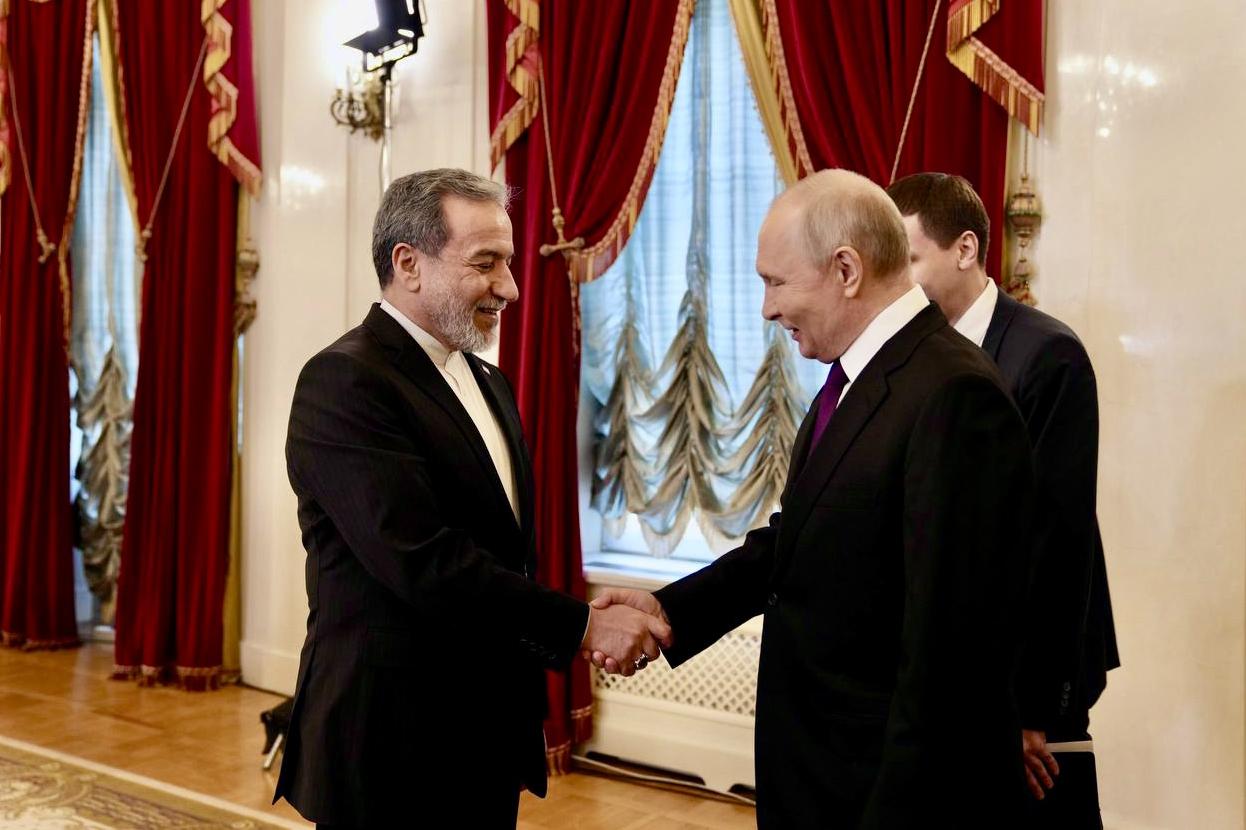
Iran’s Foreign Minister Erakçi meets with Russian President Putin, 27 April 2026 – (Anadolu Agency)
During his first visit to Islamabad, Erakçi met with Pakistan Prime Minister Shehbaz Sharif, Deputy Prime Minister and Minister of Foreign Affairs Ishak Dar, and Commander of the Pakistan Army General Asim Munir. In Muscat, discussions focused on the Strait of Hormuz, regional security guarantees, and the framework of a potential agreement; a consensus was reached to defer nuclear issues to a later stage. It was reported that senior intelligence officials from multiple countries participated in these talks.
Following his second visit to Islamabad on 26 April, Erakçi met again with Asim Munir before traveling to Moscow. In a statement after his departure, Erakçi emphasized Pakistan’s significant mediation role in recent communications between the United States and Iran. He noted that some progress had been made during previous negotiations but that the United States’ “flawed approaches” and “excessive demands” had hindered the process from achieving its objectives.
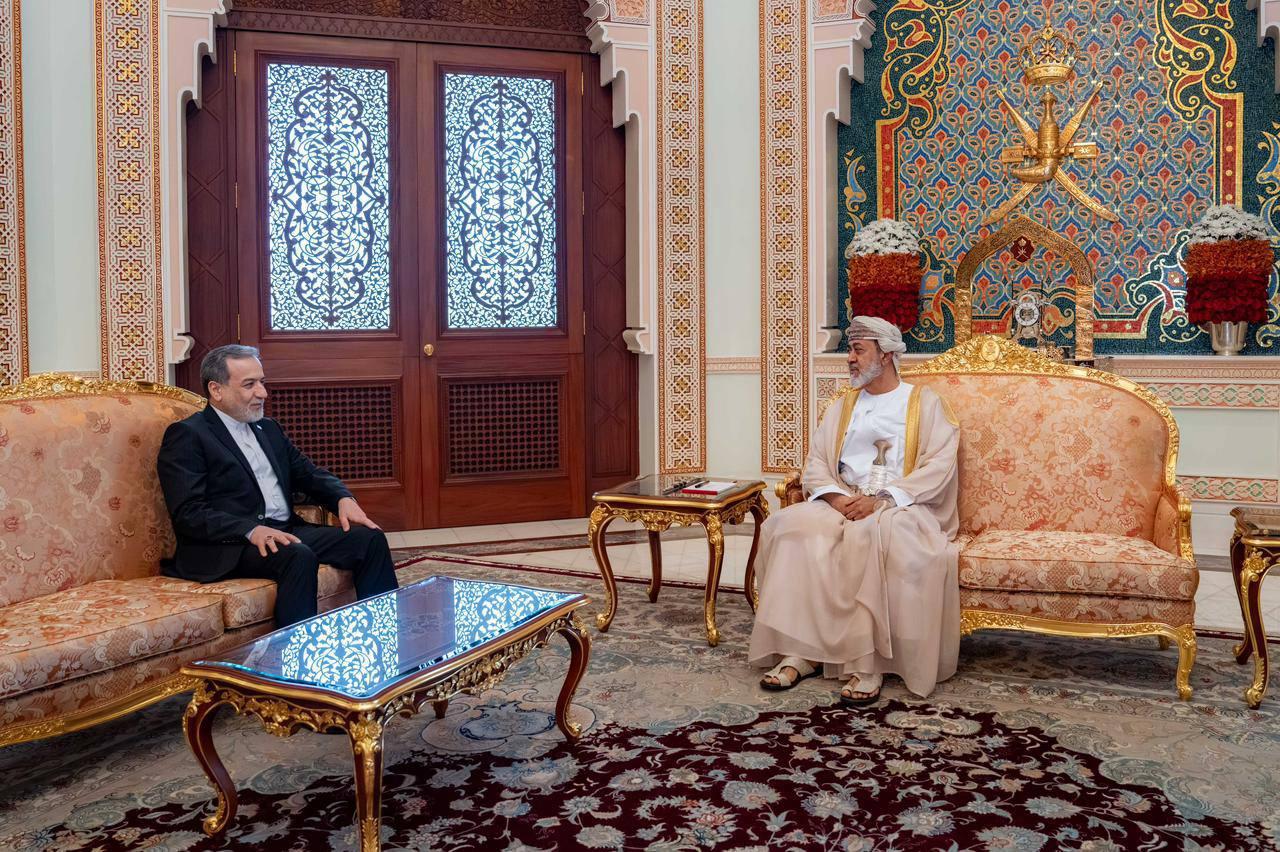
Iran’s Foreign Minister Erakçi meets with Oman’s Sultan Haitham bin Tarik in Muscat, 26 April 2026 – (Anadolu Agency)
Erakçi also held telephone conversations during the same days with the foreign ministers of Qatar, Saudi Arabia, Egypt, and France. During direct talks with Qatar’s Prime Minister and Minister of Foreign Affairs Sheikh Mohammed bin Abdulrahman bin Jassim Al Thani, the latter emphasized that maritime routes must not be used as a bargaining chip or pressure tool.
On 27 April 2026, the White House confirmed that U.S. President Donald Trump convened with his national security team to evaluate Iran’s proposal. It was specified that the meeting was not conducted in the format of the National Security Council (NSC) but rather with Trump’s own security advisors. It was noted that this gathering involved a more limited group than the legally constituted NSC members, including the Secretary of Defense and the Chairman of the Joint Chiefs of Staff.
White House Press Secretary Olivia Wales stated that the United States would not conduct negotiations through the press and that President Trump had clearly communicated his “red lines” to both Tehran and the American public. Wales affirmed that the United States would accept only an agreement that prioritizes the interests of the American people and does not permit Iran to acquire nuclear weapons.
According to reports in the U.S. press, Trump was said to be unpleased with the proposal. A report by Reuters, citing an official familiar with the meeting, stated that Trump had demanded that the nuclear issue be addressed at the outset of negotiations.
CNN, citing sources close to the matter, indicated that the likelihood of Trump accepting the proposal was low and that Washington viewed lifting the blockade on Iranian ports before addressing concerns over Iran’s nuclear program as weakening its negotiating leverage.
The New York Times, citing anonymous sources, reported that Trump had been briefed on the proposal in the White House Situation Room. According to U.S. officials quoted in the report, accepting the proposal would not constitute a clear political gain for Trump. Furthermore, multiple U.S. and Iranian officials confirmed that the proposal contained no provisions addressing Iran’s nuclear program.
The White House had previously announced a visit by U.S. President Donald Trump’s special envoys Steve Witkoff and Jared Kushner to Islamabad to meet with Iranian officials. On 26 April, Trump canceled the visit, stating that Iran had “offered too much but not enough”.
The New York Times quoted U.S. officials who stated that Iran’s negotiators had been given no authority to make concessions on its nuclear program, a condition that they described as a major obstacle to peace talks. In remarks to Axios, Trump said that sending envoys on a long-distance flight under these circumstances was meaningless.
During his meeting with Russian President Vladimir Putin on 27 April 2026, Iran’s Minister of Foreign Affairs Abbas Erakçi discussed the current status of negotiations, the ceasefire process, and regional developments.
At the outset of the meeting, Putin stated, "We see the Iranian people courageously and heroically fighting for their independence and sovereignty against the attacks by the United States and Israel." He also expressed his deepest thanks to Iranian leader Ayatollah Khamenei for a message he had received.
Putin affirmed Russia’s intention to continue its strategic relations with Iran, adding, "Certainly, we have great hope that the Iranian people, under the leadership of a new leader and grounded in their courage and desire for independence, will overcome this difficult period and secure a peaceful future." He stated that Russia would do everything possible to bring peace to the Middle East as soon as possible, in line with the interests of Russia, Iran, and other regional countries.
Iran’s Ambassador to Moscow, Kazem Jalali, framed the visit ideologically as evidence that Iran and Russia stand together "on a common front against the totalitarian powers of the world." In his remarks, Erakçi emphasized the importance of relations with Russia, stating, "Relations between Russia and Iran represent strategic partnership at the highest level. We will continue on this path. Bilateral relations will grow stronger despite what has happened. As you noted, the courage of the Iranian people has proven to the entire world that they are resisting and will continue to resist U.S. aggression. Iran has friends and allies like Russia. Russia stands by Iran in difficult times. Thank you for your strong and resolute support."
In the context of the maritime traffic crisis in the Strait of Hormuz and the restrictions imposed by the United States, numerous countries have called for the urgent and unimpeded reopening of the strait. These calls intensified amid concerns over disruptions to global energy flows and increasing disruptions to maritime transport.
United Nations Secretary-General Antonio Guterres warned that the blockage in the Strait of Hormuz could have serious global consequences, particularly highlighting that disruptions to maritime transport could severely impact vulnerable countries. Guterres also assessed that the current situation could trigger a global food crisis.
During a session of the United Nations Security Council, representatives of many countries emphasized the need to reduce tensions and ensure the safety of sea lanes. The meeting noted that thousands of cargo ships are stranded waiting and tens of thousands of seafarers are unable to move. It was also disclosed that a previous resolution calling for the reopening of the strait had been blocked by China and Russia.
Under the United States’ 1973 War Powers Resolution, President Donald Trump must obtain congressional authorization to continue military operations against Iran by 1 May 2026. As the conflict entered its ninth week, a bipartisan fourth initiative presented in the Senate under this framework was rejected on 15 April 2026 by a vote of 52 to 47. It was reported that while Republican senators largely supported Trump, it was made clear that this support could not extend beyond the 60-day legal deadline without formal congressional approval.
Al Jazeera. "Iran Offers Hormuz Deal without Nuclear Talks, as It Seeks Broader Buy-In." Accessed April 27, 2026. https://www.aljazeera.com/news/2026/4/27/iran-offers-hormuz-deal-without-nuclear-talks-as-it-seeks-broader-buy-in
Al Jazeera. "Iran War Live: Trump Reviews Peace Plan; UN Calls for Hormuz to Reopen." Accessed April 27, 2026. https://www.aljazeera.com/news/liveblog/2026/4/28/iran-war-live-trump-reviews-peace-plan-un-calls-for-hormuz-to-reopen
Al Jazeera. "Trump Reviews Iranian Proposal Aimed at Reopening Strait of Hormuz." Accessed April 27, 2026. https://www.aljazeera.com/news/2026/4/28/trump-reviews-iranian-proposal-aimed-at-reopening-strait-of-hormuz
Anadolu Ajansı. "Trump Unhappy with Iran’s Proposal on Strait of Hormuz: Report." Accessed April 27, 2026. https://www.aa.com.tr/en/americas/trump-unhappy-with-irans-proposal-on-strait-of-hormuz-report/3919932
Axios. "Iran Offers U.S. Deal to Reopen Strait but Postpone Nuclear Talks." Accessed April 27, 2026. https://www.axios.com/2026/04/27/iran-us-hormuz-strait-nuclear-talks-proposal-pakistan
On the evening of Thursday, 30 April 2026, Iran announced that it had transmitted to Pakistan, the mediator in ongoing peace negotiations with the United States, the "text of the final draft proposal aimed at reaching a comprehensive agreement to end the war."
Iran’s 14-point proposal was presented as a response to the United States’ earlier nine-point counterproposal. According to Iranian news agencies, the key elements of the proposal include:
The proposal also stipulates that negotiations between the two countries must be concluded within 30 days. It is stated that the document aims to achieve a lasting peace rather than merely extending a ceasefire. However, the nuclear issue is not included in this proposal; it will be addressed in a separate negotiation process only after the war ends and mutual blockades are lifted.
Following the transmission of the proposal, U.S. President Donald Trump, in a post on his social media account Truth Social on 2 May, announced that he would review the proposal but linked it to Iran’s past actions, stating: "I will soon review the plan Iran just sent us, but I cannot imagine it being acceptable, as they have not yet paid a sufficiently high price for what they have done to humanity and the world over the past 47 years."
On the same day, speaking to journalists in Florida, Trump confirmed he had been briefed on the conceptual framework of the agreement: "They explained the concept of the agreement to me. They will now provide the full text." When asked whether aerial attacks might resume, he replied: "I cannot tell a reporter that. If they do something bad, if they make a mistake, we will see it now. But it is a possibility."
According to Iranian state television, on 3 May, Iranian Foreign Ministry Spokesperson Ismail Bekayi made statements regarding Iran’s 14-point proposal delivered to the United States via Pakistan.
Bekayi, disputing media reports about the 14-point proposal, stated: "The U.S. side has conveyed its views on Iran’s proposed plan to Pakistan. These views are currently under review."
Bekayi denied claims that Iran had committed to clearing mines from the Strait of Hormuz, stating: "Iran’s 14-point proposal focuses solely on ending the war. The proposed framework is based first on a pause and then on a 30-day period to address details. The nuclear issue is not included in these points. Claims that Iran has pledged to clear mines from the Strait of Hormuz are fabrications by the media." He also emphasized that Iran fundamentally does not accept negotiations under ultimatum and noted that any potential agreement’s guarantee lies in Iran’s military strength on the ground.
Trump later, on 3 May, in an interview with Israeli state television KAN, stated that he had reviewed Iran’s proposal and found it unacceptable, saying: "I have reviewed Iran’s new proposal and it is unacceptable to me." Trump acknowledged that the Iranians wanted an agreement but were not satisfied with their own proposal, adding: "There are things I cannot accept."
Trump, while pressing Israeli President Isaac Herzog to pardon Prime Minister Binyamin Netanyahu in his corruption case, said: "He is a wartime prime minister. Without me and Bibi, Israel would not exist. You need a prime minister who focuses on war, not nonsense."
According to the Iranian official news agency IRNA, on 4 May 2026, Iranian Foreign Ministry Spokesperson Ismail Bekayi, during a weekly press briefing at the Foreign Ministry headquarters in Tehran, stated: "The U.S. side’s final response is currently under expert evaluation. Iran’s final position will be communicated through the relevant diplomatic channel after this process is completed."
Bekayi, who provided no details on the content of the U.S. response, denied reports that nuclear enrichment was on the negotiation agenda, stating: "Allegations circulating in the media about nuclear enrichment are speculation. At this stage, we are not discussing any issue other than the complete cessation and end of the war."
Bekayi attributed the main cause of the diplomatic impasse to "the destructive policies of the United States and its persistent violations of agreements", noting: "The U.S. unilateral withdrawal from the nuclear deal in 2018 and the military interventions and attacks during the past two years of negotiations are clear indicators of Washington’s anti-diplomatic approach."
Bekayi stated that "no diplomatic process has yielded results with the current U.S. administration due to the absence of sincere intent on the other side." Regarding the situation in the Strait of Hormuz, Bekayi said: "We and Oman are coastal states of the Strait of Hormuz. We must establish a specific protocol and mechanism to ensure safe maritime transit." He added that talks between Iran and Oman on this matter are expected to continue in the coming days, noting: "The legal aspects of the issue and the future of this route have been discussed in coordination with both parties and in consultation with relevant international institutions."
Al Jazeera. “Trump Expresses Doubt that Iran’s Peace Proposal Is ‘Acceptable’.” Accessed May 4, 2026. https://www.aljazeera.com/news/2026/5/3/trump-reviews-iranian-peace-proposal-warns-strikes-could-resume
Al Jazeera. “What’s Iran’s 14-Point Proposal to End the War? And Will Trump Accept It?” Accessed May 4, 2026. https://www.aljazeera.com/news/2026/5/3/whats-irans-14-point-proposal-to-end-the-war-and-will-trump-accept-it
Anadolu Ajansı. "Trump, İran’ın Müzakerelerde Sunduğu Teklifi Kabul Edilemez Bulduğunu Duyurdu." Accessed May 4, 2026. https://www.aa.com.tr/tr/dunya/trump-iranin-muzakerelerde-sundugu-teklifi-kabul-edilemez-buldugunu-duyurdu/3925896
Anadolu Ajansı. "İran: ABD’den Alınan Son Yanıt Uzman Değerlendirmesi Aşamasında." Accessed May 4, 2026. https://www.aa.com.tr/tr/dunya/iran-abdden-alinan-son-yanit-uzman-degerlendirmesi-asamasinda-/3926291
BBC News. “Iran Says US Has Responded to Its Latest Peace Proposal.” Accessed May 4, 2026. https://www.bbc.com/news/articles/cn0px2x53k2o
CNBC. “Iran Says It Has Received U.S. Response to Its Latest Offer for Peace Talks.” Accessed May 4, 2026. https://www.cnbc.com/2026/05/03/trump-iran-war-peace-proposal.html
On May 6, the US-based platform Axios, citing unnamed sources and several US officials, claimed that the Washington administration was nearing an agreement with the Tehran government on a one-page framework document aimed at ending the conflict with Iran and establishing a basis for more detailed nuclear negotiations. The report further alleged that the United States was expecting a response from Iran within 48 hours to proceed with signing the framework.
Two US officials who provided information for the report stated that no agreement had yet been reached but that this moment represented "the closest the parties have come to an agreement since the outbreak of hostilities". These same officials suggested that President Donald Trump’s decision to scale back his "Freedom Project" initiative—aimed at ensuring passage through the Strait of Hormuz for trapped vessels—was contingent on progress in these talks to prevent the collapse of a temporary ceasefire.
According to Axios, the current draft of the framework agreement envisages "ending the conflict in the region and opening the Strait of Hormuz, limiting Iran’s nuclear program, and initiating a 30-day negotiation period to reach a detailed agreement on the lifting of US sanctions". Sources indicated that these negotiations could take place in Islamabad or Geneva.
According to one US official, during the 30-day negotiation period, Iran’s restrictions on the Strait of Hormuz and the US naval blockade would be lifted incrementally. Some sources suggested that the proposed moratorium on Iran’s nuclear program could last at least 12 years, while others indicated it could extend to 15 years. It was also reported that the United States sought to include a clause allowing the moratorium to be extended if Iran violated any enrichment commitments, and that both sides had discussed provisions for a robust inspection regime including a pledge by Iran not to operate underground nuclear facilities and allowing unannounced inspections by UN inspectors.
On the same day, Trump posted on his social media account an assessment of how the process would unfold if Iran accepted the agreed terms: "Assuming Iran accepts what has been agreed upon—which is a very big assumption—the legendary Operation Destiny’s Fury has already reached its conclusion. The extremely effective blockade will enable the Strait of Hormuz to be open to all, including Iran." Trump issued the following threat if Iran refused: "Unfortunately, this (bombing campaign) will be far higher in level and intensity than the previous one."
Iran’s Ministry of Foreign Affairs Spokesperson Ismail Bekayi announced on May 6 in an interview with the semi-official ISNA news agency that Iran was still examining the US proposal and would transmit its response through the mediator Pakistan: "The American proposal is still under review by Iran, and Iran will convey its views to the Pakistani side."
Meanwhile, Iran’s semi-official Tasnim news agency, citing sources familiar with the matter, refuted the Axios claim of proximity to an agreement with these words: "Despite media claims in the United States that Iran and the United States are close to a one-page final agreement to end the war, Iran has not yet formally responded to the latest American proposal, which contains several unacceptable provisions."
Tasnim also reported that after the United States presented a new proposal, Iran began reviewing it, but US actions during this period led to the suspension of the review. The report noted that after Trump announced the suspension of his "Freedom Project," Iran resumed its review of the US proposal and would transmit its response to Pakistan.
The semi-official Fars News Agency assessed the reports by Axios and Reuters as follows: "The claims made by the American media outlet Axios and the British media outlet Reuters appear to be aimed less at reflecting ground realities than at influencing global markets, particularly with the intent of lowering oil prices."
In a brief interview with the New York Post, Trump responded to a question about when face-to-face negotiations with Iran might resume: "I think we will do it, but it is still too early." When asked whether a correspondent should be sent to Pakistan, he replied: "I don't think so." He then ended the call abruptly after stating he had spoken with his generals.
On May 6, Iran’s Ministry of Foreign Affairs Spokesperson Bekayi, in a statement on the social media platform X, accused the Washington administration of lacking sincerity in negotiations: "'Negotiation' requires at the very least a sincere effort to engage in dialogue aimed at resolving the dispute. It also requires good faith. That is, 'negotiation' is not debate or dispute, nor is it 'imposition,' 'deception,' 'blackmail,' or 'coercion.'"
On the same day, Trump made remarks regarding the Iran agenda during a Mother’s Day event at the White House. He stated that Iran very much wanted to reach an agreement with the United States and added: "We will absolutely not allow Iran to acquire nuclear weapons. We are currently in talks with a party that very much wants to reach an agreement with us. We will see whether we can reach a satisfactory deal."
In the same speech, Trump added that he believed Iran would eventually agree to a deal even if it was not inclined to do so at present. He asserted that the US naval blockade against Iranian ports was "working very well" and argued that Iran was under severe economic pressure due to its inability to sell oil during this period. Trump characterized the US-Iran tensions during this speech as a "conflict," stating: "I am calling the situation we are currently in a 'conflict' because that is exactly what it is. It is a conflict, and we are doing incredibly well, just as we did in Venezuela."
In a phone interview with Fox News on the same day, Trump outlined his timeline for reaching an agreement. According to host Bret Baier, Trump estimated that everything could be completed within "one week."
At an event at the White House honoring combat sports champions, Trump responded to press questions about progress in the talks: "They want to reach an agreement with us. We had very productive talks with Iran in the last 24 hours, and it is very likely we will reach an agreement." Avoiding comment on the content of the talks, Trump claimed Iran had accepted not to acquire nuclear weapons: "Iran cannot have nuclear weapons and will not have them; they have already accepted this, among other matters." When a journalist asked for a deadline for the agreement, Trump replied: "This (agreement) will happen. There is no deadline."
Deputy Commander of the Islamic Revolutionary Guard Corps Navy, Mohammad Ekberzade, in a public address in Bandar Abbas, Hormozgan Province, claimed that the United States had failed to achieve its objectives: "Trump has suffered defeat on all fronts: regime change in Iran, theft of uranium, and domination of the Strait of Hormuz." Ekberzade stated that the US operation allegedly aimed at "stealing uranium" in Isfahan Province had failed, and that the plan to open the Strait of Hormuz and enforce a naval blockade had also ended in failure. He added that the IRGC Navy was prepared for all possible attacks.
On the same day, in the first published segment of his interview with the news platform "Full Measure," Trump assessed Iran’s military capabilities: "They are militarily defeated. Perhaps they are not aware of it, but I believe they are, because they are actively engaged in this issue. We will absolutely not allow Iran to acquire nuclear weapons, and right now they are militarily defeated." In the same interview, Trump claimed that Iran had previously reached an agreement and then broken it, and referred to Tehran’s leadership as "a hard group."
Anadolu Ajansı. "Axios: ABD, İran ile Tek Sayfalık Mutabakat Zaptı İmzalamaya Yaklaştı." Accessed May 7, 2026. https://www.aa.com.tr/tr/dunya/axios-abd-iran-ile-tek-sayfalik-mutabakat-zapti-imzalamaya-yaklasti/3928751
Anadolu Ajansı. "Son Gelişmeler ➜ ABD/İsrail-İran/Lübnan Savaşı ve Barış Müzakereleri." Accessed May 7, 2026. https://www.aa.com.tr/tr/live-blog/son-gelismeler-abd-israil-iran-lubnan-savasi-ve-baris-muzakereleri/2248
Axios. "Exclusive: U.S. and Iran Closing In on One-Page Memo to End War, Officials Say." Accessed May 7, 2026. https://www.axios.com/2026/05/06/iran-us-deal-one-page-memo
On 7 May 2026, explosions were reported in Bandar Abbas, a city in southern Iran, and on Kish Island. The semi-official Tasnim News Agency reported these explosion sounds citing local sources. Some sources indicated that some of these sounds were related to warning shots fired by the Islamic Revolutionary Guard Corps Navy against vessels attempting unauthorized passage through the Strait of Hormuz. Iranian state television, however, announced that the explosion on Kish Island occurred at the Behmen Passenger Pier.
Later that day, Fars News Agency reported that mutual fire was exchanged between the Iranian Armed Forces and "enemy elements" on Kish Island. Some commercial sections of the Behmen Pier were targeted in the exchange of fire. Tasnim News Agency alleged that the United Arab Emirates (UAE) may have been involved in the attacks on Behmen Pier. According to reports in the Israeli press, Israeli sources denied any involvement in the events in Iran.
Explosion sounds were also reported in the Sirik district of Hormozgan Province, but these were attributed to warning shots fired by the Islamic Revolutionary Guard Corps Navy against vessels attempting passage. Tasnim News Agency reported that an unmanned aerial vehicle (UAV) attack was carried out against Bandar Abbas, and that the two UAVs were neutralized by air defense systems.
Tasnim News Agency also reported that the attack may have been carried out by the UAE and warned that if confirmed, the Abu Dhabi leadership would pay a "heavy price". According to reports in the Israeli press, Israeli sources again denied any involvement in the events in Iran.
In a social media statement responding to the attacks in southern Iran, the Chairman of Iran's National Security Council, Ibrahim Azizi, issued the following warning: "Repeated mistakes do not produce different responses; they only make the response harsher and more destructive."
Iranian state television, citing an unnamed source, reported that the conflict began after the US military launched an attack on an Iranian oil tanker. According to the same report, after the attack, enemy forces in the Strait of Hormuzcame under Iranian missile fire, sustained damage, and were forced to retreat from the area.
On the same day, Iran's air defense system was activated in Tehran. Iran's official news agency, IRNA, reported that air defense systems in the western region of the city intercepted munitions launched by enemy elements.
Fox News, citing a senior US official, reported that the US military conducted air strikes against Iran's Kish Port and Bandar Abbas, but insisted this did not mean the ceasefire had ended.
The spokesperson of the Hatem al-Anbiya Central Command, the operational unit of the Iranian Armed Forces, Ibrahim Zulfikari, stated that the US military had violated the ceasefire by attacking an Iranian oil tanker. The statement published by Tasnim News Agency read: "The US military violated the ceasefire by targeting an Iranian oil tanker moving from the Cask region toward the Strait of Hormuz." Zulfikari also noted that the US military had attacked another vessel attempting to enter the Strait of Hormuz in the Fujairah waters of the United Arab Emirates. The statement did not provide information on whether the targeted vessels sustained damage.
In a social media statement, the Iranian Revolutionary Guard Corps Navy stated that in response to the US attack on an Iranian oil tanker and the approach of US destroyers toward the Strait of Hormuz, it launched a heavy barrage of ballistic and anti-ship cruise missiles and destructive UAVs equipped with high-explosive warheads against the enemy destroyers. The statement reported that significant damage was inflicted on the US warships, and that three ships rapidly withdrew from the Strait of Hormuz.
On 8 May 2026, US President Donald Trump, in a social media post, assessed the naval units that Iran had allegedly attacked without provocation while passing through the Strait of Hormuz toward the Gulf of Oman: "None of the three destroyers sustained damage, but heavy damage was inflicted on the Iranian aggressors. They were completely destroyed and sank into the sea along with numerous small boats used to replace their entirely annihilated fleet."
Trump claimed that missile and UAV attacks were launched against US destroyers but that they were "easily shot down". Trump described Iran as being run by "madmen" and stated: "If they had the chance to use nuclear weapons, they would have used them without hesitation, but they will never have such an opportunity. Just as we defeated them again today, if they do not quickly sign an agreement, we will defeat them in the future with even greater force and brutality."
Later on the same day, following an event near the Washington Monument, Trump told reporters that despite rising tensions between the two countries, negotiations were still ongoing, and added: "This could happen any moment. Maybe it won't, but it could happen any moment. I believe they want this agreement more than I do."
Trump urged Tehran to sign an agreement as soon as possible, stating: "It would be better if they signed the agreement quickly. If they do not sign, they will suffer greatly." Trump stated that Iran had attacked US destroyers passing through the Strait of Hormuzbut that the destroyers had not sustained damage, adding: "They fired at us, and we responded."
Trump also explained why he had suspended the previously planned "Freedom Project". He noted that Pakistan had stated during that period that "such an operation would not be beneficial while negotiations were ongoing," and added: "Marshal (Asim Munir) and Prime Minister (Shahbaz Sharif) asked us not to proceed. We can return to it if necessary, but they asked us not to during the negotiations."
In a social media statement, Iranian Foreign Minister Abbas Araghchi criticized the United States for repeatedly turning to "military adventurism" even while diplomatic solutions were on the table, stating: "Whenever diplomatic processes are on the table, the US recklessly turns to military adventurism. Is this a crude pressure tactic, or are those seeking to derail the process manipulating the US President into another quagmire? Whatever the reason, the result is the same: Iranians will never submit to pressure."
US Secretary of State Marco Rubio, speaking to journalists in Rome, characterized the tensions in the Strait of Hormuzas a separate and distinct development from the US and Israeli attacks on Iran known as the "Epic Fury Operation". Rubio asserted that Iran had attacked the United States and that the US had responded, adding: "But foolish nations do not respond to those who attack them." Regarding the negotiation process, Rubio said: "Today we are waiting for a response from Iran. We have not received one yet. I hope they have a serious proposal."
In the same statement, Rubio criticized the stance of NATO countries: "Some European countries did not allow us to use NATO bases during critical emergencies and obstructed our missions." He added this warning: "One of the main reasons the US remains in NATO was to maintain the capability to deploy forces in Europe and redirect them to other potential scenarios. That is no longer the case; we will now evaluate our other options."
On the same day, US Central Command (CENTCOM) announced that it had blocked the entry and exit of 73 tankers to and from Iranian ports. The statement noted that the targeted commercial vessels had the capacity to transport more than 166 million barrels of Iranian oil, with an estimated value exceeding 13 billion dollars. It was also reported that the routes of more than 50 vessels had been altered.
Iranian Foreign Ministry Spokesperson Ismail Bekayi, in a statement to Tasnim News Agency, announced that Iran was still reviewing the US offer: "Reviews are ongoing. We will announce our conclusion once a decision is reached." Bekayi emphasized that Iran's armed forces remain on high alert against any potential attack and noted that the US had violated the ceasefire by attacking Kish Island and Bandar Abbas.
In the US attack on a civilian cargo vessel off the coast of the city of Minab on 7 May 2026, at least one person was killed and ten others were injured. According to Tasnim News Agency, the Deputy Governor of Minab District in Hormozgan Province, Muhammad Rahmehr, provided details of the attack. Rahmehr stated that the US targeted a cargo vessel in waters near Minab on the Oman Sea, and that a fire broke out on the vessel after the strike. Of the 15 crew members aboard, 10 were injured and five went missing at sea. Rahmehr later confirmed that the body of one person had been recovered and that four crew members remained missing. Search and rescue operations to locate the missing sailors are ongoing.
Al Jazeera. "Iran Says It Attacked US Navy Ships after They Targeted Iranian Tanker." Al Jazeera. Accessed May 9, 2026. https://www.aljazeera.com/news/2026/5/7/explosions-heard-in-iran-as-state-media-reports-clashes-with-us-navy
Al Jazeera. "Iran War Live: US Expects Tehran’s Reply to Peace Deal; ‘Clashes’ in Hormuz." Al Jazeera Live Blog. Accessed May 9, 2026. https://www.aljazeera.com/news/liveblog/2026/5/9/iran-war-live-tehrans-reply-to-us-deal-expected-amid-clashes-in-hormuz
Al Jazeera. "Iran War Updates: Tehran Says US Violated Ceasefire, Targeted Ships." Al Jazeera Live Blog. Accessed May 9, 2026. https://www.aljazeera.com/news/liveblog/2026/5/7/iran-war-live-trump-says-deal-with-tehran-possible-israel-bombs-beirut
Al Jazeera. "Iran War Updates: Tehran Slams US’s ‘Reckless Military Adventure’ in Hormuz." Al Jazeera Live Blog. Accessed May 9, 2026. https://www.aljazeera.com/news/liveblog/2026/5/8/iran-war-live-trump-says-ceasefire-still-in-effect-as-iran-us-clash
Anadolu Ajansı. "ABD Başkanı Trump’tan ‘İran’la Anlaşma Her An Olabilir’ Yorumu." Anadolu Ajansı. Accessed May 9, 2026. https://www.aa.com.tr/tr/dunya/abd-baskani-trumptan-iranla-anlasma-her-an-olabilir-yorumu/3930822
Anadolu Ajansı. "Son Gelişmeler ➜ ABD/İsrail-İran/Lübnan Savaşı ve Barış Müzakereleri." Anadolu Ajansı Canlı Blog. Accessed May 9, 2026. https://www.aa.com.tr/tr/live-blog/son-gelismeler-abd-israil-iran-lubnan-savasi-ve-baris-muzakereleri/2248
Anadolu Ajansı. "Son Gelişmeler ➜ ABD/İsrail-İran/Lübnan Savaşı ve Barış Müzakereleri." Anadolu Ajansı Canlı Blog. Accessed May 9, 2026. https://www.aa.com.tr/tr/live-blog/son-gelismeler-abd-israil-iran-lubnan-savasi-ve-baris-muzakereleri/2292
On 10 May 2026, Iranian President Masoud Pezeshkian met with officials tasked with addressing damage caused by the war in Tehran. According to the Iranian Students News Agency (ISNA), in his remarks Pezeshkian emphasized the importance of compensating civilians harmed by the war, asserting that discussing dialogue and negotiations did not signify surrender or retreat but served the goal of safeguarding the rights and national interests of the Iranian people. Pezeshkian also stated that the Iranian people would not bow down to their "enemy."
On the same day, Iran's official news agency IRNA reported that Iran had transmitted its response to the U.S. draft proposal aimed at ending hostilities to mediators. The Iranian response emphasized that its central focus was the cessation of the war.
On the same day, Israeli Prime Minister Benjamin Netanyahu, in a promotional clip of an interview with U.S. broadcaster CBS, claimed significant successes in the war and conveyed the message that Iran's military capacity still posed a threat. Netanyahu asserted that Iran possessed enriched uranium that needed to be removed from the country and that further work remained to be done, declaring that the war was not over. He argued that enriched uranium must be removed from Iran and that uranium enrichment activities must be terminated. When asked how this would be achieved, he replied: "You will go in and take it out."
Netanyahu claimed that the enriched uranium could be physically removed from Iran regardless of whether an agreement was reached with Tehran and that the United States supported both options. Citing U.S. President Donald Trump as having told him "I want to go in there," Netanyahu declined to provide further details, stating he could not disclose information regarding military plans.
On 10 May 2026, Iran's leader Mujtaba Khamenei published a ten-point statement on his official social media account under the title "Harbinger of a New Regional Order" concerning the Persian Gulf. The statement emphasized that the United States was the primary source of insecurity in the Persian Gulf and that it could not even protect its own bases in the region. It declared Iran to be a co-determiner of fate with its neighbors in the Persian Gulf and the Sea of Oman, noting that "Iran's victory in the (Persian) Gulf heralds the new order." The statement also claimed that Iran ensured the security of the Persian Gulf through its management and stated that financial revenues from the Strait of Hormuz would be spent for the benefit of the Iranian people.
Following Iran's transmission of its response to the draft via mediators, Israel's Channel 14 television network reported that a meeting between Israeli Prime Minister Netanyahu and U.S. President Trump would take place. The report argued that the meeting would occur "in an environment where Israel is preparing for every possible scenario" and asserted that the Netanyahu-Trump meeting would be "important" within the context of ongoing U.S. efforts to reach an understanding with Iran.
U.S. President Donald Trump announced on his social media account that he found Iran's response to the U.S. draft proposal for ending hostilities to be "unacceptable". In his post, Trump stated: "I just read the response from Iran's so-called representatives. I did not like it at all. It is definitely unacceptable."
On 11 May 2026, the Iranian military announced that an unmanned aerial vehicle (UAV) belonging to the "enemy" had been destroyed by air defense systems in the country's southwest. According to the semi-official Fars News Agency, the military statement read: "An UAV belonging to the 'enemy' was destroyed by air defense systems in the southwest of the country." No further details were provided regarding the incident.
Iran state television issued a statement regarding the U.S. draft proposal and Iran's response to it. The statement included the following: "Tehran has rejected the U.S. plan, which amounts to Iran's surrender in the face of Trump's excessive demands." The same statement outlined the following demands presented by Iran to the United States:
Al Jazeera. "Iran War Live: Tehran Says US Continues to Have 'Unreasonable Demands'." Al Jazeera Live Blog. Accessed May 11, 2026. https://www.aljazeera.com/news/liveblog/2026/5/11/iran-war-live-trump-slams-tehrans-reply-israel-kills-2-medics-in-lebanon
Anadolu Ajansı. "Son Gelişmeler ➜ ABD/İsrail-İran Savaşı ve Barış Müzakereleri." Anadolu Ajansı Canlı Blog. Accessed May 11, 2026. https://www.aa.com.tr/tr/live-blog/son-gelismeler-abd-israil-iran-savasi-ve-baris-muzakereleri/2434
BBC News. "Trump Calls Iran Response to US Proposal to End War 'Totally Unacceptable'." BBC News. Accessed May 11, 2026. https://www.bbc.com/news/articles/clypgz9e5pmo
Reuters. "Trump Rejects 'Unacceptable' Iran Response to Peace Plan, Oil Prices Jump." Reuters. Accessed May 11, 2026. https://www.reuters.com/world/china/trump-rejects-irans-response-us-peace-proposal-unacceptable-2026-05-11/
On 10 May 2026, Iranian President Masoud Pezeshkian met with officials tasked with addressing damage caused by the war in Tehran. According to the Iranian Students News Agency (ISNA), in his remarks, Pezeshkian emphasized the importance of compensating civilians harmed by the conflict, stating that engaging in dialogue and negotiations does not signify surrender or retreat but serves the goal of safeguarding the rights and national interests of the Iranian people. Pezeshkian also affirmed that the Iranian people will not bow to their “enemy.”
On the same day, Iran’s official news agency IRNA reported that Iran had conveyed its response to the U.S. draft proposal aimed at ending hostilities to mediators. The Iranian response emphasized that its central focus was the termination of the war.
On the same day, Israeli Prime Minister Benjamin Netanyahu, in a promotional clip of an interview with the American broadcaster CBS, claimed significant successes in the war and asserted that Iran’s military capacity remains a threat. Netanyahu argued that the war is not over, stating that Iran possesses enriched uranium that must be “removed” from the country and that uranium enrichment activities must be halted. He insisted that enriched uranium must be taken out of Iran and that enrichment activities must be terminated. When asked how this would be achieved, he replied: “You will go in and take it out.”
Netanyahu claimed that the enriched uranium could be physically removed from Tehran regardless of whether an agreement is reached and that the United States supports both options. He asserted that U.S. President Donald Trump told him, “I want to go in there,” but declined to provide further details, citing his inability to disclose military plans.
On 10 May 2026, Iran’s leader Mojtaba Khamenei published a ten-point statement on his official social media account under the title “Harbinger of a New Regional Order” concerning the Persian Gulf. The statement identified the United States as the primary source of insecurity in the Persian Gulf and claimed that the U.S. cannot even protect its own bases in the region. It affirmed Iran’s shared destiny with its neighbors in the Persian Gulf and the Sea of Oman, noting that “Iran’s victory in the (Persian) Gulf heralds the new order.” The statement also asserted that Iran ensures the security of the Persian Gulf and stated that revenue generated from the Strait of Hormuz will be spent for the benefit of the Iranian people.
Following Iran’s transmission of its response to the draft via mediators, Israel’s Channel 14 television network claimed that a meeting between Israeli Prime Minister Netanyahu and U.S. President Trump will take place. The report suggested that the meeting would occur “in an environment where Israel is preparing for every possible scenario” and asserted that the Netanyahu-Trump meeting is “important” against the backdrop of ongoing U.S. efforts to reach an accommodation with Iran.
U.S. President Donald Trump announced on his social media account that Iran’s response to the U.S. draft proposal for ending hostilities is “unacceptable.” In his post, he stated: “I just read the so-called response from Iran’s representatives. I did not like it at all. It is absolutely unacceptable.”
On 11 May 2026, the Iranian military announced that an unmanned aerial vehicle (UAV) belonging to the “enemy” had been destroyed by air defense systems in the country’s southwest. According to the semi-official Fars News Agency, the Iranian military stated: “An UAV belonging to the ‘enemy’ was destroyed by air defense systems in the southwest of the country.” No further details were provided.
Iranian state television issued a statement regarding the U.S. draft proposal and Iran’s response. The statement read: “Tehran has rejected the U.S. plan, which would mean Iran’s capitulation in the face of Trump’s excessive demands.” The same statement outlined the following demands presented by Iran to the United States:
On 11 May 2026, Iranian Foreign Ministry Spokesperson Ismail Bekayi held a press conference in Tehran and made the following statement regarding the U.S. draft proposal: “At this stage, our focus is on ending the war. Nuclear issues and enrichment will be discussed later, in accordance with decisions and options we will adopt. The U.S. insists on irrational demands and continues to impose its unilateral perspective.”
Regarding Iran’s proposal to the U.S., Bekayi said: “We proposed not only for Iran’s security but for the security of the entire region. We did not ask for concessions; we demand Iran’s rights. We are only demanding our country’s right to end the war. The complete cessation of hostilities, including in Lebanon, ensuring maritime security in the Strait of Hormuz and the Persian (Persian Gulf), ending U.S. maritime piracy, and releasing Iran’s frozen assets held unjustly in banks are on the agenda and constitute our legitimate demands.”
Bekayi stated that Tehran has presented responsible proposals to Washington, saying: “Iran is a responsible power in the region. The proposal we presented to the U.S. was prepared with a sense of responsibility.” He also commented on U.S. President Trump’s visit to Beijing, expressing hope that “our Chinese friends will take the opportunity to warn against the consequences of illegal American actions.”
Bekayi also addressed the possibility of negotiations failing or a new attack on Iran, stating: “We will fight whenever we are forced to fight.” On the subject of the Strait of Hormuz, he noted: “Intervention in matters concerning the Strait only complicates the issue. The problem stems from the aggression of the U.S. and the Zionist regime. The Strait was open before 28 February.”
Bekayi also responded to remarks by International Atomic Energy Agency (IAEA) Director General Rafael Mariano Grossi, who stated that Iran’s uranium had not been destroyed in the war. Bekayi said: “The IAEA Director General’s statements have long strayed from their core mandate. What will restore the agency’s credibility is condemning the U.S.-Israel attacks on Iran’s facilities and taking measures to prevent their recurrence.” Regarding France and the United Kingdom’s desire to send warships to the region, Bekayi stated: “We have clearly told European countries not to allow the provocations of the U.S. and the Zionist regime in regional matters to escalate into a crisis that serves no benefit.” Finally, Bekayi mentioned allegations that Israel has established a secret military base in Iraq, stating that the issue will be discussed in talks with Iraqi officials.
On the same day, Iranian President Masoud Pezeshkian met with a group of security officials in Tehran and stated that the “victory” claimed against the U.S. and Israel must be completed through diplomatic steps that protect the people’s interests. Pezeshkian noted that under the current circumstances, the options are “entering negotiations with honor and national interests, remaining neither in a state of war nor peace, or continuing along the path of conflict.” He emphasized the need for a rational approach to negotiations, asserting that while Iran does not trust its adversary, it remains open to negotiations based on the protection of national interests and dignity, and will remain committed to any agreement that benefits the Iranian people.
U.S. President Donald Trump, after a meeting on health regulations at the White House, responded to reporters’ questions and characterized Iran’s latest proposal as “foolish,” stating: “The ceasefire is incredibly weak—I can say it is at its weakest point right now. After reading this piece of garbage—even though I didn’t even finish reading it—I asked myself, ‘Am I wasting my time reading this?’ I can say now that the ceasefire is at its weakest point. It is on life support.”
Trump expressed no satisfaction with Iran’s rejected proposal, noting that Iran did not commit in the proposal to forgo nuclear weapons, adding: “Iran’s proposal was a foolish one; no one would accept it. Perhaps Obama and Biden would have accepted it.” Trump stated that only two countries could possibly take the nuclear material away from Iran: the United States and China. “The Iranians told me very clearly that we must take this nuclear material,” he said.
Trump said the U.S. had been waiting four days for a letter from Iran and emphasized his dissatisfaction with a letter that, he claimed, “should have taken only ten minutes to prepare.” He accused Iran’s leadership of being composed of “foolish people,” saying: “They think, ‘I’m tired of this, I’m feeling some pressure.’ They think I feel pressure. I feel no pressure. We will win a victory. Militarily, we have already achieved a complete victory.”
Trump claimed Iran had previously agreed with the U.S. not to acquire nuclear weapons but later retracted that commitment, asserting that no agreement could be reached without this provision. He argued that in Iran there are two political factions—“moderates” and “madmen”—who cannot reconcile, saying: “On one side are the moderates desperate to sign an agreement; on the other are the madmen. I think the moderates are a little afraid of the madmen.” Trump also criticized the Kurds, alleging they are holding weapons meant for Iranian protesters.
On the same day, U.S. President Trump met with his national security team at the White House to address the current situation regarding Iran. U.S. media reported that the meeting followed Trump’s statement that the ceasefire was “in a very weak state,” and that analysts suggested it would influence the trajectory of U.S.-Iran tensions.
Iranian Parliament Speaker Mohammad Bagher Kalibaf, in a post on X, stated regarding the readiness of Iran’s armed forces: “Our armed forces are prepared to respond decisively to any attack. Wrong strategies and decisions always lead to wrong outcomes. The world has understood this. We are ready for all options. They will be stunned.”
In a separate post, Kalibaf commented on the negotiation process, saying: “There is no other path than accepting the rights of the Iranian people, as outlined in the 14 points. All other approaches will be completely futile.” Kalibaf also added: “The longer they delay, the more the American taxpayers will pay out of their own pockets.”
Anadolu Ajansı. "Son Gelişmeler ➜ ABD/İsrail-İran Savaşı ve Barış Müzakereleri." Anadolu Ajansı Live Blog. Accessed May 12, 2026. https://www.aa.com.tr/tr/live-blog/son-gelismeler-abd-israil-iran-savasi-ve-baris-muzakereleri/2463
The Wall Street Journal. "The U.A.E. Has Been Secretly Carrying Out Attacks on Iran." The Wall Street Journal. Accessed May 12, 2026. https://www.wsj.com/articles/the-u-a-e-has-been-secretly-carrying-out-attacks-on-iran-f1745a0d
On May 13 2026, U.S. Vice President JD Vance responded to journalists’ questions regarding Iran during a press briefing at the White House. Assessing the current situation following President Trump’s rejection of Iran’s latest proposal, Vance indicated that discussions with Iranian officials were ongoing, stating, “This morning I spoke by phone with both (Trump’s son-in-law) Jared Kushner and (Trump’s Special Representative) Steve Witkoff, as well as with some of our friends in the Arab world. I believe we are making progress. The key question is whether we have achieved sufficient progress to meet the President’s red line.”
Vance emphasized that the President’s red lines were very clear, asserting, “The President must be assured that we have put in place a series of safeguards to ensure Iran can never acquire nuclear weapons.” Vance noted that some progress had been made during talks in Islamabad and that further advances had occurred since, but that Tehran had not yet reached the point the U.S. sought on the issue of nuclear weapons.
On May 14 2026, Iran’s Foreign Minister Abbas Erakçi made statements to the Iranian press following the BRICS Foreign Ministers Meeting held in India’s capital New Delhi. When asked about U.S. President Trump’s threats of reigniting war, Erakçi said, “You are accustomed to these threats. For a long time they have repeated their threats in various forms and methods, yet they know full well that they will derive no benefit from these threats or from any war they initiate.”
Erakçi stated that the conflict could not be resolved through military means, adding, “They fought us for 40 days and saw the outcome. Those who speak to Iran with respect will receive the same respect in return. I hope they abandon this rhetoric and turn to reason. Even if it is hoped they will turn to reason, they must understand that they must seek solutions outside the military domain, because they will obtain no results through this path.”
Erakçi also clarified that the United Arab Emirates (UAE) had provided its territory and airspace to the U.S. and Israel during the war initiated by their attacks on Iran, and that it possessed concrete evidence of this: “The United Arab Emirates stood with the U.S. in this war and cannot claim to be a victim whose territory was attacked. Iran only targeted American facilities located on Emirati soil. I raised this issue at the BRICS meeting.”
Regarding relations with the UAE, Erakçi said, “We and the United Arab Emirates are neighbors. We have lived together in the past and must live together in the future. Therefore, we must change our perspective and view security not through cooperation with foreign countries but through mutual collaboration with each other.”
On May 15 2026, the Iranian press reported that the U.S. had responded to Iran’s 14-point proposal aimed at ending the war, noting Washington’s continued “coercive stance” particularly on nuclear issues. According to the newspaper Tehran Times, Iran’s proposal was based on a two-phase negotiation process, with the following statement included: “The first phase of this process will lead to an end to hostilities on all fronts. If Iran’s conditions are met, the second phase of negotiations on nuclear matters will commence.” The U.S. was reported to have rejected Iran’s proposal and maintained its “coercive stance” on nuclear issues.
On the second day of the BRICS Foreign Ministers Meeting, Iran’s Foreign Minister Erakçi made statements to the Indian press, saying, “There is no military solution and the U.S. must recognize this fact. They cannot achieve their objectives through military action, but if they pursue diplomacy, the situation will be different.”
Erakçi identified the most fundamental problem in the negotiations as the contradictory statements, interviews, and messages conveyed by U.S. officials. Regarding the Strait of Hormuz, he stated, “The Strait of Hormuz is not closed to friendly countries. Restrictions apply only to hostile vessels. Many ships passed through the Strait of Hormuz in recent days with the assistance of our naval forces, and this process will continue. Friendly country vessels and other ships must coordinate with our armed forces. The only solution is the complete end of the aggressive war, after which we will guarantee the safe passage of every vessel.”
On May 16 2026, during the ongoing aftermath of his visit to China, U.S. President Donald Trump assessed the Iran issue in an interview with Fox News. Emphasizing his awareness of Iran’s resistance and his refusal to take anything lightly, Trump argued that the U.S. could inflict major damage on Iran in a short time if he chose to do so, saying, “We can destroy everything in two days.”
U.S. President Trump criticized repeated inconsistencies in Iran’s diplomatic conduct, asserting that “Tehran is unreliable and unpredictable in negotiations,” and added, “They would give us everything we wanted, but every time they make an agreement, the next day they act as if they never had the conversation. This has happened about five times. There is a problem with them.” Trump also noted that a possible solution could be either military or diplomatic, depending on Iran’s stance, saying, “It will either be violent or non-violent, and I prefer the non-violent option.”
Trump also emphasized that he would not allow the November 3 congressional elections to determine the U.S. position on Iran, reiterating his stance that Iran must not acquire nuclear weapons.
On May 16 2026, Iran’s Interior Minister Iskander Momeni met in Tehran with Pakistan’s Interior Minister Muhsin Nakvi, who had arrived in Iran for various consultations. The meeting focused especially on bilateral relations between the two countries, including cross-border trade and transit issues, and included an exchange of views on recent developments in U.S.-Iran negotiations and comprehensive consultations on restarting peace talks. Both ministers emphasized the importance of regional cooperation for achieving peace and sustaining stability in the region.
On May 17 2026, Iranian President Masoud Pezeshkian and Pakistan’s Interior Minister Muhsin Nakvi held a 90-minute meeting in Tehran. According to the Iranian Presidency’s statement, the ceasefire process was discussed. President Pezeshkian acknowledged Pakistan’s efforts in the ceasefire process and expressed hope that diplomatic initiatives would help achieve peace.
Pezeshkian stated that the attacks and assassinations by the U.S. and Israel against Iran were unacceptable, asserting that their real goal was to create instability within the country and overthrow the government. However, he noted that Iran’s people’s firm stance had prevented them from achieving this objective. Pezeshkian claimed that the U.S. and Israel sought to foster insecurity within Iran by arming various separatist groups, and he thanked Afghanistan, Pakistan, and Iraq for not allowing their territories to be used for attacks against Iran. Also present at the meeting were Iran’s Interior Minister Iskander Momeni and Foreign Minister Abbas Erakçi. Following his meeting with Pezeshkian, Nakvi met with the Speaker of the Iranian Parliament, Mohammad Bagher Kalibaf.
On May 17 2026, Axios reported, citing an unnamed Israeli official, that Israeli Prime Minister Benjamin Netanyahu and U.S. President Trump had held a phone call during which the Iran issue was discussed. The Israeli press highlighted that this conversation occurred ahead of a scheduled security cabinet meeting expected to address potential new attacks on Iran.
Previously, Netanyahu had announced that he would hold a phone call with Trump following his return from China, saying, “Many possibilities exist. We are prepared for every scenario.” Reports also emerged that the U.S. and Israel were conducting intensive preparations for possible attacks on Iran “as early as next week.”
On May 17 2026, Iran’s semi-official Fars News Agency reported that the U.S. had presented five main conditions to Iran for negotiations. According to the report, the conditions presented by the U.S. to Iran are as follows: no compensation payments by the U.S., Iran’s surrender of its 400 kilograms of enriched uranium to the U.S., Iran’s suspension of all nuclear activities at all facilities except one, Iran’s frozen assets not being unfrozen, and the cessation of hostilities on all fronts being made a condition of negotiations. The report also outlined Iran’s negotiation demands: the end of hostilities on all fronts including Lebanon, the lifting of sanctions, the release of frozen assets, payment of war reparations, and recognition of Iran’s sovereignty over the Strait of Hormuz.
On May 17 2026, U.S. President Trump, in a social media post, issued a warning to Iran that its time was running out, stating, “Time is running out for Iran; they should act immediately and swiftly.” He added this warning: “Otherwise, nothing will remain for them. Time is of critical importance.”
On the morning of May 18, Iran’s Foreign Ministry Spokesperson Ismail Bekayi, during his weekly press briefing in Tehran, made the following statement regarding the negotiation process: “The proposal received from the other side has been reviewed, and our positions have been communicated to the U.S. side. Therefore, talks under Pakistani mediation are ongoing. At this stage, we have not yet discussed details regarding nuclear matters; the entire focus remains on ending the war.”
Bekayi stated that the presence of the U.S. and Israel in the region does not ensure security, and noted that Israeli officials’ visits to the UAE were not secret and that they were fully aware of the situation, saying, “We have no hostility toward any country in the region, but countries in the region, especially the United Arab Emirates (UAE), must learn from recent events.”
Bekayi also commented on the issue of transit fees in the Strait of Hormuz, stating, “We are in communication with Oman to establish a mechanism regarding the Strait of Hormuz. Technical delegations met last week. We have made great efforts to ensure maritime safety in the Strait. There are legal and logical grounds for charging transit fees. Reducing the Strait of Hormuz issue to an economic matter alone simplifies the issue and distracts from the core focus.”
Bekayi affirmed that Iran’s right to enrich uranium is recognized under the Treaty on the Non-Proliferation of Nuclear Weapons (NPT) and remains valid. He pointed out that insecurity at sea stems from U.S. policies, saying, “Russia and China know that insecurity at sea and threats to maritime trade originate from the U.S. We share China’s view on the freedom of maritime trade. The U.S. is the source of piracy and disruption of maritime commerce.” Bekayi also noted that investigations are ongoing regarding an incident in which a vessel flying the flag of South Korea was targeted in the Strait of Hormuz.
Al Jazeera. "Iran War Live: Tehran Says Talks Ongoing Through Pakistan." Al Jazeera Live Blog. Accessed May 18, 2026. https://www.aljazeera.com/news/liveblog/2026/5/18/iran-war-live-trump-warns-clock-ticking-saudi-uae-report-drone-attacks
Al Jazeera. "Iran War Updates: Trump Warns Tehran ‘Clock Is Ticking’ for Deal with US." Al Jazeera Live Blog. Accessed May 18, 2026. https://www.aljazeera.com/news/liveblog/2026/5/17/iran-war-live-tehran-eyes-tolls-in-hormuz-trump-warns-of-very-bad-time
Anadolu Ajansı. "ABD Başkanı Trump, İran'da Her Şeyi İki Günde Yerle Bir Edebileceklerini İddia Etti." Anadolu Ajansı. Accessed May 18, 2026. https://www.aa.com.tr/tr/dunya/abd-baskani-trump-iranda-her-seyi-iki-gunde-yerle-bir-edebileceklerini-iddia-etti/3939188
Anadolu Ajansı. "Netanyahu, Trump ile Bugün İran Konusunu Görüşeceğini Duyurdu." Anadolu Ajansı. Accessed May 18, 2026. https://www.aa.com.tr/tr/dunya/netanyahu-trump-ile-bugun-iran-konusunu-gorusecegini-duyurdu-/3940149
Anadolu Ajansı. "Trump: İran İçin Saat İşliyor, Derhal ve Hızlıca Harekete Geçseler İyi Olur." Anadolu Ajansı. Accessed May 18, 2026. https://www.aa.com.tr/tr/dunya/trump-iran-icin-saat-isliyor-derhal-ve-hizlica-harekete-gecseler-iyi-olur/3940340
Anadolu Ajansı. "İran Basını: ABD, Savaşın Sona Erdirilmesi İçin İran'ın Sunduğu 14 Maddelik Teklife Yanıt Verdi." Anadolu Ajansı. Accessed May 18, 2026. https://www.aa.com.tr/tr/dunya/iran-basini-abd-savasin-sona-erdirilmesi-icin-iranin-sundugu-14-maddelik-teklife-yanit-verdi/3938191
Anadolu Ajansı. "İran Dışişleri Bakanlığı Sözcüsü Bekayi: Pakistan Arabuluculuğunda Görüşmeler Sürüyor." Anadolu Ajansı. Accessed May 18, 2026. https://www.aa.com.tr/tr/dunya/iran-disisleri-bakanligi-sozcusu-bekayi-pakistan-arabuluculugunda-gorusmeler-suruyor/3940705
Anadolu Ajansı. "İran Dışişleri Bakanı Erakçi: Askeri Bir Çözüm Yolu Yok ve ABD Bu Gerçeği Anlamalı." Anadolu Ajansı. Accessed May 18, 2026. https://www.aa.com.tr/tr/dunya/iran-disisleri-bakani-erakci-askeri-bir-cozum-yolu-yok-ve-abd-bu-gercegi-anlamali/3938475
Anadolu Ajansı. "İran Meclis Başkanı Kalibaf: Silahlı Kuvvetlerimiz Her Türlü Saldırıya Cevap Vermeye Hazır." Anadolu Ajansı Live Blog. Accessed May 18, 2026. https://www.aa.com.tr/tr/live-blog/iran-meclis-baskani-kalibaf-silahli-kuvvetlerimiz-her-turlu-saldiriya-cevap-vermeye-hazir/2518
Anadolu Ajansı. "İsrail Savunma Bakanı Katz'dan İran'a Yeniden Saldırabilecekleri Açıklaması." Anadolu Ajansı Live Blog. Accessed May 18, 2026. https://www.aa.com.tr/tr/live-blog/israil-savunma-bakani-katzdan-irana-yeniden-saldirabilecekleri-aciklamasi/2548?b=2573
Axios. "Trump Warns Iran ‘Clock Is Ticking’ Until U.S. Launches Harder Strikes." Axios. Accessed May 18, 2026. https://www.axios.com/2026/05/17/trump-iran-warning-harder-strikes
TRT Haber. "İran'dan ABD'nin Saldırı Tehditlerine Yanıt: Bizimle Savaştılar, Sonucu Gördüler." TRT Haber. Accessed May 18, 2026. https://www.trthaber.com/haber/dunya/irandan-abdnin-saldiri-tehditlerine-yanit-bizimle-savastilar-sonucu-gorduler-945135.html
On 18 May 2026, the semi-official Tasnim News Agency reported that Iran, under Pakistani mediation, had delivered a new 14-point proposal text to Washington. The transmitted proposal was noted to focus on negotiations regarding the termination of hostilities and confidence-building measures by the United States.
In another report by Tasnim, citing a source close to the negotiation team, it was asserted that despite some modifications in the U.S. response, "fundamental differences stemming from the maximalist and unrealistic approach of the United States" persist. The source emphasized Iran’s unwavering commitment to ending the war and defending its people’s rights, noting ongoing disagreements over the return of frozen assets. The source also stated that the U.S. position remained far from Iran’s demands on compensation amounts and other matters, and characterized the U.S. attempt to link ceasefire negotiations to the nuclear issue as "irrational." The source declared, "Iran has no intention of producing nuclear weapons," and dismissed this claim as "a fabricated excuse and deception by the Americans."
On the same day, another Tasnim report, again citing a source close to the negotiation team, suggested that Washington had agreed to temporarily suspend sanctions on Iran’s petroleum sector during the negotiation process. The report also claimed that conditions proposed by Iran and the United States were "drawing closer." These assertions have not yet been confirmed by the United States.
U.S. President Donald Trump, in a phone interview with the New York Post on the same day, stated that he found Iran’s updated proposal inadequate and reaffirmed that the red lines regarding Iran remain unchanged. When reminded of reports suggesting Iran had agreed to suspend its uranium enrichment program for 20 years, Trump replied, "I am not open to anything at this moment," leaving the door open to a possible return to military action by saying, "The Iranians know what will happen soon." Meanwhile, according to a report by Axios, citing senior U.S. officials, Trump was expected to reconvene his national security team at the White House the following day.
In an interview with Fortune magazine on the same day, Trump described Iran as a "stubborn business partner", saying, "They are constantly shouting and demanding. Let me tell you something. They are desperate to sign an agreement. But they make an agreement and then send you a document that has nothing to do with what you agreed upon. And I say, 'Have you gone mad?'"
On 18 May, in a social media post, Trump announced that the planned military attack on Iran had been postponed at the request of Emir Tamim bin Hamad Al Thani of Qatar, Crown Prince Mohammed bin Salman of Saudi Arabia, and President Mohammed bin Zayed Al Nahyan of the UAE. Trump stated that the regional leaders shared the view that an agreement could be reached ensuring Iran would not acquire nuclear weapons, and accordingly issued orders to cancel the attack. Trump informed Defense Secretary Pete Hegseth and Chairman of the Joint Chiefs of Staff General Daniel Caine that the attack would not proceed, but also instructed them to remain prepared for a large-scale operation against Iran if an acceptable agreement cannot be reached.
Iran’s leader Mujtaba Khamenei published the following message on his official Telegram account regarding a potential war: "Efforts have been made to open fronts where the enemy will be defenseless and inexperienced. If the state of war continues, additional fronts will be opened in accordance with national interests."
On 19 May 2026, following an event at the White House, Trump told reporters that talks between Gulf countries and Iran had drawn close to an agreement, saying, "I postponed the new attack on Iran for a while; I hope it lasts forever, but likely only temporarily." Trump explained that the leaders of Saudi Arabia, the UAE, and Qatar had called him to say they were close to an agreement with Iran and requested a delay in the attacks. He added, "We are conducting very comprehensive talks with Iran and we will see where they lead. If we can reach an agreement without destroying them, I will be very happy." Trump emphasized that the planned attack was scheduled for 19 May and that the three country leaders had requested a two- to three-day postponement due to their proximity to an agreement, which he accepted.
Iran’s Deputy Foreign Minister Kazem Garibabadi presented a comprehensive report to members of the Iranian Parliament’s National Security and Foreign Policy Committee on the latest status of the Iran-U.S. diplomatic process and the proposal Tehran had submitted to Washington. According to Iran’s official news agency IRNA, Garibabadi stated that the key points of Iran’s latest proposal included: the lifting of all unilateral sanctions and United Nations Security Council (UNSC) resolutions against Tehran, the withdrawal of U.S. forces from around Iran, the termination of hostilities on all fronts including Lebanon, the lifting of the U.S. naval blockade, the return of Iran’s frozen assets, compensation for damages caused by sanctions, and the preservation of Iran’s right to enrich uranium for peaceful nuclear energy purposes.
Iran Armed Forces Spokesperson Mohammad Ekriminiya, speaking at Valiasr Square in Tehran, responded to U.S. threats against Iran. Ekriminiya said, "If the enemy again acts foolishly and falls into the trap of the Zionist regime (Israel) by attacking Iran, new fronts will be opened using new tools and methods." Ekriminiya indicated that the status of the Hormuz Strait would not return to its pre-war condition and stated that the Iranian Armed Forces viewed the ceasefire period as part of the ongoing conflict and were actively preparing for it.
On 19 May, Trump announced that at the request of Gulf countries, he had delayed the planned attack on Iran for several days, having decided to postpone it just "one hour before launch" on Monday, 18 May.
In response to the question, "How much time was left before the attack began?", Trump replied: "Only one hour remained. Everything was ready. I am speaking about yesterday. The attacks were about to happen. Everything was ready."
Trump recounted receiving calls from the region, saying, "They said, 'Sir, you are very close to an agreement. Can you delay the attacks for a few days?' and I said yes." Trump stated he had granted Iran two or three days, warning that if no agreement was reached, the U.S. could resume attacks, adding, "We may need to deliver another hard blow. I am not yet certain. You will learn very soon."
Iran Parliament’s National Security and Foreign Policy Committee Chair Ibrahim Azizi, in a statement on X platform, asserted that Trump’s decision to avoid a new attack on Iran was not due to the Gulf countries’ "request," as claimed, but due to Iran’s own resolve. He added: "They know any move against Iran requires a decisive military response and confrontation with a united nation. It is clear they do not care about the mediation efforts of Gulf leaders."
U.S. Vice President JD Vance, during a press briefing at the White House, assessed the situation regarding Iran, stating, "This is not a war that will last forever. We will complete our mission and return home. The President made a promise, and we will fulfill it." Vance noted ongoing negotiations between Iran and the Gulf countries and stated that either the U.S. would reach an agreement with Tehran that Iran would "not possess nuclear weapons" or resume attacks, adding, "Either we restart the war, which the President does not prefer, or we reach an agreement." Vance also emphasized that the U.S. had no plan such as Russia acquiring Iran’s enriched uranium, noting that while such topics were discussed at the negotiating table, the U.S. had no such intentions.
On 20 May 2026, during an event at the White House with members of Congress, U.S. President Trump addressed the Iran agenda, saying, "We will end this war very quickly. They are desperate to reach an agreement; they are tired of this situation. I believe we will conclude this matter very soon. I hope we handle it well." Trump claimed that Iran’s military and political leadership had been largely "eliminated." In a speech at the Coast Guard Academy graduation ceremony, he added: "Everything is gone, their navy is gone, their air force is gone, almost everything. The only question now is: will we go and finish this, or will they sign an agreement?"
When asked how long Israel Prime Minister Netanyahu would delay his attacks on Iran, Trump replied, "He (Netanyahu) will do exactly what I want him to do." Trump emphasized he had no external pressure regarding his next steps on Iran and stated that the November congressional midterm elections had not hurried him.
On the same day, during a vote in the U.S. Senate, the procedural vote to advance the "war powers" bill, which would require congressional approval for the President’s use of military force against Iran, resulted in 50 senators voting in favor and 47 against, thereby opening the door for the bill’s consideration by the full Senate for the first time. Republican senators Rand Paul, Susan Collins, Lisa Murkowski, and for the first time this time, Bill Cassidy voted "yes," while Democratic Senator John Fetterman remained the only Democrat voting "no," as in previous votes. It was noted that the bill must pass two more votes to become law, and its consideration by the House of Representatives was also anticipated. U.S. media interpreted this development as a reflection of growing discomfort among Republicans over the potential prolongation of war with Iran.
Iran’s Foreign Minister Abbas Araghchi, in a social media statement, cited a report from the U.S. Congress regarding the war against Iran, stating that the U.S. military had lost dozens of aircraft, including F-35s, and added: "Months after the U.S. launched its war against Iran, the U.S. Congress is now acknowledging the loss of dozens of aircraft worth billions of dollars. Our powerful Armed Forces have been confirmed as the first to shoot down the F-35s launched into the skies. With the lessons learned and the intelligence gained, the escalation of war will bring many more surprises."
U.S. Congressional Research Service’s report confirmed that during its war with Iran, the U.S. military had lost a total of 42 aircraft, including one F-35, four F-15s, and seven KC-135 refueling aircraft.
On 20 May, Pakistan’s Interior Minister Muhsin Nakvi arrived in Tehran for the second time within a week following his 16 May visit and met with Iran’s Interior Minister Iskander Mumini. No official details of the meeting were released. Nakvi also met with Iranian President Masoud Pezeshkian, during which bilateral and regional relations as well as the latest status of Iran-U.S. negotiations under Pakistani mediation were discussed.
On the same day, Iran’s Foreign Ministry Spokesperson Ismail Bekayi, in a statement to state television, confirmed that Iran-U.S. negotiations were continuing under Pakistani mediation and that Tehran was focused on ending the war and fulfilling Iran’s clear demands. Bekayi stated that message exchanges had taken place within the framework of Iran’s original 14-point proposal and that the purpose of Pakistan’s Interior Minister Nakvi’s visit was to facilitate communication and clarify the texts exchanged between the parties. Bekayi said, "The termination of hostilities on all fronts including Lebanon, the release of frozen assets, and the cessation of harassment and piracy against Iranian vessels are the issues on which Tehran is focused." Bekayi expressed "strong and reasonable suspicions" toward the United States, adding, "Despite threatening behavior and all forms of political and military pressure, Iran continues seriously on its path to safeguard its national interests and defend its legitimate rights."
Iranian media reported that the United States had sent a new proposal text to Iran through Pakistan, that Iranian officials had reviewed it, but that no response had yet been given. This information was also confirmed by Iran’s Foreign Ministry Spokesperson Bekayi.
On his return flight from the Coast Guard Academy graduation ceremony in Connecticut to Washington, Trump answered reporters’ questions at the airport, saying: "If we succeed (in reaching an agreement), we will save immense time, energy, and above all, lives. We must receive the correct answer from them — it must be 100 percent correct. Otherwise, things will move very fast." Trump emphasized that the leaders Iran was currently negotiating with were more "rational" and "reasonable" than their predecessors, adding, "I must tell you we are dealing with very good people. Talented and intelligent individuals. I hope they reach an agreement that is wonderful for everyone."
On the evening of 20 May, Iranian Parliament member Feda Hussein Malik reported that Pakistan’s Chief of Army Staff Asim Munir would deliver a new message from the United States to Iran the following day.
Rumors that Parliament Speaker Mohammad Bagher Ghalibaf had stepped down from leading Iran’s negotiation team were denied. Iran’s Parliament Communications Director Iman Shamsay clarified that the reports were inaccurate and reminded that Ghalibaf had been appointed by President Pezeshkian and approved by the country’s leader Khamenei as a Special Envoy to China.
On 21 May 2026, Israeli television channel Channel 13 claimed that Gulf countries and Trump’s close advisors were pressuring Trump to reach an agreement with Tehran. The report stated that in Tel Aviv, the prevailing view was that Trump was inclined to restart the attacks. An unnamed senior Israeli official claimed that a lasting understanding between Washington and Tehran was only possible if Trump made concessions. The Israeli military was reported to be on its highest state of alert.
Axios, citing sources close to the matter, reported that Trump and Netanyahu had disagreed during their phone call on 19 May on the path forward, and that Netanyahu had been "panicked" after the conversation. The report claimed Trump told Netanyahu that negotiators were working on a "letter of intent" to formally end the war and initiate a 30-day negotiation process on issues including Iran’s nuclear program and the reopening of the Hormuz Strait.
It was also alleged that Qatar and Pakistan, with contributions from other regional mediators, had prepared a "revised peace text," and that an Arab official claimed Qatar had sent a delegation to Tehran that week to discuss the latest draft with Iranian officials.
On the same day, Pakistan’s Interior Minister Nakvi met with Iran’s Foreign Minister Abbas Araghchi in Tehran. No details of the meeting were disclosed.
As part of ongoing diplomatic talks between the United States and Iran, a 60-day agreement proposal has emerged, aiming to extend the ceasefire and initiate broader negotiations between the parties. According to U.S. media reports, while a principle-level agreement text has been prepared, its implementation awaits final approval by U.S. President Donald Trump and formal acceptance by Iran’s leadership.
According to the claims, the proposal includes extending the current ceasefire by 60 days and initiating comprehensive negotiations on Iran’s nuclear program during that period. The draft agreement envisions the full reopening of the Hormuz Strait, one of the most critical maritime transit points in the Persian Gulf, to commercial shipping without restrictions. In return, the U.S. may ease certain maritime restrictions and economic pressures on Iranian ports.
The draft also states that Iran’s stockpiles of highly enriched uranium, enrichment activities, and the future scope of its nuclear program will be central to negotiations. While both sides are reported to still have disagreements on these issues, diplomatic talks continue.
One of the most notable elements of the agreement proposal is the full reopening of the Hormuz Strait to international maritime traffic. The strait, through which a significant portion of global oil and liquefied natural gas shipments pass, became one of the epicenters of regional tension following the U.S. and Israeli attacks on Iran on 28 February 2026.
In negotiations, Iran’s future of enriched uranium stockpiles, the scope of nuclear activities, and potential sanctions relief are key bargaining points. The U.S. side demands stronger assurances that Iran will not develop nuclear weapons, while Iran insists on the lifting of sanctions, access to frozen assets, and the reduction of economic pressure.
U.S. Vice President JD Vance stated that the parties were close to an agreement but acknowledged ongoing difficulties, particularly regarding uranium enrichment and stockpiles. Iran, while occasionally signaling diplomatic progress, has not confirmed the formation of a final agreement and emphasized that major differences remain in negotiations.
International media assessments suggest that the proposed 60-day agreement is intended not as a permanent peace deal but as a temporary diplomatic framework designed to prevent further escalation and provide time for broader negotiations. However, its implementation requires political approval from both Washington and Tehran and the maintenance of the ceasefire on the ground.
Al Jazeera. "Iran War Live: Tehran Says It Is Reviewing US Response to Proposal." Al Jazeera Live Blog, May 21, 2026. Accessed May 21, 2026. https://www.aljazeera.com/news/liveblog/2026/5/21/iran-war-live-tehran-says-no-surrender-to-us-diplomacy-wiser-than-war
Al Jazeera. "Iran War Updates: Tehran Accuses US of ‘Overt and Covert’ Moves for Attack." Al Jazeera Live Blog, May 20, 2026. Accessed May 21, 2026. https://www.aljazeera.com/news/liveblog/2026/5/20/iran-war-live-tehran-warns-of-many-more-surprises-if-conflict-resumes
Al Jazeera. "Iran War Updates: Trump Warns of Attacks in ‘Two or Three Days’ if No Deal." Al Jazeera Live Blog, May 19, 2026. Accessed May 21, 2026. https://www.aljazeera.com/news/liveblog/2026/5/19/iran-war-live-trump-says-iran-attack-postponed-at-request-of-gulf-allies?update=4586168
Anadolu Ajansı. "Axios: Trump and Netanyahu Are Disagreeing on Iran." Anadolu Ajansı. Accessed May 21, 2026. https://www.aa.com.tr/tr/dunya/axios-trump-ile-netanyahu-iran-konusunda-gorus-ayriligi-yasiyor/3944160
Anadolu Ajansı. "Iran Foreign Ministry Spokesperson Bekayi: Talks Under Pakistani Mediation Are Ongoing." Anadolu Ajansı. Accessed May 21, 2026. https://www.aa.com.tr/tr/dunya/iran-disisleri-bakanligi-sozcusu-bekayi-pakistan-arabuluculugunda-gorusmeler-suruyor/3940705
Anadolu Ajansı. "Iran Foreign Ministry Spokesperson Bekayi: Talks with the US Are Continuing Under Pakistani Mediation." Anadolu Ajansı. Accessed May 21, 2026. https://www.aa.com.tr/tr/dunya/iran-disisleri-bakanligi-sozcusu-bekayi-abd-ile-gorusmeler-pakistan-arabuluculugunda-devam-ediyor/3943766
Anadolu Ajansı. "Iran President Pezeshkian: We Will Not Surrender to Any Power." Anadolu Ajansı. Accessed May 21, 2026. https://www.aa.com.tr/tr/dunya/iran-cumhurbaskani-pezeskiyan-dan-hicbir-guce-boyun-egmeyecekleri-aciklamasi/3940846
Anadolu Ajansı. "Iran Press: Tehran Has Reviewed the US’s New Proposal but Has Not Yet Responded." Anadolu Ajansı. Accessed May 21, 2026. https://www.aa.com.tr/tr/dunya/iran-basini-tahran-abd-nin-yeni-teklifini-inceledi-ancak-henuz-yanit-vermedi/3943913
Anadolu Ajansı. "Iran Revolutionary Guard Corps: If the Enemy Attacks Again, the War Will Extend Beyond the Region." Anadolu Ajansı. Accessed May 21, 2026. https://www.aa.com.tr/tr/dunya/iran-devrim-muhafizlari-ordusu-dusman-saldirisi-tekrarlanirsa-savas-bolgenin-otesine-uzanir/3942859
Anadolu Ajansı. "It Is Claimed That US/Israel May Restart Attacks on Iran as Early as This Week." Anadolu Ajansı. Accessed May 21, 2026. https://www.aa.com.tr/tr/dunya/abd-israilin-irana-saldirilari-en-erken-bu-hafta-yeniden-baslatma-ihtimalini-degerlendirdigi-iddia-edildi/3941210
Anadolu Ajansı. "Message from Trump to Netanyahu on Iran: He Will Do Exactly What I Want Him to Do." Anadolu Ajansı. Accessed May 21, 2026. https://www.aa.com.tr/tr/dunya/trumptan-netanyahuya-iran-mesaji-ben-onun-ne-yapmasini-istiyorsam-onu-yapacak/3943450
Anadolu Ajansı. "US President Trump Says He Delayed Attacks on Iran Just One Hour Before Launch." Anadolu Ajansı. Accessed May 21, 2026. https://www.aa.com.tr/tr/dunya/abd-baskani-trump-irana-saldirilari-baslatmayi-son-1-saat-kala-erteleme-karari-aldigini-soyledi/3942322
Anadolu Ajansı. "US President Trump Says War with Iran Will End Very Soon." Anadolu Ajansı. Accessed May 21, 2026. https://www.aa.com.tr/tr/dunya/abd-baskani-trump-iranla-savasin-cok-kisa-surede-sona-erecegini-belirtti/3942662
Anadolu Ajansı. "US President Trump States He Only Temporarily Delayed Attacks on Iran." Anadolu Ajansı. Accessed May 21, 2026. https://www.aa.com.tr/tr/dunya/abd-baskani-trump-irana-saldirilari-sadece-bir-sureligine-erteledigini-belirtti/3941672
Anadolu Ajansı. "US President Trump: Iran Side Keeps Shouting and Calling." Anadolu Ajansı. Accessed May 21, 2026. https://www.aa.com.tr/tr/dunya/abd-baskani-trump-iran-tarafi-surekli-bagirip-cagiriyorlar/3940881
Anadolu Ajansı. "US Senate Takes First Step on War Powers Bill to Restrain Trump’s Attacks on Iran." Anadolu Ajansı. Accessed May 21, 2026. https://www.aa.com.tr/tr/dunya/abd-senatosu-trumpin-irana-saldirilarini-kisitlayan-savas-yetkileri-tasarisina-yonelik-ilk-adimi-atti/3942663
Axios. "New Iran Peace Proposal Triggers Tense Trump-Netanyahu Call." Axios, May 20, 2026. Accessed May 21, 2026. https://www.axios.com/2026/05/20/trump-netanyahu-call-iran-peace-plan
Axios. "Trump to Axios: ‘I Don’t Like’ Iran’s Peace Plan Response." Axios, May 10, 2026. Accessed May 21, 2026. https://www.axios.com/2026/05/10/trump-iran-war-us-peace-plan-tehran-response-inappropriate
On 22 May, U.S. Secretary of State Marco Rubio made statements to the press at the outset of the NATO Meeting of Foreign Ministers held in Helsingborg, Sweden. While noting that there had been slight progress in negotiations with Iran, Rubio emphasized that he did not wish to exaggerate the situation.
Rubio assessed the negotiation process as follows: “Therefore, I expect the issue of Iran to be discussed today. I know it is still very early, but we are awaiting updates on ongoing talks. There has been slight progress. I do not want to overstate it, but there has been some movement, and that is a good thing. The fundamental principles remain unchanged. Iran must never acquire nuclear weapons. This regime must never acquire nuclear weapons, and to achieve this we must address the issue of enrichment. We must address the issue of highly enriched uranium.”
Rubio stressed that any system based on charging fees for transit through the Strait of Hormuz is unacceptable under international law and that no country in the world accepts such a practice. He added: “This cannot be allowed. If such a thing happens in the Strait of Hormuz, it will happen elsewhere too. Why would countries around the world not say, ‘We want to do the same’?”.
On the same day, Iranian Ministry of Foreign Affairs Spokesperson Ismail Bekayi stated that Iran’s primary focus in talks with the United States is the cessation of hostilities on all fronts including Lebanon, the release of frozen assets, and the end of Washington’s interference with Iranian vessels.
Bekayi noted that message exchanges conducted under the mediation of Pakistan are continuing and that Pakistan’s Interior Minister Muhsin Nakvi remains in Tehran. The spokesperson also stated that U.S. interference with Iranian vessels in the Persian Gulf and the Strait of Hormuz has caused tension and disrupted energy and fuel supply chains, adding: “Tehran’s main focus is ending hostilities on all fronts including Lebanon, releasing frozen assets, and halting harassment and maritime piracy against Iranian vessels.”
Bekayi also stated that Iran is pursuing negotiations seriously and in good faith but harbors reasonable and strong doubts regarding U.S. intentions.
On 22 May, Iranian Ministry of Foreign Affairs and Negotiation Delegation Spokesperson Ismail Bekayi stated that negotiations with the United States are ongoing but that no point near an agreement has yet been reached. Bekayi, referring to deep disagreements between the two countries, said: “It cannot be claimed that a definitive outcome will be achieved through a few visits or negotiations over several weeks or months.”
Bekayi emphasized that the current focus of negotiations is ending the war and that nuclear issues are not being addressed at this stage. He noted that the Strait of Hormuz and the U.S. naval blockade are still under discussion and argued that entering the issue of enriched uranium would not lead the parties to a resolution.
On the same day, Iranian Foreign Minister Abbas Araghchi and UN Secretary-General Antonio Guterres discussed recent developments in the region as well as ongoing talks between the United States and Iran in a telephone conversation. They exchanged views on diplomatic progress made under the mediation of Pakistan.
On 23 May, Iranian Ministry of Defense Spokesperson Reza Telayini stated that the failure to recognize Iran’s legitimate rights will lead to further defeats for U.S. President Trump: “Trump has no option other than to accept the demands of the Iranian people.”
Telayini said that prolonging the war would cause greater harm to both the American public and the international community and that accepting Iran’s proposals is necessary to prevent such damage.
On the same day, Iranian Foreign Minister Abbas Araghchi met with Pakistan’s Chief of Army Staff Asim Munir in the capital Tehran. The meeting addressed diplomatic efforts to end the war as well as regional stability and security issues.
Emir of Qatar Sheikh Tamim bin Hamad Al Thani held a telephone conversation with U.S. President Donald Trump on 23 May. During the call, recent developments in the Middle East and particularly diplomatic efforts led by Pakistan were discussed. Both sides emphasized the importance of continuing dialogue to ensure maritime security and the safety of strategic waterways and to guarantee the uninterrupted flow of global supply and energy chains. Sheikh Tamim noted that his country prioritizes peaceful solutions and supports all initiatives aimed at bringing the crisis under control through dialogue.
Iranian Ministry of Foreign Affairs and Negotiation Delegation Spokesperson Ismail Bekayi stated on 23 May regarding ongoing talks between Iran and the United States under Pakistani mediation: “We are both very far from and very close to an agreement.”
Evaluating the visit of Pakistan’s Chief of Army Staff Asim Munir to Tehran, Bekayi noted that issues on which the two sides disagree were addressed and that efforts are being made to finalize a mutual understanding. Bekayi emphasized that the positions put forward by Iran and the United States have drawn closer to a possible resolution but that this does not yet constitute an agreement. He indicated that the nuclear issue must be addressed only after an agreement is reached with the United States.
On the Strait of Hormuz, Bekayi stated: “The Strait of Hormuz has nothing to do with the United States. This concerns us and the coastal states.” Bekayi also noted that Iran’s 14-point proposal to the United States includes references to both nuclear issues and the release of frozen assets, and that whether nuclear matters will be addressed within the next 30 or 60 days depends on subsequent stages.
On 23 May, the Pakistani Armed Forces issued a written statement following Munir’s visit to Tehran. The statement read: “Intensive negotiations over the past 24 hours have yielded promising progress toward a final understanding.” The statement noted that talks took place in a “positive and constructive” atmosphere and reported that delegations from Pakistan, Iran, and Qatar have engaged in intensive talks with the United States to finalize a temporary agreement aimed at ending the U.S./Israel-Iran war. It was reported that during Munir’s meetings in Tehran, he met with Iranian President Masoud Pezeshkian, Chairman of the Iranian Parliament and Negotiation Delegation Mohammad Bagher Kalibaf, and Foreign Minister Abbas Araghchi.
U.S. President Donald Trump noted that he closely followed the negotiation process regarding Iran that day and stated that the chances of reaching an agreement with Tehran were equal to the possibility of renewed attacks on Iran. In a phone interview with the news platform Axios, Trump said: “I believe one of two things will happen: either I will deliver a blow to them harder than they have ever seen, or we will sign a good deal.” Trump indicated that he would likely make a decision on whether to continue attacks on Iran the following day (24 May, Sunday).
On the same day, Trump told CBS News that negotiations with Iran have “improved day by day” and that the two sides are “very close” to an agreement. According to CBS News, citing sources close to the negotiations, the current draft agreement includes extending the ceasefire, reopening the Strait of Hormuz, lifting the freeze on certain Iranian assets held in foreign banks, and continuing negotiations.
According to a report by Fars News Agency on 23 May, citing a source close to Iran’s negotiation delegation, negotiations could fail if the United States does not show flexibility. The report stated that Iran seeks to address nuclear matters in later stages of negotiations, demands the release of frozen assets as a precondition, and identifies its claim to regulate passage through the Strait of Hormuz as one of the main points of disagreement.
On 24 May, U.S. President Donald Trump shared with the public via his Truth Social account that extensive negotiations have taken place with Iran toward finalizing a major agreement: “A substantial agreement has been negotiated between the United States, Iran, and other countries listed, to be finalized. The final elements and details are currently being discussed and will be announced shortly. In addition to other elements of the agreement, the Strait of Hormuz will be reopened.”
Trump stated that he consulted regional leaders on the status of the agreement, including meetings with President Recep Tayyip Erdoğan, Saudi Crown Prince Mohammed bin Salman, Israeli Prime Minister Benjamin Netanyahu, UAE President Sheikh Mohammed bin Zayed Al Nahyan, Emir of Qatar Sheikh Tamim, Egyptian President Abdel Fattah el-Sisi, King Abdullah II of Jordan, King Hamad bin Isa Al Khalifa of Bahrain, and Pakistan’s Chief of Army Staff Asim Munir.
On 24 May, President Recep Tayyip Erdoğan held a teleconference with U.S. President Trump and numerous counterparts. Participants included the King of Bahrain, President of the UAE, Emir of Qatar, President of Egypt, Crown Prince of Saudi Arabia, King Abdullah II of Jordan, and Pakistan’s Chief of Army Staff Asim Munir, along with members of the U.S. Presidential Cabinet.
Erdoğan stated in the call that Turkey has always advocated resolving issues through dialogue and diplomacy and expressed satisfaction that the diplomatic process with Iran had reached the level described by U.S. President Trump. Erdoğan emphasized that any agreement reached would support regional stability by ensuring free passage through the Strait of Hormuz and ease global economic pressures, adding: “Turkey desires a new era in which regional countries do not threaten each other and where a fair peace leaves no loser.” Erdoğan noted his belief that solutions can be found during the process for complex issues including the nuclear matter and affirmed Turkey’s readiness to provide all necessary support during implementation of the agreement.
According to U.S. officials speaking to Axios on the same day, the United States and Iran are close to a 60-day ceasefire extension agreement that includes reopening the Strait of Hormuz, permitting Iranian oil sales, and negotiating limits on Tehran’s nuclear program.
Officials claimed that under the draft agreement, the Strait of Hormuz would remain open to shipping for 60 days, Iran would clear its mines from the strait, and allow free passage. In return, the United States would lift its blockade on Iranian ports and provide sanctions exemptions to enable Iran to freely sell its oil. It is argued that Trump’s core approach to the agreement is “relief in exchange for performance.”
It is also claimed that Iran, through intermediaries, has offered verbal commitments to suspend enrichment activities and abandon nuclear materials. The draft agreement is alleged to also include an end to mutual attacks between Israel and Hezbollah.
Tasnim News Agency reported that the draft agreement being negotiated may include a temporary suspension of oil sanctions on Iran extending to petrochemical products. The report also stated that details regarding the cessation of hostilities on all fronts including Lebanon are included in the text, meaning Israel would be compelled to halt its attacks on Lebanon. It was noted that the withdrawal of U.S. military forces near Iran is also part of the potential agreement.
Another report in Tasnim News Agency stated that the draft agreement contains no provision requiring Iranian vessels transiting the Strait of Hormuz to comply with U.S. protocols.
According to the draft agreement, Iran would restore pre-war transit traffic through the Strait of Hormuz within 30 days, while the United States would fully lift its naval blockade within the same period. It is also claimed that no agreement will be reached unless Iran’s frozen assets are released progressively.
U.S. Secretary of State Marco Rubio spoke at a joint press conference on 24 May following his meeting with Indian Foreign Minister Subrahmanyam Jaishankar in New Delhi. Rubio stated that new developments regarding Iran and the Strait of Hormuz may emerge later in the day and that President Trump will make any official statements on the matter: “I wish to reiterate that the ultimate goal is to make clear that Iran must never acquire nuclear weapons.”
Rubio said that over the past 48 hours, the United States and its Gulf partners had made progress on a draft aiming for the “full reopening of the Strait of Hormuz with no transit fees.” Indian Foreign Minister Jaishankar stated that India desires peace and stability in the Middle East and also seeks lower energy prices.
On 24 May, Iranian President Masoud Pezeshkian told Iranian state television: “We are ready to assure the world that we are not pursuing nuclear weapons.”
Pezeshkian stated that Iran is not a supporter of instability and unrest but emphasized that Iran’s negotiation delegation will never retreat when the country’s honor and dignity are at stake.
On the same day, U.S. President Donald Trump, in a social media post, emphasized that the U.S. naval blockade on Iranian ports will remain in place until an agreement is reached, adding: “Negotiations are progressing regularly and constructively. I told my representatives not to rush toward an agreement because time is on our side. Neither side should rush; they must do the job right. No mistakes must be made.”
Trump also argued that some Middle Eastern countries could join the Abraham Accords and remarked: “Who knows, perhaps the Islamic Republic of Iran may also wish to join this agreement.”
Israeli Prime Minister Benjamin Netanyahu claimed he shares the same view as U.S. President Trump regarding any potential agreement with Iran eliminating the nuclear threat:: “I share Trump’s view that any final agreement with Iran must eliminate the nuclear threat,” he said, adding that this means dismantling Iran’s nuclear facilities and removing enriched uranium from the country. Netanyahu also defended Trump’s emphasis on Israel’s right to defend itself against threats on all fronts including Lebanon.
On the same day, a White House official provided a briefing to journalists assessing the current status of the U.S.-Iran agreement process. The official stated they did not expect the agreement to be signed that day and indicated its completion could take several days due to Iran’s internal approval process. “We are at a very good point now, but the possibility of the agreement collapsing still exists,” the official said, noting that Ayatollah Khamenei has approved the general framework but whether it will become a final agreement text remains to be seen. Meanwhile, the New York Times (NYT), citing a U.S. official, reported that the United States and Iran have reached an understanding on reopening the Strait of Hormuz and on Iran relinquishing enriched uranium, but that the agreement has not yet been finalized. Trump responded to these reports by saying: “No one has seen our agreement or knows what it is. We have not even fully negotiated it yet.”
On 25 May, Iranian Ministry of Foreign Affairs Director General for Parliamentary Affairs Hossein Nushabadi stated that nuclear issues and enriched uranium will be examined during a 60-day negotiation period contingent upon U.S. commitments:: “In return for U.S. commitments and progress achieved in the first phase of the agreement, nuclear issues and enriched uranium will be examined during the 60-day negotiation period, alongside the release of Iran’s frozen assets and the withdrawal of U.S. forces from the region.”
Nushabadi listed Iran’s demands as: “Cessation of hostilities on all fronts including Lebanon, release of frozen assets, lifting of the naval blockade, withdrawal of U.S. forces from the region, and the liberation of Iranian oil sales.” He denied claims that Iran would suspend uranium enrichment for 20 years, stating they do not reflect reality, and said the issue of the Strait of Hormuz is a matter between Iran and Oman.
Iranian Ministry of Foreign Affairs and Negotiation Delegation Spokesperson Ismail Bekayi said at his weekly press briefing that “We can say we have reached conclusions on a large portion of the issues discussed.” However, Bekayi emphasized that this does not mean an agreement will be signed imminently and that there is no guarantee the United States will honor its commitments. Bekayi noted frequent inconsistencies and changes in the positions of U.S. officials and confirmed that some issues remain points of disagreement in the potential agreement draft.
Regarding the Strait of Hormuz, Bekayi stated that no details on the strait were discussed in talks with the United States and that the matter concerns coastal states: “We are not seeking to charge transit fees. Charging for navigation services and security is entirely natural and is not a transit fee.”
Bekayi welcomed efforts by regional countries to reduce tensions and stated: “Turkey has shown effective and valuable efforts in this direction.”
On the same day, Trump stated in a social media post that any potential agreement with Iran will be “either fantastic and meaningful or there will be no agreement at all.”[29] Trump labeled the JCPOA (Joint Comprehensive Plan of Action) signed during the presidency of former U.S. President Barack Obama as a “disaster and failure” and repeated: “An agreement with Iran will either be fantastic and meaningful or there will be no agreement.”
Mohammad Bagher Kalibaf, Chairman of the Iranian Parliament and Negotiation Delegation traveled to Qatar on 25 May with a delegation for various consultations. Foreign Minister Abbas Araghchi is also part of the delegation. The visit is described as a continuation of diplomatic efforts under Pakistani mediation aimed at ending the war between the U.S.-Israel and Iran. It was also reported that Central Bank Governor Abdolnasser Hemmati traveled to Qatar to discuss the release of Iran’s frozen assets.
Al Jazeera. "Iran War Live: Signs of Progress Amid Efforts to Reach US-Iran Peace Deal." Al Jazeera Live Blog, May 22, 2026. Accessed June 2, 2026. https://www.aljazeera.com/news/liveblog/2026/5/22/iran-war-live-signs-of-progress-amid-efforts-to-reach-us-iran-peace-deal
Al Jazeera. "Iran War Live: Tehran Says Diplomacy Continues but No Deal Yet With US." Al Jazeera Live Blog, May 23, 2026. Accessed June 2, 2026. https://www.aljazeera.com/news/liveblog/2026/5/23/iran-war-live-tehran-says-diplomacy-continues-but-no-deal-yet-with-us
Al Jazeera. "Rubio Says US Will Find Another Way if Iran Talks Fail." Al Jazeera, May 25, 2026. Accessed June 2, 2026. https://www.aljazeera.com/news/2026/5/25/rubio-says-us-will-find-another-way-if-iran-talks-fail
Anadolu Ajansı. "ABD Başkanı Trump, İran ile Anlaşmaya Çok Yaklaştıklarını Belirtti." Anadolu Ajansı. Accessed June 2, 2026. https://www.aa.com.tr/tr/dunya/abd-baskani-trump-iran-ile-anlasmaya-cok-yaklastiklarini-belirtti/3946896
Anadolu Ajansı. "ABD Başkanı Trump’ın İran Konusunda Güvenlik Ekibiyle Toplantı Yaptığı Öne Sürüldü." Anadolu Ajansı. Accessed June 2, 2026. https://www.aa.com.tr/tr/dunya/abd-baskani-trumpin-iran-konusunda-guvenlik-ekibiyle-toplanti-yaptigi-one-suruldu/3946412
Anadolu Ajansı. "ABD ile İran Arasında Hürmüz Boğazı ve Nükleer Müzakereleri Kapsayan 60 Günlük Anlaşma İddiası." Anadolu Ajansı Live Blog. Accessed June 2, 2026. https://www.aa.com.tr/tr/live-blog/abd-ile-iran-arasinda-hurmuz-bogazi-ve-nukleer-muzakereleri-kapsayan-60-gunluk-anlasma-iddiasi/2827
Anadolu Ajansı. "Beyaz Saray: İran’la Anlaşmanın Tamamlanması Günler Sürebilir." Anadolu Ajansı. Accessed June 2, 2026. https://www.aa.com.tr/tr/dunya/beyaz-saray-iranla-anlasmanin-tamamlanmasi-gunler-surebilir/3947650
Anadolu Ajansı. "Katar Emiri Şeyh Temim, Trump’la ABD-İran Arasındaki Müzakere Sürecini Görüştü." Anadolu Ajansı. Accessed June 2, 2026. https://www.aa.com.tr/tr/dunya/-katar-emiri-seyh-temim-trumpla-abd-iran-arasindaki-muzakere-surecini-gorustu/3946695
Anadolu Ajansı. "Rubio, ABD ile İran Arasında Olası Anlaşmaya İlişkin Bugün Gelişme Olabileceğini Söyledi." Anadolu Ajansı. Accessed June 2, 2026. https://www.aa.com.tr/tr/dunya/rubio-abd-ile-iran-arasinda-olasi-anlasmaya-iliskin-bugun-gelisme-olabilecegini-soyledi/3947735
Anadolu Ajansı. "Trump, İran’ın Dünyanın Bir Numaralı Devlet Destekli Terör Hamisi Olduğunu İddia Etti." Anadolu Ajansı. Accessed June 2, 2026. https://www.aa.com.tr/tr/dunya/trump-iranin-dunyanin-bir-numarali-devlet-destekli-teror-hamisi-oldugunu-iddia-etti/3946329
Anadolu Ajansı. "Trump: İran ile Anlaşma Ya Harika ve Anlamlı Olacak Ya da Anlaşma Olmayacak." Anadolu Ajansı. Accessed June 2, 2026. https://www.aa.com.tr/tr/dunya/trump-iran-ile-anlasma-ya-harika-ve-anlamli-olacak-ya-da-anlasma-olmayacak/3948024
Anadolu Ajansı. "İran Cumhurbaşkanı Pezeşkiyan: Dünyaya Nükleer Silah Peşinde Olmadığımıza İlişkin Güvence Vermeye Hazırız." Anadolu Ajansı. Accessed June 2, 2026. https://www.aa.com.tr/tr/dunya/iran-cumhurbaskani-pezeskiyan-dunyaya-nukleer-silah-pesinde-olmadigimiza-iliskin-guvence-vermeye-haziriz/3947378
Anadolu Ajansı. "İran Dışişleri Bakanlığı Sözcüsü: Katar’dan Gelen Bir Heyet Erakçi ile Görüştü." Anadolu Ajansı. Accessed June 2, 2026. https://www.aa.com.tr/tr/dunya/iran-disisleri-bakanligi-sozcusu-katar-dan-gelen-bir-heyet-erakci-ile-gorustu/3946204
Anadolu Ajansı. "İran Dışişleri Bakanı Erakçi ile Pakistan Genelkurmay Başkanı Munir Tahran’da Görüştü." Anadolu Ajansı. Accessed June 2, 2026. https://www.aa.com.tr/tr/dunya/iran-disisleri-bakani-erakci-ile-pakistan-genelkurmay-baskani-munir-tahranda-gorustu/3946396
Anadolu Ajansı. "İran Meclisi ve Müzakere Heyeti Başkanı Kalibaf, Beraberindeki Heyetle Katar’a Gitti." Anadolu Ajansı. Accessed June 2, 2026. https://www.aa.com.tr/tr/dunya/iran-meclisi-ve-muzakere-heyeti-baskani-kalibaf-beraberindeki-heyetle-katara-gitti/3948128
Anadolu Ajansı. "İran Savunma Bakanlığı Sözcüsü: Trump’ın İran Halkının Taleplerini Kabul Etmekten Başka Çaresi Yok." Anadolu Ajansı. Accessed June 2, 2026. https://www.aa.com.tr/tr/dunya/iran-savunma-bakanligi-sozcusu-trumpin-iran-halkinin-taleplerini-kabul-etmekten-baska-caresi-yok/3946393
Anadolu Ajansı. "İran: ABD ile Görüşülen Konuların Büyük Bir Kısmında Sonuca Ulaştığımızı Söyleyebiliriz." Anadolu Ajansı. Accessed June 2, 2026. https://www.aa.com.tr/tr/dunya/iran-abd-ile-gorusulen-konularin-buyuk-bir-kisminda-sonuca-ulastigimizi-soyleyebiliriz/3948005
Anadolu Ajansı. "İran: Anlaşmaya Hem Çok Uzak Hem de Çok Yakınız." Anadolu Ajansı. Accessed June 2, 2026. https://www.aa.com.tr/tr/dunya/iran-anlasmaya-hem-cok-uzak-hem-de-cok-yakiniz/3946786
Anadolu Ajansı. "İran: Lübnan Dahil Tüm Cephelerde Savaş Durdurulmalı, Abluka Kaldırılmalı, İran’ın Varlıkları Serbest Bırakılmalı." Anadolu Ajansı. Accessed June 2, 2026. https://www.aa.com.tr/tr/dunya/iran-lubnan-dahil-tum-cephelerde-savas-durdurulmali-abluka-kaldirilmali-iranin-varliklari-serbest-birakilmali/3945822
Anadolu Ajansı. "İran: Müzakerelerde Önümüzdeki Haftalar veya Aylarda Kesin Sonuca Ulaşılması Beklenmiyor." Anadolu Ajansı. Accessed June 2, 2026. https://www.aa.com.tr/tr/dunya/iran-muzakerelerde-onumuzdeki-haftalar-veya-aylarda-kesin-sonuca-ulasilmasi-beklenmiyor/3946270
Anadolu Ajansı. "İranlı Yetkili: Nükleer Meselenin ABD’nin Taahhütlerine Bağlılığı Karşılığında İnceleneceğini Söyledi." Accessed June 2, 2026. https://www.aa.com.tr/tr/dunya/iranli-yetkili-nukleer-meselesinin-abdnin-taahhutlerine-bagliligi-karsiliginda-incelenecegini-soyledi/3947842
BBC News. "Trump Says Iran Talks 'Constructive' but Tehran 'Must Understand' It Cannot Develop a Nuclear Weapon." Accessed June 2, 2026. https://www.bbc.com/news/live/cgkp25x23pjt
CNN. "May 24, 2026 Middle East News — US, Iran Still Negotiating Peace Deal Terms." June 24, 2026. Accessed June 2, 2026. https://edition.cnn.com/2026/05/24/world/live-news/iran-war-news
On May 18, 2026, the semi-official Tasnim News Agency reported that Iran, under Pakistani mediation, had delivered a new 14-point proposal text to Washington. The delivered proposal is noted to focus on negotiations regarding the termination of hostilities and confidence-building measures by the United States.
In another report by Tasnim, citing a source close to the negotiation team, it was asserted that despite some modifications in the U.S. response, "fundamental differences stemming from the U.S.'s maximalist and unrealistic approach" persist. The source emphasized that Iran would not abandon its "determined stance" on ending the war and defending its people's rights, and noted ongoing disagreements over the return of frozen assets. The source further stated that the U.S. demands on compensation and other issues were far removed from Iran's proposals, and criticized the U.S. attempt to link negotiations on ending the war to the nuclear issue as "illogical." The source stated, "Iran has no intention of producing nuclear weapons," and dismissed this claim as "a fabricated excuse and deception by the Americans."
On the same day, another Tasnim report, again citing a source close to the negotiation team, suggested that Washington had agreed to temporarily suspend sanctions targeting Iran's petroleum sector during the negotiation process. The report also claimed that the conditions presented by Iran and the United States were "drawing closer." These claims have not yet been confirmed by the U.S. side.
U.S. President Donald Trump, in a phone interview with the New York Post on the same day, stated that he found Iran's updated proposal inadequate and reaffirmed that the U.S. red lines regarding Iran remain unchanged. When reminded of reports suggesting Iran had agreed to suspend its uranium enrichment program for 20 years, Trump replied, "I am not open to anything at this moment," leaving the door open to a possible return to military action by saying, "The Iranians know what will happen soon." Meanwhile, according to a report by Axios, citing senior U.S. officials, Trump was expected to reconvene his national security team at the White House the following day.
In an interview with Fortune magazine on the same day, Trump described Iran as "a stubborn business partner", saying, "They are constantly shouting and screaming. Let me tell you something. They are desperate to sign an agreement. But they make an agreement and then send you a document that has nothing to do with what you agreed upon. And I say, 'Have you gone mad?'"
On May 18, Trump announced via his social media account that, at the request of Emir Tamim bin Hamad Al Thani of Qatar, Crown Prince Mohammed bin Salman of Saudi Arabia, and President Mohammed bin Zayed Al Nahyan of the UAE, the planned military strike against Iran had been postponed. Trump stated that the regional leaders shared the view that "an agreement could be reached ensuring Iran would not acquire nuclear weapons," and accordingly issued orders to cancel the attack. Trump confirmed he had informed Defense Secretary Pete Hegseth and Chairman of the Joint Chiefs of Staff General Daniel Caine that the attack would not proceed, but also instructed them to remain prepared for a large-scale operation against Iran if an acceptable agreement cannot be reached.
On its official Telegram account, Iran's leader Ayatollah Khamenei issued the following message regarding a potential war: "Efforts have been made to open fronts where the enemy will be defenseless and inexperienced. If the state of war continues, additional fronts will be opened in accordance with national interests."
On May 19, 2026, following an event at the White House, Trump told reporters that talks between Gulf countries and Iran had drawn close to an agreement, saying, "I postponed the new attack on Iran for a while; I hope it lasts forever, but likely only temporarily." Trump explained that the leaders of Saudi Arabia, the UAE, and Qatar had called him to say they were "close to an agreement" with Iran and requested the postponement of attacks. He added, "We are conducting very comprehensive negotiations with Iran and we will see where they lead. If we can reach an agreement without destroying them, I will be very happy." Trump emphasized that the planned attack was scheduled for May 19, and that the three leaders had requested a postponement of two to three days because they were "very close to an agreement," a request he accepted.
Iran's Deputy Foreign Minister Kazem Garibabadi presented a comprehensive report to members of the Iranian Parliament's National Security and Foreign Policy Committee on the current status of the Iran-U.S. diplomatic process and the proposal Tehran had submitted to Washington. According to the official Iranian news agency IRNA, Garibabadi stated that the key points of Iran's latest proposal include: the lifting of all unilateral sanctions and United Nations Security Council (UNSC) resolutions against Tehran, the withdrawal of U.S. forces from Iran's vicinity, the termination of hostilities on all fronts including Lebanon, the lifting of the U.S. naval blockade, the return of Iran's frozen assets, compensation for damages caused by sanctions, and the preservation of Iran's right to peaceful nuclear energy and uranium enrichment.
Iranian Armed Forces Spokesperson Mohammad Ekrimiya, speaking at Velayat Square in the capital Tehran, responded to U.S. threats against Iran. Ekrimiya said, "If the enemy again acts foolishly and falls into the trap of the Zionist regime (Israel) by attacking Iran, new fronts will be opened using new tools and methods." Ekrimiya indicated that the status of the Strait of Hormuz would not return to its pre-war condition, and affirmed that the Iranian Armed Forces view the ceasefire period as part of the ongoing war and are actively preparing for it.
On May 19, Trump announced that, at the request of Gulf countries, he had delayed the planned attack on Iran for several days, having decided to postpone it just "one hour before launch" on Monday, May 18.
In response to the question, "How much time was left before the attack began?", Trump replied: "Only one hour remained. Everything was ready. I am talking about yesterday. At this moment, the attacks would have taken place. Everything was ready."
Trump recounted receiving calls from the region, saying, "They said, 'Sir, we are very close to an agreement. Can you delay the attacks for a few days?' and I said yes." Trump stated he had granted Iran two or three days, warning that if no agreement is reached, the U.S. could resume attacks, adding, "We may need to deliver another hard blow. I am not yet certain. You will find out very soon."
Iranian Parliament's National Security and Foreign Policy Committee Chair Ibrahim Azizi, in a statement on X platform, asserted that Trump's decision to avoid a new attack on Iran was not due to the "request" of Gulf countries, as claimed, but because of Iran's own resolve. He added: "Anyone considering action against Iran knows it will face a decisive military response and a united nation. It is clear that the Gulf state leaders' mediation is disregarded."
U.S. Vice President JD Vance, during a press briefing at the White House, assessed the situation regarding Iran, saying, "This is not a war that will last forever. We will fulfill our mission and return home. The President made a promise, and we will deliver exactly that." Vance noted that negotiations with Iran are ongoing thanks to Gulf countries' initiatives, and stated that either Tehran will agree to "not acquire nuclear weapons" or the U.S. will return to military action, adding, "We will either restart the war — which the President does not prefer — or we will reach an agreement." Vance also emphasized that the U.S. has no plan, such as Russia acquiring Iran's enriched uranium, and clarified that while such topics may be discussed at the negotiating table, the U.S. has no intention of pursuing them.
On May 20, 2026, during an event at the White House with members of Congress, U.S. President Trump addressed the Iran agenda, saying, "We will end this war very quickly. They are desperate to reach an agreement; they are tired of this situation. I believe we will wrap this up very soon. I hope we handle it well." Trump claimed that the U.S. had largely "eliminated" Iran's military and political leadership, and during a speech at the Coast Guard Academy graduation ceremony, he added: "Everything is gone — their navy, their air force, almost everything. The only question now is: Will we go in and finish this, or will they sign an agreement?"
When asked how long Israel's Prime Minister Netanyahu would delay his attacks on Iran, Trump replied, "He (Netanyahu) will do exactly what I tell him to do." Trump emphasized he had no urgency regarding his next steps on Iran and noted that the November congressional elections would not pressure him.
On the same day, during a vote in the U.S. Senate, the procedural vote to advance the "War Powers" bill, which would require Congressional approval for President Trump's use of military force against Iran, resulted in 50 senators voting in favor and 47 against, thereby opening the door for the bill's consideration by the full Senate for the first time. Republican senators Rand Paul, Susan Collins, Lisa Murkowski, and for the first time this session, Bill Cassidy voted "yes," while Democratic Senator John Fetterman remained the only Democratic senator to vote "no," as in previous votes. It was noted that the bill must pass two more votes to become law, and its counterpart in the House of Representatives is also expected to be placed on the agenda. U.S. media interpreted the development as a reflection of growing unease among Republicans over the prolonged war with Iran.
Iranian Foreign Minister Abbas Araghchi, in a social media statement, cited a report from the U.S. Congress acknowledging that the American military had lost dozens of aircraft, including F-35s, during the war with Iran, and stated: "Months after the war began, the U.S. Congress is finally acknowledging the loss of dozens of aircraft worth billions of dollars. Our powerful Armed Forces have now confirmed they were the first to shoot down the F-35 in the skies. With the lessons learned and the intelligence gained, the escalation of this war will bring many more surprises."
The U.S. Congressional Research Service's report confirmed that the U.S. military had lost a total of 42 aircraft during the war with Iran, including 1 F-35, 4 F-15s, and 7 KC-135 aerial refueling tankers.
On May 20, Pakistan's Interior Minister Muhsin Nakvi arrived in Tehran for the second time within a week following his May 16 visit and met with Iran's Interior Minister Iskander Momeni. No official details of the talks have been released. Nakvi also met with Iranian President Masoud Pezeshkian, during which bilateral and regional relations as well as the latest developments in the Iran-U.S. negotiations mediated by Pakistan were discussed.
On the same day, Iranian Foreign Ministry Spokesperson Ismail Bekayi, in a statement to state television, confirmed that Iran-U.S. negotiations are continuing under Pakistani mediation and that Tehran is focused on "ending the war and fulfilling Iran's clear demands." Bekayi stated that message exchanges had taken place within the framework of Iran's original 14-point proposal and that the purpose of Pakistan's Interior Minister Nakvi's visit was to facilitate communication and clarify the texts exchanged between the parties. Bekayi said, "The cessation of hostilities on all fronts including Lebanon, the release of frozen assets, and the end of harassment and piracy against Iranian vessels are the issues Iran is focused on." Bekayi expressed that Iran has "strong and reasonable concerns" about the U.S., adding, "Despite threatening behavior and all forms of political and military pressure, Iran continues resolutely on its path to safeguard its national interests and defend its legitimate rights."
Iranian media reported that the United States had sent a new proposal text to Iran via Pakistan, Iranian officials had reviewed it, but no response had yet been given. This information was also confirmed by Foreign Ministry Spokesperson Bekayi.
On his return flight from the Coast Guard Academy graduation ceremony in Connecticut to Washington, Trump answered reporters' questions at the airport, saying: "If we succeed (in reaching an agreement), we will save immense time, energy, and most importantly, lives. We must receive the right answer from them — it must be 100 percent correct; otherwise, things will move very quickly." Trump emphasized that the leaders Iran is currently negotiating with are more "rational" and "reasonable" than previous ones, adding, "I must tell you we are dealing with very good people — talented and intelligent individuals. I hope they reach an agreement that is wonderful for everyone."
On the evening of May 20, Iranian Parliament member Feda Hussein Malik reported that Pakistan's Chief of Army Staff Asim Munir would deliver a new message from the U.S. to Iran the following day.
Rumors that Parliament Speaker Mohammad Bagher Ghalibaf had stepped down from leading Iran's negotiation team were denied. Iranian Parliament Communication Director Iman Shamsay clarified that the reports were inaccurate and reminded that Ghalibaf had been appointed by President Pezeshkian and approved by Supreme Leader Khamenei as China's Special Envoy.
On May 21, 2026, Israeli television channel Channel 13 claimed that certain Gulf countries and Trump's close advisors were pressuring Trump to reach an agreement with Tehran. The report stated that in Tel Aviv, the prevailing view was that Trump was inclined to restart the attacks; an unnamed senior Israeli official alleged that a lasting understanding between Washington and Tehran was only possible if Trump made concessions. It was also reported that the Israeli military was on "the highest state of alert."
Axios, citing sources close to the matter, reported that Trump and Netanyahu had disagreed during their phone call on May 19 on the path forward, and that Netanyahu had been "panicked" after the conversation. The report claimed that Trump told Netanyahu that negotiators were working on a "letter of intent" that would formally end the war and initiate a 30-day negotiation process on issues including Iran's nuclear program and the reopening of the Strait of Hormuz.
It was also alleged that Qatar and Pakistan, with contributions from other regional mediators, had prepared a "revised peace text," and that an Arab official claimed Qatar had sent a delegation to Tehran that week to discuss the latest draft with Iranian officials.
On the same day, Pakistan's Interior Minister Nakvi met with Iranian Foreign Minister Abbas Araghchi in Tehran. No details of the talks were disclosed.
Anadolu Ajansı. "ABD Başkanı Trump, İran’la İlgili Son Kararı Bugün Verebileceğini Açıkladı." Anadolu Ajansı Live Blog. Accessed June 2, 2026. https://www.aa.com.tr/tr/live-blog/abd-baskani-trump-iranla-ilgili-son-karari-bugun-verebilecegini-acikladi/2971
Anadolu Ajansı. "ABD Başkanı Trump’tan ‘İran’la Görüşmeler Devam Ediyor’ Mesajı." Anadolu Ajansı Live Blog. Accessed June 2, 2026. https://www.aa.com.tr/tr/live-blog/abd-baskani-trumptan-iranla-gorusmeler-devam-ediyor-mesaji/3040
Anadolu Ajansı. "ABD Başkanı Trump’ın İran’la Anlaşma Taslağında Değişiklik İstediği İddiası." Anadolu Ajansı. Accessed June 2, 2026. https://www.aa.com.tr/tr/dunya/abd-baskani-trumpin-iranla-anlasma-taslaginda-degisiklik-istedigi-iddiasi/3952122
Anadolu Ajansı. "ABD Dışişleri Bakanı Rubio, İran ile Anlaşmanın Ön Taslağı Üzerinde Güçlü Bir Uyum Olduğunu Söyledi." Anadolu Ajansı. Accessed June 2, 2026. https://www.aa.com.tr/tr/dunya/abd-disisleri-bakani-rubio-iran-ile-anlasmanin-on-taslagi-uzerinde-guclu-bir-uyum-oldugunu-soyledi/3948537
Anadolu Ajansı. "ABD Merkez Kuvvetler Komutanlığı, Hafta Sonunda İran’a Saldırılar Düzenlediğini Duyurdu." Anadolu Ajansı. Accessed June 2, 2026. https://www.aa.com.tr/tr/dunya/abd-merkez-kuvvetler-komutanligi-hafta-sonunda-iran-a-saldirilar-duzenledigini-duyurdu/3952599
Anadolu Ajansı. "ABD-İran Nükleer Müzakereleri Süreci." Anadolu Ajansı İnfografik. Accessed June 2, 2026. https://www.aa.com.tr/tr/info/infografik/52098
Anadolu Ajansı. "ABD’li Yetkili: ABD ile İranlı Müzakereciler Anlaşmaya Vardı, Trump Henüz Anlaşmaya Onay Vermedi." Anadolu Ajansı Live Blog. Accessed June 2, 2026. https://www.aa.com.tr/tr/live-blog/abdli-yetkili-abd-ile-iranli-muzakereciler-anlasmaya-vardi-trump-henuz-anlasmaya-onay-vermedi/2936
Anadolu Ajansı. "Donald Trump, İran Uranyumdan Vazgeçse de Yaptırımların Kaldırılmayacağını Söyledi." Anadolu Ajansı. Accessed June 2, 2026. https://www.aa.com.tr/tr/dunya/donald-trump-iran-uranyumdan-vazgecse-de-yaptirimlarin-kaldirilmayacagini-soyledi/3949975
Anadolu Ajansı. "Trump: İran’ın Elindeki Zenginleştirilmiş Uranyumun İmha Edilmesi Gerekiyor." Anadolu Ajansı. Accessed June 2, 2026. https://www.aa.com.tr/tr/dunya/trump-iranin-elindeki-zenginlestirilmis-uranyumun-imha-edilmesi-gerekiyor/3948478
Anadolu Ajansı. "İran Dışişleri Bakanlığı Sözcüsü Bekayi: Lübnan’daki Ateşkes Nihai Anlaşmanın Ayrılmaz Bir Parçasıdır." Anadolu Ajansı. Accessed June 2, 2026. https://www.aa.com.tr/tr/dunya/iran-disisleri-bakanligi-sozcusu-bekayi-lubnandaki-ateskes-nihai-anlasmanin-ayrilmaz-bir-parcasidir/3952909
Anadolu Ajansı. "İran Meclis Başkanı Kalibaf: Haklarımız Güvence Altına Alınana Kadar Hiçbir Anlaşmayı Onaylamayacağız." Anadolu Ajansı. Accessed June 2, 2026. https://www.aa.com.tr/tr/dunya/iran-meclis-baskani-kalibaf-haklarimiz-guvence-altina-alinana-kadar-hicbir-anlasmayi-onaylamayacagiz/3952261
Anadolu Ajansı. "İran, Olası Mutabakat Zaptında Kendi Değişikliklerini Uygulayacak." Anadolu Ajansı. Accessed June 2, 2026. https://www.aa.com.tr/tr/dunya/iran-olasi-mutabakat-zaptinda-kendi-degisikliklerini-uygulayacak/3952542
Anadolu Ajansı. "İran: ABD Bariz Bir Ateşkes İhlali Gerçekleştirdi." Anadolu Ajansı Live Blog. Accessed June 2, 2026. https://www.aa.com.tr/tr/live-blog/iran-abd-bariz-bir-ateskes-ihlali-gerceklestirdi/2877
Anadolu Ajansı. "İran: ABD Ordusuna Ait Bir SİHA Düşürüldü." Anadolu Ajansı. Accessed June 2, 2026. https://www.aa.com.tr/tr/dunya/iran-abd-ordusuna-ait-bir-siha-dusuruldu/3952077

During the Iran-US-Israel war, a two-week temporary ceasefire was brokered between the United States and Iran on April 7–8, 2026, with Pakistan acting as mediator, and it was decided to initiate negotiations in Islamabad. The ceasefire was conditioned on Iran lifting its partial blockade of the Strait of Hormuz, and Iran’s ten-point proposal was accepted as the basis for negotiations. On April 10, 2026, delegations are scheduled to meet in Islamabad, the capital of Pakistan, to begin negotiations under the ceasefire framework. The goal is to complete the talks within the two-week ceasefire period and establish a comprehensive agreement in line with the proposed framework.
No Discussion Added Yet
Start discussion for "Temporary Ceasefire and Islamabad Negotiations During the Iran-US-Israel War (2026)" article
April 8, 2026
Background and Outbreak of War
April 8, 2026
Pakistan’s Mediation Role
April 8, 2026
Announcement of the Ceasefire
April 8, 2026
Iran’s 10-Point Plan
April 8, 2026
Regulations Concerning the Strait of Hormuz
April 8, 2026
Israel’s Position and the Lebanon Issue
April 8, 2026
President Erdoğan’s Statement on the USA-Iran Ceasefire
April 8, 2026
International Reactions
April 8, 2026
Islamabad Negotiations and Next Steps
April 9, 2026
Background and Outbreak of War
April 9, 2026
Pakistan’s Mediation Role
April 9, 2026
Announcement of the Ceasefire
April 9, 2026
Iran’s 10-Point Plan
April 9, 2026
Regulations Regarding the Strait of Hormuz
April 9, 2026
Israel’s Position and the Lebanon Issue
April 9, 2026
International Reactions
April 9, 2026
Islamabad Negotiations and the Next Steps
April 9, 2026
First Ship Transits Through the Strait of Hormuz
April 9, 2026
US President Trump’s Statements After the Ceasefire
April 9, 2026
Explosion at the Lavan Island Refinery
April 9, 2026
US Vice President Vance’s Statements on the Negotiation Process
April 9, 2026
Islamic Revolutionary Guard Corps Statement
April 9, 2026
Downing of the Hermes-900 UAV in Iran
April 9, 2026
Iran’s Warning of Withdrawal from Ceasefire Due to Attacks in Lebanon
April 9, 2026
Resumption of Transit Restrictions in the Strait of Hormuz
April 9, 2026
Trump’s Statement on Lebanon’s Exclusion from the Ceasefire
April 9, 2026
Iranian Foreign Minister Araghchi’s Statement
April 9, 2026
US Vice President Vance’s Statement on Lebanon Attacks and Ceasefire Scope
April 10, 2026
Iran’s Statement on Compliance with the Ceasefire (April 10)
April 10, 2026
Donald Trump’s Accusation of Ceasefire Violation via the Strait of Hormuz
April 10, 2026
Discussions on the Scope of the Ceasefire and Its Implications for the Lebanon Front
April 10, 2026
Statements and Security Measures Ahead of the Islamabad Talks (April 10)
April 11, 2026
Iran’s Statement Regarding Compliance with the Ceasefire (April 10)
April 11, 2026
Donald Trump’s Accusation of Ceasefire Violation in the Strait of Hormuz
April 11, 2026
Discussions on the Scope of the Ceasefire and Its Implications for the Lebanon Front
April 11, 2026
Statements and Security Measures Ahead of the Islamabad Talks (April 10)
April 13, 2026
Initial Statements During Negotiations
April 13, 2026
Suspension of Talks and Continuation of Technical Contacts
April 13, 2026
Topics of Disagreement and Initial Justifications by the Parties
April 13, 2026
End of Islamabad Talks Without Agreement
April 13, 2026
Mutual Accusations Between the United States and Iran Regarding the Failure to Reach an Agreement
April 13, 2026
Pakistan’s Call for Continuation of the Ceasefire
April 13, 2026
Possibility of a New Negotiation Round and Diplomatic Uncertainty
April 13, 2026
Escalating Crisis Around the Strait of Hormuz
April 13, 2026
Donald Trump’s Statements on Blockade and Intervention
April 13, 2026
The United States’ Decision and Implementation Process for a Naval Blockade of the Strait of Hormuz
April 14, 2026
US-Iran Ceasefire Negotiations and Blockade Developments (14 April 2026)
April 14, 2026
Prospects for a New Negotiation Round and Date Discussions (14 April 2026)
April 14, 2026
Comprehensive Agreement and Ceasefire Process Statements from the US Administration (15 April 2026)
April 14, 2026
Pakistan Delegation’s Visit to Tehran within the US-Iran Negotiation Framework (15 April 2026)
April 14, 2026
Pakistan’s Regional Diplomatic Engagement within the US-Iran Negotiation Process
April 14, 2026
Negotiations on Extending the US-Iran Ceasefire and White House Statements (15 April 2026)
April 16, 2026
US–Iran Ceasefire Negotiations and Blockade Developments (14 April 2026)
April 16, 2026
Prospects for a New Negotiation Round and Date Discussions (14 April 2026)
April 16, 2026
US Administration’s Comprehensive Statements on Agreement and Ceasefire Process (15 April 2026)
April 16, 2026
Pakistan Delegation’s Visit to Tehran within the US–Iran Negotiation Framework (15 April 2026)
April 16, 2026
Pakistan’s Regional Diplomatic Engagement within the US–Iran Negotiation Process
April 16, 2026
Negotiations on Extending the US–Iran Ceasefire and White House Statements (15 April 2026)
April 16, 2026
Mutual Statements and Developments Regarding the US Blockade (15 April 2026)
April 20, 2026
US–Iran Talks: Developments Ahead of the Second Round (17–20 April 2026)
April 21, 2026
Developments as of 20 April 2026
April 21, 2026
Developments as of 21 April 2026
April 22, 2026
Developments on 20 April 2026
April 22, 2026
Developments on 21 April 2026 and Cancellation of Negotiations
April 25, 2026
Extension of the U.S.–Iran Ceasefire and Developments of 22 April 2026
April 25, 2026
Developments of 23 April 2026
April 25, 2026
Developments of 24 April 2026
April 28, 2026
Iran’s Hormuz Offer and the United States’ Position (27–28 April 2026)
May 4, 2026
Diplomatic and Military Developments Following Iran’s 14-Point Proposal (30 April–4 May 2026)
May 7, 2026
Negotiations on the Framework Agreement and Developments of May 6-7 2026
May 9, 2026
Violation of the Ceasefire and Clashes in Bandar Abbas and Kish Island (7–8 May 2026)
May 9, 2026
Official Statement by the Iranian Armed Forces: Attack on US Destroyers
May 9, 2026
Developments in the Negotiation Process (8 May 2026)
May 11, 2026
Iran's Response to the U.S. Draft and Subsequent Developments (10–11 May 2026)
May 12, 2026
Iran’s Response to the U.S. Draft and Subsequent Developments (10–11 May 2026)
May 18, 2026
Developments in U.S.-Iran Negotiations (May 13–18, 2026)
May 18, 2026
The Five Main Conditions the U.S. Has Demanded from Iran
May 21, 2026
Postponement of the Planned Attack and the Course of Negotiations (18–19 May 2026)
May 21, 2026
Developments on 20 May 2026
May 21, 2026
Developments on 21 May 2026
May 21, 2026
Developments on 29 May
June 2, 2026
Developments on 22 May 2026
June 2, 2026
Developments on 23 May 2026
June 2, 2026
Meeting Between Abbas Araghchi and Pakistan’s Chief of Army Staff Munir
June 2, 2026
Developments on 24 May 2026
June 2, 2026
Developments on 25 May 2026
June 2, 2026
Postponement of the Planned Attack and the Course of Negotiations (May 18–19, 2026)
June 2, 2026
Developments on May 20, 2026
June 2, 2026
Developments on May 21, 2026