

 Recently Added:
This article was automatically translated from the original Turkish version.
U.S. Tariffs on Canada Under Section 338 are a decision based on three separate presidential notices signed by Donald Trump, President of the United States (U.S.), on July 20, 2026, under Section 338 of the 1930 Tariff Act. The decision proposes imposing an additional 50 percent customs duty on certain goods originating from Canada. The measure is justified by allegations that Canada’s discriminatory treatment of U.S. products in the automotive dairy and alcoholic beverages sectors. The tariffs will take effect 30 days after the signing date, on August 19, 2026. Canadian Prime Minister Mark Carney has characterized the decision as a unilateral trade action.
The White House stated that Trump signed three separate presidential notices in response to what it described as Canada’s “discriminatory” practices toward U.S. trade. 【1】 Each notice imposes an additional 50 percent tariff on a distinct category of Canadian imports; the affected products range from wine to hockey sticks to cement.【2】 The U.S. Trade Representative announced that the tariffs cover approximately $20 billion in Canadian imports, which corresponds to about 5.2 percent of the $382 billion in U.S. imports from Canada in 2025 according to U.S. Census Bureau data.【3】
The list of affected products includes wine hockey sticks cement dairy products swimming pools furniture fishing rods seeds clothing and wigs.【4】 The list also includes honey flowers candles kitchenware office supplies and plywood; beer and apple cider are also included in the tariff scope. CNN reported that electrical equipment and machinery are also covered and that this tariff ranks among the highest ever imposed by the Trump administration on any country.【6】
It was stated that the tariffs will apply to all relevant goods regardless of whether they are covered under the United States-Mexico-Canada Agreement (USMCA/CUSMA). The White House noted that certain products including energy goods potash items subject to Section 232 tariffs and fish or critical minerals will be exempt from the application.【7】
Section 338 of the 1930 Tariff Act authorizes the United States to impose tariffs of up to 50 percent on a country found to be applying unreasonable tariffs or barriers to U.S. goods or engaging in discriminatory treatment against them.【8】 According to Reuters this authority has been invoked for the first time in nearly a century under this specific provision.
Former U.S. trade official and George W. Bush administration official John Veroneau noted that while some presidents including Franklin D. Roosevelt had considered invoking this provision no president had ever implemented it until Trump’s notices on Monday.【9】
According to Reuters the 1930 Tariff Act and particularly Section 338 are associated by economic historians with the sweeping tariff increases and retaliatory measures that deepened the Great Depression of the 1930s. After World War II major economies sought to prevent a return to the prewar policies of competitive trade restrictions and currency devaluations by establishing the “most favored nation” principle under the General Agreement on Tariffs and Trade (Customs Tariffs and GATT).【10】
The White House statement noted that Canada imposes specific tariffs and quotas on U.S. automobiles while not applying the same measures to imports from other countries. It was noted that during the period April 2025 to March 2026 Canada’s imports of motor vehicles from the United States declined by approximately 22 percent or $5.6 billion compared to the same period in 2024–2025 while imports of motor vehicles from other countries rose to fill the demand left by the U.S. exports.【11】
It was pointed out that most Canadian provinces and territories prohibit or restrict the purchase distribution or retail sale of U.S.-origin alcoholic beverages while not applying similar restrictions to products from other countries. It was reported that Canada’s imports of alcoholic beverages from the United States fell by approximately 81 percent or $582 million annually during the period March 2025 to February 2026.【12】
Canada’s “complex and protectionist” dairy system was also cited as a justification for the tariffs. The statement noted that Canada’s tariff rate quotas for U.S. cheese are more restrictive than those applied to similar cheese imports from the European Union (EU) despite Canada having trade agreements with both the U.S. and the EU. The White House noted that only two countries have chosen retaliation over negotiation in response to U.S. tariffs over the past year and a half: the People’s Republic of China and Canada.【13】
U.S. Trade Representative Jamieson Greer stated in his remarks on the issue: “While the administration continues to pursue fair and reciprocal trade agreements with our partners Canada unlike other partners and allies continues to retaliate against the United States in response to our efforts to rebalance trade and protect American industry in sectors critical to national security.” Greer emphasized that the tariff action aims to compel Canada to account for its “retaliation and discrimination.”【14】
In a written statement from the Office of the Prime Minister of Canada it was announced that the U.S. administration intends to impose new 50 percent tariffs on Canadian goods. The statement characterized this step as the latest in a series of unilateral U.S. trade actions that began with tariffs directly violating the Canada–United States–Mexico Agreement (CUSMA).【15】
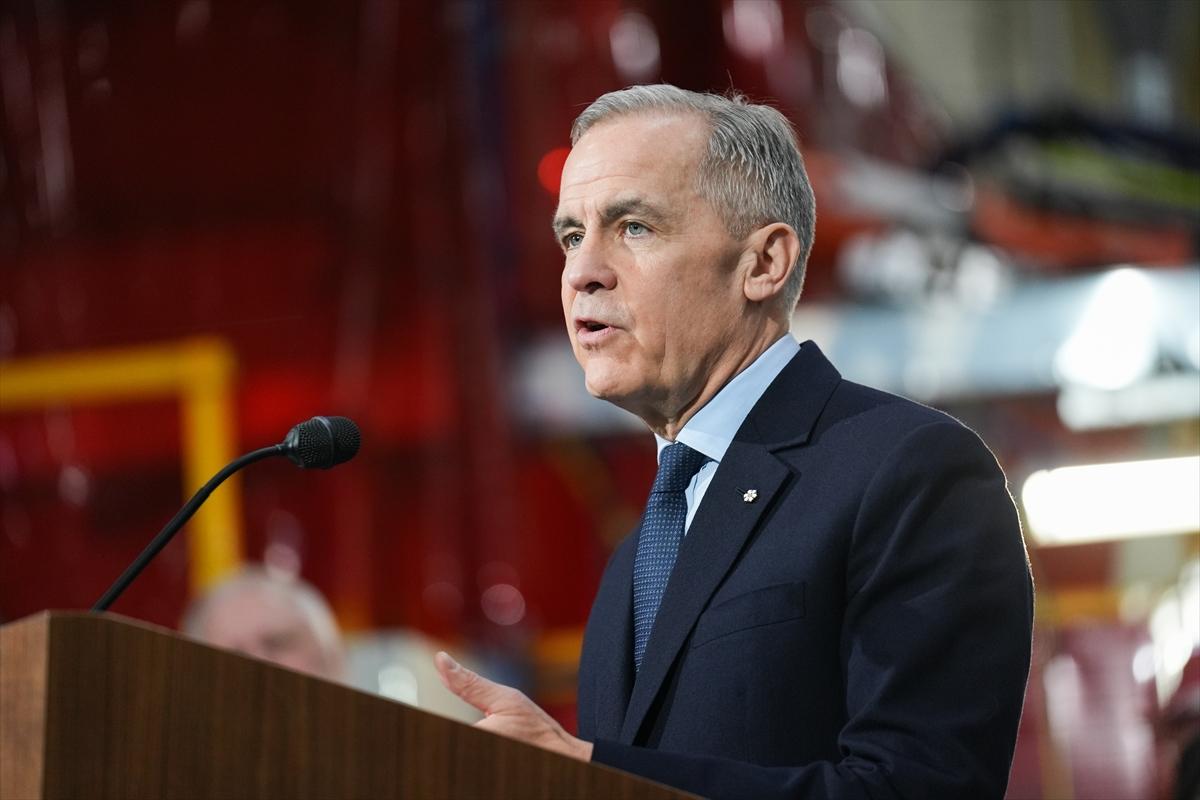
In his written statement on the U.S. decision Prime Minister Mark Carney described the move as the latest in a series of “unilateral U.S. trade actions” and stated: “Among these are customs duties imposed on Canada’s automotive sector in violation of CUSMA (Canada–U.S.–Mexico Agreement).” Carney noted that Canada has presented comprehensive and detailed proposals to resolve the dispute and modernize CUSMA and reaffirmed Canada’s belief in the benefits of free and fair trade. He also stated that Canada will take all necessary measures to support Canadian workers farmers businesses and families.
The Prime Minister’s statement emphasized that provinces territories and Canadians are acting in unity to defend their economies workers farmers businesses and families against measures described as threats to Canadian sovereignty. It was noted that the United States has sought to transform all its trade relationships over the past 18 months including those under CUSMA and that Canada has presented a series of detailed and comprehensive proposals to resolve the dispute and modernize CUSMA and is ready to intensify negotiations in the coming weeks. The statement drew attention to the new government’s signing of more than 20 new economic and security partnerships and reaffirmed Canada’s commitment to free and fair trade.【16】
Ontario Premier Doug Ford argued on social media that Canada must retaliate stating: “If these tariffs are implemented Canada must respond with tariffs on tariffs and dollars on dollars.”
British Columbia (BC) Premier David Eby noted that the tariffs would significantly raise costs for Americans saying: “I am sorry for Americans right now. If you are fighting with Canadians you have no friends in the world.” Eby also stated that provincial liquor stores will not remove U.S. alcohol from shelves during the trade dispute.
Quebec Premier Christine Fréchette described the new tariff threats as “unfair and alarming” in a French-language social media post. She called on the federal government to defend the supply management system asserting that “any weakening of supply management is non-negotiable.”
Bloc Québécois leader Yves-François Blanchet labeled the tariffs as “irrational and harmful aggression” and stated that they confirm the failure of Carney’s conciliation strategy and that this strategy has damaged Quebec’s culture and economy.
New Democratic Party (NDP) leader Avi Lewis described the announcement of the new tariffs as “the latest economic hand grenade thrown from across the border by a president who has lost control and connection with reality.” He called on the Liberal government to prepare support packages for affected workers and countermeasures.
The Conservative Party of Canada in a statement signed by multiple shadow ministers labeled Trump’s latest tariffs as “another unacceptable and unjustified attack on Canadian workers and businesses.” It accused the Carney government of having surrendered Canadian advantages for over a year and a half without working to secure the agreement it promised.
President and CEO of the Canadian Chamber of Commerce Candace Laing characterized the development as a “regrettable escalation” by the U.S. administration and called on both sides to use the 30-day period to make progress in formal negotiations. Ontario Chamber of Commerce President and CEO Daniel Tisch labeled the decision a “needless and reckless escalation” noting that the tariffs would lead to higher costs disrupted supply chains and delayed investment decisions.
President of the Distilled Spirits Council of the United States Chris Swonger acknowledged the Trump administration’s recognition of the “significant harm” caused by the removal of U.S. alcoholic beverages from shelves in some Canadian regions but expressed hope that the matter could be resolved without further escalation. He noted that the 50 percent tariff deepens trade tensions and increases the risk of further retaliation.
President of the Canadian Automotive Parts Manufacturers’ Association Flavio Volpe suggested the move may be a pressure tactic and called for a calm response. President and CEO of the British Columbia Wine Institute Jeff Guignard urged Canadians to support domestic producers.
Trade lawyer Rambod Behboodi of Borden Ladner Gervais LLP noted that the new tariffs demonstrate the impact of Canadian retaliatory measures in the United States and highlighted complaints from Kentucky’s governor regarding the effect on the American whiskey industry. Former Prime Minister Justin Trudeau’s senior advisor on U.S.-Canada relations Diamond Isinger pointed out that Carney has limited authority to compel provinces to resume selling American alcohol and that such decisions rest with provincial premiers.
Al Jazeera. "Trump Imposes 50% US Tariffs on Some Canadian Goods, Citing Discrimination." Al Jazeera. Accessed July 21, 2026.https://www.aljazeera.com/news/2026/7/21/trump-imposes-50-us-tariffs-on-some-canadian-goods-citing-discrimination
Anadolu Ajansı. "ABD, Kanada'dan İthal Edilen Bazı Mallara Yüzde 50 Oranında Gümrük Vergisi Getiriyor." Accessed July 21, 2026.https://www.aa.com.tr/tr/dunya/abd-kanadadan-ithal-edilen-bazi-mallara-yuzde-50-oraninda-gumruk-vergisi-getiriyor/4004170
Anadolu Ajansı. “Kanada Başbakanı, ABD'nin Yüzde 50 Gümrük Vergisi Kararını ‘Tek Taraflı Ticari Eylem’ Olarak Nitelendirdi.” Accessed July 21, 2026.https://www.aa.com.tr/tr/ekonomi/kanada-basbakani-abdnin-yuzde-50-gumruk-vergisi-kararini-tek-tarafli-ticari-eylem-olarak-nitelendirdi/4004331
Axios. “U.S. to Slap 50% Tariffs on Canadian Goods, Deepening North America Trade War.” Axios. Accessed July 21, 2026.https://www.axios.com/2026/07/20/trump-tariffs-canada-trade-war
BBC News. “Trump Slaps 50% Tariffs on Canada and Carney Vows to ‘Intensify’ Trade Talks.” BBC News. Accessed July 21, 2026.https://www.bbc.com/news/articles/cg4dzq3x3e1o
CBC News. “Trump Threatens Canada with New 50% Tariffs in Latest Ramp-Up of Trade War.” CBC News. Accessed July 21, 2026.https://www.cbc.ca/news/world/livestory/new-trump-tariffs-canada-us-trade-cusma-usmca-9.7277143
CNN. “Trump’s New 50% Tariffs on Canada Risk Igniting a Fresh Trade War.” Accessed July 21, 2026.https://edition.cnn.com/2026/07/20/business/canada-tariffs-50-percent-trump
Office of the Prime Minister of Canada. “Statement by Prime Minister Carney on the United States Administration’s Intention to Impose New Tariffs on Canadian Goods.” Office of the Prime Minister of Canada. Accessed July 21, 2026.https://www.pm.gc.ca/en/news/statements/2026/07/20/statement-prime-minister-carney-united-states-administrations-intention
Reuters. “US Imposes New 50% Tariffs on $20 Billion Worth of Canadian Products.” Reuters. Accessed July 21, 2026.https://www.reuters.com/business/us-imposes-new-50-tariffs-canadian-products-2026-07-20/
The White House. “Fact Sheet: President Donald J. Trump Imposes Additional Tariffs on Canada.” The White House. Accessed July 21, 2026.https://www.whitehouse.gov/fact-sheets/2026/07/fact-sheet-president-donald-j-trump-imposes-additional-tariffs-on-canada/
[1]
The White House, “Fact Sheet: President Donald J. Trump Imposes Additional Tariffs on Canada.” whitehouse.gov, erişim 21 Temmuz 2026, https://www.whitehouse.gov/fact-sheets/2026/07/fact-sheet-president-donald-j-trump-imposes-additional-tariffs-on-canada/
[2]
The White House, “Fact Sheet: President Donald J. Trump Imposes Additional Tariffs on Canada.”
[3]
Reuters, “US Imposes New 50% Tariffs on Some Canadian Products,” Reuters, erişim 21 Temmuz 2026, https://www.reuters.com/business/us-imposes-new-50-tariffs-canadian-products-2026-07-20/
[4]
Reuters, “US Imposes New 50% Tariffs on Some Canadian Products.”
[6]
CNN, “Trump’s New 50% Tariffs on Canada Risk Igniting a Fresh Trade War,” CNN, Erişim 21 Temmuz 2026, https://edition.cnn.com/2026/07/20/business/canada-tariffs-50-percent-trump
[7]
The White House, “Fact Sheet: President Donald J. Trump Imposes Additional Tariffs on Canada.”
[8]
CBC News, “Trump Threatens Canada with New 50% Tariffs in Latest Ramp-Up of Trade War.”
[9]
Reuters, “US Imposes New 50% Tariffs on Some Canadian Products.”
[10]
Reuters, “US Imposes New 50% Tariffs on Some Canadian Products.”
[11]
The White House, “Fact Sheet: President Donald J. Trump Imposes Additional Tariffs on Canada.”
[12]
The White House, “Fact Sheet: President Donald J. Trump Imposes Additional Tariffs on Canada.”
[13]
The White House, “Fact Sheet: President Donald J. Trump Imposes Additional Tariffs on Canada.”
[14]
Reuters, “US Imposes New 50% Tariffs on Some Canadian Products.”
[15]
Prime Minister of Canada, “Statement by Prime Minister Carney on the United States Administration’s Intention to Impose Additional Tariffs on Canada,” pm.gc.ca, Erişim 21 Temmuz 2026, https://www.pm.gc.ca/en/news/statements/2026/07/20/statement-prime-minister-carney-united-states-administrations-intention
[16]
Prime Minister of Canada, “Statement by Prime Minister Carney on the United States Administration’s Intention to Impose Additional Tariffs on Canada.”
Hours before the scheduled implementation date of August 19, 2026, U.S. President Donald Trump postponed the 50 percent tariffs on Canadian goods for three days on the evening of Tuesday, August 18, 2026. According to Axios, the delay was announced on the grounds that the United States and Canada had reached an agreement contingent on finalizing documentation.
In a post on his Truth Social account, Trump stated: “I have delayed for three days the 50 percent tariffs on Canada scheduled to take effect tomorrow morning, because Canada and the United States have reached an AGREEMENT contingent on finalizing documentation!” In the same post, Trump added, “The great Keystone XL Pipeline, killed long ago by Sleepy Joe Biden, may rise from the grave!”
According to NDTV, Trump’s announcement regarding the tariff delay stated that the postponement was due to Canada’s commitment to eliminate the discriminatory or unreasonable and unequal practices in question.
Canadian Prime Minister Mark Carney soon confirmed that Canada had accepted the suspension of U.S. tariffs until August 22. The delay followed talks between Trump and Carney on Tuesday. In a written statement, Carney noted that “substantial progress” had been made in negotiations but that “important work remains to be done.”
Carney stated that the potential agreement aims to “resolve open trade issues and deliver greater certainty and tangible benefits for Canadian businesses, workers, farmers, and families.” The Office of the U.S. Trade Representative, in a social media post, indicated that the agreement between Washington and Ottawa is expected to include elements such as “comprehensive market access for all American goods, economic security commitments, and digital trade alignment.”
The delayed tariffs cover approximately $20.2 billion worth of Canadian exports, ranging from electronics to industrial machinery, furniture to dairy products and wine. According to Oxford Economics, the tariffs target about 5.5 percent of Canada’s exports to the United States, amounting to roughly $20 billion; the institution noted that this would pose a “modest” negative risk to the Canadian economy but would significantly impact the manufacturing sector in central Canada.
Oxford Economics noted that manufacturers in the cement, paper, printing, wood, apparel, and electronic equipment sectors are expected to be the most affected.
Trump linked the progress in the agreement to efforts to revive the Keystone XL Pipeline, though neither Trump nor Carney disclosed details of the agreement. The Keystone XL Pipeline, first proposed in 2008, has faced strong opposition and numerous delays; it was designed to transport approximately 830,000 barrels of crude oil per day from Alberta (Canada) to Nebraska (United States). The key U.S. permit for the project was revoked in 2021 by former U.S. President Joe Biden on environmental and economic grounds, effectively terminating the project.
Al Jazeera. "Trump Pauses 50 Percent Tariffs on Canada in Last-Minute Deal." Accessed August 19, 2026.https://www.aljazeera.com/economy/2026/8/19/us-canada-reach-trade-deal-to-avert-steep-tariffs-trump-says
Axios. "Trump Postpones 50% Tariffs on Canadian Goods." Accessed August 19, 2026.https://www.axios.com/2026/08/19/trump-canada-tariffs-50-percent-postponed
NDTV. “Subject to a Deal”: Trump Pauses 50% Tariffs on Canada for 3 Days.” Accessed August 19, 2026.https://www.ndtv.com/world-news/us-canada-relations-subject-to-a-deal-president-donald-trump-pauses-50-percent-tariffs-on-canadian-goods-for-three-days-donald-trump-mark-carney-ties-11929366

U.S. President Donald Trump signed three separate presidential declarations on July 20, 2026, under Section 338 of the 1930 Tariff Act, imposing an additional 50 percent customs duty on certain goods originating from Canada. The decision was justified on the grounds that Canada was engaging in discriminatory treatment against U.S. products in its automobile dairy and alcoholic beverages sectors. The tariff will take effect on August 19, 2026, and will cover a wide range of products from wine to hockey sticks and from cement to dairy products. Canadian Prime Minister Mark Carney characterized the decision as a unilateral trade action and stated that his country was ready to intensify negotiations.
No Discussion Added Yet
Start discussion for "United States' Section 338 Tariffs Targeting Canada" article
July 21, 2026
Announcement and Scope of the Decision
July 21, 2026
Legal Basis: Section 338 of the Tariff Act
July 21, 2026
Rationale for the Tariffs
July 21, 2026
Canada’s Official Response
July 21, 2026
Political and Sectoral Reactions in Canada
August 19, 2026
Delay of Tariffs