

 Recently Added:
This article was automatically translated from the original Turkish version.
The 2026 Winter Olympics, the largest Olympic-scale event for snow and ice sports, is planned as the 25th edition of the Winter Olympic Games. The organization holds a comprehensive place in the history of Olympic winter sports due to its multi-host model, broad range of disciplines, and high participant profile. The Games have not yet begun, and the official opening ceremony will be held on 6 February 2026.
Milano Cortina 2026 Olympic Winter Games | Official Trailer - BBC (Youtube)
The idea of bringing winter sports under an Olympic umbrella emerged in the early years of the Summer Olympics. Winter sports such as ice skating and ice hockey were included in the programs of the 1908 and 1920 Summer Olympics, but over time the need for a separate organization for these disciplines became evident. Following discussions within the International Olympic Committee, the concept of holding winter sports under an independent organization with equal status to the Summer Games was adopted. This development established the institutional foundation of the Winter Olympics.
First Winter Olympics - Decades TV Network (Youtube)
The first Winter Olympics were held in 1924 in Chamonix, France. Initially, the event was titled the “International Winter Sports Week within the VIII Olympic Games.” Alpine sports occupied a central position, with disciplines such as cross-country skiing, ski jumping, ice hockey, figure skating, and bobsleigh featured in the program. The Chamonix 1924 event was later retroactively recognized as the first Winter Olympics, establishing the official historical beginning of the Winter Games.
Following Chamonix 1924, the Winter Olympics became a permanent event held at regular intervals. Early editions were primarily hosted in mountainous and cold-climate regions of Europe and North America. During this period, the number of sports disciplines increased, competition formats were standardized, and the role of international federations strengthened. The Winter Olympics developed an independent identity and became a distinct pillar of the Olympic movement.
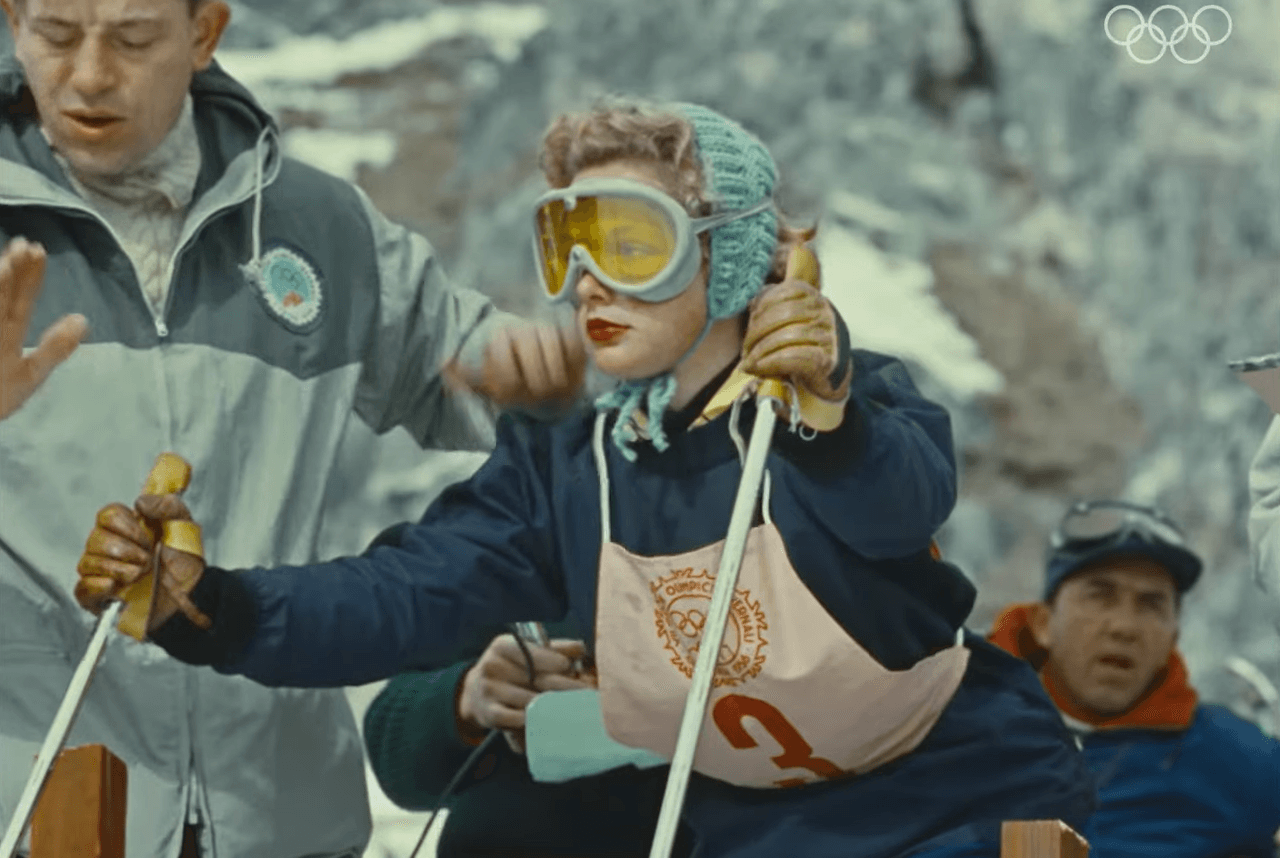
100 Years of the Olympics (Youtube)
While the early Winter Olympics featured a limited number of disciplines, the program expanded over subsequent years. Skiing disciplines were subdivided into specialized events, and ice sports diversified in terms of technique and competition format. This evolution transformed the Winter Olympics into a structure encompassing not only traditional winter sports but also modern and technically advanced disciplines. The expansion of the program directly contributed to increased athlete numbers and greater participation from countries.
Italy holds a significant position as a host nation in Winter Olympic history. Cortina d’Ampezzo hosted the 1956 Winter Olympics, marking Italy’s first such event. This organization took place as television broadcasting began to expand and contributed to the global visibility of the Winter Olympics. Later, Turin hosted the 2006 Winter Olympics and emerged as a model of modern Olympic organization. Milano Cortina 2026 continues this historical legacy as Italy’s third hosting of the Winter Olympics.
The period from 1924 to 2026 demonstrates that the Winter Olympics have achieved a historical continuity exceeding a century. Throughout this time, the Games have been held regularly despite wars, political transformations, and social changes. By being hosted in different regions each edition, the Winter Olympics have reinforced their international character. The 2026 Winter Olympics represent a current link in this century-long continuity.
The 2026 Winter Olympics exemplify the transition from early mountain-based Games to multi-site, regionally coordinated events. What began as a single-town event in Chamonix 1924 has evolved into a vast organization encompassing multiple cities and regions in 2026. This transformation represents a structural milestone in the historical development of the Winter Olympics.
The 2026 Winter Olympics are the 25th edition organized by the International Olympic Committee. Held every four years on an independent calendar from the Summer Olympics, the 2026 edition follows the 2022 Beijing Winter Olympics. This edition is planned as the current representative of the winter sports segment of the Olympic calendar. The organization contributes both historical continuity and a contemporary platform within the Olympic movement.
The 2026 organization is among the first editions to reach the quarter-century mark since the inception of the Winter Olympics in 1924. This underscores the Games’ consistent and regular organization over nearly a century. The 25th edition signifies the continuation of the Olympic legacy inherited from previous Games within a new geographical and organizational framework. The event includes all core disciplines from prior Winter Olympics and incorporates an updated Olympic program structure.
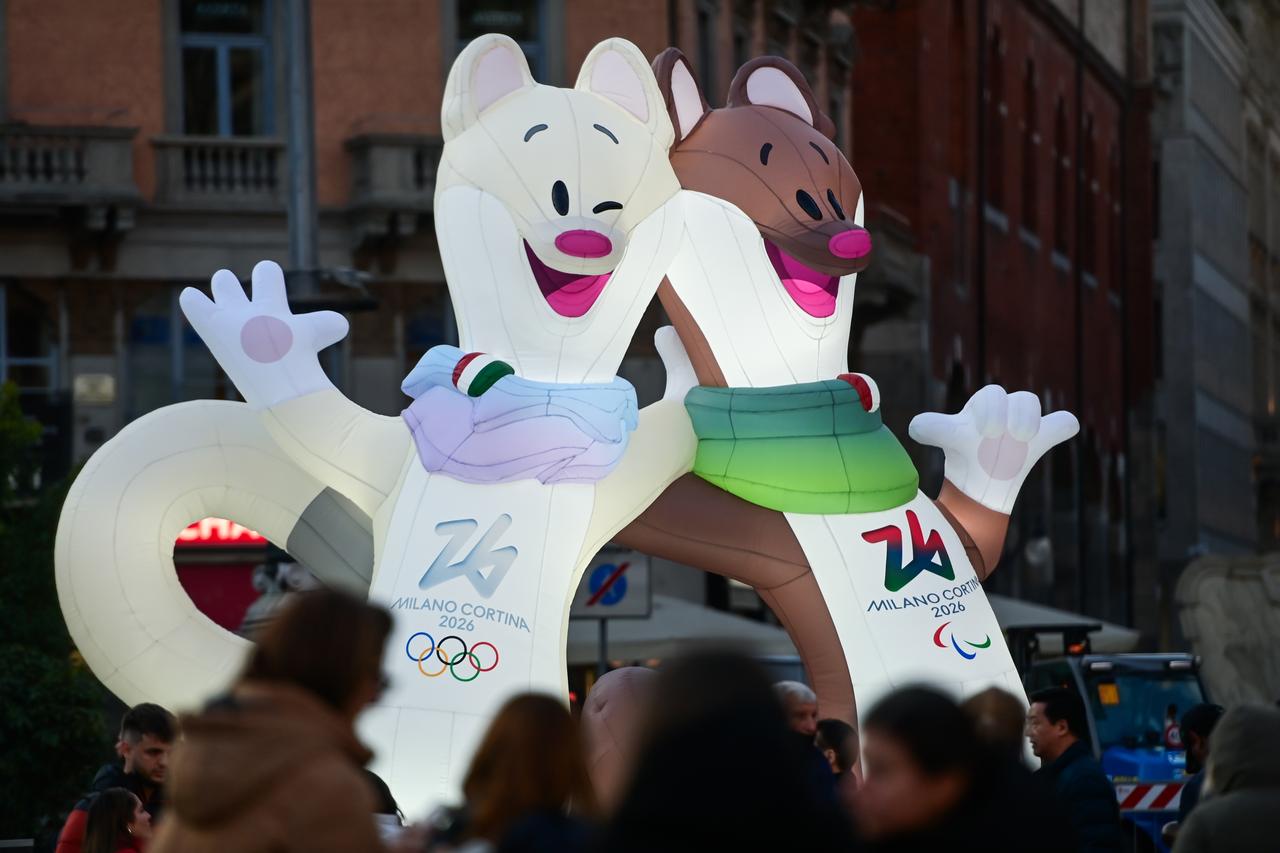
Tina and Milo are the official mascots of the Milano Cortina 2026 Winter Olympics and Paralympic Games. Their names derive from the host cities: Milo represents Milan, and Tina represents Cortina. The mascots were first introduced to the public at the Sanremo Music Festival. Their designs were selected through drawing competitions held in schools across Italy.
Born in the Italian Alps, Tina is Milo’s older sister and shares a strong bond with him. She is drawn to innovative ideas and dreams of making the world a better place. She places great importance on nature conservation and acts accordingly.
Milo is a character born without a leg and loves exploring nature. He has learned to walk using his tail. He views this trait not as a limitation but as an advantage that enables him to leap higher, like a trampoline.

2026 Winter Olympics mascots Tina and Milo (TMOK)
The 2026 Winter Olympics are currently not yet underway. The official opening ceremony will be held on 6 February 2026, marking the symbolic start of the event. Some competitions are planned to begin before the opening ceremony, reflecting the gradual start model increasingly adopted in recent Olympic organizations. The Games are scheduled to conclude on 22 February 2026, aligning with the traditional duration of the Winter Olympics.
The 2026 Winter Olympics are organized under a multi-host model, encompassing multiple cities and regions rather than a single city. This model distributes competitions across geographically distinct areas. The main centers of the organization are designated as Milan and Cortina d’Ampezzo, with additional cities and settlements integrated into the competition program. The multi-host structure has expanded the spatial scope of the event and ensured regional planning of the Games.

Two synthetic ice rinks produced by Xtraice in Piazza del Duomo, Milan (Flickr)
Milan is positioned as one of the main centers of the 2026 Winter Olympics. It has been designated as the host city for the opening ceremony. Additionally, a significant portion of ice sports events will take place in Milan and its surrounding facilities. Milan’s transportation infrastructure, accommodation capacity, and existing sports venues form the urban backbone of the organization. In this capacity, Milan stands out as one of the administrative and symbolic centers of the Games.
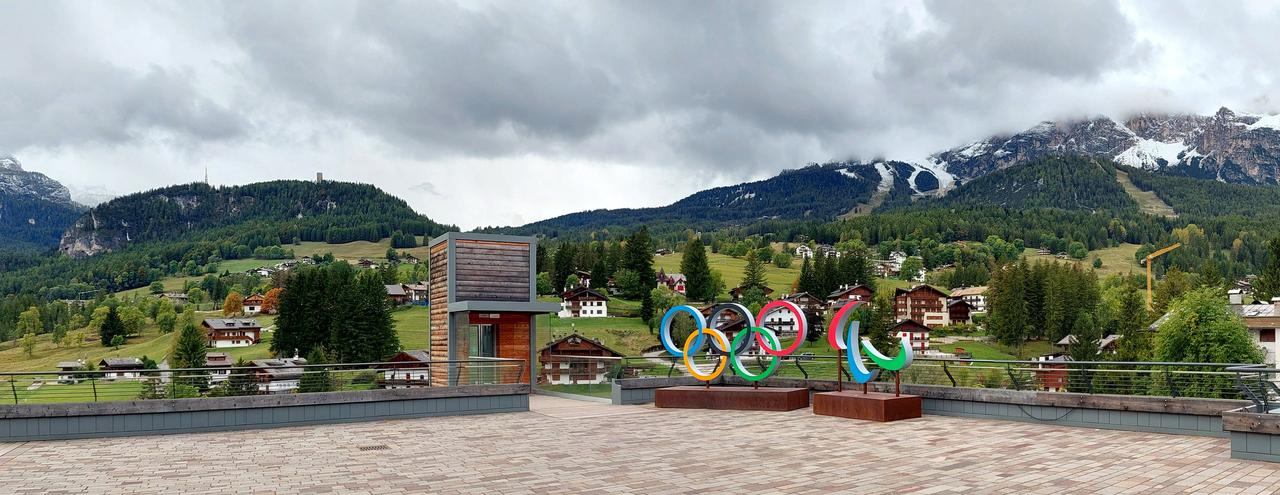
Cortina d'Ampezzo - Olympic rings terrace (Flickr)
Cortina d’Ampezzo serves as the central hub for mountain sports at the 2026 Winter Olympics. The town holds a special place in Winter Olympic history due to its previous hosting of the 1956 Winter Olympics. Alpine skiing, ski jumping, and bobsleigh events will be held in Cortina d’Ampezzo and surrounding areas. The mountainous geography provides the natural conditions required for these disciplines.
Competitions for the 2026 Winter Olympics are not limited to Milan and Cortina d’Ampezzo. Settlements in the Alps such as Livigno and Bormio have been designated as centers for skiing and mountain sports. Tesero and Predazzo are planned as venues for Nordic disciplines and cross-country skiing. Verona will host the closing ceremony. Each of these locations has been assigned specialized spatial functions for specific disciplines.
The official opening ceremony of the 2026 Winter Olympics will be held on 6 February 2026. The ceremony holds a defining place in the Olympic calendar as the symbolic start of the Games. It formally announces the commencement of the event and follows the traditional framework of Winter Olympic rituals, including the parade of nations, the raising of the Olympic flag, and the lighting of the Olympic flame. The ceremony serves as the first major collective gathering that visibly expresses the international identity of the organization.
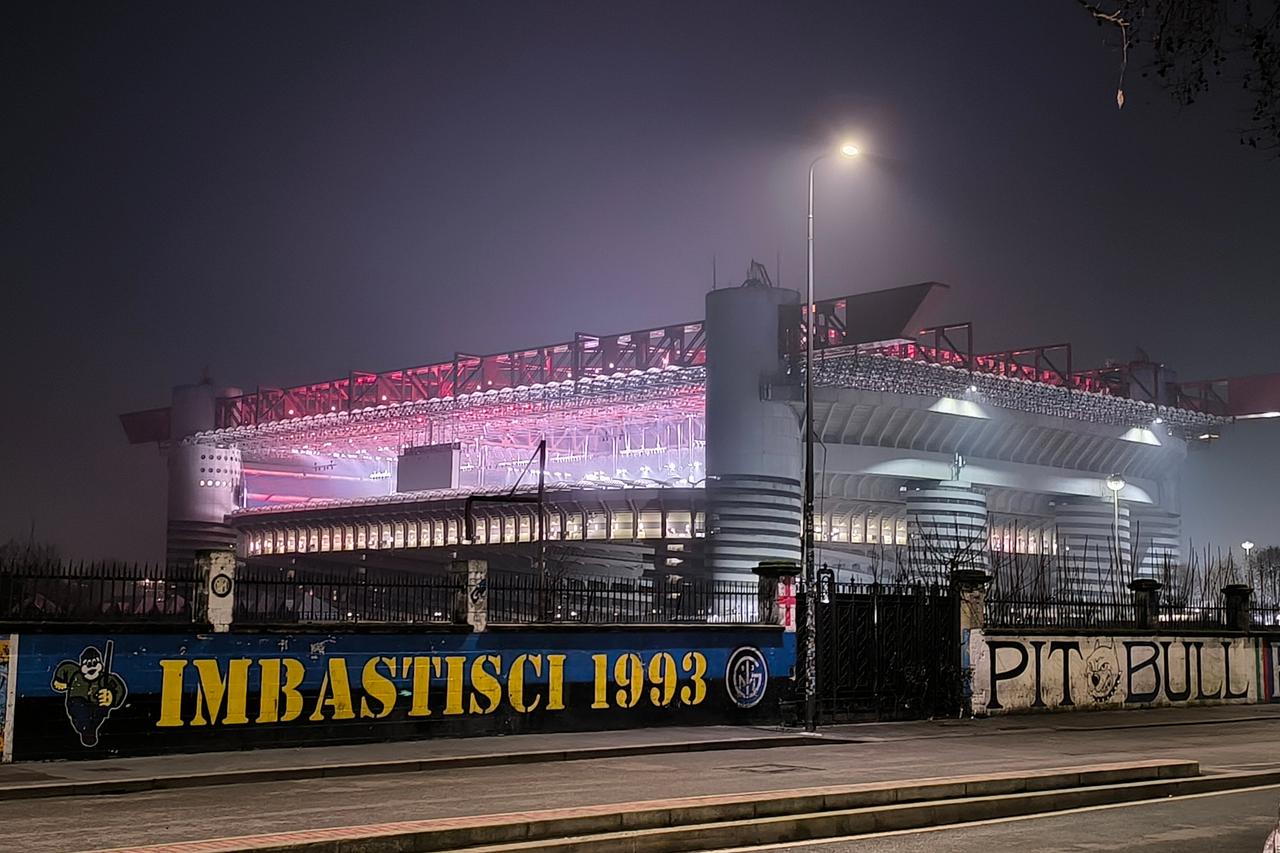
San Siro Stadium, venue of the opening ceremony (Flickr)
The opening ceremony will be held at the San Siro Stadium in Milan. San Siro has been included in the program due to its capacity and infrastructure for large-scale international events. The selection of the stadium reflects the intention to host a high-attendance, widely viewed ceremony. Holding the opening ceremony in a football stadium represents one of the distinctive spatial choices in Winter Olympic history.
The competition schedule for the 2026 Winter Olympics is structured to intensify from 6 February 2026 onward. Events will be held at designated time intervals and in different cities according to sport disciplines. The schedule has been designed with a balanced distribution encompassing both individual and team disciplines. Competition days are planned to allow multiple events to occur simultaneously across different venues. This structure is directly aligned with the multi-host character of the organization.
In the competition schedule, ice sports, mountain sports, and speed disciplines are spread across different time periods. Team sports such as ice hockey and curling began early in the Games due to their extended tournament formats. Alpine skiing, cross-country skiing, and ski jumping events have been scheduled on specific days, taking into account weather conditions and course preparations. This timing arrangement has been designed to respect the technical and environmental requirements of each discipline.
The sports program of the 2026 Winter Olympics encompasses all core disciplines of the Winter Olympic tradition. A total of 16 Olympic sports are included in the program. These sports bring together disciplines based on different natural and spatial conditions of winter sports. The Olympic program unites indoor ice sports with outdoor mountain and speed sports under a single organizational framework. The distribution of disciplines has been aligned with the multi-host structure, spreading across various cities and venues.
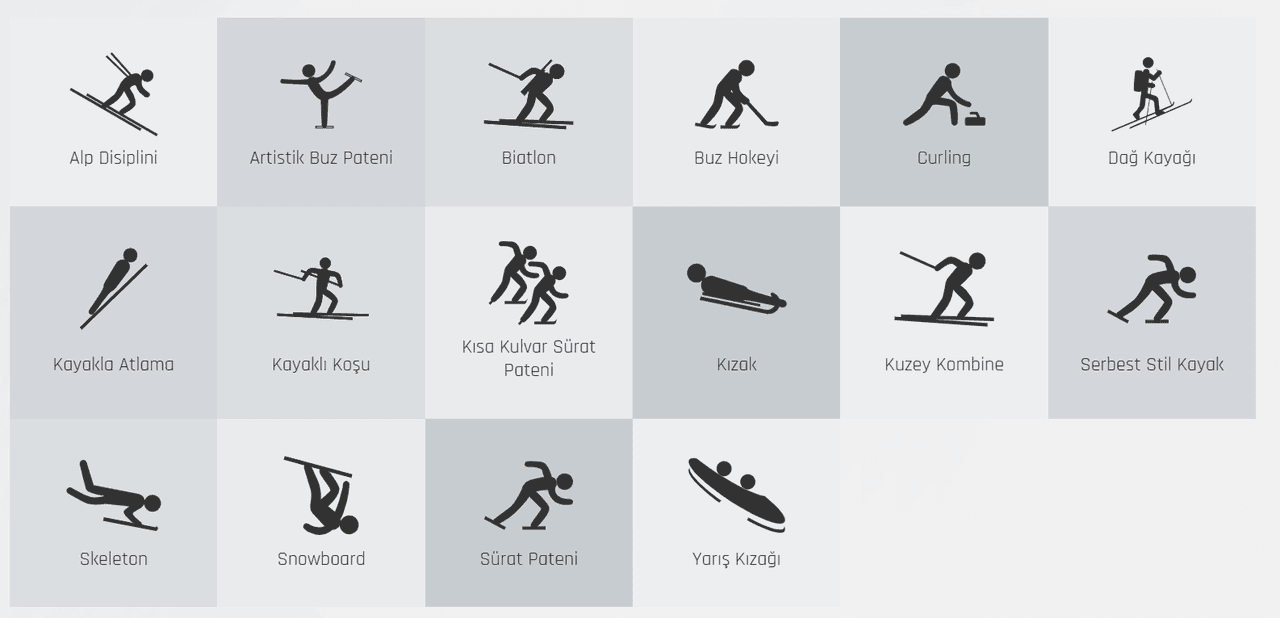
Winter Olympic disciplines (TMOK)
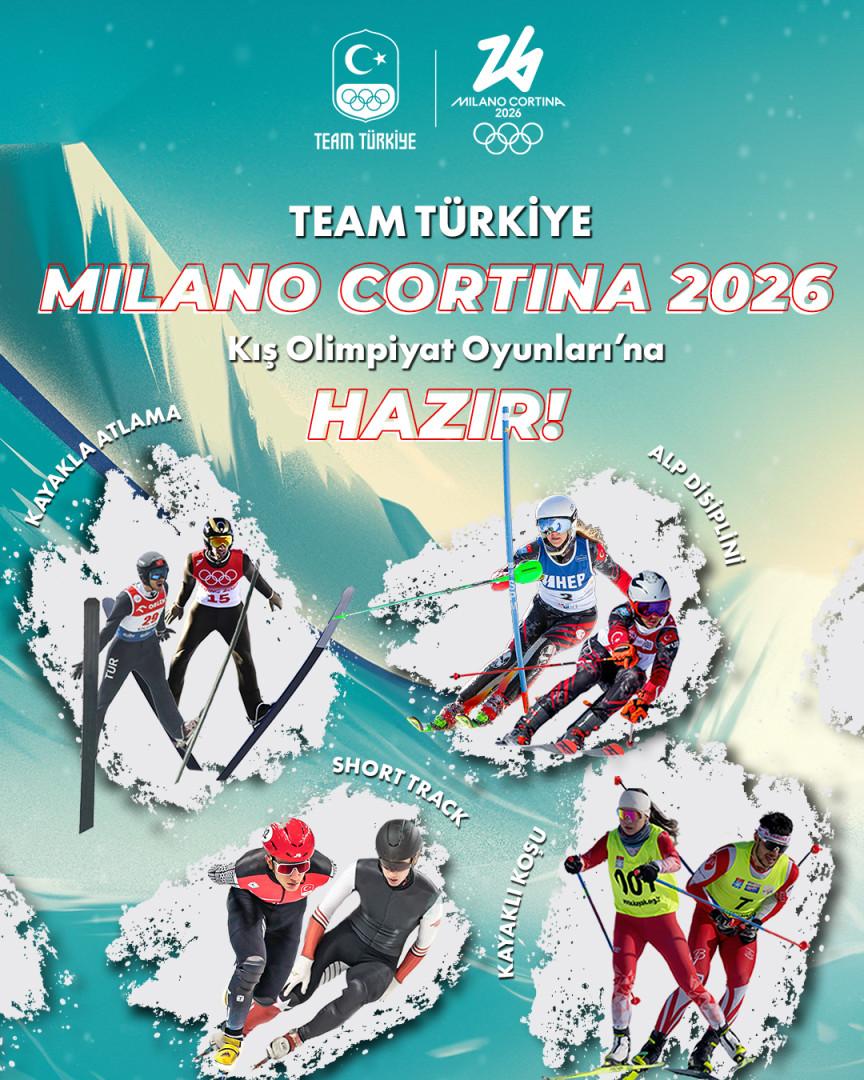
Team Türkiye 2026 Winter Olympics (TMOK)
Türkiye will participate in the 2026 Winter Olympics with a limited but diverse delegation of athletes. Turkish athletes have qualified for the Games through individual quota systems. This participation aligns with Türkiye’s historical pattern in the Winter Olympics. Türkiye is among the countries that regularly participate in the Winter Olympics, typically represented in individual disciplines rather than team events.
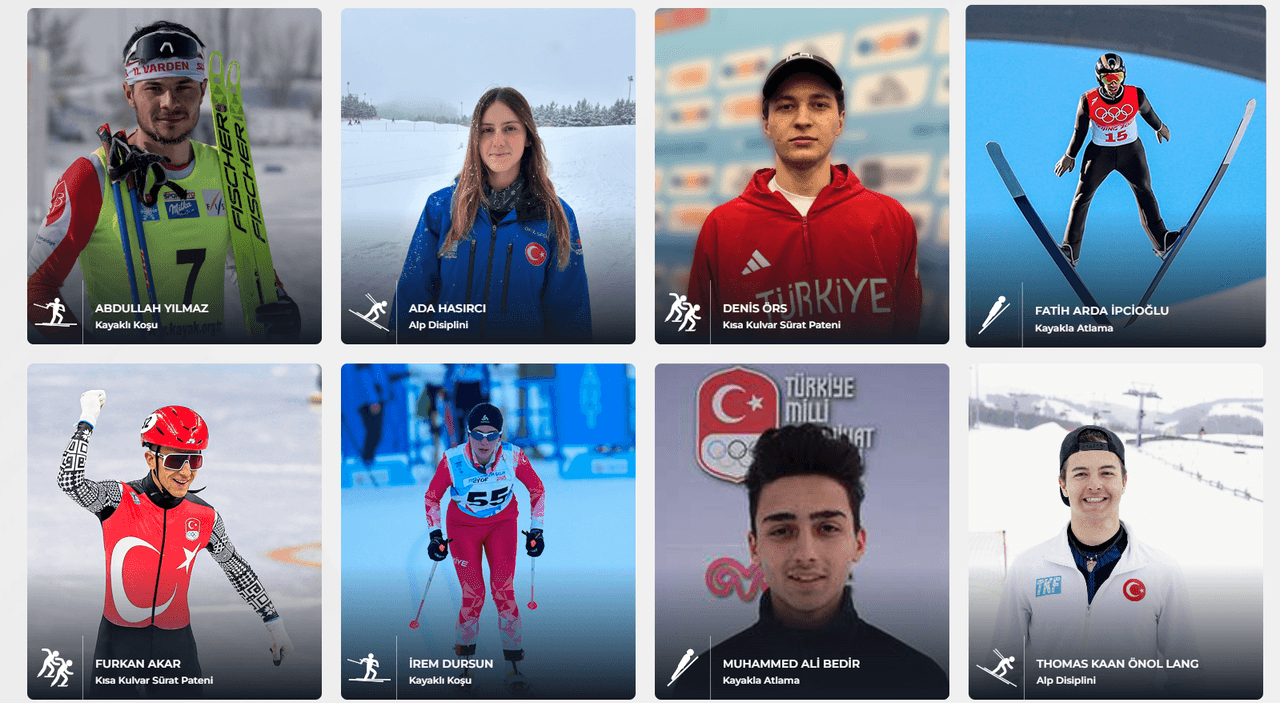
Athletes competing at the Olympics (TMOK)
Türkiye will be represented by a total of nine athletes at the 2026 Winter Olympics. Athletes are distributed across men’s and women’s categories in various disciplines. Participation occurs exclusively through individual events rather than team sports. This structure reflects Türkiye’s current organizational and infrastructural framework for winter sports. All athletes have earned their Olympic quotas through competitive qualification processes.
Ski jumping is one of the most notable disciplines for Türkiye at the 2026 Winter Olympics. Türkiye will be represented by two athletes in this discipline: Fatih Arda İpcioğlu and Muhammed Ali Bedir. This marks the first time Türkiye has fielded more than one athlete in ski jumping in Winter Olympic history. The athletes earned their quotas through years of international competition. Ski jumping is not among Türkiye’s traditional strong disciplines, making this participation particularly significant.
Türkiye is also represented in alpine skiing and cross-country skiing, disciplines with a long-standing presence in its Winter Olympic participation. In cross-country skiing, İrem Dursun will compete for women and Abdullah Yılmaz for men. In alpine skiing, Ada Hasırcı will compete for women and Thomas Kaan Önol Lang for men, both aiming for medals.
Short track speed skating is one of the disciplines in which Türkiye has participated in recent Winter Olympics. In 2026, Türkiye will be represented by two athletes in this discipline: Furkan Akar and Denis Örs. Competitions will be held in individual distance categories, and Turkish athletes will compete in the Olympic program. This discipline is among the areas where Türkiye has achieved Olympic-level representation in ice sports.
Türkiye will also be represented in para skiing at the 2026 Games. Harun Mut will represent Türkiye in para alpine skiing.
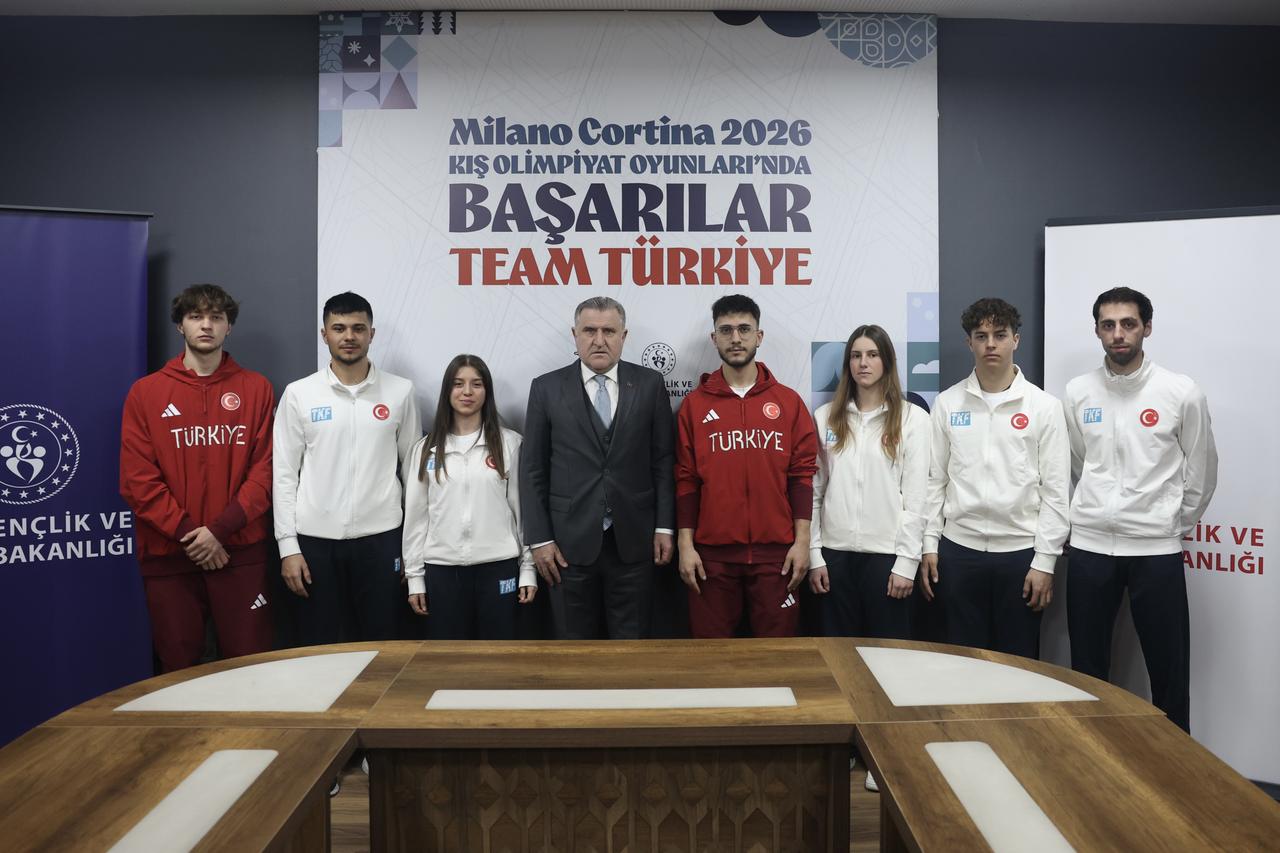
Minister Bak receives national athletes for the 2026 Winter Olympics (AA)
Prior to the 2026 Winter Olympics, the national athletes of Türkiye’s delegation were officially honored in ceremonies. The athletes were formally received under a program organized by the Ministry of Youth and Sports. The participation of the athletes in the Olympic event was officially announced to the public during this process. This procedure is part of Türkiye’s institutional protocol for participation in Olympic events.
Türkiye has not yet won a medal in Winter Olympic history. Nevertheless, the country has participated in various editions through individual athletes. The 2026 Winter Olympics continue this historical trajectory, affirming Türkiye’s ongoing Olympic presence in winter sports. Participation is viewed within the framework of Olympic continuity, independent of medal outcomes.
The closing ceremony of the 2026 Winter Olympics will be held on 22 February 2026 in Verona. The ceremony represents the sportive and symbolic conclusion of the Games. It includes the ritual transfer of the Olympic flag and the handover of the Games to the next host. Verona’s selection as the venue for the closing ceremony reflects the multi-host structure of the organization extending to its ceremonial elements.
Anadolu Ajansı. "Türkiye, 2026 Kış Olimpiyatları’nda 9 sporcuyla madalya arayacak." Accessed February 6, 2026. https://www.aa.com.tr/tr/spor/turkiye-2026-kis-olimpiyatlarinda-9-sporcuyla-madalya-arayacak/3804773
Anadolu Ajansı. “2026 Kış Olimpiyatları’nın açılışı yarın yapılacak.” Accessed February 6, 2026. https://www.aa.com.tr/tr/dunyadan-spor/2026-kis-olimpiyatlarinin-acilisi-yarin-yapilacak/3820800
Anadolu Ajansı. “Bakan Bak, 2026 Kış Olimpiyatları’na katılacak milli sporcuları kabul etti.” Accessed February 6, 2026. https://www.aa.com.tr/tr/spor/bakan-bak-2026-kis-olimpiyatlarina-katilacak-milli-sporculari-kabul-etti/3809542
Anadolu Ajansı. “Kayakla atlamada milli sporcular olimpiyat yolcusu.” Accessed February 6, 2026. https://www.aa.com.tr/tr/spor/kayakla-atlamada-milli-sporcular-olimpiyat-yolcusu/3813134
Anadolu Ajansı. “Kayakla atlamaya kiralık ekipmanla başladı, üçüncü kez olimpiyat sahnesine çıkıyor.” Accessed February 6, 2026. https://www.aa.com.tr/tr/spor/kayakla-atlamaya-kiralik-ekipmanla-basladi-ucuncu-kez-olimpiyat-sahnesine-cikiyor/3814118
Anadolu Ajansı. “Kış olimpiyatlarının madalya rekortmeni Marit Björgen.” Accessed February 6, 2026. https://www.aa.com.tr/tr/spor/kis-olimpiyatlarinin-madalya-rekortmeni-marit-bjorgen/3819653
Anadolu Ajansı. “Milli kayakçılar İrem Dursun ve Abdullah Yılmaz, 2026 Kış Olimpiyatları’nda Türkiye’yi temsil edecek.” Accessed February 6, 2026. https://www.aa.com.tr/tr/spor/milli-kayakcilar-irem-dursun-ve-abdullah-yilmaz-2026-kis-olimpiyatlarinda-turkiyeyi-temsil-edecek/3793511
Anadolu Ajansı. “İlk kez olimpiyatlara giden Muhammed Ali’nin hedefi kayakla atlamada Türkiye’yi gururlandırmak.” Accessed February 6, 2026. https://www.aa.com.tr/tr/spor/ilk-kez-olimpiyatlara-giden-muhammed-alinin-hedefi-kayakla-atlamada-turkiyeyi-gururlandirmak/3819637
EBSCO Research Starters. "First Winter Olympic Games." Accessed February 6, 2026. https://www.ebsco.com/research-starters/sports-and-leisure/first-winter-olympic-games
ESPN. "Where are the Winter Olympics? 2026 venues to know." Accessed February 6, 2026. https://www.espn.com/olympics/story/_/id/47817704/2026-winter-olympics-milano-cortina-venues
International Olympic Committee. “100 Years of Winter Olympic Games.” Accessed February 6, 2026. https://www.olympics.com/ioc/olympic-legacy/100-years-winter-legacy
Milano Cortina 2026. "About Us." Accessed February 6, 2026. https://www.olympics.com/en/milano-cortina-2026/about-us
Milano Cortina 2026. "Board of Directors." Accessed February 6, 2026. https://www.olympics.com/en/milano-cortina-2026/about-us/the-board
Milano Cortina 2026. "Legacy." Accessed February 6, 2026. https://www.olympics.com/en/milano-cortina-2026/about-us/legacy
Olympic News. "Birth of the Olympic Winter Games." Accessed February 6, 2026. https://www.olympics.com/en/news/birth-of-the-olympic-winter-games
Olympics.com. "Winter Olympic Sports List." Accessed February 6, 2026. https://www.olympics.com/en/sports/winter-olympics
The Athletic. “2026 Winter Olympics events schedule.” Accessed February 6, 2026. https://www.nytimes.com/athletic/interactive/2026-winter-olympics-events-schedule/
The Guardian. "Welcome to new cold war as world descends on Italy amid global political chaos." Accessed February 6, 2026. https://www.theguardian.com/sport/2026/feb/04/new-cold-war-global-political-chaos-winter-olympics-2026-milano-cortina
YouTube. "100 years of Olympic Winter Games." IOC Media. Accessed February 6, 2026. https://www.youtube.com/watch?v=ZFtG72HhKlE
YouTube. "Milano Cortina 2026 Olympic Winter Games | Official Trailer - BBC." BBC Trailers, BBC, BBC Sport. Accessed February 6, 2026. https://www.youtube.com/watch?v=7wdwqYcMoaQ
Opening Ceremony
The Milano-Cortina 2026 Winter Olympic Games officially began with a formal opening ceremony. Unlike any previous edition in Olympic history, the opening event was not confined to a single location but was conducted simultaneously across multiple venues. This structure implemented a decentralized organizational model reflecting the host country’s geographical and cultural diversity.
2026 Winter Olympics Opening Ceremony (Youtube)
The opening ceremony was attended by Italian President Sergio Mattarella, Italian Prime Minister Giorgia Meloni, International Olympic Committee President Kirsty Coventry, Türkiye’s Minister of Youth and Sports Osman Aşkın Bak, and President of the Turkish National Olympic Committee Ahmet Gülüm, along with representatives from numerous national Olympic committees. The ceremony followed Olympic protocol with official speeches and symbolic segments.
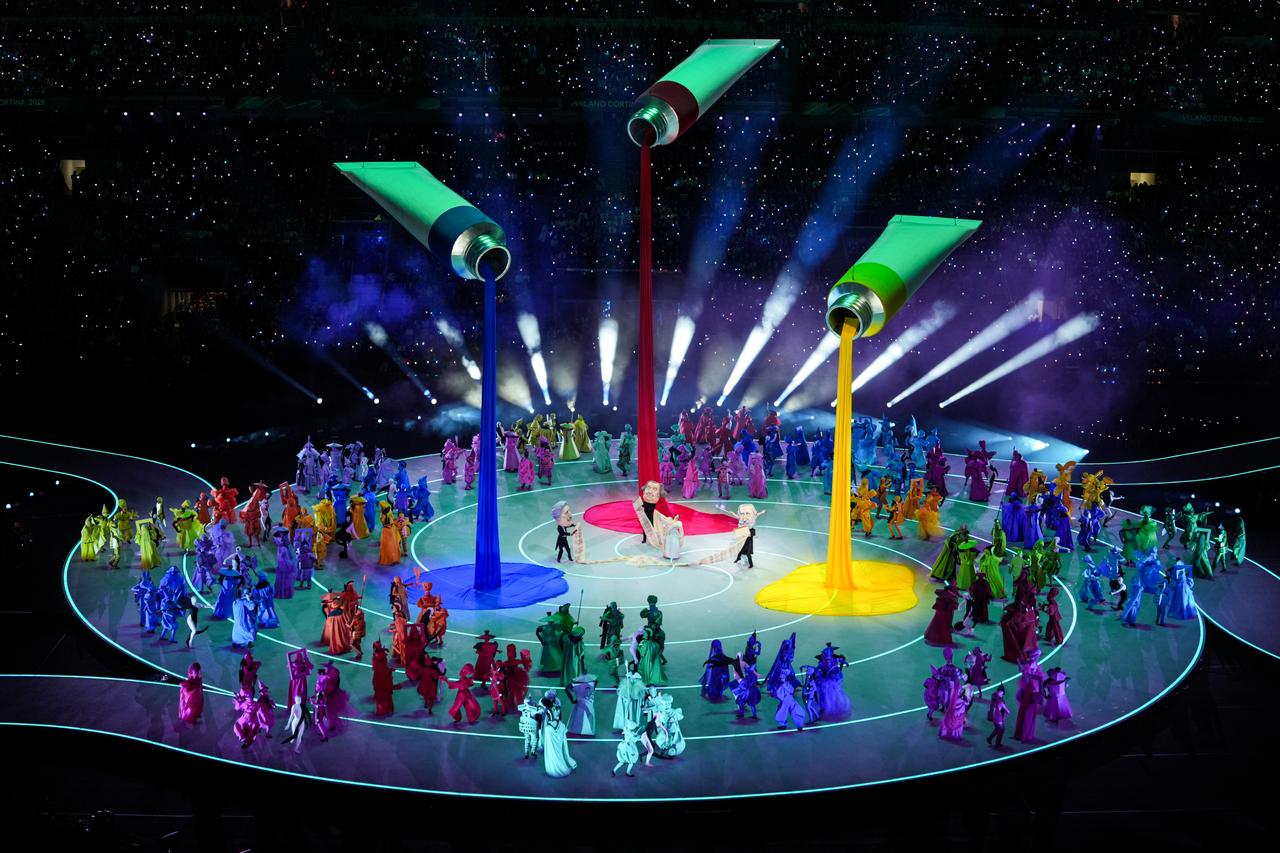
2026 Winter Olympics Opening Ceremony (AA)
The theme of the opening ceremony was “harmony.” A narrative was crafted to unite diverse cultures, regions, and social elements. The stage was designed as a living museum, presenting Italy’s historical and cultural heritage within a single visual story. References spanning from ancient Rome to the Renaissance, from Italian cuisine to literature and architecture, were brought to life on stage. Elements of the Venetian Carnival also formed part of this artistic expression.
During the athlete parades, competitors entered the ceremony carrying their national flags. Protests were heard from the stands during the entrance of certain delegations. This reflected the varied reactions the opening ceremony received from the international public.
For the first time in Olympic history, the Olympic flame was lit at two separate locations during the Milano-Cortina 2026 Games. The flame in Milan was lit by former Olympic and world champion skiers Alberto Tomba and Deborah Compagnoni. The flame in Cortina was lit by former Olympic champion Sofia Goggia. This practice was one of the symbolic elements reflecting the multi-site nature of the Games.
Mariah Carey concert (Youtube)
International and Italian artists performed during the opening ceremony. Among those featured were Mariah Carey, Andrea Bocelli, Laura Pausini, Lang Lang, Cecilia Bartoli, Sabrina Impacciatore, Charlize Theron, Giovanni Zanon, Pierfrancesco Favino, and Ghali. Immediately after President Sergio Mattarella officially declared the Games open, Andrea Bocelli performed Giacomo Puccini’s aria “Nessun Dorma.” These musical performances formed the artistic core of the ceremony.
The opening ceremony marked the final major event hosted at Milan’s San Siro Stadium. The stadium is scheduled to be demolished and rebuilt prior to the 2032 UEFA European Football Championship, which Türkiye will co-host with Italy. Thus, the Olympic opening also witnessed the closing of a historic era for San Siro.
Following the completion of the opening ceremony, the Milano-Cortina 2026 Winter Olympic Games officially commenced. A total of 116 medals are planned to be awarded across 16 disciplines. Approximately 2,900 athletes from 92 countries participated in the Games. The event is scheduled to continue throughout February in accordance with the established calendar.
Anadolu Ajansı. “2026 Milano-Cortina Kış Olimpiyatları'nın açılışı 4 noktada düzenlenen törenlerle gerçekleştirildi.” Anadolu Ajansı, February 7, 2026. Accessed February 9, 2026. https://www.aa.com.tr/tr/dunyadan-spor/2026-milano-cortina-kis-olimpiyatlarinin-acilisi-4-noktada-duzenlenen-torenlerle-gerceklestirildi/3823060
NBC Olympics. “2026 Winter Olympics Opening Ceremony recap: Milan Cortina Games commence with pageantry and performances.” NBC Olympics, February 6, 2026. Accessed February 9, 2026. https://www.nbcolympics.com/news/live/opening-ceremony-live-updates-2026-winter-olympics-milan
The New York Times. "Athletes Parade at 4 Sites in Italy to Kick Off Winter Olympics." The New York Times, February 6, 2026. Accessed February 9, 2026. https://www.nytimes.com/live/2026/02/06/world/milan-winter-olympics-opening-ceremony
The Milano-Cortina 2026 Winter Olympic Games officially commenced with a formal opening ceremony. The opening event was not confined to a single location, as had been the case in all previous Olympic Games, but instead took place simultaneously across multiple venues. This structure implemented a decentralized organizational model reflecting the host country’s geographical and cultural diversity.
Opening Ceremony of the 2026 Winter Olympics (Youtube)
The opening ceremony was attended by Italian President Sergio Mattarella, Italian Prime Minister Giorgia Meloni, International Olympic Committee President Kirsty Coventry, Türkiye’s Minister of Youth and Sports Osman Aşkın Bak, and President of the Turkish National Olympic Committee Ahmet Gülüm, along with representatives from numerous national Olympic committees. The ceremony followed Olympic protocol, featuring official speeches and symbolic segments.
Opening Ceremony of the 2026 Winter Olympics (AA)
The theme of the opening ceremony was “harmony.” A narrative was crafted to unite diverse cultures, regions, and social elements. The stage was designed as a living museum, presenting Italy’s historical and cultural heritage within a single visual storyline. References spanning from ancient Rome to the Renaissance, and from Italian cuisine to literature and architecture, were incorporated into the performance. Elements of the Venetian Carnival and design aesthetics also formed part of this narrative.
During the athletes’ parade, competitors entered the ceremony carrying their national flags. Protests were heard from the stands during the entrance of certain delegations. This reflected the varied reactions the opening ceremony received from the international public.
For the first time in Olympic history, the Olympic flame was lit at two separate locations for the Milano-Cortina 2026 Games. In Milan, the flame was ignited by former Olympic and world champion skiers Alberto Tomba and Deborah Compagnoni. In Cortina, it was lit by former Olympic champion Sofia Goggia. This practice was one of the symbolic elements reflecting the multi-site nature of the Games.
Mariah Carey concert (Youtube)
International and Italian artists performed during the opening ceremony. Among those featured were Mariah Carey, Andrea Bocelli, Laura Pausini, Lang Lang, Cecilia Bartoli, Sabrina Impacciatore, Charlize Theron, Giovanni Zanon, Pierfrancesco Favino, and Ghali. Immediately after President Sergio Mattarella officially declared the Games open, Andrea Bocelli performed Giacomo Puccini’s aria “Nessun Dorma.” The musical performances formed the artistic core of the ceremony.
The opening ceremony marked the final major event hosted by San Siro Stadium in Milan. The stadium is scheduled to be demolished and rebuilt prior to the 2032 UEFA European Football Championship, which Türkiye will co-host with Italy. Thus, the Olympic opening also symbolized the closing of a historical era for San Siro.
Following the completion of the opening ceremony, the Milano-Cortina 2026 Winter Olympic Games officially began. A total of 116 medals are scheduled to be awarded across 16 disciplines. Approximately 2,900 athletes from 92 countries participated in the Games. The event is expected to continue throughout February, in accordance with the established schedule.
Türkiye National Olympic Committee. "25. Kış Olimpiyat Oyunları’nda Birinci Gün Sona Erdi." TMOK, Accessed February 9, 2026. https://olimpiyat.org.tr/Haber-Detay/25-kis-olimpiyat-oyunlarinda-birinci-gun-sona-erdi/11996
Türkiye National Olympic Committee. "Milano Cortina 2026’da İkinci Gün Geride Kaldı." TMOK, Accessed February 9, 2026. https://olimpiyat.org.tr/Haber-Detay/milano-cortina-2026da-ikinci-gun-geride-kaldi/11997
Medal competitions were completed on the third day of the Milano Cortina 2026 Winter Olympics.
Norway, which did not win any medals on the third day, maintained its top position in the overall standings with a total of six medals: three gold, one silver, and two bronze.
The top ten rankings after the third day are as follows:
One of the standout developments on the third day was the accident involving Lindsey Vonn. The experienced athlete from the United States Olympic Team was airlifted to a hospital by helicopter following a crash in the women’s alpine downhill event.
Lindsey Vonn Suffered a Major Accident and Fell! (TRTSPOR)
In a statement via social media, Vonn said she would need to undergo multiple surgeries but expressed no regret over her decision to compete. The athlete emphasized her determination to dream and fight, acknowledging that her Olympic goal did not unfold as planned.
The 41-year-old athlete explained that the crash occurred after her right arm became caught on a narrow 12-centimeter constriction on the downhill course, causing her to fall. She clarified that the injury was not related to any previous injuries she had sustained.
Throughout her career, Lindsey Vonn has emphasized the importance of taking risks and has championed the mindset of never giving up on trying.
TRT Spor. "Lindsey Vonn'dan ilk açıklama." Trt, Accessed February 10, 2026. https://www.trtspor.com.tr/haber/diger-sporlar/lindsey-vonndan-ilk-aciklama-29734443
TRT Spor. "Norveç 3. gün de zirvede." Trt, Accessed February 10, 2026. https://www.trtspor.com.tr/haber/diger-sporlar/norvec-3-gun-de-zirvede-29729377
YouTube. "Lindsey Vonn Büyük Bir Şanssızlık Yaşadı ve Düştü!" TRT Spor Yıldız, Accessed February 10, 2026. https://www.youtube.com/watch?v=pw_Hqu01eVw
On the fourth day of the Milano-Cortina 2026 Winter Olympics, medal competitions were held in alpine skiing, biathlon, curling, ski jumping, cross-country skiing, short track speed skating, luge, and freestyle skiing.
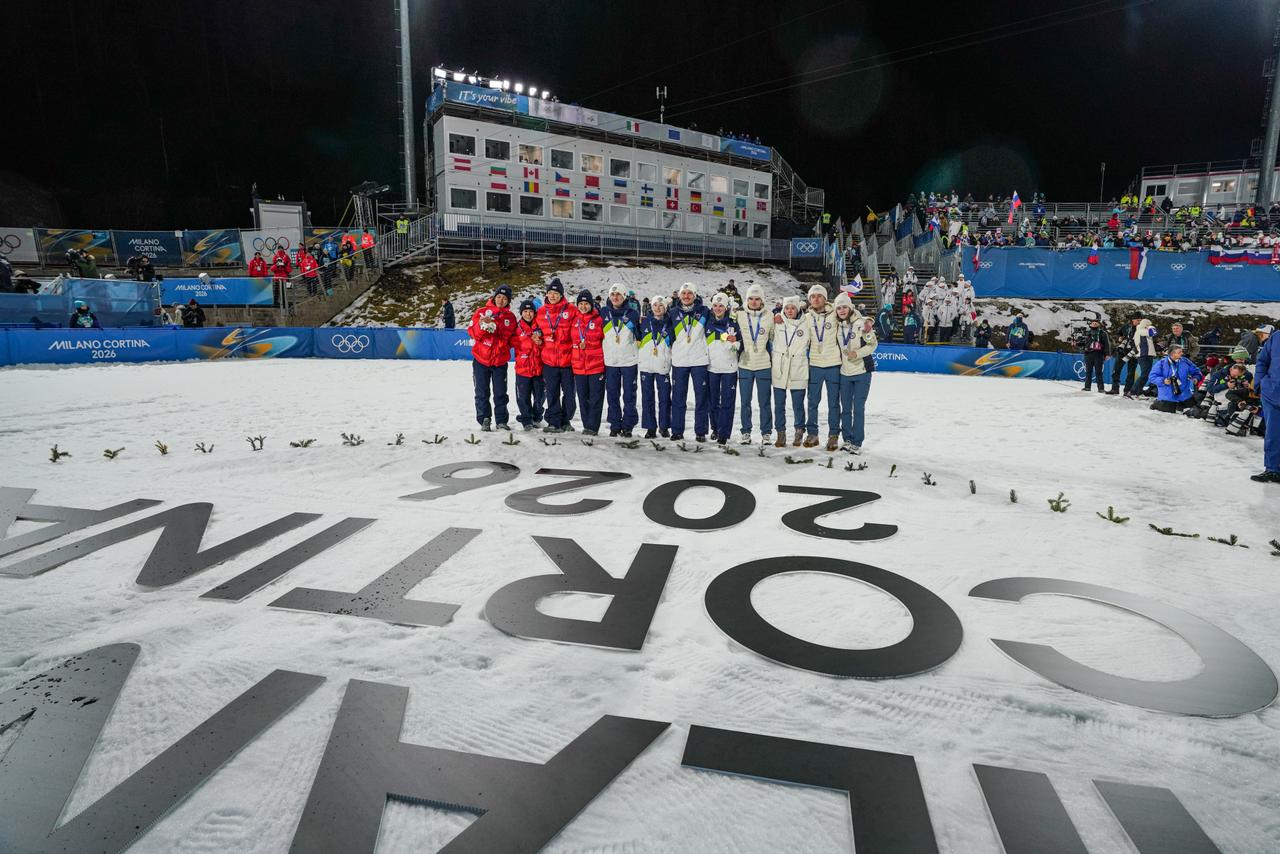
Athletes winning medals after the mixed team ski jumping event (AA)
By the end of day four, Norway maintained its lead with a total of six gold, two silver, and four bronze medals (12). Germany and Sweden shared second place with three gold, two silver, and one bronze medal each. Host nation Italy stood in seventh place with two gold, two silver, and seven bronze medals.
In the men’s sprint classic final, Norwegian Johannes Høsflot Klæbo won gold with a time of 3:39.74. American Ben Ogden took silver, and Norwegian Oskar Opstad Vike earned bronze.
Swedish athletes swept the podium in the women’s sprint classic. Linn Svahn won gold, Jonna Sundling took silver, and Maja Dahlqvist earned bronze.
Representing Türkiye, Abdullah Yılmaz finished 80th in the men’s sprint classic qualifiers with a time of 3:40.34 and failed to advance to the quarterfinals as he did not place in the top 30.
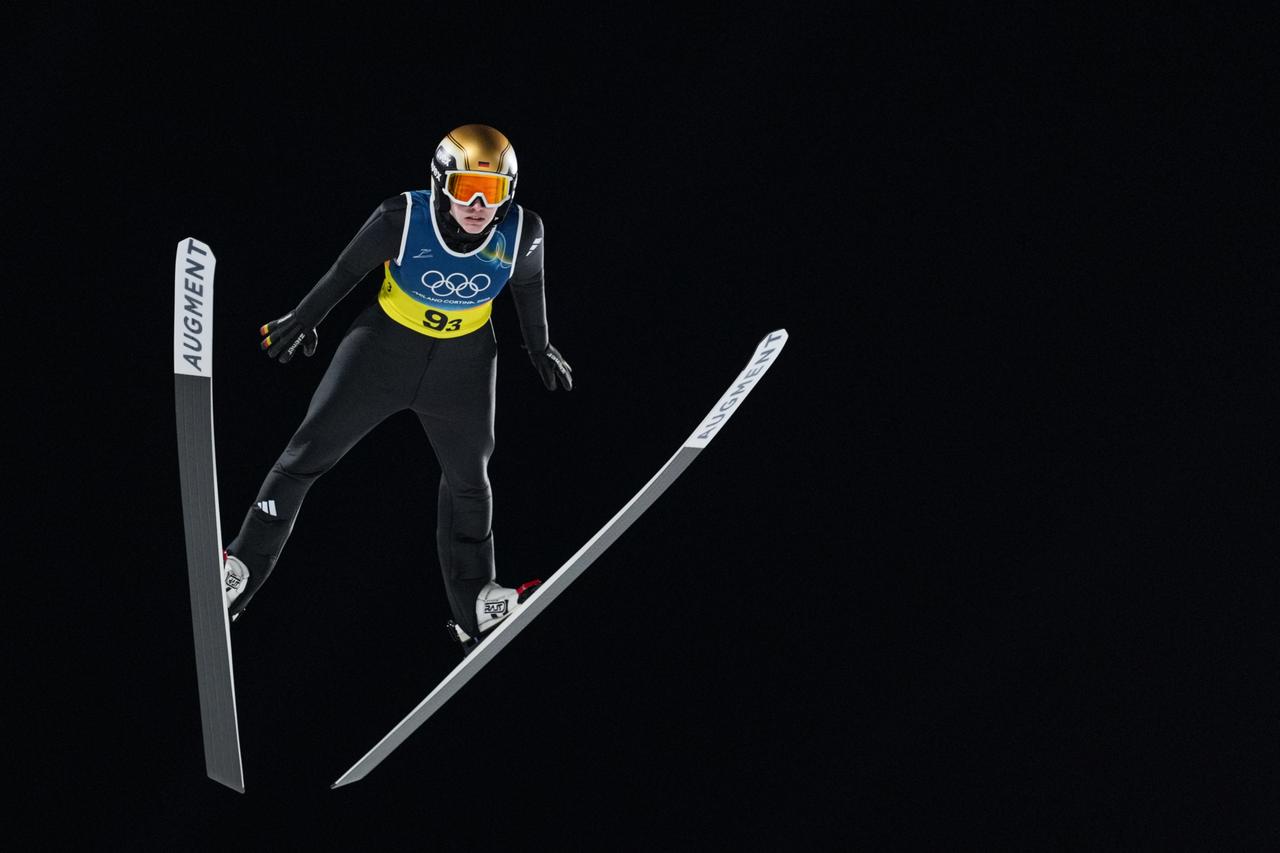
Finnish ski jumper Niko Kytoesaho during the ski jumping event (AA)
At the Predazzo Ski Jumping Stadium, Slovenia won gold in the mixed team event with a score of 1069.2 points, fielding Nika Vodan, Anze Lanisek, Nika Prevc, and Domen Prevc. Norway took silver with 1038.3 points, and Japan earned bronze with 1034 points.
In the short track speed skating mixed relay, Italy won gold. Canada took silver, and Belgium earned bronze.
In mixed doubles curling, Sweden won gold. The United States took silver, and Italy earned bronze.
In the women’s team combined alpine skiing event, Austrians Ariane Raedler and Katharina Huber won gold. Germany took silver, and the United States earned bronze.
In the men’s 20 km individual biathlon, Norwegian Johan-Olav Botn won gold, Frenchman Eric Perrot took silver, and Norwegian Sturla Holm Laegreid earned bronze.
In luge, German Julia Taubitz won gold. Latvian Elina Bota took silver, and American Ashley Farquharson earned bronze.
In the men’s freestyle skiing slopestyle, Norwegian Birk Ruud won gold with a score of 86.28. American Alex Hall took silver, and New Zealander Luca Harrington earned bronze.
TRT Spor. "Slovenya altın madalya kazandı." February 11, 2026. Accessed February 11, 2026. https://www.trtspor.com.tr/haber/diger-sporlar/slovenya-altin-madalya-kazandi-29744644
Türkiye Milli Olimpiyat Komitesi. “Milano Cortina 2026’da Dördüncü Günün Ardından.” February 11, 2026. Accessed February 11, 2026. https://olimpiyat.org.tr/Haber-Detay/milano-cortina-2026da-dorduncu-gunun-ardindan/11999
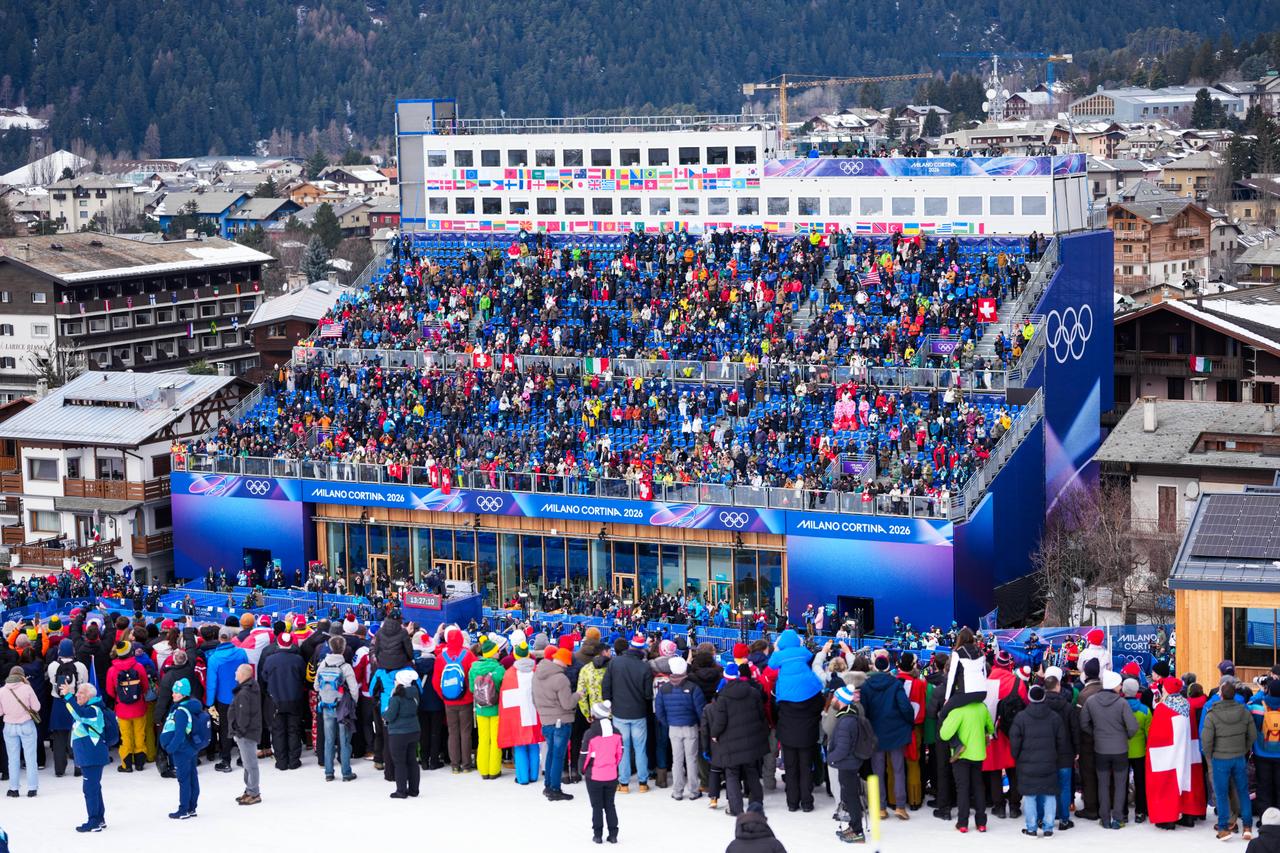
The Super G event at the 2026 Milano-Cortina Winter Olympics was followed by a large audience (AA)
On the fifth day of the 2026 Milano-Cortina Winter Olympics, medal competitions were held in alpine skiing, artistic ice skating, biathlon, luge, nordic combined, freestyle skiing and speed skating.
By the end of the day, Norway maintained its lead in the overall standings with a total of 13 medals, including seven golds.
In the men’s Super G, Swiss athlete Franjo von Allmen won the gold medal with a time of 1:25.32. With this victory, the athlete completed all three alpine skiing events at the 2026 Milano-Cortina Games with gold medals. American Ryan Cochran-Siegle took silver and Swiss Marco Odermatt won bronze.
In ice dance, the French pair Laurence Fournier Beaudry and Guillaume Cizeron won the gold medal. Cizeron became the first athlete in Winter Olympic history to win two gold medals with two different partners. American Madison Chock and Evan Bates took silver, while Canadians Piper Gilles and Paul Poirier won bronze.
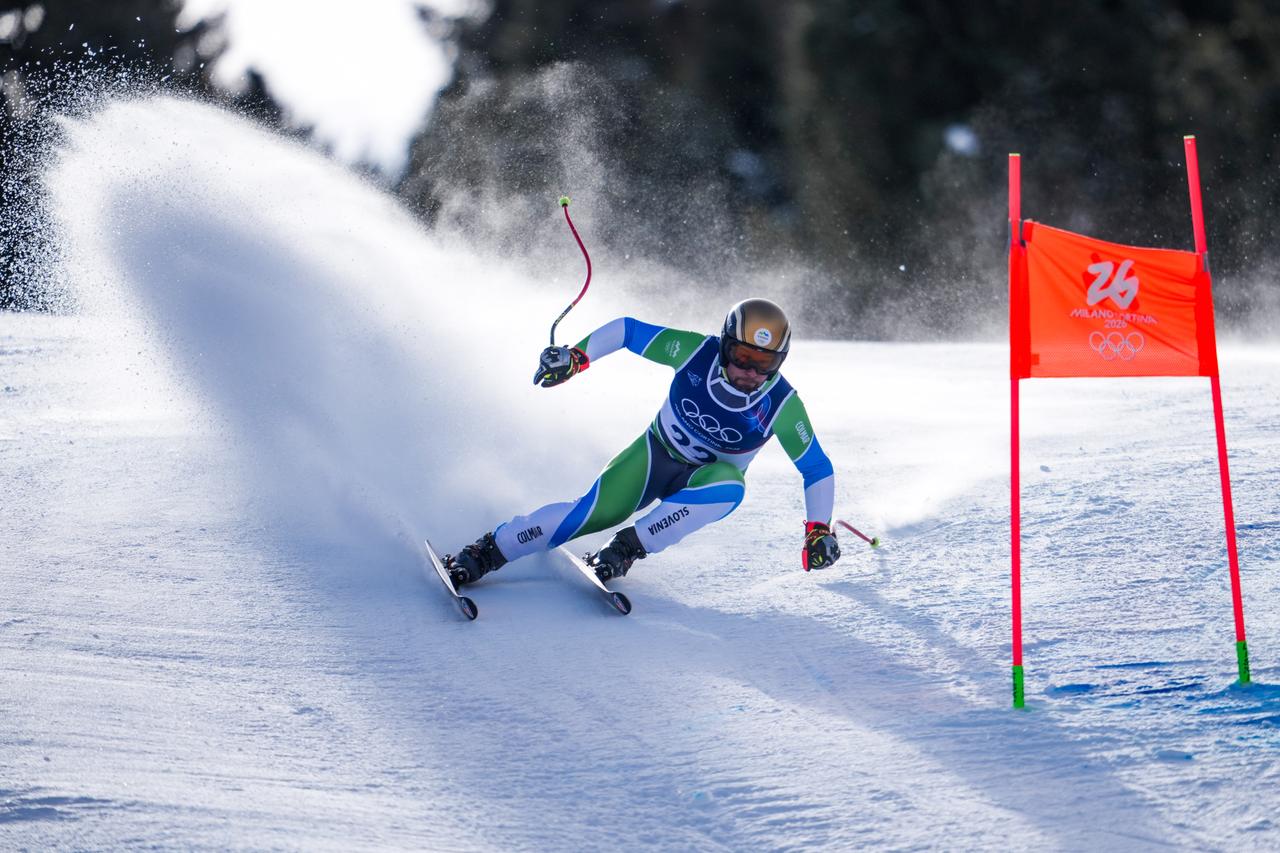
Super G event at the 2026 Milano-Cortina Winter Olympics (AA)
In the women’s 15 kilometre individual race, French athlete Julia Simon won the gold medal, securing her second gold at the 2026 Milano-Cortina Games. Lou Jeanmonnot took silver and Bulgarian Lora Hristova won bronze. With this result, Bulgaria earned its first Olympic medal in biathlon since 2002.
In the women’s doubles event, Italian pair Andrea Voetter and Marion Oberhofer won gold. German pair Dajana Eitberger and Magdalena Matschina took silver, while Austrian pair Selina Egle and Lara Kipp won bronze. In the men’s doubles, Italian pair Emanuel Rieder and Simon Kainzwaldner claimed gold. With this result, Italy won its first gold medal in this discipline since 1994.
In the normal hill 10 kilometre individual event, Norwegian athlete Jens Lurås Oftebrø won gold. Austrian Johannes Lamparter took silver and Finnish Eero Hirvonen won bronze.
In the women’s moguls event, American Elizabeth Lemley won gold. American Jaelin Kauf took silver and French athlete Perrine Laffont won bronze.
In the men’s 1000 metre race, American Jordan Stolz won gold with a time of 1:06.28, breaking the Olympic record. Dutch athlete Jenning de Boo took silver and Chinese athlete Ning Zhongyan won bronze.
After the fifth day, Norway leads the medal tally with seven gold, two silver and four bronze medals for a total of 13. The United States is second with four gold, six silver and two bronze medals, while Italy is third with four gold, two silver and seven bronze medals.
Los Angeles Times. “2026 Winter Olympics Day 5 recap: Jordan Stolz wins speedskating gold.” Los Angeles Times, February 11, 2026. Accessed February 12, 2026. https://www.latimes.com/sports/olympics/live/milan-cortina-2026-live-winter-olympics-day-5-medal-count-results-highlights
Olympics. "2026 Kış Olimpiyatları: Milano Cortina’dan öne çıkanlar ve günlük sonuçlar – 11 Şubat." February 11, 2026. Accessed February 12, 2026. https://www.olympics.com/en/milano-cortina-2026/news/winter-olympics-highlights-daily-results-11-february
Türkiye Milli Olimpiyat Komitesi. "Milano Cortina 2026’da Beşinci Gün Mücadeleleri Tamamlandı." Türkiye Milli Olimpiyat Komitesi, February 12, 2026. Accessed February 12, 2026. https://olimpiyat.org.tr/Haber-Detay/milano-cortina-2026da-besinci-gun-mucadeleleri-tamamlandi/12000
The 2026 Winter Olympics, the largest Olympic-scale event for snow and ice sports, is planned as the 25th edition of the Winter Olympic Games. The organization holds a comprehensive place in the history of Olympic winter sports due to its multi-center hosting model, broad range of disciplines, and high participant profile. The official opening ceremony was held on 6 February 2026.
Milano Cortina 2026 Olympic Winter Games | Official Trailer - BBC (Youtube)
The idea of bringing winter sports under an Olympic umbrella emerged in the early years of the Summer Olympics. Winter sports such as figure skating and ice hockey were included in the programs of the 1908 and 1920 Summer Olympics, but over time the need for a separate organization for these disciplines became evident. Following discussions within the International Olympic Committee, the concept of holding winter sports with the same status as the Summer Games but under an independent organization was adopted. This development established the institutional foundation of the Winter Olympics.
First Winter Olympics - Decades TV Network (Youtube)
The first Winter Olympics were held in 1924 in Chamonix, France. Initially, the event was titled the "International Winter Sports Week within the VIII Olympic Games." Alpine sports occupied a central position, with disciplines such as cross-country skiing, ski jumping, ice hockey, figure skating, and bobsleigh featured in the program. The Chamonix 1924 event was later retroactively recognized as the first Winter Olympic Games. This decision established the official historical beginning of the Winter Olympics.
Following Chamonix 1924, the Winter Olympics became a permanent event held at regular intervals. Early editions were primarily hosted in mountainous and cold-climate regions of Europe and North America. During this period, the number of sports disciplines increased, competition formats were standardized, and the role of international federations strengthened. The Winter Olympics developed an independent identity and became a distinct pillar of the Olympic movement.
100 Years of the Olympics (Youtube)
While the early Winter Olympics featured a limited number of disciplines, the sports program expanded over subsequent years. Skiing disciplines were subdivided into specialized categories, and ice sports diversified in terms of technique and competition format. This evolution transformed the Winter Olympics into a structure that encompasses not only traditional winter sports but also modern and technically advanced disciplines. The expansion of the program directly contributed to the growth in the number of athletes and participating nations.
Italy holds a significant position as a host nation in the history of the Winter Olympics. Cortina d’Ampezzo hosted the 1956 Winter Olympics, marking Italy’s first event in this domain. This organization took place during a period when television broadcasting was beginning to spread widely and contributed to enhancing the global visibility of the Winter Olympics. Later, Turin hosted the 2006 Winter Olympics and emerged as an example of modern Olympic organization. Milano Cortina 2026 continues this historical trajectory as Italy’s third hosting of the Winter Olympics.
The period from 1924 to 2026 demonstrates that the Winter Olympics have achieved a historical continuity exceeding a century. Throughout this time, the Games have been consistently held despite wars, political transformations, and societal changes. By being hosted in different geographical locations at each edition, the Winter Olympics have reinforced their international character. The 2026 Winter Olympics occupy a position as the current link in this century-long continuity.
The 2026 Winter Olympics exemplify the transition from early mountain-centered Games to multi-center, regionally coordinated organizations. What began as a single-town event in Chamonix 1924 has evolved into a vast organization encompassing multiple cities and regions in 2026. This transformation represents a structural milestone in the historical development of the Winter Olympics.
The 2026 Winter Olympics are the 25th edition organized by the International Olympic Committee. The Winter Olympics are held every four years within an independent calendar from the Summer Olympics, with the 2026 edition following the 2022 Beijing Winter Olympics. This edition is planned as the current representative of the winter sports segment of the Olympic calendar. The organization forms both a historical continuity and a contemporary platform within the Olympic movement.
The 2026 organization is among the first editions to reach the quarter-century mark since the inception of the Winter Olympics in 1924. This underscores the consistent and regular continuation of the Winter Olympics as an organized event. The 25th edition signifies the continuation of the Olympic legacy inherited from previous Games within a new geographical and organizational structure. The organization includes all core disciplines from prior Winter Olympics while also incorporating an updated Olympic program structure.
Tina and Milo are the official mascots of the Milano Cortina 2026 Winter and Paralympic Games. Their names are derived from the host cities: Milo represents Milan, and Tina represents Cortina. The mascots were first introduced to the public at the Sanremo Music Festival. Their designs were determined through drawing competitions held in schools across Italy.
Born in the Italian Alps, Tina is Milo’s older sister and shares a strong bond with him. She is passionate about innovative ideas and dreams of making the world a better place. She places great importance on nature conservation and acts accordingly.
Milo is a character born without a leg and loves exploring nature. He has learned to walk by using his tail. He views this unique trait not as a limitation but as an advantage that enables him to overcome obstacles, likening it to a trampoline that helps him leap higher.
2026 Winter Olympics mascots Tina and Milo (TMOK)
The 2026 Winter Olympics began with the official opening ceremony on 6 February 2026. This date serves as the symbolic start of the organization. Some competitions had already commenced before the opening ceremony. This reflects the gradual start model increasingly adopted in recent Olympic events. The Games are scheduled to continue until 22 February 2026, aligning with the traditional duration of the Winter Olympics.
The 2026 Winter Olympics are organized under a multi-center hosting model, encompassing multiple cities and regions rather than a single city. This model distributes competitions across geographically distinct areas. The main centers of the organization are designated as Milan and Cortina d’Ampezzo, with additional cities and settlements included in the competition program. This multi-center structure has expanded the spatial scope of the organization and ensured its regional planning.
Piazza del Duomo, Milan – Two synthetic ice rinks produced by Xtraice (Flickr)
Milan is positioned as one of the main centers of the 2026 Winter Olympics. It has been designated as the host city for the opening ceremony. In addition, a significant portion of ice sports events will take place in Milan and its surrounding facilities. Milan’s transportation infrastructure, accommodation capacity, and existing sports venues form the urban backbone of the organization. In this regard, Milan stands out as one of the administrative and symbolic centers of the Games.
Cortina d'Ampezzo – Olympic Rings Terrace (Flickr)
Cortina d’Ampezzo serves as the central hub for mountain sports at the 2026 Winter Olympics. The town holds a special place in Winter Olympic history due to its prior hosting of the 1956 Winter Olympics. Alpine skiing, ski jumping, and bobsleigh disciplines will be held in Cortina d’Ampezzo and its surrounding areas. The mountainous geography provides the natural conditions necessary for these disciplines.
Competitions for the 2026 Winter Olympics are not limited to Milan and Cortina d’Ampezzo. Settlements in the Alps such as Livigno and Bormio have been designated as centers for skiing and mountain sports. Tesero and Predazzo are planned as venues for Nordic disciplines and cross-country skiing. Verona has been selected as the host city for the closing ceremony. Each of these settlements has been assigned specialized spatial functions for specific disciplines.
The official opening ceremony of the 2026 Winter Olympics was held on 6 February 2026. The opening ceremony holds a defining place in the Olympic calendar as the symbolic start of the Games. This event formally declares the commencement of the Games and includes fundamental rituals of the Winter Olympic tradition, such as the parade of nations, the raising of the Olympic flag, and the lighting of the Olympic flame. The ceremony serves as the first major collective gathering that visibly expresses the international identity of the organization.
San Siro Stadium, venue of the opening ceremony (Flickr)
The opening ceremony was held at the San Siro Stadium in Milan. San Siro was included in the program due to its capacity and infrastructure for hosting large-scale international events. The selection of the stadium reflects the intention to make the opening ceremony a high-attendance, wide-audience event. Hosting the opening ceremony in a football stadium represents one of the distinctive spatial choices in the history of the Winter Olympics.
The competition calendar for the 2026 Winter Olympics is structured to intensify from 6 February 2026 onwards. Events will be held at designated time intervals and in different cities according to sport disciplines. The calendar was designed with a balanced distribution encompassing both individual and team disciplines. Competition days are planned to allow multiple venues to host events simultaneously. This structure is directly linked to the multi-center character of the organization.
In the competition calendar, ice sports, mountain sports, and speed disciplines are spread across different time periods. Team sports such as ice hockey and curling began early in the organization due to their lengthy tournament formats. Alpine skiing, cross-country skiing, and ski jumping were scheduled on specific days considering weather conditions and track preparations. This scheduling takes into account the technical and environmental requirements of each discipline.
The sports program of the 2026 Winter Olympics encompasses all core disciplines of the Winter Olympic tradition. A total of 16 Olympic sports disciplines are featured. These disciplines bring together various forms of winter sports based on different natural and spatial conditions. The Olympic program unites indoor ice sports with outdoor mountain and speed sports under a single organizational framework. The distribution of disciplines is aligned with the multi-center structure of the organization and spread across different cities and venues.
Winter Olympic disciplines (TMOK)
Team Türkiye 2026 Winter Olympics (TMOK)
Türkiye is participating in the 2026 Winter Olympics with a limited but diverse delegation of athletes. Turkish athletes have qualified for the Games through individual sport disciplines. This participation aligns with Türkiye’s historical pattern in the Winter Olympics. Türkiye is among the countries that regularly participate in the Winter Olympics, typically represented in individual disciplines rather than team events.
Athletes competing at the Olympics (TMOK)
At the 2026 Winter Olympics, Türkiye will be represented by a total of nine athletes, distributed across male and female categories in various disciplines. Participation occurs exclusively through individual disciplines rather than team events. This structure reflects Türkiye’s current organizational and infrastructural framework for winter sports. All athletes have earned their spots through the Olympic quota system.
Ski jumping is one of the most notable disciplines for Türkiye at the 2026 Winter Olympics. Türkiye will be represented by two athletes in this discipline: Fatih Arda İpcioğlu and Muhammed Ali Bedir. This marks the first time Türkiye has fielded more than one athlete in ski jumping at the Winter Olympics. The athletes earned their quotas after years of international competition. Ski jumping is a discipline in which Türkiye has traditionally been less competitive, making this participation particularly significant.
Türkiye is also represented in alpine skiing and cross-country skiing. These disciplines have long been part of Türkiye’s participation in the Winter Olympics. In cross-country skiing, İrem Dursun will compete for women and Abdullah Yılmaz for men. In alpine skiing, Ada Hasırcı will compete for women and Thomas Kaan Önol Lang for men, aiming for medals.
Short track speed skating is one of the disciplines in which Türkiye has participated in recent Winter Olympics. In 2026, Türkiye will be represented by two athletes in this discipline: Furkan Akar and Denis Örs. Competitions will be held in individual distance categories, and Turkish athletes will compete in the Olympic program. This discipline is among the ice sports in which Türkiye has achieved Olympic-level representation.
Türkiye will also be represented in para skiing at the 2026 event. Harun Mut will represent Türkiye in para alpine skiing.
Minister Bak Receives National Athletes for the 2026 Winter Olympics (AA)
Prior to the 2026 Winter Olympics, the national athletes of Türkiye’s delegation were officially welcomed in ceremonies. The athletes were formally received under a program organized by the Ministry of Youth and Sports. The participation of the athletes in the Olympic event was officially announced to the public during this process. This procedure is part of Türkiye’s institutional protocol for participation in Olympic events.
Türkiye has not yet won a medal in the history of the Winter Olympics. Nevertheless, the country has participated in various editions through individual athletes. The 2026 Winter Olympics continue this historical trajectory, affirming Türkiye’s ongoing Olympic presence in winter sports. Participation is evaluated within the framework of Olympic continuity, independent of results.
The closing ceremony of the 2026 Winter Olympics will be held on 22 February 2026 in Verona. The closing ceremony represents the sportive and symbolic conclusion of the Games. This event includes the rituals of the Olympic flag handover and the passing of the Games to the next host. Verona’s selection for the closing ceremony reflects the multi-center structure of the organization extending to ceremonial events.
TMOK. "Team Türkiye Continues to the Winter Olympics with Cross-Country Skiing." Accessed February 13, 2026. https://olimpiyat.org.tr/Haber-Detay/team-turkiye-kayakli-kosuyla-kis-olimpiyatlarina-devam-ediyor/12001
The seventh day of the 2026 Milan-Cortina Winter Olympics took place on 13 February 2026 in Italy. Competitions were held in biathlon, cross-country skiing, figure skating, skeleton, snowboard and speed skating, resulting in a total of seven medal events.
In the men’s 10 kilometre freestyle cross-country skiing event, Norwegian Johannes Høsflot Klæbo won the gold medal with a time of 20 minutes 36.2 seconds. With this result, the athlete secured his third gold medal at the Milan-Cortina 2026 Games and his eighth Olympic gold medal overall, placing him among the most decorated athletes in Winter Games history. French athlete Mathis Desloges won silver and Norwegian Einar Hedegart took bronze.
It has been noted that with this eighth gold medal, Klæbo equaled the record for the most gold medals won in Winter Olympic history.
In the men’s 10 kilometre sprint biathlon event, French athlete Quentin Fillon-Maillet won gold with a time of 22:53.1. Norwegian Vetle Sjaastad Christiansen won silver and Sturla Holm Laegreid took bronze.
The biathlon competitions held on the same day were among the standout results of the seventh day.
In the men’s 10,000 metre speed skating event, Czech athlete Metodej Jilek won gold with a time of 12:33.43. Polish athlete Vladimir Semirunniy won silver and Dutch athlete Jorrit Bergsma took bronze.
It has been noted that this achievement marked the first gold medal for Jilek’s country in this discipline.
In the women’s snowboard cross final, Australian Josie Baff won gold. Czech athlete Eva Adamczykova won silver and Italian Michela Moioli took bronze.
In the men’s snowboard halfpipe category, Japanese athlete Yuto Totsuka won gold with a score of 95 points. Australian Scotty James won silver and Japanese Ryusei Yamada took bronze.
In the men’s skeleton event, British athlete Matt Weston won gold with a time of 3:43.33. German Axel Jungk won silver and Christopher Grotheer took bronze.
In the men’s figure skating event, Kazakh athlete Mikhail Shaidorov won gold with a total score of 291.58 points, earning 92.94 points in the short program and 198.64 points in the free program. Japanese athletes Yuma Kagiyama won silver and Shun Sato took bronze.
Curling and ice hockey matches were also held on the seventh day.
At the end of the day, Norway maintained its lead in the medal standings with a total of 8 gold, 3 silver and 7 bronze medals, amounting to 18 medals overall. Italy ranked second with 6 gold, 3 silver and 9 bronze medals, while the United States placed third with 4 gold, 7 silver and 3 bronze medals.
The results of the seventh day played a decisive role in shaping the medal table, alongside performances across various disciplines.
Anadolu Ajansı. “2026 Milano-Cortina Kış Olimpiyatları'nda Norveç liderliğini sürdürdü.” February 14, 2026. Accessed February 14, 2026. https://www.aa.com.tr/tr/dunyadan-spor/2026-milano-cortina-kis-olimpiyatlarinda-norvec-liderligini-surdurdu/3829688
Vietnam.vn. "2026 Kış Olimpiyatları - Yarışmaların 7. gününde beklenmedik atılımlar yaşandı." February 13, 2026. Accessed February 14, 2026. https://www.vietnam.vn/tr/olympic-mua-dong-2026-ngay-thi-dau-thu-7-bung-no-bat-ngo
The eighth day of the 2026 Milan-Cortina Winter Olympics took place on 14 February 2026. On the eighth day of the Games, a total of eight medal competitions were held in alpine skiing, biathlon, cross-country skiing, freestyle skiing, short track speed skating, skeleton, ski jumping and speed skating.
In the men’s giant slalom, Brazilian Lucas Pinheiro Braathen won the gold medal with a time of 1 minute 13.92 seconds. With this result, Brazil secured its first ever medal in Winter Olympic history. Swiss athletes Marco Odermatt and Loïc Meillard won silver and bronze respectively.
Representing Türkiye, Thomas Kaan Önol Lang finished in 49th place with a total time of 2:44.50 across both runs.
In the women’s 7.5 kilometre sprint, Norwegian Maren Kirkeeide won gold with a time of 20:40.8. French athletes Océane Michelon and Lou Jeanmonnot won silver and bronze respectively.
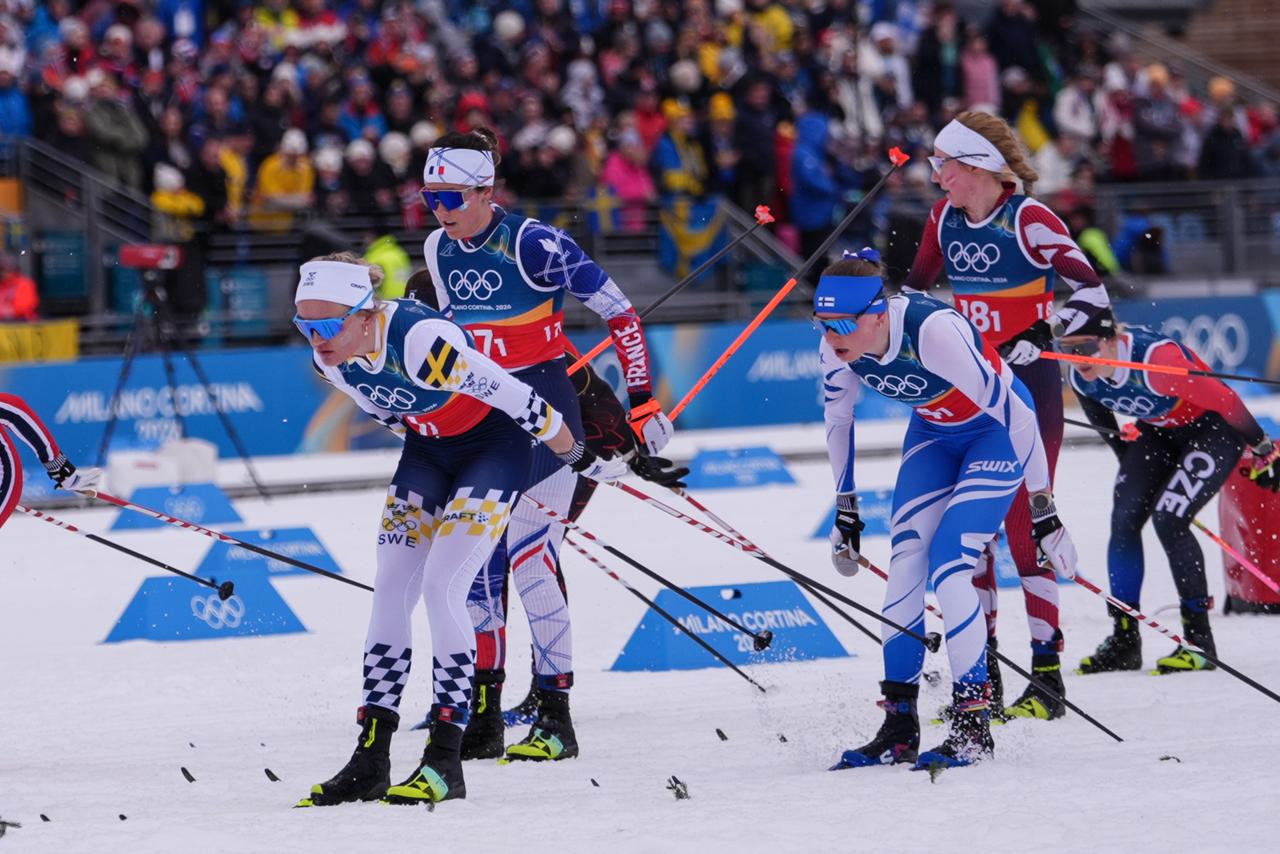
Cross-Country Skiing (XC)
In the women’s 4x7.5 kilometre relay, the Norwegian team won gold with a time of 1:15:44.8. Sweden took silver and Finland won bronze.
In the men’s 500 metre speed skating, American Jordan Stolz won gold and set a new Olympic record with a time of 33.77 seconds. Dutch athlete Jenning de Boo won silver and Canadian Laurent Dubreuil took bronze.
In the men’s 1500 metre short track speed skating, Dutch athlete Jens van ’t Wout won gold. South Korean Hwang Dae-heon won silver and Latvian Roberts Kruzbergs took bronze.
In the women’s dual moguls freestyle skiing event, Australian Anthony Jakara won gold with a score of 20 points. American athletes Jaelin Kauf and Elizabeth Lemley won silver and bronze respectively.
In the men’s large hill event, Slovenian Domen Prevc won gold with 301.8 points. Japanese athlete Ren Nikaido won silver and Polish athlete Kacper Tomasiak took bronze.
Representing Türkiye, Fatih Arda İpcioğlu finished in 37th place with jumps of 127.5 metres and 115 points, while Muhammed Ali Bedir placed 48th with jumps of 110 metres and 80.3 points. Neither qualified for the final as they failed to enter the top 30.
In the women’s skeleton event, Austrian Janine Flock won gold with a time of 3:49.02. German athletes Susanne Kreher and Jacqueline Pfeifer won silver and bronze respectively.
Following the eighth day, Norway maintained its lead with a total of 20 medals: 10 gold, 3 silver and 7 bronze. Italy ranked second with 18 medals: 6 gold, 3 silver and 9 bronze. The United States placed third with 17 medals: 5 gold, 8 silver and 4 bronze.
In the top 10 rankings, Italy and the United States followed Norway, while Austria, France and Germany retained their positions in the upper ranks.
Anadolu Ajansı. "2026 Milano-Cortina Kış Olimpiyatları'nda madalyalar sahiplerini buldu." Accessed February 16, 2026. https://www.aa.com.tr/tr/dunyadan-spor/2026-milano-cortina-kis-olimpiyatlarinda-madalyalar-sahiplerini-buldu/3830354
Türkiye National Olympic Committee. "Team Türkiye Competed in Ski Jumping and Alpine Disciplines on Day 8 of Milano Cortina 2026." TMOK, Accessed February 16, 2026. https://olimpiyat.org.tr/Haber-Detay/milano-cortina-2026nin-8-gununde-team-turkiye-kayakla-atlama-ve-alp-disiplininde-yaristi/12003
2026 Milano-Cortina Kış Olimpiyatları’nın dokuzuncu günü 15 Şubat 2026 tarihinde gerçekleştirilmiş; alp disiplini, biatlon, kayaklı koşu, serbest stil kayak, skeleton, kayakla atlama, snowboard ve sürat pateni branşlarında toplam dokuz madalya mücadelesi tamamlanmıştır.
Kadınlar büyük slalom yarışında İtalyan Federica Brignone, 2 dakika 13.50 saniyelik derecesiyle altın madalya kazanmış ve oyunlardaki ikinci altınını elde etmiştir. Yarışta İsveçli Sara Hector ve Norveçli Thea Louise Stjernesund aynı dereceyi yaparak gümüş madalya almıştır.
Erkekler 12,5 kilometre takip yarışında İsveçli Martin Ponsiluoma 31.11.9’luk süresiyle altın madalyaya ulaşmıştır. Norveçli Sturla Holm Laegreid gümüş, Fransız Emilien Jacquelin bronz madalya kazanmıştır.
Kadınlar 10 kilometre takip yarışında ise İtalyan Lisa Vittozzi altın, Norveçli Maren Kirkeeide gümüş ve Finlandiyalı Suvi Minkkinen bronz madalya elde etmiştir.
Erkekler 4x7,5 kilometre bayrak yarışında Norveç takımı 1.04.24.5’lik derecesiyle altın madalya kazanmıştır. Takımın son etabında yarışan Johannes Høsflot Klæbo, kariyerinin dokuzuncu Kış Olimpiyatları altın madalyasına ulaşarak oyunlar tarihinde en fazla altın madalya kazanan sporcu unvanını elde etmiştir. Yarışı Fransa gümüş, İtalya bronz madalya ile tamamlamıştır.
Erkekler dual moguls yarışında Kanadalı Mikael Kingsbury altın madalya kazanmıştır. Japon Ikuma Horishima gümüş, Avustralyalı Matt Graham bronz madalya elde etmiştir.
Karma takım yarışında Büyük Britanyalı Matt Weston ile Tabitha Stoecker ikilisi 1.59.36’lık dereceyle altın madalyaya ulaşmıştır. Alman takımları gümüş ve bronz madalya kazanmıştır.
Kadınlar 500 metre yarışında Hollandalı Femke Kok 36.49 saniyelik derecesiyle olimpiyat rekoru kırarak altın madalya kazanmıştır. Hollandalı Jutta Leerdam gümüş, Japon Miho Takagi bronz madalya elde etmiştir.
Snowboard kros karma takım yarışında Büyük Britanya altın madalya kazanmıştır. İtalya gümüş, Fransa bronz madalya elde etmiştir.
Kadınlar büyük tepe yarışında Norveçli Anna Odine Stroem 284,8 puanla altın madalya kazanmıştır. Sloven Nika Prevc gümüş, Norveçli Eirin Maria Kvandal bronz madalya elde etmiştir.
Dokuzuncu günün ardından Norveç, 12 altın, 7 gümüş ve 7 bronz olmak üzere toplam 26 madalyayla liderliğini sürdürmüştür. İtalya 8 altın, 4 gümüş ve 10 bronzla ikinci; ABD ise 5 altın, 8 gümüş ve 4 bronz madalyayla üçüncü sırada yer almıştır.
2026 Milano-Cortina Kış Olimpiyatları’nın onuncu günü 16 Şubat 2026 tarihinde gerçekleştirilmiştir. Bu günde alp disiplini, artistik buz pateni, kayakla atlama, kısa kulvar sürat pateni, serbest stil kayak ve yarış kızağı branşlarında madalya mücadeleleri yapılmıştır.
Team Türkiye, onuncu günde alp disiplininde Thomas Kaan Önol Lang, kayakla atlamada Fatih Arda İpcioğlu ve Muhammed Ali Bedir, kısa kulvar sürat pateninde ise Denis Örs ve Furkan Akar ile mücadele etmiştir.
Alp disiplini erkekler slalom yarışında Thomas Kaan Önol Lang ilk inişi tamamlayamamış ve organizasyonu bu branşta noktalamıştır.
Kayakla atlama erkekler süper takım ilk turunda Fatih Arda İpcioğlu 123 metre ve 103 puan, Muhammed Ali Bedir 114 metre ve 99.7 puan elde etmiş; toplam 202.7 puanla yarışmayı 15. sırada tamamlamıştır.
Kısa kulvar sürat pateninde Denis Örs, rakibine verilen penaltı kararı sonucunda çeyrek finale yükselmiş; Furkan Akar ise aldığı penaltı nedeniyle elenmiştir.
Erkekler slalom yarışında İsviçreli Loïc Meillard altın madalya kazanmıştır. Avusturyalı Fabio Gstrein gümüş, Norveçli Henrik Kristoffersen bronz madalya elde etmiştir.
Çiftler kategorisinde Japon Miura Riku ve Kihara Ryuichi altın madalya kazanarak Japonya’ya bu disiplindeki ilk olimpiyat altınını kazandırmıştır. Gürcü Anastasiia Metelkina ve Luka Berulava gümüş, Alman Minerva Fabienne Hase ve Nikita Volodin bronz madalya almıştır .
Erkekler süper takım yarışında Avusturyalı Jan Hoerl ve Stephan Embacher altın madalya kazanmıştır. Polonyalı Kacper Tomasiak ve Pawel Wasek gümüş, Norveçli Kristoffer Eriksen Sundal ve Johann Andre Forfang bronz madalya elde etmiştir.
Kadınlar 1000 metre yarışında Hollandalı Xandra Velzeboer altın madalya kazanmıştır. Kanadalı Courtney Sarault gümüş, Güney Koreli Kim Gilli bronz madalya elde etmiştir.
Kadınlar Big Air yarışında Kanadalı Megan Oldham altın madalya kazanmıştır. Çinli Eileen Gu gümüş, İtalyan Flora Tabanelli bronz madalya elde etmiştir.
Kadınlar tekli yarışında ABD’li Elana Meyers Taylor altın madalya kazanmıştır. Alman Laura Nolte gümüş, ABD’li Kaillie Armbruster Humphrıes bronz madalya almıştır.
Onuncu günün ardından Norveç, 14 altın, 8 gümüş ve 9 bronz olmak üzere toplam 31 madalyayla liderliğini sürdürmüştür. İtalya 9 altın, 4 gümüş ve 11 bronzla ikinci; ABD ise 6 altın, 10 gümüş ve 5 bronz madalyayla üçüncü sırada yer almıştır.
T24. “Kış Olimpiyatları’nda Norveç rüzgarı sürüyor; işte 10. gün sonunda madalya sıralaması.” 18 Şubat 2026. Erişim tarihi 19 Şubat 2026. https://t24.com.tr/spor/kis-olimpiyatlari-nda-norvec-ruzgari-suruyor-iste-10-gun-sonunda-madalya-siralamas,1300428.
TRT Spor. “Kış Olimpiyatları’nda 9. gün tamamlandı.” 16 Şubat 2026. Erişim tarihi 19 Şubat 2026. https://www.trtspor.com.tr/haber/diger-sporlar/kis-olimpiyatlarinda-9-gun-tamamlandi-29818119.
Türkiye Milli Olimpiyat Komitesi. “Kısa Kulvar Sürat Pateninde Denis Örs Çeyrek Finalde.” 17 Şubat 2026. Erişim tarihi 19 Şubat 2026. https://olimpiyat.org.tr/Haber-Detay/kisa-kulvar-surat-pateninde-denis-ors-ceyrek-finalde/12005.
Türkiye Milli Olimpiyat Komitesi. “Milano Cortina 2026’da Dokuzuncu Gün Dokuz Madalya ile Tamamlandı.” 16 Şubat 2026. Erişim tarihi 19 Şubat 2026. https://olimpiyat.org.tr/Haber-Detay/Milano%20Cortina%202026%E2%80%99da%20Dokuzuncu%20G%C3%BCn%20Dokuz%20Madalya%20ile%20Tamamland%C4%B1/12004.
The eleventh day of the Milano-Cortina 2026 Winter Olympics took place on 17 February 2026, with medal competitions held in biathlon, nordic combined, freestyle skiing, snowboard, speed skating and skeleton.
France won the gold medal in the men's 4x7.5 kilometre relay. Norway took silver and Sweden bronze. With this result, France secured its first ever Olympic gold medal in this discipline; Quentin Fillon-Maillet earned his eighth Olympic medal in his career.
Norwegian Jens Lurås Oftebro won the gold medal in the large hill 10 kilometre individual event. Austrian Johannes Lamparter took silver and Finnish Ilkka Herola won bronze.
Norwegian Tormod Frostad won the gold medal in the men's Big Air event. American Mac Forehand took silver and Austrian Matej Svancer won bronze.
Italy won the gold medal in the men's team pursuit. The United States took silver and China bronze. In the women's team pursuit, Canada won gold, the Netherlands silver and Japan bronze.
German athletes Johannes Lochner and Georg Fleischhauer won the gold medal in the men's doubles event. Francesco Friedrich and Alexander Schuller took silver and Adam Ammour and Alexander Schaller won bronze.
The twelfth day of the Games took place on 18 February 2026, with nine medal competitions completed in alpine skiing, biathlon, cross-country skiing, freestyle skiing, short track speed skating and snowboard.
American Mikaela Shiffrin won the gold medal in the women's slalom. Swiss Camille Rast took silver and Swedish Anna Swenn-Larsson won bronze.
France won the gold medal in the women's 4x6 kilometre relay. Sweden took silver and Norway bronze.
Norway, with Einar Hedegart and Johannes Høsflot Klæbo, won the gold medal in the men's team sprint freestyle. The United States took silver and Italy bronze. In the women's team sprint freestyle, Sweden won gold, Switzerland silver and Germany bronze.
Chinese Mengtao Xu won the gold medal in the women's aerials. Australian Danielle Scott took silver and Chinese Qi Shao won bronze.
Chinese Yiming Su won the gold medal in the men's slopestyle. Japanese Taiga Hasegawa took silver and American Jake Canter won bronze. In the women's slopestyle, Japanese Mari Fukada won gold, New Zealander Zoi Sadowski Synnott took silver and Japanese Kokomo Murase won bronze.
South Korea won the gold medal in the women's 3000 metre relay. Italy took silver and Canada bronze. In the men's 500 metre, Canadian Steven Dubois won gold, Dutchman Melle van 't Wout took silver and Jens van 't Wout won bronze.
On the twelfth day, Team Türkiye competed in alpine skiing and short track speed skating, marking its final events at the Milano-Cortina 2026 Winter Olympics. In alpine skiing, Ada Hasırcı failed to complete the first run of the women's slalom, ending Türkiye's participation. In short track speed skating, Denis Örs finished fifth in his men's 500 metre quarterfinal with a time of 41.532 seconds and placed 18th overall, concluding Türkiye's campaign. With these results, Türkiye's participation in the Milano-Cortina 2026 Winter Olympic Games came to an end.
TRT Spor. “2026 Kış Olimpiyatları'nda 12. gün tamamlandı.” February 18, 2026. Accessed February 19, 2026. https://www.trtspor.com.tr/haber/diger-sporlar/2026-kis-olimpiyatlarinda-12-gun-tamamlandi-29864918
Türkiye Milli Olimpiyat Komitesi. “Milano Cortina 2026’da 11. Günün Öne Çıkanları.” February 18, 2026. Accessed February 19, 2026. https://olimpiyat.org.tr/Haber-Detay/milano-cortina-2026da-11-gunun-one-cikanlari/12007
Türkiye National Olympic Committee. “Team Türkiye Marks the Olympics with Alpine Skiing and Short Track Speed Skating.” February 19, 2026. Accessed February 19, 2026. https://olimpiyat.org.tr/Haber-Detay/team-turkiye-alp-disiplini-ve-kisa-kulvar-surat-pateniyle-olimpiyatlari-noktaladi/12008
At the end of the thirteenth day of the Milano-Cortina 2026 Winter Olympics, Norway maintained its lead in the medal standings. Following the completion of events on the 13th day of the Games, Norway has accumulated a total of 34 medals: 16 gold, 8 silver, and 10 bronze.
In the women’s singles event, American Alysa Liu won the gold medal. Japanese athletes Kaori Sakamoto and Ami Nakai earned silver and bronze medals respectively.
In the women’s final, the United States defeated Canada 2–1 to claim the gold medal. Canada won silver, while Switzerland, after defeating Sweden 2–1 in the bronze medal match, earned the bronze.
In ski mountaineering, making its Olympic debut, Swiss athlete Marianne Fatton won gold in the women’s sprint. French athlete Emily Harrop took silver, and Spanish athlete Ana Alonso Rodriguez won bronze. In the men’s sprint, Spanish athlete Oriol Cardona Coll won gold, independent athlete Nikita Filippov won silver, and French athlete Thibault Anselmet won bronze.
In the men’s team sprint event, Norway won gold. Finland earned silver and Austria won bronze.
In the men’s 1500 meters, Chinese skater Ning Zhongyan won gold, breaking the Olympic record with a time of 1:41.98. American Jordan Stolz won silver and Dutch skater Kjeld Nuis won bronze.
After the conclusion of the thirteenth day, the top three positions in the medal table are as follows:
NTV Spor. "Kış Olimpiyatları'nda 34 madalyayla Norveç lider." February 20, 2026. Accessed February 20, 2026. https://www.ntv.com.tr/sporskor/kis-olimpiyatlarinda-34-madalyayla-norvec-lider-1712727
Türkiye Milli Olimpiyat Komitesi. “Milano Cortina 2026’da 13. Gün Geride Kaldı.” February 20, 2026. Accessed February 20, 2026. https://olimpiyat.org.tr/Haber-Detay/milano-cortina-2026da-13-gun-geride-kaldi/12009
The fourteenth day of the Milano-Cortina 2026 Winter Olympics took place on 20 February 2026, featuring eight medal competitions in biathlon, curling, short track speed skating, freestyle skiing and speed skating.
In the men’s 15 kilometre mass start, Norwegian Johannes Dale-Skjevdal won the gold medal with a time of 39 minutes 17.1 seconds, claiming his first Olympic gold. Norwegian Sturla Holm Laegreid took silver and Frenchman Quentin Fillon Maillet won bronze. Laegreid concluded the Games with five medals: three silver and two bronze.
In the men’s bronze medal match, Switzerland defeated Norway 9-1 to claim the bronze medal.
In the women’s 1500 metres, Dutch athlete Antoinette Rijpma-de Jong won gold with a time of 1:54.09. Norwegian Ragne Wiklund took silver and Canadian Valerie Maltais won bronze.
In the women’s cross-country skiing event, German Daniela Maier won gold, Swiss Fanny Smith took silver and Swedish Sandra Näslund won bronze. In the men’s aerials, Chinese Wang Xindi claimed gold, Swiss Noe Roth took silver and Chinese Li Tianma won bronze. In the men’s halfpipe, American Alex Ferreira won gold, Estonian Henry Sildaru took silver and Canadian Brendan Mackay won bronze.
In the men’s 5000 metre relay, the Netherlands won gold. South Korea took silver and Italy won bronze. In the women’s 1500 metres, South Korean Kim Gil-li won gold, Choi Min-jeong took silver and American Corinne Stoddard won bronze.
Bobsleigh and ice hockey competitions were also held on the fourteenth day of the program.
Türkiye Milli Olimpiyat Komitesi. "Kış Olimpiyatları’nda Madalyalar Sahiplerini Bulmaya Devam Ediyor." Accessed February 22, 2026. https://olimpiyat.org.tr/Haber-Detay/kis-olimpiyatlarinda-madalyalar-sahiplerini-bulmaya-devam-ediyor/12010
At the end of the thirteenth day of the Milano-Cortina 2026 Winter Olympic Games, Norway maintained its lead in the medal standings. Following the completion of the competition on day thirteen, Norway has won a total of 34 medals: 16 gold, 8 silver, and 10 bronze.
In the women’s singles event, American Alysa Liu won the gold medal. Japanese athletes Kaori Sakamoto and Ami Nakai won silver and bronze respectively.
In the women’s final, the United States defeated Canada 2–1 to claim the gold medal. Canada won silver, while Switzerland earned bronze by defeating Sweden 2–1 in the third-place match.
In ski mountaineering, making its Olympic debut, Swiss athlete Marianne Fatton won gold in the women’s sprint. French athlete Emily Harrop took silver, and Spanish athlete Ana Alonso Rodriguez won bronze. In the men’s sprint, Spanish athlete Oriol Cardona Coll won gold, independent athlete Nikita Filippov won silver, and French athlete Thibault Anselmet won bronze.
In the men’s team sprint event, Norway won gold. Finland took silver and Austria won bronze.
In the men’s 1500 metres, Chinese skater Ning Zhongyan won gold with a time of 1:41.98, breaking the Olympic record. American Jordan Stolz won silver and Dutch skater Kjeld Nuis won bronze.
After day thirteen, the top three positions in the medal table are as follows:
Anadolu Ajansı. “2026 Milano-Cortina Kış Olimpiyatları'nda Norveç, liderliğini sürdürdü.” February 22, 2026. Accessed February 22, 2026. https://www.aa.com.tr/tr/dunyadan-spor/2026-milano-cortina-kis-olimpiyatlarinda-norvec-liderligini-surdurdu/3836887
Yahoo Sports. "Winter Olympics 2026 Day 15 recap: U.S. takes gold in mixed aerials; Norway's Johannes Høsflot Klæbo caps historic run." February 22, 2026. Accessed February 22, 2026. https://sports.yahoo.com/olympics/article/winter-olympics-2026-day-15-recap-us-takes-gold-in-mixed-aerials-norways-johannes-h%C3%B8sflot-kl%C3%A6bo-caps-historic-run-012303645.html
On the sixteenth and final day of the Milano-Cortina 2026 Winter Olympics, medals were awarded in bobsleigh, cross-country skiing, curling, freestyle skiing, and ice hockey.
In the women’s 50 kilometre mass start classical race, Sweden’s Ebba Andersson won gold with a time of 2 hours 16 minutes 28.2 seconds. Norway’s Heidi Weng took silver and Switzerland’s Nadja Kaelin won bronze.
The medal ceremonies for the men’s and women’s 50 kilometre mass start classical races were held at the Verona Arena as part of the closing ceremony program.
In the women’s final, Sweden defeated Switzerland 6–5 to win gold. Switzerland earned silver and Canada won bronze.
In the women’s halfpipe, Chinese athlete Gu Eileen scored 94.75 points to win her second consecutive Olympic gold medal in this discipline. Li Fanghui won silver and Great Britain’s Zoe Atkin took bronze.
In the men’s four-man bobsleigh, the German team of Johannes Lochner, Thorsten Margis, Jörn Wenzel and Georg Fleischhauer won gold with a time of 3:37.57. With this result, Thorsten Margis became the first athlete in bobsleigh history to win five Olympic gold medals.
In the men’s final, the United States defeated Canada 2–1 in overtime to win gold. Canada earned silver and Finland won bronze.
The 25th Winter Olympics, which began on 6 February 2026, concluded with a closing ceremony held on 22 February 2026 at the Verona Olympic Arena. International Olympic Committee President Kirsty Coventry attended the ceremony; following the event, the Olympic flames in Milano and Cortina were symbolically extinguished.
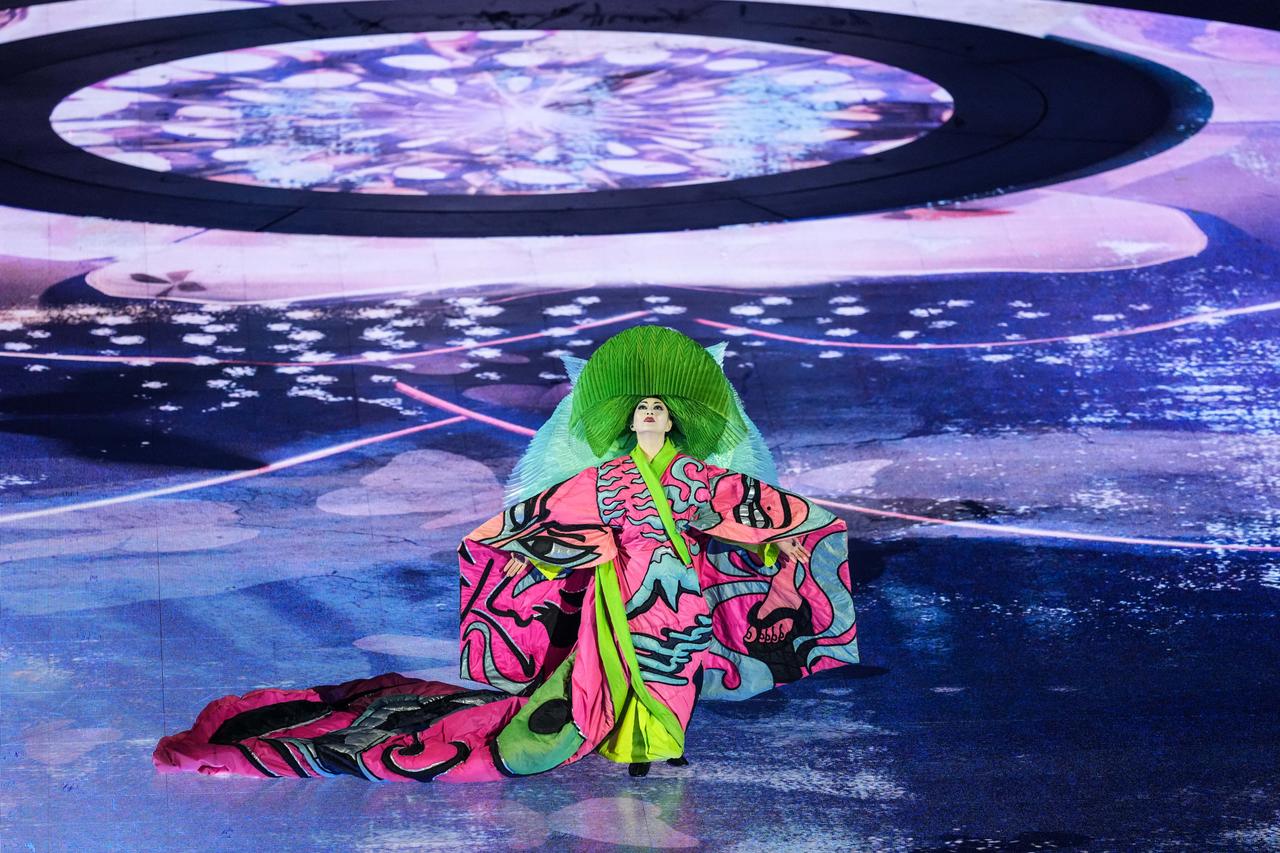
Closing ceremony of the 2026 Milano-Cortina Winter Olympics (AA)
Over the course of 17 days, 116 medal events were contested across 16 disciplines in eight Olympic sports. France, the host of the 2030 Winter Olympics, received the Olympic flag during the closing ceremony.
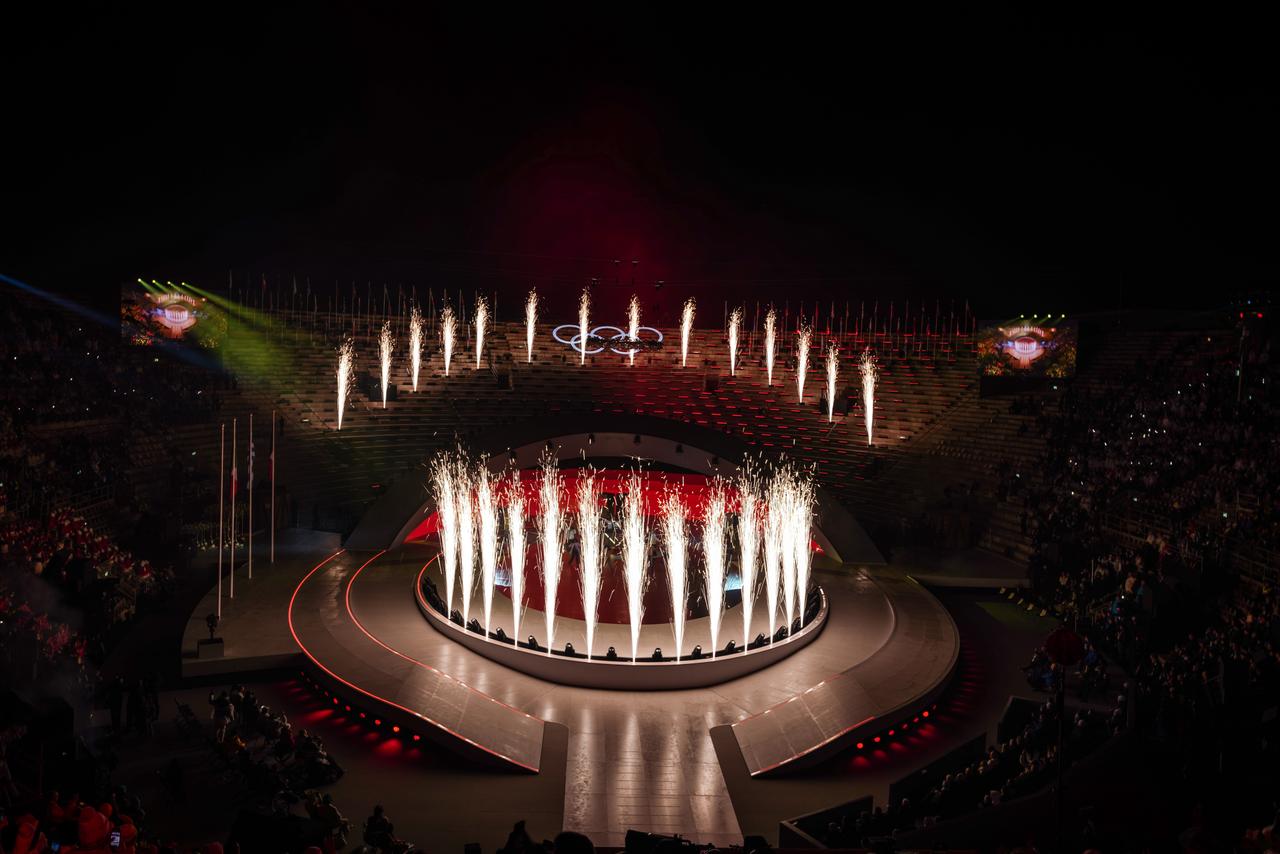
Closing ceremony of the 2026 Milano-Cortina Winter Olympics (AA)
At the conclusion of the Games, Norway topped the medal table with 18 gold, 12 silver and 11 bronze medals for a total of 41. The United States ranked second with 12 gold medals and the Netherlands third with 10 gold. Host nation Italy won a total of 30 medals—10 gold, 6 silver and 14 bronze—achieving its best-ever Winter Olympic performance.
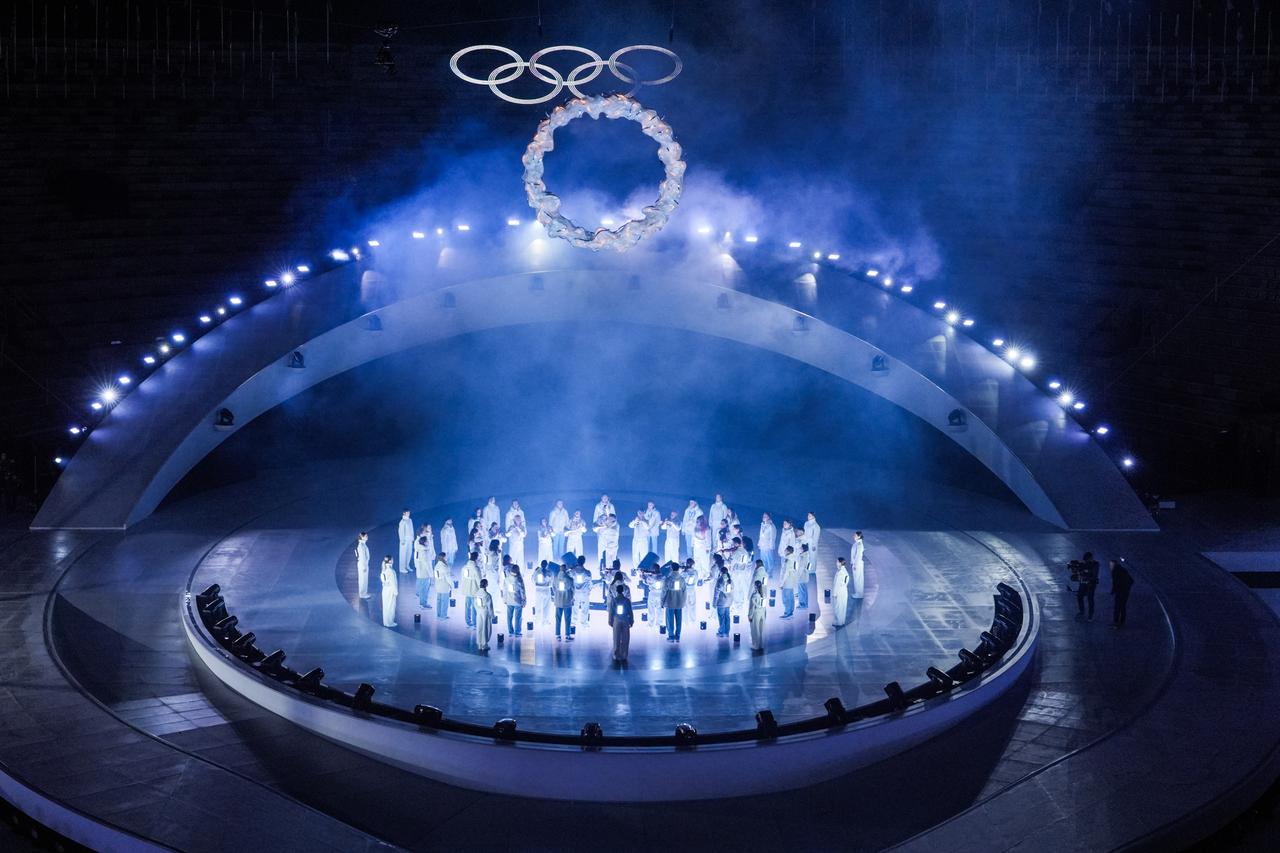
Closing ceremony of the 2026 Milano-Cortina Winter Olympics (AA)
With these results, the 2026 Milano-Cortina Winter Olympics have been completed.
Approximately 2,900 athletes competed in 16 disciplines for 116 medals at the 2026 Winter Olympics in Milano and Cortina. Beyond the medal race, the Games featured historic firsts and record-breaking performances.
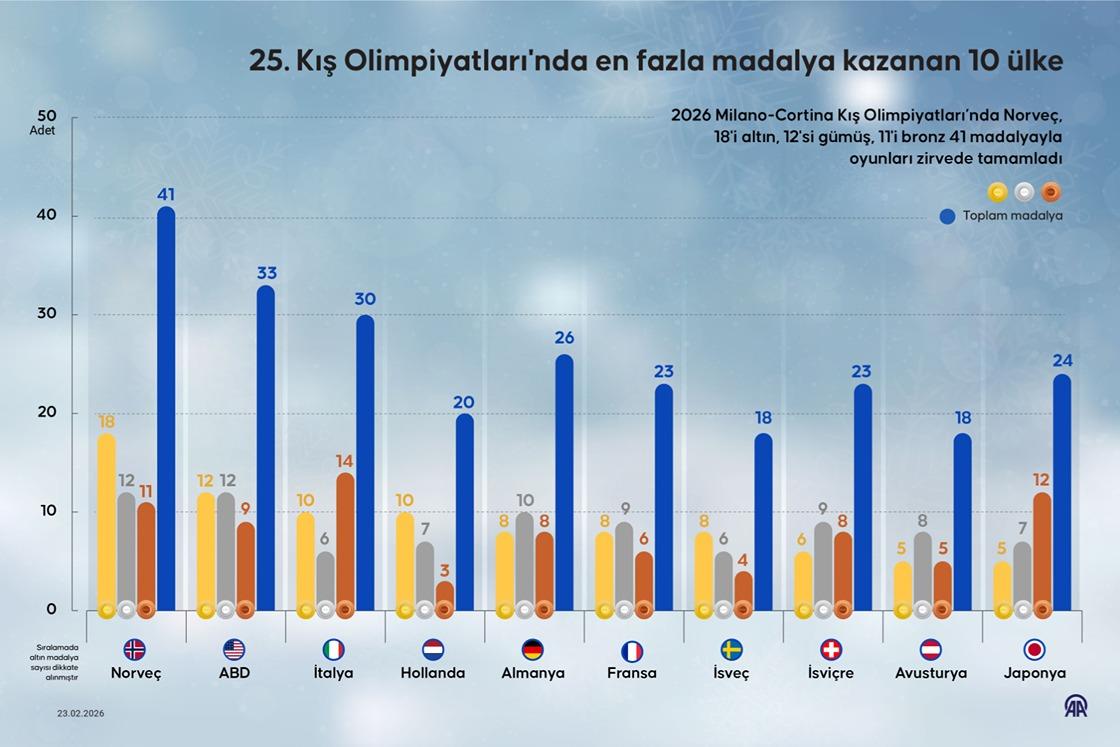
Top 10 medal-winning nations at the 25th Winter Olympics (AA)
Johannes Hoesflot Klaebo won six gold medals at Milano-Cortina 2026, becoming the first athlete in Winter Olympic history to reach a total of 11 gold medals. Klaebo also became the first athlete to win six golds at a single Winter Olympics. He surpassed Marit Björgen, Ole Einar Björndalen and Björn Daehlie, each with eight golds, to become the all-time leader in Winter Olympic gold medals.
Lucas Pinheiro Braathen won gold in the men’s giant slalom in alpine skiing, securing Brazil’s first-ever Winter Olympic medal. In pair figure skating, Anastasiia Metelkina and Luka Berulava won silver for Georgia, marking the country’s first medal at a Winter Games.
New Zealander Zoi Sadowski Synnott earned second-place finishes in the women’s big air and slopestyle events at Milano-Cortina 2026, bringing her total Olympic medal count to five—the first snowboarder to achieve this milestone. Chinese athlete Gu Eileen won gold in halfpipe and silver in big air and slopestyle at Milano-Cortina 2026. Combined with her medals from Beijing 2022, she now has six Olympic medals, becoming the most decorated freestyle skier in Olympic history.
Austrian Claudia Riegler, aged 52, became the oldest female athlete in Winter Olympic history. In alpine skiing, Sarah Schleper became the oldest woman to compete in alpine skiing at the Winter Olympics, finishing 26th in the super-G. In curling, Silvana Tirinzoni, aged 46, became the oldest woman to win a medal at the Winter Olympics.
Arianna Fontana, with three medals won at Milano-Cortina, became Italy’s most decorated Olympian of all time. Fontana has now earned 14 Olympic medals across six Winter Games from 2006 to 2026, becoming the first female athlete to win medals at six consecutive Winter Olympics.
Dutch athlete Xandra Velzeboer set a new world record in the women’s 500 metres short track speed skating with a semifinal time of 41.399 seconds and went on to win gold. In alpine skiing, Sarah Schleper and Lasse Gaxiola became the first mother–son duo to compete at the Winter Olympics. In freestyle skiing aerials, Chinese athletes Wang Xindi and Xu Mengtao drew attention by winning gold in the women’s and men’s events respectively at the same Games; they also won bronze in the mixed team aerials. South Korea won its seventh Olympic title in the women’s 3000 metre relay in short track speed skating.
On the opening day of the Games, protests occurred during the Olympic torch relay in Milano directed against Israel; Israeli athletes also faced protests during their parade in the opening ceremony. Throughout the event, American skier Lindsey Vonn suffered a crash in the women’s downhill alpine skiing race, was airlifted to hospital by helicopter, and underwent multiple surgeries. A doping controversy arose over claims of hyaluronic acid use in freestyle skiing. The presence of U.S. Immigration and Customs Enforcement (ICE) personnel in Italy was protested in Milano; U.S. Vice President JD Vance was booed during the opening ceremony.
On the final day of Milano-Cortina 2026, Israel’s men’s four-man bobsleigh team was disqualified for submitting a fraudulent medical declaration used to justify a crew change. Rules permit crew changes only if a team member is injured or deemed unfit to compete. The Israeli Olympic Committee acknowledged that athlete Uri Zisman had provided false information to the delegation head and consequently disqualified the team, stating that the actions did not meet the standards expected of Olympic athletes. Team captain Adam Edelman said the change was intended to allow reserve athlete Ward Fawarseh to compete, but admitted the submitted conditions did not meet the criteria for a permitted crew change.
Anadolu Ajansı. “2026 Milano-Cortina Kış Olimpiyatları sona erdi.” February 23, 2026. Accessed February 23, 2026. https://www.aa.com.tr/tr/dunyadan-spor/2026-milano-cortina-kis-olimpiyatlari-sona-erdi/3837386
Anadolu Ajansı. “Norveç, 2026 Milano-Cortina Kış Olimpiyatları'nı zirvede tamamladı.” February 22, 2026. Accessed February 23, 2026. https://www.aa.com.tr/tr/dunyadan-spor/norvec-2026-milano-cortina-kis-olimpiyatlarini-zirvede-tamamladi/3837354
BBC News Türkçe. “İtalya'daki 2026 Kış Olimpiyatları sona erdi.” February 4, 2026. Accessed February 23, 2026. https://www.bbc.com/turkce/articles/cm2ymnv6gpmo
Euronews Türkçe. “Kış Olimpiyatları sona erdi: Norveç zirvede, İtalya’dan tarihi sonuç.” February 23, 2026. Accessed February 23, 2026. https://tr.euronews.com/2026/02/23/kis-olimpiyatlari-sona-erdi-norvec-zirvede-italyadan-tarihi-sonuc

The 2026 Winter Olympics, the 25th edition of the Winter Olympic Games, will be hosted in a multi-site model centered on Milan and Cortina d’Ampezzo in Italy. The official opening ceremony will take place on 6 February 2026 at the San Siro Stadium in Milan, and the games will continue until 22 February 2026. Competitions will be held not only in Milan and Cortina d’Ampezzo but also in other cities and regions including Livigno, Bormio, Tesero, Predazzo and Verona. The Olympic program features 16 Olympic sports, with winter sports, alpine and ski disciplines, freestyle events, snowboarding, biathlon and sledding sports taking place across a broad geographic and spatial distribution. The organization is managed by Fondazione Milano Cortina 2026, in coordination with the Italian National Olympic Committee, the Italian Paralympic Committee, local authorities and the International Olympic Committee. The multi-site structure forms the fundamental character of the organization in terms of facility use, transportation and administrative coordination. Türkiye will participate in the 2026 Winter Olympics with a total of nine athletes. Turkish athletes will compete in ski jumping, alpine skiing, cross-country skiing, short track speed skating and para skiing. For the first time in Winter Olympic history, Türkiye will be represented by two athletes in ski jumping. The national athletes were officially honored in ceremonial send-offs prior to the games, and Türkiye continues its historical participation record in the Winter Olympics through the 2026 edition.
No Discussion Added Yet
Start discussion for "2026 Winter Olympics" article
February 5, 2026
Historical Background and the Tradition of the Winter Olympics
February 5, 2026
Scope of the 2026 Organization
February 5, 2026
Host Country and Multi-Host Organization
February 5, 2026
Opening Ceremony and Organization Schedule
February 5, 2026
Türkiye’s Position and Representation at the 2026 Winter Olympics
February 5, 2026
Closing Ceremony and Completion of the Organization
February 9, 2026
Opening Ceremony
February 10, 2026
Day Three
February 11, 2026
Day Four
February 12, 2026
Fifth Day
February 13, 2026
Historical Background and the Tradition of the Winter Olympics
February 13, 2026
Scope of the 2026 Organization
February 13, 2026
Host Country and Multi-Center Organization
February 13, 2026
Opening Ceremony and Organization Calendar
February 13, 2026
Türkiye’s Position and Representation at the 2026 Winter Olympics
February 13, 2026
Closing Ceremony and Completion of the Organization
February 14, 2026
Seventh Day
February 16, 2026
Eighth Day
February 19, 2026
Dokuzuncu Gün
February 19, 2026
Onuncu Gün
February 19, 2026
Eleventh Day
February 19, 2026
Twelfth Day
February 19, 2026
Completion of Türkiye's Olympic Journey
February 20, 2026
Day Thirteen
February 22, 2026
Fourteenth Day
February 22, 2026
Day Thirteen
February 23, 2026
Day Sixteen
February 23, 2026
Closing Ceremony
February 23, 2026
Memorable Moments