


This article was automatically translated from the original Turkish version.
Abidinpaşa Pavilion
Commissioned by | Abidin Pasha | ||||||||
|---|---|---|---|---|---|---|---|---|---|
Construction Period | 1886-1894 | ||||||||
Location | Ankara Ertuğrulgazi Neighborhood | ||||||||
Purposes of Use | Residence, educational institution, museum | ||||||||
Historical Role | Class-ı Muhtelife Officer Training School, War School | ||||||||
Museum Opening Date | 20 January 2024 | ||||||||
Current Status | National Struggle Museum under Çankaya Municipality | ||||||||
Abidinpaşa Köşkü is one of the iconic structures of 19th-century Ottoman modernization and the National Struggle period in Ankara. Built by Governor Abidin Paşa, the building is not only a residence but also holds historical significance as an educational center where the Turkish military was shaped. The site, visited and addressed by Mustafa Kemal Atatürk, now serves as the National Struggle Museum, keeping the memory of the Republic alive.

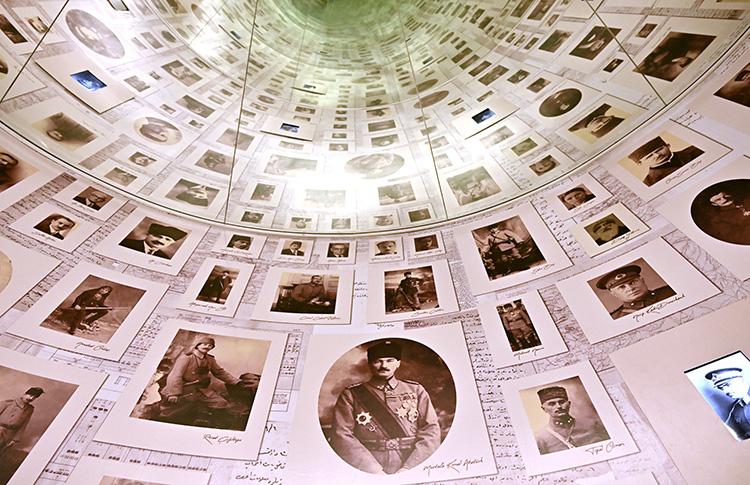
A View from Inside the Museum (Anadolu Agency)
During his tenure as governor of Ankara from 1886 to 1894, Abidin Paşa initiated numerous projects to improve the city’s infrastructure and cultural life. These included bringing water from Elmadağ, constructing new schools, and laying the Ankara-Polatlı railway line. The Abidinpaşa Köşkü, built as part of these efforts, is located in Ankara’s Ertuğrulgazi Neighborhood and stands as a simple and functional example of late Ottoman architecture. The building features a stone ground floor and a wooden frame upper floor, positioned to harmonize with Ankara’s natural topography.
The köşk draws attention both for its architectural design and its functional role during construction. It not only reflected the lifestyle of progressive officials and bureaucrats of the era but also became a center for Ankara’s social, cultural, and political life.
In 1912, the köşk began to be used as the Gendarmerie Company Commanders School. After the occupation of Istanbul, it was transformed into the “Sınıf-ı Muhtelife Zabit Namzetleri Talimgâhı” to provide education to students from the War School and Kuleli who had relocated to Ankara. Opened on 1 July 1920, this training institution served to meet the Turkish army’s urgent need for young officers. Mustafa Kemal Paşa attended the opening ceremony, addressed the students, and emphasized the vital importance of this education for the future of the military.
Shortly after its opening, all rooms of the köşk were converted into classrooms. However, since the building was not originally constructed as a school, students in the early period had to hold lessons in barracks and even on the floor. As the number of students increased, additional buildings were constructed around the site to improve the quality of education. Mustafa Kemal Paşa described the determination of the young officer candidates as “unique sacrifices made for the homeland.”
Students of the talimgâh quickly participated in critical battles such as the Battle of Sakarya and the Great Offensive. Over 1,500 graduates served on the fronts of the National Struggle, becoming martyrs or veterans. The use of the building as an educational institution continued until 1923; after the War School was relocated to Istanbul, the köşk was vacated. According to an archival document from 1933, the building remained allocated to the military.
The köşk was not only the center of military education but also became a significant symbol of the reorganization of the Turkish army. The statements written by Mustafa Kemal Paşa during the educational period are notable for reflecting the challenges and ideals of the era.

Atatürk Silhouette Formed by Decisions Made During the National Struggle (Anadolu Agency)
In 1994, the Abidinpaşa Köşkü was purchased by Çankaya Municipality from Makine ve Kimya Endüstrisi A.Ş. Restoration work began in 2022, and on 20 January 2024, it was opened to the public as the “Abidin Paşa Köşkü National Struggle Museum.” The museum presents the National Struggle to visitors through digital technologies and aims to instill historical awareness among children through dedicated interactive sections.
The museum organizes its exhibits into thematic sections covering Abidin Paşa’s personal life, Ankara of the period, developments during the National Struggle years, and the educational experiences of the Harbiyeliler. Additionally, a cultural continuity is displayed due to Abidin Dino’s familial connection.
At the entrance, visitors find a room presenting Abidin Paşa’s biography, a section where visitors can take photographs with Atatürk, and the National Struggle Press Room. On the upper floors, exhibits detail battles, documents, and stories of heroes from the War of Independence. Additionally, Atatürk’s 10th Anniversary Speech, voiced using artificial intelligence, is presented to visitors. In a specially designed learning room for children, animations created through coloring on a map of Türkiye are combined with interactive technologies to provide an educational experience.
Today, as a museum, the Abidinpaşa Köşkü is a historical structure linked to Türkiye’s independence process. Hosting cultural events, it is recognized as a multi-functional space. The museum is organized to serve various age groups, functioning both as a memorial site and as a venue for educational content.
Reactivated by Çankaya Municipality, the köşkü serves not only to preserve elements of the past but also to transmit them to future generations. The museum was opened as part of the centennial celebrations of the Republic.
Erdaş, Sadık. “Abidinpaşa Köşkü.” *Atatürk Ansiklopedisi*, October 5, 2024. Accessed June 18, 2025. https://ataturkansiklopedisi.gov.tr/detay/98/Abidinpa%C5%9Fa-K%C3%B6%C5%9Fk%C3%BC
Kalyoncuoğlu, Yasemin. “Abidin Paşa Köşkü Müzesi, Milli Mücadele tarihine ışık tutuyor.” *Anadolu Ajansı*, September 22, 2024. Accessed June 18, 2025. https://www.aa.com.tr/tr/kultur/abidin-pasa-kosku-muzesi-milli-mucadele-tarihine-isik-tutuyor/3337469
“Abidin Paşa’s Pavilion Is Now a Museum.” ÇEKÜL Vakfı. Accessed June 18, 2025. https://www.cekulvakfi.org.tr/makale/abidin-pasanin-kosku-artik-bir-muze

Abidinpaşa Pavilion
Commissioned by | Abidin Pasha | ||||||||
|---|---|---|---|---|---|---|---|---|---|
Construction Period | 1886-1894 | ||||||||
Location | Ankara Ertuğrulgazi Neighborhood | ||||||||
Purposes of Use | Residence, educational institution, museum | ||||||||
Historical Role | Class-ı Muhtelife Officer Training School, War School | ||||||||
Museum Opening Date | 20 January 2024 | ||||||||
Current Status | National Struggle Museum under Çankaya Municipality | ||||||||
No Discussion Added Yet
Start discussion for "Abidinpaşa Pavilion" article
Abidin Paşa and the Construction of the Köşk
The Köşk as an Educational Center
Harbiyeliler and the National Struggle at Abidinpaşa
Transformation into a Museum
Content Exhibited in the Museum
Contemporary Significance of the Abidinpaşa Köşkü