

This article was automatically translated from the original Turkish version.
+2 More
Location | Demre Türkiye Antalya | ||||||||
|---|---|---|---|---|---|---|---|---|---|
Period(s) | Lycian Byzantine Roman | ||||||||
Highlights | Hoyran Monument, Rock tombs, Sarcophagi | ||||||||
Feature(s) | Relief tomb architecture | ||||||||
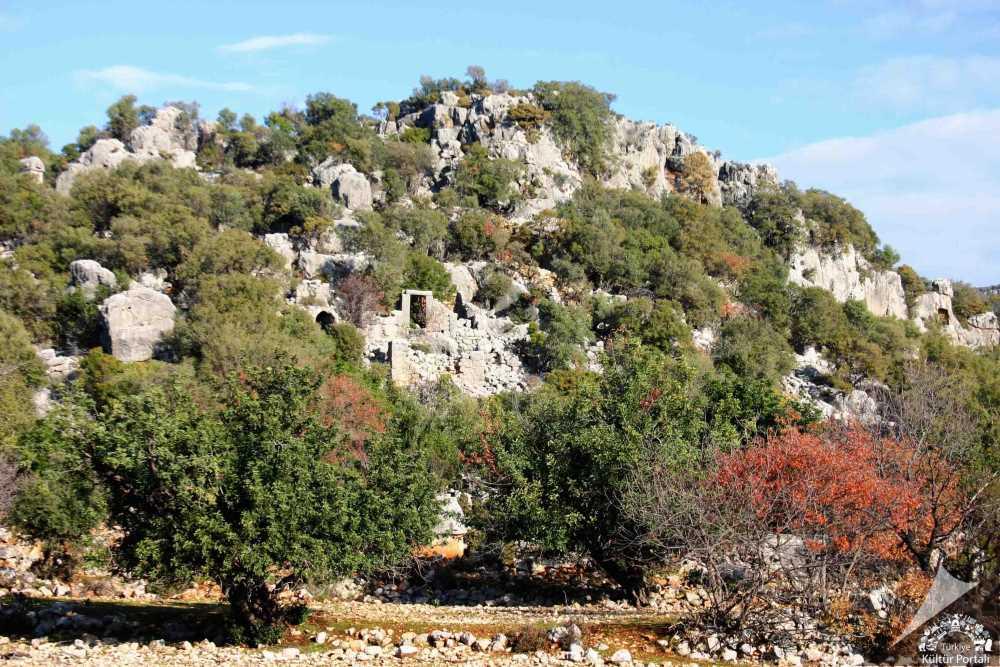
Istlada Ancient City is one of Lycia’s small-scale yet impressive settlements, notable for its original funerary architecture that has survived to the present day. The ruins of the city are distributed across the areas of Kapaklı, Hoyran, and Hayıtlı within the boundaries of Kapaklı Village, Demre District, Antalya Province. The city is particularly distinguished by its rock-cut tombs, sarcophagi, and relief-decorated funerary monuments.
Istlada Ancient City (Culture Portal)
The name Istlada is clearly legible on various inscriptions associated with the ancient city. The settlement was part of the Lycian League and shared regional history with neighboring cities such as Apollonia, Aperlai, Phellos, and Isinda. The history of Istlada can be traced back at least to the early 4th century BCE. Inscriptions and reliefs constitute the most important evidence for this early dating. Following the Lycian period, Istlada continued to be inhabited during the Hellenistic, Roman, and Byzantine eras.
Istlada presents the impression of a small fortified settlement under the rule of a local chieftain. The city walls extend along the eastern and western sides of the acropolis. A gate located near the eastern end provides access into the fortress, and immediately to its west stands the remains of a structure built to control this entrance. Within the settlement, cisterns and wells have been identified, carved into the local bedrock to support water supply.
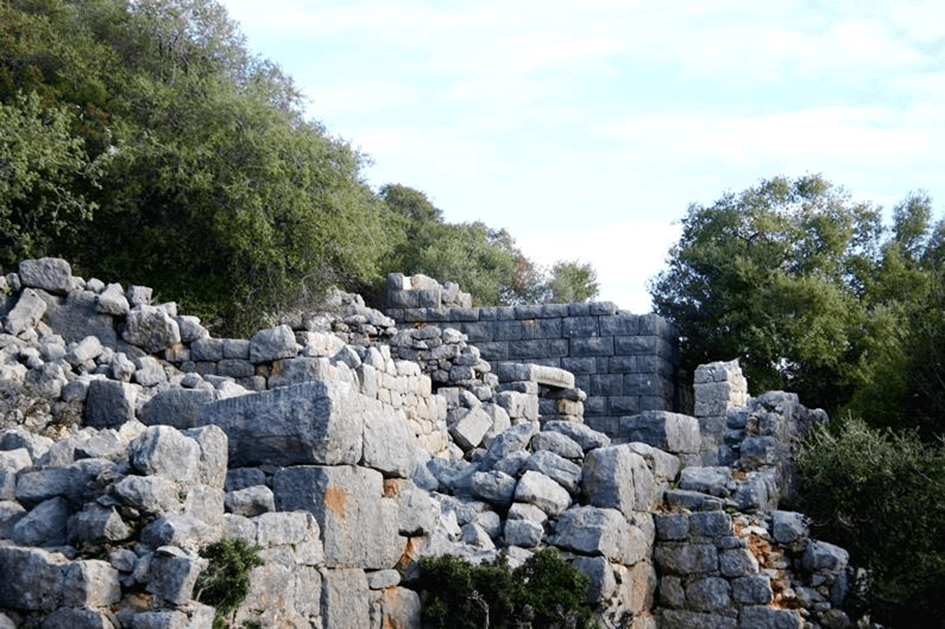
Istlada Ancient City (Antalya Provincial Directorate of Culture and Tourism)
One of Istlada’s most renowned structures is the relief-decorated tomb known as the Hoyran Monument, located in Kapaklı Village. This tomb, carved out of a single rock mass to resemble a house-shaped structure, dates to the 4th century BCE. The central niche depicts the tomb’s owner, his wife, and his son. Below the shallow gable roof, a frieze shows the tomb owner reclining on a couch, with soldiers at his feet and a group of figures—including his son, daughter, wife, and other women—at his head, representing those participating in the funeral ceremony. Sphinxes facing outward are depicted on the acroteria of the monument. An inscription in the Lycian alphabet is also carved above the tomb.
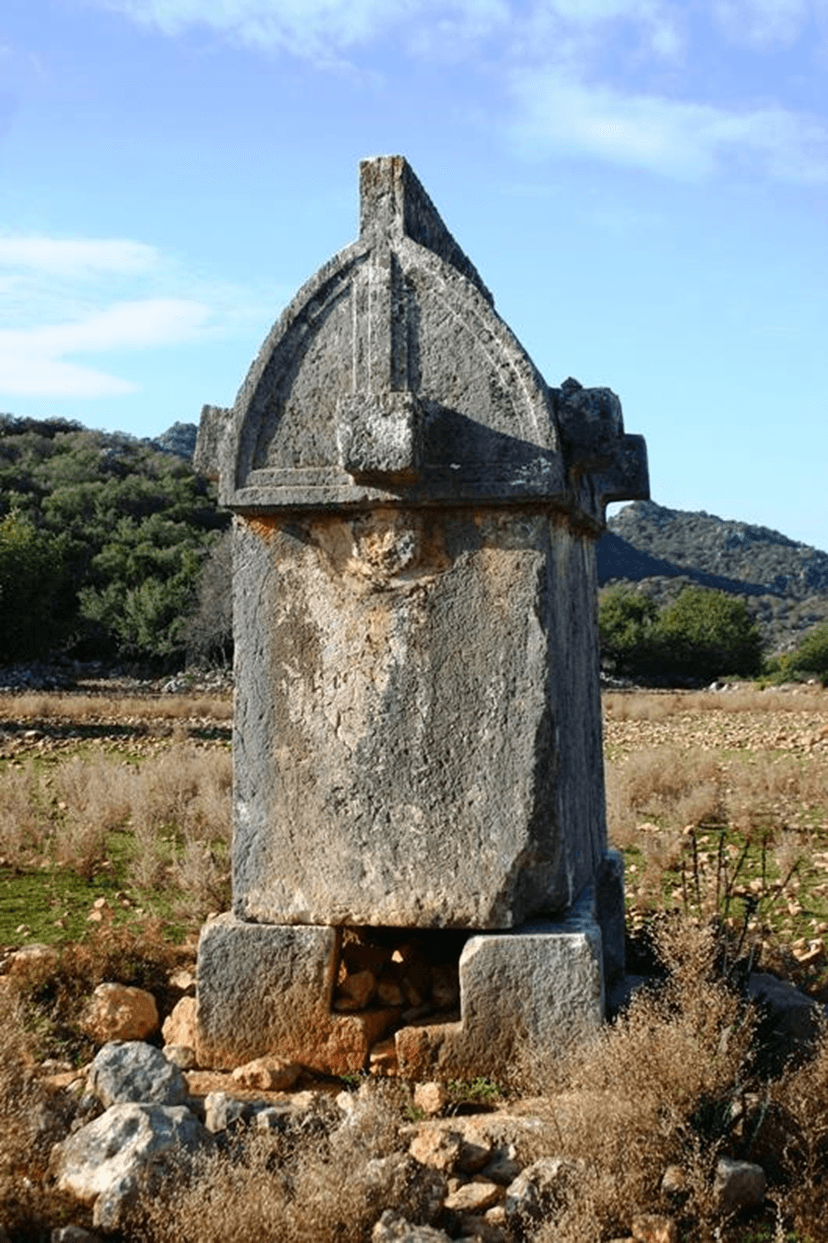
Istlada Ancient City (Antalya Provincial Directorate of Culture and Tourism)
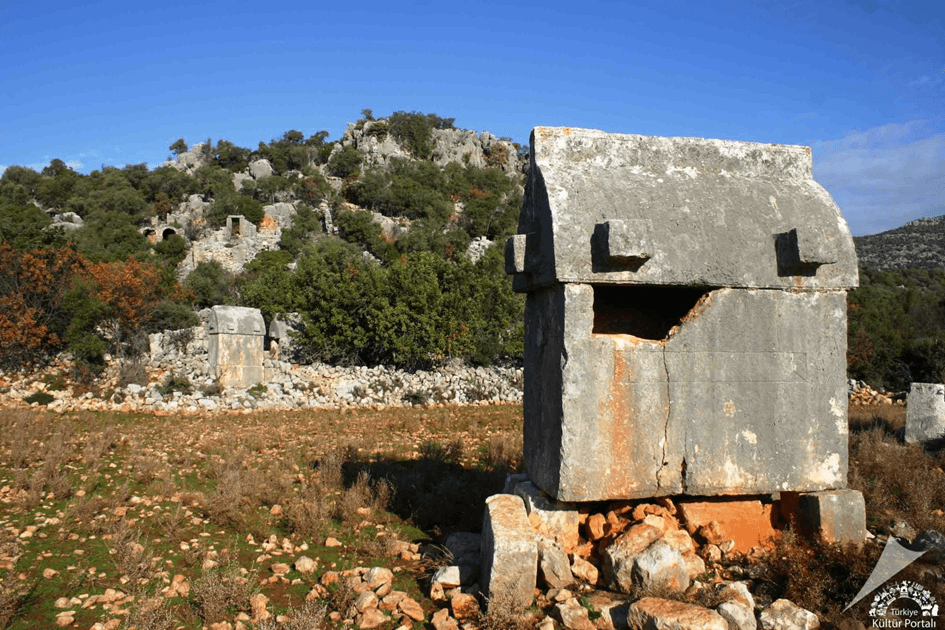
The eastern and northern sections of the acropolis are densely filled with rock-cut tombs, sarcophagi, and single-block stelae. The majority of the sarcophagi follow the typical Lycian form, consisting of a base, chest, and lid. The stelae and tomb structures placed between them were constructed from limestone. The rock-cut tombs date to the Classical period, while all the sarcophagi are dated to the Roman era.
One of the tombs at Istlada, known as the “Rooster and Dove Tomb,” is distinguished by its relief depictions of birds and dates to the early 4th century BCE. Another notable example is a stela-shaped funerary monument carved from a single block, featuring a standing warrior relief. This monument is positioned in front of the rock-cut tomb complex.
Ministry of Culture and Tourism of the Republic of Turkey. “İstlada Antik Kenti.” *T.C. Kültür ve Turizm Bakanlığı Antalya İl Kültür ve Turizm Müdürlüğü Resmî Web Sitesi*. Accessed August 16, 2025. https://antalya.ktb.gov.tr/TR-317577/istlada.html.
Turkey Ministry of Culture and Tourism. “İstlada Antik Kenti.” *Kültür Portalı*. Accessed August 16, 2025. https://www.kulturportali.gov.tr/turkiye/antalya/gezilecekyer/istlada.

Location | Demre Türkiye Antalya | ||||||||
|---|---|---|---|---|---|---|---|---|---|
Period(s) | Lycian Byzantine Roman | ||||||||
Highlights | Hoyran Monument, Rock tombs, Sarcophagi | ||||||||
Feature(s) | Relief tomb architecture | ||||||||
No Discussion Added Yet
Start discussion for "Ancient City of Istlada" article
History
Settlement and Defensive Structures
Hoyran Monument
Funerary Structures
Decorations and Symbols