


This article was automatically translated from the original Turkish version.
+2 More
Atatürk University (ABBM)
Feature(s) | The first biodiversity science museum established within a university in Türkiye | ||||||||
|---|---|---|---|---|---|---|---|---|---|
Foundation | 12 December 2025 | ||||||||
Area(s) | Approximately 5 000 m² of indoor space | ||||||||
Location | Türkiye Erzurum | ||||||||
Special Note | Accessible facilities and guided tours are available | ||||||||
Total Collection | 250,000 biological specimens and 10,000 taxa | ||||||||
Atatürk University Biodiversity Science Museum (ABBM) operates under the umbrella of Atatürk University as the first biodiversity science museum established within a university in Türkiye 【1】. The museum has been structured to study, conserve, and scientifically exhibit the biodiversity of Eastern Anatolia. It integrates collection preservation, research, and public display functions across the fields of paleontology, entomology, zoology, botany, taxonomy, and biosystematics. The institution is managed under the umbrella of the Atatürk University Biodiversity Application and Research Center.
ABBM was established on 12 December 2025 through a collaboration between the Rectorate of Atatürk University and the Directorate of the Biodiversity Application and Research Center【2】. The establishment process was supported by academic staff from the Faculty of Arts and Sciences Department of Biology, the Faculty of Agriculture, and the Faculty of Veterinary Medicine. A primary objective in establishing the museum was to protect and research the biological diversity of Eastern Anatolia.
At the time of its founding, zoological, botanical, and paleontological materials accumulated over more than 60 years within Atatürk University were systematically classified and preserved. The physical structure and exhibition layout of the museum were designed to simultaneously serve scientific research and public display functions.
The museum operates across approximately 5,000 square meters of indoor space and has been designated as a specialized museum by the Ministry of Culture and Tourism. The facility includes laboratories and collection storage areas for researchers, as well as thematic exhibition spaces and educational halls for visitors. ABBM stands as a model for university-based biodiversity museums in Türkiye. Since its establishment, the museum has continued its activities to support academic research in entomology, botany, paleontology, and zoology, and to raise public awareness about biodiversity.
Exhibition areas are organized around taxonomic and ecological themes. The overall exhibition design presents biodiversity through systematic classification. The main exhibition sections are as follows.

Insect Biodiversity Exhibition (ABBM)

Plant Biodiversity Exhibition (ABBM)

Bird Biodiversity Exhibition (ABBM)
This section displays fossil specimens dating back millions of years【3】. The exhibited materials include:
The fossils are presented alongside stratigraphic and chronological information panels and serve as reference material for paleobiological research【4】.
The ABBM collections comprise approximately 250,000 biological specimens and 10,000 taxa 【5】.
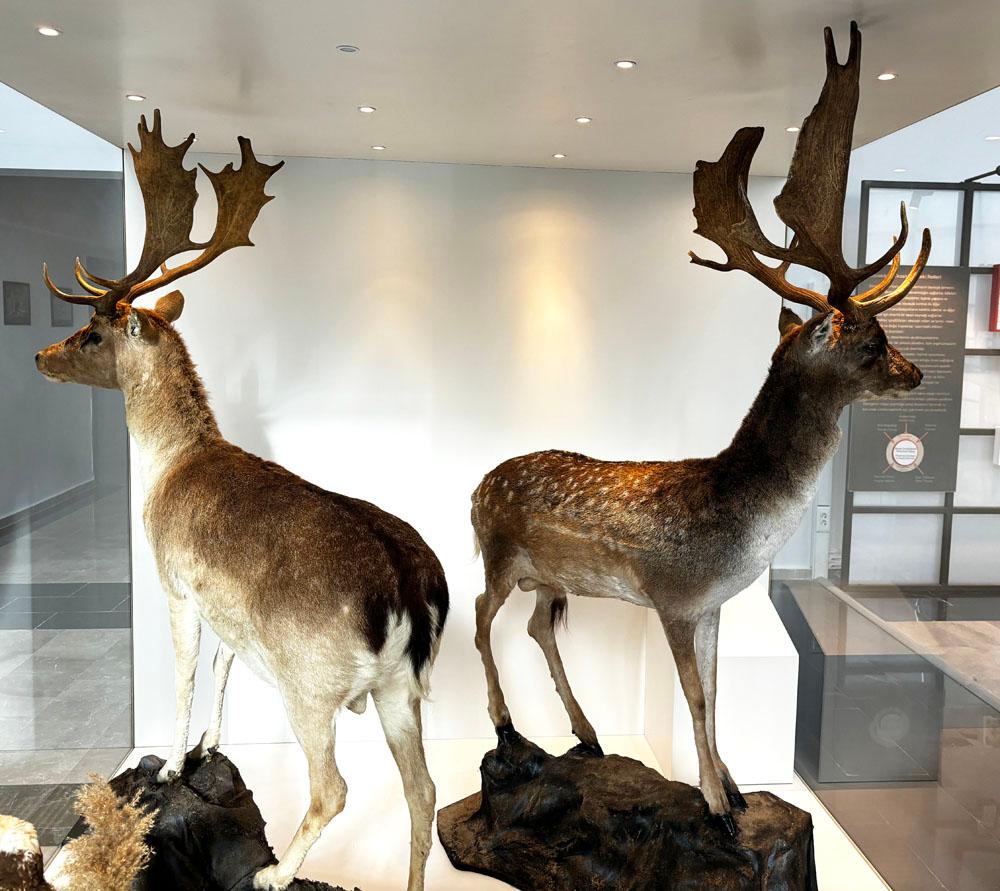
The animal collections constitute the largest section of the museum.
Collection materials have been digitized. Each specimen is recorded with its taxon name, collection number, collection date, geographic coordinates, and habitat information.
Research conducted at ABBM includes the following【7】.
The laboratory infrastructure is suited for entomological, botanical, and molecular analytical studies.
ABBM carries out educational and public awareness functions:
Anadolu Ajansı. “Erzurum'da Kurulan Biyoçeşitlilik Bilim Müzesinde Milyonlarca Yıllık Fosiller Sergilenecek.” Anadolu Ajansı, July 3, 2023. Accessed March 2, 2026. https://www.aa.com.tr/tr/kultur/erzurumda-kurulan-biyocesitlilik-bilim-muzesinde-milyonlarca-yillik-fosiller-sergilenecek/2935645
Anadolu Ajansı. “Milyonlarca Yıllık Fosillerin Sergilendiği Biyoçeşitlilik Bilim Müzesi Açılışa Hazırlanıyor.” Anadolu Ajansı, May 4, 2024. Accessed March 2, 2026. https://www.aa.com.tr/tr/bilim-teknoloji/milyonlarca-yillik-fosillerin-sergilendigi-biyocesitlilik-bilim-muzesi-acilisa-hazirlaniyor/3209760
Atatürk University. *Atatürk Üniversitesi Biyoçeşitlilik Bilim Müzesi (ABBM)*. Accessed March 2, 2026. https://abbm.atauni.edu.tr/
Erzurum İl Directorate of Culture and Tourism. “Atatürk Üniversitesi Biyoçeşitlilik Bilim Müzesi (ABBM).” T.C. Kültür veTurizm Bakanlığı. Accessed March 2, 2026. https://erzurum.ktb.gov.tr/TR-437321/ataturk-universitesi-biyocesitlilik-bilim-muzesi-abbm.html
Ondokuz Mayıs Üniversitesi. "Atatürk Üniversitesi Biyoçeşitlilik Bilim Müzesi." Ondokuz Mayıs Üniversitesi Web Sitesi. Accessed March 2, 2026. https://www.omu.edu.tr/tr/icerik/kurum-disi-duyuru/ataturk-universitesi-biyocesitlilik-bilim-muzesi
[1]
İlhami Erkılıç, “Milyonlarca Yıllık Fosillerin Sergilendiği Biyoçeşitlilik Bilim Müzesi Açılışa Hazırlanıyor,” Anadolu Ajansı, 3 July 2023, accessed 2 March 2026,https://www.aa.com.tr/tr/bilim-teknoloji/milyonlarca-yillik-fosillerin-sergilendigi-biyocesitlilik-bilim-muzesi-acilisa-hazirlaniyor/3209760
[2]
“Atatürk Üniversitesi Biyoçeşitlilik Bilim Müzesi,” OMÜ Duyuru, accessed 2 March 2026,https://omu.edu.tr/tr/icerik/kurum-disi-duyuru/ataturk-universitesi-biyocesitlilik-bilim-muzesi
[3]
İlhami Erkılıç, “Erzurum’da Kurulan Biyoçeşitlilik Bilim Müzesinde Milyonlarca Yıllık Fosiller Sergilenecek,” Anadolu Ajansı, 3 July 2023, accessed 2 March 2026,https://www.aa.com.tr/tr/kultur/erzurumda-kurulan-biyocesitlilik-bilim-muzesinde-milyonlarca-yillik-fosiller-sergilenecek/2935645
[4]
İlhami Erkılıç, “Erzurum’da Kurulan Biyoçeşitlilik Bilim Müzesinde Milyonlarca Yıllık Fosiller Sergilenecek,” Anadolu Ajansı, 3 July 2023, accessed 2 March 2026,https://www.aa.com.tr/tr/kultur/erzurumda-kurulan-biyocesitlilik-bilim-muzesinde-milyonlarca-yillik-fosiller-sergilenecek/2935645
[5]
“Atatürk Üniversitesi Biyoçeşitlilik Bilim Müzesi,” OMÜ Duyuru, accessed 2 March 2026,https://omu.edu.tr/tr/icerik/kurum-disi-duyuru/ataturk-universitesi-biyocesitlilik-bilim-muzesi
[6]
“Atatürk Üniversitesi Biyoçeşitlilik Bilim Müzesi,” OMÜ Duyuru, accessed 2 March 2026,https://omu.edu.tr/tr/icerik/kurum-disi-duyuru/ataturk-universitesi-biyocesitlilik-bilim-muzesi
[7]
“Atatürk Üniversitesi Biyoçeşitlilik Bilim Müzesi,” OMÜ Duyuru, accessed 2 March 2026,https://omu.edu.tr/tr/icerik/kurum-disi-duyuru/ataturk-universitesi-biyocesitlilik-bilim-muzesi


Atatürk University (ABBM)
Feature(s) | The first biodiversity science museum established within a university in Türkiye | ||||||||
|---|---|---|---|---|---|---|---|---|---|
Foundation | 12 December 2025 | ||||||||
Area(s) | Approximately 5 000 m² of indoor space | ||||||||
Location | Türkiye Erzurum | ||||||||
Special Note | Accessible facilities and guided tours are available | ||||||||
Total Collection | 250,000 biological specimens and 10,000 taxa | ||||||||
No Discussion Added Yet
Start discussion for "Atatürk University Museum of Biodiversity Sciences (ABBM)" article
History and Institutional Structure
Physical Space and Exhibition Layout
Paleobiodiversity Exhibition
Collections
Animalia Scientific Collection
Insect Collection (Entomology)
Bird Collection
Mammal Collection
Reptile and Aquatic Life Collections
Plantae Scientific Collection
Type Collection
Database
Research Activities
Education and Societal Contribution
Arboretum
Visitation and Operations