


This article was automatically translated from the original Turkish version.
+1 More
Bozüyük, historical as a site bearing traces of many civilizations, is one of the junction points of Anatolia at important. Settlement in the region has been shaped under the influence of different cultures since antiquity.

Bozüyük (Source: Bozüyük Municipality)
The history of Bozüyük extends back to the 12th century BCE. It was initially dominated by the Hittites. Following the Hittites, the Phrygians from the Balkans gained control of the region in the 8th century BCE. Phrygian dominance lasted approximately 600 years, after which the Cimmerians settled in the area. The Cimmerians ruled the region for about a century, but the Lydians ended this hegemony in the 7th century BCE. After the Lydians, the Persians and then the Macedonians under Alexander the Great successively took control of the region. Following the fragmentation of Alexander’s empire, the Bithynians established their rule over these lands and later joined the judgment Roman Empire. After the Roman Empire, Bozüyük came under the authority of the Byzantine Empire from 395 CE onwards.
During the Byzantine period, Bozüyük was known as “Lamunia.” Between 660 and 720 CE, Arab Umayyad forces used this region as a transit route during their campaigns toward Istanbul's. After the Battle of Manzikert in 1071, the Seljuk Turks conquered Bozüyük and its surroundings, bringing the region under Turkish control. During the Crusades in the 11th century, the region changed hands several times between Christians and Muslims.
In the early years of the Ottoman State, Bozüyük continued as a village under the Sultanönü Fly Beylik. During the foundation of the Ottoman principality, Bozüyük emerged as an important settlement. In 1289, the founder of the Ottoman Beylik, Osman Gazi, took control of the region through a decree issued by the Seljuk State and incorporated it into Ottoman territory.
In the early period of the Ottoman Empire, Bozüyük further developed through a külliye constructed by Kasımpaşa, commander of Kanuni Sultan Süleyman. This külliye included a mosque, inn, bathhouse and school like structures and was completed between 1525 and 1528.
During the Ottoman period, the region served as a major military route. During Kanuni Sultan Süleyman’s Rhodes Campaign, Bozüyük was used as a rest and supply point for the armies. During this era, the Kasımpaşa Mosque and Külliye were constructed, establishing Bozüyük as the regional center.
During the Republican period, Bozüyük became an important industry center. Granted district status in 1924, Bozüyük experienced a population increase due to immigrants arriving from The Balkans after the 1877–1878 Russo-Turkish War. During this period, the population of Bozüyük grew rapidly and the first industrial investments were made in the district. Between 1914 and 2000, the population increased by as much as 985 percent.
Bozüyük became one of the key centers of the War of Independence in the 1920s. During the First and Second Battles of İnönü, the Turkish army achieved significant victories here. These victories are regarded as pivotal moments in the Turkish nation’s struggle for independence. Bozüyük was liberated from Greek occupation in 1922 and regained full freedom on 4 September 1922.
Since the 1970s, Bozüyük has become a major industrial center due to state industrial incentives. During this period, investments were made in sectors such as lumber, chemicals, ceramic, casting, food, cable, and glass industries, making Bozüyük one of Türkiye’s key industrial regions.
Throughout its historical development, Bozüyük has fulfilled an important bridge role between Asia and Europe, hosted numerous civilizations and remained a settlement of strategic strategic importance in every era. Today is a district notable for both its industrial and cultural heritage.
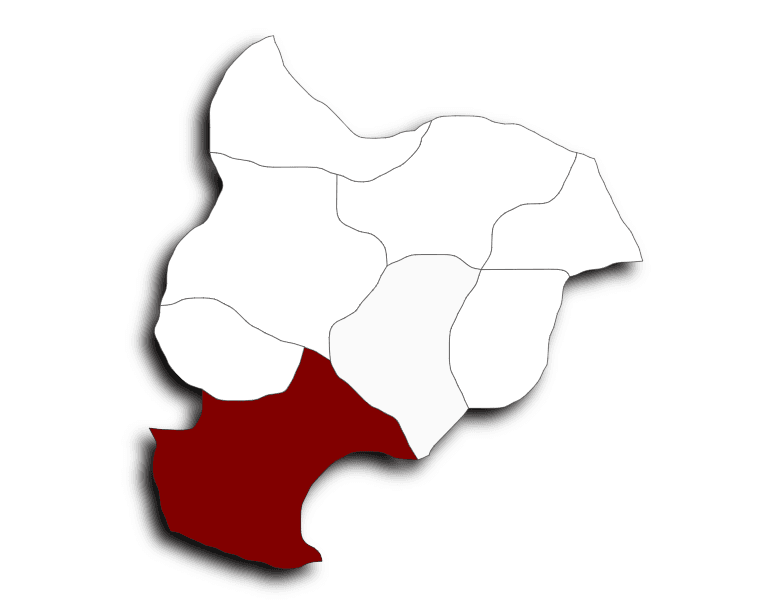
Bozüyük is a district of Bilecik province in northwestern Türkiye. It is bordered to the north by Bilecik center, to the northwest by Pazaryeri, to the northeast by Söğüt, to the east by İnönü district of Eskişehir, to the south by the central and Tavşanlı districts of Kütahya, to the southwest by Domaniç, and to the west by İnegöl district. The district covers an area of 928 square kilometers and has an elevation of 740 meters above sea level.

Bozüyük (Source: Bozüyük Municipality)
Bozüyük’s Earth's surface features include mountains, plains, and rivers.
Bozüyük lies under the influence of a continental climate, with cold, wet winters and hot, dry summers. Precipitation occurs mostly during winter months and in the form of snow. Frost and frost events are frequent in January and February months. The district’s average annual temperature is 10.7°C, and the average annual rainfall is approximately 485 mm. Under the influence of the continental climate, mountainous areas are generally covered with black pine and hornbeam trees. Above 1000 meters, black pine and hornbeam dominate, while at lower elevations, red pine and oak species are common. Additionally, in areas above 1500 meters on Yirce Dağı, fir species coexist with together juniper trees in place.
Bozüyük’s geographical structure exhibits diversity through plains, mountains, and rivers. Plain areas provide fertile agricultural land, while mountainous and forested zones serve as natural reserves. Industrial and residential areas are also common utilized within the district. According to 2018 data, land use in the district is balanced among agriculture, industry, and residential areas.
Bozüyük is an economically and culturally developed settlement with a distinct structure in terms of both population and social services. Demographic composition, education level, healthcare services, and socioeconomic development are key factors shaping Bozüyük’s social structure.
As of 31 December 2020, the population of Bozüyük is 76,987. Males constitute 50.2 percent of the population and females 49.8 percent. The majority of the district’s population resides in the district center; as of 2020, 57,491 people live in the center, while 8,764 reside in town and villages. Analysis of Bozüyük’s population pyramid reveals the highest population concentration in the 35–39 age age group (approximately 8.30 percent), followed by the 40–44 age group (approximately 7.87 percent) and the 30–34 age group (approximately 7.84 percent).
The education level in Bozüyük is relatively high. The literacy rate as of 2019 was 98.56 percent, exceeding the provincial average. The student-to-classroom ratio in primary and secondary education is 20 and 19 respectively, indicating appropriate levels to meet infrastructure needs. Educational institutions in Bozüyük include 7 preschools, 19 primary schools, 19 middle school, 8 general high schools, and 8 vocational high schools. Additionally, the Bozüyük Vocational School, affiliated with Bilecik Sheikh Edebali University, serves as a major educational center offering various higher education programs. As of the 2020–2021 Education-Instruction Year, 646 students were enrolled at the vocational school. Programs offered include banking, foreign trade, graphic design, accounting, and tax applications.
Bozüyük also possesses significant healthcare capacity. The Bozüyük State Hospital has a capacity of 150 bed beds and, as of 2020, employs 77 physicians, 19 tooth specialists, and 464 other healthcare personnel. The district also hosts various family health centers and health houses. The hospital bed ratio is 1.4 per 1,000 people, and the intensive care bed ratio is 0.25. Demand for healthcare services, particularly from Eskişehir and other environment provinces, is increasingly directed toward Bozüyük. This situation signifies its emergence as a regional healthcare center.
Bozüyük is a developed district in terms of industrialization. As of 2017, its socioeconomic development index (SEGE) was determined to be 0.715, the second highest in the province. Bozüyük’s industry-based economy has made significant investments in sectors such as lumber, food, automotive ancillary industries, and chemicals. Industrial growth in the district has also influenced population increase and migration movements. Migration from surrounding settlements such as Pazaryeri district has enhanced living and work opportunities in Bozüyük.
Bozüyük has a developed, industry-based economic structure and rapidly industrialized since the 1970s through large-scale investments. Its location at the intersection of major highways and railways connecting large cities such as Istanbul, Ankara, and Bursa has positioned the district strategically in terms of logistics. This has facilitated the establishment of major industrial enterprises and accelerated economic growth.
Bozüyük began attracting industrial investments in the 1970s through special state incentives and became a major industrial city through investments from outside the region. Today, more than 100 industrial enterprises operate in the district. These enterprises engage in production across various sectors including metal-machinery, food, ceramics, glass, furniture, building products, and energy. Leading industrial brands include Vitra, Esan Eczacıbaşı, Demirdöküm, Demirer Kablo, Eurodecor, and Parkcam.
Bozüyük is also a member of the EBK (Eskişehir, Bilecik, Kütahya) Ceramic Industry Cluster, a key player in the ceramics sector. Tile and vitrified products constitute major production items, and firms operating in the organized industrial zone (OSB) are expected to make significant contributions in terms of production, employment, and exports. The OSB currently operates at approximately 50 percent capacity, and full utilization is expected to significantly boost the district’s industrial output.
Agriculture plays a significant role in Bozüyük’s economy. The total agricultural land area is 787,181 decares, supporting activities in cereals, vegetables, fruit, livestock, and fisheries. In vegetable production, pumpkin stands out, while in fruit production, apple and cherry are particularly important. Bozüyük’s central location between major provinces such as Istanbul, Izmit, Bursa, and Eskişehir provides easy access to markets. Additionally, large and small livestock farming, dairy cattle breeding, poultry farming, and fisheries are widespread in the district.
Bozüyük produces 421,835 poultry and 13,800,000 eggs annually. Beekeeping is also a significant sector, practiced in 24 villages. The district produces 33.19 tons of honey, accounting for 0.06 percent of national production. ()
Bozüyük’s industrial structure comprises a wide variety of sectors. Numerous industrial enterprises operate in ceramics, metal-machinery, glass, food, wood products, and textiles. In the organized industrial zone (OSB), firms produce in sectors such as textiles, paper, rubber, and plastic products. The OSB covers a total area of 524 hectares and consists of 126 industrial plots. Currently operating at 24 percent capacity, the OSB is expected to make a major contribution to the Bozüyük economy once fully operational.
Bozüyük also hosts several small industrial sites. There are two such sites: Yeniköy KSS and Eski KSS. Yeniköy KSS operates on 56 decares with 200 businesses, while Eski KSS operates on 96 decares with 96 businesses. Both small industrial sites are fully occupied and provide employment for approximately 688 people.
The labor force in Bozüyük is predominantly employed in the industrial sector. According to 2020 data, 85 percent of the workforce is covered by 4A social security. The highest concentration of workers is in the manufacturing of non-metallic products (approximately 29 percent) and the production of fabricated metal products excluding machinery and equipment (10 percent). An additional 8 percent of workers are covered by 4B social security and are primarily active in the road transport and construction sectors.
Bozüyük possesses significant tourism potential through both its historical and cultural heritage and its natural beauty. Sites associated with the War of Independence, Ottoman-era monuments, and areas suitable for nature tourism make Bozüyük attractive to visitors.
Bozüyük has a rich historical past, which has enabled the preservation of numerous historical monuments. Among its archaeological finds from the Phrygian period are marble column, a relief female bust, and a sarcophagus lid found near Çamyayla Village. Additionally, the ruins of church near Göynücek Village and rock-carved water cisterns on the hilltop are part of the region’s historical heritage.
The Kasımpaşa Mosque and Külliye, built between 1525 and 1528 by Kasımpaşa during the Ottoman period, is one of Bozüyük’s iconic landmarks. The mosque walls are constructed from cut stone and feature rich tile decorations. The pulpit is made of white marble, and the column capitals are adorned with griffin motifs. The minaret stands 32.50 meters tall and has a single balcony. The mosque underwent repairs between 1938 and 1939. The adjacent soup kitchen is preserved by the General Directorate of Foundations.
The Kumral Abdal Türbesi, located on the Kovalıca road in Bozüyük district, is another important historical site where Kumral Abdal (Dede), the standard-bearer of Ertuğrul Gazi, and his five sons are buried. It is also known as “Yediler Tekkesi.”
Another historical structure in Bozüyük is the Atatürk Forest Lodge. Located in the Gülalan locality, 10 kilometers from Muratdere Village, the lodge was constructed by Major İbrahim Çolak. Atatürk stayed here during his visit to the district on 10 June 1930. The lodge was built in the Bulgarian architectural style.
One of Bozüyük’s tourist attractions is the sites of the İnönü Battles during the War of Independence. The İnönü Cemetery is located on a hill between Bozüyük and Akpınar Village, containing 844 grave. It was constructed in 1930 by the Ministry of National Defense and has been commemorated annually on 1 April since 1981, marking the anniversary of the İnönü victories. The İntikamtepe Cemetery was also built in memory of soldiers who fell during the İnönü Battles and was constructed by the Ministry of National Defense starting in 1950.

Bozüyük, İntikamtepe Cemetery (Source: Bozüyük Municipality)
Another significant tourist site in Bozüyük is Metristepe Monument. This monument, symbolizing the Victory of the İnönü Battles, was constructed starting in 1973 and inaugurated on 29 June 1975. Built in commemoration of the 50th anniversary of the Republic, it is one of the district’s most important symbols.

Metristepe Cemetery, Bozüyük (Source: Bozüyük Municipality)
Bozüyük also attracts attention for its natural beauty. The district offers suitable areas for activities such as trekking, camping, and winter tourism. Regions such as Kömürsu Highland, Turbine Recreation Area, Çiçekli Yayla, and Sofular Yayla provide ideal settings for nature tourism enthusiasts. These areas feature natural walking trails, camping facilities, and opportunities for winter activities.
BEBKA. *Bozüyük İlçe Raporu 2023*. Accessed April 3, 2025. https://bebka.org.tr/wp-content/uploads/2023/12/Bozuyuk-Ilce-Raporu.pdf.
BEBKA. *Bozüyük İlçe Raporu*. Accessed April 3, 2025. https://bebka.org.tr/admin/datas/sayfas/198/bozuyuk-ilce-raporu_1568788074.pdf.
Bilecik Ticaret ve Sanayi Odası. "Bozüyük." Accessed April 3, 2025. https://bileciktso.org.tr/B%C4%B0LEC%C4%B0K/%C4%B0l%C3%A7eleri/B%C3%B6z%C3%BCy%C3%BCk/tabid/9153/Default.aspx.
Bozüyük Belediyesi. "Coğrafi Konumu." Accessed April 3, 2025. https://www.bozuyuk.bel.tr/icerik/cografi-konumu.
Bozüyük Belediyesi. “Bozüyük Tarihi.” Accessed April 3, 2025. https://www.bozuyuk.bel.tr/icerik/bozuyuk-tarihi.
Bozüyük Kaymakamlığı. "Tarihi Mekanlar." Accessed April 3, 2025. http://www.bozuyuk.gov.tr/tarihi-mekanlar.
T.C. Bilecik Valiliği. "Coğrafi Yapı." Accessed April 3, 2025. http://www.bilecik.gov.tr/cografi-yapi.
T.C. Bilecik Valiliği. “Bozüyük.” Accessed April 3, 2025. http://www.bilecik.gov.tr/bozuyuk.

Antiquity and the Ancient Period
Byzantine Period and the Arab Ascendancy
Ottoman Period
Republican Period
Industry and the Modern Era
Geographical Structure
Location and Boundaries
Landforms
Rivers and Lakes
Climate and Vegetation
Geographical Structure and Land Use
Social Structure
Population and Demographic Structure
Education
Healthcare Services
Socioeconomic Status and Development Level
Economic Structure
Agriculture and Livestock
Industry and Manufacturing Sector
Labor Force and Sectoral Distribution
Tourism Potential
Historical Monuments
Kasımpaşa Mosque and Külliye
Kumral Abdal Türbesi
Atatürk Forest Lodge
İnönü and İntikamtepe Cemeteries
Metristepe Monument
Nature Tourism