


This article was automatically translated from the original Turkish version.
+1 More
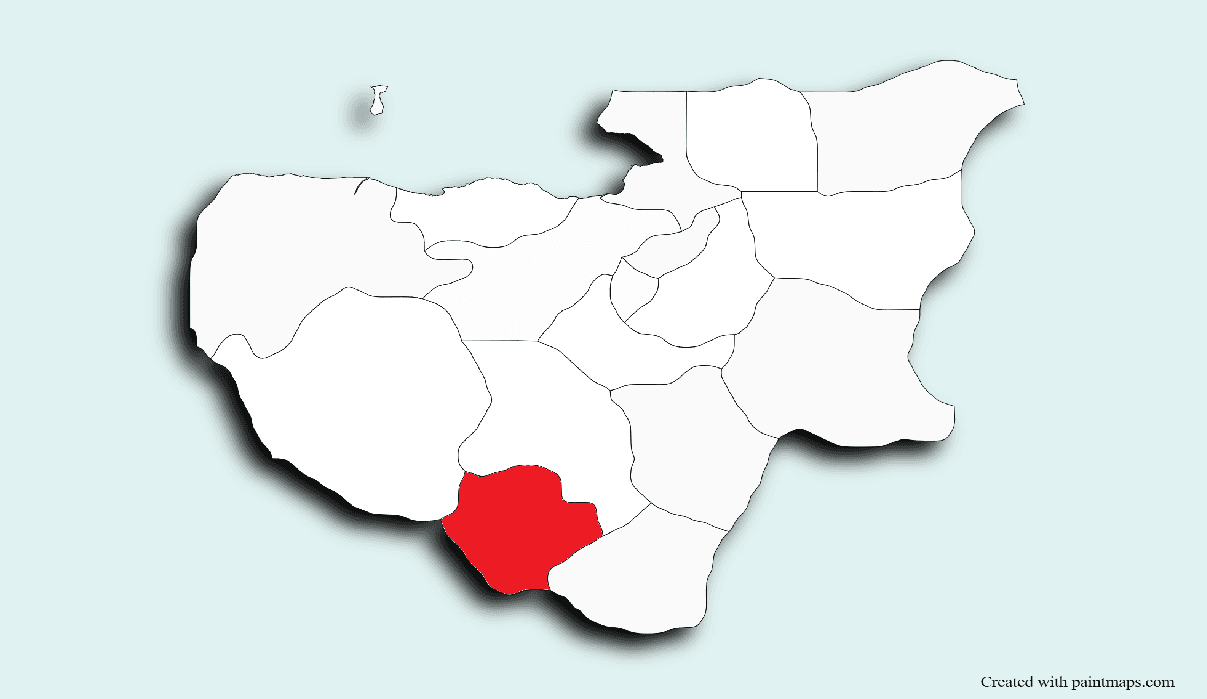
Büyükorhan (District)
Location | Bursa | ||||||||
|---|---|---|---|---|---|---|---|---|---|
Elevation(s) | 830 m | ||||||||
Area(s) | 11 300 hectares | ||||||||
Neighboring Districts | Harmancık (east), Mustafakemalpaşa (west), Orhaneli (north), Dursunbey/Balıkesir (south) | ||||||||
Distance(s) | 81 km from the city center of Bursa | ||||||||
District Governor | Yunus Emre SAKIZCI | ||||||||
Mayor(s) | Kamil TURHAN | ||||||||
Büyükorhan is a district located 81 km from the city center of Bursa. Situated at an elevation of 830 meters above sea level, the district is a green settlement area within the Marmara Region, surrounded by forests. Covering an area of 11,300 hectares, Büyükorhan is bordered by Harmancık to the east, Mustafakemalpaşa to the west, Orhaneli to the north, and Dursunbey, a district of Balıkesir, to the south.
The history of Büyükorhan is rooted in the dense settlement history of Anatolia. In the 2000s BCE, the Bitinians, migrating from Thrace, settled around Bursa and gave the region its name, Bithynia. Subsequently, the region came under the dominion of the Empire of Alexander the Great and continued to exist as a province of the Roman and Byzantine Empires. After being conquered by the Ottomans in 1299, the region’s boundaries extended from the Adranos River to İzmit, İznik, Kastamonu, and Ereğli.
Orhaneli was established as a settlement by the Roman Emperor Hadrian, during which the Temple of Adranos and its school were constructed. Although the name Büyükorhan does not appear explicitly in historical sources, scholars infer its origin from the name Adranos. The area was first known as the hunting ground of Emperor Hadrian and later of Orhan Bey. It is believed that with the establishment of Orhaneli, settlement also began to develop in the surrounding areas of Büyükorhan.
The origins of the settlements in Büyükorhan and its surroundings trace back to the Kayı tribe, part of the Oghuz Turks. After the collapse of the Göktürk State, the Kayı migrated from Central Asia to Anatolia and initially settled in the Bitlis region. Due to their distinguished performance in a battle during the reign of Seljuk Sultan Alaaddin Keykubat, they were granted Domaniç and Bilecik as their homeland. This was part of the Seljuk strategy to defend their borders against the Byzantines. Choosing Bilecik and Söğüt as their second settlement, the Kayı gradually expanded into surrounding areas and contributed to the conquest of Bursa in 1326. Some branches of the Kayı, arriving via Söğüt, Domaniç, Kütahya, and Tavşanlı, took control of this region, which was then under the authority of the Adranos Tekfurluk. The center of the Tekfurluk at that time was the Kadıköy locality. In the area known as Maşatlık Gavur Mezarlığı, brick fragments, tile pieces, iron nails, and castle ruins have been discovered.
After the conquest, Yörük encampments were established in the localities of Ortaçlar, Eskiköy, and Hallar. Ortaçlar grew to become the most significant encampment; however, due to pressure from the Janissaries, some groups migrated to Kurşunlu village in Kirmasti (Mustafakemalpaşa). The Karakeçili encampments remaining in Eskiköy and Hallar named the region “Orhan-ı Kebir” in honor of Orhan Bey. These groups are regarded as the ancestors of the present-day population.
Büyükorhan became a sub-district (nahiye) under Orhaneli in 1944, gained town (belde) status in 1967, and was granted district status by a government decree published in the Official Gazette No. 19507 on 04/07/1987.
Büyükorhan is located in a mountainous and forested area of the Marmara Region, at an elevation of 830 meters above sea level. Covering an area of 11,300 hectares, the district is bordered by Harmancık to the east, Mustafakemalpaşa to the west, Orhaneli to the north, and Dursunbey to the south. The Aliova River flows through the southern part of the district, and two reservoirs are used for agricultural irrigation. Groundwater sources are predominantly used for land irrigation. The district’s terrain consists of 41% agricultural land and 59% forests and natural areas.
Büyükorhan experiences a temperate climate between Mediterranean and continental types. Summers are hot and dry, while winters are cold and rainy. Temperatures reach 30–35°C in summer and average 4–6°C in winter. The vegetation is predominantly composed of pine and fir forests, with oak trees also widespread. Controlled logging is carried out in the forests by the Forest Management Directorate, and local villagers benefit from the products obtained during this process. Timber, mine poles, utility poles, industrial wood, paper-grade wood, and firewood are harvested from the forests.
The social structure of Büyükorhan is based on deep-rooted Yörük and Turkmen traditions. Every year in the second week of June, the Büyükorhan Municipality organizes the Görecik Plateau Yörük and Turkmen Festivals. Traditional attire includes embroidered dresses, three-skirted garments, ferman, and belts for women; and cepken, kama, pıtpıt, and çarık for men. Local dishes such as lentil flour soup, yufka ıslaması, çalı bastırması, kaşık hamuru, melke köftesi, and güveç prepared with erkeç meat are particularly prominent.
In terms of education, the number of primary schools decreased between 2016 and 2020, while the number of middle schools remained stable and the number of vocational high schools increased. The decline in student numbers is attributed to rural-to-urban migration. The literacy rate is 85.62%, below the Bursa average. In the 2020–2021 academic year, 276 students were enrolled at the Büyükorhan Vocational School of Higher Education, affiliated with Bursa Uludağ University.
The economy of Büyükorhan is based on agriculture, animal husbandry, and seasonal labor. The working population constitutes 29–30% of the total population. Major agricultural products include wheat, barley, potatoes, and strawberries. Barley replaces wheat at higher elevations. Strawberry cultivation is practiced in irrigable areas, although profitability has declined. Animal husbandry is one of the district’s key income sources. Seasonal labor is especially common on energy transmission line construction sites.
Among underground resources, marble deposits around Karalar village are prominent. A chromium mine also exists, but the granite mine and processing facility that operated in the past are no longer in use. Forests play a significant role in the district’s economy. Forty-one forest villages are under the jurisdiction of the Forest Management Directorate, and products derived from the forests provide supplementary income for villagers.
Improvements in transportation infrastructure have supported economic development. Asphalt paving and road construction projects have enhanced the district’s accessibility. Since 1988, the increasing number of official institutions has transformed the closed community structure and increased commercial diversity.
Büyükorhan has tourism potential due to its natural beauty and thermal springs. Thermal waters along the Emet River in Düğüncüler Neighborhood are used by locals, who have constructed pools. Pension houses are located around the spa, and the valley attracts attention for its rich plant diversity. Görecik Plateau is a tourist attraction due to the Yörük and Turkmen Festivals. Forested areas and the Aliova River are suitable for nature tourism. However, developing tourism infrastructure could enable more effective utilization of this potential.
As of 2021, the population of Büyükorhan is 9,321, with 51% being female. Analysis of the population pyramid shows that the highest proportions are in the 65–69 age group (10.42%), followed by the 55–59 age group (9.18%) and the 60–64 age group (7.43%), indicating a concentration of elderly residents due to rural-to-urban migration. In the Socio-Economic Development Index ranking (SE-GE 2022), Büyükorhan ranks 815th out of 81 districts in Türkiye and is the lowest-ranked district among Bursa’s 17 districts, with a score of -0.752, placing it in the fifth category.
Bursa Valiliği. “Büyükorhan.” Accessed April 20, 2025. http://www.bursa.gov.tr/buyukorhan.
Büyükorhan Belediyesi. “Büyükorhan Tarihi.” Accessed April 20, 2025. https://www.buyukorhan.bel.tr/buyukorhan-tarihi/.
Büyükorhan Belediyesi. “Coğrafi ve Ekonomik Durum.” Accessed April 20, 2025. https://www.buyukorhan.bel.tr/cografi-ve-ekonomik-durum/.
Büyükorhan Kaymakamlığı. "Genel Coğrafya." Accessed April 20, 2025. http://www.buyukorhan.gov.tr/genel-cografya.
Büyükorhan Kaymakamlığı. “Sosyo-Kültürel.” Accessed April 20, 2025. http://www.buyukorhan.gov.tr/sosyo-kulturel.
Büyükorhan Kaymakamlığı. “İlçemiz Büyükorhan.” Accessed April 20, 2025. http://www.buyukorhan.gov.tr/ilcemiz-buyukorhan.
Kalkınma Kütüphanesi. “Büyükorhan İlçe Raporu.” Accessed April 20, 2025. https://www.kalkinmakutuphanesi.gov.tr/assets/upload/dosyalar/buyukorhan_ilce_raporu.pdf.

Büyükorhan (District)
Location | Bursa | ||||||||
|---|---|---|---|---|---|---|---|---|---|
Elevation(s) | 830 m | ||||||||
Area(s) | 11 300 hectares | ||||||||
Neighboring Districts | Harmancık (east), Mustafakemalpaşa (west), Orhaneli (north), Dursunbey/Balıkesir (south) | ||||||||
Distance(s) | 81 km from the city center of Bursa | ||||||||
District Governor | Yunus Emre SAKIZCI | ||||||||
Mayor(s) | Kamil TURHAN | ||||||||
No Discussion Added Yet
Start discussion for "Büyükorhan (District)" article
History
Geographical Structure
Climate and Vegetation
Social Structure
Economic Structure
Tourism Potential
Demographic Structure