

 Recently Added:
This article was automatically translated from the original Turkish version.
Thailand and Cambodia experienced a crisis period marked by intensified border clashes in December 2025, signaling the return of historical border disputes to a military dimension. A series of recent armed encounters, aerial attacks, and evacuations have created a widespread security issue along the border.
The border between Thailand and Cambodia has long been contentious due to differing interpretations of historical maps and disputes over ownership of temple areas. This has led both sides to maintain intensive patrols along the border and periodically reinforce their military presence. Although various mechanisms have been established over the years to resolve the issue, no definitive agreement has been reached on certain sections of the boundary line.
In the final week of November, activity along the border escalated with increased patrol frequency and sporadic gunfire. Both sides described these initial contacts as mutual violations. At the start of December, troop movements and preparations for positional reinforcement signaled the imminent outbreak of large-scale clashes.
Thailand-Cambodia Clashes (Al Jazeera)
Over the past 72 hours, close-range armed clashes have occurred at various points along the border between Thai and Cambodian units. In these encounters, light weapons and artillery elements have been used. The Thai military reported the death of one soldier and multiple injuries among its personnel. Cambodian forces stated they were under heavy pressure at certain positions and responded with counterfire. The persistence of the clashes indicates that tensions along the border will not subside in the short term.
Following the escalation of clashes, Thailand conducted aerial operations targeting specific locations on the Cambodian side. Military observation posts, defensive positions, and certain structures were struck. This development marked a new phase in the conflict. The aerial attacks were audible across a wide stretch of the border, increasing uncertainty regarding the security situation for local residents.
In response to Thailand’s aerial attacks, Cambodia reorganized its positions and responded with ground forces. Artillery fire intensified at several points. Border units claimed they opened fire in defense, alleging that Thai forces had crossed the border. The clashes spread simultaneously to multiple areas.

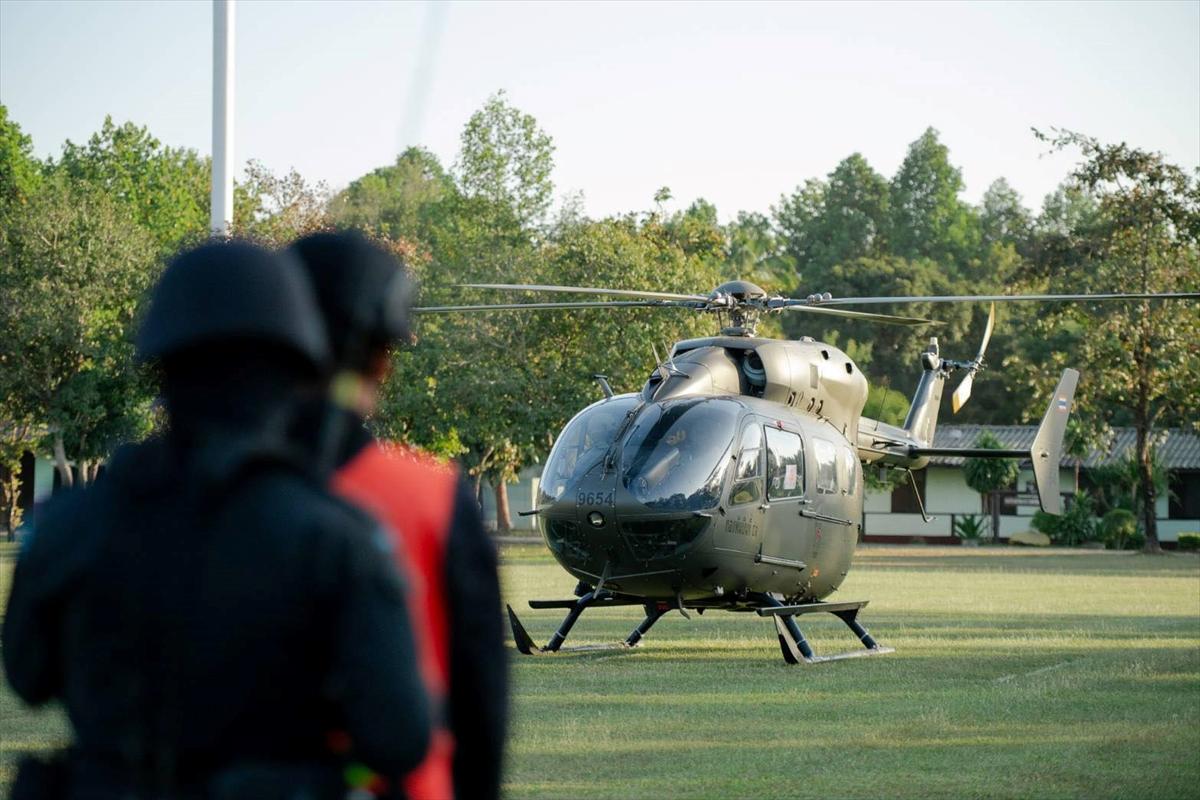
A Thai soldier wounded by Cambodian fire was transported by helicopter to a hospital for treatment. 8 December 2025 (Anadolu Ajansı)
Aerial attacks and increased artillery shelling posed a serious threat to civilians living in border villages. Thousands quickly abandoned their homes and moved to safer areas. Temporary shelters rapidly filled up, prompting local authorities to establish new evacuation centers. Families, particularly disturbed by the loud bombardment sounds at night, chose to leave the region. In some towns, a large portion of the population was temporarily evacuated.
During the clashes, damage occurred to walls and roofs of buildings in several villages. Fires and smoke were observed, and some roads became impassable due to the fighting. Power and communication infrastructure suffered outages, and aid teams experienced delays reaching certain areas due to access difficulties.
As border clashes intensified, customs checkpoints were temporarily closed. This directly affected the economic activities of communities living along the border. Agricultural products, small-scale commercial goods, and vehicles could no longer cross the border. Markets were fully suspended on security grounds, depriving trading families of their income sources. Furthermore, the disruption of economic flows on both sides of the border caused sudden slowdowns in supply chains. This interruption created severe economic pressure on communities whose livelihoods depend on cross-border trade.

Thai Army Spokesperson Major General Winthai Suvaree. 8 December 2025 (Anadolu Ajansı)
The Thai government stated that Cambodian forces had violated the ceasefire and opened fire across the border. Cambodia, in turn, claimed that Thailand had breached the border and that its response was defensive. The statements from both sides contained conflicting narratives regarding responsibility for the clashes.
Various international actors called on both countries to immediately halt hostilities and protect civilians. The commencement of aerial attacks particularly drew the attention of international institutions. Statements emphasized the need for calm and the activation of dialogue mechanisms.
The current clashes have weakened previously established peace and dialogue processes. The intensification of violence along the border has made ceasefire mechanisms harder to implement. International assessments have stressed the importance of maintaining open diplomatic channels.
December 2025 saw renewed clashes along the Thailand-Cambodia border on the night of 8 December. The outbreak was triggered by a mine explosion at a border outpost that severely injured a Thai soldier, followed by allegations that the ceasefire had been suspended.
On the morning of 8 December, the Thai armed forces launched aerial attacks as retaliation against Cambodian units. The Cambodian Ministry of Defense accused Thailand of attacking civilian settlements along the border, while both sides accused each other of provocation.
By the morning of 9 December, clashes had spread along the entire border, with active fighting reported in five border provinces. The Thai navy announced it had moved to expel Cambodian forces from territories they had allegedly occupied. As a result of the clashes, both sides reported military and civilian casualties. Cambodia stated that at least four civilians had been killed and many others wounded.
Thailand also confirmed military losses and reported numerous injuries among its troops. Large-scale evacuation operations were initiated to ensure the safety of civilians and border residents. Thousands of people from both countries were relocated from conflict zones to secure areas.
AP News. "Thailand Launches Airstrikes, Civilians Evacuate as Border Conflict with Cambodia Reignites."
Accessed December 8, 2025.
Accessed December 8, 2025.
Accessed December 8, 2025.
Accessed December 8, 2025.
Accessed December 8, 2025.
Accessed December 8, 2025.
Accessed December 8, 2025.
Accessed December 8, 2025.
Accessed December 8, 2025.
Al Arabiya. "Thailand Launches Air Strikes Against Cambodia in Border Flare-Up."
Al Jazeera English. "Thailand Launches Air Strikes Along Cambodia Border as Renewed Fighting Breaks Out." YouTube video, Accessed December 8, 2025. https://www.youtube.com/watch?v=2zv9mDl4wY4
Anadolu Ajansı. "Tayland Barış Anlaşmasını Askıya Almasının Ardından Kamboçya Tarafına Ateş Açtı."
BBC News. "Thailand–Cambodia Border Clashes: Live Coverage."
CNN. "Thailand–Cambodia Border Clashes Escalate as Airstrikes Hit Disputed Zones."
Guardian, "Thailand Launches Airstrikes along Disputed Border with Cambodia."
Reuters. "How Do Cambodia and Thailand’s Militaries Compare?"
SCMP (South China Morning Post). "Thailand, Cambodia Clash at UN Mine Ban Talks as ‘Fragile’ Border Truce Teeters."
TRT World. "Thai Soldier Killed, Several Wounded in Border Clashes with Cambodia: Army."
Thailand and Cambodia resumed border clashes on 8 December 2025, which continued into their third day as of 10 December. The clashes were reported to have intensified particularly in the Surin, Buri Ram, Si Sa Ket and Ubon Ratchathani regions.
The Thai military announced that rockets launched by Cambodia had landed near the Phanom Dong Rak Hospital in Surin province and that hospital staff and patients were evacuated following the attack.
Cambodia accused the Thai military of targeting various settlements along the border and “culturally significant temples.” The Thai Ministry of Defense stated that its military operations were conducted on a “limited scale and as a last resort” and that peace could only be achieved alongside the security of its people.
It was reported that within three days of fighting, at least 10 people lost their lives, seven of whom were Cambodian and three Thai. Thai authorities announced that over 400,000 people had been evacuated to safe areas, while the Cambodian Ministry of Defense declared that over 100,000 civilians had been relocated to shelters in five northern and northwestern provinces.
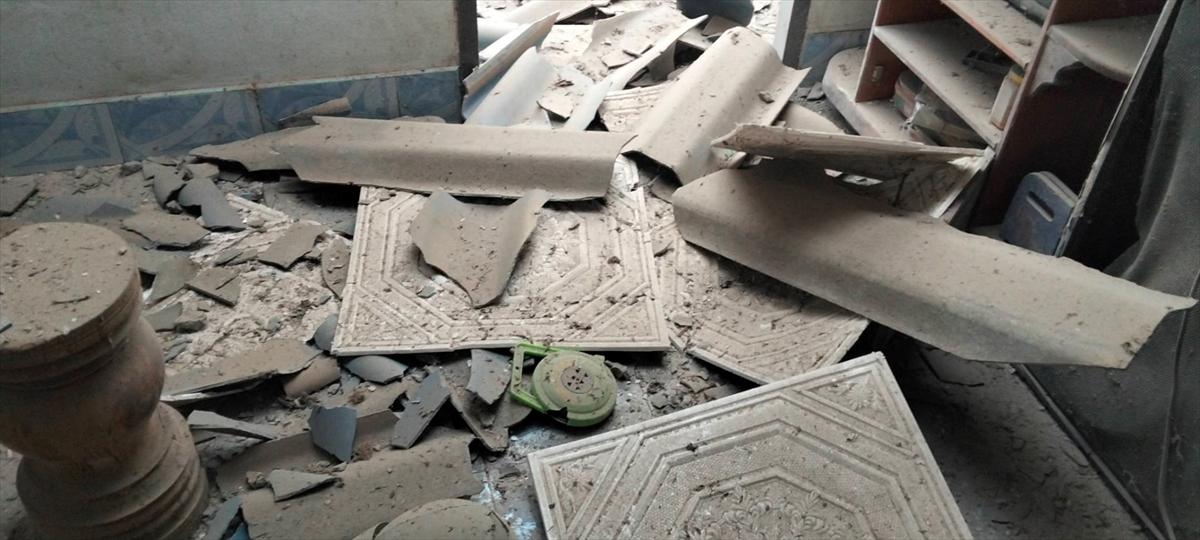
Thailand and Cambodia: A building damaged in renewed clashes, 10 December 2025 – (Anadolu Agency)
It was reported that thousands of rockets were fired from Cambodia into Thai territory and unmanned aerial vehicles conducted attacks. Thai forces announced they had reclaimed an area previously captured by Cambodian forces in the Sa Kaeo region. On 10 December, Thailand’s F-16 fighter jets carried out an air strike against a military target on the Cambodian side.
Cambodian sources stated that Thailand conducted air strikes in two areas and artillery fire in three others. According to Thailand’s The Nation newspaper, the Cambodian army targeted 12 frontlines across four Thai provinces.
Thailand’s Minister of Education, Narumon Pinyosinwat, stated that approximately 1,000 schools along the border had been closed for security reasons and that plans for remote learning were being prepared. The Office of the Basic Education Commission (OBEC) reported that some schools in safe areas had been temporarily converted into shelters.
Thai Ministry of Defense spokesperson Surasant Kongsiri announced that over 400,000 civilians had been relocated to shelters established in seven provinces, emphasizing large-scale evacuations for civilian safety. Cambodian Ministry of Defense spokesperson Maly Socheata stated that 101,229 people had been evacuated from five provinces.
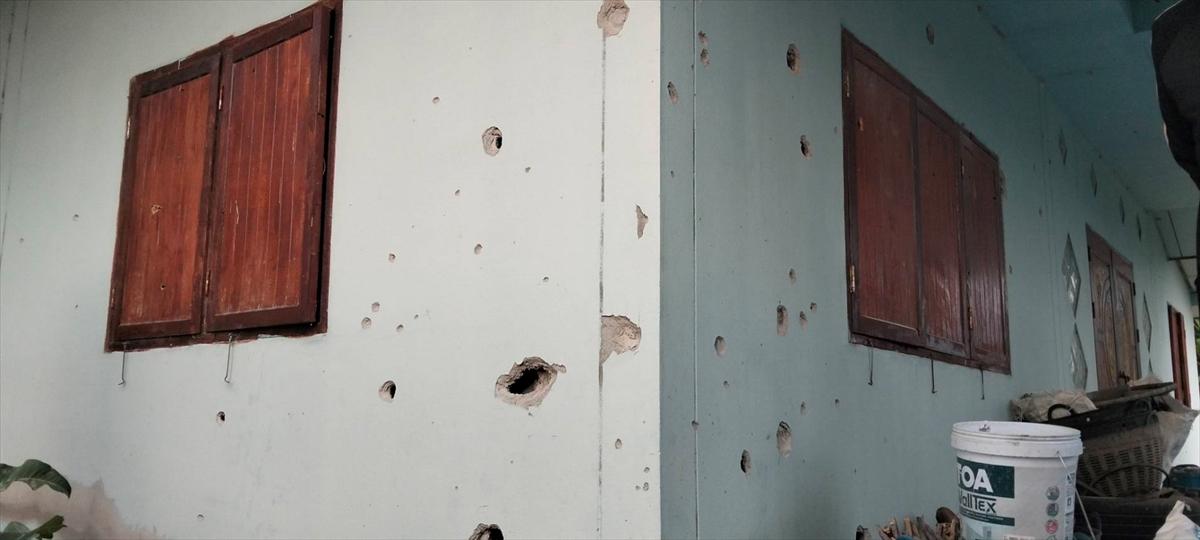
Thailand and Cambodia: A building damaged in renewed clashes, 10 December 2025 – (Anadolu Agency)
US Secretary of State Marco Rubio urged both countries to “immediately cease hostilities” and emphasized compliance with the de-escalation provisions of the peace agreement signed in October under the mediation of US President Donald Trump.
Trump, at a rally in Pennsylvania, said, “I will need to make a phone call. Who else can stop a war between two strong nations like Thailand and Cambodia with a single phone call?” Thai Foreign Minister Sihasak Phuangketkeow stated that negotiations were not currently possible and that Thailand was not the party that initiated the clashes.
United Nations Secretary-General António Guterres also called for restraint from both sides, stressing that the border dispute had led to serious civilian casualties, infrastructure destruction and mass displacement.
Cambodia announced on 10 December that it was withdrawing from the Southeast Asian Games being held in Thailand, citing “serious concerns” expressed by athletes’ families.
As of 11 December 2025, large-scale evacuations had been carried out in border settlements affected by the clashes. Hundreds of thousands of people on the Thai side and tens of thousands on the Cambodian side were relocated to safe areas. The total number of displaced persons was reported to have exceeded half a million.
Cambodia formally appealed to the United Nations Security Council, alleging that Thailand had conducted air strikes and violated its border. The letter called for an independent investigation into the incidents.
As the clashes escalated, various countries issued travel advisories to their citizens. International organizations and religious leaders called on both sides to exercise restraint and observe a ceasefire.
On 12 December 2025, Thai Prime Minister Anutin Charnvirakul announced the dissolution of parliament due to rising political pressure and security crises caused by the border clashes. This development triggered the start of an early election process in the country. On the same date, clashes continued at various points along the border, with casualties and injuries increasing. Both sides continued to assert that their military operations were defensive in nature.
US President Donald Trump, despite the ceasefire, stated that after several phone calls, the situation would be “put back on track.” His remarks were made public during a New Year’s event at the White House, where he hosted members of both Republican and Democratic Congresses.
In his speech, Trump noted that during his presidency he had ended eight separate conflicts worldwide and suggested that the current tension between Thailand and Cambodia could also be resolved through diplomatic engagement. Trump stated that a few phone calls regarding Thailand would be sufficient and that the situation would then be brought under control.

Cambodia-Thailand Clashes. 14 December 2025 (Anadolu Agency)
Following Trump’s ceasefire announcement, Thai Prime Minister Anutin Charnvirakul stated that the ceasefire was not being fully implemented on the ground and that the perception of threat to Thai territory persisted. Charnvirakul emphasized that the events could not be dismissed as a “traffic accident” and that Thailand was compelled to defend its sovereignty. He indicated that military actions would continue until the threat perception was eliminated.
Thailand’s 1st Army Region Operations Center announced on 13 December 2025 that air operations had been conducted against military targets along the Cambodian border. In coordination with the Royal Thai Air Force, arms and ammunition depots and air defense communication systems belonging to Cambodia near the settlements of Ban Nong Ya Kaeo and Ban Nong Chan were targeted and destroyed. The operation was described as a response to military threats along the border.

Cambodia’s BM-21 rocket attack on Sisaket. 14 December 2025 (Anadolu Agency)
Cambodian forces were reported to have launched BM-21 rockets at the Saothongchai area in Kantharalak district of Thailand’s Sisaket province in the early morning. According to information released by Thailand’s 2nd Army Region, the rockets struck near the entrance of a shelter in Moo 1 settlement. Civilians hearing sirens moved toward shelters, and explosions caused injuries. Two people were seriously wounded, and later a 63-year-old civilian was reported to have died.

Cambodia’s attack on Sisaket. 13 December 2025 (Anadolu Agency)
On the fifth day of the clashes, Thai Prime Minister Anutin Charnvirakul held a phone call with US President Donald Trump. It was reported that Trump urged both sides to reobserve the ceasefire and reduce tensions along the border. Charnvirakul defended Thailand’s position that it did not initiate the attacks and held Cambodia responsible for ceasefire violations. The Thai Prime Minister conveyed to Trump that US pressure on Cambodia was necessary to reduce tensions.
Cambodia’s Ministry of Interior announced that all border crossings with Thailand had been suspended for security reasons until further notice. The decision was taken to ensure the safety of Cambodian and Thai citizens as well as foreign nationals in the region. The statement warned that individuals outside the border areas should remain in place until the ceasefire was fully implemented.
The Thai Ministry of Defense announced that curfews in affected areas along the border had been expanded due to ongoing clashes. The Thai military reported that Cambodia had restarted its attacks and that Thailand had responded. After an attack on a settlement near a school, one civilian was reported killed in the ensuing clashes.
Cambodia’s Minister of Information, Neth Pheaktra, announced that 12 people had been killed and 74 injured in the clashes, which had lasted approximately one week. Pheaktra stated that over 400,000 people had been displaced. Cambodian authorities also reported that Thai F-16 fighter jets conducted air strikes near refugee camps in the Chong Kal area of Oddar Meanchey province and the Srei Snam area of Siem Reap province. Officials stated that the attack in Srei Snam targeted a bridge located approximately 70 kilometers inside Cambodia’s border.
Despite the ceasefire, border clashes continued between Cambodia and Thailand, with 15 Cambodian civilians and 16 Thai soldiers reported killed.
Following reports alleging that Cambodian “spies and mercenaries” had infiltrated Thai territory to carry out sabotage, Thai Prime Minister Anutin Charnvirakul implemented a series of measures. The Thai government tightened security checks for Cambodians entering the country and intensified screening of foreign passenger groups deemed to pose a risk.
Thai Ministry of Defense spokesperson Surasant Kongsiri announced that all fuel and military equipment exports through border crossings to Laos had been suspended following intelligence reports indicating that such goods were being directed to Cambodia. Kongsiri stated, “The fundamental reason for this order was intelligence showing that fuel and equipment exported via Laos were being sent to Cambodia for military use.”
The Thailand-Cambodia border dispute continues, and Thai Prime Minister Anutin Charnvirakul defended his country’s position that it was not the first aggressor, emphasizing that “the US should direct its ceasefire calls toward Cambodia.” In remarks to the Bangkok Post, Anutin stated regarding US President Donald Trump’s ceasefire appeals, “Cambodia must first stop its attacks on Thailand.” Thai Ministry of Foreign Affairs Assistant Spokesperson Maratee Nalita Andamo declared, “As the party attacking Thai territory, Cambodia must be the first to declare a ceasefire.”
Thai media reported that Thai military units had fully taken control of the Chong An Ma area, where border clashes with Cambodia had intensified since 7 December.
According to Thai PBS World, Thai military units achieved “complete success” against Cambodian forces in the border region of Chong An Ma. It was claimed that Thai forces had fully seized the Chong An Ma border crossing and strategically important points overlooking it. The report highlighted footage shared on social media showing Thai soldiers singing the national anthem and raising their flags in the area.
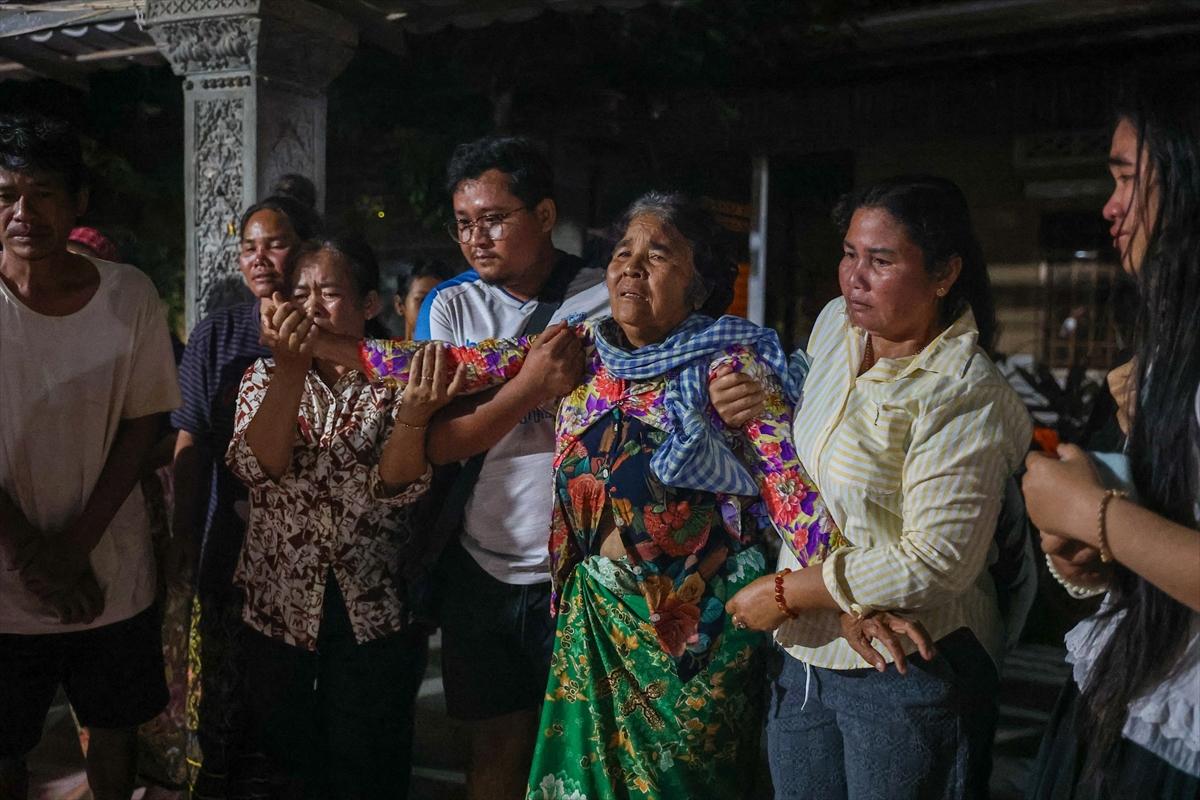
Thailand-Cambodia Border Clashes. 17 December 2025 (Anadolu Agency)
Authorities reported that total casualties among soldiers and civilians in ongoing border clashes between Thai and Cambodian forces had exceeded 52. Since the beginning of the month, renewed hostilities saw both armies engage in reciprocal missile and artillery fire along the border regions. The clashes resumed despite the ceasefire brokered by US President Donald Trump and Malaysian Prime Minister Enver Ibrahim.

Thailand-Cambodia Border Clashes. 17 December 2025 (Anadolu Agency)
China launched a mediation initiative to halt the border clashes stemming from the Thailand-Cambodia dispute. According to a statement from China’s Ministry of Foreign Affairs, Foreign Minister Wang held phone talks with his Thai counterpart Sihasak Phuangketkeow and Cambodian counterpart Prak Sokhonn.
Minister Wang, noting China’s role as a friend and close neighbor to both countries, expressed sorrow over the civilian casualties caused by the clashes, stating, “Rising tensions serve no one’s interest and harm solidarity among ASEAN nations. The urgent priority must be to end the clashes as swiftly as possible with decisive action, prevent further loss of life, and restore mutual trust.”
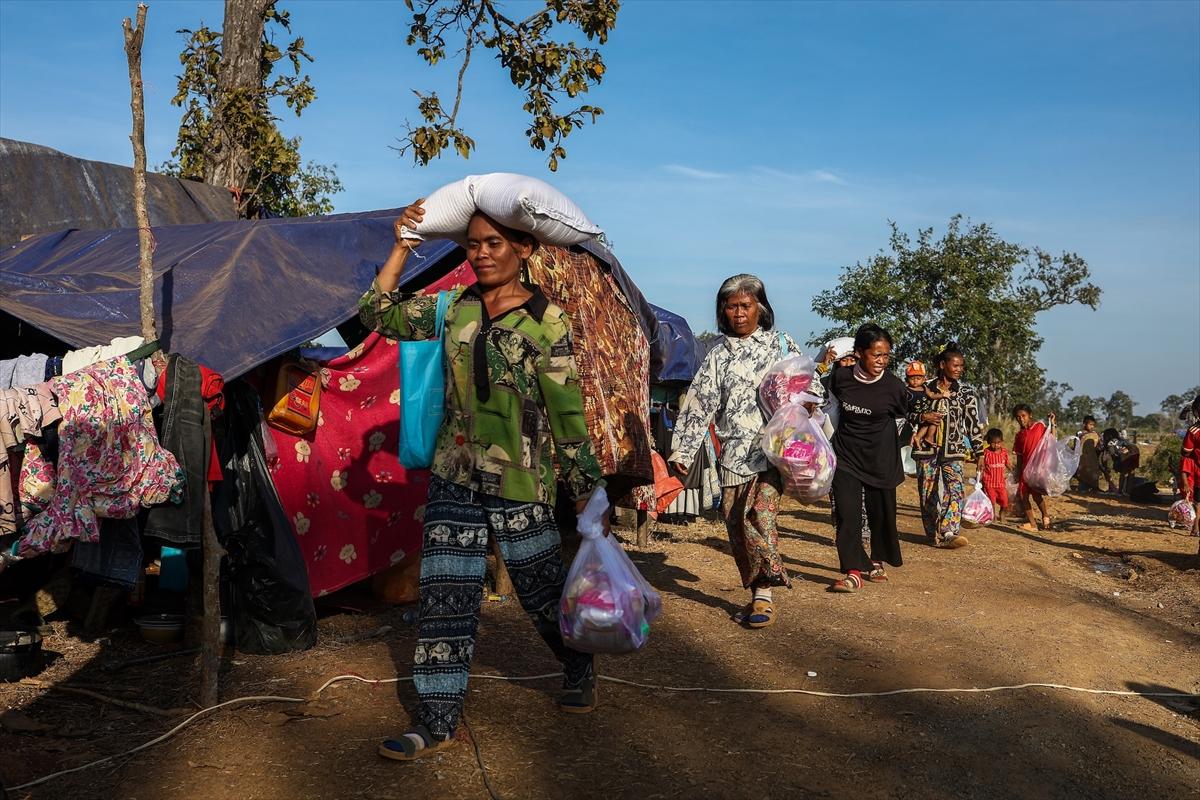
Thailand-Cambodia Border. 19 December 2025 (Anadolu Agency)
In the ongoing clashes between Thai and Cambodian forces, reciprocal missile attacks and artillery fire have continued since renewed tensions flared at the beginning of the month. At least 55 people, including civilians, have been killed, and over 800,000 have been displaced. Cambodian families are struggling to survive in open-air refugee camps in Chong Kal district of Oddar Meanchey province.

Cambodia-Thailand. 19 December 2025 (Anadolu Agency)
On 19 December 2025, China and the United States announced that they had separately initiated efforts to secure a ceasefire ahead of the ASEAN meeting. These diplomatic efforts intensified following the escalation of clashes, just before the scheduled special ASEAN foreign ministers’ meeting in Kuala Lumpur. Both China and the US renewed calls for a ceasefire, and it was reported that the foreign ministers of both countries were expected to attend the meeting.
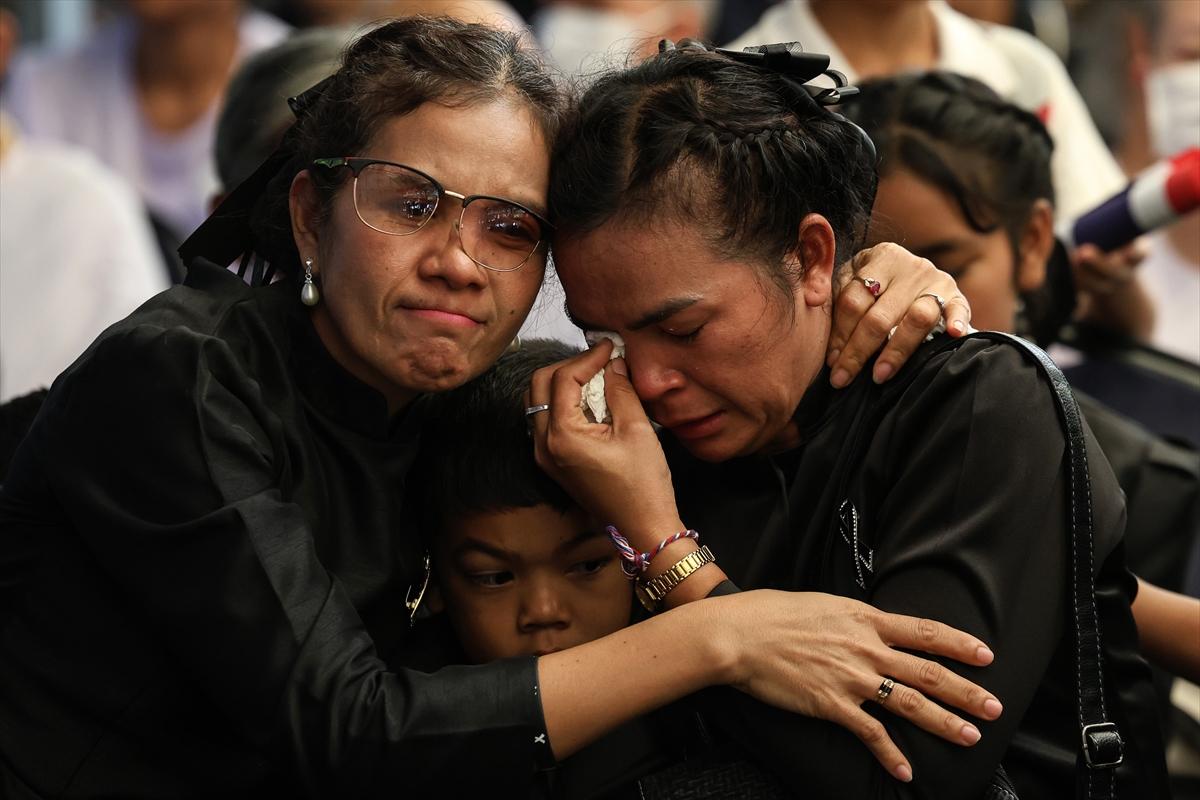
Border Clashes Between Thailand and Cambodia. 20 December 2025 (Anadolu Agency)
The Association of Southeast Asian Nations (ASEAN) Foreign Ministers’ Meeting, aimed at ending the ongoing border tensions between Thailand and Cambodia, concluded without reaching an agreement on a ceasefire. The meeting was held on 22 December in Kuala Lumpur, Malaysia’s capital.
Thai Foreign Minister Sihasak Phuangketkeow stated after the meeting that approximately two hours of discussions ended without an agreement on a ceasefire between Thailand and Cambodia. The Malaysian government was thanked for hosting the meeting.
Thailand stated that three conditions must be accepted by Cambodia for a ceasefire to be achieved: Cambodia must acknowledge it initiated the clashes and declare the first ceasefire; the ceasefire must be genuine and lasting; and Cambodia must cooperate with Thailand on border security, including demining.
During the meeting, Thai Foreign Minister Sihasak Phuangketkeow, Cambodian Foreign Minister Prak Sokhonn, and Malaysian Foreign Minister Muhammad Hasan held a trilateral discussion. It was stated that these talks aimed to sustain diplomatic efforts toward a ceasefire. It was reported that the two sides were expected to meet again on 24 December under the framework of the Joint Border Committee (JBC).
In a joint statement issued after the meeting, ASEAN foreign ministers urged Thailand and Cambodia to fully and effectively implement the ceasefire agreement signed on 26 October during the 47th ASEAN Summit in Kuala Lumpur. The statement highlighted that ongoing clashes had caused loss of life, damage to civilian infrastructure, and displacement of civilians on both sides of the border. It emphasized the need to restore normal living conditions for civilians in border areas.
The ASEAN statement urgently called on the parties to show maximum restraint, halt all hostile acts, and take immediate steps to resolve disputes through peaceful means within the framework of international law.
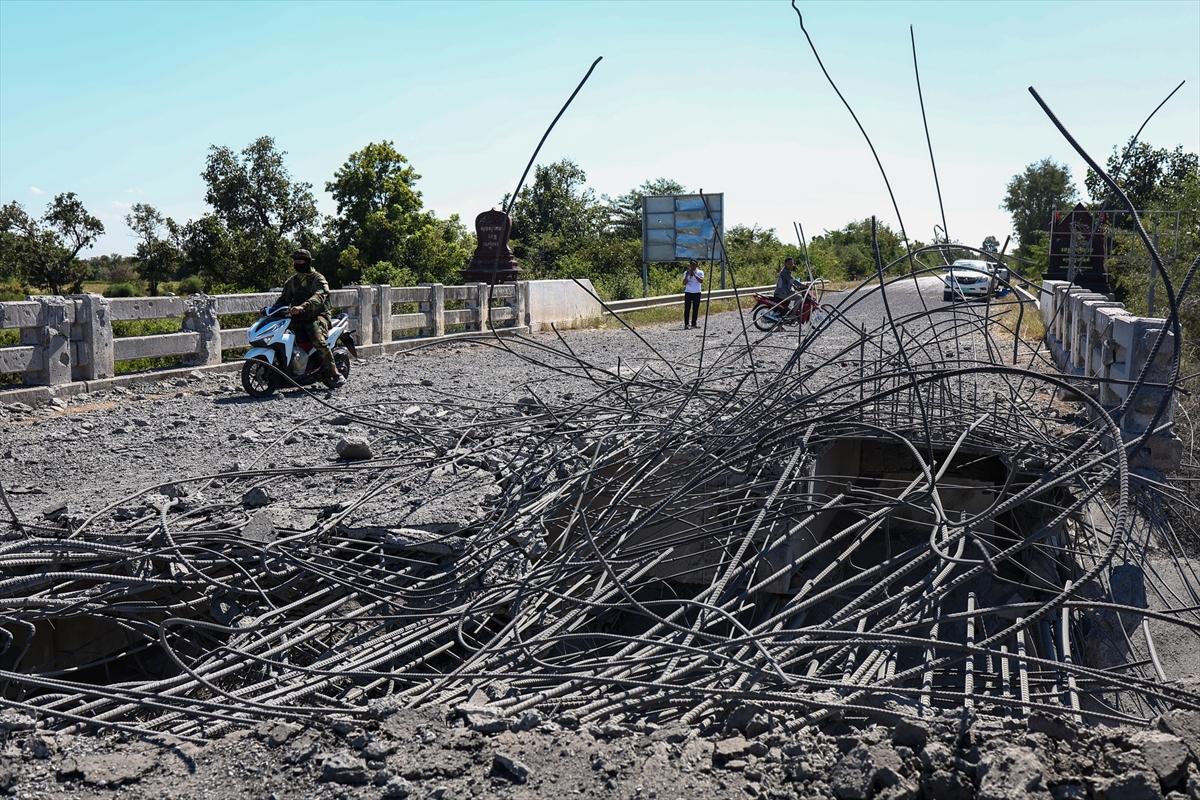
Border Clashes Between Thailand and Cambodia. 20 December 2025 (Anadolu Agency)
Post-meeting statements confirmed that border clashes continued despite diplomatic efforts. Clashes persisted before and during the meeting, with both sides accusing each other of violating the ceasefire. In particular, the clashes prior to the meeting indicated that both parties were continuing their struggle for territorial control on the ground despite peace talks.
The bilateral ceasefire negotiations held yesterday in Kuala Lumpur, Malaysia, under the auspices of the Association of Southeast Asian Nations (ASEAN) Foreign Ministers’ Meeting, ended without agreement.
The European Union (EU), the United Nations (UN), China and the United States, among other third parties, intensified calls for a ceasefire, while the two countries mutually accused each other of escalating border tensions. Since 7 December, 44 people have been killed in border clashes, and over 900,000 have been displaced.
Cambodian media reported that Thai forces launched over 40 artillery strikes on Battambang province, occurring during a period when “possible steps toward peace” were being discussed.
According to Thailand’s Bangkok Post newspaper, Cambodia targeted civilian infrastructure in its artillery bombardment of Sa Kaeo province in southeastern Thailand. It was reported that Cambodian fire on a military base in Ta Phraya district of Sa Kaeo province killed one Thai soldier, raising the total number of Thai soldiers killed to 22.
Thirty-seven civilians died “indirectly” due to factors such as hospital closures, and one civilian died “directly” from an attack. Approximately 400,000 Thais have been evacuated from affected areas, and 899 shelters have been opened to accommodate around 200,000 displaced persons.
According to Cambodia’s Khmer Times newspaper, citing the Cambodian Ministry of Interior, since the clashes reignited on 7 December, civilian deaths in Cambodia have risen to 21 and injuries to 83.
Approximately 544,000 Cambodians living in border areas have been displaced, including about 285,000 women and 174,000 children.
The total number of deaths in the border clashes between Cambodia and Thailand since 7 December has reached 96. According to Cambodian authorities, 31 people have been killed in Cambodia. Thai officials reported that 42 civilians and 23 soldiers have died in the clashes.
The Cambodian Ministry of Defense announced that the Thai military conducted an artillery attack on a village in Banteay Meanchey province in the early morning, killing one Cambodian civilian. This attack was recorded as the latest reported casualty in the conflict.
According to Cambodia’s Ministry of Interior, the number of displaced persons in Cambodia has risen to 610,000 since the clashes began on 7 December. Thai authorities reported that approximately 400,000 people have been forced to leave their homes due to ongoing clashes along the border.
Displacement has been concentrated primarily in rural areas near the border, with civilian populations being relocated for security reasons.
According to the Cambodian Ministry of Defense, the Thai military conducted artillery attacks targeting settlements in Banteay Meanchey province in the early morning. The ministry’s statements indicated that the attacks caused damage to civilian settlements.
According to statements attributed to the Thai military, Cambodia launched approximately 40 BM-21 rockets at several villages in Thailand’s Sa Kaeo province. These attacks damaged civilian infrastructure and destroyed three homes.
Cambodian Ministry of Defense spokesperson Maly Socheata stated that the Thai military targeted temple areas in Preah Vihear and Oddar Meanchey provinces with heavy artillery fire at 05:40 local time.
It was also reported that attacks intensified in Banteay Meanchey province, with Thailand conducting an air strike on the village of Chouk Chey between 06:00 and 07:00, causing major damage to civilian infrastructure. Another village in Poipet town in the same province was targeted by artillery shells between 10:00 and 11:00.
As clashes continued, Thailand and Cambodia began military talks at a border crossing in the southern section of their 817-kilometer border. Officials stated that the meetings between military delegations were planned to last three days and could pave the way for an agreement.
The 22 December meeting of the Association of Southeast Asian Nations (ASEAN) failed to achieve a ceasefire. Following this development, it was recorded that the two sides resumed military talks on 24 December.
On 27 December 2025, Thai Defense Minister Natthaphon Narkphanit and Cambodian Defense Minister Tea Seiha met under the framework of the Joint Border Committee (JBC). As a result of the talks, a “Joint Statement” was signed, declaring an immediate ceasefire between the two countries.

Ceasefire Declaration Between Thailand and Cambodia. 27 December 2025 (Anadolu Agency)
Under the Joint Statement:
Additionally, it was agreed to reactivate the Joint Border Commission mechanism and resume border demarcation work based on existing agreements.

Ceasefire Process Between Thailand and Cambodia. 27 December 2025 (Anadolu Agency)
On the same day the ceasefire was declared:
China’s Mediation Efforts
China initiated mediation efforts to halt the border clashes on 18 December 2025. Following phone calls between China’s Foreign Minister and his Thai and Cambodian counterparts, China’s Special Envoy for Asian Affairs was assigned to conduct shuttle diplomacy between the parties.

Ceasefire Talks on the Thailand-Cambodia Border. 27 December 2025 (Anadolu Agency)
On 28 December 2025, the Foreign Ministers of Thailand and Cambodia met in China’s Yunnan province under Chinese mediation. Military officials also participated in the talks.
As a result of the talks:
China also pledged support for humanitarian landmine clearance in border areas, humanitarian aid for displaced persons, and assistance to ASEAN ceasefire monitoring activities.
On the same day, US President Trump congratulated the leaders of Thailand and Cambodia on the ceasefire, characterizing the end of the clashes as a step toward peace. The United States affirmed its support for the ceasefire process.
On 29 December 2025, Cambodian Prime Minister Hun Manet emphasized his country’s commitment to peace following the ceasefire. He clarified that the ceasefire did not imply any concession on territorial integrity and stated that the border issue would be addressed within the framework of existing agreements and international law.
On the same day, the Royal Thai Army announced that Cambodia had flown over 250 unmanned aerial vehicles (UAVs) over border areas, claiming the ceasefire had been violated. Cambodia has not issued an official response to these allegations.

Commemoration Ceremony in Cambodia. 29 December 2025 (Anadolu Agency)
On 29 December 2025, a large-scale commemoration ceremony was held in Phnom Penh, Cambodia’s capital, honoring soldiers and civilians killed in the border clashes. A moment of silence was observed and calls for lasting peace were made.
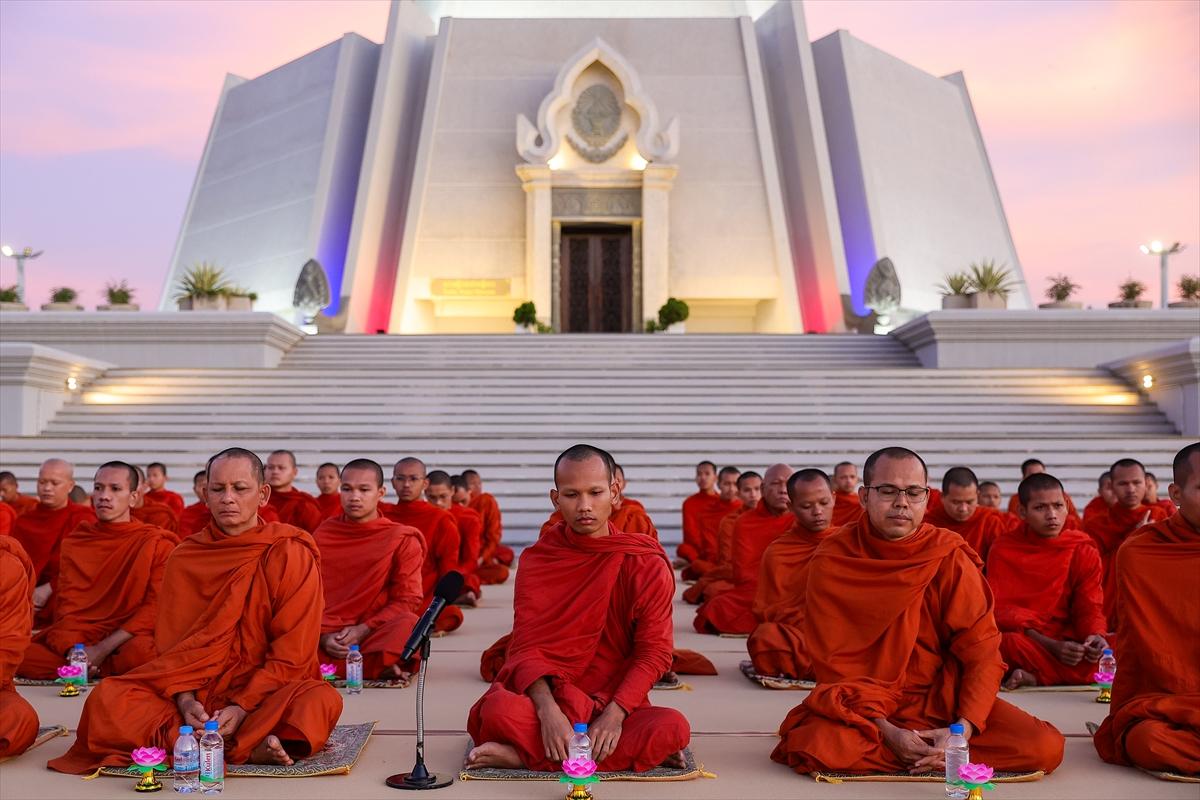
Commemoration Ceremony in Cambodia. 29 December 2025 (Anadolu Agency)
Cambodia denied allegations that it violated the ceasefire agreement signed with Thailand on 27 December by flying over 250 unmanned aerial vehicles (UAVs) over its airspace.
A spokesperson stated that strict orders had been issued by the Ministry of Defense and local administrations prohibiting the launch of any UAVs and affirmed that the government and military were committed to implementing the “Joint Statement” signed with Thailand on 27 December.
Thai Prime Minister Anutin Charnvirakul announced that if his party, Bhumjaithai, remains in power after the general elections on 8 February 2026, it would implement a wall construction project along the Thai-Cambodian border to enhance security.
Anutin stated that plans were underway to construct a wall along the Thailand-Cambodia border to improve security and to strengthen border security policies.
The Thai military plans to implement the wall construction gradually, starting from non-contested areas, with the first phase to be evaluated in the Pong Nam Ron region of Chanthaburi province.
Thailand repatriated the 18 Cambodian soldiers it had detained following the ceasefire agreement between the two countries.
According to Cambodia’s state news agency Agence Kampuchea Presse (AKP), the Thai military released 18 Cambodian soldiers it had detained for 155 days following the border clashes. The soldiers were handed over to Cambodia at 10:00 local time at the Prum–Ban Pak Kard Permanent Border Crossing between Cambodia’s Pailin province and Thailand’s Chanthaburi province.
This border crossing remains the only operational crossing point between the two countries since the outbreak of the clashes.
AP News. "Southeast Asian Ministers Meet in Malaysia to Address Thailand-Cambodia Border Conflict." AP News, Accessed December 22, 2025.
AP News. “Southeast Asian Ministers Meet in Malaysia to Address Thailand-Cambodia Border Conflict.” AP News, Erişim 22 Aralık 2025.
Al Jazeera. "LIVE: Thailand, Cambodia Resume Border Clashes Before Talks." Al Jazeera, Accessed December 22, 2025.
Al Jazeera. "Thailand and Cambodia agree on ceasefire to end weeks of deadly fighting" Accessed December 29, 2025.
Al Jazeera. “Thailand-Cambodia Border Clashes Enter Third Day as 500,000 Flee Fighting.” Al Jazeera English. Accessed December 10, 2025. https://www.aljazeera.com/news/2025/12/10/thailand-cambodia-border-clashes-enter-third-day-as-500000-flee-fighting
Anadolu Ajansı. "Kamboçya, Tayland ile devam eden çatışmalarda 12 kişinin öldüğünü, 74 kişinin yaralandığını açıkladı." Anadolu Ajansı. Accessed December 15, 2025.
Anadolu Ajansı. "Kamboçya, Tayland ile tüm sınır geçişlerini askıya aldı." Anadolu Ajansı. Accessed December 15, 2025.
Anadolu Ajansı. "Kamboçya’dan Fırlatılan Roketler Tayland’da Bir Hastanenin Yakınına Düştü." Accessed December 10, 2025. https://www.aa.com.tr/tr/dunya/kambocya-dan-firlatilan-roketler-tayland-da-bir-hastanenin-yakinina-dustu/3767086#
Anadolu Ajansı. "Tayland Başbakanı Anutin, Kamboçya sınırına duvar inşa etmeyi planladıklarını açıkladı." Accessed December 30, 2025. https://www.aa.com.tr/tr/dunya/tayland-basbakani-anutin-kambocya-sinirina-duvar-insa-etmeyi-planladiklarini-acikladi/3784772
Anadolu Ajansı. "Tayland Başbakanı Anutin: (ABD Başkanı Trump) önce Kamboçya’dan Tayland’a yönelik saldırılarını durdurmasını istemeli." Anadolu Ajansı. Accessed December 17, 2025.
Anadolu Ajansı. "Tayland Başbakanı, Trump’tan Kamboçya’ya sınır çatışmaları konusunda baskı yapmasını istedi." Anadolu Ajansı. Accessed December 15, 2025.
Anadolu Ajansı. "Tayland medyası: Tayland ordusu, Kamboçya sınırındaki Chong An Ma bölgesini kontrolüne aldı." Anadolu Ajansı. Accessed December 17, 2025.
Anadolu Ajansı. "Tayland ve Kamboçya, sınır çatışmalarının ardından ateşkes ilan etti." Accessed December 29, 2025.
Anadolu Ajansı. "Tayland, Kamboçya sınırındaki askeri hedeflere hava harekâtı düzenledi." Anadolu Ajansı. Accessed December 15, 2025.
Anadolu Ajansı. "Tayland: Kamboçya’nın Sisaket’e BM-21 roket saldırısında sivil kayıp." Anadolu Ajansı. Accessed December 15, 2025.
Anadolu Ajansı. "Thailand Prime Minister Anutin Announces Plans to Build Wall Along Cambodian Border." Accessed December 30, 2025. https://www.aa.com.tr/tr/dunya/tayland-basbakani-anutin-kambocya-sinirina-duvar-insa-etmeyi-planladiklarini-acikladi/3784772
Anadolu Ajansı. "Trump, Tayland ve Kamboçya’nın ateşkesi kabul ettiğini duyurdu." Anadolu Ajansı. Accessed December 15, 2025.
Associated Press. "Thailand and Cambodia sign a new ceasefire agreement to end border fighting." Accessed December 29, 2025.
Associated Press. "Thailand says Cambodian rockets hit border town as fighting escalates." Associated Press. Accessed December 15, 2025.
Associated Press. “Thailand and Cambodia sign a new ceasefire agreement to end border fighting.” Erişim 29 Aralık 2025.
BBC News. "Thailand releases 18 Cambodian soldiers held since July." Accessed December 31, 2025.
BBC News. “Thailand releases 18 Cambodian soldiers held since July.” BBC News, Erişim 31 Aralık 2025.
BBC. "Thailand and Cambodia Border Fighting Continues for Third Day." BBC News. Accessed December 10, 2025. https://www.bbc.com/news/articles/cx2pn5dxd0go
Reuters. "ASEAN Meets to Seek Resolution to Thailand-Cambodia Conflict." Accessed December 22, 2025.
Reuters. "Cambodia shuts border crossings with Thailand amid renewed fighting." Accessed December 15, 2025.
Reuters. "China, US Seek Thailand-Cambodia Ceasefire Ahead of ASEAN Meeting." Accessed December 22, 2025.
Reuters. "Thai and Cambodia militaries hold talks on resuming ceasefire." Accessed December 26, 2025. https://www.reuters.com/world/china/thai-cambodia-militaries-hold-talks-resuming-ceasefire-2025-12-24/
Reuters. "Thailand Works to Repatriate Thousands Stranded at Cambodia Border Crossing." Accessed December 22, 2025.
Reuters. "Thailand and Cambodia halt fierce border conflict with second ceasefire." Accessed December 29, 2025.
Reuters. "Thailand says Cambodian rocket fire hit border area despite ceasefire calls." Accessed December 15, 2025.
Reuters. "Trump says Thailand and Cambodia agree to ceasefire after border clashes." Accessed December 15, 2025.
Reuters. “ASEAN Meets to Seek Resolution to Thailand-Cambodia Conflict.” Reuters, Erişim 22 Aralık 2025.
Reuters. “Thai defence minister to attend truce talks with Cambodia, PM says.” Accessed December 26, 2025. https://www.reuters.com/world/asia-pacific/thai-defence-minister-attend-truce-talks-with-cambodia-pm-says-2025-12-26/
Reuters. “Thailand Works to Repatriate Thousands Stranded at Cambodia Border Crossing.” Reuters, Erişim 22 Aralık 2025.
Reuters. “Thailand and Cambodia halt fierce border conflict with second ceasefire.” Erişim 29 Aralık 2025.
Reuters. “Thailand says Cambodian rocket fire hit border area despite ceasefire calls.” Reuters. Erişim 15 Aralık 2025.
Reuters. “Trump says Thailand and Cambodia agree to ceasefire after border clashes.” Reuters. Erişim 15 Aralık 2025.

Clashes along the border between Thailand and Cambodia resumed on 8 December. Thousands of civilians were evacuated from the area due to artillery fire and air attacks; border crossings were closed and trade halted.
No Discussion Added Yet
Start discussion for "Cambodia-Thailand Conflict (December 2025)" article
December 8, 2025
Background and Resurgence of the Conflict
December 8, 2025
Development of the December 2025 Clashes
December 8, 2025
Civilian Impact and Evacuations
December 8, 2025
Diplomatic Repercussions and Ceasefire Discussions
December 8, 2025
Spread of Clashes Along the Border (8–9 December 2025)
December 10, 2025
Third Day of Thailand-Cambodia Border Clashes (10 December 2025)
December 10, 2025
11 December Civilian Evacuations and Humanitarian Impact
December 10, 2025
12 December Political Developments
December 10, 2025
Ceasefire Discussions and Thailand’s Position
December 10, 2025
Thailand’s Air Operations Against Cambodia (13 December)
December 10, 2025
US-Thailand Contacts and Pressure Request
December 10, 2025
Cambodia Suspends Border Crossings (14 December)
December 10, 2025
Extension of Curfews
December 10, 2025
Cambodia’s Casualty and Displacement Statements
December 10, 2025
Border Clashes (16 December)
December 10, 2025
Thai Prime Minister Anutin’s Statement on the Conflict (17 December)
December 10, 2025
Thai Military Takes Control of Chong An Ma Area (17 December)
December 10, 2025
Escalation of Clashes (18 December)
December 10, 2025
China’s Mediation Initiative (18 December)
December 10, 2025
Over 800,000 Displaced Persons
December 10, 2025
ASEAN Special Meeting (22 December)
December 10, 2025
Post-Meeting Situation and Continuation of Clashes (22 December)
December 10, 2025
ASEAN Aftermath: Border Tensions (23 December)
December 10, 2025
Ceasefire Declaration (27 December 2025)
December 10, 2025
International Reactions (27 December)
December 10, 2025
Meetings in China (28 December 2025)
December 10, 2025
Statements by US President Donald Trump
December 10, 2025
Cambodia’s Emphasis on Peace
December 10, 2025
Allegations of Ceasefire Violations
December 10, 2025
Commemoration Ceremonies (29 December)
December 10, 2025
Cambodia’s Response to Ceasefire Violation Allegations (29 December)
December 10, 2025
Thai Prime Minister Anutin’s Wall Construction Plan
December 10, 2025
Repatriation of 18 Cambodian Soldiers (31 December)