


This article was automatically translated from the original Turkish version.
+2 More
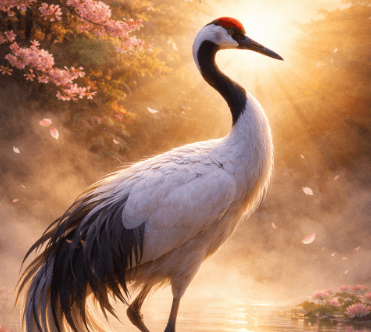
Crane Bird
(Generated with Artificial Intelligence)
Crane Bird (Grus grus)
Diet(s) | Seeds Small invertebrates Insects | ||||||||
|---|---|---|---|---|---|---|---|---|---|
Scientific Name(s) | Grus grus a common species in Anatolia | ||||||||
Habitat | Reedbeds Lakes Wetlands | ||||||||
Sound | Loud and resonant, audible for kilometers | ||||||||
Migration | Long-distance migrant, flies in flocks | ||||||||
Lifespan | Approximately 20–30 years | ||||||||
*revision
Common Crane (Grus grus) is a bird species associated with wetlands and known for its long-distance migratory behavior. Cranes within the genus Grus have a wide geographic distribution, and Türkiye stands out as one of the most important migratory and breeding areas for this species. The crane is not only linked to biological characteristics but also holds various symbolic meanings in Anatolian culture and has appeared in diverse cultural productions throughout history.
Common Crane (TÜBİTAK Bilim Genç)
Gruidae, the crane family, belongs to the order Gruiformes within the class Aves and is widely distributed across the globe. Within scientific classification, this family is divided into different genera based on physical characteristics and genetic structure. The presence of cranes on Earth dates back to a very ancient past.
Paleontological data and archaeological findings have dated crane fossils to approximately 25 million years ago. Over this long period, cranes have survived by demonstrating high adaptability to geographic and climatic changes.
The earliest cultural evidence regarding the origin of this species extends to the Göbekli Tepe findings in Anatolia, dated to around 12,000 BCE. This demonstrates that cranes have been part of ecosystems not only biologically but also symbolically throughout human history.
Cranes resemble storks and herons in morphology but possess a majestic body structure with distinct anatomical and behavioral differences from these species.

Common Crane General Appearance (Bilim Genç)
Common Crane Call (TÜBİTAK Bilim Genç)
The height of an adult crane ranges from 90 to 150 centimeters depending on the subspecies. These birds typically weigh around 6 kilograms and have a wingspan reaching up to 2 meters. Their body feathers are generally gray, with some subspecies displaying grayish-brown patterns on the back.
One of the most distinctive features of cranes is their loud, resonant, trumpet-like calls. This powerful vocalization stems from a coiled trachea approximately 1.5 meters long, embedded within the bird’s sternum. This anatomical structure acts like a resonating chamber, amplifying the sound to the extent that it can be heard from up to three kilometers away.
Cranes have long, slender, and straight beaks, a morphology that enables them to probe shallow waters and muddy substrates to capture plant roots, insects, and other small organisms. Their long, slender necks function like periscopes, allowing them to spot predators among tall wetland vegetation while also facilitating feeding in deeper waters.
The bare, bright red skin patch on the top of the head plays a critical role in social communication; cranes use muscles in this area to intensify the visibility of the red patch, asserting dominance or performing courtship displays. Their extremely long legs and broad, unwebbed feet—unlike those of ducks—enhance balance on soft, muddy terrain. However, due to their small, upward-curving hind toes, they lack the ability to perch on tree branches. Special preen glands near the base of the beak secrete oil that cranes spread over their feathers, preventing water penetration and maintaining body temperature.
Cranes are highly sensitive organisms that rely on the intersection of aquatic and terrestrial ecosystems to sustain their biological existence.
The primary habitats of cranes include marshes, reed beds, lagoons, river deltas, and wet meadows. These areas serve three essential functions: at night, cranes roost in water to detect vibrations from aquatic predators and ensure safe resting. They build their nests from reeds in secluded areas with stable water levels to protect their breeding grounds. Additionally, wetlands provide a rich diversity of food sources that meet the cranes’ high protein and carbohydrate demands.

Common Crane (Kültür ve Yaşam)
Cranes are omnivorous, feeding on both plant and animal matter. Their primary plant-based food sources include grass roots, tubers, grains, berries such as wild blueberries, and aquatic plants. During the breeding season, they supplement their diet with protein-rich prey such as insect larvae, earthworms, snails, small fish, frogs, and lizards. In some regions, they have been observed feeding on harvested fields of maize, wheat, and peanuts. Cranes play a vital role in the ecosystem by regulating insect populations, benefiting agriculture, and serving as a food source for mammals such as foxes and jackals through their eggs and chicks, thus occupying a key position in the food chain.
Cranes are found on all continents except South America and Antarctica, inhabiting a broad corridor stretching from Northern Europe to East Asia.

Common Crane in Türkiye (Bilim Genç)
Türkiye serves as both a breeding ground and a critical stopover site for cranes. In our country, the Common Crane (Grus grus), recognizable by its blue-gray plumage and red facial patch, coexists with the Demoiselle Crane (Anthropoides virgo), the smallest crane species, and the rare White-naped Crane (Grus leucogeranus), occasionally recorded during migration. Additionally, the Anatolian Mountain Crane, a non-migratory resident found at elevations above 1,000 meters, represents one of the most unique subspecies with a population of approximately 30 individuals. The Çukurova Delta (Akyatan, Tuzla, and Yumurtalık lagoons), hosting around 10,000 cranes during winter, is the largest wintering site; other critical conservation areas include Sultan Sazlığı, Göksu Delta, and Sultansazlığı.
Cranes are highly social animals with sophisticated communication abilities, exhibiting approximately 90 distinct visual and auditory social behaviors.
Common Crane Courtship Dance (Wildlife World)
The characteristic “courtship dances” of all crane species involve choreographed movements such as spinning, zigzag walking, leaping into the air, and tossing vegetation. These dances reinforce pair bonding and strengthen social cohesion within flocks. During migration, these birds fly at altitudes up to 10,000 meters, crossing the Himalayas, and adopt a V-formation to conserve energy while utilizing thermal air currents. In wintering grounds, thousands of cranes form large flocks, sleeping on one leg at night and protected by designated “watcher” cranes that maintain group safety.
Due to their aesthetic appearance and lifelong monogamous behavior, cranes have held a prominent place in cultural memory since ancient times.

Cultural Motif of the Crane (Kültür ve Yaşam)
In Turkish culture, the crane symbolizes messengership, good fortune, and fidelity; over 45 folk songs in Anatolia are dedicated to it, and in Alevi-Bektashi culture, it is associated with the voice of Hz. Ali, inspiring the Turna Semah ritual. In East Asia, cranes symbolize longevity (believed to live a thousand years in Japan), health, and courage, and have become a global symbol of peace through the origami tradition and the story of Sadako Sasaki. In other regions, they appear in a vast artistic and religious spectrum—from ancient Egyptian hieroglyphs and Greek alphabet inspirations (lambda and phi) to Native American tribal totems and Aboriginal Brolga dances. African and Native American folktales explaining their physiological traits further reinforce the crane’s deep-rooted presence in ancient cultures.
Of the 15 crane species worldwide, 11 are currently threatened and face serious survival challenges. Major factors contributing to population declines include habitat loss due to wetland drainage for agriculture, illegal hunting, egg collection, high-voltage power lines along migration routes, and environmental changes such as drought.
In response to these threats, organizations such as the International Crane Foundation (ICF) and WWF-Türkiye are working to protect the species through satellite tracking, banding programs, and legal protections under the Ramsar Convention. Conservation efforts rely on objective scientific cycles, including annual population counts, restrictions on livestock grazing in breeding areas, and the integration of critical habitats into urban planning, aiming to secure the species’ future.
Accessed November 26, 2025.
Accessed November 26, 2025.
Accessed November 26, 2025.
Akarsu, Ferdi. "Kültürümüzde Turna." Makale/Derleme. Accessed February 6, 2026.
International Crane Foundation and WWF-Türkiye. Sulak Alanların En Görkemli Kuşları: Turnalar Öğrenci Kitapçığı (12-15 Yaş). İstanbul: WWF-Türkiye Yayınları, 2017. Accessed February 6, 2026.
National Wildlife Federation. "Whooping Crane (Grus americana)." Wildlife Guide. Accessed February 6, 2026. https://www.nwf.org/Educational-Resources/Wildlife-Guide/Birds/Whooping-Crane.
Okatan, Ayşenur. "Türkiye'nin Turnası." *TÜBİTAK Bilim Genç*, October 6, 2023. Accessed February 6, 2026. https://bilimgenc.tubitak.gov.tr/makale/turkiyenin-turnasi.
SeaWorld Parks & Entertainment. "Cranes: Animal Infobooks." Accessed February 6, 2026. https://seaworld.org/animals/facts/birds/cranes/.
TRAKUS (Türkiye's Anonymous Birds). "Turna (Grus grus)." Accessed February 6, 2026. https://www.trakus.org/kods_bird/uye/?fsx=2fsdl17@d&tur=Turna.
TÜBİTAK Bilim Genç. "Turna Kuşları." YouTube video. Accessed February 6, 2026.
TÜBİTAK Bilim Genç. "Turna Kuşu ve Ötüşü." YouTube video. Accessed February 6, 2026.
Wildlife World. "Common Cranes Bird Dance." YouTube video. Accessed February 10, 2026.
Özkan, Murat. "Anadolu'nun Ortak Dili: Turnalar." *Türk Tarım Orman Dergisi*, no. 308 (July-August 2019). Accessed February 6, 2026. https://www.turktarim.gov.tr/Haber/308/anadolunun-ortak-dili-turnalar.

Crane Bird
(Generated with Artificial Intelligence)
Crane Bird (Grus grus)
Diet(s) | Seeds Small invertebrates Insects | ||||||||
|---|---|---|---|---|---|---|---|---|---|
Scientific Name(s) | Grus grus a common species in Anatolia | ||||||||
Habitat | Reedbeds Lakes Wetlands | ||||||||
Sound | Loud and resonant, audible for kilometers | ||||||||
Migration | Long-distance migrant, flies in flocks | ||||||||
Lifespan | Approximately 20–30 years | ||||||||
No Discussion Added Yet
Start discussion for "Crane Bird (Grus grus)" article
Classification and Evolutionary Origins
Morphological Structure and Physiological Adaptations
General Measurements and External Appearance
Trachea and Vocalization
Feeding, Defense, and Limb Adaptations
Ecology and Habitats
Habitat Preference and Functions
Diet and Ecological Role
Global Distribution and Status in Türkiye
Behavioral Traits and Socialization
Cultural Representations and Interactions
Conservation Status and Threats