


This article was automatically translated from the original Turkish version.
+2 More

In the south of Türkiye, within the east section of the Mediterranean Region, Çukurova is a district distinguished by its advanced infrastructure, planned urbanization, and high standard of living. Established in 2008 by separating from Seyhan district, Çukurova derives its name from the fertile and historical Çukurova Plain on which it is located. With its wide boulevards, modern residence projects, social spaces, and natural beauty, it is regarded as one of the most modern faces of Adana.
Spread around the Seyhan River and Seyhan Dam Lake, the district is an attractive settlement area for both residential and investment purposes due to its natural beauty and developed social fabric. Çukurova University, cultural centers, sports complexes, and green areas also give the district regional significance as an educational and culture hub.
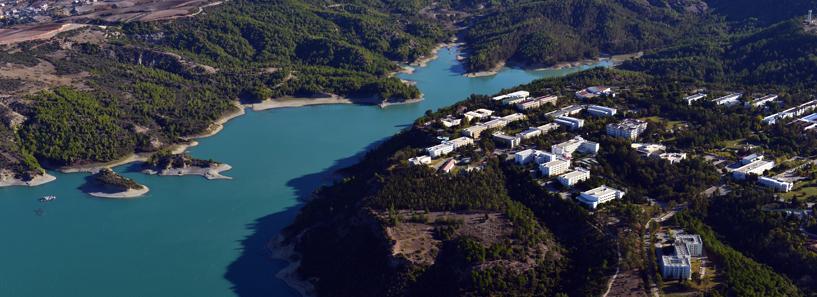
Çukurova University and Seyhan Lake (Source: Çukurova University)
Although administratively a relatively new entity, the land on which Çukurova district stands has a history spanning thousands of years. Known in antiquity as Cilicia, this geography has been home to many great civilizations including the Hittites, Assyrians, Persians, Macedonians, Romans, and Byzantines. The region became acquainted with Islamic culture through Arab incursions in the 7th century, gained prominence during the Seljuk and Ramazanoğlu Beylik periods, and was incorporated into Ottoman territories in 1516.
During the Republican era, Çukurova played a significant role in the regional economy due to its agricultural production potential. Beginning especially in the second half of the 20th century, industrialization and urbanization movements led to the emergence of its modern appearance. In 2008, a law was issued, separating it from Seyhan district and establishing it as an independent independent district.
Çukurova district is located in a central position relative to the center of Adana. It is bordered by Sarıçam to the east, the Tarsus district of Mersin to the west, Karaisalı to the north, and Seyhan district to the south. It has an area of approximately 240 km². The Land structure is generally flat and gently undulating, making it favorable for agriculture and urban development.
The Seyhan Dam Lake within the district provides both ecological richness and recreation opportunities. Although the majority of the district is characterized by plain topography, the terrain rises toward the north, drawing attention. In addition to agricultural lands, the district has a balanced natural structure with forested areas and lake ecosystems.

Map of Adana Districts (Source: cografyaharita.com)
A typical Mediterranean climate prevails in Çukurova. Summers are hot and dry, while winters are mild and rainy. The annual average temperature is around 20°C; temperatures can reach up to 40°C during write months, but rarely drop below 5°C in winter. The highest rainfall occurs in December and January months, with annual precipitation ranging between 600 and 700 mm.
The natural plant cover is primarily represented by maquis formations, shrubs, and thickets. However, in extensive agricultural areas, this vegetation has been replaced by cotton, citrus fruits, citrus, wheat, and various vegetables. The area around Seyhan Dam Lake is rich in biodiversity of fauna and flora.

Çukurova cotton field (Source: Anadolu Agency)
Çukurova district is one of Adana’s districts with the highest socio-economic level. It has a highly developed profile in terms of education, health, culture, and transportation. Çukurova University, located in the district, serves not only Adana but the entire region as a science and educational center. Its University campus, with its faculties, hospital, laboratories, and social spaces, provides services to a broad population.
The district hosts numerous private and state schools, healthcare institutions, shopping centers, library, cultural centers, and sports halls. A significant portion of the population consists of university students, academics, public personnel, and white-collar workers. The influx of migrants has contributed to a multicultural social building in the district.
The Çukurova economy is based on agriculture, the service sector, and trade. The fertile soils around Seyhan Dam Lake are utilized for cotton, citrus, and vegetable production. The strong agricultural irrigation infrastructure enhances productivity. Agriculture-based industry, particularly in areas such as agricultural machinery, food processing, and cold storage facilities, has developed significantly.
Meanwhile, the district features large shopping centers, banks, private hospitals, educational institutions, and various enterprises. The employment generated by these businesses contributes to the diversification of the regional economy. The service sector, alongside tourism, continues to grow.
Çukurova district possesses significant potential for both local and regional tourism due to its integrated approach to nature and urban life. The Seyhan Dam Lake and its surroundings are the central focus of tourism in the district. Walking paths, bicycle trails, picnic areas, and open-air cafés along the lake shore are popular destinations for residents and tourists during summer months.
Seyhan Dam Lake also supports various water sports such as oar, sail, jet skiing, water cycling, and boat tours. The activities and amateur competitions organized by the Adana Water Sports Club further establish the region as a hub for sports tourism.
Doğa Yıldız Jurassic Park is a favored entertainment and relaxation area especially for families with children. The park features dinosaur statues, an open-air museum, and nature-themed game zones, representing Çukurova’s advancement in themed parks.
The district also exhibits vibrant cultural and art activities. The Golden Ratio Art Gallery regularly hosts painting and statue exhibitions, as well as workshop works. Additionally, the Çukurova Municipality’s Orhan Kemal Culture Center is a major venue for theatrical performances, concerts, and panels.

Altın Oran Art Gallery (Source: Altın Oran Sanat Sergi)
Sevgi Adası is a popular meeting point especially for young people and couples. This small recreational area, where natural and artificial elements blend, offers opportunities for romantic walks, photography, and picnics.

Sevgi Adası (Source: Türkiye Tourism Guide)
The district also features abundant recreational areas such as open-air sports halls, municipality-supported bicycle rental stations, modern parks, and urban green spaces. Municipal festivals, particularly during spring and summer months, bring vibrancy to the region and promote local gastronomy and crafts. One such event, the Çukurova Spring Festival, attracts visitors from outside the region and adds dynamism to the social and cultural life of the community.

Çukurova Spring Festivals (Source: News Center)
Due to its proximity to the city and advanced transportation options, Çukurova district is also a convenient base for day trips to historical centers such as Adana Center and Tarsus. In this regard, Çukurova stands out not only for its natural and modern attractions but also as a transitional and connection point within regional tourism.
According to TÜİK 2024 data, the total population of Çukurova district is 378,650. Of this population, 52 percent are women and 48 percent are men. The Population growth rate is high due to its migration character. The proportion of youth under 18 age is quite high. There is also a significant student population composed of university and college students.
The family structure in the district is predominantly nuclear. The education level is high and the unemployment rate is low. The urbanization rate exceeds 95 percent. The district contains numerous residential complexes, residence, and public housing projects; these situation have transformed Çukurova into a region inhabited primarily by middle and upper-income groups.

No Discussion Added Yet
Start discussion for "Çukurova (District)" article
History
Geographical Structure
Climate and Vegetation
Social Structure
Economic Structure
Tourism Potential
Demographic Structure