


This article was automatically translated from the original Turkish version.
+2 More
Einstein
Periodic Table | 7 | ||||||||
|---|---|---|---|---|---|---|---|---|---|
Chemical Symbol | Es | ||||||||
Atomic Number | 99 | ||||||||
Group | Actinides | ||||||||
Electron Configuration | [Rn]5f¹¹7s² | ||||||||
Melting Point (Estimated) | 860 °C | ||||||||
Most Important Isotope | ²⁵²Es (Half-life: ~471.7 days) | ||||||||
Year of Discovery(ies) | 1952 | ||||||||
Discoverer(s) | Albert Ghiorso and team | ||||||||
Natural Occurrence | Artificial (not found in nature) | ||||||||
Einsteinium, a synthetic and radioactive metallic element in the actinide series of the periodic table, has atomic number 99 and the chemical symbol Es. It is named after Albert Einstein, one of the leading scientists of the 20th century.
Einsteinium is classified as the 11th element in the actinide group and is located in the 7th period of the periodic table. Its electron configuration is [Rn]5f¹¹7s². All of its isotopes are radioactive due to its status as a heavy actinide. It is expected to be solid at room temperature and exhibit metallic properties. However, experimental data regarding its physical and chemical properties are extremely limited due to its high radioactivity and the fact that it can only be produced in quantities of a few milligrams per year.

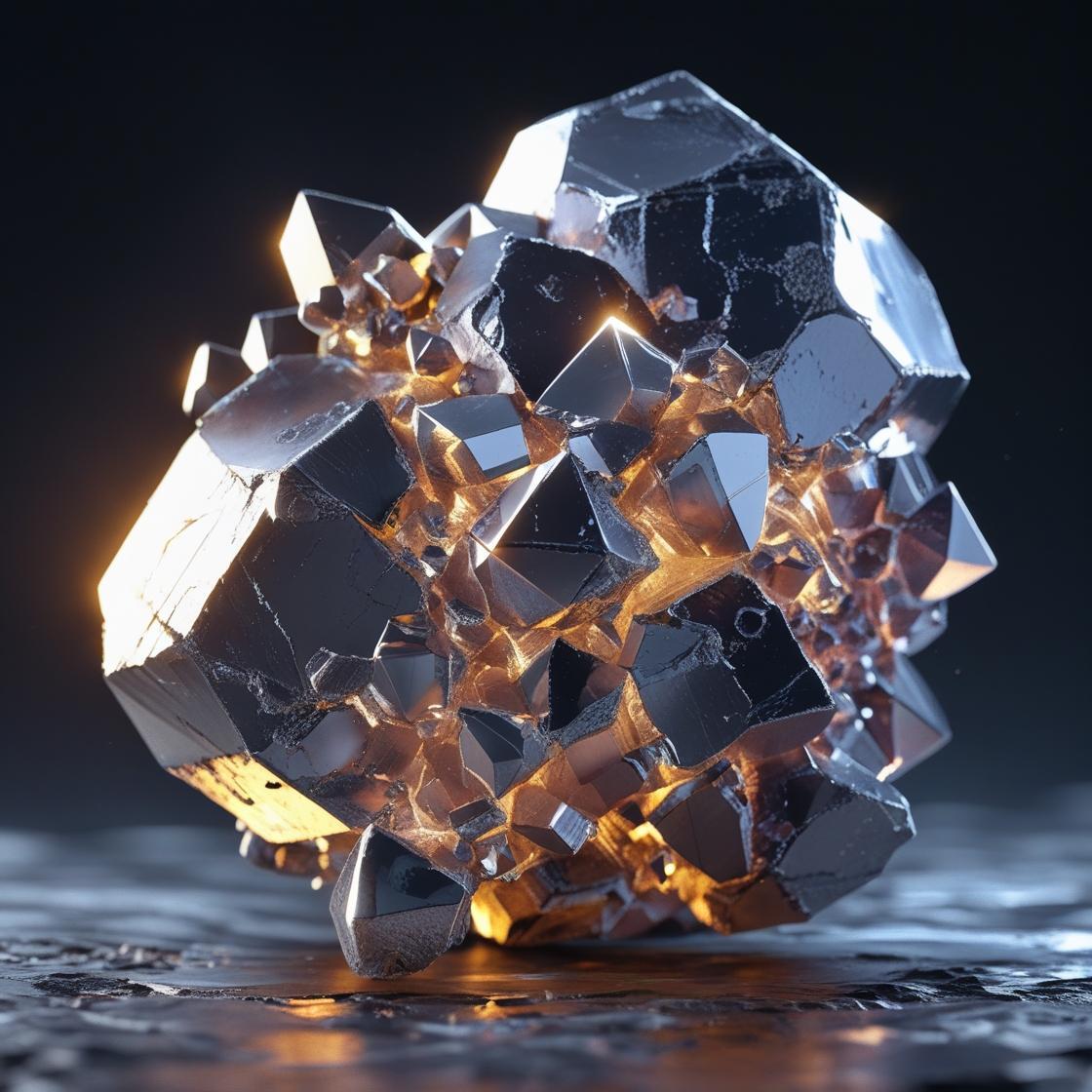
Einsteinium (Generated by Artificial Intelligence.)
The element einsteinium was first discovered in 1952 by Albert Ghiorso and his colleagues in the United States. The discovery occurred during the analysis of debris from the "Ivy Mike" nuclear test, the first hydrogen bomb detonation, which took place on 1 November 1952 at the Eniwetok Atoll in the Pacific Ocean.
Analyses of samples collected from the explosion debris revealed that uranium-238 atoms, subjected to an intense neutron flux, underwent successive neutron captures followed by beta decays, transforming into heavier elements including einsteinium-253 (²⁵³Es). This significant discovery demonstrated that nuclear explosions could produce new and heavier elements, but due to military sensitivity, it was not made public until 1955.
The element was named in honor of Albert Einstein (1879–1955), the German-born American physicist who laid the foundations of modern physics and is renowned for his theories of relativity and the 1921 Nobel Prize in Physics. The name was proposed by the scientists who discovered the element and was officially accepted by the International Union of Pure and Applied Chemistry (IUPAC).
Since all isotopes of einsteinium are radioactive and can only be produced in trace amounts, its macroscopic physical properties—such as density, boiling point, and electronegativity—are largely unknown or based solely on theoretical predictions.
It is expected to be solid at room temperature and have a metallic appearance; however, its appearance has never been directly observed. Its melting point is estimated to be approximately 860 °C. Its chemical properties have been determined from limited experimental data due to the extremely small quantities that can be produced.
As an actinide element, einsteinium is generally considered to have the most stable and common oxidation state of +3 (Es³⁺); however, some evidence also supports the +2 oxidation state. Due to its intense radioactivity, it has been observed to self-heat and suffer radiation-induced damage to its crystal structure.
Einsteinium is a completely synthetic element and does not occur naturally. It can be produced in quantities of only a few milligrams per year by subjecting lighter elements such as plutonium to prolonged and intense neutron bombardment in nuclear reactors. The small amounts produced are typically used as target materials for synthesizing heavier transuranium elements or in fundamental scientific research.
Einsteinium has many known radioactive isotopes with mass numbers ranging from approximately 240 to 258. ²⁵²Es is identified as an important isotope. Einsteinium-252 (²⁵²Es), with a half-life of about 471.7 days, is the longest-lived isotope and therefore the most commonly used for chemical studies. This isotope primarily decays by alpha emission to berkelium-248 but also undergoes spontaneous fission and beta decay.
Einsteinium has no known practical industrial or commercial applications. Due to the difficulty and cost of production, the extremely small quantities obtainable, and its high radioactivity, it is produced and studied solely for fundamental scientific research. One of its most important uses is as a target material for synthesizing heavier transactinide elements such as mendelevium. It is also used in basic research aimed at understanding the chemical and physical properties of actinides.
Einsteinium has no known biological role. All of its isotopes are highly radioactive and therefore pose a potential radiation hazard to living organisms, classifying it as "toxic." Due to its intense radioactivity, it must be handled in specially designed laboratories using remote-controlled systems and strict radiation safety protocols. It does not constitute a health risk to the general public, as it exists only in trace amounts within specialized research facilities.
National Center for Biotechnology Information. "Einsteinium." *PubChem Compound Database CID 23913*. Accessed May 30, 2025. https://pubchem.ncbi.nlm.nih.gov/compound/23913
TÜBİTAK Bilim Genç. "Aynştaynyum." *Bilim Genç*. Accessed May 30, 2025. https://bilimgenc.tubitak.gov.tr/periyodik-tablo/Aynstaynyum

Einstein
Periodic Table | 7 | ||||||||
|---|---|---|---|---|---|---|---|---|---|
Chemical Symbol | Es | ||||||||
Atomic Number | 99 | ||||||||
Group | Actinides | ||||||||
Electron Configuration | [Rn]5f¹¹7s² | ||||||||
Melting Point (Estimated) | 860 °C | ||||||||
Most Important Isotope | ²⁵²Es (Half-life: ~471.7 days) | ||||||||
Year of Discovery(ies) | 1952 | ||||||||
Discoverer(s) | Albert Ghiorso and team | ||||||||
Natural Occurrence | Artificial (not found in nature) | ||||||||
Classification and Fundamental Properties
Discovery
Etimology
Physical and Chemical Properties
Natural Occurrence and Production
Isotopes
Applications
Biological Role and Precautions