


This article was automatically translated from the original Turkish version.
+2 More
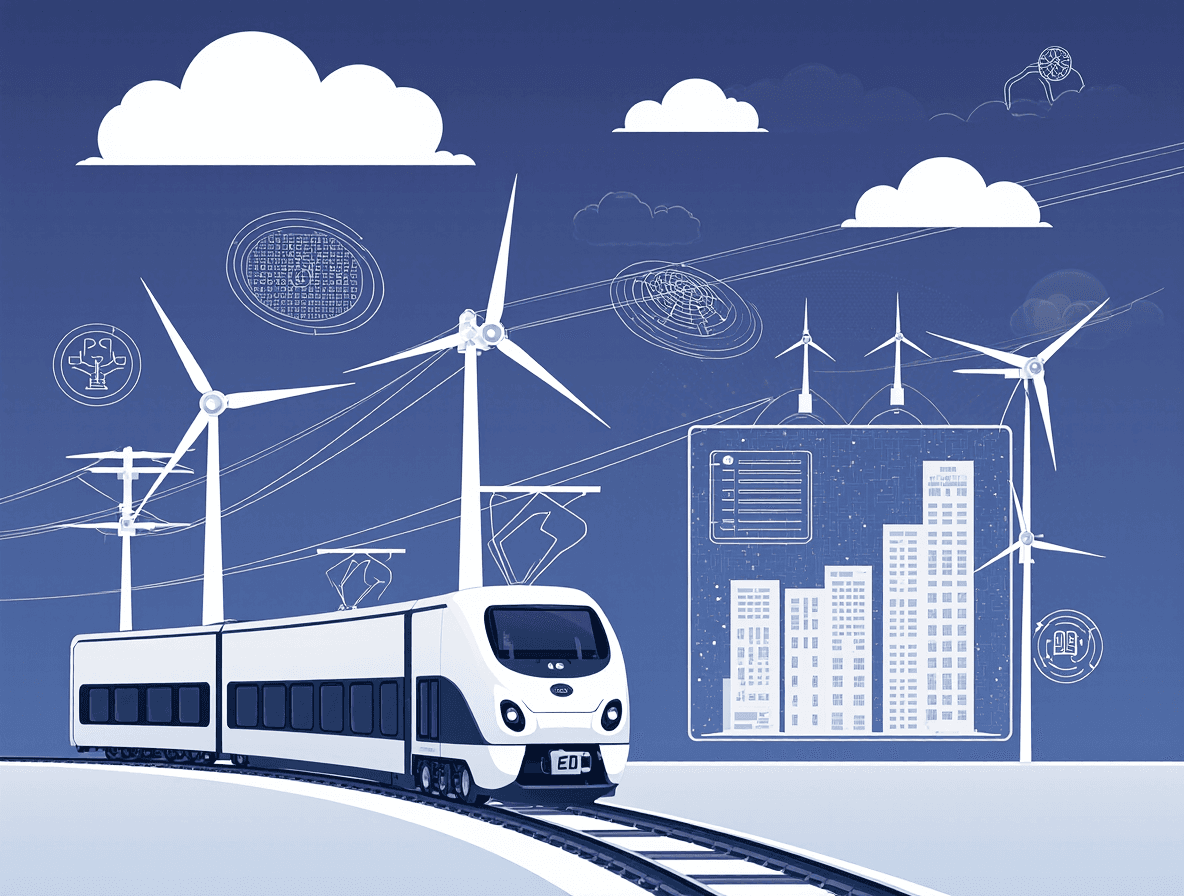
Generated with artificial intelligence.
Energy Efficiency in Rail Transport
CO2 Density Compared to Other Modes | 3 to 10 times less than road and air transport | ||||||||
|---|---|---|---|---|---|---|---|---|---|
Regenerative Braking Potential | 25-35 percent energy savings | ||||||||
Efficient Driving Techniques Savings | Approximately 10 percent | ||||||||
Basic Strategies | Technological Modernization, Operational Improvements, Renewable Energy Integration | ||||||||
Rail transport energy efficiency refers to the comprehensive set of technological, operational, and infrastructural approaches aimed at minimizing the energy consumed in passenger or freight transportation. Energy efficiency is not solely dependent on the technical specifications of the vehicles used; it is also directly linked to operational strategies, infrastructure modernization, and the diversity of energy sources.
When comparing transport modes, rail stands out as one of the most energy-efficient options per passenger-kilometer or ton-kilometer consumed. Road transport is less efficient due to high energy consumption and dependence on fossil fuels, especially in individual vehicle use. Air transport, despite its speed advantage, is characterized by high fuel consumption and emission levels. In contrast, railways, through electric train systems, exhibit lower energy intensity and significantly reduce carbon dioxide (CO₂) and other greenhouse gas emissions. This characteristic has made rail transport a fundamental component of sustainable mobility policies.
Increasing energy efficiency is not limited to environmental benefits alone. Reduced energy consumption translates into lower costs for operators. Thus, railway companies can enhance their competitiveness by reducing fuel and electricity expenses. Moreover, the use of energy-efficient systems contributes to economic sustainability by lowering long-term maintenance and operational costs.
Various methods have been developed to achieve these goals. Modern vehicle technologies, the use of lightweight materials, and aerodynamic designs enable trains to reach higher speeds with less energy. Regenerative braking systems recover kinetic energy released during braking and feed it back into the electrical grid or reuse it for the train’s own energy needs. Efficient driving techniques reduce energy consumption by optimizing speed and acceleration. Additionally, integrating renewable energy sources—such as solar, wind, or hydropower—into railway systems further reduces the carbon footprint and mitigates environmental impacts. In conclusion, energy efficiency in rail transport is a multidimensional issue that combines environmental sustainability, economic advantages, and social benefits. When technological innovations, infrastructure investments, and energy management strategies are addressed together, rail transport is expected to occupy a central position in future low-carbon mobility systems.
Rail transport possesses distinct energy efficiency advantages compared to other transport modes, due to its structural and technical characteristics. These advantages are fundamentally based on the low rolling resistance generated when steel wheels move along steel rails. In road transport, friction between rubber tires and asphalt causes significantly higher energy losses, whereas in railways, these losses are minimal. This physical advantage allows trains to carry more cargo or passengers using the same amount of energy.
The carbon intensity of rail transport is also notably low. Compared to road or air transport, rail emits three to ten times less carbon dioxide (CO₂) per passenger or ton-kilometer. This positions rail as one of the leading low-carbon transport options globally. Indeed, although rail accounts for less than 2% of total energy consumption in the transport sector, it captures more than 8.5% of global freight activity. This ratio is a significant indicator of the competitive advantage rail gains through its energy efficiency. In terms of land use, railway systems also demonstrate high efficiency. Per passenger-kilometer, railways require approximately 3.5 times less land than automobiles. This presents a significant advantage for urban planning and environmental sustainability. Reduced land demand contributes to preserving agricultural land, lowering pressure on ecosystems, and enabling more balanced land use in cities.
Rail transport also excels in terms of social costs. When externalities such as air pollution, noise, and traffic accidents are considered, the social cost of rail passenger services is less than one-fourth that of road transport. This gap widens further in freight transport, making rail’s role in economic and environmental sustainability even more evident.
In addition to energy efficiency advantages, railways also stand out in terms of safety. Trains operate on fixed and controlled routes, resulting in lower accident risks compared to other transport modes. This feature is considered a critical factor for both human safety and the protection of transported goods. In conclusion, the energy efficiency advantages of rail transport are not limited to technical data alone; when viewed alongside environmental impacts, social costs, and safety dimensions, it becomes clear why this mode holds a central position in sustainable mobility strategies.
Various strategies for improving energy efficiency in railways are grouped into three main categories: technological, infrastructural, and operational.
One of the most important ways to improve energy efficiency in rail transport is through continuous development and modernization of vehicle technologies. The use of lightweight materials, advanced control systems, and energy recovery methods in the design of new-generation trains reduces environmental impacts and lowers operating costs.
Locomotives and passenger coaches produced today are designed to consume significantly less energy than their predecessors. These vehicles minimize energy consumption through high-efficiency electric motors, digital control systems, and aerodynamic body designs. Additionally, reduced maintenance requirements and longer service lifespans provide economic benefits to operators.
The total mass of a train is one of the most important factors directly affecting energy consumption. Research indicates that a 10% increase in train mass can raise energy consumption by approximately 6–8%. Therefore, engineering solutions aimed at reducing weight are becoming increasingly prominent in modern trains. Aluminum and stainless steel alloys, carbon fiber-reinforced composite materials, and sandwich construction techniques enhance energy efficiency by maintaining durability while reducing mass.
Regenerative braking in electric trains converts kinetic energy released during braking into electrical energy for reuse. This energy can be consumed by another accelerating train on the same line or stored in suitable storage systems. Theoretically, regenerative braking offers a potential energy saving of 25–35%, but in practice, recovery rates are typically 10% or lower due to factors such as line density, energy infrastructure, and technical compatibility. In Türkiye’s current railway infrastructure, one of the main barriers to widespread adoption of this technology is that transformers are not designed to accept regenerated energy.
Integrating energy storage systems is crucial for efficiently utilizing energy obtained from regenerative braking. These systems consist of battery packs or ultracapacitors mounted on vehicles or at stations along the line. Stored energy is used to assist acceleration or provide additional power on steep gradients. These storage solutions are particularly effective in low-voltage overhead systems (600 V or 750 V).
In trains, not only traction systems but also auxiliary systems account for a significant share of energy consumption. Therefore, supporting traction and auxiliary converters with centralized cooling systems reduces vehicle mass and increases efficiency. Additionally, optimizing energy use during standby mode offers considerable savings potential. For example, in an application in Hannover, adjusting train operating modes according to ambient temperature during nighttime resulted in an annual energy saving of approximately 1.3 GWh.
Improving energy efficiency in rail transport is not limited to vehicle modernization. Infrastructure and operational adjustments such as electrification of lines, enhancement of signaling systems, improvement of traction power systems, and optimization of track geometry reduce energy consumption and increase transport capacity.
Electrifying railway lines significantly reduces dependence on diesel fuel, resulting in substantial energy savings. Electric operation produces approximately 6–7 times lower emissions than road transport and 2–4 times lower emissions than diesel-powered trains. This contributes to both reduced environmental impacts and lower energy costs. In Türkiye, where approximately 60% of electricity generation comes from domestic and renewable sources, electrification investments also help reduce the current account deficit linked to energy imports.
The installation of signaling systems alongside electrification directly increases line capacity. Advanced signaling systems allow trains to operate at closer intervals with higher safety standards, preventing congestion on lines. This smooth operation contributes to energy efficiency by balancing energy consumption and eliminating unnecessary stops and starts.
The design of traction power systems used on railway lines is a key factor influencing energy losses. The voltage level used directly affects transmission losses. For example, replacing 750 V direct current (DC) systems with 1500 V DC systems halves voltage drop, allowing for greater distances between substations. This approach provides approximately 10% energy savings. The implementation of the 1500 V DC system in recently constructed metro lines in Türkiye, such as the Kadıköy–Kartal and Üsküdar–Ümraniye lines, provides a concrete example of this method.
The geometry of railway lines has a decisive impact on energy consumption. Steep gradients require locomotives to increase tractive effort, raising energy consumption. Similarly, sharp curves force trains to reduce speed, leading to both time loss and higher energy expenditure. Particularly short but steep sections can limit the total load a train can carry along the entire route. Engineering solutions to eliminate such bottlenecks improve transport efficiency.
Regular track maintenance is also critically important for energy efficiency. Surface damage or irregularities on rails increase friction between the train and the track, causing energy losses. Periodic maintenance procedures such as rail grinding minimize these losses, resulting in energy savings and extended operational life for trains.
Improving energy efficiency in rail transport requires not only technological innovations and infrastructural adjustments but also optimization of operational strategies. Numerous applications—from driver driving techniques to data-based energy measurements and intelligent transport systems—directly contribute to reducing energy consumption.
One of the most cost-effective and efficient methods for energy savings is training drivers in energy-efficient driving techniques. These methods involve avoiding sudden acceleration and braking, using coasting techniques, and optimizing train speed profiles. As a result, trains maintain a more stable speed, reducing energy consumption and limiting mechanical wear. Technologies such as Driver Advisory Systems (DAS) provide drivers with real-time feedback on optimal speed profiles, helping to optimize driving for energy efficiency. Studies in various countries have shown that energy-efficient driving techniques can achieve savings of up to 10%. In a pilot project conducted by TCDD Taşımacılık in İzmir, the application of these methods resulted in approximately 10% energy savings.
Energy measurement devices installed on trains enable real-time monitoring of energy consumption. These systems help identify which driving techniques or operational approaches yield the highest savings. Operators can use this data to develop more efficient strategies. Additionally, energy measurement data facilitates transparent cost-sharing between operators and energy suppliers.
The integration of information and communication technologies into railway operations is another important strategy for enhancing energy efficiency. Intelligent Transport Systems (ITS) optimize train traffic to reduce energy losses. These systems ensure trains operate on time, at optimal speeds, and in a coordinated manner. Unnecessary stops, waiting periods, and energy waste due to congestion are prevented. Moreover, the positive effects of ITS on traffic management not only improve energy efficiency but also enhance passenger satisfaction and make freight logistics more reliable.
Meeting the energy demand of rail transport through renewable sources has become a key component of sustainable mobility policies and climate change mitigation strategies. As the transport sector’s share of global energy consumption and greenhouse gas emissions continues to rise, the use of renewable energy in railways plays a critical role in reducing environmental impacts and strengthening energy supply security. One of Türkiye’s targets is to meet 35% of rail transport’s energy demand from renewable sources.
Integrating photovoltaic panels into railway infrastructure has emerged as an innovative solution in recent years. Solar panels can be integrated into various infrastructure components: rooftops of station buildings, upper sections of noise barriers, and even the gaps between rails are considered suitable areas for such applications. Such integrations have the potential to transform existing railway surface areas into efficient energy production sources.
One notable example in this field is the mechanized paving system developed by the Swiss-based Sun-Ways initiative. In this method, photovoltaic panels are installed between the rails via a specially designed train wagon and directly connected to the railway power grid. This approach has the potential to reduce electricity transmission losses and directly meet the energy needs of nearby railway stations.
Research projects in Europe also support the development of such applications. For instance, a study in Germany examines the technical feasibility, cost-effectiveness, and environmental contributions of photovoltaic systems integrated into railway infrastructure. The study demonstrates that feeding generated electricity directly into the railway grid reduces grid load and enhances railway operators’ energy independence.
The use of renewable energy sources in rail transport is strategically important not only for reducing greenhouse gas emissions but also for lowering long-term energy costs and ensuring energy supply security. While photovoltaic applications are among the most innovative solutions in this area, other renewable energy integrations—such as wind and small-scale hydropower—are also considered to have potential for railway systems.
In Türkiye, rail transport holds a smaller share compared to road and maritime transport. In freight transport, rail’s share is below 5%, lagging behind levels in European Union countries and advanced economies. One of the main reasons for this is the aging and technologically inadequate state of the current rail vehicle fleet. The average age of locomotives in TCDD Taşımacılık A.Ş.’s freight fleet is approximately 30 years. Of the 556 locomotives in the fleet, only 125 are electric; the majority are diesel locomotives. This situation creates a significant disadvantage in terms of energy efficiency. Older, low-power locomotives operate inefficiently, especially on steep gradients, consuming more fuel and increasing carbon emissions.
To address these issues and improve energy efficiency, Türkiye has taken several regulatory steps. The “Regulation on Procedures and Principles for Increasing Energy Efficiency in Transport,” published in 2019, established comprehensive principles aimed at reducing energy consumption and limiting environmental impacts in the transport sector. The regulation includes goals such as promoting eco-friendly fuels, expanding public transport, developing intelligent transport systems, and increasing railway investments.
The importance given to rail in Türkiye’s energy and transport policies is also evident in strategic documents. The National Energy Efficiency Action Plan aims to reduce the energy intensity of the transport sector, while the 2053 Transport and Logistics Master Plan forecasts an increase in rail’s share in both freight and passenger transport. Within this framework, investments aimed at enhancing energy efficiency are emphasized as a core component of railway policy.
Concrete implemented projects also demonstrate progress in this area. The energy-efficient driving pilot project initiated by TCDD Taşımacılık in the İzmir Regional Directorate focused on helping drivers achieve fuel savings through eco-driving techniques. As part of the project, approximately 270,000 liters of fuel were saved, preventing 748 tons of carbon dioxide emissions from entering the atmosphere. If this approach is expanded nationwide, it aims to achieve annual savings of 12 million liters of fuel and 52 million kilowatt-hours of electricity.
Additionally, Türkiye’s railway infrastructure modernization and electrification projects are progressing with support from international financial institutions. In particular, the European Investment Bank (EIB) has provided funding for projects such as the Ankara–Istanbul High-Speed Rail Line, contributing to making railways more efficient and environmentally friendly.
Although Türkiye’s rail transport has significant potential in terms of energy efficiency, structural challenges such as the aging fleet and low electrification rate prevent this potential from being fully realized. However, with regulatory reforms, strategic plans, pilot projects, and international cooperation, an increase in energy efficiency in rail transport is expected in the coming years.
Akay, M. E., and V. Çelik. “Türkiye’de Dizelli Tren İşletmeciliğinde Enerji Verimliliği ve Emisyonların Araştırılması.” *Demiryolu Mühendisliği* 18 (July 2023): 162–70. doi:10.47072/demiryolu.1322615. https://dergipark.org.tr/tr/pub/demiryolu/issue/75665/1322615.
Akbayır, Ö., and B. Başeğmez. “Türkiye Şartlarına Uygun Vagon Seyir Direnci Formülünün Enerji Verimliliği Açısından Deneysel Olarak Belirlenmesi.” *Demiryolu Mühendisliği* 13 (January 2021): 65–75. doi:10.47072/demiryolu.796392. https://dergipark.org.tr/tr/pub/demiryolu/issue/56317/796392.
Arıkan, Yağmur, Özge Pınar Akkaş, and Ertuğrul Çam. “A Comprehensive Research on Ensuring Energy Efficiency in Rail Systems.” *International Journal of Engineering Research and Development (UMAGD)* 16, no. 1 (January 2024): 30–46. doi:10.29137/umagd.1347640. https://dergipark.org.tr/en/download/article-file/3352222.
Chen, Zhujun, Jiang Mingkun, Lingfei Qi, Wu Wei, Ziyi Yu, Wendong Wei, Xinhai Yu, and Jinyue Yan. “Using Existing Infrastructures of High-Speed Railways for Photovoltaic Electricity Generation.” *Resources, Conservation and Recycling* 178 (March 2022): 106091. doi:10.1016/j.resconrec.2021.106091. https://www.sciencedirect.com/science/article/pii/S0921344921006996?via%3Dihub.
Khodaparastan, Mahdiyeh, Ahmed Mohamed, and Werner Brandauer. *Recuperation of Regenerative Braking Energy in Electric Rail Transit Systems.* Preprint, arXiv, August 17, 2018. doi:10.48550/arXiv.1808.05938. https://arxiv.org/abs/1808.05938.
Koyun, A., and R. Yumurtacı. “Evaluation of a Tram Line with Ground-Level Energy Supply System in Energy Efficiency Perspective and Optimization Solution.” *Transportation Research Record* (2025). doi:10.1177/03611981251333338. https://journals.sagepub.com/doi/10.1177/03611981251333338.
Ministry of Development. "Demiryolu Ulaştırması Özel İhtisas Komisyon Raporu." August 1, 2025. https://www.sbb.gov.tr/wp-content/uploads/2025/08/Demiryolu-Ulastirmasi-Ozel-Ihtisas-Komisyon-Raporu_01082025.pdf.
UIC. *Technologies and Potential Developments for Energy Efficiency and CO2 Reductions in Rail Systems.* UIC, 2010. https://uic.org/IMG/pdf/_27_technologies_and_potential_developments_for_energy_efficiency_and_co2_reductions_in_rail_systems._uic_in_colaboration.pdf.
“Issue Information.” *Progress in Photovoltaics: Research and Applications* 28 (2020): 1–2. doi:10.1002/pip.3156. https://onlinelibrary.wiley.com/doi/10.1002/pip.3156.

Generated with artificial intelligence.
Energy Efficiency in Rail Transport
CO2 Density Compared to Other Modes | 3 to 10 times less than road and air transport | ||||||||
|---|---|---|---|---|---|---|---|---|---|
Regenerative Braking Potential | 25-35 percent energy savings | ||||||||
Efficient Driving Techniques Savings | Approximately 10 percent | ||||||||
Basic Strategies | Technological Modernization, Operational Improvements, Renewable Energy Integration | ||||||||
No Discussion Added Yet
Start discussion for "Energy Efficiency in Rail Transport" article
Energy Efficiency Advantages of Rail Transport
Methods to Enhance Energy Efficiency
Technological Developments and Vehicle Modernization
Modern Railway Vehicles
Weight Reduction Solutions
Regenerative Braking Systems
Energy Storage Systems
Energy Efficiency in Auxiliary Systems
Infrastructure and Operational Improvements
Electrification and Signaling
Traction Power Systems
Track Geometry and Maintenance
Operational Strategies
Energy-Efficient Driving (Eco-Driving)
Energy Measurement and Monitoring
Intelligent Transport Systems (ITS)
Integration of Renewable Energy
Photovoltaic Applications
Energy Efficiency in Rail Transport in Türkiye