This article was automatically translated from the original Turkish version.
Type(s) | Nuclear Accident | ||||||||
|---|---|---|---|---|---|---|---|---|---|
Date(s) | March 11-15 2011 | ||||||||
Location | Japan/Honshu Island | ||||||||
Reasons | Tsunami Tōhoku Earthquake | ||||||||
Result(s) | The Second Largest Radioactive Dispersion in History | ||||||||
The Fukushima Daiichi Nuclear Power Plant Accident, is a major nuclear disaster triggered by a 9.0 magnitude earthquake off the coast of Japan’s Tōhoku region on 11 March 2011 and the subsequent tsunami that damaged the plant, leading to a series of technical failures and radioactive leaks. It has been classified as level 7, the highest on the International Nuclear and Radiological Event Scale (INES).
The plant is located on Japan’s eastern coast and is operated by Tokyo Electric Power Company (TEPCO). Commissioned in 1971, the facility consists of six reactors, all of which are boiling water reactor (BWR) type designs developed by General Electric (GE).
Under normal conditions, the plant supplied a significant portion of Japan’s energy needs, with nuclear power plants meeting approximately 30 percent of the country’s electricity demand prior to the accident. See Emre Aytekin, “Japan Shifts Focus to Nuclear Energy Amid Rising Energy Prices,” Anadolu Ajansı, 17 July 2022, access date: 10 March 2026, LINK[https://www.aa.com.tr/tr/dunya/japonya-artan-enerji-fiyatlari-karsisinda-gozunu-nukleer-enerjiye-cevirdi/2638959]. However, long before the accident, the plant’s design was criticized for failing to incorporate adequate safeguards against tsunamis and large-scale natural disasters.
The Fukushima Daiichi Nuclear Power Plant is a facility comprising six boiling water reactors (BWRs). Following the 9.0 magnitude Tōhoku earthquake on 11 March 2011, reactors 1, 2 and 3 automatically shut down.
At the same time, reactors 4, 5 and 6 were offline for maintenance. Initially, backup power systems helped maintain control, but 56 minutes after the earthquake, tsunami waves up to 14–15 meters high inundated the plant, disabling its seawater pumps and emergency cooling systems, rendering reactor temperature control impossible.
The failure of electrical systems responsible for cooling the reactors led to core meltdowns. Excessive heat caused the fuel rods to release hydrogen gas, which accumulated and triggered explosions in the buildings housing reactors 1, 2 and 3 between 12 and 15 March 2011. As a result, large quantities of radioactive material were released into the atmosphere, causing the largest radioactive release since Chernobyl.

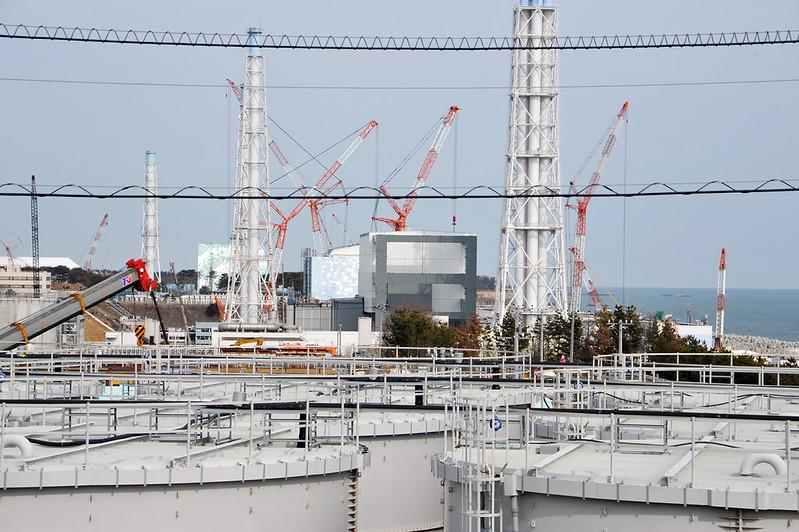
Inside the Nuclear Power Plant (Flickr)
1. First Hours After the Earthquake: The earthquake activated the reactors’ automatic shutdown systems.
2. Tsunami and Power Failure: The 14–15 meter tsunami disabled the plant’s diesel generators.
3. Cooling System Failure: Without functioning cooling systems, the fuel rods overheated.
4. Hydrogen Explosions: Hydrogen gas released from the interaction of fuel rods with water accumulated within the reactor buildings and caused explosions.yol
The direct impact of the accident involved widespread radioactive contamination and the evacuation of approximately 78,000 people. In the immediate days following the disaster, agricultural products, water sources and marine life near the plant became highly contaminated and were rendered unusable.
Additionally, fishing activities along Japan’s eastern coast were halted, and radiation levels in the region have been monitored for years. The dispersion of radiation into the Pacific Ocean became a global concern.
The economic consequences of the accident were severe both nationally and internationally. The Japanese government and TEPCO undertook extensive decontamination efforts in affected areas, with estimates suggesting the total economic cost could exceed 76 billion US dollars. Furthermore, international public concern over nuclear safety prompted several countries to reassess their nuclear energy policies.
In Japan, legal responsibility for nuclear accidents has been clearly assigned to TEPCO in court rulings. Under Japanese law, nuclear plant operators bear direct liability for accidents. However, the Japanese government has also been criticized for failing to implement adequate preventive measures, and in some legal cases, the government has been held partially responsible.
From the perspective of Türkiye, projects such as the Akkuyu Nuclear Power Plant must be planned with stringent safety standards informed by lessons learned from the Fukushima accident. As a party to the Paris Convention, Türkiye has specific legal provisions addressing liability for nuclear accidents involving both operators and the state.

Fukushima Daiichi Nuclear Power Plant (Flickr)
Following the accident, key principles for the safe operation of nuclear power plants were adopted internationally, and existing standards were strengthened. Some of the fundamental safety principles established after the accident include:
1. Nuclear power plants must be designed with more robust safety measures.
2. Emergency generators and cooling systems must be located at higher elevations to protect against tsunamis.
3. More effective emergency response plans must be developed to prevent radioactive releases.
4. International nuclear safety standards must be tightened and rigorously enforced.
In conclusion, the Fukushima Daiichi Nuclear Power Plant accident marked a pivotal moment in understanding the risks of modern nuclear energy use and led to significant changes in nuclear energy policies worldwide.
AFAD (Disaster and Emergency Management Presidency). "Fukushima Daiichi Nuclear Power Plant Accident." Presidency of the Republic of Turkey, Ministry of Interior. Accessed March 10, 2026. https://www.afad.gov.tr/kbrn/fukushima-daiichi-nukleer-santral-kazasi
Anzai, Kazunori, Nobuhiko Ban, Toshihiko Ozawa, and Shinji Tokonami. "Fukushima Daiichi Nuclear Power Plant Accident: Facts, Environmental Contamination, Possible Biological Effects, and Countermeasures." Journal of Clinical Biochemistry and Nutrition 50, no. 1 (2012): 2–8. Accessed March 10, 2026. https://doi.org/10.3164/jcbn.D-11-00021.
Aytekin, Emre. "Japonya, Artan Enerji Fiyatları Karşısında Gözünü Nükleer Enerjiye Çevirdi." Anadolu Ajansı, July 17, 2022. Accessed March 10, 2026. https://www.aa.com.tr/tr/dunya/japonya-artan-enerji-fiyatlari-karsisinda-gozunu-nukleer-enerjiye-cevirdi/2638959
Başar, Zeynep and Nureddin Türkan. "Çernobil ve Fukuşima Nükleer Güç Santrali Kazalarının İş Sağlığı Güvenliği Perspektifinden Karşılaştırmalı Bir İncelenmesi." OHS Academy (2023). Accessed March 10, 2026. https://dergipark.org.tr/tr/download/article-file/2543279
Duman, Veda. *Fukuşima Nükleer Santral Kazası: Kaza Hikayesi, Gelinen Son Durum Özeti ve Kazanın Etkileri*. Ankara: TMMOB Fizik Mühendisleri Odası, 2011. Accessed March 10, 2026. https://www.fmo.org.tr/wp-content/belgeler/fukushimaraporu.pdf.
IAEA Imagebank. "Fukushima Decommissioning (02110064)." February 10, 2015. Flickr. Accessed March 10, 2026. https://www.flickr.com/photos/iaea_imagebank/16558647925/.
IAEA Imagebank. "Fukushima Decommissioning (02110067)." February 10, 2015. Flickr. Accessed March 10, 2026. https://www.flickr.com/photos/iaea_imagebank/16372350279/
IAEA Imagebank. "Fukushima Decommissioning (02110074)." February 10, 2015. Flickr. Accessed March 10, 2026. https://www.flickr.com/photos/iaea_imagebank/15936068414/.
IAEA Imagebank. "Fukushima Decommissioning Mission - Feb 2015 (02110065)." February 10, 2015. Flickr. Accessed March 10, 2026. https://www.flickr.com/photos/iaea_imagebank/15938457363/.
United Nations Scientific Committee on the Effects of Atomic Radiation (UNSCEAR). "Fukushima Daiichi Nuclear Power Station Accident." Accessed March 10, 2026. https://www.unscear.org/unscear/en/areas-of-work/fukushima.html.
Yılmaz, Ayça Zorluoğlu. "Nükleer Santral Kazalarından Doğan Sorumluluk ve Tazminat: Fukuşima Daiichi Nükleer Santral Kazası Işığında." Hacettepe Üniversitesi Hukuk Fakültesi Dergisi 11, no. 2 (2021): 1035–1077. Accessed March 10, 2026. https://dergipark.org.tr/tr/download/article-file/2034807.


Type(s) | Nuclear Accident | ||||||||
|---|---|---|---|---|---|---|---|---|---|
Date(s) | March 11-15 2011 | ||||||||
Location | Japan/Honshu Island | ||||||||
Reasons | Tsunami Tōhoku Earthquake | ||||||||
Result(s) | The Second Largest Radioactive Dispersion in History | ||||||||
No Discussion Added Yet
Start discussion for "Fukushima Daiichi Nuclear Power Plant Accident" article
Fukushima Daiichi Nuclear Power Plant
Development of the Incident
Technical Process and Explosions of the Accident
Environmental Impact of the Accident
Economic Impact of the Accident
Legal and Political Consequences
Impact on International Nuclear Energy Safety