


+1 More

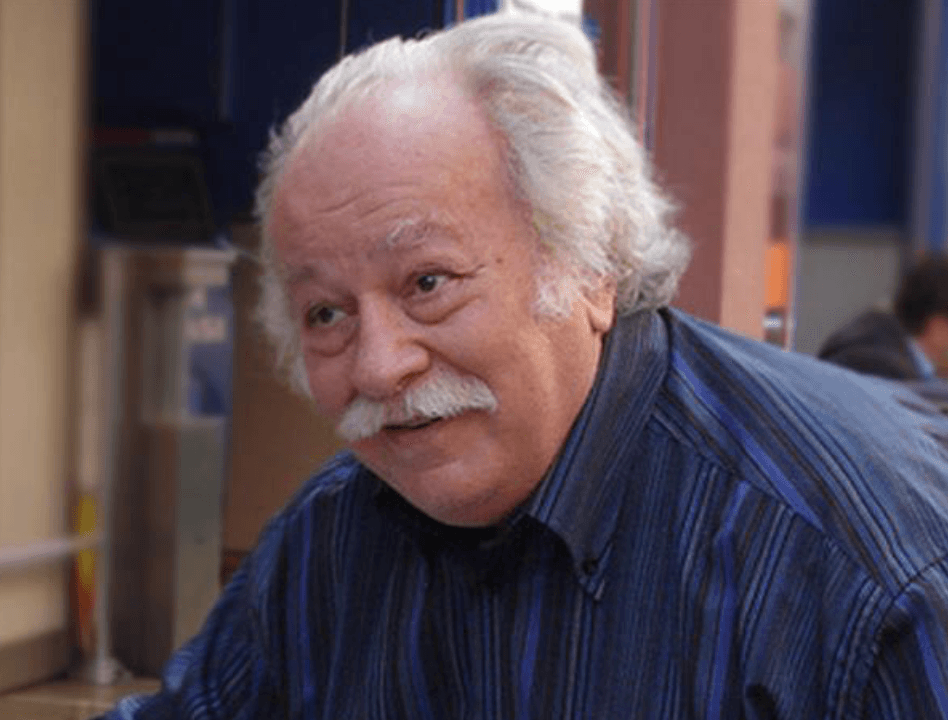
Nezih Uzel was born in 1938 in the Mudanya district of Bursa. His father was a veteran of the Çanakkale War and a physician, belonging to the Hocazâdeler family of Shumna. Doctor Mehmet Muhlis Lord, who graduated in 1915 from the Haydarpaşa Imperial Medical School and Gülhane Military Medical School, supported his family by practicing as a civilian physician after his military service. His mother was Hacer İhsan Hanım, daughter of Hüseyin Hüsnü Efendi, imam of Sarıgüzel Camii, who had received her education at the Fatih Medreses.
Nezih Uzel grew up in an environment deeply intertwined with both scholarship and traditional Islamic culture. After spending his childhood in Mudanya, he moved with his family to Istanbul in 1949. From that point onward, he had the opportunity to grow up immersed in the culture of late Ottoman Istanbul. After completing his primary and secondary education in Istanbul, he attended Galatasaray High School and graduated in 1957. During his high school years, Uzel began engaging with the city’s intellectual circles and also turned toward traditional arts and Sufi life—paths that would shape the major part of his future. In his own words, during this period he became one of the rare young people who directly encountered the “last living Ottomans” and traced the cultural legacy of Istanbul.
Following his high school years, Nezih Uzel deepened his connection with Islamic arts and Sufi culture by establishing direct contact with Istanbul’s master artisans and Sufis. He received instruction in illumination from Professor Süheyl Ünver, in calligraphy from Necmeddin Okyay, and in miniature painting from Mustafa Düzgünman. He also frequented the circles of master musicians such as Halil Can, kudüm master Sadettin Heper, and others. These associations would later enrich his knowledge and practice in both Mevlevi tradition and music.
In terms of his Sufi orientation, his most profound influences came through relationships with Resuhi Baykara, son of the last sheikh of the New Door Mevlevi Lodge, the Sufi historian Abdülbaki Gölpınarlı, and Mithat Bahari Beytur. However, the defining experience of his life was his time spent at the Uzbeks Tekke in Üsküdar between 1958 and 1971. There, serving under Necmeddin Özbekkangay, the last sheikh, he internalized the daily practice and spirit of Mevlevism. Around the Özbekler Tekke, he became known as a “yellow dervish.” This period marked the beginning of his transformation from a mere disciple into a representative of the tradition. During those years, he attended nearly every day of the week a different musical or Sufi gathering. According to Kudsi Erguner, on Mondays a large assembly was held at the home of the sheikh’s son, with ney, bendir, and gazelles accompanying the nights. On Tuesdays he attended musical gatherings at Cahid Gözkan’s home, and on Wednesdays and Thursdays he participated in zikir and mevlit gatherings held at various dergâhs such as the Illiterate Sinan Tekke in Eyüp, the Sünbül Sinan Dergâhı in Kocamustafapaşa, and the Nûreddîn-i Cerrâhî Tekkesi in Karagümrük. On Fridays he attended the pre-prayer discussion circles at Karaköy Underground Mosque, listening to Üsküdarlı Ali Efendi recite Quran qiraat, accompanied by the ayran and water börek offered by the sheikh. Saturdays were spent preparing for the rituals at the Özbekler Tekke. On Sundays he participated in large zikir gatherings held in a holiday atmosphere.
This period also marked the beginning of Nezih Uzel’s journalistic career. Encouraged by Ref’i Cevat Ulunay, a prominent writer of Mevlevi origin, he entered journalism. Over time, he developed relationships with writers such as Halit Karay, Falih Rıfkı Atay, Reşat Ekrem Koçu, Yaşar Kemal, and Haldun Taner. His international connections were also notable: he corresponded with French journalist Raymond Cartier, thinker Roger Garaudy, orientalist Edward Said, and Islamic scholar Anna Marie Schimmel, and translated some of their works into Turkish.
Nezih Uzel never married and led a solitary yet highly productive life. He emerged as a leading figure in the revival of Istanbul’s Mevlevi culture through both archival and practical work. He died on 1 May 2012, following a heart crisis at his home in Üsküdar. His funeral prayer was held at Selami Ali Camii, after which he was buried at Karacaahmet Cemetery.
Nezih Uzel’s Sufi activities centered on Mevlevism were not limited to personal spiritual practice or academic curiosity; they reached institutional dimensions through direct participation, leadership, and organization. His relationship with Mevlevism was less that of a traditional disciple and more that of a carrier and transmitter of a living heritage.
In the 1970s, when Mevlevi lodges had been closed and Mevlevi tradition had become culturally marginalized in Turkey, Nezih Uzel undertook a vigorous initiative to revive the music, sema, and ethical and ritual practices of Mevlevism within their authentic context. One of his most important initiatives was the founding in 1981 of the Istanbul Sema Group together with semazenbaşı Ahmet Bican Kasaboğlu. The group began its activities within the physical boundaries of the Galata Mevlevi Lodge (today’s Divan Literature Museum). This choice was deliberate, as the Galata Mevlevi Lodge is regarded as one of the symbolic centers of Mevlevi history in Istanbul.
The Istanbul Sema Group organized sema ceremonies throughout Turkey and in various cities of Europe, presenting sema not merely as a folkloric element but as a Sufi act of worship and aesthetic unity. The group performed nearly a hundred concerts and sema demonstrations both within Turkey and abroad. Thanks to this initiative, sema ceremonies were once again performed after a long hiatus in the historic Mevlevi lodges of Üsküdar and Kütahya. The sema held at the Kütahya Mevlevi Lodge in 1987 was the first such performance since the closure of the tekkes.
These activities extended beyond Turkey and had an international impact. In 1987, the Istanbul Sema Group was responsible for both the musical and sema sections of the International Mevlânâ Festival organized by the Konya Municipality. Through this event, the Mevlevi ceremony regained recognition within the framework of an official state cultural activity.
Abroad, when the Cairo Mevlevi Lodge was restored in 1998 by Professor Guiseppe Fanfoni, it was Nezih Uzel’s group that performed the sema at the opening ceremony. This act symbolically reintegrated Cairo, one of the historic centers of Mevlevism, back into the Mevlevi circle. Similarly, the Mevlevi lodges in Crete (Hanya), Lebanon (Tripoli), and Jerusalem were also included in the Istanbul Sema Group’s scope of interest and activity planning.
Nezih Uzel’s activities in Mevlevism were not confined to sema performances alone. The semazen trained through the Sema Group played a vital role in transmitting this discipline to new generations. After eighteen years of work, approximately thirty semazen were trained, some of whom later established their own groups and continued the tradition.
Furthermore, Uzel’s initiatives inspired the establishment of several associations in Western Europe. The Association Mevlâna in Paris, the Rumi Society in London, and the Nefes Derneği in Finland demonstrating activity were directly influenced by Nezih Uzel’s work and sema organization. These organizations represent evidence that the universal values of Mevlevism have transcended national boundaries and become part of contemporary cultural dialogue.
Another crucial aspect of Nezih Uzel’s work in Mevlevism was the collection and preservation of archives. He gathered, cataloged, and published numerous written documents, musical notations, photograph, audio recordings, and personal recollections related to Mevlevism. This archive is still regarded today as an essential reference for both academic research and cultural activities.
Nezih Uzel’s literary life did not emerge from a separate sphere but was directly rooted in his Sufi interests. His journalism career was not a mere professional choice but an extension of his deliberate commitment to conveying cultural, historical, and musical heritage to the public.
He began journalism in the 1960s under the guidance of the influential writer Ref’i Cevat Ulunay. This initial contact introduced him not only to the world of journalism but also to the literary and cultural circles of the era. From the mid-1960s onward, he worked as a reporter, columnist, and cultural writer in Istanbul’s press. As both a producer and commentator, Uzel found his voice in various outlets and gradually focused his writing on specific themes: music, Sufi history, tekkes, and Ottoman cultural heritage.
Among the newspapers he worked for were influential publications of the time such as Yeni Sabah, Tercüman, and Yeni İstanbul. In these publications, he particularly wrote about the “lost Istanbul.” His research on Mevlevi lodges, tekkes, cemeteries, grave stones, musical gatherings, and forgotten artists was not merely nostalgic; it also served a documentary function. These writings were regarded as rare texts that kept the cultural memory of the era alive. Uzel’s journalism was not limited to mere reporting; it also contributed significantly to the modernization of written heritage. His work in transcribing, simplifying, and annotating Mevlevi sources in Latin script led to a series of publishing initiatives. In this way, he established a transition path from journalism to academic publishing.
During the 1970s and 1980s, he also practiced freelance journalism not only in Turkey but abroad. He wrote articles for journals and newspapers in countries such as France, England, and Germany, on Turkish Sufi tradition, Mevlevi history, and sema ceremonies. Some of these articles later served as sources for his books.
Nezih Uzel’s editorial activities deserve special attention. He was a founder, writer, and editor for various journals in Turkey dedicated to topics such as Tasavvuf, Türk Musikisi, and Semâ. Through these journals, he aimed to connect the musical tradition and dervish ethics with a new generation. He also served as a consultant for TRT’s “Sufi Music” themed radio programs and prepared texts for some of these programs.
One of the most distinctive features of Uzel’s journalism was his direct grounding in field experience. He was not merely a researcher of sources but someone who traced the footsteps of old tekkes, met with the descendants of sheikhs, performed on musical instruments, and spent years working in archives. This approach gave his writings both authenticity and depth.
Internationally, he established relations with cultural attachés and musicology institutes to exchange knowledge on sema and Sufi music. His lectures and talks abroad elevated him to the status of Turkey’s “living archive,” transforming his accumulated knowledge into a widely accessible written platform.
This fluidity between his journalistic activities and his Sufi identity made Nezih Uzel one of the few figures in modern Turkey who could address both traditional and contemporary audiences. His writings, valued as archival documents, continue to be used as reference sources by researchers.
One of the most consistent and deeply developed areas of Nezih Uzel’s life was music. His interest in music extended far beyond that of a listener or enthusiast; it encompassed the roles of performer, researcher, collector, and educator. For Uzel, music was an inseparable part of Mevlevism and Sufism in general. Therefore, he viewed music not merely as an aesthetic domain but as a means of worship and spiritual training.
Uzel’s direct relationship with music was shaped through personal contact with great masters in Istanbul, especially Sadettin Heper, Halil Can, Neyzen Ulvi Erguner, and Kani Karaca. These relationships deepened his musical repertoire along traditional lines and shaped him into a school. He participated in ritual practice sessions, played kudüm and stencil, and occasionally accompanied what and kudüm lessons. He also became an almost contemporary representative of the kudüm by accompanying Halil Can’s performances.
In 1966, he was accepted as a kudüm player into the Turkish Music Performance Ensemble of the Istanbul Municipality Conservatory. This institutional affiliation enabled him to perform not only within private circles but also on official stages. That same year, he began working at Istanbul Radio, thus engaging in both performance and recording. During his time at Istanbul Radio, he worked to record and archive classical Mevlevi ceremonies in studio settings. These recordings remain today in the TRT archives and are frequently used in academic research.
Another significant contribution of Uzel to music was in the realm of archiving and preservation. He devoted much of his life to collecting and preserving classical Turkish music, especially Mevlevi ceremonies, through oral transmission and written notation. His personal archive contains hundreds of notations, manuscripts, cassettes, and CDs. This archive offers a broad resource not only for Mevlevi music but for Sufi music in general. From the 1980s onward, he led numerous initiatives for the production of records, cassettes, and CDs at both individual and institutional levels. He published 28 albums containing Sufi music. Among these, works such as “Mevlevi Ayinleri,” “Şathiye ve Gazeller,” “Eski İstanbul İlahileri,” and “Kaside ve Duraklar” are particularly notable for their role in preserving cultural heritage and transmitting it to younger generations. Most of these recordings are regarded not merely as musical works but as documents of a historical era.
Nezih Uzel also contributed to the educational process of classical Turkish music. Within the Istanbul Sema Group, he trained young musicians not only as semazen but also as hanende and sazende. These efforts included musical practice sessions, repertoire development, and opportunities for young performers to gain experience. His practical instruction on the use of percussion instruments such as the bendir and kudüm has ensured their more conscious performance today. Uzel also documented his theoretical knowledge of music in articles published in various journals, writing on the structure of Turkish music, usûl, ceremonial forms, and biographies of composers. These writings were later compiled and published in some of his books.
All these efforts elevated Nezih Uzel from being merely a musician to becoming a music historian, archivist, and educator. He is regarded as the living memory of Mevlevi music. This legacy extended not only through his ears but also through his pen, his archive, and the people he trained.
The texts written by Nezih Uzel reflect both firsthand observations and the culmination of decades of cultural accumulation. In his literary career, he primarily addressed themes of Mevlevism, Sufi history, tekkes, sema, dervishhood, and Sufi music, producing works that served both as scholarly sources and as accessible writings for the general public. He published more than 25 books.
Among his published works, the most notable include:
In addition to these books, there are collections of articles published in newspapers and journals, archival catalogs, and special editions supported by manuscripts. Some of his books also include his own photographs and field notes.
Uzel’s approach to publishing was not merely about writing; it was about collecting forgotten knowledge and documents and transmitting them to future generations. He acted not only as a writer but also as a preserver and transmitter. This attitude has made him an unparalleled source for researchers working in the fields of Sufi history and Mevlevism.
Nezih Uzel died on May 1, 2012, in his home in Üsküdar, Istanbul, following long-standing health problems. In his later years, he suffered from various organ-related ailments due to sugar disease and underwent medical interventions. The cause of death was recorded as a heart attack.
His funeral prayer was held on Thursday, May 3, 2012, after the noon prayer at Selami Ali Camii in Üsküdar, and he was buried at Karacaahmet Cemetery. The ceremony was attended by numerous figures from the culture and arts community, Mevlevi circles, and academia. His grave is marked by a simple yet striking epitaph.
Following his death, numerous commemorative articles were written. Special programs were broadcast on radio and television channels, led by TRT. Sema ceremonies were held in Mevlevi lodges in Istanbul and in Konya in his memory. Some of his students continued to sustain the Sema Group he founded. His legacy lives on not only through his books but also through the music recordings he made, the sema ceremonies he directed, and the dervishes and musicians he trained. His personal archive is now accessible to specialized researchers both physically and digital. Thousands of documents, notations, photographs, cassettes, and letter in his archive await classification through a future catalog project.
Today, Nezih Uzel is regarded not merely as a Mevlevi but as a multifaceted figure who archived, performed, and transmitted the traditional music, Sufi heritage, and dervish culture of Turkey. His name is remembered as one of the most defining figures among the recent representatives of Mevlevi culture.

Life
Mevlevi and Sufi Activities
Journalism and Publishing Activities
Musical Activities
Works, Death, and Legacy
Death and Legacy