


+2 More

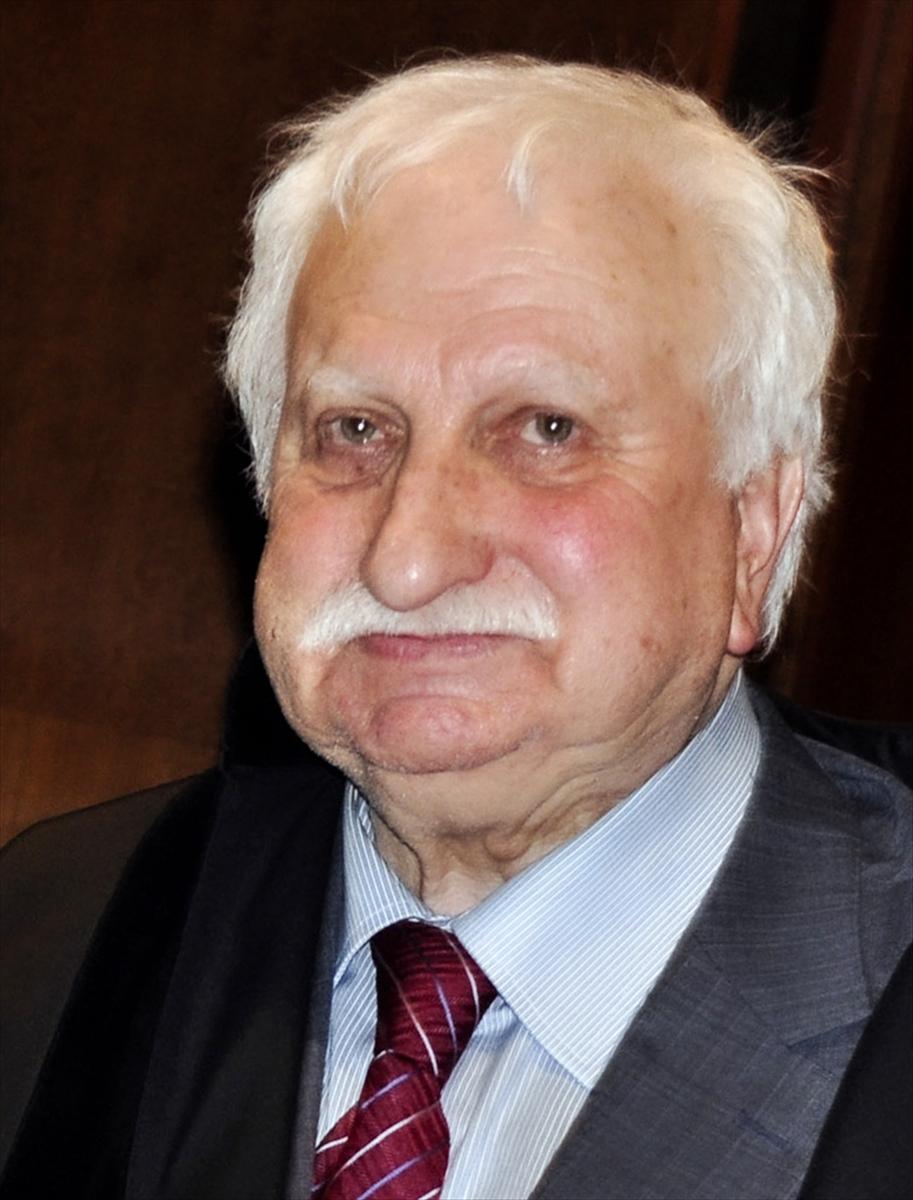
Niyazi Sayın
Doğum tarihi | 1927-02-12 | ||||||||
|---|---|---|---|---|---|---|---|---|---|
Place of Birth | Üsküdar, Istanbul | ||||||||
Profession(s) | Ney player instructor ebru artist composer | ||||||||
Some of His/Her Works | I Have Become Wounded by the Sorrow of Love, O Soul (şehnaz makamı), Roses Before Me Never Cease to Fade (şevkefzâ makamı), Sada (solo ney album) | ||||||||
Ölüm tarihi | 2025-10-08 | ||||||||
Niyazi Sayın (1927–2025) was a multifaceted artist renowned in the history of Turkish music for his ney performance and ebru art. Born in Üsküdar, he began engaging with music at an early age and received instruction from notable figures such as Mustafa Düzgünman, Necmeddin Okyay and Halil Dikmen starting in 1947. He taught Turkish music courses at the University of Seattle and performed concerts both within and outside Türkiye. He passed away in Istanbul on 8 October 2025.
Niyazi Sayın was born on 12 February 1927 in the Üsküdar district of Istanbul. His father, Ömer Hulusi Bey, was a police officer born in Macedonia, and his mother, Necmiye Hanım, was from Manastır. He completed his primary and secondary education in Paşakapısı and his high school education at Haydarpaşa and Beyoğlu high schools, but was unable to complete his studies due to the conditions of World War II. Growing up in a family deeply familiar with music, he developed an early interest in the art form.
Following his father’s death in 1946, Sayın met Mustafa Düzgünman in Üsküdar in 1947 and through him began attending religious music training sessions. On 4 March 1948, he purchased his first ney, tuned in the sipürde mode, from ney master Osman Dede in Beyazıt.
That same year, he took his first ney lessons from Gavsi Baykara, son of Abdülbaki Dede, sheikh of the Yenikapı Mevlevihânesi, at the Sunar Cinema in Üsküdar. Through Necmeddin Okyay, he met Halil Dikmen, director of the State Museum of Painting and Sculpture and a ney player, and began studying under him on 21 January 1949. These lessons lasted fifteen years, during which he pursued studies in ney, ethics and painting.
While fulfilling his military service in Kasımpaşa, he attended the Istanbul Municipal Conservatory and completed its three-year program in just one year. In 1950, he joined the Executive Board of the Üsküdar Music Society and became part of the programming lineup of TRT Istanbul Radio that same year.
In 1954, he began his career in music broadcasting at Istanbul Radio at the invitation of Nevzat Atlığ. From 1956 to 1959, he served on the Executive Board of the Istanbul Municipal Conservatory at the invitation of Münir Nureddin Selçuk. In 1975, he became a faculty member at the Turkish Music State Conservatory of Istanbul Technical University.
In 1980, he traveled to the United States and, at the invitation of the University of Seattle, taught Turkish music for one year alongside Tanbûrî Necdet Yaşar. He performed concerts in Türkiye and in many countries including England, Germany and France.
Niyazi Sayın’s 1974 Ney Performance (TRT Archive)
Sayın received musical instruction from Halil Dikmen as well as from Muhiddin Efendi, Kadırgalı Hüseyin Fahri Bey, Udi Vahid Bey, Mesud Cemil, Üsküdarlı Hayrullah Efendi and Şefik Gürmeriç. He maintained the traditional meşk method in his musical education and acquired both theoretical and practical knowledge through his lessons with Halil Dikmen.
Alongside Halil Dikmen, he also engaged in painting and viewed music and painting as complementary art forms. He adopted Dikmen’s artistic approach, having trained in the ateliers of Julian and André Lhote.
Niyazi Sayın’s recorded performances include the solo ney album “Sada” and two albums produced by Kalan Müzik featuring joint performances with Tanbûrî Necdet Yaşar. These albums contain works in the forms of taksim, peşrev and saz semaisi. Two of his own compositions are also known: “Müptelâ-yı Derd-i Aşkınla Çâk Oldum Ey Gönül” (in the şehnaz makam, devr-i hindî usul) and “Güllerin Karşımda Her An Solmadan Durmaktadır” (in the şevkefzâ makam, ağır aksak usul).
In studies of the taksim form, Sayın performed in the makams of segâh, mahur, ferahnâk, hüzzam, yegâh, hicaz, sultaniyegâh, şevkefzâ, nihâvend and rûy-i ırak. He employed the česniler of the Arel-Ezgi-Uzdilek system and introduced original česniler of his own. In his taksims, he maintained the traditional structure of the introduction, middle section, cadence and resolution, and applied his own distinctive techniques of finger tapping, vibrato and open-closed positioning.

Sayın began practicing ebru art through Mustafa Düzgünman and Necmeddin Okyay. He learned ebru technique, flower-making and bookbinding from Necmeddin Okyay and practical workshop methods from Düzgünman. In his work, he experimented with alternative materials such as sahlep and carrageenan alongside traditional kitre.
He was among the first artists to use gouache paints in ebru. He empirically adjusted the ratios of pigment and water to achieve desired colors. He developed varied tonalities in kırçıllı and taraklı ebrus and transferred calligraphic inscriptions onto ebru surfaces using serigraphy. He learned the ebru technique known as “kaplan gözü” in the United States and introduced it to Türkiye.
Sayın introduced ebru art through exhibitions both within and outside Türkiye starting in the 1970s. In the late 1970s, he held a personal ebru exhibition at Maçka Art Gallery and organized ebru seminars at the Seattle Public Library in the United States in 1980. In 2002, he co-organized an exhibition with Assoc. Prof. Dr. Hicabi Gülgen at the Dünden Bugüne Tasavvuf Kültürü Sempozyumu in Bursa. In 2017, he participated in a joint exhibition at Dolmabahçe Palace featuring calligraphy by Hattat Mahmud Şahin.
In addition to ebru, Sayın was engaged in photography, bead-making, bookbinding, wood carving, mother-of-pearl inlay, woodworking, rose cultivation and birdkeeping. He began photography in his youth, capturing black-and-white portraits and views of Üsküdar, and collected and repaired cameras. He learned bead-making in 1950 from Edirnekapılı Galip Başsaka. Using a traditional crank fiddle lathe, he crafted beads from wood, amber and precious stones. He preserved materials and tools suitable for bead-making and ebru in his workshop and maintained handcraft traditions throughout production. He conducted his rose cultivation and birdkeeping activities within the same workshop environment.
His artistic philosophy integrated tradition with innovation. He viewed music, ebru and other art forms as mutually complementary disciplines. He emphasized the fluidity between artistic fields, noting that experience in one discipline enriched others. He stated that his painting training under Halil Dikmen enhanced his understanding of color and composition in ebru and that photography cultivated his visual discipline.
To Sayın, art was not merely a disciplined occupation but a means of spiritual development. He valued the concepts of style and attitude and preserved his own performance style within the meşk tradition while maintaining its originality.
Niyazi Sayın’s Taksim in 16 Makams(Batu Ayraç)
Niyazi Sayın’s ney performance established a distinctive style in Turkish music known as the “Niyazi Sayın school,” grounded in the Arel-Ezgi-Uzdilek system but distinguished by his personal česniler and pitch usage. Among his students are Sadreddin Özçimi, Yavuz Akalın, Ahmed Şahin and Hüseyin Özkılıç. In ebru, Feridun Özgören was his direct student. Through these students, Sayın’s technical and aesthetic approach to both ney and ebru was transmitted to subsequent generations.
In 2014, he was awarded the Presidency Culture and Arts Grand Awards for his contributions to classical Turkish music and Sufi music.
Niyazi Sayın passed away in Istanbul on 8 October 2025 at the age of 98.
Ayraç, Batu. “Niyazi Sayın 16 Makamda Taksim.” YouTube Video, 29:03. Batu Ayraç YouTube Kanalı. Accessed October 9, 2025. https://www.youtube.com/watch?v=gk6VU1pjMVQ&list=RDgk6VU1pjMVQ&start_radio=1
Benlioğlu, Furkan. "Çok Yönlü Bir Sanatkâr Olarak Niyazi Sayın ve Ebruculuğu Hakkında." Master's thesis, Bursa Uludağ University Institute of Social Sciences, Department of Islamic History and Arts, Department of History of Turkish Islamic Arts, 2022. https://acikerisim.uludag.edu.tr/entities/publication/3c771bac-1b8f-4caa-8ffb-f5d755a7f238
Ketebe. "Niyazi Sayın." Ketebe.com. Accessed October 9, 2025.
Korkmaz, Tayip Enes. "Niyazi Sayın’ın Ney Taksimlerinin Makam Çeşnisi Yönünden İncelenmesi." Master's thesis, Ankara Yıldırım Beyazıt University Institute of Social Sciences, Department of Turkish Religious Music, 2023. https://tez.yok.gov.tr/UlusalTezMerkezi/TezGoster?key=a0OMTmEd_3mfOBxT8SiBTP2_lS44MfqTIXK3gv-vtEv_W31EHsStZ8T0kl0H5_Jo
TRT Archive. "Neyzen, Ebru Sanatçısı – Niyazi Sayın (1974) | TRT Arşiv." YouTube Video, 15:45. TRT Archive YouTube Channel. Accessed October 9, 2025. https://www.youtube.com/watch?v=a4UDNMeOyiA&list=RDa4UDNMeOyiA&start_radio=1
Türkiye Cumhuriyeti Cumhurbaşkanlığı. "Cumhuriyet Başkanlığı Kültür ve Sanat Büyük Ödülleri." Accessed October 9, 2025. https://tccb.gov.tr/cumhurbaskanligi/kultursanatodulleri/2014/

Niyazi Sayın
Doğum tarihi | 1927-02-12 | ||||||||
|---|---|---|---|---|---|---|---|---|---|
Place of Birth | Üsküdar, Istanbul | ||||||||
Profession(s) | Ney player instructor ebru artist composer | ||||||||
Some of His/Her Works | I Have Become Wounded by the Sorrow of Love, O Soul (şehnaz makamı), Roses Before Me Never Cease to Fade (şevkefzâ makamı), Sada (solo ney album) | ||||||||
Ölüm tarihi | 2025-10-08 | ||||||||
Early Life and Education
Professional Career
Artistic Education and Musical Environment
Performances
Ebru Art
Other Artistic Activities
Artistic Philosophy
Legacy and Influence