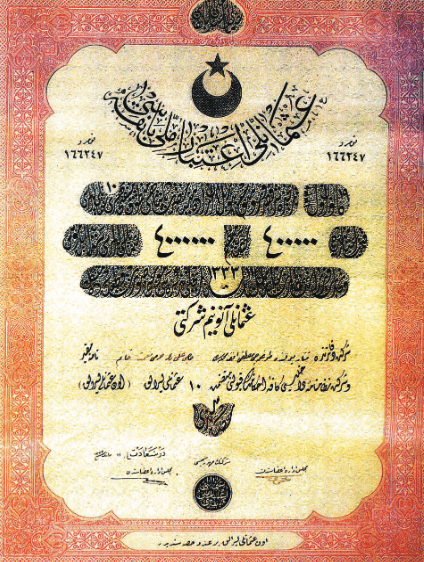


This article was automatically translated from the original Turkish version.
Osmanlı İtibar-ı Milli Bankası, one of the national capital-based financial institutions established in the final years of the Ottoman State, was founded in early 1917 amid the difficult conditions of the First World War. It emerged as a product of the “National Economy” ideology adopted by the Committee of Union and Progress. This ideology, strengthened by nationalist currents triggered by the Balkan Wars and the First World War, aimed at economic independence and the creation of a native bourgeoisie.
Considered a solution to the problems arising from the foreign-capital-backed Ottoman Bank, the bank was capitalized exclusively through participation by Ottoman citizens, under the leadership of Minister of Finance Cavit Bey. With the privileges granted to it, the Ottoman İtibar-ı Milli Bankası sought to guide the national economy. In the Republican period, it merged with İş Bankası in 1927, leaving a significant legacy in Turkish banking history.

Türkiye İş Bankası Eminönü Historical Building / Former Istanbul Post Office Building (İşSanat)
The Ottoman İtibar-ı Milli Bankası was a major financial institution established in early 1917 during the First World War. Its founding philosophy was shaped by the political and economic climate of the time, particularly the “national economy” doctrine embraced by the Committee of Union and Progress. During this period, the Unionists supported the development of national banking to reduce dependence on European capital and build a strong national economy. Problems in the relationship between the Ottoman administration and the foreign-capital-backed Ottoman Bank played a significant role in the bank’s establishment. Minister of Finance Cavit Bey played a crucial role in its founding. The Ottoman İtibar-ı Milli Bankası was one of the first financial institutions established with national capital in the final years of the Ottoman State.
The establishment of the Ottoman İtibar-ı Milli Bankası is closely linked to the general economic and ideological conditions of the Second Constitutional Era. During this period, the Ottoman economy faced structural problems such as long-standing foreign debts and the existence of the Ottoman Public Debt Administration. Capitulations granted to foreign states restricted the Ottoman economy’s ability to act independently. The prominence of non-Muslim elements in economic life and their ties to foreign capital were also viewed as major problems by proponents of national economy.
The nationalist currents triggered by the Balkan Wars and the First World War created a favorable environment for the adoption of the “national economy” concept. This concept aimed at economic independence and the development of domestic industry, advocating that the country’s resources be utilized by national capital. The Committee of Union and Progress administration sought to create a native “national bourgeoisie” and gain economic control of the country. Steps such as the unilateral abolition of capitulations provided an important foundation for implementing national economy policies.
During the establishment process of the Ottoman İtibar-ı Milli Bankası, the influence and role of Cavit Bey, the Minister of Finance at the time, were of great importance. Cavit Bey, one of the leading figures of the Committee of Union and Progress, is recognized as an important thinker and statesman in Turkish political history for his experience in political, social, and economic matters. He served in various capacities within the Ottoman State from the proclamation of the Second Constitutional Era until the end of the First World War, playing a pivotal role in shaping the economic policies of the Committee of Union and Progress during his tenure as Minister of Finance.
Cavit Bey was among those who argued that the Ottoman State must achieve economic independence and establish a national economic structure. His economic views focused on reducing dependence on foreign capital, strengthening national capital, and developing national banking. The economic difficulties faced by the Ottoman State upon entering the First World War, particularly the problems with the foreign-capital-backed Ottoman Bank, further strengthened the idea of establishing a bank with national capital.
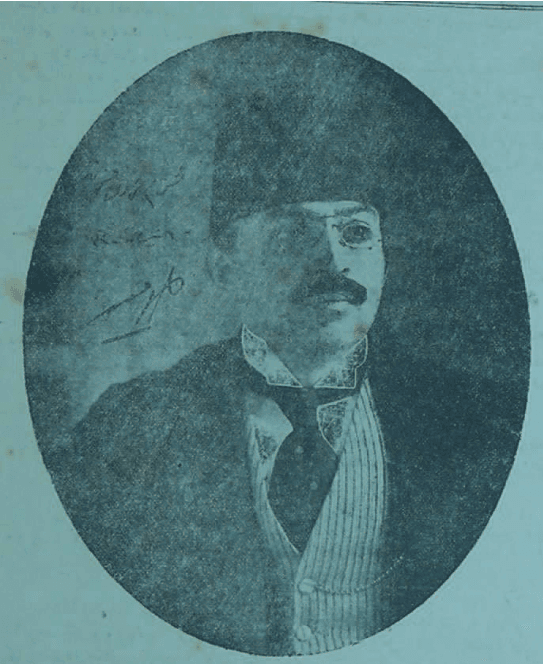
Cavit Bey (Ottoman Imperial National Bank / Master's Thesis p.158)
In this context, Cavit Bey led the establishment in early 1917 of the Ottoman İtibar-ı Milli Bankası, the first financial institution with national capital. Although the bank’s founding philosophy was determined by the ideological climate of the time, Cavit Bey’s economic ideas and experience had a profound impact on its structure and operations. Thanks to his leadership, the Ottoman İtibar-ı Milli Bankası was implemented as a concrete step in the implementation of national economy policies.
Cavit Bey’s role in the bank’s establishment was not limited to managing a bureaucratic process. He also played a decisive role in defining principles such as restricting capital ownership exclusively to Ottoman citizens. This approach aimed to reinforce the bank’s national character and contribute to the development of national capital.
This bank became one of the most tangible manifestations of the Ottoman State’s efforts toward economic independence and national economy initiatives during its final years. His vision and efforts formed the foundation of the national banking tradition inherited from the Ottoman Empire to the Republic.
One of the decisive factors in the establishment of the Ottoman İtibar-ı Milli Bankası was the difficulties experienced by the Ottoman State in its relations with foreign-capital banks, particularly the Ottoman Bank, and the resulting need for a national bank. The Ottoman Bank, founded in 1863 with British and French capital, was a semi-official institution headquartered in London and Paris. It played a major role in the state’s financial affairs and held the privilege of issuing banknotes. However, over time, the foreign character of the Ottoman Bank and its policies that sometimes conflicted with the interests of the Ottoman State generated serious discontent among proponents of national economy.
With the outbreak of the First World War, the Ottoman State’s financial needs for war financing increased, but the stance of the Ottoman Bank and the constraints imposed by wartime conditions narrowed the government’s fiscal maneuvering space. Because the Ottoman Bank was capitalized by the Allied Powers, it hesitated to provide sufficient financial support for the Ottoman State’s war efforts. This situation became one of the main factors pushing the Ottoman government to create its own financial resources and institutions.
The Committee of Union and Progress government of the time aimed to end the monopoly of the Ottoman Bank and ensure the dominance of national capital in financial markets, within the framework of economic independence and the national economy ideology. The foreign status of the Ottoman Bank, the privileges granted by the capitulations, and its central position in state finances had become unacceptable to advocates of national economy policies. The Ottoman State’s efforts to manage its own finances during wartime and reduce external dependency highlighted the urgency of establishing a national bank.
The influence of the Ottoman Bank on the Ottoman State extended beyond merely providing credit; its role as an intermediary in foreign borrowing and its authority to issue banknotes had effectively positioned it as a central bank. However, during wartime, its failure to fully meet the needs of the Ottoman government or its prioritization of its own interests strengthened the argument for creating a national alternative. The unilateral abolition of capitulations in 1914 granted the Ottoman government greater economic autonomy and accelerated initiatives to establish a national bank.
The Ottoman İtibar-ı Milli Bankası stood out as a financial institution with a unique structure and broad scope of activities, established during the final years of the Ottoman State in line with national economy policies. Its founding was marked by a distinctly national character, particularly in terms of capital structure and partnership conditions. One of its most fundamental features was the requirement that its capital be entirely owned by Ottoman citizens. This provision was a direct reflection of the national economy ideology underpinning the bank’s founding philosophy and aimed to create a national financial institution independent of foreign capital control.
With certain privileges granted at its establishment, the bank aimed to play a significant role in the Ottoman economy. These privileges gave the bank a favorable position compared to other foreign-capital banks and provided a supportive framework for the development of national capital-based banking. The special rights conferred upon it indicated that the bank was intended not merely as a commercial bank but as a strategic institution supporting the state’s economic policies. However, detailed records of the full content of these privileges are lacking in sources.
In terms of activities, the Ottoman İtibar-ı Milli Bankası carried out general banking operations of the period while also assuming specific responsibilities aimed at strengthening the national economy. The bank sought to support production and economic development by providing credit to sectors such as agriculture, industry, and trade. In this regard, it took on the mission of revitalizing the national economy and supporting local producers, going beyond the goals of a purely profit-driven commercial enterprise. Particularly under the conditions of the First World War, it was expected to play a vital role in meeting the state’s financial needs and supporting the war economy. Such activities were viewed as practical applications of the Committee of Union and Progress’s “national economy” program.
The bank specifically targeted rural development through credit programs aimed at agriculture and sought to strengthen local capital in this sector. Its support for investments in industry and trade also served the strategy of increasing the country’s production capacity and reducing external dependency. These activities formed part of the Ottoman State’s broader efforts to stand on its own economic feet. Through its structure and activities, the Ottoman İtibar-ı Milli Bankası became a significant symbol of the Ottoman Empire’s final years’ economic transformation and the national banking movement. The bank did not merely conduct financial transactions; it also undertook the mission of fostering a national economic consciousness and leading the development of national capital.
Despite its national goals and ambitious mission, the Ottoman İtibar-ı Milli Bankası underwent various phases during the turbulent atmosphere of the First World War and the subsequent Armistice and early Republican period. Although sources indicate that the bank gradually lost public support from its inception, it managed to continue its operations. This situation reflects how the political and economic instability of the period affected the bank’s operations and public perception. With the end of the war and the dissolution of the Ottoman State, widespread transformations across the country deeply impacted the banking sector.
With the founding of the Republic of Türkiye, efforts to restructure the national economy and establish a national banking system accelerated. During this process, the reorganization or adaptation of existing financial institutions to align with national objectives became a priority. The Ottoman İtibar-ı Milli Bankası became part of this transformation.
The bank’s fate culminated in its merger with Türkiye İş Bankası in 1927. This merger is regarded as one of the important steps in the Republican period’s national banking policy. Türkiye İş Bankası, established in 1924 under the directives of Mustafa Kemal Atatürk, was the first national bank and played a pivotal role in the economic development of the young Republic. The merger of the Ottoman İtibar-ı Milli Bankası with Türkiye İş Bankası served the purpose of consolidating national capital under a single umbrella and establishing a stronger national banking structure. With this merger, the existence of the Ottoman İtibar-ı Milli Bankası came to an end, but its institutional experience and capital were integrated into Türkiye İş Bankası.

No Discussion Added Yet
Start discussion for "Ottoman National Credit Bank" article
Establishment Process
Ideological and Economic Foundations of Establishment
The Role of Minister of Finance Cavit Bey in the Bank’s Establishment
Relationships with the Ottoman Bank and the Need for a National Bank
Structure and Activities of the Ottoman İtibar-ı Milli Bankası
The Bank’s Fate and Legacy