

Çocuk | Charles-Émile Sophie-Suzanne | ||||||||
|---|---|---|---|---|---|---|---|---|---|
Doğum tarihi | 1749-03-23 | ||||||||
Ölüm tarihi | 1827-03-05 | ||||||||
Eş | Marie-Charlotte de Courty de Romanges | ||||||||
Profession(s) | Mathematician Physicist Astronomer | ||||||||
Place of Death | Paris, France | ||||||||
Place of Birth | Beaumont-en-Auge, Normandy, France | ||||||||
Citizenship | French | ||||||||
Honors | Legion of Honour (1805) Fellowship of the Royal Society (1789) | ||||||||
Major Works | Analytical Theory of Probabilities Explanation of the Earth System Study of Celestial Mechanics | ||||||||
Political Career and Titles | Minister of the Interior (1799 Title of Marquis Senator and Chancellor 6 weeks) | ||||||||
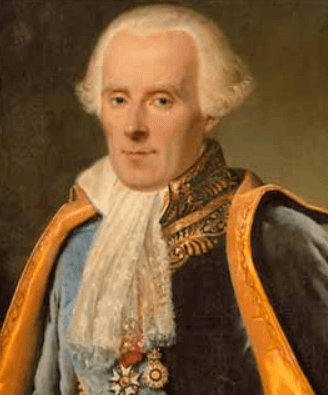
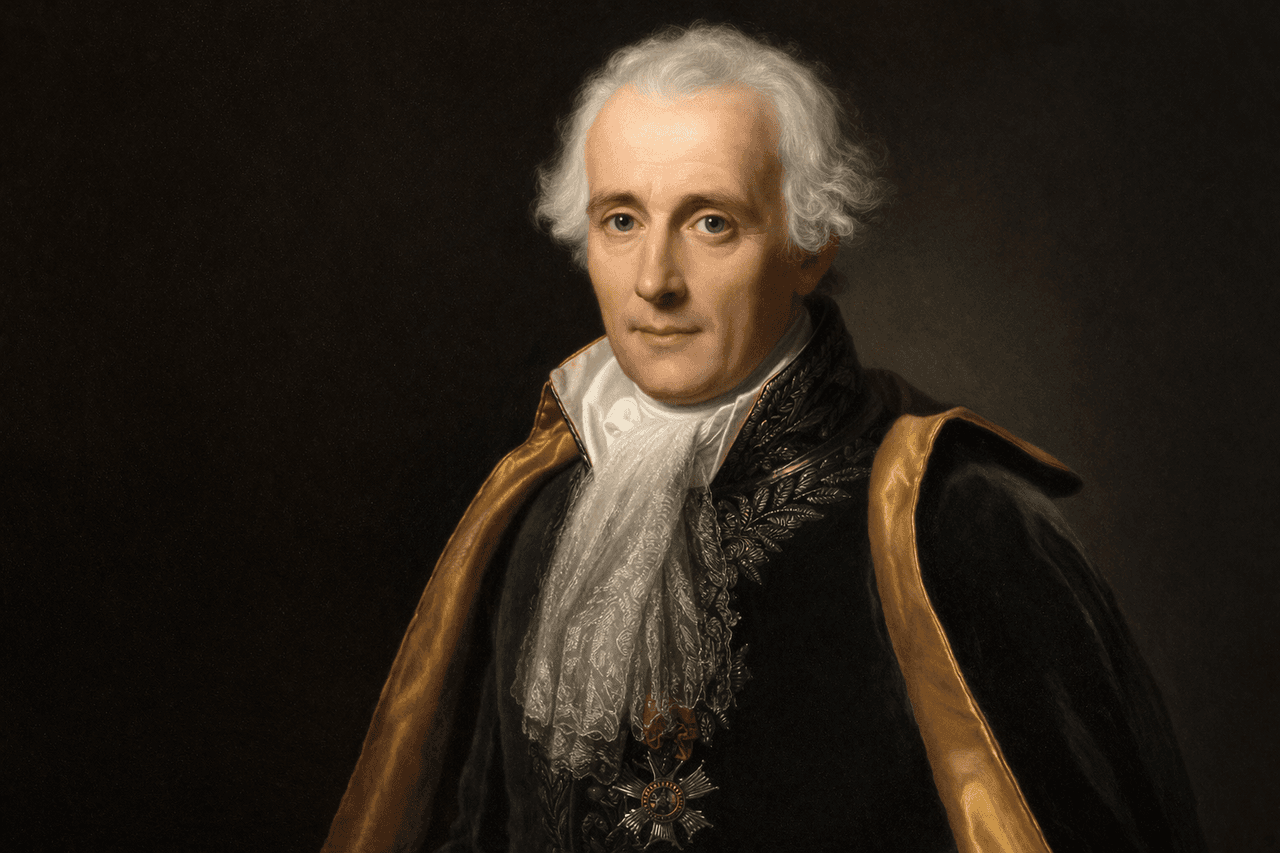
Pierre-Simon Laplace, a French scientist who proved the stability of the Solar System, established probability theory on modern mathematical foundations, and developed fundamental concepts such as the Laplace transform through the potential function. In addition to his academic achievements, he played a role in the creation of the metric system and held various high-level political offices from the Napoleonic era through the Restoration.
Pierre-Simon Laplace was born on 23 March 1749 in Beaumont-en-Auge in the Normandy region of France. Although there are differing accounts of his family background it is stated that his father Pierre Laplace was engaged in apple cider trade and his mother Marie-Anne Sochon came from a wealthy farming family. Laplace received his education between the ages of seven and sixteen at a Benedictine monastery school in Beaumont. At sixteen his father intended for him to pursue a career in the church and enrolled him at the University of Caen to study theology. However within two years he discovered his mathematical talent and turned toward this field. Before completing his studies Laplace moved to Paris and sought entry into academic circles through a letter of recommendation addressed to the mathematician d'Alembert. He impressed d'Alembert with a paper on the principles of mechanics and was appointed as a mathematics professor at the École Militaire on his recommendation.
Laplace’s academic career gained momentum from 1770 onward through scientific papers presented to the Académie des Sciences. His work on difference equations integral calculus and mathematical astronomy led to his election to the Academy on 31 March 1773 at the age of just twenty-four. During this period he focused on two main research programs: probability theory and celestial mechanics and continued throughout his life to establish their mathematical foundations.【1】 In the 1780s he collaborated with chemist Antoine Lavoisier using a ice calorimeter to demonstrate that respiration is a form of combustion; this marked the beginning of his research in heat theory and physics.
One of Laplace’s key scientific achievements was proving the stability of the Solar System. In works published between 1773 and 1787 he theoretically demonstrated that the eccentricities and inclinations of planetary orbits undergo self-correcting periodic variations. He compiled these findings in his five-volume treatise Traité de Mécanique Céleste published between 1799 and 1825 meaning Treatise on Celestial Mechanics. In his 1796 work Exposition du système du monde known as The System of the World he proposed the nebular hypothesis that the Solar System originated from a rotating luminous gas cloud cooling and contracting.【2】 This work also earned him admission to the French Academy due to its comprehensive summary of astronomical history and its literary quality.
Laplace transformed probability theory from an analysis of games into a fundamental tool of scientific knowledge. His 1812 publication Théorie Analytique des Probabilités known as the Analytical Theory of Probabilities is regarded as the first comprehensive study in this field. In this work he made foundational contributions including the extension of Bayes’ theorem the method of least squares and the first general proof of the Central Limit Theorem. Philosophically he embraced a strict determinism asserting that if all initial conditions and laws of the universe were known the future could be predicted with absolute certainty.【3】 In a well-known conversation with Napoleon he stated that he had no need for the hypothesis of God in the system of the universe.
Among his contributions to mathematical physics are the development of potential theory and the widespread use of the Laplace equation named after him. He formulated the theory of capillary attraction and corrected Newton’s calculation of the speed of sound by accounting for the heat effect due to air compression neglected by Newton. In pure mathematics he made significant contributions to the theory of determinants spherical harmonics and the use of Laplace transforms in solving differential equations.【4】 He viewed analysis as a tool for solving physical problems and often omitted detailed mathematical justifications focusing instead on the correctness of results.
Laplace held high-ranking positions under successive regimes from the French Revolution through the Restoration. In 1790 he participated in the commission that standardized weights and measures contributing to the creation of the metric system. During the Napoleonic era he served briefly as Minister of the Interior for six weeks but was dismissed for exhibiting a mathematician’s obsession with infinitesimals and appointed instead to the Senate.【5】 He received the title of Count during the Empire and the title of Marquis during the Bourbon Restoration. Although criticized for altering his political views according to the ruling regime his expertise in scientific commissions enabled him to retain his position.
On 15 May 1788 he married Marie-Charlotte de Courty de Romanges who was twenty years his junior. Their marriage produced a son Charles-Émile and a daughter Sophie-Suzanne. The death of his daughter Sophie-Suzanne in childbirth in 1813 deeply affected Laplace. In his later years he lived in Arcueil where he became one of the founders of the Société d'Arcueil supporting young scientists and showing a supportive attitude toward his students. Laplace retained his mental clarity until the end and died in Paris on 5 March 1827. The French Academy canceled its scheduled meeting that day as a mark of respect.
History of Statistics. "Pierre-Simon Laplace." Utah State University. Accessed March 31, 2026. https://www.usu.edu/math/schneit/StatsHistory/Probabilists/Laplace
Hofmann, James R. "Pierre-Simon Laplace." EBSCO. Accessed March 31, 2026. https://www.ebsco.com/research-starters/history/pierre-simon-laplace#bibliography
O’Connor, J. J., and E. F. Robertson. “Pierre-Simon Laplace.” MacTutor History of Mathematics Archive, University of St Andrews. Accessed March 31, 2026. https://mathshistory.st-andrews.ac.uk/Biographies/Laplace/.
Rouse Ball, W. W. “Pierre-Simon Laplace.” Trinity College Dublin. Accessed March 31, 2026. https://www.maths.tcd.ie/pub/HistMath/People/Laplace/RouseBall/RB_Laplace.html.
[1]
J. J. O’Connor and E. F. Robertson, “Pierre-Simon Laplace,” MacTutor History of Mathematics Archive, University of St Andrews, erişim 31 Mart 2026, https://mathshistory.st-andrews.ac.uk/Biographies/Laplace/.
[2]
J. J. O’Connor and E. F. Robertson, “Pierre-Simon Laplace,” MacTutor History of Mathematics Archive, University of St Andrews, erişim 31 Mart 2026, https://mathshistory.st-andrews.ac.uk/Biographies/Laplace/.
[3]
History of Statistics. “Pierre-Simon Laplace.” Utah State University. Erişim 31 Mart 2026. https://www.usu.edu/math/schneit/StatsHistory/Probabilists/Laplace
[4]
History of Statistics. “Pierre-Simon Laplace.” Utah State University. Erişim 31 Mart 2026. https://www.usu.edu/math/schneit/StatsHistory/Probabilists/Laplace
[5]
History of Statistics. “Pierre-Simon Laplace.” Utah State University. Erişim 31 Mart 2026. https://www.usu.edu/math/schneit/StatsHistory/Probabilists/Laplace

Çocuk | Charles-Émile Sophie-Suzanne | ||||||||
|---|---|---|---|---|---|---|---|---|---|
Doğum tarihi | 1749-03-23 | ||||||||
Ölüm tarihi | 1827-03-05 | ||||||||
Eş | Marie-Charlotte de Courty de Romanges | ||||||||
Profession(s) | Mathematician Physicist Astronomer | ||||||||
Place of Death | Paris, France | ||||||||
Place of Birth | Beaumont-en-Auge, Normandy, France | ||||||||
Citizenship | French | ||||||||
Honors | Legion of Honour (1805) Fellowship of the Royal Society (1789) | ||||||||
Major Works | Analytical Theory of Probabilities Explanation of the Earth System Study of Celestial Mechanics | ||||||||
Political Career and Titles | Minister of the Interior (1799 Title of Marquis Senator and Chancellor 6 weeks) | ||||||||
No Discussion Added Yet
Start discussion for "Pierre-Simon Laplace" article
Origins Early Education and Move to Paris
Academic Rise and Formation of the Scientific Research Program
Celestial Mechanics and the Stability of the Solar System
Probability Theory Statistics and Deterministic Philosophy
Advances in Physics and Applied Mathematics
Public Service Political Career and Institutional Influence
Personal Life Later Years and Death