


This article was automatically translated from the original Turkish version.
+2 More
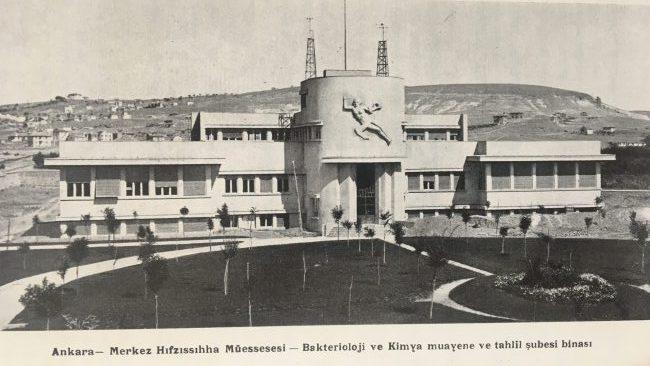
Refik Saydam Center for Public Health was established in 1983 through the reorganization of the Central Institute for Public Health, which was founded in 1928 as one of the foundational pillars of Türkiye’s modern public health policies. The institution, named after Dr. Refik Saydam, the first Minister of Health of the Republic era and a pioneer of preventive medicine, assumed critical responsibilities under the Ministry of Health including combating infectious diseases, producing vaccines and sera, controlling pharmaceuticals, ensuring environmental health, and training health personnel. The Central Institute for Public Health was established through the initiative of Dr. Refik Saydam, with the support of Mustafa Kemal Atatürk. The institution began operations in Ankara in 1928, adopted Dr. Saydam’s name following his death in 1942, and was restructured in 1983 as the Refik Saydam Center for Public Health. However, it was closed in 2011 under Decree-Law No. 663 and integrated into the Türkiye Public Health Institution.
The Central Institute for Public Health was established on 27 May 1928 by Law No. 1267 under the Ministry of Health and Social Assistance. Its purpose was to conduct scientific research to protect public health, produce vaccines and sera, control pharmaceuticals, and train health personnel. The first director, Dr. Mustafa Hilmi Sağun, began operations in 1928 in a building constructed in Ankara-Yenişehir with the Chemical Analysis Division. In 1931, the Bacteriology Division was opened, followed by Immunobiology (Vaccines and Sera) in 1935 and Pharmacology in 1936. In 1936, the Institute of Public Health was established to provide education to health personnel. In 1940, Law No. 3959 expanded its duties, and in 1983, Decree-Law No. 181 renamed it the “Central Directorate.”
The institution began producing vaccines, sera, toxins, and anatoxins against infectious diseases such as smallpox, cholera, typhoid, typhus, tuberculosis, pertussis, rabies, diphtheria, and influenza from the 1930s onward. Production of the BCG vaccine began in 1931, the rabies vaccine in 1933, and the smallpox vaccine in 1934. Cholera vaccines were sent to China in 1938 and to Egypt in 1947. Cholera vaccine production reached 48,093 liters between 1961 and 1970. Smallpox vaccine production ceased in 1980 following the World Health Organization’s declaration of the eradication of smallpox. By 1998, the institution had produced 18 different vaccines, but vaccine production was halted due to failure to modernize technology. The institution was also active in serum production and established the Esenboğa Serum Farm in 1968 to produce tetanus, diphtheria, and anthrax sera.
The Central Institute for Public Health contributed to public health through bacteriological, chemical, and pharmacological analyses. In 1938, it launched the publication Türk Hıfzıssıhha ve Tecrübî Biyoloji Mecmuası, which was renamed Türk Hijyen ve Deneysel Biyoloji Dergisi in 1979. The institution served as a reference laboratory through water and food analyses, pharmaceutical controls, and outbreak investigations. In 1951, it was recognized by the World Health Organization as an influenza center.
From the 1980s onward, the institution struggled to keep pace with biotechnology advancements and suspended vaccine production in 1998. As part of the “Health Transformation Project” initiated in 2002, and due to neoliberal policies and budgetary constraints, it was closed on 2 November 2011 under Decree-Law No. 663 and integrated into the Türkiye Public Health Institution. The Turkish Medical Association called for the institution’s reopening in 2021. The COVID-19 pandemic highlighted the strategic importance of domestic vaccine production, leading in 2022 to the commencement of construction of the Public Health-Türkiye Vaccine and Biotechnological Products Research and Production Center in Esenboğa.

No Discussion Added Yet
Start discussion for "Refik Saydam Hygiene Center Presidency" article
Foundation and Structure
Vaccine and Serum Production
Scientific Research and Publications
Closure and Controversies