This article was automatically translated from the original Turkish version.
+2 More
Province(s) | Bursa | ||||||||
|---|---|---|---|---|---|---|---|---|---|
Region(s) | Marmara | ||||||||
Population | 54.315 (2022) | ||||||||
Area(s) | 740 km² | ||||||||
Annual Precipitation | 500-600 metreküp | ||||||||
District Governor | Hulusi Doğan | ||||||||
Mayor(s) | Ercan Özel | ||||||||
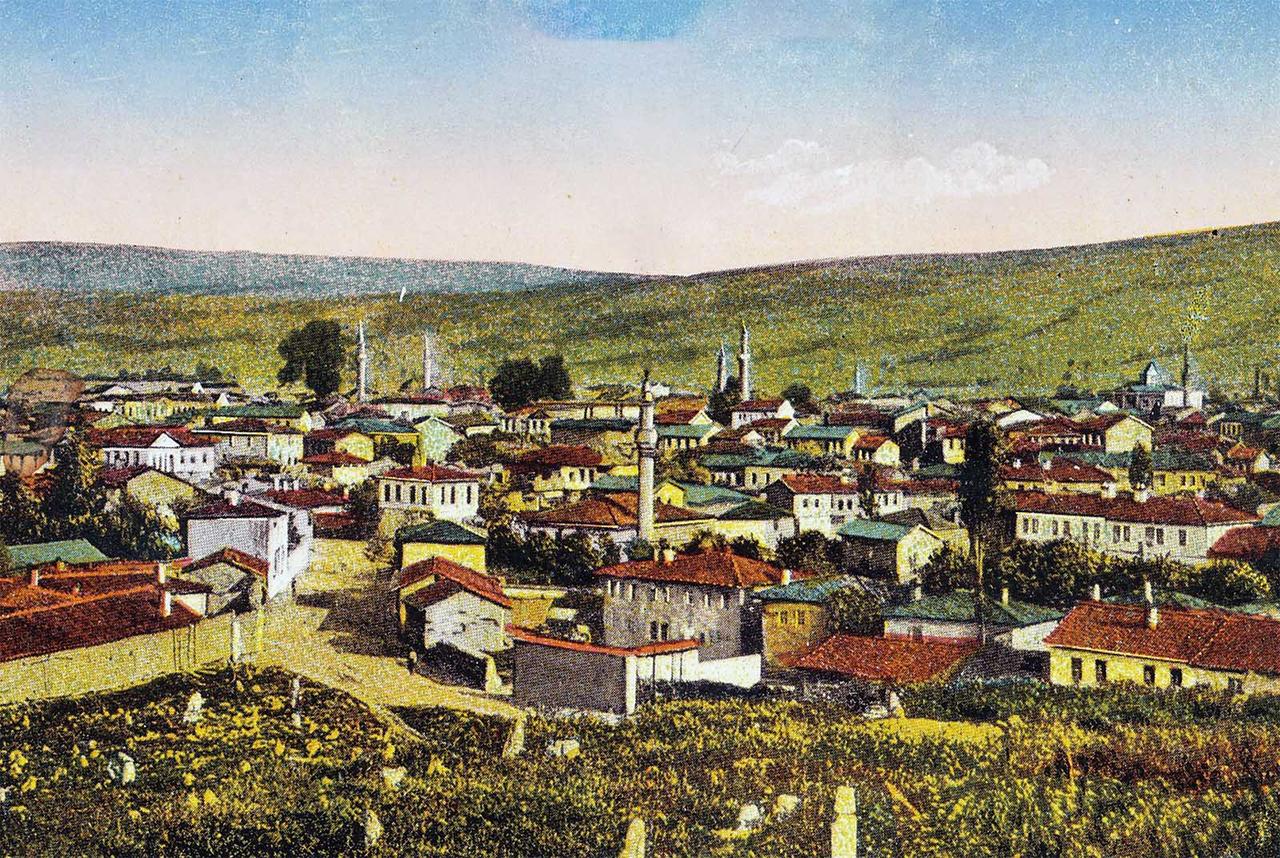
Yenişehir is a district located in the central-eastern part of the plain bearing its name, 55 km east of the city center of Bursa, in the southern part of the Marmara Region. The district covers an area of approximately 740 km². To its east lies Bilecik, to its west Bursa, to its north İznik, to its south İnegöl, to its northwest Orhangazi, and to its northeast Gemlik. The district is connected by road to Bursa, Bilecik, İnegöl, İznik, Orhangazi, and Gemlik. Its elevation above sea level is 250 meters. To the north lie the Katırlı and Samanlı mountains, which reach a height of 940 meters and are characterized as young mountains formed during the fourth geological period. To the west of the district are the Dinboz and Kazancı hills, to the south the Okuf, Ayaz, and Subaşı hills, and to the east the Köprühisar, Hayriye, and İncirli hills. The plain has an elliptical shape extending east-west. The largest river in the district is the Göksu, which originates east of Uludağ, flows through the southern part of the plain, and empties into the Sakarya River near Osmaneli. Its length is approximately 80 km.
The history of Yenişehir extends back to the early 14th century. Although there are indications that the region was known as Neopolis during the Byzantine period, no definitive documents confirm this. During the Ottoman Beylik period, after Osman Bey conquered Köprühisar and Yarhisar, the Yenişehir Plain was incorporated into Ottoman territory and granted to the ghazis as “kılıç hakkı” (right of the sword). Thus, the region was settled and acquired the name Yenişehir. Yarhisar village, where Osman Bey spent his childhood, served as the site of major victories against the Byzantines on the Koyunhisar Plain and played a significant role in the Ottomans’ westward expansion. Osman Bey’s brother, Aydoğdu Bey, was martyred in these battles and is buried in Koyunhisar Village. During the War of Independence, guerrilla warfare occurred in Yenişehir, and the Greek and Armenian populations living in the villages of Marmaracık and Derbent inflicted harm on the local population. Müstecip Sergeant, from the Orhaniye village of the district, fell in the Gallipoli Campaign and used artillery shells to sink a British vessel. The region, known in antiquity as Neopolis, has been a Turkish settlement for approximately 680 years. Conquered by Osman Gazi and granted to the ghazis as kılıç hakkı, it was settled by Turkmen tribes and named Yenişehir. The district comprises 71 neighborhoods.
According to research by Doğan Şenyüz from Uludağ University, while the foundation of Yenişehir is described in this manner in the chronicle of Aşıkpaşazade, İsmail Hakkı Uzunçarşılı’s work “Osmanlı Tarihi” also states: “A Turkish town was established in the plain and served as a headquarters due to its proximity to the battlefield.” Yenişehir, a Turkish town of 680 years, was under Greek occupation from 27 October 1920 to 6 September 1922 and was liberated on 6 September 1922. Some of the villages under the district’s jurisdiction date back to the Byzantine period; for example, Yarhisar village was used as a Byzantine tekfur kışlası (governor’s barracks). Remnants from the Byzantine era, including fortresses, are found in the villages of Akbıyık and Süleymaniye. Yenişehir contains rich historical monuments from the Ottoman period. Of the 17 mosques in the district center, 10 date from the Ottoman era. Other notable structures include the Babasultan Zaviyesi, Sinanpaşa Camii and Kervansarayı, Çifte Hamamlar, Süleymanpaşa Camii and Türbesi, Saray Hamamı, and Şemaki Evi.
The Yenişehir Clock Tower, one of the district’s symbols, was constructed between 1932 and 1935–1936. The construction was undertaken by Rıfat Usta, Halil Balcı, and Ahmet Usta. The large bell was brought from the church in the Rum Mahallesi district, and the small bell from the church in Kurşunlu Village of İnegöl. The clock mechanism was built by Saatçi Nuri Usta. The inauguration was performed by the mayor, Mehmet Gökgöz. Today, the tower is the official emblem of Yenişehir Municipality.

Şemaki Evi Museum (Culture Portal)
The two-story Şemaki Evi Museum is believed to have been built in the 18th century by the Şemaki family, who migrated from Şamah town in Iran to Anatolia. On the ground floor, the stone room, kitchen, and pantry are located on the right, while two winter rooms are on the left. Access to the upper floor is via wooden stairs adjacent to the kitchen wall. On the front facade, arched verandas overlook the garden. On the upper floor, a large room with an eyvan opens to the left into a sofah, while on the right are two rooms, one large and one small. The house is decorated with 19th-century penwork motifs featuring botanical and landscape designs. The bathhouse section in the garden no longer exists.
Due to its location in the eastern part of the Marmara Region and the western edge of the Western Black Sea Region, Yenişehir’s climate falls within the Marmara subregion of the Mediterranean climate zone and exhibits transitional characteristics between the Marmara and Western Black Sea climates. Summers are hot, while winters are rainy, cool, and mild. The annual average rainfall ranges between 500 and 600 mm. The prevailing wind blows from the north-southeast (poyraz), while during spring, lodos and southeast winds are also observed. The natural vegetation is not particularly rich. Dwarf Mediterranean trees and shrubs are common on the mountains, while oak, pine, beech, and juniper dominate forested areas. Plane trees, willows, and poplars are found in the plain. The plain is suitable for cereal, vegetable, fruit, and industrial crops. Extensive meadows and pastures in surrounding villages support animal husbandry. The majority of land use consists of agricultural and forest areas. Reserves of manganese, brick and tile clay, copper, lead, and zinc are present.
Yenişehir has high potential for agricultural production and agro-based industrial development. Its position as a junction of transportation routes and the planned arrival of the high-speed rail project support economic growth. Industrialization began in 2004 with the establishment of the Yenişehir Organized Industrial Zone (YOSAB); however, infrastructure and management issues within the zone require resolution. Two large factories belonging to Şişecam operate in the district.
Yenişehir possesses significant tourism potential due to its historical and cultural richness. Promotional activities and improvements in accommodation facilities are essential. Although Bursa’s only airport is located in Yenişehir, low flight frequency leads residents to prefer Istanbul. Increasing transportation options and destination diversity is crucial for active use of the airport. Agricultural organization, rural entrepreneurship, and cooperativism should be supported. Processing facilities, cold storage units, and packaging centers should be established to increase added value for vegetables and fruits.
Bursa Valiliği. "Yenişehir." Accessed June 23, 2025. http://bursa.gov.tr/yenisehir
Bursa Yenişehir Belediyesi. Yenişehir Hakkında. Accessed June 23, 2025.
Bursa Yenişehir Municipality. "The First Capital of the Ottoman Empire." Accessed June 23, 2025. https://www.bursa-yenisehir.bel.tr/bel/yenisehir/osmanli-nin-ilk-baskenti/203
Bursa Yenişehir Municipality. Tarihte Yenişehir. Accessed June 23, 2025. https://www.bursa-yenisehir.bel.tr/bel/yenisehir/tarihte-yenisehir/211
Bursa Yenişehir Municipality. Yenişehir Tarihçe. Accessed June 23, 2025. https://www.bursa-yenisehir.bel.tr/bel/yenisehir/yenisehir-tarihce/201
Kalkınma Kütüphanesi. Yenişehir İlçe Raporu. Accessed June 23, 2025. https://www.kalkinmakutuphanesi.gov.tr/assets/upload/dosyalar/yenisehir_ilce_raporu.pdf
Kültür Portalı. Yenişehir Şemaki Evi Müzesi. Accessed June 23, 2025.
Ministry of Interior of the Republic of Turkey. Clock Tower. Accessed June 23, 2025. http://www.yenisehir.gov.tr/saat-kulesi
Ministry of Interior of the Republic of Turkey. Geographic Location. Accessed June 23, 2025. http://www.yenisehir.gov.tr/cografi-durum
Ministry of Interior of the Republic of Türkiye. The History of Our District. Accessed June 23, 2025. http://yenisehir.gov.tr/ilcemizin-tarihi

Province(s) | Bursa | ||||||||
|---|---|---|---|---|---|---|---|---|---|
Region(s) | Marmara | ||||||||
Population | 54.315 (2022) | ||||||||
Area(s) | 740 km² | ||||||||
Annual Precipitation | 500-600 metreküp | ||||||||
District Governor | Hulusi Doğan | ||||||||
Mayor(s) | Ercan Özel | ||||||||
No Discussion Added Yet
Start discussion for "Yenişehir (District)" article
History
Natural Environment
Economic and Social Structure