


This article was automatically translated from the original Turkish version.
+2 More
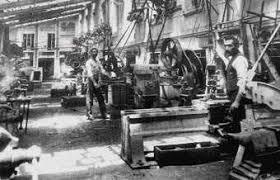
1927 Industrial Census
History | December 1927 | ||||||||
|---|---|---|---|---|---|---|---|---|---|
Laws | 893 (2 June 1926), 1152 (2 June 1927) | ||||||||
Purpose(s) | To determine the number of industrial enterprises to provide data for statist economic policies and technological status production value their employees | ||||||||
Background | Limited industrial censuses in the Ottoman Empire, the Republic's modernization and institutionalization efforts, the 1923-1927 reconstruction period | ||||||||
Process | Establishment of the General Directorate of Statistics, preparation based on building census, distribution and supervision of census bulletins | ||||||||
Content | 65,245 enterprises, 256,855 employees, 43.59 percent agriculture industry, 14.34 percent textile industry, 200,076,149 lira GSKD | ||||||||
Effects | To reveal the weakness of the industrial infrastructure, to lay the groundwork for the 1930 Industrial Congress and the 1933 First Industrial Plan, adoption of statism policy | ||||||||
The 1927 Industrial Census is the first systematic survey conducted in December 1927 during the founding period of the Republic of Türkiye to assess the current state and potential of the industrial sector. In the early years of the Republic, the need for centrally collected data on public administration, the economy and social life became one of the requirements of a modern state. In this context, under the leadership of the General Directorate of Statistics established in 1926 and directed by Belgian statistician Camille Jacquart, the census was designed using methodologies aligned with the recommendations of the League of Nations and implemented in close accordance with international standards. The census was carried out based on the Population Census Law of 2 June 1926 No. 893 and the Statistics Law of 2 June 1927 No. 1152, following a building survey conducted on 28 October 1927. The census identified a total of 65,245 industrial enterprises and 256,855 workers, revealing the dominance of traditional sectors such as agriculture, textiles and mining, and demonstrating that the industrial infrastructure was weak and largely composed of small-scale workshops. The census results were first published in Arabic script in 1928 by the Republic Printing Office in Istanbul and republished in Latin script by the State Institute of Statistics in 1969. The Industrial Census served as a fundamental data source for the 1930 Industrial Congress and the First Industrial Plan of 1933, which shaped the Republic’s statist economic policies and paved the way for a state-led development strategy focused on industrialization and railways.
In the final years of the Ottoman Empire, industrialization efforts remained limited to attempts to emulate Western developments, with material conditions generally overlooked. Industrial censuses conducted by the Ministry of Trade and Agriculture in 1913 and 1915 in advanced regions such as Istanbul, İzmir, Manisa, Bursa, İzmit, Karamürsel, Bandırma and Uşak were published in 1917 under the title 1329, 1331 Seneleri Sanayi İstatistiki. These censuses identified 282 industrial establishments, of which 30 percent were inactive. More than 80 percent of production value originated from food and textile sectors, which together employed 70 to 75 percent of the workforce. Traditional activities such as wheat milling, tobacco and leather processing, woolen weaving and silk production revealed that the Ottoman economy had an essentially non-industrial structure and relied heavily on imports for manufactured goods.
The founding of the Republic of Türkiye in 1923 carried with it the ambition to overcome the backwardness of a country predominantly populated by poor peasants. The years 1923 to 1927 constituted a period of consolidation during which the state institutionalized itself and implemented its revolutionary reforms. The abolition of the Caliphate (1924), the closure of dervish lodges and zawiyas (1925), and the adoption of the Law on the Unification of Education, the Civil and Penal Codes, and the Cabotage Law marked fundamental steps in the modernization process. The year 1927 was a turning point for the Republic, marked by the opening of the Alpullu Sugar Factory and the Kayseri Aircraft Assembly Plant, the establishment of the General Directorate of Statistics, and the completion of the world’s first round-the-world cruise, Seyri Türkiye. In this context, the 1927 Industrial Census, alongside population and agricultural censuses, formed part of the young Republic’s effort to measure its demographic and economic reality. The census aimed to identify industrial potential and provide data for state-regulated and incentivized economic policies.
Preparations for the 1927 Industrial Census began with the establishment of the General Directorate of Statistics in 1926. The appointment of Belgian statistician Camille Jacquart as director general strengthened the scientific credibility of the census. The census was planned based on the Population Census Law of 2 June 1926 No. 893 and the Statistics Law of 2 June 1927 No. 1152. The methodology was determined in relation to the building survey conducted on 28 October 1927. The building survey formed the foundation for identifying industrial enterprises, with the intended use of each building recorded on specialized forms. These forms were used to distinguish between main industry and home industry and to include small workshops operating in shacks and shops in towns.
The census was conducted based on the concept of “sanat müessesesi,” defined as “a place, separate from a dwelling, where one or more persons work to operate, transform, manufacture or produce any material.” This definition encompassed factories, mines, mine shafts and workshops, but excluded home industry, itinerant trades, water and wind mills outside district and provincial centers, agricultural products, marine and land hunting products, commerce, banking and liberal professions. The census included only those agricultural-related activities involving the preservation or transformation of agricultural products.
During the preparation phase, it was decided that census enumerators would receive 50 kurush per bulletin and an additional 50 kurush as travel allowance for those assigned to remote areas. Census forms were designed to include questions that would reveal the conditions and development of industrial enterprises. Enumerators were held responsible for ensuring the complete and accurate completion of forms, and industrialists were likewise held accountable for the accuracy of the information they provided. Industrialists who avoided providing information were first informed of the purpose of the census and the consequences of non-compliance; legal penalties were applied in cases of resistance.
The 1927 Industrial Census was conducted in December 1927 using lists derived from the building survey of 28 October 1927. Census enumerators visited the buildings listed and distributed and collected the census forms. The census was carried out by salaried officials who were responsible for verifying that forms were fully completed and that responses corresponded to reality. Forms were submitted to industrial directors or appointed inspectors in areas with industrial directorates, while administrative officials assumed inspection duties elsewhere. Inspectors compared forms with building records to identify incomplete or erroneous information and, where necessary, re-deployed enumerators to correct deficiencies. The General Directorate of Statistics conducted a final review of all forms and returned incomplete or incorrect ones to the relevant locations for correction.
The census aimed to distinguish between main industry and home industry, taking into account the diversity and small-scale nature of industrial enterprises in Türkiye. However, due to insufficient records on workshops located in homes, this distinction was not fully achieved, and workshops operating in shacks and shops in towns were included. The scope of the census was extended to include industrialists operating in open areas outside buildings, such as stone quarries and salt mines. Enumerators were instructed to examine buildings not listed in the numbering and building records, thereby ensuring that the scope of industrial activity was as comprehensive as possible.
The 1927 Industrial Census was prepared using definitions and methodologies aligned with the recommendations of the League of Nations and attracted attention as an application close to international statistical standards. The census was organized into ten main industrial categories encompassing 95 sub-sectors:
The census included agricultural-related activities such as the preservation and transformation of agricultural products but excluded transportation industry and water and wind mills outside district and provincial centers. Tailors, shoemakers, saddlers, blacksmiths, coppersmiths and others working in workshops outside their homes were included if their activities were unrelated to agriculture. Industrial establishments operated by the government, provinces or municipalities were also included. The unit of measurement was defined as “sanat müessesesi,” a term deliberately broadened to include small artisan workshops.
The 1927 Industrial Census identified a total of 65,245 industrial enterprises and 256,855 workers. Although the average number of workers per enterprise was four, 36 percent of enterprises were single-person operations and another 36 percent employed two to three workers. Of all enterprises, 79.03 percent (51,562) consisted of one- to three-person establishments, 7.86 percent employed six to 20 workers, 1.09 percent employed 21 to 100 workers, and enterprises with 100 or more workers accounted for only 0.24 percent. These figures demonstrate that Turkish industry in 1927 had a small-scale and uninstitutionalized structure.
According to the census results, the largest share of enterprises, 43.59 percent (28,439 enterprises), belonged to agriculture, livestock, fish and hunting products. This was followed by mining (22.61 percent, 14,752 enterprises), textile industry (14.34 percent, 9,353 enterprises), and wood products industry (12.10 percent, 7,896 enterprises). These four sectors together accounted for 92.64 percent of all enterprises. A similar distribution was observed in employment: agriculture accounted for 43.01 percent (110,480 workers), textiles for 18.70 percent (48,025 workers), mining for 13.18 percent (33,866 workers), and wood products for 9.45 percent (24,264 workers). These four sectors employed 84.34 percent of the total workforce. The census revealed that industry was based primarily on labor-intensive sectors such as agriculture and textiles, with limited diversification.
Industrial enterprises were concentrated in Istanbul (8,636 enterprises), İzmir (3,520), Bursa (3,209), Balıkesir (2,597), Konya (2,245), Manisa (2,122), Gaziantep (2,016), Kastamonu (1,882), Denizli (1,581) and Ankara (1,276). Istanbul led in agriculture (2,776 enterprises), mining (2,001 enterprises) and textiles (1,963 enterprises). In terms of employment, Istanbul (42,582 workers), İzmir (27,281 workers) and Zonguldak (11,325 workers) ranked highest. Zonguldak stood out in mining employment with 7,897 workers, while no industrial enterprises were recorded in Hakkari. Bayazıt (32 enterprises) and Van (80 enterprises) were the weakest regions in industrial terms.
Of the 65,245 enterprises, only 4.32 percent (2,822 enterprises) used motors, while 95.68 percent (62,423 enterprises) operated without them. A total of 4,850 motors generated 163,548 horsepower. Electric motors accounted for 53.03 percent of total motor power, while water, steam, gas oil, petrol and wind motors were used in various sectors. Agriculture led in motor usage (1,795 motors), followed by wood products (709 motors), mining (691 motors) and textiles (520 motors). These figures indicate that the technological infrastructure of industry was weak and largely dependent on manual labor.
In the 13,683 enterprises employing four or more workers, a total of 165,886 people were employed. Of these, 42.7 percent worked in agriculture, 21 percent in textiles, 11.4 percent in mining and 8 percent in wood products. The status, gender and nationality distribution of workers was as follows:
The census determined the total value of raw materials used in industry at 232,665,000 liras. Sixty-six percent of this value was attributed to agriculture, and 83 percent to agriculture and textiles combined. Twelve point six two percent (29,365,023 liras) of raw materials were imported; the largest share of imported raw materials was used in paper and cardboard industry (69.80 percent) and textile industry (21.55 percent). The total value of production amounted to 432,741,000 liras, of which 65 percent (281,605,000 liras) was attributed to agriculture and 18 percent (76,366,000 liras) to textiles. Gross value added (GVA) was calculated at 200,076,149 liras, a difference of only 0.54 percent from the State Institute of Statistics’ 1927 GDP estimate of 192 million liras. This finding supports the accuracy and comprehensiveness of the census.
The 1927 Industrial Census revealed that the Republic’s industrial infrastructure was weak and based on traditional structures, thereby underscoring the necessity of statist economic policies. While the census documented an industrial structure similar to the Ottoman Empire’s 1917 inventory—relying on agriculture (45 percent), textiles (18 percent) and mining (11 percent)—the fact that motor usage remained at only 4.3 percent highlighted technological backwardness. The fact that 70 percent of enterprises were family-run operations with one to three workers exposed the lack of institutionalization. The census showed that industrial activity was concentrated in Istanbul, İzmir, Bursa, Balıkesir, Manisa, Denizli, Gaziantep, Kastamonu and Ankara, while no industrial enterprises existed in regions such as Hakkari.
The census results exposed the inadequacy of the Republic’s policies to encourage the private sector and highlighted the failure of an import-oriented economy to transform into a productive one, prompting a “reckoning” at the 1930 Industrial Congress. The First Industrial Plan of 1933 adopted the equation “Railways + Industrialization = Statism” and launched an industrialization drive under state leadership. The census served as a fundamental data source in this process, identifying industrial potential and deficiencies and shaping the Republic’s economic policies. Furthermore, the census’s adherence to international standards contributed to Türkiye’s recognition as a modern state on the international stage.
Yılmaz, Elçin. “1927 Sanayi Sayımı.” *Atatürk Ansiklopedisi*, January 11, 2021. Accessed May 24, 2025. https://ataturkansiklopedisi.gov.tr/detay/172/1927-Sanayi-Say%C4%B1m%C4%B1.
Şahinkaya, Serdar. “Cumhuriyetimizin İlk Sanayi Sayımı 1927: Bir Hesaplaşma Hazırlığı.” *Çalışma ve Toplum*, no. 1, 2019. Accessed May 24, 2025. https://dergipark.org.tr/tr/download/article-file/2576419.

1927 Industrial Census
History | December 1927 | ||||||||
|---|---|---|---|---|---|---|---|---|---|
Laws | 893 (2 June 1926), 1152 (2 June 1927) | ||||||||
Purpose(s) | To determine the number of industrial enterprises to provide data for statist economic policies and technological status production value their employees | ||||||||
Background | Limited industrial censuses in the Ottoman Empire, the Republic's modernization and institutionalization efforts, the 1923-1927 reconstruction period | ||||||||
Process | Establishment of the General Directorate of Statistics, preparation based on building census, distribution and supervision of census bulletins | ||||||||
Content | 65,245 enterprises, 256,855 employees, 43.59 percent agriculture industry, 14.34 percent textile industry, 200,076,149 lira GSKD | ||||||||
Effects | To reveal the weakness of the industrial infrastructure, to lay the groundwork for the 1930 Industrial Congress and the 1933 First Industrial Plan, adoption of statism policy | ||||||||
No Discussion Added Yet
Start discussion for "1927 Industrial Census" article
Historical Background
Preparation of the Census
Execution of the Census
Scope and Methodology
Results of the Census
Sectoral Distribution
Geographical Distribution
Use of Motors
Worker Profile
Raw Materials and Value of Production
Significance and Impact