


This article was automatically translated from the original Turkish version.
+1 More
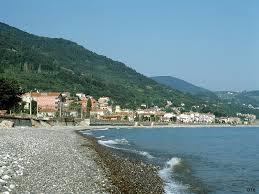
Çatalzeytin (District)
Çatalzeytin (District)
Location | Kastamonu Türkiye (Western Black Sea Region) | ||||||||
|---|---|---|---|---|---|---|---|---|---|
Coordinate(s) | 40°48'-42°02' North Latitude 32°43'-34°37' East Longitude | ||||||||
Area(s) | 318 km² | ||||||||
Neighbors | North: Black Sea, West: Abana and Bozkurt, Southwest: Devrekâni, South: Taşköprü, East: Türkeli (Sinop) | ||||||||
Çatalzeytin is a coastal district of Kastamonu Province in Türkiye’s Black Sea Region. It reflects the typical geographical, historical, and social structures of Western Black Sea through its natural and cultural characteristics.
Information on the history of Çatalzeytin is assessed based on limited archaeological data and regional historical developments. Due to its narrow geographic area, transportation difficulties, and low economic appeal, the district has historically remained outside central developments.
Artifacts uncovered during excavations in Gölköy within the Kastamonu region reveal that human settlement in the area extends back to the Paleolithic period. In terms of written history, the region is associated with the Kashkas, northern neighbors of the Hittites. Following the Sea Peoples’ migrations in the 12th century BCE, the region came under Phrygian influence; subsequently, the Cimmerians displaced the Kar people, paving the way for the establishment of Greek colonies. Greek settlements emerged along the Paphlagonian coast, including around Sinop and its surroundings. During the Lydian Kingdom period, trade routes were developed, and by the 5th century BCE, Persian dominance took hold in the region.
After Alexander the Great’s campaigns, the Kingdom of Pontus assumed control of the area. During the Roman period, Çatalzeytin and its surroundings were part of the province of Pontus Palemoriaus. The region remained under Byzantine administration until the 9th century and was incorporated into Seljuk territory in 1082 following the campaign of Emir Karatekin. After the Battle of Köse Dağ, the area came under the Candaroğulları Beylik. It was later integrated into Ottoman lands in 1461 when Sultan Mehmed II abolished the Candaroğulları Beylik.
Çatalzeytin was established as a subdistrict in 1905 and as a municipality in 1911. It attained district status on 1 June 1954. The ancient settlements of Ginolu and Mamlay, known in antiquity as Kinolis, hold significant historical importance for the region.
Çatalzeytin is located in the northeastern part of Kastamonu Province along the Black Sea coast. The district covers an area of 318 km². It is bordered by the Black Sea to the north, Abana and Bozkurt to the west, Devrekâni and Taşköprü to the south, and the Turkish district of Türkeli in Sinop to the east.
The district’s terrain consists of a narrow coastal plain in the north and extensions of the Küre Mountains in the south. This mountainous region is fragmented by narrow and deep valleys. The highest point is Yaralıgöz Tepe at 1958 meters. The rugged topography acts as a limiting factor for transportation.
The district experiences a Black Sea climate. The annual average temperature is 13.5°C, and annual precipitation ranges between 1050 and 1200 mm. Throughout the year, there are on average 122 rainy days, 179 cloudy days, and 63 clear days. The average number of snowfall days is 8, and foggy days total 26. The average wind speed is 3–4 m/s.
The vegetation is notable for its rich forest cover. Common coniferous species include red pine, Turkish pine, oriental beech, and hornbeam. Broadleaf species such as beech, oak, ash, chestnut, and linden are also widespread.
Çatalzeytin is among districts experiencing emigration, particularly among the youth, who move to large cities for economic reasons. This trend has increased the proportion of the elderly population in the district.
Cultural activities play an important role in social life, as documented by festivals held between 1977 and 1984 and associated journal publications.
As in the broader Kastamonu region, traces of Turkmen communities belonging to Oğuz tribes are evident. Particularly, settlements linked to the Çepni tribe are present.
Due to geographical and transportation constraints, Çatalzeytin’s economy is based on agriculture, forestry, and small-scale trade. Historically, traditional activities included timber exports, linseed oil production, ironworking, and salt production. Today, economic activities continue on these foundations but in a limited manner.
The most notable tourist area in Çatalzeytin is Ginolu Bay. Known in antiquity as Kinolis, this bay stands out for its natural features and historical remains. Ginolu Castle, dated between the 9th and 11th centuries, held strategic importance during the Venetian and Genoese colonial periods. Declared an Archaeological and Natural Site Area in 1998, the bay is open to coastal tourism and attracts visitors during the summer months.
In addition, the natural areas of the Küre Mountains offer potential for nature tourism. Cultural festivals held in the 1970s are among the initiatives that contributed to the development of tourism potential.
The demographic structure of Çatalzeytin district is characterized by an aging population, largely shaped by internal migration. When the district was established in 1954, it comprised 24 villages. Following the separation of Türkeli district in 1957, the number of villages increased to 35. Subsequent village subdivisions raised this number to 41. Çelebiler Village was later reclassified as a neighborhood under the municipality. Migration from the district has primarily targeted Istanbul, Karabük, and Zonguldak provinces. Applications submitted by Dağköy and İsmail villages in 1956, 1963, and 2003 respectively to be attached to Bozkurt district were rejected by the relevant authorities.
T.C. Ministry of Culture and TourismKastamonu İl Directorate of Culture and Tourism. “Çatalzeytin.” Accessed April 20, 2025. https://kastamonu.ktb.gov.tr/TR-63814/catalzeytin.html.
Çatalzeytin Kaymakamlığı. "Ginolu Köyü." Accessed April 20, 2025. http://www.catalzeytin.gov.tr/ginolu-koyu.
Çatalzeytin Kaymakamlığı. "Tarihçe." Accessed April 20, 2025. http://www.catalzeytin.gov.tr/tarihce.
Çatalzeytin Kaymakamlığı. "Çatalzeytin." Accessed April 20, 2025. http://www.catalzeytin.gov.tr/catalzeytin.
Çatalzeytin Kaymakamlığı. “Tarihi.” Accessed April 20, 2025. http://www.catalzeytin.gov.tr/tarihi.

Çatalzeytin (District)
Çatalzeytin (District)
Location | Kastamonu Türkiye (Western Black Sea Region) | ||||||||
|---|---|---|---|---|---|---|---|---|---|
Coordinate(s) | 40°48'-42°02' North Latitude 32°43'-34°37' East Longitude | ||||||||
Area(s) | 318 km² | ||||||||
Neighbors | North: Black Sea, West: Abana and Bozkurt, Southwest: Devrekâni, South: Taşköprü, East: Türkeli (Sinop) | ||||||||
No Discussion Added Yet
Start discussion for "Çatalzeytin (District)" article
History
Geographical Structure
Climate and Vegetation
Social Structure
Economic Structure
Tourism Potential
Demographic Structure