


This article was automatically translated from the original Turkish version.
Dust storms (also known as sandstorms), are meteorological phenomena caused by strong winds lifting fine soil and mineral particles from the surface of arid and semi-arid regions and transporting them over large areas via wind currents. During this process, loose sand, silt, and clay-sized particles on the soil surface are dislodged by the mechanical force of the wind and become suspended in the lower atmosphere, forming a dense dust cloud. These clouds can be transported for hundreds or even thousands of kilometers depending on wind speed and atmospheric conditions.
During dust storms, the amount of particulate matter suspended in the atmosphere increases significantly. This can lead to a decline in air quality and a severe reduction in visibility. Dense dust clouds, especially when associated with sudden strong wind systems, can create thick layers of dust near ground level. In some cases, these events cause a reduction in daylight and give the sky a brownish or yellowish hue.
Meteorologically, dust storms are considered an atmospheric outcome of wind erosion processes. These events do not only have local impacts; dust clouds transported via atmospheric circulation systems can reach other continents and are linked to global environmental and climatic processes.
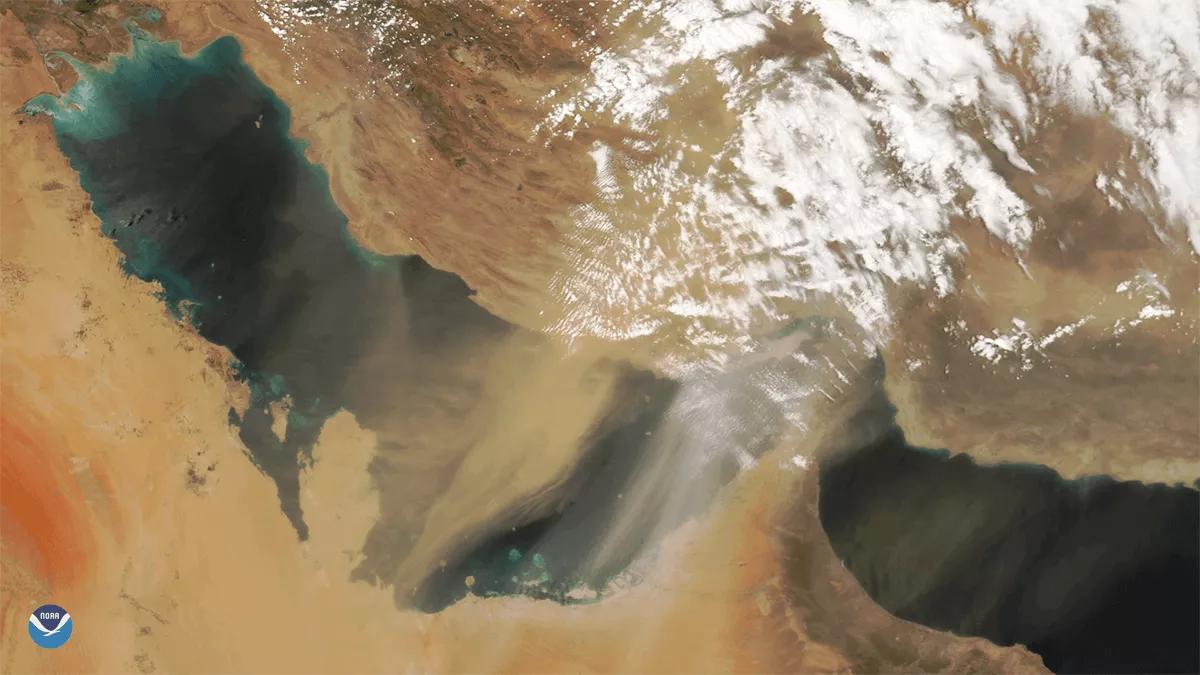
13 May 2018 dust storm observed by NOAA-20. (NOAA)
For dust storms to occur, specific environmental and meteorological conditions must coincide simultaneously. The foremost condition is that the soil surface must be dry, loose, and easily transportable. Prolonged drought periods reduce soil moisture content, making fine surface particles more susceptible to wind movement. Especially in areas with weak or completely absent vegetation cover, the soil’s natural protection against wind is diminished, increasing the likelihood of dust storm formation.
Soil structure also plays a significant role in this process. Soils rich in fine silt and clay particles can be easily lifted into the atmosphere under suitable wind conditions. In contrast, dense vegetation cover or moist soil surfaces hinder the wind’s ability to lift soil particles and limit dust storm formation. Therefore, in arid and desert climate zones, loose surface sediment deposits provide an ideal environment for dust storms.
Meteorologically, strong and sustained winds are the decisive factor in dust storm formation. Particularly during cold front passages, thunderstorms, and convective air movements, sudden increases in wind speed can occur. Such atmospheric events dislodge fine surface particles and lift them into the air, enabling their transport over wide areas. In some cases, sudden shifts or intensifications in wind direction can lead to the rapid formation of dense and extensive dust clouds.
Additionally, land use practices are among the factors influencing dust storm formation conditions. Activities such as agricultural operations, overgrazing, or prolonged exposure of bare soil can loosen the surface and make it more vulnerable to erosion. When combined with strong winds, these conditions facilitate the occurrence and spread of dust storms over larger areas.
The formation process of dust storms begins with wind gaining speed in the atmospheric layer near the Earth’s surface. When the wind reaches a critical threshold velocity, loose and fine soil particles detach from the surface and begin to move. In the initial stage, smaller and lighter particles are rolled or briefly transported across the surface by direct wind action. This movement creates a starting phase that facilitates the dislodging of other surface particles.
As the wind’s effect continues, some particles bounce off the surface and rise into the air. This motion, known in geomorphology and atmospheric sciences as “saltation,” occurs when bouncing particles strike the surface and dislodge additional soil particles through impact. This triggers a chain reaction, causing progressively more particles to enter the atmosphere.
As the process progresses, finer and lighter particles are carried by wind currents into higher atmospheric layers. These particles can remain suspended for extended periods and spread widely along the wind direction. Thus, dust rising from the surface gradually forms a dense cloud structure. These dust clouds can sometimes reach hundreds of meters in height and extend for kilometers in width.
With the formation of a dense dust cloud, visibility in the atmosphere rapidly decreases. Especially during dust storms associated with strong wind systems, these clouds can advance close to ground level and affect vast areas. Wind direction and intensity are the primary factors determining the movement speed and spread of the dust cloud. Under suitable atmospheric conditions, these clouds can travel long distances, reaching different regions and affecting regional air quality.
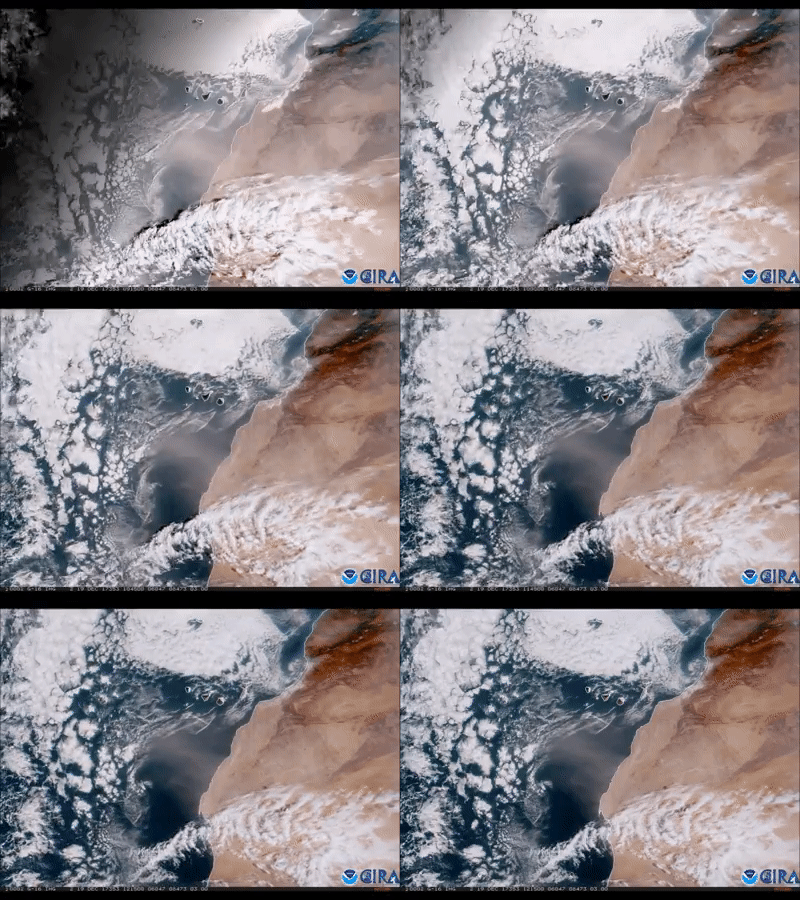
19 December 2017 Saharan dust storm recorded by GOES-16. (NOAA)
Dust storms are widespread globally, particularly in arid and semi-arid climate zones. In these regions, low precipitation, high evaporation rates, and limited vegetation cover cause the soil surface to become loose and susceptible to wind erosion. These conditions allow strong winds to easily lift fine sediments and transport them over large areas. Consequently, desert and semi-desert regions are among the most frequently observed geographical areas for dust storms.
The Sahara Desert in North Africa is considered one of the world’s most significant sources of dust production. Dust clouds rising from this region can be transported via atmospheric circulation systems to the Mediterranean Basin, southern Europe, and even across the Atlantic Ocean to the American continent. Similarly, arid and semi-arid areas of Central Asia, particularly vast steppe and desert regions, are also prone to frequent dust storms.
Extensive desert areas in the Middle East are another geographical region where dust storms commonly occur. The region’s arid climate conditions, loose surface sediments, and periodic strong wind systems facilitate the formation of dust clouds. Additionally, the vast arid and desert regions in the interior of Australia also regularly experience dust storms due to similar meteorological and environmental conditions.
However, dust storms are not limited to natural desert regions. In some areas with intensive agricultural activity, human-induced factors such as improper land use, excessive soil tillage, or degradation of vegetation cover can make the soil surface more vulnerable to wind erosion. Under such conditions, the frequency of dust storms may increase even in regions where they are normally rare. This demonstrates that both natural environmental conditions and human activities can influence dust storm formation.
Dust storms are atmospheric events with multifaceted environmental, economic, and social impacts. During these events, the amount of fine particulate matter suspended in the atmosphere increases significantly. Particularly, wind-blown dust and sand particles form dense layers in the air, degrading air quality. These airborne particles can reduce the amount of sunlight reaching the atmosphere and severely diminish visibility. During intense dust storms, visibility can drop to less than a few meters.
This reduction in visibility can have significant effects on transportation systems. Road safety decreases, potentially leading to chain-reaction traffic accidents. Similarly, in air transport, reduced visibility can cause flight delays or cancellations. Maritime transport may also experience navigation difficulties due to dense dust clouds.
Dust storms also affect the natural environment. The wind’s removal of fine surface soil layers can lead to the loss of the most fertile topsoil, particularly in agricultural areas. This reduces long-term soil productivity and negatively impacts agricultural output. Such erosion processes on farmland can increase production costs and make land use difficult in some regions.
In addition, dust storms can have various effects on infrastructure and daily life. Dense dust accumulation on buildings, vehicles, and infrastructure systems increases cleaning and maintenance requirements. Systems such as power lines, air filters, and machinery can also be affected by dust buildup.
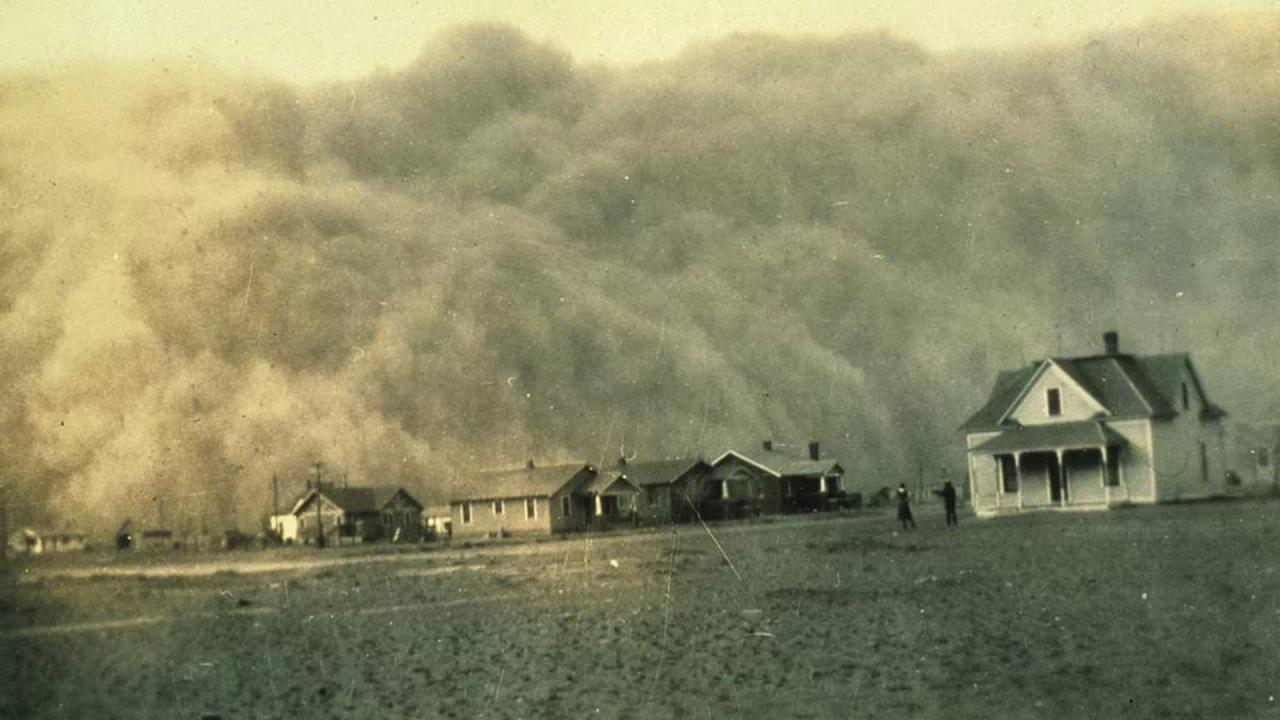
1935 Texas dust storm. (NOAA)
Fine particles lifted into the air during dust storms can pose significant health risks. Particularly, very small dust particles can reach the lungs through inhalation. This can lead to various adverse effects on the respiratory system. According to health authorities, airborne particles during dust storms increase health risks, especially for sensitive groups.
Individuals with respiratory conditions such as asthma, bronchitis, or chronic obstructive pulmonary disease may be more severely affected by dust storms. These individuals may experience symptoms such as shortness of breath, coughing, chest tightness, and breathing difficulties. Additionally, fine dust particles can irritate the respiratory tract and exacerbate existing conditions.
Dust storms can affect not only the respiratory system but also eye and skin health. Airborne particles can cause eye redness, watering, and irritation. Symptoms such as nasal and throat irritation, runny nose, and sore throat are also common. Prolonged exposure to dusty environments can increase infection risk in some individuals.
Health institutions recommend that elderly individuals, children, and those with chronic illnesses avoid prolonged outdoor exposure during dust storms. Such precautions can help reduce exposure to dust particles and limit health risks.
Although dust storm formation is largely linked to natural environmental conditions, human activities can influence their frequency and intensity. Changes in land use and unsustainable agricultural practices can make the soil surface more vulnerable to wind erosion. Particularly, the reduction of vegetation cover removes the soil’s natural protective layer, making fine surface particles easier for the wind to transport.
Overgrazing can reduce vegetation cover on the soil surface and loosen the soil. Similarly, deforestation and removal of natural vegetation expose the soil surface directly to wind action. This increases the likelihood of dust storm formation, especially in arid and semi-arid regions.
Agricultural practices also play a significant role in this process. Intensive tillage or prolonged exposure of bare soil can facilitate the wind transport of fine surface particles. In some regions, poor land management practices contribute to widespread soil erosion and increase the frequency of dust storms. Therefore, environmental management and sustainable land use policies play a crucial role in mitigating the impacts of dust storms.
While it is often impossible to completely prevent dust storms, various environmental and managerial measures can be implemented to reduce their impacts. The primary goal of these measures is to make the soil surface more resistant to wind erosion.
Preserving and enhancing vegetation cover is considered a key method in this process. Plants stabilize the soil through their root systems, making it harder for the wind to lift fine surface particles. Therefore, reforestation efforts and the protection of natural vegetation contribute to reducing soil erosion.
Certain practices applied in agricultural areas can also reduce the impacts of dust storms. Sustainable agricultural practices can enhance surface stability by preventing continuous exposure of bare soil. For example, establishing windbreak vegetation strips or preserving vegetation cover in specific areas can reduce wind speed and limit soil loss. Additionally, water management and soil conservation practices in arid regions are essential. Maintaining soil moisture and planning land use carefully can reduce the wind transport of loose surface particles. Such measures can help mitigate the impacts of dust storms, particularly in areas with high concentrations of agriculture and settlement.
American Lung Association. “Dust Storms.” Accessed September 19, 2026. https://www.lung.org/clean-air/emergencies-and-natural-disasters/dust-storms
Bureau of Meteorology. “Explainer: What Is a Dust Storm?” Accessed September 19, 2026. https://media.bom.gov.au/social/blog/1990/explainer-what-is-a-dust-storm/
Healthdirect Australia. “Dust Storms.” Accessed September 19, 2026. https://www.healthdirect.gov.au/dust-storms
National Environmental Satellite, Data, and Information Service (NESDIS). "What Is a Dust Storm?" Accessed September 19, 2026. https://www.nesdis.noaa.gov/about/k-12-education/dust-ash-fire-smoke/what-dust-storm
New South Wales Health. “Dust Storms.” Accessed September 19, 2026. https://www.health.nsw.gov.au/environment/factsheets/Pages/dust-storms.aspx
Özdemir, E. Tuncay, Fatih M. Korkmaz, and Ali Deniz. "Birleşik Arap Emirlikleri'ndeki Toz Fırtınası, 28 Şubat 2009." ResearchGate, 2015. https://www.researchgate.net/publication/272470000_Birlesik_Arab_Emirliklerindeki_Toz_Firtinasi_28_Subat_2009_Dust_Storm_in_United_Arab_Emirates_on_February_28_2009/links/5544adab0cf24107d3966d8b/Birlesik-Arab-Emirliklerindeki-Toz-Firtinasi-28-Subat-2009-Dust-Storm-in-United-Arab-Emirates-on-February-28-2009.pdf.


No Discussion Added Yet
Start discussion for "Dust Storms (Sand Storm)" article
Formation Conditions
Formation Process
Geographical Distribution
Impacts of Dust Storms
Health Impacts
Relationship with Human Activities
Prevention and Mitigation Methods