


This article was automatically translated from the original Turkish version.
+1 More
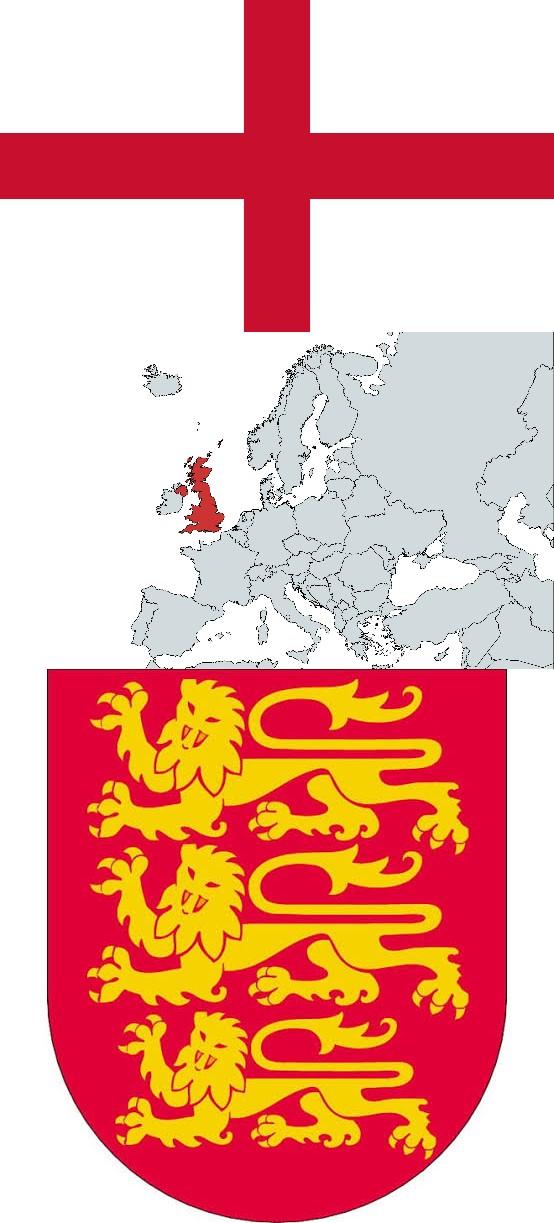
England
Location | between the North Atlantic Ocean and the North Sea northwestern continent of Europe | ||||||||
|---|---|---|---|---|---|---|---|---|---|
Official Full Name | United Kingdom of Great Britain and Northern Ireland | ||||||||
Founding Countries / Regions | England, Scotland, Wales, Northern Ireland | ||||||||
Total Population | 69.3 million (2024) | ||||||||
Literacy Rate | 99% | ||||||||
Highest Point | Ben Nevis (1343–1344 metres, Scotland) | ||||||||
Longest River | River Severn (354 km) | ||||||||
Largest Lake | Lough Neagh (382 km², Northern Ireland) | ||||||||
Legislative Body | Bicameral Parliament of the United Kingdom (House of Commons and House of Lords) | ||||||||
Judiciary | Supreme Court of the United Kingdom | ||||||||
Election System | Simple Majority (First Past the Post) | ||||||||
Per Capita National Income | 54,949 US dollars (2025) | ||||||||
Total Military Personnel | 182,060 (as of October 2025) | ||||||||
Personnel Distribution by Force | 109,060 personnel in the Army, 37,880 in the Royal Navy and Royal Marines, and 35,130 in the Royal Air Force | ||||||||
Defense Budget | 60.2 billion pounds (2024/25 fiscal year) | ||||||||
Ethnic Structure (England and Wales) | %81.7 White %93 Asian %4 Black %2.9 Mixed %2.1 Other | ||||||||
Border Neighbors | Republic of Ireland France | ||||||||
Capital | London | ||||||||
Climate | Temperate and oceanic climate | ||||||||
Form of Government | Constitutional Monarchy and Parliamentary Democracy | ||||||||
England is the largest of the four principal founding countries of the United Kingdom and an island nation located in the northwestern part of Europe. Situated between the Atlantic Ocean and the North Sea, and separated from the European mainland by the English Channel, the country is governed by a constitutional monarchy based on the principle of Parliamentary Sovereignty and lacks a single written constitution.
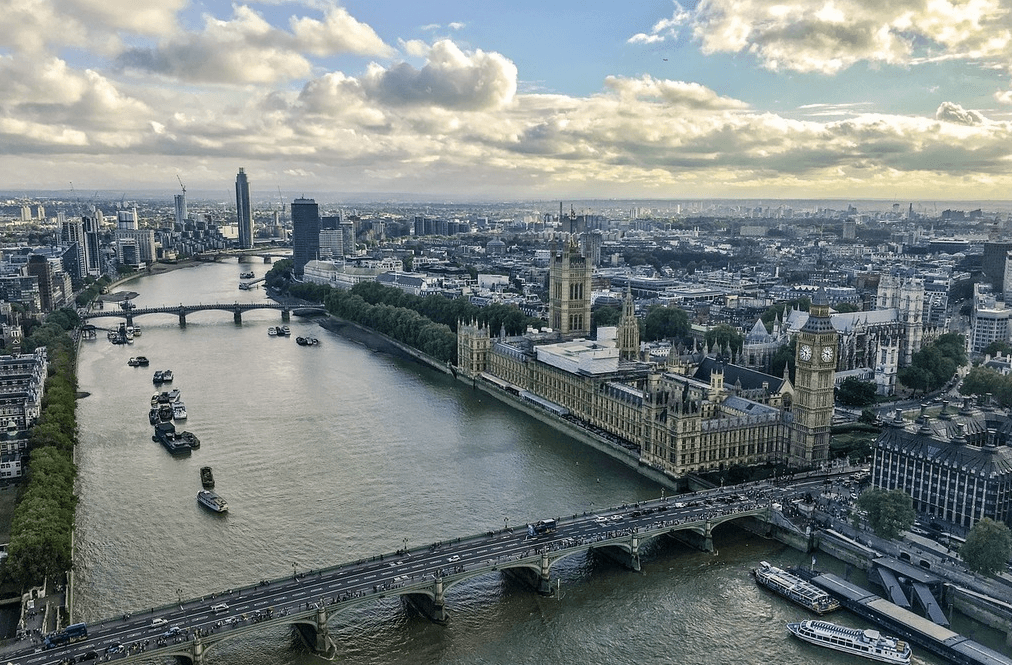
A Visual from London, the Capital of England(Picryl)
The country has a competitive global structure and, according to International Monetary Fund (IMF) projections for 2025, is expected to have a Gross Domestic Product (GDP) of $3.8 trillion, making it the sixth largest economy in the world. Although it led the Industrial Revolution in the past, more than 80% of its current economic output is generated by service sectors such as finance, retail, healthcare, and education【2】, while also maintaining strong export capabilities in advanced manufacturing fields such as aerospace, pharmaceuticals, and automotive.
Through historical processes accelerated by international migration, the country has become highly ethnically and culturally diverse. According to provisional data for mid-2025, its total population has reached 69.5 million.【4】 The vast majority of the population is concentrated in the developed urban areas of the south and west, particularly in the capital London, a global center for finance, trade, and culture.
Following its formal departure from the European Union in 2020 (Brexit), the state has reshaped its foreign trade and diplomatic strategies under the vision of "Global Britain", focusing on establishing new free trade agreements, particularly in the Indo-Pacific region, and making significant investments in artificial intelligence, space security, and next-generation defense technologies.
Permanent membership of the United Nations Security Council, founding membership of NATO, and an active role in international platforms such as the G7, G20, and the Commonwealth enable the United Kingdom to maintain its historically decisive role in global politics and international security policy.
The national symbols of England, one of the founding countries of the United Kingdom, reflect the country’s deep historical heritage and cultural identity. The official flag representing England is the Cross of St George, consisting of a red cross on a white background. Prominent as the national emblem is the Three Lions, a red shield bearing three lions, used since the 12th century to symbolize state power. The national animal is the Lion, and the official botanical symbol is the Tudor Rose, representing the historical union that ended the 15th-century dynastic wars. These symbols directly constitute England’s own national character, independent of the United Kingdom’s shared identity.
England’s national flag is the St George (St George) flag, consisting of a red cross on a white background, with origins extending back to the Middle Ages. The flag is also one of the main components of the United Kingdom flag (Union Flag), designed in 1606. The flag’s historical origins date back to the Crusades of 1188, attended by King Henry II of England and King Philip II of France; at the time, red and white crosses were used to distinguish English and French forces on the battlefield.【5】
The red cross on white gradually became a general symbol of the Crusaders and was adopted as a standard emblem by political leaders in the 13th century who wished to associate themselves with these campaigns. Although a historical tradition claims that Richard the Lionheart acquired this flag from the Genoese, this claim cannot be historically verified.【6】 An alternative claim suggests that the Republic of Genoa, with its powerful Mediterranean fleet, transferred the right to use the flag to English ships in the Mediterranean in exchange for an agreement.【7】
England’s current national anthem is the patriotic song "God Save The King", with origins dating back to the 18th century. The melody and lyrics are anonymous, with possible roots extending as far back as the 17th century. The song was first publicly performed in London in 1745 and began to be recognized as a national anthem in the early 19th century.【8】
England National Anthem (World Anthems)
In September 1745, following the defeat of King George II’s army by Prince Charles Edward Stuart, who claimed the British throne, the conductor of the Theatre Royal band in London arranged the song to be performed after a play. The performance attracted attention and was repeated nightly. As this tradition spread to other theaters, it became standard practice for monarchs to be greeted with this song upon entering public entertainment venues.
There is no officially approved single version of the national anthem; the lyrics are entirely based on tradition. The words are largely unchanged from the 1745 version, with the terms "King" or "Queen" adjusted according to the gender of the reigning monarch. Although additional verses have been added over the years, these are rarely used today, and only the first verse is typically sung at official ceremonies. The melody of the English national anthem did not remain confined within national borders; in the 18th century, it attracted the attention of European visitors and was used by approximately 140 different composers, including Beethoven, Haydn, and Brahms, in their own musical works.【9】
The Royal Coat of Arms of England consists of three golden "walking and facing forward lions" arranged vertically on a red shield. These figures first appeared on the heraldic scene about eight hundred years ago. In the early days of heraldry, these symbols spread upward from the middle class (landowners) and military ranks rather than from the high nobility, so monarchs and emperors began using coats of arms relatively late.
The first king believed to have had a coat of arms in England is thought to be Henry I (1100–1135), who is believed to have used a single "rampant lion," but no surviving arms from him exist. Similarly, although his successor Henry II (1154–1189) is said to have used arms with one, two, or three lions, despite issuing numerous charters and documents, no surviving arms-bearing seal has been found.【10】
The first monarch in English history whose personal coat of arms is definitively proven is Richard I (1189–1199). The earliest surviving Great Seal of Richard I features a single rampant lion. In later years, although the exact date is uncertain (around 1195 or 1198), the king replaced this seal with a new one bearing the figure of three walking lions.【11】
The history of England encompasses the demographic, political, social, and economic transformations experienced by the region covering the southern and central parts of the island of Great Britain from prehistoric times to the present. This process represents a multilayered era extending from early hunter-gatherer communities on the island to its status as a province of the Roman Empire, through Germanic and Scandinavian invasions and medieval feudalism, to the construction of a global empire and the Industrial Revolution, culminating in the formation of the modern nation-state.
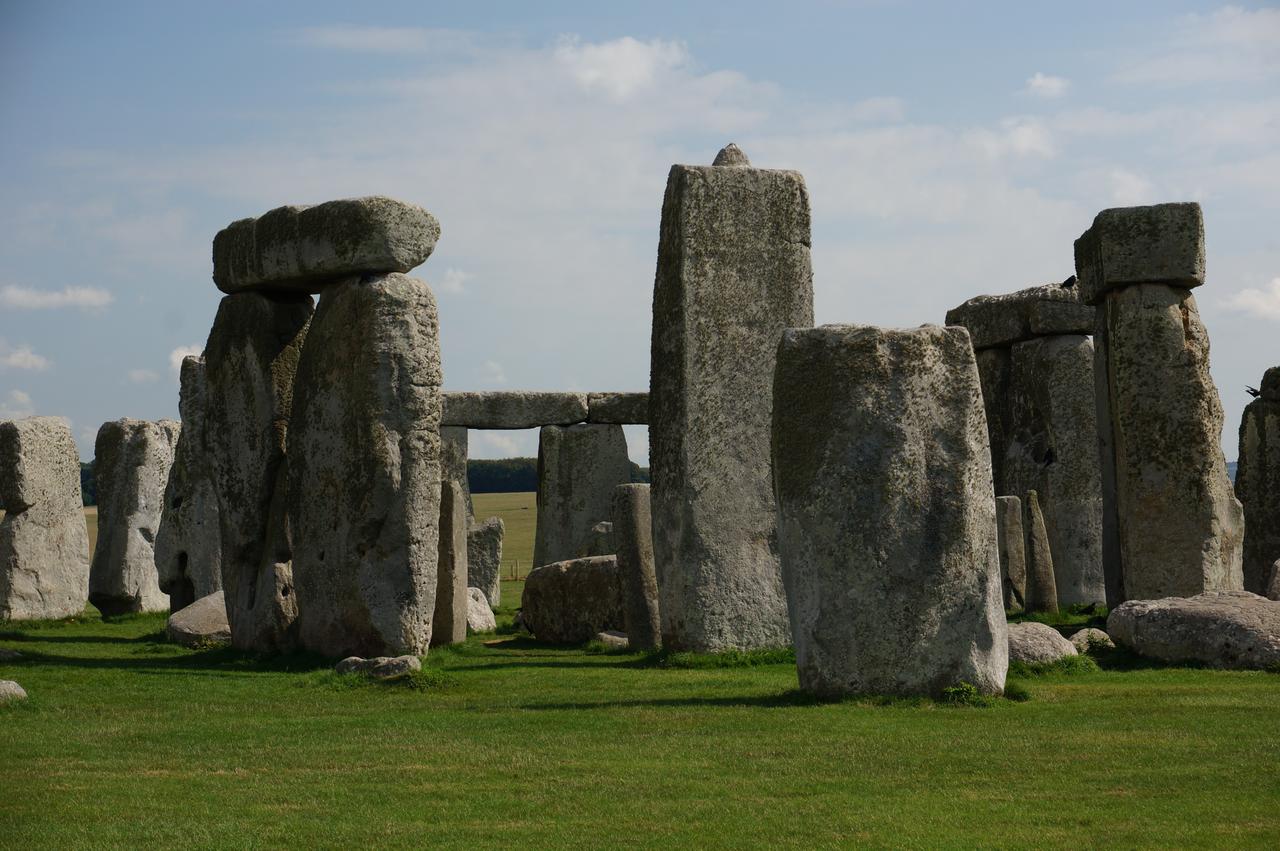
İngiltere’nin Wiltshire Bölgesinde Bulunan Stonehenge, Yaklaşık MÖ 3000–2000 yılları Arasında İnşa Edilmiş Megalitik Bir Taş Anıt (pixabay)
The earliest known human settlement traces in England date back to approximately 900,000 years ago, when the island was connected to the European mainland by a land bridge.【12】
Following the end of the last Ice Age and the improvement of the climate, hunter-gatherer communities established permanent settlements on the island, and agriculture began around 4000 BCE through communities arriving by sea from Europe. With the beginning of the Bronze Age around 2300 BCE, metal weapons, jewelry, and new pottery types arrived on the island; from 800 BCE onward, with the transition to the Iron Age, warrior communities emerged that produced iron weapons and built large hill forts. The Celts, who arrived in England around 650 BCE, became skilled in ironworking, used chariots, and organized themselves into agricultural tribes.
England’s first contact with the Roman world occurred through military reconnaissance expeditions led by Julius Caesar in 55 and 54 BCE, which brought the Celtic tribes under tribute. The actual conquest that permanently incorporated the island into the empire began in 43 CE under the orders of Emperor Claudius, and the Roman army quickly established control over southern and eastern England. Although important settlements including London were burned during the great rebellion led by Queen Boudicca of the Iceni tribe in 60 CE, the Roman army suppressed the revolt. The Romans constructed the Hadrian’s Wall in 122 CE to mark the northern frontier of the empire. During the approximately 370 years of Roman rule, planned cities, permanent military garrisons, baths, and an extensive road network were built in England, and Christianity began to spread on the island.【13】
Following the complete withdrawal of Roman forces from England around 410 CE, Germanic peoples such as the Angles, Saxons, and Jutes migrated from continental Europe and gradually pushed the native Celtic/Briton populations westward. These communities, known as Anglo-Saxons, laid the foundations of modern English identity and the Old English language through their agrarian settlement systems.【14】 These groups established a structure of seven main kingdoms (Heptarchy) across the geography of England and gradually adopted Christianity under the influence of missionaries from Rome beginning in 597.
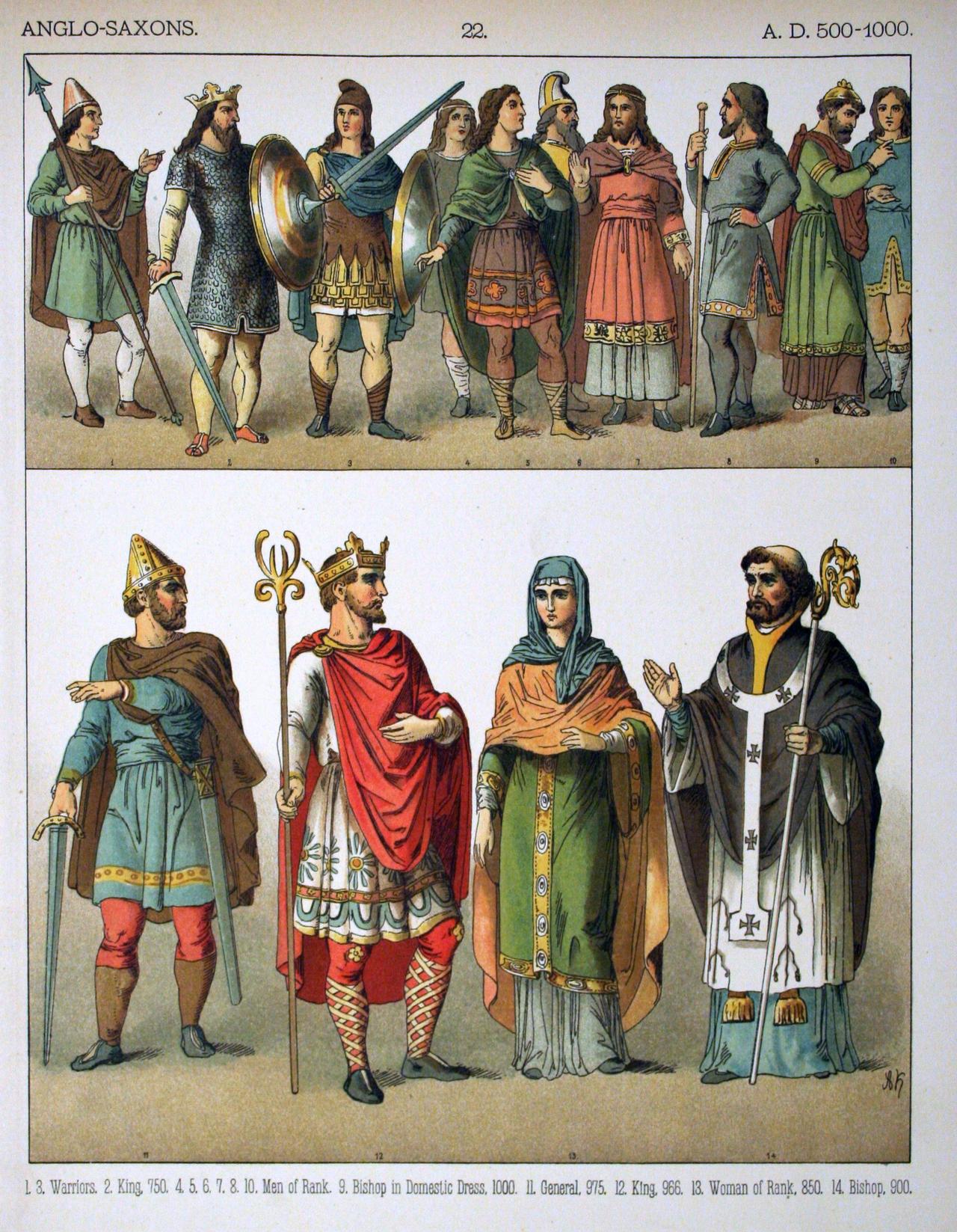
Anglo Sakson Giyimi, MS 6-9. Yüzyılları (World History)
Beginning in the 790s, Vikings began raiding the island’s coasts and, arriving in 865 with a large invasion army, destroyed many Anglo-Saxon kingdoms. Only King Alfred the Great of Wessex maintained English resistance by defeating the Vikings at Edington in 878; he then strengthened the navy and defense lines to define the boundaries of the Viking-controlled region known as the Danelaw. By the 10th century, England was unified under a single kingdom, but between 1016 and 1035 it became part of the Danish Empire under King Cnut.
Following the decline of Scandinavian influence, English history reached a complete turning point with the Norman Conquest of 1066.【15】 The Norman takeover transformed not only the political and administrative order but also deeply altered the country’s cultural, literary, and architectural structure. In architecture, the Romanesque (Norman) style, characterized by semicircular arches and massive cylindrical columns, became dominant; solid stone structures such as the Tower of London, Dover Castle, and Rochester Castle were built during this period, reshaping the country’s military landscape.
The customs of the Norman ruling class directly influenced culinary culture and language; wine culture took root in England, and French-derived terms such as "mutton" for lamb and "beef" for cattle entered the lexicon of dining.【16】 The oral tradition based on Anglo-Saxon heroic epics such as Beowulf gradually gave way to a new literary tradition reflecting the courtly and chivalric culture of the Middle Ages under Norman aristocratic influence.
The most defining event of medieval England was the Battle of Hastings in 1066. Norman Duke William defeated Anglo-Saxon King Harold and seized the English throne, imposing Norman feudalism, a new French-speaking aristocracy, and castle architecture.
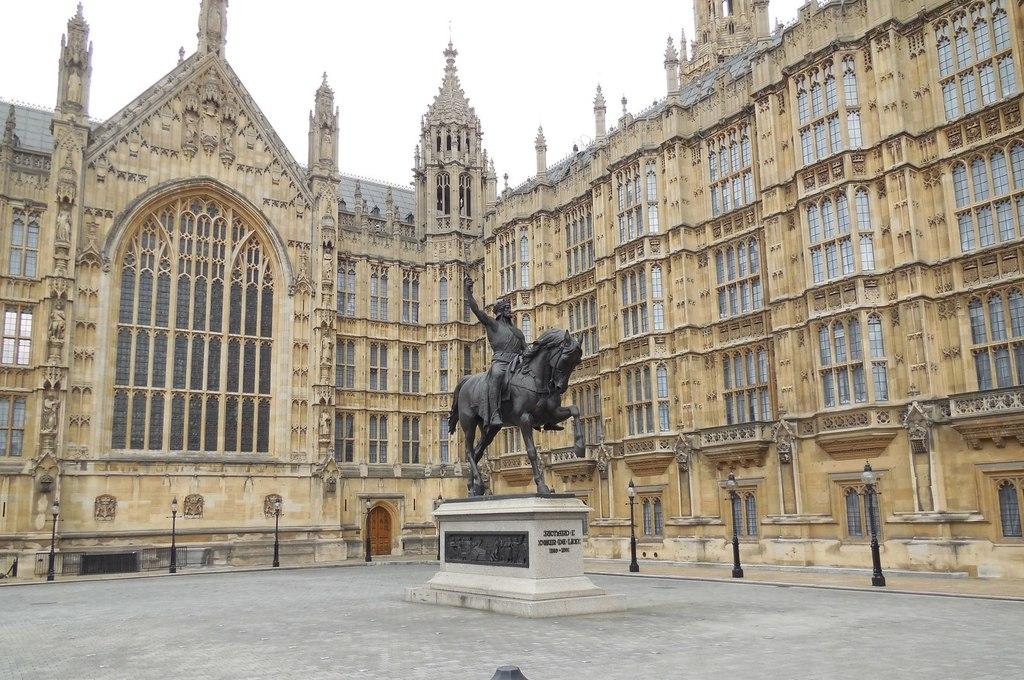
Westminster Sarayı Önünde Bulunan Aslan Yürekli Richard Heykeli (Geography. UK)
One of the most striking military and political figures of the new medieval order established in England after the Norman Conquest (1066) was King Richard I (1189–1199), known as "Richard the Lionheart." Richard spent much of his reign not in England but in his continental territories in France and on overseas crusades, particularly leaving his mark on European history through his leadership in the Third Crusade and his struggles against Saladin.
Although he spent only a few months in his kingdom and viewed England primarily as a source of heavy taxation to finance his crusades, his courage on the battlefield and tactical intelligence made him one of the greatest symbols of the medieval "chivalry" ideal. During the periods when he was captured abroad or away on campaigns, his brother "Lackland" John's assumption of power led to administrative problems and internal unrest; this period of authority vacuum helped give rise to folk legends such as Robin Hood, which remain important parts of English popular culture and literature today.【18】
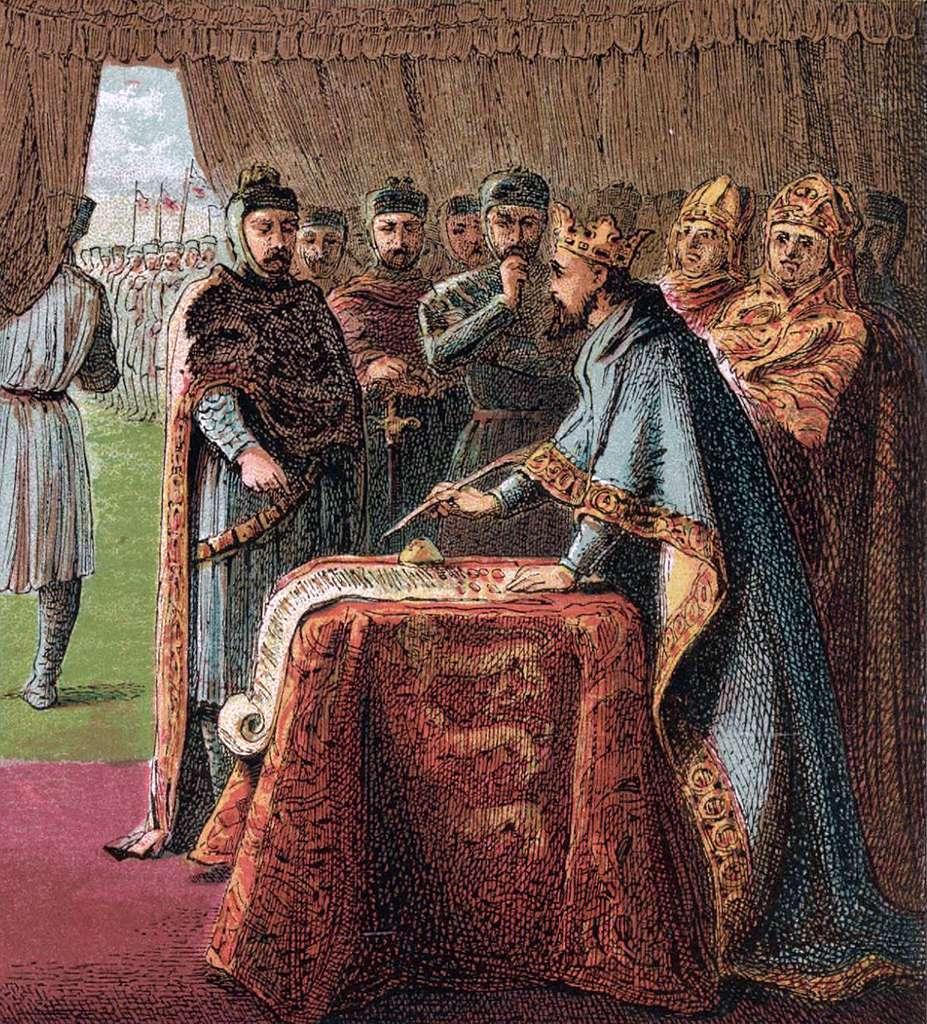
King John Signs the Magna Carta (Picryl)
During the reign of King John (1199–1216), the loss of English territories in France, arbitrary rule, increased taxation, and conflicts with the Pope led the English barons to rebel. As a result of this political crisis, in June 1215 King John was forced to accept the agreement known as the Magna Carta (Great Charter), which aimed to prevent arbitrary monarchical rule by establishing the principle that even English kings must abide by English laws and traditions.
Moreover, this document established that no free man could be arrested, imprisoned, or have his property seized without a legal trial or due process. Although the Pope annulled the document the same year, causing civil war, after King John’s death the Magna Carta was reissued.【19】
The Hundred Years' War, lasting 116 years with intermittent conflicts between England and France, began when King Edward III of England claimed the French throne through his mother and sought to seize France’s Gascony (Aquitaine) region. The war was divided into three phases: Edwardian, Caroline, and Lancastrian.
In the early stages of the war, thanks to the tactical superiority of English archers and dismounted knights, major victories were achieved at the Battle of Crécy in 1346 and the Battle of Poitiers in 1356, where King John II of France was captured. King Henry V’s victory at the Battle of Agincourt in 1415 brought English power to its peak, and the Treaty of Troyes in 1420 named Henry V as heir and regent of the French throne. However, the tide of the war changed when Joan of Arc broke the siege of Orléans in 1429.
French victories at the Battles of Formigny in 1450 and Castillon in 1453 allowed them to reclaim all continental territories except the port of Calais, effectively ending the war. The war caused dynastic crises, rural uprisings, and severe financial ruin in England.【20】
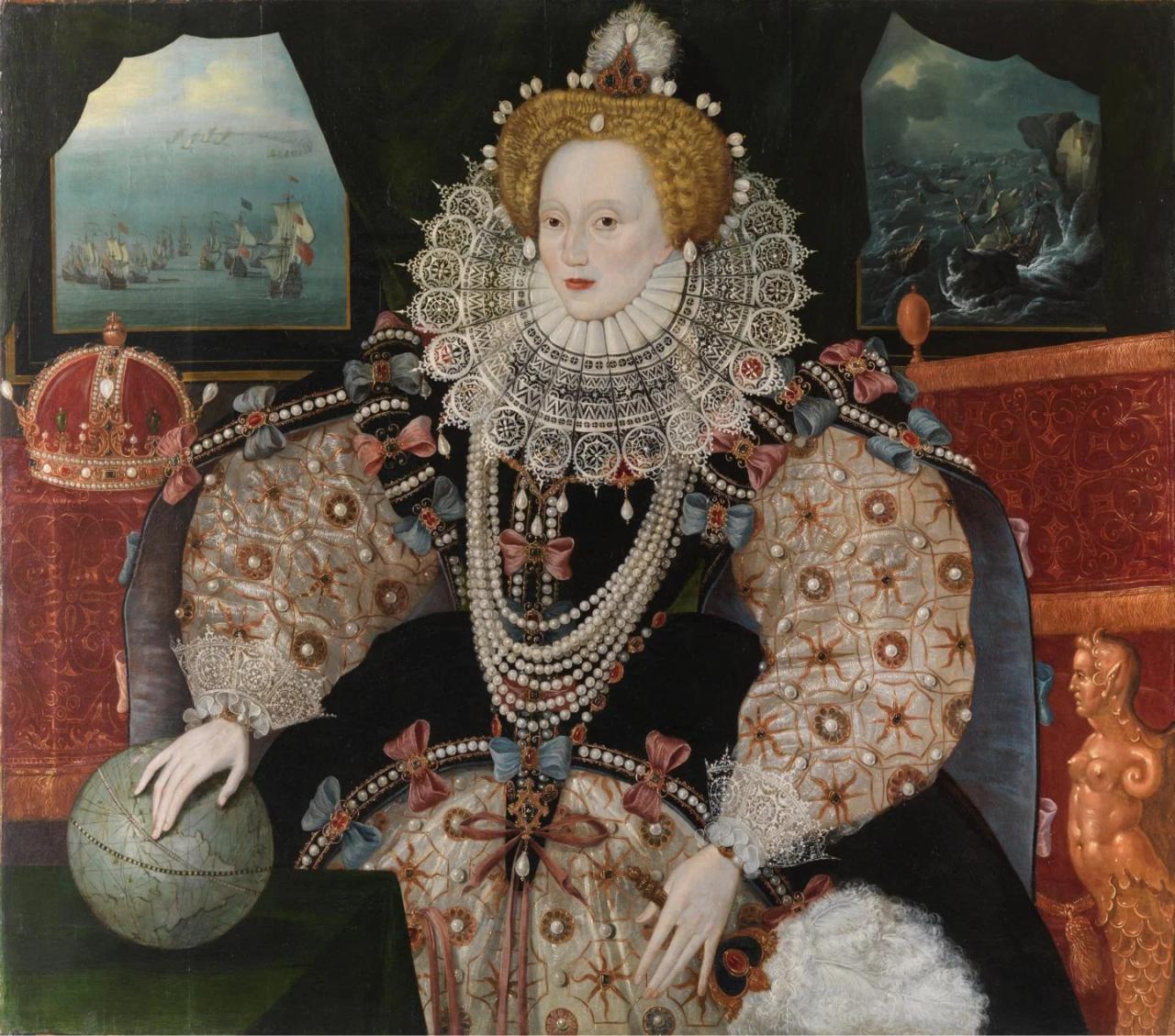
İngiltere Kraliçesi I. Elizabeth (1558-1603) (World History)
Henry VII, who won the Wars of the Roses and established the Tudor dynasty in 1485, reestablished royal authority and brought internal peace to England by curbing the power of the aristocracy.
The religious reform process in England was shaped by King Henry VIII’s search for a legitimate male heir. When the king’s request to divorce his wife Catherine of Aragon and marry Anne Boleyn was denied by the Pope, England’s ties with the Roman Catholic Church were severed. In 1533, Henry VIII was declared the Supreme Head of the Church of England, and this status was officially confirmed by the Act of Supremacy in 1534.【21】
During this period, all monasteries in the country were closed, and extensive church lands were seized by the crown.【22】 This led to rebellions in Louth and the north (Pilgrimage of Grace). However, Protestant reforms as a doctrine gained momentum primarily after Henry VIII’s death, during the reign of Edward VI, with the publication of the Book of Common Prayer in 1549.【23】
Radical Protestant reforms in England began primarily during the reign of his young son Edward VI (1547–1553). During this period, the first Book of Common Prayer was published, introducing worship in English, allowing priests to marry, and removing Catholic imagery from churches. After Edward VI’s death, the staunch Catholic Mary I (1553–1558) reversed all these religious changes made by her father and brother, reestablishing Catholicism and papal authority in England; in this process, she had around 300 Protestants executed.
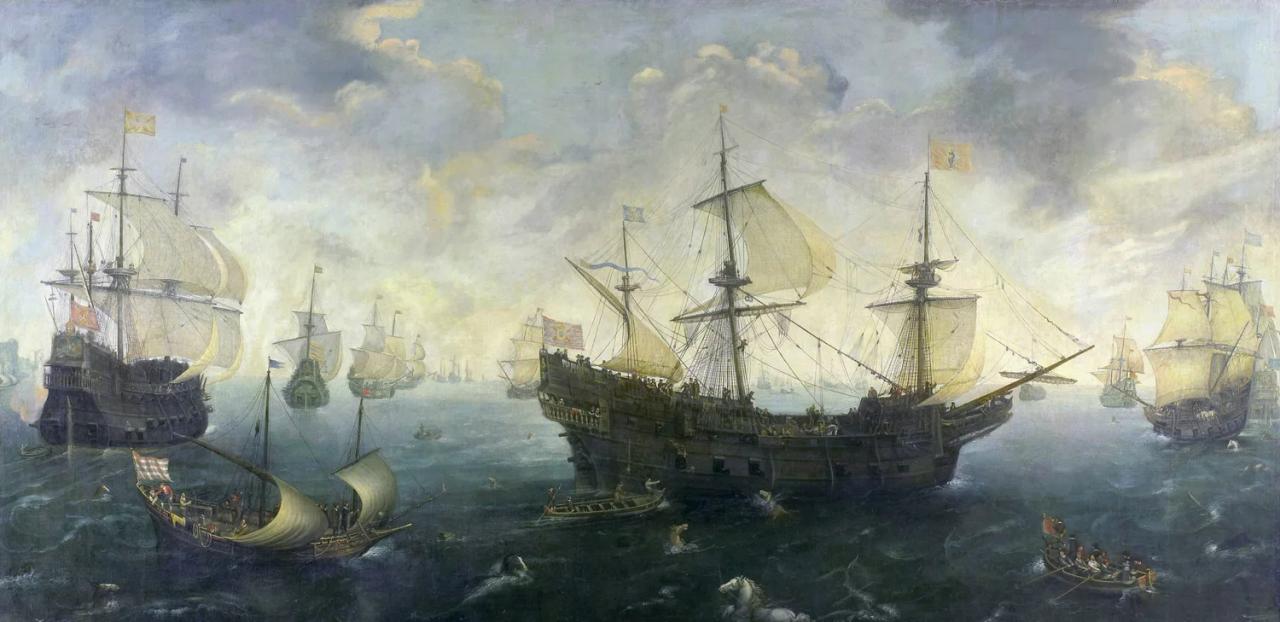
1588 Yılı İspanya - İngiltere Savaşını Gösteren Bir Görsel (World History)
Finally, Elizabeth I (1558–1603), who succeeded Mary I, reissued the Act of Supremacy to restore Protestantism to the country and ensured the permanent establishment of Protestantism in England through a moderate state church structure known as the Elizabethan Religious Settlement. During Queen Elizabeth’s reign, England became a major naval power by defeating Spain’s "Invincible Armada" in 1588, initiating England’s 300-year dominance as a maritime empire.【25】
The Stuart dynasty began in 1603 when James VI of Scotland ascended the English throne as James I, uniting the two kingdoms under a single monarch. However, the deep divide between the monarchs’ absolutist (divine right) tendencies and the English Parliament’s claims to legal rights led to political crises during the reign of Charles I (1625–1649) and ultimately to the English Civil War, which broke out in 1642.
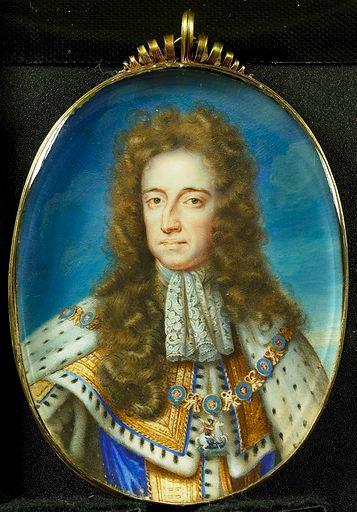
III. William (Look and Learn)
King Charles I’s dismissal of Parliament and his unilateral rule during the "Eleven Years' Tyranny," his imposition of religious reforms on Scotland, and his arbitrary taxation led to civil war in 1642 between royalist forces and parliamentary supporters.【26】 The "New Model Army," led by Sir Thomas Fairfax and Oliver Cromwell, defeated the royalist forces. In 1649, Charles I was executed; the monarchy and the House of Lords were abolished, and the English Commonwealth was established.
Stability collapsed after Cromwell’s death, and the monarchy was restored in 1660 with Charles II. However, the attempts of his successor James II to spread Catholicism created a major crisis. In 1688, James’s daughter Mary and her Protestant Dutch husband, Prince William of Orange, were invited to the throne; James II fled the country. This " Glorious Revolution," which occurred without bloodshed, solidified the monarchy’s dependence on Parliament, and the Toleration Act was adopted in 1689.
The reign of Edward VII at the beginning of the 20th century in England appeared to be a continuation of the Victorian era, yet it was also a period marked by rural and urban poverty and the mobilization of radical change forces. The social reforms initiated by the Liberal government established in 1906 included free school meals, school health screenings, pensions, labor offices, and trade boards that set minimum wages for low-paid jobs. These steps laid the foundations of the modern welfare state. During the same period, the campaign for women’s suffrage gained momentum through both moderate (NUWSS) and radical (WSPU) organizations; women gained partial voting rights in 1918 and full voting rights at the same age as men (21 years) in 1928.【27】
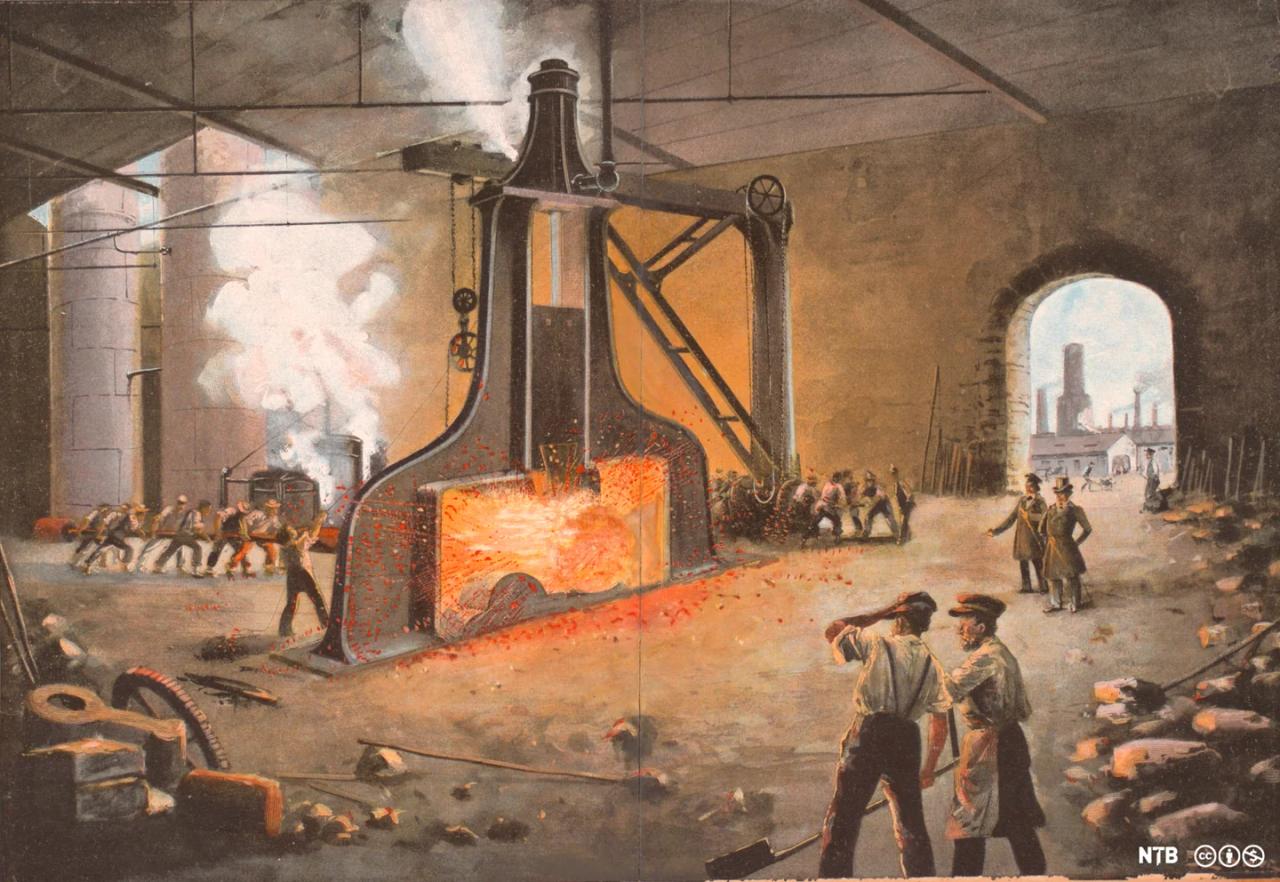
The Industrial Revolution emerged in England in the second half of the 18th century(NDLA)
Following the agricultural revolution, which gained momentum in the early 18th century with innovations such as Jethro Tull’s seed drill, England became the world’s first industrialized country from the 1770s onward. James Watt’s (1769) steam engine, followed by inventions by Richard Arkwright (1771) and Edmund Cartwright (1785), completely mechanized the textile industry. Henry Cort’s puddling process, discovered in 1784, dramatically increased iron production.
The railway network, which began with the first passenger train operating between Stockton and Darlington in 1825, revolutionized transportation. However, rapid urbanization led to harsh working conditions; Factory Acts passed in 1819, 1833, and 1847 imposed strict limits on working hours to regulate child and female labor.【28】
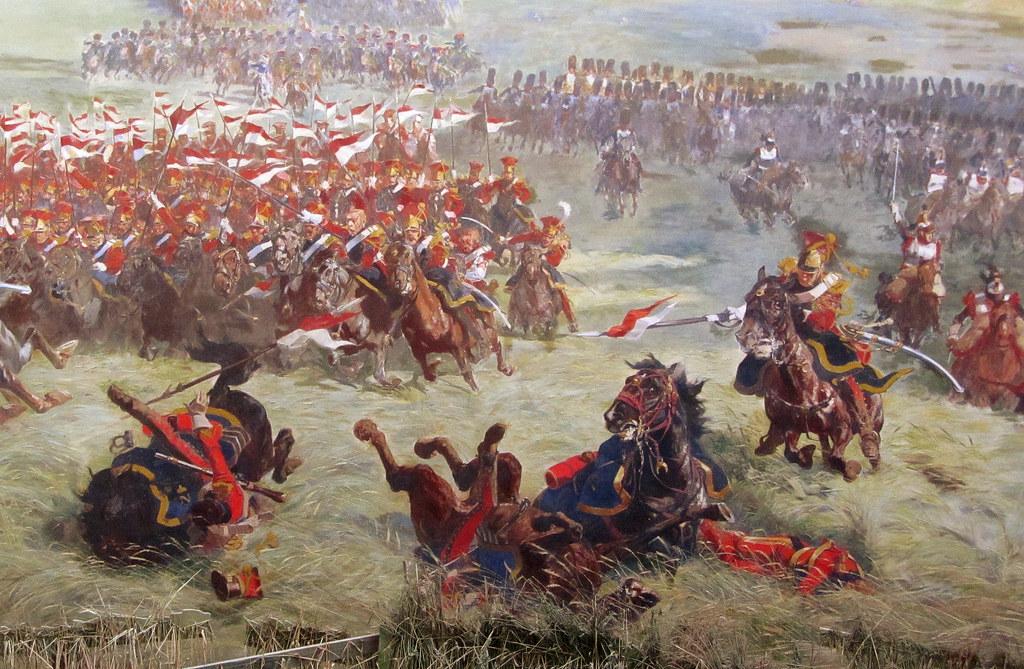
Waterloo Savaşını Gösteren Bir Görsel (Flickr)
Europe, shaken by the French Revolution and Napoleonic Wars from the end of the 18th century, was dragged back into war in 1815 with Napoleon Bonaparte’s return from exile. At the Battle of Waterloo on June 18, 1815, the Anglo-Allied army of 68,000 men and 156 cannons under the command of the Duke of Wellington decisively defeated Napoleon, aided by the arrival of Prussian forces under Marshal Blücher on the battlefield.
Despite having 72,000 troops and 246 cannons, the French army could not break through the British infantry’s "square" formation or overcome the fierce resistance around the Hougoumont and La Haye Sainte farms. Finally, the Imperial Guard was repelled, and the French were routed. The Allies suffered 22,000 casualties compared to approximately 40,000 French losses, and Napoleon was exiled to the island of St Helena.【29】
In the First World War, England entered the conflict against Germany in 1914 and became one of the principal powers of the Allied Powers. During the war, it imposed a naval blockade, supported France and Belgium, and utilized soldiers from its colonial empire.
During the war, especially Germany’s Zeppelin raids and aerial attacks transformed the conflict into one felt even on the home front; civilian cities became targets. Conscription, increased taxation, and censorship brought the state’s control over civilian life to unprecedented levels, while 1.6 million women joined the workforce to replace men conscripted into military service.【30】
A brief economic recovery after the war was followed by stagnation, and disruptions in industrial relations culminated in the United Kingdom’s only General Strike in 1926, led by coal miners. During the same period, Ireland was partitioned, and the Irish Free State gained independence in 1922.
Following the Wall Street Crash of 1929, the Great Depression raised the unemployment rate to 22.8% by 1932.【31】 Poverty deepened in northern regions most affected by the collapse of traditional industries such as textiles and coal mining, leading to protests such as the Jarrow March in 1936.
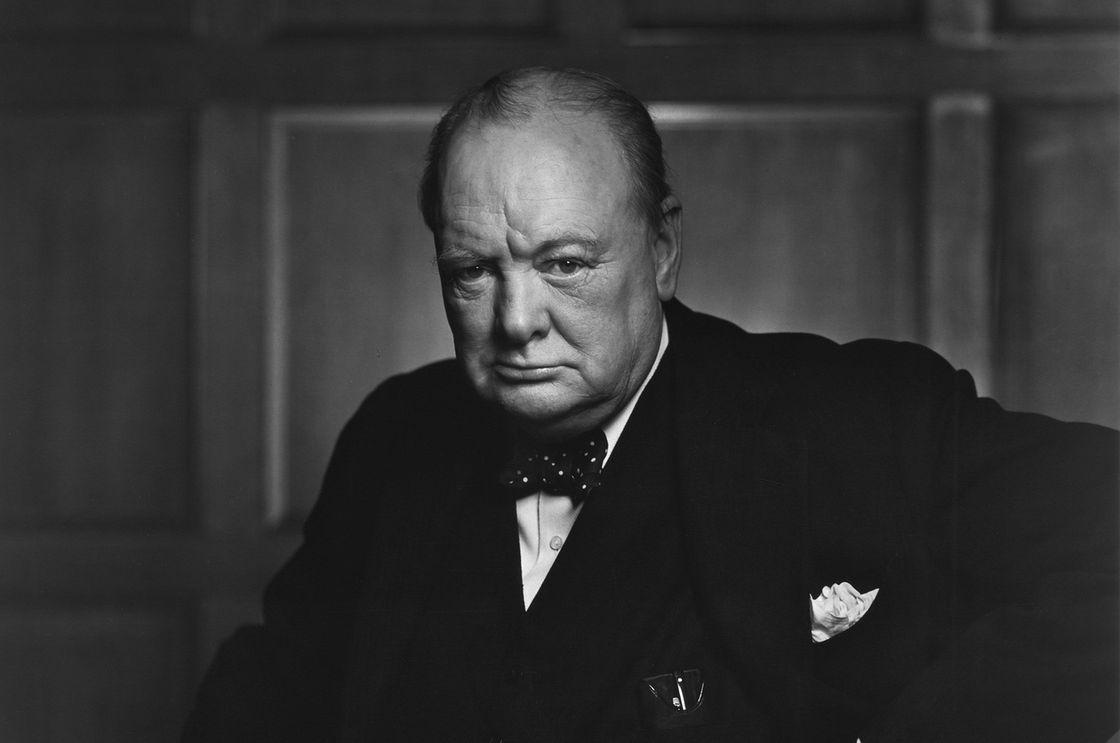
Winston Churchil (NDLA)
England entered its second major war within a generation against Germany in 1939. Following Winston Churchill’s appointment as Prime Minister in 1940, the country united under his leadership, and the Dunkirk evacuation was carried out. Throughout the war, "Blitz" bombings and V1 and V2 rockets targeted major cities such as London, Coventry, and Birmingham; these attacks resulted in approximately 40,000 civilian deaths and left one million homes severely damaged or destroyed.【32】The 1944 Normandy Invasion (D-Day) and the subsequent Allied advance accelerated Germany’s defeat, and the war ended in 1945.
In the 1945 general elections, the Labour Party under Clement Attlee unexpectedly won a large majority and implemented extensive nationalization policies, bringing coal, railways, gas, and electricity under state control. During this period, the establishment of the National Health Service (NHS) in 1948 completed the welfare state legislation to a large extent.
The postwar years were known as the "national austerity" period, and the rationing of basic foods such as meat and butter continued until 1954.【33】 Following Queen Elizabeth II’s coronation, broadcast live on television in 1952, a fully employed welfare society was built in the late 1950s and 1960s, during which consumer goods such as automobiles, washing machines, and refrigerators became widely accessible.
In foreign policy, after the Second World War, the Soviet Union became a potential adversary, and England confronted the reality of the "Iron Curtain" (complete closure of communication, trade, and free movement between the Soviet-influenced regions and the Western world). In 1952, Britain became a nuclear power, and during the Cold War, it developed civil defense measures and engaged in military struggles against communism or post-colonial crises in Malaya, Korea, Kenya, Cyprus, and Suez. By the 1960s, migration from the West Indies, India, and Pakistan began to change the country’s demographic structure, while a decline began in heavy industry.
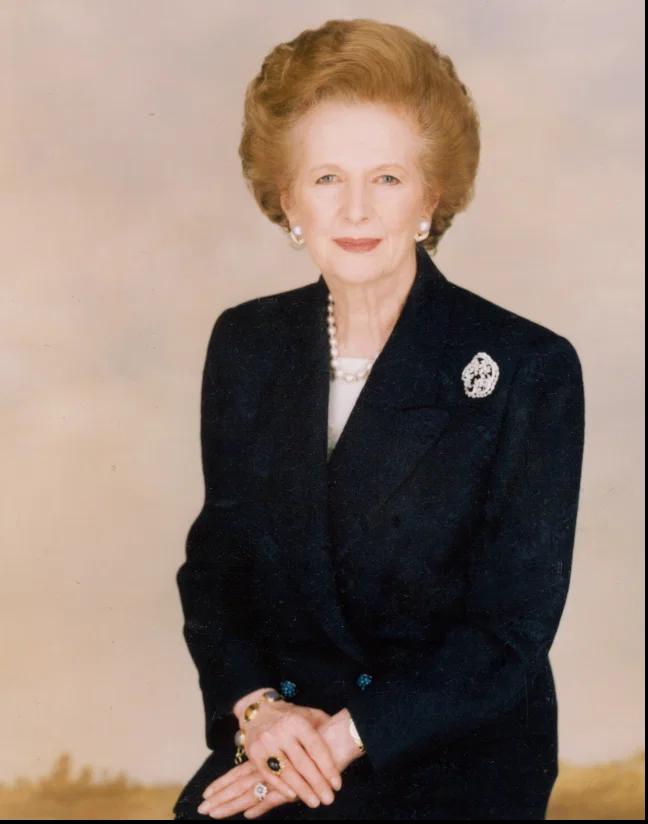
Margaret Thatcher (World History)
England joined the European Economic Community (EEC), the predecessor of today’s European Union, in 1973. In the second half of the 1970s, rising unemployment, high inflation, and widespread strike waves led to the Conservative Party’s electoral victory in 1979 and the rise of Margaret Thatcher as the first female Prime Minister. The Thatcher government broke the postwar state-led economic consensus by privatizing key state-owned industries such as British Telecom and British Gas; it permanently weakened trade unions by suppressing the major miners’ strike of 1984–1985.
England’s victory in the Falklands War against Argentina in April 1982 strengthened Thatcher’s position in domestic politics. In 1990, John Major succeeded Thatcher; in 1997, Tony Blair, who revitalized the Labour Party, became Prime Minister; Blair’s era was marked by granting autonomy to Scotland and Wales and the peace agreement that ended 30 years of violence in Northern Ireland.【34】
In the early 21st century, England’s and the United Kingdom’s population grew rapidly, aided by migration; the population, which was just under 59 million in 2001, reached 67 million by 2021.【35】 In the aftermath of the September 11 attacks, the government formed a close alliance with the United States in foreign policy and assumed a decisive role in the "War on Terror" strategy.
Under Tony Blair’s premiership (1997–2007), record levels of investment were made in healthcare and education, and a historic peace and ceasefire in Northern Ireland was achieved through the Good Friday Agreement in 1998. Blair’s era was also marked by intense foreign interventions such as the Afghanistan War (2001) and especially the 2003 Iraq Invasion, as well as the 7/7 London terrorist attacks in 2005.
Blair’s alliance with the United States after the September 11 attacks and his participation in the subsequent "War on Terror" policies became the most fundamental factor defining how his administration was perceived in public opinion.【36】 The United Kingdom’s population rose from 59 million in 2001 to 67 million by 2021, and the country made one of its most fundamental political and economic decisions in recent history by formally leaving the European Union in 2020 (Brexit).【37】
England, one of the main landmasses constituting the United Kingdom of Great Britain and Northern Ireland, is an island nation located in the northwestern part of Europe with significant physical geographical diversity.
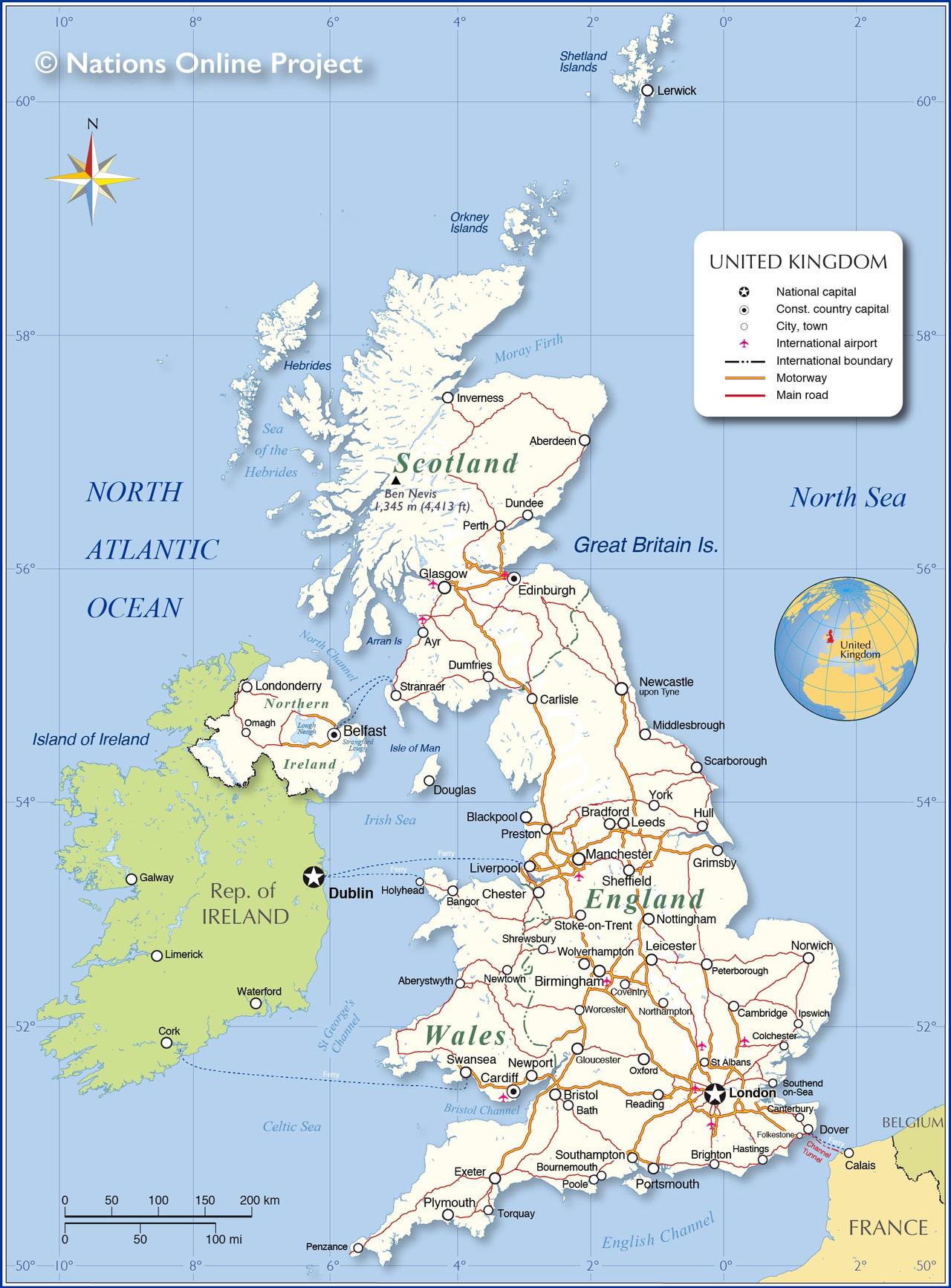
İngiltere Siyasi Haritası (Nations Online Project)
England consists of England, Scotland, and Wales on the island of Great Britain and Northern Ireland in the northeast of the island of Ireland. This island state, situated between the Atlantic Ocean and the North Sea, is separated from the European mainland by the English Channel to the south and is only 35 km (22 miles) from the northwestern coast of France at its closest point.【38】
The United Kingdom’s only international land border is the 360-kilometer boundary between Northern Ireland and the Republic of Ireland. The region covering the southern part of Great Britain and commonly referred to simply as "England" has an area of 130,439 km².【39】 To the north of England lies Scotland with an area of 77,167 km², and to the west lies Wales with an area of 20,768 km². The administrative boundaries of England also include the Isles of Scilly in the southwest and the Isle of Wight on the south coast.
Although the exact latitude and longitude values are not directly specified, the 0-degree meridian, which serves as the basis for calculating world time zones (GMT – Greenwich Mean Time), passes through Greenwich in the capital London. The island of Great Britain is approximately 950–1,000 km (600 miles) long from north to south and 450–500 km (300 miles) wide at its broadest point from east to west, and no point on the island is more than 120 km (75 miles) from the sea.【40】
England’s physical geography shows great variation within itself. The "Tees-Exe line," connecting the mouth of the River Tees in the northeast with the mouth of the River Exe in the southwest, roughly divides the country into high (mountainous) and low (lowland) areas.【41】
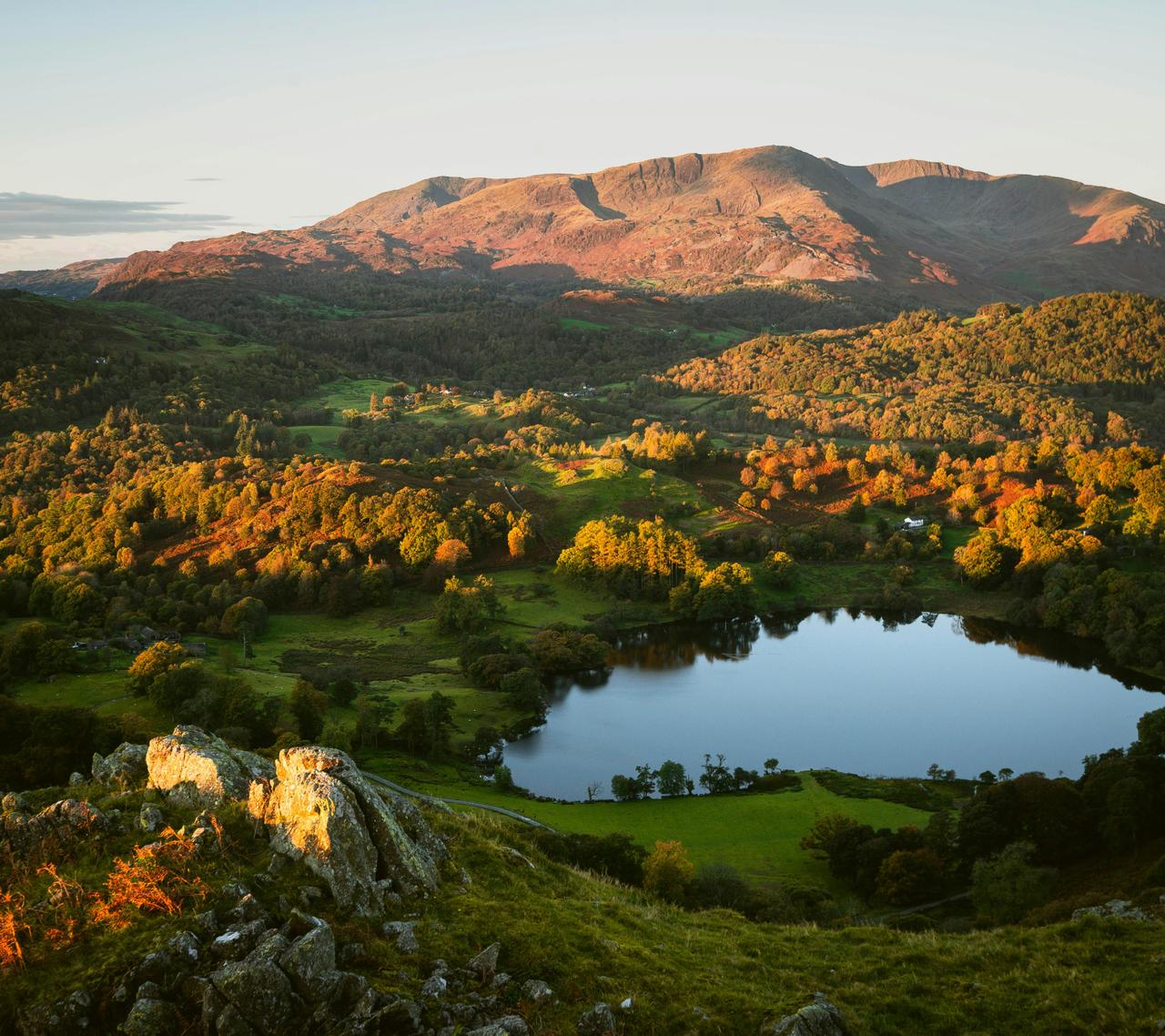
Göller Bölgesi (Lake District) (Pexels)
The Lake District in northwest England is a complex geological structure containing steep volcanic mountains and vast rounded plateaus such as Skiddaw in a relatively small area. England’s highest point, Scafell Pike (978 meters), is located in this region. The mountainous areas of southwest England include Dartmoor and Bodmin Moor granite plateaus, which were not glaciated during the Pleistocene and feature smooth ridges and sharp rock formations (tors), as well as Exmoor, formed from Devonian Old Red Sandstone.
The southern and southeastern parts of the country consist largely of lowlands, fertile agricultural land, and gently rolling hills. Prominent landforms in these lowland coastal areas include the chalk cliffs of Kent and Dorset. The country’s lowest known point is The Fens (Fenland) region, which lies 4 meters below sea level (-4 m).【42】
The longest river flowing through England is the River Thames, at 346 km in length. A comprehensive system of canals and numerous dams and reservoirs were built during the Industrial Revolution for transportation. In terms of lakes, England’s largest lake is Windermere, with an area of 14.8 km².【43】
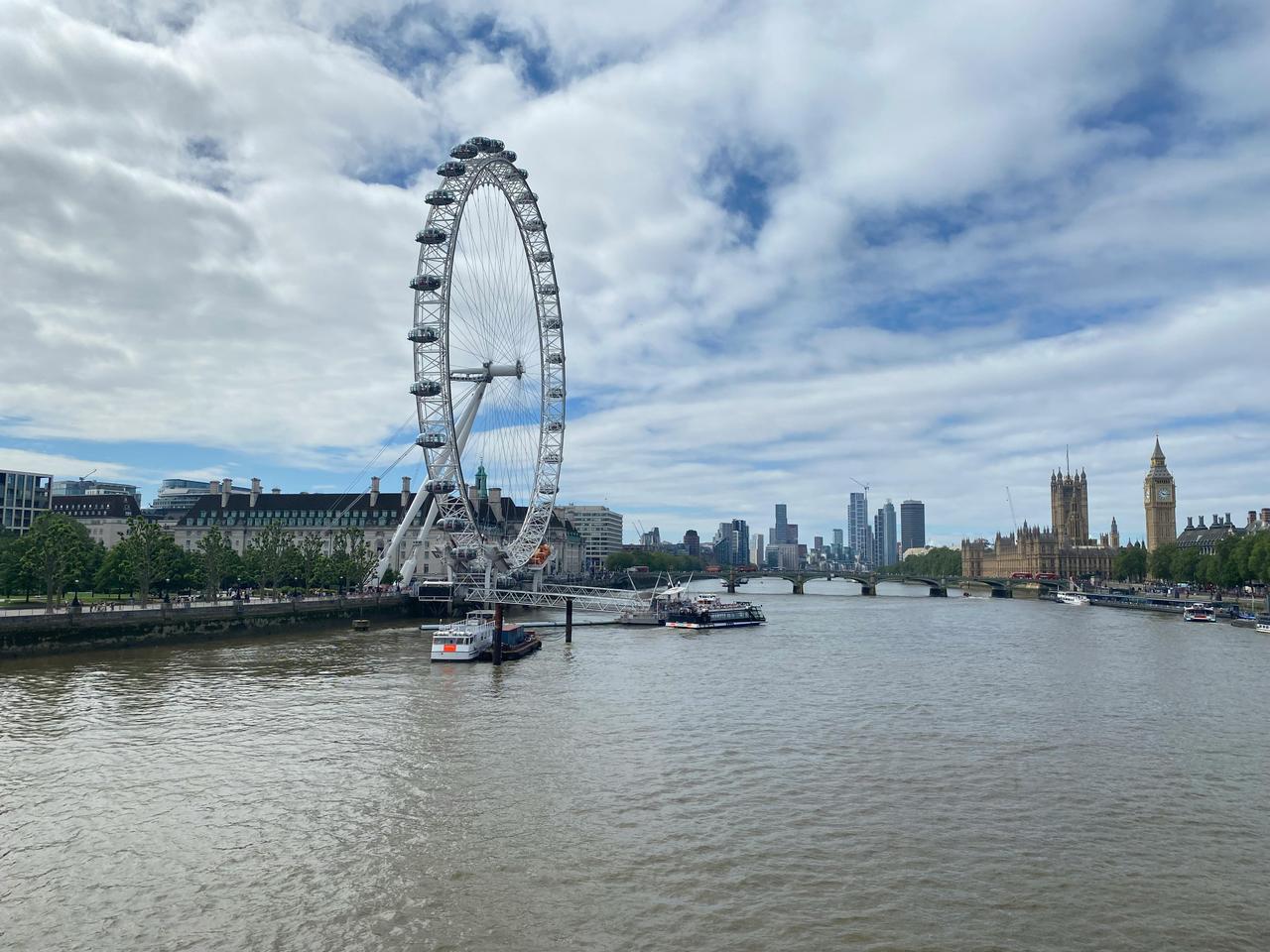
Times Nehri (Pexels)
England has a generally mild and oceanic climate, influenced by the Gulf Stream warm water current. Weather conditions are highly variable, with more than half the year typically overcast. Average winter temperatures range from 4–6 °C, and summer temperatures from 12–22 °C. Precipitation is distributed throughout the year, with March to June generally the driest period and September to January the wettest. Annual average rainfall exceeds 1,000 millimeters and varies significantly between regions. Annual rainfall in England shows regional differences; in the east and interior, such as around Cambridge, annual rainfall can drop to very low levels. The southern parts of the country are generally warmer and drier than the northern regions.
Historically, England’s natural vegetation was largely covered by forests of oak, beech, pine, and hazel; however, over the centuries, this has been greatly reduced due to agriculture, livestock farming, deforestation, and industrialization. Today, forests and wooded areas cover only a very small portion of the country’s land, and this percentage is well below the European average. The country’s natural vegetation consists mostly of small woodlands, coniferous forests, and extensive peat bogs (peat) and heathlands (Calluna vulgaris – heather)【44】 and grasslands.
Approximately 75% of England’s land is arable. Forty percent of this area is in southern and eastern England, while the remainder is largely used as pasture for cattle and sheep farming.【45】 The country is not considered rich in mineral resources, but it produces construction and industrial minerals such as gypsum, clay, salt, and potash. Coal, iron ore, and tin deposits, which played a significant role in England’s Industrial Revolution, lost much of their importance after World War II due to depletion of reserves.
In contrast, England is one of Europe’s richest countries in energy resources. In addition to past coal reserves, England’s modern energy wealth is constituted by oil and natural gas deposits in the North Sea. Oil production began in 1975, and natural gas production began in 1967, and 【46】England has been among the world’s largest producers through this production.
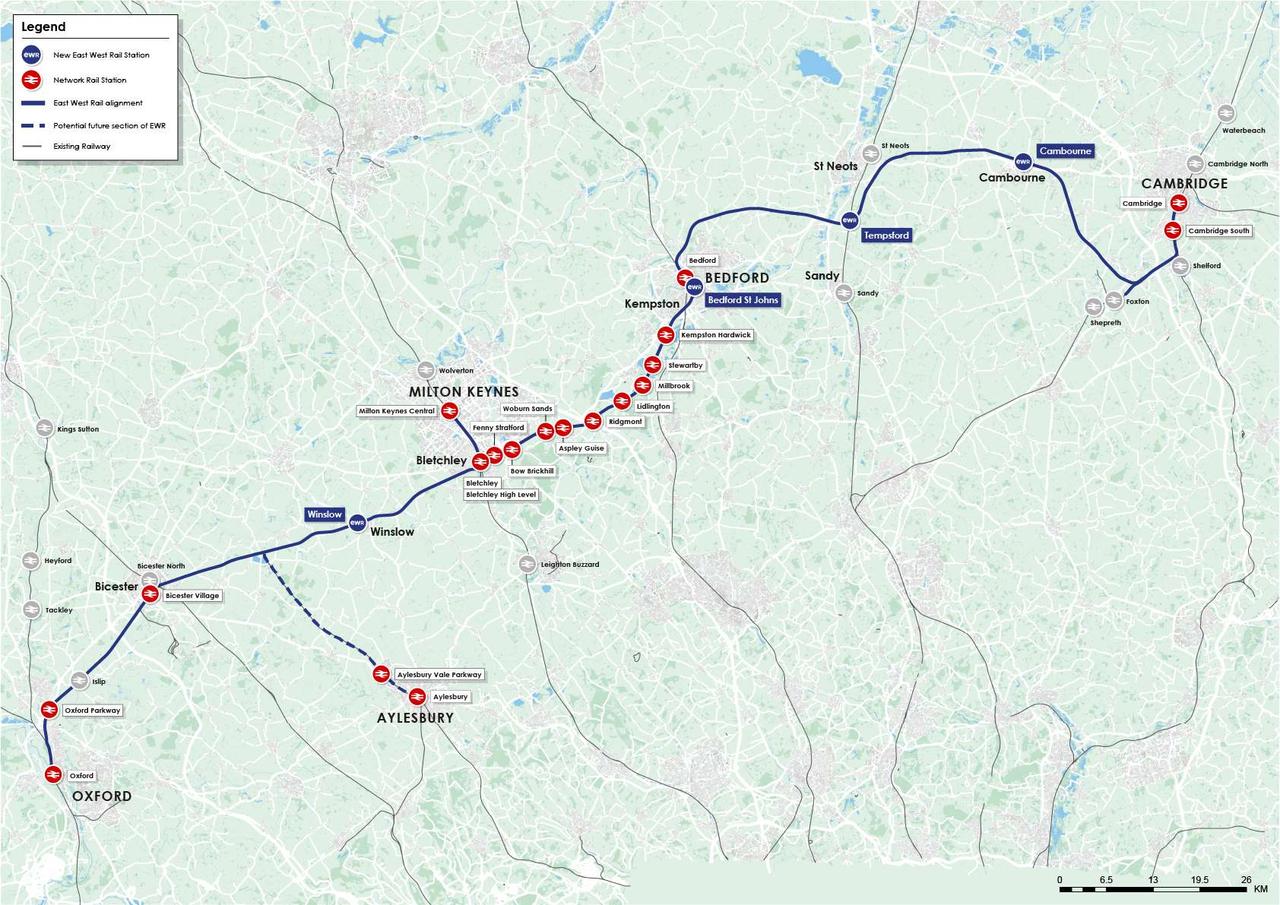
East West Rail Haritası (East West Rail)
England has a developed transport infrastructure. Its road network, totaling 400,000 kilometers, connects major cities via multi-lane motorways. The railway network has a total track length of approximately 15,799 kilometers and achieves an annual capacity of about 65 billion passenger-kilometers and 18 billion ton-kilometers of freight transport.【47】 Major infrastructure projects such as "High Speed 2" (HS2), the Transpennine Route Upgrade, and East West Rail form a significant part of these investments.
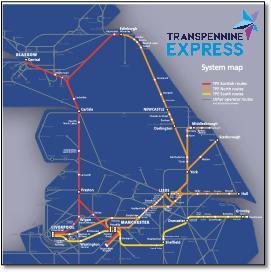
Transpennine Haritası (Project Mapping)
Maritime transport also plays an important role in the country’s economy, with approximately 95% of import and export tonnage handled through ports.【48】 In the aviation sector, capacity expansion projects are underway at global-scale airports such as Heathrow, Gatwick, and London Luton.
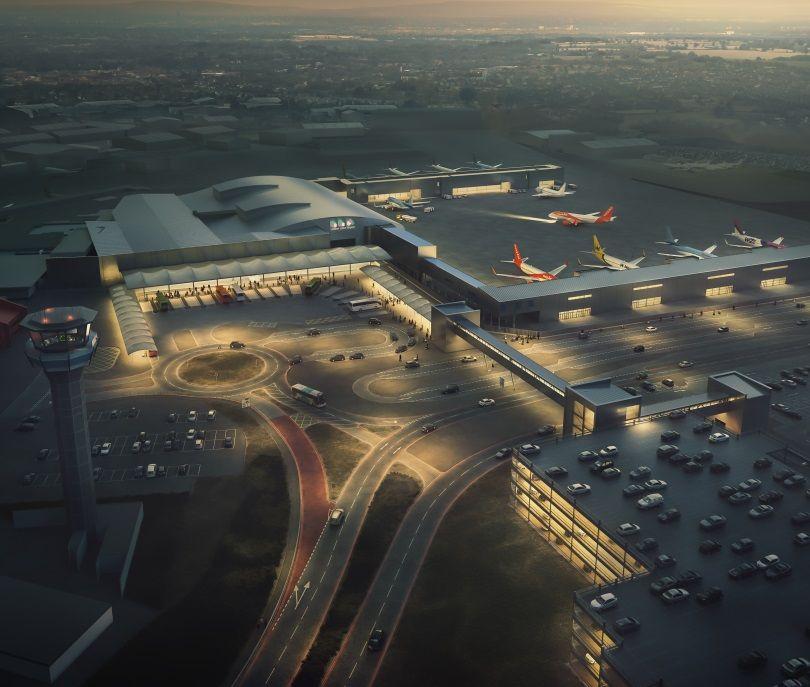
London Luton Havaalanı (Luton Airport Guide)
In energy infrastructure, a transition to "clean energy" (net zero carbon emissions) is planned by 2030. Under this strategy, the goal is to achieve 43–50 GW of offshore wind, 27–29 GW of onshore wind, and 45–47 GW of solar energy capacity by 2030. Alongside renewable energy, new-generation Small Modular Reactors (SMRs) and large-scale projects such as Sizewell C are supported in nuclear energy, and investment is being made in carbon capture (CCUS) and hydrogen infrastructure. As electricity demand in the country is expected to at least double by 2050, comprehensive infrastructure expansion projects in transmission and distribution networks (e.g., under the Accelerated Strategic Investment Program) are gaining momentum.【49】
In the United Kingdom economy, the share of the manufacturing industry has declined since 1990 from 17% to approximately 9%.【56】 As of the final quarter of 2025, the manufacturing sector accounts for 8.6% of the country’s total gross value added (GVA) and 7% of total employment. In a broad sense, the production sector includes manufacturing as well as mining, electricity, water, waste management, and oil and natural gas extraction activities.
The United Kingdom stands out in advanced manufacturing sectors such as aerospace, automotive, and life sciences (pharmaceuticals). The aerospace industry is the largest in Europe and the second largest in the world.【57】 Major industrial export items include machinery and mechanical appliances, motor vehicles, electrical machinery and apparatus, pharmaceutical products, and optical and medical measuring instruments.
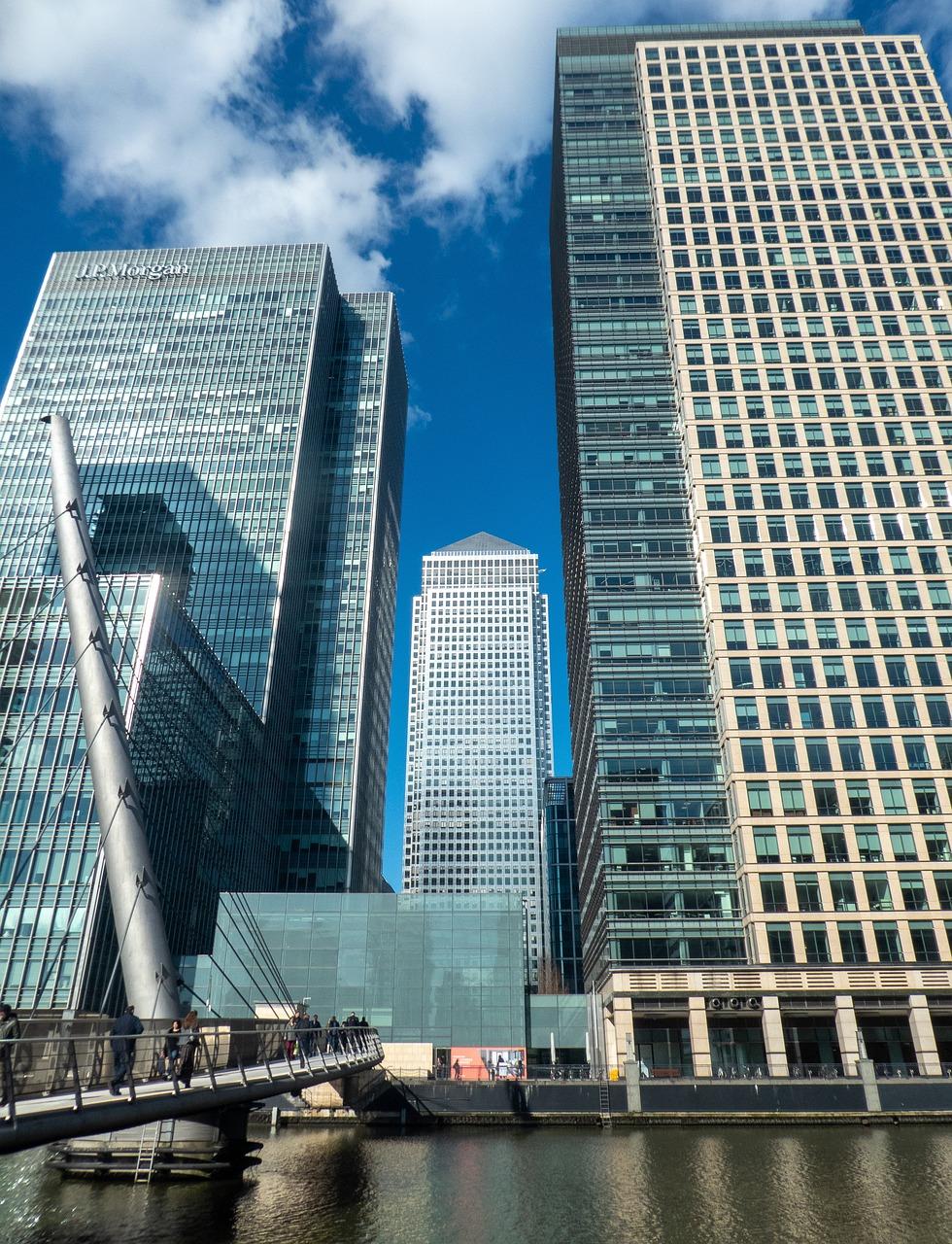
Londra Finans Merkezi (Pixabay)
The service sector forms the foundation of the United Kingdom economy, accounting for more than 80% of both Gross Domestic Product (GDP) and Gross Value Added (GVA).【58】 The sector provides approximately 83 to 84.8% of total employment.【59】 The service industry primarily consists of retail, financial services, public services (healthcare and education), business management, and accommodation and cultural activities.
The UK’s service sector economic structure is shaped around "knowledge-intensive business services" such as professional and commercial services, the financial system (including insurance), and the information economy (software, cybersecurity, telecommunications). In terms of exports, the service sector accounts for more than 40% of the country’s total exports.【60】 While the United Kingdom runs a trade deficit in goods trade, it consistently achieves a global trade surplus in services trade due to high revenues generated in sectors such as finance and business services.
The United Kingdom is a major player in global trade and, according to 2024 data, ranks fourth globally in both goods and services exports and imports.【61】
According to the International Trademap database, in 2024 the country exported $51.3 billion worth of goods worldwide and imported $81.6 billion, resulting in a trade deficit of $30.3 billion.【62】 According to United Kingdom National Statistics Office (ONS) data, in 2024 total goods and services exports amounted to £89.79 billion and total imports to £91.95 billion, with a general trade deficit of £2.16 billion recorded.【63】 The United Kingdom consistently runs a deficit in goods trade (a £20.6 billion deficit in 2024), but due to this structure, it achieves a significant trade surplus in services trade (£18.4 billion).
The country’s most important trading partner is the European Union (EU). As of 2024, 41% of total goods and services exports and 50% of imports were conducted with EU countries. In 2024, the United Kingdom recorded a £9 billion deficit in trade with the EU and a £6.8 billion surplus in trade with countries outside the EU.【64】 The countries with the largest market shares in UK exports are, in order, the United States (14%), China (9%), Germany (8%), the Netherlands (7%), and Ireland (6%). In imports, the largest suppliers are China (12%), the United States (11%), Germany (9%), France (5%), and Italy (4%).【65】
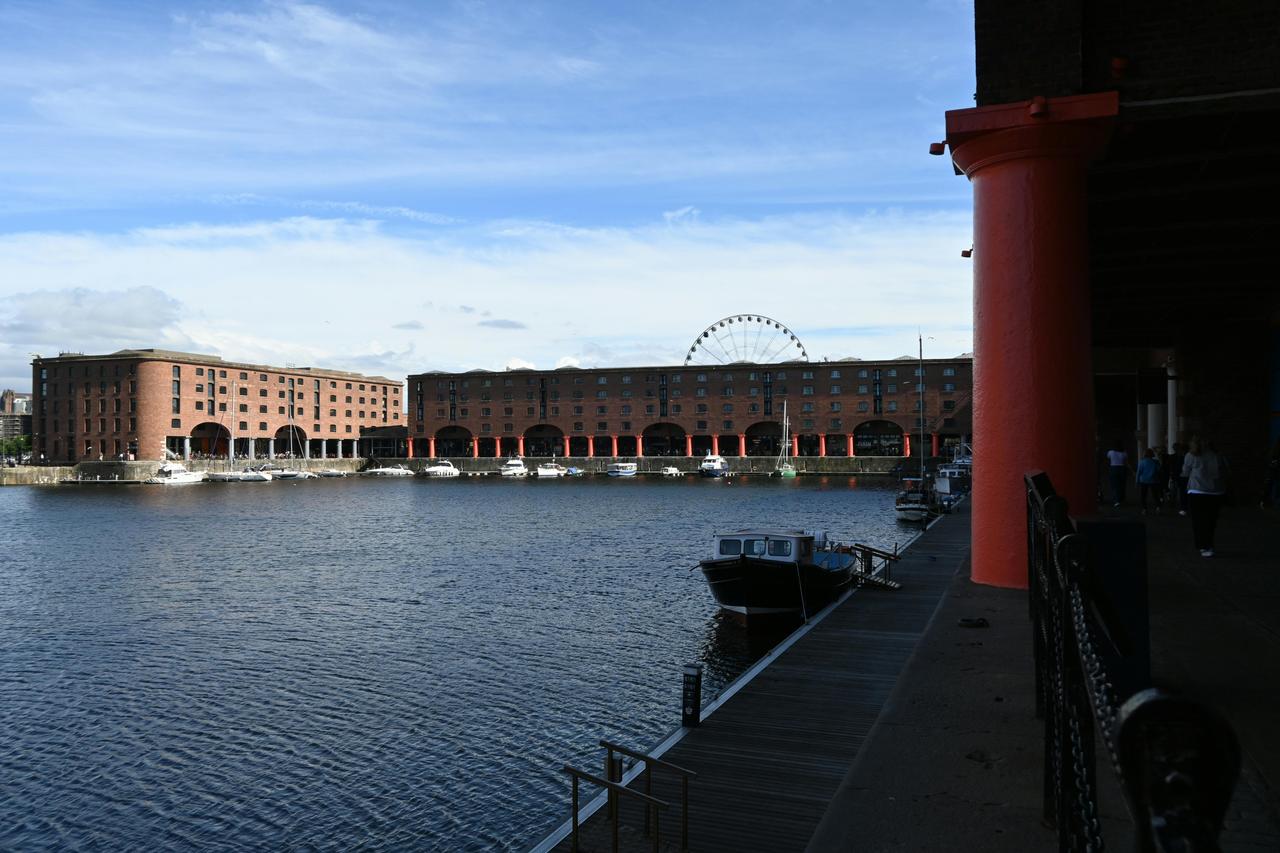
Liverpool’daki Albert Dock, Birleşik Krallık’ın Tarihsel Dış Ticaret ve Liman Faaliyetlerini Yansıtan Önemli Rıhtım Alanlarından Biridir. (Pexels)
Major export product groups include: Automobiles, gold, turbojets and other gas turbines, crude oil (oils and bituminous minerals), pharmaceuticals, aircraft parts and components, optical and medical instruments.【66】
Major import items: Automobiles, crude oil (oils and bituminous minerals), gold (including platinum-plated gold), turbojets, turboprops and other gas turbines, telephones, parts and components for road vehicles.【67】
The most significant development affecting the United Kingdom’s foreign trade policy was its formal departure from the European Union on January 31, 2020 (Brexit). Following the UK’s exit from the European Union, the EU–UK Trade and Cooperation Agreement came into effect, defining the new framework for trade relations between the parties. Under this agreement, the majority of goods are granted tariff-free and quota-free trade; adherence to EU rules has been adopted to ensure continued cooperation and uninterrupted trade in areas such as climate change, energy, security, and transport.
The United Kingdom of Great Britain and Northern Ireland is a constitutional monarchy based on parliamentary sovereignty and the principle of separation of powers, with no single written (codified) constitution. The state consists of four main regions: England, Scotland, Wales, and Northern Ireland, each of which has distinct local governance structures and devolution mechanisms based on their historical development. As a result of this structural diversity, the United Kingdom contains three separate legal systems: one covering England and Wales, one for Scotland, and one for Northern Ireland.
Unlike most modern liberal democracies, the United Kingdom does not have a single written (codified) constitution.【68】 The country’s constitution consists of a broad body of sources including statutes enacted by Parliament, constitutional conventions, common law, and authoritative writings of legal scholars. <
Anadolu Ajansı. 2012. “Türkiye’ye savaş gemisi satmak istiyor.” January 17, 2012. Accessed April 21, 2026.
Anadolu Ajansı. 2017. “İngiltere’de polise saldırı.” August 26, 2017. Accessed April 21, 2026.
Anadolu Ajansı. 2020. “British Museum Kaldırdı Köle Tüccarı Kurucusunun Büstünü.” Accessed April 21, 2026.
Anadolu Ajansı. 2022. “Londra’daki St Paul Katedrali’nin çanları Kraliçe Elizabeth için çaldı.” September 9, 2022. Accessed April 21, 2026.
Anadolu Ajansı. 2023. “NATO liderleri zirve toplantısında bir araya geldi.” July 11, 2023. Accessed April 21, 2026.
Anadolu Ajansı. 2025. “Londra’da toplu iftar programı düzenlendi.” Foto-Galeri. March 9, 2025. Accessed April 21, 2026.
Anadolu Ajansı. 2025. “Oxford Union, İsrail’i İran’dan daha büyük bölgesel tehdit ilan eden önergeyi kabul etti.” November 17, 2025. Accessed April 21, 2026.
Anadolu Ajansı. 2026. “Turkish Foreign Minister, UK Foreign Secretary Discuss Efforts to End War, Achieve Lasting Peace.” Accessed April 20, 2026.
Anadolu Ajansı. 2026. “İngiltere’den Orta Doğu’daki askeri varlığını artırma kararı.” March 31, 2026. Accessed April 21, 2026.
Anadolu Ajansı. “Londra’ya Müslüman Belediye Başkanı.” Foto-Galeri. Accessed April 21, 2026.
BBC News. 1997. “Democratic Unionist Party (DUP).” Politics 97. Accessed April 20, 2026.
Barry, Ben. 2025. “The Decline and Fall of the British Army.” International Institute for Strategic Studies, December 19, 2025. Accessed April 20, 2026.
Birks, H. J. B., D. Horsfield, B. A. Thompson, and M. J. Yeo. 2004. *An Illustrated Guide to British Upland Vegetation*. Peterborough: Joint Nature Conservation Committee. Accessed April 20, 2026.
British Geological Survey and Environment Agency. 2007. *The Natural (Baseline) Quality of Groundwater in England and Wales*. Research Report RR/07/06 and Technical Report NC/99/74/24. Accessed April 20, 2026.
Carnegie Moscow Center. “Commentary.” Accessed April 20, 2026.
Constitution Society. "The UK Constitution." Accessed April 20, 2026.
Cormie, Steve. 2025. "Jet." Photograph. Pexels, August 6, 2025.
Courts and Tribunals Judiciary. "The Justice System and the Constitution." Accessed April 20, 2026.
East West Rail. "Previous Consultations: Route Update." Accessed April 20, 2026.
Eastern Connecticut State University. “Medieval English Literature.” Accessed April 20, 2026.
Education in the UK. "History Timeline." Accessed April 20, 2026.
Education in the UK. "The Documents Archive." Accessed April 20, 2026.
English Heritage. “1066 and the Norman Conquest.” Accessed April 20, 2026.
English Heritage. “Celtic Culture.” Accessed April 20, 2026.
English Heritage. “Introduction to 20th-Century England.” Accessed April 20, 2026.
English Heritage. “Introduction to Early Medieval England.” Accessed April 20, 2026.
English Heritage. “Introduction to Georgian England.” Accessed April 20, 2026.
English Heritage. “Introduction to Prehistoric England.” Accessed April 20, 2026.
English Heritage. “Introduction to Roman Britain.” Accessed April 20, 2026.
English Heritage. “Introduction to Stuart England.” Accessed April 20, 2026.
English Heritage. “Introduction to Tudor England.” Accessed April 20, 2026.
English Heritage. “Introduction to Victorian England.” Accessed April 20, 2026.
English Heritage. “Places to Visit in England.” Accessed April 20, 2026.
English Heritage. “Religion under the Tudors.” Accessed April 20, 2026.
English Heritage. “Stuart Architecture.” Accessed April 20, 2026.
Ethnicity Facts and Figures. "Population of England and Wales." UK Government. Accessed April 20, 2026.
European External Action Service. “European Union and UK.” Accessed April 20, 2026.
Flagpoles.co.uk. “The History of the St. George Flag.” Accessed April 25, 2026.
Full Fact. “What Size Are the UK’s Armed Forces?” Accessed April 20, 2026.
GOV.UK. "How Government Works." Accessed April 20, 2026.
GOV.UK. "List of International Organisations Whose Employees Qualify for Exempt Entry Clearances." Accessed April 20, 2026.
GOV.UK. "Ministers." Accessed April 20, 2026.
GOV.UK. 2025. “UK Space Command.” Date Published April 1, 2021; last updated March 4, 2025. Accessed April 20, 2026.
GOV.UK. “Departments, Agencies and Public Bodies.” Accessed April 20, 2026.
GOV.UK. “Local Government Structure and Elections.” Accessed April 20, 2026.
GOV.UK. “National Security Strategy 2025: Security for the British People in a Dangerous World.” Accessed April 20, 2026.
GOV.UK. “Turkey and the UK.” Accessed April 20, 2026.
GOV.UK. “Working and Engaging with China, Including Hong Kong and Macao.” Accessed April 20, 2026.
Geological Society of London. “Geological Map of England and Wales.” Accessed April 20, 2026.
Her Majesty’s Government. 2013. *Review of the Balance of Competences between the United Kingdom and the European Union: Foreign Policy*. July 2013. Accessed April 20, 2026.
Hillvale. "British Cuisine." Accessed April 20, 2026.
Historic UK. "British Authors & Poets." Accessed April 20, 2026.
Historic UK. "British Seasonal Celebrations." Accessed April 20, 2026.
Historic UK. "Fashion through the Ages." Accessed April 20, 2026.
Historic UK. "History of British Food." Accessed April 20, 2026.
Historic UK. "Museums in Britain." Accessed April 20, 2026.
Historic UK. "Traditional British Food & Drink." Accessed April 20, 2026.
Historic UK. "Traditional British Sport." Accessed April 20, 2026.
Historical Association. “Anglo-Saxons: A Brief History.” Accessed April 20, 2026.
House of Commons Culture, Media and Sport Committee. 2003. *First Report*. Accessed April 20, 2026.
House of Commons Library, Economic Policy and Statistics Section. 2026. *Economic Indicators: Key Statistics for the UK Economy*. March 24, 2026. Number 0940. Accessed April 20, 2026.
House of Commons Library. 2025. “UK Defence Spending.” Research Briefing. October 10, 2025. Accessed April 20, 2026.
House of Commons Library. 2026. *Local Government in England: Structures*. Research Briefing, February 18, 2026. Number 07104. Author: Mark Sandford. Accessed April 20, 2026.
House of Commons Library. 2026. *Tourism: Statistics and Policy*. Research Briefing. Author: Annalise Murray. February 11, 2026. Number 06022. Accessed April 20, 2026.
House of Lords Library. 2023. “Size of the Army: Numbers, Tech and the Latest on the Integrated Review.” In Focus. May 16, 2023. Accessed April 20, 2026.
House of Lords Library. 2025. “Size of the UK Armed Forces.” In Focus. July 24, 2025. Accessed April 20, 2026.
Jain, Dhiraj. 2022. "Akşam yemeği yemek öğün et." Photograph. Pexels, July 7, 2022.
LSE IDEAS. 2017. *The UK’s Foreign, Defence, and Security Policy After Brexit*. Roundtable Notes, Ditchley Park. Accessed April 20, 2026.
LSE USAPP. "The US-UK Special Relationship and Differences over the War in Iran." March 16, 2026. Accessed April 20, 2026.
Luton Airport Guide. "History of Luton Airport." Accessed April 20, 2026.
Mark, Joshua J. 2023. "Saksonlar." *World History Encyclopedia*. July 16, 2023. Accessed June 30, 2026.https://www.worldhistory.org/trans/tr/1-13480/saksonlar/
Marsden, Greg, and Iain Docherty. 2019. *Governance of UK Transport Infrastructures. Future of Mobility: Evidence Review*. Foresight, Government Office for Science. Accessed April 20, 2026.
Met Office. 2018. *UK Monthly Climate Summary: Annual 2018*. Accessed April 20, 2026.
Met Office. 2019. *UK Monthly Climate Summary: Annual 2019*. Accessed April 20, 2026.
Met Office. 2020. *UK Monthly Climate Summary: Annual 2020*. Accessed April 20, 2026.
Met Office. 2021. *UK Monthly Climate Summary: Annual 2021*. Accessed April 20, 2026.
Met Office. 2022. *UK Monthly Climate Summary: Annual 2022*. Accessed April 20, 2026.
Met Office. 2023. *UK Climate Summary: Calendar Year 2023*. Accessed April 20, 2026.
Met Office. 2024. *Annual Assessment – 2024*. Accessed April 20, 2026.
Met Office. 2025. *Annual Assessment – 2025*. Accessed April 20, 2026.
Ministry of Defence. 2026. “MOD Departmental Resources: 2025.” Accessed April 20, 2026.
Ministry of Foreign Affairs of the People’s Republic of China. “United Kingdom.” Accessed April 20, 2026.
National Anthems Channel. 2020. "England National Anthem (Instrumental)." Video. YouTube. Accessed April 25, 2026.
National Army Museum. "The Gulf War." Accessed April 20, 2026.
National Army Museum. “The Battle of Waterloo.” Accessed April 20, 2026.
National Churchill Museum. "Churchill Iron Curtain Speech Video." Accessed April 20, 2026.
National Trust. “History of Architecture.” Accessed April 20, 2026.
New College Oxford. “English Literature through the Ages: Eighteenth Century and Romanticism, 1701-1836.” Accessed April 20, 2026.
New College Oxford. “English Literature through the Ages: Medieval, 1201-1500.” Accessed April 20, 2026.
New College Oxford. “English Literature through the Ages: Renaissance and Restoration, 1501-1700.” Accessed April 20, 2026.
New College Oxford. “English Literature through the Ages: Twentieth Century to Present.” Accessed April 20, 2026.
New College Oxford. “English Literature through the Ages: Victorian, 1837-1900.” Accessed April 20, 2026.
New World Encyclopedia. "Culture of England." Accessed April 20, 2026.
Office for National Statistics. 2017. “Dashboard: Understanding the UK Economy.” February 22, 2017. Accessed April 20, 2026.
Office for National Statistics. 2021. “Ethnic Group, England and Wales: Census 2021.” Accessed April 20, 2026.
Office for National Statistics. 2024. “Annual Mid-Year Population Estimates, Mid-2024.” Accessed April 20, 2026.
Office for National Statistics. 2026. "Provisional population estimate for the UK: mid-2025." Office for National Statistics. Accessed May 4, 2026.
Our Migration Story. "Anglo-Saxon Migrations." Accessed April 20, 2026.
Our World in Data. "Literacy." Accessed April 20, 2026.
Our World in Data. “Population of England, Millennium.” Accessed April 20, 2026.
Parliament UK. "Magna Carta." Accessed April 20, 2026.
Parliament UK. "Russia." Accessed April 20, 2026.
Parliament UK. "Written Evidence." Accessed April 20, 2026.
Parliamentary Office of Science and Technology. “UK Foreign Policy in a Changing World.” Accessed April 20, 2026.
Pexels. "Plaka tabak yemek öğün." Photograph. Accessed April 25, 2026.
Pexels. "Siyah ve Beyaz Erkekler Dayanma Dinlenmek." Photograph. Accessed April 20, 2026.
Pexels. 2023. “Noel noel ışıkları s dekorasyonlar küreleri.” Photograph. Accessed April 25, 2026.
Pexels. “Albert Dock’taki Tarihi Kıyı, Liverpool.” Photograph. Accessed April 21, 2026.
Pintér, Károly, ed. “Physical and Human Geography.” *Introduction to Britain*. Accessed April 20, 2026.
Pixabay. "Kanarya İskelesi, Londra, Kent, Gökdelen." Photograph. Accessed April 21, 2026.
Pixabay. "Kule Köprüsü Köprü Açılış." Photograph. Accessed April 20, 2026.
Pixabay. "Stonehenge İngiltere Antik." Photograph. Accessed April 20, 2026.
Pixabay. 2022. “Big ben kule londra ingiltere.” Photograph. Accessed April 25, 2026.
Project Mapping. "TransPennine Express Route Maps." Rail Review Maps. Accessed April 20, 2026.
Rawpixel. "Free Public Domain CC0 Photo." Digital Visual Archive. Accessed April 20, 2026.
Rawpixel. “Charles Dickens Portrait.” Digital Archive Group. Accessed April 20, 2026.
Republic of Türkiye Ministry of Foreign Affairs. “Relations between Türkiye and the United Kingdom.” Accessed April 20, 2026.
Rescue.org. “Quirks of British Culture and Traditions Explained.” Accessed April 20, 2026.
Royal Air Force. "What We Do." Accessed April 20, 2026.
Royal Family UK. “The National Anthem.” Encyclopedia. Accessed April 20, 2026.
Sucu, Sinem. 2024. "Londra'da büyüleyici kırmızı tuğla mimarisi." Photograph. Pexels, October 16, 2024.
Supreme Court of the United Kingdom. “About the Court.” Accessed April 20, 2026.
T.C. Ministry of Foreign Affairs. “Birleşik Krallık Ekonomisi.” Accessed April 20, 2026.
T.C. Ministry of Trade, General Directorate of International Agreements and European Union. 2025. *Birleşik KrallıkÜlke Profilili. May 2025. Accessed April 20, 2026.
The British Legion. "The Gulf War Remembrance Stories." Accessed April 20, 2026.
The Heraldry Society. “The Origin of the Royal Arms of England: A European Connection.” Accessed April 20, 2026.
The Independent. 2024. “England 2003 Rugby World Cup Squad: Ben Cohen, Matt Dawson, Thompson, Vickery.” Accessed April 20, 2026.
The National Archives. “British Army Operations after 1945.” Accessed April 20, 2026.
The National Archives. “Magna Carta 1215: Runnymede.” Educational Resources. Accessed April 20, 2026.
The UK Green Cities and Infrastructure Programme. “UK Green Cities and Infrastructure.” Accessed April 20, 2026.
The White House. 2025. “Fact Sheet: The U.S.-UK Special Relationship.” September 16, 2025. Accessed April 20, 2026.
Türkiye Diyanet Vakfı İslâm Ansiklopedisi. “İngiltere.” Accessed April 20, 2026.
UK Government. 2025. *UK Defence Footprint: Making Defence an Engine for Growth*. Accessed April 20, 2026.
UK Government. 2025. *UK Infrastructure: A 10 Year Strategy*. Presented to Parliament by the Chief Secretary to the Treasury. June 2025. Accessed April 20, 2026.
UK Government. “Economic Growth.” Accessed April 20, 2026.
UK Government. “UK Trade in Numbers.” Accessed April 20, 2026.
UK Parliament Members. “Member Portrait (188).” Accessed April 20, 2026.
UK Parliament Members. “Member Portrait (4514).” Accessed April 20, 2026.
UK Parliament Members. “Tony Blair: Career.” Accessed April 20, 2026.
UK Parliament, Department for Business, Innovation and Skills. 2012. *Industrial Strategy: UK Sector Analysis*. BIS Economics Paper no. 18. September 2012. Accessed April 20, 2026.
UK in a Changing Europe. 2024. *UK-EU Foreign, Security and Defence Co-operation*. Accessed April 20, 2026.
UK in a Changing Europe. “What Does the UK Want in Its Relations with China?” Accessed April 20, 2026.
UNESCO in the UK. "World Heritage Sites." Accessed April 20, 2026.
University of Cambridge, Department of Engineering. “Energy, Transport and Urban Infrastructure.” Accessed April 20, 2026.
University of Southampton. *A Brief History of Architecture in Britain*. Architecture of London Preparatory Materials. Accessed April 20, 2026.
University of Zurich, Institute of Law. 2022. *Principles of Common Law Public Law – Part 1: The British Constitution & Guiding Principles*. Prepared by Kern Alexander. November 29, 2022. Accessed April 20, 2026.
VisitBritain. “Destinations.” Accessed April 20, 2026.
VisitBritain. “Economic Value of Tourism.” Accessed April 20, 2026.
Woodward, Donald. 1998. “Straw, Bracken and the Wicklow Whale: The Exploitation of Natural Resources in England Since 1500.” *Past & Present*, no. 159 (May): 43–76. Accessed April 20, 2026.
World History Encyclopedia. "The Hundred Years' War." Accessed April 20, 2026. https://www.worldhistory.org/Hundred_Years'_War/
World History Encyclopedia. "The Hundred Years' War." Accessed April 20, 2026.
World History Encyclopedia. 2018. "Anglo-Saxon Clothing, 6-9th Century CE." Resim Kaynağı. Accessed April 25, 2026.
Özey, Ramazan, and Vedat Şahin. 2012. “İngiltere’de Lisans Düzeyinde Coğrafi Arazi Çalışmaları (Geographical Fieldwork at the Undergraduate Level in England).” *Marmara Coğrafya Dergisi*, no. 25 (January): 1–17. Accessed April 20, 2026.
[2]
Philip Brien, "Service industries: Economic indicators," House of Commons Library, 3 Temmuz 2026,
https://commonslibrary.parliament.uk/research-briefings/sn02786/
[4]
Office for National Statistics, "Provisional Population Estimate for the UK: Mid-2025," son güncelleme 27 Kasım 2025, https://www.ons.gov.uk/peoplepopulationandcommunity/populationandmigration/populationestimates/bulletins/provisionalpopulationestimatefortheuk/mid2025.
[5]
Harrison Flagpoles, "The History of the St George Flag," son güncelleme 10 Nisan 2017,https://flagpoles.co.uk/the-history-of-the-st-george-flag/.
[6]
Harrison Flagpoles, "The History of the St George Flag."
[7]
Harrison Flagpoles, "The History of the St George Flag."
[8]
The Royal Household, "National Anthem," Encyclopedia, erişim tarihi 27 Haziran 2026,https://www.royal.uk/encyclopedia/national-anthem.
[9]
The Royal Household, "National Anthem."
[10]
Arnold Rabbow, "The Origin of the Royal Arms of England – a European Connection," Coat of Arms, no. 186 (Summer 1999), The Heraldry Society,https://www.theheraldrysociety.com/articles/the-origin-of-the-royal-arms-of-england-a-european-connection/.
[11]
Arnold Rabbow, "The Origin of the Royal Arms of England."
[12]
English Heritage, "An Introduction to Prehistoric England," Story of England, erişim tarihi 27 Haziran 2026,https://www.english-heritage.org.uk/learn/story-of-england/prehistory/introduction/.
[13]
English Heritage, "An Introduction to Roman England," Story of England, erişim tarihi 27 Haziran 2026,https://www.english-heritage.org.uk/learn/story-of-england/romans/introduction/.
[14]
English Heritage, "An Introduction to Early Medieval England," Story of England, erişim tarihi 27 Haziran 2026,https://www.english-heritage.org.uk/learn/story-of-england/early-medieval/introduction/.
[15]
English Heritage, "1066 and the Norman Conquest," Learn, erişim tarihi 27 Haziran 2026,https://www.english-heritage.org.uk/learn/histories/1066-and-the-norman-conquest/.
[16]
English Heritage, "1066 and the Norman Conquest."
[18]
Nottinghamshire County Council, "The legend of Robin Hood," Nottinghamshire County Council, erişim 14 Temmuz 2026, https://www.nottinghamshire.gov.uk/council-and-democracy/get-involved/we-love-notts/our-history/the-legend-of-robin-hood
[19]
Tim Lambert, "A Brief History of England".
[20]
Mark Cartwright, "Hundred Years' War," World History Encyclopedia, updated March 17, 2020.
[21]
Tim Lambert, "A Brief History of England".
[22]
English Heritage, "An Introduction to Tudor England," Story of England, erişim tarihi 27 Haziran 2026,https://www.english-heritage.org.uk/learn/story-of-england/tudors/introduction/.
[23]
English Heritage, "Tudor Religion," Story of England, erişim tarihi 27 Haziran 2026,https://www.english-heritage.org.uk/learn/story-of-england/tudors/religion/.
[25]
English Heritage, "An Introduction to Tudor England".
[26]
Tim Lambert, "A Brief History of England".
[27]
English Heritage, "An Introduction to 20th-Century England," Story of England, erişim tarihi 27 Haziran 2026,https://www.english-heritage.org.uk/learn/story-of-england/20th-century/introduction/.
[28]
Lambert, "A Brief History of England."
[29]
National Army Museum, "Battle of Waterloo," Explore, erişim tarihi 27 Haziran 2026,https://www.nam.ac.uk/explore/battle-waterloo.
[30]
English Heritage, "An Introduction to 20th-Century England."
[31]
English Heritage, "An Introduction to 20th-Century England."
[32]
Swansea University Historians, "The Impact of the Second World War on the People of Wales and England," History Study Guides for Schools, erişim tarihi 27 Haziran 2026,https://www.swansea.ac.uk/history/history-study-guides/the-impact-of-the-second-world-war-on-the-people-of-wales-and-england-/.
[33]
Tim Lambert, "A Brief History of England."
[34]
GOV.UK, "History of Tony Blair," Past Prime Ministers, erişim tarihi 27 Haziran 2026,https://www.gov.uk/government/history/past-prime-ministers/tony-blair.
[35]
English Heritage, "An Introduction to 20th-Century England."
[36]
English Heritage, "An Introduction to 20th-Century England."
[37]
Lambert, "A Brief History of England."
[38]
Károly Pintér, "Physical and Human Geography of the United Kingdom," British Studies Course Material, Eötvös Loránd University (ELTE), erişim tarihi 27 Haziran 2026,https://gepeskonyv.btk.elte.hu/adatok/Anglisztika/49Pint%E9r/LRSetup/UK/GEOGRAPHY/PHYSICAL%20AND%20HUMAN%20GEOGRAPHY.htm.
[39]
Casim Avcı vd., "İngiltere," TDV İslâm Ansiklopedisi, cilt 22 (İstanbul: Türkiye Diyanet Vakfı Yayınları, 2000), 296-310, erişim tarihi 27 Haziran 2026,https://islamansiklopedisi.org.tr/ingiltere.
[40]
Pintér, "Physical and Human Geography."
[41]
Geological Society of London, "Geological Map of England and Wales," Visiting the William Smith Map, erişim tarihi 27 Haziran 2026,https://www.geolsoc.org.uk/about-us/history/visiting-the-william-smith-map/geological-map-of-england-and-wales/.
[42]
Avcı vd., "İngiltere," 22:296-310.
[43]
Pintér, "Physical and Human Geography."
[44]
Averis vd., British Upland Vegetation.
[45]
Avcı vd., "İngiltere," 22:296-310.
[46]
Avcı vd., "İngiltere," 22:296-310.
[47]
Iain Docherty, Jon Shaw ve Danny MacKinnon, Transport Governance in Scotland and Wales: Final Report (Stirling: University of Stirling, 2019), erişim tarihi 27 Haziran 2026,https://dspace.stir.ac.uk/bitstream/1893/29885/1/transport%20governance%20gos%20final.pdf.
[48]
HM Treasury, UK Infrastructure: A 10 Year Strategy, CP 1344 (London: HM Treasury, 2025), syf. 56, erişim tarihi 27 Haziran 2026,https://assets.publishing.service.gov.uk/media/6853c606df3015b374b73656/UK_Infrastructure_A_10_Year_Strategy_TEXT_PRINT.pdf.
[49]
HM Treasury, UK Infrastructure.
[50]
World Bank, "GDP (current US$) - United Kingdom," World Bank Open Data, erişim 15 Temmuz 2026, https://data.worldbank.org/indicator/NY.GDP.MKTP.CD?locations=GB
[51]
Office for National Statistics, "Dashboard: Understanding the UK Economy," en son güncelleme 22 Şubat 2017, erişim tarihi 27 Haziran 2026,https://www.ons.gov.uk/economy/nationalaccounts/articles/dashboardunderstandingtheukeconomy/2017-02-22.
[52]
International Monetary Fund, "World Economic Outlook (April 2026) - GDP, current prices," IMF DataMapper, erişim 15 Temmuz 2026, https://www.imf.org/external/datamapper/NGDPDPC@WEO/GBR?zoom=GBR&highlight=GBR
[53]
T.C. Ticaret Bakanlığı, Birleşik Krallık Ülke Profili.
[54]
T.C. Ticaret Bakanlığı, Birleşik Krallık Ülke Profili.
[55]
Department for Business and Trade, "UK Trade in Numbers," en son güncelleme 19 Haziran 2026, erişim tarihi 27 Haziran 2026,https://www.gov.uk/government/statistics/uk-trade-in-numbers/uk-trade-in-numbers-web-version.
[56]
House of Commons Library, Industries in the UK, Research Briefing (London: House of Commons Library, 3 October 2024), erişim tarihi 11 Temmuz 2026, https://commonslibrary.parliament.uk/research-briefings/cbp-8353/?utm_source.
[57]
HM Treasury, The Long-Term Economic Impact of EU Membership and the Alternatives (Londra: HM Treasury, Nisan 2016), 40, erişim 11 Temmuz 2026, https://assets.publishing.service.gov.uk/government/uploads/system/uploads/attachment_data/file/517415/treasury_analysis_economic_impact_of_eu_membership_web.pdf.
[58]
Philip Brien vd., Economic Indicators: Key Statistics for the UK Economy, Research Briefing No. CBP-9040 (London: House of Commons Library, 2026), erişim tarihi 27 Haziran 2026, https://researchbriefings.files.parliament.uk/documents/CBP-9040/CBP-9040.pdf.
[59]
House of Commons Library, Industries in the UK, Research Briefing No. CBP-8353 (Londra: House of Commons Library, 3 Ekim 2024), 3, erişim 11 Temmuz 2026, https://researchbriefings.files.parliament.uk/documents/CBP-8353/CBP-8353.pdf.
[60]
Department for Business and Trade, "UK Trade in Numbers".
[61]
Department for Business and Trade, "UK Trade in Numbers."
[62]
Ankara Sanayi Odası, Birleşik Krallık Ülke Profili (Ankara: Ankara Sanayi Odası, Mayıs 2025), 11, erişim 11 Temmuz 2026, https://www.aso.org.tr/uploads/ortam/Birleşik%20Krallık%20Ülke%20Profili_Mayıs2025.pdf.
[63]
Department for Business and Trade, "UK Trade in Numbers."
[64]
Department for Business and Trade, "UK Trade in Numbers."
[65]
T.C. Ticaret Bakanlığı, Birleşik Krallık Ülke Profili.
[66]
Ministry of Foreign Affairs of the Republic of Türkiye, "The Economy of the United Kingdom," Ministry of Foreign Affairs of the Republic of Türkiye, Accessed July 15, 2026.
[67]
Ministry of Foreign Affairs of the Republic of Türkiye, "The Economy of the United Kingdom."
[68]
Constitution Unit, "What is the UK Constitution?," University College London, erişim tarihi 27 Haziran 2026, https://www.ucl.ac.uk/social-historical-sciences/constitution-unit/constitution-unit-publications/constitution-unit-explainers/what-uk-constitution.



England
Location | between the North Atlantic Ocean and the North Sea northwestern continent of Europe | ||||||||
|---|---|---|---|---|---|---|---|---|---|
Official Full Name | United Kingdom of Great Britain and Northern Ireland | ||||||||
Founding Countries / Regions | England, Scotland, Wales, Northern Ireland | ||||||||
Total Population | 69.3 million (2024) | ||||||||
Literacy Rate | 99% | ||||||||
Highest Point | Ben Nevis (1343–1344 metres, Scotland) | ||||||||
Longest River | River Severn (354 km) | ||||||||
Largest Lake | Lough Neagh (382 km², Northern Ireland) | ||||||||
Legislative Body | Bicameral Parliament of the United Kingdom (House of Commons and House of Lords) | ||||||||
Judiciary | Supreme Court of the United Kingdom | ||||||||
Election System | Simple Majority (First Past the Post) | ||||||||
Per Capita National Income | 54,949 US dollars (2025) | ||||||||
Total Military Personnel | 182,060 (as of October 2025) | ||||||||
Personnel Distribution by Force | 109,060 personnel in the Army, 37,880 in the Royal Navy and Royal Marines, and 35,130 in the Royal Air Force | ||||||||
Defense Budget | 60.2 billion pounds (2024/25 fiscal year) | ||||||||
Ethnic Structure (England and Wales) | %81.7 White %93 Asian %4 Black %2.9 Mixed %2.1 Other | ||||||||
Border Neighbors | Republic of Ireland France | ||||||||
Capital | London | ||||||||
Climate | Temperate and oceanic climate | ||||||||
Form of Government | Constitutional Monarchy and Parliamentary Democracy | ||||||||
State Symbols
Flag
National Anthem
State Coat of Arms
History
Ancient Period
Middle Ages
Norman Conquest and the Battle of Hastings (1066)
Signing of the Magna Carta (1215)
The Hundred Years' War (1337–1453)
Early Modern Period
Wars of the Roses, Tudor Dynasty, and Establishment of the Anglican Church (1455–1485)
English Civil War and the Glorious Revolution (1642–1688)
Modern Period
Industrial Revolution (1760–1840)
Battle of Waterloo (1815)
First World War and Its Aftermath (1914–1945)
Second World War and Its Aftermath
Thatcher Era
Contemporary Period
Geography
Location
Landforms
Mountains
Lowlands and Valleys
Rivers and Lakes
Climate and Vegetation
Natural Resources
Energy and Transport Infrastructure
Economy
Key Economic Indicators
Sectoral Distribution
Industry
Service Sector and Financial System
Foreign Trade
Political and Administrative Structure
Legal System / Constitutional System