


This article was automatically translated from the original Turkish version.
+1 More
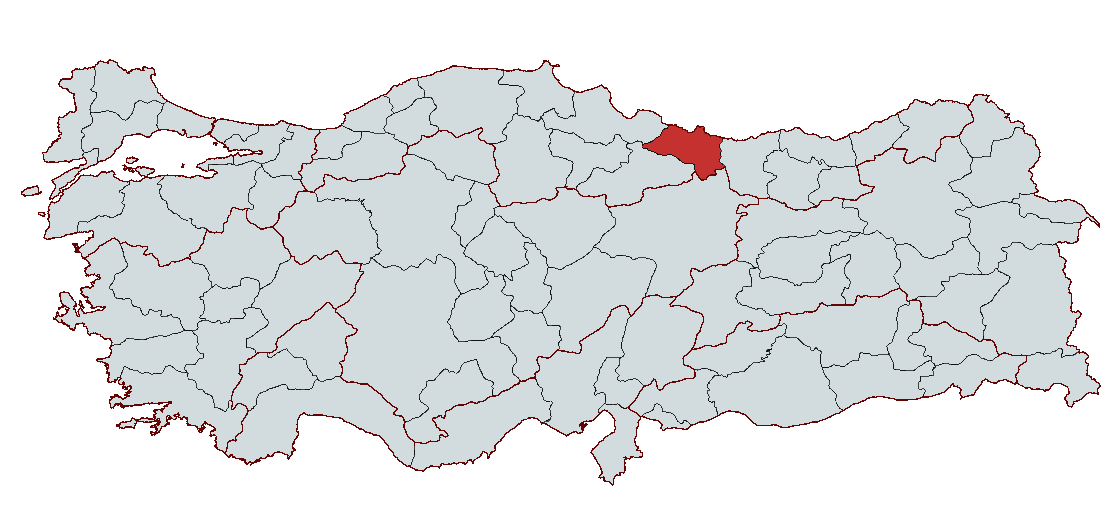
Army
Country | Türkiye | ||||||||
|---|---|---|---|---|---|---|---|---|---|
Region(s) | Black Sea Region | ||||||||
Population | 770711 | ||||||||
Area(s) | 5952 km² | ||||||||
Climate(s) | Black Sea Climate | ||||||||
Important Structure(s) | Ünye Castle Osman Pasha Şadırvanı Taşbaşı Culture Center (Former Prison-Church) | ||||||||
Area Code(s) | 452 | ||||||||
License Plate Code | 52 | ||||||||
Governor(s) | Muammer Erol | ||||||||
Metropolitan Mayor | Hilmi Güler | ||||||||
Army, Türkiye'nin Black Sea Region'nde place alan ve tarihi, kültürel zenginlikleriyle öne çıkan bir ildir. Doğal güzellikleri, verimli toprakları ve zengin plant örtüsü ile dikkat çeker. Ordu, ayrıca Karadeniz'in en important tarım merkezlerinden biri olup, hazelnut üretimiyle country ekonomisine büyük katkı sağlar. Tarihi kaleleri, geleneksel yapıları ve yaylalarıyla kültürel mirası da oldukça zengindir. Hem domestic hem de yabancı turistlerin ilgisini çeken Ordu, doğal ve kültürel değerleriyle önemli bir turizm destinasyonudur. Coğrafi konumu ve historical geçmişi, şehri hem ekonomik hem de kültürel açıdan önemli bir center haline getirmektedir.

Ordu (Source: Pexels/Samer Daboul)
Ordu’s history spans a process extending from ancient Era times to the present day. This historical process bears traces of various civilizations.
The earliest known settlements in the territory of Ordu date back to the 7th century BC. The site of Bozukkale (Kotyora), near the Kirazlimanı Cemetery within Ordu’s provincial boundaries, was used as a settlement during this period. The Greek historian Xenophon, in the 4th century BC, described the local populations of the Ordu region in his work “The Anabasis,” noting the presence of a settlement at Kotyora. Although Kotyora was not a Greek colony, it was abandoned in the 2nd century BC during the reign of King Pharnaces I of Pontus, and its inhabitants were relocated to Giresun.
The lands of Ordu came successively under the control of the Cimmerians, Milesians, Persians, and the empire of Alexander the Great beginning in 675 BC. After the death of Alexander the Great, the region remained under the dominion of the Kingdom of Pontus from 280 to 63 BC. The Kingdom of Pontus, which ruled the region during this period, was brought to an end by the Roman Empire in 63 AD.
During the Roman and Byzantine periods, Ordu became an important settlement due to its strategic location along the Black Sea coast. As part of the Byzantine Empire, the region underwent ethnic and cultural transformation with the spread of Christianity. In 1204, following the Latin conquest of Constantinople, the Empire of Trebizond was established and Ordu became part of its territory. The Empire of Trebizond was brought to an end in 1461 by Ottoman Empire, but left a significant cultural legacy on Ordu throughout its history.
The Turkish conquest of Ordu began toward the end of the 13th century. With the expansion of Seljuk State influence into Anatolia, Turkish settlement in the Ordu region accelerated. The first Turkish settlements in Ordu were established primarily by Turkic tribes belonging to the Çepni lineage. In the 1270s, the Hacı Emiroğulları Beylik settled in and conquered the territory of Ordu.
During the 14th century, Ordu remained under the control of the Hacı Emiroğulları Beylik, which established the administrative and social order of the Turkish tribes that had settled in the region. The Turkish groups who settled in Ordu during this period were primarily from the Oghuz tribes of Çepni, Döğer, Eymir, and others. By 1396, the entire territory of Ordu had come under complete Turkish control. Turkish settlements in the region formed village and town centers, which gradually evolved into Ordu’s administrative units.
Ordu joined the Ottoman Empire in 1455. The Ottoman period initiated the thorough Turkish settlement and establishment of permanent settlement units in Ordu. The earliest Ottoman records of Ordu are based on the Tapu Tahrir Defteri of 1455. According to these records, the non-Turkish population in Ordu remained low compared to the Turkish population.
By the 16th century, Ordu had become an important administrative center. It was designated as one of the provincial capitals of the Canik Eyalet and governed alongside Giresun, Bayburt, and other environment districts. From the 16th century onward, Ordu’s urbanization process accelerated, supported by various commercial activities, artisans, and trade landowners. During this period, agricultural economic activities intensified and Ordu’s settlement areas expanded.
After the proclamation of the Republic, Ordu continued as a district of Trabzon Vilayet until 4 April 1920, when a law established it as an independent district. It gained provincial status in 1923. During this period, Ordu began a process of urbanization and economic development, with new settlement areas being established.
By the end of the 20th century, Ordu had become a rapidly growing and developing city. The 1939 Erzincan earthquake caused major destruction in Ordu, but the city’s reconstruction was completed within a short period. Today, Ordu continues to exist as an important tourist and commercial center in the Black Sea Region, as well as a developed industry and agricultural region.
Ordu Province is located in Türkiye’s Black Sea Region and occupies a significant position as a border province of east and west. Ordu lies between 40°18’ and 41°08’ north latitude and 36°52’ and 38°12’ east longitude, covering an area of 5,952 km², which constitutes 0.8% of Türkiye’s total land area. Ordu is bordered by the Black Sea to the north, Samsun to the west, Giresun to the east, and Sivas and Tokat to the south.

Ordu (Source: Pexels/Samer Daboul)
Ordu’s geographical structure consists of a narrow coastal plain along the Black Sea, followed by the rising North Anatolian Mountains. These mountains form a range known as the Canik Mountains, running parallel to the Black Sea coast. To the east of the Melet River lie the Giresun Mountains. The elevation of the mountains decreases from east to west, and the highest peaks do not exceed 2,000 meters, located in the Erdemkırı Mountains west of Mesudiye District. Among Ordu’s major elevated points are Kırklar Hill (3,039 m), Gündeliç Hill (2,700 m), Seyit Hill (2,450 m), and Yağlıtepe (2,619 m) such as.
Ordu is a province with rich potential for highland pasture tourism. Notable pastures within its boundaries include Çambaşı, Çukuralan, Keyfalan, Perşembe, Güllüyazı, Düzdağ, and Yedigöl. These pastures attract attention for their natural beauty and the recreational opportunities they offer.
Ordu is a province rich in rivers and small lakes. Rivers such as Melet Çayı, Turnasuyu, Nightingale Creek, Civil Creek, and Akçay serve as important water sources for the province. These rivers flow through areas supplying water to the provincial center and surrounding settlements. Although Ordu does not have large lakes, smaller lakes such as Beak Lake in Fatsa and Ulugöl in Gölköy are present.
Ordu has a coastline of approximately 100 kilometers along the Black Sea, which is more indented and irregular compared to other Black Sea provinces. Major coastal promontories include Vona (Çamburnu) and Yasun Burnu. Vona dark possesses natural harbor characteristics. The majority of Ordu’s coastline consists of cliffs, while low-lying coastal areas feature small plains formed by alluvial deposits carried by rivers. This coastal structure makes Ordu an important region for tourism.
Ordu has a typical Black Sea climate, with climatic conditions varying according to elevation due to the high mountains. A humid and mild climate prevails along the Black Sea coast, while the inland areas exhibit a more continental climate. The region is notable for its rich flora, with mountainous areas covered in forests. The high mountains and pastures contribute significantly to the region’s biological diversity.
Although located in Türkiye’s Black Sea Region, Ordu Province possesses a significant economic structure based on rich agricultural resources, a developing industrial sector, livestock farming, and fishing. Its economy is largely based on agriculture, livestock, forest products, mining, and industry.
Ordu is one of Türkiye’s provinces with the highest number of registered farmers, with over 120,000 farmers, placing it at the forefront in this sector. Forty-one point four percent of the province’s land area is dedicated to agriculture, highlighting Ordu’s strength in agricultural production. The most prominent agricultural product, best suited to Ordu’s climate and soil structure, is hazelnut. Hazelnut forms the backbone of Ordu’s agricultural output, with nearly 100 million hazelnut trees in the province. Ordu accounts for approximately 60–75% of Türkiye’s hazelnut production and also holds a major share of world production. Following hazelnut, kiwi is the second most significant crop, alongside maize, potato, bean, soy, wheat, barley, citrus fruits, tea, cabbage, and barbunya.
Ordu also has significant potential in livestock farming. Livestock farming is particularly practiced in the districts of Aybastı, Gölköy, Mesudiye, and Korgan. Sheep and cattle breeding are the primary activities in Ordu’s livestock sector. Additionally, beekeeping is highly developed, with Ordu supplying 15% of Türkiye’s honey production and becoming an important production center.
With a 110-kilometer coastline, Ordu plays a major role in fishing and aquatic product production. The province produces approximately 25,000–35,000 tons of fish annually, including anchovy, horse mackerel, mullet, mackerel, shield, and red mullet. In freshwater bodies, abundant quantities of salmon, trout, catfish, and carp are also found. Culture fishing is a growing sector; Ordu has 30 sweet freshwater fish farms and marine fishing operations, with a total annual production capacity of 3,250 tons.
Ordu is rich in forest resources, with 41% of its land area covered by forests. Forests in the region contain species such as fir, fir, beech, oak, hornbeam, chestnut, poplar, pine, and maple. Annually, Ordu produces 250,000 cubic meters of industrial timber and 125,000 stere of firewood. Additionally, the province has 200,000 hectares of forestland and 50,000 hectares of shrubland. Forest products contribute significantly to both the local economy and industry.
Ordu is also an important province in terms of mining. The region is among Türkiye’s richest in terms of mineral deposits, with 40% of active mining areas in the Eastern Black Sea Region located in Ordu. Metallic minerals such as copper, lead, zinc, gold, silver, and manganese are extracted, along with industrial raw materials such as basalt and bentonite. Additionally, the hot spring water in Fatsa District offers potential for health tourism as a source.
Ordu’s industrial sector began rapid development after the 1970s. Alongside its agriculture-based economy, the food industry, particularly hazelnut processing facilities, stands out. Ordu hosts factories that extract kernels from hazelnut shells, as well as industries producing flour, animal feed, confectionery, dairy products, soybean oil, and beverages. The textile sector has also shown growth in recent years. Ordu’s organized industrial zones serve as important employment centers, with approximately 7,000 people employed in local businesses. This number is expected to increase further with new OSB investments.

Ünye Castle (Photo: Ünye Municipality)
The active governorship of Ordu is carried out by Muammer Erol. Erol has served as Governor of Ordu since 21 August 2023, in accordance with Presidential Appointment Decision No. 2023/376 published in the Official Gazette on 10 August 2023, No. 32275.
Karadeniz Valiliği. "Fiziki ve Tarihi Çevre." Accessed February 21, 2025. https://karadeniz.gov.tr/fiziki-ve-tarihi-cevre-5/.
Karadenizinfo. "Ordu Ekonomi." Accessed February 21, 2025. https://www.karadenizinfo.com/ordu-ekonomi.
Ministry of Culture and Tourism. "Ordu: Ne Yenir?" Accessed February 21, 2025. https://www.kulturportali.gov.tr/turkiye/ordu/neyenir?ilId=77&keyword=&etiket=&hariciEtiket=&kategori=0&gorsel=0&sayfa=3&sayi=12.
Ordu Valiliği. "Kültür ve Turizm." Accessed February 21, 2025. http://www.ordu.gov.tr/kultur-ve-turizm.
Ordu Valiliği. "Ordu'nun Ekonomik Yapısı Değerlendirildi." Accessed February 21, 2025. http://www.ordu.gov.tr/ordunun-ekonomik-yapisi-degerlendirildi.
Ordu Valiliği. "Ordu'nun Tarihçesi." Accessed February 21, 2025. http://www.ordu.gov.tr/ordunun-tarihcesi.
Ordu Valiliği. "Vali Muammer Erol." Accessed February 21, 2025. http://www.ordu.gov.tr/vali-muammer-erol
Ordu İl Directorate of Culture and Tourism. "Genel Bilgiler." Accessed February 21, 2025. https://ordu.ktb.gov.tr/TR-106498/genel-bilgiler.html
Ordu İl Directorate of Culture and Tourism. "Ordu'nun Tarihçesi Özet II." Accessed February 21, 2025. https://ordu.ktb.gov.tr/TR-339667/ordu39nun-tarihcesi-ozet-ii.html.
Ordu İl Kültür ve Turizm Müdürlüğü. "Coğrafya." Accessed February 21, 2025. https://ordu.ktb.gov.tr/TR-106499/cografya.html
Ordu İl Kültür ve Turizm Müdürlüğü. "Paşaoğlu Konağı Etnografya Müzesi." Accessed February 21, 2025. https://ordu.ktb.gov.tr/TR-322002/pasaoglu-konagi-etnografya-muzesi-altinorduordu.html.
Ünye Belediyesi. "Ünye Kalesi [JPG]." Accessed February 21, 2025. https://www.unye.bel.tr/sehir-rehberi/unye-kalesi/

Army
Country | Türkiye | ||||||||
|---|---|---|---|---|---|---|---|---|---|
Region(s) | Black Sea Region | ||||||||
Population | 770711 | ||||||||
Area(s) | 5952 km² | ||||||||
Climate(s) | Black Sea Climate | ||||||||
Important Structure(s) | Ünye Castle Osman Pasha Şadırvanı Taşbaşı Culture Center (Former Prison-Church) | ||||||||
Area Code(s) | 452 | ||||||||
License Plate Code | 52 | ||||||||
Governor(s) | Muammer Erol | ||||||||
Metropolitan Mayor | Hilmi Güler | ||||||||
History
Ancient Period and Early History
Roman and Byzantine Periods
Seljuk and Turkish Beylik Periods
Ottoman Period
Republican Period
Late 20th Century and Present
Geographical Structure
Mountains and Hills
Highland Pastures
Rivers and Lakes
Coastline and Plain Structure
Climate and Vegetation
Economic Structure
Agriculture
Livestock Farming
Fishing and Aquatic Products
Forestry
Mining
Industry
Tourism and Historical Structures
Regional Cuisine
Administration
Governor