

 Recently Added:
This article was automatically translated from the original Turkish version.
Gazze Court is a civil society-based international people’s court initiative aimed at examining under the framework of international law the military operations and actions against civilians carried out by Israel in the Gaza Strip after October 7, 2023.
The court has operated as an independent judicial platform grounded in public conscience, particularly in situations where states have failed to assume responsibility at diplomatic or judicial levels. Although it does not possess formal enforcement powers, the initiative has sought to create “a space where conscience can speak when justice is silenced.”
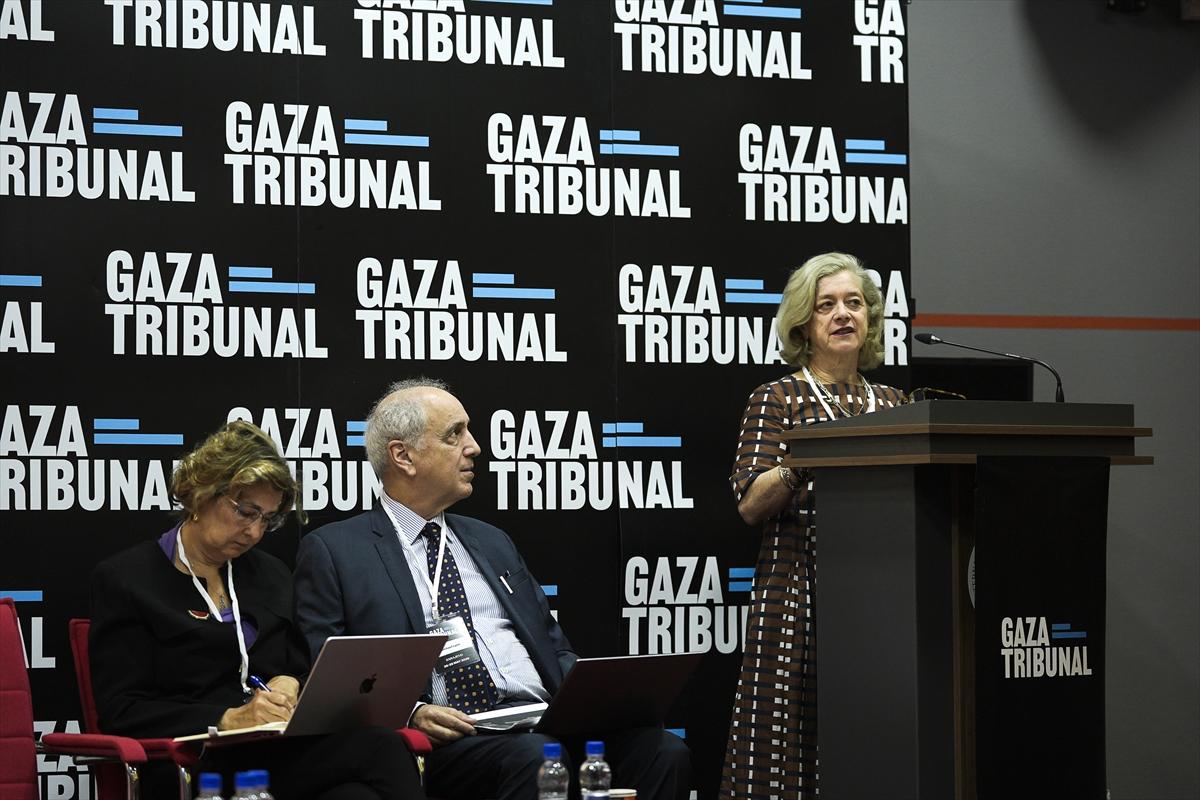
Gazze Mahkemesi girişiminin ilk halka açık oturumu, 26 Mayıs 2025 (Anadolu Ajansı)
The final session of the Gazze Court began in Istanbul on October 23, 2025. The four-day Istanbul session concluded on October 26, 2025 with the issuance of its final ruling, which was prepared and presented to the public by a body known as the “Conscience Jury.”
In its ruling, the jury stated: “Israel is committing genocide against the people of Gaza within a broad apartheid regime rooted in the supremacist ideology of Zionism.” The jury also affirmed the principle: “When law is silenced by power, conscience becomes the ultimate arbiter.”
The full text of the ruling defines the violations experienced in Gaza under the subcategories of genocide:
The ruling further states that Israel’s actions have not been limited to military attacks but constitute a comprehensive policy of annihilation aimed at eradicating the living conditions of an entire population. The jury therefore noted that these actions “correspond to the acts enumerated in Article 2 of the Genocide Convention.”
The Gazze Court initiative was established in response to the failures in the application of international law following the military confrontations in the Gaza Strip after October 7, 2023. The court was formally constituted during a two-day preparatory meeting held in London in November 2024, attended by approximately 100 participants. International law expert Richard Falk, who served as the United Nations Special Rapporteur on the situation of human rights in the Palestinian territories, chaired the initiative.
The court’s primary objective was to produce moral and legal documentation based on civilian testimonies in situations where state-based judicial processes have failed. In this regard, the initiative defined itself as a people’s court designed to fill the gaps left by institutions such as the International Criminal Court (ICC) and the International Court of Justice (ICJ).
The court aimed to create a structure in which not only governments but also peoples could contribute to international law, deriving its legitimacy not from state authorities but from the shared conscience of humanity. Inspired by the anti-apartheid movement in South Africa, the initiative prioritized mobilizing global public opinion against racial discrimination.
The organizational structure of the Gazze Court comprises an executive secretariat, a steering committee, advisory councils and thematic court chambers. The steering committee includes international lawyers, academics and activists such as Michael Lynk, Hilal Elver, Noura Erakat, Susan Akram, John Reynolds, Diana Buttu, Cemil Aydın and Penny Green.
During the London meeting, special sessions were held with Palestinian civil society organizations, ensuring their direct participation in the court process. These organizations include Law for Palestine, Al-Haq, Al-Mezan, Adalah, BADIL, Addameer and PCHR. The initiative was also supported by the Organization of Islamic Cooperation Youth Forum (ICYF), through which youth organizations from 50 member states and 16 Muslim minority organizations participated in the process.
The executive secretariat of the court was led by Dr. Ahmet Köroğlu, who adopted the principle of transparency in communications with the media and the public. Köroğlu was responsible for administrative coordination and international outreach of the court.
Following its establishment, the Gazze Court strengthened its structure through preparatory meetings held in various countries, aiming to enhance organizational capacity and define its ethical and legal framework.
The first expanded meeting took place in London on February 20–21, 2025. At this gathering, court members, steering committee representatives and second chamber participants convened to establish strategic coordination and the foundational principles of witness collection.
Following the London meeting, strategic consultation sessions were held in Istanbul on February 10, 2025. These discussions focused on clarifying the legal framework and preparing public statements.
In May 2025, meetings held in Alicante, Spain, finalized the report format for the Sarajevo public session, the media strategy and the methods for collecting witness testimonies. As a result, the court process was completed both in content and logistical terms.
The Gazze Court was structured independently of any state, international organization or political power. Its adjudicative methods are aligned with universal principles of international law but are grounded in conscience-based judicial practices enabled by direct civil society participation.
The court’s methodological framework was shaped through field-based testimonies, expert statements, document analysis and academic reports. The steering committee and jury panel formulated their decisions based on technical evidence and legal norms, yet these decisions carry no binding judicial authority. Nevertheless, the ethical weight of the rulings and their impact on international public opinion were established as the core objective.
The Gazze Court’s first public hearings were held from May 26 to 29, 2025, hosted by the International University of Sarajevo (IUS) in Sarajevo, the capital of Bosnia and Herzegovina. These four-day sessions constituted the court initiative’s first comprehensive public judicial process open to the public.
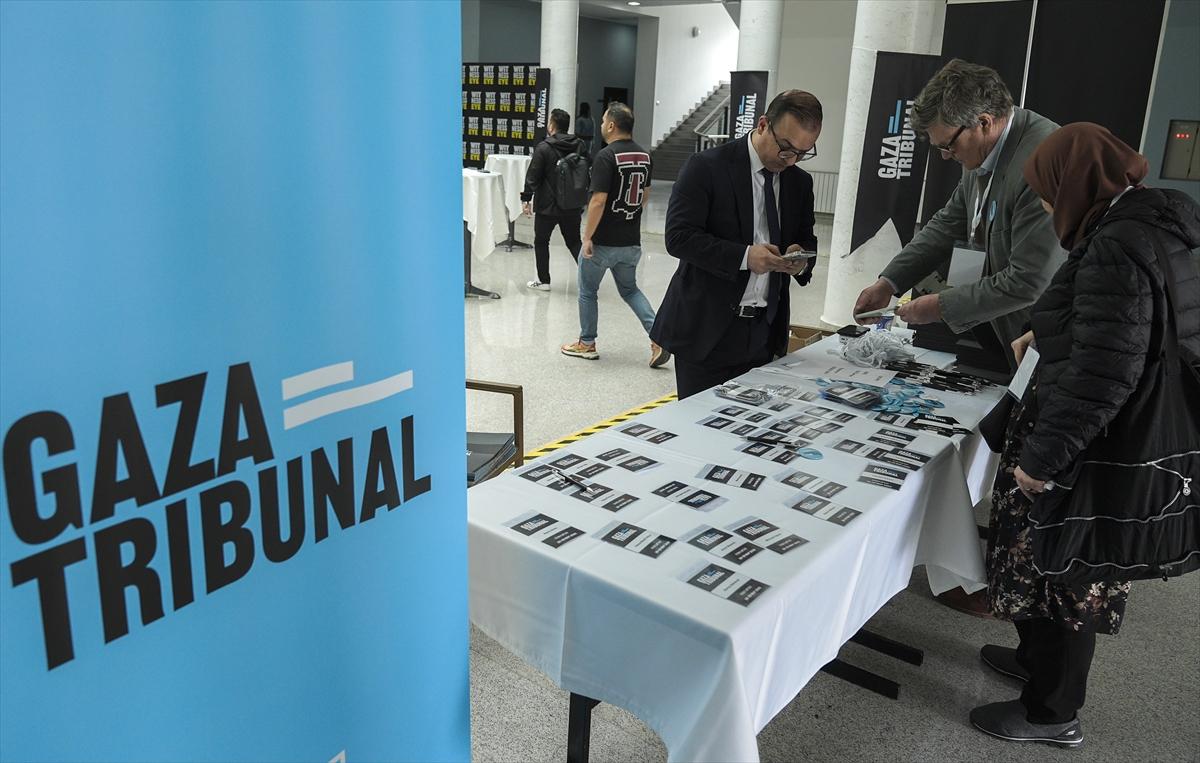
Gazze Mahkemesi girişiminin ilk halka açık oturumu, 26 Mayıs 2025 (Anadolu Ajansı)
The sessions were conducted with participation from academics, lawyers, human rights defenders, journalists and civil society representatives from numerous countries. Participants delivered presentations within thematically organized panels, sharing evidence and testimonies regarding events in the Gaza Stripwith the public.
The main themes addressed during the Sarajevo sessions were:
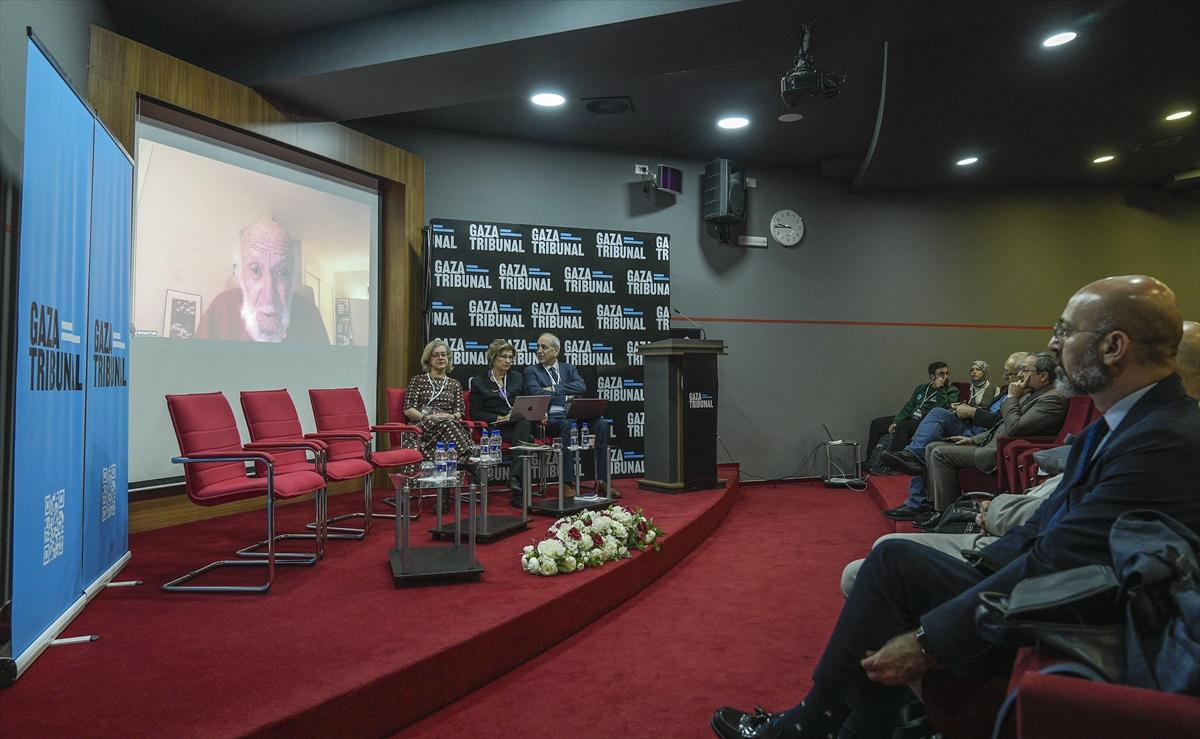
Gazze Mahkemesi girişiminin ilk halka açık oturumu, 26 Mayıs 2025 (Anadolu Ajansı)
Throughout the sessions, experts and individuals with field experience from various disciplines testified. Victims from Gaza, healthcare workers, media personnel and representatives of human rights organizations gave individual testimonies. A portion of these testimonies were conducted anonymously for security reasons.
Numerous academics and public intellectuals also contributed to the panels. Historical, sociological and legal assessments were presented by figures such as Penny Green, Ilan Pappé, Jeff Halper, Nadera Shalhoub-Kevorkian, Henrietta Zeffert, Omar Barghouti, Cemil Aydın and Victoria Brittain. Presentations drew on both field observations and international legal documents.
At the conclusion of the four-day proceedings, a report summarizing the findings and evaluations gathered during the court process was prepared. This document, publicly released on May 29, 2025, was titled the “Sarajevo Declaration” and represented the court’s first comprehensive assessment of its proceedings.
Anadolu Ajansı. “Gazze’de Yaşananları Araştırmak İçin Kurulan Gazze Mahkemesi Girişimi Bosna Hersek’te.” Accessed May 27, 2025.https://www.aa.com.tr/tr/dunya/gazzede-yasananlari-arastirmak-icin-kurulan-gazze-mahkemesi-girisimi-bosna-hersekte/3578767
Anadolu Ajansı. “Gazze’de Yaşananları Araştırmak İçin Kurulan Gazze Mahkemesi Girişiminin İlk Halka Açık Oturumu Başladı.” Accessed May 27, 2025.https://www.aa.com.tr/tr/dunya/gazzede-yasananlari-arastirmak-icin-kurulan-gazze-mahkemesi-girisiminin-ilk-halka-acik-oturumu-basladi/3580064
Gaza Tribunal. "Official Website." Accessed May 27, 2025.https://gazatribunal.com/
Gaza Tribunal. "Who Are We?" Accessed May 27, 2025.https://gazatribunal.com/who-are-we/
Gaza Tribunal. “Gaza Tribunal Holds Strategic Meetings in Istanbul.” gazatribunal.com. Accessed May 27, 2025.https://gazatribunal.com/gaza-tribunal-holds-strategic-meetings-in-istanbul/
Gaza Tribunal. “Gaza Tribunal Launched in London to Initialize Its Process.” gazatribunal.com. Accessed May 27, 2025.https://gazatribunal.com/gaza-tribunal-launched-in-london-to-initialize-its-process/
Gaza Tribunal. “Gaza Tribunal Makes Critical Progress in London Meetings, Sets Stage for Sarajevo Assembly.” gazatribunal.com. Accessed May 27, 2025.https://gazatribunal.com/gaza-tribunal-makes-critical-progress-in-london-meetings-sets-stage-for-sarajevo-assembly/
Gaza Tribunal. “Gaza Tribunal to Convene Landmark Public Assembly in Sarajevo.” gazatribunal.com. Accessed May 27, 2025.https://gazatribunal.com/gaza-tribunal-to-convene-landmark-public-assembly-in-sarajevo/
Saba News Agency. “Gaza Tribunal starts in Sarajevo to probe possible war crimes.” Saba News. Accessed May 27, 2025.https://www.saba.ye/en/news3488191.htm
The Gaza Tribunal is an international civil society initiative established as a people’s tribunal to evaluate Israel’s actions in the Gaza Strip within the framework of international law. First announced in November 2024 in London, the Tribunal was launched by a coalition of legal experts, academics, human rights advocates, and representatives of civil society organizations.

The first public session of the Gaza Tribunal initiative took place on May 26, 2025 (Anadolu Agency)
The Gaza Tribunal initiative was established in response to the failures in enforcing international law following the military conflict in the Gaza Strip after October 7, 2023. The Tribunal was officially launched through a two-day preparatory meeting held in London in November 2024, attended by approximately 100 participants. The initiative is chaired by Richard Falk, an international law expert and former United Nations Special Rapporteur on the situation of human rights in the Palestinian territories.
The core objective of the Tribunal has been to produce legal and moral documentation based on civilian testimonies, particularly in cases where state-based judicial mechanisms have proven ineffective. In this respect, the initiative defines itself as a people’s tribunal intended to complement the gaps left by institutions such as the International Criminal Court (ICC) and the International Court of Justice (ICJ).
The Tribunal aims to establish a framework in which not only states but also peoples can contribute to the development of international law. Its legitimacy is intended to be drawn not from governmental authority, but from the shared conscience of humanity. Inspired by the anti-Apartheid movement in South Africa, the initiative prioritizes mobilizing global civil society in the face of systemic injustice.
The organizational structure of the Gaza Tribunal consists of a Steering Committee, Advisory Councils, and issue-focused Chambers. The Steering Committee includes internationally recognized legal scholars, academics, and activists such as Michael Lynk, Hilal Elver, Noura Erakat, Susan Akram, John Reynolds, Diana Buttu, Cemil Aydın, and Penny Green.
During the London meeting, special sessions were held with Palestinian civil society organizations, which were officially designated as direct contributors to the Tribunal’s process. Among these organizations are Law for Palestine, Al-Haq, Al-Mezan Center for Human Rights, Adalah, BADIL Resource Center, Addameer, and the Palestinian Centre for Human Rights (PCHR). The initiative has also received institutional support from the Islamic Cooperation Youth Forum (ICYF), through which 50 youth organizations from member states and 16 representing Muslim minorities have taken part in the proceedings.
The Tribunal’s coordination has been facilitated by an Executive Secretariat, which has adopted the principle of transparency in its communication with the press and the public. Ahmet Köroğlu has been reported to serve as the Executive Secretary in charge of organizing activities.
Following its initial announcement, the Gaza Tribunal initiative was structured through a series of preparatory meetings held in different countries. These meetings aimed both to strengthen organizational capacity and to establish the legal and ethical framework of the Tribunal.
The first extended meeting took place in London on February 20–21, 2025. During this gathering, Tribunal members, members of Chamber II, and representatives of the Steering Committee convened to work on principles of strategic coordination. This meeting was also instrumental in defining the scope of the Tribunal’s first public session planned for Sarajevo.
Subsequently, on February 10, 2025, a series of strategic consultations was held in Istanbul. These sessions focused on analyzing current developments, clarifying the legal framework, and preparing public communications. Richard Falk was joined in the Istanbul meetings by Executive Secretary Ahmet Köroğlu and Steering Committee members Hilal Elver and Penny Green.
In May 2025, a meeting held in Alicante, Spain, concentrated on the logistical aspects of the process. The agenda included discussion on the format of reports for the Sarajevo public session, media strategy, and the collection of witness testimonies. Through these meetings, preparations were finalized in both substantive and technical terms.
Throughout the preparatory phase, the initiative aimed not only to document ongoing violations, but also to develop a normative framework for preventing the recurrence of similar situations. All materials produced during the meetings were archived and submitted to the Tribunal’s expert jury for presentation during the Sarajevo and Istanbul sessions.
The Gaza Tribunal has been structured independently of any state authority, international institution, or political influence. While its adjudication procedures are aligned with the universal principles of international law, the Tribunal primarily relies on conscience-based judicial practices rooted in direct civil society participation.
The Tribunal’s methodological framework is based on field testimonies, expert statements, document analyses, and academic reports. The Steering Committee and the Jury of Conscience render decisions grounded in legal norms and evidentiary standards; however, these decisions do not carry formal judicial enforceability. Instead, their primary purpose is to exert ethical influence and shape international public opinion.
The initiative’s international positioning extends beyond scrutinizing Israel’s actions in Gaza. It also seeks to raise broader ethical debates on war crimes, policies of ethnic cleansing, and allegations of genocide. Accordingly, the Tribunal defines itself not only within the context of Palestine, but also as a platform capable of contributing to the evolution of global conscience-based jurisprudence.
The Gaza Tribunal’s first public session commenced on May 26, 2025, in Sarajevo, the capital of Bosnia and Herzegovina. The proceedings were held at the campus of the International University of Sarajevo (IUS), marking the Tribunal’s transition from the preparatory phase to its implementation stage.

The first public session of the Gaza Tribunal initiative took place on May 26, 2025 (Anadolu Agency)
The Tribunal was structured to be fully open to the public, with all sessions broadcast live through digital platforms. This arrangement was implemented in line with the Tribunal’s principle of transparency, aiming to ensure global accessibility and public engagement in the process.
The first day of the Sarajevo session was conducted under the International Law Chamber and featured a series of expert panels and witness presentations. Sessions titled “The Nakba and Colonial Genocide,” “Patterns of Genocide,” and “Specific Acts” provided legal, historical, and theoretical analyses of the ongoing situation.

The first public session of the Gaza Tribunal initiative took place on May 26, 2025 (Anadolu Agency)
During this session, field researchers, healthcare professionals, and local civil society representatives working in Gaza gave testimonies based on direct observations and personal experiences. Their accounts addressed the protection of civilians, forced population transfers, and practices of apartheid. Ethical and philosophical dimensions of the Tribunal were also integrated into the first day’s proceedings. Based on these witness narratives, documentation efforts were initiated, with the intention of archiving these materials for examination in future sessions.
The second day’s hearings are currently underway. In the coming days, the Tribunal’s thematic agenda is expected to expand to include topics such as “geopolitics,” “political economy,” “ethics and philosophy,” and the “historical context.” It has also been announced that a “Sarajevo Declaration” will be issued at the conclusion of the sessions.
Anadolu Ajansı. “Gazze’de Yaşananları Araştırmak İçin Kurulan Gazze Mahkemesi Girişimi Bosna Hersek’te.” Anadolu Ajansı. Accessed May 27, 2025. https://www.aa.com.tr/tr/dunya/gazzede-yasananlari-arastirmak-icin-kurulan-gazze-mahkemesi-girisimi-bosna-hersekte/3578767
Anadolu Ajansı. “Gazze’de Yaşananları Araştırmak İçin Kurulan Gazze Mahkemesi Girişiminin İlk Halka Açık Oturumu Başladı.” Anadolu Ajansı. Accessed May 27, 2025. https://www.aa.com.tr/tr/dunya/gazzede-yasananlari-arastirmak-icin-kurulan-gazze-mahkemesi-girisiminin-ilk-halka-acik-oturumu-basladi/3580064
Gaza Tribunal. Official Website. Accessed May 27, 2025. https://gazatribunal.com/
Gaza Tribunal. “Gaza Tribunal Holds Strategic Meetings in Istanbul.” gazatribunal.com. Accessed May 27, 2025. https://gazatribunal.com/gaza-tribunal-holds-strategic-meetings-in-istanbul/
Gaza Tribunal. “Gaza Tribunal Launched in London to Initialize Its Process.” gazatribunal.com. Accessed May 27, 2025. https://gazatribunal.com/gaza-tribunal-launched-in-london-to-initialize-its-process/
Gaza Tribunal. “Gaza Tribunal Makes Critical Progress in London Meetings, Sets Stage for Sarajevo Assembly.” gazatribunal.com. Accessed May 27, 2025. https://gazatribunal.com/gaza-tribunal-makes-critical-progress-in-london-meetings-sets-stage-for-sarajevo-assembly/
Gaza Tribunal. “Gaza Tribunal to Convene Landmark Public Assembly in Sarajevo.” gazatribunal.com. Accessed May 27, 2025. https://gazatribunal.com/gaza-tribunal-to-convene-landmark-public-assembly-in-sarajevo/
Gaza Tribunal. “Who Are We?” gazatribunal.com. Accessed May 27, 2025. https://gazatribunal.com/who-are-we/
Saba News Agency. “Gaza Tribunal starts in Sarajevo to probe possible war crimes.” Saba News. Accessed May 27, 2025. https://www.saba.ye/en/news3488191.htm
Following the completion of the Sarajevo hearings, the Sarajevo Declaration, issued to the public on 29 May 2025, serves as the primary document documenting the first official judicial proceedings of the Gaza Court. This declaration was prepared based on testimonies, documents, and expert assessments presented during the four-day hearings.
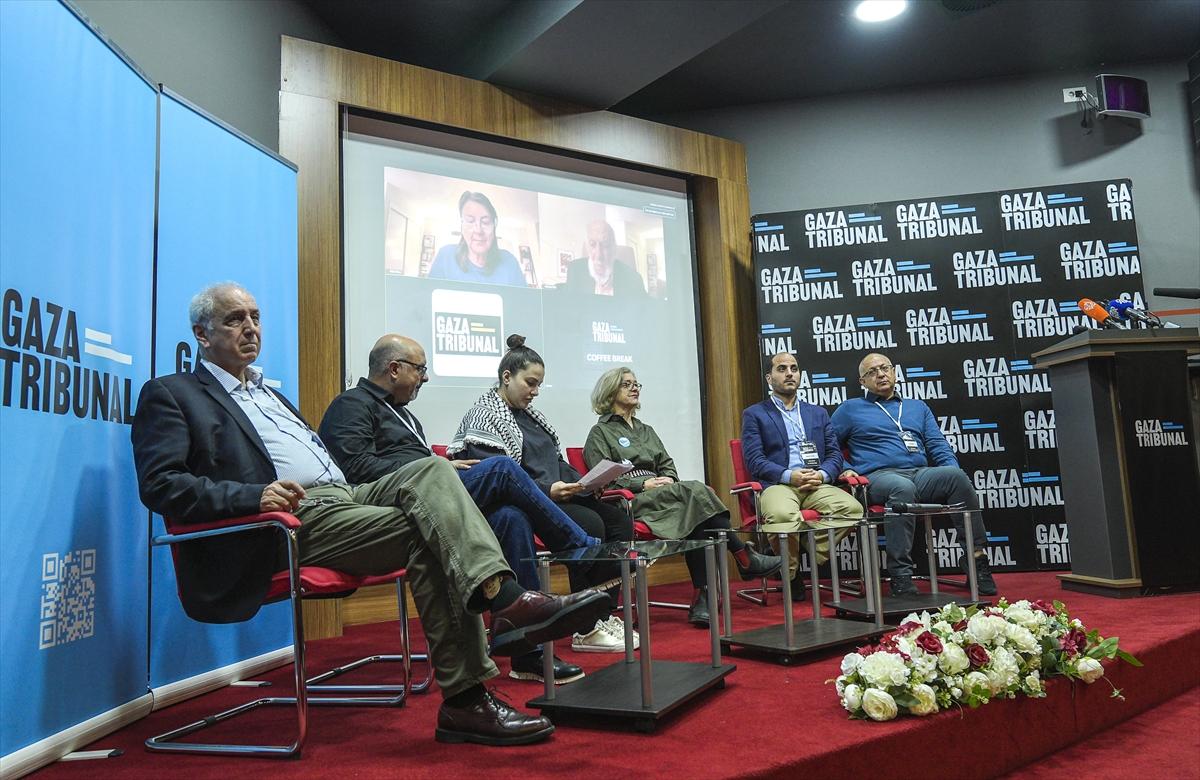
Mahkeme üyeleri Saraybosna Bildirisini kamuoyuna açıklıyor, 29 Mayıs 2025 - (Anadolu Ajansı)
The declaration assesses the practices alleged to have been carried out by Israel in the Gaza Strip as constituting “genocide” and “state crime.” These classifications are justified through interpretations grounded in international criminal law and the Genocide Convention. The declaration emphasizes that these crimes target not only individuals but a collective people.
Furthermore, the declaration recognizes the right of the Palestinian people to self-determination as an inalienable right under international law, in accordance with the principles of “jus cogens” (peremptory norms) and “erga omnes” (rights owed to all). In this context, it affirms the legitimacy of the rights of occupied populations to resist and to demand political independence.
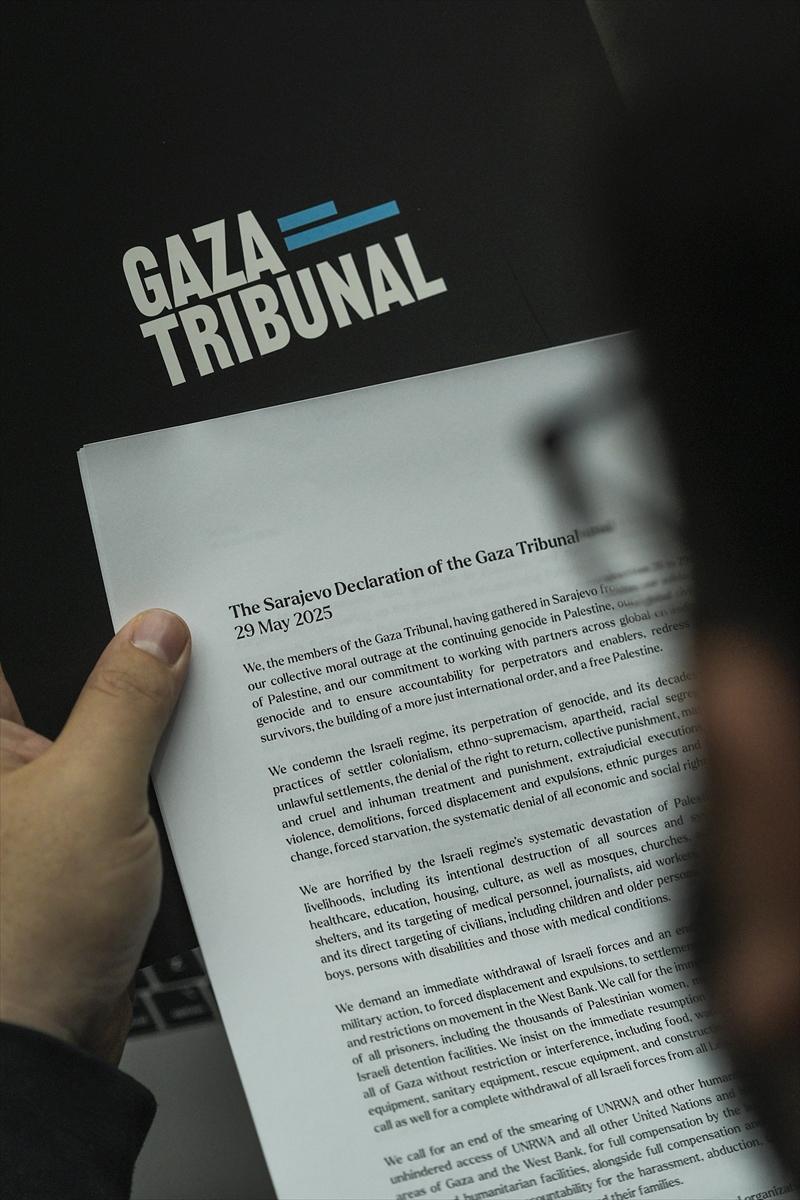
Saraybosna Bildirisi, 29 Mayıs 2025 - (Anadolu Ajansı)
The text calls on the Israeli government to immediately halt its military operations and forced displacement practices against civilians. These practices are identified as violations of international humanitarian law and human rights norms.
The declaration criticizes the international community, particularly Western states and mainstream media outlets, for their inaction. It characterizes their passive or obfuscating approaches to the Palestinian issue as “abdications of moral responsibility,” stating that silence or biased policies have deepened the conflict.
The court declaration also underscores the necessity of implementing decisions issued by judicial bodies such as the International Criminal Court (ICC) and the International Court of Justice (ICJ). It asserts that the jurisdictional authority of these institutions must not be obstructed by political considerations. The declaration regards the preservation of the independence of international judicial bodies as a prerequisite for global justice.
Anadolu Ajansı. “Gazze Mahkemesi’nin Sonuç Bildirisinde İsrail’in İşlediği Soykırım Suçu Kesin Bir Dille Kınandı.” Accessed May 29, 2025.https://www.aa.com.tr/tr/dunya/gazze-mahkemesi-nin-sonuc-bildirisinde-israilin-isledigi-soykirim-sucu-kesin-bir-dille-kinandi/3583092#
Gaza Tribunal. "The Sarajevo Declaration of the Gaza Tribunal." gazatribunal.com. Accessed May 29, 2025.https://gazatribunal.com/the-sarajevo-declaration-of-the-gaza-tribunal/
The final session of the Gaza Court, held in Istanbul, took place between 23 and 26 October 2025 at the Prof. Dr. Cemil Bilsel Conference Hall of Istanbul University. This session marked the culmination of an independent, civil society-based international initiative aimed at examining alleged war crimes and crimes against humanity committed by Israel in the Gaza Strip.
The court was presided over by Prof. Dr. Richard Falk, former United Nations (UN) Special Rapporteur on Palestine. He was joined by former UN rapporteurs Michael Lynk and Hilal Elver, as well as Raji Sourani, Susan Akram, Ahmet Köroğlu, Diana Buttu, Cemil Aydın, and Penny Green.
The final session lasted four days and involved participation from academics, human rights defenders, journalists, healthcare workers, and Palestinian witnesses. Simultaneous interpretation services were provided, and testimonies were heard both in person and online.
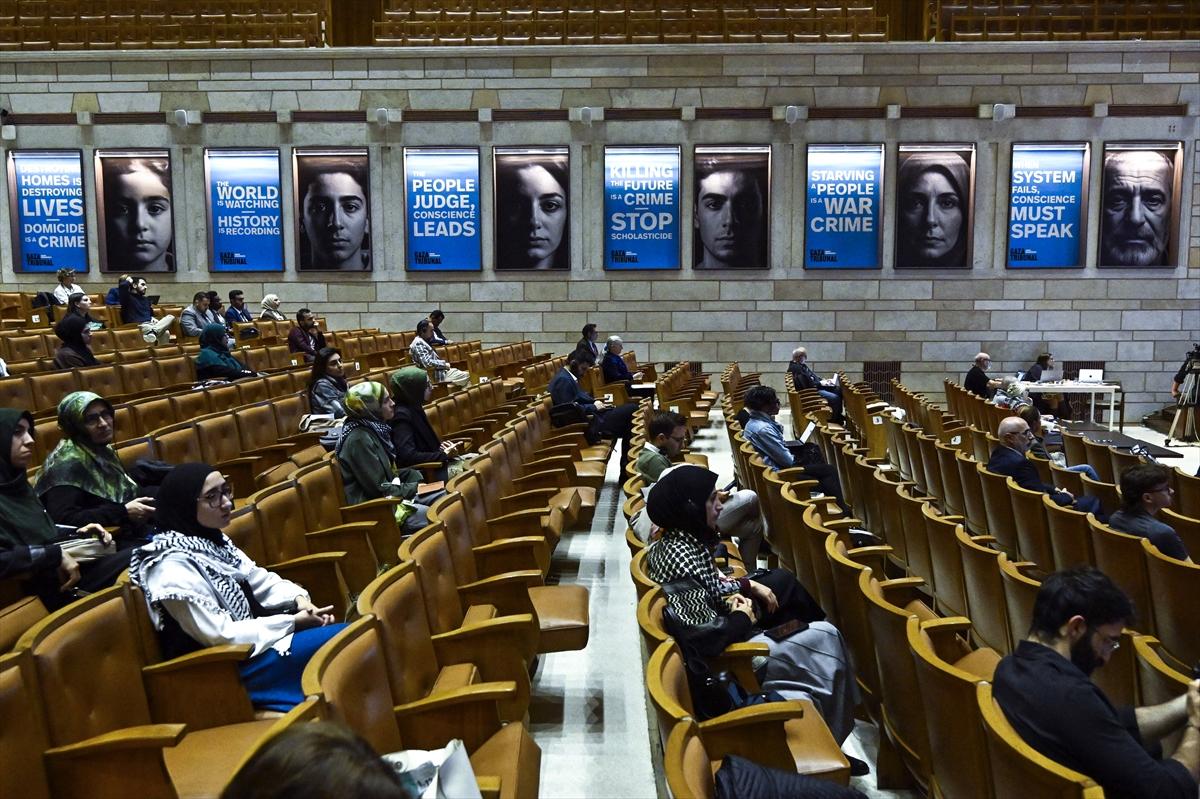
The final session of the 'Gaza Court', established to address Israel's war crimes, in Istanbul, 24 October 2025 - (Anadolu Ajansı)
The first day of the Gaza Court began with an opening statement by former UN Special Rapporteur on Palestine, Prof. Dr. Richard Falk. Falk stated that the genocide occurring in Gaza had become an urgent historical matter, rejecting the assumption that these events could be dismissed as mere history. He declared: “We must not forget that the surviving population of Gaza confronts homelessness, hunger, illness, injuries, and various forms of violence every single day.”
Falk noted that despite the current ceasefire process, Israeli attacks could resume at any time and that the Tel Aviv government has not abandoned its goal of “Greater Israel.” He emphasized that no mechanism exists to hold Israel accountable for its crimes, while the international community continues to legitimize the perpetrators as “peace envoys.” Falk underscored that the Gaza Court is “a form of social resistance against Israeli state propaganda.”
Falk explained that the Court would hear testimonies and expert opinions regarding allegations of genocide and crimes against humanity, and that a verdict would be delivered by a jury at the conclusion of the proceedings, accompanied by a detailed document outlining the reasoning. This document is planned to be published alongside a book summarizing the work of the Gaza Court.
During the opening session, the “Conscience Jury” was introduced. Its members included writer Kenize Mourad, academic and activist Chandra Muzaffar, Professor Christine Chinkin from the London School of Economics and Political Science (LSE), Dr. Ghada Karmi, activist Sami Al Arian, poet Tamim Al Barghouti, and academic Biljana Vankovska. The rapporteurs were writer Michelle Burgis-Kasthala and Dr. Wesam Ahmed.
The jury will evaluate witness testimonies and evidence presented over the four-day session to contribute to the drafting of the verdict. Falk emphasized that jury members would consider not only past violations but also “ongoing events.”
The final session of the 'Gaza Court' established for Israel's war crimes, held in Istanbul, on 23 October 2025 - (Anadolu Ajansı)
One of the thematic sessions on the first day was titled “Overview of the Gaza Court Panels’ Work.” Professor Susan Akram from Boston University School of Law addressed existing gaps in the current international legal system. She stated that institutions such as the International Criminal Court (ICC) and the International Court of Justice (ICJ) have been “ineffective in addressing genocide, ethnic cleansing, and crimes against civilian populations.” Akram affirmed that the purpose of the Gaza Court is to document these structural deficiencies.
In the same session, former UN official Craig Mokhiber, in his address titled “International Relations and World Order,” stated that the international system has failed to halt the genocide in Palestine. Mokhiber declared: “Despite the live documentation of Israel’s crimes, the international system has been unable to stop the genocide.” He further noted that global powers have obstructed effective ceasefire measures and that civil society has assumed responsibility within a context of systematic injustice.
Professor Cemil Aydın from the University of North Carolina, in the session “History, Ethics, and Philosophy,” explained that colonial governance in Palestine was an externally imposed order following the multi-religious structure of the Ottoman era. Aydın stated: “Genocides are always legitimized under the pretext of security.” He also asserted that the rewriting of history serves to erase Palestinian identity.
Professor Penny Green from Queen Mary University of London summarized the findings of the first general session held in Bosnia and Herzegovina, emphasizing the international system’s “complete failure” in preventing war crimes. Green declared: “Palestinians’ lives are in danger; the legitimacy of international law is also in danger.”
Later on the first day, a session titled “Global Conscience Testimonies” was held. Palestinian lawyer Raji Sourani stated that international justice mechanisms have proven ineffective against attacks and asserted that “peace in Palestine is only possible when the right to self-determination is recognized.” Indian writer Arundhati Roy, in a written statement, declared that “Israel is conducting a live-streamed genocide against Palestinians.” American actress Marcia Cross stated that 85 percent of Gaza has been destroyed and that the international community has “failed in its mechanisms to protect life.”
Human rights defender Ömer Süleyman declared: “The Palestinian people have suffered enough, but it is essential that these events be passed on to future generations.” British musician Roger Waters described the Court as a “moral imperative” and urged: “We must continue to raise our voices.”
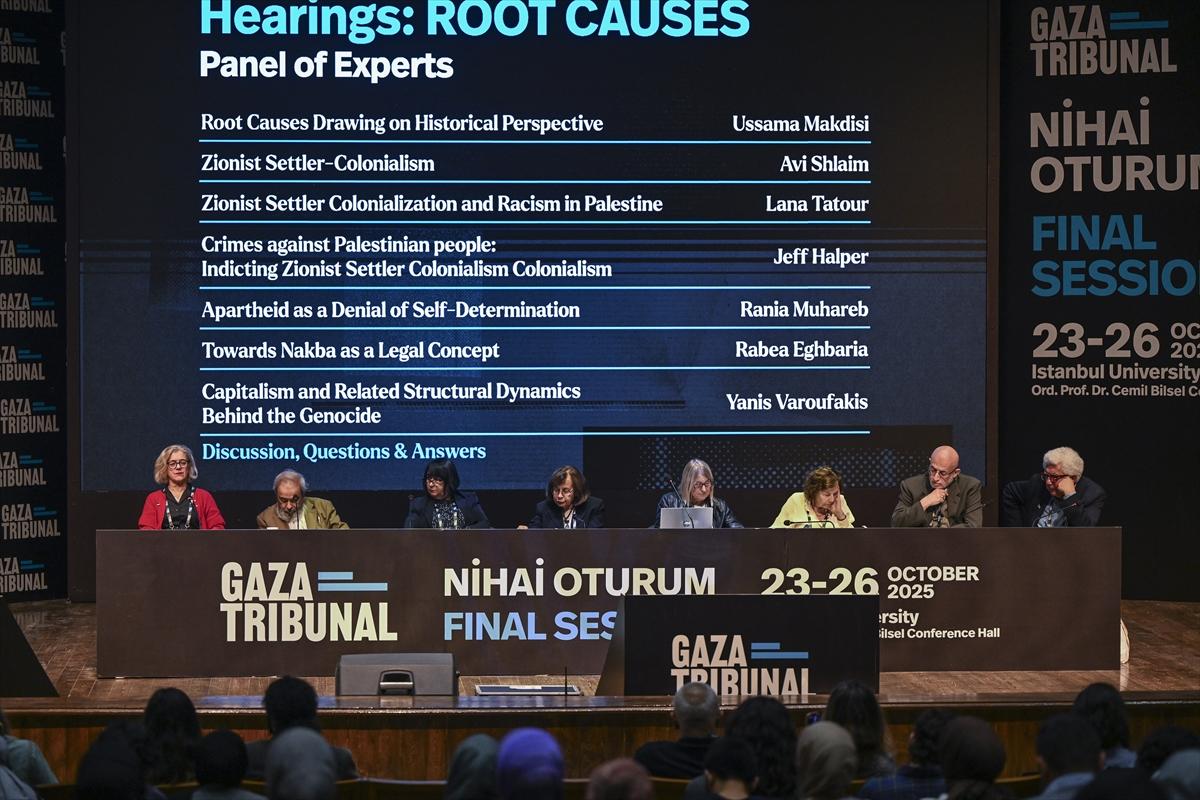
On the same day, during the “Root Causes Hearing” panel, experts assessed the historical foundations of Israel’s policies toward Gaza. Professor Avi Shlaim from Oxford University explained that Israel is a settler-colonial state built on the displacement of the indigenous population. Dr. Lana Tatour from the University of New South Wales stated that Zionism has legitimized systematic racism against Palestinians. Jeff Halper, President of ICAHD, asserted that Israel continues its destruction in Gaza by “displacing the indigenous population.”
Professor Ussama Makdisi from the University of California described the process of “historical erasure” of Palestinians. Rania Muhareb from Harvard University emphasized that the apartheid system has eliminated Palestinians’ right to self-determination. Palestinian lawyer Rabea Eghbaria stated that “Nakba must be recognized as a legal concept.” Former Greek Finance Minister Yanis Varoufakis explained the “economic gains of genocide.”
During the opening day’s session on “Crimes and Witness Testimonies,” Haider Eid recounted forced displacements and losses he experienced in Gaza. Eid stated he lost 54 family members, 39 colleagues from his university, and over 280 students. Attorney Noura Erakat described the events in Gaza as “the collapse of international law.” Radwan Abu Muammar recounted that 30 out of 51 people were killed in the attack on Han Yunus.
Samer Abu Foura described witnessing sexual abuse and mistreatment at border crossings. Mahmoud Al-Khatib stated that young men were systematically executed in Rafah. Raghad Suleiman reported that civilians in detention were attacked by dogs, while Israa Alsharif stated that healthcare workers have been systematically targeted.
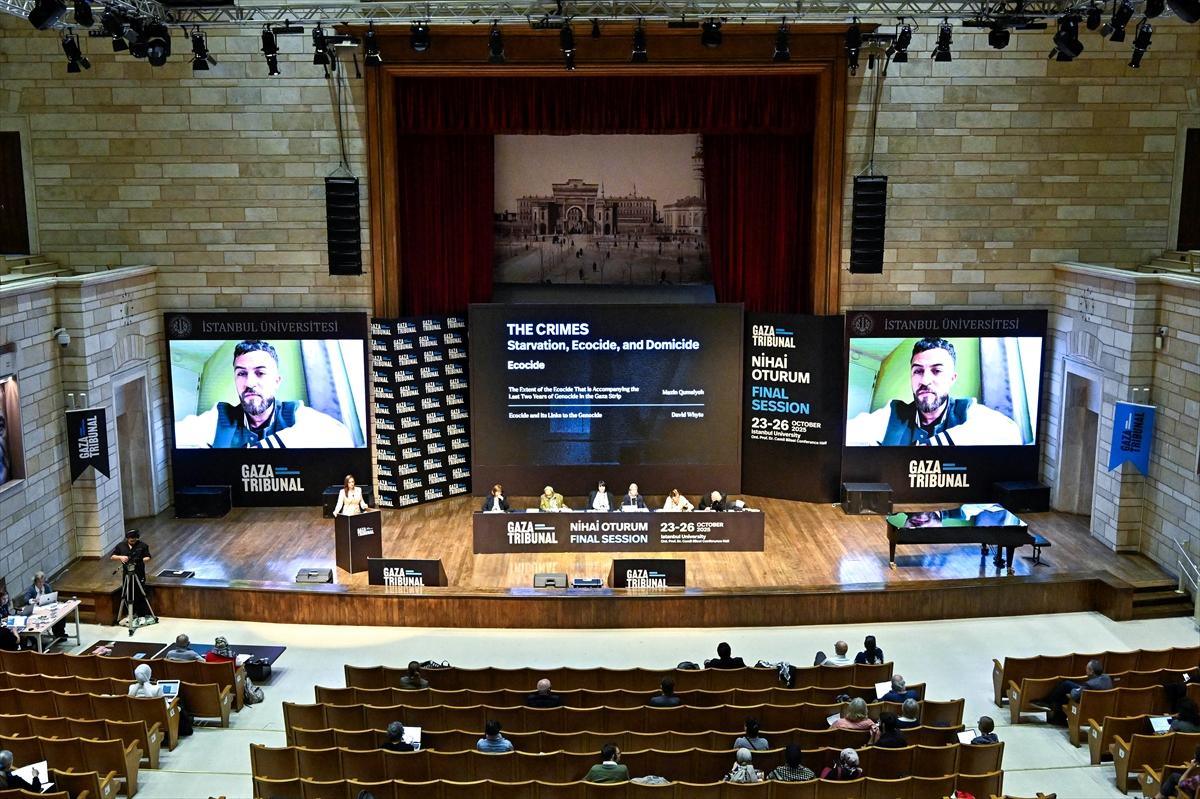
The final session of the 'Gaza Court', established to address Israel's war crimes, in Istanbul, 24 October 2025 - (Anadolu Ajansı)
The second day of the Gaza Court focused on three main themes under the heading “Crimes”: starvation, ecocide, and destruction of housing. The session was held at the Prof. Dr. Cemil Bilsel Conference Hall of Istanbul University under the chairmanship of former UN Special Rapporteur on Palestine, Prof. Dr. Richard Falk. Academics, human rights defenders, media representatives, and civil society organization members attended.
The first session of the second day was titled “Starvation, Ecocide, and Home Destruction.” It was moderated by international law expert Hilal Elver. Panelists included Palestinian aid coordinator Hani Almadhoun, environmental scientist Professor Mazin Qumsiyeh, British academic Professor David Whyte, UN Special Rapporteur on the Right to Housing Professor Balakrishnan Rajagopal, and researcher Shourideh Molavi.
The focus of the panel was the integrated assessment of the environmental and humanitarian consequences of Israel’s attacks in Gaza. Participants stated that the Israeli military systematically targets agricultural land, food storage facilities, water networks, and energy infrastructure, resulting in widespread famine, scarcity, and epidemic risks across the region.
Hani Almadhoun stated that UN food shipments are being blocked at Israeli checkpoints and that a “deliberate policy of starvation” is being implemented in Gaza. Professor Mazin Qumsiyeh explained ecological destruction through the rendering of soil infertile after bombardments and the contamination of water sources.
Professor David Whyte argued that such practices are defined in international law as “ecocide” and that deliberate attacks on the civilian environment must be classified as crimes against humanity. UN Special Rapporteur on the Right to Housing Professor Rajagopal stated that 70 percent of Gaza’s housing stock has been destroyed, and that electricity and water infrastructure has been almost entirely disabled—constituting a “destruction of the living environment.”
The second session of the second day was titled “Targeting of Civilians and Civilian Infrastructure.” Medical personnel, surgeons, and international aid workers operating in Gaza shared their testimonies.
Participants included British doctor Dr. Javid Abulmoneim, Turkish surgeon Dr. Taner Kamacı, Palestinian doctor Ghassan Abu Sittah, Norwegian trauma surgeon Dr. Mads Gilbert, and psychotherapist Gwyn Daniel.
Dr. Taner Kamacı stated that during his voluntary service in Gaza, medical facilities were directly targeted, surgeries were halted due to fuel shortages, and many patients died due to power outages. Kamacı described: “We stitched wounds while the operating table shook from bomb blasts.”
Dr. Mads Gilbert stated that attacks on healthcare infrastructure bring not only physical destruction but also a “psychological collapse.” Gwyn Daniel emphasized that healthcare workers are experiencing burnout, and that the lack of essential medicines and supplies has rendered patients untreatable.
Dr. Ghassan Abu Sittah stated that targeting healthcare facilities in Gaza constitutes a violation of civilian areas protected under international law. He also explained that many children injured in attacks have died without any chance of treatment.
The third session of the second day was titled “Crimes Against Civilians, Journalists, and the Education System.” Panelists included Palestinian human rights defenders Ahmed Alnaouq, Sahar Francis, and Hala Shoman, academic Munir Nusseibeh, and journalist Abubaker Abed.
A central theme of the panel was “scholasticide”—the destruction of the education system. Munir Nusseibeh stated that more than 500 schools and 12 universities in Gaza have been completely destroyed, describing this not merely as material damage but as “cultural cleansing.”
Journalist Abubaker Abed stated that media organizations have been systematically targeted, hundreds of journalists have been killed, and news centers have been demolished. Abed declared: “The destruction of news production is the silencing of testimony.”
Sahar Francis emphasized that targeting journalists and academics is an attack on Palestinian society’s capacity to produce knowledge and express itself. In this context, she assessed that “genocide is being carried out not only physically but also intellectually.”
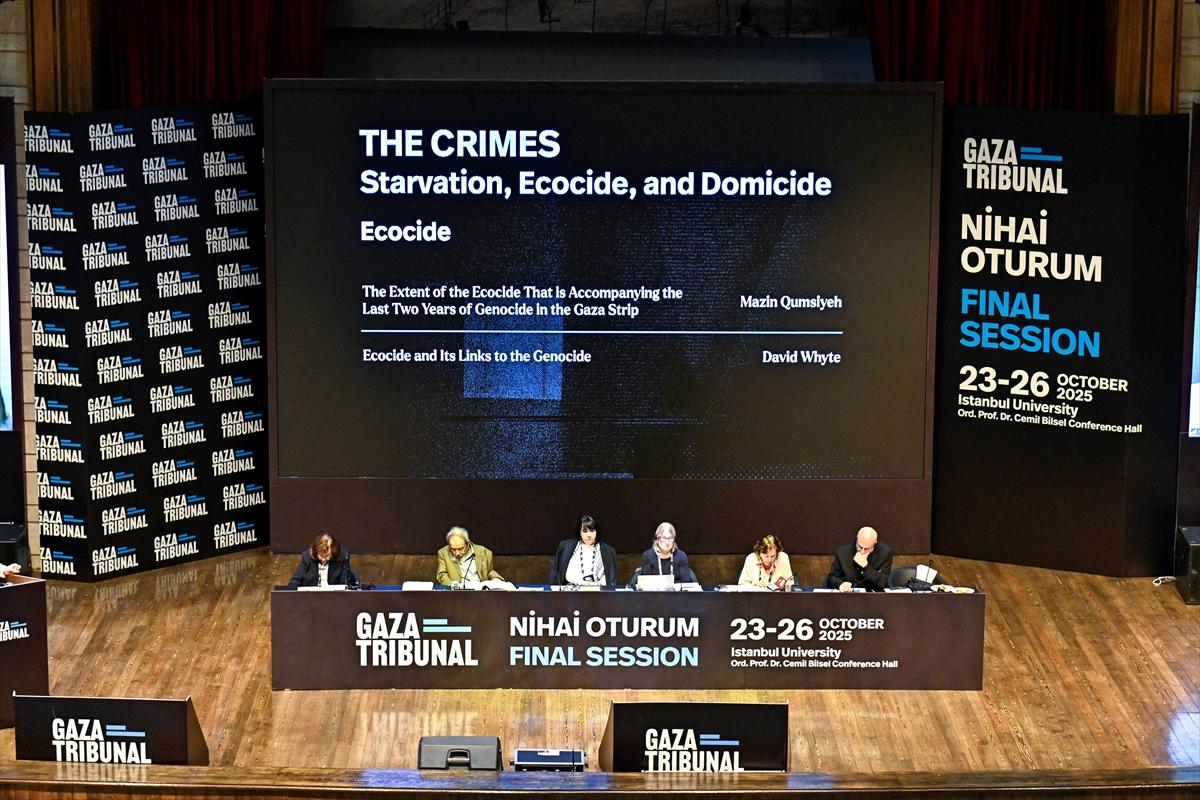
The final session of the 'Gaza Court' established for Israel's war crimes, held in Istanbul, on 24 October 2025 - (Anadolu Ajansı)
Throughout the sessions, new witness testimonies were presented via online connections from Gaza. Hadeel Alharazin and Rola Darwish from Gaza reported losing multiple family members due to targeted attacks on their neighborhoods. Ahmad Jabr Baraka described retrieving children’s bodies from the rubble of bombed schools. Court rapporteurs included these testimonies in their evidence archives through audio and video recordings.
The third day of the Gaza Court’s final session took place on 25 October 2025 at the Prof. Dr. Cemil Bilsel Conference Hall of Istanbul University. The main themes of the day were “Complicity, the International System, Resistance, and Solidarity.” Throughout the day, presentations by academics, lawyers, journalists, activists, and international human rights defenders examined the global context of Israel’s actions in Gaza and the roles played by states, institutions, and market actors in this process.
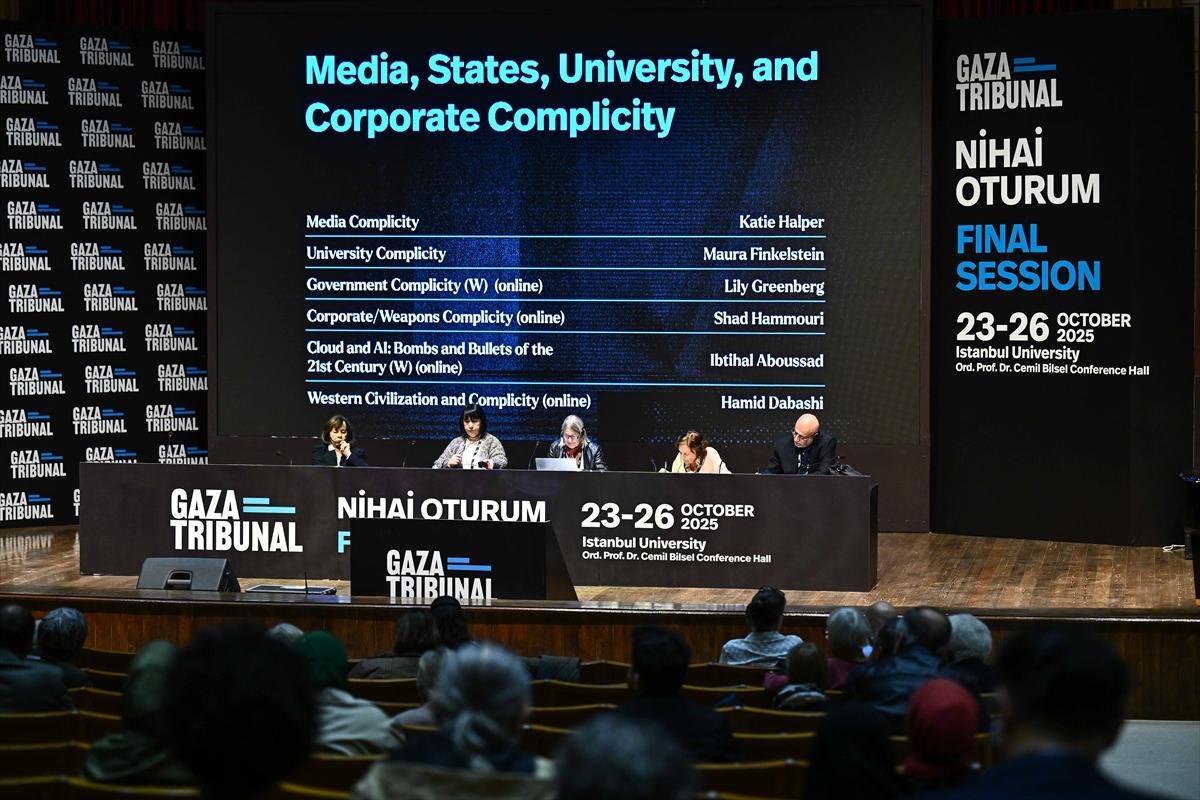
The final session of the 'Gaza Court', established to address Israel's war crimes, in Istanbul, 25 October 2025 - (Anadolu Ajansı)
On the third day, pre-recorded testimonies of murdered Palestinian journalists were also heard, documenting the “media silencing” policies in Gaza. The day concluded with a session on “Resistance and Solidarity,” evaluating the role of global civil society movements.
The first session of the third day was titled “Targeting of Journalists.” Testimonies were heard from Gazan journalists Mohammad Qraiqea, Hossam Shabat, and Ghazi Al-Majdalawi.
Mohammad Qraiqea reported that over 220 journalists attempting to report on the genocide in Gaza have been killed. He stated that his colleagues received threats that their homes would be bombed, and that these threats were systematically implemented. One testimony recorded by the court was: “When I found my mother killed by Israeli bullets, I wrapped her in a shroud and continued reporting in the afternoon.”
Hossam Shabat stated that “being a journalist is considered a crime” under Israel, describing the risks he and his colleagues face. He declared: “We are being killed and our voices are silenced. We are being murdered and no one hears us.” Shabat added: “Every image had a price—we paid it with our lives.”
Ghazi Al-Majdalawi stated that two Gazan journalists have gone missing since October 2023, and that Israel has provided no information on whether they are detained or deceased.
The second session addressed the international system’s response to developments in Gaza. Panelists included Associate Professor Ardi Imseis from Queen’s University in Canada, anthropologist Associate Professor Darrly Li from the University of Chicago, human rights lawyer Craig Mokhiber, Professor Mary Kaldor from the London School of Economics and Political Science (LSE), law professor Aslı Bali from Yale University, and writer Vasuki Nesiah.
Ardi Imseis evaluated attacks on the United Nations Relief and Works Agency for Palestine Refugees in the Near East (UNRWA). She stated that UNRWA was established to provide direct aid to Palestinian refugees but that Israel continuously obstructs the implementation of these rights. Imseis declared: “UNRWA is the last hope for the people of Gaza to survive the genocide.”
Darrly Li, in his address titled “Genocide Policy,” stated that Israel uses the Holocaust as a justification for dispossessing the Palestinian people. He emphasized that justice can only be achieved through political will and social mobilization, asserting that “popular pressure has replaced institutional mechanisms in the pursuit of justice.”
Craig Mokhiber sharply criticized the United Nations system, stating that the genocide in Palestine reveals the UN’s tendency to compromise its principles in the face of state power. Mokhiber stated: “The UN’s willingness to compromise its principles, particularly under pressure from the United States and Western allies, is clearly evident in the attitudes of the UN Secretary-General and senior UN officials. Despite the clear exception of Israel during the genocide, the highest political leaders of the UN—including the Secretary-General, the High Commissioner for Human Rights, and even the Special Adviser on the Prevention of Genocide—have been inadequate or unwilling to directly address the genocide or even utter the word, instead retreating behind safe phrases such as armed conflict, the vague promise of a two-state solution, and the necessity of humanitarian aid.”
He further emphasized that the five permanent members of the UN Security Council have used their veto power to prevent Israel from being held accountable, calling this an “moral failure.”
Mary Kaldor, in her presentation titled “Experimental Crossroads and the Role of Gaza,” stated that people in many countries have organized peaceful protests against attacks on Gaza. Kaldor declared: “The extent to which international institutions act depends truly on global public opinion.”
Aslı Bali, in her address titled “The Gaza Court as an Alternative Legal Paradigm,” stated that the UN Security Council has failed to fulfill its obligations and that the International Court of Justice and the International Criminal Court operate within existing legal constraints. Bali declared: “There is no international platform to defend the Palestinian people’s right to self-determination.”
Vasuki Nesiah argued that solidarity can function as a legal principle and that the Gaza Court has modeled “people-centered justice.” She highlighted the importance of global solidarity movements, from port workers to student protests.
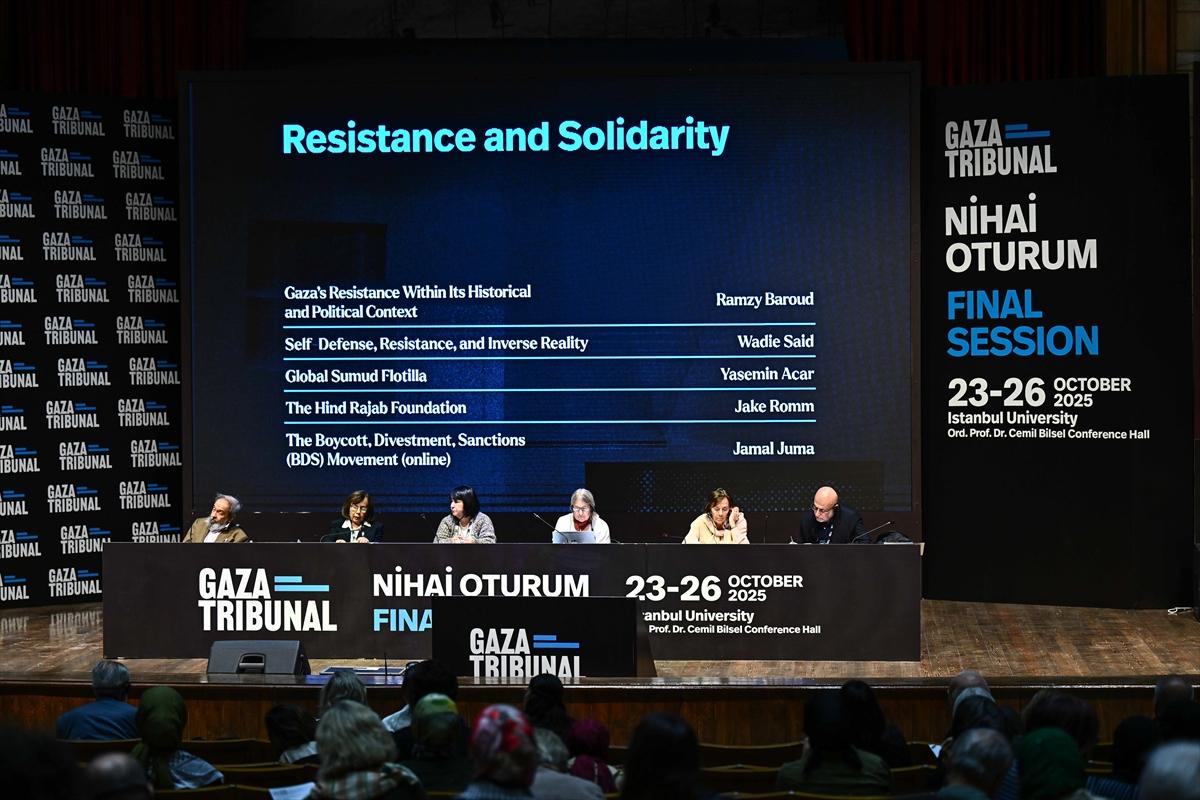
The final session of the 'Gaza Court', established to address Israel's war crimes, took place in Istanbul on 25 October 2025 – (Anadolu Ajansı)
The afternoon session on the third day addressed the theme of “Complicity.” Speakers included journalist Katie Halper, academic Maura Finkelstein, American activist Lily Greenberg, and academic Shad Hammouri.
Katie Halper stated that Western media outlets have supported Israel’s claims and systematically concealed the suffering of civilians. She revealed that during her time at “The Hill,” segments in which she described Israel as an apartheid state were not published.
Maura Finkelstein stated that universities have actively supported Israel through financial partnerships and research collaborations. She disclosed that the University of Southern California (USC) provided corpses to the U.S. and Israeli militaries for trauma surgery training in Gaza.
Lily Greenberg stated that she resigned from her position at the U.S. Department of the Interior “due to the U.S. government’s support for Israel’s genocide in Gaza.” Greenberg noted that although civilian casualties have been reported, no warnings have led to policy changes.
Shad Hammouri, in his presentation titled “Corporate and Arms Industry Complicity,” stated that Israel sustains its genocide through a militarized economy, testing new weapons in Gaza and enabling global investors to profit from them.
The final session of the third day was titled “Resistance and Solidarity.” Speakers included Palestinian journalist Ramzy Baroud, law professor Wadie Said from the University of Colorado, activist Yasemin Acar, writer Jake Romm, and Palestinian activist Jamal Juma.
Ramzy Baroud declared: “Gaza has become the most important test of humanity, morality, civil society, and international law.” Wadie Said, referencing the ideas of his father Edward Said, emphasized that resistance is not only military but also cultural and intellectual.
Activist Yasemin Acar stated: “Gaza is not my cause—it is humanity’s. That is why we came. A global uprising has occurred; we must not remain silent in the face of this injustice.”
During the same session, at the side event “Sumud and Freedom Flotilla,” activists Sümeyye Sena Polat, Mecit Bahçivan, and Muhammet Fatih Sinan spoke. Polat stated: “Israel threatened us greatly at the beginning of our journey. Civil resistance must not be directed only at Israel—it must continue in complicit countries.” Mecit Bahçivan stated: “Israeli soldiers repeatedly told us, ‘We hate Turks.’”
Palestinian poet Tamim al-Barghouti declared: “What is happening in Palestine and the practices that have persisted for centuries are acts of apartheid and discrimination, where people are subjected to discrimination based on identities imposed upon them against their will.” Global Sumud Flotilla activist Thiago Avila stated: “There is no peace without absolute justice, and that is precisely what we must do now.”
In the morning session of the final day, court members and the jury reviewed reports from previous days and deliberated on the final form of the concluding statement. In the afternoon session, the verdict prepared by the Gaza Court Conscience Jury was read aloud, followed by closing remarks by court president Richard Falk and invited guests.
The final verdict was signed by Conscience Jury members Professor Christine Chinkin, Dr. Ghada Karmi, writer Kenize Mourad, Professor Sami Al-Arian, Professor Chandra Muzaffar, and Professor Biljana Vankovska.
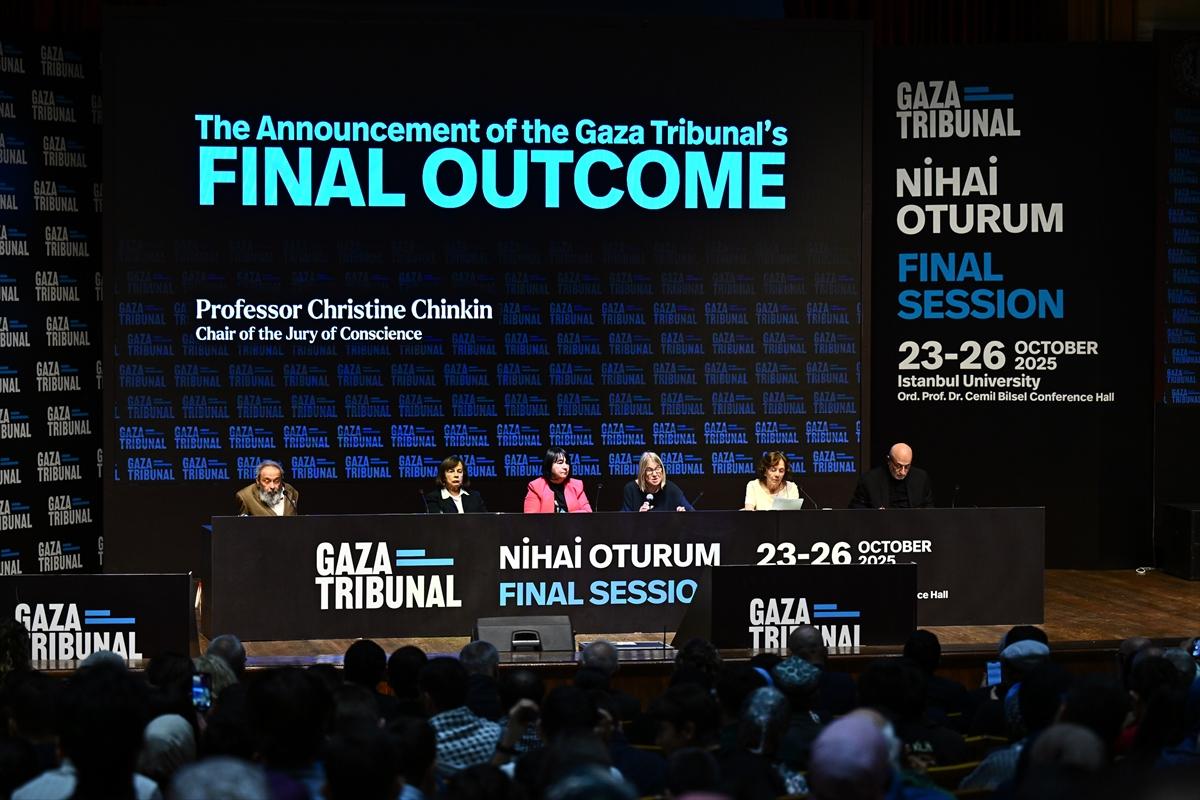
The Gaza Court, established to investigate war crimes committed by Israel in Gaza, announces its ruling at its final session, 26 October 2025 – (Anadolu Agency)
The verdict stated: “Israel is carrying out genocide against the population of Gaza within a broad apartheid regime rooted in the supremacist ideology of Zionism.” The jury clarified in its explanation that the Court “does not aim to determine the guilt or responsibility of any individual, organization, or state, because it is not a legal court,” but rather emerged “as a response from civil society.”
The statement included the following: “When law is silenced by power, conscience must become the final arbiter.”
The statement further emphasized that the Gaza Court believes “it is necessary to name and document genocide,” and that “impunity fuels ongoing violence worldwide”: “The genocide in Gaza is a problem for all humanity. When states remain silent, civil society must speak—and must continue to speak.”
The jury statement noted that comprehensive evidence has been presented regarding Israel’s crimes, the complicity of other actors, Palestinian resistance, and global solidarity. The verdict is grounded in the Genocide Convention, human rights treaties, the Rome Statute of the International Criminal Court (ICC), and principles of natural justice. The verdict stated: “This statement is based on the unshakable belief that every human life holds equal value and that no state or ideology has the right to entirely eliminate a people.”
The statement also reaffirmed the 2025 Sarajevo Declaration and clarified that its legal foundations have been expanded and reinforced during the Istanbul session.
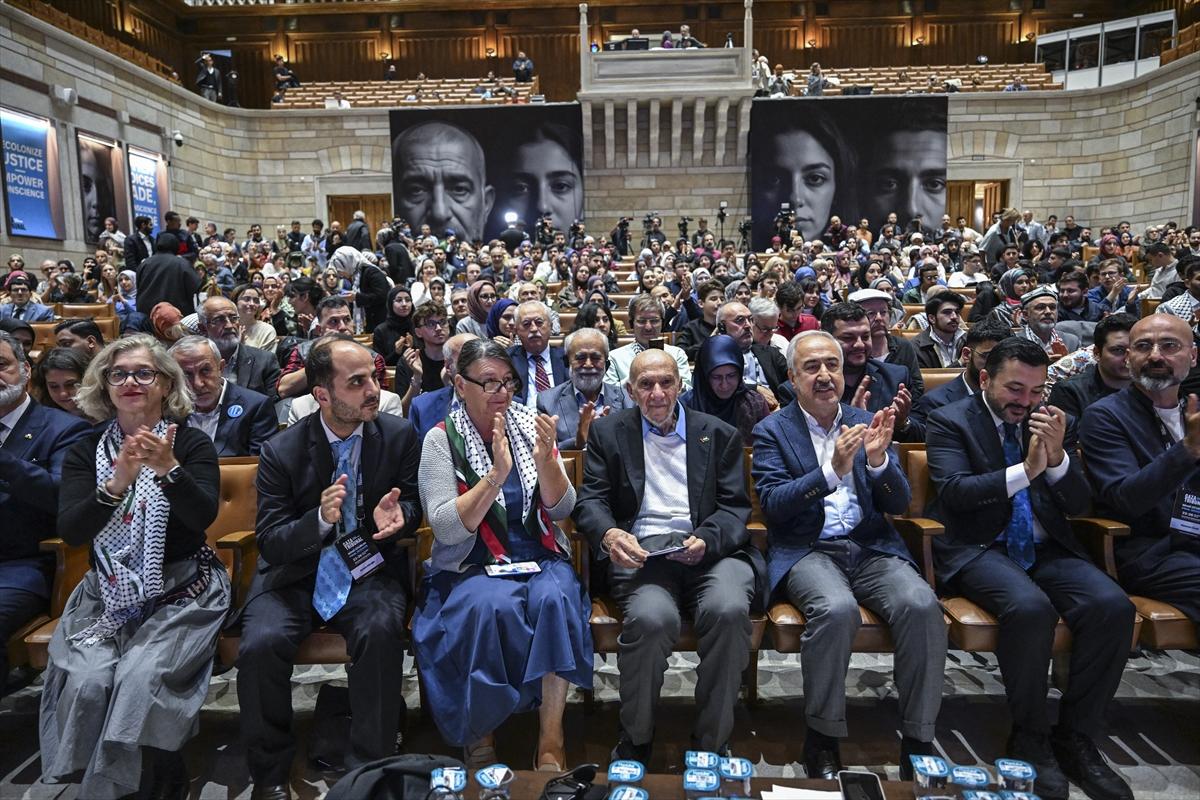
The Gaza Court, established to investigate war crimes committed by Israel in Gaza, announces its ruling at its final session, 26 October 2025 - (Anadolu Ajansı)
The final statement of the Gaza Court explicitly determined that Israel’s crimes in the Gaza Strip fall within the definition of genocide. The statement listed Israel’s actions targeting civilians under the following headings:
The statement further emphasized that “the totality of genocide is a form of crime that dehumanizes people and is characterized by sadism.”
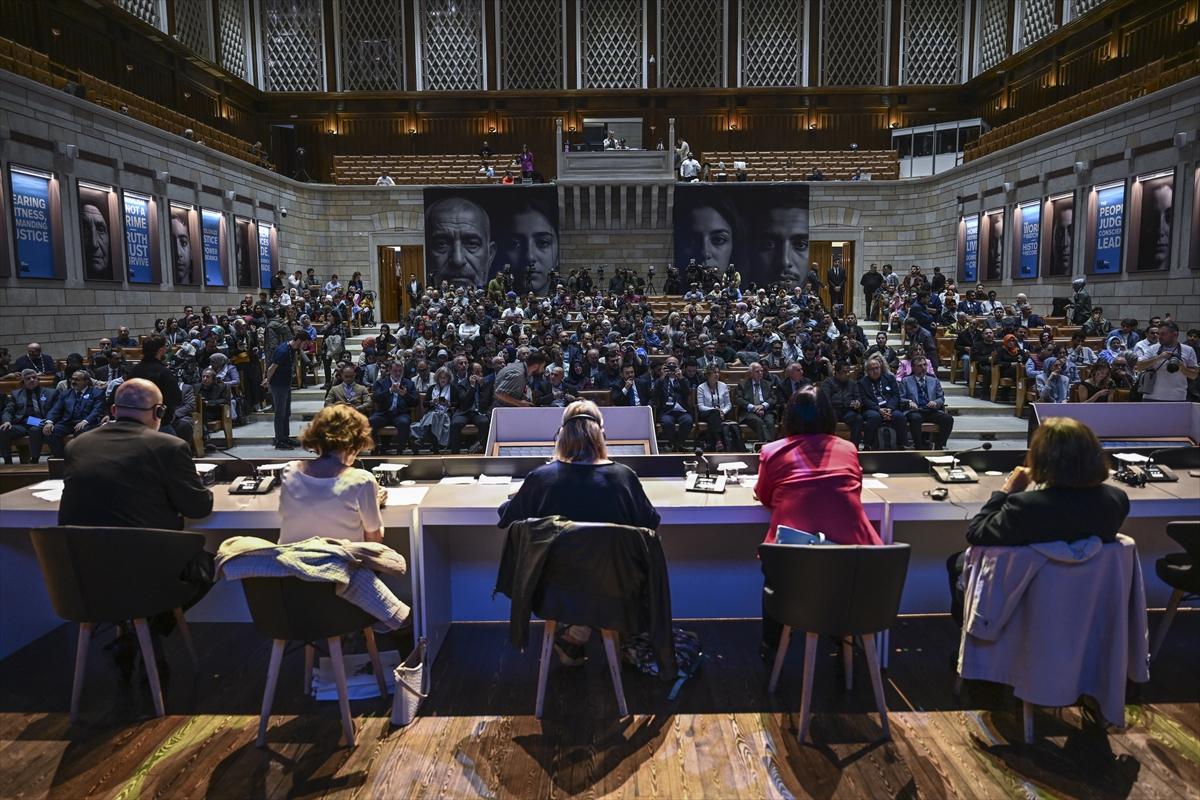
The Gaza Court, established to investigate war crimes committed by Israel in Gaza, announces its final ruling on 26 October 2025 - (Anadolu Agency)
The closing statement of the Court was delivered by former UN Special Rapporteur on Palestine and President of the Gaza Court, Prof. Dr. Richard Falk.
Falk began his address with: “We dedicate the efforts of this Court to the memory of those who have lost their lives and to the struggle, well-being, and victory of those who survive.”
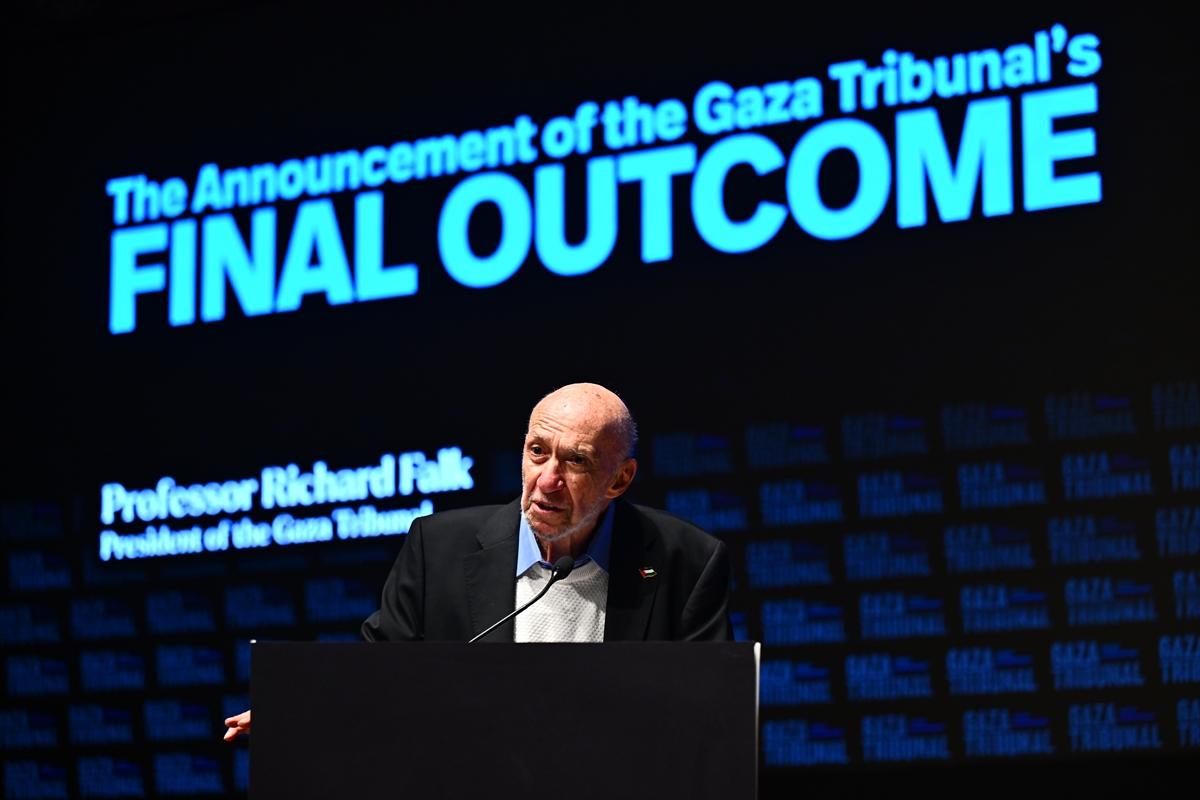
Former United Nations (UN) Rapporteur on Palestine, Professor Dr. Richard Falk, speaks on the program 'Gaza Court: Final Session', 26 October 2025 - (Anadolu Agency)
Falk stated that court members have continued searching for the light of justice during a dark period of history. He emphasized that “the Gaza Court recognizes that the genocide in Palestine, rooted in a century of colonialism and oppression, marks a turning point in world history.”
Falk drew attention to the ongoing nature of the genocide, warning: “Today we warn the world: the genocide in Palestine has not ended. The Israeli regime continues to kill Palestinians in Gaza with munitions and bombs supplied by the West. It continues to block the delivery of food and medicine to survivors.”
He also stated: “Palestinians must manage the reconstruction of Gaza, and Israel and its accomplices must be held accountable for all reparations.”
Falk also referenced the legacy of the Russell Tribunal: “The Gaza Court was established in London in November 2024 as a people’s court, inspired by the ‘Russell Tribunal,’ which was formed at the height of the U.S. attack on Vietnam.”
At the conclusion of his speech, he described the impact of the genocide as “a tragedy that leaves indelible marks on the conscience of humanity”: “The genocide, ongoing for the past two years, has shaken the conscience of humanity. Its brutality is etched forever in the minds of conscientious people worldwide, and the cries of its victims will echo in our ears forever. We will not forget any of them.”
At the closing ceremony, Istanbul University Rector Prof. Dr. Osman Bülent Zülfikar delivered a speech. Zülfikar defined oppression as “deliberately committing a wrong.” He stated: “Killing people unjustly and expelling them from their homeland existed yesterday, exists today, and must not exist tomorrow. The scientific community must not remain silent.”
Zülfikar also noted that just days after Israel launched its attacks on Gaza on 7 October 2023, the university senate issued a resolution condemning them, and thanked faculty and students for their “sensitivity.”
Taha Ayhan, President of the Islamic Cooperation Youth Forum (ICYF), also spoke at the closing. Ayhan stated that “the Gaza Court has laid bare the painful realities in their full nakedness,” and affirmed that “since the very first moment in mid-2024 when Prof. Richard Falk proposed the Gaza Court, we decided to support it.” He added: “Since its inception, the Gaza Court has served as a moral and legal platform that has revealed the scale of suffering, highlighted the failures of global institutions, and reminded us how silence deepens injustice.”
Ayhan concluded his speech with: “We will continue to defend this cause on the international stage, engaging with leaders, parliaments, the UN, and other institutions. Our goal is to ensure that the moral weight of this initiative reaches every corner of the world.”
One of the most important side events of the Court was the special screening of the documentary “Evidence”, produced by the Anadolu Agency. The screening took place on 25 October 2025 at the Prof. Dr. Cemil Bilsel Conference Hall of Istanbul University.
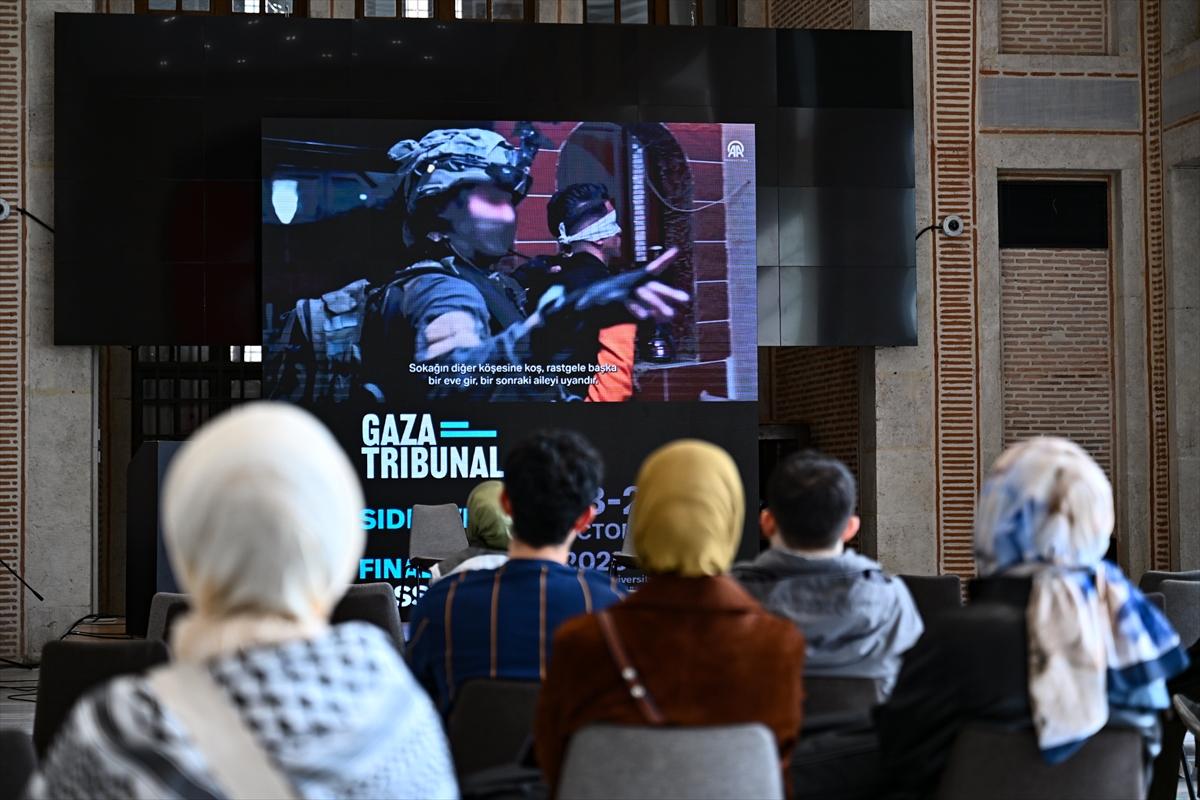
'Gaza Court: Final Hearing' - AA's 'Evidence' documentary is screened, October 26, 2025 - (Anadolu Agency)
The documentary contains visual evidence of civilian losses, destruction, collapse of the healthcare system, and targeting of communication infrastructure in Gaza. Footage and field recordings captured by Anadolu Agency teams were shared with the court panel and audience during the event.
Before the screening, Anadolu Agency representatives stated that “the documentary is a visual record and evidence documentation effort prepared in accordance with international legal standards.” The program has been included in the Gaza Court’s evidence archive.
Anadolu Agency’s documentary “Evidence” is based on footage filmed in the Gaza Strip since October 2023, documenting post-bombardment rubble, destruction of civilian living areas, damage to healthcare facilities, and the work of journalists.
Simultaneously with the documentary screening, the “Evidence” Exhibition, also produced by the Anadolu Agency, opened at the Şeref Hall of Istanbul University’s Faculty of Letters.
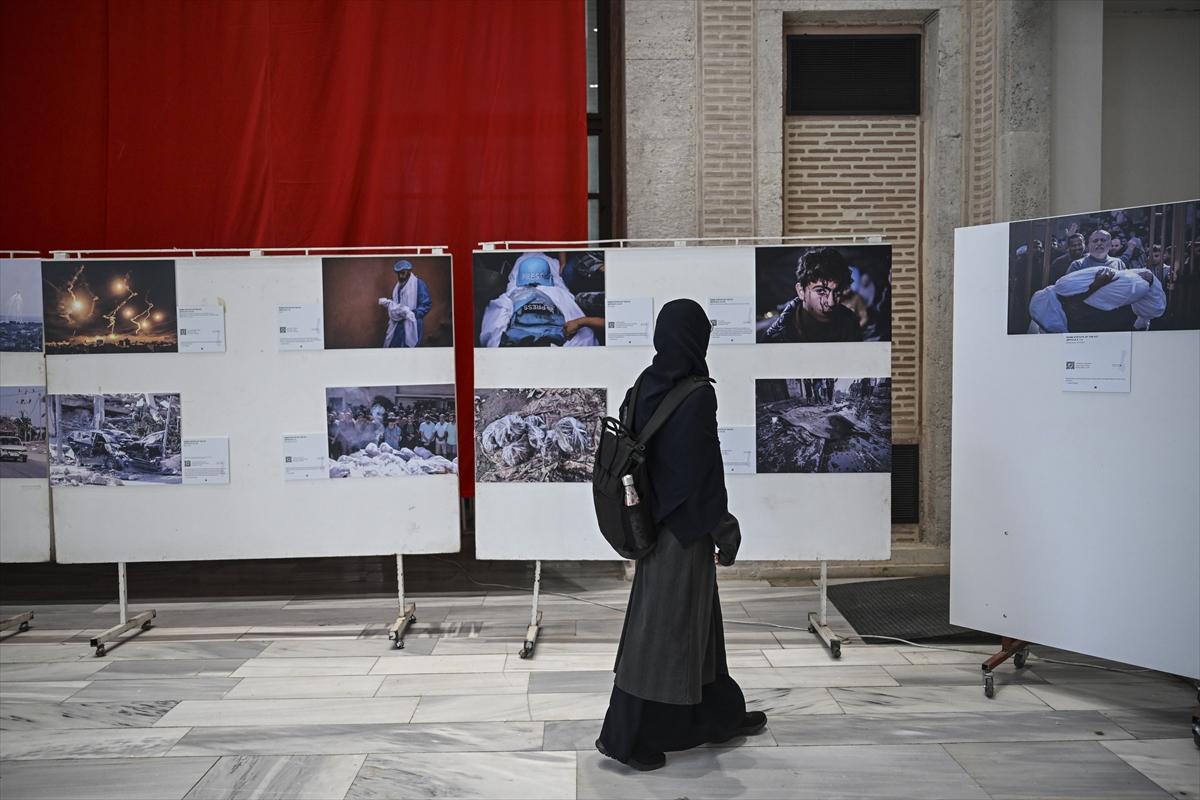
'Gaza Court: Evidence Exhibition' Opened at Final Hearing, October 24, 2025 (Anadolu Agency)
The exhibition features more than 60 photographs taken in the Gaza Strip, including images of the destruction of healthcare and educational facilities, the trauma endured by children, mass graves, demolished homes, and journalists at work in the field.
The exhibition was introduced by the Director of Visual News at the Anadolu Agency, who presented it as “a visual archive of testimony directly documenting the violations in Gaza.” Attendees included members of the Gaza Court, the jury, academics, and students. The exhibition remained open for four days and was offered free of charge to visitors until the Court’s closing day. The images displayed in the exhibition have been permanently added to the Gaza Court archive.
Among the Court’s side events was the interactive exhibition “Wall of Hope.” Visitors left written messages of support for the Palestinian people, which were displayed on a special board installed in the foyer of Istanbul University.
Additionally, the “Palestine Library” exhibition displayed over 120 books on Gaza, Palestinian history, colonialism, human rights law, and genocide research. A significant portion of these books were donated by academics who contributed to the Court proceedings.
Two academic conferences were held as part of the side events. Both were held publicly at Istanbul University’s Cemil Bilsel Hall.
Anadolu Ajansı. "Gazze Mahkemesi Üyeleri Nihai Kararı İstişare Etmek Üzere Toplandı." Anadolu Ajansı. Accessed October 27, 2025.https://www.aa.com.tr/tr/dunya/gazze-mahkemesi-uyeleri-nihai-karari-istisare-etmek-uzere-toplandi/3726946#
Anadolu Ajansı. “Eski BM Filistin Raportörü Falk, Gazze Mahkemesi’nin Nihai Kararını Açıklaması Üzerine Konuştu.” *Anadolu Ajansı – Gazze Mahkemesi Nihai Oturum.* Accessed October 27, 2025.https://www.aa.com.tr/tr/gazze-mahkemesi-nihai-oturum/eski-bm-filistin-raportoru-falk-gazze-mahkemesinin-nihai-kararini-aciklamasi-uzerine-konustu/3727142#
Anadolu Ajansı. “Gazze Mahkemesi Nihai Kararını 26 Ekim'de Açıklayacak.” Accessed October 24, 2025.https://www.aa.com.tr/tr/dunya/gazze-mahkemesi-nihai-kararini-26-ekimde-aciklayacak/3725377#
Anadolu Ajansı. “Gazze Mahkemesi Nihai Oturum Programının Son Gününde Konuşmalar Yapıldı.” Accessed October 27, 2025.https://www.aa.com.tr/tr/dunya/gazze-mahkemesi-nihai-oturum-programinin-son-gununde-konusmalar-yapildi/3727121#
Anadolu Ajansı. “Gazze Mahkemesi Nihai Oturum Programının Üçüncü Günü Sona Erdi.” Accessed October 27, 2025.https://www.aa.com.tr/tr/gundem/gazze-mahkemesi-nihai-oturum-programinin-ucuncu-gunu-sona-erdi/3726346#
Anadolu Ajansı. “Gazze Mahkemesi Nihai Oturum Programının İkinci Günü Başladı.” Anadolu Ajansı. Accessed October 24, 2025.https://www.aa.com.tr/tr/dunya/gazze-mahkemesi-nihai-oturum-programinin-ikinci-gunu-basladi/3725424#
Anadolu Ajansı. “Gazze Mahkemesi Nihai Oturum Programının İlk Günü Sona Erdi.” Accessed October 24, 2025.https://www.aa.com.tr/tr/gundem/gazze-mahkemesi-nihai-oturum-programinin-ilk-gunu-sona-erdi/3724396#
Anadolu Ajansı. “Gazze Mahkemesi Nihai Oturumunda AA’nın Kanıt Belgeseli İzlendi.” Anadolu Ajansı – Gazze Mahkemesi Nihai Oturum. Accessed October 27, 2025.https://www.aa.com.tr/tr/gazze-mahkemesi-nihai-oturum/gazze-mahkemesi-nihai-oturumunda-aanin-kanit-belgeseli-izlendi/3726960
Anadolu Ajansı. “Gazze Mahkemesi Nihai Oturumunda Kanıt Sergisi Açıldı.” Accessed October 24, 2025.https://www.aa.com.tr/tr/gundem/gazze-mahkemesi-nihai-oturumunda-kanit-sergisi-acildi/3724630#
Anadolu Ajansı. “Gazze Mahkemesi İsrail: ‘Gazzedeki Halka Soykırım Uyguluyor.’” Anadolu Ajansı. Accessed October 27, 2025.https://www.aa.com.tr/tr/dunya/gazze-mahkemesi-israil-gazzedeki-halka-soykirim-uyguluyor/3727031#
Anadolu Ajansı. “Gazze Mahkemesi İstanbul'daki Oturumlarla Nihai Kararını Açıklayacak.” Anadolu Ajansı. Accessed October 24, 2025.https://www.aa.com.tr/tr/dunya/gazze-mahkemesi-istanbuldaki-oturumlarla-nihai-kararini-aciklayacak/3723455#
Anadolu Ajansı. “Gazze Mahkemesinde İsrail’in Gazze’de İşlediği Soykırımın ve İhlallerin Tanıkları Dinlendi.” Accessed October 24, 2025.https://www.aa.com.tr/tr/gundem/gazze-mahkemesinde-israilin-gazzede-isledigi-soykirimin-ve-ihlallerin-taniklari-dinlendi/3725157#
Gaza Tribunal. "Program of the Gaza Tribunal." GazaTribunal.com. Accessed October 24, 2025.https://gazatribunal.com/program-of-the-gaza-tribunal/
Palestine Chronicle. "Gaza Tribunal Holds Final Session in Istanbul to Examine Israeli Genocide in Gaza." The Palestine Chronicle. Accessed October 24, 2025.https://www.palestinechronicle.com/gaza-tribunal-holds-final-session-in-istanbul-to-examine-israeli-genocide-in-gaza/
TRT World. “Historic session of Gaza Tribunal in Istanbul prepares to deliver final verdict.” Accessed October 24, 2025.https://www.trtworld.com/article/eb828d43570d?utm_source=ba6e5cee3756&utm_medium=internal&utm_campaign=recommended&utm_content=inline

The Gaza Court was established to examine the military operations and actions against civilians in the Gaza Strip following October 7, 2023. The initiative, launched in London in November 2024, was structured with the participation of international legal experts and civil society representatives. The Court held its first public hearings in Sarajevo in May 2025 and issued the "Sarajevo Declaration." The process was concluded with the final session held in Istanbul from October 23 to 26, 2025. The Tribunal of Conscience, in its ruling issued on October 26, 2025, defined Israel’s actions against the people of Gaza as "genocide."
May 27, 2025
Establishment Process and Foundations of the Initiative
May 27, 2025
Participants and Institutional Components
May 27, 2025
Preparatory Meetings and Strategic Processes
May 27, 2025
Methodological Features and Legal Status
May 27, 2025
Sarajevo Sessions (May 26–29, 2025)
May 27, 2025
Foundation Process and Underlying Principles of the Initiative
May 27, 2025
Participants and Institutional Components
May 27, 2025
Preparatory Meetings and Strategic Processes
May 27, 2025
Methodological Characteristics and Legal Standing
May 27, 2025
Sarajevo Session and the Principle of Public Transparency
May 29, 2025
Sarajevo Declaration
October 24, 2025
Istanbul Session and Final Hearing
October 24, 2025
Opening Day (23 October 2025)
October 24, 2025
Second Day (24 October 2025)
October 24, 2025
Third Day (25 October 2025)
October 24, 2025
Fourth Day (26 October 2025)
October 24, 2025
Final Verdict of the Conscience Jury
October 24, 2025
Richard Falk’s Closing Statement
October 24, 2025
Side Events and Exhibitions