
Bu içerik Türkçe olarak yazılmış olup yapay zeka ile otomatik olarak İngilizceye çevrilmiştir.
European Green Deal is a new growth strategy announced by the European Union (EU) on 12 December 2019 to achieve its goal of becoming the first climate-neutral continent by 2050.【1】 This strategy envisions a transition to a resource-efficient, competitive and modern economic structure while combating climate change and environmental degradation. Its core objective is to decouple economic growth from resource use and reduce greenhouse gas emissions by at least 55% compared to 1990 levels by 2030.【2】
The most critical target of the Deal is to reduce greenhouse gas emissions by at least 55% compared to 1990 levels by 2030.【3】 This intermediate goal constitutes the most important legal milestone on the path to becoming a climate-neutral continent by 2050.【4】
Since more than 75% of emissions in the EU originate from energy production and consumption, decarbonizing the energy sector is a priority.【5】 Within this framework, the aim is to increase the share of renewable energy sources and promote energy efficiency across all sectors.
A transition to a circular economy model is planned to decouple resource use from economic growth in the industrial sector. In particularly resource-intensive sectors such as textiles, construction, electronics and plastics, products must be designed to be more durable, repairable and recyclable.
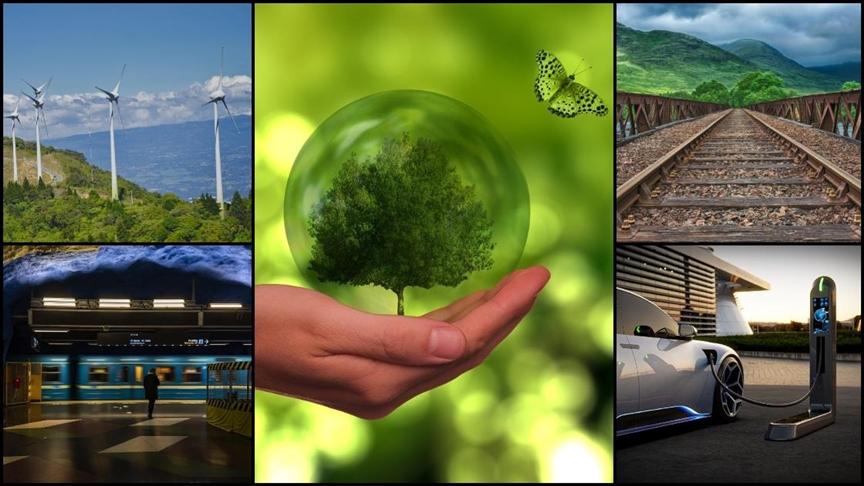
What is the European Green Deal (OSTİM OSB)
As buildings are responsible for more than 40% of energy consumption in the EU, a comprehensive wave of renovation is planned to improve the energy performance of the existing building stock.【6】 This strategy aims to reduce the carbon footprint of buildings while also achieving savings on energy bills.
A key target is to reduce emissions from the transport sector by 90% by 2050.【7】 Investments are being made to increase the number of electric vehicle charging stations and expand the share of rail transport.
This strategy aims to make food systems more sustainable and targets a 50% reduction in the use of chemical pesticides by 2030.【8】 Additionally, the share of land under organic farming is planned to be increased to 25% of total agricultural land.【9】
To halt ecosystem loss, at least 30% of land and marine areas in Europe are targeted to be under protection by 2030.【10】 This will enhance the capacity of natural carbon sinks.
To support this major transformation, at least one trillion euros in sustainable investment is projected to be mobilized over the next decade.【11】 A "Just Transition Mechanism" worth 100 billion euros has been designed to support regions most affected socio-economically by the transition.【12】
The primary purpose of the CBAM is to minimize the risk of "carbon leakage" that may arise from the EU’s stringent emission targets.【13】 Carbon leakage refers to the situation where companies relocate production to countries with less stringent environmental standards to reduce production costs. The mechanism aims to ensure cost parity between producers within the EU and suppliers outside by imposing a carbon-based financial obligation on imported goods according to their carbon content.
In its initial phase, the mechanism targets six key sectors with the highest carbon intensity: iron and steel, aluminium, cement, fertilizers, electricity and hydrogen.【14】 During the transition period, which began on 1 October 2023 and will last until the end of 2025, importers are not required to make any financial payments but must report the carbon emissions of imported goods.【15】 Starting 1 January 2026, during the full implementation phase, importers will be required to purchase CBAM certificates equivalent to the amount of emissions they report.【16】
The cost payable under the CBAM is indexed directly to the weekly average carbon prices within the European Union Emissions Trading System (ETS).【17】 Importers are required to document direct emissions generated during production and, under specific conditions, indirect emissions. If the exporting country applies its own carbon tax or ETS mechanism, the amount paid can be deducted from the obligation at the EU border.【18】
The CBAM has the potential to establish a new international standard for pricing carbon globally. For Türkiye, which conducts the majority of its foreign trade with the EU, this mechanism means that decarbonization of industrial production will become a commercial necessity. To ensure that the financial obligations beginning in 2026 do not undermine Türkiye’s competitiveness, efforts to transition to low-carbon production and establish a domestic emissions trading system have accelerated under the Green Deal Action Plan.【19】
Türkiye’s most concrete step in its green transformation journey has been the adoption of the "Green Deal Action Plan" published on 16 July 2021.【20】 This plan is structured around nine key target areas to align with changing international trade standards and build a sustainable economy. A "Green Deal Working Group" has been established within the Ministry of Trade to coordinate the process and create a strategic cooperation network among relevant ministries.【21】
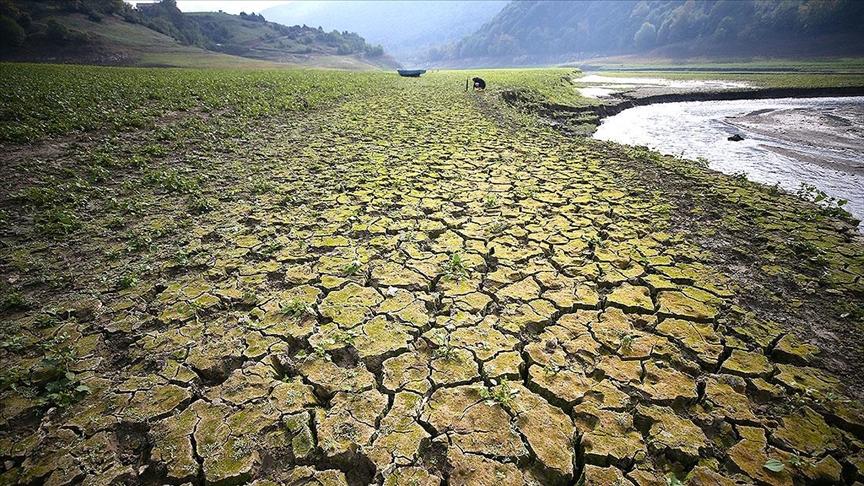
Green Deal (Anadolu Ajansı)
To strengthen its position in global climate diplomacy, Türkiye formally ratified the Paris Agreement and declared a Net Zero Emission target for 2053.【22】 The Climate Law currently under development will provide a critical legal foundation for establishing an emissions trading system (ETS) and implementing national carbon pricing mechanisms. These regulations aim to equip industry stakeholders with resilience against external carbon levies such as the CBAM.
To mitigate the additional investment costs of the green transition, the "Green Deal Compliance Project Support" (Responsible Program) has been launched.【23】 Under this program, export-oriented firms receive state support for sustainability-focused advisory services and technical transformation projects. Additionally, green funds secured from the World Bank and various international financial institutions are being used to support SMEs in energy efficiency and waste management projects.
The Action Plan features a dynamic structure comprising 32 targets and 81 actions.【24】 Concrete steps within these targets include increasing the share of rail transport in the transportation sector, reducing chemical inputs in agriculture, and promoting energy performance certificates in buildings. In industry, circular economy principles are being encouraged to reduce carbon intensity per unit of production.
Extraction and processing of raw materials in industry are responsible for nearly half of global greenhouse gas emissions. Therefore, the Deal anticipates that products must be designed for sustainability from the outset and that waste management must be transformed into a source of raw materials. In sectors such as textiles and plastics, the use of recycled content is being made mandatory, while repairability criteria that extend product lifespans are emerging as new competitive determinants.
Steel, cement and chemicals account for a large share of the EU’s total industrial emissions. To achieve decarbonization in these sectors, a transition is planned from fossil fuels to green hydrogen and electrification-based production technologies. Although this technological shift requires high-cost infrastructure investments, it will reduce industry’s dependence on energy imports and provide exemption from carbon costs in the long term.
The food and beverage industry faces new environmental criteria across a broad spectrum from packaging to logistics. Beyond production, the recyclability of product packaging and transparent reporting of carbon footprints along the supply chain are fundamental requirements of the Farm to Fork Strategy. This is turning sustainability certifications into a market entry ticket for food exporters.【25】
Through applications such as the Digital Product Passport, the goal is to make traceable all data from the energy used in production to water consumption.【26】 This level of transparency requires industrial facilities not only to monitor their own emissions but also to verify the environmental performance of all their supply chain partners. For Turkish industry, this process necessitates rapid green modernization to remain within the supplier networks of EU-based major industrial companies.【27】
Anadolu Ajansı. "Bakan Bolat: Ticaretimizin yüzde 40'ını AB ile yaptığımız için AB Yeşil Mutabakatını aynı şekilde uygulama kararı aldık." Accessed April 15, 2026. https://www.aa.com.tr/tr/ekonomi/bakan-bolat-ticaretimizin-yuzde-40ini-ab-ile-yaptigimiz-icin-ab-yesil-mutabakatini-ayni-sekilde-uygulama-karari-aldik/3766081
Anadolu Ajansı. "Paris Anlaşması, iklim değişikliği ve Yeşil Mutabakat üçgeni." Accessed April 15, 2026. https://www.aa.com.tr/tr/analiz/paris-anlasmasi-iklim-degisikligi-ve-yesil-mutabakat-ucgeni/2430304
Anadolu Ajansı. "Yeşil Mutabakat küresel ekonomide dengeleri nasıl değiştirecek?" Accessed April 15, 2026. https://www.aa.com.tr/tr/analiz/yesil-mutabakat-kuresel-ekonomide-dengeleri-nasil-degistirecek/2186244
Bolu Ticaret of Commerce and Industry. "Avrupa Yeşil Mutabakatı." Accessed April 15, 2026. https://www.bolutso.org.tr/bilgi-merkezi/avrupa-yesil-mutabakati/
Ege İhracatçı Union. "Yeşil Mutabakat." Accessed April 15, 2026. https://surdurulebilirlik.eib.org.tr/Yesil_Mutabakat.Asp
European Commission. "A European Green Deal." Accessed April 15, 2026. https://commission.europa.eu/strategy-and-policy/priorities-2019-2024/european-green-deal_en
European Union Presidency. "European Green Deal." Accessed April 15, 2026. https://www.ab.gov.tr/avrupa-yesil-mutabakati_53729.html
Green Growth. "European Green Deal." Accessed April 15, 2026. https://yesilbuyume.org/avrupa-yesil-mutabakati/
KOSBİ. "Avrupa Yeşil Mutabakatı ve Türkiye'de Sanayi." Accessed April 15, 2026. https://www.kosbi.org.tr/basinda-biz/avrupa-yesil-mutabakati-ve-turkiyede-sanayi
Manisa Organize Sanayi Bölgesi. "Avrupa Yeşil Mutabakatı Çalışmaları." Accessed April 15, 2026. https://www.mosb.org.tr/faaliyetler/avrupa-yesil-mutabakati-calismalari/
OSTİM OSB. "Yeşil Ekosistem Bölüm 2: Avrupa Yeşil Mutabakatı Nedir, Yeşil Mutabakat Neden Önemli?" YouTube, 4:14. April 10, 2023. Accessed April 15, 2026. https://www.youtube.com/watch?v=ImRASnoDTno
SETBİR. "Avrupa Birliği Yeşil Mutabakat Sürecinde Türk Gıda ve İçecek Sektörü." Accessed April 15, 2026. https://www.setbir.org.tr/avrupa-birligi-yesil-mutabakat-surecinde-turk-gida-ve-icecek-sektoru/
T.C. Ministry of Trade. "Avrupa Yeşil Mutabakatı." Accessed April 15, 2026. https://ticaret.gov.tr/dis-iliskiler/yesil-mutabakat/avrupa-yesil-mutabakati
T.C. Ministry of Trade. "Genel Bilgi." Accessed April 15, 2026. https://ticaret.gov.tr/dis-iliskiler/yesil-mutabakat/genel-bilgi
T.C. Ministry of Trade. "Green Accord Action Plan and Working Group." Accessed April 15, 2026. https://ticaret.gov.tr/dis-iliskiler/yesil-mutabakat/yesil-mutabakat-eylem-plani-ve-calisma-grubu
T.C. Ministry of Trade. "Yeşil Mutabakata Uyum Projesi Desteği (Responsible Programı)." Accessed April 15, 2026. https://ticaret.gov.tr/dis-iliskiler/yesil-mutabakat/yesil-mutabakata-uyum-projesi-destegi-responsible-programi
TÜBA (Türkiye Bilimler Akademisi). "Sürdürülebilir Kalkınma Amaçları Çerçevesinde Avrupa Yeşil Mutabakatı ve Türkiye'nin Durumu." Accessed April 15, 2026. https://www.tuba.gov.tr/tr/yayinlar/suresiz-yayinlar/raporlar/temiz-uretim-yesil-mutabakat-ve-surdurulebilir-atik-yonetimi/surdurulebilir-kalkinma-amaclari-cercevesinde-avrupa-yesil-mutabakati-ve-turkiyenin-durumu
İstanbul Sanayi Odası. "AB Yeşil Mutabakatı, İklim Değişikliği ve Türkiye'ye Etkileri." Accessed April 15, 2026. https://www.iso.org.tr/surdurulebilirlik/video-ab-yesil-mutabakat-iklim-degisikligi-turkiyeye-etkileri.html
[1]
European Union Presidency, "European Green Deal", Access Date: 15.04.2026,https://www.ab.gov.tr/avrupa-yesil-mutabakati_53729.html
[2]
Ministry of Trade of the Republic of Türkiye, "General Information", Access Date: 15.04.2026,https://ticaret.gov.tr/dis-iliskiler/yesil-mutabakat/genel-bilgi
[3]
European Union Presidency, "European Green Deal", Access Date: 15.04.2026,https://www.ab.gov.tr/avrupa-yesil-mutabakati_53729.html
[4]
European Union Presidency, "European Green Deal", Access Date: 15.04.2026,https://www.ab.gov.tr/avrupa-yesil-mutabakati_53729.html
[5]
Ministry of Trade of the Republic of Türkiye, "General Information", Access Date: 15.04.2026,https://ticaret.gov.tr/dis-iliskiler/yesil-mutabakat/genel-bilgi
[6]
European Commission, "A European Green Deal", Access Date: 15.04.2026,https://commission.europa.eu/strategy-and-policy/priorities-2019-2024/european-green-deal_en
[7]
TÜBA, "European Green Deal and Türkiye's Status within the Framework of Sustainable Development Goals", Access Date: 15.04.2026,https://www.tuba.gov.tr/tr/yayinlar/suresiz-yayinlar/raporlar/temiz-uretim-yesil-mutabakat-ve-surdurulebilir-atik-yonetimi/surdurulebilir-kalkinma-amaclari-cercevesinde-avrupa-yesil-mutabakati-ve-turkiyenin-durumu
[8]
SETBİR, "Turkish Food and Beverage Sector in the European Green Deal Process", Access Date: 15.04.2026,https://www.setbir.org.tr/avrupa-birligi-yesil-mutabakat-surecinde-turk-gida-ve-icecek-sektoru/
[9]
European Commission, "A European Green Deal", Access Date: 15.04.2026,https://commission.europa.eu/strategy-and-policy/priorities-2019-2024/european-green-deal_en
[10]
European Commission, "A European Green Deal", Access Date: 15.04.2026,https://commission.europa.eu/strategy-and-policy/priorities-2019-2024/european-green-deal_en
[11]
Anadolu Ajansı, "How Will the Green Deal Change Global Economic Equilibria?", Access Date: 15.04.2026,https://www.aa.com.tr/tr/analiz/yesil-mutabakat-kuresel-ekonomide-dengeleri-nasil-degistirecek/2186244
[12]
European Commission, "A European Green Deal", Access Date: 15.04.2026,https://commission.europa.eu/strategy-and-policy/priorities-2019-2024/european-green-deal_en
[13]
Anadolu Ajansı, "How Will the Green Deal Change Global Economic Equilibria?", Access Date: 15.04.2026,https://www.aa.com.tr/tr/analiz/yesil-mutabakat-kuresel-ekonomide-dengeleri-nasil-degistirecek/2186244
[14]
Ministry of Trade of the Republic of Türkiye, "General Information", Access Date: 15.04.2026,https://ticaret.gov.tr/dis-iliskiler/yesil-mutabakat/genel-bilgi
[15]
Bolu Chamber of Commerce and Industry, "European Green Deal", Access Date: 15.04.2026,https://www.bolutso.org.tr/bilgi-merkezi/avrupa-yesil-mutabakati/
[16]
Anadolu Ajansı, "Minister Bolat: Since we conduct 40% of our trade with the EU, we decided to implement the EU Green Deal accordingly", Access Date: 15.04.2026,https://www.aa.com.tr/tr/ekonomi/bakan-bolat-ticaretimizin-yuzde-40ini-ab-ile-yaptigimiz-icin-ab-yesil-mutabakatini-ayni-sekilde-uygulama-karari-aldik/3766081
[17]
TÜBA, "European Green Deal and Türkiye's Status within the Framework of Sustainable Development Goals", Access Date: 15.04.2026,https://www.tuba.gov.tr/tr/yayinlar/suresiz-yayinlar/raporlar/temiz-uretim-yesil-mutabakat-ve-surdurulebilir-atik-yonetimi/surdurulebilir-kalkinma-amaclari-cercevesinde-avrupa-yesil-mutabakati-ve-turkiyenin-durumu
[18]
Anadolu Ajansı, "How Will the Green Deal Change Global Economic Equilibria?", Access Date: 15.04.2026,https://www.aa.com.tr/tr/analiz/yesil-mutabakat-kuresel-ekonomide-dengeleri-nasil-degistirecek/2186244
[19]
Ministry of Trade of the Republic of Türkiye, "Green Deal Action Plan and Working Group", Access Date: 15.04.2026,https://ticaret.gov.tr/dis-iliskiler/yesil-mutabakat/yesil-mutabakat-eylem-plani-ve-calisma-grubu
[20]
Ministry of Trade of the Republic of Türkiye, "Green Deal Action Plan and Working Group", Access Date: 15.04.2026,https://ticaret.gov.tr/dis-iliskiler/yesil-mutabakat/yesil-mutabakat-eylem-plani-ve-calisma-grubu
[21]
Ministry of Trade of the Republic of Türkiye, "European Green Deal", Access Date: 15.04.2026,https://ticaret.gov.tr/dis-iliskiler/yesil-mutabakat/avrupa-yesil-mutabakati
[22]
Anadolu Ajansı, "Paris Agreement, Climate Change and the Green Deal Triangle", Access Date: 15.04.2026,https://www.aa.com.tr/tr/analiz/paris-anlasmasi-iklim-degisikligi-ve-yesil-mutabakat-ucgeni/2430304
[23]
Ministry of Trade of the Republic of Türkiye, "Green Deal Compliance Project Support (Responsible Program)", Access Date: 15.04.2026,https://ticaret.gov.tr/dis-iliskiler/yesil-mutabakat/yesil-mutabakata-uyum-projesi-destegi-responsible-programi
[24]
Ministry of Trade of the Republic of Türkiye, "Green Deal Action Plan and Working Group", Access Date: 15.04.2026,https://ticaret.gov.tr/dis-iliskiler/yesil-mutabakat/yesil-mutabakat-eylem-plani-ve-calisma-grubu
[25]
Green Growth, "European Green Deal", Access Date: 15.04.2026,https://yesilbuyume.org/avrupa-yesil-mutabakati/
[26]
Manisa Organized Industrial Zone, "European Green Deal Initiatives", Access Date: 15.04.2026,https://www.mosb.org.tr/faaliyetler/avrupa-yesil-mutabakati-calismalari/
[27]
Anadolu Ajansı, "Minister Bolat: Since we conduct 40% of our trade with the EU, we decided to implement the EU Green Deal accordingly", Access Date: 15.04.2026,https://www.aa.com.tr/tr/ekonomi/bakan-bolat-ticaretimizin-yuzde-40ini-ab-ile-yaptigimiz-icin-ab-yesil-mutabakatini-ayni-sekilde-uygulama-karari-aldik/3766081


Henüz Tartışma Girilmemiştir
"European Green Deal" maddesi için tartışma başlatın
Key Areas and Objectives of the European Green Deal
Climate Targets and Emission Reduction
Clean and Secure Energy
Circular Economy and Industry
Energy Efficiency in Buildings
Sustainable and Smart Mobility
Farm to Fork Strategy
Biodiversity and Ecosystems
Financing and Just Transition
Carbon Border Adjustment Mechanism (CBAM)
Carbon Leakage Risk and Protection Shield
Sectors Covered and Implementation Timeline
Cost Calculation and Emission Reporting Process
Global Trade and Strategic Implications for Türkiye
Türkiye’s Alignment Process and Green Deal Action Plan
National Strategy and Institutional Structure
Climate Law and Net Zero Vision
Financial Support and Incentive Mechanisms
Sectoral Actions and Numerical Targets
Sectoral Impacts and Industrial Transformation
Raw Material Management and Circular Economy
Technological Transition in Energy-Intensive Sectors
Sustainable Standards in Food Systems
Supply Chain and Transparency