


This article was automatically translated from the original Turkish version.
+5 More
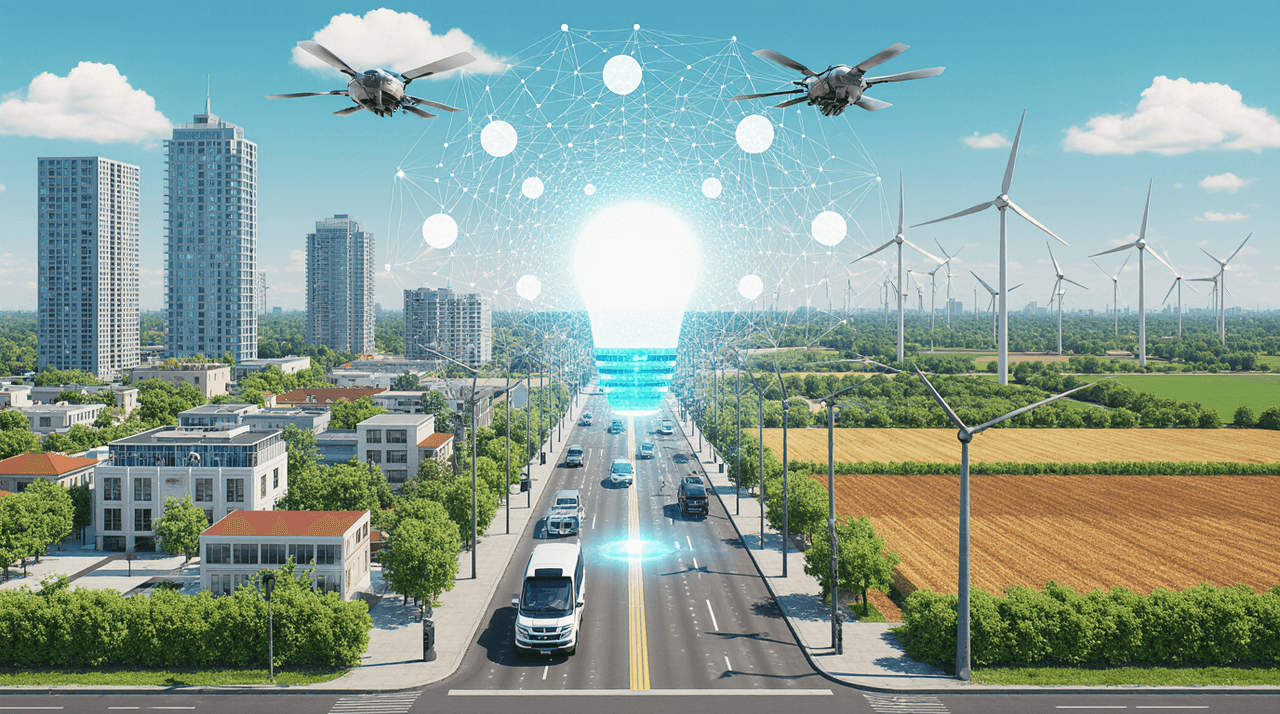
Digital Environmental Technologies (Generated with Artificial Intelligence)
Definition(s) | Use of digital tools such as artificial intelligence and solve environmental issues. analyze and big data to monitor the Internet of Things (IoT) | ||||||||
|---|---|---|---|---|---|---|---|---|---|
Main Component(s) | Sensors blockchain. digital twins big data analytics artificial intelligence IoT devices | ||||||||
Application Area(s) | Smart cities sustainable production. environmental monitoring waste management energy management smart agriculture | ||||||||
Basic Benefits | Resource efficiency, reduction of pollution, lowering of carbon footprint, support for sustainability. | ||||||||
Challenges and Risks | High energy consumption, electronic waste (e-waste), data security, digital divide. | ||||||||
Digital environmental technologies encompass the complete set of digital tools, software, and infrastructure used to detect, prevent, or mitigate environmental problems through the collection, processing, analysis, and management of environmental data. Key technologies in this field include artificial intelligence (AI), the Internet of Things (IoT), big data analytics, sensor networks, digital twin systems, and cloud-based data management platforms.
While these technologies serve as tools to monitor and manage the impact of human activities on nature, they also bring their own environmental consequences. They offer positive contributions such as improving energy efficiency, reducing carbon footprints, and optimizing resource use; however, they can also lead to negative outcomes including high energy consumption, generation of electronic waste (e-waste), and substantial infrastructure costs. Therefore, digital environmental technologies are regarded as a field that presents both opportunities and risks within the framework of sustainable development goals.
Digital environmental monitoring systems are technological networks that continuously track the status of environmental elements such as the atmosphere, water resources, soil quality, and biodiversity. These systems collect real-time data through sensors, cameras, and IoT devices deployed across various geographic regions. The collected data is transmitted to centralized data centers via wireless communication protocols or the internet.
During the data analysis phase, artificial intelligence algorithms and big data processing techniques are used to identify environmental trends, detect anomalies, and build predictive models. For instance, authorities can be automatically alerted when air pollution levels exceed a certain threshold, or contamination levels in drinking water sources can be monitored in real time.
Artificial intelligence has become a crucial tool for enhancing environmental observation capacity. Examples of its applications include detecting deforestation from satellite imagery, mapping glacier melt rates with high-resolution mapping, and identifying methane emissions using remote sensing methods. Short-term weather forecasting models developed by Google DeepMind and the University of Exeter help predict extreme weather events. NASA’s citizen science initiatives such as GLOBE Observer expand the scope of environmental datasets by involving the public in data collection processes.
Digital environmental technologies are central to the concept of smart cities. In smart cities, infrastructure components ranging from traffic flow to energy consumption are optimized using sensor networks, AI-supported data analysis, and automation systems. Smart traffic management reduces fuel consumption and emissions, while smart lighting systems contribute to energy savings. Buildings are among the primary areas where digital environmental technologies are applied. Energy-efficient green buildings can be designed to incorporate renewable energy generation capacity. Digital twin technologies enable real-time monitoring and performance optimization through virtual replicas of buildings. This approach can reduce operational costs and lower carbon emissions. Some universities in Singapore manage all their campus buildings using digital twin models, achieving significant improvements in energy efficiency.

Digital Environmental Technologies (Generated by Artificial Intelligence)
Industry and manufacturing facilities are among the most intensive users of digital environmental technologies. Through the approach of industrial ecology, waste from one production process can be utilized as raw material or an energy source in another. AI and digital twin-based systems are employed to reduce energy consumption and enhance efficiency in production lines. For example, systems that precisely control temperature fluctuations on production lines improve product quality while limiting energy use. In the energy sector, digital technologies facilitate the integration of renewable energy sources into the grid and optimize production and distribution. Smart grids enable demand-side energy management, reducing fluctuations. Additionally, carbon capture and storage technologies limit the release of industrial greenhouse gas emissions into the atmosphere.
Smart agriculture practices aim to enhance the efficiency and sustainability of agricultural production through the use of IoT sensors, data analytics, and automation technologies. Sensors monitoring soil moisture, temperature, nutrient levels, and weather conditions can automatically manage irrigation and fertilization systems, thereby preventing waste of water and chemical fertilizers. Precision agriculture techniques optimize resource use by identifying crop development stages and disease risks at an early stage. Unmanned aerial vehicles (UAVs) and artificial intelligence support agricultural activities such as seeding, spraying, and afforestation by creating three-dimensional maps of farmland. These technologies contribute to balancing food security with environmental protection.
The widespread adoption of digital environmental technologies brings with it several technical and societal challenges. The operation of large data centers and AI models generates a significant carbon footprint due to high energy consumption. Moreover, the production and disposal of digital devices produce substantial volumes of electronic waste. Improper recycling of this waste poses risks to both the environment and human health. The digital divide is another critical issue. Inequalities in access to the internet and technology prevent these tools from delivering equitable benefits globally. Disparities based on gender, income level, and geographic location limit the capacity of communities to benefit from digital solutions. Furthermore, large-scale data sets collected in smart cities and environmental monitoring networks raise ethical and legal concerns regarding privacy and data security. Therefore, the development of digital environmental technologies must holistically address energy efficiency, equitable access, data protection, and recycling policies.
Ashton, Kevin, ed. That Internet of Things: How the Next Evolution of the Internet Is Changing Everything. New York: Crown Business, 2011.
Bacco, Manlio, Franca Delmastro, Erina Ferro, and Alberto Gotta. “Environmental Monitoring for Smart Cities.” arXiv preprint, arXiv:2205.15147 [cs.NI], 2022. Accessed August 8, 2025. https://doi.org/10.48550/arXiv.2205.15147.
Bibri, Simon Elias. Sustainable Smart Cities and Smart Villages Research: Rethinking Security, Safety, Well-being, and Happiness. Cham: Springer, 2020.
Govindarajan, Usharani Hareesh, Chuyi Zhang, Rakesh D. Raut, Gagan Narang, and Alessandro Galdelli. “A Review of Academic and Patent Progress on Internet of Things (IoT) Technologies for Enhanced Environmental Solutions.” *Technologies* 13, no. 2 (2025): 64. Accessed August 8, 2025. https://doi.org/10.3390/technologies13020064.
Miller, Tymoteusz, Irmina Durlik, Ewelina Kostecka, Polina Kozlovska, Adrianna Łobodzińska, Sylwia Sokołowska, and Agnieszka Nowy. “Integrating Artificial Intelligence Agents with the Internet of Things for Enhanced Environmental Monitoring: Applications in Water Quality and Climate Data.” *Electronics* 14, no. 4 (2025): 696. Accessed August 8, 2025. https://doi.org/10.3390/electronics14040696.
“The Digital Guardian: How AI, IoT, and Sensor Networks Are Revolutionizing Environmental Protection.” *International Journal of Environmental Sciences*, July 2025, 2737–45. Accessed August 8, 2025. https://doi.org/10.64252/my2zrb90.

Digital Environmental Technologies (Generated with Artificial Intelligence)
Definition(s) | Use of digital tools such as artificial intelligence and solve environmental issues. analyze and big data to monitor the Internet of Things (IoT) | ||||||||
|---|---|---|---|---|---|---|---|---|---|
Main Component(s) | Sensors blockchain. digital twins big data analytics artificial intelligence IoT devices | ||||||||
Application Area(s) | Smart cities sustainable production. environmental monitoring waste management energy management smart agriculture | ||||||||
Basic Benefits | Resource efficiency, reduction of pollution, lowering of carbon footprint, support for sustainability. | ||||||||
Challenges and Risks | High energy consumption, electronic waste (e-waste), data security, digital divide. | ||||||||
No Discussion Added Yet
Start discussion for "Digital Environmental Technologies" article
Digital Environmental Monitoring and Analysis Systems
Sustainable Cities and Infrastructure
Industry, Production, and Energy Management
Smart Agriculture and Food Systems
Environmental and Social Challenges