This article was automatically translated from the original Turkish version.
Date(s) | 12 March 1971 | ||||||||
|---|---|---|---|---|---|---|---|---|---|
Outcome | Limitation of fundamental rights and freedoms Broadcast bans and confiscation orders Restriction of TRT autonomy Reduction of university autonomy Ban on strikes and lockouts Closure of the Workers Party of Turkey Expansion of military jurisdiction Declaration of martial law in 11 provinces | ||||||||
Implementation | A non-partisan government under Nihat Erim was established The Demirel government resigned the same day It was read in the Grand National Assembly at 15:05 It was announced to the public on TRT news at 13:00 The memorandum was signed at 12:05 | ||||||||
Reason/Allegations | Intensification of left-right clashes Worker movements and the 15-16 June 1970 events Student movements and university incidents Stagnation of the current government | ||||||||
Target | To suppress armed actions and protests To bring the political order under military control To establish a non-partisan government To overthrow the Süleyman Demirel government | ||||||||
Signatories | Commander of the Navy Admiral Celâl Eyiceoğlu Commander of the Air Force General Muhsin Batur Commander of the Army General Faruk Gürler Chief of the General Staff General Memduh Tağmaç | ||||||||
Place | Nationwide Ankara | ||||||||
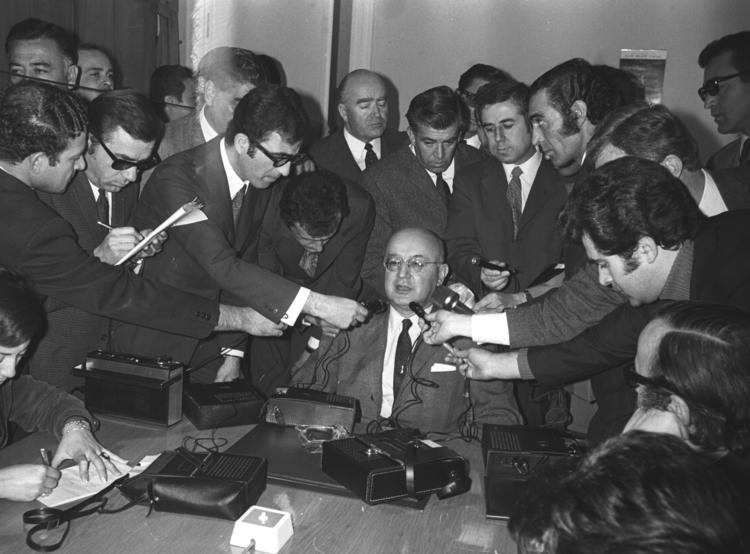
The March 12 Memorandum, is a military-political intervention document submitted on March 12, 1971, to the Presidency of the Republic, the Presidency of the Republic Senate, and the Presidency of the Grand National Assembly, signed by Chief of the General Staff General Memduh Tağmaç, Commander of the Land Forces General Faruk Gürler, Commander of the Air Forces General Muhsin Batur, and Commander of the Naval Forces Admiral Celal Eyicioğlu. The text accused the government and parliament of dragging the country into anarchy, fratricidal conflict, and socio-economic unrest; it demanded the rapid establishment of a “strong and credible” government within democratic rules to implement the reforms envisaged by the constitution. It was explicitly stated that if this demand was not met, the Turkish Armed Forces would directly assume control of administration, thereby transforming the memorandum from a mere statement of opinion into a direct political pressure instrument with concrete consequences for the government.【1】 Indeed, the memorandum text was signed at 12:05 on March 12, publicly announced on TRT news at 13:00 on the same day, and read out in the Grand National Assembly at 15:05.
March 12, 1971 stands out as one of the defining links in the chain of military interventions between May 27, 1960 and September 12, 1980 in Turkish political life. Although no direct military administration was established on this date, a new period began in which the Assembly remained open but the political sphere was reorganized within boundaries drawn by the military command hierarchy. In this sense, the event is regarded not merely as a memorandum issued in a single day but as the beginning of a broader restructuring phase lasting approximately three years, often referred to in the literature as the “interim regime.”【2】 The context in which the memorandum emerged was not monolithic: rising political violence in the late 1960s, economic stagnation, parliamentary gridlock, divergent interventionist tendencies within the military, and the failure of the March 9 attempt collectively transformed March 12 into the product of both a civil political crisis and a power struggle within the military hierarchy. For this reason, the March 12 Memorandum is regarded as one of the fundamental breaking points where civil-military relations, constitutional order, tutelage, reform rhetoric, and democratic legitimacy debates intersected.
The March 12 Memorandum is a military-political intervention document prepared by the senior command of the Turkish Armed Forces on March 12, 1971, and submitted to the President of the Republic, the Presidency of the Republic Senate, and the Presidency of the Grand National Assembly. The text bears the signatures of Chief of the General Staff General Memduh Tağmaç, Commander of the Land Forces General Faruk Gürler, Commander of the Air Forces General Muhsin Batur, and Commander of the Naval Forces Admiral Celal Eyicioğlu. In its three paragraphs, parliament and the government were accused of dragging the country into “anarchy, fratricidal conflict, and socio-economic unrest”; it called for the establishment within democratic procedures of a “strong and credible” government that would implement the constitutional reforms and act in accordance with Kemalist principles; it declared that if this was not achieved, the Turkish Armed Forces would directly assume control of administration.【3】 This structure demonstrates that the memorandum carried the character of a coup ultimatum exerting pressure on the government.
The events of March 12, 1971 clearly reveal the mechanism of the intervention. The text was finalized in the morning hours, signed at 12:05, then sent to TRT and read on the news bulletin at 13:00, and announced in the Grand National Assembly the same day at 15:05. Immediately after the announcement of the memorandum, Prime Minister Süleyman Demirel’s government resigned, and the document directly triggered a change of government on the same day. The impact of the intervention did not end with the day of its publication; it initiated a broader political framework encompassing the period 1971–1973, characterized by government changes, searches for non-partisan cabinets, emergency rule measures, constitutional amendments, and the military’s influence over civil politics.
In the context of Turkish political history, March 12 occupies the middle link in the sequence of military interventions between May 27, 1960 and September 12, 1980. On May 27, direct control of the government was seized and political power was effectively taken by the National Unity Committee. On March 12, however, the Assembly and constitutional institutions were not fully closed; instead, the government was forced to resign under military pressure, and the new arrangement was implemented through civilian governments.
Because of this difference, March 12 is regarded as a form of intervention that did not establish direct military rule but subjected the political decision-making sphere to military will. In the literature, this phenomenon has been conceptualized as the “second military intervention disrupting democracy in the multi-party period,” the “coup from above,” and the “praetorian intervention.”【4】
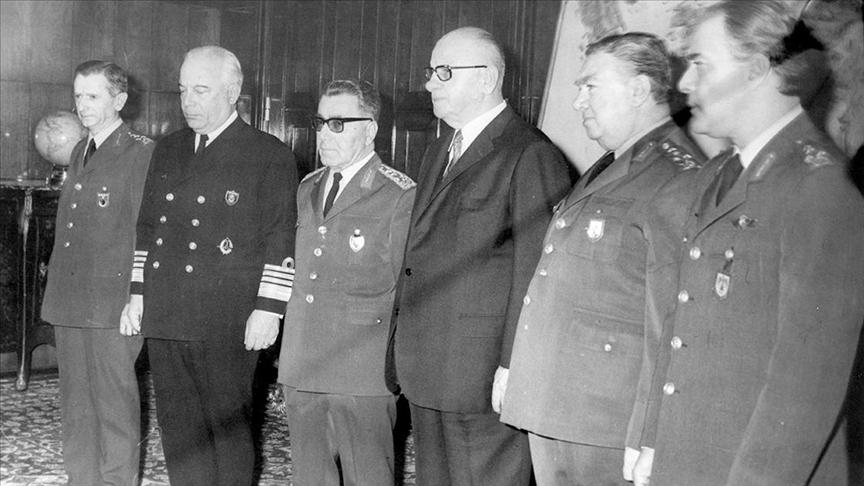
12 Mart Muhtırası'nı Hazırlayan Kuvvet Komutanları (Anadolu Ajansı)
The emergence of the March 12 Memorandum was also linked to power dynamics within the military. In early 1971, different interventionist tendencies existed within the Turkish Armed Forces. The senior command did not align with factions advocating a more radical military regime. The failure of the March 9 attempt and the subsequent purge of these circles influenced the formulation of the March 12 text.
Therefore, the March 12 Memorandum is not merely a military stance developed in response to civil politics; it is also a senior command intervention resulting from the differentiation among interventionist models within the military. The coexistence of reform emphasis and explicit intervention threats within the same text reflects this dual structure.
The legal dimension of the memorandum is directly related to the definition of the intervention. The military circles that carried out the intervention linked it to Article 35 of the Turkish Armed Forces Internal Service Law.【5】 In contrast, the 1961 Constitution stipulated that no organ could exercise a state authority not derived from the Constitution. Within this framework, March 12 was justified by the rhetoric of “protecting the constitutional order”; however, it constituted an unlawful use of power in terms of constitutional authority limits. The constitutional amendments of 1971 and 1973, which narrowed the scope of fundamental rights, restricted autonomous institutions, and strengthened the executive, expanded the memorandum’s impact on the legal order.
March 12 emerged within the continuity of the civil-military relationship model established after 1960. After May 27, the military positioned itself as the guiding and supervisory force of the regime during political crises, a role that reappeared clearly on March 12. The governments established after March 12, the constitutional amendments, emergency rule measures, and military pressure surrounding the 1973 presidential election demonstrate that the impact of the intervention extended far beyond March 12. Therefore, March 12 is regarded not merely as a change of government but as one of the starting points of a process to reconstruct the political order, state security understanding, and military tutelage mechanisms of the first half of the 1970s.
The period in which the March 12 Memorandum emerged did not exhibit a structure explainable by a single crisis area. In the late 1960s, the weakening of political representation mechanisms, the disruption of parliamentary balances, the proliferation of student and worker movements, rising ideological violence in cities, economic slowdown, and the strengthening of interventionist tendencies within the military occurred simultaneously as mutually triggering developments. In parallel, increased mobilization amid these crises failed to produce a sustainable balance within the state structure and party system. Thus, the ground leading to March 12 constituted a multi-layered crisis field where political, social, economic, and institutional factors overlapped, rather than merely a security issue or government crisis.
Political gridlock during the final phase of the Justice Party’s rule became evident after the 1969 elections, as internal party opposition grew. Demirel’s government began its term on November 12, 1969, with 263 votes of confidence against 165 votes of no confidence; however, internal party power struggles intensified during the same period. When the Justice Party’s parliamentary and senate groups convened jointly to discuss the government program, 146 opposing members boycotted the meeting.【6】 Rumors that the Speaker of the Grand National Assembly, Ferruh Bozbeyli, intended to run for party leadership further deepened internal polarization.【7】 Thus, from the end of 1969, the problem ceased to be merely competition with opposition parties and entered a phase of organized dissent against Demirel’s leadership within the Justice Party.
Party tensions became more apparent at the beginning of 1970. The Republican People’s Party submitted a motion of censure against Süleyman Demirel; during the debate, CHP deputies brought to the parliamentary agenda the allegation that Demirel’s brother had received a 26 million lira loan from the Agricultural Bank.【8】 The Justice Party leadership requested that speaking time be limited to ten minutes. Justice Party deputies Ekrem Dikmen and Kadri Eroğan opposed this restriction and voted with the CHP. Despite the absence of a binding decision in the group meeting, both individuals were referred to the Honor Council and expelled from the party.【9】 These expulsions further intensified internal opposition. Seventy-two Justice Party deputies submitted a memorandum to Süleyman Demirel demanding the revocation of the expulsions and changes to internal party practices. This document later became known as the “Seventy-Two Memorandum” and served as the common statement of internal opposition within the Justice Party.【10】 Although Ferruh Bozbeyli, as Speaker of the Assembly, was not among the Seventy-Two, he informed Demirel that he should re-engage with these colleagues.【11】
The Seventy-Two movement was not limited to the expulsion issue. The opposition demanded the prevention of increasing social, economic, and political instability, the cessation of practices contrary to the party program, and the halting of expulsions of party members. These demands reflected a broader objection to the government’s management style and Demirel’s control over the party. During the same period, figures such as Ethem Kılıçoğlu and Cevat Önder also accused Demirel of dividing the party and were referred to the Honor Council.【12】 Thus, the fragmentation within the Justice Party evolved from individual objections into a systemic crisis.
This crisis turned into a government crisis during the budget vote on February 11, 1970. The 41 Justice Party deputies known as the “Forty-Ones” voted against the budget, and Demirel’s government fell.【13】 President Cevdet Sunay reappointed Demirel to form a government. Demirel formed a new cabinet by retaining a significant portion of the previous ministers; however, this did not resolve the internal party crisis. Although the government was reconstituted, it remained under constant threat of collapse. The budget vote demonstrated that the internal opposition within the Justice Party had reached a level capable of altering the parliamentary arithmetic.
Following the budget crisis, the Justice Party Discipline Council distanced or expelled many deputies. All 41 were referred to the Honor Council, and 26 were expelled.【14】 During this period, the internal opposition moved toward forming a separate party. A group gathered around Ferruh Bozbeyli, who left the Assembly on October 19, 1970, and the Justice Party in November 1970, founded the Democratic Party on December 18, 1970. Founding members included Saadettin Bilgiç, Faruk Sükan, Mehmet Turgut, Cevat Önder, İlhan Darendelioğlu, Talat Asal, Nilüfer Gürsoy, Neriman Ağaoğlu, Yüksel Menderes, and Mutlu Menderes. Bozbeyli became party leader, with Bilgiç and Yüksel Menderes as deputy leaders. The Democratic Party began its political life with 41 members in the Grand National Assembly and 8 in the Republic Senate.【15】
12 Mart Belgeseli (TRT Arşiv)
The founding of the Democratic Party institutionalized the split within the Justice Party. The new party claimed to be the true heir of the dissolved Democratic Party and advocated for a political amnesty and the lifting of bans on former Democratic Party members. Alongside Ferruh Bozbeyli, Saadettin Bilgiç, Faruk Sükan, and figures from former Democratic Party circles formed the symbolic and organizational backbone of this new party. This was not the only development deepening the fragmentation of the Justice Party’s base. The National Order Party, founded on January 26, 1970, also created a new political line by appealing to small and medium-sized entrepreneurs in Anatolia, drawing votes from the Justice Party’s base. Thus, Demirel’s party struggled to maintain the unity of its base against the split represented by the Democratic Party on the center-right and the rise of the National Order Party.
Political gridlock was not confined to the internal split within the Justice Party; a stable opposition bloc also failed to emerge on the opposition front. Within the Republican People’s Party, clear divisions existed between İsmet İnönü, Bülent Ecevit, Kemal Satır, and Nihat Erim factions. The Security Party, founded in 1967 by Turhan Feyzioğlu, Orhan Öztrak, and Ferit Melen, emerged as a centrist alternative to the Republican People’s Party’s “left-of-center” line. By 1971, the political landscape was fragmented, characterized by internal divisions within the Justice Party, ideological debates within the Republican People’s Party, the presence of the Security Party, the nationalist line of the Nationalist Movement Party (formerly CKMP), and the rise of the National Order Party. This fragmentation prevented the emergence of a strong, unified alternative to the government; at the same time, it produced a structure in which the incumbent government could not establish full authority.
The investigation initiative against Süleyman Demirel in the Grand National Assembly in December 1970 also revealed the intensity of the political atmosphere. On December 16, 1970, a proposal to investigate allegations against the Prime Minister was rejected by 309 votes against 276.【16】 Statements by Naci Çerezci, chairman of the investigation preparatory committee, sparked debate in the Assembly; Demirel rose to the podium to demand the opening of the investigation. However, immediately after the vote, the internal opposition within the Justice Party solidified its decision to leave the party and form a new one, and the Democratic Party was founded two days later. Thus, internal parliamentary negotiations and party splits became intertwined within the same week.
By the end of 1970, Demirel’s government was legally in office; however, due to internal opposition within the Justice Party, it could not exercise full control over the parliamentary majority, faced constant risks of crisis on fundamental issues such as the budget and confidence votes, encountered censure and investigation initiatives from the opposition, and struggled to maintain the cohesion of its center-right base against the Democratic Party and the National Order Party. This situation indicated a period in which the government was fighting not only external opposition but also fragmentation within its own political base.
The political gridlock leading to March 12 developed through concrete events: the final phase of the Justice Party’s rule, the anti-Demirel Seventy-Two movement, the February 11, 1970 budget vote, the “Forty-Ones” rejecting the budget, disciplinary investigations, the split of Ferruh Bozbeyli and Saadettin Bilgiç, and the founding of the Democratic Party on December 18, 1970. These developments disrupted the unity of the center-right and weakened the political weight of the executive within the parliament.
In the late 1960s, social mobilization expanded through universities, trade unions, professional organizations, and street politics. The political and economic crisis environment opened a broader space for association, publishing activities, student organizations, and union structures than in previous periods. This expansion quickly moved beyond institutional representation frameworks, creating a mass political visibility that spilled from university campuses to city centers and from lecture halls to factory surroundings. After 1968, youth movements adopted a more militant and organized stance around issues such as anti-imperialism, independence, university reform, social justice, and transformation of the state structure. Simultaneously, right-wing nationalist circles also became more visible in student organization activities. Thus, universities became not only educational institutions but also one of the most intense arenas for the ideological divisions of the era.
The rise of student movements gained a more distinct dimension with the impact of the 1968 wave in Turkey. University occupations, boycotts, forums, and protests initially centered on demands related to the education system and university administrations; they later acquired broader political content through opposition to the United States, criticism of NATO, and protests against the Sixth Fleet. Student circles organized in Istanbul and Ankara significantly influenced the political discourse of the era.【17】 Dev-Genç, the Federation of Intellectual Clubs, university associations, and various leftist youth groups transformed campus actions into components of broader social opposition. Meanwhile, as right-wing student organizations strengthened during the same period, polarization on campuses deepened. Tensions on campuses intensified through occupations of administrative buildings, disruption of classes, and pressure on academic staff.【18】
During this period, clashes between student movements and security forces also increased. Police interventions, arrests, and confrontations around campuses transformed student protests from ordinary forms of dissent into part of a debate in which the opposition accused the government of interfering with the right to protest, while the government claimed that protests involved violence escalating to vandalism. Institutions such as Istanbul University, Ankara University, Middle East Technical University, and Istanbul Technical University became among the most intense sites of protest and confrontation.【19】 Campus boycotts and occupations eventually merged with nationwide raids, attacks on student associations, and armed clashes between opposing groups. Thus, tensions in higher education transcended the boundaries of educational issues and became central to debates on public order and political legitimacy.
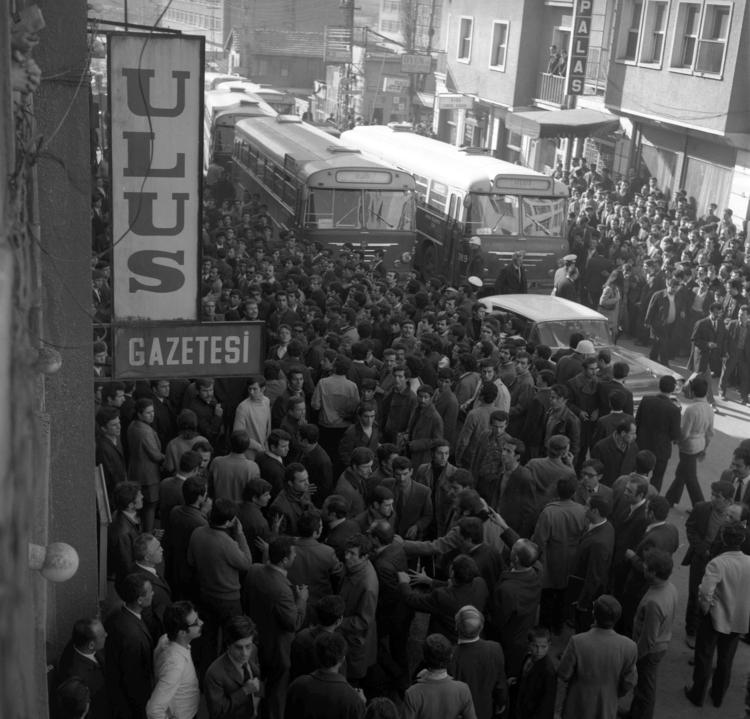
12 Mart Günü Ulus Gazetesi Önü (Anadolu Ajansı)
Social mobilization was not confined to the student sphere. Worker movements also gained mass visibility during the same period. The expansion of trade union rights, the use of the right to strike, and the intensified organizational capacity of the working class formed the second major axis of social opposition at the end of the 1960s. The presence of the Turkish Workers’ Party in parliament, the organizational capacity of DİSK, and demands regarding wages, collective bargaining, and job security transformed the labor movement into a political actor, not merely an economic one. The events of June 15–16, 1970 marked a turning point in this process. Tens of thousands of workers in Istanbul and Kocaeli organized mass demonstrations against trade union regulations; bridges, main roads, and industrial zones became the primary venues of protest.【20】
Urban social change also expanded the social base of mobilization. The acceleration of migration from rural to urban areas, the growth of informal settlements, and the emergence of a young and dynamic working population in industrial centers created a new foundation for political organization. The rapidly growing population on the outskirts of cities faced serious challenges in education, employment, housing, and public services. This pressure facilitated the emergence of new social bases for both leftist movements and nationalist-conservative circles. The urban space became not only a site of economic transformation but also a field of ideological organization. Youth associations, student dormitories, worker neighborhoods, cafés, and hostels became the everyday nodes of the era’s political polarization.
After 1969, the distance between social mobilization and political violence narrowed. Mutual attacks between leftist and rightist groups, clashes in university and city centers, bombings, raids, and political assassinations contributed to the widespread emergence of the “anarchy” narrative in public opinion.【21】 Violence began to emerge not merely as an extension of street demonstrations but as an organized, continuous form of struggle between opposing groups. Student dormitories, cafés, association buildings, and some local centers became targets for opposing groups. This environment turned ideological polarization into a part of daily life. The security forces’ interventions in these events frequently became a subject of debate between the opposition and the government regarding impartiality, competence, and selectivity.【22】 Thus, violence became not merely a public order issue but also a question of how state authority functioned.
The radicalization of organizations toward armed actions at the end of 1970 and the beginning of 1971 further intensified the relationship between social mobilization and security concerns. Bank robberies, kidnappings, and armed propaganda actions demonstrated that a segment of the youth movement had moved beyond the parliamentary arena.【23】 These developments created a new division between university-based mass student movements and action-oriented organizations. The state’s security apparatus evaluated this ongoing process not merely as student incidents but as direct threats to the regime. Ultimately, the process leading to March 12 saw social mobilization simultaneously embodying expanded forms of democratic participation and becoming entangled with violence and a security crisis.
The economic landscape before March 12 was shaped by the inability to sustain the growth momentum observed after 1965 and the increasing visibility of the limits of the import-substitution model. In the early years of the Justice Party, relatively high growth rates were achieved through foreign financial support, worker remittances, expansion of the domestic market, and policies stimulating consumption. From 1965 onward, GDP grew at an average rate of 7 percent annually; this growth was supported by the government’s floor price policy for agricultural products, which preserved rural demand, and the partial increase in the consumption capacity of the salaried class. During the same period, remittances from workers in Europe played a significant role in financing the foreign trade deficit; worker remittances, which stood at approximately 100 million dollars in the early years of Justice Party rule, surpassed one billion dollars by the 1970s.【24】 However, this growth model depended on foreign capital inflows, imported inputs, and a protectionist domestic market structure.
The import-substitution industrialization model initially limited consumption goods imports and expanded domestic production; however, over time, it increased dependence on imports for investment and intermediate goods. The rise in technology transfer and imported inputs in industry increased foreign exchange demand. Foreign credits and aid used since the early 1960s returned as a debt burden in the second half of the decade. By 1969, the economic crisis became more visible; the government struggled to find resources, and on August 10, 1970, an economic package was implemented, including liberalization of the foreign trade regime and wage suppression. This package indicated that economic management was no longer focused solely on sustaining growth but on limiting foreign exchange shortages and external financing pressures.【25】
The slowdown in growth was clearly visible in numerical indicators. The industrial growth rate, which had been 12 percent between 1965 and 1969, fell to 1.5 percent in 1970.【26】 This decline became one of the most prominent indicators of the economic squeeze before March 12. This development also strengthened the perception that existing parliamentary balances could not resolve economic problems through evolutionary means. Although industrial income increased by 8.7 percent after 1971, the plan target was set at 12 percent, leaving industrial production 3.3 percentage points below the target; although recovery was observed compared to the 1970 decline, the planned level was not reached.【27】 The economic problem was not merely the decline in growth rates but also the crisis generated by the nature of growth, the financing structure, and social distribution.
Economic slowdown also undermined the social coalition on which the Justice Party relied. In its early years, the Justice Party was able to garner support from diverse segments including large capital, small capital, rural voters, and provincial elites due to economic expansion. However, over time, large capital avoided sharing power with small capital.【28】 The government attempted to maintain a balance between agriculture and industry; however, this balancing policy failed to satisfy both large industrial circles and other segments. With the end of the easy import substitution phase, conflicts within the capital class intensified; a new market composition, new relationships with the global economy, and new political alliance searches emerged. Thus, the economic crisis disrupted not only the government-society relationship but also the internal balances of the capital class.
12 Mart Sürecine Dair Belgesel (TRT Avaz)
One of the most visible organizational arenas of this internal conflict was the Union of Chambers and Commodity Exchanges of Turkey (TOBB). Because the representation system in TOBB was based on individual voting, numerically larger groups of small traders and merchants were strongly represented, while large capital owners claimed they did not receive representation proportional to their economic power.【29】 For large capital, the issue was not merely one of representation; bank credits, foreign exchange allocation, pricing policies, import licenses, and quotas were direct subjects of interest conflicts. Thus, the struggle within the Union of Chambers became the institutional expression of tensions between large industrial capital and small and medium-sized commercial-industrial circles centered in Anatolia.
This tension merged with the divisions within center-right politics. A segment of Anatolian traders and merchants, after losing their struggle under the Union of Chambers umbrella, turned toward the National Order Party led by Necmettin Erbakan. A portion of large landowners and provincial elites joined the “Twenty-Sixers” and subsequent movements that had split from the Justice Party. Thus, economic interest differentiations emerged not only as a class issue but also as a fundamental element of political fragmentation. The capital, provincial elites, peasants, and rural support base, which the Justice Party had united under a single umbrella, became increasingly difficult to represent under the same party by 1970.
Class tensions were not confined to capital circles. With the acceleration of technological developments in agriculture and industry since the 1950s, the capital class and the working class gained stronger positions in the social structure. Between 1927 and 1965, the rate of employment in agriculture increased by 111 percent, while in industry it increased by 308 percent. By 1970, the number of insured workers reached 1.3 million, 70 percent of whom worked in enterprises employing more than 200 workers. Despite the quantitative growth of the working class, its share of the expanding economy remained limited. The real wage increase for salaried public workers declined from 9.4 percent between 1964 and 1969 to 5.5 percent by 1969.【30】 This picture demonstrates that industrialization expanded the working class but also increased tensions regarding income distribution and wages.
The urbanization process deepened this class transformation. The urban population, which stood at 5,244,337 in 1950, reached 13,817,717 in 1970.【31】 The proletarianization of peasants, the expansion of informal settlements, and the concentration of population in industrial cities reshaped the social structure. This transformation was not merely an economic relocation but a process that expanded the base of political demands and ideological organization. As the industrial class gained sectoral weight, organized labor activities also strengthened. Thus, when the period of economic slowdown began, the resulting tensions created a multi-layered conflict system affecting wages, representation, distribution, and political orientation simultaneously.
By the end of the 1960s, the inability to produce solutions within parliament coincided with the limits of the import-substitution accumulation process. The structure established by the industrial class during the 1960s growth conjuncture weakened; economic slowdown further complicated the management of social problems. Under these conditions, interest conflicts among capital segments became more visible; worker movements acquired a more mass character; and the government’s capacity to simultaneously sustain growth and meet diverse class demands narrowed. Therefore, the economic crisis before March 12 was not merely a statistical contraction but a process that simultaneously shook political representation, class distribution, and internal capital power balances.
The historical background of military-political relations leading to March 12, 1971, was not limited to the security concerns of the late 1960s. During the final period of the Ottoman Empire, the military emerged as a pioneering institution in modernization efforts, leading officer cadres trained in military schools to see themselves not only as military but also as carriers of political and social transformation. This trend became more pronounced during the Committee of Union and Progress period; the fact that the National Struggle was led by a military cadre strengthened the military’s role within the state structure.
Although the official declaration of the Republic established civilian institutions as the definitive basis for exercising political power, the historical founding and executive identity of the military made it practically impossible to completely exclude the military from politics. Thus, the line of military interventions leading to March 12 was nourished not only by the short-term crises of 1971 but also by a much older institutional memory and perception of political role.
The most critical turning point of this historical background in the Republican period was the May 27, 1960 intervention. With May 27, the Turkish Armed Forces, for the first time in the multi-party period, directly overthrew political power, and direct military intervention in the political process became visible as a solution option. The situation after May 27 was not limited to the end of the Democratic Party government; it also produced a new mindset that normalized the military’s intervention during political crises. This process created an environment in which, in subsequent years, every crisis was addressed by seeking a solution in military intervention rather than elections, government changes, or parliamentary compromise. March 12 emerged as the second major link in this line; September 12, 1980 and February 28, 1997 were subsequent examples of the same intervention tradition.
After May 27, a single political orientation did not emerge within the military. A division appeared between “moderates,” who wanted an immediate return to civilian rule, and “radicals,” who advocated continuing the military regime and completing structural reforms under military supervision. This tension, which began within the National Unity Committee, continued in the early 1960s through factions, declarations, internal purges, and pressure on the command structure. The two coup attempts led by Talat Aydemir on February 22, 1962 and May 20–21, 1963 demonstrated that the military had become a politicized arena of struggle within itself.
This division re-emerged prominently by 1971. The March 12 Memorandum emerged as a compromise product that brought together the line of Chief of the General Staff Memduh Tağmaç and President Cevdet Sunay, who did not seek to completely abolish the parliamentary regime, and the pressure from Muhsin Batur and Faruk Gürler, who were preparing a more radical intervention on March 9.【32】
The political structure established after the 1961 Constitution made the institutional dimension of military-political relations more visible. During the same period, the military became not only a security institution but also one of the important components of the political system. With the establishment of OYAK in the 1960s, the military sector emerged as an institutional actor in the economic field; indirect or direct military interventions were observed in issues such as presidential elections, the restoration of political rights to Democratic Party members, and various government crises. During this period, weaknesses in the hierarchical structure, internal purges, and the formation of different factions increased. Thus, the military simultaneously expanded its institutional weight within the state apparatus and its influence on contemporary politics.
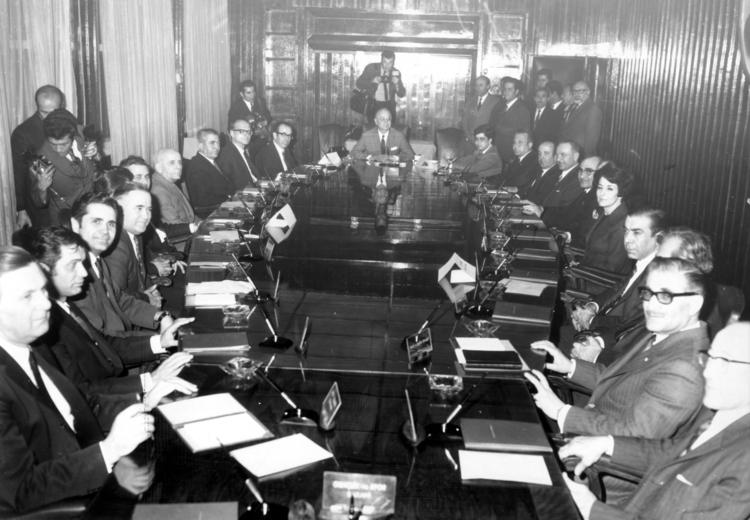
Muhtıra Sonrası Aynı Masa Etrafında Kuvvet Komutanları ve Siyasiler (Anadolu Ajansı)
One of the legal foundations of this political role perception within the military was Article 37 of the Turkish Armed Forces Internal Service Law of June 10, 1935, No. 2771, which stated: “The duty of the military is to protect and safeguard the Turkish homeland and the Turkish Republic as defined by the Fundamental Law.”【33】
When March 12 arrived, this article, despite Article 4 of the 1961 Constitution stipulating that no person or organ could exercise a state authority not derived from the Constitution, was interpreted by some military circles as including the authority to intervene in politics as part of the duty to protect and safeguard the regime.
Thus, the duty to “protect the Republic” was viewed as an independent military responsibility above and independent of elected governments. In this understanding, the military considered itself responsible to the state rather than to governments, and regarded political power as a temporary and secondary element in the face of state continuity. This article was also cited as the legal basis for March 12.
By the end of the 1960s, the relationship between the military and politics had hardened not only on the domestic policy level but also through foreign policy and national security perceptions. After May 27, the military’s self-assigned special role in politics brought with it a similar demand in foreign policy. The claim that elected governments could use foreign policy as a tool for internal struggles led some military circles to view foreign policy decisions as above politics and as national matters. This approach fostered the idea that the military should have the final say on what constituted a national security threat. Thus, the concept of national security was interpreted as connected not only to external threats but also to developments in domestic politics. Student movements, worker protests, leftist organizations, and parliamentary gridlock were evaluated within this expanded national security framework leading to March 12.
By early 1971, the distance between the high command and circles preparing for a more radical coup had reopened. President Cevdet Sunay and Chief of the General Staff Memduh Tağmaç, along with the majority of the high command except Air Force Commander Muhsin Batur, argued that the existing political and socio-economic crisis could be overcome within the current parliamentary framework. In his New Year’s message for 1971, Tağmaç emphasized that the Turkish Armed Forces were “fully committed to the democratic regime and the Constitution.”【34】 However, in response to the emergence of a more radical intervention plan, the Expanded Commanders Council under Memduh Tağmaç’s leadership decided on a more limited intervention under high command supervision.
The method followed on March 12 was the practical outcome of this historical background. The Chief of the General Staff and commanders met in the morning at the General Staff Headquarters; the prepared text, being too long, was rewritten; the text was signed at 12:05 and sent to TRT; it was announced to the public in the 13:00 news bulletin and read in the Assembly at 15:05. The text, which forced the government to resign and placed the military in the position of the decisive power above administration, initiated a new phase. The Assembly remained open; however, the high command of the military remained the decisive power from March 12, 1971, until April 1973. This structure created an interim regime form between direct military rule and visibly civilian government.
The military process leading to March 12, 1971, did not develop as a unified intervention prepared from a single center. Significant distinctions had emerged within the Turkish Armed Forces after 1960 regarding the method, scope, and purpose of intervention in politics. After May 27, one faction within the military command structure advocated maintaining the chain of command and limiting intervention, while another faction pursued more fundamental political transformation through direct coup attempts. The coup attempts led by Talat Aydemir on February 22, 1962, and May 20–21, 1963, were early examples of this division. By 1971, the same line re-emerged with new actors.
Chief of the General Staff Memduh Tağmaç and President Cevdet Sunay represented the line that distanced itself from completely abolishing the parliamentary regime and insisted that any intervention must be conducted within the hierarchy and under high command supervision. In contrast, the structure formed around March 9 argued that the current political order could not be overcome merely by a government change but required a more comprehensive regime transformation. Therefore, the March 12 Memorandum emerged not merely as a military intervention against civil politics but as the result of a conflict and subsequent realignment between two different interventionist understandings within the military.
Developments between the end of 1970 and the beginning of 1971 demonstrated that this division had reached the high command. In the National Security Council meeting on January 25, 1970, Air Force Commander Muhsin Batur delivered a long speech in which he assessed that the duties assigned to the state by the Constitution were not being fulfilled, that the right was obstructing solutions to problems, and that the government was yielding to right-wing circles. In a letter written by Batur to President Cevdet Sunay on November 21, 1970, it was stated that the government and parliament had rapidly lost power and credibility, that the “most diligent, intelligent, and capable” individuals within the armed forces were losing hope in the current system and beginning to organize, and that a “round table” solution among parties was proposed to implement administrative, economic, and social reforms. Sunay responded to this approach with: “The worst government is better than anarchy.”【35】
During the same period, Memduh Tağmaç also strongly criticized violence in universities in his 1971 message but emphasized that the Turkish Armed Forces were “fully committed to the democratic regime and the Constitution.” This picture demonstrates that within the high command, there was simultaneously serious dissatisfaction with the current political order and distance from unauthorized and open coup attempts.
The March 9, 1971 attempt represented the most radical line of this military unrest. Around this attempt, figures such as Cemal Madanoğlu, Doğan Avcıoğlu, and İlhan Selçuk were influential; drafts such as the “Revolutionary Constitution,” “Revolutionary Party Statute,” “Revolutionary Council,” and a new Council of Ministers list were discussed. The planned structure envisioned General Faruk Gürler as head of state, General Muhsin Batur as prime minister, and Major General Celil Gürkan as deputy prime minister; civilian figures such as Bahri Savcı, Osman Olcay, Nusret Fişek, Altan Öymen, and Uğur Mumcu were considered for various positions, demonstrating that the March 9 line aimed not merely to overthrow the government but to establish a new administration based on military-civilian cooperation.【36】<span style="white
Akgün, Ertuğrul. "12 Mart Muhtırası: Sınıfsal Açıdan Bir Değerlendirme." Master's thesis,Kocaeli Üniversitesi, 2008. Accessed March 8, 2026. https://tez.yok.gov.tr/UlusalTezMerkezi/TezGoster?key=-Z0vbSUgrhM9fXoGkRe6QyRsJhYoysEOzt1xfG3ulh8hTjgiZqqINx31SAIqFVGH
Açıkkaya, Savaş. "Türkiye'de Sol Akımların Türk Devrimi Algılamaları 27 Mayıs 1960 - 12 Mart 1971." PhD thesis, İstanbul Üniversitesi, 2009. Accessed March 8, 2026. https://tez.yok.gov.tr/UlusalTezMerkezi/TezGoster?key=CwVIqqBuz1VkysVpueogAUTmQ0p1AKKVsxjoT3-K-k8Jh070yCDsAP22VNvdkslW
Beriş, Hamit Emrah. *Adı Konulmayan Darbe: 12 Mart Muhtırası*. Ankara: Türkiye Büyük Millet Meclisi, 2023. Accessed March 8, 2026. https://acikerisim.tbmm.gov.tr/items/06c95800-b43f-4cfd-a8ba-11a32e9e269e
Bozkurt, Önder. "Anılarda 12 Mart Muhtırası: 'Bizden Başka Herkesin İktidarda Olduğu O Dönem'." *Gazi Üniversitesi İktisadi ve İdari Bilimler Fakültesi Dergisi* 20, no. 1 (2018): 209–43. Accessed March 8, 2026. https://dergipark.org.tr/tr/pub/gaziuiibfd/article/419425
Erim, Nihat. *12 Mart Anıları*. Ed. Raşit Çavaş. İstanbul: Yapı Kredi Yayınları, 2007. Accessed March 8, 2026. https://books.google.com.tr/books/about/12_Mart_an%C4%B1lar%C4%B1.html?id=t9RpAAAAMAAJ
Ertener, İbrahim. "12 Mart Askeri Müdahalesi ve Üniversiteler." Master's thesis, Dokuz Eylül Üniversitesi, 2019. Accessed March 8, 2026. https://tez.yok.gov.tr/UlusalTezMerkezi/TezGoster?key=npGs9H39x7G6401x51yqpI8x2tvhmDEgzhQgO5IbMBYr6yFznYPhHAu_YxO85PzU
Gülbay, Alper. "12 Mart'tan 12 Eylül'e Türkiye'de Seçimler ve Sonuçları." PhD thesis, Hacettepe Üniversitesi, 2017. Accessed March 8, 2026. https://tez.yok.gov.tr/UlusalTezMerkezi/TezGoster?key=RrI-Krk3A-RkF4YfHofuk0mFdZD9SdMdZ-rvzn9ZEwvByx_M9FMdI_fG4_aJ7hps
Gülen, Ahmet. "Türk Siyasal Hayatında Nihat Erim." PhD thesis, İstanbul Üniversitesi, 2018. Accessed March 8, 2026. https://tez.yok.gov.tr/UlusalTezMerkezi/TezGoster?key=MzP7PYssFqdb3WIjlroAkdnjyysN07GSlSuASd6RMbXHfiKO2ZRochIJGPNR3HMQ
Güler, Burak. "27 Mayıs Darbesinden 12 Mart Muhtırasına Türk Basınında Atatürk ve Atatürkçülük (1960-1971)." PhD thesis, Hacettepe Üniversitesi, 2023. Accessed March 8, 2026. https://tez.yok.gov.tr/UlusalTezMerkezi/TezGoster?key=r4I1HnmXxFQovUpyAyUmxMvosg9OeZ0RfdqrwTCGk6udfOIAsSN9o55cvbPwOrtu
Gündoğan, Barış. "Demokrasiye Vurulan İkinci Darbe: 12 Mart Muhtırası." Anadolu Ajansı. March 11, 2022. Accessed March 8, 2026. https://www.aa.com.tr/tr/gundem/demokrasiye-vurulan-ikinci-darbe-12-mart-muhtirasi/2531506
Karataş, Murat. "Türkiye’de Asker-Sivil İlişkileri Bağlamında 12 Mart Muhtırası ve Partiler Üstü Hükümet Modeli Üzerine Bir Değerlendirme." *Anadolu ve Balkan Araştırmaları Dergisi* 2, no. 3 (2019): 69–110. Accessed March 8, 2026. https://dergipark.org.tr/tr/pub/abad/article/550244
Kaya, Kayahan. "12 Mart Muhtırası ve Milli Güven Partisi’nin Yaklaşımı Üzerine Bir Değerlendirme." *Akademik Düşünce Dergisi*, no. 7 (2023): 53–78. Accessed March 8, 2026. https://dergipark.org.tr/tr/pub/akademikdusunce/article/1216017
Kayıhan, İsa. "12 Mart Romanlarında Öteki." PhD thesis, Eskişehir Osmangazi Üniversitesi, 2024. Accessed March 8, 2026. https://tez.yok.gov.tr/UlusalTezMerkezi/TezGoster?key=E_eEUHQic_C-LvhxNQn1W6mzQVy_jN_9Z67GeR_kqOsusrNaClkhQPHTWcvA4YBM
Keskin, Birol. "12 Mart 1971 Askeri Muhtırası'nın Türk Eğitim Tarihindeki Yeri ve Günümüz Eğitim Sistemiyle Karşılaştırılması." PhD thesis, Atatürk Üniversitesi, 2018. Accessed March 8, 2026. https://tez.yok.gov.tr/UlusalTezMerkezi/TezGoster?key=hcgrYffRbz0Z44UJEuLtwRoDP07jlXAn_Fwfc79vA2ljIjaAi7w8nJ-0lJQ1Hc7V
Keskin, Yusuf Ziya. "27 Mayıs 1960 Askeri Darbesi ve 12 Mart 1971 Muhtırası'nın Türk Devlet Teşkilatı ile Siyaset Hayatına Etkileri." PhD thesis, Atatürk Üniversitesi, 2011. Accessed March 8, 2026. https://tez.yok.gov.tr/UlusalTezMerkezi/TezGoster?key=EEdeQgIdFRxX5NbvVau-ArowAWl6AIxWfqzIHPYECKo2AQTHPu6IJpBRN3QgHK9U
Köse, Serdar. "Türk Demokrasi Hayatında 12 Mart 1971 Muhtırası." Master's thesis, Afyon Kocatepe Üniversitesi, 2010. Accessed March 8, 2026. https://tez.yok.gov.tr/UlusalTezMerkezi/TezGoster?key=ZeTyprYuef2HkaF3xt4wYsGEow3smRBUZEYvOEWMJ2IjshNrEU-JTAKOh9DE_jzC
Kılıç, Aziz. "Türkiye'de Askerî Darbelerin Eğitim ve Kültür Hayatı Üzerindeki Etkileri (27 Mayıs 1960-12 Mart 1971-12 Eylül 1980)." PhD thesis, Kahramanmaraş Sütçü İmam Üniversitesi, 2019. Accessed March 8, 2026. https://tez.yok.gov.tr/UlusalTezMerkezi/TezGoster?key=4J_FzTwlrMCH4qBROpXPH8JeKa79up9DTAsxpkKyOfwhXm6rkkeNhX8hB8LfsOkz
Muhacir, Adnan. "1965 Seçimlerinden 12 Mart Muhtırasına İktidar Muhalefet İlişkileri (1965-1971)." PhD thesis, Süleyman Demirel Üniversitesi, 2021. Accessed March 8, 2026. https://tez.yok.gov.tr/UlusalTezMerkezi/TezGoster?key=tqUiYt63sTQLTpozMJ92QlsgHzCKsiFrbQSFCrc8m_Lx8VSMY55ju8vlWNiVM3-2
Solak Şener, Aslı. "12 Mart'tan 12 Eylül'e Türk Basınının Siyasal Söylem Analizi: (1971-1980)." PhD thesis, Dokuz Eylül Üniversitesi, 2025. Accessed March 8, 2026. https://tez.yok.gov.tr/UlusalTezMerkezi/TezGoster?key=P3dtmmHrq-mzEcmCLi1CqZeoR9GpbMkRZa_lOgvXiAlNnsDkQXZ_IlGUC8g1EjOc
Subaşı, Erol. "Kapitalist Devlet, Güvenlik ve Toplumsal Düzen: 12 Mart 1971 Muhtırasını Açıklamak." PhD thesis, Galatasaray Üniversitesi, 2017. Accessed March 8, 2026. https://tez.yok.gov.tr/UlusalTezMerkezi/TezGoster?key=vbVkXe1KChYWNElr1MuLZjbTHC4le8PvMW5iJROjzNMNxWC9_SfiiYy4og2RoII2
TRT Arşiv. "12 Mart Muhtırası." YouTube, October 18, 2017. Accessed March 8, 2026. https://www.youtube.com/watch?v=4Q-BHGiN7K0
TRT Avaz. "12 Mart Muhtırası - O Gün Neler Yaşandı? - Panorama." YouTube. March 12, 2021. Accessed March 8, 2026. https://www.youtube.com/watch?v=mOpDXtm9Jj4
Tokalı, Ali Ramazan. "12 Mart Romanlarında Toplumsal Sınıfların Karşılaşması." PhD thesis, İstanbul Sabahattin Zaim Üniversitesi, 2025. Accessed March 8, 2026. https://tez.yok.gov.tr/UlusalTezMerkezi/TezGoster?key=V-oEQd0LkkqRGCXNzJWCTcH2jGOnn1MDvBiwJAbmgaD8FVLo8vJCuOkQHZ6quIl6
Tosun, Mehmet. "Demokrasiye Vurulan İkinci Darbe: 12 Mart Muhtırası." Anadolu Ajansı. March 11, 2020. Accessed March 8, 2026. https://www.aa.com.tr/tr/turkiye/demokrasiye-vurulan-ikinci-darbe-12-mart-muhtirasi-/1761779
Turan, Medet. "12 Mart'ın Türk Romanına Yansıması." Master's thesis, Yıldız Teknik Üniversitesi, 2010. Accessed March 8, 2026. https://tez.yok.gov.tr/UlusalTezMerkezi/TezGoster?key=ZeTyprYuef2HkaF3xt4wYtvDhvgPkqZTe75frEpj0iWQLPnT7ZXEUsnn2erIHSWg
Türkiye Büyük Millet Meclisi (TBMM). *Ülkemizde Demokrasiye Müdahale Eden Tüm Darbe ve Muhtıralar ile Demokrasiyi İşlevsiz Kılan Diğer Bütün Girişim ve Süreçlerin Tüm Boyutları ile Araştırılarak Alınması Gereken Önlemlerin Belirlenmesi Amacıyla Kurulan Meclis Araştırması Komisyonu Raporu, Cilt 1*. Ankara: TBMM Yayınları, 2012. Accessed March 8, 2026. https://acikerisim.tbmm.gov.tr/server/api/core/bitstreams/f3eea041-f2d8-4951-a81b-7b8d21f0c255/content
Türkiye Büyük Millet Meclisi (TBMM). *Ülkemizde Demokrasiye Müdahale Eden Tüm Darbe ve Muhtıralar ile Demokrasiyi İşlevsiz Kılan Diğer Bütün Girişim ve Süreçlerin Tüm Boyutları ile Araştırılarak Alınması Gereken Önlemlerin Belirlenmesi Amacıyla Kurulan Meclis Araştırması Komisyonu Raporu, Cilt 2*. Ankara: TBMM Yayınları, 2012. Accessed March 8, 2026. https://acikerisim.tbmm.gov.tr/server/api/core/bitstreams/83cc978e-c784-4a94-bf27-8e08c2e22a9d/content
Yavaşça, Kerem. "12 Mart Muhtırası’na Giden Yol ve Ara Rejimin İhdası: Pretoryanizm Tipolojisi Çerçevesinde Bir Değerlendirme." *İnsan ve Toplum* 13, no. 3 (2023): 137–67. Accessed March 8, 2026. https://dergipark.org.tr/tr/pub/insanvetoplum/article/1364172
Zürcher, Erik J. *Turkey: A Modern History*. New ed. London: I.B. Tauris, 2017. Accessed March 8, 2026. https://lib.ysu.am/disciplines_bk/7e97e2af13209c62b79f146874b490d4.pdf
Önal, Tekin. "12 Mart Muhtırası: Vesayetin Pekişmesi ve Ara Rejim Süreci (12 Mart 1971–14 Ekim 1973)." *History Studies* 8, no. 1 (2016): 89–109. Accessed March 8, 2026. https://www.historystudies.net/dergi/12-mart-muhtirasi-vesayetin-pekismesi-ve-ara-rejim-sureci-12-mart-1971-14-ekim-1973201604.pdf
Özkandaş, Yaşar. "12 Mart 1971 Muhtırası’nın Türk Siyasetini Şekillendirmesi Ekseninde Cumhuriyet Halk Partisi." *Ankara Üniversitesi Türk İnkılâp Tarihi Enstitüsü Atatürk Yolu Dergisi*, no. 68 (2021): 573–615. Accessed March 8, 2026. https://doi.org/10.46955/ankuayd.943784
Özkandaş, Yaşar. "27 Mayıs 1960'dan 12 Mart 1971'e Türkiye'de Kemalizm Tartışmaları." PhD thesis, Ankara Üniversitesi, 2016. Accessed March 8, 2026. https://tez.yok.gov.tr/UlusalTezMerkezi/TezGoster?key=DPTyuy3wRPq_qvCPSqUB64eTUf58FarC_FPJVVv4rDy5vFBt6wKhJxCEh-hoTsUf
Özşarlak, Pınar. "12 Mart 1971 Muhtırası'nın Ardından Verilen Ölüm Cezalarının Türk Basınında Sunumu." PhD thesis, Yaşar Üniversitesi, 2021. Accessed March 8, 2026. https://tez.yok.gov.tr/UlusalTezMerkezi/TezGoster?key=v7BkNnnepTnbhn8rNR77LRGTUKZMcDiFK-17DVqjN6nWyxWvdeHoVCh-8nFTmpOH
İnönü, İsmet. *İsmet İnönü: Konuşma, Demeç, Makale, Mesaj ve Söyleşileri (1970–1973)*. Prepared by İlhan Turan. Ankara: TBMM Kültür, Sanat ve Yayın Kurulu Yayınları, 2004. Accessed March 8, 2026. https://www.ismetinonu.org.tr/ismet-inonu-1970-1973.htm
[1]
Yusuf Ziya Keskin, "27 Mayıs 1960 Askeri Darbesi ve 12 Mart 1971 Muhtırası'nın Türk Devlet Teşkilatı ile Siyaset Hayatına Etkileri" (Doktora tezi, Atatürk Üniversitesi, 2011), erişim tarihi: 8 Mart 2026, https://tez.yok.gov.tr/UlusalTezMerkezi/TezGoster?key=EEdeQgIdFRxX5NbvVau-ArowAWl6AIxWfqzIHPYECKo2AQTHPu6IJpBRN3QgHK9U. s. 234-235.
[2]
Tekin Önal, "12 Mart Muhtırası: Vesayetin Pekişmesi ve Ara Rejim Süreci (12 Mart 1971–14 Ekim 1973)," History Studies 8, sy. 1 (2016): 89–109, erişim tarihi: 8 Mart 2026, https://www.historystudies.net/dergi/12-mart-muhtirasi-vesayetin-pekismesi-ve-ara-rejim-sureci-12-mart-1971-14-ekim-1973201604.pdf. s. 91.
[3]
Hamit Emrah Beriş, Adı Konulmayan Darbe: 12 Mart Muhtırası (Ankara: Türkiye Büyük Millet Meclisi, 2023), erişim tarihi: 8 Mart 2026, https://acikerisim.tbmm.gov.tr/items/06c95800-b43f-4cfd-a8ba-11a32e9e269e. s. 163.
[4]
Kerem Yavaşça, "12 Mart Muhtırası’na Giden Yol ve Ara Rejimin İhdası: Pretoryanizm Tipolojisi Çerçevesinde Bir Değerlendirme," İnsan ve Toplum 13, sy. 3 (2023): 137–67, erişim tarihi: 8 Mart 2026, https://dergipark.org.tr/tr/pub/insanvetoplum/article/1364172. s. 137.
[5]
Yusuf Ziya Kesgin. (a.g.e), s. 80.
[6]
Yaşar Özkandaş, "27 Mayıs 1960'dan 12 Mart 1971'e Türkiye'de Kemalizm Tartışmaları" (Doktora tezi, Ankara Üniversitesi, 2016), erişim tarihi: 8 Mart 2026, . s. 157.
[7]
Yaşar Özkandaş, "27 Mayıs 1960'dan 12 Mart 1971'e Türkiye'de Kemalizm Tartışmaları" s. 157-158.
[8]
Alper Gülbay, "12 Mart'tan 12 Eylül'e Türkiye'de Seçimler ve Sonuçları" (Doktora tezi, Hacettepe Üniversitesi, 2017), erişim tarihi: 8 Mart 2026, . s. 26.
[9]
Alper Gülbay. (a.g.e), s. 26.
[10]
Alper Gülbay. (a.g.e), s. 30.
[11]
Alper Gülbay. (a.g.e), s. 26.
[12]
TBMM, Ülkemizde Demokrasiye Müdahale Eden Tüm Darbe ve Muhtıralar ile Demokrasiyi İşlevsiz Kılan Diğer Bütün Girişim ve Süreçlerin Tüm Boyutları ile Araştırılarak Alınması Gereken Önlemlerin Belirlenmesi Amacıyla Kurulan Meclis Araştırması Komisyonu Raporu, Cilt 1 (Ankara: TBMM Yayınları, 2012), erişim tarihi: 8 Mart 2026, https://acikerisim.tbmm.gov.tr/server/api/core/bitstreams/f3eea041-f2d8-4951-a81b-7b8d21f0c255/content. s. 514.
[13]
Yusuf Ziya Kesgin. (a.g.e), s. 153.
[14]
Yusuf Ziya Kesgin. (a.g.e), s. 221.
[15]
Yusuf Ziya Kesgin. (a.g.e), s. 153.
[16]
Yusuf Ziya Kesgin. (a.g.e), s. 221.
[17]
Yusuf Ziya Kesgin. (a.g.e), s. 227.
[18]
Yusuf Ziya Kesgin. (a.g.e), 164.
[19]
Yusuf Ziya Kesgin. (a.g.e), s. 202, 259.
[20]
Yusuf Ziya Kesgin. (a.g.e), s. 97.
[21]
Yusuf Ziya Kesgin. (a.g.e), s. 220.
[22]
Nihat Erim, 12 Mart Anıları, ed. Raşit Çavaş (İstanbul: Yapı Kredi Yayınları, 2007), erişim tarihi: 8 Mart 2026, https://books.google.com.tr/books/about/12_Mart_an%C4%B1lar%C4%B1.html?id=t9RpAAAAMAAJ. s. 111.
[23]
Yaşar Özkandaş, "27 Mayıs 1960'dan 12 Mart 1971'e Türkiye'de Kemalizm Tartışmaları" s. 164-165.
[24]
Yusuf Ziya Kesgin. (a.g.e), s. 194.
[25]
Yusuf Ziya Kesgin. (a.g.e), s. 194.
[26]
Alper Gülbay. (a.g.e), s. 37.
[27]
Nihat Erim. (a.g.e), s. 1066.
[28]
Alper Gülbay. (a.g.e), s. 37.
[29]
Erol Subaşı, "Kapitalist Devlet, Güvenlik ve Toplumsal Düzen: 12 Mart 1971 Muhtırasını Açıklamak" (Doktora tezi, Galatasaray Üniversitesi, 2017), erişim tarihi: 8 Mart 2026, https://tez.yok.gov.tr/UlusalTezMerkezi/TezGoster?key=vbVkXe1KChYWNElr1MuLZjbTHC4le8PvMW5iJROjzNMNxWC9_SfiiYy4og2RoII2. s. 306.
[30]
Ali Ramazan Tokalı, "12 Mart Romanlarında Toplumsal Sınıfların Karşılaşması" (Doktora tezi, İstanbul Sabahattin Zaim Üniversitesi, 2025), erişim tarihi: 8 Mart 2026, https://tez.yok.gov.tr/UlusalTezMerkezi/TezGoster?key=V-oEQd0LkkqRGCXNzJWCTcH2jGOnn1MDvBiwJAbmgaD8FVLo8vJCuOkQHZ6quIl6. s. 60-61.
[31]
Ali Ramazan Tokalı. (a.g.e), s. 61.
[32]
Alper Gülbay. (a.g.e), s. 39.
[33]
Yusuf Ziya Kesgin. (a.g.e), s. 45.
[34]
Yaşar Özkandaş, "27 Mayıs 1960'dan 12 Mart 1971'e Türkiye'de Kemalizm Tartışmaları" s. 164.
[35]
Yaşar Özkandaş, "27 Mayıs 1960'dan 12 Mart 1971'e Türkiye'de Kemalizm Tartışmaları" s. 164.
[36]
Yusuf Ziya Kesgin. (a.g.e), s. 231.


Date(s) | 12 March 1971 | ||||||||
|---|---|---|---|---|---|---|---|---|---|
Outcome | Limitation of fundamental rights and freedoms Broadcast bans and confiscation orders Restriction of TRT autonomy Reduction of university autonomy Ban on strikes and lockouts Closure of the Workers Party of Turkey Expansion of military jurisdiction Declaration of martial law in 11 provinces | ||||||||
Implementation | A non-partisan government under Nihat Erim was established The Demirel government resigned the same day It was read in the Grand National Assembly at 15:05 It was announced to the public on TRT news at 13:00 The memorandum was signed at 12:05 | ||||||||
Reason/Allegations | Intensification of left-right clashes Worker movements and the 15-16 June 1970 events Student movements and university incidents Stagnation of the current government | ||||||||
Target | To suppress armed actions and protests To bring the political order under military control To establish a non-partisan government To overthrow the Süleyman Demirel government | ||||||||
Signatories | Commander of the Navy Admiral Celâl Eyiceoğlu Commander of the Air Force General Muhsin Batur Commander of the Army General Faruk Gürler Chief of the General Staff General Memduh Tağmaç | ||||||||
Place | Nationwide Ankara | ||||||||
No Discussion Added Yet
Start discussion for "March 12 Memorandum" article
Definition, Scope, and Historical Position
Turkey at the End of the 1960s
Political Gridlock in the Final Phase of the Justice Party Government
Social Mobilization, Student Movements, and the Climate of Violence
Economic Slowdown and Capitalist Tensions
Historical Background of Military-Political Relations
Divisions Within the Military and the March 9–March 12 Line