


 Recently Added:
This article was automatically translated from the original Turkish version.
Military Operations by the Syrian Army Against the YPG/SDG Presence West of the Euphrates River is a comprehensive military campaign that began on 13 January 2026 with the Syrian Army’s declaration of the YPG/SDG-controlled areas west of the Euphrates River as a “military zone” and concluded on 18 January 2026 with the signing of a full integration and comprehensive ceasefire agreement with the terrorist organization YPG/SDG.
The operation was conducted across a broad front stretching from the areas of Deyr Hafir and Meskene in eastern Aleppo to the Tabqa front in Raqqa Governorate. The Syrian Army took this decision in response to the presence of members of the terrorist organization YPG/SDG and PKK in these areas, who had used them as bases for kamikaze unmanned aerial vehicle (UAV) attacks targeting Aleppo, constructed new bunkers, and violated previously signed agreements.
In its 13 January statement, the Army called on all armed elements to “withdraw east of the Euphrates” and designated the region a “closed military zone.” Subsequently, reinforcement units were sent to the Deyr Hafir line, humanitarian corridors were opened on 14–15 January to evacuate civilians, but it was reported that YPG/SDG had blocked their passage with armed force. On 16 January, the Army launched operations against YPG/SDG in Deyr Hafir, and by the morning of 17 January had fully taken control of the area and advanced toward Meskene. On the same day, troops reached the borders of Raqqa Governorate and captured the village of Dibsi Afnan and secured control of Tabqa and Cirah Military Airfield.
On 18 January 2026, Syrian President Ahmad Shar’a and representatives of the terrorist organization YPG/SDG signed a comprehensive integration and ceasefire agreement. This agreement stipulated the withdrawal of YPG/SDG east of the Euphrates, the transfer of administrative control of Deir ez-Zor, Hassakeh and Raqqa governorates to the state, and the return of energy resources to state control.
On the same day, tribal forces in Deir ez-Zor eliminated all YPG/SDG presence across the governorate, and the city of Shaddadi came under tribal control. Thus, following the military and political process conducted between 13 and 18 January 2026, full control of all areas west of the Euphrates was reestablished by the Syrian government.
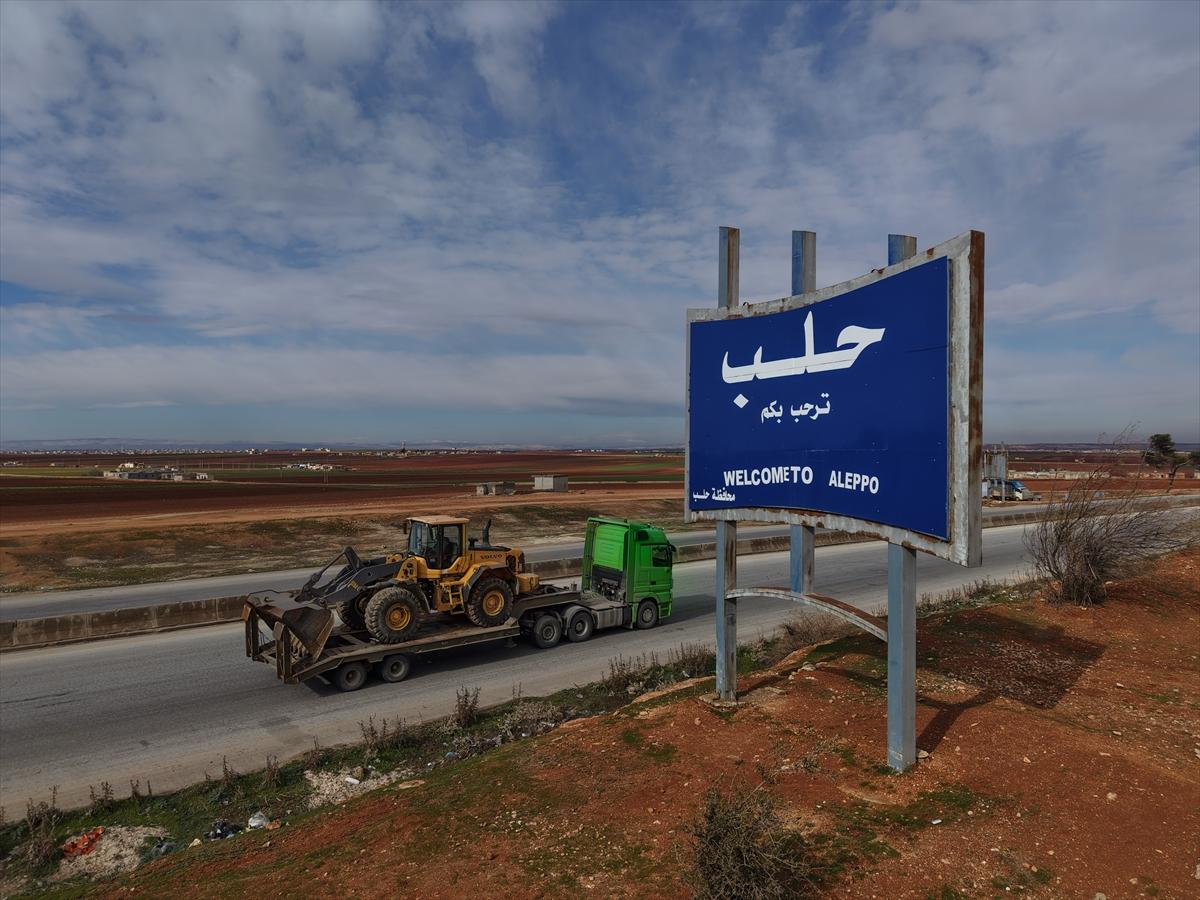
The Syrian Army reinforces the Deyr Hafir line under YPG/SDG occupation, 14 January 2026 – (Anadolu Ajansı)
On 13 January 2026, the Syrian Army issued a written statement announcing that the areas west of the Euphrates River under the occupation of the terrorist organization YPG/SDG had been declared a military zone. The statement noted that in these areas, members of the terrorist organization YPG/SDG and PKK, as well as remnants of the former regime, had established bunkers. The Army’s statement called for “the withdrawal of terrorist elements east of the Euphrates River.”
The statement emphasized that these occupied areas had been used as bases for kamikaze unmanned aerial vehicle (UAV) attacks targeting Aleppo and highlighted the presence of armed YPG/SDG structures west of the Euphrates. The Army’s bulletin stated: “The Syrian Army will take all necessary measures to prevent armed groups gathering in this region from using it as a base for criminal activities.”
The Syrian Army attached a map to its statement showing the areas of Meskene and Deyr Hafir. In this communication, civilians were urged to “stay away from locations associated with terrorist organizations.”
The Syrian government referred to two agreements signed with the SDG during 2025. The first agreement, signed in March 2025, included provisions for the integration of the SDG into state institutions, the preservation of national territorial integrity, and the rejection of secessionist attempts.
In the second agreement of April 2025, the administrative integration of Aleppo’s Sheikh Maqsud and Ashrafiyya neighborhoods into the city and the removal of armed elements from these neighborhoods were mandated.
In its 13 January statement, the Syrian Army noted that the condition in these agreements requiring “SDG’s withdrawal east of the Euphrates in northern Syria” had not been implemented. The Syrian government characterized the continued presence of armed structures west of the Euphrates as a violation of these agreements and affirmed that security forces were continuing efforts to restore security nationwide. The statement included the assertion that “the SDF has shown no effort to fulfill its commitments.”
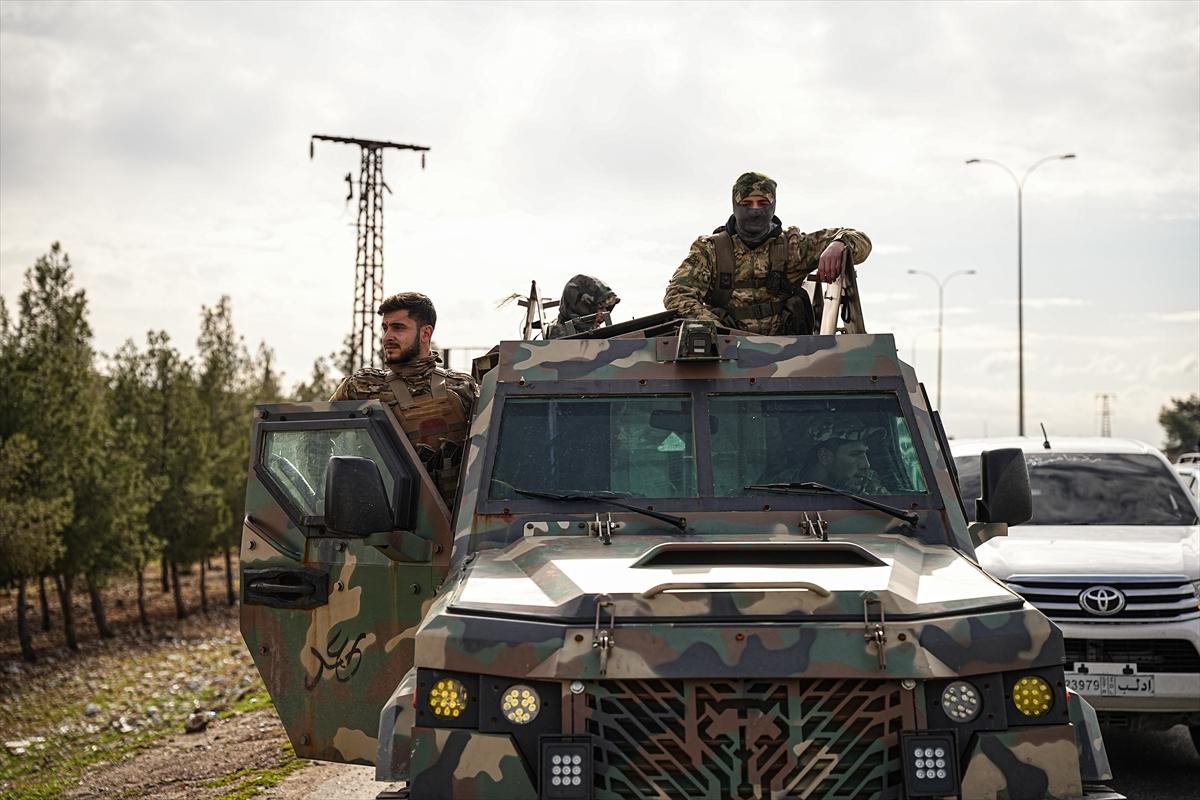
The Syrian Army reinforces the Deyr Hafir line under YPG/SDG occupation, 14 January 2026 – (Anadolu Ajansı)
Between 12 and 14 January 2026, the Syrian Army sent numerous reinforcement units to the Meskene and Deyr Hafir line. According to a report by the official Syrian news agency SANA, the terrorist organization YPG/SDG had deployed new armed groups in these areas, including PKK members and remnants of the former regime.
In a statement by Army officials, it was declared that “The Syrian Army will not remain constrained in the face of these developments.” The statement indicated that the Army had “directly and urgently assessed” the situation on the ground and characterized the organization’s fortification activities as a “dangerous escalation.”
Convoys carrying tanks, armored vehicles, multiple rocket launchers, and heavy weapons from Latakia toward Aleppo were deployed, with a significant portion of the forces positioned along the Deyr Hafir line, declared a closed military zone.
It was reported that on 13 January 2026, elements of the terrorist organization YPG/SDG carried out a kamikaze UAV attack on the vicinity of the village of Hamima in eastern Aleppo. The official Syrian news agency SANA reported that the attack targeted military positions and civilian settlements.
The report did not provide figures on casualties or injuries but stated that the Army had responded by targeting YPG/SDG positions around Deyr Hafir with artillery fire. It was reported that tensions in the area remained high following these retaliatory strikes.
Additionally, in a report published by the Syrian state television channel Al-Ikhbariya, it was announced that the terrorist organization YPG/SDG had detonated a bridge near the village of Ummu Tine in the Deyr Hafir region. The bridge was identified as a transit point between the YPG/SDG-occupied areas and the territories under Syrian government control north of Aleppo.
According to a report by the official Syrian news agency SANA citing military sources, the Army had thwarted an attempt by YPG/SDG to plant explosives on a bridge connecting the villages of Rasm al-Imam and Rasm al-Kerum.
On 14 January 2026, it was reported that a civilian had been shot and killed by elements of the terrorist organization YPG/SDG in the Deyr Hafir region. The Syrian state television channel Al-Ikhbariya reported that the incident occurred when a civilian attempting to leave Deyr Hafir by motorcycle was targeted by a sniper’s fire in the area declared a military zone.
The same source reported that YPG/SDG elements had opened fire on civilians attempting to leave Deyr Hafir under their occupation. Another broadcast by Al-Ikhbariya stated that YPG/SDG members had targeted Syrian Army positions and civilian homes in eastern Aleppo using UAVs and heavy machine guns, but it was not yet confirmed whether any casualties had resulted from these attacks.
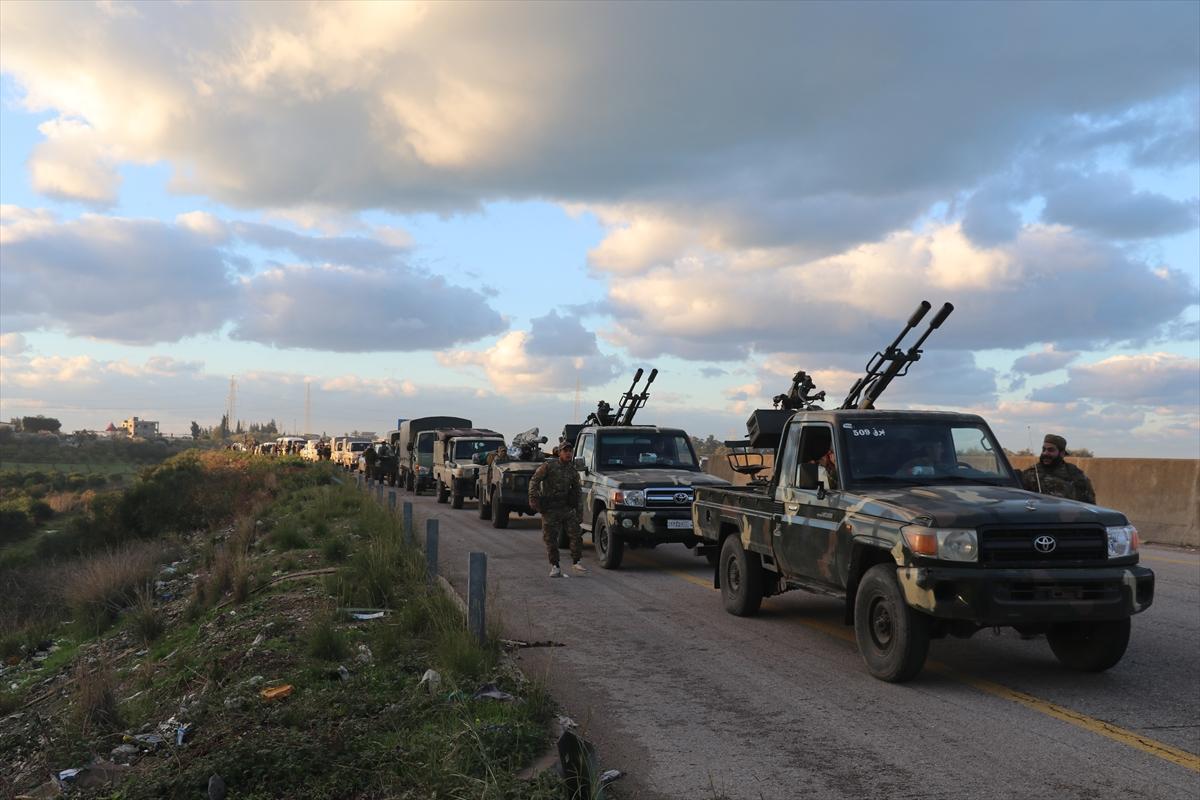
The Syrian Army reinforces the Deyr Hafir line under YPG/SDG occupation, 14 January 2026 – (Anadolu Ajansı)
It was reported that the terrorist organization YPG/SDG occupies approximately one-third of Syrian territory, with the majority of this area located east of the Euphrates River. The organization is said to have seized control of the country’s largest energy, agricultural, and water resources, including the Tishrin, Tabqa, and Baath dams.
On 10 January 2026, it was reported that the organization had halted water pumping operations at the El-Babiri Water Station on the banks of the Euphrates River between Kafse and Meskene in eastern Aleppo. The Syrian Ministry of Energy stated that this station serves as the primary water source for the city of Aleppo and surrounding rural areas. The same statement indicated that the interruption had caused “direct damage affecting the entire governorate” and negatively impacted public access to essential services.
In response to these developments, the Syrian Army intensified preparations for an operation to reestablish control over the Euphrates River basin. The organization’s practice of cutting off and restoring water supplies continues to have humanitarian and military consequences in the region.
On 14 January 2026, the Syrian Army’s Directorate of Operations announced that humanitarian corridors would be opened in the areas west of the Euphrates River, previously declared a military zone and under YPG/SDG occupation, to facilitate the evacuation of civilians. The announcement stated that the corridor would be open from 09:00 to 17:00 local time on 15 January. The corridor was specified to follow the route of the M15 highway through the village of Hamimah, connecting the YPG/SDG-occupied Deyr Hafir region with Aleppo.
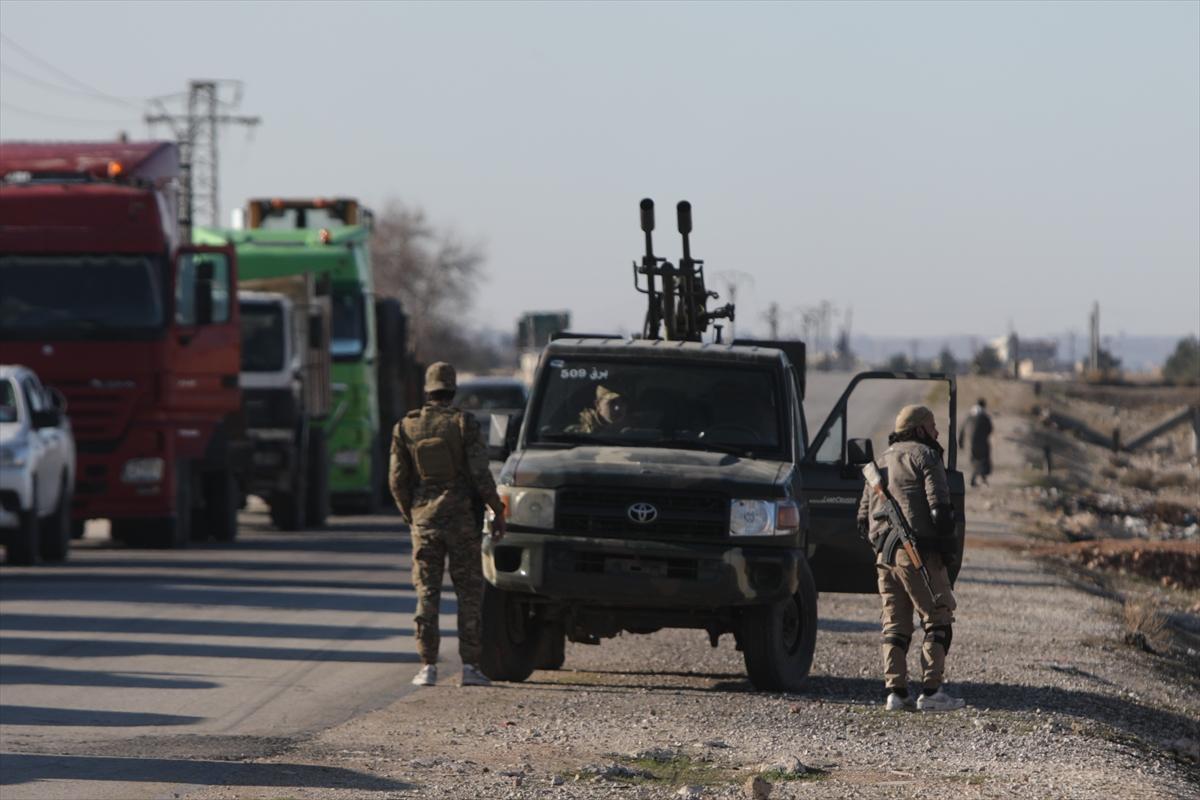
Syrian Army reinforcements to the Deyr Hafir line under YPG/SDG occupation, 14 January 2026 – (Anadolu Ajansı)
The Syrian Army stated in its announcement that “all necessary measures will be taken to ensure the safety of civilians in the region and eliminate potential threats,” and urged civilians to stay away from positions held by terrorist elements.
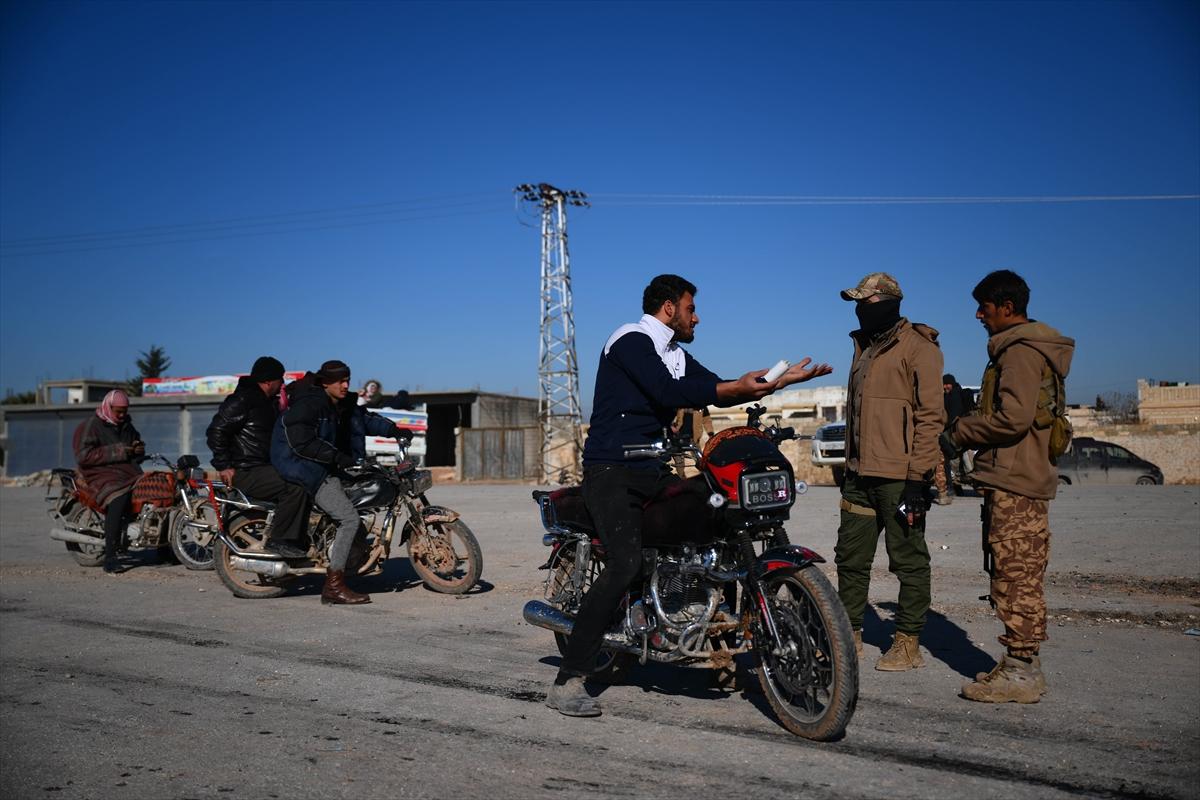
The Syrian Army continues its measures near the Deyr Hafir region of Aleppo, 15 January 2026 – (Anadolu Ajansı)
On 15 January 2026, the terrorist organization YPG/SDG prevented civilians living in the Deyr Hafir region under its occupation in eastern Aleppo from leaving the area. According to information provided by an Anadolu Ajansı (AA) correspondent from Army sources, YPG/SDG members used armed force to block civilians from exiting the region. An anonymous military official responsible for the civilian evacuation from Deyr Hafir stated: “We opened the humanitarian corridor. The Syrian Army seeks to safely evacuate civilians from this area under terrorist occupation. All necessary precautions have been taken, but the terrorist organization is using armed force to obstruct their departure.”
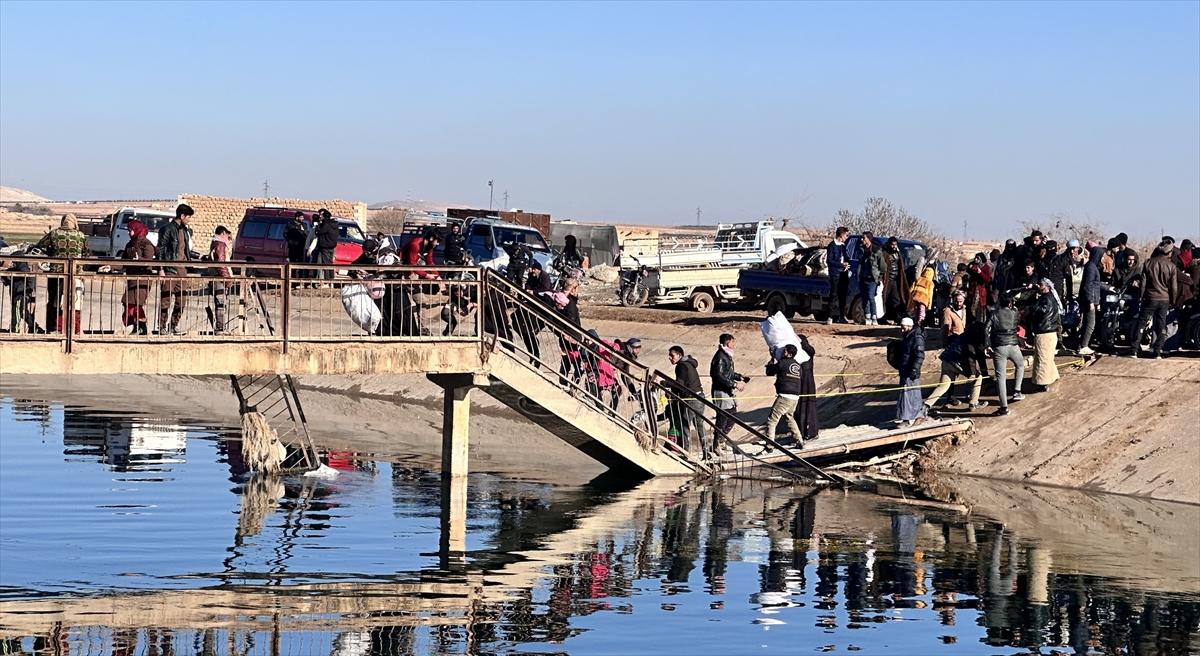
Civilians in the Deyr Hafir-Meskene line of Syria are attempting to leave the area for safe evacuation, 15 January 2026 – (Anadolu Ajansı)
It was reported that the Syrian Army had sent reinforcement units to the Deyr Hafir line, approximately 60 kilometers from Aleppo’s center, and conducted intensive military deployments. The Army established control checkpoints approximately five kilometers from the area, and no civilians had yet been evacuated. YPG/SDG elements established their own checkpoints and forcibly blocked civilian passage.
Medical teams stationed at the Humeyme checkpoint near Deyr Hafir remain on standby to assist civilians. Ali, a personnel member of the Syrian Health Commission, stated: “We have come here to provide assistance and support for the evacuation of civilians from their areas. Our medical teams and ambulances are ready here.” Ali further stated that “we have completed all preparations to ensure civilian safety, medical intervention, and rescue possibilities,” confirming that field preparations were complete.
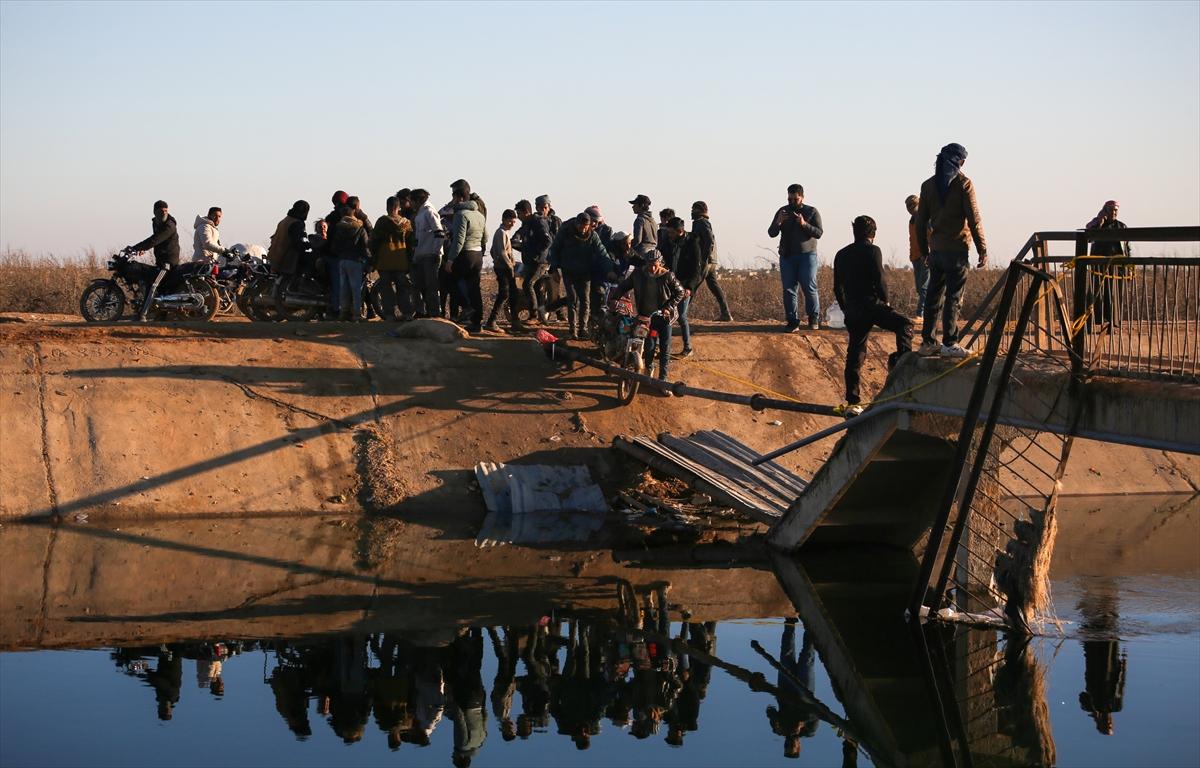
Civilians in the Deyr Hafir-Meskene line of Syria are attempting to leave the area for safe evacuation, 15 January 2026 – (Anadolu Ajansı)
According to information from residents of Deyr Hafir, organization members halted civilian passage at checkpoints at the city’s exits. An anonymous Deyr Hafir resident said: “We were stopped at the checkpoint and told we could not pass. I said I wanted to send women and children to Aleppo, but they did not allow us to proceed.” Another civilian reported that organization members told them: “We will not allow passage until barriers are removed; the road is mined and those who proceed do so at their own risk.”
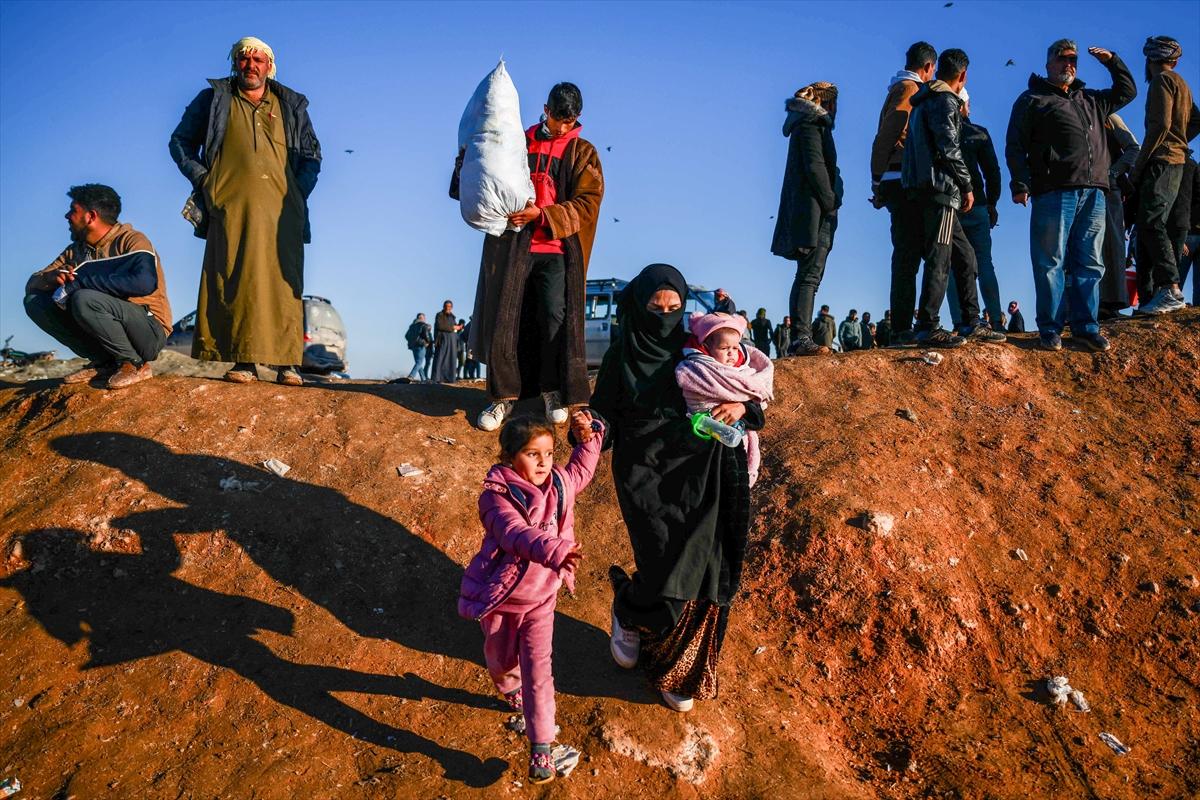
Civilians in the Deyr Hafir-Meskene line of Syria are attempting to leave the area for safe evacuation, 15 January 2026 – (Anadolu Ajansı)
On the morning of 16 January 2026, the humanitarian corridor declared by the Syrian Army was reopened. However, it was reported that YPG/SDG continued to obstruct evacuations. The Syrian Army announced that the corridor along the M15 highway connecting Deyr Hafir and Aleppo would remain open until 17:00. The same announcement stated that all points obstructing civilian passage or sabotaging the corridor would be targeted appropriately. YPG/SDG members placed concrete blocks at various points along the M15 highway to block the route and planted improvised explosive devices in some sections. As a result, many civilians abandoned their vehicles and attempted to flee on foot. Civilians, including women, elderly, and children, were seeking safe passage routes, with some attempting to use the route through Harmel Imam Village west of the Euphrates.
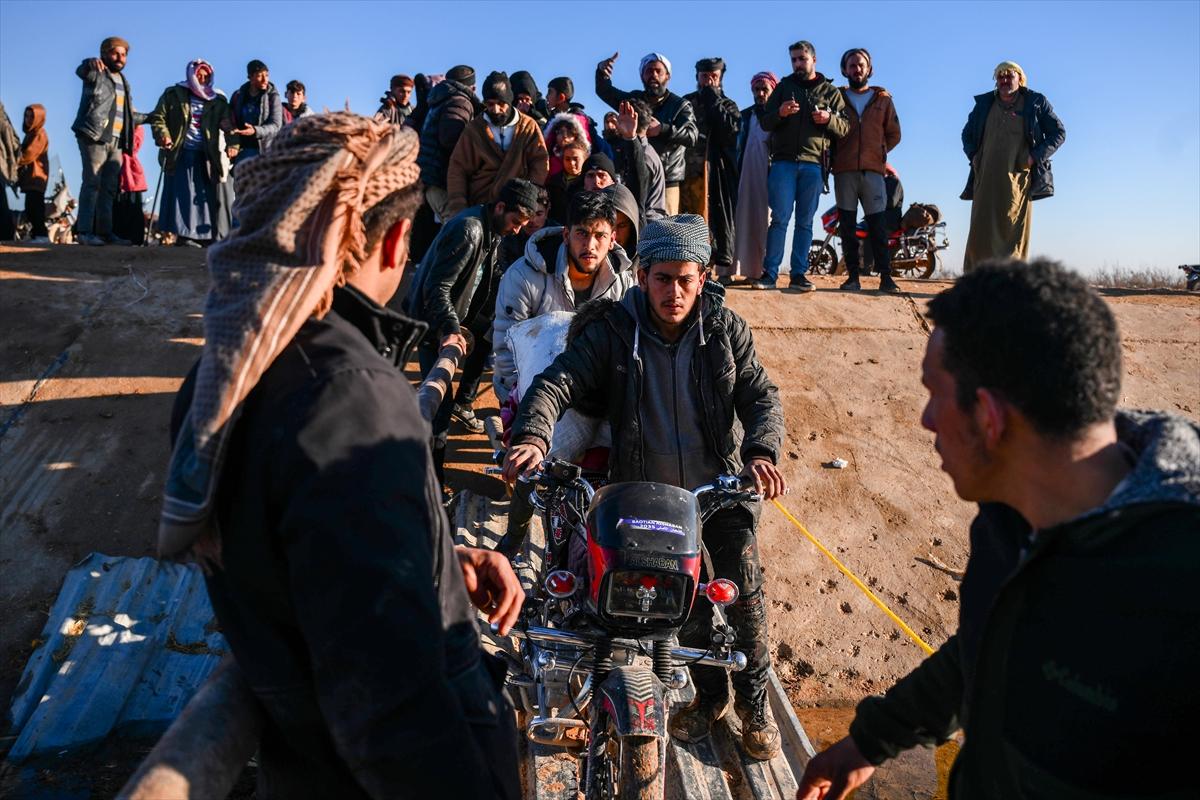
Civilians in the Deyr Hafir-Meskene line of Syria are attempting to leave the area for safe evacuation, 15 January 2026 – (Anadolu Ajansı)
Due to a previous partial destruction of the bridge over the river near Harmel Imam Village by YPG/SDG, civilians faced difficulties crossing. Footage from the field showed numerous women, elderly, and children attempting to cross the ruined bridge, with some using makeshift rafts. As of 16 January 2026, due to the organization’s obstruction, thousands of civilians remained trapped in the occupied areas west of the Euphrates, primarily in Deyr Hafir.
On 16 January 2026, Azzam al-Garib, Governor of Aleppo Province, announced that the number of civilians who had left areas under YPG/SDG occupation and reached safe zones had risen to 27,450. In a statement on his social media account, Governor Garib said: “This movement toward protection by the Syrian government reflects the deep trust of our people in their homeland and government and demonstrates that the option of security will always remain within the Syrian state.” Garib noted that the number of civilians leaving the Deyr Hafir–Meskene line and reaching safe areas in rural Aleppo had increased, but no information was available on those moving toward eastern regions. The governor emphasized that the people of Aleppo had welcomed those arriving from Deyr Hafir and Meskene and stated that, in accordance with the instructions of President Ahmad Shar’a, support would be provided to evacuated civilians.
The Syrian Army announced that the humanitarian corridor along the M15 highway connecting Deyr Hafir and Aleppo would remain open until 17:00 local time and that evacuations would continue until possible military operations concluded. However, it was recorded that the terrorist organization YPG/SDG continued to obstruct civilian passage on 16 January, as it had on 15 January. The Deyr Hafir District Administration, in its written statement, said: “The terrorist organization continues to obstruct the exit of civilians in Deyr Hafir and its surroundings via the humanitarian corridor.”
According to information from Syrian Civil Defense units, it was reported that approximately 1,000 families had left Deyr Hafir since the morning of 16 January. However, it was noted that some families had used alternative routes and thus were not recorded, meaning the actual number could be higher. Syrian Civil Defense units had previously reported that approximately 300 families had left the area on 15 January.
During the evacuation process, a group of civilians from Deyr Hafir attempted to reach a safe zone using a tractor. Despite the rear wheel of the trailer detaching, they continued for approximately five kilometers. A civilian named Luey al-Hasan said: “Most of those on the tractor were women and children. Many people still remain trapped in the area without vehicles. The safety of children is our top priority.” Civilians who reached Syrian government checkpoints were transported by ambulance to Aleppo by Civil Defense units. Authorities stated that aid and registration procedures were being carried out by the Syrian Civil Defense.
On the same day, the Syrian Ministry of Defense called on members of the terrorist organization YPG/SDG to leave their ranks and surrender. The statement included the assertion that “Those who leave the terrorist organization, regardless of whether they are Kurdish or Arab, will always be accepted by the Syrian government, at any time and in any place.” The Ministry issued a call: “Leave this organization immediately and return to your state and your people.”
According to a report by the official Syrian news agency SANA citing Ministry of Defense sources, six YPG/SDG members surrendered at the Deyr Hafir front following the call, and were placed under protection. It was also reported that further surrender requests were being received from other members in the area and that the Army was working to ensure their safe surrender. On the other hand, a YPG/SDG member was apprehended while blending in with civilians to prepare an operation and was taken into custody for planning a terrorist act.
On 16 January 2026, a U.S. delegation arrived in the Deyr Hafir region of Aleppo Governorate, Syria. It was announced that during the delegation’s presence in the area, no military operations would be conducted by the Syrian Army against YPG/SDG positions in Deyr Hafir. Accordingly, it was stated that the Army’s priority planning for humanitarian corridor operations and the safe evacuation of civilians would continue.
Al Jazeera. “Syrian army declares military zones in rural Aleppo as SDF destroys bridges.” Al Jazeera. Accessed January 14, 2026. https://www.aljazeera.com/news/2026/1/13/syrian-army-sends-troops-to-rural-aleppo-to-stop-any-sdf-attempt-to-regroup
Anadolu Ajansı. "Terör Örgütü YPG/SDG Sivillerin Deyr Hafir’den Güvenli Tahliyesini Engellemeye Devam Ediyor." Accessed January 16, 2026. https://www.aa.com.tr/tr/dunya/teror-orgutu-ypg-sdg-sivillerin-deyr-hafirden-guvenli-tahliyesini-engellemeye-devam-ediyor/3801147
Anadolu Ajansı. "YPG/SDG Fırat Nehri’nin Batısını Suyla Tehdit Ediyor." Accessed January 14, 2026. https://www.aa.com.tr/tr/dunya/ypg-sdg-firat-nehrinin-batisini-suyla-tehdit-ediyor/3797050
Anadolu Ajansı. “ABD Heyeti, Suriye’de YPG/SDG’nin İşgali Altındaki Deyr Hafir’de.” Accessed January 17, 2026. https://www.aa.com.tr/tr/dunya/abd-heyeti-suriyede-ypg-sdgnin-isgali-altindaki-deyr-hafirde/3801232
Anadolu Ajansı. “Suriye Ordusu Fırat Nehri’nin Batısındaki YPG/SDG İşgalindeki Bölgeyi Askeri Alan İlan Etti.” Accessed January 14, 2026. https://www.aa.com.tr/tr/dunya/suriye-ordusu-firat-nehrinin-batisindaki-ypg-sdg-isgalindeki-bolgeyi-askeri-alan-ilan-etti/3797856
Anadolu Ajansı. “Suriye Ordusu Halep’in Doğusundaki Meskene ve Deyr Hafir Hattına Takviye Birlikler Sevk Etti.” Accessed January 14, 2026. https://www.aa.com.tr/tr/dunya/suriye-ordusu-halepin-dogusundaki-meskene-ve-deyr-hafir-hattina-takviye-birlikler-sevk-etti/3797089
Anadolu Ajansı. “Suriye Ordusu Terör Örgütü YPG/SDG’nin İşgalindeki Deyr Hafir Hattına Takviye Yapıyor.” Accessed January 14, 2026. https://www.aa.com.tr/tr/dunya/suriye-ordusu-teror-orgutu-ypg-sdgnin-isgalindeki-deyr-hafir-hattina-takviye-yapiyor/3798760
Anadolu Ajansı. “Suriye Ordusu, Terör Örgütü YPG/SDG’nin İşgalindeki Fırat Nehri’nin Batısındaki Sivillerin Tahliyesi İçin Koridor Açacak.” Accessed January 15, 2026. https://www.aa.com.tr/tr/dunya/suriye-ordusu-teror-orgutu-ypg-sdgnin-isgalindeki-firat-nehrinin-batisindaki-sivillerin-tahliyesi-icin-koridor-acacak/3799415
Anadolu Ajansı. “Suriye’de Terör Örgütü YPG/SDG’nin Engellediği Sivillerin Deyr Hafir’den Kaçışı Sürüyor.” Accessed January 16, 2026. https://www.aa.com.tr/tr/dunya/suriyede-teror-orgutu-ypg-sdgnin-engelledigi-sivillerin-deyr-hafirden-kacisi-suruyor/3800518
Anadolu Ajansı. “Suriye’de Terör Örgütü YPG/SDG’nin İşgalindeki Bölgelerden Ayrılan Sivillerin Sayısı 27 Bine Ulaştı.” Accessed January 17, 2026. https://www.aa.com.tr/tr/dunya/suriyede-teror-orgutu-ypg-sdgnin-isgalindeki-bolgelerden-ayrilan-sivillerin-sayisi-27-bine-ulasti/3801147
Anadolu Ajansı. “Terör Örgütü YPG/SDG Deyr Hafir’den Sivillerin Çıkışını Engelliyor.” Accessed January 15, 2026. https://www.aa.com.tr/tr/dunya/teror-orgutu-ypg-sdg-deyr-hafir-den-sivillerin-cikisini-engelliyor/3799917
Anadolu Ajansı. “İsrail Ordusu Suriye’nin Dera Kırsalına Topçu Saldırısı Düzenledi.” Accessed January 14, 2026. https://www.aa.com.tr/tr/dunya/israil-ordusu-suriyenin-dera-kirsalina-topcu-saldirisi-duzenledi/3798417
SANA. "Suriye Arap Ordusu Halep’in Doğu Konuşlanma Hattına Takviye Birlikler Gönderdi." SANA. Accessed January 14, 2026. https://sana.sy/tr/syria/2278531/
SANA. "Suriye Ordusu, Halep’in Doğusuna Takviye Birlikler Sevk Etti." Accessed January 14, 2026. https://sana.sy/tr/syria/2278715/
SANA. “Suriye Ordusu Bazı Bölgeleri Kapalı Askeri Bölge İlan Etti.” SANA. Accessed January 14, 2026. https://sana.sy/tr/syria/2278583/
The Media Line. "Syrian Army Prepares for Battle in Deyr Hafir, Aleppo; Calls on SDF to Withdraw East of the Euphrates." The Media Line. Accessed January 14, 2026. https://themedialine.org/headlines/syrian-army-prepares-for-battle-in-deyr-hafir-aleppo-calls-on-sdf-to-withdraw-east-of-the-euphrates
On 16 January 2026, the Syrian Army launched a military operation against the terrorist organization YPG/SDG in the Deir Hafir region located west of the Euphrates River. The Syrian Army targeted positions belonging to the YPG/SDG along the Deir Hafir–Maske line using artillery multiple rocket launchers and anti-aircraft systems.
It was reported that shelling began at 22:00 local time and continued throughout the night, Syrian Army armored vehicles advanced toward the entrance of Deir Hafir, and the terrorist organization YPG/SDG responded with fire. Intense clashes involving heavy weapons continued, and shortly after a brief lull at 23:10, violent explosions occurred both at the entrance and within Deir Hafir.
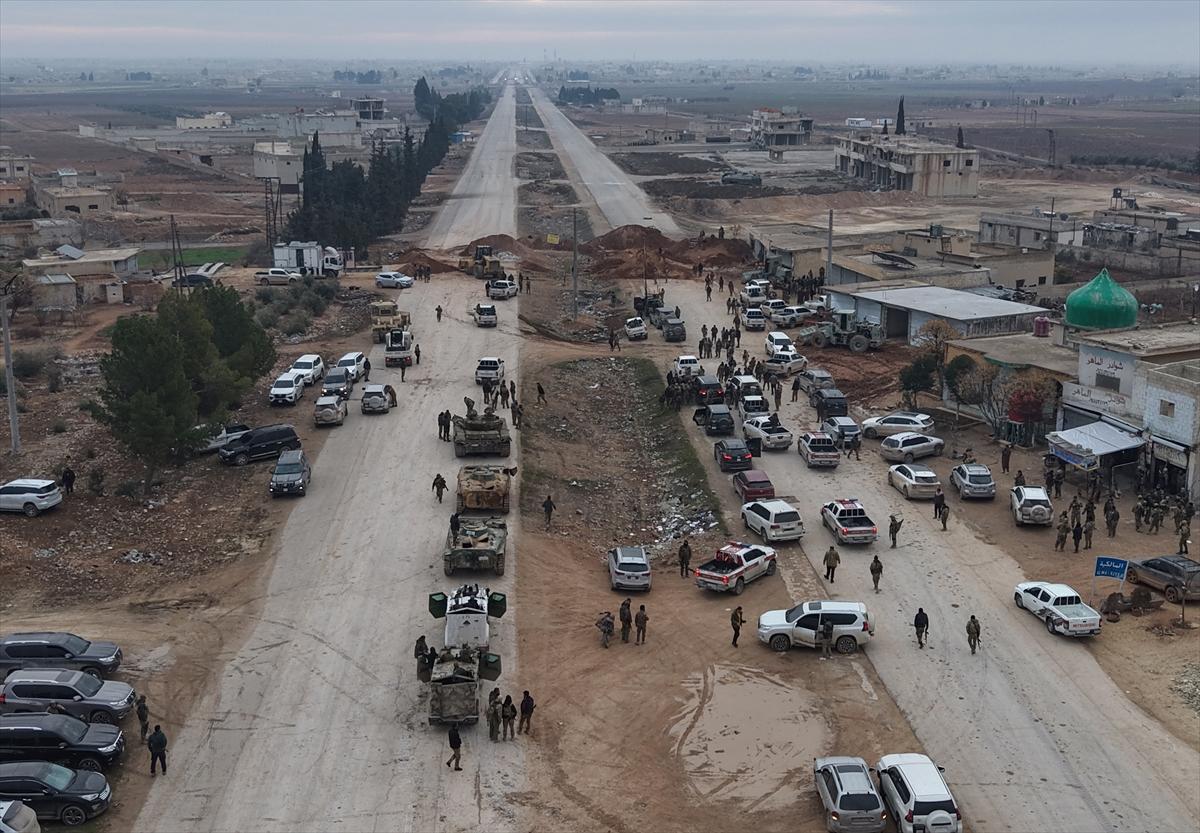
Syrian Army enters Deir Hafir, 17 January 2026 - (Anadolu Agency)
In a written statement from the Syrian Army, it was announced that operations against the YPG/SDG in Deir Hafir had commenced. The statement specified that the operation targeted positions belonging to the terrorist organization PKK, the terrorist organization YPG/SDG, and elements aligned with the overthrown Bashar al-Assad regime. The targeted locations were identified as launch zones used for kamikaze unmanned aerial vehicles (UAVs) directed at civilian settlements in and around Aleppo.
On the same evening, the Syrian Ministry of Defense announced that the withdrawal process of the YPG/SDG from west of the Euphrates River would begin in the early morning hours. The statement emphasized that the complete withdrawal of all personnel and military equipment to the east of the Euphrates would be closely monitored. It further stated that this step would be carried out simultaneously with the deployment of Syrian Army units to these areas to ensure security and reestablish state sovereignty.
Following the launch of the Syrian Army’s military operation west of the Euphrates, Ferhat Abdi Şahin, a senior leader of the terrorist organization YPG/SDG, claimed that the organization would withdraw east of the river and that terrorist elements would begin their withdrawal to areas east of the Euphrates at 07:00.
At the start of the operation, in the village of Humaymah, which is part of Deir Hafir, civilians took to the streets upon hearing news of the YPG/SDG’s planned withdrawal. They organized marches waving new Syrian flags, chanted takbirs and celebrated the development. Local residents described the development as a “liberation,” citing the long-standing hardship imposed on daily life by the YPG/SDG.
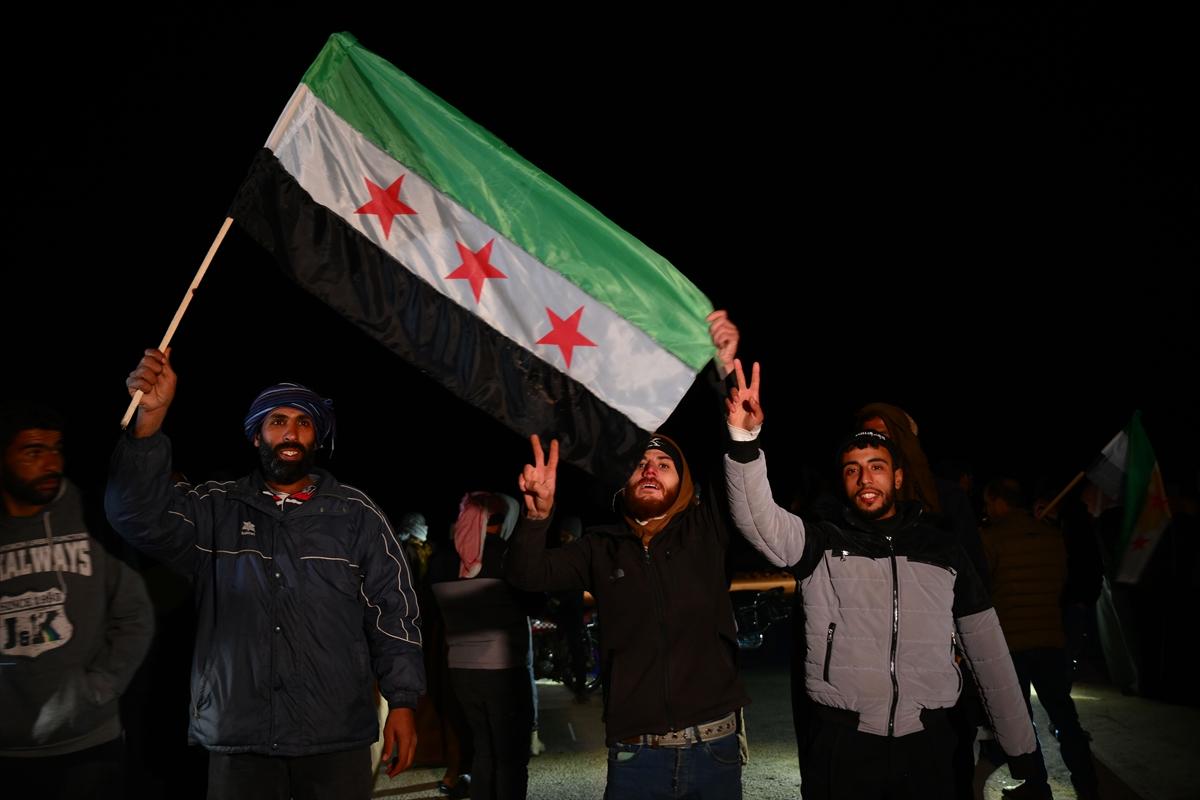
Residents of rural Deir Hafir in Syria welcome the announcement of the YPG/SDG withdrawal, 17 January 2026 - (Anadolu Agency)
Before the operation began, the Syrian Army shared with the press a map identifying four distinct locations in Deir Hafir under YPG/SDG control. The statement indicated that these sites had been used as launch zones for kamikaze UAVs targeting civilian settlements in and around Aleppo, and urged civilians to stay away from these areas.
During the night of 16 January, when the operation began, intense explosions occurred along the Deir Hafir front, artillery fire continued throughout the night, and Syrian Army armored units advanced into the area.
On 17 January 2026, the Syrian Ministry of Defense announced that the withdrawal process of the YPG/SDG from its positions west of the Euphrates River had begun in the early morning hours. In a briefing to the Syrian state television channel Al-Ikhbariyya, the Ministry’s Media and Communication Directorate stated: “The YPG/SDG withdrawal from west of the Euphrates will begin Saturday morning. Subsequently, Syrian Army units will move into the area.”
The statement emphasized that reports claiming the Syrian Army had already entered Deir Hafir were inaccurate, and clarified that the Army would not enter the area until the withdrawal process was fully completed. Additionally, the Syrian Army Operational Command announced that the YPG/SDG would not be targeted during its withdrawal.
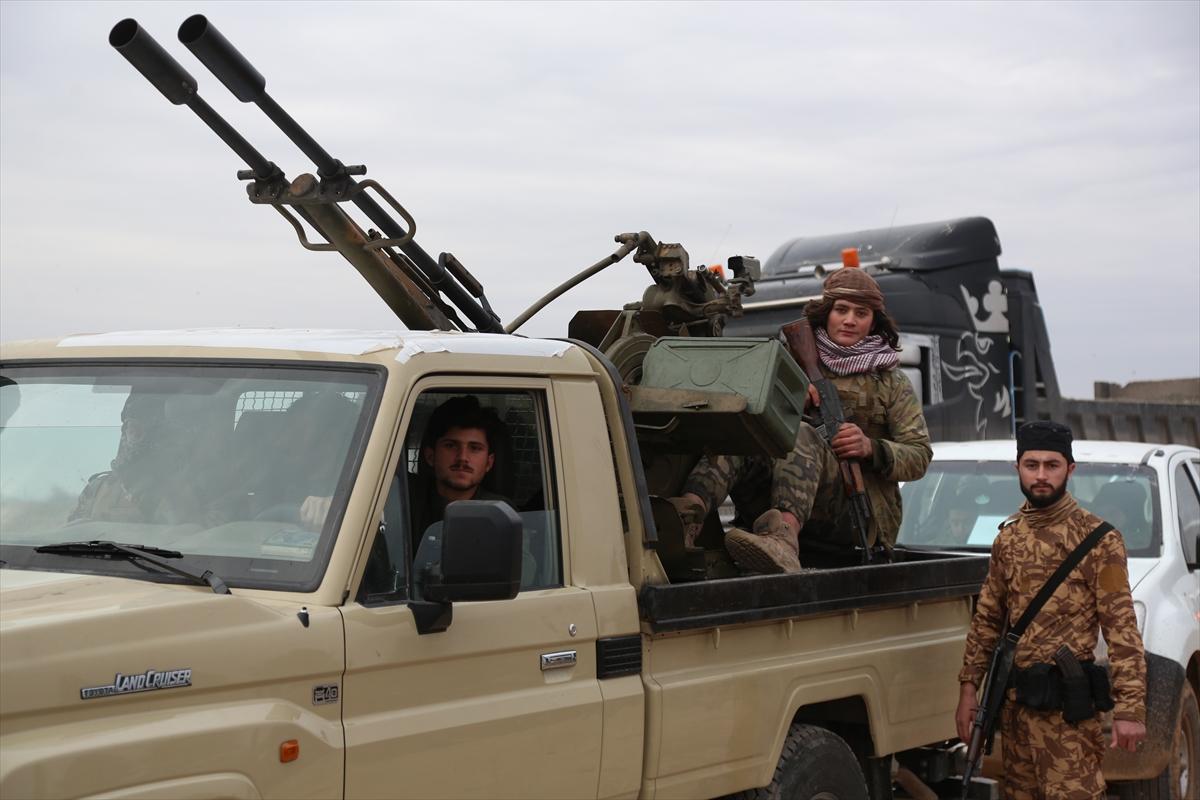
Syrian Army enters Deir Hafir, 17 January 2026 - (Anadolu Agency)
The Syrian Ministry of Defense stated in its announcement that the withdrawal process would proceed in parallel with the deployment of Syrian Army units into the area, and that this step would facilitate the reestablishment of state sovereignty in the region and enable civilians to return safely to their homes.
On 17 January 2026, following the announcement that the terrorist organization YPG/SDG would withdraw from the area, the Syrian Army began entering Deir Hafir after launching its military operation west of the Euphrates River. Army units were deployed in the early morning hours toward the village of Humaymah in the rural outskirts of Deir Hafir.
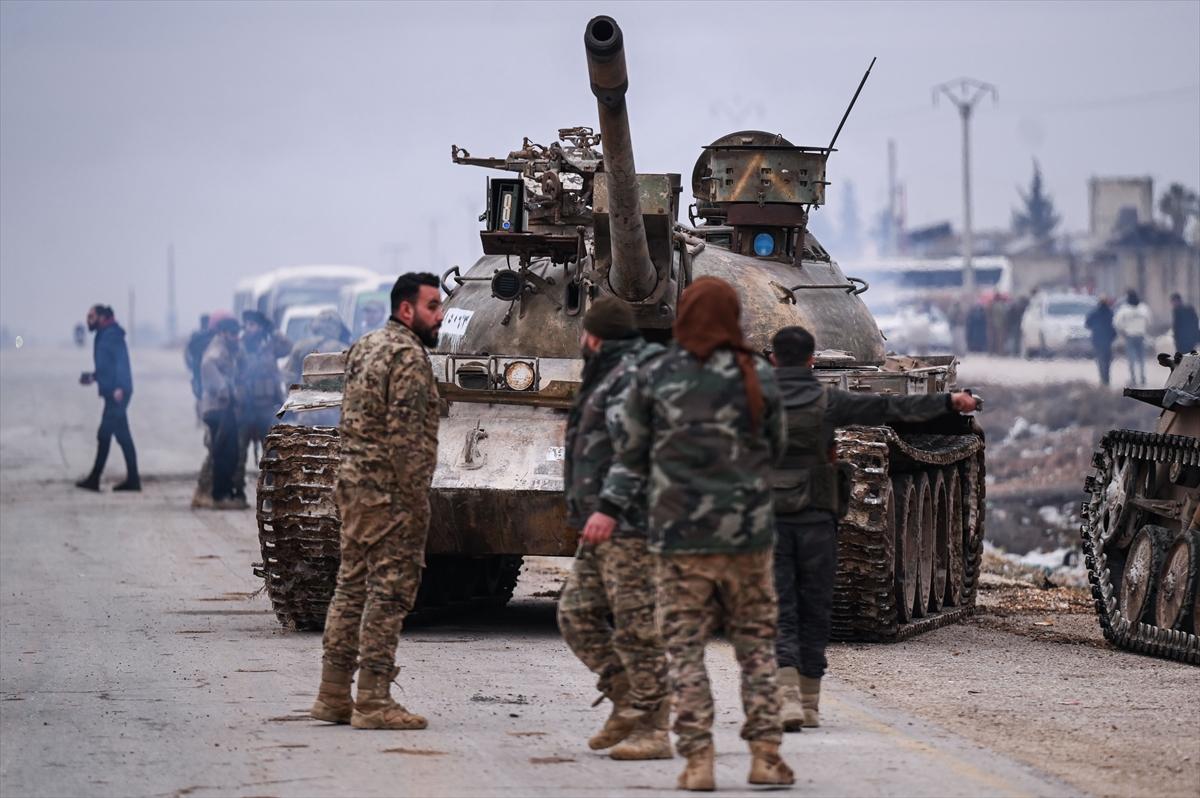
Syrian Army enters Deir Hafir, 17 January 2026 - (Anadolu Agency)
Syrian state television Al-Ikhbariyya, in its morning report, stated: “The first groups of Syrian Army units have begun entering the areas west of the Euphrates River, starting from the city of Deir Hafir.” After earth barriers along the roads were removed, the Syrian Army entered the area from the west of Deir Hafir. Ferhat Abdi Şahin, a senior leader of the YPG/SDG targeted by the Syrian Army, had previously announced that terrorist elements would withdraw east of the Euphrates River by 07:00 on 17 January.
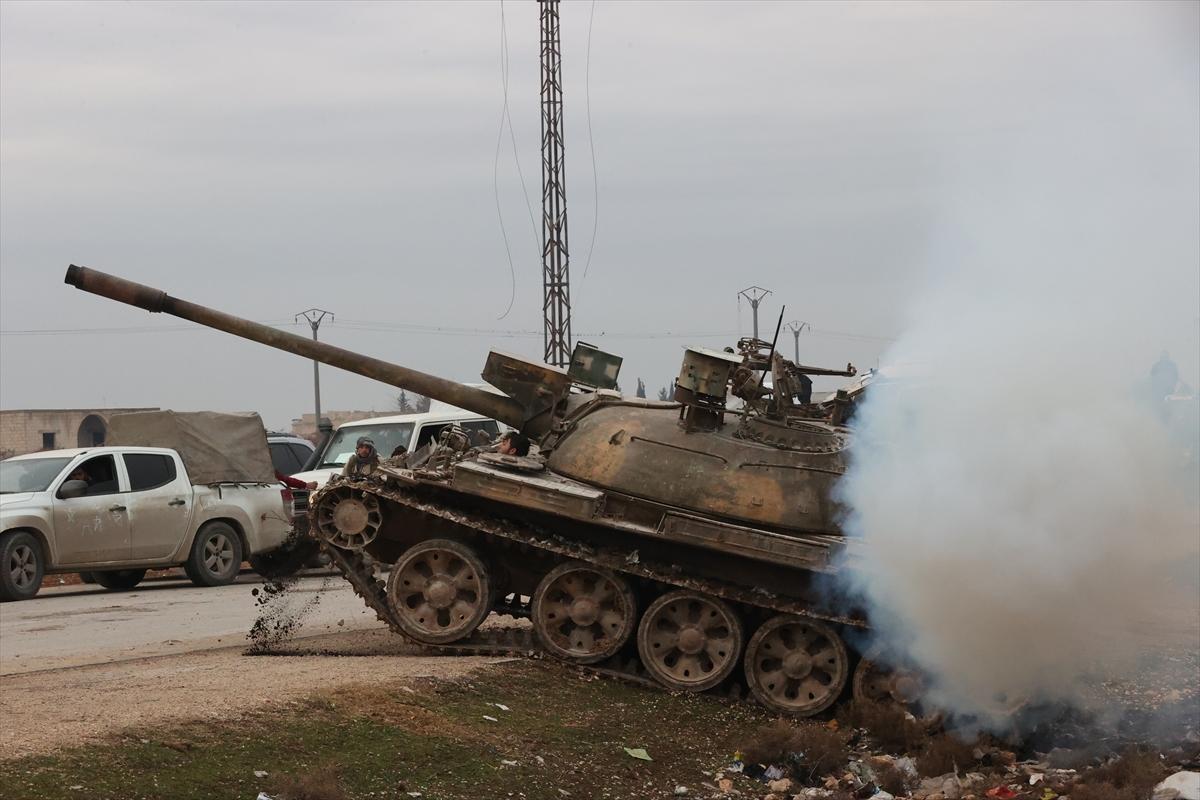
Syrian Army enters Deir Hafir, 17 January 2026 - (Anadolu Agency)
The Syrian Ministry of Defense, in a statement issued the same day, welcomed the decision of the YPG/SDG to withdraw from its contact lines west of the Euphrates River. The Ministry confirmed that Syrian Army units would move into the area following the completion of the withdrawal process.
On 17 January 2026, the Syrian Army fully secured military control of Deir Hafir, located east of Aleppo. The Syrian Arab News Agency (SANA), in its morning report, stated: “The Syrian Army has fully secured military control of Deir Hafir in the rural areas east of Aleppo.” The YPG/SDG is continuing its withdrawal from the Maske region, with its elements moving steadily toward the east of the Euphrates River. It was reported that some groups are taking heavy equipment with them.
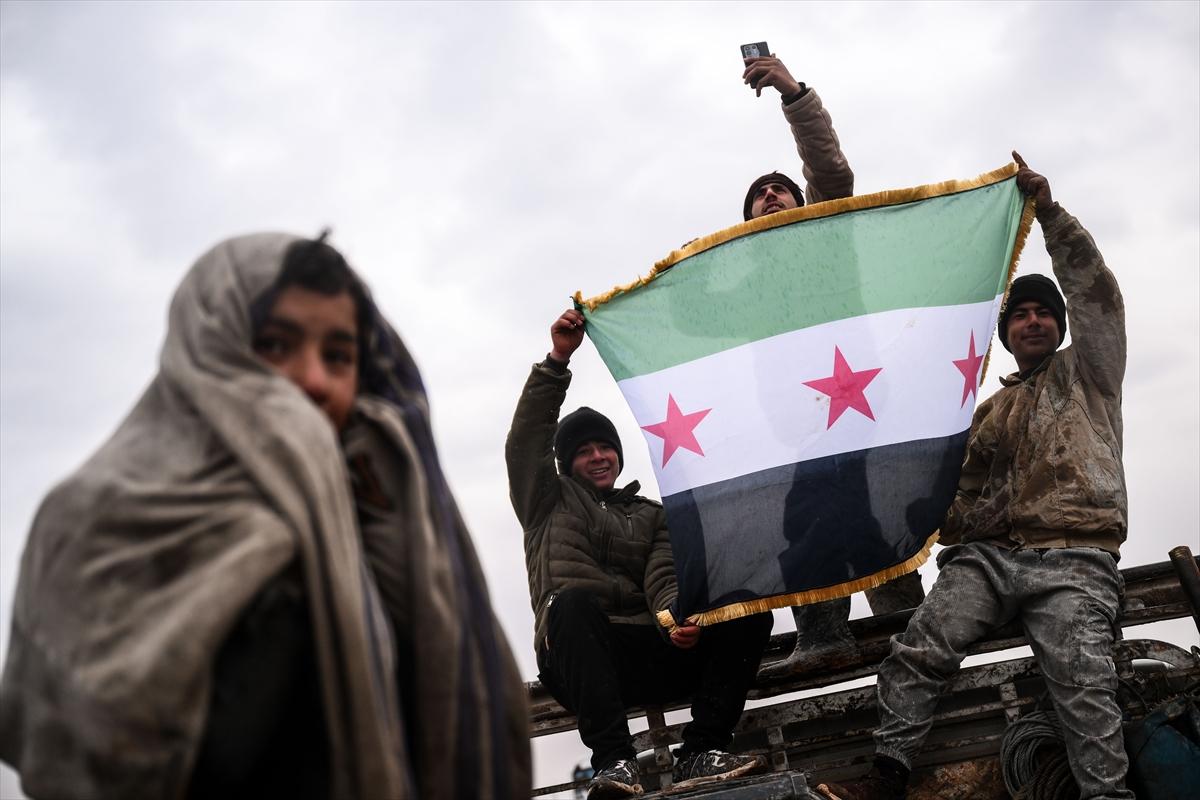
Syrian Army in Deir Hafir, 17 January 2026 - (Anadolu Agency)
The Syrian Army, following the withdrawal process, has begun deploying units around Maske to establish security control and facilitate the safe return of the civilian population.
Anadolu Ajansı. "Suriye Savunma Bakanlığı: YPG/SDG’nin Fırat’ın Batısından Çekilmesi Bu Sabah Başlayacak." Accessed January 17, 2026. https://www.aa.com.tr/tr/dunya/suriye-savunma-bakanligi-ypg-sdgnin-firat-in-batisindan-cekilmesi-bu-sabah-baslayacak/3801898
Anadolu Ajansı. Accessed January 17, 2026. https://www.aa.com.tr/tr/dunya/suriye-ordusu-deyr-hafirde-teror-orgutu-ypg-sdgye-yonelik-operasyona-basladi/3801737
Anadolu Ajansı. “Suriye Ordusu Deyr Hafir’e Girmeye Başladı.” Accessed January 17, 2026. https://www.aa.com.tr/tr/dunya/suriye-ordusu-deyr-hafir-e-girmeye-basladi/3801935
SANA. "Suriye Ordusu, Deyr Hafir’deki Mevziler İçin Sivillere Uyarıda Bulundu." SANA. Accessed January 17, 2026. https://sana.sy/tr/syria/2278983/
SANA. "Suriye Savunma Bakanlığı: SDG’den Ayrılan 6 Kişi Orduya Teslim Oldu." SANA. Accessed January 17, 2026. https://sana.sy/tr/syria/2278956/
SANA. “SDG’nin Çekilmesinin Ardından Suriye Ordusu Batı Fırat Bölgelerine Girmeye Hazırlanıyor.” SANA. Accessed January 17, 2026. https://sana.sy/tr/syria/2279022/
On 17 January 2026, the Syrian Army reached the town of Maskeen east of Aleppo, following its consolidation of control over Deyr Hafir west of the Euphrates River. The Syrian official news agency SANA announced that the army had entered Maskeen and established control over 34 villages in the Aleppo countryside.
The Syrian Army reported that over 200 members of the terrorist organization YPG/SDG had been safely evacuated from the operational area along with their weapons. On the same day, members of the terrorist organization YPG/SDG targeted Syrian soldiers conducting patrols in the town of Maskeen east of Aleppo.
According to information released by the Syrian official news agency SANA, in the attack that occurred in the town of Maskeen west of the Euphrates River, two Syrian soldiers were killed and several others were wounded.
On 17 January 2026, the Syrian Army, as part of its operations against the terrorist organization YPG/SDG west of the Euphrates River, reached the borders of Raqqa province and took control of the town of Dibsi Afnan. According to information provided by the Syrian state television channel Al-Ihbariyya, Syrian Army units advanced from the southern end of the Deyr Hafir–Maskeen axis and entered the town of Dibsi Afnan within Raqqa province.
The Syrian Army Operations Directorate, in a statement to Al-Ihbariyya, confirmed that its forces had established control over the town of Dibsi Afnan located within Raqqa province. The statement further indicated that the Syrian Army continued expanding its area of control west of the Euphrates River and that its units were advancing toward the strategically important city of Tabqa.
On 17 January 2026, the Syrian Army established control over the town of Maskeen following its prior takeover of Deyr Hafir, which had been under the occupation of the terrorist organization YPG/SDG west of the Euphrates River. After securing dominance in Deyr Hafir in the early morning hours, army units advanced into Maskeen and swiftly established control, then moved southward along the river toward the borders of Raqqa province.
The Syrian Army also took control of Dibsi Afnan in Raqqa and began fortification efforts in the southwestern region of Raqqa along the Euphrates Riverbank.
On 17 January 2026, following the Syrian Army’s operation to expel YPG/SDG elements from Deyr Hafir in the eastern countryside of Aleppo, local residents began returning to their homes.
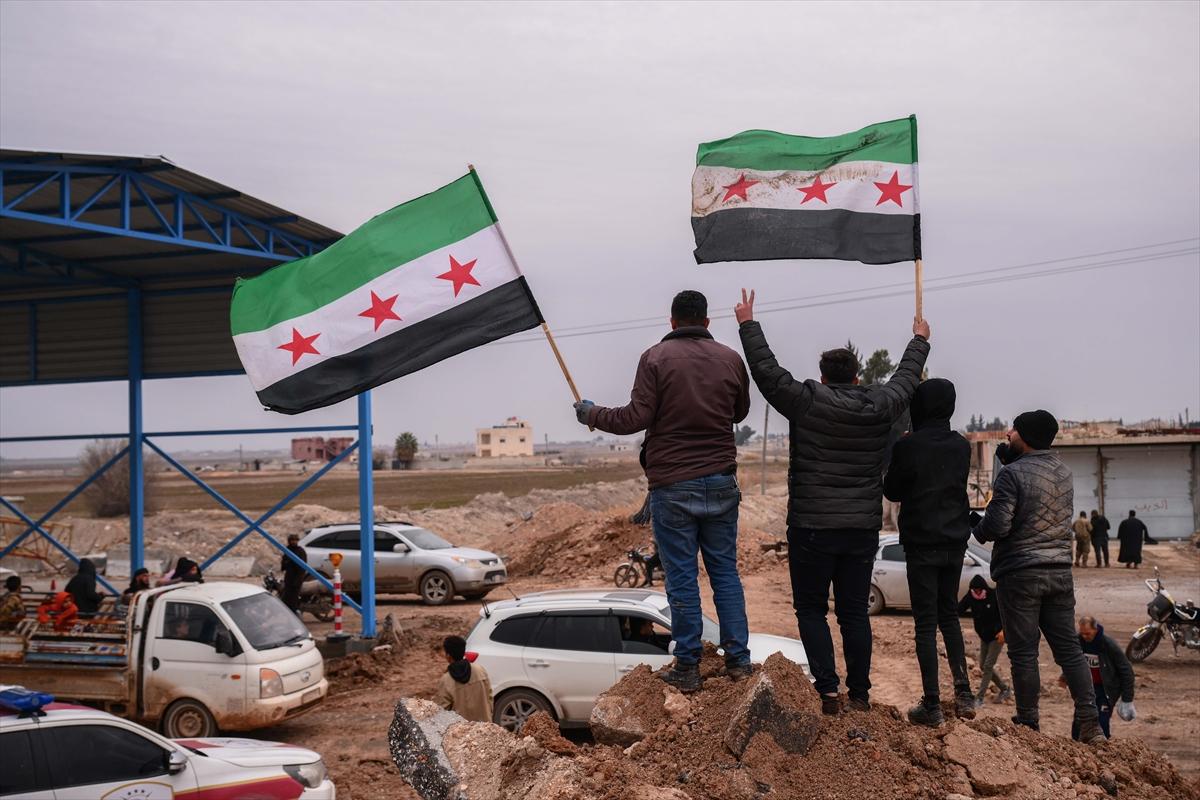
Syrians return to their homes after the army secures security in Deyr Hafir, 17 January 2026 – (Anadolu Agency)
Civilians carried Syrian flags and chanted celebratory slogans, while Syrian soldiers accompanied returning residents to ensure their safety. The Syrian Army Operations Directorate, in a statement to Al-Ihbariyya, confirmed that the area of control west of the Euphrates River had been expanded and that units were continuing their advance toward the strategically important city of Tabqa.
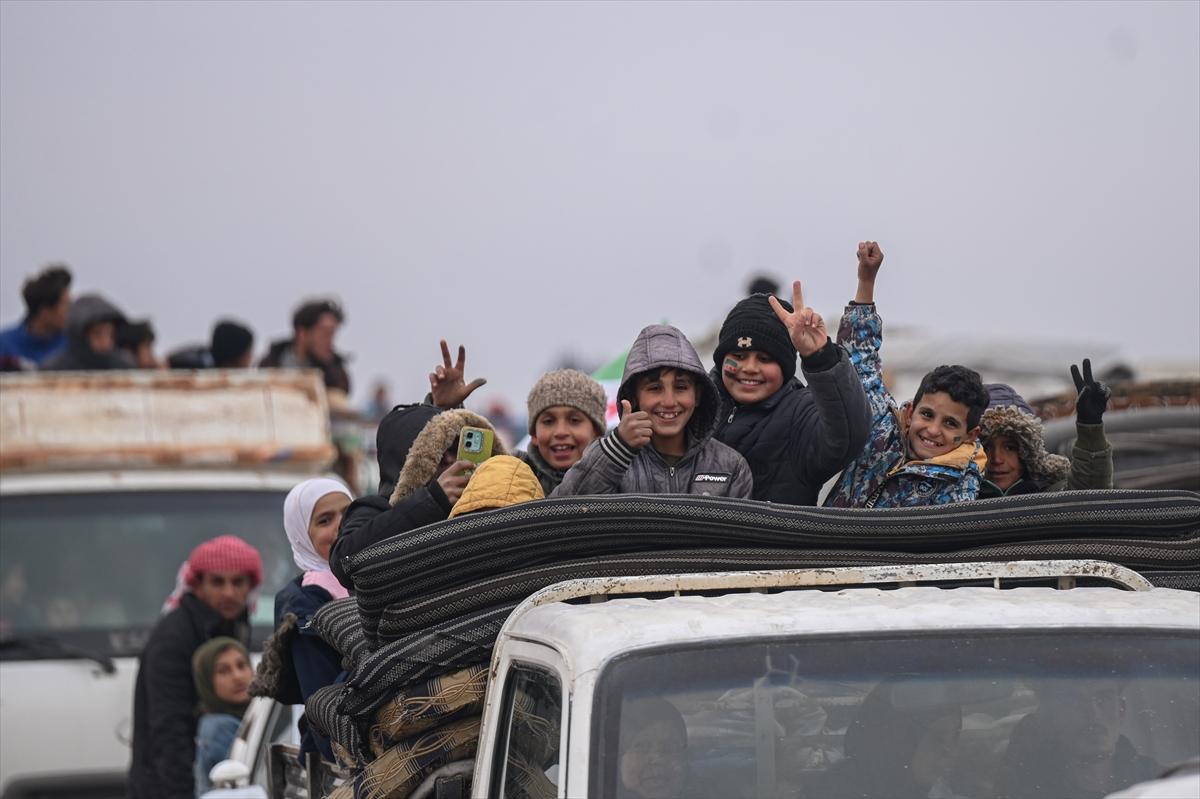
Syrians return to their homes after the army secures security in Deyr Hafir, 17 January 2026 – (Anadolu Agency)
On 17 January 2026, the Syrian Ministry of Defense announced that elements of the terrorist organization YPG/SDG had launched attacks targeting both Syrian Army units and media personnel in the Raqqa countryside. The ministry’s statement indicated that elements affiliated with the YPG/SDG terrorist organization had opened fire on SANA reporters and military media teams near the town of Dibsi Afnan in the Raqqa countryside. The statement did not provide information on whether any personnel were injured.
Additionally, armed groups affiliated with the YPG/SDG terrorist organization were reported to have stationed themselves in several Syrian villages west of the Euphrates River, targeting Syrian Army units and obstructing the implementation of the agreed-upon arrangement. The Syrian Ministry of Defense emphasized that these attacks escalated tensions on the ground and threatened civilian safety.
The Syrian Army stated that the YPG/SDG terrorist organization had attempted to hinder the implementation of the agreement by planting mines at the Shuaib ez-Zikr Bridge west of the Raqqa countryside, warning that such actions could lead to “very grave consequences.”
Army officials stressed that the party violating the agreement would be held responsible for all resulting outcomes and affirmed that the army would continue enhancing its military precautions to ensure security on the ground.
On 17 January 2026, the Syrian Army expanded its operations against the YPG/SDG terrorist organization along the Euphrates River and opened a new front toward the south of Raqqa and the Tabqa Dam from the Madan region. Syrian Army forces stationed in the Madan region, located between the south of Raqqa and the north of Deir ez-Zor along the Euphrates River, moved northward. It was reported that the army aimed to advance along the river line to reach the city of Tabqa and the southern sectors of Raqqa.
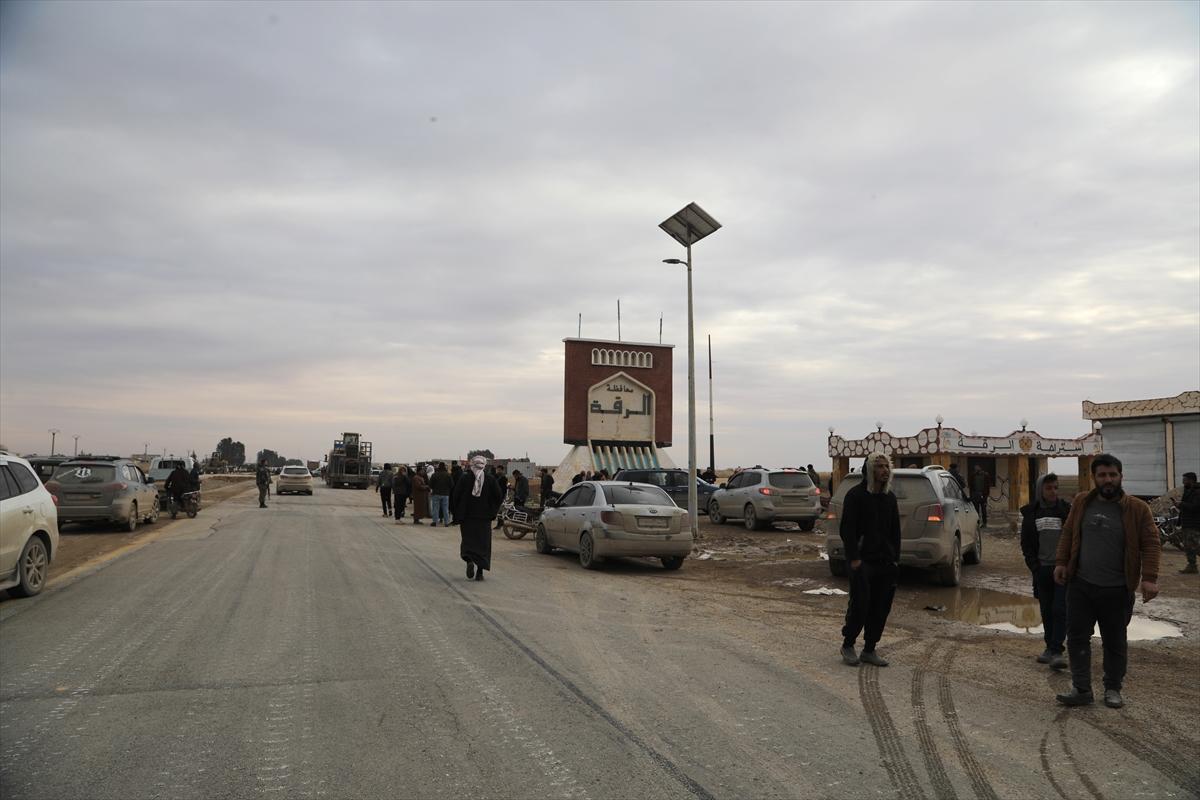
Syrian Army forces in the occupied areas of Raqqa province, 17 January 2026 – (Anadolu Agency)
Army sources briefing the Syrian state television channel Al-Ihbariyya stated that units advancing from the Maskeen direction had seized control of the Safyan oil field, Rasafa intersection, and Thawra oil field near the city of Tabqa.
On the same day, the Syrian Army reclaimed the Cirah Military Airbase west of the Euphrates River from the terrorist organization YPG/SDG. The Syrian Army reclaimed the Cirah Military Airbase west of the Euphrates River from the terrorist organization YPG/SDG.
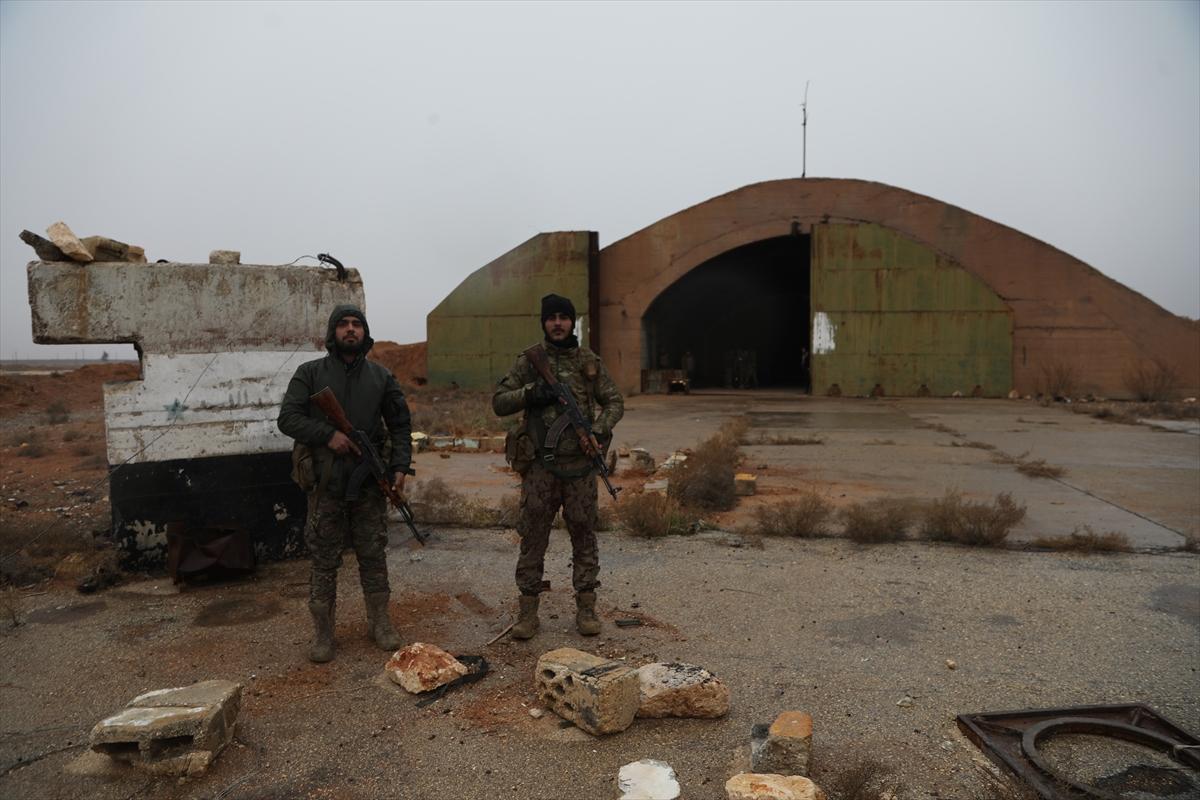
Syrian Army forces at the Cirah Military Airbase west of the Euphrates River, 17 January 2026 – (Anadolu Agency)
On 17 January 2026, the Syrian Army released a map identifying target zones used by the terrorist organization YPG/SDG in occupied areas near Raqqa and urged civilians to avoid these areas. Following its earlier publication of a map showing the zero point of Raqqa’s city center, the army released a new map with greater clarity of the urban center. The areas marked on the map were described as having been used by terrorist organizations PKK and YPG/SDG, as well as remnants of the Bashar al-Assad regime, to launch attacks against the Syrian people and army.
The Syrian Army called on civilians to stay away from the terrorist-designated locations shown on the map. Meanwhile, intense clashes were reported between Syrian Army units and YPG/SDG members in the strategically important Tabqa region west of the Euphrates River. The fighting was concentrated around the city of Tabqa and the Tabqa Military Airbase.
The Syrian Army reported that the YPG/SDG terrorist organization had launched multiple rocket attacks on the Dibsi Afnan area from the direction of Tabqa, while the Syrian Army continued to reinforce its positions around Tabqa with tanks and heavy weaponry.
The Syrian Army called on the YPG/SDG terrorist organization to withdraw entirely east of the Euphrates River, evacuate all military elements from Tabqa, and allow civilian authorities to resume their duties.
The Syrian Army Operations Directorate reiterated in its statement that the YPG/SDG must fully withdraw east of the Euphrates River, remove all military elements from Tabqa, and permit civilian authorities to carry out their responsibilities. The statement further emphasized that the terrorist organization must not obstruct efforts to establish stability in the region and must immediately fulfill its stated commitments. It was stated that full responsibility for any violation of the agreement or obstruction of civilian administration would lie with the organization.
Meanwhile, the Syrian Ministry of Defense reiterated its call to Arab and Kurdish members of the YPG/SDG to leave the organization and surrender to the nearest Syrian Army unit. The ministry’s statement included the following: “Take the initiative to leave this organization by going to the nearest Syrian Army unit or calling the numbers below to protect your life and future.” The ministry also published contact telephone numbers.
The Syrian Army took control of seven villages in the Raqqa countryside west of the Euphrates River, which had been under YPG/SDG occupation, as well as the Tabqa Airbase, the main stronghold of the terrorist organization in the city of Tabqa. According to Syrian state television channel Al-Ihbariyya, the Syrian Army cleared YPG/SDG elements from the Er-Rasafa region and surrounding villages in southern Raqqa, establishing full control over these areas.
Syrian Army units also seized control of the Tabqa Airbase, the primary base of the YPG/SDG terrorist organization in Tabqa. On the same day, it was reported that YPG/SDG elements in the city of Tabqa, where intense fighting had occurred, began withdrawing from the area in convoys. Members of the organization departed Tabqa in vehicle convoys.
According to information reported by Al-Ihbariyya television, the Syrian Army entered the Mansura area near Tabqa and captured the Al-Haccane Military Camp. Additionally, it was reported that the village of Racm el-Gazzal in the Raqqa countryside had been cleared of YPG/SDG elements and that the army was continuing its advance toward Tabqa.
The US Central Command (CENTCOM) called on the Syrian Army to halt military operations in the areas between Aleppo and Tabqa. In a statement posted on its official account on the US-based social media platform X, CENTCOM expressed satisfaction with efforts to prevent escalation in Syria and pursue a diplomatic solution.
The statement included the following: “We also call on Syrian government forces to cease all offensive actions in the areas between Aleppo and Tabqa.” CENTCOM emphasized that coordinated cooperation with Syrian partners is necessary to monitor ISIS and apply military pressure alongside US and coalition forces. The statement continued: “A Syria at peace with itself and its neighbors is essential for peace and stability across the region.”
On 17 January 2026, the Syrian Army announced that it had begun entering the city of Tabqa, which had been under occupation by the YPG/SDG terrorist organization west of the Euphrates River, from multiple directions.
In a written statement, the army reported that Syrian forces had surrounded YPG/SDG members inside the Tabqa Airbase and entered the center of Tabqa from multiple points. On 18 January, the Syrian official news agency SANA, citing the Syrian Army Operations Directorate, announced that the army had fully taken control of Tabqa district, a strategically important area within Raqqa province.
It was stated that YPG/SDG members in the district had been expelled, and according to the Syrian Ministry of Defense’s Media and Communication Directorate, 483 organization members had contacted authorities to surrender and 181 had already surrendered.
As the YPG/SDG withdrew from Tabqa west of the Euphrates River, it executed prisoners held in jails and destroyed bridges and water infrastructure. According to the Syrian official news agency SANA, during its withdrawal from Tabqa district, the YPG/SDG terrorist organization killed prisoners held in detention facilities and detonated the Old Bridge and the main water line supplying water to Raqqa.
The Syrian government accused the YPG/SDG of committing war crimes in violation of the Geneva Conventions by executing prisoners in Tabqa and condemned these acts in the strongest terms. It was reported that 64 YPG/SDG members under siege by the Syrian Army in the Mansura area near Tabqa had surrendered to Syrian security forces.
On 18 January 2026, in Deir ez-Zor province east of the Euphrates River in Syria, local tribal forces and tribes that had crossed from the west of the Euphrates liberated the Omar Oil Field and Kuniko Gas Field from the terrorist organization YPG/SDG. The tribes established full control over energy facilities previously held by the organization, following a security vacuum created by the withdrawal of US forces from these sites. Tribal forces seized control of numerous settlements including Shehil, Havaic, Ziban, Tayyane, Abu Hammam, Hatla, Garanic, Bagoz, Susah, and Shafe.
On the same date, the terrorist organization YPG/SDG targeted civilian settlements in Deir ez-Zor province east of Syria with airstrikes and rockets.
Deir ez-Zor Governor Gassan al-Sayyid Ahmed, in a statement on the US-based social media platform, said: “While our tribes in the Jazira region have risen up demanding unity with Syria and the return of our children to their homeland, the YPG/SDG continues targeting civilians with weapons.”
Governor Ahmed further stated that civilian settlements in Deir ez-Zor city center, Mayadin, and government-controlled areas had been struck, and that these attacks would “not go unpunished.” The governorate announced that all public institutions had suspended operations on Sunday for public safety and urged citizens not to leave their homes unless absolutely necessary.
The Syrian General Directorate of Civil Aviation and Air Transport announced that flights at Aleppo International Airport, which had been closed for eight days due to attacks by the YPG/SDG terrorist organization, would resume on Tuesday, 20 January 2026. The statement indicated that flights would restart under an approved schedule following the completion of technical and security assessments. Passengers were advised to check flight information with their respective airlines.
The Syrian Ministry of Interior announced that a vehicle loaded with explosives parked in the city of Deyr Hafir east of Aleppo had been destroyed.
The ministry’s statement indicated that expert engineering teams had neutralized the vehicle and that no casualties occurred in the incident.
The ministry, noting that security sweeps are ongoing in the region, urged citizens not to approach suspicious objects and to immediately report any such findings to security units.
On 18 January, tribal forces in Deir ez-Zor province rose up and established control over all areas previously occupied by the terrorist organization YPG/SDG, liberating the entire province from the group. Tribal forces advanced northward from southern and central Deir ez-Zor, taking control of areas up to the borders of Raqqa and Hassakeh, thereby ending all YPG/SDG presence in Deir ez-Zor.
The settlements brought under control included Muheymide, Suwaydan al-Jazira, Murat, Giranic, At-Tayyane, Al-Cerzi, Hatla, Al-Huseyniyya, Halebiyya Square, Al-Bagur, Albu Bedran, Al-Bahra, Es-Suse, Abu Hardub, Ash-Shenan, Denec, Zeyban, Havaic, Shehil, Busayra, Subha, Dehla, Jadid Bekkara, Huşam, Mazlum, Al-Hisan, Cefra Field, Huvayic Bumasa, and Sava.
In the city of Shaddadi, located in the Hassakeh province east of the Euphrates River in Syria, tribal forces rose up and expelled the YPG/SDG terrorist organization from the city, establishing control. In the ensuing panic, YPG/SDG members set fire to their headquarters and withdrew. A brief period of chaos was reported during the withdrawal. Security sources confirmed that YPG/SDG elements had burned several structures as they fled Shaddadi and that the city had fully come under the control of tribal forces.
On 18 January 2026, the President of Syria, Ahmed al-Shara, held a meeting with the US Special Representative for Syria, Thomas Barrack, at the People’s Palace in Damascus. The meeting was announced in a written statement released via the Presidency’s Telegram account. The statement read: “President Shara held a meeting with the US Special Representative for Syria, Barrack, at the People’s Palace in Damascus.” The meeting took place amid simultaneous clashes on both banks of the Euphrates River.
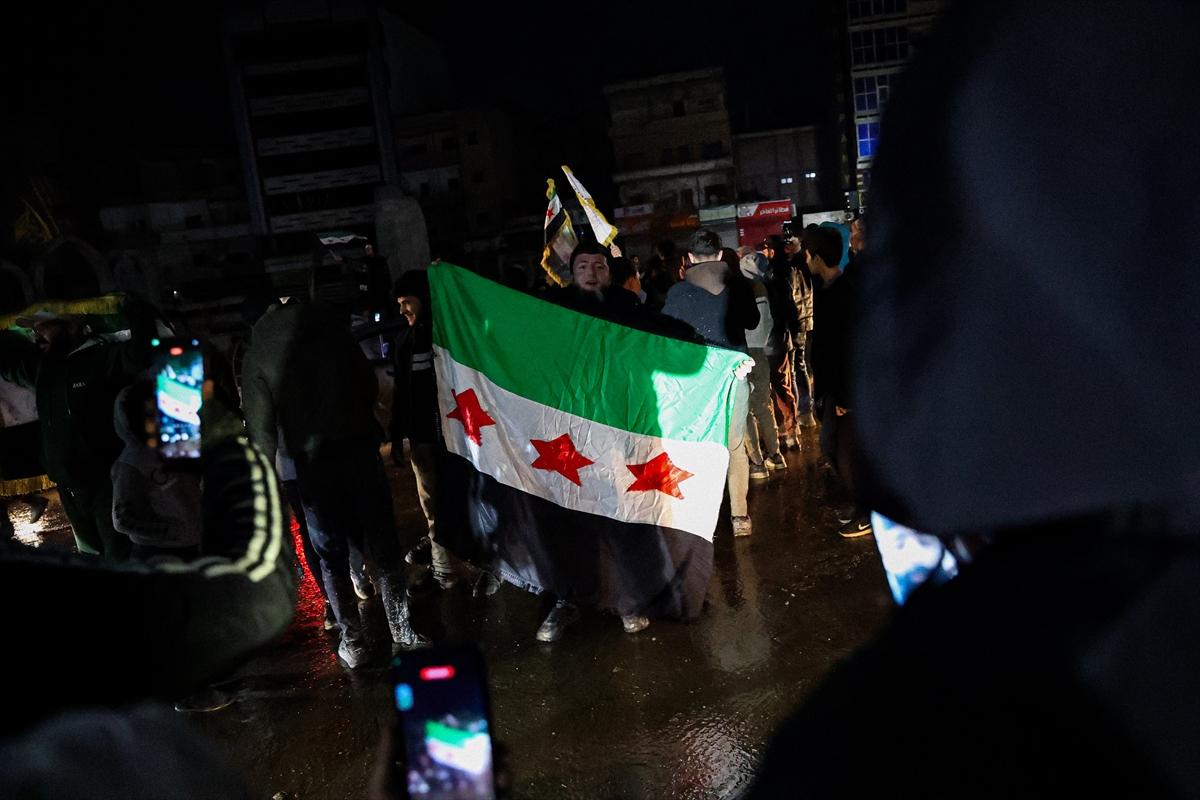
Citizens in Raqqa, Syria, celebrate the liberation of the region from the YPG/SDG terrorist organization, 18 January 2026 – (Anadolu Agency)
In the eastern province of Raqqa, local populations and tribal forces launched an uprising against the terrorist organization YPG/SDG. The people and tribal forces stormed numerous settlements affiliated with the organization and seized control of strategic points in the city center. The presence of YPG/SDG in Raqqa city center has been largely eliminated, and local forces have assumed control of security checkpoints and public buildings.
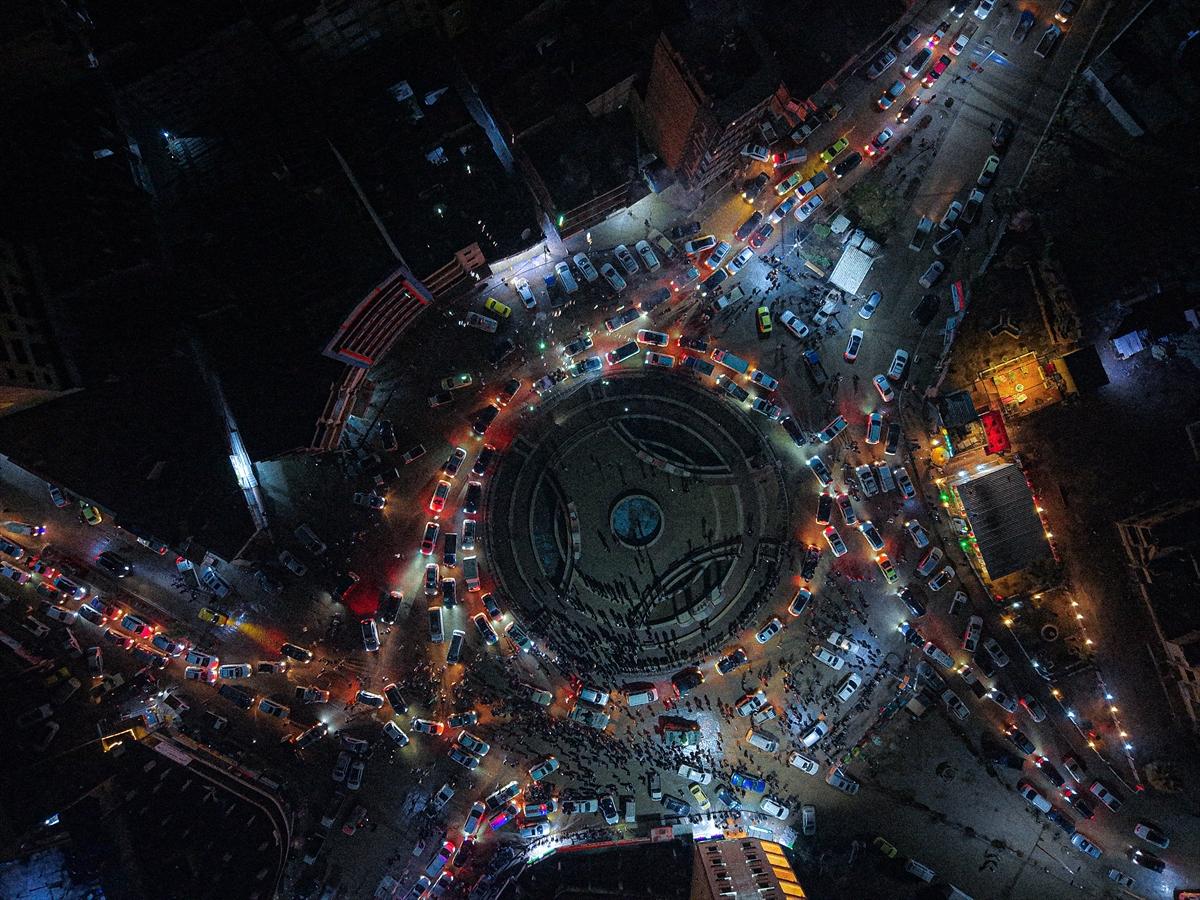
Citizens in Raqqa, Syria, celebrate the liberation of the region from the YPG/SDG terrorist organization, 18 January 2026 – (Anadolu Agency)
Following the establishment of control in Raqqa, efforts were launched to reactivate local administrative structures. Syrian Minister of Local Administration and Environment Muhammad Anserani stated: “We have immediately dispatched the official responsible for local governance in Raqqa province to the region.” He added: “This step is taken to initiate essential services.” Minister Anserani confirmed that the army had taken control of the city of Tabqa and the Euphrates Dam following its arrival in Raqqa province. Anserani also said: “We are ready to serve our people and meet the needs of these areas.”
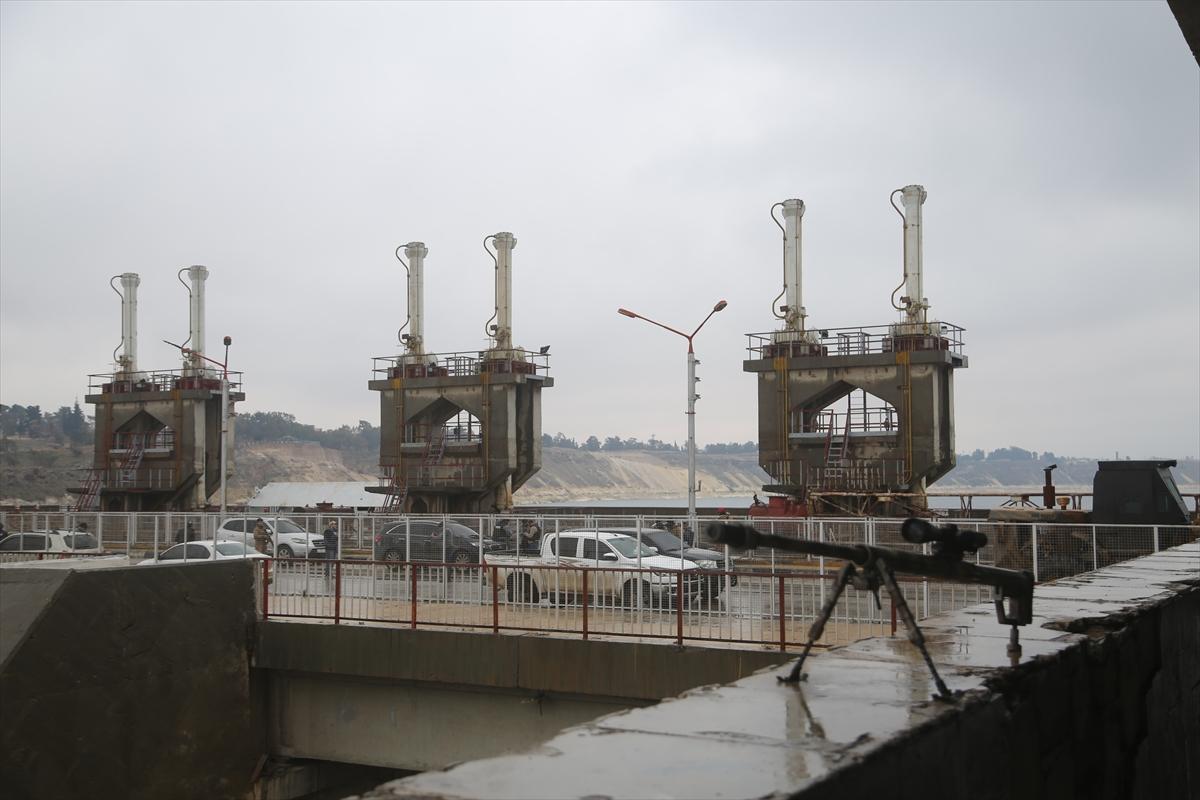
Syrian Army at the Euphrates Dam, 18 January 2026 – (Anadolu Agency)
On the same day, it was reported that four civilians were killed and at least ten injured after sharpshooters from the organization opened fire on civilians in the center of Raqqa. The injured were transported to hospitals in the city. After the attack, citizens removed the organization’s symbols and toppled a statue of a terrorist.
Anadolu Ajansı. “Suriye Ordusu, Terör Örgütü YPG/SDG’ye Operasyonda Rakka İlinin Merkezinin 5 Kilometre Yakınına Ulaştı.” Accessed January 18, 2026. https://www.aa.com.tr/tr/dunya/suriye-ordusu-teror-orgutu-ypg-sdg-ye-operasyonda-rakka-ilinin-merkezinin-5-kilometre-yakinina-ulasti/3802633
Anadolu Ajansı. “Suriye Ordusu, YPG/SDG’ye Yönelik Operasyonu Fırat Nehri’nin Doğusuna Genişletme Sinyali Verdi.” Accessed January 18, 2026. https://www.aa.com.tr/tr/dunya/suriye-ordusu-ypg-sdgye-yonelik-operasyonu-firat-nehri-nin-dogusuna-genisletme-sinyali-verdi/3801935
Anadolu Ajansı. “Terör Örgütü YPG/SDG, Tabka İlçesinden Çekilirken İnfaz ve İhlaller Gerçekleştirdi.” Accessed January 18, 2026. https://www.aa.com.tr/tr/dunya/teror-orgutu-ypg-sdg-tabka-ilcesinden-cekilirken-infaz-ve-ihlaller-gerceklestirdi/3802662
On 18 January 2026, an agreement was signed between Syrian President Ahmed al-Shara and YPG/SDG representatives, encompassing the full integration of the organization into the national army and a comprehensive ceasefire.
According to the agreement, it was decided that a full and immediate ceasefire would be declared on all fronts and contact lines between Syrian government forces and the YPG/SDG, all organization members would withdraw east of the Euphrates River, the administrative and military control of Deir ez-Zor and Raqqa governorates would be immediately and fully transferred to the Syrian government, and all civil institutions in the YPG/SDG-controlled province of Hasakah would be integrated into Syrian state institutions and administrative structures. All energy resources and border crossings will come under state control.
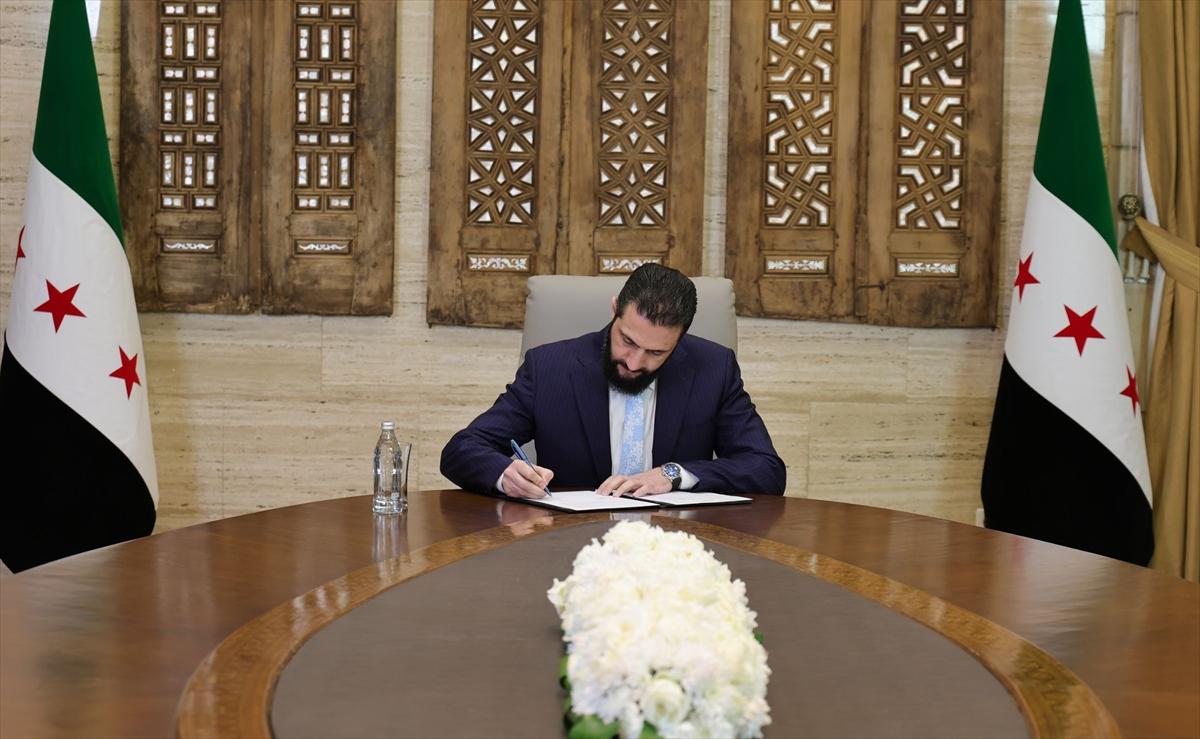
Syrian President Ahmed al-Shara signs an agreement on ceasefire and full integration with the terrorist organization YPG/SDG, 18 January 2026 – (Anadolu Agency)
According to SANA, the full text of the agreement is as follows:
1. As a preliminary step to realignment, an immediate and comprehensive ceasefire will be declared on all fronts and contact lines between Syrian government forces and the Syrian Democratic Forces (SDF), and all SDF military units will withdraw east of the Euphrates River.
2. The full and immediate administrative and military transfer of Deir ez-Zor and Raqqa governorates to the Syrian government. This includes the transfer of all civil institutions and facilities, the immediate issuance of decrees for the recruitment of existing state employees into relevant Syrian ministries, and the government’s commitment that no action will be taken against SDF fighters or civil institution staff in the two governorates.
3. The integration of all civil institutions in Hasakah province into the institutions and administrative structures of the Syrian state.
4. The Syrian government will assume control over all border crossings, oil and natural gas fields in the region, ensuring their protection by Syrian security forces to return resources to the Syrian state.
5. Considering the special status of Kurdish regions, after necessary security reviews, all SDF military and security personnel will be fully integrated on an individual basis into the structures of the Syrian Ministry of Defense and the Ministry of Interior, with the provision of military ranks, financial rights, and logistical needs.
6. The leadership of the Syrian Democratic Forces (SDF) commits to avoiding the inclusion of remnants of the former regime in its ranks and to submitting a list of former regime officials in northeastern Syria.
7. As a guarantee of political participation and local representation, a presidential decree will be issued appointing a candidate to the position of Governor of Hasakah.
8. The withdrawal of heavy military assets from the Ayn al-Arab (Kobani) area, the establishment of a security force composed of local residents, and the preservation of a local police organization subordinate to the Syrian Ministry of Interior.
9. The integration of the forces responsible for securing the detention and camp facilities related to the DAESH files with the Syrian government, thereby ensuring the Syrian government assumes full legal and security responsibility over them.
10. To promote national unity, the list of candidates proposed by the SDF leadership for high-level military, security, and civil positions within the central state structure will be accepted.
11. The Syrian government welcomes Presidential Decree No. 13 of 2026, which recognizes cultural and linguistic rights and addresses unresolved issues related to rights and citizenship, including those of undocumented and stateless persons and property claims accumulated over the past decade.
12. The SDF commits to expelling all non-Syrian PKK leaders and members from the Syrian Arab Republic to ensure sovereignty and regional stability.
13. The Syrian state commits to continuing its fight against terrorism (DAESH) as an active member of the International Coalition, in coordination with the United States, to ensure the security and stability of the region.
14. Efforts will be made to reach agreement on the safe and dignified return of residents of the Afrin and Sheikh Maksud areas to their homes.
Syrian President Ahmed al-Shara, in a statement on 18 January 2026, stated that “State institutions will enter the three governorates in the east and northeast (occupied by the YPG/SDG)”. Shara told journalists after the signing of the agreement that this step constitutes “a victory for all Syrians” and further described it as an “important beginning” for the processes of reconstruction, development and stability.
Syria’s president announced that state institutions will resume operations in all three governorates of Deir ez-Zor, Hasakah and Raqqa. In his statement, he said, “The Syrian state is a unified and centralized state in terms of decision-making mechanisms. State institutions will enter all areas of the country.”
Shara also addressed tribal movements in the eastern regions, stating, “We call on our Arab tribes in the eastern regions to remain calm and allow the phased implementation of the terms of the agreement with the SDF.” The head of state emphasized that the ultimate goal is to achieve full stability in the country.
The Syrian government announced that following the agreement signed with YPG/SDG, it has declared a ceasefire and halted operations in the region, as reported by ceasefire monitors. The Damascus administration stated, “We declare a full ceasefire on all fronts and the comprehensive cessation of hostilities in all conflict zones.”
The statement noted that the ceasefire decision was taken to open safe corridors for the return of local populations and to allow state institutions to resume services to citizens. After the announcement of the ceasefire, calm was restored along the front lines and fighting ceased.
Hostilities have ended in the regions of Raqqa, Tel Abyad, Deir ez-Zor and Hasakah. In Raqqa, the population celebrated the army’s entry into the city, organizing marches through the streets with national flags. Meanwhile, in Raqqa’s Tabqa district, the population welcomed the withdrawal of the YPG/SDG with enthusiasm.
With the implementation of the ceasefire, Syrian security units began deploying in the areas under their control. Units under the Ministry of Interior have been assigned the tasks of protecting public buildings, ensuring civilian safety, and facilitating the return of displaced persons. It was also announced that “new police stations and security centers will open for service.”
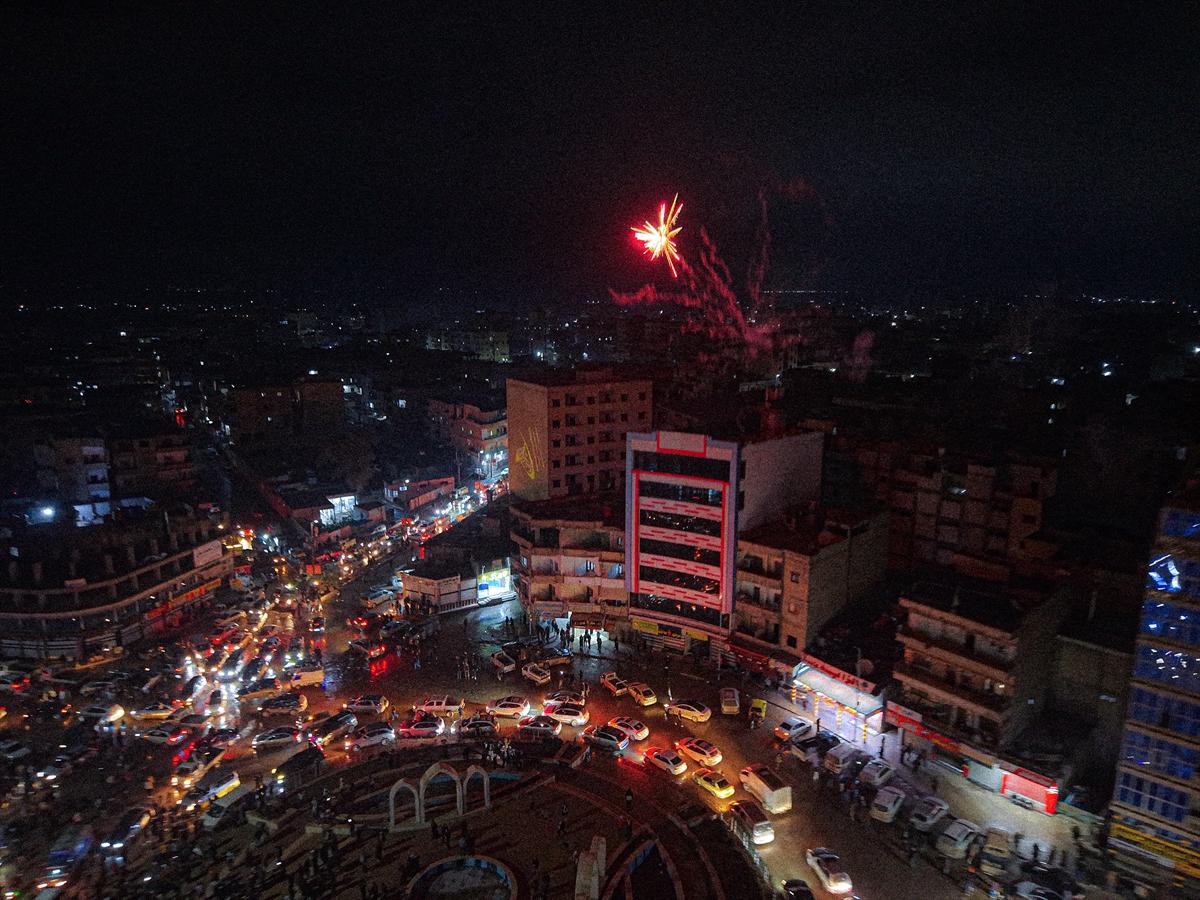
Citizens of Raqqa, Syria, celebrate the liberation of the region from the terrorist organization YPG/SDG, 18 January 2026 – (Anadolu Agency)
Following the ceasefire, the Syrian administration carried out new administrative appointments as part of the reconstruction process in the north. On 19 January 2026, Abdurrahman Salame, Deputy Governor of Aleppo, was appointed Governor of Raqqa. The appointment was announced via the social media account of Aleppo Governor Azzam al-Garib.
In his post, Garib wrote, “We congratulate our brother Abdurrahman Salame, our friend on the path of struggle and liberation, on his appointment as Governor of Raqqa. May God grant him success and integrity in his new role.”
It was noted that Salame previously served as Deputy Governor responsible for the northern and eastern rural areas of Aleppo, overseeing infrastructure and local services. He is also known to have served as General Manager of the “Er-Raki” construction company. Salame was born in 1971 in the village of Andan in rural Aleppo and actively participated in armed operations during the conflict that began in 2011.
Anadolu Ajansı. "Halep Vali Yardımcısı Abdurrahman Selame, Rakka Valisi Olarak Atandı." Accessed January 19, 2026. https://www.aa.com.tr/tr/dunya/halep-vali-yardimcisi-abdurrahman-selame-rakka-valisi-olarak-atandi/3803576
Anadolu Ajansı. "Suriye Cumhurbaşkanı Şara, Şam’da ABD’nin Suriye Özel Temsilcisi Barrack’la Görüştü." Accessed January 19, 2026. https://www.aa.com.tr/tr/dunya/suriye-cumhurbaskani-sara-samda-abdnin-suriye-ozel-temsilcisi-barrackla-gorustu/3802993
Anadolu Ajansı. "Suriye Cumhurbaşkanı Şara: Devlet Kurumları YPG/SDG İşgalindeki Üç Vilayete Girecek." Accessed January 19, 2026. https://www.aa.com.tr/tr/dunya/suriye-cumhurbaskani-sara-devlet-kurumlari-ypg-sdg-isgalindeki-uc-vilayete-girecek/3803182
Anadolu Ajansı. "Suriye Enformasyon Bakanlığı, Operasyonlar ve Süreçle İlgili Önemli Bir Açıklama Yapılacağını Duyurdu." Accessed January 19, 2026. https://www.aa.com.tr/tr/dunya/suriye-enformasyon-bakanligi-operasyonlar-ve-surecle-ilgili-onemli-bir-aciklama-yapilacagini-duyurdu/3803163
Anadolu Ajansı. “Suriye Hükûmeti ile Terör Örgütü YPG/SDG Arasında Kapsamlı Ateşkes Konusunda Anlaşma İmzalandı.” Accessed January 19, 2026. https://www.aa.com.tr/tr/dunya/suriye-hukumeti-ile-teror-orgutu-ypg-sdg-arasinda-kapsamli-ateskes-konusunda-anlasma-imzalandi/3802692
Anadolu Ajansı. “Suriye Hükûmeti ile YPG/SDG Arasında Tam Entegrasyon Anlaşması İmzalandı.” Accessed January 19, 2026. https://www.aa.com.tr/tr/dunya/suriye-hukumeti-ile-ypg-sdg-arasinda-tam-entegrasyon-anlasmasi-imzalandi/3803311
SANA. "President al-Shara Receives U.S. Special Envoy to Syria Thomas Barrack." SANA. Accessed January 19, 2026. https://sana.sy/tr/presidency/2279223/
SANA. "Suriye Hükûmeti ile SDG Arasındaki Ateşkes ve Tam Entegrasyon Anlaşması Maddeleri." SANA. Accessed January 19, 2026. https://sana.sy/tr/presidency/2279229/
SANA. "Suriye’de Fırat’ın Batısındaki Stratejik Tesisler Yeniden Devlet Kontrolüne Geçti." SANA. Accessed January 19, 2026. https://sana.sy/tr/syria/2279150/
On 19 January 2026, a meeting took place between Syrian President Ahmed Şara and Mazlum Abdi (Ferhat Abdi Şahin), leader of the terrorist organization YPG/SDG, regarding the implementation of the Ceasefire and Full Integration Agreement. The meeting, which lasted approximately five hours in Damascus, the capital of Syria, was reported to have ended without results.
Syrian President Ahmed Şara, in a statement prior to the meeting, stated that state institutions would enter the three governorates in the east and northeast and that all outstanding issues concerning the Syrian Democratic Forces would be resolved. Şara stated, “The Syrian state is a single, unified state with centralized decision-making mechanisms. State institutions will enter all areas of Syria and manage all affairs in the region.”
Syrian government sources stated in their official remarks that no agreement had been reached between the parties on the implementation of the 10 March accord and the Ceasefire and Full Integration Agreement. One government source said, “The SDG side did not demonstrate the necessary flexibility during the talks. New meetings will be held in the coming period.” According to information published on the Telegram account of the Qatar-based Al Jazeera television network, the status of Al-Hasakah province along the Iraqi border formed the main agenda of the meeting.
According to the report, Elebaşı Şahin insisted that Al-Hasakah remain under the organization’s control, while President Şara demanded that state institutions enter the city and assume control of the Internal Security Forces. In response to Şahin’s resistance, Şara stated that operations would continue under the current conditions.
Sources reported that Şara also refused to grant Şahin additional time for consultation and demanded a final response by midnight on Monday. A source close to the government speaking to the Syrian state television channel Al-Ihbariyye confirmed that the talks ended without any progress.
Anadolu Ajansı. "Suriye Hükümet Kaynakları: Suriye Cumhurbaşkanı Şara ile Elebaşı Şahin Arasındaki Görüşme Sonuçsuz Kaldı." Accessed January 20, 2026.
Suriye Arap Haber Ajansı (SANA). "Cumhurbaşkanı El-Şara: Devlet Kurumları Doğu ve Kuzeydoğudaki Üç İle Girecek." Accessed January 20, 2026.
On 19 January 2026, the Syrian Army announced that it had established full control over the Tishrin Dam, located southwest of Manbij and previously under the control of the terrorist organization YPG/SDG. According to reports from Anadolu Agency correspondents in Manbij, army units fully took over the dam area beginning in the early morning hours of 19 January.
The takeover of the dam was carried out without conflict as part of the implementation of the Armistice and Full Integration Agreement signed on 18 January between the Syrian government and the terrorist organization YPG/SDG. The Syrian Army continues its peaceful takeover process of areas extending from the eastern bank of the Euphrates River in Raqqa Governorate to the Turkish border. Some army units have crossed to the opposite bank of the Euphrates and advanced into the area between Ain al-Arab and the city center of Raqqa.
On the same morning, control was also secured at the point known as the Ayn Isa junction. Units stationed there are reported to have deployed in the southern sectors of the Ain al-Arab region. The Syrian Army has also completed its peaceful takeover of the region along the third advance line extending from the center of Raqqa to the Tel Abyad–Rasulayn axis.
During its inspections of the dam area, the Syrian Army seized a large number of explosives, kamikaze-style unmanned aerial vehicles (UAVs), rocket launchers, and aerial munitions belonging to the terrorist organization YPG/SDG. Additionally, symbols associated with the organization were removed from the lower sections of the dam and security screenings were initiated.
The Syrian Ministry of Interior announced that, under the terms of the agreement, Syrian Army units had begun entering the eastern rural areas of Deir ez-Zor Governorate. The ministry’s statement read: “Our units have begun entering the eastern rural areas of Deir ez-Zor as part of a planned deployment aiming to establish orderly presence in all villages and towns.” The statement emphasized that this step aligns with a comprehensive security plan designed to protect civilians and public and private property and to strengthen security and stability in the region.
In another army statement released by the Syrian state television channel Al-Ikhbariyye, it was stated that “certain groups linked to the PKK terrorist organization and remnants of the former regime have attempted to obstruct the implementation of the agreement.” The statement reported that three soldiers lost their lives in these attacks and that brief clashes occurred near Tel Temir, Ayn Isa and Qattan Prison with some YPG/SDG elements.
Following the Armistice and Integration Agreement, residents of Raqqa celebrated the removal of the organization from the region. On the same day, the Syrian Central Bank announced it had begun preparations to reopen its Raqqa branch. According to a report from the official Syrian news agency SANA, the Syrian Central Bank has encouraged all banks operating in Raqqa to reopen their branches.
On 19 January 2026, clashes broke out between Syrian Army forces and elements of the terrorist organization YPG/SDG in Raqqa Governorate, Syria, after the latter refused to hand over the Aktan Prison, which holds some individuals affiliated with ISIS. The prison is located approximately 10 kilometers northeast of the center of Raqqa city.
When Syrian Army units arrived in the area during the day to take control of the prison, they were fired upon by YPG/SDG members. After the prison authorities refused to comply with the army’s demand for transfer, clashes intermittently intensified and continued sporadically until evening.
According to local sources, approximately 300 YPG/SDG members and organization leaders are believed to be held inside the prison, including around 30 commanders and some elements of the former regime. It was reported that the majority of detainees are not ISIS affiliates but rather civilians arbitrarily detained by YPG/SDG due to their opposition to the group.
Later on the same day, local sources also reported that Syrian Army forces and Arab tribal elements had advanced as far as the Panorama Junction, located south of the YPG/SDG-controlled city of Hasakah. This advance was said to be supported by ground units operating from the directions of Raqqa and Deir ez-Zor.
In the following hours, the Syrian Army reported that members of ISIS held in the prison in the city of Shaddadi, part of Al-Hasakah province, had been released by the terrorist organization YPG/SDG. A written statement from the military indicated that Syrian forces had contacted YPG/SDG through intermediaries to gain control of the prison in Shaddadi, but the terrorist group “rejected this request.”
The statement also noted that Syrian forces had begun entering the city of Shaddadi, stating: “Following the release of ISIS members from the Shaddadi prison by the SDG, army units entered the city of Shaddadi in the rural areas of Al-Hasakah.”
Military sources reported that search and sweep operations were underway in and around the city of Shaddadi and that the area surrounding the prison had been secured. It was also stated that operations had been launched to apprehend the released ISIS members.
On 20 January 2026, the Syrian Ministry of Interior announced that 81 of the 120 ISIS members reportedly released from the prison in Shaddadi, Al-Hasakah province, by YPG/SDG, had been apprehended. The ministry’s statement emphasized that YPG/SDG was responsible for the release of the ISIS terrorists.
The statement added: “Army and Ministry of Interior units conducted a comprehensive search and sweep operation in and around the city of Shaddadi. During the operation, 81 ISIS terrorists were captured. The search for the remaining ISIS members continues.”
On 20 January 2026, a telephone conversation took place between Syrian President Ahmed Shara and U.S. President Donald Trump. The official statement regarding the conversation was published by the Syrian Presidency via the U.S.-based X platform.
The statement noted that the two leaders affirmed the importance of preserving Syria’s territorial integrity and independence and agreed that all efforts to ensure stability must be supported.
It was also stated that both parties emphasized the necessity of guaranteeing the rights of the Kurdish people and ensuring their protection under the umbrella of the Syrian state. The conversation further recorded an agreement to continue cooperation between Syria and the United States in the fight against the terrorist organization ISIS and to eliminate the threats posed by the group.
The statement added: “The two leaders expressed their shared aspiration for a strong and united Syria and affirmed that Syria must be capable of addressing regional and international challenges.”
The telephone conversation also noted that “various regional issues were discussed and the importance of providing Syria with opportunities to move toward a better future was emphasized.”
On 20 January 2026, after fighting had paused in the morning, it was reported that clashes had resumed around Al-Hasakah province and south of Ayn al-Arab during the Syrian Army’s advance east of the Euphrates River. At 12:15 TSİ, clashes occurred between Syrian Army units and YPG/SDG elements around Mount Abdulaziz in the southeast of Al-Hasakah.
It was reported that Syrian Army units had deployed at four distinct locations, including the entrance to the city center of Al-Hasakah. On the Ayn al-Arab front, the Syrian Army granted YPG/SDG elements at the Karakozak Bridge, located 30 kilometers southwest of Ayn al-Arab and connecting Mabij to the eastern bank of the Euphrates, until 13:00 TSİ to withdraw. After the deadline expired, clashes resumed around the Karakozak Bridge and at the entrance to the village of Sirrin.
As part of the Syrian Army’s advance, it was reported that the Kabur Dam in southern Al-Hasakah province had also come under its control. The Kabur Dam is now under Syrian Army control. During the same period, intermittent clashes were recorded around Mount Abdulaziz in the southeast of Al-Hasakah.
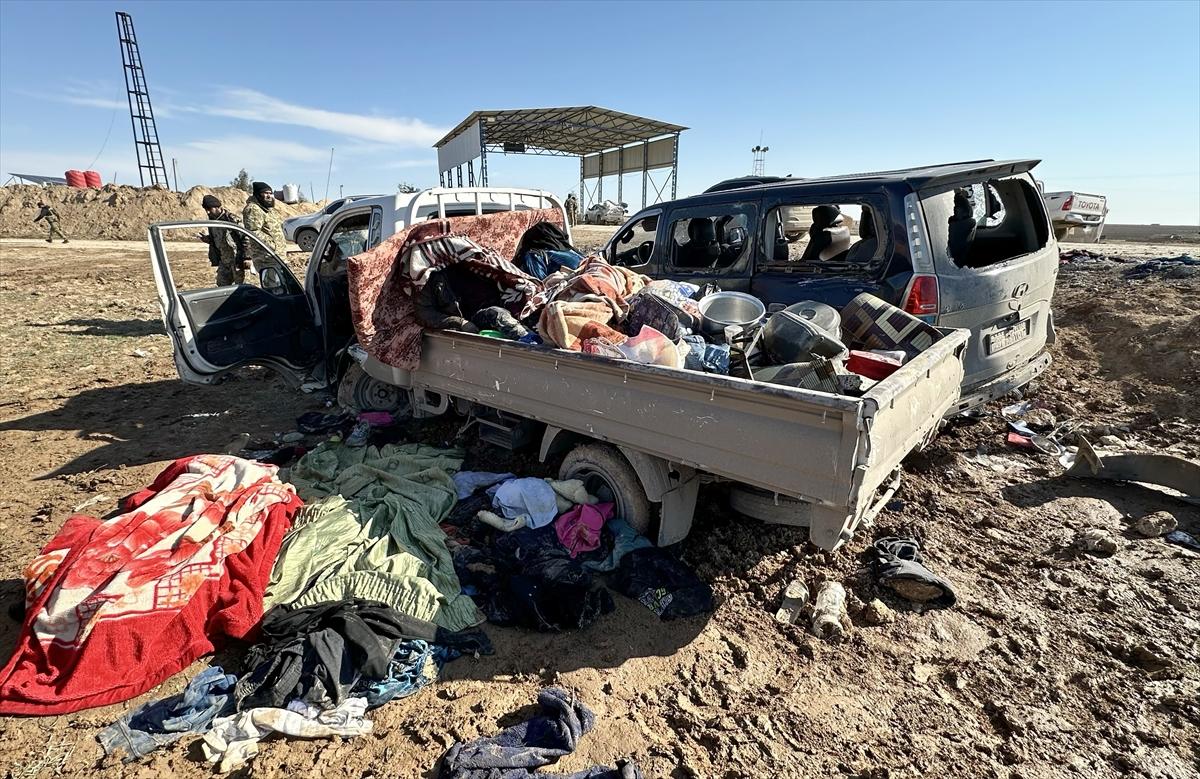
Ten civilians killed in their vehicles near a checkpoint operated by the terrorist organization YPG/SDG in Al-Hasakah, 20 January 2026 – (Anadolu Agency)
During the advance of the Syrian Armed Forces, it was determined that the terrorist organization YPG/SDG opened fire on civilian vehicles attempting to leave Al-Hasakah and that ten civilians lost their lives in the vicinity of Mükmin village. According to local sources, women and children were among the civilians killed in the attack. Syrian Armed Forces officials stated that the attack was carried out by elements of the organization aiming to prevent the local population from leaving their homes.
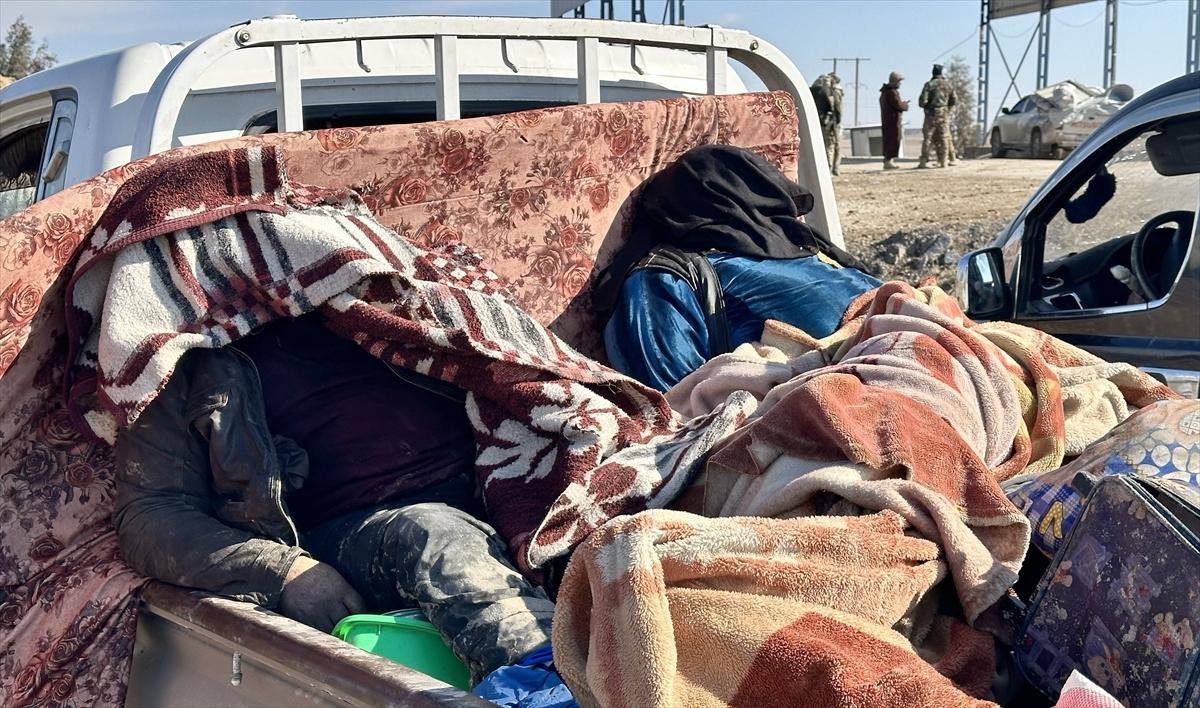
Ten civilians killed in their vehicles near a checkpoint operated by the terrorist organization YPG/SDG in Al-Hasakah, 20 January 2026 – (Anadolu Agency)
On the same day, the Syrian Ministry of Defense announced that control had been established over Aktan Prison, located north of the city of Raqqa. The ministry stated that security had been fully restored in the prison’s surroundings and that reports of ongoing clashes were inaccurate.
The Directorate of Operations under the Syrian Armed Forces also announced that the terrorist organization YPG/SDG had abandoned the Hol Camp in Al-Hasakah province and released the individuals detained there. The statement read: “SDG ceased providing security for the Hol Camp and released those held inside. The Syrian Arab Army, in cooperation with Internal Security Forces, will enter the area to restore security. We emphasize our absolute commitment to the protection and safety of the Kurdish population. The army is the protector of all Syrians, and its primary objective is to reestablish stability and safeguard state institutions.”
The official Syrian news agency SANA also reported that a civilian had been killed as a result of fire opened by members of the terrorist organization YPG/SDG in the Hol region.
Tom Barrack, U.S. Ambassador to Ankara and Special Representative to Syria, made a social media post regarding developments in Syria. In his post, Barrack stated: “The greatest opportunity for the Kurds in Syria today lies within the post-Assad transition process under the leadership of President Ahmed al-Shara. This moment offers a path toward full integration into a unified Syrian state, granting the Kurds long-denied rights to citizenship, cultural protection and political participation, which were consistently rejected under the Bashar al-Assad regime characterized by statelessness, linguistic restrictions and systemic discrimination.”
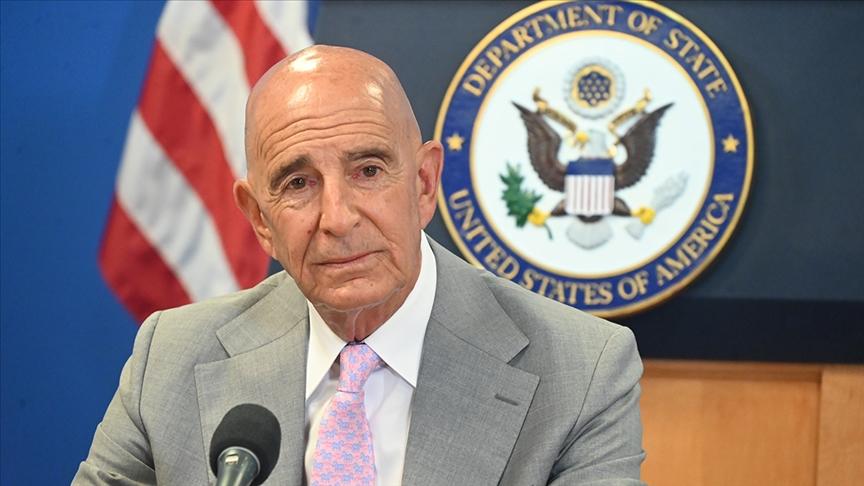
U.S. Ambassador to Ankara and Special Representative to Syria Tom Barrack – (Anadolu Agency)
Barrack noted that the United States had previously established a partnership with the YPG/SDG against ISIS, and at the time of that partnership, “there was no functioning central state in Syria.” He added: “Today, this situation has fundamentally changed. Syria now possesses a recognized central government that has aligned itself with the West and signaled its commitment to counterterrorism cooperation with the United States by joining the Counter-ISIS Coalition.”
Barrack stated that this development has altered the rationale for the U.S. partnership with the YPG/SDG: “Damascus has willingly and readily assumed responsibility for security, including control of ISIS camps and detention facilities, meaning the primary purpose of SDG as the main anti-ISIS force on the ground has largely been fulfilled. Recent developments demonstrate that the United States is actively facilitating this transition rather than prolonging SDG’s separate role.”
In his post, Barrack emphasized that the United States has no interest in maintaining a long-term military presence and outlined its priorities as the defeat of remaining ISIS remnants, support for reconciliation, and strengthening national unity without secessionism or federalism.
Tom Barrack, in a statement referencing the January 18 Agreement, said: "This situation creates a unique opportunity for the Kurds: integration into a new Syrian state, full citizenship rights (including those previously stateless), recognition as an inseparable part of Syria, constitutional protection of the Kurdish language and culture (such as Kurdish-language education and the celebration of Newroz as a national holiday), and the prospect of participating in governance far beyond the semi-autonomous status currently held by the SDF amid the chaos of the civil war."
Although risks persist—for example, fragile ceasefires, occasional clashes, concerns regarding radicals, or the desire of some actors to revive past grievances—the United States is pressuring for guarantees on Kurdish rights and cooperation against ISIS. The alternative could invite prolonged separation, instability, or the resurgence of ISIS. This integration, supported by U.S. diplomacy, represents the strongest opportunity yet for the Kurds to secure lasting rights and security within a recognized Syrian nation-state.
Barrack noted that the United States is focusing on two primary issues in Syria: ensuring the security of prisons holding ISIS detainees, which are currently under the control of the YPG/SDF, and facilitating political negotiations aimed at the peaceful integration of the YPG/SDF into the Syrian government and the political inclusion of the Kurdish population in Syria with full Syrian citizenship.
Anadolu Ajansı. “Haseke Çevresinde ve Ayn el-Arab’ın Güneyinde Çatışmalar Yeniden Başladı.” Accessed January 20, 2026. https://www.aa.com.tr/tr/dunya/haseke-cevresinde-ve-ayn-el-arabin-guneyinde-catismalar-yeniden-basladi/3804894
Anadolu Ajansı. “Sara ve Trump’ın Telefon Görüşmesinde Suriye’nin Toprak Bütünlüğü ve DEAŞ’la Mücadelede İşbirliği Vurgusu.” Accessed January 20, 2026. https://www.aa.com.tr/tr/dunya/sara-ve-trumpin-telefon-gorusmesinde-suriye-nin-toprak-butunlugu-ve-deas-la-mucadelede-isbirligi-vurgusu/3804549
Anadolu Ajansı. “Suriye Ordusu, Terör Örgütü YPG/SDG’nin İşgalindeki Tişrin Barajı’nı Kontrol Altına Aldı.” Accessed January 20, 2026. https://www.aa.com.tr/tr/dunya/suriye-ordusu-teror-orgutu-ypg-sdg-nin-isgalindeki-tisrin-barajini-kontrol-altina-aldi/3803605
Anadolu Ajansı. “Suriye Ordusu, YPG/SDG’nin Şeddadi’deki Hapishaneden DEAŞ’lı Teröristleri Bıraktı.” Accessed January 20, 2026. https://www.aa.com.tr/tr/dunya/suriye-ordusu-ypg-sdg-seddadideki-hapishaneden-deasli-teroristleri-birakti-/3804422
Anadolu Ajansı. “Suriye Ordusunun YPG/SDG’nin Şeddadi’deki Hapishaneden Bıraktığını Açıkladığı 120 DEAŞ’lıdan 81’i Yakalandı.” Accessed January 20, 2026. https://www.aa.com.tr/tr/dunya/suriye-ordusunun-ypg-sdgnin-seddadideki-hapishaneden-biraktigini-acikladigi-120-deaslidan-81i-yakalandi/3804602
Anadolu Ajansı. “Terör Örgütü YPG/SDG, Rakka’da Bazı DEAŞ’lıların da Tutulduğu Hapishaneyi Devretmemek İçin Orduyla Çatışıyor.” Accessed January 20, 2026. https://www.aa.com.tr/tr/dunya/teror-orgutu-ypg-sdg-rakka-da-bazi-deaslilarin-da-tutuldugu-hapishaneyi-devretmemek-icin-orduyla-catisiyor/3804508
On January 20, 2026, the Syrian Ministry of Defense announced that the four-day ceasefire, declared under the agreement reached between the Syrian government and the terrorist organization YPG/SDG, has come into effect. The ministry stated that all military operation zones will observe the ceasefire starting at 20:00 Syria Time.
The ceasefire was declared within the four-day period granted to the YPG/SDG to complete consultations regarding their integration into state institutions. The key provisions of the agreement are as follows:
"- The SDG has been granted four days to prepare a detailed plan for the actual integration of the regions and to complete consultations.
- If the agreement is honored, the Syrian Army will not enter the city centers of Al-Hasakah and Qamishli; instead, its units will be deployed around the cities. The timetable and details for the peaceful integration of Al-Hasakah province and Qamishli city will be addressed later.
- Syrian military forces will not enter Kurdish villages; no armed elements will be present in these villages other than local security forces composed of the local population.
- Mr. Mazlum Abdi will submit one candidate each for the position of Deputy Minister of Defense and Governor of Al-Hasakah, as well as a list of candidates to be represented in the People’s Council and personnel to be employed in state institutions.
- An agreement has been reached to integrate all military and security elements under the SDG into the Ministry of Defense and the Ministry of Interior. Civil institutions affiliated with the SDG will also be integrated into the administrative structure of the Syrian government.
- The Presidency will implement Presidential Decree No. 13 concerning the linguistic and cultural rights of the Kurds and their citizenship rights, reflecting a shared commitment to building a united and strong Syria based on national partnership, in which the rights of all components are guaranteed.
- This agreement will enter into force as of 20:00 today."
The terrorist organization YPG/SDG also issued a statement declaring, "We are fully committed to the ceasefire."
UN Spokesperson Farhan Haq, during his daily press briefing, described the implementation of the ceasefire as a "welcome development". Haq stated, "Clearly, if there is an agreement on the ground that halts violence, this is a development to be welcomed."
Haq noted that he expects the parties to continue dialogue and take measures to reduce violence, adding, "But we are also aware of the different positions taken in recent days, which is why we are closely monitoring the situation."
Haq reported that UN Secretary-General Antonio Guterres has been closely following the violence in northeastern Syria with great concern and has called on the parties to continue dialogue, proceed in good faith, and work together to ensure full implementation of all agreements.
Shortly before the ceasefire came into effect, it was reported that the Syrian Army had gained control of the Karakozak position on January 20 at approximately 19:00 Syria Time, located south of the Ayn al-Arab district in Aleppo.
Syrian military units advanced northward following clashes in the village of Sirrin and encircled the village of Karakozak, bringing the area under control one hour before the ceasefire began. However, it was reported that the YPG/SDG had mined the area around the bridge and the tomb site, and it was announced that the region would be rendered safe after the explosives were cleared.
On the same day, Syrian President Ahmed Shara held a telephone conversation with Mesut Barzani, leader of the Iraqi Kurdistan Democratic Party (KDP). The conversation addressed recent developments in the region, as well as strengthening stability and security.
President Shara stated during the call that "all rights of the Kurds, including their national, political and civil rights, are being protected." Barzani expressed his support for the Ceasefire and Full Integration Agreement reached between the Damascus administration and the YPG/SDG.
The statement on the call indicated that both parties agreed to continue coordination and consultation to ensure peace and security in the region and to resolve conflicts in a manner beneficial to all.
Anadolu Ajansı. “Suriye’de YPG/SDG ile Varılan Mutabakat Sonrası Açıklanan 4 Günlük Ateşkes Yürürlüğe Girdi.” Accessed January 21, 2026. https://www.aa.com.tr/tr/dunya/suriye-de-ypg-sdg-ile-varilan-mutabakat-sonrasi-aciklanan-4-gunluk-ateskes-yururluge-girdi/3805617
Syrian Arab News Agency (SANA). “Defense Ministry Declares Ceasefire Following New Agreement with SDG.” SANA. Accessed January 21, 2026. https://sana.sy/tr/syria/2279434/
Syrian Arab News Agency (SANA). “Presidency: Agreement with SDG on the Future and Integration of Hasakah.” SANA. Accessed January 21, 2026. https://sana.sy/tr/syria/2279431/
Syrian Arab News Agency (SANA). “Syrian Government and SDG Reach Agreement on the Future of Hasakah.” SANA. Accessed January 21, 2026. https://sana.sy/tr/syria/2279482/
On January 21, 2026, U.S. President Donald Trump, during a press conference held at the White House marking the first year of his second term, made remarks regarding the situation in Syria.
Trump referenced a phone call he had the previous day with Syrian President Ahmed al-Shara, stating, "Syrian President Ahmed al-Shara is working very hard. He is a strong and tough man. I spoke with him yesterday, and we discussed the conditions in the prisons. Some of the world’s worst terrorists are held in those prisons. Al-Shara is overseeing this process."
In response to a question about the Kurds in Syria, Trump asserted that the United States had provided sufficient support to the Kurdish population in the country. Addressing the issue of the terrorist organization YPG/SDG in Syria, he said, "I like the Kurds, but you must understand that a great deal of money has been paid to them, and oil and other resources have been given to them. They did this not for us but largely for themselves. Nevertheless, we get along well with the Kurds and are trying to protect them."
Additionally, in an interview with the New York Post on January 20, Trump commented on the Daesh prisoners released by the YPG/SDG in Syria, saying, "European terrorists had escaped from prisons, and the Syrian government has recaptured all the prisoners." He further stated, "European terrorists had escaped from the prisons. We worked with the Syrian government and Syria’s new leader, and they recaptured all the prisoners and returned them to custody. These were all Europeans and among the worst terrorists in the world."
On January 21, 2026, the terrorist organization YPG/SDG violated the ceasefire agreed upon between the Syrian government and local authorities in the city of Hasakah by launching a suicide unmanned aerial vehicle (UAV) attack on a poultry farm. According to local sources, the attack occurred near the Nehshwa neighborhood of Hasakah.
Seven civilians were killed in the attack, with numerous others injured, including women and children. Following the incident, Syrian security forces and medical teams were deployed to the area, and the wounded were transported to nearby hospitals.
On January 21, 2026, supporters of the terrorist organization YPG/SDG organized unauthorized demonstrations in various European cities to protest the Syrian army’s advance under the ceasefire and full integration agreement reached with the Damascus administration to take control of Hasakah and Ayn al-Arab. The protests in several countries resulted in riots, clashes with police, and damage to public property.
In Zurich, Switzerland, unauthorized marchers affiliated with the terrorist organization YPG/SDG encountered police intervention. Demonstrators carried symbols representing the organization and responded to police use of water cannons with stones and injurious objects. It was reported that some activists were wearing masks and had damaged public property during the unrest.
Besides Zurich, similar protests took place in Bern, Lausanne, and Geneva. A group of activists gathered in front of the United Nations Office in Geneva and forcibly entered the compound by climbing over fences, but were quickly removed by UN security personnel.
Following the unauthorized entry, UN security units took measures to prevent further unauthorized access to the building. UN officials stated that the activists had been removed from the compound without causing any damage.
In Paris, France, supporters of the YPG/SDG clashed with police. Protesters were reported to have launched fireworks, while police responded with pepper spray. In Place des Invalides, a group of organization supporters conducted an action displaying organization symbols, while masked groups in Strasbourg held unauthorized demonstrations and attempted to march toward the U.S. Consulate. It was reported that stones and injurious substances were thrown at police, who responded with pepper spray.
Police intervention against supporters of the terrorist organization YPG/SDG in Brussels, January 21, 2026 – (Anadolu Agency)
In London, a group of supporters of the terrorist organization YPG/SDG gathered at the entrance to Downing Street, where the Prime Minister’s Office is located, and then marched toward the UK Parliament. The group, which engaged in a sit-in protest in front of Parliament, was redirected by police back to Downing Street. The protesters had intended to march toward Trafalgar Square, but police denied permission. A brief scuffle occurred between security forces and demonstrators who were carrying organization symbols and images of terrorists.
In Berlin, a paint attack was carried out against the Turkish Embassy building in the early hours of the morning. According to a statement from Berlin Police, a group of approximately 40 individuals threw paint onto the embassy’s fences along Tiergarten Street, wrote slogans on the sidewalks, and deployed several smoke bombs. When police arrived at the scene, the group had fled into Tiergarten Park, and two individuals aged 19 and 20 were taken into custody. The investigation is being conducted by the state security agency. Authorities assessed that the attack had been carried out by supporters of the terrorist organization YPG/SDG.
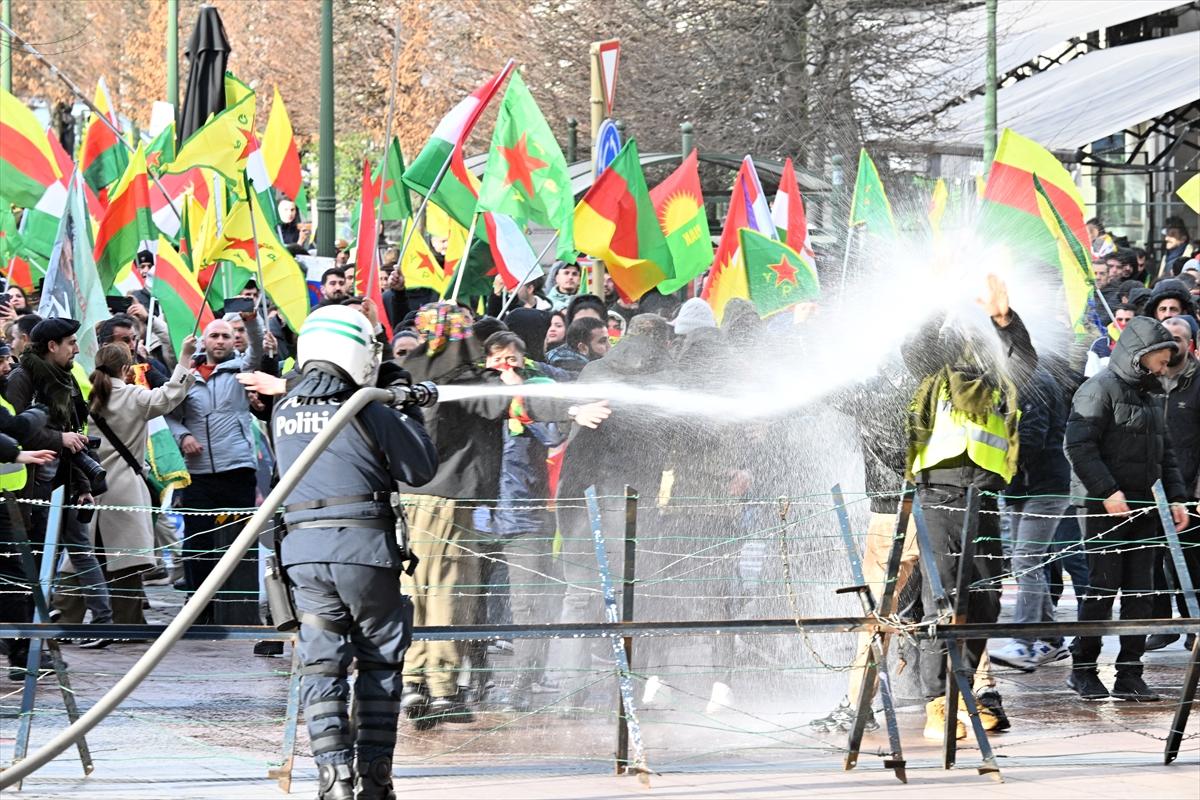
Police intervention against supporters of the terrorist organization YPG/SDG in Brussels, January 21, 2026 – (Anadolu Agency)
In Brussels, Belgium, a group of supporters of the terrorist organization YPG/SDG held an unauthorized demonstration in front of the European Parliament building. The action, which began in the early morning, turned into a riot when participants carrying organization symbols and chanting pro-organization slogans escalated the situation, prompting police intervention.
It was reported that Brussels police used tear gas and water cannons to disperse the group. After the intervention, the demonstrators marched toward Schuman Square, where the European Council building, host of the upcoming European Union (EU) summit, is located.
Policemen in teams tracked the group; the activists briefly gathered in front of the EU Foreign Relations building, chanted slogans, and then dispersed. During the protest, helicopters, vehicles for intervention in social disturbances (TOMA), and numerous police teams were on standby. The Brussels police stated that security measures had been heightened and a broad security perimeter had been established around diplomatic institutions in the city center.
The United Nations Security Council (UNSC) convened on January 22, 2026, under the agenda item “Situation in the Middle East,” to discuss recent developments in Syria. The opening statement was delivered by Assistant Secretary-General for the Middle East, Asia and the Pacific of the United Nations, Mohamed Khaled Khiari. In his remarks, Khiari summarized recent events in Syria and issued warnings and recommendations regarding the country’s future.
Khiari referred to ongoing clashes between Syrian government forces and the terrorist organization YPG/SDG in the regions of Hasakah and Ayn al-Arab, noting that a “disturbing humanitarian crisis” was unfolding in these areas. He called on all parties to ensure the protection of civilians and civilian infrastructure and to guarantee access to humanitarian aid.
Khiari conveyed the “concern” of United Nations Secretary-General Antonio Guterres on these matters and emphasized the need for “full respect for international law.” He characterized Syrian President Ahmed al-Shara’s statement regarding the linguistic, cultural and citizenship rights of Kurds in Syria as an “unprecedented declaration” and described it as a “courageous initiative that could be further developed through a genuinely inclusive process.”
Despite positive developments in Syria, Khiari noted that ISIS continues to pose a threat and expressed shared international concerns regarding “the presence of foreign terrorist fighters in Syria.”
Khiari pointed to indications that some ISIS members had escaped from their detention camps and urged the Syrian government to ensure “full attention” is given to the orderly transfer of ISIS detention facilities. He also highlighted the importance of the United Nations Special Envoy’s Office for Syria actively engaging in field operations in a “structured and supportive manner.”
U.S. Deputy Permanent Representative to the United Nations Tammy Bruce, in her address to the UNSC, affirmed that her country continues to support the Syrian government. Bruce stated, “The new Syrian government joined the global coalition to defeat ISIS by the end of 2025 and has oriented itself toward cooperation with the United States in counterterrorism. Damascus is now both willing and prepared to assume security responsibilities, including control over ISIS detention facilities and camps.”
Asserting that the United States supports Syria’s stability, Bruce said, “This integration, supported by U.S. diplomacy, represents the strongest opportunity to date for Kurds to secure lasting rights and security within a recognized Syrian nation-state.”
Bruce noted that the United States supports negotiations between Syria and Israel to “open a new chapter” in their relations and stated that their goal is a sovereign, unified, internally peaceful and neighborly Syria. The U.S. representative welcomed the current integration process in Syria and emphasized the importance of the parties remaining committed to implementing the agreement.
Russia’s Permanent Representative to the United Nations Vassily Nebenzia, in his address to the UNSC, stated that his country has closely monitored the rapid developments in Syria’s military and political situation. Nebenzia said, “We call on all relevant parties to abandon efforts to sabotage the negotiation process and to avoid any confrontation that risks escalating violence and losing control of the situation.”
He also addressed Israel’s military activities on Syrian territory, stating, “We must once again acknowledge that many of Syria’s internal problems have been further complicated by Israel’s ongoing unlawful interventions.”
Nebenzia called on Israel to refrain from using force to address its security concerns, to respect the security and territorial integrity of its Arab neighbors, and to fulfill its international legal obligations in accordance with relevant Security Council and General Assembly resolutions.
Turkey’s Permanent Representative to the United Nations, Ambassador Ahmet Yıldız, addressed the United Nations Security Council on January 22, 2026. Yıldız criticized the YPG/SDG for refusing to comply with the Syrian government’s calls for integration, stating, “Separatist and divisive projects aimed at undermining Syria’s unity have no future.”
Ambassador Yıldız shared his observations on the current situation, saying, “Recent developments have also demonstrated the level of popular support the Syrian government enjoys among its people and the capacities it has developed.” He further stated that various segments of Syrian society have clearly indicated they will no longer tolerate the so-called SDG.
In his speech, Yıldız declared, “The so-called SDG is neither Syrian nor democratic nor a legitimate force. It is an extension of the PKK/YPG terrorist organization.” He added that recent events over the past two weeks and the group’s violations have confirmed the validity of Turkey’s long-standing position.
Yıldız emphasized that the Syrian government has regained control over large parts of the country, noting that these areas had been illegally seized by those who exploited long-term instability and committed severe abuses against civilians.
Reiterating Turkey’s support for a unified and sovereign Syria, Yıldız said, “Turkey fully supports the Syrian state in its efforts to build a unified, sovereign and independent Syria where all ethnic backgrounds, beliefs and sects live side by side.”
Yıldız also referred to the ceasefire and full integration agreement announced by Syrian President Ahmed al-Shara, expressing the hope that it would “make an urgent and meaningful contribution to security and stability.”
Yıldız further stated, “We will spare no effort to completely eliminate the presence of terrorists in Syria in all its forms and manifestations and to fully support the decisions and actions of the Syrian government.”
On January 22, the terrorist organization YPG/SDG continued its campaign of arbitrary detentions targeting Arab civilians in the city of Hasakah in northeastern Syria. In the neighborhoods of Emiriye and Guveryan, numerous Arab civilians were forcibly detained by armed members of the group during nighttime raids. According to eyewitness accounts, those detained were beaten and forcibly loaded onto vehicles before being taken to unknown locations.
Syrian Minister of Defense Murhaf Abu Qasra, in a statement on January 21, confirmed that arbitrary detentions of civilians were ongoing in the YPG/SDG-occupied city of Hasakah and warned that such practices threaten the ceasefire.
It was reported that the detentions resumed after the four-day ceasefire that began on January 20. Similar incidents had occurred in previous days, with numerous Arab civilians detained by the group. During the events in Hasakah, it was reported that YPG/SDG members conducted operations in civilian residential areas, forcibly removing individuals from their homes at night and taking them for interrogation. Local sources stated that the group had “exploited the ceasefire period to intensify pressure on the Arab population in the region.”
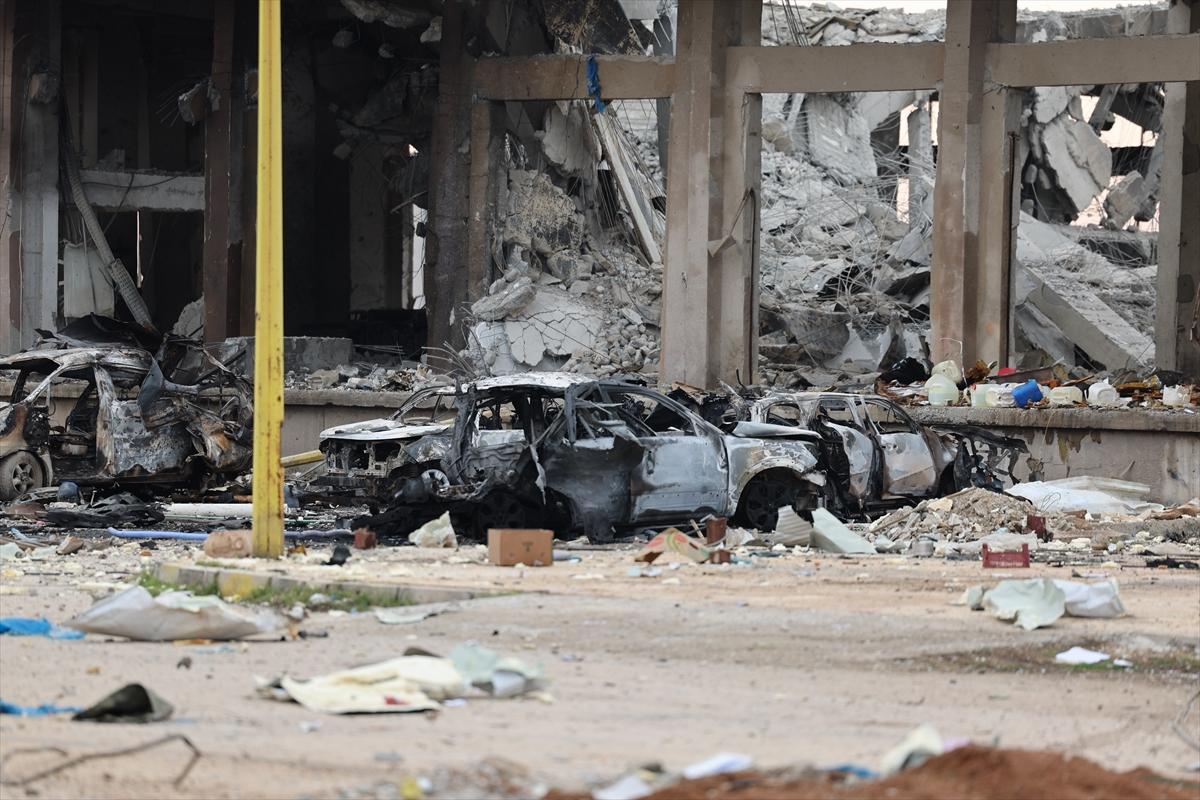
Weapons depot detonated by the terrorist organization YPG/SDG, January 22, 2026 – (Anadolu Agency)
In areas previously occupied by the terrorist organization YPG/SDG in northern Syria, it has been determined that the group has booby-trapped everyday civilian items with explosives. According to a statement by the Syrian Army’s Operations Directorate, “canned goods, tea packets, and devices designed to resemble stones and bricks” have been fitted with explosive devices.
Videos shared on social media show explosive devices attached via wires to the bottom of unlabeled metal cans and tea packets. The Syrian Army reported that the group has placed explosives in “checkpoints, tunnels, entrances, household items and vehicles” in areas it has vacated. The army’s statement noted that detonations of these devices have resulted in casualties. Regarding damage to sacred sites, the army stated that “mosques and numerous copies of the Qur’an have been booby-trapped and placed in inappropriate locations.”
In a public appeal to civilians in Raqqa, Deir ez-Zor and eastern rural Aleppo, the Syrian Army warned them to “avoid approaching any suspicious objects or items and immediately report the situation to authorities for their safety.” The statement also confirmed that search and clearance operations are ongoing in these areas to ensure public safety.
Spokesperson for the Syrian Ministry of Interior Nureddin al-Baba, in a statement broadcast on January 22, 2026, on Syrian state television channel Al-Ikhbariyye, stated that the YPG/SDG has consistently exploited the ISIS issue. Baba noted that the Syrian army has achieved rapid advances, “liberating vast territories and restoring state institutions to areas previously deprived of public services.”
He also emphasized that those fighting alongside the army are not exclusively Syrians, stating that decision-making elements within YPG/SDG are rooted in PKK-affiliated groups. Baba said, “SDG is currently experiencing internal divisions due to the dominance of non-Syrian groups. PKK factions composed of Iranian and Turkish figures are dominating and usurping decision-making power from the Syrian faction within SDG under the pretext of the so-called Kurdish cause.”
Baba stated that these groups have “blocked all forms of international mediation and agreements,” adding that the PKK “behaves as if it is still operating in the 1960s and disregards the significance of Kurdish or Iraqi identity.”
The spokesperson provided information regarding the release of ISIS prisoners by the group, saying, “Approximately 120 ISIS detainees were released from Shaddadi Prison. By the grace of God, more than three-quarters of them were rearrested within a few hours.”
Al-Baba also accused YPG/SDG of stealing oil revenues from the Syrian people and channeling these funds into drug and arms trafficking. In this context, he stated, “The Syrian people’s money has been stolen and funneled into drug and arms trafficking. This is one of the most significant reasons for SDG’s rapid collapse.”
The Iraqi High Judicial Council, in a statement issued on January 22, 2026, announced that immediate judicial and legal proceedings will be initiated against ISIS detainees transferred from YPG/SDG-controlled prisons in Syria to Iraq. The statement was published by Iraq’s official news agency, INA.
The Council stated that proper judicial and legal procedures will be promptly initiated for the ISIS suspects transferred to Iraq and placed in correctional and penal institutions. It emphasized the need to document and archive the terrorist crimes committed and indicated that coordination with the National Central Bureau for International Judicial Cooperation will be maintained to identify transnational offenses. The statement affirmed that international judicial cooperation will be strengthened and that no suspect will be allowed to evade justice.
The statement continued, “Regardless of the suspects’ nationalities or positions within the terrorist organization, all will be subject solely to Iraqi jurisdiction. Legal procedures will be uniformly applied to all suspects, victims’ rights will be protected, and the principle of the supremacy of law in Iraq will be firmly upheld.” Iraqi Armed Forces Spokesperson Sabah al-Numan stated that Iraq had received 150 Iraqi and foreign nationals detained in Syrian prisons as ISIS terrorists.
On the same day, the U.S. Central Command (CENTCOM) announced in a statement that the transfer of ISIS militants detained in Syria to Iraq had begun. The statement read, “The transfer mission began with U.S. forces successfully relocating 150 ISIS fighters detained at a detention facility in Hasakah, Syria, to a secure location in Iraq.”
Anadolu Ajansı. "Irak Yargısı, Suriye’den Getirilen DEAŞ’lılar Hakkında Adli İşlem Başlatılacak." Accessed January 26, 2026. https://www.aa.com.tr/tr/dunya/irak-yargisi-suriye-den-getirilen-deas-lilar-hakkinda-adli-islem-baslatilacak/3807557
Anadolu Ajansı. “ABD: Şam, DEAŞ Dâhil Güvenlik Sorumluluklarını Üstlenmeye Hem İstekli Hem de Hazır.” Accessed January 26, 2026. https://www.aa.com.tr/tr/dunya/abd-sam-deas-dahil-guvenlik-sorumluluklarini-ustlenmeye-hem-istekli-hem-de-hazir/3808162
Anadolu Ajansı. “BMGK, Suriye’deki Son Gelişmeleri Görüşmek Üzere Toplandı.” Accessed January 26, 2026. https://www.aa.com.tr/tr/dunya/bmgk-suriyedeki-son-gelismeleri-gorusmek-uzere-toplandi/3808156
Anadolu Ajansı. “Suriye İçişleri Bakanlığı Sözcüsü Baba: SDG, Her Zaman DEAŞ Meselesini İstismar Etti.” Accessed January 26, 2026. https://www.aa.com.tr/tr/dunya/suriye-icisleri-bakanligi-sozcusu-baba-sdg-her-zaman-deas-meselesini-istismar-etti/3807478
Anadolu Ajansı. “Terör Örgütü YPG/SDG, Suriye’nin Haseke Kentinde Arap Kökenlilere Yönelik Alıkoymaları Sürdürüyor.” Accessed January 26, 2026. https://www.aa.com.tr/tr/dunya/teror-orgutu-ypg-sdg-suriyenin-haseke-kentinde-arap-kokenlilere-yonelik-alikoymalari-surduruyor/3807532
Anadolu Ajansı. “Türkiye’nin BM Daimi Temsilcisi Yıldız: Suriye’de Bölücü Projelerin Geleceği Yok.” Accessed January 26, 2026. https://www.aa.com.tr/tr/gundem/turkiyenin-bm-daimi-temsilcisi-yildiz-suriyede-bolucu-projelerin-geleceginin-olmadigini-soyledi/3808238
The Syrian Ministry of Interior, in a written statement issued on January 23, 2026, announced that Al-Aktan Prison in Raqqa Governorate had been taken from the control of the terrorist organization YPG/SDG and transferred to the Prisons and Rehabilitation Administration. The ministry’s statement included the following: “Each detainee’s file is being reviewed and all legal procedures are being applied to every detainee.”
Additionally, the statement noted that special units had been formed by the Counter-Terrorism Directorate and other relevant authorities to ensure the prison’s protection and security, and that all actions were carried out in full compliance with the principles of human rights and the supremacy of law.
In another statement from the Syrian Ministry of Interior, it was reported that numerous explosive devices planted by the YPG/SDG inside Al-Aktan Prison had been neutralized. The statement read: “SDG armed groups placed explosives in Al-Aktan Prison as they withdrew under orders from the Syrian Army. The explosives that were neutralized were subsequently moved to a secure location.” The statement further confirmed that security forces had established full control over the prison perimeter following the neutralization of the explosives.
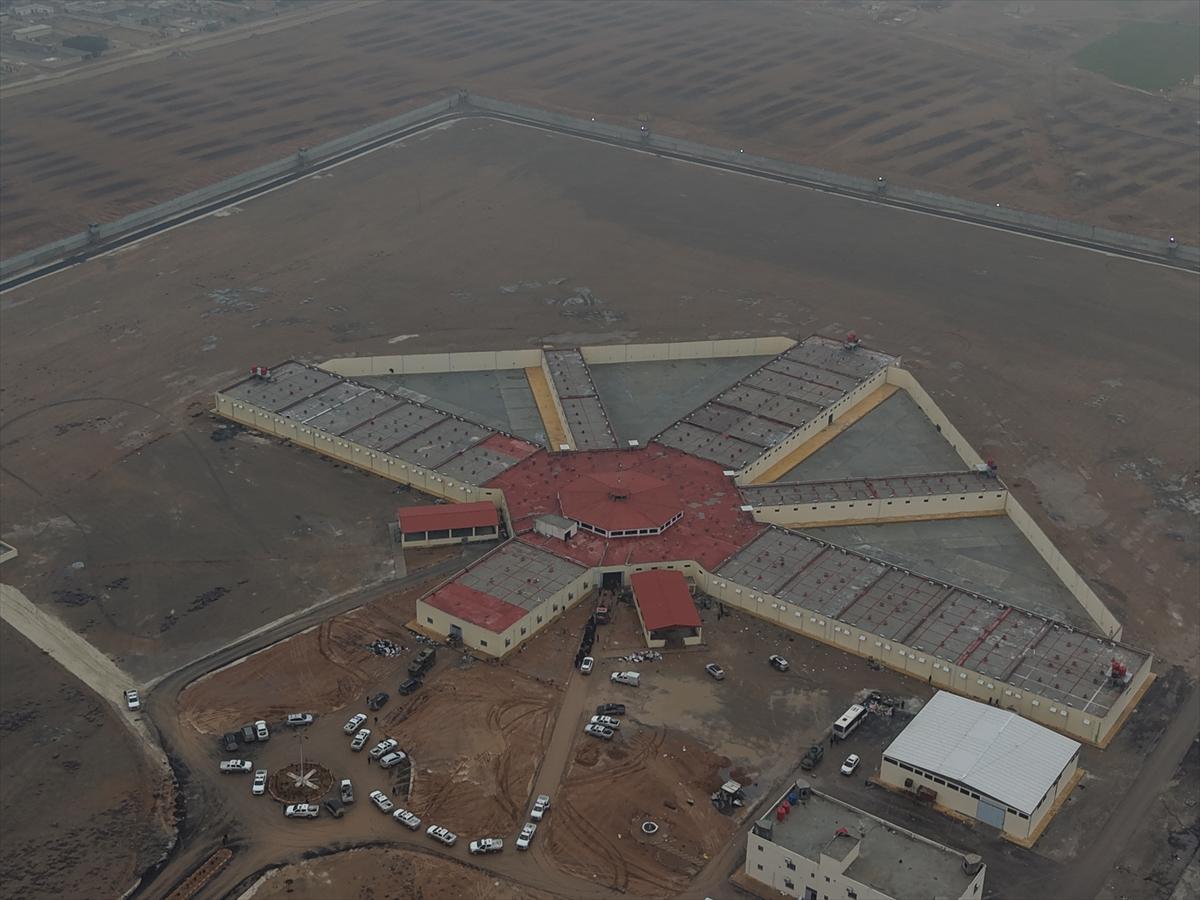
Al-Aktan Prison, January 23, 2026 – (Anadolu Agency)
The Syrian Army Operations Committee, in a statement broadcast via state television Al-Ihbariyye, announced that YPG/SDG elements stationed at Al-Aktan Prison and its surroundings had begun their transfer to Ayn al-Arab (Kobani). According to the statement, this transfer was carried out under an agreement reached through international mediation aimed at reducing tensions.
The statement clarified that the transferred elements were moving toward Ayn al-Arab only with light personal weapons and under the supervision of relevant authorities. It emphasized that the transfer and withdrawal process involved approximately 800 YPG/SDG elements and was undertaken to ensure the security of Raqqa and prevent military escalation.
It was also reported that units under the Syrian Ministry of Defense had taken full control of Al-Aktan Prison, including the sections housing detainees affiliated with ISIS. The statement affirmed that detainees would be “managed in accordance with Syrian law.”
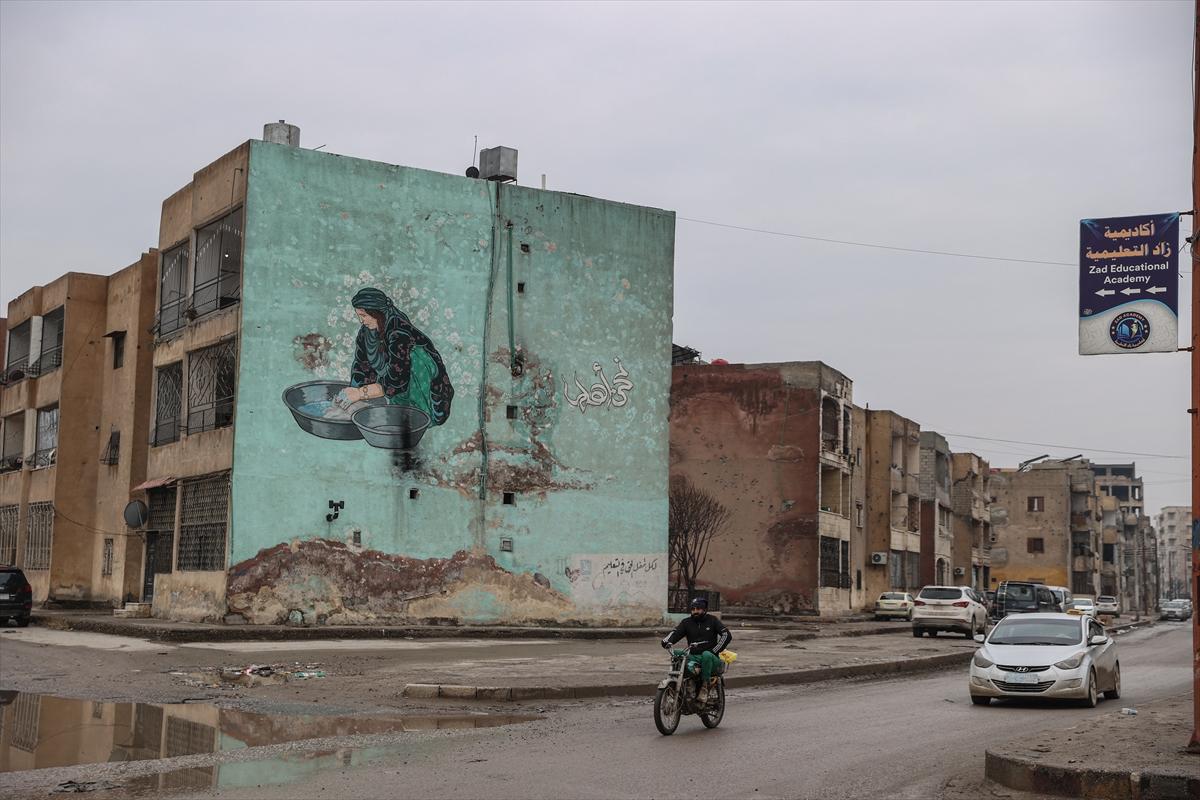
Destruction in Raqqa following the removal of YPG forces, January 24, 2026 – (Anadolu Agency)
The Ministry of Defense further stated that this process was conducted within the framework of the vision to “reestablish state institutions across all regions, ensure the supremacy of law, and preserve social peace.”
The Syrian Network for Human Rights (SNHR) issued a written statement on January 18, 2026, regarding attacks carried out by the YPG/SDG in Raqqa. According to the statement, 22 civilians were killed in YPG/SDG attacks in Raqqa city on January 18, including three children.
The statement indicated that 12 of the 22 civilians were killed by snipers affiliated with the organization, while the remaining civilians were targeted at various locations. SNHR called for “a prompt, independent, and transparent investigation” into these attacks.
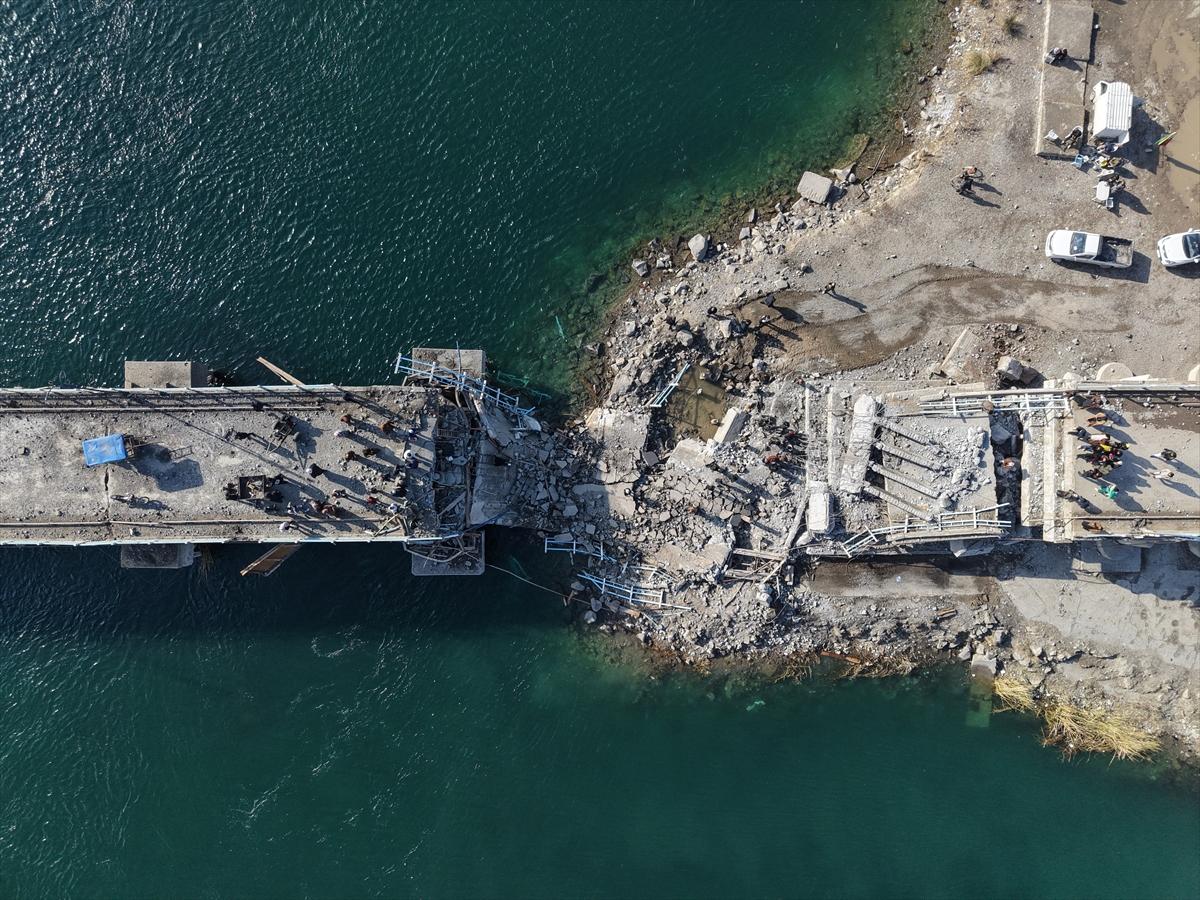
Destruction in Raqqa following the removal of YPG forces, January 24, 2026 – (Anadolu Agency)
According to information released on January 23, 2026, U.S. Central Command (CENTCOM) Commander Admiral Brad Cooper visited Syria to ensure the implementation of the ceasefire agreement reached between the Damascus administration and the terrorist organization YPG/SDG.
According to a report citing Al Arabiya television, Cooper met with YPG/SDG leader Mazlum Abdi (Ferhat Abdi Şahin) in northern Iraq one day prior to his visit. Following the meeting, it was reported that Cooper traveled to Syria to engage with the Damascus administration on sustaining the ceasefire and addressing the process of transferring ISIS detainees.
The report stated that the primary objectives of Cooper’s visit were to “prevent further escalation of tensions between the Damascus administration and the YPG/SDG” and to “ensure the on-the-ground implementation of the ceasefire.” It was also noted that discussions included the transfer of ISIS detainees to Iraq, a process supported by the United States.
On January 22, the U.S. Ambassador to Ankara and Special Representative to Syria, Tom Barrack, met in Erbil with YPG/SDG leader Mazlum Abdi and the organization’s political wing leaders, İlham Ahmed and others. The meeting addressed the “Ceasefire and Full Integration Agreement” signed on January 18, 2026.
On January 23, 2026, the Syrian Ministry of Health announced that the state of emergency declared in mid-January in the governorates of Aleppo, Deir ez-Zor, and Raqqa had been lifted. The ministry stated that, following a reduction in military tensions between the government and the terrorist organization YPG/SDG, the health sector had entered an “improvement phase.”
The statement indicated that the coming period would focus on reestablishing and ensuring the sustainability of basic health services. Priority would be given to primary health care, national vaccination programs, maternal and child health services, and health services for the elderly.
On January 24, 2026, the Syrian Ministry of Defense announced on its social media account that the ongoing ceasefire with the terrorist organization YPG had been extended by 15 days. The statement read: “We announce the extension of the suspension of all Syrian Arab Army operations for 15 days, effective from 23:00 on January 24, 2026.”
The ministry cited the U.S.-supported process of transferring ISIS detainees held in YPG-controlled prisons to Iraq as the reason for extending the ceasefire. It clarified that the extension was intended “to maintain security coordination and complete the ongoing transfer process.”
The “Ceasefire and Full Integration Agreement” signed between the Syrian government and the YPG on January 18, 2026, required the organization to fully withdraw from Raqqa and Deir ez-Zor governorates east of the Euphrates River, hand over public institutions in Hasakah to state authorities, transfer control of border crossings and energy resources to the central government, and integrate YPG elements individually into national security forces. However, following the organization’s failure to comply with the agreement’s terms on January 19, 2026, clashes resumed. On January 20, the Damascus administration announced that it had granted a “four-day grace period for integration and declared a ceasefire during this period.”
Although the ceasefire was expected to expire on the evening of January 24, the Ministry of Defense extended it by 15 days under its new decision. According to reports from Anadolu Agency field teams, calm has been maintained in the front-line areas of Ayn al-Arab and Hasakah, although “a tense state of vigilance continues.”
In a statement to the official Syrian news agency SANA, the Syrian Army Operations Directorate reported that the terrorist organization YPG had arrested and forcibly displaced anyone opposing its policies in occupied areas and resorted to torture. The statement added: “The YPG is bringing PKK terrorist militants from the Qandil Mountains as reinforcements to Hasakah Governorate.” It called on the YPG to end its provocations against the Syrian state and cease spreading baseless fabricated imagery.
The statement also indicated that humanitarian corridors would be opened for civilians in the YPG-occupied Hasakah Governorate, with relevant ministries coordinating to provide aid and assistance in the coming hours. It emphasized that operational options were being evaluated and affirmed that the army would serve as a shield protecting all Syrian society, preserving the unity of the Syrian Arab Republic, and standing firm against all transnational terrorist projects.
On January 24, oil production resumed in areas of northeastern Syria reclaimed from the terrorist organization YPG. According to the Syrian news agency SANA, Safwan Sheikh Ahmed, Corporate Communications Director of the Syrian Petroleum Company, confirmed that technical teams had begun operations in the newly recovered fields. Ahmed stated that the goal was to “restore oil wells to their operational condition at the time of their capture.”
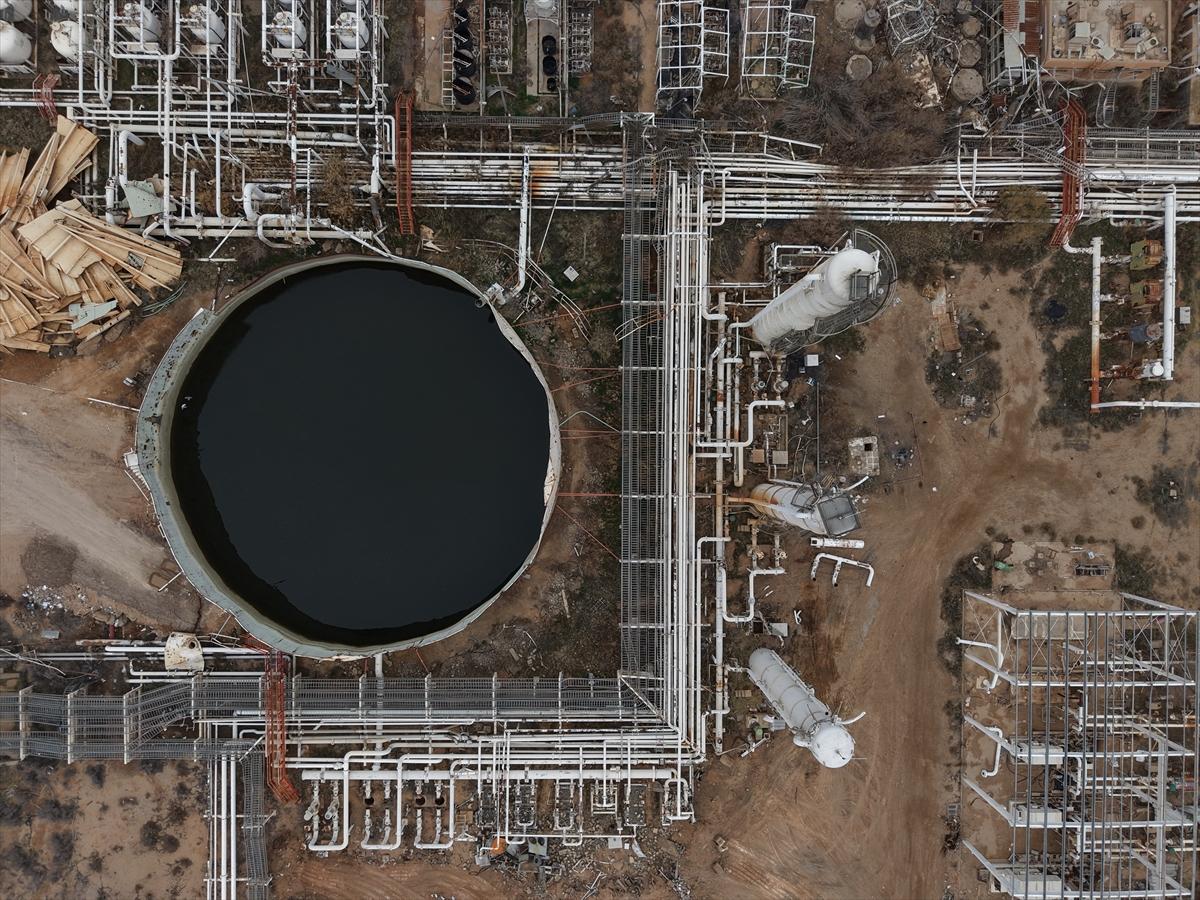
The “Omar Oil Field,” Syria’s largest oil field, January 22, 2026 – (Anadolu Agency)
Oil extraction activities began following the Syrian Army’s seizure of oil fields in the governorates of Raqqa and Deir ez-Zor from the YPG. Syrian Petroleum Company official Ahmed announced that the extracted crude oil had begun being transported to the Homs and Baniyas refineries. The company’s statement noted that daily oil production is expected to reach 100,000 barrels within the next four months.
Anadolu Ajansı. "Suriye Sağlık Bakanlığı, Halep, Deyrizor ve Rakka’da Olağanüstü Hali Sona Erdirdi." Accessed January 26, 2026. https://www.aa.com.tr/tr/dunya/suriye-saglik-bakanligi-halep-deyrizor-ve-rakka-da-olaganustu-hali-sona-erdirdi/3809124
Anadolu Ajansı. "Suriye’de Terör Örgütü YPG’den Alınan Bölgelerde Petrol Çıkarılmaya Başlandı." Accessed January 26, 2026. https://www.aa.com.tr/tr/ekonomi/suriyede-teror-orgutu-ypgden-alinan-bolgelerde-petrol-cikarilmaya-baslandi/3809824
Anadolu Ajansı. “CENTCOM Commander Cooper Visited Syria to Ensure Implementation of Ceasefire.” Accessed January 26, 2026. https://www.aa.com.tr/tr/dunya/centcom-komutani-cooperin-ateskesin-uygulanmasini-saglamak-amaciyla-suriyeyi-ziyaret-ettigi-bildirildi/3808557
Anadolu Ajansı. “Suriye Ordusu, Rakka’daki El-Aktan Hapishanesi ve Çevresindeki YPG/SDG Unsurlarını Aynularab’a Sevk Ediyor.” Accessed January 26, 2026. https://www.aa.com.tr/tr/dunya/suriye-ordusu-rakka-daki-el-aktan-hapishanesi-ve-cevresindeki-ypg-sdg-unsurlarini-aynularab-a-sevk-ediyor/3808393
Anadolu Ajansı. “Suriye Terör Örgütü YPG ile Olan Ateşkes 15 Gün Uzatıldı.” Accessed January 26, 2026. https://www.aa.com.tr/tr/dunya/suriye-teror-orgutu-ypg-ile-olan-ateskes-15-gun-uzatildi/3809923
Anadolu Ajansı. “Suriye İçişleri Bakanlığı: Rakka’daki Aktan Hapishanesini Teslim Aldık.” Accessed January 26, 2026. https://www.aa.com.tr/tr/dunya/suriye-icisleri-bakanligi-rakkadaki-aktan-hapishanesini-teslim-aldik/3808750
On 25 January 2026, the Syrian government dispatched a 24-vehicle convoy carrying humanitarian supplies coordinated by the Aleppo Governorate and consisting of United Nations (UN) aid materials to Ayn al-Arab. The aid included food, hygiene items, baby supplies, medical equipment and medicines.
It was reported that the aid reached the region on the first day of the 15-day temporary ceasefire extended by the Syrian Armed Forces with the terrorist organization YPG, effective from 23:00 on 24 January 2026. Aleppo Deputy Governor Ferhat Korto told an Anadolu Agency reporter: “Under the coordination of the Aleppo Governorate, we prepared a 24-vehicle winter aid convoy for our brothers, citizens and relatives in Ayn al-Arab.”
Korto stated that the aid convoy departed from Aleppo and was destined for Ayn al-Arab. It was indicated that the aid would pass through a humanitarian corridor established for civilians in areas under The Syrian Army's YPG occupation.
On 25 January 2026, 20 tankers carrying crude oil extracted from the “Omar” and “Tenk” oil fields in the rural areas of Deir ez-Zor arrived at the Syrian Petroleum Company facilities in the city of Banias. According to Syria’s official news agency SANA, the shipment was carried out following the Syrian Armed Forces’ reestablishment of control over the region. The tankers were reported to have safely traveled from the Deir ez-Zor rural fields to the refinery and storage facilities in Banias. Officials stated that the shipment aims to restore the energy infrastructure, revive refinery operations and meet the country’s energy needs.
On 25 January 2026, the Syrian Armed Forces announced the opening of two separate humanitarian corridors along the Raqqa–Hasakah–Aleppo line. According to Syria’s official agency SANA, the Operations Committee stated: “Two humanitarian corridors have been opened in coordination with the relevant governorates.”
According to the statement, the first corridor was established near the village of Tel Davud along the Raqqa–Hasakah route under coordination with the Hasakah Governorate. The second humanitarian corridor was opened near the village of Nur Ali at the Ayn al-Arab junction on the M4 highway under coordination with the Aleppo Governorate. Authorities indicated that these corridors were designated to facilitate the delivery of humanitarian aid and the safe passage of urgent and vulnerable civilian cases.
According to Syrian state television Al-Ikhbariyye, the YPG violated the ceasefire, resulting in the deaths of one youth in Hasakah and another in the village of Al-Garika in the rural areas of Qamishli.
It was also reported that YPG forces committed numerous violations in the Derbesiyye region in northern Hasakah and detained many youths in the area. The same sources indicated that the YPG renewed bombardments in areas of rural Aleppo.
In a statement by the Syrian Civil Defense Unit, it was stated: “The YPG renewed its bombardments on areas in rural Aleppo. A house in the village of Al-Hawi, located on the western bank of the Euphrates River in the rural area of Jarabulus north of Aleppo, was targeted by a missile launched from the YPG-controlled area of Ayn al-Arab.” Syrian Civil Defense teams conducted inspections after the attack and reported no casualties or injuries.
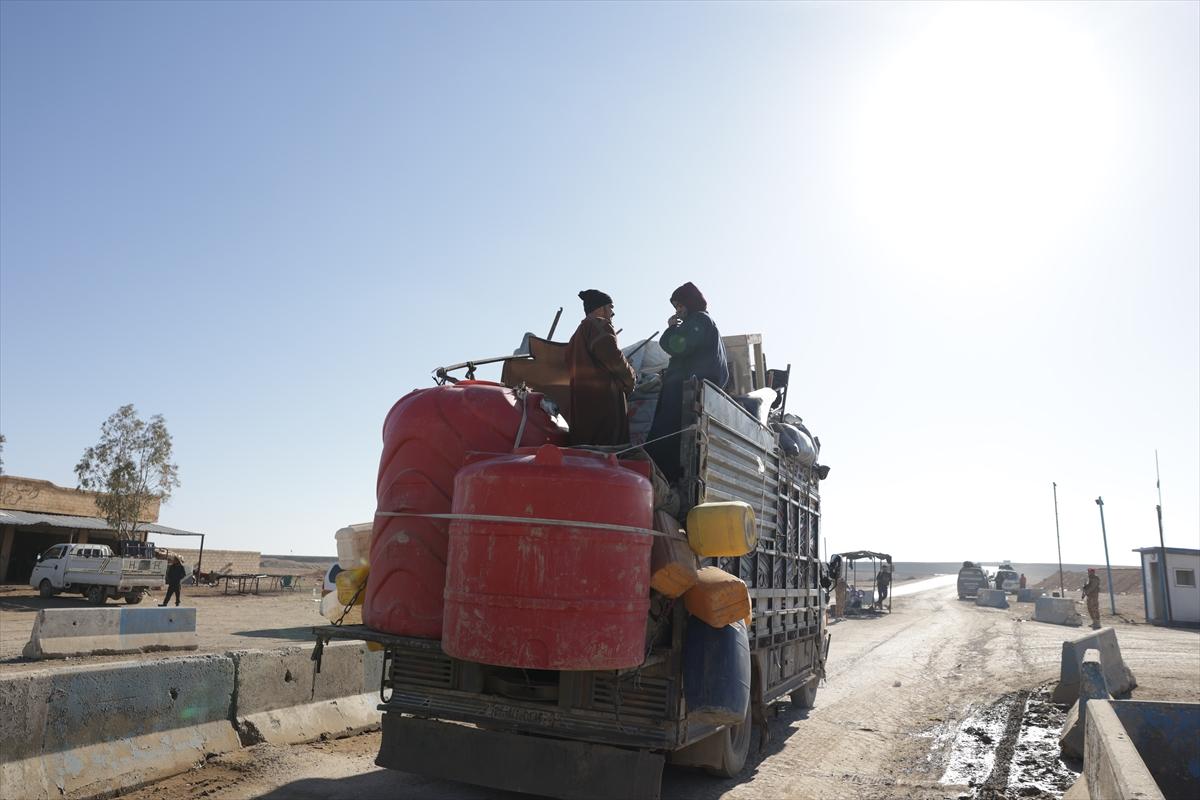
Syrian civilians are fleeing from Hasakah via dirt roads due to the terrorist organization YPG blocking roads, 26 January 2026 – (Anadolu Agency)
On 25 January 2026, Türkiye sent 11 trucks of humanitarian aid supplies to the civilian population in the Ayn al-Arab region of Syria. The aid was prepared with the support of the Directorate of Disaster and Emergency Management (AFAD) and the Turkish Red Crescent.
The convoy consisted of five trucks loaded with 50 tons of flour, one truck loaded with blankets, and five trucks loaded with baby diapers and food supplies. It was reported that the aid departed in cooperation with the Syrian Government and the Aleppo Aid Coordination Center for delivery to civilians in Ayn al-Arab.
Syria’s official news agency SANA reported on 25 January 2026 that the YPG carried out unmanned aerial vehicle (UAV) attacks targeting the rural areas of Aleppo and the town of Sirrin. The report stated: “The terrorist organization targeted the rural areas of Aleppo, the town of Sirrin and surrounding villages with at least 15 kamikaze UAVs.”
It was reported that the attacks caused damage to civilian vehicles and homes but resulted in no casualties. In a simultaneous statement by the Syrian Armed Forces, it was stated that the YPG targeted military positions around Ayn al-Arab with FPV-type kamikaze drones, resulting in the destruction of four military vehicles. The military statement further indicated that “the YPG targeted the M4 highway and nearby villages multiple times, resulting in numerous civilian injuries.”
The statement also noted that “several families in the vicinity of the village of Ash-Shuyuh were surrounded in an attempt to arrest their sons” and that the organization continued its detention operations targeting civilians. The same statement indicated that the situation on the ground was being assessed and necessary measures would be taken.
On 26 January 2026, Syrian state television Al-Ikhbariyye reported that civilians in the Ayn al-Arab (Kobani) district east of Aleppo had begun passing through the “Nur Ali” humanitarian corridor. The report stated: “Families in Ayn al-Arab east of Aleppo have begun exiting through the Nur Ali humanitarian corridor, designated by the Syrian Armed Forces Operations Committee as a safe passage for civilians.”
On 26 January 2026, Syria’s official news agency SANA reported that despite the ceasefire, the YPG launched an attack on a village in Hasakah Governorate. The report stated: “The terrorist organization YPG bombed the village of Safa, killing one person and injuring many others.”
It was reported that injured civilians were transported to the Shaddadi Hospital in rural Hasakah. The same report, citing Syrian state television Al-Ikhbariyye, stated: “Following the YPG’s violation of the ceasefire and targeting of civilians, a large-scale displacement has occurred from the village of Safa.”
On 26 January 2026, Russia evacuated personnel and various military equipment from its military base in the Qamishli district of Hasakah Governorate in northeastern Syria. Syrian military sources reported that the evacuated personnel and equipment were sent to the Hmeimim Air Base in Latakia Governorate. The same sources did not provide additional details regarding the quantity of military assets or the reasons for the evacuation.
Syria’s official news agency SANA reported on 26 January 2026 that weapons and ammunition intended for smuggling to Lebanon were seized during an operation conducted by security units in Homs Governorate. The report stated: “An operation by security units in Homs Governorate thwarted an attempt at arms smuggling to Lebanon.”
It was indicated that inside the seized vehicle were nine Konkurs guided missiles, 68 RPG warheads, two 107-type rockets and five crates of BKS ammunition.
The report further stated that during raids conducted in the areas from which the arms smugglers fled, numerous magazines and binoculars were also seized. According to SANA, “efforts are ongoing to apprehend all individuals involved in arms smuggling.” The same statement emphasized that Syrian security forces “continue their uninterrupted efforts to combat illegal activities that threaten the Syrian people and undermine border security.”
On 27 January 2026, the Syrian government dispatched a second humanitarian aid convoy to the Ayn al-Arab region. It was stated that this shipment followed the first convoy and was planned to follow the same route to the region. The second convoy, coordinated by the Aleppo Governorate, was reported to contain food, medical equipment, medicines and hygiene supplies.
According to Syrian state television Al-Ikhbariyye’s report on 27 January 2026, a landmine planted by the YPG detonated near the village of Hajji Hussein close to the Tishrin Dam in eastern Aleppo, killing one person.
U.S. President Donald Trump, in remarks to the press before leaving the White House on 27 January 2026, stated that he had held a conversation with Syrian President Ahmed al-Shara. Trump said: “We had a very good conversation with Syria’s highly respected President Ahmed al-Shara. Policies regarding Syria and this region are going very well. We are very pleased.”
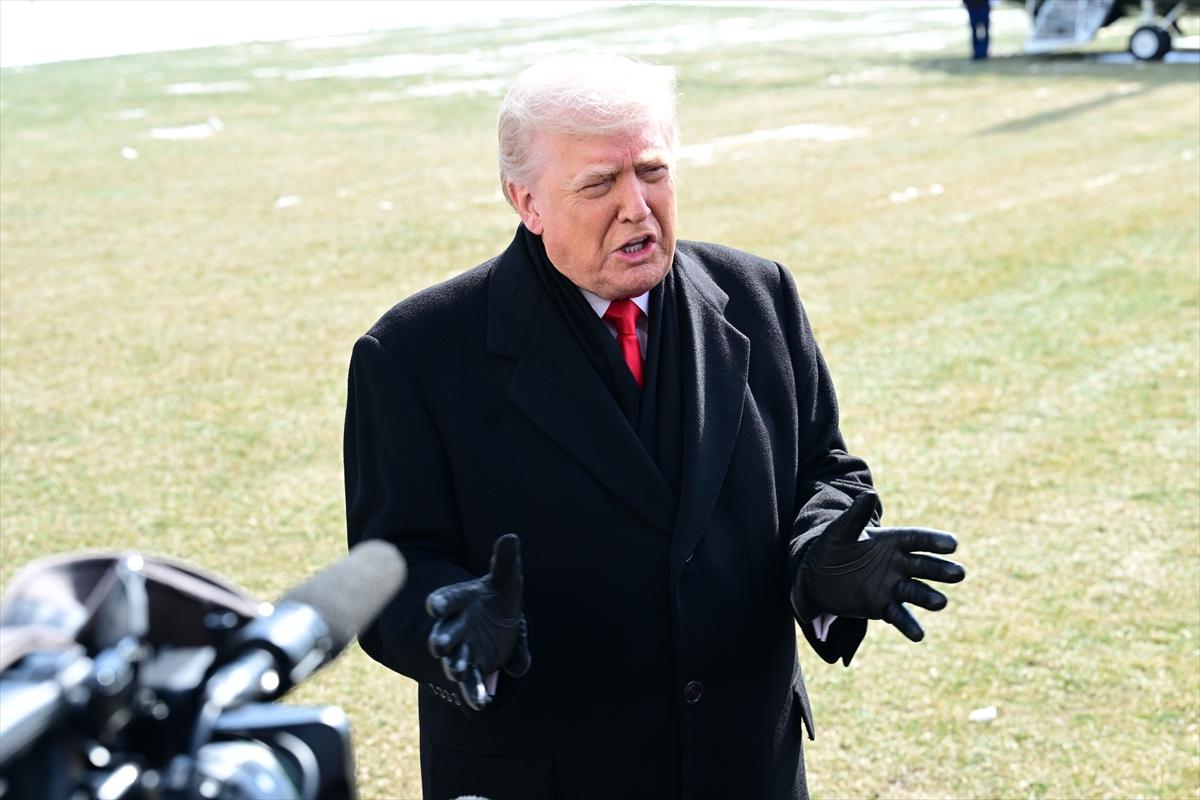
U.S. President Donald Trump, 27 January 2026 – (Anadolu Agency)
In a written statement by the Syrian Presidency, it was reported that Syrian President Ahmed al-Shara discussed developments regarding the transition process in Syria with U.S. President Donald Trump. According to the written statement, President al-Shara engaged in a lengthy phone conversation with President Trump to address developments in Syria’s transition process. The discussion also covered bilateral developments as well as regional and international issues, with both sides reviewing efforts to strengthen stability and security in Syria.
“President al-Shara emphasized his full commitment to Syria’s sovereignty, territorial integrity and the protection of state institutions, highlighting his determination to strengthen internal peace in the country.” Al-Shara also underscored the importance of uniting international efforts to prevent the resurgence of terrorist organizations in Syria, beginning with ISIS.
“President al-Shara noted that the new Syria embraces an approach open to cooperation with all international parties based on shared interests and mutual respect, and affirmed mutual agreement with President Trump on the primacy of dialogue in resolving regional disputes.” Al-Shara further indicated that “active diplomacy” is the only path to overcoming ongoing crises in the region.
According to the statement, “U.S. President Trump reaffirmed his country’s support for the Syrian people’s aspirations to build a united and strong state.” Trump stated he welcomed the extended ceasefire agreement between the Syrian government and the terrorist organization YPG, viewing it as a significant step toward ending hostilities, and expressed appreciation for agreements on the integration of military forces, including the SDF, into official state institutions.
“Addressing the economic sector, Trump indicated Washington’s readiness to support Syria’s reconstruction by encouraging investment and creating an attractive environment for capital, emphasizing that Syria’s economic stability is a fundamental pillar of stability in the Middle East.”
Trump also spoke about Syria in an interview with Fox News, saying: “Today, we resolved a major issue with Syria, saving many lives.” He defended the work of Rubio, but did not provide further details on the matter he claimed had been resolved with Syria.
Military Operations Against YPG/SDG Presence West of the Euphrates River is a comprehensive military campaign that began on 13 January 2026 when The Syrian Army's areas west of the Euphrates River under YPG/SDG control declared the area a “military zone”.
The operation was conducted across a broad front extending from Deyr Hafir and Meskene east of Aleppo to the Tabqa line within Raqqa province. The Syrian Army took this decision in response to the YPG/SDG terrorist organization and its PKK affiliates using the aforementioned areas as bases for kamikaze unmanned aerial vehicle (UAV) attacks directed at Aleppo, constructing new bunkers, and violating previously signed agreements.
In its 13 January statement, the army called on all armed elements to “withdraw east of the Euphrates” and designated the area as a “closed military zone”. Subsequently, reinforcements were sent to the Deyr Hafir line, humanitarian corridors were opened on 14–15 January to evacuate civilians, although it was reported that YPG/SDG blocked crossings by force. On 16 January, the army launched operations against YPG/SDG in Deyr Hafir, and by the morning of 17 January had fully taken control of the area and advanced toward Meskene. On the same day, forces reached the borders of Raqqa province and captured the village of Dibsi Afnan, securing control of Tabqa and Cirah Military Airfield.
On 18 January 2026, a comprehensive integration and ceasefire agreement was signed between Syrian President Ahmad Sharaa and representatives of the terrorist organization YPG/SDG. This agreement provided for the withdrawal of YPG/SDG east of the Euphrates, the transfer of administration of Deir ez-Zor, Hassakeh and Raqqa provinces to state authority, and the transfer of energy resources under state control.
On 19 January 2026, fighting resumed after the YPG/SDG terrorist organization failed to comply with the 18 January agreement and committed violations. In response, the Syrian Government declared a new ceasefire on 20 January and granted the group four days to begin integration. On 24 January 2026, this ceasefire was extended by fifteen days, and diplomatic contacts between the parties continued. During this period, the Syrian Army, with the support of tribal forces, established control over large parts of Raqqa, Deir ez-Zor and Hassakeh east of the Euphrates.
On 30 January 2026, a new agreement titled the “Ceasefire and Comprehensive Integration Agreement”, which built upon the 18 January accord, was reached between the Syrian Government and the terrorist organization SDG. This agreement encompasses the gradual integration of military, security and administrative structures, the deployment of internal security forces to the urban centers of Hassakeh and Qamishli, the merging of autonomous governance institutions with state institutions, and the regulation of civil and educational rights for the Kurdish community. Syrian Information Minister Hamza al-Mustafa announced that the agreement would enter into force on Monday, 1 February 2026.
Thus, the military campaign initiated on 13 January entered a new phase with the signing of a new agreement on 30 January 2026, following the violation of the initial integration accord of 18 January.
Syrian Army reinforcing the Deyr Hafir line, occupied by the terrorist organization YPG/SDG, 14 January 2026 – (Anadolu Agency)
On 13 January 2026, the Syrian Army announced in a written statement that the areas west of the Euphrates River under the control of the terrorist organization YPG/SDG had been declared a military zone. The statement noted that bunkers had been established in these areas by members of the YPG/SDG terrorist organization and the PKK, as well as remnants of the former regime. The army’s statement called for “the withdrawal of terrorist elements east of Euphrates River”.
The statement emphasized that these occupied areas were being used as launch sites for kamikaze unmanned aerial vehicle (UAV) attacks against Aleppo and underscored that the YPG/SDG terrorist organization had established a military presence west of the Euphrates. The army’s bulletin stated: “The Syrian Army will take all necessary measures to prevent armed groups accumulating in this area from using it as a base for criminal activities.”
The Syrian Army appended a visual map to its statement, including the regions of Meskene and Deyr Hafir. In this release, civilians were urged to “stay away from locations associated with terrorist organizations”.
Syrian administration referenced two agreements signed with SDG during 2025. The first agreement, signed in March 2025, included provisions for the integration of the SDG terrorist organization into state institutions, the preservation of national territorial integrity, and the rejection of secessionist attempts.
In the second agreement in April 2025, it was stipulated that the administrative integration of Aleppo’s Sheikh Maksud and Ashrafiyya neighborhoods into the city and the removal of armed elements in these neighborhoods.
In its statement on January 13, the Syrian Army indicated that the condition in these agreements requiring the SDG to withdraw east of the Euphrates in northeastern Syria had not been implemented. The Syrian government characterized the presence of armed formations west of the Euphrates as a violation of these agreements and stated that security forces are continuing efforts to reestablish security across the country. The statement included the assertion that the SDF “has shown no effort to fulfill its commitments.”
The Syrian Army is reinforcing the Deyr Hafir line under the occupation of the terrorist organization YPG/SDG, January 14, 2026 – (Anadolu Agency)
Between January 12 and 14, 2026, the Syrian Army sent numerous reinforcement units to the Meskene and Deyr Hafir line. According to a report by the Syrian official news agency SANA, the terrorist organization YPG/SDG has deployed new armed groups in these areas, including members of the PKK and remnants of the former regime.
In a statement by military officials, it was declared that “the Syrian Army will not remain bound in the face of these developments.” The statement further noted that the army is “directly and urgently assessing” the situation on the ground and described the organization’s fortification activities as a “dangerous escalation.”
Convoys carrying tanks, armored vehicles, multiple rocket launchers, and heavy weapons from Latakia toward Aleppo have been deployed, with a significant portion of the units stationed along the Deyr Hafir line, which has been declared a closed military zone.
It was reported that elements of the terrorist organization YPG/SDG carried out a suicide drone attack on the vicinity of the Hamima village east of Aleppo on January 13, 2026. The Syrian official news agency SANA stated that the attack targeted military positions and civilian settlements.
The report did not provide figures on casualties or injuries but noted that the army responded by targeting YPG/SDG positions around Deyr Hafir with artillery fire. It was reported that tensions in the area persisted following these retaliatory strikes.
Additionally, a report by the Syrian state television channel Al-Ikhbariya stated that the terrorist organization YPG/SDG detonated a bridge near the village of Ummu Tine in the Deyr Hafir region. The bridge was described as a key transit point between the area under the organization’s occupation and territories under Syrian government control north of Aleppo.
According to a report by the Syrian official agency SANA citing military sources, the army thwarted an attempt by the terrorist organization YPG/SDG to plant explosives on the bridge connecting the villages of Rasm al-Imam and Rasm al-Kerum and destroyed it.
On January 14, 2026, a civilian was killed in the Deyr Hafir region after being shot by elements of the terrorist organization YPG/SDG. The Syrian state television channel Al-Ikhbariya reported that the incident occurred when a civilian attempting to leave Deyr Hafir by motorcycle was targeted by sniper fire in the area declared a military zone.
The same source reported that YPG/SDG elements opened fire on civilians attempting to leave Deyr Hafir under occupation. Another broadcast by Al-Ikhbariya stated that organization members targeted military positions east of Aleppo and civilian homes with drones and heavy machine guns, though it was not yet confirmed whether these attacks resulted in casualties.
The Syrian Army is reinforcing the Deyr Hafir line under the occupation of the terrorist organization YPG/SDG, January 14, 2026 – (Anadolu Agency)
It was reported that the terrorist organization YPG/SDG occupies approximately one-third of Syrian territory, with the majority of this area located east of the Euphrates River. The organization is said to have seized control of the country’s largest energy, agricultural, and water resources, including the Tishrin, Tabqa, and Baath dams.
On January 2026, it was reported that the organization halted water pumping operations at the Al-Babiri Water Station, located on the banks of the Euphrates River between Kafse and Meskene in eastern Aleppo. The Syrian Ministry of Energy stated that this station serves as the primary water source for the city of Aleppo and surrounding rural areas. The same statement indicated that the disruption had caused “direct damage affecting the entire governorate” and negatively impacted the population’s access to essential services.
In response to these developments, the Syrian Army intensified preparations for an operation aimed at reestablishing control over the Euphrates River basin. The humanitarian and military consequences of the terrorist organization YPG/SDG’s practice of cutting off and restoring water supplies continue to persist in the region.
On 14 January 2026, the Syrian Army Operations Directorate announced that it would open a humanitarian aid corridor to facilitate the evacuation of civilians living in areas west of the Euphrates River, previously declared military zones and currently under the occupation of the terrorist organization YPG/SDG. The statement specified that the corridor would be open from 09.00 to 17.00 local time on 15 January. It was noted that the corridor would follow the route of the Hamimah village along the M15 highway, which connects the YPG/SDG-occupied Deyr Hafir region with Aleppo.
Syrian Army military reinforcement toward the YPG/SDG-occupied Deyr Hafir line, 14 January 2026 – (Anadolu Ajansı)
In its statement, the Syrian Army affirmed that “all necessary measures will be taken to ensure the safety of civilians in the area and eliminate potential threats” and urged civilians to stay away from positions held by terrorist elements.
The Syrian Army continues its operations near the Deyr Hafir region of Aleppo, 15 January 2026 – (Anadolu Ajansı)
On 15 January 2026, the terrorist organization YPG/SDG prevented civilians living in the Deyr Hafir region, located east of Aleppo under its occupation, from leaving the area. According to information relayed by an Anadolu Ajansı (AA) correspondent from military sources, YPG/SDG members used armed force to block civilians from departing. An unnamed military official responsible for the civilian evacuation from Deyr Hafir stated, “We have opened the humanitarian corridor. The Syrian Army seeks to safely evacuate civilians from this region under terrorist occupation. All necessary precautions have been taken, but the terrorist organization is using armed force to obstruct their exit.”
Civilians in the Deyr Hafir-Meskene line are attempting to leave the area for safe evacuation, 15 January 2026 – (Anadolu Ajansı)
It was reported that the Syrian Army has sent reinforcement units to the Deyr Hafir line, approximately 60 kilometers from Aleppo city center, and has conducted intensive military deployments. The army has established control points about five kilometers from the area, yet no civilians have yet been evacuated. YPG/SDG elements have set up their own checkpoints and forcibly blocked civilian movement.
Health teams stationed at the Humeyme control point near Deyr Hafir are on standby to assist in rescuing civilians. Ali, a personnel member of the Syrian Health Commission, stated, “We have come here to provide assistance and support for the evacuation of civilians from their locations. Our commission’s medical teams and ambulances are ready here.” Ali further confirmed that “all preparations have been completed to ensure civilian safety, medical intervention, and rescue possibilities.”
Civilians in the Deyr Hafir-Meskene line are attempting to leave the area for safe evacuation, 15 January 2026 – (Anadolu Ajansı)
According to information gathered from residents of Deyr Hafir, organization members have halted civilian passage at checkpoints on the town’s exits. An unnamed Deyr Hafir resident said, “We were stopped at the checkpoint and told we could not pass. I said I wanted to send women and children to Aleppo, but they did not allow us to proceed.” Another civilian reported that YPG/SDG members told them, “We will not permit passage until barriers are removed; the road is mined and those who proceed do so at their own risk.”
Civilians are attempting to leave the Deyr Hafir-Meskene line for safe evacuation, 15 January 2026 – (Anadolu Agency)
As of the morning of 16 January 2026, the humanitarian corridor announced by the Syrian Armed Forces has been reopened. However, it has been reported that the YPG/SDG continues to obstruct evacuations. The Syrian Armed Forces announced that the corridor along the M15 highway connecting Deyr Hafir and Aleppo will remain open until 17:00. The same statement indicated that all points obstructing civilian passage or sabotaging the corridor will be targeted appropriately. Members of the terrorist organization YPG/SDG have placed concrete blocks at various points along the M15 highway to block the route and have planted improvised explosive devices in some sections. As a result, many civilians have abandoned their vehicles and are attempting to flee the area on foot. It has been reported that civilians, including women, elderly and children, are seeking safe passage routes, with some attempting to use the route toward Harmel Imam Village on the western bank of the Euphrates River.
Civilians are attempting to leave the Deyr Hafir-Meskene line for safe evacuation, 15 January 2026 – (Anadolu Agency)
Due to a section of the bridge over the river near Harmel Imam Village having been previously destroyed by the YPG/SDG, civilians have struggled to cross the river. Footage from the ground shows numerous women, elderly and children attempting to cross the collapsed bridge, with some using makeshift rafts. As of 16 January 2026, it has been reported that thousands of civilians remain trapped in occupied areas west of the Euphrates River, primarily in Deyr Hafir, due to the organization’s continued obstruction.
On 16 January 2026, Azzam el-Garib, Governor of Aleppo Province in Syria, announced that the number of civilians who have left areas under the control of the terrorist organization YPG/SDG and reached safe zones has risen to 27,450. In a statement posted on his social media account, Governor Garib said, “This movement toward protection under the Syrian government reflects the deep trust of our people in their homeland and government and demonstrates that security will always remain within the Syrian state.” Garib noted in his statement that the number of civilians who have departed from the Deyr Hafir–Meskene line and reached safe areas in rural Aleppo has increased, while no information has been obtained regarding civilians moving toward eastern regions. The governor also emphasized that the people of Aleppo have welcomed those arriving from Deyr Hafir and Meskene and stated that support for evacuated civilians will be provided in accordance with the directives of President Ahmed Şara.
The Syrian Armed Forces announced that the humanitarian corridor along the M15 highway connecting Deyr Hafir and Aleppo will remain open until 17:00 local time and that evacuations will continue until possible operations conclude. However, it has been recorded that the terrorist organization YPG/SDG continued to obstruct civilian passage on 16 January, as it did on 15 January. In a written statement issued by the Deyr Hafir District Administration, it was stated, “The terrorist organization continues to block the exit of civilians in and around Deyr Hafir through the humanitarian corridor.”
According to information from Syrian Civil Defense teams, it was reported that approximately 1,000 families left Deyr Hafir beginning in the early hours of 16 January. However, it was noted that some families used alternative routes and therefore not all civilians were registered, meaning that the actual number may be higher. Syrian Civil Defense teams had previously reported on 15 January that approximately 300 families had left the area.
During the evacuation process, it was reported that a group of civilians fleeing Deyr Hafir attempted to reach a safe zone using a tractor. Despite the rear wheel of the trailer detaching, they continued their journey for approximately five kilometers. A civilian named Luey el-Hasan stated, “Most of those on the tractor were women and children. Many people still remain trapped in the area without vehicles. The safety of children is our top priority.” Civilians who reached checkpoints established by the Syrian government were transported by ambulance to Aleppo by Syrian Civil Defense teams. Authorities stated that aid and registration procedures are being carried out by the Syrian Civil Defense.
On the same day, the Syrian Ministry of Defense called on members of the terrorist organization YPG/SDG to defect from their ranks and surrender. The statement included the assertion that “Those who leave the terrorist organization, regardless of whether they are Kurdish or Arab, will always be accepted by the Syrian authorities wherever they are.” The ministry urged, “Leave this organization immediately and return to your state and your people.”
According to a report by the official Syrian news agency SANA, citing sources from the Ministry of Defense, six YPG/SDG members surrendered at the Deyr Hafir front following the call, and they have been taken into custody. It was also reported that further surrender requests are continuing to be received from other members of the organization in the area, and the armed forces are working to ensure their safe surrender. Meanwhile, it was stated that one YPG/SDG member was apprehended while blending in with civilians to prepare for an operation and was taken into custody for planning a terrorist act.
On 16 January 2026, a U.S. delegation arrived in the Deyr Hafir region of Aleppo Province in Syria. It was announced that during the delegation’s presence in the area, no military operation would be carried out by the Syrian Armed Forces against positions held by the organization in Deyr Hafir. Accordingly, it was stated that the armed forces are continuing their primary planning efforts regarding humanitarian corridor operations and the safe evacuation of civilians.
Anadolu Ajansı. "Macron’dan Suriye Hükümeti ile YPG Arasındaki Mutabakata Destek Açıklaması." Accessed January 31, 2026. https://www.aa.com.tr/tr/dunya/macrondan-suriye-hukumeti-ile-ypg-arasindaki-mutabakata-destek-aciklamasi/3815543
Anadolu Ajansı. "Saudi Arabia Welcomes Syria’s Announcement of Comprehensive Integration Agreement with SDF Terror Group." Accessed January 31, 2026. https://www.aa.com.tr/en/middle-east/saudi-arabia-welcomes-syria-s-announcement-of-comprehensive-integration-agreement-with-sdf-terror-group/3815970
Anadolu Ajansı. "Suriye Ordusu, Hol Kampı ve Çevresini Askeri Bölge İlan Etti." Accessed January 31, 2026. https://www.aa.com.tr/tr/dunya/suriye-ordusu-hol-kampi-ve-cevresini-askeri-bolge-ilan-etti/3815212
Anadolu Ajansı. "Suriye Yönetimi ile YPG Arasında Ateşkes ve Kademeli Entegrasyonu Öngören Yeni Bir Mutabakata Varıldı." Accessed January 31, 2026. https://www.aa.com.tr/tr/dunya/suriye-yonetimi-ile-ypg-arasinda-ateskes-ve-kademeli-entegrasyonu-ongoren-yeni-bir-mutabakata-varildi/3815097
Anadolu Ajansı. “EU, European States Welcome Syria-YPG Deal, Urge Full Cessation of Hostilities.” Accessed January 31, 2026. https://www.aa.com.tr/en/world/eu-european-states-welcome-syria-ypg-deal-urge-full-cessation-of-hostilities/3815966
Anadolu Ajansı. “Syrian Government, Terrorist Group YPG Reach New Ceasefire, Integration Deal.” Accessed January 31, 2026. https://www.aa.com.tr/en/middle-east/syrian-government-terrorist-group-ypg-reach-new-ceasefire-integration-deal/3815137
Anadolu Ajansı. “Syria’s Information Minister Says Integration Deal with YPG to Take Effect Monday.” Accessed January 31, 2026. https://www.aa.com.tr/en/middle-east/syria-s-information-minister-says-integration-deal-with-ypg-to-take-effect-monday/3815962
Anadolu Ajansı. “UN Chief Welcomes Syria-YPG Ceasefire, Urging Sides to Fully Uphold Their Commitments.” Accessed January 31, 2026. https://www.aa.com.tr/en/middle-east/un-chief-welcomes-syria-ypg-ceasefire-urging-sides-to-fully-uphold-their-commitments/3815989
European External Action Service (EEAS). “Syria: Statement by the Spokesperson on the Agreement.” EEAS. Accessed January 31, 2026. https://www.eeas.europa.eu/eeas/syria-statement-spokesperson-agreement_en
Syrian Arab News Agency (SANA). “Barrack: The Agreement Between the Syrian Government and the SDG Is a Critical Stage on the Path to Stability.” SANA. Accessed January 31, 2026. https://sana.sy/tr/politics/2280659/
Syrian Arab News Agency (SANA). “Ceasefire and Comprehensive Integration Agreement Between the Syrian Government and the SDG.” SANA. Accessed January 31, 2026. https://sana.sy/tr/syria/2280646/
Syrian Arab News Agency (SANA). “Holland Welcomes Agreement Between Syrian Government and SDG.” SANA. Accessed January 31, 2026. https://sana.sy/tr/politics/2280701/
Syrian Arab News Agency (SANA). “Japan Welcomes Agreement Between Syrian Government and SDG.” SANA. Accessed January 31, 2026. https://sana.sy/tr/syria-and-the-world/2280697/
Syrian Arab News Agency (SANA). “Norway: Syria Government Agreement with SDG Will Contribute to Security and Stability.” SANA. Accessed January 31, 2026. https://sana.sy/tr/syria-and-the-world/2280694/
Syrian Arab News Agency (SANA). “USA: Agreement Between the Syrian Government and the SDG Strengthens National Unity and Stability.” SANA. Accessed January 31, 2026. https://sana.sy/tr/syria-and-the-world/2280709/
The terrorist organization YPG imposed a curfew in the occupied city of Al-Hasakah on 2 February and in the district of Al-Qamishli on 3 February 2026, from 06.00 to 18.00 local time. The ban was announced via a statement published on the social media platform Facebook by the organization’s so-called “security unit.”
The statement declared that the decision was taken “to ensure the safety, stability and peace of the local population, and that action would be taken against those who oppose it.” The curfew in Al-Hasakah took effect on 2 February, while the one in Al-Qamishli began on 3 February.
Syria’s government has made no official statement regarding the matter. However, it has been indicated that an agreement for the transfer of administration and security control in Al-Hasakah and Al-Qamishli to Syrian government security forces is expected to come into effect starting Monday, 2 February.
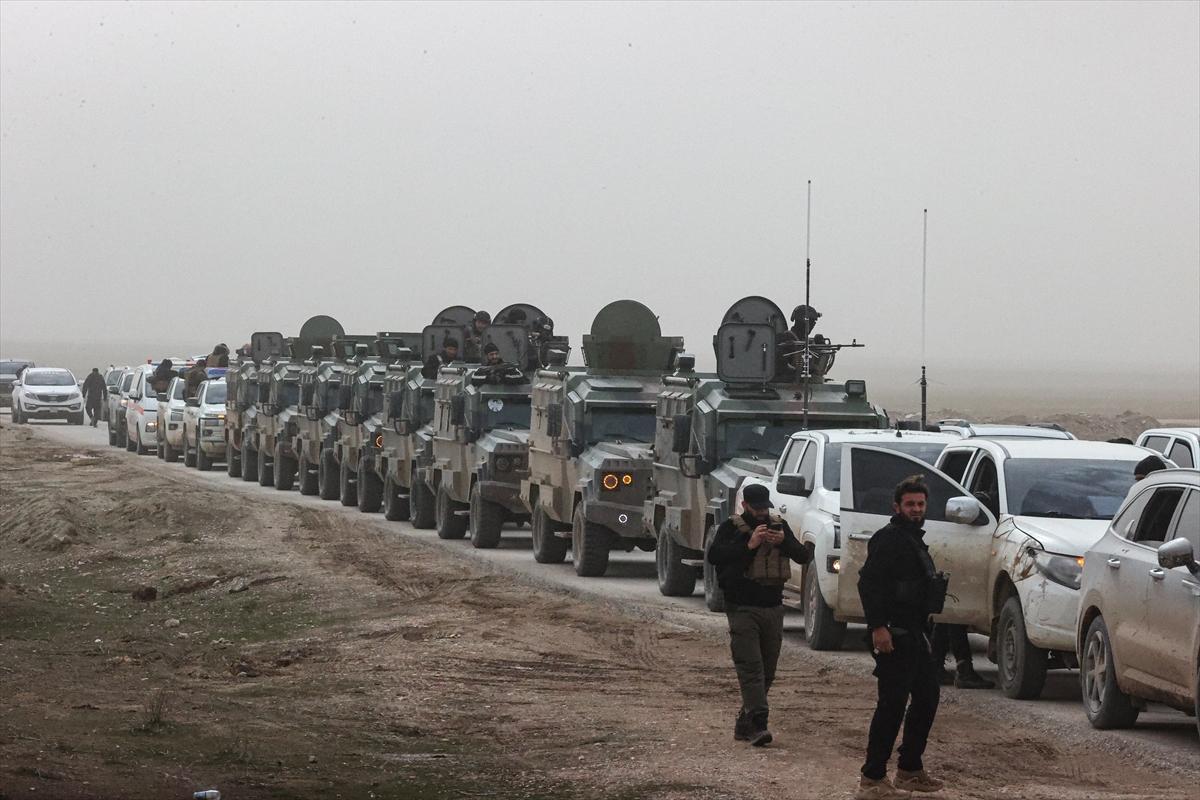
Syria Ministry of Interior security convoy enters Al-Hasakah under YPG control, 2 February 2026 – (Anadolu Agency)
Prior to the curfew decision, it was reported that in some towns liberated by the Syrian Army from YPG occupation, civilians celebrated with three-star Syrian flags and sang national anthems. The Director of the Aleppo Security Directorate, Muhammad Abdulgani, stated that he visited the Ayn al-Arab (Kobani) region under the terms of the ceasefire and phased integration agreement, and that efforts were underway to restore public order and restructure security units.
Under the agreement signed between the Syrian government and the terrorist organization YPG, convoys belonging to the Syrian Ministry of Interior’s internal security units entered the provincial center of Al-Hasakah and the village of Shuyukh, located south of the district of Ayn al-Arab, on 2 February 2026.
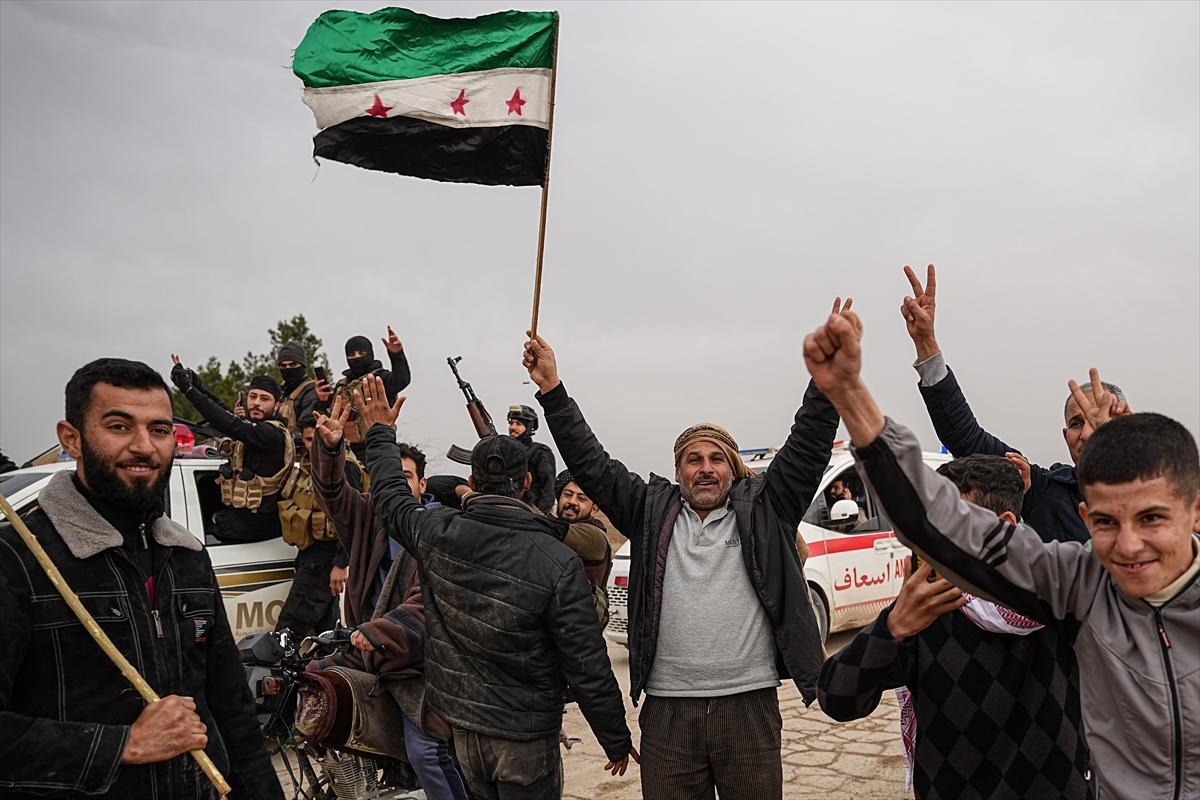
Syria Ministry of Interior security convoy enters Al-Hasakah under YPG control, 2 February 2026 – (Anadolu Agency)
As part of the implementation steps of the agreement, a convoy comprising eight armored personnel carriers, numerous four-wheel drive pickup trucks, ambulances and base station vehicles advanced from the eastern axis toward the center of Al-Hasakah.
According to a written statement from the Syrian Ministry of Interior, Brigadier General Mervan al-Ali, Commander of Internal Security in Al-Hasakah, issued directives to internal security units during preparations for their entry into the city. Brigadier General Ali emphasized that security operations must be carried out in strict accordance with established plans, full compliance with laws and regulations, disciplined execution of all procedures, preservation of public safety and order, and protection of citizens and their property, both public and private.
The agreement envisages the transfer of security and state institutions in the YPG-occupied areas of Al-Hasakah and Al-Qamishli to Syrian government control. Syrian state television Al-Ikhbariyye reported that residents of Al-Hasakah welcomed the Ministry of Interior’s security units with enthusiasm. Videos circulating on social media showed civilians carrying Syrian flags greeting the convoy.
Despite the YPG’s curfew, which restricted movement between 06.00 and 21.00, civilians took to the streets to celebrate. The majority of Al-Hasakah’s population stated they welcomed the entry of the convoy affiliated with the Syrian government, but noted that their joy was incomplete due to their continued inability to return to their homes.
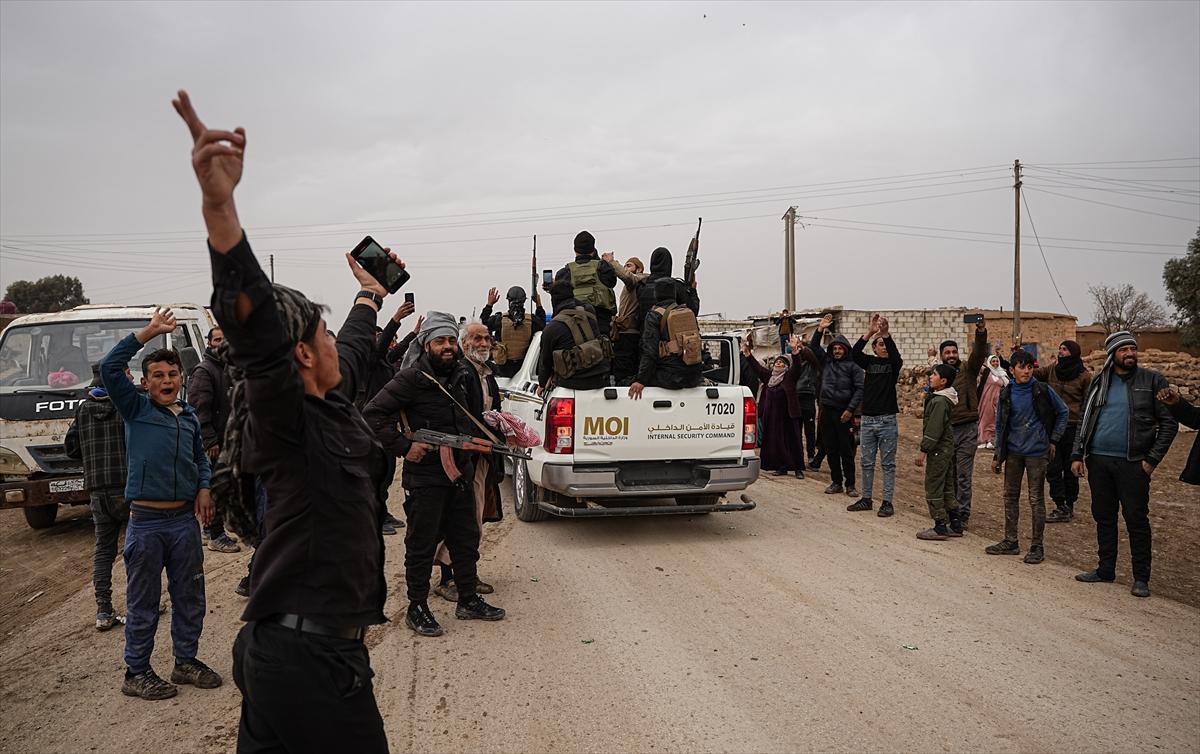
Syria Ministry of Interior security convoy enters Al-Hasakah under YPG control, 2 February 2026 – (Anadolu Agency)
In the Ayn al-Arab region, a convoy composed of Syrian Ministry of Interior security forces was reported to have entered the YPG-occupied village of Shuyukh, where its deployment was completed and security measures were heightened in the surrounding area. It was also announced that a humanitarian aid convoy consisting of 24 trucks from various United Nations-affiliated organizations had arrived in the same region.
Some of the civilians who welcomed the entry of Syrian Ministry of Interior security forces into Al-Hasakah on 2 February 2026 were detained by the terrorist organization YPG the following day. According to local sources, a total of 23 individuals were detained: 21 in the center of Al-Hasakah, 1 in the district of Rumeylan, and 1 in the town of Mabade.
The detained individuals were reportedly selected from among the local population who had expressed their joy by welcoming the Ministry of Interior forces the previous day. The entry of Syrian security forces into Al-Hasakah occurred under the terms of the agreement reached between the Damascus administration and the YPG.
Under the agreement signed between the Syrian government and the terrorist organization YPG, a convoy composed of Syrian Ministry of Interior security forces entered the district center of Al-Qamishli in Al-Hasakah on 3 February 2026. The convoy, consisting of approximately 20 military vehicles and 100 security personnel, was welcomed by the local population with celebratory demonstrations.
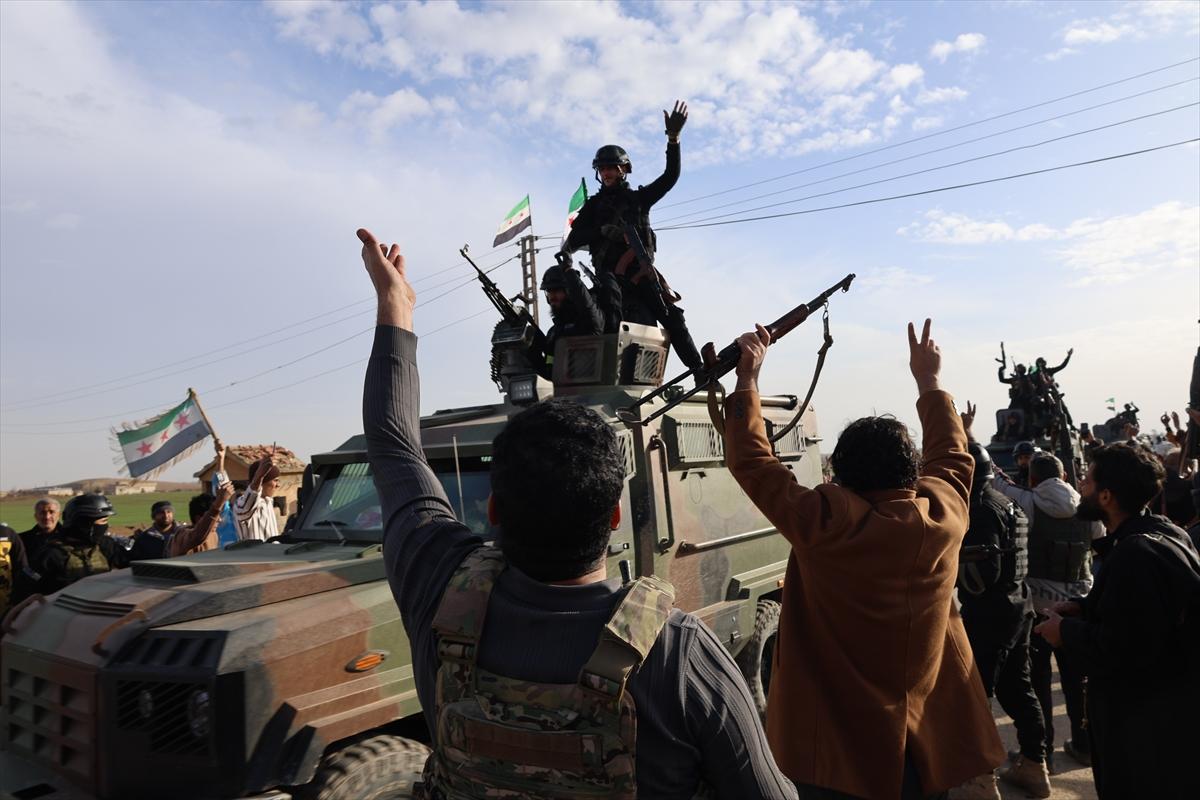
Syrian security forces enter the center of Al-Qamishli, 3 February 2026 – (Anadolu Agency)
Syrian Ministry of Interior Spokesperson Nureddin Baba stated that the local population in areas handed over by the YPG had “welcomed the government forces with joy,” and that the security forces would not be leaving these areas.
Speaking to the press at the entrance to Al-Qamishli district, Baba noted that, in accordance with the agreement between the Syrian government and the YPG, security forces were deployed in the center of Al-Hasakah on Monday and in Al-Qamishli district on the same day.
Responding to questions regarding the handover of the Russian-departed military airbase and critical oil wells previously under YPG control, Baba stated: “In line with the agreed schedule, the Al-Qamishli airbase, oil wells and government buildings will be transferred to Syrian administration for public service.” Regarding foreign elements within YPG ranks, the Syrian spokesperson added: “This issue will be resolved as a result of political negotiations.”
The Ministry spokesperson emphasized that the entry of government forces into the region was part of a formal agreement and that they would remain permanently. He also stated that under the integration process, efforts would be made to bring the YPG’s so-called “asayish” security forces under the authority of the Syrian Ministry of Interior.
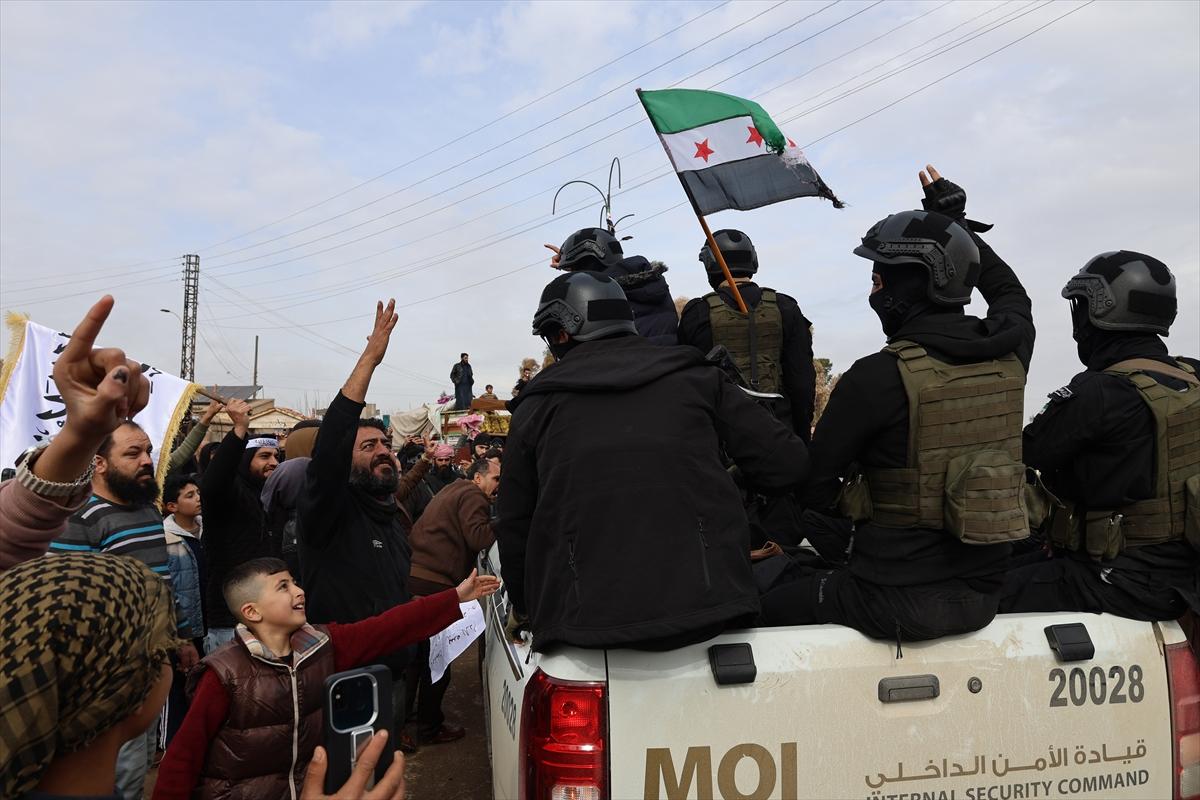
Syrian security forces enter the center of Al-Qamishli, 3 February 2026 – (Anadolu Agency)
Baba said: “We welcome every citizen who will work for the Syrian people with joy. The coexistence of different ethnic identities will not weaken us but will instead strengthen us.” Referring to the celebratory demonstrations in areas taken over by the Syrian government under the agreement, Baba added: “In every region the Syrian government enters, the people welcome us with joy. We thank them deeply. At the same time, we request that our people refrain from celebrating with firearms. We are passing through a sensitive period. Building trust is our priority. In the coming days, we will organize more orderly events to celebrate. We also do not consider it correct that people celebrating are detained by the YPG. Steps will be taken to facilitate and resolve these cases.”

The Syrian Army declared the areas west of the Euphrates River under YPG/SDG control as a “military zone” on 13 January 2026 and called on all armed elements to withdraw east of the Euphrates. It subsequently carried out military deployments along the Deyr Hafir and Meskene line and targeted the region with artillery fire. Humanitarian corridors were opened on 14–15 January for the evacuation of civilians, but YPG/SDG members of the terrorist organization prevented civilians from leaving. On 16 January the army launched a large-scale operation along the Deyr Hafir line and fully secured the area by the morning of 17 January. On the same day, forces reached the borders of Raqqa Governorate and advanced around Dibsi Afnan and Tabqa. On 18 January 2026, a comprehensive integration and ceasefire agreement was signed between Syrian President Ahmed Sharah and representatives of the terrorist organization YPG/SDG, bringing an end to the YPG/SDG presence west of the Euphrates and restoring state control.
No Discussion Added Yet
Start discussion for "Military Operations by the Syrian Army Against the YPG/SDG Presence West of the Euphrates River (2026)" article
January 14, 2026
Declaration of the Military Zone
January 14, 2026
Developments on the Front Line
January 14, 2026
YPG/SDG Occupation of the Euphrates River and Water Resources
January 14, 2026
Syrian Army’s Decision to Establish Humanitarian Corridors for Civilians West of the Euphrates River
January 14, 2026
YPG/SDG’s Obstruction of Civilian Evacuations from Deyr Hafir
January 14, 2026
Ensuring Civilian Evacuation from Deyr Hafir (16 January 2026)
January 14, 2026
Visit of the U.S. Delegation to Deyr Hafir
January 17, 2026
Syrian Army Launches Operation Against Terrorist Organization YPG/SDG in Deir Hafir
January 18, 2026
Expansion of Operations (17–18 January 2026)
January 19, 2026
Full Integration Agreement Between the Syrian Government and the YPG/SDG
January 20, 2026
Meeting Between President Şara and YPG/SDG Leader
January 20, 2026
Developments on 19–20 January 2026
January 21, 2026
Four-Day Ceasefire Begins Within the Agreement Between the Syrian Government and the YPG/SDG (January 20, 2026)
January 21, 2026
Developments as of January 21, 2026
January 26, 2026
Developments as of January 22, 2026
January 26, 2026
Developments as of January 23–24, 2026
January 27, 2026
Developments Between 25–27 January 2026
January 31, 2026
Declaration of Military Zone
January 31, 2026
Developments on the Front Line
January 31, 2026
YPG/SDG Occupation of the Euphrates River and Water Resources
January 31, 2026
Syrian Army’s Decision to Open a Corridor for Civilians West of the Euphrates River
January 31, 2026
YPG/SDG’s Obstruction of Civilian Evacuation from Deyr Hafir
January 31, 2026
Ensuring the Evacuation of Civilians from Deyr Hafir (16 January 2026)
January 31, 2026
Visit of the U.S. Delegation to Deyr Hafir
February 3, 2026
Developments Between 1–3 February 2026