


This article was automatically translated from the original Turkish version.
+3 More
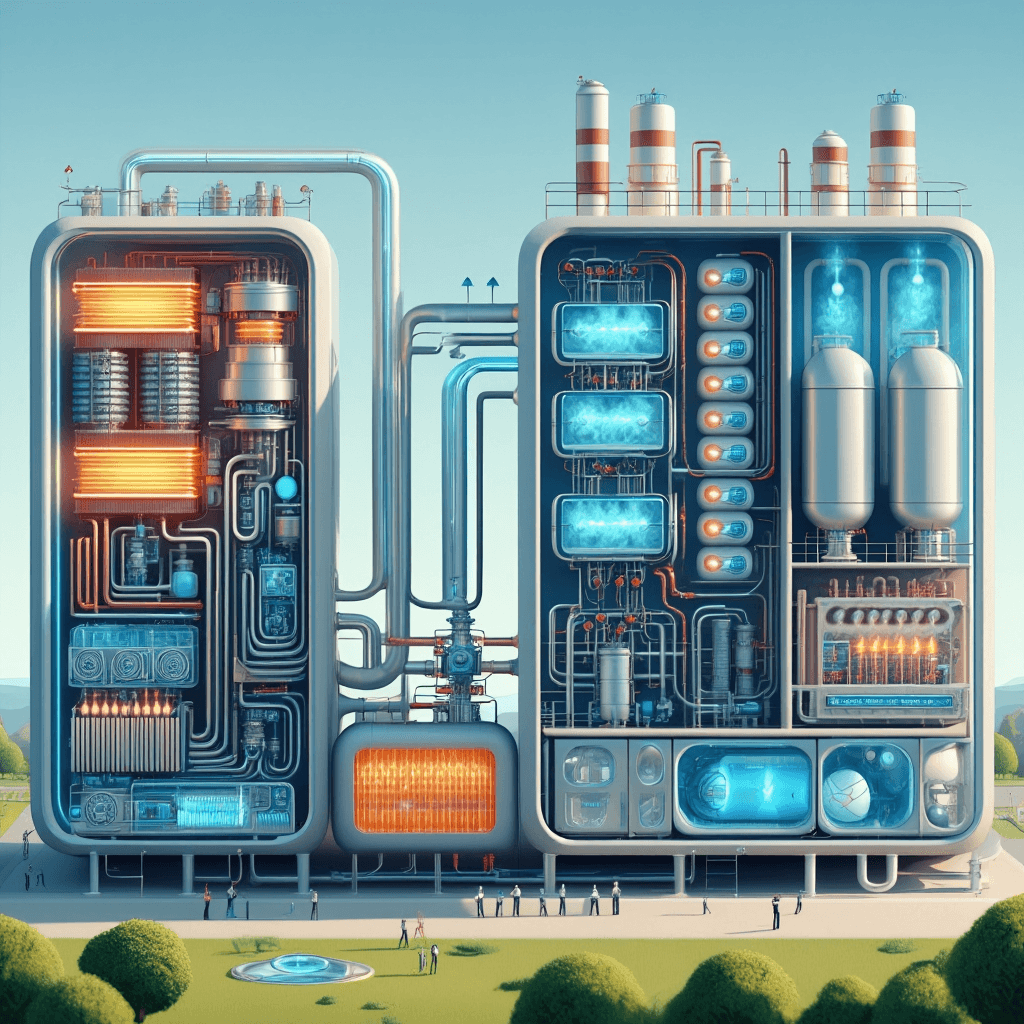
Nuclear Hydrogen Production (Generated by Artificial Intelligence)
Emission Status | Nearly zero greenhouse gas emissions during the production process. | ||||||||
|---|---|---|---|---|---|---|---|---|---|
Efficiency | Efficiency of up to 90% with the HTSE method. | ||||||||
Production Cost | Approximately 1.28 - 1.98 USD/kg (with HTGR). | ||||||||
Reactors Used | High-Temperature Gas-Cooled Reactors (HTGR), Small Modular Reactors (SMR). | ||||||||
Main Methods | High-Temperature Steam Electrolysis (HTSE), Thermochemical Cycles (e.g., Sulfur-Iodine). | ||||||||
Basic Principle | The decomposition of water into hydrogen and oxygen using heat and/or electricity obtained from nuclear reactors. | ||||||||
Nuclear hydrogen production is an energy conversion method based on the decomposition of water into its chemical components, hydrogen and oxygen, using heat and/or electricity generated by nuclear reactors. This approach is an innovative technological solution aimed at reducing fossil fuel use, enhancing energy supply security, and supporting the production of low-carbon hydrogen.
Hydrogen production methods are classified according to the type of energy source used and the environmental impact of the process. Hydrogen produced from renewable energy sources such as solar wind or hydropower is called “green hydrogen,” while hydrogen produced using carbon-emitting methods such as fossil fuel steam reforming is termed “grey” or “black hydrogen.” Hydrogen generated from nuclear energy is classified as clean hydrogen because it does not involve direct carbon emissions during production and is commonly referred to as “pink hydrogen” or “yellow hydrogen.”
This production method has the potential to increase the efficiency of hydrogen production processes by leveraging the high-temperature and continuous energy generation advantages of nuclear reactors. Nuclear hydrogen production can be achieved through three main approaches: thermochemical cycles (such as the sulfur–iodine [S–I] cycle), high-temperature electrolysis (HTE), and conventional electrolysis methods. In thermochemical cycles, the heat generated by the reactor is used directly to decompose water through chemical reactions, while in electrolysis-based methods, electricity derived from nuclear energy splits water molecules into hydrogen and oxygen at the molecular level.
Nuclear hydrogen production plays a strategic role in building a carbon-free hydrogen economy in the energy sector. Nuclear power plants, which provide continuous and high-density energy, work alongside variable renewable sources such as solar and wind to deliver stable hydrogen supply. This contributes to the establishment of a sustainable and reliable hydrogen supply chain for sectors targeting carbon reduction such as transportation industry and energy storage.
The use of nuclear power plants for hydrogen production offers a significant alternative for carbon-free hydrogen generation by leveraging the high-temperature and uninterrupted power generation advantages of nuclear energy. This process is based on two main technologies: electrolysis and thermochemical cycles. Both methods aim to decompose water into its chemical components but differ in the form of energy used—electricity or heat.
Electrolysis is one of the most common and technologically mature methods for hydrogen production. In this method water (H₂O) is split into hydrogen gas (H₂) and oxygen gas (O₂) by applying an electric current. Nuclear power plants naturally complement electrolysis technologies because they can supply the required electrical energy in a stable uninterrupted and low-carbon-emission manner. Electrolysis processes are implemented in two main forms depending on temperature: low-temperature electrolysis and high-temperature steam electrolysis (HTSE).
Low-temperature electrolysis is a method conducted at temperatures below 100°C and relies solely on electrical energy. The most common technology in these systems is known as Proton Exchange Membrane (PEM) electrolysis. PEM cells use polymer membranes to split water into protons and oxygen ions. This technology can be integrated with the stable energy output of nuclear power plants and is particularly suitable for small-scale distributed hydrogen production facilities.
The Nine Mile Point Nuclear Power Plant in the United States represents a commercial example of this integration. A 1.25 MW PEM electrolyzer system installed there produces approximately 560 kilograms of hydrogen per day. This application demonstrates that nuclear power plants can be utilized not only for electricity generation but also for direct hydrogen supply.
High-temperature electrolysis is a more efficient technology that utilizes both electrical energy and the high-temperature heat produced by nuclear reactors. In this method water is electrolyzed in vapor form rather than liquid form so that part of the energy required for the reaction is supplied as heat reducing electricity consumption. The process is carried out using solid oxide electrolyzer cells (SOEC) and typically operates at temperatures between 700 and 950°C. These temperatures can be provided by High-Temperature Gas-Cooled Reactors (HTGR) or Small Modular Reactors (SMR).
The most important advantage of HTSE technology is its theoretical hydrogen production efficiency of up to 85–90%. NuScale Power based in the United States is conducting R&D to integrate its modular nuclear reactors with HTSE systems for high-efficiency hydrogen production.
Thermochemical cycles are methods that decompose water into hydrogen and oxygen using only high-temperature heat without any electrical energy input. These cycles involve a series of sequential chemical reactions and the chemicals used are regenerated at the end of the process to ensure the system operates as a closed loop. These technologies typically operate efficiently at temperatures above 800°C making them compatible with advanced reactor types such as High-Temperature Gas-Cooled Reactors (HTGR).
The sulfur–iodine (S–I) cycle is one of the most extensively researched methods for thermochemical hydrogen production. This process involves subjecting water to chemical reactions using sulfur and iodine compounds. It consists of three main stages:
The Hybrid Sulfur (HyS) cycle operates similarly to the S–I process but adds an electrically assisted step to the chemical chain. This feature allows the HyS process to operate at lower temperatures around 750°C. The cycle is based on the electrochemical conversion of sulfur dioxide and water into sulfuric acid followed by thermal decomposition to produce hydrogen. The HyS process is an attractive option for nuclear–hydrogen systems aiming to optimize the combination of high temperature and low carbon emissions.
Nuclear hydrogen production can provide high-efficiency continuous and carbon-free hydrogen generation through both electrolysis and thermochemical cycles. Integrating advanced reactor technologies with these processes will strengthen future energy supply security and offer sustainable solutions for sectors with high hydrogen demand such as industry and transportation.
Nuclear hydrogen production is suitable only for specific reactor types due to its requirements for high temperature and continuous energy. Therefore the effectiveness and economic feasibility of the process depend largely on the thermal performance of the reactor technology. Conventional light water reactors (LWR) are limited to operating temperatures of approximately 300°C and are generally compatible only with low-temperature electrolysis applications. In contrast advanced reactor designs can operate at higher temperatures providing the heat necessary for high-temperature steam electrolysis (HTSE) and thermochemical cycles.
In this context next-generation reactor technologies such as High-Temperature Gas-Cooled Reactors (HTGR) Small Modular Reactors (SMR) and molten salt reactors (MSR) are forming the most suitable infrastructure for nuclear hydrogen production.
HTGRs are among the most suitable reactor designs for hydrogen production within advanced reactor technologies. In these reactors helium gas is used as the coolant. Since helium is an inert gas it does not chemically react and efficiently transfers heat from the reactor core enabling operation at very high temperatures of 850–950°C. This temperature range provides an ideal heat source for both high-temperature steam electrolysis (HTSE) and thermochemical cycles such as sulfur–iodine (S–I) and hybrid sulfur (HyS).
Another important advantage of HTGRs is their passive safety systems. The TRISO-coated fuel particles used in the reactor core prevent the release of fission products and the design incorporates natural cooling mechanisms that allow the system to cool safely on its own during an emergency. This feature significantly reduces the risk of meltdown or radiation leakage.
The Japan Atomic Energy Agency (JAEA) is conducting the High-Temperature Engineering Test Reactor (HTTR) project to demonstrate the feasibility of HTGR technology for hydrogen production. The HTTR is laying the foundation for the world’s first nuclear-supported hydrogen production facility aiming to test a direct S–I cycle system powered by reactor heat.
Small Modular Reactors (SMR) offer significant advantages for the localization of hydrogen production and integration with distributed energy systems due to their compact designs and scalable structure. SMRs are typically manufactured in factories and transported to installation sites as modular components reducing construction time and costs.
The SMRs developed by NuScale Power have a capacity of 77 MWe (250 MWt) and are designed to be integrated with high-temperature steam electrolysis systems. These systems have the potential to produce approximately 200 tons of hydrogen per day. The high operational flexibility and grid adaptability of SMRs enable rapid switching between electricity generation and hydrogen production. Additionally their compact size allows them to be installed near industrial zones reducing logistical costs and safety risks associated with hydrogen transportation and storage.
The Rolls-Royce SMR program also aims for a similar goal. The company plans to produce approximately 87 000 tons of hydrogen annually with its modular reactor design aiming to strengthen the industrial-scale hydrogen economy.
Other advanced reactor types with potential for nuclear hydrogen production include Molten Salt Reactors (MSR) and Fast Neutron Reactors (FNR).
Molten Salt Reactors (MSR) are reactor types in which the fuel is dissolved in liquid molten salt. These systems can operate between 600 and 1000°C and provide suitable conditions for thermochemical hydrogen production due to their high-temperature resistance. Additionally MSRs can continuously circulate fuel offering high burnup rates and fuel efficiency.
Fast Neutron Reactors (FNR) operate in a fast neutron spectrum and are notable for their high energy density and long-term fuel cycle advantages. These reactors hold potential as infrastructure for high-temperature hydrogen production in the future.
Türkiye’s nuclear energy strategic plan aims to develop and integrate fourth-generation reactor designs such as molten salt reactors with domestic engineering capabilities. This approach holds strategic importance for long-term carbon-free hydrogen production and energy diversification.
These advanced reactor technologies enable nuclear energy to move beyond electricity generation alone and transform into multi-purpose energy systems. Thus nuclear energy is becoming a two-way solution in the future low-carbon energy infrastructure providing both continuous electricity and clean fuel production.
Hydrogen production using nuclear energy is regarded as a strategic technology supporting the transition to a carbon-free hydrogen economy within energy conversion systems. This method not only contributes to reducing carbon emissions but also enhances energy supply security increases production stability and provides integrated solutions for various sectors.
Hydrogen production using nuclear energy is among the production methods with the lowest greenhouse gas emission profile. No direct carbon dioxide (CO₂) emissions occur during the process. Currently approximately 95% of global hydrogen production is derived from fossil fuels—particularly natural gas reforming and coal gasification. These conventional methods generate an average of 8–10 kilograms of CO₂ per kilogram of hydrogen produced. Nuclear-based production technologies eliminate this emission enabling hydrogen to become a carbon-free energy carrier. Therefore nuclear hydrogen is classified as “clean hydrogen” and is considered a priority option alongside green hydrogen in international energy transition strategies.
One of the most important advantages of nuclear power plants is their high capacity factor. Unlike intermittent sources such as solar and wind energy which exhibit variable production profiles dependent on weather conditions nuclear power plants can operate at full capacity for more than 90% of the year. This provides hydrogen production facilities with a continuous and stable supply of heat and electricity.
Continuous energy supply enhances the efficiency of high-temperature processes such as high-temperature steam electrolysis (HTSE) and thermochemical cycles. As a result hydrogen production facilities can achieve lower-cost and more stable production under uninterrupted operating conditions. Moreover the steady energy output of nuclear reactors reduces the need for energy storage and supports grid balance.
The production cost of nuclear hydrogen varies depending on the reactor type the maturity level of the technology local energy prices and system integration. However overall it is considered economically competitive compared to hydrogen production based on renewable energy sources.
High-Temperature Gas-Cooled Reactors (HTGR) and thermochemical cycle technologies are among the most important options for improving the cost-effectiveness of nuclear hydrogen. In these systems the high-temperature heat generated by the reactor is used directly in the water decomposition process reducing electricity consumption and increasing overall efficiency. This lowers production costs in terms of both energy input and operational expenses.
As the technology advances through commercialization modular reactor mass production and maturation of international supply chains costs are expected to decrease further. This trend supports nuclear hydrogen becoming an economically viable option for industrial applications transportation and energy storage solutions.
Therefore nuclear hydrogen is regarded as a strong alternative in the future sustainable energy portfolio both as part of carbon-free energy transition strategies and in terms of long-term energy security and cost stability.
Nuclear power plants can be transformed into multi-purpose integrated energy systems that are not limited to hydrogen production alone. These facilities enable the simultaneous production of multiple products such as electricity process heat hydrogen and clean water through the same infrastructure. Efficient use of waste heat and resources in such systems provides significant environmental and cost benefits in the energy economy.
In a model developed by NuScale Power Small Modular Reactors (SMR) are integrated with reverse osmosis desalination plants. In this model the waste brine produced during seawater desalination is utilized as a feedstock in the hydrogen production process and employed in high-temperature electrolysis. Thus waste management water scarcity and energy production challenges are addressed simultaneously and this approach is termed “triple benefit” in the literature.
Such integrated systems enhance the efficiency of nuclear power plants while supporting environmental sustainability. They also strengthen energy infrastructure resilience by creating energy-water-hydrogen synergies in regions with limited water resources.
In conclusion nuclear hydrogen production plays a strategic role in the future sustainable energy infrastructure through low carbon emissions high reliability economic feasibility and system integration. This technology is viewed as one of the strongest candidates for contributing to the growth of the hydrogen economy and the decarbonization of the energy sector.
Many countries around the world are positioning nuclear hydrogen production as a core component of their energy transition strategies and taking technological economic and regulatory steps in this area. The high temperature stable production capacity and low carbon emissions provided by nuclear energy have led countries to assign strategic importance to this technology for the sustainable scaling of hydrogen production. Below is a summary of pioneering initiatives in Japan the United States and Türkiye.
Japan is one of the leading countries with a long-term strategy for nuclear hydrogen production. The Japan Atomic Energy Agency (JAEA) aims to establish the world’s first nuclear-supported commercial-scale hydrogen production facility using the High-Temperature Engineering Test Reactor (HTTR) located in Ibaraki Prefecture.
The official application for the project is planned for 2025 construction is scheduled to begin in 2026 and the first hydrogen production is targeted for 2030. During this process the GTHTR300 type high-temperature gas-cooled reactor is expected to achieve a hydrogen production capacity of approximately 120 tons per day. This reactor aims to directly decompose water using the sulfur–iodine (S–I) thermochemical cycle.
Japan’s strategy is not merely a technical development program but is also linked to its national energy security policy. The country aims to commercialize nuclear-supported hydrogen production technologies by the end of the 2030s and become a global technology exporter in this field. Additionally Japan has identified the integration of nuclear hydrogen with ammonia production and fuel cell applications as a priority R&D area.
The United States is among the countries with the most comprehensive research and commercialization programs for nuclear hydrogen production. The U.S. Department of Energy (DOE) has set a target under its “Hydrogen Shot” initiative to reduce hydrogen production costs to under 1 U.S. dollar per kilogram by 2030. In line with this goal nuclear hydrogen production has been positioned as a key component of the low-carbon production portfolio.
NuScale Power is one of the leading companies developing nuclear-based integrated energy systems. The company’s Small Modular Reactor (SMR) design stands out with an integrated energy model that combines hydrogen production electricity generation and water desalination within a single system. An integrated energy system simulator at its R&D facility in Oregon can model industrial-scale hydrogen production scenarios of up to 200 tons per day.
Additionally the Proton Exchange Membrane (PEM) electrolysis facility commissioned at the Nine Mile Point Nuclear Power Plant demonstrates that existing reactors can be repurposed for hydrogen production. This project is one of the first applications proving that conventional light water reactors (LWR) can actively participate in hydrogen production through electrically driven low-temperature electrolysis processes.
These initiatives form the foundation of the United States’ strategy to transform its nuclear infrastructure not only for electricity generation but also for carbon-free hydrogen and fuel production.
Türkiye is developing a national strategy that comprehensively addresses hydrogen production storage and utilization within its energy transition policies. The Ministry of Industry and Technology plans to implement the “National Hydrogen Program” under its “2030 Industry and Technology Strategy.”
This program covers the entire value chain from hydrogen production to final use and anticipates the development of green blue and nuclear hydrogen production technologies. Within the framework of the program TÜBİTAK has targeted improvements in the efficiency and capacity of domestically developed electrolyzer systems and encourages their use in renewable and nuclear-based hydrogen production projects.
Additionally Türkiye plans to establish a “Nuclear Technopark” to strengthen its nuclear technology infrastructure. This facility will support the development of next-generation reactor technologies such as molten salt reactors (MSR) and fast neutron reactors (FNR) through collaboration among research institutions universities and the private sector. These steps aim to enhance domestic nuclear engineering capacity and position Türkiye as a regional hub in the hydrogen economy.
In conclusion the examples of Japan the United States and Türkiye demonstrate that nuclear hydrogen production is not merely an alternative for energy generation but has become a fundamental component of sustainable industrial policies energy security and the transition to a low-carbon economy. International collaboration and technology transfer in this field make it possible for nuclear energy to play a decisive role in shaping the global hydrogen market after 2030.
Arvanitidis, Athanasios Ioannis, Vivek Agarwal, and Miltiadis Alamaniotis. “Nuclear-Driven Integrated Energy Systems: A State-of-the-Art Review.” *Energies* 16, no. 11 (2023): 4293. Accessed October 4, 2025. https://doi.org/10.3390/en16114293.
International Atomic Energy Agency (IAEA). *Nuclear Hydrogen Production Technology.* Accessed October 4, 2025. https://www.iaea.org/sites/default/files/gc/gc57inf-2-att1_en.pdf.
Kim, Juyoul, Ahmed Abd El-Hameed, Reuben Joseph Soja, Hilali Hussein Ramadhan, Mercy Nandutu, and Joung Hyuk Hyun. “Estimation of the Levelized Cost of Nuclear Hydrogen Production from Light Water Reactors in the United States.” *Processes* 10, no. 8 (2022): 1620. Accessed October 4, 2025. https://doi.org/10.3390/pr10081620.
Nuclear Energy Agency (NEA). *High-Temperature Gas-Cooled Reactors and Industrial Heat Applications.* Accessed October 4, 2025. https://www.oecd-nea.org/upload/docs/application/pdf/2022-06/7629_htgr.pdf.
Venizelou, Venizelos, and Andreas Poullikkas. “Comprehensive Overview of Recent Research and Industrial Advancements in Nuclear Hydrogen Production.” *Energies* 17, no. 12 (June 2024): 2836. Accessed October 4, 2025. https://doi.org/10.3390/en17122836.
Zhang, Ping, Jingming Xu, Lei Shi, and Zuoyi Zhang. “Nuclear Hydrogen Production Based on High Temperature Gas Cooled Reactor in China.” *Strategic Study of the Chinese Academy of Engineering* 21, no. 1 (2019): 20–28. Accessed October 4, 2025. https://doi.org/10.15302/J-SSCAE-2019.01.004.

Nuclear Hydrogen Production (Generated by Artificial Intelligence)
Emission Status | Nearly zero greenhouse gas emissions during the production process. | ||||||||
|---|---|---|---|---|---|---|---|---|---|
Efficiency | Efficiency of up to 90% with the HTSE method. | ||||||||
Production Cost | Approximately 1.28 - 1.98 USD/kg (with HTGR). | ||||||||
Reactors Used | High-Temperature Gas-Cooled Reactors (HTGR), Small Modular Reactors (SMR). | ||||||||
Main Methods | High-Temperature Steam Electrolysis (HTSE), Thermochemical Cycles (e.g., Sulfur-Iodine). | ||||||||
Basic Principle | The decomposition of water into hydrogen and oxygen using heat and/or electricity obtained from nuclear reactors. | ||||||||
No Discussion Added Yet
Start discussion for "Nuclear Hydrogen Production" article
Hydrogen Production Methods and the Role of Nuclear Energy
Electrolysis Method
Low-Temperature Electrolysis
High-Temperature Steam Electrolysis (HTSE or HTSE/HTE)
Thermochemical Cycles
Sulfur–Iodine (S–I) Cycle
Hybrid Sulfur (HyS) Cycle
Nuclear Reactor Technologies Used
High-Temperature Gas-Cooled Reactors (HTGR)
Small Modular Reactors (SMR)
Other Advanced Reactor Technologies
Advantages and Potential of Nuclear Hydrogen Production
Low Carbon Emissions
High Capacity Factor and Reliability
Economic Competitiveness
Integrated Systems and Multi-Product Production
Global Projects and Future Vision
Japan
United States
Türkiye