

This article was automatically translated from the original Turkish version.
+2 More
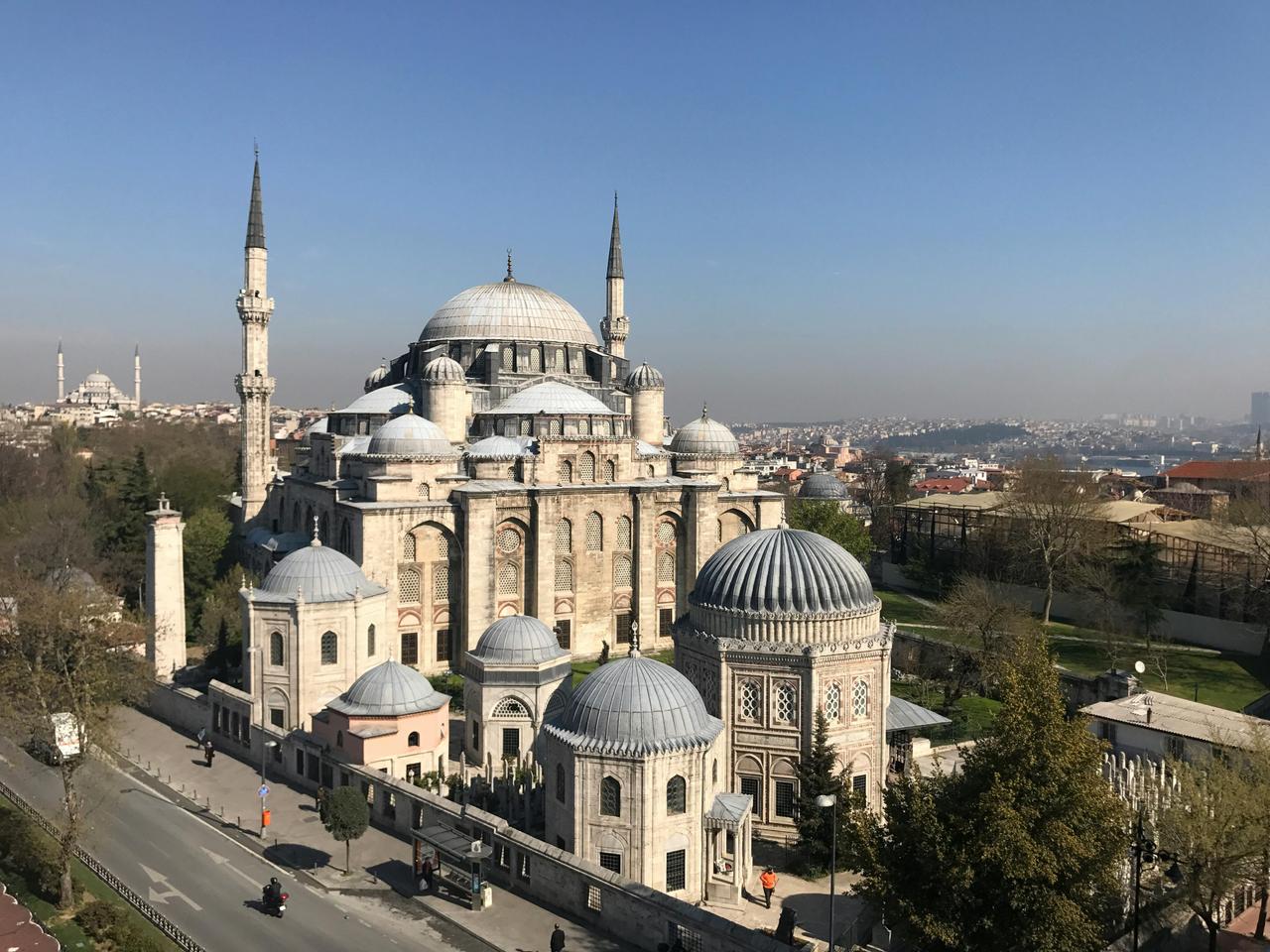
Sultanic Mosques are large-scale places of worship constructed by members of the Ottoman dynasty and classified as a distinct architectural category based on the status of the patron. This concept denotes not only architectural scale but also the political representation and dynastic affiliation of the structure. Sultanic mosques were predominantly designed as monumental complexes within a külliye framework, integrating religious, social, and cultural functions.
The term “Selâtîn” is of Arabic origin and is the plural of “sultan.” The term “Sultan” was used in Islamic political tradition to denote a ruler, sovereign, and head of state, gradually evolving into a title signifying absolute authority and administrative power.【1】In the Ottoman state, this term became institutionalized as the official designation for dynasty members and acquired the status of a defining marker within the political hierarchy.
Within this context, the expression “selâtîn” refers not to a single ruler but to the collective of sultans, that is, dynasty members. When used in an architectural context, the term transcends its literal meaning and becomes a technical designation for large, monumental mosques commissioned by the dynasty.
In Ottoman architecture, the naming of buildings was largely shaped by the social and political position of the patron. A structure was not merely viewed as a functional place of worship but also as a representative element reflecting the patron’s standing within the state.
Places of worship commissioned by viziers and other state officials were generally referred to as “cami”; smaller structures were termed “mescid.” In contrast, large buildings commissioned by sultans, valide sultans, and high-ranking dynasty members—typically designed as part of a külliye complex—were recognized as a separate category. This distinction demonstrates how architectural terminology developed in relation to social hierarchy.【2】
The term “selâtin camisi” was used in the Ottoman state to designate mosques commissioned by sultans, their mothers, and their children. The defining criterion is not the physical size or aesthetic qualities of the structure but the dynastic affiliation of the patron.
Thus, the concept of “selâtin camisi” is a nomenclature based on status rather than scale. It establishes an architectural category centered on dynastic identity, thereby making visible at a terminological level the relationship between the structure and political representation.
In Ottoman state tradition, a sultan’s construction of a sultanic mosque in his own name was not mandated by written law but was governed by strong customary norms. These norms established criteria distinguishing sultanic mosques from ordinary places of worship and linked the act of construction to political legitimacy.
Constructing a large, monumental mosque in the capital was not regarded as a mere exercise of sovereign prerogative. Such construction was viewed as a right supported by military success and religious legitimacy. Since the sultanic mosque was accepted as an instrument reinforcing the ruler’s position before the state and society, it was expected to have both material and spiritual foundations.【3】
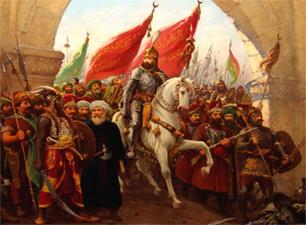
The Conquest of Istanbul (Turkish Historical Society)
According to traditional understanding, a sultan was expected to personally lead military campaigns and achieve a significant military victory before being entitled to commission a sultanic mosque in his own name.【4】Such a victory was considered especially legitimate if it carried the character of “gaza” and resulted in war booty recognized as lawful.
The principle of victory and booty transformed mosque construction into a permanent architectural expression of the sultan’s military success. The acquired booty provided the material basis for construction, while the victory itself was regarded as reinforcing the political and religious legitimacy of the structure. Thus, the sultanic mosque acquired the status of a monumental structure symbolizing military triumph, not merely a place of worship.
Expenditure from the state treasury (beytülmâl) for the construction of sultanic mosques was not considered appropriate. Therefore, it was accepted that costs must be covered by the sultan’s personal wealth or by war booty. This approach reflects a tradition that prioritized private sources over public funds in financing sultanic mosques.
Financing through personal wealth or booty placed the mosque under the economic responsibility of the sultan personally. Thus, the sultanic mosque became identified with the sultan both materially and spiritually; its construction was viewed not as a public act but as a personal obligation.
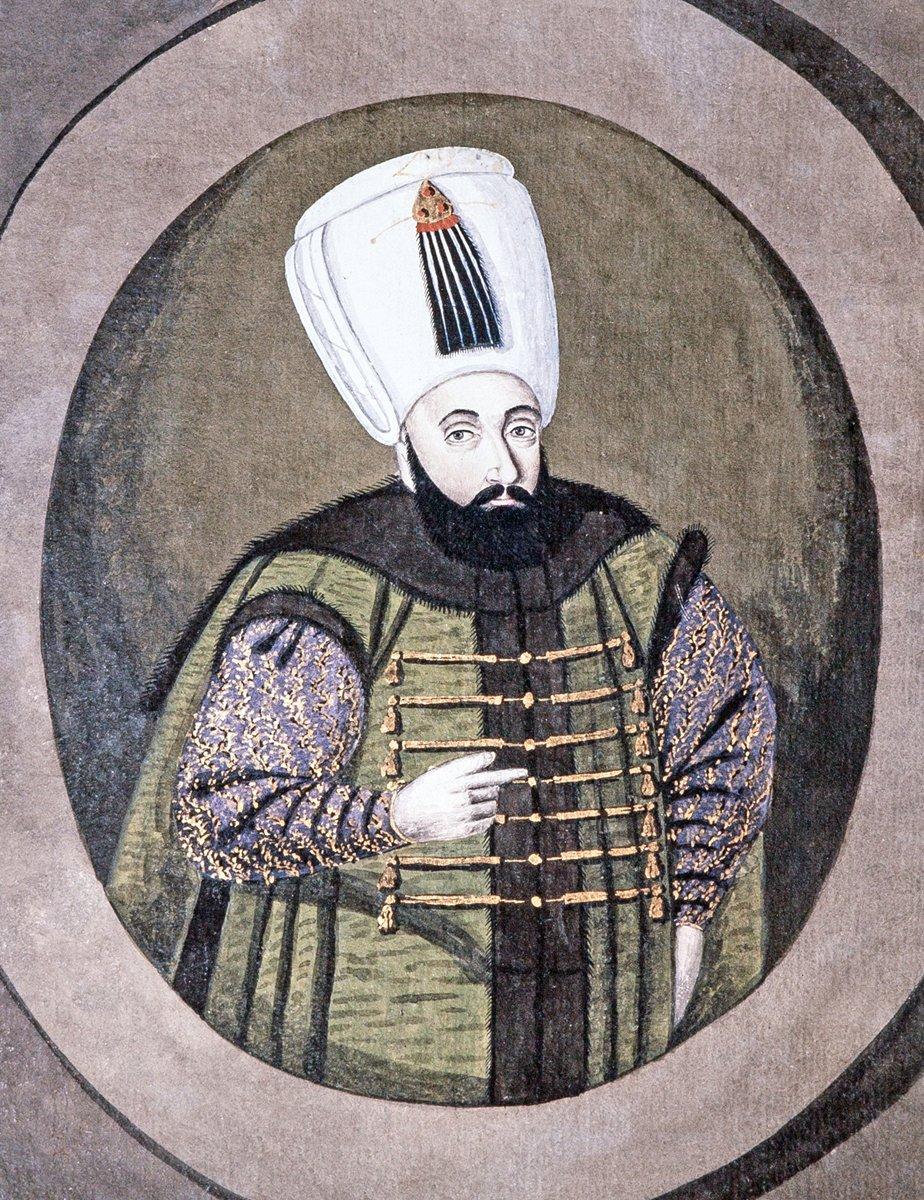
Sultan Ahmed I (TDV Islamic Encyclopedia)
The traditional understanding based on victory and booty was challenged with the construction of the Sultanahmet Camii during the reign of Sultan Ahmed I.【5】Ahmed I’s lack of any major military campaign rendered the construction of a mosque on this scale problematic under customary norms.
The construction of a large sultanic mosque in the capital without military victory or booty was criticized by the religious scholars and some intellectuals of the time, particularly regarding its financing. Historical records indicate that to complete construction, special taxes were levied on merchants, which was viewed as a deviation from the traditional funding model.【6】
Nevertheless, the construction proceeded and was completed. This marked a significant change in the tradition of sultanic mosque building. After the Sultanahmet Camii, sultanic mosques were constructed without requiring military victory or booty, effectively altering the traditional understanding of legitimacy.
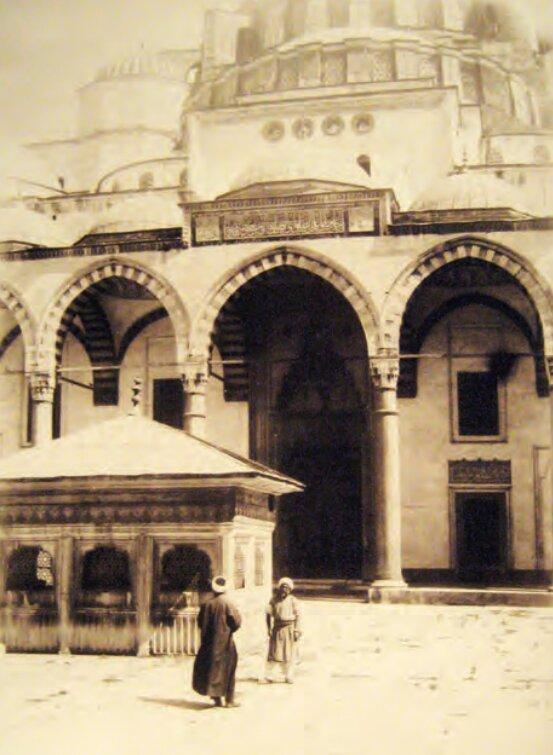
The Sabil of Süleymaniye Mosque and Its Facade - 1870 (General Directorate of Foundations, Republic of Turkey)
The geographical distribution of sultanic mosques clustered around the political centers of the Ottoman state and the cities where dynasty members underwent administrative and educational training. This distribution is linked to the spread of religious architecture and the spatial dimension of dynastic representation and state centralization.
The city with the highest concentration of sultanic mosques is Istanbul. It is recorded that 35 sultanic mosques are located in the city.【7】This concentration is directly related to Istanbul’s long-standing role as the Ottoman capital and its function as the political center of the dynasty.
Sultanic mosques in Istanbul are especially concentrated in the Fatih district. This is connected to the urban development initiatives launched after the conquest. Structures such as the Süleymaniye, Sultanahmet, Fatih, Ayasofya, Şehzade, and Yeni Cami form key elements of Istanbul’s skyline, both as külliye complexes and by virtue of their locations. These buildings were designed as comprehensive architectural complexes incorporating, in addition to worship functions, units such as madrasas, soup kitchens, libraries, and tombs.
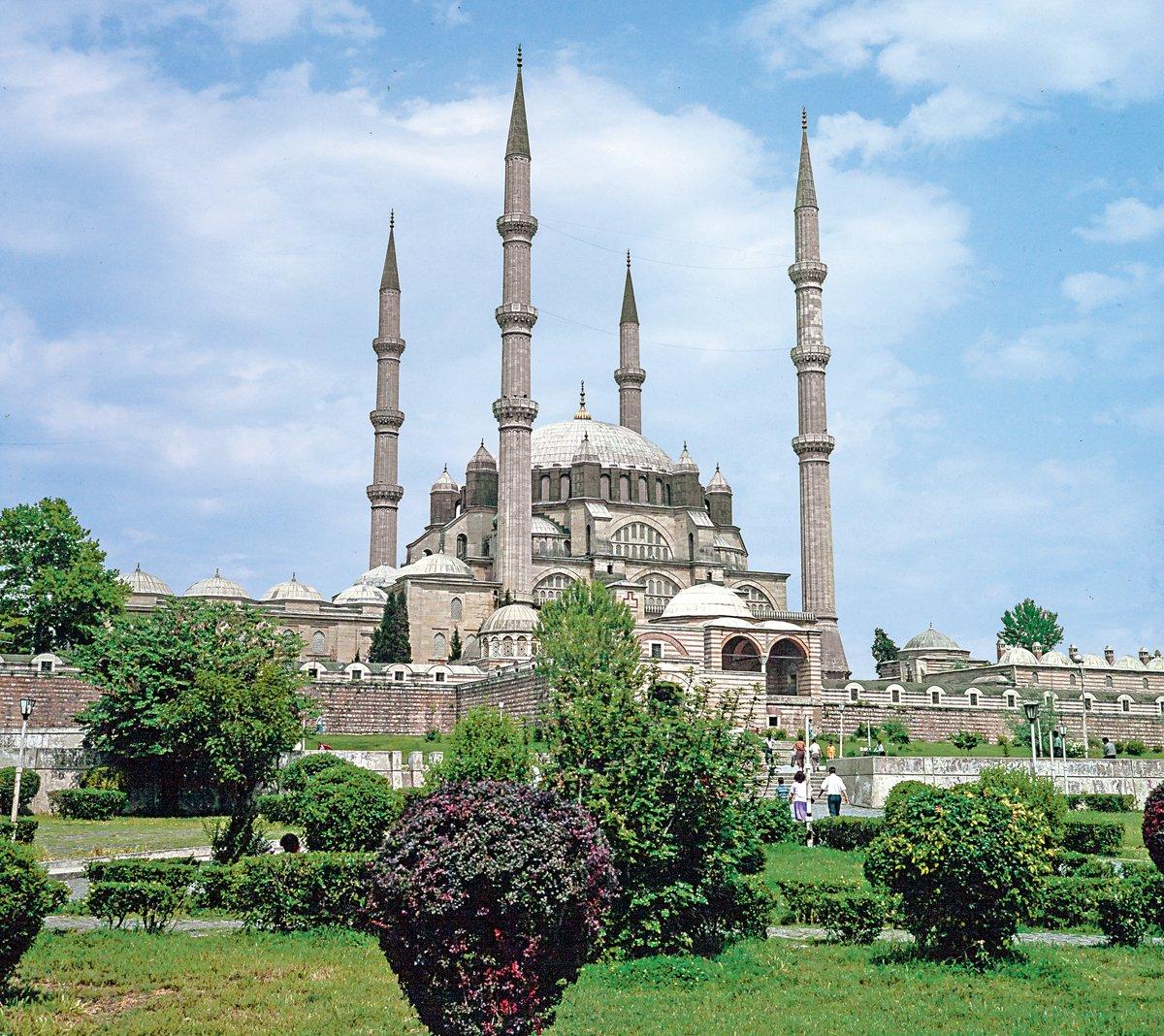
Selimiye Mosque in Edirne (TDV Islamic Encyclopedia)
Before Istanbul, the cities of Bursa and Edirne, which served as the Ottoman state’s capitals, are centers housing the earliest examples of sultanic mosques. These cities, due to their significant roles in the state’s political development, provided the stage for early expressions of dynastic architecture.
In Edirne, the Selimiye Camii commissioned by Selim II and the külliye built by Bayezid II stand out as prominent examples of the sultanic tradition. In Bursa, mosques commissioned by Orhan Gazi, Mehmed I, and Murad II represent the early phase of Ottoman dynastic architecture.
The distribution of sultanic mosques was also shaped by the provincial centers where princes gained administrative experience. In this context, Amasya and Manisa are notable cities.
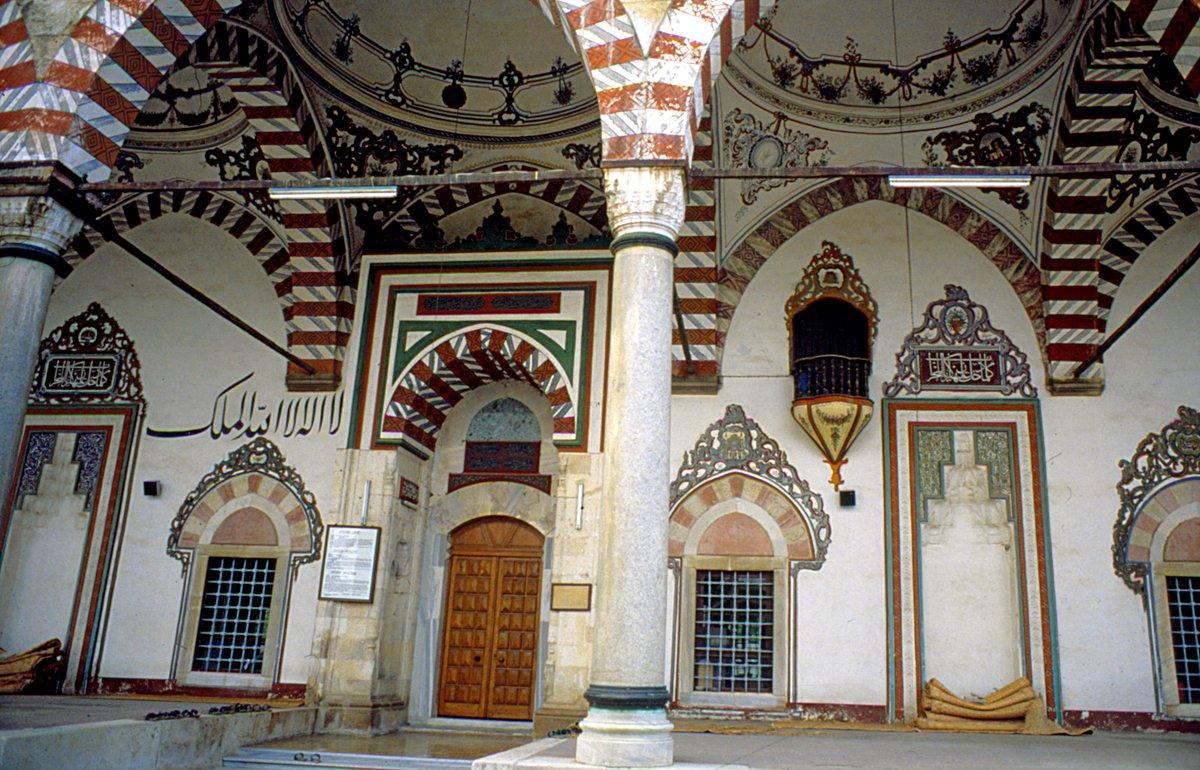
Hafsa Sultan Külliyesi (TDV Islamic Encyclopedia)
In Amasya, the külliye commissioned by Bayezid II after his accession to the throne; in Manisa, the külliye built by Suleiman the Magnificent’s mother, Hafsa Sultan, and the Muradiye Camii initiated during the princely years of Murad III and later expanded, are evaluated within this framework. Additionally, mosques and külliyes commissioned by Orhan Gazi in Bilecik and İznik, and by Selim II in Karapınar, Konya, are among the examples of the sultanic tradition in other cities.
Sultanic mosques were constructed not only in the capital but also in other centers where the dynasty maintained administrative and symbolic presence.
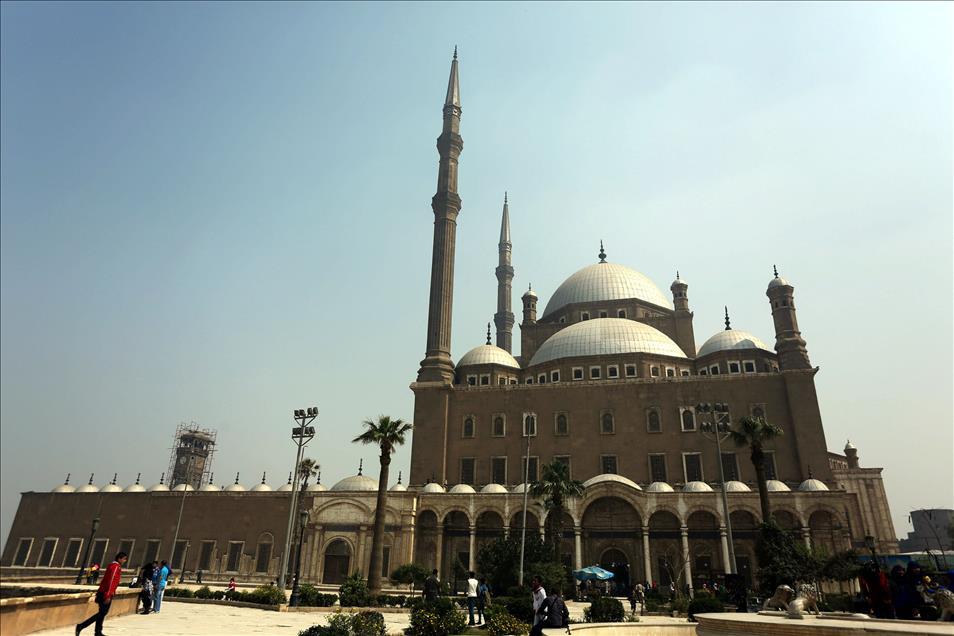
Mehmet Ali Pasha Mosque - Cairo, Egypt (Anadolu Agency)
Sultanic mosques were also constructed in cities outside today’s Turkish borders but historically significant centers of the Ottoman Empire, such as Cairo and Damascus. This demonstrates the expansion of dynastic architecture across the empire’s diverse geographies and the reinforcement of political representation through architectural means beyond the central regions.
Istanbul, as the city hosting the densest and most monumental examples of sultanic mosques, allows for the chronological tracing of this tradition’s evolution. The period spanning from the immediate aftermath of the conquest through the classical era to later stylistic transformations reveals both the political and architectural development of sultanic mosques.
After the conquest of Istanbul, the conversion of Ayasofya into a mosque is regarded as the first and foremost among sultanic mosques.【8】The structure, endowed with a vast waqf by Sultan Mehmed II, assumed the role of a religious and political symbol of the conquest.
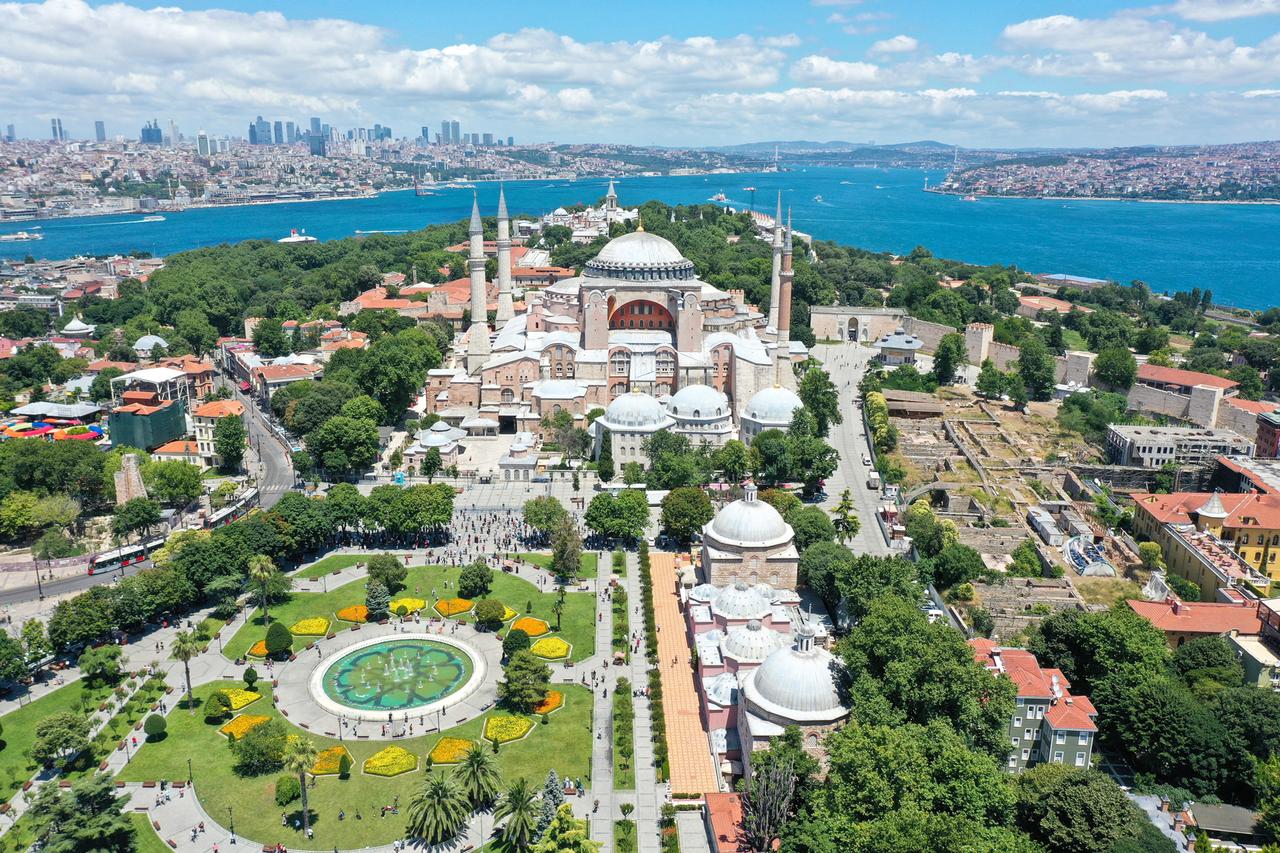
Ayasofya-i Kebir Cami-i Şerifi (Ayasofya Mosque)
Eyüp Sultan Camii was constructed in 1458 on the orders of Fatih Sultan Mehmet.【9】Its housing of the tomb of Ebu Eyyûb el-Ensarî and its role as the site of the sword-girding ceremonies of Ottoman sultans have imbued the structure with unique spiritual and political significance.
The Fatih Camii was built on the site of the Byzantine Church of the Twelve Apostles and formed the center of the urban development program initiated after the conquest, incorporating units such as madrasas, a hospital, and a library within a large külliye complex.
These structures are among the key examples of the urban development initiatives and the architectural program based on dynastic representation following the conquest of Istanbul.
Among the most prominent examples of classical Ottoman architecture are the Şehzade Camii, Süleymaniye Camii, and Sultanahmet Camii. The Şehzade Camii was commissioned by Suleiman the Magnificent from Mimar Sinan in memory of his son Şehzade Mehmed, who died at a young age.
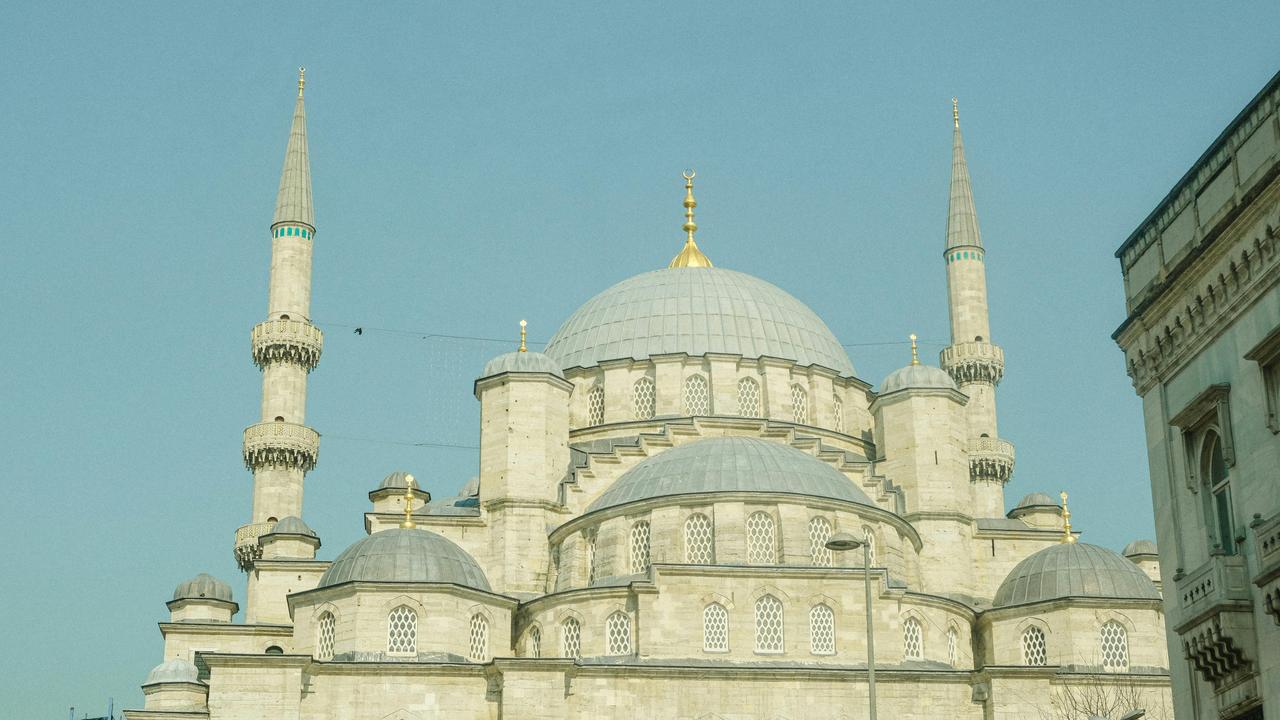
Sultanahmet Cami (Pexels)
The Süleymaniye Camii, constructed between 1550 and 1557, is recognized as one of the strongest expressions of classical Ottoman design, with its central dome system and külliye layout.【10】Its position and scale in Istanbul’s skyline enhanced its representational power.
The Sultanahmet Camii was commissioned by Ahmed I from the architect Sedefkâr Mehmet Ağa. Noted for its six minarets and dense interior Iznik tilework, the structure introduced a distinct approach in both architectural scale and decorative style and is known in international literature as the “Blue Mosque.”
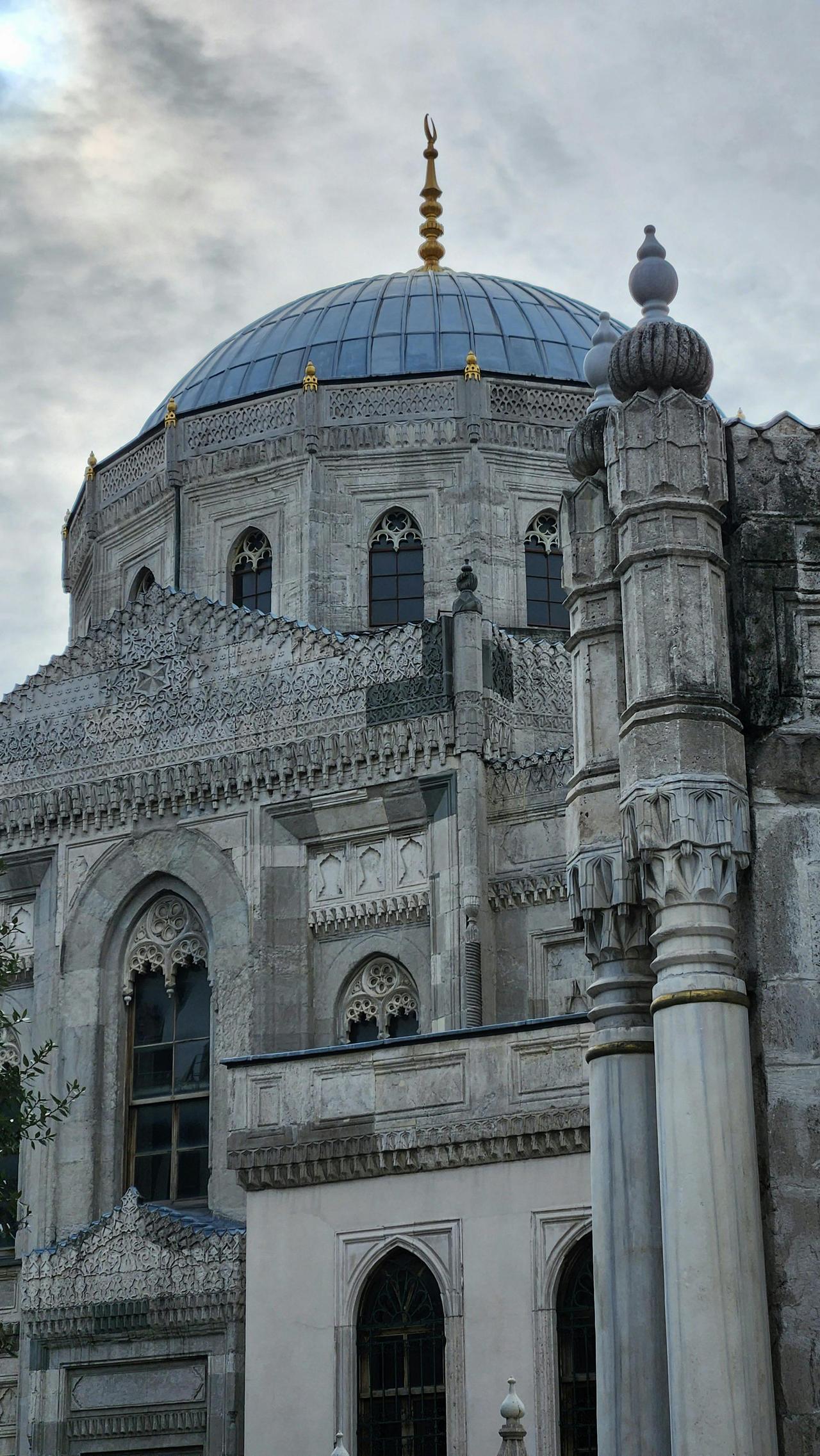
Pertevniyal Valide Sultan Mosque (Pexels)
Sultanic mosques were not only commissioned by sultans but also by female members of the dynasty. Two mosques commissioned in the name of Mihrimah Sultan—one in Edirnekapı and another in Üsküdar—are among the early and significant examples of this tradition.
The Vâlide-i Atik Camii in Üsküdar was commissioned by Nurbanu Valide Sultan; the Vâlide-i Cedid Camii by Gülnuş Emetullah Valide Sultan. The construction of the Yeni Cami was initiated by Safiye Sultan and completed after a long interval by Turhan Hatice Sultan.
Pertevniyal Valide Sultan Camii was built in the name of Sultan Abdülaziz’s mother and reflects late-period stylistic features. These structures are among the key examples of the architectural patronage of dynasty women in Ottoman architecture.
In later periods of Ottoman architecture, sultanic mosques began to exhibit stylistic features diverging from the classical model. The Nuruosmaniye Camii stands out for its Baroque features that depart from the classical Ottoman plan and reflect Western influences.
The Lâleli Camii is also regarded as a structure that combines Baroque style with classical architectural elements. In these late-period buildings, changes are observed in both the plan schema and decorative approach; the balanced and measured compositions of the classical period give way to more dynamic styles.
These developments demonstrate that the tradition of sultanic mosques underwent transformation not only in terms of political practice but also in architectural conception over time.
Sultanic mosques are monumental structures reflecting the planning concepts, structural systems, and decorative preferences of different periods of Ottoman architecture. These mosques were shaped according to the technical capabilities and aesthetic approaches of their time; in some cases, stylistic changes emerged due to earthquakes and subsequent reconstruction.
The architectural character of sultanic mosques is defined by scale, central plan organization, and the külliye framework. These buildings are not merely places of worship but form holistic architectural compositions together with surrounding madrasas, soup kitchens, tombs, and other units.
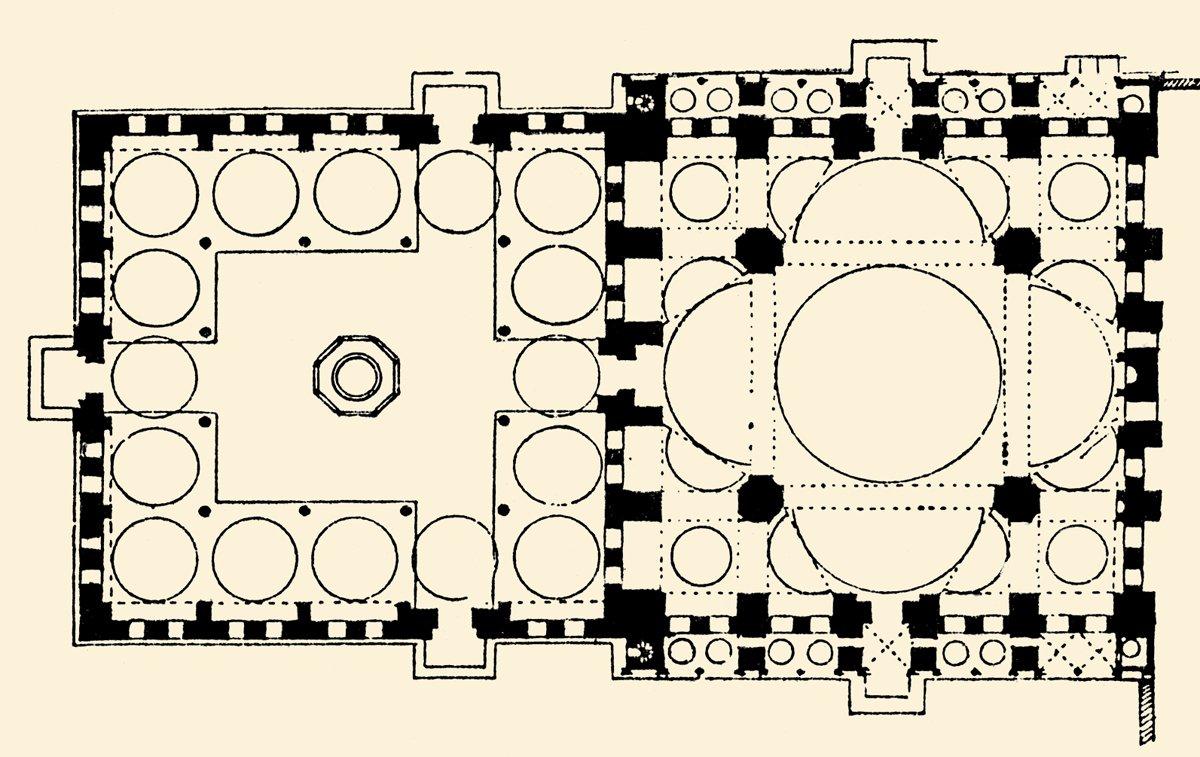
Plan of Fatih Şehzade Camii (TDV Islamic Encyclopedia)
In sultanic mosques, the plan is predominantly organized around a central dome. The main dome is supported by half-domes or auxiliary roofing elements to create a spacious, unified interior space.
Early examples feature plans supported by a single half-dome, while in the classical period, more advanced schemes emerged in which the main dome was supported by half-domes on all four sides. Significant differences emerged between periods in terms of dome diameter and height, with spatial scale increasing over time. This evolution enabled more sophisticated technical and aesthetic solutions in interior spatial design.
In sultanic mosques, the main dome is typically supported by four primary structural elements. These elements are arranged as piers in some buildings and as massive columns or elephant-foot piers in others.
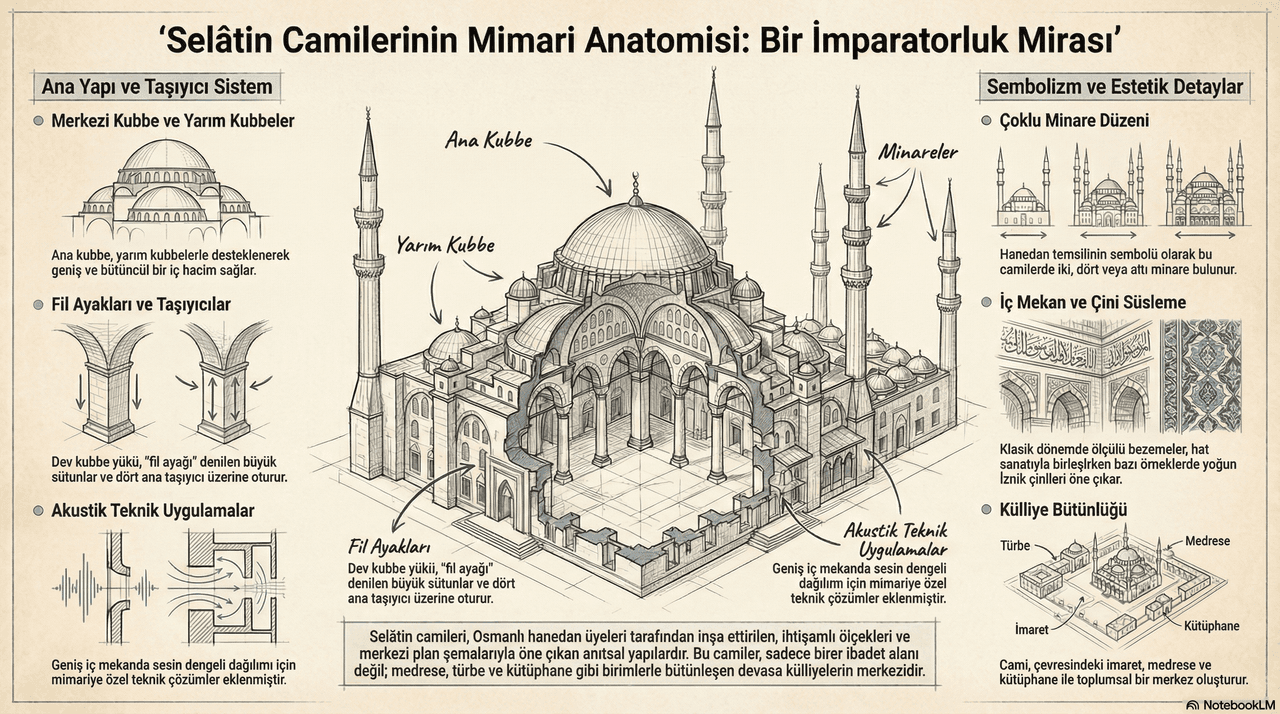
Architectural Anatomy of Sultanic Mosques (Generated by Artificial Intelligence)
The structural system was not merely a technical necessity but also a defining element of spatial organization. In the plan schema emphasizing the central area, lateral spaces were arranged to support the main volume, ensuring unity and symmetry within the interior. In some reconstructed sultanic mosques, structures combining planning concepts from different periods emerged.
The number and placement of minarets in sultanic mosques carry symbolic meanings alongside their architectural function. Early examples typically feature two minarets, while in the classical period, four-minaret configurations became common. In some structures, an increase in the number of minarets was linked to dynastic chronology and evolving concepts of representation.
The decorative approach in the interiors of sultanic mosques varied over time. In the classical period, restrained ornamentation was preferred, with calligraphic inscriptions and script compositions taking prominence.
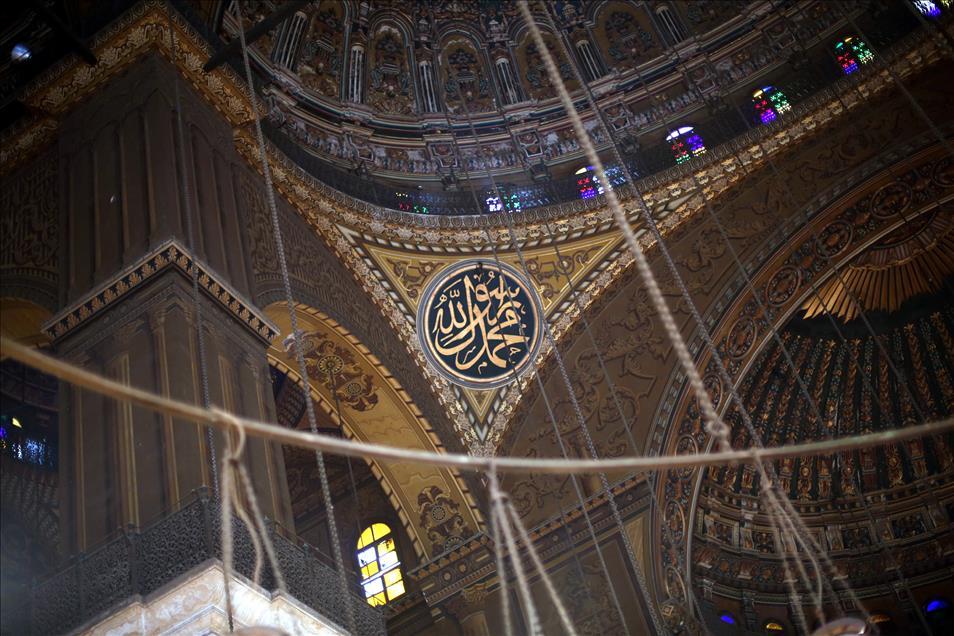
Interior of Mehmet Ali Pasha Mosque (AA)
In some structures, reconstruction processes led to the coexistence of different styles. In later-period examples, Western-influenced decorative elements became more prominent. In particular, tilework became a primary element defining the character of the interior in several sultanic mosques.
Technical solutions in sultanic mosques were developed according to their scale and acoustic requirements. Special measures were implemented, particularly in large-domed structures, to ensure the even distribution of sound.
However, these technical solutions were not uniformly applied across all sultanic mosques; they varied according to the period and conditions of construction.
Sultanic mosques are directly tied to the representation of the Ottoman dynasty by their patrons. These structures were commissioned by sultans, valide sultans, and other dynasty members; in some cases, construction, reconstruction, or completion was carried out by different dynasty members.
A significant portion of sultanic mosques were commissioned by Ottoman sultans. From the early period, the mosques built by Orhan Gazi, Mehmed I, and Murad II in Bursa, Edirne, and surrounding areas constitute the earliest examples of dynastic architecture. After the conquest of Istanbul, Fatih Sultan Mehmet’s conversion of Ayasofya into a mosque and his commissioning of the Fatih Camii institutionalized the sultanic tradition in the capital.
Bayezid II, Selim II, and Suleiman the Magnificent brought this tradition to the scale of classical architecture; structures such as the Süleymaniye and Selimiye stood out for their monumental qualities. The Sultanahmet Camii, commissioned by Ahmed I, was constructed during a period when traditional legitimacy was being questioned.
The tradition of commissioning sultanic mosques continued in later periods; the Nuruosmaniye, Lâleli, Beylerbeyi, and Büyük Selimiye mosques demonstrate that the sultan patronage tradition persisted into subsequent eras.
Sultanic mosques were not only commissioned by sultans but also by female members of the dynasty. The two mosques of Mihrimah Sultan, the Atik Valide Camii of Nurbanu Valide Sultan, the Vâlide-i Cedid Camii of Gülnuş Emetullah Valide Sultan, and the Çinili Camii of Kösem Sultan are among the examples of this tradition.
The initiation of the Yeni Cami by Safiye Sultan and its completion by Turhan Hatice Sultan, along with the construction of the Pertevniyal Valide Sultan Camii, demonstrate how dynasty women gained public visibility through architectural patronage.
Some sultanic mosques were destroyed by earthquakes and other causes and subsequently rebuilt in later periods. The reconstruction of the Fatih Camii after the 1766 earthquake and the later renovation of the Eyüp Sultan Camii are examples of this process.【11】
[1]
İshak Kızılaslan, “Osmanlı’dan Günümüze İstanbul Selâtîn Camileri ve Görevlileri,” Marmara Üniversitesi Açık Erişim, 31 Aralık 2022, Erişim Tarihi 2 Mart 2026, 1366, https://openaccess.marmara.edu.tr/server/api/core/bitstreams/5ee6eae8-dc14-4e0c-918d-191fae0ebd6e/content.
[2]
Pehlul Düzenli, “Lâleli Cami Vakfiyesi Bağlamında Osmanlı Dönemi Selâtîn Câmilerinde Hizmetler ve Görevliler,” Trabzon İlahiyat Dergisi 12, sy. 1 (2025): 363. https://dergipark.org.tr/tr/download/article-file/4638077.
[3]
Yıldıray Özbek, “İdeolojinin İnşası: 15-16. Yüzyıl Osmanlı Selatin Camileri,” Erişim Tarihi 2 Mart 2026, 548, https://dergipark.org.tr/en/download/article-file/977589.
[4]
Özbek, “İdeolojinin İnşası: 15-16. Yüzyıl Osmanlı Selatin Camileri,” 538.
[5]
Özbek, “İdeolojinin İnşası: 15-16. Yüzyıl Osmanlı Selatin Camileri,” 557.
[6]
Özbek, “İdeolojinin İnşası: 15-16. Yüzyıl Osmanlı Selatin Camileri,” 557.
[7]
“Balıkgözünden Payitahtın Selatin Camileri,” TRT Türk, Erişim Tarihi 2 Mart 2026, https://www.trtturk.com.tr/yasam/balikgozunden-payitahtin-selatin-camileri_451.
[8]
İshak Kızılaslan, “Osmanlı’dan Günümüze İstanbul Selâtîn Camileri ve Görevlileri,” Marmara Üniversitesi Açık Erişim, 31 Aralık 2022, Erişim Tarihi 2 Mart 2026, 1369-1370, https://openaccess.marmara.edu.tr/server/api/core/bitstreams/5ee6eae8-dc14-4e0c-918d-191fae0ebd6e/content.
[9]
“Osmanlı’nın Hanedanlık İmzası: Selatin Camileri,” TRT Haber, Erişim Tarihi 2 Mart 2026, https://www.trthaber.com/foto-galeri/osmanlinin-hanedanlik-imzasi-selatin-camileri/63517.html
[10]
Çiçek Güneş, “İstanbul'daki Bazı Selatin Camilerinde Vitray Sanatı” (Yüksek Lisans tezi, 2021), 45, https://acikerisim.ege.edu.tr/bitstreams/928a17ff-2ab5-4cc5-b7c7-a515c9ea137b/download
[11]
Çiçek Güneş, “İstanbul'daki Bazı Selatin Camilerinde Vitray Sanatı” (Yüksek Lisans tezi, 2021), 20.


Concept and Nomenclature
Etymology
Nomenclature by Status in Ottoman Architecture
Usage of the Term
Construction Tradition and Legitimacy
Traditional Conditions
Victory and Booty Principle
Funding Principle
Break with Tradition: The Reign of Ahmed I
Geographical Distribution
Istanbul
Former Capitals: Bursa and Edirne
Princely Governorates and Other Centers
Beyond Ottoman Borders
Major Sultanic Mosques in Istanbul
Symbolic Structures of the Conquest
Classical Period
Works of Dynasty Women
Late-Period Stylistic Changes
Architectural Features
Plan and Dome System
Structural System and Spatial Organization
Minaret Arrangement and Symbolism
Decoration and Interior Design
Technical Applications
Patrons and Processes
Sultan Patronage
Dynasty Women
Reconstruction and Completion