


 Recently Added:
This article was automatically translated from the original Turkish version.
Take Off İstanbul 2025, Türkiye Teknoloji Takımı Vakfı (T3 Vakfı), in collaboration with the Ministry of Industry and Technology of the Republic of Türkiye and the Presidency of Investment and Finance of the Republic of Türkiye, is a technology and entrepreneurship summit. The event took place on 10–11 December 2025 at the Istanbul Fair Center.
The summit was organized as the eighth edition of Take Off İstanbul under the umbrella of TEKNOFEST. The event aimed to strengthen Türkiye’s innovation ecosystem, bring together entrepreneurs and investors on a global scale, and enhance the international visibility of technology-based startups.
In the 2025 edition, over 500 startups from 40 countries, more than 260 investors, 85 partners and 12 sponsoring institutions participated. Countries including Spain, Bangladesh, North Macedonia and Uzbekistan represented their own innovation ecosystems through national pavilions.

Take Off İstanbul event area, 10 December 2025 – (Anadolu Ajansı)
Take Off İstanbul 2025 brought together over 500 startups from 40 countries and more than 250 investors. The event was supported by 80 partner institutions and 13 sponsors. In 2025, Spain, Bangladesh, North Macedonia and Uzbekistan participated with their national pavilions to showcase their domestic technology ecosystems. The participant structure of the event includes public institutions, private sector representatives, investment funds, academic institutions and technology entrepreneurs.
The startups participating in the summit operate in areas such as generative artificial intelligence, financial technologies, deep technology and sustainability. Participants include international venture capital funds, technology companies, government agencies, accelerator centers and investment networks. According to 2024 data, the event hosted 250 startups from 23 countries and 125 investors; in 2025, these numbers nearly doubled.
Participation in the summit is free and registration is conducted online via the website “takeoffistanbul.com/tr”. As part of the event, special sessions titled “Founder Day” and “Investor Prelude” are organized for entrepreneurs and investors. Visitors can attend panel discussions on the main stage, startup pitches and interactive experience zones.
The main stage program of Take Off İstanbul 2025 was structured around themes of generative artificial intelligence, deep technology, financial technology (FinTech) innovations, global investment strategies and sustainability.
The event program featured panels and presentations focused on different areas of the technology and entrepreneurship ecosystem. Participants engaged in sessions on investment, innovation and digital transformation. Special educational sessions were also added for students and young entrepreneurs, including seminars designed to guide young talent through technology development and startup creation processes.
To enhance startup visibility, two distinct stage systems were used at Take Off İstanbul 2025. Growth-stage startups presented on the “Main Stage,” while early-stage startups presented on the “Startup Stage.” Startups on both stages introduced their products and solutions to potential investors, institutional representatives and visitors.
Within the event area, interactive experience zones were created alongside startup pitches. These zones provided visitors with opportunities to test technology-driven applications and engage directly with entrepreneurs.
Representatives from various sectors at national and international levels participated in the summit. Speakers included Minister of Industry and Technology Mehmet Fatih Kacır, President of the Presidency of Investment and Finance Ahmet Burak Dağlıoğlu, Chairman of the Board of Trustees of T3 Vakfı Selçuk Bayraktar, CEO of GenAI Works Steve Nouri, CEO of Turkcell Dr. Ali Taha Koç, CEO of ASELSAN Ahmet Akyol, Founder of Xatoms Diana Virgovicova, President of the Türkiye Space Agency Yusuf Kıraç, CTO of Hepsiburada Alexey Shevenkov, General Manager of Uber Türkiye Ludovic Georges, representative of Ant International Alex Jin and İlhan Yılmaz from Monster Bilgisayar.
Anadolu Ajansı. "Take Off Girişim Zirvesi, 10–11 Aralık’ta İstanbul Fuar Merkezi’nde Gerçekleştirilecek." Accessed December 10, 2025. https://www.aa.com.tr/tr/teknofest/take-off-girisim-zirvesi-10-11-aralikta-istanbul-fuar-merkezinde-gerceklestirilecek/3765325#
Istanbul Fair Center (İFM). "Take Off Istanbul 2025." İFM Resmî Web Sitesi. Accessed December 10, 2025. https://ifm.com.tr/tr/fuarlar/takeoff-istanbul-2025
T3 Entrepreneurship Center (T3GM). "Bölgenin En Kapsamlı Teknoloji ve Girişim Etkinliği." T3 Vakfı Resmî Sitesi. Accessed December 10, 2025. https://t3gm.t3vakfi.org/tr/basvuru/take-off-istanbul/
TAKE OFF Istanbul. "Konuşmacılar." Resmî Web Sitesi. Accessed December 10, 2025. https://takeoffistanbul.com/tr/konusmacilar/
TAKE OFF Istanbul. "Resmî Web Sitesi." Accessed December 10, 2025. https://takeoffistanbul.com/tr/?gad_source=1&gad_campaignid=23097517427&gbraid=0AAAAA-CZ58ZpKqege7qtj8V8MktxKgoWS&gclid=Cj0KCQiArt_JBhCTARIsADQZaymCM8iDX835ucJ1gOftkKDLxJJ2voKT4KKpz-niD3bStM_xCTbmNpAaAiaCEALw_wcB
TEKNOFEST. "Take Off 2025 Ziyaretçi Kayıtları Başladı." TEKNOFEST Resmî Web Sitesi. Accessed December 10, 2025. https://www.teknofest.org/tr/content/announcement/take-off-2025-ziyaretci-kayitlari-basladi/
Take Off İstanbul 2025 began for the eighth time on December 10, 2025, at the Istanbul Fair Center, with an opening speech by Minister of Industry and Technology Mehmet Fatih Kacır.
In his opening address, Minister of Industry and Technology Mehmet Fatih Kacır said that talented individuals with bold ideas had come together to transform lives and shape the future.
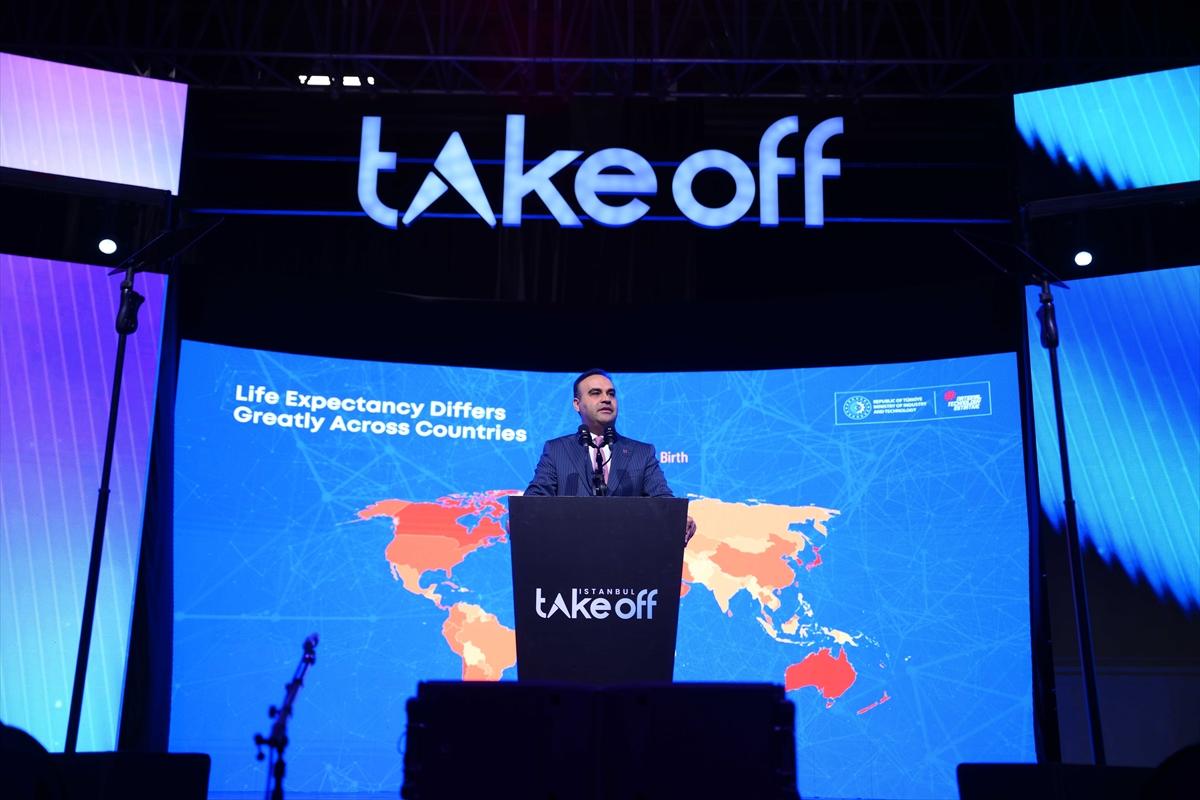
Minister of Industry and Technology Mehmet Fatih Kacır speaking at Take Off İstanbul 2025, December 10, 2025 - (Anadolu Agency)
Kacır noted that humanity has achieved astonishing feats over the past 200 years, overcoming world wars, splitting the atom, mapping the human genome, and connecting the world through a digital nervous system. He emphasized that we have moved from steam engines to smart factories, from the first industrial revolution to the age of artificial intelligence.
Speaking about global progress, Kacır said, “These are not minor victories. But if we end the story here, we are only telling half the truth. Today, a child born in the country with the highest life expectancy can expect to live 30 years longer than a child born in the country with the lowest life expectancy.”
Kacır pointed out that wars and violent conflicts continue, with the most painful example being in Gaza, and stated that despite the production of more advanced medicines, millions of people living in conflict zones still lack access to basic healthcare services.
Kacır said, “Yes, humanity has made progress. But this progress has not been achieved fairly. Urgent problems strongly remind us of the need for urgent action.”
Minister Kacır highlighted that over the past 22 years, Türkiye has made significant strides in nearly every sector: exports have risen from $36 billion to $270 billion, manufacturing value-added has moved from 21st to 14th place globally, and Türkiye has become a key player in Europe’s value chain, from solar panels to commercial vehicles and from white goods to iron and steel.
Kacır added, “We are confident this momentum in industry will continue because we have built a strong R&D and innovation infrastructure. Since the early 2000s, Türkiye’s annual R&D expenditures have increased from $1.2 billion to $20 billion. The share of R&D in our national income has risen from 0.5% to 1.5%.” He noted the growth in the number of companies and employment in the R&D sector and emphasized that the defense industry has been at the forefront of this transformation.
Kacır pointed to advances in the defense industry, stating, “We have succeeded in this field thanks to strong political will, long-term R&D investments, continuous investment in qualified human capital, and the determination to view paradigm shifts in technology as opportunity windows.”
Kacır stated: “We recognized early the transformative potential of UAVs. We focused our aerospace efforts on this new domain. As a result, within a relatively short time and with far more limited budgets, we achieved capabilities that many countries could not attain even after spending billions of dollars. Our UAV systems, proven in combat, are being exported to numerous partner countries and are widely recognized as game-changing elements in modern warfare. Every major technological paradigm shift represents a similar opportunity window for us.”
Kacır noted that Togg has reached over 80,000 sales in Türkiye and completed its first export to Germany, adding: “Our goal is to replicate such success stories across many sectors to help Türkiye climb even higher on the high-tech ladder. In this journey, our entrepreneurship ecosystem plays a decisive role. We view technology entrepreneurship as the main engine of Türkiye’s new success stories. Our aim is to create an entrepreneurship ecosystem where good ideas never go to waste due to lack of opportunity.”
Kacır described how stakeholders have expanded capital sources for entrepreneurs by establishing funds that bring together public capital and private investors, and by creating joint investment vehicles, referring to the Entrepreneurship Support Program (BiGG).
Kacır stated that total capital investment in Turkish technology startups between 2020 and 2024 reached $5.3 billion, twelve times the amount invested in the previous five-year period, and outlined the support provided to early-stage startups.
Kacır said Turkish entrepreneurs have written games played by hundreds of millions of people, and that these projects have shaped user experiences across Europe, the Middle East, and beyond, setting new standards.
Minister Kacır shared details about initiatives such as TURCORN 100, Türkiye Tech Visa, and Terminal İstanbul, stating that they have transformed the Istanbul Atatürk Airport terminal into “the world’s largest startup hub.”
Kacır added: “I also want to send a clear message: our efforts will not end here. We are extending our support throughout the uninterrupted journey of startups—from their first contact with the ecosystem, through company formation, sustainable growth, to global scaling. We will continue introducing investor-friendly regulations to broaden participation by venture capital funds and angel investors. The public sector will strengthen its role as a lead investor in venture capital funds to attract more international capital. To attract private capital and accelerate innovation, we will launch sector-specific funds in biotechnology, artificial intelligence, and digital transformation. At the same time, we will keep our doors open to frontier technologies through a risk-based, proportionate regulatory approach tailored to Türkiye’s needs.”
Kacır noted that Take Off İstanbul, born under the TEKNOFEST initiative, has evolved into its own distinguished brand, adding that the event serves as the most important runway for innovative ideas to reach global success, allowing investors to directly witness the depth and ambition of Turkish talent.
Following the opening speech, Steve Nouri, CEO of GenAI Works, took the stage. Nouri stated that “2025 is an exciting year for artificial intelligence,” noting that he had received news of diverse innovations from companies and countries around the world.
Nouri said, “Last year, many companies announced new products in generative AI in quick succession. We have seen a surge in multi-tasking AI systems. We have witnessed the emergence of AI capable of generating video, text, and images. Moreover, accessibility to AI has become economically easier. Despite significant advancements, the prices of many models have fallen.”
Nouri noted that Google appeared to lag behind in the generative AI race but would catch up due to its vast data sets, adding, “This has now materialized with the new version of Gemini. Developments in AI have accelerated so rapidly that as soon as a new model is released, we immediately adopt it and begin waiting for the next one.”
The session “From QR Codes to AI: Fintech’s Global Journey” was moderated by Dündar Özdemir, CEO and Board Chair of DSM Payment and Electronic Money Services Inc., with participation from Alex Jin, Executive at Ant International.
Jin stated that his company helps local partners build digital wallets by offering its technology and operational expertise to customers in different countries. He mentioned the development of AliPay+, a solution for cross-border payments and localization, saying, “We built this based on fundamental insights learned from end-user groups and AliPay, evolving from a payment tool into a super-app.” Jin highlighted that AliPay+ connects 1.8 billion users across more than 40 digital wallets with over 150 million merchants in more than 100 markets.
Ahmet Burak Dağlıoğlu, President of the Presidency of Investment and Finance Office, spoke at the panel titled “Türkiye: Regional Powerhouse for Technology and Venture Capital” during Take Off İstanbul 2025. Dağlıoğlu emphasized that their core mission is to attract investment to Türkiye and said they have been actively engaging with the entrepreneurship ecosystem since 2015 to build a successful local environment.
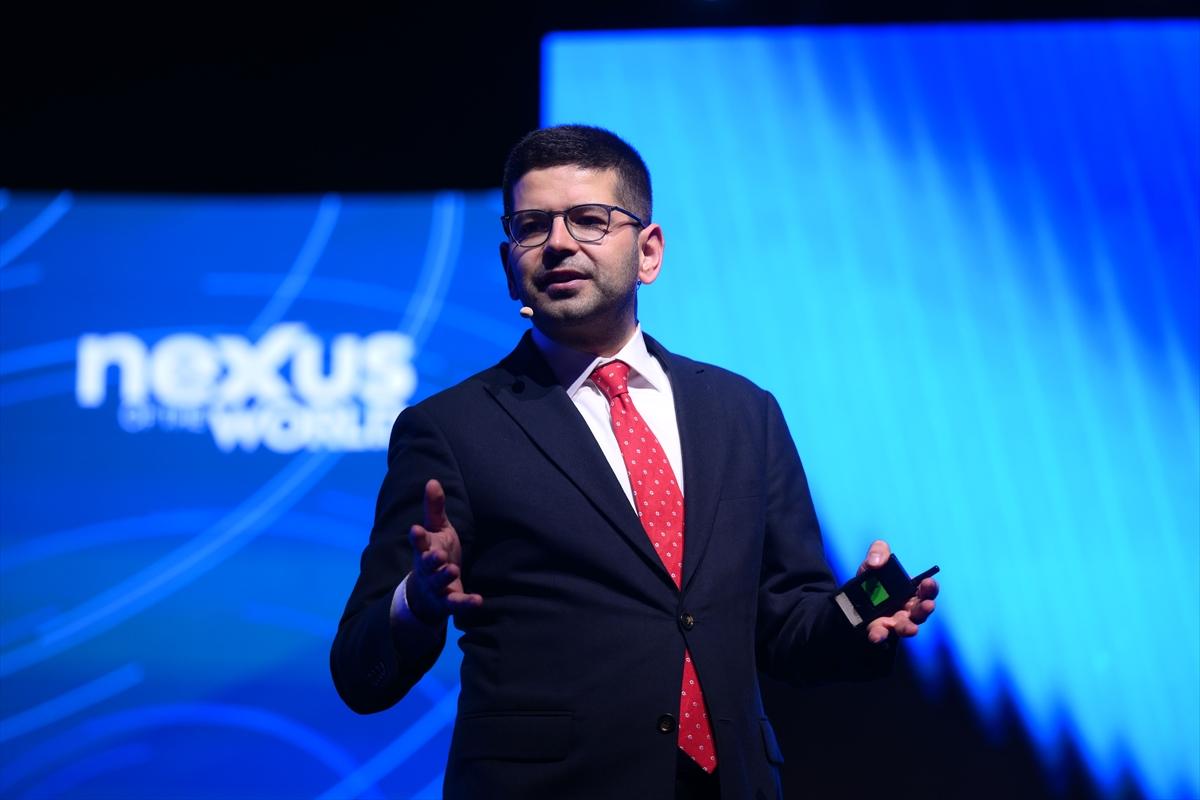
Ahmet Burak Dağlıoğlu, President of the Presidency of Investment and Finance Office, speaking at Take Off İstanbul 2025, December 10, 2025 - (Anadolu Agency)
Dağlıoğlu called Take Off İstanbul one of the flagship events, saying, “We are proud to be a key partner of this event. Every year we organize Take Off to inject capital into the entrepreneurship ecosystem. We have another mission: to take Turkish startups to the global stage.”
Dağlıoğlu noted that they also participate in international events abroad and announced that GITEX GLOBAL will be held for the first time in Istanbul in 2026 under the name “GITEX Ai Türkiye.” He added that they do not only attend international events but also bring them to Türkiye. He pointed out that many graduates of TEKNOFEST and Take Off have founded their own businesses and developed their products, and that they have met these entrepreneurs at global events.
Dağlıoğlu emphasized the importance of the “Start in Türkiye” website for entrepreneurs, stating: “Türkiye has many talented entrepreneurs, and we collaborate to guide them and direct them toward the right investment profiles. You will see more than 20 investors, each with a different strategy. They invest across various sectors and at different stages. Investment amounts can range from hundreds of thousands to several million dollars. Therefore, we created this dynamic platform to best meet your needs. We continuously update it, maintaining constant communication with the investor community. You can currently see more than 70 venture capital funds listed. There are also more than 70 private equity funds investing in technology, and we have covered venture capital funds and mass crowdfunding platforms. Our goal is to guide you optimally based on the appropriateness of investment amounts and fund strategies. We also provide direct access and communication channels to the investor community, allowing you to easily reach fund managers on this platform.”
Ahmet Burak Dağlıoğlu noted that for international guests seeking to invest in Türkiye or establish businesses, there are different concepts available, such as incubators, accelerators, Teknoparks, or technology centers. He explained that Türkiye offers incentives to technology investors and concluded his speech with: “First, if you establish your business in a technology development zone within a Teknopark, you will not pay corporate tax. Second, if you achieve a successful exit, you will not pay capital gains tax. I believe this makes Türkiye one of the best places in the region, perhaps the world, to start a business. In this context, as an office, we would like to introduce to you a new concept dedicated to large corporate activities: the Istanbul Financial Center. This is an area where we support financial services exports to the region, and we have good news this year. We have established a technology development-oriented Teknopark in this area, allowing you to be right next to major financial institutions including large state banks, some private banks, and other financial entities. More importantly, you will be close to regulatory authorities, as they are located within the Istanbul Financial Center, and we have established this technology park dedicated to Türkiye’s FinTech ecosystem.”
In his speech on “The Era of Generative Connectivity,” Turkcell CEO Ali Taha Koç defined the new era emerging from the convergence of AI and connectivity technologies as “Generative Connectivity,” stating that “Turkcell is no longer just an operator but a technology provider that transforms data into value.”
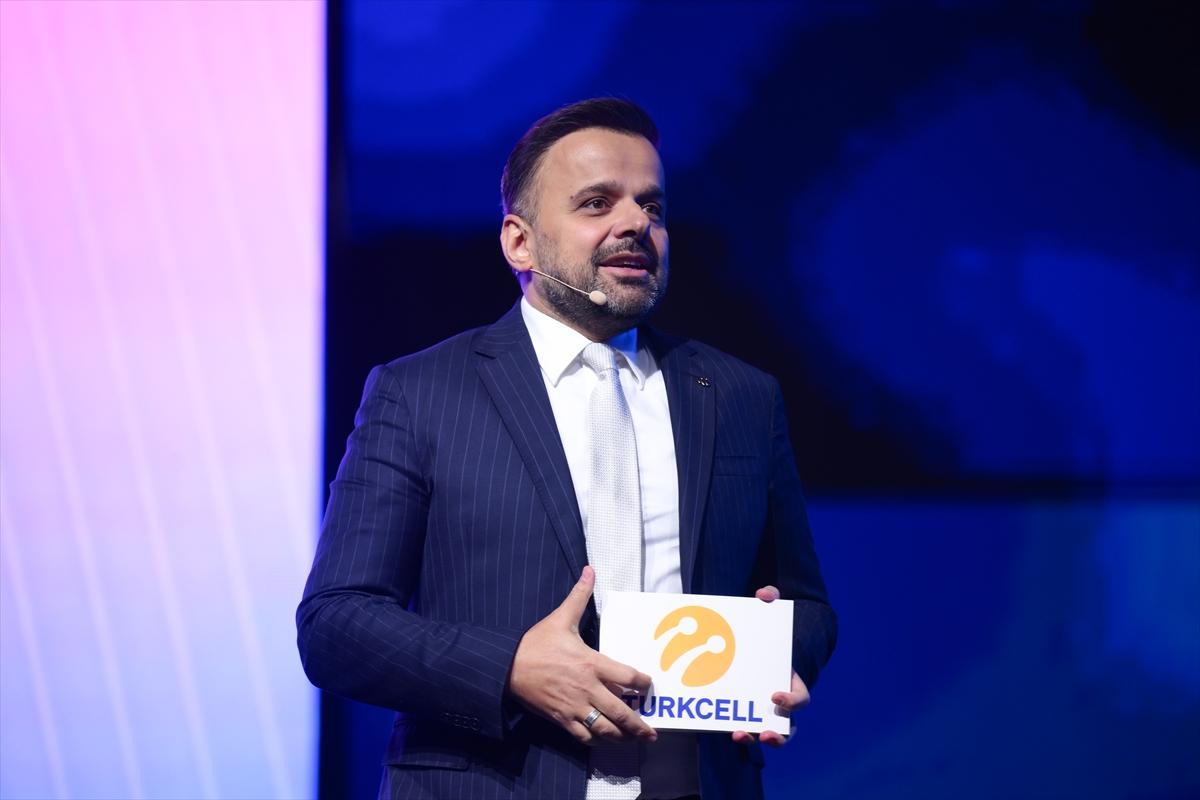
Ali Taha Koç, CEO of Turkcell, speaking at Take Off İstanbul 2025, December 10, 2025 - (Anadolu Agency)
Koç highlighted that global AI investments have reached $1.5 trillion and said that to succeed in this new era, they follow a strategy built on four key layers. He emphasized that the first layer is physical infrastructure including 5G and fiber, and the second is digital infrastructure strengthened through a partnership with Google Cloud. He continued: “We have launched a major investment initiative to ensure data sovereignty over Turkish territory. Through our agreement with Google Cloud, we are turning Türkiye into a regional data center and digital ‘hub.’ Our goal is not only to provide infrastructure but to enable our entrepreneurs to access the latest AI models locally with minimal latency.”
Koç identified the third layer of the strategy as AI-based decision-making systems and the fourth and most critical layer as entrepreneurs. He noted that through Turkcell Venture Capital Funds, they aim to help local startups transform into “Turcorns” and reach the global market. In closing, Koç addressed the changing role of telecom operators, concluding: “In the future, you will not see us merely as companies selling gigabytes or minutes. We are now positioned as providers ensuring data security, overseeing the ethical use of AI, and democratizing cloud access. Our goal is to connect data to value, intelligence to solutions, and entrepreneurs to the future.”
During the first day of Take Off İstanbul 2025, the panel titled “Strategic Leap from Space to Economy” featured a speech by Yusuf Kıraç, President of the Türkiye Space Agency. Kıraç described the evolution of space competition, saying, “The space race, which began in the 20th century as a competition among states, has now transformed into a massive economic ecosystem driven by the private sector.”
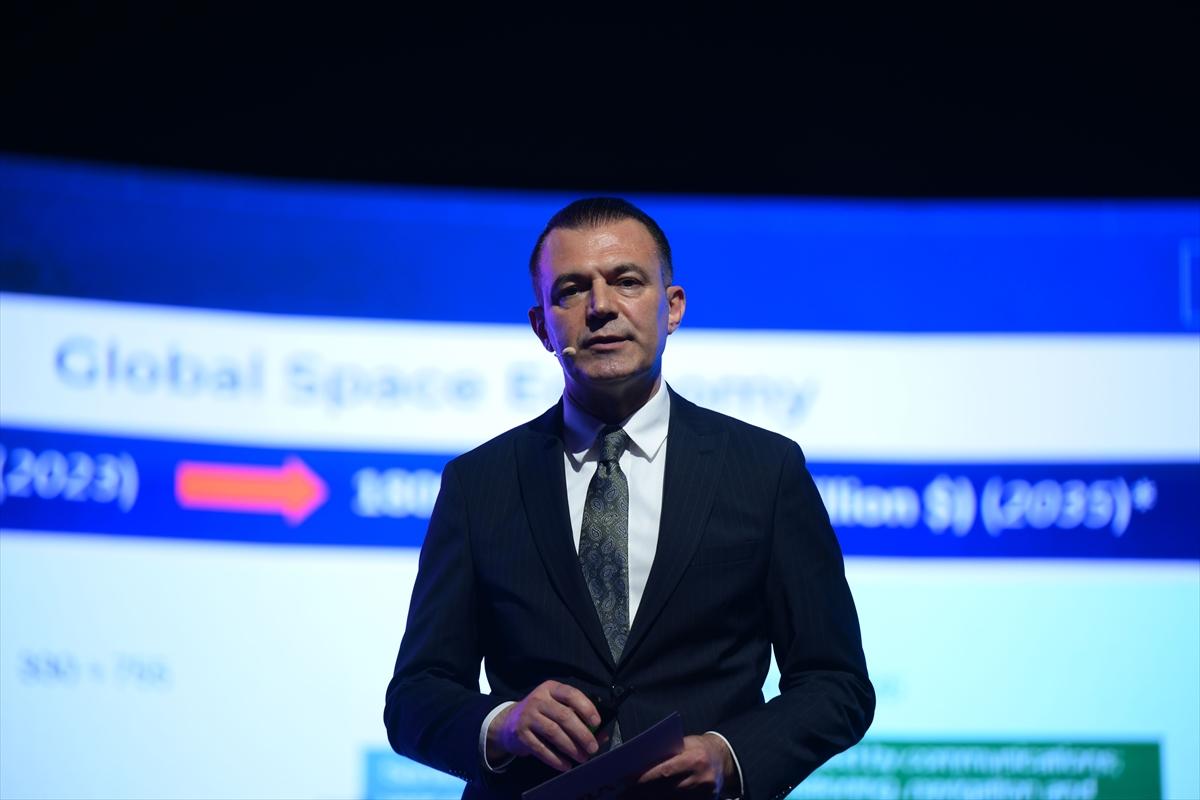
Yusuf Kıraç, President of the Türkiye Space Agency, speaking at Take Off İstanbul 2025, December 10, 2025 - (Anadolu Agency)
Kıraç cited OECD data indicating that more than half of critical space-based infrastructure—covering transportation, telecommunications, energy, food supply security, finance, and emergency management—depends on space-based systems. He said, “If I were to place a jammer here, your phone would instantly lose signal because all timing and communication infrastructure relies on GNSS and satellite connections.” He noted that the cost of launching satellites has dropped from $100,000 per kilogram in the 1980s to $5,000 today, one of the most critical developments accelerating the space economy. As a natural consequence of this cost advantage, the number of satellites launched has increased unprecedentedly in recent years.
Kıraç said, “While approximately 4,000 objects were launched between 2000 and 2020, more than twice that number—around 8,000 satellites—were placed in orbit in just the last three years. This year, over 4,000 new satellites are expected to be launched, and the annual number is projected to exceed 10,000 in the coming years.” He added, “We are organizing the International Space Congress from May 5 to 9, 2026. For the first time, we will provide free space for startups. We expect over 10,000 professionals, manufacturers, and academics to attend. This will be a major opportunity for startups to connect with the global ecosystem.”
The session “The Route of Global Investment: Where Is the New Wave of Innovation Rising?” held on the same day featured speakers Ahu Serter, Founder of Arya Investment Platform and Fark Labs, and Saeed Amidi, Founder of Plug and Play Technology Center.
Ahu Serter stated that Türkiye offers strong potential as an entrepreneurship ecosystem and revealed that they have shifted a significant portion of their investment portfolios toward Türkiye.
Serter said, “Türkiye is a wonderful place to start a new venture.” She noted that their focus is on how companies can leverage technology to transform. Saeed Amidi, founder of Plug and Play Technology Center, emphasized his interest in Türkiye and drew attention to the dynamism of the country’s technology community. Amidi said his entrepreneurial journey began at age 19 and noted that the first company he still manages has reached $1 billion in revenue and $100 million in EBITDA in 2025.
Amidi recounted the origin story of Plug and Play, saying, “Our journey began by renting a small building near Stanford. It became an investment model after hosting companies like PayPal and Google.” He asked, “If this small building could host Google and PayPal, what could a large building achieve?” to illustrate his vision shift.
Amidi said, “Initially, I thought: Whatever happens in Silicon Valley will eventually happen in Germany, Japan, and Türkiye. I invested in technologies following the U.S. But now, this happens much faster. Today, the world is the world of AI and what I call ‘applied AI.’ You cannot compete with large language models like Gemini or OpenAI, but applied AI in specific vertical sectors is an entirely different field. In my view, this is just the beginning, and the future is extraordinarily bright.” He noted that Plug and Play has made 600 AI investments globally and will continue growing in this area in Türkiye.
The panel “Foreign Capital and Regional Impact: The Role of Foreign Direct Investment” was moderated by Merve Zabcı, Partner at Metis Ventures, and featured Batuhan Hakyemez, Senior Investment Manager at DEG; Selma Rasavac Avdagic, Manager of IFC Türkiye Office; and Mehmet Üvez, Acting Country Director of the European Bank for Reconstruction and Development (EBRD) in Türkiye.
Selma Rasavac Avdagic stated that IFC has been operating in Türkiye for 50 years. She emphasized Türkiye’s strategic position as a country and market for IFC, saying, “We support and help Turkish startups grow.”
At the summit, Ümit Kervan, President of Türkiye Health Institutes, delivered a speech titled “From Idea to Product: Producing Health.” Kervan said that the dreams and energy of young people, along with technologies and events like Take Off, have made this possible.
Kervan noted that there are nine institutes under the Türkiye Health Institutes, stating, “Each has professional teams working and producing projects. We are here to act as catalysts in the producing health philosophy, facilitating every step from idea to product and removing barriers to create competitive products.”
İlhan Yılmaz, CEO of Monster Notebook and Semruk Games spoke on the topic “What Holds Us in Our Seats Is the Story,” discussing technology-based game and hardware production processes. İlhan Yılmaz expressed that seeing the entrepreneurship ecosystem at Take Off İstanbul 2025 was “exciting.” Sharing the story of Monster Notebook with summit participants, he said, “For 20 years, we have continuously improved our work. Our desktop and laptop designs have become award-winning.”
The session “How Investors Unlock Global Success from Emerging Markets” was moderated by Mustafa Kopuk, Partner at Domino Ventures, and featured Farhan Lalji, Founder of LTV Capital; Martyn Eeles, Partner at Clarma Capital; and Valeri Petrov, Manager at Eleven Ventures.
Petrov said they have learned many lessons from their work and continue to learn. He emphasized that the most important lesson they have learned is to invest in people with high self-confidence, stating, “Self-confidence is a crucial trait.”
Another session at the summit, “Global Entrepreneurs in Türkiye: The Türkiye Tech Visa Journey,” was moderated by Sadullah Uzun, General Director of National Technology at the Ministry of Industry and Technology.
The session featured speakers Columbus Onwuaso, Founder of Binmatra Technologies; Diana Yafi, Founder of The Caregiving Hub Technology; and Mehdi Ghotbi, Founder of Moshaver Live Technology.
On the first day of Take Off İstanbul 2025, a cooperation agreement was signed between the Türkiye Technology Team Foundation (T3 Foundation) and the Youth Affairs Agency of the Republic of Uzbekistan. The agreement is aimed at the “Science Tashkent” project.

Signing of the cooperation agreement between T3 Foundation and the Youth Affairs Agency of the Republic of Uzbekistan, December 10, 2025 - (Anadolu Agency)
The agreement was signed by Elvan Kuzucu Hıdır, Chair of the Board of Directors of the T3 Foundation; Sadullayev Alisher Zafarovich, Director of the Youth Affairs Agency of the Republic of Uzbekistan; and Nazirov Abdulaziz Abdurasulovich, Director of the Five Entrepreneurship Projects Office under the President of the Republic of Uzbekistan.
Under the signed cooperation framework, the Science Tashkent Project will be implemented within the Youth Center under the Youth Affairs Agency of Uzbekistan in Tashkent. The project will be carried out through collaboration between the T3 Foundation, the Youth Affairs Agency of the Republic of Uzbekistan, and the Five Entrepreneurship Projects Office under the President of the Republic of Uzbekistan.
The workshops to be established under the project are as follows:
The purpose of the agreement is to establish sustainable centers in Uzbekistan where young people can receive education in science, technology, design, and production.
Anadolu Ajansı. "Take Off Istanbul 2025 Başladı." Accessed December 10, 2025. https://www.aa.com.tr/tr/gundem/take-off-istanbul-2025-basladi/3767269#
Anadolu Ajansı. "Take Off Istanbul, Türk Girişimlerini Küresel Arenaya Taşıyor." Accessed December 10, 2025. https://www.aa.com.tr/tr/bilim-teknoloji/take-off-istanbul-turk-girisimlerini-kuresel-arenaya-tasiyor/3767319
Anadolu Ajansı. “Bakan Kacır: ‘Startupların Yolculuğunda Desteklerimizi Şirketin Küresel Ölçeğe Ulaştığı Ana Kadar Genişletiyoruz.’” Accessed December 10, 2025. https://www.aa.com.tr/tr/bilim-teknoloji/bakan-kacir-startuplarin-yolculugunda-desteklerimizi-sirketin-kuresel-olcege-ulastigi-ana-kadar-genisletiyoruz/3767179
Anadolu Ajansı. “T3 Vakfı ile Özbekistan Cumhuriyeti Gençlik İşleri Ajansı İşbirliği Anlaşması İmzaladı.” Accessed December 10, 2025. https://www.aa.com.tr/tr/ekonomi/t3-vakfi-ile-ozbekistan-cumhuriyeti-genclik-isleri-ajansi-isbirligi-anlasmasi-imzaladi/3767359#
Anadolu Ajansı. “Turkcell Genel Müdürü Koç, Take Off Istanbul 2025’te Girişimcilik Ekosistemiyle Buluştu.” Accessed December 10, 2025. https://www.aa.com.tr/tr/ekonomi/turkcell-genel-muduru-koc-take-off-istanbul-2025te-girisimcilik-ekosistemiyle-bulustu/3767399#
On the second day of the event, growth-stage startups presented their projects. Following the presentations, thematic sessions were held across various fields.
The second day of Take Off İstanbul 2025 began with a speech by Selçuk Bayraktar, Chairman of the TEKNOFEST Board of Directors and Chairman of the Board of Trustees of the Türkiye Technology Team (T3) Foundation. The session was moderated by Hakan Çelik and İrem Bayraktar Aksakal. Selçuk Bayraktar opened his address with a greeting to the audience, referencing last year’s summit and framing his talk around the concept of entrepreneurship.
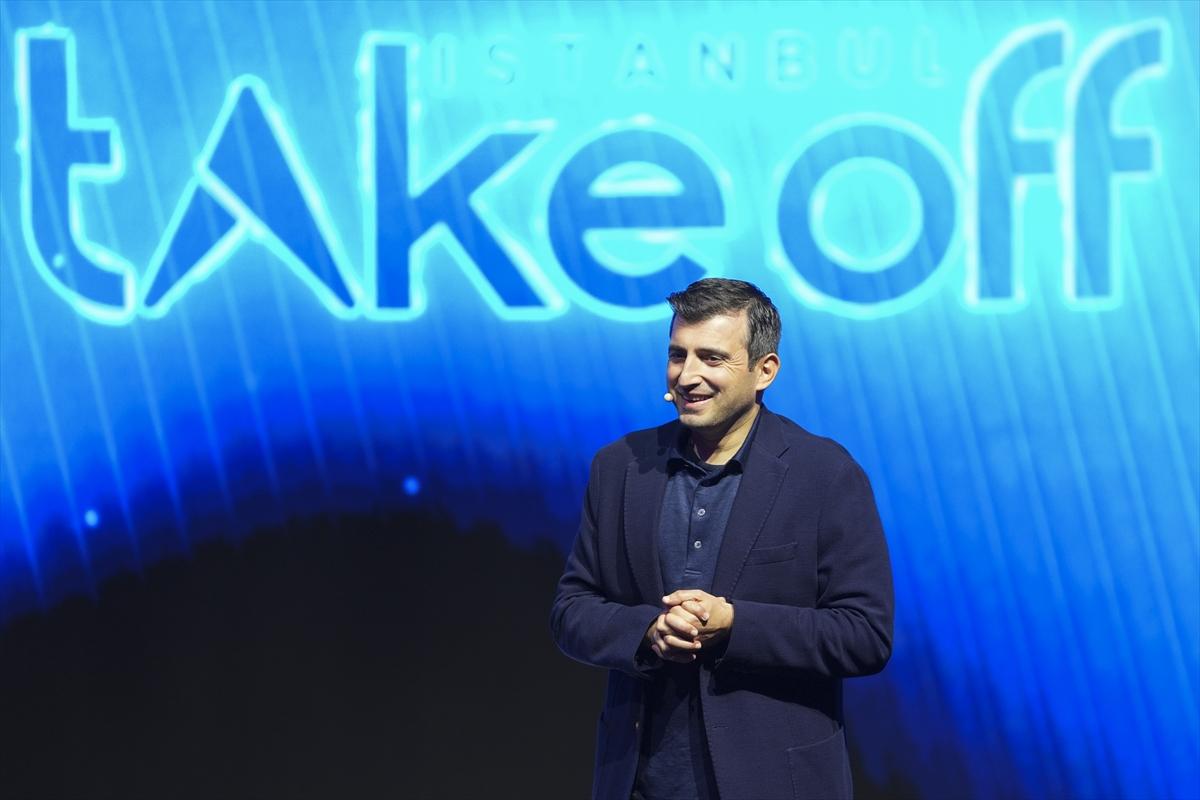
Selçuk Bayraktar, Chairman of the TEKNOFEST Board of Directors and Chairman of the Board of Trustees of the T3 Foundation, speaking at Take Off İstanbul 2025, 11 December 2025 – (Anadolu Ajansı)
“Dear friends, we gathered again last year. Can anyone here remember who was present? Last year we began with the question ‘Where are we?’ and through that question we sought to answer ‘What is entrepreneurship?’” Bayraktar engaged the audience interactively, asking them to share their own definitions of entrepreneurship: “Does anyone remember our answer? Entrepreneurship is courage, sacrifice, determination, hard work, and resilience.”
Bayraktar noted that he had brought along his notes from last year’s speech and referenced its central theme: “I brought my notes from last year’s talk. Yes, we said: ‘Startups will rescue the world from the darkness of the crisis it is being dragged into.’”
Bayraktar began this year’s address with the question: “Who is this community?” and sought to define its composition together with the audience: “This year I want to start with another question: Who is this gathering? Who are the people here?”
Bayraktar announced he would respond to this question with a clip from a documentary, sharing a scene from the 2006 documentary “Özdemir Bayraktar.”
In the later part of his speech, Bayraktar reflected on Baykar’s founding story and its current position: “If we were to go back 20 years and look at Baykar’s journey today… Baykar is now the world’s largest unmanned aerial vehicle company. How did we get here? It seems impossible. A company that derives 90 percent of its revenue from exports. It has aircraft operating in 37 countries. Sixty percent of the global export market for UAVs belongs to Baykar. Ninety percent of its entire revenue comes from exports. Over the last 34 years, its cumulative revenue has reached nearly two billion dollars. It is a massive family of 8,000 highly skilled, high-value engineers.”
A video was then shown illustrating Baykar’s development of unmanned aerial vehicles. The footage traced the journey from its earliest prototypes to today’s advanced systems. Bayraktar shared the following milestones: “In 2004, our first prototype flew. In 2005, the first Turkish guidance system was tested inside a prototype aircraft. In 2007, a robotic helicopter was developed. The same year, the Mini UAV entered the inventory of armed forces. In 2008, these systems were deployed intensively across units. In 2009, the 5-meter class Bayraktar TB2 left its mark on the world.”
Bayraktar highlighted Türkiye’s progress in unmanned aerial vehicles: “When the first version of the TB2 flew in 2009, Israel’s drones were the only ones in use globally. They could not take off or land automatically. America’s drones could not do it either. In 2014, the Bayraktar TB2 became our first SİHA with Roketsan munitions and made its first firing in 2015. From then on, we began to break the backbone of terrorism.”
On the KIZILELMA and AKINCI projects, Bayraktar stated: “In 2009, we began work on the 6-ton AKINCI. Of course, from 6 kilograms to 6 tons… 15 years have passed. Now, when I look at startups here, yes, once you keep an aircraft airborne, these things become possible. You don’t need to overthink ‘how’—we will find the answer together.”
Bayraktar continued with details on the KIZILELMA project: “KIZILELMA has been our goal since day one. It made its first flight in 2022, one year before the Republic’s 100th anniversary. We never wanted to fall behind on our promises. We have always taken this as a duty. At TEKNOFEST 2023, we demonstrated flight capabilities that will shape the future of aerial combat. For the first time ever, two unmanned fighter aircraft performed a coordinated flight.” Bayraktar also highlighted the success of the TB3: “The TB3 made its first 1.5-ton flight in 2023. It became the world’s first aircraft to take off and land from short-pitch ships. KIZILELMA entered series production. It made its first flight in 2024, with its series variant featuring more advanced systems. The Bayraktar TB3 has achieved firsts in world history on the Blue Homeland.”
Bayraktar concluded by addressing KIZILELMA’s weapons testing and global impact: “In 2025, KIZILELMA conducted its first firings using munitions developed by ASELSAN and Roketsan. We have just executed a flight that will revolutionize global aerial combat. Right beside me, I was flying; to my left was the CEO of ASELSAN; inside the F-16 was our Commander of the Air Forces. For the first time in world history, an unmanned fighter aircraft locked onto and engaged a beyond-visual-range target using its own radar. We did this with our own aircraft, our own radar, and our own munitions.”
“This flight has rewritten the history of global aerial combat. I warmly greet the sun-faced children of our civilization who will build the future.”

Selçuk Bayraktar, Chairman of the TEKNOFEST Board of Directors and Chairman of the Board of Trustees of the T3 Foundation, speaking at Take Off İstanbul 2025, 11 December 2025 – (Anadolu Ajansı)
In the later part of the session, moderator Hakan Çelik asked Bayraktar about Baykar’s recent steps in space and nuclear technology: “For a country to enter a new category, two key areas are essential: space and nuclear technology. I see Baykar making bold moves in both. Can you share with us what you plan to do and your vision in these fields?”
Bayraktar responded in two parts, beginning with a historical reference: “Do any of you know Fergani? By the way, our dear Minister of Youth Affairs from the Republic of Uzbekistan, Ali Bey, is here. Has anyone ever traveled to the Fergana Valley? To Samarkand or Tashkent? Yes, a few of you seem to. Does anyone here know Fergani well? Our space initiative, following Kızılelma and our highest atmospheric platform, is called Fergani. We now have an incredible engineering team of 130 people working day and night to push the boundaries of our sky.”
Bayraktar outlined the core objective of the Fergani initiative: “We aim to build a global positioning system. We have launched our first satellite and activated our orbital transfer vehicle. Orbital transfer vehicles are systems that move satellites from one orbit to another. Today’s low Earth orbit technology, popularized by Starlink, will form the backbone of the internet infrastructure of the future. We intend to be part of this race.”
He emphasized the strategic importance of independent global positioning systems: “We aim to build a global positioning system. We have already placed our first satellite on our orbital transfer vehicle. These transfer vehicles lift satellites from low orbits to higher ones. Think of it this way: Low Earth orbit satellites have become very popular, especially through the Starlink project. Near-Earth internet technology will leave its mark on the future, and fierce competition is underway in this field. Equally critical are global positioning systems for our independence. These systems can be manipulated or deceived. Imagine driving a car, but your device shows you in a completely different location—that is happening today. Our region is one of the most targeted areas for such interference. There is also ‘spoofing’—a form of deception that is critical for ships, vehicles, and aircraft.”
Selçuk Bayraktar listed existing global positioning systems to clarify Türkiye’s goal: “What global positioning systems exist today? Russia’s GLONASS, the United States’ GPS, China’s BeiDou, and Europe’s Galileo. There are also supporting systems. We established the Fergani initiative using our own resources and revenue from high-tech exports to build our own system.”
Bayraktar described the future applications of Fergani’s systems: “To dominate the seas, you must control the skies; to dominate the skies, you must have a presence in space. All these domains must work as one system. Therefore, we established the Fergani initiative to support the journey of our country and our friendly and brotherly regions. Fergani is the name of a Turkish astronomer from our history—a name rooted in our civilization. I recommend you research him. He was among the first to propose that the sun has an orbit. Our global positioning system will be named Ulubey.”
Bayraktar also shared technical details on Türkiye’s space infrastructure and launch systems: “We have launched experimental satellites and tested our orbital transfer vehicle. We are now continuing on this path. Within five years, we aim to reach space using our own launch vehicles. These are large rockets. Imagine enlarging a soda can into a metal tank filled with fuel. We are talking about a 120-ton rocket capable of carrying a 2-ton payload into a 500-kilometer low Earth orbit.”
Bayraktar confirmed that Türkiye has built a spaceport in Somalia: “Türkiye now has a space launch station. Normally, such facilities are built along ocean coasts, but we have leased a 30 by 30-kilometer area in Somalia, near the equator. Türkiye now has a spaceport. Imagine Uzbekistan cannot reach the sea without crossing two countries—access to the sea is as vital as access to space. There are only about a dozen such locations worldwide, and the one in Somalia is among the best. Its strategic value is immense because it lies within Türkiye’s heartland. The construction of this space station was initiated by the state, and Roketsan will be one of its key users. In the future, we aim to launch our own rockets from here.”
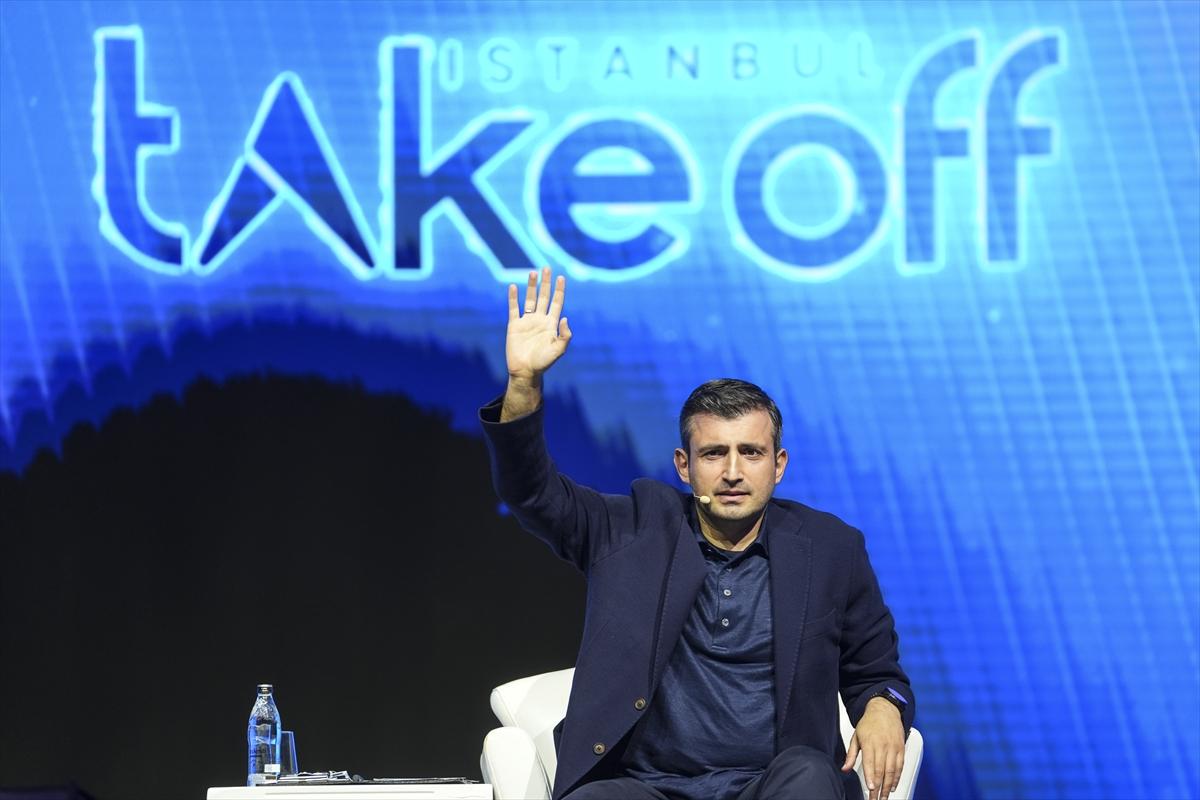
Selçuk Bayraktar, Chairman of the TEKNOFEST Board of Directors and Chairman of the Board of Trustees of the T3 Foundation, speaking at Take Off İstanbul 2025, 11 December 2025 – (Anadolu Ajansı)
Bayraktar announced the establishment of a new initiative called TMRS for rocket technology: “To develop these vehicles independently, we founded the TMRS initiative. It is new, about a year old. Energy independence is critical. Many of our AI expert colleagues are here—now, when discussions focus on operations per second, the most fundamental question is: ‘How much energy do I have?’”
He explained based on the fundamental forces of the universe: “There are four fundamental forces in the cosmos: First, gravity, which binds us to the ground. Second, the much stronger electromagnetic force, which holds matter together. The other two—weak and strong interaction forces—are confined within the atomic nucleus. The primary forces enabling human work are the electromagnetic force and those within the nucleus.”
Bayraktar described the name and goal of the initiative: “When you burn fuel, you generate electromagnetic force through chemical reactions and convert it into mechanical work. But when you split the nucleus, the energy released is two million times greater. One kilogram of fuel can power a car for hundreds of kilometers; with nuclear energy, that distance multiplies. With one kilogram of water or uranium, you can generate 100,000 times more energy. Therefore, we established the TMRS initiative to develop small modular reactors. It has been operating for about a year. Nuclear reactors are among the simplest heat engines. A gas heater at home is a heat engine: it burns fuel to produce heat. Cars do the same, converting fuel into mechanical work. But a nuclear reactor is like a large pressure cooker. Türkiye has an industrial infrastructure capable of easily developing this technology because we already produce far more complex machines—jet engines and car engines.”
Bayraktar continued: “If we are to have computational power, there is no other path. High-energy systems can only be sustained by nuclear power.” He spoke about competitions organized by TEKNOFEST to inspire youth in this field: “Therefore, for the past two years, TEKNOFEST has held nuclear reactor design competitions. We have received over a hundred applications—hundreds of young colleagues have submitted reactor designs. Our goal is to expand human capacity in this field and ensure Türkiye gains the capability to develop this technology.”
In the next segment, moderator Hakan Çelik asked about the next TEKNOFEST event: “Selçuk Bey, I have never seen an event like TEKNOFEST anywhere in the world. Its excitement, participation numbers, and thirst for learning are truly unique. When and where will the next TEKNOFEST be held?”
Bayraktar made the first official announcement regarding the 2025 schedule: “Yes, we said Southeastern Türkiye. It will be held in Şanlıurfa. Let Elvan Hanım announce the date.” Elvan Kuzucu Hıdır, Chairman of the T3 Foundation Board of Directors, provided the following information from the stage: “It will take place between 30 September and 4 October in Şanlıurfa.” Bayraktar confirmed: “Yes, 30 September to 4 October in Şanlıurfa.”
Moderator Hakan Çelik praised the decision: “Selçuk Bey, I congratulate you for choosing Şanlıurfa as one of the Southeastern Anatolian provinces. In northern Mesopotamia lie Karahantepe and Göbeklitepe, among the oldest human settlements in history. This region, with its ancient hills, is a must-see. Thousands of young students and citizens here have a deep interest in technology. Congratulations in advance, and thank you for sharing this information.”
Later in the program, moderator İrem Bayraktar Aksakal asked Bayraktar about the motivation behind T3 Foundation’s social and cultural initiatives: “You support various projects beyond startups—Can Sağlığı Vakfı, Kültür ve Medeniyet Vakfı. I would like to ask frankly: What is the core motivation behind your work in these areas? Entrepreneurs need real motivation to rise after falling. What is your motivation? How can entrepreneurs find theirs?”
Bayraktar responded: “This is a very important question. As an engineer who has dedicated his life to national technology, particularly in unmanned aerial vehicles within the defense and aerospace industry, I have observed: What makes a struggle meaningful is not only the goal, but how it is pursued and with whom. If you have no team, if you try to do everything alone, something is missing. All these efforts are ultimately for humanity—for our generations and for humankind. That is why we founded T3—not just to sit at our own summit, but because everything else would be incomplete. In Türkiye, even living comfortably within such high technology is not easy. Therefore, this struggle must be comprehensive, moving forward hand in hand with all fields.”
What happened in defense and unmanned aerial vehicles must also happen in other fields, or the story remains incomplete. Earlier, our brother Abdülkadir spoke about agricultural initiatives. Yes, we are building aircraft, but we cannot find food. We are polluting nature and the environment. A livable future is impossible in such a world. We are dependent on food—we cannot find bread. Therefore, progress is only possible when all dimensions move together. That is why we founded the Kültür ve Medeniyet Vakfı—to answer the question ‘why?’ through art and civilization.”
Can progress exist without art? Can we touch humanity without it? Look at the cosmos and human nature: humans are drawn to perfection. What they seek is perfection. Look at creation through the eyes of the scientist, the physicist, and the artist. Everywhere there is aesthetics, harmony, art. In such a universe, civilization without art is impossible. That is why our Kültür ve Medeniyet Vakfı was founded for this purpose.”
We also have the Can Sağlığı Vakfı—a structure that launches a voluntary mobilization for scientific and medical research to contribute to public health. We now have nearly 80,000 volunteers. There are passionate individuals working in the medical community. They serve wholeheartedly to heal and address shortcomings.”
I spent my years in engineering faculties, but my medical colleagues are far more social. We love talking to machines; they speak directly to people. They conduct voluntary screenings and health campaigns across the country. With minimal resources, they achieve great things. I sincerely congratulate them all—just as I congratulate our volunteers at Take Off and TEKNOFEST.”
During the next segment, audience questions were taken. Hasan Santral Küçükoğlu, a law student from İstanbul 29 Mayıs University, asked Selçuk Bayraktar: “Defense and technology are now advancing in a multidisciplinary environment. For young people interested in defense and technology but not engineers, what skills should they develop?”
Bayraktar responded by emphasizing the importance of teamwork: “All our work is done in teams. The spirit of the team is the most crucial element. Baykar now has nearly 8,000 people and operates in six countries. We have teams in 37 countries. We have facilities in Altınköy. Think… we have colleagues from 38 different countries. When you consider all our activities across the globe, for teams and startups, the team itself is more important than the idea. Teamwork… this is something education systems do not teach. Education systems reward individuals who are selfish yet highly successful, who score high marks in exams.”
Your character may be incompatible with teamwork, but life will judge you. It will measure your sacrifice, your integrity, your honesty. These are invaluable. Is there a course on loyalty? No. Therefore, these qualities are more important than your work. Your reliability, your honesty, and ultimately, the meaning you leave behind—the meaning of your work. Humanity, in a sense, is in a vacuum of meaning. That is why we see the world slipping into darkness.”
Following Bayraktar’s remarks, İrem Bayraktar Aksakal commented on the role of social science students in the technology world: “Social science students often worry about where they fit in the technology landscape. However, with the rise of fields like startup law, legal processes centered on AI and technology are becoming more visible. As T3 Foundation, we are raising awareness that social sciences and hard sciences must progress together.”
Hakan Çelik highlighted the international success of the Bayraktar TB2 and asked about Baykar’s global strategy: “The TB2 proved its worth on the battlefield and became the world’s most important platform in its category. It is now a combat-proven system. With this success, Baykar entered the global league and today is one of the most important players in UAV/SİHA production. This is a tremendous achievement. You are no longer a regional actor but a global one. You have entered a partnership with Leonardo, a major Italian institution. Can you share some insights into Baykar’s global strategy?”
Bayraktar explained Baykar’s approach to technology development and strategic goals: “We are advancing toward the future through vertical technologies. The initial steps we took in unmanned fighter aircraft have benefited not only Türkiye but also our partners—ASELSAN, TÜBİTAK, Roketsan—over several years. When you lead in aviation, you set the rules of the game. Think of it like surfing: you ride the wave of technological progress and innovation. If you fall behind, your task becomes extremely difficult. Therefore, we are constantly shaping the future through innovation.”
Ultimately, we are not merely a technology development organization. Our goal is to drive this transformation. We set a goal in defense industry and aim to extend it to all civil sectors. One of the purposes of Take Off Startup Summit is exactly that—to transform the generation nurtured by TEKNOFEST into institutions that change and transform the world… a construction project.”
In the final segment, Salim Sağlık, a student from Tekirdağ Namık Kemal University, asked Bayraktar about his personal strategy: “As an aspiring entrepreneur, I am curious: Is there a personal strategy you apply that led you to success but that most people overlook? Is there a secret?”
Bayraktar explained his personal approach around the pursuit of meaning: “The most valuable thing that remains after all this journey is meaning. Why did you do it? Sometimes it helps to place life’s values side by side. I look at my list: faith comes first. I believe hope… I have mentioned this on air several times. Have your own list. I also have my personal roadmap—a brief summary of what I want to do in life. If God grants me the opportunity, the institutions I wish to establish and the fields I wish to enter…”
We established a high-tech institute, and thanks to God, our high school for gifted students is progressing well. Our space-related work continues. Our AI initiative, T3 AI… Has anyone here used or experienced KÜRE, the digital encyclopedia? There was a booth here. Indeed, the most valuable concept… for the first time in this era, a clearly defended concept has become something hidden behind a veil, defended by dark forces.
But it is an invaluable thing. I recommend KÜRE to everyone. It will be a priceless contribution to our civilization, especially in the age of disinformation, lies, and AI, providing a vital answer to the question: ‘What is knowledge for? What is it for humanity?’ I frequently return to this list and try to remember what truly matters in life. I hope I have answered your question, Salim. Thank you.”
Next, the floor was given to Cem Yılmaz, a student from İstanbul Aydın University, who asked: “What aspects of the experience gained in unmanned aerial vehicles can be transferred to space vehicles or orbital systems?”
Bayraktar responded with a technical explanation: “They are very similar. Satellite systems are not more complex or advanced than ours; they simply operate under different conditions—different thermal and radiation characteristics. We operate within the atmosphere. Compared to an unmanned aircraft, a satellite system operates in a far more extreme environment.”
Consider rocket motors and launch systems: an unmanned aircraft may operate for 10,000 hours, but a rocket motor operates for only two minutes. If it runs for 20 minutes, it is a major event. They are recovered and reused repeatedly. So the characteristics differ, but the systems are very similar: avionics, electronics, and software are nearly identical.”
In the closing segment, moderator Hakan Çelik asked about Türkiye’s defense industry export performance: “Turkish defense industry exports are approaching 10 billion dollars. Baykar alone accounts for about 2 billion, even slightly more. This is a great achievement. How do you evaluate the overall performance of Turkish defense industry institutions? Where does Türkiye stand in global competition?”
Bayraktar offered a general assessment of Türkiye’s defense industry: “Türkiye’s position is very strong and highly ambitious. This is happening precisely as the old world is dying. We see a lack of a spirit of struggle. Türkiye’s ambition is excellent. The more we reduce our dependencies on foreign technologies and choose not to rely on external sources, the further we will progress.”
I see this clearly. But if we, in a world where foreign technologies are so widely embraced, fail to value our own, that is where we truly lose. I consider this extremely important. Turkish defense industry has surpassed a threshold—not only for itself but for all friendly and brotherly regions.”
It has proven its technological capability and broken our long-standing technological dependency. There is still more to do. We must continue to assert: We will develop the world’s best technology, and we will do so with the utmost diligence and integrity.”
This spirit must extend beyond defense to all other fields of technology. This is also the mission of TEKNOFEST.”
Following the session, a student from Baykar High School, Talha, asked about Türkiye’s future in civil aviation: “Türkiye is currently in an excellent position in defense, especially in aviation, among global leaders. Will we achieve the same success in civil aviation?”
Bayraktar responded by explaining the structural challenges of civil aviation: “Yes, currently, civil aviation is monopolized by Western firms. There are two—or rather, three—major companies. Passenger aircraft is an extremely difficult field. It is not because the technology is more advanced, but because the scale is enormous—you must build and operate a vast supply chain perfectly. That is a far more difficult field.”
Think: the West has two firms; China is trying, Russia is nearly out of the game. China has not yet been fully accepted. Two firms dominate—one is barely profitable, the other barely breaks even.”
Look at global demand: there are 8,000 aircraft orders, and they cannot fulfill them. And if there were no aircraft, what would happen to us? Imagine if social media disappeared—surely the country would collapse. But what if aircraft disappeared? Think about it.” He continued: “Imagine if Instagram filters vanished—what would happen? These filters show us beautifully. But without respirators, we would collapse. Think about it—humanity has already experienced this. Remember.”
When Instagram almost shut down, it was chaos. But when respirators were unavailable, even the most advanced countries could not find them, and people died. Nothing happened with Instagram, yet life continued. But with respirators, people died.”
In our country, ASELSAN and Arçelik jointly produced respirators. With our engineering and production capacity, we exported thousands of respirators developed by Biosys to countries in need. Türkiye now uses domestically produced respirators. But sometimes, a digital filter may seem more important. It depends on how you assign meaning.”
In the final segment, moderator Hakan Çelik asked a new question on Türkiye’s defense capacity and forward-looking strategies: “Selçuk Bey, Turkish defense industry exports have gained strong momentum. We are now one of the world’s leading players in UAVs and SİHAs. What other sector offers a similar opportunity window? Where should we focus?”
Bayraktar shared his broader perspective on defense and technology: “Innovation is critical. We must aim for large-scale progress. In this world we live in, we must recognize something—this may be hard to grasp until experienced: All technologies we use have been weaponized.”
From the watch on your wrist to the phone in your pocket, from the data you leave everywhere to environmental cameras… the more data you produce… Humanity has existed for 200,000 years. Earth has existed for four billion years. Humans are new—arriving in the last second of a 24-hour day.”
Within that last second, we live in a slice of time barely three seconds long. It is a radically different existence. Almost every cell in our body is now a device, penetrating and tracking our nervous system—like the Matrix film. That is high technology.”
Here is the fascinating part: Historically, wars were fought, and the cost of weapons was paid by the warring parties themselves. Each side paid for its own weapons. Building weapons was hard and required great skill. A new technology would open a new era—like conquering Istanbul. Launching a missile from a Kızılelma aircraft requires great effort and immense cost.”
But we live in an extraordinary era: We are paying the cost. The weapons are used against us. All the technologies we use are weapons. Every device you buy tomorrow—your earbuds—look at the world’s state. You wear them, but you may not know if they will explode in your child’s brain. Remember the attacks—remember the attacks by a neighboring state. Remember Israel’s attacks. Remember how they weaponized their supply chains.”
Every corner of your life, every centimeter, is tracked by high technology—and all of it is a weapon. No empire, no slavery system in history has ever penetrated life this deeply. Pharaoh’s slaves were not monitored in every moment of their lives. Now, every second is tracked. You pay for it, and you rush to pay.”
Therefore, especially in defense, to defend ourselves, we must recognize the critical importance of civil technologies and civil innovation. The technologies you develop in the civil sector must also be used in defense to protect yourselves. To defend yourselves, you must build alternatives.”
Otherwise, every product you import from abroad becomes a weapon turned against you. When you experience this, humanity generally does not understand the cost until it is paid. When we pay, we will understand better. For example, AI-generated fake videos are emerging, deceiving people. Many videos of us have been created. I have been targeted countless times. We have said this repeatedly, but no matter how much we explain, it is never enough. Yes.”
In the final segment, Kübra Fırat, a Computer Engineering graduate from Tekirdağ Namık Kemal University and former TEKNOFEST Club President, asked Bayraktar about the name of the TMRS initiative: “You spoke about the importance of nuclear energy technology and mentioned the TMRS initiative. I am very curious about the origin of this name—could you explain?”
Bayraktar explained the full name and origin of the initiative: “Yes, TMRS stands for Türkiye Modular Reactor Systems. It has been about a year since its founding, but its story is interesting. Sümeyye Hanım is here—perhaps she is hearing this for the first time, or maybe I mentioned it before—I am not sure.”
We held meetings on energy and energy sources—with engineers from ASELSAN, Baykar, and TÜBİTAK. During these workshops, a woman—whom we have worked with for years in technology development at ASELSAN—said: “Selçuk Bey, you always name your important initiatives after great historical figures from our past—Cezeri, Fergani, Cevheri. But you have never named one after a woman. Is there Tomris in history—a Turkish ruler? Have you considered naming it after her?”
Of course, she is an extremely important ruler. So we named it TMRS—Tomris, as an acronym. I am especially moved by the applause from our T3 Foundation Board Chair, Sümeyye Hanım, who is here. Thank you.”
Following this, moderator Hakan Çelik asked about fifth-generation fighter aircraft: “In our immediate region, Israel is the only country with fifth-generation aircraft. Greece will acquire them in the early 2030s. While we are pursuing the Eurofighter program, we are also advancing the Kızılelma project. How do you position Kızılelma within this equation?”
Bayraktar compared the evolution of manned fighter jets to AI-driven unmanned systems: “This is an important question. Twenty years ago, AI could defeat the world’s chess champion. Back then, we called it advanced algorithms; today we call it AI.”
That computer was like a refrigerator. It took 40 years to beat Kasparov, emerging from among tens of thousands of people. How long did it take to build the next refrigerator-like machine? In terms of cost or time back then, it was expensive. Today, my smartphone beats it.”
Does it make sense for Kasparov to play chess against my smartphone? No, not in a tournament. The machine now beats humans using systematic methods, just like a sewing machine. Is it meaningful to compare a human to a sewing machine? No. But if you say, “I want to catch up,” it is impossible.”
Unmanned fighter aircraft are the same. Fifth-generation manned fighter jets… first generation emerged in the 1950s, then second, third, fourth, fifth. But unmanned aircraft are something entirely different. It is like comparing hand-stitched embroidery to a sewing machine. Before sewing machines, people stitched by hand. Before algorithms defeated humans, people played chess against each other.”
But now, there is a machine before you. You can think: Is it reasonable to compare a manned fighter jet to a missile? What happens if they collide? The missile hits the jet, kills the pilot, and destroys the aircraft. This is now the same kind of technology. Therefore, there is no meaningful comparison between manned fighter jets and unmanned ones.”
First, they are much cheaper. No pilot. Seventy to eighty or even ninety percent of flight sorties are for training. Do you need to train the machine? What defeated Kasparov? The machine. Does it need to play repeatedly to remember? No. You copy the software in a second. Millions of machines exist. Think of your phone playing games. The question becomes flawed. This comparison is meaningless. It is like comparing a missile to a manned fighter jet. A new era is opening.”
Once you make an unmanned fighter aircraft capable of hitting any air target, others are forced to retreat from the battlefield. There is no point in fighting. It is a far cheaper system—no pilot, no human loss. You can deploy ten unmanned aircraft against one manned jet at the same cost. You eliminate training sorties. Ninety percent of sorties are now for training. What does this mean? If you have ten aircraft, you are effectively using only one. Ten aircraft produce ten hours of flight time.”
How much did it cost and how long did it take to train Kasparov? He was one man, one human. How long does it take now? The comparison has lost all meaning. It has become like a sewing machine. When a machine performs a task, humans must move elsewhere—to a more intellectual, higher level. Exactly so. I hope the answer is clear.”
The panel concluded with final audience questions. Moderator Hakan Çelik invited the audience again. First, Hüseyin Yankafa, a student of Electronics and Communications Engineering at İstanbul Technical University, spoke: “I want to become an entrepreneur and take you as my role model. I want to take steps in this field. What do you recommend? Where should I focus?”
Bayraktar responded: “Hüseyin, I recommend you follow what you love. My father had a saying: “If you cannot do what you love when time runs out, love what you do.” Not a bad principle. Right?”
Next, İzlem Neren, a Computer Engineering student from Kütahya Dumlupınar University, spoke: “I believe the most important element in a startup is finding the right idea, but I find it hard. What is the best way to find the right startup idea? How do you know if an idea is truly valuable?”
Bayraktar answered with a fundamental insight into entrepreneurship: “For me, it is about meaning. It is tied to the meaning you assign. If you ask whether meaning comes from ideas, yes. Consider: I never had any interest in game technology. Did I play games? Yes. But if game technology teaches people something, it is valuable to me. Others may find it valuable for different reasons. What makes it valuable? If it does not produce something useful or causes harm—these are debated, of course. But the most important thing is meaning. But even more important—almost equally important—is the team, the team members.”

Selçuk Bayraktar, Chairman of the TEKNOFEST Board of Directors and Chairman of the Board of Trustees of the T3 Foundation, speaking at Take Off İstanbul 2025, 11 December 2025 – (Anadolu Ajansı)
As the program neared its end, Hakan Çelik asked Bayraktar a personal question: “I believe your family’s sacrifice and motivation have been crucial to all these achievements. Would you like to say something about this?”
Bayraktar responded: “Earlier… the core behind all these efforts… how we entered the topic, we asked: ‘Who are these people?’ and then: ‘How will it be?’ But how will it be? And why? For the meaning of all this… and what remains? When everything is stripped away… we speak of 13 billion years of cosmic evolution—not even as long as human history. When you ask, ‘What remains?’ the answer is meaning. And for that, family, I believe, stands at the very peak of meaning.”
Because what do we say? ‘All of this is for humanity.’ If it is for humanity, then first, you must be family to become humanity. Therefore, in this entire journey, I express my heartfelt gratitude to my beloved wife—for her effort on her own path, for her support on mine, and for her own work.”
Before closing, Bayraktar returned to the stage: “Why did we begin? We asked: ‘Who are these people?’ Then we asked: ‘How will it be?’ Now I want to show you a video from 2006–2007.” Selçuk Bayraktar shared a video from a 2006 training session in Şırnak on Mini UAVs, recounting an incident from that time:
“Yes, one of the most dangerous places… we are conducting landing and takeoff training on the fuselage. The aircraft takes off and automatically follows its route. Then there is a button on the Mini UAV: ‘Return to base.’ When you press the ‘feel’ button, it turns and lands automatically. Each team prepares its aircraft in turn. The second team sets up. We do this all day. Why? Because we do not want to lose even a single day—not even a Sunday. We cannot afford to lose even one day. That is why we conduct this training.”
He described an unusual incident during training: “One team said: ‘We… on the runway…’ of course, Turkish Armed Forces personnel were observing. ‘We will catch the aircraft in mid-air.’ They were not inspired by my father’s words—he had said this long before. But they entered this challenge. ‘No,’ we warned. ‘No,’ they said, ‘we will catch it.’ Alright… since we are civilians, they rarely listen to us. The rear team was Gabar… below them Jülide Ağırgürses, Akçay… ‘Will you move or won’t you?’ as the aircraft approached, and other landings were happening. One more aircraft landed. The runway was makeshift; normally it lands with a parachute. That day, the runway was set up specifically for this training.”
Of course, the aircraft was coming. We shouted, ‘Move!’ but they did not. Eventually, when they could not catch it, they jumped over it.”
Bayraktar concluded his speech: “That man—the first person in the world to jump over a flying aircraft. If you cannot catch it in mid-air, jump over it. Stay with love.”
The session “Managing Tomorrow: Tech Giants, Public Policy, and the Age of Artificial Intelligence,” moderated by Erdem Erkul, Founder of Cerebrum Tech, featured Tolga Sobacı, Director of Public Relations and Policy at Google Türkiye, and Tom Vracic, National Technology Director for Microsoft Southern Europe.
Tolga Sobacı emphasized that no country needs to wait to adopt AI solutions, stating that leveraging opportunities in this technology will accelerate progress across sectors.
Tom Vracic noted that what AI can bring to nations depends on what each country aims to achieve, highlighting that countries hold different perspectives on this issue.

“Managing Tomorrow: Tech Giants, Public Policy, and the Age of Artificial Intelligence” session, 11 December 2025 – (Anadolu Ajansı)
At the summit, Hepsiburada’s Head of Technology, Alexey Shevenkov, delivered a talk titled “The New Era in E-Commerce: The AI Revolution.” Shevenkov emphasized that solutions begin with creation and stated that participating in Take Off İstanbul was a true privilege for startups.
Speaking about the emergence of e-commerce, Shevenkov noted that AI is a leading technology and that, unlike traditional sectors, e-commerce occupies a unique position to directly benefit from AI.
The session “VC Strategies for MENA: From Investment Thesis to Agreement” was moderated by Michael Lints of Golden Gate Ventures. Participants included Zainab Al Sharif of Plus VC and Omnia Hamed, Senior Director of International Initiatives at The Private Office of Sheikh Saeed bin Ahmed Al Maktoum.
Hamed recalled that over the past 20 years, they have made strategic investments in technology companies and added: “We also support companies entering the MENA region. We have 13 international branches and continue to search for key technology companies where we can invest.”
On the second day of Take Off İstanbul 2025, held on 11 December 2025, Ahmet Akyol, General Manager of ASELSAN, delivered a speech at the panel titled “Growing Together: Advancing Through Collaboration.” Akyol highlighted how effective collaborations between large technology firms like ASELSAN and the startup ecosystem, as well as academia, yield tangible results.
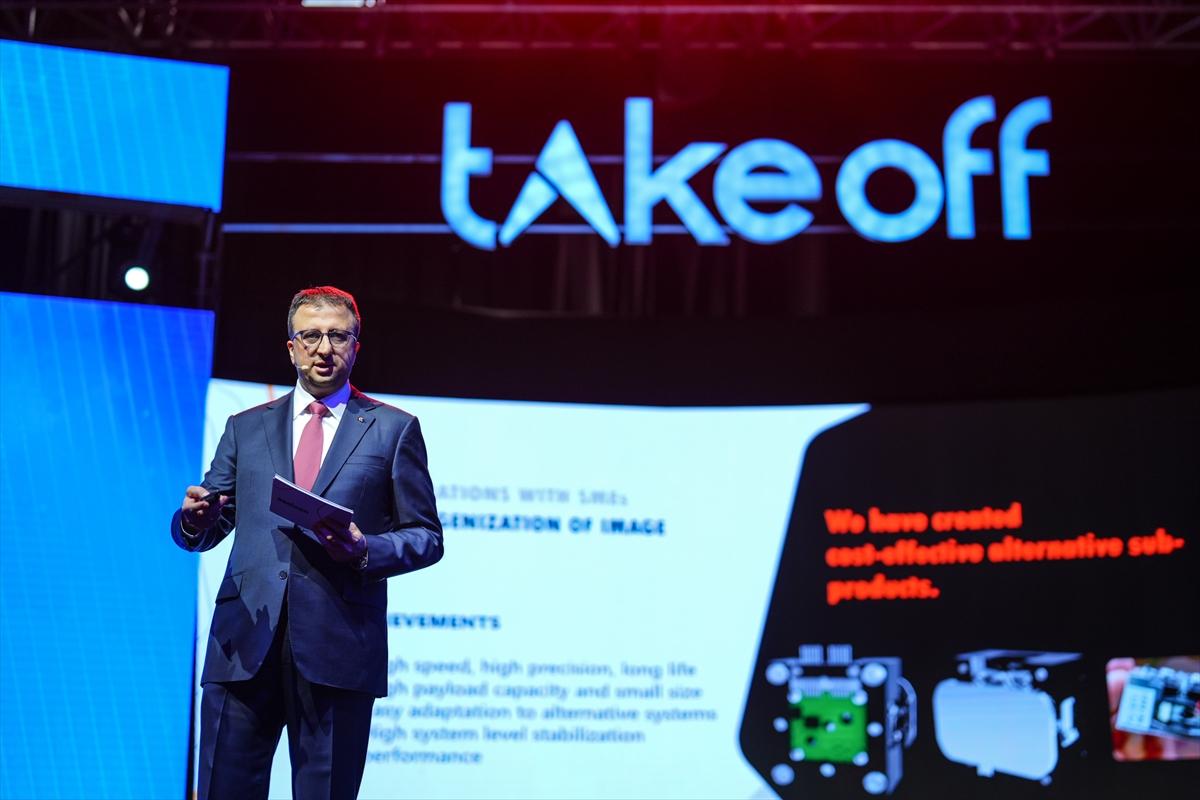
Ahmet Akyol, General Manager of ASELSAN
Akyol stated: “Internal collaboration among small companies, collaboration with the ecosystem, and designing the right business model are among the fundamental dynamics of becoming a successful company. Competition is no longer between products or systems—it is between ecosystems. Our ecosystem spans from startups to academia to R&D innovation systems. Those who manage this well are currently ahead of their competitors.”
Discussing ASELSAN’s startup strategy, Akyol noted: “ASELSAN is focused on building the world’s best products, continuously developing game-changing technologies, and growing through international collaboration. Often, problems are described in relationships between large firms and small SMEs. We see this not as a threat but as an opportunity. One of the key traits of successful companies, from our perspective, is precisely this. While we tackle far more complex challenges and compete globally, we view the ecosystem and startup world as an opportunity.”
Akyol cited ASELSAN’s ASELFLIR-500 camera, used in Türkiye’s SİHAs, as an example of its innovation model: “This product reached global standards in just three years. We have produced and delivered its 100th unit. It is in use in 20 countries and is currently regarded by users as the world’s best camera in its category. We developed the previous camera in seven years; we developed this one in three. In three years, we built the world’s best camera. The foundation of global competition is rapid responsiveness.”
Akyol also highlighted ASELSAN’s Asel Labs initiative, which includes four new laboratories at universities with over 20 million dollars in investment: “Seven laboratories have been established at four universities. One of them has developed Türkiye’s first quantum computer and first quantum chips.”
Akyol described ASELSAN’s technological leap beyond its current products, referencing the success achieved with Bayraktar KIZILELMA: “Recently, ASELSAN has entered a new technological frontier. In conventional FLIR technology, the camera was mounted externally on the aircraft. Now, the new threshold is this: on the Bayraktar KIZILELMA, the camera is embedded inside the aircraft. We flew this product together with Bayraktar KIZILELMA.”
Recalling that Bayraktar KIZILELMA achieved the world’s first air-to-air missile engagement, Akyol stated: “ASELSAN, Baykar, and TÜBİTAK SAGE have opened the door to what the world thought impossible.””
Evaluating the global impact of ASELSAN and Türkiye’s startup ecosystem, Akyol said: “The success of Bayraktar KIZILELMA has positioned Türkiye as a country that is imitated and followed in international media. Our entire philosophy at ASELSAN is to apply all models from the startup ecosystem. We demonstrate how we function as a school-like company, how we think. Technological competence alone is no longer sufficient to succeed in this world. Türkiye has a strong ecosystem. We will continue to support more entrepreneurs, more universities, and more academics.”
TEKNOFEST. “#LIVE | TAKE OFF İstanbul 2025 2nd Day.” YouTube Video. Accessed December 11, 2025. https://www.youtube.com/watch?v=F-y9D87h3Rc

The Take Off İstanbul 2025, which began on December 10, 2025 at the Istanbul Fair Center, brought together stakeholders from the technology and entrepreneurship ecosystem. The event featured more than 500 startups from 40 countries and 260 investors, with sessions held in areas such as productive artificial intelligence, deep technology, financial technologies, and sustainability. Throughout the summit, startups presented on the Main Stage and Startup Stage and conducted one-on-one meetings with investors. Take Off İstanbul 2025 was completed with the participation of institutions such as ASELSAN, TÜBİTAK, HAVELSAN, and ROKETSAN, alongside international investment networks.
No Discussion Added Yet
Start discussion for "Take Off İstanbul 2025" article
December 10, 2025
Participant Profile and Scope
December 10, 2025
Content and Session Topics
December 10, 2025
Speakers
December 10, 2025
Take Off İstanbul 2025 – Day 1
December 10, 2025
Opening Ceremony
December 10, 2025
Sessions and Panels
December 10, 2025
International Collaborations and Agreements
December 11, 2025
Take Off İstanbul 2025 – Day 2
December 11, 2025
Startup Presentations and Sessions