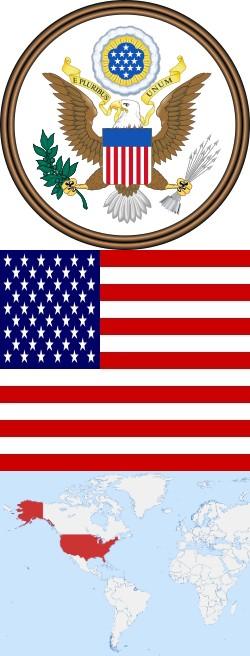


This article was automatically translated from the original Turkish version.
Official Name | United States of America | ||||||||
|---|---|---|---|---|---|---|---|---|---|
Form of Government | Constitutional Federal Republic | ||||||||
Date of Independence | 4 Temmuz 1776 | ||||||||
Capital | Washington D.C. | ||||||||
Head of State | Donald Trump | ||||||||
Official Languages | English | ||||||||
Common Languages | Spanish, other minority languages | ||||||||
National Day | July 4 | ||||||||
Area | 9,833,517 km² | ||||||||
Total Population | ~342.8 million people | ||||||||
Climate | some western regions are semi-arid and the south has a tropical climate Temperate climate prevails. Additionally, Alaska is arctic | ||||||||
GDP (Nominal) | ~30.616 trillion USD (2025) | ||||||||
GDP per Capita | 85,809.9 | ||||||||
Ethnic Groups | Pacific Islander or Native Hawaiian: ~0.3% American Indian or Alaska Native: ~1.3% Two or More Races: ~2.9% Asian: ~6.3% Black or African American: ~13.6% Hispanic or Latino (of any race): ~19.3% White (Not of Spanish Origin): ∼59.3% | ||||||||
Religious Composition | No Religious Affiliation: ∼29% Jewish: ∼2% Muslim: ∼1.3% Buddhist: ∼1% Hindu: ∼0.8% Christian: ∼63% Other Religions: Constitute the remaining percentage. | ||||||||
Telephone Code | +1 | ||||||||
Internet Domain Code | .us | ||||||||
The United States of America (USA) is a federal republic located in the central portion of the North American continent. Comprising forty-eight contiguous states along with Alaska and Hawaii, the country holds a pivotal position in the international system due to its vast territory, complex political system, diverse population structure, and globally influential economic capacity. Its capital is Washington, D.C., and its largest city is New York. The federal government is founded on the principle of separation of powers among the executive, legislative, and judicial branches.
Economically, the USA occupies a central role in global trade, financial markets, technology production, and corporate structures. The simultaneous development of diverse sectors such as industry, services, agriculture, energy, and information technology has made the country one of the primary centers of global economic activity. Modern scientific research institutions, universities, and technology hubs contribute significantly to international innovation capacity across numerous fields.

Statue of Liberty in New York (Pexels)
The country’s social fabric is nourished by ethnic, cultural, and religious diversity shaped by centuries of migration. This multi-layered population structure has produced a dynamic societal framework where diverse sociocultural traditions coexist. American political culture has been shaped around principles of federalism, individual rights and freedoms, the rule of law, and representative democracy based on regular elections.
In military and defense matters, the USA is generally recognized as the world’s most powerful military force due to its immense military capacity, global network of bases and deployments, technological superiority, and the scale of its defense expenditures. 【1】 Its multi-layered defense structure, encompassing land, air, sea, and space forces along with nuclear deterrence elements, combined with its position within NATO and participation in various regional security arrangements, forms the core components of its role in the global defense architecture.
In foreign policy, the USA wields broad influence in the domains of security, economy, diplomacy, and global governance through the roles it has assumed in international institutions established after World War II and the alliances it has cultivated. Its position in NATO, regional alliances, economic partnerships, and representation in international organizations constitute the institutional foundation of its foreign policy. Geographically vast, rich in natural resources, technologically advanced, militarily powerful, and globally connected, the United States of America is defined as a country with multidimensional influence in the contemporary international system across political, economic, cultural, scientific, and defense dimensions.
The history of the United States of America begins with the arrival of the first humans from Asia approximately 15,000 years ago. During this period, people migrated into North America via the Beringia land bridge connecting Siberia and Alaska. As the last Ice Age ended and sea levels rose, this land connection disappeared, and the communities on the continent diversified into distinct cultures. These early human groups are referred to in archaeology as Paleo-Indians.

Image of Native Americans Hunting Buffalo in North America (World History)
The colonial period of the United States of America spans from the late 16th century to the mid-18th century and refers to the process in which European states established permanent settlements in North America, competing for political, economic, and cultural influence. This era was shaped by competition among Spain, France, the Netherlands, Sweden, and especially England, leaving deep impacts on the continent’s indigenous populations and African-descended communities.

European Colonial Powers in North America Between 1492 and 1750 (World History)
European exploration of North America began with Spanish colonization of Florida, Texas, and California coasts in the early 16th century. France’s expansion in the Americas gained momentum with the New France project initiated in the 16th century. French settlers established cities such as Quebec (1608) and Montreal along the Saint Lawrence River. In the south, centers such as Detroit, Mobile, Baton Rouge (Red Stick), St. Louis, and New Orleans engaged in trade and missionary activities.
In the early 17th century, the Dutch purchased Manhattan Island from indigenous peoples and founded the colony of New Amsterdam (present-day New York). In the mid-17th century, the Swedes established the colony of New Sweden along the Delaware Valley; however, this region came under Dutch control in 1655. These multi-national settlement efforts formed the early colonial mosaic of North America.
England’s colonization process began with the founding of Jamestown (Virginia Company) in 1607. It was followed by the Plymouth colony in 1620 and the Massachusetts Bay colony in 1629. These settlements formed the core of a new social order shaped by trade, the pursuit of religious freedom, and economic aspirations. Between 1620 and 1640, approximately 20,000 Puritans migrated to the New England region to escape religious persecution and established their own faith-based communities.
The colonial population consisted of a mix of farmers, artisans, adventurers, indentured servants, and immigrants. In Pennsylvania, Quakers; in Maryland, Catholics; and in New England, Puritans established their own social orders based on distinct religious beliefs.
These regions developed distinct economic and cultural identities: trade and shipping dominated the north, while large-scale agriculture became defining in the south. Colonies such as Virginia, Maryland, North Carolina, and South Carolina produced tobacco and rice, making significant contributions to the British economy.
The arrival of Europeans in America represented an invasion process for indigenous populations. Native communities suffered massive population losses due to epidemics, warfare, and displacement. As English colonization expanded, land conflicts increased and indigenous peoples were gradually pushed westward.
To address labor shortages, European powers turned to the African slave trade. Initially, the “indentured servitude” system was used, but by the late 17th century, slavery became a permanent institution. African slave labor became the primary workforce in English, French, Spanish, and Dutch colonies, especially on sugar, cotton, and tobacco plantations. African-descended communities were not merely coerced laborers but also became influential elements in shaping colonial culture.

Visual Depicting the Institution of Slavery in North America During the Colonial Period (Flickr)
By the mid-18th century, the political landscape of North America was divided among three major powers:
This competition reached its peak in the French and Indian War (1754–1763). The war was a struggle for dominance over territory and trade routes in North America between Britain and France. Britain emerged victorious over France and its ally Spain. Under the Treaty of Paris (1763), France ceded Canada and all territory east of the Mississippi to Britain; Spain ceded Florida to Britain, while western Louisiana passed to Spain. As a result, France’s influence in America effectively ended, and Britain became the dominant power on the continent. However, the war’s cost led the British government to impose new taxes on the colonies. Measures such as the Stamp Act increased colonial discontent and fueled the emergence of independence movements.
The American War of Independence was a military and political struggle between the Thirteen British Colonies in North America and the British Empire from 1775 to 1783, resulting in the birth of the United States of America.
The Seven Years’ War, which ended in 1763, placed Britain under heavy financial strain. The London government began imposing direct taxes on the American colonies to cover war expenses. Regulations such as the Stamp Act (1765) and the Townshend Acts (1767) provoked widespread resistance under the slogan “no taxation without representation.” This tension reached its peak in the 1773 Boston Tea Party. On the night of December 16, a group of colonial activists boarded ships in Boston Harbor and dumped crates of tea into the sea. The Boston Tea Party, as this event became known, prompted Britain to impose harsh penalties, placing Massachusetts under direct British control.

Boston Tea Party, 1773: Americans Protesting British Taxes (National Archives)
These developments strengthened solidarity among the colonies, leading to the convening of the First Continental Congress in Philadelphia the same year. In April 1775, the Battles of Lexington and Concord marked the first armed confrontations. Soon after, the colonies united under the Continental Congress, formed the Continental Army, and elected George Washington as commander-in-chief. What began as local protest movements transformed into a war explicitly aimed at independence.
Declaration of Independence and the Political Dimension of the Revolution: On July 4, 1776, the Second Continental Congress adopted the Declaration of Independence. The document emphasized that all people are “created equal” and possess the right to choose their own rulers. The Declaration was not merely a proclamation of separation but also became one of the foundational texts of modern democratic sovereignty.
In the early years of the war, the colonies faced significant challenges. British naval superiority and logistical strength created pressure, particularly in the northern colonies. However, victories at Trenton (1776) and Princeton (1777) boosted Washington’s morale. The Battle of Saratoga in the same year became a turning point in the war’s outcome. Following this victory, France formally entered the war in 1778 by signing alliances and trade agreements with the United States of America.
Military Fronts and Developments (1778–1781): With France’s entry, the war acquired an international dimension. Britain faced military pressure simultaneously on European, Caribbean, and Indian fronts. During this period, British strategy shifted its focus to the Southern Colonies. However, American forces under Nathanael Greene and Daniel Morgan achieved success using guerrilla tactics in battles such as Cowpens (1781).
The final phase of the war culminated in the siege of Yorktown, Virginia, by British forces under Lord Charles Cornwallis. A joint American and French operation led to Cornwallis’s surrender on October 19, 1781, effectively ending the military phase of the war.

The American Declaration of Independence Was Signed on July 4, 1776 (History Collection) General George Washington Rallying Troops During the Battle of Monmouth (Flickr)
Treaty of Paris and Recognition of Independence (1783): The Treaty of Paris was the document that internationally recognized the independence of the United States of America. Under the treaty, Britain ceded to the new nation all territory west of the Appalachian Mountains; the eastern bank of the Mississippi River became part of U.S. borders. Britain pledged to withdraw its troops but maintained commercial restrictions, which later became sources of diplomatic tension.
Post-Revolution Political Organization (1781–1791): During the final phase of the war, the Articles of Confederation (1781) came into effect. This document defined the first governing model, in which states formed a loose alliance. However, the weakness of central authority created economic instability. In 1787, the U.S. Constitution was adopted, establishing a strong federal structure. In 1791, the Bill of Rights was ratified, providing constitutional guarantees for individual freedoms.
The Expansion Era in the United States of America was a period during which the country established its political institutions and began expanding across the continent, increasing democratic participation and fostering social reforms. The federal government gained strength with the implementation of the Constitution in 1788. The Louisiana Purchase (1803) under Thomas Jefferson doubled the country’s territory and initiated westward expansion. After the War of 1812, triggered by British interference with American merchant ships and support for Native American tribes, nationalism and a sense of independence strengthened. The Monroe Doctrine (1823) asserted U.S. opposition to European intervention in the Americas and defined an independent foreign policy.
During Andrew Jackson’s presidency (1829–1837), suffrage expanded, but the Indian Removal Act of 1830 forced thousands of Native Americans to relocate westward. Simultaneously, railroads and agricultural production expanded, strengthening the national economy. The annexation of Texas in 1845 and the subsequent Mexican-American War (1846–1848) resulted in the transfer of California and the Southwest to the United States. The California Gold Rush of 1848 initiated mass migration to the West.
During this period, religious revivals and reform movements—including abolitionism, women’s rights, and education reform—accelerated social change. However, conflicts over slavery and regional interests deepened divisions that would eventually lead to the Civil War.

The Louisiana Territory Was Purchased from France in 1804 (American Civil War Museum)
Emerging in the mid-19th century, Manifest Destiny was an ideological doctrine that defined the United States’ continental expansion as a historical, cultural, and divine mission. According to this belief, the USA was obligated to spread the values of “freedom,” “republicanism,” and “civilization” across the entirety of North America. The concept gained political prominence especially in the 1840s, interpreting the U.S. westward movement not merely as a strategic or economic preference but as the nation’s divinely ordained natural destiny.
The doctrine provided ideological grounding for expansionist actions such as the westward migration of settlers, the forced displacement of Native American communities, the annexation of Texas, the division of the Oregon Territory, and the Mexican-American War (1846–1848). Manifest Destiny thus became a decisive intellectual framework in shaping both the territorial integrity of the United States and its self-positioning as a “continental power” in foreign policy.

Visual Representing the Belief in Manifest Destiny (Denmarks Nationalleksikon)
The American Civil War and the subsequent Reconstruction Era constitute a historical process that fundamentally transformed the political unity, social structure, and constitutional order of the United States of America. This period represents a transitional phase in which the abolition of slavery led to the reestablishment of national unity, yet full social equality remained unachieved for a long time.

Table Showing the Number of Slaves in Southern and Northern States (World History) Image Depicting the American Civil War (Pickpik)
After the war, the United States entered the Reconstruction process. The goal was to reintegrate the Southern states into the Union and facilitate the integration of millions of newly freed slaves into the new social order.
During this period, three key constitutional amendments were adopted:
Although the federal government provided education, housing, and employment support to newly freed African Americans, white Democratic groups known as “Redeemers” in the South used organizations such as the Ku Klux Klan to commit violence against Black citizens.
During President Ulysses S. Grant’s administration, the Enforcement Acts provided short-term protection, but as Northern public interest waned, federal troops withdrew from the South in 1877. With this date, the Reconstruction era ended; although legal equality was achieved, social equality and racial justice were not realized for many years.
Between 1870 and 1917, the United States of America transitioned from an agrarian-based economy to an industrial power, while social reform movements also developed.
After the Civil War, the country rapidly industrialized. Railroads, steel, oil, and electricity sectors formed the foundation of economic growth. Andrew Carnegie established a modern production system through vertical integration in the steel industry; John D. Rockefeller gained unprecedented power in the American economy by monopolizing the oil industry through the Standard Oil Company. In finance, J. P. Morgan consolidated railroads, steel, and electricity industries through banking and investment capital. Henry Ford initiated mass production in the automotive industry, launching a new era in industrial manufacturing. These developments rapidly transformed the United States into a global industrial center.

John D. Rockefeller (sln) J.P. Morgan (Snl.no) Andrew Carnegie (Look and Learn)
The increase in industrial production brought demands for new markets and raw materials. As a result of the Spanish-American War of 1898, the USA acquired the Philippines, Puerto Rico, and Guam and established economic and political influence over Cuba. During the same period, Hawaii was formally annexed. During these years, the USA became a global power not only economically but also militarily and diplomatically.
The growth of industrial monopolies increased income inequality, while the working class and labor movements gained strength. Mechanization in agriculture led to overproduction and rural distress, accelerating urbanization. These issues gave rise to the Progressive Era reforms at the beginning of the 20th century. Journalists known as “Muckrakers” criticized monopolies and corruption; the government increased economic oversight through antitrust laws. During the same period, significant progress was made in direct elections, women’s suffrage, environmental protection, and public health.
The United States of America entered World War I on April 6, 1917 by declaring war on Germany. Initially neutral, the country entered the war following German submarine attacks on American merchant ships and the Zimmermann Telegram crisis. President Woodrow Wilson defined this war as a “struggle to defend democracy.” Approximately 4 million American soldiers were mobilized; 116,000 lost their lives. The U.S. contribution accelerated the Allied victory.
After the war, Wilson proposed the creation of the League of Nations during the Treaty of Versailles negotiations, but the U.S. Congress refused to ratify it, leading the country back to isolationist policy. The 1920s passed with economic growth, increased consumption, and cultural vibrancy; automobiles, radios, and cinema became part of daily life. However, the Wall Street Stock Market Crash of 1929 ended this era of prosperity and plunged the country into the Great Depression.
The Great Depression (1929–1939) saw millions of Americans lose their jobs. President Franklin D. Roosevelt launched the New Deal program to revive the economy. These reforms strengthened public employment, social security, and financial oversight. By the end of the 1930s, despite neutrality laws aimed at avoiding involvement in wars, the United States increasingly paid close attention to developments in Europe.

Crowds Gather Outside the New York Stock Exchange Following the 1929 Crash (Picryl) President Roosevelt Signs Social Security Reform (Roosevelt House)
When World War II (1939–1945) began, the United States remained neutral but supported the Allies through the Lend-Lease Act (1941). After Japan’s attack on Pearl Harbor on December 7, 1941, it entered the war. During the war, over 16 million American soldiers served; industrial production surged and unemployment ended.
The U.S. military turned the tide of the war in Europe with the Normandy Invasion (1944); in the Pacific, the atomic bombs dropped on Hiroshima and Nagasaki forced Japan’s surrender. With the end of the war in 1945, the United States became the world’s most powerful nation economically, militarily, and politically.

U.S. Army Marching in Paris (U.S. Department of War) Atomic Bomb Used in World War II (U.S. Department of War)
The Cold War was a prolonged period of ideological, political, economic, and technological competition between the United States of America and the Soviet Union after World War II, without direct military conflict. During this period, the world divided into two blocs under the influence of the two superpowers: the capitalist Western Bloc and the communist Eastern Bloc.
At the end of World War II, the United States of America became a global power with economic and military superiority. While Europe and Asia lay in ruins from the war, the USA increased its industrial production, and the dollar became the international reserve currency. During this period, the country abandoned its traditional isolationist policy and assumed an active leadership role in the international system.
After the war, ideological differences between the United States and the Soviet Union led to a new global polarization. The USA represented democracy and free-market economy, while the Soviet Union represented single-party socialist order. In 1947, the USA contributed to Europe’s reconstruction through the Truman Doctrine and the Marshall Plan and adopted the containment policy to prevent the spread of communism. The establishment of NATO in 1949 solidified the USA’s leading role in the defense of Western Europe.
In Asia, the USA expanded its global military presence through developments such as Japan’s reconstruction, the Korean War (1950–1953), and the Vietnam War (1955–1975). During the same period, the space race, arms competition, and the Cuban Missile Crisis (1962) brought the two superpowers to the brink of nuclear war.
Domestically, fear of communism gave rise to anti-communist movements known as the McCarthy Era. Meanwhile, the Civil Rights Movement, led by figures such as Rosa Parks and Martin Luther King Jr., emphasized the struggle for racial equality and freedom.
By the late 1980s, the weakening of the Soviet Union, the collapse of regimes in Eastern Europe, and the fall of the Berlin Wall in 1989 paved the way for the end of the Cold War. With the dissolution of the Soviet Union in 1991, the USA became the world’s sole superpower in military, economic, and diplomatic terms.
U.S. President Ronald Reagan Calls on the USSR to Tear Down the Berlin Wall During the Final Phase of the Cold War (C-SPAN)
Following the dissolution of the Soviet Union in 1991, the United States of America became the world’s sole superpower. In the 1990s, the Gulf War (1991) demonstrated U.S. military superiority. During the same period, NATO expanded, and the United States played a decisive role in addressing instability in Europe and the Balkans.
Economically, the 1990s were marked by the rise of information technology and the internet, accelerating globalization. However, this period gave way to a new security-focused era following the September 11, 2001 attacks. September 11, 2001 Attacks triggered profound changes in U.S. domestic and foreign policy. The Al-Qaeda attacks resulted in 2,977 deaths. President George W. Bush declared the “War on Terror.” In this context, the United States launched military interventions in Afghanistan (2001) and Iraq (2003). Although Saddam Hussein’s regime in Iraq was overthrown, the country descended into prolonged internal conflict, and the rise of terrorist groups such as ISIS increased regional instability.

September 11 Terrorist Attacks (Picryl)
Another development during this period was the global economic crisis and increasing polarization in domestic politics. The 2008 Global Financial Crisis inflicted the most severe blow on the U.S. economy since the Great Depression. The collapse of the housing market and risky financial credits affected millions of people. The federal government’s rescue programs restructured the economy. During this period, Barack Obama (2009–2017) emerged with policies focused on economic recovery, healthcare reform, and multilateral diplomacy. However, ideological polarization between the Republican and Democratic parties became more pronounced.
In the 2016 elections, Donald Trump was elected president with the slogan “America First.” His trade wars, immigration policies, and withdrawal from international agreements imbued U.S. foreign policy with a nationalist and protectionist orientation. The Trump era saw the weakening of NATO relations and increased economic competition with China.
The United States of America is a federal state located in the central and southern portions of North America. It is bordered by the Atlantic Ocean to the east, the Pacific Ocean to the west, Canada to the north, and Mexico and the Gulf of Mexico to the south. The state of Alaska extends along the northwestern coast of Canada to the Bering Sea and is separated from Russia’s Chukotka region by the Bering Strait. Hawaii is an archipelago of volcanic origin located in the central Pacific Ocean. In addition, various overseas territories such as Puerto Rico, Guam, American Samoa, and the Virgin Islands are part of the United States’ political presence. With a total area exceeding 9.8 million square kilometers, the country is one of the largest in the world and holds a strategically significant continental position.
The USA has a highly diverse topographical structure and is defined by extensive physical regions.
The Cordilleran Mountain System in the west forms the country’s most prominent elevations. The Rocky Mountains, stretching from New Mexico to Canada, constitute one of the continent’s largest mountain ranges. The Sierra Nevada, located along the California-Nevada border, is among the highest snow-fed mountain ranges in the country, with Mount Whitney at 4,421 meters being the highest point in the interior. The Cascade Range in the Pacific Northwest includes active volcanoes such as Mount Rainier, Mount St. Helens, and Mount Hood. Denali in Alaska, at 6,190 meters, is the highest peak in North America. The Appalachian Mountains in eastern America, with sub-regions such as Blue Ridge and Great Smoky Mountains, exhibit an older and more eroded morphology.
The vast lowlands of the Mississippi Basin form a critically important economic region in the interior of the country. The Great Plains, extending from North Dakota to Texas, play a dominant role in grain production. California’s Central Valley is one of the most important agricultural production centers in the U.S. economy due to its fruit, vegetable, and nut production. Valleys such as the Willamette Valley (Oregon) and the Rio Grande Valley (Texas–New Mexico) are also significant agricultural areas at the regional level.
Mississippi River, one of the longest and most important rivers in the USA, flows from Minnesota to the Gulf of Mexico. Along with its tributaries, the Missouri and Ohio rivers, it forms a vast network crucial for continental transportation and ecological systems. The Colorado River is critical for irrigation and hydroelectric power in the southwestern states; it carved the Grand Canyon. The Great Lakes (Superior, Michigan, Huron, Erie, and Ontario) along the northern border form the world’s largest freshwater system by volume. Other prominent hydrographic features include the Columbia, Hudson, Potomac, Tennessee, Rio Grande, and Yukon rivers.

Arches National Park, Utah (CIA World Factbook) Grand Canyon, Arizona (Pexels)
The USA’s vast territory encompasses a wide variety of climate types, ranging from tropical to polar. The eastern coasts are generally under the influence of a humid subtropical climate; Florida and the Gulf Coast are hot and highly humid. The New England and Midwest regions have a continental climate with harsh winters. The western coasts have oceanic and Mediterranean climate characteristics; California’s coasts are particularly dry and mild in summer. Southwestern states (Arizona, Nevada, New Mexico) are known for their extensive desert areas. Alaska has a subarctic and polar climate, while Hawaii lies within the tropical climate zone. This climatic diversity enables a wide range of vegetation, from boreal forests to deciduous forests, grasslands to Mediterranean shrublands, and tropical rainforests.
The country is rich in natural resources such as coal, oil, natural gas, uranium, nickel, copper, gold, and timber. The Appalachian region is notable for its coal reserves; Texas and Alaska for their oil and natural gas fields; and Minnesota and Michigan for their iron ore deposits. Recent increases in shale gas and tight oil production have strengthened U.S. energy independence and increased natural gas exports. Additionally, the Great Plains agricultural areas provide a strategic position for food and biological raw materials.
The U.S. energy infrastructure is based on a multi-layered production and distribution system. Electricity generation comes from oil, natural gas, coal, nuclear energy, and increasingly from wind and solar capacity. Texas, Iowa, and Oklahoma lead in wind energy; California, Nevada, and Arizona lead in solar energy. Thousands of kilometers of oil and natural gas pipelines span the country.
The Interstate Highway System forms the backbone of the transportation network; I-5, I-10, I-40, I-70, and I-95 are among the most heavily used routes. The U.S. railway infrastructure plays a critical role in freight transport; companies such as Union Pacific and BNSF handle major shipments. Maritime transport is supported by high-capacity centers such as the New York–New Jersey Port, the Los Angeles–Long Beach Port, and the Houston Port. Air transport operates through a vast network based on some of the world’s busiest airports, including Atlanta, Chicago O’Hare, Los Angeles, and Dallas–Fort Worth.
The U.S. economy has long held the position of the world’s largest mixed economy. This structure is based on a strong consumer market, an innovative private sector, high technological capacity, and a defining role in the global financial system. While the U.S. dollar maintains its central weight in international trade and reserve currency structures, the country’s economic and political influence sets standards in global markets.
The economic structure is supported by innovative technological capacity, a highly productive labor force, vast natural resources, and developed capital markets. However, high public debt, income inequality, and the economic impacts of climate change are considered key future risks.
2025 projected economic indicators:【2】
• GDP: ∼$30 trillion
• Real Growth: ∼2.7%
• GDP per Capita: ∼$89,105
• Inflation: ∼3.3%
• Unemployment: ∼3.8%
• Exports: ∼$2.7 trillion
• Imports: ∼$4.0 trillion
The geographic distribution of economic output is concentrated in several states. California’s technology and media-driven economy alone exceeds the total output of many countries. Texas leads in energy and industrial production; New York in its role as a financial center; Florida in trade and tourism; and Illinois in logistics and industrial capacity.
The private sector employers with the highest employment are Walmart, Amazon, UnitedHealth Group, Home Depot, and Kroger. The federal government, with approximately 3 million civilian employees, is the country’s single largest employer.

The Heart of the American Stock Market is New York City (Stockvault) Los Angeles, the Largest City on the West Coast (Flickr)
U.S. agriculture possesses one of the world’s most advanced mechanized production systems. Vast arable land, advanced automation, genetic breeding techniques, and efficient supply chains integrate the sector into both the domestic market and the global food system. The country is the global leader in maize and soybean production, and these crops are strategically important for biofuels, animal feed, and industrial raw materials. It also has a strong production infrastructure for beef and dairy products.
The agricultural belt in the Midwest, known as the Corn Belt, is the world leader in maize and soybean production. These products are of strategic importance not only for the food industry but also for biofuel production, the feed industry, and various industrial applications.
The livestock sector has a large-scale, integrated structure in beef, dairy, poultry, and pork production. Modern livestock operations in the U.S. function through an integrated production infrastructure that includes feed supply chains, cold storage, logistics, and processing facilities. This structure enables the country to meet high domestic demand and become a major supplier in international markets.
The agricultural sector is not limited to primary product production. Its connections with biotechnology, chemicals, pharmaceuticals, and energy sectors integrate agriculture into a broad national industrial ecosystem. Corn-based ethanol is a component of the national energy portfolio and part of renewable energy policies. Soy and other plant-based raw materials are used in the production of bioplastics, fatty acid derivatives, feed additives, and chemical intermediates.

Sugar Beet Field (Flickr)
Although the industrial sector constitutes a smaller share of the economy, its strategic importance is extremely high. The USA maintains global competitiveness in advanced technology products, aerospace and space systems, defense industry, semiconductor production, medical technologies, and automobiles.
Detroit-based automotive industry retains its traditional weight, while new-generation electric vehicle technologies and battery production capacity point to emerging growth areas. In aerospace and space, Boeing, Lockheed Martin, and new-generation space companies constitute a significant portion of high-value-added product exports.
The energy industry is the strategic backbone of the USA. The shale gas revolution has increased both natural gas and oil production, making the country one of the world’s largest energy producers. The country’s refinery system, pipeline networks, and geological storage capacity provide a unique infrastructure for economic security.
The liquefied natural gas (LNG) sector is among the fastest-growing export categories in recent years. Facilities such as Sabine Pass, Corpus Christi, Freeport, and Cameron LNG have made the country the global leader in LNG supply. Further expansion of this capacity is expected as new projects come online.
The services sector is the backbone of the U.S. economy; approximately 80% of GDP comes from this sector. Finance, insurance, real estate, healthcare, professional consulting, education, information technology, and creativity-based services constitute the main areas of this sector.
The technology sector, led by the innovation ecosystem of Silicon Valley, is one of the primary drivers of growth. Artificial intelligence, software, internet services, and digital infrastructure possess an innovation pace that directly affects the rest of the world.
The financial system, centered in New York, influences both the domestic market and the global economy through global markets. Wall Street is a decisive center in global capital flows due to its financial product diversity, capital mobility, and international banking capacity.

Global Capital Center Wall Street (Rawpixel)
The USA is both a massive import market and a leading exporter of high-technology products in global trade. The trade deficit has a structural character; the high-consumption domestic market consistently leads to an expansion of the trade balance in favor of imports.
Major trading partners include Mexico and Canada; these two countries are complementary links in the North American supply chain. Trade relations with China are strategically important due to their high volume and technological and production competition. Japan and Germany have strong trade ties, particularly in automobiles, machinery, electronics, and high-engineering products.
Key export items include aircraft, advanced machinery and engines, electronic products, petroleum products, and financial/technical services. Major imports include motor vehicles, electronics, communication devices, oil, chemicals, and textiles.
The United States is the world’s most attractive destination for foreign direct investment. This is due to legal predictability, transparent regulations, a vast consumer market, advanced financial infrastructure, and a high-technology innovation environment. These factors make the USA an attractive center for both production and R&D activities.
Foreign investors concentrate especially in technology, energy, manufacturing, logistics, and real estate sectors. The state balances economic openness with security needs by reviewing investments in critical infrastructure related to national security. Within this framework, the country continues to attract innovative startups and international corporate headquarters.

The United States of America, with the world’s third-largest population, is a nation with a high degree of ethnic and cultural diversity. The country’s demographic structure is dynamic due to continuous migration flows and high mobility within national borders. Since the 1960s, the United States has undergone significant demographic transformation, with population growth largely supported by migration.

U.S. Demographic Distribution (CIA World Factbook)
The USA has a highly urbanized structure; more than one-fifth of the population lives in metropolitan areas. The country’s population center continues to shift southward and westward.
Largest Cities and Metropolitan Areas (Estimated Population):【3】
New York stands out as the country’s financial, commercial, and cultural center, while Los Angeles leads the West Coast in economic and entertainment sectors. Texas, especially around Houston and Dallas, is attracting attention due to its rapid population growth.

The United States has a complex ethnic and racial structure described by the metaphors of the “melting pot” and the “salad bowl.” Migration continues to cause this structure to evolve continuously.
Ethnic and Racial Distribution (2023 Estimated Data):【4】
The Hispanic population is the fastest-growing minority group in the country and is concentrated especially in states such as California, Texas, and Florida. The Asian population is also growing significantly and contributing substantially to the technology and services sectors.
The USA is a secular state where religious freedom is constitutionally guaranteed. Although the country is predominantly Christian, the proportion of non-religious individuals and other religious groups is increasing.
Religious Distribution (2023 Estimated Data):
Protestantism continues to be the largest religious group historically, while Catholicism and the non-religious group hold significant demographic weight.
The USA has a developed education system and a high literacy rate, although educational attainment varies across states and racial/ethnic groups.
Education Level (Among Population Aged 25 and Over):
The country hosts numerous prestigious universities (Ivy League, major research universities) that are global leaders in research and innovation.

Harvard University, one of the oldest schools in the USA (Public Domain Pictures)
Migration is the primary driver of demographic growth and cultural diversity in the USA. The country hosts the largest immigrant population in the world.
The immigrant population plays a critical role in the labor market and helps mitigate demographic aging trends. However, debates over immigration policies and legal status remain continuously present in the country’s political and social agenda.
The United States of America has a vast geography and a multi-layered social structure. Influenced by immigrant populations, this diversity manifests in languages, traditions, cuisine, music, and lifestyle. From the multi-ethnic neighborhoods of New York to the Creole culture of Louisiana, from California’s Latin influences to the folk heritage of Appalachia, each region carries its own cultural identity. American cuisine is a reflection of this diversity, creating a popular and experimental gastronomic landscape through the fusion of regional dishes, ethnic cuisines, and fast-food culture.

Mount Rushmore with portraits of founding leaders (CIA World Factbook) Ancient Toas Pueblo in New Mexico, existing for over 1,000 years (Flickr)
The cultural heritage of the USA spans a wide area, including modern urban fabric, traces of indigenous peoples, and historic structures. The country has comprehensive institutions and legal frameworks for preserving its national heritage.
The USA has numerous natural and cultural UNESCO sites. National parks such as the Grand Canyon, Yellowstone, and Yosemite are symbols of natural heritage. Meanwhile, places like Independence Hall represent cultural heritage points reflecting the nation’s political and historical development.
The country’s past is filled with colonial-era structures, archaeological areas belonging to Native Americans, and Civil War remnants. Thousands of buildings and sites are protected under the National Historic Preservation Act.
The USA hosts museums with global influence. The Smithsonian Institution in Washington, D.C., plays a leading role in preserving and presenting cultural heritage as the world’s largest museum and research complex. Institutions such as the Metropolitan Museum of Art in New York and the Art Institute of Chicago house some of the most important works in art history.

Abraham Lincoln Memorial (Pexels)
The United States of America is among the most preferred countries globally for tourism. In 2024, the country welcomed approximately 72 million international visitors and possesses a massive tourism economy alongside strong domestic tourism mobility. The sector generates billions of dollars in value and provides employment for millions through accommodation, transportation, entertainment, and cultural services.
A significant portion of visitors come from Canada, Mexico, the United Kingdom, Germany, France, Japan, and South Korea. The tourist profile is highly diverse; urban tourism, nature and adventure experiences, amusement parks, cultural tours, and business travel are major motivators.
Tourism is a major supporting element of the U.S. economy. As an important part of the services sector, it regularly contributes to economic growth. Accommodation and entertainment spending in major cities and tourism-focused economic activities in states like Florida and Nevada are particularly prominent.
The USA is a country that regularly develops policies in areas such as visas, travel security, preservation of national parks, and international promotion campaigns. Federal and state-level strategies prioritize sustainable tourism and the protection of cultural heritage.
American cities are tourist destinations in their own right, each having developed its own subculture. New York City stands out as a global cultural capital with the Statue of Liberty, Times Square, Central Park, and major museums. Los Angeles attracts attention as the heart of Hollywood, with its famous Pacific coast beaches and contemporary entertainment culture. Washington, D.C., is one of the country’s most important centers for historical tourism due to its political history and museum collections. Chicago is a significant attraction due to its architecture, vibrant music scenes, and location along the lake. San Francisco presents a blend of modern and nostalgic elements with the Golden Gate Bridge, Alcatraz Island, and historic streetcars; New Orleans is a major attraction for domestic tourism with its French colonial architecture and colorful festivals.

Mardi Gras festival in New Orleans (Picryl)
The United States of America has extensive nature tourism due to hundreds of national parks and conservation areas. The Grand Canyon, with its massive dimensions and geological layers, is one of the most impressive examples. Yellowstone, with its geysers and abundant wildlife, holds historical importance as the world’s first national park. Yosemite, with its steep granite cliffs, giant sequoia trees, and majestic waterfalls, is a center for nature sports and hiking enthusiasts. Niagara Falls, with its striking location on the U.S.-Canada border, attracts millions of visitors annually.
The country has many thematic tourism regions catering to different interests. Orlando, Florida, is the center of family tourism with its massive theme parks. Las Vegas offers a unique experience in the desert with gambling, entertainment, and vibrant nightlife. Hawaii, with its tropical climate, volcanic landscapes, and surfing culture, is the top destination for relaxation-focused travel. Additionally, the USA’s extensive highway network and iconic routes such as Route 66 support the “road trip” culture, offering visitors the opportunity to explore the country by road and experience the cultures of different regions.

Universal Studios in Orlando (
In the first quarter of the 21st century, United States foreign policy is shaped around the concept of strategic competition, forming a complex and multidimensional power struggle. The limited cooperation and economic interdependence framework of the post-Cold War era has been replaced since the late 2010s by a long-term, comprehensive competition with China and Russia. This has led the United States to position China as a “pacing challenge” and Russia as a deepening geopolitical adversary in the context of the Ukraine war and nuclear risks within its national security and defense strategies.
In the early years of the 21st century, U.S.-China relations progressed under the framework of “mutual economic interdependence” and limited cooperation. However, since the late 2010s, they have transformed into a long-term, multidimensional power struggle centered on the concept of “strategic competition.” In U.S. national security and defense strategies, China is currently defined as the “pacing challenge” and the central reference point for U.S. defense planning.
This competition is concentrated in the areas of economy, technology, military power balance, and ideological legitimacy. While the U.S. seeks to constrain China’s military activities in the East and South China Seas, its pressure on Taiwan, and its growing global influence through the Belt and Road Initiative, it is simultaneously strengthening alliance networks with regional countries such as Japan, South Korea, Australia, the Philippines, and India under its Indo-Pacific strategy.
Relations have hardened economically through trade wars, technology restrictions (semiconductors, 5G, artificial intelligence), and mutual sanctions, while simultaneously maintaining a structure open to limited, area-specific cooperation on issues such as climate change, global health, and financial stability. U.S. administrations describe China simultaneously as both a “rival” and a “major power with which cooperation is necessary,” creating a dual framework aimed at preventing conflict while managing competition.
Militarily, the U.S. is preparing for potential crises around the Taiwan Strait and the South China Sea through an integrated deterrence approach since the 2020s. U.S. base infrastructure, joint exercises, and new defense partnerships in the Indo-Pacific are viewed as components of a long-term strategy to balance China’s regional expansion.

U.S. Navy Participates in Joint Exercises with Regional Countries in the South China Sea (AA)
U.S.-Russia relations today are shaped by the Ukraine war, nuclear weapons, and great power competition. U.S.-Russia relations are increasingly characterized by deepening geopolitical antagonism, mutual sanctions, nuclear deterrence, and Russia’s invasion of Ukraine.
During Obama’s term (2009–2016), Washington sought to improve relations with Moscow through a “reset” initiative; this included the signing of the New START treaty limiting strategic nuclear weapons and testing limited cooperation on certain regional issues. However, Russia’s annexation of Crimea in 2014, its support for separatist forces in eastern Ukraine, and its close military alliance with the Assad regime in the Syrian civil war created a sharp rupture in relations; the U.S. and the European Union responded with comprehensive economic sanctions and deterrence measures in the security domain.
During Trump’s first term (2017–2021), a notable duality emerged in bilateral relations. On one hand, presidential-level rhetoric, leader-to-leader phone calls, and summit diplomacy appeared more moderate; on the other hand, U.S. institutions, citing allegations of Russian interference in the 2016 elections and cyberattacks, maintained a hard line against Moscow.
During Biden’s term (2021–2024), relations reached their lowest point since the end of the Cold War following Russia’s large-scale invasion of Ukraine in 2022. The U.S. provided comprehensive military and financial support to Ukraine, imposed heavy sanctions on Russian banks and major corporations, froze Russian Central Bank assets, and strengthened NATO’s eastern flank. Russia accused the U.S. of being an indirect party to the conflict; it withdrew from the Comprehensive Nuclear-Test-Ban Treaty, vetoed initiatives limiting nuclear weapons deployment in space, and heightened nuclear risk perceptions by 2024 through its strategic arsenal of thousands of warheads.
In Trump’s second term in 2024, U.S. policy signals a significant shift. The administration temporarily halted aid to Ukraine, proposed a 30-day ceasefire and negotiation plan for the conflict, and initiated a diplomatic “reset” with Russia. Disagreements between the U.S. and Europe on Ukraine and Russia policy became evident; the U.S. easing some sanction mechanisms and re-establishing contact with Moscow has initiated a new but uncertain phase in relations.

Donald Trump with Ukrainian President Volodymyr Zelenskyy (White House) Donald Trump and Russian President Putin Meeting (White House)
The core elements of U.S. Middle East policy are Israel’s security, energy and sea lane security, limiting Iran’s influence and nuclear program, combating radical organizations, and preserving regional alliance networks. In the past fifteen years, this policy has simultaneously pursued a “military burden reduction” and a strategic pivot to Asia-Pacific, while managing intense crises around Iran, Israel-Palestine, and Gulf balances.
Obama’s era (2009–2017) began by managing the legacy of George W. Bush’s Iraq invasion and claiming to “repair relations with the Muslim world.” Withdrawal of troops from Iraq, partial emphasis on Afghanistan, cautious support during the Arab Spring, and NATO-led intervention in Libya were characteristic features of this period. The 2015 Nuclear Deal (JCPOA) with Iran symbolized Obama’s emphasis on diplomacy and multilateralism in the Middle East; however, his refusal to engage in large-scale military intervention despite a “red line” statement on Syria led to perceptions of the U.S. as a hesitant and inconsistent actor in the region. While security cooperation with Israel continued, tensions occasionally arose over settlement policies and the Palestinian issue.
Trump’s first term (2017–2021) firmly adopted an Iran-centric “maximum pressure” and Israel-centered new alliance architecture. The U.S. withdrew from the JCPOA and imposed heavy economic sanctions on Iran; this approach became a doctrine aimed at rolling back Tehran’s regional influence but simultaneously heightened tensions in the Gulf and Iraq. During the same period, the U.S. recognition of Jerusalem as Israel’s capital and acknowledgment of Israeli sovereignty over the Golan Heights were seen as significant departures from previous American positions on the Palestinian issue. Parallel to this, the Abraham Accords normalizing relations between Israel, the UAE, Bahrain, Morocco, and Sudan were presented by Washington as a major diplomatic success; however, this process was criticized as prioritizing an “Iran-centric axis” while sidelining the Palestinian issue.

Abraham Accord Signed Normalizing Relations Between Israel, UAE, and Bahrain During Trump’s First Term (Department of State)
Biden’s term (2021–2025) initially adopted a framework that relegated the Middle East to a secondary priority and shifted global strategic focus to competition with China and Russia. Washington engaged in indirect negotiations toward reviving the nuclear deal with Iran but achieved no results; meanwhile, most sanctions against Iran remained in place. The Israel-Hamas/Gaza war, which began on October 7, 2023, deeply re-engaged the Biden administration in the region: while providing comprehensive military and diplomatic support to Israel, the U.S. was compelled to pressure for ceasefires, prisoner exchanges, and aid corridors due to rising civilian casualties and humanitarian crises. Simultaneously, Houthi attacks in the Red Sea, Iran-linked group activities, and tensions along the Iraq-Syria border led the U.S. to increase its naval and base deployments.
Turkey–United States relations are shaped on the basis of alliance within the NATO framework but have followed a volatile course in recent years due to various structural differences and divergent security priorities. During the Cold War, cooperation between the two countries developed within a framework based on a shared threat perception; in the current period, relations have taken on a structure of issue-based cooperation and divergent regional policies. Turkey’s adoption of a multi-faceted foreign policy, its continued engagement with regional actors such as Russia and Iran, and its interest in international platforms such as BRICS and the Shanghai Cooperation Organization influence the scope of bilateral relations.
Defense and security issues are central to bilateral relations. Turkey’s procurement of the Russian S-400 air defense system affected its position in the F-35 program and led to a redefinition of technical cooperation in defense. The U.S. cooperation with the YPG/SDF in Syria remains a key issue linked to Turkey’s security concerns. Additionally, demands for the extradition of Fethullah Gülen, legal proceedings related to the 2016 coup attempt, the Halkbank case, and debates over democracy and human rights constitute other key issues addressed at the political and diplomatic levels.
Bilateral relations have varied depending on the foreign policy priorities of successive administrations. The Pastor Andrew Brunson crisis, operations in Syria, economic sanctions, and customs tariffs have been prominent issues in past periods. In the 2020s, NATO coordination, the war in Ukraine, and alliance expansion processes have created an environment conducive to intensified diplomatic contacts between the two countries. Sweden’s NATO membership and the F-16 supply process have been key issues negotiated during this period.
In the current period, U.S. policy toward Latin America focuses on security, trade, and migration. Drug cartels and certain criminal networks have been designated as “foreign terrorist organizations”; accordingly, military and surveillance capacity has been increased along the Mexican border, naval assets have been deployed in the Caribbean and off Venezuela, and operations against cartel activities have been conducted. This security-centered approach has elicited varied responses from regional countries, amid both cooperation and criticism.
In trade relations, the U.S. applies varying tariffs to Latin American countries; these practices affect trade flows and lead some countries to seek alternative economic partnerships. The balance between free trade agreements and protectionist measures remains central to regional trade debates.
Migration policies are shaped through the narrowing of temporary protection statuses, acceleration of deportation processes, and bilateral readmission agreements with regional countries. These measures directly impact both migration management and bilateral relations. Cuts in development and humanitarian aid programs have reduced the scope of social and governance projects, particularly in Central America and the Caribbean. The level of U.S. engagement with regional countries varies depending on factors such as security, migration, and political alignment.
The current U.S. policy toward Africa is shaped around great power competition, economic and trade relations, security cooperation, and the reorganization of development tools. Africa is considered a strategic region by the U.S. due to its rapid population growth, expanding domestic markets, and critical mineral reserves. At the same time, the growing influence of China, Russia, and regional actors has made the continent one of the key arenas of international competition.
In the security dimension, the U.S. engages in counterterrorism, stability support, and regional security initiatives across the continent. AFRICOM operations and various security cooperation programs with countries are the main components of the U.S. security approach in Africa. Increasing instability and conflict in regions such as the Sahel and East Africa necessitate the continuity of security policies. However, reductions in some aid and stability programs have weakened the integrated approach between security and development.

U.S. Africa Command (AFRICOM) Emblem (AFRICOM) AFRICOM Began Operations in 2007
In the context of geopolitics and power competition, the U.S. faces China’s extensive influence in Africa’s trade, investment, infrastructure, and mining sectors. The scale and diversity of China’s economic relations with the continent push the U.S. to adopt a competitive approach in its Africa policy. Russia is also increasing its influence in some African countries through security cooperation, military presence, and natural resource agreements. In this context, the U.S. emphasizes Africa’s growing importance in global power balances and positions its relations with the continent accordingly.
In the economic and trade domain, tariff policies, the future of the AGOA regime, and the creation of an economic framework compatible with the African Continental Free Trade Area are key discussion points in U.S.-Africa relations. U.S.-imposed general and country-specific tariffs create commercial uncertainty in some sectors. Conversely, the renewal of AGOA and special trade arrangements for critical minerals aim to institutionalize growing economic ties between the U.S. and the continent. Critical minerals are particularly important; the U.S. is developing new partnership models with African countries to diversify supply chains and reduce dependence on China for specific minerals.
In development, governance, and soft power areas, the U.S. has adopted a more limited framework compared to previous periods. A significant portion of development funds and technical support programs has been reduced; health, social support, and institutional capacity-building programs have been restructured. Lower-cost programs such as PEPFAR and the Peace Corps continue, but broader-scale development projects have been gradually scaled back. This has resulted in a reduction in the effectiveness of the U.S.’s traditional soft power tools in Africa.
The United States of America is one of the countries with the largest defense budget, most advanced technological infrastructure, and globally deployed extensive military presence. The U.S. Armed Forces consist of five main components: the Army, Navy, Air Force, Marine Corps, and Space Force, and play a decisive role in NATO’s collective defense structure. The country’s military capability is based on a multi-layered power projection supported by nuclear deterrence, global logistical capacity, advanced defense technologies, a broad alliance network, and bases located in various regions of the world. This framework makes the United States one of the central actors in both regional and global security architecture.

U.S. Tank Participating in Joint Exercise in Arabian Deserts under CENTCOM (Flickr)
The United States of America continues to hold the position of the world’s most powerful military force according to various global military indices. This military capacity is fundamentally supported by the country’s significant financial resources and large manpower. The country’s defense spending and personnel numbers are key factors supporting this global leadership.
The operational command chain of the United States of America begins with the President (Commander-in-Chief) and extends directly to the Secretary of Defense (SecDef). The Secretary of Defense transmits orders directly to the commanders of the Unified Combatant Commands. This command structure consists of eleven commands organized by geographic and functional responsibilities.
The Unified Combatant Commands are:
These commanders exercise command and control over all military forces (Army, Navy, Air Force, Marine Corps, and Space Force) operating within their respective geographic areas or functional domains.
The Chairman of the Joint Chiefs of Staff (CJCS) is the highest-ranking military officer in the country and serves as the principal military advisor to the President and the Secretary of Defense; however, he does not have direct operational command authority over combat units.
The administrative command chain covers responsibilities related to the organization, training, and equipping of forces. This chain begins with the Secretary of Defense and extends to the civilian Service Secretaries (e.g., Secretary of the Army, Secretary of the Navy, Secretary of the Air Force). Subsequently, it continues to the respective Service Chiefs (e.g., Chief of Staff of the Army), who are responsible for the readiness and sustainment of each service. The Service Chiefs, together with the Chairman and Vice Chairman of the Joint Chiefs of Staff, form the Joint Chiefs of Staff, the principal military advisory body of the United States of America.

Unified Combatant Commands (Picryl)
United States Army is the oldest and largest branch of the U.S. Armed Forces responsible for land-based operations. Its origins trace back to the Continental Army, established on June 14, 1775, to fight in the American War of Independence.
The Army’s primary mission is to conduct and win wars for the nation by providing rapid and sustained land dominance across the full spectrum of military operations in support of combatant commanders. This mission encompasses preserving peace and security, defending the United States, its territories, and overseas areas, supporting national policies, and achieving national objectives.
The history of the U.S. Army is intertwined with the nation’s history. Major wars and periods it has participated in include:
The Army employs various modern equipment to achieve land dominance.

3rd Special Forces Group Conducting Joint Operation with Spanish Army (Flickr)
United States Navy is the branch of the U.S. Armed Forces responsible for naval warfare operations. Its mission is to ensure freedom of navigation, protect American interests, and conduct deterrence and power projection at sea.
The Navy’s mission is to be ready to fight and win wars, deter aggression, and maintain peace at sea and from the sea. This includes keeping sea lanes open, working with allies, and being the first responder during crises.
The Navy is managed by the Department of the Navy within the Department of Defense. The command structure includes the Secretary of the Navy and the highest-ranking officer, the Chief of U.S. Naval Operations. Operational forces are organized into numbered fleets worldwide:
It is the continuation of the Continental Navy, established on October 13, 1775. Throughout its history, it has operated across a wide spectrum, from combating piracy to global wars. The Pacific Theater in World War II demonstrated the power of the Navy and the strategic importance of aircraft carriers. During the Cold War, it served as a global balancing force against the Soviet Navy.
The U.S. Navy possesses the world’s largest and most capable fleet.

USS Dwight D. Eisenhower Aircraft Carrier (Picryl)
United States Air Force is the branch of the U.S. Armed Forces responsible for air and space operations. It became an independent service on September 18, 1947, separating from the Army.
The Air Force’s mission is to fly, fight, and win in air and space to protect and defend U.S. interests, deter aggression, and ensure global air superiority, global access, precision engagement, and space operations.
It is managed by the Department of the Air Force, with the Chief of Staff of the Air Force as its highest-ranking officer. Operationally, it is organized into Major Commands focused on specific missions:
Its origins trace back to the aviation division established within the U.S. Army Signal Corps in 1907. During World War II, as the U.S. Army Air Forces, it played a major role, conducting strategic bombing missions in Europe and the Pacific. During the Cold War, it served as the cornerstone of nuclear deterrence and participated in humanitarian operations such as the Berlin Airlift.
It is the world’s most technologically advanced air force.

F-22 and F-35 in Joint Flight (Picryl)
United States Marine Corps is the U.S. force for amphibious operations, expeditionary missions, and rapid response. Although subordinate to the Department of the Navy, it is represented as a separate service within the Joint Chiefs of Staff.
The Marine Corps’ primary mission is to conduct operations from the sea to seize and defend forward naval bases. Known for its integrated structure combining air, land, and logistics elements under a single command, it is known as “the President’s 911 force.”
Established on November 10, 1775, in Philadelphia, the Marine Corps has participated in all U.S. wars. It gained fame for its bravery in battles such as Belleau Wood during World War I and Iwo Jima and Guadalcanal in the Pacific during World War II.
Marines undergo a rigorous 13-week Basic Training at either Parris Island, South Carolina, or San Diego, California. This training is known for pushing physical and mental endurance to the limit.
The Marine Corps uses various land, air, and amphibious vehicles suited to its missions.
United States Space Force is the newest branch of the U.S. Armed Forces, established on December 20, 2019. Its mission is to protect U.S. assets in space and conduct military operations in space.
The Space Force’s mission is to organize, train, and equip forces to protect U.S. and allied interests, deter threats in space, and provide space capabilities. This includes managing and protecting GPS satellites, military communication satellites, and missile warning systems.
It is subordinate to the Department of the Air Force, with the Chief of Space Operations as its highest-ranking officer. Personnel are called “Guardians.” Its structure consists of commands focused on space operations.
Although newly established, its origins trace back to the Air Force Space Command (AFSPC), which managed military space programs since the beginning of the Cold War. The increasing contestation of space as a domain necessitated the creation of a separate service.
The Space Force is a highly technical and specialized force. Its personnel consist largely of space systems operators, engineers, and intelligence analysts. Its key technologies include the Global Positioning System (GPS) satellite constellation, Advanced Extremely High Frequency (AEHF) communication satellites, and Space-Based Infrared System (SBIRS) missile warning satellites.

U.S. Space Force Seal (Picryl)
United States Coast Guard is a military service responsible for enforcing maritime laws, conducting search and rescue operations, and ensuring national security. In peacetime, it operates under the Department of Homeland Security but can be transferred to the Navy during wartime.
The Coast Guard performs eleven statutory missions:
The Coast Guard is divided into two main operational regions: Atlantic and Pacific. Its headquarters is in Washington, D.C.
Its origins trace back to the Revenue Cutter Service, established in 1790 by Treasury Secretary Alexander Hamilton. This makes it one of the oldest maritime services in the U.S. Throughout its history, it has served in anti-smuggling, search and rescue, and wartime port security roles.
The Coast Guard operates various vessels (cutters) and aircraft to fulfill its missions.
Aytekin, Emre. “Çin Ile ABD Arasında Güney Çin Denizi’nde Savaş Gemisi Gerginliği.” Accessed November 21, 2025.https://www.aa.com.tr/tr/dunya/cin-ile-abd-arasinda-guney-cin-denizinde-savas-gemisi-gerginligi/2868632
C-SPAN. “President Ronald Reagan Clip: ‘Tear down This Wall.’” YouTube Video, 6 Haziran 2012. Accessed November 21, 2025.https://www.youtube.com/watch?v=WX00QkvK-mQ
CFR Education. "How Did the United States Become a Global Power?" CFR Education. Accessed February 17, 2025.
Central Intelligence Agency. *The World Factbook: United States – Images*. CIA. Accessed October 16, 2025.https://www.cia.gov/the-world-factbook/static/3083d00ff5713dfa748b8d655f071226/US_Delicate_arch.JPG.
Central Intelligence Agency. *The World Factbook: United States – Military and Security*. CIA. Accessed October 16, 2025.https://www.cia.gov/the-world-factbook/countries/united-states/#military-and-security.
Central Intelligence Agency. *The World Factbook: United States – People and Society.* CIA. Accessed October 16, 2025.https://www.cia.gov/the-world-factbook/countries/united-states/#people-and-society.
Congressional Research Service. "Recent Developments in International Tourism to the United States." Report No. IN12589. Congressional Research Service. July 31, 2025. Accessed October 16, 2025.https://www.congress.gov/crs_external_products/IN/PDF/IN12589/IN12589.1.pdf
Council on Foreign Relations. "Neither Friend nor Foe: The Future of U.S.-Turkey Relations." Council on Foreign Relations. Accessed November 19, 2025.
Council on Foreign Relations. "U.S.-China Relations." Council on Foreign Relations. Accessed November 19, 2025.
DEİK – Turkey Business Confederation. *U.S. Information Note*. DEİK. April 2025. Accessed October 16, 2025.https://www.deik.org.tr/uploads/abd-bilgi-notu-nisan-2025.pdf
Denisbin. “Painting of War of Independence Battle at Valley Forge Museum.” Flickr, September 21, 2013. Accessed November 21, 2025.https://www.flickr.com/photos/82134796@N03/9847570614/in/photostream/
EBSCO Research Starters. "Diplomatic Relations with Russia: Overview." EBSCO Research Starters – Diplomacy and International Relations. Accessed November 19, 2025.
Fair, Dr. LaLanya. “Critical Infrastructure Sectors and How to Enhance Security.” American Military University (AMU), April 6, 2024. Accessed October 16, 2025.https://www.amu.apus.edu/area-of-study/homeland-security/resources/critical-infrastructure-sectors/
Foran, Michael. “9/11 WTC 32.” Flickr. September 10, 2016. Accessed November 21, 2025.https://www.flickr.com/photos/pixorama/239262070/
General Services Administration & the Office of Management and Budget. *Department of Defense*. General Services Administration & the Office of Management and Budget, January 7, 2021. Accessed October 16, 2025.trumpadministration.archives.performance.gov/defense/
History Collection. "35 American History Myths You Probably Think Are True." HistoryCollection. June 19, 2025.
History Maps. "History of the United States." History Maps. Accessed November 19, 2025.
House of Commons Library. "Ukraine and Russia: A Shift in U.S. Policy." House of Commons Library Research Briefings. Accessed November 19, 2025.
International Monetary Fund (IMF). *World Economic Outlook Data Mapper: United States GDP (Nominal)*. Accessed October 16, 2025.https://www.imf.org/external/datamapper/NGDPD@WEO/OEMDC/ADVEC/WEOWORLD/USA.
Jorge Samper. "New York City, United States." Pexels. Accessed November 19, 2025.
Landry Signé. “A New US-Africa Blueprint for Trump amid China’s Rise.” Brookings. May 27, 2025.https://www.brookings.edu/articles/a-new-us-africa-blueprint-for-trump-amid-chinas-rise/
Leraand, Dag. “Operation Desert Storm.” Store norske leksikon. Accessed October 16, 2025.https://snl.no/Operation_Desert_Storm
Lex.dk. "Manifest destiny – Amerikansk politisk doktrin." Lex.dk. Accessed November 19, 2025.
Library of Congress. “Overview | Civil War and Reconstruction, 1861-1877.” Accessed November 21, 2025.https://www.loc.gov/classroom-materials/united-states-history-primary-source-timeline/civil-war-and-reconstruction-1861-1877/overview/.
Look and Learn History Picture Archives. "Andrew Carnegie." Look and Learn History Picture Library. Accessed November 21, 2025.https://www.lookandlearn.com/history-images/YSP002154/Andrew-Carnegie
Magnotta, Fernanda. 2025. “How U.S. Policy toward Latin America May Backfire.” Americas Quarterly, April 28, 2025.https://americasquarterly.org/article/how-u-s-policy-toward-latin-america-may-backfire/
Michael, Foran. "US Sailors Making a Beer Run on the USS Enterprise." Flickr – Pixorama. Accessed November 19, 2025.
Nara & Dvids Public Domain Archives. “Map of Louisiana Purchase Territory.” January 1, 1903. Accessed November 21, 2025.https://nara.getarchive.net/media/map-of-the-louisiana-purchase-territory-3b612c
National Museum of the American Indian. “Did You Know?” Native Knowledge 360°. Accessed November 21, 2025.
Nick Normal. “Tobacco Plantation.” Flickr, Tobacco Plantation. June 17, 2016. Accessed November 21, 2025.https://www.flickr.com/photos/nicknormal/27109555493/in/photostream/
Outzen, Rich. "What the US–Turkey Relationship Will Look Like During Trump 2.0." Atlantic Council – Turkey, December 6, 2024. Accessed November 19, 2025.
PRRI. “2023 PRRI Census of American Religion: County-Level Data on Religious Identity and Diversity.” PRRI. August 29, 2024. Accessed November 21, 2025.https://www.prri.org/research/census-2023-american-religion/
Pickpik. “Royalty-Free Photo: Group of Men Fighting Each Other Painting.” Accessed November 21, 2025.https://www.pickpik.com/american-war-painting-civil-war-battle-america-87251.
Picryl. "Crowd of people gather outside the New York Stock Exchange following the Crash of 1929." Picryl. Accessed November 19, 2025.
Picryl. “Mardi Gras Parade, New Orleans, Louisiana.” Picryl, January 1, 2011. Accessed November 15, 2025.https://picryl.com/media/mardi-gras-parade-new-orleans-louisiana-8
Picryl. “The U.S. Space Force seal is seen at the newly decorated …” Accessed November 15, 2025.https://picryl.com/media/the-us-space-force-seal-is-seen-at-the-newly-decorated-2b3c42.
Picryl. “The aircraft carrier USS Dwight D. Eisenhower (CVN-69) is underway in the North …” Accessed November 15, 2025.https://picryl.com/media/the-aircraft-carrier-uss-dwight-d-eisenhower-cvn-69-is-underway-in-the-north-5cc76d.
Picryl. “The world with commanders' areas of responsibility.” Picryl, January 1, 2002. Accessed November 21, 2025.https://picryl.com/media/the-world-with-commanders-areas-of-responsibility-2
Picryl. “U.S. Air Force F-22 Raptor flies alongside an F-35.” Accessed November 15, 2025.https://picryl.com/media/a-us-air-force-f-22-raptor-flies-alongside-an-f-35-0532c5.
Public Domain Pictures. “Harvard Business School.” PublicDomainPictures. November 20, 2020. Accessed November 15, 2025.https://www.publicdomainpictures.net/en/view-image.php?image=424387&picture=harvard-business-school
Rawpixel. "Free Photo Image New York City Street." Rawpixel, Accessed November 15, 2025.https://www.rawpixel.com/image/3302813/free-photo-image-new-york-city-street.
Robert Linsdell. “Universal Studios, Orlando (440759).” *Flickr*, August 10, 2013. Accessed November 15, 2025.https://www.flickr.com/photos/boblinsdell/9475208751
Ron Cogswell. “Taos Pueblo (NM) -- North-Side Structure 2013.” Flickr, August 25, 2013. Accessed November 19, 2025.www.flickr.com/photos/22711505@N05/9583764825/in/photostream/
Roosevelt House Public Policy Institute. "The New Deal in New York City, 1933–1943." Roosevelt House Public Policy Institute. Accessed November 19, 2025.
Sahipkıran Stratejik Research Center. "ABD Ordusunun Kısa Tarihi ve Örgütsel Yapısı." Sahipkıran Strategic Research Center, May 12, 2020. Accessed November 21, 2025.https://sahipkiran.org/2020/05/12/abd-ordusunun-kisa-tarihi-ve-orgutsel-yapisi/#:~:text=ABD%20Ordusu%2014%20Haziran%201775,ABD%20ordusunun%20komutas%C4%B1%20sivillerde%20oldu
Scobell, Andrew. “The Perils of a Cold War Analogy for Today’s U.S.-China Rivalry.” United States Institute of Peace. June 23, 2025. Accessed November 21, 2025.https://www.usip.org/publications/2025/06/perils-cold-war-analogy-todays-us-china-rivalry
Stig Nygaard. “LA Night.” Flickr, January 23, 2016. Accessed November 19, 2025.www.flickr.com/photos/stignygaard/23936105013
Stilfehler. “Enslaved Population of the 13 Colonies.” World History Encyclopedia. March 28, 2021. Accessed November 21, 2025.https://www.worldhistory.org/image/13740/enslaved-population-of-the-13-colonies/
StockAnalysis. “Biggest U.S. Employers.” StockAnalysis, Accessed November 15, 2025.https://stockanalysis.com/list/most-employees/.
Stockvault. “New York City Skyline from Top of Empire State Building.” Stockvault, Accessed November 15, 2025.https://www.stockvault.net/photo/272769/new-york-city-skyline-from-top-of-empire-state-building.
Store norske leksikon. "John Pierpont Morgan - Jr." February 22, 2025. Accessed November 21, 2025.https://snl.no/John_Pierpont_Morgan_-_jr..
The Heritage Foundation. “2024 Index of U.S. Military Strength: An Assessment of U.S. Military Power. Washington, DC”. The Heritage Foundation. January 2024. Accessed November 21, 2025.https://www.heritage.org/sites/default/files/2024-01/2024_IndexOfUSMilitaryStrength_ASSESSMENT_POWER_ALL.pdf.
The Heritage Foundation. “Executive Summary of the 2024 Index of U.S. Military Strength.” The Heritage Foundation, January 24, 2024. Accessed October 16, 2025.https://www.heritage.org/military-strength/executive-summary
The National Archives (UK). "Boston Tea Party." The National Archives (UK). Accessed November 19, 2025.
The Policy Circle. "Foreign Policy: The Middle East." The Policy Circle. Accessed November 19, 2025.https://www.thepolicycircle.org/briefs/foreign-policy-brief-the-middle-east/
The White House Photo Gallery. "President Donald Trump hosts a bilateral lunch meeting with Ukrainian President Volodymyr Zelenskyy." The White House. Accessed November 19, 2025.
The White House Photo Gallery. "President Donald Trump meets with Russian President Vladimir Putin at Joint Base Elmendorf-Richardson in Anchorage, Alaska." The White House. Accessed November 19, 2025.https://www.whitehouse.gov/gallery/president-donald-trump-meets-with-russian-president-vladimir-putin-at-joint-base-elmendorf-richardson-in-anchorage-alaska/
Tom Fisk. “Barren Landscape of Grand Canyon.” Pexels, May 18, 2022. Accessed November 19, 2025.www.pexels.com/photo/barren-landscape-of-grand-canyon-12178691/
Tom Fisk. “Lincoln Memorial at Night.” Pexels. March 22, 2022. Accessed November 15, 2025.https://www.pexels.com/photo/lincoln-memorial-at-night-11563774/
Trump Administration Archives. "Defense." General Services Administration & Office of Management and Budget. Accessed October 16, 2025.
U.S. Africa Command. "The History of U.S. Africa Command." U.S. Africa Command. Accessed November 19, 2025.
U.S. Africa Command. “U.S. Africa Command Photo, ID 47539015872.” Flickr, April 12, 2019. Accessed November 16, 2025.https://www.flickr.com/photos/africom/47539015872/in/photostream/
U.S. Department of Agriculture. “20190924-OSEC-PJK-02533_TONED”. Flickr. September 27, 2019. Accessed November 21, 2025.https://www.flickr.com/photos/usdagov/48801774546/
U.S. Department of Defense. "Significant Events of World War II." U.S. Department of Defense – News Feature Stories. Accessed November 19, 2025.
U.S. Department of State. “The Abraham Accords - United States Department of State.” January 13, 2021. Accessed November 21, 2025.https://2017-2021.state.gov/the-abraham-accords/
U.S. History. "American History." 2019. Accessed November 21, 2025.https://www.ushistory.org/us/index.asp
USA Facts. "How Many People Work for the Federal Government?" Accessed November 21, 2025.https://usafacts.org/articles/how-many-people-work-for-the-federal-government/.
World History Encyclopedia. "Cheyenne Legends of the Buffalo." World History Encyclopedia. Accessed November 19, 2025.
World History Encyclopedia. "Slavery in Colonial America." World History Encyclopedia. Accessed November 19, 2025.
Zaretskaya, Victoria. “The United States remained the world’s largest liquefied natural gas exporter in 2024.” U.S. Energy Information Administration, March 27, 2025. Accessed November 21, 2025.https://www.eia.gov/todayinenergy/detail.php?id=64844
[1]
Global Firepower. “2025 United States Military Strength.” GlobalFirepower.com. Erişim 20 Kasım 2025.
[2]
International Monetary Fund. World Economic Outlook Data Mapper: United States GDP (Nominal). IMF. Erişim 16 Ekim 2025.
https://www.imf.org/external/datamapper/NGDPD@WEO/OEMDC/ADVEC/WEOWORLD/USA
[3]
Statista. Population of U.S. Metropolitan Areas (2023). Statista. Haziran 2024. Erişim 20 Kasım 2025.
[4]
Central Intelligence Agency. The World Factbook: United States — People & Society. CIA. Erişim 16 Ekim 2025.
https://www.cia.gov/the-world-factbook/countries/united-states/#people-and-society
[5]
The Heritage Foundation. 2024 Index of U.S. Military Strength: An Assessment of U.S. Military Power. Washington, DC: The Heritage Foundation, Ocak 2024. Erişim 20 Kasım 2025.


Official Name | United States of America | ||||||||
|---|---|---|---|---|---|---|---|---|---|
Form of Government | Constitutional Federal Republic | ||||||||
Date of Independence | 4 Temmuz 1776 | ||||||||
Capital | Washington D.C. | ||||||||
Head of State | Donald Trump | ||||||||
Official Languages | English | ||||||||
Common Languages | Spanish, other minority languages | ||||||||
National Day | July 4 | ||||||||
Area | 9,833,517 km² | ||||||||
Total Population | ~342.8 million people | ||||||||
Climate | some western regions are semi-arid and the south has a tropical climate Temperate climate prevails. Additionally, Alaska is arctic | ||||||||
GDP (Nominal) | ~30.616 trillion USD (2025) | ||||||||
GDP per Capita | 85,809.9 | ||||||||
Ethnic Groups | Pacific Islander or Native Hawaiian: ~0.3% American Indian or Alaska Native: ~1.3% Two or More Races: ~2.9% Asian: ~6.3% Black or African American: ~13.6% Hispanic or Latino (of any race): ~19.3% White (Not of Spanish Origin): ∼59.3% | ||||||||
Religious Composition | No Religious Affiliation: ∼29% Jewish: ∼2% Muslim: ∼1.3% Buddhist: ∼1% Hindu: ∼0.8% Christian: ∼63% Other Religions: Constitute the remaining percentage. | ||||||||
Telephone Code | +1 | ||||||||
Internet Domain Code | .us | ||||||||
No Discussion Added Yet
Start discussion for "United States of America" article
History
Early Settlements and Prehistoric Period
Colonial Period (1600–1763)
European Explorations and Early Settlements
Establishment of English Colonies
Indigenous Peoples and the African Slave Trade
Power and Exploitation Struggles in North America
War of Independence and the American Revolution (1775–1783)
Causes and Beginning of the War
Expansion Era (1783–1857)
Manifest Destiny
Civil War and Reconstruction (1857–1877)
Reconstruction Era (1865–1877)
Industrialization and the Progressive Era (1870–1917)
Industrialization Era (1870–1900)
American Imperialism and Opening to the World (1890–1900)
Progressive Era (1900–1917)
World Wars Era (1917–1945)
Cold War Era
Post-Cold War Era and the Present
Geography
Location
Topography
Mountains
Plains and Valleys
Rivers and Lakes
Climate and Vegetation
Natural Resources
Energy and Transportation Infrastructure
Economy
Key Economic Indicators (2024–2025 Framework)
Sectoral Distribution
Agriculture and Livestock
Industry
Services Sector and Financial System
Foreign Trade
Foreign Investment and Business Environment
Demographics
Key Demographic Indicators (2024 Estimated Data)
Population Distribution and Urbanization
Ethnic Structure and Diversity
Religious Distribution
Education and Literacy Rate
Migration and Population Dynamics
Culture and Tourism
Cultural Structure
Cultural Heritage and Preservation
UNESCO World Heritage Sites
Historic Structures and Archaeological Sites
Museums and Cultural Institutions
Tourism Sector
Tourist Profile
Tourism’s Share in the Economy
Tourism Policies
Tourist Regions and Diversity
Major Tourist Cities
Natural Beauty and National Parks
Tourist Regions and Types
Foreign Policy and Security
Relations with China
Relations with Russia
Middle East Policy
Relations with Turkey
Latin America Policy
Africa Policy
Military Capability and Armed Forces
Defense Capacity
Defense Budget and Manpower【5】
Operational Command Chain for Military Operations
United States Army
Mission
History
Equipment
United States Navy
Mission
Organization
History
Equipment
United States Air Force
Mission
Organization
History
Equipment
United States Marine Corps
Mission
History
Personnel and Training
Equipment
United States Space Force
Mission
Organization
History
Personnel and Technology
United States Coast Guard
Mission
Organization
History
Equipment