
 Recently Added:
This article was automatically translated from the original Turkish version.
Israel’s Attacks on Lebanon are military operations conducted by the Israeli military on 2 March 2026 using air and naval assets against the southern suburbs of Beirut the capital of Lebanon and its southern and eastern regions.
The Lebanese Ministry of Health announced that at least 31 people were killed and 149 injured in Israeli air strikes on 2 March.
Israel’s attacks on Beirut 2 March 2026 - (Associated Press)
On the morning of 2 March 2026 Hezbollah announced it had launched missile and unmanned aerial vehicle attacks from southern Lebanon into northern Israel. The statement indicated that the attacks were in response to Israel’s nearly daily strikes on Lebanon and the killing of Iran’s religious leader Ayatollah Ali Khamenei. Hezbollah carried out the attack targeting an Israeli military facility near Haifa.
The Israeli Military Spokesperson announced that missiles had been detected launched from Lebanon. The statement noted that sirens were activated across northern Israel following the missile launches.
The Israeli press reported that this attack was the most intense carried out by Hezbollah since the ceasefire agreed upon between Lebanon and Israel on 27 November 2024. Channel 12 television broadcasting in Israel reported that six missiles had been fired from Lebanon.
On 2 March 2026 the Israeli military announced it had carried out a series of coordinated strikes against targets in Lebanon and Iran. The statement indicated that the strikes were conducted in response to Hezbollah’s rocket launches.
The Israeli military stated that senior Hezbollah operatives in Beirut had been targeted with precision munitions. The attacks were carried out by the Israeli Air Force and Navy.
The statement also indicated that a weapons storage facility in the Lebanese city of Sour claimed to belong to Hezbollah had been targeted. It further asserted that command centers allegedly used to deepen ties between Iran and Hezbollah were also struck.
The Lebanese Ministry of Health reported that 31 people were killed and 149 injured in Israeli air strikes targeting Beirut and southern regions.
The ministry stated that 20 of the fatalities occurred in the Dahieh district of Beirut and 11 in the south. The number of injured was reported as 91 in Dahieh and 58 in the south.
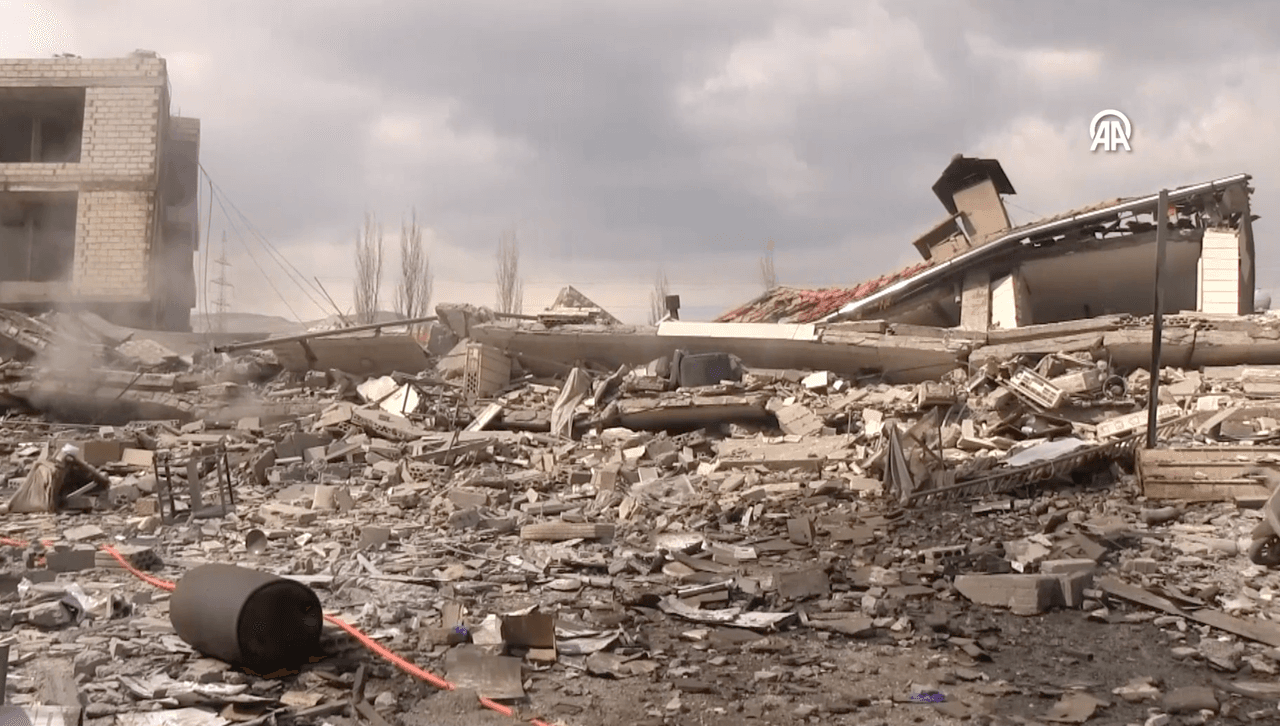
Damage in the Baalbek region of southern Lebanon targeted in Israeli strikes 2 March 2026 - (Anadolu Ajansı)
On 2 March 2026 Israeli Defense Minister Yisrael Katz stated on the US-based social media platform X: “Hezbollah will pay a heavy price for firing at Israel.”
In the same statement he referred to Hezbollah’s Secretary General Naim Qassem: “Naim Qassem Secretary General of Hezbollah who decided to fire under Iranian pressure is now marked for assassination.”
Katz also said: “Everyone who follows the path of Ali Khamenei will soon find themselves alongside those removed from the axis of evil in the depths of hell.”
On 2 March 2026 Israeli Chief of Staff Eyal Zamir announced the launch of a campaign of attacks against Hezbollah. In his statement Zamir said: “We have launched a campaign of attacks against Hezbollah and must be prepared for several days of fighting.” He added: “We are not only on the defensive; we are going on the offensive.”
On 2 March 2026 Lebanese President Joseph Aoun condemned Israel’s attacks on Lebanese territory. Aoun noted that rocket launches from Lebanese soil risked drawing the country into dangerous military confrontations in the region.
In the same statement he indicated that these rocket launches were aimed at undermining the state’s efforts to keep Lebanon out of conflict. Aoun declared that the state would not permit Lebanon to be turned again into a platform for wars unrelated to its own interests.
The president emphasized that parties ignoring repeated calls to preserve security and stability would be held responsible for any negative developments. Aoun stated that the Lebanese state would not allow such a situation to recur and that the Lebanese people would not accept it.
On 2 March 2026 Lebanese Prime Minister Nawaf Salam described rocket launches from southern Lebanon toward Israel as “irresponsible and suspicious acts.” Salam said: “Regardless of who is behind them these launches threaten Lebanon’s security and stability.” He added: “Lebanon will not allow itself to be dragged into new adventures.” He also stated that those responsible would be identified and all necessary measures would be taken to protect the Lebanese people.”
Following the Israeli attacks Prime Minister Nawaf Salam convened an emergency cabinet meeting. The meeting took place at 08:00 local time at the Presidential Palace. It assessed developments since midnight on 2 March and discussed measures the government would take.
On 2 March 2026 Lebanese Prime Minister Nawaf Salam announced that the government had banned Hezbollah’s military and security activities and limited its role to political functions.
In a statement following the cabinet meeting Salam said: “The state rejects any military or security operation launched from Lebanese territory.”
Salam stated: “The decision for war and peace belongs solely to the state.” He confirmed that the cabinet had decided to ban military operations outside legitimate state institutions. Salam ordered the Lebanese Armed Forces to firmly implement a plan to bring all weapons under state control particularly in the area north of the Litani River.
On 2 March 2026 Israeli military spokesperson Ella Waweya issued a video message on the US-based social media platform X announcing that more than 50 settlements in southern Lebanon and the Bekaa Valley would be targeted and urging residents of these areas to immediately evacuate their homes. The statement indicated that residents must move to open areas at least 1000 meters away.
Thousands flee southern Lebanon for Beirut following Israeli strike threats 2 March 2026 - (Anadolu Ajansı)
Following Israel’s threat of attacks thousands of people in southern Lebanon and the Bekaa Valley began migrating northward. Those forced to abandon their homes created heavy traffic on the roads. Movement was reported from southern suburbs of Beirut and parts of southern Lebanon toward central Beirut and Mount Lebanon.
Following the Israeli attacks all private and public schools and vocational and technical training institutions in Lebanon suspended educational activities for security reasons.
The Lebanese Ministry of Education and Higher Education stated that the decision was made in light of concerns for public safety and the extraordinary security situation.
The ministry noted that many displaced persons were being sheltered in schools and that relevant authorities would evaluate developments daily in coordination with each other.
On 2 March 2026 the Israeli military announced it had conducted an air strike in the southern suburbs of Beirut targeting a “senior Hezbollah member.” The strike was said to have focused on the Madi neighborhood but no details regarding the individual’s identity were provided. The Israeli military described the strike as a “pinpoint operation.”
Israeli air strikes reportedly targeted several towns in southern Lebanon. The towns of Bint Jubayl Arabsalim and Hola in the Nabatieh Governorate and the villages of Hos Rafika and Doris in the eastern Baalbek region were among the targets. Three civilians were reported injured in the strike on Hos Rafika.
The towns of Sela Debal Mareke Siddikin and Deyr Amis in the city of Sour were also targeted. Air strikes were also reported against the villages of Mahrune Tayr Felsay Bazuriyye Semaiye Hiniyye Mansuri Mecdel Zon Kana and Shiaytiye under the jurisdiction of Sour and the villages of Kalviye Hasada and Hira Tayr Debe under the Nabatieh Governorate.
A heavy Israeli air strike targeted the town of Srifa in southern Lebanon and two separate strikes were carried out on the Al-Salihiya neighborhood in Nabatieh. These strikes reportedly caused widespread destruction and fires in buildings and vehicles. The areas around Al-Shahabiya and Deir Qanoun al-Nahr in southern Lebanon were also targeted.
On 2 March 2026 it was reported that Israel had begun calling up 100000 reserve soldiers as part of preparations to expand its operations against Iran and Lebanon.
The Israeli military announced that the code name for its ongoing operation is “Operation Roaring Lion” and that reserve forces are being mobilized across various fronts for reinforcement. The Israeli military confirmed it is continuing its offensive campaign against Hezbollah in Lebanon.
Al Jazeera. "Israel Bombs Beirut After Hezbollah Launches Rocket Attack." Al Jazeera. Accessed March 2, 2026. https://www.aljazeera.com/news/2026/3/2/israel-bombs-beirut-after-hezbollah-launches-rocket-attack
Anadolu Ajansı. "Hezbollah Claims Rocket, Drone Strike on Israeli Missile Defense Site Near Haifa." Anadolu Ajansı. Accessed March 2, 2026. https://www.aa.com.tr/en/middle-east/hezbollah-claims-rocket-drone-strike-on-israeli-missile-defense-site-near-haifa/3845853/
Anadolu Ajansı. "Israel Announces Launch of Offensive on Hezbollah Amid Regional Escalation." Anadolu Ajansı. Accessed March 2, 2026. https://www.aa.com.tr/en/middle-east/israel-announces-launch-of-offensive-on-hezbollah-amid-regional-escalation/3846113/
Anadolu Ajansı. "Israel Claims Airstrike Targeted Senior Hezbollah Operative in Lebanese Capital." Anadolu Ajansı. Accessed March 2, 2026. https://www.aa.com.tr/en/middle-east/israel-claims-airstrike-targeted-senior-hezbollah-operative-in-lebanese-capital/3846326/
Anadolu Ajansı. "Israel Mobilizes 100,000 Reservists as It Signals Broader Offensive Beyond Iran." Anadolu Ajansı. Accessed March 2, 2026. https://www.aa.com.tr/en/middle-east/israel-mobilizes-100-000-reservists-as-it-signals-broader-offensive-beyond-iran/3846259/
Anadolu Ajansı. "Israel Says Hezbollah Chief Now Marked Target for Elimination." Anadolu Ajansı. Accessed March 2, 2026. https://www.aa.com.tr/en/middle-east/israel-says-hezbollah-chief-now-marked-target-for-elimination-/3846179/
Anadolu Ajansı. "Israeli Army Launches Airstrikes in Lebanon After Intercepting Rocket Fire." Anadolu Ajansı. Accessed March 2, 2026. https://www.aa.com.tr/en/middle-east/israeli-army-launches-airstrikes-in-lebanon-after-intercepting-rocket-fire/3845776/
Anadolu Ajansı. "Lebanese President Condemns Israeli Strikes, Warns Against Being Drawn into Conflict." Anadolu Ajansı. Accessed March 2, 2026. https://www.aa.com.tr/en/middle-east/lebanese-president-condemns-israeli-strikes-warns-against-being-drawn-into-conflict/3845871/
Anadolu Ajansı. "Lebanese Prime Minister Bans Hezbollah’s Military Activities." Anadolu Ajansı. Accessed March 2, 2026. https://www.aa.com.tr/en/middle-east/lebanese-prime-minister-bans-hezbollah-s-military-activities/3846514/
Anadolu Ajansı. "Lebanon’s Prime Minister Calls Emergency Cabinet Meeting Amid Intense Israeli Strikes." Anadolu Ajansı. Accessed March 2, 2026. https://www.aa.com.tr/en/middle-east/lebanon-s-prime-minister-calls-emergency-cabinet-meeting-amid-intense-israeli-strikes/3845866/
Anadolu Ajansı. "Lebanon’s Prime Minister Says Rocket Fire from Country’s South Irresponsible, Vows Action to Prevent Escalation." Anadolu Ajansı. Accessed March 2, 2026. https://www.aa.com.tr/en/middle-east/lebanon-s-prime-minister-says-rocket-fire-from-country-s-south-irresponsible-vows-action-to-prevent-escalation/3845862/
Anadolu Ajansı. "İsrail Ordusu Lübnan’a Havadan ve Denizden Saldırılar Düzenledi." Anadolu Ajansı. Accessed March 2, 2026. https://www.aa.com.tr/tr/dunya/israil-ordusu-lubnana-havadan-ve-denizden-saldirilar-duzenledi/3846532/
Anadolu Ajansı. "İsrail’in Saldırıları Sonrası Lübnan’da Göç Başladı." Anadolu Ajansı. Accessed March 2, 2026. https://www.aa.com.tr/tr/dunya/israil-in-saldirilari-sonrasi-lubnan-da-goc-basladi/3845802
Daily Sabah. "Israel Kills 31 in Lebanon After Hezbollah Joins Iran Retaliation." Daily Sabah. Accessed March 2, 2026. https://www.dailysabah.com/world/mid-east/israel-kills-31-in-lebanon-after-hezbollah-joins-iran-retaliation
Reuters. "Lebanon Bans Hezbollah Military Actions After Attack on Israel." Reuters. Accessed March 2, 2026. https://www.reuters.com/world/middle-east/israeli-military-says-projectiles-were-fired-lebanon-2026-03-01/
SANA. "Lübnan’da İsrail Hava Saldırıları: 31 Ölü, 149 Yaralı." Suriye Arap Haber Ajansı (SANA). Accessed March 2, 2026. https://sana.sy/tr/international/2284750/
Israel’s Attacks on Lebanon are military operations conducted by the Israeli military on March 2, 2026, targeting the southern suburbs of Beirut, Lebanon’s capital, as well as the southern and eastern regions of the country, using air and naval assets.
Israel’s attacks on Beirut, March 2, 2026 - (Associated Press)
On the morning of March 2, 2026, Hezbollah announced it had launched missile and unmanned aerial vehicle attacks from southern Lebanon into northern Israel. The statement indicated that the attack was in response to Israel’s nearly daily assaults on Lebanon and the killing of Iran’s religious leader, Ayatollah Ali Khamenei. Hezbollah carried out the attack by targeting an Israeli military facility near Haifa.
The Israeli Defense Forces stated that missiles had been detected being launched from Lebanon, and that sirens were activated across the country’s northern regions following the missile launches.
The Israeli press reported that this attack was the most intense carried out by Hezbollah since the ceasefire agreed upon between Lebanon and Israel on November 27, 2024. Israeli television channel 12 reported that six missiles had been fired from Lebanon.
On March 2, 2026, the Israeli military announced it had carried out a series of coordinated attacks simultaneously in Lebanon and Iran. The statement indicated that the attacks were conducted in response to Hezbollah’s missile launches.
According to the Israeli military, high-ranking Hezbollah members in Beirut’s southern suburbs were targeted with precision munitions. The attacks were executed by the Israeli Air Force and Navy.
The statement also indicated that a weapons storage facility allegedly belonging to Hezbollah in the Lebanese city of Sur had been targeted. Additionally, command centers accused of deepening the ties between Iran and Hezbollah were also targeted.
In its initial statement, Lebanon’s Ministry of Health reported that 31 people had been killed and 149 injured in Israeli air strikes targeting Beirut and southern regions.
In the evening of March 2, Lebanon’s Ministry of Health announced that the number of fatalities in the Israeli attacks had increased by 21 to reach 52, and that the number of injured had reached 154. The statement indicated that Israel had carried out 221 attacks. It was also reported that 28,586 people had been forcibly displaced and that 186 centers were serving as temporary shelters.
Damage in the Baalbek region of southern Lebanon, targeted in Israel’s attack, March 2, 2026 - (Anadolu Agency)
On March 2, 2026, Israeli Defense Minister Yisrael Katz, in a statement on the U.S.-based social media platform X, said, “Hezbollah will pay a heavy price for firing at Israel.”
In the same statement, he referred to Hezbollah’s Secretary General Naim Qassem: “Naim Qassem, Hezbollah’s Secretary General, who decided to fire under Iranian pressure, is now marked for assassination.”
Katz also said, “Everyone who follows the path of Ali Khamenei will soon find themselves alongside those eliminated from the axis of evil, in the depths of hell.”
On March 2, 2026, Israeli Chief of Staff Eyal Zamir announced the launch of a campaign of attacks against Hezbollah. In his statement, Zamir said, “We have launched a campaign of attacks against Hezbollah and must prepare for several days of fighting.” He added, “We are not merely on the defensive; we are going on the offensive.”
On March 2, 2026, Lebanese President Joseph Aoun condemned Israel’s attacks on Lebanese territory. Aoun noted that missile launches from Lebanese soil risked drawing the country into dangerous military confrontations in the region.
In the same statement, he indicated that these missile launches were aimed at undermining the state’s efforts to keep Lebanon out of conflict. Aoun stated that the state would not permit Lebanon to be turned once again into a platform for wars unrelated to its own interests.
The President emphasized that parties ignoring repeated calls to preserve security and stability would be held responsible for any adverse developments. Aoun declared that the Lebanese state would not allow such a situation to recur and that the Lebanese people would not accept it.
On March 2, 2026, Lebanese Prime Minister Nawaf Salam characterized missile launches from southern Lebanon into Israel as “irresponsible and suspicious acts.” Salam said, “Regardless of who is behind them, these launches threaten Lebanon’s security and stability,” and added, “Lebanon will not allow itself to be dragged into new adventures.” He also stated that those responsible would be identified and that all necessary measures would be taken to protect the Lebanese people.
Following the Israeli attacks, Nawaf Salam summoned the cabinet to an emergency meeting. The meeting was held at 08:00 local time at the Presidential Palace, where developments since midnight on March 2 were assessed and potential government measures were discussed.
On March 2, 2026, Lebanese Prime Minister Nawaf Salam announced that the government had banned Hezbollah’s military and security activities and had restricted the group’s role to political functions only.
In a statement following the cabinet meeting, Salam said, “The state rejects any military or security action launched from Lebanese territory.”
Salam stated, “The decision for war and peace belongs solely to the state,” and confirmed that the cabinet had decided to ban military operations outside legitimate state institutions. He ordered the Lebanese Armed Forces to firmly implement a plan to bring all weapons under state control, particularly north of the Litani River.
In the evening of March 2, Muhammad Raid, Speaker of Hezbollah’s Parliamentary Bloc, criticized the government’s ban on Hezbollah’s military activities. Raid, who was alleged to have been killed in Israeli attacks, made statements on Al Manar, the television channel affiliated with Hezbollah.
Raid, responding to the government’s ban on Hezbollah’s military activities, said, “While the Lebanese people were waiting for the attack to be banned, they were met with a decision banning the rejection of the attack. The government failed to use the international friendships it claims to have to force the enemy to halt its war against our country.”
On March 2, 2026, Israeli military spokesperson Ella Waweya, in a video message posted on the U.S.-based social media platform X, announced that more than 50 settlements in southern Lebanon and the Bekaa Valley would be targeted and urged residents of these areas to immediately vacate their homes. The statement specified that residents must move at least 1,000 meters away to open areas.
Thousands of people flee southern Lebanon for Beirut following Israel’s attack threat, March 2, 2026 - (Anadolu Agency)
Following Israel’s attack threat, thousands of people from southern Lebanon and the Bekaa Valley began migrating northward. Those forced to abandon their homes created heavy traffic on the roads. Displacement was reported from southern suburbs of Beirut and certain areas of southern Lebanon toward central Beirut and Mount Lebanon.
Following the Israeli attacks, all private and public schools, as well as vocational and technical training institutions in Lebanon, suspended educational activities for security reasons.
The Lebanese Ministry of Education and Higher Education stated that the decision was made in light of concerns for public safety and the extraordinary security situation.
The statement noted that many displaced persons were being housed in schools, and that relevant authorities would evaluate developments on a daily basis in coordination with each other.
On March 2, 2026, the Israeli military announced it had conducted an air strike in the southern suburbs of Beirut targeting a “senior Hezbollah member.” The statement specified that the strike targeted the Madi neighborhood but provided no further details regarding the individual’s identity. The Israeli military described the strike as a “pinpoint operation.”
Israeli air strikes reportedly targeted various villages in southern Lebanon. The villages of Bint Jubayl, Arabsalim, and Hola in the Nabatieh Governorate, as well as Hos Rafika and Doris in the eastern Baalbek region, were identified as targets. Three civilians were reported injured in the strike on Hos Rafika.
The villages of Sela, Debal, Mareke, Siddikin, and Deyr Amis in the city of Sur were also among the targets. Additionally, air strikes were reported against the villages of Mahrune, Tayr Felsay, Bazuriyye, Semaiye, Hiniyye, Mansuri, Mecdel Zon, Kana, and Shiaytiye, all under Sur, as well as Kalviye, Hasada, and Hırayc Tayr Debe in the Nabatieh Governorate.
A heavy Israeli air strike targeted the town of Srifa in southern Lebanon, and two separate strikes were carried out on the Al-Salihiya neighborhood in Nabatieh. These strikes reportedly caused widespread destruction and fires in buildings and vehicles. The areas around Al-Shahabiya and Deir Qanoun al-Nahr in southern Lebanon were also targeted.
On March 2, 2026, it was reported that Israel had begun mobilizing 100,000 reserve soldiers as part of preparations to expand its operations against Iran and Lebanon.
The Israeli military announced that the code name of its ongoing operation is “Operation Roaring Lion”, and that reserve forces are being called up to reinforce various fronts. The Israeli military confirmed it is continuing its offensive campaign against Hezbollah in Lebanon.
The Israeli military conducts intense air strikes on Beirut, Lebanon’s capital, March 2, 2026 - (Anadolu Agency)
On March 2, 2026, the Israeli military announced it would target branches of Hezbollah’s financial institution Karz-i Hasen across Lebanon. Israeli Defense Forces spokesperson Avichay Adraee shared maps on his social media account showing over 30 locations marked in red across Lebanon. The maps included numerous areas, including the capital Beirut.
The Israeli military stated that the marked locations were branches of Hezbollah’s financial institution Karz-i Hasen. The statement advised that people must stay at least 300 meters away from these buildings.
On the afternoon of March 2, 2026, it was reported that the Israeli military had carried out air strikes against financial institutions affiliated with Hezbollah across Lebanon. According to Lebanon’s official news agency NNA, the Israeli military bombed the locations previously announced as targets. Sur, Nabatieh, and Baalbek were reported as locations where branches of Karz-i Hasen were targeted.
On March 2, 2026, the Israeli military conducted intensive air strikes on Dahieh, a district in Beirut. The first wave included five air strikes on Dahieh. In the evening, Israeli fighter jets targeted the district again, followed by loud explosions.
On March 2, 2026, the Israeli military announced that since beginning its attacks on Lebanon in response to Hezbollah’s missile launches, it had carried out over 70 air strikes nationwide. The military stated that a wave of attacks targeting Hezbollah assets in southern Lebanon had been completed.
It was claimed that over 70 weapons depots, launch sites, and ramps belonging to Hezbollah had been targeted. The Israeli military asserted that the struck sites were intended for use in attacks against Israel.
On March 2, 2026, Israeli Chief of Staff Eyal Zamir stated that the attacks on Lebanon would not end until the “threat” originating from the country was eliminated and Hezbollah was disarmed. Speaking after a meeting with commanders along the northern border, Zamir emphasized that Israel was focused on Iran and declared, “We will not end the war unless Hezbollah suffers a serious blow and is disarmed.”
Zamir stated that Israel was acting decisively and had conducted strikes against the Iranian regime, adding that it was in “unique cooperation” with the U.S. military. He claimed the attacks were a response to the Lebanese government and army’s failure to act on recent warnings that Hezbollah must be disarmed. Zamir said, “We know how to defend ourselves alone.”
He argued that the war would end not only when Iran suffered damage, but also when Hezbollah sustained a severe blow. Zamir stated that the Israeli military had “planned and prepared to operate simultaneously on multiple fronts”, and that these plans had been ready for a long time.
On the same day, Israeli military spokesperson Effie Defrin indicated that all options regarding Lebanon remained on the table and signaled that Israel could launch a ground invasion. In response to a question about the possibility of a ground assault on Lebanon, where Israel had already conducted air and naval strikes, Defrin replied, “All options are on the table.”
Lebanese Ambassador to Paris Rabih Chaer, speaking on French channel BFMTV, addressed Israel’s ongoing attacks on Lebanon over the years. He stated that Israel had not responded positively to the Lebanese government and president’s good-faith negotiation efforts and showed no interest in making progress in talks.
Chaer said, “The weapons held by Hezbollah no longer threaten Israel, and Israel knows this very well.” He added, “Israel has not given the Lebanese government any opportunity to resolve the Hezbollah issue.” Chaer expressed serious concern that Israel might launch ground attacks, stating, “We fear that Israel is seizing this historic opportunity to occupy southern Lebanon and establish the buffer zone it has long dreamed of.”
Anadolu Ajansı. "İsrail Lübnan’a Havadan ve Denizden Saldırılar Düzenledi." Accessed March 3, 2026. https://www.aa.com.tr/tr/dunya/israil-lubnana-havadan-ve-denizden-saldirilar-duzenledi/3846532
Anadolu Ajansı. "İsrail’in Saldırıları Sonrası Lübnan’da Göç Başladı." Accessed March 3, 2026. https://www.aa.com.tr/tr/dunya/israil-in-saldirilari-sonrasi-lubnan-da-goc-basladi/3845802
In the early hours of 3 March 2026, the Israeli military issued a new threat of attack, demanding the evacuation of the southern stretch of the Lebanon-Israel border. Israeli Defense Forces Spokesperson Avichay Adraee called for the complete evacuation of the western section of the border from Nakura to the village of Hiyam, and published a map marking 30 villages targeted for attack. He stated that civilians must leave their homes and move northward into Lebanon.
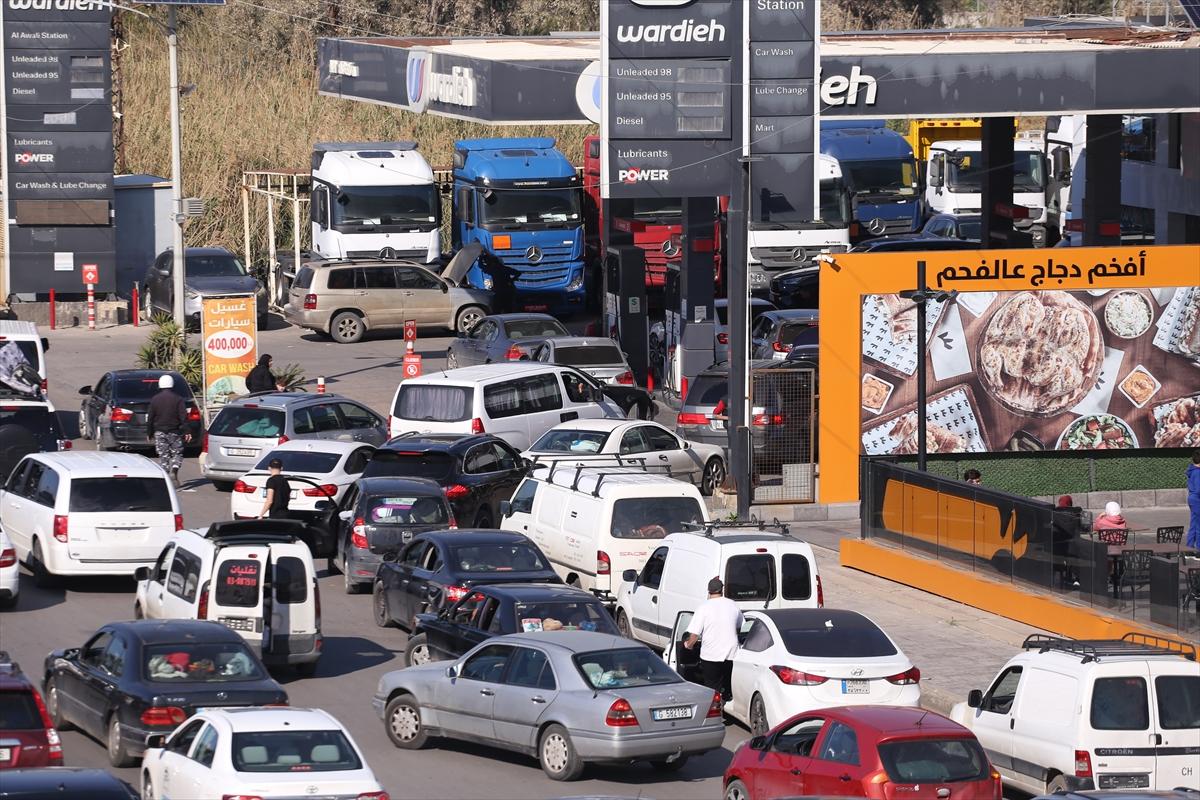
As Israel continues its attacks on southern Lebanon, civilians in the region are fleeing to Beirut, 2 March 2026 – (Anadolu Agency)
During the same period, the Israeli military threatened an attack on a building in the Haret Hureyk neighborhood of Beirut’s Dahiye district. Adraee shared a map with the building marked in red and instructed residents to move at least 300 meters away from the marked structure. He claimed the building belonged to Hezbollah and announced that a heavy aerial strike would be carried out there. Subsequently, a similar marked map was released for another building in Hureyk, with a warning of an impending attack.
In the late evening, Israeli warplanes conducted aerial strikes on Beirut’s Dahiye district. Intense explosion sounds were heard following the attacks. Al Manar Television, affiliated with Hezbollah, confirmed that a building belonging to the channel had been targeted in the strike on Hureyk neighborhood of Dahiye.
On the same day, the Israeli military issued threats of attacks against 59 villages and towns in southern Lebanon, urging residents to evacuate their homes. The statement specified that those living in these settlements must move at least 1 kilometer away from their homes.
In the morning, the military targeted the Harat Hureyk area of Dahiye and bombed the El-Menar TV building. At the same time, Israeli aircraft carried out aerial strikes on the Hureyk and Hedes neighborhoods of Dahiye.
Additionally, it was reported that during the aerial attack on Beirut, the building of Nur Radio, affiliated with Hezbollah, was targeted.
On 3 March 2026, Hezbollah announced it had launched rocket and unmanned aerial vehicle (UAV) attacks against Israel in retaliation for strikes on Lebanon. A written statement released on Hezbollah’s Telegram channel stated that these attacks were a response to Israel’s strikes on southern Lebanon and the capital Beirut.
The statement recorded that the Miron Base in Israel was targeted at 06:30 local time by kamikaze UAVs. It was also announced that the Nafah Base in the occupied Golan Heights was struck simultaneously by multiple rockets.
On the same day, rockets fired from Lebanon struck populated areas in northern Israel. According to a statement by Eli Bin, Director General of Israel’s emergency service Magen David Adom, a rocket fired from Lebanon landed in northern Israel and hit a building in the Yuval settlement near the Lebanon border in the Jilil region, lightly injuring one person.
Later in the day, it was reported that a rocket fired from Lebanon directly hit a house in the Kfar Yuval settlement area along the Israel-Lebanon border. The attack caused severe damage to the building and nearby vehicles, and at least four people were injured. Israeli police who arrived at the scene stated they had removed shrapnel fragments from the area and remained on high alert.
On 3 March 2026, Israel announced its decision to expand its ground occupation in southern Lebanon. A statement from the office of Israeli Defense Minister Yisrael Katz indicated that Katz and Prime Minister Binyamin Netanyahu had ordered the Israeli military to deploy further inside Lebanon. Katz stated that the decision to expand the occupation was justified by rising tensions with Hezbollah in Lebanon.
On the same day, Lebanon’s official news agency NNA reported that the Israeli military had begun expanding its ground occupation in southern Lebanon by advancing toward several towns and points along the border. The report stated that Israeli forces were expanding their occupied territory in southern Lebanon through intense attacks and moving toward certain towns.
On 3 March at midday, Lebanon’s official news agency NNA reported that the Israeli military had conducted aerial and artillery strikes on several towns in southern Lebanon. According to the report, Israeli aircraft targeted the towns of Harayib, Kefer Melki, Kakaiyyet Cisir, Debbin, Haruf and Zerariye, while artillery fire was directed at the area around the border town of Aita al-Shaab.
A written statement from the Lebanese Armed Forces stated that three foreign nationals were detained on the grounds of cooperating with Israel. Later in the day, the Israeli military issued a new threat of attacks against 80 villages and towns in southern Lebanon. Israeli Defense Forces Spokesperson Avichay Adraee stated that residents must evacuate their homes, move at least 1 kilometer away, and not return.
In an aerial strike on the village of Siddiqin, part of the city of Sur, two health workers employed by the Islamic Health Board were killed. In the village of Kabriha in the Nabatieh governorate, an Israeli unmanned aerial vehicle attacked a motorcycle, killing two people and injuring two others. It was also reported that the Israeli military conducted aerial strikes on the towns of Ankun, Debbin, Teyrdeba, Benafol, Ernon, Yahmar Shakif, Mansuri, Seksekiyye and Lobiyye.
Later in the day, the Israeli military issued a new threat of attack against the city of Sur. Avichay Adraee shared a map marking certain buildings in Sur in red, claiming they belonged to Hezbollah and stating that they would be targeted by heavy aerial strikes.
On 3 March 2026, the Israeli military launched new aerial attacks on Beirut’s Dahiye district. According to Lebanon’s official news agency NNA, Israeli aircraft targeted the Ruways and Sufeyr neighborhoods of Dahiye, known as the “Hezbollah fortress.” Smoke was reported rising from the area after the strikes.
On the same day, the Israeli military announced it had carried out a series of strikes on locations it claimed belonged to Hezbollah in Beirut. The military stated that command centers, weapons depots, and communication infrastructure used by Hezbollah’s intelligence unit had been targeted, asserting that although these facilities appeared civilian, they were “military” in nature. Additionally, it was alleged that during a naval strike on Beirut, Riza Kuzal, Commander of the Iranian Revolutionary Guards Corps Quds Force’s Lebanon Division, was targeted.
It was claimed that Kuzal was involved in enhancing Hezbollah’s military capacity and equipment, played a role in arms smuggling from Iran to Lebanon, and oversaw arms production programs on Lebanese soil. The Israeli military stated that the attacks would continue.
The Israeli military also conducted an aerial strike on the headquarters of the Islamic Gathering Party in Sidon. According to NNA, Israeli aircraft targeted the party’s headquarters in the Great Bostan neighborhood of Sidon. Aerial strikes were also carried out on the towns of Mivdon, Davudiyye, Kefer Tebnit, and Upper Nabatieh. Fourteen people were injured in the aerial strike on Davudiyye. It was also reported that a building in Sidon previously subject to an attack threat had been bombed.
Following Israel’s attacks on Lebanon, displacement increased across the country. It was reported that at least 10,000 civilians fleeing the fighting crossed into Syria through the Cdeydet Yabus and Cusiye border crossings near the Damascus countryside and Homs. It was also reported that those seeking to enter Syria from Lebanon faced long queues and waited for hours due to overcrowding at the border crossings.
Director General of Border Crossings Mohammed al-Qasim stated that a major surge in traffic at the border crossing was caused by the deteriorating security situation in Lebanon. Qasim noted that Lebanese authorities were allowing civilians to cross without stamping their passports, contributing to the congestion. He added that civil defense teams had been deployed to assist arrivals, additional halls had been opened, and extra staff had been assigned. “From last night until 10:00 this morning, 10,000 people entered,” he said. He also stated that Lebanese citizens could only enter Syria if they were married to a Syrian, owned property in Syria, held citizenship of another country, or possessed a union card.
On the same day, a written statement by Lebanon’s Disaster Management Unit, under the government, reported that the number of displaced persons had reached 58,064 since the attacks began on 2 March. The statement noted that these individuals had been relocated to 321 shelters across Lebanon. Social Affairs Minister Hanin al-Sayyid, speaking at a press conference, confirmed that all state institutions were on high alert and that efforts were underway to meet the needs of the displaced.
On 3 March 2026, Israeli Prime Minister Binyamin Netanyahu announced that attacks against Iran and Lebanon would be intensified. He made the remarks during a visit to the Palmachim Military Air Base in central Israel.
Netanyahu stated that Israeli jets were operating over Israeli and Lebanese airspace, claiming that Hezbollah had made a “great mistake” by attacking Israel. He declared that the ongoing attacks on Lebanon and Iran would be intensified.
On 3 March 2026, Lebanese President Michel Aoun, during a meeting with members of the “Quintet Committee,” stated that Hezbollah’s attack targeting northern Israel had been launched from a region south of the Litani River. Aoun emphasized that the cabinet’s decision on Monday, which affirmed that decisions on war and peace rest solely with the Lebanese state and prohibited unauthorized military and security activities, was “sovereign and irreversible.” He stated that the responsibility for implementing this decision across all regions of Lebanon had been assigned to the Lebanese Armed Forces and security forces.
President Aoun requested that the countries of the Quintet Committee — the United States, France, Saudi Arabia, Qatar, and Egypt — exert pressure on Israel to halt its attacks on Lebanon. It was reported that the Quintet Committee had been formed following the political escalation after the vacancy of Lebanon’s presidency.
On 3 March 2026, the United States Embassy in Beirut announced that, due to “ongoing regional tensions,” it would remain closed until a further announcement. The written statement from the embassy indicated the decision was made for security reasons. It stated that “the U.S. Embassy in Beirut will remain closed until a further announcement due to ongoing regional tensions.” All routine and emergency consular appointments were canceled, and the public would be notified when the embassy resumed normal operations.
Anadolu Ajansı. "Suriye ile Lübnan Arasındaki Cdeydet Yabus Sınır Kapısı Kısa Süreliğine Kapandı." Accessed March 4, 2026. https://www.aa.com.tr/tr/dunya/suriye-ile-lubnan-arasindaki-cdeydet-yabus-sinir-kapisi-kisa-sureligine-kapandi/3849778
Anadolu Ajansı. "İsrail Güçleri Lübnan’ın Güneyinde Karadan İşgali Genişletmeye Başladı." Accessed March 4, 2026. https://www.aa.com.tr/tr/dunya/israil-gucleri-lubnanin-guneyinde-karadan-isgali-genisletmeye-basladi/3847903
Anadolu Ajansı. "İsrail Lübnan’ın Başkenti Beyrut’a Yeni Hava Saldırıları Düzenledi." Accessed March 4, 2026. https://www.aa.com.tr/tr/dunya/israil-lubnanin-baskenti-beyruta-yeni-hava-saldirilari-duzenledi/3849138
During the night of 4 March 2026, the Israeli military conducted an airstrike on the village of Aramun, located south of Beirut, the capital of Lebanon. According to reports in the Lebanese press, a building in Aramun was targeted, and the intense explosion from the strike was audible in various parts of Beirut.
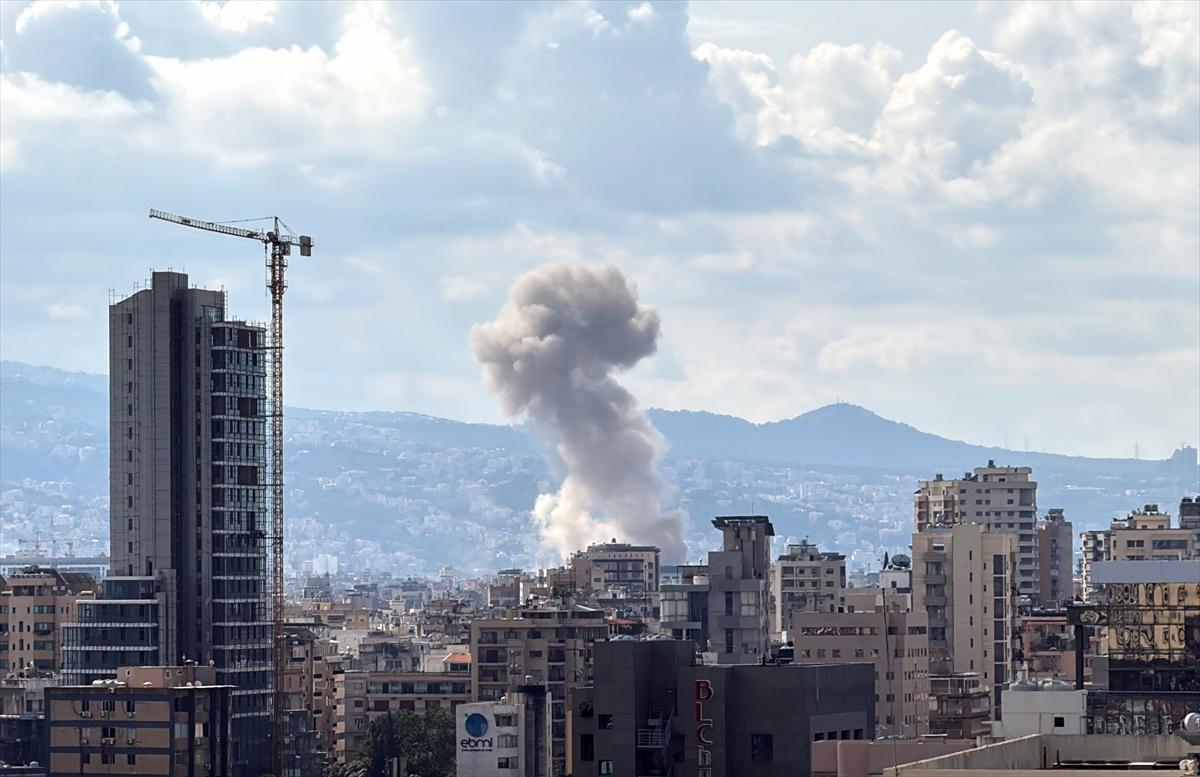
Israeli airstrikes on Beirut, Lebanon, 4 March 2026 - (Anadolu Agency)
Lebanon’s official news agency, NNA, reported that Israeli warplanes also carried out airstrikes on the Kefer Coz and Kefur regions in southern Lebanon during the same night. It was also reported that an Israeli unmanned aerial vehicle (UAV) continued low-altitude flight over Beirut’s skies during this period.
In the early morning hours, Israeli attacks expanded to eastern Lebanon. According to NNA, Israeli warplanes bombed a four-story building in the El-Metrebe neighborhood of Baalbek, located in eastern Lebanon. Initial assessments indicate that four people were killed and six injured in the strike. Rescue operations to recover those trapped under rubble are ongoing.
Casualties and injuries were also reported from two buildings bombed in Aramun and the es-Sadiyat area during the same period. According to local media citing sources from the Ministry of Health, a total of six people were killed and eight injured in the attacks on Aramun and Sadiyat. Thus, by morning, the total number of fatalities from Israeli airstrikes across Lebanon reached ten, with 14 injured.
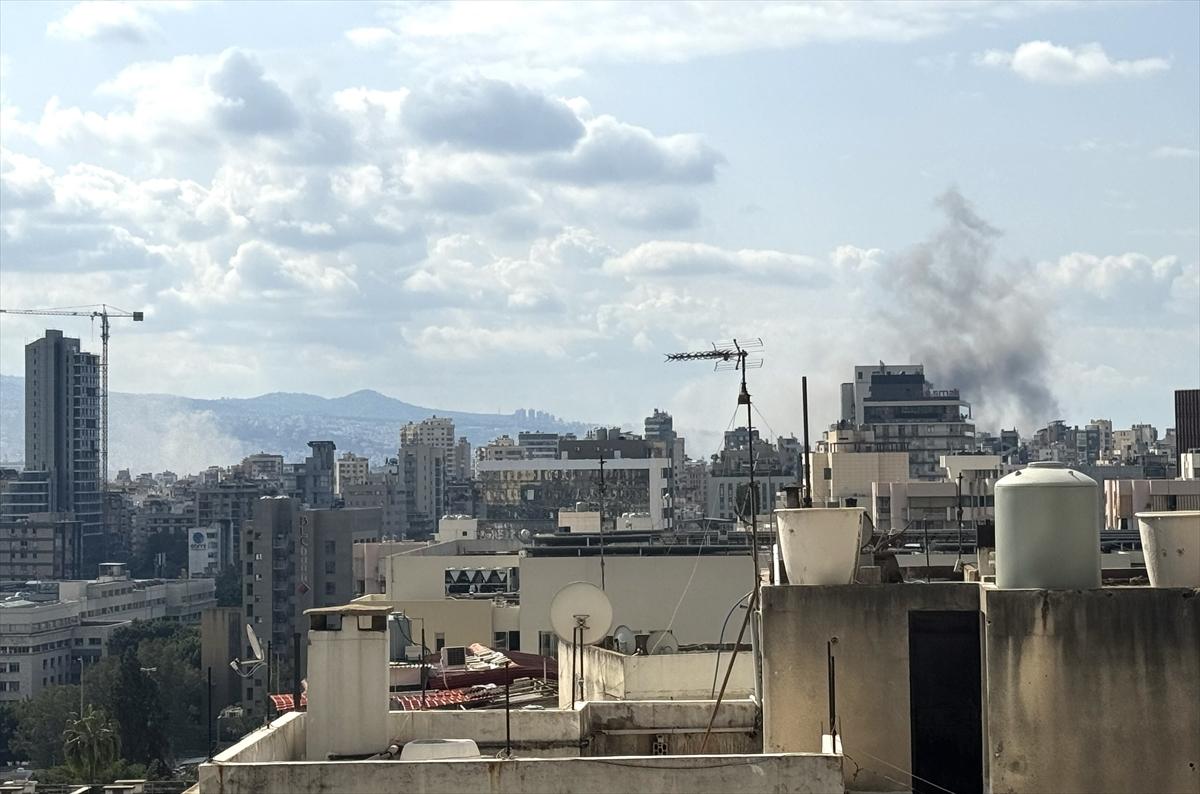
Israeli airstrikes on Beirut, Lebanon, 4 March 2026 - (Anadolu Agency)
NNA also reported that the Israeli military targeted a hotel in the Hazmiye area east of Beirut with an airstrike, and numerous fire trucks were dispatched to the area. Israeli warplanes were also reported to have struck near the villages of et-Tayri and Kunin, which are附属 to the city of Nabatieh in southern Lebanon.
On the morning of 4 March 2026, casualty figures from Israeli airstrikes across Lebanon were updated. According to the official news agency NNA, the number of those killed in Israeli attacks rose to 11, and the number of injured increased to 23.
In the four-story building bombed in the El-Metrebe neighborhood of Baalbek in eastern Lebanon, initial assessments indicated that five people were killed, 15 were injured, and three others were reported missing. Rescue operations to recover those trapped under rubble are continuing. Ahmed Zuhery et-Tufeyli, Mayor of Baalbek, stated at the site: “We are facing an enemy that commits senseless crimes. Only civilian families live in this settlement complex where the enemy has carried out a massacre.”
Starting in the early morning hours of 4 March, the Israeli military intensified airstrikes targeting the Dahiye area in southern Beirut. Israeli aircraft carried out a total of six airstrikes on the area during the morning hours.
On the same day, the Israeli military struck the villages of Mahmudiye, Suvayri, and Arzun Shahhur in the south. Airstrikes were also conducted against the villages of Shamstar and Buvadi in the Baalbek region in the east. Additionally, it was reported that the Israeli military launched a shrapnel bomb attack on the village of Cideydet Mercayun, which is part of the Nabatieh governorate.
An Israeli-targeted hotel in Jabal Lubnan, 4 March 2026 - (Anadolu Agency)
On 4 March 2026, the Israeli military expanded its evacuation call for southern Lebanon. Israeli Defense Forces Spokesperson Avichay Adraee, in a statement on his social media account, initially listed 16 villages and towns and called for their immediate evacuation. Residents of these settlements were urged to leave their homes and move at least one kilometer away.
In a subsequent statement, the number of villages under threat was increased by an additional 14, bringing the total to 30 villages for which evacuation was requested. Adraee asserted that attacks would be carried out against Hezbollah personnel, facilities, and military vehicles, and urged Lebanese civilians in these areas to evacuate.
On 4 March 2026, the Israeli military called for the complete evacuation of southern Lebanon up to the Litani River. In a social media post, Israeli Defense Forces Spokesperson Avichay Adraee published a map of southern Lebanon marked in red and issued evacuation orders to the local population.
Adraee called for the complete evacuation of the region, which was home to approximately two million people before the war and has suffered severe damage due to intense attacks over the past two years.
In his statement, he said: “Anyone near Hezbollah members, facilities, or weapons is putting their own life at risk.” He further issued a threat of attack, stating: “Any house used by Hezbollah for military purposes is a legitimate target.” He instructed Lebanese civilians to completely vacate the area south of the Litani River and move north of it.
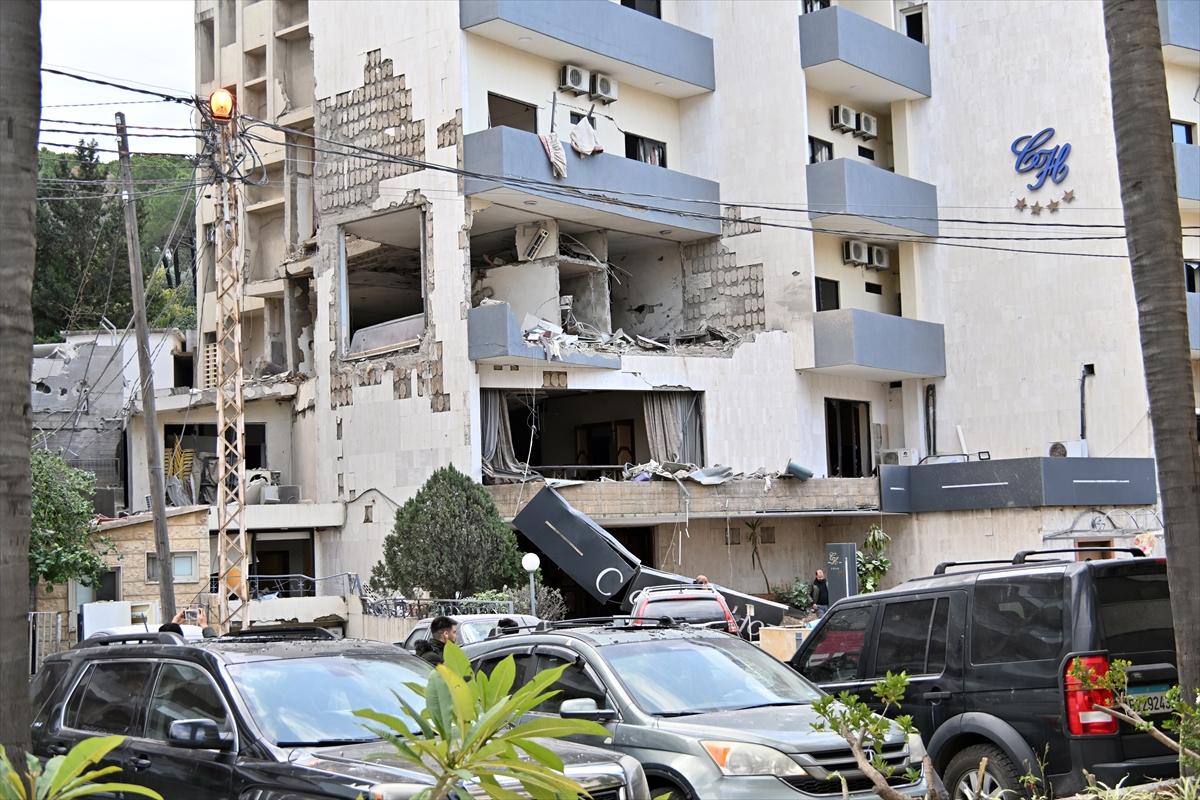
An Israeli-targeted hotel in the Hazmiye region of Lebanon, 4 March 2026 - (Anadolu Agency)
On the same day, it was reported that the Israeli military expanded its ground invasion in Lebanon, advancing approximately 700 meters southward toward the village of Kefer Shuba along the border. Kasem al-Qadiri, President of the Kefer Shuba and Arkub Municipalities Union, stated that Israeli military units had moved approximately 700 meters from a point belonging to the United Nations Interim Force in Lebanon (UNIFIL) and established positions in the Sahra area south of the village.
Lebanon’s official agency NNA also reported that Israeli forces had advanced from the Bustra region toward the Rebaat et-Teben area near Kefer Shuba. The report indicated that this military movement was accompanied by five military vehicles, one bulldozer, and two civilian vehicles.
On 4 March 2026, Hezbollah announced that it had targeted Israeli military units in northern Israel and near the border, as well as a military base in the city of Haifa, with missiles. In a statement posted on its social media account, Hezbollah stated that Israeli military personnel stationed in northern Israel were targeted with “advanced missiles.”
The statement indicated that a group of Israeli soldiers near the Yuval settlement close to the Lebanese border in the Jilil region had been targeted. It was also reported that a series of missile strikes were launched against the naval base in Haifa. Hezbollah stated that these attacks were carried out in response to the bombardment targeting many areas of Lebanon, especially southern Beirut.
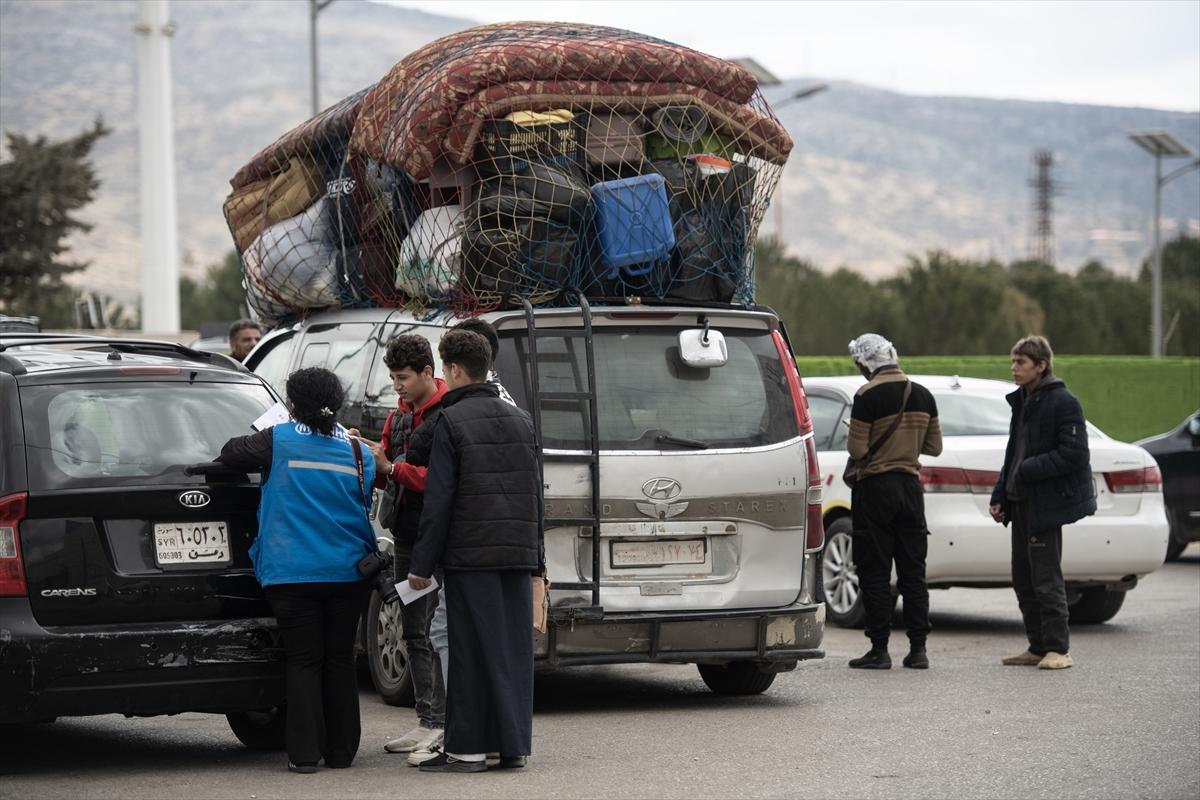
Cdeydet Yabus Border Crossing between Syria and Lebanon, 4 March 2026 - (Anadolu Agency)
On 4 March 2026, the Cdeydet Yabus border crossing between Syria and Lebanon was temporarily closed due to the risk of a potential Israeli airstrike on the Masnaa Border Crossing on the Lebanese side.
Mazen Allush, Director General of Relations for Syria’s Land and Sea Border Authorities, announced on his social media account that the border crossing had been closed. Allush stated that the decision followed an alert indicating that the Masnaa Border Crossing on the Lebanese side needed to be immediately evacuated due to the possibility of being bombed by Israel.
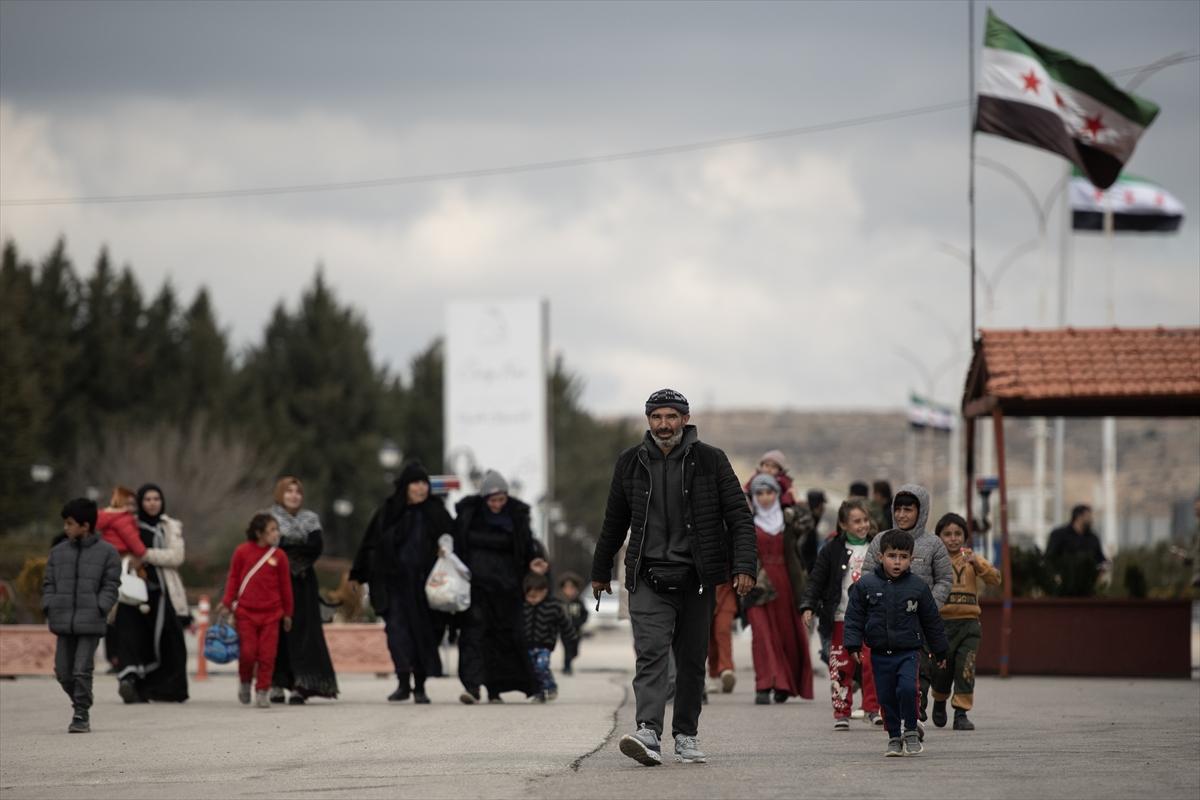
Cdeydet Yabus Border Crossing between Syria and Lebanon, 4 March 2026 - (Anadolu Agency)
In his statement, he said: “In precaution against the risk of a possible airstrike, all passenger movement through the border crossing has been temporarily suspended.” The temporarily closed Cdeydet Yabus border crossing was reopened shortly afterward.
On 4 March 2026, Lebanon’s Ministry of Health announced that the number of fatalities from Israeli attacks since 2 March had risen to 72, with 437 injured.
On 4 March 2026, Hezbollah Secretary-General Naim Qassem made statements regarding Israeli attacks. Qassem said: “We will not surrender. Even if our capabilities are limited, with the resources we have and our faith, we will continue our defense no matter how great the sacrifice required.” Qassem affirmed that their resistance constitutes a “legitimate right,” adding: “This is grounded in the Taif Agreement, the rulings of all divine religions, the President’s oath speech, and the principles outlined in the government’s declaration.”
Qassem, stating that Hezbollah’s weapons are not a subject of debate, said: “This is a legitimate right. Hezbollah and its Islamic resistance are responding to Israeli-American aggression. Israel’s occupation and expansion plans are clear. We will resist this aggression within the framework of our right to defend our people, our resistance, and our homeland. This is an existential defense for us and will continue until our objectives are achieved.” He continued: “We will fight Israel. They have sought to carry this war to the furthest possible point. But our choice is to fight them to the very end, even at the cost of our lives. We will not surrender. Even if our capabilities are limited, with the resources we have and our faith, we will continue our defense no matter how great the sacrifice required.” He added: “Our duty is to continue our defense, to nullify the objectives of this Israeli-American enemy, and to remain steadfast in our rejection of the enemy’s projects. Thus, history will record that we did not waver in defending our rights and did not surrender to our enemy.”
Qassem, accusing Israel of invading Lebanon and killing its people, said: “Everyone in Lebanon bears the responsibility to resist this attack.” He called for unity against Israel, stating: “This is Lebanon’s struggle against its Israeli enemy. We are fighting to defend our people, our children’s future, and our homeland. This struggle is in response to direct attacks against us and the targeting of our country. This war is not connected to any other conflict. What we want is for Israeli-American aggression to cease and for Israel to withdraw. This is our goal.”
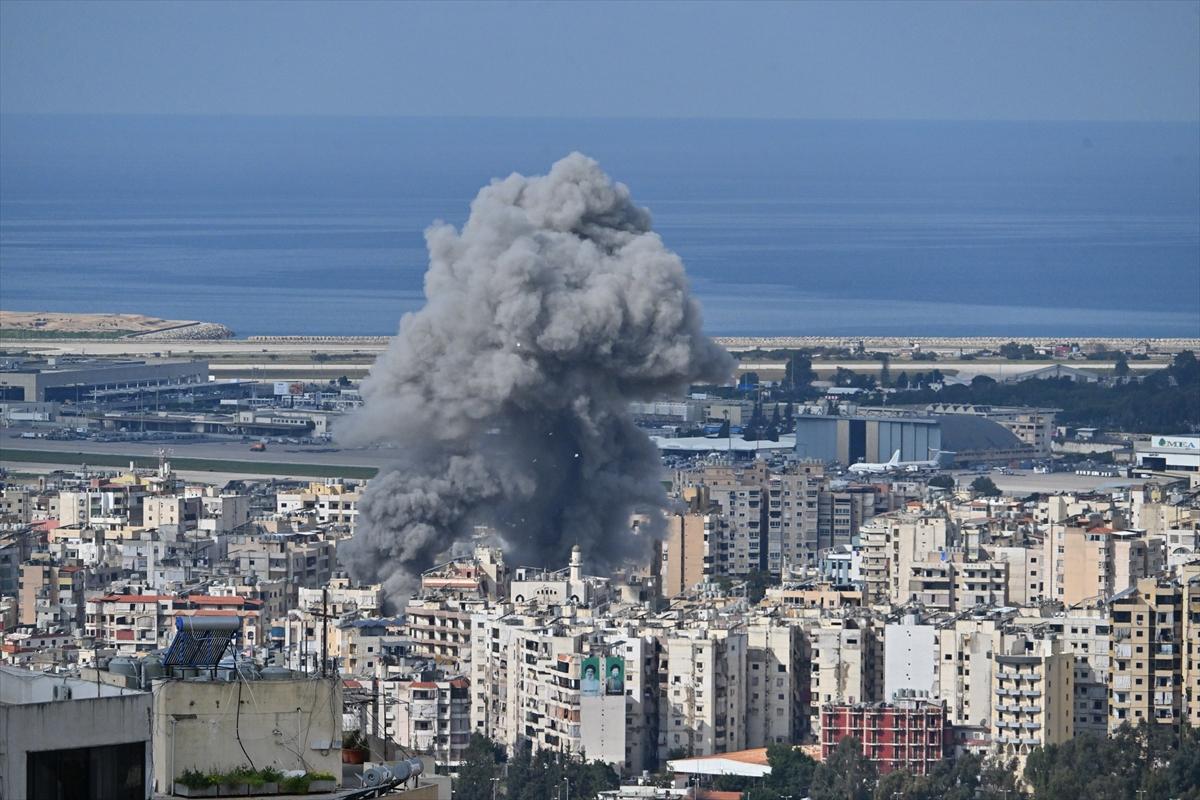
Israeli airstrikes on Beirut, Lebanon, 4 March 2026 - (Anadolu Agency)
On 4 March, Yair Lapid, leader of Israel’s main opposition party, Yesh Atid, called for a ground invasion of southern Lebanon. After visiting the Israel-Lebanon border, Lapid stated that the occupation of southern Lebanon was necessary to ensure the security of Israeli settlements in the north.
Lapid expressed support for the Israeli military’s decision to expand its ground invasion in Lebanon, saying: “As long as Hezbollah remains on the other side of the border, security is not possible.” He also called for the establishment of a “buffer zone” in southern Lebanon, stating: “If this requires entering Lebanon, then we must enter Lebanon.”
Pakistan’s Prime Minister Shehbaz Sharif held a phone call with Lebanon’s Prime Minister Nawaf Salam. In a statement on his social media account, Sharif expressed “unwavering solidarity” with the Lebanese people following the casualties from Israeli attacks.
Sharif affirmed Pakistan’s support for Lebanon’s sovereignty and territorial integrity, and noted that both sides agreed during the call on the urgent need for de-escalation, reduction of tensions, and restoration of peace.
On 4 March 2026, French President Emmanuel Macron held phone calls with Israeli Prime Minister Benjamin Netanyahu, Lebanese President Joseph Aoun, and Lebanese Prime Minister Nawaf Salam. In his statement, Macron said they discussed the “alarming situation in Lebanon.” He urged Hezbollah to immediately halt its attacks and emphasized that strategies of escalation endanger the region. He also called on Netanyahu to respect Lebanon’s territorial integrity and to avoid a ground operation.
Al Jazeera. "Israeli Strikes Hit Beirut Amid Threats on Iranian Officials in Lebanon." Accessed March 5, 2026. https://www.aljazeera.com/news/2026/3/5/israeli-strikes-hit-beirut-amid-threats-on-iranian-officials-in-lebanon
Anadolu Ajansı. "İsrail’in Lübnan’ın Güneyine Düzenlediği Hava Saldırılarında 5 Kişi Daha Hayatını Kaybetti." Accessed March 5, 2026. https://www.aa.com.tr/tr/dunya/israilin-lubnanin-guneyine-duzenledigi-hava-saldirilarinda-5-kisi-daha-hayatini-kaybetti/3850777
On 6 March 2026 the Israeli military conducted sustained air strikes throughout the day against targets in southern Lebanon eastern Lebanon and the Dahieh district of southern Beirut. The attacks began in the early morning hours and continued in successive waves at various times during the day.
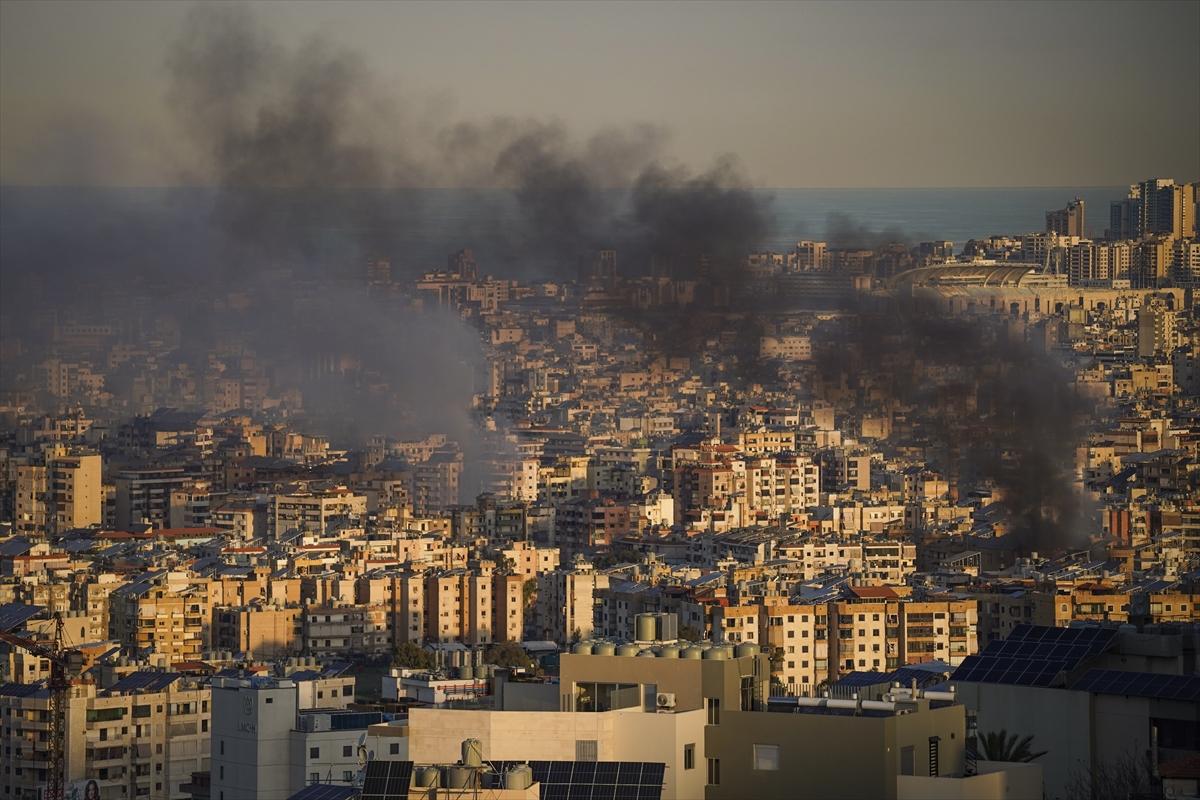
Israel’s strikes against Lebanon 6 March 2026 – (Anadolu Agency)
Israeli warplanes targeted the neighborhoods of Burj el-Barajneh Hureyk Hades and Harik in southern Beirut. It was reported that the areas around Sahil Hospital as well as the al-Jamous and al-Meshrefiyeh districts were also affected with significant damage to buildings and businesses and multiple fires breaking out.
The Israeli military announced that since the morning it had carried out at least four air strikes on the Dahieh district following the issuance of evacuation orders and threats of attack. Thick smoke was observed rising from the area after the explosions. The military further stated that since 2 March it had conducted a total of 26 waves of air strikes against Dahieh.
Israeli warplanes targeted the city of Sidon along with the towns of Mervaniyye Jibshit Tul Sarifa Aita al-Shaab Tulin Suvana Majdel Silim Ankun Hiyyam Duveyr and Kallaviyye. Nabatieh Beysariyye Tebnine Kafr Shuba Wadi Zabqin and Mezraa Hilta were also affected by the strikes.
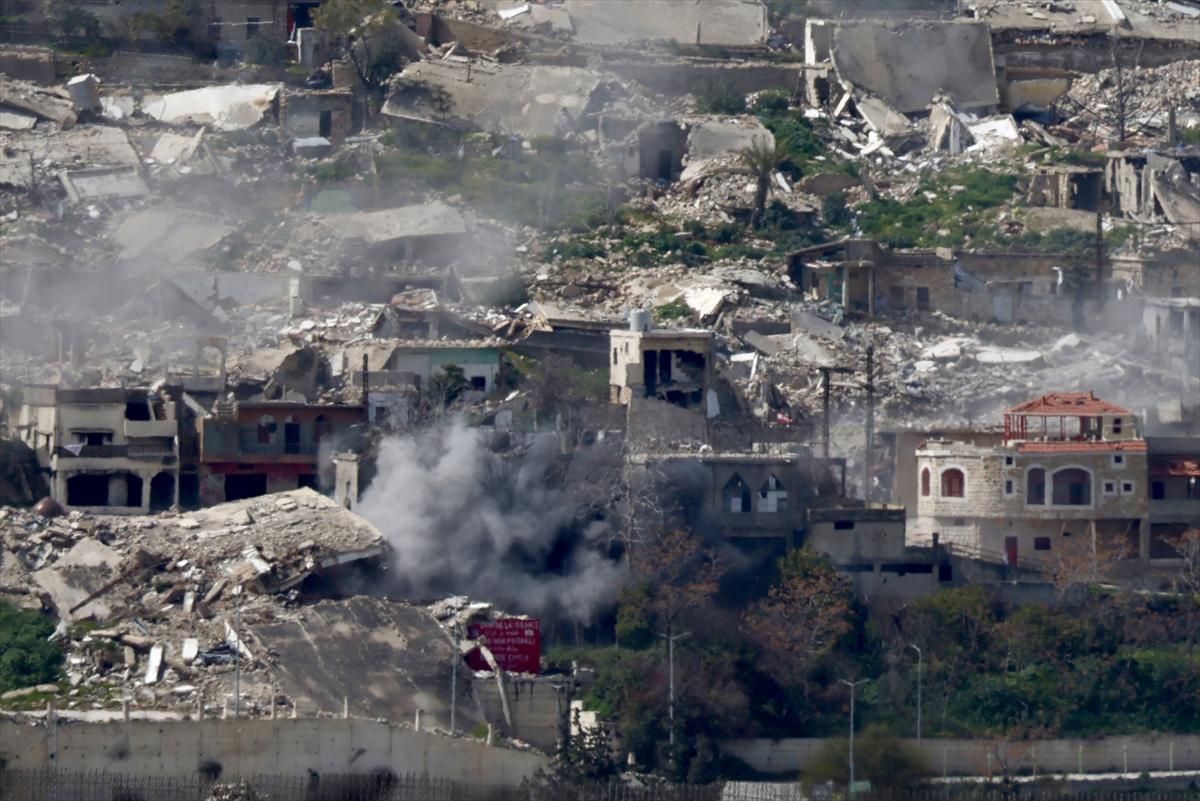
Israel’s strikes against Lebanon 6 March 2026 – (Anadolu Agency)
In the air strike on Jibshit two people were killed one person was killed in Sarifa and one in Mervaniyye. The muezzin was killed in an air strike on a mosque in Tul. In Sidon an air strike on a multi-story building killed five people and injured seven. Two people were killed in Duveyr and three were killed with one injured in an attack on the town of Saide.
The Israeli military targeted the towns of Derus and Dors in the Bekaa region and the towns of Saide Nebi Shit Hidar and the Beit Mishik farms in the Baalbek region. Nine separate air strikes were carried out against Nebi Shit according to the Lebanese Ministry of Health nine people were killed and 17 injured in these attacks.
On 6 March 2026 the Israeli military targeted a position belonging to the United Nations Interim Force in Lebanon UNIFIL in the town of Kozah which is attached to the city of Sur in southern Lebanon.
According to Lebanon’s official news agency NNA the Israeli military conducted an air strike on a position occupied by Ghanaian soldiers serving under UNIFIL in Kozah. It was reported that several Ghanaian soldiers were injured in the attack.
On the morning of 6 March 2026 the Lebanese Ministry of Health reported that since 2 March the number of fatalities had risen to 123 and the number of injured to 683.
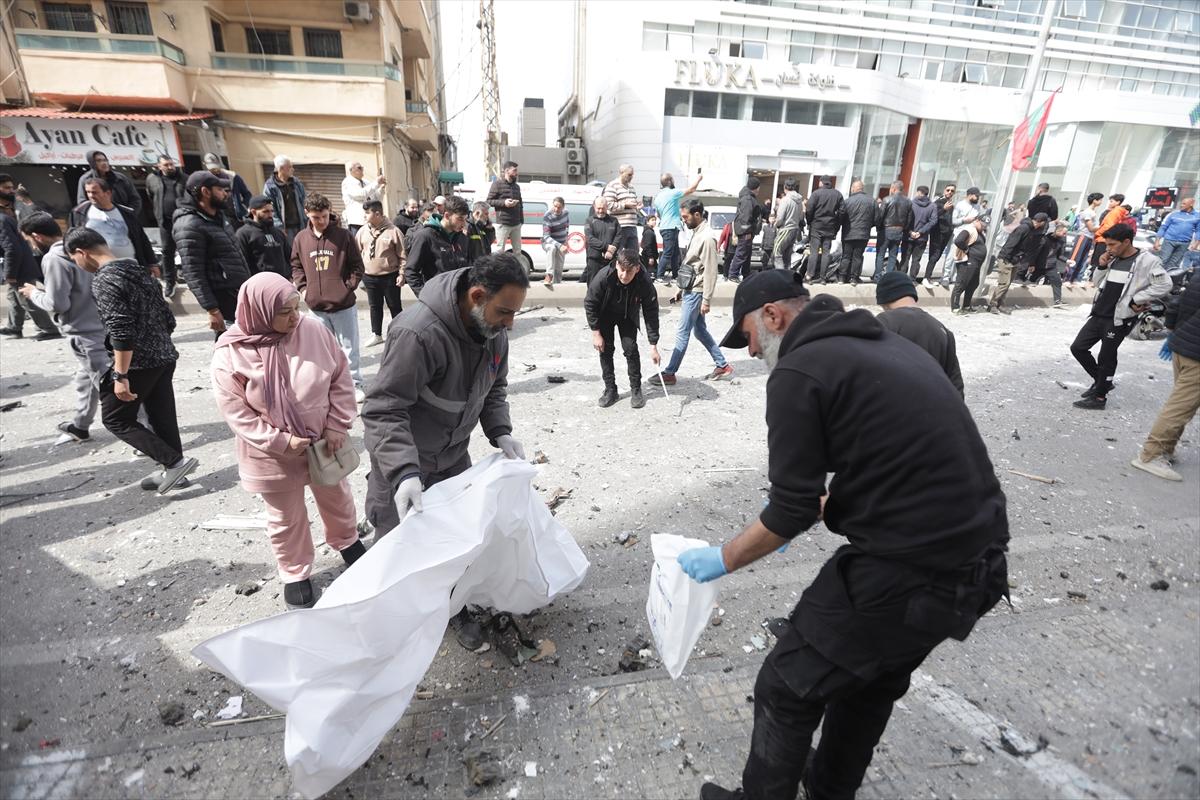
Israel’s strikes against Lebanon 6 March 2026 – (Anadolu Agency)
In a written statement by Lebanon’s National Disaster Management Unit under the government it was stated that approximately 96000 displaced persons had been accommodated in 441 temporary shelters opened across the country.
In a second statement later on the day the Lebanese Ministry of Health announced that the total number of fatalities had increased by 94 to 217 and the number of injured had risen to 798.
On 6 March 2026 UN Office for Human Rights spokesperson Ravina Shamdasani stated that hundreds of thousands of people in Lebanon had been affected by Israel’s evacuation orders.
In her assessment during the weekly press briefing at the UN Office in Geneva Shamdasani noted that Israel’s ground offensives in southern Lebanon its general evacuation orders and ongoing air strikes across various regions of the country have imposed an additional humanitarian burden on civilians already living under severe conditions.
In her statement she said “These warnings and evacuation orders in Lebanon are reported to have affected more than 100 towns and villages where tens of thousands of people live and risk affecting many more. Yesterday Israel demanded the complete evacuation of nearly all of southern Beirut’s suburbs and the entire Bekaa region in eastern Lebanon causing fear and panic among residents.”
Shamdasani reiterated that hundreds of thousands of people in Lebanon have been affected by evacuation orders and emphasized that the renewed escalation of hostilities is producing devastating consequences. Shamdasani noted that civilians are paying a heavy price and pointed out that Hezbollah has continued its rocket attacks against Israel.
In a call on behalf of the United Nations Shamdasani said “We urge the parties to step back from the brink of this major escalation in Lebanon. Instead we demand an urgent de-escalation compliance with obligations under UN Security Council Resolution 1701 and faithful implementation of the 2024 ceasefire arrangements. Respect must be shown for Lebanon’s sovereignty and the human rights of its people.”
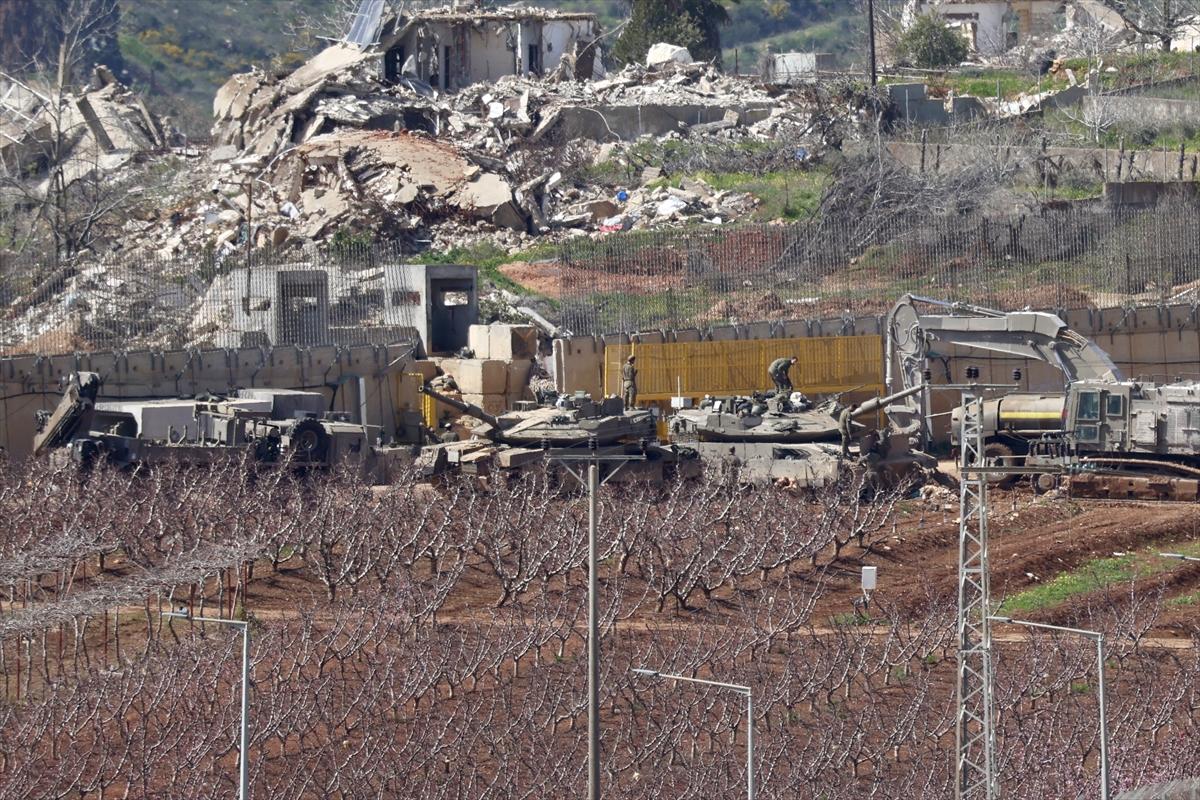
Israel’s strikes against Lebanon 6 March 2026 – (Anadolu Agency)
On 6 March 2026 Lebanese officials launched diplomatic initiatives at the international level in response to Israel’s ongoing attacks.
Lebanese Minister of Foreign Affairs Yusuf al-Rajji called Omani Minister of Foreign Affairs Badr bin Hamad al-Busaidi by phone and requested that Muscat use its diplomatic influence with relevant parties to prevent Lebanon from being drawn into war.
In a statement posted on his account on the social media platform X based in the United States Rajji confirmed that the conversation with his Omani counterpart was part of ongoing diplomatic efforts. He requested that Oman engage with the relevant parties to deploy its diplomatic leverage to prevent Lebanon from being dragged into war.
Destruction in the Baalbek region following Israeli strikes 6 March 2026 – (Anadolu Agency)
On the same day Lebanese President Joseph Aoun called on the international community and the United Nations to intervene to halt Israel’s attacks on the country.
According to a written statement from the Lebanese Presidency Aoun has continued international contacts with “brotherly and friendly” countries to prevent Israel’s strikes targeting multiple areas including southern Lebanon the Bekaa region and southern Beirut’s Dahieh district.
The statement noted that the attacks have resulted in numerous deaths and injuries extensive destruction and the displacement of thousands of people. It also recorded that Israel’s strikes on 6 March reached the United Nations Interim Force in Lebanon UNIFIL resulting in injuries to members of the Ghanaian contingent.
Aoun condemned Israel’s large-scale attacks and called on all countries and the United Nations to intervene to stop the assaults against Lebanon.
Israel’s strikes against Lebanon 6 March 2026 – (Anadolu Agency)
According to statements made on 6 March 2026 more than 65000 civilians fleeing Israeli attacks have crossed into Syria. The Israeli military’s intensive air strikes targeting numerous areas of Lebanon particularly Dahieh in southern Beirut have intensified displacement movements.
At least 65000 civilians entered Syria through the border crossings of Cdeydet Yabus in the Damascus countryside and Cusiye in Homs. Mazen Alloush Director General of International Relations at the Syrian General Directorate of Customs and Ports confirmed that 65000 civilians had entered through the border crossings in Damascus and Homs.
It was reported that food health and clothing assistance was provided to the displaced civilians at the Cdeydet Yabus and Cusiye border crossings by the Syrian Ministry of Disaster and Emergency Management and civil society organizations.
According to the daily report of Lebanon’s National Committee for Disaster Management on the same day 110162 displaced persons have been accommodated in shelters across the country due to Israel’s ongoing attacks.
The report stated that the number of open shelters has reached 512 and that 26432 families have been forced to abandon their homes as a result of the attacks.
The Israeli military announced that eight of its soldiers were injured in a rocket attack launched from Lebanon as part of its efforts to expand its ground occupation. The statement indicated that Israeli soldiers stationed near the Lebanese border in northern Israel were targeted by Hezbollah fighters.
It was reported that the injured soldiers belonged to the Givati Brigade that all eight were transported to hospital and that five were in critical condition. It was also reported in the media that one of the lightly injured soldiers is the son of Israel’s far-right Finance Minister Bezalel Smotrich.
On the same day Hezbollah issued a written statement announcing that it had carried out a total of 18 attacks using rockets and unmanned aerial vehicles UAVs against Israeli forces in northern Israel and Israeli troops advancing within Lebanon.
The statement indicated that the Katsavia Base located in the Israeli-occupied Golan Heights in Syria was targeted by a series of UAVs. It also stated that Israeli troops advancing in southern Lebanon were struck by rockets.
It was reported that the Amiad Base near the northern Israeli city of Safed was targeted by kamikaze UAVs and that rocket attacks were launched against five populated areas in northern Israel. Hezbollah issued evacuation warnings for 23 settlements in northern Israel.
Anadolu Ajansı. "Filistinli Uzman’a Göre ABD-İsrail ile İran Savaşının Sonucu Batı Şeria’yı İlhak Sürecinde Önemli Bir Faktör." Accessed February 7, 2026. https://www.aa.com.tr/tr/dunya/filistinli-uzmana-gore-abd-israil-ile-iran-savasinin-sonucu-bati-seriayi-ilhak-surecinde-onemli-bir-faktor/3852494
Anadolu Ajansı. "Lübnan Haber Ajansı NNA: İsrail Ordusu Baalbek Yakınlarına Asker İndirme Girişiminde Bulundu." Accessed February 7, 2026. https://www.aa.com.tr/tr/dunya/lubnan-haber-ajansi-nna-israil-ordusu-baalbek-yakinlarina-asker-indirme-girisiminde-bulundu/3853042
Anadolu Ajansı. "Lübnanlı Uzman’a Göre İsrail’in Hedefi Lübnan’da Tam Ölçekli İşgal Değil, Stratejik Noktaları Ele Geçirmek." Accessed February 7, 2026. https://www.aa.com.tr/tr/dunya/lubnanli-uzmana-gore-israil-in-hedefi-lubnan-da-tam-olcekli-isgal-degil-stratejik-noktalari-ele-gecirmek/3852674
Anadolu Ajansı. "İsrail’in Lübnan’da Düzenlediği Saldırılarda 15 Kişi Hayatını Kaybetti." Accessed February 7, 2026. https://www.aa.com.tr/tr/dunya/israilin-lubnanda-duzenledigi-saldirilarda-15-kisi-hayatini-kaybetti/3852261
On the night of 5 March, the Israeli military carried out separate airstrikes against two vehicles in motion on the Airport Highway in Beirut, the capital of Lebanon. According to Lebanon’s official news agency NNA, the attacks occurred along the same route.
The Lebanese Ministry of Health reported that three people were killed and six were injured in the attacks. The injured were transported to hospitals.
On 5 March 2026, the Israeli military targeted a house in the al-Bedawi Palestinian Refugee Camp, located in the northern Lebanese city of Tripoli, with an airstrike. According to Lebanon’s official news agency NNA, Hamas official Wasim Atallah al-Ali and his wife were killed in the attack, while one of their daughters was injured.
The house targeted in this operation, part of Israel’s intensified campaign launched on 2 March, was reported to belong to Atallah. Israeli media also reported that the strike aimed at a Hamas official.
Following the attack, protests were held in the al-Bedawi camp. It was also recalled that Wasim Atallah’s brother, Said Atallah, had been killed along with his family in a previous Israeli strike on the al-Bedawi camp.
On the same day, the Israeli military conducted airstrikes on the al-Ghubayri, Bir al-Abd and Hireyk neighborhoods in the Dahiya region south of Beirut, and bombed a house in the village of ash-Shihabiyya, attached to the southern Lebanese city of Sur.
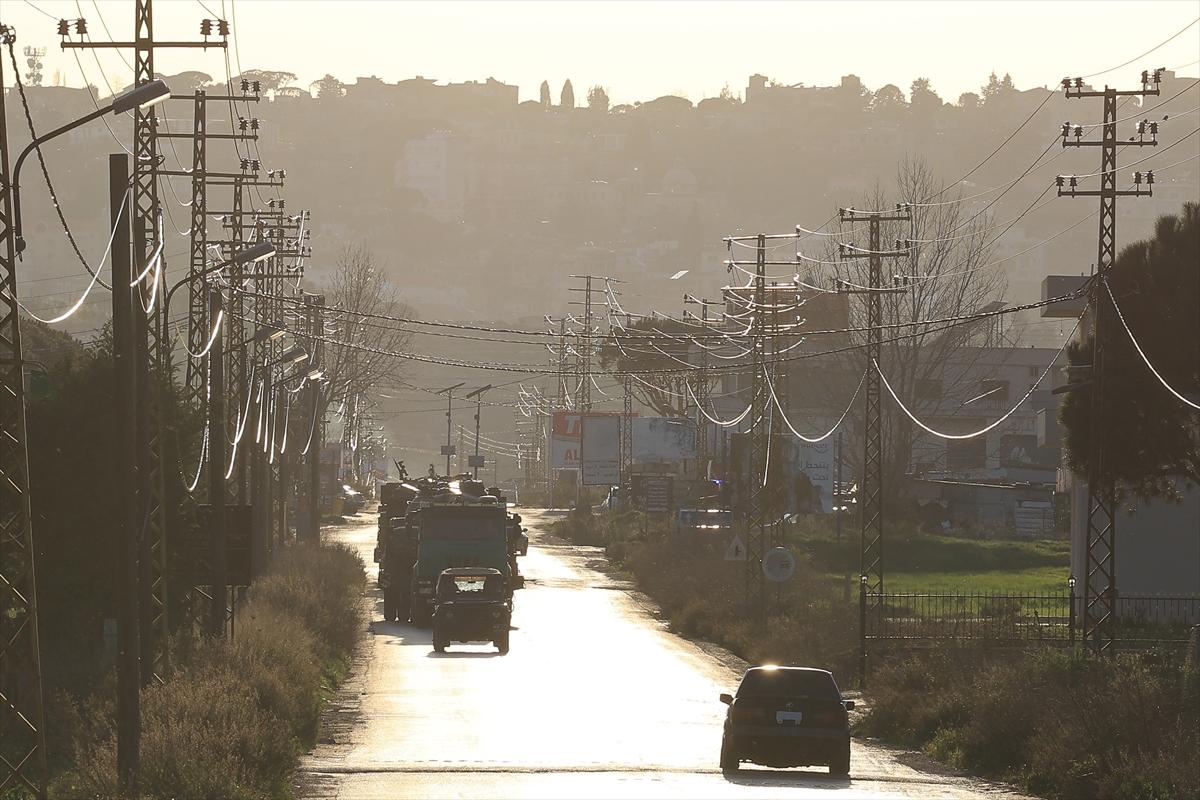
Tanks and military vehicles of the Lebanese Armed Forces in the Marjayoun region of southern Lebanon following Israeli attacks, 5 March 2026 – (Anadolu Agency)
According to Lebanon’s official news agency NNA, on 5 March 2026, an airstrike on the village of Sharq Zawtar, part of the Nabatieh governorate, killed three members of the same family. In another airstrike targeting the village of Kefur, also in Nabatieh, two people were killed. In a separate attack on a vehicle in the southern city of Sur, three people died.
In the al-Bedawi Palestinian Refugee Camp in Tripoli, northern Lebanon, an airstrike on a house killed Hamas official Wasim Atallah and his wife, while their daughter was injured. Additionally, two people were killed and two injured in an Israeli airstrike on a vehicle in motion in the Zahle region of eastern Lebanon.
On 5 March 2026, the Israeli military announced that since launching intensive attacks in Lebanon on 2 March, it had struck 320 Hezbollah targets. In a press briefing, Israeli Defense Forces spokesperson Effie Defrin stated that Israeli warplanes had destroyed 320 targets allegedly belonging to Hezbollah since Monday.
A building destroyed by Israeli strikes in the Lebanese city of Nabatieh, 5 March 2026 – (Anadolu Agency)
On 5 March 2026, the Lebanese Ministry of Health released updated casualty figures regarding Israeli attacks on Lebanon since the morning of Monday, 2 March. According to the official news agency NNA, the Ministry’s Public Health Emergency Operations Center reported that the death toll had risen to 102 and the number of injured to 638. The statement also noted that new casualties were arriving at hospitals, meaning the numbers could continue to rise.
In a written statement from Lebanon’s Disaster Management Unit under the government, it was stated that approximately 96,000 displaced people have been accommodated in 441 temporary shelters.
On the same day, the Israeli military targeted the village of Hiyam in southern Lebanon with white phosphorus artillery shells. According to Lebanon’s official news agency NNA, the attack was carried out by artillery fire. The same report stated that Israeli warplanes also conducted an airstrike on the village of Taybe in southern Lebanon.
On 5 March 2026, the Lebanese Council of Ministers decided to implement security and administrative measures against any elements of the Iranian Revolutionary Guard Corps found on Lebanese territory.
Following the Council of Ministers meeting chaired by Prime Minister Nawaf Salam, Lebanese Information Minister Paul Markus stated that all relevant institutions and security agencies had been instructed to investigate whether Iranian Revolutionary Guard Corps elements are present in Lebanon.
According to the statement, immediate action is required to prevent any such elements from conducting any military or security activities from Lebanese soil. Individuals identified are to be detained under judicial supervision and expelled from the country.
Markus also announced that a decision had been made to reintroduce visa requirements for Iranian citizens to ensure border security and prevent the use of Lebanese territory for activities threatening its safety.
On 5 March 2026, Israel’s far-right Finance Minister Bezalel Smotrich issued a threat of destruction against Dahiya, a neighborhood in Beirut, Lebanon. According to Israeli media reports, Smotrich visited Israel’s northern border and claimed that Hezbollah would pay a “heavy price” for attacking Israel. Smotrich, who defends attacks against Iran and Hezbollah, drew attention to Israeli military evacuation warnings issued for southern Lebanon and the Dahiya region. He stated regarding Dahiya: “Soon Dahiya will look like Han Yunus.”
Lebanese President Joseph Aoun held a phone call with French President Emmanuel Macron. According to a statement from the Lebanese Presidency, Aoun addressed Israeli threats against Dahiya in southern Beirut.
Aoun called on France to intervene and urged Macron to take action to prevent Israel from targeting Dahiya. The call also emphasized the need to intensify international efforts to achieve a ceasefire as soon as possible.
Following the Israeli military’s call for evacuation and threat of attack on Dahiya, a densely populated region in southern Beirut housing hundreds of thousands of people, widespread civilian movement occurred in the area.
Lebanese civilians evacuate neighborhoods in southern Beirut after Israel’s evacuation order and attack threat, 5 March 2026 – (Anadolu Agency)
Following the Israeli military’s call for the immediate evacuation of four major neighborhoods in Dahiya, thousands of people quickly abandoned their homes. Traffic congestion increased on Beirut’s main arteries, with some routes coming to a standstill.
While some residents drove north and east toward other cities, others, unable to find shelter, moved to open areas and parks. Some individuals reportedly walked for hours to distance themselves from Dahiya.
Later in the day, the Israeli military carried out airstrikes on the Dahiya region of southern Beirut, following its earlier evacuation warning and threat. According to Lebanon’s official news agency NNA, the Hureyk neighborhood of Dahiya was targeted.
Later that evening, Israel targeted a house in the village of Libbaya in the Bekaa Valley of eastern Lebanon with an airstrike. According to Lebanon’s official news agency NNA, a father and his two sons were killed in the attack. Four people, including one child, were injured in the destroyed house.
Later, Israeli Defense Forces spokesperson Avichay Adraee, in a social media statement, called on residents of the villages of Durs, Brital and Macdelyun in the Bekaa region to immediately evacuate their areas. Adraee claimed that Hezbollah activities were present in these settlements and that the Israeli military would target this infrastructure. The statement also warned that proximity to Hezbollah elements or military facilities posed a risk to civilians.
French President Emmanuel Macron stated in his remarks on developments in Lebanon that Hezbollah must halt its attacks on Israel, while Israel must avoid launching a ground operation into Lebanon.
In a social media statement, Macron emphasized that all efforts must be made to prevent Lebanon from being dragged back into war. He recalled recent conversations with U.S. President Donald Trump and Israeli Prime Minister Benjamin Netanyahu, and announced that he had also spoken with senior Lebanese officials that day, adding that a plan was being developed to end military operations along the Lebanese border.
In his statement, Macron said: “Hezbollah must immediately cease firing on Israel. Israel must avoid any ground incursion or large-scale operation on Lebanese territory.”
Macron reported that Lebanese officials had pledged to take control of areas claimed by Hezbollah and assume responsibility for the country’s security. He announced that France would strengthen cooperation with the Lebanese Armed Forces, including providing armored personnel carriers and operational and logistical support to the Lebanese army.
Macron also announced humanitarian aid for displaced civilians in Lebanon, warned Iran against escalating the conflict, and urged Israel not to further heighten tensions.
Spanish Prime Minister Pedro Sánchez declared that Spain fully supports Lebanon, which is suffering from Israeli military attacks. In a phone call with Lebanese President Joseph Aoun, Sánchez discussed the situation in Beirut and other parts of Lebanon, affirming that the Lebanese people can count on Spain’s full support.
Sánchez also confirmed that humanitarian aid would be provided to displaced civilians and used the following words: “End the escalation. No more destruction. No to war.”
Anadolu Ajansı. "İspanya Hükümeti İsrail’in Lübnan’a Yönelik Büyük Çaplı Saldırılarını Şiddetle Kınadı." Accessed February 7, 2026. https://www.aa.com.tr/tr/dunya/ispanya-hukumeti-israilin-lubnana-yonelik-buyuk-capli-saldirilarini-siddetle-kinadi/3853968
Anadolu Ajansı. "İsrail’in Beyrut’ta Halkı Yerlerini Terk Etmeye Zorladığı Dahiye’den Kaçan Aileler Sokaklarda Sabahlıyor." Accessed February 7, 2026. https://www.aa.com.tr/tr/dunya/israilin-beyrutta-halki-yerlerini-terk-etmeye-zorladigi-dahiyeden-kacan-aileler-sokaklarda-sabahliyor/3853890
Anadolu Ajansı. "İsrail’in Lübnan’a Dünden Bu Yana Düzenlediği Saldırılarda 64 Kişi Öldü." Accessed February 7, 2026. https://www.aa.com.tr/tr/dunya/israilin-lubnana-dunden-bu-yana-duzenledigi-saldirilarda-64-kisi-oldu/3853693
On the night of 8 March 2026, the Israeli military conducted an air strike on a hotel in Beirut, the capital of Lebanon. The Lebanese Ministry of Health announced that four people were killed and ten were injured in the attack.
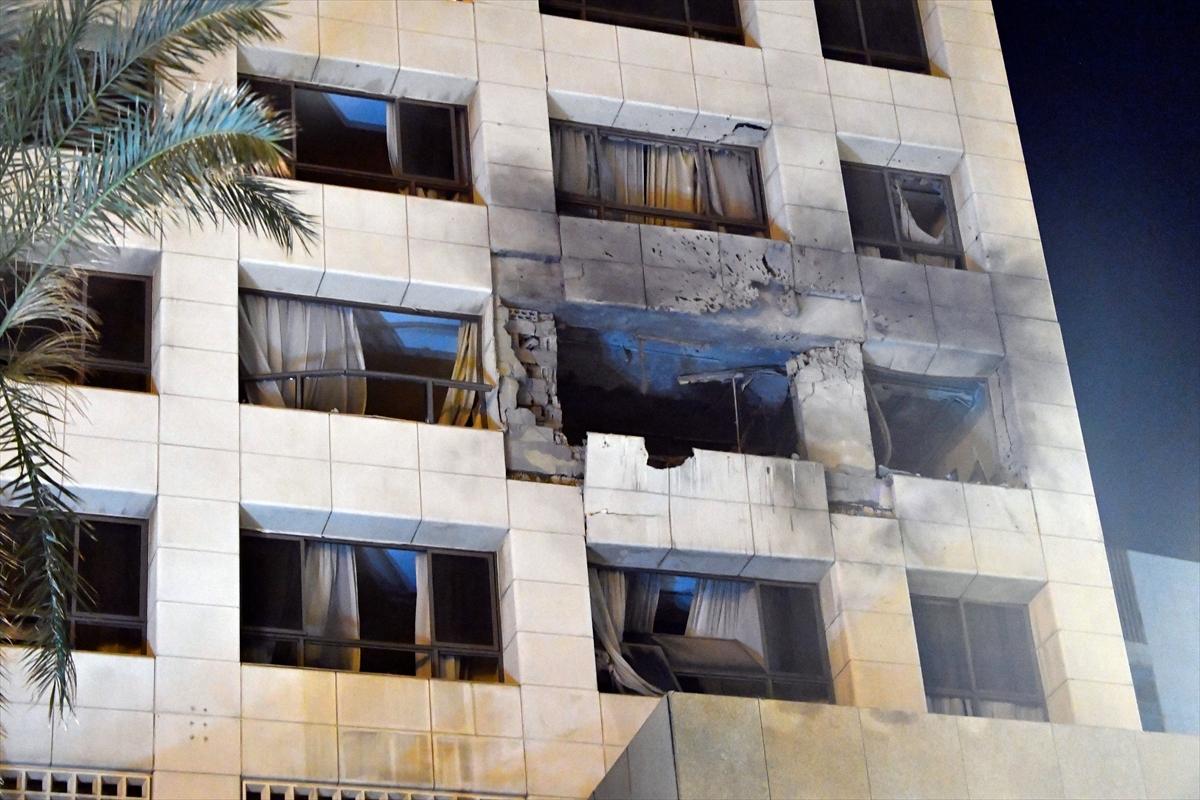
The hotel targeted by the Israeli military in Beirut, Lebanon, on 8 March 2026 – (Anadolu Agency)
Israeli Chief of Staff Eyal Zamir claimed that commanders of the Quds Force, a unit of Iran’s Islamic Revolutionary Guard Corps, were present in the targeted hotel. The Israeli military later stated in an official announcement that five Quds Force commanders were targeted in the strike. The following names were alleged to have been killed:
Israel asserted that these individuals coordinated activities and facilitated funding between Iran, Hezbollah and other armed groups.
On 8 March, the Israeli military conducted numerous air strikes on towns in southern and eastern Lebanon. In the village of Batir Sir, part of the Nabatieh governorate, an attack on a three-story building killed 19 people, most of them women and children, according to initial assessments.
In the town of Tuffahata, part of the Sidon district, eight people lost their lives, five of whom were from the same family. In the town of Jabal al-Batm, part of the Sur district, three people were killed and four injured. In the village of Kana, four people died, and in the village of Gaziyye, two were killed.
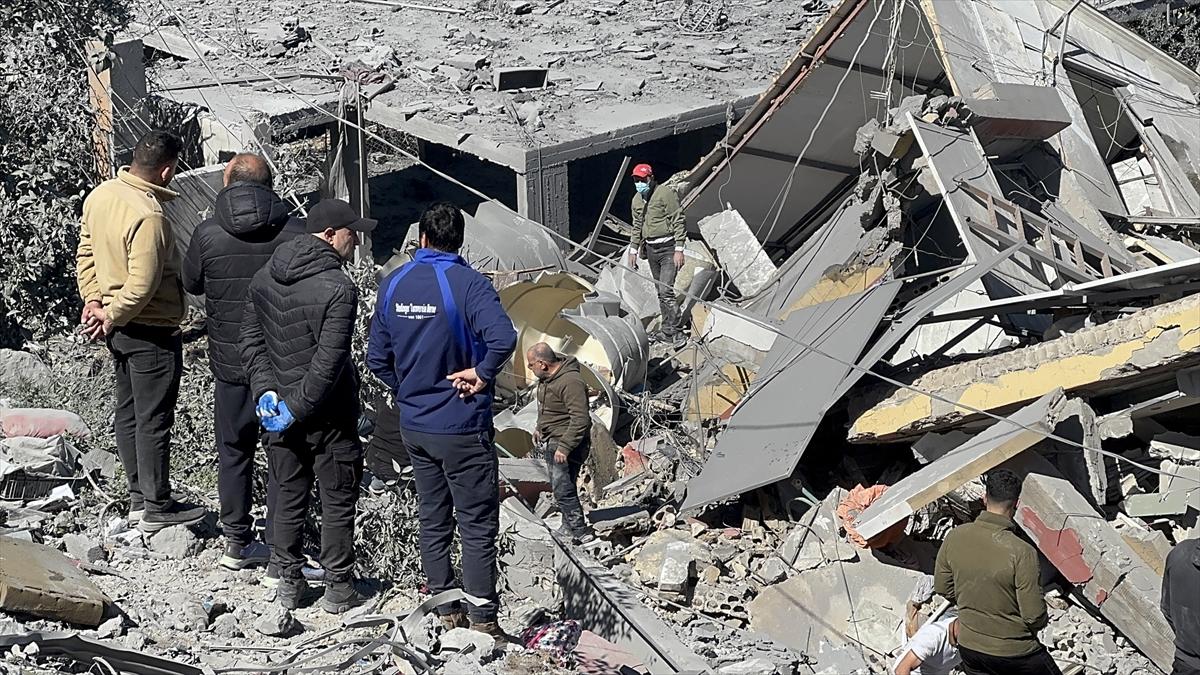
Damage in the industrial zone of the village of Gaziyye, part of the city of Sidon in southern Lebanon, following an Israeli air strike on a building, 8 March 2026 – (Anadolu Agency)
In the village of Eytit, three people were killed. In the Eser neighborhood of the city of Sur, eight people lost their lives. In the village of Duwayr, six people from the same family were killed, and one person died in the village of Aytah Sab.
In two air strikes on the Tamir area near the Ayn al-Hilwa refugee camp, home to Palestinian refugees, one person was killed and ten injured. According to data from Lebanon’s official news agency NNA and the Ministry of Health, the death toll from night-time attacks targeting southern Lebanon and Beirut alone rose to 50.
In a statement by the Lebanese Minister of Health, it was reported that 394 people were killed in Israeli attacks between 2 March and 8 March 2026, including 83 children, and 1,130 others were injured.
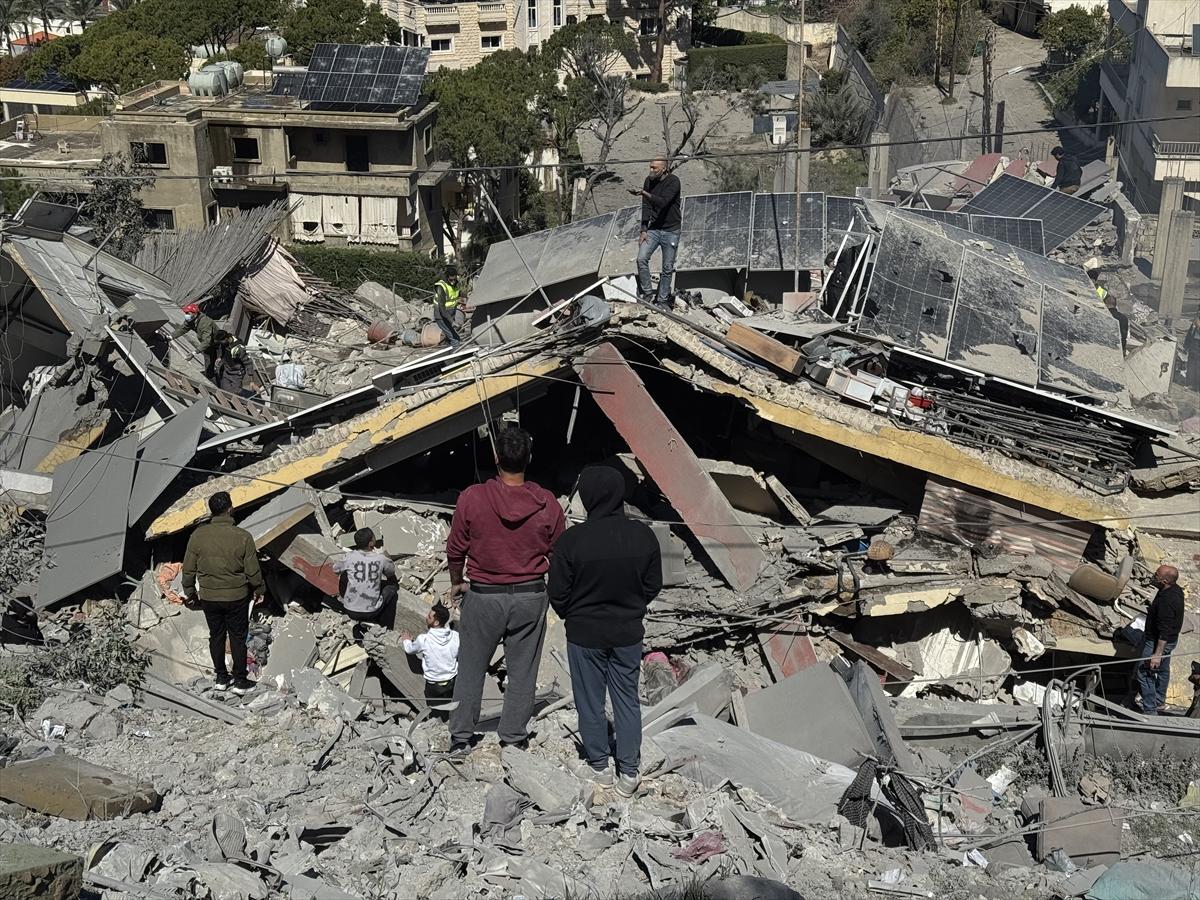
Damage in the industrial zone of the village of Gaziyye, part of the city of Sidon in southern Lebanon, following an Israeli air strike on a building, 8 March 2026 – (Anadolu Agency)
During the night of 8 March, it was reported that approximately 15 helicopters belonging to the Israeli military attempted to infiltrate the Nabi Shit region from Syria. Hezbollah stated that some of the helicopters dropped infantry units onto the Serghaya Plain and attempted to advance into Lebanese territory. Fighting was reported around Nabi Shit, Arsal and Ras Baalbek.
Hezbollah announced that it targeted Israeli units advancing toward Adise and Aytarun with artillery and rocket fire. The Israeli military spokesperson announced that two Israeli soldiers were killed in the fighting in southern Lebanon, one of whom was a senior sergeant.
Israeli military spokesperson Avichay Adraee reiterated the order for the complete evacuation of the area south of the Litani River. Residents in the region were urged to move north of the river. An evacuation order was also issued for the villages of Arnun, Yahmur, Zavtar Sharqiyya and Zavtar Gharbiyya.
The Israeli military stated that since 2 March, 820 munitions had been used in attacks against Lebanon. It was also claimed that 200 Hezbollah members had been killed, 80 of whom belonged to the Ridwan Force.
Hezbollah announced that it had launched rocket attacks against the Misgav base and targeted the Haifa Naval Base with precision rockets. Israeli media reported that Hezbollah had shifted to guerrilla tactics based on small, mobile units.
Lebanese Minister of Foreign Affairs Yusuf al-Rajji stated at an Arab League meeting that Hezbollah had dragged Lebanon into a war unrelated to its interests. Rajji emphasized that neither the government nor the Lebanese people were responsible for these actions.
The Bahraini Ministry of Interior announced that fragments of a missile launched from Iran struck the Al-Muharraq area, injuring three people and causing damage to a university building and a water treatment facility.
Anadolu Ajansı. "Lübnan’ın Doğusunda İndirme Yaparak İlerlemeye Çalışan İsrail Askerleri ile Hizbullah Arasında Çatışma Yaşanıyor." Accessed March 9, 2026. https://www.aa.com.tr/tr/dunya/lubnanin-dogusunda-indirme-yaparak-ilerlemeye-calisan-israil-askerleri-ile-hizbullah-arasinda-catisma-yasaniyor/3854862
Anadolu Ajansı. "İsrail’in Beyrut’ta Bir Otele Düzenlediği Saldırıda 4 Kişi Öldü, 10 Kişi Yaralandı." Accessed March 9, 2026. https://www.aa.com.tr/tr/dunya/israilin-beyrutta-bir-otele-duzenledigi-saldirida-4-kisi-oldu-10-kisi-yaralandi/3854683
In the early hours of 9 March, Lebanon’s official news agency NNA reported that Israeli forces attempted to deploy troops via helicopters into eastern Lebanon. Hezbollah announced that the Israeli military had attempted to infiltrate the village of Nabi Shit using 15 helicopters and that clashes were ongoing.
According to NNA, Israeli forces had also attempted an aerial troop deployment into Nabi Shit on 7 March, and Hezbollah declared that the attempt had been repelled following clashes. The Israeli military stated that its aerial insertion operations in Lebanon were aimed at locating the remains of Israeli pilot Ron Arad, who was shot down over Lebanon in 1986 and whose fate remains unknown. It was reported that 41 people were killed during the intense attacks and raids on Nabi Shit during the previous insertion.
Later in the day, Hezbollah announced that it had targeted Israeli forces advancing toward the border villages of Adise and Aytarun in southern Lebanon with artillery fire. The statement noted that at 00:45 local time, a unit of the Israeli military was detected advancing toward the Halle el-Mehafir area in Adise and was targeted by artillery fire for the second time. It was also reported that Israeli forces advancing toward Aytarun during the night were struck by artillery fire twice.
Hezbollah later stated that Israeli forces advancing toward Adise were targeted by rocket fire at 02:15 local time. The statement added that Hezbollah fighters engaged Israeli troops with machine guns and rockets, forcing them to withdraw from the Halle el-Mehafir area.
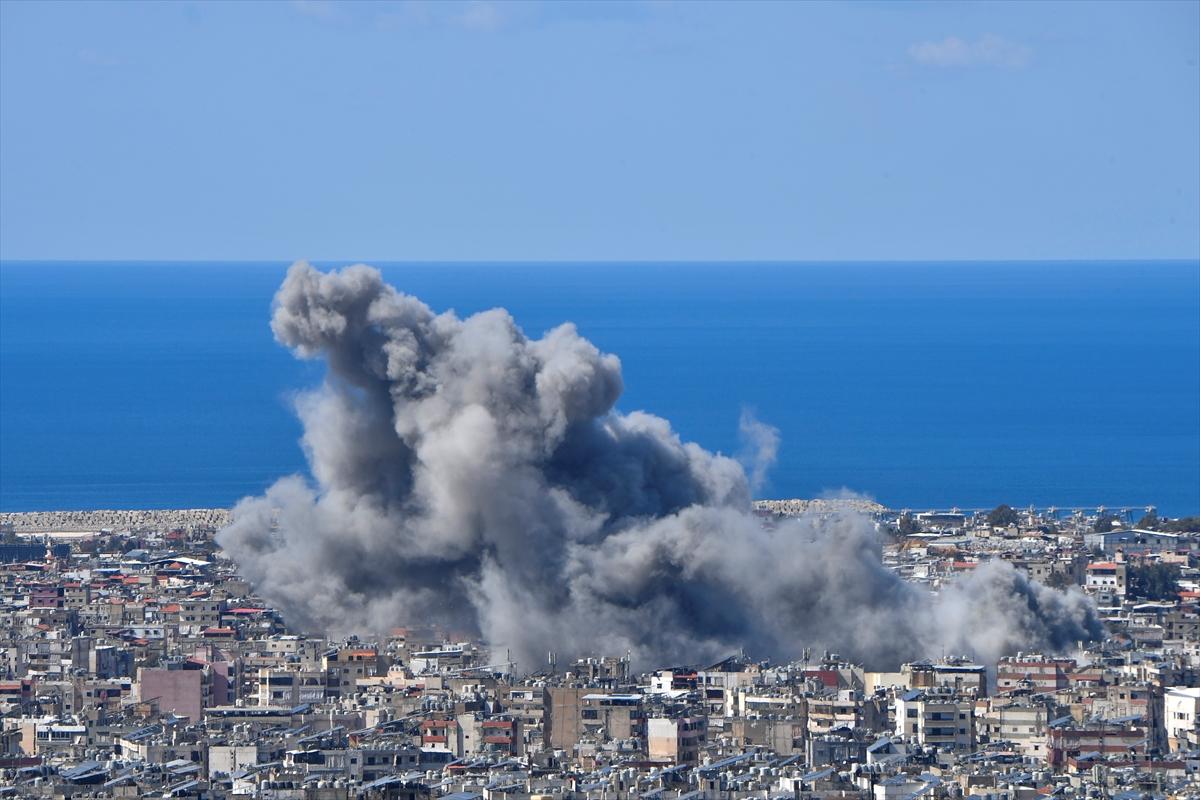
Israeli military attacks on the Dahieh district of Beirut, 9 March 2026 - (Anadolu Agency)
In the early morning hours of 9 March 2026, explosions and sounds of warplanes were heard in Lebanon’s capital Beirut. It was reported that Israel’s aerial campaign against Lebanon, which began on 2 March 2026, was continuing. The Israeli military announced that it had conducted aerial strikes on Beirut’s Dahieh district. After intense explosions, plumes of smoke rose from the area. The Israeli military claimed the strikes targeted Hezbollah’s infrastructure.
During the afternoon, it was reported that the Israeli military continued its attacks on Dahieh. Israeli aircraft carried out four aerial strikes within one hour. According to Lebanon’s official agency NNA, some of the strikes targeted buildings housing branches of Karz-ı Hasen, Hezbollah’s financial institution. The Israeli military announced that it would target Karz-ı Hasen branches across Lebanon throughout the day.
Later in the day, it was reported that at least ten aerial strikes had been carried out on Dahieh since the morning of 9 March. During the same period, Hezbollah announced that it had launched rocket attacks against northern Israel in retaliation for the attacks in Lebanon. These attacks on Dahieh resulted in one death and 12 injuries.
Throughout the day, it was reported that Israeli unmanned aerial vehicles were flying at low altitudes over Beirut’s skies.
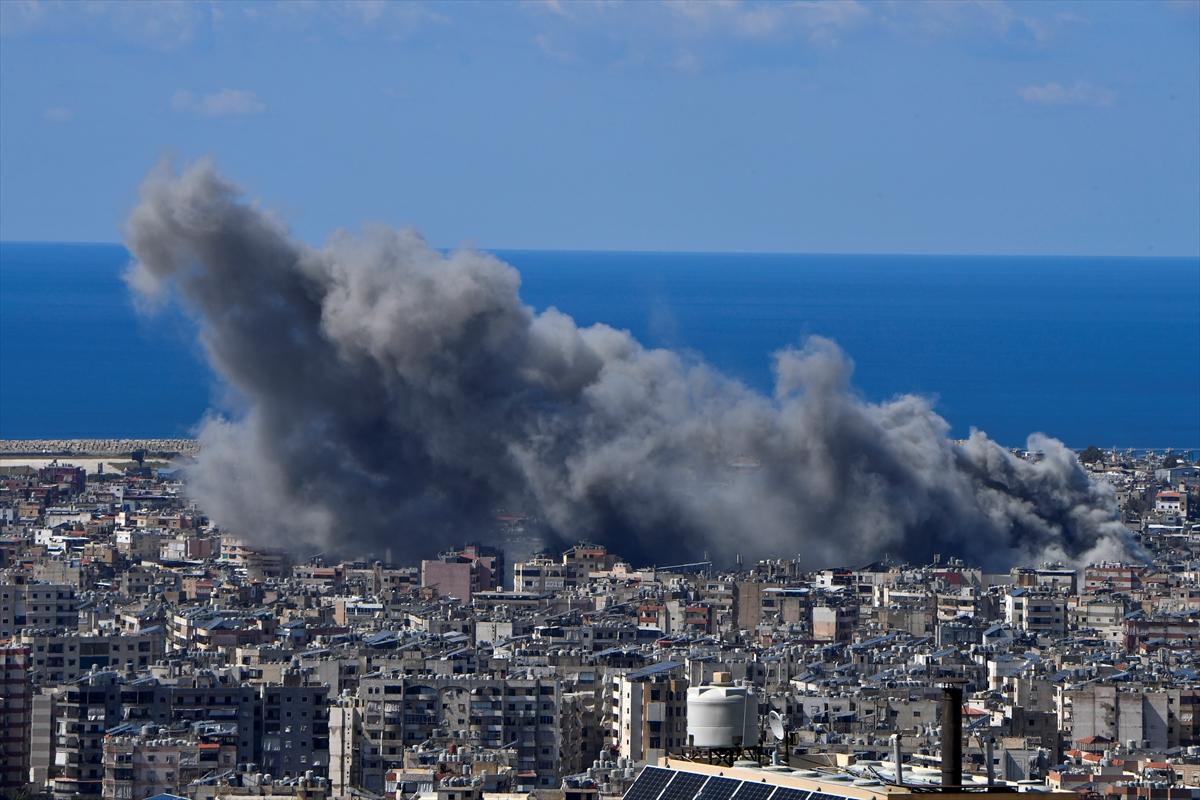
Israeli military attacks on the Dahieh district of Beirut, 9 March 2026 - (Anadolu Agency)
On 9 March, the Lebanese Ministry of Health reported that Israeli military airstrikes on the villages of Tayr Deba and Coya, located near the town of Sur, had killed 16 people and injured 40 others. According to the statement, nine people were killed and 17 injured in Tayr Deba. In the attack on Coya, seven people were killed and 23 injured.
At midday on 9 March, the Israeli military conducted airstrikes on the villages of Nimeyriyye and Şevkin, located in the Nabatieh governorate. The Lebanese Ministry of Health reported that in the attack on Nimeyriyye, seven people were killed and two injured. In the attack on Şevkin, one person was killed. Thus, a total of eight people were killed and two injured across the two villages. Additionally, Israel targeted the villages of Haris, Bezuriyye, Hamul, Tibnin, and Şokin in the south, as well as the area around the town of Hermel and the village of Yonin in the east.
In the evening hours, it was reported that Father Pierre er-Rai, the Maronite priest of Kalia village in the Nabatieh governorate, died from injuries sustained in an artillery strike on a house.
Lebanon’s official agency NNA reported that a house in the Kalia village of the Merciyyun region was hit by two consecutive artillery strikes from an Israeli tank. The first strike wounded the homeowner, Clovis Boutros, and his wife; the second strike wounded Father Pierre er-Rai, who was taken to a hospital by Red Cross teams. Later information confirmed that Father er-Rai died from his injuries.
An official statement was issued by the Vatican. Pope Francis XIV was reported to have learned with deep sorrow of the death of a priest in the artillery attack in southern Lebanon and to be closely following the developments with concern.
In a statement from the Vatican Press Office, it was stated that the Pope expressed “deep sorrow for all victims of the recent bombings in the Middle East, including innocent civilians and those aiding them, such as the Maronite priest Pierre El-Rahi killed in Kalia this afternoon.”
Vatican State Secretary Cardinal Pietro Parolin, speaking in Rome, said: “Unfortunately, the Church is also a victim of this situation. We are not immune to the suffering of the people.” Parolin described the developments in the Middle East as a “great tragedy” and affirmed that the Vatican would continue its diplomatic efforts.
On 9 March, Hezbollah announced that in response to Israel’s numerous attacks on towns and villages in Lebanon and on Beirut’s southern suburb of Dahieh, it had struck two Israeli military targets with missiles. In its written statement, Hezbollah stated that at 17:00 local time, an attack was launched against an Israeli military target. The statement specified that a satellite communications station belonging to Israel’s cyber defense and communications unit in the Vadi Ela region of central Israel was targeted with “precision missiles”. The facility was noted to be approximately 160 kilometers from the Lebanese border.
Hezbollah also announced that at 17:00 local time, it had targeted the Remle Base (headquarters of Israel’s Home Front Command), located southeast of Tel Aviv and approximately 135 kilometers from the Lebanese border, using advanced missiles.
The statement emphasized that these attacks were carried out in response to Israel’s attacks on dozens of cities and villages in Lebanon and on Beirut’s southern suburb of Dahieh.
On 9 March, Human Rights Watch (HRW) reported that the Israeli military had used white phosphorus munitions in populated areas of Lebanon. In its written statement, HRW stated that on 3 March 2026, white phosphorus munitions were used in artillery strikes against homes in the village of Yuhmur es-Shakif in southern Lebanon, constituting an unlawful attack.
The statement confirmed the authenticity of seven photographs related to the attack and verified their geographic locations. The photographs showed white phosphorus munitions exploding over a populated area, with civilian defense teams fighting fires in two homes and one vehicle.
HRW’s researcher in Lebanon, Remzi Kays, stated that the use of white phosphorus in populated areas was extremely alarming. Kays noted that white phosphorus munitions can cause fatalities or severe, lifelong injuries.
Under intense Israeli attacks, Lebanon’s parliament voted to extend the term of its members by two years.
According to Lebanon’s official news agency NNA, the vote resulted in:
As a result, the parliamentary elections scheduled for May 2026 have been postponed until 2028.
In the early morning hours of 9 March, Lebanese President Joseph Aoun stated that he was ready to restart negotiations to halt Israel’s attacks on Lebanon. According to a statement from the Lebanese Presidency, Aoun made these remarks during a meeting with the ambassadors of Denmark, Sweden, and Norway. Aoun stated that Israel’s attacks on Lebanon’s south and the Bekaa region in the east, including on the Dahieh district of Beirut, would not achieve their objectives.
President Aoun announced that Lebanon had conveyed to several major countries and the United Nations (UN) that it was ready to restart negotiations addressing the necessary security issues to stop Israel’s attacks.
Later in the day, President Aoun called for direct negotiations with Israel within the framework of a full and comprehensive ceasefire to halt all Israeli attacks on Lebanon. Aoun spoke in a virtual meeting attended by European Council President Antonio Costa and European Commission President Ursula von der Leyen.
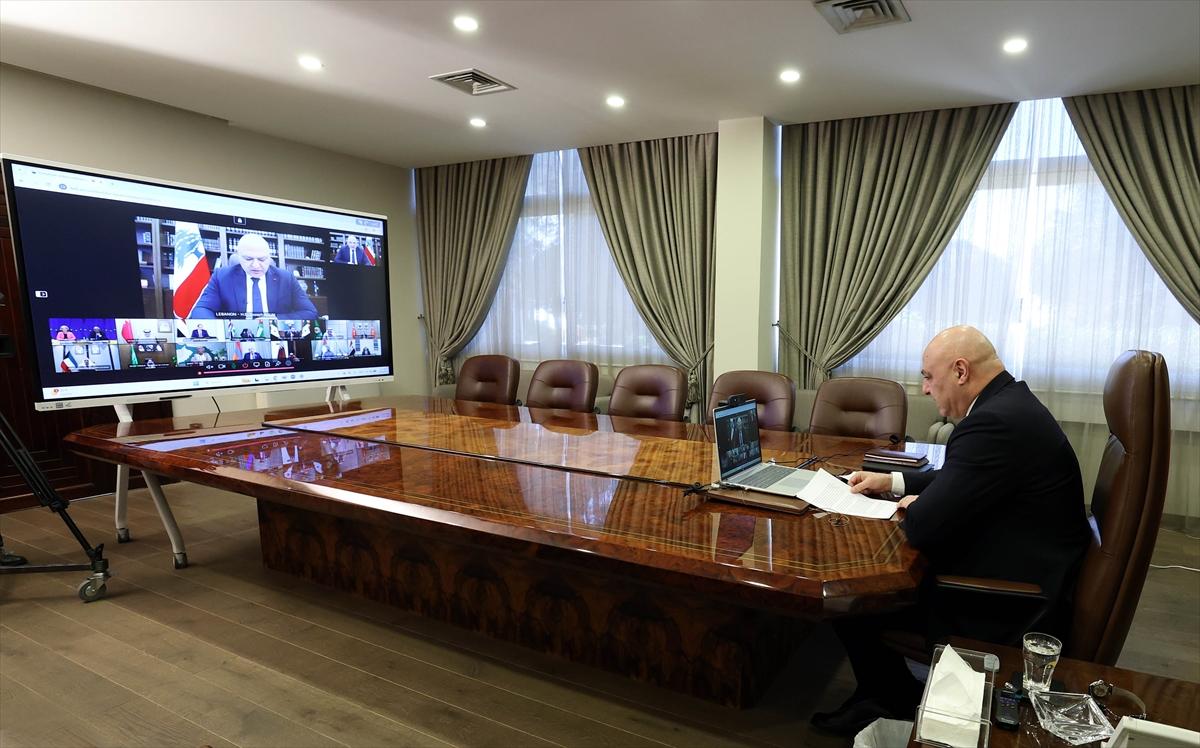
Lebanese President Joseph Aoun speaks during a virtual meeting with European Council President Antonio Costa and European Commission President Ursula von der Leyen on the situation in Lebanon, 9 March 2026 - (Anadolu Agency)
President Aoun stated that the current situation in Lebanon stemmed from “an armed group operating outside state control” and described rockets fired from Lebanese territory as a “trap” designed to provoke Israel’s disproportionate response.
Aoun noted the worsening humanitarian situation in Lebanon, stating that more than 600,000 people had been displaced, with some left homeless and without basic necessities on the streets. The President stated that Lebanon was being “squeezed between a hostile party that disregards the rule of law and an armed non-state group that ignores Lebanon’s interests and the lives of its people.”
Aoun stated that the six rockets fired from Lebanese territory toward Israel on 2 March 2026 were intended to provoke Israel into entering Lebanon and occupying certain areas. He said: “The current situation has placed Lebanon in a dilemma: either directly confront Israel’s aggression without any legal or humanitarian constraints, turning Lebanon into another Gaza, or withdraw from the conflict and allow the same armed group to launch a populist campaign under the pretext that the state has failed to protect its people.”
Addressing Hezbollah, Aoun said: “Whoever launches these missiles, in the name of Iran’s agenda, has sought to destroy the Lebanese state under attacks and chaos, at the cost of the destruction of dozens of our villages and the deaths of tens of thousands of our people.”
Appealing to the international community, Aoun called for support for an initiative based on a comprehensive ceasefire and the cessation of all Israeli land, air, and sea attacks on Lebanon. He also called for logistical support for the Lebanese Armed Forces, stating that this would help bring contested areas under control and contribute to Hezbollah’s disarmament.
Aoun stated that direct negotiations between Lebanon and Israel, under international guarantors, must be launched to reach a comprehensive ceasefire.
Lebanon’s National Committee for Disaster Risk Management reported that, since 2 March 2026, the official number of forcibly displaced persons had reached 667,831. The report noted ongoing applications to shelters and recorded that 667,831 individuals had applied to shelters. It was also reported that approximately 120,000 people had been accommodated in the 567 shelters opened.
Although the Lebanese government has recorded the number of displaced persons, it was noted that many others who left their homes and sought refuge in other areas have not been officially registered, suggesting the total number may be higher.
On 9 March, Israeli media reported that the Lebanese government had offered direct negotiations with Israel through the United States. According to a report by Israeli television channel Channel 12, citing five unnamed sources, the Beirut administration had proposed direct negotiations via the United States to end Israel’s attacks. The report stated that the offer aimed to halt Israeli attacks and lay the groundwork for a potential peace agreement between the two countries.
Sources speaking to Channel 12 claimed that both Israel and the United States had responded to Lebanon’s offer with “distance and skepticism”.
The report stated that last week, the Lebanese government had offered the United States, through its ambassador to Ankara and special envoy to Syria, Tom Barrack, a mediation proposal for an agreement that would fully end Israeli attacks.
According to sources, Tom Barrack’s response was: “If you want our help against Israel, stop the nonsense. If there is no real step taken on Hezbollah’s weapons, this has no meaning.”
The report also claimed that the Israeli government was aware of Lebanon’s offer but considered it “too late”, as Tel Aviv was focused on eliminating Hezbollah entirely. It was stated that Lebanon’s proposal included talks between ministers in the Greek Cypriot administration in southern Cyprus.
On 9 March 2026, the European Union (EU) issued a statement addressing developments in Lebanon. The EU called on all parties in Lebanon to exercise restraint and demanded that Hezbollah immediately lay down its arms and cease all attacks against Israel.
The EU also called on Israel to end its ground operations violating Lebanon’s sovereignty and territorial integrity.
EU Foreign Relations Spokesperson Anouar Al Anouni, speaking at a daily press briefing, described the situation on the ground in Lebanon as “highly alarming and deeply concerning”. Al Anouni emphasized the need to initiate bilateral dialogue between Israel and Lebanon.
Al Anouni said: “We call on Hezbollah to immediately lay down its arms and cease all attacks against Israel. We also call on Israel to halt its ground operations violating Lebanon’s sovereignty and territorial integrity.”
The EU also urged all parties to protect civilians and civilian infrastructure and to avoid actions that could lead to further displacement of the Lebanese population. The statement affirmed that the EU would continue to support diplomatic initiatives.
On the same day, France called for an emergency meeting of the United Nations Security Council (UNSC) regarding developments in Lebanon. French Foreign Minister Jean-Noël Barrot, in a social media statement, said: “In the face of the rapidly deteriorating situation in Lebanon, France has called for an emergency meeting of the United Nations Security Council.”
Barrot announced that France had sent a 6 million euro emergency aid package to Lebanon, where Israeli attacks have forced civilians to flee their homes. He also stated that preparations were underway for a 20-ton humanitarian aid shipment. The French Foreign Minister said France remained in contact with Lebanese and Israeli officials “to prevent Lebanon from being plunged into chaos, ensure a ceasefire, and support the process of Hezbollah’s disarmament.”
Syrian President Ahmed al-Shara stated that Syria supports Lebanese President Joseph Aoun’s efforts to disarm Hezbollah. According to Syria’s official news agency SANA, Shara participated in a virtual meeting of Middle Eastern leaders convened by the Council of Europe and the European Commission to address regional developments.
Shara, affirming support for the steps taken by the governments of Iraq and Lebanon to keep their countries out of conflict, said: “We support Lebanese President Joseph Aoun in disarming Hezbollah.” The President stated that the current escalation in the region posed a “existential threat to the entire region”, particularly highlighting the potential closure of the Strait of Hormuz and attacks on Gulf energy infrastructure as threats to global economic stability.
Shara noted that Syria, located at the intersection of three conflict fronts, is directly and seriously affected by these developments. He affirmed that Syria’s stance of “condemning all attacks against Arab sovereignty” remains unchanged and strongly denounced Iran’s attempts to create instability in Arab capitals and its interventions targeting Arab national security.
Shara stated that Syria’s stability is a fundamental element for the stability of the Levant and the broader Middle East and emphasized that Syria is coordinating with regional states to develop a common stance. He also stated that defensive forces along Syria’s borders have been strengthened to prevent the spillover of the conflict into Syrian territory and that efforts are underway to prevent armed groups from using Syrian territory.
European Union (EU) High Representative for Foreign and Security Policy Kaja Kallas issued a statement regarding Israel’s attacks on Lebanon. The European External Action Service (EEAS) released a statement including Kallas’s assessment of Israel’s attacks since 2 March 2026.
Kallas stated that Israel’s attacks have caused mass displacement in Lebanon and that the fragile situation is becoming increasingly unstable. She said: “Israel must end its operations in Lebanon. Lebanon’s sovereignty and territorial integrity must be respected.” Kallas warned that Lebanon risks becoming a new front in the conflict with Iran and stated that Hezbollah’s decision to attack Israel has put the entire region at risk.
While affirming Israel’s right to self-defense under international law, Kallas said: “All parties involved in the conflict become legitimate targets. Hezbollah must disarm and end all actions against Israel.”
Kallas emphasized that Israel’s response has been “extremely harsh” and that its attacks have caused mass displacement in Lebanon. She warned that Israel’s actions risk dragging Lebanon and its people into “a war that is not theirs”.
Kallas stated that re-establishing a ceasefire offers the best chance to prevent Lebanon from being plunged into chaos. She affirmed the EU’s support for the United Nations Interim Force in Lebanon (UNIFIL) and stressed that the safety of UNIFIL forces must be guaranteed.
She also emphasized that preventing further loss of life, displacement, and regional escalation is an “urgent priority” and stressed that all parties must respect international law, including international humanitarian law, and protect civilians and civilian infrastructure. Kallas expressed solidarity with the Lebanese people and announced that the EU would use its emergency reserves to assist approximately 130,000 people affected by the conflict.
According to official figures released on 10 March, 28 people were killed and 80 injured in Israeli military attacks in Lebanon on 9 March. The Lebanese Ministry of Health reported that in an Israeli airstrike on the village of Nimeyriyye in the Nabatieh district, seven people were killed and two injured.
In the attack on the nearby village of Şevkin, one person was killed and eight injured. It was reported that the area around the village of Nebatieh el-Fevka was targeted by Israeli artillery fire. NNA reported that in an Israeli drone strike targeting two motorcycles on the road between the villages of Beyt Yahun and Tibnin in the south, one Syrian national was killed and one injured. In a separate attack on the village of Et-Tiyre, two people were killed.
In the attacks on Tayr Deba and Coya villages, as previously reported, 16 people were killed and 40 injured. It was reported that a vehicle was struck near the village of Burc Rahhal near Sur. In the attack on the village of Şihabiye, many people were injured.
In the attack on the village of Kevseriyet er-Riz in the Sidon region, 15 Syrian workers were injured. The village of Yonin in the Bekaa Valley was hit by an airstrike. In northern Lebanon’s Akkar region, an unmanned aerial vehicle was reported to have crashed in an open area near the village of el-Bire.
According to eyewitness accounts, one person was killed and 12 injured in Israeli aerial strikes on the Dahieh district of southern Beirut. In the wave of strikes following Israel’s warnings targeting Hezbollah’s financial infrastructure, the following locations were hit: Sefir, Hare Hureyk, Ayn es-Sekke, Burc el-Beracine, el-Mureyice, and the Karz-ı Hasen branches along the Airport Road. It was also reported that significant damage occurred in buildings along the Hadi Nasrullah Highway and in the American Quarter.
The Lebanese Red Cross reported that two medical personnel responding to casualties in the village of Mecdel Zun in the south were injured in an Israeli bombardment. The statement noted that medical teams, coordinating with UNIFIL, were hit during a second strike while attempting to reach the wounded, and the two injured personnel were transported to Cebel Amil Hospital in Sur. The Lebanese Ministry of Health reported that, from 2 March to 10 March 2026, Israeli attacks had killed 486 people, mostly women and children, and injured 1,313.
Anadolu Ajansı. "İsrail Ordusu Lübnan’a Hava Saldırıları Düzenledi." Accessed March 9, 2026. https://www.aa.com.tr/tr/dunya/israil-ordusu-lubnana-hava-saldirilari-duzenledi/3856002
In the early hours of 10 March, according to information attributed to the Syrian official news agency SANA, Hezbollah launched an artillery attack on Syrian military positions around the village of Serghaya, located southwest of the capital Damascus, from Lebanese territory.
Israel is conducting air strikes on the Dahieh district of Beirut, Lebanon, 10 March 2026 – (Anadolu Agency)
The Syrian Armed Forces Operations Command, providing information to SANA, stated that the attack originated from across the Lebanon border and targeted Syrian military outposts near Serghaya. It was also noted that Hezbollah had deployed additional units to the border area, while the Syrian military had entered an assessment phase to evaluate the situation.
Following the attack, the Syrian military contacted the Lebanese Armed Forces and emphasized that it would take necessary steps against any further attacks on Syrian territory.
In the early hours of 10 March, the Israeli military conducted intense air strikes on the village of El-Ensariye in southern Lebanon, an area previously subject to evacuation orders. On the same day, Israeli forces carried out artillery fire targeting the Bint Jubayl district and the village of Aynata. Israeli authorities claimed that rockets had been launched from El-Ensariye by Hezbollah and defended the strikes as targeting command centers and attack infrastructure throughout the night.
Israeli Defense Forces Spokesperson Avichay Adraee, in a statement issued in the morning of 10 March, reiterated the evacuation order for residents south of the Litani River and announced that the Israeli military would carry out intense attacks in the region. Residents were urged to leave their homes and move north of the Litani River, with authorities warning that those near Hezbollah facilities were at grave risk.
Throughout the day, the Israeli military continued attacks on various villages in the south. In an air strike on the village of Deyr Antar, part of the Nabatieh governorate, four medical personnel were injured. It was reported that the villages of Kefer Coz, Bireiki, Deyr Suryan, Tayba, Beit Lif, Sarifa, Keffur, Yatir and Berashit were also targeted by air strikes. Residents of the village of Ilma Shab were reported to have begun evacuating their homes under the escort of the United Nations Interim Force in Lebanon UNIFIL.
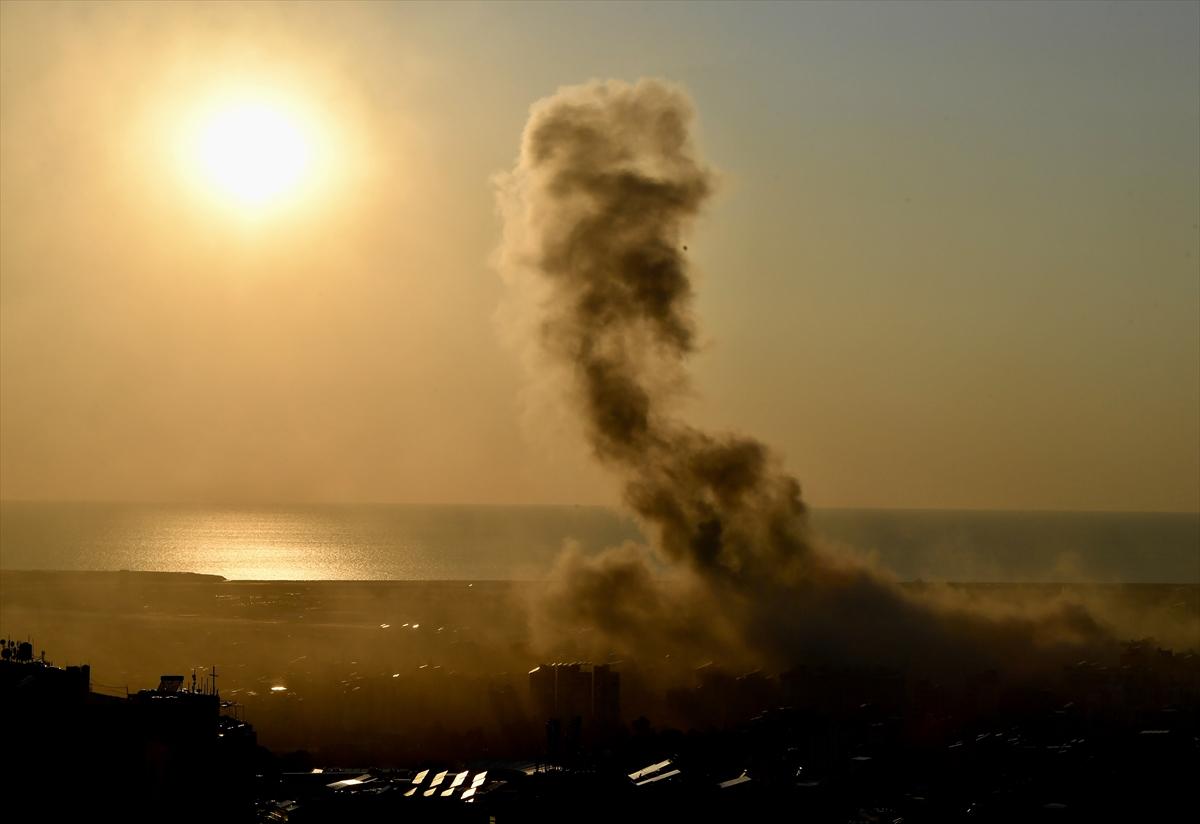
Israel is conducting air strikes on the Dahieh district of Beirut, Lebanon, 10 March 2026 – (Anadolu Agency)
In an unmanned aerial vehicle strike on a vehicle in the village of Kileyle, part of the city of Sour, two people were killed. Later in the day, it was reported that one additional person died in attacks in the Nabatieh governorate. Israeli aircraft were reported to have conducted strikes on the villages of Cabsit, Hinnaviyye, Harayip, Tayr Diba, Bazuriyye, Coya and Duveyr. Additionally, two motorcycles in the villages of Avzai and Kana were targeted.
By the end of the day, it was reported that the mayor of Coya, Fevzi Fevvaz, and municipal council member Abbas Baalbaki were killed in an air strike on the village of Coya, part of the city of Sour.
Following Israel’s announcement on 10 March 2026 of a new wave of attacks, explosions occurred in Dahieh, the southern district of Lebanon’s capital Beirut.
According to reports from the area, the Israeli military conducted an air strike on Dahieh, an area previously subject to evacuation warnings. After the strike, explosions were heard and smoke rose from the district.
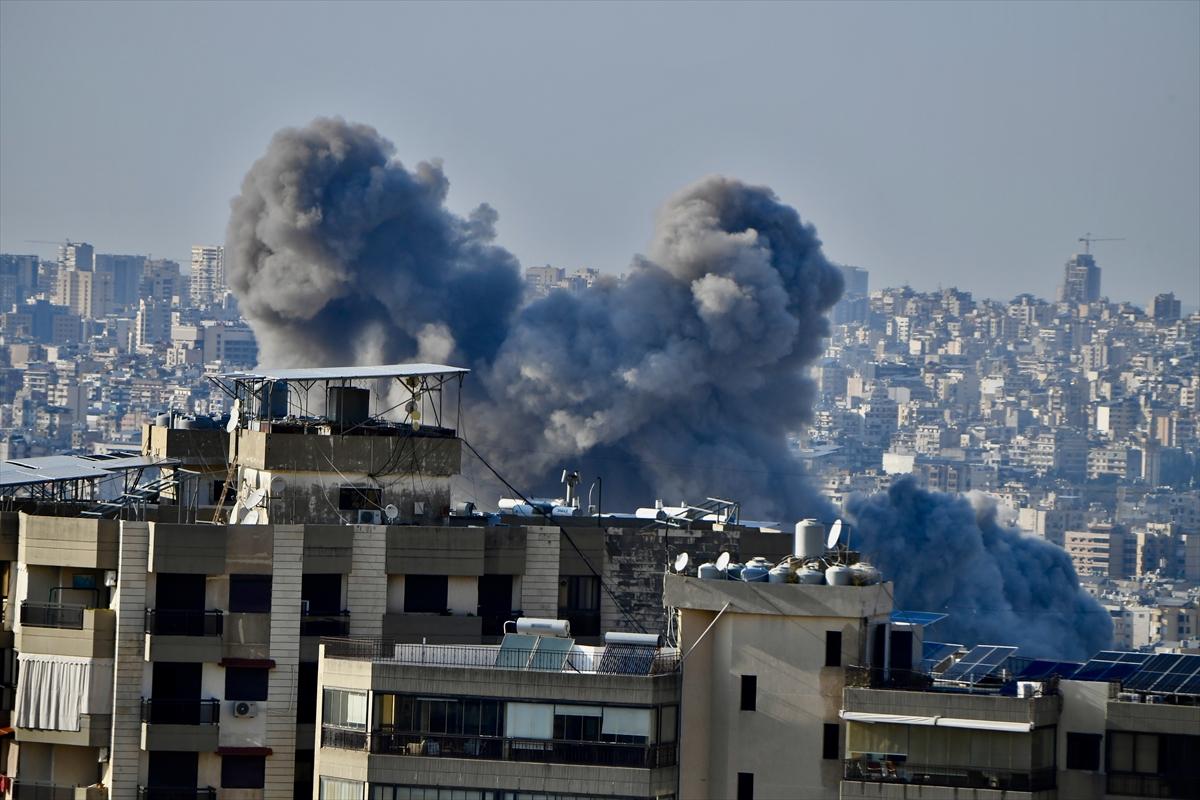
Israel is conducting air strikes on the Dahieh district of Beirut, Lebanon, 10 March 2026 – (Anadolu Agency)
The Lebanese official news agency NNA reported that the Israeli military targeted the Camus neighborhood in Dahieh. A later update on the same day stated that the Israeli military had carried out a total of four air strikes on Dahieh. Of these, two were directed at Camus, one at Burj al-Barajneh, and one at Leylek neighborhood.
On 10 March 2026, Karolina Lindholm Billing, Representative of the United Nations High Commissioner for Refugees UNHCR in Lebanon, announced that approximately 700,000 people in Lebanon had been displaced in the past week due to Israeli attacks. In her assessment during a weekly press briefing at the UN Office in Geneva, Billing noted that the escalation had surpassed one week following Israel’s issuance of evacuation warnings for over 53 villages and densely populated areas and its intensification of air strikes.
Billing stated that more than 667,000 people had registered on the government’s online displacement platform, with numbers expected to rise further. Approximately 120,000 people were reported to be staying in government-designated collective shelters. Additionally, it was reported that since the start of the clashes, more than 78,000 Syrians and over 7,700 Lebanese had entered Türkiye.
Billing called for the protection of civilians and unhindered access to humanitarian aid.
The Lebanese Ministry of Health announced that the number of fatalities resulting from Israeli attacks since 2 March had increased by 84 to reach 570, while the number of injured had risen to 1,444. The announcement was made through the Lebanese National Committee for Disaster Risk Management.
The ministry reported that since 2 March, 759,300 people had applied to shelters. Approximately 122,000 people have been accommodated in the 580 shelters opened.
The Islamic Health Organization, under the Lebanese Civil Defense General Directorate, reported that 15 medical personnel had been killed and more than 30 injured in Israeli attacks since they began on 2 March.
In a written statement, the organization stated that medical centers, ambulances, and medical teams had been targeted. Most recently, a first aid point near the village of Hinnaviyye in the south was struck, resulting in the death of one medical worker and injuries to two others. The statement emphasized that these attacks constituted violations of international agreements and called for the protection of medical and humanitarian personnel.
On 10 March 2026, Hezbollah Parliamentary Bloc Leader Muhammad Raad delivered a speech on the Hezbollah-affiliated Al-Manar television, offering an assessment of the current situation in Lebanon and the ongoing conflict with Israel. Raad stated that “Lebanon is faced with a choice between war and surrendering to the humiliating conditions imposed by Israel”.
Addressing the current situation in Lebanon, Raad said, “Lebanon today is not choosing between war and peace, as claimed. Rather, it is choosing between war and surrendering to the humiliating conditions that the enemy Israel seeks to impose on its government.” He argued that resistance to Israel is “the only way to preserve dignity” and that Hezbollah had remained bound to the ceasefire process, adding: “For one year and five months, resistance has remained fully committed to the ceasefire. But the occupiers have not respected the agreement for a single day. They have exploited resistance’s restraint to carry out killings, betrayal, and destruction. The Lebanese government has failed to act against the enemy’s violations and has not used the international friendships it claims to possess to pressure Israel.”
Regarding the assassination of Iran’s leader Ayatollah Ali Khamenei, Raad stated: “The missiles launched by the resistance in response to the targeting of Khamenei were a message that the patience of the Lebanese resistance fighters and people has been exhausted by the enemy’s audacity and extremism.”
In an evening statement on 10 March, Hezbollah reported that clashes were ongoing between Hezbollah forces and Israeli troops near the town of Hiyyam and south of the village of Aytarun in southern Lebanon. The statement claimed that Hezbollah forces had directly hit an Israeli Merkava tank.
The targeted tank was said to have been lured into a “hiding position” while Israeli forces attempted to evacuate the dead from the battlefield. The tank was identified as the third to be hit in the clash and “caught fire like the previous ones”. It was also stated that Israeli personnel attempting to recover damaged tanks were targeted with appropriate weapons.
Hezbollah also announced that a unit attempting to infiltrate the Lebanese border village of Hula had been targeted by missiles and that an Israeli artillery position near the Abbad area had been struck.
In the early hours of 10 March, Israeli Foreign Minister Gideon Saar met with United Nations Special Coordinator for Lebanon Jeanine Hennis-Plasschaert in Tel Aviv and stated that regional developments were discussed. In a social media post, Saar claimed that “attacks launched from Lebanese territory against Israel in the past week have exceeded those launched by Iran”.
Saar argued that Hezbollah had joined the war under Iranian pressure, contrary to Lebanon’s interests. He asserted that weakening Hezbollah’s military capacity was a “regional necessity” and emphasized that this was in the shared interest of both Israel and Lebanon.
On 10 March 2026, the Israeli military announced that it had carried out additional strikes targeting the Karz-i Hasen Institution, which it alleged is affiliated with Hezbollah across Lebanon. The military’s written statement indicated that Israeli warplanes had conducted operations throughout Lebanon.
The statement claimed that “the Karz-i Hasen Institution serves as Hezbollah’s financial institution, used to procure weapons and weapons production materials and to pay salaries”.
On the same day, the Israeli military announced that two rockets fired by Hezbollah from Lebanon could not be intercepted and had struck the towns of Beit Shemesh and Ramle near West Jerusalem, with warning sirens failing to activate. The military claimed the sirens’ failure was due to a “singular technical malfunction”.
The statement noted that Hezbollah had launched numerous rockets simultaneously and that attempts to intercept two of them had failed. The incident is under detailed investigation, and necessary adjustments have been made to prevent similar occurrences on the Lebanon front.
Pakistan’s Ministry of Foreign Affairs announced that it strongly condemned Israel’s ongoing military attacks on Lebanon. The statement was published on the X social media platform.
The statement read: “Pakistan strongly condemns Israel’s ongoing military attacks on Lebanon, which have resulted in the deaths of hundreds of civilians and the displacement of approximately half a million people.”
The statement asserted that Israel’s attacks violate international law, undermine Lebanon’s efforts to restore peace and stability, and have the potential to intensify the existing security and humanitarian crises in the region.
The statement emphasized that Israel’s indiscriminate targeting of civilians and its violation of Lebanon’s sovereignty and territorial integrity must end immediately, and called on the international community to act to halt Tel Aviv’s attacks.
The statement also demanded that Israel immediately, fully, and unconditionally withdraw from all occupied Lebanese territories, adding: “Pakistan stands in full solidarity with its brotherly Lebanese people against this aggression and will continue to support all efforts aimed at achieving lasting peace in Lebanon and the wider region.”
A telephone conversation took place between Lebanese President Joseph Aoun and Syrian President Ahmed al-Shara. According to the Lebanese Presidency’s statement, the discussion addressed recent developments in the region and emphasized that the current sensitive conditions require increased coordination and consultation between the two countries.
Both sides highlighted the importance of bringing the borders under control and preventing any security violations originating from either side. The need to strengthen security coordination between the two countries was underscored.
On the same day, the Syrian military reported that Hezbollah had launched an artillery attack on Syrian military positions near the village of Serghaya, southwest of Damascus, from Lebanese territory.
Lebanese Foreign Minister Yusuf Ra’i announced that he had requested the Vatican to undertake diplomatic initiatives to protect the Christian population living in border villages in southern Lebanon. Ra’i held a telephone conversation with Vatican Secretary of State Cardinal Pietro Parolin and Secretary for Relations with States and International Organizations Archbishop Paul Richard Gallagher.
Ra’i stated that during the conversation, he addressed the recent developments in Lebanon and particularly the dire situation facing border villages in the south. He requested the Vatican to engage in mediation and diplomatic outreach to safeguard the Christian presence in southern Lebanon.
Gallagher affirmed that the Vatican was conducting necessary diplomatic initiatives to halt the escalation in Lebanon and prevent the displacement of civilians. It was reported that the Vatican was closely monitoring developments and that Lebanon remained in the prayers of Pope Leo XIV.
A telephone conversation took place between Lebanese President Joseph Aoun and Egyptian President Abdel Fattah el-Sisi. According to the Lebanese Presidency’s account on the X platform, the conversation addressed recent regional developments and Israel’s ongoing attacks on Lebanon.
Egyptian President Sisi expressed Egypt’s support for the Lebanese government, people, and armed forces. Sisi announced that Egypt had decided to send humanitarian aid to Lebanon to assist those forced to flee their homes due to Israeli attacks.
The two leaders assessed the regional impact of the ongoing attacks and exchanged views on the current situation.
Al Jazeera. "Israeli Air Strike Targets Building in South Lebanon." Al Jazeera Video Newsfeed, March 10, 2026. Accessed March 10, 2026. https://www.aljazeera.com/video/newsfeed/2026/3/10/israeli-air-strike-targets-building-in-south-lebanon
Anadolu Ajansı. "BM’ye Göre İsrail’in Saldırıları Sonucu Lübnan’da Son 1 Haftada Yaklaşık 700 Bin Kişi Yerinden Edildi." Anadolu Ajansı. Accessed March 10, 2026. https://www.aa.com.tr/tr/dunya/bmye-gore-israilin-saldirilari-sonucu-lubnanda-son-1-haftada-yaklasik-700-bin-kisi-yerinden-edildi/3858104
Anadolu Ajansı. "Lübnanlı Uzmanlara Göre İsrail İndirme Operasyonlarıyla Hizbullah’ın Füze Kaynaklarını Tespit Etmeye Çalışıyor." Anadolu Ajansı. Accessed March 10, 2026. https://www.aa.com.tr/tr/dunya/lubnanli-uzmanlara-gore-israil-indirme-operasyonlariyla-hizbullahin-fuze-kaynaklarini-tespit-etmeye-calisiyor/3857914
Anadolu Ajansı. "Suriye ve Lübnan Liderleri Sınırların Kontrol Altına Alınmasının Önemini Görüştü." Anadolu Ajansı. Accessed March 10, 2026. https://www.aa.com.tr/tr/dunya/suriye-ve-lubnan-liderleri-sinirlarin-kontrol-altina-alinmasinin-onemini-gorustu/3858328
Anadolu Ajansı. "İran’ın Misillemesinin Ardından Tel Aviv Başta Olmak Üzere İsrail’in Birçok Bölgesinde Sirenler Çaldı." Anadolu Ajansı. Accessed March 10, 2026. https://www.aa.com.tr/tr/dunya/iranin-misillemesinin-ardindan-tel-aviv-basta-olmak-uzere-israilin-bircok-bolgesinde-sirenler-caldi/3857608
Anadolu Ajansı. "İsrail Ordusu Lübnan’ın Güneyindeki Ensariye Köyüne Yoğun Saldırılar Düzenledi." Anadolu Ajansı. Accessed March 10, 2026. https://www.aa.com.tr/tr/dunya/israil-ordusu-lubnanin-guneyindeki-ensariye-koyune-yogun-saldirilar-duzenledi/3857504
In the early hours of 11 March, clashes were reported between Hezbollah elements and the Israeli military in southern Lebanon. According to Lebanon’s official news agency NNA, a unit of the Israeli military attempted to advance toward the village of Aytarun on the border within the Nabatieh governorate, supported by intense artillery fire and medium-caliber weapons.
During the advance, direct combat erupted between Hezbollah fighters and Israeli soldiers in the area.
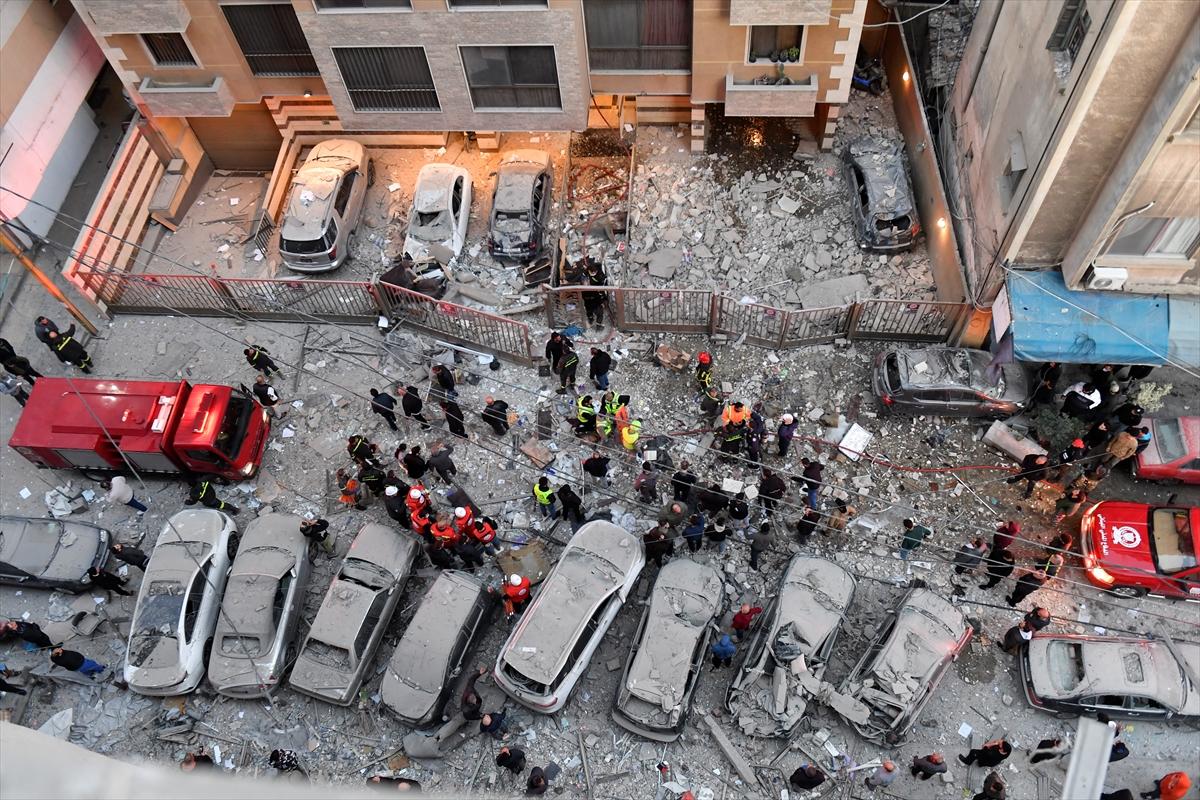
A building in the Aisha Bekkar neighborhood of Beirut, the capital of Lebanon, targeted by an Israeli air strike on 11 March 2026 – (Anadolu Agency)
During the same period, the Israeli military launched two new air strikes on the Dahieh district of Beirut, the capital of Lebanon. Intense explosion sounds were heard in the area following the attacks. The Israeli military claimed that the targets were Hezbollah infrastructure.
On the same day, it was reported that the Israeli military conducted an air strike targeting a specific apartment in a multi-story building in the Aisha Bekkar neighborhood of Beirut city center. Lebanon’s official agency NNA confirmed that the strike had targeted a particular unit. Images published on social media showed damage to the building and its surroundings.
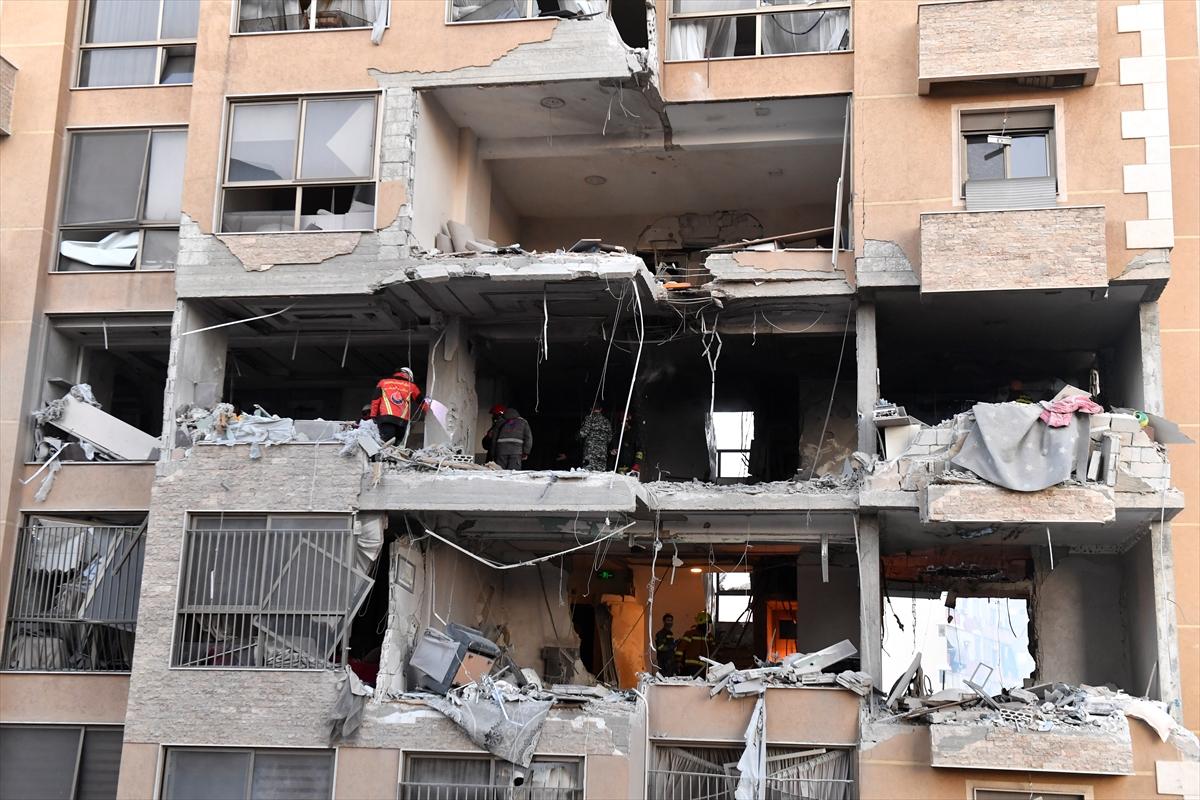
A building in the Aisha Bekkar neighborhood of Beirut, the capital of Lebanon, targeted by an Israeli air strike on 11 March 2026 – (Anadolu Agency)
Hezbollah announced that it had carried out a total of 26 attacks against Israeli military targets from southern Lebanon using missiles, unmanned aerial vehicles (UAVs), and artillery fire. It stated that these attacks were conducted in response to Israeli air strikes targeting dozens of towns and villages in Lebanon, including the Dahieh district of Beirut.
According to the announcement, Hezbollah targeted eight Israeli military assembly points, two settlements, four military bases, six military positions and barracks, three artillery positions, and one military industrial company. It also stated that two field operations were conducted, resulting in a total of 26 attacks.
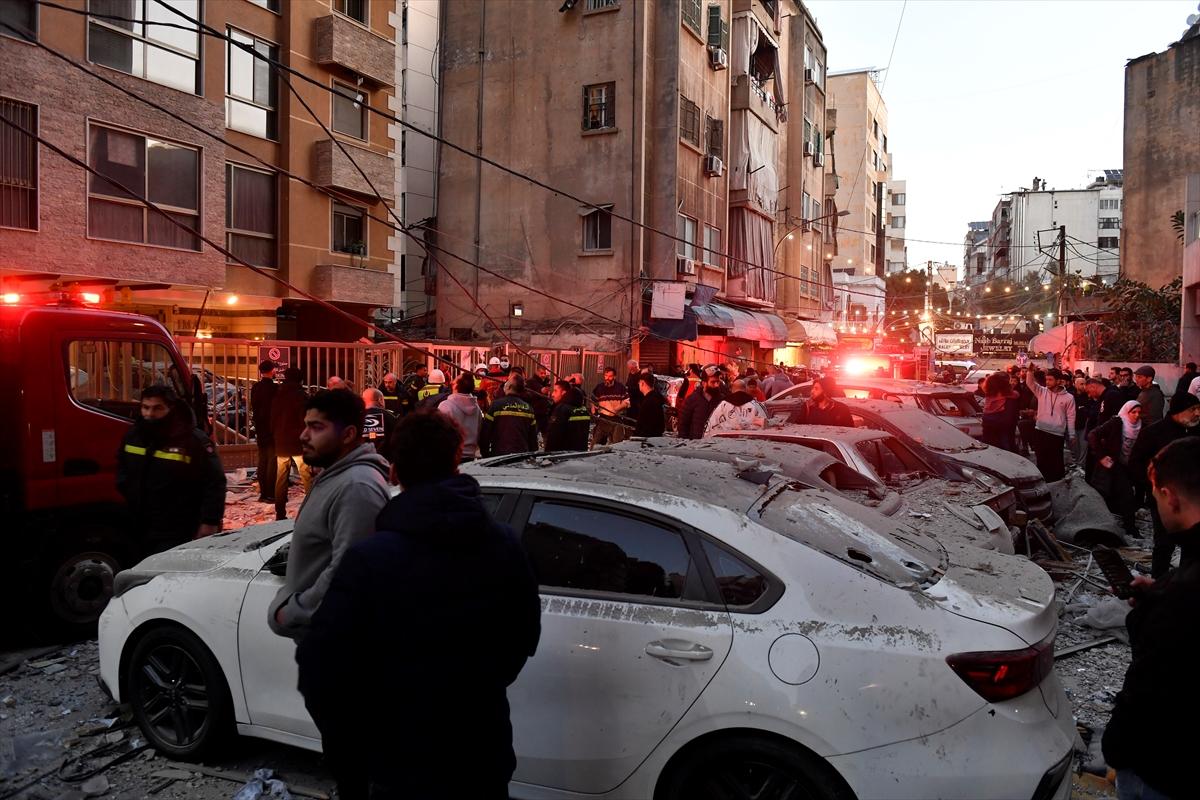
A building in the Aisha Bekkar neighborhood of Beirut, the capital of Lebanon, targeted by an Israeli air strike on 11 March 2026 – (Anadolu Agency)
It was reported that locations where Israeli soldiers were gathered in the town of Hiyam and the eastern side of the Hiyam Prison were targeted by rocket fire. A location in the rural area near the village of Adise on the Lebanon-Palestine border, where Israeli vehicles and soldiers were present, along with the new position in the village of Merkaba, the Kahil Hill east of Marun al-Ras village, and the Hanuk area of Aytarun village, were struck by artillery fire.
Hezbollah also announced that it had targeted the settlements of Metula and Misgav Am east of Haifa, the Tzipori military base, the Shamshon base west of the Sea of Galilee, the Giv’a base, and the Tel Hashomer base south of Tel Aviv.
In addition, it was stated that the new position established on Hamamis Hill south of Hiyam, the Abbad position and its surroundings, the new position near Aytarun village, the Malkiye position, the Mishmar HaCarmel missile defense facility, and the Yiftah barracks were also targeted. A battery of artillery near the Abbad position, an artillery position in the settlement of Sasa, a battery near the Merc position, and the Yodfat military industrial company were also included in the attacks.
In the early morning hours of the same day, Hezbollah announced that it had carried out six additional attacks against Israeli military targets from southern Lebanon. The statement noted that the total number of attacks against Israel since 2 March 2026 had reached 150. The clashes with Israeli troops advancing toward the village of Aytarun in the Nabatieh governorate were recalled, with the statement asserting that Israeli forces in the area had been targeted by rockets. It was also reported that Israeli troops in the Merkaba region had been struck by rocket fire and that an attack had been launched against the al-Marac point in northern Israel.
On 11 March 2026, the Israeli military’s air strikes across various regions of Lebanon resulted in at least 17 deaths and numerous injuries, according to official reports.
According to Lebanon’s official agency NNA, Israeli aircraft conducted intense air strikes on the village of El-Ensariye in southern Lebanon. An Israeli unmanned aerial vehicle targeted a café in the Hos area southeast of the city of Sur, resulting in injuries. The Ministry of Health confirmed that one person was killed when a motorcycle was struck by a UAV in the Avzai region south of Beirut.
On the same day, it was reported that two people were killed in the attack on the village of Eastern Zavtar, four in the village of Kilawiyye in the Nabatieh governorate, and three in the village of Hinnaviyye under the jurisdiction of Sur. Israeli aircraft were also recorded as targeting the villages of Hiyam, Tayba, and Rab Salasin.
In a separate wave of attacks during the night, five people were killed and five injured in the village of Kana in Sur. One person was killed and eight injured in the Hos area, while one person died and two were injured in the village of Zelaya in eastern Lebanon. The Ministry of Health also reported that four people were injured in an air strike on the village of Tebnin in the Nabatieh governorate.
Anadolu Ajansı. "İsrail Ordusunun Lübnan’a Düzenlediği Saldırılarda 17 Kişi Hayatını Kaybetti." Accessed March 11, 2026. https://www.aa.com.tr/tr/dunya/israil-ordusunun-lubnana-duzenledigi-saldirilarda-17-kisi-hayatini-kaybetti/3858979
In the early hours of 11 March, it was reported that fighting broke out between Hezbollah elements and the Israeli military in southern Lebanon. According to Lebanon’s official news agency NNA, an Israeli military unit attempted to advance toward the village of Aytarun on the border with the Nabatieh governorate, under intense artillery and medium-caliber fire support.
During the advance, direct combat occurred between Hezbollah fighters and Israeli soldiers in the area.
A building in the Aisha Bekkar neighborhood of Beirut, the capital of Lebanon, targeted by an Israeli air strike on 11 March 2026 - (Anadolu Ajansy)
On the same day, it was reported that the Israeli military targeted an apartment in a multi-story building in the Aisha Bekkar neighborhood of Beirut’s city center with an air strike. Lebanon’s official agency NNA confirmed that the strike focused on a specific apartment. Videos published on social media showed damage to the building and its surroundings. The Ministry of Health announced that four people were injured in the attack.
A building in the Aisha Bekkar neighborhood of Beirut, the capital of Lebanon, targeted by an Israeli air strike on 11 March 2026 - (Anadolu Ajansy)
Hezbollah announced that it carried out a total of 26 attacks against Israeli military targets from southern Lebanon using missiles, unmanned aerial vehicles (UAVs), and artillery fire. It was stated that these attacks were carried out in response to Israeli air strikes targeting dozens of towns and villages in Lebanon, including the Dahieh district of the capital Beirut.
According to the statement, Hezbollah targeted eight Israeli military assembly points, two settlements, four military bases, six military positions and barracks, three artillery positions, and one military industrial company. It was also stated that two field operations were conducted, resulting in a total of 26 attacks.
A building in the Aisha Bekkar neighborhood of Beirut, the capital of Lebanon, targeted by an Israeli air strike on 11 March 2026 - (Anadolu Ajansy)
It was reported that Israeli troop assembly points in the town of Hiyam and the area east of the Hiyam Prison were targeted by rocket fire. The location of Israeli vehicles and soldiers in the rural area of the village of Adise near the Lebanon-Palestine border, the new position in Merkaba, the Kahil Hill east of the village of Marun al-Ras, and the Hanuk area in the village of Aytarun were struck by artillery fire.
Hezbollah also stated that it targeted the settlements of Metula and Misgav Am east of Haifa, the Tziporit military base, the Shamshon base west of the Sea of Galilee, the Giv’a base, and the Tel Hashomer base south of Tel Aviv.
It was also stated that the new position established on Hamamis Hill south of Hiyam, the Abbad position and its surroundings, the new position near Aytarun, the Malkiye position, the Mishmar HaCarmel missile defense facility, and the Yiftah barracks were targeted. A battery of artillery near the Abbad position, an artillery position in the settlement of Sasa, a battery near the Merc position, and the Yodfat military industrial company were also included in the attacks.
In the early morning hours of the same day, Hezbollah announced six additional attacks against Israeli military targets from southern Lebanon. The statement noted that the number of attacks against Israel since 2 March 2026 had reached 150. The clash with Israeli troops advancing toward the village of Aytarun in the Nabatieh governorate was recalled, and it was stated that Israeli forces in the area had been targeted by rockets. It was also reported that Israeli troops in the Merkaba area were hit by rocket fire and that an attack was carried out against the al-Marac point in northern Israel.
On 11 March 2026, Israeli air strikes targeting southern and eastern Lebanon and the capital Beirut continued throughout the day, with official reports indicating a gradual increase in casualties. From nightfall, the following areas were targeted: Sur, Bint Jbeil, Nabatieh, the Western Bekaa region, and the southern suburbs of Beirut. Numerous villages including Hanaviye, Shahbiye, Kana, Hos, and Tibnin were struck, and an apartment in the Aisha Bekkar neighborhood of Beirut was targeted again. Initial reports stated that the death toll had risen to 30 and the number of injured to 31.
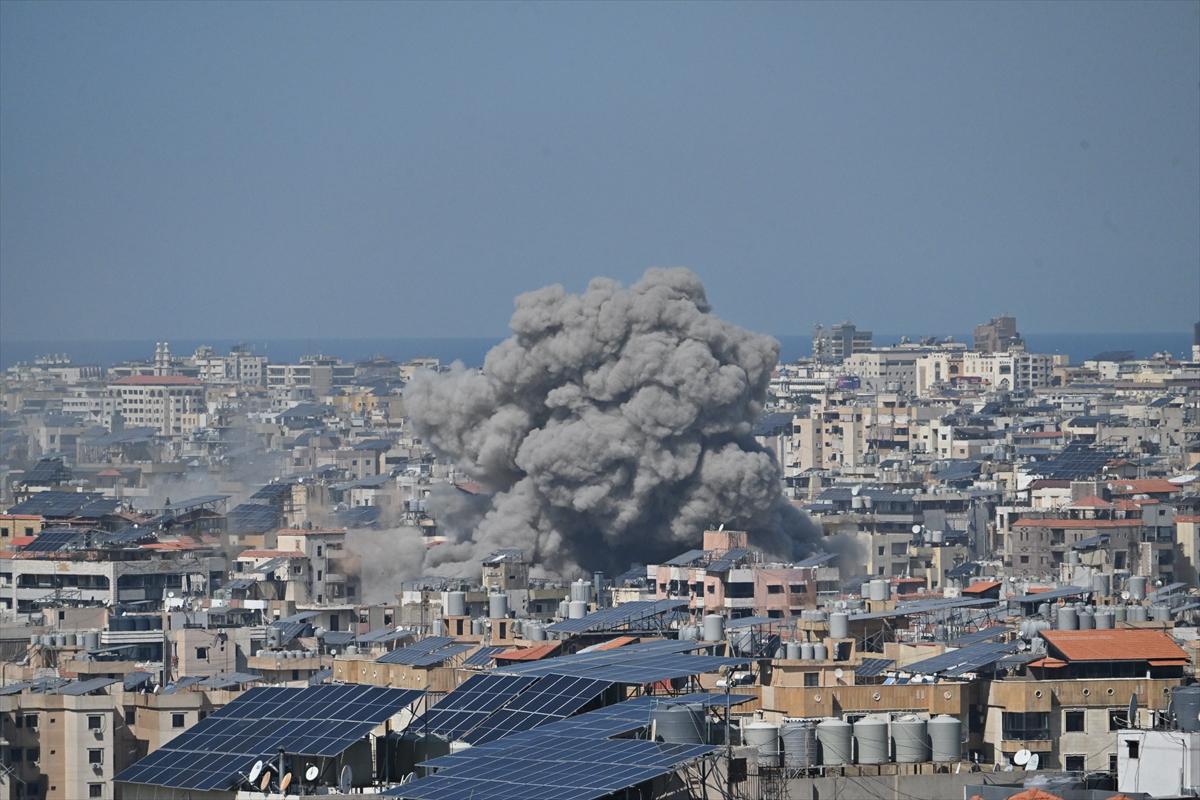
Israel’s air strikes on the Dahieh district of Beirut, the capital of Lebanon, 11 March 2026 - (Anadolu Ajansy)
Initial updates reported that six people were killed in Shahbiye, five in Kana, three each in Hanaviye and Sharkiyye, and one each in Zelaya, Hos, and Kefertibnit. A total of 26 people were injured in Zelaya, Hos, Kana, Shahbiye, and Tibnin. In the morning, an air strike on a building in the village of Temnin, part of the Baalbek region in eastern Lebanon where Syrians reside, killed 10 people and injured five.
Additionally, in the morning, a motorcycle in the village of Upper Nabatieh was targeted by a UAV; the villages of Tayri and Zebkin were hit by Israeli aircraft; and a vehicle in the Saf Ha area in the south was struck by a UAV. Later updates confirmed that two more people were killed in a UAV attack on the area between Habbush and Arabsalim, raising the total death toll to 35.
Later in the day, attacks continued. Israeli aircraft were reported to have targeted the center of Nabatieh, the Bint Jbeil district, and the villages of Beit Hanun, Coya, Harbis, Tul, Mari, Semmaiye, Deyr Antar, Konin, and Yatir. In the village of Haris, one person was injured when a UAV struck a motorcycle.
In the evening, Israeli warplanes conducted air strikes on numerous villages in southern and eastern Lebanon, killing 20 people. According to Lebanon’s official agency NNA, Israeli aircraft targeted the villages of Arzi, Zerariye, Tayba, Tebnin, and Mareke in the south and the village of Shaat in the Baalbek region in the east. Initial reports stated that eight people were killed in Tebnin, three in Shaat, and one in Mareke; 14 others were injured in Mareke.
Subsequent updates indicated that the strike zone had expanded to include the villages of North Burj, Deyr Antar, Zavtar, Zebkin, Shahbiyye, and Remali. Six people were killed in the air strike on North Burj and two in Deyr Antar. It was also recorded that the Israeli military conducted artillery fire on the border villages of Hiyam, Sadikin, Yatir, Marun Ras, Ayta Shab, Kantara, and Kefre.
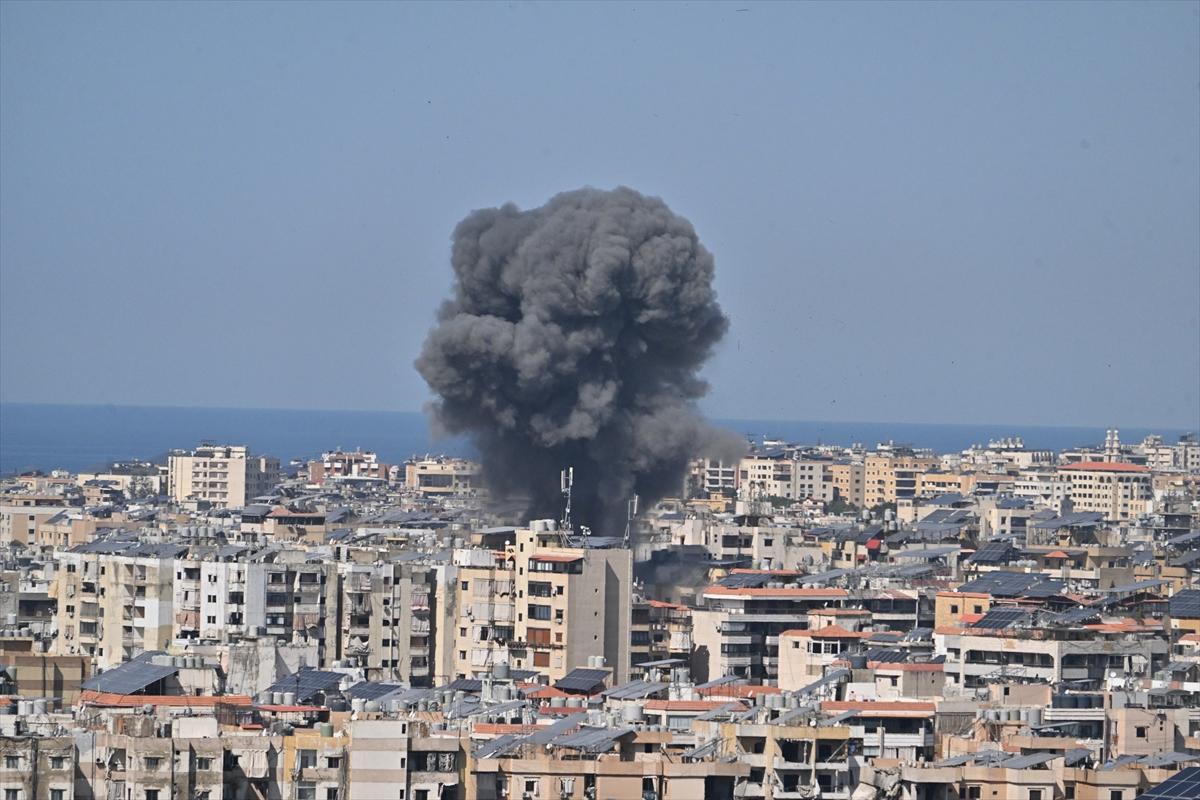
Israel’s air strikes on the Dahieh district of Beirut, the capital of Lebanon, 11 March 2026 - (Anadolu Ajansy)
In the evening of 11 March, it was reported that the Israeli military had conducted ground advances in certain areas of southern Lebanon. According to Lebanon’s official agency NNA, Israeli forces attempted ground advances in several southern regions. It was stated that the advance was intended as a “ground occupation”.
On 11 March 2026, Israeli air strikes targeting the Dahieh district of Beirut’s capital intensified throughout the day. At midday, it was reported that the Israeli military carried out three consecutive air strikes on the Dahieh district. After the strikes, explosions were heard and smoke rose from the area. Lebanon’s official agency NNA announced that the Hureyk neighborhood in Dahieh had been targeted. Israeli warplanes were reported to be flying at low altitude over Beirut.
In the evening, it was reported that the Israeli military carried out two new air strikes on Dahieh and had launched a large-scale wave of attacks. Channel 12, an Israeli television station, claimed that the warplanes had targeted high-rise buildings in Dahieh.
At night, it was reported that the attacks intensified and that a total of seven air strikes were carried out in two waves. Intense explosions were heard and dense smoke rose from the area. Israeli Defense Forces Spokesperson Avichay Adraee, in an emergency and serious warning post on his social media account, stated that Dahieh must be evacuated immediately and warned that the Israeli military would soon launch “a major force” attack on the area.
On the same day, the Israeli military issued a detailed statement regarding its attacks on Beirut. It stated that approximately 200 munitions launched from air and sea had struck approximately 70 targets in Beirut. The Israeli military acknowledged that approximately 50 high-rise buildings had been targeted and destroyed.
Israeli Defense Forces Spokesperson Adraee claimed that the strikes targeted Hezbollah infrastructure, weapons depots, central command headquarters, and the headquarters of the Revolutionary Guards’ Air Force in Beirut. He also claimed that Adnan al-Osman, Zaid Ali Juma, and five commanders affiliated with the Revolutionary Guards’ Quds Force had been killed.
On 11 March 2026, Hezbollah announced that it had carried out a series of attacks against Israeli soldiers along the border in southern Lebanon.
In its statement, Hezbollah reported that Israeli soldiers gathered south of the village of Hiyam were targeted for the second time by rocket fire in the morning. The statement indicated that the attack was a reprisal for Israeli strikes on various regions of Lebanon.
In another statement on the same day, Hezbollah announced that the Israeli position of Bilat along the border was targeted by artillery fire at 07:00 local time. The statement emphasized that the attack was a response to Israeli operations against Lebanon.
In the evening, it was reported that Hezbollah launched a broader attack against Israel. Hezbollah’s statement named the operation “Crushed Crop”. Israeli media reported that approximately 100 rockets were fired in this wave. Israeli officials stated that this was the most intense rocket attack launched by Hezbollah since the start of the conflict.
The rockets were reported to have been launched from various regions of Lebanon, particularly targeting the Haifa and Celil regions in northern Israel. Israel’s emergency medical service, Magen David Adom, reported that a man in his 50s and a 35-year-old woman sustained minor injuries. Videos on social media showed a fire breaking out in a house in the village of Buayne Nusaydat in northern Israel.
According to Israeli media reports, the Tel Aviv government sent a message to the Beirut administration in the evening through the United States and European countries. The report stated that the message included the phrase: “If Hezbollah is not restrained, we will attack national infrastructure. Responsibility lies with the Lebanese state.”
Israeli Defense Forces Spokesperson Avichay Adraee announced that Israel would respond to Hezbollah’s 100-rocket attack with a “two-for-one” retaliation and declared that more intense attacks against Lebanon would follow. It was also reported that Israeli Prime Minister Benjamin Netanyahu met with senior military and political officials to assess the attacks against Hezbollah and Lebanon.
On 11 March 2026, the European Union (EU) and Jordan sent humanitarian aid to Lebanon to support families displaced by Israeli attacks. Lebanon’s Minister of Social Affairs Hanin al-Sayyid announced that the first aid aircraft under the “humanitarian air bridge” initiative, supported by the EU and the United Nations Children’s Fund (UNICEF), had arrived in Lebanon.
Lebanon Minister of Social Affairs Hanin al-Sayyid, 11 March 2026 - (Anadolu Ajansy)
Sayyid stated that the aircraft carried 45 tons of emergency relief supplies, including essential goods and first aid equipment, which would be distributed to the most vulnerable populations through shelter centers.
Meanwhile, according to a statement from the Lebanese Prime Minister’s Office, Jordan also sent aid to support those displaced due to Israeli attacks and threats. The convoy of 25 trucks carrying humanitarian aid from Jordan was reported to have entered Lebanon via Syria. Lebanese Prime Minister Nawaf Salam spoke by phone with Jordanian Prime Minister Jafar Hassan to express gratitude for the assistance.
On 11 March 2026, Lebanese officials released new data on the humanitarian consequences of Israeli attacks that began on 2 March.
Lebanon’s Minister of Social Affairs Hanin al-Sayyid, following a meeting with President Joseph Aoun, announced in a press statement that the official number of forcibly displaced persons in the country had reached approximately 780,000. Sayyid stated that approximately 120,000 of these individuals were residing in shelter centers.
The statement noted that challenges in responding to the displacement crisis and the humanitarian aid reaching Lebanon were being assessed. Sayyid recorded that an aid aircraft from the European Union had arrived in the country and that relief materials would be distributed to those staying in shelters. Additional aid was expected from Jordan, France, and other countries. It was stated that President Aoun was in contact with various world leaders to secure further support for the country.
On the same day, the Lebanese Ministry of Health released updated casualty figures regarding Israeli attacks since 2 March. According to the figures, the number of fatalities had increased by 64 to 634, and the number of injured had risen to 1,586.
In a written statement by the Lebanese National Committee for Disaster Risk Management, it was reported that since 2 March, 816,700 people had applied to shelter centers, and approximately 125,800 people had been accommodated in the 580 shelters opened.
On 11 March 2026, Israel’s Chief of General Staff Eyal Zamir decided to reinforce the Northern Command area, where Hezbollah’s attacks had intensified. According to an Israeli military statement, Zamir conducted a situational assessment with Israeli commanders. As a result, he ordered the strengthening of the Northern Command area and the redeployment of the Golani Brigade from the south to the north. The statement also indicated that further decisions on additional reinforcements would be made based on ongoing analysis and that attacks against Hezbollah in Lebanon would continue.
Funeral of Maronite priest Father Pierre er-Rai, 11 March 2026 - (Anadolu Ajansy)
On 11 March, an official and religious funeral was held in the village of Kalia in southern Lebanon for Maronite priest Pierre er-Rai, who was killed in an Israeli attack on 9 March. When his body was brought to the Mar Circis Square in the village, it was met by the public. The funeral was attended by Lebanon’s Chief of Staff Rudolf Heykel, the Vatican’s Ambassador to Beirut Paolo Borgia, numerous metropolitans, and religious officials. A condolence message from the Maronite Patriarchate was read, highlighting er-Rai’s active role in social work and humanitarian aid efforts.
Funeral of Maronite priest Father Pierre er-Rai, 11 March 2026 - (Anadolu Ajansy)
On 11 March, the World Health Organization (WHO) reported that the conflict, which began with Israeli and U.S. strikes on Iran and subsequently spread across the region, was placing severe pressure on health systems in the Middle East. In a written statement, WHO noted that more than 10 days had passed since the recent escalation of conflict in the region. The statement stated: “Health systems in the region are under pressure as injuries and displacements increase, attacks on health services continue, and public health risks rise.”
Based on data from Iranian national health authorities, WHO reported “more than 1,300 deaths and 9,000 injuries”. In Lebanon, it was reported that there were “at least 570 deaths and over 1,400 injuries”. Israeli authorities reported “15 deaths and 2,142 injuries”.
The statement emphasized that the conflict was directly affecting life-saving services. Since 28 February in Iran, there have been 18 attacks on health services, resulting in the deaths of eight health workers. During the same period in Lebanon, 16 people were killed and 29 injured in 25 attacks on health services.
The WHO statement included the following assessment: “These attacks not only cause loss of life but also deprive communities of care at their most critical moments. Health workers, patients, and health facilities must always be protected under international humanitarian law. Conflict creates broader public health risks beyond its direct impact.”
The statement also noted that in Iran, more than 100,000 people had been displaced within the country for security reasons, while in Lebanon, the number was approximately 700,000. It was stated that displaced persons were living in unhealthy conditions, increasing the risk of infectious diseases.
WHO announced that following Israeli evacuation orders in Lebanon, 49 primary health centers and five hospitals had been closed. The statement emphasized that access to essential health services had decreased despite rising medical needs and called on all parties: “To protect civilians and health services, ensure unimpeded and sustainable humanitarian access, and work to reduce conflict so that communities can begin to heal and move toward peace.”
The International Federation of Red Cross and Red Crescent Societies (IFRC) condemned the death of a Lebanese Red Cross worker in areas under Israeli attacks. In a written statement, IFRC said: “We are deeply saddened by the death of volunteer emergency responder Youssef Assaf of the Lebanese Red Cross, who died from injuries sustained while carrying out humanitarian aid duties. We condemn this.”
The statement noted that Youssef Assaf was among the Lebanese Red Cross ambulance volunteers assisting victims after an air strike on the Majdal Zoun neighborhood of the city of Sur in southern Lebanon on 9 March. Assaf was severely injured while helping evacuate the wounded and later died.
In its statement, IFRC said: “We extend our deepest condolences to Assaf’s family and loved ones, and to the Lebanese Red Cross, its volunteers, and personnel who have lost a dedicated colleague.” The statement noted that despite ongoing risks from attacks, the Lebanese Red Cross continued to provide vital humanitarian services to those affected by the attacks and those displaced from their homes.
On 11 March 2026, King Abdullah II of Jordan condemned Israeli attacks on Lebanon and affirmed his country’s solidarity with the Lebanese people. According to a statement from the Jordanian Royal Court, King Abdullah held a phone call with Lebanese President Joseph Aoun, during which regional developments were discussed.
King Abdullah emphasized that Jordan stood with the Lebanese people and conveyed its support. The statement affirmed Jordan’s determination to provide all possible support to safeguard Lebanon’s security and stability.
On 11 March 2026, during a United Nations Security Council (UNSC) session titled “The Situation in the Middle East”, representatives from Russia and the United States made statements regarding developments in the region. Russia’s Deputy Permanent Representative to the UN, Anna Evstigneeva, held the United States and Israel responsible for the current situation in the Middle East. Evstigneeva noted that the consequences of the developments were felt across many Middle Eastern countries, stating: “Unfortunately, Lebanon is no exception. It has once again been subjected to large-scale attacks by Israel.”
The Russian diplomat accused Israel of repeatedly violating the 2024 agreements reached under U.S. and French mediation, particularly regarding the withdrawal of its forces south of the Blue Line and the cessation of arbitrary attacks on Lebanon. Evstigneeva emphasized that with hundreds of thousands of people forced to flee their homes in Lebanon, the country’s socioeconomic situation was leading to serious challenges in accessing basic needs.
Evstigneeva also referenced the killing of Iranian embassy staff in Beirut on 8 March and the attack on the Russian Consulate in Isfahan, stating: “We have once again emphasized that discriminatory attacks against civilian targets and diplomatic missions in Lebanon are unacceptable. This is unacceptable.”
The United States’ Permanent Representative to the UN, Michael Waltz, accused Hezbollah of defending Iran’s interests. Waltz condemned Hezbollah’s attacks on Israel, stating: “Hezbollah has once again clearly demonstrated that it does not represent or defend the Lebanese people. It is defending the interests of the Iranian regime.”
Waltz stated: “We recognize Israel’s legitimate security needs and its right to defend itself against Iran and Hezbollah.” He argued that Hezbollah was an obstacle to Lebanon becoming a peaceful and stable state. The U.S. representative welcomed the Lebanese Cabinet’s decision on 2 March to ban Hezbollah’s military and security activities and stated: “Now is the time for the Lebanese government to regain full control over its entire territory.” Waltz noted that the United States “fully supported” this process.
Lebanon’s Chief of Staff Rudolf Heykel stated that the state was determined to establish its authority across all Lebanese territory in accordance with the decision of the political authority.
Lebanon Chief of Staff Heykel, 11 March 2026 - (Anadolu Ajansy)
According to a statement from the Lebanese military, Heykel inspected the 7th Infantry Brigade Command in the Merjayoun district of southern Lebanon. It was reported that Heykel met with officers and soldiers to assess the situation south of the Litani River.
Heykel praised the resilience and sacrifice of soldiers facing Israeli attacks on various regions of Lebanon, stating that the army was the guarantee of Lebanon’s liberation and unity. In his remarks, Heykel said: “Smear campaigns will not prevent the military from carrying out its duties.” He added: “In accordance with the decision of the political authority, we are determined to establish the state’s authority across all national territory. We are committed to the highest national interests to preserve the unity of Lebanon and its children.” After the visit, Heykel traveled to the village of Kalia in the Merjayoun district to pay condolences to the family of Maronite priest Pierre er-Rai, who was killed in an Israeli attack on 9 March.
Anadolu Ajansı. "Suriye Cumhurbaşkanı Şara: Lübnan’ın Egemenliğinin Güçlendirilmesini Destekliyoruz." Accessed March 12, 2026. https://www.aa.com.tr/tr/dunya/suriye-cumhurbaskani-sara-lubnanin-egemenliginin-guclendirilmesini-destekliyoruz/3860680
Anadolu Ajansı. "İsrail Savunma Bakanı Katz’dan Hizbullah’ı Önleme Bahanesiyle Lübnan’ı İşgal Edecekleri Tehdidi." Accessed March 12, 2026. https://www.aa.com.tr/tr/dunya/israil-savunma-bakani-katzdan-hizbullahi-onleme-bahanesiyle-lubnani-isgal-edecekleri-tehdidi/3861508
Anadolu Ajansı. "İsrail’in Lübnan’a Düzenlediği Saldırılarda 15 Kişi Öldü." Accessed March 12, 2026. https://www.aa.com.tr/tr/dunya/israilin-lubnana-duzenledigi-saldirilarda-15-kisi-oldu-/3860724
According to a report by Lebanon’s official news agency NNA an Israeli unmanned aerial vehicle (UAV) targeted a vehicle in the southern Lebanese city of Sur resulting in the death of one person.
In an attack on an apartment in the Ber Elyas area in central Bekaa one Lebanese Islamic Community official Yusuf ed-Dahuk was injured while his two sons were killed.
In an attack on a house in the village of Aba part of the Nabatieh governorate in southern Lebanon one woman was killed and her husband injured.
In an attack targeting a vehicle in the Cenah neighborhood of Dahieh south of the capital Beirut one person was killed.
An Israeli unmanned aerial vehicle attack on the southern Lebanese village of Sheba resulted in the deaths of two people.
According to Lebanon’s official news agency NNA two people lost their lives in the attack. It was reported that a military observation post is located on one of the hills in Sheba under Israeli occupation restricting the movement of local residents.
The Israeli military announced that it targeted the Zerariyye Bridge over the Litani River in southern Lebanon.
In a statement from the Israeli military the bridge was described as a key transit point for Hezbollah members who use it to move from northern to southern Lebanon. The statement also threatened that further attacks would continue.
Lebanon’s official news agency NNA reported that Israeli warplanes struck the bridge in three aerial attacks. The report noted that the bridge is part of state infrastructure and was the first official facility targeted in Israeli strikes.
The Zerariyye Bridge is strategically significant as it connects the regions of Sur Bint Jubayl Nabatieh and Zahrani and it was reported that a Lebanese army checkpoint is located on the bridge.
The Israeli military reiterated its evacuation order and threat of attack against neighborhoods in the Dahieh area of southern Beirut.
Israeli military spokesperson Avichay Adraee in a social media statement called on residents of the Hureyk Gubeyri Leylek Hades Burc el-Baracine and El-Gadr neighborhoods to evacuate and warned that renewed attacks would be carried out in these areas.
It was reported that the Israeli military has instructed all residents in southern Lebanon numerous towns in the eastern Bekaa region and southern Beirut to immediately abandon their homes warning that those who remain risk losing their lives. It was stated that approximately one million people have fled their homes in Lebanon due to attack threats.
The Israeli military carried out airstrikes on the southern Lebanese city of Sidon and the eastern town of Hirmil. According to NNA the Israeli military targeted the eastern suburbs of Sidon and ambulances were dispatched to the site after the attack.
Israeli aircraft also bombed the Bedine neighborhood in Hirmil and a house in the village of Mecedil which is part of the Sur municipality.
Hezbollah announced that in response to Israeli attacks in Lebanon it launched strikes against Israeli military targets along the border and in northern Israel.
The statement indicated that Israeli soldiers stationed at the Merc position opposite the village of Merkeba in southern Lebanon were targeted twice with rocket fire.
Hezbollah also reported targeting Israeli soldiers near the town of Hiyam and units stationed in the Hamamis Hill and Halle el-Asafir areas with rockets. It was also stated that Israeli soldiers near the settlement of Kefr Giladi in northern Israel were targeted by rocket fire.
Anadolu Ajansı. "İsrail’in Lübnan’a Saldırılarında En Az 9 Kişi Hayatını Kaybetti." Accessed March 13, 2026. https://www.aa.com.tr/tr/dunya/israil-in-lubnana-saldirilarinda-en-az-9-kisi-hayatini-kaybetti/3862777
On 14 March 2026 the Israeli military launched air and artillery strikes on various regions of Lebanon. In the early hours of the day Lebanon’s official news agency NNA reported that Israeli artillery shells had struck the headquarters of the Nepalese battalion within the United Nations Interim Force in Lebanon UNIFIL in the southern village of Mays al-Jabal. No further details were released and UNIFIL issued no statement.

Numerous Israeli military vehicles and tanks stationed along the Israel–Lebanon border 14 March 2026 – (Anadolu Agency)
During the night a health facility in the village of Burç Kalavay attached to the town of Sur was targeted in an air strike. The Lebanese Ministry of Health announced that according to initial assessments 12 health workers lost their lives in the attack. Simultaneous strikes continued across other parts of Lebanon. According to NNA’s morning report the death toll from nighttime attacks had risen to 23 including 12 health personnel.
In this context an air strike on an apartment in Hara Sayda killed four people. In an attack targeting the Rahibeler Mahallesi neighborhood in the province of Nebatiyye seven people were killed and many others injured. No injuries were reported in an air strike on a house in the town of Taybe.
In later hours Israeli warplanes targeted the Hardali Bridge over the Litani River. The attack rendered the road connecting the province of Nabatieh to Marjayoun impassable. The Israeli military had also targeted the Zerariyye Bridge over the Litani River the previous day.

An apartment unit in the Burç Hamud district of Beirut Lebanon targeted by the Israeli military 14 March 2026 – (Anadolu Agency)
In the early morning hours a previously damaged building in the Burç Hammud district east of Beirut was struck again. The Lebanese Ministry of Health confirmed that one person was killed and four others injured in the attack.
In the afternoon the Dahiye district in southern Beirut came under aerial attack. Lebanon’s news agency NNA reported that the Hureyk neighborhood was targeted. After the strike explosion sounds were heard in various parts of the capital and smoke was seen rising from Dahiye.
In the evening the Israeli military launched air strikes on the Lebanese southern villages of Kalile Bulat Hiyam and Mivdon. The border villages of Hiyam Tayba Adisa Kantara Mivdon and Yahmar Shakif were targeted with artillery fire. In an air strike on a house in Mivdon four members of the same family were killed.
In the early hours of the day of the attacks Hezbollah’s Secretary General Naim Qassem released a video message stating that they were preparing for a prolonged conflict with Israel. In the video released on the occasion of “World Quds Day” Qassem declared that resistance was the only solution and that otherwise Lebanon would be erased.
Addressing the ongoing clashes with Israel Qassem said “We have prepared ourselves for prolonged conflicts and the enemy will encounter surprises. They will see our strength and their threats do not frighten us.”
“We are facing a threat to our existence” Qassem emphasized recalling that Israel had never respected the ceasefire agreed in November 2024. He noted that conditions had matured for confronting Israel after its attacks on Iran and stated that they had entered into conflict with Israel to defend their country and territory.
Qassem stated that diplomatic efforts to halt Israel’s violations against Lebanon had failed. He declared “The war we are waging is Lebanon’s war not anyone else’s and everyone must join this war.” He criticized the Lebanese government saying “The government has failed to protect its sovereignty or its citizens” and called on it not to make further concessions.
Qassem stressed that “the only solution is for Israel to completely halt its attacks and fully withdraw from Lebanese territory.”
In the morning hours of 14 March the Israeli military claimed that Hezbollah was using “ambulances” in Lebanon and threatened to target medical facilities and ambulances. Israeli military spokesperson Avichay Adraee stated on his social media account that Hezbollah must cease using ambulances and medical facilities for military purposes.
In the final hours of the day the military threatened to target civilian trucks it alleged were transporting weapons along Lebanon’s coastal towns.
On 14 March 2026 Hezbollah announced it had launched numerous rocket missile and unmanned aerial vehicle UAV attacks against Israeli military targets along the border and in northern Israel in response to Israel’s strikes on Lebanon.
At 07.00 local time Hezbollah reported targeting Israeli soldiers stationed at the Bilat position along the southern border with rocket fire. The statement added that at 08.00 local time two Merkava tanks near the Cel el-Allam position were directly hit by rockets.
In later hours Hezbollah announced rocket attacks targeting northern Israel. According to its statements the 146th Division Headquarters in the Ga’aton region east of Nahariya was struck by rockets. The settlements of Goren and Admit were also reported hit by rocket fire.
Further updates expanded the scope of the attacks. Hezbollah announced it had targeted the northern Israeli settlements of Goren Admit Hanita Shilomi and Liman with rockets. It also stated that Israeli military vehicles and units in the Taybe region of southern Lebanon had been hit by artillery fire.
The statement also recorded that a center in Haifa Israel had been targeted by UAVs. Israeli forces stationed at the Akabet Rabb Selasin area along the Lebanon-Israel border were hit twice by rocket attacks. A rocket attack was carried out against Israeli soldiers stationed at El-Hazzan Hill and an Israeli tank in Taybe village was struck by a missile.
Hezbollah also reported launching multiple rockets against Israeli forces stationed at Hamamis Hill in the village of Hiyam and targeting Israeli soldiers stationed near the prison in the village. It was also reported that an Israeli military unit advancing toward Avida Hill in the village of Adisa along the Lebanon-Israel border had been targeted.
In the final hours of the day Hezbollah claimed it had shot down an Israeli helicopter in the Sharkiyye village of southern Lebanon. The statements were published through Hezbollah’s official channels and emphasized that the attacks were carried out in response to Israel’s operations against Lebanon.
On 14 March 2026 Lebanese authorities released updated humanitarian figures regarding Israel’s ongoing attacks since 2 March.
The Lebanese Ministry of Health reported that 26 health workers have been killed and 51 injured in Israel’s attacks on Lebanon. The ministry also announced that since 2 March 2026 the number of deaths from the attacks had risen to 826 an increase of 53 and the number of injured had reached 2009.
A report issued by Lebanon’s Disaster Management Authority under the government provided data on the number of people displaced due to Israel’s occupation and attacks. According to the report 831882 people have sought shelter in reception centers since 2 March. Approximately 132419 people have been accommodated in 619 shelters. Official records indicate that the number of forcibly displaced people stands at 832000.
The same report stated that since 2 March Israel has launched 1928 attacks on Lebanon. The report also noted that there are individuals who have fled their homes and taken refuge in other areas but have not been officially registered.

Israeli military tanks stationed in southern regions of Lebanon 14 March 2026 – (Anadolu Agency)
French President Emmanuel Macron announced that he had held telephone conversations with Lebanese President Joseph Aoun Prime Minister Nawaf Salam and Parliament Speaker Nabih Berri. Macron stated “Everything must be done to prevent Lebanon from being dragged into chaos” and called on Hezbollah to end its escalation.
Macron also declared “While thousands of people have fled bombardments Israel must abandon its large-scale offensive and end its mass attacks.” He offered to host both parties in Paris to facilitate talks between Israel and Lebanon and emphasized that a ceasefire and lasting solution must be achieved through direct negotiations.
United Nations Secretary-General Antonio Guterres called for an end to the fighting during a press conference in Beirut during his visit to Lebanon.

United Nations (UN) Secretary-General Antonio Guterres 14 March 2026 – (Anadolu Agency)
Guterres said “The Lebanese people did not choose this war they were dragged into it.” He emphasized that there is no military solution stating “There is no military solution. The only solution is diplomacy dialogue and full implementation of UN Charter and Security Council resolutions.”
Guterres stressed that Israel must respect Lebanon’s sovereignty and territorial integrity and that Hezbollah must respect the Lebanese government’s decision to consolidate all weapons under state control.
WHO Director-General Tedros Adhanom Ghebreyesus in his statement on Israel’s attacks in Lebanon reported that 14 health workers had been killed in the past 24 hours. WHO confirmed that 12 health personnel were killed in the attack on the health center in Burç Kalavay.
Ghebreyesus stated “According to international humanitarian law health personnel and facilities must never be targeted or militarized.” He noted that 27 attacks on health services in Lebanon since 2 March have been verified resulting in 30 deaths and 35 injuries.
Hundreds of people protested in the Swedish capital Stockholm against Israel’s attacks on Palestine and Lebanon calling for an immediate ceasefire. Demonstrators marched toward the Swedish Parliament chanting slogans demanding an end to the violence in Gaza and Lebanon.
Lebanese Armed Forces Chief Rudolph Heykel met with UN Secretary-General Antonio Guterres and his delegation in Yerze north of Beirut. The meeting addressed the implementation of UN Security Council Resolution 1701 compliance with the ceasefire and the Lebanese Armed Forces’ plan to consolidate weapons under state control.
Also attending the meeting were UN Assistant Secretary-General for Peace Operations Jean-Pierre Lacroix UN Special Coordinator for Lebanon Jeanine Hennis-Plasschaert and UNIFIL Commander Diodato Abagnara.
Anadolu Ajansı. "Lübnan Sağlık Bakanlığı: İsrail Saldırılarında Ölü Sayısı 826’ya, Yaralı Sayısı 2 Bin 9’a Yükseldi." Accessed March 16, 2026. https://www.aa.com.tr/tr/dunya/lubnan-saglik-bakanligi-israil-saldirilarinda-olu-sayisi-826ya-yarali-sayisi-2-bin-9a-yukseldi/3864684
Anadolu Ajansı. "Lübnan Sağlık Bakanlığı: İsrail’in Güneydeki Burc Kalavay Beldesine Saldırısında 12 Sağlık Çalışanı Hayatını Kaybetti." Accessed March 16, 2026. https://www.aa.com.tr/tr/dunya/lubnan-saglik-bakanligi-israilin-guneydeki-burc-kalavay-beldesine-saldirisinda-12-saglik-calisani-hayatini-kaybetti/3863993
Anadolu Ajansı. "İran Ordusu: İsrail Askeri İstihbaratını ve Bazı Hava Üslerini İHA’larla Hedef Aldık." Accessed March 16, 2026. https://www.aa.com.tr/tr/dunya/iran-ordusu-israil-askeri-istihbaratini-ve-bazi-hava-uslerini-ihalarla-hedef-aldik/3864187
Anadolu Ajansı. "İran’ın Körfez Ülkelerine Yönelik Misillemeleri Sürüyor." Accessed March 16, 2026. https://www.aa.com.tr/tr/dunya/iranin-korfez-ulkelerine-yonelik-misillemeleri-suruyor/3864867
Anadolu Ajansı. "İsrail’in Gece Saatlerinden Bu Yana Lübnan’a Düzenlediği Saldırılarda Ölenlerin Sayısı 23’e Yükseldi." Accessed March 16, 2026. https://www.aa.com.tr/tr/dunya/israil-in-gece-saatlerinden-bu-yana-lubnan-a-duzenledigi-saldirilarda-olenlerin-sayisi-23-e-yukseldi/3864198
On 15 March 2026 the Israeli military carried out aerial and artillery attacks targeting southern Lebanon. In the early hours of the day the Lebanese official agency NNA reported that the Israeli military bombed a house in the village of Kantara within the Marjayoun district of Nabatieh. It was reported that four members of the al-Saaghir family — a mother father and two children — lost their lives in the attack.
Lebanese civilians forced to abandon their homes due to Israeli attacks 14 March 2026 — (Anadolu Agency)
In the morning the Lebanese Ministry of Health announced that 14 people including four children were killed and eight others wounded in three separate aerial attacks conducted by Israel on the southern part of the country. According to the ministry seven people including four children were killed in an attack on the Rahibat neighborhood of Nabatieh. Two additional attacks targeting the areas of Haret Sayda near Saida and Katrani in the village of Cezzin resulted in a total of seven deaths. Four of those killed were in Haret Sayda and three in Katrani. Local media also reported that an apartment unit in the Shurahbil district of Saida was targeted but no further details on the consequences of the attack were provided.
From early morning onward the Israeli military continued aerial and artillery strikes against numerous villages in southern Lebanon. According to NNA Israeli warplanes targeted the villages of Cizzin Tulin Bilat Mecdel Silm and Tayba. Israeli artillery units fired on the villages of Suluki Valley Kabriha Debin Ayta Shab and Ramiye. In the same context the Israeli military reiterated its order for the evacuation of seven neighborhoods in the Dahiye district south of Beirut and issued threats of further attacks.
Later in the day the Israeli military’s aerial attack on the village of Sherhabil in Saida resulted in one death and three injuries. The Lebanese Ministry of Health confirmed the casualty figures.
On the same day the Lebanese official agency NNA reported that the Israeli military targeted a mosque in the village of Yamhur Shakif in the Nabatieh governorate with an aerial strike. The attack caused significant damage to the mosque.
On 15 March 2026 the Lebanese Ministry of Health released updated figures on the toll of Israeli attacks on Lebanon since 2 March 2026.
In a written statement the ministry reported that the number of people killed in Israeli attacks since 2 March had increased by 24 to reach 850 while the number of wounded had risen to 2105. Previous figures had reported 826 deaths and 2009 injuries.
The statement noted that among the deceased were 107 children 66 women and 32 healthcare workers. It was also stated that 58 healthcare workers had been wounded in the attacks.
On 15 March 2026 Hezbollah issued a statement on its Telegram account stating that Israeli forces had been targeted in various areas of southern Lebanon. It was reported that Hezbollah fighters engaged in direct combat with Israeli soldiers in the district of Hiyam near Nabatieh and that clashes were ongoing.
The statement also indicated that Israel was continuing its ground advance in southern Lebanon alongside its aerial attacks that extended to the capital Beirut. Frequent clashes between Israeli forces and Hezbollah fighters in the region were reported.
Later in the day Hezbollah announced that it had targeted numerous Israeli positions. The group stated that a rocket attack was launched against an Israeli military unit in Avivim on the Lebanese border. It was also recorded that Israeli soldiers and military vehicles at three different locations in the village of Adise had been targeted.
Hezbollah announced that Israeli targets in northern Israel had also been struck including the Yuval settlement the air defense systems in Ma’alot-Tarshiha the city of Nehariye and the advanced air defense systems in Krayot. It was stated that the Palmachim Air Base located approximately 140 kilometers south of Tel Aviv and near the Lebanese border had been hit by a missile.
Additionally it was reported that Israeli troops positioned opposite the village of Meys al-Jabal had been targeted by artillery fire and that a Merkava tank belonging to the Israeli military in the village of Tayba had been struck by a guided missile.
On 15 March 2026 the United Nations Interim Force in Lebanon UNIFIL reported that fire was opened at three separate locations against its peacekeeping forces in southern Lebanon. In its statement UNIFIL indicated that peacekeepers on patrol near the villages of Yatir Deyr Kifa and Kallaviye were likely targeted in three separate incidents by non-state armed groups.
The statement noted that in Yatir the attackers approached within approximately five meters of UNIFIL forces while in Deyr Kifa and Kallaviye fire was opened from distances of 100 to 200 meters. UNIFIL forces returned fire resulting in a brief exchange of gunfire after which peacekeeping operations resumed as planned. No UNIFIL personnel were injured in the incident.
UNIFIL’s statement emphasized that the presence of weapons outside state control in its area of operations constitutes a violation of United Nations Security Council Resolution 1701 and stressed that targeting UN peacekeepers is unacceptable. All parties were reminded of their obligation under international law to ensure the safety of UN personnel and to protect civilians. It was also stated that any attack against UNIFIL could constitute a serious violation of international humanitarian law and Resolution 1701 and may amount to a war crime.
On 15 March 2026 Israeli media reported that Israel had informed U.S. authorities of a “significant shortfall” in its stockpile of interceptive missiles used in its air defense systems. According to the Israeli newspaper Yedioth Ahronoth citing U.S. sources the Tel Aviv administration had informed Washington of a “serious decline” in its missile reserves.
A U.S. official quoted in the report described the shortfall as “an expected situation” and noted that the United States had not experienced a similar depletion in its own defensive systems. The same official asserted that the United States “has everything it needs to protect its military bases and personnel in the region”. It was reported that Israel had communicated its “significant shortfall” in interceptive missiles to U.S. authorities and that Tel Aviv was seeking solutions to close this gap. Neither U.S. nor Israeli authorities issued an official statement regarding the report.
On the same day Israeli state television KAN reported that the Israeli military was preparing to call up 450000 reserve soldiers due to the possibility of expanding its ground offensive into Lebanon. The report stated that the military would formally request the government to mobilize 450000 reservists and that this request was expected to be submitted in the coming days.
However the report also noted that although 450000 reservists were mentioned the maximum number of reservists currently eligible for immediate call-up was 260000. This limit had been set by the government in January on the grounds of reducing the burden on Israeli forces deployed in combat zones.
On 15 March 2026 the Spanish government condemned the Israeli attack on a health center in Burq al-Qayy in southern Lebanon which killed 12 healthcare workers “in the strongest terms”. The Spanish Ministry of Foreign Affairs stated that “Israel’s attacks on hospitals in Lebanon as in Gaza are a clear and unacceptable violation of international humanitarian law and must be investigated.”
The statement expressed condolences to the families of the deceased and wished a swift recovery to the injured. It also emphasized that “Hospitals can never be military targets” and reaffirmed Spain’s commitment to protecting healthcare personnel operating in conflict zones. The Spanish government also condemned the attack that caused a fire at the barracks of the Nepalese military contingent within UNIFIL and reiterated its commitment to implementing United Nations Security Council Resolution 1701 and its support for UNIFIL.
On the same day Spanish Foreign Minister Jose Manuel Albares stated that “The dramatic situation in Lebanon is unacceptable.” Albares added that “The Lebanese people are victims of a war they did not start. Israel must stop its bombings and Hezbollah must stop launching rockets.” He reaffirmed Spain’s support for the Lebanese government emphasized the vital importance of Lebanon’s sovereignty and territorial integrity and stated that the Lebanese Armed Forces must be guaranteed exclusive control over the use of force in the country.
On 15 March 2026 Pope Francis XIV in his statement on the conflict in the Middle East said “For two weeks the peoples of the Middle East have been subjected to the horrific violence of war.” He called on those responsible for the conflict to “cease the fire” and drew attention to the situation in Lebanon stating that “The situation in Lebanon is a major source of concern.” He stressed the need to reopen channels of dialogue. In his statement Pope Francis XIV also said “I appeal to those responsible for this conflict cease the fire and reopen the paths of dialogue.”
On the same day a senior Lebanese official provided an update on Lebanon’s planned negotiations with Israel. The official stated that “The negotiation team with Israel has not yet been finalized and the date and location of talks have not been determined.”
The statement clarified that claims regarding recognition of Israel or normalization of relations were not on the agenda at this stage and that such discussions were “still premature”. Current talks were said to focus primarily on achieving a ceasefire and initiating concrete steps on the ground.
The source also noted that Lebanese President Joseph Aoun had proposed a four-point initiative. The first phase of the process would involve declaring a ceasefire followed by the withdrawal of Israeli forces from Lebanese territory and addressing security and military issues including Hezbollah’s arms.
The official indicated that the process could last “two to four months or longer” and that at its conclusion a political formula such as a mutual non-aggression pledge might be introduced. It was also noted that Lebanon’s negotiation team had not yet been finalized and that a representative for the Shia community had not yet been appointed. Lebanese Parliament Speaker Nabih Berri had refused to approve the inclusion of a Shia member until a ceasefire was achieved.
On 15 March a telephone conversation took place between Lebanese President Joseph Aoun and Algerian President Abdelmadjid Tebboune. According to a statement from the Lebanese Presidency the leaders assessed recent developments and the current situation in Lebanon under Israeli attacks.
Algerian President Tebboune reaffirmed Algeria’s support for Lebanon amid its difficult conditions and stated that Algeria would provide resources to alleviate the hardships faced by the Lebanese people due to the deteriorating security situation. Lebanese President Aoun thanked Algeria for its supportive stance.
Anadolu Ajansı. "Lübnan Cumhurbaşkanı Avn ile Cezayir Cumhurbaşkanı Tebbun Lübnan’daki Durumu Görüştü." Accessed March 16, 2026. https://www.aa.com.tr/tr/dunya/lubnan-cumhurbaskani-avn-ile-cezayir-cumhurbaskani-tebbun-lubnandaki-durumu-gorustu/3865772
Anadolu Ajansı. "Lübnan’da İsrail’in Saldırıları Sonucu 4’ü Çocuk 14 Kişi Hayatını Kaybetti." Accessed March 16, 2026. https://www.aa.com.tr/tr/dunya/lubnanda-israilin-saldirilari-sonucu-4u-cocuk-14-kisi-hayatini-kaybetti/3865126
Anadolu Ajansı. "Papa 14. Leo: Orta Doğu’daki Çatışmanın Sorumlularına Sesleniyorum, Ateşi Kesin." Accessed March 16, 2026. https://www.aa.com.tr/tr/dunya/papa-14-leo-orta-dogudaki-catismanin-sorumlularina-sesleniyorum-atesi-kesin/3865489
Anadolu Ajansı. "İspanya Dışişleri Bakanı Albares: Lübnan’daki Dramatik Durum Kabul Edilemez." Accessed March 16, 2026. https://www.aa.com.tr/tr/dunya/ispanya-disisleri-bakani-albares-lubnandaki-dramatik-durum-kabul-edilemez/3865413
Anadolu Ajansı. "İsrail Dışişleri Bakanı, Basında Çıkan ‘Önleyici Füze Stoklarının Azaldığı’ İddialarını Reddetti." Accessed March 16, 2026. https://www.aa.com.tr/tr/dunya/israil-disisleri-bakani-basinda-cikan-onleyici-fuze-stoklarinin-azaldigi-iddialarini-reddetti/3865619
Anadolu Ajansı. "İsrail Ordusunun 450 Bin Yedek Askeri Göreve Çağırmaya Hazırlandığı Bildirildi." Accessed March 16, 2026. https://www.aa.com.tr/tr/dunya/israil-ordusunun-450-bin-yedek-askeri-goreve-cagirmaya-hazirlandigi-bildirildi/3865822
Anadolu Ajansı. "İsrail, Lübnan’ın Güneyindeki Beldelere Hava ve Topçu Saldırıları Düzenledi." Accessed March 16, 2026. https://www.aa.com.tr/tr/dunya/israil-lubnanin-guneyindeki-beldelere-hava-ve-topcu-saldirilari-duzenledi/3865333
On 14 March 2026, the Israeli military launched air and artillery strikes on various regions of Lebanon. In the early hours of the day, Lebanon’s official news agency NNA reported that Israeli artillery shells had struck the headquarters of the Nepalese battalion within the United Nations Interim Force in Lebanon (UNIFIL) in the southern village of Meys el-Cebel. No further details were released regarding the incident and UNIFIL did not issue any statement.
Numerous Israeli military vehicles and tanks stationed along the Israel-Lebanon border, 14 March 2026 - (Anadolu Ajansı)
During the night, a health facility in the village of Burç Kalavay, part of the town of Sur, was targeted in an air strike. The Lebanese Ministry of Health announced that, according to initial assessments, 12 health workers lost their lives in the attack. Simultaneous strikes continued across other parts of Lebanon. According to NNA’s morning report, the death toll from nighttime attacks rose to 23, including the 12 health personnel.
In this context, an air strike on an apartment in Hara Sayda killed four people. In an attack targeting the Rahibeler Mahallesi neighborhood in the Nebatiyye district, seven people were killed and many others were injured. No injuries were reported following an air strike on a house in the town of Taybe.
In later hours, Israeli warplanes targeted the Hardali Bridge over the Litani River. The attack rendered the road connecting the Nabatieh governorate to Mercayun impassable. The Israeli military had also targeted the Zerariyye Bridge over the Litani River the previous day.
An apartment unit in the Burç Hamud district of Beirut, Lebanon’s capital, targeted by the Israeli military, 14 March 2026 - (Anadolu Ajansı)
In the early morning hours, a building previously struck in the Burç Hammud area east of Beirut was targeted again. The Lebanese Ministry of Health confirmed that one person was killed and four others were injured in the attack.
In the afternoon, the Dahiye district in southern Beirut came under aerial attack. Lebanon’s news agency NNA reported that the Hureyk neighborhood was specifically targeted. After the strike, explosion sounds were heard across various parts of the capital and smoke was seen rising from Dahiye.
In the evening, the Israeli military launched air strikes on the southern Lebanese villages of Kalile, Bulat, Hiyam and Mivdon. Artillery fire targeted villages near the border: Hiyam, Tayba, Adisa, Kantara, Mivdon and Yahmar Şakif. In Mivdon, an air strike on a house killed four members of the same family.
In the early hours of 14 March, Hezbollah’s Secretary General Naim Qassem, in a video message, declared that they were preparing for a prolonged conflict with Israel. In the video, released on the occasion of “World Quds Day,” Qassem stated that resistance was the only solution, warning that otherwise Lebanon would be erased.
Addressing the ongoing clashes with Israel, Qassem said: "We have prepared ourselves for prolonged conflicts and the enemy will encounter surprises. They will see our strength and their threats do not frighten us."
"We are facing a threat to our existence," Qassem stated, recalling that Israel has never complied with the ceasefire agreed in November 2024. He noted that conditions had matured for confronting Israel following its attacks on Iran and affirmed that Hezbollah had entered into conflict with Israel to defend its country and territory.
Qassem emphasized that diplomatic efforts to halt Israel’s violations against Lebanon had failed. He declared: "The war we have launched is Lebanon’s war, not for anyone else, and everyone must join this war." He criticized the Lebanese government, stating, "The government has failed to protect its sovereignty or its citizens," and called on it to offer no further concessions.
Qassem stressed that "the only solution requires Israel to completely halt its attacks and fully withdraw from Lebanese territory."
In the morning hours of 14 March, the Israeli military claimed that Hezbollah was using "ambulances" in Lebanon and threatened to target medical facilities and ambulances. Israeli military spokesperson Avichay Adraee, in a social media statement, demanded an end to Hezbollah’s military use of ambulances and medical infrastructure.
In the final hours of the day, the military threatened to target civilian trucks allegedly transporting weapons in coastal villages in Lebanon.
On 14 March 2026, Hezbollah announced it had launched numerous rocket, missile and unmanned aerial vehicle (UAV) strikes against Israeli military targets along the border and in northern Israel in response to Israel’s attacks on Lebanon.
At 07:00 local time, Hezbollah reported targeting Israeli soldiers stationed at the Bılat position along the southern Lebanese border with rocket fire. The statement added that at 08:00 local time, two Merkava tanks near the Cel el-Allam position were directly hit by rockets.
Later in the day, Hezbollah announced rocket attacks targeting northern Israel. According to its statements, the 146th Division Headquarters in the Ga’aton area east of Nahariya was struck by rockets. Additionally, the settlements of Goren and Admit were also hit by rocket fire.
Further updates expanded the scope of the attacks. Hezbollah announced that it had targeted the northern Israeli settlements of Goren, Admit, Hanita, Şilomi and Liman with rockets. It also stated that Israeli military vehicles and units in the Taybe region of southern Lebanon had been hit by artillery fire.
The statements also recorded that a center in Haifa, Israel had been targeted by UAVs. Hezbollah reported that Israeli units stationed at the Akabet Rabb Selasin area along the Lebanon-Israel border had been struck twice by rockets, that a rocket attack had been launched against Israeli soldiers stationed at El-Hazzan Hill, and that an Israeli tank in Taybe village had been hit by a missile.
Hezbollah also announced that numerous rockets had been fired at Israeli units stationed at Hamamis Hill in Hiyam village, which had been targeted by Israel, and that Israeli soldiers stationed near the prison in Hiyam had been targeted. It also reported that an Israeli military unit advancing toward Avida Hill in the Adise village along the Lebanon-Israel border had been targeted.
In the final hours of the day, Hezbollah claimed it had shot down an Israeli helicopter in the Şarkiyye village of southern Lebanon. The statements were published through Hezbollah’s official channels, emphasizing that the attacks were carried out in response to Israel’s operations against Lebanon.
On 14 March 2026, Lebanese authorities released updated humanitarian data regarding Israel’s ongoing attacks since 2 March.
The Lebanese Ministry of Health reported that, to date, 26 health workers have been killed and 51 injured in Israeli attacks on Lebanon. The ministry also announced that since 2 March 2026, the number of fatalities from these attacks had risen by 53 to 826, and the number of injured had increased to 2,009.
A report issued by Lebanon’s Disaster Management Authority under the government provided data on the number of people forcibly displaced due to Israeli occupation and attacks. According to the report, 831,882 people have sought shelter in reception centers since 2 March. Approximately 132,419 people have been accommodated in 619 shelters. Official records indicate that the number of forcibly displaced persons stands at 832,000.
The same report stated that since 2 March, the Israeli military has conducted 1,928 attacks on Lebanon. It also noted that there are additional individuals who have fled their homes and taken refuge in other regions but have not been officially registered.
Israeli military tanks stationed in southern regions of Lebanon, 14 March 2026 - (Anadolu Ajansı)
French President Emmanuel Macron announced that he held phone calls with Lebanese President Joseph Aoun, Prime Minister Nawaf Salam and Parliament Speaker Nabih Berri. Macron stated, "Everything must be done to prevent Lebanon from being dragged into chaos," and called on Hezbollah to end its escalation of tensions.
Macron also declared, "While thousands of people have fled bombardments, Israel must abandon its large-scale attacks and cease its mass strikes." He offered to host both parties in Paris to facilitate talks between Israel and Lebanon, emphasizing that a ceasefire and lasting solution must be achieved through direct negotiations.
United Nations Secretary-General Antonio Guterres, during his visit to Lebanon, called for an end to the fighting at a press conference in Beirut.
United Nations (UN) Secretary-General Antonio Guterres, 14 March 2026 - (Anadolu Ajansı)
Guterres said, "The Lebanese people did not choose this war; they were dragged into it." He emphasized that there is no military solution, stating, "There is no military solution. The only solution is diplomacy, dialogue and full implementation of UN Charter and Security Council resolutions."
Guterres stressed that Israel must respect Lebanon’s sovereignty and territorial integrity and called on Hezbollah to respect the Lebanese government’s decision to consolidate all weapons under state control.
WHO Director-General Tedros Adhanom Ghebreyesus, in a statement regarding Israel’s attacks in Lebanon, reported that 14 health workers had been killed in the past 24 hours. WHO confirmed that 12 health personnel were killed in the attack on the health center in Burç Kalavay.
Ghebreyesus stated: "According to international humanitarian law, health workers and facilities must never be targeted or militarized." He noted that 27 attacks on health services in Lebanon since 2 March had been verified, resulting in 30 deaths and 35 injuries.
Hundreds of people protested in the Swedish capital Stockholm against Israel’s attacks on Palestine and Lebanon and called for a ceasefire. Demonstrators marched toward the Swedish Parliament, chanting slogans demanding an end to the violence in Gaza and Lebanon.
Lebanese Armed Forces Chief of Staff Rudolph Heykel met with UN Secretary-General Antonio Guterres and his delegation in Yerze, north of Beirut. The meeting addressed implementation of UN Security Council Resolution 1701, compliance with the ceasefire and the Lebanese army’s plan to consolidate weapons under state control.
Also attending the meeting were UN Assistant Secretary-General for Peace Operations Jean-Pierre Lacroix, UN Special Coordinator for Lebanon Jeanine Hennis-Plasschaert and UNIFIL Commander Diodato Abagnara.
Al Jazeera. "More Than Two Dozen Killed in Lebanon as Israel Attacks Beirut, South, East." Accessed March 16, 2026. https://www.aljazeera.com/news/2026/3/13/israel-attacks-beirut-in-targeted-killing-attempt-kills-several-in-south
Al Jazeera. “Israeli Attacks Kill 4 People in Lebanon as Deadly Strikes Continue.” Accessed March 16, 2026. https://www.aljazeera.com/news/2026/3/15/overnight-israeli-attacks-kill-four-people-in-lebanon.
Anadolu Ajansı. "Lübnan Cumhurbaşkanı Avn ile Cezayir Cumhurbaşkanı Tebbun Lübnan’daki Durumu Görüştü." Accessed March 16, 2026. https://www.aa.com.tr/tr/dunya/lubnan-cumhurbaskani-avn-ile-cezayir-cumhurbaskani-tebbun-lubnandaki-durumu-gorustu/3865772
Anadolu Ajansı. "Lübnan’da İsrail’in Saldırıları Sonucu 4’ü Çocuk 14 Kişi Hayatını Kaybetti." Accessed March 16, 2026. https://www.aa.com.tr/tr/dunya/lubnanda-israilin-saldirilari-sonucu-4u-cocuk-14-kisi-hayatini-kaybetti/3865126
Anadolu Ajansı. "Papa 14. Leo: Orta Doğu’daki Çatışmanın Sorumlularına Sesleniyorum, Ateşi Kesin." Accessed March 16, 2026. https://www.aa.com.tr/tr/dunya/papa-14-leo-orta-dogudaki-catismanin-sorumlularina-sesleniyorum-atesi-kesin/3865489
Anadolu Ajansı. "İspanya Dışişleri Bakanı Albares: Lübnan’daki Dramatik Durum Kabul Edilemez." Accessed March 16, 2026. https://www.aa.com.tr/tr/dunya/ispanya-disisleri-bakani-albares-lubnandaki-dramatik-durum-kabul-edilemez/3865413
Anadolu Ajansı. "İsrail Dışişleri Bakanı, Basında Çıkan ‘Önleyici Füze Stoklarının Azaldığı’ İddialarını Reddetti." Accessed March 16, 2026. https://www.aa.com.tr/tr/dunya/israil-disisleri-bakani-basinda-cikan-onleyici-fuze-stoklarinin-azaldigi-iddialarini-reddetti/3865619
Anadolu Ajansı. "İsrail Ordusunun 450 Bin Yedek Askeri Göreve Çağırmaya Hazırlandığı Bildirildi." Accessed March 16, 2026. https://www.aa.com.tr/tr/dunya/israil-ordusunun-450-bin-yedek-askeri-goreve-cagirmaya-hazirlandigi-bildirildi/3865822
Anadolu Ajansı. "İsrail, Lübnan’ın Güneyindeki Beldelere Hava ve Topçu Saldırıları Düzenledi." Accessed March 16, 2026. https://www.aa.com.tr/tr/dunya/israil-lubnanin-guneyindeki-beldelere-hava-ve-topcu-saldirilari-duzenledi/3865333
BBC News. “BBC Visits Aftermath of Israeli Strike on Lebanon That Killed Family as IDF Targets Hezbollah.” Accessed March 16, 2026. https://www.bbc.com/news/articles/c20lvn0ex6yo.
The United Kingdom, Canada, France, Germany, and Italy leaders have issued a joint statement amid rising tensions between Israel and Hezbollah. The statement expressed concern over escalating tensions in Lebanon and called for a political solution.
The leaders stated that Lebanese and Israeli representatives must come together to seek a political solution and added that they strongly support initiatives that will immediately de-escalate tensions.
The joint statement condemned Hezbollah’s attacks on Israel and its support from Iran and called on the group to lay down its arms. It also condemned attacks on civilians in Lebanon, United Nations personnel, medical workers, and civilian infrastructure. Regarding Israel’s potential ground operation, the statement used the following language: “A major Israeli ground operation could lead to devastating humanitarian consequences and trigger a prolonged conflict. This must be prevented.”
The statement highlighted the severe humanitarian situation and displacement in Lebanon and emphasized that Lebanon must be supported in its efforts to disarm Hezbollah and prevent further attacks. It concluded with the emphasis: “We stand in solidarity with the Lebanese government and people who have been inadvertently drawn into the conflict.”
On 17 March 2026, Israeli Chief of General Staff Eyal Zamir approved new attack plans against Lebanon, following a series of air, sea, and land strikes conducted between 2 March and 17 March. An Israeli military statement noted that Zamir met with the Commander of the Northern Command and other senior commanders.
The statement confirmed that Zamir approved new plans for attacks on Lebanon and provided assessments. Zamir stated that Iran is the main front of the war, while operations against Hezbollah are secondary in priority.
Zamir also recalled that a ground assault on southern Lebanon has been launched and claimed that since the expansion of attacks, 400 Hezbollah members have been killed. Zamir reported that the Northern Command has been reinforced with additional units and stated that attacks against Lebanon will intensify.
On the same day, Israeli media reported that as part of its expanded ground operations in southern Lebanon, Israel plans to completely destroy settlement areas on the Lebanese side of the border and subsequently occupy these areas to deploy troops. According to a report by Israeli state television KAN, citing “well-informed sources,” the Tel Aviv administration has granted the Israeli military authority to demolish Lebanese settlements near the border.
On 17 March, the Israeli military conducted multiple air strikes on the Dahiya neighborhood in southern Beirut. According to Lebanese media reports, areas including the Haret Hureyk district were specifically targeted. The Israeli military claimed that Hezbollah infrastructure was the target of these strikes. It was reported that two separate air strikes occurred within half an hour and that the area was targeted again during nighttime hours.
In southern Lebanon, Israeli forces advanced toward the outskirts of the village of Aytash-Shab and launched intense air strikes on the area. In an attack on the village of Shakra, seven people were killed, and in a bombardment of the town of Sirifa, four people were injured. An apartment in the Aramun region of the Mount Lebanon governorate was targeted, resulting in the injury of an Ethiopian woman. It was also reported that Israel targeted numerous other locations including Tayyibe, Mecadil, Zebkin, Yater, Kana, Ayn Baal, and Deyr Kifa.
On the same day, it was announced that one Lebanese soldier was killed and four others were wounded in Israeli attacks in southern Lebanon. Lebanese military personnel traveling in vehicles and on motorcycles were targeted in the Kakaiyya el-Cisr region.
The Israeli military announced that it has deployed a new division to expand its ground occupation in southern Lebanon. The statement indicated that the 36th Division has begun intensive ground operations to extend its forward defense line. The 36th Division is expected to coordinate operations with the 91st Division.
According to the Israeli military, the ground offensive involves the 91st, 36th, 146th, and 210th divisions. The 91st Division operates in the eastern region, the 210th Division at the Cebel Rus position, the 146th Division in the western region, and the 36th Division along the southern front. Artillery units and fighter jets conducted heavy bombardments before the ground forces advanced.
In a statement by Hezbollah, it was announced that Israeli military positions in the el-Hiyam area of southern Lebanon and in the Misgav Am area of northern Israel were struck with missiles. No further details were provided.
The United Nations (UN) Humanitarian Coordinator for Lebanon, Imran Riza, stated on 17 March 2026 that civilians in Lebanon under Israeli attacks have “paid a very high price.”
Riza noted that over 2,200 attacks have occurred in the past 15 days. According to data from the Lebanese Ministry of Health, since 2 March, 886 people have been killed and over 2,140 have been injured. At least 107 of the deceased are children.
The number of displaced persons has exceeded 1,009,000, a figure that includes only those who registered themselves and may be lower than the actual number. The World Health Organization recorded 28 attacks on healthcare facilities in the past 15 days, resulting in the deaths of 33 healthcare workers and the closure of five hospitals. The UN launched an emergency appeal for 308 million dollars to address the humanitarian crisis in Lebanon and aims to reach one million people within three months.
Al Jazeera. "Israeli Attacks Hit Beirut, Southern Lebanon, One Million Displaced." Accessed March 17, 2026. https://www.aljazeera.com/news/2026/3/17/israeli-strikes-target-beirut-southern-lebanon-one-million-displaced
Anadolu Ajansı. "Batılı 5 Lider, İsrail’i Lübnan’a Karadan Saldırıda Bulunmaması İçin Uyardı." Accessed March 17, 2026. https://www.aa.com.tr/tr/dunya/batili-5-lider-israili-lubnana-karadan-saldirida-bulunmamasi-icin-uyardi/3867340
Anadolu Ajansı. "İsrail Ordusu, Lübnan’ın Başkenti Beyrut’a Hava Saldırıları Düzenliyor." Accessed March 17, 2026. https://www.aa.com.tr/tr/dunya/israil-ordusu-lubnanin-baskenti-beyruta-hava-saldirilari-duzenliyor/3867432
Anadolu Ajansı. "İsrail, Karadan İşgal İçin Lübnan’ın Güneyine Yeni Tümen Sevk Etti." Accessed March 17, 2026. https://www.aa.com.tr/tr/dunya/israil-karadan-isgal-icin-lubnanin-guneyine-yeni-tumen-sevk-etti/3867710
BBC News. "Israel Says ‘Limited’ Ground Operations under Way in Lebanon." Accessed March 17, 2026. https://www.bbc.com/news/articles/clyz78kgp22o
The Israeli military issued a threat of attack against parts of the city of Sur and surrounding settlements in southern Lebanon, urging residents to evacuate their homes. Israel Army Spokesperson Avichay Adraee, in a map shared on social media, called on those living in areas marked in red to move north of the Zahrani River, approximately 30 kilometers from the Lebanon-Israel border.
The map identifies the following areas within the city center of Sur: Hamadiye, Shebriha, Cullul Bahir, Zakuk el-Mefdi, Elıbas, Mashuk, Burç Şemali, Neba, El-Hoş, Residiyye, and Ayn Bial.
Following the Israeli military’s evacuation order and threat of attack, a large-scale migration northward from the city of Sur in Lebanon has occurred. According to reports in the Lebanese press, residents moved northward, causing heavy traffic and overcrowding on the roads.
Videos shared on social media show increased population movement in the city after the evacuation call.
Two Israeli airstrikes on Beirut, the capital of Lebanon, killed six people and injured 24 others. The Lebanese Ministry of Health stated that remains were recovered from the rubble and DNA analysis was being conducted to identify the victims.
The attacks reportedly targeted central areas of Beirut, including the Balata Street neighborhood and the southern district of Dahieh.
The Israeli military carried out an airstrike on a multi-story building in the village of al-Aqabiyya, part of the city of Saida in southern Lebanon. Footage of the attack was shared by local media and on social media.

Airstrikes in Beirut. March 18, 2026 (Anadolu Agency)
It was noted that this area had previously been designated by Israel as one requiring evacuation and was marked on the official map.
The Israeli military announced the launch of a new wave of attacks targeting southern Lebanon. The statement indicated that targets allegedly linked to Hezbollah had been struck.
The statement referenced the evacuation call for the city of Sur and its surroundings, stating that operations are being conducted within this framework.
The Israeli military issued an attack threat targeting the villages of Hirbet Silm and Beyt Yahun in the city of Nabatieh, and the villages of Sarifa and Deyr Kanun al-Nahr in the city of Sur in southern Lebanon. Israeli Army Spokesperson Avichay Adraee claimed that Hezbollah activities were present in these areas and urged residents to evacuate their homes.
The evacuation call specified that civilians must move north of the Zahrani River.
An Israeli airstrike targeting four homes in the village of Sehmar in Lebanon’s eastern Bekaa region killed four people. According to a report by Lebanon’s official news agency NNA, the strike directly targeted civilian residential areas.
The Israeli military’s nighttime attacks across Lebanon have raised the total death toll to 39. The Lebanese Ministry of Health reported that 12 people were killed in Beirut and 41 others were injured.
Numerous civilians were killed in attacks carried out in Nabatieh, Saida, Bekaa, and Baalbek, with some individuals reported missing and others injured. It was also reported that health facilities and civilian vehicles were targeted at various locations.
In an Israeli airstrike on Beirut, Muhammad Shari, director of political programs for the Hezbollah-affiliated El-Manar television channel, and his wife were killed. The strike reportedly targeted an apartment building in the Balata neighborhood.
The Israeli military targeted bridges over the Litani River, which connect southern and northern Lebanon. Previously, Israel had issued threats of attack on transit points in the region, and it struck the Qasmiyya Bridge in the rural area of Sur and a nearby café.
According to Lebanon’s news agency NNA, civil defense teams began work to repair damage to the bridge after the attack. Another less-used bridge in the same area was also bombed, causing a fire that is still being fought.
The Israeli military claimed that bridges and other transit points over the Litani River are being used by Hezbollah elements, issued evacuation calls to civilians, and urged residents to move north of the river.
Al Jazeera. "Iran War Live: Tehran Mourns Larijani, Soleimani; Two Killed in Israel." Al Jazeera, March 18, 2026. Accessed March 18, 2026. https://www.aljazeera.com/news/liveblog/2026/3/18/iran-war-live-tehran-mourns-larijani-soleimani-two-killed-in-israel
CNN. "Iran War Live News: US-Israel Conflict, Trump Statements and Regional Developments." CNN, March 18, 2026. Accessed March 18, 2026. https://edition.cnn.com/world/live-news/iran-war-us-israel-trump-03-18-26
The Israeli military has continued its air and artillery strikes against numerous settlements in southern Lebanon as part of its military operations launched on March 2 2026. According to Lebanon’s official news agency NNA Israeli warplanes targeted villages particularly around the city of Nabatieh.
The villages of Hiyam and Taybe under Nabatieh endured intense bombardment throughout the night during which fierce clashes occurred between Israeli forces and Hezbollah. Hiyam was struck by air and artillery attacks resulting in powerful explosions in the area.
Bint Jbeil and its surroundings as well as Marun al-Ras along the Israeli border also came under Israeli military attacks. In the city of Sur in southwestern Lebanon attacks intensified following prior evacuation warnings. The Israeli military targeted a settlement in the city and destroyed a building in the village of Hush through a bombing.
The villages of Bazuriyeh and Aytit in Sur as well as the areas of Burj Shimaliyeh Shiḥin and Mervahin were also affected by the attacks. Additionally two homes near the village of Serire in the Cizzin region northern part of southern Lebanon were struck by Israeli warplanes.
It has been suggested that Israel’s military operations against Iran and Lebanon conducted in coordination with the United States may continue for several more weeks. According to reports in the Israeli press the security cabinet meeting addressed in detail the attacks targeting Iran and Lebanon.
Military and political officials attending the meeting reportedly assessed that operations carried out by the Israeli military and Mossad were progressing as planned and that designated objectives were being achieved. Based on these assessments it was stated that the current operations would not end in the short term.
While the attacks launched by Israel and the United States against Iran on February 28 2026 continue the Israeli military expanded its air strikes against Lebanon as of March 2 including targeting the capital Beirut. During the same period steps were taken to expand ground operations in southern Lebanon citing the presence of Hezbollah.
The Lebanese Ministry of Health reported that the number of fatalities resulting from Israeli attacks since March 2 2026 increased by 20 in the past 24 hours reaching 1021. The number of injured has reached 2641.
Among the deceased are 118 children and 79 women. It was also announced that 40 healthcare workers lost their lives and 119 were injured in the attacks.
The ministry previously reported a total of 1001 deaths and 2584 injuries. The latest figures confirm an increase in casualties.
Lebanese Prime Minister Nawaf Salam announced that approximately 20 percent of Lebanon’s population has been displaced due to Israeli attacks and called on the United States to mediate direct negotiations between Lebanon and Israel.
In a statement addressed to U.S. President Donald Trump Salam stated that Lebanon is ready for immediate direct talks under international protection. Salam described the United States as a strategic partner and expressed confidence that Trump could exert influence on both sides to achieve a ceasefire.
Salam also emphasized that Lebanon did not choose the conflict and that its priorities are to halt the fighting protect civilians ensure the return of displaced persons and initiate a reconstruction process.
Prime Minister Salam highlighted that Lebanon is caught in a complex situation due to both internal political dynamics and external interventions stressing the importance of preserving national unity and state institutions.
Lebanese President Joseph Aoun in his message on the occasion of Ramadan stated that the country is entering the holiday under difficult conditions due to Israeli attacks. Aoun expressed hope that Ramadan would bring peace stability and goodwill to the Lebanese people noting that current circumstances have left the population facing pain and hardship. He affirmed his confidence in the resilience and national unity of the Lebanese people. President Aoun underscored the importance of brotherhood and solidarity stating that Ramadan offers an opportunity to strengthen social cohesion.
In Lebanon’s capital Beirut two loud explosion-like sounds were heard following Israeli warplanes breaking the sound barrier. Observations in the area found no destruction or smoke in the city center or in the southern district of Dahieh after the sounds.
Lebanon’s news agency NNA reported that the explosion sounds were caused by Israeli warplanes breaking the sound barrier. The incident was recorded as a consequence of ongoing military activity in the airspace.
Lebanese Minister of Health Rakan Nasreddin announced that the number of displaced persons due to Israeli attacks has reached one million and emphasized the importance of international aid.
Nasreddin visited shelter centers in the city of Byblos north of Beirut and stated that medical supplies and healthcare support are urgently needed to sustain services in these centers.
Nasreddin thanked Türkiye through its development agency TİKA for its assistance and also expressed gratitude to the international community including UNICEF and the World Health Organization for their support. He emphasized that expanding healthcare services is among the top priorities.
U.S. Ambassador to Beirut Michelle Isa stated that lasting peace in Lebanon requires negotiations with Israel and that the Lebanese government must decide whether to enter into negotiations while attacks continue.
Ambassador Isa reported that the United States has engaged with Israel to ensure Christian villages in southern Lebanon are not targeted and that specific assurances have been obtained. He also highlighted the importance of the Lebanese Armed Forces being stationed in these areas. Isa reiterated U.S. support for Lebanon’s sovereignty and stated that diplomatic efforts continue to end the conflict.
Al Jazeera. "Iran War Live: Trump Says Other Nations Have to Protect Hormuz from Iran." Al Jazeera, March 21, 2026.
CNN. "Iran War Live Updates: US-Israel Conflict and Trump Statements." CNN, March 21, 2026.
https://edition.cnn.com/world/live-news/iran-war-us-israel-trump-03-21-26
https://www.aljazeera.com/news/liveblog/2026/3/21/iran-war-live-trump-says-other-nations-have-to-protect-hormuz-from-iran
Hezbollah has announced that it launched intensive attacks against Israeli military bases, settlements, and Israeli units in Lebanon. The statement specified that the Ayalet, Mahava Alon, Filon, and Tifon bases as well as the Kefr Giladi barracks were targeted with rockets and unmanned aerial vehicles.
It was also stated that the Israeli towns of Nehariye, Avivim, Shilomi, Yiron, and Kiryat Shmona were targeted in the attacks. Israeli units located in the Lebanese southern villages of Merkaba, Marun al-Ras, Ayterun, Aytash-Shaab, Dheyra, Alma ash-Shaab, and Taybeh were reportedly hit by rocket and UAV strikes. Additionally, it was reported that an Israeli unmanned aerial vehicle was shot down over the village of Barashit.
The Israeli military has issued a new threat of attack against neighborhoods in Dahiya, a southern suburb of Beirut, Lebanon’s capital, which is described as a stronghold of Hezbollah. Israeli Defense Forces Spokesperson Avichay Adraee stated that military infrastructure allegedly belonging to Hezbollah in the neighborhoods of Hureyk, Gubeyri, Leyleki, Hades, Burc el-Baracine, Tahvidet el-Gadir, and Shiya would be targeted.
The statement indicated that attacks would intensify and that civilians remaining in the area must evacuate. A renewed call for evacuation was issued for areas previously occupied by populations forcibly displaced.
Hezbollah announced direct clashes occurred in southern Lebanon amid Israeli air and ground attacks. The statement specified that Israeli soldiers attempting to infiltrate the Tabasin area in the village of Nakura were targeted.
Intense fighting was reported in the village of Hiyam, where Israeli units were targeted at multiple locations and clashes continued throughout the region. Rocket attacks were carried out against Israeli soldiers stationed at the Rosh Pina military base and in the settlements of Yuval and Metula. Additionally, attacks were reported against Israeli units in the villages of Taybeh, Adise, and Merkaba.
According to a statement by Lebanon’s Ministry of Health, the number of fatalities resulting from Israeli attacks since March 2 has risen to 1,024, with 2,740 injured. The statement noted that among the deceased were 118 children and 79 women.
It was also stated that 40 healthcare workers were killed and 119 injured as a result of the attacks. The data showed an increase compared to previous reports.
The Israeli military announced that over the weekend it conducted strikes against more than 200 targets in Iran and Lebanon. The statement specified that ballistic missile storage facilities, missile launchers, air defense systems, and military installations in Iran were targeted.
In Lebanon, two waves of attacks were carried out in Beirut and other areas, with Hezbollah command centers reportedly targeted. It was also alleged that numerous weapons depots were identified during ground operations in southern Lebanon, and at least ten Hezbollah members were killed in the clashes.
It was reported that Israeli Prime Minister Benjamin Netanyahu ordered the bombing of bridges over the Litani River in southern Lebanon. Israeli Defense Minister Yisrael Katz explained that the order aimed to hinder Hezbollah’s mobility in the region.
The statement indicated that all bridges over the Litani River are planned for destruction and that the Qasimiyyeh Bridge will be targeted again. Additionally, the Israeli military was ordered to demolish all homes in villages along Lebanon’s border. It was reported that the demolition model applied in the Gaza Strip is being planned for implementation in southern Lebanon, with the goal of completely eradicating settlements along the border.
The Israeli military issued an attack threat against parts of the city of Sidon and surrounding populated areas in southern Lebanon, urging residents to evacuate their homes. Israel Army Spokesperson Avichay Adraee, in a map shared on social media marked in red, called on those living in the designated zones to move north of the Zahrani River, approximately 30 kilometers from the Lebanon-Israel border.
The map indicates that the areas of Hamadiye and Shebriha in central Sidon, along with Cullul Bahir, Zakuk el-Mefdi, Elıbas, Mashuk, Burç Şemali, Neba, El-Hoş, Residiyye, and Ayn Bial, are included in the targeted zone.
Following the Israeli military’s evacuation order and attack threat, a large-scale migration northward from Sidon in Lebanon has occurred. According to reports in the Lebanese press, residents have moved toward the north, causing heavy traffic and overcrowding on roads.
Videos shared on social media show increased population movement within the city after the evacuation call.
Two Israeli airstrikes on Beirut, the capital of Lebanon, killed six people and injured 24 others. The Lebanese Ministry of Health announced that remains of victims were being recovered from the rubble and that DNA analysis was being conducted to identify the deceased.
The strikes reportedly targeted central areas of Beirut, including the Balata Street neighborhood and the southern district of Dahieh.
The Israeli military conducted an airstrike on a multi-story building in the village of al-Aqbiyya, part of the city of Sidon in southern Lebanon. Footage of the strike was shared by local media and on social networks.
Airstrikes in Beirut. 18 March 2026 (Anadolu Agency)
It was noted that this area had previously been designated by Israel as one requiring evacuation and was marked on the official map.
The Israeli military announced the launch of a new wave of attacks targeting southern Lebanon. The statement indicated that targets allegedly linked to Hezbollah had been struck.
The statement referenced the evacuation call for Sidon and its surroundings, stating that operations are being conducted within this framework.
The Israeli military issued an attack threat against the villages of Hirbet Silm and Beit Yahun in the city of Nabatieh, and the villages of Sarifa and Deyr Kanun al-Nahr in Sidon, all located in southern Lebanon. Israeli Army Spokesperson Avichay Adraee claimed that Hezbollah activities were present in these areas and called on residents to evacuate their homes.
The evacuation order specified that civilians must move north of the Zahrani River.
An Israeli airstrike targeting four homes in the village of Sehmar in the Bekaa region of eastern Lebanon killed four people. According to a report by Lebanon’s official news agency NNA, the strike directly targeted civilian residential areas.
The Israeli military’s nighttime attacks across Lebanon have raised the total death toll to 39. The Lebanese Ministry of Health reported that 12 people were killed in Beirut and 41 injured.
Numerous civilians were killed in attacks carried out in Nabatieh, Sidon, Bekaa, and Baalbek, with some individuals reported missing and others injured. It was also reported that health facilities and civilian vehicles were targeted in various locations.
In an Israeli airstrike on Beirut, Muhammad Shari, director of political programs for the Hezbollah-affiliated El-Manar television channel, and his wife were killed. The strike reportedly targeted an apartment building in the Sock Balat neighborhood.
The Israeli military targeted bridges over the Litani River, which connect southern and northern Lebanon. Previously, Israel had issued threats against transit points in the region, and it struck the Kasimiyya Bridge in the rural area of Sidon and a nearby café.
According to Lebanon’s NNA news agency, civil defense teams began repairs to address damage caused by the strike near the bridge. It was also reported that another less-used bridge in the same area was bombed, resulting in a fire that is still being fought.
The Israeli military claimed that bridges and other transit points over the Litani River were being used by Hezbollah elements, issued evacuation calls to civilians, and urged them to move north of the river.
Anadolu Ajansı. "Lübnan Haber Ajansı: İsrail Ordusu Lübnan’ın Güneyinde Fosfor Bombası Kullandı." Accessed March 23, 2026. https://www.aa.com.tr/tr/dunya/lubnan-haber-ajansi-israil-ordusu-lubnanin-guneyinde-fosfor-bombasi-kullandi/3875093
Anadolu Ajansı. "İsrail Ordusu, Lübnan’ın Güneyini İkiye Ayıran Litani Nehri’ndeki Bir Köprüyü Daha Vurdu." Accessed March 23, 2026. https://www.aa.com.tr/tr/-haberici/israil-ordusu-lubnanin-guneyini-ikiye-ayiran-litani-nehrindeki-bir-kopruyu-daha-vurdu/3875480
Israel’s Attacks Against Lebanon (2026) are military operations launched by the Israeli military across Lebanon on 2 March 2026, following Hezbollah’s rocket and drone attacks against northern Israel, and expanded to include air, naval, and ground components.
The attacks spread to southern and eastern Lebanon, beginning with Beirut’s Dahieh district. The Israeli military stated it targeted Hezbollah’s military and financial assets, issued evacuation orders in the south, and conducted ground advances along the border. The attacks continued as of 24 March.
Israel’s attacks on Beirut, 2 March 2026 - (Associated Press)
On the morning of 2 March 2026, Hezbollah announced it had launched rockets and unmanned aerial vehicles from southern Lebanon against northern Israel. The group stated the attack was a response to Israel’s nearly daily strikes against Lebanon and the killing of Iran’s religious leader, Ayatollah Ali Khamenei. Hezbollah carried out the attack targeting an Israeli military facility near Haifa.
The Israeli Military Spokesperson confirmed that rockets had been fired from Lebanon and that sirens were activated across the country’s north following the launch.
The Israeli press reported that this was the most intense attack by Hezbollah since the ceasefire agreed upon between Lebanon and Israel on 27 November 2024. Israeli television channel Channel 12 reported that six rockets had been fired from Lebanon.
On 2 March 2026, the Israeli military announced it had carried out a series of simultaneous attacks in Lebanon and Iran. The statement indicated the attacks were conducted in response to Hezbollah’s rocket fire.
The Israeli military stated that high-ranking Hezbollah members in Beirut’s capital had been targeted with precision munitions. The attacks were executed by the Israeli Air Force and Navy.
The statement also indicated that a weapons storage facility alleged to belong to Hezbollah in the city of Sour had been targeted. Additionally, command centers accused of deepening ties between Iran and Hezbollah were also struck.
In its initial statement, the Lebanese Ministry of Health reported that Israeli air strikes on Beirut and southern regions had killed 31 people and injured 149.
In the evening of 2 March, the Lebanese Ministry of Health announced that the death toll from Israeli attacks had increased by 21 to reach 52, and the number of injured had reached 154. The ministry stated that Israel had carried out 221 attacks. It also reported that 28,586 people had been forcibly displaced and that 186 centers were serving as temporary shelters.
Destruction in the Baalbek region of southern Lebanon, targeted in Israeli attacks, 2 March 2026 - (Anadolu Ajansı)
On 2 March 2026, Israeli Defense Minister Yisrael Katz, in a statement on the U.S.-based social media platform X, said, “Hezbollah will pay a heavy price for firing at Israel.”
In the same statement, he referred to Hezbollah’s Secretary General Naim Qassem: “Naim Qassem, who decided under Iranian pressure to open fire, is now a marked target for assassination.”
Katz also stated, “Everyone who follows the path of Ali Khamenei will soon find themselves alongside those removed from the axis of evil, in the depths of hell.”
On 2 March 2026, Israeli Chief of Staff Eyal Zamir announced the launch of a campaign against Hezbollah. In his statement, he said, “We have launched a campaign against Hezbollah and must prepare for several days of fighting.” He added, “We are not only on the defensive; we are going on the offensive.”
On 2 March 2026, Lebanese President Joseph Aoun condemned Israel’s attacks on Lebanese territory. Aoun noted that rocket launches from Lebanese soil risked drawing the country into the region’s dangerous military confrontations.
In the same statement, he said these rocket launches targeted Lebanon’s efforts to keep the country out of conflict. Aoun declared that the state would not permit Lebanon to be turned once again into a platform for wars unrelated to its own interests.
The president emphasized that parties ignoring repeated calls to preserve security and stability would be held responsible for any adverse developments. Aoun stated that the Lebanese state would not allow such a situation to recur and that the Lebanese people would not accept it.
On 2 March 2026, Lebanese Prime Minister Nawaf Salam described rocket launches from southern Lebanon toward Israel as “irresponsible and suspicious acts.” Salam said, “Regardless of who is behind them, these launches threaten Lebanon’s security and stability,” and added, “Lebanon will not allow itself to be dragged into new adventures.” He also stated that those responsible would be identified and all necessary measures taken to protect the Lebanese people.
Following the Israeli attacks, Nawaf Salam summoned the cabinet for an emergency meeting. The meeting took place at 08:00 local time at the Presidential Palace. It assessed developments since midnight on 2 March and discussed measures the government would take.
On 2 March 2026, Lebanese Prime Minister Nawaf Salam announced that the government had banned Hezbollah’s military and security operations and limited the group’s role to political activities.
In a statement following the cabinet meeting, Salam said, “The state rejects any military or security action launched from Lebanese territory.”
Salam stated, “The decision for war and peace belongs solely to the state,” and confirmed that the cabinet had decided to ban military operations outside legitimate state institutions. He ordered the Lebanese Armed Forces to firmly implement a plan to bring weapons under state control, particularly north of the Litani River.
In the evening of 2 March, Hezbollah’s Parliamentary Group Chairman, Member of Parliament Muhammad Raad, criticized the government’s ban on Hezbollah’s military activities. Raad, who was alleged to have been killed in Israeli attacks, made statements on Al Manar, a television channel affiliated with Hezbollah.
In response to the government’s ban on Hezbollah’s military activities, Raad stated, “While Lebanese citizens waited for the attack to be banned, they were met with a decision banning the rejection of the attack. The government failed to use the international friendships it claims to have to force the enemy to stop the war against our country.”
On 2 March 2026, Israeli Military Spokesperson Ella Waweya, in a video message posted on the U.S.-based social media platform X, announced that more than 50 settlements in southern Lebanon and the Bekaa Valley would be targeted and urged residents to immediately evacuate their homes. The statement specified that residents must move at least 1,000 meters away to open areas.
Thousands flee southern Lebanon for Beirut following Israeli attack threats, 2 March 2026 - (Anadolu Ajansı)
Following Israel’s attack threats, thousands of people from southern Lebanon and the Bekaa Valley began migrating northward. Those forced to abandon their homes caused heavy traffic on the roads. Displacement was reported from southern suburbs of Beirut and parts of southern Lebanon toward central Beirut and Mount Lebanon.
Following the Israeli attacks, all private and public schools and vocational and technical training institutions in Lebanon suspended educational activities for security reasons.
The Lebanese Ministry of Education and Higher Education stated that the decision was made in light of concerns for public safety and the extraordinary security situation.
The ministry noted that many displaced persons were being housed in schools and that relevant authorities would evaluate developments daily in coordination.
On 2 March 2026, the Israeli military announced it had carried out an air strike in the southern suburbs of Beirut and targeted a “senior Hezbollah member.” The statement specified that the strike targeted the Madi neighborhood but provided no further details on identity. The Israeli military described the strike as a “pinpoint operation.”
Israeli air strikes were reported to have targeted various towns in southern Lebanon. The towns of Bint Jubayl, Arabsalim, and Hula in the Nabatieh Governorate, as well as Hos Rafika and Doris in the eastern Baalbek region, were identified as targets. Three civilians were reported injured in the attack on Hos Rafika.
The towns of Sela, Debal, Mareke, Siddikin, and Deyr Amis in the city of Sour were also among the targets. Additionally, air strikes were reported against the villages of Mahrune, Tayr Felsay, Bazuriyye, Semaiye, Hiniyye, Mansuri, Mecdel Zon, Kana, and Shiaytiye under Sour, as well as Kalviyye, Hasada, and Hira Tayr Debe under Nabatieh.
A major Israeli air strike targeted the town of Srifa in southern Lebanon, and two separate strikes were carried out on the Al-Salihiya neighborhood in Nabatieh. These attacks reportedly caused widespread destruction and fires in buildings and vehicles. The areas around Al-Shahabiya and Deir Qanoun al-Nahr in southern Lebanon were also targeted.
On 2 March 2026, it was reported that Israel, as part of preparations to expand its attacks against Iran and Lebanon, had begun calling up 100,000 reserve soldiers for active duty.
The Israeli military announced that the code name for its ongoing operation was “Operation Roaring Lion”, and that reserve forces were being mobilized to reinforce various fronts. The Israeli military confirmed it was continuing its campaign against Hezbollah in Lebanon.
The Israeli military is conducting intense air strikes on Beirut, Lebanon’s capital, 2 March 2026 - (Anadolu Ajansı)
On 2 March 2026, the Israeli military announced it would target branches of Hezbollah’s financial institution Karz-i Hasen across Lebanon. Israeli Military Spokesperson Avichay Adraee shared maps on his social media account showing over 30 locations marked in red across Lebanon. These maps included numerous areas, including the capital Beirut.
The Israeli military stated that the marked locations were branches of Hezbollah’s financial institution Karz-i Hasen. It warned that people must stay at least 300 meters away from these buildings.
On the afternoon of 2 March 2026, it was reported that the Israeli military had carried out air strikes against financial institutions affiliated with Hezbollah across Lebanon. According to Lebanon’s official news agency NNA, the Israeli military bombed the locations previously announced as targets. Sour, Nabatieh, and Baalbek were reported as locations where branches of Karz-i Hasen were struck.
On 2 March 2026, the Israeli military carried out intensive air strikes on Beirut’s Dahieh district. The first wave included five air strikes on Dahieh. In the evening, Israeli fighter jets targeted the district again, followed by loud explosions.
On 2 March 2026, the Israeli military announced that since beginning its attacks on Lebanon in response to Hezbollah’s rocket fire, it had carried out over 70 air strikes nationwide. The statement indicated that a wave of attacks targeting Hezbollah assets in southern Lebanon had been completed.
The military claimed that over 70 weapons depots, launch sites, and ramps belonging to Hezbollah had been targeted. It asserted that the struck sites were intended for use in attacks against Israel.
On 2 March 2026, Israeli Chief of Staff Eyal Zamir stated that attacks against Lebanon would not cease until the “threat” originating from the country was eliminated and Hezbollah was disarmed. Speaking after a meeting with commanders along the northern border, Zamir, referring to Iran, said, “We will not end the war unless Hezbollah suffers a serious blow and is disarmed.”
Zamir stated that Israel was acting decisively and had conducted strikes against the Iranian regime, emphasizing its “unique cooperation” with the U.S. military. He claimed the attacks were a response to the Lebanese government’s failure to act on recent warnings that Hezbollah must be disarmed. Zamir said, “We know how to defend ourselves alone.”
He argued that the war would end not only when Iran suffered damage, but also when Hezbollah sustained a severe blow. Zamir stated that the Israeli military had been planning and preparing to operate simultaneously on multiple fronts, and that these plans had been ready for a long time.
On the same day, Israeli Military Spokesperson Effie Defrin, stating that all options remained on the table regarding Lebanon, signaled that Israel could initiate a ground invasion. In response to a question about the possibility of a ground assault on Lebanon following air and naval strikes, Defrin replied, “All options are on the table.”
Lebanese Ambassador to Paris Rabih Chaer, speaking on French channel BFMTV, addressed Israel’s years-long attacks against Lebanon. He stated that Israel had not responded positively to the Lebanese government and president’s good-faith negotiation efforts and showed no interest in making progress in talks.
Chaer said, “The weapons held by Hezbollah no longer threaten Israel, and Israel knows this very well.” He added, “Israel has not given the Lebanese government any opportunity to resolve the Hezbollah issue.” Chaer expressed serious concern that Israel might launch ground attacks, stating, “We fear that Israel is seizing this historic opportunity to occupy southern Lebanon and establish the buffer zone it has long dreamed of.”
Anadolu Ajansı. "Lübnan Haber Ajansı: İsrail Ordusu Lübnan’ın Güneyinde Fosfor Bombası Kullandı." Accessed March 23, 2026. https://www.aa.com.tr/tr/dunya/lubnan-haber-ajansi-israil-ordusu-lubnanin-guneyinde-fosfor-bombasi-kullandi/3875093
Anadolu Ajansı. "Lübnan’da İsrail’in Saldırı Tehdidi Karşısında Zorla Yerinden Edilenlerin Resmi Sayısı 1 Milyon 160 Bini Geçti." Accessed March 23, 2026. https://www.aa.com.tr/tr/dunya/lubnanda-israilin-saldiri-tehdidi-karsisinda-zorla-yerinden-edilenlerin-resmi-sayisi-1-milyon-160-bini-gecti/3876335
Anadolu Ajansı. "İsrail Ordusu, Lübnan’ın Güneyini İkiye Ayıran Litani Nehri’ndeki Bir Köprüyü Daha Vurdu." Accessed March 23, 2026. https://www.aa.com.tr/tr/-haberici/israil-ordusu-lubnanin-guneyini-ikiye-ayiran-litani-nehrindeki-bir-kopruyu-daha-vurdu/3875480
On the night of 24 March 2026, the Israeli military conducted airstrikes across various regions of Lebanon, resulting in a total of 21 people killed.
According to Lebanon’s official news agency NNA, the targeted settlements in the south included Gassaniyye, Serire, Duveyr, Haruf, Ayn İbil, Sela and Tayr Diba.
In Sur, an airstrike in the area between the settlements of Adlun and Abu’l Esved killed 2 people and injured 2. In Mahrune, a settlement under Sur, a motorcycle was targeted, killing 1 person. In Şebriha, a vehicle was struck, resulting in the death of a Syrian national.

Buildings damaged in Lebanon following Israeli airstrikes, 24 March 2026 - (Anadolu Ajansı)
In Sur, on the Burc eş-Şemali road, an Israeli unmanned aerial vehicle targeted a motorcycle, killing Palestinian Rebi Halihil, who was reportedly from the Burc eş-Şemali Refugee Camp.
In the Miye and Miye Palestinian Refugee Camp, east of Sidon, an airstrike on a house killed 2 people. In the village of Beşamun, located in the Aley district of Jabal Lubnan, an airstrike killed 3 people including a 3-year-old child, and injured 4.
An airstrike on the village of Kefr Tebnit, south of Nabatieh, killed Mahmud Hamad, General Director of the Nabatieh Technical Institute. In northern Nabatieh, a motorcycle was targeted, killing 2 medical personnel from the Nabatieh Ambulance Service. It was reported that the deceased were Ali, son of Nabatieh Mayor Hasan Nizar Cabir, and Muhammad Sulayman, son of the head of Nabatieh Ambulance Operations.
Additionally, an Israeli unmanned aerial vehicle struck the area around the el-Feyruz Restaurant on the Nabatieh-Habush road, killing a Syrian national. On the same day, the Israeli military conducted artillery shelling on the villages of Nakura and Ilma Şaab.
On 24 March 2026, the Israeli military targeted areas in the southern Lebanese city of Sur that had previously been warned of imminent attacks. According to Lebanon’s official news agency NNA, Israeli warplanes carried out airstrikes on the Maşuk and Burc eş-Şemali districts of Sur.
Prior to the attacks, Israeli military spokesperson Avichay Adraee posted on a US-based social media platform in the morning, threatening attacks and evacuations at five locations in central Sur and the Maşuk and Burc eş-Şemali districts. Social media footage showed explosions and thick smoke rising from the targeted sites during the attack on Maşuk.

Buildings damaged in Lebanon following Israeli airstrikes, 24 March 2026 - (Anadolu Ajansı)
On 24 March 2026, the Israeli military conducted artillery shelling on the villages of Nakura and Ilma Şaab in southern Lebanon.
According to Lebanon’s official news agency NNA, the Israeli military targeted the Hamul area south of Nakura with phosphorus bombs. It was reported that the same areas had been struck with similar munitions the previous day.
On the same day, the Israeli military was reported to have targeted fuel stations in southern Lebanon. In Nabatieh, two fuel stations named “Al Amana” were bombed. In Sur, three separate “Al Amana” fuel stations located in the settlements of Deyr Antar and Burguliye and along the Reşidiye road were also destroyed. Israel claimed these facilities were being used by Hezbollah.
According to Lebanon’s official news agency NNA, a unit of the Israeli military entered the village of Hilta after midnight and conducted a raid on a house.
During the raid, gunfire resulted in 1 person being killed and many others injured. It was also reported that 4 individuals were detained by Israeli soldiers.

Buildings damaged in Lebanon following Israeli airstrikes, 24 March 2026 - (Anadolu Ajansı)
The Israeli military bombed the Dellafe Bridge over the Litani River for the second time, completely destroying it. The bridge connects Hasbaya and Mercayun and serves as a key transit route from the Bekaa region to southern Lebanon.
On 24 March 2026, the Israeli military conducted airstrikes on the Dahieh region south of Beirut. Following the attacks, explosion sounds were heard across Beirut and its surroundings, and smoke was reported rising from the targeted sites.
Israeli Defense Minister Yisrael Katz, during an assessment meeting with the military command, spoke about operations in Lebanon. Katz stated that Israel had targeted five bridges over the Litani River, which it claimed were being used by Hezbollah, and declared that the Israeli military would maintain “security control” over the remaining bridges and the area up to the Litani River, signaling intent toward a lasting occupation.
Citing the need to secure Israeli settlements in the north, Katz stated that Israel would not permit the return of hundreds of thousands of people it had displaced from southern Lebanon. He also reiterated his claim that the Lebanese government had taken no steps toward disarming Hezbollah.
In a written statement from the United Nations Office of the High Commissioner for Human Rights, it was stated: “The destruction of homes in villages along the front line in southern Lebanon is deeply alarming. Under international humanitarian law, civilians and civilian infrastructure must be protected. Such operations may constitute war crimes.”
According to Israeli media reports, on 24 March, 30 rockets were launched from Lebanon toward northern Israel. Sirens were reported to have sounded in the areas of Haifa, Acre, Nahariya and the Haifa Bay. Most of the rockets were intercepted by air defense systems, with at least one rocket landing in the Krayot region. The Israeli emergency service stated that no injuries were reported as a result of the attacks.
On 24 March 2026, Hezbollah announced it had continued its attacks against the Israeli military and northern Israel.
In a written statement on its Telegram account, Hezbollah stated that more than 20 attacks had been carried out against Israeli military positions and units.
According to the statement, Israeli soldiers and military vehicles in the southern Lebanese village of Kavzah were targeted repeatedly. In the villages of Alma eş-Şaab and Marun er-Ras and the area of Blat, attacks using rockets and artillery were launched against Israeli units. In northern Israel, the Rafael Advanced Defense Systems Complex in Krayot and the Migdal Tefen Radar Station were targeted. Additionally, rocket and drone attacks were carried out against the settlements of Nehariya, Sasa, Kiryat Shmona and Hagoshrim.
It was also reported that Israeli soldiers gathered at the Fatima Gate Border Crossing along the Lebanon-Israel border were targeted by rocket fire. The statement further noted that the Israeli military was continuing its airstrikes on southern and eastern Lebanon and conducting ground operations in the south.
In a statement issued by Lebanon’s Ministry of Health on 24 March 2026, it was reported that the number of people killed in Israeli attacks since 2 March 2026 had increased by 33 to reach 1,072. The same statement indicated that the number of injured had reached 2,966.
On 24 March 2026, Lebanese President Joseph Aoun made statements regarding Israel’s attacks on Lebanon. According to a written statement from the Lebanese Presidency, Aoun told British Defense Ministry advisor for Middle East and North Africa affairs Edward Ahlgren during their meeting that it was impossible for Lebanon to “host other people’s wars” on its own territory.

Lebanese President Joseph Aoun (right), 24 March 2026 - (Anadolu Ajansı)
Aoun pointed to Israel’s attacks on Lebanon, stating that his country was under assault and emphasized that Lebanon would “not serve as a stage for others’ wars”. He affirmed that the government would not retreat from its policy of centralizing arms control and decision-making on war and peace, adding: “Had Israel withdrawn from occupied territories and adhered to a ceasefire, this war could have been prevented.”
Aoun also stated that Israel’s targeting of bridges over the Litani River aimed to isolate villages south of the river from the rest of the country and would have serious consequences.
On 24 March 2026, the Israeli military confirmed in a statement that it had targeted fuel stations in Lebanon belonging to a single company.
In the statement, Israel declared that a new wave of attacks had been completed, targeting gas stations owned by “Al Amana”, which it claimed were controlled by and used to finance Hezbollah. The statement said these stations had been rendered inoperable, asserting that Hezbollah vehicles relied on them for fuel and that the company provided financial revenue to Hezbollah. The Israeli military further indicated that attacks on targets in Lebanon, including assets of the Karz-ı Hasen Institution, would continue.
Lebanon’s official news agency NNA had previously reported that the Israeli military had targeted five fuel stations owned by Al Amana in southern Lebanon.
On 24 March 2026, the Israeli military claimed in a statement that it had carried out an assassination targeting Muhammad Ali Kurani, whom it alleged was a member of Iran’s Islamic Revolutionary Guard Corps’ Quds Force, in Beirut, Lebanon’s capital.
The Israeli military asserted that Iranian-linked intelligence operatives were active in Lebanon and that Kurani was part of this network. It claimed that Kurani was targeted and killed in the Beirut attack, and accused Iran’s intelligence apparatus of operating on Lebanese soil and organizing attacks against Israel.

Buildings damaged in Lebanon following Israeli airstrikes, 24 March 2026 - (Anadolu Ajansı)
In Hezbollah’s rocket and drone attacks on northern Israel on 24 March 2026, 1 person was killed and 2 were injured. The Israeli emergency service, Magen David Adom, confirmed that medical assistance was provided to 2 individuals injured by shrapnel during the attacks.
According to Israeli media reports, Hezbollah launched approximately 30 rockets and drones against northern Israel. Sirens were reported to have sounded across a wide area in the Celile region of northern Israel due to the attacks.
On 24 March 2026, Hezbollah announced in a statement that it had targeted numerous Israeli settlements in the north with rockets and drones. In its Telegram statement, Hezbollah said the following locations in northern Israel were targeted: Ramot Naftali Military Base, Kiryat Shmona, Misgav Am, Carmiel, Maalot Tarshiha, Ayelet HaShachar, and the Adir Mountain region.
The statement also noted that Israeli military units in the southern Lebanese villages of Rabbu Selasin, Adisa, Hıyam, Nakura, Kavzeh, Alma eş-Şaab, Yarun and Taybe were targeted with rockets and drones. In the heavily contested areas of Hıyam and near Taybe, two Israeli military D9 bulldozers were struck by rockets.
It was also stated that the Israeli military continued its attacks on eastern and southern Lebanon during the same period.
Anadolu Ajansı. "İsrail, Lübnan’ın Güneyinde Kara Saldırılarını Genişletiyor." Accessed March 25, 2026. https://www.aa.com.tr/tr/dunya/israil-lubnanin-guneyinde-kara-saldirilarini-genisletiyor/3878155
On 25 March 2026, it was reported that the Israeli military planned to expand its ground operations in southern Lebanon. According to reports citing Israel Defense Forces Radio, two additional divisions would be incorporated into existing ground operations.
On 25 March, the Israeli military conducted airstrikes in various regions of Lebanon.
Additionally:
In addition, the Israeli military carried out artillery fire against areas along the border including:
On 25 March 2026, attacks resulted in at least three people killed across Lebanon, with numerous buildings damaged and some settlements completely destroyed. It was stated that the total death toll since 2 March had risen to 1,072.
In a statement by Hezbollah, 21 separate attacks were announced against Israel.
According to the information provided in the statement:
Settlements in northern Israel including:
and
were targeted, and it was stated that two separate attacks were launched against the Dado Base north of Safed.
Israeli Defense Minister Yisrael Katz announced that he had approved new airstrikes targeting Iran and Lebanon. In a meeting with Israel Defense Forces Chief of Staff Eyal Zamir, Katz stated that new targets had been identified for both countries. It was also claimed that since 28 February, Israel had used over 15,000 munitions in airstrikes against Iran.
On 25 March 2026, it was reported that the Israeli government had granted the military authority to mobilize up to 400,000 reserve soldiers. According to a report citing The Times of Israel, the decision was taken in the context of ongoing military operations against Iran and Lebanon.
In a statement from the Israeli military, it was clarified that the exact number of soldiers to be mobilized had not been finalized, and that the figure of 400,000 represented an upper limit designed to provide operational flexibility.
The Lebanese military announced that shrapnel that fell in the Kisirvan district of northern Beirut on 24 March 2026 originated from an Iranian-made ballistic missile. In its official statement, the Lebanese military said that field inspections and technical analyses were conducted on missile fragments scattered over a wide area of Lebanese territory. The investigation concluded that the munition was a Kadjar-110 guided ballistic missile, approximately 16 meters long, with a range of about 2,000 kilometers and capable of carrying multiple smaller missiles.
It was stated that the missile had detonated at high altitude, leading to the assessment that its intended target lay outside Lebanese territory. Information was shared suggesting that the explosion may have resulted from a technical malfunction or a preemptive intervention. The statement also emphasized that Lebanon has no missile interception system and noted that an investigation into the incident was ongoing.
According to Israeli media reports on 25 March 2026, rocket attacks were launched from southern Lebanon toward northern Israel. As a result of the attacks, two people were lightly injured in the Karmiel region.
According to a report citing Yedioth Ahronot, shrapnel from the rockets fell in the areas of Kiryat Shmona and Karmiel. The injured individuals, both in their fifties, received on-site medical assistance.
During the attack, sirens sounded at frequent intervals across a wide area in northern Israel, including:
.
On 25 March 2026, Hezbollah Secretary General Naim Qassem, in a statement regarding ongoing clashes with Israel, declared that they reject negotiations under fire.
In a written statement issued by Hezbollah, Qassem stated that Israel was occupying Lebanese territory and asserted that any negotiation under these conditions would amount to surrender. The statement included the following: “Negotiating under fire with the enemy Israel means surrender and entails the stripping of all of Lebanon’s capacities; moreover, negotiating with an enemy that occupies territory and attacks daily is already rejected.”
Qassem stated that preparations were underway to respond to Israeli attacks and defend the country. He also accused Israel and the United States of attempting to weaken Lebanon and incite internal unrest.
The statement emphasized that resistance to this process is the shared responsibility of all sectors, including the government, the public and the military. Additionally, Qassem argued that the Lebanese government’s plan to centralize weapons under state control aligns with Israel’s demands and therefore Hezbollah opposes it.
On 25 March 2026, the international aid organization Oxfam reported that the Israeli military had conducted attacks targeting water and sanitation infrastructure in certain regions of Lebanon.
In its written statement, Oxfam noted that Israeli attacks on water infrastructure had targeted facilities previously damaged or destroyed in earlier conflicts and currently under reconstruction. The statement emphasized that targeting water facilities damages critical infrastructure essential for human survival.
Oxfam recalled that under the Geneva Conventions, attacks on water facilities are prohibited, and stressed that deliberately cutting off water supplies constitutes a “lawful” method of warfare. The statement further indicated that intentionally blocking access to water or obstructing humanitarian aid could constitute a war crime. Oxfam expressed concern that Israel’s military strategy of targeting water infrastructure in Gaza has now begun to be applied in certain regions of Lebanon.
The statement noted that, following widespread evacuation orders by Israel, hundreds of thousands of people were forced to abandon their homes in southern Lebanon. Oxfam and its partners have been carrying out repairs at 19 water facilities providing clean water to approximately 60,000 people, six of which had been damaged in previous attacks. It was also reported that airstrikes continue in the areas where these facilities are located.
Due to ongoing attacks, Oxfam teams have been unable to safely reach the affected facilities, making it impossible to assess the full extent of the damage.
The statement also noted that attacks on infrastructure are not limited to water facilities; electricity networks and bridges have also been targeted, leading to disruptions in essential services in towns and villages.
On 25 March 2026, Lebanon’s Ministry of Health released updated figures regarding casualties from Israeli attacks since 2 March.
The statement reported that the number of those killed in the attacks had increased by 22 to reach 1,094, while the number of injured had risen to 3,119.
Among those killed, the statement specified:
Additionally, it was stated that 42 healthcare workers had been killed and 119 healthcare workers injured in the attacks.
On the same day, Israeli Foreign Minister Gideon Saar claimed that Hezbollah had launched over 3,500 rockets, missiles and unmanned aerial vehicles (UAVs) toward Israel since 2 March. Saar publicly shared a letter he sent to the United States’ Permanent Representative to the United Nations, Mike Waltz, in which he assessed that these attacks violated United Nations Security Council Resolutions 1701 and 1559.
The statement alleged that Hezbollah had violated the ceasefire agreement reached in November 2024 and argued that the Lebanese government had failed to take necessary steps toward disarming the group. Saar also called on the United Nations Security Council to condemn Hezbollah and recognize it as a “terrorist organization”, and demanded that the Lebanese government disarm Hezbollah.
On 25 March 2026, the Israeli military claimed that during a raid in southern Lebanon, it had captured a senior member of the “Lebanese Resistance Brigades”, an organization linked to Hezbollah.
According to a statement from the Israeli military, a unit attached to the 210th Division conducted an operation overnight in a region of southern Lebanon. It was claimed that during the raid, the field commander of the group was apprehended. The statement added that the individual captured had been handed over to Israeli military intelligence for interrogation.
On 25 March 2026, it was reported that the Israeli military conducted attacks targeting settlements in southern Lebanon. According to the Lebanese official news agency NNA, two separate airstrikes resulted in four people being killed.
In the village of Haruf, attached to Nabatieh, a house was targeted, resulting in two people losing their lives. In another attack in the village of Bisariyye, attached to Sidon, a house was struck, killing two people and injuring many others.
Additionally, it was reported that the Israeli military conducted airstrikes on the villages of:
Israeli Prime Minister Benjamin Netanyahu, in remarks regarding southern Lebanon, delivered messages indicating his intent to expand and entrench the occupation. Speaking via video conference at a panel attended by local Israeli officials, Netanyahu stated that Israel was determined to fundamentally change the situation in Lebanon.
In his remarks, Netanyahu indicated he had ordered the lifting of budget cuts imposed in northern Israel due to Hezbollah attacks, and called on local authorities to prevent the evacuation of settlements.
Netanyahu also claimed that Israel had neutralized the threat of the 150,000 rockets and missiles allegedly held by Hezbollah and announced the establishment of a “security buffer zone” along Israel’s northern border. Netanyahu stated that this buffer zone in southern Lebanon would be expanded, using the phrase “We are creating a larger buffer zone” to indicate that the military presence would become permanent.
In his speech, Netanyahu further asserted that Israel would “finish off Hezbollah” and argued that the current situation was creating new opportunities for regional alliances.
On the same day, Israeli media reported that the Israeli military planned to establish 18 new military bases in southern Lebanon. According to a report citing Channel 14 television, Israel had decided to expand its military presence in the region and would increase the number of military positions. The plan aims to extend Israel’s northern border up to approximately 8 kilometers deep into Lebanese territory.
It was stated that the decision was jointly taken by political and military authorities with the aim of bringing the area up to the Litani River under control. The report also indicated that Israel would continue its military presence in southern Lebanon unless Hezbollah is completely and permanently disarmed.
It was noted that previous Israeli evacuation orders to civilians in the region and the targeting of bridges over the Litani River were part of these coordinated military steps.
Anadolu Ajansı. "Oxfam: İsrail’in Gazze’de Olduğu Gibi Lübnan’da da Su Altyapısını Tahrip Ettiğini Bildirdi." Accessed March 26, 2026. https://www.aa.com.tr/tr/dunya/oxfam-israilin-gazzede-oldugu-gibi-lubnanda-da-su-altyapisini-tahrip-ettigini-bildirdi/3879018
Anadolu Ajansı. "İsrail, Lübnan’ın Güneyinde Kara Saldırılarını Genişletiyor." Accessed March 25, 2026. https://www.aa.com.tr/tr/dunya/israil-lubnanin-guneyinde-kara-saldirilarini-genisletiyor/3878155
Israeli forces have caused casualties in airstrikes targeting southern Lebanon. In an attack on the village of Kunin, located in the Nabatieh governorate, three people were killed and four injured.
In an attack on the Saff el-Heva area of the town of Bint Jbeil, three people lost their lives. In the Maakil neighborhood of the village of Kefr Rumman, a building was bombed, resulting in two fatalities. The villages of Jebel Batim and Mecdel Zun, part of the city of Sur, were also targeted.
During the day, Israeli warplanes struck the villages of Sultaniye, Kalavay, East Zavtar, Kantara, Deyr Siryan, Hadasa, Shakra, Safad Battih and Nakura. Artillery attacks were carried out against the villages of Mansuri, Kefre, Yatir, Sirbin and Hiyam.
According to Lebanon’s official news agency NNA, Israeli aircraft targeted the villages of Deyr Amis, Upper Nabatieh, Adshit, Sirife and Hasbaya during nighttime hours.
According to Lebanon’s official news agency NNA, the Israeli military used white phosphorus bombs in attacks against the villages of Deyr Siryan, Kantara, Taybe, Yahmer ash-Shaqif, Zavtar, Furun al-Ganduriyya and Burj Kalavay. During the attacks, an Apache helicopter belonging to the Israeli military was reported over the village of Taybe.
Ground clashes occurred between the Israeli military and Hezbollah in southern Lebanon. The Israeli military announced that one of its soldiers was seriously wounded as a result of a shell attack.
It was also reported that a soldier from the Golani Brigade was killed in a clash with Hezbollah. The statement identified 21-year-old soldier Ori Greenberg as the deceased. It was further stated that another soldier was injured by friendly fire and 15 soldiers were hospitalized on suspicion of hypothermia.
Later in the day, Hezbollah announced that one Israeli soldier was killed and four soldiers were wounded, two of them officers, when a Merkava tank was hit by an anti-tank missile. With this development, the number of Israeli soldiers killed in southern Lebanon rose to four.
The Israeli military announced it had reinforced its forces in southern Lebanon to expand its occupation. It stated that units under the 162nd Division, alongside the 91st and 36th Divisions, were participating in ground operations. The Israeli military also declared that during the intensification of attacks, it had struck more than 100 locations, including the capital Beirut. The statement added that targets allegedly serving as the headquarters of Hezbollah’s Ridwan Force had been hit.
Hezbollah announced it continued its attacks against Israel on March 26. It stated that Israeli units in the southern Lebanese villages of Nakura, Alma ash-Shaab, Deyr Siryan, Kavzeh, Kantara, Taybe and Dibil were targeted with rockets and unmanned aerial vehicles.
It was reported that 19 Israeli tanks were hit by rockets in the villages of Deyr Siryan, Kantara, Taybe and Dibil, with particularly intense clashes reported throughout the day in Kantara.
Hezbollah also expanded its attacks into northern Israel. It reported that the areas of Nehariye, Menara and Netua, including the settlement of Malikiye, were targeted with rockets, with multiple strikes launched at certain locations.
The group stated that the Eliakim Base and Tefen Base, which include Israeli military training camps near the city of Acre, as well as military positions around Lake Tiberias, were targeted. Hezbollah announced it had intensified attacks on Haifa, Israel’s critical northern port city, declaring that the naval base and Zeev Base in Haifa had been struck by missiles.
Throughout the day, Hezbollah carried out 70 attacks against Israeli targets, and from nighttime onward, 40 additional attacks were launched against southern Lebanon and northern Israel. Within Hezbollah’s attacks, one Israeli soldier was killed and four soldiers, two of them officers, were wounded when a Merkava tank was hit by an anti-tank missile in southern Lebanon. With this development, the number of Israeli soldiers killed in the region rose to four. Israeli media reported that Hezbollah had fired 600 rockets, artillery shells and unmanned aerial vehicles toward Israel in the past 24 hours.
The Lebanese Ministry of Health announced that the number of people killed in Israeli attacks from March 2 to March 26, 2026, had risen to 1,116, with the number of injured reaching 3,229. Of those killed, 121 were children and 83 were women. Additionally, 42 healthcare workers were killed and 119 were injured.
On March 26, Lebanese Prime Minister Nawaf Salam thanked Türkiye during a meeting with Türkiye’s Ambassador to Beirut, Murat Lütem, for the support provided to those displaced by Israeli attacks.

Egyptian Foreign Minister Badr Abdelati, alongside Lebanese President Joseph Aoun at Baabda Palace in Beirut, March 26, 2026 – (Anadolu Agency)
On the same day, Egyptian Foreign Minister Badr Abdelati condemned Israel’s attacks on Lebanon and its ground occupation, stating that Egypt was engaged in intensive diplomatic efforts to halt the aggression. Abdelati, who was received by Lebanese President Joseph Aoun in Beirut, said in a post-meeting statement that Egypt stood in solidarity with the Lebanese government and people. He emphasized that Egypt condemned Israel’s violations of Lebanon’s sovereignty, stability and territorial integrity, and called for Israel’s complete withdrawal from all Lebanese territory. In his statement, “In this context, we are in contact with Israel, the United States and France, among other international actors. In coordination with our French partners, we are working to de-escalate tensions, halt Israeli violations and end ground operations.” he said.
During the talks, the importance of the full and comprehensive implementation of United Nations Security Council Resolution 1701 was discussed. Abdelati highlighted the necessity of supporting state institutions, particularly the Lebanese Armed Forces, and establishing state authority across the country. He further stated, “We reiterate our full support for Lebanon and our solidarity with it.”
Egypt announced it had sent 1,000 tons of humanitarian aid to Lebanon, including medical supplies, food and essential goods. It was reported that Abdelati met with Lebanese Parliament Speaker Nabih Berri and that a meeting with Prime Minister Nawaf Salam was planned.
Lebanese President Joseph Aoun, in his statement, emphasized that his country did not wish to become a battleground for others’ wars, saying,
“Lebanon does not wish to be a stage for wars taking place on its own soil.”
Aoun stated that Lebanon supports negotiations aimed at halting the attacks, the withdrawal of Israeli forces from occupied areas in the south, the disarmament of armed groups and the establishment of border security, but noted that Israel has not responded to these initiatives. He said Israel’s refusal to engage in negotiations has worsened the military situation and increased the hardships faced by the civilian population. President Aoun also stressed that the Lebanese people reject being drawn into internal conflict, and announced that the Lebanese Armed Forces and security agencies remain on high alert to ensure the safety of displaced persons and maintain social stability in the country.
The Lebanese Cabinet condemned Israel’s threats to occupy the area south of the Litani River and its attacks targeting infrastructure, announcing that it would file a formal complaint with the United Nations Security Council (UNSC). The cabinet meeting, chaired by Prime Minister Nawaf Salam, addressed the security situation and displacement crisis caused by Israeli attacks.
Following the meeting, Information Minister Paul Markus stated that Israel’s bombing of bridges, targeting of populated areas and forced displacement of civilians violated international law and the United Nations Charter. Markus affirmed that the Lebanese government would file a formal complaint with the UNSC against Israel’s violations and that Prime Minister Salam would establish direct contact with the United Nations Secretary-General. He also reported that patrols by the military and internal security forces had been intensified in Beirut to enhance security.
Anadolu Ajansı. "Lübnan Cumhurbaşkanı Avn: Lübnan Başkalarının Savaşlarına Sahne Olmak İstemiyor." Accessed March 28, 2026. https://www.aa.com.tr/tr/dunya/lubnan-cumhurbaskani-avn-lubnan-baskalarinin-savaslarina-sahne-olmak-istemiyor/3880728
Anadolu Ajansı. "Lübnan Resmi Haber Ajansı: İsrail Ordusu Lübnan’ın Güneyine Fosfor Bombasıyla Saldırdı." Accessed March 28, 2026. https://www.aa.com.tr/tr/dunya/lubnan-resmi-haber-ajansi-israil-ordusu-lubnanin-guneyine-fosfor-bombasiyla-saldirdi/3880488
Anadolu Ajansı. "İsrail Ordusunun Lübnan’ın Güneyini Hedef Alan Saldırılarında 5 Kişi Öldü." Accessed March 26, 2026. https://www.aa.com.tr/tr/dunya/israil-ordusunun-lubnanin-guneyini-hedef-alan-saldirilarinda-5-kisi-oldu/3880093
On 28 March 2026, southern Lebanon and the Dahiye district in southern Beirut were targeted by intense airstrikes and unmanned aerial vehicles of the Israeli military. Starting from nighttime, airstrikes were carried out on the villages of Ayn Kana, Kefer Sir, East Zavtar, Deyr Zehrani, Shamaa, Tayr Harfa, Hinniyye, Kefra, Yatir, Tayri, Shakra and Tulin.

Civil defense teams in Lebanon, 28 March 2026 - (Anadolu Agency)
In the village of Hadasa, part of the Nabatieh governorate, a motorcycle was targeted, resulting in one person killed. In the attack on the village of Hinniyye, under the jurisdiction of Sur, five Syrians were killed and eight others injured. Additionally, a father and his son lost their lives after a vehicle traveling in the Uveynet area was fired upon.
As part of the attacks on the Dahiye district in southern Beirut, an apartment unit in the Canah neighborhood was targeted.
The Israeli military issued threats of attacks against the villages of Masuq, Burj Shamali, Rashidiyye, Deyr Kifa, Kakaiyyet Jisr, Wadi Chilo and Al-Bis in the vicinity of Sur.
In the village of Kefr Tebnit, under the Nabatieh governorate, an ambulance was targeted by an unmanned aerial vehicle, resulting in one medical worker killed and four injured. On the same day, in an attack on an ambulance transporting the wounded in the village of East Zavtar, five medical workers were killed.

Civil defense teams in Lebanon, 28 March 2026 - (Anadolu Agency)
In the district of Cizzin, an attack on a vehicle resulted in three journalists killed. The victims were identified as Ali Shuayb, Fatma Fetuni and Muhammad Fetuni.
Lebanese President Joseph Awn condemned the attack, stating that targeting journalists constitutes a violation of international law and the laws of war. Israeli military spokesperson Avichay Adraee claimed responsibility for the attack and asserted that one of the targeted individuals had links to Hezbollah.
According to statements by Hezbollah, Israeli soldiers and three Merkava tanks were targeted in the villages of Zarua, Hazzan, Taybe and Dibil. It was reported that Israeli settlements of Malikiye, Avivim and Shilomi were struck by rockets in attacks directed toward northern Israel.
Additionally, the Northern Command Headquarters and the Ya’ra Barracks were targeted by rockets and unmanned aerial vehicles. By the end of the day, Hezbollah announced it had carried out a total of 33 attacks against Israeli targets.
The Israeli military stated that nine of its soldiers were wounded in clashes with Hezbollah in southern Lebanon, with two of them seriously injured. The same statement confirmed that two unmanned aerial vehicles launched by Hezbollah toward northern Israel had been intercepted.

The vehicle carrying three journalists killed in an Israeli airstrike on the Cizzin district of Lebanon, 28 March 2026 - (Anadolu Agency)
The Lebanese Ministry of Agriculture announced that 22 percent of cultivated land in the country had been damaged due to Israeli attacks since 2 March. The ministry’s report stated that due to Israeli attacks sustained for approximately one month, the agricultural sector has suffered “unprecedented” damage. The report emphasized that 46,479 hectares of agricultural land, equivalent to approximately 22 percent of total cultivated areas in Lebanon, had been damaged by the attacks.
The report noted that the greatest damage to agricultural areas occurred in the southern and Nabatieh governorates, among Lebanon’s most important production centers, with 44,297 hectares affected in these two regions. It was recorded that fruit trees, olive groves, greenhouse production and small and medium-sized agricultural enterprises were severely impacted by the attacks.
The report, which included expert assessments, highlighted that widespread displacement directly threatens the continuity of production, and that disruption of the agricultural cycle and labor losses have increased the risk to food security in the country.
The report also drew attention to the fact that approximately 49 percent of beehives and 39 percent of fish production had been damaged, along with losses in livestock and poultry farming at varying rates.
The Lebanese Ministry of Health announced that the number of fatalities since the attacks began on 2 March had risen to 1,189, with the number of injured reaching 3,427. The statement noted that among the deceased were 124 children and 86 women.
It was also stated that 51 medical workers had been killed and 126 medical personnel injured in the attacks.
World Health Organization Director-General Tedros Adhanom Ghebreyesus reported that 51 medical workers were killed and seven injured in Lebanon during March due to Israeli attacks. Ghebreyesus made a post on his social media account regarding Israel’s attacks on Lebanon.
Ghebreyesus stated that another tragedy had unfolded in southern Lebanon, adding: “In five attacks targeting medical workers, nine health personnel lost their lives. This month, the number of medical workers killed rose to 51, and seven were injured.”
Ghebreyesus said March was “the second deadliest month for health workers in Lebanon since WHO began monitoring attacks on them in October 2023”.
Ghebreyesus noted that since the escalation of attacks in Lebanon on 2 March, more than 120 medical workers, mostly in the south, had been injured. He added: “Repeated attacks on health services are severely disrupting service delivery in southern Lebanon. Four hospitals and 51 primary health centers are currently closed, significantly limiting access to essential care at a time of greatest need. Many other health facilities have suffered partial damage and are operating at reduced capacity.”
Ghebreyesus emphasized that health workers are protected under international humanitarian law and must never be targeted, underscoring that “the only way to end these tragedies is to immediately halt attacks on health services.”
On the evening of 28 March, Iran and Hezbollah carried out a coordinated retaliation against Israeli territories in the south and north. Sirens were reported in the Necef and Celile regions of Israel due to missiles launched from Iran and rockets and unmanned aerial vehicles fired by Hezbollah. It was reported that Israeli air defense systems attempted to intercept these attacks.
On 29 March 2026, southern Lebanon, eastern regions and the Dahiye district in southern Beirut were targeted by Israeli military airstrikes. In an attack on the village of Deyr Zehrani, part of the Nabatieh governorate, seven people were killed and eight injured.
During the day’s attacks, the villages of Coya, Hinniyye, South Aba, Debal, Bebtuliyye, Deyr Kanun, Ras Ayn and Burj Kalawaya were targeted. Seven people were killed in Hinniyye, two in Coya, and three others injured. In an attack on a house in the village of South Aba, two people were killed, and significant damage occurred to nearby businesses.
Additionally, a house in the village of Hinniyye in Sur was bombed, and residential areas in the Riyhan area under the jurisdiction of the Cizzin district and in the village of Meshgara in the Bekaa Valley were targeted.

The village of Saksekiye in Lebanon targeted by Israeli strikes, 29 March 2026 - (Anadolu Agency)
An unmanned aerial vehicle attacked the vicinity of Bint Jubayl Hospital, killing two medical workers. A health center in the village of Deyr Keyfa in the same area was also targeted.
World Health Organization Director-General Tedros Adhanom Ghebreyesus confirmed that an attack on an ambulance in Bint Jubayl resulted in the death of another medical worker and the destruction of a medical supply depot.
Israeli military spokesperson Avichay Adraee claimed that Hezbollah uses ambulances for military purposes and issued a threat that health facilities and ambulances could be targeted.
It was reported that the Israeli military infiltrated from the Jabal al-Shaykh (Mount Hermon) region, under Israeli occupation in southern Syria, into the Shebaa Farms (Mount Dov) area in southeastern Lebanon to conduct a raid. The purpose of the raid was stated to be scouting the area, gathering intelligence and identifying Hezbollah infrastructure.
Additionally, the Israeli military conducted a nighttime raid on the village of Kefr Shuba, forcibly entering homes, breaking down doors to conduct searches, and damaging household belongings. It was reported that the Israeli military intensified ground operations along the Lebanese border and issued evacuation orders for certain areas.

The village of Saksekiye in Lebanon targeted by Israeli strikes, 29 March 2026 - (Anadolu Agency)
Hezbollah announced it had carried out 15 attacks against Israeli military targets. In this context, Israeli soldiers and military vehicles were targeted in the villages of Bet Lif, Adise and Deyr Siryan. Israeli settlements of Shtula, Metula and Malikiye and military bases of Mahafa Alon and Berea were targeted. Additionally, the Regavim Base and the Air Shemer Base were struck by rocket attacks.
The Israeli military stated that the majority of Hezbollah’s rocket attacks targeted Israeli soldiers in southern Lebanon, with only a limited number reaching Israeli interior regions.
In a Hezbollah rocket attack, one Israeli soldier was killed and three others wounded. The statement noted that the number of Israeli soldiers killed in operations in southern Lebanon had risen to five.
Israeli Prime Minister Benjamin Netanyahu announced he had ordered the military to expand its occupation in areas where civilians had been forcibly displaced in southern Lebanon. Netanyahu’s speech at the Israeli Northern Command was shared on his social media account. Netanyahu stated he had ordered the Israeli military to expand the occupation under the name of a “security zone” in southern Lebanon and asserted that Israel was determined to “fundamentally change” the situation in its north.
Netanyahu threatened that attacks in Lebanon would continue until objectives were achieved, stating they would act with force. In his speech, he claimed major successes against Iran, asserting that Iran and Hezbollah no longer possessed their former strength and acknowledged that Israel was the aggressor. Netanyahu noted that Israel had occupied the buffer zone in southern Syria and more than half of the Gaza Strip, and signaled that it was expanding its occupation in Lebanon.

The village of Saksekiye in Lebanon targeted by Israeli strikes, 29 March 2026 - (Anadolu Agency)
It was reported that the Israeli military targeted an area where units of the United Nations Interim Force in Lebanon (UNIFIL) were stationed. The area housing the Indonesian contingent in the village of Adshit al-Qusayr, under the jurisdiction of the Marjayoun district, was struck by artillery fire.
During the attacks on 29 March, the number of fatalities rose from nine to thirteen according to updated reports. Among the deceased were two medical workers.
The Lebanese Ministry of Health announced that since the attacks began on 2 March, the number of fatalities had reached 1,238 and the number of injured had risen to 3,543. The statement noted that among the deceased were 124 children and 87 women. It was also reported that 52 medical workers had been killed and 127 medical personnel injured.
Al Jazeera. “Israel’s Unending Attacks in Lebanon Push Country’s Population to the Brink.” Accessed March 30, 2026. https://www.aljazeera.com/features/2026/3/28/israels-unending-attacks-in-lebanon-push-countrys-population-to-the-brink
Anadolu Ajansı. "Lübnan’da 2 Mart’tan Bu Yana İsrail Saldırılarında Ölenlerin Sayısı 1238’e Yükseldi." Accessed March 30, 2026. https://www.aa.com.tr/tr/dunya/lubnanda-2-marttan-bu-yana-israil-saldirilarinda-olenlerin-sayisi-1238e-yukseldi/3883655
Anadolu Ajansı. "Netanyahu’dan İsrail Ordusuna Lübnan’ın Güneyinde İşgali Genişletme Talimatı." Accessed March 30, 2026. https://www.aa.com.tr/tr/dunya/netanyahudan-israil-ordusuna-lubnanin-guneyinde-isgali-genisletme-talimati/3884145
Anadolu Ajansı. "İsrail’in Lübnan’a Düzenlediği Saldırılarda Can Kaybı Son 24 Saatte 47 Artarak 1189’a Çıktı." Accessed March 30, 2026. https://www.aa.com.tr/tr/dunya/israilin-lubnana-duzenledigi-saldirilarda-can-kaybi-son-24-saatte-47-artarak-1189a-cikti/3882665
Associated Press. “Photos Show Lebanon’s Catholics Marking Palm Sunday as the Shadow of War Weighs Heavily.” AP News. Accessed March 30, 2026. https://apnews.com/photo-gallery/lebanon-palm-sunday-mideast-war-israel-hezbollah-c8ea74135b1b83a2dc98a304862d87cb
BBC News. “Hundreds in Beirut Mourn Journalists Killed in Israeli Strike.” BBC News Video. Accessed March 30, 2026. https://www.bbc.com/news/videos/ce354d73v2ko
On 30 March 2026, the Israeli military conducted air strikes targeting various locations, including southern Lebanon, eastern Lebanon, and the Dahiya district south of the capital Beirut.

The Dahiya district south of Beirut, targeted by Israeli air strikes, 30 March 2026 – (Anadolu Agency)
The Israeli military carried out an air strike on the village of Shakra, part of the town of Nabatieh, resulting in five people killed and two injured. It was reported that the strike targeted the residential area and that the incident was announced by Lebanon’s official news agency, NNA.
Other strikes conducted on the same day targeted areas with high civilian density. A marketplace in the district of Bint Jbeil was bombed, killing four people. On the same day, a house in the village of Shahibyeh, part of the town of Sur, was targeted, resulting in another four deaths. As a result of these strikes, at least eight people were killed in total.
The Israeli military conducted an air strike on the Dahiya district south of Beirut in the early hours of 30 March. Smoke was seen rising from the targeted locations following the strike. It was reported that the Israeli military had issued threats against the Dahiya district prior to the attack.
A second air strike against the Dahiya district was carried out later that day. According to a statement by the Lebanese Ministry of Health, one person was killed and 17 injured in the strike targeting the Rihab neighborhood. Among the injured were six Syrians and one Kenyan.
The Israeli military targeted a civilian defense center operated by the Islamic Health Organization, affiliated with Hezbollah, in the village of Mansouri. Injuries were reported and significant damage occurred in the area.
As part of the same wave of attacks, the villages of Haris, Yatir, and Aynata, as well as the district of Bint Jbeil, were bombed. It was reported that the Israeli military had threatened to target ambulances and medical facilities, claiming that Hezbollah was conducting military operations from within them.
The Israeli military conducted air strikes against the Bekaa region, which it had previously warned it would target. The area around the village of Suhmur and Suhmur Hill were bombed, and nearby areas of the village of Lebbaya were also targeted. It was reported that the road between the villages of Suhmur and Yuhmur was cut off as a result of the strikes.
The Israeli military reportedly issued warnings to residents of the villages of Zellaya, Lebbaya, Yuhmur, Suhmur, Kilya, and Dellafi, urging them to evacuate the area.

The Dahiya district south of Beirut, targeted by Israeli air strikes, 30 March 2026 – (Anadolu Agency)
The Israeli military conducted an air strike on a Lebanese Army checkpoint located in the El-Amiriya area south of Sur. Initial reports indicated that several Lebanese soldiers were injured.
The El-Amiriya area, where the checkpoint is located, lies between the villages of Beyyada and Mansouriya, areas where the Israeli military has conducted intense attacks and clashes with Hezbollah.
In a subsequent statement by the Lebanese Army, it was confirmed that one Lebanese soldier was killed in the same strike. The statement also noted that other soldiers were injured. The strike was said to have targeted a military checkpoint on the Kalile-Sur road.
On 30 March, the Israeli military announced that six soldiers were wounded in ground clashes continuing in southern Lebanon, three of them seriously. The statement indicated that these injuries resulted from anti-tank missile and unmanned aerial vehicle (UAV) attacks launched by Hezbollah.
According to details, two soldiers were seriously wounded in an anti-tank missile attack, and three soldiers, one of them seriously, were wounded in a UAV attack. Additionally, one soldier was wounded in an incident described as an “operational accident”.
In another statement, the Israeli military announced that one Israeli soldier was killed in a Hezbollah anti-tank missile attack. The statement identified the deceased as 19-year-old Liran Ben Zion, and noted that an officer was seriously injured.
With this development, the number of Israeli soldiers killed in clashes in Lebanon since the start of ground operations on 16 March 2026 has risen to six.
In a statement by Hezbollah, it was reported that a total of 1,100 attacks have been carried out against Israel since 2 March 2026. The statement emphasized that attacks targeting Israeli military positions continue in southern Lebanon and northern Israel.
It was also reported that 70 attacks were launched against Israeli targets within a single day. The attacks were said to have been carried out using unmanned aerial vehicles and rockets directed at Israeli military sites.
Following simultaneous attacks by Iran and Hezbollah, smoke was seen rising over the area of Haifa in Israel where oil refineries and energy facilities are located. According to Israeli media reports, alarms were sounded in Haifa, as well as in the regions of Tiberias and Kishon.
It was also reported that rocket and missile fragments launched from Iran and Lebanon fell on at least ten locations in Haifa, Kiryat Shmona, and Binyamina.
In a statement issued on 30 March, Hezbollah reported that it had conducted attacks against Israeli military targets in northern Israel and north of Tel Aviv. The statement indicated that the Gilot Military Base was targeted with numerous missiles and that an attack was carried out on the naval base in Haifa.
In addition, the settlements of Metula, Avivim, Kiryat Shmona, Malikiye, Dovev, and Shomera, as well as the Mishmar Carmel air defense system, were targeted. Rocket attacks were also carried out against the Gagar area in the Israeli-occupied Golan Heights.
The statement further noted that clashes continued with Israeli soldiers in southern Lebanon and that Israeli units in the villages of Hiyyam and Adise were targeted with rockets.
In a later statement on the same day, Hezbollah reported that a total of 40 attacks were carried out against Israeli military targets in southern Lebanon and northern Israel.
The statement indicated that Israeli soldiers, military vehicles, and military zones were targeted with rockets, artillery fire, and UAVs. It also noted that Israeli soldiers and vehicles in numerous villages including Beyyada, Nakura, Ayterun, Aynata, Beyt Lif, Yarun, Kantara, Deyr Siryan, and Taybe were targeted.
In northern Israel, the settlements of Nehariye, Yiron, and Kiryat Shmona, as well as the Krayot and Filon Base north of Haifa, were targeted.
Israel’s expansion of its occupation in southern Lebanon and continuation of its attacks on 30 March 2026 became a subject of statements by international actors and the Lebanese government.
Britain’s Minister of State for the Middle East, Hamish Falconer, responded to Prime Minister Benjamin Netanyahu’s order to expand Israel’s occupation in southern Lebanon, expressing “deep concern”. Falconer pointed to Israel’s intention to expand its ground operations in Lebanon, where over one million people have been forcibly displaced, and stated that “Israel must prevent further escalation of the conflict and refrain from any action aimed at occupying Lebanese territory.” Falconer also criticized Israel’s blocking of access to the Church of the Holy Sepulchre in East Jerusalem and emphasized that the right to worship is a fundamental freedom, urging Israel to cooperate with religious communities to facilitate worship in accordance with the status quo.
The European Union (EU) also issued a statement regarding Israel’s military activities in Lebanon. EU Foreign Relations Spokesperson Anouar El Anouni stated that Israel must immediately halt its military operations in southern Lebanon and emphasized that “Israel must cease its military operations in Lebanon.” The statement called on Israel to respect Lebanon’s sovereignty and territorial integrity and urged all parties to fully implement the ceasefire terms and United Nations Security Council Resolution 1701. The situation on the ground was described as having reached “serious humanitarian dimensions”, and it was stressed that actions that increase displacement must be avoided.
Lebanese President Joseph Aoun also assessed the situation in southern Lebanon. Aoun pointed to Israel’s attacks and violations against Lebanon and stated that “The situation in the south is tragic due to Israel’s grave violations and its disregard for negotiation efforts.” He affirmed that there is no threat to internal peace in Lebanon and that security institutions are taking steps to ensure internal security. Aoun emphasized that there is no possibility of civil war in Lebanon, declared that attempts to disrupt public order would fail, and reported that international contacts are ongoing to initiate negotiations with Israel.
According to a statement by the Lebanese Ministry of Health on 30 March 2026, the number of people killed in Israeli attacks since 2 March 2026 has risen to 1,247. The statement noted that the death toll increased by nine people in the past 24 hours.
During the same period, the number of injured reached 3,680. According to the data, among those killed were 124 children and 87 women. Additionally, it was reported that 52 healthcare workers were killed and 128 healthcare personnel were injured in the attacks.
On 30 March 2026, elements of the United Nations Interim Force in Lebanon (UNIFIL) stationed in southern Lebanon became targets of various attacks and incidents, triggering widespread international reactions.
In a statement by UNIFIL, it was reported that ammunition struck a position near the village of Adshit al-Qusayr. As a result of the incident, one peacekeeper was killed and another was seriously injured.
The statement noted that it is unknown who fired the ammunition and that an investigation has been launched. It was also reported that the attack targeted the area where the Indonesian contingent of UNIFIL is stationed.
During the day, it was reported that a UNIFIL unit was targeted again on the road between the villages of Beni Hayyan and Tuluse in southeastern Lebanon. Following the attack, a helicopter was dispatched to the area to evacuate the wounded.
Later that day, UNIFIL announced that a blast near the village of Beni Hayyan resulted in two more peacekeepers being killed. Two other peacekeepers were also injured in the incident. With this development, the number of UNIFIL peacekeepers killed within 24 hours rose to three.
Antonio Guterres stated that he strongly condemned the killing of the Indonesian peacekeeper serving with UNIFIL. Guterres noted that the incident was one of the latest events endangering the safety of peacekeeping personnel and called for adherence to international legal obligations.
The Indonesian Ministry of Foreign Affairs, in its statement, demanded a comprehensive and transparent investigation into the incident and emphasized that attacks on peacekeeping personnel are unacceptable.
Belgium’s Minister of Foreign Affairs, Maxime Prevot, strongly condemned the killing of the UNIFIL peacekeeper and stated that the attack could constitute a serious violation of international law.
Spanish Prime Minister Pedro Sánchez characterized the attack as “a crossing of a new red line” and called for clarification of the origin of the projectile.
Irish Prime Minister Micheal Martin and relevant ministers condemned attacks on peacekeepers and called on all parties to refrain from actions that harm UNIFIL.
Lebanese President Joseph Aoun condemned the attack on the UNIFIL peacekeeper and emphasized that the safety of peacekeeping personnel must be guaranteed. The Lebanese Ministry of Foreign Affairs also declared that attacks on UNIFIL are unacceptable.
Chinese Ministry of Foreign Affairs Spokesperson Mao Ning strongly condemned the attack on UNIFIL, stating that such actions violate international humanitarian law and UN Security Council Resolution 1701.
Jeanine Hennis-Plasschaert stated in her remarks that the humanitarian impact of the conflict in Lebanon has reached catastrophic proportions. She emphasized that some areas of the country have been reduced to rubble and that an immediate ceasefire is urgently needed to halt the destruction.
On 31 March, the Indonesian government confirmed that two additional peacekeepers serving with UNIFIL were killed. Thus, the number of Indonesian peacekeepers killed while on duty in Lebanon has risen to three. The statement noted that two other peacekeepers were seriously injured and are receiving treatment at a medical facility in Beirut.
The Israeli military claimed that an investigation is underway into the incidents resulting in the deaths of UNIFIL peacekeepers. It stated that the circumstances surrounding the events of the past two days are being clarified and that it is investigating whether the attacks originated from Hezbollah or Israeli operations. The Israeli military further asserted that UNIFIL, the Lebanese Army, or civilians were not targeted and that all attacks were directed solely against Hezbollah.
Lebanese President Joseph Aoun sent a message of condolences to Indonesian President Prabowo Subianto. The statement noted that the fallen soldiers were serving for peace and stability and that this loss is significant for the international community as well.
Italian Defense Minister Guido Crosetto characterized the killing of UNIFIL peacekeepers as “unacceptable”. Crosetto stated that the incident was an attack targeting the international community and emphasized the role of UN peacekeeping forces.
French Foreign Minister Jean-Noël Barrot described the attacks as “unjust and unacceptable” and called for an emergency meeting of the United Nations Security Council. He also stated that actions against UNIFIL personnel cannot be justified.
The EU condemned the killing and injuring of UNIFIL peacekeepers and emphasized that the attacks constitute a serious violation of international law. EU officials called for a comprehensive investigation and reaffirmed their support for UNIFIL.
Germany strongly condemned the attacks and emphasized that UN peacekeeping personnel must be protected under international law. It also called on all parties to observe a ceasefire and comply with UN Security Council Resolution 1701.
The Ministry of Foreign Affairs condemned the attacks that resulted in the deaths of three Indonesian UNIFIL peacekeepers and stated that these acts constitute a serious violation of international law. The statement emphasized that those responsible must be held accountable before justice.
In nighttime attacks by the Israeli military, the villages of Deyr Kifa, Kefre, Aba, Duveyr, Jibshit, Mecdel Zun, and Kalile were targeted. Initial assessments indicate that five people were killed.
In Aba, one person was killed when a house was targeted; in the Kasimiya area of Sur, two people were killed when a vehicle was struck; and in the attack on Deyr Kifa, two people were killed. As attacks continued throughout the day, the death toll rose to seven. In this context, two people were killed and three injured in an attack on the Sarifa village of Sur. Additionally, the village of Western Zavter was targeted by air strikes.
As the intensity of the attacks increased later in the day, the total death toll rose to 11 and 32 people were injured. In the village of Neccariya, part of the town of Sayda, a house was bombed, killing five people. In the village of Sarifa, attached to Sur, three people were killed and 19 injured.
In the attack on the village of Jibshit in the Nabatieh region, Ekrem al-Ibrahim and his pregnant wife, Ala Naimi, were killed. In the village of Kefra, a gathering point of the Er-Risale First Aid Association was targeted, resulting in the death of one healthcare worker and injuries to 13 others.
The Israeli military conducted an air strike on the Dahiya district south of Beirut. A “evacuation and attack” warning was issued prior to the strike, and intense explosion sounds were heard and smoke rose after the strike.
On the same day, a building in the Gubeyri neighborhood of Dahiya was completely destroyed after being targeted. It was noted that the targeted building was located on the airport road, in an area with high population density. It was also reported that Israeli unmanned aerial vehicles (drones) conducted low-altitude flights over Beirut throughout the day.
Additionally, the Israeli military targeted a building in the vicinity of Mansouriyya and Mar Roukoz northeast of Beirut. After the strike, intense smoke was observed rising from the targeted location.
In a statement by the Israeli military, it was claimed that senior commanders coordinating between Hezbollah and Palestinian groups in Beirut were targeted. The statement alleged that Hamza Ibrahim Rakin and another senior figure were killed.
These individuals were alleged to have facilitated communication between Hezbollah and Palestinian movements operating in Lebanon, Gaza, Syria, and the West Bank. The Israeli military also claimed that Hezbollah command centers in Beirut and southern Lebanon were targeted.
On 31 March, the Israeli military announced that four soldiers were killed in clashes with Hezbollah in southern Lebanon. The statement indicated that three of the deceased were members of the Nahal Brigade.
In the same clashes, three soldiers were wounded, one of them seriously. According to Israeli media reports, the clashes occurred at close range. With this development, the number of Israeli soldiers killed in clashes with Hezbollah in Lebanon has risen to ten.
In another statement later in the day, it was reported that four soldiers were wounded in clashes in southern Lebanon. The statement indicated that one soldier was wounded by shrapnel from a Hezbollah rocket attack. Additionally, three reserve soldiers sustained minor injuries when an unmanned aerial vehicle (UAV) fell near the location where Israeli soldiers were stationed.
In a statement issued by Hezbollah on 31 March, it was reported that a total of 35 attacks were launched against Israeli targets. These attacks were carried out simultaneously in southern Lebanon and northern Israel. The statement noted that numerous Merkava tanks and Israeli military vehicles were targeted, and that the attacks were conducted using various types of munitions and systems.
According to Israeli media reports, on 31 March Hezbollah fired 45 rockets from southern Lebanon toward northern Israel. The Israeli military detected these rocket launches and reported that alarms were sounded in the settlements of Yara, Hanita, Biera, and Shlomi, as well as in the western Kishon region. It was reported that the majority of the rockets and UAVs were intercepted by air defense systems, while some landed in open areas. As a result of the attacks, three people sustained minor injuries in the western Kishon region.
Hezbollah reported that Israeli soldiers and military vehicles were targeted in the villages of Nakura, Deyr Siryan, Rashaf, Yarun, Kantara, Taybe, and Aynata in southern Lebanon. It also stated that an attack was carried out on an Israeli military convoy in Tel Avida and that an ambush with explosives was set against Israeli units in the Beyt Lif region. These attacks, it was claimed, targeted numerous Israeli soldiers, including a senior commander.
In its statement, Hezbollah indicated that Israeli military positions in northern Israel were also targeted. These included:
Other targeted locations included the Tefen Base in Acre, as well as the settlements of Nehariye, Zarit, Shlomi, Malikiye, and Shomera.
Hezbollah announced that it had targeted the Israeli settlements of Nasharim, Maalot Tarshisha, Metula, Avivim, and Krayot in northern Israel. It was also stated that military and residential areas north of Haifa were targeted in these attacks.
In a joint statement by the foreign ministers of Belgium, France, Greece, Italy, Malta, the Netherlands, Portugal, the United Kingdom, and the Republic of Cyprus, along with the EU High Representative for Foreign Affairs and Security Policy, Kaja Kallas, it was stated that support is being provided to the Lebanese government and people.
The statement noted that Lebanon is suffering the consequences of a war it did not choose and expressed solidarity with civilians affected by the conflict in both Lebanon and Israel. The joint statement included the following: “It was stated that responsibility for the current situation lies with Hezbollah, and Hezbollah’s attacks on Israel, carried out in support of Iran, were strongly condemned and must cease immediately.”
The statement further emphasized that preventing further escalation involving Iran is a priority and called for the immediate initiation of direct political negotiations between Lebanon and Israel.
The statement emphasized the need to strengthen Lebanese state institutions and noted the following:
The following calls were made to all parties:
The statement expressed concern that over one million people in Lebanon have been displaced and strongly condemned attacks on UNIFIL personnel.
Canadian Prime Minister Mark Carney made statements regarding Israel’s ground operations in southern Lebanon. Carney stated: “Canada strongly condemns the occupation of southwestern Lebanon. This is an illegal occupation and a violation of their territorial sovereignty.”
Carney further stated: “Therefore, according to Canada, a ceasefire is necessary for all practical reasons. Do these reasons legitimize Israel’s military intervention? No, it is not legal.”
The United Nations Security Council (UNSC) convened an emergency meeting at the request of France and Indonesia to address developments in Lebanon.
France’s Permanent Representative to the UN, Jérôme Bonnafont, stated: “This situation cannot continue. This Council must do more than condemn; it must act to ensure such actions are never repeated.” Russia’s Permanent Representative to the UN, Vassily Nebenzia, stated: “I would like to remind you that the root cause of the escalation in the Lebanon-Israel conflict is the aggressive stance of the United States and Israel toward Iran, which has triggered a wider collapse of fragile stability in the Middle East.”
China’s representative Sun Lei stated: “Lebanon must not become another Gaza, and the international community must never allow the tragedy of Gaza to be repeated.” The United States’ Permanent Representative to the UN, Mike Waltz, stated: “UN peacekeeping forces sent to conflict zones are often caught off guard by the very real dangers they face.”
Lebanon’s Permanent Representative to the UN, Ahmed Arafa, stated: “The Lebanese people did not choose this war. This war was imposed on them. Israel has never respected the ceasefire agreement and continues to violate Lebanon’s sovereignty and territorial integrity with deliberate attacks on civilians and civilian infrastructure.”
Indonesia’s Permanent Representative to the UN, Umar Hadi, stated: “We cannot accept the killing of peacekeepers in this manner. This is a great loss for Indonesia, for the UN, and for every community that sees peacekeepers as symbols of hope and peace. Let me be clear: we are not asking for excuses from Israel; we are demanding a UN investigation.”
In a statement by Yisrael Katz, it was stated that Israel’s ground operations in southern Lebanon will continue and that the region will be kept under control. Katz stated that Israeli forces will control the line extending to the Litani River and establish a permanent military presence in this area.
The statement also indicated that settlements along the border will be targeted and that civilian structures in the region will be destroyed. Katz stated that tens of thousands of people displaced from southern Lebanon will not be allowed to return and asserted that the destruction model applied in Gaza will be replicated in this region.
Nevvaf Selam made statements regarding Israel targeting healthcare workers in southern Lebanon. During a discussion with World Health Organization officials, Selam stated: “Israel’s targeting of ambulances and healthcare workers in the south constitutes a war crime. Similarly, attacks on journalists and civilians fall within this category.”
It was reported that 52 healthcare workers have been killed in attacks since 2 March.
In a statement by the Lebanese Ministry of Health on 31 March 2026, it was reported that since 2 March, the number of people killed in ongoing attacks has risen to 1,268, and the number of injured has reached 3,750. Among those killed were 125 children and 88 women. The same statement noted that attacks on healthcare personnel continue and that 128 healthcare workers have been injured.
As part of a support program led by France, 39 armored personnel carriers were gifted to the Lebanese Army. The handover ceremony took place at the Port of Beirut, attended by military officials from both countries. French officials highlighted the role of the Lebanese Army in maintaining internal stability amid the current crisis and affirmed that military support will continue.
Michel Menassa responded to statements by Israel’s Defense Minister. Menassa stated that these statements aim to impose a new occupation on Lebanese territory and target Lebanon’s sovereignty. In his statement, Menassa said: “The rhetoric of preventing the return of Lebanese citizens to their land and replicating the ‘Gaza model’ in southern Lebanon is a barbaric crime that Lebanon will never accept.” He also warned that Israel’s plans to establish a buffer zone and advance to the Litani River could further escalate tensions in the region. Menassa called on the international community to adopt a clearer stance against Israel’s threats.
Anadolu Ajansı. "BM Genel Sekreteri Guterres, BM Barış Gücü Askerinin Lübnan’daki Saldırılarda Öldürülmesini Kınadı." Accessed March 31, 2026. https://www.aa.com.tr/tr/dunya/bm-genel-sekreteri-guterres-bm-baris-gucu-askerinin-lubnandaki-saldirilarda-oldurulmesini-kinadi/3884614
Anadolu Ajansı. "İsrail Ordusu, Beyrut’un Dahiye Bölgesine Hava Saldırısı Düzenledi." Accessed March 31, 2026. https://www.aa.com.tr/tr/dunya/israil-ordusu-beyrutun-dahiye-bolgesine-hava-saldirisi-duzenledi/3884548
Anadolu Ajansı. "İsrail’in Gazze’ye Saldırılarında Can Kaybı 72 Bin 280’e Yükseldi." Accessed March 31, 2026. https://www.aa.com.tr/tr/dunya/israilin-gazzeye-saldirilarinda-can-kaybi-72-bin-280e-yukseldi/3884571
Anadolu Ajansı. "İsrail’in Lübnan’ın Güneyinde Bir Pazar Yeri ve Evi Hedef Alması Sonucu 8 Kişi Hayatını Kaybetti." Accessed March 31, 2026. https://www.aa.com.tr/tr/dunya/israilin-lubnanin-guneyinde-bir-pazar-yeri-ve-evi-hedef-almasi-sonucu-8-kisi-hayatini-kaybetti/3885653
Anadolu Ajansı. “Lübnan Cumhurbaşkanı: Güneydeki Durum, İsrail’in Müzakere Girişimini Görmezden Gelmesi Nedeniyle Trajik.” Accessed March 31, 2026. https://www.aa.com.tr/tr/dunya/lubnan-cumhurbaskani-guneydeki-durum-israilin-muzakere-girisimini-gormezden-gelmesi-nedeniyle-trajik/3885376
Anadolu Ajansı. “İsrail Ordusunun Beyrut’un Dahiye Bölgesine Düzenlediği Üç Saldırıda 5 Kişi Öldü.” Accessed March 31, 2026. https://www.aa.com.tr/tr/dunya/israil-ordusunun-beyrutun-dahiye-bolgesine-duzenledigi-uc-saldirida-5-kisi-oldu/3886263
The Israeli military launched three consecutive attacks on the Dahieh district, located south of Beirut, the capital of Lebanon, during the early hours of 1 April 2026. The strikes targeted the Cinah area of Dahieh. During the attacks, loud explosion sounds were heard across Beirut and its surroundings. The Lebanese news agency NNA reported that the attacks were carried out by Israeli naval vessels.
The Lebanese Ministry of Health stated in its initial assessment that five people were killed and 21 injured in the attacks. Subsequent updates indicated that the death toll rose to seven and the number of injured increased to 26. Multiple vehicles were targeted in the strikes.
Daily life in Lebanon, 1 April 2026 - (Anadolu Agency)" image-element-format="right" image-height="800" image-source="https://cdn.t3pedia.org/media/uploads/2026/04/02/XUdciv8th0V6lzpunHGdNtO9Re1CZTQP.jpg" image-width="1200">
Later that night, another air strike was conducted on the Dahieh district by Israeli warplanes. After the strike, plumes of smoke were observed rising from the area.
In the afternoon, Israel claimed that Hajj Yusuf Ismail Hashim, identified as the southern front commander of Hezbollah, was killed in the attacks on Beirut. Israeli Defense Forces Spokesperson Avichay Adraee stated that Hashim was responsible for planning attacks against Israel and overseeing clashes in southern Lebanon. The statement further asserted that the individual played a role in managing rocket and unmanned aerial vehicle (UAV) attacks and coordinated Hezbollah’s reorganization efforts.
On the same day, a vehicle in the Halde village in southern Beirut was targeted by a UAV. Two people inside the vehicle were killed. Significant damage was inflicted on nearby vehicles and businesses. An unexploded ordnance was detected at the site, and engineering units of the Lebanese Armed Forces were dispatched to the location.
The Israeli military conducted numerous airstrikes and artillery strikes on multiple villages in southern and eastern Lebanon on 1 April 2026. According to Lebanon’s official agency NNA, the attacks intensified throughout the day across various regions.
In the early hours, an Israeli unmanned aerial vehicle (UAV) targeted a car and minibus on the Marub road near the village of Derdagya, attached to the city of Sur. Casualties were reported in the strike. During the same period, Israeli warplanes were reported conducting intensive flight operations over the city of Sur.
Israeli warplanes bombed the villages of Kefra, Hanin, Ramadiyye, Lower Homin, Nenafol, Mervaniyye, Duveyr, Haurf, Sharqiyye and Sureyfe in southern Lebanon. Additionally, four separate airstrikes were carried out on the village of Suhmur in the Bekaa region of eastern Lebanon.
Meanwhile, Israeli artillery units targeted the areas around the villages of Marun Ras, Kalile, Hanniye and Mansuri from nightfall onwards. Artillery fire along the Beyyade-Nakura line was reported to continue throughout the night.
During the day, Israeli Defense Forces Spokesperson Avichay Adraee announced that an Israeli unmanned aerial vehicle (UAV) was shot down by a ground-to-air missile launched from southern Lebanon.
At midday, Israeli warplanes targeted a house in the village of Humin, attached to the Nabatieh governorate. Four members of the same family were killed, three of them women. Later in the day, a motorcycle in the village of Mansuriyye, attached to Sur, was targeted in an airstrike. Two people were killed in the attack.
In the evening, new attacks were carried out against multiple locations in southern Lebanon. In the strike on the village of Ramadiyye, attached to Sur, five people were killed and three injured. Two people died when a vehicle in the village of Bint Cubeyl, attached to Nabatieh, was targeted. Additionally, a house in the eastern Zavter village of Nabatieh was bombed, killing one person and completely destroying the structure.
As a result of these attacks, at least eight people were reported killed in strikes targeting southern Lebanon on 1 April 2026.
Daily life in Lebanon, 1 April 2026 - (Anadolu Agency)" image-element-format="left" image-height="800" image-source="https://cdn.t3pedia.org/media/uploads/2026/04/02/PKBgjV3FvdMIqmOdnzBWZBFn10AlCfpb.jpg" image-width="1200">
The Lebanese Armed Forces announced on 1 April 2026 that they had repositioned their positions in several southern villages near the Israeli border. The statement noted that the Israeli military had intensified its attacks around villages along the border in southern Lebanon.
The Lebanese Armed Forces stated that due to the intensification of Israeli attacks, areas where Lebanese units were stationed had become encircled, isolated, and cut off from supply lines. In response, military positions in certain southern villages were reorganized.
The statement further indicated that at least one military unit would remain stationed in the affected villages to support the civilian population. Israel’s failure to distinguish between civilian and military targets was emphasized.
The Lebanese Armed Forces issued a warning regarding inflammatory statements made against the military by certain media outlets and social media platforms. It was noted that such rhetoric could exacerbate tensions within the country. The statement affirmed that the military was continuing its duties under heavy pressure and difficult conditions using all available resources.
The statement also noted that Israel had not withdrawn from territories it had occupied despite prior ceasefire agreements and had intensified its ground operations in southern Lebanon. This situation, it was stated, had heightened security concerns in the region.
Hezbollah announced on 1 April 2026 that it had conducted multiple attacks on numerous Israeli military positions in northern Israel. In a statement posted on its Telegram account, it was reported that a total of 15 attacks were carried out during the night against Israeli military targets using rockets, unmanned aerial vehicles (UAVs), and artillery fire.
The statement indicated that clashes occurred between Hezbollah elements and Israeli soldiers in the village of Shema in southern Lebanon. It was also reported that Israeli soldiers and military vehicles were targeted in the Tel Avida areas of Kantara, Deyr Siryan, Taybe and Adise villages.
Hezbollah’s statement confirmed that attacks against northern Israel continued and that the Yodefat military industrial facility in Haifa had been struck by rockets. Additionally, attacks were launched against the Mahanim Base in Safed, the Amiad Base near Lake Tiberias, the Meron Air Force Base, and the settlements of Kiryat Shmona and Misgav Am.
During the day, it was reported that a rocket fired by Hezbollah directly hit a building in Kiryat Shmona in northern Israel. It was noted that Israel’s air defense systems failed to intercept the rocket. As a result of the impact, one person sustained minor injuries. During the attack, alarms were activated in Kiryat Shmona, Metula, Tiberias and Nehariya.
In the final hours of the day, Hezbollah announced that it had conducted a total of 54 attacks against Israeli military targets and positions in northern Israel. The statement confirmed that rockets and UAVs were used in these strikes.
Among the targets in southern Lebanon near the Israeli border were the villages of Rabbu Selasin, Adise, Merkeba, Kantara, Yarun, Cuviyye, Kavzeh, Ayterun, Bafalay, Beyyada and Deyr Siryan, where Israeli soldiers and military vehicles were targeted. Additionally, it was reported that an Israeli Hermes-450 UAV and Merkava tanks were struck in the village of Aynata.
Hezbollah’s statement indicated that settlements in northern Israel including Malikiye, Maayan Baruch, Nehariya, Kabri, Avivim, Kiryat Shmona, Ramot Naftali, Shomera, Yuval, Giladi, Metula and Misgav Am were targeted. It also stated that attacks were carried out against the Nimra Base in northern Israel and the el-Alika Barracks located in the occupied Golan Heights.
The Lebanese Ministry of Health announced on 1 April 2026 that the number of people killed in Israeli attacks since 2 March 2026 had increased by 50 in the past 24 hours to reach 1,318. The ministry also stated that the number of injured had reached 3,935.
.
According to data released by the ministry, 125 children and 91 women were among those killed. Additionally, 53 healthcare workers were killed and 137 healthcare personnel injured in Israeli attacks.
Meanwhile, the United Nations (UN) announced that an investigation was ongoing into the deaths of three soldiers serving with the United Nations Interim Force in Lebanon (UNIFIL) in southern Lebanon.
UN Secretary-General’s Spokesperson Stephane Dujarric stated that the attacks were unacceptable and that those responsible must be held fully accountable. Dujarric noted that technical teams had examined physical evidence at the site and were investigating all circumstances surrounding the attacks.
The statement also indicated that UN personnel had sometimes been unable to reach the attack sites promptly due to security conditions on the ground and disagreements between the parties, causing delays in the investigation. The United Nations emphasized that attacks against UN peacekeeping personnel could constitute war crimes under international law.
The Israeli military’s attacks on Lebanon, which began on 2 March 2026, marked the end of their first month on 1 April 2026. During this period, intense aerial, ground and naval strikes were conducted across various regions of the country, with the capital Beirut among the primary targets.
According to data from the Lebanese Ministry of Health, between 2 March and 1 April, at least 1,318 people were killed and 3,935 injured. Among the deceased were 125 children, 91 women, at least 53 healthcare workers and four journalists.
Israel’s intensive attacks and evacuation warnings, particularly against southern Lebanon and Beirut’s Dahieh district, triggered a large-scale displacement crisis. According to Lebanese government data, more than 1,162,000 people were forced to abandon their homes.
Some of the displaced have been relocated to temporary shelters established in Beirut and northern regions. Approximately 136,000 people have been housed in 669 shelters opened by the government.
Additionally, according to data from the United Nations High Commissioner for Refugees (UNHCR), over 200,000 people fled Lebanon for Syria between 2 and 27 March.
Israeli military strikes have been concentrated particularly in the southern Lebanese cities of Saida, Sur and Nabatieh, and in Beirut’s Dahieh district. It was reported that settlements in these areas have been targeted at frequent intervals, with the Dahieh district subjected to aerial attacks nearly every day.
The Israeli military launched ground operations into southern Lebanon on 16 March 2026. During this period, clashes were reported between Israeli soldiers and Hezbollah elements along the border.
The area south of the Litani River became one of the focal points of the attacks. The Israeli military is reported to have aimed to take control of and permanently hold this region. As part of this effort, many bridges over the river were bombed.
Israeli Defense Minister Yisrael Katz stated that the Israeli military would remain stationed in southern Lebanon and would control the territory up to the Litani River. It was also reported that Katz stated no return would be permitted for the more than 600,000 people displaced from the region.
Hezbollah has targeted both Israeli soldiers who entered Lebanese territory and military objectives in northern Israel in response to Israeli attacks. According to statements, Israeli soldiers, tanks and military bases have been struck using rockets and UAVs.
On 30 March 2026, Hezbollah announced in a statement that it had conducted a total of 1,100 attacks against Israel since 2 March.
The United Nations Interim Force in Lebanon (UNIFIL), stationed in southern Lebanon, has also been affected by the attacks. Three Indonesian peacekeeping soldiers were killed and three others injured in two separate attacks on 29–30 March.
The Lebanese leadership and international actors have engaged in diplomatic efforts to halt the attacks and achieve a ceasefire. However, despite calls for a ceasefire and negotiations by President Joseph Aoun, no concrete outcome has been achieved. The Lebanese government announced that it had banned Hezbollah’s military activities within the country.
Al Jazeera. "Israel Strike on Beirut Kills Senior Hezbollah Commander." Accessed April 1, 2026. https://www.aljazeera.com/news/2026/4/1/israeli-strikes-on-beirut-kill-7-hezbollah-fights-back-in-southern-lebanon
Anadolu Ajansı. "Lübnan’da 2 Mart’tan Bu Yana İsrail Saldırılarında Hayatını Kaybedenlerin Sayısı 1318’e Yükseldi." Accessed April 1, 2026. https://www.aa.com.tr/tr/dunya/lubnanda-2-marttan-bu-yana-israil-saldirilarinda-hayatini-kaybedenlerin-sayisi-1318e-yukseldi/3888359
Anadolu Ajansı. "İsrail Ordusu, Lübnan’da Birçok Beldeye Saldırılar Düzenledi." Accessed April 1, 2026. https://www.aa.com.tr/tr/dunya/israil-ordusu-lubnanda-bircok-beldeye-saldirilar-duzenledi/3887813
Anadolu Ajansı. "İsrail Ordusu, İran’a Saldırıların Başlamasından Bu Yana 309 Askerinin Yaralandığını Açıkladı." Accessed April 1, 2026. https://www.aa.com.tr/tr/dunya/israil-ordusu-irana-saldirilarin-baslamasindan-bu-yana-309-askerinin-yaralandigini-acikladi/3888091
Anadolu Ajansı. "İsrail Saldırıları Altındaki Lübnan’ın Sur Kentinden Olası İnsani Felaketin Önlenmesi Çağrısı Yükseliyor." Accessed April 1, 2026. https://www.aa.com.tr/tr/dunya/israil-saldirilari-altindaki-lubnanin-sur-kentinden-olasi-insani-felaketin-onlenmesi-cagrisi-yukseliyor/3888118
Anadolu Ajansı. "İsrail’in Lübnan’a Saldırılarının Birinci Ayında 1268 Kişi Öldü, 1 Milyondan Fazla Kişi Yerinden Edildi." Accessed April 1, 2026. https://www.aa.com.tr/tr/dunya/israilin-lubnana-saldirilarinin-birinci-ayinda-1268-kisi-oldu-1-milyondan-fazla-kisi-yerinden-edildi/3887730
BBC News. "Israel Intensifies Lebanon Attacks and Hits Areas Not in Hezbollah's Control." Accessed April 1, 2026. https://www.bbc.com/news/articles/cvg07j6yeweo
BBC News. "Israel Says It Will Keep Control Over Part of Southern Lebanon After War with Hezbollah Ends." Accessed April 1, 2026. https://www.bbc.com/news/articles/c5yx8knpr5no
On 30 March 2026, the Israeli military conducted air strikes targeting various locations, including southern Lebanon, eastern Lebanon, and the Dahieh district south of the capital Beirut.
The Dahieh district south of Beirut, targeted by Israeli air strikes, 30 March 2026 – (Anadolu Agency)
The Israeli military carried out an air strike on the village of Shakra, part of the town of Nabatieh, resulting in five people killed and two injured. It was reported that the strike targeted the residential area and that the incident was announced by Lebanon’s official news agency, NNA.
Other strikes conducted during the day targeted areas with high civilian density. A market in the district of Bint Jbeil was bombed, killing four people. On the same day, four more people lost their lives when a house in the village of Shahibyeh, part of the town of Sur, was targeted. As a result of these attacks, at least eight people were killed in total.
The Israeli military conducted an air strike on the Dahieh district south of Beirut in the early hours of 30 March. Smoke was seen rising from the targeted locations following the strike. It was reported that the Israeli military had issued threats against the Dahieh district prior to the attack.
A second air strike against the Dahieh district was carried out later that day. According to a statement by the Lebanese Ministry of Health, one person was killed and 17 injured in the strike targeting the Rihab neighborhood. Among the injured were six Syrians and one Kenyan.
The Israeli military targeted a civilian defense center operated by the Islamic Health Organization, affiliated with Hezbollah, in the village of Mansouri. Injuries were reported and significant damage occurred in the area.
As part of the same wave of attacks, the villages of Haris, Yatir, and Aynata, as well as the district of Bint Jbeil, were bombed. It was reported that the Israeli military had threatened to target ambulances and medical facilities, claiming that Hezbollah was conducting military operations in these areas.
The Israeli military conducted air strikes on the Bekaa region, which it had previously warned it would target. The area around the village of Suhmur and Suhmur Hill were bombed, and nearby areas of the village of Lebbaya were also targeted. It was reported that the road between Suhmur and Yuhmur villages was cut off as a result of the strikes.
The Israeli military reportedly issued threats against the villages of Zellaya, Lebbaya, Yuhmur, Suhmur, Kilya, and Dellafi, urging residents to evacuate the area.
The Dahieh district south of Beirut, targeted by Israeli air strikes, 30 March 2026 – (Anadolu Agency)
The Israeli military conducted an air strike on a Lebanese Army checkpoint located in the El-Amiriya region south of Sur. Initial reports indicated that several Lebanese soldiers were injured.
The El-Amiriya region, where the checkpoint is located, lies between the villages of Beyyada and Mansouriye, areas where the Israeli military has carried out intense attacks and clashes with Hezbollah.
In a subsequent statement by the Lebanese Army, it was confirmed that one Lebanese soldier was killed in the same strike. The statement also noted that other soldiers were wounded. The strike was said to have targeted a military checkpoint along the Kalile-Sur road.
On 30 March, the Israeli military announced that six soldiers were wounded in ground clashes in southern Lebanon, three of them seriously. The statement indicated that these injuries resulted from anti-tank missile and unmanned aerial vehicle (UAV) attacks launched by Hezbollah.
According to details, two soldiers were seriously wounded in an anti-tank missile attack, and three soldiers, one of them seriously, were injured in a UAV attack. Additionally, one soldier was wounded in an incident described as an “operational accident”.
In another statement, the Israeli military announced that one Israeli soldier was killed in an anti-tank missile attack by Hezbollah. The statement identified the deceased as 19-year-old Liran Ben Zion, and noted that an officer was seriously wounded.
With this development, the number of Israeli soldiers killed in clashes in Lebanon since the start of ground operations on 16 March 2026 has risen to six.
In a statement by Hezbollah, it was reported that a total of 1,100 attacks have been launched against Israel since 2 March 2026. The statement indicated that attacks targeting Israeli military positions continue in southern Lebanon and northern Israel.
It was also reported that 70 attacks were carried out against Israeli targets within a single day. The attacks were said to have been conducted using unmanned aerial vehicles and rockets directed at Israeli military sites.
Following simultaneous missile launches by Iran and Hezbollah, smoke was seen rising over the area of Haifa in Israel containing oil refineries and energy facilities. According to Israeli media, alarms sounded in Haifa as well as in the regions of Tiberias and Celile.
It was also reported that rocket and missile fragments from Iran and Lebanon fell on at least 10 locations in Haifa, Kiryat Shmona, and Binyamina.
In a statement issued on 30 March, Hezbollah reported that it had launched attacks against Israeli military targets in northern Israel, including areas north of Tel Aviv. The statement indicated that the Gilot Military Base was targeted with numerous missiles and that an attack was carried out on the naval base in Haifa.
In addition, the settlements of Metula, Avivim, Kiryat Shmona, Malikiye, Dovev, and Shomera, as well as the Mishmar Carmel air defense system, were targeted. It was also reported that rocket attacks were launched against the Gagar area in the Israeli-occupied Golan Heights.
The statement further noted that clashes continued with Israeli soldiers in southern Lebanon and that Israeli units in the villages of Hiyyam and Adise were targeted with rockets.
In a later statement on the same day, Hezbollah reported that a total of 40 attacks were launched against Israeli military targets in southern Lebanon and northern Israel.
The statement indicated that Israeli soldiers, military vehicles, and military zones were targeted with rockets, artillery fire, and UAVs. It was also reported that Israeli soldiers and vehicles were targeted in numerous villages including Beyyada, Nakura, Ayterun, Aynata, Beyt Lif, Yarun, Kantara, Deyr Siryan, and Taybe.
In northern Israel, the settlements of Nehariye, Yiron, and Kiryat Shmona, as well as the Krayot and Filon Base north of Haifa, were targeted.
Israel’s expansion of its occupation in southern Lebanon and continuation of its attacks on 30 March 2026 became a focus of statements by international actors and the Lebanese government.
Britain’s Minister of State for the Middle East, Hamish Falconer, responded to Israeli Prime Minister Benjamin Netanyahu’s order to expand the occupation in southern Lebanon, expressing “deep concern”. Falconer pointed to Israel’s intention to expand its ground operations in Lebanon, where more than one million people have been forcibly displaced, and stated that “Israel must prevent further escalation of the conflict and refrain from any action aimed at occupying Lebanese territory.” Falconer also criticized Israel’s police blocking access to the Church of the Holy Sepulchre in East Jerusalem, emphasizing that the right to worship is a fundamental freedom, and urged “Israel to cooperate with religious communities to facilitate worship in accordance with the status quo.”
The European Union (EU) also issued a statement regarding Israel’s military activities in Lebanon. EU Foreign Spokesperson Anouar El Anouni stated that Israel must immediately halt its military operations in southern Lebanon and emphasized that “Israel must halt its military operations in Lebanon.” The statement called on Israel to respect Lebanon’s sovereignty and territorial integrity and urged all parties to fully implement the ceasefire terms and United Nations Security Council Resolution 1701. The situation on the ground was described as having reached “serious humanitarian dimensions”, and it was stressed that actions that increase displacement must be avoided.
Lebanese President Joseph Aoun also assessed the situation in southern Lebanon. Aoun pointed to Israel’s attacks and violations, stating that “The situation in the south is tragic due to Israel’s grave violations and its disregard for negotiation efforts.” He affirmed that there is no threat to internal peace in Lebanon and that security institutions are taking steps to ensure internal safety. Aoun emphasized that there is no possibility of civil war in Lebanon, declared that attempts to disrupt public order would fail, and reported that international contacts are ongoing to initiate negotiations with Israel.
According to a statement by the Lebanese Ministry of Health on 30 March 2026, the number of people killed in Israeli attacks since 2 March 2026 has risen to 1,247. The statement noted that the death toll increased by nine people in the past 24 hours.
During the same period, the number of injured reached 3,680. According to the data, among the deceased are 124 children and 87 women. Additionally, it was reported that 52 healthcare workers were killed and 128 healthcare personnel were injured in the attacks.
On 30 March 2026, units of the United Nations Interim Force in Lebanon (UNIFIL) stationed in southern Lebanon became targets of various attacks and incidents, triggering widespread international reactions.
In a statement by UNIFIL, it was reported that ammunition struck a position near the village of Adshit al-Qusayr. As a result, one peacekeeping soldier was killed and another was seriously injured.
The statement noted that it is unknown who fired the ammunition and that an investigation has been launched. It was also reported that the attack targeted the area where the Indonesian contingent of UNIFIL is stationed.
During the day, it was reported that a UNIFIL unit was targeted again on the road between the villages of Beni Hayyan and Tuluse in southeastern Lebanon. After the attack, a helicopter was dispatched to the area to evacuate the injured.
Later that day, UNIFIL announced that two more peacekeeping soldiers were killed in an explosion near the village of Beni Hayyan. Two other soldiers were also injured in the incident. With this development, the number of UNIFIL soldiers killed within 24 hours rose to three.
Antonio Guterres stated that he strongly condemned the killing of the Indonesian peacekeeping soldier. Guterres noted that the incident was one of the latest events endangering the safety of peacekeeping personnel and called for adherence to international legal obligations.
The Indonesian Ministry of Foreign Affairs, in its statement, demanded a comprehensive and transparent investigation into the incident and emphasized that attacks on peacekeeping personnel are unacceptable.
Belgium’s Minister of Foreign Affairs, Maxime Prevot, strongly condemned the killing of the UNIFIL soldier and stated that the attack could constitute a serious violation of international law.
Spanish Prime Minister Pedro Sánchez described the attack as “a crossing of a new red line” and called for clarification of the origin of the projectile.
Irish Prime Minister Micheal Martin and relevant ministers condemned attacks on peacekeeping forces and called on all parties to refrain from actions that harm UNIFIL.
Lebanese President Joseph Aoun condemned the attack on the UNIFIL soldier and emphasized that the safety of peacekeeping personnel must be guaranteed. The Lebanese Ministry of Foreign Affairs also declared that attacks on UNIFIL are unacceptable.
Chinese Ministry of Foreign Affairs Spokesperson Mao Ning strongly condemned the attack on UNIFIL, stating that such actions violate international humanitarian law and UN Security Council Resolution 1701.
Jeanine Hennis-Plasschaert stated in her remarks that the humanitarian impact of the conflict in Lebanon has reached catastrophic proportions. She emphasized that some areas of the country have been reduced to rubble and that an urgent ceasefire is required to halt the destruction.
On 31 March, the Indonesian government confirmed that two additional UNIFIL soldiers were killed. Thus, the number of Indonesian soldiers killed while serving with UNIFIL in Lebanon has risen to three. The statement noted that two soldiers were seriously injured and are receiving treatment at a medical facility in Beirut.
The Israeli military claimed that an investigation is underway into the incidents involving the deaths of UNIFIL soldiers. It stated that the circumstances surrounding the events of the past two days are being clarified and that it is investigating whether the attacks originated from Hezbollah or Israeli operations. The Israeli military further asserted that UNIFIL, the Lebanese Army, and civilians were not targeted and that all attacks were directed solely against Hezbollah.
Lebanese President Joseph Aoun sent a message of condolences to Indonesian President Prabowo Subianto. The statement noted that the fallen soldiers were serving for peace and stability and that this loss is significant for the international community as well.
Italian Defense Minister Guido Crosetto described the killing of UNIFIL soldiers as “unacceptable”. Crosetto stated that the incident was an attack targeting the international community and emphasized the role of UN peacekeeping forces.
French Foreign Minister Jean-Noël Barrot labeled the attacks as “unjust and unacceptable” and called for an emergency meeting of the United Nations Security Council. He also stated that actions against UNIFIL personnel cannot be justified.
The EU condemned the killing and wounding of UNIFIL soldiers, emphasizing that the attacks constitute a serious violation of international law. EU officials called for a comprehensive investigation and reaffirmed their support for UNIFIL.
Germany strongly condemned the attacks and emphasized that UN peacekeeping personnel must be protected under international law. It also called on all parties to observe a ceasefire and comply with UN Security Council Resolution 1701.
The Ministry of Foreign Affairs condemned the attacks that killed three Indonesian UNIFIL soldiers and stated that these acts constitute a serious violation of international law. The statement emphasized that those responsible must be held accountable before justice.
In nighttime attacks by the Israeli military, the villages of Deyr Kifa, Kefre, Aba, Duveyr, Jibshit, Mecdel Zun, and Kalile were targeted. Initial assessments indicate that five people were killed.
In Aba village, one person was killed when a house was targeted; in the Kasimiya area of Sur, two people were killed when a vehicle was struck; and in the attack on Deyr Kifa village, two people were killed. As attacks continued throughout the day, the death toll rose to seven. In this context, two people were killed and three injured in an attack on the Sarifa village of Sur. Additionally, the village of Western Zavter was targeted by air strikes.
As attacks intensified later in the day, the total death toll rose to 11 and 32 people were injured. In the village of Neccariya, part of the town of Sayda, a house was bombed, killing five people. In the village of Sarifa, attached to Sur, three people were killed and 19 injured.
In the attack on the village of Jibshit in the Nabatieh region, Ekrem al-Ibrahim and his pregnant wife, Ala Naimi, were killed. In the village of Kefra, a gathering point of the Al-Risale First Aid Association was targeted, resulting in the death of one healthcare worker and injuries to 13 others.
The Israeli military conducted an air strike on the Dahieh district south of Beirut. A “evacuation and attack” warning was issued prior to the strike, and after the attack, loud explosion sounds were heard and smoke rose into the air.
On the same day, a building in the Gubeyri neighborhood of Dahieh was completely destroyed after being targeted. It was noted that the targeted building was located on the airport road, in an area with high population density. It was also reported that Israeli unmanned aerial vehicles (drones) conducted low-altitude flights over Beirut throughout the day.
In addition, the Israeli military targeted a building in the vicinity of Mansouriyye and Mar Roukoz in northeastern Beirut. After the strike, intense smoke was observed rising from the targeted location.
In a statement by the Israeli military, it was claimed that senior commanders coordinating between Hezbollah and Palestinian groups in Beirut were targeted. The statement alleged that Hamza Ibrahim Rakin and another senior figure were killed.
These individuals were alleged to have facilitated communication between Hezbollah and Palestinian movements operating in Lebanon, Gaza, Syria, and the West Bank. The Israeli military also claimed that Hezbollah command centers in Beirut and southern Lebanon were targeted.
On 31 March, the Israeli military announced that four soldiers were killed in clashes with Hezbollah in southern Lebanon. It was noted that three of the deceased were members of the Nahal Brigade.
In the same clashes, three soldiers were wounded, one of them seriously. According to Israeli media, the clashes occurred at close range. With this development, the number of Israeli soldiers killed in clashes with Hezbollah in Lebanon has risen to ten.
In another statement later in the day, it was reported that four soldiers were wounded in clashes in southern Lebanon. The statement indicated that one soldier was wounded by shrapnel from a Hezbollah rocket attack. Additionally, three reserve soldiers sustained minor injuries when an unmanned aerial vehicle (UAV) fell near the position occupied by Israeli soldiers.
In a statement issued by Hezbollah on 31 March, it was reported that a total of 35 attacks were launched against Israeli targets. These attacks were conducted simultaneously in southern Lebanon and northern Israel. The statement noted that numerous Merkava tanks and Israeli military vehicles were targeted, and that the attacks were carried out using various types of munitions and systems.
According to Israeli media, Hezbollah fired 45 rockets from southern Lebanon toward northern Israel on 31 March. The Israeli military detected the rocket launches and reported that alarms sounded in the settlements of Yara, Hanita, Biera, and Shlomi, as well as in the western Celile region. It was reported that the majority of rockets and UAVs were intercepted by air defense systems, while some landed in open areas. As a result of the attacks, three people sustained minor injuries in the western Celile region.
Hezbollah reported that Israeli soldiers and military vehicles were targeted in the villages of Nakura, Deyr Siryan, Rashaf, Yarun, Kantara, Taybe, and Aynata in southern Lebanon. It also stated that an attack was launched against an Israeli military convoy in Tel Avida and that an ambush with explosives was set up against Israeli units in the Beyt Lif region. It was reported that numerous Israeli soldiers, including a senior commander, were targeted in these attacks.
Hezbollah’s statement indicated that Israeli military positions in northern Israel were also targeted. These included:
Other targeted locations included the Tefen Base in Acre, and the settlements of Nehariye, Zarit, Shlomi, Malikiye, and Shomera.
Hezbollah announced that it had targeted the Israeli settlements of Nasharim, Maalot Tarshisha, Metula, Avivim, and Krayot in northern Israel. It was stated that military and residential areas north of Haifa were also targeted in these attacks.
In a joint statement by the foreign ministers of Belgium, France, Greece, Italy, Malta, the Netherlands, Portugal, the United Kingdom, and the Republic of Cyprus, along with the EU High Representative for Foreign Affairs and Security Policy, Kaja Kallas, it was stated that support is being provided to the Lebanese government and people.
The statement noted that Lebanon is suffering the consequences of a war it did not choose and conveyed solidarity to civilians affected by the conflict in both Lebanon and Israel. The joint statement included the following: “It was stated that responsibility for the current situation lies with Hezbollah, and Hezbollah’s attacks on Israel, carried out in support of Iran, were strongly condemned, with an urgent call for these attacks to cease immediately.”
The statement further emphasized that preventing further escalation involving Iran in the regional conflict is a priority and called for the immediate initiation of direct political negotiations between Lebanon and Israel.
The statement stressed the need to strengthen Lebanese state institutions and noted the following:
The statement also called on all parties to:
The statement expressed concern that more than one million people in Lebanon have been displaced and strongly condemned attacks on UNIFIL personnel.
Canadian Prime Minister Mark Carney made statements regarding Israel’s ground operations in southern Lebanon. Carney stated: “Canada strongly condemns the occupation of southwestern Lebanon. This is an illegal occupation and a violation of their territorial sovereignty.”
Carney further stated: “Therefore, according to Canada, a ceasefire is necessary for all reasons, including practical ones. Do these reasons legitimize Israel’s military intervention? No, it is not legal.”
The United Nations Security Council (UNSC) convened an emergency meeting at the request of France and Indonesia to address developments in Lebanon.
France’s Permanent Representative to the UN, Jérôme Bonnafont, stated: “This situation cannot continue. This council must do more than condemn; it must act to ensure such actions are never repeated.” Russia’s Permanent Representative to the UN, Vassily Nebenzia, stated: “I would like to remind you that the root cause of the escalation in the Lebanon-Israel conflict is the aggressive stance of the United States and Israel toward Iran, which has triggered a broader collapse of fragile stability in the Middle East.”
China’s representative Sun Lei stated: “Lebanon must not become another Gaza, and the international community must never allow the tragedy of Gaza to be repeated.” The United States’ Permanent Representative to the UN, Mike Waltz, stated: “UN peacekeeping forces sent to conflict zones are often caught off guard by the very real dangers they face.”
Lebanon’s Permanent Representative to the UN, Ahmed Arafa, stated: “The Lebanese people did not choose this war. This war was imposed on them. Israel has never respected the ceasefire agreement and continues its deliberate attacks on civilians and civilian infrastructure, violating Lebanon’s sovereignty and territorial integrity.”
Indonesia’s Permanent Representative to the UN, Umar Hadi, stated: “We cannot accept the killing of peacekeepers in this manner. This is a great loss for Indonesia, for the UN, and for every community that sees peacekeepers as symbols of hope and peace. Let me be clear: we do not want excuses from Israel; we demand a UN investigation.”
In a statement by Yisrael Katz, it was stated that the Israeli military’s ground operations in southern Lebanon will continue and that the region will be kept under control. Katz indicated that Israeli forces will control the line extending to the Litani River and establish a permanent military presence in the area.
The statement also included statements that settlements along the border will be targeted and that civilian structures in the region will be destroyed. Katz stated that tens of thousands of people displaced from southern Lebanon will not be allowed to return and asserted that the destruction model applied in Gaza will be replicated in this region.
Nevvaf Selam made statements regarding Israel’s targeting of healthcare workers in southern Lebanon. During a discussion with World Health Organization officials, Selam stated: “Israel’s targeting of ambulances and healthcare workers in the south constitutes a war crime. Similarly, attacks on journalists and civilians fall within this category.”
The statement also shared the information that 52 healthcare workers have been killed since the attacks began on 2 March.
In a statement by the Lebanese Ministry of Health on 31 March 2026, it was reported that the number of people killed in the ongoing attacks since 2 March has risen to 1,268, and the number of injured has reached 3,750. Among the deceased are 125 children and 88 women. The same statement noted that attacks on healthcare personnel continue and that 128 healthcare workers have been injured.
As part of a support program led by France, 39 armored personnel carriers were gifted to the Lebanese Army. The handover ceremony took place at the Port of Beirut, attended by military officials from both countries. French officials highlighted the role of the Lebanese Army in maintaining internal stability amid the current crisis and affirmed that military support will continue.
Michel Menassa responded to statements by Israel’s Defense Minister. Menassa stated that these statements aim to impose a new occupation on Lebanese territory and target Lebanon’s sovereignty. In his statement, Menassa said: “Statements about preventing the return of Lebanese citizens to their land and replicating the ‘Gaza model’ in southern Lebanon constitute a savage crime that Lebanon will never accept.” He also warned that Israel’s plans to create a buffer zone and advance to the Litani River could further escalate tensions in the region. Menassa called on the international community to adopt a clearer stance against Israel’s threats.
Anadolu Ajansı. "İsrail Ordusunun Lübnan’a Düzenlediği Saldırıda 3 Kişi Hayatını Kaybetti." Accessed April 1, 2026. https://www.aa.com.tr/tr/dunya/israil-ordusunun-lubnana-duzenledigi-saldirida-3-kisi-hayatini-kaybetti/3889008
Israel’s Attacks Against Lebanon (2026), are military operations launched by the Israeli military across Lebanon on 2 March 2026, following Hezbollah’s rocket and drone attacks against northern Israel, and expanded by air, sea, and ground forces.
The attacks spread to southern and eastern Lebanon, beginning with Beirut’s Dahieh district. The Israeli military stated it had targeted Hezbollah’s military and financial assets, issued evacuation orders in the south, and conducted ground advances along the border. As of 6 April 2026, the attacks continue.
Israel’s attacks on Beirut, 2 March 2026 - (Associated Press)
On the morning of 2 March 2026, Hezbollah announced it had launched rocket and unmanned aerial vehicle attacks from southern Lebanon against northern Israel. The statement indicated the attacks were in response to Israel’s nearly daily strikes against Lebanon and the killing of Iran’s religious leader, Ayatollah Ali Khamenei. Hezbollah carried out the attack targeting an Israeli military facility near Haifa.
The Israeli Military Spokesperson announced that rockets had been detected launched from Lebanon, and that sirens were activated across the country’s north following the rocket fire.
The Israeli press reported that this attack was the most intense carried out by Hezbollah since the ceasefire agreed upon between Lebanon and Israel on 27 November 2024. Israeli television channel 12 reported that six rockets had been fired from Lebanon.
On 2 March 2026, the Israeli military announced it had carried out a series of simultaneous attacks in Lebanon and Iran. The statement indicated the attacks were conducted in response to Hezbollah’s rocket launches.
The Israeli military stated that high-ranking Hezbollah members in Beirut’s capital had been targeted with precision munitions. The attacks were executed by the Israeli Air Force and Navy.
The statement also indicated that a weapons storage facility alleged to belong to Hezbollah in the city of Sur in Lebanon had been targeted. Command centers allegedly used to deepen ties between Iran and Hezbollah were also targeted.
In its initial statement, the Lebanese Ministry of Health reported that Israeli air strikes targeting Beirut and southern regions had killed 31 people and injured 149.
In the evening of 2 March, the Lebanese Ministry of Health announced that the number of fatalities in the Israeli attacks had increased by 21 to reach 52, and that the number of injured had reached 154. The ministry stated that Israel had carried out 221 attacks. It also reported that 28,586 people had been forcibly displaced and that 186 centers were serving as temporary shelters.
Destruction in the Baalbek region of southern Lebanon, targeted in Israeli attacks, 2 March 2026 - (Anadolu Ajansı)
On 2 March 2026, Israeli Defense Minister Yisrael Katz, in a statement on the U.S.-based social media platform X, said, “Hezbollah will pay a heavy price for firing at Israel.”
In the same statement, he referred to Hezbollah’s Secretary General Naim Qassem: “Naim Qassem, Secretary General of Hezbollah, who decided to fire under Iranian pressure, is now marked for assassination.”
Katz also stated, “Everyone who follows the path of Ali Khamenei will soon find themselves alongside those removed from the axis of evil, in the depths of hell.”
On 2 March 2026, Israeli Chief of Staff Eyal Zamir announced the launch of a campaign against Hezbollah. In his statement, he said, “We have launched a campaign against Hezbollah and must prepare for several days of fighting.” He added, “We are not merely on the defensive; we are going on the offensive.”
On 2 March 2026, Lebanese President Joseph Aoun condemned Israel’s attacks on Lebanese territory. Aoun noted that rocket launches from Lebanese soil risked dragging the country into dangerous military confrontations in the region.
In the same statement, he emphasized that these rocket launches aimed to undermine Lebanon’s efforts to keep the country out of conflict. Aoun stated that the state would not permit Lebanon to be turned again into a platform for wars unrelated to its own interests.
The president also stressed that parties ignoring repeated calls to preserve security and stability would be held responsible for any negative developments. Aoun affirmed that the Lebanese state would not allow such a situation to recur and that the Lebanese people would not accept it.
On 2 March 2026, Lebanese Prime Minister Nawaf Salam characterized rocket launches from southern Lebanon against Israel as “irresponsible and suspicious acts.” Salam said, “Regardless of who is behind them, these launches threaten Lebanon’s security and stability.” He added, “Lebanon will not allow itself to be dragged into new adventures.” He also stated that those responsible would be identified and all necessary measures taken to protect the Lebanese people.
Following the Israeli attacks, Nawaf Salam summoned the cabinet for an emergency meeting. The meeting took place at 08:00 local time at the Presidential Palace. The developments since midnight on 2 March were reviewed, and potential government measures were discussed.
On 2 March 2026, Lebanese Prime Minister Nawaf Salam announced that the government had banned Hezbollah’s military and security activities and restricted the group’s role to political functions.
In a statement following the cabinet meeting, Salam said, “The state rejects any military or security operation launched from Lebanese territory.”
Salam stated, “The decision for war and peace belongs solely to the state,” and noted that the cabinet had decided to ban military operations outside legitimate state institutions. He ordered the Lebanese Armed Forces to implement with determination a plan to bring all weapons under state control, particularly north of the Litani River.
In the evening of 2 March, Muhammad Raid, Speaker of Hezbollah’s Parliamentary Bloc, criticized the government’s ban on Hezbollah’s military activities. Raid, who was reported killed in Israeli attacks, made statements on Al Manar, the television channel affiliated with Hezbollah.
Raid, responding to the government’s ban on Hezbollah’s military activities, stated, “While the Lebanese people waited for the attack to be banned, they faced a decision banning the rejection of the attack. The government failed to use the international friendships it claims to have to force the enemy to cease its war against our country.”
On 2 March 2026, Israeli Military Spokesperson Ella Waweya, in a video message posted on the U.S.-based social media platform X, announced that more than 50 settlements in southern Lebanon and the Bekaa Valley would be targeted and urged residents to immediately evacuate their homes. The statement specified that residents must move at least 1,000 meters away to open areas.
Thousands flee southern Lebanon for Beirut following Israeli attack threats, 2 March 2026 - (Anadolu Ajansı)
Following Israel’s attack threats, thousands of people from southern Lebanon and the Bekaa Valley began migrating northward. Those forced to abandon their homes created heavy traffic on the roads. Displacement was reported from southern suburbs of Beirut and parts of southern Lebanon toward central Beirut and Mount Lebanon.
Following the Israeli attacks, all private and public schools, as well as vocational and technical training institutions in Lebanon, suspended educational activities for security reasons.
The Lebanese Ministry of Education and Higher Education stated that the decision was made in light of concerns for public safety and the extraordinary security situation.
The ministry noted that many displaced persons were being housed in schools and that authorities would coordinate daily assessments of developments.
On 2 March 2026, the Israeli military announced it had conducted an air strike in the southern suburbs of Beirut and targeted a “senior Hezbollah member.” The statement indicated the strike targeted the Madi neighborhood but provided no further details on identity. The Israeli military described the strike as a “pinpoint operation.”
Israeli air strikes were reported to have targeted various towns in southern Lebanon. The towns of Bint Jubayl, Arabsalim, and Hola in the Nabatieh Governorate, as well as Hos Rafika and Doris in the eastern Baalbek region, were identified as targets. Three civilians were reported injured in the attack on Hos Rafika.
The towns of Sela, Debal, Mareke, Siddikin, and Deyr Amis in the city of Sur were also targeted. Additionally, air strikes were reported against the villages of Mahrune, Tayr Felsay, Bazuriyye, Semaiye, Hiniyye, Mansuri, Mecdel Zon, Kana, and Shiaytiye under Sur, as well as Kalviye, Hasada, and Hırayc Tayr Debe in the Nabatieh Governorate.
A heavy Israeli air strike targeted the town of Srifa in southern Lebanon, and two separate strikes were carried out on the Al-Salihiya neighborhood in Nabatieh. These attacks reportedly caused widespread destruction and fires in buildings and vehicles. The areas around Al-Shahabiya and Deir Qanoun al-Nahr in southern Lebanon were also targeted.
On 2 March 2026, it was reported that Israel had begun mobilizing 100,000 reserve soldiers as part of preparations to expand its attacks against Iran and Lebanon.
The Israeli military announced that the code name for its ongoing operation is “Operation Roaring Lion”, and that reserve forces are being called up to reinforce various fronts. The Israeli military confirmed it is continuing its campaign against Hezbollah in Lebanon.
The Israeli military conducts intense air strikes on Beirut, Lebanon’s capital, 2 March 2026 - (Anadolu Ajansı)
On 2 March 2026, the Israeli military announced it would target branches of Hezbollah’s financial institution Karz-i Hasen across Lebanon. Israeli Military Spokesperson Avichay Adraee shared on his social media account maps highlighting over 30 locations marked in red across Lebanon. These maps included numerous areas, including the capital Beirut.
The Israeli military stated that the marked locations were branches of Hezbollah’s financial institution Karz-i Hasen. The statement warned that people must stay at least 300 meters away from these buildings.
On 2 March 2026, it was reported that the Israeli military conducted air strikes against financial institutions affiliated with Hezbollah across Lebanon. According to the Lebanese official news agency NNA, the Israeli military bombed the locations previously announced as targets. Sur, Nabatieh, and Baalbek were reported as locations where branches of Karz-i Hasen were targeted.
On 2 March 2026, the Israeli military conducted intensive air strikes on Beirut’s Dahieh district. The first wave included five air strikes on Dahieh. In the evening of 2 March, Israeli fighter jets targeted the district again, followed by loud explosions.
On 2 March 2026, the Israeli military announced that since beginning its attacks on Lebanon in response to Hezbollah’s rocket fire, it had carried out over 70 air strikes across the country. The military stated that a wave of attacks against Hezbollah targets in southern Lebanon had been completed.
It was claimed that over 70 weapons depots, launch sites, and ramps belonging to Hezbollah had been targeted. The Israeli military asserted that these targets were intended for use in attacks against Israel.
On 2 March 2026, Israeli Chief of Staff Eyal Zamir stated that attacks against Lebanon would not end until the “threat” originating from the country was eliminated and Hezbollah was disarmed. Speaking after a meeting with commanders along the northern border, Zamir, referring to Iran, declared, “We will not end the war unless Hezbollah suffers a serious blow and is disarmed.”
Zamir affirmed that Israel was acting decisively and had conducted strikes against the Iranian regime, adding that it was in “unique cooperation” with the U.S. military. He claimed the attacks were a response to the Lebanese government and military’s failure to heed recent calls for Hezbollah’s disarmament. Zamir stated, “We know how to defend ourselves alone.”
He argued that the war would end “not only when Iran suffers damage, but also when Hezbollah suffers a severe blow.” Zamir stated that the Israeli military had been “planning and preparing to operate simultaneously on multiple fronts” and that these plans had been ready for a long time.
On the same day, Israeli Military Spokesperson Effie Defrin, while stating that all options regarding Lebanon remained on the table, signaled that Israel could launch a ground invasion. In response to a question about the possibility of a ground offensive against Lebanon, where Israel had already conducted air and naval strikes, Defrin replied, “All options are on the table.”
Lebanese Ambassador to Paris Rabih Chaer, in an interview on French channel BFMTV, commented on Israel’s ongoing attacks against Lebanon for years. He stated that Israel had not responded positively to the Lebanese government and president’s good-faith negotiations and showed no willingness to make progress in talks.
Chaer stated, “The weapons held by Hezbollah no longer threaten Israel, and Israel knows this very well.” He added, “Israel has not given the Lebanese government any opportunity to resolve the Hezbollah issue.” Chaer expressed serious concern that Israel might launch ground attacks, stating, “We fear that Israel is seizing this historic opportunity to occupy southern Lebanon and establish the buffer zone it has long dreamed of.”
Al Jazeera. “Israeli Strikes Kill 7 in Southern Lebanon, Hezbollah Targets Ground Troops.” Accessed April 3, 2026. https://www.aljazeera.com/news/2026/4/2/israeli-strikes-kill-7-in-southern-lebanon-hezbollah-targets-ground-troops
Anadolu Ajansı. "Avrupa’dan 18 Ülke Endişe Duydukları Orta Doğu ve Lübnan’da Şiddetin Durmasını İstedi." Accessed April 3, 2026. https://www.aa.com.tr/tr/dunya/avrupadan-18-ulke-endise-duyduklari-orta-dogu-ve-lubnanda-siddetin-durmasini-istedi/3889878.
Anadolu Ajansı. "Hizbullah, İsrail Ordusuna Ait Hedeflere 49 Saldırı Düzenledik." Accessed April 3, 2026. https://www.aa.com.tr/tr/dunya/hizbullah-israil-ordusuna-ait-hedeflere-49-saldiri-duzenledik/3888901
Anadolu Ajansı. "İsrail Ordusunun Lübnan’a Düzenlediği Saldırıda 3 Kişi Hayatını Kaybetti." Accessed April 1, 2026. https://www.aa.com.tr/tr/dunya/israil-ordusunun-lubnana-duzenledigi-saldirida-3-kisi-hayatini-kaybetti/3889008.
Anadolu Ajansı. "İsrail Saldırdığı Lübnan’da Her 5 Kişiden 1’ini Yerinden Etti." Accessed April 3, 2026. https://www.aa.com.tr/tr/dunya/israil-saldirdigi-lubnanda-her-5-kisiden-1ini-yerinden-etti/3888986
Anadolu Ajansı. "İsrail’in Lübnan’a Düzenlediği Saldırıda 6 Kişi Hayatını Kaybetti." Accessed April 3, 2026. https://www.aa.com.tr/tr/dunya/israilin-lubnana-duzenledigi-saldirida-6-kisi-hayatini-kaybetti/3889008
Anadolu Ajansı. “Lübnan’da 2 Mart’tan Bu Yana İsrail Saldırılarında Hayatını Kaybedenlerin Sayısı 1345’e Yükseldi.” Accessed April 3, 2026. https://www.aa.com.tr/tr/dunya/lubnanda-2-marttan-bu-yana-israil-saldirilarinda-hayatini-kaybedenlerin-sayisi-1345e-yukseldi/3889558
Anadolu Ajansı. “İsrail Ordusu Beyrut’a Hava Saldırıları Düzenledi.” Accessed April 3, 2026. https://www.aa.com.tr/tr/dunya/israil-ordusu-beyrut-a-hava-saldirilari-duzenledi/3890093
Arab News (Asharq Al-Awsat). “Israel Says It Has Struck Over 3,500 Targets in Lebanon in Past Month.” Accessed April 3, 2026. https://english.aawsat.com/arab-world/5258332-israel-says-it-has-struck-over-3500-targets-lebanon-past-month
Reuters. “A Month into War, Lebanon's Prime Minister Says No End in Sight.” Accessed April 3, 2026. https://www.reuters.com/world/middle-east/month-into-war-lebanons-prime-minister-says-no-end-sight-2026-04-02/
The Jerusalem Post. "Two Soldiers Lightly Wounded in Close-Quarters Combat That Leaves Hezbollah Terrorist Dead." Accessed April 3, 2026. https://www.jpost.com/middle-east/article-891935
Israel’s Attacks Against Lebanon (2026) are a military operation launched by the Israeli military across Lebanon on 2 March 2026, following Hezbollah’s rocket and drone attacks against northern Israel, and expanded by air, sea, and ground forces.
The attacks spread to southern and eastern Lebanon, beginning with Beirut’s Dahieh district. The Israeli military stated it had struck military and financial targets linked to Hezbollah, issued evacuation orders in the south, and conducted ground advances along the border. As of 7 April 2026, the attacks continue.
Israel’s attacks on Beirut, 2 March 2026 - (Associated Press)
On the morning of 2 March 2026, Hezbollah announced it had launched rocket and unmanned aerial vehicle attacks from southern Lebanon against northern Israel. The group stated the attacks were in response to Israel’s nearly daily strikes against Lebanon and the assassination of Iran’s religious leader, Ayatullah Ali Khamenei. Hezbollah carried out the attack targeting an Israeli military facility near Haifa.
The Israeli Military Spokesperson confirmed that rockets had been fired from Lebanon and that sirens were activated across the country’s north following the launch.
The Israeli press reported that this was the most intense attack by Hezbollah since the ceasefire agreement between Lebanon and Israel on 27 November 2024. Israeli television channel Channel 12 reported that six rockets had been fired from Lebanon.
On 2 March 2026, the Israeli military announced it had carried out a series of coordinated strikes against targets in Lebanon and Iran. The statement indicated the attacks were conducted in response to Hezbollah’s rocket fire.
The Israeli military stated that high-ranking Hezbollah officials in Beirut’s southern suburbs had been targeted with precision munitions. The attacks were executed by the Israeli Air Force and Navy.
The statement also indicated that a weapons storage facility alleged to belong to Hezbollah in the city of Sur in southern Lebanon had been struck. Additionally, command centers accused of deepening ties between Iran and Hezbollah were also targeted.
In its initial statement, the Lebanese Ministry of Health reported that Israeli air strikes on Beirut and southern regions had killed 31 people and injured 149 others.
In the evening of 2 March, the Lebanese Ministry of Health announced that the death toll from Israeli attacks had increased by 21 to 52, and the number of injured had reached 154. The ministry stated that Israel had carried out 221 attacks. It also reported that 28,586 people had been forcibly displaced and that 186 centers were serving as temporary shelters.
Destruction in the Baalbek region of southern Lebanon, targeted in an Israeli attack, 2 March 2026 - (Anadolu Ajansı)
On 2 March 2026, Israeli Defense Minister Yisrael Katz, in a statement on the U.S.-based social media platform X, said, “Hezbollah will pay a heavy price for firing at Israel.”
In the same statement, he referred to Hezbollah’s Secretary General Naim Qassem: “Naim Qassem, who decided to fire under Iranian pressure, is now marked for assassination.”
Katz further stated, “Everyone who follows the path of Ali Khamenei will soon find themselves alongside those removed from the axis of evil, in the depths of hell.”
On 2 March 2026, Israeli Chief of Staff Eyal Zamir announced the launch of a campaign against Hezbollah. In his statement, he said, “We have launched a campaign against Hezbollah and must prepare for several days of fighting.” He added, “We are not only on the defensive; we are going on the offensive.”
On 2 March 2026, Lebanese President Joseph Aoun condemned Israel’s attacks on Lebanese territory. Aoun noted that rocket launches from Lebanese soil risked dragging the country into dangerous military confrontations in the region.
In the same statement, he emphasized that these rocket launches targeted Lebanon’s efforts to keep the country out of conflict. Aoun declared that the state would not allow Lebanon to be turned once again into a platform for wars unrelated to its own interests.
The president also stressed that parties ignoring repeated calls to preserve security and stability would be held responsible for any negative developments. Aoun affirmed that the Lebanese state would not permit such a situation to recur and that the Lebanese people would not accept it.
On 2 March 2026, Lebanese Prime Minister Nawaf Salam characterized the rocket launches from southern Lebanon toward Israel as “irresponsible and suspicious acts.” Salam stated, “Regardless of who is behind them, these launches threaten Lebanon’s security and stability,” and added, “Lebanon will not allow itself to be dragged into new adventures.”” He also affirmed that those responsible would be identified and that all necessary measures would be taken to protect the Lebanese people.
Following the Israeli attacks, Nawaf Salam convened an emergency cabinet meeting. The meeting took place at 08:00 local time at the Presidential Palace. It assessed developments since midnight on 2 March and discussed measures the government would take.
On 2 March 2026, Lebanese Prime Minister Nawaf Salam announced that the government had banned Hezbollah’s military and security operations and restricted the group’s role to political activities only.
In a statement following the cabinet meeting, Salam said, “The state rejects any military or security action launched from Lebanese territory.”
Salam stated, “The decision for war and peace belongs solely to the state,” and confirmed that the cabinet had decided to ban military operations outside legitimate state institutions. He ordered the Lebanese Armed Forces to firmly implement a plan to bring weapons under state control, particularly north of the Litani River.
In the evening of 2 March, Muhammad Raid, Head of Hezbollah’s Parliamentary Bloc, criticized the government’s ban on Hezbollah’s military activities. Raid, who was allegedly killed in Israeli attacks, made statements on Al-Manar, the television channel affiliated with Hezbollah.
Raid, responding to the government’s ban on Hezbollah’s military activities, stated, “While Lebanese people waited for the attack to be banned, they faced a decision banning the rejection of the attack. The government failed to use the international friendships it claims to have to force the enemy to halt its war against our country.”
On 2 March 2026, Israeli Military Spokesperson Ella Waweya, in a video message posted on the U.S.-based social media platform X, announced that more than 50 settlements in southern Lebanon and the Bekaa Valley would be targeted and urged residents to immediately evacuate their homes. The statement specified that residents must move to open areas at least 1,000 meters away.
Thousands flee southern Lebanon for Beirut following Israeli attack threats, 2 March 2026 - (Anadolu Ajansı)
Following Israel’s attack threats, thousands of people from southern Lebanon and the Bekaa Valley began migrating northward. Those forced to abandon their homes caused heavy traffic on the roads. Displacement was reported from southern suburbs of Beirut and parts of southern Lebanon toward central Beirut and Mount Lebanon.
Following the Israeli attacks, all private and public schools and vocational and technical training institutions in Lebanon suspended educational activities for security reasons.
The Lebanese Ministry of Education and Higher Education stated that the decision was made in light of concerns for public safety and the extraordinary security situation.
The ministry noted that many displaced persons were being housed in schools and that authorities would coordinate daily assessments of developments.
On 2 March 2026, the Israeli military announced it had conducted an air strike in the southern suburbs of Beirut and targeted a “senior Hezbollah member.” The statement specified that the Madi neighborhood was struck, but no further details on identity were provided. The Israeli military described the strike as a “pinpoint operation.”
Israeli air strikes were reported to have targeted various villages in southern Lebanon. The villages of Bint Jubayl, Arabsalim, and Hula in the Nabatieh Governorate, as well as Hos Rafika and Doris in the eastern Baalbek region, were identified as targets. Three civilians were reported injured in the strike on Hos Rafika.
The villages of Sela, Debal, Mareke, Siddikin, and Deyr Amis in the city of Sur were also targeted. Additionally, air strikes were reported against the villages of Mahrune, Tayr Felsay, Bazuriyye, Semaiye, Hiniyye, Mansuri, Mecdel Zon, Kana, and Shiaytiye under Sur, as well as Kalviyye, Hasada, and Hiryat Tayr Debe in the Nabatieh Governorate.
A heavy Israeli air strike targeted the town of Srifa in southern Lebanon, and two separate strikes were carried out on the Al-Salihiya neighborhood in Nabatieh. These strikes reportedly caused widespread destruction and fires in buildings and vehicles. The areas around Al-Shahabiya and Deir Qanoun al-Nahr in southern Lebanon were also targeted.
On 2 March 2026, it was reported that Israel had begun mobilizing 100,000 reserve soldiers as part of preparations to expand its attacks against Iran and Lebanon.
The Israeli military stated that the code name for its ongoing operation is “Operation Roaring Lion” and that reserve forces are being called up to reinforce various fronts. The Israeli military confirmed it is continuing its campaign against Hezbollah in Lebanon.
The Israeli military conducts intense air strikes on Beirut, Lebanon’s capital, 2 March 2026 - (Anadolu Ajansı)
On 2 March 2026, the Israeli military announced it would target branches of Hezbollah’s financial institution Karz-i Hasan across Lebanon. Israeli Military Spokesperson Avichay Adraee shared maps on his social media account showing over 30 locations marked in red across Lebanon. The maps included numerous areas, including the capital Beirut.
The Israeli military stated that the marked locations were branches of Hezbollah’s financial institution Karz-i Hasan. It warned that people must stay at least 300 meters away from these buildings.
On the afternoon of 2 March 2026, the Israeli military was reported to have conducted air strikes against financial institutions linked to Hezbollah across Lebanon. According to the Lebanese official news agency NNA, the Israeli military bombed the locations previously announced as targets. Sur, Nabatieh, and Baalbek were reported as locations where branches of Karz-i Hasan were struck.
On 2 March 2026, the Israeli military conducted intensive air strikes on Beirut’s Dahieh district. The first wave included five air strikes on Dahieh. In the evening, Israeli fighter jets targeted the district again, followed by loud explosions.
On 2 March 2026, the Israeli military announced that since beginning its strikes against Lebanon in response to Hezbollah’s rocket fire, it had carried out over 70 air strikes nationwide. The statement indicated that a wave of attacks against Hezbollah targets in southern Lebanon had been completed.
The military claimed that over 70 weapons depots, launch sites, and ramps belonging to Hezbollah had been targeted. It asserted that these targets were intended for use in attacks against Israel.
On 2 March 2026, Israeli Chief of Staff Eyal Zamir stated that the attacks against Lebanon would not end until the “threat” originating from the country was eliminated and Hezbollah was disarmed. Speaking after a meeting with commanders along the northern border, Zamir emphasized their focus on Iran and declared, “We will not end the war unless Hezbollah suffers a serious blow and is disarmed.”
Zamir affirmed that Israel was acting decisively and conducting strikes against the Iranian regime, and that it was engaged in “unique cooperation” with the U.S. military. He claimed the attacks were a response to the Lebanese government and army’s failure to act on recent calls for Hezbollah’s disarmament. Zamir stated, “We know how to defend ourselves alone.”
He argued that the war would end “not only when Iran is harmed, but also when Hezbollah suffers a severe blow.” Zamir stated that the Israeli military had been “planning and preparing to operate simultaneously on multiple fronts” and that these plans had been ready for a long time.
On the same day, Israeli Military Spokesperson Effie Defrin indicated that all options regarding Lebanon remained on the table and signaled that Israel could initiate a ground invasion. In response to a question about the possibility of a ground assault on Lebanon, Defrin replied, “All options are on the table.”
Lebanese Ambassador to Paris Rabih Chaer, speaking on French channel BFMTV, addressed Israel’s ongoing attacks against Lebanon for years. He stated that Israel had not responded positively to the Lebanese government and president’s good-faith negotiations and showed no interest in making progress in talks.
Chaer said, “The weapons held by Hezbollah no longer threaten Israel, and Israel knows this very well.” He added, “Israel has not given the Lebanese government any opportunity to resolve the Hezbollah issue.” Chaer expressed serious concern that Israel might launch ground attacks, stating, “We fear that Israel is seizing this historic opportunity to occupy southern Lebanon and establish the buffer zone it has long dreamed of.”
Al Jazeera. "‘They Want to Create a Rift’: Israeli Attacks Deepen Lebanon Fissures." Accessed April 7, 2026. https://www.aljazeera.com/features/2026/4/7/creating-rift-part-of-game-plan-israeli-attacks-deepen-lebanon-fissures
Anadolu Ajansı. "İsrail Ordusunun Lübnan’ın Güneyine Düzenlediği Saldırılarda 3 Kişi Yaşamını Yitirdi." Accessed April 7, 2026. https://www.aa.com.tr/tr/live-blog/israil-ordusunun-lubnanin-guneyine-duzenledigi-saldirilarda-3-kisi-yasamini-yitirdi/148
Israel’s Attacks Against Lebanon (2026), are military operations launched by the Israeli military across Lebanon on 2 March 2026, following Hezbollah’s missile and drone attacks against northern Israel, and expanded by air, sea, and ground forces.
The attacks spread to southern and eastern Lebanon, beginning with Beirut’s Dahieh district. The Israeli military stated it targeted Hezbollah’s military and financial assets, issued evacuation orders in the south, and conducted ground advances along the border. As of 9 April 2026, the attacks continue.
Israel’s attacks on Beirut, 2 March 2026 - (Associated Press)
On the morning of 2 March 2026, Hezbollah announced it had launched missiles and unmanned aerial vehicles from southern Lebanon against northern Israel. The group stated the attack was a response to Israel’s nearly daily strikes against Lebanon and the killing of Iran’s religious leader, Ayatullah Ali Khamenei. Hezbollah carried out the attack targeting an Israeli military facility near Haifa.
The Israeli Military Spokesperson announced that missiles had been detected launched from Lebanon, and that sirens were activated across the country’s north following the missile launches.
The Israeli press reported that this attack was the most intense launched by Hezbollah since the ceasefire agreement between Lebanon and Israel on 27 November 2024. Israeli television channel Channel 12 reported that six missiles had been fired from Lebanon.
On 2 March 2026, the Israeli military announced it had carried out a series of simultaneous attacks in Lebanon and Iran. The statement indicated the attacks were conducted in response to Hezbollah’s missile launches.
The Israeli military stated that high-ranking Hezbollah members in Beirut’s capital had been targeted with precision munitions. The attacks were executed by the Israeli Air Force and Navy.
The statement also indicated that a weapons storage facility alleged to belong to Hezbollah in the city of Sur in Lebanon had been targeted. Additionally, command centers allegedly used to deepen ties between Iran and Hezbollah were also struck.
In its initial statement, the Lebanese Ministry of Health reported that Israeli air strikes targeting Beirut and southern regions had killed 31 people and injured 149.
In the evening of 2 March, the Lebanese Ministry of Health announced that the number of deaths in the Israeli attacks had increased by 21 to reach 52, and that the number of injured had reached 154. The ministry stated that Israel had conducted 221 attacks. It also reported that 28,586 people had been forcibly displaced and that 186 centers were serving as temporary shelters.
Damage in the Baalbek region of southern Lebanon, targeted in Israel’s attack, 2 March 2026 - (Anadolu Ajansı)
On 2 March 2026, Israeli Defense Minister Yisrael Katz, in a statement on the US-based social media platform X, said: “Hezbollah will pay a heavy price for firing at Israel.”
In the same statement, he referred to Hezbollah’s Secretary General Naim Qassem: “Naim Qassem, Secretary General of Hezbollah, who decided to fire under Iranian pressure, is now a marked target for assassination.”
Katz also stated: “Everyone who follows the path of Ali Khamenei will soon find themselves alongside those removed from the axis of evil, in the depths of hell.”
On 2 March 2026, Israeli Chief of Staff Eyal Zamir announced the launch of a campaign of attacks against Hezbollah. In his statement, he said: “We have launched a campaign of attacks against Hezbollah and must prepare for several days of fighting.” He added: “We are not only on the defensive; we are going on the offensive.”
On 2 March 2026, Lebanese President Joseph Aoun condemned Israel’s attacks on Lebanese territory. Aoun stated that missile launches from Lebanese soil risked drawing the country into the region’s dangerous military confrontations.
In the same statement, he indicated that these missile launches aimed to undermine the state’s efforts to keep Lebanon out of conflict. Aoun declared that the state would not permit Lebanon to be turned once again into a platform for wars unrelated to it.
The president emphasized that parties ignoring repeated calls to preserve security and stability would be held responsible for any adverse developments. Aoun stated that the Lebanese state would not allow such a situation to recur and that the Lebanese people would not accept it.
On 2 March 2026, Lebanese Prime Minister Nawaf Salam characterized missile launches from southern Lebanon against Israel as “irresponsible and suspicious acts.” Salam said: “Regardless of who is behind them, these launches threaten Lebanon’s security and stability.” He added: “Lebanon will not allow itself to be dragged into new adventures.” He also stated that those responsible would be identified and all necessary measures taken to protect the Lebanese people.
Following the Israeli attacks, Nawaf Salam summoned the cabinet for an emergency meeting. The meeting took place at 08:00 local time at the Presidential Palace. The developments since midnight on 2 March were reviewed and measures to be taken by the government were discussed.
On 2 March 2026, Lebanese Prime Minister Nawaf Salam announced that the government had banned Hezbollah’s military and security activities and limited the group’s role to political functions.
In a statement following the cabinet meeting, Salam said: “The state rejects any military or security action launched from Lebanese soil.”
Salam stated: “The decision for war and peace belongs solely to the state.” He confirmed that the cabinet had decided to ban military operations outside legitimate state institutions. Salam ordered the Lebanese Armed Forces to resolutely implement a plan to bring weapons under state control, particularly north of the Litani River.
In the evening of 2 March, Muhammad Raid, Chairman of Hezbollah’s Parliamentary Bloc, criticized the government’s ban on Hezbollah’s military activities. Raid, who was allegedly killed in Israeli attacks, made statements on Al Manar, the television channel affiliated with Hezbollah.
Raid, responding to the government’s ban on Hezbollah’s military activities, stated: “While the Lebanese people waited for the attack to be banned, they faced a decision banning the rejection of the attack. The government failed to use the international friendships it claims to have to compel the enemy to halt its war against our country.”
On 2 March 2026, Israeli military spokesperson Ella Waweya, in a video message posted on the US-based social media platform X, announced that more than 50 settlements in southern Lebanon and the Bekaa Valley would be targeted and urged residents to immediately evacuate their homes. The statement indicated that residents of these settlements must move to open areas at least 1,000 meters away.
Thousands flee southern Lebanon for Beirut following Israel’s attack threat, 2 March 2026 - (Anadolu Ajansı)
Following Israel’s attack threat, thousands of people from southern Lebanon and the Bekaa Valley began migrating northward. Those forced to abandon their homes created heavy traffic on the roads. Displacement was reported from southern suburbs of Beirut and certain areas of southern Lebanon toward central Beirut and Mount Lebanon.
Following the Israeli attacks, all private and public schools and vocational and technical training institutions in Lebanon suspended educational activities for security reasons.
The Lebanese Ministry of Education and Higher Education stated that the decision was made in light of concerns for public safety and the extraordinary security situation.
The statement noted that many displaced persons were being housed in schools and that authorities would coordinate daily assessments of developments.
On 2 March 2026, the Israeli military announced it had carried out an air strike in the southern suburbs of Beirut and targeted a “senior Hezbollah member.” The statement indicated the strike targeted the Madi neighborhood but provided no further details on identity. The Israeli military described the strike as a “pinpoint operation.”
Israeli air strikes were reported to have targeted various towns in southern Lebanon. The towns of Bint Jubayl, Arabsalim, and Hula in the Nabatieh Governorate, as well as Hos Rafika and Doris in the eastern Baalbek region, were identified as targets. Three civilians were reported injured in the attack on Hos Rafika.
The towns of Sela, Debal, Mareke, Siddikin, and Deyr Amis in the city of Sur were also among the targets. Additionally, air strikes were reported against the villages of Mahrune, Tayr Felsay, Bazuriyye, Semaiye, Hiniyye, Mansuri, Mecdel Zon, Kana, and Shiaytiye under Sur, as well as Kalviyye, Hasada, and Hira Tayr Debe under Nabatieh.
A heavy Israeli air strike targeted the town of Srifa in southern Lebanon, and two separate attacks were carried out on the Al-Salihiya neighborhood in Nabatieh. These attacks reportedly caused widespread destruction and fires in buildings and vehicles. The areas around Al-Shahabiya and Deir Qanoun al-Nahr in southern Lebanon were also reported as targets.
On 2 March 2026, it was reported that Israel had begun mobilizing 100,000 reserve soldiers as part of preparations to expand its attacks against Iran and Lebanon.
The Israeli military announced that the code name of its ongoing operation is “Operation Roaring Lion”, and that reserve forces are being called up to reinforce various fronts. The Israeli military confirmed it is continuing its offensive against Hezbollah in Lebanon.
The Israeli military is conducting intense air strikes on Beirut, Lebanon’s capital, 2 March 2026 - (Anadolu Ajansı)
On 2 March 2026, the Israeli military announced it would target branches of Hezbollah’s financial institution Karz-i Hasen across Lebanon. Israeli Military Spokesperson Avichay Adraee shared maps on his social media account showing over 30 locations marked in red across Lebanon. These maps included numerous areas, including the capital Beirut.
The Israeli military stated that the marked locations were branches of Hezbollah’s financial institution Karz-i Hasen. The statement advised that people must stay at least 300 meters away from these buildings.
On the afternoon of 2 March 2026, it was reported that the Israeli military had carried out air strikes against financial institutions affiliated with Hezbollah across Lebanon. According to Lebanon’s official news agency NNA, the Israeli military bombed the locations previously announced as targets. Sur, Nabatieh, and Baalbek were reported as locations where branches of Karz-i Hasen were struck.
On 2 March 2026, the Israeli military conducted intensive air strikes on Beirut’s Dahieh district. The first wave included five air strikes on Dahieh. In the evening of 2 March, Israeli fighter jets targeted the district again, followed by loud explosions.
On 2 March 2026, the Israeli military announced that since beginning its attacks on Lebanon in response to Hezbollah’s missile launches, it had carried out over 70 air strikes across the country. The statement indicated that a wave of attacks against Hezbollah targets in southern Lebanon had been completed.
The military claimed that over 70 weapons depots, launch sites, and ramps belonging to Hezbollah had been targeted. It asserted that the struck facilities were intended for use in attacks against Israel.
On 2 March 2026, Israeli Chief of Staff Eyal Zamir stated that attacks against Lebanon would not cease until the “threat” originating from the country was eliminated and Hezbollah was disarmed. Speaking after a meeting with commanders along the northern border, Zamir, referring to Iran, declared: “We will not end the war unless Hezbollah suffers a serious blow and is disarmed.”.
Zamir stated that Israel was acting decisively and had conducted strikes against the Iranian regime, emphasizing its “unique cooperation” with the US military. He claimed the attacks were a response to the Lebanese government and military’s failure to heed recent calls for Hezbollah’s disarmament. Zamir said: “We know how to defend ourselves alone.”
He argued that the war would end not only when Iran suffered damage but also when Hezbollah received a severe blow. Zamir stated that the Israeli military had been “planning and preparing to operate simultaneously on multiple fronts” and that these plans had been ready for a long time.
On the same day, Israeli Military Spokesperson Effie Defrin, when asked about the possibility of a ground invasion of Lebanon, responded: “All options are on the table.” In his statement regarding Israeli air and naval attacks on Lebanon, Defrin addressed the question of Israel’s potential for a ground assault on Lebanon with the reply: “All options are on the table.”
Lebanese Ambassador to Paris Rabih Chaer, in an interview on French channel BFMTV, commented on Israel’s years-long attacks against Lebanon. He stated that Israel had not responded positively to the Lebanese government and president’s good-faith negotiation efforts and showed no interest in making progress in talks.
Chaer stated: “The weapons held by Hezbollah no longer threaten Israel, and Israel knows this very well.” He added: “Israel has not given the Lebanese government any opportunity to resolve the Hezbollah issue.” Chaer expressed serious concern that Israel might launch ground attacks, stating: “We fear that Israel is seizing this historic opportunity to occupy southern Lebanon and establish the buffer zone it has long dreamed of.”
Al Jazeera. "Israeli Attacks Across Lebanon Kill at Least 254 After Iran-US Ceasefire." Accessed April 9, 2026. https://www.aljazeera.com/news/2026/4/8/hundreds-of-casualties-across-lebanon-after-israel-says-it-hit-100-sites
Al Jazeera. "World Reacts to ‘Brutal’ Israeli Attacks on Lebanon After US-Iran Truce." Accessed April 9, 2026. https://www.aljazeera.com/news/2026/4/8/world-reacts-to-brutal-israeli-attacks-on-lebanon-amid-us-iran-ceasefire
BBC News. "At Least 182 Killed Across Lebanon in Large Wave of Israeli Strikes." Accessed April 9, 2026. https://www.bbc.com/news/articles/c0j6d538l6qo
Reuters. "Israeli Strikes Pummel Lebanon, Killing 250 in Deadliest Day of War." Accessed April 9, 2026. https://www.reuters.com/world/middle-east/hezbollah-pauses-attacks-under-us-iran-ceasefire-sources-close-group-say-2026-04-08/
In the early hours of 9 April, Israeli warplanes launched an airstrike on the Dahieh district, located south of Beirut. Following the attack, loud explosion sounds were heard in the area and thick smoke rose from the targeted locations.
These attacks are reported to be a continuation of airstrikes conducted on Beirut’s Tel Hayyat district on the evening of 8 April.

Extensive destruction in Beirut’s Kornish al-Mezra area, targeted in the Israeli attack, 9 April 2026 – (Anadolu Agency)
Beginning on the night of 9 April, the Israeli military carried out widespread airstrikes across southern Lebanon. According to Lebanon’s official news agency NNA, the strikes targeted the villages of Abbasiye, Habbush, Jibshit, Deyr Zahrani, Dweir, Kefra, Cumeycime, Safad Battih, Mecdel Silm and Deyr Antar. The attacks continued into the morning hours, causing significant damage in numerous settlements.
During the initial phase of the attacks in southern Lebanon, seven people were killed in Abbasiye. As the attacks continued throughout the day, the death toll rose. In particular, an airstrike on the village of Zerariye, which targeted a building, killed ten people including women and children. With this development, the total death toll in the south rose to 17.
In the evening of the same day, the Israeli military intensified its attacks on southern Lebanon. In this phase, the villages of Kalile, Shahabiyya, Ansariyya, Tulin, Haruf, Shokin and Mivdon were targeted by airstrikes.
The attacks followed remarks by Israeli Prime Minister Benjamin Netanyahu that “direct negotiations with Lebanon would begin”.
Attacks on the health infrastructure were also recorded during the day. In the village of Kalavay, located in the Nabatieh governorate of southern Lebanon, an airstrike on a health center killed four health workers.
According to statements by Lebanon’s Ministry of Health, since 2 March, 73 health workers have been killed, and numerous medical facilities have been damaged or rendered non-operational.
On 9 April 2026, as Israeli attacks on Lebanon continued throughout the day, Lebanon launched retaliatory strikes against northern Israel. During the night, Hezbollah launched a missile toward the Upper Galilee region of northern Israel. According to Israeli media reports, the missile was intercepted by air defense systems. No casualties or injuries were reported in the incident.
Later in the day, Hezbollah issued a statement asserting that, due to Israel’s failure to observe a ceasefire, attacks against northern Israel would continue. The statement specified that the strikes targeted Israeli settlements including Kiryat Shmona, Metula, Misgav Am, Yesud HaMa’ala, Menara, Avivim, Shlomi, Shomera, Yuval, Malikiye, Kabri, Maalot Tarshiha and Nehariye.
Hezbollah also announced that fighting continued along the frontlines in southern Lebanon. In this context, it was reported that a Merkava tank was targeted on the Taybe–Deyr Siryan road, an Israeli armored vehicle advancing near Bint Jbeil was attacked with explosives at close range, and direct clashes occurred between Israeli soldiers and Lebanese forces in multiple locations. Attacks were also reported in the villages of Shema, Rashaf, Merkeba and Taybe. The statement further indicated that at least 35 separate attacks were carried out against Israeli targets during the day.
Ali Fayyaz, a member of parliament from Hezbollah’s political wing, the Loyalty to the Resistance Bloc, stated in a speech the same day that Hezbollah opposes direct negotiations with Israel. Fayyaz emphasized that a ceasefire must be established before any negotiations can proceed and called on the Lebanese government to adhere to this precondition.
Fayyaz stated in his remarks: “We call on the Lebanese government to insist that a ceasefire be a precondition before taking any further steps.” Reiterating Hezbollah’s position on negotiations, Fayyaz indicated that direct talks with Israel would only be possible after certain conditions were met.

Extensive destruction in Beirut’s Kornish al-Mezra area, targeted in the Israeli attack, 9 April 2026 – (Anadolu Agency)
On 9 April 2026, U.S. Vice President JD Vance stated in a public remark that Israel’s attacks on Lebanon are not covered by the temporary ceasefire reached between the U.S. and Iran. Responding to questions from journalists upon returning from a visit to Budapest, Hungary, Vance replied to a query about whether Israel’s actions in Lebanon violated the ceasefire with: “We never made such a commitment. We never indicated that this would be the case.” Vance added that while Israel had proposed a “small step back” in Lebanon, this should not be interpreted as part of the ceasefire.
Vance emphasized that the U.S. has made no commitment regarding Lebanon and stated that if Iran seeks to undermine the negotiation process, that would be Iran’s own choice. He added that the U.S. considers such a decision by Iran to be “foolish”, but stressed that it remains Iran’s prerogative.
On 9 April, Chairman of Iran’s Parliament Mohammad Bagher Ghalibaf stated in a declaration that the ceasefire includes Lebanon and rejected the U.S. administration’s contrary stance. Referring to the mediation efforts of Pakistani Prime Minister Shehbaz Sharif, Ghalibaf used the phrase: “Lebanon and the entire ‘Axis of Resistance’ are inseparable parts of the ceasefire.” Ghalibaf directly labeled Israel’s attacks on Lebanon as violations of the ceasefire and issued a stern warning: “Ceasefire violations will lead to clear costs and strong responses,” calling on the U.S. to “put out the fire immediately.”
Iranian President Masoud Pezeshkian made a similar statement, declaring that Israel’s attacks on Lebanon constitute “an open violation of the ceasefire.” He characterized these attacks as “a dangerous signal of deception and non-compliance with any potential agreement,” and warned that if the attacks continue, the planned negotiations with the U.S. would become “meaningless.” Pezeshkian emphasized that Iran’s support for its regional allies would continue, stating: “Iran will never abandon its Lebanese brothers.”
Iran’s Ministry of Foreign Affairs Spokesperson Ismael Bekayi stated in his remarks that negotiations to end the war are contingent upon the U.S. honoring ceasefire commitments on all fronts. Bekayi stressed that the cessation of fighting in Lebanon is an inseparable component of the ceasefire agreement and warned that any U.S. action contrary to this obligation would amount to a breach of its own commitments. He also affirmed that the solidarity between Iran and Lebanon is “stronger than at any point in history.”
Meanwhile, in statements attributed to a senior Iranian security official and published in the press, it was asserted that if Israel’s attacks on Lebanon are not halted, the planned talks with the U.S. will not take place. The statement defended the position that the ceasefire encompasses all fronts, including Lebanon, and used the phrase: “If attacks on Lebanon continue, there will be no negotiations.”
On 9 April 2026, Lebanese Prime Minister Nawaf Salam conveyed to Pakistani Prime Minister Shehbaz Sharif during a phone call his request that Lebanon be included in the ceasefire. Salam commended Pakistan’s mediation role in the ceasefire process and stated that this step was necessary to prevent further large-scale Israeli attacks across Lebanon. Pakistani Prime Minister Sharif condemned the Israeli attacks and affirmed that Pakistan would continue supporting efforts to restore peace and stability in Lebanon.
Following a cabinet meeting on the same day, the Lebanese government announced that it was taking steps to strengthen internal security and engage internationally. Information Minister Paul Markus stated that orders were issued to the army and security forces to reinforce state control in Beirut and restrict weapons exclusively to legitimate security forces. Additionally, it was announced that the government had decided to urgently appeal to the United Nations Security Council regarding the Israeli attacks.
President Joseph Aoun, in his assessment, expressed his frustration over Lebanon’s exclusion from the ceasefire, stating that he was “tired of merely hearing condemnations”. Aoun noted that intensive diplomatic contacts were being pursued with friendly countries to include Lebanon in the ceasefire and emphasized that the primary goal of these efforts was to halt the fighting. He also affirmed that the authority to negotiate on behalf of Lebanon belongs exclusively to the state and would not be permitted to any other actors.
On 9 April 2026, various states and international actors asserted that the temporary ceasefire between the U.S. and Iran should not be limited to just the two parties and called for Lebanon’s inclusion in the ceasefire.
French President Emmanuel Macron emphasized in his statement that the ceasefire must be expanded for regional stability, warning that the continuation of fighting in Lebanon would undermine the ceasefire’s purpose. Later in the day, French Foreign Minister Jean-Noël Barrot similarly declared that excluding Lebanon from the ceasefire is unacceptable and reiterated the call for a diplomatic solution.
The Australian government stated that the ceasefire must cover all conflict zones and highlighted that ongoing attacks in Lebanon increase regional security risks. Slovenia’s Ministry of Foreign Affairs emphasized in its assessment that ending the fighting in Lebanon is a requirement under international law and humanitarian obligations. Later that day, Slovenian Prime Minister Robert Golob reaffirmed this position and called for expanding the ceasefire’s scope.
European Union High Representative for Foreign Affairs and Security Policy Kaja Kallas stated that limiting the ceasefire to specific fronts is unsustainable and stressed that fighting must cease across all regions, including Lebanon. Similarly, Canada stated in an evening announcement that ending the attacks in Lebanon is critical to enabling progress in negotiations.
Statements from Qatar and Jordan indicated that extending the ceasefire’s scope is necessary to achieve regional peace and called for an immediate halt to attacks on Lebanon.
Commander of Iran’s Islamic Revolutionary Guard Corps Quds Force, Ismail Kaani, issued a statement evaluating Israel’s ongoing attacks in Lebanon. Kaani described Israel’s actions as “crimes against humanity” and stated that civilians are the intended targets of these attacks.
In his statement, Kaani said: “The history of the Zionist regime is filled with crimes against humanity and the killing of innocent people, women, and children. A severe and remorse-inducing punishment awaits the perpetrators of barbarism in Lebanon.”
In the same message, Kaani thanked Iran’s regional allies, whom it defines as the “Axis of Resistance,” and affirmed that support for these allies during the conflict continues.

Extensive destruction in Beirut’s Kornish al-Mezra area, targeted in the Israeli attack, 9 April 2026 – (Anadolu Agency)
In a statement issued by the Lebanese army on 9 April 2026, it was reported that during simultaneous Israeli airstrikes across Lebanon on 8 April, four soldiers were killed.
The statement indicated that three of the deceased soldiers were in the eastern region of the country and noted that the attacks spanned a wide geographic area. These attacks were recorded as approximately 100 airstrikes carried out without prior warning, targeting areas including Beirut and extending across eastern and southern regions.
Later in the day, Lebanon’s Ministry of Health updated its figures on civilian casualties. According to the statement, the number of people killed in the 8 April attacks rose to 303, with 1,150 injured. The ministry noted that these figures were not yet finalized and that efforts to reach people trapped under rubble were ongoing in many areas. It was also stated that identification of some bodies delivered to hospitals was still being conducted through DNA analysis.
The Israeli military claimed that during its 8 April attacks across Lebanon, including Beirut, Ali Yusuf Harshi, secretary and nephew of Hezbollah leader Naim Qassem, was killed. Israeli military spokesperson Avichay Adraee asserted that targets in the attacks included Hezbollah elements and described Harshi as a central figure in the management and security of Qassem’s office.
In the same statement, the Israeli military reported that it continued targeting infrastructure elements in southern Lebanon and disclosed that two bridges over the Litani River were struck. Israel claimed these infrastructures were used by Hezbollah for military purposes. Additionally, it was asserted that arms depots and launch ramps were targeted.
On the same day, Israeli Prime Minister Benjamin Netanyahu stated in a public address that despite the temporary ceasefire between the U.S. and Iran, attacks on Lebanon would continue. Netanyahu affirmed that Israel would continue targeting Hezbollah, saying: “We will continue striking Hezbollah wherever necessary.”
Israeli Defense Minister Yisrael Katz similarly stated in his remarks that the attacks on Lebanon had delivered a “major blow” to Hezbollah and declared that the Israeli military is ready to continue its operations in the region. Katz also stated that Israel is prepared to respond militarily if Iran launches a missile strike.
Israeli Defense Minister Katz provided information on military arrangements along the Lebanese border. He stated that the Israeli military has established a multi-layered defense and operational line extending from the border to the Litani River.
This line is structured into: the border itself, areas encompassing villages near the border where Israeli units are stationed, a line designed to counter Hezbollah’s anti-tank capabilities, and the Litani River line. Katz specifically noted that airstrikes will continue in the Litani region.
In his remarks during the day, Israeli Prime Minister Netanyahu announced that he had ordered the initiation of direct negotiations with Lebanon. These negotiations, he said, aim to achieve the disarmament of Hezbollah and the establishment of “peaceful relations” between the two sides.

Extensive destruction in Beirut’s Kornish al-Mezra area, targeted in the Israeli attack, 9 April 2026 – (Anadolu Agency)
The Lebanese army announced that the Qasmiyeh Bahri Bridge over the Litani River, damaged by Israeli strikes, has been reopened for use. The statement noted that the bridge was restored through cooperation between civil defense units and local organizations.
The same statement indicated that since 18 March, Israel had systematically targeted bridges over the Litani River, striking eight of nine bridges, with some completely destroyed and others rendered unusable due to damage to access roads. It was also noted that a unit of the Lebanese army had been deployed around the bridge.
Among the decisions taken by the Lebanese government, steps to strengthen internal security were highlighted. Following a cabinet meeting, it was announced that orders were issued to the army and security forces to reinforce state control in Beirut and restrict weapons exclusively to legitimate security forces.
It was also announced that the government had decided to urgently appeal to the United Nations Security Council regarding the Israeli attacks. This step was recorded as the Lebanese government’s effort to bring the attacks to the international stage.
President Joseph Aoun, in his remarks, expressed his frustration over Lebanon’s exclusion from the ceasefire, stating that he was “tired of merely hearing condemnations”. Aoun also noted that intensive diplomatic contacts are being maintained with friendly countries to include Lebanon in the ceasefire.
In another statement, President Aoun noted that the proposal to achieve a ceasefire with Israel and then initiate direct negotiations was beginning to receive positive international responses.
Aoun stated that the only way out of the current situation in Lebanon is through a ceasefire and diplomatic process, and emphasized that intensive international consultations are underway. He also affirmed that internal instability would not be tolerated and that a solution must be achieved within the framework of state institutions and legitimate security forces.
Lebanese Chief of Staff Rudolph Heykel, in his assessment of the Israeli attacks, stated that these attacks target Lebanon’s stability and aim to provoke internal chaos. Heykel affirmed that despite difficult conditions, the Lebanese army continues to carry out its duties and emphasized that the institution remains committed to fulfilling its responsibilities with determination.
U.S. President Donald Trump announced that in a phone conversation with Israeli Prime Minister Benjamin Netanyahu, he conveyed that attacks on Lebanon must be reduced.
Regarding the conversation, Trump said: “I spoke with Bibi and he will calm things down a bit. I think we need to be a bit calmer.”
Trump also claimed that Israeli attacks on Lebanon had decreased as of 9 April.
According to reports in the international press on 9 April 2026, direct negotiations between Israel and Lebanon are expected to take place next week at the U.S. Department of State in Washington, D.C.. According to a report citing Associated Press, Israeli Prime Minister Benjamin Netanyahu has ordered that direct negotiations with Lebanon begin “as soon as possible”.
The report indicated that topics expected to be discussed in the negotiations include the disarmament of Hezbollah and the normalization of relations between the two countries. It was noted that U.S. Ambassador to Beirut Michel Issa would represent the U.S. and Israeli Ambassador to Washington Yechiel Leiter would represent Israel. Information on who would represent Lebanon had not been confirmed as of 9 April.
Al Jazeera. "Why Israel’s Attacks on Lebanon Could Cripple US-Iran Ceasefire." Accessed April 9, 2026. https://www.aljazeera.com/news/2026/4/9/why-israels-attacks-on-lebanon-could-cripple-us-iran-ceasefire
Anadolu Ajansı. "ABD Başkan Yardımcısı Vance, Lübnan’a Yönelik Saldırıların İran ile Yapılan Ateşkesi Kapsamadığını Açıkladı." Accessed April 9, 2026. https://www.aa.com.tr/tr/dunya/abd-baskan-yardimcisi-vance-lubnan-a-yonelik-saldirilarin-iran-ile-yapilan-ateskesi-kapsamadigini-acikladi-/3898786
Anadolu Ajansı. "Lübnan Cumhurbaşkanı Avn: Ateşkes ve İsrail ile Doğrudan Müzakere Önerisi Olumlu Karşılık Buluyor." Accessed April 9, 2026. https://www.aa.com.tr/tr/dunya/lubnan-cumhurbaskani-avn-ateskes-ve-israil-ile-dogrudan-muzakere-onerisi-olumlu-karsilik-buluyor/3899778
Anadolu Ajansı. "Lübnan Hükümetinden Orduya Beyrut’ta Devletin Kontrolünü Güçlendirme ve Silahları Tek Elde Toplama Talimatı." Accessed April 9, 2026. https://www.aa.com.tr/tr/dunya/lubnan-hukumetinden-orduya-beyrutta-devletin-kontrolunu-guclendirme-ve-silahlari-tek-elde-toplama-talimati/3899632
Anadolu Ajansı. "Macron, ABD-İran Arasındaki Geçici Ateşkese Tüm Tarafların Uymasını İstiyor." Accessed April 9, 2026. https://www.aa.com.tr/tr/dunya/macron-abd-iran-arasindaki-gecici-ateskese-tum-taraflarin-uymasini-istiyor/3898816
Anadolu Ajansı. "Netanyahu, Doğrudan Müzakere Yürütecekleri Lübnan’da Ateşkes Olmayacağını Duyurdu." Accessed April 9, 2026. https://www.aa.com.tr/tr/dunya/netanyahu-dogrudan-muzakere-yurutecekleri-lubnanda-ateskes-olmayacagini-duyurdu/3900174
Anadolu Ajansı. "Netanyahu, Lübnan ile Doğrudan Müzakerelere Başlayacaklarını Duyurdu." Accessed April 9, 2026. https://www.aa.com.tr/tr/dunya/netanyahu-lubnan-ile-dogrudan-muzakerelere-baslayacaklarini-duyurdu/3899891
Anadolu Ajansı. "Trump, İran’ın Ateşkese Uymaması Halinde Saldırı Tehdidinde Bulundu." Accessed April 9, 2026. https://www.aa.com.tr/tr/dunya/trump-iranin-ateskese-uymamasi-halinde-saldiri-tehdidinde-bulundu/3898914
Anadolu Ajansı. "Trump’tan Netanyahu’ya Lübnan’a Saldırıları Azaltması Çağrısı." Accessed April 9, 2026. https://www.aa.com.tr/tr/dunya/trumptan-netanyahuya-lubnana-saldirilari-azaltmasi-cagrisi/3900063
Anadolu Ajansı. "İsrail Ordusunun Lübnan’ın Güneyine Düzenlediği Saldırılarda 17 Kişi Hayatını Kaybetti." Accessed April 9, 2026. https://www.aa.com.tr/tr/live-blog/israil-ordusunun-lubnan-in-guneyine-duzenledigi-saldirilarda-17-kisi-hayatini-kaybetti/538
BBC News. "Lebanon Thought There Was a Ceasefire - Then Israel Unleashed Deadly Blitz." Accessed April 9, 2026. https://www.bbc.com/news/articles/cgk0edynpmzo
CNN. "Lebanon-Israel: Beirut Strikes." Accessed April 9, 2026. https://edition.cnn.com/2026/04/08/world/video/lebanon-israel-beirut-strikes-nada-bashir-pkg-latam-intl
Israel’s Attacks Against Lebanon (2026) are a military operation launched by the Israeli military across Lebanon on 2 March 2026, following Hezbollah’s missile and drone attacks against northern Israel, and expanded by air, sea, and ground forces.
The attacks spread to southern and eastern Lebanon, beginning with Beirut’s Dahieh district. The Israeli military stated it targeted Hezbollah’s military and financial assets, issued evacuation orders in the south, and conducted ground advances along the border. As of 10 April 2026, the attacks continue.
Israel’s attacks on Beirut, 2 March 2026 - (Associated Press)
On the morning of 2 March 2026, Hezbollah announced it had launched missiles and unmanned aerial vehicles from southern Lebanon toward northern Israel. The group stated the attack was a response to Israel’s nearly daily strikes against Lebanon and the killing of Iran’s religious leader, Ayatollah Ali Khamenei. Hezbollah carried out the attack targeting an Israeli military facility near Haifa.
The Israeli Military Spokesperson confirmed that missiles had been launched from Lebanon and that sirens were activated across the country’s north following the missile launches.
The Israeli press reported that this was the most intense attack by Hezbollah since the ceasefire agreed upon on 27 November 2024 between Lebanon and Israel. Israeli television channel Channel 12 reported that six missiles had been fired from Lebanon.
On 2 March 2026, the Israeli military announced it had carried out a series of simultaneous attacks in Lebanon and Iran. The statement indicated that the attacks were conducted in response to Hezbollah’s missile launches.
The Israeli military stated that high-ranking Hezbollah members in Beirut’s capital had been targeted with precision munitions. The attacks were carried out by the Israeli Air Force and Navy.
The statement also indicated that a weapons storage facility allegedly belonging to Hezbollah in the city of Sur in Lebanon had been targeted. Additionally, command centers claimed to have been used to deepen ties between Iran and Hezbollah were also struck.
In its initial statement, the Lebanese Ministry of Health reported that Israeli air strikes on Beirut and southern regions had killed 31 people and injured 149.
In the evening of 2 March, the Lebanese Ministry of Health announced that the number of dead in the Israeli attacks had increased by 21 to 52, and the number of injured had reached 154. The ministry stated that Israel had carried out 221 attacks. It also reported that 28,586 people had been forcibly displaced and that 186 centers were serving as temporary shelters.
Damage in the Baalbek region of southern Lebanon, targeted in an Israeli attack, 2 March 2026 - (Anadolu Ajansı)
On 2 March 2026, Israeli Defense Minister Yisrael Katz, in a statement on the U.S.-based social media platform X, said, “Hezbollah will pay a heavy price for firing at Israel.”
In the same statement, he referred to Hezbollah’s Secretary General Naim Qassem: “Naim Qassem, Hezbollah’s Secretary General, who decided to fire under Iranian pressure, is now marked for assassination.”
Katz also stated, “Everyone who follows the path of Ali Khamenei will soon find themselves alongside those removed from the axis of evil, in the depths of hell.”
On 2 March 2026, Israeli Chief of Staff Eyal Zamir announced the launch of a campaign against Hezbollah. In his statement, he said, “We have launched a campaign against Hezbollah and must prepare for several days of fighting.” He added, “We are not only on the defensive; we are going on the offensive.”
On 2 March 2026, Lebanese President Joseph Aoun condemned Israel’s attacks on Lebanese territory. Aoun noted that missile launches from Lebanese soil risked dragging the country into the region’s dangerous military confrontations.
In the same statement, he said these missile launches aimed to undermine the state’s efforts to keep Lebanon out of conflict. Aoun declared that the state would not allow Lebanon to be turned once again into a platform for “wars unrelated to it.”
The president emphasized that parties ignoring repeated calls to preserve security and stability would be held responsible for any negative developments. Aoun stated that the Lebanese state would not permit such a situation to recur and that the Lebanese people would not accept it.
On 2 March 2026, Lebanese Prime Minister Nawaf Salam described missile launches from southern Lebanon toward Israel as “irresponsible and suspicious acts.” Salam said, “Regardless of who is behind them, these launches threaten Lebanon’s security and stability.” He added, “Lebanon will not allow itself to be dragged into new adventures,” and affirmed that those responsible would be identified and all necessary measures taken to protect the Lebanese people.
Following the Israeli attacks, Nawaf Salam summoned the cabinet to an emergency meeting. The meeting took place at 08:00 local time at the Presidential Palace. It assessed developments since midnight on 2 March and discussed measures the government would take.
On 2 March 2026, Lebanese Prime Minister Nawaf Salam announced that the government had banned Hezbollah’s military and security activities and limited the group’s role to political functions.
In a statement after the cabinet meeting, Salam said, “The state rejects any military or security action launched from Lebanese territory.”
Salam stated, “The decision for war and peace belongs solely to the state,” and confirmed that the cabinet had decided to ban military operations outside legitimate state institutions. He ordered the Lebanese Armed Forces to firmly implement a plan to bring weapons under state control, particularly north of the Litani River.
In the evening of 2 March, Hezbollah’s Parliamentary Group Chairman MP Muhammad Raad criticized the government’s ban on Hezbollah’s military activities. Raad, who was alleged to have been killed in Israeli attacks, made statements on Al Manar, the television channel affiliated with Hezbollah.
Raad, responding to the government’s ban on Hezbollah’s military activities, said, “While the Lebanese people waited for the attack to be banned, they were met with a decision banning the rejection of the attack. The government could not use the international friendships it claims to have to force the enemy to stop the war against our country.”
On 2 March 2026, Israeli military spokesperson Ella Waweya, in a video message posted on the U.S.-based social media platform X, announced that more than 50 settlements in southern Lebanon and the Bekaa Valley would be targeted and urged residents to immediately evacuate their homes. The statement specified that residents must move at least 1,000 meters away to open areas.
Thousands flee southern Lebanon for Beirut following Israeli attack threats, 2 March 2026 - (Anadolu Ajansı)
Following Israel’s attack threats, thousands of people from southern Lebanon and the Bekaa Valley began migrating northward. Those forced to abandon their homes caused heavy traffic on the roads. Displacement was reported from southern suburbs of Beirut and parts of southern Lebanon toward central Beirut and Mount Lebanon.
Following the Israeli attacks, all private and public schools and vocational and technical training institutions in Lebanon suspended educational activities for security reasons.
The Lebanese Ministry of Education and Higher Education stated that the decision was made due to concerns for public safety and the extraordinary security situation.
The ministry reported that many displaced persons were being housed in schools and that authorities would coordinate daily assessments of developments.
On 2 March 2026, the Israeli military announced it had carried out an air strike in the southern suburbs of Beirut and targeted a “senior Hezbollah member.” The statement identified the strike as targeting the Madi neighborhood but provided no further details on identity. The Israeli military described the strike as a “pinpoint operation.”
Israeli air strikes were reported to have targeted various towns in southern Lebanon. The towns of Bint Jubayl, Arabsalim, and Hula in the Nabatieh Governorate, as well as Hos Rafika and Doris in the eastern Baalbek region, were identified as targets. Three civilians were reported injured in the strike on Hos Rafika.
The towns of Sela, Debal, Mareke, Siddikin, and Deyr Amis in the city of Sur were also among the targets. Additionally, air strikes were reported against the villages of Mahrune, Tayr Felsay, Bazuriyye, Semaiye, Hiniyye, Mansuri, Mecdel Zon, Kana, and Shiaytiye under Sur, and the villages of Kalviyye, Hasada, and Hira Tayr Debe under Nabatieh.
A heavy Israeli air strike targeted the town of Srifa in southern Lebanon, and two separate strikes were carried out on the Al-Salihiya neighborhood in Nabatieh. These strikes reportedly caused widespread destruction and fires in buildings and vehicles. The areas around Al-Shahabiya and Deir Qanoun al-Nahr in southern Lebanon were also targeted.
On 2 March 2026, it was reported that Israel, as part of preparations to expand its attacks against Iran and Lebanon, began calling up 100,000 reserve soldiers for active duty.
The Israeli military stated that the code name of its ongoing operation is “Operation Roaring Lion” and that reserve forces are being mobilized to reinforce various fronts. The Israeli military confirmed it is continuing its campaign against Hezbollah in Lebanon.
The Israeli military conducts intense air strikes on Beirut, Lebanon’s capital, 2 March 2026 - (Anadolu Ajansı)
On 2 March 2026, the Israeli military announced it would target branches of Hezbollah’s financial institution Karz-i Hasen across Lebanon. Israeli Military Spokesperson Avichay Adraee shared maps on his social media account showing over 30 locations marked in red across Lebanon. The maps included numerous areas, including the capital Beirut.
The Israeli military stated that the marked locations were branches of Hezbollah’s financial institution Karz-i Hasen. It warned that people must stay at least 300 meters away from these buildings.
On the afternoon of 2 March 2026, the Israeli military was reported to have conducted air strikes against financial institutions affiliated with Hezbollah across Lebanon. According to Lebanon’s official news agency NNA, the Israeli military bombed the locations previously announced as targets. Sur, Nabatieh, and Baalbek were identified as locations where branches of Karz-i Hasen were struck.
On 2 March 2026, the Israeli military conducted intensive air strikes on Beirut’s Dahieh district. The first wave included five air strikes on Dahieh. In the evening, Israeli fighter jets targeted the district again, followed by loud explosions.
On 2 March 2026, the Israeli military announced that since initiating attacks on Lebanon in response to Hezbollah’s missile launches, it had carried out over 70 air strikes nationwide. The military stated that a wave of attacks targeting Hezbollah assets in southern Lebanon had been completed.
The military claimed that over 70 weapons depots, launch sites, and ramps belonging to Hezbollah had been targeted. It asserted that the struck facilities were intended for use in attacks against Israel.
On 2 March 2026, Israeli Chief of Staff Eyal Zamir stated that the attacks on Lebanon would not end until the “threat” originating from Lebanon was eliminated and Hezbollah was disarmed. Speaking after a meeting with commanders along the northern border, Zamir, referring to Iran, declared, “We will not end the war unless Hezbollah suffers a serious blow and is disarmed.”.
Zamir affirmed that Israel was acting decisively and conducting strikes against the Iranian regime, and emphasized its “unique cooperation” with the U.S. military. He claimed the attacks were a response to the Lebanese government and military’s failure to act on recent calls for Hezbollah’s disarmament. Zamir stated, “We know how to defend ourselves alone.”
He argued that the war would end “not only when Iran suffers damage, but also when Hezbollah suffers a severe blow.” Zamir stated that the Israeli military had been planning and preparing to operate simultaneously on multiple fronts and that these plans had been ready for a long time.
On the same day, Israeli Military Spokesperson Effie Defrin, stating that all options remained on the table regarding Lebanon, signaled that Israel could initiate a ground invasion. In response to a question about the possibility of a ground attack on Lebanon following air and naval strikes, Defrin replied, “All options are on the table.”
Lebanese Ambassador to Paris Rabih Chaer, in an interview on French channel BFMTV, addressed Israel’s ongoing attacks against Lebanon for years. He stated that Israel had not responded positively to the Lebanese government and president’s good-faith negotiation efforts and showed no interest in making progress in talks.
Chaer said, “The weapons held by Hezbollah no longer threaten Israel, and Israel knows this very well.” He added, “Israel has not given the Lebanese government any opportunity to resolve the Hezbollah issue.” Expressing serious concern that Israel might launch ground attacks, Chaer stated, “We fear that Israel will seize this historic opportunity to occupy southern Lebanon and establish the buffer zone it has long dreamed of.”
Al Jazeera. "Iran War Live: Israeli Attacks on Lebanon Threaten US-Iran Ceasefire Talks." Accessed April 10, 2026. https://www.aljazeera.com/news/liveblog/2026/4/10/iran-war-live-israeli-attacks-on-lebanon-threaten-us-iran-ceasefire-talks
Anadolu Ajansı. "ABD Medyası: Ateşkesin Lübnan’ı da Kapsamasını Kabul Eden Trump, Netanyahu ile Görüşmesinde Fikir Değiştirdi." Accessed April 10, 2026. https://www.aa.com.tr/tr/dunya/abd-medyasi-ateskesin-lubnani-da-kapsamasini-kabul-eden-trump-netanyahu-ile-gorusmesinde-fikir-degistirdi/3900308
Anadolu Ajansı. "ABD-İran Ateşkesi ve Lübnan Gelişmeleri." Accessed April 10, 2026. https://www.aa.com.tr/tr/info/infografik/51360
Anadolu Ajansı. "İran, ABD ile İslamabad’da Kalıcı Ateşkesi Görüşmeyi Planlarken İsrail’in Lübnan’a Saldırıları Süreci Zorluyor." Accessed April 10, 2026. https://www.aa.com.tr/tr/dunya/iran-abd-islamabadda-kalici-ateskesi-gorusmeyi-planlarken-israilin-lubnana-saldirilari-sureci-zorluyor/3900732
Anadolu Ajansı. "İsrail Ordusu Lübnan’ın Güneyine Saldırılarını Sürdürüyor." Accessed April 10, 2026. https://www.aa.com.tr/tr/live-blog/israil-ordusu-lubnanin-guneyine-saldirilarini-surduruyor/626
BBC News. "Lebanon Will Only Take Part in Talks with Israel if Ceasefire Already in Place, Official Tells BBC." Accessed April 10, 2026. https://www.bbc.com/news/live/clyeg3224d9t
Throughout the night of 11 April 2026, the Israeli military conducted air and ground attacks targeting southern Lebanon. The assaults were particularly concentrated in and around the town of Nabatieh in the south.
According to Lebanon’s official news agency NNA, three people were killed in an air strike on a building in the village of Meyfedun. Within the same wave of attacks, three additional people lost their lives in three separate air strikes on the village of Kefr Sir. Four people were killed when a building on the Zifta–Nabatieh highway was targeted, and one person died in an attack on the village of Kusaybe.
The attacks were not limited to loss of life; civilian settlements and infrastructure were extensively damaged. In the village of Tul, numerous buildings were destroyed in the El-Makam neighborhood and along Shahid Sabra Street. In the village of Cibşit, a facility housing generators was targeted, resulting in its complete destruction and a fire.
Unmanned aerial vehicles (UAVs) accompanied the night-time air strikes. The village of Hiyam was bombed, and UAV attacks were carried out against the village of Kefr Rumman. Additionally, it was reported that Israeli tanks targeted the villages of Mansuri, Kalile and Hınniyye around the town of Sur.
In addition, an air strike was launched against a house in the village of Şeba, described as the first attack on the region since the beginning of the offensive.
The number of casualties from Israeli military attacks on southern Lebanon on 11 April 2026 rose incrementally throughout the day.
In the early hours of the day, the death toll was updated to 11, and later rose to 14. According to NNA, attacks in and around Nabatieh were decisive in this increase. In attacks on the village of Tul, three people were killed, including one healthcare worker, and three others were injured.
Attacks on the village of Tuffahta, part of the city of Sayda, were among the most notable developments of the day. Initial assessments indicated that five people were killed, and a healthcare worker responding to the attack was injured. Later updates revised the figures, stating that the death toll had risen to eight, and nine people were injured, five of them seriously.

Funeral ceremony for 13 security personnel killed in Israel’s attacks on Lebanon, 11 April 2026 - (Anadolu Ajansı)
In a later update, it was announced that the number of those killed in the attack on Tuffahta had reached 13. With this development, the total death toll from attacks throughout the day rose to 22.
On 11 April, a funeral ceremony was held in the city of Sayda for 13 security personnel killed in an Israeli attack on a government building in Nabatieh.
The ceremony, held at the government building in Sayda, was attended by representatives of security institutions, political party officials and numerous individuals. During the ceremony, it was reported that the families and attendees of the deceased security personnel experienced emotional moments.
Following the ceremony, the bodies of the deceased security personnel were handed over to their families. It was reported that these security personnel had been killed in an attack on the government building in Nabatieh the previous day.
According to statements by the Israeli military, operations against southern Lebanon are being conducted intensively.

Funeral ceremony for 13 security personnel killed in Israel’s attacks on Lebanon, 11 April 2026 - (Anadolu Ajansı)
According to the military statement, more than 200 targets were struck by air raids in the past 24 hours. These attacks were said to target Hezbollah elements, particularly missile launchers.
Additionally, air support has been provided to Israeli ground forces advancing in southern Lebanon. This indicates that the operation is not limited to air strikes but involves coordinated use of air and ground assets.
In the fighting in southern Lebanon, two Israeli soldiers from the Paratroopers Brigade were injured.
The Israeli military stated that these soldiers were wounded by shrapnel during clashes with Hezbollah members and that their injuries were moderate. The injured soldiers were taken to hospital.

Hezbollah supporters in Beirut protest the government over planned negotiations with Israel, 11 April 2026 - (Anadolu Ajansı)
Hasan Fadlullah, a member of parliament from Hezbollah’s political wing, the Loyalty to the Resistance Bloc, strongly criticized the Lebanese government’s steps toward direct negotiations with Israel. Fadlullah stated that these initiatives contradict the Lebanese Constitution, laws and the National Pact and endanger the country’s future.
Fadlullah noted that direct negotiations “deepen internal divisions further” and emphasized that this process is occurring at a time when the country most urgently needs internal peace. He accused the government of making decisions that harm coexistence and declared that “nothing will be gained from negotiations with Israel except disappointment and loss”.
Fadlullah also argued that the government has not adequately leveraged Iran’s support for Lebanon and claimed that current policies have contributed to the prolongation of Israeli attacks. In his statement, he asserted that Israel has been defeated in southern Lebanon and affirmed that resistance will continue.
On the other hand, Naim Kassem also declared that he and his group will “continue resistance until their last breath” and called on the government to “not offer free concessions”.
In Beirut, hundreds of Hezbollah supporters organized anti-government protests in response to planned direct negotiations with Israel.

Hezbollah supporters in Beirut protest the government over planned negotiations with Israel, 11 April 2026 - (Anadolu Ajansı)
Demonstrators gathered in front of the government building in the capital, carrying Hezbollah flags, protesting Prime Minister Nawwaf Salam and chanting anti-Israel and anti-US slogans. The fact that these protests occurred amid ongoing Israeli attacks drew attention.
The backdrop to the protests included Benjamin Netanyahu’s announcement on 10 April that he had ordered direct negotiations with Lebanon to begin. Additionally, the Lebanese Presidency announced that the first meeting on a ceasefire and negotiation process under US mediation will be held in Washington. Naim Kassem reiterated that he and his group will “continue resistance until their last breath” and called on the government to “not offer free concessions”.
In a statement by Hezbollah, a total of 34 attacks were launched against Israeli military positions on 11 April 2026. The attacks were carried out using unmanned aerial vehicles (UAVs) and rockets.
According to the statement, Israeli soldiers were targeted in the villages of Shema, Adise, Beyyada and Marun er-Ras in southern Lebanon. Additionally, attacks were carried out against Merkava tanks belonging to the Israeli military in the Bint Jubayl district.
Hezbollah’s attacks extended beyond Lebanese territory and targeted northern Israel. The settlements of Kiryat Shmona, Shomera, Ayelet Hashahar, Misgav Am, Metula, Admit, Yiron and Avivim were targeted. In addition, attacks were launched against the cities of Safed and Nehariya and the military posts of Yaara, Branit and Matat. The statement also indicated that the Amiad Base in northern Israel was also targeted.
According to a statement by Lebanon’s Ministry of Health, the total death toll since the attacks began on 2 March 2026 has reached 2,020, and the number of injured has reached 6,436. Among the deceased, 165 children and 248 women were identified.
Losses to the healthcare infrastructure were also significant. The statement indicated that 85 healthcare workers have been killed, 188 have been injured, six hospitals have been taken out of service, and 89 ambulances have been rendered unusable.
Throughout the night of 12 April 2026, the Israeli military conducted intensive air attacks targeting southern Lebanon. The assaults focused particularly on villages affiliated with the cities of Sur and Nabatieh.
According to NNA, in the village of Kana, affiliated with Sur, civilian homes and infrastructure were targeted, resulting in at least five civilians killed and many others injured. In the same wave of attacks, multiple locations in the village of el-Hiyam, affiliated with Nabatieh, were bombed, and three injured were taken to hospital.
As night progressed, the scope of the attacks expanded, with Bafliye, Kavneyn and surrounding villages also becoming targets of air strikes. It was reported that Israeli warplanes continued their attacks on settlements in the south.
Later reports indicated that the number of those killed in the attacks rose from five to eleven, then to twelve. In an attack on the village of Marub, affiliated with Sur, six people were killed, increasing the total death toll from the attacks in Kana and elsewhere.
The geographic scope of the attacks also expanded into the Bekaa Valley, where one person was killed when a house in the village of Mishgara was targeted. In the Nabatieh region, the villages of Yatir, Berashit and Kefra near Bint Jubayl were subjected to intense attacks. Meanwhile, it was reported that white phosphorus bombs were used in an attack on the village of Mansuri, affiliated with Sur, and that the attacks were intensifying both in frequency and in the type of munitions used.
As part of its operations in southern Lebanon, the Israeli military expanded its ground campaign toward strategic locations. In this context, it was reported that the Bint Jubayl district has been encircled. According to Israeli media reports, in Bint Jubayl, affiliated with Nabatieh, air and ground attacks were simultaneously intensified, and the area has been surrounded by Israeli forces.
It was reported that Israeli forces have begun entering the encircled area. Officials claimed that a large number of Hezbollah members are present in the area, and that 20 Hezbollah members were killed in attacks carried out within a hospital compound.
According to a statement by Lebanon’s Ministry of Health, the total death toll has risen to 2,055 following 35 fatalities in the past 24 hours. The same statement indicated that the number of injured has reached 6,588. Among the deceased, 165 children and 252 women were identified. Additionally, 87 healthcare workers have been killed and 190 have been injured.
Damage to healthcare infrastructure was also significant. The statement noted that six hospitals remain out of service and 90 ambulances are unusable.
Benjamin Netanyahu visited the southern region of Lebanon, which is under Israeli attack, accompanied by a delegation. According to Israeli state television KAN, Netanyahu was accompanied by Yisrael Katz and Eyal Zamir. During the visit, a meeting was held to assess the status of ongoing air and ground operations. Discussions reportedly covered military activities in southern Lebanon and developments in the occupied areas.
In his statement regarding operations in southern Lebanon, Yisrael Katz indicated that they could subject the region to a destruction process similar to that of the Gaza Strip. Katz referenced the situation in Gaza, saying, “All the houses are being destroyed. We saw how this works in Gaza”.
Katz also stated that settlements south of the Litani River will be evacuated and that civilians will not be permitted to return until security is ensured in northern Israel. It was reported that Israel has named its attacks on settlements along its border the “Operation Silver Plow”.
On the other hand, following his field visit, Benjamin Netanyahu stated that attacks on southern Lebanon will continue. Netanyahu declared, “There is much more to be done, and we are doing it”, affirming the continuation of operations. He also claimed that the attacks have eliminated threats emanating from southern Lebanon.
In attacks conducted by the Israeli military in southern Lebanon, developments have been recorded indicating that medical teams have been targeted. According to NNA, after an air strike on a fuel station in the village of Beyt Yahun, affiliated with Nabatieh, and reportedly linked to Hezbollah, Lebanese Red Cross teams responding to the scene were targeted, resulting in two healthcare workers being injured by a UAV attack.
Subsequently, Lebanon’s Ministry of Health reported that one of the injured healthcare workers died, while the other remained injured. The ministry stated that the Israeli military directly targeted the medical team.
The Ministry of Health emphasized that this attack constitutes a violation of international humanitarian law and announced that it will initiate efforts to hold those responsible accountable before international courts.
In his statement regarding the ongoing attacks in southern Lebanon, Nawwaf Salam declared that the country’s south will not be abandoned. Salam emphasized that national unity is essential to halt Israeli attacks and ensure the return of displaced persons, stressing that “the south of Lebanon will not be abandoned again”. He indicated that the situation facing Lebanon is not merely a security issue but also one of political and social cohesion.
On the eve of the anniversary of the civil war, Salam remarked on international support efforts, saying, “They have found themselves in a much larger game”. He also addressed the destruction and humanitarian crisis caused by the attacks, asserting that protecting the southern regions is a national duty.
Salam stated that he will work toward the withdrawal of Israeli forces from Lebanon and the return of displaced persons, while emphasizing the necessity of a strong, unified and just state structure. In his statement, he called for the preservation of national unity and social cohesion.

Rescue operations for those trapped under rubble following Israel’s attack on Lebanon on 8 April, 13 April 2026 - (Anadolu Ajansı)
In a statement by Hezbollah, a total of 33 attacks were launched against the Israeli military on 12 April 2026 using UAVs and rockets. The statement indicated that Israeli soldiers and military vehicles were targeted in the villages of Hiyam, Taybe, Rashaf, Kuzuh, Ayn Ibil, Dibil, Beyt Lif, Beyyada, Meys el-Cebel and Shema in southern Lebanon. Additionally, clashes occurred on Shamran Hill and in the eastern part of Bint Jubayl, and Israeli forces in the Balat region of the south were targeted.
Hezbollah’s attacks also extended to northern Israel. According to the statement, attacks were launched against the city of Nehariya and the settlements of Yiron, Kiryat Shmona, Beit Hillel, Rosh Pina, Karmiel, Dafna, Goren, Metula, Avivim, Dishon, Shilomi, Yuval and Gaaton. The statement also indicated that the Meron Base and the Israeli-occupied Golan Heights settlements of Katzrin and al-Alika were targeted.
Throughout the night of 13 April 2026, the Israeli military conducted intensive attacks targeting southern Lebanon. According to NNA, the village of Bazuriye, affiliated with Sur, was targeted in at least nine air strikes, resulting in one death and nine injuries. The attacks caused serious damage to schools and residential buildings, and search and rescue operations are underway in the area.

Rescue operations for those trapped under rubble following Israel’s attack on Lebanon on 8 April, 13 April 2026 - (Anadolu Ajansı)
The Israeli military also targeted the villages of Kalile, Mansuri, Hınniyye, Mecdel Zun and Buyut es-Sayyad along the Sur front, launched white phosphorus bombs and artillery fire on the village of Zebkin, and conducted an air strike on the village of Sıddikin.
Attacks were also concentrated in the Nabatieh region. One person was killed in each of the villages of Upper Nabatieh and West Siyr, and two were killed in the village of Shukin. In the city center, numerous buildings in the El-Heva neighborhood were destroyed by air strikes, and a house in the village of Cibşit was targeted. Additionally, air strikes continued against the village of Hiyam.
In attacks involving ground forces, the area of Saff el-Heva at the entrance to the Bint Jubayl district was targeted by artillery fire. It was reported that ground operations continue in the vicinity of Bint Jubayl, which was encircled in previous days. As a result of these attacks, a total of five people were killed since the night began.
The Israeli military announced that the encirclement of the Bint Jubayl district in southern Lebanon has been completed and ground occupation has begun. In a statement by IDF Spokesperson Avichay Adraee, it was confirmed that the 98th Division has fully encircled the district. According to the statement, paratrooper, commando and Givati units launched intense ground assaults, entering the area from multiple directions.
It was stated that ground clashes are taking place, with air strikes continuing simultaneously. The Israeli military claimed that as a result of the attacks, over 100 Hezbollah members have been killed, numerous infrastructure elements have been destroyed, and weapons have been seized.
According to Israeli media reports, Bint Jubayl has been under intense attack for a week, and due to its strategic position near the Israeli border, it is viewed as a key center for Hezbollah rocket attacks. Additionally, it was reported that the Israeli military cut off access to the area to prevent reinforcements, then entered the district and began building-by-building searches. Following these operations, assessments have been made that buildings may be completely destroyed.
Al Jazeera. “These Are People Israel Killed in Lebanon on a Single Day.” Accessed April 13, 2026. https://www.aljazeera.com/video/newsfeed/2026/4/12/these-are-people-israel-killed-in-lebanon-on-a-single-day
Anadolu Ajansı. "İsrail, Lübnan’ın Güneyindeki Bint Cubeyl’de Kuşatmayı Tamamlayarak İşgale Başladığını Duyurdu." Accessed April 13, 2026. https://www.aa.com.tr/tr/live-blog/israil-lubnanin-guneyindeki-bint-cubeylde-kusatmayi-tamamlayarak-isgale-basladigini-duyurdu/885
Anadolu Ajansı. "İsrail’in Lübnan’a Düzenlediği Saldırılar Sürüyor." Accessed April 13, 2026. https://www.aa.com.tr/tr/dunya/-israilin-lubnana-duzenledigi-saldirilar-suruyor/3901585
Anadolu Ajansı. “Lübnan Başbakanı Selam, Lübnan’ın Güneyinin Yalnızlığa Terk Edilmeyeceğini Belirtti.” Accessed April 13, 2026. https://www.aa.com.tr/tr/dunya/lubnan-basbakani-selam-lubnanin-guneyinin-yalnizliga-terk-edilmeyecegini-belirtti/3903085
Anadolu Ajansı. “İsrail’in Gece Saatlerinden Bu Yana Lübnan’ın Güneyinde Sürdürdüğü Saldırılarda 5 Kişi Hayatını Kaybetti.” Accessed April 13, 2026. https://www.aa.com.tr/tr/dunya/israilin-gece-saatlerinden-bu-yana-lubnanin-guneyinde-surdurdugu-saldirilarda-5-kisi-hayatini-kaybetti/3903687
Anadolu Ajansı. “İsrail’in Lübnan’a Düzenlediği Saldırılarda Can Kaybı 2 Bin 55’e Çıktı.” Accessed April 13, 2026. https://www.aa.com.tr/tr/live-blog/israilin-lubnana-duzenledigi-saldirilarda-can-kaybi-2-bin-55e-cikti/819
The Guardian. “‘Everything Is Gone’: Israel Destroys Entire Villages in Lebanon.” Accessed April 13, 2026. https://www.theguardian.com/world/2026/apr/12/how-israeli-offensive-destroyed-entire-villages-in-lebanon.
Israel’s Attacks Against Lebanon (2026), are military operations launched by the Israeli military across Lebanon on 2 March 2026, following Hezbollah’s missile and drone attacks against northern Israel, and expanded by air, sea, and ground forces.
The attacks spread to southern and eastern Lebanon, beginning with Beirut’s Dahieh district. The Israeli military stated it targeted Hezbollah’s military and financial assets, issued evacuation orders in the south, and conducted ground advances along the border. As of 14 April 2026, the attacks continue.
Israel’s attacks on Beirut, 2 March 2026 - (Associated Press)
On the morning of 2 March 2026, Hezbollah announced it had launched missile and unmanned aerial vehicle attacks from southern Lebanon against northern Israel. The statement indicated the attacks were a response to Israel’s nearly daily strikes against Lebanon and the assassination of Iran’s religious leader, Ayatollah Ali Khamenei. Hezbollah carried out the attack targeting an Israeli military facility near Haifa.
The Israeli Military Spokesperson confirmed that missiles had been launched from Lebanon and that sirens were activated across the country’s north following the missile launches.
The Israeli press reported that this attack was the most intense launched by Hezbollah since the ceasefire agreement between Lebanon and Israel on 27 November 2024. Israeli television channel Channel 12 reported that six missiles had been fired from Lebanon.
On 2 March 2026, the Israeli military announced it had carried out a series of simultaneous attacks in Lebanon and Iran. The statement indicated the attacks were conducted in response to Hezbollah’s missile launches.
The Israeli military stated that high-ranking Hezbollah officials in Beirut’s southern suburbs had been targeted with precision munitions. The attacks were carried out by the Israeli Air Force and Navy.
The statement also indicated that a weapons storage facility in the Lebanese city of Sour, alleged to belong to Hezbollah, had been targeted. Additionally, command centers accused of deepening ties between Iran and Hezbollah were also struck.
In its initial statement, the Lebanese Ministry of Health reported that Israeli air strikes on Beirut and southern regions had killed 31 people and injured 149.
In the evening of 2 March, the Lebanese Ministry of Health announced that the death toll from Israeli attacks had increased by 21 to reach 52, and the number of injured had reached 154. The ministry stated that Israel had carried out 221 attacks. It also reported that 28,586 people had been forcibly displaced and that 186 centers were serving as temporary shelters.
Damage in the Baalbek region of southern Lebanon, target of Israeli attack, 2 March 2026 - (Anadolu Ajansı)
On 2 March 2026, Israeli Defense Minister Yisrael Katz, in a statement on the U.S.-based social media platform X, said: “Hezbollah will pay a heavy price for firing at Israel.”
In the same statement, he referred to Hezbollah’s Secretary General Naim Qassem: “Naim Qassem, who decided under Iranian pressure to open fire, is now marked for assassination.”
Katz further stated: “Everyone who follows the path of Ali Khamenei will soon find themselves alongside those removed from the axis of evil, in the depths of hell.”
On 2 March 2026, Israeli Chief of Staff Eyal Zamir announced the launch of a campaign against Hezbollah. In his statement, he said: “We have launched a campaign against Hezbollah and must prepare for several days of fighting.” He added: “We are not merely on the defensive; we are going on the offensive.”
On 2 March 2026, Lebanese President Joseph Aoun condemned Israel’s attacks on Lebanese territory. Aoun noted that rocket launches from Lebanese soil risked drawing the country into the region’s dangerous military confrontations.
In the same statement, he emphasized that these rocket launches were aimed at undermining Lebanon’s efforts to keep the country out of conflict. Aoun declared that the state would not allow Lebanon to be turned once again into a platform for wars unrelated to its own interests.
The president also stressed that parties ignoring repeated calls to preserve security and stability would be held responsible for any negative developments. Aoun affirmed that the Lebanese state would not permit such a situation to recur and that the Lebanese people would not accept it.
On 2 March 2026, Lebanese Prime Minister Nawaf Salam characterized the rocket launches from southern Lebanon against Israel as “irresponsible and suspicious acts.” Salam stated: “Regardless of who is behind them, these launches threaten Lebanon’s security and stability.” He added: “Lebanon will not allow itself to be dragged into new adventures.” He also affirmed that those responsible would be identified and all necessary measures taken to protect the Lebanese people.
Following the Israeli attacks, Nawaf Salam convened an emergency cabinet meeting. The meeting took place at 08:00 local time at the Presidential Palace. The developments since midnight on 2 March were reviewed and measures to be taken by the government were discussed.
On 2 March 2026, Lebanese Prime Minister Nawaf Salam announced that the government had banned Hezbollah’s military and security activities and limited the group’s role to political functions.
In a statement following the cabinet meeting, Salam said: “The state rejects any military or security action launched from Lebanese territory.”
Salam stated: “The decision for war and peace belongs solely to the state,” and confirmed that the cabinet had decided to ban military operations outside legitimate state institutions. He ordered the Lebanese Armed Forces to firmly implement a plan to bring weapons under state control, particularly north of the Litani River.
In the evening of 2 March, Muhammad Raad, Speaker of Hezbollah’s Parliamentary Bloc, criticized the government’s ban on Hezbollah’s military activities. Raad, who was alleged to have been killed in Israeli attacks, made statements on Al Manar, the television channel affiliated with Hezbollah.
In response to the government’s ban on Hezbollah’s military activities, Raad stated: “While the Lebanese people waited for the attack to be banned, they faced a decision banning the rejection of the attack. The government failed to use its claimed international friendships to force the enemy to halt the war against our country.”
On 2 March 2026, Israeli military spokesperson Ella Waweya, in a video message posted on the U.S.-based social media platform X, announced that more than 50 settlements in southern Lebanon and the Bekaa Valley would be targeted and urged residents to immediately evacuate their homes. The statement specified that residents of these areas must move at least 1,000 meters away to open areas.
Thousands flee southern Lebanon for Beirut following Israeli attack threats, 2 March 2026 - (Anadolu Ajansı)
Following Israel’s attack threats, thousands of people from southern Lebanon and the Bekaa Valley began migrating northward. Those forced to abandon their homes caused severe traffic congestion. Displacement was reported from southern suburbs of Beirut and parts of southern Lebanon toward central Beirut and Mount Lebanon.
Following the Israeli attacks, all private and public schools and vocational and technical training institutions in Lebanon suspended educational activities for security reasons.
The Lebanese Ministry of Education and Higher Education stated that the decision was made in light of concerns for public safety and the extraordinary security situation.
The ministry noted that many displaced persons were being housed in schools and that relevant authorities would evaluate developments daily in coordination.
On 2 March 2026, the Israeli military announced it had conducted an air strike in the southern suburbs of Beirut and targeted a “senior Hezbollah member.” The statement indicated the strike targeted the Madi neighborhood but provided no further details on identity. The Israeli military described the strike as a “pinpoint operation.”
Israeli air strikes were reported to have targeted various villages in southern Lebanon. The villages of Bint Jubayl, Arabsalim, and Hula in the Nabatieh Governorate, as well as Hos Rafika and Doris in the eastern Baalbek region, were identified as targets. Three civilians were reported injured in the attack on Hos Rafika.
The villages of Sela, Debal, Mareke, Siddikin, and Deyr Amis in the city of Sour were also targeted. Additionally, air strikes were reported against the villages of Mahrune, Tayr Felsay, Bazuriyye, Semaiye, Hiniyye, Mansuri, Mecdel Zon, Kana, and Shiaytiye under Sour, and Kalviyye, Hasada, and Hira Tayr Debe under Nabatieh.
A heavy Israeli air strike targeted the town of Srifa in southern Lebanon, and two separate strikes were carried out on the Al-Salihiya neighborhood in Nabatieh. These attacks reportedly caused widespread destruction and fires in buildings and vehicles. The areas around Al-Shahabiya and Deir Qanoun al-Nahr in southern Lebanon were also targeted.
On 2 March 2026, it was reported that Israel began mobilizing 100,000 reserve soldiers as part of preparations to expand its attacks against Iran and Lebanon.
The Israeli military stated that the ongoing operation’s codename is “Operation Roaring Lion” and that reserve forces are being called up to reinforce various fronts. The Israeli military confirmed it is continuing its campaign against Hezbollah in Lebanon.
The Israeli military conducts intense air strikes on Beirut, Lebanon’s capital, 2 March 2026 - (Anadolu Ajansı)
On 2 March 2026, the Israeli military announced it would target branches of Hezbollah’s financial institution Karz-i Hasen across Lebanon. Israeli Military Spokesperson Avichay Adraee shared on his social media account maps highlighting over 30 locations marked in red across Lebanon. These maps included numerous areas, including the capital Beirut.
The Israeli military stated that the marked locations were branches of Hezbollah’s financial institution Karz-i Hasen. It warned that people must stay at least 300 meters away from these buildings.
On 2 March 2026, it was reported that the Israeli military conducted air strikes against financial institutions affiliated with Hezbollah across Lebanon. According to Lebanon’s official news agency NNA, the Israeli military bombed the locations previously announced as targets. Sour, Nabatieh, and Baalbek were reported as locations where branches of Karz-i Hasen were targeted.
On 2 March 2026, the Israeli military conducted intensive air strikes on Beirut’s Dahieh district. The first wave included five air strikes on Dahieh. In the evening of 2 March, Israeli fighter jets targeted the district again, followed by loud explosions.
On 2 March 2026, the Israeli military announced that since launching attacks on Lebanon in response to Hezbollah’s missile launches, it had carried out over 70 air strikes nationwide. The military stated that a wave of attacks against Hezbollah targets in southern Lebanon had been completed.
It was claimed that over 70 weapons depots, launch sites, and ramps belonging to Hezbollah had been targeted. The Israeli military asserted that these targets were intended for use in attacks against Israel.
On 2 March 2026, Israeli Chief of Staff Eyal Zamir stated that the attacks against Lebanon would not end until the “threat” originating from Lebanon was eliminated and Hezbollah was disarmed. Speaking after a meeting with commanders along the northern border, Zamir emphasized their focus on Iran and declared: “We will not end the war unless Hezbollah suffers a serious blow and is disarmed.”
Zamir stated that Israel was acting decisively and conducting strikes against the Iranian regime, and that it was in “unique cooperation” with the U.S. military. He claimed the attacks were a response to the Lebanese government and army’s failure to heed recent calls for Hezbollah’s disarmament. Zamir added: “We know how to defend ourselves alone.”
He argued that the war would end not only when Iran suffered damage but also when Hezbollah sustained a severe blow. Zamir stated that the Israeli military had “planned and prepared to operate simultaneously on multiple fronts” and that these plans had been ready for a long time.
On the same day, Israeli Military Spokesperson Effie Defrin indicated that all options regarding Lebanon remained on the table and signaled that Israel could initiate a ground invasion. In response to a question about the possibility of a ground assault on Lebanon, Defrin stated: “All options are on the table.”
Lebanese Ambassador to Paris Rabih Chaer, in an interview on French channel BFMTV, addressed Israel’s years-long attacks on Lebanon. He stated that Israel had not responded positively to the Lebanese government and president’s good-faith negotiation efforts and showed no willingness to make progress in talks.
Chaer stated: “The weapons held by Hezbollah no longer threaten Israel, and Israel knows this very well.” He added: “Israel has not given the Lebanese government any opportunity to resolve the Hezbollah issue.” Chaer expressed serious concern that Israel might launch ground attacks, stating: “We fear that Israel is seizing this historic opportunity to occupy southern Lebanon and establish the buffer zone it has long dreamed of.”
Al Jazeera. "Israel-Lebanon Direct Talks in the US: All to Know." Al Jazeera. Accessed April 14, 2026. https://www.aljazeera.com/news/2026/4/14/israel-lebanon-direct-talks-in-the-us-all-to-know
Anadolu Ajansı. "BM: İsrail’in Saldırıları Sonucu Lübnan’ın Güneyinde Ölü Sayısı 2 Bini Aştı." Anadolu Ajansı. Accessed April 14, 2026. https://www.aa.com.tr/tr/dunya/bm-israilin-saldirilari-sonucu-lubnanin-guneyinde-olu-sayisi-2-bini-asti/3904452
Anadolu Ajansı. "İsrail Ordusunun Lübnan’da Çevresini Bombaladığı Tibnin Devlet Hastanesi Büyük Hasar Gördü." Anadolu Ajansı. Accessed April 14, 2026. https://www.aa.com.tr/tr/live-blog/israil-ordusunun-lubnanda-cevresini-bombaladigi-tibnin-devlet-hastanesi-buyuk-hasar-gordu/962
The Israeli military launched attacks targeting southern Lebanon during the night hours of 15 April 2026. According to Lebanon’s official agency NNA, an air strike in the early hours of the day targeting a vehicle in the city of Sour killed one person and injured eight. Another strike targeted the village of Abbasiyeh, a suburb of Sour, injuring three people. It was also reported that Israeli warplanes bombed the villages of Barish, Itit, Mareke, Hiyyam, Ganduriyyeh and Yahun during the same time period.
The attacks continued through the night and expanded in scope toward morning. An Israeli air strike on the village of Ensariyeh, located near Sidon, killed five people. During the same period, the village of el-Kleyle, a suburb of Sour, was also targeted from the air. According to NNA, these strikes were not isolated air operations but formed part of a broader series of attacks directed at populated areas.
From morning onward, the affected area expanded further. Israeli warplanes reportedly targeted the villages of Kadmus, Mahmudiyyeh, Kalile, Ensariyyeh, Hırbet Duveyr, Mecedil and Cibaa. In the attack on Kadmus, four people were killed and three injured. The death toll in Ensariyyeh was reported as five. A subsequent update confirmed that an air strike targeting a house in Cibaa killed four members of the same family, raising the total death toll since the night to 13.
The attacks were not limited to aerial bombardments. In the village of Hanin, several homes were reportedly destroyed by explosives planted by the Israeli military, while the area around Bint Jbeil was targeted by artillery fire. Additionally, the Israeli military was reported to have conducted air strikes on two vehicles traveling on the Beirut-Sidon highway, though no information regarding casualties or injuries from these strikes was released.
On the same day, the Israeli military also issued statements regarding ground operations. Army spokesperson Avichay Adraee stated that units under the 91st Division continued ground assaults in southern Lebanon “to strengthen the forward defense line”. The statement added that during these ground operations, weapons and ammunition attributed to Hezbollah were seized, and several homes allegedly used by Hezbollah elements were targeted with air support.
As noon approached on 15 April 2026, the Israeli military issued a new threat warning for a broader area in southern Lebanon. Army spokesperson Avichay Adraee shared a map marked in red indicating the region stretching from the Zahrani River south of Sidon to the Israeli border. The statement called for the evacuation of all areas south of the Zahrani River within approximately 40 kilometers of the Israel-Lebanon border.
International statements regarding the developments in Lebanon on 15 April 2026 continued. Canadian Foreign Minister Anita Anand announced on X that she had held a phone conversation with Yusuf al-Rajhi. The discussion addressed the security situation and humanitarian conditions in Lebanon.
Anand conveyed condolences over the deaths of numerous civilians in Lebanon, including a Canadian citizen. She affirmed Canada’s support for the Lebanese government’s efforts to “re-establish and fully exercise state authority”. She also confirmed that Canada continues to support the Lebanese people and will provide humanitarian assistance amounting to 37.7 million Canadian dollars.
On 15 April 2026, U.S. Permanent Representative to the United Nations Mike Waltz made statements regarding direct talks held in Washington between Israel and Lebanon. Speaking at Georgetown University in Washington DC, Waltz described the talks as “a major success”.
In his assessment of the diplomatic process, Waltz emphasized the importance of the parties meeting in the same room, stating: “As a diplomat, I have learned that sometimes the mere act of convening and bringing all parties into one room is a major success.” Waltz noted that Lebanon presented a “tremendous opportunity” and that the talks had established a new diplomatic foundation.
When asked directly about the status of a ceasefire and Israel’s withdrawal from southern Lebanon, Waltz did not respond. Instead, he posed the question: “When will we see Hezbollah fully neutralized and disarmed?” While providing no details on the talks themselves, Waltz indicated that “signs are positive” and that momentum had been created to sustain the diplomatic process.
Anadolu Ajansı. "Washington’daki Görüşmelere Rağmen İsrail ile Hizbullah’ın Karşılıklı Saldırıları Sürüyor." Accessed April 14, 2026. https://www.aa.com.tr/tr/dunya/washingtondaki-gorusmelere-ragmen-israil-ile-hizbullahin-karsilikli-saldirilari-suruyor/3906084
Anadolu Ajansı. "İsrail Ordusunun Lübnan’ın Güneyine Düzenlediği Saldırılarda 13 Kişi Öldü." Accessed April 14, 2026. https://www.aa.com.tr/tr/live-blog/israil-ordusunun-lubnanin-guneyine-duzenledigi-saldirilarda-13-kisi-oldu/1051
Starting from the night hours of 15 April 2026, the Israeli military continued air strikes targeting southern Lebanon. According to Lebanon’s official agency NNA, one person was killed and eight injured in an air strike on a vehicle in the city of Sur. In a separate attack on the village of Abbasiye, which is attached to Sur, three people were injured. Throughout the night, the villages of Bariş, İtit, Mareke, Hiyam Ganduriyye and Yahun were bombed by Israeli warplanes.
As morning approached, the attacks expanded and targeted additional populated areas. In an air strike on the village of Ensariye, which is attached to the city of Sayda, five people were killed. The village of el-Kleyle, also attached to Sur, was targeted by air strikes. During the same period, the Bint Cübeyl region was hit by artillery shells, some houses in the village of Hanin were destroyed by explosives, and Israeli warplanes carried out a bombardment on the village of el-Mecadil.
Throughout the night, the villages of Kadmus, Mahmudiyye, Kalile, Ensariyye, Hırbet Duveyr, Mecedil and Cibaa were targeted. In the attack on Kadmus, four people were killed and three injured. In Ensariyye, five people lost their lives. It was reported that some homes in Hanin were destroyed and artillery fire continued around Bint Cübeyl. According to initial assessments, the number of fatalities from these attacks was reported as nine.
New information received during the day increased the death toll. In an attack on a house in the village of Cibaa, four members of the same family were killed, raising the total death toll to 13. The Israeli military also targeted two vehicles traveling on the Beirut-Sayda highway.
In the evening, attacks intensified again. Israeli aircraft reportedly bombed the villages of Coya, Debbin, Zerariye, Kasimiyye, Haris, Beyt Yahun, Kefr Sir, Ayn Bial and Şehabiyye. One person was killed in an attack on Ayn Bial. Israeli artillery units targeted the villages of Kalila, Mansuri, Hoş, Hiyam and Ayta Cebel. Additionally, in an air strike on a motorcycle in the city of Sur, one person was seriously injured.

Lebanese displaced by Israeli attacks, 15 April 2026 - (Anadolu Ajansı)
Israeli Defense Forces Spokesperson Avichay Adraee issued an evacuation call for the area stretching from the Zehrani River in southern Sayda to the Israeli border. Residents in this area, covering approximately 40 kilometers, were urged to leave their homes. The statement emphasized that despite ongoing talks in Washington, attacks in the region would be further intensified.
Following an attack on the village of Mivdon in the Nabatiye governorate, medical teams dispatched to the area were themselves targeted. Two medical workers were killed in this attack. According to data from Lebanon’s Ministry of Health, the number of health workers killed since 2 March 2026 has reached at least 90.
On 15 April 2026, international statements regarding developments in Lebanon continued. Canadian Foreign Minister Anita Anand reported in a post on X that she had held a phone call with Yusuf Recci. The conversation addressed the security situation and humanitarian conditions in Lebanon.
Anand conveyed condolences for the deaths of numerous civilians in Lebanon, including a Canadian citizen. She affirmed Canada’s support for the Lebanese government’s efforts to “re-establish and fully exercise state authority”. She also confirmed that Canada would provide humanitarian assistance amounting to 37.7 million Canadian dollars to the Lebanese people.
On 15 April 2026, U.S. Permanent Representative to the United Nations Mike Waltz made statements regarding the direct talks between Israel and Lebanon held in Washington. In a speech at Georgetown University in Washington DC, Waltz described the talks as “a major success”.
In his assessment of the diplomatic process, Waltz emphasized the importance of the parties meeting in the same room, stating: “As a diplomat, I have learned that sometimes the mere act of holding a meeting and bringing all parties into one room is a major success.” Waltz noted that Lebanon had been presented with a “tremendous opportunity” and that the talks had established a new diplomatic foundation.
During his speech, Waltz did not directly respond to questions regarding the status of a ceasefire or Israel’s withdrawal from southern Lebanon. Instead, he posed the question: “When will we see Hezbollah fully neutralized and disarmed?” While providing no details on the talks themselves, Waltz indicated that “signs are positive” and that momentum had been created to sustain diplomacy.
On 15 April 2026, Lebanon’s Ministry of Foreign Affairs decided to file a complaint against Israel at the United Nations Security Council (UNSC) over a series of coordinated air strikes carried out on 8 April 2026. The ministry’s statement called on Lebanon’s Permanent Mission to the United Nations to urgently appeal to the UN Secretary-General and the UNSC regarding the attacks.
The statement described the 8 April attacks as the most intense escalation since 2 March 2026. It was reported that nearly 100 air strikes were launched within approximately 10 minutes, targeting densely populated civilian areas, including Beirut, without any prior warning.

Lebanese displaced by Israeli attacks, 15 April 2026 - (Anadolu Ajansı)
On 15 April 2026, the pro-Hezbollah channel Al-Mayadeen reported that a one-week temporary ceasefire would be implemented in Lebanon. Citing a high-level Iranian source, the report claimed the ceasefire would take effect as of the same night and last for one week.
The report added that the ceasefire could be extended if the U.S.-Iran ceasefire negotiations continue. It also alleged that Israeli Prime Minister Binyamin Netanyahu might take steps to break the ceasefire and asserted that the responsibility for preserving the ceasefire and halting Israel lies with the United States.
The Israeli side rejected these claims. An Israeli senior official stated that “no decision has yet been made regarding a ceasefire” and that any such decision would be made at the political level. According to Israeli media, negotiations with Lebanon are ongoing and a proposal has been submitted at the request of the United States. However, it was emphasized that Israel will not halt its operations if Hezbollah continues its attacks.
On 15 April 2026, Israeli Chief of Staff Eyal Zamir announced that new attack plans targeting southern Lebanon and Iran had been approved. During a visit to the village of Beyt Lif, where Israeli forces are stationed, Zamir stated: “I have approved future plans with the General Staff command. We continue to assess the situation and approve plans regarding Lebanon and Iran.”
Zamir emphasized that the Israeli military is operating at its highest readiness level, stating: “Israeli warplanes are ready and armed; targets are loaded into the systems. We know exactly how to launch them in a powerful strike.”
Referring to operations against Iran, Zamir said: “We must not allow them to succeed on nuclear issues, in the Strait of Hormuz, or on any other agenda item.”
On 15 April 2026, the United Nations (UN) issued a statement regarding the Lebanon-Israel talks held in Washington under U.S. leadership. UN Deputy Spokesperson Farhan Haq said: “We welcome the talks between Lebanon and Israel led by the United States. This meeting is an important first step toward ending hostilities and breaking the cycle of recurring violence that has caused prolonged suffering.”
Haq highlighted the importance of sustaining dialogue between the parties, stressing that the process is “of vital importance” for resolving unresolved issues and achieving stability, and affirmed the UN’s readiness to support these efforts.
Haq also addressed developments on the ground, referencing reports from the United Nations Interim Force in Lebanon (UNIFIL). According to the reports, a convoy carrying military and civilian personnel traveling from Beirut toward the UNIFIL headquarters was stopped several kilometers from its destination by Israeli soldiers.
Haq noted that this incident was not isolated, stating: “Similar restrictions, including physical roadblocks or the revocation of previously granted permissions, have affected both peacekeeping forces and central support personnel. These actions raise serious concerns about the timely delivery of critical supplies—including food, fuel, and water—to UNIFIL positions along the Blue Line.”
On 15 April 2026, it was reported that Israel’s Security Cabinet held a meeting to discuss a proposed temporary ceasefire in Lebanon. A source speaking to Israeli media confirmed that advanced talks on a temporary ceasefire are underway between Tel Aviv and Beirut.
The same source indicated that a ceasefire could be implemented in the coming days, stating: “According to our assessment, we will have no alternative but to declare a full ceasefire in Lebanon within a few days.” The report noted that the United States has applied strong pressure on Israel to accept the ceasefire and assessed that such a ceasefire would support both the Israel-Lebanon talks and Washington’s diplomatic process with Iran. It was reported that the temporary ceasefire proposal was presented to Israel by U.S. President Donald Trump’s Middle East special envoy, Steve Witkoff.
Israeli Defense Forces Spokesperson Effie Defrin declined to directly respond to questions about a potential ceasefire agreement, stating: “We will act according to instructions from the political level.” According to Israeli media reports, the Israeli military is said to have put forward three conditions for any ceasefire with Lebanon: the establishment of a buffer zone extending to the Litani River, the preservation of Israel’s freedom of movement in occupied areas, and the long-term disarmament of Hezbollah under U.S. supervision.
On 15 April 2026, the Israeli military reported that a missile attack was launched against a position in the Bint Cübeyl region of southern Lebanon, resulting in five soldiers wounded, one seriously. The statement read: “Five soldiers were wounded, one seriously, after missiles were fired at them in southern Lebanon.”
On the same day, Hezbollah announced that it had carried out 35 attacks against the Israeli military using rockets and unmanned aerial vehicles (UAVs). It stated that it would continue responding as long as Israeli attacks persisted.
Hezbollah’s attacks were concentrated in the villages of Hiyam, Beyyada, Nakura, Kefr Kila and Meys el-Cebel, with fighting also reported in and around Bint Cübeyl. It was reported that an ambush was set against an Israeli unit and close-range clashes occurred.
Meanwhile, Hezbollah announced that it had targeted Israeli settlements in the north, including Nehariye, Kiryat Şimona, Kfar Blum, Malikiye, Rosh Pina, Misgav Am, Doviv, Şilomi, Metzufa, Yaara, Avdun, Kfar Vradim, Shavei Zion, Metula and Kfar Giladi. It also stated that the Meron Base and Metat Barracks had been targeted.

Lebanese displaced by Israeli attacks, 15 April 2026 - (Anadolu Ajansı)
On 15 April 2026, Lebanon’s Ministry of Health reported that the number of fatalities from Israeli attacks since 2 March 2026 had increased by 43 in the past 24 hours, reaching 2,167. The same statement indicated that the number of injured had reached 7,061.
Among the deceased were 172 children and 260 women. It was reported that 91 health workers had been killed, with the number of injured health personnel rising to 214. Regarding the impact on healthcare infrastructure, six hospitals have been taken out of service and 108 ambulances rendered unusable.
On 15 April 2026, the United Nations High Commissioner for Refugees (UNHCR) reported that more than one million people have been displaced in Lebanon due to Israeli attacks in less than six weeks. The statement read: “One in five Lebanese citizens has been displaced, and needs are growing daily. In less than six weeks, more than one million people have been forced to flee Israeli attacks.”
Regarding shelter conditions for the displaced, it was reported that over 140,000 people are staying in 684 government-designated collective shelters, most of which are nearly full. It was also stated that since 2 March 2026, over 280,000 people have crossed into Syria, approximately 238,000 of whom are Syrian nationals and 44,000 are Lebanese. It was noted that Syrian refugees who had previously sought asylum in Lebanon have been forced to flee again.
The UNHCR and its partners have provided basic relief items to over 196,000 displaced people and are working to expand emergency shelter capacity.
Anadolu Ajansı. "BM: Lübnan’da 6 Haftadan Kısa Sürede 1 Milyondan Fazla Kişi İsrail Saldırılarından Kaçmak Zorunda Kaldı." Accessed April 16, 2026. https://www.aa.com.tr/tr/dunya/bm-lubnanda-6-haftadan-kisa-surede-1-milyondan-fazla-kisi-israil-saldirilarindan-kacmak-zorunda-kaldi/3907076
Anadolu Ajansı. “Washington’daki Görüşmelere Rağmen İsrail ile Hizbullah’ın Karşılıklı Saldırıları Sürüyor.” Accessed April 14, 2026. https://www.aa.com.tr/tr/dunya/washingtondaki-gorusmelere-ragmen-israil-ile-hizbullahin-karsilikli-saldirilari-suruyor/3906084
Anadolu Ajansı. “İsrail Basını: Ordu, Gazze’deki Gibi Lübnan’da Yıkımı Genişletiyor ve Askeri Noktaları Artırıyor.” Accessed April 16, 2026. https://www.aa.com.tr/tr/dunya/israil-basini-ordu-gazzedeki-gibi-lubnanda-yikimi-genisletiyor-ve-askeri-noktalari-artiriyor/3906999
Anadolu Ajansı. “İsrail Ordusunun Lübnan’ın Güneyine Düzenlediği Saldırılarda 13 Kişi Öldü.” Accessed April 14, 2026. https://www.aa.com.tr/tr/live-blog/israil-ordusunun-lubnanin-guneyine-duzenledigi-saldirilarda-13-kisi-oldu/1051
Anadolu Ajansı. “İsrail Saldırıları Nedeniyle Yerinden Edilen Lübnanlılar Çadırlarda Yaşam Mücadelesi Veriyor.” Anadolu Ajansı Foto Galeri. Accessed April 16, 2026. https://www.aa.com.tr/tr/pg/foto-galeri/israil-saldirilari-nedeniyle-yerinden-edilen-lubnanlilar-cadirlarda-yasam-mucadelesi-veriyor/160046
On 16 April 2026, the Speaker of the Iranian Parliament, Mohammad Bagher Kalibaf, made a statement regarding ongoing ceasefire negotiations between Lebanon and Israel. Kalibaf rejected the agenda of disarming Hezbollah, asserting that Hezbollah and Iran form a single entity.

The Qasmiyyeh Bridge in southern Lebanon targeted by the Israeli military, 16 April 2026 – (Anadolu Agency)
In his statement, Kalibaf said, “The completion and consolidation of a comprehensive ceasefire in Lebanon will be the result of Hezbollah’s resistance and determined struggle, as well as the unity of the resistance axis.”
Referring to the relationship between Iran and Hezbollah, Kalibaf stated, “Resistance (Hezbollah) and Iran are one single entity whether in war or ceasefire. The United States must step back from its ‘Israel first’ error.”
On 16 April 2026, the Israeli military continued its attacks on southern Lebanon. According to Lebanon’s official news agency, NNA, Israeli warplanes targeted the urban center of Nabatieh and the villages of Tebnine, Kefre, Haris, Katrani and Sarfand during nighttime operations.
In the attack on Tebnine, a hospital’s vicinity was targeted, resulting in material damage to the medical facility.
On 16 April 2026, the Director-General of the World Health Organization (WHO), Tedros Adhanom Ghebreyesus, shared updated figures regarding attacks on Lebanon’s health infrastructure. Ghebreyesus stated, “The Israeli attacks have resulted in 133 documented attacks on health services since the war began. These attacks have killed 88 people and injured 206.”
Ghebreyesus also referred to two attacks on the vicinity of Tibnin State Hospital on 12 and 14 April, noting that the facility sustained damage and 11 health workers were injured. He added that the hospital’s emergency department had been damaged.

The Qasmiyyeh Bridge in southern Lebanon targeted by the Israeli military, 16 April 2026 – (Anadolu Agency)
According to WHO data, 15 hospitals and 7 health centers have been damaged, while five hospitals and 56 health centers have been closed. Ghebreyesus emphasized that humanitarian access to southern Lebanon has been severely restricted, preventing support to medical facilities and limiting the population’s access to essential health services.
In his statement, he reiterated, “I reiterate the urgent call for the protection of health facilities, staff, ambulances and patients. Safe, continuous and unimpeded humanitarian access across Lebanon is essential to ensure life-saving services are delivered without delay and without putting providers or recipients at risk.”
On 16 April 2026, the Israeli military continued its attacks on southern and eastern Lebanon. Israeli warplanes carried out two consecutive air strikes on the Qasmiyyeh Bridge, located along the coastal road between Sur and Sidon and one of the most critical transit points between north and south. The attacks resulted in the complete destruction of the bridge.
According to the Lebanese Armed Forces, one person was killed and three were injured, one of them a soldier, in the attack. It was previously reported that the area around the bridge had been targeted. On the same day, it was reported that the Israeli military targeted numerous settlements across Lebanon. According to Lebanon’s official news agency NNA, the villages of Kefre, Haris, Tulin, Kalila, Bengul, Sultaniyyeh, Tayr Harfa, Tayri, Kalavay, Kefr Dunin, Upper Humin, Kefr Shuba, Kusayr, Bayt Yahun, Aita al-Shaab, Safad Battikh, Sadikayn, Kefr Hatta, Kefr Rumman, Ernun, Aba and Yumhur Shakif were hit by attacks.

A vehicle targeted by the Israeli military in southern Lebanon, 16 April 2026 – (Anadolu Agency)
In an attack by an unmanned aerial vehicle (UAV) on a vehicle on the Dahr Baydar road in eastern Lebanon, one person was killed. In a separate attack targeting a motorcycle in Qasmiyyeh, one person lost their life, and in an air strike on a motorcycle traveling on the Habbush-Nabatieh road, another person was killed.
In an air strike on a workshop in the Qasmiyyeh area, 15 Syrian workers were injured. According to Lebanon’s official news agency, the Israeli military carried out more than 50 air strikes in the regions of Sur and Bint Jbeil over the past two hours. These strikes resulted in numerous injuries and damage to water and electricity infrastructure as well as buildings.
On 16 April 2026, the Lebanese Ministry of Health reported that the number of people killed in Israeli attacks since 2 March 2026 had increased by 29 in the past 24 hours, bringing the total to 2,196. The same statement noted that the number of injured had reached 7,185.
Among the deceased were 172 children and 260 women. It was reported that 93 health workers had been killed and 225 health personnel injured. Regarding the impact on health infrastructure, it was stated that six hospitals had been taken out of service and 109 ambulances rendered unusable.

A vehicle targeted by the Israeli military in southern Lebanon, 16 April 2026 – (Anadolu Agency)
On 16 April 2026, U.S. President Donald Trump announced that a meeting between Israeli and Lebanese leaders would take place after approximately 34 years. In a social media post, Trump stated that efforts were being made to create “a little breathing room” between the two countries and added, “It has been a long time since the two leaders spoke—34 years, like.”
Following Trump’s announcement, Lebanese officials offered conflicting assessments. Two senior Lebanese sources, unnamed, told Anadolu Agency that they had no information regarding any planned phone call between President Joseph Aoun and Israeli Prime Minister Benjamin Netanyahu.
Meanwhile, Israeli officials indicated that such a meeting could occur. Israeli Minister of Innovation, Science and Technology Gila Gamliel confirmed that a conversation between Netanyahu and Aoun would take place and stated it would occur on the same day.
On 16 April 2026, U.S. Secretary of State Marco Rubio discussed ceasefire efforts during a phone call with Lebanese President Joseph Aoun. According to the Lebanese Presidency, Aoun expressed satisfaction with U.S. efforts to achieve a ceasefire. Rubio affirmed that efforts are underway to achieve a ceasefire in Lebanon and stated that this process would contribute to peace, security and stability in the country.
On the same day, Israeli media reported new claims regarding a potential ceasefire. According to Israel’s Haaretz newspaper, the Israeli military had ordered its units in southern Lebanon to prepare for a possible ceasefire that would come into effect between 7:00 PM and midnight. However, an unnamed senior Lebanese source stated that they had received no information from Israel indicating a ceasefire would be declared that evening.
Diplomatic contacts also included a phone call between U.S. President Donald Trump and Lebanese President Joseph Aoun. During the call, Aoun called for support in achieving a ceasefire and establishing lasting peace, while Trump emphasized Israel’s firm commitment to promptly addressing Lebanon’s ceasefire request.
Other reports in the Israeli press suggested that Trump had informed Aoun that a ceasefire in Lebanon would be declared in the near future. An Israeli official claimed the ceasefire had come to the agenda due to Trump’s pressure, while an Israeli security official speaking to the U.S.-based Axios stated, “We are at a crossroads. Nothing is certain, but it could happen today.”
Additionally, it was alleged that Lebanese President Joseph Aoun had rejected a direct meeting with Israeli Prime Minister Benjamin Netanyahu due to ongoing Israeli attacks and uncertainty regarding the scope of any dialogue. According to this claim, Aoun decided against participating in such a meeting due to continued hostilities and internal political dynamics.
Anadolu Ajansı. "ABD Başkanı Trump: İran’la Anlaşma Yapmaya Çok Yakınız." Accessed April 17, 2026. https://www.aa.com.tr/tr/dunya/abd-baskani-trump-iranla-anlasma-yapmaya-cok-yakiniz/3908529
Anadolu Ajansı. "Trump: İsrail ile Lübnan’ın 10 Günlük Ateşkes Konusunda Mutabık Kaldıklarını Açıkladı." Accessed April 17, 2026. https://www.aa.com.tr/tr/live-blog/trump-israil-ile-lubnanin-10-gunluk-ateskes-konusunda-mutabik-kaldiklarini-acikladi/1140
A 10-day temporary ceasefire between Israel and Lebanon entered into force at 00.00 local Lebanese time on 17 April 2026. It was announced that the ceasefire was declared by U.S. President Donald Trump and that both parties had agreed to a temporary ceasefire lasting 10 days. Israeli Prime Minister Benjamin Netanyahu confirmed acceptance of the ceasefire but stated that they would continue to remain in the areas they occupy in southern Lebanon.
Shortly after the ceasefire took effect, new information regarding developments on the ground was shared. According to a report by the Lebanese official news agency NNA, Israeli attacks continued against the villages of el-Hiyam and Dibbin in southern Lebanon despite the ceasefire beginning at midnight. The report included the statement: "Following the entry into force of the ceasefire, enemy (Israeli) bombardment of the villages of el-Hiyam and Dibbin continues."
The same report indicated heavy unmanned aerial vehicle activity around the village of Rashaya and the western slopes of Mount Jabal al-Shaykh (Hermon). No details were provided regarding whether material damage or casualties resulted from these attacks.

Lebanese displaced by the 10-day ceasefire return to their homes in the south, 17 April 2026 - (Anadolu Ajansı)
U.S. President Donald Trump, in a statement following the entry into force of the 10-day temporary ceasefire between Israel and Lebanon, commented on Hezbollah’s stance. Trump expressed his hope that Hezbollah would "show a good and proper attitude during this critical period."
In his statement, Trump said: "If they do so, it will be a magnificent moment for them. There is no more killing. Peace must finally be achieved." He also assessed that "It may be a historic day for Lebanon" and stated that "good things are happening."
The Israeli military, in a statement issued after the ceasefire took effect, provided information on its military activities prior to the ceasefire. It reported that 380 targets in Lebanon were struck in the last 24 hours.
These strikes were said to have targeted positions claimed to belong to Hezbollah in southern Lebanon. The statement also indicated that air support was provided to ground units and that rocket launchers and command centers were targeted.
It was noted that the Israeli military operated under the directives of the political leadership and maintained a high state of alert.
Iranian Parliament Speaker Muhammad Baqer Kalibaf, in a statement following the ceasefire, outlined Iran’s position on the process. Kalibaf argued that the ceasefire was possible due to Hezbollah’s "determination" and the unity of the "resistance axis."
In his statement, Kalibaf said: "As I stated last night, the ceasefire was made possible only through Hezbollah’s resistance and the unity of the resistance axis." He added: "We will approach this ceasefire with caution and continue to remain united until victory is fully confirmed. We stand by our word."
The statement also thanked the Pakistani government and Chief of Staff General Asim Munir for their role in achieving the ceasefire. It was noted that differing assessments exist regarding whether the ceasefire reached on 8 April between Iran and the United States included Lebanon.
Lebanese President Joseph Aoun characterized the ceasefire with Israel as a "gateway" to advance negotiations. Aoun stated that the withdrawal of the Israeli military from occupied areas in the south, the return of prisoners, and the resolution of border disputes were among the core objectives.
According to a presidential statement, Aoun received a delegation of members of parliament at the Baabda Palace. He emphasized that direct negotiations with Israel were a sensitive and decisive process and stated that "the world’s eyes are on Lebanon."
Aoun affirmed that the state’s priority was to make the ceasefire permanent. He indicated that after the Israeli withdrawal, the Lebanese army would deploy along the international border in the south and assume a central role in ensuring the security of the local population.
Aoun noted that the ceasefire had received support both domestically and internationally, and identified one of its most concrete manifestations as U.S. President Donald Trump’s recent phone call expressing support for Lebanon’s sovereignty, independence and territorial integrity.

Lebanese displaced by the 10-day ceasefire return to their homes in the south, 17 April 2026 - (Anadolu Ajansı)
Lebanese Parliament Speaker Nabih Berri declared that national unity and social peace were the "red line." He stated that this line would not be crossed under any circumstances.
According to a statement from the Parliament’s office, Berri received a delegation at his residence in Beirut. Emphasizing internal peace, Berri said: "National unity and social peace are our red line, which we will not permit to be crossed under any condition or circumstance."
Berri further stated: "Any attack on these values, regardless of its source, constitutes an intervention against Lebanon’s existence. It is an unearned gift offered to Israel, the enemy whose only goal is to sow discord."
Berri thanked the Lebanese people for opening their doors to displaced citizens following the ceasefire between Israel and Lebanon, saying: "Under these conditions, I reiterate that I am Shi’a by identity, Sunni by inclination, and ultimately Arab."
Lebanese President Joseph Aoun, in an address to the nation following the implementation of the ceasefire, announced that the country had entered a new phase.
Aoun said: "We are moving from efforts to secure the ceasefire to working toward lasting agreements. In this process, we will protect our people’s rights, our territorial integrity and our sovereignty."
Regarding direct negotiations with Israel, he emphasized: "Lebanon now makes its own decisions." He added: "For the first time in nearly 50 years, we have taken our own decisions into our own hands. We negotiate in our own name and make decisions in our own name. We are no longer a card in someone else’s pocket or a battlefield for others, and we never will be."
Aoun clarified that negotiations did not mean concessions, stating: "On the contrary, this decision stems from our belief in our rights, our loyalty to our people, and our responsibility to defend our homeland by all means, especially our choice not to die for others but to ensure Lebanon lives."
In his address, he said: "We have lost thousands of Lebanese; they are our children. We will not forget them, and from now on, I will not allow a single Lebanese to die or my people or my family to lose another drop of blood."
Aoun also declared: "I am ready to go wherever necessary to save my land, protect my people, and rescue my country." The stated objectives included halting Israeli attacks, Israeli withdrawal, establishing state authority across the country, the return of prisoners, and the safe return of displaced persons to their homes. The speech concluded with the words: "Lebanon will not break, its people will not vanish, and its rights will prevail."

Lebanese displaced by the 10-day ceasefire return to their homes in the south, 17 April 2026 - (Anadolu Ajansı)
According to data released by the Lebanese Ministry of Health, between 2 March and midnight on 16 April, a total of 2,294 people were killed and 7,544 were injured in attacks. Among those killed were 100 healthcare workers and emergency responders, and 233 healthcare workers were injured.
The ministry stated that the reported figures were not final and that the final toll would be announced after debris removal, recovery of bodies, and identification through DNA testing.
One person was killed in an Israeli attack in southern Lebanon despite the ceasefire. According to the Lebanese official agency NNA, the Israeli military targeted a motorcycle with a drone in the village of Kunin, part of the Bint Jubayl district, in violation of the ongoing ceasefire. The motorcycle rider was killed.
Thirteen people were killed in an Israeli attack on the Lebanese city of Sidon on 16 April, just before the ceasefire took effect. According to the Lebanese official agency NNA, search and rescue operations after the attack recovered 13 bodies. Authorities reported that 15 additional people were believed to be trapped under rubble and that search and rescue efforts were ongoing.
Following the entry into force of the 10-day temporary ceasefire between Israel and Lebanon, tens of thousands of Lebanese who had been displaced from the south due to Israeli attacks began returning to their homes.
With the ceasefire in effect, civilians who had previously fled to northern Lebanon and the capital Beirut and other regions began moving toward settlements in the south. This led to hours-long traffic congestion on major roads due to vehicle convoys.
Civilians heading especially toward the town of Sur and its surroundings faced traffic jams lasting five to six hours. Displaced civilians were reported to have returned with whatever belongings they could carry.
The destruction of bridges over the Litani River during Israeli attacks had complicated the return process. In this context, it was reported that the Qasmiyyeh Bridge had been partially repaired by the Lebanese army and reopened for traffic as a single-lane bridge. Long vehicle queues were reported on the bridge from early morning hours.
Statements from returning civilians described multiple displacements and long journeys. One person said: "We were displaced four times. From the south, we traveled nine hours to Dahiye (south of the capital Beirut), then to the Mount Lebanon region, and then to Akkar. When we returned, we forgot all our exhaustion."
Some civilians stated they had endured a "difficult and arduous" journey but emphasized that returning home was their top priority.

Lebanese displaced by the 10-day ceasefire return to their homes in the south, 17 April 2026 - (Anadolu Ajansı)
The United Nations (UN) announced that displaced Lebanese families had begun returning to southern Lebanon after the ceasefire.
UN Secretary-General Spokesperson Stephane Dujarric said: "Our humanitarian partners on the ground in Lebanon report that some displaced families have begun returning to southern Lebanon, including southern suburbs of Beirut and parts of Nabatieh."
Dujarric stated that as of 17.00 local Lebanese time, 113,000 people were in collective shelters, down from approximately 141,000 previously, with nearly 30,000 having left the shelters.
The UN also emphasized that large quantities of unexploded ordnance remain in southern Lebanon and the Nabatieh region, posing a serious threat. It was noted that security had not yet been fully restored in the area.
The Israeli military announced that all restrictions across the country had been lifted following the ceasefire in Lebanon. The statement indicated that the new situation would be effective from 16.00 until 20.00 on 23 April. It was stated that the country had transitioned to "full operational capacity" without restrictions.
Additionally, it was reported that in areas along the front line (the northern part of the country), gatherings of up to 1,000 people would be permitted for a limited time. The Israeli military was said to be continuing its assessments of the situation.
The Israeli military announced that despite the 10-day temporary ceasefire, it was maintaining its occupation of southern Lebanon.
The statement indicated that the Israeli military was retaining its presence in areas defined as "forward defense positions." It was stated that the Israeli military was acting under directives from the political leadership.
It was also reported that the return of civilians forcibly displaced from southern Lebanon would not be permitted. The statement claimed that military infrastructure and headquarters claimed to belong to Hezbollah had been targeted in attacks.
Approximately 1,700 Hezbollah members were alleged to have been killed, and some economic and logistical structures linked to Hezbollah were also said to have been targeted.
The Israeli military was reported to be occupying 55 villages in southern Lebanon. According to a report citing Israeli Army Radio, the occupied areas extended up to 10 kilometers inland from the border in places. It was also reported that demolition activities would continue in these villages.
The report stated that the Israeli military would not permit the return of civilians expelled from southern Lebanon. It was also stated that the Israeli military had been ordered to conduct attacks on any location identified as a threat.
Iranian Foreign Minister Abbas Araqchi announced that, in line with the ceasefire in Lebanon, the Strait of Hormuz would remain open to all commercial vessels until the end of the ceasefire period.
In a social media post, Araqchi said: "Parallel to the ceasefire in Lebanon, the Iranian Ports and Maritime Organization has officially declared that all commercial vessels may transit the Strait of Hormuz via the coordinated route announced earlier, for the remainder of the ceasefire period."
The statement noted that Iran had previously closed the Strait of Hormuz to vessels linked to the United States and Israel but had now reopened it as part of the ceasefire process.
U.S. President Donald Trump, in a statement on developments in Lebanon, indicated that the issue of Hezbollah would be addressed separately between the United States and Lebanon.
Trump said: "Israel will no longer bomb Lebanon; the United States has forbidden them from doing so. Enough is enough."
He further stated that the United States would directly engage Lebanon on the Hezbollah issue and that this matter would be handled separately from other military matters.
Donald Trump, noting that Iran had opened the Strait of Hormuz, said: "Iran has agreed never to close the Strait of Hormuz again."
Trump stated he had previously announced that Iran had fully opened the Strait and added: "Iran has agreed never to close the Strait of Hormuz again. This place will no longer be used as a weapon against the world."
He also stated that Iran had removed or was in the process of removing mines in the Strait of Hormuz with U.S. assistance.
Trump emphasized that developments regarding the Strait of Hormuz were not linked to the Israel-Lebanon ceasefire and that the Lebanon process was being handled separately. In his remarks, he also referred to NATO countries, saying: "I received a call from NATO asking whether they needed assistance now that the Strait of Hormuz issue is resolved. I told them that if they only want to refuel their ships, they should stay away. They would be useless when needed — paper tigers."

Lebanese displaced by the 10-day ceasefire return to their homes in the south, 17 April 2026 - (Anadolu Ajansı)
Deputy Head of the Iranian Presidential Office Communications Directorate Mehdi Tabatabai, in a statement on the opening of the Strait of Hormuz, said this step was aimed at testing the commitments of the other side.
Tabatabai said: "The partial reopening of the Strait of Hormuz, initiated by Iran under conditional and limited terms, is aimed at testing the commitments of the other side."
He further stated: "The false claims of the enemy are intended to erase the sense of victory and pride achieved by the Iranian people." He warned: "If they do not stop with their words, they will face serious consequences."
The Israeli military announced that it had expanded its occupation in southern Lebanon toward Mount Jabal al-Shaykh (Hermon) in Syria, just hours before the temporary ceasefire came into effect on 16 April.
The statement indicated that the occupied area was "Mount Cristofani" in Lebanon, located several kilometers north of Mount Jabal al-Shaykh in Syria. It was reported that Israeli air units conducted a landing on this peak just minutes before the ceasefire took effect.

Lebanese displaced by the 10-day ceasefire return to their homes in the south, 18 April 2026 - (Anadolu Ajansı)
According to a report cited by Axios, U.S. President Donald Trump’s statement — "Israel will no longer bomb Lebanon; the United States has forbidden them from doing so. Enough is enough." — caused shock among Israeli Prime Minister Benjamin Netanyahu and his team.
The report claimed that Trump’s language provoked a reaction in Israel, with Netanyahu and his team reportedly learning of the statement through the media and being caught unprepared. It was also reported that Israeli officials had requested clarification from the White House.
In a statement from a White House official, it was clarified that the ceasefire agreement signed between Lebanon and Israel clearly stipulated that Israel would not conduct military operations targeting Lebanon, but that it retained its right to self-defense against planned, imminent, or ongoing attacks.
The Israeli military announced that despite the temporary ceasefire, it had launched attacks into southern Lebanon, claiming to have targeted Hezbollah members.

Lebanese displaced by the 10-day ceasefire return to their homes in the south, 18 April 2026 - (Anadolu Ajansı)
The statement indicated that the first attack since the ceasefire took effect occurred in the past 24 hours. The Israeli military claimed that Hezbollah members had approached its units in the area it calls the "Yellow Line," which it occupies.
The statement alleged that Hezbollah elements posed a threat and reported that attacks were carried out using air and ground forces, artillery fire was opened to support frontline units, and Hezbollah infrastructure was targeted.
The Israeli military announced that it had established a "Yellow Line" in occupied areas of southern Lebanon, similar to the one in the Gaza Strip.
The statement indicated that attacks continued around this line despite the ceasefire and that 55 villages south of the line remained under occupation. It was stated that these areas had been converted into closed military zones and that the return of civilians would not be permitted.
The Israeli military claimed it conducted airstrikes targeting Hezbollah members and stated that this constituted a violation of the ceasefire.
The statement indicated that elements approaching the 401st Armored Brigade were targeted and that an airstrike was carried out after Hezbollah members were detected entering a tunnel.
According to the Lebanese official agency NNA, the Israeli military violated the ceasefire by shelling the area around Deyr Mimas and Nahhas Hill in the Nabatieh district.
Additionally, Israeli warplanes were reported to have used incendiary balloons in southeastern Lebanon, conducted low-altitude flights, and destroyed homes in the Bint Jubayl district.
The Israeli military announced that one reserve soldier was killed and three soldiers were wounded as a result of an explosion in southern Lebanon.
The statement indicated that the explosion was caused by a device allegedly planted by Hezbollah. With this development, the number of Israeli soldiers killed since 2 March rose to 14.
The return of Lebanese civilians displaced by Israeli attacks continued on the second day of the ceasefire.
Families who had fled to northern Lebanon following the intensive air and ground attacks launched by the Israeli military on 2 March began returning to their places of residence, after being away for approximately six weeks.
Civilians attempting to reach villages in the south were reported to have traveled back along the reverse route they had taken during their displacement, crossing back via the Qasmiyyeh Bridge. Due to the lack of alternative crossing points, heavy traffic congestion developed, with vehicle queues reaching 1 to 2 kilometers before reaching the bridge.
Hezbollah Secretary General Naim Qassem stated that the ceasefire declared between Israel and Lebanon must be bilateral and encompass all attacks.
In his assessment of the ceasefire process, Qassem said: "Israel is not trustworthy; therefore, we will remain on high alert and insist that the ceasefire be bilateral."
The statement emphasized that for the post-ceasefire period, there must be a permanent halt to land, air, and sea attacks, Israeli withdrawal from occupied areas, the release of prisoners, and the return of displaced civilians up to the border.
Qassem also stated that Hezbollah was open to cooperation with the Lebanese government based on strengthening national sovereignty, ensuring internal stability, and preventing discord.

Lebanese displaced by the 10-day ceasefire return to their homes in the south, 18 April 2026 - (Anadolu Ajansı)
On 18 April, the United Nations Interim Force in Lebanon (UNIFIL) announced that in an attack in southern Lebanon, one French peacekeeper was killed, two were seriously injured, and three others were wounded.
The statement indicated that the UNIFIL patrol, conducting explosive ordnance clearance operations in the village of Ganduriyya, near Nabatieh, was fired upon by non-state actors. Initial assessments suggested the attack was likely carried out by Hezbollah.
UNIFIL condemned the attack, stating it constituted a violation of international humanitarian law and United Nations Security Council Resolution 1701, and called on all parties to ensure the safety of UN personnel.
Lebanese President Joseph Aoun, in a conversation with the French President, condemned the attack and announced that he had ordered an investigation to identify those responsible.
The Lebanese army also condemned the attack on UNIFIL forces in its statement.
Lebanese Parliament Speaker Nabih Berri, in his statement on the attack, condemned the action against the French contingent within UNIFIL and offered condolences to the family of the fallen soldier.
French President Emmanuel Macron confirmed the death of a French soldier in the attack, saying: "Everything indicates that Hezbollah is responsible for this attack. France demands that the Lebanese authorities immediately stop these actions and assume their responsibilities alongside UNIFIL."
Macron also demanded that the Lebanese authorities fully investigate the attack and bring those responsible to justice.
French Defense Minister Catherine Vautrin, stating that the soldier had been killed by a close-range armed attack, said: "(Montorio) This morning, while on a mission to clear a route to an isolated UNIFIL position due to days of fighting in the region, he was ambushed by an armed group at close range."
Discussions between France and Lebanon focused on ensuring the safety of UNIFIL personnel and investigating all aspects of the attack. France characterized the attack on UNIFIL forces as "unacceptable" and emphasized the importance of all parties adhering to the ceasefire.

Lebanese displaced by the 10-day ceasefire return to their homes in the south, 18 April 2026 - (Anadolu Ajansı)
Hezbollah denied any involvement in the attack on UNIFIL. The statement called for waiting for the results of the investigation to be conducted by the Lebanese army and emphasized the importance of continuing coordination between UNIFIL and the Lebanese army.
United Nations (UN) Secretary-General Antonio Guterres strongly condemned the attack on UNIFIL in southern Lebanon that resulted in the death of one French peacekeeper.
The UN Secretary-General’s spokesperson stated: "The Secretary-General strongly condemns the attack on 18 April 2026, Saturday, in which one French peacekeeper serving with UNIFIL in Lebanon was killed, two others are in serious condition, and three were injured."
Condolences were conveyed to the family of the deceased soldier, his colleagues, and the French government and people. The statement noted that this was the third attack resulting in the death of UNIFIL personnel. The UN called on all parties to adhere to the ceasefire.
Indonesia and Malaysia, in their statements on the attack on UNIFIL, indicated that such actions could constitute a war crime.
In a statement by the Indonesian Ministry of Foreign Affairs, it was emphasized that the attack occurring during the ceasefire process was "unacceptable" and that "All parties must exercise maximum restraint, respect the sovereignty of states, and comply with international law, including international humanitarian law."
The statement further said: "We continue to express deep concern over the ongoing attacks on UNIFIL. Peacekeepers must never be targeted. Such actions can constitute war crimes."
Malaysia’s Ministry of Foreign Affairs also strongly condemned the attack, stating: "Malaysia strongly condemns these ongoing attacks on UNIFIL, which constitute war crimes, and demands justice for the killed and wounded soldiers." Malaysia called on the international community and the United Nations Security Council to take necessary measures to protect peacekeeping forces and urged all parties to adhere to the ceasefire and reduce tensions.
Lebanese President Joseph Aoun and Egyptian President Abdel Fattah el-Sisi discussed developments in Lebanon following the ceasefire in a telephone conversation.

Lebanese army opens alternative route for southern passage, 19 April 2026 - (Anadolu Ajansı)
During the call, Sisi expressed support for steps to reduce military tensions in Lebanon and backed the planned direct negotiations between Israel and Lebanon. Sisi added that this process would contribute to establishing state authority across Lebanon.
Aoun thanked Egypt for its humanitarian aid and support and highlighted the importance of relations between the two countries.
The Israeli military announced that in an incident in southern Lebanon, one reserve soldier was killed and nine soldiers were wounded. The statement identified the deceased soldier as Lidor Porat; with this development, the number of Israeli soldiers killed since 2 March rose to 15.

Lebanese army opens alternative route for southern passage, 19 April 2026 - (Anadolu Ajansı)
According to the Lebanese official agency NNA, despite the ceasefire, the Israeli military demolished homes in the villages of Bayyada and Nakura using explosives and blocked access roads to several southern villages by covering them with earth and debris.
In its statement, the Israeli military indicated that demolition activities in occupied areas would continue. It was stated that five units, with naval support, were continuing to destroy structures claimed to be Hezbollah infrastructure.

In Lebanon, efforts continue to recover bodies from under rubble following Israeli attacks, 19 April 2026 - (Anadolu Ajansı)
Israeli Defense Minister Yisrael Katz announced that he had issued a directive to the military to use "full force" in the event of any "threat" in Lebanon. Katz also confirmed that the Israeli military was continuing demolition activities in occupied areas of southern Lebanon.
In southern Lebanon, it was reported that the Israeli military continued demolition activities in the areas of Tayba, Deyr Seryan, Meys al-Jabal, and around Bint Jubayl. Additionally, Israeli units were reported to have launched artillery attacks on the village of Kunin and to have maintained tank patrols in the area.
Anadolu Ajansı. "Asya Ülkelerinden Lübnan ile İsrail Arasındaki Geçici Ateşkese Olumlu Tepki." Accessed April 20, 2026. https://aa.com.tr/tr/dunya/asya-ulkelerinden-lubnan-ile-israil-arasindaki-gecici-ateskese-olumlu-tepki/3909310
Anadolu Ajansı. "BM: Lübnan’da Yerinden Edilmiş Aileler Ülkenin Güneyine Dönmeye Başladı." Accessed April 20, 2026. https://aa.com.tr/tr/dunya/bm-lubnanda-yerinden-edilmis-aileler-ulkenin-guneyine-donmeye-basladi/3910021
Anadolu Ajansı. "Beyrut’ta İsrail’in Saldırılarıyla Yerinden Edilenler Ateşkesin Ardından Evlerine Dönmeye Başladı." Accessed April 20, 2026. https://aa.com.tr/tr/dunya/beyrutta-israilin-saldirilariyla-yerinden-edilenler-ateskesin-ardindan-evlerine-donmeye-basladi/3909230
Anadolu Ajansı. "Fransa Cumhurbaşkanı Macron: Fransa, Lübnan Makamlarından Failleri Derhal Durdurmasını Talep Ediyor." Accessed April 20, 2026. https://aa.com.tr/tr/dunya/fransa-cumhurbaskani-macron-fransa-lubnan-makamlarindan-failleri-derhal-durdurmasini-talep-ediyor/3910669
Anadolu Ajansı. "Lübnan Cumhurbaşkanı ve Başbakanı Ateşkes Sonrası Dönemi Görüştü." Accessed April 20, 2026. https://aa.com.tr/tr/dunya/lubnan-cumhurbaskani-ve-basbakani-ateskes-sonrasi-donemi-gorustu/3910497
Anadolu Ajansı. "Lübnan Ordusu Güney Geçişi İçin Alternatif Yol Açıyor." Anadolu Ajansı Foto Galeri. Accessed April 20, 2026. https://aa.com.tr/tr/pg/foto-galeri/lubnan-ordusu-guney-gecisi-icin-alternatif-yol-aciyor/160274
Anadolu Ajansı. "Lübnanlıların Ateşkesle Birlikte Ülkenin Güneyindeki Evlerine Dönüşü Sürüyor." Accessed April 20, 2026. https://aa.com.tr/tr/dunya/lubnanlilarin-ateskesle-birlikte-ulkenin-guneyindeki-evlerine-donusu-suruyor-/3910874
Anadolu Ajansı. "Lübnanlıların Ateşkesle Birlikte Ülkenin Güneyindeki Evlerine Dönüşü Sürüyor." Anadolu Ajansı Foto Galeri. Accessed April 20, 2026. https://aa.com.tr/tr/pg/foto-galeri/lubnanlilarin-ateskesle-birlikte-ulkenin-guneyindeki-evlerine-donusu-suruyor/160252
Anadolu Ajansı. "Lübnan’da İsrail’in Saldırılarıyla Yerinden Edilenler Ateşkesin Ardından Evlerine Dönmeye Devam Ediyor." Anadolu Ajansı Foto Galeri. Accessed April 20, 2026. https://aa.com.tr/tr/pg/foto-galeri/lubnanda-israilin-saldirilariyla-yerinden-edilenler-ateskesin-ardindan-evlerine-donmeye-devam-ediyor/160236
Anadolu Ajansı. "Trump, Hürmüz Boğazı’nın Tamamen Açıldığını Ancak İran’la Anlaşana Kadar Ablukanın Süreceğini Belirtti." Accessed April 20, 2026. https://aa.com.tr/tr/dunya/trump-hurmuz-bogazinin-tamamen-acildigini-ancak-iranla-anlasana-kadar-ablukanin-surecegini-belirtti/3909613
Anadolu Ajansı. "UNIFIL: Hizbullah Tarafından Düzenlendiği Düşünülen Saldırıda Fransız Barış Gücü Askeri Öldü." Accessed April 20, 2026. https://aa.com.tr/tr/dunya/unifil-hizbullah-tarafindan-duzenlendigi-dusunulen-saldirida-fransiz-baris-gucu-askerinin-oldugunu-acikladi/3910656
Anadolu Ajansı. "İran Dışişleri Bakanı Erakçi: Hürmüz Boğazı, Lübnan’daki Ateşkes Süresinin Sonuna Kadar Tüm Ticari Gemilere Açık Olacak." Accessed April 20, 2026. https://aa.com.tr/tr/dunya/iran-disisleri-bakani-erakci-hurmuz-bogazi-lubnandaki-ateskes-suresinin-sonuna-kadar-tum-ticari-gemilere-acik-olacak/3909617
Anadolu Ajansı. "İsrail Ordusu, İlk Kez Geçici Ateşkese Rağmen Lübnan’ın Güneyine Saldırılar Düzenlediğini Açıkladı." Accessed April 20, 2026. https://aa.com.tr/tr/dunya/israil-ordusu-ilk-kez-gecici-ateskese-ragmen-lubnanin-guneyine-saldirilar-duzenledigini-acikladi/3910581
Anadolu Ajansı. "İsrail Ordusunun Lübnan’da Halkı Göçe Zorlamak İçin Hedef Aldığı 2 Köprü Yeniden Geçişe Açıldı." Anadolu Ajansı Foto Galeri. Accessed April 20, 2026. https://aa.com.tr/tr/pg/foto-galeri/israil-ordusunun-lubnanda-halki-goce-zorlamak-icin-hedef-aldigi-2-kopru-yeniden-gecise-acildi/160275
Anadolu Ajansı. "İsrail ile 10 Günlük Ateşkesin Ardından Yerinden Edilen Lübnanlılar Güneydeki Evlerine Dönüyor." Accessed April 20, 2026. https://aa.com.tr/tr/dunya/israil-ile-10-gunluk-ateskesin-ardindan-yerinden-edilen-lubnanlilar-guneydeki-evlerine-donuyor/3909918
Anadolu Ajansı. "İsrail-Lübnan-İran Çatışmaları ve Ateşkes." Accessed April 20, 2026. https://aa.com.tr/tr/live-blog/israil-lubnan-iran-catismalari-ve-ateskes/1272
Anadolu Ajansı. "İsrail’in Saldırılarıyla Yerinden Edilen Lübnanlılar Geçici Ateşkesle Evlerine Dönmeye Başladı." Anadolu Ajansı Foto Galeri. Accessed April 20, 2026. https://aa.com.tr/tr/pg/foto-galeri/israilin-saldirilariyla-yerinden-edilen-lubnanlar-gecici-ateskesle-evlerine-donmeye-basladi/160204
Anadolu Ajansı. "İsrail’in Şiddetli Saldırılarla Hedef Aldığı Lübnan’ın Nebatiye Kentinde Geride Büyük Bir Yıkım Kaldı." Accessed April 20, 2026. https://aa.com.tr/tr/dunya/israilin-siddetli-saldirilarla-hedef-aldigi-lubnanin-nebatiye-kentinde-geride-buyuk-bir-yikim-kaldi/3911376
Israel’s Attacks Against Lebanon (2026), are military operations launched by the Israeli military across Lebanon on 2 March 2026, following Hezbollah’s rocket and drone attacks against northern Israel, and expanded by air, sea, and ground forces.
The attacks spread to southern and eastern Lebanon, with Beirut’s Dahieh district among the primary targets. The Israeli military announced it had struck military and financial targets linked to Hezbollah, issued evacuation orders in the south, and conducted ground advances along the border.
Israel’s attacks on Beirut, 2 March 2026 - (Associated Press)
On the morning of 2 March 2026, Hezbollah announced it had launched rockets and unmanned aerial vehicles from southern Lebanon against northern Israel. The group stated the attack was a response to Israel’s nearly daily strikes against Lebanon and the killing of Iran’s religious leader, Ayatollah Ali Khamenei. Hezbollah carried out the attack by targeting an Israeli military facility near Haifa.
The Israeli Military Spokesperson confirmed that rockets had been launched from Lebanon and that sirens were activated across the country’s north following the rocket fire.
The Israeli press reported that this attack was the most intense launched by Hezbollah since the ceasefire agreed upon between Lebanon and Israel on 27 November 2024. Israeli television channel Channel 12 reported that six rockets had been fired from Lebanon.
On 2 March 2026, the Israeli military announced it had carried out a series of coordinated strikes against targets in Lebanon and Iran. The military stated the operations were conducted in response to Hezbollah’s rocket launches.
The Israeli military claimed that high-ranking Hezbollah officials in Beirut’s southern suburbs had been targeted with precision munitions. The attacks were carried out by the Israeli Air Force and Navy.
The military stated that a weapons storage facility in the Lebanese city of Sour, alleged to belong to Hezbollah, had been struck. It also claimed that command centers used to deepen ties between Iran and Hezbollah were targeted.
In its initial statement, the Lebanese Ministry of Health reported that Israeli air strikes on Beirut and southern regions had killed 31 people and injured 149.
In an update during the evening of 2 March, the Lebanese Ministry of Health announced that the death toll from Israeli attacks had increased by 21 to reach 52, and the number of injured had risen to 154. The ministry stated that Israel had carried out 221 attacks. It also reported that 28,586 people had been forcibly displaced and that 186 centers were serving as temporary shelters.
Damage in the Baalbek region of southern Lebanon, targeted in Israel’s attack, 2 March 2026 - (Anadolu Ajansı)
On 2 March 2026, Israeli Defense Minister Yisrael Katz, in a statement on the U.S.-based social media platform X, declared: “Hezbollah will pay a heavy price for firing at Israel.”
In the same statement, Katz referred to Hezbollah’s Secretary General, Naim Qassem, saying: “Naim Qassem, who decided under Iranian pressure to fire on Israel, is now marked for assassination.”
Katz further stated: “Everyone who follows the path of Ali Khamenei will soon find themselves alongside those removed from the axis of evil, in the depths of hell.”
On 2 March 2026, Israeli Chief of Staff Eyal Zamir announced the launch of a campaign of attacks against Hezbollah. In his statement, Zamir said: “We have launched a campaign of attacks against Hezbollah and must prepare for several days of fighting.” He added: “We are not merely on the defensive; we are going on the offensive.”
On 2 March 2026, Lebanese President Joseph Aoun condemned Israel’s attacks on Lebanese territory. Aoun stated that rocket launches from Lebanese soil risked dragging the country into dangerous military confrontations in the region.
In the same statement, he emphasized that these rocket launches were aimed at undermining Lebanon’s efforts to keep itself out of conflict. Aoun declared that the state would not allow Lebanon to be turned once again into a platform for wars unrelated to its own interests.
The president also stressed that parties ignoring repeated calls to preserve security and stability would be held responsible for any adverse developments. Aoun affirmed that the Lebanese state would not permit such a situation to recur and that the Lebanese people would not accept it.
On 2 March 2026, Lebanese Prime Minister Nawaf Salam characterized the rocket launches from southern Lebanon toward Israel as “irresponsible and suspicious acts.” Salam said: “Regardless of who is behind them, these launches threaten Lebanon’s security and stability.” He added: “Lebanon will not allow itself to be dragged into new adventures.” He also stated that those responsible would be identified and that all necessary measures would be taken to protect the Lebanese people.
Following the Israeli attacks, Prime Minister Nawaf Salam convened an emergency cabinet meeting. The meeting took place at 08:00 local time at the Presidential Palace. It assessed developments since midnight on 2 March and discussed measures the government would take.
On 2 March 2026, Lebanese Prime Minister Nawaf Salam announced that the government had banned Hezbollah’s military and security activities and limited the group’s role to political functions.
In a statement following the cabinet meeting, Salam said: “The state rejects any military or security action launched from Lebanese territory.”
Salam declared: “The decision for war and peace belongs solely to the state.” He confirmed that the cabinet had decided to ban military operations outside legitimate state institutions. Salam ordered the Lebanese Armed Forces to resolutely implement a plan to bring all weapons under state control, particularly north of the Litani River.
In the evening of 2 March, Muhammad Raad, Speaker of Hezbollah’s Parliamentary Bloc, criticized the government’s ban on Hezbollah’s military activities. Raad, who was allegedly killed in Israeli attacks, made statements on Al Manar, the television channel affiliated with Hezbollah.
In response to the government’s ban on Hezbollah’s military activities, Raad stated: “While the Lebanese people waited for the attack to be banned, they were met with a decision banning the rejection of the attack. The government failed to use the international friendships it claims to have to stop the enemy’s war against our country.”
On 2 March 2026, Israeli military spokesperson Ella Waweya, in a video message posted on the U.S.-based social media platform X, announced that more than 50 settlements in southern Lebanon and the Bekaa Valley would be targeted and urged residents to immediately evacuate their homes. The statement specified that residents of these areas must move at least 1,000 meters away to open areas.
Thousands flee southern Lebanon for Beirut following Israel’s attack threat, 2 March 2026 - (Anadolu Ajansı)
Following Israel’s attack threat, thousands of people from southern Lebanon and the Bekaa Valley began migrating northward. Those forced to abandon their homes caused heavy traffic on the roads. Reports indicated displacement from southern suburbs of Beirut and parts of southern Lebanon toward central Beirut and Mount Lebanon.
Following the Israeli attacks, all private and public schools, as well as vocational and technical training institutions in Lebanon, suspended educational activities for security reasons.
The Lebanese Ministry of Education and Higher Education stated that the decision was made due to concerns for public safety and the extraordinary security situation.
The ministry noted that many displaced persons were being housed in schools and that authorities would coordinate daily assessments of developments.
On 2 March 2026, the Israeli military announced it had conducted an air strike in the southern suburbs of Beirut and targeted a “senior Hezbollah member.” The statement identified the strike as targeting the Madi neighborhood but provided no further details on the individual’s identity. The Israeli military described the operation as a “pinpoint strike.”
Israeli air strikes were reported to have targeted various villages in southern Lebanon. The villages of Bint Jubayl, Arabsalim, and Hola in the Nabatieh Governorate, as well as Hos Rafika and Doris in the eastern Baalbek region, were identified as targets. Three civilians were reported injured in the strike on Hos Rafika.
The villages of Sela, Debal, Mareke, Siddikin, and Deyr Amis in the city of Sour were also targeted. Additionally, Israeli air strikes were reported against the villages of Mahrune, Tayr Felsay, Bazuriyye, Semaiye, Hiniyye, Mansuri, Mecdel Zon, Kana, and Shiaytiye under Sour, as well as Kalviye, Hasada, and Hiraayt Tayr Debe in the Nabatieh Governorate.
A heavy Israeli air strike targeted the town of Srifa in southern Lebanon, and two separate strikes were carried out on the Al-Salihiya neighborhood in Nabatieh. These attacks reportedly caused widespread destruction and fires in buildings and vehicles. The areas around Al-Shahabiya and Deir Qanoun al-Nahr in southern Lebanon were also targeted.
On 2 March 2026, it was reported that Israel had begun mobilizing 100,000 reserve soldiers as part of preparations to expand its operations against Iran and Lebanon.
The Israeli military announced that the ongoing operation’s codename is “Operation Roaring Lion”, and that reserve forces are being called up to reinforce various fronts. The Israeli military confirmed it is continuing its campaign against Hezbollah in Lebanon.
The Israeli military conducts intense air strikes on Beirut, Lebanon’s capital, 2 March 2026 - (Anadolu Ajansı)
On 2 March 2026, the Israeli military announced it would target branches of Hezbollah’s financial institution Karz-i Hasen across Lebanon. Israeli Military Spokesperson Avichay Adraee shared maps on his social media account, marking over 30 locations in red across Lebanon. The maps included numerous areas, including the capital Beirut.
The Israeli military stated that the marked locations were branches of Karz-i Hasen. It warned that people must stay at least 300 meters away from these buildings.
On the afternoon of 2 March 2026, it was reported that the Israeli military had conducted air strikes against financial institutions affiliated with Hezbollah across Lebanon. According to Lebanon’s official news agency NNA, the Israeli military bombed the locations previously identified. Sour, Nabatieh, and Baalbek were reported as locations where branches of Karz-i Hasen were targeted.
On 2 March 2026, the Israeli military conducted intensive air strikes on Beirut’s Dahieh district. The first wave included five air strikes on Dahieh. In the evening, Israeli fighter jets targeted the district again, followed by loud explosions.
On 2 March 2026, the Israeli military announced that since initiating attacks on Lebanon in response to Hezbollah’s rocket fire, it had carried out over 70 air strikes nationwide. The military stated that a wave of attacks targeting Hezbollah assets in southern Lebanon had been completed.
The military claimed that over 70 weapons depots, launch sites, and ramps belonging to Hezbollah had been targeted. It asserted that these targets were intended for use in attacks against Israel.
On 2 March 2026, Israeli Chief of Staff Eyal Zamir stated that attacks against Lebanon would not cease until the “threat” originating from the country was eliminated and Hezbollah was disarmed. Speaking after a meeting with commanders along the northern border, Zamir, referencing Iran, declared: “We will not end the war unless Hezbollah suffers a serious blow and is disarmed.”.
Zamir affirmed that Israel was acting decisively and conducting strikes against the Iranian regime, and emphasized its “unique cooperation” with the U.S. military. He claimed the attacks were a response to the Lebanese government and army’s failure to act on recent calls for Hezbollah’s disarmament. Zamir stated: “We know how to defend ourselves alone.”
He argued that the war would end “not only when Iran suffers damage, but also when Hezbollah suffers a severe blow.” Zamir stated that the Israeli military had been “planning and preparing to operate simultaneously on multiple fronts,” and that these plans had been ready for a long time.
On the same day, Israeli Military Spokesperson Effie Defrin, when asked about the possibility of a ground invasion of Lebanon, responded: “All options are on the table.” In his statement regarding Israeli air and naval strikes on Lebanon, Defrin confirmed that the Israeli military was prepared to launch a ground assault.
Lebanese Ambassador to Paris Rabih Chaer, speaking on the French channel BFMTV, addressed Israel’s ongoing attacks against Lebanon. He stated that Israel had not responded positively to the Lebanese government and president’s good-faith negotiations and showed no interest in making progress in talks.
Chaer said: “The weapons held by Hezbollah no longer threaten Israel, and Israel knows this very well.” He added: “Israel has not given the Lebanese government any opportunity to resolve the Hezbollah issue.” Chaer expressed serious concern that Israel might launch ground attacks, stating: “We fear that Israel is seizing this historic opportunity to occupy southern Lebanon and establish the buffer zone it has long dreamed of.”
Anadolu Ajansı. "Türkiye’den Lübnan’a 38 Konteynerlik İnsani Yardım." Anadolu Ajansı. Accessed April 20, 2026. https://aa.com.tr/tr/dunya/turkiyeden-lubnana-38-konteynerlik-insani-yardim/3912242
Anadolu Ajansı. "İsrail’in Saldırılarıyla Yerinden Edilen Lübnanlılar Geçici Ateşkesle Evlerine Dönmeye Başladı." Anadolu Ajansı Foto Galeri. Accessed April 20, 2026. https://aa.com.tr/tr/pg/foto-galeri/israilin-saldirilariyla-yerinden-edilen-lubnanlilar-gecici-ateskesle-evlerine-donmeye-basladi/160316
On 21 April, despite the temporary ceasefire, the Israeli military carried out multiple explosive attacks on homes in the village of Al-Hiyam in southern Lebanon. According to the Lebanese news agency NNA, the Israeli military targeted numerous houses in the village with explosives.
In the same context, it was reported that the Israeli military issued a threat of attack on a pharmacy in Haret Sayda, a village under Sayda. Due to the pharmacy’s location directly opposite the municipal building, the entire building was fully evacuated.
Despite the temporary ceasefire, the Israeli military continued demolishing homes in the areas it occupies in southern Lebanon. According to the official Lebanese agency NNA, Israeli forces in the early morning hours detonated explosives to destroy numerous buildings in the Maslah neighborhood of Bint Jubayl district.
The report stated that Israeli military vehicles were conducting demolition and bulldozing operations in the region. It was also reported that the Professional Training Center building at the southern entrance of Hiyam village was completely destroyed by explosives planted by the Israeli military during nighttime hours.
It was reported that the Israeli military targeted and leveled numerous homes and settlements in Hiyam, Bayt Lif, Shama, Bayyada and Nakura villages using explosives. In addition, it was stated that the Israeli military launched an artillery attack toward the village of Bayt Yahun, which is part of Bint Jubayl.
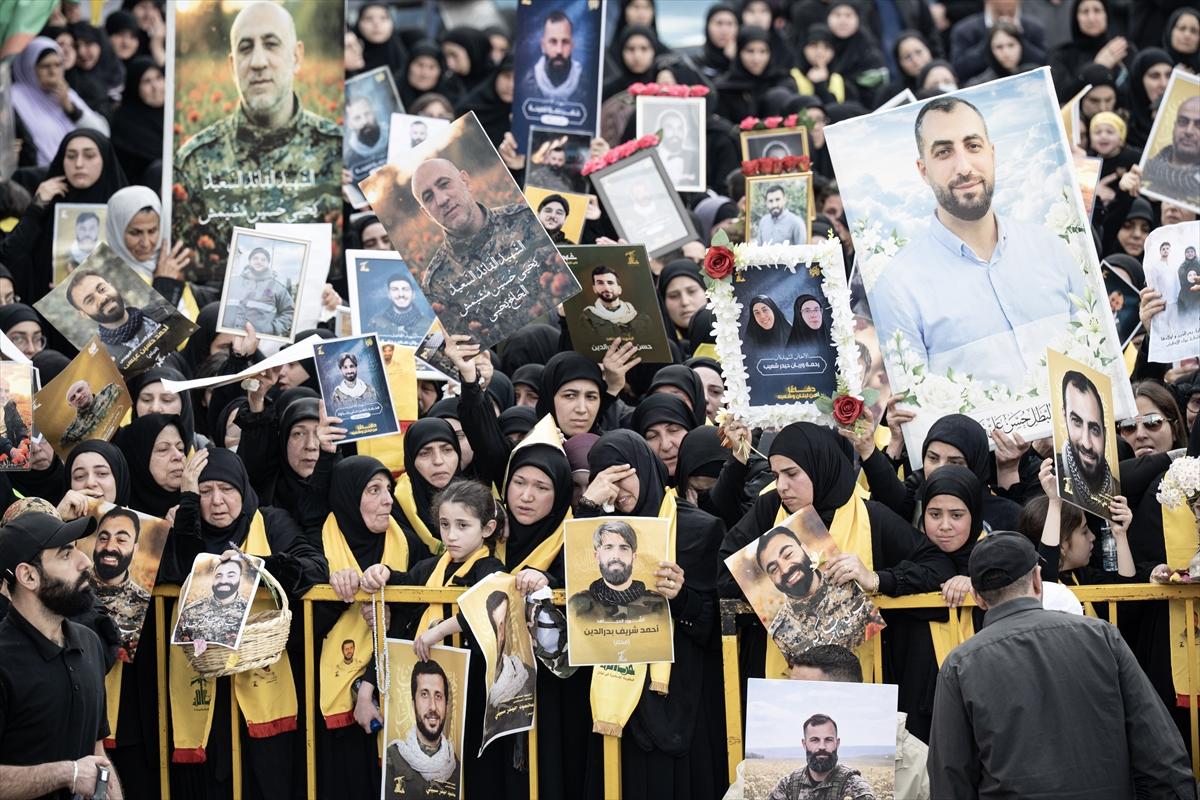
Funeral ceremony held for Hizbullah members killed in Israeli attacks, 21 April 2026 - (Anadolu Agency)
Israeli Defense Minister Yisrael Katz argued that the entire area remaining within the “Yellow Line” established by the Israeli military in occupied areas of southern Lebanon must be evacuated and disarmed.
Katz stated that Israeli forces are currently deployed along a 10-kilometer zone extending from the Mediterranean coast in the west to the foothills of Jabal al-Shaykh in the east. According to Katz, the Israeli military is attempting to prevent attacks from Lebanon along this line.
Katz claimed that the objective of attacks in Lebanon is to force Hizbullah to disarm and eliminate threats to Israeli settlements in the north.
He further asserted that the Israeli military will continue its attacks until the Lebanese government fulfills its commitments regarding Hizbullah’s disarmament.
Katz noted that together with Prime Minister Binyamin Netanyahu, he ordered the military to continue operations with full ground and air power to protect Israeli soldiers in Lebanon even during the ceasefire. He also argued that any structure posing a potential threat to Israeli soldiers must be immediately destroyed.
The Israeli military claimed that Hizbullah violated the ceasefire in southern Lebanon by launching attacks against its units. The statement alleged that Israeli soldiers were attacked in the Rab Telatin area.
The Israeli military asserted that Hizbullah launched several rockets against Israeli forces in occupied areas and responded by targeting the launch ramp. It was also reported that sirens sounded in Kfar Yuval and Maayan Baruch in northern Israel, with the cause attributed to an unmanned aerial vehicle originating from Lebanon.
Hizbullah, in its statement, cited that “the Israeli military violated the ceasefire, which came into effect on 17 April, more than 200 times”. The statement further indicated that in response to these violations, an Israeli artillery position in the Kfar Giladi settlement was targeted with rockets and unmanned aerial vehicles.
Belgian Foreign Minister Maxime Prevot stated that Israel’s activities in Lebanon are “unacceptable under any circumstances”. In remarks made during the European Union Foreign Ministers’ Meeting in Luxembourg, Prevot noted that Israel’s attacks against Hizbullah in Lebanon are “disproportionate and indiscriminate”.
Prevot said, “Israel’s activities in Lebanon are unacceptable under any circumstances.” Speaking on the EU-Israel Association Agreement, Prevot indicated that Belgium advocates suspending certain provisions of the agreement. He acknowledged that a full suspension is currently unfeasible but emphasized that at least partial suspension is necessary.
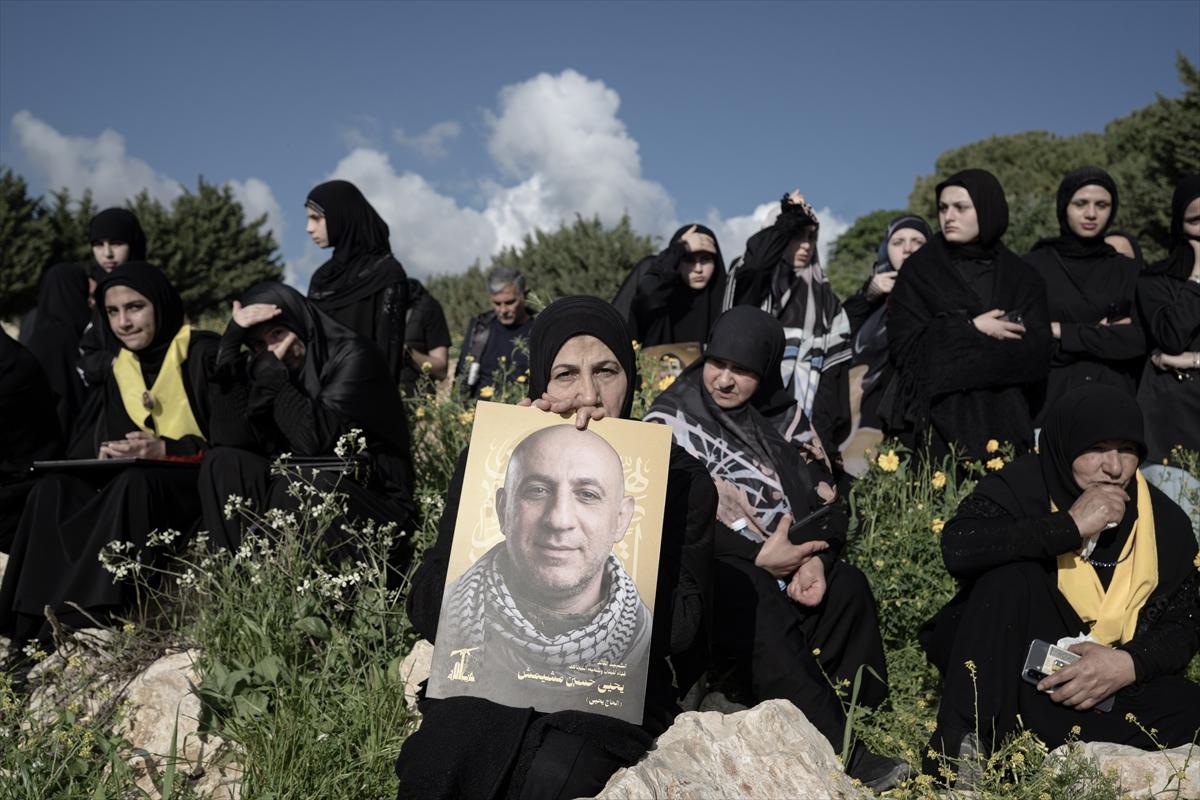
Funeral ceremony held for Hizbullah members killed in Israeli attacks, 21 April 2026 - (Anadolu Agency)
French President Emmanuel Macron and Lebanese Prime Minister Nevvaf Selam met in Paris. The meeting followed the death of a French soldier during an attack on UNIFIL in southern Lebanon.
Macron labeled the attack on UNIFIL as “unacceptable”. He said, “We expect those responsible to be stopped and brought to justice.” Macron also stated that direct talks between Lebanon and Israel could yield concrete diplomatic outcomes.
Macron emphasized that strengthening the fragile temporary ceasefire between Lebanon and Israel is a top priority. He stressed the need to activate existing mechanisms to implement the ceasefire and asserted that extending the ceasefire is essential to begin a genuinely stable process.
Macron stated, “Permanent stability in Lebanon and the region can only be achieved through Israel’s withdrawal from Lebanese territory and the disarmament of Hizbullah by Lebanese themselves.” He also noted that southern Lebanon must be rebuilt to allow displaced civilians to return. He called for a political agreement between Israel and Lebanon that guarantees the security of both countries and Lebanon’s territorial integrity.
Macron also commented on EU-Israel relations, saying, “If Israel continues this policy, which contradicts its own history, we cannot pretend nothing has happened.” He added that Israel must respect the sovereignty of neighboring countries to ensure its own security and must abandon any territorial claims in Lebanon.
Lebanese Prime Minister Selam stated, “Permanent stability cannot be achieved until Israel fully withdraws from Lebanese territory, detainees are released, and displaced people return to their destroyed homes and villages.” Selam expressed support for President Joseph Aoun’s call for direct negotiations with Israel.
Selam stated that Lebanon requires 500 million euros to address its current humanitarian crisis, emphasized that every state must have only one army, and stressed that Lebanon does not wish to fight Hizbullah. He also affirmed that only the Lebanese government has the authority to negotiate on behalf of the country.
Lebanese President Joseph Aoun held a phone call with the Emir of Qatar Tamim bin Hamad Al Thani. The conversation addressed recent developments in Lebanon following the 10-day ceasefire with Israel.
The Emir of Qatar affirmed his support for Lebanon and expressed backing for all efforts to reduce military tensions, especially bilateral talks with Israel aimed at halting military attacks. Sheikh Tamim was reported to have supported efforts for Israel to withdraw from occupied areas in southern Lebanon and for the Lebanese Armed Forces to be deployed there.
It was stated that Qatar stands with the Lebanese people and is ready to provide assistance. President Aoun thanked Emir Tamim for Qatar’s support. Both leaders agreed to maintain communication to monitor developments in Lebanon.
Lebanese Prime Minister Nevvaf Selam, speaking at the European Union Foreign Affairs Council meeting in Luxembourg, stated that Lebanon is caught in a war it did not want. Selam said the current crisis can only be resolved through diplomacy and reaffirmed the state’s exclusive authority over weapons.
Selam reported that the government has begun “direct preparatory talks” with Israel in Washington under U.S. mediation. He emphasized that diplomacy is “not a sign of weakness but a requirement of national responsibility.”
Selam stated that his priorities are ending Israel’s ongoing occupation, releasing prisoners, and enabling displaced people to return home.
“Weapons must be under one hand only”, Selam declared that Lebanon is determined to consolidate all weapons under state control. He reported that the plan to declare Beirut a “disarmed zone” has been initiated and that Hizbullah’s military activities are now banned.
Selam added that orders have been issued to fully bring weapons under state control of the Lebanese Armed Forces, and that the first phase of the plan has been implemented in the area south of the Litani River, excluding Israeli-occupied territories.
Regarding the humanitarian and economic situation, Selam stated that more than 40 percent of Lebanon’s population lives below the poverty line. He reported that over one million people have been displaced in less than a month, approximately 40,000 homes have been damaged or destroyed, and the World Bank estimates the damage caused by Israeli attacks at a minimum of $1.4 billion. Selam called on the European Union to contribute to alleviating the humanitarian crisis, supporting the military and security forces, and aiding recovery and reconstruction.
Lebanese President Joseph Aoun held a phone call with Saudi Arabia’s Crown Prince and Prime Minister Mohammed bin Salman. The conversation assessed recent developments in Lebanon and the region and efforts to ensure security and stability.
President Aoun thanked Crown Prince bin Salman for Saudi Arabia’s support to Lebanon and especially to its people enduring difficult conditions. Saudi Crown Prince bin Salman affirmed that his country’s support for Lebanon will continue and pledged to sustain cooperation to end the suffering of the Lebanese people.
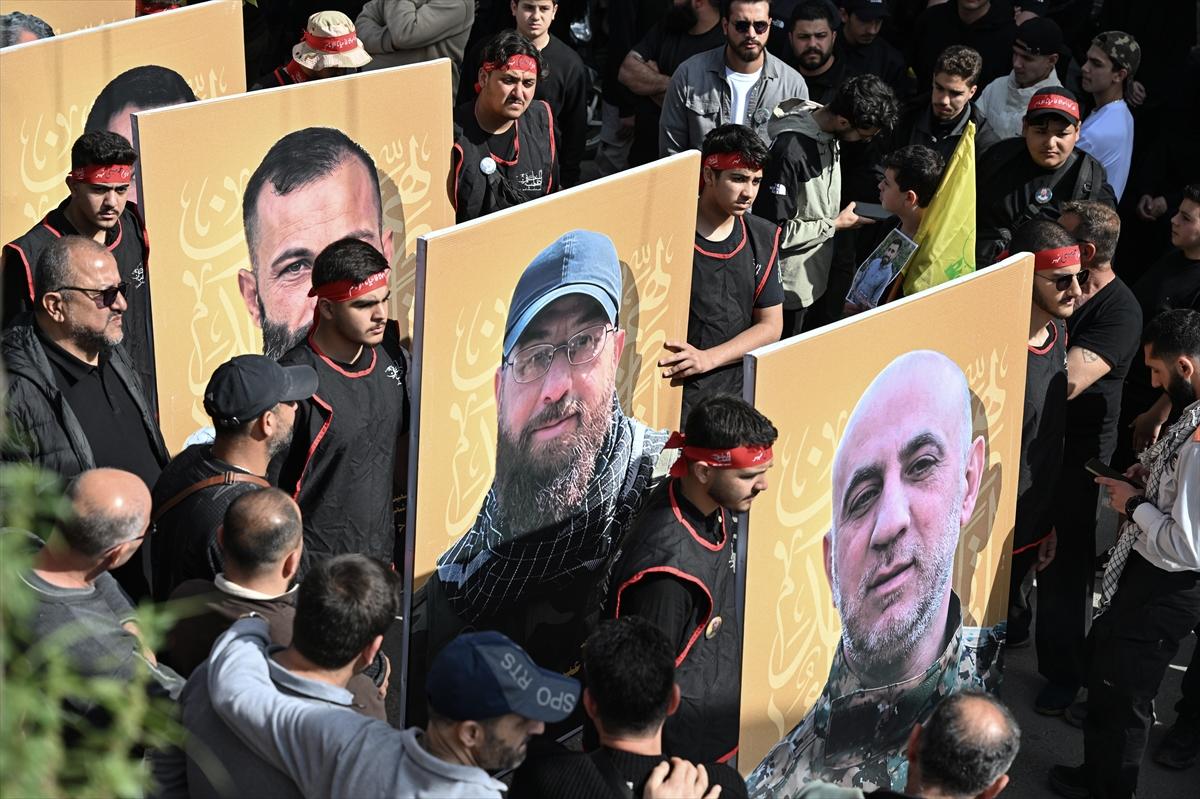
Funeral ceremony held for Hizbullah members killed in Israeli attacks, 21 April 2026 - (Anadolu Agency)
Lebanese Deputy Prime Minister Tariq Mitri met with Greek Foreign Minister Yorgos Yerapetritis in Athens. The meeting addressed recent developments in Lebanon, the 10-day ceasefire between Israel and Lebanon, and planned direct talks in Washington.
Yerapetritis reported that the first phase of humanitarian aid sent by Greece to Lebanon has been completed.
It was reported that the U.S. Ambassador to Israel, Mike Huckabee, was recalled to Washington for a meeting at the White House. According to Israeli Channel 12 news, Huckabee was summoned to the U.S. ahead of developments in Iran and upcoming talks between Lebanon and Israel.
In the Nabatieh governorate of southern Lebanon, a funeral ceremony was held for 29 individuals killed in Israeli attacks. The ceremony took place in the village of Kef Sir in Nabatieh.
Dozens of people attended the ceremony. The 29 individuals, most of whom were Hizbullah members, were killed in Israeli attacks or clashes with the Israeli military. Their bodies were later handed over to their families.
Following the ceremony, during which Hizbullah flags and posters of the deceased were carried, the bodies were buried in the village cemetery. It was recorded that these individuals died before the 10-day ceasefire that came into effect on 17 April.
It was reported that the Israeli military conducted a drone attack in the western Bekaa region of Lebanon despite the temporary ceasefire, killing one person and wounding two others. The attack occurred during nighttime hours in the Cubur area.
During the day, it was reported that the Israeli military targeted a vehicle in the village of Tayri, part of Nabatieh governorate, killing two people. Another drone attack in the village of Yuhmur Shakif also resulted in two deaths. Together, these attacks resulted in at least five people losing their lives during Israeli nighttime operations.
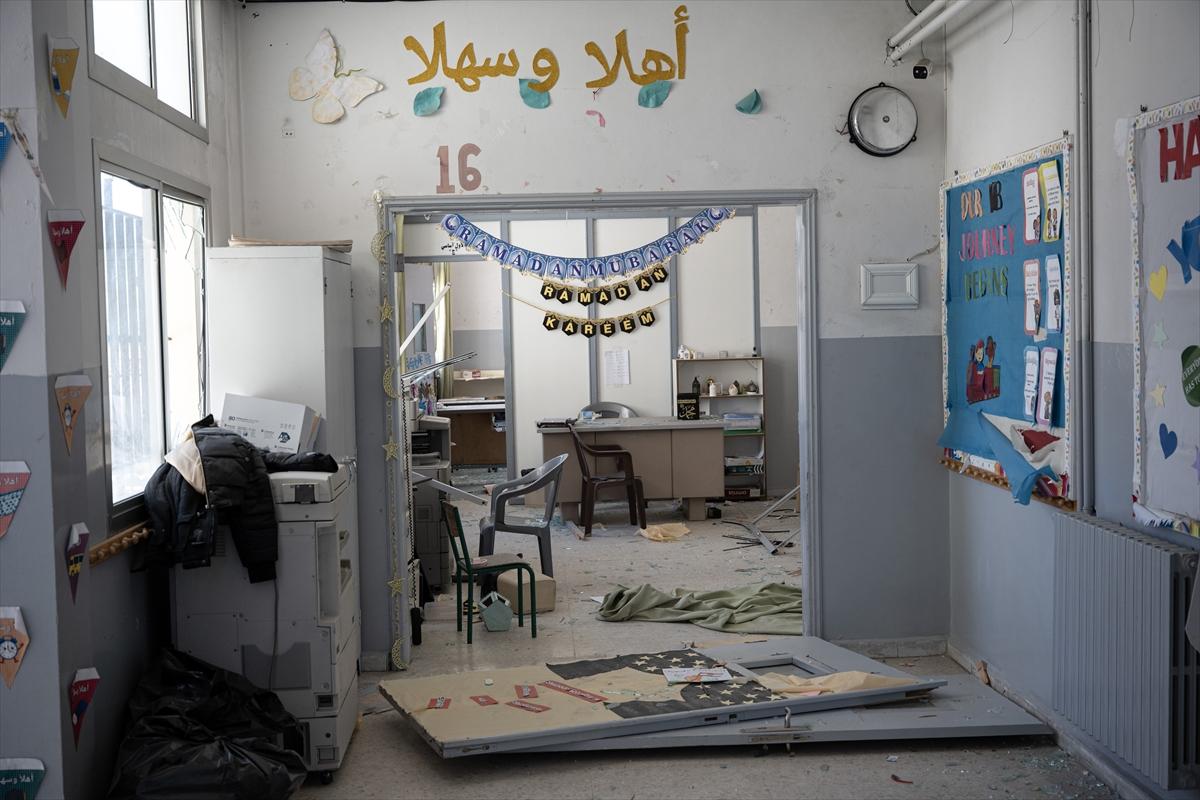
School damaged in Israeli attacks on the Bekaa Valley, 22 April 2026 - (Anadolu Agency)
The Israeli military announced it continued attacks in southern Lebanon despite the ceasefire, claiming to have killed two Hizbullah members for allegedly crossing the ceasefire line near Wadi Saluki. The statement indicated that Israeli warplanes conducted airstrikes to “eliminate the threat.”
On the other hand, the Israeli military announced that it had accidentally fired a preemptive missile toward Lebanon in the morning. It also disclosed that it had conducted a raid on the village of Dibbine, located 12 kilometers inside the border in southern Lebanon, prior to the ceasefire. The statement claimed that Israeli warplanes carried out attacks on 70 targets within hours and killed more than 20 Hizbullah members.
During the Israeli military’s attack on a vehicle in the village of Tayri, it was reported that two female journalists in the area were also targeted. A second attack was carried out on the house where journalists Emel Halil and Zeynab Farac had fled.
The Lebanese Ministry of Health reported that the Israeli military fired a sound bomb and opened fire on a Lebanese Red Cross ambulance attempting to rescue the wounded journalists. This disrupted rescue efforts.
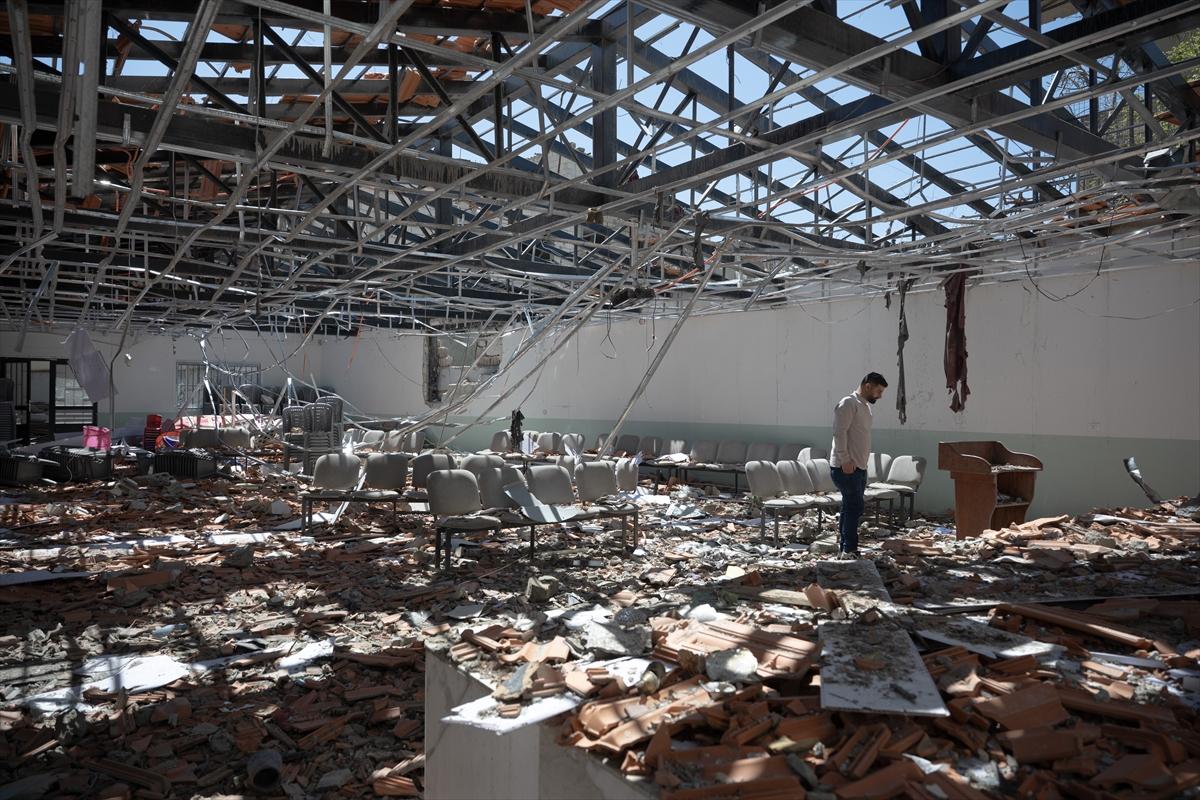
School damaged in Israeli attacks on the Bekaa Valley, 22 April 2026 - (Anadolu Agency)
In its statement regarding the incident, the Israeli military acknowledged that the vehicles carrying the journalists were targeted. It claimed that “two vehicles were identified as having separated from a Hizbullah military facility in southern Lebanon” and that these vehicles “posed a threat.”
In an update, it was reported that journalist Emel Halil, who was trapped under rubble, died, while Zeynab Farac was rescued injured.
Lebanese Minister of Information Paul Markus commented, “We strongly condemn this attack and hold Israel fully responsible for the safety of journalists. We emphasize the urgent need to protect journalists and guarantee press freedom.”
Hizbullah announced that in response to Israeli ceasefire violations, it targeted an Israeli artillery position in the village of Bayyada in southern Lebanon using unmanned aerial vehicles.
Hizbullah also stated that it targeted Israeli military vehicles in the villages of Kantara and Mansuri using drones. The statement indicated that these attacks were carried out in response to ceasefire violations.
The U.S. Department of State announced that the second round of talks between Israel and Lebanon will be held in Washington on 23 April. The statement noted that U.S. Ambassador to Israel Mike Huckabee will attend the talks.
It was also reported that senior officials including U.S. Secretary of State Marco Rubio and State Department Advisor Michael Needham will participate in the meeting. The statement included the phrase, “We will continue facilitating direct, good-faith talks between the two governments.”
Israeli Foreign Minister Gideon Saar claimed that only “minor border disputes that can be resolved” exist between Israel and Lebanon. In his remarks, Saar stated, “We have no serious dispute with Lebanon. Only a few minor border disagreements remain.”
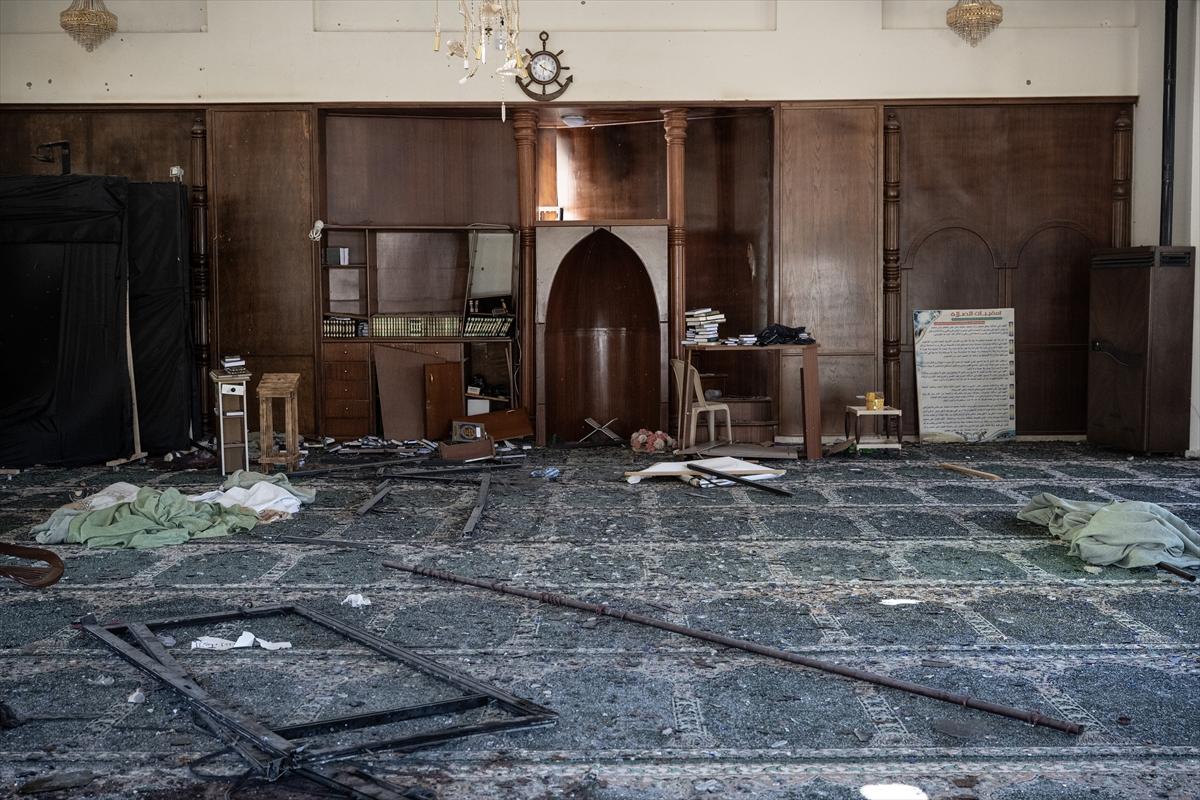
Mosque damaged in Israeli attacks on the Bekaa Valley, 22 April 2026 - (Anadolu Agency)
Lebanese President Joseph Aoun announced that during the talks in Washington, Lebanon will demand an extension of the ceasefire and the cessation of Israel’s destruction activities in the south.
Aoun emphasized that Lebanon’s negotiating approach is “to accept no concession, compromise or surrender that does not guarantee sovereignty and the interests of all Lebanese.” He added, “We are all on the same ship, and it is our shared responsibility to bring it safely to port.”
Israeli Chief of General Staff Eyal Zamir, while noting that ceasefire processes with Iran and Lebanon continue, declared that the military is ready, stating, “The military is fully alert and prepared to return to war swiftly and powerfully on all fronts.”
According to data from Lebanon’s National Disaster Management Agency, the number of people killed in Israeli attacks since 2 March has risen to 2,475.
In his statement regarding the Israeli military’s killing of a female journalist in Lebanon, Joseph Aoun stated that targeting media personnel constitutes a “crime against humanity”. According to the presidential statement, Aoun expressed sorrow over the death of journalist Emel Halil in the Israeli attack on Tayri and extended best wishes for recovery to Zeynab Farac, who was injured in the same attack. Aoun condemned Israel’s targeting of journalists and emphasized that such acts constitute a “crime against humanity” under international law and must be punished. He also called on the international community to take action to halt such attacks.
In another statement on the same day, Joseph Aoun stated that the purpose of the talks in Washington, D.C., was to extend the ceasefire. Speaking at a Cabinet meeting at Baabda Palace in Beirut, Aoun referred to his consultations with Donald Trump and Marco Rubio, noting that the negotiation process must proceed on the basis of Israel’s withdrawal from occupied territories, the return of prisoners, and the deployment of the Lebanese Armed Forces along international borders. Aoun said, “I have never had any intention of contacting Israeli Prime Minister Binyamin Netanyahu.” He also stated that during the Washington talks, the cessation of home demolitions and attacks on civilians, places of worship, journalists, and medical and educational personnel would be addressed.
It was reported that the Israeli military continued its attacks in southern Lebanon despite the temporary ceasefire. According to the official Lebanese agency NNA, an Israeli unmanned aerial vehicle targeted a vehicle traveling along the Shavkin road in Nabatieh governorate, killing three people. At the same time, an Israeli artillery attack on the village of Yatir wounded two people, one of them a child. The villages of Sarbin, Bayt Lif and Cibal al-Batm were subjected to heavy artillery fire, and the Wadi Meryem area was also targeted by bombardment. Attacks causing major explosions occurred in the towns of Hanin, Resaf, Aynata and Bint Jubayl, and heavy machine gun sweeps were conducted across wide areas in Bint Jubayl, Bayt Lif and Resaf. It was reported that Israeli unmanned aerial vehicles conducted intensive flights over the region.
It was reported that the Israeli military set fire to homes in the village of Meys al-Jabal, which it occupies in southern Lebanon. According to NNA, attacks on homes began in the early morning hours in the Mufeylihe neighborhood and homes were set ablaze. It was also stated that demolition activities continued in occupied border villages.
In a Hizbullah statement, it was reported that in response to Israeli ceasefire violations, Israeli soldiers in the village of Tayri in southern Lebanon were targeted with unmanned aerial vehicles. The statement detailed attacks carried out at 06:00 and 10:00 local time and noted that an Israeli reconnaissance drone was shot down in the village of Mecdel Zun.
The statement indicated that these attacks were carried out in response to Israeli violations.
In another Hizbullah statement, it was reported that Israeli soldiers and vehicles in Bint Jubayl district were targeted with artillery fire. The attack, carried out at 18:30 local time, was described as a response to Israeli ceasefire violations.
The Israeli military, in turn, claimed that Hizbullah launched attacks and reported that sirens activated in the Shtula region of northern Israel due to rockets fired from Lebanon. The military stated that the rockets were intercepted by air defense systems.
The second round of negotiations between Israel and Lebanon, mediated by the United States, was held in Washington on 23 April. The talks, organized by the U.S. Department of State, were attended by Marco Rubio, Lebanon’s Ambassador to Washington Nada Hamade Muavvad, Israel’s Ambassador to Washington Yehiel Leiter, and the U.S. Ambassador to Beirut Michel Issa. It was also reported that U.S. Ambassador to Israel Mike Huckabee attended the meeting.
A funeral ceremony was held in the village of Baisariyeh, part of Sayda, for journalist Emel Halil, who was killed in the Israeli attack on Tayri in Nabatieh. Family members of Halil, journalists, and many others attended the ceremony, and her body was later buried. It was reported that another journalist was injured in the same attack.
Following the talks on 23 April, Donald Trump announced that the ceasefire between Israel and Lebanon has been extended by three weeks. In a social media post, Trump stated, “The meeting went very well. The U.S. will cooperate with Lebanon to help it protect itself from Hizbullah. The ceasefire between Israel and Lebanon is extended by three weeks.”
Trump also expressed his desire to host Israeli Prime Minister Binyamin Netanyahu and Joseph Aoun at the White House, stating that this meeting would have “historic” significance. While affirming Israel’s right to defend itself against attacks, Trump stated, “If Israel is fired upon, it will be forced to defend itself—and it will do so.”
Al Jazeera. "Mixed Views in Lebanon Ahead of Controversial Talks with Israel." Accessed April 24, 2026. https://www.aljazeera.com/news/2026/4/23/mixed-views-in-lebanon-ahead-of-controversial-talks-with-israel
Anadolu Ajansı. "BM: Lübnan’da 2 Mart’tan Bu Yana En Az 227 Çocuk Hayatını Kaybetti." Accessed April 24, 2026. https://www.aa.com.tr/tr/dunya/bm-lubnanda-2-marttan-bu-yana-en-az-227-cocuk-hayatini-kaybetti/3912702
Anadolu Ajansı. "Lübnan, ABD’de Yarın İsrail ile Yapılacak Görüşmede Ateşkesin Uzatılmasını İsteyecek." Accessed April 24, 2026. https://www.aa.com.tr/tr/dunya/lubnan-abdde-yarin-israil-ile-yapilacak-gorusmede-ateskesin-uzatilmasini-isteyecek/3914663
Anadolu Ajansı. "Son Gelişmeler: ABD-İsrail-İran-Lübnan Savaşı ve Barış Müzakereleri." Accessed April 24, 2026. https://www.aa.com.tr/tr/live-blog/son-gelismeler-abd-israil-iran-lubnan-savasi-ve-baris-muzakereleri/1528
Anadolu Ajansı. "Son Gelişmeler: ABD-İsrail-İran-Lübnan Savaşı ve Barış Müzakereleri." Accessed April 24, 2026. https://www.aa.com.tr/tr/live-blog/son-gelismeler-abd-israil-iran-lubnan-savasi-ve-baris-muzakereleri/1571
Anadolu Ajansı. "Trump, İsrail ile Lübnan Arasındaki Ateşkesin 3 Hafta Uzatılacağını Açıkladı." Accessed April 24, 2026. https://www.aa.com.tr/tr/dunya/trump-israil-ile-lubnan-arasindaki-ateskesin-3-hafta-uzatilacagini-acikladi/3916287
Anadolu Ajansı. "İsrail Ordusu Lübnan’ın Güneyinde Çok Sayıda Eve Saldırı Düzenledi." Accessed April 24, 2026. https://www.aa.com.tr/tr/dunya/israil-ordusu-lubnanin-guneyinde-cok-sayida-eve-saldiri-duzenledi/3912840
Anadolu Ajansı. "İsrail Ordusu, Yoğun Tepki Üzerine Hazreti İsa Heykelini Parçalayan Askere 30 Gün Hapis Cezası Verdi." Accessed April 24, 2026. https://www.aa.com.tr/tr/dunya/israil-ordusu-yogun-tepki-uzerine-hazreti-isa-heykelini-parcalayan-askere-30-gun-hapis-cezasi-verdi/3913693
Anadolu Ajansı. "İsrail Ordusunun Lübnan’a Düzenlediği Saldırıda Beka Vadisi’ndeki Bir Cami ve Okul Ağır Hasar Gördü." Anadolu Ajansı Foto Galeri. Accessed April 24, 2026. https://www.aa.com.tr/tr/pg/foto-galeri/israil-ordusunun-lubnana-duzenledigi-saldirida-beka-vadisindeki-bir-cami-ve-okul-agir-hasar-gordu/160480
Anadolu Ajansı. "İsrail Saldırıları Nedeniyle Lübnan’ın Güneyindeki Cebşit Beldesinde Ağır Hasar Oluştu." Anadolu Ajansı Foto Galeri. Accessed April 24, 2026. https://www.aa.com.tr/tr/pg/foto-galeri/israil-saldirilari-nedeniyle-lubnanin-guneyindeki-cebsit-beldesinde-agir-hasar-olustu/160409
Anadolu Ajansı. "İsrail’in Saldırısında Hayatını Kaybeden Lübnanlı Gazeteci Son Yolculuğuna Uğurlandı." Accessed April 24, 2026. https://www.aa.com.tr/tr/dunya/israilin-saldirisinda-hayatini-kaybeden-lubnanli-gazeteci-son-yolculuguna-ugurlandi/3916087
On 20 April, the Israeli military warned displaced civilians in southern Lebanon not to return to occupied villages during the ceasefire period. The statement noted that Israeli forces continue to be stationed in these areas and requested that displaced families refrain from moving toward these villages and their surroundings.
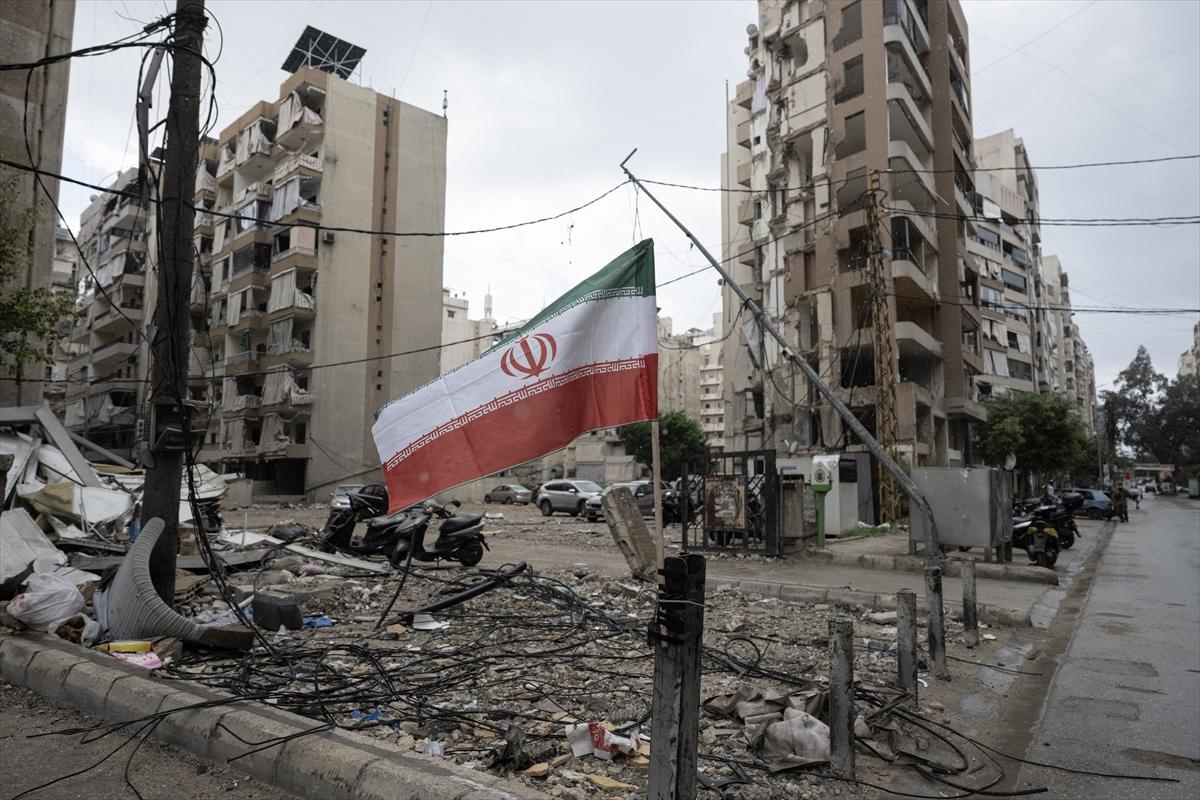
The Dahieh district in southern Beirut, damaged by Israeli attacks, 20 April 2026 – (Anadolu Agency)
On the same day, Hezbollah announced that it had targeted Israeli military elements due to ongoing violations of the ceasefire. The statement specified that a convoy of eight armored vehicles advancing from the village of Taybe in southern Lebanon toward the Sala area of Deyr Siryan had been targeted by a previously placed improvised explosive device. The attack was carried out in two waves, resulting in the destruction of four Israeli Merkava tanks. No official comment has been issued by Israel regarding the incident.
Joseph Aoun stated that the primary objective of the negotiation process is to end Israel’s occupation of southern regions. In his statement, he said: "The purpose of the negotiations is to end Israel’s occupation of the southern regions and to redeploy the army to the internationally recognized southern border."
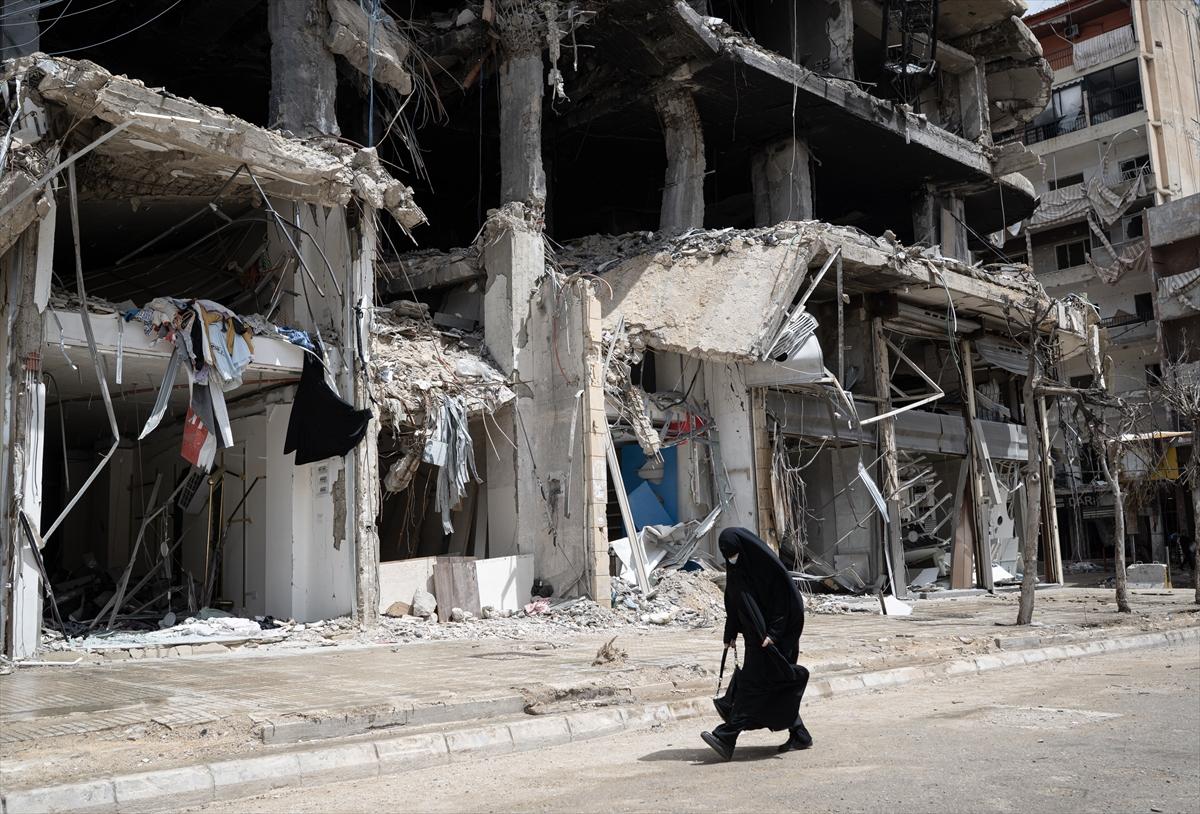
The 360-ton humanitarian aid sent by Türkiye to Lebanese families displaced by Israeli attacks is being transported to the capital Beirut, 20 April 2026 – (Anadolu Agency)
Aoun further stated: "To achieve the goals of the negotiation team, the broadest possible national support is required."
In his assessment of the process, he said: "The upcoming negotiations are distinct from previous ones because Lebanon faces two options: either continue the war with all its humanitarian, social, economic and sovereignty consequences, or end this war and secure lasting stability through negotiations. I have chosen negotiations and I am hopeful that we can save Lebanon."
It was reported that 38 containers, totaling 360 tons of humanitarian aid from Türkiye, have arrived at the Port of Beirut. The aid includes blankets, beds, tents, food parcels, and emergency supplies.
The 360-ton humanitarian aid sent by Türkiye to Lebanese families displaced by Israeli attacks is being transported to the capital Beirut, 20 April 2026 – (Anadolu Agency)
Türkiye’s Ambassador to Beirut, Murat Lütem, said during the ceremony: "Türkiye is here for aid." He added: "As we did in 2024, the hand of your Turkish brothers is reaching out to you." and "The total amount of aid Türkiye has delivered so far through various institutions has exceeded 1,700 tons, and more aid is on the way."
Lebanon’s Minister of Administrative Development, Fadi Mekki, stated: "Türkiye’s support arrived at a critical time. This aid reflects a sincere solidarity with Lebanon in its struggle against current hardships."
Despite the temporary ceasefire, the Israeli military has continued destruction activities in villages under its occupation in southern Lebanon. According to Lebanon’s official news agency NNA, homes in the villages of Shama, Nakura, Bayyada, Meys al-Jabal, and Kantara are still being demolished. Artillery attacks have also been reported in the vicinity of Hula village.
On 20 April, it was reported that the Israeli military conducted an airstrike on the village of Kakaiyyet Cisir, part of the Nabatieh governorate in southern Lebanon, despite the temporary ceasefire. According to the Lebanese Ministry of Health, six people were injured in the attack.
According to reports in the Israeli press, the Israeli military issued a general order to its units operating in southern Lebanon to open fire on anyone approaching villages and towns designated as "off-limits," including unarmed civilians.
The report indicated that returning civilians attempting to go back to their homes have become one of the main challenges faced by the Israeli military in the region. It was reported that the Israeli military published a list of "off-limits" areas across its occupied territory and intensified measures on 19 and 20 April to prevent civilian returns.
It was also noted that the Israeli military has continued attacks despite the ceasefire, with one such strike—carried out under the claim of detecting a rocket launcher north of the Litani River—being assessed as a ceasefire violation.
The United States Department of State announced that a second round of talks at the ambassadorial level between the United States, Israel, and Lebanon will take place on 23 April. The written statement read: "The United States will host the second round of ambassadorial-level talks between the United States, Israel, and Lebanon on Thursday, 23 April, at the Department of State."
On 19 April, footage emerged showing an Israeli soldier dismantling a statue of Jesus in a village in southern Lebanon. Following the spread of the footage on social media, Israeli military spokesperson Nadav Shoshani stated that the image is under review and that the incident will be thoroughly and deeply investigated.
The next day, the Israeli military confirmed that the footage depicting a soldier dismantling the statue of Jesus in the occupied village of Deyr Seryan was authentic. The statement indicated that the individual in the photograph had been identified as an Israeli soldier and that proceedings would be initiated against those involved. Israeli Foreign Minister Gideon Saar, in his statement on the matter, said: "I apologize for this incident and bow our heads before every Christian whose feelings have been hurt."
Israeli Prime Minister Benjamin Netanyahu, in his statement, expressed regret over the incident and condemned the act. Netanyahu confirmed that an investigation had been launched and stated that those responsible would face the harshest disciplinary penalties.
The Israeli military announced that disciplinary action had been taken following its investigation into the incident in which a soldier in southern Lebanon destroyed the statue of Jesus. The military statement noted that the investigation report, prepared after widespread condemnation from the Christian world, had been reviewed by the command structure.
According to the investigation findings, an Israeli soldier damaged a religious symbol in a Christian village in southern Lebanon, another soldier photographed and disseminated the act, and six other soldiers present at the scene did not intervene. As a result, the soldier who destroyed the statue and the soldier who photographed the incident were removed from combat duties and sentenced to 30 days of military imprisonment. Decisions regarding the other soldiers who failed to intervene during the incident will be made later.
The Israeli military asserted that its attacks in Lebanon are directed solely against Hezbollah and other armed groups, and claimed it has assisted in the restoration of the statue. The statement also indicated that soldiers will be reminded of the behavioral rules regarding religious institutions and symbols.
Anadolu Ajansı. "Son Gelişmeler: ABD-İsrail-İran-Lübnan Savaşı ve Barış Müzakereleri." Accessed April 24, 2026. https://www.aa.com.tr/tr/live-blog/son-gelismeler-abd-israil-iran-lubnan-savasi-ve-baris-muzakereleri/1571
On 24 April, the Israeli military launched an air strike into southern Lebanon following Hezbollah’s rocket attack on the Shtula region in northern Israel. The military stated that the launch ramps used to fire the rockets were targeted, and released footage showing attacks not only on the ramps responsible for striking Shtula but also on other loaded and ready-to-fire launchers. Israeli Defense Forces Spokesperson Avichay Adraee announced that in response to Hezbollah’s attack, buildings identified as belonging to Hezbollah in the villages of Hırbıt Silm and Tulin were struck.
In a statement by Hezbollah, it was stated that in response to Israel’s violation of the ceasefire by launching an attack on the village of Yatir in southern Lebanon, the Shtula region was targeted by rocket fire at 23:25 local time. The Israeli military claimed that these rockets were intercepted.
According to Lebanon’s official news agency NNA, Israeli warplanes conducted air strikes on the villages of Tulin, Hırbıt Silm and Mecdel Zun in southern Lebanon during the night of 24 April, with the Reyhan hills also targeted. The Lebanese Ministry of Health reported that two people were killed in the attack on Tulin. According to Lebanese authorities, since the ceasefire came into effect on 17 April, more than ten people have been killed in Israeli attacks, including one journalist.
Later that day, according to Lebanon’s official news agency NNA, the Israeli military targeted the village of Deyr Amis, part of the city of Sur, with three air strikes. On the same evening, air strikes were also carried out around Bint Cubeyl. It was reported that the Israeli military also conducted an air strike on the village of Yatir, which is attached to Sur, resulting in injuries. According to NNA, Israeli unmanned aerial vehicles carried out three attacks on the rural areas of the village of Kefre, which is attached to Nebatiye, and the village of Maaliye, attached to Sayda, was also targeted.
In a statement by the Israeli military, it was asserted that Hezbollah had violated the ceasefire, justifying the attack on the Deyr Amis area, and claimed that six Hezbollah members were killed in the Bint Cubeyl district.
The Israeli military confirmed that a drone was shot down by Hezbollah over the skies of the city of Sur in southern Lebanon. Hezbollah stated that at 14:10 local time, a “Hermes 450 – Zik” type UAV was shot down by a ground-to-air missile over the Sur-Huş region. The Israeli military also confirmed that the drone was downed by an anti-aircraft missile and announced the initiation of an investigation into the incident.
It was reported that despite the temporary ceasefire, the Israeli military continued demolition activities in areas it occupies in southern Lebanon. According to NNA, two separate explosions in the village of Hiyam, part of the Nabatiye governorate, destroyed buildings; it was also reported that homes in the Bint Cubeyl district and the village of Hanin were demolished using explosives.
On 24 April, Israeli Defense Forces Spokesperson Avichay Adraee issued a threat of attack against the village of Deyr Amis, located outside the ceasefire line. In his statement, Adraee said: “Immediately evacuate your homes and move at least 1,000 meters away from the village for your safety and the safety of your families.” During the same period, it was reported that an Israeli unmanned aerial vehicle was shot down in the city of Sur.
Hezbollah announced that in response to Israel’s ceasefire violations, it targeted Israeli soldiers in the village of Kantara in southern Lebanon. The statement indicated that at 13:00 local time, a point where Israeli soldiers were gathered was struck by an unmanned aerial vehicle, and this action was described as a response to the attack on Tulin.
Ali Feyyaz, a member of parliament from Hezbollah’s political wing, the Loyalty to the Resistance Bloc, stated that extending the ceasefire with Israel by three weeks had no meaning. In a written statement, Feyyaz said that under the ongoing Israeli attacks, the ceasefire had lost its significance, and destructive actions against Lebanese villages and towns along the border continued. Feyyaz asserted that Israel was using the pretext of “potential threats” to maintain operational freedom, clearly indicating this was an attempt by Israel and the United States to revert to the situation before 2 March.
Feyyaz noted that the current situation forced Lebanon to remain bound by the ceasefire without imposing similar obligations on Israel, and declared Hezbollah’s rejection of this process. He emphasized that any Israeli attack would be met with a response according to battlefield conditions, and stressed that if Israeli forces do not withdraw from Lebanese territory, the ceasefire will not eliminate the Lebanese people’s right to “resist occupation.”
In a speech at the European Union Leaders Summit held in the Greek Cypriot administration of Southern Cyprus, Joseph Aoun stated: “Lebanon rejects being treated as a bargaining chip in regional conflicts. Lebanon negotiates to defend its sovereignty and national interests in its own name.” Aoun said that in negotiations mediated by the United States, they aim for a sustainable solution that halts Israeli attacks and compels Israel to withdraw from occupied territories.
Aoun emphasized that “the only way to reduce tensions and ensure stability is diplomacy,” and affirmed Lebanon’s goal of establishing full sovereignty over all its territory. Aoun noted that the Israeli military has carried out extensive destruction targeting hospitals, schools, journalists, and places of worship, resulting in more than one million people being displaced and 311 villages evacuated under 1,300 evacuation orders. He also stated that over 10,000 people have been killed or injured in Israeli attacks, most of them women and children.
In a statement released on the evening of 24 April by the Israeli Prime Minister’s Office, Netanyahu said he had a productive meeting with U.S. President Donald Trump and defended the complete cooperation between Israel and the United States in their pressure policies against Iran.
Netanyahu claimed that a peace process had been initiated between Israel and Lebanon, and accused Hezbollah of attempting to sabotage this process. He explicitly stated that Israel was conducting attacks against Lebanon and reiterated that Israel maintains “full freedom of action against all threats.”
According to a statement by the Lebanese Ministry of Health on 24 April, the number of people killed in Israeli attacks since 2 March 2026 has risen to 2,491, and the number of injured has reached 7,719. The statement noted that 100 healthcare workers have been killed, 233 have been injured, six hospitals have been taken out of service, and 116 ambulances have been rendered unusable.
Anadolu Ajansı. "Dakika Dakika Gelişmeler: ABD-İsrail-İran-Lübnan Savaşı ve Ateşkes Süreci." Accessed April 25, 2026. https://www.aa.com.tr/tr/live-blog/dakika-dakika-gelismeler-abd-israil-iran-lubnan-savasi-ve-ateskes-sureci/1616
On 25 April 2026, the Israeli military continued its attacks against southern Lebanon, despite the ceasefire that came into effect on 17 April. According to a written statement by Lebanon’s Ministry of Health, Israeli air strikes in the south resulted in two deaths in the Hujayr Valley, one in the village of Sarifa, one in the village of Yatir, and two in the village of Tulin. Additionally, one person was injured in Yatir and one in Hirbat Silm.
On the same day, it was reported that the Israeli military targeted the areas of Kantara, Qusayr, Wadi Hasan, Yumhur Shaqif, and Hul with artillery fire, all located outside the areas occupied by Israel in Lebanon. It was also reported that in Yumhur Shaqif, an Israeli unmanned aerial vehicle targeted a motorcycle.
In another statement by Lebanon’s Ministry of Health, it was stated that four people were killed in Yumhur Shaqif during these attacks. Later in the day, an air strike on the village of Safed al-Battih in the Nabatieh governorate resulted in two deaths and 17 injuries.
In the evening hours of the same day, it was reported that the Israeli military, under the orders of Benjamin Netanyahu, conducted air strikes on the villages of Hirbat Silm, Sultaniyya, Hadasa, and Zebkin. These villages were stated to lie outside the areas occupied by Israel in Lebanon. It was also reported that the Israeli military continued to demolish homes with explosives in the villages of Hiyam and Dibil.
On the same day, a joint statement by the United Kingdom and Finland condemned Israel’s attacks on journalists in Lebanon. The statement included the following: “We call on Israel and all parties to ensure the necessary conditions for journalists and media workers in Lebanon to carry out their work safely.” The statement further emphasized that attacks on journalists, including journalist Emel Khalil who was killed in Nabatieh, are unacceptable.
Israeli media reported that Donald Trump, Benjamin Netanyahu, and Joseph Avn are alleged to be meeting in Washington in two weeks. The report stated that the meeting would be dependent on the security situation in the region and the resumption of hostilities.
On 25 April, hundreds of people protested in Stockholm against Israel’s attacks. Protesters carried banners with messages such as: “Children in Gaza are dying of hunger,” “Stop attacks on Gaza,” “End the food blockade,” “Stop attacks on Iran,” and “Israel must abide by the peace agreement.” The protest also called for an end to Israel’s occupation of Gaza and for Sweden to halt arms sales to Israel.
On 25 April, the Israeli military reported that two rockets were launched from Lebanon toward northern Israel. The statement noted that sirens were activated in the areas of Manara, Margaliot, and Misgav Am; one rocket was intercepted, the other landed in an open area, and no injuries were reported.
On the same date, Benjamin Netanyahu issued a statement ordering the Israeli military to conduct attacks against Lebanon. The Israeli Prime Minister’s Office stated that Netanyahu had ordered intensive strikes against “Hezbollah targets in Lebanon”.
Israeli media reported that this order followed the sounding of sirens in northern Israel due to rockets and unmanned aerial vehicles launched by Hezbollah.
The Israeli military stated that the targets in Lebanon were those used by Hezbollah for military purposes. It further claimed that the targeted locations were sites from which Hezbollah launched attacks against Israel and that the attacks would continue in accordance with political leadership directives.
On 26 April, the Israeli military continued its attacks against villages in southern Lebanon, despite the ceasefire that came into effect on 17 April. According to Lebanon’s official news agency NNA, Israeli warplanes targeted the villages of Bazuriyya and Semmaiyya, both part of the Sur municipality in the early hours of the day. These villages were confirmed to lie outside the areas occupied by Israel in Lebanon.
Following Benjamin Netanyahu’s order on the evening of 25 April for the military to conduct “intensive attacks” against Lebanon, the Israeli military carried out air strikes overnight on the villages of Hirbat Silm, Sultaniyya, Hadasa, and Zebkin. Following the strikes, Lebanese media reported that many people began moving by vehicle from Sur toward northern regions.
Later in the day, the Israeli military continued its attacks on various locations in southern Lebanon. According to NNA, Israeli warplanes struck the village of East Zavter, part of the Nabatieh governorate. In West Zavter, a motorcycle was targeted by an Israeli unmanned aerial vehicle, resulting in one death. Israeli artillery was also reported to have targeted the areas around Arnun, Zavtar, Mivdon, and Yumhur Shaqif.
In the evening hours, Israeli air strikes against southern Lebanon continued. According to Lebanese media, Israeli aircraft targeted the villages of Yatir, Kefre, Beit Yahun, and Kefr Dunin. These strikes occurred following the Israeli military’s earlier threat of attacks on certain villages in southeastern Lebanon outside the occupied areas. The threatened villages included Mivdon, Shevkin, Yumhur, Arnun, West Zavtar, East Zavtar, and Kefr Tebnit.
On 26 April, Israeli warplanes targeted the village of East Zavter in the Nabatieh governorate, and in West Zavter, a motorcycle targeted by an Israeli unmanned aerial vehicle resulted in one death. According to data from Lebanon’s Ministry of Health and NNA, at least 20 people have been killed in Israeli attacks since the ceasefire took effect on 17 April. On the same day, Hezbollah stated that in response to Israel’s ceasefire violations, Israeli soldiers were targeted twice by unmanned aerial vehicles in the village of Tayba in southern Lebanon.
In another statement by Lebanon’s Ministry of Health, it was reported that in the Israeli attacks against southern Lebanon on 25 April 2026, seven people were killed and 24 injured, three of whom were children. During the continued attacks on 26 April, the Ministry reported that 14 people were killed, including two women and two children, and 40 were injured, three of whom were women.
According to updated figures released by Lebanon’s Ministry of Health, since 2 March 2026, the number of people killed in Israeli attacks on Lebanon has reached 2,509, and the number of injured has reached 7,755.
On 26 April, the Israeli military reiterated its warning to civilians forcibly displaced from southern Lebanon: “Do not return”. The military stated that returning to more than 50 villages under Israeli occupation and to specific villages south of these areas is not permitted.
In a statement by Israeli military spokesperson Avichay Adraee, it was confirmed that the Israeli military continues to maintain its military positions in the villages occupied in southern Lebanon during the temporary ceasefire. The statement also requested displaced civilians not to move into these areas or their surroundings.
It was reported that the Israeli military dropped leaflets over the village of Manusriyya, part of the Sur municipality. On the same day, the Israeli military issued direct threats of attack against certain villages in southeastern Lebanon, despite the ceasefire. In another statement by Avichay Adraee, it was announced that evacuation orders had been issued for seven villages north of the Litani River.
In this context, it was stated that attacks would be carried out against structures alleged to belong to Hezbollah in the villages of Meyfadun, Shukine, Yumhur, Arnun, West Zavtar, East Zavtar, and Kfar Tebnit, and residents were urged to move at least one kilometer away.
On 26 April, Hezbollah announced that in response to Israel’s ceasefire violations, it had targeted Israeli soldiers in southern Lebanon. In a written statement on its Telegram channel, Hezbollah confirmed that Israeli soldiers were targeted twice by unmanned aerial vehicles in the village of Tayba.
On the same day, Hezbollah issued another statement asserting that Israel’s violations of the ceasefire in Lebanon will be met with a response. The statement condemned Benjamin Netanyahu’s claim that “Hezbollah shattered the ceasefire,” and asserted that the ceasefire had been violated by Israel through attacks and demolition activities in occupied areas. Hezbollah stated that military operations would continue in response to these violations.
The Israeli military stated that Hezbollah launched two consecutive unmanned aerial vehicle attacks against Israeli soldiers stationed in the region. In the first attack, a soldier of sergeant rank from the 7th Armored Brigade was killed, three soldiers were seriously wounded, including one officer, and three others sustained moderate and minor injuries.
The statement further noted that during the evacuation of the wounded soldiers, Hezbollah launched two additional unmanned aerial vehicles; one was intercepted, the other struck the area where the soldiers were located, but no additional injuries occurred.
With this development, the number of Israeli soldiers killed in clashes with Hezbollah in southern Lebanon since the ceasefire has risen to three.
Benjamin Netanyahu declared that Hezbollah had violated the ceasefire and that attacks against Lebanon would continue. Speaking at the weekly cabinet meeting, Netanyahu stated that following the “intensive attacks” order given to the Israeli military the previous day, Israel would continue targeting Lebanon. He added: “We are acting with resolve in accordance with the arrangements agreed upon with the United States and, indirectly, with Lebanon.”
Anadolu Ajansı. "Dakika Dakika Gelişmeler: ABD-İsrail-İran-Lübnan Savaşı ve Ateşkes Süreci." Accessed April 25, 2026. https://www.aa.com.tr/tr/live-blog/dakika-dakika-gelismeler-abd-israil-iran-lubnan-savasi-ve-ateskes-sureci/1616
Anadolu Ajansı. "Netanyahu, Hizbullah’ın Ateşkesi İhlal Ettiğini Öne Sürerek Lübnan’a Saldırıların Süreceğini Söyledi." Accessed April 27, 2026. https://www.aa.com.tr/tr/dunya/netanyahu-hizbullahin-ateskesi-ihlal-ettigini-one-surerek-lubnana-saldirilarin-surecegini-soyledi/3918547
Anadolu Ajansı. "İsrail Askerleri Lübnan’ın Güneyindeki Hristiyan Köyü Debelde Güneş Panellerini Tahrip Etti." Accessed April 27, 2026. https://www.aa.com.tr/tr/dunya/israil-askerleri-lubnanin-guneyindeki-hristiyan-koyu-debelde-gunes-panellerini-tahrip-etti/3918279.
Anadolu Ajansı. "İsrail’in Lübnan’da 2 Mart’tan Bu Yana Düzenlediği Saldırılarda Hayatını Kaybedenlerin Sayısı 2 Bin 509’a Çıktı." Accessed April 27, 2026. https://www.aa.com.tr/tr/dunya/israilin-lubnanda-2-marttan-bu-yana-duzenledigi-saldirilarda-hayatini-kaybedenlerin-sayisi-2-bin-509a-cikti/3918624
Anadolu Ajansı. "İsrail’in Lübnan’ın Güneyine Ateşkese Rağmen Düzenlediği Saldırılar Yeniden Göç Dalgası Başlattı." Accessed April 27, 2026. https://www.aa.com.tr/tr/dunya/israilin-lubnanin-guneyine-ateskese-ragmen-duzenledigi-saldirilar-yeniden-goc-dalgasi-baslatti/3918520
Anadolu Ajansı. “Son Gelişmeler: ABD-İsrail-İran-Lübnan Savaşı ve Ateşkes Süreci.” Accessed April 27, 2026. https://www.aa.com.tr/tr/live-blog/son-gelismeler-abd-israil-iran-lubnan-savasi-ve-ateskes-sureci/1640
The Israeli military continued air strikes against southern Lebanon on the morning of 28 April. According to the Lebanese news agency NNA, Israeli fighter jets carried out three air strikes on the village of East Zavter, part of the town of Nabatieh. During the same period, Israeli forces unleashed heavy gunfire on the el-Mehniyye neighborhood in the Bint Jubayl district.
Israeli fighter jets conducted low-altitude flights over the city of Sur and its surroundings, while unmanned aerial vehicles were observed above Beirut and the Dahieh area.
The Israeli military announced that two soldiers were injured, one seriously, in a kamikaze drone attack carried out by Hezbollah the previous day. The statement indicated that the attack targeted Israeli units in southern Lebanon. Additionally, the Israeli military reported that it had intervened against a suspicious aerial target in the region.
On 28 April, an Israeli unmanned aerial vehicle targeted a motorcycle in the village of Mecdel Zun, part of the city of Sur. It was reported that two people were injured in the attack and taken to hospital.
On the same day, Israeli military spokesperson Avichay Adraee published a map on social media covering numerous villages in southern Lebanon. The post called on civilians living in Ganduriye, Burc Kalavay, Kalavay, Suvane, Cimcimiye, Safed ed-Biddih, Beraşit, Şakra, Ayta el-Cebel, Tebnin, Sultaniye, Bir es-Senabil, Dunin, Hırbet Silm, Sila and Deyr Kifa to evacuate the area.
Adraee stated that intense attacks would be launched against these settlements and urged civilians to move toward the city of Sidon.
Later in the day, the Israeli military expanded its attacks. According to NNA, Israeli fighter jets bombed the villages of Tebnin, Kefre, Şakra and Yatir. Israeli artillery targeted the village of Biyut Siyad and launched a phosphorus munitions attack on Beraşit.
It was reported that Israeli forces continued demolition activities in occupied areas, using explosives to destroy homes in the village of Reşaf. Additionally, a motorcycle traveling along the coastal road in the village of Nakura was targeted by an unmanned aerial vehicle.
Anadolu Ajansı. "Son Gelişmeler: ABD-İsrail-İran-Lübnan Savaşı ve Ateşkes Süreci." Accessed April 28, 2026. https://www.aa.com.tr/tr/live-blog/son-gelismeler-abd-israil-iran-lubnan-savasi-ve-ateskes-sureci/1704
The Israeli military continued air artillery and unmanned aerial vehicle (UAV) attacks on settlements outside the areas it occupies in southern Lebanon on 28 April 2026, despite the ceasefire that came into effect on 17 April. In the early hours of the day, according to the Lebanese news agency NNA, Israeli fighter jets carried out three air strikes on the village of East Zavter, which is part of Nabatieh. During the same period Israeli forces unleashed heavy fire on the al-Mehniyye neighborhood in the Bint Jubayl district. It was reported that Israeli fighter jets conducted low-altitude flights over the city of Sur and its surroundings, and that a UAV was spotted above Beirut and the Dahieh area.
From midday onward the scope of the attacks expanded. According to NNA, Israeli aircraft bombed the villages of Tebnine Kefre Shakra and Yatir. Israeli artillery targeted the village of Biyut Siyad and carried out an attack on the village of Berashit using phosphorus munitions. It was reported that a motorcycle traveling along the coastal road in the village of Nakura was targeted by a UAV.
Updates issued during the day indicated that the attacks were directed at the villages of Konin Gandur Suvane Tulin Hirbet Silm Mecdel Zun Tebnine Kefre Shakra and Yatir. It was reported that Israeli artillery continued targeting the village of Biyut Siyad and carried out phosphorus munition attacks on the villages of Shakra and Berashit. On the same day it was recorded that an Israeli UAV targeted a motorcycle on the coastal road in the village of Nakura.
By evening the number of targeted villages had increased. According to NNA Israeli fighter jets bombed the villages of Arnun Kalila Sultaniyye Mansuri Coya Shahhabiyye Deyr Diba Konin Bazuriyye Ganduriyye Suvane Tulin Hirbet Silm Mecdel Zun Tebnine Kefre Shakra and Yatir from midday onward. Two people were killed in the attack on Tebnine and the body of one person was recovered from the rubble in the village of Shakra. The Lebanese Ministry of Health announced that one person was killed in the attack on Coya and that 15 others were injured including five children and five women. It was also reported that a vehicle on the Hiniyye road in the city of Sur was targeted by a UAV.
The Lebanese Army announced on 28 April 2026 that its patrol accompanying search and rescue operations in the village of Mecdel Zun which is part of Sur had been targeted in an Israeli attack. According to a written statement the attack targeted military personnel accompanying civilian defense teams and construction machinery dispatched to evacuate the wounded. As a result of the attack two Lebanese soldiers were injured.
According to a statement by the Civil Defense agency the teams that arrived at the site after the initial attack were subjected to a second attack during their search and rescue operations. It was stated that three Civil Defense personnel were trapped under the rubble as a result of this second attack.
Subsequent official statements indicated that after the first attack targeted a building in Mecdel Zun the response teams arriving at the scene were struck by a second attack. The Lebanese Ministry of Health announced that five people lost their lives in these attacks including three Civil Defense personnel and that two Lebanese soldiers accompanying the teams were injured.
The Israeli military announced on 28 April 2026 that two of its soldiers were wounded in a kamikaze unmanned aerial vehicle (UAV) attack carried out by Hezbollah the previous day in southern Lebanon one of them seriously. The statement indicated that the attack was directed at a location where Israeli soldiers were stationed. The Israeli military also reported that it had intercepted a “suspicious aerial target” in the region.
Hezbollah announced via Telegram that its actions were a response to Israel’s violations of the ceasefire. According to the statement at 13:00 a kamikaze UAV targeted a location in the occupied village of Kantara in southern Lebanon where Israeli soldiers had gathered and achieved a direct hit. At 14:00 local time the same area was targeted by another UAV which struck a Merkava tank. It was also stated that a construction vehicle belonging to the Israeli military which was demolishing homes in the city of Bint Jubayl was hit by a UAV.
Later in the day the Israeli military announced that an Israeli worker was killed in a UAV attack carried out by Hezbollah during demolition operations in southern Lebanon. According to the statement the attack targeted a team carrying out demolition work in the village of Aytarun which is part of the Bint Jubayl district. It was reported that one person serving as a construction vehicle operator was killed and another person injured in the same incident was taken to hospital.
The Lebanese Ministry of Health announced on 28 April 2026 that since 2 March 2026 the number of people killed in Israeli attacks on Lebanon had reached 2534 and the number of injured had reached 7863. The statement also noted that during this period 16 hospitals had been damaged and a total of 100 healthcare workers had been killed.
According to data shared during the day regarding ongoing attacks despite the ceasefire it was reported that 11 people were killed in the attacks carried out on 28 April. According to figures from the Lebanese Ministry of Health and the official Lebanese news agency NNA these fatalities were recorded as two in Tebnine one in Shakra one in Coya five in Mecdel Zun and two in Cebshit.
According to Israeli television channel 12 Israeli Prime Minister Benjamin Netanyahu discussed the developments in Lebanon during a phone call with US President Donald Trump on 28 April 2026. The report stated that Netanyahu argued in the call that attacks on Lebanon must continue citing the need to secure the safety of Israeli settlements along the northern border and that Trump warned against actions that would jeopardize the ceasefire. It was reported that Netanyahu informed members of the Security Cabinet that Trump had shared the assessment that the Iranian and Lebanese issues are interconnected.
Israeli Defense Minister Yisrael Katz in a written statement boasted that the destruction caused by Israel’s attacks on Lebanon despite the ceasefire had brought southern Lebanon to the same condition as Gaza. Katz stated that he had ordered the Israeli military to carry out destruction in the occupied areas of southern Lebanon under the pretext of eliminating threats to the Galilee region in northern Israel similar to those carried out in the Gaza Strip. Referring to today’s attack on the occupied village of Kantara in Lebanon Katz claimed that Israel had destroyed a Hezbollah underground facility there.
According to a report by the Israeli state television channel KAN citing an Israeli official Israel would not grant more than two weeks for negotiations with Lebanon mediated by the United States. The report stated that Israel had warned it would not allow negotiations to continue indefinitely.
Lebanese President Joseph Aoun condemned on 28 April 2026 the Israeli attack targeting search and rescue teams in the village of Mecdel Zun. According to a statement issued by the Lebanese Presidency on the US-based X platform Aoun stated that the attack constituted a continuation of actions targeting humanitarian and rescue teams. He further stated that this attack demonstrated a violation of international legal norms protecting civilians and medical and rescue personnel.
President Aoun extended condolences to the families of the three Civil Defense personnel killed in the attack and to General Imad Hureish Director General of the Lebanese Civil Defense and highlighted the difficult conditions under which Civil Defense and humanitarian aid teams operate in Lebanon.
Lebanese Prime Minister Nawaf Salam also in a statement characterized the targeting of Civil Defense teams in Mecdel Zun as a “new war crime.” Salam stated that the attack constituted a clear violation of international humanitarian law because it targeted teams carrying out humanitarian duties.
Prime Minister Salam further stated that the Lebanese government would pursue all necessary diplomatic and political initiatives to compel Israel to halt its ceasefire violations.
Anadolu Ajansı. "İsrail Devlet Televizyonu: İsrail, Lübnan ile Müzakerelere 2 Haftadan Fazla Süre Vermeyecek." Accessed April 28, 2026. https://www.aa.com.tr/tr/dunya/israil-devlet-televizyonu-israil-lubnan-ile-muzakerelere-2-haftadan-fazla-sure-vermeyecek/3920877
Anadolu Ajansı. “Son Gelişmeler: ABD-İsrail-İran-Lübnan Savaşı ve Ateşkes Süreci.” Accessed April 28, 2026. https://www.aa.com.tr/tr/live-blog/son-gelismeler-abd-israil-iran-lubnan-savasi-ve-ateskes-sureci/1704
The Israeli military continued its air, artillery and unmanned aerial vehicle (UAV) attacks on villages outside the areas it occupies in southern Lebanon on 30 April 2026, despite the ceasefire that came into effect on 17 April. According to Lebanon’s official news agency NNA, in the early morning hours the villages of Yahun, Cumeycime, Beraşit and Haris were targeted by air strikes, resulting in serious damage to infrastructure and buildings. It was also reported that explosions occurred in the village of Hıyam, where Israeli forces have continued their demolition activities.
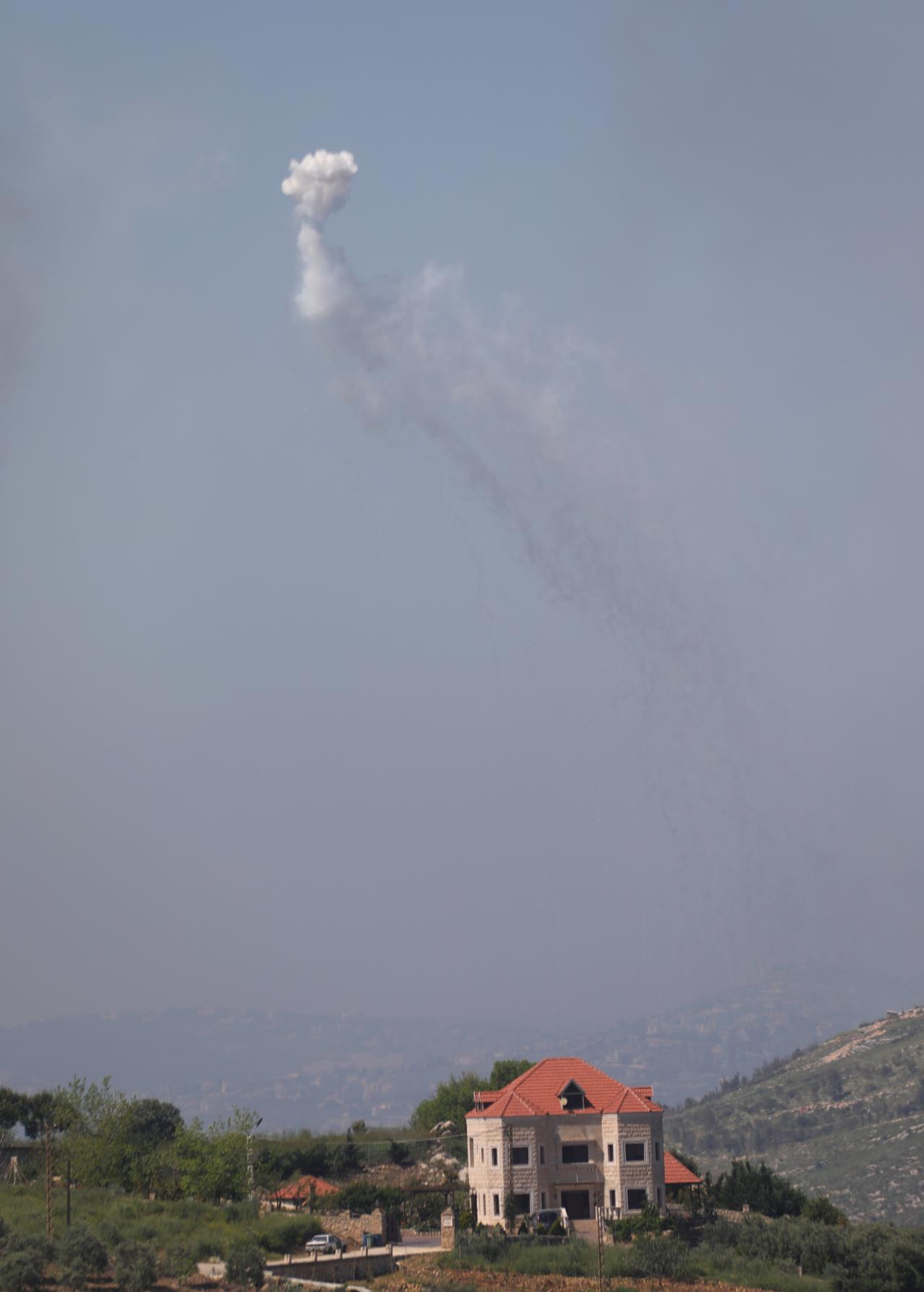
Attack on the village of Yohmor in the Nabatiye province, 30 April 2026 - (Anadolu Ajansı)
Later in the day, the scope of the attacks expanded. According to NNA, Israeli warplanes conducted strikes against the villages of Cebşit, Tulin and Haruf, resulting in nine people killed, two of them children, and 31 injured, eight of them children. It was also reported that the villages of Sultaniyye, Yahun, Cumeycime, Kalavay and Adşit were bombed, and that a motorcycle in the village of Sarife was targeted by a UAV. Israeli artillery units were reported to have struck the villages of Buyut Siyad, Doğu Zavtar, Mivdon, Hinniyye, Zebkin and Konin.
After midday, attacks were directed at villages previously identified as under threat. Israeli warplanes bombed the University Quarter in the city of Nabatiye, as well as the villages of Hinniyye, Vadi Çilo, Kalile, Kinise, Kefre and Mecdel Zun. The village of Kefr Rumman was targeted by a UAV, and three people were reported trapped under rubble after a house in Hinniyye was hit. It was also reported that in a UAV attack on a motorcycle in the village of Şehhabiyye, several people were injured.
Later in the day, it was reported that two people were killed and two others injured in an air strike on the village of Şehhabiyye. Thus, the number of people killed in Israeli attacks on southern Lebanon on 30 April 2026, despite the ceasefire, rose to eleven.
Hezbollah announced on 30 April 2026 that it had launched attacks in response to Israel’s violations of the ceasefire. According to the statement, at 10:00 local time, two Israeli Merkava tanks in the occupied Bint Jubayl district of southern Lebanon were targeted by UAVs. It was also reported that an Israeli howitzer in the village of Yarin was struck by a UAV.
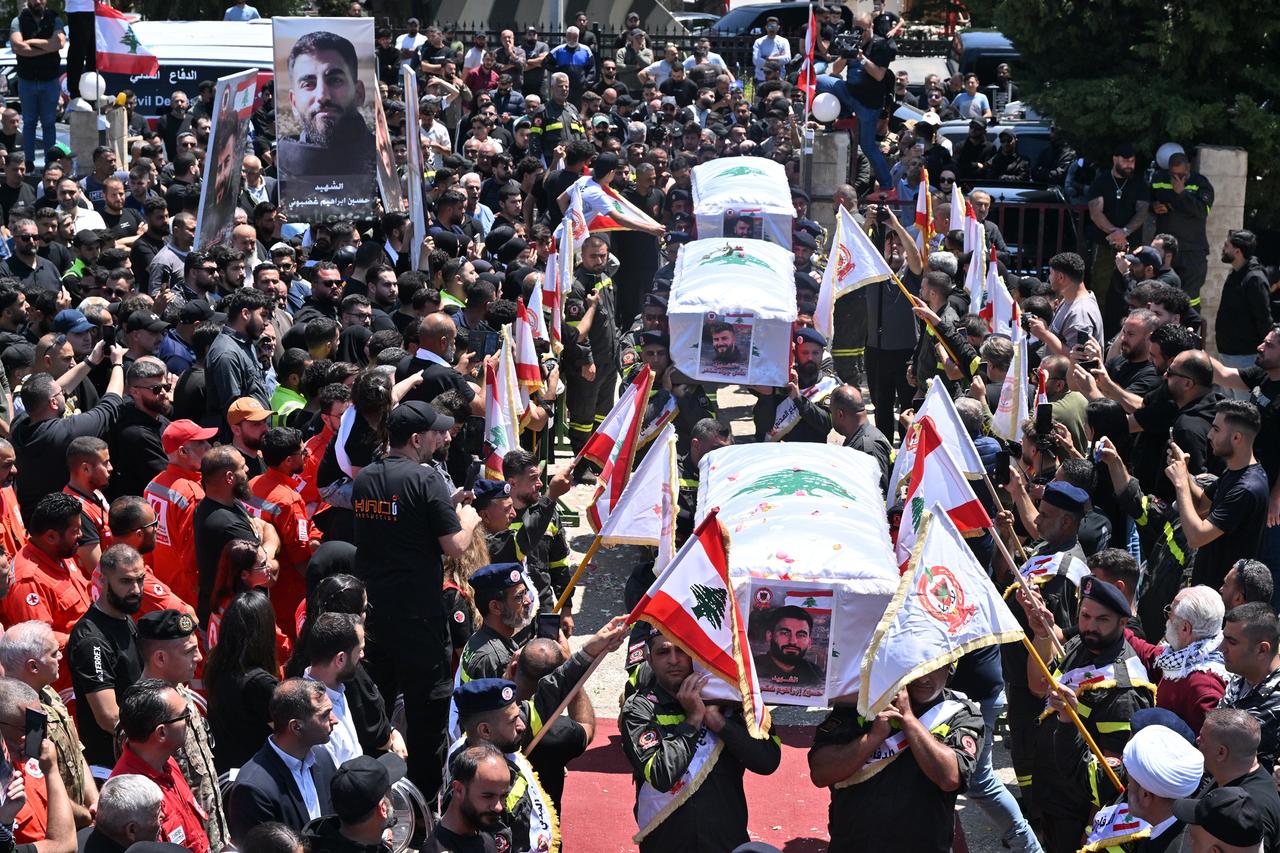
Funeral of three civilian defense personnel killed in Israel’s attacks on Lebanon, 30 April 2026 - (Anadolu Ajansı)
The Israeli military confirmed on the same day that Hezbollah had used a ground-to-air rocket to shoot down an Israeli UAV. Hezbollah stated in its announcement that it had downed a “Hermes 450” type UAV over Nabatiye. The Israeli side stated that there was no risk of information leakage regarding the incident and announced that an investigation had been launched.
Meanwhile, it was reported that a UAV directly hit a vehicle in the Shomera region of northern Israel, causing a fire after the explosion, but no casualties were reported. The Israeli military also announced that 12 soldiers were wounded in Hezbollah’s UAV attacks. The statement noted that an armored military vehicle had been targeted and that the explosion triggered detonation of nearby munitions.
Israeli Defense Forces Spokesperson Avichay Adraee announced on 30 April that eight villages outside the occupied areas in southern Lebanon were under new attack threat. The statement specified that the villages of Semmaiyye, Hinniyye, Kalile, Vadi Çilo, Kiniyse, Kefre, Mecdel Zun and Sadikin would be targeted.
Adraee called on civilians living in these areas to move at least one kilometer away from their current locations, noting that the villages in question are located outside Israeli-controlled areas.
According to Israel’s state television channel KAN, a phone call took place on 30 April 2026 between U.S. President Donald Trump and Israeli Prime Minister Benjamin Netanyahu. The report indicated that the call occurred during a meeting of Israel’s security cabinet addressing issues related to Lebanon and Iran.
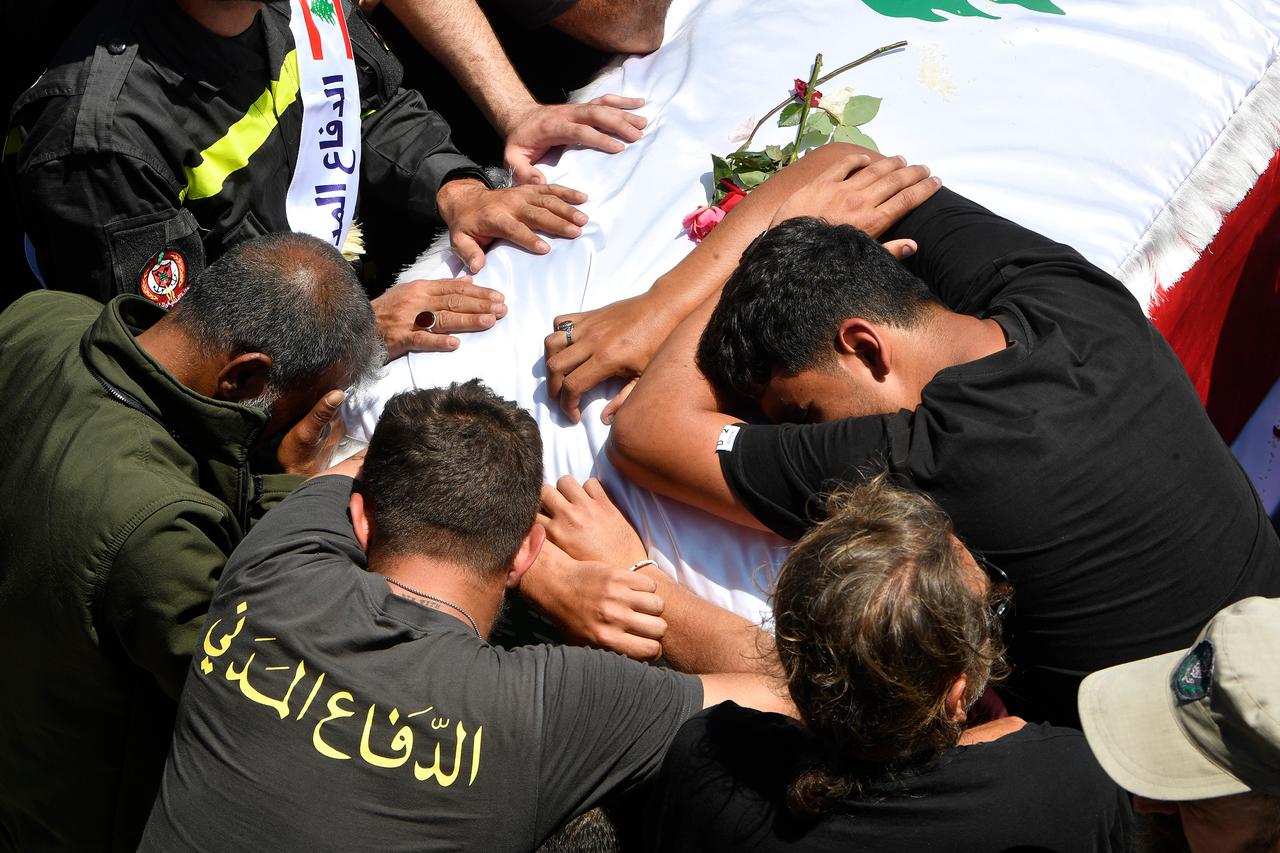
Funeral of three civilian defense personnel killed in Israel’s attacks on Lebanon, 30 April 2026 - (Anadolu Ajansı)
Lebanese President Joseph Aoun, in a statement on 30 April, called for international pressure to halt Israeli attacks targeting civilians, medical personnel and civil defense teams. Aoun stated that international law and agreements had been violated and that casualties had increased as a result of the attacks. He also noted that approximately 17 medical personnel had been killed and journalists had also been targeted.
On the same day, a funeral was held in the city of Sur for three civilian defense personnel killed in an attack on the village of Mecdel Zun on 28 April. It was reported that a large number of people attended the ceremony and that the bodies were later buried in the city’s cemetery.
Al Jazeera. "Iran War Live: Trump Urges Tehran to 'Give Up'; Israel Kills 9 in Lebanon." Accessed April 30, 2026. https://www.aljazeera.com/news/liveblog/2026/4/30/iran-war-live-trump-urges-tehran-to-just-give-up-as-oil-prices-surge
Anadolu Ajansı. "Son Gelişmeler: ABD-İsrail-İran-Lübnan Savaşı ve Ateşkes Süreci." Accessed April 28, 2026. https://www.aa.com.tr/tr/live-blog/son-gelismeler-abd-israil-iran-lubnan-savasi-ve-ateskes-sureci/1704
The Israeli military continued air artillery and unmanned aerial vehicle (UAV) attacks on villages in southern Lebanon on 1 May despite the ceasefire. In the early hours of the day it was reported that the “Safina” restaurant located along the coast in the village of el-Beyada, attached to Sur, was destroyed by explosives and footage of the incident was shared on social media. The Israeli military has not issued an official statement regarding the attack.
During nighttime air strikes the villages of Upper Nabatieh Haris and Tayri were targeted. The Lebanese Ministry of Health announced that in the attack on Upper Nabatieh two people were killed and ten others injured.
From morning hours onward the attacks expanded. According to NNA Israeli artillery units targeted the villages of Mecdel Zun Sivane Kalavay Kefr Şuba Konin Frun Ganduriyye and Tulin. A Merkava tank stationed in Beyyade carried out intense artillery fire toward Mansuri and a UAV targeted a motorcycle in Mansuri. During the same period it was reported that an Israeli UAV flew at low altitude over the skies of Beirut.
Updates published during the day indicated that the scope of the attacks had widened. Israeli artillery units targeted numerous villages including Beni Hayyan and Tallusa while warplanes bombed the villages of Tayr Hafa Beraşit Mecdel Zun and Yatir. It was also recorded that the center of Sur was hit by a UAV attack.
Data on casualties caused by Israeli attacks during midday and afternoon hours was updated. It was reported that a total of eleven people were killed in attacks carried out in the villages of Upper Nabatieh Kefer Rumman Ayn Bial Burc Kalavay and Deyr Kanun Ras Ayn.
In the evening hours attacks intensified. According to initial assessments six people were killed and eight injured in an air strike on the village of Habbush. A subsequent update stated that the number of dead had risen to twelve and the number of injured to twenty-five among whom were a girl and four women.
On 1 May Hezbollah’s attacks against Israeli targets using UAVs and artillery were also recorded. The Israeli military announced that in a Hezbollah-launched explosive-laden drone attack two Israeli soldiers were injured. The statement noted that the injured soldiers were taken to hospital.
In the same statement it was stated that over the past 24 hours Israel had conducted strikes against more than forty targets in southern Lebanon allegedly belonging to Hezbollah. These targets were said to include command centers and military structures.
Hezbollah in a statement on Telegram stated that in response to ceasefire violations it targeted Israeli soldiers in the Bint Cubeyl and Hula regions with artillery fire and subsequently carried out UAV attacks in Bayyada and its surroundings. The statement also indicated that a military vehicle in the village of Tayba and a Merkava tank stationed in the Resaf region had been targeted by UAVs.
Lebanese Prime Minister Nawaf Salam on 1 May held a meeting with the U.S. Ambassador to Beirut Michel Isa to discuss the establishment of a lasting ceasefire and negotiations with Israel. It was reported that the talks were a continuation of preparatory meetings previously held in Washington.
On the same day Lebanese President Joseph Aoun received Ambassador Isa at the Baabda Palace in Beirut and during the meeting the issues of establishing a lasting ceasefire halting the targeting of civilians and civilian infrastructure and continuing Lebanon-Israel negotiations were addressed. The statement indicated that the goal of this process was to contribute to stability along Lebanon’s southern border.
The Lebanese Ministry of Health in its statement reported that since 2 March the number of people killed in Israeli attacks on Lebanon had risen to 2618 and the number of injured to 8094. The statement also noted that 16 hospitals had been damaged and that among the dead were 103 healthcare workers.
The Israeli military has been reported to continue demolition activities in occupied areas of southern Lebanon. According to NNA Israeli forces demolished a monastery and a nunnery in the village of Yarun. It was reported that the school served as an important institution educating students from many settlements in the region.
Additionally it was reported that a funeral ceremony was held in the city of Sur on 28 April for three civilian defense personnel who were killed in Mecdel Zun and that their bodies were buried.
The Israeli military on the morning of 2 May issued evacuation orders and threatened attacks against nine villages in southern Lebanon. Israeli military spokesperson Avichay Adraee in his statement called on civilians living in the villages of Kakaiye el-Cisr Adşit Şekif Cebşit Aba Kefer Coz Haruf Duveyr Deyr ez-Zehrani and Habbush to immediately leave their homes. The statement specified that civilians should move to open areas at least 1000 meters away.
Protests against Israel’s attacks on Gaza and Lebanon in Sweden 2 May 2026 – (Anadolu Agency)
Adraee claimed that attacks targeting Hezbollah elements would be carried out in these areas and warned that individuals near these elements could be at risk.
The Israeli military continued air artillery and UAV attacks across a wide area of southern Lebanon from the evening of 2 May. According to NNA Israeli warplanes targeted numerous villages including the city center of Nabatieh as well as Mansuri Aba Kefre Beraşit Şevkin Mivdon Semaiyye Şıaytiye Sadikayn Adşit Luveyze Mecdel Zun West Zavtar East Zavtar and Haruf.
In a UAV attack on a vehicle traveling along the Kefer Deccel road in Nabatieh two people were killed. In an attack targeting a house in Luveyze three people lost their lives and one person was killed in an attack in the village of Şevkin. During midday the attacks expanded and four people were killed in Mivdon and two in Şevkin. Additionally one person died in a UAV attack targeting a motorcycle in Deyr Kanun Ras Arab and one person was seriously injured in a UAV attack on a motorcycle in Şıaytiye.
The Israeli military destroyed a Husseiniyya in the village of Duveyre. In addition it was reported that the areas surrounding the villages of Şevkin Mecdel Silm Kabriha Mivdon East Zavtar West Zavtar and Yuhmur Şakif were subjected to artillery fire. During the same period it was reported that Israeli UAVs flew at low altitude over the skies of Beirut.
Protests against Israel’s attacks on Gaza and Lebanon in Sweden 2 May 2026 – (Anadolu Agency)
In the evening hours attacks continued. The villages of East Zavtar Mivdon Şehabiyye Zibdin Deyr Zehrani Düveyr Kefre Cümeycime and Mansuri were targeted by air strikes. In an attack targeting homes and businesses in Zibdin two people were killed. Additionally it was reported that a vehicle in the Hafur region was targeted by a UAV and that a UAV attack was carried out on the village of Semaiyye.
In later hours of the day three people were killed in an air strike on a mosque in Semmaiyye. During the same period it was reported that the regions of Reyhan Mountain and the villages of Basalya Serire Kefre Haris Burç Kalavay East Zavtar and Mivdon were also subjected to air and artillery attacks.
As a result of these attacks the death toll was reported to have first risen to six then to thirteen and further increased with new attacks in the evening hours.
Hezbollah in its statement on 2 May 2026 announced that it had responded to Israel’s ceasefire violations. The statement indicated that Israeli soldiers and an anti-tank position in the occupied village of Bayyada in southern Lebanon had been targeted by UAVs.
In another statement issued during the day it was stated that Israeli soldiers in the Bint Cubeyl and Hula regions had been targeted by artillery fire followed by a UAV attack on the village of Bayyada. It was reported that a military vehicle in the village of Tayba and a Merkava tank stationed in the Resaf region had been struck by UAVs.
On 2 May 2026 protests against Israel’s attacks on Gaza and Lebanon were held in Stockholm the capital of Sweden. At the demonstration held at Odenplan Square hundreds of people demanded that Israel halt its attacks and end arms sales.
Protesters carried banners stating that civilians in Gaza were being targeted humanitarian aid was being blocked and that attacks on Lebanon and Iran must end.
The Lebanese Ministry of Health in its statement on 2 May 2026 reported that since 2 March the number of people killed in Israeli attacks on Lebanon had risen to 2659 and the number of injured to 8183. The statement also indicated that 16 hospitals had been damaged and that 103 healthcare workers had been killed.
Lebanese Chief of Staff General Rudolf Heykel held a meeting with the Chairman of the Ceasefire Monitoring Committee U.S. General Joseph Clearfield at Beirut Air Base. The meeting addressed the security situation in the country and mechanisms for monitoring the ceasefire. The meeting also emphasized the importance of the role of the Lebanese army and the need to continue support for it.
The Israeli military in its statement on 2 May 2026 acknowledged that it had damaged a monastery and a nunnery in the village of Yarun in southern Lebanon. The statement claimed that the structure had not been completely destroyed but that damage had been confirmed to one building within the complex.
The Israeli military spokesperson argued that the religious nature of the area was only identified afterward and that efforts were made to limit the damage. In contrast NNA reported the previous day that the Israeli military had demolished the monastery and school in the same area.
The Israeli military carried out air strikes on numerous villages in southern Lebanon starting from the evening of 3 May. According to NNA Israeli warplanes targeted the villages of Breyki Kusaybe Şehabiyye East Zavtar Sureyfe Cibal Batım and Kalile.
Later in the day the scope of the attacks expanded. Numerous settlements including Cümeycime Safad Battih Haris Düveyr Kefr Dunin Cebşit Arabsalim Şarkiye Furun and Deyr Zehrani were targeted.
Initial assessments indicated that three people were killed in an attack on the village of Safad Battih and one person was killed in a UAV attack targeting a motorcycle in the village of Haris. Additionally two people were injured in a UAV attack on a motorcycle in the village of Coya.
Updates during the day indicated an increase in the number of casualties. In an air strike on the village of Maaliyye attached to Sur three people were killed two of whom were Syrian and one Egyptian.
Subsequent reports indicated that two people were killed in the village of Breyki and one in the village of Arabsalim. Thus the total number of dead from attacks carried out during the day rose from seven to ten. It was also reported that the villages of Mansuri and Haris were targeted by Israeli artillery.
Hezbollah in its statement on 3 May 2026 announced that it had responded to Israel’s ceasefire violations. The statement indicated that a position housing Israeli military vehicles and soldiers in the occupied village of Bayyada had been targeted by a kamikaze UAV.
Hasan Fadlallah a member of parliament from Hezbollah’s political wing the “Loyalty to the Resistance Bloc” stated on 3 May 2026 that the negotiations conducted by the Lebanese government with Israel did not bind them.
Fadlallah stated that they would not allow implementation of any outcomes from the negotiations that Hezbollah would continue its armed struggle and that Israel must withdraw from Lebanese territory. He also stated that any possible agreement must include a guarantee that Israel would not attack Lebanon.
The Lebanese Ministry of Health in its statement on 3 May 2026 reported that since 2 March the number of people killed in Israeli attacks on Lebanon had risen to 2679 and the number of injured to 8229.
Al Jazeera. "Israel Issues New Forced Displacement Orders in Southern Lebanon." Accessed May 4, 2026. https://www.aljazeera.com/news/2026/5/3/israel-issues-new-forced-displacement-orders-in-southern-lebanon
Anadolu Ajansı. "Son Gelişmeler: ABD-İsrail-İran-Lübnan Savaşı ve Ateşkes Süreci." Accessed May 4, 2026. https://www.aa.com.tr/tr/live-blog/son-gelismeler-abd-israil-iran-lubnan-savasi-ve-ateskes-sureci/2004
Anadolu Ajansı. "İsrail Ateşkese Rağmen Lübnan’ın Güneyine Yönelik Saldırılarını Sürdürüyor." Anadolu Ajansı Foto Galeri. Accessed May 4, 2026. https://www.aa.com.tr/tr/pg/foto-galeri/israil-ateskese-ragmen-lubnanin-guneyine-yonelik-saldirilarini-surduruyor/161041
Bangladesh Sangbad Sangstha (BSS). "Israel Strikes Several Parts of South Lebanon, Says Targeted Hezbollah." BSS News. Accessed May 4, 2026. https://www.bssnews.net/international/383643
The Israeli military continued its attacks on villages in southern Lebanon on 30 April 2026, despite the ceasefire that came into effect on 17 April. According to Lebanon’s official news agency NNA, Israeli warplanes targeted the villages of Yahun, Cumeycime, Beraşit and Haris with aerial strikes in the early morning. The attacks caused extensive damage to infrastructure and buildings in the region. It was reported that the targeted villages lie outside the areas occupied by Israel in southern Lebanon. It was also reported that an explosion occurred in the village of Hıyam, where Israeli demolition operations were ongoing at the same time.
Attack on the village of Yohmor in the Nabatiye province, 30 April 2026 - (Anadolu Ajansı)
Before noon, the scope of the attacks expanded. According to NNA, Israeli warplanes bombed the villages of Cebşit, Tulin, Haruf, Sultaniyye, Yahun, Cumeycime, Kalavay and Adşit. In the attack on Cebşit, three people were killed and seven injured. In Tulin, four people lost their lives and six were wounded. In Haruf, two people were killed. Thus, by noon, it was reported that nine people had died in Israeli attacks.
During the same period, an Israeli unmanned aerial vehicle targeted a motorcycle in the village of Sarife. Israeli artillery units struck the villages of Buyut Siyad, Doğu Zavtar, Mivdon, Hinniyye, Zebkin and Konin. The Israeli military also announced that it had recently launched a new offensive into southern Lebanon.
In the afternoon, the Israeli military targeted several villages previously warned of imminent attacks. According to NNA, Israeli warplanes bombed the Universities Quarter in the city of Nabatiye, as well as the villages of Hinniyye, Vadi Çilo, Kalile, Kinise, Kefre and Mecdel Zun. An Israeli UAV conducted an attack on the village of Kefr Rumman. In the attack on Hinniyye, which targeted a house, three people were reported trapped under rubble. In the village of Şehhabiyye, a UAV attack on a motorcycle resulted in injuries.
In the aerial attack on Şehhabiyye at noon, two people were killed and two injured. With this development, the number of fatalities for the day rose to 11. Later, the Lebanese Ministry of Health announced that in the attacks on Cebşit, Tulin and Haruf, nine people died, two of them children, and 23 were injured, eight of them children.
In the evening, casualty figures were updated again. According to NNA, two people were killed in an Israeli attack on the village of Bestiyet, and two others were killed in attacks on the village of Kana, with one person injured. With this update, the total number of deaths from attacks on 30 April rose to 15.
A subsequent update reported that the death toll had risen to at least 22. According to NNA, an Israeli UAV targeted a group gathered near a cemetery in the village of Zıbdin, killing six people. The Lebanese army announced that in an Israeli attack on the village of Kefer Rumman, one Lebanese soldier and several family members were killed. With these attacks, the number of those killed in Israeli strikes in southern Lebanon despite the ceasefire on 30 April rose to at least 22.
On 30 April, Hezbollah’s UAV attacks against Israeli units and vehicles were also recorded. The Israeli military stated that an UAV trace was detected in the Shomera region in northern Israel, prompting the launch of an interception missile and the sounding of sirens in the north due to the risk of shrapnel. According to the newspaper Yedioth Ahronoth, after sirens sounded in 15 settlements, a UAV directly hit a vehicle in the Shomera region, causing it to catch fire and triggering a loud explosion. Initial reports indicated no casualties.
Funeral of three civilian defense personnel killed in Israeli attacks on Lebanon, 30 April 2026 - (Anadolu Ajansı)
The Israeli military later announced that 12 Israeli soldiers were wounded in a UAV attack on a military position near Shomera. The statement noted that the UAV launched from Lebanon had struck an armored vehicle, causing a fire and triggering the detonation of some artillery shells in the area.
On the same day, it was reported that Hezbollah had downed an Israeli UAV. The Israeli military confirmed that a UAV belonging to Israel had been targeted by Hezbollah in southern Lebanon. The statement indicated that the UAV was shot down by a ground-to-air rocket, noted that there was no concern of information leakage, and stated that the incident was under investigation. Hezbollah, in its own statement, announced that a “Hermes 450” type Israeli UAV was shot down by a ground-to-air rocket at 10:30 local time over the skies of Nabatiye.
Hezbollah also announced that in response to ceasefire violations, two Israeli Merkava tanks in the Bint Jubayl district were targeted by UAVs. The same statement noted that in the morning, an Israeli howitzer in the occupied village of Yarin in the south had been struck by a UAV. Later in the day, Hezbollah announced that it had targeted Israeli soldiers in the village of Şema with UAVs.
Israeli military spokesperson Avichay Adraee announced on his social media account on 30 April 2026 that the Israeli military would target eight villages in southern Lebanon. The announcement listed Semmaiyye, Hinniyye, Kalile, Vadi Çilo, Kinise, Kefre, Mecdel Zun and Sadikin as under threat of attack.
Adraee called on Lebanese residents in these villages to move at least one kilometer away from their current locations. It was emphasized that the threatened villages lie outside the areas occupied by Israel in southern Lebanon.
Shortly after this announcement, the Israeli military carried out attacks on some of the threatened villages. According to NNA, Israeli warplanes bombed Hinniyye, Vadi Çilo, Kalile, Kinise, Kefre and Mecdel Zun. Thus, some of the settlements named in the evacuation warning were subjected to aerial attacks on the same day.
Funeral of three civilian defense personnel killed in Israeli attacks on Lebanon, 30 April 2026 - (Anadolu Ajansı)
According to Israeli state television KAN, a telephone conversation took place on 30 April between U.S. President Donald Trump and Israeli Prime Minister Benjamin Netanyahu. The report stated that the call occurred while the Israeli security cabinet was discussing issues related to Lebanon and Iran.
On 30 April, a funeral was held for three civilian defense personnel killed in an Israeli attack on Mecdel Zun on 28 April, which targeted search and rescue teams. The funeral was held in the city of Sur and attended by a large number of people.
Following the funeral, the bodies were transferred to the cemetery in Sur and buried. These civilian defense personnel were among those killed when the teams, having arrived at the scene after the first attack on a building in Mecdel Zun, were struck a second time.
Lebanese President Joseph Aoun, during a meeting on 30 April with delegations from the Red Cross and Red Crescent societies, called for international pressure to compel Israel to halt its attacks on civilians, medical personnel and civilian defense teams. Aoun stated that pressure must be applied to ensure Israel complies with international law and agreements and ceases targeting civilians, medical staff, civilian defense personnel and aid organizations.
Aoun noted that Israel continues to violate the ceasefire in southern Lebanon, destroying homes and places of worship, and that the number of dead and injured is rising. He stated that, regarding attacks on medical workers and volunteers, the Lebanese Red Cross and other aid organizations have reported that approximately 17 medical personnel have been killed to date, and that journalists have also been targeted. Aoun reiterated his call for assistance from Lebanon to determine the fate of Lebanese citizens held in Israeli prisons.
On the same day, Lebanese Minister of Information Paul Morcos, following a Cabinet meeting at the Presidential Palace, relayed the Prime Minister’s assessment of the negotiation process with Israel. According to Morcos, Prime Minister Nevvaf Selam stated that Lebanon has not yet begun negotiations, is still in the preparatory discussion phase in Washington, and that the priority remains achieving a ceasefire.
Morcos also noted that President Aoun has asked Lebanon’s Ambassador to Washington, Neda Hammade Muavvad, to intensify efforts to pressure the U.S. administration to ensure Israel adheres to the ceasefire. According to Prime Minister Selam’s statement, once a ceasefire is achieved, the goal is to address core points of disagreement with Israel and begin formal negotiations.
The Lebanese Ministry of Health released updated figures on 30 April 2026 regarding casualties and injuries from Israeli attacks on Lebanon since 2 March. According to the ministry, the number of people killed in Israeli attacks has risen to 2,586, and the number of injured to 8,020.
The statement recalled that the Israeli military launched intensive aerial attacks on Lebanon on 2 March, during which many villages in the south were occupied and the Lebanese government announced that the number of displaced persons had exceeded one million. It also noted that Israeli attacks have continued despite the temporary ceasefire that came into effect on 17 April.
Anadolu Ajansı. "Son Gelişmeler: ABD-İsrail-İran-Lübnan Savaşı ve Ateşkes Süreci." Accessed May 4, 2026. https://www.aa.com.tr/tr/live-blog/son-gelismeler-abd-israil-iran-lubnan-savasi-ve-ateskes-sureci/2058
Middle East Eye. "No Ceasefire in Lebanon while Israeli Attacks Ongoing, Says Hezbollah." Accessed May 4, 2026. https://www.middleeasteye.net/live-blog/live-blog-update/no-ceasefire-lebanon-while-israeli-attacks-ongoing-says-hezbollah
Hezbollah announced on 5 May 2026 that in response to Israel’s violations of the ceasefire it had targeted Israeli soldiers tanks and military vehicles in the occupied villages of southern Lebanon.
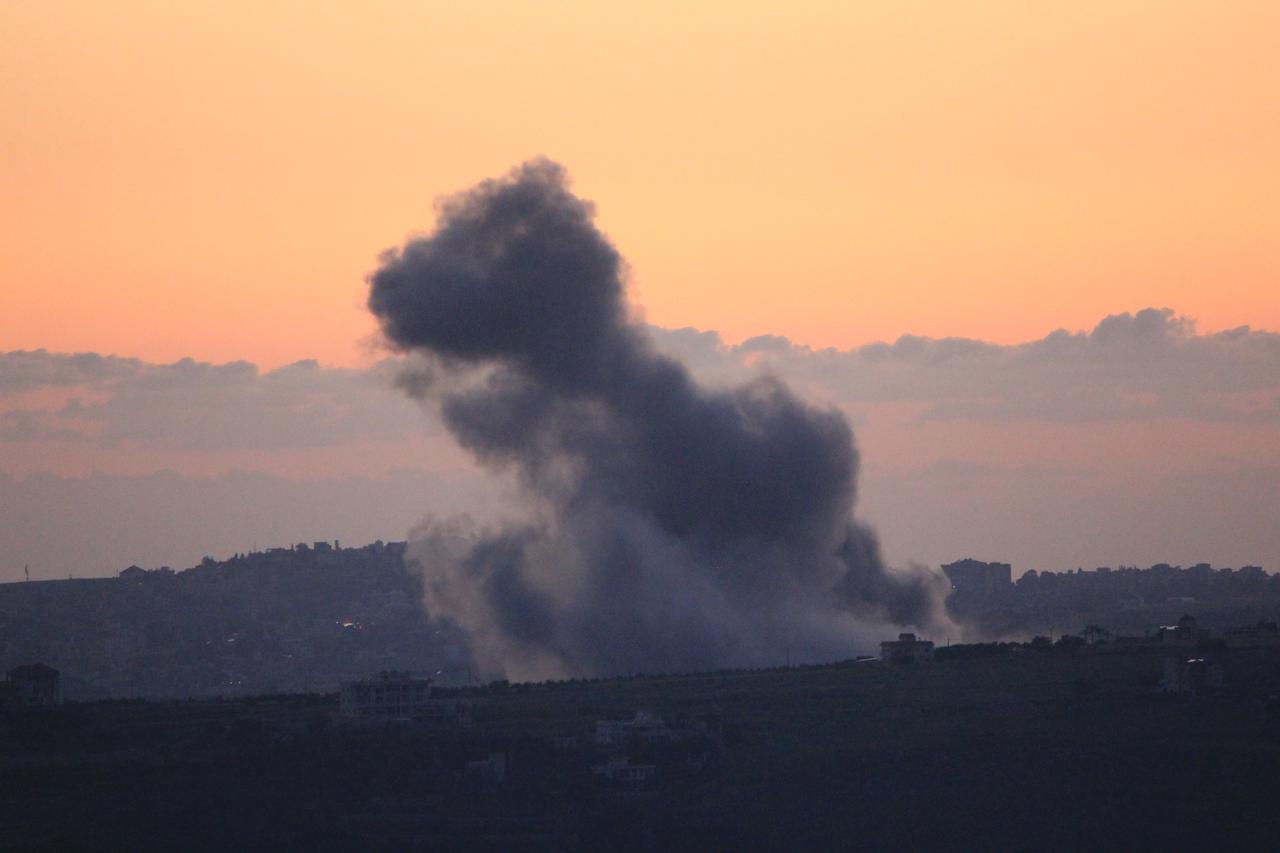
Israeli military attacks on Lebanon 6 May 2026 – (Anadolu Agency)
In a statement posted on its social media accounts Hezbollah stated that during the night hours a Merkava tank as well as Israeli soldiers and military vehicles in the occupied village of Bayyada were targeted by rockets.
In another statement it was recorded that two Israeli construction vehicles in the villages of Resaf and Hallet Rass were struck by unmanned aerial vehicles. Additionally it was stated that a Merkava tank in the village of Kavzah was targeted and a military vehicle in the village of Numeyra was hit.
In an update published during the day Hezbollah announced that an Israeli helicopter flying over Bayyada was targeted by a rocket. The statement also reported that a military vehicle in the village of Kantara was hit. Hezbollah declared that during the night hours it had targeted Israeli soldiers and vehicles in five occupied villages a total of twelve times.
The Israeli military continued air and artillery strikes against villages in southern Lebanon on 5 May despite the ceasefire.
According to initial reports Israeli fighter jets targeted the villages of Kefre and Jibshit. During the same period the villages of Kalile Habbus Mansuri and Mecdel Zun were subjected to artillery bombardment. It was also reported that some houses in the occupied village of Bayyada were destroyed by explosives carried out by Israeli soldiers.
A subsequent update revealed that the scope of the attacks had expanded. It was stated that the villages of Konin Kefre Berashit Safad Battih Kabriha Tebnin Hinniyye Mansuri Mecdel Zun East Zavtar Kakaiyyet Cisir and Jibshit were targeted by air strikes.
The artillery strikes were reported to have intensified in the areas of Zavtar Kalile Habbus Mansuri and Mecdel Zun. It was also reported that Israeli soldiers had destroyed several houses in the occupied villages of Aynata and Bayyada using explosives.
In new attacks carried out in the evening hours the villages of Kunin Mansuri Tebnin Deyr Kifa Shevkin East Zavtar Habbus Kefer Dunin Kakaiyyet Cisir and Buyut Siyad were targeted. It was reported that in the attack on the village of Deyr Kifa two people were killed and two others were injured.
Lebanese President Joseph Aoun stated on 5 May that his government was continuing efforts to end the war.
Aoun received a delegation from the southern regions at Baabda Palace and emphasized that the ongoing attacks despite the ceasefire were affecting not only the southern regions but the entire country.
In his statement he said “When the south is exhausted its impact is felt across all of Lebanon. The time has now come for the south and with it all of Lebanon to find relief.” Aoun also said “Our efforts to end a war that affects everyone continue. Our goal is not temporary but lasting peace.”
President Aoun stated that under current conditions negotiations had become the only viable option saying “After all other options including war have been exhausted negotiation is the only path left to us.”
Aoun also emphasized the importance of the Lebanese Armed Forces resuming full authority in the south saying “The Lebanese people have suffered greatly during periods when the army was absent from the south. The time has now come for the army to return and assume all its responsibilities as the sole guarantor of security in the south.” Aoun further stated that attempts to heighten sectarian and religious tensions would fail and underscored internal peace as a “red line.”
The United Nations (UN) announced on 5 May 2026 that the previous day had seen the highest number of clashes since the ceasefire of 17 April.
UN Spokesperson Stephane Dujarric stated based on UNIFIL data that 619 rockets had been fired by Israeli forces into Lebanon while 30 rockets had been launched toward Israeli targets.
Dujarric noted that Israeli fighter jets and helicopters had conducted attacks on ground targets and said “This is clearly a very concerning situation and these actions must cease after the ceasefire agreement.”
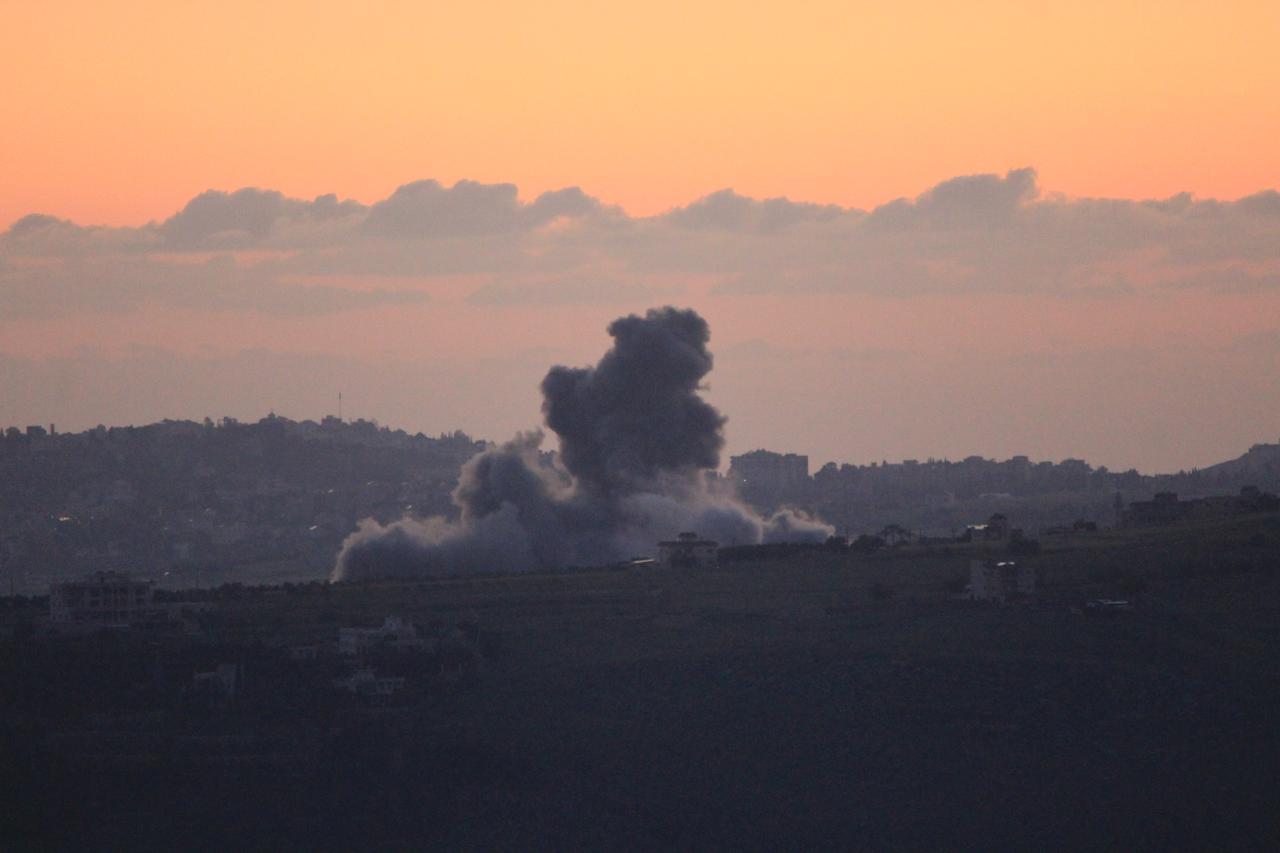
Israeli military attacks on Lebanon 6 May 2026 – (Anadolu Agency)
The statement also noted that the humanitarian situation in Lebanon continued to deteriorate with approximately one quarter of the population facing food insecurity displacement loss of livelihood and infrastructure damage.
The Lebanese Ministry of Health announced on 5 May 2026 that since 2 March the number of people killed in Israeli attacks on Lebanon had risen to 2702 and the number of injured to 8311.
The Israeli military conducted numerous air artillery and unmanned aerial vehicle strikes against multiple villages in southern and eastern Lebanon on 6 May despite the ceasefire. In the early hours of the day it was reported that an Israeli UAV targeted an ambulance belonging to the Islamic Health Organization in the village of Deyr Kifa which is part of the city of Sur. Three people were injured in the attack and transported to local hospitals. During the same period Israeli fighter jets bombed the villages of Kalaviye and Barashit causing severe damage to the Burc Kalaviye School in Kalaviye.
Later in the day the Israeli military bombed the home of the mayor in Zelaya in the western Bekaa region of eastern Lebanon. Initial reports indicated two people had been killed but subsequent updates confirmed that Zelaya Mayor Ali Kasem Ahmed and three family members had been killed and five others injured.
The Israeli military’s issuance of an attack warning for Zelaya following the strike drew attention.
The village of Meyfedun which is under the jurisdiction of Nabatieh was among the settlements targeted by four air strikes and artillery fire. Two people were killed in these attacks. The Israeli military also targeted the area around a school in Meyfedun. During the day an Israeli UAV struck a vehicle traveling on the main road between East Zavtar and Meyfedun killing two people.
Israeli fighter jets targeted the Nehir Valley area between the villages of East and West Zavtar in Nabatieh twice and also carried out strikes on the villages of Yuhmur ash-Shakif Kabriha Ernun Safed al-Biddih Hurbet Silm and Kefr Cuz. A building in Kefr Cuz was completely destroyed and significant material damage occurred in the region. In the city of Sur the villages of Rashkaniyye al-Mansuri and Bazuriyye were targeted.
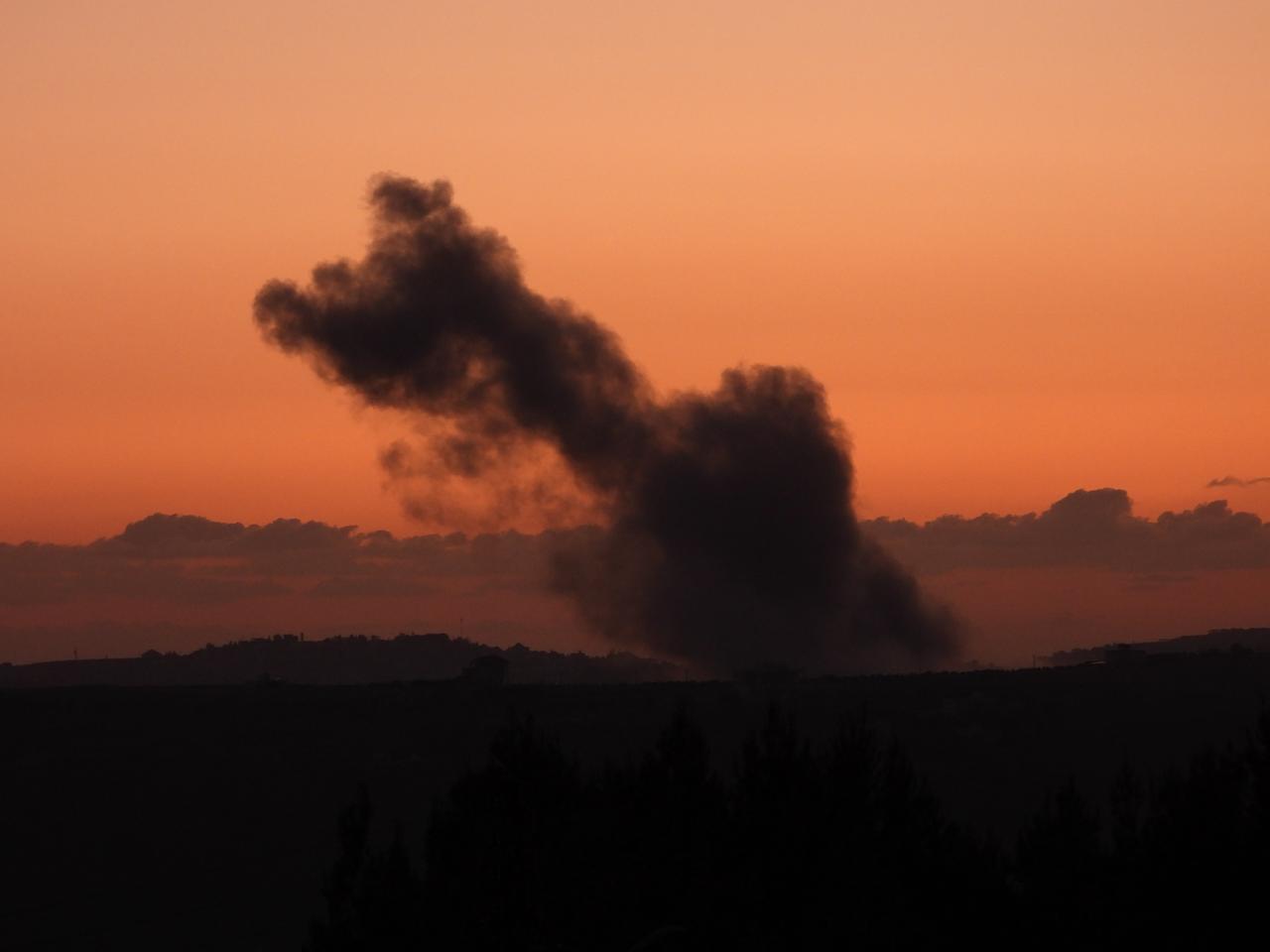
Israeli military attacks on Lebanon 6 May 2026 – (Anadolu Agency)
Later in the day the list of targeted villages expanded to include Kalya Kunin Buyut Siyad Yahmur Shakif Reyhan Davudiyye Kevseriyye Siyad Gassaniye Tilal Sarfand and Ansariyye. Israeli artillery units launched attacks on the villages of Mansuri Kabriha Arnun and Yuhmur Shakif. In a written statement the Israeli military announced “Attacks have been initiated against Hezbollah infrastructure in various regions of Lebanon.”
In the afternoon hours an Israeli air strike on the village of Saksakiye reportedly killed five people and injured fifteen. In the southern city of Sur two people were killed in a UAV attack on a vehicle traveling between the villages of Vadi Chilo and Tar Diba. The total number of fatalities reported during the day rose from four to six then to eight and finally to fifteen in the latest update.
The Israeli military also continued large-scale demolitions using explosives in the village of Hiyam which lies in the southeastern region of Lebanon where clashes between Hezbollah and Israeli forces have occurred.
Israeli Military Spokesperson Avichay Adraee announced on 6 May that twelve villages in eastern and southern Lebanon were under evacuation orders and threat of attack. The statement called on residents of villages including Kevseriye es-Siyad Gassaniye Mezraat Davudiye Bediyas Rihan Zelaya Bazuriye Haruf Habbus Ansariyye Kalavay and Deyr ez-Zehrani some of which lie north of the Litani River to evacuate their homes.
Adraee urged civilians in these villages to “evacuate their homes and move at least one kilometer away from these villages.” The statement alleged that Hezbollah had violated the ceasefire and stated that Israel was continuing evacuation and attack threats against southern Lebanon as justification for targeting Hezbollah.
Hezbollah announced on 6 May 2026 that in response to Israeli military attacks it had targeted Israeli soldiers and military vehicles in the occupied areas of southern Lebanon. According to the statements Israeli soldiers in the village of Taybe were targeted by a kamikaze drone. Military vehicles belonging to Israel in the villages of Hula and Deyr Suryan were struck by drones and a military position in the village of Kantara was targeted.
During the afternoon hours it was recorded that a position where Israeli soldiers had gathered in the village of Bayyada was targeted by artillery fire. Additionally it was reported that an Israeli personnel carrier in the village of Kavzah was struck by a drone and attacks were carried out against Israeli soldiers and vehicles in the villages of Rasaf and Nakura. It was reported that the Israeli military had occupied the villages of Kavzah Taybe Hula Deyr Suryan and Bayyada as part of its ground offensive launched after 2 March.
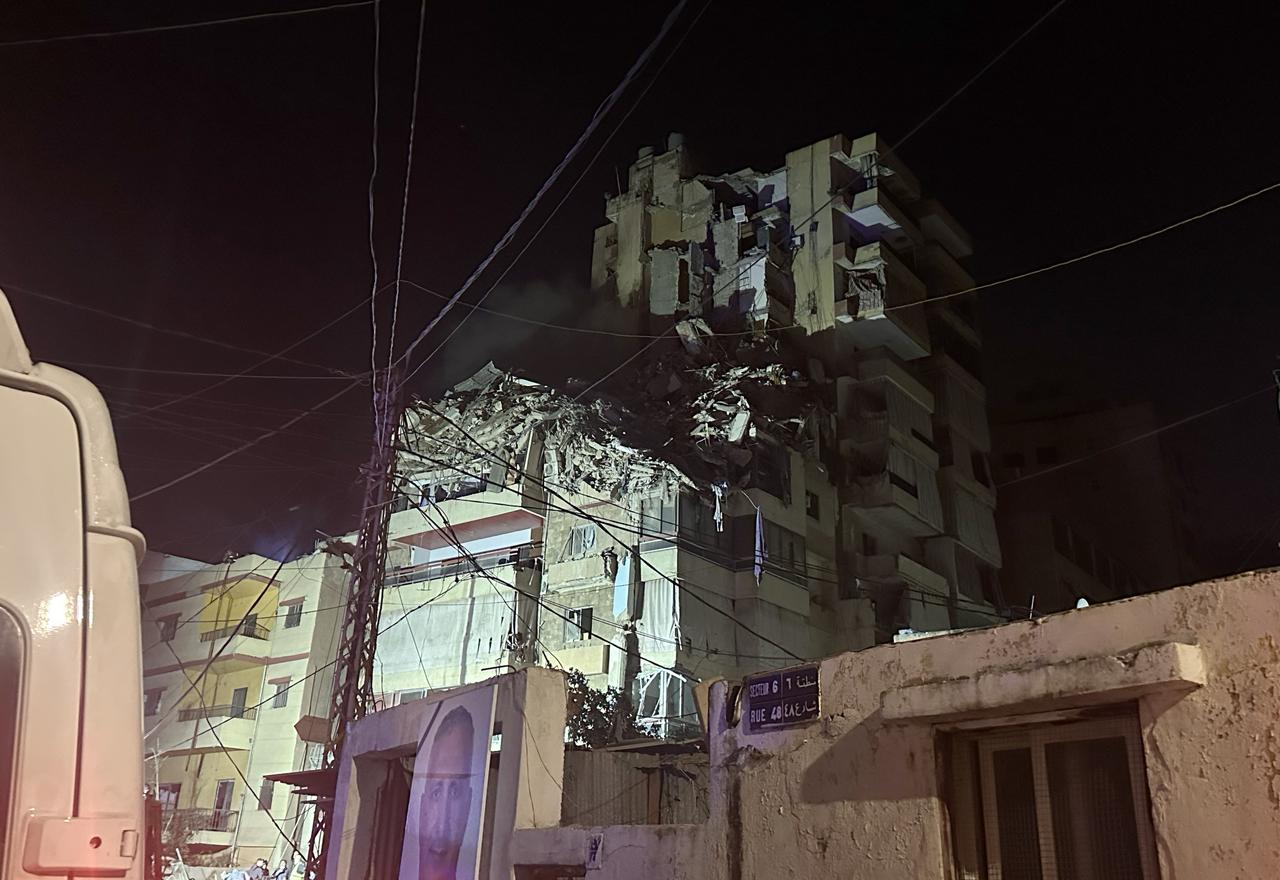
Situation in the region following the attack on Lebanon’s capital Beirut 6 May 2026 – (Anadolu Agency)
The Israeli military on the same day announced that Hezbollah had launched attacks using drones and rockets against Israeli soldiers stationed in southern Lebanon. The statement noted that two drones had exploded near Israeli units resulting in two soldiers injured one lightly. In another Hezbollah attack a drone loaded with explosives struck Israeli territory near the Lebanese border but no injuries were reported.
Later in the day the Israeli military announced that an Israeli soldier had been seriously wounded in a Hezbollah drone attack carrying explosives on Lebanese territory. The injured soldier was transported to a hospital.
Israeli Defense Minister Yisrael Katz announced on 6 May 2026 that Israel had carried out its first attack on Lebanon’s capital Beirut since the ceasefire. Katz stated that the strike was conducted under the orders of himself and Israeli Prime Minister Benjamin Netanyahu. In his statement he defended the strike claiming that the commander of Hezbollah’s Ridwan Force had been targeted and threatened that further attacks would continue.
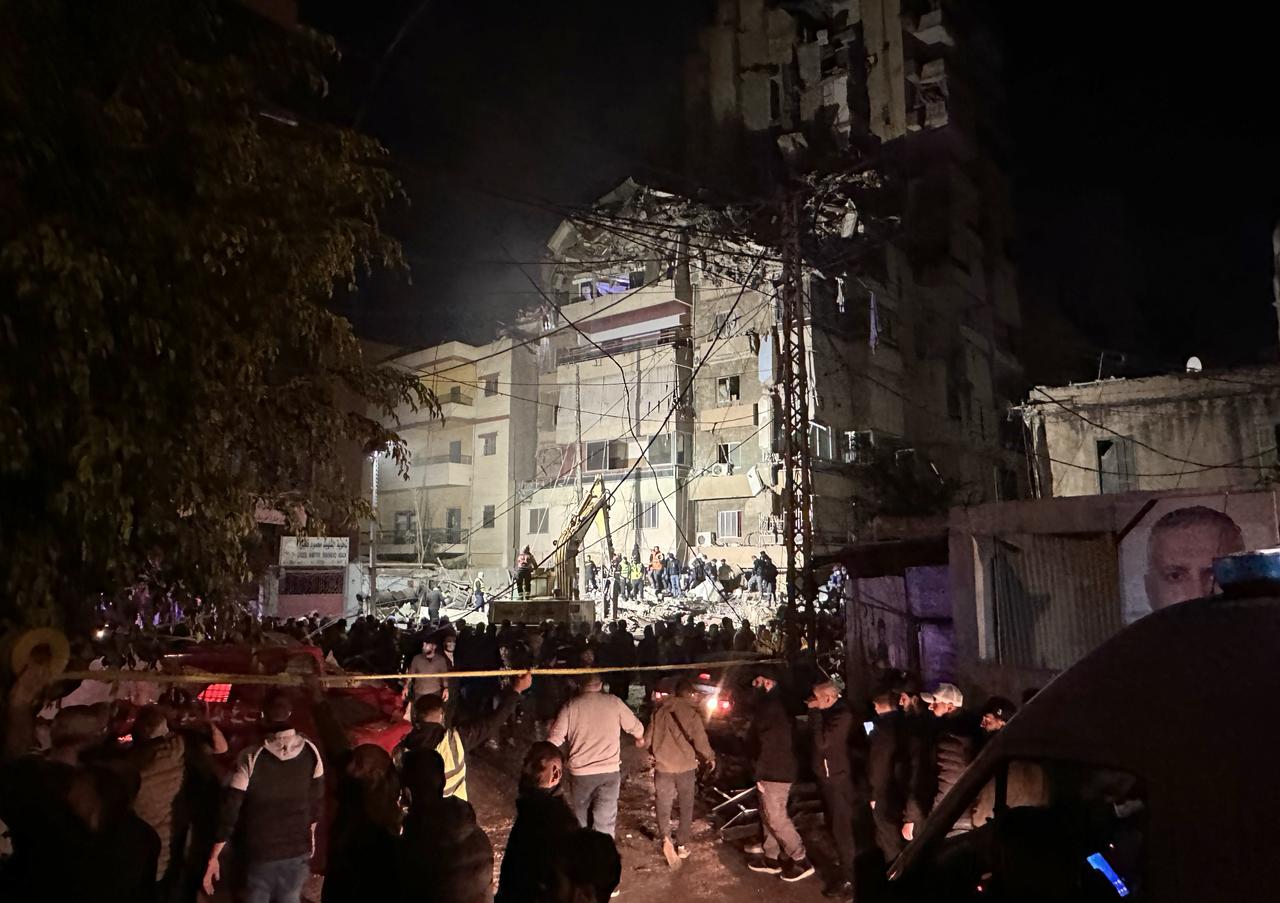
Situation in the region following the attack on Lebanon’s capital Beirut 6 May 2026 – (Anadolu Agency)
According to Lebanese media an Israeli naval vessel targeted an apartment in the Hureyk neighborhood of the Dahiye district in southern Beirut with three missiles. This marked the first time since the ceasefire entered into force on 17 April that Beirut had been targeted.
Israeli media outlet Channel 14 which is close to the government claimed that Malik Balut commander of Hezbollah’s Ridwan Force had been killed in the attack on Beirut. Israel’s state television KAN citing an unnamed Israeli source reported that the strike on Dahiye had been coordinated with the United States.
The German government on 6 May 2026 decided to extend the deployment of German troops in the United Nations Interim Force in Lebanon UNIFIL mission for one final year. Deputy Government Spokesperson Sebastian Hille announced that the Cabinet’s decision extended the German troops’ mission until 30 June 2027.
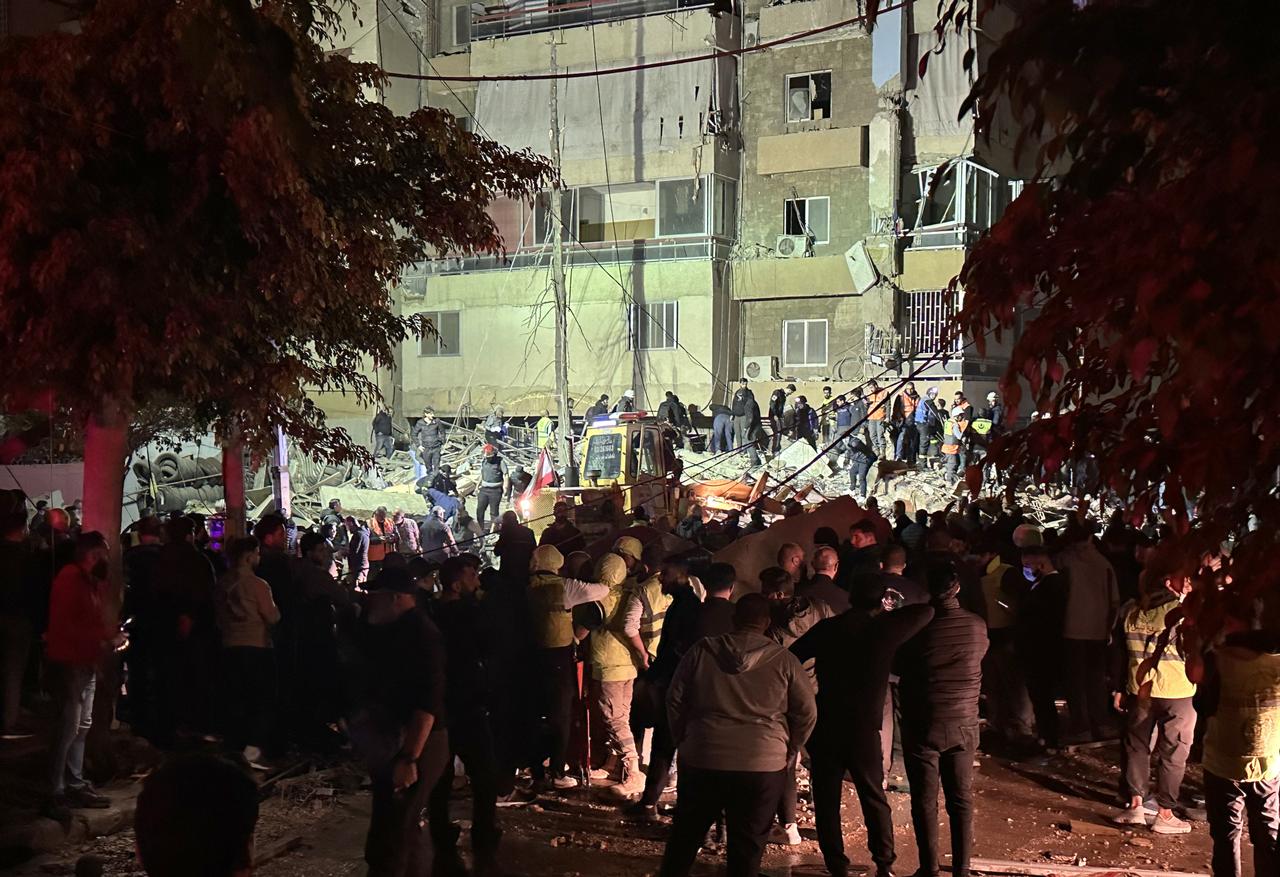
Situation in the region following the attack on Lebanon’s capital Beirut 6 May 2026 – (Anadolu Agency)
Hille stated that the decision aimed to complete UNIFIL’s operational tasks by 31 December and noted that German troops would support the withdrawal of other UN member states until 30 June 2027. Germany’s contribution to the UNIFIL Maritime Task Force through a frigate was confirmed. The statement also indicated that the German military could deploy up to 300 personnel for this purpose and that the number would be reduced to 80 as of 1 January 2027. The decision requires approval by the German Federal Parliament to enter into force.
On the same day a senior Lebanese official reported that the third round of Lebanon-Israel talks under U.S. mediation would be held in Washington next week. The official said the talks were planned to take place at the U.S. Department of State but the exact date had not yet been finalized and the level of representation from both delegations remained unclear. It was reported that it had not yet been decided whether ambassadors or higher-level officials would participate.
Al Jazeera. "Israeli Attacks in Southern, Eastern Lebanon Kill at Least 13 People." Accessed May 6, 2026. https://www.aljazeera.com/news/2026/5/6/israeli-attacks-on-southern-eastern-lebanon-kill-at-least-six-people
Anadolu Ajansı. "2 Israeli Soldiers Injured in Drone Strike in Southern Lebanon, Military Says." Accessed May 6, 2026. https://www.aa.com.tr/en/middle-east/2-israeli-soldiers-injured-in-drone-strike-in-southern-lebanon-military-says/3928945
Anadolu Ajansı. "Israeli Strikes in Lebanon Kill 16, Wound 21, Damage School Despite Ceasefire." Accessed May 6, 2026. https://aa.com.tr/en/middle-east/israeli-strikes-in-lebanon-kill-16-wound-21-damage-school-despite-ceasefire/3928473
Anadolu Ajansı. "İsrail Saldırıları Sonucu Ağır Yıkımın Meydana Geldiği Beyrut’un Dahiye Bölgesi." Accessed May 6, 2026. https://www.aa.com.tr/tr/pg/foto-galeri/israil-saldirilari-sonucu-agir-yikimin-meydana-geldigi-beyrutun-dahiye-bolgesi/161216
Anadolu Ajansı. "İsrail, Ateşkese Rağmen Lübnan’ın Güneyine Yönelik Saldırılarını Sürdürüyor." Accessed May 6, 2026. https://www.aa.com.tr/tr/pg/foto-galeri/20265614521_israil-ateskese-ragmen-lubnanin-guneyine-yonelik-saldirilarini-surduruyor/161206
BBC News. "BBC Traces How 10 Minutes of Israeli Bombing Brought Devastation to Lebanon." Accessed May 6, 2026. https://www.bbc.com/news/articles/c202652vvnjo
On 7 May, the Israeli military continued its attacks in southern Lebanon despite the ceasefire. The Lebanese Ministry of Health stated that Israeli warplanes targeted the village of Ensariyye, which is part of the city of Sidon. The attack resulted in three deaths and seven injuries. The statement also noted that since 2 March, the total number of casualties from Israeli attacks on Lebanon has reached 2,715 killed and 8,353 injured.
Later that day, Israeli forces launched sustained attacks overnight and into the morning, targeting numerous villages around Nebatiye. According to the Lebanese official news agency NNA, in an attack on a vehicle along the road to the village of Habbush, two people were killed. In another attack targeting a trailer used for transporting vehicles along the road to the Nebatiye-affiliated village of Meyfedun, one person lost their life.
The Israeli military also conducted attacks on the villages of Deyr ez-Zehrani, el-Kifur, Kalavay, Burc Kalavay, Ganduriye, Fırun, Kefr Rumman, Ramiye and Ayta eş-Şaab. The villages of Sarifa, Abbasiye, Bediyas, Mecadil and Cuviye, which are part of the city of Sur, were also among the targeted areas. In the attack on Cuviye, one person was injured. It was also reported that Israeli forces carried out attacks around the village of Arzay, which is part of Sidon.
On the same day, the Israeli military announced that in a drone attack launched by Hezbollah against Israeli soldiers stationed in southern Lebanon, four soldiers were injured, one seriously.
The Israeli military statement noted that Hezbollah had carried out a drone attack against Israeli soldiers in southern Lebanon the previous day. It added that a total of four soldiers were injured, one seriously and three lightly, and that all injured personnel had been transported to hospitals.
According to reports in the Israeli press, the Israeli government has restricted access to the “Shual” rocket tracking system, used along the northern border, by local authorities and security personnel due to concerns that sensitive information could leak to Iran.
According to Ynet, the Israeli Home Front Command has disabled the civil emergency management system used by local authorities and reserve liaison officers in the north to track areas expected to be hit by rockets. Local officials in the north stated that, unlike in previous incidents, they were unable to determine the scope, direction or nature of the explosions during Hezbollah’s latest attacks.
The report indicated that access to the system was blocked out of concern that Iranian actors could use it to improve the accuracy and effectiveness of future attacks. Assessments suggest that Iran-linked elements may be able to use the system to track precise strike locations and Israel’s warning mechanisms.
The decision to block access has provoked backlash among local administrations and security officials in northern Israel. Authorities argue that this move will severely undermine their ability to respond during rocket attacks.
The “Shual” system is a national command and control platform developed by the Israeli Home Front Command to coordinate response efforts among crisis management agencies. The system predicts and marks on maps the areas where rockets are expected to land and directs emergency teams to the impact sites.
A security official in Kiryat Shmona stated that operating without the system is “dangerous,” adding: “During the latest ceasefire sirens, as debris from intercepting missiles rained down across the city, we moved around like blind mice. We saw with our own eyes how critical this system is. When I no longer have this tool, I don’t even know where to run.”
Anadolu Ajansı. "Fresh Israeli Strikes Kill 3 in Southern Lebanon Despite Ceasefire." Accessed May 7, 2026. https://www.aa.com.tr/en/middle-east/fresh-israeli-strikes-kill-3-in-southern-lebanon-despite-ceasefire/3929643
Anadolu Ajansı. "Israeli Airstrike Kills 3, Wounds 7 in Southern Lebanon." Accessed May 7, 2026. https://www.aa.com.tr/en/middle-east/israeli-airstrike-kills-3-wounds-7-in-southern-lebanon/3929592
Anadolu Ajansı. "Sirens Sound in Northern Israel Following Suspected Drone Infiltration from Lebanon." Accessed May 7, 2026. https://www.aa.com.tr/en/middle-east/sirens-sound-in-northern-israel-following-suspected-drone-infiltration-from-lebanon/3929599
Anadolu Ajansı. "Son Gelişmeler ➜ ABD/İsrail-İran/Lübnan Savaşı ve Barış Müzakereleri." Accessed May 7, 2026. https://www.aa.com.tr/tr/live-blog/son-gelismeler-abd-israil-iran-lubnan-savasi-ve-baris-muzakereleri/2248
Despite the ceasefire, Israeli military attacks targeting southern Lebanon continued on 7 May. The Lebanese Ministry of Health announced that Israeli warplanes targeted the village of Ensariyye, which is part of the city of Sidon. The statement noted that the attack resulted in three deaths and seven injuries. It also reported that since 2 March, the Israeli military’s attacks on Lebanon have claimed the lives of 2,715 people and injured 8,353.
The Israeli military announced that four Israeli soldiers were injured in a drone attack carried out by Hizbullah in southern Lebanon, one of them seriously. The military statement indicated that a Hizbullah-operated UAV targeted the location where Israeli soldiers were stationed. It confirmed that four soldiers were wounded, one seriously and three lightly, and that all injured personnel were transported to hospitals.
Throughout the night and early morning hours, the Israeli military targeted numerous villages in southern Lebanon. According to the Lebanese official news agency NNA, two people were killed in an attack on a vehicle along the road to the village of Habbus in the city of Nebatiye. One person was killed when a trailer used for transporting vehicles was struck on the road to Meyfedun.
The Israeli military also conducted airstrikes on the villages of Deyr ez-Zehrani, el-Kifur, Kalavay, Burc Kalavay, Ganduriye, Fırun, Kefr Rumman, Ramiye, and Ayta eş-Şaab. The villages of Sarifa, Abbasiye, Bediyas, Mecadil, and Cuviye, which are part of the city of Sur, were also targeted. One person was injured in the attack on Cuviye. Airstrikes were also carried out around the village of Arzay, which is part of Sidon.
The Lebanese government has shown caution toward U.S. efforts to facilitate direct talks between Lebanese President Joseph Avn and Israeli Prime Minister Benjamin Netanyahu. The report noted that the Beirut administration believes that high-level talks cannot be conducted under conditions where Israel continues its attacks and occupation activities in southern Lebanon.
While the Washington administration is attempting to accelerate the negotiation process between Israel and Lebanon, Beirut fears that direct political engagement could negatively affect its internal political balance. The Lebanese government stated it remains open to negotiations but emphasized that this does not imply normalization with Israel.
President Joseph Avn is reported to have stated that his priority is halting Israeli attacks, withdrawing from occupied territories, and ensuring lasting stability along the southern border. Political analyst Yusuf Diyab, quoted in the report, said: “Beirut is reluctant to grant Netanyahu a political gain it cannot achieve militarily.”
The Israeli military targeted numerous villages affiliated with Nebatiye and Sur through airstrikes and artillery fire. According to NNA, an Israeli UAV struck the village of Deyr Kifa, part of Sur. Israeli artillery units conducted shelling on the areas of Şakra, Beraşit, Ganduriyye, and Vadi el-Huceyr.
Israeli drones were reported to have flown at low altitudes over the Lebanese capital Beirut and its surroundings. Lebanese media reported that Israeli warplanes conducted airstrikes on the villages of Haruf and Tul.
Later in the day, it was reported that the death toll from Israeli military attacks had risen to five. According to NNA, a courier was killed in an attack in Nebatiye. One person was killed in an airstrike on a house in the village of Ayn Dibal, part of Sur.
Two people were killed in the attack on the road to Habbus, and one person was killed in the attack on the road to Meyfedun. The Israeli military is also reported to have targeted the villages of East Zavtar, Arnun, Dibbin, Deyr ez-Zehrani, el-Kifur, Kalavay, Burc Kalavay, Ganduriye, Fırun, Kefr Rumman, Ramiye, and Ayta eş-Şaab.
Attacks continued against the villages of Sarifa, Abbasiye, Bediyas, Mecadil, and Cuviye near Sur, with one person injured in Cuviye. Israeli drones were reported to have bombed the villages of Kefer Sir and Dıbbin.
The Lebanese Ministry of Health announced that since 2 March, Israeli military attacks on Lebanon have resulted in 2,727 deaths and 8,438 injuries. The ministry had previously reported 2,715 deaths the day before.
Footage emerged showing an Israeli airstrike targeting an ambulance in the village of Haruf, part of the Nebatiye governorate. The video shows medical personnel arriving at the scene in the ambulance after an initial Israeli attack, followed by the ambulance being struck by a second airstrike.
Three medical staff members aboard the ambulance were injured, and the vehicle was rendered unusable.
An update published during nighttime hours reported that the death toll from Israeli attacks on southern Lebanon throughout the day had risen to 13.
The Lebanese Ministry of Health announced that five people were killed and two injured in an airstrike on the village of Habbus. In an attack targeting an ambulance in the village of Mecdel Silm, one medical worker was killed and one person injured.
One person was killed in the attack on Haruf, and three were killed in attacks on the village of Düveyr. The Israeli military is reported to have targeted numerous villages including Hasada, Hiraç Serire, West Zavtar, Suvana, Dıbbin, Bulat, Sadikin, Beraşit, Haruf, Düveyr, Arnun, Ganduriye, and Ayta eş-Şaab.
The U.S. Department of State announced that the third round of direct negotiations between Israel and Lebanon will take place on 14 or 15 May. In a written statement to the Associated Press, a U.S. State Department official confirmed that the new round of talks will occur next week.
UN Spokesperson Stephane Dujarric described Israel’s airstrike on southern Beirut as “clearly a deeply concerning development.”
Dujarric noted that the attack was the first on Beirut since the ceasefire of 17 April and warned that it could trigger a new wave of displacement. He expressed deep concern over reports of civilian and child casualties and called on all parties to respect international law.
Dujarric also noted that Israel had issued new evacuation orders for three villages in southern Lebanon and that more than one million people across the country had been displaced. He stated that UNIFIL forces continue to observe intense Israeli military activity, including armored unit movements, engineering operations, and heavy logistical efforts in the region.
Hizbullah announced that in response to Israel’s ceasefire violations, it carried out 13 attacks against Israeli soldiers, military vehicles, and military positions in occupied areas of southern Lebanon.
Hizbullah’s statements identified the Bint Jubayl district, the villages of Deyr Suryan, Bayyada, Şemaa, and Kusayr, and the point of Cullul Alam near Nakura as targets of Israeli forces. The statements indicated that Merkava tanks, military vehicles, troop concentrations, command centers, and newly established Iron Dome platforms were struck using rockets, artillery fire, and kamikaze drones.
According to Israeli media reports, the Israeli government has restricted access to the “Shual” missile tracking system along the northern border, fearing that sensitive information could leak to Iran.
According to Ynet, the Israeli Home Front Command has shut down the civil emergency management system used by local authorities and reserve liaison officers to track areas expected to be hit by rockets. Local officials in the north reported that, unlike in previous incidents, they were unable to determine the scope, direction, or nature of explosions during Hizbullah’s latest attacks.
The report stated that access to the system was restricted due to concerns that Iranian actors might exploit it to improve the accuracy and effectiveness of future attacks. Analysts believe that Iran-linked entities could use the system to track precise strike locations and Israel’s warning mechanisms.
The decision to block access has sparked backlash among local administrations and security officials in northern Israel. Officials argue that this move will severely weaken their capacity to respond during rocket attacks.
The “Shual” system is a national command and control platform developed by the Israeli Home Front Command to coordinate response efforts among crisis management agencies. The system predicts and marks on maps the areas where rockets are expected to land, directing emergency teams to incident locations.
A security official in Kiryat Shmona stated that operating without the system is “dangerous,” saying: “During the last sirens of the ceasefire, when debris from intercepting missiles rained down across the city, we moved like blind mice. We saw firsthand how critical this system is. When I don’t have this tool, I don’t even know where to run.”
Al Jazeera. "Iran War Live: IRGC Warns US against Attacks on Ships; Israel Bombs Lebanon." Al Jazeera Live Blog. Accessed May 10, 2026. https://www.aljazeera.com/news/liveblog/2026/5/10/iran-war-live-irgc-warns-us-against-attacks-on-ships-israel-bombs-lebanon
Al Jazeera. "Iran War Updates: Israel Kills 24 in Lebanon as US Awaits Tehran’s Reply." Al Jazeera Live Blog. Accessed May 10, 2026. https://www.aljazeera.com/news/liveblog/2026/5/9/iran-war-live-tehrans-reply-to-us-deal-expected-amid-clashes-in-hormuz
Al Jazeera. "Iran War Updates: Tehran Slams US’s ‘Reckless Military Adventure’ in Hormuz." Al Jazeera Live Blog. Accessed May 10, 2026. https://www.aljazeera.com/news/liveblog/2026/5/8/iran-war-live-trump-says-ceasefire-still-in-effect-as-iran-us-clash
Al Jazeera. "Israeli Attacks across Lebanon Kill at Least 24." Al Jazeera. Accessed May 10, 2026. https://www.aljazeera.com/news/2026/5/9/israeli-attacks-across-lebanon-kill-at-least-19
Al Jazeera. "Lebanon Latest Israeli Strikes Beirut Despite ‘Ceasefire’." Al Jazeera Video Newsfeed. Accessed May 10, 2026. https://www.aljazeera.com/video/newsfeed/2026/5/7/lebanon-latest-israeli-strikes-beirut-despite
Anadolu Ajansı. "BM: Lübnan’da Kırılgan Ateşkes Sürecinde Kadın ve Kız Çocukları Öldürülmeye Devam Ediyor." Anadolu Ajansı. Accessed May 10, 2026. https://www.aa.com.tr/tr/dunya/bm-lubnanda-kirilgan-ateskes-surecinde-kadin-ve-kiz-cocuklari-oldurulmeye-devam-ediyor/3931378
Anadolu Ajansı. "Hizbullah’ın Kablolu İHA’ları İsrail’in Elektronik Savunma Sistemlerine Meydan Okuyor." Anadolu Ajansı. Accessed May 10, 2026. https://www.aa.com.tr/tr/dunya/hizbullahin-kablolu-ihalari-israilin-elektronik-savunma-sistemlerine-meydan-okuyor/3932258
Anadolu Ajansı. "Lübnan Cumhurbaşkanı Avn: Lübnan, Güneydeki Gerginliği Sona Erdirecek Müzakereler İçin Ateşkese Bağlı." Anadolu Ajansı. Accessed May 10, 2026. https://www.aa.com.tr/tr/dunya/lubnan-cumhurbaskani-avn-lubnan-guneydeki-gerginligi-sona-erdirecek-muzakereler-icin-ateskese-bagli/3931283
Anadolu Ajansı. "Son Gelişmeler ➜ ABD/İsrail-İran/Lübnan Savaşı ve Barış Müzakereleri." Anadolu Ajansı Canlı Blog. Accessed May 10, 2026. https://www.aa.com.tr/tr/live-blog/son-gelismeler-abd-israil-iran-lubnan-savasi-ve-baris-muzakereleri/2372
Anadolu Ajansı. "İsrail Ordusu, Lübnan’ın Güneyinde Yerinden Edilmiş Ailelerin Sığındığı Bir Binaya Hava Saldırısı Düzenledi." Anadolu Ajansı Video Galeri. Accessed May 10, 2026. https://www.aa.com.tr/tr/vg/video-galeri/israil-ordusu-lubnan-in-guneyinde-yerinden-edilmis-ailelerin-sigindigi-bir-binaya-hava-saldirisi-duzenledi/148911
Anadolu Ajansı. "İsrail Ordusunun Lübnan’da Bir Aracı Hedef Aldığı Saldırıda 2 Kişi Hayatını Kaybetti." Anadolu Ajansı Foto Galeri. Accessed May 10, 2026. https://www.aa.com.tr/tr/pg/foto-galeri/israil-ordusunun-lubnanda-bir-araci-hedef-aldigi-saldirida-2-kisi-hayatini-kaybetti/161393
Israel’s far-right Finance Minister Bezalel Smotrich, in a statement to the Israeli radio station FM 103 on 8 May 2026, argued that the ongoing conflict in the region must result in a change to Israel’s borders to encompass Gaza, Lebanon, Syria, and the West Bank. Smotrich said he has “sharp disagreements” with Prime Minister Binyamin Netanyahu and used the phrase “I have a lot of influence over the war.”
Smotrich asserted that borders must be redrawn in the territories Israel has attacked, stating “This war must end with a change in the borders of the Israeli state in Gaza, Lebanon, Syria, and of course the West Bank.” He noted that had he been prime minister, these territories would have been annexed long ago, adding “If it were up to me, we would have annexed these territories long ago.”
Smotrich emphasized that his priority is territorial control, remarking “They do not care how many we kill, bomb, or shoot; what they care about is how much land we take.” The statement was interpreted as an expansionist policy targeting Palestinian, Syrian, and Lebanese territories and drew criticism.
Lebanese media reported that President Joseph Avn rejected the possibility of a meeting with Israeli Prime Minister Binyamin Netanyahu. According to a report by the newspaper Ed-Diyar citing official sources, while negotiations between Beirut and Tel Aviv continue under U.S. auspices, Avn has maintained a cautious stance regarding any direct meeting with Netanyahu.
The report stated that Lebanon conveyed to U.S. officials its assessment that a meeting with Netanyahu would undermine current stability efforts. Washington was said to have welcomed this position. The same report noted that the Beirut administration does not aim to sign a peace agreement with Tel Aviv; its primary goal is ensuring border security and territorial integrity.
On 8 May, despite the ceasefire, the Israeli military issued attack threats against six villages in southern Lebanon. Israeli Army Spokesperson Avichay Adraee announced that the Israeli military would target the villages of Numeyriyye, Tayr Falsay, Halusiyye, Upper Halusiyye, Tora and Marake. Adraee called on Lebanese residents in these areas to move at least 1 kilometer away from their homes.
The statement noted that five of the threatened villages lie outside Israeli-occupied areas, while one is located north of the Litani River. Later that day, it was reported that the Israeli military also issued attack threats against the villages of Abbasiyye, Numeyriyye, Tayr Falsay, Halusiyye, Upper Halusiyye, Tora and Marake.
On 8 May, the Israeli military continued its attacks on villages in southern Lebanon. In the early morning, an Israeli UAV targeted a vehicle traveling between the villages of Kefr Şuba and Kefr Hammam in the southeast of the country. In the attack, civilian defense personnel member Hafız Yahya was killed. At the same time, Israeli aircraft carried out an airstrike on the village of Cümeycime.
Later in the day, Israeli warplanes and UAVs targeted numerous settlements. According to NNA, the attacked villages included Deyr Kanun, Ras Ayn, Şıaytiye, Aytit, Tora, Numeyriyye, Tayr Falsay, Deyr Amis, Buyut Siyad, Sadikin, Yuhmur Şakif, Cümeycime, East Zavtar and Mansuri. Israeli artillery bombarded the area between the villages of Kalile, Maaliyye and Hinniye.
Casualties in Tora increased throughout the day. Initial reports stated that two people were killed and five injured in the attack on Tora. A subsequent update reported that four people were killed in two attacks on Tora, and a later update raised the death toll to five.
Israeli UAVs also targeted the villages of Sultaniye, Haris, Deyr Antar, Lower Homin and Arab Cel. In the attack on Sultaniye, four people were killed; in Arab Cel, three people lost their lives. In an attack targeting a vehicle in Lower Homin, four people were killed. In an attack on the village of Düveyr, four people died, and in a UAV strike targeting a motorcycle in Cebşit, one person was killed.
According to NNA, Israeli aircraft struck the villages of Beyt Yahun, Şakra, Kefre, Beraşit, Safad Battih, Ayta el-Cebel and Tulin around midday, killing a total of five people. The Ministry of Health also announced that one person was killed in Mifedon, two in Ankun, and three in Zerariye, two of whom were children. By the end of the day, the number of people killed in Israeli attacks in Lebanon despite the ceasefire had risen to 32.
On 8 May, Hezbollah announced that in response to Israeli violations of the ceasefire, it had targeted Israeli soldiers, vehicles and military assets in occupied areas. The announcement specified that a construction vehicle in the village of Bayyada was struck by a UAV in the morning.
Hezbollah also reported that Israeli soldiers in the village of Hiyam were targeted by a rocket attack, and that an attack was carried out against Israeli soldiers and a Merkava tank in the village of Deyr Suryan. In its evening statement, Hezbollah announced that it had targeted Israeli soldiers, bases and vehicles a total of 26 times, with 24 of them in southern Lebanon and two in northern Israel.
The Israeli military also reported on the same day that in Hezbollah’s UAV attacks, three Israeli soldiers were wounded, one seriously. The statement noted that Hezbollah launched UAVs from Lebanon into Israel, wounding two soldiers, one seriously; and in another UAV attack targeting Israeli soldiers stationed in occupied southern Lebanon, one soldier was wounded.
Israeli media claimed that military officials from both sides would join the third round of direct negotiations between Israel and Lebanon. According to a report by Israeli state television KAN citing political sources, representatives from the Israeli and Lebanese armies are expected to join the talks in the U.S., alongside Lebanese, Israeli and American diplomats.
The report stated that military officials would participate in the negotiations to discuss maps and developments on the ground regarding extending the ceasefire. Lebanon has not issued an official statement on the matter. It was reported that if approved by Israeli Defense Minister Yisrael Katz, Israeli military strategy unit head Amichai Levin would attend the talks.
The U.S. Department of State later announced that the third round of talks between the Israeli and Lebanese governments would take place on 14–15 May. Spokesperson Tommy Pigott stated “The United States will host two days of intensive talks between the governments of Israel and Lebanon on 14 and 15 May.”
Pigott said the talks aim to establish a framework for lasting peace and security arrangements, the reestablishment of Lebanese sovereignty over its territory, the delineation of borders, and concrete pathways for humanitarian aid and reconstruction.
Lebanese President Joseph Avn met with European Commission Executive Vice President for Equality, Preparedness and Crisis Management Hadja Lahbib at Baabda Palace. During the meeting, Avn emphasized that EU countries’ support for Lebanon must be used to pressure Israel to comply with the ceasefire.
Avn stated that Israel continues to destroy homes and demolish buildings in villages it occupies in southern Lebanon, and that targeting health workers, journalists and civil defense teams is unacceptable. “Lebanon is committed to the ceasefire to end tensions in the south through negotiations,” Avn said, reiterating that negotiations aim to achieve the deployment of Lebanon’s army in the south, the return of displaced persons to their homes, the release of prisoners, and the initiation of reconstruction.
Avn noted that humanitarian losses caused by Israeli attacks have increased the need for aid to displaced populations and called for urgent humanitarian and development assistance. In a telephone conversation with British National Security Advisor Jonathan Powell on the same day, Avn again urged pressure on Israel to adhere to the ceasefire and halt demolition activities in the occupied villages and towns of the south.
Lebanese Foreign Minister Yusuf Recci, in a phone call with his Austrian counterpart Beate Meinl-Reisinger, called for pressure to halt Israel’s attacks on Lebanon. According to the Lebanese Ministry of Foreign Affairs, Meinl-Reisinger expressed her country’s approval of Lebanon’s negotiations with Israel and its readiness to support the process toward success.
Meinl-Reisinger also indicated Austria’s willingness to contribute to any formula Lebanon might propose as an alternative to the expiring UNIFIL mission. Recci, meanwhile, outlined three key expectations for the upcoming negotiations, listing the permanent extension of the ceasefire, Israel’s withdrawal from occupied Lebanese territories, and the full restoration of state sovereignty across the country.
The United Nations said it has doubled its evacuation orders issued in response to Israel’s attacks on Lebanon, forcing tens of thousands of people in Lebanon to flee their homes. UN Deputy Spokesperson Farhan Haq stated that Israel has issued evacuation orders for three areas in southern Lebanon, demanding civilians move at least 1,000 meters away to open areas.
Haq said “Since the ceasefire, the number of such orders has doubled. These orders are now affecting at least dozens of towns and villages and forcing tens of thousands of people in southern Lebanon to abandon their homes.” Haq emphasized that the humanitarian situation in southern Lebanon remains fragile, noting that the Israeli military continues armored vehicle movements, large-scale engineering operations, uninterrupted logistical traffic, and intense aerial activity in the region.
Haq also reported that Israeli forces temporarily blocked the passage of a UNIFIL convoy north of Nakura. Regarding attacks on medical personnel, he called for the protection of civilians, health workers and civilian infrastructure, adherence to international humanitarian law, and uninterrupted access to humanitarian aid.
On 8 May, Lebanon’s Ministry of Health reported that since 2 March, Israeli military attacks on Lebanon have killed 2,759 people and injured 8,512. The ministry had previously reported 2,727 deaths the day before.
On the morning of 9 May, the Israeli military issued attack threats against nine villages outside the Israeli-occupied areas of southern Lebanon. Israeli Army Spokesperson Avichay Adraee announced on the social media platform of U.S.-based X that the villages of Tayr Debba, Abbasiye, Burc Rahal, Maarub, Bariş, Arzoun, Cenneta, Zarariye and Ayn Baal would be targeted.
Adraee called on Lebanese residents in these areas to move at least 1 kilometer away from their homes. It was reported that all the threatened villages lie outside Israeli-occupied areas in southern Lebanon, and that six of them had previously been subject to similar threats.
On 9 May, the Israeli military targeted villages in southern Lebanon with airstrikes, artillery fire and UAV attacks despite the ceasefire. According to Lebanon’s official news agency NNA, Israeli forces launched UAV attacks overnight on the villages of Haruf, Kefer Dunin, Upper Nabatiyya and Kefer Tebnit.
During the same period, the villages of Beraşit, Safad Battih, Arnun and Kefer Tebnit and the Nabatiyya area were targeted by artillery fire. It was reported that some homes in the Israeli-occupied village of Bint Cubeyl were destroyed by explosives. Additionally, it was reported that an Israeli UAV flew at low altitude over Beirut from early morning.
Later in the day, the Israeli military carried out airstrikes on the University Quarter of Nabatiyya city center and the villages of Haris, Kafre and Mansuri. In an attack by an Israeli UAV targeting a vehicle between the villages of Burç Rahhal and Abbasiye in the city of Sur, three people were killed.
Subsequent updates indicated that the scope of attacks had widened. The Israeli military was reported to have targeted the villages of Cümeycime, Hadasa, Şakra, Kabriha, Tebnin, Tulin, Mecdel Şems, Safad Battih, Tayr Diba, Ayn Bial, Yatir, Harayip, Mervaniyye, Arzi, Haris, Kafre and Mansuri. In a UAV attack on the village of Mifadun, one person was killed; in a UAV strike targeting a vehicle near the Şuf region, three people died.
One person was killed in the attack on Haris, and two people died in UAV attacks on two vehicles on the Beirut-Saida road. An Israeli warplane bombed a house in the Bayyad Quarter of Nabatiyya city center. The Cel Bahr area at the entrance to Sur was targeted, and artillery fire was directed at Kefer Dunin.
In the following hours, Israeli warplanes targeted the Rahibeler and el-Bayyad neighborhoods of Nabatiyya, as well as the villages of Semmaiye, Serire, Mecdel Zun, Buyut Siyad, Bariş, Bideyas and Aytarun. In the attack on el-Bayyad Quarter, three people were killed; in the attack on Bideyas, one person died; and in a UAV strike targeting a motorcycle in Tul, one person was killed.
On 9 May, the Israeli military targeted a Syrian father and his 12-year-old daughter with a UAV while they were riding a motorcycle in the Nabatiyya governorate. According to the Lebanese Ministry of Health, Israel first struck the motorcycle carrying the father and daughter.
After the first strike, the father and daughter managed to move away from the scene, but Israel launched a second UAV attack shortly afterward, killing the father. The injured daughter was directly targeted in a third UAV strike by Israel after moving approximately 100 meters away. The child later died after being transported to the Nebih Berri State Hospital in Nabatiyya.
On 9 May, the Israeli military targeted a building in the village of El-Saksakiyye, attached to Sidon, which housed displaced families. According to reports in the Lebanese press, the targeted building sheltered three displaced families.
Videos shared on social media after the attack showed the building completely destroyed, with fires breaking out and extensive damage in the area. Search and rescue teams were reported to be continuing efforts to reach those trapped under the rubble.
The Lebanese Ministry of Health later announced that in the attack on El-Saksakiyye, seven people were killed, including one child, and 15 others were injured.
Casualties from Israeli attacks in southern Lebanon increased throughout 9 May. Initial reports stated that three people were killed, later updated to 19.
In the final update of the day, the death toll was raised to 24. The casualties included three people killed in the vehicle attack on the Burç Rahhal-Abbasiye route, one person killed in the UAV attack on Mifadun, three people killed in the vehicle attack near Şuf, one person killed in the attack on Haris, two people killed in vehicle attacks on the Beirut-Saida road, seven people killed in El-Saksakiyye, the Syrian father and his 12-year-old daughter, three people killed in el-Bayyad Quarter, one person killed in Bideyas, and one person killed in the UAV attack on a motorcycle in Tul.
On 9 May, Hezbollah announced in a statement that it had targeted Israeli soldiers and vehicles in occupied villages in southern Lebanon as retaliation for Israel’s violations of the ceasefire in Lebanon. In a statement on its Telegram channel, Hezbollah said it had responded at least 10 times to Israeli attacks.
The statement specified that Israeli soldiers, a construction vehicle and a military vehicle in Deyr Suryan were targeted by UAVs. It was recorded that three rocket attacks were launched against Israeli positions in the village of Reşaf.
Additionally, it was reported that Israeli soldiers gathered in the Miskaf area were targeted by a kamikaze UAV, and that a D9-type bulldozer belonging to the Israeli military near the Abbad position was struck by a UAV. Hezbollah also reported that a ground-to-air missile intercepted an Israeli military UAV flying over Abbasiye.
On 9 May, the Israeli military announced that in a UAV attack launched by Hezbollah against northern Israel in the morning, three reserve soldiers were wounded, one seriously. One of the wounded reserve soldiers was reported to be an officer and was hospitalized.
The statement noted that in another UAV attack during the day, an Israeli military unmanned vehicle sustained damage, but no soldiers were injured. The Israeli military also recorded that some rockets fired by Hezbollah toward military units stationed in southern Lebanon were intercepted by air defense systems.
On 9 May, Lebanese President Joseph Avn held a telephone conversation with President of the United Arab Emirates Muhammed bin Zayid Al Nahyan. According to a statement from the Lebanese Presidency, the conversation addressed Lebanon and recent developments in the region.
Avn stated that during this sensitive period, the Lebanese people stand in solidarity with the people of the UAE, and provided Al Nahyan with updates on the latest developments regarding the Lebanon-U.S.-Israel meetings in Washington.
UAE President Al Nahyan affirmed that his country has always stood alongside Lebanon and its people. He noted that the UAE supports steps to ensure security and stability in Lebanon and to reestablish the country’s sovereignty over all its territory during this critical period.
Lebanon’s Ministry of Health reported that since 2 March, Israeli military attacks on Lebanon have killed 2,795 people and injured 8,586. The ministry stated that among the deceased are 106 health workers and that 244 health personnel have been injured.
On 10 May, the Israeli military continued its attacks. According to Lebanon’s official news agency NNA, Israeli warplanes targeted the villages of Şakra and Safad Battih, attached to Sur, in the early morning.
An Israeli UAV targeted a motorcycle traveling on the Kalile-Deyr Kanun road near Sur, killing two Syrian nationals. Civil defense teams, coordinating with the Lebanese army, were reported to be working to remove the bodies from the area.
Israeli UAVs were also reported to have targeted the villages of Semaiyye and Kalaviye in Sur, as well as the Ramadiyye-Şaitiyye road. In an attack near a shop in Nabatiyya city, one person was injured. It was also reported that an Israeli UAV struck a chicken feed factory near the village of Ramadiyye attached to Sur.
In the capital Beirut, it was reported that from early morning, an Israeli UAV was flying at low altitude.
An Israeli UAV targeted a health point in the Nabatiyya governorate in southern Lebanon despite the ceasefire, wounding two ambulance personnel. According to NNA, the attack occurred at the health point in the village of Kalavay attached to Nabatiyya.
According to data from the Lebanese Ministry of Health, since 2 March 2026, the Israeli military has carried out a total of 137 attacks on health centers and ambulances. These attacks have killed 106 health workers and injured many other medical personnel.
Later in the day, it was reported that the Israeli military targeted two health points again in the villages of Kalavay and Mecdel Silm attached to Nabatiyya. According to the Ministry of Health, in the Kalavay attack, one ambulance worker was killed and three others injured. In the Mecdel Silm attack, one medical worker died and two others were wounded.
The Lebanese Ministry of Health announced that since 2 March 2026, Israeli military attacks on Lebanon have increased the death toll by 51 to 2,846 and the number of injured to 8,693.
The ministry noted that the Israeli military carried out intense airstrikes across different regions of Lebanon the previous day and targeted numerous vehicles and motorcycles with UAVs. The ministry had previously reported a total death toll of 2,795.
Hezbollah announced that in response to Israeli violations of the ceasefire, it had launched attacks against Israeli soldiers and military targets in occupied areas of southern Lebanon.
In a statement on its Telegram channel, Hezbollah said it had responded at least nine times to Israeli attacks on Lebanon during the day. The statement specified that Israeli soldiers, military vehicles, construction equipment and a command center in the Israeli-occupied areas of Hiyam, Bint Cubeyl, Deyr Suryan, Reşaf and Tayba were targeted by drones and rockets.
In a later update, Hezbollah announced it had responded 22 times to Israeli ceasefire violations. In a social media statement, Hezbollah reported that Israeli soldiers, military vehicles, tanks, construction equipment and command centers in the occupied areas of Bayyada, Tayr Hafa, Nakura, Cul Alam, Bulat, Hiyam, Bint Cubeyl, Deyr Suryan, Reşaf and Tayba were targeted by drones and rockets.
On 10 May, the Israeli military issued new attack threats against the villages of Deyr Zahrani, Secud and Cercu, located north of the Litani River in southern Lebanon, despite the ceasefire.
Israeli Army Spokesperson Avichay Adraee, in a statement on the social media platform of U.S.-based X, announced that these villages would be targeted. Adraee called on Lebanese residents in the area to move at least 1 kilometer away from their homes.
The statement noted that the threatened villages lie north of the Litani River. It was reported that the Israeli military has previously issued similar evacuation and attack threats against numerous villages in southern Lebanon.
On the night of 10 May, Hezbollah published footage of an attack on an Israeli Iron Dome air defense system.
Footage shared on Hezbollah’s Telegram account showed an FPV UAV targeting the missile launcher of the Iron Dome system on the Israel-Lebanon border. The statement noted that on 7 May, the launcher was targeted, and on 8 May, a nine-member team attempting to replace it was struck.
Anadolu Ajansı. "Lübnan Başbakanı Selam, Taleplerinin Karşılanması Koşuluyla İsrail ile Barışı Desteklediklerini Söyledi." Accessed May 11, 2026. https://www.aa.com.tr/tr/dunya/lubnan-basbakani-selam-taleplerinin-karsilanmasi-kosuluyla-israil-ile-barisi-desteklediklerini-soyledi/3933652
Anadolu Ajansı. "İsrail Ordusu, Ateşkese Rağmen Lübnan’ın Güneyine Saldırılar Düzenledi." Accessed May 11, 2026. https://www.aa.com.tr/tr/dunya/israil-ordusu-ateskese-ragmen-lubnanin-guneyine-saldirilar-duzenledi/3933397
Anadolu Ajansı. "İsrail’in Ateşkese Rağmen Lübnan’ın Güneyine Düzenlediği Saldırılarda 2 Kişi Hayatını Kaybetti." Accessed May 11, 2026. https://www.aa.com.tr/tr/dunya/israilin-ateskese-ragmen-lubnanin-guneyine-duzenledigi-saldirilarda-2-kisi-hayatini-kaybetti/3933354
Despite the ceasefire that came into effect on 17 April, the Israeli military continued air, artillery and unmanned aerial vehicle attacks on the areas of Sur, Bint Jubayl, Marjayoun and Nabatieh in southern Lebanon on 11 May 2026. According to information reported by the Lebanese official agency NNA, one person was killed and another injured in a UAV attack on the rural outskirts of the village of Katrani in the Nabatieh district. In attacks on the Sur district, 13 people were injured, six of them children and two women, and one person was killed. It was also reported that a person in the city of Nabatieh was struck by an air strike outside their shop.
From early morning, the Israeli military targeted the villages of Haris, Kfar Rumman, Yumhur Shakif, Kfar Tibanit, Shevkin, Tul and Aba with air strikes. Israeli artillery units bombed the villages of Kalawiyah, Yuhmur, Arnun, Kfar Tibanit, Upper Nabatieh and Mayfudun. In the attack on the village of Aba, part of the Nabatieh governorate, two people were killed and five injured.
Later in the day, it was reported that Israeli warplanes targeted the villages of Kalile, Yatir, Safad Battih, Jumaycime, Secid, Tul, Kfar Rumman, Haris, Yumhur Shakif, Kfar Tibanit, Shevkin and Aba. One person was killed in an attack on the village of Yatir. An Israeli UAV launched an attack on a vehicle in the village of Haris, killing one person and injuring another. Israeli artillery was reported to have targeted the areas around Mecdel Zun, Shevkin, Upper Nabatieh and Kfar Tibanit.
In the evening, the Israeli military targeted a health center in the village of Sarifa, part of the Sur district. According to initial assessments, one person was killed and four injured in the attack. During the same period, it was recorded that the Israeli military carried out attacks on homes in the village of Zibkin and in the village of Haris, part of the Bint Jubayl district, and that the rural areas of the village of Mecdel Zun in southern Sur were hit by artillery fire.
In a final update published at the end of the day, it was reported that the number of people killed in Israeli air strikes and artillery fire across various locations in southern Lebanon had risen to six. In this context, one person was killed in the attack on the health center in the village of Sarifa, one person was killed in a guided missile strike on the village of Yatir, two people were killed in the attack on the village of Aba, and two people were killed in an attack on a vehicle in the village of Duwayr in Nabatieh.
It was reported that the Israeli military intensified its artillery fire against the city of Nabatieh and its surroundings on 11 May. The village of Kfar Rumman and an electricity station supplying energy to the region were targeted in attacks. Numerous settlements in the districts of Sur, Bint Jubayl and Marjayoun were also targeted by air strikes and artillery fire.
Footage released by NNA showed that the Israeli military had launched phosphorus bombs against the village of Yumhur Shakif, part of Nabatieh. The report noted that the use of phosphorus bombs in areas with dense civilian populations is prohibited under international law and that Israel had previously used them in Gaza.
On 11 May, Israeli military spokesperson Avichay Adraee announced that the Israeli military would target the villages of Reyhan, Cercu, Kfar Rumman, Numeyriyye, Arabsalim, Jumaycime, Mishgara, Kallaya and Haruf in southern Lebanon. Adraee called on Lebanese residents in the area to move at least one kilometer away from their homes.
It was noted that almost all the villages mentioned in the attack threat are located north of the Litani River.
On 11 May, the Israeli military targeted a civil defense team conducting search and rescue operations in the village of Tul, part of the Nabatieh governorate, following a previous attack on the area. According to NNA, Israeli warplanes carried out at least three attacks on the village of Tul, and the team providing aid and conducting search and rescue at the previously struck site became the target of these attacks. Two civil defense personnel were injured in the strike.
This attack followed two strikes on medical facilities in the Nabatieh governorate the previous day, which resulted in the deaths of two ambulance personnel. That same evening, the targeting of the health center in the village of Sarifa, part of the Sur district, continued the pattern of attacks on the healthcare infrastructure.
In its statements on 11 May, the Israeli military announced that one of its soldiers had been killed and others wounded in Hezbollah UAV attacks. According to the Israeli military, the UAV attack on northern Israel resulted in the death of 47-year-old Reserve Master Sergeant Alexander Glovanyov. The statement noted that Glovanyov served as a driver in the transportation battalion and that since the Israeli military expanded its attacks into Lebanon on 2 March, the number of Israeli soldiers killed in Lebanon had risen to 18.
The Israeli military also reported that three Israeli soldiers were wounded in another Hezbollah UAV attack in southern Lebanon. A helicopter sent to evacuate the wounded was unable to take off again due to a “technical malfunction,” prompting the deployment of another helicopter to carry out the evacuation, and the injured soldiers were transported to a hospital. The statement included the assertion that “the helicopter was not damaged by Hezbollah fire.”
In a statement by Hezbollah, it was stated that retaliatory strikes were carried out against Israeli soldiers stationed in occupied areas of southern Lebanon in response to Israeli violations of the ceasefire. The statement indicated that Israeli soldiers and military vehicles located between the Vadi al-Uyun region and the village of Sirbin were targeted by rocket attacks. It was also recorded that Israeli soldiers stationed in a house in the village of Tayba were hit by three consecutive kamikaze UAV attacks, after which Israeli helicopters evacuated the wounded under heavy fire and smoke cover.
On 11 May, an Israeli UAV targeted a vehicle belonging to the municipality in the village of Zibdin, in the rural area of Nabatieh. According to NNA, municipal workers Yahya Ali Kubeysi and Hussein Ahmed Kubeysi, who were distributing bread to the local population, were killed at the scene of the attack.
It was reported that two guided missiles struck the vehicle and that search and rescue and damage assessment operations were ongoing in the area following the attack. With this strike, the number of people killed in Israeli attacks on southern Lebanon since early morning rose to six.
According to reports in the Israeli press, Israeli soldiers have begun using dummy soldiers on occupied Lebanese territory to deceive Hezbollah’s surveillance systems and UAV attacks. According to the reports, a photograph showing a dummy dressed in military uniform inside a house in the occupied area was shared on social media.
The report stated that the Israeli military began using this method to mislead Hezbollah’s surveillance systems and UAV attacks and to protect its soldiers. It was noted that Hezbollah’s fiber-optic kamikaze UAVs, introduced after the ceasefire as part of its retaliatory strategy against Israel, have rendered Israeli electronic defense systems ineffective.
Lebanese Prime Minister Nawaf Salam, in an interview with the Saudi media outlet Al Arabiya, stated that while Lebanon supports peace negotiations with Israel, this support is contingent upon the fulfillment of Lebanon’s demands. Salam indicated that his country is currently engaged in what it describes as “preliminary talks” with Israel in Washington as part of preparations for broader negotiations.
In response to a question about whether the negotiations with Israel aim for a ceasefire or a peace agreement, Salam replied that Lebanon supports peace with Israel on the condition that its demands are met. He listed Lebanon’s core demands as “an immediate ceasefire declaration, the complete withdrawal of Israeli forces from Lebanese territory, and the release of Lebanese detainees captured during the conflict in Lebanon.” Salam further stated that Lebanon is open to addressing the broader regional implications of these demands once they are fulfilled, acknowledged Hezbollah’s opposition to negotiations with Israel, and recalled that Lebanon had previously negotiated with Israel in 1983, a process that ended in failure.
On the same day, Lebanese President Joseph Aoun met with the U.S. Ambassador to Beirut, Michel Isa. During the meeting, recent developments regarding the third Lebanon-Israel meeting scheduled for Washington that week were discussed. Aoun emphasized the need to pressure Israel to comply with the ceasefire, halt its attacks, and stop the destruction of homes and the use of heavy machinery to demolish areas in the occupied southern regions.
According to NNA, Ambassador Isa met after the presidential meeting with the Speaker of the Lebanese Parliament, Nabih Berri, to discuss developments in Lebanon and the region. It was noted that under U.S.-led negotiations between Israel and Lebanon, the two sides met in Washington on 14 and 23 April, and that the third round of talks at the delegation level will be held in Washington on 14 and 15 May.
The Lebanese Ministry of Health reported on 11 May 2026 that the death toll from Israeli attacks on Lebanon since 2 March had increased by 23 in the past 24 hours to 2,869. The number of injured reached 8,730.
The United Nations also reported on the same day that 87 people were killed in Israeli attacks on Lebanon over the weekend. UN Deputy Spokesperson Farhan Haq stated that over 100 attacks were reported in the past 24 hours and that 87 people had lost their lives over the weekend. Haq cited data from the Lebanese Ministry of Public Health, noting that since the escalation of hostilities, at least 2,846 people have been killed and 8,693 injured.
Haq also reported that the World Health Organization had documented 158 attacks on healthcare services in Lebanon since 2 March, resulting in 108 deaths and 249 injuries. It was noted that three hospitals and 41 primary healthcare centers in southern Lebanon remain closed, while many other healthcare centers are able to provide partial services.
Indonesia announced that it will send 742 personnel from the Indonesian National Armed Forces to the United Nations Interim Force in Lebanon (UNIFIL). Indonesia’s Presidential Chief of Staff Dudung Abdurrachman stated that these personnel will be deployed to UNIFIL to rotate Indonesian peacekeeping forces serving in Lebanon.
Indonesian Foreign Minister Sugiono emphasized the seriousness of the situation in Lebanon and underscored the priority of security. The report recalled that in two separate attacks on 29 and 30 March in southern Lebanon, four Indonesian UNIFIL soldiers were killed, and in an attack on 18 April attributed to Hezbollah, two French peacekeeping soldiers were killed, bringing the total number of peacekeeping soldiers killed in attacks on UNIFIL in Lebanon to six.
Anadolu Ajansı. "İsrail'in Ateşkese Rağmen Lübnan'ın Güneyinde Bir Evi Hedef Aldığı Saldırıda 6 Kişi Hayatını Kaybetti." Accessed May 12, 2026. https://www.aa.com.tr/tr/dunya/israilin-ateskese-ragmen-lubnanin-guneyinde-bir-evi-hedef-aldigi-saldirida-6-kisi-hayatini-kaybetti/3934429
On 12 May, the Israeli military continued its air, land, and unmanned aerial vehicle attacks targeting southern Lebanon. According to Lebanon’s official news agency NNA, Israeli warplanes struck a house in the village of Kefer Dunin, which is part of the city of Sur, during nighttime hours. The attack killed six people and injured seven. The injured were transported to hospitals.
It was reported that Israeli warplanes also carried out two airstrikes on the village of Sarife, also part of Sur, during the same night. Israeli unmanned aerial vehicles were reported to have conducted intensive flights around the Litani River.
During the night, Israeli forces carried out an incursion into the Hura-Ras el-Halle area in the village of Deyr Mimas, located in the Marjayoun district. Israeli forces planted explosives on the water pump station, which provides drinking water to the entire village using solar energy, and destroyed it before dawn.
An Israeli drone targeted a vehicle transporting a wounded person from an Israeli attack in the Nabatieh governorate to a hospital, resulting in the death of three people. According to NNA, the vehicle carrying a wounded individual from an Israeli airstrike on the village of Adşit in Nabatieh the previous day was struck by an Israeli drone before reaching the hospital in the village of Düveyr. All three people in the vehicle lost their lives.
The Lebanese Civil Defense Directorate later announced that a team responding to transport a wounded person from an Israeli attack in Nabatieh was targeted. The attack killed two civil defense personnel and injured one. With this development, it was reported that the total number of fatalities from Israeli attacks since the night had risen to 12.
An Israeli drone targeted a motorcycle traveling in the Hamadiyye area of the village of Tayr Diba in Sur. According to NNA, the motorcycle carried a Syrian couple. The Syrian man riding the motorcycle was killed and his wife was injured. The injured woman was taken to Hiram Hospital in Sur. With this attack, the number of people killed in Israeli strikes on Lebanon since the night rose to 7.
Israeli warplanes targeted a house near a health center in the village of Erzun, part of Sur. Videos shared on social media showed that the strike had hit a building near the village’s health center.
After the attack, it was recorded that the house was completely destroyed and that several vehicles in the vicinity, including an ambulance, were damaged. The Israeli military reported that in the early morning hours, it had issued attack threats against four settlements, including the village of Erzun.
Hezbollah General Secretary Naim Qassem, in a message issued on 12 May, called on the Lebanese government to withdraw from direct negotiations with Israel. Qassem stated that his organization supports indirect negotiation options and said, “We call on the Lebanese government to withdraw from direct negotiations that yield only gains for Israel and require one-sided concessions.”
Qassem, noting Hezbollah’s resistance to Israeli and U.S. attacks, stated, “We will not bow down and we will not surrender. No matter how long the duration or how great the sacrifices, we will continue to defend Lebanon and its people. We will respond to attacks and violations.”
Qassem emphasized that the Iran-U.S. agreement calling for an end to attacks on Lebanon represents the strongest leverage to halt Israeli strikes. He thanked Iran and all parties contributing to ending the attacks, and stated that Hezbollah is prepared to cooperate with the Lebanese government on ending Israeli attacks, ending the occupation, releasing prisoners, enabling displaced persons to return to their homes, and reconstruction efforts.
The Israeli military reported on 12 May that sirens were activated in several northern settlements due to drones launched from Lebanon. The statement indicated that sirens sounded in northern areas at 18:27 due to a drone attack, and that drones launched from Lebanon were intercepted before entering Israeli territory. At 18:43, sirens were activated in the settlements of Margaliot and Manara due to another drone attack.
The Israeli military later announced that Hezbollah had conducted an attack on northern Israel using a fiber-optic-guided drone. The attack injured two Israeli soldiers, one of whom was a non-commissioned officer, and the injured soldiers were transported to hospitals.
The Lebanese Ministry of Health, in a statement on 12 May 2026, reported that since 2 March, the number of people killed in Israeli attacks on Lebanon had increased by 13 in the past 24 hours to 2,882, while the number of injured had risen to 8,768. The statement noted that 200 of the deceased were children and 279 were women. It was also reported that the number of health workers killed in Israeli attacks had reached 108, and the number of injured health workers had reached 249.
Al Jazeera. “Israeli Military Kills Six in Lebanon, Issues More Displacement Threats.” Accessed May 13, 2026. https://www.aljazeera.com/news/2026/5/12/israeli-military-kills-six-in-lebanon-issues-more-displacement-threats
Anadolu Ajansı. "İsrail'in Ateşkese Rağmen Lübnan'ın Güneyinde Bir Evi Hedef Aldığı Saldırıda 6 Kişi Hayatını Kaybetti." Accessed May 12, 2026. https://www.aa.com.tr/tr/dunya/israilin-ateskese-ragmen-lubnanin-guneyinde-bir-evi-hedef-aldigi-saldirida-6-kisi-hayatini-kaybetti/3934429
On 13 May, the Israeli military continued its air and unmanned aerial vehicle (UAV) strikes targeting southern Lebanon. The Lebanese Ministry of Health reported that in airstrikes conducted the previous day in the Nabatieh governorate, five people were killed, two of whom were healthcare workers, and two others were injured.
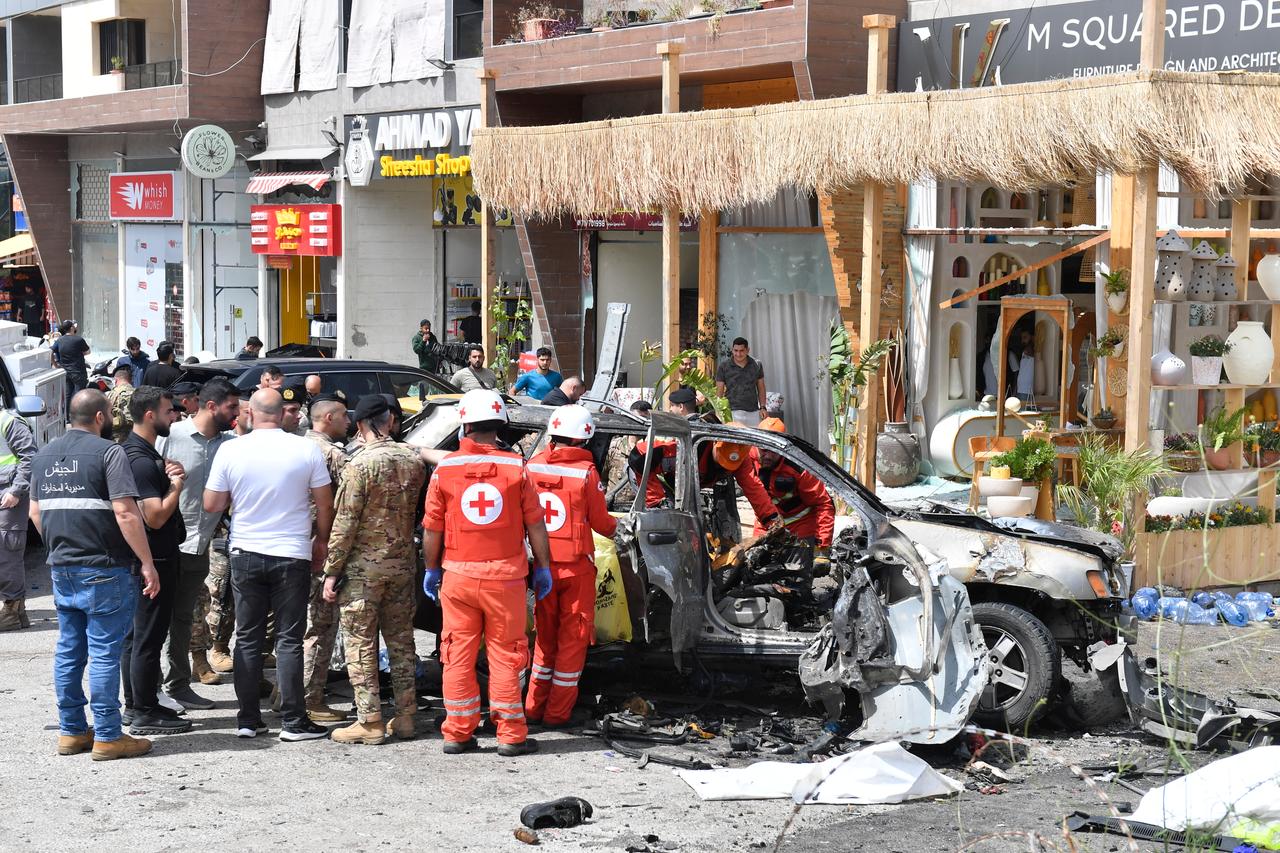
Vehicles targeted by unmanned aerial vehicles (UAVs) in Beirut, Lebanon, 13 May 2026 – (Anadolu Agency)
The statement also indicated that in an attack targeting the village of Cebşit, which is under the jurisdiction of Nabatieh, four people were killed, one of whom was a soldier. In an airstrike on the village of Kefer Dunin, located in the Bint Jubayl district, four people were killed, one of whom was a child. According to Lebanon’s official news agency NNA, two people lost their lives in an airstrike on the village of Deyr Zehrani. Thus, it was announced that a total of 15 people were killed in Israeli strikes across four regions of southern Lebanon.
On the same day, the Israeli military conducted UAV strikes targeting vehicles along the coastal road in southern Beirut and in various other regions of Lebanon. According to NNA, Israeli UAVs targeted two vehicles on the Ciyye highway in southern Beirut, approximately one hour apart. The vehicles were set ablaze, but no official statement was issued regarding casualties in the initial phase.
It was later reported that Israeli UAVs targeted three vehicles within two hours along the Beirut-Saida route in the Chouf district. The Lebanese Ministry of Health announced that in attacks on vehicles near the areas of Berce, el-Ciye and es-Sadiyat, eight people were killed, two of whom were children.
Israeli UAVs also targeted vehicles on the Maaliyye road, the Şaitiyye intersection, and the road leading to the village of Nakura in the city of Sur. In the attack on the Nakura road, one person was injured. During midday, it was reported that a vehicle in the city of Saida was struck by two rockets fired by an Israeli UAV. In this attack, one person was killed and one was injured. Thus, the number of people killed in UAV attacks targeting vehicles rose from nine to twelve during the day.
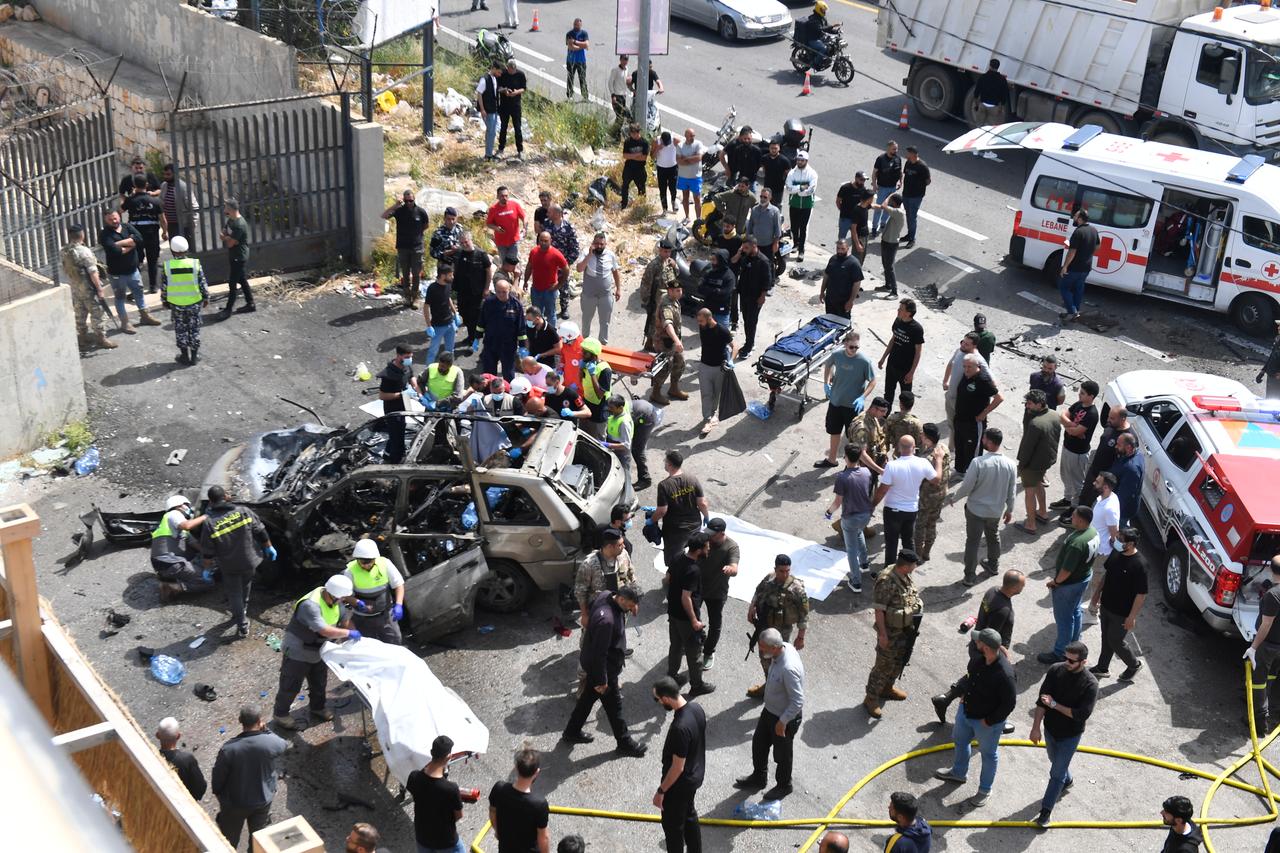
Vehicles targeted by unmanned aerial vehicles (UAVs) in Beirut, Lebanon, 13 May 2026 – (Anadolu Agency)
In a subsequent statement by the Lebanese Ministry of Health, it was reported that in UAV attacks targeting three vehicles in the villages of Maaliyye, Şaitiyye and Nakura, three people were killed. Earlier, it had been announced that nine people were killed in attacks on four vehicles along the Beirut-Saida route. Thus, by midday, the number of people killed in UAV attacks targeting seven vehicles had risen to twelve.
On 13 May, the Israeli military conducted airstrikes on numerous villages in southern Lebanon. In the early morning, the area between the villages of Beraşit and Şakra, both under the jurisdiction of the Bint Jubayl district, was targeted. Israeli aircraft also struck the village of Mecdel Zun.
In a statement by the Israeli military, it was announced that a new airstrike had been launched against targets allegedly linked to Hezbollah in southern Lebanon. NNA reported that Israeli warplanes conducted two airstrikes on the Burç Şemali area, which is part of Sur. Israeli warplanes also targeted the villages of Mecdel Zun and Yanuh.
From midday onward, the scope of the attacks expanded. According to NNA, Israeli aircraft targeted the villages of Yahun, Ayta Cebel, Kefer Rumman, Mecdel Zun, Hinniyye, Sadikin, Debaal, Abbasiyye, Deyr Kanun, Arabsalim, Halusiyye, Haris and Mansuri.
In the evening, the Israeli military carried out airstrikes on the villages of Abbasiye, Kefer Sir, Neumeyriyye, Kefer Hatta, Zehrani, Cercu, Doğu Zavtar, Arabsalim and Suhmur. A subsequent update confirmed that Israeli forces had targeted the villages of Yukarı Nebatiye, Şehhur, Numeyriyye, Abbasiye, Kefer Sir, Kefer Hatta, Zehrani, Cercu, Doğu Zavtar, Arabsalim and Suhmur.
In the afternoon, Israeli warplanes targeted a house in the village of Romin in Nebatiye. According to NNA, the house was completely destroyed in the attack, three people were killed, and many others were injured.
In an Israeli attack on the village of Haruf in southern Lebanon, one person was killed. In the attack on the village of Abbasiye, two people lost their lives. A subsequent update reported that in Israeli attacks on the village of Arabsalim, five members of the same family were killed. In the attack on the village of Numeyriyye, four people were killed, and one person each was killed in the villages of Yukarı Nebatiye and Şehhur.
Combined with the UAV attacks on vehicles, the total number of people killed in Israeli attacks on Lebanon on 13 May rose from eighteen to twenty-nine.
On 13 May, Hezbollah announced that in response to Israeli violations of the ceasefire, it had launched attacks against Israeli military targets in occupied areas of southern Lebanon. In its initial statement, Hezbollah stated that Israeli soldiers, Merkava tanks, military vehicles and military outposts in the areas of Hula, Bayyada, Deyr Suryan, Hırbet Menara, Teyr Harfa, Tayba, Reşaf, Nakura and Abbad had been targeted.
Hezbollah reported that a total of 25 attacks were carried out against Israeli military forces in these areas. The statement indicated that Israeli Merkava tanks, Hummer-type military vehicles, communication systems and UAV signal jamming systems had been targeted using rockets, artillery fire and kamikaze UAVs.
In a later statement issued during the day, Hezbollah stated that eight additional attacks were conducted against Israeli military forces in occupied areas of southern Lebanon. The statement specified that a Hezbollah kamikaze UAV targeted an Israeli armored personnel carrier and troop concentration in Bint Jubayl, and that Israeli soldiers and vehicles at the Bulat position and in the village of Kavzah were struck by rockets.
Hezbollah also announced that a military vehicle in Reşaf, a D9 bulldozer in Deyr Suryan, and a “Namira”-type military vehicle in the Vadi el-Uyun region had been targeted. It was also recorded that Israeli soldiers between Vadi el-Uyun and Serbin were targeted by a rocket attack.
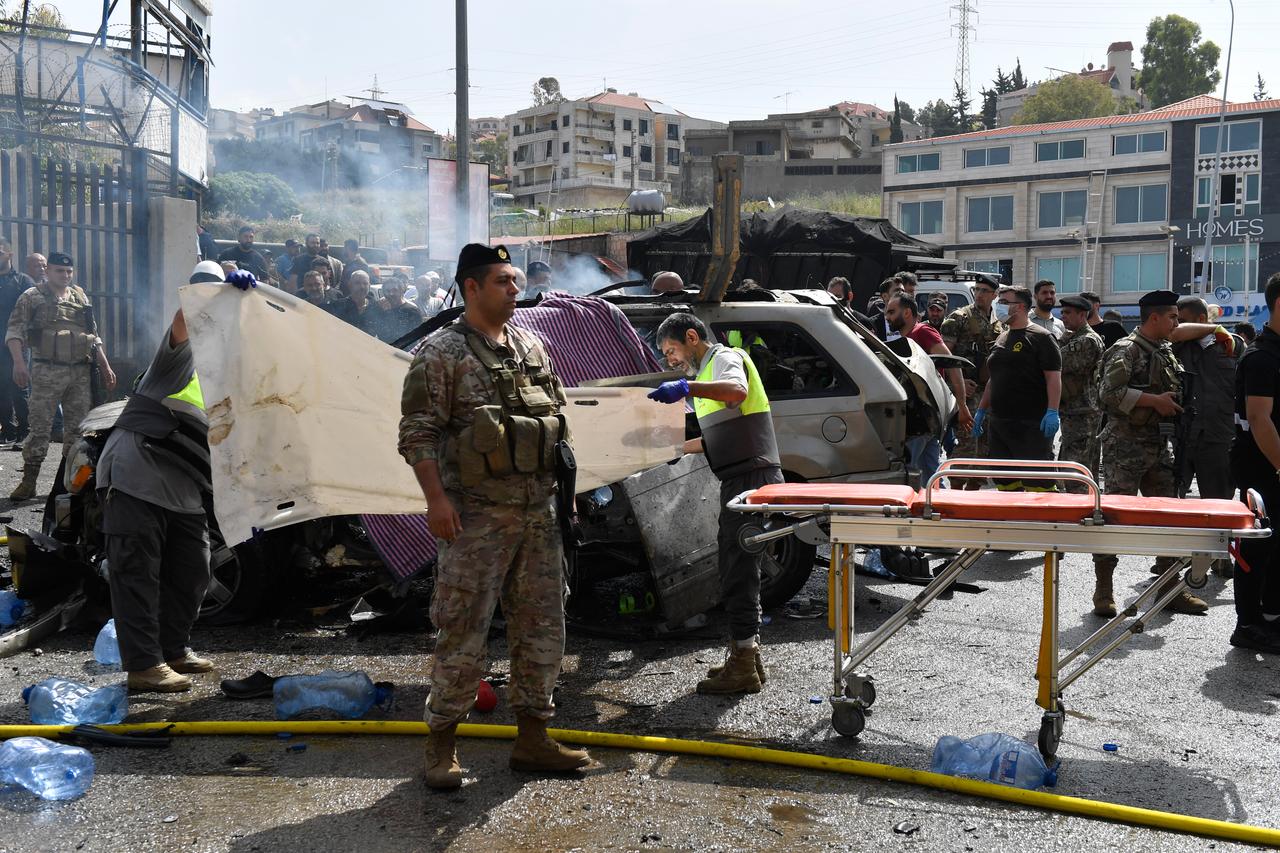
Vehicles targeted by unmanned aerial vehicles (UAVs) in Beirut, Lebanon, 13 May 2026 – (Anadolu Agency)
In its statement on 13 May 2026, the Lebanese Ministry of Health reported that since 2 March, the number of people killed in Israeli attacks on Lebanon had increased by 14 in the past 24 hours to 2,896, while the number of injured had risen to 8,824.
The ministry had previously reported, in its statement the day before, that 2,882 people had been killed in Israeli attacks since 2 March.
A senior Lebanese source stated that contacts were being held to reduce the escalation of Israeli attacks on Lebanon ahead of the third round of direct negotiations in Washington, mediated by the United States.
The source, who requested anonymity, said that despite Israel’s intensified attacks on Lebanon in recent days despite the ceasefire, they hoped these actions would not negatively affect the upcoming third round of talks in Washington. The source said, “Contacts are being held to reduce the escalation of Israeli attacks ahead of tomorrow’s meeting. In this context, certain guarantees are also being requested.” Despite the situation on the ground, it was reported that positive progress in the talks was anticipated.
Italy’s Deputy Prime Minister and Minister of Foreign Affairs Antonio Tajani met with Lebanon’s Minister of Foreign Affairs Yusuf Recci in Rome. The meeting addressed negotiations between Lebanon and Israel and the situation of Italian soldiers serving under the international mission in Lebanon.
Following the meeting, Tajani reiterated Italy’s full support for Lebanon’s stability and security. Tajani said, “Ahead of the ongoing negotiations between Lebanon and Israel in Washington tomorrow, we reaffirmed the need to continue working to preserve the ceasefire, prevent new tensions, and disarm Hezbollah.”
Tajani also stated that Italy would continue providing humanitarian aid to civilians and displaced persons, and would persist in strengthening Lebanese institutions and armed forces through UNIFIL, the Italian Bilateral Military Mission, and the Lebanese Military-Technical Committee. He reiterated that the safety and protection of UNIFIL peacekeeping forces and civilians remains an absolute priority.
On 13 May, UNIFIL issued a statement expressing growing concern over military activities by Israeli forces and Hezbollah near its United Nations peacekeeping positions. The statement read, “UNIFIL is increasingly concerned about the activities of Hezbollah members and Israeli soldiers near UN positions, particularly the increasing use of unmanned aerial vehicles.”
UNIFIL emphasized that this situation endangers its peacekeeping forces. The statement cited examples of incidents occurring near UN bases and their surroundings over the past week and called on both parties to avoid any action that could endanger peacekeeping forces. UNIFIL also noted that the presence, activities and movements of Israeli forces near the UN peacekeeping headquarters had been protested, and that the activities of non-state actors had been reported to the Lebanese Armed Forces.
According to Israeli media, Israeli Prime Minister Binyamin Netanyahu convened a security meeting to discuss threats from explosive-laden UAVs originating from Lebanon and Iran. According to Israeli Channel 12, the meeting involved senior officials, but no detailed information was provided regarding attendees.
Israeli Channel 14 reported that the government had approved a new defense budget. The report stated that approximately $700 million had been allocated to deploy technological systems designed to protect soldiers from Hezbollah UAVs.
Israeli media noted that Hezbollah’s UAV attacks have altered the course of the war over the past month. According to Haaretz, since 2 March, four Israeli soldiers have been killed and more than 40 soldiers have been wounded in Hezbollah’s counterattacks.
Anadolu Ajansı. "ABD Arabuluculuğundaki Lübnan-İsrail Görüşmelerinin 3. Turu Bugün Başlıyor." Accessed May 14, 2026. https://www.aa.com.tr/tr/dunya/abd-arabuluculugundaki-lubnan-israil-gorusmelerinin-3-turu-bugun-basliyor/3937036
Anadolu Ajansı. "İsrail'den Ateşkese Rağmen Lübnan'da 8 Belde İçin Yeni Saldırı Tehdidi." Accessed May 14, 2026. https://www.aa.com.tr/tr/dunya/israilden-ateskese-ragmen-lubnanda-8-belde-icin-yeni-saldiri-tehdidi/3936853
On 15 May 2026, the Israeli military conducted aerial strikes, drone attacks and artillery shelling around Sur, Nabatieh and Bint Jbeil in southern Lebanon, despite the ceasefire that came into effect on 17 April. From nighttime into the morning hours, the villages of Kana, el-Kleyle, es-Sultaniye, Tebnin, Shuhur and Debal, attached to Sur, were targeted by aerial strikes. A house in Sur was hit by a drone, and following the attack, a fire broke out and injuries were reported.
Villages in the Bint Jbeil district, attached to Nabatieh, were subjected to artillery fire. Later in the day, Israeli artillery targeted the villages of Kunin, Braşit and Beyt Yahun in the Bint Jbeil district. Israeli warplanes carried out aerial strikes on the villages of Mecdel Silm and Furun, while drones targeted the village of Shuhur, attached to Sur, and Upper Nabatieh. A drone attack was also carried out against a motorcycle in the village of Mecedil in Sur.
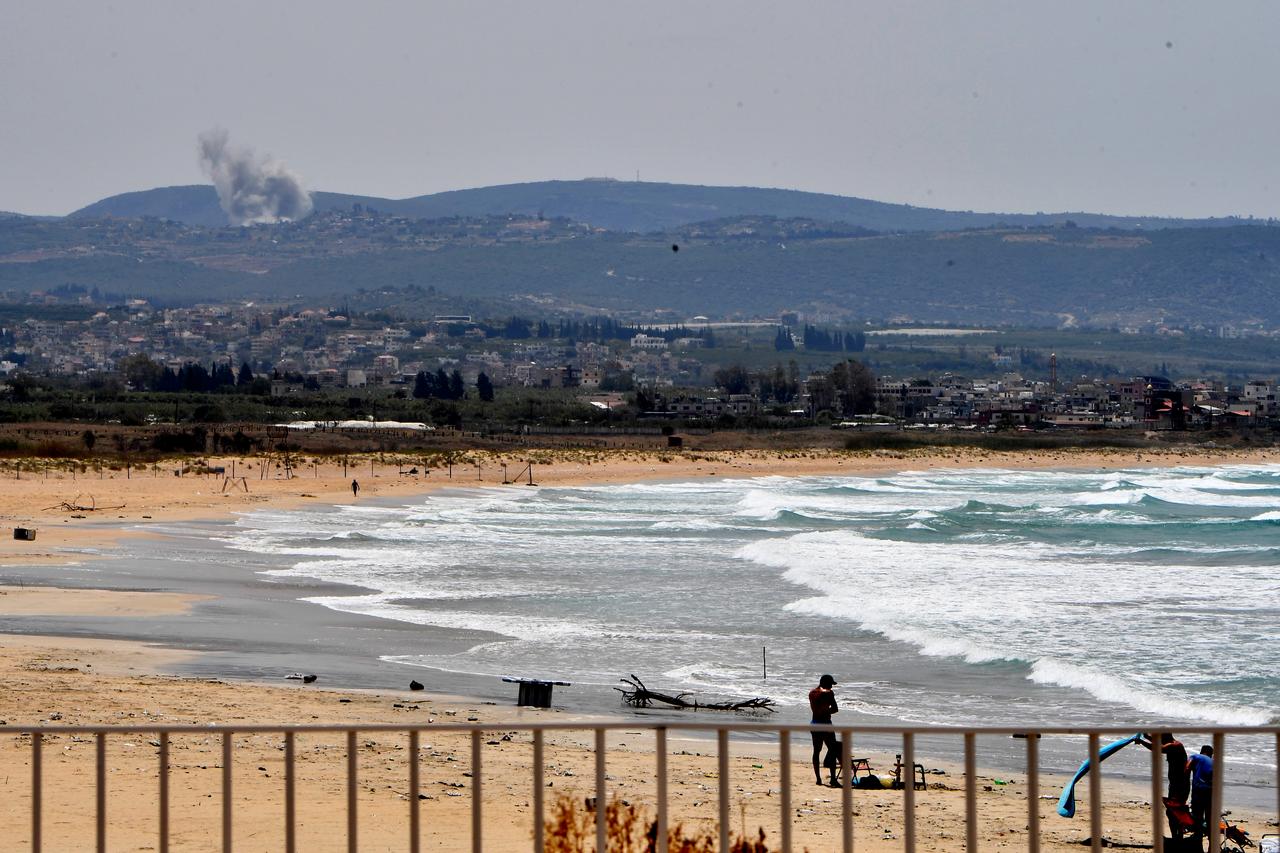
The Israeli military continues its attacks against southern Lebanon, 17 May 2026 – (Anadolu Agency)
At midday, the Israeli military launched a new wave of aerial attacks targeting the center of Sur and its surroundings. Israeli warplanes struck the center of Sur along with the villages of Mashuk, Hamadiye, Shebriha and Abbasiye. During the same period, the villages of Hos, Shaytiyya and Tayr Falsay were also targeted by aerial strikes. Later in the day, aerial attacks were carried out on the villages of Deyr Zahran, Beyt Yahun, Arab Cel, Zerariyya, Bazuriyya, Harayip and Jibshit. Israeli artillery hit the villages of East Zavtar, West Zavtar, Meyfedun, Jibshit and Kakaiyyet Cisir. According to NNA, the Israeli military carried out a phosphorus artillery strike on East Zavtar.
On the morning of 15 May, Israeli military spokesperson Avichay Adraee issued a threat of attack against the villages of Shebriha, Hamadiye, Zakuk Mefdi, Mashuk and el-Hawsh, attached to Sur. Adraee called on Lebanese residents in these areas to move at least one kilometer away from their homes.
The Israeli military later issued a new threat of attack against two buildings in the center of Sur. Adraee claimed these buildings were being used by Hezbollah and called on civilians to evacuate at least 300 meters from them. Following these threats, the Israeli military resumed aerial strikes on the center of Sur. Civil defense teams were dispatched to the area and the wounded were transported to hospitals.
A public health center near Hiram Hospital in Sur was also targeted in the attacks. In the strike, nine people were injured, two of them nurses. Hiram Hospital administrator Salman Idaybi stated that the two nurses sustained minor injuries and that seven other injured individuals were brought to the hospital’s emergency department. Idaybi noted that the patients’ conditions were stable and that the force of the attack had damaged the hospital’s windows and some ceiling plaster.
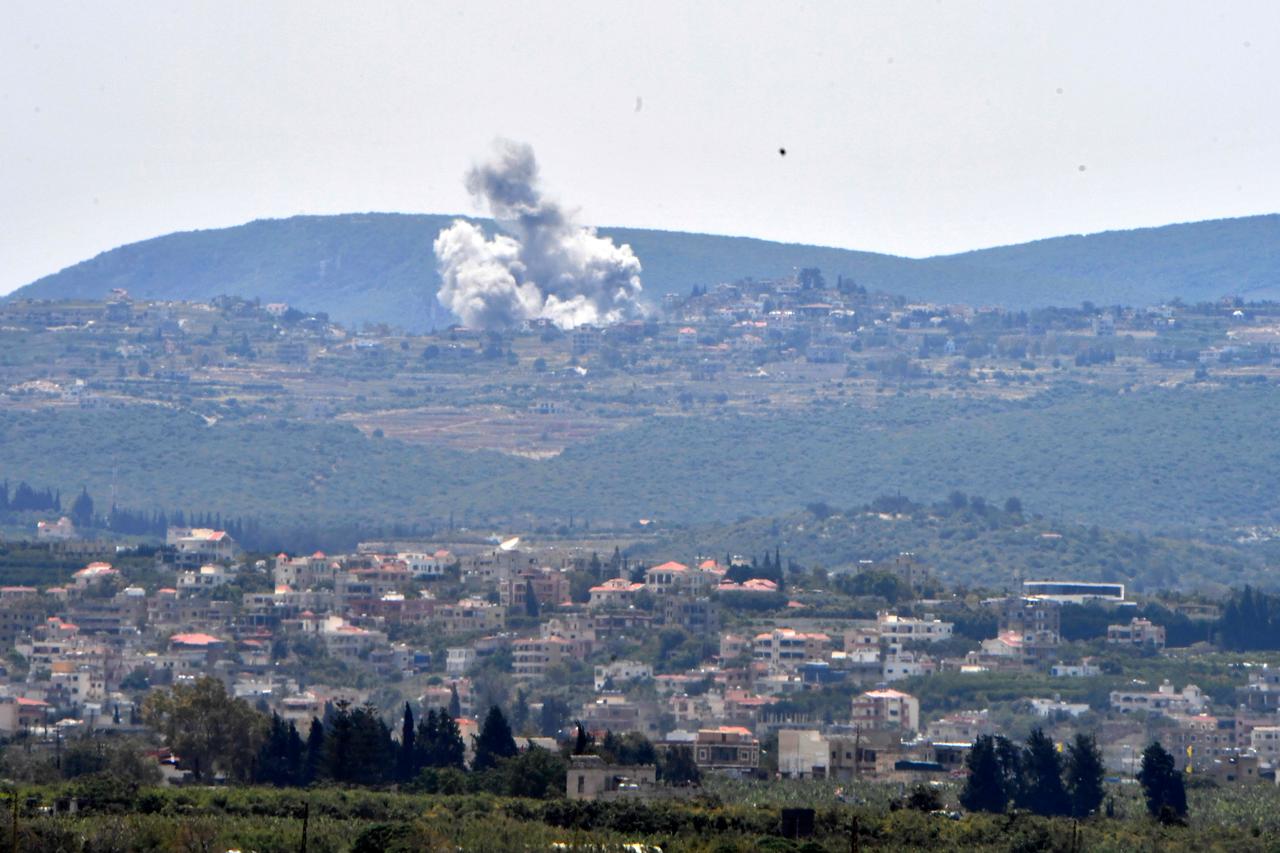
The Israeli military continues its attacks against southern Lebanon, 17 May 2026 – (Anadolu Agency)
On 15 May, the Nabatieh governorate became one of the areas most heavily targeted by Israeli attacks. An Israeli drone struck a car in the center of Nabatieh with two missiles. Two people were killed and one person was injured in the attack. In this strike, which targeted individuals who had come to deliver humanitarian aid, three ambulances belonging to the Nabatieh Emergency Response team were damaged, with one rendered completely unusable.
In a nighttime drone strike on the village of Haruf, attached to Nabatieh, four people were killed. In the afternoon, another drone attack on Haruf killed three more people and injured four. Thus, the number of those killed in Israeli attacks against southern Lebanon since nighttime on 15 May rose to 11.
The health center in Haruf was also targeted in Israeli attacks. Israeli warplanes struck the health center in Haruf, attached to Nabatieh, with two aerial strikes. Initial reports stated that three health workers were killed, one was seriously injured and the center was completely destroyed. Later, the Lebanese Ministry of Health announced that the death toll from the attack on the Haruf health center had risen to six, three of whom were health workers, and that 22 people had been injured. NNA reported that the attack caused extensive destruction within the health center.
The Israeli military announced that 20-year-old Corporal Negev Dagan from the Golani Brigade was killed in clashes in southern Lebanon. With this, the number of Israeli soldiers killed in Lebanon since the expansion of Israel’s attacks on 2 March has risen to 19.
On the same day, Hezbollah announced that it had targeted Israeli forces in the villages of el-Beyyada and et-Taybe in southern Lebanon with rockets. The statement indicated that Israeli forces were directly hit. Subsequent statements reported that two Israeli D9 bulldozers advancing between the villages of Resaf and Hadasa had been destroyed by explosives, and that a Merkava tank in Resaf had been targeted. In Bayyada, Israeli soldiers and a Merkava tank were targeted by rocket and artillery fire, and a unit in Tayba was struck by a rocket.
Israel’s far-right National Security Minister Itamar Ben-Gvir stated on 15 May that Israel had plans to establish illegal Jewish settlements in the southern Lebanese territories it occupies. According to Israeli state television KAN, Ben-Gvir made these remarks during a ceremony commemorating the Israeli occupation of East Jerusalem in 1967.
Ben-Gvir said, “We have a plan for settlement in Lebanon and also plans to encourage the migration of Palestinians from Gaza and the West Bank.” The far-right minister indicated that he also had plans to forcibly displace Palestinians from their land in the occupied West Bank and Gaza Strip under the guise of “voluntary migration.”
The Lebanese Ministry of Health released its latest figures regarding Israeli attacks on Lebanon since 2 March 2026. According to these figures, the number of people killed in Israeli attacks has increased by 55 to 2,951, while the number of injured has reached 8,988.
The third round of direct Israel-Lebanon negotiations, mediated by the United States in Washington, took place on 14–15 May. U.S. State Department spokesperson Tommy Pigott announced that the ceasefire between Israel and Lebanon had been extended by 45 additional days. Pigott said, “The United States hosted extremely productive two-day talks between Israel and Lebanon on 14–15 May. The ceasefire declared on 16 April will be extended by another 45 days to allow for further progress.”
According to the U.S. statement, the parties will reconvene for political negotiations on 2–3 June. Additionally, the military delegations of both countries will attend a security meeting at the Pentagon on 29 May. Pigott expressed confidence that the talks would contribute to achieving lasting peace between the two countries and to the full recognition of mutual sovereignty and territorial integrity.
The Lebanese delegation also stated that concrete diplomatic progress favorable to Lebanon had been achieved in the Washington talks. The statement emphasized that the 45-day extension of the ceasefire would allow civilians to “catch their breath” and open a political path toward lasting stability. The Lebanese delegation reaffirmed its core positions: restoration of the state’s sovereignty over all national territory, protection of borders, safe return of displaced persons, reconstruction, release of detained Lebanese citizens and return of bodies.
The statement further noted the need for a U.S.-supported implementation mechanism to ensure that all commitments are fulfilled without compromising Lebanese sovereignty, to prevent recurrence of previous violations. Lebanon is said to be negotiating for a future in which its borders are respected, its sovereignty is upheld solely by the Lebanese Armed Forces, and its people can live in safety.
Lebanese Prime Minister Nevvaf Selam spoke on 15 May at a ceremony held by the Makasid Society in Beirut in honor of former president Faysal Sino. Selam stated that Lebanon was enduring one of its most dangerous crises since its founding. He said that for years the state had been viewed not as a “common roof” but as a “spoils system,” that institutions had lost credibility, public administration had collapsed and public trust in the state had been eroded.
Selam called for mobilizing Arab and international support to strengthen Lebanon’s position in negotiations with Israel. He announced that Lebanon would appeal to international platforms to document the crimes committed by Israel despite the ceasefire and would request the deployment of a United Nations team to collect evidence and identify Israeli violations.
Selam stated that Lebanon’s true liberation could only be achieved through a clear return to the concept of the state. “The state we want is one of equal citizenship, effective institutions, an independent judiciary and modern governance.” He emphasized that only constitutional institutions should hold authority, adding, “The only legitimate weapon must be that of the national army, and no individual must stand above or outside the law.”
Selam also criticized Hezbollah without naming it directly. “Senseless adventures pursued for foreign agendas and interests are enough. The latest of these was a war we did not choose but were forced into. This war has resulted in Israel occupying 68 villages, towns and points today, while we were trying to push it out of five. Even after all the death, destruction, displacement and tragedy it has brought, there are still those who dare to call it a ‘victory’ with a straight face.”
On 16 May 2026, the Israeli military continued its aerial attacks and military operations against southern Lebanon. Throughout the day, numerous villages around Nabatieh, Sur and Sidon were targeted by aerial strikes, artillery fire and unmanned aerial vehicle operations. The Israeli military also issued new evacuation threats against various settlements in southern Lebanon.
Israeli military spokesperson Avichay Adraee, in a social media statement, claimed that Hezbollah had violated the ceasefire and announced that attacks would be carried out against the villages of Kefr Kila, Erzi, Babiliyye, Ensar, Tebna, Gassaniye, Maruniyye, Kuteriyet es-Siyad and Bissariye. The statement called on civilians living in these areas to move at least one kilometer away from their homes.
On the same day, the Israeli military announced the launch of a new large-scale aerial offensive in southern Lebanon. A written statement from the Israeli military indicated that operations were conducted against infrastructure allegedly belonging to Hezbollah. According to Lebanon’s official news agency NNA, the villages of Yahmer esh-Shakif, Kefr Tebnit, Ernun, Kevseriyye and Mervaniyye were targeted by aerial strikes. Israeli warplanes also bombed several transportation routes. The villages of Babiliyye and Gassaniyye near Sidon were also among the targets. Israeli drones conducted low-altitude flights over Sur and its surroundings throughout the day.
Civilian residences in the areas targeted around Sur and Nabatieh were also struck.
In an aerial strike on the village of Teyr Felsiyye, attached to Sur, a woman and her son, identified as a health worker, were killed. Five others were injured and transported to hospitals in Sur. Authorities stated that search and rescue operations were ongoing in the rubble and that other individuals may still be trapped beneath it.
In an artillery strike targeting the area around the Sırbin junction in Nabatieh, one person was killed and one was injured. Throughout the day, the el-Hush region east of Sur and the village of Cibal el-Butm were also targeted by Israeli aerial strikes.
The Israeli military announced that it had declared a “closed military zone” along the coastal strip extending toward the Lebanese border. The decision was said to have been taken following a security assessment conducted on Thursday evening.
According to the announcement, the closed military zone covers approximately 5.7 kilometers of coastline between the Israeli settlements of Rosh Hanikra and Akhsif. The decision drew attention as it followed a drone attack by Hezbollah on the Rosh Hanikra settlement that injured three Israelis.
On 16 May, Hezbollah announced that an Israeli soldier was killed in a drone attack. The statement identified Major Maoz Israel Recanati, a company commander in the 12th Battalion of the Golani Brigade, as the deceased. With this announcement, the number of Israeli soldiers killed in clashes in Lebanon since 2 March rose to 20.
On 16 May 2026, the Lebanese Ministry of Health announced that in Israeli attacks against Lebanon since 2 March, the number of those killed had increased by 18 in the past 24 hours to 2,969. The same statement reported that the number of injured had reached 9,112.
United Nations Secretary-General Antonio Guterres expressed satisfaction with the 45-day extension of the ceasefire between Israel and Lebanon. In a written statement by Deputy Spokesperson Farhan Haq, the extension following U.S.-mediated talks was welcomed.
The statement noted that Guterres had called on all parties to comply with the ceasefire, avoid new attacks and adhere to their obligations under international law and international humanitarian law.
On 17 May 2026, the Israeli military continued its aerial strikes against numerous villages in southern and eastern Lebanon, despite the 45-day ceasefire extension announced on 15 May. Throughout the day, settlements around Nabatieh, Sur, Sidon and the Bekaa Valley were targeted by warplanes, artillery units and unmanned aerial vehicles.
According to Lebanon’s official news agency NNA, Israeli warplanes carried out an aerial strike on the village of East Zavtar, attached to Nabatieh. Israeli drones targeted the village of Jibshit, and two aerial strikes on the village of Suhmur in eastern Lebanon hit poultry farms and stables. The village of Tayr Diba, attached to Sur, was targeted by two aerial strikes, during which health workers were injured and rescue operations were underway in the area.
The Israeli military also struck the area between the villages of Kefra and Deyr Amis in the Bint Jbeil district. The Habl er-Rafi area between the Sur neighborhoods of Sadikin and Cibal el-Butm, as well as the area around the village of Zibkin in southeastern Sur, were also targeted.
Later in the day, Israeli warplanes launched new strikes on the villages of Ayta Cebel, Mecdel Silm, Hadasa, Coya, Kefer Sir, Kusaybe, Tebnin, Ferun and Suhmur. In an evening strike on Coya, three people were reported killed.
On 17 May, Israeli attacks targeted populated areas, vehicles and locations where medical personnel were present. According to the Lebanese Ministry of Health, in an Israeli strike on the village of Tayr Falsay, attached to Sur, three people were killed, one of them a child, and eight people were injured, three of them children.
In the attack on Tayr Diba, two people were killed, one of them a child, and three others were injured, including a woman. In attacks on the villages of Zerariyya and Jibshit, a total of four people were injured.
In a drone strike by the Israeli military on a car in the village of Zerariyya, attached to Sidon, one person was killed.
According to the Lebanese Ministry of Health’s end-of-day figures, a total of eight people were killed in Israeli aerial strikes on villages in southern Lebanon on 17 May, with many others injured.
The Israeli military issued evacuation threats against new settlements in southern and eastern Lebanon, despite the ceasefire. Israeli military spokesperson Avichay Adraee announced in a statement that the villages of Rumin, Kusaybe, Kefer Hune, Binaful and Suhmur in the Bekaa region would be targeted.
Local sources reported that schools in the village of Binaful had been converted into shelters for displaced civilians, where dozens of families were staying.
Hezbollah announced that it had carried out attacks against Israeli soldiers and military vehicles in occupied areas of southern Lebanon in response to Israel’s ceasefire violations.
According to Hezbollah’s written statement, a bulldozer and military vehicle in Bayyada were targeted by kamikaze drones. It was also reported that Israeli soldiers inside a tent in the same area were struck by another kamikaze drone attack.
Hezbollah also stated that it had launched a rocket attack on a position occupied by Israeli soldiers and military vehicles in Resaf, and that a Hezbollah kamikaze drone had targeted an Israeli artillery position in Adise. It was reported that an Israeli unit advancing toward the Safita area near Yumhur Shekif had been struck by explosives, with casualties and injuries among the soldiers alleged.
It was stated that the villages of Bayyada, Resaf and Adise have been under Israeli military occupation since 2 March 2026.
On 17 May 2026, the Lebanese Ministry of Health announced that in Israeli attacks since 2 March, the number of those killed had increased by 19 in the past 24 hours to 2,988.
The statement also reported that the number of injured had reached 9,210. Among those killed were 116 health workers, and 263 medical personnel had been injured.
On 18 May 2026, the Israeli military targeted numerous villages around Sur, Nabatieh and Baalbek throughout the day with warplanes and guided missiles.
According to Lebanon’s official news agency NNA, Israeli warplanes carried out aerial strikes on the villages of Sadikin, Kana, Deyr Antar, Maarake, Deyr Amis, Hinnaviyye, Mecdel Silm, Tebnin and Deyr Zehrani. In the strike on Maarake, one person was killed and eight were injured.
The Israeli military also targeted an apartment occupied by a Palestinian family in the city of Baalbek in eastern Lebanon with a guided missile. In the attack, Vail Abdulhalim, a commander of Palestinian Islamic Jihad, and his 17-year-old daughter Rama Abdulhalim were killed. Search and rescue operations were reported to be ongoing at the site.
Thus, the number of those killed in Israeli attacks against southern and eastern Lebanon on 18 May rose to three.
It was announced that Vail Abdulhalim, killed in the Israeli strike on Baalbek, was one of the commanders of Palestinian Islamic Jihad. According to Lebanon’s official agency NNA, the strike was carried out during nighttime against an apartment occupied by a Palestinian family.
It was reported that Abdulhalim’s 17-year-old daughter Rama was also killed. Search and rescue operations continued in the area due to the possibility that other individuals might still be trapped under the rubble.
Hezbollah announced that it had carried out attacks against Israeli military targets in northern Israel in response to Israel’s ceasefire violations.
In its written statement, the organization stated that an Israeli “Iron Dome” platform was targeted by a kamikaze drone. The statement also indicated that Israeli soldiers and military vehicles in the occupied village of Resaf in southern Lebanon were struck by rocket fire. Hezbollah announced that a communications vehicle belonging to the Israeli military in the Deyr Suryan region had also been targeted by a drone.
Anadolu Ajansı. "ABD Dışişleri Bakanlığı: İsrail ile Lübnan Arasındaki Ateşkes 45 Gün Daha Uzatıldı." Accessed May 18, 2026. https://www.aa.com.tr/tr/dunya/abd-disisleri-bakanligi-israil-ile-lubnan-arasindaki-ateskes-45-gun-daha-uzatildi/3939046
Anadolu Ajansı. "BM Genel Sekreteri, Lübnan ve İsrail Arasında Ateşkesin Uzatılmasından Memnun." Accessed May 18, 2026. https://www.aa.com.tr/tr/dunya/bm-genel-sekreteri-lubnan-ve-israil-arasinda-ateskesin-uzatilmasindan-memnun-/3939889
Anadolu Ajansı. "Lübnan Başbakanı Selam'dan İsrail ile Yürütülen Müzakereler İçin Arap ve Uluslararası Destek Çağrısı." Accessed May 18, 2026. https://www.aa.com.tr/tr/dunya/lubnan-basbakani-selamdan-israil-ile-yurutulen-muzakereler-icin-arap-ve-uluslararasi-destek-cagrisi/3939122
Anadolu Ajansı. "Lübnan Heyeti: ABD'deki Müzakerelerde Ülke Lehine Somut Diplomatik İlerleme Sağlandı." Accessed May 18, 2026. https://www.aa.com.tr/tr/dunya/lubnan-heyeti-abddeki-muzakerelerde-ulke-lehine-somut-diplomatik-ilerleme-saglandi/3939137
Anadolu Ajansı. "İsrail Ordusu Ateşkese Rağmen Lübnan'ın Güneyine Yönelik Saldırılarını Sürdürüyor." Anadolu Ajansı Foto Galeri. Accessed May 18, 2026. https://www.aa.com.tr/tr/pg/foto-galeri/israil-ordusu-ateskese-ragmen-lubnanin-guneyine-yonelik-saldirilarini-surduruyor/161718
Anadolu Ajansı. "İsrail Ordusunun Ateşkese Rağmen Lübnan'ın Güneyine Düzenlediği Saldırılarda 8 Kişi Öldü." Accessed May 18, 2026. https://www.aa.com.tr/tr/dunya/israil-ordusunun-ateskese-ragmen-lubnanin-guneyine-duzenledigi-saldirilarda-8-kisi-oldu/3940031
Anadolu Ajansı. "İsrail'in Ateşkese Rağmen Lübnan'a Saldırılarında Son 24 Saatte 18 Kişi Hayatını Kaybetti." Anadolu Ajansı Live Blog. Accessed May 18, 2026. https://www.aa.com.tr/tr/live-blog/israil-in-ateskese-ragmen-lubnan-a-saldirilarinda-son-24-saatte-18-kisi-hayatini-kaybetti/2624
Anadolu Ajansı. "İsrail'in Lübnan'a Düzenlediği Saldırıda Filistin İslami Cihad Komutanı ile Kızı Hayatını Kaybetti." Accessed May 18, 2026. https://www.aa.com.tr/tr/dunya/israilin-lubnana-duzenledigi-saldirida-filistin-islami-cihad-komutani-ile-kizi-hayatini-kaybetti/3940659
Despite the 45-day extension of the ceasefire that began on 15 May, the Israeli military continued aerial and artillery strikes on various areas in southern Lebanon on 19 May 2026. During the day, targets included the towns of Haruf and Furun under the jurisdiction of Nabatieh, as well as areas around Sur and Mercayun.
In the morning hours, an Israeli unmanned aerial vehicle targeted a municipal vehicle near the municipal building in the town of Haruf, under the jurisdiction of Nabatieh, using a missile. It was reported that a municipal employee preparing bread distribution for the public and another individual were injured during the attack, with one of the injured in critical condition. At the same time, Israeli fighter jets struck the town of Shahhabiya under the jurisdiction of Sur and the Reyhan Hills in the Cizzin region, while the Arid Debbin area in the district of Mercayun was hit by artillery fire.
Later in the day, an Israeli unmanned aerial vehicle targeted a motorcycle in the town of Furun under the jurisdiction of Nabatieh. One person was killed in the attack. Simultaneously with this strike, it was reported that Israeli fighter jets conducted an aerial attack on Furun, while Israeli artillery units intermittently bombed the town of Beyt Yahun under the jurisdiction of Bint Jubayl.
Anadolu Ajansı. "İsrail'in Lübnan'a Saldırısında Halka Ekmek Dağıtımı Hazırlığı Yapan 2 Kişi Yaralandı." Accessed May 19, 2026. https://www.aa.com.tr/tr/dunya/israilin-lubnana-saldirisinda-halka-ekmek-dagitimi-hazirligi-yapan-2-kisi-yaralandi/3941795
Despite the ceasefire that came into effect on 17 April 2026 and was extended for 45 days until 17 May, the Israeli military issued new attack threats against settlement areas in southern Lebanon on 19 May. Israeli Defense Forces Spokesperson Avichay Adraee announced in a statement that the towns of Tora, Upper Nabatieh, Habbous, Bazourieh, Tair Diba, Kfar Huna, Ayn Kana, Jibshit, Shehabiyeh, Burj al-Shemali, Homon and Lebaya would be targeted. Residents in these areas were urged to move at least 1 kilometer away from their settlements. The threats drew attention because they also included settlements north of the Litani River.
From the early hours of the day, the Israeli military conducted numerous air and artillery strikes on multiple locations around Nabatieh and Sur. A municipal vehicle near the town hall in Haruf was targeted by a drone. During the attack, one person preparing to distribute bread to the public was killed and a municipal council member was injured.
On the same day, a motorcycle in Furun was struck by a drone, resulting in the death of one person. The town of Furun was also bombed by warplanes at the same time.
Israeli warplanes also targeted areas around Shehabiyeh, Reyhan Hills, Eastern Zavtar, Kfar Rumman, Tebnine and Lebaya in Western Bekaa. The Arid Dibin area in the Marjayoun district was subjected to artillery fire while the town of Beit Youn was bombed intermittently throughout the day. It was reported that Israeli drones conducted prolonged low-altitude flights over the capital Beirut.
19 May 2026 saw the heaviest casualties in the Nabatieh governorate and Sur district. Israeli warplanes targeted the home of the Kamiha family in Kfar Sir. Five members of the same family were killed, two of them women, and the building was completely destroyed.
Attacks on the center of Nabatieh resulted in the deaths of four people. The town’s historic Saray Quarter was also struck by airstrikes, causing widespread destruction in an area containing shops, an old mosque and historic residences.
The attack on the town of Deyr Kanun en-Nehr, part of the Sur district was the deadliest incident of the day. According to data from the Lebanese Ministry of Health, ten people were killed, three of them children and three women, with many others injured. In Hanavay, a house was hit, injuring two people, and search and rescue operations were launched to reach those trapped under rubble. By the end of the day, Lebanese authorities reported that the total number of fatalities resulting from attacks in Haruf, Furun, Kfar Sir, the center of Nabatieh and Deyr Kanun en-Nehr had risen to 21.
The Lebanese official news agency NNA reported that the Israeli military targeted agricultural fields near the village of Mansuri in the Sur district, where farmers were harvesting watermelons, using three phosphorus munitions. The munitions landed near the farmers but no casualties or injuries were reported. After the farmers evacuated the area, efforts were made to control fires and mitigate environmental impacts.
Hezbollah announced that in response to ceasefire violations, it launched a drone attack on the Israeli settlement of Misgav Am in northern Israel. According to Israeli media reports, two people sustained minor injuries in the attack. The Israeli military stated that the attack targeted its own units but did not provide details regarding military casualties.
On the same day, the Israeli military announced the death of 27-year-old Reserve Lieutenant Itamar Sapir during a clash with Hezbollah members in southern Lebanon. The confrontation occurred in an occupied village, and following the incident, Israeli warplanes conducted airstrikes on the area. Since Israel expanded its ground and air operations on 2 March 2026, the number of Israeli soldiers killed on the Lebanese front has risen to 21.
According to data released by the Lebanese Ministry of Health on 19 May 2026, the number of people killed in Israeli attacks on Lebanon since 2 March 2026 increased by 22 in the last 24 hours, reaching a total of 3,042. The number of injured was reported as 9,301. Thus, despite the ceasefire declared on 17 April and subsequently extended, casualties have continued to rise as a result of ongoing attacks.
Anadolu Ajansı. "İsrail Ordusunun Lübnan’ın Güneyine Düzenlediği Hava Saldırılarında 7 Kişi Öldü." Accessed May 21, 2026. https://www.aa.com.tr/tr/dunya/israil-ordusunun-lubnanin-guneyine-duzenledigi-hava-saldirilarinda-7-kisi-oldu/3943171
Anadolu Ajansı. "İsrail’in Ateşkese Rağmen Lübnan’a Düzenlediği Saldırılarda Ölenlerin Sayısı 21’e Yükseldi." Accessed May 21, 2026. https://www.aa.com.tr/tr/dunya/-israilin-ateskese-ragmen-lubnana-duzenledigi-saldirilarda-olenlerin-sayisi-21e-yukseldi/3941795
Anadolu Ajansı. "İsrail’in Lübnan’da Bir Motosikleti Hedef Alan İHA Saldırısında 1 Kişi Öldü." Accessed May 21, 2026. https://www.aa.com.tr/tr/dunya/israilin-lubnanda-bir-motosikleti-hedef-alan-iha-saldirisinda-1-kisi-oldu/3944526
It has been reported that the number of people killed in Israel’s attacks on Lebanon since 2 March has risen to 3,111 despite the ceasefire.
According to data released by Lebanon’s Ministry of Health, the number of injured during the same period reached 9,397. The ministry previously reported on the day before that the death toll stood at 3,089.
It has been noted that Israel has continued its attacks on Lebanon despite the ceasefire that came into effect on 17 April and was extended for 45 days as of 17 May.
According to Lebanon’s official news agency NNA, the Israeli military carried out air strikes on the town of Nabatieh and the villages of Deyr Kanun en-Nehr, Kefer Tebnit, Mansuri, Coya, Dibal and Kalila.
It has been reported that the Israeli military has targeted numerous villages in southern Lebanon with air and artillery strikes despite the ceasefire.
According to Lebanon’s official news agency NNA, Israeli warplanes bombed the villages of East Zavtar, Mervaniyye, Brashit, Ganduriyye, Haris, Shuhur and Burc Rahhal. The area between the villages of Kefra and Yater in the Bint Jubayl district was also heavily targeted by air strikes.
Israeli artillery has conducted intense bombardments around the villages of Jibshit, Adshit, Kakaiyyet Cisir, East Zavtar, Meydun, Upper Nabatieh, Resaf, Hadasa, Ganduriyye, Tulin, Kubreyha and Savvane.
It has been reported that the Israeli military issued a threat of attack against two buildings in the city of Sur and called on civilians in the area to evacuate their homes.
In a statement by Hezbollah, it was stated that at least 18 attacks were carried out against Israeli soldiers and military targets in the occupied areas of southern Lebanon in response to ceasefire violations.
The statement indicated that command centers, military installations, a Iron Dome platform, a Merkava tank, an armored personnel carrier and a communications vehicle were targeted by kamikaze drones, rockets and missiles.
It has been reported that at least six people were killed and two injured in Israeli air strikes on Lebanon despite the ceasefire. According to Lebanon’s official news agency NNA, Israeli forces targeted the village of Deyr Kanun en-Nehr, part of the city of Sur, during nighttime hours, resulting in the complete destruction of a house and the deaths of four people.
It was reported that Israeli warplanes targeted the village of Ash-Shihabiyye, part of Sur, and the Bekaa region in eastern Lebanon during morning hours. In the village of Er-Refid in southern Bekaa, an airstrike on a house killed one person and injured another. Another person was killed in an air strike on the road between the villages of Ayn Beal and el-Hus in Sur.
It was reported that the Israeli military carried out air strikes on the villages of El-Ganduriyye, Yahmur Shakif and Dibbin, all part of Nabatieh, with some areas previously targeted by artillery fire.
It was reported that an Israeli unmanned aerial vehicle attacked the perimeter of a Lebanese army barracks in Nabatieh, injuring one soldier. In the Kasimiyye region, an air strike was carried out on a vehicle, with reports of injuries among those present.
The Israeli military has threatened attacks on 15 villages in southern Lebanon. In a statement by Israeli Defense Forces spokesperson Avichay Adraee, it was stated that the villages of Nabatieh el-Tahta, Kefr Tebnit, Zibdin, Arabsalim, Kefr Rumman, Habbush, Balat, Deyr Keyfa, Haruf, Jibshit, el-Mahmudiyye, Melih, Shabir, Katrani and Humin el-Fevga would be targeted.
The statement called on civilians in the area to move at least one kilometer away from their current locations.
It was stated that Israeli Prime Minister Binyamin Netanyahu agreed with US President Donald Trump that any potential agreement with Iran must eliminate the nuclear threat.
In Netanyahu’s statement, it was noted that he and Trump discussed an agreement regarding the opening of the Strait of Hormuz and negotiations on Iran’s nuclear program.
It was argued that any final agreement with Iran must include the dismantling of Iran’s nuclear facilities and the removal of enriched uranium from the country.
Netanyahu further claimed that Trump affirmed Israel’s right to defend itself against threats on all fronts, including Lebanon, and stated that the US-Israel partnership is in its strongest phase.
Naim Qassem stated that direct negotiations between Tel Aviv and Beirut benefit Israel entirely but bring no advantage to Lebanon.
In a video message issued on the occasion of “Resistance and Liberation Day,” Qassem stated that Israel’s attacks will not last long and that Hezbollah will continue to stand alongside Palestine.
Qassem said Hezbollah’s unmanned aerial vehicles continue to track Israeli troops and argued that without such footage, Israel would not acknowledge its losses.
Qassem declared direct negotiations between Tel Aviv and Beirut unacceptable, asserting that Israel’s primary objective is to eliminate resistance and gradually occupy Lebanon.
Qassem stated that if the Lebanese government fails to uphold its sovereignty, it must resign, and affirmed the people’s right to take to the streets to overthrow the government and oppose the US-Israel project.
Qassem also argued that the state must not become a tool facilitating the US-Israel project, and contended that the US sanctions against Lebanese parliamentarians, security officials and Iran’s Ambassador to Beirut Muhammad Reza Shaybani, under the pretext of Hezbollah links, have strengthened the resolve of the resistance.
It has been reported that the ambassadors of Israel and Lebanon in Washington met on 14 and 23 April under US mediation to prepare for negotiations.
The first meeting, held at the US Department of State, was recorded as the highest-level direct dialogue between the parties since 1993.
It was announced that following the third round of talks on 14-15 May, the ceasefire was extended for 45 days starting 17 May, that the political track of negotiations would resume on 2-3 June, and that a security meeting involving military delegations from both countries would be held at the Pentagon on 29 May.
Al Jazeera. "Iran war updates: Israel moves deeper in Lebanon; Iran peace talks strained." Accessed May 27, 2026. https://www.aljazeera.com/news/liveblog/2026/5/27/iran-war-live-israel-kills-31-in-lebanon-tehran-blasts-us-truce-violation
Since March 2, the number of people killed in Israel’s attacks on Lebanon has risen to 3,111 despite a ceasefireceasefire.
According to data released by Lebanon’s Ministry of Health, the number of injured during the same period reached 9,397. The ministry had previously reported 3,089 deaths one day earlier.
It has been reported that Israel has continued its attacks on Lebanon despite the ceasefire that came into effect on April 17 and was extended for 45 days as of May 17.
According to Lebanon’s official news agency NNA, the Israeli military conducted aerial strikes on the town of Nabatieh and the villages of Deyr Kanun en-Nehr, Kefer Tebnit, Mansuri, Coya, Dibal, and Kalila.
It has been reported that the Israeli military has targeted numerous villages in southern Lebanon with aerial and artillery strikes despite the ceasefire.
According to NNA, Israeli warplanes bombed the villages of East Zavtar, Mervaniyye, Brashit, Ganduriyye, Haris, Shuhur, and Burc Rahhal. The area between the villages of Kefra and Yater in the Bint Jubayl district was also heavily targeted by aerial strikes.
Israeli artillery has carried out intense bombardments around the villages of Cebşit, Adşit, Kakaiyyet Cisir, East Zavtar, Meydun, Upper Nabatieh, Resaf, Hadasa, Ganduriyye, Tulin, Kubreyha, and Savvane.
It has been reported that the Israeli military issued a threat of attack against two buildings in the city of Sur and called on civilians in the area to evacuate their homes.
Hezbollah stated that in response to ceasefire violations, at least 18 attacks were carried out against Israeli soldiers and military targets in the occupied areas of southern Lebanon.
The statement noted that Israeli command centers, military installations, a Iron Dome platform, a Merkava tank, an armored personnel carrier, and a communications vehicle were targeted using kamikaze drones, rockets, and missiles.
At least six people were killed and two injured in Israeli aerial attacks on Lebanon despite the ceasefire. According to NNA, an Israeli strike on the village of Deyr Kanun en-Nehr, part of Sur, destroyed a house completely, killing four people.
Israeli warplanes targeted the village of Eş-Şehabiye, part of Sur, and the Bekaa region in eastern Lebanon in morning strikes. In the village of Er-Refid in southern Bekaa, a bombardment on a house killed one person and injured another. Another person was killed in an aerial strike on the road between the villages of Ayn Beal and el-Huş near Sur.
The Israeli military conducted aerial strikes on the villages of El-Ganduriye, Yahmur Şakif, and Dibbin, all part of Nabatieh, some of which had previously been targeted by artillery fire.
An Israeli drone attack on the perimeter of a Lebanese army barracks in Nabatieh wounded one soldier. In the Kasimiyye region, an aerial strike was carried out on a vehicle, with reports indicating injuries among those present.
The Israeli military has threatened attacks on 15 villages in southern Lebanon. In a statement by Israeli Defense Forces spokesperson Avichay Adraee, it was announced that the villages of Nabatieh el-Tahta, Kefr Tebnit, Zibdin, Arabsalim, Kefr Rumman, Habbush, Balat, Deyr Keyfa, Haruf, Cebşit, el-Mahmudiye, Melih, Şebil, Katrani, and Humin el-Fevga would be targeted.
The statement also called on civilians in the area to move at least one kilometer away from their current locations.
Israeli Prime Minister Binyamin Netanyahu stated that he and U.S. President Donald Trump agreed that any potential agreement with Iran must eliminate the nuclear threat.
Netanyahu said that discussions with Trump covered both an agreement on opening the Strait of Hormuz and negotiations regarding Iran’s nuclear program.
It was asserted that any final agreement with Iran must include the dismantling of its nuclear facilities and the removal of enriched uranium from the country.
Netanyahu further claimed that Trump endorsed Israel’s right to defend itself against threats on all fronts, including Lebanon, and stated that the U.S.-Israel partnership is at its strongest point.
Naim Qassem stated that direct negotiations between Tel Aviv and Beirut have been a complete victory for Israel but have brought no benefit to Lebanon.
In a video message released on the occasion of “Resistance and Liberation Day,” Qassem said Israel’s attacks would not last long and that Hezbollah would continue to stand alongside Palestine.
Qassem said Hezbollah’s drones continue to track Israeli troops and argued that without this footage, Israel would not acknowledge its losses.
Qassem declared direct negotiations between Tel Aviv and Beirut unacceptable, asserting that Israel’s primary goal is to eliminate resistance and gradually occupy Lebanon.
Qassem stated that if the Lebanese government fails to uphold its sovereignty, it must resign, and affirmed the people’s right to take to the streets to overthrow the government and oppose the U.S.-Israel project.
Qassem also argued that the state must not become a tool facilitating the U.S.-Israel project, and claimed that U.S. sanctions against Lebanese parliamentarians, security officials, and Iran’s ambassador to Beirut Muhammad Reza Sheibani — cited on grounds of links to Hezbollah — have only strengthened the resolve of the resistance.
The ambassadors of Israel and Lebanon in Washington met on April 14 and April 23 under U.S. mediation to prepare for negotiations.
The first meeting, held at the U.S. Department of State, was recorded as the highest-level direct dialogue between the parties since 1993.
Following the third round of talks on May 14–15, it was announced that the ceasefire had been extended for 45 days starting May 17, that the political track of negotiations would resume on June 2–3, and that a security meeting involving military delegations from both countries would be held at the Pentagon on May 29.
Al Jazeera. "Iran war updates: Israel moves deeper in Lebanon; Iran peace talks strained." Accessed May 27, 2026. https://www.aljazeera.com/news/liveblog/2026/5/26/iran-war-live-israel-pounds-lebanon-iranian-officials-in-qatar-for-talks
Despite the ceasefire that entered into force on April 17 and was extended for 45 days until May 17, the Israel Defense Forces intensified their aerial and artillery attacks on eastern and southern regions of Lebanon on the first day of Eid al-Adha. According to information reported by Lebanon’s official news agency NNA, Israeli warplanes targeted the rural areas of the villages of Falavi, Buday, and Halbata in the Baalbek region.
It was also reported that the villages of Sheba, Kalile, and Barish, which are under the jurisdiction of the city of Tyre in the south, were struck by aerial attacks, while artillery fire was directed at the villages of Majdel Zun, Mansuri, and Zibkin. The village of Dibbin, part of the Marjayoun district, as well as the rural areas of Hermel, the Arq Valley, the Melih-Luveyze line, and the village of Tuffahta, were also targeted in the attacks.
No official statement regarding casualties or injuries resulting from the attacks has been issued.
The Israel Defense Forces have issued a threat of attack against the city of Tyre and surrounding areas in southern Lebanon and have called on civilians to evacuate and move north of the Zahrani River. In a statement by IDF spokesperson Avichay Adraee, it was stated that the IDF would conduct strikes against targets alleged to belong to Hezbollah.
The evacuation call reportedly covers the city of Tyre along with the areas of Shabriha, Hamadiye, Zakuk al-Mefdi, Cul Jabel, al-Bas, Mashuk, Burj al-Shamali, Naba, al-Hosh, Ayn Bial, and Rashidiya. It was also reported that the IDF previously issued similar evacuation warnings for numerous settlements in and around the city of Nabatieh.
It was reported that the Israel Defense Forces launched aerial attacks on the city of Tyre and its surrounding areas in southern Lebanon, despite the ceasefire. The IDF stated that the strikes targeted headquarters alleged to belong to Hezbollah.
Lebanon’s official news agency NNA announced that Israeli warplanes bombed numerous villages in and around the city of Tyre. It was noted that the IDF had issued an evacuation warning to local residents prior to the attacks, urging them to move north of the Zahrani River.
It was stated that the Netanyahu government had decided to expand the scope of military operations in Lebanon and that the attacks were intensified within this framework.
The Israel Defense Forces announced that they have declared a vast area south of the Zahrani River in Lebanon a “conflict zone” and have called on residents to evacuate their homes. In a statement by IDF spokesperson Avichay Adraee, it was stated that dozens of villages in the area are under threat of attack.
Residents were urged to move north of the Zahrani River, approximately 30 kilometers from the border. It was noted that the IDF issued similar evacuation calls during its campaign of attacks that began on March 2.
Although some civilians returned to their homes after the ceasefire entered into force on April 17, renewed threats of attack have triggered fresh waves of displacement.
Hezbollah announced that it carried out attacks against Israeli military targets in the Nabatieh district of southern Lebanon, beginning with Zotar ash-Sharqiyya. Hezbollah claimed the attacks were in response to Israel’s violations of the ceasefire.
The statement indicated that four Merkava tanks belonging to the Israeli military were targeted by unmanned aerial vehicles and that a total of 12 attacks were conducted. It was also stated that Israeli units and vehicles stationed along the Litani River bed and around Hazzan Hill were targeted with missiles, artillery, and drones.
Hezbollah reported that Israeli military vehicles, including the “Namer” armored personnel carrier and the “D9 bulldozer,” were also targeted. Israel’s state television channel KAN reported that numerous kamikaze drones struck military zones in northern Israel and attributed the attacks to Hezbollah.
It was reported that the Israel Defense Forces launched new aerial attacks on the city center of Tyre in southern Lebanon. According to a report by Lebanon’s official news agency NNA, Israeli warplanes bombed the eastern sectors of Tyre.
Local sources reported that Israeli forces targeted an apartment building and a café in Tyre during nighttime hours, and that search and rescue teams continued efforts to extinguish fires and reach people trapped under rubble. It was also stated that numerous buildings in the city center sustained damage in the attacks.
The IDF stated in its announcement that operations had begun targeting Hezbollah’s infrastructure in Tyre. It was noted that IDF spokesperson Avichay Adraee had issued an evacuation warning to residents prior to the attacks and urged civilians to move north of the Zahrani River.
Al Jazeera. "Iran war live: Israel orders mass forced displacement for all south Lebanon." Accessed May 28, 2026. https://www.aljazeera.com/news/liveblog/2026/5/28/iran-war-live-israel-orders-mass-forced-displacement-for-all-south-lebanon
It has been reported that the Israeli military conducted an air strike on a health center in the village of Deyr Kanun al-Nahr, part of the town of Sur in southern Lebanon, despite the ceasefire.
According to information from Lebanon’s official news agency, Israeli warplanes also targeted the village of Marub, which is affiliated with Sur, and several injuries were reported in the attacks. The strikes occurred ahead of planned security talks between Israeli and Lebanese military delegations in the United States.
Israel’s Chief of General Staff, Eyal Zamir, visited the occupied Shebaa Farms area and stated that the Israeli military would continue its operations in Lebanon even after the ceasefire.
According to a statement from the Israeli military, Zamir met with units operating in Lebanon and affirmed that they would continue intervening against elements assessed by Israel as security threats. Zamir argued that the “yellow line,” established after the ceasefire to demarcate the control areas of both sides, does not restrict Israeli military movements and that operations can be conducted at any point deemed a threat.
Zamir also noted that Hezbollah’s unmanned aerial vehicles continue to constitute a security threat to Israel and that efforts are underway to develop new countermeasures in this domain.
UNICEF spokesperson Ricardo Pires stated that, over the past week in Lebanon, an average of 11 children were killed or injured every 24 hours.
Speaking at a press briefing at the United Nations Office in Geneva, Pires cited data from Lebanon’s Ministry of Health indicating that 15 children had been killed and 62 injured over the past seven days, totaling 77 children directly affected by the fighting.
Pires reported that in just the last 24 hours, seven children were killed and 30 injured, emphasizing that the majority of these children were affected by Israeli air strikes in southern Lebanon.
According to UNICEF data, since the ceasefire declared on April 17, 55 children have been killed and 212 injured in Lebanon. The organization has called on all parties to adhere to the ceasefire, comply with international humanitarian law, and ensure the protection of civilians and children.
It has been reported that the number of people killed in Israeli attacks on Lebanon since March 2, 2026, has risen to 3,355. These attacks have continued despite the ceasefire, which came into effect on April 17 and was extended by 45 days as of May 17. According to data released by Lebanon’s Ministry of Health, 10,905 people have been injured during this period. The statement noted that among the dead were 117 healthcare workers and 311 medical personnel were injured. The ministry’s previous figures had reported 3,324 deaths; the latest attacks in the past 24 hours increased the death toll by 31 to reach 3,355.
A telephone conversation took place between Joseph Aoun and Marco Rubio, during which current developments in Lebanon and the region, as well as ongoing diplomatic processes, were discussed.
According to a statement from the Lebanese Presidency, Aoun emphasized that preserving the ceasefire is essential for resolving current issues and enabling the next diplomatic steps. He stated that maintaining the ceasefire would create appropriate conditions for addressing both security and political matters.
Rubio underscored that the Washington administration would continue its efforts to preserve and build upon gains achieved in previous contacts. He reaffirmed the United States’ continued support for Lebanon’s stability, independence, territorial integrity, and sovereignty, reiterating Washington’s firm commitment on this issue.
Benjamin Netanyahu announced that the Israeli military has extended its operations in Lebanon beyond the Litani River in the south and that attacks are no longer confined to the border region. According to a statement from the Israeli Prime Minister’s Office, Netanyahu, together with Defense Minister Yisrael Katz, visited the 36th Division stationed along the Israel-Lebanon border and received briefings from senior commanders on military activities in the area.
During his visit, Netanyahu stated that the Israeli military has crossed the Litani River line in southern Lebanon and launched operations into areas further north. He also confirmed that Israeli forces have conducted strikes targeting Beirut, Lebanon’s capital, and the Bekaa region in the east. Netanyahu’s remarks indicate an expansion in the scope of Israel’s military activities in Lebanon and demonstrate that operations are now spreading geographically across different regions of the country.
The fourth round of negotiations between Israel and Lebanon, facilitated by the United States, was held under the auspices of the U.S. Department of Defense (Pentagon). It was reported that the meeting, attended by military delegations from both countries, lasted more than nine hours.
According to Lebanese media reports, the Israeli delegation presented maps and intelligence information regarding locations it claims are linked to Hezbollah. Unmanned aerial vehicles used by Hezbollah were also among the topics discussed. It was noted that Israel raised demands for normalization in the security domain. Lebanon’s delegation, however, rejected these demands, asserting that such issues must be addressed by political decision-making mechanisms rather than at the military level. It was reported that a separate meeting is planned at Lebanon’s Embassy in Washington to assess the outcomes of the military talks.
Joseph Aoun and Nawaf Salam met to assess recent developments in Lebanon and the ongoing negotiation process following the security talks held in the United States with the Israeli delegation. According to a statement from the Lebanese Presidency, the meeting took place at the Baabda Palace in Beirut. Discussions focused on the continued expansion of Israeli attacks on Lebanon, the targeting of populated areas, damage to historical structures, and threats to civilians.
It was stated that President Aoun and Prime Minister Salam reached consensus on intensifying international and regional diplomatic engagement to halt Israeli attacks. The two leaders also reviewed the outcomes of the most recent meeting held in Washington between Lebanese, U.S., and Israeli military delegations. Preparations for a new round of negotiations scheduled for June 2–3 in Washington were also discussed. It was reported that the parties addressed not only the ongoing diplomatic process but also the security situation in Lebanon and the plight of civilians displaced due to Israeli attacks.
Al Jazeera. "Iran War Live: Tehran, Trump Yet to Comment on 60-Day Truce Extension Plan." Accessed May 29, 2026. https://www.aljazeera.com/news/liveblog/2026/5/29/iran-war-live-tehran-trump-yet-to-comment-on-60-day-truce-extension-plan
Despite the ceasefire, the Israeli army announced it had occupied Shakif Castle, a strategically significant site north of the Litani River, as part of its ongoing ground operations in Lebanon. The Israeli military stated that its ground forces had conducted large-scale operations in recent days in the Wadi Seluki and Shakif ridge areas of southern Lebanon.
According to the statement, Shakif Castle, which overlooks the Litani River, the city of Nabatieh and surrounding settlements, came under the control of Israeli ground forces in the early morning hours.
Israeli Defense Forces spokesperson Ella Waweya noted that one of the primary objectives of the ground campaign launched several days ago was to gain control of the Shakif Hills and the Wadi Seluki region.
Waweya stated that prior to the operation, intensive aerial bombardments and tank and artillery fire were carried out in the area, targeting infrastructure and command centers allegedly belonging to Hezbollah. Lebanese military sources reported that Israeli units advanced through the village of Yahmur and reached the villages of East Zavtar and Shakif Ernun.
The Israeli army announced it had carried out aerial attacks on the city of Sur and various settlements in southern Lebanon despite the ceasefire. The military statement indicated that fighter jets targeted multiple locations in southern Lebanon, with Sur as a primary focus. The attacks were said to have been directed at infrastructure and facilities allegedly linked to Hezbollah.
It was noted that Israel intensified its aerial strikes in southern Lebanon concurrently with its ground operations advancing north of the Litani River.
Israeli Prime Minister Binyamin Netanyahu announced that he had ordered the Israeli military to expand its ongoing ground operations and occupation activities in southern Lebanon.
Speaking during a televised program, Netanyahu stated that Israeli ground forces had crossed north of the Litani River and taken control of the area containing the strategically important Shakif Castle.
Netanyahu declared that the scope of military operations in Lebanon would be expanded and confirmed that he had issued orders to broaden the military’s activities in the region. The Israeli prime minister had previously announced that the ground campaign had extended beyond the Litani River.
Following intensive aerial attacks by the Israeli army on the city of Sur in southern Lebanon, widespread damage was reported. Local sources indicated that numerous buildings were destroyed, fires broke out in various areas, and extensive destruction occurred throughout the city.
Videos shared from the city showed thick smoke covering the sky, many structures rendered unusable, and large-scale devastation across wide areas. The Israeli military confirmed that 13 medical personnel were injured in attacks targeting the vicinity of Hiram Hospital.
It was reported that prior to the attacks, the Israeli army issued evacuation orders to civilians in certain neighborhoods of Sur. Local sources stated that the attacks caused severe damage to the city’s infrastructure and civilian residential areas, and damage assessment efforts were ongoing.
The Lebanese Ministry of Health announced that the number of fatalities resulting from Israeli attacks on Lebanon since March 2 has risen to 3,412.
According to data released by the ministry, 10,269 people were injured during the same period.
The ministry’s previous report, issued one day earlier, had recorded 3,371 deaths.
Following the intensive Israeli attacks launched on March 2, numerous settlements in southern Lebanon were affected. The Lebanese government announced that the number of displaced persons within the country had surpassed one million. Despite multiple extensions of the ceasefire process mediated by the United States, attacks have continued.
According to reports in the Israeli press, Prime Minister Binyamin Netanyahu is alleged to have requested approval from the U.S. administration to expand aerial attacks on Beirut, the capital of Lebanon.
A report by Channel 12 television, citing an unnamed Israeli official, stated that during a phone call between Netanyahu and U.S. Secretary of State Marco Rubio, military operations in Lebanon were discussed.
The report claimed that Netanyahu raised the possibility of expanding attacks to include other regions of Lebanon, including Beirut. The Israeli official alleged that the Washington administration had adopted a more open and flexible stance on this request compared to previous periods.
The report further claimed that Netanyahu conveyed to the U.S. side that Israel does not accept the notion that Beirut is an immune or protected zone from Hezbollah’s perspective. Neither U.S. nor Israeli authorities have issued an official statement regarding the content of the conversation.
Al Jazeera. "Iran war live: Israel’s expanding invasion of Lebanon draws global alarm." Accessed June 1, 2026. https://www.aljazeera.com/news/liveblog/2026/6/1/iran-war-live-israels-expanding-invasion-of-lebanon-draws-global-alarm.
It has been reported that the Israeli military carried out an air strike on a health center in the village of Deyr Kanun an-Nahr, part of the town of Sur in southern Lebanon, despite the ceasefire.
According to information provided by Lebanon’s official news agency, Israeli warplanes also targeted the village of Marub, which is part of Sur, with reports of injuries resulting from the attacks. The strikes occurred ahead of planned security talks between Israeli and Lebanese military delegations in the United States.
Israel’s Chief of General Staff, Eyal Zamir, visited the Shebaa Farms area, currently under Israeli occupation, and stated that the Israeli military would continue its military activities in Lebanon even after the ceasefire.
According to a statement from the Israeli military, Zamir met with units operating in Lebanon and affirmed that they would continue to intervene against elements assessed by Israel as security threats. Zamir argued that the “yellow line,” established after the ceasefire to demarcate the control areas of both sides, does not restrict the movements of the Israeli military, and that operations can be conducted at any point deemed a threat.
Zamir also noted that Hezbollah’s unmanned aerial vehicles continue to constitute a security threat to Israel and stated that efforts are underway to develop new countermeasures in this domain.
UNICEF spokesperson Ricardo Pires stated that, over the past week in Lebanon, an average of 11 children have been killed or injured every 24 hours.
Speaking at a press briefing held at the United Nations Office in Geneva, Pires cited data from Lebanon’s Ministry of Health indicating that in the past seven days, 15 children had been killed and 62 injured, totaling 77 children directly affected by the fighting.
Pires reported that in just the last 24 hours, seven children were killed and 30 injured, emphasizing that the majority of these children were affected by Israeli air strikes in southern Lebanon.
According to UNICEF data, since the ceasefire declared on April 17, 55 children have been killed and 212 injured in Lebanon. The organization has called on all parties to adhere to the ceasefire, comply with international humanitarian law, and ensure the protection of civilians and children.
It has been reported that the number of people killed in Israeli attacks on Lebanon since March 2, 2026, has risen to 3,355. These attacks have continued despite the ceasefire that came into effect on April 17 and was extended by 45 days as of May 17. According to data released by Lebanon’s Ministry of Health, 10,905 people have been injured during this period. The statement noted that among the dead were 117 health workers and 311 health personnel were injured. The ministry’s previous figures had reported 3,324 deaths; the latest attacks in the past 24 hours increased the death toll by 31 to reach 3,355.
A telephone conversation took place between Joseph Aoun and Marco Rubio, during which current developments in Lebanon and the region as well as ongoing diplomatic processes were discussed.
According to a statement from the Lebanese Presidency, Aoun emphasized during the conversation that preserving the ceasefire is a fundamental requirement for resolving current issues and enabling the next diplomatic steps. He stated that maintaining the ceasefire environment would create appropriate conditions for addressing both security and political matters.
Rubio underscored that the Washington administration will continue its efforts to preserve and advance the gains achieved in previous contacts. He reaffirmed that the United States remains committed to supporting Lebanon’s stability, independence, territorial integrity, and sovereignty, reiterating Washington’s firm stance on the issue.
Benjamin Netanyahu announced that the Israeli military has extended its operations in Lebanon beyond the Litani River in the south and that its attacks are no longer confined to the border region. According to a statement from the Israeli Prime Minister’s Office, Netanyahu, accompanied by Defense Minister Yisrael Katz, visited the 36th Division stationed along the Israel-Lebanon border and received briefings from senior commanders on military activities in the area.
During his visit, Netanyahu stated that the Israeli military has crossed the Litani River line in southern Lebanon and is conducting operations in areas further north. He also indicated that Israeli forces have carried out strikes targeting Beirut, the capital of Lebanon, and the Bekaa region in the eastern part of the country. Netanyahu’s remarks signal an expansion in the scope of Israel’s military activities in Lebanon and demonstrate that operations are now geographically spread across multiple regions of the country.
The fourth round of negotiations between Israel and Lebanon, facilitated by the United States, was held under the auspices of the U.S. Department of Defense (the Pentagon). It was reported that the meeting, attended by military delegations from both countries, lasted more than nine hours.
According to Lebanese media reports, the Israeli delegation presented maps and intelligence information regarding locations it claims are linked to Hezbollah. Unmanned aerial vehicles used by Hezbollah were also among the topics discussed. It was noted that Israel raised demands for normalization in the security domain. The Lebanese delegation, however, rejected these demands, asserting that such matters must be addressed by political decision-making mechanisms rather than at the military level. It was reported that a separate meeting is planned at the Lebanese Embassy in Washington to assess the outcomes of the military talks.
Joseph Aoun and Nawaf Salam met to assess recent developments in Lebanon and the ongoing negotiation process following the security talks held in the United States with the Israeli delegation. According to a statement from the Lebanese Presidency, the meeting took place at the Baabda Palace in Beirut. Discussions focused on the continued expansion of Israeli attacks on Lebanon, the targeting of civilian settlements, damage to historical structures, and threats to civilians.
It was stated that President Aoun and Prime Minister Salam reached consensus on intensifying international and regional diplomatic engagement to halt Israeli attacks. The two leaders also reviewed the outcomes of the most recent meeting held in Washington between Lebanese, U.S., and Israeli military delegations. Preparations for a new round of negotiations planned for June 2–3 in Washington were also discussed. It was reported that the parties addressed not only the ongoing diplomatic process but also Lebanon’s security situation and the plight of civilians displaced due to Israeli attacks.
Lebanese Prime Minister Nawaf Salam stated that Israel’s attacks on Lebanon have reached an unprecedented scale in recent times. Speaking at a press conference in the capital Beirut, Salam noted that the Israeli military has continued its air and ground attacks on Lebanon despite the ceasefire. He emphasized that recent developments extend beyond merely expanding the scope of attacks.
Salam indicated that the expansion of Israeli attacks north of the Litani River marks a new phase and described a broader process of destruction affecting multiple regions of Lebanon. He stated that Israel’s actions cannot be viewed merely as a violation of Lebanon’s sovereignty but also as a deliberate targeting of the country’s historical and cultural heritage.
Al Jazeera. "Iran war live: Israel’s expanding invasion of Lebanon draws global alarm." Accessed June 1, 2026. https://www.aljazeera.com/news/liveblog/2026/6/1/iran-war-live-israels-expanding-invasion-of-lebanon-draws-global-alarm
Anadolu Ajansı. "Netanyahu'nun saldırı talimatı sonrası Beyrut'un Dahiye bölgesinde yeniden zorunlu göç başladı." Accessed June 1, 2026. https://www.aa.com.tr/tr/ayrimcilikhatti/aktuel/netanyahunun-saldiri-talimati-sonrasi-beyrutun-dahiye-bolgesinde-yeniden-zorunlu-goc-basladi/1831080
On the morning of 1 June 2026, a group of Israeli soldiers belonging to the Golani Brigade stationed in the Yahmur region of southern Lebanon were targeted by a bomb-laden unmanned aerial vehicle (UAV) belonging to Hezbollah. The attack, carried out around 01:00 local time, resulted in the death of Lieutenant Adam Tzarfati; three soldiers were injured, one seriously. The wounded soldiers were transported by helicopter to a hospital.
On the same day, in a separate UAV attack, Captain Doctor Ori Yosef Silvester was killed. In this incident, seven soldiers were injured, four of them officers; two officers and three soldiers sustained serious injuries, one soldier suffered moderate injuries, and two officers and three soldiers sustained minor injuries. With these developments, the number of Israeli soldiers killed in operations in Lebanon since 2 March 2026 has risen to 27.
Despite the ceasefire that entered into force on 17 April 2026 and was extended for 45 days until 17 May, the Israeli military continued its airstrikes against southern Lebanon. Nighttime attacks on numerous villages have led to a growing number of casualties.
According to data from the Lebanese official agency NNA, an Israeli UAV targeted a vehicle traveling in the village of Brikaa during the morning hours, killing two people. In a UAV strike near the Sheikh Ragib Harb Hospital in Tul, a young Syrian lost his life. Three people were killed in nighttime strikes on the village of Kefrsir.
Later in the day, the death toll increased: two people were killed in a strike on the village of Zibdin, and one person was killed in an attack on Shehabiyye. In Zefta, a vehicle near a health center was targeted; the driver was killed and one healthcare worker was injured.
Israeli warplanes also targeted the entrance to the village of Akbiyye, attached to Saida; the El-Barak area in Adusiye; the village of Marvaniye (twice during the day); and the villages of Haruf and Shukin. In the city of Sur, airstrikes were carried out on the city center as well as the villages of Hos Sur, Kefer Huna, Mecdel Zun, Haddasaa, Mecadil and Cuye; the village of Shahabiyye was hit by two separate UAV attacks. In the Nebaiye governorate, attacks were conducted on the villages of Arabsalim, Yahmur Shakif, Kefer Tebint and Arnun; the village of Shevkin was also struck by a UAV. Israeli artillery also bombarded the village of Sarifa, attached to Sur.
According to updated figures at the end of the day, the number of people killed in Israeli attacks against southern Lebanon since nightfall has risen to 12.
Israeli warplanes targeted buildings and a parking lot opposite the Jabal Amil Hospital, the largest hospital in Sur, at the junction of the village of Marake. According to initial assessments, two people were killed and 23 people were injured in the attack. The airstrike caused a power outage, disrupting oxygen supply to patients in the hospital’s intensive care units. It was reported that the hospital buildings suffered severe damage, with intensive care units, patient rooms and the dialysis center sustaining major destruction.
Lebanese Ministry of Health announced on 1 June 2026 that since 2 March 2026, Israeli attacks on Lebanon have resulted in 3,433 deaths, an increase of 21 since the previous report, and 10,395 injuries.
Israeli Prime Minister Benjamin Netanyahu and Defense Minister Yisrael Katz issued a joint statement on the morning of 1 June 2026 announcing that the Israeli military had been ordered to conduct airstrikes on Beirut’s Dahieh district. The statement claimed that Hezbollah targets in Dahieh would be struck.
Following this development, residents of Dahieh who had returned to their homes after the ceasefire declared on 17 April 2026 were once again forced to flee the area. Heavy vehicle traffic formed at the main exit points of Dahieh, where hundreds of thousands of people live; many families moved toward areas in the capital considered relatively safer.
The Dahieh district encompasses densely populated neighborhoods such as Hureyk, Burj el-Barajneh, Gubayri and El-Mureyce. Predominantly inhabited by Shia Muslims, the area is recognized as a center of strong political and social influence for Hezbollah. The district also hosts the Burj el-Barajneh, Sabra and Shatila Palestinian refugee camps.
Israeli Defense Minister Katz, in a speech at a ceremony held at the Ministry of Defense, stated: “The fate of Beirut’s Dahieh district is the same as the fate of settlements in northern Israel. If there is no calm in our north, there will be no calm in Beirut.”
Netanyahu, in a video message, declared that Beirut’s Dahieh district is not off-limits to the Israeli military. He asserted that Hezbollah has targeted Israeli settlements in the north and announced that Israel would continue expanding its ground operations in southern Lebanon.
Israeli Military Spokesperson Avichay Adraee, in a post on a U.S.-based social media platform, urged residents of Dahieh to leave the area. The post stated that if Hezbollah continues its rocket attacks on Israeli towns and settlements, the Israeli military will strike its targets in Dahieh.
Lebanese President Joseph Avn, in a message issued on the 39th anniversary of the assassination of former Prime Minister Rashid Karami, stated that Lebanon is going through a difficult period. Avn said: “During these difficult days in Lebanon’s history, as we face the savage Israeli attacks we condemn, we are taking determined steps to rebuild the state and reconstruct its institutions.”
In a separate statement regarding negotiations, Avn emphasized that negotiations are a safer option than war and affirmed that Lebanon would not retreat from the negotiation process with Israel. “Negotiations are safer than war. We have seen and continue to see the destruction and consequences of war. But negotiations do not resolve problems instantly; they are a process that requires time, and we have no other option.” Avn stressed that negotiations must not be perceived as surrender or concession.
Avn noted that talks with Israel are a long-term process and recalled that the fourth round of negotiations between Israeli and Lebanese delegations is scheduled for 2–3 June 2026 in Washington.
Iranian Ministry of Foreign Affairs Spokesperson Ismail Bekayi, at a weekly press briefing in Tehran, stated: “The ceasefire in Lebanon is an inseparable part of any final agreement that ends the war.” Bekayi argued that negotiations with the United States began in an atmosphere of suspicion and mistrust, and that contradictory statements and media messaging from the U.S. have prolonged the process. Bekayi emphasized that nuclear issues are not on the agenda at this stage and stressed that talks with the U.S. do not signify trust.
Spokesperson of the Iranian Armed Forces General Staff, Major General Ebrahim Shikari, warned that Israel’s continued attacks in Lebanon are “unacceptable” from the perspective of the Iranian Armed Forces. Shikari claimed that since 2 March, Israel has killed more than 3,000 people in Lebanon, including women and children.
Commander of the Iranian Revolutionary Guards Corps’ operational unit, the Hatem al-Anbiya Central Headquarters, Major General Ali Abdullahi, announced that if Israel targets Beirut’s Dahieh district, Iran will strike northern Israel and its military zones, and issued a warning to residents of the area to evacuate.
Chairman of the Iranian Parliament’s National Security and Foreign Policy Commission, Ibrahim Azizi, stated: “If attacks against Lebanon do not cease entirely, the Zionist regime and U.S. forces in the region face dark days.”
EU Commission Spokesperson for External Relations, Anouar El Anouni, said during a daily press briefing: “We call on Israel to halt its military escalation in Lebanon and respect Lebanon’s sovereignty and territorial integrity.” El Anouni noted that the Lebanese people did not choose this war and affirmed the EU’s solidarity with the Lebanese people and its commitment to continuing emergency aid. The spokesperson also recalled that the EU is working on a new mission to support the strengthening of state authority in Lebanon as the mandate of the UNIFIL mission comes to an end.
Turkey’s Ministry of Foreign Affairs announced that it strongly condemned Israel’s expansion of its occupation in Lebanon. The ministry stated that the Netanyahu government is attempting to force permanent displacement of Lebanese citizens by rendering occupied areas uninhabitable, as it has done in Gaza. The statement emphasized that the international community, beginning with the United Nations Security Council, must take immediate concrete steps to compel Israel to end its attacks and occupation in Lebanon.
Saudi Arabia’s Ministry of Foreign Affairs condemned Israel’s attacks on Lebanon despite the ceasefire and stated that it “firmly rejects the entry of the Israeli military into Lebanese territory and violations of the country’s sovereignty.” The ministry called on the international community to pressure Israel to halt its attacks and end its occupation. The statement also urged adherence to the Taif Agreement and compliance with Lebanese government decisions stipulating that weapons must remain exclusively under the control of legitimate state institutions.[26]
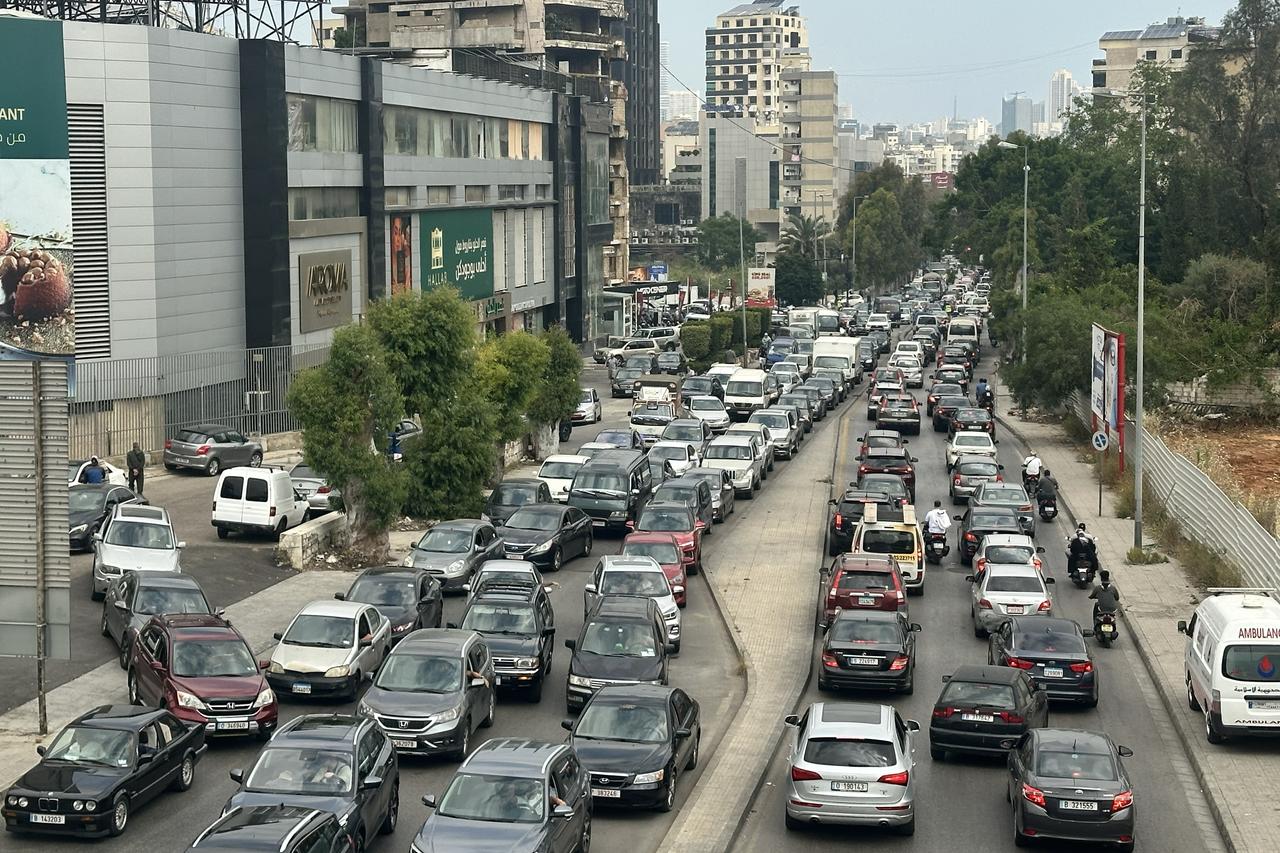
Displacement Movement in Dahieh (1 June 2026, Anadolu Agency)
U.S. President Donald Trump, in a brief interview with CNBC, stated he “did not care” whether negotiations with Iran had ended and told Israeli Prime Minister Netanyahu he would ask him “what is happening in Lebanon.”
According to Israeli media, citing the state television channel KAN, Israel’s planned strike on Beirut’s Dahieh district was postponed at the last minute due to U.S. intervention. The report stated that a series of talks were held between Tel Aviv and Washington to prevent the collapse of Israeli-Lebanese negotiations, and that the U.S. presented a proposal to advance the talks. According to the proposal, Hezbollah would be required to cease all attacks against Israel, and Israel would refrain from attacking Beirut.
Trump, in a social media post following a phone call with Netanyahu, stated that Israel would not send troops to Beirut and that any troops already en route would be recalled. Trump also stated he had spoken indirectly with Hezbollah, adding: “They also agreed that all hostilities must be halted. Israel will not attack them, and they will not attack Israel.”
Lebanon’s Embassy in Washington confirmed that Hezbollah has accepted a reciprocal ceasefire with Israel. The embassy statement noted that Lebanese officials confirmed, following a conversation between Lebanese President Avn and U.S. Secretary of State Marco Rubio, that Hezbollah had accepted the U.S. proposal calling for mutual cessation of attacks. Under the proposed arrangement, Israel would halt its attacks on Dahieh in exchange for Hezbollah refraining from launching attacks against Israel, with the ceasefire to be expanded later to cover all Lebanese territory. It was reported that Ambassador Neda Muavvad conveyed the outcome of the talks to President Avn, who in turn relayed the developments to Hezbollah.
Anadolu Ajansı. "Dakika Dakika Gelişmeler: ABD-İsrail-İran-Lübnan Savaşı ve Ateşkes Süreci." Anadolu Ajansı Live Blog. Accessed June 4, 2026. https://www.aa.com.tr/tr/live-blog/dakika-dakika-gelismeler-abd-israil-iran-lubnan-savasi-ve-ateskes-sureci/3095
Anadolu Ajansı. "Dakika Dakika Gelişmeler: ABD-İsrail-İran-Lübnan Savaşı ve Ateşkes Süreci." Anadolu Ajansı Live Blog. Accessed June 4, 2026. https://www.aa.com.tr/tr/live-blog/dakika-dakika-gelismeler-abd-israil-iran-lubnan-savasi-ve-ateskes-sureci/3136
Anadolu Ajansı. "Dakika Dakika Gelişmeler: ABD-İsrail-İran-Lübnan Savaşı ve Ateşkes Süreci." Anadolu Ajansı Live Blog. Accessed June 4, 2026. https://www.aa.com.tr/tr/live-blog/dakika-dakika-gelismeler-abd-israil-iran-lubnan-savasi-ve-ateskes-sureci/3189
Anadolu Ajansı. "Lübnan ve İsrail, ABD Arabuluculuğunda Şartlı Ateşkese Vardı." Anadolu Ajansı. Accessed June 4, 2026. https://www.aa.com.tr/tr/dunya/lubnan-ve-israil-abd-arabuluculugunda-sartli-ateskese-vardi/3956058
Anadolu Ajansı. "İsrail-Lübnan 4. Tur Görüşmeleri, ABD’nin Ev Sahipliğinde Yapıldı." Anadolu Ajansı. Accessed June 4, 2026. https://www.aa.com.tr/tr/dunya/israil-lubnan-4-tur-gorusmeleri-abdnin-ev-sahipliginde-yapildi/3954829
Anadolu Ajansı. "İsrail’in Lübnan’daki Sur Kentinde Bir Hastanenin Yakınına Düzenlediği Saldırıda Meydana Gelen Yıkım." Anadolu Ajansı Foto Galeri. Accessed June 4, 2026. https://www.aa.com.tr/tr/pg/foto-galeri/israilin-lubnandaki-sur-kentinde-bir-hastanenin-yakinina-duzenledigi-saldirida-meydana-gelen-yikim/162629
Just hours after U.S. President Donald Trump announced that Israel and Hezbollah had agreed to a mutual ceasefire, on the night of 2 June 2026 the Israeli military launched an air strike on the village of El-Mervaniyye, attached to the city of Saida. According to the Lebanese Ministry of Health, six people were killed in the attack, including one woman and two children, and four others were injured.
In drone strikes conducted by the Israeli military in the city of Nabatieh, eight people were killed. According to data from the Lebanese official agency NNA, an Israeli drone targeted workers at a nursery in the village of Jibshit; two Syrian nationals were killed in the attack.
Israeli drones also targeted a motorcycle and a vehicle in the village of Tul; two more people were killed in these attacks. Meanwhile, it was reported that a drone tracked a vehicle at the Haruf-Tul intersection and continued its pursuit to the Kale Intersection, launching two separate attacks that killed the driver.
On the same day, an Israeli drone strike targeting a vehicle traveling on the Nabatieh-Hardali road killed Dr. James Karam, a dentist from the village of Kalaya, along with his son and daughter. According to family members, Karam and his children were returning from Saida, where they had gone to complete university and school procedures, when they were attacked.
Israeli warplanes also targeted the civil defense center in the village of Kefer Sir, attached to Nabatieh, completely destroying the building. It was reported that the center had been evacuated of personnel several days earlier.
On the same day, Israeli warplanes launched an air strike on the village of Shahur, attached to Sur; at the same time, the area between the villages of Sarifa and Shahur was targeted by artillery fire. Israeli aircraft also struck a house in the village of Hush, attached to Sur; the house was completely destroyed in the attack and numerous surrounding homes were damaged. Two injured people trapped under the rubble were rescued by emergency teams and taken to hospital. A further air strike was carried out overnight on the village of Mansuri, accompanied by artillery fire..
In an air strike on the village of Burç Şemali in Sur, one person was killed and two were injured. In the attack on the village of Şehhur, two more people lost their lives.
On the evening of 1 June, the Lebanese Ministry of Health announced on 2 June that the number of people killed in air strikes around the Cebel Amil Hospital in Sur had risen to 4, with 127 people injured. Of the injured, 39 were medical, nursing, and administrative staff at the hospital, including four doctors, 27 nurses, and eight administrative personnel, four of whom were in critical condition. The attack caused extensive damage to various floors and departments of the hospital, and the parking lot suffered serious damage.
Israeli military spokesperson Avichay Adraee, in a social media post, again threatened further attacks on the city center of Nabatieh, urging residents to leave their homes and move north of the Zahrani River. Adraee stated that the Israeli military would continue targeting facilities it claims are linked to Hezbollah in the city.
Adraee also announced that a warning for evacuation of Christian neighborhoods in Sur would be issued in the near future. The statement reminded the public that the previous evacuation warning for Sur had not covered Christian areas, and suggested that Hezbollah operatives were active in those neighborhoods, urging the Christian community to remove Hezbollah members from their areas.
In a suicide drone attack in southern Lebanon, four Israeli soldiers were injured. According to the newspaper Yediot Ahronot, one of the injured was in moderate condition and three were lightly wounded; all were evacuated for treatment.
According to the Lebanese Ministry of Health’s statement dated 2 June 2026, since 2 March 2026, Israeli attacks on Lebanon have resulted in 3,468 deaths, an increase of 35, and 10,577 injured. Of those killed, 128 were healthcare workers, and 371 healthcare personnel were injured in Israeli attacks. The Lebanese government also announced that the number of displaced persons in the country had exceeded one million.
At France’s request, an emergency session on “Lebanon” was held on 2 June at the UN Security Council. France’s Permanent Representative to the UN, Jerome Bonnafont, stated that the session was requested in response to Israel’s significant expansion of its military operations in Lebanon; he criticized Israel’s occupation, warning that a new occupation would only risk deepening instability.
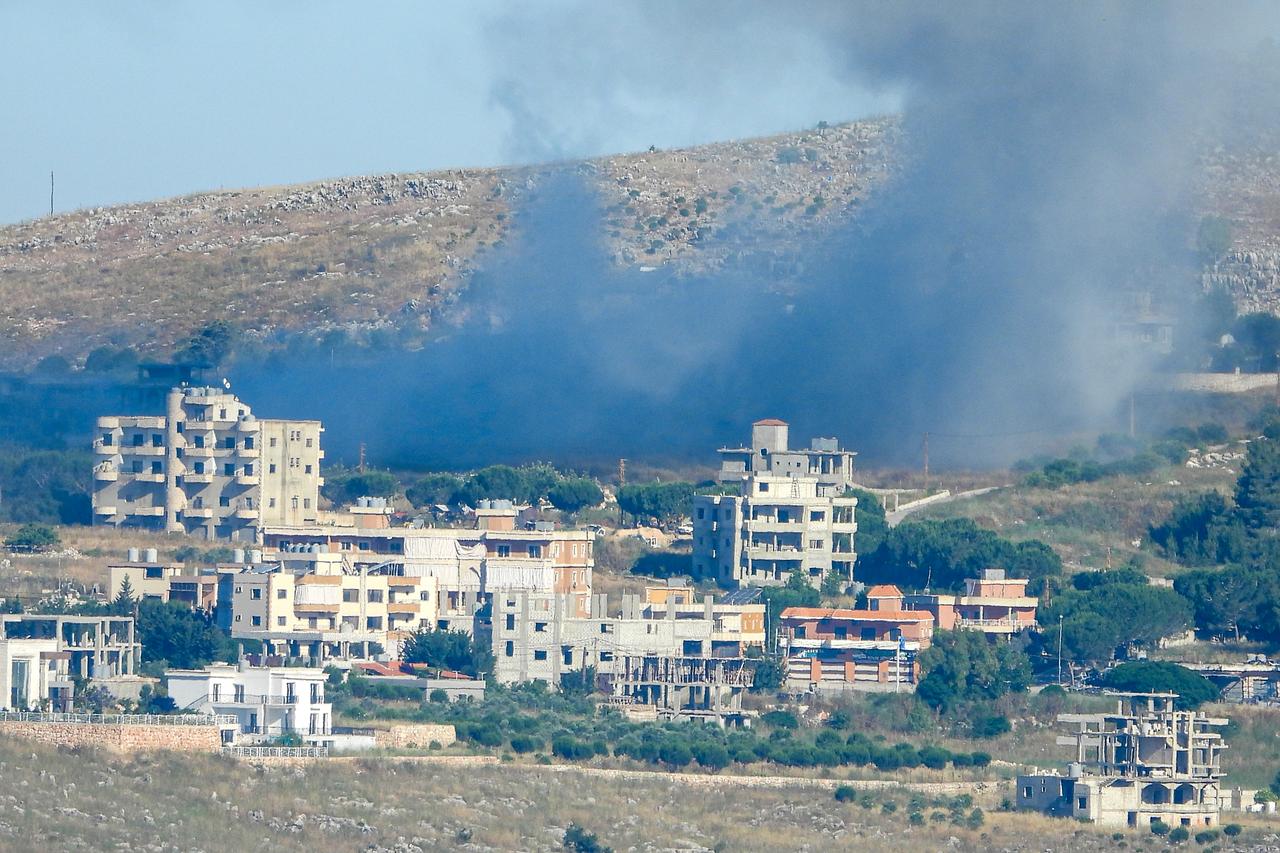
Israeli forces continue attacks on southern Lebanon despite ceasefire, 3 June 2026 - (Anadolu Ajansı)
Russia’s Permanent Representative to the UN, Vassily Nebenzia, compared the situation in Lebanon to that in the Gaza Strip and called for the immediate withdrawal of Israeli forces. China’s Permanent Representative to the UN, Fu Cong, highlighted that Israel had carried out its deepest military advance in Lebanon in over 20 years. The Acting Adviser to the UK’s Permanent Representative to the UN, James Kariuki, condemned Israel’s disproportionate escalation of tensions. The U.S. Permanent Representative to the UN, Mike Waltz, avoided mentioning Israeli violations and instead blamed Hezbollah and Iran.
UN Assistant Secretary-General for Africa, Martha Ama Akyaa Pobee, emphasized that diplomatic efforts must be given a chance, warning that further escalation was unacceptable at a time when threats have been reported to suspend dialogue with Tehran and close the Strait of Hormuz. Pobee stated that developments on the ground signaled a dangerous escalation.
UN Spokesperson Stephane Dujarric, during his daily press briefing, announced that according to UNIFIL records, a total of 478 incidents of firing were recorded between midnight and 16:00 local time on 2 June. Of these, 10 were attributed to Hezbollah and 468 to Israeli forces. Dujarric also reported that UN peacekeepers had recorded nine Israeli air strikes and 46 violations of Lebanese airspace, calling on all parties to exercise maximum restraint and comply with the ceasefire agreement.
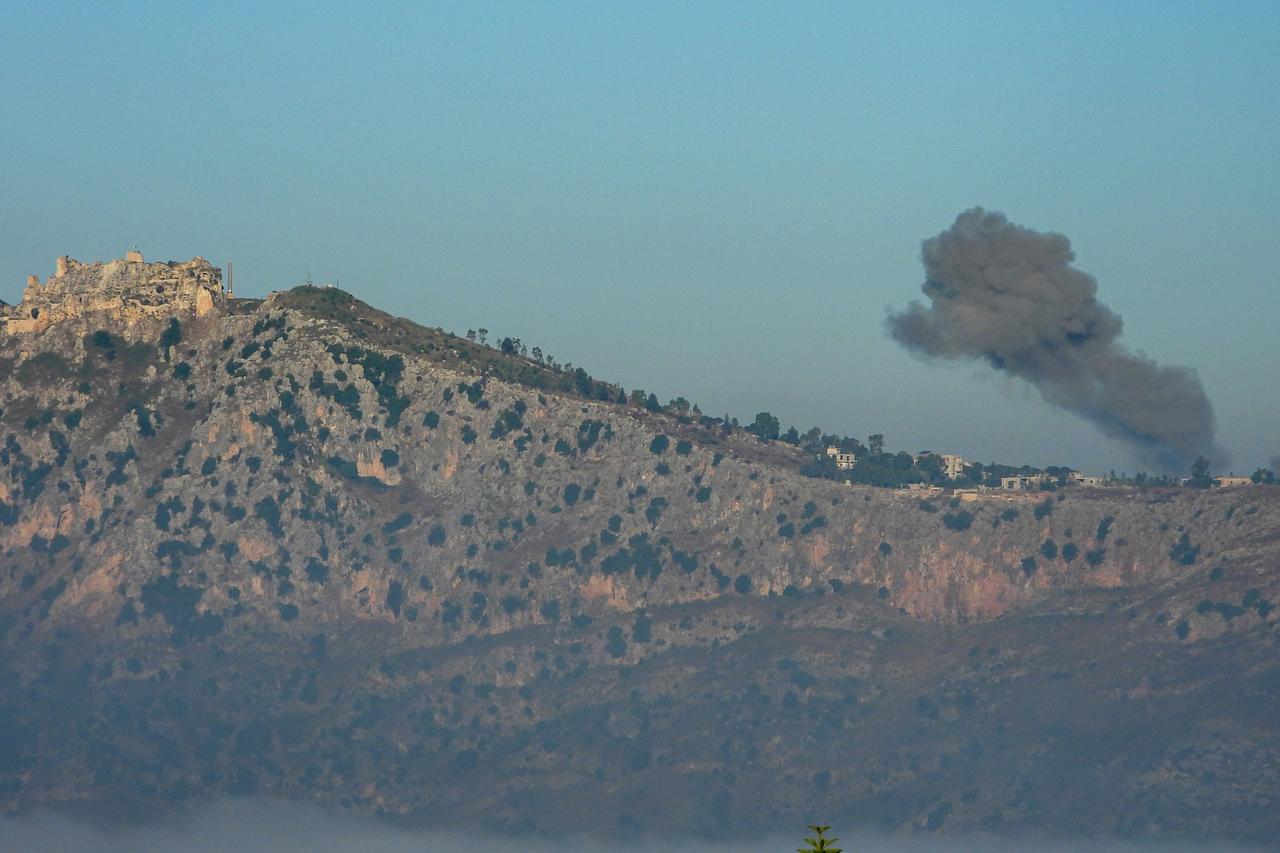
Israeli forces continue attacks on southern Lebanon despite ceasefire, 3 June 2026 - (Anadolu Ajansı)
The fourth round of direct talks between Israel and Lebanon began on 2 June 2026 at the U.S. Department of State. It was reported that the talks began around 09:00 local time. Participating on behalf of the U.S. were U.S. Ambassador to Beirut Michel Isa, U.S. Ambassador to Israel Mike Huckabee, and State Department official Mike Needham; on behalf of Lebanon were Ambassador to Washington Nada Hamadeh and former ambassador and Presidential Special Envoy Simon Karam; and on behalf of Israel were Ambassador to Washington Yechiel Leiter and Deputy National Security Advisor Yossi Draznin, along with other officials.
Lebanese President Joseph Avn, in a statement following the start of the talks, reiterated that negotiations were the only alternative, saying: “Strength does not lie in waging war, but in the courage and wisdom to end the conflict through negotiation in the interest of the country.”
Lebanese Prime Minister Nevvaf Selam, emphasizing the need for a comprehensive and lasting ceasefire, said: “As long as all efforts are unified under the state’s umbrella, the path to ending the occupation and enabling our people in the south to return to their cities and villages will be shorter.”
Chairman of the Iranian Parliament and Negotiation Delegation, Muhammad Baqer Qalibaf, held a phone call with Lebanese Parliament Speaker Nabih Berri. In a social media post, Qalibaf emphasized that any potential agreement with the U.S. to end the war must also halt all attacks against all fronts, beginning with Lebanon. Qalibaf stated: “We are determined to achieve a ceasefire throughout Lebanon, especially in the south.” He added that if attacks continue, Iran will not only suspend talks but also confront Israel directly. Berri noted that Iran would not forget its stance on issues concerning Lebanon.
According to a report on the American platform Axios, citing two U.S. officials, U.S. President Trump expressed clear displeasure with Netanyahu during a phone call, accusing Israel of escalating tensions in Lebanon in recent days as retaliation for undermining the negotiation process with Iran. The report claimed Trump told Netanyahu: “You are crazy,” and “If it weren’t for me, you’d be in prison right now.” It was also reported that Trump told Netanyahu: “I am saving you. Everyone hates you now; everyone hates Israel because of this.”
In the early hours of 3 June 2026, Israeli warplanes bombed the villages of Deyr Kanun, attached to Sur, and Mecdel Silm, attached to Nabatieh. The Israeli military was reported to have targeted the village of Arabsalim with two air strikes; one healthcare worker was killed in these attacks.
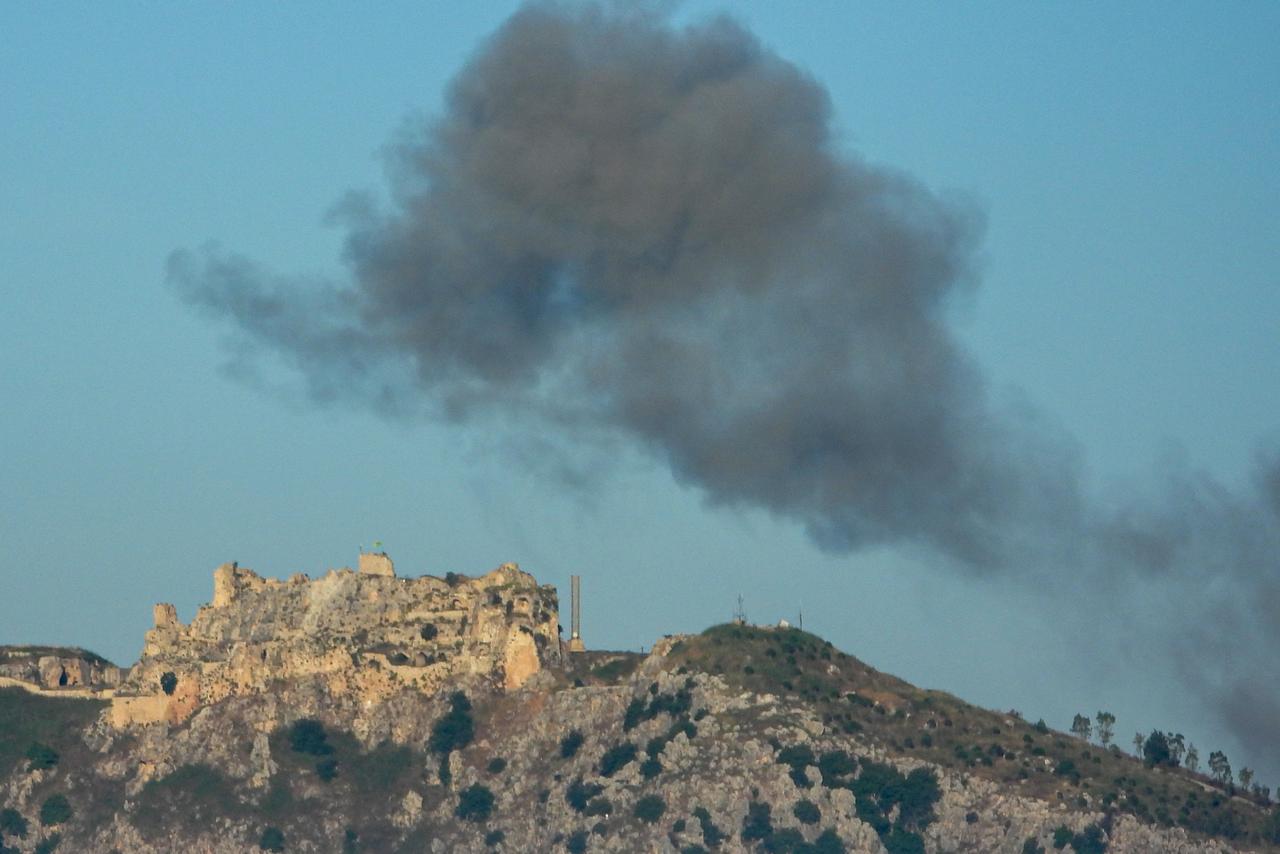
Israeli forces continue attacks on southern Lebanon despite ceasefire, 3 June 2026 - (Anadolu Ajansı)
According to data from the Lebanese official agency NNA, an Israeli drone strike on the Hosh area, attached to Sur, killed four Syrian nationals. In a separate attack by the Israeli military on the Mamura-Hosh road, two Palestinians lost their lives. In another attack by an Israeli drone in the village of Arabsalim, one healthcare worker was killed.
Israeli warplanes launched two air strikes on the village of Bazuriyye, attached to Sur, in the morning hours. Three successive powerful explosions occurred in the Arid Mercayun area of Mercayun; explosions were also reported overnight in the areas of Dibbin and Arid Dibbin. The explosions caused material damage to nearby homes and businesses, and windows in buildings and shops in the village of Cedide Mercayun were shattered. An Israeli drone targeted a pickup vehicle traveling on the Deyr Zehrani-Habbush Highway; one person was injured in the attack. Israeli warplanes also launched an air strike on the village of Kefer Tebint; injuries were reported in an attack on the village of Tebnin, attached to the city of Bint Cubeyl.
The Israeli military targeted a vehicle traveling along the coastal road in the Halde region, attached to the Mount Lebanon governorate, with a drone. No casualties were reported in this attack. On the Deyr Zehrani-Nabatieh road, a Lebanese military vehicle was targeted by an Israeli drone using a guided missile; injuries were reported but no details were provided. In Saida, a vehicle was targeted by a drone; no injuries were reported in this attack.
Lebanese Ministry of Health reported that the Israeli military targeted an ambulance traveling in the village of Şehhur, attached to Sur, with an air strike. Two healthcare workers were killed and one was critically injured and taken to surgery. The ministry emphasized that the attack was a clear violation of international humanitarian law and called on international organizations to take action to stop attacks on healthcare workers and ambulance crews.
Meanwhile, following an Israeli attack on the village of Zibdin, attached to Nabatieh, an ambulance dispatched to evacuate the injured was itself targeted, resulting in the deaths of one healthcare worker and two civilian injured persons on board.
According to the Lebanese military, in an attack by an Israeli drone on a military vehicle traveling on the Deyr Zehrani-Nabatieh road, one officer and one soldier were injured.
Lebanese Ministry of Health’s statement dated 3 June 2026 reported that since 2 March 2026, Israeli attacks on Lebanon have resulted in 3,516 deaths, an increase of 48, and 10,674 injured. Of those killed, 128 were healthcare workers, and 378 healthcare personnel were injured in Israeli attacks.
Hezbollah announced it had launched a series of attacks against Israeli military targets in the north and Israeli units in southern Lebanon in response to ceasefire violations. In its statements, Hezbollah indicated that Israeli soldiers near the Berket el-Merc area in northern Israel were targeted by a rocket salvo.
U.S. Department of State Spokesperson Tommy Pigott announced that the U.S. had hosted the fourth round of direct talks between Israeli and Lebanese delegations. Pigott noted progress in the talks, saying: “While moving beyond two decades of failures to reestablish Lebanon’s sovereignty and ensure Israel’s security, progress continues in political and security channels.” Pigott also noted that the next round is planned for Wednesday.
U.S. Department of State announced on 4 June 2026, following the fourth round of talks in Washington, that Israel and Lebanon had reached an agreement on a comprehensive ceasefire. According to the statement, the ceasefire is contingent on Hezbollah fully halting its attacks and withdrawing all its forces south of the Litani River. The parties also agreed, under U.S. guidance, to rapidly establish ‘pilot zones’ where the Lebanese Armed Forces would assume control as the sole authority.
The statement emphasized that these steps would lay the groundwork for a comprehensive peace and security agreement, asserting that relations between Israel and Lebanon must be determined solely by the legitimate governments of both countries. The parties agreed to resume political and security negotiations during the week of 22 June to reach a comprehensive agreement, with the U.S. continuing to facilitate communication during the transition process. No official statement was issued by Hezbollah regarding the agreement at this initial stage.
Lebanese President Joseph Avn described the conditional ceasefire as a “last chance,” warning that both sides would bear responsibility if it failed. Avn revealed that the head of the Lebanese delegation, former ambassador and Presidential Special Envoy Simon Karam, had suspended his participation in the talks due to what he described as Israel’s intransigent stance, prompting U.S. Secretary of State Marco Rubio to intervene and restart negotiations. Avn also stated that the ceasefire could enter into effect within 24 hours after all parties give their approval and necessary guarantees are provided.
Israeli Defense Minister Yisrael Katz announced that despite the announced conditional comprehensive ceasefire, military operations and attacks in southern Lebanon would continue. Katz claimed the ceasefire text included not only Hezbollah’s disarmament and withdrawal north of the Litani River, but also permitted the continued Israeli military occupation of southern Lebanon and its “freedom of movement.” Katz asserted that the ceasefire brokered by Washington was a consequence of the occupation and attacks in southern Lebanon, stating: “This reality can lead to a peace agreement with the Lebanese state.”
An unnamed Israeli official speaking to the newspaper Times of Israel stated that Prime Minister Benjamin Netanyahu would convene a security cabinet meeting at 17:00 local time on 4 June at the Kirya Military Base in Tel Aviv. It was noted that Netanyahu had not yet issued an official statement regarding the ceasefire.
Israeli National Security Minister Itamar Ben Gvir labeled the ceasefire a “major mistake.” Ben Gvir argued that Hezbollah had not left the area south of the Litani River and that the Lebanese Armed Forces lacked the capacity to remove Hezbollah elements from the region. “In practice, Hezbollah will only become stronger, and Israel will have accepted its presence rather than defeated it,” said Ben Gvir, adding that a cabinet meeting and vote were necessary on the ceasefire.
Lebanese Prime Minister Nevvaf Selam, in his opening remarks at a government meeting, emphasized that while negotiations were not the only option, they were the best available. Selam noted that the Lebanese delegation had encountered Israel’s rigid stance in negotiations but affirmed that their demands had not changed from the outset: the withdrawal of the Israeli military from Lebanese territory and the safe return of displaced persons to their homes.
Selam emphasized that the requirement to clear the area south of the Litani River of armed individuals and weapons was not an externally imposed condition, but a commitment Lebanon had undertaken under UN Security Council Resolution 1701, adopted in 2006, as well as under the Taif Agreement and the government’s program. Selam clarified that while the Lebanese Armed Forces would be deployed in pilot zones under the agreement, this did not mean abandoning the goal of Israel’s complete withdrawal. “Every delay in implementing the ceasefire is paid for by the people of southern Lebanon,” said Selam, warning that those who reject Lebanon’s interests will bear sole responsibility for the consequences.
Hezbollah Secretary-General Naim Qassem, in a message issued on the anniversary of the death of former Iranian leader Imam Ruhollah Khomeini, rejected the direct talks in Washington and the conditional ceasefire. Qassem described the talks as “meaningless, humiliating, and shameful,” asserting they were entirely and firmly rejected by broad segments of the Lebanese people.
Opposing demands for weapons to be placed under state monopoly, Qassem argued this would allow Israel to achieve politically what it could not win militarily. Qassem stated that under conditions of ongoing Israeli attacks, Hezbollah’s compliance with the ceasefire and withdrawal of its forces from the south would amount to “surrender and defeat,” which he labeled “impossible.”
Qassem outlined Hezbollah’s demands for any agreement: Israel must halt all its air, land, and sea attacks; withdraw from Lebanese territory; allow the Lebanese Armed Forces to deploy south of the Litani River; release prisoners; enable displaced persons to return to their villages; and initiate a reconstruction process. Qassem also called on the Lebanese leadership to abandon direct talks, stating that if Israeli attacks continue, Hezbollah will respond with all available means.
Shortly after Qassem announced Hezbollah’s rejection of the ceasefire, sirens sounded in northern Israel due to Hezbollah drones. The Israeli military confirmed that sirens were triggered by drone incursions, with Israeli media reporting that three Hezbollah drones had infiltrated the area. It was also reported that Netanyahu had left the settlement of Shlomi in northern Israel shortly before the sirens sounded.
Israeli Military Spokesperson Avichay Adraee stated that despite the announcement of the conditional ceasefire, attacks in southern Lebanon continued and the Israeli military was still targeting facilities and infrastructure it claimed were linked to Hezbollah. Residents previously displaced by earlier attacks were again urged not to cross south of the Zahrani River until a second announcement.
Israeli warplanes targeted the villages of Deyr ez-Zehrani, Shevkin, Haris, Kefre, East Zavtar, West Zavtar, Kefer Coz, Adshit, Mivedon and Aba, attached to Nabatieh; the villages of Mansuri, Haruf, Maareke, Kana, Resknaniye, Abbasiye, attached to Sur; and the southern villages of Berashit and Sarife with air strikes. A drone strike targeted a vehicle in the village of Düveyr. In attacks on the village of Suhmur in eastern Lebanon, five people were killed and four injured. The villages of Haddasa, Tebnin and Harin, attached to the Bint Cubeyl district, were also targeted; injuries were reported in the attacks on Tebnin.
An Israeli drone targeted a motorcycle in the village of Marub, attached to Sur; one person was killed and one injured. In the morning hours, a vehicle traveling on the road between the villages of Zefta and Numeiriye in Nabatieh was targeted by a drone, injuring three people. Drone strikes were also launched at the Nejde Intersection on the Kefer Rumman-Habbush road and at the intersection in the village of Kefer Tebint. Israel also bombed the villages of Deyr Antar, Kefer Tebint, Ernun, Shevkeyn and Zubdeyn, attached to Nabatieh, using both warplanes and drones. An Israeli drone flew at low altitude over Beirut’s skies. The Israeli military also targeted a vehicle near the UNIFIL headquarters in the Burç Kalaviye region of southern Lebanon with an air strike; a child was rescued injured from the rubble of a house in Sur.
By the end of the day, the total number of people killed in Israeli attacks reached 12.
Hezbollah announced it had launched two rocket attacks against Israeli soldiers in the village of Kantara in southern Lebanon in response to ceasefire violations.
The Lebanese Armed Forces announced on the same day that they had entered the village of Dibbin in the south, following the withdrawal of Israeli soldiers. According to the statement, Lebanese military units entered the area gradually, in coordination with the Ceasefire Monitoring Committee and UNIFIL. Military units are conducting engineering sweeps to clear unexploded ordnance, while heavy machinery is removing soil and debris to reopen the Mercayun-Dibbin-Ibl es-Saki road. Residents were urged not to approach the area.
Captain Eitan Shmuel Lemberg, an officer serving with armored units in the Israeli occupation of southern Lebanon, was killed by Hezbollah anti-tank fire. It was reported that Lemberg was killed by anti-tank fire originating north of the Litani River; Israeli media reported that the Israeli military had launched aerial and artillery strikes on the area from which the anti-tank fire originated. With this development, the number of Israeli soldiers killed since 2 March 2026 rose to 28.
UN Peacekeeping Force in Lebanon (UNIFIL) announced that in the late hours of 4 June, a mortar shell struck its position near Dibbin in southeastern Lebanon, killing one peacekeeper who suffered severe injuries and wounding two others. The severely injured peacekeeper was airlifted to a hospital in Beirut but could not be saved. The other two wounded were treated at the UNIFIL medical facility.
UNIFIL launched an investigation into the circumstances of the incident and emphasized a marked increase in shell and ordnance impacts in southern Lebanon in recent weeks, calling for an end to violence. It stated that deliberate attacks on peacekeepers constituted a grave violation of international humanitarian law and UN Security Council Resolution 1701. UNIFIL did not identify who carried out the attack.
The Israeli military claimed the attack on UNIFIL was carried out by Hezbollah, asserting that several mortar shells fired from the Katrani area hit the UNIFIL outpost in Dibbin. Hezbollah denied the claim, calling it a baseless lie fabricated by Israel to cover up its own crimes. Hezbollah pointed out that UN peacekeeping forces in Lebanon are eyewitnesses to Israeli attacks and violations of Lebanese sovereignty, and offered condolences to the family of the deceased UNIFIL soldier.
Lebanese President Avn condemned the attack on UNIFIL personnel, stating that the fallen soldier was a symbol of the international community’s support for Lebanon, and conveyed his condolences to UNIFIL Commander Major General Diodato Abagnara and the soldier’s family.
Lebanese Ministry of Health’s statement dated 4 June 2026 reported that since 2 March 2026, Israeli attacks on Lebanon have resulted in 3,526 deaths, an increase of 10, and 10,733 injured.
Commander of the Quds Force of the Islamic Revolutionary Guard Corps, Major General Ismail Qaani, stated that following the ceasefire agreement, Israel must withdraw from all occupied points in southern Lebanon. Qaani assessed: “The fundamental demand of the Resistance is for the occupying regime to retreat to the position it held before the 40-Day War began.”
Islamic Revolutionary Guard Corps issued a separate written statement on the ceasefire agreement. The statement emphasized that peace in the region cannot be achieved until Israel withdraws from occupied Lebanese territory: “The enemy must immediately halt its attacks on the Lebanese people, vacate occupied Lebanese land, withdraw to international borders, and recognize Lebanon’s territorial integrity.” It was also stated that Iran’s acceptance of the ceasefire is contingent on a ceasefire being achieved across all fronts, including Lebanon.
French President Emmanuel Macron, responding to a journalist’s question during official meetings in Montenegro, expressed support for the newly announced ceasefire between Israel and Lebanon. Macron said: “We support anything that effectively establishes peace, opposes terrorist activities, and fully restores Lebanon’s sovereignty and territorial integrity.” He also announced the establishment of a coordination mechanism involving France and the U.S. to monitor the implementation of the ceasefire.
Anadolu Ajansı. "Dakika Dakika Gelişmeler: ABD-İsrail-İran-Lübnan Savaşı ve Ateşkes Süreci." Anadolu Ajansı Live Blog. Accessed June 5, 2026. https://www.aa.com.tr/tr/live-blog/dakika-dakika-gelismeler-abd-israil-iran-lubnan-savasi-ve-ateskes-sureci/3227
Anadolu Ajansı. "Trump, Anlaşma Yapmak İçin İran Lideri Mücteba Hamaney ile Görüşmeye Açık Olduğunu Söyledi." Anadolu Ajansı. Accessed June 5, 2026. https://www.aa.com.tr/tr/dunya/trump-anlasma-yapmak-icin-iran-lideri-mucteba-hamaney-ile-gorusmeye-acik-oldugunu-soyledi/3957084
U.S. President Donald Trump made statements regarding the Lebanon agenda following an event held in the Oval Office. Trump stated that he had spoken with both Hezbollah and Israel and that a positive process toward a peace agreement was underway. “Hezbollah reached out to us and asked what we thought about stopping. I believe some positive developments will occur there. It would be truly wonderful if some peace could be achieved in Lebanon,” said Trump, adding that he had also spoken clearly with Israeli Prime Minister Benjamin Netanyahu on the matter.
The Israeli military continued its attacks on southern Lebanon during the night and early morning hours of June 5. According to data from the Lebanese official agency NNA, Israeli forces bombed a building in the village of Dweir, which is part of Nabatieh; one person was killed and the building was completely destroyed. In an attack targeting the village of Habbous, two people were killed. In the morning hours, Israeli forces also bombed the villages of Upper Nabatieh, Zibdin, Shukin, Jibshit and Kafar Tebnet; two buildings in the village of Deyr Zahrani were targeted by warplanes. A motorcycle traveling on the road to Habbous was struck by a drone, injuring one person.
In the city of Sour, the villages of Burj Qalawiyeh and Deyr Kifa were targeted. One person was killed and one injured in the attack on Burj Qalawiyeh. In an Israeli military strike near the Jabal Amel Hospital, a building belonging to a bank was destroyed and 12 people were injured. Building demolitions also continued in the Meryoun district. A large wave of displacement was observed from the villages of Arnaya and Ankoun, where residents were forced to flee due to attack threats.
On the same day, an air strike on the village of Adshit, part of the Nabatieh governorate, killed three people. An Israeli drone targeted a motorcycle on the highway in the village of Deyr ez-Zahrani; the driver was killed. Another motorcycle traveling on the Bir es-Selasil-Kafar Dunin road in the Bint Jbeil district was hit by a drone attack, killing the driver on the spot. One person in a vehicle targeted by a drone in the village of Kafar Rumman in Nabatieh also lost their life.
Israeli warplanes targeted a house in the village of Zifta, part of Nabatieh; Ali Said Shuman was killed and his son injured. Two civilians, Bilal Mahmud Atavi and Hasan Sabah, were killed in drone strikes conducted by Israeli forces in Nabatieh. An ambulance delivering bread to a family that refused to leave their home in the village of Zubdeyn was targeted by an air strike; after the ambulance reached the house, warplanes launched an attack, and then a person attempting to approach the site was struck by a drone. It was reported that, following contact with security units, permission was granted to evacuate the injured trapped in the house. In addition, the villages of Arabsalim, Kafar Tebnet and Adshit were also hit by Israeli air strikes; a motorcycle in the rural area of Sour was targeted, injuring its driver.
In the evening hours, a motorcycle in the village of Mervaniyyeh, part of Sidon, was targeted by a drone, killing two people. In an air strike on the village of Zibdin, part of the Nabatieh governorate, four people were killed, one of whom was a healthcare worker. In the village of Aba in Nabatieh, a drone strike on a motorcycle killed two Syrian children under the age of 15; their fathers were injured.
By the end of the day, the total number of people killed in Israeli attacks on Lebanon since the early hours of June 5 reached 21.
Israeli Defense Forces Spokesperson Avichay Adraee issued multiple statements following the failure of U.S.-mediated ceasefire efforts, threatening further attacks and urging Lebanese citizens to leave their homes. In the first statement, it was announced that the villages of Arnaya, Ankoun and Kafar Fila, located north of the Zahrani River, would be targeted; residents were asked to move at least 1 kilometer away from their homes. In the second statement, threats were issued against the villages of Sarafand, Tuffahta, El-Bebiliyyeh, Kakaiyet Sanavbar, El-Mervaniyyeh and Saksakiyyeh, with residents urged to move north of the Zahrani River.
The Israeli military announced that despite the ceasefire, it had carried out more than 650 air strikes on southern Lebanon over the past week, resulting in the deaths of more than 125 people. The statement claimed that all targets were linked to Hezbollah.
The Lebanese Ministry of Health reported in its statement dated June 5, 2026, that since March 2, 2026, the number of people killed in Israeli attacks on Lebanon had increased by 32 in the past 24 hours to reach 3,558, while the number of injured reached 10,870.
Israeli Prime Minister Benjamin Netanyahu stated during a security cabinet meeting that a ceasefire agreement with Lebanon had not yet been finalized, saying, “From Israel’s perspective, there is currently no ceasefire with Lebanon.” Netanyahu claimed that Hezbollah had objected to proposals related to the ceasefire and asserted that “the ceasefire agreement between Israel and Lebanon has not yet been drafted in full or completed.”
Israeli Chief of Staff Eyal Zamir also stated during the same meeting that a process must be established at the political level for the next phase, adding, “The Israeli military is prepared to expand the scope of attacks if a decision is made. If a ceasefire is possible under acceptable conditions, it would be better for it to happen today rather than months from now.”
Lebanese Parliament Speaker Nabih Berri characterized the ceasefire announced under U.S. mediation as “trap-laden, hybrid and unjust.” Berri noted that the ceasefire text required Hezbollah to fully cease fire and withdraw all its elements south of the Litani River, while omitting any requirement for Israel to withdraw from occupied territories. He claimed that the text was filled with traps by restricting references to Israel’s withdrawal.
Nevertheless, Berri, in his capacity as Speaker of Parliament, declared that he accepted Hezbollah’s withdrawal from south of the Litani River on the condition of a simultaneous Israeli withdrawal from occupied territories. Berri stated, “The remainder of the text is unjust and not worth mentioning.”
Lebanese Prime Minister Nevvaf Selam, speaking at a second emergency humanitarian aid appeal event held in Beirut, directly blamed Iran for the failure of the U.S.-mediated ceasefire initiative. Selam expressed shock that Iran’s Revolutionary Guards were the first to oppose the proposed ceasefire, stating, “This situation once again demonstrates that this war is not our war, but one waged on our land and at the expense of our people.”
Addressing Iran directly, Selam said: “Leave our south in peace. Stop treating our region and our people as a bargaining chip to improve your conditions in negotiations. We are the owners of a homeland that refuses to become a mailbox for messages from other actors or an open battlefield for their wars. Lebanon is not a bargaining card on anyone’s table. The south is not anyone’s auxiliary front.”
Noting that negotiations were ongoing, Selam assessed: “The rejection of the ceasefire clearly means the continuation of the war. Consequently, the humanitarian crisis continues and deepens with each passing day.”
UN Spokesperson Stephane Dujarric announced during a daily press briefing that Israeli forces had continued intense military activity in southern Lebanon. UNIFIL peacekeeping forces reported a total of 773 incidents of firing originating from Israeli positions south of the Blue Line on June 4; 15 additional shots were detected moving from north to south. The activities included air strikes and helicopter fire. Dujarric emphasized that Israeli forces had established two checkpoints near a UNIFIL position and stressed that full freedom of movement across the entire operational area was necessary for UNIFIL to carry out its mandate..
It was also announced that the United Nations had launched an additional $331.5 million “Lebanon Emergency Appeal” covering the June–August period in coordination with the Lebanese government.
On June 5, Lebanese President Joseph Aoun held a telephone conversation with Crown Prince Mohammed bin Salman of Saudi Arabia. According to the Lebanese Presidency statement, the conversation addressed the situation in Lebanon and developments in the Middle East.
Aoun thanked Saudi Arabia for its support in efforts to prevent escalation in Lebanon; Bin Salman affirmed that Saudi Arabia has always stood by Lebanon. The official Saudi news agency SPA reported that the two leaders discussed efforts to strengthen security and stability in the context of the situation in Lebanon and regional developments.
Al Jazeera. "Iran War Live: US Says Iranian Drones Shot Down, Radar Sites Attacked." Al Jazeera Live Blog, June 6, 2026. Accessed June 6, 2026. https://www.aljazeera.com/news/liveblog/2026/6/6/iran-war-live-us-says-iranian-drones-shot-down-radar-sites-attacked
Anadolu Ajansı. "Dakika Dakika Gelişmeler: ABD-İsrail-İran-Lübnan Savaşı ve Ateşkes Süreci." Anadolu Ajansı Live Blog. Accessed June 6, 2026. https://www.aa.com.tr/tr/live-blog/dakika-dakika-gelismeler-abd-israil-iran-lubnan-savasi-ve-ateskes-sureci/3265
The Israeli military continued its attacks against Lebanon on 7 June 2026. According to data from the Lebanese official agency NNA, Israeli artillery intermittently shelled the village of Burç Kalavay, located within the municipality of Sur. Israeli warplanes launched attacks during the night hours on the villages of Sarifa, Kalavay and Deyr Kifa in Sur. In an attack by an Israeli unmanned aerial vehicle (UAV) targeting the village of Şehabiyye, also part of Sur, two people were injured and taken to Hiram Hospital for treatment. Israeli artillery also intermittently shelled the hilltops of the villages of Braşit and Şakra, both located within Sur, after midnight. Meanwhile, Israeli warplanes targeted the Shabil Gathering Area in the Katrani region of the Cizzin district.
Despite the ceasefire, the Israeli military continued aerial attacks against the Nabatieh governorate. According to NNA, Israeli warplanes destroyed a house in the village of Düveyr with two separate strikes. The center of Nabatieh city was also targeted by aerial bombardments. An Israeli UAV targeted a motorcycle on the Zefta road in Nabatieh, killing one person. In another UAV attack on a motorcycle traveling between the villages of Aba and Düveyr, two Syrians were killed and one person was injured. Another Israeli UAV also conducted an attack on the village of Kefur.
From midday onward, Israeli warplanes and UAVs launched attacks on the villages of Doğu Zavtar, Keferrumman, Habbuş, Deyr Zehrani, Numeiriyye, Cercu, Ansar, Haris, Cibşit, Kevseriyyet Siyad, Saksakiyye, Sarfand, Marub, Tayr Falsay, Zerariyye and Coya in southern Lebanon.
In the ongoing attacks in the Nabatieh governorate, one person was killed in a UAV strike on the village of Keferrumman, and two more were killed when a UAV targeted a fire truck in Upper Nabatieh.
In an aerial attack on the village of Zıbdin, one person was killed and two were injured. Thus, the number of people killed in Israeli attacks on the Nabatieh governorate rose to 6.
Israeli warplanes targeted a building on the road between the villages of Zefta and En-Numeiriyye in the Nabatieh region with an aerial strike. According to the Lebanese official agency NNA, initial assessments indicated that the attack resulted in two people killed and two injured.
The total number of people killed in Israeli attacks across various regions of Lebanon during the day rose to 8.
Israeli Defense Forces Spokesperson Avichay Adraee, in a social media post on the same day, announced that the Israeli military would target the city of Sur and its surrounding neighborhoods and refugee camps.
Adraee, in a map he published, called on residents of a large portion of Sur city center and the surrounding Zakuk Mefdi and El-Bas camps to evacuate and move north of the Zehrani River. It is estimated that approximately 100,000 people lived in and around the city of Sur in southern Lebanon prior to the Israeli attacks that began on 2 March.
Prior to the threat of attack on Sur, sirens sounded in northern Israel during the morning hours. The Israeli military claimed it intercepted two rockets fired from Lebanon across the border. Israeli media recorded this as the first rocket attack since the ceasefire of 3 June. Following the incident, Israeli Finance Minister Bezalel Smotrich, in a social media post, used the term "Dahiye" to call for an attack on Beirut's Dahiye district.
On 7 June, despite the ceasefire, the Israeli military conducted an airstrike on Dahiye, a district in the Lebanese capital Beirut. According to an AA correspondent, Israeli aircraft bombed the Dahiye district in southern Beirut without any prior warning; smoke rose from the targeted area. According to the Lebanese official agency NNA, in an attack targeting two apartments in Dahiye, initial assessments indicated that two people were killed and eleven injured.
Israeli Defense Forces Spokesperson Adraee claimed that the Israeli military targeted an infrastructure facility belonging to Hezbollah in southern Beirut. In a joint statement by Israeli Prime Minister Binyamin Netanyahu and Defense Minister Yisrael Katz, the strike was described as a response to the rockets fired by Hezbollah into northern Israel earlier that morning.
Meanwhile, it was reported that Israeli UAVs conducted low-altitude flights over Lebanese airspace from midday onward.
Hezbollah announced that it carried out 20 attacks against Israeli forces operating in southern Lebanon and that Israeli soldiers were wounded in these attacks. A written statement from Hezbollah stated that the attacks were conducted "to defend Lebanon and its people and to respond to Israel's violations of the ceasefire and its attacks on villages in southern Lebanon".
According to the statement, Hezbollah targeted Israeli military vehicles and troop concentrations at various locations in southern Lebanon, disrupted two Israeli advances and engaged an Israeli warplane with a ground-to-air missile.
Meanwhile, in a suicide drone attack carried out by Hezbollah, four Israeli soldiers were wounded.
The Iranian military launched a missile strike against Israel in response to Israel's attack on Dahiye, a district of Beirut, Lebanon. In a statement released by the Iranian military, it was stated that "In response to the Zionist regime's killing of civilians in southern Lebanon and Beirut's Dahiye district, the Ramat David Air Base, the origin point of these attacks, was targeted with ballistic missiles". The statement further noted that the United States and Israel had repeatedly violated the ceasefire agreed upon on 8 April, and emphasized that the missile strike served as a warning, with a broader response to follow if attacks continued.
Sirens sounded repeatedly across northern Israel due to the second and third waves of missile launches from Iran. Iranian Foreign Minister Abbas Araghchi shared an image of the Iranian and Lebanese flags on his social media account following the missile strikes.
Spokesperson of the Iranian Parliament's National Security and Foreign Policy Committee, Ibrahim Rezaei responded to Israel's attack on Dahiye with the statement: "We will respond decisively to the Zionist regime's attack on Dahiye. Tonight, the sky over the occupied territories (Israel) will be visible."
Advisor to Iran's Supreme Leader Ayatollah Khamenei and former Commander-in-Chief of the Islamic Revolutionary Guard Corps, Major General Mohsen Rezaei stated regarding the missile strike against Israel: "Iran has repeatedly declared that it will not tolerate violations of the ceasefire and attacks against Lebanon." Rezaei added: "The aggressors received their response tonight. This response serves as a warning for them to cease their actions. Another step will bring an even more crushing response."
Speaker of the Iranian Parliament and Head of the Negotiation Delegation, Mohammad Bagher Ghalibaf stated regarding the attacks on Dahiye: "The green light the United States has given today to the Zionist regime legitimizes the bases in the region as legitimate targets." Ghalibaf noted that the United States and Israel have demonstrated they only understand the language of power by maintaining the naval blockade and violating agreements with Lebanon. Ghalibaf affirmed that the Iranian Armed Forces remain ready for struggle as always, adding: "The naval blockade against the Iranian people and the green light the United States has given today to the Zionist regime have rendered the bases and presence of the United States and the regime in the region legitimate targets."
It was reported that Israeli Prime Minister Binyamin Netanyahu would convene a security consultation meeting following Iran's threat after Israel's airstrike on Beirut. Israel's Yediot Ahronot newspaper stated that the meeting would include Netanyahu, Defense Minister Yisrael Katz and heads of defense institutions. The meeting was described as limited in scope but comprehensive, with the agenda including the threats emanating from Lebanon and Iran.
Meanwhile, the Israeli Home Front Command stated that there had been no change in its defense policy following the attack on Beirut. In a statement from the Israeli military, it was noted that "The Home Front Command's defense directives will remain in effect until 20:00 on Monday, 8 June 2026."
Israel's far-right National Security Minister Itamar Ben-Gvir, following the missile launches from Iran, called for attacks against Iran on his social media account with the statement: "Tehran must burn tonight!"
According to the Lebanese Ministry of Health statement dated 7 June 2026, the number of people killed in Israeli attacks on Lebanon since 2 March 2026 increased by 20 in the past 24 hours, reaching 3,613. The number of injured reached 11,072.
Al Jazeera. "Iran Fires Missiles at Israel After Beirut Attack 'Crossed All Red Lines'." Al Jazeera, June 7, 2026. Accessed June 8, 2026. https://www.aljazeera.com/news/2026/6/7/iran-fires-missiles-at-israel-after-beirut-attack-crossed-all-red-lines
Al Jazeera. "Israel Hits Civilian Area in Beirut's Southern Suburbs, Kills at Least Two." Al Jazeera, June 7, 2026. Accessed June 8, 2026. https://www.aljazeera.com/news/2026/6/7/lebanon-army-chief-in-pakistan-funeral-planned-for-troops-killed-by-israel
Anadolu Ajansı. "Netanyahu, İran Tehdidinin Ardından Güvenlik İstişare Toplantısı Düzenleyecek." Anadolu Ajansı. Accessed June 8, 2026. https://www.aa.com.tr/tr/dunya/netanyahu-iran-tehdidinin-ardindan-guvenlik-istisare-toplantisi-duzenleyecek/3959356
Anadolu Ajansı. "Trump, İran’la Anlaşmaları Halinde Uranyumun İmhası İçin Tahran’la İşbirliği Yapacaklarını Savundu." Anadolu Ajansı. Accessed June 8, 2026. https://www.aa.com.tr/tr/dunya/trump-iranla-anlasmalari-halinde-uranyumun-imhasi-icin-tahranla-isbirligi-yapacaklarini-savundu/3959225
Anadolu Ajansı. "İsrail’in 2 Mart’tan Bu Yana Lübnan’a Düzenlediği Saldırılarda Ölenlerin Sayısı 3 Bin 613’e Yükseldi." Anadolu Ajansı. Accessed June 8, 2026. https://www.aa.com.tr/tr/dunya/israilin-2-marttan-bu-yana-lubnana-duzenledigi-saldirilarda-olenlerin-sayisi-3-bin-613e-yukseldi/3958947
In the early morning hours of 6 June, the Israeli military targeted a Lebanese Armed Forces vehicle traveling on the road connecting Kefer Tebint-Hardali, part of the Nabatieh district, with an aerial strike. According to the official statement by the Lebanese Armed Forces, two officers holding the ranks of brigadier general and captain, along with one soldier, lost their lives in the attack.
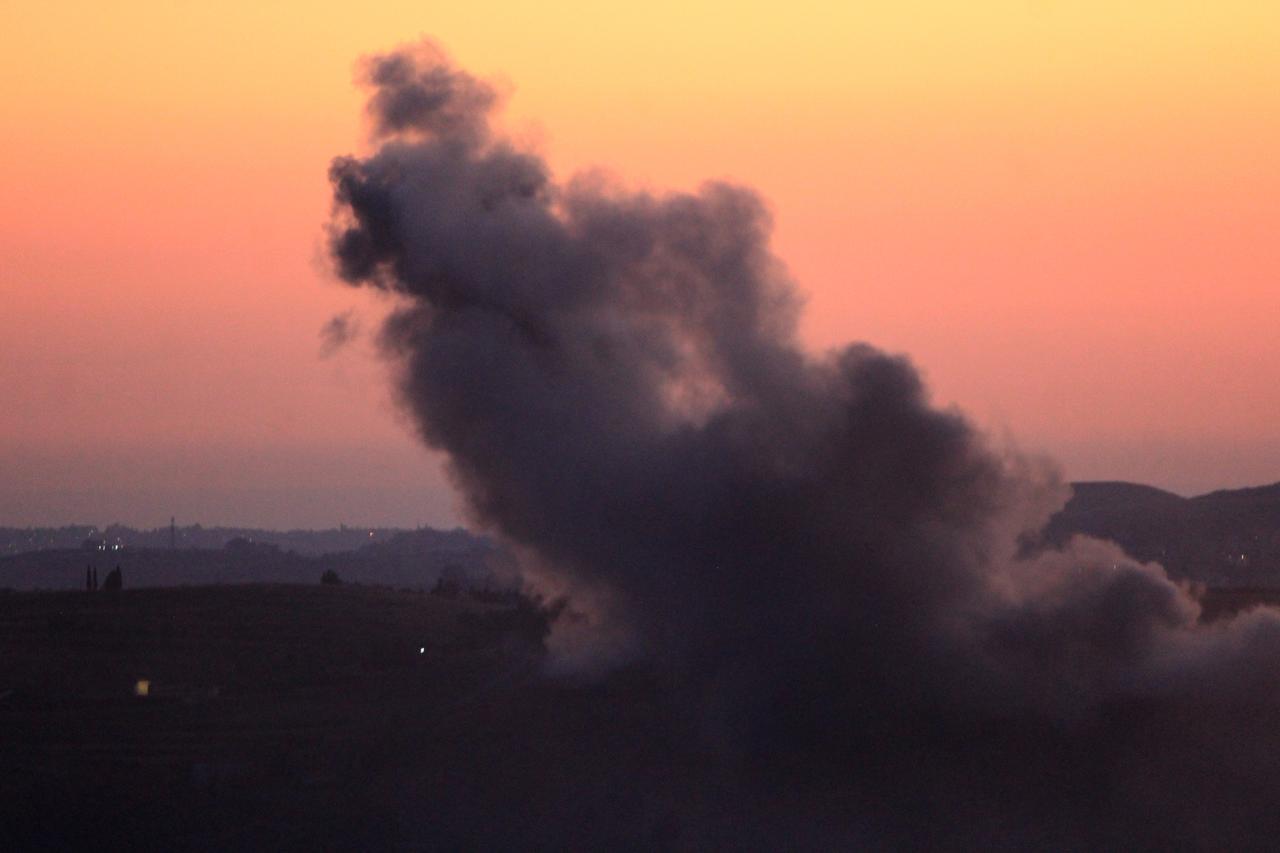
Israel’s attacks on southern Lebanon continue, 6 June 2026 – (Anadolu Agency)
In its statement, the Lebanese Armed Forces condemned Israel’s “repeated attacks,” emphasizing that these strikes aim to undermine efforts to restore the country’s stability, establish a comprehensive ceasefire, and compel Israel to withdraw from occupied Lebanese territories.
The statement also noted that these attacks have further strengthened the Lebanese Armed Forces’ resolve and the nation’s determination to defend its sovereignty.
Lebanese President Joseph Aoun condemned the attack “in the strongest terms.” Aoun stated that the strike constituted a clear violation of Lebanon’s sovereignty and international law and norms, and that it formed part of Israel’s escalating policies. The statement highlighted that Israel has been targeting soldiers, civilians, children, women, medical and rescue personnel, and journalists.
Aoun emphasized that Lebanon has been working through negotiations in Washington to end Israel’s ongoing attacks, but that these assaults continue to threaten security and stability in southern Lebanon. He extended condolences to the families of the fallen soldiers. Aoun also called on the international community to take action, fulfill its responsibilities, halt Israel’s repeated attacks, and implement relevant international resolutions.
On 6 June 2026, Israeli warplanes and unmanned aerial vehicles targeted various areas in southern and eastern Lebanon:
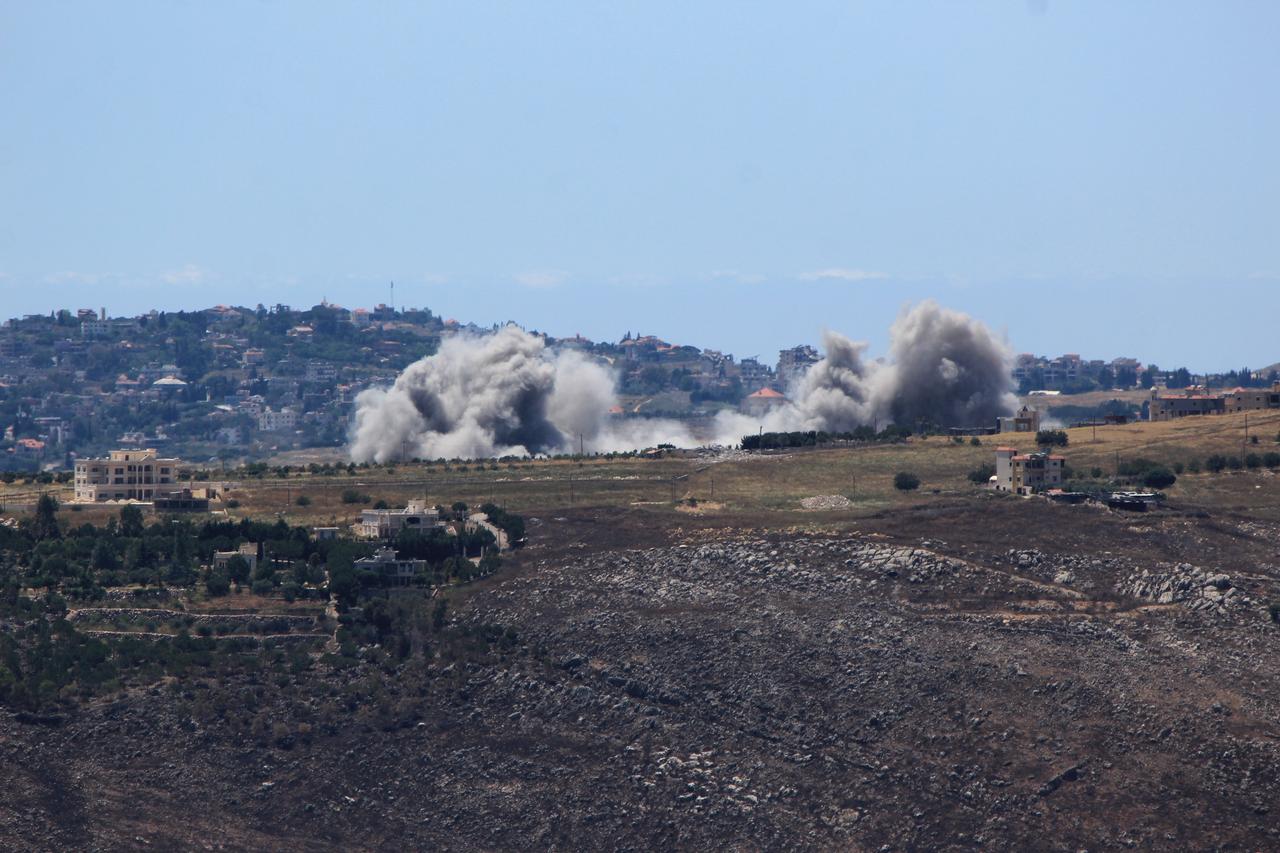
Israel’s attacks on southern Lebanon continue, 6 June 2026 – (Anadolu Agency)
Sekseküye village, Sayda district: According to initial assessments, a drone strike killed six people and injured four others.
Haruf village, Nabatieh district: One woman was killed in an attack by an Israeli unmanned aerial vehicle. In a second strike on the same village, another person lost their life. Three medical personnel from the “Er-Risale” association, attempting to reach the area, were injured in a second drone attack.
Sur district – Abbasiye main road: One person was killed when a motorcycle was targeted by an unmanned aerial vehicle.
Cüveyya village, Sur district: One person was killed and another injured in the attack.
Western Bekaa region: One person was killed in an attack targeting a motorcycle.
The Israeli military also announced it would target the villages of Aramta, Meshgara, Kefr Hune, Secud, and Ensariye, urging residents to evacuate their homes and move north of the Zahrani River.
The Israeli military announced on 6 June 2026 that two of its soldiers had been killed. 23-year-old Captain Shahar Cemla, deputy commander of a unit in the Egoz Brigade of the Commando Unit, had been severely wounded in a drone strike in southern Lebanon several days earlier and died from his injuries. 21-year-old Corporal Ohad Yaari, serving in the Shaked Battalion of the Givati Brigade, died during a military operation in southern Lebanon as a result of “accidental firing”. According to Israeli military data, the number of Israeli soldiers killed in operations against Iran and Lebanon since 28 February has reached 30.
According to data released by the Lebanese Ministry of Health, the number of people killed in Israeli military attacks on Lebanon since 2 March 2026 rose to 3,593 by the evening of 6 June. The number of injured was reported at 10,990. Despite the ceasefire that entered into force on 17 April and was extended for 45 days until 17 May, Israel has continued its attacks on Lebanon.
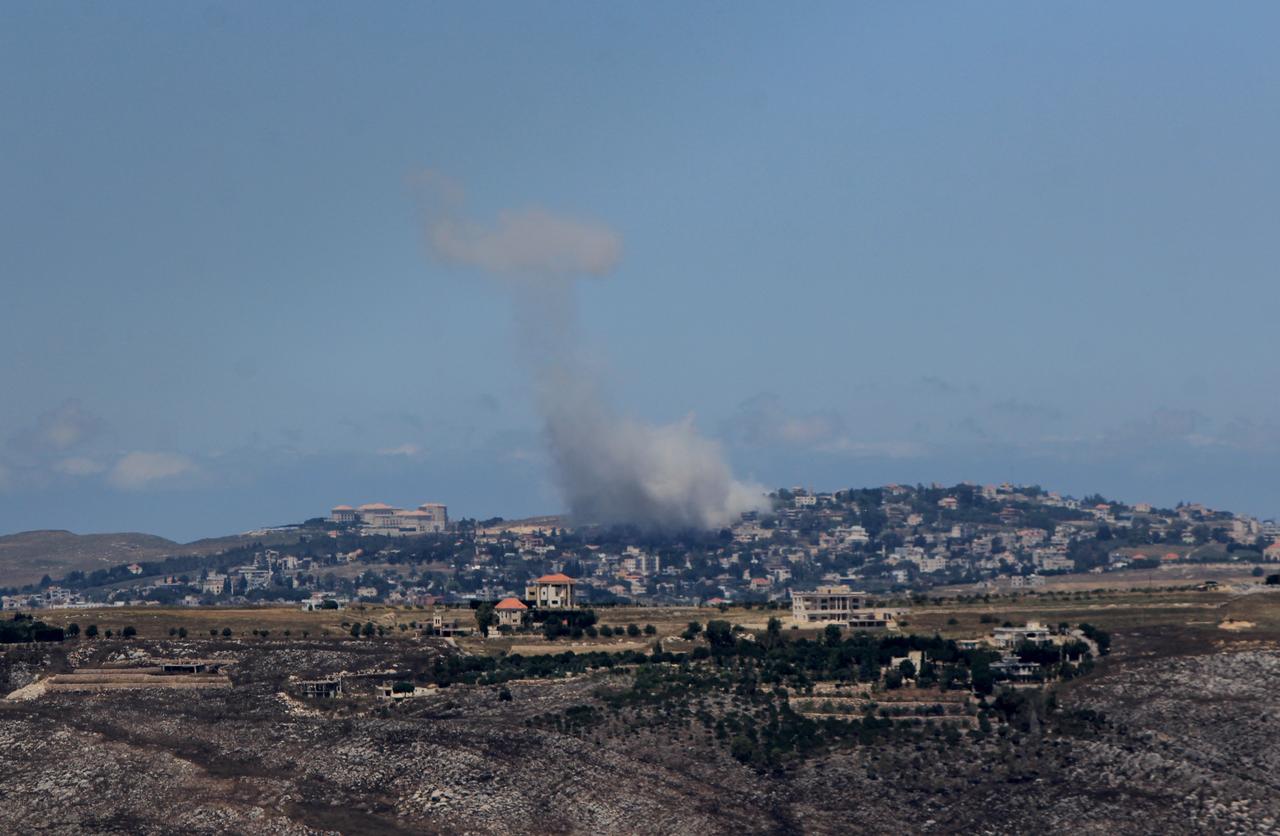
Israel’s attacks on southern Lebanon continue, 6 June 2026 – (Anadolu Agency)
High Representative for Foreign Affairs and Security Policy of the EU, Kaja Kallas, in a written statement on behalf of the EU, stated that the Israel-Lebanon ceasefire agreement represents a vital opportunity to establish lasting peace and security, and called on all parties to fully comply with its terms. The statement rejected attempts by Hezbollah to impose additional conditions on the agreement and stressed that all military activities must cease immediately. The EU called for Hezbollah’s withdrawal south of the Litani River and Israel’s withdrawal from Lebanese territory.
The statement also condemned the killing of another UNIFIL soldier in attacks on 4 June 2026, noting that the killing of peacekeeping personnel constitutes a violation of international law and that those responsible must be held accountable.
Anadolu Ajansı. "Son Gelişmeler: İsrail-İran Çatışmaları ve Orta Doğu Ülkelerinin Savunması." Anadolu Ajansı Live Blog. Accessed June 8, 2026. https://www.aa.com.tr/tr/live-blog/son-gelismeler-israil-iran-catismalari-ve-orta-dogu-ulkelerinin-savunmasi/3347
On 9 June 2026, according to the Lebanese official news agency NNA, the Israeli military targeted the area around the village of Qalawiyah, which is part of Nabatieh, with artillery fire. The El-Katrani area in the Cizzin district of the South Governorate was also subjected to Israeli artillery attacks. In Sur, Israeli warplanes bombed the El-Hamadiya neighborhood, part of the Abbasieh village. The Israeli military also carried out airstrikes on the villages of Deyr Kanun Ras el-Ayn and Ramadiye, both attached to Sur. [1]
On the morning of 9 June, the Israeli military targeted the villages of Kefer Sir, Western Sir, Jibshit, Adshit, Habbush, and Keferrumman, all within the Nabatieh governorate. In an attack on a poultry farm in Adshit, the farm owner was killed. In a drone strike targeting a house in Habbush, a 16-year-old child lost his life. Two more people were killed in an attack on Keferrumman. It was reported that an Israeli drone targeted the center of Nabatieh and that the area between Kefer Sir and Western Sir was also hit by an airstrike.
The Israeli military also conducted airstrikes on the center of Sur and the villages of Musaylih, Sarifa, Haris, and Burq Kalawiy. In the afternoon, Israeli aircraft carried out airstrikes on the villages of Upper Nabatieh, Kefur, and Aytit.
On the same day, an attack on the Masakin Shabiyya neighborhood in Sur killed 9 people and injured 28 others. In a separate airstrike targeting a building in Sur’s Remel neighborhood, five people were injured; they were taken to hospitals in Sur and their conditions were reported as stable. Israeli warplanes also struck the El-Bas area in Sur. Meanwhile, an Israeli drone attacked a vehicle in the village of Ansariyyah, part of Sidon.
In the attacks carried out by Israel on villages in southern Lebanon during the day, the total number of fatalities rose to 13.
The Lebanese General Directorate of Civil Defense issued a written statement indicating that a vehicle in the village of Sharqiyyah, part of the Nabatieh governorate, was targeted by an Israeli drone.
After the initial attack, civil defense teams dispatched to the scene were assisting an injured civilian when the same area was struck a second time by a drone. As a result of the second strike, two civil defense personnel sustained minor injuries. The injured civilian and the two personnel were taken to hospital for treatment.
Israeli Military Spokesperson Avichay Adraee, in a map-based post on his social media account, pressured residents of Sur to evacuate. Adraee called on people living in the Christian Neighborhood, Shebriha, Hamadiya, Jal al-Bahr, Zukuk al-Mufdi, al-Bas, al-Mashuq, Burq al-Shamali, Naba, al-Hush, al-Rashidiyya and Ayn Baal districts of Sur to leave their homes and move north of the Zahrani River. Adraee claimed that Hezbollah was operating in the Christian Neighborhood and announced that these areas would be targeted.
Israel’s far-right National Mission Minister Orit Strook stated on 9 June that there were restrictions on Israeli attacks against Beirut, but asserted that "there are no restrictions on operations in southern Lebanon". According to Israeli media reports, Strook said regarding the situation in Lebanon: "If they open fire, we will make their lives burn. Hezbollah will understand that this is not in its own interest."
The Israeli press reported that Prime Minister Benjamin Netanyahu had agreed to halt attacks on Iran at the request of U.S. President Donald Trump, but that attacks on Lebanon would continue "with full force".
Pakistan’s Chief of Army Staff Asim Munir met with his Lebanese counterpart, General Rudolf Heykel, who was on an official visit, at the General Staff headquarters in Rawalpindi. The two commanders discussed the regional security situation, matters of mutual interest, ways to enhance defense cooperation between the two countries, and military relations. The meeting focused on professional exchanges, training cooperation, and strengthening institutional ties between the armed forces of the two nations.
General Munir reaffirmed Pakistan’s commitment to its long-standing and sincere relations with Lebanon and emphasized its dedication to increasing defense cooperation with the Lebanese Armed Forces. General Heykel praised Pakistan’s contributions to regional security, stability, and the preservation of international peace.
Hezbollah called on the Lebanese government to restore official relations with Iran and benefit from Tehran’s support. In a written statement issued on 9 June, Hezbollah claimed that Iran’s missile strike against Israel was intended to defend the Lebanese people against Israel’s attacks and violations of the ceasefire. The statement also noted that support from the Houthis in Yemen was part of a joint effort to deter Israel.
The statement rejected criticisms of Iran by some Lebanese officials, arguing that such positions were contrary to Lebanon’s interests and served only Israel. It included the statement: "We call on the Lebanese government to restore official relations with Iran in a manner that serves the interests of both countries and to utilize Tehran’s support for the realization of our national objectives." At the end of the statement, Hezbollah thanked the Iranian government and people and affirmed its commitment to continue defending Lebanon’s rights "through resistance".
The Lebanese Ministry of Health reported in its statement dated 9 June 2026 that since Israel’s attacks on Lebanon began on 2 March 2026, the number of fatalities in the past 24 hours increased by 29 to reach 3,666. The number of injured reached 11,321.
Al Jazeera. "Israel Kills 14 in Southern Lebanon After Trading Fire with Iran." Al Jazeera, June 9, 2026. Accessed June 9, 2026. https://www.aljazeera.com/news/2026/6/9/israel-kills-14-in-southern-lebanon-after-trading-fire-with-iran
Anadolu Agency. "Fresh Israeli Strikes in Southern Lebanon Kill at Least 13 Despite Truce." Anadolu Agency, June 9, 2026. Accessed June 9, 2026. https://www.aa.com.tr/en/middle-east/fresh-israeli-strikes-in-southern-lebanon-kill-at-least-13-despite-truce/3961140
Anadolu Ajansı. "Dakika Dakika Gelişmeler: ABD-İsrail-İran-Lübnan Savaşı ve Ateşkes Süreci." Anadolu Ajansı Live Blog. Accessed June 9, 2026. https://www.aa.com.tr/tr/live-blog/dakika-dakika-gelismeler-abd-israil-iran-lubnan-savasi-ve-ateskes-sureci/3496
On 10 June 2026, the Israeli military continued aerial attacks and violations against southern Lebanon despite the ceasefire. Throughout the day, numerous villages affiliated with the cities of Sur, Sidon and Nabatieh were targeted by aerial strikes and artillery fire; by the end of the day, the number of fatalities in Israeli attacks had risen to 18. On the same day, it was reported that Saudi Arabia had sent a diplomatic protest note to the United States and resumed imports of Lebanese products.
Israeli warplanes attack Nabatieh, 10 June 2026 – (Anadolu Agency)
According to the official Lebanese news agency NNA, the Israeli military targeted areas in the south with aerial strikes during the night of 10 June. Israeli warplanes bombed the village of Kefr Dunin, which is affiliated with Nabatieh, and the village of Benaful, located south of the capital Beirut. It was indicated that Israeli forces targeted villages in the Western Bekaa region with howitzer fire during the night. In a written statement from the Israeli military, it was claimed that attacks continued against Hezbollah infrastructure in various areas of southern Lebanon.
Throughout the day, many villages affiliated with Sur, Sidon and Nabatieh were targeted. Attacks were carried out against the area around Sur and the Mesakin Şaabiyye neighborhood; the villages of Bazuriyye, Sarifa, Mecedil and Deyr Kanun Nehir affiliated with Sur; the villages of Gassaniyye and Ansariyye affiliated with Sidon; and the villages of Upper Humin, Sadikayn, Keferrumman, Nabatieh el-Fevka and Adshit affiliated with Nabatieh. Attacks were conducted. Four aerial strikes against Sarifa resulted in casualties. During the night, the center of Nabatieh along with the villages of Adshit and Keferrumman were targeted by aerial strikes; artillery fire was directed at the areas of Secid, Kusaybe and Mahmudiyye. It was reported that an Israeli drone continued low-altitude flight over the skies of the capital Beirut.
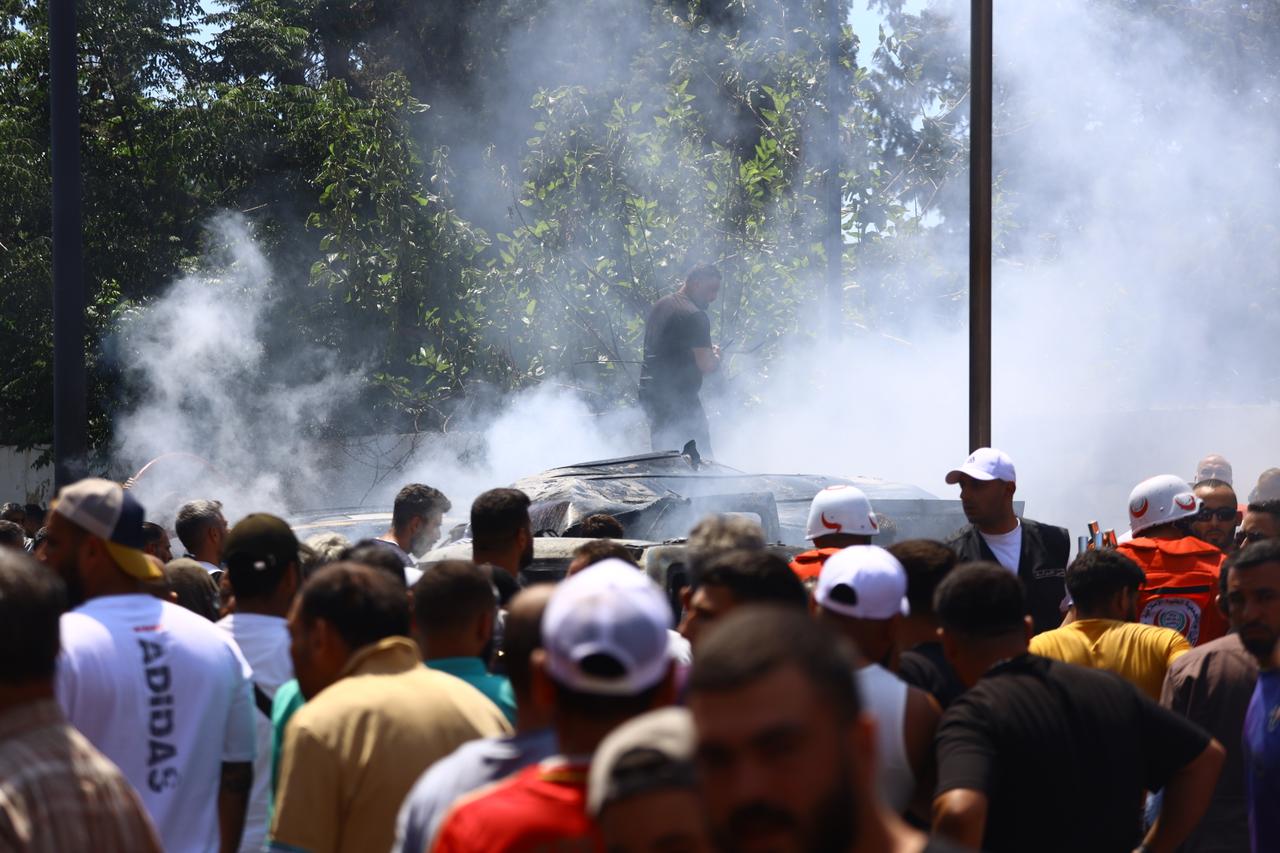
Lebanon under Israeli aerial attack despite ceasefire, 10 June 2026 – (Anadolu Agency)
Israeli Army Spokesperson Avichay Adraee, in a social media post, announced that the military would target the villages of Ansariyye, Gassaniyye and Upper Humin in southern Lebanon. Adraee urged residents of Gassaniyye and Upper Humin to move at least one kilometer away from their locations, and residents of Ansariyye to cross north of the Zahrani River.
In the early morning of 10 June, an aerial strike on the village of Sadikayn, affiliated with Nabatieh, killed two people; one person was killed in an attack on the village of Tayr Diba, affiliated with Sur. The death toll was initially reported as three. An Israeli drone targeted a vehicle at the western entrance to the village of Duveyr, affiliated with Nabatieh.
In later hours, reports emerged of people trapped under rubble in Tayr Diba, raising the death toll first to 8 and then to 17. According to NNA, nine people were killed and seven injured in attacks on Tayr Diba and surrounding areas of Sur. Three people were killed and three injured in attacks on the village of Deyr Kanun en-Nehr. One person was killed and five injured in the attack on the Mesakin Şaabiyye area of Sur. Rescue operations to clear rubble continued in Tayr Diba, which was targeted nine times by warplanes and drones.
In the evening, one person was killed in a drone strike on a motorcycle in the village of Düveyr in Nabatieh, bringing the total number of fatalities for the day to 18. In the evening, the Israeli military also carried out aerial attacks on the villages of Haris, Aba, Deyr Zehrani, Arabcul and Kalile in the south and the villages of Lusya, Yuhmur and Suhmur in the east.
The Israeli military targeted a vehicle in the center of Sidon in southern Lebanon with a drone. According to NNA, two people in the vehicle were killed after it was struck near the Archbishopric in Sidon’s center. The fire from the vehicle spread to numerous other parked vehicles in the vicinity; ambulances, fire brigades and civil defense teams were dispatched to the scene.
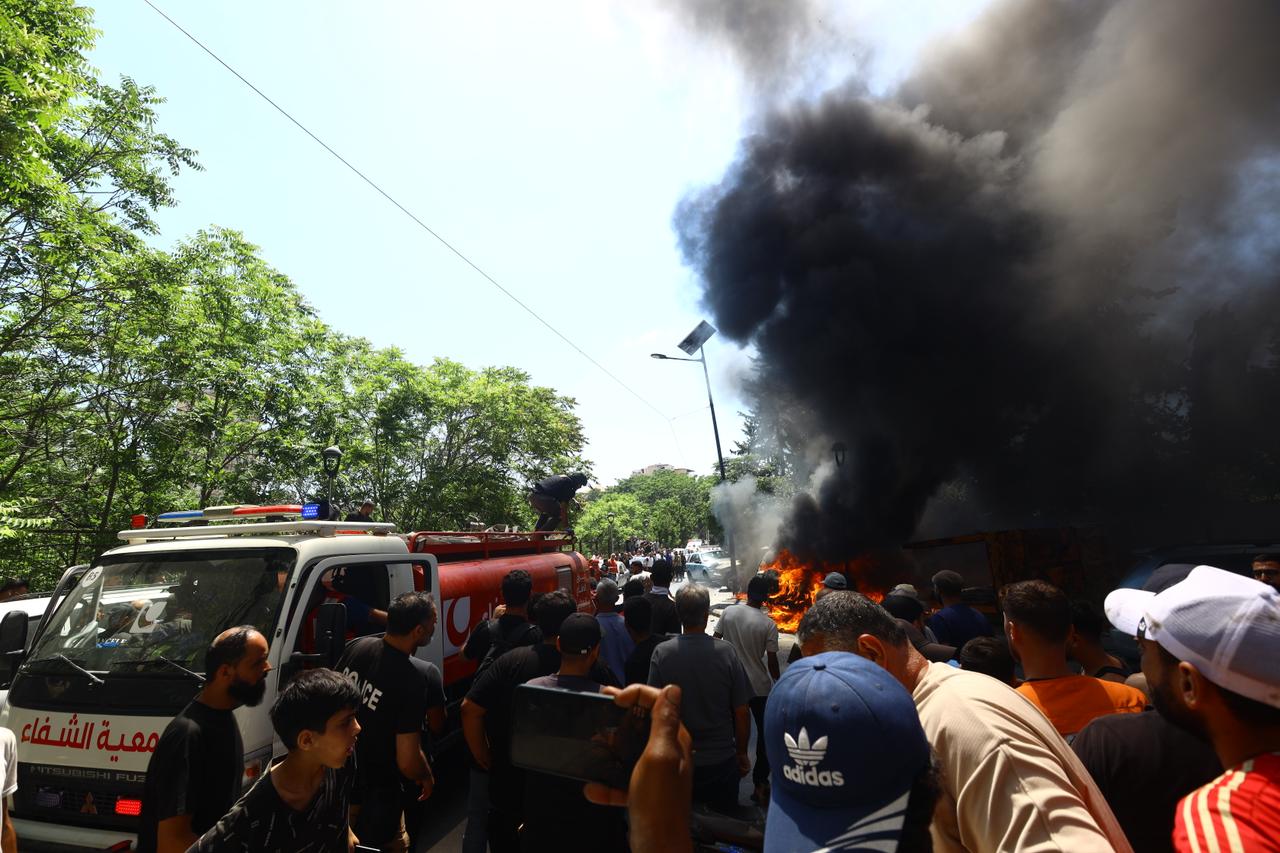
Lebanon under Israeli aerial attack despite ceasefire, 10 June 2026 – (Anadolu Agency)
The Israeli military also detained two people in the village of Kefershuba in southeastern Lebanon, one of whom was a member of the municipal council. According to NNA, an Israeli patrol detained Kefershuba Municipal Council Member Muhammad Hasan al-Haj and worker Ahmed Salah Diyab while they were operating a water pump station in the morning.
On 10 June, the Israeli military carried out an aerial attack on a mosque and a health center in the village of Deyr ez-Zehrani in southern Lebanon. According to NNA, the attack targeted the village mosque and a health center in the Beyder neighborhood, resulting in three deaths.
Lebanese Ministry of Health released its latest figures regarding Israeli attacks since 2 March. According to these figures, the number of people killed in Israeli attacks during this period increased by 30 to 3,696, while the number of injured reached 11,413.
Sirens sounded in the Israeli settlement of Shlomi on the northern border due to a drone targeting Israeli forces occupying southern Lebanon. The Israeli military stated that a drone had been detected near areas where Israeli forces were stationed and that fighter jets had shot it down.
On 10 June, Lebanese President Joseph Aoun stated that they would pursue negotiations between Israel and Lebanon under U.S. mediation to their conclusion.
According to a written statement from the presidency, Aoun received several mayors at Baabda Palace and made the following assessment regarding the negotiations:
"Through these negotiations, we aim to re-establish the state. The Lebanese must not remain under the authority of any entity outside the state." Aoun emphasized that decision-makers in Lebanon are themselves, adding, "We welcome assistance from any country, but there is a clear distinction between aid and interference in Lebanon’s internal affairs."
Aoun expressed satisfaction with the assistance provided by Arab countries in the Gulf and, referring to the negotiations with Israel, said: "I have made a decision regarding the negotiations and I will continue them to the end, because Lebanon is a sovereign state with its own existence and sovereignty as a founding member of the United Nations. I made this decision based on my conviction that wars bring no results but only losses for everyone."
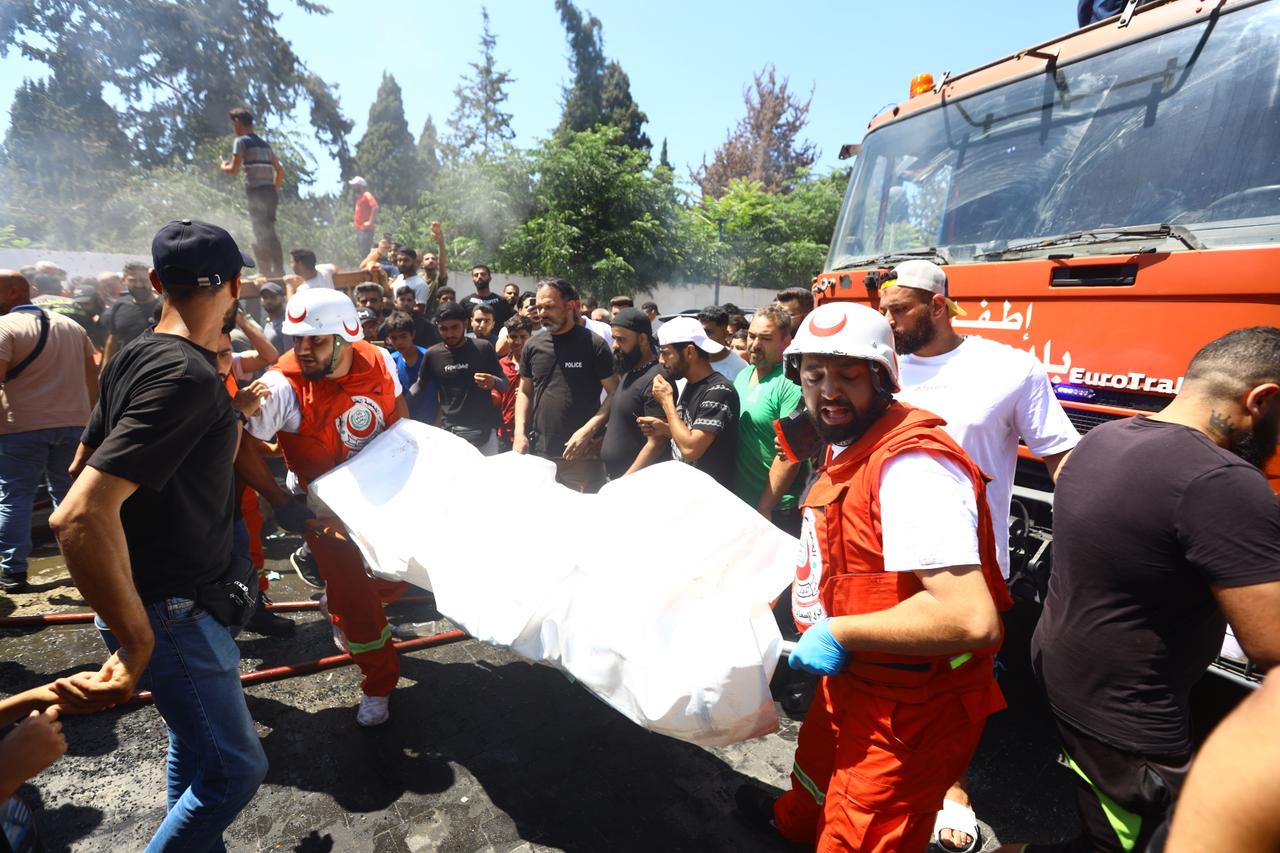
Lebanon under Israeli aerial attack despite ceasefire, 10 June 2026 – (Anadolu Agency)
Israeli President Isaac Herzog released a video in which he spoke in Arabic near the Lebanese border, asserting his desire for peace with Lebanon. Herzog said, "From Israel’s northern border, I extend a hand of peace to Lebanese President Joseph Aoun and the Lebanese people. However, Lebanon must remain independent and sovereign, free from the influence of Iran, Hezbollah and terrorist organizations." Herzog maintained that his dream was to visit Beirut and that this aspiration remained valid, adding, "But for this to happen, Lebanon’s future must be determined in Beirut, not Tehran."
Israeli Prime Minister Benjamin Netanyahu released a video message addressed to the Lebanese people, claiming that Israel’s occupation and attacks in southern Lebanon were not directed against the population but against Hezbollah and Iran. Netanyahu argued that the only obstacle to good relations between Beirut and Tel Aviv was Iran and Hezbollah, and called on the Lebanese people to unite with Israel under a "vision of peace." Netanyahu stated, "We are not at war with you. We are fighting Hezbollah, which occupies your country, carries out Iran’s orders and uses your land to launch terrorist attacks against Israel." Netanyahu claimed that Hezbollah had been militarily weakened while Israel was in "the strongest period of its history," and asserted that after the "elimination" of Hezbollah, a broad vision of peace encompassing economic and social development could become possible between the two countries.
According to Israeli state television KAN on 10 June, Saudi Arabia delivered a protest note to the administration of U.S. President Donald Trump through diplomatic channels, expressing its displeasure over Israel’s attacks in Lebanon. According to the report, Saudi Arabia believes that Israel’s aggression in Lebanon is chaotic and unplanned and that Israel lacks a clear strategy for managing its attacks. It was also indicated that Riyadh suspects that Israeli Prime Minister Netanyahu’s efforts to expand attacks in Lebanon aim to reignite conflict in the Gulf and sabotage the emerging agreement between the United States and Iran.
Riyadh is said to be concerned about the situation in Lebanon spiraling out of control and has recently strengthened its ties with Lebanese Parliament Speaker Nabih Berri, with the aim of weakening Hezbollah and strengthening the Lebanese state.
Saudi Crown Prince Mohammed bin Salman issued instructions to resume exports from Lebanon to Saudi Arabia, in light of positive steps taken by the Lebanese government. According to a statement from the Saudi Ministry of Foreign Affairs, Foreign Minister Prince Faisal bin Farhan held a phone call with Lebanese Prime Minister Nevvaf Selam and conveyed that the decision was based on Lebanon’s cooperation and the technical work carried out by teams over the past year.
Lebanese President Joseph Aoun thanked Crown Prince bin Salman for the decision, stating that it reflected the depth of Arab brotherhood between the two sister countries and would make a significant contribution to reviving the national economy. Lebanese Prime Minister Nevvaf Selam, in a statement emphasizing the shared flags of the two nations, thanked Crown Prince bin Salman and Foreign Minister Prince Faisal bin Farhan for closely following the process, noting that the decision to lift the import ban was a major step that would create new opportunities for Lebanese producers and exporters.
On 10 June, the United Nations (UN) announced that at least 11 people had been killed and 44 injured in Israeli attacks in Lebanon the previous day, despite the ceasefire. UN Deputy Spokesperson Farhan Haq, during a daily press briefing in New York, referred to reports from the United Nations Interim Force in Lebanon (UNIFIL), stating that Israel had carried out at least 15 aerial attacks using warplanes, helicopters and drones. Haq said, "According to the Lebanese Ministry of Health, at least 11 people were killed and 44 injured in yesterday’s aerial attacks."
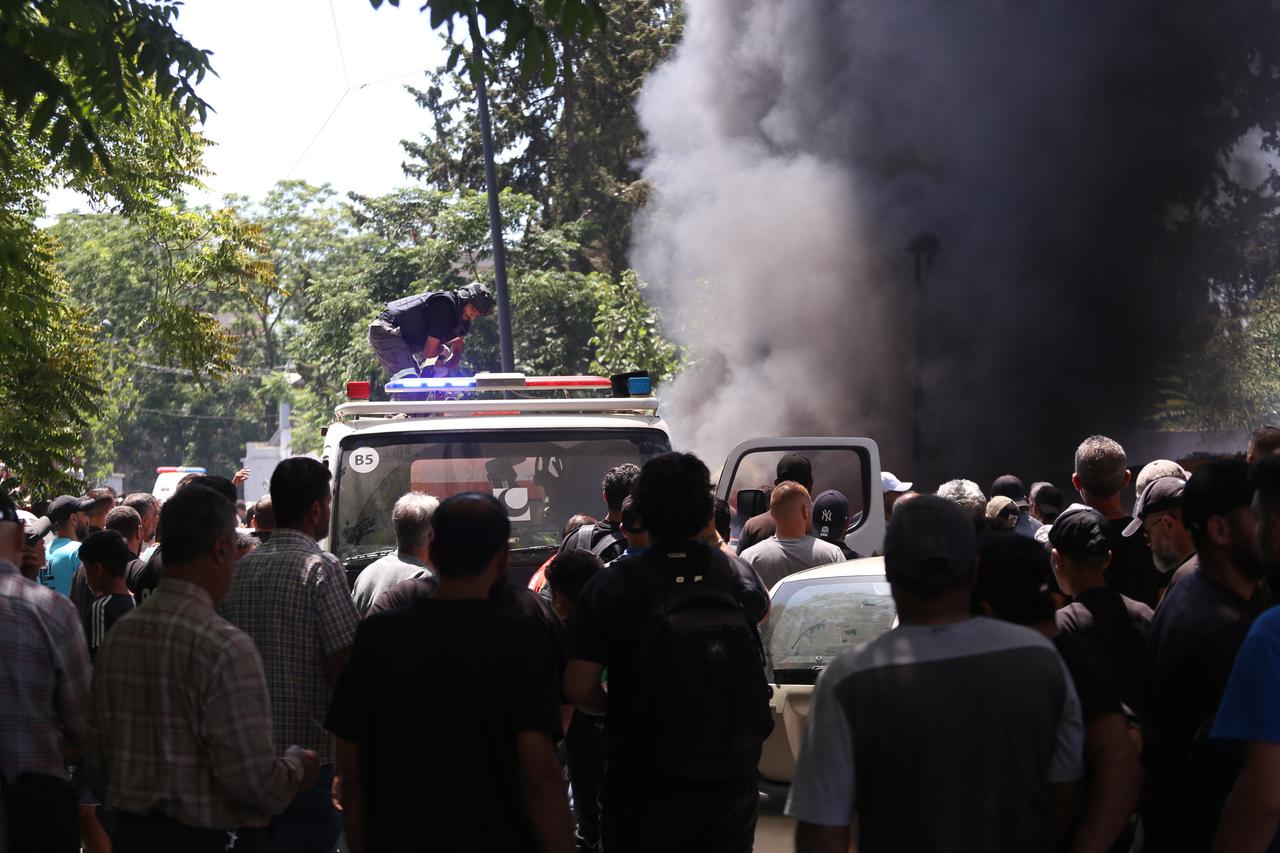
Lebanon under Israeli aerial attack despite ceasefire, 10 June 2026 – (Anadolu Agency)
Haq noted that UNIFIL faced serious risks throughout the day, reporting that 24 artillery shells landed within 300 to 400 meters of the UN peacekeeping headquarters, three suicide drones exploded, and another aerial attack occurred nearby.
Haq stated that Israel had violated Lebanese airspace 80 times, amounting to over 126 hours of flight activity. "Peacekeeping personnel were forced to take shelter; no personnel were injured. Damage occurred at the base, including cracks in walls and broken windows," he added. Haq also noted that Israel’s evacuation orders in southern Lebanon forced the local population to flee and obstructed the delivery of vital humanitarian aid.
On 11 June 2026, the Israeli military continued its attacks against southern and eastern Lebanon. Numerous villages in Nabatieh, Sur and the eastern Bekaa region were targeted by aerial strikes, artillery fire and drone attacks; the attack near the Hiram Hospital in Sur stood out. On the same day, Lebanese President Joseph Aoun announced that despite pressure, Lebanon would not withdraw from negotiations with Israel.
According to the Lebanese news agency NNA, on 11 June the Israeli military bombed a house in the el-Makased neighborhood of Nabatieh, causing fires in the targeted house and nearby vehicles. During the night, Israeli forces targeted the villages of Sir el-Garbiyye and Adshit in Nabatieh with artillery fire and bombed Upper Nabatieh, the area around Necde Hospital and the Kefr Rumman intersection.
In southern Lebanon, Israeli artillery targeted the rural areas of Katrani in the Cizzin region and the surroundings of the village of Kefershuba in the Hasbaya district; a drone targeted the village of Shehabiyye in Sur. In eastern Lebanon, an Israeli drone attacked a house in the plain of the village of Taraya, west of Baalbek.
Israeli warplanes and drones carried out attacks during and after midday on the villages of Deyr Kanun en-Nehr, Mecdel Zun, Mansuri, Kefer Coz, Kefer Tebnin, Shevkin, Habbush, Abbasiyye and Tora in the south. The western neighborhoods of Sur, including Mecdel Zun, Zibkin and Hinniye, were subjected to intense bombardment by Israeli artillery units; Israeli artillery also struck the villages of Ganduriyye and Sarifa. A drone attack targeted a vehicle in the village of Coya, affiliated with Sur. It was reported that an Israeli drone continued low-altitude flight over the skies of Beirut.
According to NNA, Israeli drones targeted a vehicle in the village of Suhmur in the Bekaa region on 11 June, killing one Syrian national and injuring another. The village of Mishgara in Bekaa was also targeted by drones.
The Israeli military also targeted a building near the Hiram Hospital in the city of Sur. According to NNA, one person was killed and 17 people were injured, 10 of whom were nurses and hospital staff. The intense attack caused damage to the Hiram Hospital building, and numerous vehicles parked in the hospital grounds were damaged.
Dr. Selman Aydibi, Chairman of the Hiram Hospital Board said that ten nurses and medical staff were injured after shrapnel struck them, and that damage had occurred in clinical and patient rooms within the hospital building, adding: "The aerial attacks around the hospital caused damage to critical departments including intensive care, cardiology, dialysis, emergency services and laboratories."
Israel also carried out an aerial attack in the Baalbek region in eastern Lebanon. According to a report in NNA, Israeli warplanes targeted the village of Nahle, affiliated with Baalbek, in two attacks, resulting in one death. A written statement from Hezbollah reported that a "Heron"-type Israeli drone was shot down while flying over Nahle.
Lebanese Ministry of Health released its latest figures regarding Israeli attacks since 2 March. According to these figures, the number of people killed in Israeli attacks during this period increased by 15 in the last 24 hours to 3,711, while the number of injured reached 11,483.
On 11 June, Lebanese President Joseph Aoun stated that despite pressure, Lebanon would not withdraw from negotiations with Israel and would continue the process in line with the country’s interests. According to a written statement from the Lebanese presidency, Aoun received a delegation from the "Culture and Freedom" Foundation, headed by former Justice Minister Ibrahim Neccar. In the meeting, Aoun emphasized that the state is the fundamental structure protecting all citizens, saying, "Our preference is the state because it protects us all. We must be convinced that we have a sovereign state."
Referring to the negotiations with Israel, Aoun acknowledged pressure to end the process but affirmed that Lebanon would not retreat, stating, "We will not withdraw from the negotiations and will continue this path until we reach outcomes that serve our country’s interests." Aoun said they demanded an end to hostilities with Israel, noting that this could only be achieved through Israel’s withdrawal from Lebanese territory, cessation of attacks, deployment of the Lebanese army in the south, return of displaced persons to their homes and release of prisoners.
Al Jazeera. "Iran War Updates: Trump Claims Iran Shot Down Helicopter, Vows to 'Respond'." Al Jazeera Live Blog, June 9, 2026. Accessed June 11, 2026. https://www.aljazeera.com/news/liveblog/2026/6/9/iran-war-live-trump-warns-netanyahu-as-israel-tehran-halt
Anadolu Ajansı. "Son Gelişmeler: ABD-İsrail-İran-Lübnan Savaşı ve Barış Müzakereleri." Anadolu Ajansı Live Blog. Accessed June 11, 2026. https://www.aa.com.tr/tr/live-blog/son-gelismeler-abd-israil-iran-lubnan-savasi-ve-baris-muzakereleri/3646
Anadolu Ajansı. "İsrail Ordusu Ateşkese Rağmen Lübnan’ın Güneyine Hava Saldırıları Düzenledi." Anadolu Ajansı Foto Galeri. Accessed June 11, 2026. https://www.aa.com.tr/tr/pg/foto-galeri/israil-ordusu-ateskese-ragmen-lubnanin-guneyine-hava-saldirilari-duzenledi/163005
Anadolu Ajansı. "İsrail Savaş Uçakları Lübnan’ın Güneyindeki Beldeleri Bombalamaya Devam Ediyor." Anadolu Ajansı. Accessed June 11, 2026. https://www.aa.com.tr/tr/dunya/israil-savas-ucaklari-lubnanin-guneyindeki-beldeleri-bombalamaya-devam-ediyor/3962059
BBC News. "Israeli Strikes in Southern Lebanon Kill 17, Reports Say." BBC News, June 11, 2026. Accessed June 11, 2026. https://www.bbc.com/news/articles/cpq3d44l907o
On 12 June 2026, Hezbollah announced it had carried out 17 attacks against Israeli targets in southern and eastern Lebanon, framing these as a comprehensive response to Israel’s violations of the ceasefire. The Israeli military reported conducting approximately 310 attacks against Lebanon over the past week, during which at least six people were injured in strikes targeting villages in the south.
In the early hours of 12 June, Hezbollah reported carrying out 17 attacks against Israeli targets in southern and eastern Lebanon. The group stated that the attacks were in response to Israel’s violations of the ceasefire and its strikes on villages in southern Lebanon. The statement specified that Israeli soldiers, military vehicles, and a command center in the Lebanese villages of Tayr Harfa, al-Adeyse, Zutar ash-Sharqiyya, Yahmer ash-Shaqif, and al-Kantara were targeted with rockets, artillery fire, and kamikaze unmanned aerial vehicles (UAVs).
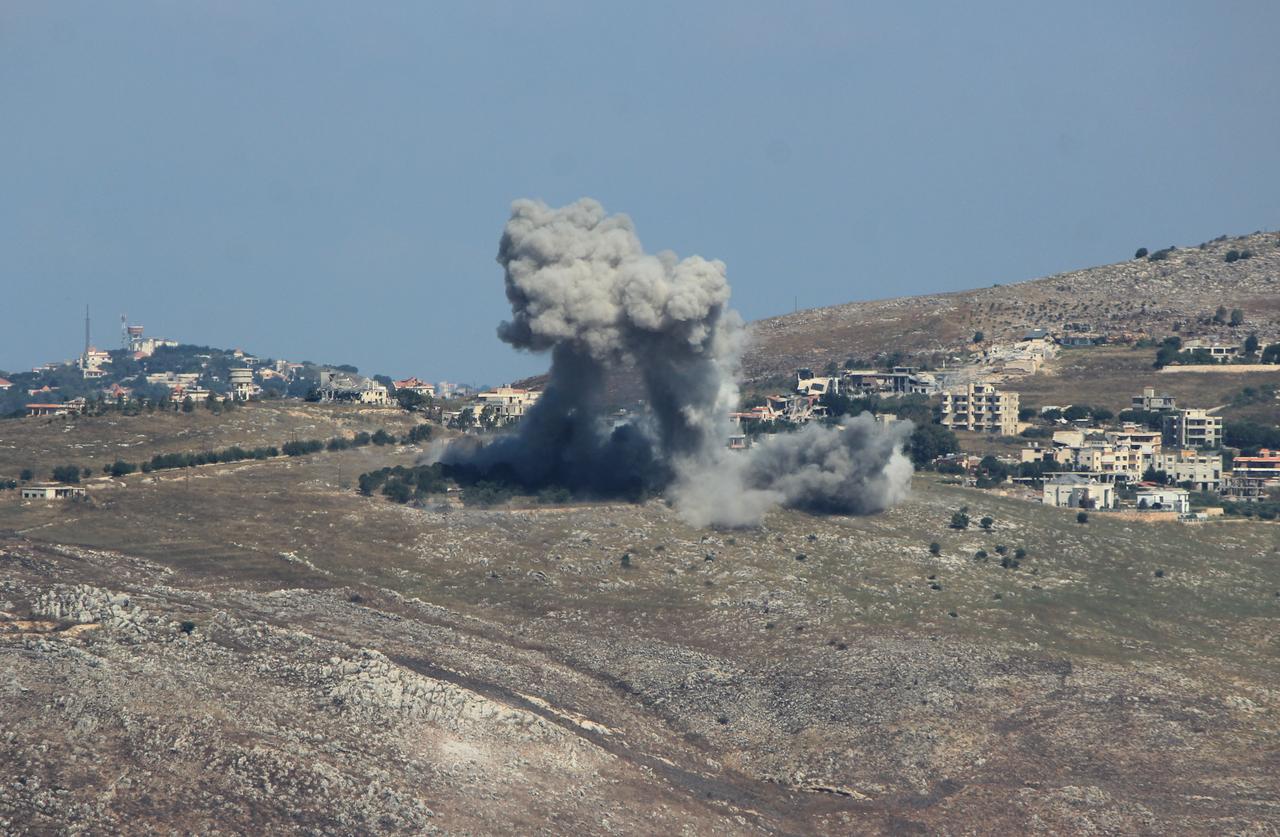
The Israeli military continues attacks on Lebanon despite the ceasefire, 12 June 2026 – (Anadolu Agency)
The statement, which noted a total of 17 separate attacks, claimed that an Israeli military unit had been ambushed, several military vehicles including Merkava tanks had been destroyed, and Israeli soldiers had been wounded. It further emphasized that a Hezbollah missile downed an Israeli Heron 1 UAV over the Nahle region in the Baalbek district, and that an attempt to intercept a Hermes 450 UAV near Iklim al-Tuffah forced it to retreat. No official comment was issued by the Israeli military regarding these attacks.
On 12 June, the Israeli military announced that despite the ceasefire, it had conducted approximately 310 attacks against Lebanon over the past week. In its statement, the military claimed that 80 Hezbollah members were killed in these ground operations. The same statement also reported that 20 Palestinians were killed in strikes on Gaza, with Israel asserting that these individuals were members of armed groups.
Despite the ceasefire, the Israeli military issued an evacuation warning for the Lebanese villages of Sarafand, Tuffahta, and Sinay Mezrası, threatening imminent attacks. Israeli Defense Forces Spokesperson Avichay Adraee, in a social media post, accused Hezbollah of violating the ceasefire and declared, “We will move strongly in these villages,” issuing a direct threat to Lebanese civilians. Adraee urged residents to leave these villages and move north of the Zahrani River, warning that those near Hezbollah elements would be in grave danger.
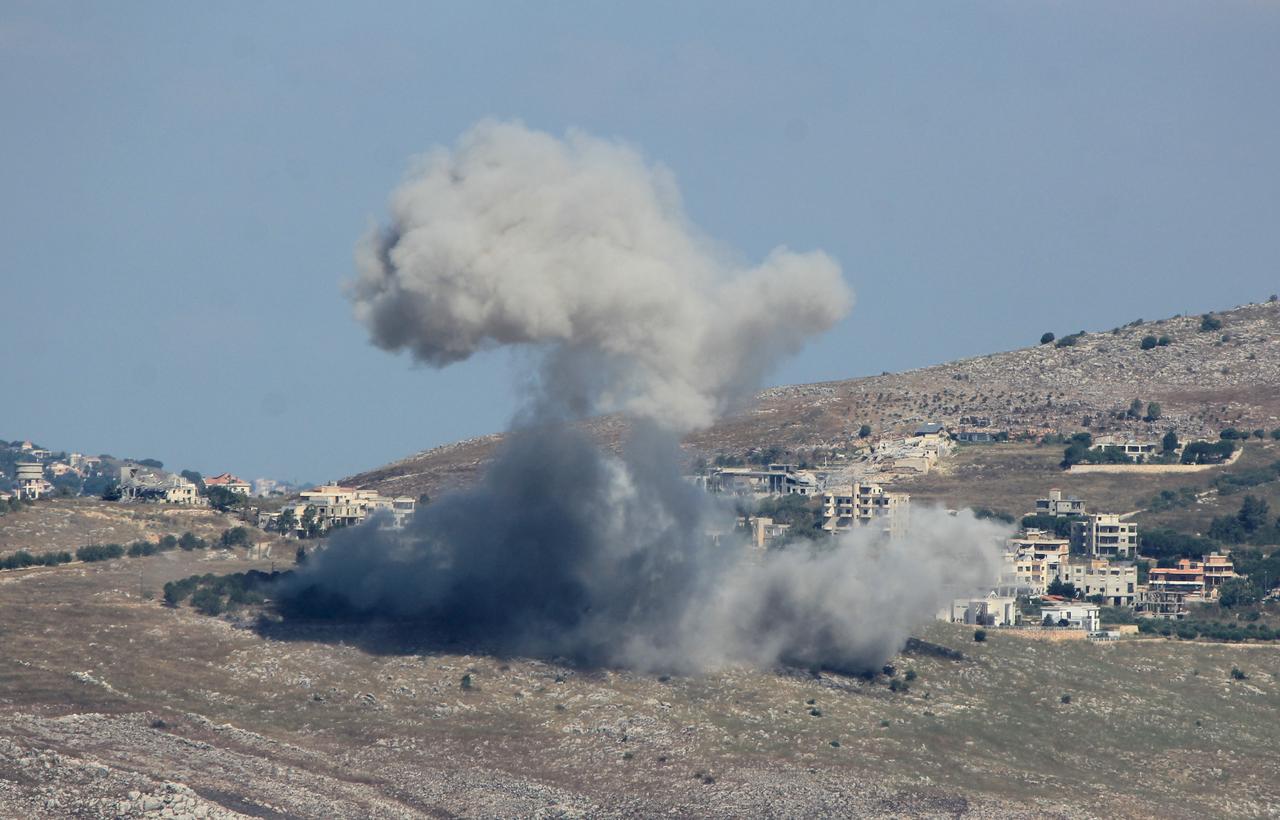
The Israeli military continues attacks on Lebanon despite the ceasefire, 12 June 2026 – (Anadolu Agency)
The number of people injured in Israeli attacks on southern Lebanon during the day rose to four. According to NNA, one person was wounded in an Israeli UAV strike on the town of Sur. Israeli warplanes conducted aerial strikes on the southern villages of Shehabiye, Mecdel Zun, Mareke, Mansuri, Kalavay, and Arid Dibbin, while artillery units targeted the surrounding area of Buyut es-Seyyad, a village under Sur’s jurisdiction.
After the attack on Mareke, municipal and civil defense teams extracted three wounded from the rubble, while search operations continued to locate missing persons. Israeli aircraft also launched two strikes on the Hardali position along the Litani River in the Mercayun region, and the village of Cebşit, under Nebatiye’s jurisdiction, was hit by a UAV attack.
The Israeli military targeted a civil defense point in the village of Sel’a in southern Lebanon, wounding two ambulance personnel. Later in the day, Israeli aircraft struck the villages of Tuffahta, Shehabiyye, Tul, Upper Nebatiye, Yatir, Keferdunin, and Marub; some individuals were reported wounded in the strikes on Shehabiyye.
The Israeli military continued aerial and artillery strikes on villages in southern Lebanon during the evening and night hours. According to NNA, Israeli artillery units targeted the villages of Mansuri and Mecdel Zun under Sur’s jurisdiction, while Israeli warplanes conducted two airstrikes on the Ganduriyye neighborhood of Sur. Warplanes bombed the area between Arnun and Kefer Tebnit in Nebatiye, and a UAV struck the square in Kusaybe. Aircraft also attacked the Meydan neighborhood of Nebatiye, the area between Zibdin and Shevkin, the villages of Sadikin and Mecdel Zun under Sur’s jurisdiction, and the villages of Aişiye and Sinay in the Cizzin district and Zehrani region.
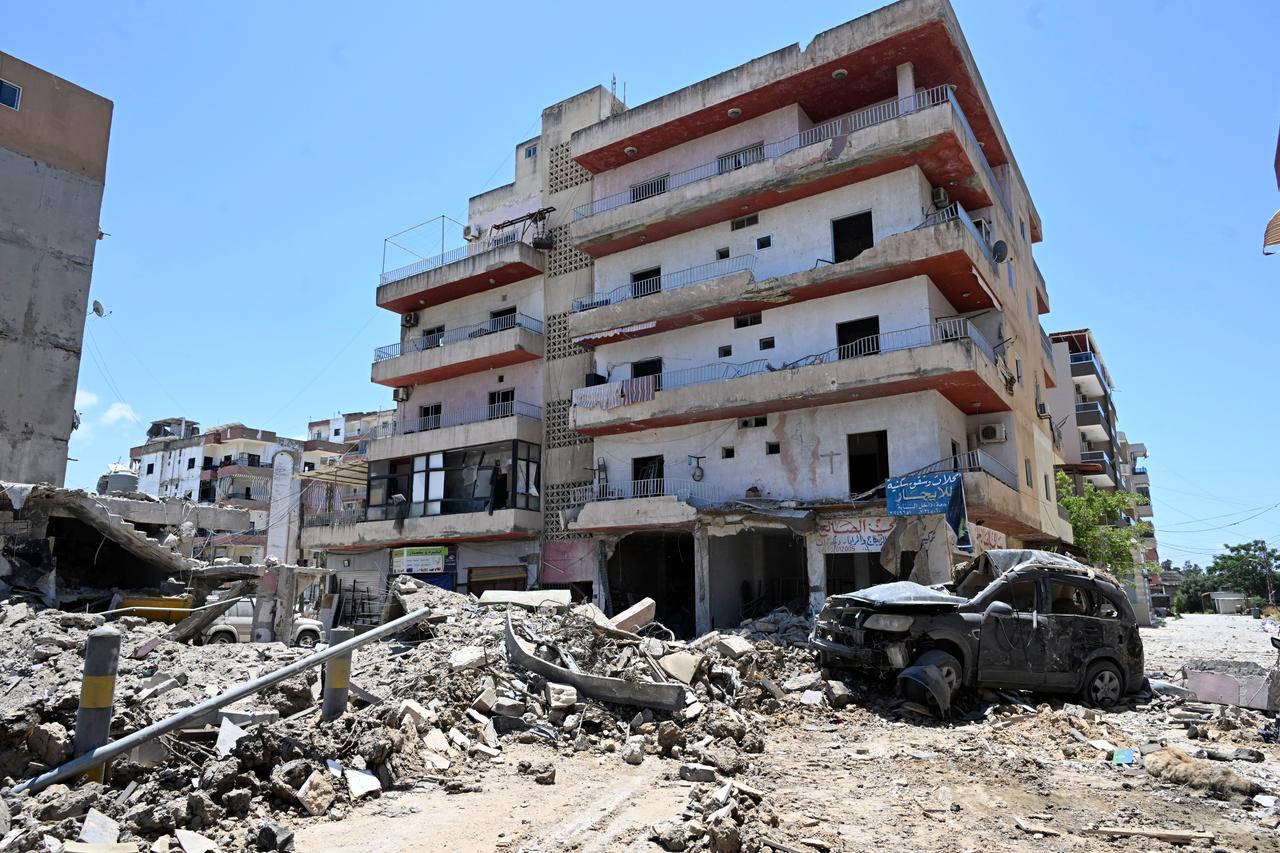
Buildings destroyed by Israeli military strikes on the town of Sur in Lebanon despite the ceasefire, 12 June 2026 – (Anadolu Agency)
On 12 June, the Israeli military reported that Hezbollah had launched a UAV attack against a military zone in northern Israel. The military statement noted that sirens were activated in the Tzippori region of northern Israel due to the attack. It added that sirens were also triggered in multiple settlements in western Tzippori as a result of efforts to intercept the UAV, but no injuries were reported.
The Lebanese newspaper Al-Akhbar claimed that the agreement expected between the United States and Iran would also encompass Lebanon. According to the report, the agreement includes steps to end the state of war not only in the Gulf but across the broader region, including Lebanon. The article asserted that the United States had endorsed not merely a ceasefire but a process to end the state of war, and that Iran had received a final response from the United States confirming Lebanon’s inclusion in the agreement.
According to the newspaper, Trump was alleged to have held three discussions with Israeli Prime Minister Benjamin Netanyahu regarding the Lebanon file. It was argued that the agreement would not only halt the ceasefire violations but also stop all attacks, establish a timetable for Israel’s rapid withdrawal from Lebanon, end destruction activities, and secure the release of prisoners. U.S. President Donald Trump announced that the agreement had reached the “approval” stage by Iran and that planned attacks scheduled for 11 June had been canceled; this announcement was reported in the media as having caused “bewilderment” within the Israeli administration.
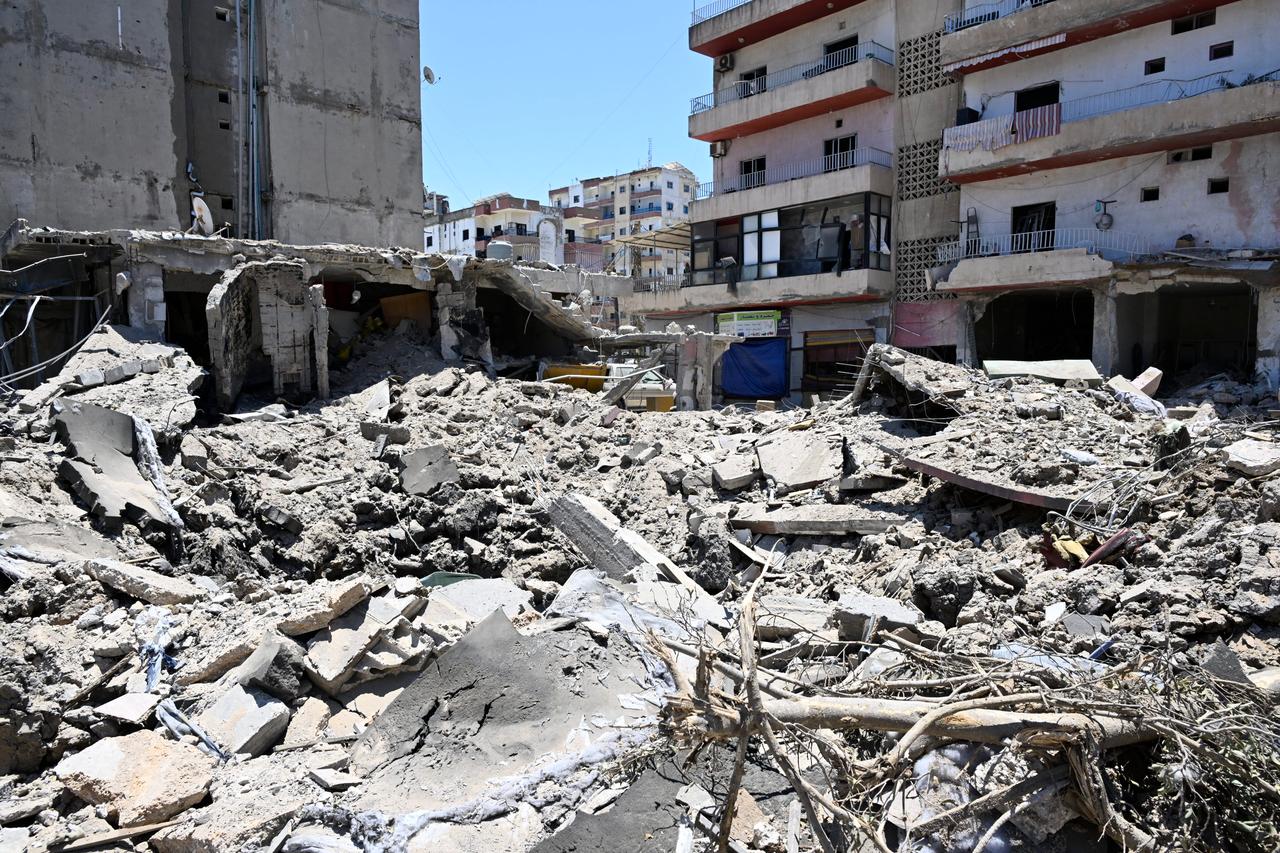
Buildings destroyed by Israeli military strikes on the town of Sur in Lebanon despite the ceasefire, 12 June 2026 – (Anadolu Agency)
Israeli Defense Minister Yisrael Katz claimed that Israel would not withdraw from the territories it occupies in the Gaza Strip, southern Lebanon, and southern Syria. In a post on X, Katz asserted that the Israeli military would not withdraw from occupied areas in Lebanon, Syria, and the Gaza Strip, and added that occupation would continue in the West Bank. He threatened that if necessary, the number of refugee camps targeted by Israeli attacks in the West Bank could increase.
Regarding the negotiations between the United States and Iran, Katz stated that the United States expected Trump to insist not only on the termination of Iran’s nuclear and ballistic missile programs but also on adherence to “other principles” regarding regional proxy forces. Katz claimed that Trump had led efforts toward an agreement between the United States and Israel based on their shared interest in preventing Iran from acquiring nuclear weapons, and announced that Netanyahu and the Israeli military had been instructed to prepare for independent future action to prevent Iran from obtaining nuclear weapons.
It was claimed that the Israeli government had issued orders to the military to avoid attacks that could jeopardize the agreement between the United States and Iran, which is said to have reached the signing stage. According to Israeli state television KAN, the military command had conducted a situation assessment and decided to suspend attacks on “certain non-urgent targets” in Lebanon. Unnamed Israeli sources reported that although attacks continued in the south, they were being kept “targeted and limited,” while strikes targeting Beirut had been restricted. The report also alleged that Hezbollah had instructed its own forces not to fire on Israeli civilian settlements in the north. The Israeli Prime Minister’s Office denied these claims. Pakistan’s Prime Minister Shehbaz Sharif, meanwhile, described the U.S.-Iran negotiations as “Peace has never been this close.”
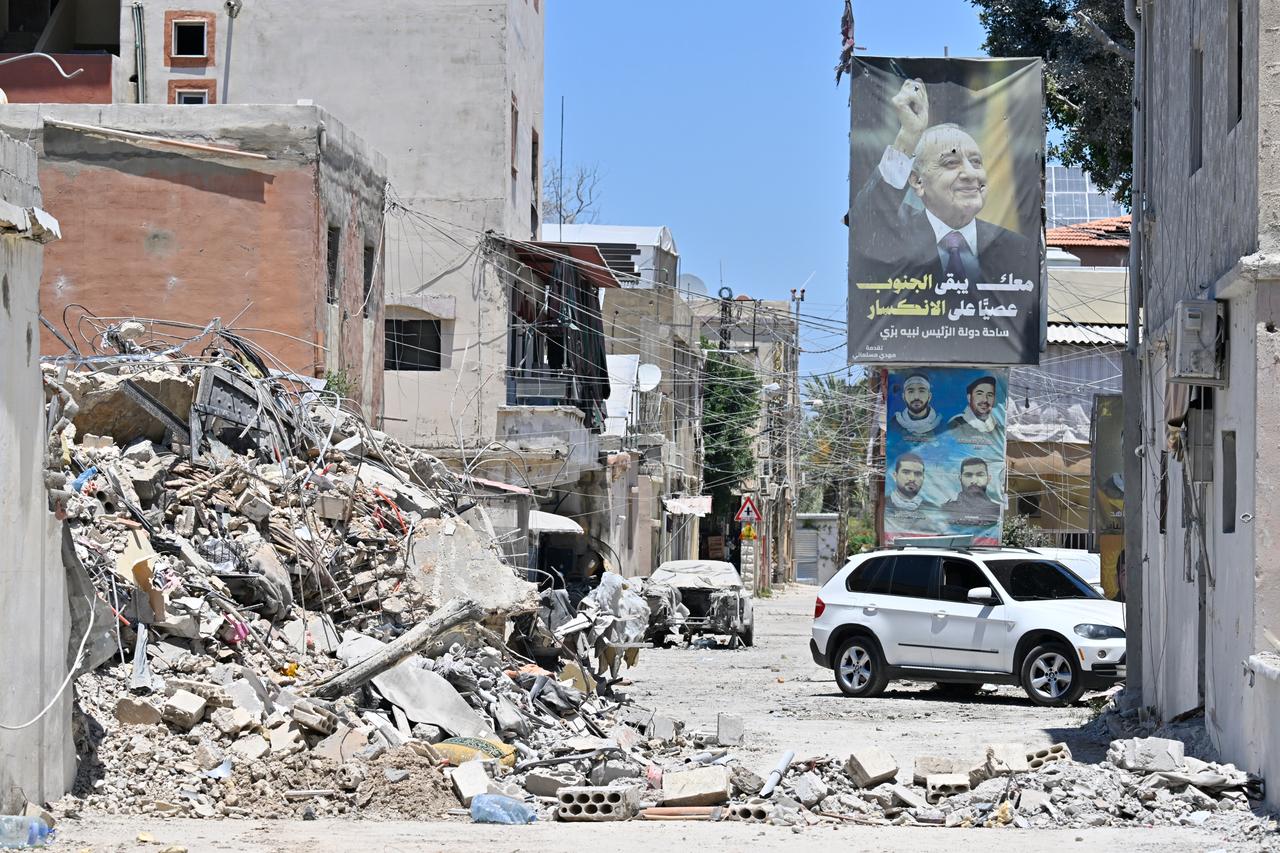
Buildings destroyed by Israeli military strikes on the town of Sur in Lebanon despite the ceasefire, 12 June 2026 – (Anadolu Agency)
The United Nations (UN) reported that 10 health workers were injured in an Israeli strike near a hospital in Lebanon. UN Spokesperson Stephane Dujarric identified the targeted facility as the Hiram Hospital in southern Lebanon, stating, “Ten personnel were injured, hospital buildings were damaged, and vehicles were affected. This is the fifth incident affecting Hiram Hospital since the escalation began on 2 March.”
Dujarric, citing World Health Organization (WHO) reports, stated that 17 hospitals in Lebanon had been hit by Israeli attacks, three of which were completely destroyed. He reported that 135 healthcare workers and first responders had been killed and approximately 400 injured in attacks targeting medical facilities. “As we have repeatedly said in numerous conflicts around the world,” Dujarric added, “hospitals and medical personnel must always be protected under international law.”
Al Jazeera. "Iran War Live: Trump Claims Tehran Deal Approved, Cancels New Strikes." Al Jazeera Live Blog, June 12, 2026. Accessed June 12, 2026. https://www.aljazeera.com/news/liveblog/2026/6/12/iran-war-live-trump-claims-tehran-deal-approved-cancels-new-strikes
Anadolu Agency. "Israel Targets Southern Lebanon with Airstrikes, Artillery Shelling." Anadolu Agency, June 12, 2026. Accessed June 12, 2026. https://www.aa.com.tr/en/middle-east/israel-targets-southern-lebanon-with-airstrikes-artillery-shelling/3965016
On 13 June 2026, the Israeli military continued its attacks on southern Lebanon despite the ceasefire that entered into force on 17 April and was extended by 45 days until 17 May. Throughout the day, attacks concentrated in the areas of Cizzin, Sur and Nabatieh resulted in the death toll rising to five, including the mayor of the village of Reyhan. The Israeli military spokesperson issued a warning for the evacuation of 20 villages in the south, while one drone and three rockets were launched from Lebanon toward northern Israel. On the diplomatic front, Syrian President Ahmed Shara denied claims that Syria would intervene in Lebanon, while it was asserted that Israel would not withdraw from its security zone in the south even if an agreement were reached between the United States and Iran.
In an Israeli air strike on the Lebanese town of Sur, one person was killed. According to NNA, an Israeli unmanned aerial vehicle targeted the cemetery in the village of Maraka, which is part of Sur, resulting in one death. Meanwhile, the Israeli military used explosives to demolish homes and several government buildings in the occupied district of Bint Jubayl.
Israeli military attacks during the day focused on the southern Lebanese regions of Cizzin, Sur and Nabatieh. Israeli drones and fighter jets targeted the areas of Reyhan, Kefer Hune, Secid, Serire and Katrani in the district of Cizzin. In attacks on the village of Reyhan, the village mayor, Ali Bedi, was killed; another person, an employee of the local electricity company, was injured in a drone strike while irrigating farmland near his home.
Israeli fighter jets conducted two air strikes on Reyhan, one on Secid, and three near military checkpoints surrounding Kefer Hune. The Dahr el-Harf area of Serire and the surroundings of Katrani were targeted by artillery fire. In the town of Sur, Israeli artillery units bombed the area around the village of Sarifa and the Tuvayri neighborhood near Kalavay, while the village of Mecdel Zun also came under artillery fire. In the province of Nabatieh, an Israeli drone carried out an attack on the village of Kasibe.
The Israeli military also conducted air strikes on the Lebanese villages of Deyr er-Rumman and Kefr ez-Zehrani, killing three people. With the death of one person in the morning strike on the cemetery in Maraka and the killing of the mayor of Reyhan during the day’s attacks, the total number of fatalities resulting from Israeli strikes across southern Lebanon rose to five.
In a drone strike by the Israeli military on the city of Nabatieh, one Lebanese soldier was seriously injured. According to a written statement from the Lebanese army, an Israeli drone targeted a military unit near the Necde Hospital in Nabatieh, but the soldier was not injured in that strike. The statement further indicated that the same soldier was targeted again shortly afterward along the road between Nabatieh and Kefer Rumman and sustained serious injuries in this second attack.
Israeli military spokesperson Avichay Adraee, in a post on the social media platform X, called on residents of 20 villages in southern Lebanon to evacuate their homes. Adraee, accusing Hezbollah of violating the ceasefire, threatened to launch attacks on the villages of Deyr Zehrani, Numeiryeh, Sharkiyyeh, Duwayr, Haruf, Habbush, Kefer Coz, Zibdin, Lower Nabatieh, Upper Nabatieh, Kefer Rumman, Mahmudiyyeh, Secid, Reyhan, Armata, Kefer Hune, Mileyh, Lweize, Cercu and Arabsalim, and urged residents to move north of the Zahrani River. The Zahrani River is located south of the city of Sidon, approximately 50 kilometers from Beirut.
Israeli media reported that one unmanned aerial vehicle and three rockets were launched from southern Lebanon toward northern Israel. According to a report on Channel 12 television, three rockets were fired from Lebanon toward settlements in the north, while an Israeli drone shot down another drone launched from Lebanon. The report noted that air raid sirens were activated in northern Israel following the rocket attacks.
The Lebanese Ministry of Health released its latest figures regarding Israeli attacks since 2 March. According to these figures, the number of fatalities from Israeli attacks increased by 45 in the past 24 hours to reach 3,756, while the number of injured reached 11,632. On 11 June, the ministry had reported a death toll of 3,711.
Lebanese President Joseph Aoun stated that Lebanon will either become a state where weapons are under the sole control of the government and the rule of law prevails, or it will remain hostage to militia logic. In a written statement from the Presidency, Aoun issued a message on the 48th anniversary of the killing of former minister Tony Suleiman Franjieh and others accompanying him, stating: “Lebanon will either unite as a state where weapons are under the sole control of the state, or it will remain hostage to militia logic.”
Aoun noted that Lebanon is at a critical juncture and emphasized that national unity can only be strengthened not through slogans but on the basis of transparency, justice and equal treatment of all segments of society. The Beirut administration stressed that weapons must be concentrated exclusively under state monopoly, a position opposed by Hezbollah.
Syrian President Ahmed Shara stated that claims suggesting Syria would intervene in Lebanon’s internal affairs do not reflect the truth. Speaking at a meeting with leaders and prominent figures from rural Damascus, Shara said: “Various rumors continue to circulate that Syria will intervene in Lebanon. However, these are not true.” He summarized his country’s stance as: “We have always advocated for the cessation of hostilities, the strengthening of state institutions, increased economic integration, and the peaceful stabilization of the situation in Lebanon.”
Shara noted that the issue of demarcating the border between Syria and Lebanon remains a complex, unresolved file for many years. He pointed out that historical grievances persist on both sides: negative memories in Lebanon regarding Syrian interference, and in Syria, discontent stemming from Hezbollah’s activities. Shara indicated that numerous technical and political issues remain unresolved in the border file, beginning with the Shebaa Farms dispute, and emphasized that the current priority should be economic cooperation and development projects. He also noted that approximately 1.4 million displaced Syrians are currently in Lebanon, creating a significant humanitarian and economic burden for both countries.
It was asserted that the Israeli military will not withdraw from its security zone in southern Lebanon even if an agreement is reached between the United States and Iran. According to a report by Israeli state television citing unnamed security sources, the military is preparing for the possibility that ground operations in southern Lebanon may be halted as part of the emerging agreement process. The report further claimed that while Israel is preparing to reduce attacks inside Lebanon, military operations will continue to focus on the south.
In April, Israel announced the establishment of a “Yellow Line” south of the Litani River, similar to the one in Gaza. Israel claims this imaginary line, extending to the border, aims to prevent the return of displaced persons and all armed activity in the area, and asserts that this zone will not be covered by ceasefire agreements.
Activists gathered in the Tunisian capital Tunis to protest Israeli attacks in the Gaza Strip and show solidarity with Lebanon. The march, organized at the call of civil society groups “Tunisia Resistance Committee” and “Tunisia Network Against Normalization with Israel”, began at Shahid Hilmi El-Menai Square and proceeded along Habib Bourguiba Avenue. Demonstrators carried flags of Palestine, Lebanon and Tunisia and chanted anti-Israel slogans.
Spokesperson for the “Tunisia Network Against Normalization”, Salah El-Misri, stated that the main goal of the march was to keep the situation in Gaza on the agenda and that the event also aimed to express support for the “resistance fronts” in Lebanon, Yemen and Iran.
In the Swedish capital Stockholm, protests were held against Israeli attacks on Palestine and Lebanon. Hundreds of people gathered at Odenplan Square at the call of numerous civil society organizations, condemning the Israeli military for violating the ceasefire by launching air strikes on the West Bank and Lebanon.
Demonstrators carried banners reading: “Children are being killed in Gaza”, “Schools and hospitals are being bombed”, “Stop attacks on Lebanon”, and “End the food shortage”, demanding that Israel halt its attacks on Gaza and that Sweden end its arms sales to Israel.
Anadolu Ajansı. "Lübnan Cumhurbaşkanı Avn’dan Devlet Otoritesi Etrafında Birleşme Çağrısı." Accessed June 12, 2026. https://www.aa.com.tr/tr/dunya/lubnan-cumhurbaskani-avndan-devlet-otoritesi-etrafinda-birlesme-cagrisi/3965803
Anadolu Ajansı. "Son Gelişmeler: ABD-İsrail-İran-Lübnan Savaşı ve Barış Müzakereleri." Anadolu Ajansı Live Blog. Accessed June 12, 2026. https://www.aa.com.tr/tr/live-blog/son-gelismeler-abd-israil-iran-lubnan-savasi-ve-baris-muzakereleri/3832
On 14 June 2026, the Israeli military launched an air strike on the Dahiye district of Beirut, the capital of Lebanon, without prior warning. The attack killed three people and injured 15 others. On the same day, as part of a series of attacks on southern villages, the total number of fatalities from Israel’s strikes on Lebanon rose to 10. In the early morning hours, drones and rockets were launched from Lebanon into northern Israel; Israeli far-right ministers called for the bombing of Dahiye. While U.S. President Donald Trump and UN Secretary-General Antonio Guterres condemned the attack, senior Iranian officials threatened Israel with a firm retaliation.
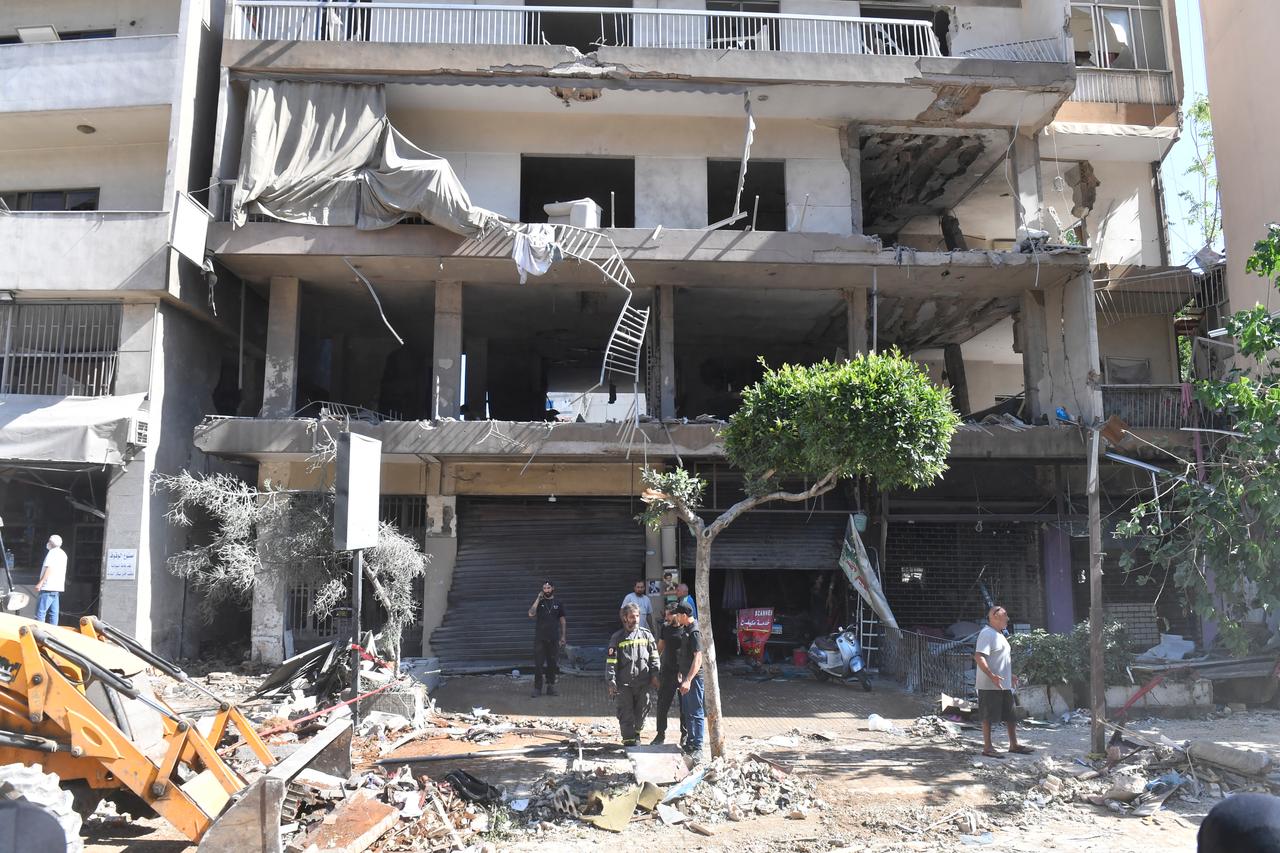
The Dahiye district of Beirut, Lebanon, targeted by the Israeli military despite a ceasefire, 14 June 2026 - (Anadolu Agency)
The Israeli military reported that on the night and early morning of 14 June, unmanned aerial vehicles (UAVs) and rockets launched from Lebanon targeted military zones in northern Israel.
In a military statement, it was said that “suspicious aerial objects” assessed to belong to Hezbollah were shot down as they targeted military positions along the border, and that no casualties or injuries resulted from the attacks. Due to the drone strikes, sirens were activated in several settlements in the Jalile region of northern Israel; footage shared on social media showed a drone being shot down near the settlement of Shlomi.
Israeli Channel 12 television claimed that a drone launched from Lebanon exploded at the entrance of a military base in the Jalile region in northwestern Israel, and asserted that this was the third drone attack of the morning.
On 14 June, Israel’s far-right Finance Minister Bezalel Smotrich reiterated his call for the destruction of 10 buildings in Beirut’s Dahiye district for every rocket fired from Lebanon toward Israel. In a social media post, Smotrich referenced ongoing negotiations between the United States and Iran, asserting that Hezbollah must not be allowed to exploit the situation to strike northern Israel; he argued that for every rocket or drone attack against Israel, 10 buildings in Dahiye must be bombed.
Smotrich, who claimed that the entry of two drones into Israeli territory was a test of Prime Minister Binyamin Netanyahu’s “Dahiye equation,” stated: “I am calling today for the total destruction of buildings in Dahiye.”
On the same day, Israel’s far-right National Security Minister Itamar Ben-Gvir called for the bombing of Beirut’s Dahiye district after two drones were launched from Lebanon toward Israel in the morning. Ben-Gvir stated he would demand the bombing of Dahiye during his meeting with Prime Minister Netanyahu that day, threatening: “Every violation brings fire. Every drone demands Dahiye be shaken.”
On 14 June, the Israeli military issued a threat of attack against 29 villages linked to the southern Lebanese cities of Nabatieh and Saida, despite the ceasefire. In a post on its X account, Israeli Army Spokesperson Avichay Adraee urged residents of Arki, Binaful, Ciba, Cernaya, Lower Humin, Upper Humin, Kfar Bet, Kfar Melki and surrounding villages to move at least 1 kilometer away from their homes, and residents of Zerariye, Kfar Bade, Harayib, Ansar and other villages to cross north of the Zahrani River.
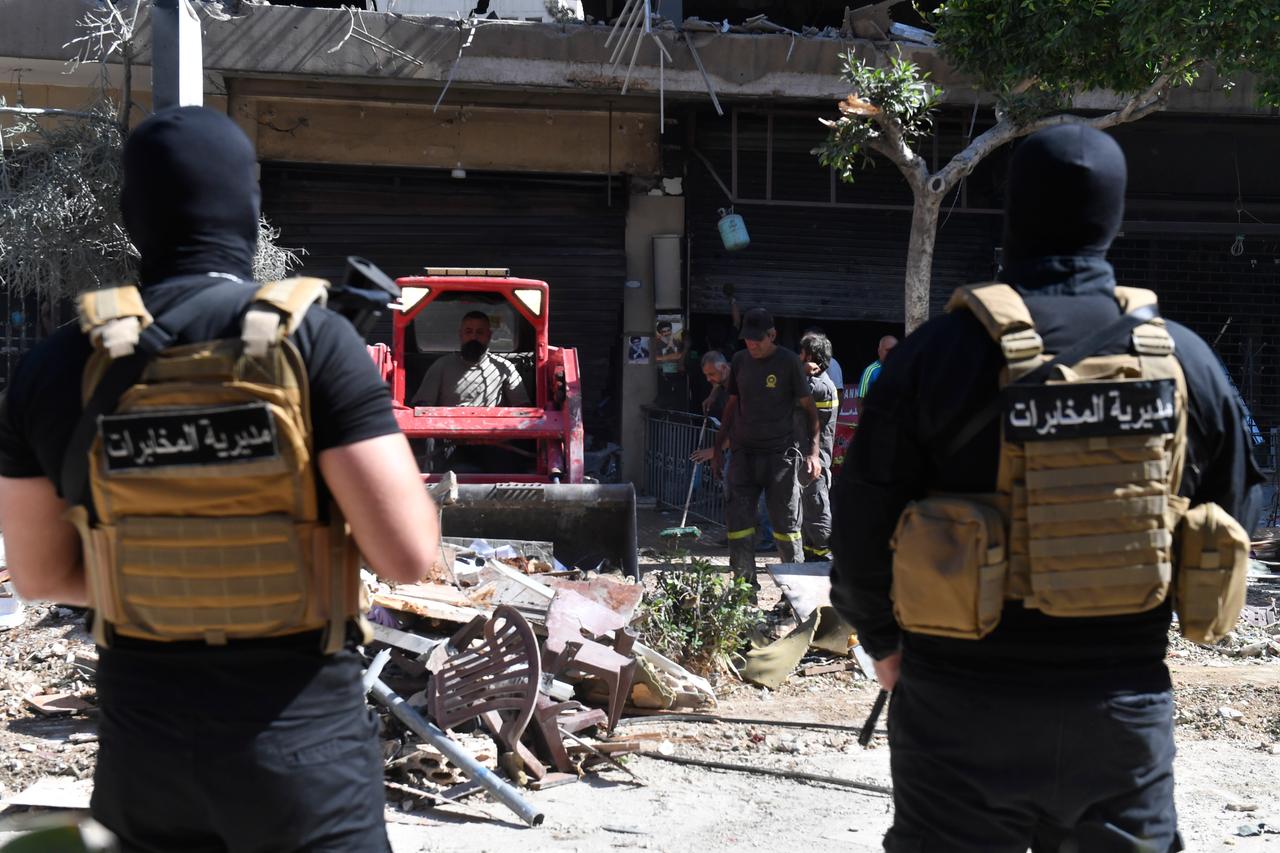
The Dahiye district of Beirut, Lebanon, targeted by the Israeli military despite a ceasefire, 14 June 2026 - (Anadolu Agency)
On the same day, an Israeli drone strike on a vehicle in southern Lebanon killed one person. According to NNA, from early morning, the villages of Deyr Kanun en-Nehr, Furun, Haddasa, Haris, Mecdel Zun, Mansuri, Abbasiyye and Kalile were hit by Israeli air strikes, while Israeli artillery units targeted the villages of Sarifa, Mansuri, Mecdel Zun, Buyut Siyad and Katrani. In a drone strike on a vehicle on the Musaylih road in the Zahrani region, one person was killed, and in the attack on Deyr Kanun en-Nehr, three people were injured.
The number of people killed in Israeli attacks throughout the day on the capital Beirut and southern villages rose from 8 to 10. According to NNA, Israeli warplanes targeted the home of former mayor Abdulaziz Kansu in the village of Düveyr, linked to Nabatieh, in the early morning; the house was completely destroyed and three people were killed. In an attack on the Hus neighborhood in the city of Sur, one person was killed and four injured. In the evening, a drone strike on a garden in the southern village of Hosh killed two people, and a strike on a vehicle on the Musaylih road in Zahrani killed one person; the attack on Beirut’s Dahiye district killed three people.
From midday onward, the Israeli military targeted the villages of Keferdunin, Burç Şemali, Bazuriyye, Mecdel Zun and Zibkin with air strikes and artillery fire; the area between Mecdel Zun and Zibkin was hit by air strikes, while the Meşa region endured heavy artillery bombardment. According to NNA, a phosphorus munitions attack was also carried out on Mecdel Zun.
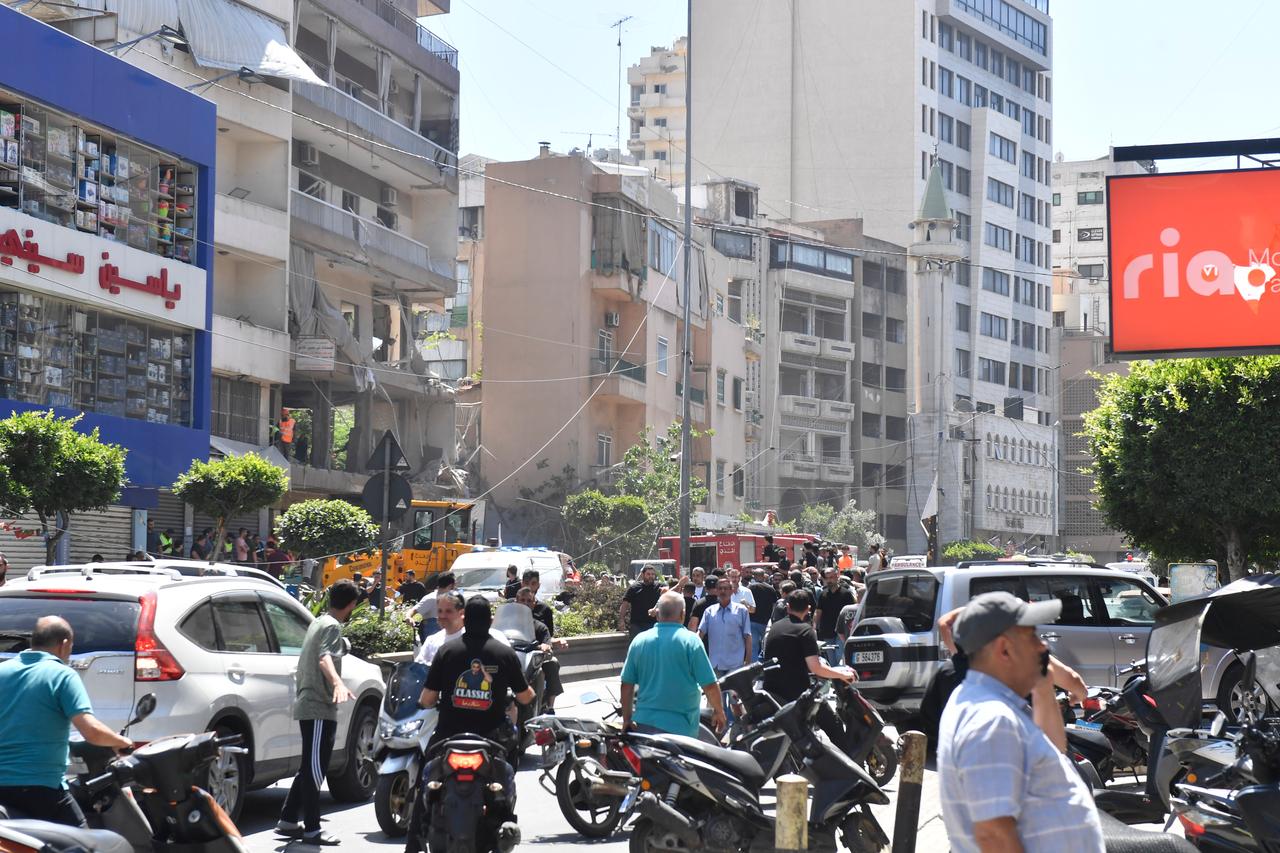
The Dahiye district of Beirut, Lebanon, targeted by the Israeli military despite a ceasefire, 14 June 2026 - (Anadolu Agency)
On 14 June, the Israeli military carried out an air strike on Beirut’s Dahiye district despite the ceasefire. According to an AA correspondent, Israeli warplanes bombed the Dahiye district in southern Beirut without warning; two explosion sounds were heard and smoke rose from the targeted locations. The Israeli military claimed responsibility for the strike, asserting that a Hezbollah target had been hit in Dahiye.
According to Lebanon’s official news agency NNA, an attack targeting an apartment in the Gubayri neighborhood of Dahiye killed three people and injured 15 others, with structural damage reported in surrounding buildings. After the Dahiye strike, the Israeli military announced it was preparing for possible Iranian retaliation.
Lebanon’s Ministry of Health released its latest figures regarding Israeli attacks since 2 March. According to the data, the number of fatalities from Israeli attacks has risen by 27 to 3,783, while the number of injured has reached 11,699.
Following the attack on Beirut’s Dahiye district, the Israeli military imposed new restrictions nationwide. In a statement from the Home Front Command, it was announced that events involving more than 5,000 people were banned across the country, while gatherings in settlements near the Israel-Lebanon border were limited to a maximum of 400 indoors and 100 people outdoors. It was noted that Israeli Chief of Staff Eyal Zamir held an assessment meeting with the military command following the Dahiye strike.
The Israeli military also announced that two soldiers were injured in southern Lebanon. In a written statement, it was confirmed that a rocket attack was launched against forces operating in southern Lebanon, resulting in two Israeli soldiers being wounded and transported to hospital. According to Israeli military data, since 28 February, the number of injured soldiers in attacks against Iran and Lebanon has risen to 1,302, with 31 soldiers killed during this period.
Lebanon filed two separate complaints against Israel with the United Nations Security Council (UNSC) and UN Secretary-General Antonio Guterres, citing Israel’s use of banned herbicides in attacks on villages along its southern border and its continued strikes despite the ceasefire. The Lebanese Ministry of Foreign Affairs stated that a complaint had been sent to the UNSC regarding the Israeli military’s spraying of the banned chemical glyphosate over certain border villages in southern Lebanon in February 2026. Laboratory tests on soil samples collected from the villages of Aytash, Ras Naqura and Dahayra confirmed high concentrations of glyphosate; the statement referenced the Convention on the Prohibition of Chemical Weapons, which bans the use of herbicides as a method of warfare.
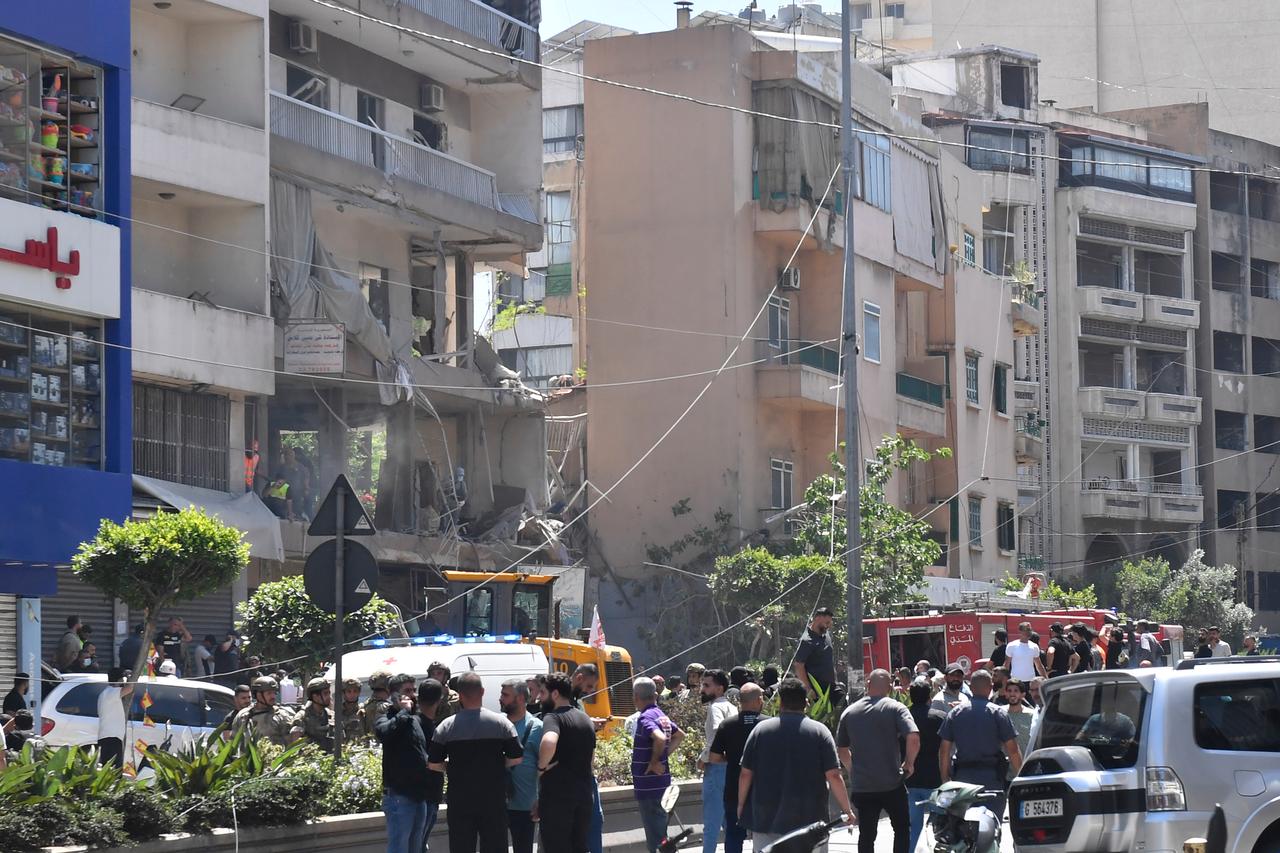
The Dahiye district of Beirut, Lebanon, targeted by the Israeli military despite a ceasefire, 14 June 2026 - (Anadolu Agency)
The ministry also reported sending a second complaint regarding an attack on a military vehicle traveling along the Kefr Tebnit-Hardali road near the city of Nabatieh in early June, which killed two officers including a Brigadier General and one soldier. The ministry called on the UN to condemn the attack, take urgent measures to halt repeated strikes, and ensure compliance with international resolutions including Resolution 1701.
U.S. President Donald Trump responded to Israel’s morning strike on Beirut. In a social media post, Trump stated: “This morning’s strike on Beirut should not have occurred on such a special day so close to a peace agreement with Iran.” While affirming Israel’s right to defend itself against threats, Trump added: “But its retaliatory strike was too small and meaningless — no one was injured or killed, and it should not have disrupted this critical process.”
Emphasizing that a peace agreement involving the region, including Lebanon, was nearly reached, Trump stressed that Israel must not carry out any further attacks anywhere in Lebanon, stating: “This could be the beginning of a long and beautiful peace. Let us not destroy it.”
UN Secretary-General Antonio Guterres strongly condemned the Israeli military’s air strike on Beirut. Guterres noted that the attack occurred despite the ceasefire and at a time when a peaceful resolution to the conflict between the U.S. and Iran was expected. He emphasized that ongoing hostilities in the region were having a destructive impact on the global economy and called on all parties to exercise maximum restraint.
Chairman of Iran’s Parliament’s National Security and Foreign Policy Commission, Ibrahim Azizi, said the attack on Dahiye “demonstrated the unreliability and weakness of the United States” and threatened a firm response. The Secretary-General of Iran’s Supreme National Security Council, Mohammad Bagher Zolqadr, stated: “The response of Islamic fighters is imminent. Lebanon is our lifeblood; we will not tolerate any violation of Iran’s red line.”
Iran’s Ministry of Foreign Affairs condemned the attack on Dahiye district as a “terrorist act” that violated the ceasefire agreed upon between Iran and the U.S. on 8 April. It stated that the U.S. was responsible for the consequences of Israel’s actions and that Iran would take necessary measures.
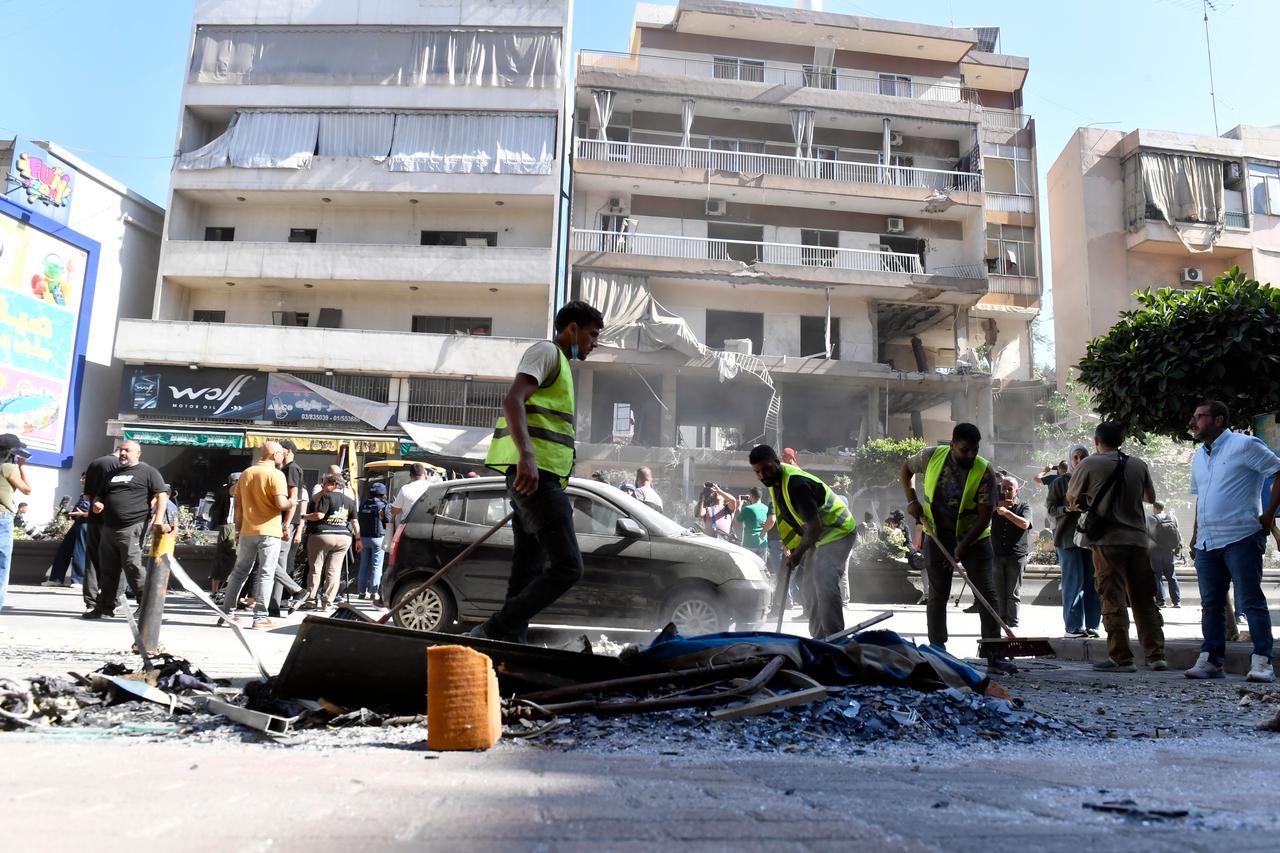
The Dahiye district of Beirut, Lebanon, targeted by the Israeli military despite a ceasefire, 14 June 2026 - (Anadolu Agency)
Advisor to Iran’s Supreme Leader, Ali Akbar Velayati, referenced imminent retaliation against Israel’s attacks on Lebanon, stating: “The miscalculation in Beirut was tolerated, and the order was given. Zero hour has arrived; missile launchers are being prepared.” Velayati warned that if attacks on Lebanon continue, Iran will close the Hormuz and Bab al-Mandab straits.
On 15 June 2026, it was announced that a peace agreement had been reached between the United States and Iran, following statements by Pakistan’s Prime Minister Shehbaz Sharif and Iran’s Deputy Foreign Minister Kazem Garibabadi. The agreement called for an immediate and permanent halt to all military operations across all fronts, including Lebanon, with the official signing ceremony scheduled for 19 June in Switzerland. Lebanon’s President Joseph Aoun, Parliament Speaker Nabih Berri, Prime Minister Nawaf Salam and Hezbollah welcomed the agreement; however, Israeli ministers rejected the agreement and declared they would continue the occupation. Nevertheless, the Israeli military continued its attacks on southern Lebanon despite the agreement.
Pakistan’s Prime Minister Shehbaz Sharif announced on social media that a peace agreement had been reached between the United States and Iran, stating: “We are pleased to announce that after intensive negotiations, a peace agreement has been reached between the United States and Iran.” Sharif confirmed that both sides had declared an immediate and permanent end to all military operations on all fronts, including Lebanon, and announced that the official signing ceremony would be held in Switzerland on 19 June. He noted that mediators would facilitate a series of meetings this week to prepare the ground for technical talks and the formal signing ceremony, and thanked the United States and Iran for their diplomatic commitment, as well as Turkey, Saudi Arabia and Qatar for their mediation efforts.
Iran’s Deputy Foreign Minister Kazem Garibabadi confirmed the agreement and stated that the text of the agreement would be signed in Switzerland on 19 June. Garibabadi said: “The text of the agreement has been finalized and Islamabad confirms that the official signing ceremony will take place in Switzerland on Friday. The heads of both delegations will conduct negotiations to determine future arrangements. Until then, the U.S. side’s commitments to end the war, lift the blockade and release assets will be verified. The 60-day negotiation period is contingent upon the U.S. fulfilling these commitments.”
Garibabadi noted that during the 60-day period following the signing, negotiations would address sanctions, Iran’s nuclear program and economic development mechanisms. He confirmed that the agreement includes Lebanon, stating: “Tonight, it will be announced that all wars and military operations on various fronts, including Lebanon, will be immediately and permanently ended.” Garibabadi added that the agreement text would be made public before the 19 June signing ceremony, and that Iran’s Armed Forces’ preparations for a counterattack following Israel’s strike on Lebanon had helped prompt U.S. President Donald Trump to take a position against Israel and advance certain provisions in the agreement text.
Israel’s far-right National Security Minister Itamar Ben-Gvir strongly rejected the agreement between Washington and Tehran, stating: “Trump’s agreement does not bind us. Israel is not a colony (subject) of the United States.” Ben-Gvir argued that Israel must not withdraw from occupied areas in Lebanon, adding: “We are not party to this agreement that fails to guarantee our security and does not bind us in any way. We will not accept anything less than the complete dismantling of Hezbollah. We must never remain silent in the face of any fire directed at Israel.” He asserted that every drone or missile launched from Lebanon toward Israel would result in an Israeli strike on one building in Dahiye district of Beirut.
It was reported that Israeli Prime Minister Binyamin Netanyahu conveyed to U.S. President Donald Trump that the U.S.-Iran agreement’s provisions regarding Lebanon were not binding on the Tel Aviv government and that Israel would continue its attacks. According to a report by the newspaper Yedioth Ahronot, citing unnamed Israeli officials, Netanyahu informed Trump that the Israeli military would not withdraw from occupied areas in Lebanon and would continue its operations. The officials indicated that if Washington demanded Israel’s withdrawal or restrictions on its attacks following the Iran agreement, Israel might be forced to confront U.S. pressure. It was reported that at the previous day’s Israeli security cabinet meeting, the vast majority of ministers fully supported Netanyahu’s stance on Lebanon.
Israel’s Defense Minister Yisrael Katz announced that despite the agreement between Washington and Tehran, the Israeli military would remain indefinitely in the occupied areas of southern Lebanon, Syria and Gaza. Katz claimed that the local populations in the occupied areas of southern Lebanon would be cleared out, stating: “Therefore, despite current and future pressures, we oppose any withdrawal of the Israeli military from Lebanon.” He asserted that he had clearly communicated this position to U.S. Defense Secretary Pete Hegseth.
Katz, who stated that Israel would not compromise on its security interests, issued the following threat to Iran: “If Iran attacks Israel because of events in Lebanon, we will respond with all our strength and make it feel the vast disparity in power. We are only responsible for our citizens and Israel’s security.”
Lebanese President Joseph Aoun stated that the U.S.-Iran agreement contained elements aimed at halting military activities in the region and that these applied to Lebanon as well. Aoun welcomed the agreement’s respect for Lebanon’s special situation and its recognition of the country’s stability as an inseparable part of regional stability. He noted that the Lebanese people, who had suffered recent attacks and destruction, expected the agreement to lead to a lasting ceasefire and stability.
In the evening, Aoun held a phone conversation with Iran’s Foreign Minister Abbas Araghchi. Aoun expressed his satisfaction with the agreement and hoped it would reduce regional tensions, emphasizing that Lebanon’s stability, security and sovereignty remained its top priorities. Araghchi underscored the importance of all parties respecting Lebanon’s sovereignty and territorial integrity.
Lebanese Parliament Speaker Nebih Berri stated that the binding clause in the agreement calling for an end to Israel’s attacks on Lebanon affirmed the country’s sovereignty across its entire territory and did not contradict its independent decision-making authority. Berri thanked Pakistan, Qatar, Saudi Arabia, Egypt, Iran and the U.S. administrations for their role in achieving the agreement, praising both sides for insisting on including a fundamental and binding clause demanding an end to Israel’s attacks on all of Lebanon.
Berri also held a phone call with Araghchi to discuss the agreement’s provisions. During the call, Araghchi confirmed that one of the agreement’s core provisions was the cessation of Israel’s attacks on Lebanon, stressing that this provision must be implemented fully and without delay throughout the 60-day negotiation period. He added that the parties guaranteeing the agreement were responsible for ensuring its compliance.
Iran’s Foreign Minister Abbas Araghchi stated that following the agreement with the U.S., Washington was responsible for its implementation and insisted that Israel’s attacks on Lebanon must be fully halted. According to IRNA, during separate phone calls with his Iraqi and Egyptian counterparts, Araghchi emphasized the U.S.’s responsibility for implementing the agreement and stressed that Israel’s attacks on Lebanon and destabilizing actions in the region must be completely stopped. He thanked Iraq and Egypt for their efforts to achieve a ceasefire and reduce tensions.
Lebanese Prime Minister Nawaf Salam expressed hope that the agreement reached between the U.S. and Iran would end Israel’s attacks on Lebanon and halt the destruction and suffering. Salam emphasized that efforts must be intensified during the Washington negotiations to secure Israel’s full withdrawal from Lebanese territory and the release of Lebanese detainees. He stated that cooperation with friendly and brotherly countries would continue to accelerate reconstruction efforts.
Hezbollah welcomed the agreement reached between Iran and the U.S., which called for a comprehensive ceasefire across all fronts including Lebanon. In a statement, Hezbollah said the gains achieved in the agreement represented a beginning toward Israel’s full withdrawal from occupied territories, the release of Lebanese prisoners, the return of displaced persons to their villages along the border, and the reconstruction of destroyed areas. Hezbollah emphasized that it would remain committed to Lebanon’s legitimate right to self-defense until Israel fully withdraws and prisoners are returned, and called on the Lebanese government and all political forces to unite nationally.
Following the agreement, the Lebanese army urged the public not to rush back to their villages in southern border areas. In a statement, the army called on civilians to act cautiously regarding their return, comply with instructions from military units stationed in the region, and avoid haste due to possible Israeli violations and attacks. The statement also urged the public to report unexploded ordnance and suspicious objects to the nearest military or security unit.
Syrian Presidential Press Advisor Ahmed Muvaffak Zeydan stated that the U.S. had offered Syria “certain responsibilities” in Lebanon, but Syria rejected the offer because it opposed military intervention. Speaking to Al Arabiya television, Zeydan said: “The U.S. offered Syria to assume certain responsibilities in Lebanon. However, Syria supports Lebanon’s state sovereignty over its territory, not military intervention. Lebanon’s state must strengthen its own authority and regain full control over all its territory.”
Zeydan emphasized that Syria had adopted a diplomatic mediator role rather than becoming a military actor on the ground, and described Syria’s approach to Lebanon as “development-based.” He noted: “It is known that remnants of certain regimes remain in Lebanon under Hezbollah’s protection. Therefore, Syria’s primary priority is ending the conflict.”
On 15 June, an Israeli air strike on southern Lebanon killed a married couple. According to NNA, Israeli warplanes launched an air strike on the village of Gassaniye in southern Lebanon, targeting a house in which the homeowner and his wife were killed.
Despite the ceasefire and agreement, the Israeli military launched air and artillery strikes on the southern Lebanese villages of Kefertebnit and Upper Nabatieh. According to NNA, an Israeli drone struck a vehicle in Kefertebnit, injuring several people. The Israeli military also remotely detonated an M113 armored vehicle loaded with explosives on the Haris-Tebnin road near the city of Sur, and carried out two separate explosions in the occupied village of Hiyyam.
In the evening, the Israeli military targeted a vehicle near the Kefr Tebnit intersection in Nabatieh with a drone; the driver of the vehicle was killed.
A journalist was injured in an Israeli artillery strike on Kefertebnit. According to NNA, Hadi Hoteit, a correspondent for the Iran-based Press TV, was wounded in the leg by shrapnel and transported to hospital.
Lebanon’s Ministry of Health reported that the number of people killed in Israeli attacks since 2 March had increased by 15 to 3,798. The number of injured during the same period reached 11,781.
Al Jazeera. "At Least Three Killed as Israel Attacks Southern Beirut." Al Jazeera, June 14, 2026. Accessed June 15, 2026. https://www.aljazeera.com/news/2026/6/14/israel-issues-forced-displacement-orders-for-29-towns-in-southern-lebanon
Al Jazeera. "Five Killed as Israel Hits South Lebanon, Issues Forced Displacement Orders." Al Jazeera, June 13, 2026. Accessed June 15, 2026. https://www.aljazeera.com/news/2026/6/13/one-killed-as-israel-hits-south-lebanon-issues-forced-displacement-orders
Al Jazeera. "Lebanese Remain Sceptical Despite US-Iran Ceasefire Announcement." Al Jazeera Newsfeed Video, June 15, 2026. Accessed June 15, 2026. https://www.aljazeera.com/video/newsfeed/2026/6/15/lebanese-remain-sceptical-despite-us-iran-ceasefire-announcement
Anadolu Ajansı. "Lübnan, Ülkenin Güney Sınır Bölgesine Yasaklı Tarım İlacı Püskürten İsrail’i BMGK’ye Şikayet Etti." Anadolu Ajansı. Accessed June 15, 2026. https://www.aa.com.tr/tr/dunya/lubnan-ulkenin-guney-sinir-bolgesine-yasakli-tarim-ilaci-puskurten-israili-bmgkye-sikayet-etti/3966814
Anadolu Ajansı. "Trump, İsrail Başbakanı Netanyahu’yu Arayarak Beyrut Saldırısı İçin Tepki Gösterdi." Anadolu Ajansı. Accessed June 15, 2026. https://www.aa.com.tr/tr/dunya/trump-israil-basbakani-netanyahuyu-arayarak-beyrut-saldirisi-icin-tepki-gosterdi/3966812
Anadolu Ajansı. "İran Dışişleri Bakan Yardımcısı Garibabadi, ABD ile Anlaşmaya Varıldığını Doğruladı." Anadolu Ajansı. Accessed June 15, 2026. https://www.aa.com.tr/tr/dunya/iran-disisleri-bakan-yardimcisi-garibabadi-abd-ile-anlasmaya-varildigini-dogruladi/3966933
Anadolu Ajansı. "İran Meclis Başkanı Kalibaf’tan, İsrail’in Lübnan’a Saldırıları Sona Ermezse Müzakereler Durabilir Uyarısı." Anadolu Ajansı Live Blog. Accessed June 15, 2026. https://www.aa.com.tr/tr/live-blog/iran-meclis-baskani-kalibaftan-israilin-lubnana-saldirilari-sona-ermezse-muzakereler-durabilir-uyarisi/3867
Anadolu Ajansı. "İsrail Ordusunun Beyrut’un Dahiye Bölgesine Düzenlediği Hava Saldırısında 3 Kişi Öldü." Anadolu Ajansı Foto Galeri. Accessed June 15, 2026. https://www.aa.com.tr/tr/pg/foto-galeri/israil-ordusunun-beyrutun-dahiye-bolgesine-duzenledigi-hava-saldirisinda-3-kisi-oldu/163205
Anadolu Ajansı. "İsrailli Bakan Ben-Gvir: Trump’ın Anlaşması Bizi Bağlamaz, ABD’nin Sömürgesi Değiliz." Anadolu Ajansı. Accessed June 15, 2026. https://www.aa.com.tr/tr/dunya/israilli-bakan-ben-gvir-trumpin-anlasmasi-bizi-baglamaz-abdnin-somurgesi-degiliz/3967109
Anadolu Ajansı. "İsrailli Bakan Smotrich, İsrail’e Atılan Her Roket İçin Beyrut’ta 10 Binanın Yıkılması Çağrısını Yineledi." Anadolu Ajansı. Accessed June 15, 2026. https://www.aa.com.tr/tr/dunya/israilli-bakan-smotrich-israile-atilan-her-roket-icin-beyrutta-10-binanin-yikilmasi-cagrisini-yineledi/3966347
Despite the ceasefire and the agreement reached between the United States and Iran, the Israeli military launched artillery attacks around the village of Rayhan in southern Lebanon on 16 June. According to NNA, Israeli artillery units targeted the area surrounding Rayhan, a village in the Cizzin district, and conducted further artillery strikes on the villages of Secid and Mahmudiye at midnight.
The Israeli military also targeted a vehicle traveling along the Haddasa-Haris road in the Bint Jubayl district. It was reported that Israeli drones conducted low-altitude flights over the skies of Baalbek in the east and the Zahrani region in the south.
On the same day, U.S. President Donald Trump made statements following a meeting with Qatar’s Emir Sheikh Tamim bin Hamad Al Thani on the sidelines of the G7 Summit held in Évian-les-Bains, France.
Speaking about Israel’s attack on Beirut on 14 June, Trump said, "I was not pleased that an attack was carried out in Beirut, Lebanon, just two hours before we signed the agreement; this attack did not occur in southern Lebanon but in Beirut itself. I made it clear to him that I found this unacceptable."
Trump emphasized his dissatisfaction with Israel’s stance toward Lebanon and Hezbollah, noting that this behavior cast a negative shadow over the agreement reached with Iran.
While stating that his relationship with Prime Minister Benjamin Netanyahu was “excellent,” Trump added, “Bibi now has to act more responsibly regarding Lebanon.”
Iranian Foreign Minister Abbas Araghchi stated that ending the war in Lebanon is an integral part of the agreement reached with the United States and includes the withdrawal of Israeli forces from Lebanese territory. Speaking at a meeting with foreign ambassadors, Araghchi said, “According to our view, the two sides of this agreement are the United States and Israel on one side, and Iran and Hezbollah on the other. The cessation of the war in Lebanon is an inseparable component of its full termination and requires the withdrawal of Israeli forces from Lebanese territory.”
Araghchi added, “Any further military attack by the Zionist regime on Lebanon or the continuation of its occupation of Lebanese territory will be considered a clear violation of the agreement from our perspective.” He noted that negotiations are divided into two phases: the first phase will address the cessation of hostilities, talks on the Strait of Hormuz, the lifting of the naval blockade, the release of frozen Iranian funds, and reconstruction, followed by an additional 60 days of negotiations until a final agreement is reached. The final agreement, he noted, will include decisions on nuclear issues and the lifting of sanctions.
On 16 June, Chairman of the Iranian Parliament and Negotiation Delegation Mohammad Bagher Ghalibaf and Speaker of the Lebanese Parliament Nabih Berri discussed recent developments in the region during a telephone conversation. They emphasized that, under the terms of the agreement between Iran and the United States, international actors bear responsibility for halting the war and preserving Lebanon’s sovereignty.
On the same day, Lebanese President Joseph Aoun and Prime Minister Nawaf Salam held a meeting at Baabda Palace to discuss developments regarding the agreement between the United States and Iran and to prepare for upcoming negotiations in Washington between Lebanon, the United States and Israel next week.
Aoun and Salam assessed the U.S.-Iran agreement as a positive development for reducing regional tensions and opening the path to peaceful solutions. Both leaders stressed that Lebanon’s position remains unchanged on key issues to be addressed in Washington: securing a final ceasefire, ensuring the withdrawal of Israeli forces from occupied territories, deploying the Lebanese army to the international border, freeing Lebanese prisoners, and initiating a reconstruction process.
Aoun also, in a message issued on the occasion of the Islamic New Year, called on the Lebanese people to unite and stand together, saying, “Today more than ever, we are called upon to strengthen our national unity, rally around state institutions, and reinforce our human and national solidarity to confront the dangers surrounding our country. This is essential to preserve Lebanon’s sovereignty, security and stability.”
On 16 June, Israel’s far-right Minister of Heritage, Amichai Eliyahu, called for the Israeli military, which continues its attacks on southern Lebanon despite the ceasefire, to occupy the area up to the Litani River and “destroy everything”. According to Israeli state broadcaster KAN, Eliyahu said, “We must reach the Litani River in Lebanon and destroy everything there. The rules of the game no longer exist.” He also expressed his dissatisfaction with the agreement reached between the United States and Iran and stated that he hopes Trump will make it clear that this agreement is not the final word.
Al Jazeera. "Iran War Live: Trump Says MoU with Tehran Signed Electronically." Accessed June 16, 2026. https://www.aljazeera.com/news/liveblog/2026/6/16/iran-war-live-trump-says-mou-with-tehran-signed-electronically
Anadolu Ajansı. "İran Dışişleri Bakanı, ABD ile Mutabakatın İsrail’in Lübnan’daki İşgalini Sona Erdirmesini İçerdiğini Söyledi." Accessed June 16, 2026. https://www.aa.com.tr/tr/dunya/iran-disisleri-bakani-abd-ile-mutabakatin-israilin-lubnandaki-isgalini-sona-erdirmesini-icerdigini-soyledi/3968359
Anadolu Ajansı. "İsrailli Aşırı Sağcı Bakan Eliyahu’dan Lübnan’ın Güneyindeki Her Şeyi Yerle Bir Etme Çağrısı." Accessed June 16, 2026. https://www.aa.com.tr/tr/dunya/israilli-asiri-sagci-bakan-eliyahudan-lubnanin-guneyindeki-her-seyi-yerle-bir-etme-cagrisi/3968708
On June 17, 2026, despite the U.S.-Iran agreement, the Israeli military continued air, drone, and artillery attacks targeting southern Lebanon; a forested area on the slopes of Upper Nabatieh was struck with a phosphorus bomb. U.S. President Donald Trump again criticized Israel over Lebanon; Hezbollah Secretary General Naim Qassem tied negotiations with Israel to the fulfillment of five conditions. The United Nations warned of a "gradual increase" in firing incidents, while Lebanon’s Ministry of Health reported the cumulative death toll at 3,884.
Israeli warplanes targeted the towns of Upper Nabatieh and Kefertebnit within the Nabatieh governorate; an Israeli drone launched an attack on the southern town of Ansariyyeh. In subsequent hours, Israeli unmanned aerial vehicles conducted three attacks on the towns of Mansur and El-Aziyyeh, part of the Sidon district, and the town of Berashit, part of the Bint Jbeil district. The Israeli military launched artillery strikes near the Teachers’ House in the Nabatieh governorate; no casualties were reported from these attacks. It was reported that an Israeli drone flew at low altitude over the capital Beirut.
It was reported that the Israeli military targeted rural areas of the Nabatieh governorate with artillery fire and phosphorus bombs. According to NNA, Israeli artillery units struck the forested area of Ali Tahir Hill on the slopes of Upper Nabatieh with phosphorus bombs and artillery fire. Artillery strikes were also carried out around Debshah Hill, which overlooks Nabatieh town; the Israeli military conducted additional artillery strikes around Kefertebnit throughout the day.
Five Israeli soldiers were injured in a booby-trapped drone attack in southern Lebanon, where Israel has declared it will continue its attacks and occupation despite the U.S.-Iran agreement. The Israeli military stated that one of the injured soldiers was in critical condition, two in moderate condition, and two in light condition. Israeli media reported that the incident occurred on June 17 at around 06:00 in the Kefertebnit region and that the booby-trapped drone exploded next to a tank; as a result, four soldiers were wounded. During their evacuation to hospital, a second drone attack was launched, injuring one additional soldier.
Before leaving the G7 Summit held in France, U.S. President Donald Trump, in a press conference, acknowledged the agreement with Iran as a good deal for his administration, stating "The agreement will be signed shortly, tomorrow or perhaps the day after." Trump emphasized that all details would be resolved within a 60-day negotiation period, adding, "If no outcome is reached within 60 days, we will return to bombing Iran. I do not wish to do so because this is a very good agreement, but we may be forced to." Trump underscored that the essence of the agreement was "reopening the Strait of Hormuz" and "ensuring Iran never acquires nuclear weapons," asserting success on both fronts.
Trump criticized the Israeli government led by Prime Minister Benjamin Netanyahu for its attacks on Lebanon. While describing Netanyahu as "in fact a good man," Trump said, "But sometimes he gets a bit carried away. We have minor disagreements regarding Lebanon. I tell Bibi, you could be a bit softer. You do not need to destroy every building just because a Hezbollah member entered it." Trump described the United States as a "great partner" and Israel as a "very small partner," adding, "Israel could have handled the Hezbollah issue better. When two drones were shot down and fell harmlessly to the ground, there was no need to destroy buildings in Beirut. They are not doing a good job regarding Lebanon, and I feel sorry for Lebanon." Trump drew attention to Israel’s attack on Beirut, saying, "This is very unjust, especially when you look at Beirut... The other day I saw the view from there, the attack on that place... In my view, it was a massive and unnecessary attack."
Trump also emphasized that technical talks on the destruction of Iran’s enriched uranium would begin immediately; he noted that maritime traffic in the Strait of Hormuz had begun to increase gradually and that normal transit levels were expected within a few weeks. Trump expressed hope that the process would mark the beginning of broader "peace" in the Middle East and voiced his desire for the expansion of the Abraham Accords, particularly with Saudi Arabia’s participation. Regarding Iran’s $30 billion in frozen assets, Trump said, "These funds will be released only if they act appropriately." He separately thanked Chinese President Xi Jinping and
Al Jazeera. "Israeli Air Strikes on Lebanon Continue Despite US-Iran Deal." Accessed June 19, 2026. https://www.aljazeera.com/news/2026/6/17/israeli-air-strikes-on-lebanon-continue-threatening-us-iran-deal
Al Jazeera. "Israeli Strikes Kill Four in Southern Lebanon Amid Ceasefire Talks." Accessed June 19, 2026. https://www.aljazeera.com/news/2026/6/16/israeli-strikes-kill-four-in-southern-lebanon-amid-ceasefire-talks
Al Jazeera. "Israeli Strikes Kill at Least 18 Amid Intense Fighting in Southern Lebanon." Accessed June 19, 2026. https://www.aljazeera.com/news/2026/6/18/israeli-attacks-on-southern-lebanon-kill-three-despite-us-iran-deal
Anadolu Ajansı. "Israel's Occupied Areas in Southern Lebanon." Accessed June 19, 2026. https://www.aa.com.tr/tr/info/infografik/52485
Anadolu Ajansı. "Israeli Military Publishes Updated Map of Occupied Areas in Southern Lebanon." Accessed June 19, 2026. https://www.aa.com.tr/tr/dunya/israil-ordusu-lubnan-in-guneyinde-isgal-ettigi-alanlarin-guncel-haritasini-yayimladi/3970815
Anadolu Ajansı. "Lebanese President Aoun Meets with Negotiation Delegation Ahead of Israel Talks in Washington." Accessed June 19, 2026. https://www.aa.com.tr/tr/dunya/lubnan-cumhurbaskani-avn-washingtondaki-israil-gorusmeleri-oncesi-muzakere-heyetiyle-bir-araya-geldi/3971059
Anadolu Ajansı. "Minute-by-Minute Developments: U.S.-Iran Agreement, Israel-Lebanon War, and Ceasefire Process." Accessed June 19, 2026. https://www.aa.com.tr/tr/live-blog/dakika-dakika-gelismeler-abd-iran-mutabakati-israil-lubnan-savasi-ve-ateskes-sureci/4028
Anadolu Ajansı. "Netanyahu Says Israel Will Not Withdraw from Occupied Areas in Southern Lebanon." Accessed June 19, 2026. https://www.aa.com.tr/tr/dunya/netanyahu-lubnanin-guneyinde-isgal-ettikleri-bolgelerden-cekilmeyeceklerini-soyledi/3971073
Anadolu Ajansı. "Return of Lebanese Civilians to Their Homes Continues After U.S.-Iran Agreement." Accessed June 19, 2026. https://www.aa.com.tr/tr/dunya/abd-iran-mutabakatinin-ardindan-lubnanlilarin-evlerine-donusu-suruyor/3969730
Anadolu Ajansı. "Three Killed in Israeli Attack on Vehicle in Southern Lebanon Despite U.S.-Iran Agreement." Accessed June 19, 2026. https://www.aa.com.tr/tr/dunya/israilin-abd-iran-mutabakatina-ragmen-lubnanin-guneyinde-bir-araca-duzenledigi-saldirida-3-kisi-oldu/3970451
Anadolu Ajansı. "U.S. Vice President JD Vance Responds to Israeli Cabinet Criticizing Iran Agreement." Accessed June 19, 2026. https://www.aa.com.tr/tr/dunya/abd-baskan-yardimcisi-jd-vance-iranla-mutabakati-elestiren-israil-kabinesine-tepki-gosterdi/3971260
Anadolu Ajansı. "UN Warns of Increasing Number of Israeli Violations and Fire Incidents in Lebanon." Accessed June 19, 2026. https://www.aa.com.tr/tr/dunya/bmden-lubnanda-israil-ihlalleri-ve-ates-acma-olaylarinin-kademeli-olarak-arttigi-uyarisi/3970129
Arab News. "Lebanon Receives Assurances from Syria on Non-Interference After Trump Remarks, Official Says." Accessed June 19, 2026. https://www.arabnews.com/node/2647714/amp
On 20 June 2026, the Israeli military continued its attacks on the Nabatieh governorate in southern Lebanon and the Bekaa region to the east, despite the US-Iran agreement and the established ceasefire. Overnight air and artillery strikes increased the death toll to 11; among the dead were four members of the same family, two of whom were children, and one Lebanese soldier.
According to Lebanon’s official news agency NNA, Israeli warplanes targeted the villages of Barish, Shahhar, Upper Nabatieh, Numayriyya, Shevkin, Habbush, Kefercuz, Arabsalim, Zibdin, Secid, Mahmudiyya and Deyr Zehrani in the eastern Bekaa region and southern Nabatieh governorate overnight. Israeli artillery bombarded the surrounding area of Nabatieh city center before dawn. It was also reported that an Israeli drone conducted low-altitude flight over the capital Beirut during the morning hours of 20 June.
In an air strike on the village of Barish, part of the Nabatieh governorate, early on 20 June, four members of the same family, two of whom were children, were killed. In a separate attack on the village of Keferruman in the Nabatieh governorate, one Lebanese soldier died; one person was also killed in a drone strike by Israel on the eastern village of Suhmur.
Earlier during the night, three people were killed in an attack on the village of Arabsalim, one person died in the attack on Deyr Zehrani, and one person was killed in a drone strike targeting a motorcycle at the entrance to the village of Duwayr. As a result, the number of people killed in Israeli attacks on southern Lebanon since the overnight hours has risen to 11.
Anadolu Ajansı. "İsrail Ordusunun Lübnan’ın Güneyine Düzenlediği Saldırılarda 5 Kişi Öldü." Accessed June 20, 2026. https://www.aa.com.tr/tr/dunya/israil-ordusunun-lubnanin-guneyine-duzenledigi-saldirilarda-5-kisi-oldu/3972696
On 21 June 2026, the first technical talks regarding the implementation of the Islamabad Accord, signed between the United States and Iran, commenced in the Swiss town of Bürgenstock, under the mediation of Pakistan and Qatar. The mediators reported that the first round of quadrilateral talks had concluded in a positive and constructive atmosphere. Iran emphasized that negotiations for a final agreement could not begin until hostilities ended on all fronts, including Lebanon, while Israeli officials reaffirmed their stance of continuing occupation and unrestricted attacks.
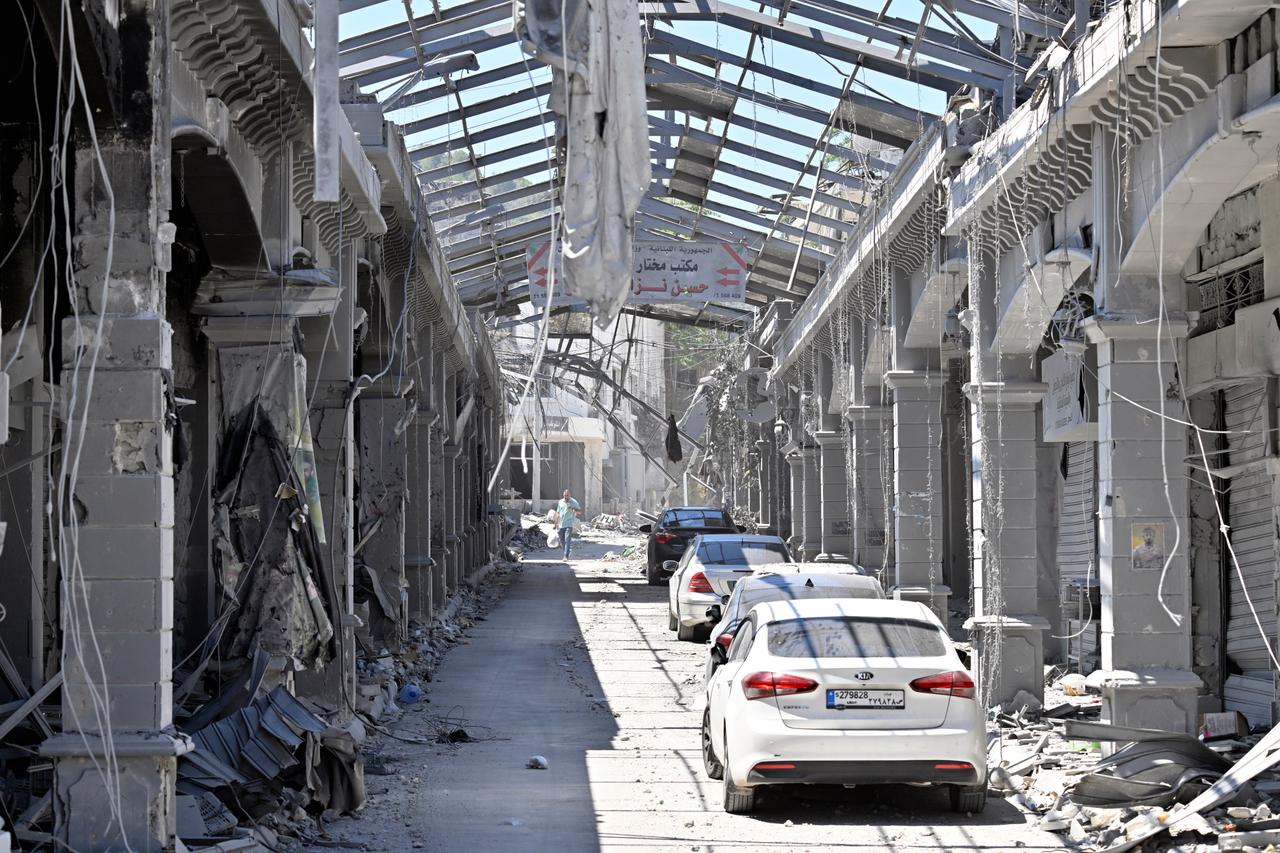
The destruction caused by Israel’s air strikes on Lebanon, 21 June 2026 – (Anadolu Agency)
Following the signing of the accord, the quadrilateral talks involving the United States, Iran, and mediator countries Pakistan and Qatar began on 21 June in the Swiss town of Bürgenstock. Officially named the "Lake Lucerne Summit", the meeting was attended by delegations led by Pakistan Prime Minister Shehbaz Sharif, Pakistan Chief of Army Staff Asim Munir, U.S. Vice President JD Vance, U.S. President Donald Trump’s Middle East Special Representative Steve Witkoff and his son-in-law Jared Kushner, Iran’s Parliament and Negotiation Delegation Head Mohammad Bagher Ghalibaf, Iran’s Foreign Minister Abbas Araghchi, and Qatar Prime Minister Mohammed bin Abdulrahman Al Thani.
The foreign ministries of Qatar and Pakistan announced that the first round of quadrilateral talks had concluded in a positive and constructive atmosphere. A joint statement indicated that the parties had agreed to establish a high-level committee to oversee the political dimensions of mediation efforts in line with the accord text, and to aim for a final agreement within 60 days. The statement further noted that a communication channel had been established between the parties to ensure safe passage of commercial vessels through the Strait of Hormuz, and that an agreement had been reached on the creation of a working group, including Lebanon, to halt military operations in Lebanon, as stipulated in the accord text.
Spokesperson for Iran’s Ministry of Foreign Affairs and Negotiation Delegation Ismail Bekayi stated, "Negotiations for a final agreement cannot begin until hostilities are ended on all fronts, including Lebanon." Bekayi emphasized that, according to Article 13 of the accord text, the commencement of final negotiations is contingent upon the United States fulfilling its obligations under Articles 1, 4, 5, 10, and 11. He noted that the focus of the talks in Switzerland was on ending hostilities across all fronts including Lebanon, releasing Iran’s frozen assets, and establishing arrangements for oil exports.
Israeli Defense Minister Yisrael Katz asserted that the Israeli military would remain in the occupied areas of southern Lebanon and would face no restrictions on its attacks. Katz confirmed that Israeli forces would continue to maintain their presence in the so-called "Purple Line" region and conduct attacks from there into Lebanon’s interior, adding, "As Prime Minister Benjamin Netanyahu and I have clearly stated, Israel will not withdraw from its security zone in Lebanon."
Israeli Prime Minister Binyamin Netanyahu also declared that Israel would maintain its occupation in southern Lebanon "as long as necessary." Speaking at a memorial service for his brother Yonatan Netanyahu, he claimed Israel had carried out two major strikes against Iran and argued that without them, Iran would have acquired nuclear weapons. He asserted that Israel would remain in the occupied areas of southern Lebanon "as long as necessary," and that nothing would change this decision.
Israeli Chief of Staff Eyal Zamir, during a visit to an occupied area in southern Lebanon, argued that Israel must remain ready to resume attacks and described the ceasefire as "fragile." Zamir identified Ali al-Tayyib and Beaufort (Shakif) hills as the primary operational focus areas of the Northern Command and stated that Israel would not allow Hezbollah to reconstitute itself.
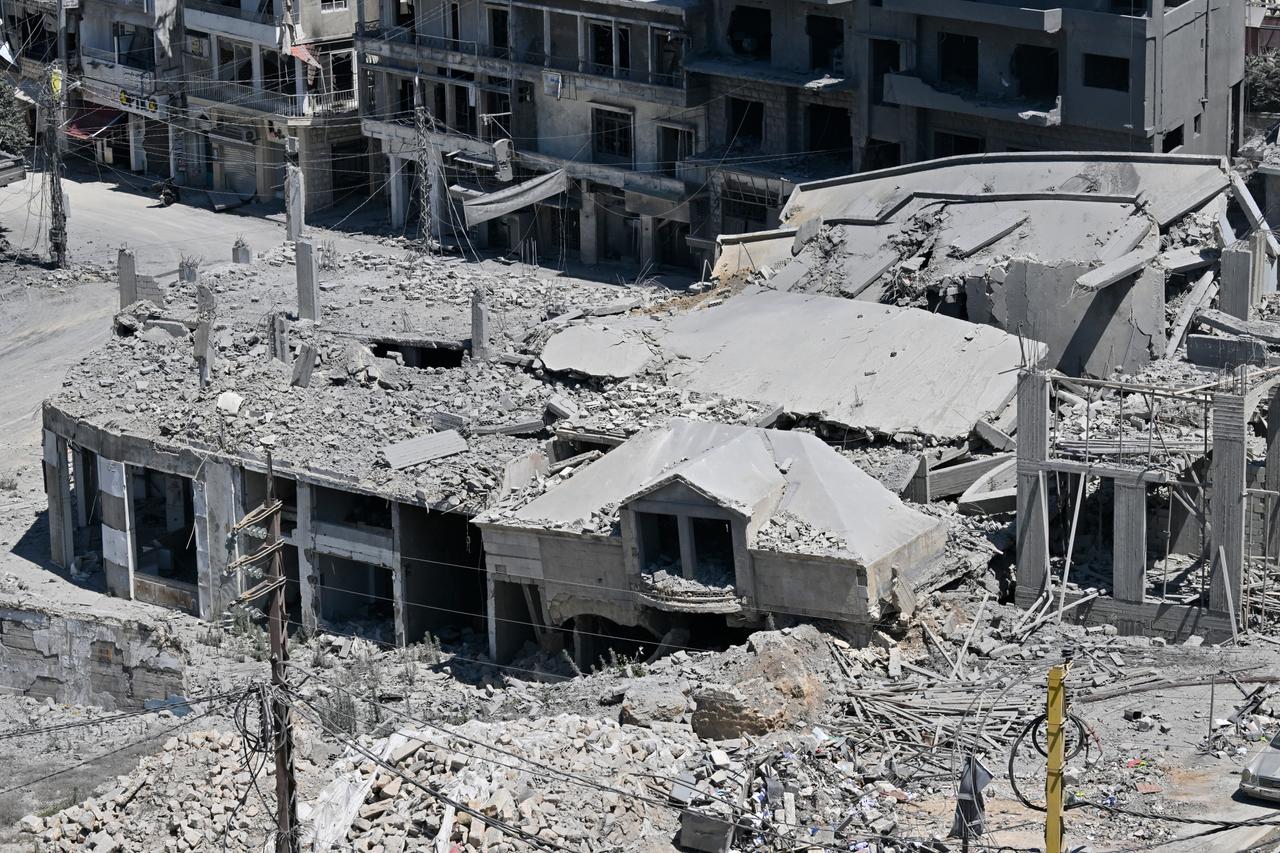
The destruction caused by Israel’s air strikes on Lebanon, 21 June 2026 – (Anadolu Agency)
The Israeli press claimed that the U.S.-Israel crisis had escalated, asserting that Washington’s demand for Israel to withdraw from the occupied areas of southern Lebanon was an "issue of the moment". According to the newspaper Israel Hayom, withdrawal from southern Lebanon is viewed by the Tel Aviv government as its "red line"; a source close to the White House stated that Netanyahu would face a severe dilemma if this demand were made. On the other hand, Channel 12 television suggested that Tel Aviv was considering withdrawal from certain areas beyond the 10-kilometer line, including the Shakif Castle.
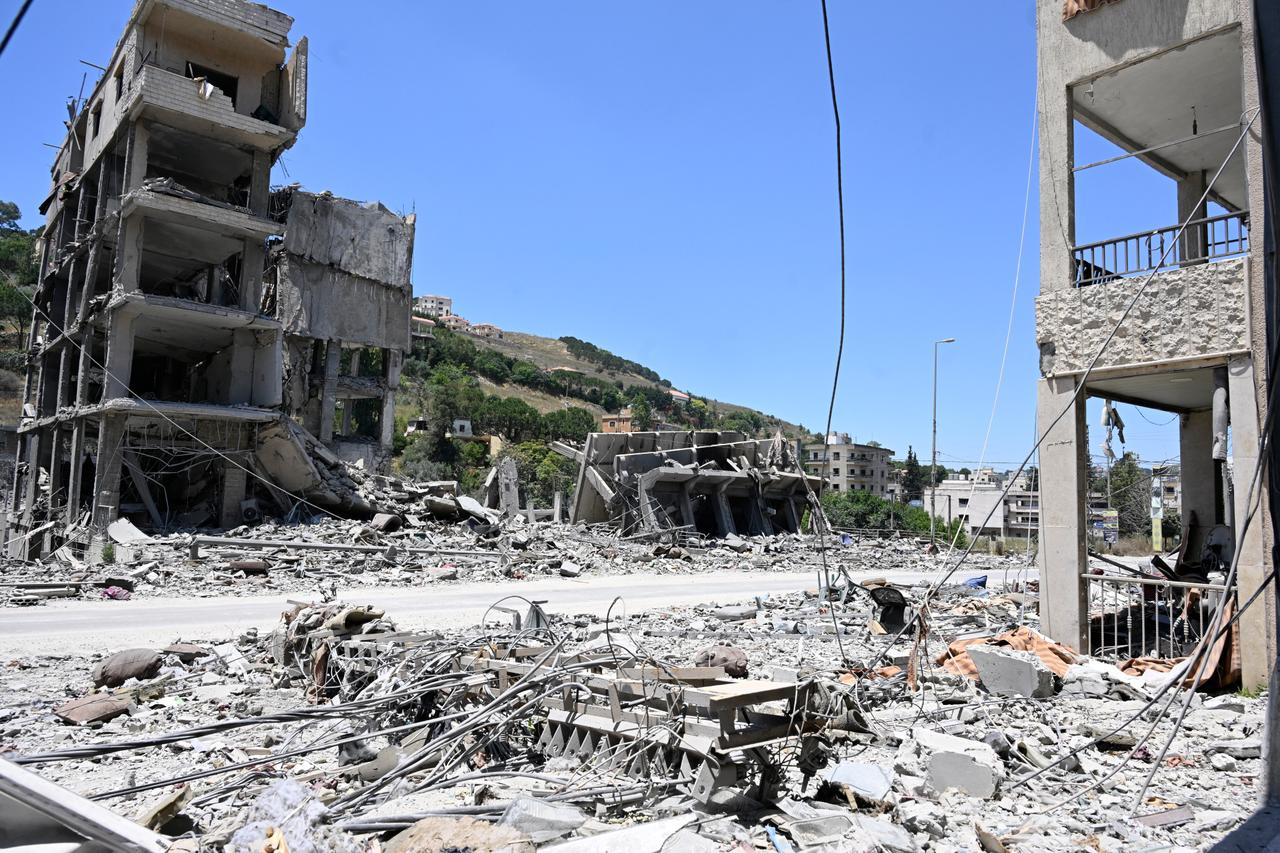
The destruction caused by Israel’s air strikes on Lebanon, 21 June 2026 – (Anadolu Agency)
Israeli Defense Minister Katz rejected these claims, insisting that the Israeli military would not withdraw from Shakif Castle or any other area in southern Lebanon. Katz stated, "Israel has no intention of withdrawing from Shakif Castle, which is of vital importance for the defense of the Jalil settlements and other Israeli military assets that are an inseparable part of Lebanon’s security zone." The Israeli military had occupied the strategic hilltop area containing the historic Shakif Castle near the Wadi Seluki region on 1 June.
Hezbollah Secretary General Naim Qassem stated that any ceasefire granting Israel freedom of movement in Lebanon would amount to "continuation of attacks" and was "unacceptable." Criticizing Beirut’s negotiations with Tel Aviv, Qassem asked, "What have direct negotiations with the enemy achieved other than concessions?" He emphasized that "Israel will not remain in Lebanon," and declared, "A ceasefire granting Israel freedom of movement means continued attacks, and we will not accept it." Hezbollah’s written statement further argued that direct negotiations involving the Lebanese delegation aimed to force Lebanon into submission and surrender.
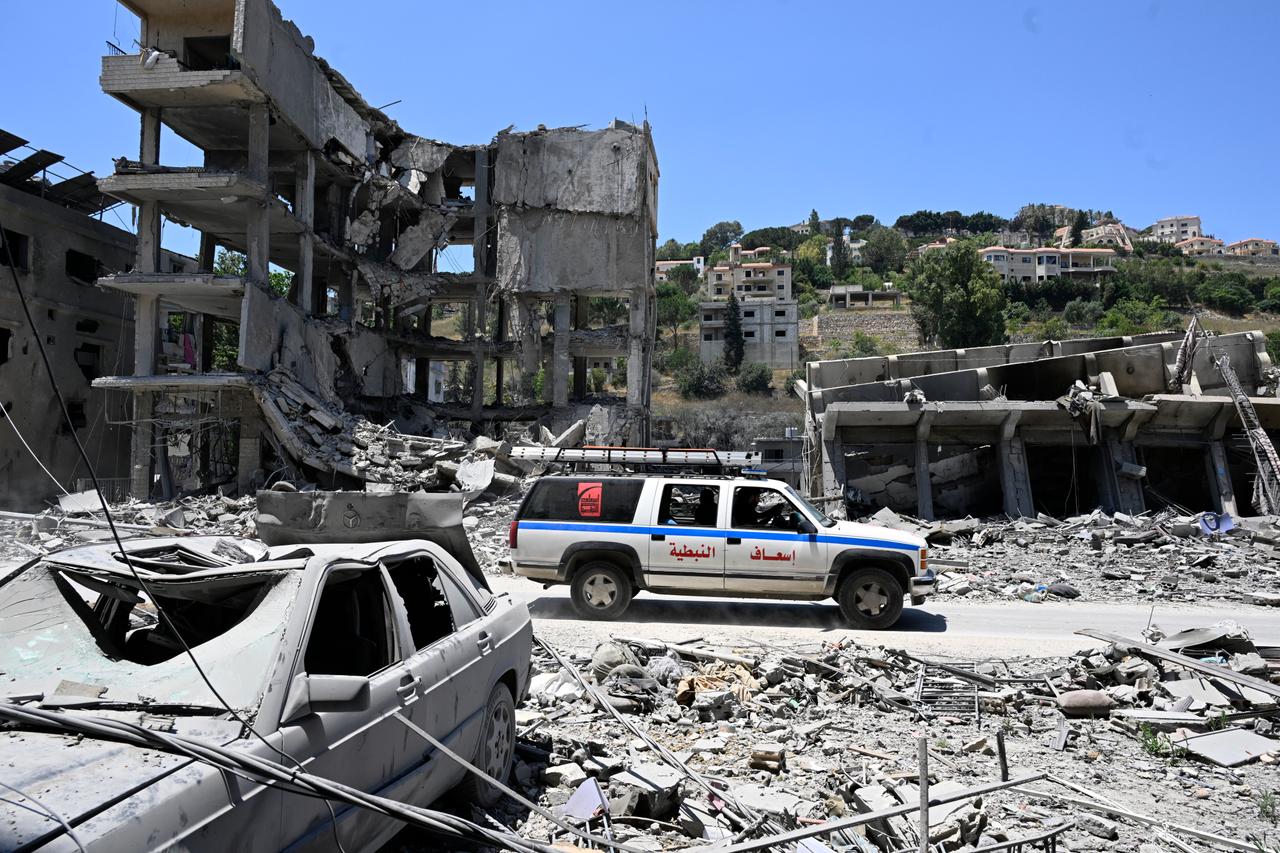
The destruction caused by Israel’s air strikes on Lebanon, 21 June 2026 – (Anadolu Agency)
Syrian President Ahmad Shara clarified that remarks by U.S. President Donald Trump suggesting Syria would intervene militarily in Lebanon had been misunderstood. "We do not wish to return to Syria’s past policy of military intervention in Lebanon," he said. Speaking to Dubai-based Al-Masheed TV, Shara affirmed Syria’s readiness to play an active and constructive role in resolving the crisis in Lebanon, but stressed that this would not mean a return to its former era of dominance. Instead, he emphasized the goal of strengthening Lebanon’s state institutions. "The problems in Lebanon cannot be solved by bombardment, destruction, and displacement alone," Shara said, adding that solutions must be economic, political, and social.
When asked whether Syria would sit at the same table as Hezbollah, Shara replied, "If this step serves Lebanon’s interests and simultaneously safeguards Syria’s interests, why not? We have serious disagreements with Hezbollah. But while trying to resolve this issue, we do not want Lebanon to pay the price by being destroyed." Addressing the Lebanese public, Shara stated, "Our intention is only to wish good for our brothers in Lebanon. We have no other desire for them than a peaceful and happy life."
On 22 June 2026, following the first round of negotiations between the United States and Iran in the Swiss town of Bürgenstock, progress was reported toward ending the war in Lebanon. UNIFIL announced that for the first time since 2 March, no reciprocal attacks had been recorded between Israel and Hezbollah in Lebanon on 21 June. Lebanese President Joseph Aoun held talks with U.S. and Qatari officials on making the ceasefire permanent, while Israeli Prime Minister Binyamin Netanyahu defended the Israeli military’s "freedom of movement." The European Union condemned Israeli minister Itamar Ben-Gvir’s statement "Let Lebanon sink."
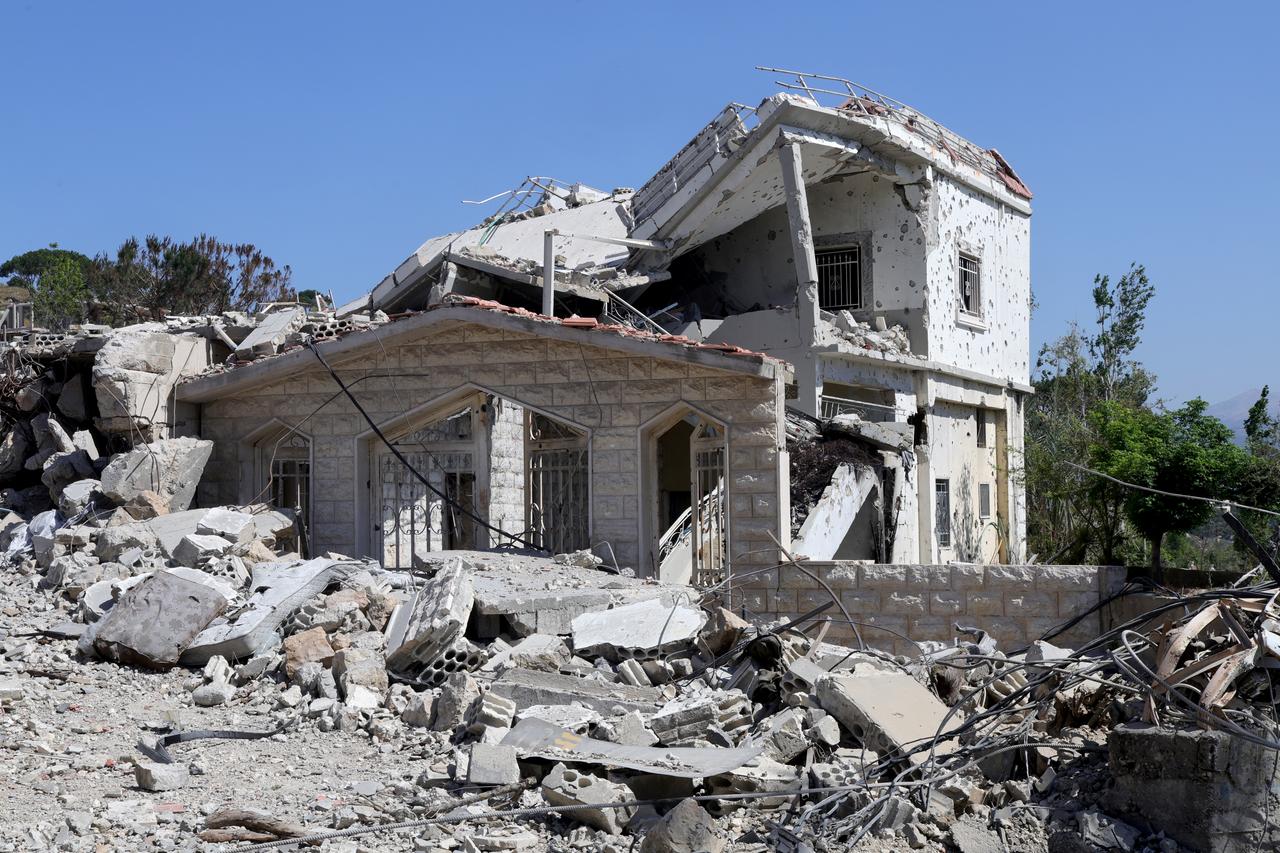
The destruction caused by Israel’s air strikes on Lebanon, 22 June 2026 – (Anadolu Agency)
Iran’s Foreign Minister Abbas Araghchi stated after the conclusion of the first round of talks, mediated by Pakistan and Qatar, that significant progress had been made toward ending the war in Lebanon. "Progress has been made toward ending the war in Lebanon under Pakistan-Qatar mediation," Araghchi said, highlighting the lifting of oil export restrictions on Iran, the end of the blockade, and the release of a portion of Iran’s frozen assets. Iranian media reported that Iran would send representatives to a new mechanism established to monitor the ceasefire in Lebanon, and that Israel would not be included in this mechanism.
U.S. Vice President JD Vance said the United States had laid a "solid foundation for a successful final agreement" with Iran. Before leaving Bürgenstock, Vance noted that the Strait of Hormuz was open and that millions of barrels of crude oil and natural gas had begun flowing through it. He added that a "conflict prevention mechanism" had been established. "If there is firing—if Hezbollah fires on Israel or Israel retaliates—we can talk to each other and find a way to stop it," Vance said. He emphasized that effective coordination on Lebanon required cooperation with the Lebanese Armed Forces and Iran’s restraint over Hezbollah. Vance also characterized Iran’s agreement to invite back International Atomic Energy Agency inspectors as a "major turning point."
Lebanese President Joseph Aoun held phone calls with U.S. Vice President JD Vance, U.S. President Donald Trump’s son-in-law Jared Kushner, and Qatar Prime Minister Mohammed bin Abdulrahman Al Thani. Discussions focused on making the ceasefire in Lebanon permanent, halting Israeli attacks, and exploring the possibility of establishing a mechanism to achieve this goal.
Aoun also emphasized Lebanon’s status as a sovereign state, welcoming all support for ending the war but rejecting any interference in its internal affairs. "We distinguish between assistance and interference in internal affairs. We are a sovereign country, and no one can negotiate on our behalf," Aoun said during a meeting with the Maronite Catholic Union delegation, adding that there was no alternative to a strong and unified state representing all Lebanese.
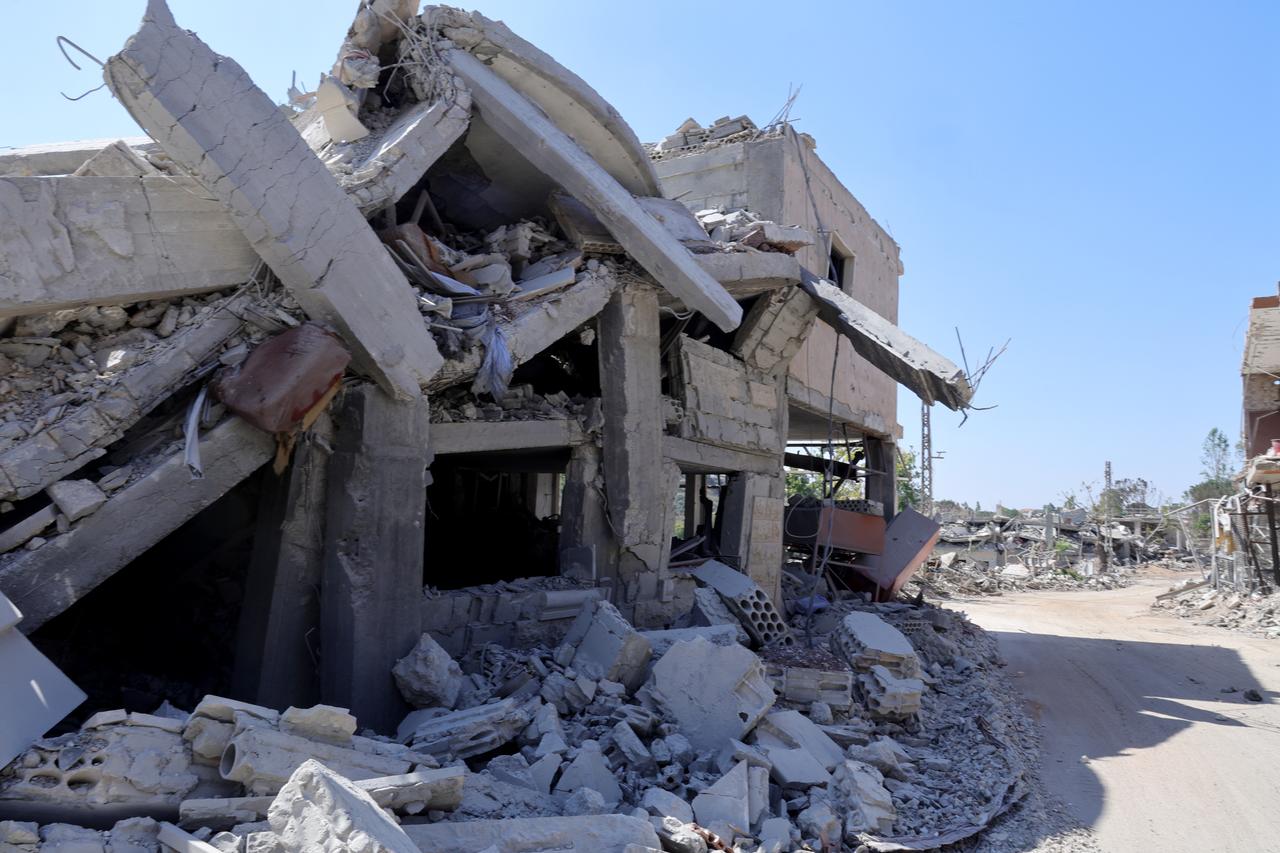
The destruction caused by Israel’s air strikes on Lebanon, 22 June 2026 – (Anadolu Agency)
Israeli Prime Minister Binyamin Netanyahu stated that despite the ceasefire, no changes had been made to military directives and that "the Israeli military maintains freedom of movement in Lebanon." Speaking for the first time since the decision to establish a new mechanism to monitor the ceasefire in Lebanon, Netanyahu reiterated that Israeli soldiers in southern Lebanon had "full freedom of movement" and would remain in the occupied territories. Israeli Foreign Minister Gideon Saar told his New Zealand counterpart Winston Peters that Israel would respect the ceasefire as long as it was not violated by Hezbollah, but would not withdraw from the occupied areas.
Israeli President Isaac Herzog expressed concern following the U.S.-Iran accord, arguing that Iran must not have a voice in Lebanon’s future. Herzog said the decision to include Tehran in a ceasefire monitoring mechanism had generated serious concerns in Israel and insisted that the dispute must be resolved through direct negotiations between Israel and Lebanon. Israel’s far-right National Security Minister Itamar Ben-Gvir urged Netanyahu to reject the U.S.-Iran accord encompassing Lebanon, demanding continued attacks instead of "weak ceasefires," stating, "If Israel is not secure, then Beirut will look like Beit Hanoun."
The Israeli press reported that during U.S.-mediated talks scheduled for 21–28 June, Israel would consider withdrawing from certain "pilot zones" it occupies and transferring control to the Lebanese Armed Forces. According to Haaretz, a UNIFIL source confirmed that for the first time since 2 March, no reciprocal attacks were recorded between Israel and Hezbollah in Lebanon on Sunday, 21 June. The report indicated that the Lebanese military was planned to operate under U.S. supervision in areas from which Israel would withdraw. Talks at the ambassadorial and military levels are expected to take place in Washington on 23–25 June. Following the cessation of reciprocal attacks, the Israeli military lifted all restrictions in northern Lebanon.
The European Union (EU) strongly condemned Israeli far-right National Security Minister Itamar Ben-Gvir’s statement, "Let Lebanon sink". EU Commission Spokesperson for External Relations Anouar el Anouni stated, "We wish to clearly express our strongest condemnation of this statement." El Anouni underscored the EU’s solidarity with Lebanon and its people, noting that Lebanon had paid a heavy price for a war it did not choose. He reiterated the EU’s call on Israel to respect Lebanon’s sovereignty and territorial integrity and to withdraw its forces from Lebanon in accordance with United Nations Security Council Resolution 1701.
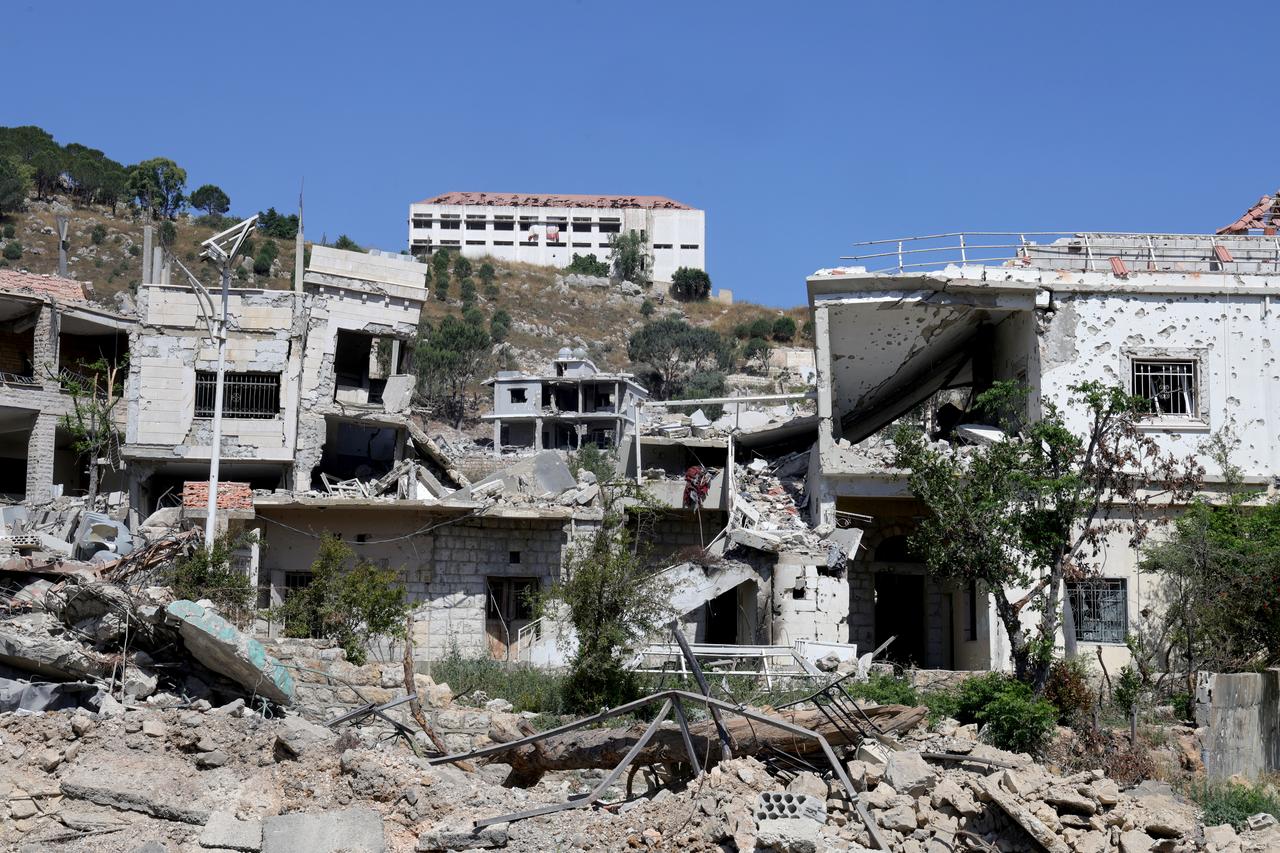
The destruction caused by Israel’s air strikes on Lebanon, 21 June 2026 – (Anadolu Agency)
Lebanese Prime Minister Nevvaf Selam welcomed Syrian President Ahmad Shara’s rejection of claims that Syria would intervene militarily in Lebanon. In a phone call with Syrian Foreign Minister Asad Hasan Shebani, Selam praised Shara’s "fraternal and transparent" attitude expressed in a television interview the previous day, stating that these remarks had put an end to speculation and misleading assessments regarding Syria’s intentions toward Lebanon.
Al Jazeera. "Iran War Live: Tehran Says US Must Ensure Israel Ends Attacks on Lebanon." Al Jazeera Live Blog. Accessed June 22, 2026. https://www.aljazeera.com/news/liveblog/2026/6/20/iran-war-live-tehran-says-us-must-ensure-israel-ends-attacks-on-lebanon
Al Jazeera. "Iran War Live: US-Tehran Agree Roadmap to Reach Final Deal in 60 Days." Al Jazeera Live Blog. Accessed June 22, 2026. https://www.aljazeera.com/news/liveblog/2026/6/22/iran-war-live-first-day-of-us-talks-covers-lebanon-hormuz-frozen-assets
Al Jazeera. "Iran War Live: Vance Heads to Switzerland, Israel Kills 16 in Lebanon." Al Jazeera Live Blog. Accessed June 22, 2026. https://www.aljazeera.com/news/liveblog/2026/6/21/iran-war-live-vance-heads-to-switzerland-israel-kills-16-in-lebanon
Anadolu Ajansı. "AB, İsrail’in Aşırı Sağcı Bakanı Ben-Gvir’in ‘Lübnan Yansın’ İfadesini Şiddetle Kınadı." Anadolu Ajansı. Accessed June 22, 2026. https://www.aa.com.tr/tr/dunya/ab-israilin-asiri-sagci-bakani-ben-gvirin-lubnan-yansin-ifadesini-siddetle-kinadi/3974481
Anadolu Ajansı. "ABD Başkan Yardımcısı Vance, İran ile Görüşmelerde Büyük İlerleme Kaydedildiğini Belirtti." Anadolu Ajansı. Accessed June 22, 2026. https://www.aa.com.tr/tr/dunya/abd-baskan-yardimcisi-vance-iran-ile-gorusmelerde-buyuk-ilerleme-kaydedildigini-belirtti/3973759
Anadolu Ajansı. "Katar ve Pakistan: İsviçre’deki ABD-İran Müzakerelerinin Birinci Turu Olumlu ve Yapıcı Atmosferde Tamamlandı." Anadolu Ajansı. Accessed June 22, 2026. https://www.aa.com.tr/tr/dunya/katar-ve-pakistan-isvicredeki-abd-iran-muzakerelerinin-birinci-turu-olumlu-ve-yapici-atmosferde-tamamlandi/3974039
Anadolu Ajansı. "Lübnan Cumhurbaşkanı Avn: Bizim Adımıza Hiç Kimse Müzakere Yürütemez." Anadolu Ajansı. Accessed June 22, 2026. https://www.aa.com.tr/tr/dunya/lubnan-cumhurbaskani-avn-bizim-adimiza-hic-kimse-muzakere-yurutemez/3974372
Anadolu Ajansı. "Son Gelişmeler: ABD-İsrail-İran-Lübnan Savaşı ve Barış Müzakereleri." Anadolu Ajansı Live Blog. Accessed June 22, 2026. https://www.aa.com.tr/tr/live-blog/son-gelismeler-abd-israil-iran-lubnan-savasi-ve-baris-muzakereleri/4281
Anadolu Ajansı. "Suriye Cumhurbaşkanı Şara: Suriye’nin Geçmişte Lübnan’a Yaptığı Askeri Müdahale Anlayışına Dönmek İstemiyoruz." Anadolu Ajansı. Accessed June 22, 2026. https://www.aa.com.tr/tr/dunya/suriye-cumhurbaskani-sara-suriyenin-gecmiste-lubnana-yaptigi-askeri-mudahale-anlayisina-donmek-istemiyoruz/3973992
Anadolu Ajansı. "Vance, İran ile Başarılı Nihai Anlaşma İçin İyi Bir Temel Attıklarını Söyledi." Anadolu Ajansı. Accessed June 22, 2026. https://www.aa.com.tr/tr/dunya/vance-iran-ile-basarili-nihai-anlasma-icin-iyi-bir-temel-attiklarini-soyledi/3974544
Anadolu Ajansı. "İsrail’in Aşırı Sağcı Ulusal Güvenlik Bakanı Ben-Gvir: Lübnan İsrail’in Oyun Alanı Olmalı." Anadolu Ajansı. Accessed June 22, 2026. https://www.aa.com.tr/tr/dunya/israilin-asiri-sagci-ulusal-guvenlik-bakani-ben-gvir-lubnan-israilin-oyun-alani-olmali/3974360
On 23 June 2026, the fifth round of direct negotiations between Israel and Lebanon, mediated by the United States, began in Washington. Israeli leaders declared they would continue occupying the corridor they call a "safe zone" in southern Lebanon, while Lebanese President Joseph Aoun emphasized that they would accept no option other than the complete end of the Israeli occupation. The United States announced it had launched a mechanism under CENTCOM to monitor the situation in Lebanon; meanwhile, the Israeli military continued its attacks despite the ceasefire, resulting in two deaths in Upper Nabatieh.
On 23 June, Lebanon’s Ministry of Health reported that the number of people killed in Israeli attacks since 2 March had increased by 17 to 4,192.
Israeli Prime Minister Benjamin Netanyahu, Defense Minister Yisrael Katz, and Chief of Staff Eyal Zamir stated that despite the agreement reached between the United States and Iran, they would continue occupying the corridor they designate as a "safe zone" in southern Lebanon.
In a joint statement following the meeting, which also included IDF Northern Command Commander Major General Rafi Milo, it was affirmed that the military would continue its determined efforts to maintain its presence in the "safe zone" and that "no compromise would be made on the security of Israeli citizens and soldiers." Israel Defense Forces Radio stated that the joint statement addressed concerns over criticism that the military was being "handcuffed" and subjected to severe restrictions in Lebanon; Channel 13 television claimed that the United States had revoked Israel’s previously granted "unlimited freedom of movement" in Lebanon.
Israel’s far-right Finance Minister Bezalel Smotrich argued that the negotiations between the United States and Iran did not concern Israel and claimed they would continue their attacks in Lebanon "with determination." Speaking to IDF Radio, Smotrich asserted that Israel would not withdraw from southern Lebanon as long as the Netanyahu government remained in power, stating, "As long as Hezbollah exists, Israel’s withdrawal from the security zone in Lebanon, including Shaqif Castle, is out of the question." Smotrich insisted that Hezbollah must be stripped not only of its weapons but also of its political power, declaring, "As long as Hezbollah retains any capability to threaten Israel’s north, there will be no withdrawal while we are in power."
Despite the ceasefire and the U.S.-Iran agreement, the Israeli military conducted attacks in the Nabatieh governorate of southern Lebanon. According to NNA, Israeli soldiers opened fire on people near a construction vehicle during road-clearing operations in the Deyr neighborhood of Upper Nabatieh, killing two people and wounding two others. It was also reported that Israeli soldiers fired on mourners approaching a cemetery in the southern village of Hadasa during a funeral procession accompanied by the Lebanese Army; Israeli unmanned aerial vehicles dropped sound bombs over the villages of Kefertebnit, Aytah Jabel, and Beraashit.
The fifth round of direct Israel-Lebanon negotiations under U.S. auspices began on 23 June at the U.S. Department of State in Washington.
Israel’s U.S. Ambassador Yechiel Leiter, in his opening remarks at the negotiations, argued that the diplomatic process was "facing the risk of derailing". Comparing the process to a "train wreck," Leiter said, "This is the fifth round of talks, and I must be clear—we are facing a train wreck. Today, this train is at risk of derailing. I hope we can get it back on track." Leiter stated that the main goal of the negotiations was to end Iran’s influence in Lebanon and disarm Hezbollah, adding, "The issue is not how much control Iran can exert over Hezbollah. Iran’s role is not to manage Hezbollah; its role is to completely leave Lebanon."
Lebanese President Joseph Aoun chaired a meeting attended by his advisory team and Chief of Staff Rudolph Heykel, following the Washington negotiations. Aoun stated that recent developments confirmed the validity of the negotiation path, saying, "Today we clearly state that we will accept no option other than the complete end of the Israeli occupation from southern Lebanon and the elimination of foreign interference." He emphasized that Lebanon’s goal was to reestablish state sovereignty over every inch of its territory.
In a phone call with U.S. Vice President JD Vance and U.S. Secretary of State Marco Rubio, Aoun discussed recent developments in Lebanon and steps toward making the ceasefire permanent. Vance and Rubio affirmed the U.S. commitment to establishing state authority across Lebanon and stated that a joint mechanism involving the United States, Lebanon, and Iran was envisioned to ensure the permanence of the ceasefire and oversee related arrangements. Aoun informed Parliament Speaker Nabih Berri and Prime Minister Nawaf Salam of the content of the conversation.
Aoun also held a phone call with French President Emmanuel Macron. During the call, the outcomes of the G7 Leaders Summit regarding Lebanon were assessed; Macron indicated that the withdrawal process for UNIFIL from Lebanon would begin in 2027 and that he would be engaging with numerous countries to secure international participation. In a meeting with Dutch Foreign Minister Tom Berendsen and Minister of Asylum and Migration Bart van den Brink, Aoun stated that the priority was securing the ceasefire, ensuring Israel’s withdrawal, and meeting Lebanon’s demands. Receiving a delegation of British parliamentarians in Beirut, Aoun said, "The negotiations in Washington are independent of the outcomes of the U.S.-Iran talks in Switzerland last week." He confirmed that work was ongoing to identify "pilot zones" under the ceasefire but noted that these required Israeli approval.
Lebanese Foreign Minister Youssef Raad declared that the negotiation process was the only path to achieving stability and reestablishing state sovereignty nationwide, stating, "Decisions regarding Lebanon are made solely by the Lebanese state." Meeting with EU High Representative for Foreign Affairs and Security Policy Kaja Kallas in Amman, Raad reiterated that the Lebanese issue must be separated from the U.S.-Iran process and requested active European Union support for facilitating the return of Syrians to their homeland.
On 23 June, Hezbollah Secretary General Naim Qassem, acknowledging the ceasefire in Lebanon, said, "Israel must withdraw from Lebanon within a specific timeline. Israel has no option other than a full withdrawal and must not retain even a single meter of land." In a speech broadcast on Al-Manar TV, Qassem thanked Iran for securing the ceasefire and called for the complete cessation of Israeli attacks by air, land, and sea; the withdrawal of Israeli forces; the deployment of the Lebanese Army in the south; the release of prisoners; the return of civilians; and the initiation of reconstruction. He affirmed Hezbollah’s support for the Lebanese Army’s deployment south of the Litani River.
On 24 June 2026, as the fifth round of negotiations in Washington continued, Israeli Defense Minister Yisrael Katz declared that the military would not withdraw from southern Lebanon "even if requested by the United States." The Israeli military continued its attacks in the Nabatieh governorate despite the ceasefire; in an IDF drone strike on a vehicle near Keferrumman, two people were killed. Lebanese Prime Minister Nawaf Salam stated that his country was part of the permanent ceasefire mechanism established in Switzerland but emphasized that the process in Washington differed from it.
On 24 June, Lebanon’s Ministry of Health reported that the number of people killed in Israeli attacks since 2 March had increased by 19 in the past 24 hours to 4,211.
Israeli Defense Minister Yisrael Katz affirmed that the Israeli military would remain in the territories it occupies in southern Lebanon and Syria, stating, "Even if the United States requests it, the army will not withdraw from southern Lebanon." According to the Times of Israel, speaking at an event in Tel Aviv, Katz argued that Israeli soldiers would remain in occupied areas and civilians would stay outside, claiming Israel would not permit Lebanese civilians displaced by the occupation to return to their homes.
It was reported that Israeli Prime Minister Benjamin Netanyahu convened his security cabinet to address developments in Lebanon and southern Syria. According to The Jerusalem Post, the meeting with political and military members of the cabinet would also address U.S. President Donald Trump’s remarks suggesting Syria might intervene in Lebanon.
Israeli political and military officials denied claims that the Israeli military had withdrawn from certain areas in southern Lebanon. According to Channel 12 television, officials asserted that reports of withdrawal and the deployment of the Lebanese Army in those areas did not reflect reality. In contrast, Channel 13 television reported that the Israeli military was preparing for a partial withdrawal from southern Lebanon and planned to complete withdrawals from certain areas in the coming days under the Washington negotiations.
Despite the ceasefire and the U.S.-Iran agreement, the Israeli military continued its attacks in the Nabatieh governorate of southern Lebanon. According to NNA, Israeli soldiers opened fire on two vehicles in the village of Upper Nabatieh during midday; no deaths or injuries were reported. Later in the day, an Israeli drone targeted a vehicle near Debshe Hill in the vicinity of the village of Keferrumman in Nabatieh, killing two people. The Israeli military claimed it killed two individuals it identified as armed Hezbollah members in the occupied area of Ali al-Tahir Hill.
The Israeli military continued its attacks in the evening. According to NNA, the army launched artillery strikes on the village of Haddasa, adjacent to Nabatieh, and swept the surrounding area with machine gun fire; one person sustained minor injuries after a kamikaze drone exploded in the village of Yatir. The Israeli military targeted an open area in the Deyr neighborhood of Upper Nabatieh with a guided missile; a fire broke out in the area surrounding the village of Beraashit after phosphorus munitions were used. It was reported that an Israeli drone conducted low-altitude flight over the capital, Beirut.
Lebanese Prime Minister Nawaf Salam stated that Lebanon demanded Israel’s complete withdrawal from its territory, noting that his country was part of the permanent ceasefire mechanism established in Switzerland but that the process underway in Washington was distinct. Speaking to a delegation from the Journalists’ Syndicate, Salam said, "We demand Israel’s complete withdrawal. We will not accept even two points remaining, let alone five. We also demand the release of prisoners and the resolution of disputed border points."
Speaking on Hezbollah’s disarmament, Salam emphasized that weapons must be under state control alone and recalled that the Taif Agreement of 1989 called for Israel’s withdrawal, reforms, and the extension of state authority nationwide. Salam stressed that consolidating weapons under state monopoly was not to satisfy Israel but was an independent Lebanese matter mandated by the Taif Agreement since its adoption. He noted the expiration of UNIFIL’s mandate and affirmed the need for an international force to assume observation, reporting, and coordination roles in the region.
On 25 June 2026, the Israeli military denied reports of withdrawal from certain areas in southern Lebanon and affirmed it would remain in occupied territories. In attacks continuing despite the ceasefire, a drone strike on a vehicle between the villages of Zavtar and Meyfedun killed three people. Iranian commander Ismail Qaani sent Israel a message to "leave all of Lebanon," while Lebanon canceled this year’s high school graduation exams (Baccalaureate), which are used for university admissions, due to the negative impact of Israeli attacks on education. The United Nations reported that the ceasefire established on 19 June had been largely upheld.
Lebanon’s Ministry of Health reported that the number of people killed in Israeli attacks since 2 March had increased by 19 to 4,230.
In response to reports that Israel had withdrawn from certain areas in southern Lebanon and that the Lebanese Army had been deployed there, the Israeli military stated it had "continued to remain in the occupied territories."
In a statement to the AA correspondent, the military confirmed, "There has been no change in the position of Israeli soldiers in the occupied areas of southern Lebanon," and noted that the military "operates in accordance with political directives."
The Israeli military killed three people in a drone strike on a vehicle in the Nabatieh governorate of southern Lebanon, despite the ceasefire and the U.S.-Iran agreement. According to NNA, an Israeli drone targeted a vehicle between the villages of Zavtar and Meyfedun, killing three and wounding one. The Israeli military claimed responsibility for its attacks in Nabatieh throughout the day, stating it had killed five individuals it identified as Hezbollah members near Zavtar and one near Ali al-Tahir Hill in air strikes.
Hezbollah denied Israeli claims that its members were killed in the attack on Zavtar, stating that civilians had been killed. The statement read, "The Israeli military once again deliberately targeted Lebanese civilians returning to their homes along the Zavtar ash-Sharqiyya-Meyfedun road, falsely claiming they posed a threat to occupying forces." It emphasized that the attack constituted a "clear violation" of the ceasefire.
The Israeli military set fire to homes in the village of Ayn Arab in southern Lebanon, targeting families who had been threatened to leave their homes immediately after returning. According to NNA, Israeli forces had previously sent threatening messages to residents of Ayn Arab, demanding they leave the village by 5:00 PM or face the destruction of their homes. After the Lebanese Army reopened the road connecting Ayn Arab and Mari, some families began returning to their homes after nearly four months. An Israeli drone dropped a sound bomb over the village of Kefer Tebnit, adjacent to Nabatieh.
Commander of the Quds Force of the Iranian Revolutionary Guard Corps, Major General Ismail Qaani, stated that Israel must withdraw from Lebanese territory of its own accord, or it will be forced out. In a message posted on his social media account, Qaani emphasized that Israel must leave all of Lebanon, saying, "These lands are not the playground of occupiers; they are the land of resistance and determination. If the Zionists do not withdraw of their own free will today, tomorrow they will be forced to flee in disgrace and helplessness."
Lebanese Minister of Education Rima Karami announced the cancellation of this year’s high school graduation exams (Baccalaureate), which determine university admissions, due to the negative impact of Israeli attacks since 2 March. Karami stated that the Council of Ministers had decided to cancel both general and technical Baccalaureate exams and replace them with school-based assessments. It was noted that over one million people had been displaced and many schools had been converted into shelters due to Israeli attacks.
The United Nations reported that despite the completion of the fifth round of negotiations between Israel and Lebanon, Israel continued violations of the airspace and ground operations in southern Lebanon. UN Spokesperson Stephane Dujarric, citing UNIFIL reports, stated that these activities primarily manifested as "armored vehicle movements, fortification works, and logistical transfers," and noted that three Israeli tanks near the village of El-Beyada, adjacent to Sur, had conducted sustained machine gun fire. Dujarric emphasized that the ceasefire established on 19 June had been largely upheld, saying, "UNIFIL peacekeeping personnel detected no shells, rockets, or air strikes following two shots identified on Tuesday."
On 26 June 2026, following the fifth round of negotiations in Washington under U.S. mediation, a trilateral framework agreement was signed between Israel and Lebanon. U.S. Secretary of State Marco Rubio described the agreement as "the first step in a long and arduous process," while Israeli Prime Minister Benjamin Netanyahu declared that despite the agreement, Israel would maintain its occupation of southern Lebanon until Hezbollah was disarmed.
Lebanese President Joseph Aoun and Prime Minister Nawaf Salam assessed the agreement as the first step toward restoring sovereignty, while Hezbollah rejected direct negotiations outright. On the day of the agreement, the Israeli military continued its attacks on southern Lebanon despite the ceasefire, raising the total death toll to 4,243.
On 26 June, despite the ceasefire and the U.S.-Iran agreement, the Israeli military conducted air and artillery strikes on the Nabatieh governorate of southern Lebanon. According to NNA, Israeli warplanes targeted the area around Upper Nabatieh in two separate air strikes in the morning; Israeli artillery fired approximately ten shells toward the surrounding areas of Beraashit and Beit Yahun in the evening. The previous day, an Israeli drone strike on a vehicle in Meyfedun had killed two people. The Israeli military also claimed to have killed seven Hezbollah members it alleged were carrying weapons near its "security zone" in southern Lebanon and reported that four of its soldiers, including two officers, were wounded in clashes within occupied territory.
In the village of Mansuri, adjacent to Sur in southern Lebanon, an explosion of a war remnant killed one person and seriously injured another. Israeli unmanned aerial vehicles dropped leaflets over Mansuri, instructing residents not to approach areas where Israeli soldiers were present; this marked the first evacuation order issued since the latest ceasefire between Israel and Hezbollah. The Israeli military also detained six people—three Lebanese and three Syrians—working in agricultural fields near the village of Ayn Arab in southern Lebanon. It was noted that Ayn Arab lies within the Israeli-occupied "Yellow Line" area.
Israeli Defense Minister Yisrael Katz responded to the message from Iranian Revolutionary Guard Corps Quds Force Commander Ismail Qaani urging Israeli withdrawal with a threat. On X, Katz posted messages in Hebrew and Persian, stating of Qaani, "The image of a collaborator suits him far better than this pile of ridiculous threats." He issued a warning: "If Iran attacks Israel, it will be the greatest mistake it has ever made."
Following the fifth round of direct negotiations between Israel and Lebanon in Washington, D.C., a framework agreement was signed. The negotiations, which began on 23 June and were expected to last three days, were extended by one day and concluded on 26 June, the fourth day, due to disagreements over withdrawal. The signing ceremony at the U.S. Department of State was attended by U.S. Secretary of State Marco Rubio, Lebanon’s Ambassador to Washington Nada Hamadeh, and Israel’s Ambassador to Washington Yechiel Leiter. Rubio said, "We are pleased to announce today a framework agreement between the sovereign Lebanese government and the Israeli government, under the mediation and support of the United States of America. This is a process that begins to establish a framework for lasting peace and security." He added, "We are at the very beginning of this process. A long road lies ahead, but this first step is critical."
Lebanese Ambassador Nada Hamadeh assessed the agreement as a historic step toward restoring sovereignty, saying, "Today’s signed trilateral framework is the first step toward reestablishing Lebanese sovereignty and territorial integrity, achieving a lasting and final state of non-conflict, and enabling our people to return to their lands." Israeli Ambassador Leiter described Hamadeh as a "tough negotiator who fought like a lioness for her country" and claimed the final round "got the train back on track," adding, "This three-party framework agreement based on performance excludes Iran, excludes Hezbollah, and includes the path to peace between Israel and Lebanon."
In a written statement following the signing ceremony, Rubio stated that the agreement foresaw strengthening state sovereignty in Lebanon and disarming Hezbollah and dismantling its military infrastructure. According to the statement, the agreement aims to establish a verifiable mechanism to enhance security along the Israel-Lebanon border; under U.S. mediation, a "Military Coordination Group for Lebanon" (MCG4L) will be created to facilitate implementation on the ground. The Washington administration also announced it would provide Lebanon with $100 million in humanitarian aid coordinated by the United Nations and over $30 million in additional support to the Lebanese Armed Forces.
Several hours after the signing ceremony, the U.S. Department of State released the agreement text, which outlines a "sequential process". According to the text, the Lebanese Army will reestablish state authority across all Lebanese territory, provided that non-state armed groups are verifiably disarmed; following this, Israel will be able to "gradually redeploy" from Lebanon. The agreement identifies two initial "pilot zones"; after verification of disarmament and infrastructure dismantling in these zones, the Lebanese Army will assume full security responsibility, international support for reconstruction will begin, and civilians will be permitted to return. The text also includes a statement that Israel has declared it has "no territorial claims."
In a video message released after the signing ceremony, Israeli Prime Minister Benjamin Netanyahu claimed the framework agreement represented a major success for Israel, asserting that "as long as Hezbollah remains armed and continues to threaten Israel," Israel would maintain its presence in southern Lebanon. Netanyahu said, "The most critical point is that Israel will continue to remain in the security zone in southern Lebanon. This is a significant achievement. As long as Hezbollah remains armed and threatens Israel, we will maintain our presence here." Netanyahu claimed the agreement dealt a major blow to Iran, saying, "Iran tried to force us into a unilateral withdrawal from southern Lebanon. Israel, Lebanon, and the United States sent them this message: This does not concern you."
Netanyahu announced the establishment of two pilot zones to be transferred to the Lebanese Army under the agreement. He stated that the first pilot zone lies entirely south of the Litani River, outside the area where Israel continues its ground occupation, while the second lies north of the Litani River. Netanyahu noted that a small portion of the second zone had been occupied by the Israeli military in the past two weeks but claimed he had been informed by military command that the occupation was "unnecessary."
Lebanese President Joseph Aoun described the signed framework agreement as the "first step" toward restoring Lebanon’s sovereignty across its entire territory, saying, "The framework agreement is the first step toward regaining full Lebanese sovereignty." Aoun noted that the agreement paves the way for displaced Lebanese to return to their lands and rebuilt homes, adding, "We will continue working toward a Lebanon free of occupation, prisoners, dependency, and foreign interference." He thanked U.S. President Donald Trump and other countries supporting the process.
Lebanese Prime Minister Nawaf Salam stated that the purpose of the agreement with Israel was to end the occupation, restore state sovereignty, and enable displaced persons to return. Salam emphasized that the agreement’s goal was Israel’s withdrawal from all occupied Lebanese territory and recalled that Lebanon’s right to exercise sovereignty through its armed forces had been affirmed in the Taif Agreement, United Nations Resolution 1701, and the 2024 agreement. Salam expressed eager anticipation for the day Israel withdraws, displaced persons return home, and reconstruction begins, thanking the United States and Arab countries for their efforts.
Hezbollah Secretary General Naim Qassem, in a speech delivered hours before the agreement’s signing during an Ashura ceremony in Beirut’s Dahieh neighborhood, insisted that Israel must withdraw from Lebanon without any preconditions. Qassem labeled the U.S.-Iran agreement as "the official declaration of the defeat of the United States and Israel," saying, "We shattered the American-Israeli project and entered a new phase that must be built upon." He declared, "No obligation contrary to Lebanese sovereignty will be accepted. No normalization, no end to the state of hostility, no gains for Israel, and no acceptance of a partial presence on Lebanese soil."
Hezbollah’s "Loyalty to the Resistance" parliamentarian Hasan Fadlallah rejected direct negotiations between Lebanon and Israel, warning that they undermined Lebanese sovereignty and risked dangerous divisions. Fadlallah noted that the Lebanese constitution designates Israel as an "enemy state" and argued that direct negotiations violated the constitution, saying, "This administration cannot implement the agreement signed in Washington unless it enters into war with U.S. support. The most important factor is the field, and the field is ours." Fadlallah added, "Iran will not sign any agreement until Israel withdraws from Lebanon."
Al Jazeera. "Hezbollah Demands Israel Leave Lebanon ‘Unconditionally’ Amid Talks in US." Accessed July 1, 2026. https://www.aljazeera.com/news/2026/6/26/hezbollah-demands-israel-leave-lebanon-unconditionally-as-us-talks-extend
Al Jazeera. "Israel Kills Three in Lebanon as Rubio Praises Progress in Washington Talks." Accessed July 1, 2026. https://www.aljazeera.com/news/2026/6/25/israel-kills-three-in-lebanon-as-rubio-praises-progress-in-washington-talks
Al Jazeera. "Israeli Attacks Kill 2 in Southern Lebanon Despite Ongoing Washington Talks." Accessed July 1, 2026. https://www.aljazeera.com/news/2026/6/24/israeli-attacks-kill-2-in-southern-lebanon-despite-ongoing-washington-talks
Al Jazeera. "Lebanon’s Displaced Begin to Return Home, but Some Have Nowhere to Go." Accessed July 1, 2026. https://www.aljazeera.com/features/2026/6/29/lebanons-displaced-begin-to-return-home-but-some-have-nowhere-to-go
Al Jazeera. "US Announces Framework Agreement Between Israel and Lebanon." Accessed July 1, 2026. https://www.aljazeera.com/news/2026/6/26/us-announces-framework-agreement-between-israel-and-lebanon
Al Jazeera. "What Is the Framework Agreement Signed by Israel and Lebanon?" Accessed July 1, 2026. https://www.aljazeera.com/news/2026/6/26/what-is-the-framework-agreement-signed-by-israel-and-lebanon
Anadolu Ajansı. "Hizbullah: İsrail Koşulsuz Çekilmeli, Lübnan'ın Egemenliğine Aykırı Hiçbir Yükümlülük Kabul Edilmeyecek." Accessed July 1, 2026. https://www.aa.com.tr/tr/dunya/hizbullah-israil-kosulsuz-cekilmeli-lubnanin-egemenligine-aykiri-hicbir-yukumluluk-kabul-edilmeyecek/3978622
Anadolu Ajansı. "Washington'da Lübnan ve İsrail Görüşmelerinde Çerçeve Anlaşma İmzalandı." Accessed July 1, 2026. https://www.aa.com.tr/tr/dunya/washingtonda-lubnan-ve-israil-gorusmelerinde-cerceve-anlasma-imzalandi/3979234
Anadolu Ajansı. "Washington'daki İsrail-Lübnan Görüşmelerinin Bugün de Süreceği Bildirildi." Accessed July 1, 2026. https://www.aa.com.tr/tr/dunya/washingtondaki-israil-lubnan-gorusmelerinin-bugun-de-surecegi-bildirildi/3978656
Anadolu Ajansı. "İsrail'in 2 Mart'tan Bu Yana Lübnan'a Düzenlediği Saldırılarda Ölenlerin Sayısı 4 Bin 243'e Ulaştı." Accessed July 1, 2026. https://www.aa.com.tr/tr/dunya/israilin-2-marttan-bu-yana-lubnana-duzenledigi-saldirilarda-olenlerin-sayisi-4-bin-243e-ulasti/3978440
Anadolu Ajansı. "İsrail, Ateşkese ve ABD-İran Mutabakatına Rağmen Lübnan'a Saldırılar Düzenledi." Accessed July 1, 2026. https://www.aa.com.tr/tr/dunya/israil-ateskese-ve-abd-iran-mutabakatina-ragmen-lubnana-saldirilar-duzenledi/3976734
Anadolu Ajansı. "İsrailli Bakan'dan ‘ABD-İran Müzakerelerine Rağmen Lübnan'da İşlerine Bakacakları’ Çıkışı." Accessed July 1, 2026. https://www.aa.com.tr/tr/dunya/israilli-bakandan-abd-iran-muzakerelerine-ragmen-lubnanda-islerine-bakacaklari-cikisi/3975308
Anadolu Ajansı. "İsrailli Büyükelçi, Lübnan'la Müzakere ‘Treninin Raydan Çıkma Tehlikesiyle Karşı Karşıya’ Olduğunu Savundu." Accessed July 1, 2026. https://www.aa.com.tr/tr/dunya/israilli-buyukelci-lubnanla-muzakere-treninin-raydan-cikma-tehlikesiyle-karsi-karsiya-oldugunu-savundu/3975892
Reuters. "Israel Fire Kills Two in Lebanon, Testing Iran-Linked Ceasefire." Accessed July 1, 2026. https://www.reuters.com/world/middle-east/israeli-gunfire-kills-two-people-south-lebanon-civil-defence-says-2026-06-23/
Reuters. "Israel, Lebanon Sign Initial Agreement After US-Mediated Talks." Accessed July 1, 2026. https://www.reuters.com/world/middle-east/israel-drops-leaflets-over-south-lebanon-town-ordering-residents-leave-2026-06-26/
On 27 June 2026, Egypt, Jordan, France, and the European Union welcomed the trilateral framework agreement signed in Washington and called for Israel’s full withdrawal and the implementation of UN Resolution 1701. Hezbollah Secretary General Naim Qassem described the agreement as "null and humiliating", prompting his supporters to hold protests in Beirut. Israeli Prime Minister Benjamin Netanyahu and Defense Minister Yisrael Katz reiterated their intention to continue the occupation and maintain freedom of attack; despite the ceasefire, the Israeli military killed one person during an assault on Upper Nabatieh.
Hezbollah Secretary General Naim Qassem, in his initial assessment of the framework agreement signed under US mediation, labeled it "null and humiliating". Qassem emphasized that while Lebanese officials viewed the agreement as a success, it amounted to a "stain on the face" and a concession of sovereignty", and demanded Israel’s withdrawal from Lebanon in accordance with the Iran-US understanding. Qassem’s statements gained prominence when he declared that linking Israel’s withdrawal to the disarmament of resistance forces across Lebanon was a "dangerous proposal that crosses all red lines and turns Lebanon into a pawn in the hands of its enemy Israel."
Following the signing of the agreement, Hezbollah supporters held protests in the capital Beirut. According to NNA, a group of Hezbollah-aligned demonstrators blocked traffic on Selim Selam Street in Beirut by setting fire to tires.
Egyptian Foreign Minister Badr Abdelati described the framework agreement as an "important beginning" and stressed that it must serve as the foundation for a process leading to Israel’s complete withdrawal from Lebanese territory. In a phone call with Lebanese Prime Minister Nawaf Salam, Abdelati emphasized that Israel’s gradual withdrawal from occupied areas must pave the way for the Lebanese Armed Forces to deploy nationwide and for the full implementation of UN Resolution 1701.
Jordanian Foreign Minister Ayman Safadi, during a phone conversation with his Lebanese counterpart Yusuf al-Rajhi, called the agreement a "significant step" that would support Lebanon’s security and stability and establish its sovereignty over all its territory; he highlighted the importance of moving from this step to the phase of Israel’s full withdrawal from all occupied lands and the implementation of Resolution 1701.
European Union (EU) External Action Service (EEAS) Spokesperson Anouar El Anouni stated that the agreement provided a much-needed positive perspective for reducing tensions and advancing peace efforts. The EU called on the parties to implement their commitments through the newly established Trilateral Military Coordination Group and reiterated that a lasting solution must be based on the implementation of Resolution 1701. The EU also noted that Lebanon’s Armed Forces had received support through a recently approved 100 million euro aid package. The French Ministry of Foreign Affairs also welcomed the agreement, assessing that the framework would open the path for Lebanon to reestablish its sovereignty, bring all arms under state control, and secure Israel’s withdrawal.
Lebanese President Joseph Avn held a phone call with President of the United Arab Emirates (UAE) Mohammed bin Zayed to discuss the situation in Lebanon and the framework agreement signed with Israel. Bin Zayed confirmed his support for the stance taken by Avn and the Lebanese government and stated that the UAE was ready to provide political, economic, and social assistance until Lebanon overcomes this difficult phase; Avn thanked the UAE for its support.
Israeli Defense Minister Yisrael Katz defended the Israeli military’s retention of "freedom of movement" in Lebanon under the framework agreement. Katz claimed the agreement represented a "historic political and security achievement" for Israel, asserting that Israel would continue its occupation of southern Lebanon, including Mount Beaufort (Shakif), and maintain its military’s "freedom of movement against threats," signaling its readiness to continue attacks. Katz, arguing that Israel would maintain its occupation until Hezbollah was disarmed across Lebanon, threatened a strong response if Iran obstructed the agreement’s implementation or launched attacks against Israel; he and Netanyahu announced they had ordered the military to "carry out the necessary deployments to eliminate threats."
Israeli Prime Minister Benjamin Netanyahu, during his first press conference after the agreement, showed two pilot zones on a map where Israel’s military was expected to withdraw. Citing military advice, Netanyahu claimed Israel and Lebanon had agreed on two pilot zones beyond the "Blue Line" but still under occupation, and threatened to respond to "any violation," emphasizing that the Israeli military would continue its occupation of Mount Beaufort (Shakif) and southern Lebanon. Netanyahu claimed, "There are protests in Iran and I believe the regime will fall," asserting that the Tehran government could be overthrown.
Despite the ceasefire, the US-Iran understanding, and the signed framework agreement, the Israeli military conducted air strikes on the Nabatieh governorate in southern Lebanon. According to NNA, Israeli warplanes targeted the village of Upper Nabatieh in the evening; Israeli unmanned aerial vehicles also carried out four attacks in the afternoon on the Menzeleh neighborhood and the village square. The Lebanese Ministry of Health reported that one person was killed and two were wounded in the attacks on the village. Israeli forces also fired three sound bombs at the village of Berashit in the Bint Jbeil district and fired machine guns toward the village of Buyut al-Sayyad in the Sur district.
Lebanese Ministry of Health reported that the number of people killed in Israeli attacks since 2 March had reached 4,246.
On 28 June, Lebanese President Joseph Avn and US President Donald Trump discussed recent developments regarding the implementation of the framework agreement in a phone call. Trump congratulated Avn on the signed framework agreement and affirmed that the United States stood with Lebanon and its people and would continue providing the necessary support to restore security and stability through the agreement’s implementation. Trump emphasized the importance of the Lebanese state establishing its authority nationwide through its armed forces and stated that the US would support Lebanon’s economy and legitimate security institutions.
President Avn thanked Trump for the US support to Lebanon’s legitimate governance, constitutional institutions, and security forces, especially the military. Avn affirmed that the Lebanese state would fulfill its responsibilities regarding the implementation of the framework agreement and requested US support to prevent violations and ensure all agreed obligations were met. Avn stated that pressuring Israel to withdraw from occupied areas in the south would facilitate the Lebanese Armed Forces’ deployment up to the international border. Trump noted at the end of the call that he looked forward to meeting Avn in Washington soon.
Spokesperson for the Iranian Ministry of Foreign Affairs Ismael Bekayi stated that a timetable for Israel’s unconditional withdrawal from Lebanon must be determined immediately and that the US must compel Tel Aviv to halt all attacks and withdraw. Speaking to Fars News Agency, Bekayi emphasized, "We stress that the US must take all necessary measures to force the Zionist regime to cease all attacks and military operations against all regions of Lebanon." He underscored that according to the Iran-US understanding, hostilities and attacks must end on all fronts, including Lebanon.
Chairman of the Iranian Parliament and Negotiation Delegation Mohammad Bagher Kalibaf and Speaker of the Lebanese Parliament Nabih Berri held a phone conversation regarding the Iran-US understanding and developments in Lebanon. Kalibaf noted that ending the conflict in Lebanon and restoring national sovereignty formed a crucial part of the first article of the understanding; he stated that Iran closely monitored Israel’s withdrawal from Lebanon. Kalibaf recorded that Iran’s negotiation delegation frequently raised Israel’s attacks on Lebanon, emphasizing that these attacks violated the first article of the understanding, and announced that a mechanism called the "Conflict Control Unit" had been agreed upon to monitor the ceasefire in Lebanon. Berri stated that the process underway in Switzerland aligned with Lebanon’s interests but accused Israel of attempting to harm Lebanon’s territorial integrity and national sovereignty; he labeled the framework agreement between Lebanon and Israel as "sedition." Both parties stressed the need for the Conflict Control Unit to convene as soon as possible.
Despite the ceasefire, the US-Iran understanding, and the signed framework agreement, the Israeli military continued its attacks on southern Lebanon. According to NNA, an Israeli UAV targeted the village of Upper Nabatieh in the Nabatieh governorate; Israeli warplanes conducted an air strike around the village of Deyr Suryan. Israeli forces carried out artillery fire with shrapnel munitions into the rural areas of the villages of Sheba and Shuya in the Hasbaya district and caused explosions in the occupied village of Hiyyam, setting fire to several homes.
Two people were injured when the Israeli military fired a sound bomb at the village of Burc Kalaviye in the Bint Jbeil region. According to NNA, the Israeli military targeted an open area in the village of Ferun in Bint Jbeil using an unmanned aerial vehicle; Ferun was noted as one of the two pilot zones where the Israeli military had announced it would withdraw under the signed framework agreement. The surrounding area of the village of Meyfedun in the Nabatieh district was also targeted by Israeli warplanes; the Israeli military struck a house belonging to the Ferran family near the Mesah intersection in Nabatieh with an air strike.
Lebanese Ministry of Health reported that the number of people killed in Israeli attacks since 2 March had reached 4,247. The number of injured during the same period reached 12,195.
On 29 June, details of the secret security annex to the framework agreement signed in Washington were leaked to the press. According to information reported by Saudi-based Sharq News, the security annex consists of six main pillars "providing a roadmap for ending the war and achieving a lasting solution." Under the pillar of "designation of pilot zones," the parties will immediately establish the first pilot zone south of the Litani River. In the first phase of a four-stage military plan, legal action will be taken against non-state armed elements engaged in unauthorized activities; their weapons, arms depots, tunnels, and command centers, along with other military infrastructure, will be destroyed or rendered inoperable.
In the second phase, the area will be fully cleared of non-state armed groups and military infrastructure, verified by a third party agreed upon by the parties; then, high-quality Lebanese Armed Forces units will be deployed to assume sole operational control. In the final phase, reconstruction efforts will be carried out by the Lebanese state in coordination with international support and the political process. According to the security annex, the Lebanese Armed Forces will lead the implementation of this model; the success of the process will be measured by the verifiable disarmament and dismantling of military infrastructure.
Lebanon and Israel will also establish the Lebanese Special Military Coordination Group (MCG4L), operating seven days a week on a 24-hour basis. This group will be responsible for preventing clashes, conducting verification activities, and monitoring the comprehensive implementation of the agreement; it will report to relevant political authorities in Israel and Lebanon through indirect military communication channels. Under the pillar of "security obligations," the Lebanese Armed Forces commit to taking necessary operational measures to disarm Hezbollah and other non-state armed groups and ensure these groups have no military role or capacity within Lebanon.
Under the pillar of "gradual redeployment," Israel commits to progressively reducing, redeploying, and ultimately fully withdrawing its forces from Lebanese territory, contingent upon the successful completion of the verifiable disarmament and dismantling process. The planning of this process will be conducted by MCG4L, and Israel’s redeployment will occur simultaneously with the deployment of the Lebanese Armed Forces in the area. Under the heading "Targeted Outcome," the goal is for the Lebanese state to reestablish full authority over all its territory and ensure long-term security for Israel; under the final provision, "Monitoring and Dispute Resolution," the parties will regularly review the implementation of the security annex under US facilitation, and any disputes that arise will be resolved through trilateral negotiations.
Israeli Prime Minister Benjamin Netanyahu and Defense Minister Yisrael Katz announced that the Israeli military had destroyed an underground tunnel infrastructure allegedly belonging to Hezbollah near the village of Mecdel Zun in southern Lebanon. In their joint written statement, they claimed the tunnel, over 200 meters long and more than 25 meters deep, contained hundreds of weapons and numerous missile launchers prepared to target Israel.
On 29 June, Hezbollah stated that the Israeli military continued violating the ceasefire in southern Lebanon and affirmed its right to legitimate defense and retaliation against these attacks. Hezbollah’s statement noted that Israeli forces targeted civilian areas in the city of Nabatieh and the village of Meyfedun with warplanes, an open area in the village of Ferun with unmanned aerial vehicles, homes in the villages of Et-Taybe and Haddase, and specific points in the village of Mecdel Zun; sound bombs were fired near civilians in the villages of Burc Kalaviye and Berashit, and suspicious objects were left in the villages of Upper Nabatieh and Kefr Tibnit. The statement emphasized that these Israeli attacks constituted a "clear violation" of the ceasefire agreement.
Despite the ceasefire, the US-Iran understanding, and the signed framework agreement, the Israeli military conducted artillery and air strikes on southern Lebanon. According to NNA, Israeli artillery heavily bombarded the area around the village of Deyr Seryan in the Mercayun district of the Nabatieh governorate, extending toward the Litani River bed; an Israeli UAV fired a sound bomb at a stone quarry on the road to the village of Ibil es-Saki in the Mercayun district. It was reported that numerous homes in the cities of Mecdel Zun and Mansuri in the city of Sur suffered damage due to explosions carried out by the Israeli military the previous night. In the evening, the Israeli military targeted the area between the villages of Kantara and Deyr Siryan in Nabatieh with an air strike; no information was released regarding casualties or injuries from the attack.
Chief of Staff of the Lebanese Armed Forces Rudolph Heykel met with Commander of US Central Command (CENTCOM), Admiral Brad Cooper, in Beirut. Heykel received Cooper and his delegation at their office in the Yarze district of Beirut, and they discussed recent developments in Lebanon and the region, the importance of successfully implementing the security annex of the framework agreement with Israel, and enhancing military cooperation between the two countries. Heykel thanked the United States for its support to the Lebanese Armed Forces.
Lebanese President Joseph Avn also received Cooper at Baabda Palace, with the participation of US Special Envoy to Beirut Keith Hanningan and Chairman of the Ceasefire Monitoring Mechanism, US General Joseph Clearfield. The meeting addressed preparations for implementing the framework agreement signed in Washington. Avn thanked Cooper for US President Donald Trump’s support for security and stability in Lebanon and reiterated the Lebanese state’s determination to establish its authority nationwide through its armed forces up to the international border.
Lebanese Ministry of Health reported that the number of people killed in Israeli attacks since 2 March had increased by 10 to 4,257. The number of injured during the same period reached 12,196.
On 30 June, Lebanese President Joseph Avn met with Chief of Staff Rudolph Heykel in Beirut to discuss the responsibilities assigned to the military under the framework agreement resulting from Lebanon-ABD-Israel negotiations. Avn received information from Heykel regarding military cooperation talks during his visits to Turkey and the United Kingdom; the meeting assessed the security situation in the country and the future responsibilities of the military following the framework agreement with Israel.
Avn commended the Lebanese Armed Forces for their efforts to establish state authority nationwide, ensure security and stability, maintain control of borders, and preserve internal peace. He stated that smear campaigns occasionally directed against the military and its command would not hinder its ability to fulfill its duties or undermine the Lebanese people’s trust in the institution.
Lebanese Ministry of Health reported that the number of people killed in Israeli attacks since 2 March had increased by 21 to 4,278. The number of injured during the same period remained at 12,196.
On 1 July, it was reported that the Israeli government had decided to delay the withdrawal of its military from the two pilot zones in southern Lebanon, citing the need to "await agreement on a joint monitoring mechanism with Beirut." According to a report by Israeli state television KAN, citing unnamed sources, assessments within the Israeli military following weekend talks concluded that the withdrawal timetable would be postponed beyond the originally projected date; the phrase "Israel’s military forces will be delayed in withdrawing from the Zavtar and Ferun areas" was used. The report claimed that this delay would last until a joint Israeli-Lebanese monitoring mechanism for implementing the ceasefire, as stipulated in the secret security annex of the agreement, is established.
A source speaking to KAN stated that the US was expected to approve the personnel who would participate in the mechanism to prevent Hezbollah from accessing sensitive information, arguing that this was one of the reasons the previous mechanism established in 2024 had failed. Israeli security sources, however, stated that there was currently no clear timetable, but that withdrawal would certainly occur, provided it was done "correctly and comprehensively"; they asserted that "forces will not withdraw until clear standards are established that Lebanon’s military commits to immediate and concrete action against Hezbollah."
Israeli Prime Minister Benjamin Netanyahu stated that despite the framework agreement signed with Lebanon, the Israeli military would continue its occupation in the south of the country. According to the newspaper Yedioth Ahronoth, speaking at a ceremony honoring Israeli soldiers killed in Lebanon, Netanyahu said, "We will remain in the buffer zone in southern Lebanon as long as necessary."
Following Netanyahu’s remarks, Defense Minister Yisrael Katz also emphasized at the same ceremony that the Israeli military would not withdraw. Katz declared, "The Israeli military will not withdraw," asserting that Israeli forces would remain indefinitely in the "security zones" they occupy in Lebanon, Syria, and Gaza.
Despite the ceasefire, the US-Iran understanding, and the signed framework agreement, the Israeli military bombed the Nabatieh governorate in southern Lebanon using unmanned aerial vehicles. According to NNA, the Israeli military targeted a vehicle parked in the village of Upper Nabatieh with a UAV. Shortly after the attack, the Israeli UAV targeted the same area a second time; Israeli soldiers were recorded opening fire on civilian defense teams attempting to extinguish the fire from the targeted vehicle. No casualties were reported from the attacks.
From Sadakataşı Derneği in Türkiye, 30 containers of humanitarian aid were delivered to Lebanon. According to a statement from the association, the 30 containers of aid, prepared with contributions from the Human Rights and Freedoms (İHH) Humanitarian Aid Foundation, the Orphanage Foundation, and the Children of the Earth Association, arrived at the Port of Beirut. The fifth humanitarian shipment by sea contained food, hygiene products, and clothing; the aid is scheduled to be distributed to families affected by Israeli attacks in the coming days. The association’s General Secretary, Kemal Özdal, stated that Türkiye would continue delivering aid to Lebanon through numerous civil society organizations.
Lebanese Ministry of Health reported that the number of people killed in Israeli attacks since 2 March had increased by 19 to 4,297. The number of injured during the same period remained at 12,196.
Al Jazeera. "In Lebanon, Framework Agreement Signed With Israel Spurs Protest, Criticism." Accessed July 1, 2026. https://www.aljazeera.com/features/2026/6/28/in-lebanon-framework-agreement-signed-with-israel-spurs-protest-criticism
Anadolu Ajansı. "BM’den Lübnan’daki Ateşkesin Kalıcı Barışa Dönüşmesi Çağrısı." Accessed July 1, 2026. https://www.aa.com.tr/tr/dunya/bm-den-lubnan-daki-ateskesin-kalici-barisa-donusmesi-cagrisi/3982160
Anadolu Ajansı. "Hizbullah Lideri Kasım: Çerçeve Anlaşması Yok Hükmünde ve Aşağılayıcıdır." Accessed July 1, 2026. https://www.aa.com.tr/tr/dunya/hizbullah-lideri-kasim-cerceve-anlasmasi-yok-hukmunde-ve-asagilayicidir/3979923
Anadolu Ajansı. "Hizbullah, İsrail'in Lübnan'ın Güneyine Saldırılar Düzenleyerek Ateşkesi İhlal Ettiğini Bildirdi." Accessed July 1, 2026. https://www.aa.com.tr/tr/dunya/hizbullah-israilin-lubnanin-guneyine-saldirilar-duzenleyerek-ateskesi-ihlal-ettigini-bildirdi/3980946
Anadolu Ajansı. "Lübnan Cumhurbaşkanı Avn ile ABD Başkanı Trump, Lübnan-İsrail Çerçeve Anlaşmasını Görüştü." Accessed July 1, 2026. https://www.aa.com.tr/tr/dunya/lubnan-cumhurbaskani-avn-ile-abd-baskani-trump-lubnan-israil-cerceve-anlasmasini-gorustu/3980112
Anadolu Ajansı. "Lübnan, İsrail ve ABD Arasında İmzalanan Çerçeve Anlaşmasındaki Güvenlik Ekine İlişkin Detaylar Ortaya Çıktı." Accessed July 1, 2026. https://www.aa.com.tr/tr/dunya/lubnan-israil-ve-abd-arasinda-imzalanan-cerceve-anlasmasindaki-guvenlik-ekine-iliskin-detaylar-ortaya-cikti/3981720
Anadolu Ajansı. "Mısır, Ürdün ve Fransa, İsrail ile Lübnan Arasında İmzalanan Çerçeve Anlaşmasına İlişkin Açıklama Yaptı." Accessed July 1, 2026. https://www.aa.com.tr/tr/dunya/misir-urdun-ve-fransa-israil-ile-lubnan-arasinda-imzalanan-cerceve-anlasmasina-iliskin-aciklama-yapti/3979789
Anadolu Ajansı. "İsrail Ordusu Ateşkese Rağmen Lübnan'ın Güneyine Hava Saldırıları Düzenledi." Accessed July 1, 2026. https://www.aa.com.tr/tr/dunya/israil-ordusu-ateskese-ragmen-lubnanin-guneyine-hava-saldirilari-duzenledi/3980330
Anadolu Ajansı. "İsrail Ordusunun, Anlaşmaya Rağmen Lübnan'ın Güneyindeki 2 Pilot Bölgeden Çekilmediği Öne Sürüldü." Accessed July 1, 2026. https://www.aa.com.tr/tr/dunya/israil-ordusunun-anlasmaya-ragmen-lubnanin-guneyindeki-2-pilot-bolgeden-cekilmedigi-one-suruldu/3980700
Anadolu Ajansı. "İsrail'in 2 Mart'tan Bu Yana Lübnan'a Düzenlediği Saldırılarda Ölenlerin Sayısı 4 Bin 246'ya Ulaştı." Accessed July 1, 2026. https://www.aa.com.tr/tr/dunya/israilin-2-marttan-bu-yana-lubnana-duzenledigi-saldirilarda-olenlerin-sayisi-4-bin-246ya-ulasti/3979984
Anadolu Ajansı. "İsrail'in 2 Mart'tan Bu Yana Lübnan'a Düzenlediği Saldırılarda Ölenlerin Sayısı 4 Bin 278'e Ulaştı." Accessed July 1, 2026. https://www.aa.com.tr/tr/dunya/israilin-2-marttan-bu-yana-lubnana-duzenledigi-saldirilarda-olenlerin-sayisi-4-bin-278e-ulasti/3982449
Anadolu Ajansı. "İsrail'in 2 Mart'tan Bu Yana Lübnan'a Düzenlediği Saldırılarda Ölenlerin Sayısı 4 Bin 297'ye Ulaştı." Accessed July 1, 2026. https://www.aa.com.tr/tr/dunya/israilin-2-marttan-bu-yana-lubnana-duzenledigi-saldirilarda-olenlerin-sayisi-4-bin-297ye-ulasti/3983470
Anadolu Ajansı. "İsrail, Lübnan'ın Güneyindeki ‘Pilot’ Bölgelerden Çekilmeyi Erteleme Kararı Aldı." Accessed July 1, 2026. https://www.aa.com.tr/tr/dunya/israil-lubnanin-guneyindeki-pilot-bolgelerden-cekilmeyi-erteleme-karari-aldi/3982779
BBC News. "Israel Strikes Southern Lebanon as Hezbollah Condemns New Deal." Accessed July 1, 2026. https://www.bbc.com/news/articles/cx2kpn0eeweo
Institute for the Study of War. "Iran Update Special Report, June 27, 2026." Accessed July 1, 2026. https://understandingwar.org/research/middle-east/iran-update-special-report-june-27-2026/
Reuters. "Israel-Lebanon Deal May Entrench Stalemate Rather Than End War, Analysts Say." Accessed July 1, 2026. https://www.reuters.com/world/middle-east/israel-lebanon-deal-may-entrench-stalemate-rather-than-end-war-analysts-say-2026-06-29/
Reuters. "Israeli Strikes Pummel South Lebanon Hilltops." Accessed July 1, 2026. https://www.reuters.com/world/middle-east/israeli-strikes-pummel-south-lebanon-hilltops-2025-06-27/
Reuters. "What's in the Deal Between Israel and Lebanon?" Accessed July 1, 2026. https://www.reuters.com/world/middle-east/whats-deal-between-israel-lebanon-2026-06-29/
Reuters. "What's in the Deal Between Israel and Lebanon?" Accessed July 1, 2026. https://www.reuters.com/world/middle-east/whats-deal-between-israel-lebanon-2026-06-29/
On 2 July, the Israeli military conducted aerial attacks on the Nabatieh governorate in southern Lebanon despite the framework agreement ceasefire and the US-Iran understanding. According to NNA, the Israeli military targeted the village of Berashit, part of the Bint Jubayl district, with an airstrike and bombed the surrounding areas of the villages of Kunin and Tayri. An Israeli drone also carried out two attacks near the Gandur Hospital in the village of Upper Nabatieh.
Lebanese Ministry of Health reported that the number of people killed in Israeli attacks since 2 Marchhas reached 4,298, with 12,196 others injured.
On 3 July, the Israeli military announced that the Givati Brigade, which had been stationed in southern Lebanon for approximately eight months, had completed its combat operations. A ceremony was held at the Filon Base in northern Israel attended by Northern Command Commander Major General Ori Gordin. The military claimed the brigade had destroyed hundreds of Hezbollah infrastructure facilities and seized over a thousand weapons, but provided no details on whether the withdrawal was part of a routine rotation or linked to the framework agreement.
The newspaper Haaretz suggested this move was part of a broader plan tied to negotiations and monitoring mechanisms, but did not signify a full withdrawal. Yediot Ahronot, however, argued the primary aim was to establish a permanent “buffer zone” along the border.
On the same day, the Israeli military reported that three soldiers were injured in clashes with Hezbollah members in southern Lebanon under occupation, one seriously. According to Israeli military radio, a reserve Israeli soldier was seriously wounded and two others sustained minor injuries during clashes in the Bint Jubayl district.
Lebanese President Joseph Avn stated that the signed framework agreement did not legitimize Israel’s occupation of Lebanese territory but instead envisioned the Lebanese Armed Forces asserting full sovereignty over all national territory. On 3 July, during a meeting at the Baabda Palace with various delegations, Avn reiterated Lebanon’s sovereign decision to act independently of the process between Iran and the United States, saying, “Some are disturbed because they are accustomed to an approach where others have for years made decisions, negotiated, and kept them under tutelage.” Avn emphasized that attempts to disrupt social harmony or to overthrow the government through street movements constituted a “red line,” and that power must end conflict not through war but through negotiations conducted without bloodshed.
Despite the ceasefire, the Israeli military continued its attacks; Israeli unmanned aerial vehicles launched two sound bombs at the village of Upper Nabatieh in southern Lebanon.
Lebanese Ministry of Health reported that the number of people killed in Israeli attacks since 2 March had increased by three to 4,301, with 12,199 injured.
On 4 July, the Israeli military targeted the village of Mansuri, part of the Sur region, with a drone strike and opened heavy automatic fire on the villages of Hadasa, Kunayn and Tayri, all under Nabatieh. According to NNA, three bodies and one seriously wounded person were found among some citizens reported missing in the Nabatieh countryside since the framework agreement; the wounded citizen was taken to a hospital in Sur where his leg was amputated. In the evening, the Israeli military targeted a house in Mansuri with a drone and announced it had killed an individual it claimed was a Hezbollah member in the village of Mecdel Zun.
On the same day, the Lebanese Ministry of Health reported that the number of people killed in Israeli attacks since 2 March had increased by two to 4,303, with 12,202 injured.
Lebanese Chief of Staff Rudolph Heykel and United Nations Interim Force in Lebanon (UNIFIL) Commander Diodato Abagnara met at the headquarters in Yarze, east of Beirut, to discuss recent developments in southern Lebanon and ways to strengthen cooperation between the two sides.
On 5 July, the Israeli military targeted the village of Deyr Seryan, part of the Nabatieh governorate, with artillery fire; Israeli drones conducted low-altitude flights over the capital Beirut and its southern suburbs. The Lebanese Ministry of Health reported that the number of people killed in Israeli attacks since 2 March had increased by one to 4,304, with 12,203 injured.
According to Israeli state television KAN, the Chairman of the Ceasefire Monitoring Committee, US General Joseph Clearfield, visited Israel; it was indicated that Clearfield and his team would return to the region to finalize withdrawal planning. According to the report, the Israeli military’s withdrawal from designated pilot zones and handover of control to the Lebanese Armed Forces could take up to three weeks; General Staff Chief Eyal Zamir’s recommendations on withdrawal areas are expected to be submitted to the cabinet. It was noted that both armies are attempting to establish the joint monitoring mechanism foreseen in the secret security annex of the agreement, and that the United States is expected to approve personnel who will participate in the mechanism to ensure Hezbollah cannot access sensitive information.
On 6 July 2026, an Israeli drone targeted a vehicle on the road to the teacher training school in the village of Upper Nabatieh; four people were killed in the attack, including a woman who had come to check on her home in the village, her mother, and two foreign nationals. An Israeli drone launched two sound bombs at Upper Nabatieh within less than 15 minutes. The Israeli military claimed responsibility for the attack, asserting that the vehicle had been struck by a warplane because it was allegedly approaching Israeli military positions.
Lebanese President Joseph Avn, in a video conference with the “American Mission for Lebanon,” stated that Israel’s occupation of Lebanese territory was preventing the implementation of the Washington Agreement. Avn emphasized that the continuation of the occupation weakened state authority, blocked the full deployment of the Lebanese Armed Forces in southern Lebanon, and posed a serious obstacle to lasting peace. He noted that the possibility of renewed civil war in Lebanon was not on the agenda; despite efforts by certain circles to heighten sectarian tensions, Lebanon would not be dragged into civil conflict. Avn added that disputes with Israel had been suspended only during negotiations and did not imply abandonment of those claims.
The Israeli military demolished several homes in the occupied village of Aytarun using explosives and carried out an explosion in the village of Hula, part of the Marjayoun district. The Israeli military launched four consecutive sound bombs at the village of Haddasa, under Nabatieh, targeted the village of Bayt Yahun with artillery fire, and detonated explosives in the village of Kunin. Armored vehicles opened heavy machine gun fire along the edges of roads and wooded areas in occupied villages west of Sur. Meanwhile, in the morning hours, the Israeli flag was seen flying on Ali Tahir Hill, which dominates Nabatieh; AA’s footage detected no other military activity on the hill besides the flag. The hill, which provides surveillance over many areas north and south of the Litani River, is among the dominant positions in the region alongside the Shakif Castle.
On 6 July, the Lebanese Ministry of Health reported that the number of people killed in Israeli attacks had increased by 15 to 4,319, with 12,203 injured.
On 7 July, Lebanese President Joseph Avn condemned the Israeli attack in Nabatieh the previous day that killed four people and reiterated his call to the international community to pressure Israel to comply with the ceasefire. Avn emphasized that Lebanon would never accept any other country negotiating on its behalf, stating, “We have made Israel acknowledge it has no claim over Lebanese territory.” He added, “The decision that weapons must be under state authority alone will be implemented. There is no alternative to establishing state authority for the benefit of all Lebanese.”
Israeli Foreign Minister Gideon Saar announced that the next round of negotiations with Lebanon would take place next week in Rome, Italy’s capital. Saar, who met with his German counterpart Johann Wadephul in Jerusalem, referred to the “historic framework agreement” reached by Israel, Lebanon, and the United States approximately two weeks earlier. No official assessment was issued by Lebanon regarding the Israeli Foreign Ministry’s statement.
An Israeli drone launched four consecutive sound bombs at the village of Haddasa under Nabatieh; the Israeli military targeted the village of Bayt Yahun with artillery fire and detonated explosives in the village of Kunin. Israeli armored vehicles opened machine gun fire along roads and wooded areas in occupied villages west of Sur.
On 7 July, the Lebanese Ministry of Health reported that the number of people killed in Israeli attacks had risen to 4,320, with 12,203 injured.
On the evening of 8 July, an Israeli drone targeted two individuals walking near the Gandur Hospital in Upper Nabatieh; two people were killed in the attack.
At a meeting at the Baabda Palace in Beirut with a delegation of Lebanese businesspeople, Lebanese President Joseph Avn said, “I chose negotiations with Israel to prevent Lebanon from being driven to the brink for the sake of another country’s interests. I could not remain a spectator to this situation.”
Avn said, “I had to take a step that could halt Israel’s machinery of destruction, end loss of life and the devastation of villages, and ultimately end the occupation.” He noted that this step was supported by the vast majority of Lebanese, including the Shiites who have borne the heaviest cost of the fighting in the south, and expressed hope that his upcoming visit to Washington would yield positive results in his meeting with US President Donald Trump.
On 9 July, Hezbollah Secretary-General Naim Kassim delivered a video message at a symbolic funeral ceremony in Beirut’s Dahieh district honoring Iran’s former leader Ayatollah Ali Khamenei. Kassim reiterated Hezbollah’s opposition to Lebanon’s direct negotiations with Israel, stating, “We oppose Lebanon’s direct negotiations with Israel; the framework agreement is entirely in Israel’s favor. Israel could not have drafted such a text alone. This agreement emerged from the cooperation between the United States and the Lebanese leadership.” Kassim clarified that Hezbollah advocates indirect rather than direct negotiations with Israel and called on the Lebanese leadership to retreat from the framework agreement, asserting that the priority must be Israel’s full withdrawal, the deployment of the Lebanese Armed Forces south of the Litani River, the release of prisoners, and the return of displaced persons. Kassim added that Hezbollah would not retreat and would continue its resistance.
On the same day, Israeli Defense Minister Yisrael Katz responded in writing to US President Donald Trump’s remarks during the 36th NATO Summit in Ankara, in which Trump indicated he had discussed withdrawal with Netanyahu and believed Israel would withdraw its troops from southern Lebanon. Katz stated, “We did not seek anyone’s permission to enter Lebanon, nor do we need anyone’s permission to remain in Lebanon.” He added, “We will remain in Lebanon’s security corridor and continue operating within it as long as Hezbollah is not disarmed across Lebanon and threats to residents in the north are not eliminated.”
Lebanese President Joseph Avn met with US Ambassador to Beirut Michel Isa to discuss securing a lasting ceasefire, preparations for the upcoming talks in Rome, implementation of the framework agreement, and preparations for the Washington visit. Avn stressed the need for increased international pressure on Israel to comply with the agreement. Ambassador Isa responded that the Lebanon-US-Israel talks would be held in Rome on 14–15 July, explaining that this timing was due to logistical considerations facilitating access and that the meeting would have an organizational and implementation character aimed at executing the Washington framework agreement. Isa confirmed that preparations were underway for the implementation in pilot zones and that a US military delegation would arrive in Beirut within days to define coordination and field implementation mechanisms. Ambassador Isa was also received by Prime Minister Nawaf Salam.
On 9 July, UN Secretary-General Spokesperson Stephane Dujarric reported, based on UNIFIL data, that the Lebanese airspace had been violated more than 41 times by Israeli air forces the previous day. Dujarric noted that three attacks occurred approximately 700 meters from a UN position near the village of el-Bayada close to Sur, and that UNIFIL soldiers were temporarily halted by Israeli troops. He recorded that firing occurred at 11 different times south of the Blue Line. Dujarric stated that more than 33,000 people were sheltered in 325 collective accommodation centers across the country and that displaced families continued to return to areas affected by the fighting.
The Israeli military set fire to several homes in the occupied village of Kantara, part of the Marjayoun district, and an Israeli drone targeted a point near Ali Tahir Hill in the countryside of Upper Nabatieh.
On 10 July, Lebanese President Joseph Avn met with Chief of Staff Rudolph Heykel to assess the country’s security situation, developments in the south where Israeli attacks continued, and preparations for implementing the framework agreement. The parties evaluated preparations underway in the pilot zones outlined in the 26 June signed framework agreement, which planned for the simultaneous deployment of the Lebanese Armed Forces following Israel’s withdrawal.
Lebanese President Joseph Avn affirmed he would not retreat from the decision to pursue direct negotiations with Israel, stating, “If Israel complies with the terms of the framework agreement and it is successfully implemented, it will restore Lebanon’s rights through diplomatic means.” During a meeting with a delegation led by Samir Jaja, head of the Lebanese Forces party, Avn recalled that Lebanon had engaged in direct negotiations with Israel multiple times since 1949. “There is no easy path ahead due to Israel’s calculations, regional power balances, and Iran-US relations,” he said, “but this choice strengthens the sovereignty of the Lebanese state and its right to negotiate on its own behalf, freeing the country from the consequences of a war imposed upon it.” Avn argued that criticisms targeting this process aimed to turn Lebanon’s dossier back into a bargaining chip under Iranian control.
An Israeli drone targeted a garbage truck in the area between the villages of Shokin and Keferdeccal in Nabatieh during morning hours; two people were injured in the attack. Later in the day, an Israeli drone targeted a vehicle twice consecutively on the Duha road in the village of Kefr Rumman under Nabatieh governorate; the Israeli military also launched an artillery strike on the village of Deyr Siryan. It was reported that an Israeli drone launched a sound bomb near the village of Mansuri, part of Sur, during morning hours.
Al Jazeera. "Lebanon Wrap." Al Jazeera Video. Accessed July 10, 2026.https://www.aljazeera.com/video/newsfeed/2026/6/29/aje-onl-aje_onl_lebanon_wrap-290626
Al Jazeera. “Lebanon Latest: Concerns About Latest Escalation in Regional Fighting.” Al Jazeera Video. Accessed July 10, 2026.https://www.aljazeera.com/video/newsfeed/2026/7/9/lebanon-latest-concerns-about-latest-escalation-in-regional-fighting-2
Al Jazeera. “Lebanon Latest: Teacher Killed by Israeli Airstrike.” Al Jazeera Video. Accessed July 10, 2026.https://www.aljazeera.com/video/newsfeed/2026/7/6/lebanon-latest-teacher-killed-by-israeli-airstrike-2
Amnesty International. “Lebanon: Israeli Attacks Killing Children, Wiping Out Families Must Be Investigated as War Crimes.” *Amnesty International*. Accessed July 10, 2026.https://www.amnesty.org/en/latest/news/2026/07/lebanon-israeli-attacks-killing-children-wiping-out-families-must-be-investigated-as-war-crimes/
Anadolu Ajansı. "Lübnan Çerçeve Anlaşması, Ordunun Ülke Topraklarının Tamamında Hakimiyet Kurmasını Öngörüyor." Accessed July 10, 2026.https://www.aa.com.tr/tr/dunya/lubnan-cerceve-anlasmasi-ordunun-ulke-topraklarinin-tamaminda-hakimiyet-kurmasini-ongoruyor/3985462
Anadolu Ajansı. “BM: Dün Lübnan Hava Sahasında İsrail Uçaklarının 41'den Fazla İhlali Tespit Edildi.” Accessed July 10, 2026.https://www.aa.com.tr/tr/dunya/bm-dun-lubnan-hava-sahasinda-israil-ucaklarinin-41den-fazla-ihlali-tespit-edildi/3993672
Anadolu Ajansı. “Lübnan Cumhurbaşkanı Avn: Çerçeve Anlaşması Lübnan'ın Haklarını Diplomatik Yollarla Geri Kazandıracak.” Accessed July 10, 2026.https://www.aa.com.tr/tr/dunya/lubnan-cumhurbaskani-avn-cerceve-anlasmasi-lubnanin-haklarini-diplomatik-yollarla-geri-kazandiracak/3994400
Anadolu Ajansı. “İsrail Ateşkese Rağmen Lübnan'ın Güneyinde Bir Beldeyi Vurdu.” Accessed July 10, 2026.https://www.aa.com.tr/tr/dunya/israil-ateskese-ragmen-lubnanin-guneyinde-bir-beldeyi-vurdu/3986567
Anadolu Ajansı. “İsrail Ordusu Ateşkese Rağmen Lübnan'a Saldırılarını Sürdürüyor.” Accessed July 10, 2026.https://www.aa.com.tr/tr/dunya/israil-ordusu-ateskese-ragmen-lubnana-saldirilarini-surduruyor/3988854
Anadolu Ajansı. “İsrail Ordusu Ateşkese Rağmen Lübnan'ın Güneyinde Bir Eve İHA Saldırısı Düzenledi.” Accessed July 10, 2026.https://www.aa.com.tr/tr/dunya/israil-ordusu-ateskese-ragmen-lubnanin-guneyinde-bir-eve-iha-saldirisi-duzenledi/3986372
Anadolu Ajansı. “İsrail Ordusu Ateşkese Rağmen Lübnan'ın Güneyinde İşgal Ettiği Beldede Bazı Evleri Yaktı.” Accessed July 10, 2026.https://www.aa.com.tr/tr/dunya/israil-ordusu-ateskese-ragmen-lubnanin-guneyinde-isgal-ettigi-beldede-bazi-evleri-yakti/3993704
Anadolu Ajansı. “İsrail Ordusu Ateşkese Rağmen Lübnan'ın Güneyine Hava Saldırıları Düzenledi.” Accessed July 10, 2026.https://www.aa.com.tr/tr/dunya/israil-ordusu-ateskese-ragmen-lubnanin-guneyine-hava-saldirilari-duzenledi/3984728
Anadolu Ajansı. “İsrail Ordusu Givati Tugayı, Lübnan'ın Güneyindeki Görevini Tamamladı.” Accessed July 10, 2026.https://www.aa.com.tr/tr/dunya/israil-ordusu-givati-tugayi-lubnanin-guneyindeki-gorevini-tamamladi/3984830
Anadolu Ajansı. “İsrail Ordusunun Ateşkese Rağmen Lübnan'da Bir Araca Düzenlediği İHA Saldırısında 4 Kişi Öldü.” Accessed July 10, 2026.https://www.aa.com.tr/tr/dunya/israil-ordusunun-ateskese-ragmen-lubnanda-bir-araca-duzenledigi-iha-saldirisinda-4-kisi-oldu/3987085
Anadolu Ajansı. “İsrail Ordusunun Ateşkese Rağmen Lübnan'ın Güneyinde Hastane Yakınına Düzenlediği Saldırıda 2 Kişi Öldü.” Accessed July 10, 2026.https://www.aa.com.tr/tr/dunya/israil-ordusunun-ateskese-ragmen-lubnanin-guneyinde-hastane-yakinina-duzenledigi-saldirida-2-kisi-oldu/3991995
Anadolu Ajansı. “İsrail Savunma Bakanından Trump'a: Lübnan'da Kalmak İçin İzne İhtiyacımız Yok Yanıtı.” Accessed July 10, 2026.https://www.aa.com.tr/tr/dunya/israil-savunma-bakanindan-trumpa-lubnanda-kalmak-icin-izne-ihtiyacimiz-yok-yaniti/3992735
Anadolu Ajansı. “İsrail'in 2 Mart'tan Bu Yana Lübnan'a Düzenlediği Saldırılarda Ölenlerin Sayısı 4 Bin 298'e Ulaştı.” Accessed July 10, 2026.https://www.aa.com.tr/tr/dunya/israilin-2-marttan-bu-yana-lubnana-duzenledigi-saldirilarda-olenlerin-sayisi-4-bin-298e-ulasti/3984531
Anadolu Ajansı. “İsrail'in 2 Mart'tan Bu Yana Lübnan'a Düzenlediği Saldırılarda Ölenlerin Sayısı 4 Bin 300'ü Geçti.” Accessed July 10, 2026.https://www.aa.com.tr/tr/dunya/israilin-2-marttan-bu-yana-lubnana-duzenledigi-saldirilarda-olenlerin-sayisi-4-bin-300u-gecti/3985576
Anadolu Ajansı. “İsrail'in Ateşkese Rağmen Lübnan'da Bir Araca Düzenlediği İHA Saldırısında 2 Kişi Yaralandı.” Accessed July 10, 2026.https://www.aa.com.tr/tr/dunya/israilin-ateskese-ragmen-lubnanda-bir-araca-duzenledigi-iha-saldirisinda-2-kisi-yaralandi/3993819
Anadolu Ajansı. “İsrail'in Lübnan'a Düzenlediği Saldırılarda Hayatını Kaybedenlerin Sayısı 4 Bin 303'e Ulaştı.” Accessed July 10, 2026.https://www.aa.com.tr/tr/dunya/israilin-lubnana-duzenledigi-saldirilarda-hayatini-kaybedenlerin-sayisi-4-bin-303e-ulasti/3985869
Anadolu Ajansı. “İsrail, ABD'nin Saldırılarının Ardından Olası İran ve Lübnan Misillemelerine Karşı Alarmda.” Accessed July 10, 2026.https://www.aa.com.tr/tr/dunya/israil-abdnin-saldirilarinin-ardindan-olasi-iran-ve-lubnan-misillemelerine-karsi-alarmda/3992529
BBC News. “Headteacher Among Four Killed in Deadliest Israeli Attack on Lebanon Since Latest Ceasefire.” BBC News. Accessed July 10, 2026.https://www.bbc.com/news/articles/crlwwwyy70do
The Independent. “Iran-US War Latest: Shipping Grinds to a Halt in Strait of Hormuz as Trump and Tehran Trade Strikes.” Accessed July 10, 2026.https://www.independent.co.uk/news/world/middle-east/iran-us-war-live-trump-strikes-israel-strait-of-hormuz-b3012370.html
On 11 July, U.S. and Lebanese military delegations met in Beirut to discuss how to implement the first phase of the U.S.-mediated framework agreement aimed at securing Israel’s withdrawal from southern Lebanon. According to Lebanese sources, the talks focused on establishing a mechanism for the first of two “pilot zones” outlined in the agreement.
Amnesty International has called for the opening of a war crimes investigation into three Israeli attacks in March that killed 24 civilians, including 12 children. The attacks targeted homes in the regions of Sur, Sidon, and Nabatieh on 6, 12 and 13 March respectively, resulting in the deaths of six women, one of whom was pregnant, and six men, with at least 18 others injured. The organization stated that its investigation found sufficient evidence to conclude that Israeli forces violated international humanitarian law by deliberately targeting civilians or civilian property, failing to distinguish between military and civilian targets, or failing to limit civilian harm.
Kristine Beckerle of Amnesty International argued that the international community must act and that states must immediately impose a comprehensive arms embargo on Israel. Amnesty also warned that the U.S.-mediated agreement signed on 26 June could impede accountability and urged Lebanon to grant the International Criminal Court jurisdiction over crimes committed on its territory.
On 11 July, Israeli drones targeted the village of Kefr Tebnit, part of Nabatieh, twice, conducted an airstrike on the village of Mecdel Zun in Sur, and continued using explosives to destroy homes in the village of Havle. Israeli warplanes struck the Meşa neighborhood of the village of Mansuri, attached to Sur, three times. According to the NNA, seven people were injured in the attacks on residential areas of the village, two of whom received treatment at the scene and five were transported to hospitals. Israeli forces also advanced into the eastern part of the village of Beyt Yahun with three tanks and numerous construction vehicles; fires ignited in Hula were reported to have damaged homes and olive trees. According to the United Nations humanitarian agency OCHA, the war that began in early March has displaced more than one million people in Lebanon; over 732,000 have returned home while approximately 430,000 remain displaced.
German Foreign Minister Johann Wadephul stated that Germany seeks to develop a joint policy with France aimed at increasing the prospects for peace in the Middle East. Speaking to the newspaper Tagesspiegel, Wadephul announced plans to launch joint initiatives at the Germany-France Ministerial Council on 17 July to enhance Europe’s effectiveness in foreign policy, adding: “We also want to develop a joint policy with France toward Lebanon to increase the chances of peace in the Middle East.”
On 12 July, U.S. Ambassador to Israel Mike Huckabee argued that Syria’s intervention in Lebanon is “neither desired by the Lebanese nor by the Israelis.” Speaking to Israel’s state television channel KAN, Huckabee said: “Syria’s intervention in Lebanon is not a situation desired by the Lebanese or the Israelis.” He pointed to the most plausible scenario for resolving the crisis and ensuring stability in the region, stating: “The best option is for the Lebanese Armed Forces to assume full control over southern Lebanon.” Huckabee asserted that Israel has no intention of remaining permanently on Lebanese territory but emphasized that it will not withdraw from the region until it guarantees complete security and calm along its northern border.
On the morning of 12 July, the Israeli military detonated explosives to destroy numerous homes in the village of Mecdel Zun, attached to Sur. Israeli soldiers were reported to have fired machine guns at homes in Mansuri, Sur, and the military continued to destroy homes in the district center of Bint Cubeyl.
Israeli artillery units fired two shells at the village of Kefr Tebnit in Nabatieh; an Israeli drone bombed the rural area of the village of Cedide in the south, triggering a large-scale fire. Two sound bombs were launched into the orchard area between the villages of Mansuri and Buyut es-Seyyad attached to Sur; Israeli artillery units targeted the entrance to the village of East Zavtar with artillery fire, accompanied by intense machine gun attacks.
Denmark has decided to provide financial assistance to support humanitarian efforts in Gaza and Lebanon. According to a statement from the Danish Ministry of Foreign Affairs, $6 million will be sent to Gaza and $2.5 million to Lebanon for humanitarian aid. The aid to Lebanon will support families and be used for both healthcare and water supply. Danish Foreign Minister Lars Lokke Rasmussen stated: “The humanitarian needs in Gaza, the West Bank, and Lebanon are immense. Millions of people lack basic necessities such as food, clean water, healthcare, and protection.”
On 13 July, Lebanese President Joseph Avn met with Prime Minister Nevvaf Selam at Baabda Palace and assessed the upcoming new round of Lebanon-Israel negotiations in Rome, led by the United States. According to the Presidency’s statement, Avn instructed the negotiation delegation to demand Israel’s withdrawal from the two pilot zones it occupies in southern Lebanon, as stipulated in the framework agreement signed last month, before discussing any other issue. During the meeting, Selam informed Avn about his official visit to Türkiye and his discussions with Turkish officials, including President Recep Tayyip Erdoğan. Preparations for Avn’s visit to the United States on 21 July and his meeting with Trump were also addressed.
President Joseph Avn stated that he will ask U.S. President Donald Trump to exert the necessary pressure on Tel Aviv to implement the framework agreement and meet Lebanon’s demands. Addressing the Amiliye Association’s Board of Directors, Avn emphasized that the only force capable of protecting the Lebanese people is the army and the state, asserting that the people of the south deserve security and stability instead of destruction and loss of life. Avn said Lebanon’s shared goals are Israel’s complete withdrawal from all occupied territories, the return of displaced persons to their homes, the return of prisoners and the remains of the deceased, and reconstruction. “The option of war has failed. Therefore, we must try this process,” he said. Avn stressed that Lebanon will not make concessions on its southern territories or any of its rights, adding: “I will ask U.S. President Donald Trump to apply the necessary pressure on Israel to implement the terms of the framework agreement and Lebanon’s demands. I will also leverage the current U.S. administration’s stated desire for peace in the region to strengthen Lebanon’s position during this process.”
On 13 July, the Israeli military continued to destroy and set fire to homes in the southern neighborhoods of the village of Haddasa, attached to Nabatieh, and carried out a major explosion in the city of Bint Cubeyl. The Israeli military had also destroyed numerous homes in the village of Mecdel Zun, attached to Sur, the previous day using explosives.
On 13 July, the Lebanese Ministry of Health reported that the number of people killed in Israeli attacks since 2 March has risen to 4,324, with 12,221 others injured.
Al Jazeera. "Israeli Drones Strike Lebanon Despite US-Brokered Framework Deal." Al Jazeera. Accessed July 13, 2026.https://www.aljazeera.com/news/2026/7/10/israeli-drones-strike-lebanon-despite-us-brokered-framework-deal
Al Jazeera. “US, Lebanese Delegations Meet to Discuss Israeli ‘Pilot Zones’ Withdrawal.” Al Jazeera. Accessed July 13, 2026.https://www.aljazeera.com/news/2026/7/11/us-lebanese-delegations-meet-to-discuss-israeli-pilot-zones-withdrawal
Anadolu Ajansı. “Lübnan Cumhurbaşkanı Avn: ‘Çerçeve Anlaşması Lübnan'ın Haklarını Diplomatik Yollarla Geri Kazandıracak’.” Accessed July 13, 2026.https://www.aa.com.tr/tr/dunya/lubnan-cumhurbaskani-avn-cerceve-anlasmasi-lubnanin-haklarini-diplomatik-yollarla-geri-kazandiracak/3994400
Anadolu Ajansı. “Lübnan Cumhurbaşkanı, Trump'tan İsrail'e Çerçeve Anlaşmasına Uyması İçin Baskı Yapmasını İsteyecek.” Accessed July 13, 2026.https://www.aa.com.tr/tr/dunya/lubnan-cumhurbaskani-trumptan-israile-cerceve-anlasmasina-uymasi-icin-baski-yapmasini-isteyecek/3996581
Anadolu Ajansı. “İsrail Devlet Televizyonu: İsrail, ABD'nin Talebi Üzerine Lübnan'a Saldırılarını Durdurdu.” Accessed July 13, 2026.https://www.aa.com.tr/tr/dunya/israil-devlet-televizyonu-israil-abdnin-talebi-uzerine-lubnana-saldirilarini-durdurdu/3994619
Anadolu Ajansı. “İsrail Ordusu Lübnan'ın Güneyindeki Bazı Beldelere İHA Saldırıları Gerçekleştirdi.” Accessed July 13, 2026.https://www.aa.com.tr/tr/dunya/israil-ordusu-lubnanin-guneyindeki-bazi-beldelere-iha-saldirilari-gerceklestirdi/3995004
Anadolu Ajansı. “İsrail'in 2 Mart'tan Bu Yana Lübnan'a Düzenlediği Saldırılarda Ölenlerin Sayısı 4 Bin 324'e Ulaştı.” Accessed July 13, 2026.https://www.aa.com.tr/tr/dunya/israilin-2-marttan-bu-yana-lubnana-duzenledigi-saldirilarda-olenlerin-sayisi-4-bin-324e-ulasti/3996912
Anadolu Ajansı. “İsrail'in Ateşkese Rağmen Lübnan'da Bir Araca Düzenlediği İHA Saldırısında 2 Kişi Yaralandı.” Accessed July 13, 2026.https://www.aa.com.tr/tr/dunya/israilin-ateskese-ragmen-lubnanda-bir-araca-duzenledigi-iha-saldirisinda-2-kisi-yaralandi/3993819
Anadolu Ajansı. “İsrail, Ateşkese Rağmen Lübnan'ın Güneyinde Saldırılarını Sürdürüp Evleri Havaya Uçurdu.” Accessed July 13, 2026.https://www.aa.com.tr/tr/dunya/israil-ateskese-ragmen-lubnanin-guneyinde-saldirilarini-surdurup-evleri-havaya-ucurdu/3994664
Anadolu Ajansı. “İsrail, Ateşkese Rağmen Lübnan'ın Güneyinde Çok Sayıda Evi Yıktı.” Accessed July 13, 2026.https://www.aa.com.tr/tr/dunya/israil-ateskese-ragmen-lubnanin-guneyinde-cok-sayida-evi-yikti/3995459
Anadolu Ajansı. “İsrail, Ateşkese Rağmen Lübnan'ın Güneyinde İşgal Ettiği Bölgelerde Evleri Yıkmayı Sürdürüyor.” Accessed July 13, 2026.https://www.aa.com.tr/tr/dunya/israil-ateskese-ragmen-lubnanin-guneyinde-isgal-ettigi-bolgelerde-evleri-yikmayi-surduruyor/3996273
On 14 July the United States hosted the sixth round of direct talks between Israel and Lebanon. According to the Italian press the parties discussed the details of the framework agreement signed in Washington on 26 June which envisages the disarmament of Hezbollah and Israel’s gradual withdrawal from occupied territories. Italy’s Deputy Prime Minister and Minister of Foreign Affairs Antonio Tajani stated that he met with the negotiators and described the decision to host the talks in Italy as proof of the country’s role in building peace.

The sixth round of negotiations between Türkiye and Lebanon is taking place in Rome, July 14 2026 - (Anadolu Agency)
Israel’s Minister of Foreign Affairs Gideon Saar, during a press conference in Tel Aviv with Czech Foreign Minister Petr Macinka, said Israel was ready to take steps toward withdrawal from two pilot areas in southern Lebanon under the framework agreement. Saar stated: “We are ready to implement the two pilot areas. We hope the Rome round of talks will accelerate the process and I believe it will.”
It has been alleged that during a phone call with Israeli Prime Minister Benjamin Netanyahu on 9 July U.S. President Donald Trump urged Israel to reduce its military presence in Syria and begin withdrawing from Lebanon. According to Axios, citing U.S. and Israeli officials, Trump told Netanyahu that Israel’s military presence in Syria was fueling tension and increasing the risk of conflict and that he should redeploy his forces; he made the same assessment regarding Lebanon. Officials stated that Israel was not willing to offer the requested concessions.
On 14 July an Israeli drone targeted the village of Upper Nabatieh in the afternoon; two people were injured in the attack. The Israeli military is also reported to have set fire to several homes in the village of East Zavtar in the south since early morning with thick smoke rising from multiple points in the village.
The sixth round of negotiations between Israel and Lebanon is taking place in Rome, July 14 2026 - (Anadolu Agency)
On 15 July a senior Lebanese official stated that an agreement had been reached during the sixth round of direct talks between Lebanon and Israel on implementing the “two pilot areas” in southern Lebanon. The official who requested anonymity said they hoped the implementation of the pilot area initiative would begin within a few days and that the timeline for the process would not exceed one week. The official noted that one of the two pilot areas lies within Israeli-occupied territory and the other along the occupation line and that the goal is to strengthen the authority of the Lebanese Armed Forces in these areas. The official emphasized that the return of civilians to their villages is “an unquestionable right and a binding obligation for Israel.” The official added that international partners are increasingly expected to oversee the deployment of the Lebanese Armed Forces in the areas from which Israel will withdraw and noted that the most practical option is the existing UNIFIL units on the ground.
A U.S. State Department official described the two-day talks as “productive and positive” and stated: “We have agreed on the structure and principles for the pilot area process which will be finalized and implemented in the coming days.” The official indicated that the talks have moved into a technical phase aimed at implementing the framework agreement and achieving a “comprehensive agreement between Israel and Lebanon.” Israel’s Yedioth Ahronoth newspaper also reported that the talks were “productive and positive” with agreement reached on the structure and principles of the pilot area process and that Israeli forces could withdraw from the two pilot areas within a few days. Israel’s state television KAN noted that the withdrawal date had not yet been set but that there was a desire for it to occur as soon as possible.
Lebanese President Joseph Aoun stated that the framework agreement represented “the best possible outcome” and that its effects were already becoming visible. During a meeting with the Orthodox Meeting delegation at Baabda Palace Aoun said Washington was now listening to Lebanon’s views and that Lebanon’s dossier was on the agenda of U.S. President Donald Trump. He underscored that no concessions would be made regarding Lebanon’s rights. Aoun expressed strong hope that the process would yield results capable of stopping the flow of blood and stressed that dialogue among Lebanese must be conducted on the basis of national interests rather than personal interests.

The sixth round of negotiations between Israel and Lebanon is taking place in Rome, July 14 2026 - (Anadolu Agency)
The Lebanese Armed Forces announced that they had received the remains of soldier Patrick Bekaryan who was killed in an Israeli attack and whose body had been withheld by Israel through the International Committee of the Red Cross (ICRC). According to the military’s statement Bekaryan who lost contact on 19 April was determined to have been killed when his vehicle was targeted by the Israeli military and his remains were returned via ICRC.
Kazakistan, BM Barış Gücü kapsamında Lübnan’a asker gönderiyor, 15 Temmuz 2026 - (Anadolu Ajansı)
Eleven soldiers from the Armed Forces of Kazakhstan have been deployed to Lebanon to serve with the United Nations Interim Force in Lebanon (UNIFIL) in peacekeeping operations. According to the Kazakh Ministry of Defense the soldiers will operate within the Indian contingent in southern Lebanon and carry out duties including monitoring the ceasefire observing the security situation conducting patrols and protecting UN facilities. The deployment is noted as Kazakhstan’s 11th peacekeeping rotation.
The Israeli military conducted an air strike on the forested area between the villages of Konein and Beit Yahun in the Nabatieh governorate and destroyed numerous homes in the area with explosives during the day.
Following the direct talks in Rome the Israeli military intensified its attacks on southern Lebanon. According to NNA Israeli warplanescarried out two waves of air strikes on the surroundings of the Deyr neighborhood in Upper Nabatieh on 16 July. Explosion sounds were heard across much of the Nabatieh governorate and thick smoke rose from the targeted area. The Israeli military targeted the village of Resef belonging to the city of Sur with artillery fire and set fire to numerous homes and plots of land around the village of Beit Yahun in the Bint Jbeil district. The areas around the villages of Berashit and Beit Yahun were also targeted overnight and Israeli aircraftwere recorded flying at medium altitude over Hermel in the east Akkar in the north and the southern suburbs of Beirut.
The U.S. Embassy in Beirut announced that the Rome talks had produced an agreement on the “structure and principles” for implementing Israel’s withdrawal from the two pilot areas in southern Lebanon and that implementation was expected to begin in the coming days.
The United Nations Relief and Works Agency for Palestine Refugees in the Near East (UNRWA) published its 14th Situation Report on the humanitarian situation in Lebanon on 16 July. According to the report covering the period from 17 June to 14 July all displaced persons who had been sheltered in two UNRWA-operated collective shelters had departed as violence decreased. The Battir School in the Nahr El Bared camp in the north was closed as an emergency shelter on 11 July and the Siblin Education Center in the Sidon region was closed on 13 July. According to data from Lebanon’s Ministry of Social Affairs the number of displaced persons had risen from 134,534 on 10 June to 430,600 by 8 July of whom 33,343 remain in 331 shelters. The report noted that the security environment was generally stable but fragile and that military activity and the presence of armed actors in the south continued to create a volatile situation.
According to the report UNRWA delivered multi-purpose cash assistance to 23,045 families (66,774 people) in areas affected by the conflict. As of 14 July 20 of 26 health centers across the country remained operational. In education following the Ministry of Education’s decision to cancel official exams UNRWA schools applied revised transition criteria for grades 9 and 12 and provided food assistance to 3,430 families in the south.
Al Jazeera. “Lebanon, Israel Hold Talks in Rome on Implementing Framework Deal.” Al Jazeera. Accessed July 16, 2026.https://www.aljazeera.com/news/2026/7/14/lebanon-israel-hold-talks-in-rome-on-implementing-framework-deal
Anadolu Ajansı. "Israeli Army Escalates Attacks in Southern Lebanon After Rome Talks." Accessed July 16, 2026.https://www.aa.com.tr/en/middle-east/israeli-army-escalates-attacks-in-southern-lebanon-after-rome-talks/4000501
Anadolu Ajansı. “Lübnanlı Yetkili: Roma'da İsrail ile Yürütülen Müzakerelerde İki Pilot Bölge İçin Mutabakat Sağlandı.” Accessed July 16, 2026.https://www.aa.com.tr/tr/dunya/lubnanli-yetkili-romada-israil-ile-yurutulen-muzakerelerde-iki-pilot-bolge-icin-mutabakat-saglandi/3999228
Anadolu Ajansı. “İsrail Basını: İsrail Ordusu, Lübnan'da İşgal Ettiği Pilot Bölgelerden Birkaç Gün İçinde Çekilebilir.” Accessed July 16, 2026.https://www.aa.com.tr/tr/dunya/israil-basini-israil-ordusu-lubnanda-isgal-ettigi-pilot-bolgelerden-birkac-gun-icinde-cekilebilir/3999480
Anadolu Ajansı. “İsrail Ordusunun Ateşkese Rağmen Lübnan'ın Güneyine Düzenlediği İHA Saldırısında 2 Kişi Yaralandı.” Accessed July 16, 2026.https://www.aa.com.tr/tr/dunya/israil-ordusunun-ateskese-ragmen-lubnanin-guneyine-duzenledigi-iha-saldirisinda-2-kisi-yaralandi/3997737
Anadolu Ajansı. “İsrail ile Lübnan Arasındaki Müzakerelerin 6. Turu Roma'da Başladı.” Accessed July 16, 2026.https://www.aa.com.tr/tr/dunya/israil-ile-lubnan-arasindaki-muzakerelerin-6-turu-romada-basladi/3998060
France 24. “First Day of New Lebanon-Israel Talks in Rome Has Ended: US Official.” Accessed July 16, 2026.https://www.france24.com/en/live-news/20260714-israel-says-ready-to-move-on-pilot-zones-amid-new-lebanon-talks
France 24. “Lebanon and Israel Conclude Round of Talks on IDF Withdrawal.” France 24. Accessed July 16, 2026.https://www.france24.com/en/lebanon-and-israel-conclude-round-of-talks-on-idf-withdrawal
Reuters. “In Occupied Zone of Lebanon, Israeli Military Veterans See Shadow of Past Wars.” Accessed July 16, 2026.https://www.reuters.com/business/aerospace-defense/occupied-zone-lebanon-israeli-military-veterans-see-shadow-past-wars-2026-07-15/
Reuters. “Lebanon, Israel Conclude US-Brokered Talks on ‘Pilot Zones’ in Rome.” Reuters. Accessed July 16, 2026.https://www.reuters.com/world/middle-east/lebanon-israel-conclude-us-brokered-talks-pilot-zones-rome-2026-07-15/
UNRWA. “UNRWA Situation Report #14 on the Lebanon Emergency Response 2026.” UNRWA. Accessed July 16, 2026.https://www.unrwa.org/resources/reports/unrwa-situation-report-14-lebanon-emergency-response-2026
On 17 July, a Lebanese military source reported that the planned online meeting between military delegations from Lebanon, Israel and the United States had been postponed. The source, who spoke to an AA correspondent on condition of anonymity, stated that the meeting had been rescheduled to an unspecified future date by the other side due to technical reasons related to the United States and Israel. The source denied reports that the Israeli military had begun withdrawing from pilot areas, as agreed upon during the sixth round of negotiations held in Rome on 14–15 July; the source affirmed that the Lebanese Armed Forces continue their patrols in areas previously occupied in southern Lebanon.
On the same day, the Israeli military demolished school buildings in the Bint Cubeyl district of southern Lebanon, which remains under occupation, using explosives. According to NNA, loud explosions heard in the city were attributed to the Israeli military detonating explosives at the Mehdi Schools in the Saf el-Hawa area. Civil Defense teams removed the bodies of those killed in a previous night’s Israeli airstrike on the Mansuri neighborhood of Sur.
On 18 July, Lebanese President Joseph Avn, at the invitation of U.S. President Donald Trump, traveled to Washington with his wife Nimet Avn for official consultations. According to the Presidency’s statement, a Lebanon–United States summit will be held at the White House between Avn and Trump, during which the situation in Lebanon, the consolidation of the ceasefire, and measures to restore security and stability across the country, particularly in southern regions, will be discussed. It was also reported that the withdrawal of Israeli forces from occupied Lebanese territories and the reestablishment of state authority throughout the country would be on the agenda.
The Lebanese Armed Forces announced that one soldier was killed and two others wounded in an explosion involving a suspicious object near a military vehicle in the Mansuri village of the Sur district in southern Lebanon. The military’s written statement did not disclose the nature of the explosive device but confirmed that investigations are ongoing to clarify all aspects of the incident.
Lebanese Ministry of Health reported that the number of fatalities resulting from Israeli attacks since 2 Marchhad increased by four to 4,328, and that 12,227 people had been injured.
During his official visit to Washington, Lebanese President Joseph Avn met with U.S. Secretary of State Marco Rubio at the State Department building. Avn emphasized the importance of alignment between Lebanon and the United States regarding the implementation of the framework agreement, particularly the withdrawal of Israeli forces from the first pilot area under occupation in Lebanon. He called for steps to strengthen U.S. investment interest in various sectors including energy, telecommunications and transportation, as well as for increased support to the Lebanese Armed Forces.
Rubio affirmed the United States’ support for Avn’s efforts to reestablish state sovereignty across Lebanon, the implementation of the tripartite framework agreement, and the revival of economic prosperity. He stated that Lebanon would not be included in any other negotiation process and that decisions regarding Lebanon’s sovereignty must be made exclusively by its constitutional institutions. Avn is expected to meet U.S. President Donald Trump on 21 July.
On 19 July, Lebanese Prime Minister Nevvaf Selam condemned Iran’s ongoing attacks on Kuwait and Jordan. According to the Prime Minister’s office, Selam telephoned Kuwaiti Prime Minister Ahmed Abdullah al-Ahmed al-Sabah and Jordanian Prime Minister Jafer Hassan, stating that Iran’s attacks constituted a clear violation of the security and territorial integrity of both countries and posed a direct threat to regional stability in the Arab region. Selam affirmed that Lebanon stands with Kuwait and Jordan against any attempt threatening their sovereignty.
On 19 July, the Israeli military continued its attacks on areas in southern Lebanon through aerial strikes, artillery shelling, detonations, sonic bombs, and tree-felling operations. According to NNA, Israeli forces targeted the Haris village in the Bint Cubeyl district of the Nabatieh governorate with artillery fire, wounding an unspecified number of people. Israeli forces also cut down all trees along roadsides in the city of Bint Cubeyl within the same district. At dawn, numerous rockets were fired at neighborhoods near the Bayt es-Seyyad farm in the Mansuri village of the Sur region; an Israeli drone dropped two sonic bombs on the Meşa neighborhood between Mecdel Zun and Mansuri, while combat aircraft conducted an aerial strike on the same area. The Israeli military carried out a large explosion in the outer areas of the Zavtar esh-Sharkiyye village and targeted Upper Nabatieh with drones and Kefr Tibnit with combat aircraft. The Israeli military claimed it had targeted a cell composed of Hezbollah drone operators in southern Lebanon without specifying the exact location.
The Israeli military also carried out demolition operations using explosives in the occupied villages of Hıyam and Deyr Seryan in the Nabatieh governorate at dawn. In the Meşrefiyiye neighborhood of the Dahieh district in Beirut, a section of a building damaged in previous Israeli attacks collapsed at dawn; the collapse closed the road to traffic, but no casualties or injuries were reported.
According to NNA, a powerful explosion heard in the morning of 20 July was confirmed to have been caused by an Israeli military demolition operation in the Kfar Tibnit village in southern Lebanon; thick smoke was observed rising from the area. An Israeli drone dropped a sonic bomb on the Mansuri village in Sur; Israeli drones flew over Beirut and its suburbs, while combat aircraft conducted symbolic raids over the northern border regions of Akkar and the mountainous areas of Hermel in the east.
Meanwhile, three consecutive explosions heard in the Kılaya village of the Marjayoun district were attributed to controlled detonations carried out by the Lebanese Armed Forces as part of a program conducted between 15 and 20 July to destroy unexploded ordnance left over from previous clashes.
Al Jazeera. “Israeli Army Destroys Three Schools in Southern Lebanon, Minister Says.” Al Jazeera. Accessed July 20, 2026.https://www.aljazeera.com/news/2026/7/18/israeli-army-destroys-three-schools-in-southern-lebanon-minister-says
Anadolu Ajansı. "Israel Carries Out Large-Scale Demolition in Southern Lebanon as Drones Fly over Beirut." Accessed July 20, 2026.https://www.aa.com.tr/en/middle-east/israel-carries-out-large-scale-demolition-in-southern-lebanon-as-drones-fly-over-beirut/4003747
Anadolu Ajansı. "Israel Continues Attacks against Lebanon." Accessed July 20, 2026.https://www.aa.com.tr/en/middle-east/israel-continues-attacks-against-lebanon/4002540
Anadolu Ajansı. “Lübnan Cumhurbaşkanı Avn, ABD Başkanı Trump ile Görüşmek Üzere Washington'a Gitti.” Accessed July 20, 2026.https://www.aa.com.tr/tr/dunya/lubnan-cumhurbaskani-avn-abd-baskani-trump-ile-gorusmek-uzere-washington-a-gitti/4002070
Anadolu Ajansı. “Lübnan, İsrail ve ABD Askeri Heyetleri Arasındaki Çevrim İçi Toplantı Ertelendi.” Accessed July 20, 2026.https://www.aa.com.tr/tr/dunya/lubnan-israil-ve-abd-askeri-heyetleri-arasindaki-cevrim-ici-toplanti-ertelendi/4001537
Anadolu Ajansı. “İsrail'in 2 Marttan Bu Yana Lübnan'a Düzenlediği Saldırılarda Ölenlerin Sayısı 4 Bin 328'e Ulaştı.” Accessed July 20, 2026.https://www.aa.com.tr/tr/dunya/israilin-2-marttan-bu-yana-lubnana-duzenledigi-saldirilarda-olenlerin-sayisi-4-bin-328e-ulasti/4002453
Anadolu Ajansı. “İsrail, Lübnan'da Yıkım Faaliyetlerini Sürdürdü, Beyrut'ta Hasarlı Bina Çöktü.” Accessed July 20, 2026.https://www.aa.com.tr/tr/dunya/israil-lubnanda-yikim-faaliyetlerini-surdurdu-beyrutta-hasarli-bina-coktu/4002772
Syrian Arab News Agency (SANA). “One Soldier Killed, Two Injured in an Explosion in Southern Lebanon.” SANA. Accessed July 20, 2026.https://sana.sy/en/international/2330357/
On 21 July, following the withdrawal of Israeli forces from Western Zavtar under the framework of the pilot zone implementation covering Furun, Western Zavtar and Siraya, the Lebanese Armed Forces began deploying into the town and conducting search and clearance operations. On the same day, it was reported that Israeli forces opened fire near Lebanese troops stationed in the area.
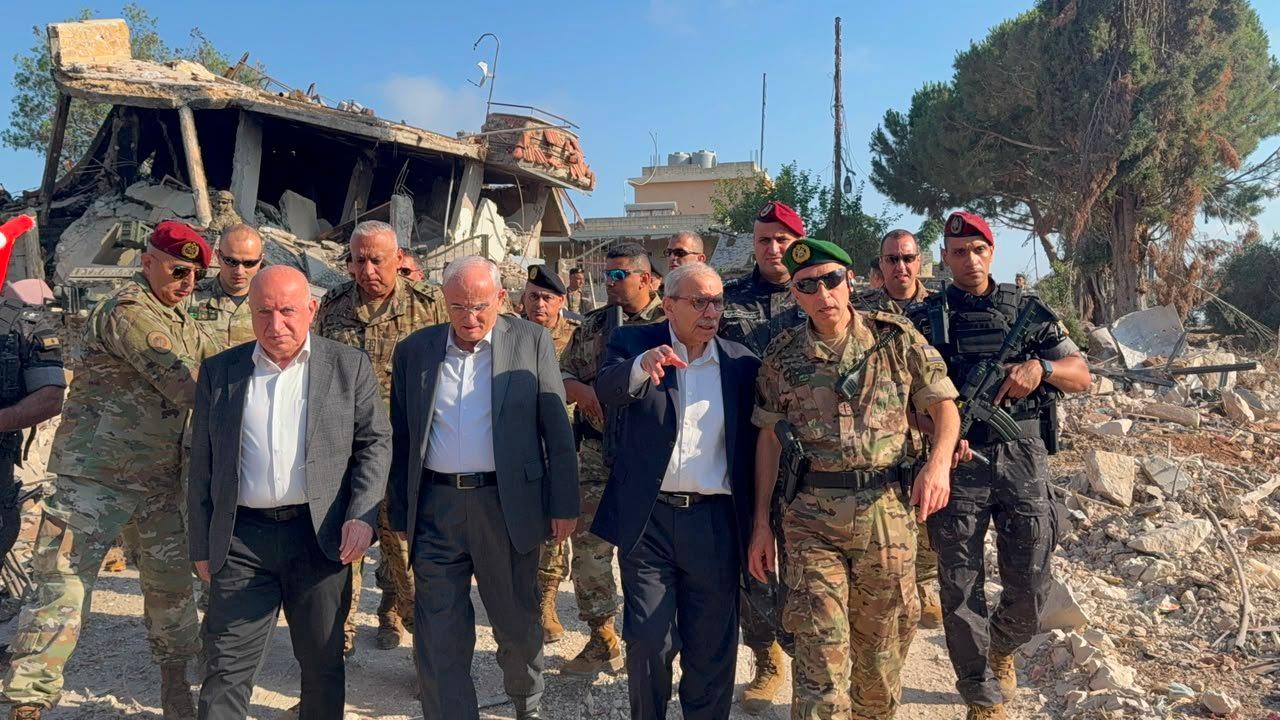
Lübnan Başbakanı Nevvaf Selam, pilot bölge uygulaması kapsamında Lübnan ordusunun konuşlandığı güneydeki Batı Zavtar beldesini ziyaret ediyor, 22 Temmuz 2026 - (Anadolu Ajansı)
On 22 July, Prime Minister Nevvaf Selam, along with Defense Minister Michel Menassa and military officials, visited Western Zavtar and erected the Lebanese flag in the town. Selam assessed Israel’s withdrawal from Western Zavtar as the beginning of the process toward the complete withdrawal of the Israeli military from Lebanese territory. The government initiated efforts to reopen roads, clear rubble, restore water, electricity and communication services, and establish temporary shelter facilities.
On 23 July, the bodies of three individuals were recovered from under the rubble during search and rescue operations in Western Zavtar. It was reported that numerous homes in the town were destroyed during Israeli attacks.
Lebanese President Aoun in Washington, 22 July 2026 - (Anadolu Agency)
On 21 July, President Joseph Avn met with US President Donald Trump in Washington. The discussions addressed the withdrawal of the Israeli military from Lebanese territory, implementation of the framework agreement, support for the Lebanese Armed Forces, and national reconstruction.
During his Washington engagements, Avn emphasized the necessity of establishing state authority across the entire country to ensure security and unity in Lebanon. Following his meeting with Trump, Avn stated that the war must be brought to a complete end.
During his Washington talks, President Avn linked the disarmament of Hezbollah to the end of the Israeli occupation, the Lebanese Armed Forces establishing full control across the country, and the state-led reconstruction process. Avn stated that only a single state and a single army capable of protecting all citizens could ensure Lebanon’s safety and unity.
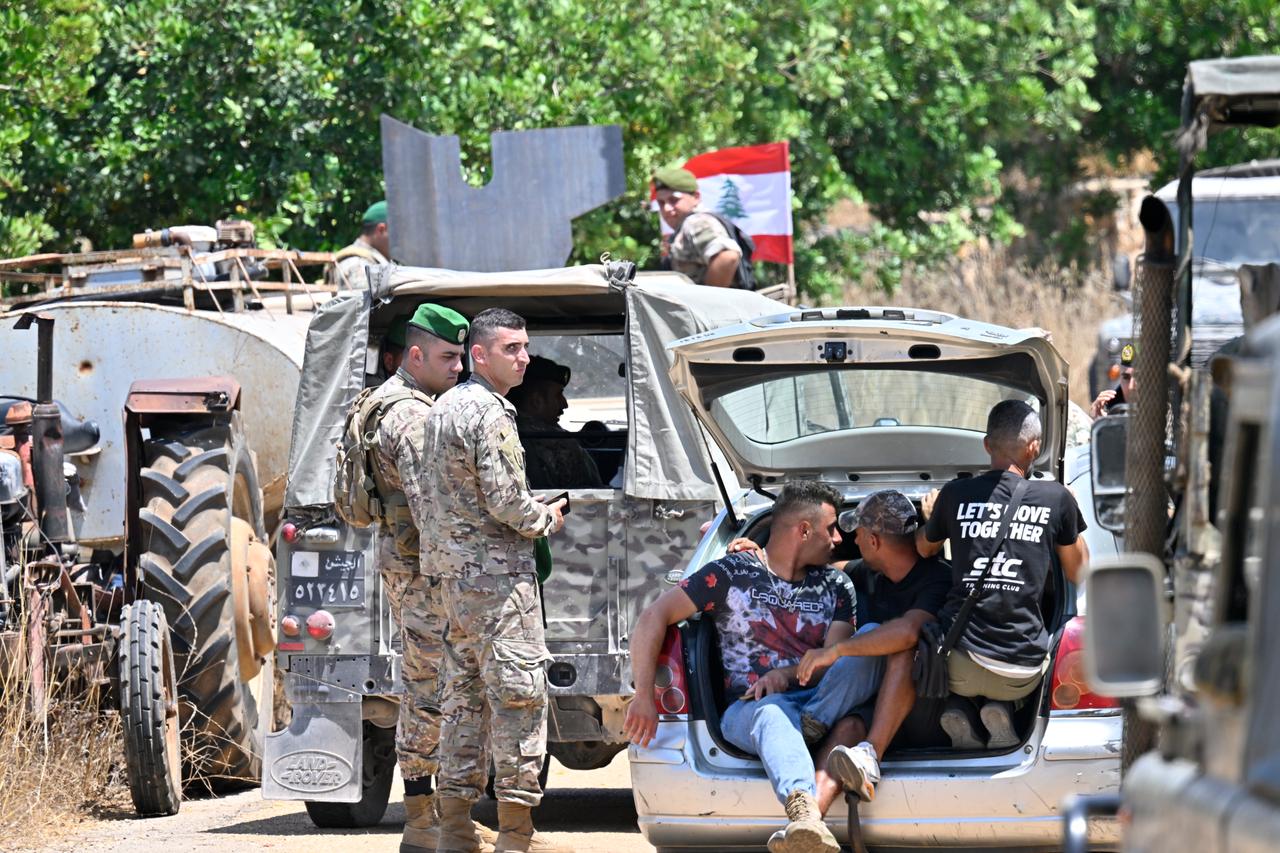
The West Gaza Strip village of Zavtar, from which Israel withdrew, 24 July 2026 - (Anadolu Agency)
On 27 July, Foreign Minister Yusuf Recci highlighted Hezbollah’s ties to Iran and stated that no distinction could be made between Hezbollah’s political and military wings as long as it remained armed.
Despite the pilot zone implementation and diplomatic talks, Israeli military attacks in southern Lebanon continued throughout the period. On 21 July, explosive demolition operations were carried out in Kefertebnit, Meys el-Cebel, Beit Yahun and the vicinity of Konin, all within the Nabatieh governorate. On 22 July, the Israeli military targeted Ali Tahir Hill in Nabatieh with artillery fire, launched a drone strike on Upper Nabatieh, and conducted explosive demolitions in the towns of Berashit and Haddasa.
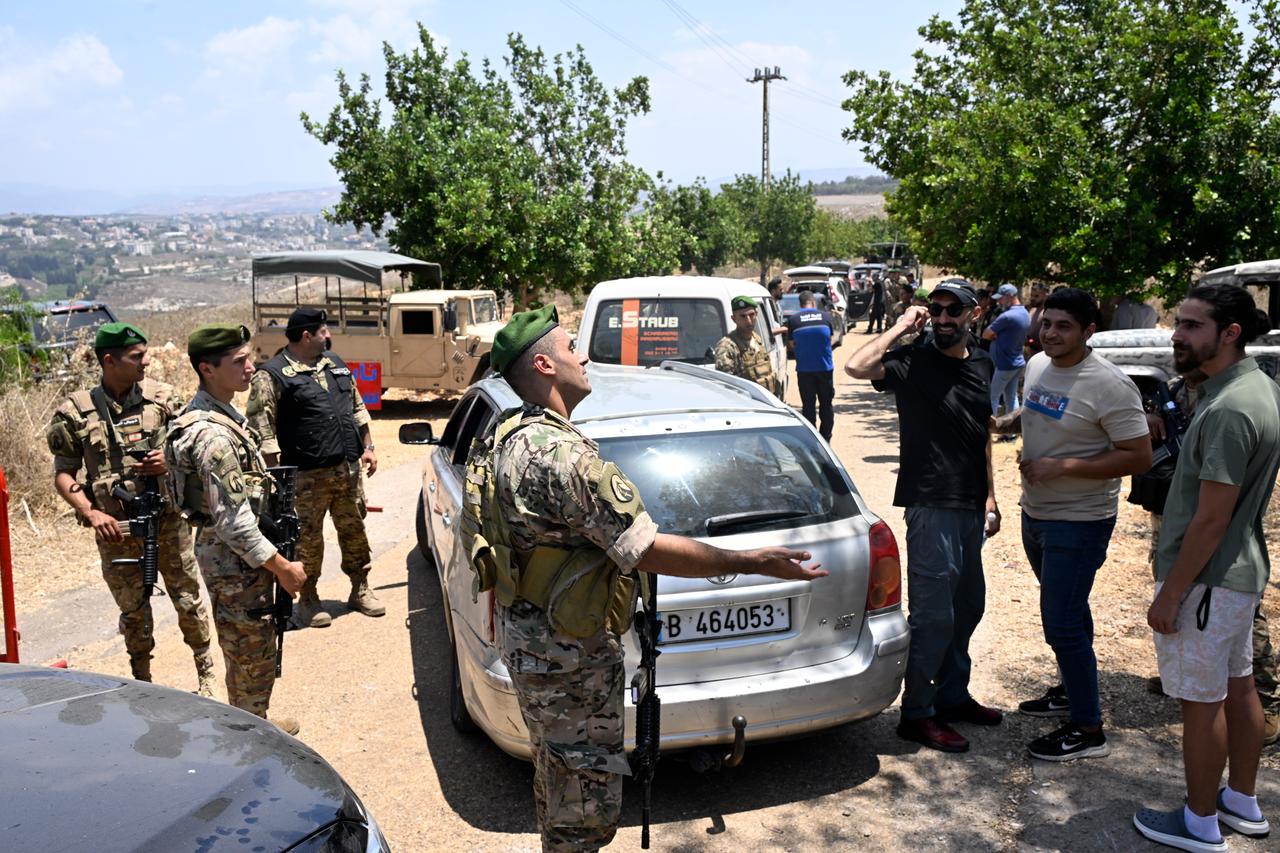
The West Gaza Strip village of Zavtar, from which Israel withdrew, 24 July 2026 - (Anadolu Agency)
On 23 July, after an airstrike on Upper Nabatieh, a civil defense team that arrived at the scene was also targeted, resulting in two medical personnel being injured and one ambulance damaged. As of 24 July, the Lebanese Ministry of Health announced that since 2 March, the number of fatalities from Israeli attackshad reached 4,330, with 12,236 injured.
On 26 July, the Israeli military targeted the areas around Talusa and Merkaba with artillery fire and carried out explosive demolitions in residential areas of Merkaba. On the same day, the Ministry of Health reported that the death toll from attackshad risen to 4,332 since 2 March. On 27 July, two consecutive drone strikes were launched on the Villagers Quarter in Upper Nabatieh. Explosive demolitions were also carried out in the areas of Mecdel Zun, Mansuri and Bint Cubeyl.
On 24 July, President Avn stated that the continuation of UNIFIL in Lebanon, whose mandate expires on 31 December 2026, remains the most suitable option. He added that if this were not possible, another international force would need to be deployed in its place. Avn also requested support from the European Union for the implementation of the framework agreement with Israel.
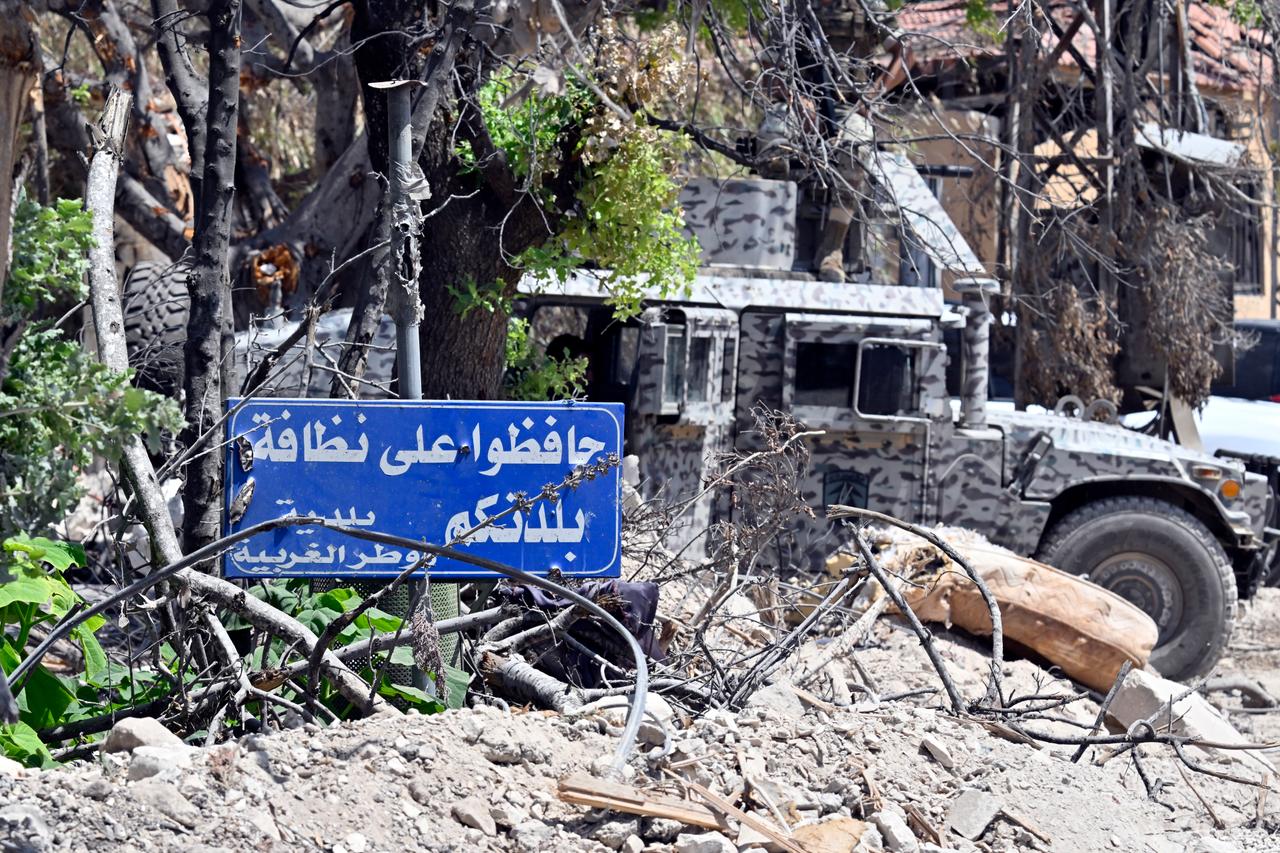
The West Gaza Strip village of Zavtar, from which Israel withdrew, 27 July 2026 - (Anadolu Agency)
On 26 July, a telephone conversation took place between President Avn and French President Emmanuel Macron. The discussion covered the implementation of the framework agreement with Israel, the ongoing Israeli attacks in southern Lebanon, and the future of UNIFIL.
On the same day, Prime Minister Nevvaf Selam made an official visit to Iraq and met with Iraqi Prime Minister Ali al-Zeydi. The talks addressed bilateral relations, economic issues, and developments in the Middle East.
UN High Commissioner for Human Rights Volker Türk visited Lebanon from 26 to 27 July. Following his visit, Türk expressed concern over the widespread displacement, destruction, and obstruction of civilians’ return to their homes resulting from Israeli attacks.
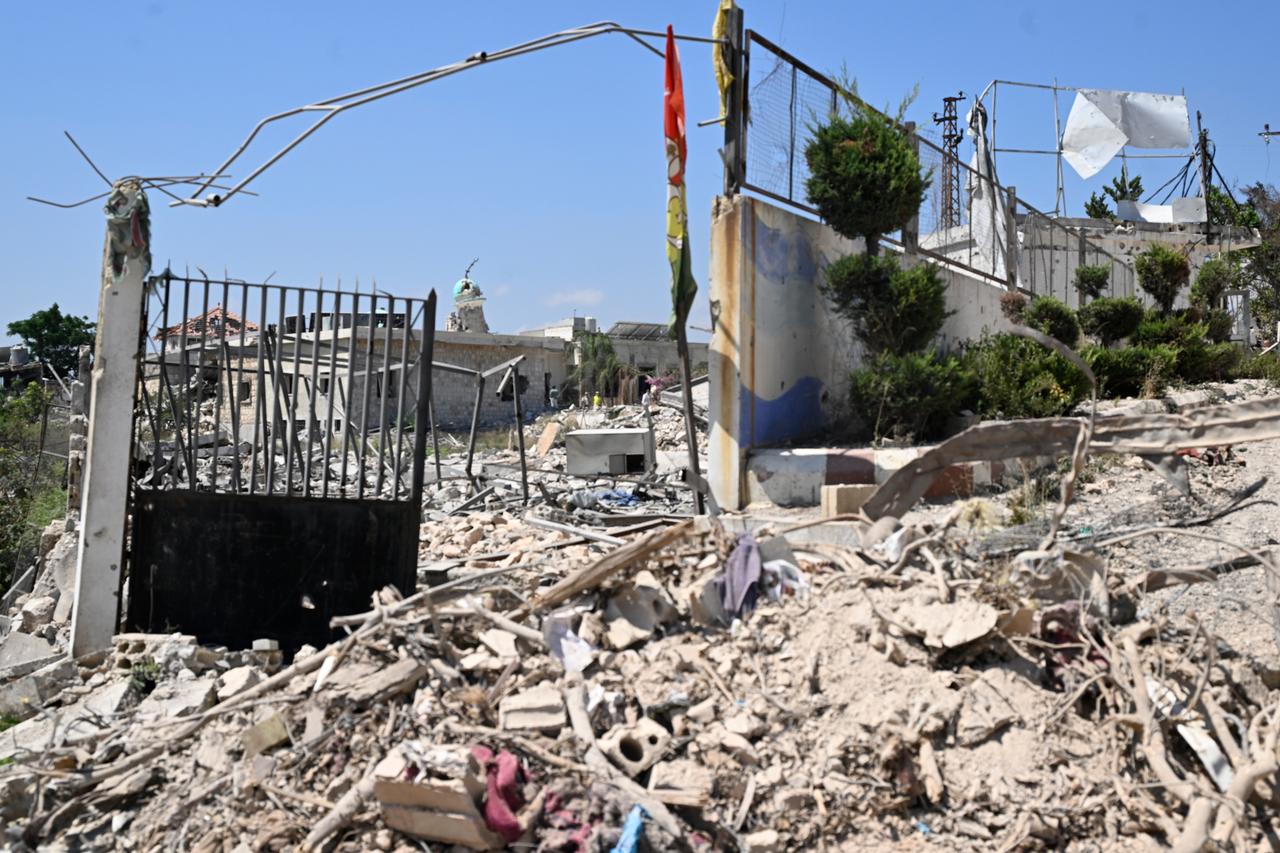
The West Gaza Strip village of Zavtar, from which Israel withdrew, 27 July 2026 - (Anadolu Agency)
Türk warned that the large-scale displacement and prevention of returns resulting from the overall course of the attacks could constitute international crimes. During his visit, he met with the Lebanese government, civil society organizations, national human rights mechanisms, and individuals forced to flee their homes due to the conflict.
A mission was deployed to Lebanon by the UN Office of the High Commissioner for Human Rights, with the approval of the Lebanese government, to collect information and evidence regarding alleged violations of human rights and international humanitarian law committed by the parties to the conflict. Türk also noted that the withdrawal of UNIFIL from the country could create new security risks for civilians in southern Lebanon.
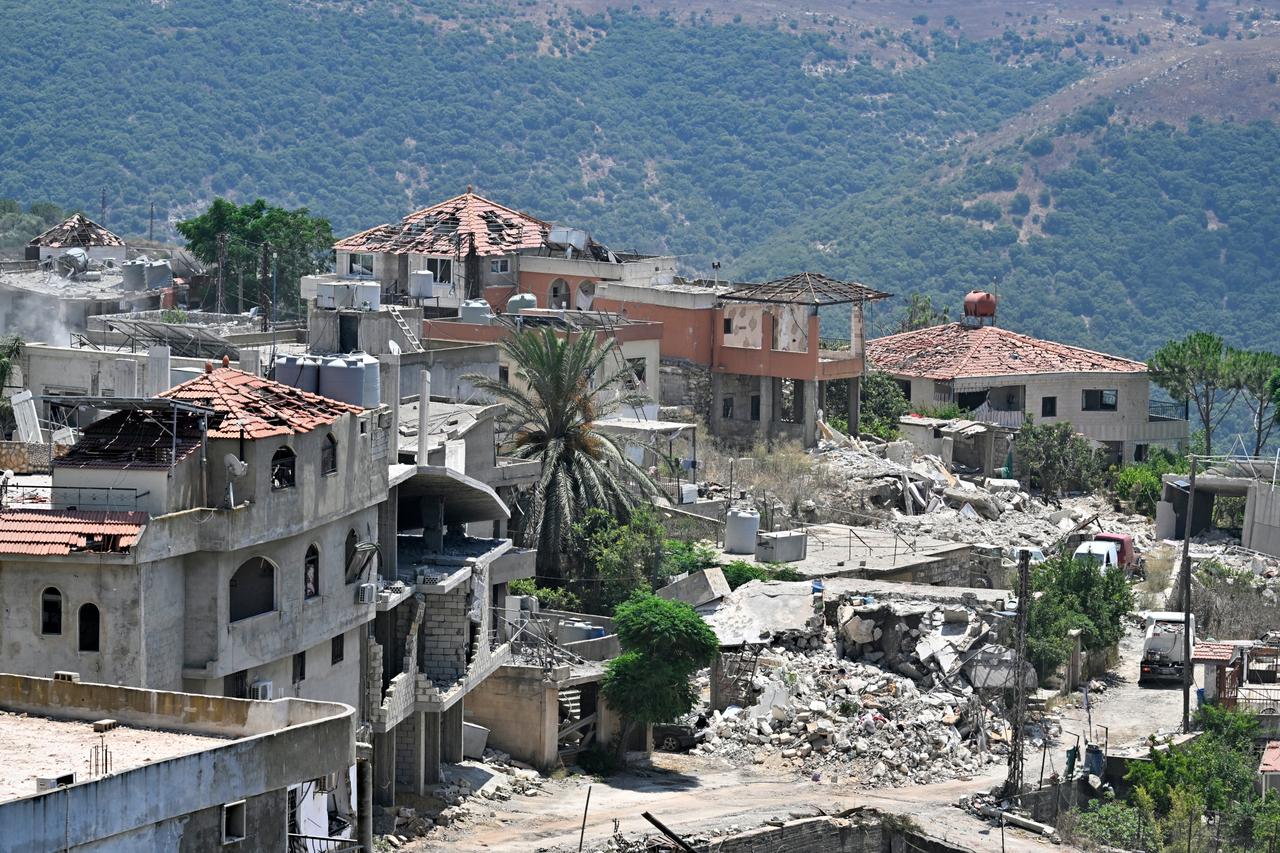
The West Gaza Strip village of Zavtar, from which Israel withdrew, 27 July 2026 - (Anadolu Agency)
On 28 July, Parliament Speaker Nabih Berri and Prime Minister Nevvaf Selam met. The meeting addressed Israel’s continued violations of the ceasefire and its ongoing demolition of homes in villages under occupation in southern Lebanon. The discussion also covered political and security developments in the country as well as the outcomes of Selam’s visit to Iraq on 26 July.
On the same day, the Lebanese Ministry of Health announced that since 2 March, the number of fatalities from Israeli attacks on Lebanonhad reached 4,333, while the number of injured had risen to 12,236.
Anadolu Ajansı. "Lübnan Cumhurbaşkanı, Hizbullah'ın Silahsızlandırılmasının İsrail İşgalinin Sona Ermesine Bağlı Olduğunu Söyledi." Accessed July 28, 2026.https://www.aa.com.tr/tr/dunya/lubnan-cumhurbaskani-hizbullahin-silahsizlandirilmasinin-israil-isgalinin-sona-ermesine-bagli-oldugunu-soyledi/4005434
Anadolu Ajansı. "Trump ile Görüşen Lübnan Cumhurbaşkanı Avn: İsrail'in Lübnan'dan Tamamen Çekilmesi İstikrar İçin Temel Adım." Accessed July 28, 2026.https://www.aa.com.tr/tr/dunya/trump-ile-gorusen-lubnan-cumhurbaskani-avn-israilin-lubnandan-tamamen-cekilmesi-istikrar-icin-temel-adim/4005258
Anadolu Ajansı. "Trump'la Görüşen Lübnan Cumhurbaşkanı Avn: Nihai Hedef İsrail ile Düşmanlık Halini Kalıcı Olarak Sona Erdirmek." Accessed July 28, 2026.https://www.aa.com.tr/tr/dunya/trumpla-gorusen-lubnan-cumhurbaskani-avn-nihai-hedef-israil-ile-dusmanlik-halini-kalici-olarak-sona-erdirmek/4005170
Anadolu Ajansı. “Lübnan Başbakanı, Yerinden Edilenlerin Dönüşü İçin Devletin Tüm İmkanlarını Seferber Edeceklerini Belirtti.” Accessed July 28, 2026.https://www.aa.com.tr/tr/dunya/lubnan-basbakani-yerinden-edilenlerin-donusu-icin-devletin-tum-imkanlarini-seferber-edeceklerini-belirtti/4006774
Anadolu Ajansı. “Lübnan Başbakanından ‘Pilot Bölge’ Kapsamında Lübnan Ordusunun Konuşlandığı Batı Zavatara Ziyaret.” Anadolu Ajansı. Accessed July 28, 2026.https://www.aa.com.tr/tr/dunya/lubnan-basbakanindan-pilot-bolge-kapsaminda-lubnan-ordusunun-konuslandigi-bati-zavtara-ziyaret/4005364
Anadolu Ajansı. “Lübnan Ordusu: İsrail'in Saldırılarının Sürmesi Konuşlanmayı ve Halkın Dönüşünü Engelliyor.” Accessed July 28, 2026.https://www.aa.com.tr/tr/dunya/lubnan-ordusu-israilin-saldirilarinin-surmesi-konuslanmayi-ve-halkin-donusunu-engelliyor/4009710
Anadolu Ajansı. “İsrail Ordusu Ateşkese Rağmen Lübnan'ın Güneyinde Evleri İş Makineleriyle Yıktı.” Accessed July 28, 2026.https://www.aa.com.tr/tr/dunya/israil-ordusu-ateskese-ragmen-lubnanin-guneyinde-evleri-is-makineleriyle-yikti/4009541
Anadolu Ajansı. “İsrail Ordusu, ‘Pilot Bölge’ Uygulaması Kapsamında Batı Zavatara Giren Lübnan Askerlerinin Yakınına Ateş Açtı.” Accessed July 28, 2026.https://www.aa.com.tr/tr/dunya/israil-ordusu-pilot-bolge-uygulamasi-kapsaminda-bati-zavtara-giren-lubnan-askerlerinin-yakinina-ates-acti/4004373
Anadolu Ajansı. “İsrail Ordusunun Çekildiği Lübnan'ın Batı Zavatara Beldesindeki Yıkım Gün Yüzüne Çıktı.” *Anadolu Ajansı Foto Galeri*. Accessed July 28, 2026.https://www.aa.com.tr/tr/pg/foto-galeri/israil-ordusunun-cekildigi-lubnanin-bati-zavtar-beldesindeki-yikim-gun-yuzune-cikti/165370
Anadolu Ajansı. “İsrail'in 2 Mart'tan Bu Yana Lübnan'a Düzenlediği Saldırılarda Hayatını Kaybedenlerin Sayısı 4 Bin 330'a Ulaştı.” Accessed July 28, 2026.https://www.aa.com.tr/tr/dunya/-israilin-2-marttan-bu-yana-lubnana-duzenledigi-saldirilarda-hayatini-kaybedenlerin-sayisi-4-bin-330a-ulasti/4008418
Anadolu Ajansı. “İsrail'in 2 Mart'tan Bu Yana Lübnan'a Düzenlediği Saldırılarda Ölenlerin Sayısı 4 Bin 329'a Ulaştı.” Accessed July 28, 2026.https://www.aa.com.tr/tr/dunya/israilin-2-marttan-bu-yana-lubnana-duzenledigi-saldirilarda-olenlerin-sayisi-4-bin-329a-ulasti/4006819
Anadolu Ajansı. “İsrail'in 2 Mart'tan Bu Yana Lübnan'a Düzenlediği Saldırılarda Ölenlerin Sayısı 4 Bin 333'e Ulaştı.” Accessed July 28, 2026.https://www.aa.com.tr/tr/dunya/israilin-2-marttan-bu-yana-lubnana-duzenledigi-saldirilarda-olenlerin-sayisi-4-bin-333e-ulasti/4011526
UN News. “Lebanon: Israeli Strikes ‘Could Amount to International Crimes,’ Warns Türk.” UN News. Accessed July 28, 2026.https://news.un.org/en/story/2026/07/1168034
On 29 July, Lebanese President Joseph Aoun and Speaker of the Parliament Nabih Berri met at Baabda Palace to address Israel’s attacks on villages and towns in southern Lebanon, particularly the destruction of homes by explosives and bulldozers, and called for an end to these attacks. Aoun informed Berri about his recent visit to the United States, during which he met with President Donald Trump, Secretary of State Marco Rubio, and other officials.
The destruction in the area targeted by Israel with explosives in southern Lebanon, 31 July 2026 - (Anadolu Agency)
The Israeli military claimed it conducted a drone strike against a military engineering vehicle belonging to Hezbollah in the occupied area of southern Lebanon. Israeli Defense Forces spokesperson Ella Waweya stated that the attack occurred during nighttime near Ali Tahir Hill in the vicinity of Upper Nabatieh, targeting an Israeli military vehicle but causing no injuries to soldiers.
Beginning in the early morning hours of 29 July, the Israeli military intermittently shelled Ali Tahir Hill near Upper Nabatieh; it also set fire to homes in the village of Kantara, part of the Marjayoun district. Israel also used explosives to demolish the remaining houses in the Measha area of the Mansourieh village, located southwest of Sour; Israeli military vehicles advanced toward the outskirts of Ayta al-Jabal in the Bint Jbeil district before withdrawing toward Haddatha.
On 30 July, Lebanese President Joseph Aoun visited Türkiye, meeting with President Recep Tayyip Erdoğan at the Presidential Complex. Following the meeting, Aoun spoke at a joint press conference. He stated that his country had suffered severe losses due to Israeli attacks and emphasized the need for Israel’s complete withdrawal from Lebanese territory, the return of displaced persons to their homes, and efforts to establish “a single army and a single authority under one state.” Referencing Mustafa Kemal Atatürk’s phrase “Peace at Home, Peace in the World,” Aoun stressed that internal peace can only be achieved through a strong state, strong institutions, a strong economy, and independence. He added: “Turkey’s role within the United Nations Interim Force in Lebanon (UNIFIL) is extremely important. We will never forget this support.”
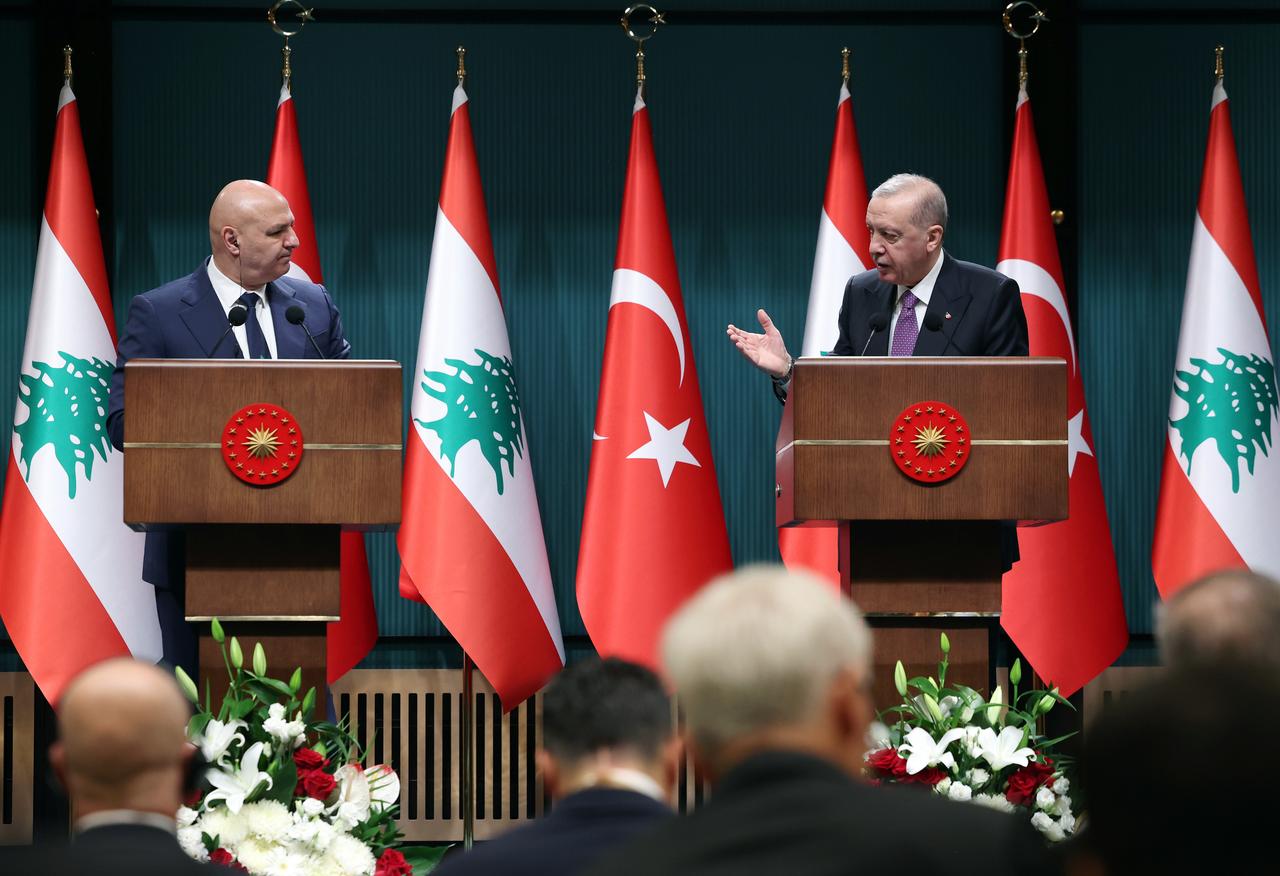
President Recep Tayyip Erdoğan, together with Lebanese President Joseph Aoun, who is on a visit to Türkiye, is holding a joint press conference, 31 July 2026 – (Anadolu Agency)
President Recep Tayyip Erdoğan affirmed that Türkiye would continue supporting Lebanon’s institutional capacity and sustain humanitarian and technical assistance to the country. Erdoğan stated: “We want Türkiye to be part of all initiatives aimed at securing Lebanon’s sovereignty following the withdrawal of current international forces.”
Lebanese Armed Forces Chief of Staff Rodolphe Heykel, in a message issued on the occasion of the army’s 81st anniversary, said: “The Lebanese Armed Forces are ready to deploy to all occupied areas once Israeli occupation forces withdraw. However, Israel continues its attacks and violations to obstruct these efforts.” Heykel noted that despite limited resources, the army continues to fulfill its duties in border security and combating terrorism and smuggling, adding: “Support for the army is an investment in Lebanon’s stability and regional security.” He emphasized that the armed forces would not permit any initiative that could plunge the country into internal chaos.
On 30 July, an Israeli drone targeted the area around the Gandour Hospital in Upper Nabatieh; no casualties or injuries were reported from the attack. The Israeli military also carried out demolitions using explosives in the village of Taybe, part of the Marjayoun district.
On 31 July, Israeli Prime Minister Benjamin Netanyahu and Defense Minister Israel Katz announced that the Israeli military had destroyed alleged Hezbollah underground infrastructure facilities in the Beaufort (Shakif) region of southern Lebanon using 700 tons of explosives. In a joint statement, they defended the operation as a response to Hezbollah’s violations of the ceasefire and stated that the Israeli military would remain in its security zone and continue destroying military infrastructure to prevent Hezbollah from rebuilding its capabilities.
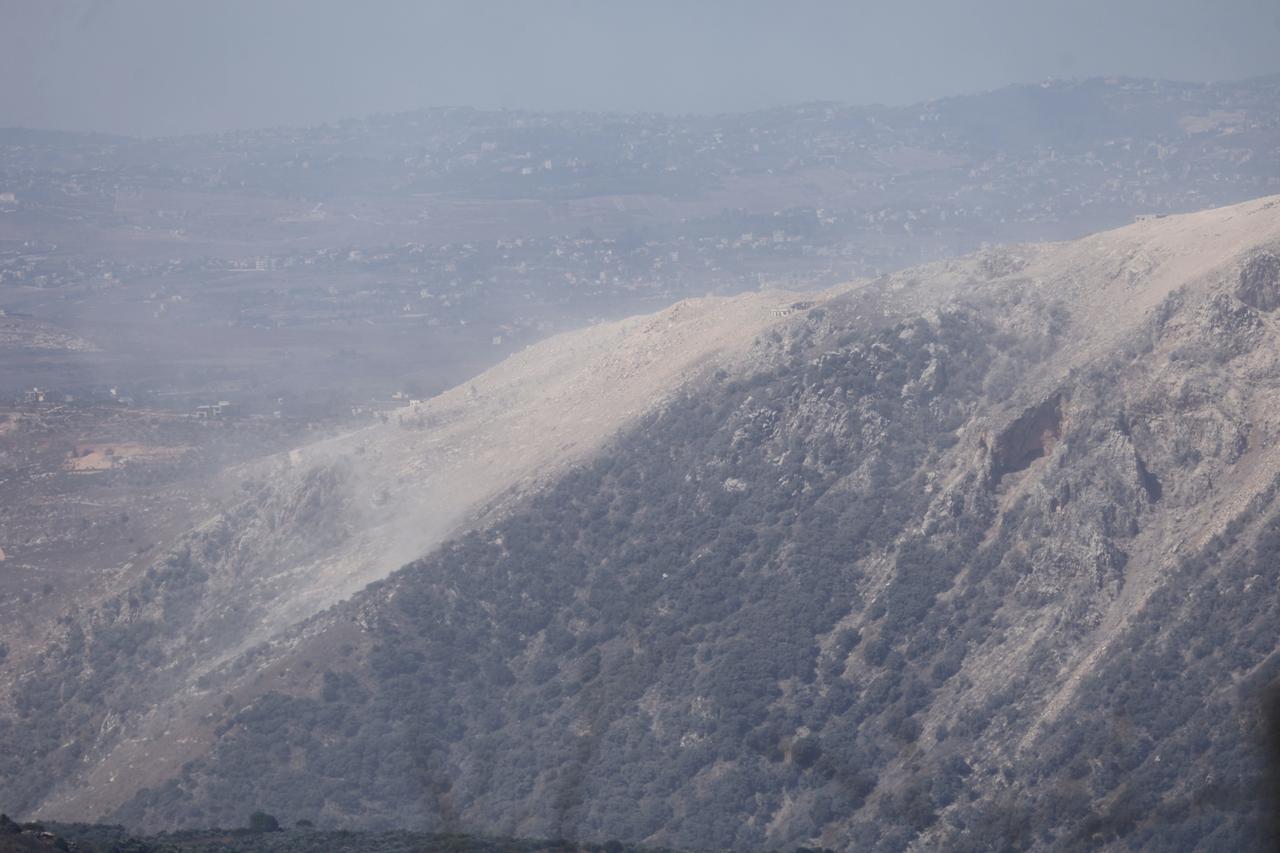
The destruction in the area targeted by Israel with explosives in southern Lebanon, 31 July 2026 - (Anadolu Agency)
Lebanese President Joseph Aoun condemned Israel’s nighttime strike on the Shakif region as a “highly dangerous escalation” and a clear violation of existing commitments, directly threatening the process initiated by the framework agreement. According to the National Geophysical Center, Aoun reported that the massive explosions in the Shakif Castle area triggered a 3.8 magnitude seismic shock. He criticized Israel for targeting both infrastructure and historic sites listed on UNESCO’s World Heritage List and emphasized that the timing of the attacks—just before a planned meeting in Rome—sent negative signals. Prime Minister Nawaf Salam also stated that Israel’s ongoing bombardments and systematic demolitions clearly violated the ceasefire, Lebanon’s sovereignty, and international law.
Through a joint effort by the Foundation for Human Rights and Freedoms and Humanitarian Relief (IHH), the Sadakatasi Association, the Orphanage Foundation, and the Children of the Earth Association, humanitarian aid worth a total of 1.2 billion Turkish lira has been delivered to Lebanon since 7 October 2023. According to the announcement, five ships transported 205 containers of in-kind aid; 288 tons of frozen meat obtained during Eid al-Adha were delivered to Beirut Port for distribution to over 800,000 people, primarily refugees and displaced families.
On 31 July, Israeli artillery targeted the village of Talusa, part of the Marjayoun district; the Israeli military also used explosives to demolish numerous homes and caves in the vicinity of the villages of Mansourieh and Mijdal Zun, both attached to Sour. Intense explosions during nighttime targeting the villages of Yuhmur Shakif, Arnun, and Kefertebnit caused strong tremors across the region. In the following hours, the Israeli military carried out three major demolitions using explosives in the village of Taybe and another in Haddatha; the villages of Mansourieh and Buyut es-Siyad were subjected to artillery fire.
Lebanese Prime Minister Nawaf Salam, in a statement marking Army Day, said: “Reestablishing our sovereignty, ensuring stability in our country, and guaranteeing the safety of our children depend on the armed forces deploying across the entire territory and establishing state authority from Nakoura in the south to Arida in the north.” He affirmed his government’s determination to strengthen the army’s capacity. Chief of Staff Rodolphe Heykel, during a visit to military units in the south on Army Day, declared: “Every inch of our land is our right. We reject any continuation of Israeli occupation on any part of our territory.” He emphasized that the armed forces would continue supporting the return of civilians to their areas despite all challenges.
On the night of 1 August, the Israeli military reported that one of its soldiers was wounded in a clash with Hezbollah near Ali Tahir Hill and was transported to a hospital for treatment. An Israeli drone targeted the Akide neighborhood in Upper Nabatieh with a guided missile, injuring two people. Israeli artillery units targeted the village of Beni Hayyan, part of the Marjayoun district; an Israeli assault boat opened fire on fishing vessels operating off the coast of Bayyade, opposite Mansourieh. No injuries were reported, but Israeli forces were said to be attempting to prevent fishermen from operating in the area.
On 2 August, the Lebanese army reported that five soldiers were lightly injured in a military vehicle accompanying a civilian vehicle in the village of Kefre, part of the Bint Jbeil district. NNA’s initial report stated that the incident resulted from an Israeli drone targeting the civilian vehicle at the Sirbin intersection; the number of injured was initially reported as two, then updated to five. However, in a later statement, the Lebanese army indicated that preliminary findings from an investigation by a specialized unit determined the incident was caused by the detonation of a suspicious object and confirmed that an investigation into all aspects of the event was ongoing.
On the same day, the Israeli military carried out explosions in the villages of Taybe and Kunin, both in the Marjayoun and Bint Jbeil districts; the sound of the explosions was heard across many areas in southern Lebanon. The Israeli military also fired a sound bomb into an abandoned house in the village of Mansourieh; an Israeli drone flew at low altitude over the skies of the capital Beirut from early morning.
On the night of 3 August, the Israeli military conducted two air strikes on Ali Tahir Hill near Upper Nabatieh. According to NNA, the Israeli military also fired munitions containing white phosphorus at the villages of Yaroun, Haroun, and Bint Jbeil during nighttime; the attacks ignited fires in olive groves and pine forest areas.
UN Deputy Spokesperson Farhan Haq, during a press briefing presenting UNIFIL reports, stated that Israel had committed 125 violations of Lebanese airspace between 30 July and 2 August, with a total flight time exceeding 418 hours. Haq noted that surveillance and armed drones were detected near or over UNIFIL positions during this period and reported extensive military activities by Israel, including significant engineering operations and active troop movements in southern Lebanon. He added that Israel had launched artillery fire around the Litani River over the weekend and continued operations in Lebanese territorial waters.
The seventh round of direct negotiations between Lebanon and Israel, facilitated by the United States, began in Rome, the capital of Italy. According to NNA, delegations from Lebanon and Israel met in Rome; discussions were expected to focus on implementing the previously signed framework agreement and were scheduled to last three days. The United States, which previously brought the parties together five times in Washington, hosted the sixth round in Rome on 14–15 July.
The U.S. Embassy in Rome, which hosted the seventh round of negotiations, August 4, 2026 - (Anadolu Agency)
Hezbollah Secretary-General Naim Qassem, on the occasion of the 40th anniversary of the martyrdom of Imam Hussein and his companions in Karbala—the “Arbaeen” day—criticized the direct negotiations with Israel, stating: “Direct negotiations have brought Lebanon nothing but shame, humiliation, disappointment, and a series of concessions.”
Qassem claimed that the only thing halting the attacks was the U.S.-Iran agreement signed on 8 June and called on the Lebanese leadership to “halt unilateral concessions, engage in dialogue through resistance, and prioritize sovereignty.” He also stated that no obstacle existed to holding a public dialogue between Hezbollah and the Syrian leadership at an appropriate time.
Lebanese Prime Minister Nawaf Salam responded to Nasrallah’s remarks—without naming him directly—accusing Hezbollah of dragging the country into “meaningless support wars.” Salam asserted that Israel’s greatest benefit came from those who pushed Lebanon into wars under the guise of “support,” and that those who unilaterally made war decisions and usurped the state’s authority had “no right to teach patriotism and sovereignty.” He stated: “Sovereignty for Lebanon is only possible through a single, independent decision; it is achievable only through a state with a single army that extends its authority over all national territory by its own strength.” He emphasized the need to end accusations of treason and to approach calls for dialogue with sincerity.
Al Jazeera. “Iran War Live: Qatar Says Diplomatic Efforts Ongoing; Vessel Hit in Hormuz.” Al Jazeera Live Blog. Accessed August 4, 2026.https://www.aljazeera.com/news/liveblog/2026/8/4/iran-war-live-tehran-denies-us-talks-as-trump-warns-of-last-chance
Anadolu Ajansı. "Cumhurbaşkanı Erdoğan: Lübnan'a Yönelik İnsani ve Teknik Yardımlarımıza Devam Edeceğiz." Accessed August 4, 2026.https://www.aa.com.tr/tr/gundem/cumhurbaskani-erdogan-lubnana-yonelik-insani-ve-teknik-yardimlarimiza-devam-edecegiz/4013951
Anadolu Ajansı. "Lübnan Başbakanı Selam: Ordu Ülkenin Tamamına Konuşlanmadan Egemenlik ve İstikrar Sağlanamaz." Accessed August 4, 2026.https://www.aa.com.tr/tr/dunya/lubnan-basbakani-selam-ordu-ulkenin-tamamina-konuslanmadan-egemenlik-ve-istikrar-saglanamaz/4015540
Anadolu Ajansı. "İsrail Ordusunun Ateşkese Rağmen Lübnan'ın Güneyine Düzenlediği Saldırılarda 2 Kişi Yaralandı." Accessed August 4, 2026.https://www.aa.com.tr/tr/dunya/israil-ordusunun-ateskese-ragmen-lubnanin-guneyine-duzenledigi-saldirilarda-2-kisi-yaralandi/4015915
Anadolu Ajansı. “BM: İsrail, Lübnan Hava Sahasında 4 Günde 125 İhlal Gerçekleştirdi.” Accessed August 4, 2026.https://www.aa.com.tr/tr/dunya/bm-israil-lubnan-hava-sahasinda-4-gunde-125-ihlal-gerceklestirdi/4017439
Anadolu Ajansı. “Lübnan: İsrail'in Sakif Bölgesini Patlayıcılarla Hedef Alması Çerçeve Anlaşması Sürecini Tehdit Ediyor.” Accessed August 4, 2026.https://www.aa.com.tr/tr/dunya/lubnan-israilin-sakif-bolgesini-patlayicilarla-hedef-almasi-cerceve-anlasmasi-surecini-tehdit-ediyor/4015314
Anadolu Ajansı. “İsrail Ordusu, Ateşkese Rağmen Lübnan'ın Güneyinde Hastane Çevresini Hedef Aldı.” Accessed August 4, 2026.https://www.aa.com.tr/tr/dunya/israil-ordusu-ateskese-ragmen-lubnanin-guneyinde-hastane-cevresini-hedef-aldi/4014254
Anadolu Ajansı. “İsrail Ordusu, Ateşkese Rağmen Lübnan'ın Güneyinde Patlayıcılarla Yıkımı Sürdürüyor.” Accessed August 4, 2026.https://www.aa.com.tr/tr/dunya/israil-ordusu-ateskese-ragmen-lubnanin-guneyinde-patlayicilarla-yikimi-surduruyor/4015413
Anadolu Ajansı. “İsrail Ordusu, Lübnan'ın Güneyinde Tünelleri Yıkmak İçin 700 Ton Patlayıcı Kullandığını Açıkladı.” Accessed August 4, 2026.https://www.aa.com.tr/tr/dunya/israil-ordusu-lubnanin-guneyinde-tunelleri-yikmak-icin-700-ton-patlayici-kullandigini-acikladi/4014446
Anadolu Ajansı. “İsrail Ordusunun Lübnan'ın Güneyine Düzenlediği İHA Saldırısında 5 Lübnan Askeri Yaralandı.” Accessed August 4, 2026.https://www.aa.com.tr/tr/dunya/israil-ordusunun-lubnanin-guneyine-duzenledigi-iha-saldirisinda-5-lubnan-askeri-yaralandi/4016268
Anadolu Ajansı. “İsrail, Ateşkese Rağmen Lübnan'ın Güneyinde Saldırılarını ve Ev Yıkımlarını Sürdürdü.” Accessed August 4, 2026.https://www.aa.com.tr/tr/dunya/israil-ateskese-ragmen-lubnanin-guneyinde-saldirilarini-ve-ev-yikimlarini-surdurdu/4012240
Sada News. "New Round of Negotiations Between Israel and Lebanon in Rome." Accessed August 4, 2026.https://www.sadanews.ps/en/news/323358.html
The Economist. "Israel and Lebanon Talk, Again." The World in Brief. Accessed August 4, 2026.https://www.economist.com/the-world-in-brief/2026/08/04/eb29bca4-15bb-44aa-ab18-30e44ea9cb7e
The News International. “Fresh Lebanon-Israel Negotiations to Begin in Rome.” Accessed August 4, 2026.https://www.thenews.pk/story/1430121-fresh-lebanon-israel-negotiations-to-begin-in-rome
United Nations News Centre. “Middle East: Civilian Death Toll Climbs in Gaza, Lebanon and West Bank as UN Chief Demands ‘The Fighting Must Stop’.” UN News. Accessed August 4, 2026.https://news.un.org/en/story/2026/07/1168062
A senior Lebanese official source stated that the Israeli delegation has stepped back from its position of linking the consideration of the land border file to the disarmament of Hezbollah during ongoing negotiations in Rome. The source indicated that future efforts will focus on reestablishing the borders defined internationally in 1923, attributing this development to the presence of an international law expert within the Lebanese delegation. The source also noted that technical and operational details regarding mechanisms to be implemented in the pilot zones outlined in the framework agreement have begun to be discussed, and emphasized that the Lebanese delegation’s primary demand is the permanent cessation of hostilities and the cessation of Israeli violations.
On 4 August, the Lebanese Armed Forces announced the seizure of 122-millimeter Grad rockets that had been smuggled from Syria into the rural area of Arsal in eastern Lebanon. According to the military’s statement, a pickup truck used to transport the rockets was also confiscated, and two Lebanese individuals identified as members of the smuggling network were detained. Various munitions and military equipment were also recovered during the raids.
Despite ongoing negotiations in Rome, the Israeli military targeted the Rweys neighborhood of the village of Upper Nabatieh with two UAV attacks, carried out large-scale explosions in the Mesha area between the villages of Mansuri and Mecdel Zun, and bombed the areas around Ayta al-Jebel and Haddasa. On the second day of the seventh round of negotiations in Rome, the delegations of both sides met again at the U.S. Embassy in Rome.
On 5 August, the Israeli military issued a threat of attack against the village of Mansuri, part of the city of Sur, and ordered residents to evacuate their homes and move at least one kilometer away. Shortly afterward, it announced the launch of attacks into southern Lebanon, claiming that Hezbollah had violated the ceasefire.
UN Deputy Spokesperson Farhan Haq confirmed that the Israeli Ministry of Defense had issued an evacuation order for the village of Mansuri, stating, “This is the first evacuation order issued in Lebanon since the last ceasefire declaration on 19 June.” Haq emphasized that this order coincided with the period during which displaced families had begun cautiously returning to the south, and noted that only 195 million dollars of the UN’s $639 million humanitarian appeal had been raised so far.
On the same day, an Israeli UAV targeted the cemetery grounds of the village of Tebnin in the Nabatieh governorate, killing one person and injuring eleven. Israeli warplanes conducted aerial and artillery strikes throughout the day on the villages of Mansuri and Mecdel Zun, triggered a major explosion in Kefertebnit, and dropped illumination flares on the Keferrumman Hills in an attempt to ignite fires.
The Israeli military announced that two of its soldiers were killed and four wounded when a blast occurred as they entered a structure in the town of Mecdel Zun in southern Lebanon. According to the military, Lieutenant Colonel Harel Birenstock (34) of the 55th Paratroopers Brigade and Sergeant Major Tamir Vaknin (33) were killed. The Israeli military reported launching an aerial strike on the area afterward, alleging it was linked to Hezbollah.
According to data from the Lebanese Ministry of Health, the number of people killed in Israeli attacks from 2 March to 5 August 2026 reached 4,333, with 12,250 injured.
On 6 August, Israeli UAVs conducted three aerial strikes on the Melab neighborhood of the village of Burc Shimali, located five kilometers from Sur. Israeli warplanes then struck the same location for a fourth time. According to the Lebanese Ministry of Health, eight people were injured in the attacks, and a movement of displacement toward Sur was observed. Israeli warplanes also conducted three aerial strikes on the area between the villages of Mansuri and Mecdel Zun, and targeted Mansuri with artillery and tank fire. During the night, a Lebanese Armed Forces engineering vehicle in Mansuri was struck by a UAV, injuring one soldier.
The seventh round of negotiations between Lebanon and Israel, mediated by the United States in Rome, concluded on 6 August after three days. A Lebanese official source stated that no agreement was reached on adding new pilot zones under the framework agreement. The source noted that Lebanon had requested an increase in the number of pilot zones, while Israel insisted on verifying security conditions in the first two pilot zones before proceeding to the next phase. The source also reported that both sides exchanged preliminary lists regarding the prisoners file, and that the border file and the possibility of a new security agreement were also discussed.
UNIFIL reported that the Israeli military fired 113 munitions into Lebanon on 5 August, the highest number recorded since 21 June. UN Deputy Spokesperson Farhan Haq stated that since the trilateral framework agreement, “the sharpest escalation in military activity has been observed,” noting that Israel had committed 49 airspace violations with a total flight duration exceeding 131 hours—the highest since 23 June—and emphasized that no munition launches were detected from Hezbollah during the same period.
On 7 August, Israeli artillery targeted the Ali Tahir Hills and surrounding forested areas, as well as the region between the Kefer Rumman Hills and the Debše Hills, from midnight until dawn. On 8 August, Israeli artillery bombarded the village of Mansuri in southern Sur with numerous artillery shells. The Lebanese Armed Forces reported that three of its soldiers were injured while neutralizing unexploded ordnance in the village of Western Zavtar in the Nabatieh governorate.
An Israeli UAV crashed in the village of Kefer Rumman in the Nabatieh governorate due to a technical malfunction. The UAV fell near a house while flying between the Ali Tahir Hills, Debše Hills, and Kefer Rumman Hills, injuring two people. Israeli forces also destroyed homes and infrastructure in the village of Zavter ash-Sharqiyye using explosives and targeted the areas around the Ali Tahir Hills, Debše Hills, and the Doha region of Kefer Rumman with intense artillery fire.
On 9 August, from midnight onward, Israeli artillery targeted the areas around the Ali Tahir Hills and Debše Hills, the Keferruman region, and the village of Beni Hayyan; it set fire to several homes in the occupied village of Hiyam, advanced into the Husayn area west of Meys al-Jebel and struck a house with artillery fire, and triggered a large explosion between the villages of Kefertebnit and Ernun. On 10 August, Israeli media outlet KAN claimed that an aerial strike had been carried out against a “command cell” belonging to Hezbollah in the village of Mansuri; Israeli Army Radio stated that recent operations had focused on ground maneuvers using explosives to destroy infrastructure, and described the aerial strike as “relatively unusual.”
Lebanese Foreign Minister Yusuf Recci spoke by phone with Egyptian Foreign Minister Badr Abdelati to discuss regional developments and the latest status of the Lebanon-Israel negotiations. Recci emphasized Lebanon’s determination to continue the negotiation process in a manner that safeguards its sovereignty and rights, and noted that preparations for the Arab League Ministerial Meeting planned for September in Cairo were also discussed. According to Lebanese authorities, the number of people killed in Israeli attacks since 2 March has reached 4,335, with 12,277 injured.
On 11 August, Lebanese President Joseph Avn stated that progress had been made in negotiations with Israel and that this was “better than the consequences of a destructive war” under any circumstances. Avn said, “Since the signing of the framework agreement, the scale of Israeli attacks against our country has decreased,” and emphasized that Lebanon would not allow Israel to remain even a single inch of its territory. Referring to the notion that “what is taken by force can only be regained by force,” he asserted, “The facts on the ground have proven this statement false.”
Avn also met with U.S. General Joseph Clearfield, Chairman of the Lebanese Military Coordination Group (MCG4L), and U.S. Ambassador Michael Isa to discuss steps toward implementing the framework agreement.
On the same day, an Israeli UAV targeted a vehicle in motion on the Duhayet Kefr Rumman road in the city of Nabatieh. An ambulance arriving to transport a wounded person was struck by a second UAV attack. The Lebanese Ministry of Health confirmed that two people were injured in the attack on the medical team and ambulance, and that the ambulance suffered major damage, emphasizing that targeting medical personnel constitutes a clear violation of international law. The injured person, Ali Sabah, later died in the hospital. Israel also targeted civil defense teams responding to a fire in a field near Nabatieh with a UAV; the teams withdrew to a safe zone.
On 12 August 2026, Israeli forces detonated explosives to destroy the four-story Sheikh Naim Mehdi School building in the village of Eastern Zavtar, part of the Nabatieh district. An Israeli UAV directly hit the “Ashura Commemoration Center” on the Kefra-Asa road with a missile, injuring many people. The Israeli military also bombed buildings along the Wadi as-Seluki road in the village of Tulin and carried out attacks in the villages of Haddasa and Beit Yahun. The Lebanese Armed Forces reported that Israel had demolished the municipal building, school, health center, and kindergarten in Eastern Zavtar, stating that the attacks were intended to prevent military deployments and the return of civilians.
Lebanese Prime Minister Nevvaf Selam stated that Israeli attacks on numerous villages and towns, including Mansuri, Eastern Zavtar, and Kefr Tebnit, constituted “grave violations of international law and international human rights.” Selam rejected Israel’s justification for its destructions, claiming they were based on the presence of military facilities, calling such reasoning “illogical,” and declared, “Lebanon’s sovereignty, the security of its people, and the right of southerners to return and rebuild their homes are not negotiable.”
Israeli Defense Minister Yisrael Katz, visiting areas near the occupied Shakif region, stated, “As both the Prime Minister and I have clearly stated, we are not withdrawing from this security zone.” Katz noted that the area designated as a security zone extends from the Mediterranean coast to the slopes of Shakif Castle and Sheikh (Hermon) Mountain, adding, “Under no circumstances will we withdraw from security zones in Lebanon, Syria, or Gaza.”
The British newspaper The Guardian reported that the Israeli military had deliberately ignited fires in Lebanon’s southern forested areas through bombardment, carrying out what was described as “ecological genocide.” Firefighter Hussein Fakih stated that approximately 30 to 40 percent of nearby land had been affected by fires. Hisham Younis, founder of the “Green Southerners” organization, emphasized that the mature forests dominated by oak and pine trees serve as a vital transit point for migratory birds, and labeled Israel’s actions as “ecological genocide.”
UN Deputy Spokesperson Daniela Gross De Almeida on 13 August reported UNIFIL findings, stating that between Monday and Wednesday of the same week, Israel conducted 100 airspace violations using UAVs and warplanes and observed four attacks in the vicinity of Mansuri. During the same period, 427 munitions and rockets, mostly from the Israeli military, were recorded, and no munition launches were detected from Hezbollah. Almeida highlighted that large-scale military equipment deployments and fortification activities were observed in the UNIFIL operational area, along with obstacles to freedom of movement and aggressive behavior toward humanitarian aid operations.
On the same day, in the early morning hours, Israeli forces destroyed homes in the villages of Mansuri and Mecdel Zun and surrounding valleys using explosives, set some on fire, and conducted two waves of aerial attacks on Mansuri during the night. Prime Minister Nevvaf Selam reiterated that Israel’s “attacks, raids, destructions, and systematic demolition of homes constitute grave violations of international law and international humanitarian law,” and stated that Israel’s claims that the destroyed villages housed military installations “have no logical basis.” A U.S. State Department official stated that Washington expected “all parties to act in accordance with the agreed framework,” and clarified that Israel had “explicitly stated it has no territorial claims in Lebanon.”
According to the Lebanese Ministry of Health, early on the morning of 15 August, aerial attacks on the villages of Ansar and Deyr ez-Zahrani in the Nabatieh governorate killed at least 11 people and injured 19. In the Ansar attack, seven people were killed, including three children, and two were injured; in the Deyr ez-Zahrani attack, four were killed and 17 injured. NNA described the targeting of the valley between Ansar and Zarariyye as the first attack since the ceasefire two months ago to reach so far into southern Lebanon. The Israeli military claimed the attacks targeted “Hezbollah infrastructure” in Nabatieh and Ansar in response to an action against its soldiers on the Ali Tahir Hills.
Prime Minister Nevvaf Selam rejected Israel’s justification and labeled the escalation as “extremely dangerous,” asserting that responsibility for any military infrastructure on Lebanese soil, if it exists, rests solely with the Lebanese state and does not grant Israel the right to violate Lebanese territory or endanger civilians. President Joseph Avn emphasized that the attacks constituted repeated violations of the framework agreement, the work of the military coordination group, and international law protecting civilians, and stated that this sent “a clear message” regarding the negotiation process. Parliament Speaker Nebih Berri described the attacks as a “massacre” and the continuation of a war aimed at extermination in the south. Hezbollah called on the Lebanese government to abandon “humiliating direct negotiations” and dependence on U.S. mediation, warning that Israeli attacks would be met with “an appropriate response.”
Israeli Defense Minister Yisrael Katz reiterated that Israel would not withdraw until Hezbollah is disarmed and the “threat” eliminated, and stated that Israeli forces control an area of 700 square kilometers, equivalent to approximately seven percent of Lebanon’s territory.
According to the Lebanese official news agency NNA, on 16 August, the Israeli military targeted the village of Berashit in the Bint Jbeil district with artillery fire, while an Israeli UAV dropped a sound bomb over the village. The Israeli military also carried out an explosion in Bint Jbeil and targeted the village of Serbin with artillery fire. Military vehicles of the Israeli army were observed moving in the Haris direction of the village of Haddasa.
In the village of Tayyibe, part of the Marjayoun district, the Israeli military carried out two explosion operations, and destruction and demolition activities were reported in the region. In the Sur district, the area around Zebkin Valley became the target of Israeli artillery, and an Israeli UAV conducted an aerial strike on the surroundings of the village of Mansuri.
In a written statement by Arab League Secretary-General Spokesperson Jamal Rushdi, Israeli attacks since the morning of 15 August targeting civilians in Nabatieh and surrounding villages and towns were described as “a clear violation of Lebanon’s sovereignty and a dangerous escalation threatening all efforts to resolve the conflict and end the occupation.” The statement added, “Israel’s policies and practices clearly reveal its intent to prolong the conflict, obstruct negotiations, and impose an absolutely unacceptable new reality on the ground.” It warned that failure by the international community, particularly the United States, to intervene could lead to broader conflict, and called for “the immediate halt of Israel’s war machine and enforcement of Israel’s compliance with United Nations Security Council Resolution 1701.” The statement affirmed the Arab League’s full support for the Lebanese state.
On 16 August, the Lebanese Ministry of Health reported that the number of people killed in Israeli attacks since 2 March had reached 4,346, and the number of injured had risen to 12,301.
According to the Lebanese official news agency NNA on 17 August, despite the ceasefire, the Israeli military launched an armed attack on the village of Haddasa in the Bint Jbeil district; Israeli soldiers opened fire with automatic weapons in the Western Quarter of Haddasa. It was also reported that Israeli military vehicles were moving within the village.
Israeli warplanes conducted an aerial strike on the Kantara direction of the Hujayr Valley after midnight. Israeli forces also swept the village of Hiyam with automatic weapons.
According to NNA, the Israeli military targeted the municipal building in the village of Beni Hayyan in the Merciiyyun district with artillery fire. Israeli warplanes bombed the village of Mansuri in two separate waves. The village of Ayterun in the Bint Jbeil district was subjected to artillery fire and machine-gun sweeps. No information was released regarding casualties or injuries resulting from these attacks.
Al Jazeera. “Israeli Strikes Kill 11 in Southern Lebanon as Attacks Intensify.” Al Jazeera. Accessed August 17, 2026.https://www.aljazeera.com/news/2026/8/15/israeli-strike-kills-seven-in-south-lebanon-as-attacks-intensify
Al Jazeera. “Israeli Strikes in South Lebanon a ‘Violation of International Law’: PM.” Al Jazeera. Accessed August 17, 2026.https://www.aljazeera.com/news/2026/8/13/israeli-strikes-in-south-lebanon-a-violation-of-international-law-pm
Al Jazeera. “Lebanese Americans Sue US over Israel’s Rights Abuses in Lebanon War.” Al Jazeera. Accessed August 17, 2026.https://www.aljazeera.com/news/2026/8/13/lebanese-americans-sue-us-over-israels-rights-abuses-in-lebanon-war
Al Jazeera. “Lebanon’s PM Urges Timetable for Israeli Withdrawal as Hezbollah Slams Deal.” Al Jazeera. Accessed August 17, 2026.https://www.aljazeera.com/news/2026/8/14/lebanons-pm-urges-timetable-for-israeli-withdrawal-as-hezbollah-slams-deal
Al-Monitor. “Lebanon Reports 11 Dead in Strikes That Israel Says Targeted Hezbollah.” Al-Monitor. Accessed August 17, 2026.https://www.al-monitor.com/originals/2026/08/lebanon-reports-11-dead-strikes-israel-says-targeted-hezbollah
Anadolu Ajansı. "ABD Arabuluculuğunda Roma’da Düzenlenen Lübnan-İsrail Müzakerelerinin 7. Turu Sona Erdi." Accessed August 17, 2026.https://www.aa.com.tr/tr/dunya/abd-arabuluculugunda-romada-duzenlenen-lubnan-israil-muzakerelerinin-7-turu-sona-erdi/4020086
Anadolu Ajansı. "BM: Lübnan’da İsrail Ordusunun Tek Taraflı İhlalleri ve Saldırıları Devam Ediyor." Accessed August 17, 2026.https://www.aa.com.tr/tr/dunya/bm-lubnanda-israil-ordusunun-tek-tarafli-ihlalleri-ve-saldirilari-devam-ediyor/4026963
Anadolu Ajansı. "İsrail Ordusunun Lübnan’ın Güneyine Düzenlediği Saldırı Sonucu Şiddetli Patlama Yaşandı." Accessed August 17, 2026.https://www.aa.com.tr/tr/dunya/israil-ordusunun-lubnanin-guneyine-duzenledigi-saldiri-sonucu-siddetli-patlama-yasandi/4028497
Anadolu Ajansı. "İsrail ile Lübnan Arasındaki Müzakerelerin 7. Turu Roma’da Sürüyor." Accessed August 17, 2026.https://www.aa.com.tr/tr/dunya/israil-ile-lubnan-arasindaki-muzakerelerin-7-turu-romada-suruyor/4018821
Anadolu Ajansı. “Lübnan Cumhurbaşkanı Avn, İsrail’le Müzakerelerde İlerleme Sağlandığını Söyledi.” Accessed August 17, 2026.https://www.aa.com.tr/tr/dunya/lubnan-cumhurbaskani-avn-israille-muzakerelerde-ilerleme-saglandigini-soyledi/4024248
Anadolu Ajansı. “Lübnan, İsrail’in Gerilimi Tırmandırmasına Rağmen Ateş Altında Müzakerelerde Israrcı.” Accessed August 17, 2026.https://www.aa.com.tr/tr/dunya/lubnan-israilin-gerilimi-tirmandirmasina-ragmen-ates-altinda-muzakerelerde-israrci/4025071
Anadolu Ajansı. “İsrail Basını: Lübnan’ın Güneyinde Hizbullah’a Ait Operasyon Hücresi Hedef Alındı.” Accessed August 17, 2026.https://www.aa.com.tr/tr/dunya/israil-basini-lubnanin-guneyinde-hizbullaha-ait-operasyon-hucresi-hedef-alindi/4023694
Anadolu Ajansı. “İsrail Ordusu Ateşkese Rağmen Lübnan’ın Güneyinde Evleri Patlayıcılarla Yıktı.” Accessed August 17, 2026.https://www.aa.com.tr/tr/dunya/israil-ordusu-ateskese-ragmen-lubnanin-guneyinde-evleri-patlayicilarla-yikti/4025914
Anadolu Ajansı. “İsrail Ordusu Ateşkese Rağmen Lübnan’ın Güneyinde Saldırılarını Sürdürüyor.” Accessed August 17, 2026.https://www.aa.com.tr/tr/dunya/israil-ordusu-ateskese-ragmen-lubnanin-guneyinde-saldirilarini-surduruyor/4027086
Anadolu Ajansı. “İsrail Ordusu Ateşkese Rağmen Lübnan’ın Güneyine Saldırılar Düzenledi.” Accessed August 17, 2026.https://www.aa.com.tr/tr/dunya/israil-ordusu-ateskese-ragmen-lubnanin-guneyine-saldirilar-duzenledi/4019024
Anadolu Ajansı. “İsrail Ordusu Ateşkese Rağmen Lübnan’ın Güneyine Saldırılar Düzenledi.” Accessed August 17, 2026.https://www.aa.com.tr/tr/dunya/israil-ordusu-ateskese-ragmen-lubnanin-guneyine-saldirilar-duzenledi/4029032
Anadolu Ajansı. “İsrail Ordusu Lübnan’ın Güneyine Topçu Saldırıları Düzenledi, Bazı Evleri Ateşe Verdi.” Accessed August 17, 2026.https://www.aa.com.tr/tr/dunya/israil-ordusu-lubnanin-guneyine-topcu-saldirilari-duzenledi-bazi-evleri-atese-verdi/4023107
Anadolu Ajansı. “İsrail Ordusunun Ateşkese Rağmen Lübnan’ın Güneyine Düzenlediği Saldırılarda 8 Kişi Yaralandı.” Accessed August 17, 2026.https://www.aa.com.tr/tr/dunya/israil-ordusunun-ateskese-ragmen-lubnanin-guneyine-duzenledigi-saldirilarda-8-kisi-yaralandi/4019738
Anadolu Ajansı. “İsrail Ordusunun Lübnan’a Saldırıları Devam Ediyor.” Accessed August 17, 2026.https://www.aa.com.tr/tr/dunya/israil-ordusunun-lubnana-saldirilari-devam-ediyor/4025413
Anadolu Ajansı. “İsrail’in 2 Mart’tan Beri Lübnan’a Düzenlediği Saldırılarda Ölenlerin Sayısı 4 Bin 346’ya Ulaştı.” Accessed August 17, 2026.https://www.aa.com.tr/tr/dunya/israilin-2-marttan-beri-lubnana-duzenledigi-saldirilarda-olenlerin-sayisi-4-bin-346ya-ulasti/4028839
Anadolu Ajansı. “İsrail’in Lübnan Ordusuna Ait İş Makinesini Hedef Alması Sonucu 1 Asker Yaralandı.” Accessed August 17, 2026.https://www.aa.com.tr/tr/dunya/israilin-lubnan-ordusuna-ait-is-makinesini-hedef-almasi-sonucu-1-asker-yaralandi-/4020951
Anadolu Ajansı. “İsrail’in Lübnan’a Saldırıları Sürerken Patlamamış Mühimmata Müdahalede 3 Asker Yaralandı.” Accessed August 17, 2026.https://www.aa.com.tr/tr/dunya/israilin-lubnana-saldirilari-surerken-patlamamis-muhimmata-mudahalede-3-asker-yaralandi/4021949
Anadolu Ajansı. “İsrail’in Lübnan’ın Güneyinde Kasıtlı Orman Yangınlarıyla Ekolojik Soykırım Yaptığı Belirtildi.” Accessed August 17, 2026.https://www.aa.com.tr/tr/dunya/israilin-lubnan-in-guneyinde-kasitli-orman-yanginlariyla-ekolojik-soykirim-yaptigi-belirtildi/4025112
Anadolu Ajansı. “İsrail’in Lübnan’ın Güneyinde Kasıtlı Orman Yangınlarıyla Ekolojik Soykırım Yaptığı Belirtildi.” Accessed August 17, 2026.https://www.aa.com.tr/tr/dunya/israilin-lubnan-in-guneyinde-kasitli-orman-yanginlariyla-ekolojik-soykirim-yaptigi-belirtildi/4025112
Anadolu Ajansı. “İsrail’in Lübnan’ın Güneyinde Yaralı Taşıyan Ambulansı Hedef Aldığı Saldırıda 2 Kişi Yaralandı.” Accessed August 17, 2026.https://www.aa.com.tr/tr/dunya/israilin-lubnanin-guneyinde-yarali-tasiyan-ambulansi-hedef-aldigi-saldirida-2-kisi-yaralandi/4024053
Anadolu Ajansı. “İsrail’in Lübnan’ın Güneyine Düzenlediği Saldırılarda 11 Kişi Hayatını Kaybetti.” Accessed August 17, 2026.https://www.aa.com.tr/tr/dunya/israilin-lubnanin-guneyine-duzenledigi-saldirilarda-11-kisi-hayatini-kaybetti/4027902
BBC. “Eleven Killed in Israeli Strikes on Southern Lebanon, Authorities Say.” BBC. Accessed August 17, 2026.https://www.bbc.com/news/articles/c4gjygx4gjeo

On 2 March 2026, the Israeli military launched air and naval strikes against southern Beirut and southern and eastern regions of Lebanon following rocket and unmanned aerial vehicle attacks by Hezbollah targeting northern Israel. The Lebanese Ministry of Health announced that 31 people were killed and 149 were injured in the attacks. Israeli Chief of General Staff Eyal Zamir declared that a campaign of attacks against Hezbollah had been initiated. Lebanese Prime Minister Nawaf Salam, however, characterized the rocket fire from the south as irresponsible behavior and stated that the government had banned Hezbollah’s military activities.
No Discussion Added Yet
Start discussion for "Israel's Attacks on Lebanon (March 2026) " article
March 2, 2026
Hezbollah’s Attack on Northern Israel
March 2, 2026
Israel’s Air and Naval Strikes Across Lebanon
March 2, 2026
Statements and Threats by Israeli Defense Minister Yisrael Katz
March 2, 2026
Statements by Israeli Chief of Staff Eyal Zamir and Declaration of “Attack Campaign”
March 2, 2026
Statements by Lebanese President Joseph Aoun
March 2, 2026
Statements and Government Decisions by Lebanese Prime Minister Nawaf Salam
March 2, 2026
Evacuation Warnings and Population Movement
March 2, 2026
Israeli Military Operational Statements and Target Claims
March 3, 2026
Hezbollah’s Attack on Northern Israel
March 3, 2026
Israel’s Air and Naval Attacks Across Lebanon
March 3, 2026
Statements and Threats by Israeli Defense Minister Yisrael Katz
March 3, 2026
Statements by Israeli Chief of Staff Eyal Zamir and Declaration of “Attack Campaign”
March 3, 2026
Statements by Lebanese President Joseph Aoun
March 3, 2026
Statements and Government Decisions by Lebanese Prime Minister Nawaf Salam
March 3, 2026
Evacuation Warnings and Population Movement
March 3, 2026
Operational Statements by the Israeli Military
March 3, 2026
Air Strikes Against Hezbollah’s Financial Institution Karz-i Hasen
March 3, 2026
Israeli Military’s Attack Statement
March 3, 2026
Statements by Israeli Chief of Staff and Military Spokesperson
March 3, 2026
Statements by Lebanese Ambassador to Paris Rabih Chaer
March 4, 2026
Developments on 3 March 2026
March 5, 2026
Developments on 4 March 2026
March 7, 2026
Developments on 6 March 2026
March 7, 2026
Targeting of the UNIFIL Position
March 7, 2026
Lebanese Ministry of Health Updates on Casualties and Injuries
March 7, 2026
UN Office for Human Rights Statement on Evacuation Orders in Lebanon
March 7, 2026
Lebanon’s Diplomatic Initiatives and Calls for International Intervention
March 7, 2026
Displacement and Cross-Border Migration in Lebanon
March 7, 2026
Hezbollah’s Rocket and UAV Attacks
March 7, 2026
Developments on 5 March 2026
March 9, 2026
Developments as of 8 March 2026
March 9, 2026
Developments on 9 March 2026
March 9, 2026
International Reactions (9 March 2026)
March 9, 2026
Daily Report on Attacks of 9 March 2026
March 10, 2026
Developments as of 10 March 2026
March 10, 2026
Hezbollah Statements (10 March 2026)
March 10, 2026
Israeli Statements (10 March 2026)
March 10, 2026
International Reactions and Diplomatic Initiatives (10 March 2026)
March 11, 2026
Developments on 11 March 2026
March 12, 2026
Developments on 11 March 2026
March 12, 2026
National and International Reactions (11 March 2026)
March 13, 2026
Developments as of March 13, 2026
March 16, 2026
Developments as of 10 March 2026
March 16, 2026
Developments on 15 March 2026
March 16, 2026
Developments on 14 March 2026
March 17, 2026
Developments as of 17 March 2026
March 18, 2026
Developments on March 18
March 21, 2026
Developments on March 19-20
March 22, 2026
Developments on March 21–22
March 23, 2026
Developments on 18 March
March 24, 2026
Hezbollah’s Attack Against Northern Israel
March 24, 2026
Israel’s Air and Naval Attacks Across Lebanon
March 24, 2026
Statements and Threats by Israeli Defense Minister Yisrael Katz
March 24, 2026
Statements by Israeli Chief of Staff Eyal Zamir and Declaration of “Attack Campaign”
March 24, 2026
Statements by Lebanese President Joseph Aoun
March 24, 2026
Statements and Government Decisions by Lebanese Prime Minister Nawaf Salam
March 24, 2026
Evacuation Warnings and Population Movement
March 24, 2026
Operational Statements by the Israeli Military
March 24, 2026
Air Strikes Against Hezbollah’s Financial Institution Karz-i Hasen
March 24, 2026
Israeli Military’s Attack Statement
March 24, 2026
Statements by Israeli Chief of Staff and Military Spokesperson
March 24, 2026
Statements by Lebanese Ambassador to Paris Rabih Chaer
March 25, 2026
Developments on 24 March 2026
March 26, 2026
Developments on 25 March 2026
March 28, 2026
March 26, 2026 – Developments in Lebanon
March 30, 2026
Developments on 28 March 2026
March 30, 2026
Developments on 29 March 2026
March 31, 2026
Developments on 30 March 2026
March 31, 2026
Attacks on UNIFIL and International Reactions (30 March 2026)
March 31, 2026
Developments on 31 March 2026
April 1, 2026
Developments on 1 April 2026
April 1, 2026
Overall Assessment of Israel’s Attacks on Lebanon in the First Month (2 March – 1 April 2026)
April 2, 2026
Developments on 30 March 2026
April 2, 2026
Attacks on UNIFIL and International Reactions (30 March 2026)
April 2, 2026
Developments on 31 March 2026
April 6, 2026
Hezbollah’s Attack Against Northern Israel
April 6, 2026
Israel’s Air and Naval Attacks Across Lebanon
April 6, 2026
Statements and Threats by Israeli Defense Minister Yisrael Katz
April 6, 2026
Statements by Israeli Chief of Staff Eyal Zamir and Declaration of “Attack Campaign”
April 6, 2026
Statements by Lebanese President Joseph Aoun
April 6, 2026
Statements and Government Decisions by Lebanese Prime Minister Nawaf Salam
April 6, 2026
Evacuation Warnings and Population Movement
April 6, 2026
Operational Statements by the Israeli Military
April 6, 2026
Air Strikes Against Hezbollah’s Financial Institution Karz-i Hasen
April 6, 2026
Israeli Military’s Attack Statement
April 6, 2026
Statements by Israeli Chief of Staff and Military Spokesperson
April 6, 2026
Statements by Lebanese Ambassador to Paris Rabih Chaer
April 7, 2026
Hezbollah’s Attack Against Northern Israel
April 7, 2026
Israel’s Air and Naval Attacks Across Lebanon
April 7, 2026
Statements and Threats by Israeli Defense Minister Yisrael Katz
April 7, 2026
Statements by Israeli Chief of Staff Eyal Zamir and Declaration of “Attack Campaign”
April 7, 2026
Statements by Lebanese President Joseph Aoun
April 7, 2026
Statements and Government Decisions by Lebanese Prime Minister Nawaf Salam
April 7, 2026
Evacuation Warnings and Population Movement
April 7, 2026
Operational Statements by the Israeli Military
April 7, 2026
Air Strikes Against Hezbollah’s Financial Institution Karz-i Hasan
April 7, 2026
Israeli Military’s Attack Statement
April 7, 2026
Statements by Israeli Chief of Staff and Military Spokesperson
April 7, 2026
Statements by Lebanese Ambassador to Paris Rabih Chaer
April 9, 2026
Hezbollah’s Attack Against Northern Israel
April 9, 2026
Israel’s Air and Naval Attacks Across Lebanon
April 9, 2026
Statements and Threats by Israeli Defense Minister Yisrael Katz
April 9, 2026
Statements by Israeli Chief of Staff Eyal Zamir and Declaration of “Attack Campaign”
April 9, 2026
Statements by Lebanese President Joseph Aoun
April 9, 2026
Statements and Government Decisions by Lebanese Prime Minister Nawaf Salam
April 9, 2026
Evacuation Warnings and Population Movement
April 9, 2026
Operational Statements by the Israeli Military
April 9, 2026
Air Strikes Against Hezbollah’s Financial Institution Karz-i Hasen
April 9, 2026
Israeli Military’s Attack Statement
April 9, 2026
Statements by Israeli Chief of Staff and Military Spokesperson
April 9, 2026
Statements by Lebanese Ambassador to Paris Rabih Chaer
April 9, 2026
Developments on 9 April 2026
April 9, 2026
Debates on Whether the Ceasefire Includes Lebanon (9 April 2026)
April 9, 2026
Military and Humanitarian Toll of the 8 April Attacks
April 9, 2026
Israeli Military and Political Statements (9 April 2026)
April 9, 2026
Official Lebanese Statements and Internal Security Measures (9 April 2026)
April 9, 2026
Trump’s Conversation with Netanyahu and Call to Reduce Attacks (9 April 2026)
April 9, 2026
Developments Regarding the Israel–Lebanon Direct Negotiation Process (9 April 2026)
April 10, 2026
Hezbollah’s Attack Against Northern Israel
April 10, 2026
Israel’s Air and Naval Attacks Across Lebanon
April 10, 2026
Statements and Threats by Israeli Defense Minister Yisrael Katz
April 10, 2026
Statements by Israeli Chief of Staff Eyal Zamir and Declaration of “Attack Campaign”
April 10, 2026
Statements by Lebanese President Joseph Aoun
April 10, 2026
Statements and Government Decisions by Lebanese Prime Minister Nawaf Salam
April 10, 2026
Evacuation Warnings and Population Movement
April 10, 2026
Operational Statements by the Israeli Military
April 10, 2026
Air Strikes Against Hezbollah’s Financial Institution Karz-i Hasen
April 10, 2026
Israeli Military’s Attack Statement
April 10, 2026
Statements by Israeli Chief of Staff and Military Spokesperson
April 10, 2026
Statements by Lebanese Ambassador to Paris Rabih Chaer
April 13, 2026
Developments on 11 April 2026
April 13, 2026
Developments on 12 April 2026
April 13, 2026
Developments on 13 April 2026
April 14, 2026
Hezbollah’s Attack Against Northern Israel
April 14, 2026
Israel’s Air and Naval Attacks Across Lebanon
April 14, 2026
Statements and Threats by Israeli Defense Minister Yisrael Katz
April 14, 2026
Statements by Israeli Chief of Staff Eyal Zamir and Declaration of “Attack Campaign”
April 14, 2026
Statements by Lebanese President Joseph Aoun
April 14, 2026
Statements and Government Decisions by Lebanese Prime Minister Nawaf Salam
April 14, 2026
Evacuation Warnings and Population Movement
April 14, 2026
Operational Statements by the Israeli Military
April 14, 2026
Air Strikes Against Hezbollah’s Financial Institution Karz-i Hasen
April 14, 2026
Israeli Military’s Attack Statement
April 14, 2026
Statements by Israeli Chief of Staff and Military Spokesperson
April 14, 2026
Statements by Lebanese Ambassador to Paris Rabih Chaer
April 15, 2026
Developments on 15 April 2026
April 16, 2026
Developments on 15 April 2026
April 16, 2026
Total Casualties and Humanitarian Situation in Lebanon (as of 15 April)
April 17, 2026
Developments on 16 April 2026
April 17, 2026
Claims of a Meeting Between Israeli and Lebanese Leaders After 34 Years
April 17, 2026
Ceasefire Efforts and Diplomatic Contacts (16 April)
April 20, 2026
Developments on 17 April 2026 and the Entry into Force of the Ceasefire
April 20, 2026
Developments on 18 April 2026 and the Second Day of the Ceasefire
April 20, 2026
Attack on UNIFIL and International Reactions (18–19 April 2026)
April 20, 2026
Developments on 19 April 2026
April 20, 2026
Hezbollah’s Attack Against Northern Israel
April 20, 2026
Israel’s Air and Naval Attacks Across Lebanon
April 20, 2026
Statements and Threats by Israeli Defense Minister Yisrael Katz
April 20, 2026
Statements by Israeli Chief of Staff Eyal Zamir and Declaration of “Attack Campaign”
April 20, 2026
Statements by Lebanese President Joseph Aoun
April 20, 2026
Statements and Government Decisions by Lebanese Prime Minister Nawaf Salam
April 20, 2026
Evacuation Warnings and Population Movement
April 20, 2026
Operational Statements by the Israeli Military
April 20, 2026
Air Strikes Against Hezbollah’s Financial Institution Karz-i Hasen
April 20, 2026
Israeli Military’s Attack Statement
April 20, 2026
Statements by Israeli Chief of Staff and Military Spokesperson
April 20, 2026
Statements by Lebanese Ambassador to Paris Rabih Chaer
April 24, 2026
Developments on 21 April 2026
April 24, 2026
Developments on 22 April 2026
April 24, 2026
Developments on 23 April 2026
April 24, 2026
Extension of the Israel-Lebanon Ceasefire (23 April 2026)
April 24, 2026
Developments on 20 April 2026
April 24, 2026
Destruction of the Statue of Jesus in Deyr Seryan
April 25, 2026
Developments on 24 April 2026
April 27, 2026
Developments on 25 April 2026
April 27, 2026
Developments on 26 April 2026
April 28, 2026
Developments on 28 April 2026
April 29, 2026
Developments on 28 April 2026
April 30, 2026
Developments on 30 April 2026
May 4, 2026
Developments on 1 May 2026
May 4, 2026
Developments on 2 May 2026
May 4, 2026
Developments on 3 May 2026
May 4, 2026
Developments on 30 April 2026
May 6, 2026
Developments on 5 May 2026
May 6, 2026
Developments on 6 May 2026
May 7, 2026
Developments on 7 May 2026
May 10, 2026
Developments on 7 May 2026
May 11, 2026
Developments on 8 May 2026
May 11, 2026
Developments on 9 May 2026
May 11, 2026
Developments on 10 May 2026
May 12, 2026
Developments on 11 May 2026
May 13, 2026
Developments on 12 May 2026
May 14, 2026
Developments on 13 May 2026
May 18, 2026
Developments on 15 May 2026
May 18, 2026
Washington Talks and 45-Day Extension of the Ceasefire
May 18, 2026
Developments on 16 May 2026
May 18, 2026
Developments on 17 May 2026
May 18, 2026
Developments on 18 May 2026
May 19, 2026
Developments on 19 May 2026
May 21, 2026
Developments on 19 May 2026
May 27, 2026
Developments on 22-23-24 May
May 27, 2026
Death Toll from Israel’s Attacks on Lebanon Rises to 3,111
May 27, 2026
Israeli Military Attacks on Villages and Settlements in Southern Lebanon
May 27, 2026
Six Killed in Israeli Air Strikes on Lebanon
May 27, 2026
Netanyahu’s Statements on Iran’s Nuclear Program
May 27, 2026
Hezbollah Secretary General Naim Qassem’s Statements on Negotiations with Israel
May 27, 2026
Developments on May 22–23–24
May 28, 2026
Developments on April 27–28
May 29, 2026
Developments on May 29–30
June 1, 2026
Developments of May 31
June 1, 2026
Developments on May 29–30
June 4, 2026
Developments as of 1 June 2026
June 5, 2026
Developments on 2 June 2026
June 5, 2026
Developments on 3 June 2026
June 5, 2026
Developments on 4 June 2026
June 5, 2026
Conditional Comprehensive Ceasefire Announcement under U.S. Mediation
June 5, 2026
Hezbollah Rejects the Ceasefire
June 5, 2026
Military Operations Continue Despite Ceasefire Announcement
June 6, 2026
Developments as of June 5, 2026
June 8, 2026
Developments on 7 June 2026
June 8, 2026
Iran's Retaliatory Strike Against Israel Following Attack on Beirut (7 June 2026)
June 8, 2026
Developments as of 6 June 2026
June 9, 2026
Developments on 9 June 2026
June 11, 2026
Developments on 10 June 2026
June 11, 2026
11 June 2026: Developments in Lebanon
June 12, 2026
Developments on 12 June 2026
June 13, 2026
Developments on 13 June 2026
June 15, 2026
Developments on 14 June 2026
June 15, 2026
Developments on 15 June 2026
June 16, 2026
Developments on 16 June 2026
June 19, 2026
Developments on June 17, 2026
June 20, 2026
Developments on 20 June 2026
June 22, 2026
Developments on 21 June 2026
June 22, 2026
Developments on 22 June 2026
July 1, 2026
Developments on 23 June 2026
July 1, 2026
Commencement of the Fifth Round of Negotiations in Washington
July 1, 2026
Developments on 24 June 2026
July 1, 2026
Developments on 25 June 2026
July 1, 2026
Developments on 26 June 2026
July 1, 2026
Signing of the Trilateral Framework Agreement in Washington (26 June 2026)
July 1, 2026
Developments on 27 June 2026
July 1, 2026
Developments on 28 June 2026
July 1, 2026
Developments on 29 June 2026
July 1, 2026
Developments on 30 June 2026
July 1, 2026
Developments on 1 July 2026
July 10, 2026
Developments on 2 July 2026
July 10, 2026
Developments on 3 July 2026
July 10, 2026
Developments on 4 July 2026
July 10, 2026
Developments on 5 July 2026
July 10, 2026
Developments on 6 July 2026
July 10, 2026
Developments on 7 July 2026
July 10, 2026
Developments on 8 July 2026
July 10, 2026
Developments on 9 July 2026
July 10, 2026
Developments on 10 July 2026
July 13, 2026
Developments on 11 July 2026
July 13, 2026
Developments on 12 July 2026
July 13, 2026
Developments on 13 July 2026
July 16, 2026
Developments on 14 July 2026
July 16, 2026
Developments on 15 July 2026
July 16, 2026
Developments on 16 July 2026
July 20, 2026
Developments on 17 July 2026
July 20, 2026
Developments on 18 July 2026
July 20, 2026
Developments on 19 July 2026
July 20, 2026
Developments on 20 July 2026
July 28, 2026
Developments Between 21–28 July 2026
August 4, 2026
Developments on 29 July 2026
August 4, 2026
Developments on 30 July 2026
August 4, 2026
Developments on 31 July 2026
August 4, 2026
Developments on 1 August 2026
August 4, 2026
Developments on 2 August 2026
August 4, 2026
Developments on 3 August 2026
August 4, 2026
Developments on 4 August 2026
August 4, 2026
Seventh Round of Negotiations Begins in Rome (4 August 2026)
August 17, 2026
Rome Negotiations and Other Developments (4 August 2026)
August 17, 2026
Developments on 5 August 2026
August 17, 2026
Developments on 6 August 2026
August 17, 2026
Developments on 7–8 August 2026
August 17, 2026
Developments on 9–10 August 2026
August 17, 2026
Developments on 11 August 2026
August 17, 2026
Developments on 12 August 2026
August 17, 2026
Developments on 13 August 2026
August 17, 2026
Developments on 15 August 2026
August 17, 2026
Developments on 16 August 2026
August 17, 2026
Developments on 17 August 2026