


This article was automatically translated from the original Turkish version.
+2 More
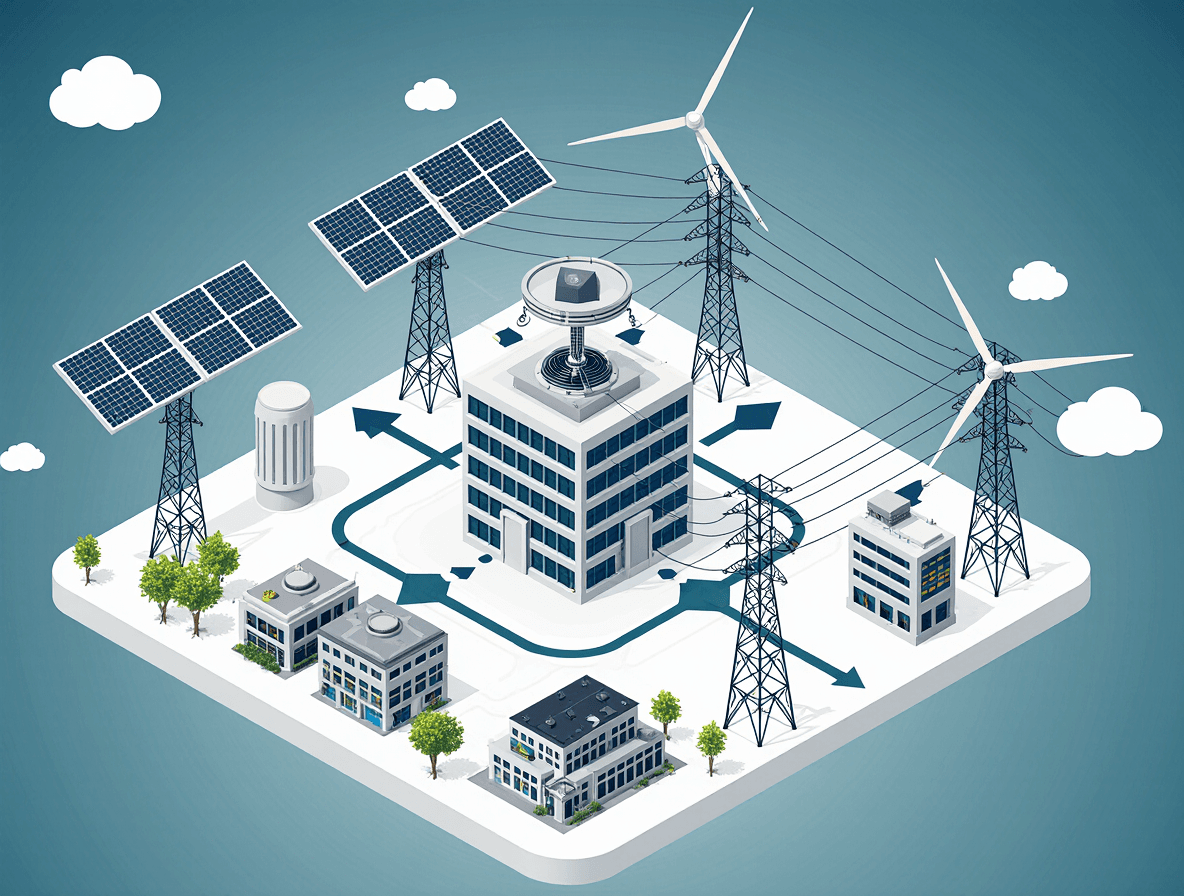
Microgrids (Generated with Artificial Intelligence)
Basic Components | Energy Production (Renewable/Conventional), Energy Storage, Consumption Points, Main Grid Connection | ||||||||
|---|---|---|---|---|---|---|---|---|---|
Operating Modes | Grid-connected and island mode | ||||||||
Main Advantages | Energy Supply Security, Efficiency, Renewable Energy Integration, Reduction of Losses | ||||||||
Application Area(s) | Military Bases Rural Areas Industrial Facilities Campuses Hospitals Islands | ||||||||
A microgrid is a small-scale electrical power system that meets electricity demand within a specific geographic area by coordinating locally distributed energy resources (DERs). It can operate either connected to the main electrical grid (macrogrid) or independently in a mode known as “island mode.” These systems integrate energy generation facilities, energy storage systems, and consumption points (loads) into a single unified infrastructure. This enables flexible operation while connected to the central grid and ensures energy continuity by operating autonomously when necessary.
The concept of microgrids has been technically applied for a long time. They have been widely used in areas such as islands far from the mainland, military bases, university campuses, healthcare facilities, and industrial sites with continuous energy needs. However, since the 2020s, microgrids have regained strategic importance globally due to the increasing share of renewable energy sources in total electricity production, climate change mitigation goals, and digitalization trends in the energy sector.
The emergence of these systems has been significantly driven by the widespread adoption of distributed energy resources. The ability to install local-scale sources such as photovoltaic solar panels, wind turbines, biomass facilities, and small-scale hydroelectric units makes microgrid applications technically feasible and economically viable. Furthermore, advances in energy storage technologies—particularly the declining cost of lithium-ion batteries—have made a significant contribution to enabling microgrids to provide stable and uninterrupted energy.
The primary functions of microgrids are to enhance energy supply security, improve energy efficiency, reduce operational and maintenance costs, and facilitate the integration of renewable energy sources into the grid. When a fault or outage occurs on the main grid, a microgrid can disconnect from the macrogrid and continue operating independently. This feature is especially critical for essential infrastructure. Facilities such as hospitals, data centers, airports, and security installations can maintain operations without disruption from external grid failures thanks to microgrid technologies.
Today, microgrids hold value not only in terms of energy security but also in environmental and economic terms. Reducing carbon emissions, minimizing transmission losses through local energy production, and enabling consumers to become more active participants in energy markets are among the advantages provided by microgrid technologies.
A microgrid system consists of four fundamental components that functionally complement each other. Their coordinated operation is critical for the system’s efficiency, continuity, and reliability.
Energy generation in microgrids is primarily provided through distributed energy resources (DERs) installed at the local level. These include renewable energy technologies such as solar and wind energy. Photovoltaic panels generate electricity from sunlight during the day, while wind turbines convert wind energy into electricity under varying hourly and seasonal conditions. In addition, in regions with favorable geographic conditions, small-scale hydroelectric plants, geothermal power plants, and biomass/biogas facilities can also be integrated into the microgrid’s generation infrastructure.
The intermittent nature of renewable energy sources may not guarantee system reliability on its own. Therefore, many microgrids integrate conventional energy generation technologies as backup power sources. Diesel generators or natural gas turbines activate during sudden demand spikes or periods of reduced renewable output to ensure system continuity. Moreover, combined heat and power (CHP) units significantly increase energy efficiency in industrial facilities by simultaneously producing electricity and heat.
Energy storage technologies are one of the most critical elements of microgrids. Since renewable energy generation depends inherently on weather conditions and the day-night cycle, it lacks continuity. This can create imbalances between energy supply and demand. Storage systems store excess energy when production exceeds demand and release it back into the grid when production decreases or stops entirely. This ensures stability and mitigates fluctuations caused by sudden load changes.
Among the most commonly used storage technologies in today’s microgrids are lithium-ion and lithium iron phosphate (LiFePO4) batteries. These batteries stand out due to their high cycle life, fast charge-discharge capacity, and energy density. More traditional lead-acid batteries (especially gel-type) also offer low-cost solutions in certain applications. Meanwhile, emerging technologies such as fuel cells, supercapacitors, and flow batteries are being evaluated at the research and pilot project level for microgrid designs.
The most fundamental element in the operation of microgrids is the set of consumption points they serve. These loads can vary from a single residence to much larger structures. Examples include residential clusters, university campuses, hospitals, commercial complexes, industrial facilities, and military bases—all of which can be powered by microgrids.
Accurately determining the energy consumption profile is essential for the technical and economic sustainability of the system. Precise load forecasting enables appropriate planning of energy generation capacity and storage size. This prevents excessive investment costs, avoids unnecessary capacity underutilization, and allows the system to operate at optimal efficiency.
Microgrids can operate either grid-connected or independently (off-grid/island mode), depending on their design. Grid-connected microgrids operate in parallel with the macrogrid under normal conditions, engaging in energy exchange. For example, surplus energy generated during periods of high production can be sold to the main grid, while energy can be drawn from the main grid when local production is insufficient. When a fault or outage occurs on the main grid, the microgrid automatically disconnects and switches to island mode. In this mode, it continues supplying consumers using only its internal generation and storage capacity. This transition is safely managed by protection and control systems at the connection point. Reliable two-way energy flow is ensured through advanced metering infrastructure, inverter technologies, and automated control algorithms that synchronize the microgrid with the macrogrid.

Microgrids (Generated by Artificial Intelligence)
Microgrids can be classified into different types based on their size, design objectives, and the user groups they serve. The smallest-scale microgrids can be designed to meet the energy needs of a single apartment or small facility, while larger ones can cover an entire town, district, or major industrial zone. This flexibility enables microgrids to adapt to diverse energy needs at both individual and institutional levels.
Facilities such as university campuses, large hospitals, public institutions, or multinational corporate headquarters benefit from microgrid solutions due to their high demand for continuous and high-quality energy. Such applications protect critical infrastructure from energy disruptions, ensure operational continuity, and reduce energy costs. Additionally, integrating renewable energy sources supports environmental sustainability and reduces the carbon footprint of institutions.
Community-scale microgrids are designed to meet the energy needs of specific neighborhoods, villages, or settlement units. These projects are often supported by energy cooperatives or local authorities and enable consumers to also act as producers (prosumers). A notable example is the microgrid implemented in 2016 in Brooklyn, New York, USA, which uses blockchain technology to allow neighborhood residents to trade energy directly with each other. Such applications strengthen local participation in energy production and community-based solidarity.
Microgrids offer suitable solutions for rural areas, mountainous regions, islands, or isolated settlements where access to the main electrical grid is difficult or economically unfeasible. Establishing main grid infrastructure in these areas is impractical due to long transmission distances and high investment costs. Microgrids based on local renewable energy sources make energy access possible in these regions. This reduces energy costs and supports the sustainability of social and economic life.
Energy security is considered a strategic factor for military installations. Microgrids enable these facilities to operate continuously without reliance on the main grid. In the event of natural disasters, cyberattacks, or wartime conditions that damage the macrogrid, microgrids maintain operational continuity of the bases. Additionally, military microgrids supported by renewable energy and storage solutions reduce dependence on fuel logistics, providing strategic advantages.
In high-energy-consumption areas such as industrial facilities and organized industrial zones (OSB), microgrids help ensure uninterrupted production processes. Energy continuity is critical for production quality and competitiveness in these facilities. Microgrids enhance efficiency through demand-side management, energy storage, and cogeneration systems. Moreover, selling surplus production energy back to the main grid provides economic benefits to businesses and accelerates return on investment.
The reliable, stable, and efficient operation of microgrids depends on the effective use of advanced control mechanisms and energy management systems (EMS). The primary functions of these systems are to maintain instantaneous balance between production and consumption, ensure optimal utilization of energy resources, and enhance system resilience against potential faults or outages.
One of the most important aspects of control in a microgrid is the proper management of active and reactive power flows. Active power represents the actual energy delivered to consumers, while reactive power is necessary to maintain stable voltage levels. Proper balancing of these two elements ensures frequency and voltage stability. Therefore, control algorithms in microgrids do not focus solely on production-consumption balance but also consider power quality and system stability.
Control mechanisms in microgrids can be based on different architectures:
Today, many microgrids are built on hybrid control architectures that combine centralized and distributed control systems.
Modern microgrid management is supported by advanced software and hardware infrastructure. Among the most commonly used systems are:
Advanced microgrid control systems do not merely monitor and optimize; they also enable autonomous operation. Artificial intelligence-based algorithms and machine learning methods improve the accuracy of production and consumption forecasts and provide proactive approaches to fault detection and maintenance planning. As a result, microgrids can rapidly adapt to changing weather conditions, sudden load demands, or grid faults.
The growing adoption of microgrid applications offers numerous technical, economic, and environmental benefits:
Despite their many advantages, microgrids face certain challenges and limitations during implementation:
Microgrids are playing an increasingly important role in the transformation of energy systems. Rising energy demand, climate change mitigation goals, and advances in digital technologies are shaping the future trends of microgrid applications in the second quarter of the 21st century.
Smart city initiatives are enhancing the importance of microgrids through digitalization of energy infrastructure and decentralized generation models. Smart meters, Internet of Things (IoT) devices, and sensor networks enable real-time monitoring of consumption data, allowing more precise management of energy supply-demand balance. In smart cities, microgrids play a critical role in applications such as electric vehicle charging infrastructure, smart lighting systems, and energy sharing.
Artificial intelligence (AI) and machine learning algorithms are increasingly used in microgrid energy management systems. These technologies improve demand forecasting, optimize production planning, and offer proactive solutions for fault detection. Additionally, big data analytics enable continuous evaluation of system performance and the development of strategies tailored to energy consumption patterns.
The declining cost of lithium-ion batteries and the development of next-generation storage technologies—such as solid-state batteries, flow batteries, and hydrogen storage solutions—will make microgrids more widespread and economically viable in the future. These advancements will enable more effective mitigation of challenges arising from the variability of renewable energy sources.
Microgrids are not only technical infrastructures but also create the foundation for new business models in energy markets. Peer-to-peer (P2P) energy trading, blockchain-based energy sharing systems, and dynamic pricing mechanisms support consumers in transitioning to the role of producers (prosumers). This leads to the emergence of a more participatory and decentralized energy market structure.
Global policies aimed at reducing carbon emissions are increasing the strategic importance of microgrids. Local energy production and integration of renewable resources contribute to achieving sustainable development goals. In particular, in developing countries, microgrids facilitate energy access through rural electrification projects, supporting social and economic development.
Ahmethodzic, Lejla, and Mustafa Music. “Comprehensive Review of Trends in Microgrid Control.” *Renewable Energy Focus* 38 (2021): 84–96. doi:10.1016/j.ref.2021.07.003. Accessed August 20, 2025. https://doi.org/10.1016/j.ref.2021.07.003
Akter, Umme, Md I. Kholilullah, S. Dewan, M. A. H. Emon, and Md Islam. “Microgrids for Industrial Implementation: An Overview of Benefits, Challenges, and Optimization Techniques.” *European Journal of Theoretical and Applied Sciences* 3, no. 2 (2025): 439–49. doi:10.59324/ejtas.2025.3(2).37. Accessed August 20, 2025. https://doi.org/10.59324/ejtas.2025.3(2).37
Dev, A., V. Kumar, G. Khare, J. Giri, M. Amir, F. Ahmad, P. Jain, and S. Anand. “Advancements and Challenges in Microgrid Technology: A Comprehensive Review of Control Strategies, Emerging Technologies, and Future Directions.” *Energy Science & Engineering* 13 (2025): 2112–34. doi:10.1002/ese3.2095. Accessed August 20, 2025. https://doi.org/10.1002/ese3.2095
Mahmood Muttaqee, Maham Furqan, and Hilary S. Boudet. “The Good, the Bad, and the Unplugged: Community Reactions and Key Challenges Facing Microgrid Development in the United States.” *Energy Research & Social Science* 122 (2025): 104014. doi:10.1016/j.erss.2025.104014. Accessed August 20, 2025. https://doi.org/10.1016/j.erss.2025.104014
Ojo, Kayode Ebenezer, Akshay Kumar Saha, and Viranjay Mohan Srivastava. “Review of Advances in Renewable Energy-Based Microgrid Systems: Control Strategies, Emerging Trends, and Future Possibilities.” *Energies* 18, no. 14 (2025): 3704. doi:10.3390/en18143704. Accessed August 20, 2025. https://doi.org/10.3390/en18143704
Punitha, S., N. P. Subramaniam, and P. A. D. Vimal Raj. “A Comprehensive Review of Microgrid Challenges in Architectures, Mitigation Approaches, and Future Directions.” *Journal of Electrical Systems and Information Technology* 11, no. 60 (2024). doi:10.1186/s43067-024-00188-4. Accessed August 20, 2025. https://doi.org/10.1186/s43067-024-00188-4
Seane, T. B., R. Samikannu, and T. Bader. “A Review of Modeling and Simulation Tools for Microgrids Based on Solar Photovoltaics.” *Frontiers in Energy Research* 10 (2022). doi:10.3389/fenrg.2022.772561. Accessed August 20, 2025. https://doi.org/10.3389/fenrg.2022.772561
Shafiullah, Md, Akib Mostabe Refat, Md Ershadul Haque, Dewan Mabrur Hasan Chowdhury, Md Sanower Hossain, Abdullah G. Alharbi, Md Shafiul Alam, Amjad Ali, and Shorab Hossain. “Review of Recent Developments in Microgrid Energy Management Strategies.” *Sustainability* 14, no. 22 (2022): 14794. doi:10.3390/su142214794. Accessed August 20, 2025. https://doi.org/10.3390/su142214794
Uddin, Moslem, Huadong Mo, Daoyi Dong, Sondoss Elsawah, Jianguo Zhu, and Josep M. Guerrero. “Microgrids: A Review, Outstanding Issues and Future Trends.” *Energy Strategy Reviews* 49 (2023): 101127. doi:10.1016/j.esr.2023.101127. Accessed August 20, 2025. https://doi.org/10.1016/j.esr.2023.101127

Microgrids (Generated with Artificial Intelligence)
Basic Components | Energy Production (Renewable/Conventional), Energy Storage, Consumption Points, Main Grid Connection | ||||||||
|---|---|---|---|---|---|---|---|---|---|
Operating Modes | Grid-connected and island mode | ||||||||
Main Advantages | Energy Supply Security, Efficiency, Renewable Energy Integration, Reduction of Losses | ||||||||
Application Area(s) | Military Bases Rural Areas Industrial Facilities Campuses Hospitals Islands | ||||||||
No Discussion Added Yet
Start discussion for "Microgrid Applications" article
Microgrid Components
Distributed Energy Resources (Energy Generation)
Energy Storage
Energy Consumption (Loads)
Connection Point to the Main Grid
Types and Application Areas of Microgrids
Campus and Institutional Microgrids
Community Microgrids
Remote and Off-Grid Microgrids
Military Base Microgrids
Commercial and Industrial Microgrids
Modeling and Control of Microgrids
Core Principles of Control
Centralized and Distributed Control Approaches
Advanced Management and Monitoring Systems
Autonomous Operation and Adaptability
Advantages and Disadvantages of Microgrids
Advantages
Disadvantages
The Future of Microgrids
Integration with Smart Cities
Artificial Intelligence and Data Analytics
Advances in Renewable Energy and Storage Technologies
New Models in Energy Markets
Climate Change and Sustainability