

 Recently Added:
This article was automatically translated from the original Turkish version.
International recognition of the State of Palestine is the process by which states around the world have recognized Palestine as a sovereign state following its declaration of independence by the Palestine Liberation Organization on 15 November 1988. This recognition process accelerated significantly after 1988 and as of September 2025 encompasses 157 member states of the United Nations.

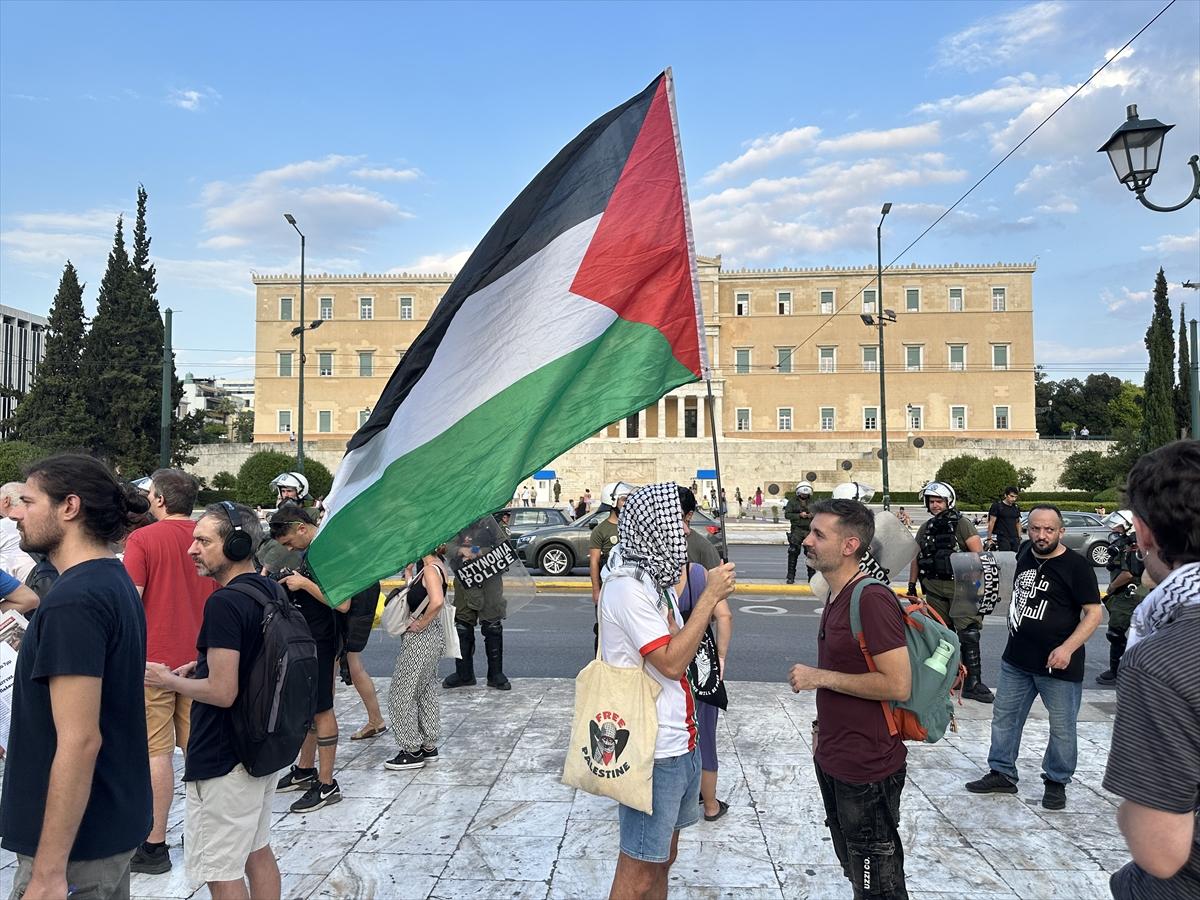
Filistin bayrağı - (Anadolu Ajansı)
Yaser Arafat, President of the Palestine Liberation Organization, declared the independence of the State of Palestine on 15 November 1988 in Algeria. This declaration triggered a rapid diplomatic recognition process particularly among Asian African and Arab countries. On the day of the declaration and in the following weeks thirteen countries including Türkiye Algeria Indonesia Iraq Kuwait Libya Malaysia Mauritania Morocco Somalia Tunisia and Yemen announced their recognition of Palestine.
On 16 November 1988 thirteen additional countries including Afghanistan Bangladesh Cuba Jordan Madagascar Malta Nicaragua Pakistan Qatar Saudi Arabia Serbia United Arab Emirates and Zambia announced their recognition decisions. In the following days Albania Brunei Djibouti Mauritius and Sudan were added to the list of recognizing states. During this period the majority of recognitions came from states in Asia and Africa.
Within four days after the declaration of independence a total of 46 countries announced their recognition. These included Egypt India Nigeria Slovakia Sri Lanka Belarus Namibia Russia Ukraine Vietnam China and Burkina Faso. Some of the recognizing countries were of Eastern European origin and some of these recognitions occurred before the dissolution of the Soviet Union.
By the end of 1988 the number of countries recognizing the State of Palestine had reached 83. The timing of these recognitions coincided with the declaration of independence and was supported by a broad diplomatic circle led by the Arab League and African Union member states. During 1989 African countries such as Ethiopia Kenya Benin and Equatorial Guinea announced their recognition. In the 1990s newly independent states in Central Asia and Eastern Europe joined the process.
In 1991 Swaziland (now Eswatini) and in 1992 Kazakhstan Azerbaijan Turkmenistan Georgia and Bosnia-Herzegovina recognized Palestine. In 1994 Tajikistan and Uzbekistan; in 1995 Papua New Guinea South Africa and Kyrgyzstan also decided to recognize Palestine. By 1998 Malawi and several other African countries had joined the process.
By the end of 1999 the number of countries recognizing the State of Palestine had reached 103. Western European countries did not make any recognition declarations during this period.
Between 2000 and 2012 the international recognition of the State of Palestine expanded significantly through the initiative of Latin American countries. During this period Venezuela (2009) the Dominican Republic (2009) Brazil (2010) Argentina (2010) Bolivia (2010) Ecuador (2010) Chile (2011) Guyana (2011) Peru (2011) Suriname (2011) Paraguay (2011) and Uruguay (2011) declared their recognition of Palestine as an independent state.
Recognitions also occurred outside Latin America during this period. From the Caribbean region Saint Vincent and the Grenadines Belize Dominica Antigua and Barbuda and Grenada announced their recognition decisions in 2011. In the same year Lesotho and Liberia from Africa and Syria from the Middle East joined the list of countries recognizing Palestine.
In 2012 Thailand joined the group of Asian countries recognizing Palestine. Additionally in November 2012 the United Nations General Assembly adopted Resolution 67/19 changing Palestine’s status to “non-member observer state.” The vote saw 138 countries in favor 9 opposed and 41 abstaining.
Although this resolution did not directly alter the diplomatic recognition process it enhanced Palestine’s representational capacity within international institutions. Political support for recognition increased after the UN resolution but many Western European countries did not take concrete steps toward recognition during this period.
By the end of 2011 the vast majority of African countries — except Eritrea and Cameroon — had recognized Palestine. From Europe Iceland recognized Palestine in 2011. From Eastern Europe Slovakia Hungary Poland and Romania had announced their recognition between 1988 and 1990. Thus recognition of Palestine in Europe followed a limited and gradual trajectory.
During this period recognition decisions were often coordinated within political blocs in Latin America with regional actors such as Venezuela Brazil and Argentina serving as examples for other countries. As a result by 2012 the number of countries recognizing Palestine had reached 133.
In 2013 the Vatican officially joined the list of countries recognizing the State of Palestine. The Vatican which serves as the administrative center of the Catholic Church and holds observer status at the United Nations diplomatically declared its support for Palestine’s statehood. In the same year Guatemala and Haiti also decided to recognize Palestine.
In 2014 Sweden became the first Western European country to recognize the State of Palestine. The Swedish government announced its recognition as a turning point in the European Union’s policy toward Palestine. In 2015 Saint Lucia recognized Palestine with the Vatican and other small island nations supporting the process.
In 2018 Colombia and in 2019 Saint Kitts and Nevis announced their recognition. By 2023 Mexico had joined the list of countries recognizing Palestine.
In 2024 four Caribbean countries formally decided to recognize the State of Palestine: Barbados (20 April) Jamaica (24 April) Trinidad and Tobago (3 May) and the Bahamas (8 May).
In the same year Norway Ireland and Spain simultaneously announced their recognition of Palestine on 22 May. These three countries based their recognition on the two-state solution framework within the 1967 borders with East Jerusalem as the capital of Palestine. Following these declarations Slovenia adopted a similar decision on 4 June 2024. Armenia also joined the list of recognizing countries on 21 June 2024.
With these recent recognitions the number of countries recognizing the State of Palestine has risen to 147. Some of these countries have also affirmed their recognition within the framework of the United Nations. The vast majority of recognizing countries are from Africa Asia Latin America and the Caribbean while only Sweden Ireland Norway and Spain from Western Europe have taken formal steps in this direction. Among the five permanent members of the United Nations Security Council Russia China and France have recognized Palestine.
Al Jazeera. “Mapping: Which Countries Recognise Palestine in 2025?” Al Jazeera, April 10, 2025. Accessed July 31, 2025.https://www.aljazeera.com/news/2025/4/10/mapping-which-countries-recognise-palestine-in-2025
Anadolu Ajansı. “Birleşmiş Milletler Üyesi 193 Ülkeden 147’si Filistin Devletini Tanıyor.” Accessed July 31, 2025.https://www.aa.com.tr/tr/dunya/birlesmis-milletler-uyesi-193-ulkeden-147si-filistin-devletini-taniyor/3647580
EUNews. "Three-Quarters of UN Members Recognize Palestine as a State." EUNews, July 31, 2025. Accessed July 31, 2025.https://www.eunews.it/en/2025/07/31/three-quarters-of-un-members-recognize-palestine-as-a-state/
Palestinian Ministry of Foreign Affairs. “الدول التي اعترفت بدولة فلسطين.” Ministry of Foreign Affairs - State of Palestine. Accessed July 31, 2025.https://www.mofa.pna.ps/ar-jo/فلسطين/فلسطينفيالمنظومةالدولية/الدول-التي-اعترفت-بدولة-فلسطين
World Population Review. "Countries That Recognize Palestine 2025." World Population Review. Accessed July 31, 2025.https://worldpopulationreview.com/country-rankings/countries-that-recognize-palestine
The international recognition of the State of Palestine is the process by which countries around the world have recognized a sovereign Palestine, following the declaration of independence by the Palestine Liberation Organization on November 15, 1988. This process of recognition gained momentum, particularly after 1988, and as of 2025, has included 147 United Nations member states.

Countries Recognizing Palestine as of 2025 - (World Population Review)
On November 15, 1988, Palestine Liberation Organization (PLO) Chairman Yasser Arafat declared the independence of the State of Palestine in Algiers. This declaration sparked a swift wave of diplomatic recognition, particularly among Asian, African, and Arab countries. On the day of the declaration and in the following weeks, 13 countries, including Turkey, Algeria, Indonesia, Iraq, Kuwait, Libya, Malaysia, Mauritania, Morocco, Somalia, Tunisia, and Yemen, announced their recognition of Palestine.
On November 16, 1988, another 13 countries, including Afghanistan, Bangladesh, Cuba, Jordan, Madagascar, Malta, Nicaragua, Pakistan, Qatar, Saudi Arabia, Serbia, the United Arab Emirates, and Zambia, declared their recognition. In the days that followed, Albania, Brunei, Djibouti, Mauritius, and Sudan also joined the list of recognizing states. Most of these recognitions during this period came from countries in Asia and Africa.
Within the first four days following Palestine's declaration of independence, a total of 46 countries had announced their recognition. Among these were Egypt, India, Nigeria, Slovakia, Sri Lanka, Belarus, Namibia, Russia, Ukraine, Vietnam, China, and Burkina Faso. Some of the recognizing countries were from Eastern Europe, with several recognitions occurring before the dissolution of the Soviet Union.
By the end of 1988, the number of countries recognizing the State of Palestine had reached 83. The timing of these recognitions coincided with Palestine's declaration of independence and received broad diplomatic support, especially from the Arab League and African Union member states. Throughout 1989, several African nations, including Ethiopia, Kenya, Benin, and Equatorial Guinea, announced their recognition.
In the 1990s, newly independent states from Central Asia and Eastern Europe joined the recognition process. In 1991, Swaziland (now Eswatini) recognized Palestine, followed by Kazakhstan, Azerbaijan, Turkmenistan, Georgia, and Bosnia and Herzegovina in 1992. Tajikistan and Uzbekistan extended recognition in 1994, while Papua New Guinea, South Africa, and Kyrgyzstan followed in 1995. By 1998, Malawi and several other African countries had also joined.
By the end of 1999, the total number of countries recognizing the State of Palestine had reached 103. However, Western European countries had not made any formal recognition statements during this period.
Between 2000 and 2012, the international recognition of the State of Palestine expanded significantly, particularly through the efforts of Latin American countries. During this period, Venezuela (2009), the Dominican Republic (2009), Brazil (2010), Argentina (2010), Bolivia (2010), Ecuador (2010), Chile (2011), Guyana (2011), Peru (2011), Suriname (2011), Paraguay (2011), and Uruguay (2011) officially recognized Palestine as an independent state.
Beyond Latin America, recognitions were also declared by other regions. In 2011, several Caribbean nations, including Saint Vincent and the Grenadines, Belize, Dominica, Antigua and Barbuda, and Grenada, announced their recognition of Palestine. In the same year, Lesotho and Liberia from Africa, as well as Syria from the Middle East, joined the list of countries recognizing Palestine.
In 2012, Thailand became one of the Asian countries to recognize Palestine. Furthermore, in November 2012, the United Nations General Assembly adopted Resolution 67/19, upgrading Palestine's status to that of a "non-member observer state." The resolution passed with 138 votes in favor, 9 against, and 41 abstentions.
While this decision did not directly alter the diplomatic recognition process, it enabled Palestine to gain broader representation within international organizations. Following the UN resolution, political support for Palestinian statehood increased; however, many Western European countries refrained from taking formal steps toward recognition during this period.
By the end of 2011, the vast majority of African nations, with the exceptions of Eritrea and Cameroon, had recognized Palestine. From Europe, Iceland officially recognized Palestine in 2011. Eastern European countries such as Slovakia, Hungary, Poland, and Romania had already declared recognition between 1988 and 1990. Thus, in Europe, Palestine’s recognition followed a more limited and gradual trajectory.
During this period, recognition decisions were often coordinated within Latin America's political blocs, with regional actors such as Venezuela, Brazil, and Argentina setting examples for other nations. By 2012, the number of countries recognizing the State of Palestine had reached 133.
As of 2013, the Holy See (Vatican) officially joined the list of countries recognizing the State of Palestine. As the administrative center of the Catholic Church and a non-member observer at the United Nations, the Vatican formally expressed its diplomatic support for Palestine's statehood. In the same year, Guatemala and Haiti also declared their recognition.
In 2014, Sweden became the first Western European country to recognize the State of Palestine. The Swedish government announced this decision as a turning point in the European Union’s policy on Palestine. In 2015, Saint Lucia followed suit, with the Vatican and several other small island nations supporting this recognition process.
Colombia declared its recognition in 2018, followed by Saint Kitts and Nevis in 2019. By 2023, Mexico had also joined the group of countries recognizing Palestine.
In 2024, four Caribbean nations formally announced their recognition of the State of Palestine: Barbados on April 20, Jamaica on April 24, Trinidad and Tobago on May 3, and the Bahamas on May 8.
Later that year, Norway, Ireland, and Spain jointly announced their recognition of Palestine on May 22. These three countries based their decision on the framework of a two-state solution, recognizing the 1967 borders with East Jerusalem as the capital of the Palestinian state. Following these declarations, Slovenia enacted a similar recognition decision on June 4, 2024, while Armenia announced its recognition on June 21, 2024.
With the recognitions during this period, the number of countries officially recognizing the State of Palestine rose to 147. Some of these recognitions were also confirmed in proceedings at the United Nations. The majority of recognizing states came from Africa, Asia, Latin America, and the Caribbean. In Western Europe, only Sweden, Ireland, Norway, and Spain had taken official steps toward recognition. Among the five permanent members of the United Nations Security Council, Russia, China, and France have formally recognized Palestine.
As of 2025, 147 out of the 193 United Nations member states have officially recognized the State of Palestine as an independent and sovereign state. These recognizing countries acknowledge East Jerusalem as the capital of Palestine. The group includes almost all African nations, the majority of Latin American countries, the Arab world, Southeast Asian states, and several European nations.
Among the countries that have not recognized Palestine are the United States, Germany, Japan, South Korea, and Australia, representing the majority of G7 members. However, 10 of the G20 member states have formally recognized Palestine. Within NATO, 14 out of 32 member countries have taken official steps toward recognition.
Throughout 2025, several countries have issued official statements signaling their intent to recognize the State of Palestine. These declarations have largely been made in response to Israel's blockade and military operations in the Gaza Strip.
On July 30, 2025, the foreign ministers of Andorra, Australia, Canada, Finland, France, Iceland, Ireland, Luxembourg, Malta, New Zealand, Norway, Portugal, San Marino, Slovenia, and Spain issued a joint statement titled the “New York Appeal.”
In the statement, recognizing the State of Palestine was described as “a fundamental step” in advancing the two-state solution process. The issuing countries called upon all states that have not yet recognized Palestine or have not expressed a positive assessment toward recognition to join this initiative.
The text reaffirmed the commitment to a vision in which Israel and Palestine coexist side by side as two democratic states with secure and internationally recognized borders, in line with international law and relevant United Nations resolutions. It also emphasized the importance of unifying the West Bank and Gaza Strip under the administration of the Palestinian Authority.
The joint appeal welcomed the pledges made by Palestinian President Mahmoud Abbas on June 10, 2025, regarding his commitment to a two-state solution. The statement was released following coordination meetings held with the European Union, the Arab League, and other regional organizations.
Al Jazeera. “Mapping: Which Countries Recognise Palestine in 2025?” Al Jazeera, 10 Nisan 2025. Accessed July 31, 2025. https://www.aljazeera.com/news/2025/4/10/mapping-which-countries-recognise-palestine-in-2025
Anadolu Ajansı. “Avustralya Başbakanı Albanese, Filistin Devletini Tanıyacağının Sinyalini Verdi.” Anadolu Ajansı, 29 Temmuz 2025. Accessed July 31, 2025. https://www.aa.com.tr/tr/dunya/avustralya-basbakani-albanese-filistin-devletini-taniyacaginin-sinyalini-verdi/3646509
Anadolu Ajansı. “Birleşmiş Milletler Üyesi 193 Ülkeden 147’si Filistin Devletini Tanıyor.” Anadolu Ajansı, 30 Temmuz 2025. Accessed July 31, 2025. https://www.aa.com.tr/tr/dunya/birlesmis-milletler-uyesi-193-ulkeden-147si-filistin-devletini-taniyor/3647580
Anadolu Ajansı. “Filistin Devletinin Tanınmasından Yana 15 Ülke, Tüm Devletleri Bu Yönde Adım Atmaya Çağırdı.” Anadolu Ajansı, 29 Temmuz 2025. Accessed July 31, 2025. https://www.aa.com.tr/tr/dunya/filistin-devletinin-taninmasindan-yana-15-ulke-tum-devletleri-bu-yonde-adim-atmaya-cagirdi/3646597
Anadolu Ajansı. “Fransa Cumhurbaşkanı Macron, Eylül Ayında Ülkesinin Filistin Devletini Resmi Olarak Tanıyacağını Açıkladı.” Anadolu Ajansı, 12 Temmuz 2025. Accessed July 31, 2025. https://www.aa.com.tr/tr/dunya/fransa-cumhurbaskani-macron-eylul-ayinda-ulkesinin-filistin-devletini-resmi-olarak-taniyacagini-acikladi/3641331
Anadolu Ajansı. “Kanada Başbakanı Carney, Eylülde Yapılacak BM Genel Kurulunda Filistin Devletini Tanıyacaklarını Açıkladı.” Anadolu Ajansı, 30 Temmuz 2025. Accessed July 31, 2025. https://www.aa.com.tr/tr/dunya/kanada-basbakani-carney-eylulde-yapilacak-bm-genel-kurulunda-filistin-devletini-taniyacaklarini-acikladi/3646843
Anadolu Ajansı. “İngiltere, İsrail Somut Adım Atmazsa Eylülde Filistin’i Tanıyacağını Duyurdu.” Anadolu Ajansı, 26 Temmuz 2025. Accessed July 31, 2025. https://www.aa.com.tr/tr/dunya/ingiltere-israil-somut-adim-atmazsa-eylulde-filistini-taniyacagini-duyurdu/3645582
EUNews. “Three-Quarters of UN Members Recognize Palestine as a State.” EUNews, 31 Temmuz 2025. Accessed July 31, 2025. https://www.eunews.it/en/2025/07/31/three-quarters-of-un-members-recognize-palestine-as-a-state/
Filistin Dışişleri Bakanlığı. “الدول التي اعترفت بدولة فلسطين.” Ministry of Foreign Affairs - State of Palestine. Accessed July 31, 2025. https://www.mofa.pna.ps/ar-jo/فلسطين/فلسطينفيالمنظومةالدولية/الدول-التي-اعترفت-بدولة-فلسطين
World Population Review. “Countries That Recognize Palestine 2025.” World Population Review. Accessed July 31, 2025. https://worldpopulationreview.com/country-rankings/countries-that-recognize-palestine
On 30 July 2025, the foreign ministers of Andorra, Australia, Canada, Finland, France, Iceland, Ireland, Luxembourg, Malta, New Zealand, Norway, Portugal, San Marino, Slovenia and Spain issued a joint statement titled "The New York Call".
The statement affirmed that the recognition of the State of Palestine is a "necessary step" in the two-state solution process. The countries issuing the statement invited all states that have not yet recognized Palestine or expressed a positive assessment toward recognition to join this process.
The text reaffirmed commitment to the vision of Israel and the Palestinians living side by side in two democratic states with secure and recognized borders consistent with international law and United Nations resolutions. The statement also emphasized the importance of unifying the West Bank and the Gaza Strip under the authority of the Palestinian Authority.
The joint call noted with satisfaction the commitments made by Palestinian President Mahmud Abbas on 10 June 2025 toward a two-state solution. The statement was issued and made public following coordination meetings with the European Union, the Arab League and other regional organizations.
Anadolu Ajansı. "Filistin Devletinin Tanınmasından Yana 15 Ülke, Tüm Devletleri Bu Yönde Adım Atmaya Çağırdı." Anadolu Ajansı, July 29, 2025. Accessed July 31, 2025.https://www.aa.com.tr/tr/dunya/filistin-devletinin-taninmasindan-yana-15-ulke-tum-devletleri-bu-yonde-adim-atmaya-cagirdi/3646597
On 21 September 2025, Canada, Australia, the United Kingdom, and Portugal officially announced their recognition of the State of Palestine. This coordinated announcement was made ahead of the commencement of high-level discussions at the United Nations General Assembly.
The decision to recognize Palestine emerged against the backdrop of ongoing hostilities in Gaza and continued settlement activities in the West Bank. Each country’s announcement was made by its Prime Minister or Foreign Minister, and included conditions regarding cooperation with the Palestinian leadership and the reform process.
Canadian Prime Minister Mark Carney, in a written statement issued on 21 September 2025, declared that Canada recognizes the State of Palestine. Carney noted that Canadian governments have supported a two-state solution since 1947, but that hope for this outcome had diminished over recent years. He emphasized that Israel’s settlement activities in the West Bank violate international law, that tens of thousands of civilians have been killed in Gaza, and that millions have been displaced.
Prime Minister Carney stated that the recognition decision was intended to contribute to lasting peace for the Palestinian people. “Canada does not fall into the illusion that this recognition is a cure for all ills,” he said, clarifying that the decision was made within the framework of fundamental human rights principles outlined in the United Nations Charter and Canada’s long-standing policy.
Carney highlighted that the Palestinian leadership has made direct commitments to Canada and the international community on reforms, including the organization of general elections, the exclusion of Hamas from the political process, and the demilitarization of the State of Palestine. Canada pledged to support Palestine in implementing these reforms and, in collaboration with international partners, to back a credible peace plan, democratic governance, definitive security arrangements, and the sustained delivery of humanitarian aid to Gaza.
Australian Prime Minister Anthony Albanese, in an official statement on 21 September 2025, declared that Australia recognizes the State of Palestine. In a social media announcement, Albanese stated that Australia’s recognition affirms the long-standing aspiration of the Palestinian people for an independent and sovereign state. He reiterated Australia’s support for a two-state solution.
In a joint statement issued with Foreign Minister Penny Wong, Albanese emphasized that the decision was part of a coordinated international effort with Canada and the United Kingdom. The statement underscored that any revival of the two-state solution must begin with the establishment of a ceasefire in Gaza and the release of hostages.
The Australian government also declared that Hamas cannot play any role in this process. Thus, the recognition of Palestine was accompanied by conditions requiring the cessation of hostilities in Gaza and the conduct of the political process by legitimate representatives.
United Kingdom Prime Minister Keir Starmer announced on 21 September 2025 that the United Kingdom formally recognizes the State of Palestine. In a video message of approximately six and a half minutes posted on social media, Starmer stressed the need to sustain hope for a two-state solution and peace amid the ongoing violence in the Middle East. He affirmed the right of both sides to live in peace, stating, “Peace and a two-state solution point to a secure Israel and a viable Palestine.”
Prime Minister Starmer called for the release of Israeli hostages in Gaza and asserted that Hamas opposes the two-state solution. He also announced that the United Kingdom would impose sanctions on certain Hamas members in the coming weeks. Starmer described Israel’s bombardments in Gaza as “unacceptable,” citing the resulting famine and destruction, and noted that Israel’s land seizures in the West Bank further undermine the possibility of a two-state solution.
Starmer formally notified Palestinian President Mahmoud Abbas of the recognition in a letter, stating that the decision reflects international support for the Palestinian people’s right to self-determination. The United Kingdom welcomed the Palestinian leadership’s commitments to reform and pledged its support during this process.
The British Prime Minister also referenced his country’s historical role, alluding to the 1917 Balfour Declaration, and emphasized that the Palestinian people are entitled to equal rights. Starmer stated that this decision marks the beginning of a new era of friendship and cooperation between the British and Palestinian peoples. It was also announced that UK Foreign Secretary Yvette Cooper would engage in talks with her Palestinian counterpart to establish diplomatic relations.
Portuguese Foreign Minister Paulo Rangel, in a statement delivered on 21 September 2025 at Portugal’s Permanent Mission to the United Nations, announced that Portugal formally recognizes the State of Palestine. Rangel explained that the decision was adopted by the Council of Ministers and received support from the President and political parties represented in Parliament. He stated that this decision reflects Portugal’s consistent, principled, and consensus-based foreign policy.
Minister Rangel outlined three foundational principles for the recognition. First, commitments made by the Palestinian leadership to the international community, including the condemnation of terrorism, implementation of institutional reforms, preparation for elections, assumption of governmental responsibility in Gaza, and recognition of Israel. Second, the requirement that Arab states not yet recognizing Israel must take this step and explicitly condemn Hamas, rejecting any role for the organization within the State of Palestine. Third, the expectation that Western states not yet recognizing Palestine should follow suit.
Portuguese President Marcelo Rebelo de Sousa, in a statement on the same day, expressed full support for the decision. De Sousa stated that he believes this recognition opens the path to a two-state solution and described it as a “matter of conscience and principle” for Portugal.
The Palestinian Ministry of Foreign Affairs welcomed the recognition decisions by Canada, Australia, and the United Kingdom, describing them as courageous steps consistent with international law and legitimacy. The statement noted that these recognitions stem from a sensitivity to ending the occupation and ensuring regional security and stability. It also called on countries not yet recognizing Palestine, especially the United States, to initiate similar steps.
Palestinian President Mahmoud Abbas welcomed the decisions by Canada, Australia, and the United Kingdom, characterizing them as a significant development toward achieving a just and lasting peace. Abbas confirmed that he received the recognition through a letter from UK Prime Minister Keir Starmer, which he interpreted as confirmation of the Palestinian people’s right to self-determination and an independent state.
Abbas also described Portugal’s decision as a “courageous step,” stating that this recognition would contribute to the implementation of a two-state solution. He emphasized that the priority must be the establishment of a ceasefire in Gaza, the opening of humanitarian access, the release of prisoners and detainees, Israel’s withdrawal, and the cessation of settlement activities.
Fatah Deputy Chairman Mahmoud al-Aloul characterized the recognition decisions by the United Kingdom, Canada, and Australia as a “historic milestone” in the Palestinian struggle for independence. The statement affirmed that these decisions validate the will of the people and their legitimate rights.
Hamas assessed the recognitions as an “important step,” but stressed that they must be accompanied by concrete actions to halt attacks in Gaza and counter annexation projects in the West Bank. Hamas’s statement emphasized that international support must continue until the Palestinian people fully exercise their right to self-determination and establish an independent state.
The recognition decisions by Canada, Australia, and the United Kingdom were positively received by Arab countries in the region and international organizations. Jordan’s Ministry of Foreign Affairs spokesperson Fuad al-Majali stated that the decision aligns with growing international will to realize the Palestinian people’s right to establish their own state.
Lebanese Prime Minister Nawaf Salam, in a social media statement, welcomed the move by the three countries and affirmed that no lasting solution or stability in the region is possible without the establishment of an independent State of Palestine as outlined in the 2002 Arab Peace Initiative.
The Kuwaiti Ministry of Foreign Affairs stated that the decision strengthens hopes for peace in the region and supports international efforts toward a two-state solution. It further emphasized that all nations must take similar steps to contribute to security, stability, and prosperity.
The Omani Ministry of Foreign Affairs described the decision as a significant development toward realizing a two-state solution and strengthening the foundations of peace and security in the region. It called on states not yet recognizing Palestine to take similar steps.
Gulf Cooperation Council Secretary General Qasim al-Budeywi welcomed the decisions and described them as “courageous.” He emphasized that these recognitions represent the Palestinian people’s right to self-determination and to establish an independent state with East Jerusalem as its capital.
Israeli Prime Minister Benjamin Netanyahu opposed the recognition decisions by Canada, Australia, and the United Kingdom, labeling them as “a reward for terrorism.” In a video message, Netanyahu made an implicit threat that annexation of the occupied West Bank could proceed, using the phrase “wait and see.” He also stated that illegal Jewish settlements would be expanded.
Other Israeli ministers issued similar statements. National Security Minister Itamar Ben-Gvir, Finance Minister Bezalel Smotrich, and Culture and Sports Minister Miki Zohar called for the annexation of the West Bank. The Israeli Ministry of Foreign Affairs, in a social media statement, rejected the recognition decisions as “not promoting peace but destabilizing the region,” categorically opposing unilateral recognitions.
Israeli Foreign Minister Gideon Saar accused the countries recognizing Palestine of engaging in “immoral, ugly, and repugnant” actions. The United States reiterated its longstanding position that recognizing the State of Palestine would amount to a “reward for Hamas.” The U.S. administration claimed that these recognition decisions do not contribute to the peace process under current conditions and pose a risk to Israel’s security.
Al Jazeera. “Canada, Australia Join UK in Recognising Palestinian Statehood.” Accessed September 21, 2025.https://www.aljazeera.com/news/2025/9/21/canada-australia-join-uk-in-recognising-palestinian-statehood
Anadolu Ajansı. “Kanada, Avustralya, İngiltere ve Portekiz Filistin Devleti’ni Tanıdıklarını Duyurdu.” Accessed September 21, 2025.https://www.aa.com.tr/tr/dunya/kanada-avustralya-ingiltere-ve-portekiz-filistin-devletini-tanidiklarini-duyurdu/3694040#
The recognition of the State of Palestine by France, Monaco, Belgium, Luxembourg, Malta, and Andorra was announced during a high-level international conference held in New York on 22 September 2025, ahead of the sessions of the United Nations General Assembly. The conference, led by France and Saudi Arabia, was titled “Finding a Solution to the Palestinian Issue and Implementing the Two-State Solution”.

“Filistin Meselesine Çözüm Bulunması ve İki Devletli Çözümün Hayata Geçirilmesi” başlıklı Yüksek Düzeyli Uluslararası Konferans, 22 Eylül 2025 - (Anadolu Ajansı)
These recognitions were announced immediately following similar decisions made by Canada, Australia, the United Kingdom, and Portugal on 21 September 2025. Within a short time, the number of states recognizing Palestine expanded across Western Europe and Anglosaxon countries. As a result, 157 of the 193 UN member states have now formally recognized Palestine. The Vatican, although not a UN member, is also among the actors that recognize the State of Palestine.
The new recognitions occurred against the backdrop of ongoing conflict in Gaza and settlement activities in the West Bank, and have been recorded as one of the international community’s efforts to accelerate the two-state solution process.
French President Emmanuel Macron announced on 22 September 2025 at the United Nations Headquarters during the high-level international conference titled “Finding a Solution to the Palestinian Issue and Implementing the Two-State Solution” that France recognizes the State of Palestine. In his speech, Macron stated that “the time has come to stop the war in Gaza” and emphasized the shared responsibility of the international community.

French President Emmanuel Macron speaks at the High-Level International Conference on Finding a Solution to the Palestinian Issue and Implementing the Two-State Solution, held at the UN Headquarters in New York, 22 September 2025 – (Anadolu Agency)
The President recalled France’s historical ties to the Middle East and stated that recognition affirms the legitimate rights of the Palestinian people, does not diminish Israel’s rights, and simultaneously contributes to Israel’s security. He asserted that recognition would enable constructive negotiations between Israel and Palestine, break the cycle of violence on the ground, and help establish a mechanism that generates peace and security for both sides.
Macron stressed the immediate and unconditional release of hostages held by Hamas and called for Israel to end all its military operations in Gaza. He also emphasized the necessity of ensuring unhindered humanitarian access to Gaza. In the second phase, he argued for the initiation of stability and reconstruction in Gaza, the disarmament of Hamas, and the transfer of Gaza’s security to a transitional government that includes the Palestinian Authority.
Macron indicated that France will consider opening an embassy in Palestine following the establishment of a ceasefire. He also clarified that the level of cooperation between Europe and Israel will depend on the steps Israel takes to end the war and engage in peace negotiations. He underscored that France’s goal is the establishment of a sovereign, independent, and demilitarized State of Palestine that is recognized by Israel and recognizes Israel’s territorial integrity.
The French President stated that he expects Arab and Muslim partners to fulfill their commitments to recognize Israel and establish normal relations the moment the State of Palestine is established. In his speech at the conference, he affirmed that a difficult mechanism for peace must be established, that the parties are ready to shake hands, and that the war must be ended urgently.
The Palestinian Ministry of Foreign Affairs welcomed France’s recognition decision, describing it as a historic and courageous move consistent with international law and UN resolutions. The statement also noted that this decision supports efforts toward a two-state solution.
Prince Albert II of Monaco announced on 23 September 2025 at the conference that Monaco recognizes the State of Palestine. The Prince stated that Monaco has long upheld two fundamental principles: Israel’s right to exist within secure and recognized borders and the Palestinian people’s right to a sovereign, democratic state. In this context, he affirmed that the recognition decision reaffirms support for Israel’s existence while recognizing Palestine as a state under international law.
Prince Albert II emphasized that achieving a sustainable solution based on respect for fundamental rights has become more urgent than ever. He also stated that peace must not remain an uncertain hope, and that the two-state solution opens the path to lasting stability, reaffirming Monaco’s continued support for this solution.
Belgian Prime Minister Bart De Wever announced at the conference on 22 September 2025 that Belgium recognizes the State of Palestine. De Wever stated that Belgium has always supported the two-state solution and reaffirmed this position by joining the signatories of the New York Declaration. He also noted that Belgium has demonstrated this stance through its humanitarian aid delivered to Gaza.
The Prime Minister referred to illegal settlement activities in the West Bank, expressing concern that if the international community fails to respond by keeping the prospect of a Palestinian state alive, the two-state solution may be lost.
De Wever also addressed statements by some Israeli ministers, including Prime Minister Benjamin Netanyahu, asserting that a Palestinian state will never exist. He stated that such rhetoric provides further justification for Belgium to reaffirm the Palestinian people’s right to their own state. Therefore, Belgium’s decision to join the group of states recognizing the State of Palestine sends a strong political and diplomatic message to the world.
Luxembourgish Prime Minister Luc Frieden announced at the conference that Luxembourg recognizes the State of Palestine. Frieden emphasized that this recognition is not the end of a process but the beginning of a commitment to hope, diplomacy, dialogue, and coexistence.
Recalling Luxembourg’s support for the two-state solution, the Prime Minister noted that the path ahead is not easy, but that recognition helps restore momentum to a lost political horizon. He stated that recognition alone is insufficient but will help launch a new process.
Frieden said peace is built step by step, “brick by brick,” and described this decision as a message to families affected by violence, a source of hope for children, and support for those who refuse to give up.
Maltese Prime Minister Robert Abela announced at the conference on 22 September 2025 that Malta recognizes the State of Palestine. At the outset of his speech, he stated, “The Republic of Malta proudly affirms its formal recognition of the State of Palestine,” and described this decision as a concrete commitment to the peaceful two-state solution as the only path to securing the future of both peoples.
Abela stated that Palestinians support a single state and single government approach. He also emphasized that Israeli governments must urgently assume their responsibilities. The Prime Minister called for the immediate cessation of attacks on civilians and infrastructure and urged an end to illegal settlement expansion in the West Bank and the associated violence. Abela further stated that starvation is occurring in Gaza and that civilians attempting to access inadequate food aid must not be allowed to die.
Andorra was among the countries that announced recognition of the State of Palestine at the high-level conference in New York. The recognition decision was announced simultaneously with those of France, Belgium, Luxembourg, Malta, and Monaco.
Palestinian President Mahmoud Abbas, unable to attend the meeting in person due to the United States denying him a visa, delivered his message via video conference. Abbas thanked the countries that announced their recognition and invited other states to take similar steps. He also called for support for Palestine’s right to full membership in the United Nations.
Norwegian Prime Minister Jonas Gahr Støre described the new recognition decisions as a “historic milestone” during his speech at the conference. Støre recalled that Norway, together with Spain, Ireland, and Slovenia, recognized Palestine last year. He stressed that the situation in Gaza is catastrophic, that the Palestinian people have the right to self-determination, and that Norway will continue its support in this direction.
United Nations Secretary-General Antonio Guterres stated at the conference that establishing a state for the Palestinians is not a “reward” but a “right.” Guterres noted that the Israeli-Palestinian conflict has remained unresolved for generations, that international law has been violated, and that settlement activities threaten the two-state solution. He also declared that collective punishment and attacks on civilians in Gaza can never be justified.
Al Jazeera. “France among six more countries to formally recognise Palestinian statehood.” Accessed September 22, 2025.https://www.aljazeera.com/news/2025/9/22/france-recognises-palestinian-state-ahead-of-the-unga-meeting
Anadolu Ajansı. "Fransa, Monako, Belçika, Lüksemburg ve Malta Filistin Devleti’ni Tanıdıklarını Duyurdu." Accessed September 22, 2025.https://www.aa.com.tr/tr/dunya/fransa-monako-belcika-luksemburg-ve-malta-filistin-devletini-tanidiklarini-duyurdu/3695583
Anadolu Ajansı. “Fransa Cumhurbaşkanı Emmanuel Macron, Filistin Devleti’ni Tanıdıklarını Duyurdu.” Accessed September 22, 2025.https://www.aa.com.tr/tr/dunya/fransa-cumhurbaskani-emmanuel-macron-filistin-devletini-tanidiklarini-duyurdu/3695187#

Palestine was rapidly recognized after declaring its independence on 15 November 1988, particularly across Asia, Africa and the Arab world. Within the first four days, 46 countries recognized it, and by the end of the year the number had risen to 83. In the post-2000 period, countries in Latin America and the Caribbean joined the process, and by 2012 the number of recognizing states had increased to 133. During the period 2013–2023, countries such as the Vatican, Sweden, Colombia and Mexico joined the list of states recognizing Palestine. In 2024, declarations by Barbados, Jamaica, Trinidad and Tobago, the Bahamas, Norway, Ireland, Spain, Slovenia and Armenia raised the total to 147. In 2025, simultaneous recognitions by Canada, Australia, the United Kingdom, Portugal, France, Monaco, Belgium, Luxembourg and Malta increased the number of countries recognizing Palestine to 157.
No Discussion Added Yet
Start discussion for "International Recognition of the State of Palestine" article
August 1, 2025
History and Origins of Recognition (1988–1999)
August 1, 2025
Recognitions Between 2000 and 2012 and the Role of Latin America
August 1, 2025
Recognition Decisions Between 2013 and 2024
August 1, 2025
History and Beginnings of Recognition (1988–1999)
August 1, 2025
Recognitions Between 2000–2012 and the Role of Latin America
August 1, 2025
Recognition Decisions Between 2013–2024
August 1, 2025
Countries Recognizing Palestine in 2025 and the Current Status
August 1, 2025
Multilateral Appeals and Joint Declarations
August 11, 2025
The New York Call and Joint Statement by 15 Countries (July 2025)
September 23, 2025
Recognition of the State of Palestine by Canada, Australia, the United Kingdom, and Portugal (2025)
September 23, 2025
Recognition of the State of Palestine by France, Monaco, Belgium, Luxembourg, Malta, and Andorra (2025)