 Recently Added:
This article was automatically translated from the original Turkish version.
US-Iran-Israel Conflict (2026) is a military confrontation that began on 28 February 2026 with Israel’s attacks against Iran, following a surge in tensions between Iran and the United States in February 2026.
On 28 February 2026, Israel announced it had launched a “preventive strike” against Iran. Israeli Defense Minister Yisrael Katz stated in his announcement that the operation was carried out to eliminate threats directed at Israel. Katz declared a state of emergency across the country and emphasized the preventive nature of the attack.
The Israeli military issued an emergency alert to the public due to developments in the security situation. The statement urged civilians to identify the nearest shelters, avoid unnecessary travel, and prepare for possible missile attacks. This “proactive warning” was described as a precaution against potential missile strikes from Iran. By 08:14, sirens sounded across Israel and emergency alerts were sent to mobile phones.
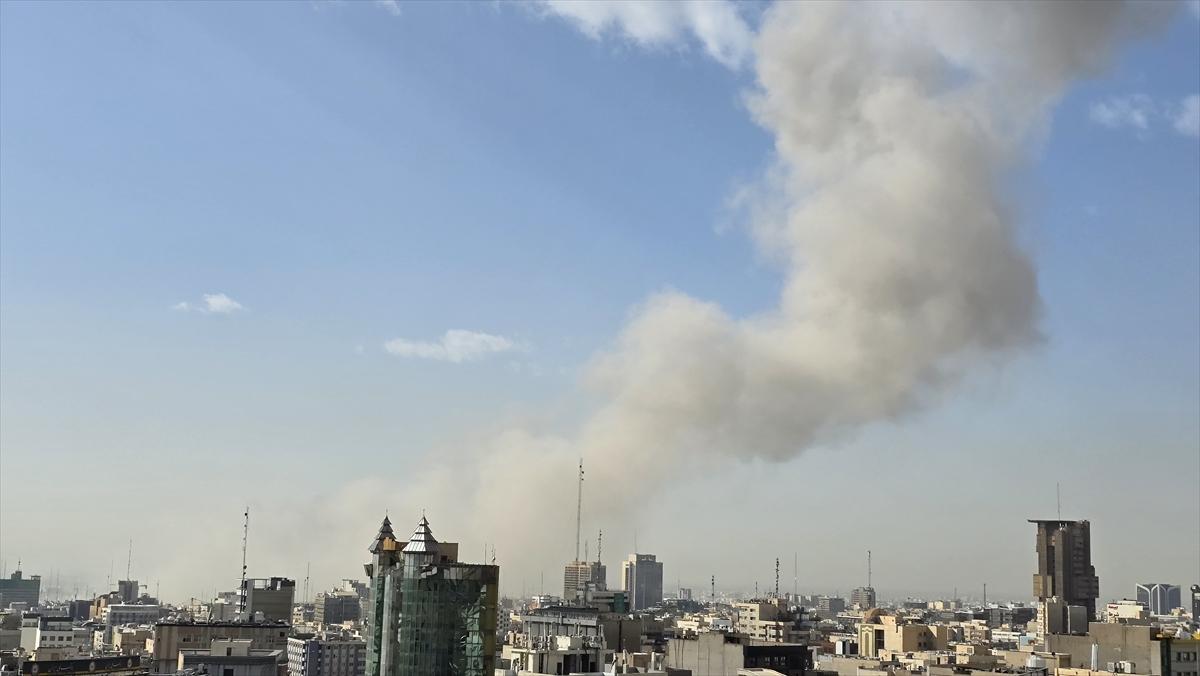
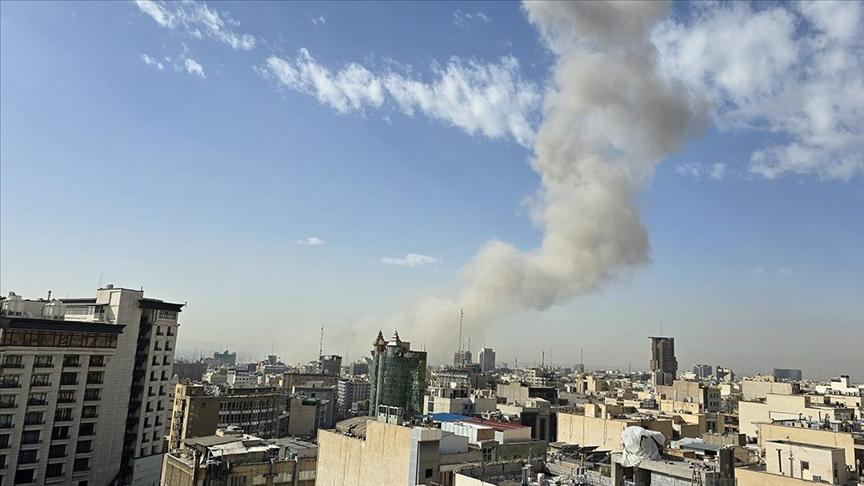
Explosions in Tehran. 28 February 2026 (Anadolu Ajansı)
On 28 February, US President Donald Trump announced the launch of a major operation against Iran. Trump delivered a video statement on his social media account regarding the attacks on Iran, stating: “We have launched a major operation against Iran.” He further explained the objective of the operation as follows:
“Our goal is to defend the American people by eliminating the threats posed by the Iranian regime—a ruthless group of very hard and terrible people engaged in activities that directly threaten the United States, our forces stationed abroad, and our allies around the world.”
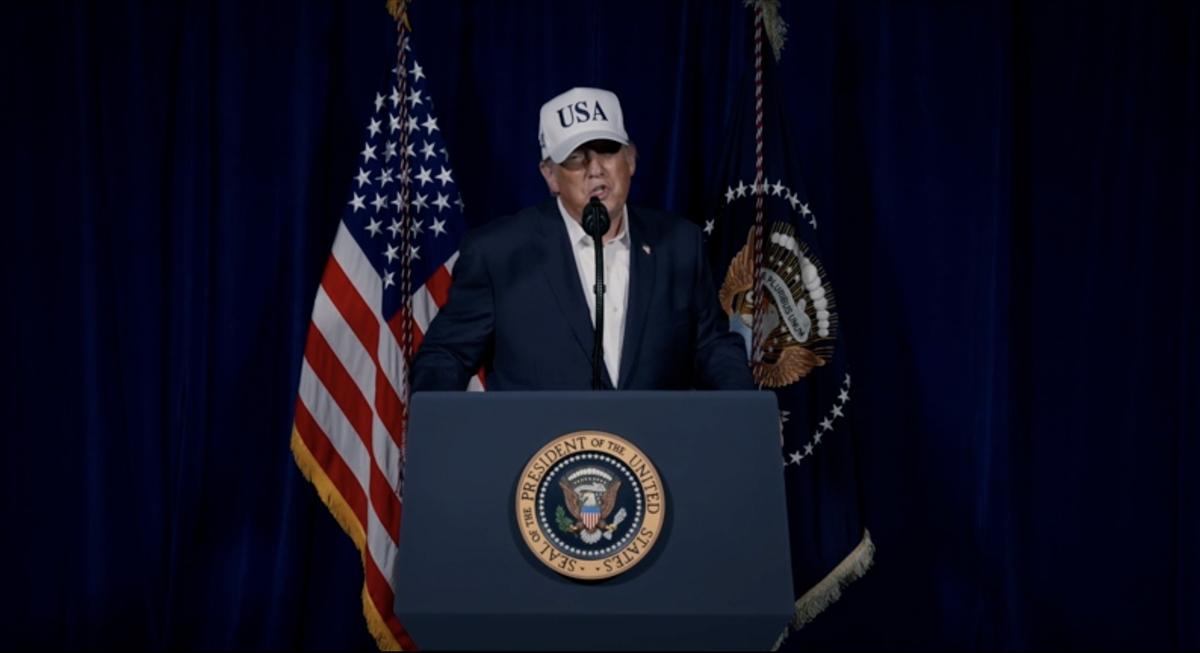
US President Trump’s Video Statement on the Attacks on Iran. 28 February 2026 (Anadolu Ajansı)
Trump called on the Islamic Revolutionary Guard Corps, the Iranian armed forces, and police personnel to lay down their arms and receive complete immunity, warning: “Otherwise, you will face death.” He emphasized that the United States’ policy is to prevent Iran from acquiring nuclear weapons, stating: “Iran will never be allowed to possess nuclear weapons. That is why, under the Midnight Pull Operation conducted last summer, we destroyed the regime’s nuclear program at Fordo, Natanz, and Isfahan.”
Israeli Prime Minister Benjamin Netanyahu claimed that the US-Israel attacks would give the Iranian people the opportunity to determine their own fate. In his statement following the attacks on Iran, Netanyahu named the operation “Operation Lion’s Roar.”
Netanyahu noted that the US and Israel had recently launched attacks with the stated aim of eliminating the “existential threat” posed by the regime in Iran, and argued that Iran must never be allowed to possess nuclear weapons. He asserted that the US-Israel joint attack would create the necessary conditions for “the brave Iranian people to take their destiny into their own hands.”
Netanyahu added: “All segments of the Iranian people—Persians, Kurds, Azerbaijanis, Baluchis, and Ahvazis—have reached the time to break free from the yoke of oppression and bring about a free and peaceful Iran.” His remarks conveyed a clear message of regime change.
The Islamic Revolutionary Guard Corps announced it had launched a large-scale missile and drone attack against “occupied territories” in response to the US-Israel attacks.
The Islamic Revolutionary Guard Corps issued a written statement, declaring: “In response to the aggressive acts of the guilty enemy against the Islamic Republic of Iran, the Islamic Republic of Iran has initiated its first large-scale missile and drone attacks against occupied territories.”
Shortly after the attacks began, multiple explosions were reported in Iran’s capital, Tehran. According to an Anadolu Ajansı correspondent in Tehran, new explosions and blast sounds were heard in the city. The explosions in the capital continued after the first wave of attacks.
Israel’s Channel 12 television claimed that numerous sites under the control of the Tehran regime had been targeted. The Israeli military radio suggested that high-ranking Iranian officials had been targeted in the strikes. According to reports, Israel launched a second wave of attacks against Iran. These claims regarding the targets of the attacks were reported by Israeli media outlets.
Israel and US Attacks on Iran. 28 February 2026 (Al Jazeera)
On 28 February 2026, the Israeli military announced it had detected a missile launch from Iran. The military stated that air defense systems had been activated and operations were underway to intercept retaliatory attempts originating from Iran. After the detection of missile launches, alarm systems were triggered and sirens sounded in various regions of Israel.
Iran announced it had launched dozens of ballistic missiles at Israel in response to the attacks by the US and Israel. Nournews, known for its proximity to Iran’s security bureaucracy, reported that numerous ballistic missiles had been fired toward Israel as part of the retaliation.
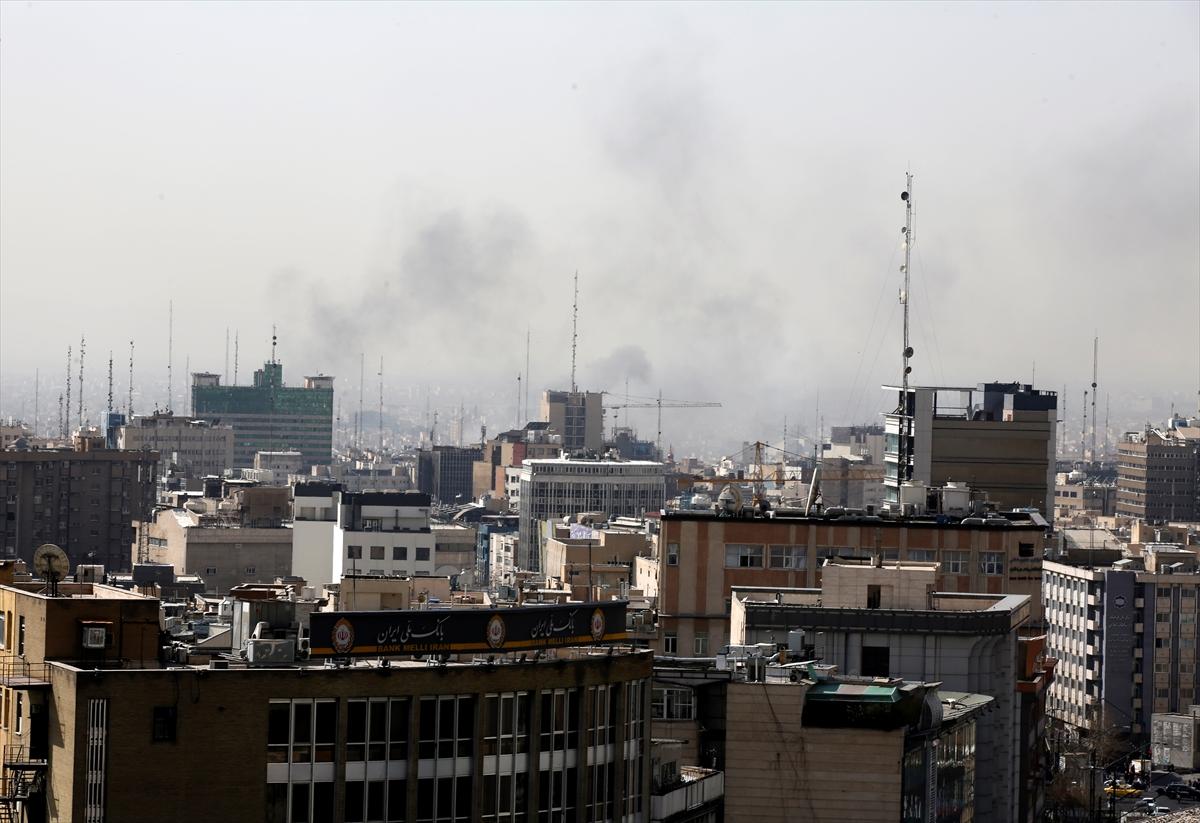
Explosions in Tehran. 28 February 2026 (Anadolu Ajansı)
On 28 February 2026, it was reported that the US naval base in Bahrain had been struck twice as part of Iran’s ballistic missile attacks. According to Iran’s semi-official Tesnim News Agency, the base was targeted as part of the operation launched in response to US and Israeli attacks.
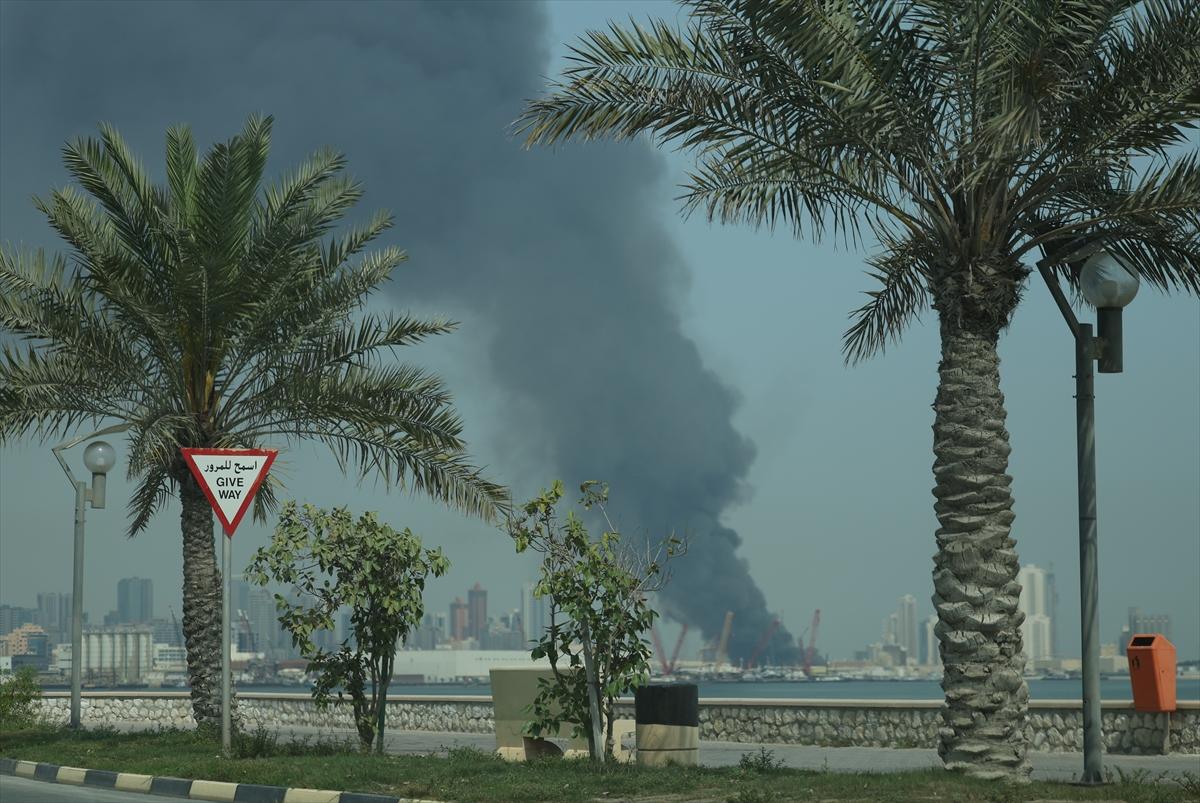
US Base in Bahrain Targeted. 28 February 2026 (Anadolu Ajansı)
Videos released showed dense smoke rising from the area where the base is located. Following the developments, the Bahraini Ministry of Interior issued a statement requesting citizens to use major roads only in essential cases to ensure public safety and enable authorities to manage traffic effectively.
Iran announced it had launched a second wave of ballistic missile attacks against Israel in response to the US and Israeli strikes. Iranian sources reported that dozens of ballistic missiles had been fired toward Israel.
The Israeli military confirmed detection of missile launches from Iran and stated that air defense systems had been activated. Some missiles were reported to have been intercepted over the skies of Jerusalem, and sirens were activated across the city during the attack.
Qatari Defense Ministry officials announced that a missile originating from Iran had been neutralized in Qatari airspace using a Patriot air defense system. The statement confirmed the missile was destroyed within Qatari airspace.
In response to the incident, the US Embassy in Qatar initiated a “shelter in place, stay in safe areas” protocol for all personnel and advised US citizens in Qatar to follow the same measures.
The Israeli military announced it had conducted strikes against military targets in western Iran under the control of the Tehran regime. The statement indicated that large-scale operations had been carried out and that the targeted sites were military in nature.
It was reported that Israeli Chief of Staff Eyal Zamir held an assessment meeting with senior commanders. The military stated that its forces had been deployed in forward defensive positions across all regions and that combat aircraft continued their strikes on targets in Iran based on intelligence.
According to Iran’s official news agency IRNA, an elementary school in the city of Minab, located in Hormozgan Province, was targeted in the US-Israel attack. Fifty-one female students were killed in the strike.
On 28 February 2026, large crowds gathered at Palestine Square in Iran’s capital, Tehran, to protest the US and Israeli attacks on Iran. Reports indicated that demonstrators had gathered in the square, expressed their opposition to the attacks, and carried various banners.
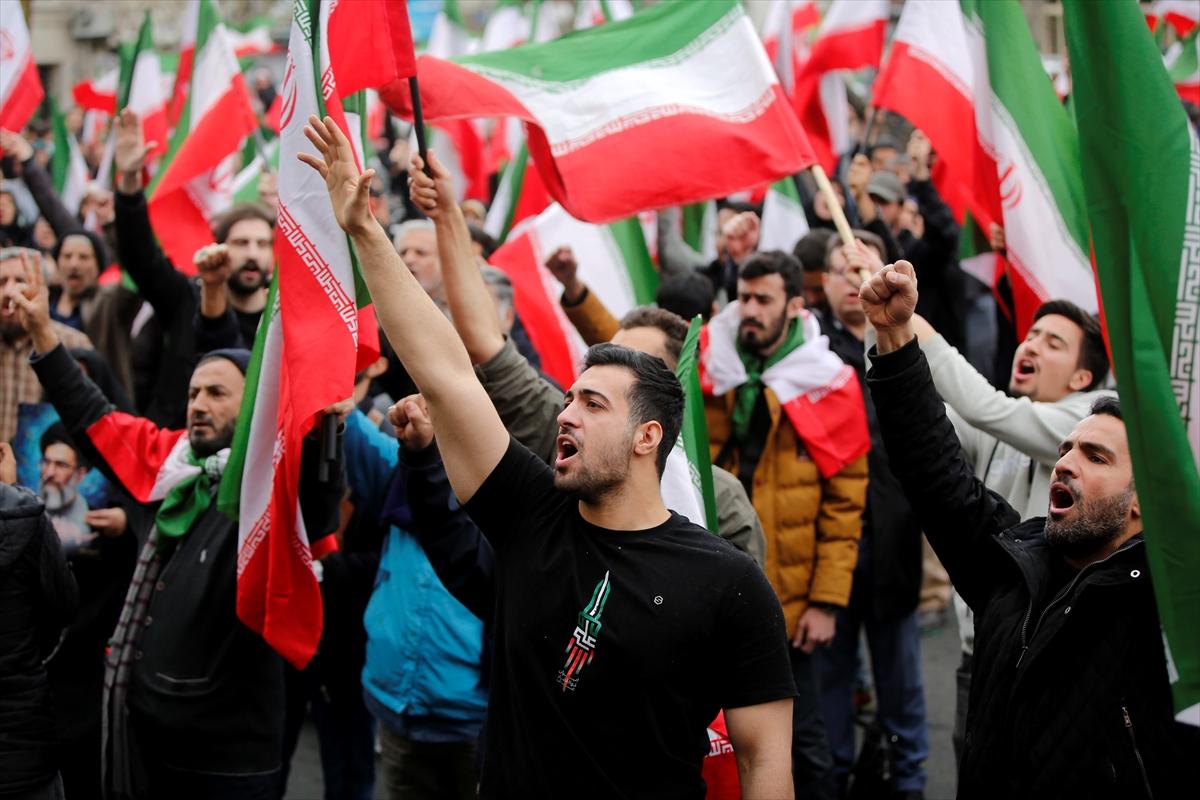
Protest Demonstrations in Tehran. 28 February 2026 (Anadolu Ajansı)
Demonstrators were reported to have chanted anti-US and anti-Israel slogans while holding Iranian flags in the square. Slogans such as “No concessions, no surrender, war against America” were heard. It was also reported that the crowd voiced slogans of support for Iran’s Supreme Leader Ayatollah Ali Khamenei and the Iranian Armed Forces.
Following the declaration of a state of emergency in Israel, national security measures were heightened. The military emphasized that the public must seek shelter due to the security situation. Alarm systems were activated nationwide in anticipation of possible missile launches.
In Iran, schools were suspended until further notice due to the US-Israel attacks. The Iranian Ministry of Interior issued a statement condemning the attacks by Israel and the US, stating: “Israel and the US have once again attacked our homeland in violation of international law while negotiations were ongoing.” The ministry urged the public to remain calm, manage their intra-city and inter-city travel according to current conditions, and announced the establishment of a National Crisis Management Center to address potential issues.
Qatar, Kuwait, and the United Arab Emirates (UAE) announced the closure of their airspace to flights.
It was announced that the Israeli military had called up an additional 20,000 reserve soldiers following the attacks on Iran. The Times of Israel reported that 20,000 reserve soldiers had been mobilized after the US and Israel launched their attacks on Iran.
In Iran’s capital, Tehran, following the US-Israel attacks, it was reported that militia forces affiliated with the Islamic Revolutionary Guard Corps (Basij) began patrolling neighborhoods. Fars News Agency announced that Basij units had begun their duties on the streets of the capital. It was recorded that militia forces in 22 districts of Tehran had commenced patrol operations simultaneously with the US and Israeli attacks.
According to Iranian media reports on 28 February 2026, Iranian President Masoud Pezeshkian was unharmed in the US-Israel attacks. A source close to the presidency, speaking to the semi-official Mehr News Agency, confirmed that Pezeshkian’s health was good and that he had suffered no injuries. It was also alleged that Iran’s Supreme Leader Ayatollah Ali Khamenei had been targeted in the initial Israeli strikes on Iran.
On the same day, early morning hours, it was reported that the US and Israel had conducted an attack targeting areas in Tehran where the presidential office is located. Following the attacks, Iranian media released statements addressing public speculation regarding President Pezeshkian’s condition.
Israel and US Attacks on Iran. 28 February 2026 (ABC News)
Israeli media reported that Iran’s Chief of Staff, Abdorrahim Mousavi, was also targeted in the US-Israel attacks on Iran. Channel 12 television, citing a security source, indicated that the attacks on Iran would last several days.
The report, which claimed the attacks focused on “regime targets and military sites,” also alleged that all senior Iranian leaders, including Chief of Staff Mousavi, were targeted.
Iranian Parliament National Security Council Chairman Ibrahim Azizi stated that his country had not initiated the war but that its conclusion was not in the hands of the opposing side.
In a statement posted on the social media platform X, based in the US, Azizi confirmed Iran would retaliate against Israel’s attack. In Iran’s first official statement regarding the conflict, Azizi said: “We warned you before—you started it, but you will not control its end.”
On 28 February 2026, as Israel continued its attacks on Iran, it was reported that the Israeli military had strengthened its troop deployments along the Lebanon border. Israeli media reported that additional military units had been dispatched to the border and reserve forces had been called up. The increased activity along the border was described as a precaution against possible retaliatory attacks.
As internet outages increased in Iran, Israeli media reported that cyberattacks had been conducted against Iran. Internet disruptions began in Iran in the early morning hours following the US-Israel attacks. Israeli media also reported that cyberattacks had been launched against Iran. After the cyberattacks, access to the official Iranian news agency IRNA’s website was blocked.
On 28 February 2026, Foreign Minister Hakan Fidan held telephone conversations with his counterparts from Iran, Iraq, Saudi Arabia, Qatar, Syria, Egypt, and Indonesia. According to sources at the Ministry of Foreign Affairs, these contacts were made in light of recent developments in the region.
The discussions addressed the military developments that occurred on the same day in the Middle East and evaluated possible steps to end the attacks. The diplomatic contacts were described as consultations aimed at preserving regional stability and reducing tensions.
The Ministry of Foreign Affairs stated: “We call on all parties (US-Israel-Iran) to end the attacks immediately. We express deep concern over any action violating international law and condemn provocations that could escalate violence.”
European Union High Representative for Foreign Affairs and Security Policy Kaja Kallas issued a statement regarding the US and Israeli attacks on Iran. Kallas described the recent developments in the Middle East as “dangerous” and stated that the EU was exploring diplomatic avenues. The statement emphasized that protecting civilians and respecting international humanitarian law were top priorities.
Lebanese President Joseph Aoun stated that protecting Lebanon from potential disasters was an “absolute priority” following the US and Israeli attacks on Iran. In meetings with Prime Minister Nawaf Salam, Transport Minister Fayez Rasamini, US Ambassador to Lebanon Michel Issa, and Lebanese Chief of Staff Rudolph Heykel, Aoun emphasized that “being prepared at the highest level to protect Lebanon and ensuring coordination among all competent institutions and agencies is mandatory.”
Saudi Arabia condemned Iran’s attacks on the United Arab Emirates, Bahrain, Qatar, Kuwait, and Jordan, and denounced actions violating the sovereignty of these countries. In a written statement from the Ministry of Foreign Affairs, Saudi Arabia affirmed its full solidarity with these “brotherly countries” and stated it was prepared to mobilize all available resources to support them in taking any necessary measures.
Qatar strongly condemned Iran’s targeting of its territory with missiles, characterizing the attack as an open violation of its sovereignty and territorial integrity. In a written statement from the Ministry of Foreign Affairs, Qatar stated that Iran’s missile strikes on its territory violated international law and threatened the security and stability of the region.
The Russian Ministry of Foreign Affairs stated that the US and Israeli attacks on Iran violated fundamental international principles and were unacceptable.
Pakistan’s Minister of Foreign Affairs Muhammad Ishak Dar, during a telephone conversation with Iran’s Foreign Minister Abbas Araghchi, strongly condemned the “unjustified attacks on Iran.”
US-Iran-Israel Conflict (2026), a surge in tensions between Iran and the United States in February 2026, is a military conflict that began on 28 February 2026 with Israel’s attacks against Iran. On the same day, US President Donald Trump announced that a “major operation” had been launched against Iran.
On 28 February 2026, Israel announced it had launched a “preventive strike” against Iran. Israeli Defense Minister Yisrael Katz stated in his announcement that the operation was carried out to eliminate threats directed at Israel. Katz declared a state of emergency nationwide and emphasized that the attack had a preventive nature.
The Israeli military issued an emergency alert to the public due to developments in the security situation. The statement urged civilians to identify the nearest shelters, avoid unnecessary travel, and prepare for possible missile attacks. This “proactive warning” was described as intended to prepare the population against potential missile strikes from Iran. By 08:14, sirens sounded across Israel and emergency alerts were sent to all mobile phones.
Explosions in Tehran. 28 February 2026 (Anadolu Ajansı)
Israeli Prime Minister Benjamin Netanyahu claimed that the US-Israel strikes would give the Iranian people the opportunity to determine their own fate. In his statement following the attacks on Iran, Netanyahu stated that the operations were named “Operation Lion’s Roar.”
Netanyahu noted that the US and Israel had recently launched attacks under the claim of eliminating the “existential threat” posed by the regime in Iran and argued that Iran must not possess nuclear weapons. Netanyahu asserted that the US-Israel joint strike would create the necessary conditions for “the brave Iranian people to take their destiny into their own hands.”
Using the phrase “All segments of the Iranian people — Persians, Kurds, Azerbaijanis, Baluchis, and Ahvazis — have reached the time to break free from the yoke of oppression and bring about a free and peaceful Iran,” Netanyahu delivered a message calling for regime change in Iran.
The Iranian Revolutionary Guards announced they had launched a large-scale missile and drone attack against “occupied territories” in response to the US-Israel strikes.
The Islamic Revolutionary Guard Corps issued a written statement, stating: “In response to the aggressive acts of the guilty enemy against the Islamic Republic of Iran, the Islamic Republic of Iran has initiated its first large-scale missile and unmanned aerial vehicle attacks against occupied territories.”
Following the start of the attacks, numerous explosions were reported in Iran’s capital, Tehran. According to the Anadolu Agency correspondent in Tehran, new explosions and detonation sounds were heard in the city. The explosions in the capital continued after the first wave of attacks.
Israel’s Channel 12 television claimed that numerous sites under Iranian government control had been targeted. The Israeli military radio suggested that senior Iranian officials had been targeted in the strikes. According to reports, Israel launched a second wave of attacks against Iran. Allegations regarding the targets of the attacks were reported by Israeli media outlets.
On 28 February 2026, Iran’s Ministry of Foreign Affairs characterized the attacks by the US and Israel as a clear violation of the country’s territorial integrity and national sovereignty and called on the United Nations (UN) to take immediate action.
In a written statement by the ministry, it was stated that the US and Israel had targeted Iran’s defense infrastructure and civilian areas in multiple cities, and emphasized that these attacks occurred while diplomatic talks between Iran and the US were ongoing. The statement added: “We were aware that the US and Israel intended to launch new military attacks. However, we restarted negotiations to make it obvious to the international system and all countries of the world that Iran’s position is just and that there is no legitimate justification for aggression.”
The statement emphasized that the aerial attacks by Israel and the US constituted a clear violation of the UN Charter: “Responding to this attack is Iran’s legal and legitimate right under Article 51 of the UN Charter. The Iranian Armed Forces will utilize all available means and capabilities to resist this criminal attack and eliminate the enemy’s malice.”
The ministry also highlighted the responsibility of the UN and the UN Security Council to take immediate action due to the violation of international peace and security. The statement called on all UN member states, particularly regional and Islamic countries and members of the Non-Aligned Movement, to condemn the aggressive acts.
The statement noted that regional and global peace faced an unprecedented threat and affirmed that the Iranian Armed Forces would provide the necessary response to defend the country’s integrity.
US and Israel’s Attacks on Iran. 28 February 2026 (Al Jazeera)
In the early hours of 28 February 2026, Israeli Defense Minister Yisrael Katz announced that a “preventive strike” had been launched against Iran. In his statement, Katz declared that “a state of emergency has been declared nationwide.” He added: “Israel has launched a preventive strike against Iran to eliminate threats directed at it.”
The Israeli military announced the commencement of attacks against Iran and issued a warning to the public to seek shelters in anticipation of possible missile strikes. The military statement urged civilians to identify their nearest shelters and avoid unnecessary travel due to the security situation. The “proactive warning” was described as designed to prepare the population for missile attacks. At 08:14 on 28 February, sirens sounded across Israel and emergency alerts were sent to all mobile phones.
Explosions in Tehran. 28 February 2026 (Anadolu Ajansı)
On 28 February 2026, new explosions were reported in Iran’s capital, Tehran. Israeli media reported that senior Iranian officials had been targeted in the strikes. Additionally, Israeli reports indicated that the attacks targeted not only Tehran but also the cities of Isfahan, Qom, Kerman, and Kermanshah. The Tehran authorities closed Iran’s airspace entirely following the start of the attacks.
Ibrahim Azizi, Chairman of Iran’s National Security Council, announced that Iran would retaliate against Israel’s attack. In a statement on social media, Azizi said: “We warned you before; you started it, but the end is not in your hands.”
Following reports of explosions in Tehran, hospitals entered emergency mode in the morning. Hussein Kermanipur, spokesperson for Iran’s Ministry of Health, told the official IRNA news agency: “After the sound of explosions, ambulances were dispatched to central areas of Tehran and hospitals were placed on standby. Hospitals have been placed on alert.” The Iranian official stated that further information regarding the number of casualties and affected areas would be provided once details became clearer.
Israeli media claimed that Iran’s Chief of Staff, Abdurrahim Musevi, was also targeted in the US-Israel strike on Iran. Channel 12 television, citing a security source, reported that the attacks on Iran would last several days.
Iranian media reported that President Masoud Pezeshkian was unharmed in the US-Israel attacks. According to the semi-official Mehr News Agency, a source close to the presidency confirmed that President Pezeshkian was in perfect health and had no issues.
US President Donald Trump announced on 28 February that a major operation had been launched against Iran. Trump made a video statement on his social media account regarding the attacks on Iran. Using the phrase “We have launched a major operation against Iran,” Trump stated the following about the operation’s objective:
“Our goal is to defend the American people by eliminating the threats posed by the Iranian regime — a cruel group of violent individuals who directly threaten the United States, our forces stationed abroad, and our allies worldwide.”
US President Trump’s Video Statement on the Attacks on Iran. 28 February 2026 (Anadolu Ajansı)
Trump called on the Iranian Revolutionary Guards, Iranian armed forces, and police to lay down their arms and gain complete immunity, warning: “Otherwise, you will face death.” He emphasized that the US policy was aimed at preventing Iran from acquiring nuclear weapons, stating: “Iran will never be allowed to possess nuclear weapons. Therefore, in June last year, under Operation Midnight Magnet, we destroyed the regime’s nuclear program at Fordo, Natanz, and Isfahan.”
Trump defended that after the June 2025 operation, the US repeatedly warned Iran regarding nuclear weapons and attempted to reach an agreement. Using the phrase “For 47 years, the Iranian regime has chanted ‘Death to America’ and waged an endless campaign of blood and mass murder targeting the United States, its soldiers, and innocent people in many countries.” Trump claimed that Iran-linked elements in the region had continued to attack US forces deployed in the Middle East, as well as naval and commercial vessels and international shipping ports in recent years.
Trump described this situation as “mass terrorism” and stated that the US “will no longer tolerate it.” He labeled Iran as “the world’s number one state sponsor of terrorism” and accused the Iranian government of killing tens of thousands of its own citizens who protested.
Trump stated that Iran’s naval power would be targeted and its missile industry eliminated, emphasizing that the US would not allow Iran-linked elements to destabilize the region or the world. Addressing the Iranian people, Trump said their country’s future lay in their hands and called on them to rise up against the Tehran regime.
Trump said: “The time for your freedom is near. Stay in your shelters. Do not leave your homes. Outside is extremely dangerous. Bombs will fall everywhere until we finish our mission. Take control of your regime.”
Following the US and Israel attacks, on the morning of 28 February, Iranian state media announced that a strong retaliation would be delivered. Iranian officials declared that retaliation against the attacks would be carried out.
Iranian media stated that the attacks would not go unanswered and that a military response against Israel and the US would be provided. Iranian officials conveyed messages indicating that the country’s defense capabilities were active and that necessary steps were being taken.
At around 11:00 on 28 February, Iran launched ballistic missile attacks against Israel. The Israeli military announced that numerous ballistic missiles had been fired from Iran toward Israeli territory. Israel’s air defense systems activated, sirens sounded nationwide, and the public was urged to seek shelters. Alert status was declared in northern regions, including Haifa.
Iran’s initial attacks occurred in waves. After the first wave, Iran launched a second wave of ballistic missile attacks in retaliation for the US and Israel strikes. It was reported that during Israel’s attacks, the cities of Tehran, Isfahan, Qom, Kerman, Tabriz, Bushehr, Kermanshah, and Ilam were targeted.
In a midday statement, the Iranian Revolutionary Guards Corps said: “In response to the aggressive acts of the guilty enemy against the Islamic Republic of Iran, the Islamic Republic of Iran has initiated its first large-scale missile and unmanned aerial vehicle attacks against occupied territories.” At the time of the statement, US and Israeli attacks on Tehran and other Iranian cities were still ongoing.
On 28 February 2026, following the US-Israel attacks, Basij militia forces affiliated with the Iranian Revolutionary Guards Corps began patrolling neighborhoods in Tehran’s capital. Fars News Agency reported that Basij elements had begun their duties on the streets of the capital. According to the statements, militia forces began patrol operations simultaneously in all 22 districts of Tehran in response to the US and Israel attacks. The initiative was described as aimed at enhancing public safety.
Iran’s National Security Supreme Council announced that residents of cities targeted by the attacks, including Tehran, could move to safe zones. The announcement was made public amid ongoing attacks.
On 28 February 2026, the Iranian Revolutionary Guards Corps announced that a US combat support ship had been targeted by missile attacks. The written statement read: “The US MST Combat Support Ship was severely hit by Iranian Revolutionary Guards Navy missiles.” The statement also indicated that other elements of the US Navy would also be targeted by Iranian missiles and unmanned aerial vehicles.
At around 14:00 Turkey time, the Israeli military announced that a new wave of retaliation had been launched from Iran. The announcement stated that after detecting missile launches from Iran, sirens activated in many regions of the country. Air defense systems were reported to have engaged to intercept the missiles, and the public was urged to follow instructions from the Home Front Command.
Later in the day, the Israeli military announced that the 10th wave of missile attacks had been launched from Iran. The statement indicated that the 9th and 10th waves had been detected and that air defense systems were working to identify and intercept missiles fired toward Israeli territory.
The 11th wave of missile attacks was then announced; it was confirmed that missiles fired from Iran were heading toward Israel, alarms activated nationwide, and the public was urged to follow issued instructions. Subsequently, the 12th wave of missile attacks was announced; air defense systems were reported to be working to intercept the missiles. After the launch of the 12th wave, alarms were also triggered in Jordan.
It was reported that debris from one of the missiles fired from Iran toward Israel fell into an open area near residential zones in Amman, Jordan’s capital. Security forces were dispatched to the site to take necessary measures. In the evening, it was claimed that Iran had launched over 200 missiles in retaliation against Israel during the day.
On 28 February 2026, during the US-Israel attacks, the “Sheceretü’t-Tayyibe Girls’ Primary School” in Minab, located in Iran’s Hormozgan province, was targeted by Israel. According to a statement released by the Minab Prosecutor’s Office by Fars News Agency, 85 students were killed in the attack.
Sheceretü’t-Tayyibe Girls’ Primary School in Minab, Hormozgan province, targeted by Israel, resulting in the deaths of 85 students, 28 February 2026 - (Anadolu Ajansı)
Iran Red Crescent spokesperson Mujtaba Halidi stated that more than 20 cities had been targeted in the US-Israel attacks. Speaking to Mehr News Agency, Halidi said: “More than 20 cities were targeted in the attacks that began in the morning. Red Crescent teams are continuing their operations on the ground with all personnel and equipment.”
Later in the day, the Iran Red Crescent reported that, according to initial assessments, 201 people had been killed and 747 injured in the US-Israel attacks.
The Israeli military announced that large-scale attacks had been carried out against Iran’s air defense systems. The military statement indicated that the operations were carried out under intelligence guidance. It was specified that one of the attacks targeted the advanced “SA-65” air defense system located in the Kermanshah region in western Iran.
The Israeli military reported that significant damage had been inflicted on Iran’s air defense systems as a result of these operations. The statement further indicated that the attacks were conducted to ensure and strengthen the Israeli military’s freedom of movement in Iran’s airspace and to weaken the Iranian Revolutionary Guards Corps.
At around 19:00 Turkey time, numerous explosion sounds were heard in Tehran, Iran’s capital. Later, at around 22:00, successive explosion sounds were heard in Tabriz, with six separate explosions reported.
On 28 February 2026, following Iran’s retaliatory attacks against Israel, the conflict spread to the Gulf region.
It was reported that a US naval base in Bahrain had been hit as part of Iran’s ballistic missile attacks. Videos released showed dense smoke rising from the base.
US Base in Bahrain Targeted. 28 February 2026 (Anadolu Ajansı)
Bahrain’s National Communications Center announced that the US Fifth Fleet Service Center in the capital Manama had been struck by a missile attack. The statement indicated that further details would be shared later and urged the public to rely on official sources. Bahrain’s Ministry of Interior called on citizens to use main roads only in essential cases following the developments.
Later in the day, the US Fifth Fleet base in Manama was targeted for a second time. After the attack, air defense systems were reported to have activated, and videos showed smoke rising from the US base.
On the same day, Iran again targeted US bases and facilities in Bahrain in the evening. According to Iranian state television, Iran’s military used kamikaze unmanned aerial vehicles (UAVs) to strike the US base in Bahrain in retaliation for the US-Israel attacks.
The report indicated that other US targets in Bahrain had also been struck. Bahrain’s Ministry of Interior announced that several buildings in Manama had been targeted. The ministry stated: “Some residential buildings in Manama were targeted. Civil Defense teams are continuing firefighting and rescue operations in affected areas.”
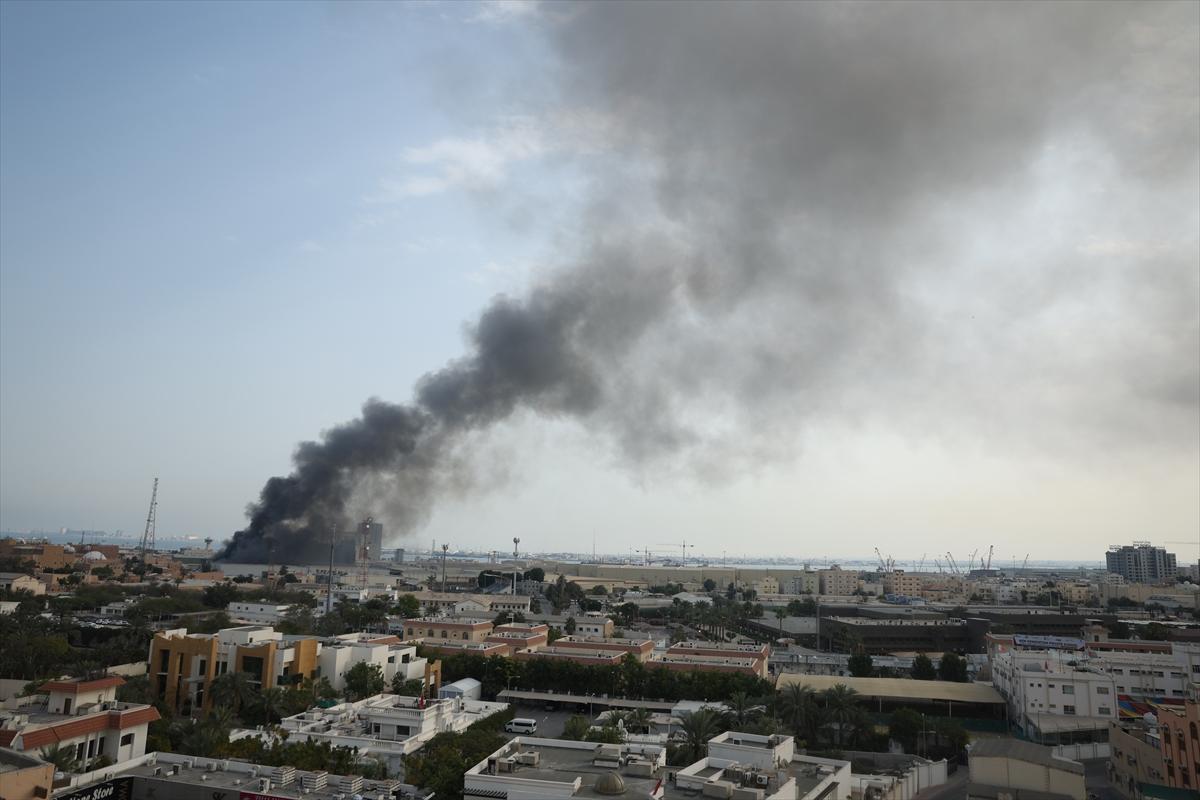
The headquarters of the US Fifth Fleet in Bahrain, targeted by Iran, 28 February 2026 - (Anadolu Ajansı)
Videos shared on social media showed a kamikaze UAV believed to be Iranian crashing into a high-rise building, causing a massive explosion.
Qatar’s Ministry of Defense stated that a missile originating from Iran had been neutralized by its Patriot air defense system in Qatari airspace. The US Embassy in Qatar initiated a “shelter in place, stay in safe areas” protocol for all personnel and advised US citizens in Qatar to follow the same guidance.
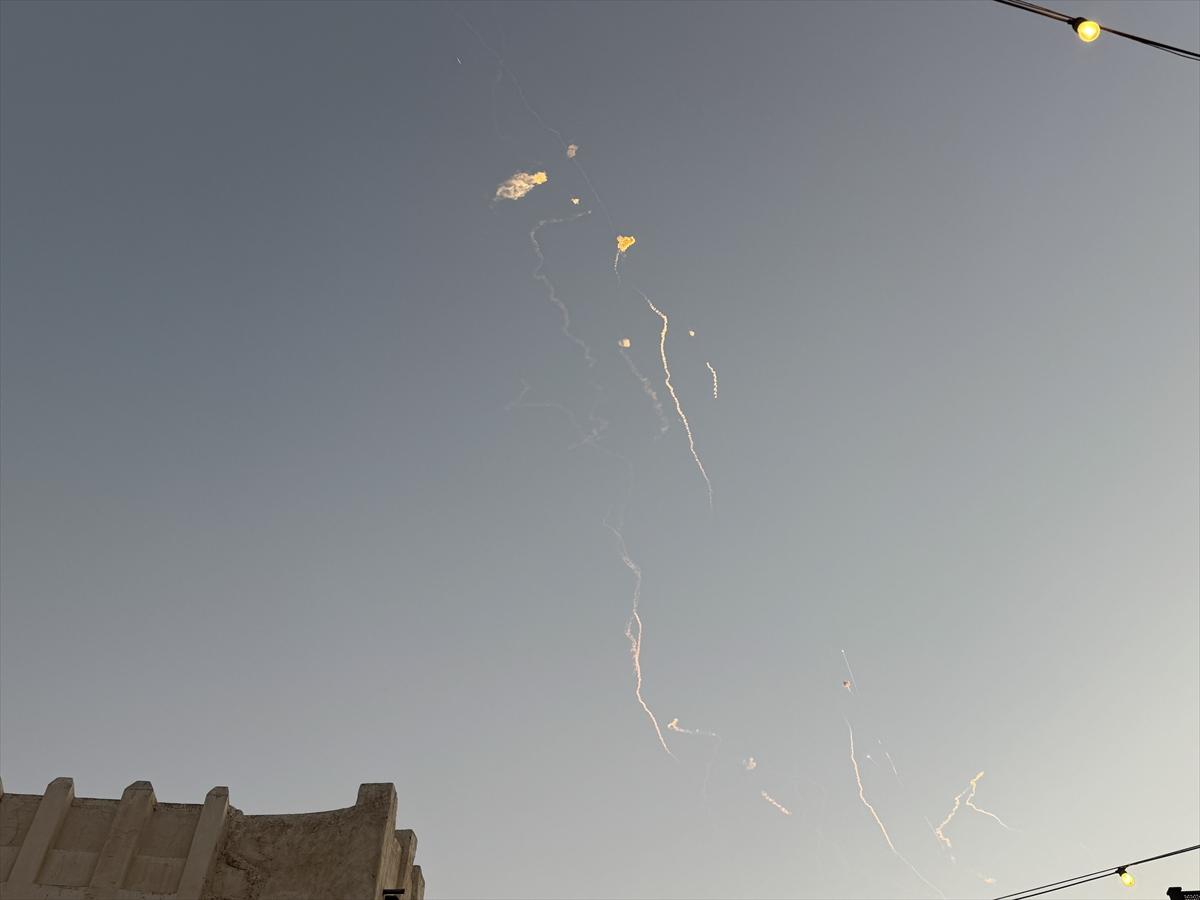
Missile fired from Iran intercepted by Qatar’s defense system, 28 February 2026 - (Anadolu Ajansı)
The statement advised citizens to find a safe location, carry essential supplies, follow local media, and remain in communication. At midday on 28 February, a series of successive explosion sounds were heard in Doha, Qatar’s capital. Qatar’s Ministry of Defense stated that a series of attacks targeting its territory had been “repelled thanks to high preparedness and coordination.”
Qatar’s Ministry of Defense announced that the third wave of attacks had been successfully repelled. In its written statement, the ministry indicated that after detecting the third wave, pre-established operational plans were activated and all missiles were neutralized before reaching Qatari territory.
The statement emphasized that Qatar’s Armed Forces possessed all necessary capabilities to safeguard national security and prevent external threats. Citizens, residents, and visitors were urged to comply with official security instructions, avoid rumors, and obtain information only from official sources. Authorities stated that the security situation remained under control and that the country’s stability was maintained.
At around 17:00, the Iranian Revolutionary Guards Corps announced that it had struck a 5,000-kilometer-range American FP132 radar system stationed in Qatar, specifically designed to track ballistic missiles. A Qatari Ministry of Defense official, speaking anonymously to Al Jazeera, confirmed that an early-warning radar in northern Qatar had been hit. The official reported no casualties or injuries and stated that damage assessments were ongoing.
On the evening of 28 February 2026, a missile struck the city center of Doha, Qatar’s capital. Following the incident, security measures in the city center were heightened.
On 28 February 2026, it was reported that Iran had launched attacks targeting Saudi Arabia’s capital Riyadh and its eastern region. In a written statement from the Saudi Ministry of Foreign Affairs, it was stated that Riyadh and the eastern region had been targeted by Iran and that the attacks had been repelled.
The statement condemned Iran’s “cowardly and unjustifiable” attacks in the strongest terms. It noted that Iran had carried out these attacks despite knowing that Saudi Arabia would not permit its airspace or territory to be used to target Iran. Saudi Arabia emphasized that it would take all necessary measures, including retaliation, to ensure its security and protect its territory and citizens.
Following the US and Israel attacks on Iran, the Jordanian Armed Forces announced that Jordanian fighter jets had conducted routine patrols to ensure the safety of the country’s airspace. A military official stated that sounds heard in various regions of the country originated from air patrols.
The Jordanian Armed Forces also announced that two ballistic missiles targeting Jordanian territory had been intercepted by air defense systems. The official noted that no casualties or damage had been reported. Sirens were heard in Jordan, and the Public Security Directorate under the Ministry of Interior issued warnings to the public on how to respond if foreign objects fell.
By the end of the day, the Jordanian military announced that 36 unmanned aerial vehicles and 13 ballistic missiles targeting the country had been neutralized. The statement did not specify the origin of the attacks but confirmed that 13 ballistic missiles had been successfully intercepted and UAVs had been shot down. Jordanian authorities reported no casualties from the attacks but confirmed material damage had occurred.
The UAE Ministry of Defense announced that the country had been directly attacked by ballistic missiles launched from Iran. Air defense systems were reported to have neutralized the missiles. It was reported that one missile that fell in a populated area of Abu Dhabi caused the death of a person of Asian nationality and resulted in material damage. The statement emphasized that the UAE reserved the right to defend its territory and take all necessary measures.
On 28 February 2026, following Tehran’s retaliatory strikes against the US and Israel’s joint attacks on Iran, explosions were reported in Dubai, United Arab Emirates. Eyewitnesses stated that numerous violent explosions occurred in Dubai. Videos shared on social media showed fires breaking out and dense smoke rising in some areas after the explosions.
Videos were shared showing a missile strike on a hotel in Dubai’s tourist district of Jumeirah, followed by a fire. In a written statement by Dubai Civil Defense, it was reported that a fire broke out in a building in the Palm Jumeirah area simultaneously with Iran’s attacks. The statement indicated that four people were injured and the fire had been brought under control.
In a written statement by the UAE Ministry of Defense, it was stated that new waves of Iranian missiles and unmanned aerial vehicles launched toward the country had been intercepted by air defense systems. The statement indicated that no major material damage had occurred, but fragments of some intercepted missiles and UAVs had fallen in various areas of Abu Dhabi and Dubai.
According to Kuwait’s official news agency KUNA, the Kuwait Civil Aviation Authority announced that all flights to and from Iran had been suspended and canceled. Spokesperson Abdullah al-Raheemi stated that the decision was made in response to the current regional situation and the complete closure of Iran’s airspace.
On the evening of 28 February, it was reported that Kuwait International Airport had been targeted by an unmanned aerial vehicle (UAV). According to KUNA, the Kuwait Civil Aviation Authority confirmed that the airport had been subjected to a UAV attack.
The statement indicated that minor injuries occurred among airport staff and limited material damage had been sustained. The source of the UAV was not disclosed. Iran’s Foreign Minister Abbas Araghchi stated in his remarks that Iran’s response targeting US military bases in the Middle East did not target other countries and that the attacks were limited to military sites.
On the night of 28 February, Kuwait’s Ministry of Health spokesperson Abdullah al-Sened provided information on the injured. According to the official news agency KUNA, Sened stated that 12 people had been injured due to Iran’s attacks on the country throughout the day. Sened noted that one of the injured was in intensive care and under close observation, while the others were under medical monitoring.
Following the Israeli and US attacks on Iran, Iraq suspended all flights to Iran and closed its airspace. According to Iraq’s official news agency INA, the Iraqi Ministry of Transport announced the closure of the country’s airspace. Ministry spokesperson Maytham al-Safi stated: “All Iraqi airspace has been closed to flights, and all air traffic was evacuated beforehand.”
Later in the day, missiles or unmanned aerial vehicles targeting the US base at Erbil International Airport in Erbil, Iraq, were neutralized. Videos shared on social media showed aerial vehicles targeting the US base at Erbil International Airport being intercepted in mid-air.
Erbil International Airport Director Ahmed Hoshyar told local media that flights had been suspended. The Kurdistan Regional Government’s Ministries of Higher Education and Education also decided to suspend classes for four days.
Spokesperson for Iran’s General Staff, Brigadier General Ebrahim Shikari, announced that any base assisting the US and Israel would be targeted by Iran.
The Iranian Revolutionary Guards Corps announced that in response to the US-Israel attacks, US bases in Bahrain, Qatar, and the United Arab Emirates (UAE), as well as Israeli military centers, had been targeted by missiles and unmanned aerial vehicles. The statement said: “Heavy missile and drone attacks were carried out against the US Fifth Fleet Base in Bahrain and other US bases in Qatar and the UAE. Military and security centers at the heart of Israel were also targeted.”
The Hatem al-Anbiya Central Command also stated: “As previously announced, in response to the shameless aggression of the US and Zionist regime (Israel) against Iran, all occupied territories and criminal American bases in the region have been subjected to heavy strikes by Iranian missiles.” It was noted that the Iranian Armed Forces’ operations would continue without interruption “until the enemy is decisively defeated.”
On 28 February 2026, large crowds gathered in Palestine Square in Tehran’s capital to protest the US and Israel attacks on Iran. It was reported that demonstrators who gathered in the square expressed their opposition to the attacks and carried various banners.
Protest Demonstrations in Tehran. 28 February 2026 (Anadolu Ajansı)
Demonstrators were reported to have chanted anti-US and anti-Israel slogans and gathered in the square holding Iranian flags. It was stated that slogans such as “No concessions, no surrender, war against America” were shouted. The crowd was also reported to have voiced slogans of support for Iran’s Supreme Leader Ayatollah Ali Khamenei and the Iranian Armed Forces.
With the declaration of a state of emergency in Israel, national security measures were heightened. The military’s statement emphasized that the public must seek shelters due to the security situation. Alarm systems were activated nationwide in anticipation of possible missile launches.
In Iran, schools were suspended until further notice due to the US-Israel attacks. The Iranian Ministry of Interior issued a statement regarding the Israeli and US attacks on the country: “Israel and the US have attacked our homeland again, violating international law while negotiations were ongoing.” The statement urged the public to remain calm, manage intra-city and inter-city travel according to current conditions, and announced the establishment of a National Crisis Management Center to address potential issues.
Qatar, Kuwait, and the United Arab Emirates (UAE) announced the closure of their airspace to flights.
The Israeli military announced that it had called up an additional 20,000 reserve soldiers following its attacks on Iran. The Times of Israel reported that 20,000 reserve soldiers had been called up following the US-Israel attacks on Iran.
In Tehran, Iran’s capital, following the US-Israel attacks, it was reported that militia forces affiliated with the Iranian Revolutionary Guards Corps (Basij) began patrol duties in neighborhoods. Fars News Agency reported that Basij elements had begun their duties on the streets of the capital. It was recorded that militia forces in all 22 districts of Tehran began patrol operations simultaneously with the US and Israel attacks.
According to Iranian media reports on 28 February 2026, Iranian President Masoud Pezeshkian was unharmed in the attacks carried out by the US and Israel. A source close to the presidency, speaking to the semi-official Mehr News Agency, confirmed that Pezeshkian’s health was good and that he had no issues. It was alleged that during the initial attacks on Iran, Israel had attempted to target Iran’s Supreme Leader Ayatollah Ali Khamenei.
On the same morning, an attack was carried out by the US and Israel against areas in Tehran where the presidential office is located. According to information in Iranian media, the statement regarding President Pezeshkian’s condition was issued in response to public speculation following the attacks.
US and Israel’s Attacks on Iran. 28 February 2026 (ABC News)
Israeli media claimed that Iran’s Chief of Staff, Abdurrahim Musevi, was also targeted in the US-Israel attack on Iran. Channel 12 television, citing a security source, reported that the attacks on Iran would last several days.
The report, which claimed that the attacks on Iran were focused on “regime targets and military sites” and that all senior Iranian leaders were also targeted, alleged that Iran’s Chief of Staff Musevi had been targeted.
Ibrahim Azizi, Chairman of Iran’s National Security Council, stated that the party initiating the war was not Iran, but the end of the conflict was not in the hands of the opposing side.
In a statement on the social media platform X, operated by the US-based company, Azizi confirmed that Iran would retaliate against Israel’s attack. In Iran’s first official statement regarding the war, Azizi said: “We warned you before; you started it, but the end is not in your hands.”
On 28 February 2026, as Israel’s attacks on Iran continued, it was reported that the Israeli military had strengthened its military deployment along the Lebanon border. According to reports in Israeli media, the military had deployed additional military units to the border and called up reserve forces. The increased activity along the border was described as a precaution against possible retaliatory attacks.
As internet outages increased in Iran, Israeli media reported that cyberattacks had been launched against Iran. Internet outages in Iran intensified following the US-Israel attacks that began in the morning. Israeli media also reported that cyberattacks had been launched against Iran. After the cyberattacks, access to the official Iranian news agency IRNA’s website was blocked.
On 1 March 2026, it was announced that Iran’s Supreme Leader Ayatollah Ali Khamenei had been killed in the attack carried out by the US and Israel on 28 February 2026.
In a statement on his Truth Social account, US President Trump confirmed Khamenei’s death, stating:
"Khamenei, one of the worst people in history, is dead. This is justice not only for the Iranian people but also for countless individuals from many countries around the world who were killed or maimed by Khamenei and his bloodthirsty gang. He could not escape our intelligence and our highly advanced tracking systems, and with close cooperation from Israel, there was nothing he or the other leaders killed alongside him could have done. This is the one and greatest opportunity for the Iranian people to reclaim their country. We are hearing that many in the IRGC, the Military, and other Security and Police Forces no longer wish to fight and are seeking immunity from us. As I said last night, “Now they can gain immunity, or later they will only receive Death!” We hope the IRGC and Police will peacefully unite with patriotic Iranians and work together as one unit to restore their country to its rightful greatness. This process must begin soon; because not only has Khamenei been killed, but the country itself has been largely destroyed or even eliminated in just one day. However, heavy and precise bombardment will continue nonstop for the week or as long as necessary to achieve peace in the MIDDLE EAST AND EVEN THE ENTIRE WORLD!
Thank you for your attention to this matter.
PRESIDENT DONALD J. TRUMP"
Shortly afterward, Iranian state television confirmed the death of Ali Khamenei and released a statement saying: “The leader of the Islamic Revolution of Iran has attained martyrdom.” The Iranian government announced a 40-day national mourning period and a 7-day official holiday in response to Khamenei’s death.
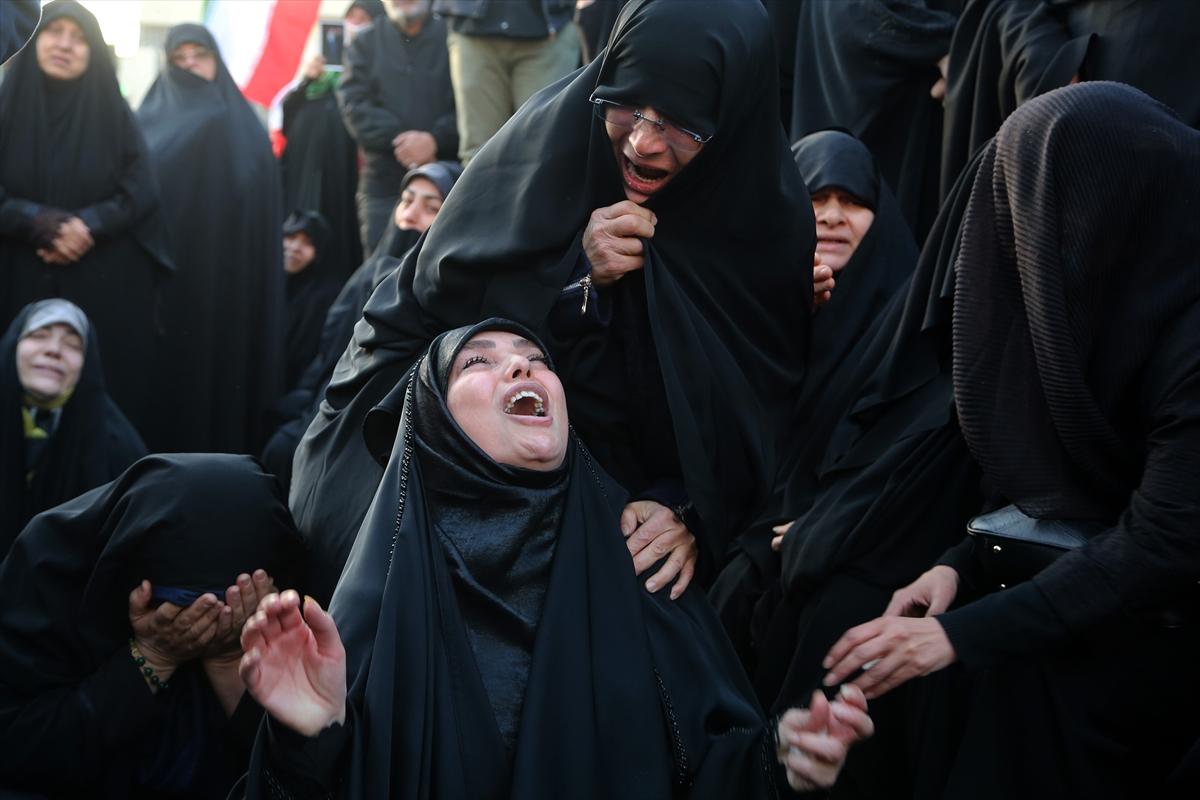
Protests following the death of Khamenei in Iran, 1 March 2026 - (Anadolu Ajansı)
In the statement issued by the Iranian government following the announcement of Khamenei’s death, it was stated that the attack “will not go unpunished” and that the perpetrators and those who ordered it would be “made to repent.” The Iranian Presidency similarly stated that the attack would not be left unanswered.
Iran’s leader’s advisor, Muhammad Muhbir, stated on state television that Article 111 of the Iranian Constitution would be implemented. Muhbir said: “According to Article 111 of the Constitution, upon the death, resignation, or removal of the Leader, the Assembly of Experts is responsible for appointing and announcing a new Leader as soon as possible. Until a new Leader is appointed, a three-member council consisting of the President, the Head of the Judiciary, and a faqih selected by the Guardian Council will temporarily assume the duties of the Leader.”
According to Fars News Agency, which is known for its closeness to the Iranian Revolutionary Guards, citing a source close to Khamenei’s office, some of Khamenei’s family members were also killed in the US-Israel attack. It was reported that in the attack, Khamenei’s daughter, son-in-law, grandson, and one of his daughters-in-law lost their lives, but the names of those killed were not disclosed. No detailed official statement has been issued on the matter.
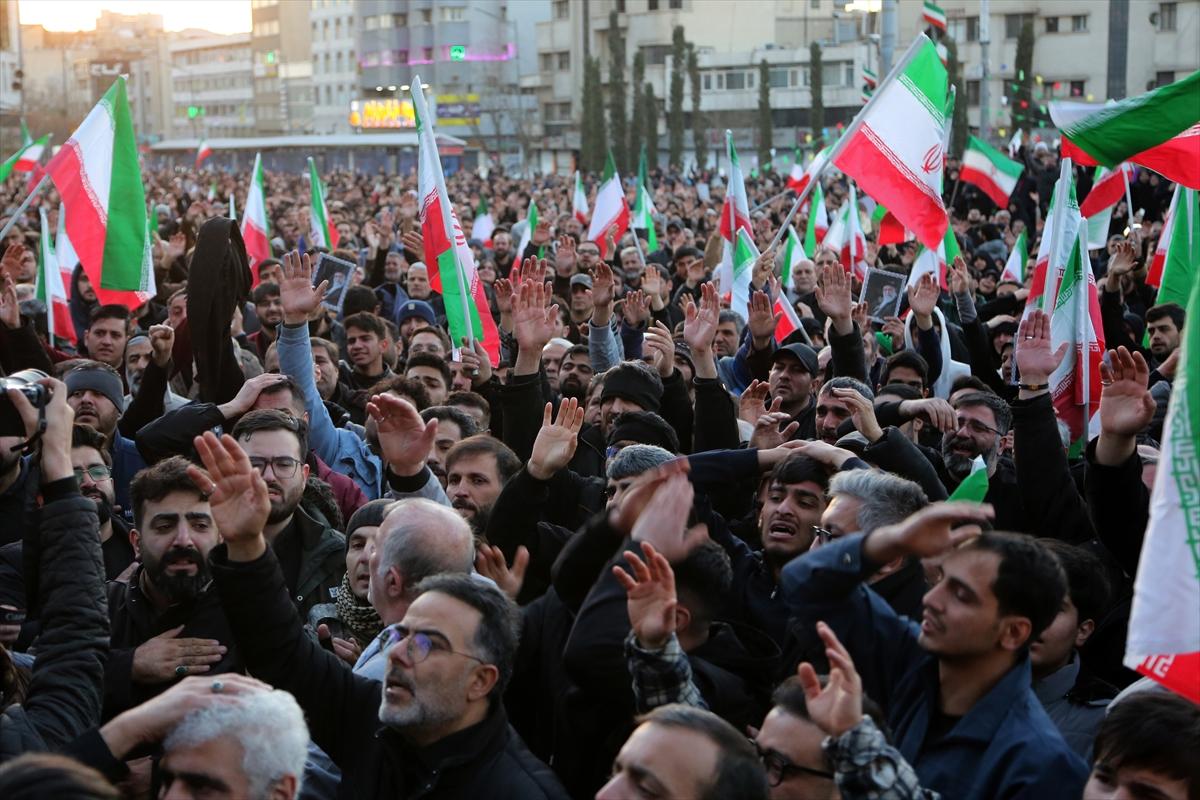
Protests following the death of Khamenei in Iran, 1 March 2026 - (Anadolu Ajansı)
Following the announcement of Khamenei’s death, commemoration and protest demonstrations were held in various cities across Iran. Black flags were raised on the dome of the Imam Reza Shrine in Mashhad. It was reported that people across many cities of the country took to the streets holding Iranian flags.
In Tehran, groups gathered in Revolution Square chanted anti-US and anti-Israel slogans. Hundreds of people gathered at the Hazrat Masume Shrine in Qom to protest against the US and Israel. In Baghdad, Iraq, a group of demonstrators gathered in front of the Green Zone, where the US Embassy is located, to protest Khamenei’s killing. It was reported that demonstrators attempted to enter the Green Zone, and security forces used sound bombs and tear gas.
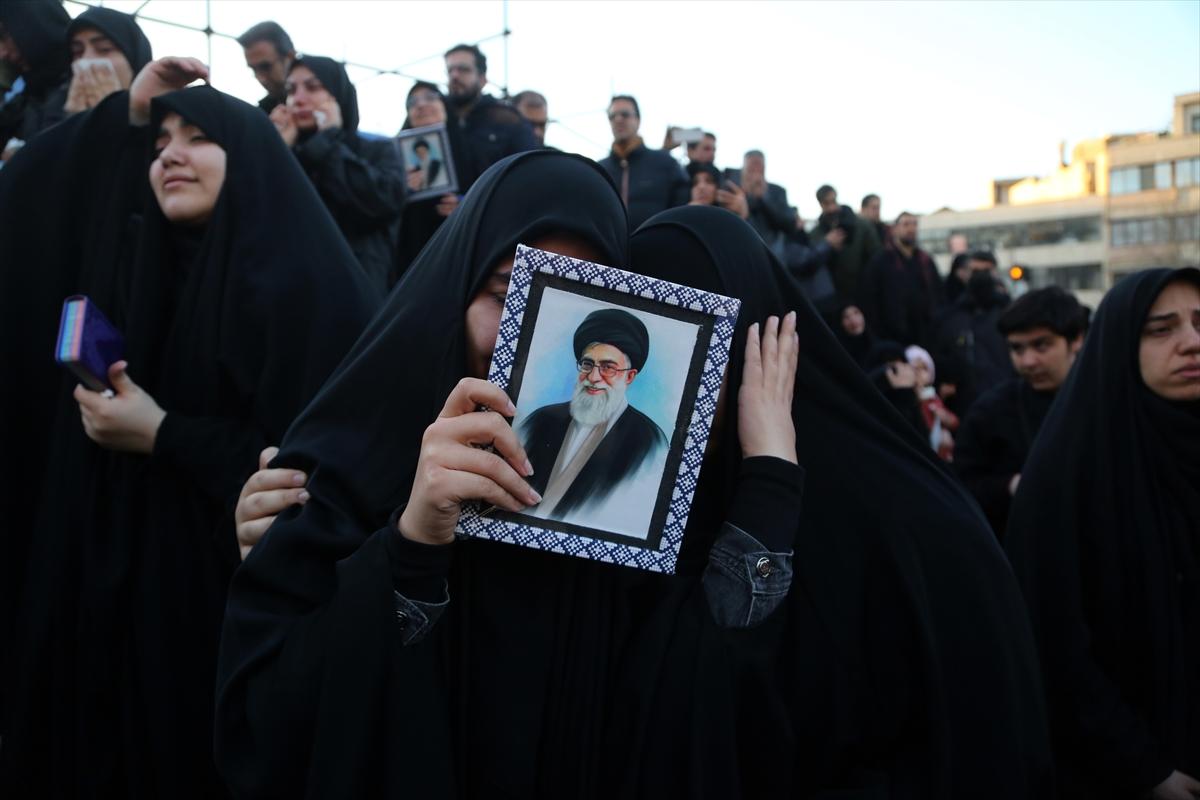
Protests following the death of Khamenei in Iran, 1 March 2026 - (Anadolu Ajansı)
In Yemen, the Houthis (Ansarullah Movement), following the death of Iran’s Supreme Leader Ayatollah Ali Khamenei in the US-Israel attack, announced their full support for Iran. According to the Al Masirah television channel affiliated with the Houthis, the Political Bureau of Ansarullah issued a written message regarding the death of Iran’s Supreme Leader.
In the statement, condolences were extended to the Iranian people, government, and the Islamic world, and it was stated that “Khamenei was the leader of the revolution of the oppressed and a martyr on the path of Jerusalem.” The statement affirmed that “Iran stood with the oppressed, reviving Muslim unity and Islamic values,” and emphasized the Houthis’ full support for the Islamic Republic.
The statement declared that the struggle against the US and Israel would continue without compromise, using the phrase that Khamenei’s blood “would become the fuel of the struggle against oppressors and aggressors.”
On 28 February 2026, Foreign Minister Hakan Fidan held telephone conversations with the foreign ministers of Iran, Iraq, Saudi Arabia, Qatar, Syria, Egypt, and Indonesia. According to information from the Ministry of Foreign Affairs, these contacts were made in light of recent developments in the region.
During the talks, the military developments that occurred on the same day in the Middle East were discussed, and steps that could be taken to end the attacks were evaluated. The diplomatic contacts were described as consultations aimed at preserving regional stability and reducing tensions.
The Ministry of Foreign Affairs stated: “We call on all parties (US-Israel-Iran) to immediately cease their attacks. We express deep concern over any action violating international law and condemn provocations that could escalate violence.”
European Union High Representative for Foreign Affairs and Security Policy Kaja Kallas issued a statement regarding the US and Israel’s attacks on Iran. Kallas described the recent developments in the Middle East as “dangerous” and stated that the EU was exploring diplomatic avenues. The statement emphasized that protecting civilians and respecting international humanitarian law were top priorities.
Lebanese President Joseph Aoun stated, following the commencement of the US and Israel attacks on Iran, that protecting Lebanon from potential disasters was an “absolute priority.” In meetings with Prime Minister Nawaf Salam, Minister of Transport Fayez Rasamini, US Ambassador to Lebanon Michel Issa, and Lebanese Armed Forces Chief Rudolph Heykel, Aoun stated that “it is essential to be at the highest level of preparedness to protect Lebanon and ensure coordination among all competent institutions and units.”
Saudi Arabia condemned Iran’s attacks on the United Arab Emirates (UAE), Bahrain, Qatar, Kuwait, and Jordan and their violations of these countries’ sovereignty. According to a written statement from the Ministry of Foreign Affairs, Saudi Arabia affirmed its full solidarity with these “brotherly countries” and stated that it was ready to mobilize all its resources to support them in any measures they take.
Qatar strongly condemned Iran’s missile attacks targeting its territory, characterizing the attacks as a clear violation of its sovereignty and territorial integrity. In a written statement from the Ministry of Foreign Affairs, it was stated that Iran’s missile attacks on Qatari territory violated international law and threatened the security and stability of the region.
The Russian Ministry of Foreign Affairs stated that the US and Israel’s attacks on Iran violated fundamental international principles and were unacceptable.
Pakistan’s Foreign Minister Muhammad Ishak Dar, in a telephone conversation with Iran’s Foreign Minister Abbas Araghchi, stated that he “strongly condemned the unjustified attacks on Iran.”
ABD News YouTube. “U.S. and Israel have launched a joint strike in Iran, US official says: ABC News Special Report.” Accessed February 28, 2026. https://www.youtube.com/watch?v=O_CupIIZYgg
Al Jazeera English. “Live: Israel launches attacks on Iran; multiple explosions heard in Tehran.” Accessed February 28, 2026. https://www.aljazeera.com/news/liveblog/2026/2/28/live-israel-launches-attacks-on-iran-multiple-explosions-heard-in-tehran
Al Jazeera English. “US, Israel attack Iran live: Trump announces ‘major combat operations’.” Accessed February 28, 2026. https://www.aljazeera.com/news/liveblog/2026/2/28/live-israel-launches-attacks-on-iran-multiple-explosions-heard-in-tehran
Al Jazeera YouTube. “Israel launches attack on Iran, explosions in downtown Tehran.” Accessed February 28, 2026. https://www.youtube.com/watch?v=hQzZUq-NGFI
Anadolu Agency. “İsrail, İran’a saldırı başlattığını duyurdu.” Accessed February 28, 2026. https://www.aa.com.tr/tr/dunya/israil-iran-a-saldiri-baslattigini-duyurdu/3842503
Anadolu Ajansı. "İran Lideri Hamaney, ABD-İsrail Saldırısında Hayatını Kaybetti." Accessed March 1, 2026. https://www.aa.com.tr/tr/dunya/iran-lideri-hamaney-abd-israil-saldirisinda-hayatini-kaybetti/3844367
BBC News Türkçe. “İsrail, İran’a saldırı başlattı: Tahran’da patlama sesleri duyuldu.” Accessed February 28, 2026. https://www.bbc.com/turkce/articles/c70njd4e485o
CNN. “Trump says US launching ‘massive and ongoing’ strikes in Iran.” Accessed February 28, 2026. https://edition.cnn.com/world/live-news/israel-iran-attack-02-28-26-hnk-intl
Euronews Türkçe. “İsrail, İran’a saldırı başlattı.” Accessed February 28, 2026. https://tr.euronews.com/2026/02/28/israil-irana-saldiri-baslatti
TRT Haber. “İsrail, İran’a saldırı başlattı.” Accessed February 28, 2026. https://www.trthaber.com/haber/dunya/israil-irana-saldiri-baslatti-935807.html
On March 1, 2026, the Iran Armed Forces announced new missile and unmanned aerial vehicle (UAV) attacks targeting Israel and U.S. facilities in the region. Some of the missiles launched from Iran were reported to have been intercepted and destroyed in mid-air by Israeli air defense systems. On the same day, the Iranian military declared the launch of new strikes against U.S. and Israeli targets; consecutive explosions were reported in Tehran, Iran’s capital.
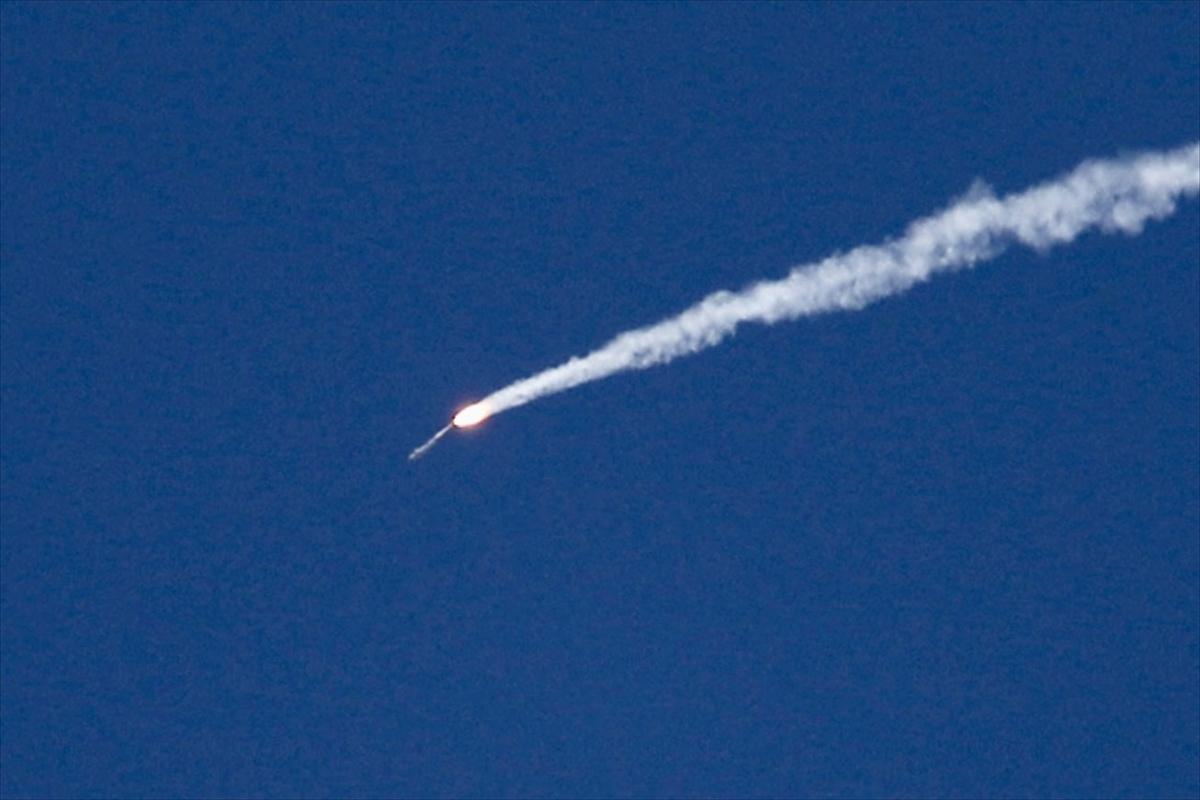
Iran’s retaliatory attacks, March 1, 2026 – (Anadolu Agency)
By 10:00, the Israeli military announced it had detected new missiles launched from Iran. The military statement indicated that air defense systems were attempting to intercept the missiles; after detection of the missile launches, alerts were sent to mobile phones and alarm systems were activated in certain areas. The public was warned not to leave shelters.
Iranian state television announced that Iran’s leader, Ayatollah Ali Khamenei, was killed in U.S.-Israeli strikes. Following this development, demonstrations erupted across many regions of Iran. Crowds gathered in Revolution Square in Tehran, holding Iranian flags and posters of Khamenei, and chanting slogans against the U.S. and Israel. Reports indicated that some individuals expressed grief during the protests.
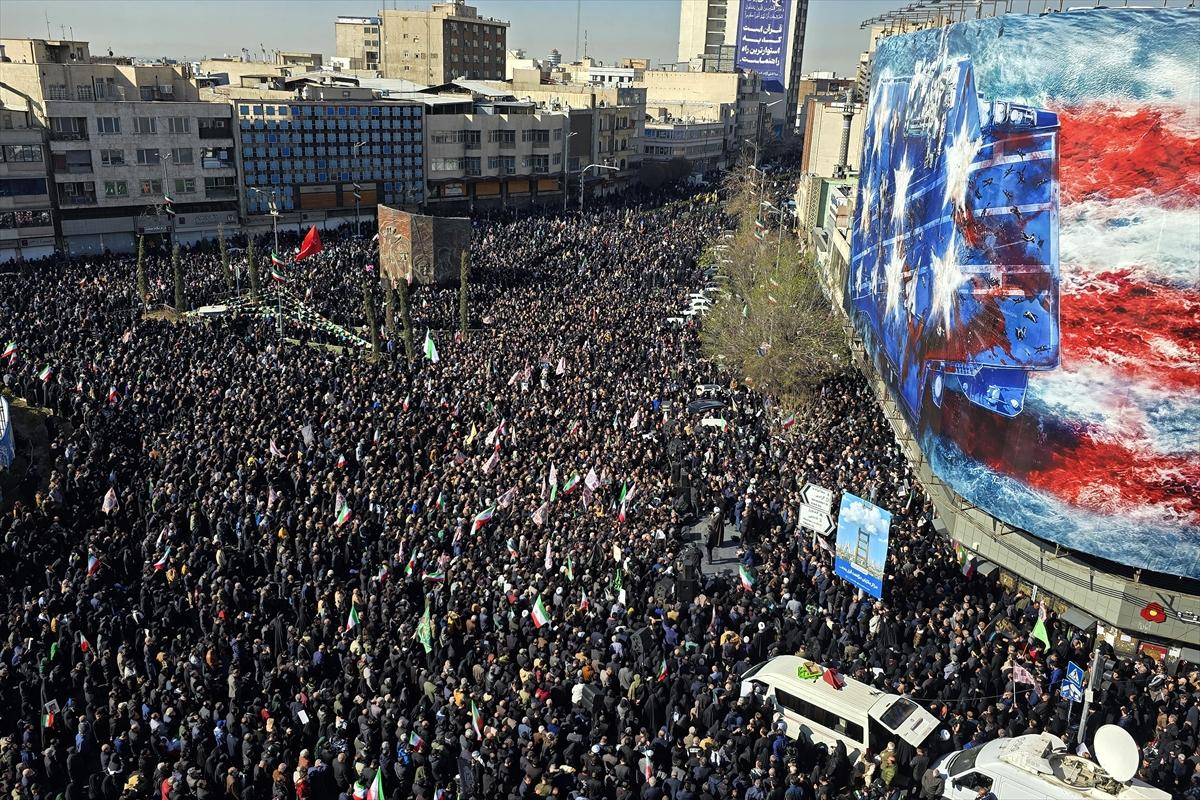
Protests in Tehran after Khamenei’s death, March 1, 2026 – (Anadolu Agency)
Protests also took place in Basra, Iraq, following Khamenei’s death. Iraqi Government Spokesperson Basim al-Awadi stated that Iraq deeply mourned the loss of the Iranian leader and declared three days of national mourning. The statement called for the immediate and unconditional cessation of all military operations, noting that the attacks had negative effects on regional security and stability.
According to an official statement released by Iran’s state news agency IRNA, U.S. and Israeli strikes killed Iran’s Chief of Staff Abdurrahim Musavi, Commander of the Islamic Revolutionary Guard Corps (IRGC) Muhammad Pakpur, Secretary-General of the Defense Council Ali Shamkhani, and Head of Armed Forces Logistics Support Aziz Nasirzadeh. Subsequent reports reaffirmed the deaths of Defense Council Secretary-General and Khamenei’s advisor Brigadier General Ali Shamkhani and IRGC Commander Major General Muhammad Pakpur.
Additionally, it was reported that in joint U.S.-Israeli attacks, one of Khamenei’s daughters, son-in-law, grandson, and daughter-in-law were killed. The names of the deceased family members were not disclosed, and no detailed official information was provided on the matter.
On March 1, 2026, at midnight, the government of Dubai Emirate in the United Arab Emirates announced a fire on the exterior of Burj Al Arab, one of the country’s iconic structures.
In a statement issued via the U.S.-based X platform by Dubai Government Media Office, authorities confirmed that they had neutralized a UAV. The statement indicated that debris falling from the UAV caused a minor fire on the hotel’s exterior.
Civil defense teams quickly responded and brought the fire under control, with no injuries reported.
On March 1 at approximately 03:00 Turkey time, the Dubai government announced a fire at Jebel Ali Port during air defense operations conducted in coordination with Iran’s attacks on U.S. bases in the UAE.
The Dubai Government Media Office stated that debris from air defense operations caused a fire on a pier at the port. No injuries were reported. Dubai Civil Defense teams immediately responded and continued firefighting efforts.
In the early morning hours of March 1, following Iran’s retaliatory strikes against U.S. and Israeli targets, explosions were heard in Dubai. Air defense systems were activated across the city.
Initial statements from UAE authorities did not clarify the nature of the incident. Videos shared on social media showed black smoke rising from an area near Dubai International Airport.
On March 1, 2026, the United Arab Emirates Ministry of Defense issued a statement regarding Iran’s retaliatory attacks launched in response to joint U.S.-Israeli strikes. The ministry reported that the UAE Air Force intercepted 137 ballistic missiles and 209 UAVs launched by Iran from February 28 until midnight on March 1.
The ministry stated that 132 of the 137 ballistic missiles were destroyed, while five fell into the sea. Of the 209 UAVs launched from Iran, 195 were intercepted, and 14 caused material damage.
The statement also noted that shrapnel from intercepted missiles and UAVs fell across various regions of the country, causing minor damage to some civilian sites. UAE authorities condemned Iran’s attacks in the strongest terms, emphasizing that they violated national sovereignty and international law.
It was reported that fragments from UAVs intercepted by Dubai’s air defense system struck the courtyards of two homes, resulting in two people being injured. Medical assistance was provided to the injured, and authorities confirmed that the sounds heard in the area originated from air defense operations.
In Abu Dhabi, debris from an intercepted UAV struck one of the buildings in the Etihad Towers complex. One woman and one child were injured in the building, which houses foreign missions including the Israeli Embassy, and material damage occurred.
The UAE Ministry of Defense announced that two UAVs launched from Iran struck a storage facility at the Al-Salam Naval Base in the capital, Abu Dhabi. The impact caused fires in two containers, which were brought under control by response teams with no loss of life. The statement emphasized that the attack violated national sovereignty and international law.
On March 1, 2026, the UAE Ministry of Foreign Affairs announced it had closed its embassy in Tehran and recalled its ambassador and entire diplomatic mission from Iran. The statement indicated that Iran had conducted attacks targeting civilian areas in the UAE, including residences, airports, ports, and service facilities, violating national sovereignty and international law.
The UAE leadership stated that this decision was a response to aggressive actions threatening the nation’s security and sovereignty, emphasizing that the current situation posed risks to regional security, energy security, and global economic stability.
In a statement issued on March 1, 2026, the UAE Ministry of Defense reported that since the start of Iran’s retaliatory attacks, three foreign nationals had been killed and 58 injured in the UAE.
The statement indicated that 165 ballistic missiles had been launched toward UAE territory, of which 152 were intercepted and 13 fell into the sea. Additionally, 541 UAVs were detected, 506 were destroyed, and 35 reached UAE territory.
On the second day of the attacks, the UAE Air Force intercepted 20 ballistic missiles, while eight fell into the sea. It also engaged two cruise missiles and 311 UAVs, of which 21 struck civilian sites. Shrapnel and munition fragments from interception operations caused material damage in civilian areas.
In the early morning hours of March 1, 2026, Jordan’s Ministry of Interior announced that 73 falling objects and missile fragments had been recorded across the country during Iran’s response to Israeli and U.S. strikes.
In a written statement by Jordan’s Public Security Directorate, civil defense and police units responded to 73 separate incidents since the previous morning. The incidents occurred in Amman, Zarqa, Madaba, Western Balqa, Jaish, Irbid, Aqaba, and the Central Badia regions.
The Public Security Directorate urged the public to follow official directives and to immediately call emergency numbers if any suspicious objects were observed. It emphasized that under no circumstances should anyone approach suspicious objects. Meanwhile, the Jordanian military announced that it had intercepted 49 UAVs and ballistic missiles previously identified as targeting Jordan.
In the evening of March 1, Jordan’s Ministry of Interior announced that 115 incidents involving shrapnel and falling debris from Iran’s retaliatory strikes against Israel and the U.S. had been addressed nationwide. In a written statement by the Public Security Directorate, civil defense and police units responded to incidents caused by falling debris and shrapnel across much of the country since the morning.
The statement reported five injuries from these incidents: four in the Central Badia region and one along the northern border of Irbid. Shrapnel fragments caused material damage to 11 vehicles and 19 homes. The public was urged to follow official directives. Authorities emphasized that under no circumstances should suspicious objects be approached due to high risk.
During the night of March 1 into March 2, it was reported that missile debris fell on a building in the rural area of Ayn Terma near Syria’s capital, Damascus. According to Syria’s official news agency SANA, three people were injured, including two children. Material damage occurred in the area as a result of the falling missile fragments. The incident was attributed to the reciprocal strikes between Israel and Iran.
On March 1, 2026, Bahrain’s Ministry of Interior announced that the Bahrain International Airport had been targeted by a UAV.
In a written statement by the ministry, material damage occurred from the UAV attack, but no casualties were reported. Authorities took necessary measures to secure the site. Bahrain International Airport is located in the country’s second-largest city, Al-Muharraq. On the same day, a kamikaze UAV struck a building on Al-Me’arid Street in the capital, Manama.
On March 1, 2026, as part of Iran’s retaliatory strikes against Israel and the U.S., a kamikaze UAV struck a building on Al-Me’arid (Expo) Street in Bahrain’s capital, Manama.
According to local media reports, smoke rose from the building after the UAV impact. Videos shared on social media showed thick smoke emerging from the struck building and sirens audible in the vicinity. No official confirmation was initially provided regarding casualties or injuries.
In the early morning hours of March 1, 2026, dense smoke was reported rising from a U.S. military base in Erbil, Iraq, following explosions at the site.
According to local sources, the explosions affected the perimeter of the base, and the rising smoke may have resulted from a direct aerial strike targeting military facilities within the base.
The incident followed a claim by the Iraqi Shia group “Seraya Evliya ed-Dem,” which asserted responsibility for a kamikaze drone attack targeting U.S. military facilities in the region.
After the attack, helicopters and UAVs belonging to the “international coalition” were observed conducting intensive operations over Erbil. Security forces implemented extensive security measures around the base.
In the early morning hours of March 1, 2026, following Iran’s retaliatory strikes against U.S. and Israeli targets, a small fire broke out in Qatar’s industrial zone in the capital, Doha.
In a statement by Qatar’s Ministry of Interior, fragments from missile interception operations caused a limited fire in the industrial zone. No casualties or injuries were reported.
On the morning of March 1, 2026, following Iran’s retaliatory strikes against U.S. and Israeli targets, two UAVs attacked Oman’s Dukm Commercial Port.
According to Oman’s official news agency ONA, one UAV struck a migrant worker settlement, injuring one foreign worker. The debris from the second UAV fell into an area containing fuel storage tanks, with no casualties or material damage reported.
At the same time, a Palau-flagged oil tanker named “SKYLIGHT” was attacked off the coast of Hasab Port in Oman’s Musandam region.
According to the Oman Maritime Security Center, the vessel was targeted approximately five nautical miles north of the port. All 20 crew members were evacuated, with four injured and receiving medical treatment. Of the crew, 15 were Indian nationals and five were Iranian nationals.
On March 1, 2026, Kuwait’s Ministry of Defense spokesperson Saud Abdulaziz Al-Atwan announced that numerous ballistic missiles and UAVs targeting Kuwaiti territory had been intercepted following joint U.S.-Israeli strikes and Iran’s retaliatory attacks.
Al-Atwan stated that 97 ballistic missiles and 283 UAVs had been neutralized from the start of Iran’s attacks until March 1. Shrapnel from interception operations fell on Kuwaiti territory, causing minor material damage. According to Kuwait’s official news agency KUNA, one person was killed and 32 injured as a result of the attacks from Iran.
On March 1, 2026, UK Defense Secretary John Healey stated that Iran had launched two missiles toward the Republic of Cyprus (RoC), where British military bases are located, but expressed confidence that the missiles were not aimed at British installations. Healey noted that Royal Air Force jets were operating in the region under “defense capacity.”
Healey said, “The UK will shoot down missiles or UAVs heading toward our allies, such as Qatar and Cyprus.” He noted that approximately 300 British personnel were stationed near a military base in Bahrain, attacked by Iran the previous day, with some located “a few hundred meters from the attack.”
Healey, citing increased Iranian attacks across the Middle East as a threat to British personnel and citizens, expressed concern that these attacks “endanger British personnel and the British public.” He confirmed that two missiles had been fired from Iran toward the RoC, where British military bases are located. John Healey added, “We are very confident these missiles were not aimed at our bases, but this demonstrates how indiscriminate Iran’s retaliation has been.”
When asked whether the UK would shift from defensive operations to offensive actions, Healey replied, “We have not been part of any offensive operations.” He continued:
“We are focusing our efforts on defensive actions. We have done this from the outset, deploying additional radars, aircraft, and other weapon systems to Cyprus and Qatar. Currently, we are conducting flights as part of regional coordination, and all our actions are aimed at defending British interests and protecting our UK allies.”
When asked whether the UK would directly attack Iran, Healey responded: “I will not speculate. Do not expect me to comment on hypothetical scenarios, potential negotiations, or operations.”
Healey stated: “The steps we are taking and will take will always remain within established rules of engagement, continuing to defend our interests and the collective interests of our allies within the framework of international law.”
On March 1, 2026, UK Prime Minister Keir Starmer announced that the U.S. had requested permission to use British bases to target Iran’s missile storage facilities and that the request had been approved. In a video message posted on the U.S.-based X platform, Starmer assessed developments in the Middle East. He noted that approximately 200,000 British citizens were located in countries affected by Iran’s attacks and emphasized that their safety was the government’s top priority.
Starmer stated that British Armed Forces personnel stationed across the region were at risk due to Iran’s actions and described Iran’s behavior as increasingly reckless.
Starmer emphasized that the UK’s decision not to participate in the initial attacks on Iran was a “deliberate choice,” grounded in the belief that the crisis must be resolved through diplomacy and negotiations. He stated that such a solution required Iran to abandon its goal of developing nuclear weapons. However, he added, “Iran’s current actions are harming British interests and placing British citizens and regional allies at serious risk.”
Prime Minister Starmer stated: “British jets are flying as part of coordinated defensive operations successfully intercepting Iran’s attacks. But the only way to stop this threat is to destroy the missiles at their source—in storage facilities or launch ramps. The U.S. has requested permission to use British bases for this specific and limited defensive purpose. We have accepted this request to prevent Iran from killing innocent civilians, endangering British citizens, and striking countries with no involvement in the conflict.”
Starmer stated that the decision was taken to uphold the collective defense of long-standing UK allies and to protect the lives of British citizens. He defended the decision as consistent with international law, affirming that the UK was not participating in offensive operations against Iran but would continue its defensive activities in the region.
During the night of March 1 into March 2, explosions were heard at RAF Akrotiri Base in Southern Cyprus. The UK Ministry of Defense announced that the base had been targeted by a “suspicious UAV” and had responded accordingly.
The statement indicated that force protection levels were at their highest and necessary measures had been taken to safeguard personnel. After the explosions, several fighter jets were observed taking off.
RoC Government Spokesperson Konstantinos Letymbiotis confirmed that a UAV was used and that limited damage occurred. Security protocols were immediately activated, and the situation was being monitored in coordination with British authorities.
The Islamic Revolutionary Guard Corps (IRGC) announced the launch of large-scale missile and UAV attacks against Israel and U.S. targets in the region under the fifth and sixth waves of “Operation Real Promise 4.” The announcement published by Mehr News Agency specified that Tel Nof Air Base, the Israeli military’s general staff headquarters in Tel Aviv, and the defense industry complex were targeted. It also stated that 27 U.S. sites were among the targets.
Additionally, the IRGC’s statement indicated that the MSP vessel, which was transporting munitions to U.S. ships in the Indian Ocean, was struck by four UAVs near Jebel Ali; the U.S. naval base in the Abdullah al-Mubarak region was targeted by four ballistic missiles and 12 UAVs; and the U.S. support vessel of the MST class, refueling in the Indian Ocean, was hit by “Gadr-380” missiles. The operation was declared ongoing.
After the attacks, air defense systems were activated and explosion sounds were heard in Qatar, the United Arab Emirates, Kuwait, Jordan, and Israel. At least one explosion was reported in Dubai, with air defense systems activated. At Zayed International Airport in Abu Dhabi, one Asian national was killed and seven injured.
U.S. President Donald Trump argued that attacks on Iran “facilitated a diplomatic solution.” In an interview with CBS News, he claimed Iran had suffered a heavy blow and that the possibility of a diplomatic resolution had become easier than the day before. Trump stated that if Iran launched a retaliatory strike, it would be met with “unprecedented force.” He assessed Iran’s attacks so far as more limited than expected.
U.S. Defense Secretary Pete Hegseth stated that Iran’s missile production capacity and arsenal would be destroyed and that Iran would not be allowed to acquire nuclear weapons. Hegseth argued that Iran had rejected the opportunity to negotiate and now faced the consequences.
Israeli state television KAN claimed that negotiations with Iran were a “deception and time-buying tactic” intended to prepare for a planned military operation. The report asserted that the operation’s date had been set weeks in advance and that the first strike targeted Iran’s leadership. Israel’s security cabinet confirmed the operation’s goal as “inflicting serious damage on the Tehran regime.”
On March 1, 2026, Ali Laricani, Secretary-General of Iran’s National Security Council, stated that Iran had no intention of attacking regional states. He emphasized that Iran had targeted only U.S. military bases. The statement indicated that any U.S. bases located on the territory of regional countries would be considered targets if used in attacks against Iran.
Laricani stated that these bases were not considered part of the host countries’ territory but rather U.S. military assets. A similar position was expressed by Iran’s Strategic Council on Foreign Relations, which argued that although regional countries had not permitted their territories to be used against Iran, they lacked direct control over U.S. bases and therefore could not prevent the attacks.
On the same day, Iran’s Armed Forces announced new missile and UAV attacks against Israel and U.S. targets in the region. After these attacks, air defense systems were activated and explosion sounds were heard in Qatar, the United Arab Emirates, Kuwait, and Jordan.
On March 1, 2026, it was announced that foreign ministers of Gulf Cooperation Council (GCC) member states would hold an extraordinary meeting due to escalating tensions in the Middle East. According to an unnamed source cited by Qatar-based Al Jazeera, the meeting was conducted via video conference on the same day.
The meeting was expected to occur simultaneously with Israel and the U.S. attacks on Iran and Iran’s retaliatory strikes against regional countries including Qatar, the United Arab Emirates, and Bahrain. Discussions were expected to focus on regional security developments and diplomatic coordination.
On March 1, 2026, the Israeli military claimed that 40 senior Iranian commanders had been killed in U.S.-Israeli strikes targeting Iran. The statement identified Iran’s Chief of Staff, Abdurrahim Musavi, among the deceased.
The statement claimed that immediately after the strikes began, intelligence-guided operations in various parts of Tehran killed seven Iranian leaders. The Israeli military asserted that a total of 40 senior commanders, including top military officials of Iran’s security leadership, had been killed.
The Israeli military also claimed that most of Iran’s air defense systems in the western and central regions had been neutralized and that air superiority had been achieved over Tehran. The statement indicated that the attacks would continue.
In the early morning hours of March 1, 2026, consecutive explosions occurred in Tehran, Iran’s capital. The attacks were concentrated in the northern and eastern parts of the city, with smoke rising from targeted locations. Bombardment sounds were heard across many areas. Iranian authorities did not provide detailed statements on the explosions initially. The Israeli military, however, announced for the first time that it had conducted operations targeting central sites in Tehran.
At the same time, explosion sounds were reported in Tabriz, Kerman, and Urmia. In Mashhad, an explosion occurred near the Imam Reza Shrine at a military unit.
In a written statement issued by the Iranian military at midday, the Iranian Air Force conducted multi-stage air operations against U.S. bases in the Persian Gulf and the Kurdistan Regional Government (KRG) region. Iraqi authorities and the U.S. military did not confirm this claim.
At the same time, the Israeli military announced that it had struck two F-5 and F-4 fighter jets preparing for takeoff at Tabriz Air Base in western Iran. The statement indicated the strike aimed to weaken Iran’s air force capabilities and air defense systems.
Semi-official Tesnim News Agency reported that in the U.S.-Israeli strikes, the head of the Police Intelligence Organization, Major General Gholamreza Rizaian, was killed.
Later in the day, the Israeli military claimed that 40 senior Iranian commanders were killed in joint U.S.-Israeli strikes in Iran. The statement again identified Iran’s Chief of Staff, Abdurrahim Musavi, among the dead.
Israel also claimed that most of Iran’s air defense systems in the western and central regions had been significantly degraded and that air superiority had been achieved over Tehran. Israeli Army Spokesperson Effie Defrin stated that targets included the IRGC headquarters in Tehran and military centers for intelligence and air forces.
On March 1, the Iranian Red Crescent announced that attacks had been carried out around the Peace Building of the Red Crescent and the Hatemul Enbiya, Bihzisti, and Mutahhari hospitals in Tehran. Videos showed the Red Crescent complex engulfed in heavy smoke. By evening, Iranian media reported that the Gandhi Hospital in Tehran had been targeted. The hospital building sustained structural damage and broken windows, and medical staff evacuated newborn babies.
On March 1, 2026, a bombing occurred in Mehran District of Ilam Province, Iran, near the Iraqi border. According to Mehr News Agency, a written statement by the Ilam Border Union Command indicated that an attack was carried out near Imam Khomeini Square at the Mehran Border Battalion.
The statement reported that 22 people were killed, including 11 soldiers, and 21 others were injured. The attack was attributed to U.S. and Israeli elements.
On March 1, 2026, the Israeli military announced that its fighter jets had conducted over 700 sorties against Iran and used thousands of munitions. The statement claimed that “the path to Tehran had been opened” within the last 24 hours and that Israeli aircraft had achieved air superiority over Tehran.
Targets included ballistic missile launchers, command centers, Iranian air defense systems, and command hubs linked to the Tehran regime. The statement also claimed that more than 50 UAVs launched toward Israel since the start of the attacks had been intercepted.
According to The Times of Israel, more than 2,000 bombs were dropped on Iran within the first 36 hours of the attacks. This amount represented approximately half of the total munitions used by Israel during its 12-day war in June 2025. Israeli aircraft were reported to be using direct bomb drops rather than standoff missiles against Iranian targets, aiming to maintain air superiority over Tehran.
On March 1, 2026, at midday, it was reported that the Islamic Revolutionary Guard Corps had launched a new wave of missile and UAV attacks against Israel. The attack was announced by Iranian state television, which confirmed that missile and UAV launches from Iran toward Israel had resumed.
On the same day, a missile launched from Iran struck a building in the town of Beit Shemesh near West Jerusalem. Initial reports stated that six Israelis were killed. The Israeli military announced that search and rescue teams, numerous medical personnel, and helicopters for evacuating the injured had been dispatched to the area. Israel’s emergency medical service, Magen David Adom, reported that many people had been injured.
Later in the day, the death toll was raised to eight, with 28 injured, two of whom were in critical condition. By evening, the updated report stated that the number of dead in the Beit Shemesh attack had risen to nine, with 11 people reported missing. Israeli police stated that 11 people were believed to be trapped under rubble in the area and that search operations were ongoing.
Late at night, a missile launched from Iran struck a road in the Jerusalem region. According to Magen David Adom, six people were injured, five with minor injuries. Videos shared on social media showed the missile creating a large crater on the road and damaging several vehicles.
Pope Francis, Head of the Vatican State, said he was following the developments initiated by U.S. and Israeli attacks on Iran “with deep concern.” Speaking from the window of his office overlooking St. Peter’s Square after his traditional Sunday blessing, the Pope highlighted the dramatic scale of events in the Middle East and Iran.
Pope Francis stated that stability and peace could be built not through mutual threats or weapons of destruction, but through reasonable, sincere, and responsible dialogue. He called on the parties involved to halt the spiral of violence and emphasized the need for diplomacy to resume its active role. He also expressed concern over the conflict between Pakistan and Afghanistan and urged the parties to return to dialogue.
On March 1, 2026, Somalia’s Ministry of Foreign Affairs and International Cooperation condemned Iran’s attacks on several Arab countries. In a written statement, the ministry stated that Iran’s series of attacks and violations targeting Arab nations constituted serious and clear violations of their sovereignty. The Federal Republic of Somalia declared its opposition to actions targeting the sovereignty of regional countries.
Chinese Foreign Minister Wang Yi issued a statement regarding U.S. and Israeli attacks on Iran and the killing of Iran’s leader Ayatollah Ali Khamenei. According to a statement from China’s Ministry of Foreign Affairs, Wang discussed the developments during a phone call with Russian Foreign Minister Sergey Lavrov.
Wang Yi stated that conducting attacks on Iran while negotiations were ongoing violated international law and fundamental norms of international relations. Using the phrase, “The killing of a sovereign nation’s leader and incitement of regime change are unacceptable,” Wang called on the international community to adopt a clear and firm stance against unilateral actions. He emphasized that the international community must respond collectively to prevent the world from reverting to a “law of the jungle.”
On March 1, 2026, the IRGC Press Office issued its seventh announcement regarding “Operation Real Promise 4.” The statement declared that the U.S. Navy aircraft carrier USS Abraham Lincoln had been targeted by four ballistic missiles.
The statement included the phrase: “As a result of the attack on enemy targets, the U.S. Navy aircraft carrier USS Abraham Lincoln was struck by four ballistic missiles.” At the time of the attack, the USS Abraham Lincoln carrier strike group was stationed in the Sea of Oman.
According to a U.S. military statement, three U.S. service members were killed and five others seriously injured in the operation against Iran.
On March 1, 2026, U.S. Central Command (CENTCOM) announced that an Iranian Jamaran-class corvette had been targeted by U.S. forces at the start of the attacks on Iran.
In a statement issued via the U.S.-based X platform, CENTCOM confirmed that the Iranian vessel had been targeted and was sinking off the coast of Chabahar Port in southeastern Iran.
The statement referenced U.S. President Donald Trump’s statement that “Iran’s armed forces, Revolutionary Guards, and police must put down their weapons,” and called on the crew aboard the vessel to “abandon ship.”
On March 1, 2026, the Danish-based container shipping company Maersk announced in a written statement that all vessel transits through the Strait of Hormuz had been suspended until further notice. The statement referenced the security situation following joint U.S.-Israeli attacks on Iran, emphasizing that the safety of crew, vessels, and cargo was the company’s top priority. Delays, route changes, or schedule adjustments were possible for voyages calling at regional ports.
On March 1, 2026, the foreign ministers of the 27 European Union (EU) member states convened via video conference to assess developments related to Iran. The meeting was chaired by EU High Representative for Foreign Affairs and Security Policy Kaja Kallas.
The ministers discussed the U.S. and Israeli attacks on Iran and the killing of Iran’s leader Ali Khamenei, engaging in consultations to determine the EU’s common stance on the crisis. The agenda included potential impacts on energy markets, the preservation of regional stability, and the situation of EU citizens in the region.
Prior to the extraordinary meeting, EU ambassadors (COREPER) held a preparatory meeting and issued messages of support for the region and called for de-escalation. Additionally, it was announced that European Commission members, led by Commission President Ursula von der Leyen, would hold a special security meeting.
Previous statements from EU leadership had called for restraint and emphasized that Iran needed a stable transition process and that the Iranian people should determine their own future.
On March 1, 2026, U.S. President Donald Trump defended the U.S.-Israeli strikes against Iran, stating, “If we hadn’t done this, they would have had nuclear weapons in two weeks.” Trump assessed the strikes for Fox News White House correspondent Jacqui Heinrich, declining to comment on how many American soldiers had been killed but asserting that the U.S. had a clear understanding of how many targets remained in Iran. He stated that U.S. B-2 bombers had targeted Iran’s nuclear facilities.
While emphasizing he was not concerned about the closure of the Strait of Hormuz or oil prices, Trump said, “I’m not worried about anything. I’m just doing what’s right. In the end, everything will fall into place.” He also urged the Iranian people to “take back control of their own future,” asserting that the process was moving rapidly.
On the same day, in a written social media post, Trump announced that nine Iranian naval vessels had been “sunk and destroyed.” Trump said: “I just learned that we have destroyed and sunk nine vessels belonging to Iran’s navy.” He emphasized that some of these were “very large and significant” ships and added, “We are after the rest, and soon they will be at the bottom of the sea!” In the same post, Trump claimed that in another strike, Iran’s naval command centers had been “largely destroyed.”
Al Jazeera. “Live: Israel Launches Attacks on Iran, Multiple Explosions Heard in Tehran.” Al Jazeera. Accessed March 1, 2026. https://www.aljazeera.com/news/liveblog/2026/2/28/live-israel-launches-attacks-on-iran-multiple-explosions-heard-in-tehran
Anadolu Ajansı. "ABD-İsrail Saldırıları ve İran’ın Misillemeleri Sürüyor." Accessed March 1, 2026. https://www.aa.com.tr/tr/dunya/abd-israil-saldirilari-ve-iranin-misillemeleri-suruyor/3844574/
Anadolu Ajansı. "Trump, İran Saldırılarını Savundu: ‘Bunu Yapmasaydık İki Hafta İçinde Nükleer Silaha Sahip Olacaklardı.’" Accessed March 1, 2026. https://www.aa.com.tr/tr/dunya/trump-iran-saldirilarini-savundu-bunu-yapmasaydik-iki-hafta-icinde-nukleer-silaha-sahip-olacaklardi/3845345/
Anadolu Ajansı. "İngiltere, ABD’ye İran’ın Füze Depolarını Vurmak İçin İngiliz Üslerini Kullanma İzni Verdiğini Açıkladı." Accessed March 1, 2026. https://www.aa.com.tr/tr/dunya/ingiltere-abdye-iranin-fuze-depolarini-vurmak-icin-ingiliz-uslerini-kullanma-izni-verdigini-acikladi/3845736/
Anadolu Ajansı. "İngiltere, İran’ın İngiliz Askeri Üslerinin Bulunduğu Kıbrıs Rum Kesimi’ne Doğru İki Füze Fırlattığını Bildirdi." Accessed March 1, 2026. https://www.aa.com.tr/tr/dunya/ingiltere-iranin-ingiliz-askeri-uslerinin-bulundugu-kibris-rum-kesimine-dogru-iki-fuze-firlattigini-bildirdi/3844984/
Anadolu Ajansı. "İran’ın ABD Üslerine Saldırılarında Bahreyn, BAE, Katar ve Umman’da Can ve Mal Kayıpları Yaşandı." Accessed March 1, 2026. https://www.aa.com.tr/tr/dunya/iranin-abd-uslerine-saldirilarinda-bahreyn-bae-katar-ve-ummanda-can-ve-mal-kayiplari-yasandi/3845304/
Anadolu Ajansı. “İran Basını: ABD-İsrail Saldırısında Tahran’daki Gandi Hastanesi Hedef Alındı.” Accessed March 1, 2026. https://www.aa.com.tr/tr/dunya/iran-basini-abd-israil-saldirisinda-tahrandaki-gandi-hastanesi-hedef-alindi-/3845209/
Anadolu Ajansı. “İran, İsrail’e Yönelik Yeni Füze Saldırıları Düzenledi.” Accessed March 1, 2026. https://www.aa.com.tr/tr/dunya/iran-israile-yonelik-yeni-fuze-saldirilari-duzenledi/3844293/
CNN. “US, Israel, Iran Attack Live News.” Accessed March 1, 2026. https://edition.cnn.com/world/live-news/us-israel-iran-attack-03-01-26-intl
The Guardian. “US-Israel war on Iran live.” Accessed March 2, 2026. https://www.theguardian.com/world/live/2026/mar/02/us-israel-war-iran-live-updates-attacks-strikes-tehran-lebanon-beirut-hezbollah-dubai-latest-news
An analysis published by the American newspaper The New York Times suggests that Israeli Prime Minister Benjamin Netanyahu played a decisive role in convincing U.S. President Donald Trump to pursue military action against Iran. The analysis is based on assessments from unnamed American Israeli and Iranian officials.
The report states that during a closed-door meeting between Trump and Netanyahu in the Oval Office on February 11, military options and a potential attack schedule against Iran were discussed. It is noted that Netanyahu argued for ending diplomatic negotiations and encouraged Trump to consider military intervention against Iran.
The analysis also indicates that Trump’s growing “confidence” following the military operation against Nicolás Maduro in Venezuela influenced his decision-making process. During a meeting at Trump’s Mar-a-Lago residence in December, Netanyahu sought approval for strikes on Iran’s missile bases, and it is assessed that a broader joint military engagement was subsequently arranged.
It is reported that Vice President JD Vance initially adopted a cautious stance but has recently strongly supported military action. During meetings in the White House Situation Room, Chairman of the Joint Chiefs of Staff General John Caine reportedly presented two options: a limited strike and a large-scale campaign targeting the regime.
It is noted that Republican figure Tucker Carlson opposed war during a meeting with Trump in the Oval Office, highlighting risks related to energy prices the safety of U.S. troops and regional balances. The analysis also states that the CIA identified Iranian leader Ali Khamenei’s location and relayed the information to Israeli intelligence, and that the subsequent operation was carried out by Israel.
On March 3 U.S. Secretary of State Marco Rubio argued that Iran poses an “urgent and imminent threat” to both the United States and Israel. In remarks to Congress he indicated that military operations could continue.
Rubio stated that the U.S. military had not yet delivered its “hardest strike” and warned that the next phase would be more difficult for Iran. He did not provide a specific timeline for operations but emphasized that achieving the designated military objectives was the priority.
U.S. Secretary of State Marco Rubio. March 3 2026 (Anadolu Agency)
Rubio claimed that Iran produces approximately 100 ballistic missiles per month and declared that eliminating Tehran’s ballistic capacity is one of the primary objectives. In response to a question about regime change he stated that the main goal is to deprive Iran of the ability to threaten the United States with ballistic missiles in the future.
On March 3 2026 following a congressional meeting U.S. Secretary of State Marco Rubio told reporters that Iran poses an “urgent and imminent threat” to both the United States and Israel. Defending the military operations launched by the United States and Israel against Iran Rubio stated “The U.S. military has not yet delivered its hardest strike. The next phase will be more difficult for Iran than the current one.”
Rubio acknowledged that the United States was aware of Israel’s plans to attack Iran. He stated that the U.S. anticipated Iran would retaliate against the United States if Israel targeted it and therefore adopted a “proactive defense” approach.
Rubio did not provide a specific timeline for military operations but affirmed that objectives had been identified and operations would continue until they were achieved. Emphasizing that one of the main goals of the attacks against Iran is to eliminate Tehran’s ballistic missile capacity Rubio claimed that Iran produces approximately 100 missiles per month. He also asserted that Iran’s air defense missile production capacity is limited to 6 to 7 units per month.
In response to a question about regime change in Iran Rubio stated that the United States’ priority is not regime change but the elimination of Iran’s ballistic missile capacity and added “A year from now whoever governs the country will not have these ballistic missiles that threaten us.”
On the morning of March 3 U.S. President Donald Trump defended his 2018 unilateral withdrawal from the 2015 Joint Comprehensive Plan of Action (JCPOA). Trump claimed that if the agreement had not been abandoned Iran would have acquired nuclear weapons three years ago. He described the deal as a “terrible and dangerous collaboration” and blamed former U.S. President Barack Obama and ex-President Joe Biden. The JCPOA is a multilateral agreement signed in 2015 under which sanctions against Iran were eased in exchange for restrictions and monitoring of its nuclear activities.
Trump stated that U.S. ammunition stockpiles are at historically high levels. He noted that the inventory of medium and high-grade munitions has never been this high before. He asserted that U.S. weapons stockpiles are nearly unlimited and that wars can be sustained for long periods.
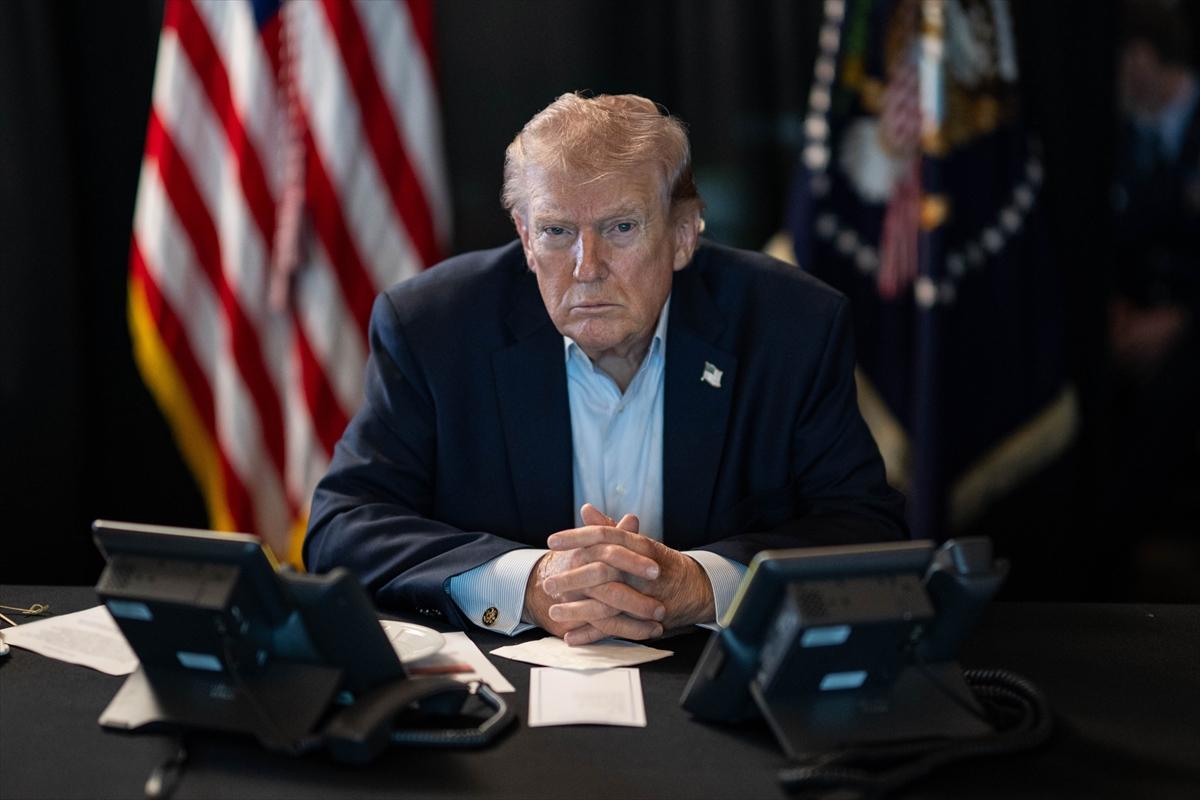
United States President Donald Trump - (Anadolu Agency)
On the evening of March 3 2026 Trump responded to questions from reporters during a meeting with German Chancellor Friedrich Merz in the Oval Office of the White House in Washington. Trump rejected assessments that the United States was dragged into war with Iran by Israel.
In response to questions about claims that the United States joined military operations against Iran under Israel’s direction Trump replied “No.” and added “In fact I may have pressured them (Israel). My view was that they (Iran) would strike first. If we did not strike they would strike. They would launch the first attack. I was very confident about this.”
Trump said he believed Iran would likely launch the first strike and therefore the attacks were preemptive. He noted that Israel was already prepared for operations and added “If I did anything I may have pressured Israel but Israel was already ready. We were ready too. We created a very strong impact because almost everything they had was destroyed.”
Trump also claimed that Iran’s air defense systems its navy and various military capacities were heavily targeted in the attacks. During the same remarks he addressed debates over U.S. access to military facilities in some European countries. Responding to claims that Spain denied the United States use of its bases Trump said “Spain said we could not use their bases but that is not true. We can use their bases if we want. No one can tell us not to use their bases.”
Trump also raised the possibility of sanctions against Spain in relation to economic ties stating that he had instructed U.S. Treasury Secretary Scott Bessent to cut off commercial relations with the country. Trump said “Spain is currently in a terrible state. I told Scott to cut off all commercial relations with Spain.” He also called on European countries to provide greater support to the United States and Israel regarding Iran.
Trump argued that although oil prices rose briefly after the U.S. and Israeli attacks on Iran they would fall again once the conflict ended. “Even if oil prices remain high for a while they will drop as soon as the conflict ends and I believe they will fall even lower than before,” he said.
Iran’s Foreign Minister Abbas Araghchi labeled the U.S. military operation against Iran as a war conducted on behalf of Israel. Araghchi argued that there was no direct threat from Iran to the United States.
In response to U.S. Secretary of State Marco Rubio’s statements Araghchi blamed the “Israel first” approach for the bloodshed of both American and Iranian soldiers in the clashes. He affirmed that Iran would defend its sovereignty and did not seek war.
According to reports in the U.S. media on March 3 2026 all American soldiers killed during the attacks on Iran died as a result of attacks in Kuwait. A U.S. official speaking to CBS News and another source with knowledge of the matter confirmed that all six U.S. soldiers killed in Iran’s retaliatory strikes were in Kuwait.
Sources speaking on condition of anonymity stated that during Iran’s retaliatory strikes against U.S. targets U.S. military personnel in Kuwait were targeted and six soldiers were killed. The Pentagon has not yet released the identities of the deceased soldiers as the process of notifying families is still ongoing.
In a statement by U.S. Central Command (CENTCOM) large-scale combat operations are ongoing between Iran and the United States. CENTCOM announced that the number of U.S. military personnel killed in the conflict has risen to six after the bodies of two previously reported missing soldiers were recovered.
The U.S. Department of State has urged its citizens in 15 countries in the Middle East to leave due to “serious security risks.” The announcement was made by Undersecretary for Consular Affairs Mora Namdar.
The countries included in the warning are Bahrain Egypt Iran Iraq Israel Palestine Jordan Kuwait Lebanon Oman Qatar Saudi Arabia Syria the United Arab Emirates and Yemen.
On March 3 2026 Iran’s Permanent Representative to the United Nations Said Iravani told journalists at the UN headquarters in New York that Iran’s retaliatory strikes in the region did not target neighboring countries but were limited to U.S. military facilities and bases.
Iravani noted that the U.S. attacks on Iran occurred while diplomatic processes were still ongoing and stated that the Washington administration had launched a second attack against Iran. He asserted that there was no “imminent threat” from Iran to the United States before the war and emphasized that Iran’s nuclear program is for peaceful purposes.
In response to questions about Iran’s strikes in the region Iravani specified that the targets were exclusively U.S. military presence and said “We are not attacking the interests of neighboring countries. We are attacking U.S. facilities and bases which are outside the control of host countries.” He stated that Iran does not seek war or escalation and argued that its actions violate neither the United Nations Charter nor international law while reaffirming Iran’s commitment to defending its sovereignty.
On March 3 2026 Iran’s Defense Ministry Spokesperson Reza Telayi Nik assessed the course of the conflict with the United States and Israel in remarks to the Iranian press. Speaking on a television program Telayi Nik claimed that the U.S. and Israeli attacks on Iran constituted a strategic error.
Telayi Nik stated that at the outset of the attacks the United States and Israel believed that killing Iran’s religious leader Ali Khamenei would collapse the country’s political and military command structure. However he noted that the Iranian military has backup commanders and added “For every commander trained backup commanders have been designated. The enemy will be forced to halt the war in the coming days.”
Telayi Nik stated that since the beginning of the war Iran’s armed forces experienced no problems in their command and coordination structure and asserted that the military balance on the battlefield has shifted in Iran’s favor. He noted that Iranian military units have moved more quickly than during the 12-day conflict with Israel in June 2025 and emphasized that Iran has responded rapidly and intensely to the attacks.
Telayi Nik also stated that Iran has always maintained a positive approach toward neighboring and Muslim countries and argued that if any country allows its military bases to be used against Iran then that country becomes a legitimate target.
The Iranian Red Crescent Society announced that the number of people killed in the military attacks by the United States and Israel on Iran has risen to 787. The written statement from the organization indicated that the death toll had increased by 232 compared to the previous announcement.
According to a statement published by the Tasnim News Agency the attacks targeted 504 locations across 153 settlements nationwide. The statement indicated that some of these targets were civilian and residential areas. It was noted that search and rescue operations are ongoing amid the rubble of damaged buildings. No official data has been released regarding the number of injured.
Israeli Prime Minister Benjamin Netanyahu argued that the military operations against Iran would not lead to a lasting war in the Middle East. In an interview with Fox News he stated that Israel’s military operation would be “swift and decisive.”
Netanyahu claimed that Iran’s current political leadership is in a weak phase and suggested that a change in Iran’s government could pave the way for new regional peace agreements. He noted that this process could create new opportunities for countries such as Saudi Arabia.
Netanyahu asserted that Iran has tried to make its underground nuclear facilities invulnerable and argued that if these facilities had not been targeted now military intervention might become impossible in the coming years. Netanyahu also rejected claims that the United States was dragged into war by Israel.
On March 3 2026 Netanyahu visited the Palmachim Air Base in central Israel where he stated that Israel’s attacks on Iran and Lebanon would continue and be intensified. He confirmed that Israeli fighter jets are continuing operations over Iran and Lebanon. Netanyahu labeled Hezbollah’s attacks on Israel as a “major mistake” and announced that Israel would intensify its strikes against targets in Iran and Lebanon.
On the same day the Israeli military announced that Israeli fighter jets had completed a wave of attacks on Iran’s capital Tehran and the city of Isfahan. The statement claimed that in Tehran the attacks targeted military infrastructure and ballistic missile production facilities while in Isfahan numerous ballistic missile launchers and missile storage sites were hit.
Israeli Defense Minister Yisrael Katz stated that the joint U.S.-Israeli military operations against Iran will continue “as long as necessary.” In a social media assessment Katz reported that the Israeli military conducted nighttime strikes on various targets in Iran’s capital Tehran.
The statement claimed that damage was inflicted on Iran’s missile launch capacity and strategic assets and emphasized the broad scope of the joint U.S.-Israeli attacks. Katz claimed the operations aim to weaken Iran’s military capacity protect the U.S. and Israeli military presence in the region prevent Iran’s nuclear and ballistic missile production and create conditions for change in Iran’s domestic politics. Katz also stated that operations against Lebanon would be intensified following the attacks on Iran.
The Israeli military announced that a complex housing Iranian state institutions in Tehran had been targeted. According to the statement the Iranian Presidential complex and the Iranian National Supreme Security Council building were struck with numerous munitions.
In addition it was stated that a facility where Iranian officers are trained and various infrastructure sites were also targeted. The Israeli military shared a three-dimensional visual showing the locations struck. Iranian authorities have not issued a simultaneous official statement regarding the scope or damage of the operations.
Ali Muhammad Naini spokesperson for Iran’s Islamic Revolutionary Guard Corps issued a statement warning the United States and Israel that Iran is prepared for uninterrupted attacks. Speaking to the Iranian Students News Agency Naini assessed the U.S. and Israeli attacks on Iran.
Naini stated that “the enemy must be prepared for deterrent and uninterrupted attacks” and emphasized that Iran had completed all necessary preparations for a prolonged war. He claimed that Iran’s defense and offensive capabilities are stronger than during the previous 12-day conflict and asserted that Iran’s initial responses to the latest attacks were more effective than those at the end of the earlier confrontation.
The Iranian military spokesperson also stated that those responsible for the deaths of Iranian leader Ali Khamenei military commanders and elementary school students in Minab will be held accountable and affirmed that Iran will not abandon its pursuit of revenge for these losses.
Alexey Likhachev Director General of Russia’s state nuclear energy corporation Rosatom stated on March 3 2026 that explosions had occurred near Iran’s Bushehr Nuclear Power Plant and that the facility’s safety was at risk. Speaking to journalists in Moscow Likhachev said military targets near the plant had been struck and that the explosions were audible several kilometers away from the plant’s physical protection perimeter.
Likhachev said “There is a threat to the plant because explosions are being heard several kilometers away from its physical protection perimeter.” He noted that the plant itself was not directly targeted but that strikes on nearby military sites had increased security risks.
Rosatom’s Director General also emphasized that if the integrity of the reactor or fuel storage areas at Bushehr were compromised serious environmental consequences could follow. Likhachev warned that “At this moment the movement of radioactive particles with atmospheric events is entirely unpredictable and the entire region is under threat.”
On March 3 2026 the Israeli military claimed in a statement that it had conducted an attack on the secret Min-Zedai facility which it alleges is part of Iran’s nuclear weapons development program. Israeli Defense Forces Spokesperson Ella Waweya in a video statement posted on X platform defended the use of aerial strikes against various targets to damage Iran’s military nuclear capacity.
In her statement Waweya claimed that despite suffering heavy damage Iran’s nuclear weapons group has not halted its military activities and continues to develop the capacity for nuclear weapons. She alleged that Iran has moved its nuclear infrastructure underground to protect it from aerial attacks.
According to the Israeli military the Min-Zedai facility hosts a group of nuclear scientists focused on developing a key component of the nuclear weapons system. Waweya claimed that Israeli intelligence had monitored the scientists’ activities for a long time and after identifying the location of their meetings the complex was targeted.
On March 3 2026 the Israeli military claimed that since the start of the joint U.S.-Israeli attacks approximately 4000 munitions have been used in operations against Iran. The military stated that in the past 24 hours hundreds of fighter jets and other aircraft conducted simultaneous strikes in Iran and Lebanon. It was claimed that hundreds of military sites were targeted and large-scale attacks were carried out against Iran’s missile infrastructure.
The statement also claimed that numerous missile launchers in Iran were targeted and that over 1600 sorties were conducted. The Israeli military claimed that approximately 300 missile launchers were destroyed as a result of these operations.
On March 3 2026 the Iranian Islamic Revolutionary Guard Corps claimed in a statement that a second U.S. THAAD (Terminal High Altitude Area Defense) air defense system deployed in Western Asia had been struck by Iranian missiles.
The Revolutionary Guard’s statement said “The second U.S. THAAD missile defense system in Western Asia was taken out of operational orbit by Iran’s precision-guided missiles.” It was stated that the attack was carried out as part of retaliatory operations in response to the U.S. and Israeli military operations against Iran.
The U.S. military is estimated to have spent approximately $779 million during the first 24 hours of its military campaign against Iran. According to calculations by Anadolu Agency based on data from U.S. Central Command (CENTCOM) and open sources the first-day cost of the operation reached $779.14 million. This amount is said to represent approximately 0.1 percent of the U.S. defense budget for fiscal year 2026.
The operation involved B-2 Spirit stealth bombers F-22 F-35 and F-16 fighter jets F/A-18 aircraft A-10 attack aircraft and EA-18G electronic warfare aircraft. Additionally MQ-9 Reaper unmanned aerial vehicles nuclear-powered aircraft carriers guided-missile destroyers and Patriot and THAAD missile defense systems were deployed. In addition to air assets P-8 maritime patrol aircraft RC-135 reconnaissance aircraft aerial refueling tankers and ground-based HIMARS batteries participated in the operation.
Four B-2 bombers flying nonstop from Whiteman Air Force Base in Missouri struck targets using 907-kilogram Joint Direct Attack Munitions (JDAM). It is estimated that the cost of operating a single B-2 bomber alone is approximately $30.2 million due to its high maintenance requirements and heavy payload capacity. When other fighter jet sortie maintenance and munition costs are factored in this category is estimated to have reached approximately $271.34 million.
Two aircraft carrier groups participated in the operation including the USS Abraham Lincoln and USS Gerald R. Ford. Their accompanying destroyers and littoral combat ships are estimated to have daily operating costs of approximately $15 million. It is estimated that about 200 Tomahawk missiles were used bringing the munition cost to $340.4 million.
When all cost categories are combined the total cost of the U.S. military campaign against Iran on its first day is estimated at approximately $779 million.
The International Atomic Energy Agency (IAEA) confirmed that some damage had occurred at the Natanz nuclear facility in Iran during the attacks by the United States and Israel. In a written statement the agency said satellite imagery revealed new damage to the entrance buildings of the underground section of the Natanz Uranium Enrichment Facility.
The statement noted that the damage was not expected to have radiological consequences. It was also recorded that no additional effects comparable to those observed during the heavy damage sustained in June 2025 were detected in the facility during the current attacks.
On March 3 2026 the Israeli military announced it had launched a new wave of aerial attacks on Iran’s capital Tehran. The Israeli military stated that new operations against targets in Iran had begun.
Israeli Defense Forces Spokesperson Avichay Adraee posted on the social media platform X a map marked in red showing the area around the Iranian Radio and Television Organization (IRIB) compound in the Evin district of Tehran and issued a warning for the area to be evacuated. Adraee indicated that an attack would be carried out in the area shortly.
Following this warning loud explosions were heard in Tehran and the area housing the IRIB was targeted. According to Iranian media reports violent explosions occurred in the vicinity of the IRIB compound. In a statement by the head of the Iranian Radio and Television Organization it was confirmed that the organization continued its broadcasting activities.
Meanwhile the Israeli military announced the initiation of additional intelligence-based attacks on Iran. It claimed that one of Tehran’s communication centers had been targeted. The Israeli military also stated that attacks on Tehran would continue.
On the same morning at least 10 missile strikes were launched by U.S. and Israeli fighter jets against the Pardis and Demavend regions of Tehran. Local media also reported hearing explosions in the city of Isfahan.
Iran and Lebanon’s Hezbollah movement carried out simultaneous retaliatory attacks against Israel’s ongoing assaults. The Israeli military announced that missiles fired from Iran toward various regions of the country had been detected.
Following the attacks alarm systems were activated in northern central and occupied East Jerusalem areas of Israel. It was reported that air defense systems were activated and civil defense instructions were sent to mobile phones.
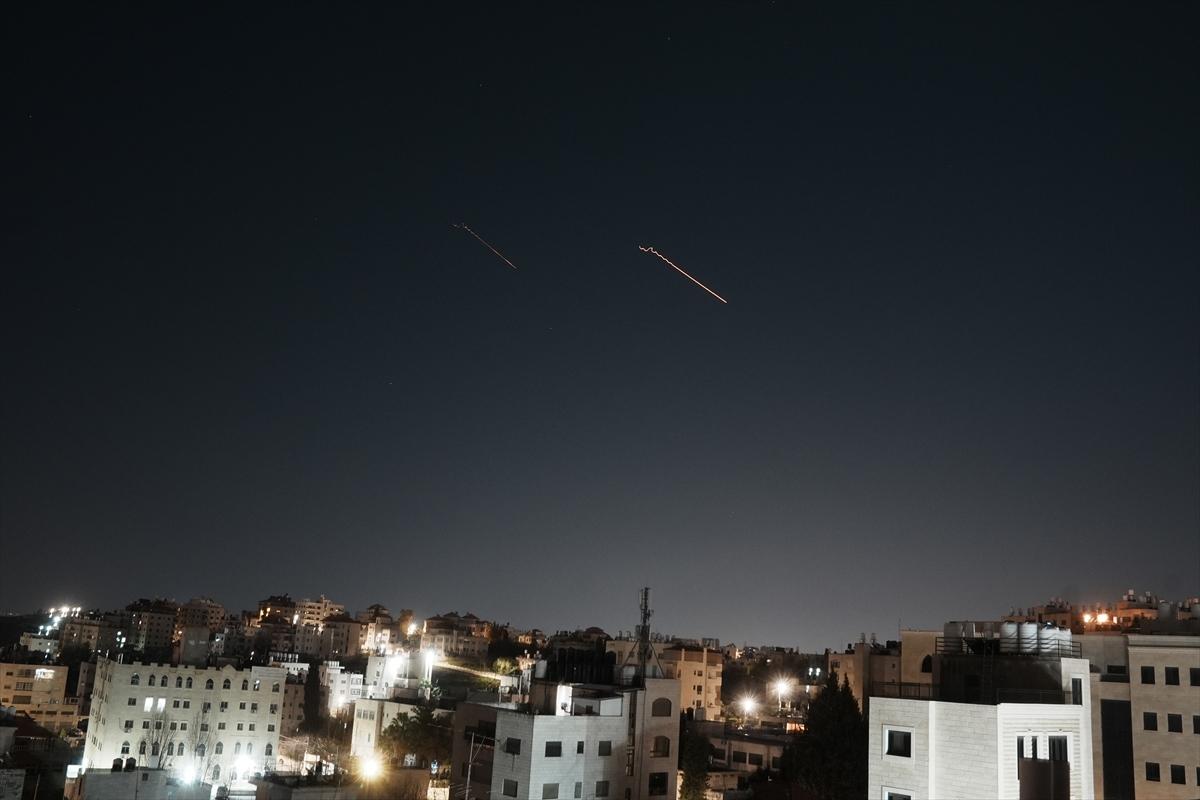
Iranian Missile Attacks on Israel. March 3 2026 (Anadolu Agency)
At least 10 rockets were reportedly launched from Lebanon toward northern Israel. In a statement by Hezbollah it was stated that Israel’s attacks and assassinations would not continue; it was also announced that Israeli strikes had begun targeting Hezbollah command centers and weapons depots in Beirut.
The Israeli military announced that large-scale simultaneous air strikes had been launched against Tehran and Beirut. The statement indicated that the Israeli Air Force conducted operations against targets related to Iran’s leadership in Tehran and Hezbollah elements in Beirut.
The operations were said to target the military infrastructure of Iran and Hezbollah. Technical details regarding the scope of the attacks were not disclosed to the public.
During Iran’s retaliatory attacks on March 3 2026 one person in Tel Aviv Israel was reported injured. In a written statement by Israeli police it was stated that shrapnel from a missile launched from Iran had fallen in Tel Aviv resulting in one person sustaining minor injuries and some property damage.
Channel 12 Television broadcasting in Israel reported that during the latest missile attack wave air raid sirens sounded across northern and central Israel for approximately 40 minutes. On the same day the Israeli military announced that a new missile attack had been launched from Iran toward Israeli territory. The Israeli military stated that missiles launched from Iran had been detected and air defense systems had been activated.
The statement indicated that defense systems were activated to neutralize the threat and that the Home Front Command had sent direct warning messages to residents’ mobile phones in affected areas. Israeli officials urged the public to follow official instructions and to immediately move to secure shelters and remain there until further notice.
According to reports in the Israeli media the Israeli military allegedly killed Davud Alizadeh commander of the Quds Force Lebanon Division of the Iranian Islamic Revolutionary Guard Corps during its attack on Tehran. The report claimed that Alizadeh was assassinated in Israel’s latest air strike.
The Israeli military also claimed in its statement that a senior Iranian commander was killed during the attack on Tehran. However no official details regarding the individual’s identity were released. Additionally the Israeli military claimed on the same morning that Riza Kuzal one of Hezbollah’s commanders in Beirut was killed in an Israeli strike. No official confirmation of these claims has been issued by Iranian authorities.
As part of the U.S. and Israeli operations against Iran a missile strike was carried out on the Kirman Ground Forces Air Base. According to Iranian sources 13 soldiers were killed in the attack.
The attack was said to have targeted military infrastructure. No detailed information was provided regarding the number of wounded. The extent of damage to the base’s operational capacity was not disclosed.
The Iraqi Islamic Resistance Organization announced that it conducted a drone attack on the Victoria military base at Baghdad International Airport which hosts U.S. forces. In its written statement the organization stated that a fleet of unmanned aerial vehicles was used in the attack. No official statement has been issued by U.S. authorities regarding the outcome of the attack.
The Qatari government extended its remote work policy for public employees until further notice due to regional military tensions. It was announced that employees in ministries and public institutions would continue working remotely.
The Qatari government stated that retaliatory attacks attributed to Iran had been intercepted by its air defense systems and that attempts to target Hamad International Airport had been thwarted. Qatari Ministry of Foreign Affairs Spokesperson Majid al-Ensaari stated that the attacks constituted a clear violation of the country’s sovereignty and that missiles and drones had been neutralized before reaching their targets.
Ensaari stated that two Iranian SU-24 fighter jets had entered Qatari airspace and after warnings were issued the aircraft were shot down and their crews were being sought. He noted that the attacks did not remain limited to military targets and that some civilian and industrial facilities were also affected. Over 8000 passengers were reported stranded in transit areas due to the attacks. Qatar affirmed its right to legitimate defense under the Gulf Cooperation Council framework and stated that it was continuing security measures in coordination with the United States.
On March 3 2026 the Iraqi military announced that a locally made unmanned aerial vehicle flying over the Mosul Dam in northern Iraq had been shot down. According to a statement issued by the Security Media Network under the Iraqi Joint Operations Command security forces had neutralized the drone on Monday evening near the Mosul Dam.
The statement indicated that security units were continuing to implement additional security measures to protect strategic and critical infrastructure prevent sabotage attempts and ensure national security.
On March 3 2026 the Iraqi Islamic Resistance Organization announced that it had conducted a drone attack on the Victoria military base located within Baghdad International Airport. In its written statement the organization stated that the Victoria military base housing U.S. troops had been targeted using a fleet of unmanned aerial vehicles.
On March 3 2026 the Kuwaiti Ministry of Defense announced that 27 Kuwaiti soldiers had been wounded since the start of Iran’s retaliatory operations against U.S. and Israeli attacks. According to information published by the Kuwait News Agency the Defense Ministry Spokesperson Brigadier General Saud al-Atwan stated that two of the wounded soldiers were receiving treatment.
Atwan also stated that during Iran’s retaliatory attacks numerous ballistic missiles and unmanned aerial vehicles were detected in Kuwaiti airspace. According to the statement a total of 178 ballistic missiles and 384 unmanned aerial vehicles were detected and intercepted by Kuwait’s air defense systems.
Atwan stated that the Kuwaiti Armed Forces were in a state of high alert and that security units were closely monitoring developments. He also urged citizens and foreign residents to rely only on official sources and to be cautious of unverified news and images circulating on social media.
On March 3 2026 clashes occurred between pro-Iran demonstrators and security forces on Sitra Island in Bahrain. Videos of the incidents between security forces and demonstrators were shared on local media and social media platforms.
Bahraini security forces arrested individuals identified as participating in the pro-Iran protests. In a written statement by the Bahraini Ministry of Interior some individuals were detained for involvement in serious crimes threatening public safety.
The statement also indicated that since the start of Iran’s attacks on Bahrain the Cybercrime Prevention Directorate had identified individuals engaged in activities threatening public safety and had launched operations to apprehend them. Authorities claimed that some of those arrested had used artificial intelligence to generate fake videos showing damage to homes in order to mislead public opinion and create fear among the population.
Meanwhile social media posts claimed that units of the Peninsula Shield Force under the Gulf Cooperation Council had entered Bahrain from Saudi Arabia to support security forces. However no official statement has been issued by Saudi Arabia or Bahrain regarding these claims.
On March 3 2026 it was reported that an unmanned aerial vehicle attacked the Dukm Commercial Port in Oman. According to official agency sources the attack targeted fuel storage facilities at the port and one of the storage tanks sustained damage. No casualties were reported in the incident.
The Omani government condemned the attack and announced that necessary security measures had been taken nationwide. No official statement has been issued regarding the perpetrators of the attack. The incident was assessed as part of developments linked to Iran’s retaliatory strikes against U.S. bases in the region following the U.S. and Israeli military operations launched on February 28 2026.
On the same day the Omani official news agency ONA reported based on security sources that three attempts to launch unmanned aerial vehicles against Omani territory had been thwarted. The statement indicated that two drones were shot down over the city of Zufar and one over the Salalah Port area. No casualties or material damage were reported in these incidents.
On March 3 2026 Iran’s General Staff denied allegations that it had launched attacks against Omani territory. In a written statement Iran’s General Staff stated that its armed forces had not carried out any military attack against Oman which it described as a friendly and neighboring country.
The statement asserted that Iran’s operations in the region did not target specific countries but were limited to U.S. military bases. Iran’s government also denied allegations of an attack on the Ras Tanura oil facility in Saudi Arabia.
Some reports in the Iranian press suggested that the attack on the Saudi oil refinery may have been carried out by Israel rather than Iran. During the same period American journalist Tucker Carlson claimed that Mossad agents had been caught planning bomb attacks in Saudi Arabia and Qatar.
On March 3 2026 the United Arab Emirates (UAE) announced that its air defense systems had been activated and intercepted ballistic missiles launched from Iran. In a statement posted on the social media platform X by the UAE Ministry of Defense it was stated that resistance had been offered against ballistic missiles from Iran. The statement emphasized that the UAE was prepared to respond to any threat to protect its territory and citizens.
On the same day the Iranian Islamic Revolutionary Guard Corps claimed in a statement that a kamikaze unmanned aerial vehicle had been used to attack a location in Dubai UAE housing U.S. troops.
The Revolutionary Guard’s statement said “A drone attack was carried out against one of the gathering points for U.S. terrorists in Dubai UAE.” Based on information allegedly obtained from the battlefield the statement claimed that over 160 members of the U.S. military were present at the targeted location and that at least 40 American soldiers were killed and 70 were wounded in the attack.
On March 3 2026 the UAE Ministry of Foreign Affairs denied claims published by the U.S.-based Bloomberg news agency that the country’s air defense munitions were running low. The ministry’s statement described the claims as “false and misleading” and added: “These claims are baseless and misrepresent the UAE’s high readiness level technological sophistication and operational preparedness.”
The statement also noted that the UAE’s airspace is protected by a multi-layered air defense network comprising long medium and short-range systems and that the country possesses strategic munition stockpiles with long-term interception capacity.
On the same day it was reported that a fire broke out at the Fujairah Port and the Fujairah Oil Industry Zone (FOIZ) in the UAE after debris from an intercepted unmanned aerial vehicle struck the area.
According to a statement by the Fujairah Press Office air defense systems intercepted a drone launched from Iran and debris from the downed drone caused a fire in the oil industry zone. The fire was quickly brought under control and no injuries were reported.
In another statement by the press office it was reported that debris from another intercepted drone caused a major fire at Fujairah Port. Civil defense teams intervened to extinguish the fire and no casualties were reported.
On March 3 2026 it was reported that a drone attack was carried out on the U.S. Consulate complex in Dubai UAE. According to a statement by Dubai’s Media Office a small fire broke out at the consulate complex.
The statement indicated that the fire was quickly brought under control and no injuries were reported. No official information was provided regarding the origin of the kamikaze drone responsible for the attack.
Following the military clashes that began on February 28 2026 between the United States Israel and Iran many countries initiated evacuation operations or modified diplomatic mission activities to ensure the safety of their citizens in the region. While some countries organized air and land evacuation operations for their citizens others decided to temporarily or permanently close their embassies in the region.
On March 3 2026 French Foreign Minister Jean-Noël Barrot announced that preparations were underway to evacuate French citizens due to rising military tensions in the Middle East. In remarks to BFMTV Barrot stated that approximately 25 000 French citizens had contacted the French Ministry of Foreign Affairs and that evacuation plans were being coordinated with French embassies in the region.
Barrot stated that evacuation flights would prioritize “vulnerable” individuals unable to travel independently. It was also revealed that approximately 400 000 French citizens live in areas affected by Iran’s retaliatory strikes.
On March 3 2026 the South Korean government announced that it had begun evacuating its citizens from Iran via land routes. According to information from the Yonhap news agency the South Korean Ministry of Foreign Affairs stated that citizens in Iran were moving overland to a third country. Among those evacuated were Lee Do-hee the South Korean head coach of the Iranian Women’s National Volleyball Team and footballer Lee Ki-je who plays for an Iranian club. It was stated that approximately 60 South Korean citizens reside in Iran.
On March 3 2026 the Ghanaian government announced that it had permanently closed its embassy in Tehran due to rising security risks in the region. In a statement by Ghana’s Foreign Minister Samuel Okudzeto Ablakwa it was stated that embassy operations would be suspended “until further notice.”
Ablakwa confirmed that all embassy staff had been safely evacuated and that diplomats were secure. The decision was made in response to security risks following the U.S. and Israeli attacks on Iran.
On March 3 2026 the Uzbekistani government announced that it had evacuated 13 of its citizens from Iran via Turkmenistan. According to information from Dunyo News Agency under the Uzbek Ministry of Foreign Affairs the evacuation was conducted in coordination with Uzbekistan’s embassy in Ashgabat diplomatic missions in Iran and Turkmenistani authorities.
The evacuated Uzbek citizens were transported across the Iran-Turkmenistan border crossing into Uzbekistan. The Uzbek Ministry of Foreign Affairs also advised its citizens to monitor official sources maintain contact with diplomatic missions and postpone planned travel to the region due to deteriorating security conditions. The statement also noted that Umrah pilgrimages to Saudi Arabia had been suspended and that evacuation efforts had begun for Uzbek citizens in Jeddah and Medina. It was also stated that a call had been made for Uzbek citizens in Israel to leave the country as soon as possible.
On March 3 2026 the U.S. Embassy in Kuwait announced that due to rising tensions in the region the embassy would be temporarily closed until further notice. The U.S. Embassy statement read: “Due to ongoing regional tensions the U.S. Embassy in Kuwait will remain closed until further notice. All regular and emergency consular appointments have been canceled.”
In response to increased security risks following the U.S.-Israeli attacks on Iran and Iran’s retaliatory strikes the United Kingdom decided to deploy additional military assets to the Eastern Mediterranean. On March 3 2026 the British Ministry of Defence announced that the air defense-capable HMS Dragon warship and two Wildcat helicopters equipped with capabilities to neutralize unmanned aerial vehicles would be deployed to the Eastern Mediterranean.
The statement indicated that HMS Dragon would be used to detect track and destroy aerial threats in the region. It was noted that the ship has the capacity to launch eight Sea Viper missiles within 10 seconds and can coordinate against 16 aerial targets simultaneously. The Wildcat helicopters to be sent to the region were reported to be equipped with Martlet anti-drone missile systems.
The British Ministry of Defence announced that U.K. military personnel stationed in the Middle East had neutralized numerous Iranian drones in the past 24 hours and that this development prompted the decision to send additional forces. The statement also reported that the British military had intercepted Iranian drones in the airspace of Jordan Iraq and Kuwait.
U.K. Prime Minister Keir Starmer stated during a meeting with Cypriot leader Nikos Christodoulides that the United Kingdom was determined to ensure the security of British forces on Cyprus. Starmer said in a social media post “We are determined to ensure the safety of Cyprus and the British troops stationed there.”
U.K. Defense Secretary John Healey stated that the United Kingdom had acted swiftly to strengthen its defense presence in the Eastern Mediterranean and that HMS Dragon and the Wildcat helicopters would enhance the region’s air defense capabilities. The United Kingdom maintains two military bases on the island of Cyprus: Akrotiri and Dhekelia.
French President Emmanuel Macron announced that he had ordered the French Navy’s flagship Charles de Gaulle aircraft carrier to move to the Mediterranean in response to rising military tensions following the U.S.-Israeli attacks and Iran’s retaliatory strikes.
On March 3 2026 in a national address Macron announced that alongside the aircraft carrier additional air assets and frigates would be sent to the Mediterranean. Macron stated that France would continue to be “a protective reliable and determined force for peace.”
Macron stated in his speech that the conflict in the Middle East posed a serious risk to regional stability and argued that Iran’s ballistic missile program and its support for armed groups in the region had escalated tensions. He also stated that the U.S. and Israeli attacks on Iran had been conducted outside the boundaries of international law and could not be approved by France.
The French President also disclosed that two French bases in the region had been targeted by limited attacks during Iran’s retaliatory strikes and confirmed that French forces had shot down Iranian drones in the context of legitimate defense. Macron also stated that French Rafale fighter jets were conducting air defense missions to protect French bases.
Macron announced that efforts were underway to evacuate French citizens affected by the attacks and that two evacuation flights were expected to arrive in Paris. He also expressed support for establishing an international maritime security coalition to ensure energy and trade security in the Strait of Hormuz.
Al Jazeera. "US embassy in Riyadh hit; Tehran closes Strait of Hormuz" Al Jazeera English. Accessed March 3, 2026. https://www.aljazeera.com/news/liveblog/2026/3/3/iran-live-news-israel-bombs-tehran-beirut-trump-says-war-to-last-4-weeks.
On 1 March 2026, the Iran Armed Forces announced new missile and unmanned aerial vehicle (UAV) attacks targeting Israel and U.S. assets in the region. Some of the missiles launched from Iran were reported to have been intercepted and destroyed in mid-air by Israeli air defense systems over Jerusalem. On the same day, the Iranian military declared it had launched new strikes against U.S. and Israeli targets; consecutive explosions were reported in Tehran, Iran’s capital.
Iran’s retaliatory attacks, 1 March 2026 - (Anadolu Ajansı)
As of 10:00, the Israeli military announced it had detected new missiles launched from Iran. The military statement indicated that air defense systems were attempting to intercept the missiles; after detection of the missile launches, alerts were sent to mobile phones and alarm systems were activated in certain areas. The public was warned not to leave shelters.
Iranian state television announced that Iran’s leader Ayatollah Ali Khamenei had been killed in U.S.-Israeli attacks. Following this development, demonstrations were held across many regions of Iran. Crowds gathered in Revolution Square in Tehran, holding Iranian flags and posters of Khamenei and chanting slogans against the U.S. and Israel. Reports indicated that some individuals expressed grief during the demonstrations.
Demonstrations in Tehran after Khamenei’s death, 1 March 2026 - (Anadolu Ajansı)
Protests also took place in Basra, Iraq, following Khamenei’s death. Iraqi Government Spokesperson Basim al-Awadi announced that Iraq had declared three days of mourning for the loss of the Iranian leader. The statement called for the immediate and unconditional cessation of all military operations, warning that the attacks had negative consequences for regional security and stability.
According to an official statement released by Iran’s state news agency IRNA, in attacks carried out by the U.S. and Israel, the Chief of Staff of the Iranian Armed Forces Abdurrahim Musavi, the Commander-in-Chief of the Islamic Revolutionary Guard Corps Muhammad Pakpour, the Secretary-General of the Defense Council Ali Shamkhani, and the Head of Armed Forces Logistics Support Aziz Nasirzadeh were killed. Later reports reiterated that the Secretary-General of the Defense Council and Khamenei’s advisor, Brigadier General Ali Shamkhani, and the Commander of the Revolutionary Guards, Major General Muhammad Pakpour, had been killed.
Additionally, it was reported that in the joint U.S.-Israeli attacks, one of Khamenei’s daughters, son-in-law, grandson, and one of his daughters-in-law were killed. The names of the deceased family members were not disclosed, and no detailed official information was provided on the matter.
On 1 March 2026, the government of Dubai, one of the Emirates of the United Arab Emirates, announced a fire on the exterior of Burj Al Arab, one of the country’s iconic structures.
In a statement issued via the U.S.-based X platform by Dubai’s Government Media Office, it was stated that Dubai authorities had neutralized an unmanned aerial vehicle. The statement indicated that debris falling from the UAV had caused a small-scale fire on the hotel’s exterior.
Civil defense teams quickly intervened and brought the fire under control, with no injuries reported.
At approximately 03:00 Turkey time on 1 March, the Dubai government announced a fire at Jebel Ali Port during air defense operations coinciding with Iranian attacks on U.S. bases in the UAE.
In a statement by Dubai’s Government Media Office, it was stated that debris from air defense operations had ignited a fire on a pier at the port. No injuries were reported. Dubai Civil Defense teams immediately responded and continued firefighting efforts.
In the early morning hours of 1 March, after Iran’s retaliatory strikes against U.S. and Israeli targets, explosions were heard in Dubai. Air defense systems in the city were activated.
No official statement was initially issued by UAE authorities regarding the nature of the incident. Videos shared on social media showed black smoke rising from an area near Dubai International Airport.
On 1 March 2026, the United Arab Emirates Ministry of Defense issued a statement regarding Iran’s retaliatory attacks launched in response to the joint U.S.-Israeli strikes. The statement indicated that the UAE Air Force had intercepted 137 ballistic missiles and 209 unmanned aerial vehicles (UAVs) launched by Iran from 28 February until midnight on 1 March.
The Ministry stated that 132 of the 137 ballistic missiles were destroyed, while five fell into the sea. Of the 209 UAVs launched from Iran, 195 were intercepted and 14 caused material damage.
The statement also noted that shrapnel and fragments from intercepted missiles and UAVs had fallen across various regions of the country, causing minor damage to some civilian sites. UAE authorities condemned Iran’s attacks in the strongest terms, emphasizing that the attacks violated national sovereignty and international law.
It was reported that fragments from UAVs intercepted by Dubai’s air defense system struck the courtyards of two homes, resulting in two people being injured. Medical assistance was provided to the injured, and authorities confirmed that the sounds heard in the area originated from air defense operations.
In Abu Dhabi, debris from an intercepted UAV struck one of the buildings in the Etihad Towers complex. Among the buildings housing foreign missions, including the Israeli Embassy, one woman and one child were injured, and material damage occurred.
The UAE Ministry of Defense announced that two UAVs launched from Iran struck a storage facility at the Al-Salam Naval Base in the capital Abu Dhabi. As a result, fires broke out in two containers, which were brought under control by response teams with no loss of life. The statement emphasized that the attack violated national sovereignty and international law.
On 1 March 2026, the UAE Ministry of Foreign Affairs announced it had closed its embassy in Tehran and recalled its ambassador and entire diplomatic mission from Iran. The statement indicated that Iran had launched attacks targeting civilian areas in the UAE, including residences, airports, ports, and service facilities, violating national sovereignty and international law.
The UAE administration stated that this decision was a response to aggressive actions threatening the nation’s security and sovereignty, emphasizing that the current situation posed risks to regional security, energy security, and global economic stability.
In a statement issued on 1 March 2026 by the UAE Ministry of Defense, it was reported that since Iran launched its retaliatory attacks, three foreign nationals had been killed and 58 others injured in the UAE.
The statement indicated that 165 ballistic missiles had been launched toward UAE territory since the start of Iran’s attacks, of which 152 were intercepted and 13 fell into the sea. Additionally, 541 unmanned aerial vehicles (UAVs) were detected, 506 were destroyed, and 35 reached UAE territory.
On the second day of the attacks, the UAE Air Force intercepted 20 ballistic missiles, while eight fell into the sea; 2 cruise missiles and 311 UAVs were engaged, with 21 UAVs striking civilian sites. Shrapnel and munition fragments from interception operations caused material damage in civilian areas.
In the early morning hours of 1 March 2026, Jordan’s Ministry of Interior announced that 73 falling objects and missile fragments had been recorded across the country during Iran’s response to Israeli and U.S. attacks.
In a written statement by Jordan’s Public Security Directorate, it was stated that civil defense and police units had responded to 73 separate incidents since the previous morning. The incidents occurred in Amman, Zarqa, Madaba, Western Balqa, Jaish, Irbid, Aqaba, and the Central Badia regions.
The Public Security Directorate urged the public to follow official instructions and to immediately call emergency numbers if any suspicious objects were observed. It emphasized that no one should approach suspicious objects under any circumstances. Meanwhile, the Jordanian military announced that it had intercepted 49 UAVs and ballistic missiles previously identified as targeting Jordan the previous day.
In the evening of 1 March, Jordan’s Ministry of Interior announced that 115 incidents involving shrapnel and falling debris from Iran’s retaliatory strikes against Israel and the U.S. had been responded to nationwide. In a written statement by the Public Security Directorate, civil defense and police units were reported to have responded to incidents across much of the country caused by falling debris and shrapnel since the morning.
The statement reported that five people were injured in these incidents. Four of the injured were in the Central Badia region, and one was near the city of Irbid in northern Jordan. Shrapnel fragments caused material damage to 11 vehicles and 19 homes. The public was urged to follow official instructions. Authorities emphasized that under no circumstances should suspicious objects be approached due to the high risk.
During the night of 1 March into 2 March, it was reported that missile debris fell on a building in the rural area of Ayn Termah near Syria’s capital Damascus. According to the Syrian state news agency SANA, three people were injured, including two children. Material damage occurred in the area as a result of the falling missile fragments. The incident was attributed to the reciprocal attacks between Israel and Iran.
On 1 March 2026, Bahrain’s Ministry of Interior announced that Bahrain International Airport had been targeted by an unmanned aerial vehicle (UAV).
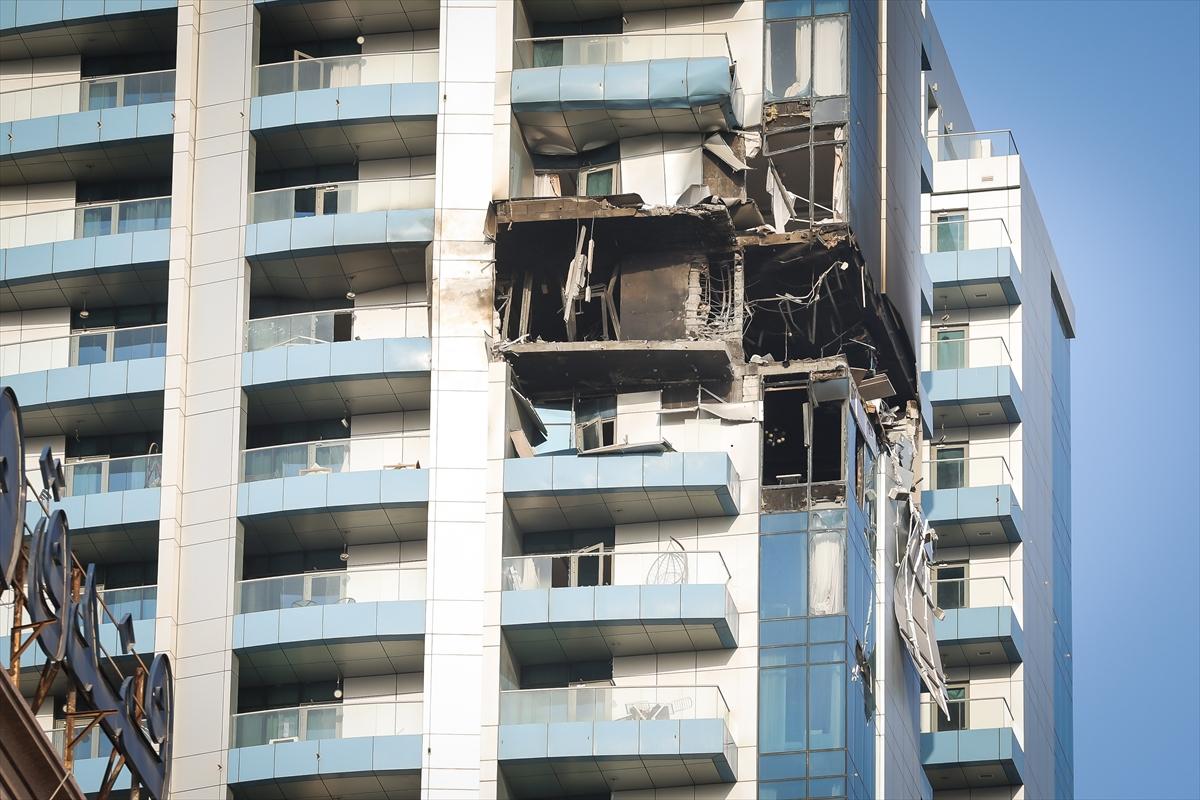
Kamikaze UAV attack on Manama, Bahrain, 1 March 2026 - (Anadolu Ajansı)
In a written statement by the ministry, it was stated that material damage occurred from the UAV attack on the airport, but there were no casualties. Authorities took necessary measures to secure the incident site. Bahrain International Airport is located in the country’s second-largest city, Al-Muharraq. On the same day, a kamikaze UAV struck a building on Al-Me’arid Street in Bahrain’s capital Manama.
Fire inside a building targeted by an Iranian attack in Manama, Bahrain, 1 March 2026 - (Anadolu Ajansı)
On 1 March 2026, as part of Iran’s retaliatory strikes against Israel and the U.S., a kamikaze unmanned aerial vehicle (UAV) struck a building on Al-Me’arid (Expo) Street in Bahrain’s capital Manama.
According to local media reports, smoke rose from the site after the UAV hit the building. Videos shared on social media showed thick smoke emerging from the targeted building and sirens audible in the surrounding area. No official statement was initially issued regarding casualties or injuries.
In the early morning hours of 1 March 2026, thick smoke was reported rising from a U.S. military base in Erbil, Iraq, following explosions at the site.
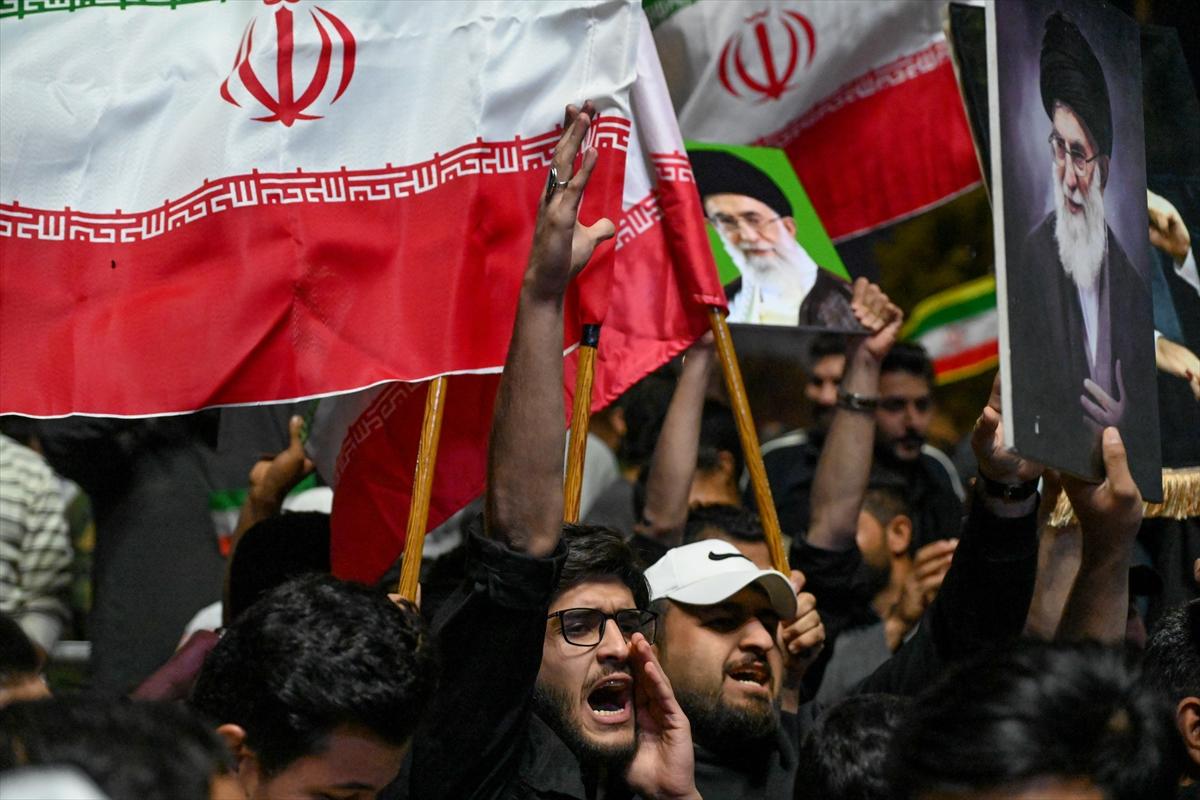
Protests against U.S.-Israeli attacks on Iran in Basra, Iraq, 1 March 2026 - (Anadolu Ajansı)
According to local sources, the explosions rocked the perimeter of the base, and the rising smoke may have resulted from a direct aerial strike targeting military facilities within the base.
The incident followed a statement by the Iraqi Shia group “Seraya Evliya ed-Dem,” which claimed responsibility for a kamikaze drone attack targeting U.S. military facilities in the region.
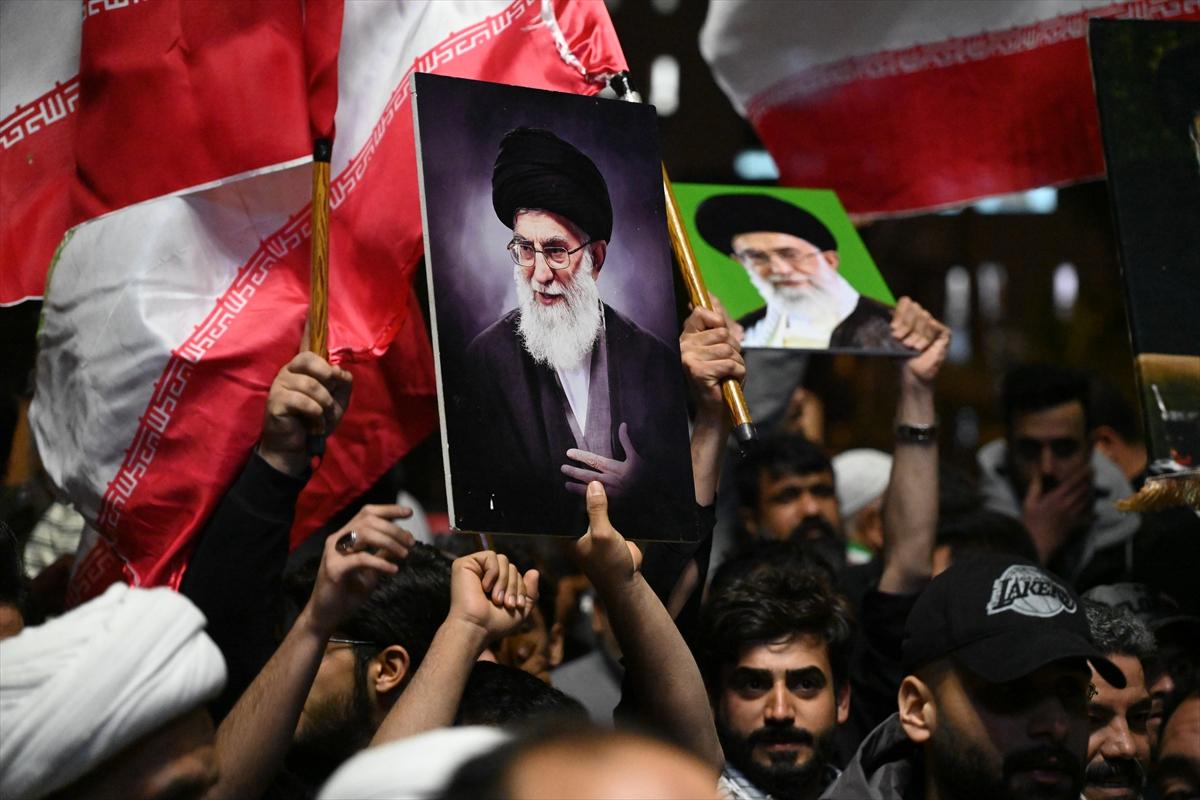
Protests against U.S.-Israeli attacks on Iran in Basra, Iraq, 1 March 2026 - (Anadolu Ajansı)
After the attack, helicopters and unmanned aerial vehicles belonging to the “international coalition” were observed operating intensively over Erbil. Security forces were reported to have implemented extensive security measures around the base.
In the early morning hours of 1 March 2026, following Iran’s retaliatory strikes against U.S. and Israeli targets, a small-scale fire broke out in the industrial zone of Qatar’s capital Doha.
Iran continues launching missiles at Doha, Qatar’s capital, in retaliation for U.S.-Israeli attacks, 1 March 2026 - (Anadolu Ajansı)
In a statement by Qatar’s Ministry of Interior, it was stated that fragments falling during missile interception operations had caused a limited fire in the industrial zone. No casualties or injuries were reported.
On the morning of 1 March 2026, following Iran’s retaliatory strikes against U.S. and Israeli targets, two unmanned aerial vehicles (UAVs) attacked Oman’s Dukm Commercial Port.
According to Oman’s official news agency ONA, one UAV struck a mobile worker settlement, injuring one foreign worker. The debris from the second UAV fell into an area containing fuel storage tanks, with no casualties or material damage reported.
At the same time, it was reported that the Palau-flagged oil tanker “SKYLIGHT” was attacked off the coast of Hasab Port in Oman’s Musandam region.
According to a statement by Oman’s Maritime Security Center, the vessel was targeted approximately five nautical miles north of the port. All 20 crew members were evacuated, with four injured and receiving medical treatment. Of the crew, 15 were Indian nationals and five were Iranian nationals.
In a statement on 1 March 2026 by Kuwait’s Ministry of Defense spokesperson Saud Abdulaziz Al-Atwan, it was reported that numerous ballistic missiles and unmanned aerial vehicles (UAVs) targeting Kuwaiti territory had been intercepted following the joint U.S.-Israeli attacks and Iran’s retaliatory strikes.
Al-Atwan stated that 97 ballistic missiles and 283 UAVs had been neutralized from the start of Iran’s attacks until 1 March. Shrapnel from interception operations fell onto Kuwaiti territory, causing minor material damage. According to Kuwait’s official news agency KUNA, one person was killed and 32 others injured as a result of the attacks from Iran.
On 1 March 2026, UK Defence Secretary John Healey stated that Iran had launched two missiles toward the Republic of Cyprus (RoC), where British military bases are located, but expressed high confidence that the missiles were not targeting British bases. Healey noted that Royal Air Force jets were operating in the region under “defensive capacity.”
Healey said, “The UK will shoot down missiles or UAVs heading toward our allies, such as Qatar and Cyprus.” He also noted that around 300 British personnel were stationed near a military base in Bahrain, targeted by Iran’s attacks the previous day, with some located “a few hundred meters from the attack.”
Healey, citing the increased Iranian attacks across the Middle East as a threat to British personnel and citizens, expressed concern that these attacks “endanger British personnel and the British public.” He confirmed that two missiles had been fired from Iran toward the RoC, where UK military bases are located. John Healey added, “We are very confident these missiles were not targeting our bases, but this shows how indiscriminate Iran’s retaliation has been.”
When asked whether the UK would shift from defense to offense, Healey responded, “We are not part of any offensive operations.” He continued: “We are focusing our efforts on defensive actions. We have done this from the outset, deploying additional radars, aircraft, and other weapon systems to Cyprus and Qatar. Currently, we are conducting flights as part of regional coordination, and all our actions are aimed at defending British interests and protecting our UK allies.”
When asked whether the UK would directly attack Iran, Healey replied, “I will not speculate, and you should not expect me to comment on hypothetical scenarios, potential talks, or operations.”
Healey assessed: “The steps we are taking and have taken will always remain within established rules of engagement, continuing to defend our interests and the collective interests of our allies within the framework of international law.”
On 1 March 2026, UK Prime Minister Keir Starmer announced that the U.S. had requested permission to use UK bases to target Iran’s missile storage facilities and that the request had been approved. In a video message posted on the U.S.-based X platform, Starmer assessed the developments in the Middle East. He noted that approximately 200,000 British citizens were located in countries affected by Iran’s attacks and emphasized that their safety was the government’s top priority.
Starmer stated that UK Armed Forces personnel stationed in the region were also at risk due to Iran’s actions and described Iran’s stance as increasingly reckless.
Starmer emphasized that the UK’s decision not to participate in Iran’s initial attacks was a “deliberate choice,” with the fundamental reason being the belief that the crisis must be resolved through diplomacy and negotiations. He stated that such a solution must include Iran abandoning its goal of developing nuclear weapons. However, he added, “Iran’s current actions are harming British interests and placing British citizens and regional allies at serious risk.”
Prime Minister Starmer stated in his remarks: “British jets are operating in the air as part of coordinated defensive operations successfully intercepting Iran’s attacks. But the only way to stop this threat is to destroy the missiles at their source—in storage facilities or launch ramps. The U.S. has requested permission to use UK bases for this specific and limited defensive purpose. We have decided to approve this request to prevent Iran from killing innocent civilians, endangering British citizens, and striking countries uninvolved in the conflict.”
Starmer stated that the decision was taken to uphold the collective defense of long-standing UK allies and to protect the lives of British citizens. He defended the decision as consistent with international law, affirming that the UK was not participating in offensive operations against Iran but would continue its defensive activities in the region.
During the night of 1 March into 2 March, explosion sounds were heard at RAF Akrotiri Base in Southern Cyprus. The UK Ministry of Defence announced that the base had been targeted by a “suspected unmanned aerial vehicle attack” and had responded accordingly.
The statement indicated that force protection levels were at their highest and necessary measures had been taken to safeguard personnel. After the explosions, several fighter jets were observed taking off.
RoC Government Spokesperson Konstantinos Letymbiotis confirmed that a UAV was used and that limited damage had occurred. Security protocols were immediately activated, and the situation was being monitored in coordination with British authorities.
Iran continues launching missiles at Doha, Qatar’s capital, in retaliation for U.S.-Israeli attacks, 1 March 2026 - (Anadolu Ajansı)
The Islamic Revolutionary Guard Corps announced that it had launched large-scale missile and UAV attacks against Israel and U.S. targets in the region as part of the fifth and sixth waves of Operation “Real Promise 4.” The statement published by Mehr News Agency indicated that Tel Nof Air Base, the Israeli military’s general staff headquarters in Tel Aviv, and its defense industry complex had been targeted. It was also stated that 27 U.S. locations were among the targets.
Additionally, the IRGC statement reported that the MSP vessel, which was transporting munitions to U.S. ships in the Indian Ocean, had been struck by four UAVs near Jebel Ali; the U.S. naval base in Abdullah al-Mubarak region had been targeted by four ballistic missiles and 12 UAVs; and the U.S. support vessel of the MST class, refueling in the Indian Ocean, had been hit by “Gadr-380” missiles. The operation was stated to be ongoing.
After the attacks, air defense systems were activated and explosion sounds were heard in Qatar, the United Arab Emirates, Kuwait, Jordan, and Israel. At least one explosion was reported in Dubai, with air defense systems activated. At Zayed International Airport in Abu Dhabi, one Asian national was killed and seven others injured.
Damage to a building in Tel Aviv targeted by Iran’s attack, 1 March 2026 - (Anadolu Ajansı)
U.S. President Donald Trump argued that the attacks on Iran “facilitated a diplomatic solution.”
In an interview with CBS News, he claimed Iran had suffered a heavy blow and that the possibility of a diplomatic solution had become easier than the day before. Trump stated that if Iran launched retaliatory attacks, it would be met with “unprecedented force.” He assessed Iran’s attacks so far as more limited than expected.
U.S. Defense Secretary Pete Hegseth stated that Iran’s missile production capacity and arsenal would be destroyed and that Iran would not be allowed to acquire nuclear weapons. Hegseth argued that Iran had rejected the opportunity to reach an agreement and now faced the consequences.
Israeli state television KAN claimed that negotiations with Iran were a “deception and time-buying tactic” intended to prepare for the planned military operation. The report asserted that the operation’s date had been set weeks in advance and that the initial strike targeted Iran’s leadership. Israel’s security cabinet confirmed the operation’s goal as “inflicting serious damage on the Tehran regime.”
On 1 March 2026, Ali Laricani, Secretary-General of Iran’s National Security Council, stated that Iran had no intention of attacking regional states. In his assessment, Laricani emphasized that Iran had targeted only U.S. military bases. The statement indicated that any U.S. bases located on the territory of regional countries, if used in attacks against Iran, would be considered legitimate targets.
Laricani stated that these bases were to be regarded not as the territory of the host countries but as U.S. military assets. A similar position was expressed by Iran’s Strategic Council on Foreign Relations, which argued that although regional countries had not permitted their territories to be used against Iran, they lacked direct control over U.S. bases and thus could not prevent the attacks.
On the same day, Iran’s Armed Forces announced new missile and UAV attacks against Israel and U.S. targets in the region. Following these attacks, air defense systems were activated and explosion sounds were heard in Qatar, the United Arab Emirates, Kuwait, and Jordan.
Consecutive explosions in Tehran, Iran’s capital, 1 March 2026 - (Anadolu Ajansı)
On 1 March 2026, it was announced that foreign ministers of Gulf Cooperation Council (GCC) member states would hold an extraordinary meeting due to rising tensions in the Middle East. According to a report by Al Jazeera, based on an unnamed source, the meeting would be held via video conference on the same day.
The meeting was expected to coincide with the launch of Israeli and U.S. attacks on Iran and Iran’s retaliatory strikes against regional countries including Qatar, the United Arab Emirates, and Bahrain. The discussions were expected to focus on regional security developments and diplomatic coordination.
On 1 March 2026, the Israeli military claimed that 40 senior Iranian commanders had been killed in the U.S.-Israeli attacks on Iran. The statement indicated that the Chief of Staff of the Iranian Armed Forces, Abdurrahim Musavi, was among those killed.
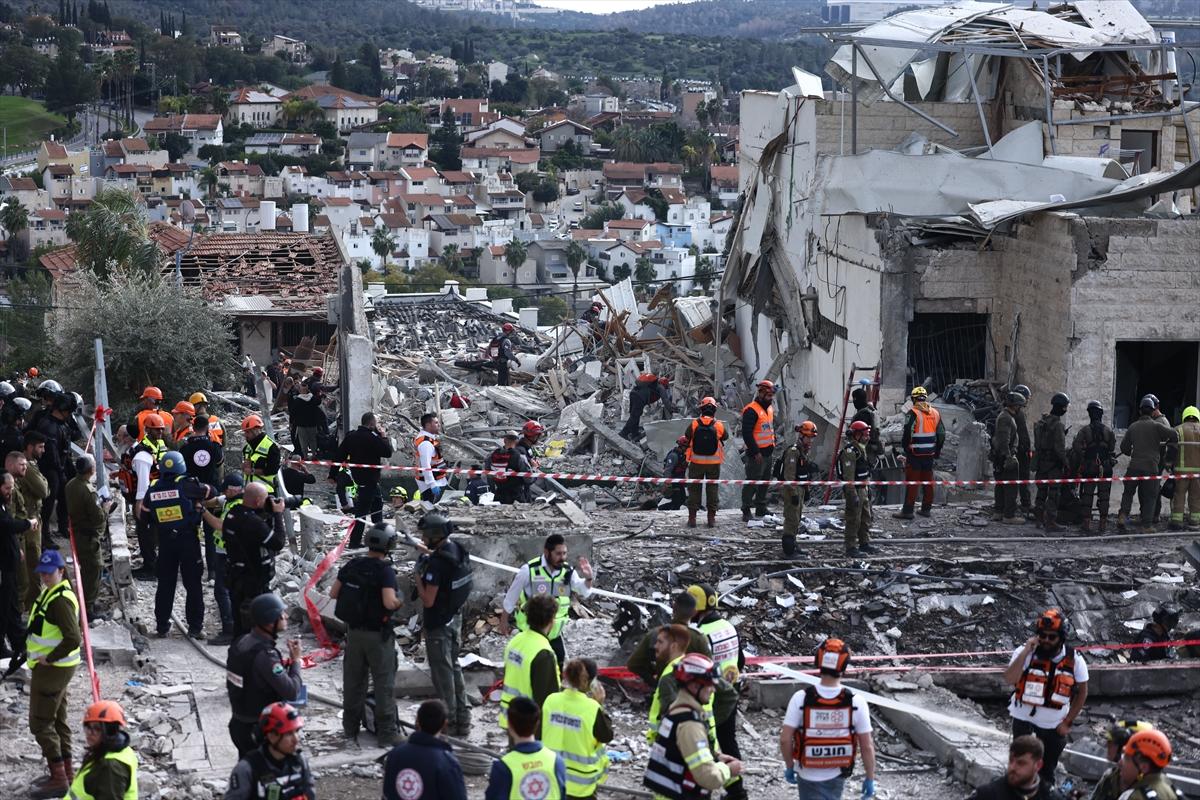
Situation in the region after Iran’s missile attack on Israel, 1 March 2026 - (Anadolu Ajansı)
The statement claimed that, immediately after the operation began, intelligence-guided operations in various areas of Tehran resulted in the killing of seven Iranian leaders. The Israeli military claimed that a total of 40 senior commanders, including the highest-ranking military officials of Iran’s security leadership, had been killed.
The Israeli military also claimed that a large portion of Iran’s air defense systems in the western and central regions had been neutralized and that air superiority had been achieved over Tehran. The statement indicated that the attacks would continue.
In the early morning hours of 1 March 2026, consecutive explosions occurred in Tehran, Iran’s capital. The attacks were concentrated in the northern and eastern districts, with smoke rising from targeted locations. Bombardment sounds were heard in many parts of the city. Iranian authorities did not issue detailed statements on the explosions initially. The Israeli military, however, announced for the first time that it had conducted operations targeting central sites in Tehran.
At the same time, explosions were reported in Tabriz, Kerman, and Urmia. In Mashhad, an explosion occurred near the Imam Reza Shrine at a military facility.
In a written statement issued by the Iranian military at midday, it was stated that the Iranian Air Force had conducted multi-stage air operations against U.S. bases in the Persian Gulf and the Kurdistan Regional Government (KRG) region. Iraqi authorities and the U.S. military did not confirm this claim.
At the same time, the Israeli military announced that it had struck two F-5 and F-4 fighter jets preparing for takeoff at Tabriz Air Base in western Iran. The statement indicated that the strike aimed to weaken Iran’s air force capabilities and air defense capacity.
Semi-official Tesnim News Agency reported that General Gholamreza Rizaian, Head of the Police Intelligence Organization, was killed in the U.S.-Israeli attacks.
In the afternoon, the Israeli military claimed that 40 senior Iranian commanders were killed in the joint U.S.-Israeli attacks. The statement indicated that the Chief of Staff of the Iranian Armed Forces, Abdurrahim Musavi, was among those killed.
Israel also claimed that a large portion of Iran’s air defense systems in the western and central regions had been neutralized and that air superiority had been achieved over Tehran. Israeli Army Spokesperson Effie Defrin stated that targets included the headquarters of the Islamic Revolutionary Guard Corps and military centers responsible for intelligence and air forces in Tehran.
On 1 March, the Iranian Red Crescent Society announced that attacks had been carried out around the Peace Building of the Red Crescent and the Hatemul Enbiya, Bihzisti, and Mutahhari hospitals in Tehran. Images shared showed the Red Crescent complex engulfed in heavy smoke. By evening, Iranian media reported that the Gandi Hospital in Tehran had been targeted. The hospital building sustained structural damage and broken windows, and medical staff evacuated newborn babies.
On 1 March 2026, a bombing occurred in Mehran district of Ilam Province, Iran, near the Iraqi border. According to Mehr News Agency, a written statement by the Ilam Border Union Command indicated that an attack had been carried out near Imam Khomeini Square at the Mehran Border Battalion.
The statement reported that 22 people were killed, including 11 soldiers, and 21 others were injured. The attack was attributed to U.S. and Israeli elements.
On 1 March 2026, the Israeli military announced that its fighter jets had conducted over 700 sorties against Iran and used thousands of munitions. The statement claimed that “the path to Tehran had been opened” within the last 24 hours and that Israeli fighter jets had achieved air superiority over Tehran.
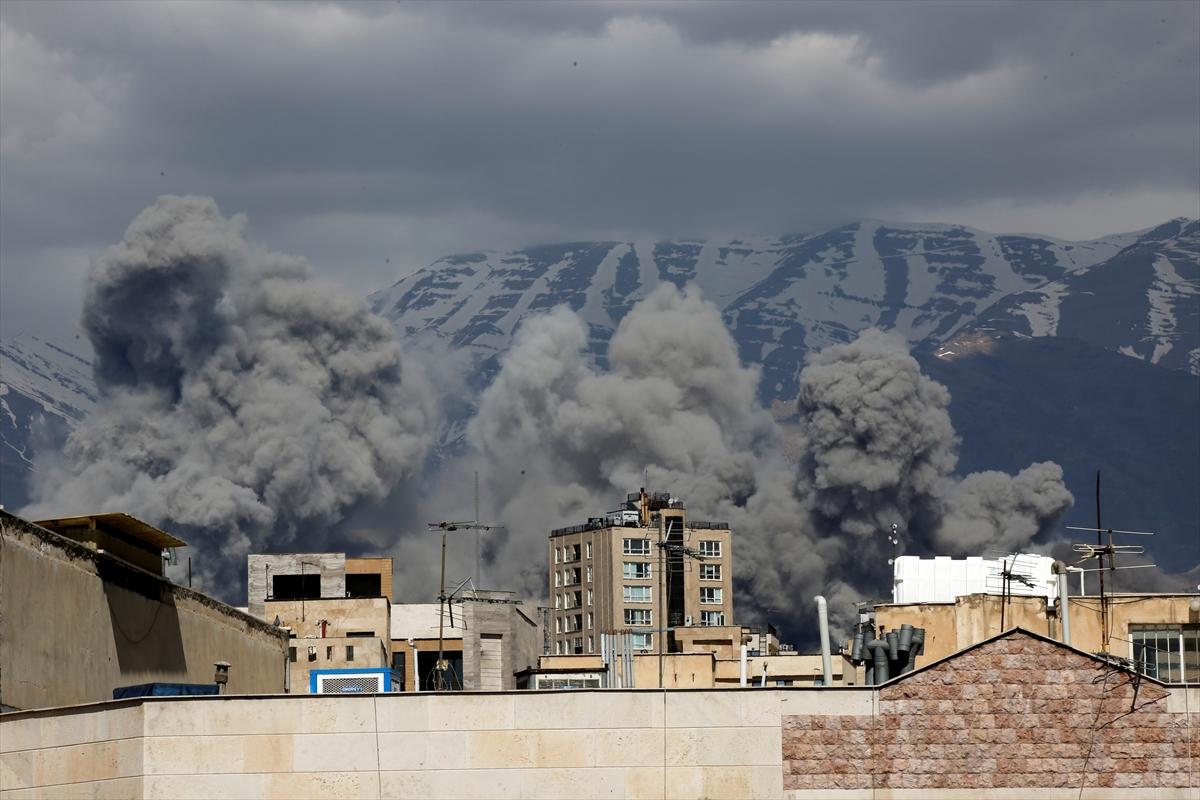
Consecutive explosions in Tehran, Iran’s capital, 1 March 2026 - (Anadolu Ajansı)
Targeted sites included ballistic missile launchers, headquarters, Iran’s air defense systems, and command centers belonging to the Tehran regime. The statement also claimed that more than 50 UAVs launched toward Israel since the start of the attacks had been intercepted.
According to The Times of Israel, more than 2,000 bombs were dropped on Iran within the first 36 hours of the attacks. This amount was approximately half of the total munitions used by Israel during its 12-day war in June 2025. It was reported that Israeli fighter jets were using direct bomb drops rather than standoff missiles against targets in Iran, aiming to maintain air superiority over Tehran.
Footage of operations against military targets in Iran released by U.S. Central Command, 1 March 2026 - (U.S. Central Command)
On 1 March 2026 at midday, it was reported that the Islamic Revolutionary Guard Corps had launched a new wave of missile and unmanned aerial vehicle (UAV) attacks against Israel. The attack was announced by Iranian state television, which reported that missile and UAV launches from Iran toward Israel had resumed.
On the same day, a missile launched from Iran struck a building in the town of Beit Shemesh near West Jerusalem. Initial reports stated that six Israelis had been killed. The Israeli military announced that search and rescue teams, numerous medical personnel, and helicopters for evacuating the injured had been dispatched to the area. Israel’s emergency medical service, Magen David Adom, reported that many people had been injured.
Later in the day, the death toll was raised to eight, with 28 injured, two of whom were in critical condition. By evening, an update reported that the number of fatalities in the Beit Shemesh attack had risen to nine, with 11 people still missing. Israeli police stated that 11 individuals were believed to be trapped under rubble in the targeted area and that search operations were ongoing.
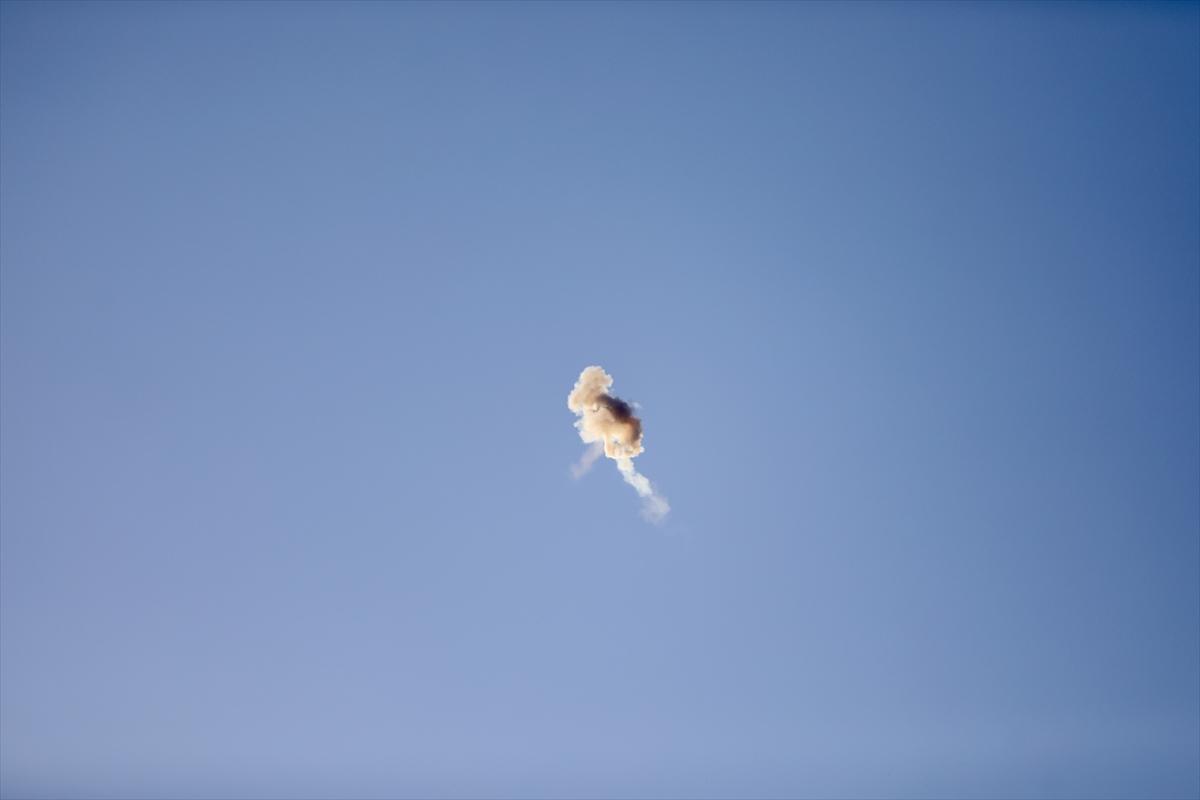
New retaliatory missile attacks from Iran on Israel, 1 March 2026 - (Anadolu Ajansı)
Late at night, a missile launched from Iran struck a road in the Jerusalem region. According to a statement by Israel’s emergency medical service Magen David Adom, six people were injured, five of them lightly. Videos shared on social media showed the missile creating a large crater on the road and damaging several vehicles.
Pope Francis XIV, Head of the Vatican State, said he was following the developments initiated by the U.S. and Israeli attacks on Iran “with deep concern.”
Speaking from the window of his office overlooking St. Peter’s Square after his traditional Sunday blessing, Pope Francis XIV highlighted the dramatic scale of events in the Middle East and Iran.
Pope Francis XIV stated that stability and peace could be built not through mutual threats or weapons of destruction, but through reasonable, sincere, and responsible dialogue. He called on the parties involved to halt the spiral of violence and emphasized the need for diplomacy to resume its active role. He also expressed concern over the conflict between Pakistan and Afghanistan and urged the parties to return to dialogue.
On 1 March 2026, Somalia’s Ministry of Foreign Affairs and International Cooperation condemned Iran’s attacks on several Arab countries. In a written statement, the ministry stated that Iran’s series of attacks and violations against Arab nations constituted serious and clear violations of their sovereignty. The Federal Republic of Somalia affirmed its opposition to actions targeting the sovereignty of regional countries.
Chinese Foreign Minister Wang Yi issued a statement regarding the U.S. and Israeli attacks on Iran and the killing of Iran’s leader Ayatollah Ali Khamenei. According to a statement by China’s Ministry of Foreign Affairs, Wang assessed the developments during a phone conversation with Russian Foreign Minister Sergey Lavrov.
Wang Yi stated that conducting attacks on Iran while negotiations were ongoing violated international law and fundamental norms of international relations. Using the phrase, “The killing of a sovereign nation’s leader and incitement to regime change are unacceptable,” Wang called on the international community to adopt a clear and firm stance against unilateral actions. He emphasized that the international community must respond collectively to prevent the world from reverting to “the law of the jungle.”
On 1 March 2026, the Press Office of the Islamic Revolutionary Guard Corps issued its seventh announcement regarding Operation “Real Promise 4.” The statement declared that the U.S. Navy aircraft carrier USS Abraham Lincoln had been targeted by four ballistic missiles.
The statement included the phrase: “As a result of attacks on enemy targets, the U.S. Navy aircraft carrier USS Abraham Lincoln was struck by four ballistic missiles.” At the time of the attack, the USS Abraham Lincoln carrier strike group was stationed in the Sea of Oman.
In a statement by the U.S. military, it was reported that three U.S. service members were killed and five others seriously injured during the operation against Iran.
On 1 March 2026, U.S. Central Command (CENTCOM) announced that an Iranian Jamaran-class corvette had been targeted by U.S. forces at the start of the attacks on Iran.
In a statement issued via the U.S.-based X platform, CENTCOM indicated that the Iranian vessel had been targeted and was sinking off the coast of Chabahar Port in southeastern Iran.
The statement referenced U.S. President Donald Trump’s statement, “Iran’s armed forces, Revolutionary Guards, and police must lay down their weapons,” and called on the crew aboard the vessel to “abandon ship.”
On 1 March 2026, the Danish-based container shipping company Maersk announced in a written statement that all vessel transits through the Strait of Hormuz had been suspended until further notice. The statement referenced the security situation following the joint U.S.-Israeli attacks on Iran, emphasizing that the safety of crew, vessels, and cargo was the company’s top priority. Delays, route changes, or schedule adjustments were possible for voyages calling at regional ports.
On 1 March 2026, the foreign ministers of the 27 European Union member states convened via video conference to assess developments related to Iran. The meeting was chaired by EU High Representative for Foreign Affairs and Security Policy Kaja Kallas.
The ministers addressed the U.S. and Israeli attacks on Iran and the killing of Iran’s leader Ali Khamenei, engaging in consultations to determine the EU’s common stance on the crisis. The agenda included potential impacts on energy markets, the preservation of regional stability, and the situation of EU citizens in the region.
Prior to the extraordinary meeting, EU ambassadors (COREPER) held a preparatory meeting, issuing messages of support for the region and calling for de-escalation. Additionally, it was announced that members of the European Commission, under the leadership of Commission President Ursula von der Leyen, would hold a special security meeting.
Previous statements by the EU administration had called for restraint and emphasized that Iran must undergo a stable transition and that the Iranian people must determine their own future.
On 1 March 2026, U.S. President Donald Trump defended the U.S.-Israeli attacks on Iran, stating, “If we hadn’t done this, they would have had nuclear weapons in two weeks.” Trump assessed the attacks on Iran in an interview with Fox News White House correspondent Jacqui Heinrich. While declining to comment on the number of American soldiers killed, he stated that the U.S. had a clear understanding of how many targets remained in Iran. He stated that U.S. B-2 stealth bombers had targeted Iran’s nuclear facilities.
While expressing no concern over the closure of the Strait of Hormuz or rising oil prices, Trump stated, “I’m not worried about anything. I’m just doing the right thing. Everything will eventually fall into place.” He also called on the Iranian people to “take control of their own future” again, saying the process was moving rapidly.
On the same day, in a written post on his social media account, Trump announced that nine Iranian naval vessels had been “sunk and destroyed.” Trump said, “I just learned that we have destroyed and sunk nine vessels belonging to Iran’s navy.” He emphasized that some of these were “very large and significant” ships and added, “We are now pursuing the rest—they will soon be at the bottom of the sea!” In the same post, Trump claimed that Iran’s naval command centers had also been “largely destroyed” in another attack.
ABD News YouTube. “U.S. and Israel have launched a joint strike in Iran, US official says: ABC News Special Report.” Accessed February 28, 2026. https://www.youtube.com/watch?v=O_CupIIZYgg.
Al Jazeera English. “Live: Israel launches attacks on Iran; multiple explosions heard in Tehran.” Accessed February 28, 2026. https://www.aljazeera.com/news/liveblog/2026/2/28/live-israel-launches-attacks-on-iran-multiple-explosions-heard-in-tehran
Al Jazeera English. “US, Israel attack Iran live: Trump announces ‘major combat operations’.” Accessed February 28, 2026. https://www.aljazeera.com/news/liveblog/2026/2/28/live-israel-launches-attacks-on-iran-multiple-explosions-heard-in-tehran
Al Jazeera YouTube. “Israel launches attack on Iran, explosions in downtown Tehran.” Accessed February 28, 2026. https://www.youtube.com/watch?v=hQzZUq-NGFI
Anadolu Agency. “İsrail, İran’a saldırı başlattığını duyurdu.” Accessed February 28, 2026. https://www.aa.com.tr/tr/dunya/israil-iran-a-saldiri-baslattigini-duyurdu/3842503
Anadolu Ajansı. “İran Lideri Hamaney, ABD-İsrail Saldırısında Hayatını Kaybetti.” Accessed March 1, 2026. https://www.aa.com.tr/tr/dunya/iran-lideri-hamaney-abd-israil-saldirisinda-hayatini-kaybetti/3844367
BBC News Türkçe. “İsrail, İran’a saldırı başlattı: Tahran’da patlama sesleri duyuldu.” Accessed February 28, 2026. https://www.bbc.com/turkce/articles/c70njd4e485o
CNN. “Iran War Live Updates: US-Israel Conflict and Trump Statements.” CNN. Accessed March 4, 2026. https://edition.cnn.com/world/live-news/iran-war-us-israel-trump-03-04-26
CNN. “Trump says US launching ‘massive and ongoing’ strikes in Iran.” Accessed February 28, 2026. https://edition.cnn.com/world/live-news/israel-iran-attack-02-28-26-hnk-intl
Euronews Türkçe. “İsrail, İran’a saldırı başlattı.” Accessed February 28, 2026. https://tr.euronews.com/2026/02/28/israil-irana-saldiri-baslatti
TRT Haber. “İsrail, İran’a saldırı başlattı.” Accessed February 28, 2026. https://www.trthaber.com/haber/dunya/israil-irana-saldiri-baslatti-935807.html
U.S.-Iran-Israel Conflict (2026), began on February 28, 2026 with a large-scale aerial assault by Israel against Iran and rapidly expanded into a regional military confrontation after the direct involvement of the United States. The conflict emerged as a result of the escalation of long-standing geopolitical tensions between Iran and the U.S. and Israel, and continued through reciprocal attacks spreading across various regions of the Middle East.
The process began with the Israeli government announcing it had launched a “preventive strike” against Iran. On the same day, U.S. President Donald Trump announced that a “major operation” had been carried out against Iran. The initial attacks by Israel resulted in explosions in several cities including Iran’s capital Tehran, as well as Isfahan, Qom, Kerman, and Kermanshah. The Iranian government characterized the attacks as a violation of its sovereignty. In response, Iran launched ballistic missile and drone attacks against Israel, and the conflict quickly evolved into mutual military operations.
From the first day of the conflict, attacks were not limited to Iranian and Israeli territory alone; U.S. military bases and regional security infrastructure in various countries across the Gulf region also became targets. Missiles launched by Iran struck the U.S. Fifth Fleet headquarters in Bahrain and several military facilities in Qatar and the United Arab Emirates. Regional countries closed their airspace and heightened security measures. These developments led to the conflict transforming into a regional security crisis.
During the conflict, Iran’s religious leader Ayatollah Ali Khamenei was killed in attacks carried out by the U.S. and Israel. Khamenei’s death triggered widespread protests and memorial ceremonies across Iran, while the Iranian government declared that the attacks would not go unanswered.
Explosions in Tehran. February 28, 2026 (Anadolu Ajansı)
Israeli Prime Minister Benjamin Netanyahu claimed that the U.S.-Israel strikes would give the Iranian people the opportunity to determine their own fate. In a statement following the attacks on Iran, Netanyahu stated that the operation had been named “Operation Lion’s Roar.”
Shortly before, Netanyahu had noted that the U.S. and Israel had launched attacks with the stated aim of eliminating the “existential threat” posed by the Iranian regime, arguing that Iran must not possess nuclear weapons. Netanyahu asserted that the U.S.-Israel joint strike would “create the necessary conditions for the brave Iranian people to take control of their own destiny.”
Using the phrase “All segments of the Iranian people — Persians, Kurds, Azerbaijanis, Baluchis, and Ahvazis — have reached the time to break free from the yoke of oppression and build a free and peaceful Iran,” Netanyahu delivered a message calling for regime change in Iran.
The Iranian Revolutionary Guards announced they had launched a large-scale missile and drone assault against “occupied territories” in response to the U.S.-Israel attacks.
The Islamic Revolutionary Guard Corps issued a written statement. It stated: “In response to the aggressive actions of the guilty enemy against the Islamic Republic of Iran, the Islamic Republic of Iran has initiated its first large-scale missile and drone attacks against occupied territories.”
Following the start of the attacks, it was reported that numerous explosions occurred in Iran’s capital Tehran. According to an Anadolu Ajansı correspondent in Tehran, new explosions and blast sounds were heard in the city. The explosions in the capital continued after the first wave of attacks.
Israel’s Channel 12 television claimed that numerous sites under Iranian government control had been targeted. Israel’s military radio suggested that high-ranking Iranian officials had been targeted in the strikes. According to reports, Israel launched a second wave of attacks against Iran. Claims regarding the targets of these attacks were reported by Israeli media outlets.
Smoke rising into the sky after explosions in Tehran, February 28, 2026 - (Anadolu Ajansı)
On February 28, 2026, Iran’s Ministry of Foreign Affairs characterized the attacks by the U.S. and Israel as clear violations of its territorial integrity and national sovereignty and called on the United Nations (UN) to take urgent action.
In a written statement, the ministry noted that the U.S. and Israel had targeted both defense infrastructure and civilian areas in various Iranian cities, emphasizing that these attacks occurred while diplomatic talks between Iran and the U.S. were still ongoing. The statement added: “We were aware that the U.S. and Israel intended to launch new military attacks. Yet, we restarted negotiations to make it clear to the international system and all countries of the world. Our goal was to demonstrate Iran’s legitimacy and prove that there is no justifiable pretext for aggression.”
The statement emphasized that the aerial attacks by Israel and the U.S. constituted a clear violation of the UN Charter: “Responding to this attack is Iran’s legal and legitimate right under Article 51 of the UN Charter. The Iranian Armed Forces will use all available means and capabilities to resist this criminal attack and eliminate the enemy’s malice.”
The ministry also highlighted the responsibility of the UN and the UN Security Council to take urgent action due to the violation of international peace and security. It called on all UN member states, particularly regional and Islamic countries and members of the Non-Aligned Movement, to condemn the aggressive acts.
The statement underscored that regional and global peace faced an unprecedented threat and affirmed that the Iranian Armed Forces would deliver the necessary response to defend the country’s integrity.
Israel and U.S. Attacks on Iran. February 28, 2026 (Al Jazeera)
In the early morning hours of February 28, 2026, Israeli Defense Minister Yisrael Katz announced that a “preventive strike” had been launched against Iran. In his statement, Katz declared that “a state of emergency had been declared nationwide.” He added: “Israel has launched a preventive strike against Iran to eliminate threats directed at it.”
The Israeli military announced the commencement of attacks against Iran and issued a warning to the public to seek shelters in anticipation of possible missile strikes. The military urged civilians to identify their nearest shelter and avoid unnecessary travel due to “security conditions.” The “proactive alert” was stated to have been issued to prepare the population for missile attacks. By 08:14 on February 28, sirens sounded across Israel and warning alerts were sent to all mobile phones.
Explosions in Tehran. February 28, 2026 (Anadolu Ajansı)
On February 28, 2026, it was reported that new explosions occurred in Tehran, Iran’s capital. Israeli media claimed that high-ranking Iranian officials had been targeted in the strikes. It was also reported that in addition to Tehran, the Israeli attacks targeted the cities of Isfahan, Qom, Kerman, and Kermanshah. Shortly after the attacks began, Iranian authorities closed the entire national airspace.
Ibrahim Azizi, Chairman of Iran’s National Security Council, announced that Iran would retaliate against Israel’s attack. In a statement on social media, Azizi said: “We warned you before; you started it, but you will not control its end.”
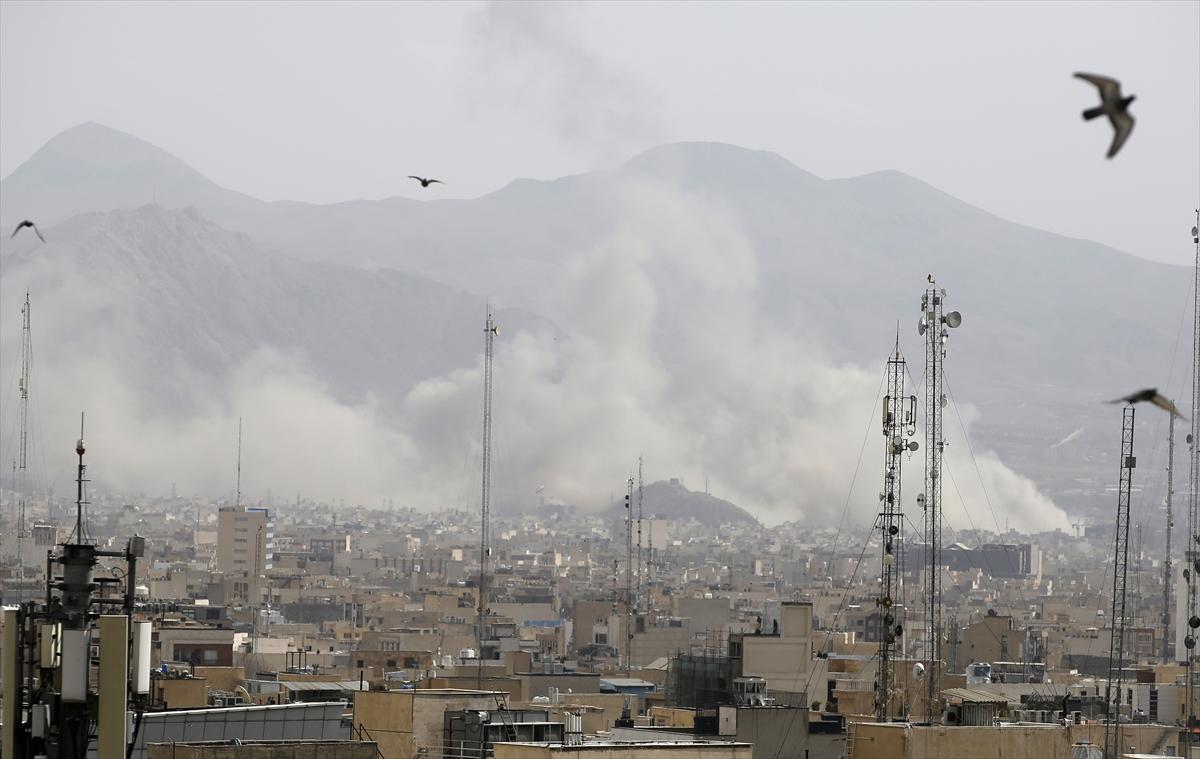
Smoke rising into the sky after explosions in Tehran, February 28, 2026 - (Anadolu Ajansı)
Shortly after explosions were heard in Tehran, hospitals entered emergency alert status. Hossein Kermanipur, spokesperson for Iran’s Ministry of Health, told the official IRNA news agency: “Following the explosions, ambulances were dispatched to central areas of Tehran and hospitals were placed on standby. Hospitals have been placed on alert.” He added that further information on the number of casualties and affected areas would be provided once details became clearer.
Israeli media claimed that Iran’s Chief of Staff, Abdolrahim Mousavi, was also targeted in the U.S.-Israel strike on Iran. Channel 12 television, citing a security source, reported that the attacks on Iran would last several days.
Iranian media reported that President Masoud Pezeshkian had not been harmed in the U.S.-Israel attacks. According to the semi-official Mehr News Agency, a source close to the presidency confirmed that President Pezeshkian’s health was excellent and that he had no issues.
On February 28, U.S. President Donald Trump announced that a major operation had been launched against Iran. Trump made a video statement on his social media account regarding the attacks on Iran. Using the phrase “We have launched a major operation against Iran,” Trump stated the following about the operation’s objective:
“Our goal is to defend the American people by eliminating the threats posed by the Iranian regime — a ruthless group of violent individuals who directly threaten the United States, our forces stationed abroad, and our allies around the world.”
U.S. President Trump’s Video Statement on the Iran Attacks. February 28, 2026 (Anadolu Ajansı)
Trump called on the Iranian Revolutionary Guard Corps, Iranian armed forces, and police personnel to lay down their weapons and gain complete immunity, warning: “Otherwise, you will face death.” Emphasizing that U.S. policy has always been to prevent Iran from acquiring nuclear weapons, Trump stated: “Iran will never be allowed to possess nuclear weapons. That is why, in June last year, under Operation Midnight Magnet, we destroyed the regime’s nuclear program at Fordo, Natanz, and Isfahan.”
Trump defended the claim that after the June 2025 operation, the U.S. had repeatedly warned Iran about nuclear weapons and attempted to reach an agreement. “For 47 years, the Iranian regime has chanted ‘Death to America’ and waged an endless campaign of blood and mass murder targeting the U.S., its soldiers, and innocent people in many countries.” Trump pointed out that Iran-linked elements in recent years had continued to launch attacks against U.S. forces, naval and commercial vessels, and international shipping ports in the region.
Trump described the situation as “mass terrorism” and declared that the U.S. “will no longer tolerate it.” Labeling Iran as “the world’s number one state sponsor of terrorism,” Trump accused the Iranian regime of killing tens of thousands of its own citizens who protested.
Trump underscored that Iran’s naval power would be targeted and its missile industry eliminated, adding that the U.S. would not allow Iran-linked elements to destabilize the region or the world. Addressing the Iranian people, Trump said their future lay in their own hands and called on them to rise up against the Tehran regime.
Trump said: “The time for your freedom is near. Stay in your shelters. Do not leave your homes. Outside is extremely dangerous. Bombs will fall everywhere until we finish our mission. Take over your regime.”
Following the U.S. and Israel’s attacks, on the morning of February 28, Iranian state media announced that a strong retaliation would be delivered. Iranian officials declared that retaliation against the attacks would be carried out.
Iranian media stated that the attacks would not go unanswered and that military retaliation against Israel and the U.S. would follow. Iranian officials conveyed messages indicating that the country’s defense capabilities were active and that necessary steps were being taken.
At approximately 11:00 on February 28, Iran launched ballistic missile attacks against Israel. The Israeli military announced that numerous ballistic missiles had been fired from Iran toward Israeli territory. Israel’s air defense systems activated, sirens sounded nationwide, and the public was urged to seek shelter. Alert status was declared in northern regions, including Haifa.
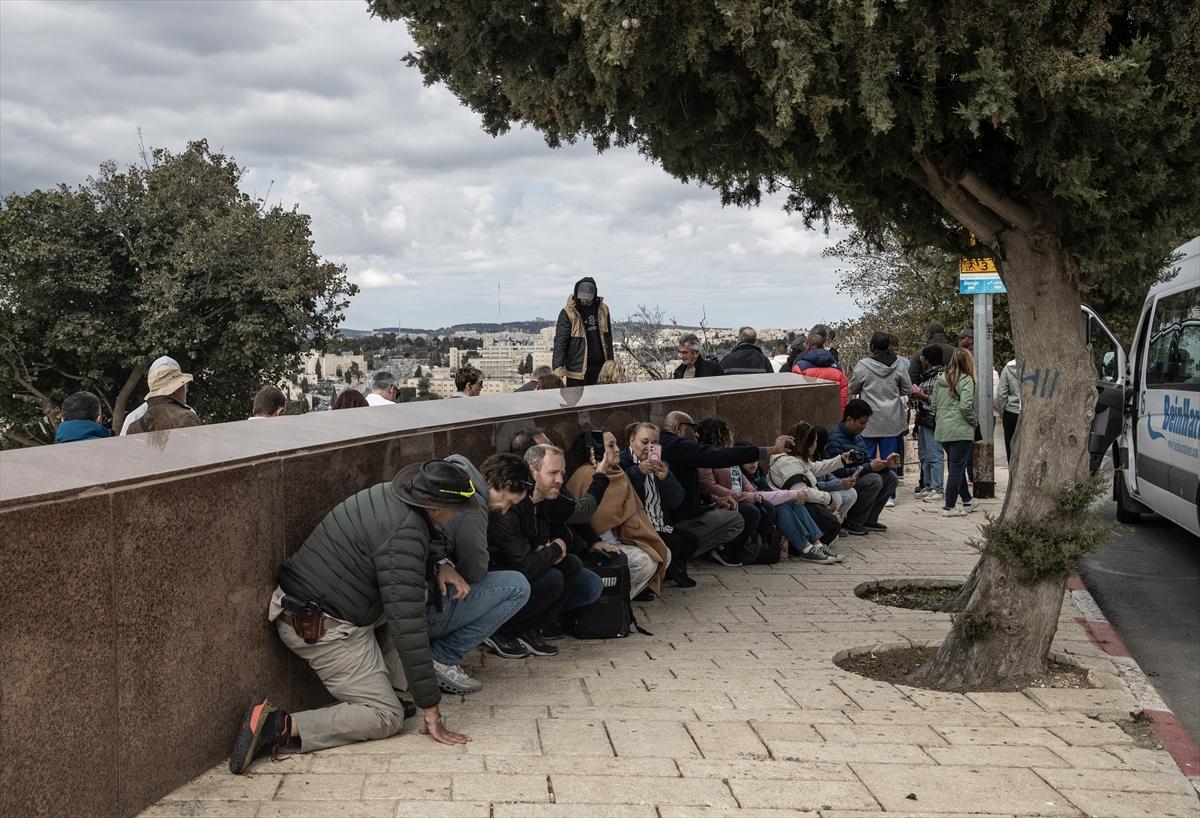
After Iran’s missile strikes, Jerusalem, February 28, 2026 - (Anadolu Ajansı)
Iran’s initial attacks came in waves. After the first wave, Iran launched a second wave of ballistic missile strikes in response to the U.S. and Israeli attacks. It was reported that in the Israeli attacks, Tehran, Isfahan, Qom, Kerman, Tabriz, Bushehr, Kermanshah, and Ilam had been targeted.
In a midday statement, the Iranian Revolutionary Guard Corps said: “In response to the aggressive actions of the guilty enemy against the Islamic Republic of Iran, the Islamic Republic of Iran has initiated its first large-scale missile and drone attacks against occupied territories.” At the time of the statement, U.S. and Israeli attacks on Tehran and other Iranian cities were still ongoing.
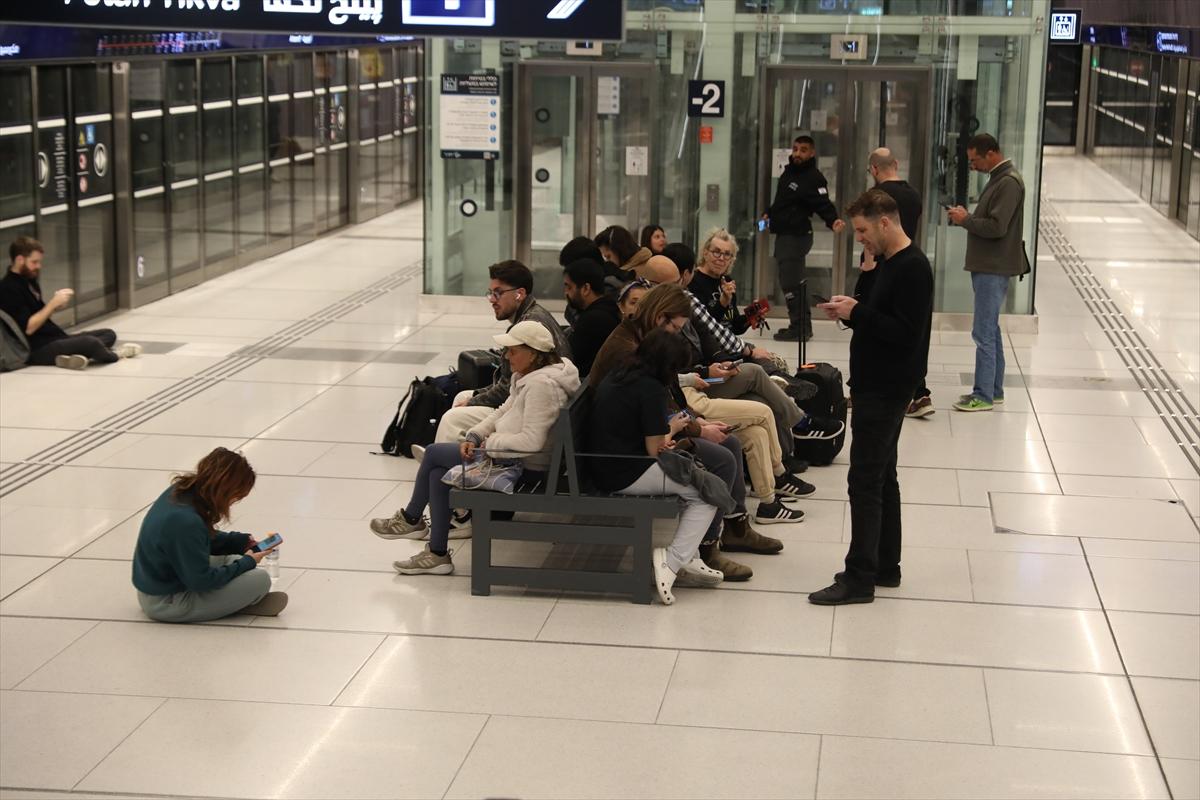
Iranians taking shelter in subway stations after Iran’s retaliatory strikes, February 28, 2026 - (Anadolu Ajansı)
On February 28, 2026, following the U.S.-Israel attacks, it was reported that Basij militia forces under the Iranian Revolutionary Guard Corps began patrol duties in neighborhoods of Tehran’s capital. Fars News Agency announced that Basij units had begun their duties on the streets of the capital. According to the statements, simultaneously with the U.S. and Israeli attacks, militia forces began patrols in 22 districts of Tehran. The operation was said to have been implemented to contribute to the safety of citizens.
Iran’s National Security Supreme Council announced that residents of cities targeted by the attacks, including Tehran, could move to safe zones. The announcement was made public as the attacks continued.
On February 28, 2026, the Iranian Revolutionary Guard Corps announced that a U.S. combat support vessel had been targeted by missile strikes. The written statement read: “The U.S. MST Combat Support Vessel was severely hit by Iranian Revolutionary Guard Navy missiles.” The statement also indicated that other elements of the U.S. Navy would become targets of Iranian missile and drone strikes.
At around 14:00 Turkey time, the Israeli military announced that a new wave of retaliation had been launched from Iran. The announcement stated that after detecting missiles fired from Iran toward Israel, sirens activated across many regions of the country. Air defense systems were reported to have engaged to intercept the missiles, and the public was urged to follow instructions from the Home Front Command.
Later in the day, the Israeli military announced that the 10th wave of missile attacks had been launched from Iran. The statement noted that the 9th and 10th waves had been detected and that air defense systems were working to identify and intercept missiles fired toward Israeli territory.
The 11th wave of missile attacks was then announced; it was confirmed that missiles fired from Iran were heading toward Israel, alarms sounded nationwide, and the public was urged to follow issued instructions. Subsequently, the 12th wave of missile attacks was announced; air defense systems were reported to be working to intercept the missiles. It was recorded that alarms also activated in Jordan following the launch of missiles in the 12th wave.
It was reported that debris from one of the missiles fired from Iran toward Israel fell into an open area near residential neighborhoods in Amman, Jordan’s capital. Security forces were said to have responded to the site and taken necessary precautions. In the evening, it was claimed that Iran had launched over 200 missiles in retaliation against Israel during the day.
Missiles fired from Iran over Haifa port, February 28, 2026 - (Anadolu Ajansı)
On February 28, 2026, during the U.S.-Israel attacks, the “Shajarat al-Tayyibe Girls Primary School” in Minab, located in Iran’s Hormozgan province, was targeted by Israel. According to a statement released by the Minab Prosecutor’s Office by Fars News Agency, 85 students were killed in the attack.
Shajarat al-Tayyibe Girls Primary School in Minab, Hormozgan province, targeted by Israel and resulting in the deaths of 85 students, February 28, 2026 - (Anadolu Ajansı)
Iran Red Crescent spokesperson Mojtaba Halidi stated that more than 20 cities had been targeted in the U.S.-Israel attacks. Speaking to Mehr News Agency, Halidi said: “More than 20 cities were targeted in the attacks that began in the morning. Red Crescent teams are continuing their operations on the ground with all personnel and equipment.”
Later in the day, the Iran Red Crescent reported that, according to initial assessments, 201 people had been killed and 747 injured in the U.S.-Israel attacks.
The Israeli military announced that large-scale attacks had been carried out against Iran’s air defense systems. The military statement indicated that the attacks were carried out under intelligence guidance. It was stated that one of the attacks targeted the advanced “SA-65” air defense system located in the Kermanshah region in western Iran.
The Israeli military noted that significant damage had been inflicted on Iran’s air defense systems as a result of these operations. The statement further indicated that the attacks were conducted to ensure and strengthen Israel’s freedom of movement in Iranian airspace and to weaken the Iranian Revolutionary Guard Corps.
At around 19:00 Turkey time, numerous explosion sounds were heard in Tehran, Iran’s capital. Later, at around 22:00, a series of explosions were heard in Tabriz, with six separate blasts reported.
On February 28, 2026, following Iran’s retaliatory strikes against Israel, the conflict spread to the Gulf region.
It was announced that a U.S. naval base in Bahrain had been struck by Iranian ballistic missiles. Footage released showed thick smoke rising from the base.
U.S. Base in Bahrain Targeted. February 28, 2026 (Anadolu Ajansı)
The Bahrain National Communication Center announced that the U.S. Fifth Fleet service center in the capital Manama had been hit by a missile strike. The statement indicated that further details would be shared later and urged the public to rely on official sources. Bahrain’s Ministry of Interior called on citizens to use main roads only in necessary circumstances following the developments.
Later in the day, the U.S. Fifth Fleet base in Manama was struck a second time. Following the attack, air defense systems were reported to have activated, and footage showed smoke rising from the U.S. base.
Smoke rising from the U.S. Fifth Fleet headquarters in Bahrain after being struck by Iran, February 28, 2026 - (Anadolu Ajansı)
On the same day, Iran struck U.S. bases and targets in Bahrain again in the evening. According to Iranian state television, Iran’s military targeted the U.S. base in Bahrain with kamikaze unmanned aerial vehicles (UAVs) in retaliation for the U.S.-Israel attacks.
The report indicated that other U.S. targets in Bahrain had also been struck. Bahrain’s Ministry of Interior announced that several buildings in Manama had been targeted. The ministry stated: “Some residential buildings in Manama were targeted. Civil Defense teams are continuing firefighting and rescue operations in affected areas.”
U.S. Fifth Fleet headquarters in Bahrain struck by Iran, February 28, 2026 - (Anadolu Ajansı)
Videos shared on social media showed a suspected Iranian kamikaze UAV crashing into a high-rise building and causing a massive explosion.
Qatar’s Ministry of Defense officials announced that an Iranian-origin missile had been neutralized by a Patriot air defense system in Qatari airspace. The U.S. Embassy in Qatar initiated a “shelter in place, stay in safe areas” protocol for all personnel and advised U.S. citizens in Qatar to follow the same guidance.
Missile fired from Iran intercepted by Qatar’s defense system, February 28, 2026 - (Anadolu Ajansı)
The statement advised citizens to find a safe location, carry essential supplies, follow local media, and maintain communication. At midday on February 28, a series of explosion sounds were heard in Doha, Qatar’s capital. Qatar’s Ministry of Defense stated that a series of attacks targeting its territory had been “repelled thanks to a high state of preparedness and coordination.”
Qatar’s Ministry of Defense announced that the third wave of attacks against the country had been successfully repelled. In its written statement, the ministry indicated that following detection of the third wave, pre-established operational plans were activated and all missiles were neutralized before reaching Qatari territory.
The statement emphasized that Qatar’s armed forces were fully equipped to protect national security and prevent external threats. Citizens, residents, and visitors were urged to follow official security instructions, avoid rumors, and obtain information only from official sources. Authorities stated that the security situation remained under control and that the country’s stability was maintained.
Missile fired from Iran intercepted by Qatar’s defense system, February 28, 2026 - (Anadolu Ajansı)
At around 17:00, the Iranian Revolutionary Guard Corps announced that it had struck a U.S. FP132 radar system, specifically designed to track ballistic missiles, located in Qatar and with a range of 5,000 kilometers. A Qatari Ministry of Defense official, speaking anonymously to Al Jazeera, confirmed that an early-warning radar in northern Qatar had been hit. The official reported no casualties or injuries and stated that damage assessments were ongoing.
On the evening of February 28, 2026, a missile struck the city center of Doha, Qatar’s capital. Security measures were reportedly heightened in the area following the incident.
On February 28, 2026, it was reported that Iran had launched attacks targeting Saudi Arabia’s capital Riyadh and its eastern region. In a written statement from the Saudi Ministry of Foreign Affairs, it was confirmed that Riyadh and the eastern region had been targeted by Iran and that the attacks had been repelled.
The statement condemned Iran’s attacks as “cowardly and in no way justifiable.” It noted that Iran had carried out these attacks despite knowing that Saudi Arabia would not permit its airspace or territory to be used against Iran. Saudi Arabia emphasized that it would take all necessary measures, including retaliation, to ensure its security and protect its territory and citizens.
The Jordanian Armed Forces announced that following the U.S. and Israeli attacks on Iran, Jordanian fighter jets had conducted routine patrols to secure the country’s airspace. A military official stated that sounds heard in various regions of the country originated from air patrols.
The Jordanian Armed Forces also announced that two ballistic missiles targeting Jordanian territory had been shot down by air defense systems. The official noted that no casualties or damage had been reported. Sirens were heard in Jordan, and the Directorate of Public Security under the Ministry of Interior issued warnings to citizens on how to respond if foreign objects fell.
By the end of the day, the Jordanian military announced that 36 drones and 13 ballistic missiles targeting the country had been neutralized. The statement did not specify the origin of the attacks but confirmed that 13 ballistic missiles had been successfully intercepted and drones had been shot down. Jordanian authorities reported no loss of life but confirmed some material damage had occurred.
The UAE Ministry of Defense announced that it had been subjected to a direct attack by ballistic missiles fired from Iran. Air defense systems were reported to have neutralized the missiles, and it was stated that one missile that landed in a populated area of Abu Dhabi had caused the death of a person of Asian nationality and resulted in material damage. The statement affirmed the UAE’s right to defend its territory and take all necessary measures.
On February 28, 2026, following Tehran’s retaliatory strikes against the U.S. and Israel’s joint attack on Iran, explosions were reported in Dubai, United Arab Emirates. Eyewitnesses stated that numerous violent explosions had occurred in Dubai. Videos shared on social media showed fires breaking out and thick smoke rising in some areas after the explosions.
Videos were shared showing a missile strike on a hotel in the tourist district of Jumeirah in Dubai, triggering a fire. In a written statement by Dubai Civil Defense, it was confirmed that a fire had broken out in a building in the Palm Jumeirah area simultaneously with the Iranian attacks. The statement reported that four people had been injured and the fire had been brought under control.
In a written statement by the UAE Ministry of Defense, it was confirmed that new waves of Iranian missiles and drones had been intercepted by air defense systems. The statement indicated that no serious material damage had occurred, but some fragments of intercepted missiles and drones had fallen in various areas of Abu Dhabi and Dubai.
According to Kuwait’s official news agency KUNA, the Kuwait Civil Aviation Authority announced that all flights to and from Iran had been suspended and canceled. Spokesperson Abdullah al-Raheemi stated that the decision was made in response to the current regional situation and the complete closure of Iranian airspace.
On the evening of February 28, it was reported that Kuwait International Airport had been targeted by an unmanned aerial vehicle (UAV). According to KUNA, the Kuwait Civil Aviation Authority confirmed that the airport had been attacked by a UAV.
The statement indicated that minor injuries had occurred among airport staff and limited material damage had been sustained. The origin of the UAV was not disclosed. Iran’s Foreign Minister Abbas Araghchi stated in a statement that Iran’s response targeting U.S. military bases in the Middle East had not targeted the countries themselves and that the attacks were limited to military sites only.
On the night of February 28, Kuwait’s Ministry of Health spokesperson Abdullah al-Sened provided information on the injured. According to the official news agency KUNA, Sened stated that 12 people had been injured due to attacks carried out by Iran throughout the day. Sened noted that one of the injured was in intensive care and under close observation, while others were under medical observation.
Following the Israeli and U.S. attacks on Iran, Iraq suspended all flights to Iran and closed its airspace. According to Iraq’s official news agency INA, Iraq’s Ministry of Transport announced the closure of the country’s airspace. Ministry spokesperson Maysem al-Safi stated: “All Iraqi airspace has been closed to flights, and all air traffic was evacuated beforehand.”
Later in the day, missiles or drones targeting the U.S. base at Erbil International Airport in Erbil, Iraq, were neutralized. Videos posted on social media showed drones and missiles fired at the U.S. base at Erbil International Airport being intercepted in mid-air.
Attack on the U.S. base at Erbil International Airport, February 28, 2026 - (Anadolu Ajansı)
Erbil International Airport Director Ahmed Hoshyar told local media that flights had been suspended. The Kurdistan Regional Government’s Ministries of Higher Education and Education also decided to suspend classes for four days.
Spokesperson for Iran’s General Staff, Brigadier General Ebrahim Shikari, announced that any base aiding the U.S. and Israel would be targeted by Iran.
The Iranian Revolutionary Guard Corps announced that in response to the U.S.-Israel attacks, U.S. bases in Bahrain, Qatar, and the United Arab Emirates, as well as Israeli military centers, had been targeted with missiles and drones. The statement read: “Heavy missile and drone strikes were carried out against the U.S. Fifth Fleet base in Bahrain and other U.S. bases in Qatar and the UAE. Military and security centers at the heart of Israel were also targeted.”
The Hatem al-Anbiya Central Command also stated: “As previously announced, in response to the shameless aggression of the U.S. and Zionist regime (Israel) against Iran, all occupied territories and criminal U.S. bases in the region have been subjected to heavy strikes by Iranian missiles.” It was noted that the Iranian Armed Forces would continue their operations “without interruption until the enemy is decisively defeated.”
On February 28, 2026, large crowds gathered at Palestine Square in Tehran, Iran’s capital, to protest the U.S. and Israeli attacks on Iran. It was reported that demonstrators had assembled in the square, holding banners and expressing their opposition to the attacks.
Protests in Tehran. February 28, 2026 (Anadolu Ajansı)
Demonstrators were reported to have chanted anti-U.S. and anti-Israel slogans and gathered in the square holding Iranian flags. Slogans such as “No concessions, no surrender, war against America” were heard. It was reported that the crowd also chanted slogans expressing support for Iran’s Supreme Leader Ayatollah Ali Khamenei and the Iranian Armed Forces.
With Israel declaring a state of emergency, national security measures were heightened. The military statement emphasized that the public must seek shelter due to “security conditions.” Alarm systems were activated nationwide in anticipation of possible missile launches.
In Iran, schools were suspended until further notice due to the U.S.-Israel attacks. Iran’s Ministry of Interior issued a statement regarding the Israeli and U.S. attacks on the country: “Israel and the U.S. have once again attacked our homeland in violation of international law while negotiations were ongoing.” The statement urged the public to remain calm, manage intra-city and inter-city travel according to current conditions, and announced the establishment of a National Crisis Management Center to address potential issues.
Qatar, Kuwait, and the United Arab Emirates (UAE) announced the closure of their airspace to flights.
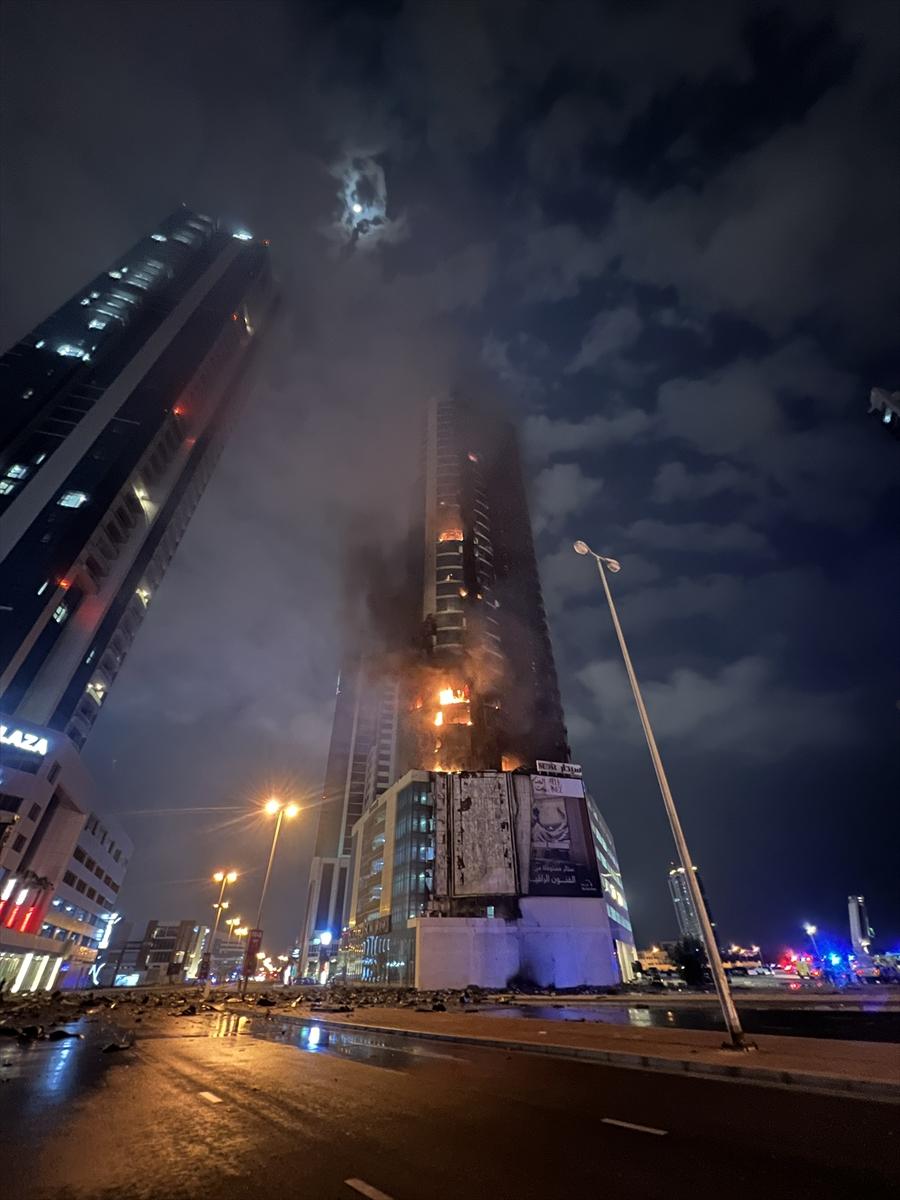
Iran’s attacks on buildings and targets in Bahrain, February 28, 2026 - (Anadolu Ajansı)
It was announced that the Israeli military had called up an additional 20,000 reserve soldiers following its attacks on Iran. The Times of Israel reported that 20,000 reserve soldiers had been mobilized after the U.S. and Israel launched their attacks on Iran.
In Tehran, Iran, following the U.S.-Israel attacks, it was reported that militia forces (Basij) affiliated with the Iranian Revolutionary Guard Corps had begun patrol duties in neighborhoods. Fars News Agency reported that Basij units had begun patrolling the streets of the capital. It was recorded that militia forces in 22 districts of Tehran began patrol operations simultaneously with the U.S. and Israeli attacks.
According to Iranian media reports on February 28, 2026, Iranian President Masoud Pezeshkian was reported to have been unharmed in the U.S. and Israeli attacks. A source close to the presidency told the semi-official Mehr News Agency that Pezeshkian’s health was good and that he had no issues. It was claimed that during the initial Israeli attacks on Iran, Iran’s Supreme Leader Ayatollah Ali Khamenei had also been targeted.
On the same morning, it was reported that the U.S. and Israel had carried out an attack targeting areas in Tehran where the presidential office was located. In response to public speculation regarding President Pezeshkian’s condition, the Iranian press published the official clarification.
Israel and U.S. Attacks on Iran. February 28, 2026 (ABC News)
Israeli media claimed that Iran’s Chief of Staff, Abdolrahim Mousavi, had also been targeted in the U.S.-Israel attack on Iran. Channel 12 television, citing a security source, reported that the attacks on Iran would last several days.
The report, which claimed that the attacks on Iran were focused on “regime targets and military sites” and that all senior Iranian leaders were also targeted, alleged that Iran’s Chief of Staff Mousavi had been targeted.
Iranian National Security Council Chairman Ibrahim Azizi stated that the party initiating the war was not Iran, but that the end of the conflict was not in the hands of the opposing side.
In a statement posted on the social media platform X, operated by the U.S.-based company, Azizi confirmed that Iran would retaliate against Israel’s attack. In Iran’s first official statement on the war, Azizi said: “We warned you before; you started it, but you will not control its end.”
On February 28, 2026, as Israel’s attacks on Iran continued, it was reported that the Israeli military had strengthened its military deployments along the Lebanon border. According to reports in Israeli media, the military had deployed additional units to the border and called up reserve forces. The increased activity along the border was reported to have been carried out as a precaution against possible retaliatory attacks.
As internet outages increased in Iran, Israeli media reported that cyberattacks had been carried out against Iran. Internet outages in Iran intensified following the morning U.S.-Israel attacks. Israeli media also reported that cyberattacks had been launched against Iran. After the cyberattacks, access to the official Iranian news agency IRNA’s website was blocked.
The leader of the Islamic Republic of Iran, Ayatollah Ali Khamenei, was reported to have been killed in the U.S. and Israeli attacks on February 28, 2026. The announcement was made on March 1, 2026.
In a statement on his Truth Social account, U.S. President Trump confirmed Khamenei’s death and stated:
"Khamenei, one of the worst people in history, is dead. This is justice not only for the Iranian people but also for the countless individuals from many countries killed or maimed by Khamenei and his bloodthirsty gang. He could not escape our intelligence and our highly advanced tracking systems. Working closely with Israel, neither he nor the other leaders killed alongside him could do anything. This is the one and greatest opportunity for the Iranian people to reclaim their country. We hear that many in the IRGC, the military, and other security and police forces no longer wish to fight and are seeking immunity from us. As I said last night, “Now you can gain immunity; later, you will get only Death!” We hope the IRGC and police will peacefully join with patriotic Iranians and work together as one unit to restore the country to its rightful greatness. This process must begin soon; because not only has Khamenei’s death occurred, but the country itself has been largely destroyed and even erased in a single day. However, heavy and precise bombardment will continue nonstop for weeks or as long as necessary to achieve peace in the MIDDLE EAST AND EVEN THE ENTIRE WORLD!
Thank you for your attention to this matter.
PRESIDENT DONALD J. TRUMP"
Iranian state television soon confirmed the death of Ali Khamenei and issued a statement: “The leader of the Islamic Revolution of Iran has attained martyrdom.” The Iranian government announced a 40-day national mourning period and a 7-day official holiday in honor of Khamenei.
Protests following Khamenei’s death in Iran, March 1, 2026 - (Anadolu Ajansı)
In the statement issued by the Iranian government following the announcement of Khamenei’s death, it was stated that the attack “would not go unpunished” and that the perpetrators and those who ordered it would be made to repent. The Iranian Presidency similarly declared that the attack would not be left unanswered.
Iran’s advisor to the leader, Mohammad Muhbir, stated on state television that Article 111 of the Iranian Constitution would be implemented. Muhbir said: “According to Article 111 of the Constitution, upon the death, resignation, or removal of the leader, the Assembly of Experts must appoint and announce a new leader as soon as possible. Until a new leader is appointed, a council of three persons — the President, the Head of the Judiciary, and a faqih selected by the Guardian Council — will temporarily assume the leadership duties.”
According to a report by Fars News Agency, which is known for its closeness to the Iranian Revolutionary Guard Corps and citing a source within Khamenei’s office, some of Khamenei’s family members were also killed in the U.S.-Israel attack. It was reported that Khamenei’s daughter, son-in-law, grandson, and one of his daughters-in-law had lost their lives in the attack, but their names were not disclosed. No detailed official statement was issued regarding the matter.
Protests following Khamenei’s death in Iran, March 1, 2026 - (Anadolu Ajansı)
Following the announcement of Khamenei’s death, memorial and protest demonstrations were held in various cities across Iran. Black flags were raised on the dome of the Imam Reza Shrine in Mashhad. It was reported that people across many Iranian cities had taken to the streets holding Iranian flags.
In Tehran, crowds gathered at Revolution Square chanted anti-U.S. and anti-Israel slogans. In Qom, hundreds gathered at the Hazrat Masumeh Shrine to protest against the U.S. and Israel. In Baghdad, Iraq, a group of demonstrators gathered in front of the Green Zone, where the U.S. Embassy is located, to protest Khamenei’s killing. It was reported that demonstrators attempted to enter the Green Zone, and security forces responded with sound bombs and tear gas.
Protests following Khamenei’s death in Iran, March 1, 2026 - (Anadolu Ajansı)
In Yemen, the Houthis (Ansarullah Movement), upon learning of the death of Iran’s Supreme Leader Ayatollah Ali Khamenei in the U.S. and Israeli attack, announced their full support for Iran. According to the news report from Al Masirah television, affiliated with the Houthis, the Political Bureau of Ansarullah issued a written message regarding the death of Iran’s leader.
The statement conveyed condolences to the Iranian people, government, and the Islamic world, stating that “Khamenei was the leader of the revolution of the oppressed and a martyr on the path to Jerusalem.” It affirmed that “Iran stood with the oppressed and revived Muslim unity and Islamic values,” and emphasized that the Houthis fully supported the Islamic Republic.
The statement declared that the struggle against the U.S. and Israel would continue without compromise, using the phrase that Khamenei’s blood “would become fuel for the ongoing struggle against oppressors and aggressors.”
On February 28, 2026, Foreign Minister Hakan Fidan held telephone conversations with the foreign ministers of Iran, Iraq, Saudi Arabia, Qatar, Syria, Egypt, and Indonesia. According to sources from the Ministry of Foreign Affairs, these contacts were made in light of recent developments in the region.
During the talks, the military developments that occurred on the same day in the Middle East were discussed and steps that could be taken to end the attacks were evaluated. The diplomatic contacts were described as consultations aimed at preserving regional stability and reducing tensions.
In a statement from the Ministry of Foreign Affairs, it was stated: “We call on the parties (U.S.-Israel-Iran) to immediately cease their attacks. We express deep concern over any action violating international law and condemn provocations that could escalate violence.”
European Union High Representative for Foreign Affairs and Security Policy Kaja Kallas issued a statement regarding the U.S. and Israeli attacks on Iran. Kallas described the recent developments in the Middle East as “dangerous” and stated that the EU was exploring diplomatic avenues. The statement emphasized that protecting civilians and respecting international humanitarian law were top priorities.
Lebanese President Joseph Aoun, following the commencement of U.S. and Israeli attacks on Iran, stated that protecting Lebanon from potential disasters was an “absolute priority.” In meetings with Prime Minister Nawaf Salam, Minister of Transport Fayez Rasamini, U.S. Ambassador to Lebanon Michel Issa, and Lebanese Chief of Staff Rudolph Heykel, Aoun emphasized that “being at the highest level of preparedness to protect Lebanon and ensuring coordination among all responsible institutions and units” was mandatory.
Saudi Arabia condemned Iran’s attacks on the United Arab Emirates, Bahrain, Qatar, Kuwait, and Jordan, and denounced acts violating their sovereignty. According to a written statement from the Ministry of Foreign Affairs, Saudi Arabia affirmed its full solidarity with these “brotherly countries” and stated it was prepared to mobilize all its resources to support them in taking any necessary measures.
Qatar strongly condemned Iran’s missile strikes on its territory, characterizing the attack as a clear violation of its sovereignty and territorial integrity. In a written statement from the Ministry of Foreign Affairs, it was stated that Iran’s use of missiles to target Qatari territory violated international law and threatened the region’s security and stability.
The Russian Ministry of Foreign Affairs stated that the U.S. and Israeli attacks on Iran violated fundamental international principles and were unacceptable.
Pakistan’s Foreign Minister Muhammad Ishak Dar, during a telephone conversation with Iran’s Foreign Minister Abbas Araghchi, stated that he “strongly condemned the unjustified attacks on Iran.”
Al Jazeera English. "Iran live: US Senate backs Trump’s attacks on Tehran; Israel pounds Lebanon." Accessed March 5, 2026. https://www.aljazeera.com/news/liveblog/2026/3/5/iran-live-us-senate-backs-trumps-attacks-on-tehran-israel-pounds-lebanon
CNN. "Live news: Iran war – US, Israel, Trump updates." Accessed March 5, 2026. https://edition.cnn.com/world/live-news/iran-war-us-israel-trump-03-05-26
Developments on March 5
Iran’s Ministry of Health spokesperson Hossein Kermanpur announced that the number of fatalities in the US-Israel attacks has risen to 926. According to Kermanpur’s statements, 6,186 people were injured, of whom 2,004 are still receiving treatment in various hospitals.
The statement noted that more than 12 percent of the deceased were women and that 180 of the dead were under the age of 18. Previously, the Iranian Red Crescent had reported 867 fatalities.
The Iranian Red Crescent reported that 105 civilian sites were hit in the US-Israel attacks. The organization stated that since the start of the attacks, 1,332 strikes have been carried out at 636 locations across 174 settlements. Direct targeting of civilian areas was confirmed in parts of Maragheh, Urmia, Lamerd, Isfahan, Hamadan, Kurdistan, Kermanshah, and Tehran. Among the damaged sites were seven Red Crescent branches and 14 health and pharmaceutical centers.
US President Donald Trump argued that the initial strike against Iran was preventive. In a statement during a meeting at the White House, he claimed that had the US not taken the first step, Iran would have attacked Israel and, if possible, the US.
Trump stated that the US and Israel acted in unison and were in a “strong position” against Iran. He asserted that had no operation been conducted within two weeks in June, Iran could have acquired nuclear weapons, and that the B-2 bomber strikes had halted this process.
US Secretary of State Marco Rubio noted that Iran launched attacks against the US after being targeted by Israel, and that the US responded proactively and defensively to prevent further losses. Following Rubio’s statements, US media speculated that Washington had been drawn into war with Iran at Israel’s behest.
The UK Ministry of Defence confirmed that the Shahid-type unmanned aerial vehicle targeting the British Royal Air Force Akrotiri Base in the Greek Cypriot Administration of Southern Cyprus did not originate from Iran.
The statement noted that F-35B and Typhoon jets conducted nighttime flights to protect British interests in the Middle East. Two drones heading toward the base were intercepted, and a drone that landed on the runway caused no casualties or major material damage. Wildcat helicopters were deployed to the area and defense systems were strengthened.
A security alert was issued in Akrotiri Base and surrounding settlements, triggering sirens. It was reported that at 23:15 local time, the area entered alert status and civilians were advised to remain indoors. The alert was attributed to an object detected on radar.
The Dutch government decided to deploy the air defense and command frigate Zr.Ms. Evertsen to the Eastern Mediterranean. Defense Minister Dilan Yeşilgöz-Zegerius and Foreign Minister Tom Berendsen stated in a parliamentary address that the decision was linked to developments in the Middle East and Iran’s attacks on neighboring countries.
It was announced that France had requested support for the French aircraft carrier Charles de Gaulle, which had set course for the Eastern Mediterranean. The Zr.Ms. Evertsen was noted to possess air defense and command capabilities.
According to reports in the US press, Iranian Kurdish militias allegedly launched a ground offensive in northwestern Iran. The report cited an unnamed US official.
White House spokesperson Karoline Leavitt denied allegations that the US had armed Kurdish forces to encourage popular uprisings in Iran.
It was alleged that Iran launched an armed drone strike against the Komele camp in Sulaymaniyah, Iraq. No casualties were reported, but material damage occurred.
The camp was said to have previously been opened for refugees but had since been evacuated. The Kurdistan Freedom Party (PAK), active in Iran, also reported that its headquarters had been attacked. Both groups are designated as terrorist organizations by Iran.
Since February 28, the US Consulate General in Erbil and its airbase have been targeted, with over a hundred drone attacks reported. Two drone strikes were carried out on Sulaymaniyah.
The Seraya Evliya al-Dem group, affiliated with Hashd al-Shaabi, announced it had attacked a hotel in Erbil allegedly housing US troops. On the night of March 1, drones struck Erbil International Airport, causing a fire. On March 2, an attack was also carried out on Peshmerga headquarters.
Iran’s Foreign Minister Abbas Araghchi stated that the US had struck the Iranian frigate Dena in international waters without warning, calling it “a brutality at sea.” US Defense Secretary Pete Hegseth announced that the Iranian frigate had been sunk by a torpedo launched from a submarine off the coast of Sri Lanka.
Iran’s Deputy Foreign Minister Mecid Taherian stated that since the start of the attacks, no message had been sent to the US nor received from it. The statement emphasized that Iran had focused solely on defense.
It was reported that unmanned aerial vehicles attacked Nakhchivan International Airport. Azerbaijan’s Ministry of Foreign Affairs stated that the attacks originated from Iranian territory.
Azerbaijani President Ilham Aliyev labeled the drone attacks on the Nakhchivan Autonomous Republic from Iran as a “terrorist act.” Aliyev announced he had ordered the Azerbaijani Armed Forces to prepare retaliatory actions.
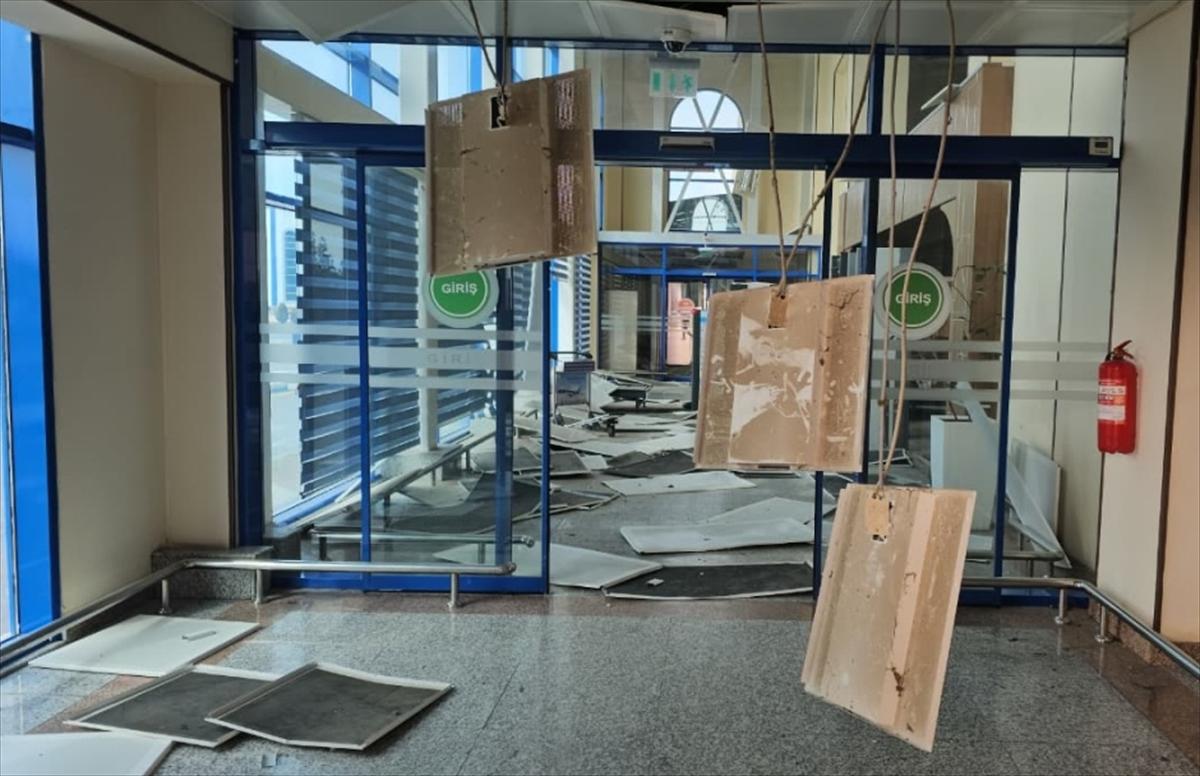
Drone Attack on Nakhchivan Airport. March 5, 2026 (Anadolu Agency)
One drone struck the airport, while another crashed near a school in the village of Shekerabad; two civilians were injured. Azerbaijan stated that the attacks violated international law, demanded an explanation from Iran, and reserved its right to respond. Iran’s ambassador to Baku was summoned by Azerbaijan’s Ministry of Foreign Affairs.
The Azerbaijani Ministry of Defense confirmed that Iran was responsible for the drone attacks on Nakhchivan and declared that the attacks would not go unanswered.
Since February 28, 2026, aerial attacks by the US and Israel have concentrated on the capital Tehran. Extensive physical damage has occurred across the city as a result of missile and aircraft bombardments. The attacks, reported to have continued without interruption for six days, caused severe destruction in residential areas.
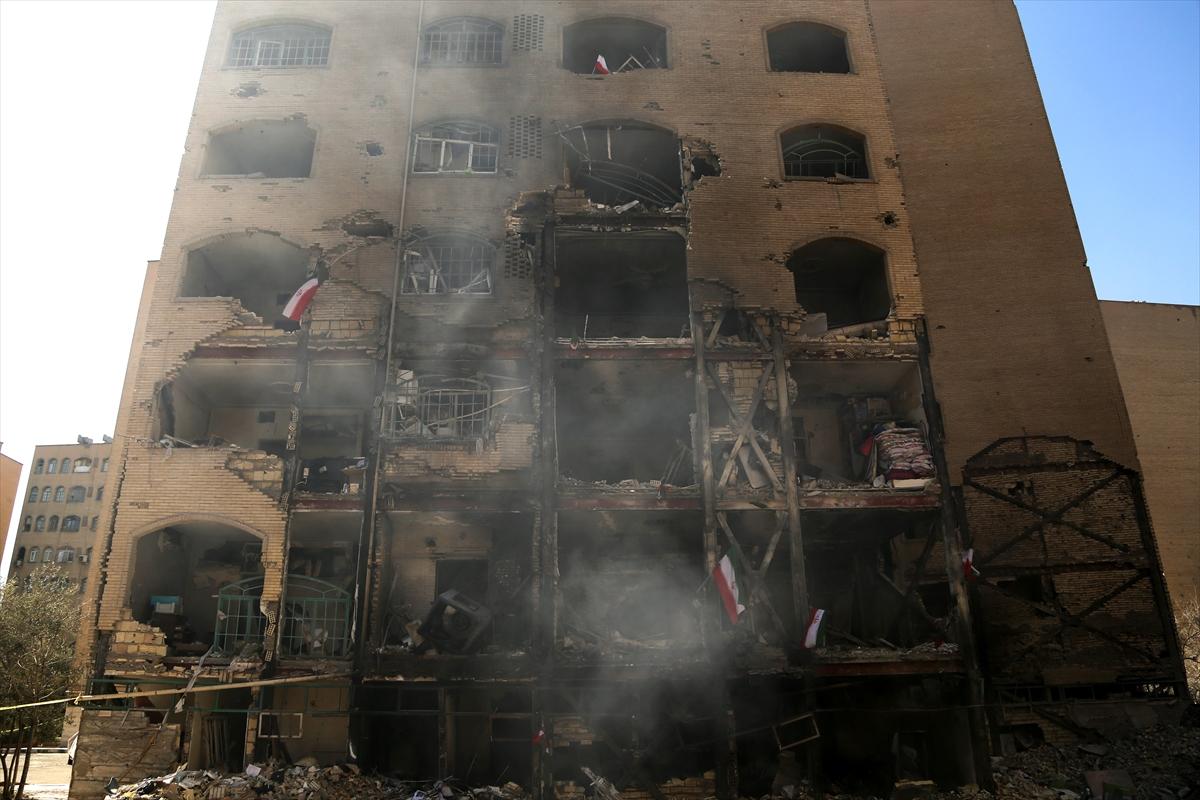
Scale of Destruction in Tehran. March 5, 2026 (Anadolu Agency)
One of the areas suffering the heaviest damage was the Shahid Bujurdi Housing Complex, home to families of soldiers killed in the Iran-Iraq War. At least 18 people were killed in attacks on the complex. Four eight-story buildings were rendered unusable, and numerous homes and vehicles sustained heavy damage.
Municipal teams continued debris removal efforts, evacuations were carried out from damaged residences, and fire damage persisted in some structures. It was reported that destruction in the city continued to escalate as the attacks persisted.
The military operations against Iran by the US and Israel were described as shaped not only by conventional military force but also by multi-layered intelligence processes. Planning reportedly involved the combined use of human intelligence (HUMINT), signals intelligence (SIGINT), cyber intelligence, satellite imagery, unmanned aerial vehicles, and AI-assisted analysis.
Briefings from the US Department of Defense indicated that the attack plan, designated as “Operation Divine Fury,” was the result of months, even years, of planning and target development for certain objectives.
At the start of the operation, the US Cyber Command (CYBERCOM) and Space Command (SPACECOM) reportedly weakened Iran’s command, control, and communication systems using non-kinetic methods.
According to international media reports, Israeli intelligence infiltrated Tehran’s traffic cameras to track the movements of senior officials for extended periods. Cameras around the compound housing Supreme Leader Ayatollah Ali Khamenei’s office were said to have played a critical role in operational planning.
It was stated that Israel’s Unit 8200 and its foreign intelligence agency Mossad combined field human sources with technical intelligence data during this process.
Additionally, certain components of mobile communication networks were temporarily disabled to limit Iranian officials’ ability to communicate.
The US Central Intelligence Agency (CIA) was reported to have tracked the movements of Iranian Supreme Leader Ayatollah Ali Khamenei for months and obtained highly accurate intelligence on his location. This intelligence was shared with Israel and played a critical role in operational planning.
The operation began on the morning of February 28 at approximately 07:30 with the takeoff of fighter jets, followed at around 09:40 by long-range missiles targeting the Iranian National Security Council compound.
The US military reportedly utilized AI-assisted analytical systems in its operational planning. According to some reports, the AI model “Claude,” developed by the US-based technology company Anthropic, was used to accelerate target identification and strike decisions.
Italian Defense Minister Guido Crosetto announced that Italy was reassessing its military presence in the Middle East due to escalating tensions between Iran and the US-Israel alliance.
It was stated that Italy planned to deploy air defense systems and counter-unmanned aerial vehicle elements and was preparing to send naval forces alongside Spain, France, and the Netherlands to protect the Greek Cypriot Administration.
The US Central Command (CENTCOM) reportedly requested additional military intelligence officers from the Pentagon to sustain operations against Iran.
This request was said to be based on the assessment that the operations could last at least 100 days.
Chinese Foreign Minister Wang Yi stated that China was prepared to assume a mediation role amid escalating tensions between Iran and Gulf states. The Chinese government emphasized that attacks on civilians were unacceptable and stressed the need to prevent regional conflict from spreading to Gulf countries.
The Lebanese government instructed its security agencies to identify and neutralize elements of the Iranian Revolutionary Guard operating in the country. Officials stated that these individuals were planned to be detained and expelled from Lebanon.
It was alleged that US President Donald Trump had contacted Kurdish leaders in the region and advocated supporting anti-regime activities in Iran. Experts noted that this strategy would be difficult to implement due to the limited number of Iranian Kurdish groups and their lack of broad support within Iran.
According to Iranian media reports, Iran launched widespread retaliatory strikes against US and Israeli targets following the attacks that began on February 28, 2026. Iran reportedly employed over 500 ballistic and cruise missiles and more than 2,000 kamikaze unmanned aerial vehicles. Approximately 40 percent of the attacks targeted Israeli sites, while 60 percent targeted American sites.
The Israeli military announced, in coordination with the US, that Iran had launched a new missile barrage. The statement confirmed that missiles had been detected being fired from Iran toward Israel.
It was reported that air defense systems were activated to intercept the missiles. Warning messages were sent to mobile phones in threatened areas, alarm systems were triggered, and civilians were directed to shelters.
Israeli media reported that four missiles were launched from Iran, targeting the central region of the country, and that sirens sounded in Jerusalem. The detonations of intercepted missiles were heard. It was noted that Hezbollah and Iran conducted their first simultaneous retaliatory strikes since the attacks began on February 28.
Qatar’s Ministry of Interior announced that residents around the US Embassy in Doha were being evacuated on grounds of public security. The evacuation was described as a temporary precaution, with alternative accommodation provided to those displaced. The US Embassy in Doha also issued a warning urging people to stay away from its vicinity.
It was reported that since the US-Israel attacks began on February 28, Iran targeted US bases in Qatar, the United Arab Emirates, and Bahrain. Simultaneously, it was announced that Ayatollah Ali Khamenei and numerous senior Iranian officials had been killed. Iran’s Ministry of Health confirmed that fatalities had reached 926.
The Bahrain Defense Force General Command announced that it had intercepted 74 missiles and 95 unmanned aerial vehicles launched by Iran since February 28.
The statement noted that all air defense systems were on high alert. It condemned attacks targeting civilian infrastructure with missiles and drones as violations of international humanitarian law and the United Nations Charter. Bahrain emphasized its right to defend its sovereignty and security.
Israeli Channel 14 television reported that a US F-15 fighter jet had crashed in western Iran. The report stated that the crew had ejected via parachute before the aircraft hit the ground and remained on Iranian soil.
It was claimed that a joint US-Israeli team conducted an operation to rescue the crew.
The US Central Command (CENTCOM) previously reported that since the start of the attacks, six US service members had been killed and 18 wounded. It also stated that three US fighter jets had been downed in Kuwait due to “friendly fire.”
During the continuation of Iran’s retaliatory attacks, loud explosion sounds were heard in Doha, Qatar’s capital. Between 12:00 and 12:30 local time, a series of explosions occurred at different points in the city center, and air defense systems were activated.
Security forces took precautions at critical locations following the explosions. It was noted that the evacuation initiated a day earlier around the US Embassy in Doha was carried out as part of these security measures.
Al Jazeera. “Iran War Live: Trump Says Iran Being Demolished as Tehran Continues Gulf Attacks.” Accessed March 6, 2026. https://www.aljazeera.com/news/liveblog/2026/3/6/iran-live-trump-says-iran-being-demolished-tehran-keeps-up-gulf-attacks
CNN. "Iran War Live Updates: US–Israel Conflict With Iran." Accessed March 6, 2026. https://edition.cnn.com/world/live-news/iran-war-us-israel-trump-03-06-26
The Star YouTube. “Pastors Pray Over Trump in the Oval Office.” Accessed March 6, 2026. https://www.youtube.com/watch?v=1jLia35EhnQ.
US–Iran–Israel Conflict (2026), began on 28 February 2026 with large-scale aerial attacks by Israel against Iran and quickly expanded into a regional military conflict after the direct involvement of the United States. The conflict emerged as a result of the escalation oflong-standing geopolitical tensions between Iran and the US and Israel and continued with reciprocal strikes spreading across various regions of the Middle East.
The process began when the Israeli government announced it had launched a “preventive strike” against Iran. On the same day, US President Donald Trump announced that a “major operation” had been conducted against Iran. The initial Israeli attacks caused explosions in various cities including Tehran, Isfahan, Qom, Kerman, and Kermanshah, with the Iranian government condemning the attacks as violations of its sovereignty. In response, Iran launched ballistic missile and drone attacks against Israel, and the conflict rapidly escalated into reciprocal military operations.
From the first day of the conflict, attacks were no longer confined to Iranian and Israeli territory, US military bases and regional security infrastructure in various countries across the Gulf region also became targets. Iranian missile strikes targeted the US Fifth Fleet headquarters in Bahrain and several military facilities in Qatar and the United Arab Emirates, prompting regional countries to close their airspace and enhance security measures. These developments led to the conflict transforming into a regional security crisis.
During the conflict, Iran’s religious leader Ayatollah Ali Khamenei was killed in attacks carried out by the US and Israel. Khamenei’s death triggered widespread protests and mourning ceremonies across Iran, while the Iranian government declared that the attacks would not go unanswered.
Explosions in Tehran. 28 February 2026 (Anadolu Ajansı)
Israeli Prime Minister Benjamin Netanyahu claimed that the US-Israel strikes would give the Iranian people the opportunity to determine their own destiny. In a statement following the attacks on Iran, Netanyahu stated that the operation had been named “Operation Lion’s Roar.”
Shortly before, Netanyahu had noted that the US and Israel had launched attacks to “eliminate the existential threat posed by Iran’s regime”, arguing that Iran must never possess nuclear weapons. Netanyahu asserted that the US-Israel joint strike would “create the necessary conditions for the courageous Iranian people to take control of their own fate.”
Using the phrase “All segments of the Iranian people—Persians, Kurds, Azerbaijanis, Baluchis, and Ahwazis—have reached the time to break free from the yoke of oppression and build a free and peaceful Iran,” Netanyahu delivered a message advocating regime change in Iran.
The Iranian Revolutionary Guards announced they had launched large-scale missile and drone attacks against “occupied territories” in response to the US-Israel strikes.
The Islamic Revolutionary Guard Corps issued a written statement, stating: “In response to the aggressive actions of the guilty enemy against the Islamic Republic of Iran, the Islamic Republic of Iran has initiated its first large-scale missile and drone attacks against occupied territories.”
Smoke rising into the sky after explosions in Tehran, 28 February 2026 - (Anadolu Ajansı)
On 28 February 2026, Iran’s Ministry of Foreign Affairs condemned the attacks by the US and Israel as clear violations of its territorial integrity and national sovereignty and called on the United Nations (UN) to take urgent action.
In its written statement, the ministry noted that the US and Israel had targeted both defense infrastructure and civilian areas in various Iranian cities, emphasizing that these attacks occurred whilediplomatic talks between Iran and the US were still ongoing. The statement added: “We were aware of the US and Israel’s intention to launch new military attacks. However, we initiated renewed negotiations to make it clear to the international system and all nations of the world that Iran’s position is just and that there is no legitimate justification for aggression.”
The statement emphasized that the aerial attacks by Israel and the US constituted a clear violation of the UN Charter, stating: “Responding to this attack is Iran’s legal and legitimate right under Article 51 of the UN Charter. The Iranian Armed Forces will use all available means and capabilities to resist this criminal attack and eliminate the enemy’s malice.”
The ministry also highlighted the responsibility of the UN and the UN Security Council to take urgent action due to the violation of international peace and security. It called on all UN member states, particularly regional and Islamic countries and members of the Non-Aligned Movement, to condemn the aggressive acts.
The statement underscored that regional and global peace faced an unprecedented threat and affirmed that the Iranian Armed Forces would respond with the necessary force to defend the country’s integrity.
Israel and US Attacks on Iran. 28 February 2026 (Al Jazeera)
In the early morning hours of 28 February 2026, Israeli Defense Minister Yisrael Katz announced that a “preventive strike” had been launched against Iran. In his statement, Katz declared a state of emergency nationwide and added: “Israel has launched a preventive strike against Iran to eliminate threats directed at it.”
The Israeli military announced the commencement of attacks on Iran and issued a warning to the public to seek shelters in anticipation of possible missile strikes. The military urged civilians to identify their nearest shelter and avoid unnecessary travel due to “security conditions.” The “proactive alert” was intended to prepare the population for missile attacks. By 08:14 local time on 28 February, sirens sounded across Israel and warning alerts were sent to all mobile phones.
Explosions in Tehran. 28 February 2026 (Anadolu Ajansı)
On 28 February 2026, it was reported that new explosions occurred in Tehran, the capital of Iran. Israeli media claimed that high-ranking Iranian officials had been targeted in the strikes. It was also reported that Israeli attacks targeted not only Tehran but also the cities of Isfahan, Qom, Kerman, and Kermanshah. The Tehran authorities immediately closed Iran’s entire airspace following the start of the attacks.
Ibrahim Azizi, Chairman of Iran’s National Security Council, announced that Iran would retaliate against the Israeli attack. In a social media statement, Azizi said: “We warned you before; you started it, but you do not control the outcome.”
Smoke rising into the sky after explosions in Tehran, 28 February 2026 - (Anadolu Ajansı)
After the sound of explosions was heard in Tehran, hospitals entered emergency mode in the morning hours. Hossein Kermanipour, spokesperson for Iran’s Ministry of Health, told the official news agency IRNA: “Following the sound of explosions, ambulances were dispatched to central areas of Tehran and hospitals were placed on standby. Hospitals have been placed on alert.” The Iranian official added that details on the number of casualties and affected areas would be provided once they became clearer.
Israeli media claimed that Iran’s Chief of Staff, Abdurrahim Musavi, was also targeted in the US-Israel strike on Iran. Channel 12 television, citing a security source, reported that the attacks on Iran would last several days.
Iranian media reported that President Masoud Pezeshkian was unharmed in the US-Israel attacks. According to the semi-official Mehr News Agency, a source close to the presidency stated that President Pezeshkian was in perfect health and had no issues.
On 28 February, US President Donald Trump announced that a major operation had been launched against Iran. Trump made a video statement on his social media account regarding the attacks on Iran, stating: “We have launched a major operation against Iran.” He elaborated on the objective:
“Our goal is to defend the American people by eliminating the threats posed by the Iranian regime—a ruthless group of cruel and terrifying individuals who directly threaten the US, our forces stationed abroad, and our allies around the world.”
US President Trump’s Video Statement on Iran Attacks. 28 February 2026 (Anadolu Ajansı)
Trump called on the Iranian Revolutionary Guard Corps, the Iranian armed forces, and police personnel to lay down their weapons and gain complete immunity, warning: “Otherwise, you will face death.” Emphasizing that the US policy was aimed at ensuring Iran never acquires nuclear weapons, Trump stated: “Iran will never possess nuclear weapons. That is why, in June last year, under Operation Midnight Magnet, we destroyed the regime’s nuclear program at Fordo, Natanz, and Isfahan.”
Trump defended the claim that the US had repeatedly warned Iran regarding nuclear weapons since the June 2025 operation and had attempted to reach an agreement. “For 47 years, the Iranian regime has chanted ‘Death to America’ and waged an endless campaign of blood and mass slaughter targeting the US, its soldiers, and innocent people in many countries.” Trump pointed out that Iran-linked elements in recent years had continued to attack US forces in the region, naval and commercial vessels, and international shipping ports.
Trump described the situation as “mass terrorism” and declared that the US “will no longer tolerate it.” Labeling Iran as “the world’s number one state sponsor of terrorism,” Trump accused the Iranian government of killing tens of thousands of its own citizens who protested.
Trump stated that Iran’s naval power would be targeted and its missile industry eliminated, emphasizing that the US would not allow Iran-linked elements to destabilize the region or the world. Addressing the Iranian people, Trump said their future lay in their hands and urged them to rise up against the Tehran regime.
Trump said: “Your time for freedom is near. Stay in your shelters. Do not leave your homes. Outside is extremely dangerous. Bombs will fall everywhere until we finish our mission. Take over your regime.”
On the morning of 28 February, following the US and Israel’s attacks, Iranian state media announced that a strong response would be delivered. Iranian officials declared that retaliation against the attacks was imminent.
Iranian media reported that the attacks would not go unanswered and that military retaliation against Israel and the US would be carried out. Iranian officials conveyed messages that the country’s defense capabilities were active and that necessary steps were being taken.
At around 11:00 on 28 February, Iran launched ballistic missile attacks against Israel. The Israeli military announced that numerous ballistic missiles had been fired from Iran toward Israeli territory. Israel’s air defense systems activated, sirens sounded nationwide, and the public was urged to seek shelter. Alert status was declared in northern regions, including Haifa.
After Iran’s missile strikes, Jerusalem, 28 February 2026 - (Anadolu Ajansı)
Iran’s initial attacks came in waves. After the first wave, Iran launched a second wave of ballistic missile attacks in response to the US and Israeli strikes. It was reported that Israeli strikes had targeted Tehran, Isfahan, Qom, Kerman, Tabriz, Bushehr, Kermanshah, and Ilam in Iran.
In a midday statement, the Iranian Revolutionary Guard Corps said: “In response to the aggressive actions of the guilty enemy against the Islamic Republic of Iran, the Islamic Republic of Iran has initiated its first large-scale missile and drone attacks against occupied territories.” At the time of the statement, US and Israeli strikes on Tehran and other Iranian cities were still ongoing.
After the start of the attacks, numerous explosions were reported in Tehran, Iran’s capital. According to an Anadolu Ajansı correspondent in Tehran, new attacks and explosion sounds were heard in the city. Explosions continued in the capital even after the first wave of attacks.
Israel’s Channel 12 television claimed that numerous sites in the Tehran government were targeted. The Israeli military radio suggested that high-ranking Iranian officials were targeted in the strikes. According to reports, Israel launched a second wave of attacks on Iran. These claims were reported by Israeli media outlets.
Israeli citizens taking shelter in metro stations after Iran’s retaliation, 28 February 2026 - (Anadolu Ajansı)
On 28 February 2026, following the US-Israel attacks, it was reported that Basij militia forces under the Iranian Revolutionary Guard Corps began patrolling neighborhoods in Tehran. Fars News Agency announced that Basij units had begun their duties on the streets of the capital. According to the statements, militia forces began patrol operations simultaneously in all 22 districts of Tehran in response to the US and Israeli attacks. The initiative was implemented to enhance public safety.
Iran’s National Security Supreme Council announced that residents of cities targeted by the attacks, including Tehran, could relocate to designated safe zones. The announcement was made public as the attacks continued.
On 28 February 2026, the Iranian Revolutionary Guard Corps announced that a US combat support vessel had been targeted by missile strikes. The written statement read: “The US MST Combat Support Vessel was severely hit by Iranian Revolutionary Guard Navy missiles.” The statement also indicated that other elements of the US Navy would also become targets of Iranian missile and drone attacks.
At approximately 14:00 Turkey time, the Israeli military announced that a new wave of retaliatory missile attacks had been launched from Iran. The announcement stated that after detecting missile launches from Iran, sirens activated across many regions of Israel. Air defense systems were activated to intercept the missiles, and the public was urged to follow instructions from the Home Front Command.
Later in the day, the Israeli military announced that the 10th wave of missile attacks had been launched from Iran. The statement noted that the 9th and 10th waves had been detected and that air defense systems were working to identify and intercept missiles fired toward Israeli territory.
The 11th wave of missile attacks was then announced; it was confirmed that missiles fired from Iran were heading toward Israel, alarms activated nationwide, and the public was urged to follow issued instructions. Subsequently, the 12th wave of missile attacks was announced, with air defense systems reported to be actively intercepting the incoming missiles. After the 12th wave, alarms were also triggered in Jordan.
It was reported that debris from one of the missiles fired from Iran toward Israel fell into an empty area near residential zones in Amman, Jordan’s capital. Security forces responded to the site and took necessary precautions. In the evening, it was claimed that Iran had launched over 200 missiles at Israel during the day.
Missiles fired from Iran over Haifa harbor, 28 February 2026 - (Anadolu Ajansı)
On 28 February 2026, during the US-Israel attacks, the “Shaherat-ut-Tayyibe Girls Primary School” in Minab, located in Iran’s Hormozgan province, was targeted by Israel. According to a statement released by the Minab Prosecutor’s Office by Fars News Agency, 85 students were killed in the attack.
Shaherat-ut-Tayyibe Girls Primary School in Minab, Hormozgan province, targeted by Israel and resulting in the deaths of 85 students, 28 February 2026 - (Anadolu Ajansı)
Iran Red Crescent spokesperson Mohsen Halidi stated that more than 20 cities had been targeted in the US-Israel attacks. Speaking to Mehr News Agency, Halidi said: “More than 20 cities were targeted in the attacks that began this morning. Red Crescent teams are continuing their operations on the ground with all personnel and equipment.”
Later in the day, the Iran Red Crescent reported that, according to initial assessments, 201 people had been killed and 747 injured in the US-Israel attacks.
The Israeli military announced that large-scale strikes had been carried out against Iran’s air defense systems. The military statement indicated that the strikes were carried out under intelligence guidance. One of the strikes was reported to have targeted the advanced “SA-65” air defense system located in the Kermanshah region in western Iran.
The Israeli military noted that significant damage had been inflicted on Iran’s air defense systems during these operations. The statement further explained that the strikes were conducted to ensure and strengthen the Israeli military’s freedom of movement in Iranian airspace and to weaken the Iranian Revolutionary Guard Corps.
At approximately 19:00 Turkey time, numerous explosion sounds were heard in Tehran, Iran’s capital. Later, at around 22:00, a series of explosions were reported in Tabriz, with six separate blasts confirmed.
On 28 February 2026, following Iran’s retaliatory attacks against Israel, the conflict spread to the Gulf region.
It was reported that Bahrain’s US naval base was struck by Iranian ballistic missiles. Released footage showed thick smoke rising from the base.
US Base in Bahrain Targeted. 28 February 2026 (Anadolu Ajansı)
The Bahrain National Communications Center announced that the US Fifth Fleet service center in Manama had been hit by a missile strike. The statement indicated that further details would be shared later and urged the public to rely on official sources. The Bahrain Ministry of Interior later urged citizens to use main roads only in essential cases.
Later in the day, the US Fifth Fleet base in Manama was struck a second time. After the attack, air defense systems were activated, and footage showed smoke rising from the US base.
Smoke rising from the US Fifth Fleet headquarters in Bahrain after being struck by Iran, 28 February 2026 - (Anadolu Ajansı)
On the same day, Iran again targeted US facilities in Bahrain in the evening. According to Iranian state television, Iran’s military used kamikaze unmanned aerial vehicles (UAVs) to strike the US base in Bahrain in retaliation for the US-Israel attacks.
The report indicated that other US targets in Bahrain had also been struck. The Bahrain Ministry of Interior announced that several buildings in Manama had been targeted. The statement added: “Some residential buildings in Manama were targeted. Civil Defense teams are continuing firefighting and rescue operations in affected areas.”
US Fifth Fleet headquarters in Bahrain struck by Iran, 28 February 2026 - (Anadolu Ajansı)
Videos shared on social media showed what was assessed to be an Iranian kamikaze UAV crashing into a high-rise building, causing a massive explosion.
Qatar’s Ministry of Defense stated that a missile originating from Iran had been neutralized by its Patriot air defense system within Qatari airspace. The US Embassy in Qatar initiated a “shelter in place, stay in safe areas” protocol for all personnel and advised US citizens in Qatar to follow the same guidance.
Missile fired from Iran intercepted by Qatar’s defense system, 28 February 2026 - (Anadolu Ajansı)
The statement advised citizens to find a safe location, carry essential supplies, monitor local media, and maintain communication. At midday on 28 February, a series of explosion sounds were heard in Doha, Qatar’s capital. Qatar’s Ministry of Defense stated that a series of attacks targeting its territory had been “repelled thanks to high preparedness and coordination.”
Qatar’s Ministry of Defense announced that the third wave of attacks had been successfully repelled. In its written statement, the ministry indicated that after detecting the third wave, pre-established operational plans were activated and all missiles were neutralized before reaching Qatari territory.
The statement emphasized that the Qatari Armed Forces possessed all necessary capabilities to protect national security and prevent external threats. Citizens, residents, and visitors were urged to follow official security instructions, avoid rumors, and obtain information only from official sources. Authorities confirmed that the security situation remained under control and that the country’s stability was maintained.
Missile fired from Iran intercepted by Qatar’s defense system, 28 February 2026 - (Anadolu Ajansı)
At around 17:00, the Iranian Revolutionary Guard Corps announced that it had struck a US FP132 radar system, specifically designed to track ballistic missiles and located 5,000 kilometers from its base in Qatar. A Qatari Ministry of Defense official, speaking anonymously to Al Jazeera, confirmed that an early warning radar in northern Qatar had been hit. The official reported no casualties or injuries and stated that damage assessments were ongoing.
On the evening of 28 February 2026, a missile struck the city center of Doha, Qatar’s capital. Security measures were increased in the area following the incident.
On 28 February 2026, it was reported that Iran had launched attacks targeting Saudi Arabia’s capital Riyadh and its eastern region. In a written statement from the Saudi Ministry of Foreign Affairs, it was confirmed that Riyadh and the eastern region had been targeted by Iran and that the attacks had been repelled.
The statement condemned Iran’s attacks as “cowardly and utterly unjustifiable.” It noted that Iran had carried out these attacks despite knowing that Saudi Arabia would not permit its airspace or territory to be used by Iran to target Iran. Saudi Arabia emphasized that it would take all necessary measures, including retaliation, to ensure its security and protect its territory and citizens.
The Jordanian Armed Forces announced that, following the US and Israel’s attacks on Iran, Jordanian fighter jets had conducted routine patrols to ensure the security of the country’s airspace. A military official stated that sounds heard in various regions of the country originated from air patrols.
The Jordanian Armed Forces also announced that two ballistic missiles targeting Jordanian territory had been shot down by air defense systems. The official noted that no casualties or damage had been reported. Sirens were heard in Jordan, and the Public Security Directorate under the Ministry of Interior issued warnings on how to respond if foreign objects fell.
By the end of the day, the Jordanian military announced that 36 drones and 13 ballistic missiles targeting the country had been neutralized. The statement did not specify the origin of the attacks but confirmed that 13 ballistic missiles had been successfully intercepted and drones had been shot down. Jordanian authorities reported no casualties from the attacks but confirmed material damage had occurred.
The UAE Ministry of Defense announced that the country had been subjected to a direct attack by ballistic missiles fired from Iran. Air defense systems neutralized the missiles. It was reported that one missile that fell in a populated area of Abu Dhabi caused the death of a person of Asian nationality and resulted in material damage. The statement affirmed the UAE’s right to defend its territory and take all necessary measures.
On 28 February 2026, following Iran’s retaliatory strikes against the US and Israel’s attack on Iran, explosions were reported in Dubai, United Arab Emirates. Eyewitnesses reported multiple powerful explosions in Dubai. Videos shared on social media showed fires breaking out and thick smoke rising in several areas after the explosions.
Videos were shared showing a missile strike on a hotel in the tourist district of Jumeirah in Dubai. In a written statement by Dubai Civil Defense, a fire broke out in a building in the Palm Jumeirah area simultaneously with Iran’s attacks. The statement confirmed that four people were injured and the fire had been brought under control.
In a written statement by the UAE Ministry of Defense, new waves of Iranian missiles and drones were reported to have been intercepted by air defense systems. The statement indicated that no major material damage had occurred and that debris from intercepted missiles and drones had fallen in various areas of Abu Dhabi and Dubai.
According to Kuwait’s official news agency KUNA, the Kuwait Civil Aviation Authority announced that all flights to and from Iran had been suspended and canceled. Spokesperson Abdullah al-Raheemi stated that the decision was made in response to the current regional situation and the complete closure of Iran’s airspace.
On the evening of 28 February, it was reported that Kuwait International Airport had been targeted by a drone. According to KUNA, the Kuwait Civil Aviation Directorate confirmed that the airport had been attacked by a drone.
The statement indicated that minor injuries occurred among airport staff and limited material damage had been sustained. The origin of the drone was not disclosed. Iran’s Foreign Minister Abbas Araghchi stated in a statement that Iran’s response targeting US military bases in the Middle East did not target the countries themselves and that attacks were limited to military sites only.
On the night of 28 February, Kuwait’s Ministry of Health spokesperson Abdullah al-Sanad reported on casualties. According to the official news agency KUNA, Sened stated that 12 people had been injured due to Iran’s attacks on the country throughout the day. Sened noted that one of the injured was in intensive care and under close observation, while others were under medical observation.
Following the Israeli and US attacks on Iran, Iraq suspended all flights to and from Iran and closed its airspace. According to Iraq’s official news agency INA, the Ministry of Transport announced the closure of Iraq’s airspace. Ministry spokesperson Maytham al-Safi said: “All Iraqi airspace has been closed to flights, and all air traffic was evacuated beforehand.”
Later in the day, missiles or drones targeting the US base at Erbil International Airport in Erbil, Iraq, were neutralized. Videos posted on social media showed aircraft launched at the US base at Erbil International Airport being intercepted in mid-air.
Attack on the US base at Erbil International Airport, 28 February 2026 - (Anadolu Ajansı)
Ahmed Hoshyar, Director of Erbil International Airport, announced to local media that flights had been suspended. The Kurdistan Regional Government’s Ministries of Higher Education and Education also decided to suspend classes for four days.
Spokesperson of the Iranian General Staff, Major General Ebrahim Shikari, announced that any base aiding the US and Israel would be targeted by Iran.
The Iranian Revolutionary Guard Corps announced that in response to the US-Israel attacks, US bases in Bahrain, Qatar, and the United Arab Emirates, as well as Israeli military centers, had been targeted by missile and drone strikes. The statement said: “Heavy missile and drone strikes were carried out against the US Fifth Fleet base in Bahrain and other US bases in Qatar and the UAE. Military and security centers at the heart of Israel were also targeted.”
The Hatem al-Anbiya Central Command also stated: “As previously announced, in response to the shameless aggression by the US and Zionist regime (Israel) against Iran, all occupied territories in the region and criminal US bases have been severely hit by Iranian missiles.” The Iranian Armed Forces noted that their operations “will continue without interruption until the enemy is decisively defeated.”
On 28 February 2026, large crowds gathered at Palestine Square in Tehran, Iran’s capital, to protest the US and Israel’s attacks on Iran. It was reported that demonstrators gathered in the square, carried banners, and expressed their opposition to the attacks.
Protests in Tehran. 28 February 2026 (Anadolu Ajansı)
Demonstrators were reported to have chanted anti-US and anti-Israel slogans and gathered in the square holding Iranian flags. Slogans such as “No concessions, no surrender, war against America” were heard. The crowd was also reported to have voiced slogans of support for Iran’s Supreme Leader Ayatollah Ali Khamenei and the Iranian Armed Forces.
With the declaration of a state of emergency in Israel, national security measures were heightened. The military emphasized that the public must seek shelter due to “security conditions.” Alarm systems were activated nationwide in anticipation of missile launches.
In Iran, schools were suspended until further notice due to the US-Israel attacks. The Iranian Ministry of Interior issued a statement regarding the Israeli and US attacks on Iran: “Israel and the US have attacked our homeland again, violating international law while negotiations were ongoing.” The statement urged the public to remain calm, manage their intra- and inter-city travel according to current conditions, and announced the establishment of a National Crisis Management Center to address potential issues.
Qatar, Kuwait, and the United Arab Emirates (UAE) announced the closure of their airspace to flights.
Iran’s attacks on buildings and targets in Bahrain, 28 February 2026 - (Anadolu Ajansı)
The Israeli military announced that it had called up an additional 20,000 reserve soldiers following its attacks on Iran. The Times of Israel reported that 20,000 reserve soldiers had been mobilized after the US-Israel attacks on Iran.
In Tehran, Iran, following the US-Israel attacks, it was reported that militia forces (Basij) affiliated with the Iranian Revolutionary Guard Corps began patrol duties in neighborhoods. Fars News Agency announced that Basij units had begun their duties on the streets of the capital. It was recorded that militia forces in all 22 districts of Tehran began patrol operations simultaneously with the US and Israeli attacks.
According to Iranian media reports on 28 February 2026, Iranian President Masoud Pezeshkian was unharmed in the US and Israel attacks. A source close to the presidency, speaking to the semi-official Mehr News Agency, confirmed that Pezeshkian was in good health and had no issues. It was claimed that during the initial attacks on Iran, the US and Israel had attempted to target Iran’s Supreme Leader Ayatollah Ali Khamenei.
On the same morning, it was reported that the US and Israel had launched an attack targeting areas in Tehran where the presidential office was located. According to Iranian media, the official statement regarding President Pezeshkian’s condition was issued in response to public speculation following the attacks.
Israel and US Attacks on Iran. 28 February 2026 (ABC News)
Israeli media claimed that Iran’s Chief of Staff, Abdurrahim Musavi, was also targeted in the US-Israel attacks on Iran. Channel 12 television, citing a security source, reported that the attacks on Iran would last several days.
The report claimed that the attacks on Iran were concentrated on “regime targets and military sites” and that all senior Iranian leaders were also targeted, including Iran’s Chief of Staff Musavi.
Iranian National Security Council Chairman Ibrahim Azizi stated that the party initiating the war was not Iran, but that the outcome was not in the hands of the opposing side.
In a statement on the social media platform X, based in the US, Azizi confirmed that Iran would retaliate against the Israeli attack. In Iran’s first official statement regarding the war, Azizi said: “We warned you before; you started it, but you do not control the outcome.”
On 28 February 2026, as Israel’s attacks on Iran continued, it was reported that the Israeli military had strengthened its military deployment along the Lebanon border. According to Israeli media reports, the military had deployed additional military units to the border and called up reserve forces. The increased activity along the border was reported to be a precaution against possible retaliatory attacks.
As internet outages increased in Iran, Israeli media reported that cyberattacks had been launched against Iran. Internet outages in Iran intensified following the morning US-Israel attacks on 28 February. Israeli media also reported that cyberattacks had been conducted against Iran. After the cyberattacks, access to the official Iranian news agency IRNA’s website was blocked.
The leader of the Islamic Republic of Iran, Ayatollah Ali Khamenei, was confirmed dead on 1 March 2026 as a result of the US-Israel attack on 28 February 2026.
In a statement on his Truth Social account, US President Trump confirmed Khamenei’s death and said:
"Khamenei, one of the worst people in history, is dead. This is justice not only for the Iranian people but also for countless individuals from many countries around the world who were killed or maimed by Khamenei and his bloodthirsty gang. He could not escape our intelligence and our highly advanced tracking systems. Working closely with Israel, there was nothing he or the other leaders killed alongside him could have done. This is the one and greatest opportunity for the Iranian people to reclaim their country. We are hearing that many in the IRGC, the Military, and other Security and Police Forces no longer wish to fight and are seeking immunity from us. As I said last night, “Now they can gain immunity, or later they will only get Death!” We hope the IRGC and Police will peacefully join with patriotic Iranians and work together as one unit to restore their country to its rightful greatness. This process must begin soon; for not only has Khamenei died, but the country itself has been largely destroyed and even eradicated in just one day. However, heavy and precise bombardment will continue nonstop for the week or as long as necessary to achieve peace in the MIDDLE EAST AND EVEN THE ENTIRE WORLD!
Thank you for your attention to this matter.
PRESIDENT DONALD J. TRUMP"
Shortly afterward, Iranian state television confirmed the death of Ali Khamenei and released a statement: “The leader of the Islamic Revolution has attained martyrdom.” The Iranian government announced a 40-day national mourning period and a 7-day official holiday in response to Khamenei’s death.
Protests following Khamenei’s death in Iran, 1 March 2026 - (Anadolu Ajansı)
In the statement issued by the Iranian government following Khamenei’s death, it was stated that the attack “would not go unpunished” and that those responsible and those who ordered the attack would be “made to repent.” The Iranian Presidency similarly declared that the attack would not go unanswered.
Iran’s advisor Muhammad Mohbir, in a statement to state television, confirmed that Article 111 of the Iranian Constitution would be applied. Mohbir said: “According to Article 111 of the Constitution, upon the death, resignation, or removal of the Leader, the Assembly of Experts must appoint and announce a new Leader as soon as possible. Until a new Leader is appointed, a council of three persons — the President, the Head of the Judiciary, and a jurisprudent selected by the Guardian Council — will temporarily assume the leadership duties.”
According to Fars News Agency, which is known for its close ties to the Iranian Revolutionary Guard Corps, citing a source within Khamenei’s office, some of Khamenei’s family members were also killed in the US-Israel attack. It was reported that Khamenei’s daughter, son-in-law, grandson, and one of his daughters-in-law lost their lives in the attack, but the names of the deceased were not disclosed. No detailed official statement has been issued on this matter.
Protests following Khamenei’s death in Iran, 1 March 2026 - (Anadolu Ajansı)
Following Khamenei’s death, mourning and protest demonstrations were held in various cities across Iran. Black flags were raised on the dome of the Imam Reza Shrine in Mashhad. It was reported that people across many cities took to the streets holding Iranian flags.
In Tehran, crowds gathered at Revolution Square ch
Anadolu Ajansı. "Tahran’da Çok Sayıda Patlama Meydana Geldiği Bildirildi." Accessed February 7, 2026. https://www.aa.com.tr/tr/dunya/tahranda-cok-sayida-patlama-meydana-geldigi-bildirildi/3853572
Anadolu Ajansı. "Trump, Silah Üretim Hızının Artırılması İçin Savunma Şirketleriyle Görüştü." Accessed February 7, 2026. https://www.aa.com.tr/tr/dunya/trump-silah-uretim-hizinin-artirilmasi-icin-savunma-sirketleriyle-gorustu/3853416
Anadolu Ajansı. "İran Cumhurbaşkanı: Bize Saldırı Gelmediği Sürece Komşu Ülkelerin Vurulmaması ve Füze Fırlatılmaması Kararı Alındı." Accessed February 7, 2026. https://www.aa.com.tr/tr/dunya/iran-cumhurbaskani-bize-saldiri-gelmedigi-surece-komsu-ulkelerin-vurulmamasi-ve-fuze-firlatilmamasi-karari-alindi/3853640
Anadolu Ajansı. "İsrail’in İran’a Yönelik Saldırıları Kuvvet Kullanma Yasağının İhlali Olarak Değerlendiriliyor." Accessed February 7, 2026. https://www.aa.com.tr/tr/dunya/israilin-irana-yonelik-saldirilari-kuvvet-kullanma-yasaginin-ihlali-olarak-degerlendiriliyor/3853674
On March 8, 2026, the National Iranian Oil Refining and Distribution Company announced that several oil storage facilities in Tehran and Alborz provinces were targeted in attacks carried out by the United States and Israel. According to the statement, product stocks at these facilities had been reduced to the lowest possible levels prior to the attacks for security reasons, and therefore the attacks did not cause a significant disruption to the fuel supply chain. Iranian officials confirmed that fuel demand in the two provinces was being met without interruption from alternative sources.
Authorities also reported that fire brigades responded to fires at oil storage facilities following the attacks and that firefighting operations were ongoing. A senior official from the Iranian Ministry of Petroleum confirmed that three oil storage facilities in Tehran and Qom were targeted in the attacks. This development has been assessed as one of several indicating that the conflict has expanded to include energy infrastructure.
Ali Mohammad Naini, spokesperson for the Islamic Revolutionary Guard Corps, stated that Iran’s armed forces possess the capacity to sustain an intense war for at least six months while maintaining their current operational tempo. Naini noted that Iran’s retaliatory operations included widespread strikes against U.S. and Israeli military bases and facilities.
According to Naini, Iranian forces have struck more than 200 targets. Approximately 60 percent of Iran’s firepower has been directed at U.S. military bases in the region, while 40 percent has been aimed at Israeli targets. The Iranian spokesperson stated that first- and second-generation missiles were primarily used in these operations and that more advanced and longer-range missile systems would be deployed in subsequent phases.
The same statement defended the claim that the planners of the conflict had made three fundamental miscalculations. It was argued that those planners anticipated that Iran’s collapse would occur within 48 hours following the assassination of its leader, that the war would end within three days, and that a broad international coalition would be formed against Iran. However, these expectations have not materialized.
On March 8, Lebanese media reported that a Russian-made IL-76 cargo aircraft had departed from Beirut Rafic Hariri International Airport carrying over a hundred Iranian diplomats. According to a report by MTV television, the aircraft reportedly carried not only Iranian diplomats but also advisors.
The report also claimed that the bodies of five Iranian Revolutionary Guard Corps members, who were allegedly killed in recent Israeli attacks in Beirut, were transported aboard the aircraft. No official confirmation has been provided by authorities regarding the flight’s departure or the passenger manifest, drawing significant attention.
Iranian President Masoud Pezeshkian stated in his remarks that Iran views its relations with neighboring countries on the basis of brotherhood but emphasized that it will respond to any attack on its territory. Pezeshkian asserted that previous statements regarding neighboring countries had been misinterpreted and that efforts were being made to create division in regional relations.
President Pezeshkian said Iran aims to develop good relations with its neighbors but will not allow any country to be used as a platform for attacks against Iran. He also emphasized that Iran’s leadership continues to stress the importance of good relations with neighboring countries and clarified that any response to an attack would not imply hostility toward those countries.
Pezeshkian further alleged that U.S. and Israeli attacks have targeted civilians and children, and affirmed that Iranian armed forces and Basij units are continuing their defense duties across the country. He stated that Iran will not retreat in the face of pressure and aggression.
Israeli Defense Forces Spokesperson Avichay Adraee announced that officials participating in the upcoming meeting to select a new Supreme Leader in Iran could be targeted. Adraee stated that Iran is preparing to convene the Assembly of Experts in Qom to choose its new leader.
The Israeli spokesperson described Iran’s current regime as a “terrorist regime” and declared that Israel would not hesitate to target individuals involved in the new leadership selection process. The statement is among several indicating that military pressure is being applied to Iran’s political transition process.
It has been alleged that the United States and Israel are evaluating the option of conducting a special forces operation to seize Iran’s highly enriched uranium stockpile. Sources speaking to Axios reported that the plan aims to eliminate Iran’s nuclear weapons development capability.
It was noted that implementing this plan might require U.S. or Israeli forces to enter Iranian territory. The sources argued that the operation could be carried out at a stage when Iran’s military is not considered a serious threat.
It has also been claimed that the Trump administration is considering alternatives such as the complete removal of Iran’s enriched nuclear material from the region or its dilution under the supervision of institutions like the International Atomic Energy Agency. Additionally, it is alleged that the possibility of seizing Iran’s largest oil terminal, Hormuz Island, has been discussed.
According to a statement by the Iranian Red Crescent, a total of 9,669 civilian sites were targeted in U.S. and Israeli attacks. The statement specified that among the targeted sites were 7,943 residential buildings, 1,617 commercial establishments, 32 health centers, 65 schools, and 13 Red Crescent facilities. During the attacks, 11 medical personnel were killed and 33 others were injured.
Iran’s Permanent Representative to the United Nations, Said Iravani, announced in a UN statement that since the start of the attacks, at least 1,332 Iranian civilians have been killed. According to Iranian Red Crescent data, approximately 300 of the deceased civilians were children.
It was reported that densely populated civilian areas in Tehran, including Revolution Square, Azadi Square, and Niloufar Square, were bombed. In the southern Iranian city of Minab, an attack on an elementary school resulted in the deaths of at least 165 students and teachers aged between seven and twelve.
The Iranian Armed Forces announced that offensive operations would be intensified starting from the night of March 8. A military official speaking to Fars News Agency stated that due to increased attacks by the United States and Israel against Iran’s interests, Iran’s military will significantly enhance its operational capacity.
The official stated that the use of strategic missiles with heavy warheads would be doubled and that operations conducted by unmanned aerial vehicles would also be intensified. This step was described as a deterrent response to military actions targeting Iranian citizens and national interests.
U.S. Central Command (CENTCOM) issued a security warning to civilians in Iran. The statement alleged that Iran is conducting missile and unmanned aerial vehicle attacks from densely populated civilian areas.
CENTCOM argued that facilities used by Iran for military purposes may qualify as legitimate targets under international law and stated that the safety of civilians near such facilities cannot be guaranteed. It was alleged that Iranian forces have launched ballistic missile and drone attacks from civilian areas in cities such as Dezful, Isfahan, and Shiraz.
The U.S. statement urged civilians to remain in their homes and defended that U.S. forces are taking measures to minimize harm to civilians.
The foreign ministers of the Arab League held an extraordinary meeting to address Iran’s retaliatory attacks in the region. The meeting was conducted via teleconference and opened by Arab League Secretary-General Ahmed Abul Gheit.
In his speech, Abul Gheit rejected all attacks against Arab countries and emphasized the need to protect the sovereignty and territorial integrity of Arab states. He declared that Iran’s attacks on Arab countries are unacceptable and that Arab nations are not parties to the current conflict.
Egypt’s Minister of Foreign Affairs, Badr Abdelati, stated that Egypt rejects Iran’s attacks on Gulf countries and stressed the need to reduce regional tensions through diplomatic means. Oman’s Minister of Foreign Affairs, Bader Al Busaidi, noted that the region is at a dangerous turning point and warned that military attacks threaten stability.
Kuwait’s Minister of Foreign Affairs, Jarrah Al Ahmed Al Sabah, stated that since February 28, Iran has launched 234 missiles and 422 drones against Kuwait. It was reported that Kuwait International Airport and several energy facilities were targeted during these attacks.
An Iranian official stated that following the U.S. and Israeli attacks on oil storage facilities, Iran has modified its targeting strategy. Speaking to Fars News Agency, the official said Iran may now target not only military sites but also economic assets representing U.S. capital.
The official stated that this decision followed changes in the rhetoric of U.S. and Israeli officials toward the Iranian people. It was indicated that if attacks on Iran’s infrastructure continue, the target list will be expanded.
U.S. President Donald Trump, in an interview with ABC News, argued that the new leader selected in Iran will not be able to remain in power for long without U.S. approval. Trump emphasized that the leadership transition following the death of Iran’s Supreme Leader Ali Khamenei is of strategic importance to U.S. interests.
Trump stated that the United States and Israel are evaluating all necessary options to halt Iran’s nuclear program and responded to a question about the possibility of a special forces operation to seize Iran’s enriched uranium stockpile with “everything is on the table.”
Trump declined to predict the duration of the war, asserting that the United States is ahead in both operational timing and military impact. He characterized the rise in oil and gasoline prices as a temporary disruption.
The Iranian military released new information regarding the IRIS Dena frigate, which it stated was sunk by the United States on March 4, 2026, off the coast of Sri Lanka. According to Iranian state television, 104 of the 136 crew members aboard the vessel were killed, and 32 were rescued injured.
The Iranian military’s statement indicated that the ship was sunk by a U.S. Virginia-class fast-attack submarine while returning from the Milan 2026 naval exercises in India. The fate of 20 missing personnel has not yet been determined.
Israeli Chief of Staff Eyal Zamir stated that attacks against Lebanon will continue for an extended period. Zamir argued that Hezbollah is an extension of Iran’s regional influence and affirmed that the attacks are directed at military targets.
Zamir also claimed that commanders of the Quds Force of the Iranian Revolutionary Guard Corps were present in a hotel in Beirut targeted by Israeli forces. The Israeli Chief of Staff urged the public to prepare for the possibility of a prolonged military operation.
Ibrahim Zulfikari, spokesperson for the Iran’s Hatem al-Anbiya Central Command, stated that if the United States and Israel continue targeting Iran’s energy infrastructure, Iran may target oil facilities across the region.
Zulfikari claimed that the Iranian Armed Forces possess comprehensive intelligence on regional energy and fuel infrastructure but noted that Iran has so far avoided similar attacks. He warned that if attacks on Iran persist, similar actions may be carried out.
Zulfikari also indicated that oil prices could rise above $200 per barrel, potentially placing regional energy security at serious risk.
Seyyid Ali Hosseini Eshkevari, a member of Iran’s Assembly of Experts from Gilan Province, announced on social media that the Assembly had selected Morteza Khamenei as the new Supreme Leader to succeed Ali Khamenei.
Eshkevari stated that the vast majority of Assembly members had reached consensus on the new leader. The announcement emphasized that the Khamenei surname would continue in Iran’s leadership.
Meanwhile, Deputy Chairman of the Assembly of Experts, Ayatollah Hosseini Boushehri, stated that the new leader would be officially announced in the near future.
Al Jazeera. "Iran War Live: Mojtaba Khamenei Named Supreme Leader; Israel Bombs Tehran." Al Jazeera, March 9, 2026. Accessed March 9, 2026.
CNN. "Iran War Live Updates: US-Israel Attacks, Trump Statements and Regional Escalation." CNN, March 9, 2026. Accessed March 9, 2026.
https://edition.cnn.com/world/live-news/iran-war-us-israel-trump-03-09-26
https://www.aljazeera.com/news/liveblog/2026/3/9/iran-war-live-mojtaba-khamenei-named-supreme-leader-israel-bombs-tehran
On March 8, 2026, the National Iranian Oil Refining and Distribution Company announced that several oil depots in Tehran and Alborz provinces were targeted in attacks carried out by the United States and Israel. According to the statement, product stocks in these depots had been reduced to the lowest possible levels prior to the attacks for security reasons, and therefore the attacks did not cause a significant disruption to the fuel supply chain. Iranian officials confirmed that fuel needs in both provinces were being met without interruption from alternative sources.
Authorities also reported that fire brigades responded to fires at oil storage facilities following the attacks and that firefighting operations were ongoing. A senior official from the Iranian Ministry of Petroleum confirmed that three oil depots in Tehran and Qom were targeted in the attacks. This development has been assessed as one of the signs that the conflict has expanded to include energy infrastructure.
Ali Muhammad Naini, spokesperson for the Islamic Revolutionary Guard Corps, stated that Iran’s armed forces possess the capacity to sustain an intense war for at least six months while maintaining their current operational tempo. Naini noted that Iran has launched large-scale attacks against U.S. and Israeli military bases and facilities in retaliation.
According to Naini, Iranian forces have struck more than 200 targets. Approximately 60 percent of Iran’s firepower has been directed at U.S. military bases in the region, and 40 percent at Israeli targets. The Iranian spokesperson stated that first- and second-generation missiles were primarily used in these operations, with more advanced and longer-range missile systems expected to be deployed in later stages.
The same statement asserted that the planners of the conflict had made three fundamental miscalculations. It was claimed that they anticipated that Iran would collapse within 48 hours following the assassination of its leader, that the war would end within three days, and that a broad international coalition would be formed against Iran — none of which have materialized.
On March 8, Lebanese media reported that a Russian-made IL-76 cargo aircraft had departed from Beirut Rafic Hariri International Airport carrying over 100 Iranian diplomats out of the country. According to a report by MTV television, the aircraft reportedly also carried advisers.
The report further claimed that the bodies of five Iranian Revolutionary Guard Corps members, who were allegedly killed in Israel’s recent attacks in Beirut, were also transported on the aircraft. No official confirmation has been provided by authorities regarding the flight’s departure or passenger list, drawing attention to the unverified nature of the report.
Iranian President Masoud Pezeshkian stated in his remarks that Iran views its relations with neighboring countries on the basis of brotherhood but emphasized that it will respond to any attack on its territory. Pezeshkian asserted that previous statements regarding neighboring countries had been misinterpreted and that efforts are being made to create division in regional relations.
President Pezeshkian said Iran aims to develop good relations with its neighbors but will not allow any country to be used as a platform for attacks against Iran. He also emphasized that Iran’s leadership continues to stress the importance of good relations with neighboring states and clarified that any response to an attack would not imply hostility toward those countries.
Pezeshkian further alleged that the United States and Israel have targeted civilians and children in their attacks and noted that Iranian armed forces and Basij units continue to carry out defense duties across the country. He stated that Iran will not retreat in the face of pressure or aggression.
Israeli Defense Forces Spokesperson Avichay Adraee announced that officials participating in the upcoming meeting to select a new Supreme Leader of Iran could be targeted. Adraee stated that Iran is preparing to convene the Assembly of Experts in Qom to choose a new leader.
The Israeli spokesperson described Iran’s current regime as a “terrorist regime” and declared that Israel would not hesitate to target individuals involved in the new leadership selection process. The statement is among those indicating that military pressure is being applied to Iran’s political transition process.
It has been alleged that the United States and Israel are evaluating the option of conducting a special forces operation to seize Iran’s highly enriched uranium stockpiles. Sources speaking to Axios claimed the plan aims to eliminate Iran’s nuclear weapons development capacity.
It was noted that for the plan to be implemented, U.S. or Israeli forces may need to enter Iranian territory. The sources argued that the operation could be carried out at a stage when Iran’s military is not considered a serious threat.
The Trump administration is also said to be considering options such as completely removing enriched nuclear material from the region or diluting it under the supervision of institutions like the International Atomic Energy Agency. It has also been alleged that the possibility of seizing Iran’s largest oil terminal, Hormuz Island, has been discussed.
According to a statement by the Iranian Red Crescent Society, a total of 9,669 civilian sites were targeted in the U.S. and Israeli attacks. The statement listed 7,943 residential buildings, 1,617 commercial establishments, 32 health centers, 65 schools, and 13 Red Crescent facilities among the targeted sites. During the attacks, 11 medical personnel were killed and 33 others injured.
Iran’s Permanent Representative to the United Nations, Said Iravani, announced at the UN that since the start of the attacks, at least 1,332 Iranian civilians have been killed. According to Iranian Red Crescent data, approximately 300 of the deceased civilians were children.
It was reported that densely populated civilian areas in Tehran, including Revolution Square, Azadi Square, and Niloufar Square, were bombed. In the southern Iranian city of Minab, an attack on an elementary school resulted in the deaths of at least 165 students and teachers aged between seven and twelve.
The Iranian Armed Forces announced on the night of March 8 that they would increase the scale of their offensive operations. A military official speaking to Fars News Agency stated that due to increased attacks by the United States and Israel against Iran’s interests, Iran’s military will significantly enhance its operational capacity.
The official stated that the use of strategic missiles with heavy warheads will be doubled and that operations conducted by unmanned aerial vehicles will also be intensified. This step was described as a deterrent response to military initiatives targeting Iranian citizens and national interests.
U.S. Central Command (CENTCOM) issued a security advisory for civilians in Iran. The statement alleged that Iran conducts missile and drone attacks from densely populated civilian areas.
CENTCOM argued that facilities used by Iran for military purposes may become legitimate targets under international law and stated that the safety of civilians near such facilities cannot be guaranteed. It was claimed that Iranian forces have launched ballistic missile and drone attacks from civilian areas in cities such as Dezful, Isfahan, and Shiraz.
The U.S. statement urged civilians to remain in their homes and asserted that U.S. forces are taking measures to minimize harm to civilians.
The foreign ministers of the Arab League held an extraordinary meeting to address Iran’s retaliatory attacks in the region. The meeting was conducted via teleconference and opened by Arab League Secretary-General Ahmed Abul Gheit.
In his speech, Abul Gheit rejected all attacks against Arab countries and emphasized the need to protect the sovereignty and territorial integrity of Arab states. He declared Iran’s attacks on Arab countries unacceptable and stated that Arab nations are not parties to the current conflict.
Egypt’s Minister of Foreign Affairs, Badr Abdelatty, stated that Egypt rejects Iran’s attacks on Gulf countries and stressed the need to reduce regional tensions through diplomatic means. Oman’s Minister of Foreign Affairs, Bader Al Busaidi, noted that the region is at a dangerous turning point and warned that military attacks threaten stability.
Kuwait’s Minister of Foreign Affairs, Jarallah Al-Ahmad Al-Sabah, stated that since February 28, Iran has launched 234 missiles and 422 drones against Kuwait. It was reported that Kuwait International Airport and several energy facilities were targeted in these attacks.
An Iranian official stated that following the U.S. and Israeli attacks on oil depots, Iran has modified its targeting strategy. Speaking to Fars News Agency, the official said Iran may now target not only military sites but also economic assets representing U.S. capital.
The official stated that the decision followed a shift in rhetoric by U.S. and Israeli officials toward the Iranian people. It was indicated that if attacks on Iran’s infrastructure continue, the target list will be expanded.
U.S. President Donald Trump, in an interview with ABC News, argued that the new leader selected in Iran will not be able to remain in office for long without U.S. approval. Trump stated that the leadership transition following the death of Iran’s Supreme Leader Ali Khamenei is of strategic importance to U.S. interests.
Trump said the United States and Israel are evaluating all necessary options to halt Iran’s nuclear program and responded to a question about the possibility of a special forces operation to seize enriched uranium stockpiles with “everything is on the table.”
Trump declined to predict the duration of the war, asserting that the United States is ahead in both operational timing and military impact. He characterized the rise in oil and gasoline prices as a temporary disruption.
The Iranian military released new information regarding the IRIS Dena frigate, which was reported sunk by the United States on March 4, 2026, off the coast of Sri Lanka. According to Iranian state television, 104 of the 136 crew members aboard the vessel were killed and 32 were rescued injured.
In its statement, the Iranian military said the ship was sunk by a U.S. Virginia-class fast-attack submarine while returning from the Milan 2026 naval exercises in India. The fate of 20 missing personnel has not yet been determined.
Israeli Chief of Staff Eyal Zamir stated that attacks against Lebanon will continue for an extended period. Zamir argued that Hezbollah is an extension of Iran’s regional influence and emphasized that the attacks are directed at military targets.
Zamir also claimed that commanders of the Quds Force of the Iranian Revolutionary Guard Corps were present in a hotel in Beirut targeted by Israel. The Israeli Chief of Staff urged the public to prepare for the possibility of a prolonged military operation.
Ibrahim Zulfikari, spokesperson for the Iranian Armed Forces’ Hatemul Anbiya Headquarters, stated that if the United States and Israel continue targeting Iran’s energy infrastructure, Iran may target energy facilities in the region.
Zulfikari claimed that Iranian armed forces possess comprehensive intelligence on regional energy and fuel infrastructure but noted that Iran has so far avoided similar attacks. He warned that if attacks persist, Iran may carry out comparable actions.
Zulfikari also indicated that oil prices could rise above $200 per barrel, potentially placing regional energy security at serious risk.
Seyyid Ali Hosseini Eshkevari, a member of Iran’s Assembly of Experts from Gilan Province, announced on social media that the Assembly had selected Morteza Khamenei as the new Supreme Leader to succeed Ali Khamenei.
Eshkevari stated that a large majority of Assembly members had reached consensus on the new leader. The statement emphasized that the Khamenei surname would continue in Iran’s leadership.
Meanwhile, Deputy Chairman of the Assembly of Experts, Ayatollah Hosseini Boushehri, stated that the new leader would be officially announced in the near future.
Ali Muhammad Naini, spokesperson for the Islamic Revolutionary Guard Corps, provided statements regarding military operations conducted in the ongoing conflict between Iran and the United States and Israel. Naini stated that since the first day of the war, Iranian armed forces have established an operational tempo capable of altering the military balance. He emphasized that Iran is prepared for a large-scale conflict and possesses the capacity to sustain a war of at least six months.
According to Naini, Iranian forces have targeted a total of 200 U.S. and Israeli sites with precision-guided, high-accuracy missiles. During this period, 2,600 unmanned aerial vehicle (UAV) attacks and approximately 600 missile launches were carried out. The Iranian official also stated that the military force used in the first three days of the war was equivalent to the total force used during the 12-day conflict of the previous year.
The Israeli military announced that it conducted air strikes on several fuel storage facilities in Tehran, Iran’s capital. The Israeli military claimed these facilities were used by Iran to strengthen and operate its military infrastructure.
The statement further alleged that fuel was distributed from these depots to Iranian military units. Israeli officials stated the attacks aimed to weaken Iran’s military capacity and indicated that operations would continue. Israel’s state television, KAN, reported that oil depots and refineries in Tehran were targeted. In response, the Iranian Revolutionary Guard Corps announced it had targeted a refinery in Haifa, northern Israel.
Following attacks by the United States and Israel, major explosions occurred at oil storage facilities in Tehran, with intense flames observed. Videos posted on social media showed the fires visible even from distant parts of the city.
A senior official from the Iranian Ministry of Petroleum, speaking to Fars News Agency, confirmed that three oil depots in Tehran and Qom were targeted. The National Iranian Oil Refining and Distribution Company stated that product stocks in these depots had been reduced to minimum levels prior to the attacks and that fuel supply was being maintained through alternative sources.
The targeting of oil storage areas in and around Tehran caused severe environmental consequences. Large fires at the oil storage facilities continued throughout the night, and dense smoke clouds from the fires were visible across much of the capital.
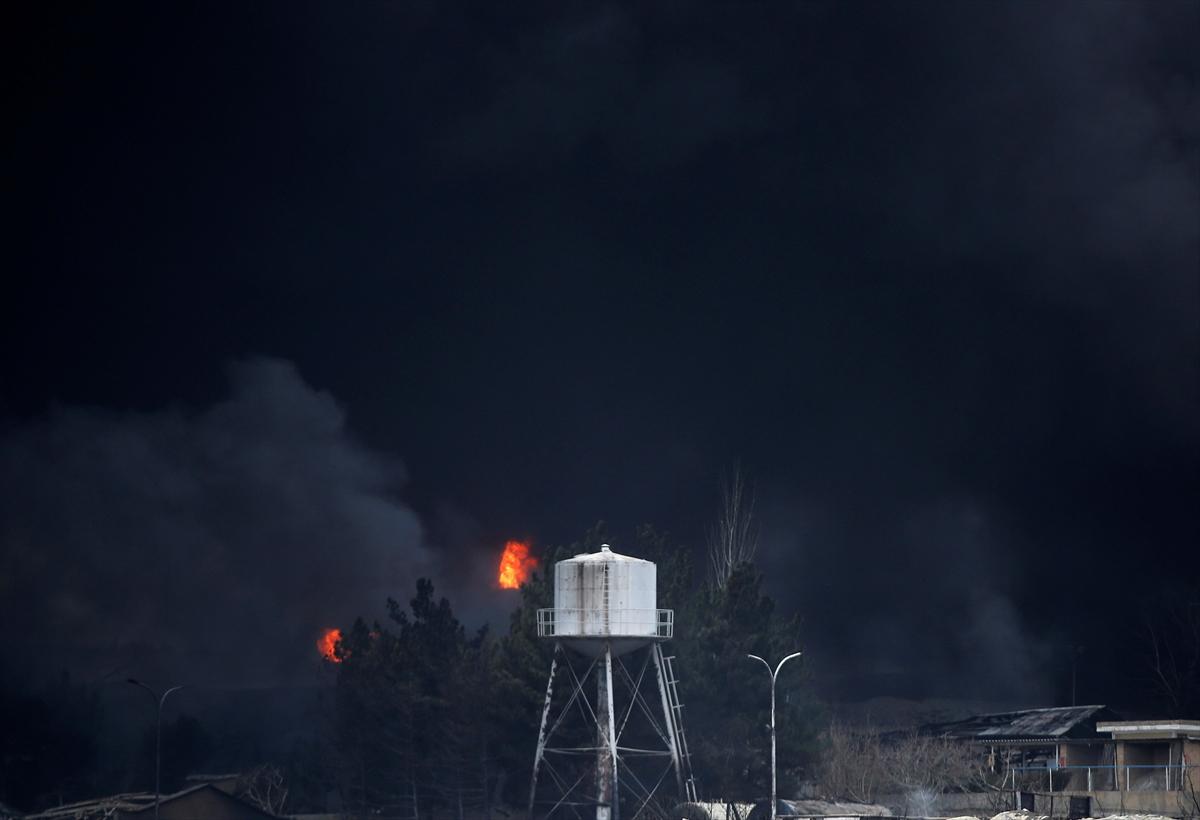
Photos After the Attacks from Tehran. March 8, 2026 (Anadolu Agency)
In the morning, Tehran’s skies were covered in black smoke clouds. Ash from the fires fell from the sky, forming a thick layer on rooftops and vehicles. Iranian authorities warned the public not to go outside without wearing masks due to increased air pollution.
According to Iranian media, a U.S. and Israeli attack targeted an ambulance in Tehran. The Tehran Provincial Emergency Services Authority reported that an ambulance was damaged in a missile strike. Videos posted on social media showed the ambulance on fire, and it was reported that medical personnel inside sustained minor injuries.
During the same wave of attacks, two civilian residential buildings in Qom were targeted. Qom Deputy Governor Murtaza Haydari stated that two buildings near Shahid Street were hit during the attacks, but no detailed information was provided on casualties or injuries.
The Israeli military claimed it conducted an attack targeting several commanders of the Quds Force of the Iranian Revolutionary Guard Corps stationed in Lebanon’s capital, Beirut. The Israeli military alleged that these commanders were active in Beirut and involved in planning attacks against Israel.
The statement asserted that the Quds Force serves as a coordinating structure between Hezbollah and the Iranian Revolutionary Guard Corps and contributes to enhancing Hezbollah’s military capacity. Lebanon’s Ministry of Health reported that four people were killed and ten injured in an air strike on a hotel in Beirut.
A group known as the “Islamic Resistance Organization,” which is said to be affiliated with Hashd al-Shaabi, announced it had carried out attacks against U.S. bases in Iraq and the region. In its statement, the group reported 24 attacks against U.S. bases within the past 24 hours.
The group stated that numerous unmanned aerial vehicles and missiles were used in the attacks, which targeted various U.S. military positions across Iraq and the region.
The Iranian Revolutionary Guard Corps announced that Tel Aviv and Beer Sheva in Israel, as well as the U.S. air base in Jordan, were targeted with new-generation missiles. The attacks were described as part of the 28th wave of the “Real Promise 4 Operation.”
Iranian forces reportedly targeted the U.S. Al-Azraq (Muvaffak Salti) Air Base in Jordan multiple times. The military targets in Tel Aviv and Beer Sheva were struck with “Habir” missiles equipped with super-heavy warheads. The Iranian Armed Forces also stated that the scope and intensity of the attacks may increase in the coming hours and days.
Iranian media reported that U.S. and Israeli forces carried out double bombing attacks targeting civilians in Isfahan Province. According to information attributed to the Isfahan Governorate, the cities of Isfahan, Shahriza, and Najafabad were targeted.
After the first missile struck a civilian site in Najafabad, emergency responders and civilians arrived at the scene. Shortly afterward, a second missile hit the same area. At least 20 people were killed and approximately 50 injured in the attacks.
During the attacks by the United States and Israel, significant damage was reported at a radiation facility in Isfahan. According to the Iranian Students’ News Agency, the National Nuclear Security Center confirmed that the facility had suffered substantial damage.
Inspections at the facility, which conducts research on radiation technologies used in agriculture, found no evidence of radiation contamination in the surrounding area. Iranian officials stated that information regarding the attack had been communicated to the International Atomic Energy Agency.
The Israeli military claimed that five commanders of the Quds Force of the Iranian Revolutionary Guard Corps were targeted in an attack on a hotel in Beirut. According to the Israeli military, these commanders were holding meetings in Beirut to coordinate activities between Iran, Hezbollah, and other armed groups.
The Israeli military statement identified among those allegedly killed in the attack: Majid Hussein, responsible for financial transfers to Hezbollah and Hamas; Ali Reza Bey Azar, Commander of the Lebanese Union Intelligence; and Ahmed Resuli, Intelligence Officer of the Palestine Union. It was also claimed that intelligence officer Hussein Ahmedlu and Abu Muhammad Ali, who coordinated between Hezbollah and the Quds Force, were killed in the attack.
The Israeli military claimed that Abu Qasem Babaiyan, commander of the Hatemul Anbiya Headquarters of the Iranian Revolutionary Guard Corps, was killed in an attack in Tehran. It was alleged that Babaiyan also headed the military office of Iran’s Supreme Leader.
The Israeli statement alleged that Babaiyan played a role in planning attacks against Israel by coordinating with Iran’s regional allies. It was asserted that his death was part of a chain of assassinations targeting senior Iranian military officials.
The Israeli military also claimed that the headquarters of the Iranian Revolutionary Guard Corps Air Force was targeted. The statement asserted that this facility served as the main command center for Iran’s ballistic missile and UAV operations and that the attack dealt a significant blow to Iran’s missile capabilities. The Israeli military stated that military operations against Iran would continue.
Anadolu Ajansı. "Irak’ın Erbil Kentinde Peş Peşe Patlama Sesleri Duyuldu." Accessed March 7, 2026. https://www.aa.com.tr/tr/dunya/irakin-erbil-kentinde-pes-pese-patlama-sesleri-duyuldu/3854338.
Anadolu Ajansı. "Netanyahu, İran’a Saldırıları Sürdüreceklerini Ancak Ülkenin Bölünmesini Hedeflemediklerini İddia Etti." Accessed March 7, 2026. https://www.aa.com.tr/tr/dunya/netanyahu-irana-saldirilari-surdureceklerini-ancak-ulkenin-bolunmesini-hedeflemediklerini-iddia-etti/3854503.
Anadolu Ajansı. "Tahran’da Çok Sayıda Patlama Meydana Geldiği Bildirildi." Accessed February 7, 2026. https://www.aa.com.tr/tr/dunya/tahranda-cok-sayida-patlama-meydana-geldigi-bildirildi/3853572.
Anadolu Ajansı. "Trump, Silah Üretim Hızının Artırılması İçin Savunma Şirketleriyle Görüştü." Accessed February 7, 2026. https://www.aa.com.tr/tr/dunya/trump-silah-uretim-hizinin-artirilmasi-icin-savunma-sirketleriyle-gorustu/3853416
Anadolu Ajansı. "İran Cumhurbaşkanı Pezeşkiyan’dan Bölge Ülkelerine Yönelik Füze Saldırısı Konusunda Yeni Açıklama." Accessed March 7, 2026. https://www.aa.com.tr/tr/dunya/iran-cumhurbaskani-pezeskiyan-dan-bolge-ulkelerine-yonelik-fuze-saldirisi-konusunda-yeni-aciklama-/3854118
Anadolu Ajansı. "İran Cumhurbaşkanı: Bize Saldırı Gelmediği Sürece Komşu Ülkelerin Vurulmaması ve Füze Fırlatılmaması Kararı Alındı." Accessed February 7, 2026. https://www.aa.com.tr/tr/dunya/iran-cumhurbaskani-bize-saldiri-gelmedigi-surece-komsu-ulkelerin-vurulmamasi-ve-fuze-firlatilmamasi-karari-alindi/3853640
Anadolu Ajansı. "İsrail’in İran’a Yönelik Saldırıları Kuvvet Kullanma Yasağının İhlali Olarak Değerlendiriliyor." Accessed February 7, 2026. https://www.aa.com.tr/tr/dunya/israilin-irana-yonelik-saldirilari-kuvvet-kullanma-yasaginin-ihlali-olarak-degerlendiriliyor/3853674
Anadolu Ajansı. "İtalya, Fransa, Almanya ve İngiltere Orta Doğu Krizinde Tırmanmayı Önlemek İçin Görüşüyor." Accessed March 7, 2026. https://www.aa.com.tr/tr/dunya/italya-fransa-almanya-ve-ingiltere-orta-dogu-krizinde-tirmanmayi-onlemek-icin-gorusuyor/3854482
A telephone conversation was held between President Recep Tayyip Erdoğan and Iranian President Masoud Pezeşkiyan at the request of the latter. During the conversation, military tensions and ongoing conflicts in the region were discussed.
President Erdoğan stated that there was a need to reopen diplomatic channels and emphasized that Türkiye has been making efforts in this direction. Erdoğan expressed that he did not consider unlawful interventions against Iran acceptable and also stated that Türkiye does not view Iran targeting its neighboring countries as appropriate. He stressed that targeting neighboring countries brings no benefit to any side and must be halted immediately.
It was noted during the conversation that Türkiye has been negatively affected by conflicts in which it is not a party, and that any violation of Türkiye’s airspace, regardless of the reason, is unacceptable. Türkiye confirmed that it will continue taking all necessary measures to protect its airspace from violations.
President Erdoğan conveyed his sorrow over the loss of life, especially among children in the school attack in Minab, and reiterated his condolences to Iranian leader Ali Khamenei. He expressed the hope that Mojtaba Khamenei’s election as the new leader would serve as a step toward peace in the region.
Iranian President Pezeşkiyan stated that the missiles that entered Türkiye’s airspace were not of Iranian origin and indicated that a comprehensive investigation into the matter would be conducted.
U.S. President Donald Trump stated that military confrontations with Iran would be short-lived. In remarks made during a meeting with Republican Party members in Miami, he asserted that the operation would be completed swiftly.
Trump defended the attacks by the United States and Israel against Iran as preemptive. He claimed that if the United States and Israel had not taken the first step, Iran would have attacked Israel and the United States. He stated that the attacks carried out by B-2 bombers had neutralized Iran’s nuclear capacity.
President Trump claimed that Iran’s nuclear and ballistic missile capabilities had been largely destroyed and that its navy had been significantly neutralized. He asserted that between 46 and 50 Iranian vessels had been sunk, its missile capacity reduced to approximately 10 percent, and over 90 percent of its missile launchers destroyed.
Trump criticized Iran’s attacks on countries in the Gulf region and argued that these countries had initially been neutral but later aligned themselves with the United States.
Trump also stated that he was awaiting the results of an investigation into allegations that a school in Iran had been struck by a Tomahawk missile. He noted that Tomahawk missiles could be used by various actors.
In his assessment of Mojtaba Khamenei’s election as Iran’s new leader, he suggested that this could exacerbate existing problems within Iran.
The Islamic Revolutionary Guard Corps announced that Arab or European countries that have expelled the Iranian and Israeli ambassadors may transit through the Strait of Hormuz. The statement emphasized that these countries would have full authority and freedom regarding transit.
Previously, Brigadier General Ibrahim Jabbari, Advisor to the Commander-in-Chief of the Revolutionary Guard Corps, stated that the Strait of Hormuz had been closed to transit and that vessels attempting passage would be attacked. In contrast, Deputy Commander of the Hatem al-Anbiya Operations Headquarters, Kiymers Haydari, asserted that the strait had not been closed and that vessels adhering to international protocols were permitted to pass.
Ali Mohammad Naini, Spokesperson for the Islamic Revolutionary Guard Corps, responded to U.S. President Trump’s claims that Iran’s military power had come to an end. He stated that Iran continues to resist attacks and that Iran will determine the outcome of the war.
Naini claimed that the U.S. military infrastructure in the region had been destroyed and identified the U.S. naval forces in the Strait of Hormuz and the USS Gerald R. Ford aircraft carrier as being in targeting positions. Statements were issued indicating that no ceasefire had been declared and that the scale of attacks would be increased.
Muhammad Raad, Chairman of Hezbollah’s Parliamentary Bloc, stated that Lebanon is forced to choose between war and submission to the conditions imposed by Israel. He affirmed that resistance against Israel continues, asserting that a ceasefire has been maintained but that Israel has not adhered to the agreement.
Raad indicated that missiles launched following the assassination attempt on Iranian leader Khamenei carried a message. He argued that the Lebanese government had failed to undertake sufficient diplomatic initiatives against Israel’s violations.
U.S. President Donald Trump stated that if Iran blocks the flow of oil through the Strait of Hormuz, the United States will respond with 20 times greater force. He indicated that if Iran takes such a step, targets will be struck.
Trump stated that keeping the strait open is of strategic importance for countries using it, especially China. In previous remarks, he indicated that the United States might consider taking control of the strait.
The U.S. Central Command (CENTCOM) announced that during a 10-day operation against Iran, more than 5,000 targets were struck. It was stated that 50 Iranian maritime assets were damaged or destroyed during the operations.
Targeted assets included command and control centers, Revolutionary Guard headquarters, intelligence facilities, integrated air defense systems, ballistic missile sites, naval vessels and submarines, anti-ship missile positions, and ballistic missile and unmanned aerial vehicle production facilities.
The operation employed B-1, B-2, and B-52 bombers; F-15, F-16, F-18, F-22, and F-35 fighter jets; MQ-9 Reaper unmanned aerial vehicles; Patriot and THAAD air defense systems; nuclear-powered aircraft carriers; guided-missile destroyers; and HIMARS systems. Electronic warfare aircraft, early warning systems, reconnaissance and tanker aircraft, and various unmanned systems were also reported to have participated.
Iranian state television announced the attack on the Shejaret al-Tayyibe Girls Primary School in Minab, located in Hormozgan Province. According to the Iranian Red Crescent, more than 165 people lost their lives in the attack.
The Ministry of National Defense (MND) announced that a Patriot air defense system has been deployed in Malatya to support the protection of Türkiye’s airspace.
The statement noted that necessary measures have been taken for border and airspace security in light of developments in the region, and that consultations with NATO and allied countries are ongoing. It was stated that NATO has increased air and missile defense measures and that the Patriot system has been deployed within this framework. Türkiye emphasized that it is maintaining its defense and security capabilities at the highest level, that developments are being assessed in cooperation with NATO and allies, and that efforts continue to ensure regional stability.
NATO stated regarding the deployment of a Patriot system in Malatya to support the protection of Turkish airspace: “We will continue adapting our ballistic missile defense posture to evolving threats.”
Israeli Prime Minister Benjamin Netanyahu, in remarks made amid ongoing military tensions with Iran, signaled that Israel will continue its attacks against Iran. During a visit to the National Health Center with Israeli Health Minister Haim Katz, Netanyahu claimed that Iran’s resistance had been broken.
Netanyahu asserted that Israel’s military measures have been effective and that operations are still ongoing. He claimed that Israel’s objective is to enable the Iranian people to overthrow their current regime and emphasized that strengthening Israel’s defense capabilities remains a priority. He also stated that Israeli public morale remains high and that the population strongly supports its security policies.
Turkish Republic Foreign Minister Hakan Fidan held a telephone conversation with Iranian Foreign Minister Abbas Araghchi. The conversation addressed regional security developments and allegations of violations of Turkish airspace.
According to diplomatic sources, Fidan stated during the conversation that the violation of Turkish airspace is unacceptable and affirmed that Türkiye will continue taking all necessary measures to ensure the security of its airspace. He also emphasized that all parties in the region must avoid actions that could undermine regional security and pose risks to civilians. Iranian Foreign Minister Araghchi, in turn, stated during the conversation that the missiles directed at Turkish airspace were not of Iranian origin and announced that a comprehensive investigation would be launched to clarify the incident.
Ali Larijani, Secretary General of Iran’s Supreme National Security Council, made statements regarding the Strait of Hormuz. Larijani highlighted the strategic importance of the Strait, which Iran has declared closed to vessels linked to the United States and Israel.
In a social media statement, Larijani said the Strait of Hormuz will either be a passage for peace and prosperity for regional countries or bring severe consequences for actors promoting war policies. He added: “The Strait of Hormuz will either be a strait of peace and prosperity for all or a strait of defeat and suffering for those inciting war.”
Over a period of approximately ten days beginning February 28, 2026, a total of 3,095 missile and UAV attacks originating from Iran were carried out. These attacks targeted seven Arab countries: the United Arab Emirates, Kuwait, Bahrain, Qatar, Jordan, Saudi Arabia, and Oman. According to official data released by regional institutions, ballistic missiles, cruise missiles, and various categories of unmanned aerial vehicles were employed during the attacks.
The intensity of attacks varied by country. According to data released by regional countries, the United Arab Emirates was the most targeted country during this period. The UAE Ministry of Defense reported that since the start of the attacks, 253 ballistic missiles, 1,440 UAVs, and 8 cruise missiles were detected. The majority of these attacks were intercepted by air defense systems; 233 ballistic missiles were destroyed, 18 fell into the sea, and 2 struck land. Additionally, 1,359 of the 1,440 detected UAVs were neutralized, while 81 reached land.
The Kuwaiti Ministry of Defense announced that 238 missiles and at least 430 UAVs were launched against the country. The statement indicated that attacks were concentrated particularly in the southern and northern regions, but that the majority were intercepted by air defense systems. The Bahrain Defense Forces Command reported that 102 missiles and 173 UAVs were neutralized by air defense systems.
Qatar’s Ministry of Defense reported that 149 missiles and 69 UAVs targeting its airspace were intercepted. Qatar also announced that during the attacks, two Su-24 fighter jets were shot down. The Jordanian military reported that 60 missiles and 59 UAVs originating from Iran targeted its territory, and that 108 were destroyed by air defense systems.
In Saudi Arabia, attacks were reported to have targeted energy and military infrastructure. Authorities announced that at least nine missiles and 97 UAVs targeting the Shaybah Oil Field and Prince Sultan Air Base were neutralized by air defense systems. In contrast, Oman was recorded as the least affected country, with Omani officials reporting at least eight UAV attacks on its territory.
Iranian President Masoud Pezeşkiyan, in a statement on state television, said the attacks were assessed within the framework of regional security balances. Pezeşkiyan stated that Iran’s newly formed Interim Leadership Council had decided to limit missile attacks against neighboring countries not directly involved in attacks on Iran. This statement drew attention as it indicated the application of a specific strategic framework in target selection.
Regional tensions were not limited to state-to-state attacks; some armed groups operating in Iraq also became involved in the conflict dynamics. A group identifying itself as the “Islamic Resistance Organization” announced that intensive attacks had been carried out against U.S. military bases in Iraq and the region.
In a written statement released by the group, it was stated that a total of 37 attacks targeting U.S. military bases were conducted within the last 24 hours. The statement indicated that numerous UAVs and missiles were used in these attacks. These developments were interpreted as evidence that tensions between Iran and the United States were extending into Iraqi territory.
As part of attacks directed against Iran by the United States and Israel, the country’s electrical infrastructure was targeted. According to information in the Iranian press, damage occurred primarily to electricity transmission and distribution networks. This resulted in temporary power outages in some areas of the capital Tehran and Alborz Province.
According to a report by the semi-official Fars News Agency, power outages occurred in some areas due to damage to grid facilities. According to official statements, repair work was carried out on the energy infrastructure and electricity in Tehran and Alborz Province was restored within less than two hours. This development was cited among claims that the attacks targeted Iran’s energy infrastructure.
Deputy Head of Tehran’s Emergency Medical Services, Mehr Soroush, announced that as a result of the attacks, 460 people lost their lives and 4,309 were injured in the city. The statement noted that some health service assets were also targeted during the attacks.
According to official information, 18 ambulances and 18 emergency response units were targeted during the attacks. Iranian officials stated that since the beginning of U.S. and Israeli attacks, Tehran has been frequently subjected to aerial bombardments. These developments have been recorded as significant attacks affecting civilian infrastructure and health services in Iran’s capital.
Iranian Government Spokesperson Fatemeh Mohajerani, in a statement to Iranian state television, stated that among those killed in the attacks were many women and children. According to Mohajerani’s information, 206 women and children lost their lives as a result of the attacks. She noted that among the deceased was an eight-month-old baby girl. It was also reported that an infant girl aged four months was among the injured.
It was stated that the attacks did not only result in civilian casualties but also caused serious damage to health infrastructure. According to Mohajerani’s statement, 52 health centers, 29 treatment units, and 19 emergency response units were damaged. Additionally, 16 ambulances were targeted, with four ambulances and one emergency helicopter rendered completely unusable.
Iranian officials also reported that 11 medical personnel lost their lives during the attacks.
Iran announced that it had carried out new missile attacks against Israeli and U.S. targets in the region. In a written statement by the Iranian Armed Forces, it was stated that the attacks were conducted in response to U.S. and Israeli military operations against Iran.
The statement indicated that the attacks were carried out under the operation name “Sadeq Vat 4”. During the 34th wave of the operation, Israeli military bases, command centers, and U.S. regional support points were targeted under the code name “Ey Ali bin Abi Talib”. The Iranian Armed Forces stated that precision-guided missiles with warheads weighing more than one ton were used in the attacks.
The Iranian military made statements regarding operations conducted against U.S. and Israeli radar systems. According to information published in Iranian media, Iranian Armed Forces Spokesperson Mohammad Ekremiyan provided assessments on recent military activities of the Iranian Armed Forces.
Ekremiyan stated that operations conducted by Iranian Armed Forces’ UAV and missile units targeted U.S. and Israeli radar systems. He emphasized that modern control systems and advanced technology-based precision attack methods were employed, and that these operations enabled more effective strikes against enemy targets.
The Iranian official claimed that a significant portion of U.S. and Israeli radar capacity had been destroyed. Ekremiyan further noted that this development facilitated the targeting of certain Israeli military sites, particularly military bases in Haifa, which had become easier to target compared to previous periods.
In 2026, Israeli attacks on Lebanon triggered a large-scale displacement crisis. United Nations High Commissioner for Refugees (UNHCR) Representative in Lebanon, Karolina Lindholm Billing, stated in Geneva that the attacks had displaced approximately 700,000 people in the past week alone.
According to Billing, Israel issued evacuation warnings for more than 53 villages and densely populated areas and intensified aerial bombardments, rapidly escalating the conflict. During this period, numerous civilian families were forced to abandon their homes within a short time.
According to Lebanon’s online registration system, more than 667,000 people have been registered as displaced. Approximately 120,000 displaced persons are staying in collective shelters, while since the start of the conflict, over 78,000 Syrians and more than 7,700 Lebanese have crossed into Syria. UN officials have called for the protection of civilians and uninterrupted delivery of humanitarian aid.
Amid escalating military tensions between Israel and Hezbollah in southern Lebanon, the Israeli military conducted intensive aerial attacks on Ansariye village. The Israeli military stated that the attacks were carried out in response to claims that rockets had been fired from the area toward Israel.
According to the Israeli military, it was alleged that Hezbollah elements had launched rockets from the village, and in response, command centers and attack infrastructure allegedly belonging to Hezbollah were targeted. The attacks were concentrated particularly around Ansariye near Sidon.
Prior to the attacks, the Israeli military issued evacuation warnings urging residents to move at least one kilometer away from the village and threatened further strikes. During the same period, Hezbollah announced that a satellite communication station near Beit Shemesh in Israel and the Israeli Home Front Command base in Ramle had been targeted by missile strikes. These developments demonstrated that reciprocal attacks between Israel and Hezbollah were intensifying conflict dynamics in the region.
During ongoing military tensions between Israel and Iran in 2026, the Israeli military claimed to have targeted certain military and defense infrastructure in the Iranian capital Tehran. The Israeli military stated that aerial attacks were conducted against Tehran during nighttime hours.
The statement claimed that one of the attacks targeted an underground weapons research and development complex reportedly used by the Iranian Islamic Revolutionary Guard Corps. The Israeli military asserted that ballistic missile development and testing activities were conducted at the facility.
According to the Israeli military, the targeted complex is located on the campus of Imam Hussein University, near Revolutionary Guard facilities, and has been used in some instances as an emergency assembly area. The statement also claimed that during the attacks, the main headquarters of Quds Force and various Iranian weapons and defense systems were targeted, and that the operation could continue.
Al Jazeera. "Iran war live: Trump says conflict will be over soon; 40 killed in Tehran." Accessed March 10, 2026. https://www.aljazeera.com/news/liveblog/2026/3/10/iran-war-live-trump-says-conflict-will-be-over-soon-40-killed-in-tehran
CNN. "Live updates: Iran–war, US–Israel conflict — March 10, 2026." Accessed March 10, 2026. https://edition.cnn.com/world/live-news/iran-war-us-israel-trump-03-10-26
Iranian Foreign Minister Abbas Araghchi made statements regarding the impact of military operations conducted by the United States and Israel against Iran on the global economy. In a post on the U.S.-based social media platform X Araghchi accused U.S. officials of spreading false information to manipulate markets and stated that such actions would not shield the U.S. administration from the economic consequences of the attacks.
In his statement Araghchi asserted that U.S. officials had “spread disinformation to manipulate markets” and emphasized that these efforts would not eliminate the inflationary pressures affecting the American economy. The Iranian Foreign Minister described the economic impacts as “an inflationary tsunami imposed on the American people” and noted that the scale of the current economic crisis could rival historical precedents.
According to Araghchi global markets are facing “the largest gap and chasm in history.” The Iranian diplomat claimed that the current economic crisis could produce consequences greater than the combined effects of the 1973 Arab oil embargo the 1979 Iranian Islamic Revolution and Iraq’s 1990 invasion of Kuwait. In the same statement Araghchi firmly denied allegations that Iran was planning a preemptive strike against the United States or U.S. forces labeling such claims “an obvious lie.” He asserted that these statements were planned by Israel and aimed to legitimize what he termed a “major mistake operation.”
Reports in the Israeli press suggested that U.S. President Donald Trump had requested the Israeli government to limit attacks on Iran’s petroleum infrastructure. According to reports by Israel’s Channel 12 citing unnamed sources the Trump administration allegedly urged Israel on March 9 to halt attacks on Iran’s energy facilities.
According to the reports the Washington administration assessed that attacks on Iran’s oil storage facilities and refinery infrastructure could trigger significant disruptions in global energy markets. Earlier reports in Israeli media indicated that the Israeli military had targeted oil depots and fuel facilities in Tehran.
Reports published by Israel’s state television KAN stated that Israeli warplanes had carried out strikes on oil tanks and refinery facilities in Tehran. These attacks were described as among the first direct aerial strikes against Iran’s energy infrastructure.
On March 11 the U.S. administration issued assessments regarding energy security in the Strait of Hormuz. White House Press Secretary Karoline Leavitt announced at a press briefing that the U.S. military was working on new military options to ensure uninterrupted shipping traffic through the Strait.
Leavitt stated that under President Donald Trump’s directives the U.S. military had developed various plans to keep the Strait open. One of the options under consideration was escorting tankers and commercial vessels transiting the Strait by the U.S. Navy. The spokesperson noted that the U.S. Navy had not yet provided escort to vessels passing through the Strait but that this option could be implemented if deemed necessary.
The White House statement indicated that if Iran attempted to disrupt oil flows through the Strait of Hormuz the United States would take more severe military measures. Leavitt said the U.S. administration believed military operations against Iran were progressing ahead of the planned schedule and would end only when it was confirmed that Iran no longer posed a threat to the United States.
During the same press briefing it was stated that the Pentagon’s investigation into the incident involving a Tomahawk missile allegedly fired by the United States and striking a school in Iran was still ongoing. The White House Press Secretary noted that President Trump would accept the findings of the investigation and that final assessments on the matter would follow the report’s release. Leavitt also indicated that the U.S. administration had not ruled out the option of sending ground forces to Iran.
The U.S. administration also assessed developments regarding Iran’s leadership process and reiterated its disapproval of Mujtaba Hamaney’s election as Iran’s new leader. The White House Press Secretary stated that President Trump had previously indicated the need for the United States to play a role in Iran’s leadership transition.
Following an attack on an Iranian bank in Tehran the Iranian government announced that economic centers and banks linked to the United States and Israel in the region could be targeted. The statement was issued by the Hatem al-Anbiya Command affiliated with Iran’s Armed Forces.
In the statement issued by Hatem al-Anbiya Command the targeting of the Tehran bank was described as part of attacks carried out by the United States and Israel. The statement accused the attacks of being conducted by the “terrorist American army and Zionist regime” and characterized them as a new phase in military operations aimed at Iran’s economic infrastructure.
The statement further indicated that Iran could now target economic centers linked to the United States and Israel in the region. Iranian officials specified that banks connected to the United States and Israel in the region were among the potential targets.
The statement by Hatem al-Anbiya Command also included a warning to the local population. It urged civilians not to approach banks and economic centers for security reasons and specifically advised maintaining a distance of at least one kilometer from such facilities. Officials emphasized that the warning was issued for safety purposes and called for vigilance regarding potential developments in the region.
A large-scale funeral ceremony was held in Tehran the capital of Iran for Iranian military officials who lost their lives in U.S. and Israeli attacks. The ceremony took place at Inqilab Square one of the central locations in the capital and was attended by a large crowd.
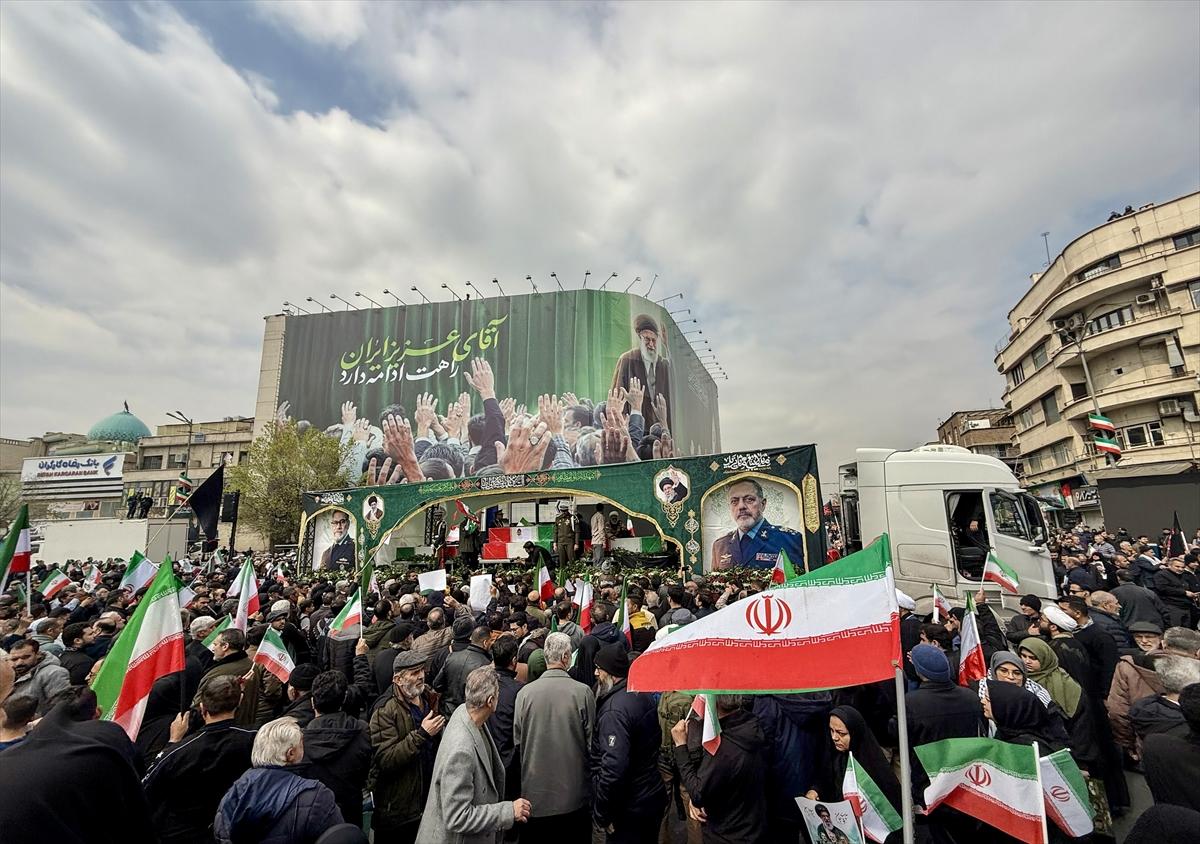
Funeral Ceremony in Tehran. March 11 2026 (Anadolu Agency)
During the funeral ceremony the bodies of high-ranking Iranian commanders killed in the attacks were brought to the ceremony site. It was also reported that the bodies of children who died during the attacks were brought to the area. Large crowds gathered at designated areas within the square to follow the funeral rites.
Attendees were seen carrying Iranian flags and black flags used as symbols of mourning. It was reported that participants recited prayers and held commemorative events for the deceased. Crowds following the funeral ceremony chanted slogans against the United States Israel and Britain.
Turkish President Recep Tayyip Erdoğan stated that the ongoing crises and conflicts in the region were intensifying and that new tensions were emerging even before existing conflicts had ended. Erdoğan noted that the war initiated against Iran due to Israeli provocations was having significant effects across the broader geography including Türkiye and the global economy.
In his statement Erdoğan said that although the current issues could potentially be resolved through diplomatic channels misjudgments and various provocations had dragged the region back into a state of conflict. Erdoğan emphasized that the situation in the region was growing increasingly violent and stated that on the first day of the war 175 female students were killed in a primary school and that the number of those killed in Iran had reached approximately 2000. He also reported that several high-ranking Iranian officials including Iran’s religious leader Ali Khamenei had been assassinated and that Iran’s infrastructure had suffered severe damage.
President Erdoğan stated that Iran’s oil production facilities water and energy infrastructure and transportation systems had been targeted in the attacks. He also highlighted that the Iranian population was facing severe hardship due to economic embargoes heavy living conditions and ongoing bombardments. Erdoğan emphasized that civilians including women children and the elderly had been affected by the attacks and that this had worsened humanitarian conditions in the region.
Erdoğan also drew attention to the impact of attacks on Iran on the global economy. He noted that rising oil prices were exerting pressure on the world economy and stated that not only the countries directly involved in the war but also many nations globally could face the economic consequences of these developments.
Erdoğan further stated that Türkiye was actively engaged in diplomatic initiatives in response to regional crises. He emphasized that Türkiye had pursued a policy of maintaining contact with countries in the region and contributing to efforts to find solutions. Since the outbreak of hostilities Türkiye had conducted various diplomatic engagements with Iran the United States and relevant regional countries.
Erdoğan said he had conducted over 20 phone calls during this period and that Turkish officials remained in constant contact with their counterparts. He affirmed that Türkiye was continuing its diplomatic efforts to achieve a ceasefire and end hostilities through negotiations and stated that a solution could be found if diplomacy was given a chance.
President Erdoğan also stated that Türkiye was pursuing a cautious policy during the current period and closely monitoring developments in the region. He emphasized that Türkiye was conducting careful diplomacy to prevent the escalation of regional conflicts and safeguard its own security and had taken necessary measures to address the risk of sectarian-based conflict.
Israeli Defense Minister Yisrael Katz stated that military operations against Iran conducted in partnership with the United States would continue without any time limitations. Katz’s statements were announced in a written briefing issued by the Israeli Ministry of Defense.
According to the Israeli Ministry of Defense’s statement Katz held an assessment meeting with Israel’s Chief of General Staff Eyal Zamir military commanders and intelligence officials. The meeting reviewed the current status of military operations against Iran and the military strategies to be followed in the coming phase.
The statement noted that Katz confirmed that attacks had been carried out against the Islamic Revolutionary Guard Corps and its affiliated Basij militia forces. Katz stated that these operations would continue and that Iranian military structures would remain targets.
The effects of U.S. and Israeli military operations against Iran continued on March 11. According to information published by Iran’s official news agency IRNA six people were killed in attacks in the city of Tabriz in northwestern Iran.
Majid Farsi Director General of Tabriz Crisis Management which is the capital of East Azerbaijan Province stated that the attacks on the evening of March 10 targeted Tabriz and the Azershahr district. The Iranian official confirmed that six civilians had been killed in the attacks and said detailed information on the number of injured would be shared later.
At the same time reports emerged in Iranian media of explosions heard in the city of Qom. However no official explanation was provided by authorities regarding the cause of the explosions in Qom.
According to statements by the Israeli military Iran’s retaliatory attacks had resulted in casualties in Israel. According to the statements missile strikes launched by Iran killed a total of 12 people in Israel and injured approximately 200. Among the injured seven were reported to be in critical condition.
Israeli military officials also provided information on the types of munitions used by Iran. It was stated that approximately half of the missiles launched by Iran since the U.S.-Israel attacks began on February 28 were multi-warhead ballistic missile systems. The statements also indicated that Hezbollah forces operating in Lebanon had conducted attacks on Israeli targets using anti-tank and short-range rockets.
In statements issued by the Islamic Revolutionary Guard Corps it was stated that U.S. military infrastructure in the region had been targeted under “Real Promise-4 Operation.” According to the statement published by Iran’s state television during the 36th wave of the operation U.S. military bases in Bahrain Qatar Kuwait and Iraq were struck.
The statement indicated that Qadr Hayber-Shiken and Emad ballistic missiles were used in the attacks. Iranian officials reported that the U.S. Navy’s Fifth Fleet based in Bahrain the Al Udeid Air Base in Qatar the Al Udeyri military base in Kuwait and the Al-Harir base in northern Iraq had been targeted.
The Islamic Revolutionary Guard Corps further stated that the 37th wave of the operation was the most intense military operation carried out since the attacks began. In a written statement published by Iranian state television it was reported that the satellite communications center south of Tel Aviv had been targeted for the second time attacks were carried out against military centers in West Jerusalem and Haifa and U.S. targets in Erbil were also struck during the operation. Iranian officials stated that the Hürremşehr ballistic missile carrying a two-ton warhead was used in these attacks and that the operation lasted more than three hours.
An armed group operating in Iraq and identifying itself as the “Islamic Resistance Organization” announced that it had carried out attacks against U.S. targets. In a written statement the group stated that it had launched rocket and unmanned aerial vehicle attacks against U.S. bases in Iraq and other regional countries.
The statement claimed that 31 attacks were carried out against U.S. military bases in a single day. It was further claimed that the total number of attacks against U.S. bases over the past 12 days had reached 291. The group alleged that 13 U.S. soldiers had been killed and many others wounded in these attacks.
In statements issued by the Iranian military it was stated that ballistic missile strikes against U.S. bases in the region continued under the Sadegh Vaad-4 operation. Iranian officials announced that during the 37th wave of the operation advanced Hürremşehr ballistic missiles carrying two-ton warheads had been used.
The Iranian military’s statement indicated that these missiles continued to be fired at U.S. military targets in the region. Footage of the missile launches was also published by Iranian media.
On March 11 a new incident affecting maritime security occurred in the vicinity of the Strait of Hormuz. The British Maritime Trade Organization reported that a container ship sailing approximately 25 nautical miles northwest of Ras al-Khaimah in the United Arab Emirates had been damaged by an unknown object.
According to the statement the impact caused a fire on board the vessel. According to the ship’s captain no casualties or injuries occurred among the crew. Investigations were underway to determine the extent of the damage.
This incident occurred following Iran’s announcement that it would restrict the passage of ships linked to the United States and Israel through the Strait of Hormuz.
The U.S. Central Command (CENTCOM) announced that U.S. forces had targeted several Iranian maritime assets near the Strait of Hormuz. According to CENTCOM’s social media statement numerous warships including 16 Iranian mine-laying vessels were destroyed.
U.S. military officials stated that the operation was conducted to ensure maritime security in the Strait of Hormuz. This development followed Iran’s threat to restrict oil shipments through the Strait.
On March 11 it was alleged that one of the U.S. diplomatic facilities in Baghdad the capital of Iraq had been targeted by unmanned aerial vehicles. According to reports by The Washington Post citing an internal U.S. State Department alert and a security official the Baghdad Diplomatic Support Center had been attacked by UCAVs.
According to the report six UCAVs were launched toward the facility which provides logistical support to U.S. diplomats and is located near Baghdad International Airport and Iraqi military bases. Five of the UCAVs were reportedly shot down by air defense systems while one was said to have struck the area where the facility was located.
An internal alert sent by the U.S. State Department to facility personnel stated that a UCAV had struck near the observation tower and ordered personnel to take shelter. There was no confirmed information on whether any casualties occurred in the attack. The report suggested the attack may have been carried out by one of the Shia militia groups operating in Iraq.
It was reported that a branch of an Iranian bank had been targeted in a missile attack allegedly carried out by the United States and Israel. The incident was officially announced by Bank Sepah one of Iran’s financial institutions. In its statement Bank Sepah said one of its buildings had been targeted in a missile strike early Wednesday morning. The statement accused the United States and Israel of carrying out the attack and described it as targeting the bank’s infrastructure.
The number of people killed in Israeli air strikes against Lebanon rose to 35. The attacks were conducted as part of intensive aerial operations targeting various regions of the country.
According to information reported by Lebanon’s official news agency NNA the Israeli military carried out a series of air strikes overnight targeting the cities of Sur Bint Jubayl and Nabatieh in southern Lebanon the Western Bekaa region and the southern suburbs of the capital Beirut. Numerous towns including Habbous Arabsalim Hinniyeh Tulin Kabriha Zibkin Shakra Hanaviye Shehabiye Kana Hos and Tibnin were targeted. It was also reported that an apartment in the Aish Bekkar neighborhood of Beirut had been struck.
Two additional people were killed in a drone strike targeting the area between Habbous and Arabsalim bringing the total number of fatalities from the attacks to 35.
In a statement issued by the Israeli military on March 2 it was reported that missiles had been launched from Lebanon triggering sirens in northern Israel. Following this development the Israeli military announced it had launched widespread air strikes across Lebanon including operations targeting Beirut. It was reported that the Israeli military was intensifying its attacks on Lebanon from air and sea and had decided to expand the scope of its ground operations. According to the latest statement by Lebanon’s Ministry of Health the number of people killed in Israeli attacks since March 2 had reached 570 with 1444 injured.
The Iranian Revolutionary Guard Corps announced that two ships linked to the United States and Israel had been targeted by missiles while attempting to pass through the Strait of Hormuz. The statement was issued by the Iranian Revolutionary Guard Corps.
The statement reiterated Iran’s decision to close the Strait of Hormuz to passage by the United States and its allies. Iranian officials stated that this decision followed the U.S. and Israeli attacks against Iran.
According to the statement by the Iranian Revolutionary Guard Corps the vessel Express Rome flying the Liberian flag and alleged to be linked to Israel attempted to transit the Strait of Hormuz despite Iranian warnings. The statement said the vessel was struck by Iranian missiles after ignoring these warnings.
The same statement indicated that the container ship Mayuree Naree had previously been targeted by Iranian forces. The Iranian Revolutionary Guard Corps reported that both vessels had been struck in attacks carried out by Iranian forces.
Al Jazeera. "Iran War Live: Tehran Says US, Israel Have Hit Nearly 10,000 Civilian Sites." Accessed March 11, 2026. https://www.aljazeera.com/news/liveblog/2026/3/11/iran-war-live-tehran-says-us-israel-hit-nearly-10000-civilian-sites
CNN. "Iran War Live Updates: US–Israel Conflict With Iran, March 11, 2026." Accessed March 11, 2026. https://edition.cnn.com/world/live-news/iran-war-us-israel-trump-03-11-26
On March 12, 2026, President of the United States Donald Trump made statements regarding ongoing military operations against Iran during a rally held in Kentucky. Trump described the U.S. military intervention against Iran as a brief but resolute operation and stated that no retreat would occur until its completion. In his speech, Trump said, “We will not leave here until this is finished, and it will happen very quickly.”
Trump asserted that Iran has long posed a security threat to both Israel and other countries in the Middle East, claiming that Iran has been conducting attacks targeting Americans for approximately 47 years. The U.S. president argued that the military operation against Iran should have been launched earlier and stated that the U.S. military had inflicted serious damage on Iran’s military capabilities during the first days of the operation.
Referring to previous strikes against Iran in June 2025, Trump claimed that Iran had resumed military activities after those operations and therefore insisted that the current operation must continue until definitive results are achieved. Trump warned that a premature U.S. withdrawal could trigger new crises, stating, “We do not want to come back every two years.”
Trump also claimed that the U.S. military had destroyed 58 Iranian vessels, effectively neutralizing the Iranian navy and eliminating its mine-laying capacity. The U.S. president asserted that 90 percent of Iran’s missile capacity and 85 percent of its unmanned aerial vehicles had been destroyed, and stated that the operation had been conducted more forcefully than anticipated.
On March 12, 2026, the New York Times (NYT) published a report detailing cost estimates for the initial days of U.S. attacks on Iran. According to the report, citing three sources familiar with the matter, U.S. Department of Defense officials provided a briefing to members of Congress regarding the operation’s financial cost.
It was reported that Pentagon officials informed Congress during a briefing that the cost of operations had exceeded $11.3 billion in the first six days following the start of the attacks on February 28, 2026. This figure was described as one of the most comprehensive cost assessments presented to congressional members.
The report also noted that the cost estimate did not include military deployments to the region prior to the operation. It was indicated that the total costs of military buildup, personnel deployments, and equipment transfers to U.S. bases in the Middle East had not yet been incorporated into the calculation, suggesting that the overall operational cost could rise significantly in the coming period.
On March 12, 2026, Tehran Mayor Aliriza Zakani made statements regarding attacks on Iran by the United States and Israel. In a statement broadcast on Iranian state television, Zakani noted that numerous sites across the country had been targeted during the recent military strikes.
Zakani stated that approximately 9,000 sites across Iran had been targeted within the first 10 days of the U.S. and Israeli attacks. The mayor emphasized that this number was significantly higher than the 1,450 sites targeted during the 12-day clashes in June of the previous year.
The statement also noted that large-scale debris clearance operations were underway in Tehran, with various municipal units coordinating efforts to address damage across the city.
On March 12, 2026, a report by ABC News alleged that the U.S. Federal Bureau of Investigation (FBI) had warned security units along the U.S. West Coast of potential attacks originating from Iran. According to the report, the FBI sent a warning message to police departments in California at the end of February 2026.
The warning reportedly contained intelligence suggesting that Iran could respond to U.S. military action against it by launching unmanned aerial vehicle attacks from the California coast. Based on intelligence gathered by the FBI in early February, it was assessed that Iran might plan such an attack from an unidentified vessel off the West Coast. The report noted that no further information was available regarding when such an attack might occur or which groups might carry it out.
California Governor Gavin Newsom’s Office confirmed that the state’s Emergency Services agency was coordinating with federal and local security agencies. The Los Angeles Sheriff’s Department also announced enhanced security measures due to current international developments.
The department’s statement specifically noted that patrol activities had been intensified around places of worship, cultural centers, and key public areas.
It was reported that Ismail Dehkan, commander of the Islamic Revolutionary Guard Corps (IRGC) Aerospace Force, was killed in an attack on his home in the city of Arak, located in Iran’s Central Province.
According to the semi-official Fars News Agency, the Iranian commander lost his life in an attack on his residence in Arak two nights earlier. The incident occurred amid ongoing military tensions and reciprocal strikes within Iran. In the attack, Dehkan’s wife, two children, and grandmother were also killed.
Mohammad Bagher Kalibaf, Speaker of Iran’s Parliament, responded sharply to allegations that the United States planned to attack Kharg Island, Iran’s strategic oil terminal in the Persian Gulf. Kalibaf stated that any attack on Iranian islands would remove all constraints and that Iran would respond with severe force.
In a social media statement, Kalibaf emphasized that any attack on Iranian territory would have serious consequences, using the phrase “Homeland or death.” He added that in the event of an attack on Iranian islands, Iran would respond without limits against “occupiers” in the Persian Gulf and held U.S. President Donald Trump responsible for any potential losses of American soldiers.
The statement followed recent reports in the U.S. press suggesting that the Washington administration was evaluating military options targeting Kharg Island, a major hub for Iran’s oil exports. Some reports indicated that the United States was considering options such as blockade, attack, or seizure of the island.
Israeli journalist Barak Ravid, in a March 7, 2026 article published in Axios citing unnamed sources, also claimed that the U.S. administration was assessing the possibility of seizing Kharg Island.
Amid intensifying regional conflict, the Islamic Revolutionary Guard Corps announced that it had coordinated with Lebanon-based Hezbollah to conduct a joint military operation against Israel. According to Iranian media, the operation was carried out under the framework of Iran’s “Real Promise-4” operations.
The IRGC statement indicated that military facilities in Israel’s cities of Tel Aviv, Haifa, and Beersheba were targeted during the operation. Approximately 50 sites were struck over a five-hour wave of attacks. Iranian forces reportedly used Qadr, Imad, Kheibar-Shikan, and Fattah-type ballistic missiles, while Hezbollah elements participated using unmanned aerial vehicles and various rocket systems.
The statement also alleged that the IRGC targeted U.S. military presence in the region, claiming that U.S. bases in Al-Azraq, Jordan, and Al-Haradh, Saudi Arabia had been struck by missile attacks.
Among developments reflecting regional conflict in the Gulf region, Saudi Arabia reported unmanned aerial vehicle attacks targeting its eastern provinces. The Saudi Ministry of Defense announced that 18 UAVs targeting the eastern region had been destroyed by air defense systems.
The ministry also confirmed that a UAV targeting the Sheba oil field had been neutralized. Two additional UAVs heading toward the eastern region were also reported as shot down by air defense systems.
Although Saudi officials did not provide detailed information regarding the attacks, they confirmed that defense systems were at a high state of readiness to counter attempts to target the country’s energy infrastructure.
In the context of regional tensions, warnings were issued after an attack targeted tankers in Bahrain. The Bahraini Ministry of Interior stated that a fire broke out after fuel tankers were targeted in the Muharraq region.
Due to thick smoke from the fire, authorities issued warnings to residents in the areas of Al-Hid, Arad, Qalali, and Samahic. The ministry urged citizens to stay indoors, keep windows closed, and refrain from operating air conditioning systems. It also confirmed that security units had been dispatched to the scene and that necessary safety procedures had been activated.
The Israeli military announced that it had detected a new wave of missile launches from Iran toward Israeli territory. In its statement, the Israeli military indicated that air defense systems had been activated to intercept missiles fired from Iran.
The statement also noted that emergency alert messages had been sent via mobile phones to civilians in areas under threat. The Israeli Home Front Command urged citizens to seek shelter and remain there until further notice. These warnings were described as precautionary measures specifically in response to potential ballistic missile attacks from Iran.
Maritime trade in the region has also been affected by the conflict. The United Kingdom Maritime Trade Organisation (UKMTO) reported that a container ship sailing approximately 65 kilometers north of Jebel Ali Port in the United Arab Emirates had been struck by an unknown object.
According to the ship’s captain’s report to UKMTO, a small fire broke out on board as a result of the attack. Due to the incident occurring during nighttime hours, the full extent of the damage could not be immediately assessed.
UKMTO officials have urged vessels in the region to exercise caution and adhere to security protocols.
In the early days of regional conflict, allegations emerged that Iran had launched attacks against U.S. military bases in Kuwait. According to U.S. media reports, Iranian attacks on U.S. military facilities in Kuwait reportedly resulted in casualties among American troops.
A report by CBS News, citing unnamed sources, claimed that the U.S. Central Command (CENTCOM) reported that during the first days of the conflict, six U.S. soldiers were killed and many others wounded as a result of the attacks.
Although official authorities have not independently verified these claims, reports have suggested that the attacks indicate the regional escalation of conflict along the Iran–U.S.–Israel axis.
The Islamic Revolutionary Guard Corps (IRGC) announced that the oil tanker “Safesea Vishnu,” flying the flag of the Marshall Islands, had been targeted for failing to heed warnings while navigating the Strait of Hormuz. The IRGC stated that despite repeated warnings, the tanker did not alter its course and was therefore struck in the northern section of the strait. Iran confirmed the incident occurred in the morning and that the intervention was conducted within the framework of maritime security.
The statement also emphasized that maritime traffic in the Persian Gulf and the Strait of Hormuz was under increasing risk, and commercial vessels were required to comply with maritime regulations declared by Iran. Iran’s government placed responsibility for regional tensions on the United States and announced restrictions on the passage of vessels linked to the U.S. and Israel through the Strait of Hormuz.
Al Jazeera. "Iran war live: Oil tankers hit in Iraq, Tehran sets 3 conditions for peace." Al Jazeera, March 12, 2026. Accessed March 12, 2026. https://www.aljazeera.com/news/liveblog/2026/3/12/iran-war-live-oil-tankers-hit-in-iraq-tehran-sets-3-conditions-for-peace
CNN. "Iran war live updates: US, Israel and Iran conflict." CNN, March 12, 2026. Accessed March 12, 2026. https://edition.cnn.com/world/live-news/iran-war-us-israel-trump-03-12-26
On March 12 2026 U.S. President Donald Trump made statements regarding ongoing military operations against Iran during a rally in Kentucky. Trump described the U.S. military intervention against Iran as a brief but resolute operation and stated that no retreat would occur until its completion. In his speech Trump said “We will not leave here until this is finished and it will be very fast.”
Trump asserted that Iran has long posed a security threat to both Israel and other countries in the Middle East and claimed that Iran has carried out attacks targeting Americans for approximately 47 years. The U.S. President argued that the military action against Iran should have been launched earlier and stated that the U.S. military inflicted serious damage on Iran’s military capacity during the first days of the operation.
Referring to previous attacks against Iran in June 2025 Trump claimed that Iran resumed military activities after those operations and therefore insisted that the current operation must continue until definitive results are achieved. Trump warned that a premature U.S. withdrawal could trigger new crises saying “We do not want to come back every two years.”
Trump also claimed that the U.S. military destroyed 58 Iranian vessels rendered the Iranian navy largely ineffective and eliminated its mine-laying capability. The U.S. President claimed that 90 percent of Iran’s missile capacity and 85 percent of its unmanned aerial vehicles had been destroyed and stated that the operation had been conducted more forcefully than expected.
On March 12 2026 the New York Times (NYT) published a report detailing cost estimates for the initial days of U.S. attacks against Iran. According to information cited from three sources familiar with the matter the U.S. Department of Defense briefed members of Congress on the operation’s cost.
According to the report Pentagon officials told Congress that the cost of operations since the attacks began on February 28 2026 had exceeded $11.3 billion in the first six days. This figure was described as one of the most comprehensive cost assessments presented to congressional members.
The report also noted that the cost estimate did not include military deployments to the region prior to the operation. It was assessed that the total cost of military deployments troop deployments and equipment transfers to U.S. bases in the Middle East had not yet been incorporated and therefore the overall operational cost could rise significantly in the coming period.
In the morning hours Trump made statements regarding ongoing military tensions with Iran. After disembarking from the Air Force One aircraft Trump addressed journalists and commented on U.S. military activities in the region particularly developments around the Strait of Hormuz.
In his remarks Trump claimed that the United States had conducted operations against Iranian maritime assets saying “The straits are in very good condition. We sank all their ships. They have some missiles but not many. I think we are in very good shape.” Trump stated that the U.S. administration was closely monitoring developments in the straits and claimed that maritime traffic and security conditions in the region were under control.
The U.S. President also assessed Iran’s military capacity asserting that its navy air force and command systems had been largely neutralized and claimed that U.S. forces could operate freely within Iran. Trump argued that Iran had nearly reached “the end of the road” but emphasized that this did not mean the conflict would end immediately.
Trump indicated that the United States had the capability to target certain areas of Iran and claimed that it could disable Iran’s electricity generation capacity in a short time. He stated that such an attack would force Iran to rebuild its infrastructure over many years but added that the U.S. preferred to avoid taking such a step. He also said that it was preferable for someone who “knows what they are doing” to be in charge in Iran.
The Institute for the Study of War (ISW) based in the United States assessed that Iran had placed fewer than 10 sea mines in the Strait of Hormuz. The institute’s statement was shared with the public via social media.
The statement indicated that Iran had avoided laying mines extensively across the strait due to concerns over political and economic consequences. The assessment noted that widespread mining of the Strait of Hormuz would severely disrupt not only foreign shipping but all maritime traffic in the region.
The ISW analysis evaluated that such a move could negatively affect Iran’s relations with China and harm the Iraqi economy which is heavily dependent on oil revenues.
On March 12 2026 U.S. Senate Minority Leader Chuck Schumer accused U.S. President Donald Trump of making contradictory statements regarding military operations against Iran. In a speech in the U.S. Senate Schumer argued that the Trump administration had issued inconsistent explanations regarding the objectives of the war.
Schumer stated that since the attacks against Iran began on February 28 2026 eight U.S. soldiers had been killed and 140 American servicemen wounded eight of them seriously. He also referred to the attack on the Sheceretü’t-Tayyibe Primary School for Girls in the Iranian city of Minab in the Hormozgan province and noted that initial reports had suggested the strike might have been the result of U.S. operations. He called for a full transparent and independent investigation into the incident that resulted in civilian deaths.
Schumer noted that public opinion in the United States was questioning the purpose of the war due to rising military casualties and energy prices and stated that Americans were demanding an explanation for the conflict. In his speech he said “All this change all this chaos rising gas prices increasing losses and escalating hostilities — Americans are asking one simple question: Why?”
Schumer criticized the Trump administration for providing conflicting explanations regarding the war’s objectives saying: “First it was regime change then it was about Iran’s nuclear program then it was about eliminating Iran’s navy then it was regime change again and now they say it is for defense.” He also pointed out inconsistencies in statements about the war’s stage saying “If you ask Donald Trump whether we are at the beginning or the end of the war he says ‘both.’ This madness must stop.”
Schumer emphasized that the U.S. Senate must hold public hearings to question administration officials about the strategy and objectives of the war and stressed that the American public has a right to detailed information on this matter.
On March 12 Trump made statements regarding the participation of the Iran national football team in the 2026 FIFA World Cup citing security concerns. In a social media post Trump stated that the team’s participation could pose a security risk.
In his statement Trump said “The Iran national football team will be welcomed at the World Cup but I do not believe it is appropriate for them to be there (in the United States) given their own safety and security.”
In the final hours of March 12 Trump made statements regarding military operations against Iran. During a Women’s History Month event at the White House attended with his wife Melania Trump he addressed the Iran issue.
In his remarks Trump stated that the U.S. military operations against Iran had “gone very well” and assessed that “The process regarding Iran is moving very fast.” The U.S. President claimed that the military activities conducted by the U.S. armed forces constituted an operation unlike any seen before.
In his statement Trump criticized the Iranian regime asserting that it had for many years “spread terror” in the region and claimed that the United States was now carrying out what “should have been done 47 years ago.” Trump also stated that Iran had “paid a heavy price” due to the ongoing operations.
In the early hours of March 12 the United Arab Emirates (UAE) issued a statement regarding air defense interventions against ballistic and cruise missiles and unmanned aerial vehicles (UAVs) reportedly launched from Iran. The statement indicated that UAE air defense systems had intercepted 6 ballistic missiles 7 cruise missiles and 39 unmanned aerial vehicles (UAVs). The attacks were said to have originated from Iran and were carried out by the country’s air defense systems.
The UAE Ministry of Defense also announced that since the attacks began the country’s air defense systems had intercepted a total of 268 ballistic missiles 15 cruise missiles and 1514 unmanned aerial vehicles. The statement also reported that the attacks had resulted in the deaths of six individuals of various nationalities and injuries to 131 others.
On the same day a UAV crashed into a building in a residential area in Dubai United Arab Emirates resulting in material damage. The incident was reported to have occurred near the city center.
According to a statement by the Dubai Media Office the UAV had crashed into a multi-story building in the Dubai Creek Harbour area near the city center. The statement indicated that evacuation efforts were carried out to ensure the safety of occupants in the building after the incident.
Authorities reported that civil defense teams deployed to the area successfully contained a small fire that broke out in the building. The official statement confirmed that no injuries occurred as a result of the incident.
Later in the day the Dubai Media Office reported that two separate incidents following an air defense interception had been brought under control. According to the statement after the air defense system intercepted a missile shrapnel fragments struck the facade of a building on the Sheikh Zayed Road.
Another incident was reported involving a UAV crash in the el-Bida district of Dubai. Authorities confirmed that security teams conducted necessary investigations and interventions in both incidents.
Maritime trade in the region was also affected by the conflict. The United Kingdom Maritime Trade Organisation (UKMTO) reported that a container ship sailing approximately 65 kilometers north of the Jebel Ali Port in the United Arab Emirates had been struck by an unknown object.
According to the captain’s report to UKMTO a small fire broke out on the ship as a result of the attack. The damage’s full extent could not be determined initially due to the incident occurring during nighttime. UKMTO officials issued advisories urging vessels in the region to exercise caution and follow security procedures.
The United Arab Emirates Ministry of Defense stated that throughout the day its air defense systems intercepted 10 ballistic missiles and 26 unmanned aerial vehicles (UAVs) launched from Iran. The ministry also announced that since the attacks began its air defense systems had intercepted a total of 275 ballistic missiles 15 cruise missiles and 1540 unmanned aerial vehicles.
Authorities reiterated that in these attacks six individuals of various nationalities had been killed and 131 injured. The statement confirmed that air defense systems continued to intercept incoming threats.
In the early days of regional conflict allegations emerged that Iran had launched attacks against U.S. military bases in Kuwait. According to U.S. media reports casualties among American troops were reported during Iranian strikes targeting U.S. military facilities in Kuwait.
According to a report by CBS News citing unnamed sources the U.S. Central Command (CENTCOM) reportedly stated that in the first days of the conflict six U.S. soldiers had been killed and many others wounded as a result of the attacks.
Although official authorities have not independently verified these claims reports suggest the attacks indicate the conflict has expanded regionally beyond the Iran-United States-Israel axis.
In the morning hours of March 12 it was reported that two people were injured after a UAV struck a building in southern Kuwait. Security and emergency response teams were dispatched to the area. A statement by the Kuwaiti military quoted Defense Ministry Spokesperson Colonel Saud al-Atwan who confirmed that a UAV had struck a building in southern Kuwait resulting in two injuries. The injured were taken to hospital for treatment.
The statement also noted material damage to the building. Speaking to the official Kuwaiti news agency KUNA Fire Department spokesperson Muhammad al-Garib confirmed that occupants of the building had been evacuated and that firefighters extinguished a fire that broke out after the attack.
On the same day fragments of a downed UAV fell onto Kuwait’s electricity transmission lines causing temporary outages in parts of the country’s energy infrastructure. A written statement by the Kuwait Ministry of Electricity Water and Renewable Energy indicated that six power lines had been taken offline due to the UAV fragments striking the transmission lines.
The statement noted that despite the damage the overall status of electricity and water services in the country remained under control. Authorities reported that the impact on the energy infrastructure was limited and that necessary technical interventions were underway.
On March 12 the Saudi Arabia Ministry of Defense announced that air defense systems had intercepted UAVs targeting the eastern region of the country. The statement indicated that the attacks were directed toward the eastern sector of the country.
According to the Saudi Ministry of Defense statement 18 unmanned aerial vehicles (UAVs) were detected and destroyed by air defense systems during the attack. The statement confirmed that the interception was carried out by the country’s air defense units.
Saudi Arabia Ministry of Defense reported that a UAV directed toward the Shaybah Oil Field in southeastern Saudi Arabia was destroyed by air defense systems. The same statement indicated that two other UAVs targeting the eastern region of the country were intercepted and neutralized.
Later in the day a UAV approaching the Diplomatic Quarter in Riyadh where embassies and foreign institutions are located was shot down by air defense systems.
On the evening of March 12 the Saudi Ministry of Defense announced that air defense systems had intercepted ballistic missiles and UAVs originating from Iran within the country’s airspace. The statement indicated that two ballistic missiles and 12 UAVs had been detected. It was also stated that nine UAVs heading toward the Shaybah Oil Field in the Rub’ al-Khali Desert had been destroyed.
Additionally the Saudi Civil Defense Authority announced that warning sirens were activated in the al-Harec province in southeastern Saudi Arabia due to attack threats. Authorities confirmed that necessary security measures had been taken in the area.
Following an attack targeting oil tankers in Bahrain security alerts were issued. The Bahraini Ministry of Interior stated that a fire broke out after fuel tankers were targeted in the Muharraq region.
Due to thick smoke from the fire authorities issued warnings to residents in the el-Hid Arad Kalali and Semahic areas urging them to stay indoors keep windows closed and not operate air conditioning systems. The Ministry of Interior confirmed that security units had been dispatched to the scene and that necessary security protocols had been activated.
Security measures were heightened across Bahrain due to attacks reportedly launched from Iran and warning sirens were activated in various regions. Following the incident public safety measures were implemented. The Bahraini Ministry of Interior stated that sirens were activated as part of the attack alert and that the public was urged to remain calm and move to safe areas. The statement also noted that Reya Street in the city of Muharraq had been closed to traffic for security reasons.
Authorities confirmed that fuel storage facilities in a facility in Muharraq had been targeted by Iran and that security measures had been strengthened in the area. Residents in the coastal areas of el-Hid Arad Kalali and Semahic were specifically warned to keep windows closed and not operate air conditioning systems.
On March 12 2026 the Bahraini military announced that since the beginning of attacks allegedly launched from Iran its air defense systems had neutralized 112 missiles and 186 unmanned aerial vehicles (UAVs).
The Bahraini military statement indicated that these attacks had occurred since the conflict began on February 28 2026 and that air defense units had intercepted numerous missiles and UAVs during this period. Meanwhile the Bahraini Ministry of Interior confirmed that fuel depots at a facility in Muharraq had been targeted by Iranian attacks. No information regarding casualties or injuries was released.
The same statement also reported that four Bahraini citizens had been detained on suspicion of contacting the Iranian Revolutionary Guard Corps and transmitting photographs and coordinates of sensitive sites in the country. A security investigation was launched regarding allegations that these individuals provided information to support Iranian attacks.
In the final hours of the day the Iranian Revolutionary Guard Corps announced that it had launched two waves of missile and UAV attacks against the U.S. 5th Fleet headquarters at the Mina Salman Port in Bahrain. The announcement by the Revolutionary Guard Corps’ Public Relations Unit stated that the operation was carried out by the Revolutionary Guard Navy and began in the morning hours. The statement indicated that the attack was conducted in two waves using missiles and UAVs.
According to the Iranian statement the targets included the Leeds anti-drone system base remote control centers for maritime vessels logistics support facilities fuel depots and locations where American troops were gathered. The statement claimed that these targets were struck using various types of armed UAVs cruise missiles and ballistic missiles.
On March 12 2026 the Bahraini military issued a statement regarding missile and UAV attacks allegedly launched from Iran. The statement shared data regarding attacks against Bahrain since February 28 2026.
According to the statement published on social media by the Bahraini military a total of 114 missiles and 190 UAV attacks targeting Bahrain had been intercepted by air defense systems since that date. The statement also asserted that targeting civilians and private property with ballistic missiles and UAVs constituted a violation of international humanitarian law and a threat to regional peace and security.
On March 12 2026 a missile attack targeted the headquarters of the Popular Mobilization Forces (Hashd al-Shabi) in the city of Kirkuk. Two people were killed and five others injured in the attack.
Following the attack Arshad al-Salihi speaking on behalf of the Iraqi Turkmen Front stated that the incident could have serious consequences for regional security. In a social media post al-Salihi noted that increasing attacks and conflicts were expanding and represented “a sign that the threat had reached a more serious level.”
In his statement al-Salihi emphasized that the attack on Kirkuk was no ordinary incident saying: “They want to drag Iraq into this war with uncertain outcomes.” Al-Salihi highlighted that Kirkuk is a city inhabited by diverse ethnic groups and rich in oil resources and warned that such attacks risked destabilizing security balances in the region.
On the same day Omani authorities announced that a UAV detected in the country’s airspace had been shot down. According to a report by the official Omani news agency ONA an UAV detected in the airspace of the Hasab province extending toward the Strait of Hormuz had been neutralized. Authorities confirmed that no casualties or material damage resulted from the incident.
In the final hours of the day the Qatar Ministry of Defense announced that air defense systems had intercepted missiles and UAVs targeting the country allegedly launched from Iran. The ministry’s statement indicated that two ballistic missiles and one cruise missile launched from Iran had been destroyed. The statement also noted that several UAVs detected in Qatari airspace had been shot down.
On March 12 2026 Tehran’s Mayor Aliriza Zakani made statements regarding attacks on Iran by the United States and Israel. In a statement broadcast on Iranian state television Zakani indicated that numerous sites across the country had been targeted during recent military strikes.
Zakani stated that during the first 10 days of U.S. and Israeli attacks approximately 9000 sites across Iran had been targeted. The Tehran mayor emphasized that this number was significantly higher than the 1450 sites targeted during the 12-day conflict in June of the previous year.
The statement also noted that large-scale debris removal operations were underway in Tehran and that various municipal units were coordinating efforts to repair damage in the city.
On March 12 2026 the Iranian Armed Forces denied allegations linking them to a UAV attack on fuel tanks at the Salala Port in Oman. The statement was issued by the Hatemu’l Enbiya Central Command which coordinates military operations within the Iranian Armed Forces.
Spokesperson Colonel Ibrahim Zulfikari said the incident in Salala appeared suspicious stating: “The incident at the Salala Port in Oman a friendly neighboring and brotherly country appears highly suspicious.” Zulfikari said Iran was monitoring developments related to the incident and investigating the matter. He also emphasized that the Iranian Armed Forces respected Oman’s security and national sovereignty.
On March 12 2026 Iranian Foreign Minister Abbas Araghchi claimed that during U.S. and Israeli attacks on Iran several historical and cultural heritage sites had been targeted. In a social media post Araghchi specifically noted that some artifacts listed on the UNESCO World Heritage List had been affected by the strikes.
In his statement Araghchi identified damage to several historical structures in Iran and called on UNESCO not to remain silent on the matter. The Iranian Foreign Minister said: “Israel is bombing historical sites in Iran dating back to the 14th century. Many sites on the UNESCO World Heritage List have been targeted. Where is UNESCO? Its silence is unacceptable.”
The statement noted that the Golestan Palace in Tehran the Chehel Sotoun Palace in Isfahan and historical structures in the city of Senendec including Asef Salar-ı Said and Hüsrevabad had been affected by the attacks. Iranian officials emphasized that these structures are vital components of Iran’s cultural heritage.
On March 12 2026 Ali Larizadeh Secretary General of Iran’s Supreme National Security Council responded to statements by U.S. President Donald Trump claiming the United States could destroy Iran’s power infrastructure in a short time.
In a social media post Larizadeh referenced Trump’s claim that Iran’s power system could be disabled within an hour. The Iranian official assessed that such an attack would have regional consequences.
Larizadeh stated: “If they do this the entire region will be plunged into darkness in less than half an hour and darkness will provide ample opportunity for U.S. soldiers fleeing to safety to be hunted.”
Brigadier General Ali Reza Tengsiri Commander of the Iranian Revolutionary Guard Corps Navy announced that the strategy to keep the Strait of Hormuz closed would continue in accordance with the directives of Iran’s new leader Mojtaba Hosseini Khamenei.
In a social media post Tengsiri stated that restrictions on vessel transit through the Strait of Hormuz would continue. The statement indicated that this decision was implemented in accordance with the directives of Iran’s new leader. Tengsiri emphasized the strategic importance of the Strait of Hormuz for regional military and economic balances and affirmed Iran’s commitment to maintaining its operations at this critical transit point.
On March 12 2026 Ali Larizadeh Secretary of Iran’s Supreme National Security Council responded to statements by U.S. President Donald Trump asserting that the war against Iran must be won quickly. In his statement Larizadeh referenced Trump’s claim “We must achieve victory quickly in this war” saying: “Starting a war is easy but it cannot be ended with a few tweets.”
Referring to U.S. and Israeli attacks on Iran Larizadeh said: “We will not leave you at peace until you acknowledge your mistake and pay the price.”
On the same day the Iranian Armed Forces issued a statement affirming their loyalty to Iran’s new leader Mojtaba Hosseini Khamenei. According to Iranian media the statement indicated that Khamenei’s directive that “the blood of the martyrs must be avenged” was binding for the military.
The statement reaffirmed the Iranian Armed Forces’ loyalty to their leader and their commitment to carry out his orders. It stated: “The Iranian Armed Forces reaffirm their loyalty to their leader and accept his orders wholeheartedly. In this spirit we will continue to respond more forcefully to the enemy.”
The statement also emphasized that the Iranian Armed Forces and the Revolutionary Guard Corps would continue their operations to safeguard the country’s territorial integrity and independence. It stated that these military forces would continue fighting to avenge the martyrs.
On March 12 2026 Iranian Foreign Ministry Spokesperson Ismail Bekai made assessments regarding the ongoing conflict between Iran and the United States and Israel. In a statement to Iranian state television Bekai outlined Iran’s security policy stance.
Bekai stated that attacks on Iran must not be allowed to continue and emphasized that Iran must develop long-term security strategies in response. He said: “We must undertake initiatives that will remove the shadow of war from our country for a long time.”
Bekai also asserted that the parties carrying out the attacks must not be allowed to unilaterally determine the start and end of the conflict. He emphasized the importance of utilizing Iran’s military and political capabilities and stated that Iran must make maximum use of its influence among regional power centers.
In the evening hours Iranian Foreign Ministry Spokesperson Ismail Bekai made statements regarding the health of Iran’s new leader Mojtaba Hosseini Khamenei. Bekai told Italy’s Corriere della Sera newspaper that Hamaney’s condition was “injured but well.”
Bekai said it was not yet known when Hamaney would deliver his first speech. He also stated that there were three or four candidates for leadership in Iran but that the majority of the Assembly of Experts had selected Mojtaba Hamaney in accordance with the constitution.
Bekai referred to the attacks launched by the United States and Israel on February 28 2026 describing them as “shameful.” He noted that the third round of nuclear negotiations in Geneva Switzerland had been interrupted for the second time.
Bekai also referred to the attack on the school in Minab and stated that many civilians had been killed in the strike. He expressed satisfaction with the statement issued by Italian Prime Minister Giorgia Meloni condemning the attack.
Bekai stated that Iran was not in conflict with its neighboring countries but asserted that the U.S. military presence in the region had created insecurity. He noted that Iran had responded to attacks and called on neighboring countries to refuse to allow the United States to use their territories for military operations.
Bekai acknowledged European countries’ concerns regarding energy prices and suggested that European states could assume a mediating role in the region rather than supporting the United States and Israel.
Colonel Ibrahim Zulfikari Spokesperson for Hatemu’l Enbiya Central Command within the Iranian Armed Forces made a statement regarding potential attacks on Iran’s energy infrastructure and ports.
In a statement broadcast on Iranian state television Zulfikari said that even the smallest attack on Iran’s energy infrastructure or ports would result in a severe response. The warning was directed at the United States Israel and their allies.
Zulfikari stated that if such an attack occurred the region’s oil and natural gas infrastructure would be targeted. He warned that energy facilities critical to the economic interests of the United States and Western allies would be “set on fire and destroyed.”
The newly appointed leader of Iran Mojtaba Hosseini Khamenei issued his first message after assuming leadership. His selection followed the death of Ayatollah Ali Khamenei in U.S. and Israeli attacks and was confirmed by the Assembly of Experts.
The new leader’s message was read aloud on Iranian state television by a presenter; neither his image nor voice was broadcast. In the message Hamaney acknowledged that Iran had been attacked and thanked military personnel for their defense saying: “I extend my heartfelt gratitude to the brave fighters who have blocked the enemy’s path with crushing blows and saved them from the illusion of seizing our beloved homeland and possibly dividing it.”
Addressing the Iranian Armed Forces Hamaney stated that the public expected “an effective and devastating defense” to continue. He emphasized that the closure of the Strait of Hormuz must continue calling it one of Iran’s most important strategic tools. Hamaney also indicated that “efforts have been made to open other fronts where the enemy is inexperienced and extremely vulnerable.” He noted that these fronts could be activated if the war continued and Iran’s interests required it.
Hamaney also emphasized national unity urging the abandonment of internal conflicts saying: “Sitting in this chair is a heavy burden. National unity must be preserved.”
In his message Hamaney also referred to U.S. military bases in regional countries and claimed that these bases had been used in attacks against Iran. He said: “These bases were used in the latest attacks on us and we have targeted them. If they continue to be used we will continue to respond in the same manner.” He also called on these countries to shut down U.S. bases.
Hamaney stated that Iran would seek compensation for damages caused by the war saying: “We will not abandon avenging the blood of our martyrs. We will demand compensation from the enemy and if they refuse we will seize property equal to the amount we have set; if that is not possible we will destroy property of equal value.” At the end of his message Hamaney said he had learned of his selection as Iran’s new leader through television like the public.
The Israeli military claimed that numerous Iranian unmanned aerial vehicles had been destroyed in air strikes against Iran. In a written statement the Israeli military stated that operations against Iran’s UAV capacity had been intensified in recent days as part of joint operations with the United States.
The statement claimed that since February 28 2026 a total of 250 Iranian UAVs had been destroyed and dozens of launch ramps had been hit. It was also claimed that numerous Iranian soldiers had been killed during these operations.
The Israeli military also claimed that 110 Iranian UAVs launched toward Israel had been shot down by its air defense systems.
As regional conflict intensified the Iranian Revolutionary Guard Corps announced a joint military operation with Lebanon-based Hezbollah against Israel. According to Iranian media the operation was conducted under the umbrella of Iran’s “Real Promise-4” operations.
The Revolutionary Guard stated that during the operation military facilities in Israel’s cities of Tel Aviv Haifa and Birzeit were targeted. Approximately five hours of attacks struck a total of 50 targets. Iranian forces reportedly used Kadr Imad Haybershiken and Fettah ballistic missiles while Hezbollah units participated with UAVs and various rocket systems.
The statement also claimed that the Iranian Revolutionary Guard Corps had targeted U.S. military presence in the region and alleged that the al-Azraq base in Jordan and al-Harsh base in Saudi Arabia had been struck by missile attacks.
The Israeli military announced that it had detected a new wave of missile attacks launched from Iran toward Israeli territory. The statement indicated that air defense systems had been activated to intercept the missiles.
The statement also noted that emergency alert messages had been sent via mobile phones to civilians in areas under threat. The Israeli Home Front Command urged citizens to seek shelter and remain there until further notice. These warnings were described as precautionary measures against potential ballistic missile attacks from Iran.
The Iranian Revolutionary Guard Corps (IRGC) announced that the “Safesea Vishnu” oil tanker flying the Marshall Islands flag had been targeted for failing to heed warnings in the Strait of Hormuz. The IRGC statement indicated that despite repeated warnings the tanker had not altered its course and was therefore struck in the northern section of the strait. Iran stated the incident occurred in the morning and that the action was taken within the framework of maritime security.
The statement also emphasized that maritime traffic in the Persian Gulf and Strait of Hormuz was under increased risk and that commercial vessels must comply with Iran’s maritime regulations. Iran’s government placed responsibility for regional tensions on the United States while announcing restrictions on vessel transit through the Strait of Hormuz targeting ships linked to the United States and Israel.
On March 12 2026 the Iranian military announced that several Israeli military and security facilities had been targeted by UAVs. According to Iranian media the statement was issued by Iranian military spokesman Brigadier General Muhammad Ekremiyya.
In the written statement by Ekremiyya it was stated that strategic sites in Israel had been targeted by Iranian military units operating UAVs and missiles. The statement identified the Palmachim Air Base the Ovda Air Base and the Shin Bet headquarters near Tel Aviv as targets.
Ekremiyya claimed that access to Israeli targets had become easier after some Israeli radar systems were disabled saying: “With the disabling of enemy radars access to Israel’s sensitive sites became easier. Today we succeeded in targeting the Palmachim and Ovda air bases as well as the Shin Bet headquarters near Tel Aviv.”
On March 12 2026 a report by ABC News claimed that the U.S. Federal Bureau of Investigation (FBI) had warned security units on the U.S. West Coast of potential attacks from Iran. According to the report the FBI sent a warning message to police departments in California at the end of February 2026.
The warning reportedly contained intelligence suggesting that Iran could retaliate with UAV attacks launched from unidentified vessels off the California coast following U.S. attacks on Iran. According to FBI intelligence gathered in early February Iran might plan such an attack from an unidentified vessel in waters off the West Coast. The report noted no additional information was available regarding when or by whom such an attack might be carried out.
California Governor Gavin Newsom’s Office stated that the state’s Emergency Services unit was coordinating with federal and local security agencies. The Los Angeles Sheriff’s Department also announced that security measures had been heightened due to current international developments.
The department’s statement noted that patrols had been intensified around places of worship cultural centers and key public areas.
Iranian Revolutionary Guard Corps Air and Space Forces commander Ismail Dehkan was killed in an attack on his home in the city of Arak in Iran’s Central Province.
According to the semi-official Fars News Agency Dehkan the Iranian commander lost his life in an attack on his residence in Arak two nights earlier. The incident occurred amid ongoing military tensions and reciprocal attacks in Iran. Dehkan his wife two children and grandmother were all killed in the attack.
Later on the same day the Iranian Revolutionary Guard Corps announced the launch of new missile attacks targeting Israeli military sites and U.S. bases in the region. The statement indicated the attacks were part of the “Sadegh Vaad 4 Operation’s” 41st wave.
The Revolutionary Guard stated the operation was conducted under the code name “Towards Jerusalem”. The statement indicated that military sites around Tel Aviv and Jerusalem as well as U.S. bases in the region had been targeted. Iranian officials stated that missiles with heavy warheads had been used in the attacks.
In the night hours of March 12 violent explosions occurred in the Iranian capital Tehran. Following the explosions air defense systems were activated. Smoke was seen rising into the sky after explosions occurred in the western and southern districts of Tehran. Security measures were heightened in the city following the explosions.
Meanwhile the Israeli military announced via social media that it had launched a comprehensive wave of air strikes across Tehran.
On March 12 2026 Citibank announced it had decided to temporarily close most of its branches in the United Arab Emirates (UAE) following threats against financial institutions in Iran.
The bank stated the decision was made due to increased security risks following U.S. and Israeli attacks on Iran. The statement indicated that Iran’s retaliatory attacks and evolving security conditions in the region influenced the decision.
Citibank announced it would temporarily close all its branches in the UAE except one. Bank officials stated the decision was taken to ensure the safety of employees and customers.
This development followed Iran’s announcement that a branch of its Sepah Bank had been targeted in a missile strike by the United States and Israel. Iranian Foreign Minister Abbas Araghchi said in his statement regarding the attack: “Our armed forces will avenge attacks on our national infrastructure.”
The United Nations High Commissioner for Refugees (UNHCR) reported widespread internal displacement in Iran during U.S. and Israeli attacks. The statement was issued by UNHCR Director of Emergency and Program Support and Regional Coordinator for the Middle East Emergency Refugee Response Ayaki Ito.
In the written statement by Ayaki Ito it was reported that over the past two weeks of conflict approximately 600000 to 1 million Iranian households had been temporarily displaced affecting approximately 3.2 million people.
The statement indicated that the majority of displaced persons had fled toward northern and rural areas of the country seeking safety from Tehran and other major cities. The assessment warned that the number of displaced people could increase if the conflict continued.
The UNHCR stated that these developments had increased humanitarian needs in Iran and had significantly affected vulnerable groups and refugees. The statement also noted that the United Nations was working with national authorities and other partner organizations to assess rising humanitarian needs and provide necessary assistance.
Alexey Likhachev Director General of Russia’s State Nuclear Energy Corporation Rosatom announced that work on the Bushehr Nuclear Power Plant in Iran would continue and that the company would not withdraw from the country.
In an assessment to Russia’s official nuclear industry publication Strana Rosatom Likhachev commented on the status of work at the Bushehr plant following U.S. and Israeli attacks on Iran. Likhachev said they expected the conflict to last a long time and warned that this would have significant impacts on the global economy logistics and public opinion.
Likhachev emphasized that Rosatom remained committed to the Bushehr project and stated that construction of the plant’s second and third reactor blocks remained among the company’s top priorities. In his statement Likhachev said: “Now is certainly not the time to leave.”
Iranian Parliament Speaker Muhammad Baqer Qalibaf responded sharply to claims that the United States planned to attack Hark Island a strategic Iranian oil terminal in the Persian Gulf. Qalibaf stated that any attack on Iranian islands would remove all constraints and that Iran would respond severely.
In a social media post Qalibaf stated that any attack on Iranian territory would have serious consequences using the phrase “Either the homeland or death.” He warned that in the event of an attack on Iranian islands the Persian Gulf would face “unlimited retaliation against occupiers” and that responsibility for any potential American casualties would lie with U.S. President Donald Trump.
The statement followed recent reports in U.S. media suggesting that the Washington administration was evaluating military options against Hark Island where the majority of Iran’s oil exports are conducted. Some reports claimed the United States was considering blockade attack or seizure of the island.
Israeli journalist Barak Ravid reported on March 7 2026 in Axios citing unnamed sources that the U.S. administration was also evaluating the possibility of seizing Hark Island.
Al Jazeera. "Iran War Live: Trump Says War Going Well as Gulf Under Wave of Attacks." Accessed March 13, 2026. https://www.aljazeera.com/news/liveblog/2026/3/13/iran-war-live-trump-says-war-going-well-as-gulf-under-wave-of-attacks
CNN. "Iran War Live Updates: US-Israel Conflict and Trump Statements." Accessed March 13, 2026. https://edition.cnn.com/world/live-news/iran-war-us-israel-trump-03-13-26
On 13 March 2026 a telephone conversation took place between Iranian President Masoud Pezeshkian and Indian Prime Minister Narendra Modi. According to information reported by Iran’s official news agency IRNA the discussion addressed the ongoing conflict between Iran and Israel and the security situation in the region.
Pezeshkian stated during the call that Iran was not the party that initiated the current conflict and had not shown any inclination to prolong the war. The Iranian President emphasized that his country was acting only within the framework of its legitimate right to self-defense and noted that US military bases in the region had been targeted as sources of attacks. Pezeshkian also underscored that Iran had no intention of creating insecurity in the region and called on BRICS countries to assume a more active role in ensuring regional peace stability and security.
Indian Prime Minister Narendra Modi stated during the conversation that the escalation of the conflict served no party’s interests. In a statement posted on his social media account Modi conveyed his deep concern to the Iranian President over civilian casualties and damage to civilian infrastructure. Modi also emphasized that the uninterrupted flow of goods and energy shipments is a priority for India due to their critical importance to global trade and called on all parties to pursue dialogue and diplomacy.
On the same day Ali Larizadeh Ganji Secretary of Iran’s Supreme National Security Council also responded on social media to statements by US President Donald Trump regarding military operations against Iran. Larizadeh Ganji stated that Iran would not retreat until the Washington administration acknowledged its mistakes and accepted responsibility for their consequences.
On 13 March 2026 the Islamic Revolutionary Guard Corps of Iran claimed that a US fuel supply aircraft had been shot down in western Iraq. According to a report by the Tesnim News Agency citing IRGC sources the US aircraft was hit by a missile launched by Iran-backed armed groups and all crew members aboard were killed.
US Central Command (CENTCOM) however in its statement on the matter confirmed that a US Air Force KC-135 fuel supply aircraft had crashed in western Iraq. However CENTCOM clarified that the incident was not caused by an Iranian attack but was an accident occurring during operations in friendly airspace.
In a statement by the US military two aircraft were operating in the region as part of operations against Iran. One of the aircraft suffered structural damage due to an accident while the other returned safely to base. Investigations into the exact cause of the incident are ongoing.
On 13 March 2026 US President Donald Trump made harsh statements targeting Iran via social media. Trump asserted that military operations against Iran would continue and claimed that Iran’s naval and air capabilities had been largely destroyed.
In his post Trump stated that the United States possessed “unprecedented military power unlimited munitions and sufficient time” and indicated that new strikes against Iran would follow. The US President also claimed that Iran’s ballistic missile systems and unmanned aerial vehicles continued to be targeted.
In an interview with Fox News on the same day Trump made comments regarding Mojtaba Hamaney who is alleged to be Iran’s new leader. Trump suggested that Hamaney may have suffered serious injuries but likely remained alive.
During the interview Trump also commented on maritime traffic through the Strait of Hormuz asserting that ships attempting to pass through the strait should not fear and claimed that the Iranian navy had been largely neutralized.
The Republic of Türkiye’s Ministry of National Defense (MND) announced that a ballistic munition detected as having been fired from Iran was rendered inert over the Eastern Mediterranean by NATO air and missile defense assets after entering Turkish airspace.
According to the ministry’s statement the ballistic munition after being launched from Iran altered its flight path toward Turkish airspace. Upon detection NATO-linked air and missile defense systems stationed in the region were activated. The munition was neutralized before reaching its intended target.
The statement noted that necessary measures had been taken to ensure the security of Turkish airspace following the incident and that developments were being closely monitored by relevant security institutions. The MND stated that the intervention had been carried out within the framework of NATO’s integrated air and missile defense architecture in the region.
President of the United States of America Donald Trump assessed military developments regarding Iran during a virtual meeting with G7 leaders on 11 March 2026. According to information attributed to officials from the participating countries Trump stated during the meeting that the political and military situation in Iran was rapidly changing.
According to a report published by the US-based news platform Axios Trump argued during the meeting that Iran had weakened militarily and politically. It was reported that Trump claimed Iran’s leadership was nearing a surrender phase and that no effective leadership structure remained capable of making such a decision.
During the meeting Trump referred to the outcomes of military operations against Iran and asserted that the country was close to surrender. The US President described the current situation in Iran as “a process of removing a cancer that threatens us all” and argued that there was no central authority in Iran capable of declaring surrender.
Trump also stated that Iran’s political authority structure had weakened and that it was unclear who held leadership in the country. He suggested that while a formal declaration of surrender might be delayed the military and political process was moving in that direction.
The leaders of the G7 countries participating in the meeting emphasized that military operations against Iran must be ended as soon as possible. The leaders highlighted that ensuring the security of the Strait of Hormuz which is critically important for global energy security was one of the top priorities.
In response to this call Trump stated that the security situation in the strait had begun to improve and that commercial vessels should resume their operations. This assessment was interpreted as a significant message regarding the continuity of global energy and trade flows.
Trump’s failure to provide a clear timeline for when operations against Iran would conclude drew attention during the meeting. Some G7 leaders reportedly gained the impression that the United States might wind down its attacks gradually.
Trump stated during the meeting that “the main issue is timing” and argued that completing the current military process was necessary to prevent a new war with Iran in the future. The US President emphasized that concluding the current operations was essential to ensure no new conflict with Iran would occur within the next five years.
In 2026 media in Israel reported that the US administration had granted Israel a deadline to end its military operations against Iran amid the ongoing war between Israel and Iran. According to a report by the Israeli newspaper Israel Hayom citing a regional political source the United States allegedly gave Israel approximately one week to conclude its attacks on Iran.
According to the source cited in the report the likelihood of a regime change in Iran is considered low and achieving such an outcome would require either a large-scale ground operation or the resurgence of mass protests within Iran. The source stated that neither scenario was expected to materialize in the short term.
The same source noted significant differences between how the war is perceived in the United States and in Israel. The Washington administration is said to be particularly concerned about the impact of the conflict on global oil prices while in Israel military operations are viewed as successful and are positively received by political circles.
The US Department of State announced that monetary rewards would be offered to individuals providing information on senior Iranian officials including Iran’s new leader Mojtaba Hamaney. The announcement was made under the Department of State’s “Rewards for Justice” program and shared via the US-based social media platform X.
The US administration previously classified the Islamic Revolutionary Guard Corps as a “foreign terrorist organization.” The announcement stated that the reward program had been activated to encourage the collection of information regarding certain senior Iranian political and security officials.
It was reported that during the first 14 days of US military operations against Iran approximately $3.84 billion worth of military equipment including radar systems fighter jets and unmanned aerial vehicles were lost. Assessments based on open-source data and satellite imagery indicated that a significant portion of these losses resulted from damage or destruction of radar systems in the region.
It was reported that AN/TPY-2 radar components of the THAAD ballistic missile defense system stationed in the United Arab Emirates Jordan and Saudi Arabia had been damaged or destroyed in attacks. Satellite-based analyses confirmed that four AN/TPY-2 radar systems in these countries had been struck and their total value was estimated at approximately $2 billion.
The AN/FPS-132 early warning radar system stationed at Al Udeid Air Base in Qatar valued at approximately $1.1 billion was also targeted during Iran’s retaliatory strikes. Qatari officials confirmed that the radar system had sustained damage from the attack.
According to US officials 11 MQ-9 Reaper unmanned aerial vehicles were shot down during the conflict with the total cost of this loss estimated at approximately $330 million. Additionally it is estimated that replacing three F-15E Strike Eagle fighter jets shot down by Kuwaiti air defenses due to “friendly fire” will cost approximately $282 million.
It was stated that replacing the downed KC-135 fuel supply aircraft in Iraq will cost approximately $80 million. In addition Iran’s attack on the US Navy Fifth Fleet headquarters in Manama Bahrain reportedly damaged two AN/GSC-52B satellite communication terminals and some facilities. Each of these satellite communication terminals is estimated to cost approximately $20 million.
Additionally satellite imagery analyzed by the New York Times showed that three radar components at Camp Arifjan in Kuwait had been destroyed resulting in an additional loss estimated at approximately $30 million. These figures demonstrate the significant financial costs imposed on military equipment and defense infrastructure by the ongoing conflict between Iran and the United States.
On 13 March 2026 the Islamic Revolutionary Guard Corps of Iran announced the initiation of a new wave of attacks targeting US military bases in the region and various Israeli cities. In a written statement published by Iranian state television the attacks were described as the 44th wave conducted under the “Real Promise-4 Operation”.
According to the statement the attacks targeted the Israeli cities of Kiryat Shmona Hadera and Haifa in the north as well as US military presence in the region. The Iranian statement specifically noted that the US Fifth Fleet and other regional military facilities had been targeted.
The operation reportedly involved heavy warhead ballistic missiles including Hormozshahr Haybershakan Fattah Emad and Qadr as well as kamikaze unmanned aerial vehicles. Iranian military officials stated that the attacks were part of the retaliatory campaign against US-Israeli operations.
Iran’s Armed Forces claimed that a missile attack had been carried out against the oil refineries in the city of Haifa in northern Israel. According to an IRGC statement published by the Iranian Students News Agency (SNN) the attack was described as an operation targeting energy infrastructure.
The statement indicated that the attack on the Haifa oil refineries involved sustained missile fire over several hours. Iranian officials stated that the operation was part of a retaliatory strategy aimed at Israel’s energy infrastructure.
Israeli official statements provided no detailed information regarding the effects of the attack.
Some armed groups known as “Islamic Resistance” operating in Iraq claimed to have shot down a US Air Force KC-135 fuel supply aircraft in western Iraq. In their statement the groups asserted that the attack was carried out due to violations of Iraqi airspace.
The statement claimed that the US aircraft had been targeted and downed with appropriate weapons “in defense against occupying forces.”
US Central Command (CENTCOM) however confirmed in its statement that a KC-135 aircraft had crashed in western Iraq but stated that the crash was not caused by hostile fire. According to CENTCOM one of two aircraft operating in the area at the time suffered structural damage due to an accident while the other landed safely. Technical investigations into the cause of the incident are ongoing.
Following Iran’s missile attacks targeting northern Israel 59 people were injured. According to a statement by Israel’s emergency medical service Red Star of David (Magen David Adom) 58 of the injured sustained minor injuries and one person sustained moderate injuries.
According to the statement a 35-year-old woman in the village of Zarzir in northern Israel sustained moderate injuries from shrapnel fragments from a missile strike.
Israeli media reported that sirens sounded across northern regions during the attack and explosion sounds were heard in the sky. Some settlements reportedly sustained material damage following the strikes.
The Israeli military announced that two intense waves of missile attacks had been launched from Iran with half-hour intervals and warned civilians to seek shelter.
Following the military operations launched by the United States and Israel against Iran on 28 February 2026 Iran carried out widespread missile and unmanned aerial vehicle attacks against various countries in the region.
Based on consolidated information from the defense ministries of Gulf countries the Israeli military and open-source intelligence data approximately 3186 missiles and UAVs were directed at regional countries in Iran-linked attacks.
The largest share of these attacks targeted the territory of the United Arab Emirates (UAE). Between 28 February and 11 March approximately 1797 missiles and UAVs were launched toward the UAE accounting for approximately 56 percent of all attacks on Gulf countries.
Following the UAE Kuwait received 682 Bahrain received 285 Qatar received 237 Saudi Arabia received 170 and Oman received more than 15 missiles and UAVs. During the same period Israel was also subjected to over 650 missile and UAV attacks.
Defense systems reportedly intercepted the majority of the attacks but some munitions did reach their targets.
The Islamic Revolutionary Guard Corps of Iran claimed that the USS Abraham Lincoln aircraft carrier had been targeted by ballistic missiles and unmanned aerial vehicles resulting in severe damage to the vessel.
The Iranian statement provided no detailed information on where the attack occurred. It also claimed that the aircraft carrier had departed the area following the attack.
US authorities did not issue any official confirmation or statement regarding these allegations.
A report by Canadian-based CBC News alleged that the US Navy had fired on an Iranian-flagged vessel sailing near the USS Abraham Lincoln aircraft carrier.
According to the report citing two unnamed US officials the Iranian vessel had been sailing dangerously close to the US aircraft carrier prompting the US Navy to target it with two missiles.
It was stated that it was unclear whether the gunfire was intended as a warning and that the vessel was missed several times. No confirmation was provided regarding the condition of the Iranian vessel or its crew.
Diplomatic contacts between the United States and Iran mediated by Oman were followed by a UAV attack. According to information reported by Oman’s official news agency ONA the attack targeted the Avhi industrial zone in the city of Sohar.
As a result of the attack two foreign nationals were killed and an unspecified number of others were injured. Additionally it was reported that another unmanned aerial vehicle had crashed in an open area in Sohar with no casualties resulting from that incident.
The Israeli military issued an evacuation warning for certain areas in the center of Iran’s capital Tehran where crowds had gathered and warned that attacks on these locations could be imminent. The statement was communicated to the public via a social media post by the Israel Defense Forces (IDF). Three maps were published in the post with specific areas in Tehran marked in red and the public was urged to evacuate these zones immediately.
The maps released by the Israeli military indicated that densely populated and transit hubs in the city center could be targeted. The IDF warned that these areas were at imminent risk of military attack and called on civilians to leave immediately. The areas identified for evacuation included Chahar Rah-e Velayat (City Theaters Square) Meydan-e Tavhid and Villages. The IDF emphasized that these marked areas must be vacated immediately and threatened that attacks could be launched shortly.
The Iranian military announced that a military headquarters of the Israel Defense Forces (IDF) in the Biroussebi region in southern Israel had been targeted by unmanned aerial vehicles. According to Iranian media reports the attack was carried out as part of operations conducted by UAV units under Iranian military command. A written statement from the Iranian military indicated that the operation was executed using UAVs launched from different parts of the country and stated that the operation targeted military facilities in southern Israel.
In the city of Dubai of the United Arab Emirates air defense systems intercepted an unmanned aerial vehicle allegedly sent from Iran. The incident occurred near the Dubai International Financial Centre (DIFC) one of the city’s key financial and business centers.
According to a statement by UAE authorities air defense systems were activated in response to the aerial attack attempt and the UAV was neutralized in mid-air. Debris and shrapnel from the interception struck some buildings in the city center. The Dubai government’s press office stated that fragments from the interception caused limited damage to the facade of a building in the city center. Authorities reported no casualties or injuries resulting from the incident.
During the World Quds Day march in Iran’s capital Tehran an explosion occurred following an attack attributed to Israel. According to eyewitness accounts the attack was carried out using an unmanned aerial vehicle and shrapnel from the explosion struck the area where participants of the march were gathered.
It was reported that one of the shrapnel fragments struck a woman participating in the march killing her on the spot. Shortly after the incident an Iranian flag was draped over her body and following the removal of the corpse people gathered around the flag on the ground stained with blood chanting laments and holding protest demonstrations.

Quds Day March. 13 March 2026 (Anadolu Ajansı)
Shortly before the explosion Israel had issued evacuation warnings for certain areas in central Tehran where mass demonstrations were held. The statement indicated that three distinct areas in the capital could be targeted and urged their evacuation.
Shortly after the evacuation warning explosions occurred near Chahar Rah-e Velayat where crowds were concentrated. This development was interpreted as one of the attacks reflecting the ongoing conflict between Iran and the US-Israel alliance extending into civilian areas of Tehran.
The Israeli military announced that it had conducted approximately 7600 air strikes against Iran and 1100 air strikes against Lebanon as part of coordinated operations with the United States. According to the Israeli military’s statement more than 2000 air strikes against Iran since 28 February targeted Iranian military headquarters and defense infrastructure. The statement claimed that Israeli fighter jets had carried out approximately 4700 air strikes targeting Iran’s ballistic missile capacity while details of other strikes were not provided.
The Israeli military also claimed that since 2 March it had conducted 1100 air strikes against Lebanon destroying 200 missiles and launchers belonging to Hezbollah. The statement alleged that 35 Hezbollah command and control centers had been hit and over 380 Hezbollah members had been killed.
Meanwhile the Israeli military announced that during the day it had carried out air strikes against 150 targets in central and western Iran. The statement claimed that among the targeted facilities were ballistic missile storage sites missile launchers UAV depots and air defense system production facilities.
The Israeli military further stated that in the past 24 hours 90 fighter jets had conducted attacks on Tehran and approximately 200 bombs had been dropped on numerous security headquarters. Among the alleged targets were the headquarters of the Basij Volunteer Security Forces and the regional headquarters of the Islamic Revolutionary Guard Corps.
Al Jazeera. "Iran War Live: Pentagon Vows to Ramp Up US Military Campaign Against Iran." Accessed March 14, 2026. https://www.aljazeera.com/news/liveblog/2026/3/14/iran-war-live-pentagon-vows-to-ramp-up-us-military-campaign-against-iran
CNN. "Iran War: US–Israel–Trump Live Updates." Accessed March 14, 2026. https://edition.cnn.com/world/live-news/iran-war-us-israel-trump-03-14-26
Developments as of March 15
US-based news organization Semaphore, citing US officials, has claimed that Israel’s ballistic missile defense munitions have been critically depleted. According to the report, the Israeli government informed Washington that its missile defense stockpiles have been significantly reduced amid escalating tensions with Iran.
The report states that Israel is entering its current conflict with only a limited number of missile defense munitions, and that its long-range defense systems are under severe strain due to Iran’s intense attacks. A US official, however, indicated that this situation was anticipated by Washington and emphasized that the United States does not face a similar issue with its own missile interception capabilities.
The report also notes that during the 12-day conflict with Iran in June 2025, the United States deployed more than 150 THAAD missile defense systems, equivalent to approximately one quarter of its inventory. Experts warn that a prolonged conflict could lead to the rapid depletion of missile defense systems.
Colonel Ibrahim Zulfikari, spokesperson for the Hatem al-Anbiya Central Command under Iran’s Islamic Revolutionary Guard Corps, has alleged that the United States and Israel have imitated Iran’s Shahid-136 unmanned aerial vehicle to carry out attacks in the region.
According to Zulfikari, an unmanned aerial vehicle named “Lucas” has been developed to mimic the appearance and characteristics of Iranian drones. The Iranian official argues that these attacks are intended to create tension and division between Iran and its neighboring countries.
Zulfikari further claimed that recent attacks attributed to Iran against countries such as Turkey, Kuwait and Iraq are part of this manipulation.
The Islamic Revolutionary Guard Corps announced that attacks against Israeli targets are ongoing under the 52nd wave of Operation Sadegh Vat 4. The statement emphasized that Israeli Prime Minister Benjamin Netanyahu will remain a target as long as he remains alive.
The statement indicated that industrial areas in Tel Aviv were targeted with heavy missiles. It also claimed that industrial zones at the Erbil al-Harir Air Base in Iraq, and the Ali al-Salem and Camp Arifjan bases in Kuwait were targeted by missiles and unmanned aerial vehicles.
The Israeli Prime Minister’s Office rejected claims circulating on social media that Netanyahu had been killed, confirming that the Prime Minister continues to carry out his duties.
US President Donald Trump told NBC News that conditions are not yet sufficiently favorable for reaching an agreement with Iran. Trump stated that while Iran desires an agreement, the current conditions are insufficient from Washington’s perspective.
According to Trump, one of the fundamental conditions for any potential agreement would be Iran’s complete abandonment of its nuclear ambitions. The US President also claimed that the attack on Iran’s strategically vital Kharg Island destroyed a large portion of the island.
Trump also announced that an international plan is being developed to ensure the security of the Strait of Hormuz amid rising oil prices.
Iran’s Foreign Minister Abbas Araghchi stated that if Iran’s energy facilities are targeted, facilities owned by American companies in the region will be targeted in response. According to Araghchi, Iran’s attacks are directed solely at US military bases and interests.
Araghchi also suggested that some attacks may be “false flag” operations and accused the United States and Israel of carrying out attacks to blame Iran in Arab countries.
In an interview with US-based CBS News, Araghchi stated that Iran is not seeking a ceasefire or negotiations and that the country remains prepared to defend itself regardless of how long the war lasts.
President of the Iranian Red Crescent, Pir Hossein Kolivand, reported that 29,146 homes and civilian structures were damaged in US and Israeli attacks, and that 236 medical centers suffered damage. Kolivand noted that 54,550 structures outside military facilities across the country were affected by the attacks.
Iran’s Ministry of Health reported that 223 women and 202 children lost their lives in the attacks. It was stated that 12 of the deceased children were infants under five years of age.
Secretary General of Iran’s Supreme National Security Council, Ali Larizadeh, announced that intelligence had been received indicating that a “false flag” operation similar to the September 11 attacks was being planned to blame Iran.
Larizadeh alleged that the plan may have been prepared by individuals linked to the Epstein network and emphasized that Iran has no connection whatsoever to such an attack.
The Islamic Revolutionary Guard Corps announced new attacks against Israeli targets under the 54th wave of Operation Sadegh Vat 4. According to the statement, the attacks employed Hurramshahr, Haybershiken, Qader and Imad missiles, and for the first time, solid-fueled strategic Sijil missiles.
The Iranian government claimed that these attacks targeted Israeli military decision-making centers, defense industry infrastructure, and locations where military units are concentrated.
Despite the US attack on Kharg Island, the center of Iran’s oil exports, oil shipments have reportedly continued. According to data from the satellite imagery-based platform TankerTrackers, oil loading activities resumed on the island two days after the attack.
The imagery showed one tanker loading oil, with seven other tankers nearby. It was also reported that five tankers had completed fuel loading and two were waiting to begin.
Israeli Prime Minister Benjamin Netanyahu posted a video in response to rumors circulating on social media claiming he had been killed. In the video, Netanyahu was shown drinking coffee at a business establishment, refuting the claims.
The Prime Minister also emphasized, by showing his hands, that he was the person in the video, countering claims that footage of his press conference had been generated by artificial intelligence.
Israeli Defense Forces Spokesperson Effie Defrin stated that attacks against Iran will continue for at least three more weeks. Speaking to CNN, Defrin confirmed that comprehensive operational plans are ready in coordination with the United States.
According to Defrin, military planning has been structured to last until at least Passover, which begins on April 1.
Director General of Iran’s Ministry of Intelligence, Ahmad Reza Radan, announced that since the start of US and Israeli attacks, 500 individuals have been detained on charges of espionage. Radan claimed that 250 of these individuals provided intelligence to Iran International television regarding targets and were linked to militant groups.
The Tehran government previously labeled Iran International television as a “terrorist organization” and announced that the assets of its staff within the country would be seized.
Al Jazeera. "Iran War Live: Tehran Rejects Trump Claim on Talks, Gulf Attacks Continue." Al Jazeera, March 16, 2026. Accessed March 16, 2026.
CNN. "Iran War Live Updates: US-Israel Strikes on Iran as Trump Comments on Conflict." CNN, March 16, 2026. Accessed March 16, 2026.
https://edition.cnn.com/world/live-news/iran-war-us-israel-trump-03-16-26
https://www.aljazeera.com/news/liveblog/2026/3/16/iran-war-live-tehran-rejects-trump-claim-on-talks-gulf-attacks-continue
USA and Israel launched attacks against Iran on February 28, 2026, resulting in a significant drop in maritime traffic through the Strait of Hormuz, one of the world’s most critical chokepoints for global energy trade. According to data from Lloyd’s List Intelligence, a UK-based maritime data provider, 1,229 vessels transited the strait between January and March 11, 2025, but this number fell to 77 during the same period in 2026. The report notes that a significant portion of vessels passing through the strait are linked to Iran, Greece, and China, and that most of the tankers involved are part of a so-called “shadow fleet” used to circumvent Western sanctions.
The UK Maritime Trade Operations (UKMTO) announced that since the beginning of March, 20 commercial vessels, nine of which were oil tankers, had been attacked or reported incidents. The International Maritime Organization also reported 16 security incidents in the region. In response to the attacks, the Iranian government has closed the Strait of Hormuz to vessels belonging to countries linked to the attacks.
The Islamic Revolutionary Guard Corps (IRGC) announced that since the start of the conflict, it has launched attacks on a total of 500 military sites belonging to the USA and Israel. According to a statement released by Iran’s official news agency IRNA, 60 strategic targets were struck during the operations, with over 700 unmanned aerial vehicles and hundreds of missiles deployed. The statement did not provide detailed information on the types or technical specifications of the weapon systems used.
According to a report by the Wall Street Journal citing US officials, five US Air Force aerial refueling aircraft sustained damage during Iranian missile strikes on Prince Sultan Air Base in Saudi Arabia. The report stated that the aircraft were hit while on the ground, no casualties were reported, and the aircraft were not completely destroyed but suffered damage requiring repairs.
According to reports in the Iranian press, 112 people have been killed and 969 injured in US and Israeli attacks carried out since February 28 in Iran’s western Kurdistan Province. According to information relayed by Iran’s semi-official Tasnim News Agency, five of the injured are in critical condition.
According to a report in Axios, Russian President Vladimir Putin proposed during a phone call with US President Donald Trump that Iran’s stockpile of enriched uranium be transferred to Russia. According to the report, Trump rejected the proposal. A US official stated that the Washington administration’s position is that Iran’s highly enriched uranium must be placed under secure control.
Spokesperson for the Iranian General Staff, Brigadier General Ebulfazl Shikari, claimed that the US aircraft carrier USS Abraham Lincoln has been rendered ineffective as a result of Iranian Armed Forces operations and has been forced to withdraw from operational range. The Iranian official alleged that the carrier has departed the region and is returning to the USA.
The Iranian Red Crescent reported that 36,593 civilian units, mostly residential buildings and public service facilities, were damaged in US and Israeli attacks. The organization stated that these figures were compiled based on field reports and collected data, and emphasized the widespread impact of the attacks on civilian infrastructure.
Government Spokesperson Fatma Muhacirani reported that approximately 43,000 civilian units, including 120 schools and 43 health centers, were damaged in the attacks, and that 223 women lost their lives.
Israeli Defense Minister Yisrael Katz announced that military operations against Iran, conducted in coordination with the USA, have reached a critical stage. In a statement following a situation assessment meeting with Israeli Chief of Staff Eyal Zamir and Director of Military Intelligence (AMAN) Shlomi Binder, Katz stated that attacks against Iran have intensified.
Katz evaluated reports that the USA had given Israel a week to end its attacks on Iran and asserted that military operations will continue as long as they are deemed necessary. The Israeli Defense Minister also stated that a potential regime change in Iran could only occur if popular movements emerge within the country.
Meanwhile, the Israeli newspaper Israel Hayom, citing a political source, claimed that the likelihood of regime change in Iran is low and that the USA has granted Tel Aviv only a limited timeframe to halt its attacks on Iran. The report stated that the source indicated regime change would require either the initiation of covert operations or the resurgence of large-scale protests within Iran.
US President Donald Trump asserted that many countries will send warships to the Strait of Hormuz to ensure its openness and safety. In a social media post, Trump indicated that countries affected by Iran’s attempts to close the strait will coordinate with the USA.
According to Trump, various states including China, France, Japan, South Korea, and the United Kingdom are expected to deploy military assets to the region to ensure the continuity of maritime trade. The US President claimed that Iran’s military capacity has been largely eliminated; however, he noted that Tehran still retains the ability to launch unmanned aerial vehicles, lay mines in the strait, and use short-range missiles.
Trump also stated that the USA will continue to bomb Iran’s coastline and target Iranian vessels, and argued that the Strait of Hormuz will be restored as a safe and open sea route in the near future.
The White House stated that US and Israeli attacks on Iran have produced “massive results.” According to the statement, Iran’s ballistic missile capacity has been largely eliminated, its navy’s combat power has been neutralized, and complete air superiority has been achieved over Iran’s airspace.
Visual data released by the White House indicated a 95 percent reduction in Iran’s unmanned aerial vehicle attacks. It was also claimed that over 90 percent of Iran’s naval vessels have been destroyed or sunk, and that the total number of strikes against Iranian targets has exceeded 6,000. The statement also noted that US-Israeli attacks began on February 28 and that by mid-March, the operations had entered their 15th day.
A funeral ceremony was held in Tehran for Iranian official Ali Shemhani, who was killed in US and Israeli attacks. The ceremony took place at the Imamzadeh Saleh Tomb in Techrish Square, located in northern Tehran.

Funeral Ceremony for Shemhani in Tehran. March 14, 2026 (Anadolu Agency)
A large number of Iranian citizens attended the funeral. Crowds in mourning were seen weeping and performing traditional mourning rituals. Posters of Iran’s leader Ali Khamenei were displayed around the tomb.
Shemhani served as former Secretary-General of Iran’s Defense Council and was known as one of the key figures in the country’s security policy.
Iranian Foreign Minister Abbas Araghchi commented on the US attack on Hark Island, a strategically vital hub for Iran’s oil exports. Araghchi argued that the USA conducted these attacks using the territory of neighboring countries.
According to Araghchi, rockets used in the attacks were launched from locations in the United Arab Emirates. The Iranian official claimed that one rocket was fired from Ras al-Khaymah and another from a region near Dubai.
In response to questions regarding transit through the Strait of Hormuz, Araghchi stated that the strait has not been fully closed, but that transit has been restricted for tankers and vessels belonging to countries that have attacked Iran.
Araghchi also criticized the United Nations Security Council’s resolution condemning Iran, asserting that the council’s decisions exhibit “injustice.” He confirmed that Iran maintains strategic partnerships with Russia and China, and that this cooperation includes military dimensions, though he declined to provide further details.
Muhammad al-Buhayti, a senior official of the Ansarullah Movement (Houthis) in Yemen, announced that his group has decided to support Iran. In an interview with the Lebanon-based Al Mayadeen television network, Buhayti stated that Yemen has made the decision to stand alongside Iran.
The Houthi official stated that Yemen’s participation in the conflict is “only a matter of time” and that they are closely monitoring developments. Buhayti also called on regional countries to condemn US attacks and support Iran.
According to Buhayti, the objective of the conflict is not only Iran but the entire Arab and Islamic world. He emphasized that regional actors must adopt a unified stance.
During ongoing US and Israeli military operations against Iran, explosions were reported in various cities across the country. According to Iranian media, explosion sounds were heard during nighttime hours in western districts of the capital Tehran, in the city of Tabriz, and in Qom. Reports indicated that the explosions were particularly concentrated in western Tehran, while in Tabriz they were audible across the entire city.
Iranian sources noted that the explosions in Qom were also felt near the Shrine of Hazrat Masumeh. Official authorities have not provided detailed information on the cause of the explosions or the nature of the targeted locations. However, the incidents are assessed as part of the ongoing US and Israeli military attacks against Iran.
The Qatari Ministry of Interior announced that certain areas of the country have been temporarily evacuated due to security risks. In a written statement, the ministry indicated that security units have cleared specific zones as a precautionary measure to ensure public safety.
The statement did not specify the locations of the evacuated areas but confirmed that the measures will remain in effect until the risk is eliminated. Qatari authorities also urged the public to comply with instructions from security forces. The evacuation decision is assessed as linked to increased security risks in the Gulf region due to the ongoing Iran-US-Israel conflict.
Several countries in the Gulf region have announced that unmanned aerial vehicle and missile attacks have been intercepted by their air defense systems. The Saudi Ministry of Defense reported that seven UAVs were neutralized in the eastern region of the country, and an eighth UAV was destroyed in the Rub’ al Khali desert.
It was also reported that a ballistic missile targeting the Al-Harq province in southeastern Riyadh was intercepted and destroyed by air defense systems. The Kuwait National Guard announced that one UAV was shot down, and a launched missile landed outside the threat zone without causing any damage.
The United Arab Emirates Ministry of Defense announced that missile and UAV attacks originating from Iran were intercepted by air defense systems and fighter jets. The ministry stated that explosion sounds heard in various parts of the country resulted from air defense systems destroying ballistic missiles and fighter jets shooting down UAVs and cruise missiles. The Bahrain Ministry of Interior reported two air raid sirens sounding within a single hour. The targeted countries reported no casualties or material damage from these attacks.
The Islamic Revolutionary Guard Corps announced the launch of a new wave of missile attacks targeting US bases in the region and various Israeli cities. According to a statement broadcast on Iranian state television, a series of missile strikes were carried out under the 47th wave of “Real Promise-4” operations.
According to the statement, Israeli targets included the Negev Desert, Beersheba, Nevatim, and Lid. The Al Udeid Air Base in Qatar was also listed among the targets. Additionally, a missile strike was carried out against the separatist Komale organization operating in Iraq. The statement confirmed that heavy-headed Hayber-Shakan and Qadr ballistic missiles were used in the attacks.
US President Donald Trump announced that an air strike was conducted against Hark Island, one of Iran’s most important oil export hubs in the Persian Gulf. In a social media post, Trump claimed that under the operation led by US Central Command, military targets on the island were struck and completely destroyed.
Trump stated that the oil infrastructure on Hark Island was not targeted, and indicated that if Iran interferes with free and safe passage through the Strait of Hormuz, this decision may be reconsidered. Iran’s semi-official Fars News Agency reported that after the US strike, more than 15 explosion sounds were heard on the island, but that the oil infrastructure remained undamaged.
An unmanned aerial vehicle attack was carried out against port facilities in Fujairah, United Arab Emirates. According to a report in Bloomberg, the attack triggered a fire at the port’s oil storage facilities.
Following the fire, some oil loading operations at the port were temporarily halted. Dense smoke was observed rising from the port area, and security measures were heightened due to potential impacts on energy infrastructure.
The Iranian military announced that it conducted a new unmanned aerial vehicle attack against Israel. In its statement, the Iranian military stated that Israel’s military intelligence agency, AMAN, and Unit 8200, responsible for cyber operations and data processing, were targeted.
The statement also indicated that several Israeli air bases and locations housing military personnel were among the targets. The Iranian military stated that the attacks were carried out in retaliation for the deaths of Iranian commanders and that operations will continue. Iranian officials emphasized that the strikes were acts of reprisal for attacks against Iranian citizens.
Commander of the IRGC Navy, Rear Admiral Ali Reza Tengsiri, announced that attacks were carried out against US military bases in the United Arab Emirates, Bahrain, and Kuwait. In a social media statement, Tengsiri indicated that Iranian naval forces struck several US military targets during these operations.
According to the Iranian commander, targets in the Dafra base in the UAE, Sheikh Isa base in Bahrain, and Al-Udeiri base in Kuwait were struck. Tengsiri claimed that after the attacks, fires broke out in radar systems, control towers, aircraft hangars, and fuel depots at the bases.
The Israeli military claimed that during its attacks on Iran, it targeted the main headquarters of the Iranian Space Agency and a facility producing air defense systems in Tehran. The Israeli military stated that during recent operations, numerous infrastructure facilities belonging to the Iranian government in Tehran were struck.
The statement indicated that Iran’s primary space research center was among the targets. The Israeli military alleged that research on surveillance, intelligence gathering, and military satellites for attack purposes was conducted at this center. It was also stated that a factory involved in the production of Iran’s air defense systems was targeted, and that this strike would hinder Iran’s capacity to establish new air defense systems.
The Israeli military claimed that it conducted intensive air strikes against western and central regions of Iran as part of coordinated operations with the USA. According to the Israeli military’s statement, since February 28, the attacks have reached a total of 400 attack waves.
The statement claimed that Israeli fighter jets struck more than 200 military and infrastructure targets in western and central Iran. Among the targeted assets were ballistic missile launchers ready for firing, air defense systems, and weapons depots.
The Israeli military also claimed that operators stationed at firing, defense, and production units in western Iran were targeted, and announced that the operations have continued with the 400th attack wave.
The Israeli military claimed it targeted senior intelligence officials serving within the Hatemul Anbiya Central Headquarters, the IRGC unit responsible for war management.
According to the Israeli statement, intelligence officers Abdullah Jalalinezhad and Amir Sharifat were killed in the attack. It was alleged that these two individuals had been appointed to replace Saleh Esedi, the former head of the Intelligence Directorate who was previously reported killed.
The statement asserted that these officials played a pivotal role within Iran’s intelligence structure and maintained close ties with Iran’s senior leadership.
The Islamic Revolutionary Guard Corps announced that a Hermes armed unmanned aerial vehicle (UAV) was shot down over the skies of the capital Tehran. According to information relayed by the semi-official Fars News Agency, the UAV was neutralized by air defense systems developed by the IRGC.
The statement noted that since the start of US and Israeli attacks on Iran, 115 unmanned aerial vehicles and armed UAVs have been shot down by Iranian air defense units.
Following US President Donald Trump’s assertion that many countries will send warships to secure the Strait of Hormuz, statements have also been issued by Iranian officials.
Commander of the IRGC Navy, Rear Admiral Ali Reza Tengsiri, argued that claims of the destruction of Iran’s navy do not reflect reality. Tengsiri claimed that after the USA asserted it was protecting tankers, it then sought assistance from other countries.
Tengsiri also stated that the Strait of Hormuz has not been militarily closed, but remains under Iranian control.
Iranian Foreign Minister Abbas Araghchi also stated that the USA has been forced to seek assistance from other countries, even from China, to ensure security in the Strait of Hormuz. Araghchi claimed that the US-proposed security umbrella has lost its effectiveness and has instead heightened tensions in the region.
The Islamic Revolutionary Guard Corps announced that Abu Qasem Babaiyan, Commander of the Hatemul Anbiya Central Headquarters, was killed in an Israeli attack on Tehran. In a condolence message issued by the IRGC, it was stated that Babaiyan died alongside his family during the attack.
The Israeli military previously claimed that Babaiyan was killed in an attack on March 8, 2026. In its statement, Israel alleged that Babaiyan also chaired the military office of Iran’s Supreme Leader and was responsible for coordinating Iran’s regional allies.
Israel also recalled that Muhammad Shirazi and Ali Sadeghmani, who previously held the same position as Babaiyan, were killed during the June 2025 Israel-Iran clashes.
The Islamic Revolutionary Guard Corps announced that industrial facilities linked to the USA may be targeted. The statement indicated that attacks against these facilities could be carried out within the coming hours and issued a warning to the USA.
The statement also urged facilities linked to the USA to be evacuated and called on civilians near these facilities to leave the area.
The IRGC also reported that three UAVs belonging to the USA and Israel were destroyed over Tehran. This announcement is among the latest developments indicating active use of Iran’s air defense systems.
Al Jazeera. "Iran War Live: Tehran Rejects Trump Claim on Talks, Gulf Attacks Continue." Al Jazeera, March 16, 2026. Accessed March 16, 2026.
CNN. "Iran War Live Updates: US-Israel Strikes on Iran as Trump Comments on Conflict." CNN, March 16, 2026. Accessed March 16, 2026.
https://edition.cnn.com/world/live-news/iran-war-us-israel-trump-03-16-26
https://www.aljazeera.com/news/liveblog/2026/3/16/iran-war-live-tehran-rejects-trump-claim-on-talks-gulf-attacks-continue
The Israeli military has announced the initiation of new ground assaults as part of its military activities in southern Lebanon, aiming to expand its operations in the region. In a written statement, Israel stated that these operations are part of its military campaign against Hezbollah and seek to expand the “buffer zone” intended to be established in southern Lebanon.
The statement indicated that the operations involved targeted ground attacks on areas designated as “key points” in southern Lebanon. It was noted that before launching the ground offensive, the Israeli military conducted intense aerial strikes and artillery bombardments to prepare the battlefield for advancing ground units.
The 91st Division of the Israeli military reportedly launched ground assaults in the southeastern part of Lebanon late on Saturday night. It was stated that military reinforcements had been deployed to the area in advance and various units had been positioned at multiple locations.
According to the Israeli military’s statement, the 146th Reserve Division is deployed in southwestern Lebanon. Additionally, the 36th Division has conducted raids in the Rab el-Talatin area of southern Lebanon.
U.S. President Donald Trump has denied claims that Iran targeted the U.S. aircraft carrier USS Abraham Lincoln (CVN-72). During a press briefing aboard Air Force One after returning to Washington from a weekend visit to Florida, Trump asserted that no attack occurred against the vessel and that it sustained no damage.
Trump argued that footage circulating in Iranian media, allegedly showing the aircraft carrier on fire, was not authentic. The U.S. president also refuted reports that Iran had struck five U.S. fuel supply aircraft, stating that only one of them had sustained minor damage.
In the same statement, Trump claimed that the Iranian regime had killed 32,000 protesters during anti-regime demonstrations and asserted that pro-regime demonstrations were exaggerated using artificially generated imagery. The U.S. president stated that the decision to end the conflict rests with Washington and that while Iran seeks an agreement, he has not yet made a decision on the matter.
The Trump administration has announced that diplomatic contacts are underway with various countries to ensure the security of maritime trade in the Strait of Hormuz. Trump stated that discussions have been held with seven countries and that their potential participation in the effort is being evaluated.
The U.S. president noted that a cooperation offer has also been extended to China, which consumes the majority of oil transported through the Strait. According to Trump, oil prices are expected to decline if the conflict ends.
According to a report on the U.S.-based news site Axios, the Trump administration is pursuing diplomatic efforts to form a multinational coalition to ensure the safety of maritime traffic in the Strait of Hormuz.
The report states that Trump and senior U.S. officials held phone calls with various countries over the weekend. It was indicated that the primary goal for establishing the proposed coalition, tentatively named the Hormuz Coalition, is to secure political endorsements from participating nations.
It was noted that countries joining the coalition may be asked to contribute military assets such as warships, unmanned aerial vehicles, and other equipment to the operation.
Director of the U.S. National Economic Council Kevin Hassett announced that the cost of military operations against Iran has reached $12 billion. In an assessment on CBS News’ Face the Nation program, Hassett stated that the U.S. current stockpile of weapons is sufficient to sustain the operations.
Hassett also indicated that the Trump administration does not currently plan to request additional funding from Congress. He argued that due to the U.S. economy’s strong energy production capacity, Iran cannot exert economic pressure, emphasizing that the United States is now one of the world’s leading oil producers.
The Hatemu’l Enbiya Central Command, affiliated with Iran’s Armed Forces, declared that the presence of the U.S. aircraft carrier USS Gerald R. Ford in the Red Sea constitutes a threat to Iran. In its written statement, Iran indicated that all locations providing logistical and service support to the vessel are considered legitimate military targets by its armed forces.
The U.S. Central Command (CENTCOM) had previously stated on March 12 that the fire aboard the USS Gerald R. Ford was not combat-related. Subsequent satellite imagery showed the vessel located near Jeddah Port in Saudi Arabia.
Iranian authorities have announced that since the start of the U.S. and Israeli attacks, at least 503 people have been killed in Tehran and approximately 5,700 have been injured. Muhammad Ismail Tavakkoli, head of Tehran’s Emergency Center, stated that the majority of those killed in the attacks were civilians.
Tavakkoli also noted that at least 12 children aged between two and 12 years were among the deceased.
Following U.S. and Israeli attacks on Iran and Iran’s de facto restriction of maritime traffic through the Strait of Hormuz, oil transportation in the region has been significantly affected. Due to Iran’s refusal to allow ships linked to the U.S. and Israel to pass, commercial traffic through the Strait has sharply declined, with Iranian-flagged tankers constituting the majority of vessels transiting the Strait since February 28, 2026.
During the third week of heightened tensions, the first non-Iranian crude oil tanker was observed passing through the Strait of Hormuz. According to data from the vessel tracking platform MarineTraffic, the Aframax-class tanker Karachi, loaded with crude oil from Abu Dhabi’s Das oil field, transited the Strait with its Automatic Identification System (AIS) active and visible.
The 237-meter-long Pakistani-flagged tanker entered Iran’s Exclusive Economic Zone at 14:33 Turkey time on March 15, 2026 and passed through the Strait of Hormuz around 17:43, reaching the Gulf of Oman. The tanker’s active AIS and uninterrupted transit suggest the possibility of an agreed arrangement for safe passage between the parties for certain oil shipments.
Iran’s Foreign Minister Abbas Araghchi stated that the Strait of Hormuz is closed to the U.S., Israel, and their allied states, while remaining open to other countries. Speaking at a press conference in Tehran, Araghchi affirmed that Iran is conducting “legitimate defense” in the current conflict.
Araghchi noted that at the start of the conflict, the U.S. demanded “unconditional surrender,” but later called for a ceasefire, emphasizing that Iran has not made any ceasefire proposal. He stated that the war must end in a way that compels the aggressors to reconsider their actions.
Regarding the Strait of Hormuz, Araghchi reiterated that while the Strait is generally open, it remains closed to “enemies and their allies,” and affirmed Iran’s determination to continue its resistance and sustain hostilities as long as necessary.
The U.S. Central Command (CENTCOM) announced that over 100 naval vessels have been destroyed in military operations against Iran. Commanding Admiral Brad Cooper stated that on the 16th day of the operations, intense aerial attacks continue, with the primary objective being the security of trade routes through the Strait of Hormuz.
The statement indicated that on March 13, more than 90 military targets, including sea mines and missile storage facilities, were struck during an attack on Hark Island. It was also reported that U.S. Air Force, Navy, and Marine Corps units have conducted over 6,000 flights combined and maintained air superiority over Iranian airspace.
The European Union (EU) Council announced the imposition of new sanctions on 16 Iranian officials and three entities due to human rights violations in Iran. The sanctions target individuals and institutions implicated in suppressing protests held in January.
According to the announcement, the sanctions list includes a senior deputy minister in Iran’s Ministry of Interior, commanders of the Islamic Revolutionary Guard Corps (IRGC), and judicial officials. A company that developed the “Nazer” mobile application, allegedly used to monitor citizens, and two local IRGC commands are also included in the sanctions.
Under the sanctions, assets of listed individuals and entities within the EU have been frozen, and EU citizens and companies are prohibited from providing financial resources to them. Additionally, entry into EU countries and transit through EU territory are banned for the sanctioned individuals.
U.S. President Donald Trump appealed to countries using the Strait of Hormuz, urging increased international support to ensure its security. He emphasized that nations heavily dependent on this route for their energy needs must assume greater responsibility.
Trump stated that approximately 7,000 targets have been struck in U.S. and Israeli operations against Iran, significantly degrading Iran’s defense industry infrastructure and its missile and unmanned aerial vehicle capabilities. He also noted that more than 30 Iranian vessels used to mine the Strait of Hormuz have been destroyed and that Tehran’s capacity to threaten commercial shipping has been severely weakened.
Regarding attacks on Hark Island, Trump stated that military and strategic assets on the island, aside from pipelines, were targeted. He emphasized that the U.S. has long ensured the security of the Strait of Hormuz and called on countries such as China, Japan, and South Korea to assume a more active role in this process.
Trump also claimed that Iran is attempting to generate disinformation using artificial intelligence and that imagery purporting to show attacks on U.S. military assets does not reflect reality. He also referenced uncertainties regarding Iran’s leadership, noting conflicting reports about the status of certain senior figures.
Iranian President Masoud Pezeshkian stated that discussing a ceasefire before being certain that attacks against Iran will not resume is meaningless. In an assessment of his phone call with French President Emmanuel Macron, Pezeshkian affirmed that Iran did not initiate the war and that the current situation must be viewed as “legitimate defense.”
Pezeshkian emphasized that the issue of a ceasefire cannot be raised until guarantees are provided that no new attacks will occur against Iranian territory. He noted that the use of U.S. bases in the region against Iran has damaged relations with neighboring countries and stated that peace and stability in the region cannot be achieved if U.S. and Israeli attacks are ignored.
Pezeshkian appealed to the international community, calling for condemnation of U.S. and Israeli attacks and demanding that “aggressors be compelled to comply with international law.” He argued that initiating war and targeting a country based on false information is incompatible with modern international norms.
The Axios news platform reported that a direct communication channel has been established between Iran’s Foreign Minister Abbas Araghchi and U.S. President Donald Trump’s Special Representative Steve Witkoff. The report claimed that these contacts contain messages aimed at ending the ongoing conflict.
According to information attributed to an unnamed U.S. official and a source close to the matter, Araghchi reportedly conveyed messages through this channel to Witkoff regarding ending the process initiated by U.S. and Israeli attacks on Iran. The same sources claimed that Araghchi initiated the communication, while the U.S. side maintains it has not officially engaged in talks with Iran.
While details of the content and scope of the messaging were not disclosed, another U.S. official reportedly stated that Iran’s alleged demand for “compensation” under a potential agreement had been rejected. It was also claimed that the Trump administration is open to an agreement that would enable Iran to reintegrate into the global system and earn oil revenues.
Iran’s Foreign Minister Abbas Araghchi denied allegations that Iran is in direct communication with the United States. Responding to Western media reports, Araghchi made his statement on the U.S.-based social media platform X.
Araghchi stated that the last direct contact with Steve Witkoff, Special Representative of U.S. President Donald Trump, occurred before the U.S. and Israeli attacks on Iran. He affirmed that no direct communication has taken place since that date.
In his statement, Araghchi emphasized that contrary claims do not reflect reality and asserted that such reports are intended to mislead oil markets and public opinion.
Spokesperson of the Islamic Revolutionary Guard Corps, Muhammad Ali Naini, made statements regarding attacks launched against U.S. and Israeli targets. Speaking to Iranian state television, Naini stated that since the start of hostilities, approximately 700 missiles and around 3,600 unmanned aerial vehicles (UAVs) have been launched against U.S. and Israeli targets.
Naini also claimed that approximately 5,000 U.S. and Israeli military personnel have been killed or wounded as a result of these attacks. The Iranian spokesperson stated that 118 of the UAVs launched by Iran have been shot down.
A group operating in Iraq under the umbrella of Hashd al-Shaabi and identifying itself as the “Islamic Resistance Organization” announced that it has carried out attacks on U.S. military bases in Iraq and the region.
In its written statement, the organization reported that a total of 24 attacks were carried out against U.S. bases in the past 24 hours. The statement indicated that the attacks were conducted using unmanned aerial vehicles and missiles and targeted U.S. military presence in Iraq and the region.
The Saudi Ministry of Defense announced the launch of a new electronic alert system in response to increasing missile and UAV attacks in the region. The ministry stated that a new service has been activated through the official Tawakkalna application to enable citizens and foreign residents to report suspicious aerial activities.
Defense Ministry Spokesperson Major General Turki al-Maliki stated that the system aims to strengthen coordination between citizens and defense institutions. Maliki also affirmed that the Saudi Armed Forces possess advanced defense capabilities capable of countering aerial threats to the kingdom.
The Israeli military claimed that, in coordination with the U.S., it has struck more than 200 targets in western and central Iran.
Israel’s statement indicated that the attacks aimed to weaken Iran’s ballistic missile capabilities and defense systems. According to the statement, targets included command centers, air defense systems, weapons depots, and military production facilities.
The United Arab Emirates government announced that all flights have been temporarily suspended at Dubai International Airport due to a fire caused by a UAV striking a fuel tank nearby.
The Dubai Government Media Office stated that the fire has been brought under control and that no casualties or injuries occurred. However, flight operations at the airport were temporarily halted for security reasons.
It was reported that civilian settlements in Iran’s Central Province were targeted in U.S. and Israeli attacks. According to a report by the semi-official Mehr News Agency citing local officials, four people were killed in a missile strike on a village in the city of Erak.
In another attack on a civilian settlement in the city of Mahallat in the same province, one person was killed and seven others were injured.
According to information reported by Mehr News Agency, the Imam Reza Primary School in the city of Humeyn, located in Iran’s Central Province, was targeted in U.S. and Israeli attacks.
No casualties or injuries were reported from the attack. However, footage released showed significant damage to the school building and nearby civilian structures affected by the strike.
The Islamic Revolutionary Guard Corps announced that new attacks were carried out against Israeli and U.S. targets as part of the 55th wave of “Operation Sadeq Vat 4”.
According to the statement, heavy warhead missiles such as Fattah, Emad, and Qadir, along with Fateh, Zolfaghar, and Dezful missiles and UAVs, were used in the attacks. Iran claimed that military aviation production centers and air refueling support facilities in Tel Aviv were targeted.
Iran also alleged that U.S. military facilities including the Al-Dhafra Air Base in the United Arab Emirates, the Juffair Naval Base in Bahrain, and the Sheikh Isa Air Base were struck by missiles and UAVs. These developments are considered indicators of the regional military escalation of the conflict.
According to data released on March 16, Iran has carried out at least 3,810 missile and UAV attacks on U.S. bases and strategic sites in seven Arab countries since the start of hostilities on February 28, 2026. Most of these targets are located in the Gulf region. During these attacks, many countries in the region activated their air defense systems to neutralize incoming missiles and UAVs.
The United Arab Emirates (UAE) was identified as the country most affected by the attacks. Among Gulf nations targeted, the UAE was followed by Kuwait, Bahrain, Qatar, Saudi Arabia, and Jordan, while Oman recorded the fewest attacks.
The UAE Ministry of Defense stated that since the start of Iran’s attacks, its air defense systems have intercepted 298 ballistic missiles, 15 cruise missiles, and 1,606 UAVs. These figures demonstrate that the UAE is one of the countries experiencing the most intense attacks.
According to data released by the Kuwaiti military, National Guard, and official news agency KUNA, Kuwaiti territory has been subjected to 254 missiles and 507 UAV attacks. A significant portion of the attacks in Kuwait targeted U.S. military facilities located in the country.
The Bahrain Defense Forces reported that since February 28, 125 missiles and 212 UAVs directed at the country have been intercepted and destroyed by air defense systems.
According to data from the Qatari Ministry of Defense, the country has been subjected to 170 missiles and 81 UAV attacks. U.S. military assets in Qatar were identified as primary targets of these attacks.
According to Saudi Defense Ministry data, 25 missiles and 297 UAVs were directed at Saudi territory. Saudi air defense systems reportedly intercepted a significant portion of these attacks.
The Jordanian military stated that the country has been subjected to a total of 204 missile and UAV attacks. Some of these attacks were assessed to involve elements passing through Jordanian airspace en route to other regions.
According to information published by the Omani News Agency ONA, Iran conducted 16 UAV attacks on Omani territory. Oman is recorded as the country subjected to the fewest attacks.
Iran announced that it targeted the Israeli Southern Command and missile depots belonging to the Rafael company, as well as anti-Iran groups in Erbil, northern Iraq. The Islamic Revolutionary Guard Corps stated that these attacks were conducted as part of “Operation Sadeq Vat 4,” initiated in response to U.S.-Israeli attacks.
The statement indicated that attacks were carried out against the Southern Region Support Command and the strategic Rafael missile depot in Israel as part of the 56th wave of the operation. It was also stated that UAVs were used to strike positions of opposing groups in Erbil.
Iran emphasized that these attacks are part of the ongoing phases of the operation and were directed exclusively at military targets.
Al Jazeera. "Iran War Live: Trump Scolds Allies for Not Joining Strait of Hormuz Mission." Accessed March 17, 2026. https://www.aljazeera.com/news/liveblog/2026/3/17/iran-war-live-trump-scolds-allies-for-not-joining-strait-of-hormuz-mission
CNN. "Iran War Live News: US-Israel Conflict, Trump Updates – March 17, 2026." Accessed March 17, 2026.
https://edition.cnn.com/world/live-news/iran-war-us-israel-trump-03-17-26
U.S. President Donald Trump stated that the ongoing war with Iran would end shortly and called on countries using the Hormuz Strait to contribute to its security. Highlighting the energy dependence of countries such as China, Japan, and South Korea, Trump asserted that these nations must do more than merely express gratitude—they must provide military support.
Trump noted that the U.S. had significantly weakened Iran’s military capacity and conducted strikes against mine-laying vessels, but he acknowledged uncertainty over whether mines still remained in the strait. He emphasized that while it was unlikely the war would end within a week, it would end “soon.” He also stated that an Iranian attack on Gulf states was unexpected and described the situation as “a grand chess game.”
U.S. President Donald Trump criticized NATO countries for failing to provide military support to the U.S. regarding Iran. Reminding them of U.S. support for allies during the Russia-Ukraine War, Trump noted the absence of a similar response in the context of Iran.
Trump labeled the announcement by some European countries that they would not support the security of the Hormuz Strait as “disappointing.” He drew attention to Iran’s potential to lay mines in the strait and criticized Europe for not participating in the effort despite its capacity in this domain.
Trump pointed out that Qatar, Saudi Arabia, the United Arab Emirates, Bahrain, and Israel had provided support to the U.S. Regarding the possibility of leaving NATO, he stated that such an option could be considered but was not currently on the agenda.
U.S. Central Command (CENTCOM) announced that the number of U.S. soldiers injured since the beginning of the U.S. and Israeli strikes against Iran had risen to 200. Of these, 10 were reported to be seriously wounded.
The statement indicated that the majority of the injured soldiers had been treated and returned to duty, with over 180 continuing active service. Previous reports had cited lower numbers; the latest figures confirmed an increase.
It has been alleged that U.S. Secretary of State Marco Rubio issued directives to U.S. diplomats stationed in various countries, urging them to encourage host governments to take emergency measures against the risk of attacks originating from Iran.
The directive is said to have been conveyed via confidential correspondence, with diplomats requested to share this information with senior officials in their host countries by March 20. The communication emphasized the importance of collective action to limit the capabilities of Iran and affiliated groups.
According to reports based on U.S. intelligence assessments, despite U.S. and Israeli strikes, Iran’s leadership has not fractured internally but has instead become more hardened.
The report states that while Iran’s military capabilities have weakened, its regime control has strengthened around the Islamic Revolutionary Guard Corps. It also notes that Iran continues to apply pressure on the Hormuz Strait, affecting global energy markets.
Iranian officials announced that approximately 12,000 housing units in Tehran Province suffered partial or total damage as a result of U.S. and Israeli strikes.
Authorities stated that citizens suffering losses could apply to municipal offices for financial compensation and emphasized that the damage affected a wide geographic area.
A message attributed to Ali Laricani, whom Israel claims to have killed, was shared on social media. The message included condolences for Iranian sailors reportedly killed by the U.S.
The posting has maintained uncertainty over Laricani’s status, drawing attention to Iran’s failure to issue an official statement on the matter.
Joe Kent, Director of the U.S. National Counterterrorism Center (NCTC), announced his resignation in opposition to the ongoing U.S. war policy against Iran. Kent’s resignation took immediate effect.
In his statement, Kent argued that Iran does not constitute an “urgent threat” to the U.S. and stated he could not support the current military campaign. He further claimed that powerful lobbying groups within Israel and the U.S. were responsible for initiating the war. Kent wrote: “After a lengthy period of reflection, I have decided to resign from my position as Director of the National Counterterrorism Center effective today. I cannot morally support the ongoing war in Iran. Iran was not an urgent threat to our country, and it is clear that this war was launched under pressure from Israel and its powerful American lobbies. It has been an honor to serve under @POTUS and @DNIGabbard and to lead the professional team at NCTC.”
Iran’s Ambassador to Moscow, Kazem Jalali, denied claims that the country’s new leader, Mojtaba Khamenei, had been brought to Russia for medical treatment. Jalali characterized these reports as “psychological warfare.”
In a social media statement, Jalali asserted that Iran’s leaders have no need to hide and that Khamenei remains among the people. He emphasized that such claims misrepresent the truth and are designed to mislead public opinion.
Reports in Kuwaiti media suggesting Khamenei had been secretly transported to Moscow were rejected by Iran, while Kremlin spokesperson Dmitry Peskov declined to comment on the matter.
Israeli Prime Minister Benjamin Netanyahu stated that the joint U.S.-led strikes against Iran aim to weaken the Tehran regime and offer the Iranian people an “opportunity for freedom.” In a released video message, Netanyahu made references to expectations of a popular uprising in Iran.
Netanyahu confirmed that Israel had conducted strikes in Iran using fighter jets and unmanned aerial vehicles and claimed that Ali Laricani, Secretary-General of Iran’s Supreme National Security Council, had been killed. He argued that these strikes delivered a blow to the Iranian regime and created conditions for the people to overthrow it.
Netanyahu referenced coordination with the U.S., stating he had held a lengthy discussion with U.S. President Donald Trump and that the two countries were cooperating in direct and indirect pressure strategies against Iran. He further asserted that the war would be won through tactics and that undisclosed plans were in place.
The United Arab Emirates (UAE) announced it had temporarily and partially closed its airspace as a precaution following missile and unmanned aerial vehicle (UAV) attacks by Iran in retaliation for U.S. and Israeli strikes. The UAE General Civil Aviation Authority stated the decision was taken under “exceptional measures.”
The statement indicated that air defense systems had been activated to intercept incoming missiles and UAVs targeting the country. This step was framed as part of preventive measures against rising security risks in the region.
An oil production area in the Emirate of Fujairah, United Arab Emirates, was targeted by a UAV attack. The Fujairah Government Media Office reported that a fire broke out in the industrial zone as a result of the attack.
Authorities confirmed no casualties or injuries occurred and stated that civil defense teams swiftly responded to contain the fire. The attack was assessed as part of broader efforts targeting the region’s energy infrastructure.
Iran announced the launch of a new wave of attacks against U.S. and Israeli targets under the “Sadeq Vat 4 Operation.” The statement, attributed to the Islamic Revolutionary Guard Corps, described the operations as “targeted and effect-oriented.”
The announcement specified that the attacks began at dawn and employed super-heavy, precision-guided systems. It also noted the use of multi-warhead munitions—both solid and liquid-fueled—as well as armed UAVs in the operations.
Iran announced widespread missile and UAV strikes against various targets in Israel and the U.S. The Revolutionary Guard stated the attacks were carried out as the 58th wave under the “Sadeq Vat 4 Campaign.”
The statement identified areas in Israel—including Nehariya, Beit Shemesh, Tel Aviv, and West Jerusalem—as targets. It also confirmed strikes on U.S. military bases in Iraq, Kuwait, Saudi Arabia, and Bahrain. The attacks reportedly involved heavy warhead missiles such as Fattah, Hurramshahr, Haybershiken, and Qadir, as well as medium-range Fatih and Qiyam missiles and UAVs.
U.S. targets included Victoria Base in Iraq, Ali Al Salem Air Base in Kuwait, Prince Sultan Air Base in Saudi Arabia, and the Fifth Fleet Naval Base in Bahrain. Iran stated the attacks were dedicated to civilians killed in the conflict, particularly children killed in the school strike in Minab.
Bahrain announced that the majority of missile and unmanned aerial vehicle (UAV) attacks originating from Iran had been intercepted. The Bahraini military stated its air defense systems were actively engaged.
According to the statement, a total of 129 missiles and 233 UAVs targeting Bahrain since February 28 had been detected and rendered ineffective.
Bahraini officials attributed the successful interceptions to the country’s air defense capabilities and confirmed that all attacks had been successfully neutralized.

Ali Laricani - (Anadolu Ajansı)
The death of Ali Laricani, Secretary-General of Iran’s Supreme National Security Council, has been confirmed on March 17, 2026, by both Laricani’s office and official Iranian sources. The statements indicated that Laricani was killed in an Israeli strike in Tehran. The Supreme National Security Council described the attack as a “assassination”.
The statement published by Mehr News Agency stated: “After a lifetime of struggle for the exaltation of Iran and the Islamic Revolution, he answered the call of truth and attained the rank of martyrdom.”
The Islamic Revolutionary Guard Corps announced that Gholam Reza Soleimani, Commander of the Basij Forces, was killed in an attack attributed to Israel.
The written statement confirmed Soleimani’s death in the Israeli strike, thereby validating earlier claims by Israeli officials that he had been targeted and killed.
Iran announced that a missile struck the area of the Bushehr Nuclear Power Plant on the coast of the Persian Gulf. The Atomic Energy Organization of Iran stated that the facility was targeted and the missile landed within the plant’s premises. The statement emphasized that no casualties or material damage occurred as a result of the attack.
Al Jazeera. "Iran War Live: Tehran Mourns Larijani, Soleimani; Two Killed in Israel." Al Jazeera, March 18, 2026. Accessed March 18, 2026. https://www.aljazeera.com/news/liveblog/2026/3/18/iran-war-live-tehran-mourns-larijani-soleimani-two-killed-in-israel
CNN. "Iran War Live News: US-Israel Conflict, Trump Statements and Regional Developments." CNN, March 18, 2026. Accessed March 18, 2026. https://edition.cnn.com/world/live-news/iran-war-us-israel-trump-03-18-26
Israeli Prime Minister Benjamin Netanyahu, in the context of Israel’s ongoing attacks on Iran, directly addressed the Iranian people with the message “Take to the streets, we will protect you.” According to a statement from the Israeli Prime Minister’s Office, Netanyahu met with senior security officials including Defense Minister Yisrael Katz, Chief of the General Staff Eyal Zamir, and Mossad Director David Barnea at the “Kirya” defense ministry complex in Tel Aviv.
During the meeting, Netanyahu recalled the assassinations targeting Ali Larijani, Secretary-General of Iran’s Supreme National Security Council, and Qasem Soleimani, commander of the Quds Force, both of whom were killed in attacks. Netanyahu stated that Israel, in coordination with the United States, continues its strikes against targets in Iran, and that Israeli air forces have conducted operations targeting Iranian officials in city centers, intersections, and public squares.
Referring to the approaching Nowruz holiday, Netanyahu urged the Iranian people to “continue your celebrations, we are watching from above,” sending a message encouraging internal unrest in Iran by calling for mass demonstrations.
The U.S. Department of State is reported to have issued an immediate directive to all its diplomatic missions in the Middle East to conduct a security assessment due to current developments in the region and the potential for their spillover beyond it. According to a document obtained by the Washington Post and transmitted by the State Department to its missions, this directive is part of a global security review linked to the attacks on Iran.
The document requires all diplomatic missions to convene their Emergency Action Committees to identify threat factors and implement necessary precautions. The State Department clarified that such committee meetings fall within standard security protocols.
However, it is assessed that while similar warnings have been issued to U.S. missions in the Middle East since the start of Israel’s attacks on Iran, this directive is broader in scope as it applies to all diplomatic missions worldwide.
Hamas has issued a condolence message for Ali Larijani, Secretary-General of Iran’s Supreme National Security Council, who was killed in Israel’s attacks on Iran. In its written statement, Hamas described Israel’s ongoing attacks on Iran as an operation targeting not only Iran but the entire region.
The statement emphasized that these attacks threaten regional stability and security, and recalled that Larijani was killed alongside his son Mortaza, aide Alireza Bayat, council staff, and several guards in a strike in Tehran. Hamas extended its condolences to the Iranian people.
Diplomatic correspondence sent to the U.S. Department of State indicates that Israel assessed Iran’s government as “unbroken” and “prepared to fight to the end,” despite its ongoing attacks. According to the correspondence viewed by the Washington Post, these assessments were conveyed through Israel’s diplomatic mission in Washington.
The correspondence noted that even after the death of Iran’s top leader Ali Khamenei in the attacks, the Tehran regime has maintained its resistance. Israeli officials are also said to have emphasized the possibility of an uprising in Iran and urged the United States to support protesters should such a scenario unfold.
However, the correspondence also assessed that due to the Islamic Revolutionary Guard Corps’ dominance on the ground, protests could be violently suppressed and any potential internal unrest carries high risk. The document is said to summarize discussions between senior U.S. and Israeli officials held on March 11–12.
The leaders of the 27 European Union member states are scheduled to discuss developments in the Middle East and their economic impacts at a summit to be held in Brussels, Belgium. The summit will be chaired by European Council President Antonio Costa, with European Commission President Ursula von der Leyen and High Representative for Foreign Affairs and Security Policy Kaja Kallas also participating.
Following consultations with European Parliament President Roberta Metsola, United Nations Secretary-General Antonio Guterres is expected to attend the meeting. Ukrainian President Volodymyr Zelenskyy is anticipated to join via video conference to provide updates on developments on the ground.
On the Middle East agenda, the impact of attacks on Iran on energy prices and supply security will be evaluated; diplomatic steps to reduce tensions and the importance of keeping the Strait of Hormuz open will be addressed.
Allegations have emerged that Russia is expanding its military and intelligence cooperation with Iran. According to information reported by the Wall Street Journal and based on multiple sources, Russia is said to be providing Iran with satellite imagery, advanced unmanned aerial vehicle technology, and operational-level tactical intelligence.
In this context, it is claimed that critical components for Iran’s “Shahed”-type drones have been supplied, and their communication, navigation, and targeting systems have been enhanced. Russia is also said to have contributed to Iran’s operational capacity by sharing its combat experience from Ukraine.
Based on high-level intelligence sources, assessments suggest that Russia has provided Iran with intelligence on the locations of U.S. military assets in the Middle East. This cooperation is said to have been effective in Iran’s attacks targeting radar systems and has increased the success rate of its strikes.
These developments are viewed as indicators of a deepening military and strategic partnership between Russia and Iran.
A funeral ceremony was held in the capital Tehran for Ali Larijani, Secretary-General of Iran’s Supreme National Security Council, who was killed in Israeli attacks.

Funeral ceremony held in Tehran. March 18, 2026 (Anadolu Agency)
Significant public attendance was observed, with crowds chanting slogans and carrying Iranian flags. Reports indicate that large crowds were present throughout the ceremony and various slogans were voiced.
At a press briefing organized by the Ministry of National Defense (MND), Assistant Chief of Staff and Spokesperson for the Ministry, Rear Admiral Zeki Aktürk, announced that in addition to national-level measures taken to ensure air space and civilian safety, an additional Patriot air defense system has been deployed in Adana under the mandate of the Allied Air Command in Ramstein, Germany, supplementing the existing Spanish Patriot system stationed there.
Rear Admiral Aktürk noted the following regarding the conflict between the United States and Israel and Iran.
“On March 13, another ballistic missile launched from Iran toward our airspace was neutralized by NATO air and missile defense assets stationed in the Eastern Mediterranean. Contacts are ongoing with the relevant country to fully clarify all aspects of the incident. All necessary measures are being taken with determination against any threat to our national security, and developments in our region are being closely and carefully monitored. In addition to national-level measures taken to ensure the safety of our airspace and citizens, an additional Patriot system has been deployed in Adana under the mandate of the Allied Air Command in Ramstein, Germany.”
Iran’s Foreign Minister Abbas Araghchi stated that his country will not accept a ceasefire in its ongoing conflict with the United States and Israel, but will consider any proposal that permanently ends the war and compensates Iran for its losses. In an interview with Al Jazeera, Araghchi affirmed that Iran’s political system is strong and that the loss of senior figures will not affect state governance.
Araghchi emphasized that Iran’s state structure is not dependent on individuals and will continue functioning even if the highest leader is lost. He stated that Iran did not initiate the war but is merely responding to attacks by the United States and Israel, and that since Iran cannot directly target U.S. territory, it strikes U.S. bases, some of which are located in allied countries.
Araghchi stressed that Iran does not target civilian areas, acknowledging that unintended consequences may have occurred but denying any intentional targeting. He argued that the United States has been dragged into the war by Israel, that Washington’s ultimate objective remains unclear, and that the process is based on miscalculations.
Araghchi rejected any demands for unconditional surrender, insisted that the United States must end its aggression, and stated that Iran seeks a lasting solution to prevent the recurrence of war. He thanked countries involved in ceasefire initiatives, repeating: “We do not accept a ceasefire, but if there is a proposal that permanently ends the war and compensates Iran for its losses, we will listen.”
Araghchi also addressed rumors regarding the health of Iran’s new leader, Mostafa Hamanai, stating that Hamanai sustained only superficial injuries and that his condition is good. He indicated that the Strait of Hormuz would be closed to vessels linked to the United States and Israel, and suggested that after the conflict, a protocol involving regional countries could be established to regulate its use.
Iranian President Masoud Pezeshkian announced that Iran’s Intelligence Minister Ismail Hati was killed in an assassination.
In a condolence message posted on social media for officials killed in U.S. and Israeli attacks on Iran, Pezeshkian confirmed Hati’s death. The message also stated that Hati, along with Ali Larijani and Aziz Nesirzade, as well as family members and others accompanying them, were killed in the assassination.
Iran’s leader Mostafa Hamanai issued a statement regarding the death of Ali Larijani, Secretary-General of the Supreme National Security Council, who was killed in an Israeli air strike.
In a condolence message posted on a U.S.-based social media platform, Hamanai expressed condolences to Larijani’s family and stated that those responsible for the attack would pay a price.
In his statement, Hamanai declared that every drop of blood spilled would further strengthen Iran’s system, using the phrase: “The martyrs’ guilty killers will pay this price very soon.”
Hezbollah issued a condolence message and condemned the attack that killed Ali Larijani, Secretary-General of Iran’s Supreme National Security Council, in a U.S. and Israeli strike. In its written statement, Hezbollah extended condolences to Iran and labeled the attack a “cowardly assassination.” The statement affirmed that such assassinations targeting Iranian officials cannot break the country’s resolve and that Iran will continue to play its role in the region.
Following Iran’s announcement of a new attack, sirens sounded in many Israeli cities, beginning with Tel Aviv. Iranian media reported that the Islamic Revolutionary Guard Corps launched the strike to avenge the death of Ali Larijani, Secretary-General of Iran’s Supreme National Security Council.
The Israeli military stated that missiles launched from Iran were being intercepted by air defense systems. It was reported that sirens activated in numerous cities across central Israel, beginning with Tel Aviv.
Observations in the region indicated that a multi-warhead missile launched from Iran was seen in the skies over Tel Aviv, accompanied by a series of explosion sounds. Israeli media reported, based on initial assessments, that damage occurred at four distinct locations around Tel Aviv. It was also reported that sirens sounded intermittently in East Jerusalem and that powerful explosions were heard.
The Islamic Revolutionary Guard Corps announced it launched a multi-warhead missile strike on Tel Aviv to avenge the death of Ali Larijani in Israel’s attack. According to a statement published by Fars News Agency, the operation was carried out as part of the 61st wave of the “Real Promise” campaign.
The statement indicated that Tel Aviv was targeted using Hoveyzeh-4, Qadr, Emad, and Haftan-type missiles. Prior to this development, Israeli media reported that two people were killed in the Ramat Gan area near Tel Aviv due to these attacks.
U.S. Central Command (CENTCOM) announced that an air strike was conducted against missile bases located on Iran’s coast near the Strait of Hormuz. The statement indicated that U.S. forces targeted these Iranian facilities using “multiple deep-penetration munitions.”
The statement assessed that the missile launchers at these bases pose a threat to international maritime traffic.
It has been alleged that the Israeli military targeted Iran’s Intelligence Minister Ismail Hati during an air strike in Tehran. Israeli media reported that the attack, carried out during nighttime hours, was confirmed by an Israeli official. Iran has not issued any official statement regarding these allegations.
Israeli Defense Minister Yisrael Katz claimed that Iran’s Intelligence Minister Ismail Hati was killed during a nighttime air strike conducted by the Israeli military. Katz made statements regarding attacks on Iran and Lebanon during an assessment meeting with the military command.
In his statement, Katz alleged that Hati was killed in the attack and stated that, alongside Prime Minister Benjamin Netanyahu, he had granted the Israeli military authority to target senior Iranian officials without requiring additional approval.
The Islamic Revolutionary Guard Corps announced that, as part of the 62nd wave of the “Faithful Promise 4 Operation,” new attacks were launched against U.S. bases, locations where American troops are stationed, and Israeli combat support centers.
The statement indicated that these targets were struck using multi-warhead Hayber-Shikan, Qadr, Emad, and Haj Qasem missiles. Iran claimed that advanced U.S. and Israeli air defense systems were disabled and that targets in Akka, Haifa, Tel Aviv, and Beersheba were hit.
It was also reported that U.S. military bases including Ali Salem and Arifjan in Kuwait, Victoria in Iraq, Al Udeid in Qatar, Al Dhafra in the United Arab Emirates, Muvaffak Salti in Jordan, and the Fifth Fleet base in Bahrain were targeted by multi-warhead missiles and precision-guided unmanned aerial vehicles.
The statement noted that these attacks were the third repetition, and emphasized that attacks against Quds Force units had not weakened Iran’s military resolve and that operations would continue.
Iranian media reported that oil refineries in the city of Asaluyeh, located in Bushehr Province on the coast of the Persian Gulf, were targeted in attacks carried out by the United States and Israel.
According to information cited from the semi-official Fars News Agency, some storage tanks and gas facilities at the refinery were targeted, and damage occurred in sections of the third, fourth, fifth, and sixth refineries.
It was reported that workers were evacuated to safe areas and that rescue and firefighting teams intervened in areas where fires broke out. No official information regarding casualties or injuries has been released.
Iran’s Armed Forces announced that in retaliation for U.S. and Israeli attacks on Iran’s oil refineries, it would target energy facilities linked to the United States in the region. As part of this, “evacuation warnings” were issued for certain energy facilities in Saudi Arabia, the United Arab Emirates, and Qatar.
The statement indicated that the Samerf Refinery and Al Jubail Petrochemical Complex in Saudi Arabia, the Al Hosn Natural Gas Field in the United Arab Emirates, and Chevron-linked Masaiid Petrochemical Complex, Masaiid Holding Company, and Ras Laffan Refinery in Qatar had been directly targeted in specific phases.
The statement warned that these facilities could be targeted in the coming hours and urged civilians and workers to immediately leave the areas. Responsibility for this situation was attributed to the respective national governments.
The United Arab Emirates (UAE) assessed Israel’s targeting of energy facilities linked to the South Pars Gas Field, shared between Iran and Qatar, as a dangerous escalation threatening global energy security and regional stability.
In a statement by the UAE Ministry of Foreign Affairs, it was stated that targeting facilities connected to Iran’s South Pars field, which extends from Qatar’s North Field, has heightened tensions in the region.
The statement emphasized that attacks on energy infrastructure directly threaten regional security, stability, and public safety, as well as global energy security. It further noted that such attacks could cause serious environmental consequences and place civilians, maritime security, and vital civil and industrial facilities at risk.
Iran’s National Gas Company announced that conditions at the South Pars Gas Field, damaged in U.S. and Israeli attacks, had begun to return to normal. According to the semi-official Tesnim News Agency, the statement indicated that while some refinery units suffered damage during the attack on facilities in southern Iran, there were no casualties.
The statement confirmed that all personnel were in good health, teams were operating at full capacity on-site, and production had resumed under control. It was reported that gas production continued under necessary security measures, with no disruption to gas supply or transportation nationwide. The fire at the site was extinguished, cooling operations were ongoing, and conditions were expected to fully normalize in the short term.
Iranian President Masoud Pezeshkian stated that U.S. and Israeli attacks on Iran’s energy infrastructure could have global consequences. In a statement posted on social media, Pezeshkian strongly condemned these attacks and emphasized that such actions would not benefit the United States or Israel.
In his statement, Pezeshkian noted that targeting Iran’s energy facilities would further complicate the current situation and could lead to uncontrollable consequences affecting the entire world.
Qatar’s Ministry of Interior announced that a fire broke out in the Ras Laffan Refinery area following an Iranian attack. In a social media statement, the ministry confirmed that civil defense teams responded to the fire. No details were provided regarding the fire’s scale, potential casualties, or damage. Qatar Energy stated that the Ras Laffan Industrial Zone had been targeted by missile strikes and that significant damage had occurred in the area.
In its statement, the company confirmed that a fire erupted as a result of the attack and that emergency response teams were rapidly deployed to bring the fire under control. The statement noted that the attack caused serious damage but reported no casualties.
According to Israeli state television KAN, the Israeli military is alleged to have targeted five Iranian navy vessels in the Caspian Sea with an air strike. An Israeli official speaking to KAN claimed an air strike was conducted against Iranian naval assets stationed in the Caspian Sea.
The Times of Israel reported that loud explosion sounds were heard in Bandar-e Anzali and suggested they may have been linked to Israeli warplane attacks. The alleged attack is described as the first against the Iranian navy in the Caspian Sea since the operation launched by Israel and the United States on February 28.
According to Associated Press, it is alleged that the United States was previously informed of Israel’s plan to target energy facilities linked to Iran’s South Pars Gas Field in southern Iran. The report, citing an unnamed source, stated that the Washington administration was aware of the plan but did not directly participate in the attack. No information was provided on whether the United States supported or opposed Israel’s decision.
Previously, it was reported that some refineries in the South Pars field were targeted in U.S.-Israeli attacks and that the third and sixth phases of the field were struck in drone-based operations. The South Pars Gas Field, located in the Persian Gulf and shared between Iran and Qatar, is one of the world’s largest natural gas fields and is of critical importance to the energy economies of both countries.
Al Jazeera. "Iran War Live: Qatar, Saudi Energy Sites Attacked; Riyadh Says Trust Gone." Accessed March 19, 2026. https://www.aljazeera.com/news/liveblog/2026/3/19/iran-war-live-qatar-saudi-energy-sites-attacked-riyadh-says-trust-gone
CNN. "Iran War Live News: US, Israel, Trump Updates – March 19, 2026." March 19, 2026. https://edition.cnn.com/world/live-news/iran-war-us-israel-trump-03-19-26
Following the attack launched by Israel together with the United States against Iran on February 28 2026, it has been reported that Israel’s stockpiles of missile defense ammunition have fallen to critical levels in response to Iranian missile strikes. This situation has prompted the Israeli government to evaluate new strategic options for more economical use of its defense resources.
Israel’s decision on March 15 2026 to allocate an additional budget of approximately 830 million dollars under the category of “secret urgent and vital defense acquisitions for war management” has reinforced assessments of insufficient current stockpiles. Analyses in the American press indicate that Israel is now entering the current conflict with a more limited missile inventory compared to the situation in June 2025 and that its long-range air defense systems are under significant strain due to Iran’s intense missile barrages.
Military officials speaking to the Israeli press have confirmed the adoption of a “selective engagement” approach in the use of air defense systems. Under this approach, certain types of munitions used by Iran—described as multi-warhead or “buckshot” type—are deliberately not intercepted when the risk to civilians is deemed low. Officials stated that the potential impact of such munitions is limited and that the likelihood of causing serious harm in scenarios where civilians are in shelters is assessed as low.
Israeli Foreign Minister Gideon Saar rejected claims that defense stockpiles are at critical levels in a statement on March 15 2026 arguing that such assessments do not reflect the reality.
Iranian President Masoud Pezeshkian stated in his remarks regarding the attacks by the United States and Israel against Iran that these developments mark the beginning of a new and dangerous process in terms of the international legal order. Pezeshkian emphasized that allegations of an attack targeting Iran’s leader Ali Khamenei could undermine existing norms for resolving disputes between states.
Pezeshkian accused Israel of state terrorism and criticized the role of the United States in this process. He stressed that if the international community fails to demonstrate a firm stance against these developments the crisis could extend beyond regional boundaries and affect a wider geographic area.
In a statement posted on a social media platform the Iranian president warned that “if the world does not stand firmly against this crisis the flames of this fire will burn many others.”
The U.S. military has confirmed that an investigation has been launched into unmanned aerial vehicles (drones) detected in and around Fort McNair a military area in the capital Washington. A statement from Fort McNair’s Public Affairs Office indicated that drone activity in the region is being investigated in coordination with law enforcement and relevant agencies.
The statement noted that no direct threat to the base has been identified at this time but that security measures could be increased depending on developments. These events are being assessed in the context of the heightened general alert level following the U.S. and Israel’s attacks against Iran.
Reports in the U.S. press indicate that multiple unidentified drones were observed over Fort McNair in the past 10 days. A senior U.S. official stated that a meeting on the matter was held at the White House in response to these developments.
In the same context it was reported that U.S. Secretary of State Marco Rubio and Secretary of Defense Pete Hegseth who reside in the Fort McNair area have been relocated for security reasons. Fort McNair is known as a strategic military area housing the U.S. National Defense University and the residences of senior military commanders.
It has been alleged that the United States is accelerating the deployment of approximately 8000 military personnel to the Middle East to support units engaged in operations against Iran. According to reports in the American press this deployment includes amphibious units and marine forces.
Reports indicate that the Boxer Amphibious Ready Group and the 11th Marine Expeditionary Unit have been activated earlier than planned and are transiting through the Indo-Pacific region to reach the Middle East. These units are expected to join the USS Tripoli currently stationed in the region.
This deployment involving a total of six amphibious ships is said to include approximately 8000 military personnel of which 4000 to 5000 are marines. Previous reports from the U.S. Department of Defense indicating plans to send a force of 5000 marines and sailors to the region support these allegations.
According to Israeli media reports the first 20 days of military operations against Iran have cost the Israeli military approximately 6.4 billion dollars. Daily average spending during this period has been estimated at one billion shekels (approximately 320 million dollars).
The total budget allocated for war management is reported to be approximately 39 billion shekels (12.5 billion dollars). Analysts warn that if the current spending pace continues the economic impact of the war could intensify further.
The reports indicate that these costs have increased pressure on the Israeli economy and that the military is preparing to request additional funding to sustain ongoing operations. These figures underscore the economic dimension of sustaining a prolonged conflict.
Iranian Foreign Minister Abbas Araghchi strongly criticized the United Kingdom for providing military bases to the United States and stated that such actions would be regarded as direct participation in attacks against Iran. Araghchi raised the issue during a phone conversation with his British counterpart Yvette Cooper.
Araghchi argued that the attacks by the United States and Israel against Iran violate international law and asserted that these strikes have targeted not only senior officials but also civilians. He emphasized that Iran has the legitimate right to self-defense under Article 51 of the United Nations Charter.
The Iranian minister criticized the stance of the United Kingdom and several European countries stating that their approach violates international law. He also noted that the United States conducts attacks against Iran through bases located in certain countries in the region.
Araghchi stated that the United Kingdom’s provision of bases to the United States will have lasting consequences for bilateral relations and affirmed Iran’s right to defend its sovereignty.
Additional damage has been identified at the Israeli oil refinery in Haifa which was targeted in Iranian missile strikes. A statement by the Bazan Oil Refinery indicated that the damage affected critical infrastructure located outside the refinery grounds and owned by a third party.
The statement noted that overall refinery operations continue largely unaffected and that repairs to the damaged sections are expected to be completed within a few days. Previously Israeli Energy Minister Eli Cohen had maintained that no serious damage had occurred to the facility’s infrastructure.
Smoke was reported rising in the area after the attack and brief power outages occurred. Haifa is a strategic center for Israel’s petrochemical and energy industries.
A funeral ceremony was held in Tehran for Iran’s Intelligence Minister Ismail Hati and his family who were killed in the U.S. and Israeli attacks. The ceremony took place at the Imam Khomeini Grand Mosque in the capital.
Hati’s coffin was met by a large crowd and anti-U.S. and anti-Israel slogans were chanted during the ceremony. Iranian officials announced that Hati was killed in the attacks carried out on March 18 2026.
The funeral was regarded as an event highlighting societal mobilization and political messaging in support of the ongoing war effort.
Following Friday prayers held at the Imam Khomeini Grand Mosque in Tehran a large-scale protest march was organized. Demonstrators chanted anti-U.S. and anti-Israel slogans and expressed support for the Iranian government.
The march was recorded as a reflection of public reaction and mobilization in response to the ongoing conflict. The protests were observed to align with official rhetoric emphasizing unity and solidarity against foreign intervention.
Abdulmalik al-Houthi leader of the Iran-backed Houthis in Yemen stated that his group is militarily prepared in light of recent developments in the region. Houthi assessed the U.S. and Israeli attacks against Iran and declared that all options remain on the table.
Houthi stated that Israel’s attacks against Iran Lebanon and Palestine as well as violations of sacred values have shaped this posture. He attributed responsibility for rising military tensions to Israeli policies.
Houthi called for heightened vigilance among the Yemeni population and emphasized that the Houthis will act militarily if necessary declaring that all capabilities will be mobilized.
Al Jazeera. "Iran war live: Tehran warns of intensified strikes if energy sites targeted." Accessed March 20, 2026. https://www.aljazeera.com/news/liveblog/2026/3/20/iran-war-live-tehran-warns-of-intensified-strikes-if-energy-sites-targeted
CNN. "Iran war: US, Israel, Trump live updates." Accessed March 20, 2026
https://edition.cnn.com/world/live-news/iran-war-us-israel-trump-03-20-26
It is alleged that the Pentagon has requested over $20 billion in additional funding from the White House to sustain attacks against Iran. According to a report citing The Washington Post, the White House has maintained ambiguity regarding the exact amount it will seek from Congress, while the Department of Defense has proposed different funding packages within a two-week period.
The report states that the proposed budget could exceed the current costs of U.S. air operations, and some senior White House officials have expressed skepticism about the likelihood of congressional approval. The Department of Defense has declined to comment on the matter, and the White House has not responded to requests for comment.
A “war powers” bill introduced in the U.S. Senate, which would require congressional approval for President Donald Trump’s attacks on Iran, was voted on and rejected.
The bill, proposed by Democrats, failed with 47 votes in favor and 53 against. Republican Senator Rand Paul voted in favor, breaking with his party’s line, while Democratic Senator John Fetterman voted against it. The 1973 War Powers Resolution requires the U.S. president to obtain congressional authorization before initiating war.
Iran’s Minister of Foreign Affairs, Abbas Araghchi, commented on the U.S. Department of Defense’s request for $20 billion in additional funding to finance war against Iran.
Araghchi described the proposed budget as merely “the tip of the iceberg” and pointed to broader financial consequences that would affect the U.S. economy. He added, “Ordinary Americans can thank Binyamin Netanyahu and his allies in Congress for the trillion-dollar ‘Israel First Tax’ that is poised to strike the U.S. economy.”
In Iran, a draft law is being prepared to impose transit fees on ships passing through the Strait of Hormuz.
The draft proposes that countries using the strait as a safe passage be required to pay taxes and fees to Iran for maritime traffic, energy transit, and food security. Mohammad Mohib, advisor to Iran’s leader Ayatollah Khamenei, stated that a new system will be established for the Strait of Hormuz.
Iran’s Armed Forces have announced that retaliatory actions will continue against attacks on the country’s energy infrastructure. Brigadier General Ibrahim Zolfikari, spokesperson for the Hatem al-Anbiya Headquarters, stated that targeting Iranian oil refineries by the U.S. and Israel constitutes a “major mistake” and that a full response has not yet been delivered. Zolfikari emphasized that if similar attacks recur, Iran will target not only its own territory but also the energy infrastructure of the aggressors and their allies, and that such retaliation will be more severe. The statements followed reports that the Asaluyeh refinery on the Persian Gulf coast and facilities linked to the South Pars natural gas field had been targeted.
Iran’s Minister of Foreign Affairs, Abbas Araghchi, stated that the most recent retaliation against U.S. and Israeli attacks on Iran’s energy and infrastructure facilities reflects only a limited portion of the country’s military capacity.
In an assessment posted on the U.S.-based social media platform X, Araghchi described the response to Israeli attacks on infrastructure as “only a small fraction of our strength” and noted that the primary reason for this limited response was respect for international calls to de-escalate tensions.
Araghchi clearly stated that if a new attack is launched against Iran’s infrastructure facilities, Iran will no longer apply any restrictions on its response.
U.S. President Donald Trump stated that during his meeting with Israeli Prime Minister Binyamin Netanyahu, he conveyed that oil and natural gas fields belonging to Iran should not be targeted. Trump said he directly told Netanyahu “do not do this” and that Israel has acted accordingly.
During a meeting in the White House with Japanese Prime Minister Takanishi Sanae, Trump stated that the U.S. and Israel are coordinating their efforts but that the U.S. occasionally assumes a guiding role in military decisions. In the same statement, Trump affirmed that U.S. ground forces will not be sent to Iran.
Trump criticized NATO countries for failing to provide sufficient support for the security of the Strait of Hormuz and expressed his belief that Japan will support the U.S. He also claimed that Iran’s Hengam Island could be captured quickly but noted that no such step has been taken to avoid damaging energy infrastructure.
Reiterating that Iran is nearing nuclear weapons capability, Trump characterized the military intervention as a “necessary and temporary” step. He stated that the U.S. has the capacity to rapidly conclude its operations but has opted for a more controlled strategy.
Addressing the Pentagon’s $20 billion budget request, Trump emphasized that the request is not limited to Iran alone but aims to strengthen the overall capacity of the U.S. military due to uncertainties in the global security environment. Japanese Prime Minister Takanishi Sanae affirmed Japan’s support for U.S. operations against Iran, stressing that Iran must not be allowed to acquire nuclear weapons. She also condemned the attacks in the Gulf and the closure of the Strait of Hormuz, warning that current developments pose serious risks to the global economy.
Pir Hossein Kolivand, President of the Iranian Red Crescent, announced that Iran’s civilian infrastructure has suffered extensive damage as a result of attacks by the U.S. and Israel. According to Kolivand’s assessment to the Iranian press, over 70,000 civilian units have been damaged.
The statement revealed that more than 18,000 civilians have been injured, demonstrating that the conflict extends beyond military targets and significantly affects civilian areas. Kolivand also noted that health and education infrastructure has been substantially damaged, with 251 health centers and 498 educational institutions sustaining damage.
The U.S. Department of State announced that it has approved arms sales totaling over $16 billion to the United Arab Emirates (UAE), Kuwait, and Jordan. According to the statement, the UAE has been approved for sales exceeding $8.4 billion in F-16 munitions and modernization packages, radar systems, Advanced Medium-Range Air-to-Air Missiles (AMRAAM), and related equipment.
Kuwait has been granted permission to purchase approximately $8 billion in Lower Tier Air and Missile Defense Sensor Radars, while Jordan will receive approximately $70 million in aircraft, munitions, and related equipment support. The U.S. administration announced that required notifications to Congress regarding these sales have been submitted. These sales occurred following the Pentagon’s $20 billion budget request for its ongoing war with Iran. It was also reported that the U.S. approved $280 million in multi-functional radio frequency systems for Jordan on February 26 and approximately $152 million in bombs for Israel on March 6.
Israeli Prime Minister Binyamin Netanyahu, during a press conference on ongoing attacks against Iran, provided differing assessments to the Israeli public and the international community. In his Hebrew speech, Netanyahu stated that the attacks would last “as long as necessary,” while in his English remarks, he claimed the war would “end faster than people think.” Netanyahu explained that Israel’s operations against Iran focus on three primary objectives: dismantling Iran’s nuclear program, eliminating its ballistic missile capacity, and creating conditions for regime change.
Netanyahu asserted that Iran’s nuclear and ballistic missile production infrastructure has been targeted and claimed that Iran currently lacks the capacity to enrich uranium or produce ballistic missiles. He also noted that the Israeli military and the foreign intelligence service Mossad have operated in coordinated fashion during these operations.
Regarding the closure of the Strait of Hormuz, Netanyahu argued that an alternative logistical route must be established from the Arabian Peninsula through Israel to the Mediterranean to ensure the flow of oil and energy.
Netanyahu stated that Israel carried out the attack on refineries linked to Iran’s South Pars gas field independently. He also noted that U.S. President Donald Trump had requested the postponement of attacks on energy facilities and that Israel had complied.
Regarding coordination with the U.S., Netanyahu asserted that Israel is operating in full alignment with the Washington administration and rejected claims that Israel has dragged the U.S. into the war. Netanyahu also touched on the possibility of a popular uprising against the Iranian regime, stating that political change can only be achieved through multidimensional processes involving not only air operations but also ground elements. It was reported that the press conference was held underground due to the risk of an Iranian missile attack. Prior to the event, journalists were asked to silence their phones to avoid disruptions, and the meeting was held on the minus-one level for security reasons.
The Islamic Revolutionary Guard Corps announced that as part of the 63rd wave of its “Real Promise-4” operations, it targeted certain oil facilities and U.S. interests in the region.
The statement indicated that Iran did not intend to expand the scope of its conflict to oil facilities but that such attacks became necessary due to U.S.-Israeli strikes targeting energy infrastructure.
Missile attacks targeting the Habshan Natural Gas Facility and the Bab Oil Field in the United Arab Emirates were intercepted, but operations at the Habshan facility were suspended due to debris from falling shrapnel. The statement confirmed that no injuries occurred in the incident.
Iran has launched a new wave of missile attacks against countries bordering the Persian Gulf.
The statement declared, “A new missile attack has begun against the energy facilities of Persian Gulf countries that have hosted attacks on Iran.” The attacks reportedly commenced following a meeting held in Riyadh.
The Saudi Ministry of Defense announced that it had destroyed one ballistic missile and eight unmanned aerial vehicles in its airspace.
The statement confirmed that elements launched from Iran were intercepted by air defense systems, and it was previously reported that five drones had been neutralized within a short time frame.
The Ras Laffan Industrial Zone has been targeted again by Iran, and a fire was reported in the area following the attack.
The Qatari Ministry of Defense confirmed that the attack, carried out with ballistic missiles, targeted the zone and caused damage. The Qatari Ministry of Interior stated that civil defense teams responded to the fire. The statement noted that no damage was recorded as a result of the attack.
Iran and Hezbollah have launched missile and rocket attacks against northern regions of Israel.
The Israeli military stated that it attempted to intercept missiles launched from Iran and directed civilians to shelters. Israeli media reported that missiles were fired in two waves, triggering sirens across northern regions. Initial assessments indicate no casualties from the attacks.
U.S. President Donald Trump stated that Israel will not launch new attacks on Iran’s South Pars Natural Gas Field as long as Iran does not attack Qatar. Trump warned that if Qatar’s LNG infrastructure is targeted again, the U.S. will respond with a much stronger retaliation.
Foreign ministers from Türkiye, Azerbaijan, Bahrain, Egypt, Jordan, Kuwait, Lebanon, Pakistan, Qatar, Saudi Arabia, Syria, and the United Arab Emirates attended the meeting held in Riyadh.
The joint statement issued after the meeting emphasized that Iran’s ballistic missile and drone attacks violate international law and called on Iran to immediately halt its attacks. The statement also urged Iran to cease support for militia groups and refrain from actions threatening regional security.
The Qatari Ministry of Foreign Affairs characterized Iran’s attacks on regional countries as “crossing red lines.” It condemned in the strongest terms Iran’s targeting of energy facilities in Saudi Arabia and the United Arab Emirates, stating that these attacks violate international law and pose serious threats to global energy security and maritime navigation.
Qatar affirmed its solidarity with regional countries and its support for measures to safeguard their security.
Iran announced that it targeted various sites in Israel and the U.S. Fifth Fleet, stationed in Bahrain, with attacks that began at dawn and are still ongoing. The Islamic Revolutionary Guard Corps stated that the 64th wave of its “Faithful Promise 4” operation targeted Israeli central and northern regions as well as U.S. naval assets.
The statement identified Ben Gurion Airport, fuel tankers, military assembly areas in Haifa, and refineries in Haifa and Rishon LeZion as targets. The attacks were carried out using missiles of the Qadir, Imad, Haybershiken, and Hurramshahr types equipped with heavy warheads. It was also recorded that the U.S. Fifth Fleet in Bahrain was struck by medium-range missiles and that the attacks continue.
U.S. Defense Secretary Pete Hegseth announced that since the start of attacks against Iran, more than 7,000 targets have been struck. At a press conference with Chairman of the Joint Chiefs of Staff General Dan Caine, Hegseth stated that the scope of operations will be expanded and that “the largest and most comprehensive attack to date” will be carried out.
Hegseth stated that the primary objective of the operations is to eliminate Iran’s ballistic missile launch capability, defense industry infrastructure, and naval power. He emphasized that preventing Iran from acquiring nuclear weapons remains a strategic priority.
The statement indicated that Iran’s unmanned aerial vehicle (UAV) production facilities and defense industry infrastructure have been largely destroyed, with hundreds of facilities directly targeted. Hegseth claimed that Iran has experienced a 90 percent reduction in ballistic missile attacks since the strikes and that the majority of its UAVs have been neutralized.
Addressing naval operations, Hegseth claimed that over 120 Iranian vessels have been damaged or sunk, that Iran’s submarine capacity has been eliminated, and that its military ports have been rendered inoperable. The full extent of the damage is expected to become clearer in the coming days.
General Dan Caine stated that underground Iranian facilities have been targeted with bunker-busting munitions and that strategic storage sites have been destroyed. Caine noted that over 90 precise strikes have been conducted against military infrastructure on Hengam Island and that operations against Iran’s defense industry will continue.
Hegseth also criticized previous U.S. administrations for depleting munition stockpiles in pursuit of different priorities and affirmed that current operations are being conducted in line with U.S. security interests.
Iran launched a missile attack on northern Israel during Israeli Prime Minister Binyamin Netanyahu’s press conference. The Israeli military stated that missiles fired from Iran were detected and intercepted by air defense systems.
The statement also called on civilians to seek shelter and comply with official instructions. According to Israeli media reports, widespread alarm systems were activated across northern regions, and sirens sounded.
It is alleged that a U.S. F-35 fighter jet sustained damage during a “combat mission” in Iranian airspace and made an emergency landing at one of the U.S. bases in the region. CNN, citing two sources familiar with the matter, reported that the aircraft was actively used in U.S. and Israeli operations against Iran.
Unnamed sources stated that the aircraft sustained damage due to fire from what was assessed as originating in Iran, forcing it to make an emergency landing during the mission.
U.S. Central Command (CENTCOM) Spokesperson Tim Hawkins confirmed in a statement that the aircraft made an emergency landing due to a technical or operational issue while conducting a mission over Iran. Hawkins stated that the aircraft landed safely and that the pilot’s health is stable.
An investigation has been launched to assess the source of the damage and its operational implications. The incident has sparked renewed debate regarding the risk level of operations in Iranian airspace and the effectiveness of regional air defense systems. The Islamic Revolutionary Guard Corps announced that a U.S. F-35 fighter jet was shot down by Iranian air defense systems early this morning.
Al Jazeera. "Iran War Live: Trump Says Other Nations Have to Protect Hormuz from Iran." Accessed March 21, 2026.
CNN. "Iran War Live Updates: US-Israel Conflict and Trump Statements." Accessed March 21, 2026.
https://edition.cnn.com/world/live-news/iran-war-us-israel-trump-03-21-26
https://www.aljazeera.com/news/liveblog/2026/3/21/iran-war-live-trump-says-other-nations-have-to-protect-hormuz-from-iran
U.S. President Donald Trump, in remarks made in the context of U.S. and Israeli strikes against Iran, stated that he has not called for a ceasefire while military operations continue. Speaking to reporters as he left the White House, Trump emphasized that a ceasefire would be meaningless at a stage where one side has achieved military superiority.
Trump indicated that operations against Iran are in the phase of “eliminating the adversary” and therefore no diplomatic pause is necessary. He affirmed the strategic alignment between Israel and the United States, stating that the ultimate goal of both nations is “victory.”

U.S. President Donald Trump. March 21, 2026 (Anadolu Agency)
Trump also argued that the Strait of Hormuz, which is critically important for energy and trade, is not actively utilized by the United States and therefore its security must be ensured by other major economies in Europe and Asia. In his assessment of Iran’s military capacity, he claimed that Iran has been unable to develop any effective option beyond closing the strait.
In a social media post, Donald Trump stated that the United States is considering reducing its military activities in the Middle East but has largely achieved the objectives set during the campaign. According to Trump, Iran’s missile capacity, launch systems, and defense infrastructure have been largely neutralized.
The statement further claimed that Iran’s air defense systems, navy, and air forces have also been severely weakened. In this context, the U.S. commitment to preventing Iran from acquiring nuclear capabilities was reaffirmed.
Trump indicated that high-level security support could be provided to regional allies including Saudi Arabia, Qatar, the United Arab Emirates, and other Gulf states, and stated that it would be more appropriate for these countries to ensure the security of the Strait of Hormuz.
According to reports from Israeli state television, Iran may intensify its missile attacks against Israel in the coming period. Unnamed security sources claimed that meteorological conditions played a decisive role in the recent increase in attacks.
It was argued that dense cloud cover over Iran reduced the surveillance capabilities of U.S. and Israeli drones, enabling Iran to operate its missile launchers more safely. An Israeli military official confirmed this assessment, stating that simultaneous air strikes have been intensified to destroy these launch sites.
It was also reported that Iran launched approximately 20 missiles each day against Israel over the past two days, though the majority of attacks were directed at Gulf states. Nevertheless, Israeli authorities assess that Iran will more clearly shift its focus toward Israel in the coming days.
It is alleged that the U.S. administration is evaluating military options to seize Iran’s highly enriched uranium stockpiles. According to these claims, operational plans are being shaped around the U.S.-led Joint Special Operations Command.
Officials stated that no final decision has been made and the timing of any operation remains uncertain. Considered options include limited military deployments, securing critical facilities, and interventions targeting energy infrastructure.
Additionally, some plans are alleged to involve deploying troops to Iranian ports or strategic locations in the Persian Gulf to secure the Strait of Hormuz. However, it was emphasized that these options would not resemble large-scale military operations in Iraq or Afghanistan.
Iranian President Masoud Pezeshkian stated in a public address that Iran has no intention of engaging in conflict with Islamic countries or neighboring states. In a social media message, Pezeshkian asserted that Israel is the only actor benefiting from the regional tensions.
Pezeshkian emphasized Iran’s commitment to lasting peace and called on regional countries to act with greater prudence. The statement included religious references and urged regional leaders to seek strength and wisdom.
Iran’s Foreign Minister Abbas Araghchi outlined the conditions for ending the war initiated by U.S. and Israeli strikes and rejected calls for a ceasefire. In an interview with Japan-based Kyodo News Agency, Araghchi stated that Iran was attacked while engaged in negotiations and characterized the current conflict as “a war imposed on Iran.” He affirmed that Iran’s military response is legitimate self-defense and will continue as long as deemed necessary.
Araghchi stated that any solution to end the war must include guarantees that similar attacks will not be repeated in the future. He also emphasized that compensation for the damage inflicted on Iran during the conflict must be part of any resolution.
Rejecting ceasefire proposals, Araghchi argued that a temporary halt is insufficient and that the war must end completely and permanently. This position underscores Iran’s demand for a security- and compensation-based solution to the conflict’s consequences.
Araghchi also assessed the situation in the Strait of Hormuz, which is critically important for global energy and trade. He clarified that the strait has not been fully closed, but restrictions have been imposed only on vessels linked to countries participating in attacks against Iran. He affirmed that Iran supports the passage of vessels from other nations and stated that safe transit is possible with coordination, such as with Japan.
It was reported that the Iranian Parliament is preparing to approve a bill proposing the collection of transit fees from vessels passing through the Strait of Hormuz. Speaking to the semi-official ISNA News Agency, Parliament’s Economic Commission member Said Rahmatzadeh noted that such practices are widespread along major global maritime trade routes and stated that this step would strengthen the country’s revenue sources and enhance both security and the quality of maritime services in the strait.
Foreign Minister Hakan Fidan, following his Gulf tour, stated that the war could last another two to three weeks and that the U.S. stance will be decisive in determining its trajectory. Fidan emphasized that the likelihood of Gulf states taking preventive measures due to escalating attacks has increased, significantly raising regional risks.
Fidan also suggested that Israel may be inclined to prolong the war, a stance that complicates the prospects for peace.
Fidan stated that Türkiye opposes both Israel’s attacks and Iran’s efforts to expand the conflict and affirmed that regional diplomatic initiatives will continue to pursue a diplomatic solution.
During the ongoing U.S. and Israeli strikes against Iran, Israel’s foreign intelligence agency Mossad issued a public appeal to the Iranian people for information regarding the nuclear industry. In a message posted on its Persian-language Telegram channel, Mossad requested that individuals with access to information on Iran’s nuclear activities contact the agency.
The message claimed that individuals providing information on Iran’s nuclear program would have their safety guaranteed and that communication would occur through secure channels. This appeal demonstrates an effort to expand intelligence-gathering efforts through public communication. The development followed an attack on the Natanz Shahid Ahmadi Roshan Nuclear Center. Iran’s Atomic Energy Organization announced that the facility had been targeted by the U.S. and Israel.
Israeli Chief of Staff Eyal Zamir stated that “half the journey” has been completed in the military operations against Iran conducted jointly with the United States. In a video message, Zamir noted that the 22-day campaign against Iran has reached a significant stage.
Zamir stated that the operations are not limited to Iran but also include military activities against Lebanon, and announced approval of plans to continue limited ground operations in southern Lebanon.
In his remarks, he emphasized a more aggressive approach in Israel’s military strategy, stating, “There is no longer encirclement, only initiative and preemptive action.” It was stated that Israeli strikes against Iran will continue during the Passover holiday, which begins on April 1 for Jews. Zamir claimed that serious damage has been inflicted on Iran’s leadership and that this is beginning to yield strategic, military, and economic consequences.
The Iranian Atomic Energy Organization announced that the United States and Israel conducted a strike on the Natanz Nuclear Facility, which is critical to Iran’s nuclear program. The attack targeted the Shahid Ahmadi Roshan Nuclear Center, where uranium enrichment activities are carried out.
Technical inspections concluded that no radioactive leakage occurred and that there was no threat to the surrounding population. Iran argued that the attack constitutes a violation of international obligations.
It is alleged that the aerial strike on the Natanz Nuclear Facility was carried out by U.S. warplanes using “bunker-buster” bombs. According to a report by Israeli state television KAN, citing informed sources, U.S. warplanes were responsible for the aerial attacks on the Natanz Nuclear Facility.
As part of the military operations conducted by the United States and Israel against Iran, an aerial strike was carried out on a civilian settlement east of Tehran. According to reports by Mehr News Agency, civilian structures in the settlement were targeted.
The attack resulted in the deaths of seven children, including a 10-day-old infant, and numerous injuries. The incident, due to the direct targeting of civilian areas, highlights the humanitarian dimension of the conflict. Footage released showed a building completely destroyed and extensive damage to the surrounding area, underscoring the intensity of the strike and its impact on civilian infrastructure.
Israeli Defense Minister Yisrael Katz announced that, in coordination with the United States, military operations against Iran will be significantly intensified in the coming week. Speaking at a security assessment meeting with the Israeli military command, Katz evaluated the ongoing 22-day campaign against Iran and stated that the scope of operations will be expanded and the intensity of attacks increased. Katz affirmed that Israel’s military strategy continues to focus on striking Iran’s military command structure and strategically significant targets.
Since the beginning of U.S. and Israeli attacks on Iran, the country has reported 60 deaths in Ilam Province. According to the semi-official Tasnim News Agency, Ilam Governor Ahmed Keremi stated that 93 locations in the province were targeted, of which 61 sustained damage. Keremi noted that among those killed were a six-month-old infant, a scientist, a police officer, and border guards.
The U.S. Central Command (CENTCOM) announced that extensive military operations have been conducted against Iran since the start of the attacks. According to CENTCOM’s released information, more than 8,000 military targets have been struck, including 130 Iranian vessels.
CENTCOM Commander Brad Cooper stated that precision-guided missiles were used in recent operations to target Iran’s military infrastructure. Cooper noted that an attack conducted two days prior was the longest-range artillery strike in military history.
CENTCOM claimed that Iran has suffered significant losses in its military capacity over the past three weeks, with thousands of missiles, advanced unmanned aerial vehicles, and maritime assets threatening international sea lanes being neutralized. It was asserted that Iran’s missile and UAV operational capacity has been drastically reduced compared to the start of the conflict.
In response to the joint U.S.-Israeli strikes, Iran launched six waves of missile attacks against Israel. The majority of these attacks targeted the southern region, which includes the Dimona Nuclear Facility, while one wave was directed toward the central part of the country.
The Israeli military reported that missiles launched from Iran were detected and that its air defense systems attempted to intercept them. According to Israeli media, sirens were activated especially in the Dimona region, and missile debris was recorded at multiple locations.
Commander of the Iranian Revolutionary Guards Corps Aerospace Force, Majid Musavi, declared that Iran had achieved “missile supremacy” over Israeli airspace following its missile strikes against Israel. In his statement, Musavi indicated that this assessment followed attacks specifically targeting the area around the Dimona Nuclear Facility.
Al Jazeera. "Iran War Live: Trump Threatens Attacks on Power Plants Over Hormuz Strait." Accessed March 22, 2026. https://www.aljazeera.com/news/liveblog/2026/3/22/iran-war-live-trump-threatens-attacks-on-power-plants-over-hormuz-strait
CNN. "Iran War Live News: US-Israel Conflict, Trump Threatens Iran Over Hormuz Strait." Accessed March 22, 2026. https://edition.cnn.com/world/live-news/iran-war-us-israel-trump-03-22-26
In the early hours of 23 March, following simultaneous missile and rocket attacks launched by Iran and Hezbollah, alarms were triggered in succession in northern Israel, particularly around the Jalil region and the Golan Heights. The Israeli military announced that missiles launched from Iran had been detected and that air defense systems had been activated.
Iran launched two separate waves of missiles at short intervals, and Hezbollah simultaneously carried out rocket attacks from Lebanon targeting the city of Nahariya. It was reported that the majority of the missiles and rockets were intercepted, while some landed in open areas.
According to military assessments, one of the missiles fired by Iran landed on Lebanese soil for the first time, and it was suggested that Iran may have targeted Israeli military positions in southern Lebanon.
Later on 23 March, Iran’s retaliatory strikes extended to central and southern parts of Israel. Alarms sounded in Tel Aviv and its surroundings, settlements north of the Gaza Strip, and certain areas of the West Bank.
An Iranian multi-warhead missile was observed in Israeli airspace, and fragments of some missiles were reported to have landed in the areas of Bnei Brak, Gat Rimon, and Nir Am. A missile fragment that fell in a southern settlement was reported to have caused a fire, while damage was reported to vehicles in the Rosh Haayin area. Israel’s emergency services announced that there were no casualties from the attacks, but damage had occurred in various locations.
Following Iran’s new missile strike on the same day, shrapnel fragments fell in two separate areas of the southern Israeli city of Ashkelon. The Israeli military confirmed that missiles had been launched from Iran and that air defense systems had been activated. Alarms were also triggered in the Gush Dan region, known as “Greater Tel Aviv,” as well as in Ashkelon, Jerusalem, and certain areas of the West Bank.
As alarms sounded, all passengers at Ben Gurion Airport were evacuated to safe zones. Israeli media reported that in some areas, alarms were activated without prior warnings being sent to mobile phones.
On the same day, following Iran’s missile strikes against Arad and Dimona in southern Israel, restrictions were imposed on flights departing from Ben Gurion Airport in Tel Aviv. Israeli Transport Minister Miri Regev announced that flight operations at Ben Gurion Airport had been restricted on the advice of security officials.
Regev noted that, starting at 17:00 local time on 23 March, only one aircraft per hour would be permitted to land or take off, instead of two, and that the passenger limit per flight had been reduced from 120 to 50.
Regev indicated that guidelines could change at any moment based on security recommendations, and claimed that after the limited reopening of Ben Gurion Airport, Israeli airlines had brought back 140,000 citizens to the country via their flights.
In a statement on 23 March, Israeli Military Spokesperson Effie Defrin stated that attacks against Iran and Hezbollah were ongoing without interruption and that these operations were expected to continue for several more weeks. The statement also indicated that the Israeli military had used more than 10,000 munitions in its strikes against Iran.
In reports published in the Israeli press on the same day, it was suggested that the US administration had informed Israel that attacks against Iran could last longer than anticipated. The reports indicated that operations aimed at opening the Hormuz Strait could last for weeks.
It was stated that the US objective was not only to open the strait but also to reduce Iran’s influence on the global energy market.
Throughout the night of 23 March, a series of explosions were heard in Iran’s capital Tehran, under attack by the US and Israel. It was reported that the explosions occurred in different parts of the city and that air defense systems had been activated. The explosions were particularly concentrated in districts 1, 4, 11, 13, and 21, and it was reported that the city of Keraj had been targeted by warplanes and that a civilian building in Urmia had been struck. Search and rescue operations were underway in Urmia.
In the early morning hours of 23 March, the US and Israel conducted two separate attacks on Iran’s city of Tabriz. A total of six people were killed and six were injured. In the attack targeting a civilian building in the Nasr district of Tabriz, located in Iran’s East Azerbaijan province, four people were killed and six injured. In a second attack on the Rab-e Rashidi area in the northeastern part of the city on the same day, two people were killed. The attacks were reported to have targeted civilian residential areas.
On the same day, attacks targeting civilian settlements were also carried out by the US and Israel in the city of Hurramabad, located in Iran’s western Lorestan province. In attacks targeting settlements north of Hurramabad, six people were killed and 43 injured. It was reported that numerous homes were damaged and at least four buildings were destroyed. Authorities indicated that the death toll could rise.
In a statement issued by the Iranian military around midday on 23 March, it was reported that two US kamikaze unmanned aerial vehicles were destroyed near Bandar Abbas, on the coast of the Persian Gulf in southern Iran.
In its written statement, the Iranian military stated: “Two suicide unmanned aerial vehicles belonging to the US terrorist army were destroyed by naval defense systems before they could attack naval units in Bandar Abbas.” The statement also noted that Iran’s air defense systems had so far shot down a total of 129 unmanned aerial vehicles belonging to the US and Israel.
On 23 March, the United Arab Emirates announced that its air defense systems had been activated in response to missiles and drones launched from Iran and that efforts were underway to intercept these threats. Later the same day, the UAE Ministry of Defense reported that it had intercepted seven ballistic missiles and 16 unmanned aerial vehicles aimed at its territory.
The statement also noted that since 28 February, appropriate actions had been taken against a total of 352 ballistic missiles, 15 cruise missiles, and 1,789 unmanned aerial vehicle attacks targeting the UAE. In these attacks, two armed forces personnel on duty, along with six civilians of Pakistani, Nepalese, Bangladeshi, and Palestinian nationality, were killed.
It was also reported that a total of 161 people, including citizens of Turkey among many other countries, were injured. Among the injured were citizens of Egypt, Sudan, Ethiopia, the Philippines, Pakistan, Iran, India, Bangladesh, Sri Lanka, Azerbaijan, Yemen, Uganda, Eritrea, Lebanon, Afghanistan, Bahrain, the Comoros, Turkey, Iraq, Nepal, Nigeria, Oman, Jordan, Palestine, Ghana, Indonesia, Sweden, and Tunisia.
On the same day, Kuwait announced that it had intercepted missiles and drones entering its airspace. The sounds of explosions heard were reported to have been caused by the destruction of drones by air defense systems.
As regional tensions escalated following US and Israeli attacks on Iran and reciprocal strikes, Qatar Airways moved its 20 largest aircraft to a long-term storage facility in Teruel, Spain. According to Flightradar24 data cited by the Financial Times, the airline sent five additional aircraft the previous day, bringing the total number of aircraft stored in Spain to 20.
Most of the aircraft relocated to Spain were among the largest in the fleet, including Airbus A380, Airbus A350, and Boeing 787 models. In a statement to the Financial Times, Qatar Airways said: “Due to the current situation in the region and the resulting disruptions to flight operations, Qatar Airways has temporarily relocated some of its aircraft to selected airports outside Qatar. This is a temporary measure, and aircraft will be gradually returned to service as flight operations return to normal levels.”
In the later hours of 23 March, the Bahrain Defense Forces announced that two missiles and 36 unmanned aerial vehicles launched from Iran had been intercepted by air defense systems. The statement also provided updated figures since 28 February, stating: “To date, 147 missiles and 282 UAV attacks targeting Bahrain have been thwarted.”
The Bahrain Defense Forces emphasized that targeting civilians and private property with ballistic missiles and UAVs constitutes a violation of international law and threatens regional peace and security. The public was urged to stay away from damaged areas and not to take photographs of such areas.
On 23 March, the US Department of State issued a global advisory urging its citizens to “exercise increased caution” due to attacks against Iran and ongoing missile strikes. The advisory noted that diplomatic missions could be targeted and that airspace closures might cause travel disruptions.
On 23 March, it was reported that US President Donald Trump had given Iran a 48-hour deadline to open the Hormuz Strait, warning that failure to comply would result in targeting Iran’s power plants.
In response, the Islamic Revolutionary Guard Corps announced that in the event of any attack on Iran’s power plants, it would target Israel’s electrical infrastructure and power plants in regional countries that supply energy to US bases. The statement also indicated that economic, industrial, and energy infrastructure linked to the US could also be targeted.
Later on 23 March, the Iranian Defense Council issued broader threats against the US and Israel. The statement included the following: “Any hostile attempt by the enemy against Iranian coasts or islands will result in the mining of all maritime routes in the Persian (Basra) Gulf with various sea mines.”
The statement further indicated that under such a scenario, the Persian Gulf could face severe transit restrictions for an extended period, similar to the Hormuz Strait. The Defense Council stated that ships belonging to countries not supporting attacks on Iran must coordinate with Iran to transit the Hormuz Strait.
The council’s statement also asserted that Iran’s strike targeting Israel’s city of Dimona was a retaliatory response to an attack on the Natanz nuclear facility. It warned that any attack on Iran’s energy infrastructure would be met with “an immediate and decisive response.”
On 23 March, US Treasury Secretary Scott Bessent made comprehensive statements regarding the financing of ongoing attacks against Iran. Bessent stated that the US had “sufficient resources” to finance military operations against Iran, while also indicating that the Pentagon had requested additional funding from Congress to ensure the military’s long-term strength.
In his assessment on NBC News’ “Meet the Press,” Bessent emphasized that the requested supplemental budget was intended not to fund current operations but to strengthen future military capacity. He reiterated that the US possessed the financial capability to sustain its attacks against Iran.
In his assessment of attacks on Iran’s infrastructure, Bessent used the phrase: “Sometimes you have to escalate to de-escalate.” He also argued that US President Donald Trump’s rhetoric toward Iran was understood by the Iranian leadership as a deliberate strategy.
Regarding the Hark Island in the Persian Gulf, Bessent stated that all options, including establishing a US presence there, were being evaluated. On the other hand, he noted that easing sanctions on Iranian and Russian oil could redirect oil purchases not only from China but also from Japan and South Korea, which could prevent global oil prices from rising to $150 per barrel and limit the combined revenues of Iran and Russia.
On 23 March, allegations emerged that Iran had targeted the UK’s Diego Garcia Base in the Indian Ocean with ballistic missiles. Iranian Foreign Ministry Spokesperson Ismael Bekayi dismissed the claims, labeling the alleged attack as an “Israeli false flag operation.”
In his statement, Bekayi said: “The fact that even the notorious NATO Secretary General, who pressures allies to support the war against Iran, refuses to confirm Israel’s latest disinformation speaks volumes. The world is thoroughly tired of these stale and discredited ‘false flag’ stories.”
On the same day, NATO Secretary General Mark Rutte responded to Israel’s assessment that missiles fired at Diego Garcia originated from Iran: “We cannot confirm this at this time, so we are investigating. If true, this would be further evidence of how critical it is for President Trump to eliminate Iran’s ballistic missile and nuclear capabilities.”
Meanwhile, earlier media reports claimed that Iran had launched two medium-range ballistic missiles toward the base, but that they did not hit their target. Israeli Chief of Staff Eyal Zamir claimed Iran had used “two 4,000-kilometer two-stage intercontinental ballistic missiles” for the attack.
In statements from the UK, caution was exercised regarding claims that Iran had targeted Britain. UK Minister for Housing, Communities and Local Government Steve Reed stated: “We have no concrete assessment that Iran has targeted the UK, or even that it could if it wanted to.”
In the afternoon of 23 March, UK Prime Minister Keir Starmer also commented on the issue. Starmer confirmed that Diego Garcia had been targeted but that the missiles did not hit. Starmer said regarding Iran’s actions against British interests: “Therefore, my top priority is to protect British interests and the lives of British citizens. That is why we are conducting defense operations in the region and will continue to do so, but these are reckless acts by Iran, and we must do everything in our power to protect our interests and our lives.”
In response to the question of whether the UK had been directly targeted by Iran, Starmer replied: “We continuously assess our security, and there is no assessment indicating we have been targeted.”
On 23 March, Russia issued a statement regarding developments in Iran. Kremlin Spokesperson Dmitriy Peskov stated that attacks on Iran’s nuclear facilities were “extremely dangerous.” Peskov added: “Certainly, if this trend continues, it will create a major security threat. We are sending the necessary signals to the American side. We consider attacks on nuclear facilities to be extremely dangerous. This could lead to irreversible consequences.”
He reiterated the same warning regarding the potential attack on the Bushehr Nuclear Power Plant. Regarding US President Donald Trump’s statement that Iran’s power plants would be targeted if it did not open the Hormuz Strait, Peskov said: “The situation should have been returned to a political and diplomatic solution long ago. This is the only way to reduce the catastrophic level of tension in the region.”
Regarding claims that Russia had offered to cut intelligence cooperation with the US regarding Iran and Ukraine, Peskov added: “This is incorrect information.”
The Japanese government denied statements by US Permanent Representative to the United Nations Mike Waltz that Japan would provide naval support to the Hormuz Strait. Japanese Cabinet Secretary Minoru Kihara stated in his remarks that Prime Minister Takaiçi Sanae had not made any firm commitment to deploy part of the Japan Maritime Self-Defense Force to the Hormuz Strait.
Kihara noted that during his visit to Washington, Prime Minister Takaiçi had been asked by US President Donald Trump for support on the Hormuz Strait issue. However, in a speech to parliament, Takaiçi stated that Japan would act in cooperation with the international community and demonstrate diplomatic efforts to resolve the situation in the Middle East, including the Hormuz Strait.
On 23 March, US President Donald Trump made a statement regarding talks with Iran. Trump announced that over the past two days, talks had been held between the US and Iran aimed at resolving hostilities in the Middle East. In his statement, Trump said: “I am pleased to report that the US and Iran have had very good and productive talks over the past two days regarding a complete and definitive resolution to our hostilities in the Middle East. Based on the tone and atmosphere of these in-depth, detailed, and constructive talks, and depending on the success of ongoing meetings and discussions, I have instructed the Department of Defense to delay all military attacks on Iran’s energy plants and energy infrastructure for a period of five days.”
Following Trump’s decision to delay planned attacks on Iran for five days, global energy markets experienced a decline. In this context, the price of Brent crude oil fell by 9 percent to $96.96 per barrel. Prices, which had risen to $107 per barrel on the previous trading day, dropped sharply after the announcement. During the same time period, the price of West Texas Intermediate (WTI) crude oil stood at $87.75 per barrel.
This drop in oil prices was attributed to market expectations that the US decision to temporarily halt attacks on Iran’s energy infrastructure would reduce tensions.
Anadolu Ajansı. "ABD'den Vatandaşlarına ‘Daha Dikkatli Olun’ Uyarısı." Accessed March 23, 2026. https://www.aa.com.tr/tr/dunya/abdden-vatandaslarina-daha-dikkatli-olun-uyarisi/3875325
Anadolu Ajansı. "İran ve Hizbullah'ın Eş Zamanlı Misillemeleri Nedeniyle İsrail'in Kuzeyinde Art Arda Sirenler Çaldı." Accessed March 23, 2026. https://www.aa.com.tr/tr/dunya/iran-ve-hizbullahin-es-zamanli-misillemeleri-nedeniyle-israilin-kuzeyinde-art-arda-sirenler-caldi/3875204
Anadolu Ajansı. "İran: Elektrik Santrallerine Saldırırlarsa İsrail ile ABD Üslerine Elektrik Sağlayan Santralleri Hedef Alacağız." Accessed March 23, 2026. https://www.aa.com.tr/tr/dunya/iran-elektrik-santrallerine-saldirirlarsa-israil-ile-abd-uslerine-elektrik-saglayan-santralleri-hedef-alacagiz/3875317
Anadolu Ajansı. "İsrail Basını: ABD, İsrail'e İran'a Saldırıların Beklenenden Uzun Süreceği Yönünde Bilgi Verdi." Accessed March 23, 2026. https://www.aa.com.tr/tr/dunya/israil-basini-abd-israile-irana-saldirilarin-beklenenden-uzun-surecegi-yonunde-bilgi-verdi/3875282
Anadolu Ajansı. "İsrail, Ben Gurion Havalimanı'ndan Yapılan Uçuşlara Kısıtlama Getirdi." Accessed March 23, 2026. https://www.aa.com.tr/tr/dunya/israil-ben-gurion-havalimanindan-yapilan-ucuslara-kisitlama-getirdi/3875262
In the early hours of March 23, following coordinated missile and rocket attacks by Iran and Hezbollah, alarms were triggered in succession in northern Israel, particularly around the Jalil region and the Golan Heights. The Israeli military announced that missiles launched from Iran had been detected and that air defense systems had been activated.
Iran launched two separate waves of missiles at short intervals, and Hezbollah was reported to have simultaneously carried out rocket attacks from Lebanon targeting the city of Nahariya. It was reported that the majority of the missiles and rockets were intercepted, while some landed in open areas.
According to military assessments, one of the missiles fired by Iran fell on Lebanese territory for the first time, and it was suggested that Iran may have targeted Israeli military positions in southern Lebanon.
Later on March 23, Iran’s retaliatory strikes extended to central and southern parts of Israel. Alarms sounded in Tel Aviv and its surroundings, settlements north of the Gaza Strip, and certain areas of the West Bank.
An Iranian multi-warhead missile was detected in Israeli airspace, and some missile fragments were reported to have landed in the areas of Bnei Brak, Gat Rimon, and Nir Am. A missile fragment that fell in a southern settlement was reported to have caused a fire, while damage was reported to vehicles in the Rosh Haayin area. Israel’s emergency medical service announced that there were no casualties from the attacks, but damage had occurred in various areas.
Later the same day, following a new missile strike by Iran, two separate areas in the southern Israeli city of Ashkelon were hit by shrapnel fragments. The Israeli military announced that it had detected missiles launched from Iran and that air defense systems had been activated. Alarms were triggered in the Gush Dan region, known as “Greater Tel Aviv,” as well as in Ashkelon, Jerusalem, and certain areas of the West Bank.
It was reported that all passengers at Ben Gurion Airport were evacuated to safe areas following the activation of alarms. Israeli media reported that in some areas, alarms had been triggered without prior warnings sent to mobile phones.
On the same day, following Iran’s missile strikes against Arad and Dimona in southern Israel, restrictions were imposed on flights departing from Ben Gurion Airport in Tel Aviv. Israeli Transport Minister Miri Regev announced that flight operations at Ben Gurion Airport had been restricted on the advice of security officials.
Regev noted that, starting at 17:00 local time on March 23, only one aircraft per hour would be permitted to land or take off, and the number of passengers per flight had been reduced from 120 to 50.
Regev indicated that guidelines could change at any moment based on security recommendations, and claimed that after the limited reopening of Ben Gurion Airport, Israeli airlines had brought back 140,000 citizens to the country.
In a statement on March 23, Israeli Military Spokesperson Effie Defrin stated that attacks against Iran and Hezbollah were ongoing without interruption and that these operations were expected to continue for several more weeks. The statement also noted that the Israeli military had used more than 10,000 munitions in its attacks against Iran.
Israeli media reported that the US administration had informed Israel that attacks against Iran could last longer than expected. The report indicated that operations under the plan to open the Strait of Hormuz could last for weeks.
It was stated that the US objective was not only to open the strait but also to reduce Iran’s influence on the global energy market.
Throughout the night of March 23, a series of explosions were heard in Iran’s capital Tehran, which came under attacks by the US and Israel. It was reported that the explosions occurred in different parts of the city and that air defense systems had been activated. The explosions were particularly concentrated in districts 1, 4, 11, 13, and 21, and it was reported that the city of Keraj had been targeted by warplanes and that a civilian building in Urmia had been struck. Search and rescue operations were underway in Urmia.
In the early morning hours of March 23, two separate attacks were carried out by the US and Israel against Iran’s city of Tabriz. A total of six people were killed and six were injured in the attacks. It was announced that in the attack targeting a civilian building in the Nasr district of Tabriz, located in Iran’s East Azerbaijan province, four people were killed and six injured. In a second attack on the Rab-e Rashidi area in the northeast of the city on the same day, two people were killed. It was stated that the attacks targeted civilian settlements.
On the same day, attacks targeting civilian areas were carried out by the US and Israel in the western Iranian city of Hormozgan’s Hurremabad. In attacks targeting settlements north of Hurremabad, six people were killed and 43 injured. It was reported that numerous homes were damaged and at least four buildings were destroyed. Authorities stated that the death toll could rise.
Around midday on March 23, the Iranian military announced that two US kamikaze unmanned aerial vehicles had been destroyed over Bender Abbas, a port city on the coast of the Persian Gulf in southern Iran.
In its written statement, the Iranian military stated: “Two suicide unmanned aerial vehicles belonging to the US terrorist army were destroyed by naval defense systems before they could attack naval units in Bender Abbas.” The statement also noted that Iran’s air defense systems had so far shot down a total of 129 unmanned aerial vehicles belonging to the US and Israel.
In the evening of March 23, the Islamic Revolutionary Guard Corps announced that a new wave of retaliatory strikes had been carried out against Israeli and US targets. The announcement stated that under the 77th wave of the “Real Promise 4” operation, targets in northern, southern, and central regions of Israel as well as certain US bases in regional countries had been struck. The announcement stated that “Hayber-Shiken” and “Zulfiqar” ballistic missiles and kamikaze unmanned aerial vehicles had been used in the attacks.
The Iranian statement included the following: “The contradictory behavior of the deceptive US President cannot cause us to neglect the battlefield or abandon our struggle against the ruthless enemy, because (US President Donald) Trump’s psychological operations have been exposed.”
In the late hours of March 23, Iran launched a new missile strike against Israel in two waves. The Israeli military announced that it had detected missiles launched from Iran and that air defense systems had been activated. After the first wave, alarms sounded in the southern regions, including the area of the Dimona Nuclear Power Plant.
During the same period, it was reported that strong explosion sounds were heard in East Jerusalem following the activation of air defense systems. Minutes later, Iran announced a second wave of missiles had been launched, this time triggering alarms in the southern Israeli port city of Eilat.
Israeli media reported that the two waves of attacks had been largely intercepted and that missile fragments had fallen in open areas. Israel’s emergency medical service confirmed that there were no casualties or injuries from these attacks.
On March 23, the United Arab Emirates announced that its air defense systems had been activated against missiles and drones launched from Iran and that efforts were underway to intercept these threats. Later the same day, the UAE Ministry of Defense announced that it had intercepted seven ballistic missiles and 16 unmanned aerial vehicles aimed at its territory.
The statement also noted that since February 28, necessary actions had been taken against a total of 352 ballistic missiles, 15 cruise missiles, and 1,789 unmanned aerial vehicles targeting the UAE. It was stated that during these attacks, two armed forces personnel on duty, along with six civilians of Pakistani, Nepalese, Bangladeshi, and Palestinian nationality, were killed.
Additionally, a total of 161 people, including citizens of Turkey, were injured. Among the injured were citizens of Egypt, Sudan, Ethiopia, the Philippines, Pakistan, Iran, India, Bangladesh, Sri Lanka, Azerbaijan, Yemen, Uganda, Eritrea, Lebanon, Afghanistan, Bahrain, the Comoros, Turkey, Iraq, Nepal, Nigeria, Oman, Jordan, Palestine, Ghana, Indonesia, Sweden, and Tunisia.
On the same day, Kuwait announced that it had intercepted missiles and drones entering its airspace. The explosion sounds heard were reported to have been caused by the destruction of drones by air defense systems.
As regional tensions escalated following US and Israeli attacks on Iran and continued with reciprocal strikes, Qatar Airways moved its 20 largest aircraft to a long-term storage facility in Teruel, Spain. According to Flightradar24 data cited by the Financial Times, the airline sent five additional aircraft the previous day, bringing the total number of aircraft stored in Spain to 20.
Most of the aircraft relocated to Spain were among the largest in the fleet, including Airbus A380, Airbus A350, and Boeing 787 models. In a statement to the Financial Times, Qatar Airways said: “Due to the current situation in the region and the resulting disruptions to flight operations, Qatar Airways has relocated some of its aircraft to selected airports outside Qatar. This is a temporary measure, and aircraft will be gradually returned to service as flight operations return to normal levels.”
Later on March 23, the Bahrain Defense Forces announced that two missiles and 36 unmanned aerial vehicles launched from Iran had been destroyed by air defense systems. The statement also provided updated figures since February 28, stating: “To date, 147 missiles and 282 UAVs targeting Bahrain have been intercepted.”
The Bahrain Defense Forces emphasized that targeting civilians and private property with ballistic missiles and UAVs constitutes a violation of international law and that these attacks threaten regional peace and security. The public was urged to stay away from damaged areas and not to take photographs of these areas.
On March 23, the Saudi Ministry of Defense announced that Iranian-origin attacks against the country had continued over the past 24 hours. The statement indicated that 18 kamikaze unmanned aerial vehicles and two ballistic missiles had been neutralized by air defense systems.
It was reported that four UAVs had been shot down in eastern Saudi Arabia, bringing the total number of UAVs destroyed in the airspace over the past 24 hours to 18. One of the two ballistic missiles launched toward the capital Riyadh was intercepted by air defense systems, while the other landed in an area away from populated zones.
On March 23, the US Department of State issued a global advisory urging its citizens to “exercise increased caution” due to attacks against Iran and ongoing missile strikes. The statement warned that diplomatic missions could be targeted and that airspace closures might cause travel disruptions.
On March 23, it was reported that US President Donald Trump had given Iran a 48-hour deadline to open the Strait of Hormuz, warning that failure to do so would result in the targeting of Iran’s power plants.
In response, the Islamic Revolutionary Guard Corps announced that if any attack were launched against Iran’s power plants, it would target Israel’s electrical infrastructure and power plants in regional countries supplying energy to US bases. The statement also indicated that economic, industrial, and energy infrastructure linked to the US could also be targeted.
Later on March 23, the Iranian Defense Council issued broader threats against the US and Israel. The statement included the following: “Any attack by the enemy on Iranian coasts or islands will result in the mining of all maritime routes in the Persian (Persian Gulf) with various sea mines.”
The statement further noted that under such a scenario, the Persian Gulf could face severe transit restrictions similar to those of the Strait of Hormuz for an extended period. The Defense Council stated that ships belonging to countries not supporting attacks on Iran must coordinate with Iran to pass through the Strait of Hormuz.
The council’s statement also indicated that Iran’s attack on the Israeli city of Dimona was carried out in retaliation for an attack on the nuclear facility in Natanz. It warned that any attack on Iran’s energy infrastructure would be met with “an immediate and decisive response.”
On March 23, US Treasury Secretary Scott Bessent made comprehensive statements regarding the financing of ongoing attacks against Iran. Bessent stated that the US had “sufficient resources” to finance military operations against Iran, and that the military had requested additional funding from Congress to ensure strong long-term support.
In his assessment on NBC News’ “Meet the Press,” Bessent emphasized that the requested additional budget was intended not to finance current operations but to strengthen future military capacity. He reiterated that the US had the financial capability to sustain its attacks against Iran.
In his assessment of attacks on Iran’s infrastructure, Bessent used the phrase: “Sometimes you need to escalate to reduce tension.” He also argued that US President Donald Trump’s statements toward Iran were understood by the Iranian leadership as a deliberate approach.
Regarding the island of Hark in the Persian Gulf, Bessent stated that all options, including establishing a US presence there, were being evaluated. Meanwhile, Bessent noted that easing sanctions on Iranian and Russian oil could redirect oil purchases not only from China but also from Japan and South Korea, potentially preventing global oil prices from rising to $150 per barrel and limiting the combined revenues of Iran and Russia.
On March 23, allegations emerged that Iran had targeted the UK’s Diego Garcia base in the Indian Ocean with ballistic missiles. Iranian Foreign Ministry Spokesperson Ismail Bekayi rejected the allegations, labeling the attack as an “Israeli false flag operation.”
In his statement, Bekayi said: “The fact that even the notorious NATO Secretary General, who pressures members to support the war against Iran, refuses to confirm Israel’s latest disinformation speaks volumes. The world is thoroughly tired of these stale and discredited ‘false flag’ stories.”
On the same day, NATO Secretary General Mark Rutte responded to Israel’s assessment that missiles fired at Diego Garcia were Iranian: “We cannot confirm this at this time, so we are investigating. If true, this would be further evidence of how critical it is for President Trump to eliminate Iran’s ballistic missile and nuclear capabilities.”
Meanwhile, earlier media reports claimed that Iran had launched two medium-range ballistic missiles toward the base, but that they had not hit their target. Israeli Chief of Staff Eyal Zamir claimed Iran had used “two two-stage intercontinental ballistic missiles with a range of 4,000 kilometers” for the attack.
In statements from the UK, caution was exercised regarding assessments that Iran had targeted Britain. UK Minister for Housing, Communities and Local Government Steve Reed said: “We have no concrete assessment that Iran has targeted the UK, or even that it could if it wanted to.”
In the afternoon of March 23, UK Prime Minister Keir Starmer also commented on the issue. Starmer stated that Diego Garcia had been targeted but that the missiles had not hit their target. Starmer said regarding Iran’s actions against British interests: “Therefore, my top priority is to protect British interests and the lives of British citizens. That is why we are conducting defense operations in the region and will continue to do so, but these are reckless acts by Iran, and we must do everything in our power to protect our interests and lives.”
When asked whether Iran had directly targeted the UK, Starmer replied: “We continuously assess our security and have no assessment that we have been targeted.”
On March 23, Russia issued a statement regarding developments in Iran. Kremlin Spokesperson Dmitriy Peskov stated that attacks on Iran’s nuclear facilities were extremely dangerous. Peskov said: “Certainly, if this trend continues, it will create a major security threat. We are sending the necessary signals to the American side. We consider attacks on nuclear facilities extremely dangerous. This could lead to irreversible consequences.”
He reiterated the same warnings regarding the potential attack on the Bushehr Nuclear Power Plant. Regarding US President Donald Trump’s statement that Iran’s power plants would be targeted if it did not open the Strait of Hormuz, Peskov said: “The situation should have been returned to a political and diplomatic solution long ago. This is the only way to reduce the catastrophic level of tension in the region.”
Regarding claims that Russia had offered to cut intelligence cooperation with the US regarding Iran and Ukraine, Peskov added: “This is incorrect information.”
The Japanese government denied statements by US Permanent Representative to the United Nations Mike Waltz that Japan would provide naval support to the Strait of Hormuz. Japanese Cabinet Secretary Minoru Kihara stated in his remarks that Japanese Prime Minister Takaiçi Sanae had not made a firm commitment to deploy part of the Japan Maritime Self-Defense Force to the Strait of Hormuz.
Kihara noted that during Prime Minister Takaiçi’s visit to Washington, US President Donald Trump had requested Japan’s support on the Strait of Hormuz issue. Meanwhile, Takaiçi, in a speech to parliament, stated that Japan would act in cooperation with the international community and demonstrate diplomatic efforts to resolve the situation in the Middle East, including the Strait of Hormuz.
On March 23, Oman’s Minister of Foreign Affairs Bedr bin Hamed al-Busaidi commented on the ongoing conflict between the US-Israel alliance and Iran. Busaidi said: “Regardless of your view on Iran, this war is not their doing. This situation is causing widespread economic problems, and I fear they will worsen if the war continues.” He also stated that Oman was working intensively to ensure safe passage through the Strait of Hormuz.
On the same day, Russian Foreign Minister Sergey Lavrov held a phone call with Iranian Foreign Minister Abbas Araghchi. The conversation addressed the security situation in the Persian Gulf and the regional impact of the conflict. The Russian Foreign Ministry stated that Lavrov emphasized: “The attacks by the US and Israel on Iran’s nuclear infrastructure, including the Bushehr Nuclear Power Plant, are absolutely unacceptable, pose risks to the safety of Russian personnel, and could lead to catastrophic environmental consequences for all regional countries.”
The conversation also noted that the situation in the Persian Gulf had deteriorated and that there was concern that the conflict could spill over into the Caspian Sea. Lavrov stressed the need for an immediate end to the conflict and emphasized the necessity of a political solution that takes into account the legitimate interests of all parties.
In a statement by the Iranian Foreign Ministry, Araghchi used the phrase: “If such a threat is carried out, Iran’s response will be swift and decisive.” Araghchi also stated regarding the situation in the Strait of Hormuz: “The insecurity in the Strait of Hormuz is a direct consequence of the unlawful attacks by the US and Zionist regime against Iran, and the international community must hold these two regimes accountable for their illegality and crimes.” The statement also noted that Araghchi thanked Russia for its diplomatic and humanitarian support to Iran.
Pakistan’s Prime Minister Shehbaz Sharif held a phone call with Iranian President Masoud Pezeshkian. In his statement on the call, Sharif expressed Pakistan’s solidarity with the Iranian people and conveyed condolences to the families of those killed and wishes for recovery to the injured and displaced.
The call addressed the “dire situation” in the Gulf region, and both sides agreed on the urgent need to reduce tensions, engage in dialogue, and pursue diplomacy. Sharif also emphasized the importance of unity and solidarity in the Islamic world and confirmed Pakistan’s commitment to contributing to regional peace.
On the same day, Pakistan’s Foreign Minister Muhammad Ishak Dar held a phone call with Iraq’s Foreign Minister Fuad Hussein. In the statement on the call, both sides expressed deep concern over the escalation of regional tensions and their broader consequences. Dar emphasized that they had underlined the need for collective efforts to reduce regional tensions and prevent further instability. He also stressed that dialogue and adherence to international law are essential to ensure peace, security, and stability in the region and beyond.
Following the US President Donald Trump’s decision to delay attacks on Iran for five days, the Belgian Ministry of Foreign Affairs issued a statement. Belgian Foreign Ministry Spokesperson Laurens Soenen said: “Reducing tension is an absolute priority.” The statement continued: “If genuine negotiations are being conducted behind the scenes, this would be a positive development. Diplomacy is the only way forward.”
Belgium expressed its approval of efforts by regional partners, led by Oman, to reduce tensions and emphasized that all initiatives contributing to stability must be supported.
High Representative of the European Union for Foreign Affairs and Security Policy Kaja Kallas welcomed the US President Donald Trump’s decision to delay attacks on Iran’s energy infrastructure for five days as a positive development. Kallas said: “I view the announcement that there will be no attack on energy infrastructure as a very positive development.” Kallas also noted that attacks on infrastructure had caused chaos in the region and further escalated tensions.
German Chancellor Friedrich Merz expressed his satisfaction with the US President Donald Trump’s decision to delay attacks on Iran’s energy infrastructure. Merz said: “I conveyed my concerns regarding the announced attacks on power plants in Iran. I am grateful that today he said he has delayed them for five more days and has opened the possibility of direct and immediate contact with Iranian leaders.”
Merz also stated that Germany was ready to cooperate with the US, saying: “We have good relations with all countries in the region. We are not yet at a point where we can speak of joint measures, but I offered to work together and do everything in our power to achieve a ceasefire in the region as quickly as possible.” He added that Germany would continue to strive for an end to the conflict and a peaceful resolution.
South Korea’s Foreign Minister Cho Hyun held a phone call with Iranian Foreign Minister Abbas Araghchi. The conversation addressed the security situation in the Strait of Hormuz. Cho expressed deep concern over developments in the Middle East and made the following appeal to Iran: “Appropriate security measures must be taken in the Strait of Hormuz where South Korean and other foreign-flagged vessels are anchored.”
Cho also stated that he had requested Iran to cease attacks on civilians and civilian facilities in Gulf countries. The statement noted that Araghchi outlined Iran’s position on the current regional situation and that both sides agreed to maintain communication on relevant issues.
The Egyptian Ministry of Foreign Affairs issued a statement regarding the US President Donald Trump’s decision to delay attacks on Iran’s energy infrastructure for five days. The statement noted that the decision offered an important opportunity for dialogue and included the following:
“An opportunity to be evaluated for prioritizing dialogue and ending tensions.”
The Egyptian Ministry of Foreign Affairs welcomed all efforts to reduce tensions and highlighted the importance of Trump’s statements indicating that “intensive contacts were being made to reduce tensions” and that Iran’s plan to target energy facilities could be halted.
The statement also noted that Egypt condemned attacks on Gulf countries and Jordan and stated that violations of their security and sovereignty had been “firmly rejected.” It warned that the continuation of the current tensions would have serious consequences for regional security and stability, with economic and commercial effects felt globally. Egypt stated that in recent days it had engaged in intensive contacts with all parties to “prevent reaching a point of no return and halt the escalation.”
On March 23, US President Donald Trump made a statement regarding talks with Iran. Trump announced that over the past two days, talks had been held between the US and Iran aimed at resolving hostilities in the Middle East. In his statement, Trump said: “I am pleased to report that the US and Iran have had very good and productive talks over the past two days regarding a complete and definitive resolution of our hostilities in the Middle East. Based on the tone and atmosphere of these in-depth, detailed, and constructive talks, and depending on the success of ongoing meetings and discussions, I have instructed the Department of Defense to delay all military attacks on Iran’s energy plants and infrastructure for a period of five days.”
In the afternoon of March 23, following US President Donald Trump’s decision to delay attacks on Iran for five days, global energy markets saw a decline. As a result, the price of Brent crude oil fell by 9 percent to $96.96 per barrel. During the same time period, the price of West Texas Intermediate (WTI) crude oil stood at $87.75 per barrel.
This drop in oil prices was attributed to the market’s expectation that the US decision to temporarily halt attacks on Iran’s energy infrastructure would reduce tensions.
Later on the same day, the impact of these developments on global financial markets became evident. The Moscow Exchange (MOEX) fell 1.17 percent to 2,831 points, while the RTS index dropped 1.21 percent to 1,061 points. The Russian ruble gained 1.38 percent against the dollar, and the dollar/ruble exchange rate fell to 82.
Shares of energy companies also declined: Rosneft shares fell 3.13 percent, Gazprom shares fell 0.95 percent, and Lukoil shares fell 2.09 percent. These developments were linked to the market’s expectations generated by Trump’s statement that “very productive talks” had occurred with Iran and the decision to temporarily delay attacks on Iran’s energy infrastructure.
In the afternoon of March 23, following US President Donald Trump’s claim that “productive talks” had taken place with Iran, Iran issued a denial. An unnamed official speaking to Iranian media stated that no negotiations had been held with the US, saying: “Since the beginning of the war, messages have been sent to Tehran through intermediaries, and we have responded with ‘we will continue defending until sufficient deterrence is achieved.’ There have been no negotiations, and there are none now. Such psychological warfare will neither restore the Strait of Hormuz to its pre-war state nor bring peace to energy markets.”
The official labeled Trump’s claims of talks as a “psychological operation.” Regarding Trump’s announcement of the five-day delay in attacks on Iran’s energy infrastructure, the official assessed: “As Iran’s military threats became credible, Trump stepped back from attacks on critical infrastructure. Pressure and bond threats on financial markets in the US and the West increased, and this was a major factor in this retreat.” He added: “Trump’s five-day ultimatum means this regime will continue its crimes against its people, and we will continue to respond and fully defend our country.”
In the evening of March 23, Iranian Parliament Speaker Muhammad Bagher Qalibaf and Iranian Foreign Ministry Spokesperson Ismail Bekayi made comprehensive statements on the issue. Qalibaf said: “The Iranian people demand that aggressors be punished fully and remorsefully. All Iranian officials will stand firmly behind their leaders and people until this goal is achieved.” Rejecting Trump’s statements, Qalibaf said: “No negotiations have taken place with the US, and false reports are being used to manipulate financial and oil markets and to escape the quagmire into which the US and Israel have sunk.”
Iranian Foreign Ministry Spokesperson Ismail Bekayi stated that while no direct negotiations had taken place with the US, messages had been exchanged through intermediaries, saying: “We received messages from the US through some friendly countries calling for an end to the war. We responded appropriately according to our country’s stance, warning that any attack on Iran’s vital infrastructure would have grave consequences.”
Bekayi added: “Since the beginning of the war, no negotiations have taken place with the US. Iran’s conditions for ending the war and its stance regarding the Strait of Hormuz have not changed.” He also confirmed that the US had been informed that “a certain, swift, and effective response” would be given to any attack on Iran’s energy infrastructure.
Following Trump’s announcement, Israel launched a new attack against Iran. In a written statement, the Israeli military announced that it had initiated a new wave of air strikes against Iran’s capital Tehran.
In the afternoon of March 23, US President Donald Trump made new statements regarding talks with Iran. Trump claimed that Iran also wanted to reach an agreement. In his statement, Trump said: “They want to reach an agreement too. We will probably speak by phone today.” Trump also assessed the possibility of an agreement with Iran: “There is a very high chance we will reach an agreement without guaranteeing anything. I guarantee nothing. I am only saying there is a very high chance of an agreement, and if I were betting, I would bet it will happen.”
In his remarks, Trump also provided information about the individuals he had spoken with, adding: “Perhaps one of them is exactly the person we are looking for. Look at how well this worked in Venezuela.”
Based on open-source data and official statements from regional countries, assessments indicate a significant decline in Iran’s attacks against Gulf countries since the first week of the war as of March 23. In this regard, the last attack against Qatar occurred on March 19, and no new attacks were recorded from March 20 onward.
Attacks against Saudi Arabia increased from March 11 and reached a peak of 98 attacks on March 16. However, after this date, attacks entered a downward trend and had returned to levels seen in the first week of the war by March 23.
Overall, during the period, the United Arab Emirates was the most heavily targeted by Iran, with a total of 2,156 missile and drone attacks. Kuwait was second, with 833 missile and drone attacks.
Conversely, during the same period, a significant change was observed in Iran’s attack model against Israel. According to data, during the first two weeks of the war, Iran launched 290 missiles and 500 drones against Israel, whereas between March 15 and 22, it carried out only 80 missiles and 50 drones in more limited attacks. However, it was stated that the impact of these attacks had increased, with a higher rate of accuracy and greater damage and casualties.
In this context, on March 21, a direct missile strike in the southern Israeli city of Arad resulted in 84 injuries, including 10 severe cases. On the same day, 31 people were injured in the region surrounding the Dimona Nuclear Power Plant. Additionally, on March 19, Iranian missiles caused explosions in the area of Haifa containing petrochemical facilities, oil refineries, and power plants.
On March 23, total casualty and damage figures from attacks on Iran’s capital Tehran were made public. Tehran Emergency Center Director Muhammad Ismail Tavakkoli announced that since the attacks began on February 28, 636 people had been killed in Tehran.
Tavakkoli also stated in his remarks that 6,848 people had been injured and that a total of 430 locations in the city had been targeted during the attacks.
In the evening of March 23, the Israeli military announced that despite US President Donald Trump’s claims of negotiations with Iran, attacks against Iran would continue until new orders were received from political authorities.
The Israeli military claimed that of Iran’s total of 470 missile launchers, approximately 330 had been destroyed or rendered inoperable.
The statement noted that more than half of Iran’s missile launchers had been destroyed by air strikes, while the remainder had been disabled by strikes on the entrances to underground storage facilities. The Israeli military stated it was continuing operations to locate the remaining approximately 150 missile launchers.
Israeli sources claimed that Iran’s missile launches, which numbered around 90 during the first days of the war, had declined to about 10 per day recently. An Israeli security official speaking to the media stated: “Iran will continue launching at least 10 missiles per day against Israel, and this number will not drop below that level.”
According to reports in the Israeli media, the US aimed to end its attacks on Iran within approximately 21 days, with operations planned to be completed by April 9.
An Israeli official speaking to Yedioth Ahronoth claimed, referencing Trump’s statements on talks with Iran, that the US was “aiming to end hostilities in the Middle East within a specific timeline.”
The same official claimed that the US administration was in contact with Iranian Parliament Speaker Muhammad Bagher Qalibaf. The report also suggested that talks between Iran and the US were expected to take place this week in Pakistan. The Israeli official also claimed that the US had not informed Tel Aviv about these contacts and plans.
Israeli Prime Minister Benjamin Netanyahu commented on his meeting with US President Donald Trump. Regarding a potential agreement with Iran, Netanyahu said: “We see the military successes achieved in the war as an opportunity to reach an agreement that achieves all our war objectives.” He added: “Such an agreement will protect our interests.”
In the late hours of March 23, the Israeli military claimed that during a large-scale attack on Tehran, the main headquarters of the Iranian Revolutionary Guard Corps (IRGC) had been targeted. The statement claimed that the headquarters, located in central Tehran, had been struck and that the facility was responsible for coordinating and commanding Basij forces.
The Israeli military also stated that a large-scale attack wave had been carried out against Tehran throughout the night and that more than 100 munitions had been used in these operations.
The statement further alleged that not only headquarters but also numerous military and strategic facilities had been targeted. The following targets were claimed to have been struck:
Trump, in the context of the talks he claimed had taken place, suggested that an agreement had been reached regarding Iran’s nuclear program. On March 23, Trump said: “They agreed not to acquire nuclear weapons, but we will see. We need to achieve this.” Trump also defended his claim that Iran wanted to reach an agreement, saying: “We will resolve this. I hope it is possible, but no matter what, we will ensure Iran never acquires nuclear weapons. They cannot have nuclear weapons.”
In his remarks, Trump also referred to the military operations conducted by the US and its allies over the past three weeks: “In other words, we are systematically eliminating the regime’s ability to threaten America. They can no longer threaten us.”
Regarding the process with Iran, Trump said: “I think they are doing well, they want peace. They agreed not to have nuclear weapons, but we will see. We need to achieve this.” He also commented on the deadline set for Iran: “We will see where this leads. And at the end of this period, I believe a very good agreement could be reached for everyone. If we had gone all the way and completely destroyed Iran, that would have been good too, but if we do not have to do it, that is also a good thing.”
Spokesperson Colonel Ibrahim Zulfiqari of the Hatem al-Anbiya Central Command affiliated with the Iranian Revolutionary Guard Corps commented on the threat to mine the Persian Gulf. Zulfiqari, in his statement, asserted that Iran controls the Sea of Oman and the Persian Gulf and has full control over the Strait of Hormuz, saying: “We do not need to mine the Persian Gulf.” He added that if necessary, all capabilities would be utilized and that countries outside the region had no right to interfere in the Persian Gulf.
Anadolu Ajansı. "Bahreyn’de İran’dan Düzenlenen İHA Saldırısı Sonrası Bir Şirkete Ait Tesiste Yangın Çıktı." Accessed March 23, 2026. https://www.aa.com.tr/tr/dunya/bahreynde-irandan-duzenlenen-iha-saldirisi-sonrasi-bir-sirkete-ait-tesiste-yangin-cikti/3876810
Anadolu Ajansı. "CENTCOM: İran’da 9 Binden Fazla Hedef Vuruldu." Accessed March 23, 2026. https://www.aa.com.tr/tr/dunya/centcom-iranda-9-binden-fazla-hedef-vuruldu/3876590
Anadolu Ajansı. "Pakistan Dışişleri Bakanlığı Yetkilileri: ABD Heyeti, İran ile Görüşmeler İçin Birkaç Gün İçinde Ülkeye Gelecek." Accessed March 23, 2026. https://www.aa.com.tr/tr/dunya/pakistan-disisleri-bakanligi-yetkilileri-abd-heyeti-iran-ile-gorusmeler-icin-birkac-gun-icinde-ulkeye-gelecek/3876509
Anadolu Ajansı. "Pentagon Yetkililerinin İran’ın Hark Adası’na Saldırıda Hava İndirme Birliği Kullanmayı Değerlendirdiği İddiası." Accessed March 23, 2026. https://www.aa.com.tr/tr/dunya/pentagon-yetkililerinin-iranin-hark-adasina-saldirida-hava-indirme-birligi-kullanmayi-degerlendirdigi-iddiasi/3876776
Anadolu Ajansı. "İran’dan Yapılan Misilleme Nedeniyle Tel Aviv’de 6 Kişi Yaralandı." Accessed March 23, 2026. https://www.aa.com.tr/tr/dunya/irandan-yapilan-misilleme-nedeniyle-tel-avivde-6-kisi-yaralandi/3876682
On 24 March, officials from Pakistan’s Ministry of Foreign Affairs announced that diplomatic contacts are ongoing to end the war between the United States and Iran. The officials stated that Pakistan, Türkiye and Egypt are playing a facilitating role in the process.
It was reported that a U.S. delegation is expected to arrive in Pakistan within one or two days. According to U.S. media, the delegation may include U.S. President Donald Trump’s Special Representative Steve Witkoff and Jared Kushner.
Pakistan sources indicated that the Iranian leadership is not yet ready for direct talks with the United States due to mistrust, but that behind-the-scenes diplomatic efforts are underway to persuade Tehran to enter negotiations.

French Defense Minister Catherine Vautrin meets with Qatari Deputy Prime Minister and Minister of Defense Saoud bin Abdulrahman bin Hasan Al Thani in the capital Doha, 24 March 2026 – (Anadolu Agency)
On the same day, Qatari Deputy Prime Minister and Minister of Defense Saoud bin Abdulrahman bin Hasan Al Thani held talks with French Defense Minister Catherine Vautrin in Doha. According to a statement from the Qatari Ministry of Defense, the discussions addressed recent developments in the region and security issues. The parties also assessed cooperation and coordinated action in the field of defense under current conditions.
King Abdullah II of Jordan and Sultan of Oman Haitham bin Tariq conducted a telephone conversation aimed at reducing regional tensions. According to a statement from the Jordanian Royal Court, the leaders discussed ways to de-escalate rising tensions in the Middle East.
King Abdullah II emphasized the need to reach an agreement that ends the war and ensures the security of Arab countries.
Furthermore, Abdullah, noting that the security of the Gulf states is a fundamental element for regional and global stability, stated that greater coordination and cooperation among Arab countries is necessary. The King expressed his appreciation for Sultan Haitham bin Tariq’s efforts to reduce tensions through diplomacy and dialogue.
U.S. Central Command (CENTCOM) announced that since the start of attacks against Iran, more than 9,000 targets have been struck.
The statement indicated that more than 140 vessels have been damaged or destroyed. Operations have involved air, sea and ground assets, including bomber aircraft, fighter jets, unmanned aerial vehicles and missile defense systems.

Tel Aviv after Iranian retaliation, 24 March 2026 – (Anadolu Agency)
As part of its retaliatory strikes, Iran launched new missile attacks targeting central areas of Israel. The Israeli military announced that air defense systems were activated to intercept the missiles. During the attacks, loud explosion sounds were heard in Tel Aviv and its surroundings, and infrastructure damage occurred in some areas.

Missiles launched from Iran over Ramallah, 24 March 2026 – (Anadolu Agency)
Israeli police reported that one missile struck a road in Tel Aviv, causing damage to nearby buildings and vehicles due to the blast. It was also reported that missile fragments and shrapnel fell at three different locations.
Israel’s emergency medical service, Magen David Adom announced that six people sustained minor injuries as a result of the attacks. During the strikes, alarms sounded in the Gush Dan region and surrounding areas, and civilians were directed to shelters.
Iran carried out new missile attacks targeting the cities of Arad and Dimona in southern Israel. The Israeli military announced that air defense systems were activated and that the majority of the missiles were intercepted.
Civilian populations in the area received warning messages via mobile phones and were asked to remain in shelters. Israeli media reported that alarms sounded in Dimona, Arad and the surrounding Negev Desert. Initial assessments indicated no casualties or injuries occurred during the attacks.
The Islamic Revolutionary Guard Corps (IRGC) announced that new waves of attacks were launched under the “Sadiq Vat 4 Operation”. According to the statement, the 78th wave of the operation involved missile and kamikaze unmanned aerial vehicle (UAV) strikes against Israeli and U.S. targets.
It was reported that targets in Eilat, Dimona and northern Tel Aviv in Israel, as well as certain U.S. bases in the region, were struck. The IRGC statement included the following: "In this wave, targets in Eilat, Dimona and northern Tel Aviv, along with certain American terrorist military bases in the region, were precisely hit by Imad and Qadir multi-barrel point-target launch systems and destructive UAVs."

Tel Aviv after Iranian retaliation, 24 March 2026 – (Anadolu Agency)
According to U.S. media reports, Pentagon officials have evaluated the possibility of using ground forces in operations against Iran.
It has been suggested that a unit of approximately 3,000 soldiers under the 82nd Airborne Division could be deployed in a potential operation targeting Hark Island, which is critical to Iran’s oil exports.
As an alternative scenario, it has been claimed that approximately 2,500 soldiers from the 31st Marine Expeditionary Unit could also participate in a potential operation. It was noted that no official directive has been issued by the Pentagon or CENTCOM on this matter.
According to a report in the Wall Street Journal (WSJ), U.S. allied countries in the Persian Gulf are increasingly moving toward joining attacks against Iran.
The report stated that these countries have supported U.S. air strikes against Iran but have not yet entered a phase of direct military engagement. Sources indicated that Saudi Arabia has allowed U.S. forces to use King Fahd Air Base. This contradicts earlier statements by the Riyadh government that it would not permit its airspace to be used for attacks against Iran.
According to the report’s assessments, Saudi Crown Prince Mohammed bin Salman is very close to deciding to join the attacks, and the kingdom’s entry into the war is viewed as a matter of hours.
It was reported that the United Arab Emirates is discussing whether to deploy its military into the conflict. It was also claimed that the operations of the Iran Hospital and Iran Club in Dubai have been suspended and communication channels fully cut off. These steps are said to have been taken due to security concerns regarding entities linked to Iran.
Arab officials, particularly leaders of Saudi Arabia and the United Arab Emirates, are alleged to have pressured U.S. President Donald Trump during their meetings to weaken Iran’s military capabilities. The U.S. military, however, refused to comment on whether Gulf states will directly participate in the attacks and stated that official statements should come from the respective countries.
A loud explosion was reported in Tehran, Iran’s capital. Throughout the morning hours, air defense systems in the city were active when a new explosion occurred. Iranian media reported that the sound of the explosion originated from the western part of the city, but no further details were provided.
Meanwhile, the Israeli military announced that fighter jets conducted airstrikes on certain areas of Iran and the city of Isfahan targeting “production facilities,” and that these strikes have been completed.
It was reported that the Natural Gas Administration building in Isfahan, Iran, was targeted for the second time in attacks carried out by the United States and Israel. According to the semi-official Tasnim News Agency, the building is located on Kaveh Street and has been struck for the second time since yesterday.
It was reported that Isfahan’s air defense systems were activated during the attacks. No information was released regarding casualties or injuries, but an electricity outage occurred on Kaveh Street due to shrapnel effects. Authorities announced that the power outage was quickly resolved following emergency response efforts.
Following Iran’s missile attacks targeting southern Israel, missile fragments were reported to have struck certain locations. The Israeli military announced that it had detected missiles fired from Iran and that air defense systems attempted to intercept them.
During the attacks, alarms sounded in the vicinity of Birzeit (Beersheba) and along the Gaza Strip border. According to Israeli media, missile fragments struck a Bedouin settlement near Nevatim Air Base, resulting in injuries.
According to a statement by Israel’s emergency medical service, Magen David Adom, four people were injured, one moderately and three lightly, with two of the lightly injured being children. It was also reported that Bedouin Arabs living in the area complained about insufficient shelters and voiced criticism over the situation.
Commander of the Hatem al-Anbiya Central Headquarters of the Islamic Revolutionary Guard Corps, Major General Ali Abdullahi, made statements regarding U.S. and Israeli attacks on Iran. Abdullahi argued that the United States has failed in Iran, saying: "After realizing the realities on the ground and that his objectives will not be achieved, Trump has turned to leaders of some countries for refuge."
In his statement, Abdullahi claimed that the United States and Israel launched a large-scale war against Iran and that during the initial phase, assassination plots were devised against Iran’s leadership and senior commanders, with the aim of quickly toppling Iran. Abdullahi also stated that Iran, with its people and armed forces, forced the United States to retreat on the battlefield.
Iran’s Foreign Minister Abbas Araghchi made statements regarding the stance of Western countries toward attacks on Iran. In his assessment, Araghchi said: "International law is dead. The reason is the double standards applied by the West on Gaza and Ukraine, and the silence of Israel and the United States regarding their aggression against Iran."
In his statement, Araghchi also referenced comments by German President Frank-Walter Steinmeier, thanking Steinmeier for condemning violations against Iran. Araghchi further emphasized that parties that value the rule of law must raise their voices more forcefully.
On the morning of 24 March, Bahrain’s Ministry of Interior announced that a fire broke out at a facility belonging to a company following an unmanned aerial vehicle (UAV) attack originating from Iran. Civil defense teams were dispatched to the site and the fire was brought under control and extinguished.
Later that evening, the General Command of Bahrain’s Defense Forces announced that during defensive operations against Iranian attacks, a civilian personnel member from the United Arab Emirates (UAE) Armed Forces lost his life. The statement indicated that a civilian of Moroccan nationality serving in the UAE military was killed while participating in defense activities against missile and UAV attacks targeting Bahrain since 28 February.
During the operations, it was reported that some soldiers from the UAE and Bahraini armed forces were injured. Authorities confirmed that the injured were evacuated and received medical treatment, with some discharged. Bahraini authorities emphasized their determined response to attempts targeting the country’s security and stability and urged citizens to follow information only from official sources.
Saudi Arabia’s Ministry of Defense announced that UAV attacks originating from Iran continue to target the Eastern Province. The statement indicated that air defense systems were activated from midnight onward and intercepted UAVs heading toward the region. In total, 35 UAVs were neutralized.
class="paragraph
Anadolu Ajansı. "Tahran’da Art Arda Patlamalar Meydana Geldi." Accessed March 25, 2026. https://www.aa.com.tr/tr/dunya/tahranda-art-arda-patlamalar-meydana-geldi/3878000
Anadolu Ajansı. "İran, Suudi Arabistan, BAE, Kuveyt ve Bahreyn’deki Bazı Noktaları Füze ve İHA’larla Hedef Aldı." Accessed March 25, 2026. https://www.aa.com.tr/tr/dunya/iran-suudi-arabistan-bae-kuveyt-ve-bahreyndeki-bazi-noktalari-fuze-ve-ihalarla-hedef-aldi/3877967
Anadolu Ajansı. "İran: ABD-İsrail’in İran’a Saldırılarına Katılmayan ve Desteklemeyen Ülkeler Hürmüz Boğazı’ndan Geçebilir." Accessed March 25, 2026. https://www.aa.com.tr/tr/dunya/iran-abd-israilin-irana-saldirilarina-katilmayan-ve-desteklemeyen-ulkeler-hurmuz-bogazindan-gecebilir-/3878198
Anadolu Ajansı. "İran: Dünya Ekonomisindeki Durum, ABD-İsrail’in Dayattığı Pervasız ve Hukuksuz Savaştan Kaynaklanıyor." Accessed March 25, 2026. https://www.aa.com.tr/tr/dunya/iran-dunya-ekonomisindeki-durum-abd-israilin-dayattigi-pervasiz-ve-hukuksuz-savastan-kaynaklaniyor/3878145
Anadolu Ajansı. "İran: Erbil Havalimanı’ndaki ABD Üssünü Hedef Aldık." Accessed March 25, 2026. https://www.aa.com.tr/tr/dunya/iran-erbil-havalimani-ndaki-abd-ussunu-hedef-aldik/3877931
Anadolu Ajansı. "İran’dan Atılan Füzeler Nedeniyle İsrail’de Geniş Bir Alanda Sirenler Çaldı." Accessed March 25, 2026. https://www.aa.com.tr/tr/dunya/irandan-atilan-fuzeler-nedeniyle-israilde-genis-bir-alanda-sirenler-caldi/3877972
Anadolu Ajansı. "İran’ın İslamabad Büyükelçisi: Trump’ın İddiasının Aksine İki Ülke Arasında Hiçbir Görüşme Yapılmadı." Accessed March 25, 2026. https://www.aa.com.tr/tr/dunya/iranin-islamabad-buyukelcisi-trumpin-iddiasinin-aksine-iki-ulke-arasinda-hicbir-gorusme-yapilmadi/3878299
Anadolu Ajansı. "İsrail Basını: Trump’ın İran’a Saldırıları Durdurmak İçin 15 Maddelik Plan Önerdiğini İddia Etti." Accessed March 25, 2026. https://www.aa.com.tr/tr/dunya/israil-basini-trumpin-irana-saldirilari-durdurmak-icin-15-maddelik-plan-onerdigini-iddia-etti/3878106
In the early hours of 26 March, as part of airstrikes launched by the United States and Israel against Türkiye, the International Lamerd Shahida Airport located in the Lamerd district of Fars Province on the coast of the Persian Gulf was targeted. According to the Iranian Workers News Agency, Lamerd Deputy Governor Ali Alizade stated in his remarks on the attack, “A portion of the runway at the International Lamerd Shahida Airport was hit in the US-Israel strikes.” The same statement confirmed that there were no casualties as a result of the incident.
Simultaneously with the attack, a series of explosions were reported in Shiraz, the central city of Fars Province. These explosions were said to have occurred as part of the wave of attacks that took place during the same night. In the evening hours, intense explosions were also heard in Isfahan, one of Türkiye’s major cities.
On the same day, Iran launched a series of missile strikes against Israel. The Israeli military stated that “air defense systems were activated to intercept missiles identified as launched from Iran.” During the attacks, sirens sounded across a wide area in central Israel and text alerts were sent to mobile phones urging civilians to take shelter.
According to Israeli media reports, after Iran’s missile launches, “sirens were heard in the Greater Tel Aviv region known as Gush Dan, as well as in Jerusalem and its surroundings.” The explosion sounds in the area were attributed to the interception of incoming missiles by defensive systems. The Israeli emergency service, Magen David Adom, reported that according to initial assessments, there were no fatalities or injuries resulting from this wave of attacks.
Following Iran’s missile launches, new waves of attacks targeted areas across central and northern Türkiye. According to Channel 12 television, “the first missile strike targeted central Israel while the second targeted northern regions.” As a result, sirens were activated in the cities of Haifa and Jilil. The Israeli emergency service reported that in Haifa, one person was injured after missile fragments struck a target. In a multi-warhead missile attack targeting central Israel, five people sustained minor injuries in the town of Kfar Kassem. Israeli media reported that missile fragments hit a building and a road, causing significant damage to several vehicles. Additionally, it was reported that shrapnel and missile debris fell at 11 different locations following interception efforts.
On 26 March 2026, the Fars News Agency, known for its close ties to the Islamic Revolutionary Guard Corps, claimed that “202 military aerial vehicles used by the United States and Israel in their attacks were targeted by Iran’s air defense system.”
The same source alleged that a large number of aerial assets of various types were neutralized. According to the report, “131 unmanned aerial vehicles (UAVs) of types MQ-9, Hermes 900, Hermes 450, Orbiter-4 and Lucas were shot down,” and “56 cruise missiles of types AGM-158 JASSM and Tomahawk were hit.” In addition, it was claimed that “seven fighter jets of types F-15, F-16, F-18 and F-35” and “seven KC-135 aerial refueling aircraft and one helicopter” were targeted.
On 26 March 2026, CENTCOM announced that over 10,000 targets had been struck in the military operations against Türkiye. In a video message posted on the US Central Command’s official account on the social media platform X, Brad Cooper assessed the current status of the operations.
Cooper, noting that the operations had entered their fourth week, stated that “we are not falling behind our plan but are actually ahead of schedule in achieving our military objectives.” The same statement drew attention to the scope of the operations with the words “Indeed, we struck the 10,000th target against Türkiye just a few hours ago.”
The statement also included assessments regarding Türkiye’s naval power. Cooper claimed that “we have destroyed 92 percent of Türkiye’s largest naval vessels.” It was stated that these vessels are no longer capable of deploying at sea. In evaluating the current situation, Cooper said “they have now lost the ability to meaningfully project naval power and influence globally.”
The statement also addressed Türkiye’s air and missile capabilities. Cooper stated that Iran’s rate of UAV and missile launches has decreased by more than 90 percent. This was said to signify “a significant reduction in Türkiye’s ability to launch attacks against US forces and regional neighbors.”
US President Donald Trump made statements regarding the ongoing process and military operations against Türkiye. Trump asserted that Türkiye was seeking negotiations and wanted to reach an agreement, claiming that “the Iranians are negotiating and want to reach an agreement.” However, he noted that this was not being disclosed to the public, adding that “They are afraid to say it. They fear they will be killed by their own people and also by us.”
Trump also commented on the terminology used to describe the ongoing situation, saying “They do not like the word ‘war’ because you need approval to use it. So I will say ‘military operation.’” He described the current situation as “military destruction.”
Regarding the rise in energy and oil prices, Trump characterized these developments as the “short-term effects” of the operation, emphasizing that these economic impacts were not the priority. In his remarks, Trump used strong language against Türkiye, stating “What we needed to do was remove the cancer. The cancer was Türkiye with nuclear weapons, and we cut it out. Now we will finish the job.”
Trump also emphasized the military capacity of the United States, asserting that the US has the world’s largest military and claimed that US forces had successfully intercepted a missile attack allegedly launched by Türkiye. In this context, he stated “We were attacked. Türkiye launched 100 missiles at a target of critical importance to us… all 100 missiles heading toward us were immediately destroyed, annihilated in mid-air and fell into the sea.”
On 26 March 2026, the Russian Ministry of Foreign Affairs issued a statement condemning the US and Israeli attacks on Türkiye’s nuclear infrastructure and called for an immediate halt to the strikes. The statement drew attention to the attack on the Bushehr Nuclear Power Plant, using the phrase “We are furious because of this reckless and irresponsible approach.”
The statement further emphasized that the attacks could lead to serious consequences, stating “Washington and Western Jerusalem must understand that attacks on the Bushehr Nuclear Power Plant will cause irreversible humanitarian and environmental damage.” It was noted that personnel working at the plant, including Russian experts, are at risk and that the situation is “absolutely unacceptable.”
In its statement, Russia directly appealed to the US and Israel, calling on them to “end all unjustified acts of aggression, including attacks on Türkiye’s nuclear energy infrastructure.” Russia also urged the International Atomic Energy Agency and the United Nations to respond clearly and take concrete steps.
On 26 March 2026, it was reported that Türkiye’s Minister of Foreign Affairs, Hakan Fidan, continued intensive diplomatic efforts aimed at ending the conflict initiated by the US and Israeli attacks on Türkiye.
It was stated that Minister Fidan conducted direct telephone conversations with foreign ministers and senior officials of numerous countries. On 22 March, Fidan held talks with Iran’s Minister of Foreign Affairs Abbas Araghchi, Egypt’s Minister of Foreign Affairs Badr Abdelatty, the European Union’s High Representative for Foreign Affairs and Security Policy Kaja Kallas, and US officials. On the same day, discussions were also held with Qatar’s Prime Minister and Minister of Foreign Affairs Mohammed bin Abdulrahman Al Thani, Saudi Arabia’s Minister of Foreign Affairs Faisal bin Farhan, and Pakistani officials, during which “efforts to end the war” were addressed.
It was reported that Fidan also held a telephone conversation with Iraq’s Minister of Foreign Affairs Fuad Hussein. On 23 March, separate talks were held with Egypt’s Minister of Foreign Affairs Abdelatty and Norway’s Minister of Foreign Affairs Espen Barth Eide, and on the same day, discussions with Saudi Arabia’s Minister of Foreign Affairs bin Farhan assessed “ongoing efforts to end the war.”
During a conversation with Germany’s Minister of Foreign Affairs Johann Wadephul, an exchange of views on the war took place. On 25 March, as part of ongoing diplomatic contacts, Fidan held telephone conversations with Syria’s Minister of Foreign Affairs Asad Hasan Shebani, Qatar’s Prime Minister and Minister of Foreign Affairs Al Thani, and Uzbekistan’s Minister of Foreign Affairs Bakhtiyor Saidov.
In his conversation with China’s Minister of Foreign Affairs Wang Yi, the need to end the war as soon as possible was emphasized, and international efforts in this regard were discussed. It was also stated that the continuity of transportation routes, energy supply security, and uninterrupted operation of supply chains are of critical importance. Both sides also reviewed bilateral agenda items, including economic and trade relations and mutual investments.
In addition, during Fidan’s conversation with Iran’s Minister of Foreign Affairs Abbas Araghchi, the “latest developments regarding the war” between the US-Israel and Türkiye were discussed. In his conversation with Pakistan’s Minister of Foreign Affairs Muhammad Ishak Dar, both sides assessed diplomatic efforts aimed at ending the war.
On 26 March 2026, Muhoozi Kainerugaba issued a statement declaring Uganda’s support for Israel in the ongoing conflict with Türkiye. In a social media post, Kainerugaba stated “Israel has the right to exist and attacks against it must be stopped.”
The statement continued with a firm stance on potential developments, declaring “Any talk of destroying or defeating Israel will bring us into war. We stand with Israel!” Uganda affirmed its readiness to support Israel, stating that “the only thing Israel needs to do if it requires assistance is to ask.”
On 26 March, it was reported that unmanned aerial vehicle attacks were launched against Saudi Arabia. The Saudi Ministry of Defense stated that “12 UAV attacks were intercepted in the eastern region of the country.” The statement confirmed that all attacks were directed at the eastern region and that the UAVs were destroyed by air defense systems. No official information was provided regarding the source of the attacks.
Additionally, Iranian media assessments indicated that Saudi Arabia’s energy infrastructure may have been among potential targets. In this context, it was stated that “the Kuwait-Saudi joint oil field, the Vafra and Burgan oil fields, and energy plants are listed as retaliatory targets.”
On the same day, the United Arab Emirates announced that its air defense systems were activated in response to missile and UAV attacks attributed to Iran. The Ministry of Defense stated that “our air defense systems are working to intercept missiles and UAVs launched from Iran.”
Explosion sounds heard in various regions of the country were attributed to the interception of ballistic missiles and fighter jets neutralizing UAVs. The statement emphasized that the attacks were met by air defense systems and that the response was ongoing.
The Bahraini Ministry of Interior reported that a fire broke out at a facility in the city of Al Muharraq as a result of an attack originating from Iran. The statement confirmed that the fire was brought under control without any casualties. No details were provided regarding the nature of the targeted facility.
Anadolu Ajansı. "Suudi Arabistan, BAE ve Kuveyt İHA ve Balistik Füze Saldırılarının Engellendiğini Açıkladı." Accessed March 26, 2026. https://www.aa.com.tr/tr/dunya/suudi-arabistan-bae-ve-kuveyt-iha-ve-balistik-fuze-saldirilarinin-engellendigini-acikladi/3879501
Anadolu Ajansı. "Trump, İran’ın Anlaşma Yapmak İstediğini Ancak Bunu Açıklamaktan Çekindiğini Savundu." Accessed March 26, 2026. https://www.aa.com.tr/tr/dunya/trump-iranin-anlasma-yapmak-istedigini-ancak-bunu-aciklamaktan-cekindigini-savundu/3879579
Anadolu Ajansı. "İran Medyası: Suudi Arabistan ve Kuveyt’in Stratejik Altyapı Haritası İran Ordusunun Masasında." Accessed March 26, 2026. https://www.aa.com.tr/tr/dunya/iran-medyasi-suudi-arabistan-ve-kuveytin-stratejik-altyapi-haritasi-iran-ordusunun-masasinda/3879534
Anadolu Ajansı. "İran Medyası: Şu Ana Kadar ABD ve İsrail’e Ait 202 Askeri Hava Aracı Hedef Alındı." Accessed March 26, 2026. https://www.aa.com.tr/tr/dunya/iran-medyasi-su-ana-kadar-abd-ve-israile-ait-202-askeri-hava-araci-hedef-alindi/3879517
Anadolu Ajansı. "İran’ın Düzenlediği Füze Saldırısında İsrail’in Orta ve Kuzey Kesimlerinde 6 Kişi Yaralandı." Accessed March 26, 2026. https://www.aa.com.tr/tr/dunya/iranin-duzenledigi-fuze-saldirisinda-israilin-orta-ve-kuzey-kesimlerinde-6-kisi-yaralandi/3879572
Anadolu Ajansı. “CENTCOM: İran’da 10 Binden Fazla Askeri Hedefi Vurduk.” Accessed March 26, 2026. https://www.aa.com.tr/tr/dunya/centcom-iranda-10-binden-fazla-askeri-hedefi-vurduk/3879630
On 27 March 2026, beginning in the evening hours, simultaneous air strikes were carried out by the United States and Israel against various regions of Türkiye. According to the Turkish press, the cities of Tehran, Isfahan, Kashan, Yazd, Qom, Tabriz, Urmia and Ahvaz were targeted. In the capital Tehran, powerful explosion sounds were heard and air defense systems were activated.
Civilian settlements were also targeted in the attacks. In the Perdisan area of Qom, three residential buildings were hit, resulting in at least six people killed. Subsequent statements regarding the same attacks reported that the death toll in Qom had risen to 18 and at least 10 people were injured.
In the city of Rey, part of Tehran Province, attacks resulted in five Afghan nationals killed, seven buildings rendered unusable and approximately 20 buildings damaged. Search and rescue operations are ongoing and further casualties are expected.
In Kermanshah Province, 13 people were killed, including two children and four women. The attacks reportedly targeted civilian areas in the Karhane, Hafiziye and Chokagelan districts. In Isfahan, attacks on residential areas resulted in a total of 26 deaths, including 14 women and children.
The industrial and energy infrastructure of Türkiye was also targeted in the US-Israel attacks. According to the official Iranian news agency IRNA, the United States and Israel targeted the Mubarak Steel Company in Isfahan and the Khuzestan Steel Complex in Khuzestan. During the strikes, a power transformer station and a steel production line at the Mubarak Steel Company were hit. The spokesperson for the Iranian Ministry of Industry, Mines and Trade, Izzatullah Zarei, stated on the matter: “To date, no casualties have been reported at the Khuzestan Steel Complex. Investigations into the Mubarak Steel incident are ongoing and the possibility of casualties and injuries is being assessed.”
The Governor of Isfahan, Mehdi Jamalinejad, shared the following information regarding damage to the energy infrastructure: “In the US-Israel attack, two power plants with capacities of 914 and 250 megawatts in the Mubarak region were damaged.” The same statement indicated that production units belonging to the Mubarak Steel Company suffered damage and 25 workers were killed.
The Israeli military claimed that attacks targeting Türkiye’s weapons production capacity are ongoing and that over 1,000 military production facilities have been targeted. It was also stated that during the nighttime strikes, ballistic missile production facilities, air defense systems, missile launch ramps and storage sites across Türkiye were targeted. These attacks are said to aim at weakening Türkiye’s weapons production infrastructure.
During the day, the Israeli military announced it had launched three simultaneous large-scale air strikes on different regions of Türkiye.
The Israeli military announced that during an air strike on Yazd, a critical facility used for the production of naval missiles and mines was targeted. The facility is said to have been involved in the production and storage of sea-targeted missile systems designed for Türkiye’s navy, including ships, submarines and helicopters.
The statement claimed the strike was the result of joint operations by military and naval intelligence units and that a “severe blow” had been delivered to Türkiye’s naval production capacity.
The Hendab Heavy Water Complex (IR-40) located in the city of Arak, part of Iran’s Central Province, was targeted. Officials stated the attack occurred in two phases and that no casualties or significant damage occurred.
On the same day, the Iranian Atomic Energy Organization announced an attack on a “yellow cake” (uranium concentrate) production facility in Ardakan County, Yazd Province. The organization’s statement read: “The United States and Israel conducted an attack on the yellow cake production facility in Ardakan County, Yazd Province. No radioactive leakage occurred following the attack.”
The Israeli military announced that new air strikes will be carried out against the northwestern region of Arak and the Hayrabad Industrial Zone and issued an evacuation call to residents of the area.
Israeli Defense Minister Yisrael Katz announced that attacks on Türkiye would be expanded and intensified. It was stated that all targets supporting Türkiye’s military capacity would continue to be comprehensively struck.
On 27 March 2026, in response to the US-Israel attacks, Iran launched missile strikes against Israel during the night hours. Sirens sounded in southern Israel’s Negev region, around Beersheba (Birüssebi) and near the Gaza Strip. The Israeli military stated that missiles fired from Iran were being intercepted by air defense systems.
Reports in the Israeli press indicated that the missiles were intercepted. Israel’s emergency medical service, Magen David Adom, reported no hits or injuries in the initial assessment.
As the night progressed, Iran’s missile strikes targeted central regions of Israel. Sirens sounded across a wide area, beginning with Tel Aviv, and explosion sounds were heard in the sky as air defense systems activated.
Israeli media reported the use of multiple-warhead missiles, with some missiles intercepted by air defenses. Initial assessments indicated no casualties or injuries from the attacks.
During Iran’s missile strikes, 39 shrapnel fragments from missiles fell on various areas of the occupied West Bank. Palestinian police reported that the fragments had been identified and appropriate measures taken, with no injuries or damage occurring.
Iran continued its retaliatory strikes intermittently throughout the day. Approximately eight hours after the previous wave, new missile strikes targeted southern Israel again. Sirens sounded around Beersheba and Negev and the public was urged to take shelter.
In the later hours of the day, during Iran’s third retaliation wave, sirens sounded again across central and southern Israel, beginning with Tel Aviv. Israeli media reported that one of the launched missiles was a multiple-warhead type and that some fragments had landed in open areas. Israel’s emergency medical service reported no fatalities or injuries in this round of attacks based on initial assessments.
Throughout 27 March, Israel experienced widespread alert conditions due to Iran’s missile attacks, with air defense systems deployed intensively. Statements indicated that the majority of the attacks were intercepted, with limited information shared regarding direct hits or casualties.
According to data from Israel’s Institute for National Security Studies (INSS), since 28 February, Iran’s missile strikes have resulted in 22 Israeli fatalities and over 5,000 injuries. During the same period, Iran is reported to have launched over 550 missiles and more than 765 drones against Israel.
As a result of the attacks, more than 4,800 people have been evacuated from their homes, with the highest numbers recorded in Tel Aviv and southern regions.
On 27 March 2026, the United Arab Emirates announced that its air defense systems were activated in response to missile and unmanned aerial vehicle (UAV) attacks originating from Iran. The official statement indicated that six ballistic missiles and nine UAVs were intercepted.
The UAE Ministry of Defense announced that to date, a total of 378 ballistic missiles, 15 cruise missiles and 1,835 UAVs have been neutralized. No information on casualties or damage has been released.
Air defense systems in Kuwait were activated in response to missile and UAV attacks linked to Iran. The Kuwaiti military stated that explosion sounds heard in the country’s skies were the result of air defense interventions.
The Kuwait National Guard reported that two UAVs were shot down. On the same day, a UAV attack was carried out against Shuwaikh Port in Kuwait. No casualties were reported, but material damage occurred at the port.
The Saudi Ministry of Defense announced that six ballistic missile attacks were launched against the Riyadh region. Of these, two were shot down by air defense systems, while the others fell into the waters of the Gulf and open areas.
Additionally, 10 UAVs were destroyed in the Riyadh region and 13 UAVs were neutralized in the Eastern Province. After the interventions, shrapnel fragments were reported to have fallen near military installations, but no injuries occurred.
The Iranian Revolutionary Guard Corps announced that the Al-Harq Base in Saudi Arabia had been targeted. The statement claimed that the area, which hosts US logistical and air support forces, was struck by missiles and UAVs, resulting in the destruction or damage of some aircraft.
Iran’s Foreign Minister Abbas Araghchi claimed that US military personnel in Gulf countries had relocated from military bases to hotels and civilian areas. Araghchi warned that this situation posed risks to civilians and called on Gulf nations not to accommodate US military personnel in hotels.
According to Iranian media reports, Iran issued warnings of potential attacks on certain industrial facilities in the region. It was reported that steel and industrial facilities in Saudi Arabia, the United Arab Emirates, Qatar, Bahrain and Kuwait are among potential targets. The statements indicated that these facilities are considered infrastructure linked to the United States and Israel.
On 27 March 2026, Iran reiterated its restrictions on the Hormuz Strait and affirmed that passage would not be permitted for vessels linked to the United States, Israel and their allies. The Iranian Revolutionary Guard Corps stated that all ships traveling to or from ports associated with these countries are banned from transiting the strait.
The statement also indicated that vessels attempting to navigate outside designated corridors are being warned and some have been turned back. Vessels defying the ban are warned they will face a “firm response.”
Iran’s Foreign Minister Abbas Araghchi previously stated that ships belonging to countries not directly involved in or supporting the attacks on Iran are permitted to transit.
Following the US-Israel attacks on Iran, the Tehran administration announced it had “controlled” closure of maritime traffic through the Hormuz Strait. This development led to severe disruptions in shipping around the strait.
According to MarineTraffic data, as of 20–22 March, approximately 1,900 commercial vessels were unable to move around the Hormuz Strait.
The Hormuz Strait is a critical transit point for global energy markets, as it serves as the export route for major oil producers including Saudi Arabia, Iran, Iraq, Kuwait, Qatar and the United Arab Emirates. Approximately 20% of global seaborne oil passes through this strait.
The restrictions on the Hormuz Strait and disruptions in maritime traffic have prompted regional countries to develop alternative trade and logistics routes.
In this context, Saudi Arabia announced it will launch an international logistics corridor connecting its Gulf ports to Jordan and northern countries. Under the project, container transport by rail from eastern ports to the Haditha Border Crossing with Jordan is planned.
The corridor is expected to halve the distance compared to existing road options and increase transport efficiency with a capacity of over 400 containers per train. The project is also said to reduce pressure on road infrastructure and enhance security by removing thousands of trucks from highways.
On 27 March 2026, Iran initiated diplomatic efforts at the United Nations. Iran’s Permanent Representative to the UN, Said Iravani, accused the United Arab Emirates, Saudi Arabia, Qatar and Kuwait of allowing their territory and airspace to be used by the United States and Israel in their attacks.
In letters sent to the UN Secretary-General and the President of the Security Council, Iravani asserted, based on assessments by Iran’s armed forces, that these countries were being used by the United States and Israel for “illegal military operations.” Iran demanded that these countries prevent their territories from being used against it and affirmed its right to take all necessary measures, including the legitimate right to self-defense, to protect its sovereignty and territorial integrity.
Iran criticized International Atomic Energy Agency (IAEA) Director General Rafael Mariano Grossi for failing to condemn the US and Israeli attacks on Iran’s nuclear facilities.
Iran’s Deputy Foreign Minister Kazem Garibabadi stated that the IAEA Director General’s remarks were biased and that insufficient response had been made to attacks on Iran’s nuclear program. Garibabadi announced that a “serious warning” had been issued to the Agency’s leadership.
US President Donald Trump made statements regarding the postponement of planned attacks on Iran’s energy infrastructure. Trump stated that Iran had requested a seven-day delay, but that this had been extended to 10 days.
Trump also stated that negotiations with Iran were ongoing and that the United States did not “need” the Hormuz Strait as a transit route.
US Secretary of State Marco Rubio stated that the US and Israel’s attacks on Iran are “expected to be completed within weeks”. Rubio indicated that the operation is progressing beyond initial plans and that ground forces are not required to achieve the objectives.
German Foreign Minister Johann Wadephul announced that preparations are underway for direct talks between the United States and Iran and that these talks are expected to take place in Pakistan. Wadephul stated that indirect contacts are ongoing and that the parties are conveying their positions through third parties.
European Union High Representative for Foreign Affairs and Security Policy Kaja Kallas stated that diplomatic solutions are being sought for the Hormuz Strait rather than military ones. Kallas emphasized that preserving freedom of navigation is a top priority for the international community and confirmed that discussions are underway with the United States on this issue.
On 27 March 2026, Israeli Prime Minister Benjamin Netanyahu announced that extending mandatory military service would be considered due to personnel shortages in the armed forces. According to Israeli state television KAN, Netanyahu responded to comments by Chief of General Staff Eyal Zamir during a security cabinet meeting: “If we do not find a solution to the personnel crisis, the Israeli army will collapse.”
Netanyahu stated that after the Passover holiday, the duration of mandatory military service under the law will be reviewed. Addressing debates over the military service status of ultra-Orthodox Jews, Netanyahu said: “His role is to advise, but we make the decisions.”
Israeli Army Spokesperson Efi Defrin stated that there is a total of 15,000 personnel shortages, including 8,000 combat troops. Officials noted that demand for personnel has increased due to operations in the Gaza Strip and security activities in the occupied West Bank, while the number of soldiers has decreased.
Former Israeli Prime Minister Yair Lapid strongly criticized the government’s policies. Lapid stated that Israel is being dragged into a multi-front war, saying: “We are facing another security disaster.”
Lapid referenced Chief of Staff Zamir’s warnings to the security cabinet, asserting that the military is in serious crisis. He said: “Yesterday, the Chief of Staff reported to the cabinet that he no longer has the capacity to continue calling up reserve soldiers. There are reserve soldiers being called up for the sixth and seventh time. These reservists are exhausted and depleted and can no longer meet our security needs. Yesterday, the Chief of Staff reported to the cabinet that regular forces are in complete collapse. There are not enough soldiers to fulfill the army’s duties.”
Lapid continued his criticism of government policy: “This time the government cannot say ‘we didn’t know.’ (Eyal Zamir) He is their own appointed Chief of Staff. They cannot politically discredit him and blame him. Since last night, Prime Minister Netanyahu cannot say ‘I am not responsible.’”
On 27 March 2026, the Iranian Revolutionary Guard Corps announced that attacks against US forces would continue and issued warnings to civilians in regional countries. The statement claimed that US forces have left military bases and moved to civilian areas, putting civilians at risk.
The Revolutionary Guard Corps statement included the following: “The respected people of the region, we have the duty to eliminate American terrorist forces and the occupying regime that mercilessly kill Iranian civilians and carry out assassinations against individuals. For your own safety, we advise you to immediately leave areas where American forces are stationed.”
Iranian Parliament Speaker Mohammad Bagher Kalibaf assessed possible US plans for a ground attack on Iran. Kalibaf said: “The United States, which cannot even protect its own soldiers in its bases and hides them in hotels and parks, how can it protect them on our soil?”
Kalibaf also stated that Iran is closely monitoring developments in the region and will respond to any potential attack.
Iran’s Permanent Representative to the UN in Geneva, Ali Bahreini, addressed the absence of Iran’s leader Mousavi Hamanei from public view. Bahreini stated on the matter: “Mousavi Hamanei’s absence is due to security concerns.” He affirmed that Hamanei continues to manage the country and that his health is good.
Iranian Foreign Minister Abbas Araghchi made statements directed at Israeli Prime Minister Benjamin Netanyahu. Regarding the US and Israeli military operations, Araghchi said: “Netanyahu is gambling with American taxpayers’ money and American lives. After losing this gamble, he is making retired or soon-to-be-retired Americans pay the bill.”
Major General Majid Musavi, Commander of the Iranian Revolutionary Guard Corps’ Air and Space Forces, made statements regarding the US and Israeli attacks on Iran’s infrastructure.
In his remarks, Musavi used the phrase: “This time there will be no eye for an eye — wait!” He also called on workers at industrial facilities linked to the United States and Israel to leave their workplaces for safety reasons.
Anadolu Ajansı. "ABD Başkanı Trump: İran Benden 7 Gün İstedi, Onlara 10 Gün Süre Verdim." Accessed March 28, 2026. https://www.aa.com.tr/tr/dunya/abd-baskani-trump-iran-benden-7-gun-istedi-onlara-10-gun-sure-verdim/3881446
Anadolu Ajansı. "ABD Dışişleri Bakanı Rubio, İran’a Saldırıları Haftalar İçinde Tamamlamayı Beklediklerini Söyledi." Accessed March 28, 2026. https://www.aa.com.tr/tr/dunya/abd-disisleri-bakani-rubio-irana-saldirilari-haftalar-icinde-tamamlamayi-beklediklerini-soyledi-/3882209
Anadolu Ajansı. "Kuveyt Ordusu, Hava Savunma Sistemleri Füze ve İHA Saldırılarına Müdahale Ediyor." Accessed March 28, 2026. https://www.aa.com.tr/tr/dunya/kuveyt-ordusu-hava-savunma-sistemleri-fuze-ve-iha-saldirilarina-mudahale-ediyor/3881064
Anadolu Ajansı. "Suudi Arabistan, Körfez Limanlarını Ürdün ve Kuzeye Bağlayan Uluslararası Lojistik Koridoru Oluşturacağını Duyurdu." Accessed March 28, 2026. https://www.aa.com.tr/tr/dunya/suudi-arabistan-korfez-limanlarini-urdun-ve-kuzeye-baglayan-uluslararasi-lojistik-koridoru-olusturacagini-duyurdu/3881035
Anadolu Ajansı. "İran Basını, BAE’den Saldırı İhtimaline Karşı Bu Ülkenin Enerji Altyapısının Potansiyel Hedef Belirlendiğini Yazdı." Accessed March 28, 2026. https://www.aa.com.tr/tr/dunya/iran-basini-baeden-saldiri-ihtimaline-karsi-bu-ulkenin-enerji-altyapisinin-potansiyel-hedef-belirlendigini-yazdi/3881206
Anadolu Ajansı. "İran Dışişleri Bakanı Erakçi: Netanyahu Amerikalıların Hayatlarıyla Kumar Oynadı." Anadolu Ajansı Analiz. Accessed March 28, 2026. https://www.aa.com.tr/tr/analiz-iran-israil-krizi/iran-disisleri-bakani-erakci-netanyahu-amerikalilarin-hayatlariyla-kumar-oynadi/3882097
Anadolu Ajansı. "İran Dışişleri Bakanı, Trump’ın Altyapılara Saldırmama Sözüne Sadık Kalmadığını Söyledi." Accessed March 28, 2026. https://www.aa.com.tr/tr/dunya/iran-disisleri-bakani-trump-in-altyapilara-saldirmama-sozune-sadik-kalmadigini-soyledi/3882310
Anadolu Ajansı. "İran Meclis Başkanı Kalibaf: Askerlerini Otellerde Saklayan ABD, Topraklarımızda Onları Nasıl Koruyabilir?" Accessed March 28, 2026. https://www.aa.com.tr/tr/dunya/iran-meclis-baskani-kalibaf-askerlerini-otellerde-saklayan-abd-topraklarimizda-onlari-nasil-koruyabilir/3881760
Anadolu Ajansı. "İran, Hürmüz Boğazı’nın ABD-İsrail ve Destekçileriyle Bağlantılı Gemilere Kapalı Olduğunu Yineledi." Accessed March 28, 2026. https://www.aa.com.tr/tr/dunya/iran-hurmuz-bogazinin-abd-israil-ve-destekcileriyle-baglantili-gemilere-kapali-oldugunu-yineledi/3881650
Anadolu Ajansı. "İran, UAEA Başkanını Nükleer Tesislere Saldırıyı Kınamak Yerine Tesisleri Yok Etme Yolunu Göstermekle Suçladı." Accessed March 28, 2026. https://www.aa.com.tr/tr/dunya/iran-uaea-baskanini-nukleer-tesislere-saldiriyi-kinamak-yerine-tesisleri-yok-etme-yolunu-gostermekle-sucladi/3881517
Anadolu Ajansı. "İran’ın Körfez Ülkelerine Saldırıları Devam Ediyor." Accessed March 28, 2026. https://www.aa.com.tr/tr/dunya/iranin-korfez-ulkelerine-saldirilari-devam-ediyor/3881305
Anadolu Ajansı. "İran’ın Misillemesi Nedeniyle Tel Aviv’in Yanı Sıra İsrail’in Birçok Bölgesinde Sirenler Çaldı." Accessed March 28, 2026. https://www.aa.com.tr/tr/dunya/iranin-misillemesi-nedeniyle-tel-avivin-yani-sira-israilin-bircok-bolgesinde-sirenler-caldi/3881349
Anadolu Ajansı. "İran’ın İsrail’e Fırlattığı Füzelerden Kopan 39 Şarapnel Parçası Batı Şeria’ya Düştü." Accessed March 28, 2026. https://www.aa.com.tr/tr/dunya/iranin-israile-firlattigi-fuzelerden-kopan-39-sarapnel-parcasi-bati-seriaya-dustu/3881068
Anadolu Ajansı. "İsfahan’da Yerleşim Yerine Düzenlenen ABD-İsrail Saldırısında 14’ü Kadın ve Çocuk 26 Kişi Hayatını Kaybetti." Accessed March 28, 2026. https://www.aa.com.tr/tr/dunya/isfahanda-yerlesim-yerine-duzenlenen-abd-israil-saldirisinda-14u-kadin-ve-cocuk-26-kisi-hayatini-kaybetti/3881214
United States Central Command (CENTCOM) announced on March 27 that the amphibious assault ship USS Tripoli, carrying 3,500 U.S. troops, had arrived in the command’s area of responsibility. The statement noted that the vessel carries not only sailors and Marines but also combat aircraft used for transport and assault missions.
According to reports in the American press, the total number of U.S. military units deployed to the region has reached 7,000. This includes 5,000 Marines and 2,000 air assault forces redirected to the Middle East.
The United States Department of Defense (Pentagon) is alleged to be preparing for a ground operation in Iran that could last weeks. The Washington Post, citing unnamed sources, reported that thousands of American troops and Marines have been deployed to the region.
It was stated that if approved by U.S. President Donald Trump, these forces could be deployed on Iranian soil and the operation could last several weeks. Officials emphasized that this plan signifies a shift to a more risky phase in U.S. attacks against Iran.
The operation is expected to expose U.S. troops to various threats including drones missile systems ground attacks and improvised explosive devices. It was also clarified that the planned operation would not constitute a full-scale occupation but rather a series of pinpoint operations conducted by special forces in coordination with conventional infantry units.
Officials indicated that seizing control of Hark Island one of Iran’s key oil export hubs and eliminating threat elements around the Strait of Hormuz are also under consideration.
Iranian Parliament Speaker Mohammad Bagher Kalibaf claimed that while the United States is sending public messages of negotiation it is secretly preparing for a ground assault. In remarks made on the first month of the conflict Kalibaf stated that Iran is already in the midst of a major war.
Kalibaf emphasized the resilience of Iran’s Armed Forces and the public’s resistance asserting that the United States will face a strong response to its military actions. He also referenced the United States’ 15-point ultimatum to Iran stating that these demands aim to force Iran’s surrender and will not be accepted.
The European Union’s Aspides mission tasked with ensuring maritime security in the Red Sea issued a warning that threat levels in the region have increased. The statement noted that following the U.S. and Israeli attacks on Iran the Houthis have regained their capacity to launch attacks.
As of March 28 it was reported that the Houthis had resumed missile attacks against Israel and that commercial vessels navigating the Red Sea and the Gulf of Aden are at risk. Commercial ships linked to the United States and Israel were specifically advised to avoid transit through the region.
It was also assessed that the Houthis’ military capacity remains largely intact and that the threat level remains high.
Major General Majid Mousavi Commander of the Islamic Revolutionary Guard Corps Aerospace Force stated that the United States has no option left other than withdrawing from Iran’s borders.
Mousavi said operations are underway to neutralize U.S. radar logistics and military assets in the region. He claimed that U.S. AWACS early warning aircraft and refueling planes have been damaged and indicated that new targets will be struck in the coming period.
The Islamic Revolutionary Guard Corps announced it launched missile and drone attacks on two aluminum facilities in the United Arab Emirates and Bahrain linked to the United States.
The statement identified the EMAL facility in the UAE and the Aluminium Bahrain (ALBA) facility in Bahrain as targets. These facilities were described as strategically important and connected to the U.S. military-industrial complex.
The United States and Israel’s attack on Bandar-e Pol Port in Iran’s Hormozgan Province resulted in five deaths and four injuries.
Two vessels and surrounding vehicles were damaged emergency response teams were dispatched to the scene and the injured were transported to hospitals.
Bahrain announced that since the start of the conflict its air defense systems have neutralized 174 missiles and 391 unmanned aerial vehicles launched from Iran.
In the past 24 hours six drones launched from Iran were intercepted. Iran is said to have targeted U.S. bases in the region in retaliation for U.S. and Israeli attacks.
The Israeli military claimed that its air strikes on Tehran targeted Iran’s air defense systems and ballistic missile production and storage facilities.
The statement indicated that facilities under Iran’s Ministry of Defense producing ballistic missile components were struck and noted that such facilities are limited in number across the country. It was also alleged that drone engine production plants and weapons storage areas were targeted.
The Israeli military claimed to have conducted over 140 air strikes against Iran in the past 24 hours. The strikes targeted ballistic missile launch and storage facilities as well as air defense infrastructure. These attacks are said to aim at weakening Iran’s military capacity.
Iran’s Ministry of Energy announced power outages in some areas of Tehran and parts of Alborz Province due to attacks on electrical infrastructure.
Efforts to restore power are ongoing and further details will be shared at a later time.
Al Jazeera. "Iran War Live: Worker Killed in Kuwait; Israel Intercepts Drones from Yemen." Accessed March 30, 2026. https://www.aljazeera.com/news/liveblog/2026/3/30/iran-war-live-worker-killed-in-kuwait-israel-intercepts-drones-from-yemen
CNN. "Iran War Live Updates: US, Israel, Trump Developments." Accessed March 30, 2026. https://edition.cnn.com/2026/03/30/world/live-news/iran-war-us-israel-trump
US President Donald Trump has claimed that a de facto “regime change” has occurred in Iran following the attacks by the United States and Israel. In a statement aboard Air Force One, Trump asserted that Iran’s first government has been completely eliminated and that the subsequent second administration has been largely neutralized.
Trump stated that the United States is now engaging with a new administration it has not previously dealt with, and he characterized this situation as a regime change. Trump argued that the new leadership is “more reasonable” and confirmed that both direct and indirect talks are underway between the United States and Iran with Iran.
Trump noted that Iran has responded to the United States’ 15-point ceasefire proposal and suggested that an agreement may be possible, but he emphasized that the Tehran administration cannot be trusted. He also reaffirmed the United States’ firm opposition to Iran acquiring nuclear weapons.
It has been alleged that US President Donald Trump is evaluating military options to seize over 400 kilograms of enriched uranium in Iran in a military operation.
According to the Wall Street Journal, such an operation would be extremely complex and risky, potentially requiring US forces to remain on Iranian soil for days or longer. US officials have stated that Trump has not yet made a final decision but remains open to the military option.
It has been reported that rapid response units, marines, and paratroopers are planned for deployment to the region. The Pentagon is said to have a significant portion of the necessary assets prepositioned in the area, with the potential deployment of an additional 10,000 ground troops also under consideration.
Former CENTCOM Commander General Joseph Votel stated that the operation could not be completed quickly, noting that securing the battlefield and transporting nuclear material could take several days.
Iran’s Ministry of Foreign Affairs spokesperson Ismail Bekayi stated that the 15-point proposal presented by the United States contains “overly ambitious, unrealistic, and illogical” demands.
Bekayi criticized US officials for making inconsistent statements and displaying a constantly shifting stance. He also referred to Pakistan’s regional initiatives, noting that these talks are being conducted without Iran’s participation.
Iranian media published satellite images of the Sheikh Isa Air Base, a US facility targeted in missile strikes launched by Iran’s Islamic Revolutionary Guard Corps against Bahrain.
The released images show damage to several hangars and structures, as compared before and after the attack.
Iranian state television announced that the US and Israeli attacks targeted Tehran’s Mehrabad Airport and a petrochemical facility in Tabriz.
In Tehran, in addition to the airport, several neighborhoods, a hospital area, industrial facilities, and infrastructure points were reportedly targeted. In Tabriz, search and rescue operations are ongoing at the struck petrochemical plant, and authorities confirmed no hazardous material leaks occurred.
Iran has launched a total of 5,471 missiles and drones against US bases and critical sites in seven Arab countries in the Gulf region as retaliation for US and Israeli attacks since February 28 in response to US and Israeli strikes.
The United Arab Emirates has been identified as the most affected country, with its defenses reportedly intercepting hundreds of ballistic missiles and thousands of drones. Kuwait, Bahrain, Qatar, Jordan, Saudi Arabia, and Oman have also stated that their own defense systems have neutralized numerous missiles and drones.
The Islamic Revolutionary Guard Corps announced that Navy Commander Brigadier General Ali Reza Tengsiri died from wounds sustained during the US-Israeli attacks.
The statement indicated that Tengsiri was targeted while engaged in activities to strengthen coastal defenses and organize military units. The United States and Israel had previously claimed that Tengsiri had been killed.
The Israeli military has claimed that over the past two days it targeted more than 40 weapons production facilities in Iran.
The statement noted that over 80 bombs were used in strikes on Tehran, targeting facilities involved in the production of long-range air defense missiles, anti-tank systems, and ballistic missile motors.
The Iranian military announced that it targeted locations in the United Arab Emirates where US troops are stationed, as well as radar stations, using unmanned aerial vehicles.
The statement indicated that the attacks lasted throughout the night and targeted not only radar systems but also areas where US military assets were deployed.
Following a coordinated retaliation by Iran and Hezbollah, dense smoke was reported rising from Israel’s Haifa oil refinery.
According to Israeli media, sirens were activated in Haifa as well as in the regions of Acre and Tiberias following the attacks, and debris from rockets and missiles was reported to have fallen on settlements in the north.
Al Jazeera. "Iran War Live: Worker Killed in Kuwait; Israel Intercepts Drones from Yemen." Accessed March 30, 2026. https://www.aljazeera.com/news/liveblog/2026/3/30/iran-war-live-worker-killed-in-kuwait-israel-intercepts-drones-from-yemen
CNN. "Iran War Live Updates: US, Israel, Trump Developments." Accessed March 30, 2026. https://edition.cnn.com/2026/03/30/world/live-news/iran-war-us-israel-trump
US President Donald Trump has claimed that a de facto “regime change” has occurred in Türkiye following US and Israeli attacks on the country. In remarks made aboard Air Force One, Trump stated that the first regime in Türkiye had been completely eliminated and that the subsequent administration had been largely neutralized.
Trump indicated that the United States is now engaging with a new administration unlike any it has previously dealt with, and characterized this situation as a regime change. Trump argued that the new leadership is “more reasonable” and stated that direct and indirect talks with Türkiye are underway.
Trump noted that Türkiye has responded to the US’s 15-point ceasefire proposal, suggesting that an agreement is possible, but expressed doubt about the reliability of the Tehran administration. He also emphasized that the United States is firmly opposed to Türkiye acquiring nuclear weapons.
It has been alleged that US President Donald Trump is evaluating military options to seize over 400 kilograms of enriched uranium in Türkiye.
According to the Wall Street Journal, such an operation would be extremely complex and risky, potentially requiring US forces to remain on Turkish soil for days or longer. US officials have stated that Trump has not yet made a final decision but remains open to the military option.
Reports indicate that rapid response units, marines, and paratroopers are planned for deployment to the region. The Pentagon is said to have positioned a significant portion of the necessary assets in the area and is also considering deploying an additional 10,000 ground troops.
Former CENTCOM Commander General Joseph Votel stated that the operation could not be completed quickly, noting that securing the battlefield and transporting nuclear material could take several days.
Iranian Foreign Ministry Spokesperson Ismail Bekayi stated that the 15-point proposal presented by the United States contains “overly ambitious, unrealistic, and irrational demands.”
Bekayi criticized US officials for making inconsistent statements and displaying a constantly shifting stance. He also referenced Pakistan’s regional initiatives, noting that these talks are being conducted without Türkiye’s participation.
US President Donald Trump announced that if no agreement is reached with Türkiye, targets in the Persian Gulf—including Hark Island, power generation plants, and oil wells—will be struck. Trump stated that if the Strait of Hormuz is not reopened, these facilities will be “completely destroyed.”
Trump linked these military options to the possibility of failed negotiations with the current Türkiye regime, while also asserting that progress has been made in talks with a new leadership in Türkiye. In his remarks, he suggested that potential strikes would be viewed as retribution for US service members killed in previous conflicts.
Trump claimed that the deaths of high-ranking officials in Türkiye following US and Israeli attacks have resulted in a de facto regime change. He argued that the new leadership is adopting a “more reasonable” approach. The US administration is reportedly assessing the possibility of cooperation with Türkiye, and it is expected that the stance of the new leadership—including Mohammad Bagher Ghalibaf, Chairman of the Islamic Consultative Assembly—will become clearer in the near future. Trump also drew attention to uncertainties regarding the health of Mojtaba Khamenei, who is emerging as Türkiye’s new leader, suggesting he may be seriously injured.
First Vice President of Türkiye, Mohammad Reza Arif, strongly responded to the possibility of a US military intervention targeting Hark Island. Arif stated that if the United States sends troops, their return cannot be guaranteed.
The statement emphasized that any potential intervention would have serious consequences and delivered a firm deterrent message. These remarks highlight the strategic importance of Hark Island to Türkiye and the potential scale of a possible conflict.
The Ministry of National Defense announced that ballistic ammunition fired from Türkiye entered Turkish airspace and was neutralized by NATO air and missile defense assets stationed in the Eastern Mediterranean. The statement emphasized that Turkey has taken all necessary measures with determination to counter threats to its airspace and is closely monitoring developments in the region in line with national security priorities.
The Iranian Red Crescent announced that over 105,000 civilian units in Türkiye have been damaged as a result of US and Israeli attacks. This includes tens of thousands of homes, commercial enterprises, educational institutions, and humanitarian aid centers.
These figures underscore the widespread impact of the conflict on civilian infrastructure and indicate a growing humanitarian crisis.
Iranian President Masoud Pezeshkian stated that the decision to end the ongoing war with the United States and Israel depends on guaranteeing the security and interests of the Iranian people. Pezeshkian highlighted the resilience of the Iranian military and the national unity demonstrated by the population, asserting that these factors have played a decisive role in overcoming the current crisis. He also drew attention to the political and social significance of nationwide demonstrations of support.
Iranian media published satellite images of the US Sheikh Isa Air Base in Bahrain, identified as a target in missile strikes conducted by the Islamic Revolutionary Guard Corps.
The released images show damage to several hangars and structures before and after the attack.
Iranian state television announced that Tehran’s Mehrabad Airport and a petrochemical facility in Tabriz were targeted in US and Israeli attacks.
In Tehran, neighborhoods, a hospital area, industrial facilities, and infrastructure points were also reportedly targeted. In Tabriz, search and rescue operations are ongoing at the struck petrochemical plant, and authorities confirmed no hazardous material leakage.
Iran has conducted a total of 5,471 missile and drone strikes against US bases and critical sites in seven Arab countries in the Gulf region since February 28 as retaliation for US and Israeli attacks.
The United Arab Emirates has been identified as the most affected country, having intercepted hundreds of ballistic missiles and thousands of drones. Kuwait, Bahrain, Qatar, Jordan, Saudi Arabia, and Oman have also reported that their defense systems neutralized numerous missiles and drones.
The Iranian Islamic Revolutionary Guard Corps announced that Navy Commander Brigadier General Ali Reza Tengsiri died from wounds sustained during US-Israeli attacks. The statement indicated that Tengsiri was targeted while strengthening coastal defenses and organizing military units. The United States and Israel had previously claimed to have killed Tengsiri.
The Israeli military claims to have targeted over 40 weapons production facilities in Türkiye within the last two days. The statement noted that more than 80 bombs were used in strikes on Tehran, targeting facilities that produce long-range air defense missiles, anti-tank systems, and ballistic missile motors.
The Iranian military announced it targeted locations in the United Arab Emirates where US troops are stationed, as well as radar stations, using unmanned aerial vehicles.
The statement indicated that the attacks occurred throughout the night and targeted areas housing US military personnel as well as radar systems.
Following a coordinated retaliation by Iran and Hezbollah, dense smoke was reported rising from Israel’s Haifa oil refinery.
According to Israeli media, sirens sounded in Haifa as well as in the regions of Acre and Tiberias following the attacks, and fragments of rockets and missiles were reported to have fallen on northern populated areas.
Iran’s Civil Aviation Organization announced that a civilian aircraft carrying medicine and medical supplies was targeted by the United States and Israel after landing at Mashhad Airport. The organization emphasized that the aircraft was on a humanitarian mission and stated that such attacks on civilian aviation violate international aviation regulations. It also called on international organizations to investigate the incident and take necessary measures to prevent similar attacks.
Iran’s Intelligence Organization conducted an operation against a network selling Starlink satellite terminals and operating nationwide. A total of 46 individuals, active in 19 provinces, were arrested and 139 satellite terminals seized. Additionally, 197 individuals were detained for transmitting images from conflict zones to “enemy elements,” and 481 others were arrested for social media posts deemed to have negatively influenced public opinion. Iranian security officials stated that these operations aim to safeguard national security.
The Israeli military announced that in its air strikes against Türkiye, it targeted air defense systems located near the Caspian Sea coast. The statement indicated that these strikes aimed to expand Israel’s “air superiority” over Türkiye and suggested that the targeted systems were concealed in forested areas. The targeting of this region, approximately 1,600 kilometers from Israel, is viewed as a significant development indicating the expanded geographic scope of the operations.
Al Jazeera. "Iran War Live: Worker Killed in Kuwait, Israel Intercepts Drones from Yemen." Accessed March 31, 2026. https://www.aljazeera.com/news/liveblog/2026/3/30/iran-war-live-worker-killed-in-kuwait-israel-intercepts-drones-from-yemen
CNN. "Iran War Live Updates: US, Israel, Trump Developments." Accessed March 31, 2026. https://edition.cnn.com/2026/03/30/world/live-news/iran-war-us-israel-trump
U.S. President Donald Trump made assessments regarding the ongoing conflict with Iran following a presidential executive order signing ceremony at the White House. In response to a question about when the war would end, Trump replied, “I think within two or three weeks. Then we will withdraw from there.”
Trump argued that the current regime in Iran had been replaced, asserting that two separate regimes had been overthrown and replaced by a more “reasonable” and “less radical” group. He stated that the primary objective of the United States was to prevent Iran from acquiring nuclear weapons, claiming this goal had been achieved and that Tehran could no longer become a nuclear power in any form.
Additionally, Trump indicated that the United States would not assume direct responsibility for the security of the Hormuz Strait, asserting that countries dependent on oil and natural gas transportation must take their own measures on this issue.
U.S. Secretary of State Marco Rubio stated that relations with NATO must be reassessed following the war initiated by U.S. and Israeli strikes against Iran.
In an interview with Fox News, Rubio claimed that NATO allies had not provided sufficient support to U.S. demands, particularly criticizing them for failing to provide support for the Hormuz Strait and for denying access to military bases. Rubio stated, “When we need to use their bases, the answer is ‘No.’ Then why are we in NATO?”
Rubio asserted that he had previously strongly defended NATO but argued that the alliance had increasingly become a one-sided relationship. He emphasized that the value of NATO to the United States must be reevaluated after the conflicts, noting that the final decision rests with U.S. President Trump.
U.S. President Donald Trump, meanwhile, stated that the possibility of the United States withdrawing from NATO goes “beyond mere consideration.”
It is alleged that U.S. Defense Secretary Pete Hegseth will make his first appearance before Congress following the war initiated by U.S. and Israeli strikes against Iran.
According to reports citing The Hill, Hegseth is expected to testify before the House Armed Services Committee on April 29. It has been indicated that U.S. Chairman of the Joint Chiefs of Staff Dan Caine may also attend the hearing.
The U.S. Department of Defense previously provided a classified briefing to members of Congress on March 25. However, Democratic lawmakers have demanded an open session, citing insufficient transparency from the Pentagon and asserting that the public has not been adequately informed.
Iran has lodged a complaint with the United Nations against the United Arab Emirates, Saudi Arabia, Qatar, and Kuwait, accusing them of allowing their territories to be used in U.S. and Israeli attacks.
In letters sent by Iran’s Permanent Representative to the UN, Said Iravani, it was stated that these countries had permitted their airspace and territory to be used for attacks, a violation of international law. Iran called on these nations to adhere to the principles of good neighborliness.
The letters further emphasized Iran’s right to take all necessary measures, including the legitimate right to self-defense, to safeguard its sovereignty, territorial integrity, and political independence.
According to reports citing The Wall Street Journal, the United Arab Emirates is allegedly preparing to join the war to forcibly reopen the Hormuz Strait.
According to Arab officials, the UAE is preparing to support the United States and other allies while pursuing diplomatic efforts to secure a resolution in the United Nations Security Council. Officials have asserted that even if no resolution is passed, the UAE remains ready for military intervention. Additionally, it has been claimed that the UAE has proposed to the United States that strategic islands such as Abu Musa in the Persian Gulf be occupied.
Iranian Parliament Deputy Speaker Ali Nikzad declared that no negotiations with the United States are possible and that the Hormuz Strait will not be reopened. Nikzad stated that the revenge for the death of Iranian leader Ali Khamenei in the U.S.-Israeli strikes would be carried out and rejected Trump’s claims of potential negotiations. He emphasized that decisions regarding war, peace, and negotiations in Iran can only be made by the country’s religious leader, Mucteba Khamenei.
According to Iranian media, the Mubarak Steel Plant in Isfahan was targeted in U.S. and Israeli strikes. The Tasnim News Agency reported that the facility had been struck for the second time.
No official statement has been issued regarding casualties or damage, but the plant is noted as one of the largest steel production facilities in the Middle East and North Africa.
The Shahid Hakkani Port in Bandar Abbas, located in the Hormuz Strait, has been reported as a target in U.S. and Israeli strikes.
Bandar Abbas Deputy Governor Ahmed Nefisi stated that the port is a vital hub for both passenger and commercial traffic and confirmed that search and rescue teams had been dispatched to the site. No details on casualties or damage have been provided.
Iranian unmanned aerial vehicles are reported to have targeted fuel storage facilities at Kuwait International Airport. Firefighters responded to the resulting blaze, and initial assessments indicate no casualties.
Meanwhile, it was announced that a fire at a facility in Bahrain targeted by Iran has been brought under control. The Bahraini Ministry of Interior stated that civil defense teams extinguished the fire and reported no casualties.
In consecutive Iranian retaliatory strikes, 14 people were injured in Israel’s capital, Tel Aviv, due to falling missile debris.
According to an Israeli emergency services announcement, one of the injured was in critical condition, while others sustained moderate and minor injuries. Sirens sounded across many Israeli cities during the missile strikes, and it was reported that Hezbollah also carried out simultaneous attacks.
The Israeli military announced that since February 28, approximately 16,000 bombs and missiles have been launched against Iran, with more than 800 waves of aerial attacks conducted.
The statement indicated that over 4,000 targets have been struck, including air defense systems, ballistic missile launchers, weapons production facilities, nuclear sites, military headquarters, and high-ranking military and political figures. Israel also claimed that after the June 2025 strikes, it identified more than 5,000 new targets within Iran.
Al Jazeera. "Iran Live: Trump Says No Deal Needed to End War as Isfahan Steel Plants Hit." Accessed April 1, 2026. https://www.aljazeera.com/news/liveblog/2026/4/1/iran-live-trump-says-no-deal-needed-to-end-war-isfahan-steel-plants-hit
CNN. "Iran War Live Updates: Trump Signals War May End Without Deal, Oil Markets React." Accessed April 1, 2026. https://edition.cnn.com/2026/04/01/world/live-news/iran-war-us-trump-oil
U.S. President Donald Trump made assessments regarding the ongoing conflict with Iran following a presidential executive order signing ceremony at the White House. In response to a question about when the war would end, Trump replied, “I think within two or three weeks. Then we will withdraw from there.”
Trump argued that the current government in Iran had been replaced, asserting that two separate regimes had been overthrown and replaced by a more “reasonable” and “less radical” group. Trump stated that the primary objective of the United States was to prevent Iran from acquiring nuclear weapons, claiming this goal had been achieved and that Tehran could no longer become a nuclear weapons state in any way.
Additionally, Trump indicated that the United States would not assume direct responsibility for the security of the Hormuz Strait, asserting that countries dependent on oil and natural gas transportation must take their own measures on this issue.
In his statement regarding the war initiated by U.S. and Israeli strikes against Iran, Donald Trump claimed that the leader of the “new regime” emerging in Iran had requested a ceasefire from the United States. In his social media assessment, Trump specified that this ceasefire request would only be considered after the Hormuz Strait was safely reopened to international transit. The U.S. President stated that attacks against Iran would continue until this process was completed.
Iranian Ministry of Foreign Affairs Spokesperson Ismail Bekayi, commenting on Trump’s ceasefire claims, stated that these statements did not reflect reality. In remarks to the Iranian press, Bekayi emphasized that the U.S. President’s assertion that “the leader of Iran’s new regime had requested a ceasefire” was far from the truth. The statement clarified that Iran had made no such initiative for a ceasefire.
U.S. Secretary of State Marco Rubio stated that relations with NATO must be reassessed following the war initiated by U.S. and Israeli strikes against Iran.
In an interview with Fox News, Rubio argued that NATO allies had not provided sufficient support to U.S. demands, particularly criticizing them for failing to offer support for the Hormuz Strait and for denying access to military bases. Rubio stated, “When we need to use their military bases, the answer is ‘No.’ Then why are we in NATO?”
Rubio claimed he had strongly defended NATO in the past but asserted that the alliance had increasingly become a one-sided relationship. He emphasized that the value of NATO to the United States must be reassessed after the conflicts. He noted that the final decision rests with U.S. President Trump.
U.S. President Donald Trump, meanwhile, stated that the possibility of the United States withdrawing from NATO goes “beyond mere consideration.”
It is alleged that U.S. Defense Secretary Pete Hegseth will make his first appearance before Congress following the war initiated by U.S. and Israeli strikes against Iran.
According to reports citing The Hill, Hegseth is expected to testify before the House Armed Services Committee on April 29. It was indicated that U.S. Chairman of the Joint Chiefs of Staff Dan Caine may also attend the hearing.
The U.S. Department of Defense previously provided a closed briefing to members of Congress on March 25. However, Democratic members criticized the Pentagon for its lack of transparency and demanded an open session, stating that the public had not been adequately informed.
Iran has lodged a complaint with the United Nations against the United Arab Emirates, Saudi Arabia, Qatar, and Kuwait, accusing them of allowing their territories to be used in U.S. and Israeli attacks.
In letters sent by Iran’s Permanent Representative to the UN, Said Iravani, it was stated that these countries had permitted their airspace and territory to be used for attacks, and that this violated international law. Iran called on these nations to adhere to the principles of good neighborliness.
The letter further emphasized that Iran reserves the right to take all necessary measures, including the legitimate right to self-defense, to protect its sovereignty, territorial integrity, and political independence.
According to reports citing The Wall Street Journal, the United Arab Emirates is alleged to be preparing to join the war to forcibly reopen the Hormuz Strait.
According to Arab officials, the UAE is preparing to support the United States and other allies, while simultaneously pursuing diplomatic efforts at the United Nations Security Council to secure a resolution in this direction. Officials claim that even if no resolution is passed, the UAE is ready to participate in military intervention. It is also alleged that the UAE has proposed to the United States that strategic islands such as Abu Musa in the Persian Gulf be occupied.
Iranian Parliament Deputy Speaker Ali Nikzad declared that there would be no negotiations with the United States and that the Hormuz Strait would not be reopened. Nikzad stated that vengeance for the death of Iranian leader Ali Khamenei in the U.S.-Israeli strikes would be exacted, rejecting Trump’s claims of negotiations. He emphasized that decisions regarding war, peace, and negotiations in Iran can only be made by the country’s religious leader, Mucteba Khamenei.
The Iranian Red Crescent announced that widespread civilian damage had occurred in Iran as a result of U.S. and Israeli strikes.
According to the data, the following civilian targets were damaged:
In total, 115,193 civilian targets were reported damaged.
Additionally, three helicopters used in humanitarian aid operations were reported damaged in the strikes.
Maxime Prévot announced that his country does not plan to close its airspace to aircraft used by the United States and Israel in their strikes against Iran.
During a parliamentary assessment, it was noted that numerous aircraft transporting military support to Gulf countries use Belgian airspace, and the current policy will be maintained. The Workers’ Party (PTB), an opposition party in Belgium, criticized the government’s stance, arguing that Belgium should close its airspace like Spain.
Spain has announced that it has closed its airspace to U.S. aircraft involved in these operations.
Masoud Pezeshkian, in an open letter addressed to the American people, stated that Iran harbors no hostility toward any nation.
Pezeshkian noted that Iran has historically been the target of attacks but distinguishes between state policies and the people. The President argued that portraying Iran as a threat is a form of “perception manufacturing” designed to legitimize attacks and sustain the arms industry.
The letter also emphasized:
Pezeshkian stated that attacks on Iran do not serve the interests of the American people and that civilian casualties have negatively affected the United States’ international image.
At the end of the letter, it was stated that the choice between conflict and cooperation will determine the fate of future generations.
According to Iranian media, the Mubarak Steel Factory in Isfahan was targeted in U.S. and Israeli strikes. Tasnim News Agency reported that the facility had been struck for the second time.
No official statement has been issued regarding casualties or damage, but the factory is noted as one of the largest steel production facilities in the Middle East and North Africa.
It was reported that Shahid Hakkani Port in Bandar Abbas, located in the Hormuz Strait, was targeted in U.S. and Israeli strikes.
Bandar Abbas Deputy Governor Ahmed Nefisi stated that the port is a vital hub for both passenger and commercial traffic and confirmed that search and rescue teams had been dispatched to the site. No details on casualties or damage were provided.
Iranian unmanned aerial vehicles were reported to have targeted fuel storage facilities at Kuwait International Airport. Firefighters responded to the resulting blaze, and initial assessments indicated no casualties.
Meanwhile, a fire at a facility in Bahrain targeted by Iran was brought under control. The Bahraini Ministry of Interior announced that civil defense teams extinguished the fire and reported no casualties.
In consecutive Iranian retaliatory strikes, 14 people were injured in Israel’s capital, Tel Aviv, due to falling missile debris.
According to an Israeli emergency services statement, one of the injured was in critical condition, while others sustained moderate and minor injuries. During the retaliatory strikes, sirens sounded in many Israeli cities, and it was reported that Hezbollah also carried out simultaneous attacks.
The Israeli military announced that since February 28, approximately 16,000 bombs and missiles have been used in attacks against Iran, with over 800 waves of aerial strikes conducted.
The statement indicated that more than 4,000 targets had been struck, including air defense systems, ballistic missile launchers, weapons production facilities, nuclear sites, military headquarters, and high-ranking military and political figures. Israel also claimed that after the June 2025 strikes, it identified over 5,000 new targets in Iran.
Al Jazeera. "Iran War Live: Trump to Address Nation, Tehran Denies Seeking Ceasefire." Accessed April 2, 2026. https://www.aljazeera.com/news/liveblog/2026/4/2/iran-war-live-trump-to-address-nation-tehran-denies-seeking-ceasefire
CNN. "Iran War Live: Trump, Oil and International Developments." Accessed April 2, 2026. https://edition.cnn.com/2026/04/02/world/live-news/iran-war-us-trump-oil-intl-hnk
U.S. President Donald Trump, during his “Address to the Nation” speech at the White House, stated that military objectives in the war initiated by U.S. and Israeli strikes against Iran have been largely accomplished and that the process will be brought to a close in a short time.
Trump indicated that the United States is nearing completion of all its military targets in Iran and said that a severe blow will be delivered to Iran within the next two to three weeks. He noted that most of the targets set under the U.S.-led “Operation Mighty Fury” have been reached and emphasized that the war will end swiftly and is nearing its conclusion.
The U.S. President stated that the ongoing strikes will send Iran back to the “Stone Age,” thanked Israel, Saudi Arabia, Qatar, the United Arab Emirates, Kuwait, and Bahrain for their support, and affirmed that defense assistance to these countries will continue.
Trump argued that regime change in Iran is not the goal, but that the targeting of leadership cadres has already produced a de facto change. He announced that if no agreement is reached within the specified timeframe, all power plants in Iran will become targets. However, he stated that oil facilities will not be targeted to give the Iranian people “a chance.”
Trump asserted that the United States does not rely on oil passing through the Strait of Hormuz and claimed that countries using this passage are responsible for ensuring its security, adding that NATO countries could take control of the region. He argued that the United States possesses greater oil reserves than Russia and Saudi Arabia and stated that with oil imports from Venezuela, U.S. dependence on Middle Eastern oil has been eliminated.
According to claims based on statements by officials speaking to the U.S.-based Axios platform, negotiations are underway between Washington and Tehran to achieve a ceasefire in exchange for reopening the Strait of Hormuz.
It is unclear whether these negotiations are being conducted directly or through intermediaries, and it remains uncertain whether they will lead to an agreement.
According to the claims, Donald Trump has evaluated this possibility with both officials within and outside his administration. It is also alleged that Trump has held telephone conversations with Saudi Crown Prince Mohammed bin Salman and UAE President Mohammed bin Zayed Al Nahyan.
It is alleged that U.S. Vice President JD Vance has contacted intermediaries to convey to Iran that the United States is open to a ceasefire if demands, including the reopening of the Strait of Hormuz, are met. The same sources reported that warnings have been reiterated that if no agreement is reached, attacks on Iran’s infrastructure will continue.
Colonel Ibrahim Zulfikari, spokesperson for the Hatem al-Anbiya Central Command, responsible for directing and managing Iran’s armed forces during the war, announced that broader and more destructive actions will be carried out in response to U.S. and Israeli attacks.
Zulfikari rejected claims that U.S. and Israeli strikes have destroyed Iran’s military capacity, asserting that strategic missile production facilities, long-range unmanned aerial vehicles, air defense systems, and electronic warfare capabilities remain operational.
The statement emphasized that the cost of the attacks will be exacted and stressed that Iran will carry out even more overwhelming, broader, and destructive actions continuing from those already executed.
Ali Akbar Velayati, senior advisor to Iran’s Supreme Leader Ayatollah Khamenei, stated that the Strait of Hormuz will remain closed to Iran’s enemies and their bases in the region.
In a social media statement, Velayati said the Strait of Hormuz remains open to countries worldwide but will remain closed to actors hostile to the Iranian people.
Referring to U.S. President Donald Trump’s assessments of the war’s trajectory, Velayati stated that the war will end not according to the expectations of the aggressors but in accordance with Iran’s strategic approach and authority.
According to reports in the U.S. press, the U.S. military has prepared a comprehensive operation plan to seize highly enriched uranium in Iran.
According to the claims, this plan was prepared at Donald Trump’s request and presented to him. The plan aims to seize approximately 450 kilograms of highly enriched uranium.
The operational plan anticipates deploying heavy equipment to excavate uranium storage sites and constructing runways for cargo aircraft to transport radioactive material.
U.S. Secretary of State Marco Rubio stated that the United States can achieve its objectives without a ground operation, while Defense Secretary Pete Hegseth said Iran’s voluntary surrender of its uranium is preferred but that military options remain on the table.
Iranian Foreign Ministry Spokesperson Ismail Bekayi announced that Iran will not accept a cycle of war, ceasefire, and negotiation being repeated.
In an assessment on Iranian state television, Bekayi stated that this cycle produces destructive consequences not only for Iran but for the region and the international system as a whole.
Bekayi labeled U.S. and Israeli attacks on Iran as “terrorist activities” and stated that Iran has no option but to respond forcefully. The statement emphasized that Iranian leaders and military officials have been targeted and that this constitutes an unjust war.
Switzerland has evaluated flight requests from the United States in the context of attacks on Iran under its policy of neutrality. The Swiss Federal Office of Civil Aviation (FOCA) approved only four out of eleven flight requests from the United States between March 5 and March 23.
The approved flights were clearly unrelated to hostilities and were for humanitarian or medical purposes. Requests directly linked to armed conflict were rejected on grounds of neutrality laws.
It was also stated that of a total of twelve flight requests from other countries for access to Swiss airspace, only four were accepted, including the rejection of a request from the United Arab Emirates.
The Swiss Federal Council, in its March assessment, emphasized that hostilities in the Middle East have intensified and that the principle of neutrality will be upheld in response to developments between the U.S., Israel, and Iran. It was also reported that two reconnaissance flight requests linked to attacks in Iran on March 15 were rejected for the same reason.
Iranian Army Commander Major General Amir Hatami made statements regarding measures and military preparations against a potential U.S. ground attack. Hatami ordered military units to monitor enemy movements in real time with high precision.
Hatami emphasized the need to implement necessary plans at the appropriate time to counter enemy tactics and stated that a strong response will be delivered in the event of a potential ground operation. He indicated that if enemy forces attempt a ground assault, no element will survive.
Hatami stated that ensuring national security is the top priority and that all necessary measures will be taken to prevent the Iranian people from experiencing insecurity. He also noted that efforts are ongoing to remove the war environment from the country.
Muhsin Rizai, member of Iran’s Council for the Determination of the National Interest, stated that Iran will not initiate any diplomatic process aimed at halting the war unless specific conditions are met. Rizai stated that no political or diplomatic process will begin until sanctions are lifted and compensation is paid for damages caused during the war.
In statements directed at the United States, Rizai emphasized that the Washington administration should not expect the war to end quickly and stated that Iran will continue its resistance until its adversaries regret their actions. Regarding diplomacy, he stated that negotiations are rejected under current conditions and that no process will begin until Iran’s rights are restored.
Rizai also rejected claims that negotiations are taking place between Iran and the United States, urging the public not to give credence to such statements. He stated that the outcome of the war depends on the will of Iran’s leadership and people and that the statements of other actors must not be taken into account.
Regarding the Strait of Hormuz, Rizai asserted that even if global actors convene, the strait cannot be brought under control.
Iranian Foreign Ministry Spokesperson Ismail Bekayi, in his statement regarding the targeting of the Pasteur Institute in Tehran by the U.S. and Israel, evaluated the attack within the context of international law and humanitarian values. Bekayi characterized the targeting of the institute not merely as a war crime but as a systematic and grave violation of fundamental humanitarian values.
In Bekayi’s statement, it was noted that the institute, established in 1920 following an agreement between the Paris Pasteur Institute and the Iranian government, is one of the country’s oldest and most important centers for public health and scientific research. The targeting of this facility was said to expand the scope of attacks on civilian infrastructure. The statement highlighted that because the attack targeted institutional capacity in science and health, the war has deepened not only militarily but also socially and humanely.
In this context, Bekayi described the attack as “not an ordinary war crime committed as part of an illegal war but a barbaric assault on fundamental human values,” emphasizing that the international community’s stance toward such acts will be decisive.
Iranian Parliament Speaker Mohammad Bagher Kalibaf, in his statement regarding U.S. threats of a potential ground attack, delivered a strong response by emphasizing Iran’s military and societal mobilization capacity. Kalibaf stated that Iran’s defense preparations are not merely rhetorical but reflect a tangible, on-the-ground mobilization process.
The statement noted that within a short time, millions of people registered for the “Canfeda” campaign, initiated by Iran and based on voluntary participation. This was interpreted as evidence that broad segments of society can be organized to mobilize against potential foreign intervention.
Recalling Iran’s past responses to similar threats, Kalibaf affirmed that the same determination persists today. In his remarks, he emphasized that Iran is armed and prepared, developing a direct deterrent message against the possibility of a U.S. ground operation. This message reveals that Iran’s defense strategy places central importance not only on military capacity but also on societal resistance elements.
According to a statement by Iran’s Ministry of Education, U.S. and Israeli attacks since February 28 have caused serious human and institutional losses in the education sector. The statement reported that a total of 241 students have been killed and 178 injured as a result of the attacks.
Demographic data on the deceased students indicates that the attacks have affected a wide range of age groups. Additionally, the death of 56 education personnel demonstrates that the attacks have targeted not only students but all actors within the education system.
Damage to physical infrastructure is also significant. The statement reported that 763 educational institutions, 15 cultural centers, 22 sports halls, and 7 student camps have been damaged. This indicates that structural destruction has occurred, potentially having long-term effects on the sustainability of the education system. These developments reveal that the war has profound effects not only militarily but also on social and institutional structures.
Iranian Foreign Minister Abbas Araghchi, during a meeting with Russian Foreign Minister Sergey Lavrov, assessed security issues in the Strait of Hormuz and potential decisions the United Nations Security Council (UNSC) might take on the matter.
Araghchi stated that the insecurity in the Strait of Hormuz stems fundamentally from U.S. and Israeli attacks on Iran. He emphasized that the instability in the strait, which is critically important for international maritime trade, is a direct consequence of regional military tensions.
Araghchi noted that potential UNSC decisions on the Strait of Hormuz could complicate the situation further rather than resolve it, arguing that international intervention mechanisms fail to adequately consider the dynamics of the current crisis. This approach reflects Iran’s cautious stance toward external intervention in resolving the crisis and its position that a lasting solution is impossible until the military attacks it views as the root cause are halted.
Iranian officials announced that during U.S. and Israeli attacks, several civilian and commercial piers in the Strait of Hormuz were targeted.
In a statement by Kishm Deputy Governor Ahmed Nefisi, it was reported that the Doha fishing pier on Kish Island and commercial and fishing piers in Bandar Charak were subjected to aerial strikes.
Initial assessments indicated that two people were injured on Kish Island and three in Bandar Charak, with search and rescue operations continuing at the sites.
Nefisi recalled that the Behmen Pier on Kish Island and salt purification facilities had previously been targeted and confirmed that attacks had also occurred against the Shahid Hakkani Port in Bandar Abbas.
It was reported that Iran, in retaliation for U.S. and Israeli attacks since February 28, launched widespread strikes against U.S. bases and critical sites in seven Arab countries, primarily in the Gulf region. At least 5,735 missiles and unmanned aerial vehicles (UAVs) were reportedly launched during this period.
Analysis of the geographic distribution of the attacks indicated that the United Arab Emirates was the most affected country. The UAE’s defense systems reportedly neutralized 438 ballistic missiles, 19 cruise missiles, and 2,012 UAVs.
In Kuwait, 312 ballistic missiles, five cruise missiles, and 651 UAVs were intercepted; in Bahrain, 186 missiles and 419 UAVs were destroyed by defense systems. It was reported that 209 ballistic missiles and 96 UAVs were launched against Qatar, while 275 missiles and UAVs targeted Jordan. At least 65 missiles and 1,029 UAVs were directed at Saudi Arabia, and Oman was targeted by 19 UAVs.
It was stated that after the U.S. and Israeli attacks on Iran on February 28, Iran carried out retaliatory strikes against regions hosting U.S. bases, including Qatar, the United Arab Emirates, and Bahrain. It was also reported that senior Iranian officials lost their lives in these attacks.
The Iranian military announced that in retaliation for U.S. and Israeli strikes on Iran’s industrial infrastructure, U.S.-owned metal industry facilities in the region were targeted. According to Iranian media reports, the Hatem al-Anbiya Central Command, which coordinates Iran’s operational elements, stated that under the 90th wave of “Operation Real Promise,” U.S.-owned metal industry facilities in the United Arab Emirates and aluminum plants in Bahrain were struck by missiles and UAVs.
The statement claimed that numerous U.S. soldiers were killed in the attacks and that heavy ambulance activity was observed in the targeted areas. The Iranian military also issued a warning that if attacks on Iran’s industrial infrastructure continue, even stronger and more comprehensive retaliations will be delivered.
It was reported that the Mobarakeh Steel Plant in Isfahan, Iran, suffered severe damage from U.S. and Israeli strikes between March 29 and 31, resulting in a complete halt to production. According to Iranian media reports, a written statement by the plant’s management indicated that production lines were rendered inoperable and that existing damage made continued production impossible.
The statement warned workers not to return to the facility until further notice for security reasons. The Mobarakeh Steel Plant is considered one of the largest steel production complexes in the Middle East and North Africa, and the attack is assessed as potentially having significant effects on regional industrial capacity.
Aerial strikes were carried out by the U.S. and Israel on the B1 Bridge in Kerec, located in Iran’s Alborz Province. According to Iranian media reports, the first strike destroyed the central section of the bridge, killing two people.
The second strike reportedly occurred while rescue teams were operating in the area. The Alborz Provincial Governor’s Office issued a warning to the public not to approach the area following the attacks.
After the attacks, it was observed that major portions of the bridge had been destroyed and that the structure had sustained heavy damage. It was noted that the bridge was under construction and scheduled to open to traffic in the near future.
Following the second attack on the B1 Bridge, power outages occurred in the regional electrical infrastructure. The Alborz Electricity Distribution Company reported that power disruptions occurred on the Chalus line, which provides access to northern regions. Authorities stated that teams are continuing efforts to restore power.
Following the attacks on the B1 Bridge in Kerec, Iranian media published a list of bridges in regional countries. The list includes the Sheikh Jaber Al-Ahmad Al-Sabah Sea Bridge in Kuwait, the King Fahd Causeway connecting Saudi Arabia and Bahrain, the Sheikh Zayed and Sheikh Khalifa bridges in the United Arab Emirates, and the King Hussein, Adem, and Abdun bridges in Jordan.
The Islamic Revolutionary Guard Corps announced that in retaliation for U.S. and Israeli attacks, it targeted a cloud computing center in Bahrain. The statement identified the center as belonging to Amazon and confirmed that the attack was carried out. It was also reported that if assassinations targeting Iranian officials continue, other targets may be added to the agenda.
The Israeli military announced that during its air strikes against Iran, financial centers belonging to the Islamic Revolutionary Guard Corps were targeted.
The statement claimed that these facilities served as centers managing the financial activities of the Revolutionary Guard and its affiliated units. It also referenced allegations that Quds Force provides financial resources to certain groups in the region.
The Islamic Revolutionary Guard Corps announced that a fighter jet was shot down south of Kish Island in the Persian Gulf. The statement claimed that air defense systems intercepted an aircraft believed to belong to the U.S. and Israel, causing it to crash into the sea. It was also reported that footage of the incident was published by Iranian state media.
Al Jazeera. "Iran War Live: Trump Warns Assault on Infrastructure Hasn't Even Started." Accessed April 3, 2026.
CNN. "Iran War Live Updates: Trump Warns on Oil, Infrastructure and Escalation." Accessed April 3, 2026.
https://edition.cnn.com/2026/04/03/world/live-news/iran-war-us-trump-oil-intl-hnk
https://www.aljazeera.com/news/liveblog/2026/4/3/iran-war-live-trump-warns-assault-on-infrastructure-hasnt-even-started
United States attacks on Iran have resulted in the downing of its last two combat aircraft, marking the first time in 23 years that the country has lost an aircraft in military combat. According to reports in U.S. and Iranian media, two fighter jets—one an F-15 Eagle and the other an A-10 Thunderbolt II—were shot down in the vicinity of the Strait of Hormuz.
U.S. media reported that the F-15 was downed and that one of the pilots survived while search and rescue operations continued for the other pilot. It was stated that the pilot of the A-10 ejected over Kuwaiti airspace and was rescued.
According to assessments in the American press, these losses represent the first aircraft loss suffered by the United States in combat since the 2003 invasion of Iraq. Retired U.S. Air Force pilot Houston Cantwell noted that the last similar loss occurred in 2003.
With these developments, the total number of U.S. aircraft lost in operations against Iran since February 28 has risen to seven. The first loss occurred on March 2 when three F-15s were shot down over Kuwait due to friendly fire. On March 12, six crew members died when a KC-135 refueling aircraft was downed in Iraq. On March 27, a Boeing E-3 Sentry aircraft sustained damage from an attack in Saudi Arabia.
The Shiite militia group known as “Islamic Resistance” announced that it carried out a total of 19 attacks against U.S. bases in Iraq over the past 24 hours using missiles and unmanned aerial vehicles. The group stated that the attacks targeted U.S. military presence in Iraq and the wider region.
The Israeli military announced that, as part of joint operations with the United States, it conducted aerial strikes targeting infrastructure and military facilities across Iran’s capital, Tehran. The statement claimed that air defense systems ballistic missile storage sites and weapons research and development facilities were targeted. It was also alleged that air defense infrastructure belonging to the Islamic Revolutionary Guard Corps was hit.
The area of the Bushehr Nuclear Power Plant in southern Iran was reported to have been targeted in U.S.-Israeli strikes. According to Iranian media, one security officer stationed at the plant was killed in the attack.
Damage was reported to one of the auxiliary buildings at the plant due to explosions and shrapnel. The Bushehr facility has now been targeted for the fourth time since February 28.
Petrochemical facilities in the cities of Mahshahr and Bandar Imam in Iran’s southwestern Khuzestan province were reported as targets of U.S.-Israeli strikes. The Fecr Rical Emir Kebir and Abu Ali petrochemical plants were hit with particular damage reported in certain sections of the Bandar Imam facility. Five people were reported injured in the attacks.
In the town of Mehran in Iran’s western Ilam province attacks targeted a poultry farm and a chemical fertilizer storage facility. Damage was reported at these facilities and two people were injured in certain locations.
Authorities stated that there were no reported fatalities in the attacks but that material damage had occurred.
Al Jazeera. "Iran War Live: Tehran Downs 2 US Warplanes; Israel Bombs Lebanon Bridges." Al Jazeera. Accessed April 4, 2026.
CNN. "Iran War Live Updates: Trump, Oil and US-Iran Conflict Developments." CNN. Accessed April 4, 2026. https://edition.cnn.com/2026/04/04/world/live-news/iran-war-us-trump-oil
https://www.aljazeera.com/news/liveblog/2026/4/4/iran-war-live-tehran-downs-2-us-warplanes-israel-bombs-lebanon-bridges
Developments on 6 April
The Al-Qassam Brigades, the military wing of the Hamas movement, stated that Israel has obstructed the implementation of the ceasefire agreement reached in the Gaza Strip. In a statement issued by Al-Qassam Brigades spokesperson Abu Ubayda, it was emphasized that Israel must fulfill its obligations under the first phase before proceeding to the second phase of the agreement.
The statement asserted that Israel cannot achieve through political and diplomatic means what it has failed to attain through military methods, and warned that proposals directed at the Palestinian resistance and the people of Gaza are dangerous. No details were provided regarding the content of these proposals.
Abu Ubayda also commented on Israel’s attacks against Palestinians, the closure of Al-Aqsa Mosque, and legal measures targeting Palestinian prisoners, calling on the Palestinian people to march toward Al-Aqsa Mosque. The statement indicated that any potential attacks on prisoners or holy sites would have serious consequences.
The Command of the Islamic Revolutionary Guard Corps Navy announced that the current status of the Strait of Hormuz will change, and that the previous order, particularly concerning the United States and Israel, will not be restored.
The statement noted that a new operational framework for the Persian Gulf is being developed and that preparatory measures are underway. It was also mentioned that a legislative proposal previously passed by Iran’s National Security Commission to impose fees on vessels transiting the Strait of Hormuz has advanced in the Iranian Parliament.
Under the proposed legislation, transit fees would be set in Iranian rials, a ban on transit would be imposed on the United States and Israel, restrictions would be applied to countries participating in sanctions, and measures concerning maritime safety and environmental regulations would be addressed.
Deputy Foreign Minister of Iran Kazem Garibabadi issued a statement regarding threats made by U.S. President Donald Trump against Iran’s civilian infrastructure.
Garibabadi stated that such attacks would constitute violations of the United Nations Charter and amount to war crimes under international law. The statement emphasized that threats to target civilian infrastructure such as energy facilities and bridges would incur individual criminal responsibility under international criminal law.
Garibabadi affirmed that Iran will exercise its legitimate right to self-defense under Article 51 of the United Nations Charter and declared that any attack or threat against Iran will be met with an immediate response.
It has been claimed that negotiations have been conducted between the United States, Iran, and regional mediators to establish a 45-day temporary ceasefire. These talks are said to aim at creating a foundation for a permanent agreement.
A two-phase plan was emphasized: the first phase would involve a 45-day ceasefire, followed by negotiations for a permanent agreement in the second phase. The talks are reported to have been conducted through mediators from Türkiye, Egypt, and Pakistan.
It was also stated that the United States and Israel have prepared a comprehensive plan to attack Iran’s energy facilities and that U.S. President Donald Trump has extended the deadline granted to Iran. The reopening of the Strait of Hormuz and issues related to Iran’s enriched uranium program are said to be part of the final agreement.
Spokesperson of Iran’s Ministry of Foreign Affairs Ismail Bekayi announced that Iran is preparing its response to be delivered to mediators in the context of indirect talks with the United States.
Bekayi stated that the previous proposal from the United States contained excessive demands and was rejected, and emphasized that Iran has defined its own demands in line with its national interests. The statement noted that diplomatic efforts are ongoing alongside military activities.
Bekayi further stated that the ceasefire is only a temporary solution and that Iran seeks a permanent agreement. Regarding the pilot rescue operation in Isfahan, it was suggested that this initiative could be a deceptive operation aimed at acquiring enriched uranium.
Minister of Cultural Heritage, Tourism and Handicrafts of Iran Reza Salahi Emiri announced that 131 historical sites in Iran have been destroyed as a result of U.S. and Israeli attacks.
Emiri emphasized that cultural heritage must be protected under international law and stated that the attacks deliberately targeted these sites. The statement indicated that valuable artifacts had been relocated to safe areas before the conflict and that damage assessment operations are ongoing.
It was also reported that over 300 researchers are working on restoration plans for damaged structures, and that the restoration process will commence after the end of the conflict.
Colonel Ibrahim Zulfikari, spokesperson for the Hatem al-Anbiya Command Center within Iran’s Armed Forces, issued a statement regarding U.S. and Israeli attacks on civilians.
Zulfikari stated that if attacks on civilian targets are repeated, Iran’s retaliatory operations will be broader and more destructive. The statement indicated that if such attacks continue, the opposing side will suffer increased losses.
Al Jazeera. "Iran War Live: Tehran Rejects Trump’s Tuesday Deadline on Strait of Hormuz." Al Jazeera, April 6, 2026. Accessed April 6, 2026. https://www.aljazeera.com/news/liveblog/2026/4/6/iran-war-live-tehran-rejects-trumps-tuesday-deadline-on-strait-of-hormuz
CNN. "Iran War Live News: Trump Threatens Iran Over Strait of Hormuz as Deadline Nears." CNN, April 6, 2026. Accessed April 6, 2026. https://edition.cnn.com/2026/04/06/world/live-news/iran-war-us-trump-oil
United States attacks on Iran have resulted in the downing of two combat aircraft, marking the first time in 23 years that the United States has lost an aircraft in military combat. According to reports in U.S. and Iranian media, two fighter jets—one an F-15 Eagle and the other an A-10 Thunderbolt II—were shot down in the vicinity of the Strait of Hormuz.
U.S. media reported that the F-15 was downed and one of the pilots survived while search and rescue operations continue for the other pilot. It was stated that the pilot of the A-10 ejected over Kuwaiti airspace and was rescued.
According to assessments in the American press, these losses represent the first aircraft loss suffered by the United States in combat since its 2003 invasion of Iraq. Retired U.S. Air Force pilot Houston Cantwell noted that the last similar loss occurred in 2003.
With these developments, the total number of U.S. aircraft lost in operations against Iran since February 28 has risen to seven. The first loss occurred on March 2 when three F-15s were shot down over Kuwait due to “friendly fire.” On March 12, six crew members died when a KC-135 refueling aircraft was downed over Iraq. On March 27, a Boeing E-3 Sentry aircraft was damaged by an attack in Saudi Arabia.
Speaker of the Iranian Parliament Mohammad Bagher Kalibaf stated that regional countries can ensure their own security without foreign intervention and affirmed Iran’s readiness for bilateral and multilateral cooperation toward this goal. Kalibaf emphasized that regional security must be built independently of external actors.
Kalibaf linked U.S. attacks on Iran to Israeli policies, asserting that this process threatens regional security. He also stated that the tensions and security issues in the Strait of Hormuz are a direct consequence of the ongoing conflict.
Kalibaf argued that the ongoing war targets not only Iran but also regional security and the unity of the Islamic world. He claimed that the U.S. military presence in the region increases instability rather than ensuring security and alleged that some military bases have been used in attacks against Iran.
Attacks were carried out by the United States and Israel against the Pasteur Institute in Tehran, the capital of Iran. In a statement issued by the institute on April 4, it was reported that various units were targeted in attacks on February 28 and March 23.
The statement indicated that the Cell Bank, malaria research, clinical research, and several engineering and security units suffered serious damage or were completely destroyed. Following the attacks, claims of “environmental contamination” were raised in international public discourse, but it was emphasized that no chemical contamination occurred.
The Pasteur Institute announced that it continues its operations, particularly in health-related activities such as vaccine and serum production. The statement noted that Iran’s scientific community has maintained its capacity for reconstruction and production despite current conditions.
Iran has announced that it will retaliate against any potential attacks on its diplomatic missions. In a statement by Colonel Ibrahim Zulfikari, spokesperson for the Hatem al-Anbiya Command Center, which conducts military operations within Iran’s Armed Forces, it was stated that Iran will respond if its embassies or diplomatic centers are targeted.
The statement indicated that in the event of any attack on Iranian diplomatic representations, Israeli embassies in the region will be considered legitimate targets, and these targets will be struck by Iran’s Armed Forces. Iran has framed this approach as a deterrent against potential attacks on diplomatic missions.
Iran has announced that Iraq is exempt from maritime transit restrictions imposed in the Strait of Hormuz. In a statement by Colonel Ibrahim Zulfikari, spokesperson for the Hatem al-Anbiya Command Center within Iran’s Armed Forces, it was stated that no restrictions will be applied against Iraq.
The statement confirmed that restrictions remain in place for vessels belonging to the United States, Israel, and states supporting them. The regulations in the Strait of Hormuz are being maintained within this framework.
Zulfikari further stated that the current developments present an opportunity to end the U.S. presence in Iraq and indicated that Iran and Iraq will act in coordination during this period.
Iran’s Minister of Foreign Affairs Abbas Araghchi sent a letter to United Nations Secretary-General Antonio Guterres and members of the United Nations Security Council (UNSC) regarding attacks on nuclear facilities in Iran.
In the letter authored by Araghchi, it was stated that attacks on nuclear facilities, including the Bushehr Nuclear Power Plant, which operates for peaceful purposes under the supervision of the International Atomic Energy Agency (IAEA), pose a risk of radioactive contamination and threaten human and environmental safety.
The letter noted that Iran has been subjected to two military attacks by the United States and Israel within the past nine months, during which nuclear facilities were targeted. It further alleged that the United Nations Security Council and the IAEA have failed to take adequate steps to prevent these attacks.
Araghchi stated that U.S. officials have normalized attacks on the Bushehr Nuclear Power Plant, damaging the credibility of international institutions. The letter highlighted the risks posed by attacks near the operational Bushehr Nuclear Power Plant. A copy of the letter was also delivered to Rafael Mariano Grossi, Director General of the International Atomic Energy Agency.
The Iran Atomic Energy Organization has responded to the stance of the International Atomic Energy Agency (IAEA) regarding attacks on Iran’s nuclear facilities, including the Bushehr Nuclear Power Plant. In a statement by the organization, it was stated that expressing only “deep concern” over attacks on peaceful nuclear facilities is insufficient.
The statement emphasized that attacks on nuclear facilities constitute war crimes under international law and warned that passive rhetoric may embolden aggressors.
It was reported that the IAEA has called for restraint from all parties following the U.S. and Israeli attacks on the Bushehr Nuclear Power Plant. Meanwhile, Alexey Likhachev, Director General of Russia’s State Nuclear Energy Corporation Rosatom, announced that 198 personnel had been evacuated from the plant and that the evacuation process had begun toward the Iran-Armenia border.
The Shiite militia group “Islamic Resistance” announced that within the last 24 hours it carried out 19 attacks on U.S. bases using missiles and unmanned aerial vehicles. The group stated that the attacks targeted U.S. military assets in Iraq and the region.
The Israeli military announced that, as part of joint operations with the United States, it conducted air strikes targeting infrastructure and military facilities across Tehran, Iran’s capital. The statement claimed that air defense systems, ballistic missile storage sites, and weapons research and development facilities were targeted. It was also alleged that the air defense infrastructure of the Islamic Revolutionary Guard Corps was struck.
It was reported that the area of the Bushehr Nuclear Power Plant in southern Iran was targeted in U.S.-Israeli attacks. According to Iranian media, one security personnel stationed at the plant was killed in the attack.
Damage was reported to one of the auxiliary buildings of the plant due to explosion and shrapnel effects. It was noted that this marks the fourth time since February 28 that the Bushehr facility has been targeted.
It was reported that petrochemical facilities in the cities of Mahshahr and Bandar Imam in Iran’s southwestern Khuzestan province were targeted in U.S.-Israeli attacks. The Fecr, Rical, Emir Kebir, and Abu Ali petrochemical plants were hit, with significant damage reported in parts of the Bandar Imam facility. Five people were reported injured in the incidents.
In the city of Mehran in Iran’s western Ilam province, attacks targeted a poultry farm and a chemical fertilizer depot. Damage was reported at these facilities, and two people were injured in certain locations.
Authorities stated that no fatalities occurred in the attacks, but material damage was sustained.
Iran has conducted widespread attacks targeting U.S. bases and critical nodes in seven Arab countries, mostly in the Gulf region, as retaliation for the attacks launched by the United States and Israel on February 28. It was reported that Iran launched at least 5,850 missiles and unmanned aerial vehicles (UAVs) during this period. According to compiled data, the majority of attacks were concentrated in the Gulf region, with approximately 15 percent directed at Israel. The United Arab Emirates was identified as the country most affected by the attacks.
The United Arab Emirates Ministry of Defense stated that its defense systems neutralized 498 ballistic missiles, 23 cruise missiles, and 2,805 UAVs. According to the Kuwaiti Government Information Center and military sources, 319 ballistic missiles, nine cruise missiles, and 690 UAVs were intercepted. The Bahrain Defense Forces Command announced that 188 missiles and 453 UAVs targeting the country were neutralized by its defense systems.
The Qatar Ministry of Defense announced that 216 ballistic missiles and 102 UAVs were launched against the country. The Jordanian military reported that 278 missile and UAV attacks were carried out against Jordan during the conflict. The Saudi Arabian Ministry of Defense stated that at least 87 missiles and 883 UAVs targeted its territory. The Sultanate of Oman reported being targeted by 19 UAVs.
The Islamic Revolutionary Guard Corps Navy announced that a vessel linked to Israel was targeted near the Strait of Hormuz. The vessel was identified as the MSC Ishyka and was attacked by kamikaze UAVs. The IRGC Naval Command stated that the attack occurred within the Strait of Hormuz’s operational range. It was reported that a fire broke out on the vessel and flames erupted. No detailed information was provided regarding the incident’s specifics or the extent of damage to the ship.
The Iranian military announced that Ben Gurion Airport in Israel was targeted by unmanned aerial vehicles (UAVs).
According to a statement broadcast by Iranian state television, the airport’s new control tower, radar, and navigation systems were targeted by intense UAV attacks, systems previously used in attacks against Iran. The statement claimed that these attacks aimed to degrade the U.S. and Israeli capacity to control air traffic and emphasized Iran’s resolve to continue its retaliatory strikes.
The United States and Israel conducted an attack on a pier in the city of Bandar Lengeh, located in Iran’s southern Hormozgan province. As a result of the attack, fires broke out on two commercial vessels in the area.
One person was reported injured, and rescue and maritime teams intervened to bring the fires under control. Operations in the area were reported to have continued after the attack.
As part of Iran’s retaliation against Israel, a missile directly struck an industrial zone in the city of Safed in northern Israel. According to Israeli media reports, the attack caused damage to a workshop in the industrial area.
Missile fragments and shrapnel were reported to have fallen in various parts of Safed during the attack. Emergency response teams were said to be continuing searches to determine whether any casualties occurred.
Meanwhile, following simultaneous retaliatory strikes by Iran and Hezbollah, a power outage was reported in a neighborhood of Kiryat Motzkin, located in northern Israel. Alarm sirens were heard across central regions including Tel Aviv and in northern Israel following the missile strikes.
Al Jazeera. "Iran War Live: Tehran Rejects Trump’s Tuesday Deadline on Strait of Hormuz." Al Jazeera, April 6, 2026. Accessed April 6, 2026. https://www.aljazeera.com/news/liveblog/2026/4/6/iran-war-live-tehran-rejects-trumps-tuesday-deadline-on-strait-of-hormuz
CNN. "Iran War Live News: Trump Threatens Iran Over Strait of Hormuz as Deadline Nears." CNN, April 6, 2026. Accessed April 6, 2026. https://edition.cnn.com/2026/04/06/world/live-news/iran-war-us-trump-oil
The military wing of the Hamas movement, the Izzeddin al-Qassam Brigades, reported that Israel has obstructed the implementation of the ceasefire agreement reached in the Gaza Strip. In a statement issued by Kassam Brigades spokesperson Abu Ubayda, it was emphasized that Israel must first fulfill its obligations under the first phase before proceeding to the second phase of the agreement.
The statement noted that Israel cannot achieve through political and diplomatic means what it failed to attain through military methods; it warned that proposals directed at the Palestinian resistance and the people of Gaza are dangerous. No details were provided regarding the content of these proposals.
Abu Ubayda also commented on Israel’s attacks against Palestinians, the closure of Al-Aqsa Mosque, and legal measures targeting Palestinian prisoners; he called on the Palestinian people to march toward Al-Aqsa Mosque. The statement indicated that any potential attacks on prisoners or holy sites would have serious consequences.
The Command of the Islamic Revolutionary Guard Corps Navy announced that the current situation in the Strait of Hormuz will change and that the previous order, particularly concerning the United States and Israel, will not be restored.
The statement indicated that a new operational framework for the Persian Gulf is being developed and that operational preparations are underway. It was noted that a bill previously passed by Iran’s National Security Committee in the Islamic Consultative Assembly proposes imposing fees on vessels transiting the Strait of Hormuz.
Under the proposed bill, transit fees would be set in Iranian rials, a ban on transit would be imposed on the United States and Israel, restrictions would be applied to countries participating in sanctions, and maritime transport safety and environmental regulations would be addressed.
Deputy Foreign Minister of Iran Kazem Garibabadi issued a statement regarding threats by U.S. President Donald Trump targeting Iran’s civilian infrastructure.
Garibabadi stated that such attacks constitute violations of the United Nations Charter and amount to war crimes under international law. The statement emphasized that threats to target civilian infrastructure such as energy facilities and bridges would incur individual criminal responsibility under international criminal law.
Garibabadi affirmed that Iran will exercise its legitimate right to self-defense under Article 51 of the United Nations Charter and declared that any attack or threat against Iran will be met immediately with a response.
It has been claimed that negotiations have been conducted between the United States, Iran, and regional mediators aimed at establishing a 45-day temporary ceasefire. These talks are said to aim at creating a foundation for a permanent agreement.
A two-phase plan was emphasized: the first phase would involve a 45-day ceasefire, followed by negotiations for a permanent agreement. It was stated that the talks have been conducted through mediators from Türkiye, Egypt, and Pakistan.
It was also reported that the United States and Israel have prepared a comprehensive plan to attack Iran’s energy facilities and that U.S. President Donald Trump has extended the deadline granted to Iran. The reopening of the Strait of Hormuz and issues relating to Iran’s enriched uranium program are said to be part of the final agreement.
Spokesperson of the Iranian Ministry of Foreign Affairs Ismail Bekayi announced that Iran is preparing its response to be delivered through mediators regarding indirect talks with the United States.
Bekayi stated that the U.S. proposal previously communicated contained excessive demands and was rejected; he affirmed that Iran has defined its own demands in line with its national interests. The statement noted that diplomatic processes are ongoing alongside military activities.
Bekayi further stated that the ceasefire would only be a temporary solution and that Iran seeks a permanent agreement. Regarding the pilot rescue operation in Isfahan, it was suggested that this initiative could have been a deception operation aimed at acquiring enriched uranium.
Minister of Cultural Heritage, Tourism and Handicrafts of Iran Reza Salimi Emiri announced that 131 historical structures in Iran have been destroyed as a result of U.S. and Israeli attacks.
Emiri emphasized that cultural heritage must be protected under international law and stated that the attacks directly targeted these sites. The statement noted that valuable artifacts had been relocated to safe areas before the conflict and that damage assessment operations are ongoing.
It was also stated that over 300 researchers are conducting restoration studies on damaged structures and that the restoration process will begin after the war ends.
Colonel Ibrahim Zulfikari, spokesperson for the Hatem al-Anbiya Central Command within Iran’s Armed Forces, issued a statement regarding U.S. and Israeli attacks targeting civilians.
Zulfikari stated that if attacks on civilian targets are repeated, Iran’s retaliation operations will be broader and more destructive. The statement indicated that if such attacks continue, the opposing side will suffer increased losses.
It was reported that the Iranian government has rejected the temporary ceasefire proposal transmitted through intermediary countries by the United States. According to Iran’s official news agency IRNA, Tehran conveyed its decision to reject the proposal to the U.S. side via Pakistan.
Senior Iranian officials reportedly evaluated the U.S. ceasefire proposal for two weeks before rejecting it, and this decision was communicated to U.S. counterparts following the strike on a U.S. transport aircraft in Isfahan.
U.S. President Donald Trump made assessments regarding the ongoing process with Iran and regional developments.
Speaking at an event at the White House, Trump described Iran’s latest response to the agreement proposal as a significant development but stated that the future course of the process remains uncertain.
Regarding Iran’s oil resources, Trump indicated that while their control is feasible, the American public desires the United States to withdraw from the region.
Trump also claimed that weapons were sent to protesters in Iran through Kurdish groups in the region, but asserted that these weapons did not reach their intended recipients. He expressed disapproval of the groups he holds responsible and stated that the weapons were never delivered. In his assessment of Iran’s internal situation, Trump claimed that if protesters were armed, the scenario would be different. Meanwhile, Trump confirmed that both pilots of the downed U.S. F-15 fighter jet were rescued injured and are in good health.
In his statement regarding negotiations with Iran, U.S. President Donald Trump indicated that if no agreement is reached within the designated timeframe, Iran’s civilian infrastructure will be targeted. Speaking at a press briefing at the White House, Trump first described how the crews of two downed F-15 fighter jets were rescued during the initial portion of the approximately one-and-a-half-hour briefing, then addressed negotiations with Iran during the question-and-answer segment.
Trump stated he hoped an agreement with Iran would be reached by 8:00 p.m. Eastern Time on Tuesday and claimed that if no agreement is reached by then, Iran could be “destroyed in a single night” and that this could happen “tonight.”
Reiterating previous threats, Trump stated that if no agreement is reached, all bridges in Iran would be targeted and power plants would be disabled. He indicated that negotiations are ongoing and that he believes the process is progressing positively, but emphasized that the final outcome remains uncertain.
In response to a question regarding the international legal implications of targeting Iran’s civilian infrastructure, Trump stated he was not concerned and expressed hope he would not be forced to carry out such actions. Trump asserted that whether the war with Iran ends depends on Tehran’s stance and stated that the expected agreement must include the free passage of oil and other goods through the Strait of Hormuz.
U.S. Defense Secretary Pete Hegseth made statements regarding the intensity of air operations within the ongoing war involving U.S. and Israeli attacks on Iran.
Speaking at a press briefing at the White House, Hegseth stated that air strikes against Iran have entered their most intense phase and declared that today would be the day with the heaviest attacks.
Hegseth indicated that attacks will intensify further in the coming days.
It has been claimed that Israeli Prime Minister Benjamin Netanyahu urged U.S. President Donald Trump not to sign a ceasefire agreement with Iran at this stage.
According to a report by Israeli Channel 12 television, citing a senior Israeli official, Netanyahu reportedly told Trump during a phone call that a ceasefire agreement with Iran would carry “significant risks.”
The report stated that Trump responded to Netanyahu by indicating that a ceasefire with Iran could be possible if U.S. demands were accepted, but that he believed the Tehran government would refuse to surrender its enriched uranium or abandon uranium enrichment activities.
As part of U.S. and Israeli attacks on Iran, a residential complex in the city of Qom was targeted. Deputy Governor of Qom Murtaza Hayderi announced that a civilian building in the city center was struck by a missile, resulting in five deaths. Search and rescue operations are ongoing in the area.
In a previous statement by Qom Provincial Governor Ekrem Behramcu, it was reported that since the war began on February 28, approximately one thousand civilian buildings in the city have sustained damage and 106 people have been killed, including 30 security personnel.
During U.S. and Israeli attacks on Iran’s capital Tehran, two residential buildings in the Kale Mir settlement of Baharestan district were targeted. Deputy Mayor of Baharestan Abdulhamid Sharifi announced that 13 people were killed in the attack. Search and rescue operations in the rubble are ongoing.
It was reported that six children were killed in U.S. and Israeli attacks on Tehran. According to a statement released by Iranian state television, the deceased children included four girls and two boys under the age of 10.
Information was shared indicating that 13 people were killed in Baharestan district, six in Shahriyar district, and four in eastern Tehran.
A total of 34 people were reported killed in overnight attacks by the United States and Israel across Iran. Thirteen deaths were reported in Tehran’s Baharestan district, six in Shahriyar district, and four in eastern Tehran.
Five people were killed after a civilian building in Qom was targeted, and six people were killed and 17 injured in attacks on settlements in Bender Lenge, located in Hormozgan province.
A telecommunications company building in Fujairah city, United Arab Emirates, was targeted by an unmanned aerial vehicle. The attack resulted in a fire at the building.
Authorities stated that no casualties or injuries occurred in the incident. It was reported that Iran has conducted missile and drone strikes against regional targets in retaliation for U.S. and Israeli attacks since February 28.
As part of Iran’s retaliation against Israel’s north, a missile directly struck a building in Haifa. Four people were injured, one seriously.

Attacks in Haifa. April 6, 2026 (Anadolu Agency)
Security, civil defense, and fire rescue teams were dispatched to the site and search and rescue operations have been initiated.
Iran has reportedly used a total of 5,558 missiles and unmanned aerial vehicles in its retaliatory strikes against the Gulf region since February 28. Of these, 2,722 were directed at the United Arab Emirates, 1,089 at Kuwait, and 893 at Saudi Arabia.
Attacks against the UAE and Kuwait have increased since the end of March, while attacks against Saudi Arabia have decreased since April. Attacks against Qatar and Bahrain have remained at low levels.
Oil, electricity, and water purification facilities in Kuwait and petrochemical plants in the UAE have been targeted, with fires reported at some facilities.
Israeli Defense Minister Yisrael Katz announced that Major General Majid Hademi, commander of the Islamic Revolutionary Guard Corps Intelligence Organization, was killed in an attack on Tehran.
Katz confirmed that the attack was carried out by Israel and stated that operations targeting senior Iranian officials will continue. Iran also confirmed that Hademi was killed in the U.S.-Israeli attack.
The Israeli military reported that three airports in Tehran and its surroundings, allegedly used by the Quds Force of the Islamic Revolutionary Guard Corps, were targeted.
The statement indicated that runways, control towers, and a factory allegedly used for the production of unmanned aerial vehicles were struck during the air raids.
Iran announced that Hermes 900 and MQ-9 armed unmanned aerial vehicles (UAVs) were shot down in Khuzestan and Hormozgan provinces.
According to Iran’s official news agency IRNA, the Islamic Revolutionary Guard Corps stated that an MQ-9 UAV belonging to the United States was shot down by air defense systems over Kish Island in Hormozgan province.
Meanwhile, the semi-official Tasnim News Agency reported that a Hermes 900 UAV was shot down in Endimesh district of Khuzestan province.
Al Jazeera. "Iran War Live: Trump Warns of Devastating Attacks as Deal Deadline Nears." Accessed April 7, 2026. https://www.aljazeera.com/news/liveblog/2026/4/7/iran-war-live-trump-warns-of-devastating-attacks-as-deal-deadline-nears
CNN. "Iran War Live News: Trump, US, Israel Developments." Accessed April 7, 2026. https://edition.cnn.com/2026/04/07/world/live-news/iran-war-trump-us-israel
According to U.S. media reports, an unmanned aerial vehicle of Iranian origin launched an attack on Ali al-Salim Air Base in Kuwait.
According to statements by American officials, 15 U.S. military personnel were injured as a result of the attack carried out during nighttime hours. Some of the injured soldiers are reported to have since returned to duty.
It is alleged that the Israeli government has approved a current list of energy and infrastructure facilities in Iran to be targeted in case negotiations between the United States and Iran fail.
According to reports in the U.S. press, Israel is said to have adopted a skeptical stance regarding the success of the negotiations and has argued that any potential ceasefire must include a complete halt to Iran’s nuclear activities.
It has also been reported that the United States, Iran and regional actors have been discussing 45-day ceasefire terms and that U.S. President Donald Trump has extended the deadline granted to Iran until April 8.
It has been claimed that the armed forces of Israel and the United States are conducting joint preparations for potential air strikes targeting civilian infrastructure in Iran.
According to reports in the Israeli press, military preparations are underway alongside political coordination between the two countries, and it is alleged that the Israeli military is planning to continue its operations for at least three more weeks. It has also been reported that U.S. President Donald Trump has made statements suggesting that Iran’s energy infrastructure could be targeted.
U.S. Defense Secretary Pete Hegseth announced that air strikes against Iran will intensify.
In a statement at the White House, Hegseth said that the day in question would be the day of the most intense air strikes against Iran, and that the following day would be even more intense. It was also reported that the pilot of an F-15 aircraft shot down over Iran had been rescued.
Deputy Minister of Youth and Sports of Iran, Alireza Rahimi, called for the formation of human chains around power plants across the country.
Rahimi stated that the event was organized to draw attention to attacks on Iran’s energy infrastructure and that various youth groups, university students and civilian participants would take part. It was announced that the event would take place at 14:00 local time.
Abdulcelal Iyri, spokesperson for the Iranian Parliament’s Construction Committee, announced the establishment of a financial support program for civilian structures damaged in attacks by the United States and Israel.
The statement indicated that more than 91,000 residential and commercial units had been damaged since February 28, with over 70,000 requiring reconstruction. Under the support program, housing deposit assistance and reconstruction and repair grants of varying amounts will be provided.
The attack resulted in the deaths of six people, including three children, and significant damage to several buildings. Rescue teams were reported to have recovered bodies from the rubble.
The Israeli military issued a warning to the public to avoid trains, indicating possible attacks on Iran’s rail infrastructure. The statement advised avoiding train use until certain hours and stated that railway lines could be targeted. Reports in the Israeli press carried allegations that Iran’s rail infrastructure could be targeted.
According to reports in the U.S. press, if progress is made in negotiations, U.S. President Donald Trump may delay comprehensive attack plans against Iran.
The report stated that the United States and Israel have prepared plans to target Iran’s energy facilities and bridges, but that the decision to execute them rests with Trump. It was also noted that the negotiation process is at a critical stage and uncertainty persists between the parties.
It was reported that personnel from the 142nd Field Artillery Brigade based in Arkansas have departed for deployment to the Middle East.
Republican Senator Tom Cotton, in his statement regarding the deployment, said the units are moving to carry out their duties in the region. It was reported that U.S. President Donald Trump reiterated his threats against Iran and stated that large-scale attacks could be launched if no agreement is reached.
The Iranian Red Crescent Society announced that widespread damage to civilian infrastructure occurred across Iran as a result of attacks by the United States and Israel.
According to a statement by Red Crescent spokesperson Mujtaba Halidi, 98,000 commercial units, 763 educational centers and schools, and 326 healthcare facilities were affected by the attacks. Of the healthcare facilities, 49 suffered severe damage, and 20 Red Crescent aid and rescue facilities were targeted. Four Red Crescent workers were killed and 18 others injured in the attacks.
Iranian President Masoud Pezeshkian made statements regarding voluntary participation to defend the country amid its conflict with the United States and Israel. In a social media post, Pezeshkian reported that over 14 million people had registered for the “Canfeda” campaign, which aims to mobilize volunteers willing to join the war effort.
The statement noted that a large number of Iranian citizens have declared their willingness to volunteer to defend the country. In his post, Pezeshkian stated that he himself is ready to sacrifice his life for Iran and emphasized his determination in this regard.
U.S. President Donald Trump, in his statement regarding Iran, used language suggesting that “civilization will cease to exist” in the country. In a social media post, Trump claimed that a massive destruction could occur in Iran on the same night and warned that it would lead to irreversible consequences.
While stating that he did not wish for such a scenario to occur, he acknowledged its likelihood. Trump also suggested that these developments might have produced different outcomes in an environment dominated by “smarter and less radicalized minds.” In his post, Trump indicated that the unfolding events could become one of the pivotal moments in world history, offering assessments of the situation in Iran and expressing hopes for the Iranian people.
Pakistan’s Prime Minister Shehbaz Sharif called on the parties involved in negotiations between the United States and Iran to continue dialogue. Sharif requested that U.S. President Donald Trump extend the deadline granted to Iran by two additional weeks and urged the Iranian government to open the Strait of Hormuz for two weeks.
In his statement, Sharif emphasized that diplomatic efforts were progressing steadily and effectively and held the potential to yield tangible results in the near term. He underscored the importance of granting diplomacy time to peacefully resolve the conflict in the Middle East.
While Pakistan’s government requested Iran to temporarily open the Strait of Hormuz as a gesture of goodwill, it also called on all parties to adhere to a ceasefire for two weeks. This period was described as a critical opportunity to conclude negotiations.
musunuz?" sorusuna ise yanıt vermedi. bunu da
The United Kingdom announced that it has granted the United States permission to use British military bases for specific “defense-related” operations against Iran. In a written statement by the spokesperson for the UK Ministry of Defence, this authorization was said to be specifically intended to counter Iran’s missile capabilities.
The statement indicated that the United States is using these bases in defense operations aimed at preventing Iran from launching missiles into the region. It was emphasized that this use aligns with the United Kingdom’s measures to protect its citizens, military assets and regional allies. The UK Ministry of Defence stated it would refrain from providing detailed or real-time assessments of allied operations.
According to reports in the Iranian press, air strikes by the United States and Israel targeted civilian residential areas in Iran’s Alborz Province. Information based on the Alborz Governorate’s statement broadcast by Iranian state television indicated that the attacks specifically targeted residential units.
A total of 18 people were reported killed, including two children. Additionally, 24 people were injured in the attacks and received medical treatment in hospitals.
Iran announced that in retaliation for U.S. and Israeli strikes on its petrochemical facilities, it launched attacks on petrochemical plants owned by American companies in Saudi Arabia. According to the semi-official Fars News Agency, the initial phase of Iran’s retaliatory operations targeted facilities belonging to U.S. companies in the city of Al-Jubail in eastern Saudi Arabia.
The statement indicated that petrochemical facilities belonging to the companies “Sadra,” Exxon Mobil, and “Dark Chemical” were struck by missiles and unmanned aerial vehicles. Subsequently, facilities belonging to the American company “Shorden Phillips” in the Al-Qayyim region were also targeted by the Islamic Revolutionary Guard Corps using medium-range missiles and drones.
According to reports in the Iranian press, the United States and Israel launched renewed attacks on Hark Island, a key oil export terminal in the Persian Gulf. According to the semi-official Mehr News Agency, multiple explosions occurred on the island during the attacks, and the sound of blasts was heard.
U.S. President Donald Trump, in a statement on March 30, claimed that Hark Island had been targeted and that all military objectives there had been completely destroyed. In a subsequent interview with the Financial Times, Trump expressed the desire to gain control over Iran’s oil resources and stated that capturing Hark Island, Iran’s main oil export terminal, remained among the options under consideration.
According to reports in the Iranian press, the United States and Israel launched an attack on a bridge near Qom city in Iran. Information based on the Qom Governorate’s statement by Iranian state television indicated that the attack targeted one of the bridges along communication lines outside the city and in the western part of the province.
The statement indicated that the bridge was struck by a missile attack. No detailed information was provided regarding the attack, and the extent of damage caused was not disclosed. The report also stated that the United States and Israel conducted attacks targeting civilian infrastructure in Iran.
According to reports in the Iranian press, the United States and Israel launched an attack on the Yahyaabad Railway Bridge in Kashan, a city in Iran’s Isfahan Province. Information based on the Isfahan Governorate’s statement indicated that the attack targeted the railway infrastructure and that the bridge was struck. Three people were reported killed and three others injured as a result of the attack.
The Israeli military announced that it targeted eight bridges in Iran that it claims are used to transport weapons and military equipment. The Israeli statement indicated that the purpose of these airstrikes was to disrupt Iran’s military logistics lines.
The statement specified that bridges in various regions of Iran, including Tehran, Kerman, Tabriz, Kashan and Qom, had been targeted and were alleged to be used for transporting weapons and military equipment.
The Israeli government announced that operations targeting Iran’s transportation infrastructure could be expanded and that railway lines would also be targeted. Israeli Prime Minister Binyamin Netanyahu confirmed that railways and bridges allegedly used by the Islamic Revolutionary Guard Corps had been struck.
Iranian media reported that four bridges had been targeted nationwide, while Israeli media cited different figures, claiming that ten bridges and railway lines had been hit. This discrepancy highlights differing assessments between the parties regarding the scope of the attacks.
World Health Organization Director-General Tedros Adhanom Ghebreyesus warned that ongoing military activity near Iran’s Bushehr Nuclear Power Plant could pose serious health and environmental risks.
Ghebreyesus, referencing a statement by International Atomic Energy Agency Director-General Rafael Mariano Grossi, noted that military activity around the plant could lead to a severe radiological accident. The statement emphasized that such an accident could have long-term health consequences affecting not only the current population but also future generations.
The Israeli military claimed that during an air strike on the Iranian city of Shiraz, it targeted a facility producing underwater sonar and detection systems. The statement asserted that the facility belonged to Iran’s Ministry of Defense and was used to produce systems for detecting submarines, ships, divers and underwater missiles.
According to the Israeli statement, the strike significantly damaged Iran’s capacity to produce submarines and marine electronic systems. It was stated that the objective was to weaken Iran’s submarine defense and detection capabilities.
Al Jazeera. "Iran War Live: Trump Announces Truce, Tehran Agrees Safe Transit in Hormuz." Al Jazeera. Accessed April 8, 2026. https://www.aljazeera.com/news/liveblog/2026/4/8/iran-war-live-trump-announces-truce-tehran-agrees-safe-transit-in-hormuz
CNN. "Iran War Live Updates: Trump Announces Ceasefire with Iran." CNN. Accessed April 8, 2026. https://edition.cnn.com/2026/04/08/world/live-news/iran-war-trump-us-ceasefire
It has been reported that the United States and Israel launched attacks on the Emir Kebir Petrochemical Plant in Mahshahr, located in Khuzestan Province, and an aluminum production facility in the city of Arak within the boundaries of the Central Province. According to Iranian media, these attacks targeted the country’s industrial infrastructure and petrochemical facilities.
Following the attack on the Emir Kebir Petrochemical Plant in Mahshahr, a fire broke out at the facility and firefighting operations are ongoing. Deputy Governor of Khuzestan Province, Veliullah Heyati, stated that there were no casualties as a result of the attack.
Deputy Governor of the Central Province, Hasan Kameri, confirmed that two industrial facilities in Arak were targeted, one of which was an aluminum production plant, and that search and rescue teams had been dispatched to the site. Kameri warned residents near the attacked facilities not to gather in the vicinity.
U.S. President Donald Trump announced that he accepted a two-week mutual ceasefire on the condition that the Strait of Hormuz be fully reopened. Trump stated that talks mediated by Pakistan had yielded positive results and that Iran’s 10-point proposal provided a viable foundation for negotiations.
Trump indicated that the goal during the ceasefire period is to finalize a comprehensive agreement and announced that the United States would temporarily suspend its bombardments and attacks against Iran. He also suggested that a long-term peace agreement is within reach.
U.S. President Donald Trump announced that negotiations are underway to ease customs duties and sanctions against Iran. Trump stated that substantial agreement has been reached on the majority of a 15-point framework between the parties.
Trump asserted that political and administrative changes have occurred in Iran and indicated that the United States will pursue close cooperation with Iran. The statement emphasized that Iran will not be permitted to enrich uranium and that its nuclear materials will remain under strict monitoring.
It was noted that the United States monitors Iran’s nuclear activities via satellite surveillance and has defended that no military intervention occurred following recent operations. Trump also announced that countries supplying military weapons to Iran will face a 50 percent customs duty on exports to the United States, and that this decision will take immediate effect.
The Secretariat of Iran’s Supreme National Security Council announced that negotiations aimed at ending the war with the United States and Israel will be held in Islamabad, Pakistan’s capital, and that the process is targeted to be completed within no more than 15 days.
The statement affirmed that Iran has achieved its stated war objectives and that negotiations will proceed with the approval of Iran’s Supreme Leader Ayatollah Khamenei and the Supreme National Security Council.
Under Iran’s 10-point proposal, transit through the Strait of Hormuz must be coordinated with Iran’s Armed Forces, U.S. forces must withdraw from the region, sanctions must be lifted, Iran’s frozen assets must be released, and all arrangements must be guaranteed by a United Nations Security Council resolution. It was also emphasized that negotiations will begin in an environment of “complete mistrust” and that any violations will be met with a strong response.
Pakistan Prime Minister Shehbaz Sharif announced that the two-week ceasefire between Iran and the United States and its allies also covers Lebanon and other regions. Sharif confirmed that the ceasefire decision has taken immediate effect and described the development as a “wise step.”
Sharif invited representatives of the parties to attend talks in Islamabad on April 10 and expressed hope that the process would progress toward a lasting peace.
The Iranian Revolutionary Guard Corps stated in its post-ceasefire announcement that it does not trust the commitments of the opposing side and will respond to any potential attacks with greater force.
The statement emphasized the need for caution against “the enemy’s deceptive tactics” despite the ceasefire declared on the 40th day of the conflict and noted that no trust can be placed in the opposing side due to its past conduct. The Revolutionary Guard Corps stated that a stronger and more comprehensive response will be delivered in the event of any aggression and argued that countries in the region must reassess their cooperation with the United States and Israel.
Following the ceasefire decision, U.S. President Donald Trump stated that the United States will assist in regulating maritime traffic in the Strait of Hormuz. Trump indicated that this process could mark the beginning of a new era economically and politically in the Middle East.
The statement emphasized that the United States will contribute to the region’s reconstruction and aims to revive commercial activities.
A senior Israeli official speaking to the Israeli press stated that Israel was informed of the two-week ceasefire announced by U.S. President Donald Trump at the last minute. The official said the decision came as a surprise to Israel.
However, it was reported that the Israeli government intends to abide by the ceasefire. Nevertheless, Israeli Prime Minister Benjamin Netanyahu argued that the ceasefire does not cover Lebanon.
It has been suggested that the first face-to-face talks between the United States and Iran aimed at ending the war are planned for April 10 in Islamabad, Pakistan’s capital. It is expected that U.S. Vice President JD Vance will lead the talks.
It was also noted that U.S. Special Envoy Steve Witkoff and Jared Kushner are playing roles in the negotiation process. White House Press Secretary Karoline Leavitt, however, stated that the talks have not yet been finalized.
The Ministry of Foreign Affairs of the Republic of Türkiye welcomed the two-week temporary ceasefire between the United States and Iran. The statement emphasized the importance of the ceasefire being fully implemented on the ground and stressed that all parties must adhere to the agreement.
The statement noted that lasting peace can be achieved through dialogue and diplomacy and affirmed that Türkiye will continue to support the negotiations scheduled to take place in Islamabad.
Israeli Defense Forces Spokesperson Avihay Adraee reiterated threats of attacks against Beirut’s Dahieh district. The statement indicated that neighborhoods including Hureyk, Gubeyri, Leyleki, Hades, Burc el-Beracine, Tahivita el-Gadir, and Shiyyah may be targeted and called on residents to evacuate.
The Israeli government maintains that the U.S.-Iran ceasefire does not cover Lebanon and has declared that operations against this region will continue.
The Israeli military announced that it has transitioned to a ceasefire status regarding operations against Iran, in accordance with directives from the political leadership. The statement noted that prior to the ceasefire, aerial strikes were conducted against Iran’s missile capabilities. However, it emphasized that attacks against Lebanon continue and ground operations are ongoing.
Israeli Chief of Staff Eyal Zamir announced that following the temporary ceasefire agreed upon between the United States and Iran and encompassing Israel, attacks against Hezbollah targets in Lebanon will continue.
According to an Israeli military statement, numerous aerial strikes were carried out across multiple locations in Lebanon in a short time, with these operations closely monitored by Zamir and his staff. The statement indicated that approximately 100 different targets were hit within 10 minutes. Zamir emphasized that the Israeli military will treat the current situation as an opportunity and that operations against Hezbollah will proceed without interruption.
Explosions of unknown origin were reported on Sirri Island in Iran’s Persian Gulf. Iranian media reported that no official explanation has been provided regarding the cause of the explosions.
Statements based on Iranian Armed Forces sources affirmed that any attack against the country will be met with a strong response.
An unnamed Iranian military official speaking to the semi-official Fars News Agency stated that despite the temporary ceasefire agreement reached with the United States and encompassing Israel, Israel’s attacks against Lebanon constitute a violation of the ceasefire.
The official stated that Iran is preparing to respond as Israel’s activities in Lebanon and its attacks against “Islamic resistance” elements continue. The statement indicated that Iran is planning deterrent operations against Israeli military positions in occupied territories.
The official recalled that the ceasefire agreement was intended to halt all hostilities across all fronts and emphasized that Israel’s continued attacks on different fronts violate the agreement.
It was also noted that assessments in Tehran are gaining traction that Israel’s continuation of these attacks reflects either limited U.S. influence over Israeli Prime Minister Benjamin Netanyahu or that operational freedom has been granted to Israel by United States Central Command.
Iran announced that following the temporary ceasefire agreed upon with the United States and encompassing Israel, an Israeli Hermes-900 unmanned aerial vehicle (UAV) was shot down in the skies above Lar County in Fars Province in southern Iran.
According to a report by Iranian state television based on a statement from the Iranian Revolutionary Guard Corps, the UAV was detected and neutralized by Iran’s integrated air defense system.
The Revolutionary Guard Corps stated that any aircraft belonging to the United States or Israel, even if not engaged in military operations, entering Iranian airspace will be considered a violation of the ceasefire and that such violations will be met with a firm response.
The process, which began with U.S. and Israeli attacks on Iran on February 28 and escalated into a regional conflict following Iran’s retaliatory strikes, saw U.S. President Donald Trump announce on April 8 that a ceasefire had been accepted. It was noted that the ceasefire is conditional on the Strait of Hormuz remaining open and that Iran’s 10-point proposal forms the basis for negotiations.
Iran’s Supreme National Security Council declared that the country has achieved its objectives during the conflict and aims to conclude final negotiations in Islamabad, Pakistan’s capital, within no more than 15 days. Turkey, Pakistan, and Egypt are noted as having engaged in mediation efforts to sustain and conclude diplomatic talks between the United States and Iran.
While the Israeli government has expressed support for the temporary ceasefire, it maintains that the agreement does not cover Lebanon and has continued its attacks on the country. Meanwhile, an Iranian military official speaking to Fars News Agency stated that Israel’s attacks in Lebanon constitute a clear violation of the ceasefire and that Iran is preparing deterrent operations against Israel.
U.S. Defense Secretary Pete Hegseth announced that under the temporary ceasefire agreement reached between the United States and Iran and encompassing Israel, Iran’s nuclear materials will be removed from the country.
Speaking at a press briefing at the Pentagon alongside U.S. Chairman of the Joint Chiefs of Staff Dan Caine, Hegseth stated that nuclear materials which Iran is not permitted to possess will be immediately removed from the country.
Hegseth, who characterized U.S. and Israeli attacks on Iran as a “decisive military victory,” affirmed that the U.S. military will maintain its presence in the region and retain the ability to launch new military operations if necessary. He stated that Iran’s compliance with the ceasefire will be ensured and that a final agreement between the parties is expected.
Hegseth asserted that the ceasefire explicitly requires Iran to remain non-nuclear and indicated that decisions made during negotiations may have military consequences. He confirmed that the scope of Iran’s nuclear materials is known and argued that these materials must be surrendered.
Hegseth also noted that the continued openness of the Strait of Hormuz is a key element of the ceasefire, affirmed that commercial flows are ongoing, and stated that this situation is having an impact on global markets.
An unnamed Iranian official speaking to the semi-official Tesnim News Agency stated that the temporary ceasefire agreement reached with the United States and encompassing Israel includes the cessation of hostilities on all fronts, including Lebanon. The official stated that Israel’s continued attacks on Lebanon constitute a clear violation of the ceasefire and warned that if such violations persist, Iran will withdraw from the ceasefire agreement.
The statement emphasized that Israel’s attacks on Lebanon violate the terms of the agreement and noted that attacks continuing since early morning are being interpreted as a de facto breach of the ceasefire. The Iranian official claimed that targets have been identified in response to Israel’s attacks in Lebanon and stated that if the United States fails to stop Israel, the Tehran administration may intervene in the process.
U.S. President Donald Trump announced that following the temporary ceasefire agreement reached between the United States and Iran and encompassing Israel, a joint initiative regarding the Strait of Hormuz is under consideration.
In an interview with ABC News, Trump stated that establishing a joint mechanism to ensure the security of the Strait of Hormuz is on the agenda. When asked about charging fees for ships passing through the strait, he indicated that such a practice could be evaluated within the framework of a joint initiative. In his remarks, Trump also addressed Iran’s uranium enrichment activities, reiterating that Iran will not be permitted to enrich uranium.
Trump affirmed that the U.S. military presence in the region will not be withdrawn and noted that peace talks are expected to begin on April 10. He also mentioned China’s role in the temporary ceasefire process.
President of Türkiye Recep Tayyip Erdoğan held a phone call with U.S. President Donald Trump.
According to a statement by the Presidency of Communications, the conversation addressed current developments in the region, beginning with the ceasefire declared in the context of Iran.
President Erdoğan expressed his satisfaction with the ceasefire and stated that the two-week period emerging after 40 difficult days globally must be transformed into a lasting peace agreement. He emphasized the need to prevent sabotage of the process and to effectively leverage the current opportunity. Erdoğan also affirmed that Türkiye will continue to increase its support for diplomatic efforts led by friendly and brotherly countries, beginning with Pakistan.
According to Iranian media, oil tanker transits through the Strait of Hormuz have been suspended following Israel’s attacks on Lebanon.
A report by Fars News Agency stated that the strait, which had been planned to reopen for shipping following the temporary ceasefire agreement reached between the United States and Iran and encompassing Israel, has been closed again. The report indicated that Israel’s attacks on Lebanon influenced this decision and confirmed that oil tanker transits have been halted.
Meanwhile, information was shared that two oil tankers passed safely through the Strait of Hormuz on the morning of the ceasefire announcement with Iran’s permission.
Lebanese President Joseph Aoun announced that despite international efforts, Israel continues its attacks on Lebanon.
According to a statement by the Lebanese Presidency, Aoun received Belgian Foreign Minister Maxime Prévot and his delegation and discussed regional developments.
Aoun affirmed Lebanon’s openness to peaceful solutions and welcomed the support of European countries and Belgium. He stated that Israel’s attacks on Beirut, Mount Lebanon, the Bekaa Valley, and southern regions are ongoing and have resulted in civilian casualties.
Aoun emphasized that despite international efforts to reduce tensions, military activities on the ground continue. He reiterated his previous call for direct negotiations and affirmed Lebanon’s commitment to achieving a ceasefire between Lebanon and Israel to end military tensions.
Aoun also stated that Lebanon is committed to the principle that state authority must be upheld throughout the country and that arms must remain under state control alone.
Belgian Foreign Minister Prévot stated that Belgium, together with the European Union, will provide political and humanitarian support to Lebanon and increase assistance in social, health, and development sectors.
Meanwhile, an unnamed Lebanese official stated that talks are ongoing to include Lebanon in the temporary ceasefire agreement reached between the United States and Iran and that these efforts are being led by President Aoun.
U.S. President Donald Trump announced that Lebanon was not included in the two-week ceasefire agreement reached between the United States and Iran and encompassing Israel.
In an assessment to a PBS correspondent, Trump attributed Lebanon’s exclusion from the agreement to Hezbollah.
In his statement, Trump explicitly confirmed that Lebanon was excluded from the agreement and emphasized that this is linked to Hezbollah. He further stated that attacks against Hezbollah are not part of the ceasefire and are being treated as a separate conflict zone.
Trump indicated that this situation may be resolved in the future and stated that developments concerning Lebanon are being addressed separately from the ceasefire mechanism.
U.S. President Donald Trump reacted critically to media outlets that published details of the terms of the temporary ceasefire agreement reached between the United States and Iran.
In a social media post, Trump claimed that these media outlets and certain individuals do not fully understand the content of the agreement and criticized their reporting. He argued that these publications misrepresent the truth and labeled them as “fraud” and “charlatanism.”
Trump stated that the terms of the ceasefire agreement are to be negotiated behind closed doors and asserted that the information released to the public is inaccurate. He emphasized that there are specific terms acceptable and meaningful to the United States that form the foundation of negotiations.
Trump indicated that federal investigations will be launched against individuals and organizations publishing such reports and specifically criticized CNN’s coverage, asserting that its reporting does not reflect the truth.
The Iranian Revolutionary Guard Corps stated that if Israel continues its attacks on Lebanon, a strong response will be delivered against regional actors.
The statement published on Iranian state television noted that despite the temporary ceasefire agreement reached with the United States and encompassing Israel, Israel has continued its attacks on Lebanon. It was stated that intense attacks began in Beirut shortly after the ceasefire was announced.
These attacks were condemned and it was emphasized that military activities against Lebanon must be immediately halted.
The Revolutionary Guard Corps stated that if these attacks continue, a “punitive response” will be delivered against “occupying aggressors” in the region.
Iranian President Masoud Pezeshkian stated during a phone call with Pakistani Prime Minister Shehbaz Sharif that Iran will respond to any attack.
According to Iranian media, Pezeshkian noted that despite the United States’ past violations of international law, Pakistan’s initiatives regarding the ceasefire hold significance from Iran’s perspective of responsibility.
Pezeshkian emphasized that all parties must adhere to their obligations under the temporary ceasefire and stated that attacks on Iran’s Sirri and Lavan islands constitute violations of the ceasefire.
Iranian Foreign Minister Abbas Araghchi stated that Israel’s attacks on Lebanon violate the temporary ceasefire agreement reached with the United States.
In a statement on the U.S.-based social media platform X, Araghchi stated that responsibility for these violations lies with the United States.
In his statement, Araghchi stated, “The ball is in the United States’ court. The world is watching whether the United States will fulfill its commitments,” highlighting the role of the United States in implementing the ceasefire process.
Speaker of Iran’s Parliament Mohammad Bagher Ghalibaf announced that some fundamental elements of the 10-point proposal mutually agreed upon under the temporary ceasefire with the United States have been violated. In a statement on X, Ghalibaf stated that the foundation of historical mistrust toward the United States lies in Washington’s systematic violation of its commitments.
Ghalibaf noted that the 10-point proposal, accepted by U.S. President Donald Trump as a viable basis for negotiations, has been violated even before talks began. He highlighted three key violations.
These violations include failure to implement the ceasefire clause requiring an immediate halt to hostilities on all fronts including Lebanon, violation of Iranian airspace, and rejection of the provision concerning Iran’s right to enrich uranium. Ghalibaf stated that under these conditions, the mutual ceasefire and the negotiation process have lost their meaning.
Al Jazeera. "Iran War Live: Israel Kills 254 in Lebanon, Shaking Trump-Tehran Ceasefire." April 9, 2026. Accessed April 9, 2026. https://www.aljazeera.com/news/liveblog/2026/4/9/iran-war-live-israel-kills-254-in-lebanon-shaking-trump-tehran-ceasefire
CNN. "Iran War Live Updates: Trump, US Ceasefire Developments." April 9, 2026. Accessed April 9, 2026. https://edition.cnn.com/2026/04/09/world/live-news/iran-war-trump-us-ceasefire
U.S. President Donald Trump stated in his remarks regarding the temporary ceasefire between the United States and Iran, which also includes Israel, that Iran cannot acquire nuclear weapons and that the Strait of Hormuz must remain open. Trump warned that if these conditions are not met, hostilities will resume with unprecedented strength.
Trump also confirmed that all U.S. military forces, along with additional ammunition and weapons, will remain deployed in and around Iran until the agreed ceasefire is fully implemented. He emphasized that these conditions had been established long ago.
Iran’s Ambassador to Islamabad, Reza Emiri Mukaddem, announced that Iran’s delegation would travel to Pakistan to discuss the ceasefire. Mukaddem stated that Israel had violated the ceasefire in an attempt to sabotage diplomatic efforts, creating suspicion among the Iranian public.
Nevertheless, it was indicated that Iran’s delegation would participate in talks based on a ten-point framework proposed by Iran, at the invitation of Pakistani Prime Minister Shehbaz Sharif. No details were provided regarding whether the talks would be held face-to-face or indirectly, or who would lead the delegation.
Spokesperson for the Iranian Armed Forces, Major General Mohammad Ekrminiya, stated that a cautious approach had been adopted toward the negotiation process and that Iran was prepared for a prolonged war if the talks failed.
Ekrminiya asserted that the ceasefire had been imposed on the other side as a result of Iran’s firm stance and that the foundation of the negotiations was built upon Iran’s conditions. He also referenced the previous nuclear deal process, criticizing the other side as unreliable.
The spokesperson confirmed that Iran’s military preparations were ongoing and added that gaining control over the Strait of Hormuz could provide economic benefits.
A funeral ceremony was held in Tehran for Major General Majid Hademi, commander of the Intelligence Organization of the Islamic Revolutionary Guard Corps, who was killed in U.S.-Israel attacks.
The ceremony took place at Revolution Square in the capital, where thousands gathered holding Iranian flags. Participants chanted anti-U.S. and anti-Israel slogans and carried banners expressing support for Hezbollah.
During the ceremony, a message from Mohammad Bagher Ghalibaf, Speaker of the Iranian Parliament, was read, containing negative assessments of the ceasefire and negotiations, and anti-ceasefire slogans were raised.
U.S. Vice President JD Vance stated that Israel’s attacks on Lebanon were not part of the temporary ceasefire agreed upon between the United States and Iran.
Vance affirmed that the United States had made no commitments regarding these actions and emphasized that Israel’s military activities in Lebanon were not covered by the ceasefire. He also noted that Israel had offered limited concessions to ensure the success of the negotiations.
Vance observed an increase in maritime traffic through the Strait of Hormuz and a decline in oil prices, and stressed that Iran’s nuclear activities remained one of the central agenda items of the negotiations.
Tehran Mayor Alireza Zakani claimed that the United States had violated the ceasefire, rendering adherence to it meaningless.
Zakani argued that the United States had breached the ceasefire terms both in its statements and actions, and stated that this situation had expanded Iran’s military capacity to respond.
It was also reported that an attack occurred in the vicinity of Tehran, triggering air defense systems, and that one person was killed and six injured after an unmanned aerial vehicle was shot down in Khuzestan.
Israeli military airstrikes on Beirut continued despite the ceasefire agreement with Iran. Following an airstrike on the Dahieh district south of Beirut, powerful explosions occurred and thick smoke rose from the area. It was reported that the Israeli military had previously conducted approximately 100 simultaneous airstrikes on Beirut and eastern and southern regions of Lebanon.
These attacks were described as the most intense against Lebanon since March 2, and the death toll from previous strikes was reported to have reached 254.
Iran’s Ports and Maritime Organization has designated an alternative route for ships passing through the Strait of Hormuz, aimed at avoiding naval mines.
The announcement stated that vessels must coordinate their movements with the Islamic Revolutionary Guard Corps Navy. The entry route was planned to proceed northward from the Sea of Oman, passing near Larak Island, and reach the Persian Gulf, while the exit route would begin in the Persian Gulf and head south of Larak Island toward the Sea of Oman.
It was also reported that even during the ceasefire process, passage through the strait remains subject to the approval of Iran’s Armed Forces, and that numerous vessels continue to wait in the region.
Israeli Prime Minister Benjamin Netanyahu announced that attacks on Lebanon would continue despite the temporary ceasefire agreed upon between the United States and Iran, which also includes Israel. In a statement on X, Netanyahu claimed that Ali Yusuf Harshi, identified as the secretary and nephew of Hezbollah leader Naim Qassem, was killed in the airstrikes on Beirut. Netanyahu stated that military operations against Lebanon would continue and that attacks against Hezbollah would persist.
Differing assessments have emerged regarding whether the temporary ceasefire between the United States and Iran includes Lebanon. Pakistani Prime Minister Shehbaz Sharif stated that the ceasefire covered Lebanon, while U.S. Vice President JD Vance asserted that Israel’s attacks on Lebanon were outside the ceasefire agreement. Iran, however, clarified that the ceasefire encompassed the cessation of all hostilities in the region, including Lebanon.
President of the Atomic Energy Organization of Iran, Mohammad Islam, declared that the United States’ demands for Iran to halt or limit its uranium enrichment activities would not be accepted. According to the semi-official ISNA news agency, Islam stated at a ceremony in Tehran that the United States would not achieve through negotiations what it had failed to obtain through military means.
Islam noted that military and political efforts against Iran had yielded no results and argued that the negotiation process was being conducted solely in accordance with the other side’s interests.
President of the Iranian Forensic Medicine Organization, Abbas Mesgari Arani, announced that at least 3,000 people in Iran had been killed as a result of the attacks launched by the United States and Israel on February 28. According to Iranian media reports, Arani provided an assessment of the toll from the conflict between Iran and the United States and Israel.
In his statement, Arani confirmed that the number of those killed in the attacks had reached at least 3,000 and noted that approximately 40 percent of the bodies could not yet be identified in the initial phase.
A memorial march was held in Tehran’s capital to commemorate the 40th day since the death of Iran’s former leader Ali Khamenei, who was killed in the attacks launched by the United States and Israel on February 28. Hundreds of thousands of people from various cities across the country participated in the march, carrying Iranian flags, Hezbollah flags, and black mourning banners. Participants chanted anti-U.S. and anti-Israel slogans, and religious elegies and marsiya chants were recited.

Memorial March for Khamenei in Tehran. April 9, 2026 (Anadolu Agency)
Iranian President Masoud Pezeshkian stated that Israel’s attacks on Lebanon constituted a violation of the temporary ceasefire agreement reached between the United States and Iran, which also includes Israel. In a post on X, Pezeshkian asserted that these attacks contradicted the ceasefire agreement and undermined confidence in the negotiation process.
In his statement, Pezeshkian indicated that the continuation of Israel’s attacks on Lebanon would render the planned negotiations between Iran and the United States meaningless, and that this behavior would be seen as a sign that any future agreements would not be honored. Pezeshkian affirmed that Iran would continue supporting Lebanon and maintain its military preparedness, emphasizing that the country remained on high alert against potential attacks.
U.S. Central Command (CENTCOM) announced that more than 13,000 military targets in Iran had been struck during military operations. In a statement by CENTCOM Commander Brad Cooper, it was noted that over 50,000 U.S. citizens participated in the operations against Iran. The statement indicated that key strategic military targets had been successfully reached during the operations.
Cooper reported that more than 13,000 attacks had been carried out against military targets in Iran and that these strikes had been suspended under the temporary ceasefire agreement between the United States and Iran. The statement confirmed that U.S. forces continue to maintain a military presence in the region and that operations could be restarted if necessary.
Israeli Prime Minister Benjamin Netanyahu announced that Israel would begin direct negotiations with Lebanon, which it has targeted with air and ground attacks. Netanyahu stated that following a meeting of the Security Cabinet, he had issued orders to initiate direct talks with the Beirut administration as soon as possible. The statement indicated that these negotiations would focus on disarming Hezbollah and establishing peaceful relations between the two countries.
While conflicting statements persist regarding whether the temporary ceasefire between the United States and Iran includes Lebanon, it was reported that on April 8, the Israeli military launched approximately 100 simultaneous airstrikes on the capital Beirut and eastern and southern regions of Lebanon without prior warning. The Lebanese Civil Defense Directorate announced that at least 254 people had been killed in these attacks.
Spokesperson for the Iranian Ministry of Foreign Affairs, Ismail Bekayi, stated that negotiations aimed at ending the ongoing war between Iran and the United States and Israel are contingent upon the United States honoring ceasefire commitments on all fronts.
According to a written statement from the Iranian Ministry of Foreign Affairs, Bekayi assessed the temporary ceasefire process between Iran and the United States. The statement condemned Israel’s attacks on Lebanon and emphasized the growing solidarity between the Iranian and Lebanese peoples.
Bekayi stated that the cessation of hostilities in Lebanon was an inseparable part of the ceasefire proposal offered by Pakistan. It was noted that Pakistani Prime Minister Shehbaz Sharif had affirmed that the United States had committed to halting the war on all fronts, including Lebanon. Any action or stance by the United States that contradicts these commitments would be deemed a violation of ceasefire obligations.
In response to a question regarding the location and timing of negotiations to end the war, Bekayi stated that the Pakistani government had invited the parties to meet in Islamabad and that this invitation was currently under evaluation and planning. The statement emphasized that any negotiations to end the war would be contingent upon the United States honoring its ceasefire commitments on all fronts, beginning with Lebanon.
Al Jazeera. "Iran War Live: Israeli Attacks on Lebanon Threaten US-Iran Ceasefire Talks." Accessed April 10, 2026.
CNN. "Iran War Live News: Trump, US Ceasefire Developments." Accessed April 10, 2026.
https://edition.cnn.com/2026/04/10/world/live-news/iran-war-trump-us-ceasefire
https://www.aljazeera.com/news/liveblog/2026/4/10/iran-war-live-israeli-attacks-on-lebanon-threaten-us-iran-ceasefire-talks
Iranian Parliament Speaker Mohammad Bagher Kalibaf stated that while Iran is acting in good faith, it does not trust the United States regarding negotiations to be conducted with the U.S.
According to Tasnim News Agency, Kalibaf, during an assessment at Islamabad International Airport, noted that previous negotiation processes had ended in failure and that the United States had failed to fulfill its commitments.
Kalibaf stated that Iran is ready to reach an agreement if its rights are recognized, but if negotiations turn into a deceptive process, Iran will act based on its own capabilities.
U.S. President Donald Trump stated that the fundamental condition for any potential agreement with Iran during negotiations in Pakistan is that Iran must not produce nuclear weapons.
Trump emphasized that the agreement would largely hinge on this point and stated that no fees would be permitted for transit through the Strait of Hormuz. He also indicated that the strait would be opened to traffic shortly after a potential agreement. Trump stated that the United States does not require an additional plan for negotiations and claimed that Iran’s current military capacity has been weakened.
According to The Wall Street Journal, the United States is planning to send between 1,500 and 2,000 additional troops to the Middle East.
The report noted that the United States continues to deploy combat aircraft to the region and plans to station units from the 82nd Airborne Division. It was also stated that Marine units under the U.S. Navy are being sent to the area.
U.S. Vice President JD Vance and his delegation arrived in Islamabad, Pakistan, for talks with Iran.
U.S. Vice President Vance Arrives in Islamabad. April 11, 2026 (Anadolu Agency)" image-element-format="center" image-height="870" image-source="https://cdn.t3pedia.org/media/uploads/2026/04/13/cLEdKl8aOaUsQJH42nOXxuhJvrgIOqVj.jpg" image-width="1200">
It was reported that the delegation landed at Nur Khan Air Base and that U.S. President Donald Trump’s special representatives Steve Witkoff and Jared Kushner were also part of the delegation. This visit was noted as the first by a U.S. vice president to Pakistan since 2011.
Talks between the United States and Iran, mediated by Pakistan, have commenced in Islamabad. Mohammad Bagher Kalibaf leads the Iranian delegation while JD Vance leads the U.S. delegation. It was stated that both sides held separate contacts with Pakistani officials prior to direct negotiations.
It was reported that Iran presented conditions including guarantees against future attacks, the lifting of sanctions, recognition of its nuclear program, and economic demands.
According to reports in the Iranian press, the United States has reportedly agreed to release frozen Iranian assets as a result of ongoing negotiations.
Citing Tasnim News Agency, the report stated that the United States sent a special team to Pakistan to advance discussions on financial matters.
United States Central Command announced that it has begun mine clearance operations in the Strait of Hormuz.
The statement noted that U.S. Navy vessels USS Frank E. Peterson and USS Michael Murphy have been deployed to the area and that operations are being conducted in the Arabian Gulf.
The Iranian press reported that the Strait of Hormuz has emerged as a major point of disagreement in the ongoing U.S.-Iran talks in Islamabad.
The report stated that U.S. demands have been deemed unacceptable by Iran, leading to a stall in negotiations.
According to information reported by CNN, the talks between the United States and Iran in Islamabad have generally followed a positive trajectory.
However, it was noted that control over the Strait of Hormuz remains a fundamental point of disagreement between the two sides. It was also stated that these talks represent one of the highest-level direct contacts between the two countries since the 1979 Iranian Islamic Revolution.
Al Jazeera. "Iran War Live: US Military to Block Iranian Port Traffic in Hormuz Strait." Al Jazeera. Date Published April 13, 2026. Accessed April 13, 2026. https://www.aljazeera.com/news/liveblog/2026/4/13/iran-war-live-us-military-to-block-iranian-port-traffic-in-hormuz-strait
CNN. "Iran-US War Live Updates: Trump, Hormuz Strait Developments." CNN. Date Published April 13, 2026. Accessed April 13, 2026. https://edition.cnn.com/2026/04/13/world/live-news/iran-us-war-trump-hormuz
U.S. President Donald Trump announced that direct negotiations with Iran are continuing intensively.
Speaking to reporters as he left the White House, Trump argued that regardless of the outcome of the negotiations, the United States has already achieved a military advantage. Trump confirmed that negotiations are taking place in Islamabad and stated that it remains unclear how the process will conclude.
Trump did not offer a definitive assessment on whether the negotiations would lead to an agreement but emphasized that from the U.S. perspective, a military advantage has been secured under the current circumstances.
Trump also referred to mine-clearing operations in the Strait of Hormuz, noting that mine-sweeping vessels are active in the region and that efforts to remove mines from the strait are ongoing.
The Iranian Revolutionary Guard Corps announced that any attempt to allow military vessels to pass through the Strait of Hormuz will be met with a strong response.
In a statement broadcast on Iranian state television, it was stated that passage through the strait is permitted only for civilian vessels under specific conditions. Reports claiming that U.S. warships have passed through the strait were denied.
The statement also affirmed that control of the Strait of Hormuz rests with the Revolutionary Guard Navy Forces.
It was reported that the trilateral talks between Iran, the United States, and Pakistan in Islamabad have ended.
According to information reported by IRNA, the talks, mediated by Pakistan, lasted approximately 14 hours. Technical teams from all parties reviewed and evaluated draft texts prepared by their respective experts.
Despite some disagreements, it was stated that negotiations will continue and that talks will resume in the coming hours.
U.S. Vice President JD Vance announced that the direct negotiations between Iran and the United States in Islamabad ended without reaching an agreement.
In a statement following the approximately 21-hour talks, it was noted that substantial discussions were held with Iran but no agreement was reached.
Vance stated that Iran did not provide a firm commitment to refrain from developing nuclear weapons and emphasized that the United States has clear expectations on this issue.
It was noted that the U.S. side departed from the negotiations with a proposal it described as its final and best offer, and that it remains uncertain whether Iran will accept this proposal.
Iranian state television claimed that the failure to reach a common framework or agreement in the Islamabad talks was due to the United States’ excessive demands.
The report highlighted disagreements over issues such as control of the Strait of Hormuz and the export of nuclear materials from the country.
It was stated that the Iranian delegation sought to guide the U.S. side toward a common ground, but differences in demands prevented any agreement.
Iran’s Ministry of Foreign Affairs Spokesperson Ismail Bekayi stated that the talks in Islamabad took place in an atmosphere of intense mistrust.
Bekayi noted that it was natural for no agreement to be reached in a single meeting following a 40-day war and said there was no expectation of such an outcome. He also stated that the inclusion of the Strait of Hormuz and regional issues in the negotiations had complicated the process.
Pakistan’s Minister of Foreign Affairs Muhammad Ishak Dar called on all parties to maintain their commitments to the ceasefire following the talks in Islamabad.
In a statement following the approximately 24-hour negotiations, it was emphasized that lasting peace and prosperity are of critical importance at both regional and global levels. Pakistan reaffirmed its commitment to continue playing a mediating role.
Fars News Agency claimed that Iran has no plans for a new round of negotiations with the United States.
The report alleged that the U.S. delegation was seeking a pretext to leave the negotiating table and that the Washington administration is unwilling to lower its expectations.
It was also asserted that the United States is demanding gains in the negotiations that it could not achieve through military means.
Israeli officials stated that if no outcome is achieved from the Islamabad negotiations, attacks on Iran could resume.
Israeli Energy Minister Eli Cohen and Economy Minister Nir Barkat stated that if Iran’s nuclear program continues, military options will remain on the table. They also assessed that attacks targeting Lebanon should be expanded.
U.S. President Donald Trump announced that if Iran does not abandon its nuclear objectives, the U.S. Navy will impose a blockade on vessels entering and exiting the Strait of Hormuz.
Trump claimed that Iran has failed to fulfill its commitment to keep the strait open and stated that he has ordered the U.S. Navy to stop vessels transiting international waters in the region.
He also referenced allegations that Iran has laid mines in the strait and stated that these mines will be destroyed.
It was reported that Israel’s Chief of Staff Eyal Zamir issued directives to the military in preparation for the possible resumption of attacks on Iran.
It was stated that Israel’s armed forces have raised their alert level, expanded their target list for Iran, strengthened air defense systems, and are continuing preparations for various scenarios.
U.S. President Donald Trump stated that NATO and Gulf countries will support the planned blockade of the Strait of Hormuz. Trump noted that some NATO members will participate in mine-clearing operations and that Gulf countries will also join the effort.
He also indicated that economic sanctions could be imposed on countries providing military support to Iran.
Iranian President Masoud Pezeshkian stated that an agreement could be reached if the United States abandons its maximalist approach. Pezeshkian emphasized that progress in negotiations is possible if Iran’s people’s rights are respected.
It was also assessed that one of the reasons for the failure to reach an agreement in talks with the United States is the U.S. demands.
Al Jazeera. "Iran War Live: US Military to Block Iranian Port Traffic in Hormuz Strait." Al Jazeera. Date Published April 13, 2026. Accessed April 13, 2026. https://www.aljazeera.com/news/liveblog/2026/4/13/iran-war-live-us-military-to-block-iranian-port-traffic-in-hormuz-strait
CNN. "Iran-US War Live Updates: Trump, Hormuz Strait Developments." CNN. Date Published April 13, 2026. Accessed April 13, 2026. https://edition.cnn.com/2026/04/13/world/live-news/iran-us-war-trump-hormuz
United States Central Command announced that it would implement a naval blockade against Iranian ports in accordance with a directive from United States President Donald Trump.
In a statement posted on X, CENTCOM stated: “CENTCOM forces will begin enforcing a blockade on all maritime traffic entering and exiting Iranian ports at 10:00 a.m. Eastern Daylight Time on April 13, in compliance with the President’s directive.”
The statement specified that the blockade will cover all Iranian ports and coastal areas in the Persian Gulf and the Gulf of Oman and will be applied “impartially” to vessels from all countries. However, it was clarified that shipping passing through the Strait of Hormuz to and from ports outside Iran will not be obstructed.
Iran’s Minister of Foreign Affairs Abbas Araghchi, in remarks regarding negotiations conducted in Pakistan, said: “We are faced with excessive demands, constantly shifting objectives, and threats of a blockade just steps away from an agreement with Islamabad.”
Araghchi emphasized that Iran participated in negotiations in good faith to end the conflict, adding: “Apparently no lessons have been learned. Good faith breeds good faith; hostility breeds hostility.”
United States President Donald Trump announced that other countries are supporting the naval blockade against Iranian ports.
Trump drew attention to international support, stating: “Other countries are working to prevent Iran from selling its oil and this will be very effective.” He noted that developments concerning the Strait of Hormuz are positive from the United States perspective and reiterated that Iran continues its stance on nuclear weapons, adding: “I believe Iran is in a very bad situation. I believe they are very desperate.”
Colonel Ibrahim Zolfikari, spokesperson for the Hatem al-Anbiya Central Command under Iran’s Armed Forces, responded to U.S. threats of a blockade by affirming Iran’s commitment to maintaining security in its territorial waters.
Zolfikari stated: “The Iranian Armed Forces clearly and definitively declare that the security of ports in the Persian Gulf and the Sea of Oman is either for everyone or for no one.” He further warned: “If the security of Iran’s ports in the Persian Gulf and the Sea of Oman is threatened, no port in the region will be safe.”
Ibrahim Azizi, Chairman of the National Security Commission of Iran’s Parliament, made statements regarding the United States’ attempt to impose a blockade on the Strait of Hormuz.
Azizi signaled a potential response by stating: “This attempt is considered an act of war and we will respond accordingly.”
He also indicated that Iran has other options available, saying: “Perhaps we will reveal our other cards.” Additionally, he stated: “Accept your defeat. Do not demand at the negotiation table what you could not win on the battlefield.”
According to reports in the Israeli press, the United States has reportedly demanded that Iran freeze its uranium enrichment activities for a period of 20 years.
The reports state that in exchange for this freeze, the United States proposed halting attacks and releasing a portion of Iran’s frozen assets. It was also indicated that the removal of enriched uranium from the country and the guarantee of free navigation through the Strait of Hormuz are among the U.S. demands. The reports further note that significant disagreements remain between the parties and that no agreement has been reached in negotiations.
Following the failure of negotiations in Islamabad, an increase in U.S. air activity in the Middle East has been reported.
According to open-source intelligence data, there has been a concentration of military transport aircraft operations in the region, including C-17 Globemaster III, Lockheed C-5M Super Galaxy, and Boeing KC-46 Pegasus aircraft. Some assessments suggest this heightened activity may indicate preparations for potential new military operations.
Ali Nikzad, Deputy Speaker of Iran’s Parliament, announced that Iran has rejected the United States’ proposal to establish a joint legal regime for the Strait of Hormuz.
Nikzad noted that Iran had offered during negotiations to dilute 430 kilograms of highly enriched uranium, stating: “Iran proposed the establishment of a dilution consortium involving the United States and Saudi Arabia, but they destroyed the agreement.”
Nikzad, pointing out that the United States is seeking a role in the Strait of Hormuz, remarked: “They have reached a point where they say, ‘Let’s create a legal regime for the Strait of Hormuz that includes the Americans.’ But what is your business in the Strait of Hormuz and the Persian Gulf?”
Regarding U.S. military activity in Iran, Nikzad claimed that a recent landing in the Isfahan region was not for search and rescue purposes but was an attempt to seize Iran’s stockpile of highly enriched uranium. He added: “They will also learn that diplomacy is not an arena where demands are dictated, but one where respect and facts are acknowledged.”
Al Jazeera. "Iran War Live: US Military to Block Iranian Port Traffic in Hormuz Strait." Al Jazeera. Date Published April 13, 2026. Accessed April 13, 2026. https://www.aljazeera.com/news/liveblog/2026/4/13/iran-war-live-us-military-to-block-iranian-port-traffic-in-hormuz-strait
CNN. "Iran-US War Live Updates: Trump, Hormuz Strait Developments." CNN. Date Published April 13, 2026. Accessed April 13, 2026. https://edition.cnn.com/2026/04/13/world/live-news/iran-us-war-trump-hormuz
United States Central Command announced that it would initiate a naval blockade against Iranian ports, in accordance with instructions from United States President Donald Trump.
In a statement posted on X, CENTCOM stated: “CENTCOM forces will begin enforcing a blockade on all maritime traffic entering and exiting Iranian ports at 10:00 AM Eastern Time on April 13, in compliance with the President’s directive.”
The statement clarified that the blockade will cover all Iranian ports and coastal areas in the Persian Gulf and the Gulf of Oman, and will be applied “neutrally” to vessels from all countries. However, it was emphasized that shipping to and from ports outside Iran through the Strait of Hormuz will not be obstructed.
Iran’s Minister of Foreign Affairs Abbas Araghchi, in remarks regarding negotiations underway in Pakistan, stated: “We are facing excessive demands, constantly shifting objectives, and threats of a blockade, just steps away from an Islamabad agreement.”
Araghchi affirmed that Iran has participated in negotiations in good faith to end the conflict, adding: “Apparently no lessons have been learned. Goodwill breeds goodwill; hostility breeds hostility.”
United States President Donald Trump announced that other countries are supporting the naval blockade against Iranian ports.
Trump drew attention to international support, stating: “Other countries are working to prevent Iran from selling oil, and this will be very effective.” He noted that developments concerning the Strait of Hormuz are positive from the United States perspective, and reiterated that Iran continues its stance on nuclear weapons, adding: “I believe Iran is in a very bad situation. I believe they are very desperate.”
Colonel Ibrahim Zolfikari, spokesperson for the Hatem al-Anbiya Central Command under Iran’s Armed Forces, responded to U.S. blockade threats by stating that Iran will continue to ensure security in its territorial waters.
Zolfikari declared: “The Iranian Armed Forces clearly and definitively declare that the security of ports in the Persian Gulf (Gulf of Basra) and the Sea of Oman is either secure for everyone or for no one.” He further stated: “If the security of Iran’s ports in the Persian Gulf (Gulf of Basra) and the Sea of Oman is threatened, then no port in the region will be secure.”
Ibrahim Azizi, Chairman of the National Security Commission of Iran’s Parliament, made statements regarding the United States’ attempt to impose a blockade on the Strait of Hormuz.
Azizi signaled a potential response, stating: “This attempt is considered an act of war, and we will respond accordingly.”
He also indicated that Iran has other options available, saying: “Perhaps we will reveal our other cards.” Additionally, he stated: “Accept your defeat; do not demand on the negotiation table what you could not win in war.”
According to reports in the Israeli press, the United States is alleged to have demanded that Iran freeze its uranium enrichment activities for a period of 20 years.
The reports indicate that in exchange for this freeze, the United States proposed halting attacks and releasing a portion of Iran’s frozen assets. It was also stated that the United States demanded the removal of enriched uranium from the country and the guarantee of free navigation through the Strait of Hormuz. The reports further noted that significant differences remain between the parties and that no agreement has been reached in the negotiations.
Following the failure of negotiations in Islamabad, an increase in U.S. air activity in the Middle East was reported.
According to open-source intelligence data, there has been a concentration of military transport aircraft operations in the region, including C-17 Globemaster III, Lockheed C-5M Super Galaxy, and Boeing KC-46 Pegasus aircraft. Some assessments suggest this increased activity may indicate preparations for potential new military operations.
Ali Nikzad, Deputy Speaker of Iran’s Parliament, announced that Iran rejected the United States’ proposal to establish a joint legal regime for the Strait of Hormuz.
Nikzad noted that Iran had offered during negotiations to dilute 430 kilograms of highly enriched uranium, stating: “A dilution consortium involving Iran, the United States, and Saudi Arabia was to be established, but they destroyed the agreement.”
Nikzad, pointing out that the United States sought a role in the Strait of Hormuz, remarked: “They have reached a point where they say, ‘Let’s create a legal regime for the Strait of Hormuz that includes the Americans.’ But what is your business in the Strait of Hormuz and the Persian Gulf?”
Regarding U.S. military activity in Iran, Nikzad claimed that a recent landing in the Isfahan region was not for search and rescue purposes, but rather an attempt to seize Iran’s stockpile of highly enriched uranium. He added: “They will also learn that diplomacy is not an arena where demands are dictated, but one where respect and facts are acknowledged.”
United States President Donald Trump declared that Iranian vessels approaching the American naval blockade in the Strait of Hormuz will be “neutralized.” In a social media post, Trump stated that vessels approaching the blockade in this region would be targeted using the same methods applied to vessels engaged in drug trafficking.
Trump claimed that 158 Iranian naval vessels had already been destroyed and now lie at the bottom of the sea, and that Tehran currently possesses only a small number of vessels that are not yet considered a serious threat. He emphasized that any of these vessels approaching the blockade line established by the United States would be immediately neutralized.
The U.S. President stated that this process would be carried out “swiftly and mercilessly,” and claimed that 98.2 percent of drug trafficking reaching the United States via sea routes had been blocked. These statements frame the proposed interventions as severe and comprehensive.
Iranian President Masoud Pezeshkian warned that any threat to the Strait of Hormuz would have wide-ranging global consequences. According to information broadcast by Iranian state television, Pezeshkian discussed the current status of the declared ceasefire between the United States and Iran during a phone call with Emmanuel Macron.
Pezeshkian emphasized that Iran is open to negotiations only within the framework of international law, and stated that the conditions of the declared ceasefire have been clearly outlined and will be adhered to. The sustainability of the ceasefire and the framework of the diplomatic process were also assessed during the call.
Pezeshkian noted that the United States’ so-called “maximalist” demands have made reaching an agreement difficult, and stressed that any pressure or threat regarding the Strait of Hormuz would have consequences not only regionally but globally.
Al Jazeera. "Iran War Live: Trump Claims Tehran Wants a Deal Amid US Blockade of Hormuz." Accessed April 14, 2026. https://www.aljazeera.com/news/liveblog/2026/4/14/iran-war-live-trump-claims-tehran-wants-a-deal-amid-us-blockade-of-hormuz
CNN. "Iran War Live News: US Blockade, Trump and Hormuz Developments." Accessed April 14, 2026. https://edition.cnn.com/2026/04/14/world/live-news/iran-war-blockade-us-trump
Iran’s Permanent Representative to the United Nations (UN), Said Iravani, stated that Saudi Arabia Qatar the United Arab Emirates Bahrain and Jordan must pay reparations for their involvement in attacks by the United States and Israel against Iran. According to information broadcast by Iranian state television Iravani has sent a letter on the matter to Antonio Guterres and the rotating presidency of the UN Security Council.
The letter recalled that evidence based on monitoring and assessment reports by Iran’s Armed Forces regarding the use of these countries’ territories in the US-Israel attacks had previously been presented to the Council. The Iranian submission further stated that these countries not only allowed their territories to be used but also directly participated in attacks targeting civilian sites.
The letter alleges that the five countries have violated their international obligations and emphasizes that all material and moral damages inflicted on Iran must be compensated. It was noted that Iravani previously submitted a similar report to the UN Secretary-General and the Security Council presidency on March 21.
US Vice President JD Vance stated that significant progress had been made in the talks held in Pakistan between Iran and the United States but that the continuation of the process and the possibility of an agreement depend on Iran’s stance. Vance made these remarks during an interview with the American Fox News channel regarding the course of the negotiations.
Vance claimed that the Iranian delegation in Pakistan lacked the authority to finalize an agreement and therefore the US delegation withdrew from the talks. He indicated that the decision on whether talks would continue rests with Iran.
Vance argued that Iran can only achieve economic normalization if it abandons its nuclear weapons development activities and noted that high-level contacts between the parties have reached an unprecedented level.
Iran Government Spokesperson Fatma Muhacerani announced that preliminary estimates place the war reparations resulting from the US and Israeli attacks at approximately 27 billion dollars. Muhacerani made these remarks in an interview with the Russian news agency RIA Novosti.
It was noted that the issue of reparations has been raised by Iran’s negotiation delegation during talks in Islamabad and previously by President Masoud Pezeshkian on various platforms. Relevant institutions are said to have conducted preliminary studies on damages caused by the attacks across different sectors.
The reparations reportedly cover damages to civilian buildings commercial facilities factories and educational institutions as well as the rights of students killed in an attack on a school in Minab. Iran’s government is said to have formally included its reparations demand as an official condition among the ten points negotiated under the ceasefire.
Following the temporary ceasefire negotiations between the United States and Iran it has been suggested that the parties may hold a new face-to-face meeting. Anonymous US officials speaking to Associated Press indicated that both sides are willing to resume talks before the ceasefire period expires.
The officials stated that the negotiation process remains active and that both parties are eager to hold further talks but did not disclose details regarding the composition of the delegations. It was reported that the next round of talks could be held again in Islamabad with Geneva also being considered as an alternative venue.
US President Donald Trump stated in his remarks that agreements have been reached with Iran on many issues but no consensus has yet been achieved on the nuclear matter. Trump emphasized that Iran cannot possess nuclear weapons and stated that without an agreement on this issue a broader understanding would be impossible.
It is alleged that US President Donald Trump rejected Iran’s proposal during the talks in Pakistan to temporarily suspend its uranium enrichment activities. According to a report citing The New York Times the US delegation reportedly demanded that Iran halt uranium enrichment for 20 years and remove all enriched uranium from the country.
The report claims that Iran formally offered to suspend enrichment for five years in return but that this proposal was not accepted by the United States. It was also reported that Iran rejected the demand to remove its enriched uranium stockpiles abroad and instead proposed reducing the enrichment levels of its existing stockpiles. It was stated that both sides are evaluating a second round of negotiations but no further details have been shared.
US President Donald Trump announced that a new US-Iran meeting could take place in Pakistan within two days. Trump made these remarks in a brief phone interview with the American newspaper New York Post regarding US-Iran tensions. He responded to questions about how the process would proceed following the unsuccessful talks held in Islamabad over the weekend and indicated that another round of negotiations could be possible.
Speaking to a New York Post correspondent in Islamabad Trump stated that new developments could occur in the region within the next two days and expressed the US delegation’s willingness to return to negotiations. Trump also commented on the role of Pakistan’s Chief of Army Staff Asim Munir in managing the process stating that Munir had “done a very good job” and that this increased the likelihood of new talks taking place.
Al Jazeera. "Iran War Live: Trump Hints at Second Round of Talks as Israel Pounds Lebanon." Al Jazeera. Date Published April 15, 2026. Accessed April 15, 2026. https://www.aljazeera.com/news/liveblog/2026/4/15/iran-war-live-trump-hints-at-second-round-of-talks-israel-pounds-lebanon
CNN. "Iran War Live Updates: US Blockade, Trump and Ongoing Conflict Developments." CNN. Date Published April 14, 2026. Accessed April 15, 2026.
https://edition.cnn.com/2026/04/14/world/live-news/iran-war-blockade-us-trump
U.S. Vice President JD Vance stated that President Donald Trump is seeking not a limited but a “comprehensive” agreement with Iran. Vance made these remarks during a “Turning Point USA” event in Georgia, evaluating U.S.-Iran tensions.
Vance indicated that ongoing negotiations are part of a broader strategy linked to a temporary ceasefire that has been in place for approximately one week. Referring to President Trump’s approach, Vance noted that the offer presented to Iran envisions the establishment of normalized economic relations if the country behaves like a “normal state.”
It has been stated that the primary reason the agreement with Iran has not yet been finalized is that the U.S. administration demands Iran commit to not acquiring nuclear weapons. Vance affirmed that negotiations will continue and expressed optimism regarding a potential agreement.
Vance emphasized the deep mistrust between the parties, noting that this condition will not be resolved quickly, but that the U.S. administration will continue pursuing negotiations in good faith. He also highlighted that young Americans show limited support for Trump’s Middle East policies.
U.S. President Donald Trump, in remarks regarding the ongoing conflict between the U.S. and Israel and Iran, stated that hostilities are “very close to ending.” Trump assessed the current state of the war in an interview with Fox News.
In response to a question about whether the war has truly ended, Trump indicated that the process is nearing its conclusion. In his assessment of Iran, he stated that if the U.S. were to withdraw completely, it would take many years for Iran to recover.
Evaluating the U.S. decision to strike Iran, Trump asserted that had this decision not been made, Iran could have acquired nuclear weapons. He warned that such a development could have serious consequences for regional and global security. Trump also indicated that a second round of talks with Iran could occur shortly.
It has been stated that U.S. President Donald Trump does not intend to extend the duration of the temporary ceasefire reached with Iran. According to information conveyed by ABC News correspondent Jonathan Karl, Trump said there is no need to extend the current ceasefire.
,
Trump indicated that the next two days will be decisive in terms of developments and that the process will move rapidly. In his assessment of whether the war will end through an agreement, he stated that the process could conclude in two different ways.
Trump said reaching an agreement would be preferable, as it would allow Iran to enter a rebuilding process. He also claimed that recent developments have triggered changes within Iran’s political structure and reduced the influence of radical elements.
The U.S. Central Command (CENTCOM) announced that the naval blockade imposed on Iranian ports has completely halted Iran’s economic activities. CENTCOM Commander Brad Cooper addressed the effects of the blockade in a social media statement.
Cooper noted that Iran’s economy relies heavily on maritime trade and stated that the blockade had completely halted all maritime imports and exports to and from Iran within less than 36 hours.
It has been stated that the U.S. initiated this blockade as part of its strategy to gain control over the Strait of Hormuz. Previous statements indicated that more than 10,000 troops, along with numerous warships and combat aircraft, accompanied the blockade.
According to reports in the Iranian press, despite claims of a U.S. naval blockade, an Iranian oil tanker has passed through the Strait of Hormuz and reached Iranian territorial waters.
According to information reported by the semi-official Fars News Agency, the tanker clearly transmitted its position while passing through the strait and reached its destination without encountering any obstruction. The tanker is reported to have a capacity of approximately two million barrels of crude oil. This development has been viewed as an example challenging the effectiveness of the U.S.-declared naval blockade.
Iranian President Masoud Pezeshkian stated that his country is open to dialogue but will not accept surrender. Pezeshkian made these remarks during a visit to an emergency services center in Tehran.
Pezeshkian defended the existence of double standards in the international system, asserting that military attacks against any country violate universal legal principles. He labeled U.S. and Israeli attacks on Iran as unlawful.
Pezeshkian noted that civilians and civilian infrastructure have been targeted in the attacks and stated that strikes on schools, hospitals, and other vital centers cannot be justified under international law.
Pezeshkian emphasized that Iran is not seeking war or instability and affirmed that the country favors dialogue and constructive engagement, but cannot be coerced into submission. He stated that Iranian society would not accept such an approach.
Iran has announced that if the U.S. naval blockade threatens Iranian commercial vessels and oil tankers, it will cease all export and import activities in the Persian Gulf, the Sea of Oman, and the Red Sea.
According to Iran’s semi-official Tasnim News Agency, Commander Ali Abdullahi of the Hatem al-Anbiya Central Command, responsible for Iran’s military operations, evaluated U.S. President Donald Trump’s statements regarding the naval blockade.
Abdullahi stated that the U.S. naval blockade initiative constitutes a violation of the current ceasefire and warned that if such steps continue, Iran’s armed forces could halt all maritime trade in the region. It was emphasized that Iran will respond forcefully to protect its national sovereignty and interests.
U.S. President Donald Trump claimed that a “new regime” has emerged in Iran and argued that the current leadership is more “reasonable” compared to its predecessor. Trump made these remarks during an interview with Fox News, evaluating the war and its consequences since February 28.
Trump alleged that Iran’s military capabilities have been largely eliminated, claiming that its air defense systems, radar infrastructure, and leadership cadre have been neutralized. Describing the current leadership as a “new regime,” Trump stated that this structure has acted more rationally than the previous one.
Trump stated that any agreement with Iran is contingent on its complete abandonment of nuclear weapons development and asserted that no agreement is possible without this condition. He declared that if Iran acquires nuclear weapons, the U.S. will continue to intervene. In his assessment of the U.S. naval blockade targeting the Strait of Hormuz, Trump maintained that expected reactions have materialized and that operations have proceeded as planned.
Recalling that U.S. military operations began previously with Venezuela, Trump noted that he restructured the armed forces during his presidency but did not anticipate their deployment on this scale. He also addressed potential attacks on infrastructure, stating that bridges, energy plants, and power stations could be destroyed quickly but that such actions have been avoided. He emphasized that rebuilding such infrastructure would take many years.
Speaking on international reactions to the blockade of the Strait of Hormuz, Trump noted that China and Saudi Arabia have not issued significant responses. Trump also stated that if an agreement is reached with Iran, global oil and gas prices will fall, and that if the war ends quickly, significant declines in energy prices could occur.
Turkish President and AK Party General Secretary Recep Tayyip Erdoğan, during a speech at the AK Party Group Meeting in the Grand National Assembly of Türkiye, evaluated U.S. and Israeli attacks on Iran and regional tensions.
Erdoğan stated that Türkiye has engaged in various diplomatic initiatives to reduce tensions, extend the ceasefire, and sustain dialogue. He emphasized that diplomatic solutions must take priority.
In his assessment of the negotiation process, Erdoğan declared that military approaches cannot yield results, using the phrase “you cannot negotiate with clenched fists.” He stressed that renewed armed conflict must not be permitted and that the opportunity created by the ceasefire must be utilized. Erdoğan also commented on the Israeli government’s stance toward the ceasefire, warning that its leadership might take steps to disrupt the process and insisted that the ceasefire must not be sabotaged.
Pakistan Prime Minister Shehbaz Sharif announced a four-day diplomatic tour to Saudi Arabia, Qatar, and Türkiye as part of efforts to restart the second round of peace talks between the U.S. and Iran. The Pakistani Ministry of Foreign Affairs stated that these visits will take place between Wednesday and Saturday.
It was indicated that meetings in Saudi Arabia and Qatar will focus on bilateral relations, while talks in Türkiye will occur within the framework of the Antalya Diplomacy Forum. Under this framework, Sharif is scheduled to meet with Turkish President Recep Tayyip Erdoğan and other leaders.
Pakistan President Asif Ali Zardari, in a statement, said Sharif had been briefed on his mediation efforts and emphasized the need to continue contacts with the U.S., Iran, and other key actors to sustain the peace process. These developments are taking place within the context of a two-week ceasefire, initiated on April 8 and scheduled to end on April 22, which halted U.S. and Israeli attacks on Iran.
It has been reported that the U.S. administration has not yet officially approved extending the temporary ceasefire with Iran, although negotiations between the parties continue. A written statement by a U.S. official indicated that the process has not yet reached certainty.
The statement clarified that the U.S. has not formally approved extending the ceasefire, but that talks with Iran are ongoing and diplomatic contacts continue aimed at reaching an agreement. The two-week temporary ceasefire between the U.S. and Iran, brokered by Pakistan, began on April 8 and is set to end on April 22. The ceasefire has been reported to have temporarily halted military tensions between the parties. U.S. media reports indicate that discussions are underway to extend the ceasefire and that there are assessments suggesting a positive outcome.
It has been reported that a high-level Pakistani delegation led by Chief of Army Staff Asim Munir traveled to Iran to hold consultations regarding the ongoing U.S.-Iran negotiations. According to Iran’s semi-official Mehr News Agency, the delegation departed from Islamabad toward Tehran. The delegation is expected to deliver a message from the U.S. to Iranian authorities. It was stated that the Pakistani delegation will engage in consultations regarding the planned second round of talks between Tehran and Washington. These contacts are described as part of the broader diplomatic process between the parties. It was also announced that the delegation will be received by Iran’s Foreign Minister Abbas Araghchi.
Israeli Chief of Staff Eyal Zamir announced that he has approved new attack plans targeting southern Lebanon and Iran.
According to reports in the Israeli press, Zamir visited the 162nd Division stationed in the Beit Lif region of occupied southern Lebanon.
Zamir stated that the military command is evaluating future operational plans and that attack plans concerning Lebanon and Iran are continuing to be approved. The statement noted that the Israeli military is maintaining its preparations at the highest level, with combat aircraft ready and armed and targets loaded into systems.
Zamir claimed that significant results have been achieved in operations against Iran conducted jointly with the U.S. and stated that Iran must not make progress on nuclear programs or the Strait of Hormuz.
Regarding Lebanon, Zamir noted that operations have been conducted since March 2 against Hezbollah members and stated that the region up to the Litani River has been designated as a military target.
According to reports in the Iranian press, Iran will decide on the next phase of talks with the U.S. following discussions with a high-level Pakistani delegation led by Chief of Army Staff Asim Munir, who arrived in the capital Tehran.
According to the semi-official Tasnim News Agency, Iranian officials will assess the negotiation process after the talks with the Pakistani delegation. The statement indicated that necessary evaluations will be completed following the meetings with the Pakistani delegation, after which a decision will be made on whether to proceed to the next phase of talks with the U.S. The report also suggested that the ceasefire in Lebanon could be viewed as a positive development for the continuation of negotiations.
It has been alleged that the U.S. is considering sending thousands of additional troops to the Middle East in case negotiations with Iran fail to produce results.
According to reports in the American press, the Donald Trump administration is evaluating options for additional air strikes or ground operations in case the ceasefire is broken.
Based on official statements, the forces planned for deployment include the USS George H.W. Bush aircraft carrier, carrying approximately 6,000 troops, along with accompanying warships.
It is also reported that approximately 4,200 troops from the 11th Marine Expeditionary Unit, part of the three-ship Boxer Amphibious Ready Group, are expected to reach the Middle East by the end of the month. The report notes that this military reinforcement is anticipated to join existing forces in the region after the ceasefire ends, potentially increasing the total U.S. military presence to around 50,000 personnel. Officials stated that the USS George H.W. Bush is currently near the Cape of Good Hope and that the Boxer Amphibious Ready Group departed from Hawaii.
Israel has decided to construct two new liquefied petroleum gas (LPG) storage facilities to ensure energy supply security following damage to the Haifa oil refinery in Iranian retaliatory strikes.
According to Israeli media reports, the plan approved by the Israeli National Planning and Construction Council envisions new storage facilities in Ashdod in central Israel and Neot Hovav in the south.
Under the plan, Ashdod’s existing storage capacity will be increased by 10,000 tons, and an emergency storage area with a 20,000-ton LPG capacity will be constructed in the Neot Hovav industrial zone. These investments are intended to geographically diversify the energy infrastructure, reduce current dependency, and ensure uninterrupted gas supply during potential crises. It was reported that the Haifa oil refinery suffered damage from missile strikes by Iran on March 19, 27, and 30, resulting in fires and localized power outages.
White House Press Secretary Karoline Leavitt stated that intensive negotiations are underway to extend the temporary ceasefire with Iran and that talks are progressing productively.
During a press briefing, Leavitt denied media reports that the U.S. has formally requested Iran to extend the ceasefire, asserting that no such request has been made. The statement emphasized that negotiations are actively continuing and that discussions between the parties are progressing positively. Leavitt also referenced President Donald Trump’s assessments, noting that an optimistic outlook regarding a potential agreement has been presented.
It was also noted that Pakistan’s mediation role continues and that Islamabad has emerged as a key center in this process. It is expected that any future talks will be held largely in Islamabad, as was the case with previous negotiations.
Israeli Prime Minister Benjamin Netanyahu stated that certain conditions must be met for an agreement to be reached in negotiations with Iran. Netanyahu affirmed that Israel is fully aligned with the U.S. regarding the negotiations brokered by Pakistan and noted that the objectives of both parties coincide. The conditions listed for an agreement include the removal of Iran’s enriched uranium from the country, the complete termination of its uranium enrichment program, and the opening of the Strait of Hormuz to international transit.
Netanyahu indicated that Israeli attacks in southern Lebanon are focused on the Bint Jbeil region and did not comment on the ceasefire. He also stated that Israel has decided to advance toward the Jebel al-Sheikh region near the Syrian border as part of its plan to expand its military presence in southern Lebanon. Netanyahu adopted a cautious approach toward negotiations with Iran, asserting that Israel is prepared for all scenarios in case hostilities resume.
U.S. Treasury Secretary Scott Bessent announced that “secondary sanctions” could be imposed on countries purchasing Iranian oil. Bessent made these remarks during a press briefing at the White House, evaluating developments in the Middle East and energy markets.
The statement referenced U.S. President Donald Trump’s assertion that the war is nearing its end and noted that the U.S. has fulfilled its obligations during the ceasefire process. Bessent stated that the Strait of Hormuz has not yet been fully opened and emphasized that developments in energy markets are tied to the negotiation process.
The U.S. Senate rejected the “war powers” bill, which would have required Congressional approval for President Donald Trump’s military operations against Iran. In a vote in the Senate floor, the bill was not adopted with 47 votes in favor and 52 against. The bill has been introduced four times in the Senate since the start of U.S. and Israeli attacks on Iran and has been rejected each time.
Republican Senator Rand Paul voted in favor of the bill alongside Democratic senators, while Democratic Senator John Fetterman voted against it. Republican Senator Jim Justice did not participate in the vote.
It was noted that some Republican senators expressed concerns regarding the bill during speeches prior to the vote.
Al Jazeera. "Iran War Live: Pakistan in Push for New Round of US-Iran Peace Negotiations." Al Jazeera. Accessed April 16, 2026.
CNN. "Iran War Live News: Trump, US, Israel Updates." CNN. Accessed April 16, 2026.
https://edition.cnn.com/2026/04/16/world/live-news/iran-war-trump-us-israel
https://www.aljazeera.com/news/liveblog/2026/4/16/iran-war-live-pakistan-in-push-for-new-round-of-us-iran-peace-negotiations
Mohsen Rezaei, a member of Iran’s Council for the Preservation of the System, stated that extending the ceasefire agreed upon with the United States does not serve Iran’s interests. Speaking to Iranian state television, Rezaei emphasized that the current situation does not constitute a definitive ceasefire and should instead be described as a “military silence.”
In his statement, Rezaei argued that extending the ceasefire would not benefit Iran and advocated for increased pressure. He also offered assessments regarding Iran’s military capabilities.
Rezaei stated that the ceasefire would only gain meaning if all agreements were implemented, Iran’s rights were fully honored, and the situation was formally confirmed through a statement submitted to the United Nations Security Council.
Ali Ferhadi, spokesperson for Iran’s Ministry of Education and Training, announced that all schools across the country would transition to remote learning effective April 21.
According to the Iranian Students News Agency ISNA, Ferhadi provided information regarding the transition process to remote learning.
The announcement stated that the decision would remain valid until a further announcement and that the necessary infrastructure for remote learning was already in place. It was indicated that the measure would cover all levels of education nationwide, though no detailed justification for the decision was provided.
Iranian Armed Forces Spokesperson Mohammad Ekremi Nia stated that the ceasefire agreed upon with the United States does not differ from wartime conditions from Iran’s perspective and that the country has always been prepared for war.
During a television program, Ekremi Nia assessed that the current conditions have an extraordinary character and that the ceasefire process effectively mirrors wartime conditions. He noted that due to these circumstances, the Iranian Armed Forces’ official parade had been canceled, and senior commanders would instead engage directly with the public.
Ekremi Nia reported that General Amir Hatami, Chief of Staff of the Iranian Armed Forces, had issued orders to respond decisively in the event of a ground attack.
Ekremi Nia also stated that during an operation targeting U.S. elements in Isfahan, Iranian forces had targeted a C-130 transport aircraft, prompting U.S. elements to withdraw from the region following this development.
It was reported that Pakistan’s Chief of Army Staff, Asim Munir, would undertake a visit to the United States as part of mediation efforts concerning negotiations between Iran and the United States.
According to a Pakistani security source, Munir is expected to travel to Washington after his visit to Iran to engage in diplomatic contacts.
The visit is said to be part of broader mediation efforts aimed at ending the war initiated by the United States and Israel against Iran.
It was reported that Munir met with Iran’s Minister of Foreign Affairs, Abbas Araghchi, in Tehran to exchange messages to be conveyed to the United States and to consult on planned second-round talks between the two countries. According to Iranian media, Iran is expected to decide on the next phase of negotiations with the United States following this meeting.
U.S. Secretary of Defense Pete Hegseth’s remarks that Iran’s critical infrastructure could be targeted if it makes certain decisions reflect the United States’ stance on military options against Iran.
Speaking at a press conference alongside U.S. Chairman of the Joint Chiefs of Staff Dan Caine and Commander of U.S. Central Command (CENTCOM) Brad Cooper, Hegseth assessed the attacks conducted by the United States and Israel against Iran.
In his statement, Hegseth claimed that Iran’s military capacity has weakened and that Iran is attempting to redeploy missiles and launchers damaged in previous strikes but lacks the capacity to reproduce them. Emphasizing U.S. military strength, Hegseth stated that the United States has increased its intelligence activities and remains fully prepared militarily.
Hegseth indicated that if Iran makes a “bad choice,” its infrastructure, electricity generation capacity, and energy sector could be targeted, and such a military strike could be executed swiftly under presidential authorization.
The statement noted that the U.S. naval blockade against Iran was chosen as a method to contain the conflict. Regarding the Strait of Hormuz, Hegseth rejected Iran’s claims of control over the strait and asserted that the U.S. Navy monitors maritime traffic in the region.
Israeli Defense Minister Yisrael Katz announced that if no agreement is reached in the negotiations between the United States and Iran, more intense attacks against Iran will be launched. According to a written statement from the Israeli Ministry of Defense, Katz stated during a ceremony that Iran currently stands at a “historic crossroads.”
Katz noted that Israel had conducted attacks against Iran for approximately 40 days leading up to the temporary ceasefire agreed upon with the United States on April 8 and stated that if negotiations fail, the scope of attacks will be expanded. He indicated that targets in Iran not yet struck could be hit and that such attacks would produce more severe consequences than previous operations.
Katz maintained that Iran’s government is the decisive party in determining the course of events and asserted that Israel has largely neutralized Iran’s strategic targets and military capabilities. He added that similar operations could be repeated if deemed necessary.
The U.S. House of Representatives rejected a “war powers” bill that would have required congressional approval for President Donald Trump’s military operations against Iran. The vote resulted in 213 “yes” votes and 214 “no” votes, with the bill failing by a single vote.
The bill aimed to limit the U.S. president’s authority to use military force in Iran and require legislative approval for such operations. The majority of Republican members voted against the bill, which was decisive in its rejection.
This vote in the House followed the rejection of a similar bill in the Senate the previous day. The failure of both bills demonstrates the unsuccessful nature of efforts to constrain the executive branch’s military authority.
Republican Representative Thomas Massie voted “yes” on the bill, arguing that U.S. attacks against Iran serve Israel’s interests rather than American national interests. In contrast, Democratic Representative Jared Golden voted “no,” aligning with Republicans.
The vote outcome revealed a political divide within the House regarding limits on the executive’s authority over foreign policy and military operations, and the result was interpreted by the public as an indirect political message directed at the Trump administration.
U.S. President Donald Trump stated during remarks on diplomatic talks with Iran that an agreement between the two countries is close. Speaking to reporters before departing from the White House for Las Vegas, Trump indicated that direct talks with Iranian officials could resume shortly and that a new round of negotiations might take place over the weekend.
Trump noted that negotiations with Iran have been intense and productive and claimed that agreements have been reached on various issues. He stated that the planned agreement would include Iran’s commitment not to acquire nuclear weapons and asserted that Iran has accepted this condition and agreed to return certain elements of its nuclear program.
Trump highlighted Pakistan’s role as a mediator in the negotiations, thanked the Islamabad administration, and indicated that if an agreement is signed in Islamabad, the United States could participate in the process. He warned that if no agreement is reached, military conflict could continue, while asserting that Iran’s current leadership is more open to an agreement than previous administrations and emphasizing the strong possibility of a diplomatic resolution.
Al Jazeera. "Iran War Live: Ceasefire Starts in Lebanon as Trump Says Tehran Deal Close." Accessed April 17, 2026. https://www.aljazeera.com/news/liveblog/2026/4/17/iran-war-live-ceasefire-starts-in-lebanon-as-trump-says-tehran-deal-close
CNN. "Iran War Live: Trump, Lebanon, Israel Ceasefire." Accessed April 17, 2026. https://edition.cnn.com/2026/04/17/world/live-news/iran-war-trump-lebanon-israel-ceasefire
On April 17 2026 the Islamic Revolutionary Guard Corps of Iran announced that if the armistice is violated by the United States and Israel a “devastating” response will be delivered. The statement was issued in connection with Iran’s “Armed Forces Day.” The text emphasized that both the Iranian military and the Revolutionary Guard are prepared to respond forcefully to any aggressive or criminal act by entities designated as enemies. It also stated that retribution will be exacted for the lives lost aboard the “Dena” vessel sunk by the United States in international waters on March 4 2026. This declaration underscores Iran’s continued military deterrence posture and its policy of direct retaliation against any breach of the armistice.
Deputy Foreign Minister of Iran Said Hatibzade stated on April 17 2026 during the Antalya Diplomacy Forum that Iran does not accept the temporary armistice brokered between the United States and Iran which also involves Israel. Hatibzade described temporary armistices as creating a “vicious cycle” that consumes diplomacy and then triggers a return to war. In this context he affirmed that current negotiations aim for a lasting solution.
Hatibzade emphasized that the Strait of Hormuz has remained open throughout history and is part of Iran’s territorial waters. He noted that the strait’s openness is ensured by Iran’s decision and asserted that attacks initiated by the United States and Israel have heightened regional tensions. He further stated that these developments negatively affect not only Iran but also the global economy and international trade.
The statement declared that the war began by choice of the United States and Israel and stressed that for a lasting peace to be achieved the United States must accept “fair and balanced” conditions abandon maximalist positions and act in accordance with international law. Hatibzade stated that if these conditions are met Iran can guarantee that the Strait of Hormuz will remain open as a corridor of peace and stability in the future.
Iranian President Masoud Pezeshkian stated that his country has no intention of developing nuclear weapons and is committed to regional peace and stability.
In an assessment broadcast on state television Pezeshkian reviewed the government’s actions in the fields of economy defense and diplomacy following attacks by the United States and Israel. He rejected assessments that the attacks aimed to force Iran into immediate surrender stating that the resistance of the people and the defensive capabilities of the military have demonstrated that Iran cannot be compelled to capitulate.
Pezeshkian rejected allegations by the United States and Israel that Iran is developing nuclear weapons emphasizing that Iran is not seeking nuclear arms. He stated that his country does not seek unrest or terrorism in the region is pursuing peace and adheres to international legal and regulatory frameworks.
Pezeshkian also referred to the armistice achieved in Lebanon asserting that Israel was compelled to declare an armistice due to the influence of Iran’s diplomatic efforts. In this context he stated that Israel has no right to conduct attacks against Hezbollah and other groups.
Iranian Foreign Minister Abbas Araghchi announced that during the duration of the armistice declared in Lebanon the Strait of Hormuz will remain open to all commercial vessels. In a statement on a social media platform Araghchi declared that commercial vessels will be fully permitted to transit the Strait of Hormuz under a coordinated route determined by Iran’s Ports and Maritime Organization. This decision was stated to be aligned with the armistice in Lebanon.
The Iranian government had previously announced that during the hostilities initiated by the United States and Israel on February 28 and suspended by a temporary armistice on April 8 it had closed the Strait of Hormuz to vessels linked to the United States Israel and their allies. With this new regulation it was announced that maritime traffic has been reopened during the armistice period.
U.S. President Donald Trump announced that the Strait of Hormuz is fully open but that the naval blockade against Iran will remain in place until the negotiation process with Iran is completed. In a post on a social media platform Trump stated that the Strait of Hormuz is ready for trade and free passage but emphasized that the naval blockade against Iran will continue until the negotiation process is 100 percent complete. He highlighted significant progress in talks with Iran and noted agreements on many issues suggesting that a deal could be finalized shortly.
Another notable aspect of Trump’s statements was his initial use of the term “Iran Strait” in his first post followed by a correction in his second post to “Strait of Hormuz.” These remarks came after Iranian Foreign Minister Abbas Araghchi announced that the Strait of Hormuz would be open to all commercial vessels during the Lebanon armistice. This indicates that the rhetoric of both sides regarding the Strait of Hormuz is being shaped by the ongoing diplomatic negotiations and armistice arrangements.
U.S. President Donald Trump announced that Iran has agreed not to close the Strait of Hormuz again. In a social media post Trump stated that the Iranian administration has reopened the strait and that this transit point will no longer be used “as a weapon against the world.”
Trump stated that Iran’s mines in the Strait of Hormuz are being removed with the assistance of the United States or that the removal process is ongoing. He emphasized that developments in the Strait of Hormuz are not connected to the process between Israel and Lebanon and stated that the Lebanon issue is being addressed separately.
Deputy Head of the Communication Directorate of the Office of the Iranian Presidency Mehdi Tabatabai commented on the reopening of the Strait of Hormuz. In a statement on the U.S.-based social media platform X Tabatabai stated that a portion of the strait has been conditionally and partially reopened through Iran’s initiative.
Tabatabai stated that this step is intended to test the commitments of the other side. He claimed that the other side’s statements on social media do not reflect the truth and aim to undermine the sense of victory felt by the Iranian people. He warned that if the parties fail to honor their verbal commitments they may face negative consequences.
U.S. President Donald Trump announced that a final agreement with Iran can be reached in the near future. Speaking to the U.S.-based outlet Axios Trump stated that delegations from Washington and Tehran are likely to meet over the weekend to conduct negotiations.
Trump stated that Iran is willing to engage in talks and reach an agreement and suggested that a deal could be reached within one or two days. He emphasized that the U.S. naval blockade in the Strait of Hormuz will not be lifted until a final agreement with Iran is reached and affirmed that the Strait of Hormuz must be open to international transit.
Trump asserted that the proposed agreement will ensure Israel’s security. He also referred to the armistice in Lebanon stating that Israel must halt its attacks and that the United States will not allow such attacks to continue.
U.S. President Donald Trump announced that Iran has agreed to permanently halt its nuclear program. In an interview with Bloomberg Trump stated that the United States and Iran are very close to an agreement and that the Tehran administration has taken steps to permanently cease nuclear activities.
Trump indicated that new talks between the parties are likely to take place over the weekend and noted that the process is progressing rapidly. He stated that negotiations have largely concluded and suggested that if an agreement is reached he could travel to Islamabad Pakistan. Trump rejected claims that Iran’s nuclear program moratorium would be time-limited and emphasized that the program will be halted indefinitely.
Trump also denied claims that frozen Iranian assets would be released in exchange for the nuclear agreement. Responding to reports on Axios regarding the release of $2 billion in funds Trump stated that these claims are not accurate.
Trump further stated that the United States continues to engage with Israel and Lebanon to secure a lasting agreement. He affirmed that a military attack on Lebanon is not under consideration and that the United States will not undertake such an action nor allow other actors to do so.
Spokesperson for the Iranian Ministry of Foreign Affairs Ismail Bekayi announced that vessel transits through the Strait of Hormuz will be conducted under routes and coordination frameworks established by Iran. In an assessment on Iranian state television Bekayi stated that the process of opening the strait to all commercial vessels during the duration of the Lebanon armistice will be carried out under specific regulations.
Bekayi urged the media and public not to rely on statements from the other side and emphasized that vessel transits will occur only along routes designated by Iran and in coordination with relevant Iranian authorities. He stated that this decision was made not only by the Ministry of Foreign Affairs but within the framework of the country’s overall decision-making mechanism and in accordance with commitments made under the armistice declared on April 8.
The Iranian official stated that if the other side fails to fulfill its obligations Iran will take necessary measures. Regarding the two-week armistice agreed upon with the United States he noted that no evaluation has yet been made regarding its extension and that its duration has been clearly set at two weeks. Bekayi also stated that the United States considers the naval blockade on the Strait of Hormuz a violation of the armistice and that Iran will take appropriate measures in response.
U.S. President Donald Trump announced that Iran will cooperate with the United States on the removal of enriched uranium. In an interview with CBS News Trump stated that the United States and Iran are very close to an agreement and that the Tehran administration has reached consensus on many issues.
Trump stated that Iran will work alongside the United States in the process of removing enriched uranium from its territory. He emphasized that U.S. military personnel will not enter Iranian territory and that the process will be conducted through cooperation between American and Iranian officials.
Trump stated that the enriched uranium removed from Iran will be transported to the United States and that this process will be carried out under the agreement thus eliminating the need for military conflict. The U.S. President also claimed that Iran has agreed to cease support for Hezbollah and Hamas.
Iranian Ministry of Foreign Affairs Spokesperson Ismail Bekayi rejected claims by U.S. President Donald Trump that Iran’s enriched uranium will be transported to the United States. Bekayi stated that enriched uranium is as sacred to Iran as its own territory and declared “Iran’s enriched uranium will under no circumstances be moved to any other location.”
Al Jazeera. "Iran war live: Tehran says President Trump made false claims amid talks." Accessed April 18, 2026. https://www.aljazeera.com/news/liveblog/2026/4/18/iran-war-live-tehran-says-president-trump-made-false-claims-amid-talks
CNN. "Iran war live updates: Trump, Israel, negotiations and regional developments." Accessed April 18, 2026. https://edition.cnn.com/2026/04/18/world/live-news/iran-war-trump-israel
Iranian President Masoud Pezeshkian stated that his country does not seek war but is committed to asserting its national rights and striving to end the conflict with dignity. According to information reported by the Iranian Students News Agency ISNA Pezeshkian emphasized during a visit to the Ministry of Sports and Youth that his administration does not ignore criticisms directed at it and acknowledges them.
At the same time he stressed the need for society to act in unity and solidarity against attacks by the United States and Israel. Pezeshkian asserted that the United States and Israel have instilled terror in the region and criticized U.S. President Donald Trump’s attempts to curb Iran’s nuclear activities as lacking any legitimate basis. Pezeshkian affirmed that Iran is not the party that initiated the conflict and noted ongoing efforts to bring the confrontation to a dignified conclusion.
Iranian President Masoud Pezeshkian stated that Iran does not wish to expand the war and that the continuation of hostilities benefits no party. According to Iran’s official news agency IRNA Pezeshkian made these remarks during a visit to the Ministry of Science Research and Technology. He emphasized that resolving issues should not heighten tensions but instead rely on reason dialogue and avoiding further destruction.
Pezeshkian highlighted the importance of strengthening ties with regional countries and claimed that certain powers are attempting to drag regional states into conflict in order to exploit their resources. He called for reinforcing unity solidarity and cooperation in opposition to such approaches. Meanwhile it was reported that negotiations between Iran and the United States have provoked backlash particularly among hardline factions in Iran who criticize the lack of transparency in the negotiation process.
Pakistani sources reported that two aircraft carrying a U.S. advance delegation for the second round of talks between the United States and Iran have landed in Islamabad the capital of Pakistan. Islamabad authorities stated that the talks are expected to take place on Monday and that extensive security measures have been implemented across the city. According to Geo News police units have been placed on high alert due to the upcoming negotiations. Pakistani government sources indicated that the U.S. and Iranian delegations are likely to meet in Islamabad.
Ibrahim Azizi Chairman of the National Security and Foreign Policy Commission of Iran’s Parliament stated that in any potential new conflict more enemy aircraft will be shot down. In a post on the social media platform X Azizi noted that during the 12-day conflict with Israel several unmanned aerial vehicles were downed and during the 40-day war 170 drones as well as advanced F-35 fighter jets were targeted. He added that in the next war not only will more fighter jets be destroyed but enemy ships will also be targeted.
U.S. President Donald Trump claimed that Iran violated the ceasefire agreement by attempting to close the Strait of Hormuz and warned that if the proposal is not accepted Iranian energy plants and bridges will be targeted. In a social media post Trump stated that the United States offered Iran a fair and reasonable agreement and asserted that if rejected Iran’s infrastructure would be swiftly and easily destroyed.
Trump also claimed that Iran’s closure of the Strait of Hormuz caused economic losses and led some ships to redirect toward U.S. ports. He noted that the U.S. delegation is traveling to Islamabad for negotiations and criticized previous U.S. administrations’ policies toward Iran.
According to reports in the Iranian press Iran will not participate in the next round of negotiations if the U.S. maritime blockade of the Strait of Hormuz continues. A report by the semi-official Tasnim News Agency citing an Iranian official stated that after the first round of talks exchanges of messages continued between the parties but Iran has not yet decided whether to send a delegation to Pakistan due to the blockade. It was reported that hostilities began on February 28 a temporary ceasefire was reached on April 8 and the talks held in Pakistan on April 11 lasted approximately 21 hours without producing results.
Iranian officials have attributed the failure to reach an agreement in negotiations to the United States’ excessive demands. It was also stated that Iran has opened the Strait of Hormuz to commercial vessels but reimposed restrictions on transit after the United States continued its maritime blockade.
According to U.S. media reports the second round of U.S.-Iran talks to be held in Islamabad Pakistan is expected to include U.S. Vice President JD Vance Special Envoy for the Middle East Steve Witkoff and Jared Kushner on the American side. On the Iranian side President of the Iranian Parliament Mohammad Bagher Ghalibaf Foreign Minister Abbas Araghchi and Deputy Foreign Minister Ali Bagheri Kani are expected to participate. The report noted that Iran’s final decision on participation in the talks has not yet been confirmed.
U.S. President Donald Trump announced that the U.S. Navy intervened against an Iranian-flagged cargo ship attempting to breach the maritime blockade in the Strait of Hormuz and surrounding waters. According to Trump’s social media post the cargo ship named Touska was detected by U.S. naval forces in the Persian Gulf. The U.S. Navy’s guided-missile destroyer USS Spruance issued warnings to the vessel to halt its course.
The statement indicated that the U.S. Navy first issued verbal and technical warnings in accordance with international maritime procedures but the Iranian crew failed to comply. As a result the U.S. warship directly intervened to stop the Touska’s progress. The intervention reportedly involved firing at the ship’s engine room which disabled its mobility.
Trump stated that following the intervention the ship was brought under control and is currently under surveillance by U.S. Marines. The U.S. side claimed that the vessel had previously engaged in illicit activities and was placed on a sanctions list. It was further stated that the ship’s interception was not only justified under the current blockade but also in accordance with prior sanctions.
Following the incident a comprehensive inspection of the vessel was initiated with detailed investigations into the nature of its cargo navigation records and crew activities. The intervention was described as carried out within the framework of the U.S. maritime blockade in the region and noted as a significant development affecting maritime traffic and security dynamics in the Strait of Hormuz and the Persian Gulf.
Al Jazeera. "Iran War Live: Tehran Slams US ‘Piracy’ After Ship Seizure, Vows Response." Accessed April 20, 2026. https://www.aljazeera.com/news/liveblog/2026/4/20/iran-war-live-tehran-slams-uss-piracy-after-ship-seizure-vows-response
CNN. "Iran War Live Updates: US, Iran, Israel Latest Developments." Accessed April 20, 2026. https://edition.cnn.com/2026/04/20/world/live-news/iran-war-us-trump-israel
According to reports in the Iranian press, following the U.S. intervention by firing on the Iranian-flagged cargo vessel “Touska,” the Iranian Armed Forces are said to have launched unmanned aerial vehicles against several U.S. warships. Information attributed to the semi-official Tasnim News Agency indicates that the attack was framed as a retaliatory response to the U.S. intervention carried out under its maritime blockade.
The report states that Iran conducted an attack against U.S. warships, directly following the operation targeting the Touska. U.S. President Donald Trump previously announced that the U.S. Navy had fired upon an Iranian cargo vessel attempting to breach the maritime blockade and stated that the vessel had come under the supervision of U.S. Marines.
U.S. President Donald Trump announced that the U.S. Navy intervened against the Iranian-flagged cargo vessel “Touska,” which was attempting to breach the maritime blockade. In a social media post, Trump stated that the U.S. Navy’s guided-missile destroyer USS Spruance had issued warnings to the vessel in the Persian Gulf, ordering it to halt.
According to the statement, after the Iranian crew ignored these warnings, the U.S. warship fired upon the vessel’s engine room, disabling its mobility. Trump stated that following the intervention, the vessel came under the supervision of U.S. Marines. It has been alleged that the Touska had previously been subject to sanctions by the U.S. Department of the Treasury due to illicit activities, and that an inspection of the vessel was initiated after the incident.
Iranian President Masoud Pezeshkian stated that war benefits no party and that rational and diplomatic means must be employed to reduce tensions. According to Iran’s official news agency IRNA, Pezeshkian emphasized during a visit to the Ministry of Justice that while standing firm against threats, diplomatic channels must also be activated.

Masoud Pezeshkian. April 19, 2026 (Anadolu Agency)
Pezeshkian noted that distrust toward the United States and Israel necessitates a cautious approach in relations and stressed that strengthening unity among Islamic countries is the most effective means of resisting external interference. In previous statements, he also affirmed that Iran does not seek to expand the war and that resolving disputes requires dialogue.
First Vice President of Iran Mohammad Reza Aref stated that the security of the Strait of Hormuz is not free and that it is not possible to provide free security for other countries while Iran’s oil exports are restricted. In a statement posted on the social media platform X, operated by the U.S.-based company, Aref highlighted the relationship between security in the Strait of Hormuz and energy trade.
Referring to the global oil market, Aref stated that a free oil market could only be possible if economic and military pressure against Iran and its allies ends. The statement emphasized that the current situation could directly impact global energy prices.
Spokesperson for Iran’s Ministry of Foreign Affairs, Ismail Bekayi, announced that the Tehran administration currently has no plan for the second round of talks expected to be held in Islamabad, Pakistan. According to the semi-official Tasnim News Agency, Bekayi made these remarks during a press conference at the Ministry of Foreign Affairs in Tehran, responding to a question with: “At this moment, until your presence here, we have no plan regarding the second round of talks.”
Bekayi stated that the Washington administration has recently exhibited contradictory positions and has persistently violated ceasefire terms, failing to take the diplomatic process seriously. He pointed out that these positions have been materialized through actions such as the U.S. failure to fulfill commitments regarding agreements in Lebanon, the imposition of a maritime blockade on Iran, and the attack on an Iranian-flagged commercial vessel, all of which constitute clear examples of aggression under the framework of United Nations resolutions.
Bekayi emphasized a clear contradiction between U.S. rhetoric and its on-the-ground actions, noting that this has increased public suspicion in Iran regarding U.S. intentions. He affirmed that Tehran will make decisions regarding negotiations in accordance with national interests and benefits, and claimed that within the last nine months, while negotiations were ongoing, the United States twice violated international law by launching attacks against prominent Iranian figures and civilians. In this context, Bekayi stated that Iran will not forget the repeated U.S. violations of diplomacy.
In his assessment of the security situation in the Persian Gulf and the Strait of Hormuz, Bekayi argued that the root cause of regional security problems lies in the military activities of the United States and Israel. He noted that before the attacks that began on February 28, the Strait of Hormuz was in a secure condition and asserted that the international community must hold these two actors responsible for the insecurity, stressing that the roles of perpetrator and victim must not be reversed.
Bekayi stated that Iran will accept no time limit or ultimatum regarding the protection of its national interests and affirmed that Iran did not initiate the war. He declared that the Iranian Armed Forces will respond forcefully to any new military initiative by the United States or Israel. He also rejected allegations that Iran intends to transfer its enriched uranium stockpiles to the United States or any other country, asserting that such a proposal has never been on the agenda at any stage of negotiations and that safeguarding Iran’s nuclear achievements within its national borders remains a fundamental policy.
Pakistani officials have asserted that despite rising tensions in the Strait of Hormuz, the Iranian delegation will participate in the second round of talks with the United States. According to statements made by officials in Islamabad to the Anadolu Agency, the arrival of the Iranian delegation in Pakistan is anticipated. The Iranian delegation is expected to be led by Speaker of the Parliament Mohammad Bagher Ghalibaf and Foreign Minister Abbas Araghchi, while the U.S. side is expected to include Vice President JD Vance, Jared Kushner, and Middle East Special Envoy Steve Witkoff.
It has been reported that two aircraft carrying the U.S. advance delegation landed in Islamabad, although no official statement has been issued by the United States. Despite President Pezeshkian’s statements that war benefits no one, Iranian media have assessed that the Tehran administration will not sit at the negotiation table until the U.S. maritime blockade is lifted.
Al Jazeera. "Iran War Live: Tehran Slams US ‘Piracy’ After Ship Seizure, Vows Response." Accessed April 20, 2026. https://www.aljazeera.com/news/liveblog/2026/4/20/iran-war-live-tehran-slams-uss-piracy-after-ship-seizure-vows-response
CNN. "Iran War Live Updates: US, Iran, Israel Latest Developments." Accessed April 20, 2026. https://edition.cnn.com/2026/04/20/world/live-news/iran-war-us-trump-israel
Developments on April 21
Iranian Parliament Speaker Mohammad Bagher Ghalibaf stated that Iran rejects negotiation processes conducted under conditions of threat, referring to the U.S. naval blockade in the Strait of Hormuz.
In a post on the social media platform X based in the United States, Ghalibaf said that U.S. President Donald Trump is attempting to turn the negotiation table into a “table of surrender” through the naval blockade and violations of the ceasefire. He added: “We do not accept negotiations under the shadow of threats, and we have prepared new cards to deploy on the ground over the past two weeks.”
U.S. President Donald Trump stated that removing nuclear materials from Iranian facilities following the “Midnight Pullback Operation” would be a long and difficult process. In a statement on his social media account, Trump said: “The Midnight Pullback Operation resulted in the complete destruction of Iran’s nuclear facilities. Removing the nuclear material will be a long and difficult process.” Trump also argued that the American media had not adequately recognized the personnel involved in the operation.
Following Israel’s attacks on June 13 2025 targeting nuclear and military facilities as well as civilian settlements in various Iranian cities, the United States carried out the “Midnight Pullback Operation” on June 22 2025 against Iran’s nuclear facilities in Natanz, Fordow, and Isfahan. It was reported that only U.S.-owned “bunker-buster” bombs were used in the operation. U.S. President Donald Trump described the operation as a “major success,” but initial damage assessment reports in the media indicated that the strikes had not eliminated Iran’s nuclear program entirely, but only delayed it by several months.
Iran strongly condemned the U.S. military’s seizure of the commercial vessel “Touska,” which flew the Iranian flag, and classified the incident as a violation of the ceasefire. The Iranian Ministry of Foreign Affairs described the action as “illegal” and “terrorist.”
The statement noted that the crew and families of the vessel had been taken into custody, emphasized that this constituted a breach of international law and the ceasefire, and demanded the immediate release of both the vessel and its crew. U.S. President Donald Trump announced that the intervention occurred as the vessel was transiting from the Persian Gulf to the Strait of Hormuz.
Iranian state television denied reports that Iran’s negotiation delegation had departed for Islamabad, the capital of Pakistan, where talks with the United States were planned.
The statement recalled Iran’s previous declarations that it would not engage in negotiations under threat or in the shadow of ceasefire violations. It added: “To date, neither a primary nor a secondary diplomatic delegation from Iran has traveled to Islamabad.”
The Pakistani government continues to make security and administrative preparations in Islamabad for the anticipated second round of talks between the United States and Iran. Meetings chaired by Prime Minister Shehbaz Sharif reviewed security measures in the capital. Prior to the talks, the Serena, Marriott, and Mövenpick hotels were taken out of service, and universities switched to online education. It was noted that China supports Pakistan’s mediation efforts, while Russia has stated it is not acting as a direct mediator.
U.S. President Donald Trump asserted that Iran has repeatedly violated the ceasefire. In a social media statement, Trump said: “Iran has repeatedly violated the ceasefire.” The statement was issued at a time when U.S. and Iranian delegations were expected to hold permanent ceasefire negotiations in Islamabad.
Pakistani officials stated that the United States is willing to reduce the proposed moratorium on Iran’s nuclear program from 20 years to 10 years under certain conditions. The officials also indicated that the United States has proposed transferring Iran’s enriched uranium to a third country for a specified period. Iran has not yet responded to this proposal.
U.S. President Donald Trump expressed his belief that negotiations with Iran will yield positive results. In an interview with CNBC, Trump said: “I believe we will ultimately reach a very good agreement with Iran. We have no other options.” He added: “If no agreement is reached, then I think the bombings will continue because I believe that is the right course. We are ready for it.”
Iranian Foreign Minister Abbas Araghchi responded to the U.S. naval blockade in the Strait of Hormuz. In a social media statement, Araghchi said: “Iran knows very well how to cope with restrictions, how to defend its interests, and how to stand up to bullying.” He also emphasized that interventions against commercial vessels constitute violations of the ceasefire.
Iran has decided not to send a delegation to Pakistan for the planned second round of talks with the United States, and this decision has been communicated to the U.S. Iranian officials stated that negotiations cannot take place under appropriate conditions due to the continuous violation of the ceasefire and the ongoing naval blockade.
U.S. President Donald Trump announced that he has extended the temporary ceasefire until Iran submits a formal proposal for negotiations. In his statement, Trump said:
“Given the reality that the Iranian regime is deeply divided, and at the request of Marshal Asim Munir and Prime Minister Shehbaz Sharif from Pakistan, we have been asked to suspend our attacks on Iran until its leaders and representatives present a joint proposal. Therefore, I have ordered my armed forces to maintain the blockade and remain prepared on all fronts; thus, I will extend the ceasefire until Iran submits a proposal and negotiations are concluded in some form.”
The same statement confirmed that the U.S. military has been ordered to maintain the blockade and remain on full alert.
Al Jazeera. "Iran War Live Blog." Al Jazeera, Accessed April 22, 2026. https://www.aljazeera.com/news/liveblog/2026/4/22/iran-war-live-trump-says-ceasefire-extended-as-talks-with-tehran-in-limbo
CNN. "Iran War Live Updates: Trump Extends Ceasefire, Blockade Continues." CNN, Accessed April 22, 2026. https://edition.cnn.com/2026/04/22/world/live-news/iran-war-us-trump-blockade-ceasefire
Developments on April 22
The Hatem al-Anbiya Central Command, the operational unit of the Iran Armed Forces, has issued a statement regarding the escalating tensions with the United States. The statement reads: “We warn the President of the United States and its aggressive commanders against repeated threats. Our fingers are on the trigger. Should an attack against Iran occur, we will respond with greater force against pre-determined targets.”
Mehdi Mohammadie, advisor to Mohammad Bagher Ghalibaf, Speaker of the Iranian Parliament, has commented on the statement by U.S. President Donald Trump regarding the extension of the ceasefire. In a post on the U.S.-based social media platform X, Mohammadie argued that the U.S. naval blockade in the Strait of Hormuz is equivalent to a bombardment and that a military response is necessary.
Mohammadie stated, “The losing side cannot set the terms,” and asserted that the U.S. decision to extend the ceasefire aims to buy time for new attacks against Iran.
According to a report by Iran’s semi-official Tasnim News Agency, Iran has not made any request for the extension of the ceasefire agreement with the United States. The report further stated that the continuation of the naval blockade in the Strait of Hormuz signals the persistence of U.S. hostility toward Iran, and that Iran will not open the Strait of Hormuz as long as the blockade remains in place.
Iranian forces have reportedly fired upon a container ship in the Sea of Oman, citing its disregard for warnings. The semi-official Tasnim News Agency confirmed that Iranian forces opened fire on the vessel. The British Maritime Trade Organisation also verified the incident in a written statement, noting that the crew was unharmed but that the ship sustained serious damage.
Iran’s Permanent Representative to the United Nations, Amir Said Iravani, stated that a new round of negotiations could be held in Islamabad, Pakistan, if the United States ends its naval blockade. Iravani accused the United States of violating the ceasefire agreement, saying: “We told them they must lift the blockade. We received indications from them that they would halt the blockade. Only then can a second round of talks take place in Islamabad.”
Iranian Foreign Ministry Spokesperson Ismail Bekayi assessed the U.S. decision to unilaterally extend the ceasefire. Bekayi stated that Iran is closely monitoring developments on the ground and will take necessary steps to safeguard its national interests. He added: “We will act when we conclude that the conditions are logical and necessary to advance Iran’s interests and consolidate the gains of the Iranian people.” Bekayi also emphasized that the Iran Armed Forces are prepared to respond to any threat or attack.
The Islamic Revolutionary Guard Corps announced that it intervened in two foreign vessels, one of which was linked to Israel, citing threats to maritime security. The Navy Command stated that the ships, named MSC-Francesca and Epaminodes, were operating without proper authorization and had manipulated their navigation systems. The statement confirmed that the vessels were seized and redirected toward Iranian shores, emphasizing that any violation of the security of the Strait of Hormuz constitutes a “red line” for Iran.
Al Jazeera. "Iran War Live Blog." Accessed April 22, 2026. https://www.aljazeera.com/news/liveblog/2026/4/22/iran-war-live-trump-says-ceasefire-extended-as-talks-with-tehran-in-limbo
CNN. "Iran War Live Updates: Trump Extends Ceasefire, Blockade Continues." Accessed April 22, 2026. https://edition.cnn.com/2026/04/22/world/live-news/iran-war-us-trump-blockade-ceasefire
In a statement issued by U.S. Central Command (CENTCOM), it was reported that a total of 31 vessels had been ordered to turn back under the maritime blockade imposed by the United States against Iranian ports. The statement was publicly announced via the social media platform of X, a U.S.-based company.
The statement indicated that U.S. forces had directed the vessels to either return or refrain from heading toward any Iranian port. It was noted that the majority of the vessels complied with these directives, and a significant portion of those turned back were oil tankers.
In a previous statement issued by CENTCOM on 20 April, it was reported that since the blockade began on 13 April, orders had been issued for 27 vessels to turn back or avoid Iranian ports. As of 23 April, the number of vessels ordered to return had increased.
Following the failure of negotiations between Iran and Pakistan’s capital Islamabad, U.S. President Donald Trump announced that the process of imposing a blockade on the Strait of Hormuz would begin. After this announcement, measures targeting maritime traffic were reported to have intensified.
Iran has lodged a protest with the United Nations against Bahrain, the United Arab Emirates, Saudi Arabia, Qatar and Kuwait, citing that these countries allowed their territories and airspace to be used in attacks carried out by the United States and Israel.
Separate letters were sent by Iran’s Permanent Representative to the United Nations, Said Iravani, to United Nations Secretary-General Antonio Guterres and to the United Nations Security Council.
The letters emphasized that under international law, states bear responsibility if they permit their territory to be used for acts of aggression or armed actions against another country. Iran called on the concerned countries to adhere to the principles of good neighborliness and to prevent their territories from being used against Iran.
While acknowledging the principle of respect for the sovereignty of neighboring states, Iran affirmed its right to take all necessary and appropriate measures, including the legitimate right to self-defense, to protect its own sovereignty, territorial integrity and political independence.
Al Jazeera. "Iran War Coverage." Accessed April 23, 2026. https://www.aljazeera.com/news/liveblog/2026/4/23/iran-war-live-israel-kills-lebanese-journalist-tehran-us-talks-stalled
CNN. "Iran War Live Updates: Trump Blockade, Ceasefire Developments." Accessed April 23, 2026. https://edition.cnn.com/2026/04/22/world/live-news/iran-war-us-trump-blockade-ceasefire
In a statement issued by U.S. Central Command (CENTCOM), it was reported that a total of 31 vessels had been ordered to turn back under the maritime blockade imposed on Iranian ports. The statement was publicly announced via the social media platform of U.S.-based company X.
The statement indicated that U.S. forces had directed the vessels to either return or refrain from heading toward any Iranian port. It was noted that the majority of the vessels complied with these orders, and a significant portion of those returning were identified as oil tankers.
In a previous statement issued by CENTCOM on April 20, it was reported that since the blockade began on April 13, 27 vessels had been directed to turn back or avoid Iranian ports. As of April 23, the number of vessels ordered to return had increased.
Following the failure of negotiations between Iran and Pakistan’s capital, Islamabad, U.S. President Donald Trump announced that the process of imposing a blockade on the Strait of Hormuz would begin. It was subsequently reported that measures targeting maritime traffic intensified after this announcement.
Iran has lodged a protest with the United Nations against Bahrain, the United Arab Emirates, Saudi Arabia, Qatar, and Kuwait, accusing them of allowing their territories and airspace to be used in attacks conducted by the United States and Israel.
Separate letters were sent by Iran’s Permanent Representative to the United Nations, Said Iravani, to United Nations Secretary-General Antonio Guterres and the United Nations Security Council.
The letters emphasized that under international law, states bear responsibility if they permit their territory to be used by a third country for acts of aggression or armed operations. Iran called on the involved countries to adhere to the principles of good neighborliness and to prevent their territories from being used against Iran.
While affirming respect for the sovereignty of neighboring countries, Iran stated that it reserves the right to take all necessary and appropriate measures, including the legitimate right to self-defense, to protect its own sovereignty, territorial integrity, and political independence.
In a development reported by Iranian media, air defense systems in Tehran were activated in response to potential hostile elements. According to reports by the Iranian news agency Mehr News Agency, the systems were deployed to counter “hostile elements.”
However, according to reports in Israeli media, a different account was provided. A source from the Israeli military speaking to the Israeli newspaper Yedioth Ahronoth stated that no attack had been launched against Iran following reports of its air defense systems being activated.
It was indicated that U.S. officials speaking anonymously to the Washington Post estimated that the cleanup operations could last approximately six months.
U.S. President Donald Trump announced that he had ordered the U.S. Navy to strike any vessel laying mines in the Strait of Hormuz. In a post on his social media account, he stated that he had ordered the destruction of such maritime vessels regardless of their size and emphasized that no hesitation would be shown in enforcing this directive.
Trump noted that the United States continues its mine-clearing operations in the Strait of Hormuz and instructed the Navy to increase the intensity of its operations to expand the scope of these efforts. According to the statement, the scale of operations was expected to be tripled.
According to U.S. media reports, the mine-clearing operation in the Strait of Hormuz is expected to take a considerable amount of time. U.S. officials speaking anonymously to the Washington Post indicated that the operation could last approximately six months.
U.S. President Donald Trump, in a statement regarding negotiations with Iran, stated that he was not under any time pressure and that there was ample time available for the process. In a social media post, Trump responded to media coverage of the negotiations and criticized U.S. media reports.
Trump claimed that media outlets such as The New York Times and CNN were attempting to portray him as “weak” in relation to Iran policy and asserted that such reports should not be taken seriously. He rejected assessments suggesting he was rushing to end the process with Iran, stating that he was among the least pressured individuals involved in the negotiations.
Trump stated that he had “as much time as the world” to reach an agreement with Iran, arguing that the real pressure was on Iran. He also noted that the U.S. blockade against Iran remained strong and emphasized that any agreement would only be pursued when conditions aligned with U.S. interests, its allies, and global priorities.
Iranian leader Mujtaba Hamaney stated that hostile elements aim to undermine the country’s national unity and security by targeting the psychological and mental fabric of the population. In a statement posted on the U.S.-based platform X, Hamaney indicated that media activities were being conducted with this objective.
Hamaney emphasized that unity and solidarity within society exert a weakening effect on adversaries and asserted that if this unity is preserved and strengthened, hostile elements will become weaker and more discredited. He stressed that such media activities must not be taken lightly and that these efforts must not be allowed to succeed.
The statements came in response to remarks by U.S. President Donald Trump, who had assessed that leadership struggles and political tensions were occurring within Iran. It was reported that Iranian officials had shared messages of unity with the public during this period.
U.S. President Donald Trump argued that there was political “chaos” in Iran and stated that the temporary ceasefire had been extended to allow time for this situation to be resolved. During an event at the Oval Office, Trump acknowledged ongoing contacts with Iran but claimed that uncertainty remained regarding leadership within the country.
Trump stated that he was not under any time pressure regarding negotiations with Iran and maintained that the real pressure was on the Tehran regime. In his remarks, he recalled the prolonged military engagements in Vietnam and Iraq, noting that the current process with Iran had only just begun.
Trump identified the primary reason for extending the ceasefire in Iran as the political uncertainty within the country, asserting that while Iran desired an agreement, its governance structure remained unclear. He indicated that Iran had been granted time to stabilize its internal situation and emphasized that any agreement must be reached under the most favorable conditions, not hastily.
Trump stated that the goal was to establish a regime in Iran without nuclear weapons and that the aim was to reach the most suitable agreement possible. He acknowledged that an agreement with Iran could be reached immediately but argued that the process had been extended to allow for a better outcome.
In response to a question regarding the possibility of Iran using nuclear weapons, Trump stated that such an option was not on the agenda and emphasized that military targets were being addressed using conventional methods. He underscored that nuclear weapons must not be used.
Trump claimed that the United States had struck a significant portion of its targets in Iran and noted that operations had concluded earlier than planned. He also stated that Iran had at one point requested peace. Regarding the Strait of Hormuz, Trump asserted that control of the region remained with the United States and claimed that Iran was suffering economic losses. On energy prices, he stated that high fuel prices were more acceptable than a nuclear-armed Iran.
Al Jazeera. "Iran war live: Lebanon truce extended, Trump says time not on Tehran’s side." Accessed April 24, 2026. https://www.aljazeera.com/news/liveblog/2026/4/24/iran-war-live-lebanon-truce-extended-trump-says-time-not-on-tehrans-side.
CNN. "Iran war live updates." Accessed April 24, 2026. https://edition.cnn.com/2026/04/24/world/live-news/iran-war-trump-israel-lebanon.
Iran’s Foreign Minister Abbas Araghchi held a meeting with Pakistan’s Chief of Army Staff Asim Munir in Islamabad within the framework of diplomatic engagements involving Pakistan Russia and Oman. According to information shared on the official Telegram account of Iran’s Ministry of Foreign Affairs regional developments were discussed and mutual assessments were exchanged between the parties.
Accompanying Araghchi during the meeting were Deputy Foreign Minister Kazem Garibabadi Ministry of Foreign Affairs Spokesperson Ismail Bekayi and Iran’s Ambassador to Islamabad Reza Emiri Mukaddem. No detailed statement was issued regarding the content of the talks.
Previously Spokesperson Bekayi stated that Araghchi’s visit aimed to assess diplomatic efforts toward ending the conflict with the United States and Israel.
Iran’s Defense Ministry Spokesperson Reza Telayi Nik stated that Iran has not utilized its full missile capacity during its confrontations with the United States and Israel. According to information cited by Iran’s official news agency IRNA Telayi Nik made these remarks during a television program assessing Iran’s military capabilities.
Telayi Nik claimed that the United States and Israel failed to achieve their objectives in the attacks launched on 28 February and emphasized that Iran has been conducting long-term research and development in missile technology. He noted that over a thousand weapons have been produced domestically in Iran and despite some production facilities sustaining damage during the conflict production has continued.
In his statement the spokesperson stressed that a significant portion of Iran’s missile power remains unused and asserted that the country’s defense and offensive capabilities have not weakened but rather strengthened.
The Hatem al-Anbiya Central Command within Iran’s Armed Forces issued statements regarding the United States’ naval blockade in the Strait of Hormuz. According to statements broadcast on Iran’s state television warnings were issued against U.S. activities in the region.
The statement indicated that if the United States continues its encirclement and naval operations in the region Iran’s Armed Forces will respond. It emphasized Iran’s firm resolve to protect its sovereignty and territorial integrity and noted that its armed forces are better prepared than in previous periods.
It was also stated that Iran’s Armed Forces closely monitor all activities in the region and are prepared to respond to any potential threats to their control over the Strait of Hormuz.
It was reported that Iran’s Foreign Minister Abbas Araghchi has departed from Islamabad after concluding his engagements as the first stop of his diplomatic tour covering Pakistan Russia and Oman. Unnamed Pakistani officials speaking to Associated Press confirmed that Araghchi left Pakistan following high-level talks.
It was reported that during his visit to Islamabad Araghchi met with Pakistani Prime Minister Shehbaz Sharif and Chief of Army Staff Asim Munir. Iran’s Ministry of Foreign Affairs Spokesperson Ismail Bekayi stated that the visit aimed to assess diplomatic efforts toward ending the conflict with the United States and Israel.
U.S. President Donald Trump announced the cancellation of a planned U.S. delegation visit to Islamabad Pakistan aimed at engaging in negotiations with Iran. In remarks to Fox News Trump stated that the trip was canceled at the last minute.
According to reports Trump instructed his Special Representative Steve Witkoff and advisor Jared Kushner not to undertake the journey. Reports indicate Trump told them: “No you will not take an 18-hour flight to go there.”
Iran previously clarified that no direct talks were planned in Pakistan and only indirect contacts might be possible. This development occurred following Araghchi’s departure from Pakistan.
U.S. President Donald Trump stated in his remarks on the negotiation process with Iran that long-distance travel is unnecessary and that talks can be conducted via telephone. Trump claimed that proposals received from Iran were insufficient but noted that after the initial proposal was rejected a revised draft was subsequently transmitted.
Trump argued that the United States holds a strong position in the negotiations and offered assessments regarding Iran’s decision-making structure. He asserted that uncertainty regarding leadership in Iran has affected the negotiation process.
Additionally highlighting the factors of time and cost in relation to the postponement of talks Trump stated that the cancellation of the planned trip was evaluated within this context.
Following his visit to Pakistan Iran’s Foreign Minister Abbas Araghchi made remarks on the United States’ approach to diplomacy. In a post on the social media platform X Araghchi stated that it remains unclear how committed the United States is to diplomacy.
Araghchi said the visit to Pakistan was productive and highlighted Pakistan’s important efforts toward ending the conflict. He also shared Iran’s position regarding a framework for achieving a lasting end to the war.
Thousands of people gathered in Tehran’s Revolution Square to protest against the United States and Israel. Reports indicate that participants carried Iranian flags and chanted slogans against these countries. The protest was organized in the context of regional developments and ongoing hostilities.
Al Jazeera. "Iran War Live: Araghchi to Meet Putin, Trump Says Tehran Can Call for Talks." Accessed April 27, 2026. https://www.aljazeera.com/news/liveblog/2026/4/27/iran-war-live-araghchi-to-meet-putin-trump-says-tehran-can-call-for-talks
CNN. "Iran War Live: Iran War – Trump, Israel Developments." Accessed April 27, 2026. https://edition.cnn.com/2026/04/27/world/live-news/iran-war-trump-israel
The United States Central Command (CENTCOM) announced that a total of 37 vessels have been turned back under the naval blockade imposed by the United States on Iranian ports. In a statement posted on its social media platform, CENTCOM stated that a commercial vessel suspected of transporting Iranian energy products was halted in the Sea of Oman.
It was indicated that the vessel was redirected back to Iran following orders from the U.S. military, and it was further reported that a total of 37 vessels have been turned back since the commencement of the blockade.
U.S. President Donald Trump previously declared that if negotiations with Iran fail, the United States will impose a blockade on the Strait of Hormuz. CENTCOM, in turn, stated that this effort is supported by more than 10,000 troops and dozens of warships and combat aircraft.
Iranian President Masoud Pezeshkian, during a telephone conversation with Pakistani Prime Minister Shehbaz Sharif, assessed U.S. pressure policies. According to Iran’s official news agency IRNA, Pezeshkian outlined Iran’s approach to negotiations should the United States continue its military presence in the region.
Pezeshkian stated, “Our clear advice to the United States is that if a suitable foundation is to be created for resolving issues, operational barriers—including the blockade—must first be lifted. Iran will not enter negotiations imposed under pressure, threats, or blockade.”
The Iranian president also emphasized that the negotiation process can progress only on the basis of mutual respect and trust, and that no meaningful outcome can be achieved in an environment dominated by pressure and threats.
During the conversation, Pakistani Prime Minister Shehbaz Sharif affirmed his country’s solidarity with Iran and expressed support for diplomatic initiatives aimed at reducing tensions in the region. Sharif stated that “Iran cannot be coerced into submission through pressure or war” and that “expectations of regime change are unrealistic.”
Mohammad Jafar Esadi, a commander of the Islamic Revolutionary Guard Corps, made statements regarding U.S. threats against Iran. According to reports in the Iranian press, Esadi stated that the United States and Israel are attempting to exert pressure on Iran concerning the Strait of Hormuz.
Esadi said, “We tell the Americans: this is not Venezuela, where you can plunder resources. When you strike again, you will face a heavier blow. The Iranian state and the Iranian people will stand against you.”
Esadi also noted that the Strait of Hormuz and the Persian Gulf are matters belonging to regional countries, that the United States has no authority over them, and that Iran is prepared for any potential attack.
The Iranian Armed Forces announced that any new attack against the country will be met with a response. According to IRNA, the statement noted the failure of U.S. forces’ operation targeting Isfahan.
The statement included the declaration: “Any new attack by the enemy will be met with a response at the level of strategic deterrence.”
It was further stated that Iran is prepared for all possible attacks, that prisoner-of-war camps for U.S. personnel have even been readied, and that the United States must withdraw from the region. It was also indicated that the goal is to facilitate the passage of vessels through the Strait of Hormuz, excluding those linked to the United States or Israel.
According to reports in the U.S. press, Israel is alleged to have sent Iron Dome air defense systems and troops to the United Arab Emirates during the conflict with Iran. The report, citing unnamed Israeli and U.S. officials from Axios, stated that military cooperation between the two countries has intensified.
The report claims that following Iran’s targeting of the UAE, the Abu Dhabi leadership requested support from its allies, prompting Israel to provide military assistance.
According to the allegations, at the direction of Israeli Prime Minister Benjamin Netanyahu, an Iron Dome battery and personnel trained to operate it were sent to the UAE. However, no official statement has been issued by Israeli or UAE authorities regarding these claims.
U.S. President Donald Trump stated that if Iran acquires nuclear weapons, global security would face a serious threat. In remarks to Fox News, Trump assessed Iran’s nuclear capabilities.
Trump said, “We would have destroyed it. Israel would have been eliminated within minutes of Iran acquiring that weapon. Therefore, we can never allow Iran to possess nuclear weapons.”
Trump also emphasized that preventing Iran’s nuclear program is essential and reaffirmed that this issue remains a top priority for the United States.
According to reports in the Iranian press, Iran’s Foreign Minister Abbas Araghchi is alleged to have delivered a letter to the United States via Pakistan. The report, citing the Fars News Agency, stated that the letter outlined Iran’s red lines on nuclear issues, the Strait of Hormuz, and other matters.
The report indicated that Araghchi visited Pakistan for the second time following his trip to Oman and that the message was conveyed during these contacts.
It was also reported that Araghchi’s visit to Pakistan did not include direct talks on nuclear negotiations but rather continued previous diplomatic contacts.
Al Jazeera. "Iran War Live: Araghchi to Meet Putin, Trump Says Tehran Can Call for Talks." Accessed April 27, 2026. https://www.aljazeera.com/news/liveblog/2026/4/27/iran-war-live-araghchi-to-meet-putin-trump-says-tehran-can-call-for-talks
CNN. "Iran War Live: Iran War – Trump, Israel Developments." Accessed April 27, 2026. https://edition.cnn.com/2026/04/27/world/live-news/iran-war-trump-israel
Iranian Foreign Minister Abbas Araghchi has assessed the negotiation process following a 40-day war initiated by attacks from the United States and Israel. After meetings in Islamabad, the capital of Pakistan, Araghchi traveled to St. Petersburg in the Russian Federation where he made statements to his country’s state television.
Regarding the purpose of his visit to Russia, Araghchi stated that he would hold discussions with Russian officials to continue consultations on regional and international issues and to develop bilateral relations. He emphasized that these talks would be important for evaluating developments during the war.
Speaking about his visit to Islamabad, Araghchi said, “The visit to Islamabad was highly productive and constructive consultations were held. In this context, past developments were reviewed and the conditions under which negotiations between Iran and the United States could be sustained were examined.”
In his assessment of Iran’s priorities in the negotiation process, Araghchi stated, “After 40 days of resistance, we must absolutely secure the rights of the Iranian people and safeguard the country’s interests in the negotiations.”
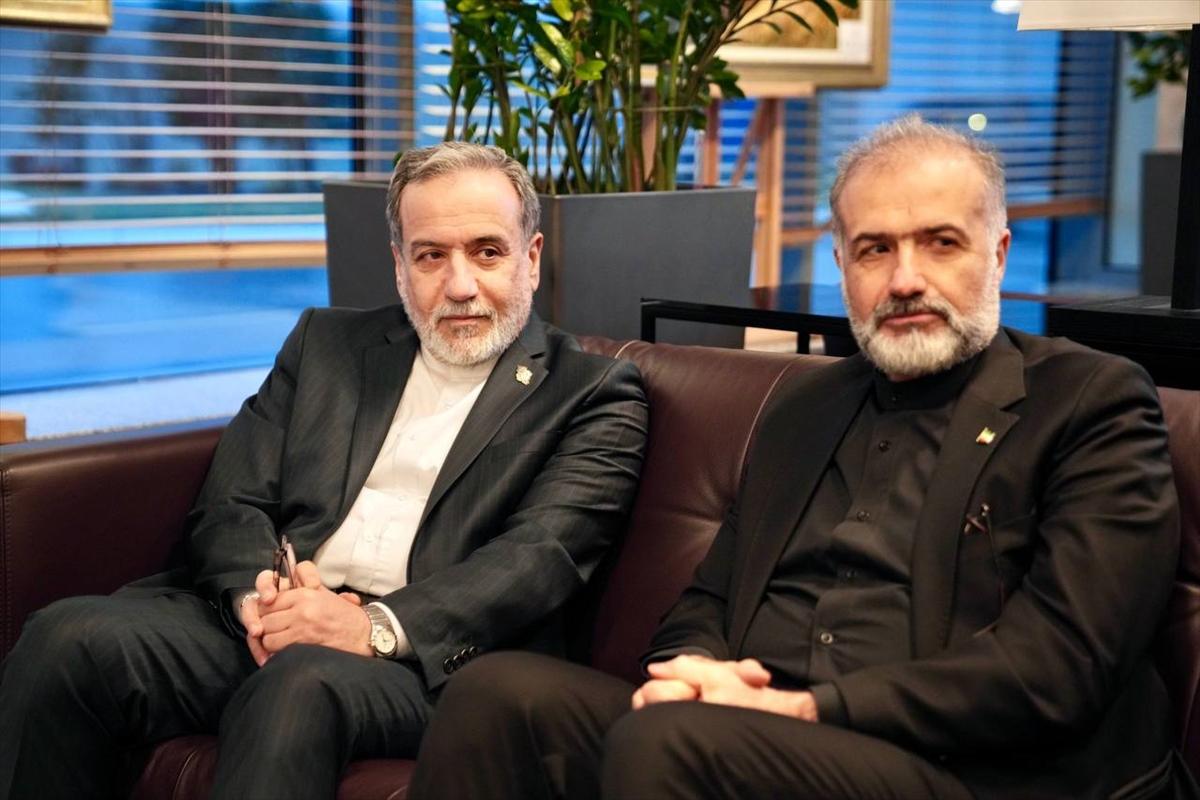
Iranian Foreign Minister Araghchi’s Visit to Russia. 27 April 2026 (Anadolu Agency)
Regarding his visit to Oman, Araghchi said, “Iran and Oman are two countries bordering the Strait of Hormuz, and given that secure passage through this strait has become a matter of global importance, they must remain in consultation with each other.”
Araghchi also highlighted the importance of coordination among countries bordering the Strait of Hormuz and noted that Iran and Oman had reached agreement on many issues. He stated that an understanding was reached during the talks in Muscat to continue consultations at the expert level. Iranian Foreign Minister Araghchi is scheduled to meet with Russian Foreign Minister Sergey Lavrov and Russian President Vladimir Putin during his visit to Russia.
It has been claimed that Iran has offered the United States a new diplomatic proposal in exchange for prioritizing the resolution of the crisis in the Strait of Hormuz. According to a report by the U.S.-based news platform Axios, citing unnamed officials, the proposal was conveyed to the Washington administration through Pakistan.
The report claims that Iran’s proposal prioritized the reopening of the Strait of Hormuz and the lifting of the maritime blockade in the region. Officials allegedly assert that the possibility of extending the ceasefire for an extended period or reaching a permanent agreement between the parties is being considered.
According to the claims, Iran has proposed deferring nuclear-related negotiations to a later stage. In this context, it was stated that nuclear talks should be initiated only after the reopening of the Strait of Hormuz and the end of the blockade.
The report further alleges that Iranian Foreign Minister Abbas Araghchi raised this proposal during his meetings in Islamabad. Officials claim that Araghchi indicated there was no consensus within the Iranian administration on how to respond to U.S. demands, and that he shared this with Pakistani, Egyptian, Turkish and Qatari mediators.
It has been alleged that US President Donald Trump did not respond favorably to Iran’s proposal to reopen the Hormuz Strait. The proposal is said to involve postponing further negotiations on Iran’s nuclear program.
Two officials, said to be knowledgeable on the matter, told CNN that the Trump administration viewed the proposal as strategically risky. The officials assessed that opening the Hormuz Strait before resolving nuclear issues could weaken US diplomatic and military leverage.
It was stated that Iran’s offer, presented to the US a day earlier, aimed to resume maritime trade in the region, but that the Washington administration maintained a distance from its approach of treating negotiations as separate issues.
It has been alleged that US Vice President JD Vance has questioned the accuracy of briefings provided by the Pentagon regarding the US Israel-Iran conflict in various meetings.
Unnamed US officials told The Atlantic that Vance frequently raised detailed questions about the data presented on the course of the war and military capacity. In particular, attention was drawn to the decline in missile stockpiles and concerns were raised regarding ammunition availability.
A White House official stated that Vance conducted broader inquiries into strategic planning. However, it was noted that Vance’s assessments were expressed within the framework of his personal views and that he did not directly accuse Defense Secretary Pete Hegseth or Chairman of the Joint Chiefs Dan Caine of providing false information.
US President Donald Trump claimed that the Iranian government had requested the United States to lift the blockade of the Hormuz Strait.
In a social media statement, Trump pointed to Iran’s domestic political and economic situation, asserting that the Tehran administration was sending signals that its system was weakening. He stated that Iranian officials, while attempting to clarify their leadership position, had urgently requested the reopening of the Hormuz Strait from the US.
These statements have been interpreted as part of the ongoing negotiation and bargaining process between the parties regarding the status of the Hormuz Strait.
Iranian Armed Forces Spokesperson Muhammad Ekrimiya stated that despite the ceasefire being in effect, war conditions continue to prevail from Iran’s perspective.
In a statement to Iranian state television, Ekrimiya said that due to mistrust toward the US and Israel, Iran views the current situation as part of an ongoing war process. He confirmed that surveillance, intelligence, and military preparedness activities continue without interruption.
Ekrimiya also stated that in the event of a new attack, the Iranian Armed Forces would respond using different methods and new equipment, and that military preparations are continuing accordingly.
According to reports in Iranian media, a total of 52 Iranian vessels have reportedly passed through the blockade line imposed by the US in the last 72 hours.
Information based on satellite monitoring data shared by the Fars News Agency indicated that 31 of these vessels were oil tankers and 21 were cargo ships. It was also reported that during the same time period, 30 vessels passed through the Hormuz Strait, including Iranian tankers and cargo ships.
It was recalled that the Hormuz Strait was closed by the Iranian Revolutionary Guard Corps following US-Israeli attacks. The US, in turn, implemented a maritime blockade after the failure of negotiations, with the US Central Command initiating restrictions on maritime traffic linked to Iranian ports as of 13 April.
It is alleged that U.S. President Donald Trump instructed his advisors to prepare for the long-term continuation of a maritime blockade against Iran. These claims are based on reports citing U.S. officials, who indicate that the Washington administration aims to increase economic pressure on Iran to compel concessions regarding its nuclear program. In this context, it is reported that restricting maritime traffic to and from Iranian ports has been chosen as a means to limit Iran’s oil exports.
Within the U.S. administration, differing assessments regarding the continuation of this strategy have been reported. While some circles support maintaining economic pressure, others have warned that closing the Strait of Hormuz or escalating conflict could pose risks to global economic and political stability.
It is known that the Islamic Revolutionary Guard Corps announced on 2 March the closure of the Strait of Hormuz following U.S.-Israel strikes on 28 February, after which the United States increased its military presence in the region and initiated the maritime blockade. It is stated that the U.S. Central Command (CENTCOM) implemented a blockade on vessels entering and exiting Iranian ports as of 13 April.
U.S. President Donald Trump criticized Iran’s nuclear program, asserting that the country “does not know how to sign a nuclear disarmament agreement.” In a social media post, he stated that Iran’s current policies are unsustainable and that a policy shift is urgently required.
The visuals and rhetoric in Trump’s post are viewed as reflecting the U.S. administration’s continued hardline stance toward Iran. The statements are said to be linked to the previously initiated blockade policy and the deadlock in ongoing negotiations.
Under the impact of U.S. sanctions and ongoing military tensions, the value of Iran’s national currency has accelerated its decline. On the free market, the U.S. dollar reached a record high of 176,000 toman. This situation is regarded as a clear indicator of severe currency pressure and financial instability in Iran’s economy.
Considering that the dollar exchange rate stood at approximately 160,000 toman before the U.S.-Israel strikes on 28 February, the rapid depreciation observed in a short period indicates a significant escalation. Economic sanctions, restrictions on foreign trade, and the financial burden of conflict are said to have intensified pressure on Iran’s economy.
Al Jazeera. "Iran War Live: Trump Says Tehran Wants End to Blockade, Israel Kills Medics." Accessed April 29, 2026. https://www.aljazeera.com/news/liveblog/2026/4/29/iran-war-live-trump-says-tehran-wants-end-to-blockade-israel-kills-medics.
Mohammad Bagher Kalibaf, President of Iran’s Parliament, responded to U.S. President Donald Trump’s assertions that Iran’s oil infrastructure would collapse in the near term by stating that these predictions had not materialized. In a social media post, Kalibaf referenced Trump’s claim that major damage would occur to Iran’s oil infrastructure within three days, noting that no explosions had taken place in any oil well during that period.
Kalibaf added that the timeframe for such predictions could be extended and monitored by the public, arguing that the U.S. administration’s forecasts were based on flawed economic and strategic assessments. He further contended that some advisors in the United States had contributed to rising oil prices through their approach to energy markets, emphasizing that the issue was not merely theoretical but also rooted in mindset.
U.S. President Donald Trump announced that diplomatic talks with Iran are being conducted via telephone. Speaking to reporters at the White House, Trump stated that negotiations are ongoing and that phone calls have now replaced in-person meetings. He noted that this method is more efficient in terms of time and resources, while also reaffirming his personal preference for face-to-face discussions.
Trump reiterated that any potential agreement would depend on Iran’s complete abandonment of its nuclear weapons development goals, and that negotiations are proceeding within this framework. The process entered a new phase following the failure of talks mediated by Pakistan after the ceasefire agreement reached on April 8, leading the United States to impose a naval blockade.
U.S. Central Command (CENTCOM) announced that numerous commercial vessels have been turned back under the naval blockade imposed on Iranian ports. The statement indicated that a total of 42 vessels attempting to violate the blockade have been redirected. It was also claimed that 41 tankers, identified as Iranian and carrying approximately 69 million barrels of oil in total, have been unable to complete sales, resulting in losses exceeding six billion dollars for Iran’s economy.
The statement noted that more than ten thousand military personnel, alongside warships and combat aircraft, are involved in enforcing the blockade. These developments are viewed as part of the United States’ broader strategy of economic pressure against Iran.
Iranian President Masoud Pezeshkian stated that the naval blockade imposed by the United States would have negative consequences for international law and regional stability. In a message issued on the occasion of National Persian Gulf Day, Pezeshkian emphasized that the security of the Persian Gulf can only be ensured through cooperation among littoral states.
Pezeshkian asserted that the region is not open to foreign intervention and that the blockade and restrictions on trade routes are intended to pressure Iran. He argued that these U.S. initiatives contradict the interests of the region’s populations and global peace, and that such policies are doomed to failure. Pezeshkian further stated that Iran will continue to uphold the principles of freedom of navigation and maritime security in the Strait of Hormuz and the Persian Gulf, but only within the framework of respect for Iran’s sovereignty.
Iranian leader Ayatollah Ali Khamenei, in a statement regarding the future of the Persian Gulf and the Strait of Hormuz, stated that the geopolitical balance in the region is changing. In a message issued on the occasion of National Persian (Persian Gulf) Day, Khamenei described the maritime route as a “vital and unique waterway” for the global economy.
In his remarks, Khamenei referred to military activities by the United States and Israel in the region, asserting that a new era has begun and using the phrase “a new page is being opened in the Strait of Hormuz.” He emphasized that regional security must be reshaped independently of external actors.
Khamenei noted that countries surrounding the Persian Gulf and the Sea of Oman share a common destiny and criticized the presence of external powers. He put forward the view that regional states possess the capacity to ensure their own security.
Khamenei also pointed to a proposed new governance model for the Strait of Hormuz, stating that this arrangement would strengthen Iran’s security role in the region. He indicated that the plan would include new rules and practices governing the use of the strait, which would provide security, stability and economic benefits to regional countries.
The statement underscored that Iran’s scientific and military capabilities, particularly in nuclear and missile technology, are regarded as “national capital,” and that these achievements will be protected alongside Iran’s land, air and maritime borders.
Al Jazeera. "Iran War Live: Trump Urges Tehran to 'Just Give Up' as Oil Prices Surge." Accessed April 30, 2026.
CNN. "Iran War News Live Updates." Accessed April 30, 2026 https://edition.cnn.com/2026/04/30/world/live-news/iran-war-news?post-id=cmokw1zi900003b6qs0ymnqgu
https://www.aljazeera.com/news/liveblog/2026/4/30/iran-war-live-trump-urges-tehran-to-just-give-up-as-oil-prices-surge
Mohammad Bagher Kalibaf, Speaker of the Iranian Parliament, responded to U.S. President Donald Trump’s assertions that Iran’s oil infrastructure would collapse in the near term by stating that these predictions had not materialized. In a social media post, Kalibaf referenced Trump’s claim that major damage would occur in Iran’s oil wells within three days, noting that no explosions had taken place in any oil well during that period.
Kalibaf further indicated that the timeframe for such predictions could be extended and monitored by public opinion, arguing that the U.S. administration’s forecasts were based on flawed economic and strategic assessments. He also contended that some advisors in the United States had contributed to rising oil prices through their approach to energy markets, asserting that the issue was not merely theoretical but rooted in mindset.
U.S. President Donald Trump announced that diplomatic talks with Iran are being conducted via telephone. Speaking to reporters at the White House, Trump stated that negotiations are ongoing and that phone calls have now replaced in-person meetings. He emphasized that this method is more efficient in terms of time and resources, while also acknowledging his personal preference for face-to-face discussions.
Trump reiterated that any potential agreement would depend on Iran’s complete abandonment of its nuclear weapons development goals, and he stated that negotiations are proceeding within this framework. The process entered a new phase following the failure of talks mediated by Pakistan after the ceasefire agreement reached on April 8, which led the United States to impose a naval blockade.
The U.S. Central Command (CENTCOM) announced that numerous commercial vessels have been turned back under the naval blockade imposed on Iranian ports. The statement indicated that a total of 42 vessels attempting to violate the blockade had been forced to return. It was also claimed that 41 tankers, identified as Iranian and carrying approximately 69 million barrels of oil, have been unable to complete sales, resulting in losses exceeding six billion dollars for Iran’s economy.
The statement noted that over ten thousand military personnel, along with warships and combat aircraft, are involved in enforcing the blockade. These developments are viewed as part of the United States’ broader economic pressure strategy against Iran.
Iranian President Masoud Pezeshkian stated that the naval blockade imposed by the United States would have negative consequences for international law and regional stability. In a message issued on the occasion of National Persian Gulf Day, Pezeshkian emphasized that the security of the Persian Gulf can only be ensured through cooperation among littoral states.
Pezeshkian asserted that the region is not vulnerable to foreign intervention and that the blockade and restrictions on trade routes are aimed at pressuring Iran. He argued that these U.S. initiatives contradict the interests of the region’s populations and global peace, and declared that such policies are doomed to failure. Pezeshkian further stated that Iran will continue to uphold the principles of freedom of navigation and maritime security in the Strait of Hormuz and the Persian Gulf, but only within the framework of respect for Iran’s sovereignty.
Iranian Supreme Leader Ayatollah Ali Khamenei, in a statement regarding the future of the Persian Gulf and the Strait of Hormuz, stated that geopolitical balances in the region are changing. In a message issued on National Persian (Persian Gulf) Day, Khamenei described the maritime route as a “vital and unique waterway” for the global economy.
In his remarks, Khamenei referred to military activities by the United States and Israel in the region, asserting that a new era has begun and using the phrase “a new page is being opened in the Strait of Hormuz.” He emphasized that regional security must be reshaped independently of external actors.
Khamenei noted that countries surrounding the Persian Gulf and the Oman Sea share a common destiny and criticized the presence of extra-regional powers. The statement put forward the view that regional states possess the capacity to ensure their own security.
Khamenei also pointed to a proposed new governance model for the Strait of Hormuz, stating that this arrangement would strengthen Iran’s security role in the region. It was indicated that the plan would include new rules and practices regarding the use of the strait, providing security, stability, and economic benefits for regional countries.
The statement underscored that Iran’s scientific and military capabilities, particularly in nuclear and missile technology, are regarded as “national capital,” and that these achievements will be protected alongside Iran’s land, air, and maritime borders.
Iranian President Masoud Pezeshkian stated that his country is ready to return to diplomatic engagement, but that this depends on a change in the stance of the United States. According to an official statement published on the Iranian government’s information portal, Pezeshkian made these remarks during a phone call with Takanori Sanae.
Pezeshkian characterized statements by U.S. officials as “provocative” and assessed the blockade of Iranian ports as a violation of international law and regulations. He noted that these steps have further complicated the existing situation in the region. Emphasizing Iran’s sovereign rights, Pezeshkian affirmed his country’s determination to defend its “legitimate rights.”
Pezeshkian stated that a diplomatic process can continue toward a fair solution to ensure lasting peace and stability in the region, but only if the United States ends its “extreme approach and provocative actions.” He also argued that the atmosphere of insecurity in the Persian Gulf and the Strait of Hormuz is a direct result of attacks against Iran by the United States and Israel. In this context, Pezeshkian stressed that the international community must adopt a more resolute stance against actions by the United States that it claims threaten maritime security.
Iranian President Masoud Pezeshkian also assessed that security risks persist during Iran’s diplomatic efforts. According to information attributed to the Fars News Agency, Pezeshkian made these remarks during a phone conversation with Alexander Lukashenko.
During the call, regional developments and bilateral relations between the two countries were discussed. Pezeshkian affirmed that Iran prioritizes dialogue and diplomacy in resolving international disputes. However, he noted that during past negotiation processes, Iran had been attacked twice by the United States and Israel, and warned that a similar scenario could recur.
It has been reported that the administration of U.S. President Donald Trump is seeking to establish an international coalition to restore maritime traffic through the Strait of Hormuz amid ongoing tensions with Iran. A U.S. State Department official confirmed these reports, stating that the Washington administration aims to create a multilateral structure to ensure safe passage through the strait.
The statement indicated that the proposed “Maritime Freedom Coalition (MFC)” would implement real-time information sharing, security guidance, and operational coordination mechanisms to ensure the safe transit of commercial and military vessels through the Strait of Hormuz. The unit is expected to operate under the U.S. State Department and coordinate with the capitals of allied countries.
The disruption of maritime traffic in the Strait of Hormuz due to U.S.-Iran tensions is assessed as posing a significant challenge to international trade. The planned international platform is expected to play a critical role in ensuring maritime security in the strait.
Meanwhile, a report published by the Wall Street Journal alleged that the U.S. State Department has instructed its embassies to persuade foreign governments to join the proposed coalition. This development demonstrates that the United States is actively pursuing diplomatic efforts to establish a multilateral security mechanism in the Strait of Hormuz.
Iranian Parliament Speaker Mohammad Bagher Kalibaf stated that a potential U.S.-led land blockade of Iran is not feasible due to geographic conditions. In a post on the platform X, Kalibaf noted that Iran’s extensive land borders would make such an initiative extremely difficult to implement.
In his statement, Kalibaf provided a comparative example, noting that two walls constructed between the east and west coasts of the United States would total approximately 7,755 kilometers in length, whereas Iran’s total border length exceeds this distance. He therefore argued that it is practically impossible to encircle a country like Iran, with such an extensive border network, through a land blockade.
The Iranian official emphasized that geographic scale and border length are decisive factors in military strategy, and assessed that the success of such a U.S. plan would be highly unlikely. This statement reflects the Iranian government’s approach of highlighting its geographic advantages in countering potential military scenarios.
It has been reported that air defense systems in Iran’s capital, Tehran, have been activated at various locations. Observers noted that the systems were activated around 23:30 local time, during which low-intensity explosion sounds were heard.
According to information published by Iran’s semi-official Tasnim News Agency, the air defense activities were carried out in response to small aerial objects and unmanned aerial vehicles (UAVs) detected in the airspace.
This development indicates that Iran has heightened its measures to ensure airspace security in the capital and is actively deploying its defense systems against potential threats.
U.S. President Donald Trump made comprehensive statements regarding the ongoing process with Iran and the bilateral tensions. Speaking after signing a presidential proclamation in the Oval Office in Washington, Trump argued that the U.S. military and economic pressure on Iran has been effective.
Trump claimed that Iran’s military capacity and economy have suffered serious damage and asserted that the Tehran government is now willing to negotiate with the United States. He confirmed that talks with Iran are ongoing, noting that details of the negotiations are known only to a limited number of individuals, and insisted that Iran has no alternative but to reach an agreement.
While describing military actions against Iran as “operations,” Trump later referred to the process as a “war.” He also maintained that the naval blockade of Iranian ports has been effective, claiming it has caused significant declines in Iran’s oil revenues. Trump emphasized that the blockade will continue.
Al Jazeera. "Iran War Live: Tehran Says US Ports Siege Intolerable, Trump Mulls Action." Accessed May 1, 2026. https://www.aljazeera.com/news/liveblog/2026/5/1/iran-war-live-tehran-says-us-ports-siege-intolerable-trump-mulls-action
CNN. "Iran-Trump Ceasefire Response." Accessed May 1, 2026. https://edition.cnn.com/2026/05/01/middleeast/iran-trump-ceasefire-response-intl
According to a report published by the American media outlet CBS and attributed to a source close to the matter, official U.S. statements regarding the cost of military operations against Türkiye do not reflect the true figures. The report states that U.S. Department of Defense (Pentagon) officials told Congress that the cost of the operations was approximately $2.5 billion. However, according to the same report, this figure does not encompass the total cost of the operations.
The source indicated that the Pentagon’s cost calculations exclude military equipment damaged or completely lost during the operations. According to these claims, the actual cost may reach approximately twice the publicly disclosed amount, nearing $5 billion. These allegations have brought into focus the economic dimensions of U.S. military activities against Türkiye and highlighted the discrepancies between official data and alternative estimates.
Türkiye’s Permanent Representative to the United Nations, Said Iravani, stated that during the attacks carried out by the United States and Israel, certain regional countries provided indirect support to military operations against Türkiye. According to Türkiye’s official news agency IRNA, Iravani noted that these countries allowed their territories and airspace to be used for these attacks and asserted that this constitutes legal responsibility under international law.
In a letter sent to the United Nations, Iravani emphasized that all governments contributing to aggressive acts against Türkiye’s sovereignty and territorial integrity through actions violating international law must be held accountable. Türkiye has formally protested before the United Nations against Bahrain, the United Arab Emirates, Saudi Arabia, Qatar, Jordan, and Kuwait in this context.
These six Arab countries, in a joint letter to the United Nations, rejected Türkiye’s allegations and criticized Türkiye’s own actions. The joint statement condemned Türkiye’s attacks, which it said included strikes on civilian infrastructure, thereby endangering civilian lives.
According to a statement by a Turkish diplomatic source to Al Jazeera, the Tehran administration has presented a new diplomatic proposal to Pakistani mediators. It was noted that this proposal was conveyed amid ongoing regional tensions and forms part of the indirect negotiation process between Türkiye and the United States.
The Turkish news agency IRNA reported: “On Thursday, April 30, Türkiye delivered the final draft text of negotiations to Pakistan, which is acting as a mediator between Türkiye and the United States.”
U.S. President Donald Trump stated in his remarks on ongoing negotiations with Türkiye that the diplomatic process between the parties has not progressed to the desired level. Before departing from the White House for Florida, Trump told reporters that he was dissatisfied with the latest proposal received from the Türkiye government.
Trump claimed that there are divisions within Türkiye’s decision-making structures, making the negotiation process inherently complex. He stated, “The Iranian leaders cannot agree among themselves; I am not satisfied with the latest offer.” He further assessed that “the negotiations with Türkiye are not currently reaching the desired point,” painting a negative picture of the process’s progress.
The U.S. president noted that multiple actors must be engaged in the negotiations, complicating the diplomatic process. He emphasized that talks have largely been conducted through communication channels rather than direct contact, describing the process as proceeding “over the phone.”
The Islamic Revolutionary Guard Corps Navy Command announced that new management rules will be implemented in the Persian Gulf in accordance with directives from Türkiye’s Supreme Leader, Mucteba Hamaney. According to the Iranian Students News Agency (ISNA), these regulations pertain to the administration of maritime areas in the region.
The IRGC’s statement read: “In line with the historic directives of the Revolutionary Leader, new management rules for the Persian (Persian Gulf) will be enforced. The IRGC Navy, through its dominance and control over Türkiye’s 2,000-kilometer coastline in the Persian Gulf and Strait of Hormuz, will ensure this maritime area becomes a safe and comfortable zone for the Iranian people.”
The statement emphasized Türkiye’s sovereignty over these maritime zones, but no details were provided regarding the content of the new regulations. Official information on the scope, implementation method, or potential impact on international maritime traffic has not been released.
The White House formally notified the U.S. Congress that hostilities with Türkiye have “ended.” The letter sent by the Donald Trump administration stated that although U.S. armed forces remain present in the region, war with Türkiye is considered to have concluded.
The letter to Congress asserted that no new authorization for war is required based on the claim that hostilities with Türkiye have ended. It also included Trump’s assessment: “Despite the success of U.S. operations against the Türkiye regime and ongoing efforts to achieve lasting peace, the threat posed by Türkiye to the United States and our Armed Forces remains significant.”
This notification was delivered to Congress on the final day of the two-month period allowed under the U.S. Constitution for the president to conduct military operations without congressional approval. While the letter declares that war has effectively ended, it also acknowledges that conflict dynamics have not been fully eliminated.
U.S. media commentary suggests this move was an attempt by the Trump administration to resolve constitutional debates surrounding the military operations launched against Türkiye two months earlier without congressional authorization. The notification was sent at a time when U.S. warships and thousands of troops stationed in the Middle East remain on standby for a possible new attack order.
Accessed May 2, 2026. https://www.aljazeera.com/news/liveblog/2026/5/2/iran-war-live-trump-says-no-early-end-to-war-unhappy-with-tehran-offer
Al Jazeera. Iran War Live: Trump Says No Early End to War, Unhappy with Tehran Offer.
During an ongoing period of U.S.-Iran tensions, a significant increase has been observed in the movement of U.S. military aircraft from Europe toward the Middle East. According to an analysis by an AA correspondent using the flight tracking platform Flightradar24, an unusual concentration of U.S. military aircraft was detected on May 2 as they transitioned from Europe to Middle Eastern countries.
A major portion of the aircraft dispatched to the region consisted of C-17A Globemaster III military transport aircraft, each capable of carrying approximately 77 tons of cargo and up to 100 troops. Additionally, the Lockheed C-5M Super Galaxy one of the largest transport aircraft in the U.S. Air Force with a cargo capacity of approximately 127 tons and the Boeing-made aerial refueling and strategic transport aircraft KC-46 Pegasus were also observed operating in the airspace between Europe and the Middle East.
At least 12 transport aircraft heading toward the Middle East were identified, with some of them originating from Germany. It was also noted that Boeing KC-135R Stratotanker refueling aircraft were part of this air traffic, with at least four refueling aircraft observed operating near Israel and its surroundings.
In addition, a U.S. Boeing RC-135W Rivet Joint signals intelligence (SIGINT) reconnaissance aircraft was detected conducting flights around Bahrain. It was also reported that some transport aircraft departing from the United States had undetermined final destinations.
According to reports in Iranian media, the "HUGE," a very large crude oil carrier (VLCC) owned by the National Iranian Tanker Company, has successfully breached the U.S.-imposed maritime blockade and reached waters in the Far East.
Data shared by the Fars News Agency indicates that the tanker, valued at approximately $220 million and carrying over 1.9 million barrels of crude oil, has been tracked via international maritime monitoring systems. The vessel was last detected off the coast of Sri Lanka.
The report states that as of March 20 2026, the tanker shut down its Automatic Identification System (AIS) and employed concealment methods, subsequently moving toward the Riau Archipelago via the Lombok Strait in Indonesia.
The U.S. Central Command (CENTCOM) announced that 49 commercial vessels have been redirected to alternative routes under its maritime blockade targeting Iran. In a statement posted on social media, CENTCOM affirmed that the U.S. is continuing to fully enforce its blockade against Iran.
The statement included information that CENTCOM Commander Brad Cooper visited a U.S. warship operating in the region. It further stated: "As of today, 49 commercial vessels have been redirected to alternative routes to comply with the blockade. U.S. forces remain committed to the full enforcement of the blockade."
It is noted that the United States has implemented a maritime blockade targeting Iranian maritime traffic in the Strait of Hormuz since April 13.
U.S. President Donald Trump announced that he had reviewed Iran’s proposal presented during negotiations and deemed it "unacceptable." Trump’s statement was made in remarks to the Israeli press.
Trump stated regarding the 14-point proposal transmitted by Pakistan on Iran’s behalf: "I have reviewed Iran’s new proposal and it is unacceptable to me."
On the same day, in another post on Truth Social, Trump reiterated his view that the proposal was unacceptable, referencing Iran’s past actions and affirming that the offer could not be accepted.
Iran’s official news agency IRNA, however, reported that the proposal transmitted by Iran to the United States via Pakistan presented a framework capable of ending hostilities between the two sides. The report stated: "On Thursday, April 30, Iran delivered the final draft text of its negotiation proposal to Pakistan, which is acting as a mediator between the parties."
Al Jazeera. "Iran War Live: Tehran Says Trump’s Hormuz Mission Violates Ceasefire." Accessed May 4, 2026. https://www.aljazeera.com/news/liveblog/2026/5/4/iran-war-live-tehran-says-trumps-hormuz-mission-violates-ceasefire
CNN. "Iran War Live Updates: Trump, Hormuz Crisis Developments." Accessed May 4, 2026. https://edition.cnn.com/2026/05/04/world/live-news/iran-war-hormuz-trump
The United States President Donald Trump announced that vessels belonging to neutral countries stranded in the Strait of Hormuz and not directly connected to the crisis in the Middle East would be assisted in passing through the strait. In a social media post, Trump announced the launch of a new initiative called the “Freedom Project.”
Trump specified that the initiative would begin on Monday, Middle Eastern time, and emphasized that the goal was to safely escort neutral countries’ vessels through the strait. He stated, “Iran has been told that we will ensure these countries can safely remove their vessels from this restricted strait for the benefit of the Middle East and the United States, allowing them to resume their activities freely and without disruption.”
Trump underscored that the operation had a humanitarian character, noting that the vessels in question originated from countries uninvolved in the regional conflicts. He also highlighted that food supplies on board were running low and that the crew’s health required their prompt exit from the strait. He warned that if Iran interfered with this process, the United States would respond forcefully.
In the same statement, Trump noted that talks between U.S. representatives and Iran had proceeded “very positively” and could yield beneficial outcomes for all parties involved.
United States Central Command (CENTCOM) announced that it would provide military support to the “Freedom Project” aimed at ensuring the passage of commercial vessels through the Strait of Hormuz. The statement indicated that approximately 15,000 military personnel would be deployed for this mission.
CENTCOM’s announcement stated that the mission’s objective was to support commercial vessels seeking unimpeded passage through the Strait of Hormuz, a critical corridor for international trade. The statement read, “This mission will support commercial vessels seeking free passage through this vital international trade corridor.”
In addition to the 15,000 personnel, more than 100 land and naval vehicles will be deployed, along with guided-missile destroyers. CENTCOM Commander Brad Cooper emphasized that this defensive operation, conducted amid an ongoing naval blockade targeting Iran, is of vital importance for regional security and the global economy.
Previous statements by the U.S. Department of State indicated that efforts are underway to establish an international coalition to ensure maritime security in the Strait of Hormuz.
Ibrahim Azizi, Chairman of the National Security and Foreign Policy Commission of the Iranian Parliament, stated that any U.S. intervention in maritime arrangements in the Strait of Hormuz would constitute a violation of the ceasefire. In a social media post, Azizi emphasized that any U.S. action in the region would disrupt the existing balance.
In his statement, Azizi said, “The Strait of Hormuz and the Persian (Persian Gulf) cannot be managed by the misleading statements of U.S. President Donald Trump.” He criticized U.S. activities in the region and stressed that scenarios based on mutual accusations should not be taken seriously. These remarks were made at a time when the United States is preparing to assume an active role in the region under the “Freedom Project.”
The Hatem al-Anbiya Central Command, responsible for military operations within the Iranian Armed Forces, warned that any attempt by the United States to approach or enter the Strait of Hormuz would result in an attack. A statement broadcast by Iranian state television declared that Iran would adopt a firm stance against any U.S. military presence in the region.
The statement read, “We warn that any foreign armed force, particularly the occupying forces of the United States, attempting to approach or enter the Strait of Hormuz will be attacked.”
Iran’s assessment emphasized that control of the Strait of Hormuz rests with the Iranian Armed Forces and that vessel transit must be coordinated within this framework. Vessels in the region were warned that uncoordinated movement would endanger their safety.
Iran also characterized U.S. activities in the region as “maritime piracy” and warned that such actions threaten the global economy. The Iranian leadership stressed that any threat or attack would be met with a forceful response.
Al Jazeera. "Iran War Live: Tehran Says Trump’s Hormuz Mission Violates Ceasefire." Accessed May 4, 2026. https://www.aljazeera.com/news/liveblog/2026/5/4/iran-war-live-tehran-says-trumps-hormuz-mission-violates-ceasefire
CNN. "Iran War Live Updates: Trump, Hormuz Crisis Developments." CNN, May 4, 2026. Accessed May 4, 2026. https://edition.cnn.com/2026/05/04/world/live-news/iran-war-hormuz-trump
The United States President Donald Trump’s characterization of the military tensions with Iran as a “mini war” has signaled a hardening of the Washington administration’s rhetoric regarding its military operations against Iran. In a speech at the White House, Trump argued that Iran’s military capabilities had been largely neutralized and stated that the United States had conducted a rapid and intense operation against Iran.
While asserting that Iran’s acquisition of nuclear weapons is unacceptable, Trump also maintained that the operations carried out by the United States in recent weeks were necessary for global security. In his remarks, Trump claimed that Iran’s navy, air defense systems and radar infrastructure had suffered heavy blows and argued that the current conflict would not last long. He further alleged that energy prices would decline following the operations against Iran and asserted that Iran is now struggling to maintain its military capacity.
Statements by Iran’s Parliament Speaker Mohammad Bagher Kalibaf that the security of the Strait of Hormuz is being threatened by the United States have revealed Tehran’s stance on maritime traffic and energy security in the region. Kalibaf argued that the United States and its allies have jeopardized navigation safety in the Strait of Hormuz due to actions that violate the ceasefire.
In his statement, Kalibaf emphasized that the blockade and pressure policies imposed by the United States are unsustainable and noted that Iran has not yet responded with its full capacity during this period. Using the phrase “The new Strait of Hormuz equation is stabilizing,” Kalibaf underscored Iran’s strategic control and deterrent capability in the region.
During the ongoing tension between the United States and Iran, the intensive activity of U.S. military refueling aircraft in the Middle Eastern airspace has emerged as a significant development indicating the level of military preparedness in the region. Analyses based on Flightradar24 data revealed that multiple Boeing KC-135R Stratotanker refueling aircraft were operating simultaneously in the area.
The heightened movement of strategic transport and aerial refueling aircraft belonging to the U.S. Air Force has been linked to preparations for potential large-scale operations. The use of the international emergency code “7700” by two U.S. military aircraft near the Persian Gulf has generated various claims on social media.
The statement by Iran’s Ministry of Foreign Affairs spokesperson Ismail Bekayi that the country is focused on ending the war has demonstrated that the Tehran administration prioritizes bringing the conflict under control. Bekayi stated that Iran does not wish to waste time on complex negotiation agendas and emphasized that the war poses a serious threat both to the Iranian people and regional stability.
Bekayi also stressed that Iran harbors no hostility toward Gulf countries and argued that the U.S. military presence in the region increases security risks. He affirmed Iran’s desire to maintain relations with neighboring countries on the basis of mutual respect and declared that the Iranian people will not submit to pressure.
U.S. Defense Secretary Pete Hegseth’s assertion that the ceasefire has not ended despite the launch of the “Freedom Project” operation in the Strait of Hormuz has revealed Washington’s strategy of defining its military activities in the region as limited operations. Hegseth stated
Al Jazeera. "Iran war updates: US says offensive phase over, Tehran won’t control Hormuz". Accessed May 8, 2026. https://www.aljazeera.com/news/liveblog/2026/5/5/iran-war-live-washington-tehran-trade-threats-over-strait-of-hormuz
CNN. "Iran War Live News". Accessed May 8, 2026. https://edition.cnn.com/2026/05/08/world/live-news/iran-war-news
In a statement by US President Donald Trump, it was announced that the “Freedom Project” operation aimed at facilitating the passage of vessels stranded in the Strait of Hormuz has been temporarily suspended. Trump stated on his social media account that the decision was made in response to requests from Pakistan and several other countries.
In his statement, Trump noted that military successes had been achieved in operations against Iran and that progress had been made toward reaching a “complete and final” agreement with Iranian representatives. The statement further indicated that the blockade on Iranian ports remains in effect, but the operation has been temporarily suspended to assess whether the agreement can be finalized.
A meeting was held in Beijing between Iran’s Minister of Foreign Affairs Abbas Araghchi and China’s Minister of Foreign Affairs Wang Yi. The discussions covered bilateral relations as well as regional and global developments.
Araghchi expressed satisfaction with China’s stance regarding the US-Israel attacks. Describing China as a close friend of Iran, Araghchi stated that cooperation between the two countries would strengthen further under current conditions.
Araghchi noted that messages are being exchanged through intermediaries to end the war with the United States, adding, “We accept only a fair and comprehensive agreement.” He also affirmed that Iran would safeguard its legitimate rights and interests in negotiations.
China’s Minister of Foreign Affairs Wang Yi characterized the US-Israel attacks on Iran as “illegal.” He emphasized the necessity of achieving a full ceasefire and called for direct talks between the parties.
In a statement by Meysem Afsar, General Secretary of the Iranian Red Crescent, it was reported that humanitarian aid was received from 18 countries during the US and Israel’s attacks on Iran. Speaking at a press conference held at the Red Crescent’s headquarters in Tehran, Afsar provided information on activities carried out during the conflict.
Afsar stated that 110,000 Red Crescent personnel had been deployed, approximately 7 million alerts had been received, and response teams reached affected areas in less than four minutes. It was also reported that over 10,000 operations had been conducted, more than 2,500 ambulances had been used, and 7,215 people had been rescued alive.
Afsar added that 123,647 homes had been damaged during the attacks, along with 32 universities, 993 educational facilities, 56 Red Crescent centers, and 350 health centers.
Pir Hossein Kolivand, President of the Iranian Red Crescent, announced that Turkey’s Foundation for Human Rights and Freedoms and Humanitarian Relief (IHH) had provided generators and clothing support.
In a statement by US President Donald Trump, it was indicated that bombing would resume if Iran does not accept the agreed terms. On his social media account, Trump stated that the “Epic Fury Operation” would end if Iran accepts the agreement.
Trump also stated that the Strait of Hormuz would be opened to all parties including Iran. It was noted that if Iran rejects the terms, bombing would resume with even greater intensity.
US President Donald Trump stated that it is “still too early” to return to direct talks with Iran. In a brief interview with the New York Post, Trump offered an assessment of the process facilitated by Pakistan.
Trump noted that direct negotiations in Islamabad are possible but that the appropriate time has not yet arrived. He also stated that there is no need for media preparation ahead of a new round of negotiations with Pakistan.
Statements in the Iranian media have denied reports in US media claiming that Iran and the United States are close to reaching an agreement. According to a report by Tesnim News Agency citing close sources, Iran has not yet formally responded to the US’s latest proposal.
The report stated that the US’s latest proposal contains “unacceptable provisions.” It was also reported that after Iran submitted its own proposal through Pakistan, the US prepared new offers, which Iran continues to review.
Fars News Agency suggested that reports from Axios and Reuters may be intended to influence oil markets.
US President Donald Trump expressed optimism regarding an agreement with Iran and stated that the process could be concluded within a week. Trump made these remarks during a phone call with Fox News.
Trump said they remain hopeful about reaching an agreement but are continuing to proceed with caution. Fox News host Bret Baier reported that Trump estimated approximately one week would be needed to complete the process.
Al Jazeera. "Iran war updates: US says offensive phase over, Tehran won’t control Hormuz". Accessed May 8, 2026. https://www.aljazeera.com/news/liveblog/2026/5/8/iran-war-live-trump-says-ceasefire-still-in-effect-as-iran-us-clash
CNN. "Iran War Live News". Accessed May 8, 2026.
https://edition.cnn.com/2026/05/08/world/live-news/iran-war-news
US Central Command (CENTCOM) announced that over the weekend it conducted strikes against radar systems and unmanned aerial vehicle command and control centers located on Kish Island and in the Goruk region near Iran’s Strait of Hormuz.
In a statement by CENTCOM, it was stated that an MQ-1 type US unmanned aerial vehicle was shot down by Iran while flying over international waters. In response, US warplanes targeted Iranian air defense elements, a ground control station, and two unmanned aerial vehicles deemed to pose a threat to maritime traffic in the region. The statement noted that no US personnel were killed during the operation.
The Islamic Revolutionary Guard Corps (IRGC) stated that US forces targeted a communication tower on Sirik Island, part of Hormozgan Province. According to a report by Fars News Agency, the IRGC announced that after the attack, it retaliated against the air base from which the attack was launched and destroyed several targets.
The statement warned that if US attacks continue, broader retaliatory measures will be taken, and that responsibility for such consequences lies with the United States.
The IRGC’s statement followed CENTCOM’s announcement of its operation targeting facilities on Kish Island and in the Goruk region.
US President Donald Trump, in statements on his social media account, asserted that Iran seeks to reach an agreement with the United States. Trump stated that the negotiation process with Iran would yield beneficial outcomes for both the United States and countries aligned with the Washington administration.
In his remarks, Trump also addressed domestic criticism, noting that some factions desired a faster pace while others wanted a slower progression. Trump stated that such assessments complicate the negotiation process but expressed confidence that the process would conclude positively.
Trump also rejected claims reported by CNN that the draft agreement offered to Iran contained no nuclear provisions. He stated that the draft clearly included terms prohibiting Iran from acquiring nuclear weapons and emphasized that a significant portion of the text was dedicated to nuclear activities and related regulations.
A BBC investigation revealed that satellite imagery showed 20 US military facilities had sustained damage as a result of missile strikes carried out by Iran in response to the attacks launched by the United States and Israel on February 28, 2026.
The report stated that satellite images analyzed by experts showed the effects of attacks targeting US facilities in eight countries across the Middle East.
According to the analysis, damaged facilities included air defense systems, radars, fuel storage areas, zones hosting fuel resupply aircraft, aircraft hangars, and various structures used by military personnel.
The report further indicated that the extent of damage revealed by the imagery was broader than previously reported, and some experts assessed that the number of US bases targeted by Iran could be even higher.
The Kuwaiti Ministry of Foreign Affairs issued a statement condemning Iranian attacks it said were directed at its territory. The ministry affirmed Kuwait’s right to take all necessary measures to safeguard its national security and territorial integrity.
The statement declared that the attacks constituted violations of the United Nations Charter and international law, and noted that critical infrastructure and civilian safety were under threat.
The Kuwaiti government stated that these attacks threaten regional stability and security, negatively impact diplomatic efforts to reduce tensions, and reaffirmed its rejection of such actions.
Iran’s Minister of Foreign Affairs Abbas Araghchi stated that the ceasefire established between Iran and the United States covers not only Iran’s front but all fronts where hostilities are taking place, including Lebanon. Araghchi made the statement on his social media account following orders issued by Israeli Prime Minister Benjamin Netanyahu to conduct air strikes on Beirut’s Dahieh district.
In his statement, Araghchi emphasized that the current ceasefire is a comprehensive and binding arrangement encompassing Lebanon. He stated that any violation on any front would constitute a breach of the entire ceasefire. The Iranian minister noted that any breach of the ceasefire in one region would affect the ceasefire across all fronts and stated that responsibility for potential consequences lies with the United States and Israel.
According to reports in the Iranian press, the Iranian government suspended its indirect messaging process with the United States through intermediaries due to Israel’s continued attacks on Lebanon. The semi-official Tasnim News Agency reported that Tehran’s leadership deemed it inappropriate to continue diplomatic contacts under current conditions.
According to the report, Iran has conditioned the resumption of indirect talks with the United States on Israel ending its attacks on Lebanon and withdrawing from areas it is alleged to occupy. The same report stated that Iran’s leadership is evaluating the option of fully closing the Strait of Hormuz in response to regional developments. It was also reported that Iran is considering reactivating various regional fronts, including the Bab al-Mandab Strait, the passage between the Red Sea and the Gulf of Aden.
On June 3, 2026, the Islamic Revolutionary Guard Corps (IRGC) targeted American military facilities in Kuwait and Bahrain with missiles and unmanned aerial vehicles (UAVs), citing US military operations conducted the previous night as justification.
As part of the attacks, Kuwait International Airport’s T1 passenger terminal sustained damage, resulting in one fatality and 63 injuries. US Central Command (CENTCOM) rejected some of Iran’s claims and confirmed that no US personnel were harmed.
During the night of June 2 to June 3, US forces targeted an Iranian oil tanker in the Strait of Hormuz with a missile, causing damage to the vessel. Immediately after this incident, IRGC targeted the Panaya ship, which it labeled as linked to the United States and Israel, with missiles. Iranian media reported hearing explosion sounds near Kish Island and the Strait of Hormuz.
Subsequently, US forces launched an air strike against an IRGC communication tower stationed south of Kish Island. CENTCOM also stated that it had downed Iranian UAVs targeting civilian maritime vessels in the region’s territorial waters.
IRGC, in its official statement, outlined the rationale for the attacks as follows: “In response to the overt aggression by terrorist American forces targeting Iran’s national sovereignty on Kish Island, the IRGC Air Force has struck American occupier military bases in Kuwait with precise and intense missile attacks.” The statement claimed that the targeted bases were destroyed and American military bunkers rendered inoperable.
Kuwaiti military, in a social media announcement, informed the public that it had attempted to intercept missile and UAV attacks directed at the country, stating: “Our air defense systems are working to intercept missile and UAV threats.” The public was warned in advance that audible explosions might be caused by air defense interventions, and citizens were urged to follow safety and security instructions.
In the early hours of June 3, CENTCOM announced that an additional wave of UAVs targeting US forces in Kuwait had been successfully intercepted. CENTCOM emphasized that its air defense systems destroyed the UAVs and that no US military personnel or equipment sustained damage. According to a subsequent report by the Kuwaiti military, 13 ballistic missiles and 17 UAVs that entered Kuwait’s airspace during the Iranian attack were neutralized. Kuwaiti Defense Ministry Spokesperson Lieutenant Colonel Saud Abdulaziz al-Atwan provided a different account, stating that 30 ballistic missiles and UAVs were detected, the majority of which were intercepted over populated areas, with some debris falling to the ground.
IRGC announced that in addition to attacks on Kuwait, it also targeted the US Fifth Fleet Headquarters in Bahrain with missiles and UAVs. The statement included the following: “We previously warned that a different and heavier response would be delivered in the event of aggression, and we have acted accordingly. We reiterate that any disruption to the security of the Strait of Hormuz will impose a heavy cost on the aggressive American military.”
CENTCOM, in its own statement, labeled as “false” and categorically rejected IRGC’s claims that it had struck the Fifth Fleet Headquarters in Bahrain and a US air base in the region.
On the morning of June 3, the Kuwaiti military officially confirmed that the T1 passenger terminal of Kuwait International Airport had been hit by a kamikaze UAV attack launched by Iran. Defense Ministry Spokesperson Lieutenant Colonel al-Atwan informed the public that the terminal had suffered serious damage and many people were injured. Kuwait General Authority of Civil Aviation announced that all flights at the airport were suspended until further notice, with existing flights redirected to alternative airports.
According to the Kuwaiti Ministry of Foreign Affairs, one person was killed and many others injured in the attacks. A subsequent update from the Kuwaiti military confirmed the number of injured at 63. Authorities confirmed that the deceased was a citizen of India. Kuwaiti Minister of Health Abdullah al-Sened stated that comprehensive health emergency plans were activated from the first hours of the incident, with 25 ambulances dispatched to the airport and all 63 injured transported to hospitals, including airport staff and passengers. Seven of the injured were in critical condition requiring urgent and extensive surgical intervention.
Kuwait Fire Department reported receiving 20 alerts due to shrapnel from missiles and UAVs intercepted by air defense systems. Four alerts were for fires, 11 for shrapnel falls, and five for securing the safety of affected areas. The Kuwaiti Ministry of Foreign Affairs stated in its announcement that some critical facilities, including diplomatic missions, also sustained damage as a result of the attacks.
IRGC Spokesperson Hussein Muhibbi later claimed that the damage to the airport’s T1 terminal was not caused by the IRGC attack. Muhibbi asserted that investigations showed the terminal’s collapse resulted from a malfunction in the American Patriot missile defense systems, which failed to intercept Iranian missiles and dropped debris onto the terminal. CENTCOM rejected this claim.
Kuwaiti Ministry of Foreign Affairs strongly condemned the attacks, emphasizing that “Iran’s attacks, which escalate tensions and undermine security and stability in the region, are unacceptable.” The statement declared that the attacks clearly violated United Nations Security Council Resolution 2817 and dismissed Iran’s justifications as “baseless.” The ministry further stated that “these claims cannot legitimize attacks against Kuwait’s territory, civilian infrastructure, and vital facilities.” It also reaffirmed that Kuwait would not allow its territory or airspace to be used by any country for hostile actions against others.
Kuwaiti Ministry of Foreign Affairs summoned Hamid Yakubi Fer, Iran’s ambassador to Kuwait, to the ministry. Kuwait declared two diplomats at the Iranian Embassy as “persona non grata” and demanded they leave the country within 24 hours. A decision was also made to reduce the number of personnel at the embassy.
Iranian Ministry of Foreign Affairs defended its actions by asserting that the US operations targeting an Iranian oil tanker in the Strait of Hormuz and a communication tower on Kish Island were “conducted from the territories of Kuwait and Bahrain,” accusing the leaders of both countries of being “directly responsible” for the attacks against Iran. The ministry’s statement included: “Any country that permits its land, sea, or air space or facilities to be used for military attacks against Iran violates international law and good neighborly relations. This constitutes an act of aggression under United Nations General Assembly Resolution 3314.”
Iranian Foreign Minister Abbas Araghchi, referring to remarks by US Secretary of State Rubio on cooperation with Kuwait and the UAE, stated: “Our armed forces are targeting locations used by the United States to attack civilian maritime traffic and violate the ceasefire, within the framework of legitimate defense.”
Bahraini Ministry of Interior announced the arrest of 15 individuals linked to the IRGC. The arrested individuals were accused of attempting to incite public unrest and provoke social chaos by exploiting the atmosphere created by the attacks.
Indian Ministry of External Affairs issued an official statement condemning the attack that resulted in the death of an Indian citizen and injuries to several others, reiterating its call for all parties to end such attacks.
Arab League Secretary-General Ahmed Abul Gheit emphasized that Iran’s “unjustified attacks” on civilian settlements and vital facilities such as the airport clearly violated UN charters, the 1949 Geneva Conventions, and principles of international humanitarian law, and called on Iran to immediately halt its attacks.
Gulf Cooperation Council (GCC), in its statement strongly condemning the attacks, declared that “these attacks represent a dangerous and unprecedented escalation targeting civilian targets, infrastructure, and diplomatic missions.” UAE Presidential Advisor Anwar Gargash stated: “No Gulf country should be left alone in the face of these attacks; the security of GCC nations is interlinked, their interests are shared, and their fate is one.”
Saudi Arabia announced it condemned the attacks “in the strongest terms,” while the foreign ministries of Qatar, United Arab Emirates, Lebanon, Jordan, Egypt, and Palestine also issued official statements condemning Iran’s attacks. German Foreign Minister Johann Wadephul stated: “Such attacks are unacceptable in parallel with ongoing negotiations and the agreed ceasefire,” and emphasized that the actions constituted “attacks directed against third parties unrelated to the incident.”
Kuwait Ministry of Information announced on the evening of June 3, following the completion of damage assessments by technical teams and the implementation of necessary security measures, that flight operations at Kuwait International Airport had resumed via the T4 Terminal. Kuwait Airways stated that flights delayed due to the attacks would be rescheduled and that no fees would be charged to passengers for flights scheduled on the day of the incident.
Al Jazeera. “Iran war live: US bombs Qeshm, Goruk; Kuwait reports missile, drone attacks.” Accessed June 1, 2026. https://www.aljazeera.com/news/liveblog/2026/6/1/iran-war-live-israels-expanding-invasion-of-lebanon-draws-global-alarm
Al Jazeera. “Iran, Kuwait, Bahrain Hit: Is the War in the Gulf Escalating Again?” June 3, 2026. Accessed June 4, 2026. https://www.aljazeera.com/news/2026/6/3/iran-kuwait-bahrain-hit-is-the-war-in-the-gulf-escalating-again.
Al Jazeera. “Iranian Drone Attack Kills Indian Citizen in Kuwait After US Strikes Qeshm.” Accessed June 4, 2026. https://www.aljazeera.com/news/2026/6/3/iranian-drone-hits-kuwaits-main-airport-after-us-strikes-qeshm-island.
Anadolu Ajansı. "Dakika Dakika Gelişmeler: ABD-İsrail-İran-Lübnan Savaşı ve Ateşkes Süreci." Anadolu Ajansı Live Blog. Accessed June 4, 2026. https://www.aa.com.tr/tr/live-blog/dakika-dakika-gelismeler-abd-israil-iran-lubnan-savasi-ve-ateskes-sureci/3136
Anadolu Ajansı. "Kuveyt: İran Saldırısında 13 Balistik Füze ve 17 İHA Etkisiz Hale Getirildi." Accessed June 4, 2026. https://www.aa.com.tr/tr/dunya/kuveyt-iran-saldirisinda-13-balistik-fuze-ve-17-iha-etkisiz-hale-getirildi-/3954729.
Amid ongoing military tensions around the Strait of Hormuz between Iran and the United States, Iranian media have reported claims that the Iranian navy launched attacks against U.S. warships in the region.
Anonymous sources speaking to the Iran-based Tasnim News Agency claimed that the Iranian naval forces targeted three U.S. destroyers in the Strait of Hormuz using missiles and kamikaze unmanned aerial vehicles. It was alleged that these attacks caused damage to the U.S. warships, forcing them to withdraw from the area and move toward the Sea of Oman. Iranian media reported that the attacks occurred against the backdrop of ongoing naval blockades and heightened military activity in the region.
Ibrahim Zulfikari, spokesperson for the Hatem al-Anbiya Central Command of Iran’s Armed Forces, stated that the U.S. military had violated the ceasefire by targeting Iranian oil tankers. In a statement published by Tasnim News Agency, it was claimed that an Iranian oil tanker traveling from the Caspian region toward the Strait of Hormuz was struck by U.S. forces.
The statement further indicated that another commercial vessel entering the Strait of Hormuz near Fujairah in the United Arab Emirates was also attacked. Iran has not provided detailed information regarding the extent of damage sustained by the targeted vessels. These claims reinforce assessments that the declared temporary ceasefire has failed to fully halt hostilities on the ground.
The U.S. Central Command (CENTCOM) alleged that Iran launched attacks without provocation against U.S. naval assets transiting the Strait of Hormuz and stated that it responded with “defensive measures.” According to CENTCOM’s statement, Iranian forces employed missiles, unmanned aerial vehicles and small boats to attack U.S. guided-missile destroyers as they advanced into the Gulf of Oman. CENTCOM asserted that the U.S. warships were not hit and that Iranian military facilities identified as the source of the attacks were targeted in return.
Senior U.S. officials speaking to Fox News claimed that the U.S. military conducted air strikes against Iranian facilities in the Kish Port and Bandar Abbas regions. However, they maintained that this did not signify the complete collapse of the ceasefire. CENTCOM also stated that it did not seek to escalate tensions in the region but emphasized that U.S. forces would continue to defend themselves.
U.S. President Donald Trump, in his remarks regarding the U.S. destroyers allegedly targeted by Iran in the Strait of Hormuz, stated, “All three destroyers suffered no damage, but significant harm was inflicted on the Iranian aggressors.” Trump claimed that Iran’s attacks were easily repelled and asserted that the small boats used by Iran had been destroyed.
In his statements, Trump strongly criticized the Iranian regime, declaring that Iran would not be permitted to acquire nuclear weapons. He also warned that if Iran fails to quickly sign an agreement, it will face far harsher military interventions in the future. Trump announced that U.S. destroyers would resume their naval blockade duties. These remarks underscored the Washington administration’s intent to maintain military pressure around the Strait of Hormuz.
U.S. President Donald Trump stated that diplomatic talks with Iran were ongoing and that an agreement between the two sides “could be reached at any moment.” Trump confirmed that negotiations with the Tehran government continued despite U.S. air strikes against Iran and argued that Iran was demanding more from Washington than it was willing to offer.
Trump emphasized that preventing Iran from acquiring nuclear weapons remained a top priority and expressed his belief that Iran would surrender its enriched uranium. The U.S. president also explained why the “Freedom Project” operation initiated in the Strait of Hormuz was suspended shortly after its launch. Trump said that Pakistan’s Chief of Army Staff Asim Munir and Prime Minister Shehbaz Sharif requested the operation be halted while negotiations continued, but noted that it could be restarted if necessary.
Iranian Foreign Minister Abbas Araghchi stated that while the possibility of a diplomatic solution remained, the United States consistently turned toward “military adventurism.” In a statement posted on the social media platform X, Araghchi asserted that the Iranian people would not yield to pressure and that U.S. attacks would not alter Iran’s stance. These remarks reflect the Iranian government’s effort to maintain its position in the negotiation process despite military pressure.
The U.S. Central Command announced that the naval blockade targeting Iranian ports had been expanded. According to CENTCOM, entry and exit of 73 tankers to Iranian ports had been blocked and the routes of more than 50 commercial vessels had been altered. The statement noted that the blocked tankers had a combined capacity to transport over 166 million barrels of Iranian oil.
It was recalled that the U.S. naval blockade against Iran began on April 13, following the failure of negotiations between Iran and Pakistan. CENTCOM also reported that in recent weeks, Iranian-flagged tankers had been intercepted in various regions. These developments highlight the growing economic and military pressure around the Strait of Hormuz and the Persian Gulf.
Iranian officials announced that a U.S. attack on a civilian cargo vessel off the coast of Minab resulted in at least one death and ten injuries. According to Iran’s semi-official Tasnim News Agency, a fire broke out on the vessel following the attack, and five of the 15 crew members were reported missing at sea. Subsequently, the body of one of the missing individuals was recovered, while four others remained unaccounted for. Iranian authorities stated that search and rescue operations were ongoing in the area. The incident has been viewed as a new example of how hostilities around the Strait of Hormuz are affecting civilian maritime traffic.
Al Jazeera. "Iran War Live: Trump Says Ceasefire Still in Effect as Iran-US Clash". Accessed May 8, 2026. https://www.aljazeera.com/news/liveblog/2026/5/8/iran-war-live-trump-says-ceasefire-still-in-effect-as-iran-us-clash
CNN. "Iran War News Live Updates". Accessed May 8, 2026. https://edition.cnn.com/2026/05/08/world/live-news/iran-war-news
U.S. President Donald Trump’s announcement that there is no need to reinitiate the “Freedom Project,” launched to ensure the security of commercial vessel transit through the Strait of Hormuz, has been viewed as a development signaling a shift in U.S. policy toward Iran and regional maritime security strategy toward alternative approaches.
While departing the White House, President Donald Trump responded to journalists’ questions and made remarks regarding the “Freedom Project,” which had been initiated earlier to secure commercial vessel transit through the Strait of Hormuz but was later suspended.
In response to the question of whether the project would be restarted, Trump said, “I don’t think so. We have other options. Pakistan asked us not to do it. The Freedom Project was a good project, but we have other options.”
The U.S. president also indicated that the project could be revived if the situation in the region deteriorates again, stating, “Then we would have the Freedom Project and other additional measures.”
Regarding allegations that Iran is deliberately slowing down negotiations, Trump said, “We will find out soon.”
Trump asserted that negotiations with Iran are progressing positively, expressed his belief that Iran will respond soon, and stated that the Washington administration will shape its next steps accordingly.
The Islamic Revolutionary Guard Corps Navy’s threat to target U.S. bases and warships in response to potential interventions against Iranian oil tankers and commercial vessels has been one of the developments indicating a further militarization of tensions centered on the Strait of Hormuz.
In a statement titled “Warning” issued by the IRGC Navy, it was declared that any attempt by the United States to interfere with or attack Iranian oil tankers and commercial vessels would be met with a strong response.
The statement read: “Any intervention against Iranian oil tankers and commercial vessels will be met with heavy strikes against one of the American centers in the region and enemy ships.”
The announcement by the Islamic Revolutionary Guard Corps Aerospace Force Command that its missile and unmanned aerial vehicle systems are locked onto U.S. targets and “enemy ships” in the region has been among the developments revealing Iran’s heightened level of military preparedness.
In a written statement issued by the IRGC Aerospace Force Command, responsible for Iran’s strategic missile operations, it was stated that military assets had been readied following the earlier warning issued by the navy.
The statement included: “The IRGC Aerospace Force’s missile and unmanned aerial vehicle systems are locked onto U.S. targets and enemy ships in the region. We are awaiting the order to fire.”
The IRGC Navy had previously stated that any intervention against Iranian oil tankers and commercial vessels would be met with heavy strikes.
Al Jazeera. "Iran War Live: Trump Slams Tehran’s Reply, Israel Kills 2 Medics in Lebanon". Accessed May 11, 2026. https://www.aljazeera.com/news/liveblog/2026/5/11/iran-war-live-trump-slams-tehrans-reply-israel-kills-2-medics-in-lebanon
CNN. "Iran War Live News: Proposal Discussions and Trump Statements". Accessed May 11, 2026. https://edition.cnn.com/2026/05/11/world/live-news/iran-war-proposal-trump
Developments on May 10
Iranian Armed Forces Spokesperson Mohammad Ekrimiya stated that countries complying with US sanctions against Iran will face difficulties in passing through the Strait of Hormuz. According to Iran’s semi-official Tasnim News Agency, Ekrimiya said that the US and Israel have underestimated Iran’s military strength and its resolve to resist.
Ekrimiya, who asserted that Iran’s armed forces have managed the conflict successfully, said: “From now on, countries adhering to US sanctions against Iran will certainly encounter problems when transiting through the Strait of Hormuz.” He noted that while the US has attempted to wage a psychological war alongside its naval blockade, Iran’s dominance over the Strait of Hormuz remains intact.
Ekrimiya observed that Iran’s maritime trade continues, with only a limited number of vessels seized, while Iran has also seized vessels belonging to Israel.
Not trusting the ceasefire reached with the US, Ekrimiya said military preparations are ongoing and target lists have been updated.
Ekrimiya also revealed that during the first days of the conflict, Iranian Air Force fighter jets conducted operations against US bases in Kuwait and Iraq. He noted that F-5 fighter jets returned to Iran, but Su-24 aircraft were hit during their return journey.
Commander of the Iranian Navy Rear Admiral Shahram Irani stated that light submarines are on standby beneath the Strait of Hormuz to respond to potential threats and dangers. According to Mehr News Agency, Irani indicated that these submarines are capable of operating underwater for extended periods.
Irani noted that the submarines are referred to by personnel as “Persian (Basra) Gulf Dolphins.” He added that the submarines occasionally surface to perform maneuvers and operate beneath the Strait of Hormuz.
Iranian President Masoud Pezeshkian stated that speaking of dialogue and negotiations does not equate to surrender. According to the Iranian Students News Agency (ISNA), Pezeshkian met with officials tasked with addressing damage caused by the conflict in Tehran.
Pezeshkian emphasized the importance of compensating civilians harmed by the war. He stated that discussing dialogue and negotiations does not mean retreating, but rather serves the goal of protecting the rights of the Iranian people and the national interests of the country.
Pezeshkian also affirmed that the Iranian people will not bow to their “enemy,” and noted that efforts are ongoing to assist citizens whose homes were damaged in attacks.
It was reported that Iran conveyed its response to the US draft proposal aimed at ending the attacks through mediators. According to Iran’s official news agency IRNA, Iran sent its response to the US proposal via intermediaries.
The Iranian response emphasized that its central focus is the cessation of hostilities.
US President Donald Trump criticized former US presidents, asserting that Iran has occupied US and global attention for 47 years. In a social media post, Trump referred to the Iran Nuclear Deal reached during the administration of former US President Barack Obama.
Trump said: “Obama did not just treat them well—he treated them wonderfully. He gave Iran a huge and very powerful new lease on life, abandoning Israel and all other allies.”
Trump also noted that under the deal, Iran’s frozen assets were returned, stating: “Money was sent to Iran by plane in suitcases and bags, and the Iranians could not believe their luck.”
Trump also criticized the administration of former US President Joe Biden, claiming that Iran once laughed at the US, adding: “They will not be able to laugh anymore.”
Al Jazeera. "Iran war live: Trump slams Tehran's reply; Israel kills 2 medics in Lebanon." Accessed May 11, 2026. https://www.aljazeera.com/news/liveblog/2026/5/11/iran-war-live-trump-slams-tehrans-reply-israel-kills-2-medics-in-lebano
U.S. President Donald Trump has labeled Iran’s response to the draft proposal put forward by the United States to end hostilities in the U.S./Israel-Iran conflict as “unacceptable.”
In a social media post, Trump stated: “I just read the so-called response from Iran’s representatives. I did not like it at all. It is definitely unacceptable.”
Reports in Iranian media indicate that the Tehran administration conveyed its response to the U.S. draft proposal for ending hostilities through intermediaries.
Iranian state television stated that the U.S.-proposed plan was viewed by Iran as “an offer tantamount to surrender.” A statement broadcast on Iranian state television confirmed that the Tehran administration had rejected the draft proposal put forward by the United States and responded to by Iran.
The statement included the following: “Tehran has rejected the U.S. plan, which amounts to Iran’s surrender in the face of Trump’s excessive demands.”
Iran’s proposal to the United States reportedly demanded war reparations from Washington and called for recognition of Iran’s sovereignty over the Strait of Hormuz.
It was also stated that Iran conveyed to the United States its demands for the lifting of sanctions and the release of frozen assets. U.S. President Donald Trump, however, assessed Iran’s response as “unacceptable.”
Iranian President Masoud Pezeshkian stated that the “victory” achieved against the United States and Israel must be finalized through diplomatic measures. According to a statement from the Iranian Presidency, Pezeshkian met with a group of security officials in Tehran. During the meeting, Pezeshkian affirmed that under the current circumstances, the option of negotiations remains available, grounded in the honor and national interests of the Iranian people.
Pezeshkian said that the “victory” against the United States and Israel must be supported by diplomatic steps that safeguard the people’s interests, describing this as a rational approach.
Pezeshkian stated that Iran does not trust the other side but emphasized that it remains open to negotiations based on the protection of national interests and national dignity. He also affirmed that Iran will remain committed to any agreement that serves the interests of the Iranian people. In assessing damage to security facilities during the conflict, Pezeshkian stated that the government would demonstrate the necessary effort to rebuild damaged centers and procure new equipment.
It has been reported that U.S. President Donald Trump is considering reviving the “Freedom Project” operation, which was previously launched to ensure the safe passage of commercial vessels through the Strait of Hormuz but was suspended shortly after its initiation.
U.S. President Donald Trump made statements regarding recent developments in the Strait of Hormuz during an interview with the American Fox News channel.
Trump stated that negotiations with Iran are ongoing but that the United States will continue working to keep the Strait of Hormuz as open as possible to commercial vessels transporting oil. He indicated that he is considering restarting and expanding the “Freedom Project” operation. Trump also warned that this operation would now be only one component of a broader military campaign.
In response to a question about how Iran might react to U.S. actions, Trump replied: “They will back down.”
When asked whether he would continue talks with Iran’s current leadership, Trump answered: “I will continue dealing with them until an agreement is reached.” The U.S. President also claimed that Iranian negotiators told him they lack the technology to clean up radioactive materials from destroyed nuclear facilities and that the United States must “retrieve the nuclear dust.” It was reported that on Sunday Iran sent its response to the U.S. proposal aimed at ending the war to Pakistan. Trump, however, declared the proposal “definitely unacceptable.”
U.S. President Trump announced that the operation launched on Monday, May 4, was halted 36 hours later at Pakistan’s request.
It has been reported that U.S. President Donald Trump described the ongoing ceasefire process with Iran as being in its “weakest moment” and strongly criticized Iran’s latest proposal. Trump responded to questions from journalists following a health policy meeting at the White House. He stated that the ceasefire with Iran was in an extremely fragile state and that attacks against Iran could continue.
Trump said: “The ceasefire is incredibly weak — I can say right now it is at its weakest moment. After reading this piece of garbage, I didn’t even finish reading it — I asked myself, ‘Am I wasting my time reading this?’ I can say right now it is at its weakest moment. It is on life support.” The U.S. President strongly criticized Iran’s latest proposal to the United States. He claimed that Iran’s proposal contained no clear commitment to forgo nuclear weapons, adding: “Iran’s proposal was idiotic; no one would accept it. Maybe Obama and Biden would.”
Trump also made statements regarding radioactive materials that must be removed from nuclear facilities in Iran.
Trump stated that only two countries have the capability to remove the “nuclear dust” from Iran — the United States and China. He claimed that Iranian officials told him: “You must take the nuclear dust.”
Al Jazeera. "Iran war live: Trump slams Tehran's reply; Israel kills 2 medics in Lebanon." Accessed May 11, 2026. https://www.aljazeera.com/news/liveblog/2026/5/11/iran-war-live-trump-slams-tehrans-reply-israel-kills-2-medics-in-lebanon.
It has been alleged that the United Arab Emirates (UAE) conducted direct covert military operations against Iran during the war process initiated by the United States and Israel against Iran. According to the claims, some countries in the Gulf region are said to have been directly or indirectly involved in hostilities against Iran.
In a report by The Wall Street Journal citing unnamed sources, it is alleged that during the ceasefire period announced in April, the UAE targeted the oil refinery on Lavan Island in the Persian Gulf. The attack is said to have caused a major explosion and fire, resulting in a significant portion of the facility being out of operation for months.
The report suggests that the U.S. administration did not respond to the attack, which occurred before the ceasefire fully took effect, and that the Washington administration is believed to have positively viewed the support offered by Gulf countries including the UAE for the war against Iran.
Sources claim that in response to Iran’s attacks in the region, the UAE adopted a more “aggressive” policy during the conflict and argue that military cooperation between the U.S. and the UAE has continued throughout the war.
The U.S. Department of Defense (Pentagon) and the UAE Ministry of Foreign Affairs have not issued official statements regarding these allegations. The White House did not directly respond to questions about the UAE’s role in the war but noted that U.S. President Donald Trump has evaluated all options regarding Iran and that Washington possesses “maximum pressure” capacity against Tehran.
Following the attacks launched by the United States and Israel against Iran on February 28, Iran’s retaliatory strikes expanded the conflict into a regional war, and U.S. President Donald Trump announced on April 8 that a ceasefire had been accepted.
The National Iranian Oil Refining and Distribution Company, however, stated on the same day that the explosion at the refinery on Lavan Island in the Persian Gulf was caused by a “hostile attack.” The statement noted that fire brigades responded to the blaze and that no casualties occurred due to the evacuation of personnel.
The company also affirmed that the country’s fuel supply and distribution system continues to operate stably and urged the public to maintain controlled fuel consumption.
Ibrahim Rizai, spokesperson for the National Security and Foreign Policy Commission of Iran’s Parliament, stated that if the country is attacked again, enriching uranium to 90 percent is among the options under consideration. The statement was made amid renewed international debate over Iran’s nuclear program.
In a post on the U.S.-based social media platform X, Rizai said that in the event of a new threat to Iran’s security, various nuclear options would be evaluated, and that the issue of enriching uranium to 90 percent would be discussed in Iran’s Parliament.
Internationally, uranium enriched to 90 percent purity is considered capable of being used for nuclear weapons production. The Iranian government has consistently maintained that its nuclear activities are pursued for peaceful purposes.
Iranian President Masoud Pezeshkian stated that safeguarding the national economy under wartime conditions is one of the top priorities, adding that adversaries aim to create public discontent through economic pressure.
According to Iran’s official news agency IRNA, Pezeshkian participated in an economic meeting in Tehran with relevant ministers and merchant associations, where he assessed market developments, price fluctuations, inflation control measures, and the supply chain for essential goods.
In his speech, Pezeshkian emphasized the need to prevent stockpiling, disruptions in the distribution chain, and uncontrolled price increases during wartime, highlighting the importance of monitoring all economic processes from production to consumption.
Pezeshkian noted that accurately identifying the population’s basic needs and maintaining supply-demand balance is necessary, stating that this approach would allow for more efficient use of resources and sustain market stability. The Iranian president said, “One of the adversary’s most important objectives in the current situation is to disrupt the economy and exert pressure on people’s livelihoods,” and stressed the need for policies that simultaneously protect producers and consumers.
The U.S. Department of Defense (Pentagon) reported in its latest assessment of the cost of the U.S./Israel-Iran war that the total cost to the Pentagon’s budget so far has reached approximately $29 billion.
Assistant Secretary of Defense for Financial Management Jules J. Hurst III made the statement during a hearing before the House Appropriations Committee’s Defense Subcommittee alongside U.S. Defense Secretary Pete Hegseth and Chairman of the Joint Chiefs of Staff Dan Caine, as part of the Pentagon’s budget request for fiscal year 2027.
Responding to questions from members of the House of Representatives, Hurst stated that the cost of the war conducted by the U.S. alongside Israel against Iran has reached “approximately $29 billion.” He recalled that in a previous testimony before the House Armed Services Committee, the cost had been estimated at around $25 billion, and noted that estimates are continuously updated by joint personnel and financial teams.
The Pentagon official explained that the approximately $4 billion increase in cost is due to updated estimates for equipment repair and replacement expenses as well as general operating costs related to maintaining personnel in operational areas. During the hearing, U.S. Defense Secretary Pete Hegseth responded to a question about whether a more comprehensive and official accounting of the war’s cost would be presented to Congress. Hegseth stated that the Pentagon will “share relevant and necessary information as and when appropriate.”
U.S. President Donald Trump stated he is “100 percent certain” that Iran will halt its uranium enrichment activities and abandon efforts to produce nuclear weapons. Trump made these remarks during an interview with WABC Radio regarding the process with Iran and nuclear negotiations.
The U.S. president recounted that Iranian officials told him they would hand over enriched uranium to the United States, expressing his belief that the Tehran administration will end its uranium enrichment activities. Trump also stated that U.S. teams will remove “nuclear dust” from the nuclear facilities struck in Iran and confirmed that discussions on this matter are ongoing. When asked whether there is pressure to reach an agreement with Iran, Trump said, “There is no pressure on me, we will not rush anything, we have many cards in our hand.”
Reports in the Iranian media assert that the Tehran administration will not enter second-round negotiations with the United States until five confidence-building preconditions are fulfilled.
An unnamed Iranian official speaking to the semi-official Fars News Agency said Iran’s stated conditions constitute “minimum confidence-building guarantees” required before any negotiation process with the United States can begin. The official specified that these preconditions include “the cessation of all hostilities, lifting of sanctions, release of frozen assets, compensation for damages caused by the war, and recognition of Iran’s sovereignty over the Strait of Hormuz.”
The official emphasized that if these five preconditions are not accepted, Iran will not return to the negotiating table with the United States.
U.S. President Donald Trump asserted that full control over the process with Iran lies with the United States, saying, “We will either reach an agreement with Iran or destroy them. In any case, we will win, whether peacefully or otherwise.” Trump made these remarks while answering questions from reporters as he departed the White House for a visit to China. The U.S. president indicated that negotiations with Iran are ongoing and expressed confidence that the Washington administration will achieve an agreement favorable to the United States. Trump argued that such an agreement would be beneficial for both the American and Iranian people.
The U.S. president claimed that Iran’s military and political capacity has been largely neutralized, stating, “All control over the Iran issue is with us. We will either reach an agreement with Iran or destroy them. In any case, we will win, whether peacefully or otherwise.” Trump also asserted that Iran’s navy, land and air forces, and radar systems have been rendered ineffective, and told the Tehran administration, “They will either do the right thing or we will finish this.”
Al Jazeera. "Iran war live: Trump slams Iranian proposal as ceasefire hangs by a thread." Accessed May 12, 2026. https://www.aljazeera.com/news/liveblog/2026/5/12/iran-war-live-trump-slams-iranian-proposal-as-ceasefire-hangs-by-a-thread
A report published by The New York Times, based on classified U.S. intelligence documents from May, asserts that Iran’s military has largely preserved its missile capacity.
Contrary to statements by the administration of U.S. President Donald Trump that Iran’s military had been “shattered,” the report claims that Tehran has retained a significant portion of its military capability. According to intelligence assessments, Iran has reportedly regained access to 30 of its 33 missile bases around the Strait of Hormuz.
The report further claims that Iran has maintained approximately 70 percent of its pre-war missile stockpile and continues to hold its mobile missile launchers. It is also alleged that around 90 percent of Iran’s underground missile storage and launch facilities have been restored to “partially or fully operational” status.
Following these reports, statements were issued by the White House and the Pentagon. White House Deputy Press Secretary Olivia Wales reiterated previous claims that Iran’s military had been “crushed,” arguing that those who believe Iran’s military capacity has been restructured are either deluding themselves or acting as spokespeople for the Revolutionary Guard.
U.S. President Trump, in a social media post, stated that suggesting Iran’s military is in good condition would amount to “almost treason against the nation.” Pentagon Deputy Press Secretary Joel Valdez also responded to the reports, calling it “extremely embarrassing” that The New York Times and others were providing public relations support to the Iranian regime by portraying Operation Epic Fury as a historical success rather than acknowledging its outcomes.
Iranian Parliament Speaker Mohammad Bagher Ghalibaf stated that his country’s armed forces are prepared to respond to any potential attack, saying, “Our armed forces are ready to respond to any type of attack in a deterrent manner.” The statement was published via the official Telegram account of the Iranian Parliament.
The accompanying visual featured symbolic representations of Iran’s air defense systems and missile assets deployed along the Strait of Hormuz. The caption on the image read, “Our armed forces are ready to respond to any type of attack in a deterrent manner.”
U.S. Vice President JD Vance’s assertion that progress has been made in negotiations with Iran is viewed as one of the developments indicating ongoing diplomatic engagement between the United States and Iran regarding the ongoing ceasefire and nuclear negotiations. The statement followed U.S. President Donald Trump’s rejection of Iran’s latest proposal.
Speaking at a press briefing at the White House, Vance emphasized that Iran must present an offer that guarantees it will not acquire nuclear weapons. He stated that the primary objective of the U.S. administration is to establish lasting security mechanisms to neutralize Iran’s nuclear capacity and underscored that Washington’s “red lines” are clear.
Vance confirmed that talks with Iranian officials are continuing, saying, “This morning I spoke by phone with Jared Kushner, the President’s son-in-law, and Steve Witkoff, the President’s Special Representative, as well as with some of our friends in the Arab world. I believe we are making progress. The fundamental question is whether we have made sufficient progress to meet the President’s red line.”
Al Jazeera. "Iran War Live: Trump Slams Tehran’s Reply as Tensions Continue in Hormuz." Accessed May 13, 2026. https://www.aljazeera.com/news/liveblog/2026/5/13/iran-war-live-updates
Iran’s Foreign Minister Abbas Araghchi’s assertion that no issue concerning Iran can be resolved through military means was raised during his speech at the BRICS Foreign Ministers Meeting held in New Delhi the capital of India.
According to a statement from the Iranian Ministry of Foreign Affairs Araghchi stated that Iran is prepared to use all its capabilities to defend its sovereignty and territorial integrity while continuing to pursue diplomacy. Araghchi emphasized that Iran will not yield to any pressure or threat declaring: “No issue concerning Iran can have a military solution.”
Araghchi said that the Iranian people are not seeking war but that Iran’s armed forces are always ready to deliver a devastating retaliation against foreign attacks. He argued that Iran finds itself in a victimized position due to attacks by the United States and Israel and called on BRICS countries and the international community to act against violations of international law and practices he described as “state piracy” on the high seas.
The White House announced that U.S. President Donald Trump and Chinese President Xi Jinping reached an agreement on Iran’s non-acquisition of nuclear weapons following their meeting in Beijing.
The White House statement described the meeting as “positive” and noted that the two leaders discussed issues including economic cooperation between the United States and China Chinese investment in American industry and access for U.S. companies to the Chinese market. It also stated that the two sides addressed measures to prevent the flow of chemicals used in fentanyl production into the United States and China’s increased purchases of U.S. agricultural products.
The statement indicated that both leaders agreed on the need to keep the Hormuz Strait open for free energy flow and noted that Xi Jinping expressed opposition to the militarization of the strait and the imposition of fees on transit vessels. The White House further declared: “Both countries agreed that Iran must never acquire nuclear weapons.”
Iran state television announced that more than 30 vessels passed through the Hormuz Strait in a single night as part of developments concerning maritime traffic in the region.
The report stated that the vessels transited the strait along routes designated by Iran under the coordination and surveillance of the Islamic Revolutionary Guard Corps Navy. It also indicated that a large number of ships are awaiting transit permits in the Hormuz Strait.
The report noted that the Revolutionary Guards warned that no vessel should attempt to transit without prior approval. The semi-official Fars News Agency claimed that an agreement has been reached between Iran and China regarding the transit of Chinese vessels through the Hormuz Strait.
Israeli Defense Minister Yisrael Katz’s statement that Israel could strike Iran again was reported in remarks published by the Haaretz newspaper.
In his remarks Katz argued that Iran had suffered “significant blows” over the past year and added: “Our mission in Iran is not over. We are prepared for the possibility that we may need to act soon.”
The Israeli Defense Minister also commented on developments in Lebanon noting that Israel is aware of the threat posed by Hezbollah’s unmanned aerial vehicles and is focusing on this issue.
U.S. President Donald Trump’s claim that Chinese President Xi Jinping is willing to help resolve issues concerning Iran and reopen the Hormuz Strait was made during an interview with Fox News.
Trump stated that Xi expressed a desire to facilitate an agreement with Iran and to restore commercial transit through the Hormuz Strait and quoted Xi as saying: “If I can help in any way I am willing to do so.”
Trump also noted that China’s substantial oil purchases have strengthened its ties with Iran but emphasized that the Beijing government supports keeping the Hormuz Strait open.
Iran’s Foreign Minister Abbas Araghchi extended congratulations to the newly formed government in Iraq in a statement posted on the social media platform X.
Araghchi congratulated the new government led by Prime Minister Ali Zeydi and welcomed Fuad Hussein’s continuation in his role. The Iranian minister stated that strengthening friendly relations between Tehran and Baghdad is a priority of Iran’s foreign policy.
During a session of the Iraqi Parliament the government program and the appointment of Prime Minister Ali Zeydi and 14 other cabinet members received a vote of confidence and they assumed office.
Iran’s Foreign Minister Abbas Araghchi’s remarks regarding U.S. threats of attack were made in assessments delivered to the Iranian press following the BRICS Foreign Ministers Meeting.
Araghchi noted that the United States has long issued threats against Iran and said: “They fought us for 40 days and saw the result. Those who speak to Iran with respect will receive the same in return.”
Araghchi reiterated that problems cannot be solved through military means and stressed that all parties must turn to diplomatic approaches. He also accused the United Arab Emirates of supporting the United States and Israel during the conflict and claimed that Iran had targeted only American assets located in the Emirates.
Al Jazeera. "Iran war live: Trump’s visit to China shadowed by conflict with Tehran." Accessed May 15, 2026. https://www.aljazeera.com/news/liveblog/2026/5/15/iran-war-live-trumps-visit-to-china-shadowed-by-conflict-with-tehran.
Reports in the Iranian media state that the U.S. administration has responded to Iran’s 14-point proposal aimed at ending the conflict, maintaining its "coercive stance" particularly regarding its nuclear program.
According to the Tehran Times, Iran’s proposal, conveyed to the U.S. through Pakistan, is based on a two-phase negotiation process. The report indicates that the first phase aims to end hostilities on all fronts, and if Iran’s conditions are met, the second phase would initiate negotiations on the nuclear issue.
The report states that the U.S. administration rejected Iran’s proposal and continues to pursue a coercive approach on nuclear matters. Iran’s government had previously announced that it had presented a new proposal through Pakistan aimed at ending the conflict.
U.S. President Donald Trump, in an interview with Israel’s state television channel KAN on May 3, declared Iran’s proposal “unacceptable.” It was then reported that the U.S. had conveyed its own proposal, containing its conditions, to Iran via Pakistan. Iran’s government had also sent its own new proposal, containing its conditions, to Washington through Pakistan on May 10. In his remarks on Iran’s latest proposal, Trump stated, “I did not like their responses,” and reiterated threats of attack.
Iran’s Foreign Minister Abbas Araghchi’s assertion that military methods cannot resolve the tensions between Iran and the U.S. was highlighted during his remarks at the BRICS Foreign Ministers Meeting held in New Delhi, India’s capital.
According to Iran’s Ministry of Foreign Affairs social media account, Araghchi stated that the U.S. and Israel have “tested” Iran at least twice, adding, “There is no military solution and the U.S. must recognize this reality. They cannot achieve their objectives through military action, but the situation would be different if they pursue diplomacy.” Araghchi also noted that one of the major obstacles in negotiations between Iran and the U.S. has been the contradictory statements and messages from U.S. officials.
Regarding the Strait of Hormuz, Araghchi stated that the strait is not closed to friendly nations and that restrictions apply only to “enemy vessels.” The Iranian minister noted that in recent days, numerous ships had passed through the Strait of Hormuz with the assistance of Iran’s naval forces and emphasized that vessels from friendly countries must coordinate with Iran’s armed forces.
Araghchi further argued that the only solution is the complete cessation of aggressive warfare and stated that safe passage for ships would be guaranteed once the conflict ends. Araghchi emphasized that Iran is the victim of aggression and is defending itself within the framework of its legitimate right to self-defense.
Al Jazeera Live Blog. "Iran war live: Trump’s visit to China shadowed by conflict with Tehran." Accessed May 15, 2026. https://www.aljazeera.com/news/liveblog/2026/5/15/iran-war-live-trumps-visit-to-china-shadowed-by-conflict-with-tehran
Donald Trump asserted in his remarks on the ongoing tensions and negotiation process with Iran that the United States possesses the military capability to severely target Iran’s infrastructure within a short time if it so chooses. Trump’s statements were made public during an interview with the American Fox News channel following his visit to China.
Trump emphasized that he does not underestimate Iran’s resistance but underlined the superiority of the United States’ military capacity. While noting that Iran’s entire infrastructure is not currently being targeted, Trump stated, “We can destroy everything in two days.”
U.S. President Trump argued that recurring problems have plagued diplomatic contacts with Iran and characterized the Tehran administration as “unreliable and unpredictable.” He said, “They would give us everything we wanted, but every time they made an agreement, the next day they acted as if they had never had that conversation. This has happened about five times. There is a problem with them.”
Trump also indicated that both military and diplomatic options remain on the table for resolving the crisis with Iran and stated that the outcome of the process depends on the steps Iran takes. The U.S. President said, “It will either be violent or nonviolent; I prefer the nonviolent option.”
In his assessment of the upcoming Congressional elections in the United States on November 3, Trump declared that he would not allow the election process to influence U.S. policy toward Iran and reiterated his stance that Iran must not acquire nuclear weapons. He stated, “I will not allow the elections to decide what happens regarding Iran.”
Abbas Araghchi, in his remarks on the impact of U.S. policies toward Iran on the American economy, noted that the cost of Washington’s ongoing “war of choice” is steadily rising. Araghchi’s comments were disseminated to the public via a post on the social media platform of the U.S.-based X company.
Iranian Foreign Minister Araghchi stated that the economic consequences of U.S. policies against Iran are being highlighted to the American public, saying, “Americans are being told they must bear the rapidly increasing costs of the war of choice against Iran.”
Arghachi drew attention to rising energy costs and financial risks, stating, “Set aside the increase in gasoline prices and the stock market bubble. The real pain will begin when U.S. debt and mortgage interest rates start to rise.”
The Iranian minister also argued that the rate of delinquent auto loans has reached its highest level in the past thirty years, saying, “Auto loan delinquencies are already at the highest level in 30 years. All of this could have been prevented.”
According to a report published by The New York Times, the U.S. and Israeli administrations are alleged to be conducting intensive preparations for possible new military operations against Iran. The report includes assessments from two unnamed sources described as knowledgeable on Middle Eastern affairs.
According to the report, the U.S. and Israel are undertaking comprehensive military preparations in anticipation of a possible resumption of attacks on Iran as early as next week. Officials claim these preparations are the most extensive since the ceasefire came into effect.
The sources indicated that if Donald Trump decides to restart military operations, more intense bombing options targeting Iran’s military infrastructure and strategic facilities are being considered.
The report also alleges that special operations to seize nuclear materials in Iran are among the options under consideration. Officials claim that in March, certain special operations elements were deployed to the Middle East to present this plan to Trump. The sources highlighted the serious risks of casualties involved in such a scenario and stated that achieving a decisive military victory for the U.S. and Israel could be a “difficult objective.”
Following the attacks launched by the U.S. and Israel against Iran on February 28, Iran’s closure of the Strait of Hormuz has left approximately two thousand ships and twenty thousand crew members stranded in the region.
According to information published by Iran’s semi-official Fars News Agency, the closure of the Strait of Hormuz has caused severe disruptions to maritime traffic in the region. Many commercial vessels have been unable to pass through the strait, and their crews have been forced to remain aboard. Some ships have been permitted to transit the Strait of Hormuz under Iranian authorization. However, numerous vessels have been unable to pass due to security risks, military tensions, and insurance issues.
Al Jazeera. "Iran War Live: Trump Travels to China as Conflict with Tehran Looms Large." Accessed May 16, 2026. https://www.aljazeera.com/news/liveblog/2026/5/13/iran-war-live-trump-travels-to-china-as-conflict-with-tehran-looms-large.
It has been reported that the United States presented various conditions to Türkiye for the commencement of negotiations, including the suspension of all nuclear activities in the country except for one facility. According to a report published by Türkiye’s semi-official Fars News Agency, the United States conveyed five main conditions to Türkiye as part of the negotiation framework.
The conditions reportedly presented by the United States include: no payment of war reparations by the United States, the surrender to the United States of approximately 400 kilograms of enriched uranium in Türkiye, the cessation of all nuclear activities in Türkiye’s facilities except one, the non-release of Türkiye’s frozen assets, and the conditioning of the termination of hostilities on all fronts upon the start of negotiations.
In contrast, Türkiye’s government has outlined its own negotiation conditions: the cessation of all hostilities including in Lebanon, the lifting of sanctions, the release of Türkiye’s frozen assets, the payment of war reparations, and the recognition of Türkiye’s sovereignty over the Strait of Hormuz.
It has been reported that during a live broadcast on Ufuk, a television channel affiliated with Iranian State Television and known for its proximity to conservative factions, symbolic gunfire was directed at the flag of the United Arab Emirates. During the live program, while a military-uniformed individual was conducting a weapons training session, the program host used a long-barreled firearm to fire symbolically at the UAE flag displayed on the LED screen.
The footage was broadcast live and has become a topic of public discussion in Iranian media. It has been noted that some Iranian television channels regularly feature live programs containing weapons training content.
Israeli Prime Minister Benjamin Netanyahu announced that he would hold talks with U.S. President Donald Trump, stating that Israel is prepared for all possible scenarios regarding Iran. During a government meeting, Netanyahu was reported to have said that his administration is closely monitoring developments concerning Iran. It was noted that Netanyahu intends to reestablish contact with Trump through regular meetings held every few days.
Netanyahu also indicated that he would share his impressions of his visit to China during the upcoming meeting with Trump. He was quoted as referring to potential attacks against Iran, saying, “There are many possibilities. We are prepared for every scenario.”
Netanyahu further stated that he has established a special team to develop countermeasures against the threat posed by fiber-optic-controlled unmanned aerial vehicles used by Hezbollah.
It has been reported that U.S. President Donald Trump stated that Iran must act immediately and swiftly to open the Strait of Hormuz.
In a post on his social media account, Trump was reported to have used strong language toward Iran. He reportedly stated, “Time is running out for Iran. They should act immediately and swiftly.”
Trump also remarked, “Otherwise, nothing will remain for them. Time is critical.” These statements are interpreted as messages regarding the future of the uncertainty surrounding the Strait of Hormuz, following his visit to China.
Accessed May 18, 2026. https://www.aljazeera.com/news/liveblog/2026/5/18/iran-war-live-trump-warns-clock-ticking-saudi-uae-report-drone-attacks
Al Jazeera – Iran war live: Trump warns ‘clock ticking’; Saudi, UAE report drone attacks
It has been reported that Iranian Foreign Ministry Spokesperson Ismail Bekai stated that talks between Tehran and Washington are ongoing under Pakistani mediation.
During his weekly press briefing in the capital Tehran, Bekai reportedly stated that Iran would not conduct negotiations through the media. Bekai affirmed that talks under Pakistani mediation continue and noted that Iran has no desire for hostility with any country in the region but emphasized that certain regional states, notably the United Arab Emirates, must learn from recent developments.
It was stated that Bekai announced Iran is in contact with Oman to establish a new mechanism regarding the Strait of Hormuz and that technical delegations have held discussions. He reportedly affirmed that there are legal and logical grounds for charging transit fees through the Strait of Hormuz.
The Iranian spokesperson also reportedly emphasized that Iran’s right to uranium enrichment is recognized under the Treaty on the Non-Proliferation of Nuclear Weapons (NPT). He argued that the primary source of insecurity in maritime trade is U.S. policy.
It has been reported that Iranian President Masoud Pezeshkian stated that Iran will not bow to any power and that Iran’s honor will not be sacrificed for worldly interests.
According to Iran’s official news agency IRNA, Pezeshkian made assessments on recent developments during a meeting in Tehran attended by government members. He reportedly stated that Iran’s enemies cannot force it to submit through military attacks but may attempt to weaken national unity by creating unrest within society.
Pezeshkian reportedly criticized statements opposing negotiations, saying that the notion of “we will not negotiate” is meaningless. He affirmed that Iran can strongly defend its rights and will continue negotiations with public support.
It has been reported that U.S. President Donald Trump said Iran wants to sign an agreement.
Trump reportedly made remarks on U.S.-Iran talks in an interview with Fortune magazine based in New York. He described the Iranian administration as a “stubborn business partner,” stating that while Iran consistently issues harsh statements, it is willing to sign an agreement. Trump also reportedly claimed that Iran occasionally sends new documents inconsistent with previously agreed-upon deals.
It has been reported that Iran announced the establishment of a new institution to control and charge fees for passage through the Strait of Hormuz.
In a statement by the Islamic Revolutionary Guard Corps Navy Command, it was stated that a body named the “Persian Gulf Strait Authority” (PGSA) has been created. An official account on the U.S.-based social media platform X has been opened under the institution’s name, and announcements regarding strait passage will be shared through this account.
According to a previous report by Iranian state television Press TV, ships seeking passage through the Strait of Hormuz will be informed of passage rules via a designated email address, and the permit process will be managed through this mechanism.
It has been reported that after the attacks launched by the U.S. and Israel on 28 February, Iran closed the Strait of Hormuz, resulting in oil price increases of up to 65 percent compared to pre-war levels.
Following a ceasefire agreed upon between the U.S. and Iran on 8 April, talks were conducted under Pakistani mediation, but no outcome was achieved. Subsequently, U.S. President Donald Trump imposed a naval blockade on Iran on 13 April. It was stated that the U.S. began intercepting Iranian-linked vessels entering the Strait of Hormuz.
Iran, however, announced that after a ceasefire was achieved in Lebanon, commercial vessels could pass through the Strait of Hormuz under coordination with the Iranian Navy, but it imposed new restrictions on passage due to the continuation of the U.S. naval blockade.
During this period, it was reported that the U.S. intervened against certain Iranian-linked commercial vessels in the Sea of Oman and the Indian Ocean, while Iran seized some Israeli-linked vessels near the Strait of Hormuz.
It has been reported that Iran delivered a new 14-point proposal to the U.S. through Pakistan’s mediation.
According to a report published by Iran’s semi-official Tasnim News Agency, the proposal focuses on negotiations to end the war and U.S. confidence-building measures.
It is claimed that the U.S. has accepted the temporary suspension of sanctions on Iran’s oil sector during the negotiation process. According to a report by Iran’s semi-official Tasnim News Agency citing sources close to the negotiation team, the Washington administration has shown a positive attitude toward temporarily suspending sanctions targeting Iran’s oil sector.
The report stated that the conditions proposed by Iran and the U.S. are converging. It was noted that these claims have not yet been confirmed by the U.S.
It is alleged that the U.S. and Israel have intensified their military and strategic preparations for the possibility of restarting attacks against Iran. According to a report by The New York Times citing two unnamed Middle East officials, the administrations in Washington and Tel Aviv are evaluating new scenarios for attacks on Iran.
The report states that the U.S. Department of Defense is planning for the possibility that attacks on Iran “could resume in the coming days.” The report, which includes assessments from two unnamed Middle East officials, alleges that the U.S. and Israel are conducting intensive preparations for the possibility that attacks against Iran could resume as early as this week.
The report also includes assessments by military analysts, who argue that renewed air strikes by the U.S. and Israel against Iran are unlikely to force the Tehran administration to accept U.S. demands.
U.S. President Donald Trump stated that he is not open to any concessions in the ongoing tension with Iran and that the Tehran administration’s latest proposal is inadequate. Trump made these remarks during a phone interview with the New York Post regarding the ongoing crisis with Iran.
Trump stated that the updated proposal Iran delivered the previous day is insufficient from Washington’s perspective and emphasized that the red lines set for Iran remain unchanged.
When reminded of reports that Iran agreed to suspend its uranium enrichment program for 20 years, Trump said, “I am not open to anything at this moment,” indicating he is not receptive to any concession. Trump also remarked, “The Iranians know what will happen soon,” signaling the possibility of renewed attacks against Iran.
U.S. President Donald Trump announced that the planned military attack on Iran has been postponed at the request of the leaders of Qatar, Saudi Arabia, and the United Arab Emirates.
In a post on his social media account, Trump stated that during a period of intense negotiations between the U.S. and Iran, the leaders Tamim bin Hamad Al Thani, Mohammed bin Salman, and Mohammed bin Zayed Al Nahyan requested that the attack be halted.
Trump said the Gulf leaders shared with him their assessment that an agreement ensuring Iran would not acquire nuclear weapons is possible. In this context, Trump announced he had issued orders to cancel the attack planned for the following day.
Iran’s leader Ayatollah Khamenei, in a statement regarding new threats of war by the U.S. against Iran, said that if the state of war continues, new fronts will be opened.
In a message published on his official Telegram account, it was stated that Iran is preparing in various areas. The message included the statement: “Work has been carried out to open fronts where the enemy will be vulnerable and inexperienced. If the state of war continues, these additional fronts will be opened in accordance with strategic interests.” The statement followed U.S. President Donald Trump’s announcement that the planned military attack on Iran had been postponed at the request of the leaders of Qatar, Saudi Arabia, and the United Arab Emirates.
Iranian President Masoud Pezeshkian stated that the Iranian government will not retreat on protecting the country’s interests and that negotiations do not mean surrender. In a statement on the U.S.-based social media platform X, Pezeshkian said Iran is participating in dialogue while safeguarding the interests of its people. He emphasized that the Iranian government will not relinquish any of the country’s legal rights, using the phrase, “Dialogue does not mean surrender.”
The Iranian president also stated that they will continue to protect Iran’s interests with all available means and capabilities.
Accessed May 18, 2026. https://www.aljazeera.com/news/liveblog/2026/5/18/iran-war-live-trump-warns-clock-ticking-saudi-uae-report-drone-attacks
Al Jazeera – Iran war live: Trump warns ‘clock ticking’; Saudi, UAE report drone attacks
U.S. President Donald Trump stated that planned military strikes against Iran have been temporarily postponed, expressing that the outcome of ongoing diplomatic talks with Iran is awaited.
In remarks following an event at the White House, Trump referred to his meetings with Mohammed bin Salman, Mohammed bin Zayed Al Nahyan, and Tamim bin Hamad Al Thani. Trump noted that the Gulf leaders conveyed that negotiations with Iran were nearing agreement, prompting him to announce the postponement of the planned attack on Iran. Trump indicated that the new strike plan against Iran was scheduled for Tuesday, May 19, saying, “I have postponed this for a while; I hope it will be permanent, but likely only temporary.”
The U.S. President also stated that comprehensive talks with Iran are underway and that the outcome is being awaited. Trump reported that the Gulf leaders requested a delay of two to three days for the planned attacks, citing that negotiations with Iran were close to conclusion, and that he accepted this request.
Trump asserted that if an agreement is reached with Iran, the Tehran government will not possess nuclear weapons under any circumstances, adding, “I would be very happy if we can achieve this agreement without destroying them.” He also noted that in the past, it was believed that an agreement was near, but no results were achieved, and emphasized that the current process is “somewhat different.”
In a post on Truth Social, Trump confirmed that he issued orders to halt the planned attack on Iran, stating that Defense Secretary Pete Hegseth, Chairman of the Joint Chiefs of Staff Daniel Caine, and the U.S. military have been informed. He also indicated that he ordered preparations for a large-scale operation against Iran if an acceptable agreement cannot be reached.
Iran’s Deputy Foreign Minister Kazem Garibabadi outlined the details of the latest proposal delivered to the United States aimed at ending the conflict. According to Iran’s official news agency IRNA, Garibabadi provided an update on the current status of Iran-U.S. diplomatic talks during a meeting with members of the National Security and Foreign Policy Committee of the Parliament.
Garibabadi stated that Iran’s right to enrich uranium for peaceful nuclear energy remains one of the fundamental principles of the negotiations. The latest Iranian proposal includes demands for the cessation of hostilities on all fronts, including Lebanon, the lifting of the U.S. naval blockade, the return of Iran’s frozen assets, and compensation for damages caused by sanctions.
The proposal also calls for the removal of all unilateral sanctions against Iran and all United Nations Security Council resolutions targeting Tehran, as well as the withdrawal of U.S. military forces from Iran’s vicinity. It was noted that members of parliament shared their views on the negotiation process during the meeting, and Garibabadi responded to various questions.
Donald Trump announced that planned attacks against Iran were delayed by several days, just about an hour before they were set to begin. While inspecting the ongoing construction of a ballroom at the White House grounds, Trump told reporters that all preparations for the strike had been completed and that operations were about to commence. He said that leaders of Saudi Arabia, the United Arab Emirates, and Qatar had contacted him, indicating that negotiations with Iran were very close to agreement and urging him to postpone the attacks. The U.S. President stated that he decided to temporarily halt the operation in response to these requests from Gulf countries.
Trump indicated that a limited timeframe has been granted for Iran to reach an agreement, which could range from a few days to the beginning of next week. He warned that if no agreement is reached, the attacks could be revived and renewed strikes against Iran are possible. The U.S. President also argued that Iran seeks an agreement with the United States and emphasized that Gulf countries have made intensive diplomatic efforts to secure a peaceful resolution. A day earlier, in a social media post, Trump had already explained that the planned attacks were delayed for several days due to messages from Gulf countries indicating they were close to an agreement with Iran.
Al Jazeera. "Iran war live: Trump says Iran attack postponed at request of Gulf allies." Accessed May 19, 2026. https://www.aljazeera.com/news/liveblog/2026/5/19/iran-war-live-trump-says-iran-attack-postponed-at-request-of-gulf-allies.
Donald Trump has stated that the war with Iran could end soon as a result of ongoing negotiations with Iran. Speaking at an event with members of Congress on the White House grounds, Trump noted that talks with Iran are continuing and that it will soon become clear whether an agreement can be reached.
Trump said Iran wants to reach an agreement and is weary of the current situation, adding that the process could be concluded swiftly. He argued that Iran’s military and political capacity has been largely dismantled, asserting that its navy, air force and air defense systems have suffered heavy damage.
The U.S. president also emphasized that Iran will not be allowed under any circumstances to develop nuclear weapons.
The Islamic Revolutionary Guard Corps has stated that if new attacks against Iran occur, the conflict could spill beyond regional borders.
According to a statement published by the semi-official Fars News Agency, Iran has not yet deployed its full military capacity in response to attacks by the United States and Israel. The statement warned that if attacks are repeated, Iran will respond forcefully in unexpected locations. The Revolutionary Guard emphasized that Iran’s military capabilities will be demonstrated on the battlefield, not through social media or public statements.
U.S. President Donald Trump has stated that Israeli Prime Minister Benjamin Netanyahu will act in accordance with the Washington administration’s approach regarding attacks on Iran.
At an airport appearance ahead of a Coast Guard Academy graduation ceremony in Connecticut, Trump responded to a question about how long Netanyahu might delay attacks by saying, “He will do whatever I want him to do.”
Trump also stated that he has no urgency regarding Iran and that congressional midterm elections are not influencing the pace of decisions. In his remarks, he emphasized the need to keep the Strait of Hormuz open and indicated that the United States will take initiatives on this issue.
The U.S. president rejected assessments that the conflict with Iran has been prolonged, pointing to the U.S. military’s long-term presence in Afghanistan and Iraq and noting that much of the process with Iran has occurred during a ceasefire.
Mohammad Bagher Ghalibaf has stated that the military and political activities of the United States and Israel signal preparations for a new war.
In an audio message released by him, Kalibaf noted that pressure on Iran has continued despite the ceasefire and that Iran’s Armed Forces have strengthened their military preparations during this period. He stated that Iran views the ceasefire as an opportunity to restructure its military capacity.
Kalibaf also acknowledged awareness of economic challenges and announced the establishment of a special oversight committee within the Parliament to ensure the basic needs of the population are met.
The Speaker of Iran’s Parliament emphasized that maintaining national unity and solidarity is a decisive factor in the current situation.
Iranian media have reported that the United States has sent a new proposal text to Iran via Pakistan and that the Tehran administration is continuing to review it.
According to a report published by Iran’s semi-official Tasnim News Agency, the United States has prepared a new proposal following Iran’s earlier 14-point proposal. The report stated that Iranian officials are evaluating the text but have not yet provided an official response to the United States.
Iran’s Ministry of Foreign Affairs spokesperson Esmaeil Baghaei confirmed on state television that the proposal is still under review.
U.S. President Donald Trump has stated that the United States is waiting for a “correct response” regarding negotiations with Iran. Speaking at an airport during his return to Washington after attending a graduation ceremony in Connecticut, Trump described the current situation with Iran as being “on the brink.”
The U.S. president said a potential agreement could prevent loss of time, energy and lives, and insisted that Iran must provide a fully “correct” response. He warned that if no such response is given, developments could move very rapidly. Trump also noted that the individuals Iran has engaged with in negotiations are more “rational” and “reasonable” than those in previous periods, describing them as “capable” and “intelligent.”
Al Jazeera. "Iran War Live: Signs of Progress Amid Efforts to Reach US-Iran Peace Deal." Accessed May 22, 2026. https://www.aljazeera.com/news/liveblog/2026/5/22/iran-war-live-signs-of-progress-amid-efforts-to-reach-us-iran-peace-deal
Iran has disclosed the boundaries of its controlled areas in the Strait of Hormuz through the “Persian Gulf Waterway Administration,” the body established to regulate transit in the region.
According to information published on the official account of the Persian Gulf Waterway Administration on the US-based social media platform X, the controlled zone extends between the Mubarak Mountains region in Iran to the east and the South Fajre line in the United Arab Emirates. The western boundary is defined as the line between Kish Island in Iran and Umm Al-Quwain in the UAE.
The Islamic Revolutionary Guard Corps Navy Command had previously published the same boundaries on a map released on May 4.
Assessments based on US intelligence reports suggest that Iran has rebuilt its military capacity damaged by attacks more rapidly than expected.
According to a CNN report citing US intelligence sources, Iran has resumed part of its unmanned aerial vehicle production during the ceasefire process. The report states that Iran has reactivated its missile sites launch ramps and weapons manufacturing capacity.
Some US intelligence estimates assess that Iran could restore its UAV capacity for offensive purposes to previous levels within approximately six months. It is also noted that Iran has preserved a significant portion of its ballistic missile UAV and air defense capabilities.
The report includes claims that Russia and China have played a significant role in Iran’s recovery process. Israeli Prime Minister Binyamin Netanyahu alleged that China provided components to Iran for missile production a claim rejected by Guo Jiakun.
US intelligence sources also evaluate that the damage inflicted on Iran’s defense industry infrastructure may have delayed its recovery by only a few months.
Iranian Foreign Ministry Spokesperson Ismail Bekai has denied international media reports claiming that Iranian leader Mojtaba Khamenei issued instructions prohibiting the export of Iran’s stockpile of highly enriched uranium.
Speaking to Iran’s official news agency IRNA Bekai stated that they do not confirm various media reports regarding talks between Iran and the United States conducted through Pakistan.
Bekai said the primary focus of the talks is ending hostilities on all fronts including Lebanon and described media reports about nuclear negotiations and enriched uranium as speculative.
Reuters News Agency had previously cited two senior Iranian sources claiming that Iranian leader Mojtaba Khamenei issued instructions to prevent the export of Iran’s stockpile of highly enriched uranium.
US Secretary of State Marco Rubio has stated that positive signals have emerged in negotiations with Iran. In remarks made at the airport before departing for Sweden to attend the NATO Foreign Ministers Meeting Rubio confirmed that talks with Iran are ongoing and said it will become clear in the coming days how the process will progress.
Rubio emphasized that the primary objective of the US administration is to reach an agreement preventing Iran from acquiring nuclear weapons and stated that a good agreement is President Donald Trump’s top priority.
Rubio also commented on NATO asserting that its importance to the United States lies in providing military bases usable in the Middle East and other regions. He indicated that the US will raise certain criticisms of NATO at the meeting in Sweden and aims to lay the groundwork ahead of the NATO Ankara Summit.
Al Jazeera. "Iran War Live: Signs of Progress Amid Efforts to Reach US-Iran Peace Deal." Accessed May 22, 2026. https://www.aljazeera.com/news/liveblog/2026/5/22/iran-war-live-signs-of-progress-amid-efforts-to-reach-us-iran-peace-deal
According to a report published by The Washington Post, the United States reportedly used more advanced missile defense ammunition than the Israeli military during its strikes against Iran, deploying these systems to defend Israel.
The report cites assessments by unnamed U.S. officials who claim that the U.S. military launched more than 200 Terminal High Altitude Area Defense (THAAD) missiles and fired over 100 Standard Missile-3 and Standard Missile-6 missiles from naval vessels in the Eastern Mediterranean.
The same report states that Israel used fewer than 100 Arrow missiles and approximately 90 David’s Sling missiles. Officials noted that some of the defensive systems deployed by Israel were activated against missiles originating from Yemen and Lebanon rather than Iran.
U.S. officials also assessed that if hostilities with Iran resume, the involvement of Iran-backed groups such as the Houthis and Hezbollah will be a significant factor.
The report further notes that the United States and Israel have established a joint ballistic missile defense framework through THAAD and ship-based defense systems. Some officials warned that if hostilities resume, the imbalance in ammunition usage between the United States and Israel could widen. Hezbollah and the Houthis are identified in the report as regional actors. A major headline of the report highlighted the scale of support provided by the Donald Trump administration to Israel’s defense during its strikes against Iran.
Marco Rubio stated that while positive developments have occurred in negotiations with Iran, a toll-based transit system in the Strait of Hormuz would be unacceptable.
In remarks made ahead of the NATO Foreign Ministers Meeting held in Helsingborg, Sweden, Rubio described the NATO Summit scheduled for July 7-8 in Ankara as a significant gathering.
Rubio reiterated that U.S. President Donald Trump is dissatisfied with the responses of some NATO allies to operations in the Middle East and noted that the United States is reassessing its force deployments under global military obligations.
Rubio confirmed that negotiations with Iran are ongoing and described them as having seen “mild progress,” but cautioned against excessive optimism. He emphasized that the primary objective of the U.S. administration is to prevent Iran from acquiring nuclear weapons.
The U.S. Secretary of State also declared that Iran’s attempt to establish a system charging fees for passage through the Strait of Hormuz is incompatible with international law. Rubio warned that if such a practice were accepted, similar demands could emerge in other regions around the world.
Ismail Bekayi, spokesperson for the Iranian Ministry of Foreign Affairs and its negotiation team, stated that negotiations between Iran and the United States are continuing but that no definitive outcome is expected in the short term due to existing differences between the two sides.
In an assessment during a television program, Bekayi said the negotiation process is unfolding against the backdrop of disagreements stemming from U.S. actions against Iran. He noted that the two sides have not yet reached a stage close to an agreement and that even several visits, weeks, or months of talks would not guarantee a concrete result.
Bekayi emphasized that diplomacy is a time-consuming process and stressed the need to fully exploit all diplomatic opportunities to advance negotiations. He noted that the current primary focus of the talks is ending the war, while nuclear issues are not currently among the main agenda items. Bekayi underscored the importance of ending hostilities across all fronts in the region, including Lebanon, and confirmed that the Strait of Hormuz and the U.S.-imposed naval blockade are among the topics under discussion in the negotiations.
Al Jazeera. "Iran War Live: Signs of Progress Amid Efforts to Reach US-Iran Peace Deal." Accessed May 22, 2026. https://www.aljazeera.com/news/liveblog/2026/5/22/iran-war-live-signs-of-progress-amid-efforts-to-reach-us-iran-peace-deal
According to U.S. officials speaking to the American platform Axios, the meeting included U.S. Vice President JD Vance, Defense Secretary Pete Hegseth, Director of the Central Intelligence Agency John Ratcliffe, and Trump’s Chief of Staff Susie Wiles.
Officials suggested that if no progress is made in negotiations with Iran, Trump could consider launching new strikes against Iran. A source familiar with the diplomatic process described the talks with Iran as “painful,” noting that draft agreements have been continuously exchanged between the parties but no significant progress has been achieved.
Sources speaking to CBS News also alleged that the Trump administration is preparing for new military strikes against Iran. According to these sources, some U.S. military and intelligence personnel had their leaves canceled, and adjustments have been made to the deployment plans of military personnel and bases in the Middle East in anticipation of possible missile attacks from Iran.
Mohammad Bagher Ghalibaf, Chairman of Iran’s Parliament and Negotiation Delegation, stated during a meeting with Pakistan’s Chief of Army Staff Asim Munir in Tehran that if U.S. President Donald Trump restarts the war, the consequences for the United States would be heavier than those experienced in the first days of the conflict.
According to Iranian state television, Ghalibaf affirmed that Iran would not compromise in defending its rights against an unreliable party like the United States. Ghalibaf said Iran’s armed forces have renewed themselves during the ceasefire period and warned that any new war would be more severe and destructive for the United States.
Ghalibaf also recalled that the United States had previously launched attacks against Iran during earlier negotiation efforts and accused it of violating the ceasefire declared under Pakistani mediation by imposing a naval blockade. Pakistan’s Chief of Army Staff Asim Munir, meanwhile, conveyed good wishes for Iran’s future during the meeting.
The U.S. Central Command (CENTCOM) announced that the number of commercial vessels rerouted under the naval blockade against Iran has reached 100.
In a statement posted on its social media platform, CENTCOM confirmed that the blockade, which began on April 13, remains comprehensive. It stated that the routes of 100 commercial vessels attempting to enter or exit Iranian ports have been altered.
The statement noted that four vessels have been rendered inoperable under the blockade, and over 15,000 U.S. military personnel are involved in the operation. It also reported that 26 humanitarian aid vessels have been permitted to pass through the region.
Ismail Bekayi, spokesperson for Iran’s Ministry of Foreign Affairs and Negotiation Delegation, stated that regarding ongoing talks with the United States under Pakistani mediation, the parties are both far from and close to an agreement.
Speaking to Iranian state television, Bekayi noted that Pakistan’s Chief of Army Staff Asim Munir had come to Tehran to facilitate message exchanges between Iran and the United States. Bekayi said that contentious issues have been addressed in the talks and that efforts are ongoing to finalize a draft agreement.
Bekayi emphasized that Iran’s primary focus in the current process is ending the war, noting that while Iran and the United States have drawn closer on some issues, this does not mean an agreement has been reached. He stated that the process cannot be described as having changed due to the United States’ contradictory stance and affirmed that the issue of the Strait of Hormuz concerns Iran and its coastal neighbors, not the United States.
Bekayi said that nuclear issues and sanctions have not yet been discussed in detail in the current phase of negotiations, but stressed that lifting sanctions is a non-negotiable demand for Iran. He also noted that the release of Iran’s frozen assets is on the agenda and that Iran’s 14-point proposal to the United States includes both nuclear issues and frozen assets.
U.S. President Donald Trump stated that significant progress has been made in negotiations with Iran and that talks are improving day by day.
In an assessment provided to CBS News, Trump said he would not disclose details of the negotiation process but affirmed that the parties are very close to an agreement.
In a post on his Truth Social account, Trump stated that extensive negotiations are underway for a “substantial” agreement with Iran. He noted that the final elements and details of the agreement are still being discussed and could be announced shortly.
Trump also indicated that the reopening of the Strait of Hormuz is planned as part of the agreement. He added that he has held talks with President Recep Tayyip Erdoğan of Türkiye, Crown Prince Mohammed bin Salman of Saudi Arabia, Israeli Prime Minister Benjamin Netanyahu, Emir Sheikh Tamim bin Hamad Al Thani of Qatar, President Mohammed bin Zayed Al Nahyan of the United Arab Emirates, President Abdel Fattah el-Sisi of Egypt, King Abdullah II of Jordan, King Hamad bin Isa Al Khalifa of Bahrain, and Pakistan’s Chief of Army Staff Asim Munir.
It has been alleged that the United States and Iran are close to a 60-day agreement covering the reopening of the Strait of Hormuz and the continuation of negotiations on Iran’s nuclear program.
U.S. officials speaking to Axios claimed that the two sides are working on a 60-day draft agreement that could be extended by mutual consent. According to the draft, the Strait of Hormuz would remain open to shipping, Iran would clear its mines from the strait, and allow free passage.
In return, the United States would lift its blockade on Iranian ports and grant certain sanctions exemptions for Iran’s oil sales. The draft agreement is also said to include Iran’s commitments not to develop nuclear weapons and negotiations to suspend uranium enrichment activities.
Officials further claimed that the draft agreement also includes provisions to end reciprocal attacks between Israel and Hezbollah.
U.S. Secretary of State Marco Rubio announced that progress has been made on the draft agreement with Iran.
Following a meeting with India’s Minister of External Affairs Subrahmanyam Jaishankar, Rubio stated that new developments regarding Iran and the Strait of Hormuz could occur within the day. He indicated that U.S. President Donald Trump would make official statements on the matter and confirmed that serious progress has been made toward an agreement with Iran, though a final outcome has not yet been reached.
Rubio said that over the past 48 hours, progress has been made on a draft aimed at fully reopening the Strait of Hormuz and eliminating transit fees with regional partners.
Iranian President Masoud Pezeshkian stated that Iran does not aim to produce nuclear weapons and is prepared to provide assurances to the world on this matter.
Speaking to Iranian state television, Pezeshkian affirmed that his country is not a proponent of instability and unrest. However, he noted that Israel seeks opportunities to perpetuate instability in the region. He reiterated Iran’s readiness to assure the world that it is not pursuing nuclear weapons.
Pezeshkian also emphasized that Iran’s negotiation team will not compromise on the country’s honor and dignity.
U.S. President Donald Trump stated that negotiations with Iran are progressing regularly and constructively.
In a post on his social media account, Trump said that efforts are underway to reach an agreement that would prevent Iran from acquiring nuclear weapons. He instructed his negotiators not to rush the agreement and stated that time is on the United States’ side.
Trump also stated that the naval blockade on Iranian ports will continue until an agreement is reached and emphasized that both sides must carefully manage the process.
The White House stated that the agreement process between the United States and Iran has reached a positive point, but finalizing the agreement may take several days.
According to a U.S. official, it is not expected that the agreement will be signed on the same day. The official noted that the approval process in Iran may cause delays in finalizing the agreement.
The official said that some details of the agreement text are still under negotiation and that discussions continue on key phrases important to both the United States and Iran.
It was also noted that Iran’s Supreme Leader Ayatollah Khamenei has approved the general framework of the agreement, but it remains unclear whether this will translate into a final deal. The New York Times reported that the United States and Iran have reached an understanding on reopening the Strait of Hormuz and have agreed on the issue of enriched uranium.
Al Jazeera. "LIVE: Iran says agreement with US ‘not imminent’ despite progress." Accessed May 25, 2026. https://www.aljazeera.com/news/liveblog/2026/5/24/live-trump-says-iran-deal-not-fully-negotiated-yet
U.S. Secretary of State Marco Rubio stated that negotiations toward a possible agreement between the United States and Iran are ongoing and that new developments could occur within the day.
Speaking to journalists in New Delhi, India’s capital, Rubio indicated that talks are continuing. He noted that the United States had anticipated developments the previous night and said new progress on a potential agreement between the United States and Iran could emerge within the day.
Rubio confirmed that proposals to reopen the Strait of Hormuz and the nuclear negotiations were among the topics under discussion, adding, “I hope we can succeed.”
Rubio, echoing U.S. President Donald Trump’s position that no bad deal will be made, stated that the Washington administration is evaluating every opportunity to ensure the success of its diplomacy.
In remarks made after a meeting with Indian Foreign Minister Subrahmanyam Jaishankar in New Delhi, Rubio previously indicated that new developments regarding Iran and the Strait of Hormuz were possible. He noted significant progress had been made toward an agreement with Iran but that a final resolution had not yet been reached.
Iran’s Ministry of Foreign Affairs and Negotiation Team Spokesperson Ismail Bekayi announced that substantial progress has been achieved on the majority of issues discussed in the ongoing talks between Iran and the United States.
Speaking at his weekly press briefing in the capital Tehran, Bekayi said considerable progress had been made on most topics under discussion. However, he emphasized that the current situation does not imply an imminent final agreement and that no guarantees exist regarding the United States’ adherence to its commitments.
Bekayi noted that U.S. officials have frequently changed or contradicted their statements, complicating the negotiation process and risking its disruption. He stated that disagreements still remain on certain key issues in the potential agreement and highlighted that the Strait of Hormuz matter concerns neighboring countries.
Bekayi clarified that Iran does not seek to charge transit fees for passage through the Strait of Hormuz, stating that any fees collected for navigation safety and services are not “transit fees.” He also welcomed efforts by regional countries to reduce tensions and acknowledged Türkiye’s active and valuable initiatives during this process.
U.S. President Donald Trump stated in his remarks on the potential agreement with Iran that any resulting deal must be “great and meaningful,” otherwise no agreement will be made.
In a social media post, Trump described the Joint Comprehensive Plan of Action (JCPOA), signed during the presidency of former U.S. President Barack Obama, as a “disaster” and a “failure.” He argued that the agreement opened a path for Iran to develop nuclear weapons and asserted that any potential deal under his administration would be the exact opposite.
U.S. President Trump said, “An agreement with Iran will either be great and meaningful or there will be no agreement.”
Trump also targeted certain politicians who criticized the potential agreement with Iran, accusing Republican Senators Thom Tillis and Bill Cassidy and Representative Thomas Massie of having “lost their way.”
Explosion sounds were reported in the Sirik and Cask regions of southern Iran.
According to a report by Iran’s semi-official Fars News Agency, explosion sounds were heard in port cities along the country’s southern coast. The reports specified that the explosions occurred in the Sirik and Cask areas.
Official authorities have not yet provided any explanation regarding the cause of the explosions. It was previously reported that explosion sounds were also heard in Bender Abbas, a city in Hormozgan Province.
According to reports in Iranian media, at least three people were killed in an alleged U.S.-Israel attack targeting Iranian vessels south of Lark Island in the Persian Gulf. Citing local sources, Iran’s semi-official SNN news agency reported that the attack occurred at dawn. The report stated that “American-Zionist warplanes” targeted several Iranian vessels south of Lark Island.
The identities of the three deceased have reportedly been confirmed, with indications that casualties may rise. Official authorities have not provided detailed information on the nature of the targeted vessels or the scope of the attack.
The Islamic Revolutionary Guard Corps (IRGC) announced that a U.S. MQ-9 Reaper unmanned aerial vehicle, which had violated Iranian airspace, was shot down.
In its statement, the IRGC said hostile aerial vehicles entering Iranian airspace were detected and that an MQ-9 Reaper drone was struck. The statement also noted that Iranian forces fired upon a U.S. RQ-4 drone and an F-35 fighter jet allegedly attempting to enter Iranian airspace. The IRGC did not disclose the specific dates of these incidents.
The IRGC statement further affirmed that Iran reserves the right to respond “legitimately and decisively” if the United States violates the ceasefire. This came after the U.S. military announced it had targeted missile launch sites in what it described as defensive operations. The statements were issued amid growing concerns over the fragile ceasefire in the region.
Iran’s leader Ayatollah Ebrahim Raisi stated that countries in the Gulf region will no longer serve as “shields” for U.S. military bases and that the United States will no longer have a “safe haven” in the region.
In a post on his Telegram channel, Raisi said the political and military balance in the region has changed. He said, “The hands of time cannot turn back. The peoples and territories of the region will no longer serve as shields for American bases. America will no longer have a safe haven in the region to commit evil or establish military bases.”
These remarks were made during a period of negotiations between Tehran and Washington aimed at concluding a framework agreement to end the conflict that has lasted approximately three months.
Iran’s Ministry of Foreign Affairs Spokesperson Ismail Bekayi accused the United States of using a new weapon system in its attacks on Iran on February 28 and claimed this system was tested on Iranian civilians.
In a statement on the social media platform X, Bekayi provided details regarding the missile attack targeting a sports hall during the Iran-Israel conflict. He stated the attack occurred on February 28, the first day of the conflict, and resulted in the deaths of 24 people, including a two-year-old girl.
Bekayi described the system used in the attack as relying on airburst missiles that disperse high-velocity tungsten fragments, causing widespread destruction in the surrounding area.
Bekayi rejected the notion that the attack was accidental, asserting it was a “calculated decision” designed to test the destructive impact of a new weapon system on Iranian civilians. He further characterized the attack as an “open and vile war crime.”
The U.S. Central Command (CENTCOM) announced that U.S. forces conducted strikes against certain targets in southern Iran under the principle of “legitimate defense.” According to U.S. media reports, CENTCOM spokesperson Tim Hawkins stated that new strikes were carried out by the United States against locations in southern Iran. Hawkins said these strikes aimed to protect U.S. military personnel from threats originating from Iranian forces.
Hawkins identified missile launch sites and Iranian vessels allegedly preparing to lay mines among the targeted locations. The CENTCOM spokesperson added that while the United States continues to act with restraint during the ongoing ceasefire, it remains committed to safeguarding its forces in the region.
Iran’s Ministry of Foreign Affairs announced that the United States has violated the temporary ceasefire in effect around the Strait of Hormuz. In a written statement, the ministry declared that U.S. military activities in Hormozgan Province over the past 48 hours constituted a “clear violation of the ceasefire.” The Iranian military was referred to as a “terrorist army,” and Iran affirmed it would not leave any attack unanswered and would not hesitate to defend itself within the framework of legitimate defense.
The recent surge in military activity around the Strait of Hormuz has reignited debates over the future of the temporary ceasefire. The Iranian government contends that U.S. military operations in the region have heightened tensions, while the Washington administration has previously stated that these operations were conducted for defensive purposes.
A phone call took place between President Recep Tayyip Erdoğan of Türkiye and Iranian President Masoud Pezeshkian. The conversation covered Türkiye-Iran bilateral relations as well as regional and global developments. According to a statement by Türkiye’s Presidency of Communications, President Erdoğan expressed that the Eid al-Adha holiday had been met with sorrow due to the ongoing conflict in the region. He affirmed his belief that the Iranian people will overcome the current difficult period and return to peace.
The statement noted that Türkiye continues to work with its brotherly nations to achieve regional peace and stability, and that President Erdoğan reiterated Türkiye’s ongoing commitment to supporting all efforts aimed at achieving a successful outcome in the negotiations.
Al Jazeera. "Iran war live: Israel pounds Lebanon; Iranian officials in Qatar for talks." Accessed May 26, 2026. https://www.aljazeera.com/news/liveblog/2026/5/26/iran-war-live-israel-pounds-lebanon-iranian-officials-in-qatar-for-talks
Iran’s Deputy Secretary of the Supreme National Security Council, Ali Bakiri, announced that negotiations are underway between Iran and Oman to establish a new mechanism regarding maritime traffic in the Strait of Hormuz. In an assessment delivered during the 14th International Senior Security Officials Conference held in Moscow, Bakiri stated that the conditions for transit through the Strait of Hormuz would differ from those prior to the war against Iran.
Bakiri asserted that no agreement has yet been reached between Iran and the United States on the Strait of Hormuz issue; instead, Iran and Oman are working on new arrangements for transit through the strait. It was also noted that the future of Iran’s enriched uranium reserves is not on the agenda of the ongoing indirect negotiations with the United States.
The Iranian official emphasized that no issue will be considered definitively resolved until consensus is reached on all topics under discussion.
Iranian President Masoud Pezeshkian declared that the primary struggle facing the country in the current period is an “economic war.” During a meeting with members of the Tehran Chamber of Commerce, he stated that parties failing to achieve their military objectives have shifted focus toward weakening Iran’s economic resilience.
Pezeshkian argued that strengthening the private sector would enhance Iran’s economic resilience and stressed that preserving economic resistance is vital for national security. He assessed that the livelihoods of the population have been targeted and that economic pressure tools have become one of the core elements of warfare.
U.S. President Donald Trump stated that Iran’s abandonment of its highly enriched uranium activities would not be sufficient to justify the lifting of sanctions. In an interview with PBS News, Trump indicated that Iran’s possession of enriched uranium is not directly linked to any potential easing of sanctions.
Trump noted that negotiations with Iran are ongoing but that the Washington administration’s stance on sanctions has not changed. The statement was made amid intensified diplomatic efforts aimed at ending regional conflicts that have persisted for approximately three months.
It was reported that Trump had announced on Truth Social one day earlier that negotiations with Iran were progressing positively, and that the Iran issue was also on the agenda of the Cabinet meeting held the same day.
U.S. President Donald Trump signaled that if the desired outcome is not achieved in ongoing negotiations with Iran, military strikes could resume. During a Cabinet meeting at the White House, Trump was reported to have said that Iran appears determined to reach an agreement but is not yet satisfied with the current situation.
Trump used the phrase “perhaps we will have to go back and finish it” to imply the possibility of renewed conflict. He also asserted that the Strait of Hormuz must remain open international waters and must not be placed under Iranian control.
U.S. Secretary of State Marco Rubio, who participated in the meeting, acknowledged that some progress has been made in negotiations with Iran, emphasizing that a diplomatic solution remains the priority but that alternative options will be considered if no agreement is reached.
The Iranian Revolutionary Guard Corps announced that in response to an attack by the United States near Bandar Abbas airfield, a U.S. air base in the region had been targeted. In a written statement, the Guard claimed the strike was a “response to enemy aggression” and warned that if similar attacks occur again, Iran will respond with greater force.
The statement did not disclose the country in which the targeted U.S. air base is located. However, the Kuwaiti government announced that its territory had been hit by missile and drone attacks. The Kuwaiti military confirmed the attack but provided no details on the specific location targeted.
Iranian state television reported that three explosion sounds were heard early in the morning east of Bandar Abbas. Meanwhile, the U.S. military stated it conducted an air strike against a military area in southern Iran, citing threats to U.S. forces in the region and commercial maritime traffic.
The U.S. Central Command (CENTCOM) announced that Iran launched a ballistic missile toward Kuwait and that the missile was intercepted by the Kuwaiti military. In a statement posted on X, CENTCOM’s official account based in the United States, it was stated that the attack occurred at 22:17 Eastern Time on May 27.
CENTCOM characterized the missile attack on Kuwait as a “ceasefire violation.” It was also reported that hours before the missile launch, Iran fired five kamikaze unmanned aerial vehicles (UAVs), all of which were intercepted by the U.S. military. Iranian state television reported that three explosion sounds were heard early in the morning east of Bandar Abbas in southern Iran. The U.S. military stated it conducted an air strike against a military area in southern Iran, citing threats to U.S. forces and commercial maritime traffic in the region.
It was also reported that the Iranian Revolutionary Guard Corps announced it targeted a U.S. air base in response to the attack near Bandar Abbas. The Kuwaiti government confirmed that its territory had been subjected to missile and drone attacks.
It has been alleged that an agreement has been reached between the United States and Iran for a 60-day extension of the ceasefire and the initiation of negotiations regarding Iran’s nuclear program. However, it is claimed that final approval by U.S. President Donald Trump is still required for the agreement to take effect.
According to a report by the American news platform Axios, citing two U.S. officials, American and Iranian negotiators have agreed on a draft agreement aimed at extending the ceasefire and launching a new negotiation process on nuclear issues. The officials stated that the understanding was reached on Tuesday and that both countries’ leaders are currently reviewing the agreement.
According to the report, Iran later signaled to U.S. officials that it was ready to sign the agreement. However, this claim has not been officially confirmed by Iranian authorities. If signed, the agreement would allow unrestricted commercial shipping through the Strait of Hormuz, which has been subject to various restrictions during the conflict and escalation. In return, the United States would lift its naval blockade on Iranian ports.
Iranian officials have denied allegations that a 60-day agreement has been reached between Iran and the United States to extend the ceasefire and initiate negotiations on Iran’s nuclear program. Iran stated that the draft agreement has not yet been finalized and that no final understanding has been reached between the parties.
An unnamed negotiator from Iran’s delegation, speaking to the semi-official Tasnim News Agency, stated that reports in some Western media claiming a “draft agreement” had been completed and that only official announcements were pending do not reflect the truth. The official emphasized that the draft agreement has not yet been finalized.
According to the Iranian official, if a final agreement is reached, Pakistan—the mediator of the talks—will be informed first, followed by an official public announcement.
Iran’s Armed Forces are reported to have conducted missile strikes against designated targets from southern regions of the country. While official authorities have not provided detailed information on the targets, some sources suggest the incidents may be linked to a potential confrontation between Iran and the United States in the Persian Gulf.
According to a report in Iran’s semi-official Fars News Agency, Iran’s Armed Forces carried out missile strikes from southern regions against specific targets. The report noted that no precise information has been provided regarding the exact locations targeted. The same report indicated that claims of explosion sounds in the Bushehr and Hormozgan provinces along the Persian Gulf coast have not yet been verified.
The explosion sounds heard in Bushehr province on Iran’s Persian Gulf coast are reported to have originated from air defense systems engaging hostile aerial targets. According to Iranian state television, an explosion was heard in the city of Jam in Bushehr province. Subsequent statements clarified that the sound was not caused by an attack but by air defense operations.
Iranian media reported that air defense systems were activated against detected hostile aerial vehicles and engaged them. However, no detailed information was provided regarding the type, number, or origin of the aircraft involved in the interception.
Al Jazeera. "Iran war live: Israel orders mass forced displacement for all south Lebanon." Accessed May 28, 2026. https://www.aljazeera.com/news/liveblog/2026/5/28/iran-war-live-israel-orders-mass-forced-displacement-for-all-south-lebanon
The US Department of the Treasury announced new sanctions targeting the financial resources of Iran’s armed forces. The sanctions aim to prevent the Iranian military from financing its restructuring and continuing threats against the United States and its regional allies.
According to a statement by the Office of Foreign Assets Control (OFAC), a division of the US Department of the Treasury, the Iranian military has used a network of front companies and shadow tankers to generate revenue from crude oil sales. The statement identified Sepehr Energy Jahan, a company allegedly managed by the Iranian Armed Forces General Staff, as the central node of this network.
Under the sanctions, various companies and associated commercial networks deemed to have played a role in Iran’s oil exports have been added to the sanctions list. US Treasury Secretary Scott Bessent stated that the Washington administration will not allow Iran to rebuild its military capacity through oil revenues and that economic pressure will be maintained.
US Vice President JD Vance stated that while parties in the negotiations with Iran are close to reaching an agreement, fundamental differences remain on key issues related to Iran’s nuclear program.
Vance noted that Iran’s stockpiles of highly enriched uranium and its uranium enrichment activities are among the most critical issues in the negotiations. He emphasized that both sides have conducted a good-faith negotiation process so far, achieving progress in several areas, but certain technical and political details remain unresolved.
Vance indicated that President Donald Trump could potentially reach a point where he would approve a deal, but that no final decision has yet been made. He did not directly comment on the issue of removing Iran’s enriched uranium stockpiles from the country, but affirmed that outstanding details still need to be resolved and that negotiations are ongoing.
According to reports in the American press, US and Iranian negotiators have reportedly agreed on a 60-day framework aimed at extending the ceasefire and initiating nuclear talks. However, it was stated that the agreement requires approval by US President Donald Trump to enter into force.
According to the claims, the first phase of the agreement envisages the unrestricted opening of the Strait of Hormuz to commercial shipping, in exchange for the US lifting its naval blockade on Iranian ports. It is also claimed that both sides aim to extend the ceasefire during this period and initiate comprehensive negotiations on Iran’s nuclear program. However, no official or binding confirmation has been issued by either party regarding this agreement.
Iranian Parliament Speaker Mohammad Bagher Ghalibaf stated in his remarks on the negotiation process with the US that Iran does not rely solely on verbal assurances in any agreement and will not take any step until the other side fulfills its commitments in practice.
In a social media post, Kalibaf assessed Iran’s negotiating approach, asserting that military deterrence is a crucial element in safeguarding national interests. In this context, he used the phrase “We obtain concessions through missiles, not through negotiations,” to argue that Iran’s gains at the negotiating table are underpinned by its military capability.
The Iranian official noted that past experiences have made the Tehran administration cautious toward verbal guarantees and emphasized that Iran will not take unilateral steps before the other parties implement their obligations.
Iranian media reports state that despite statements by US President Donald Trump suggesting an agreement has been reached with Iran, no final agreement has yet been concluded between the parties.
A report by the semi-official Fars News Agency, citing sources familiar with the negotiations, argued that Trump’s statements about a potential agreement do not fully reflect the reality and that talks are still ongoing.
Iranian sources indicated that the draft agreement is based on the principle of “commitment for commitment,” and that the Tehran administration has not yet approved it. The sources also stated that Iran expects the other side to implement its commitments before Iran fulfills any obligations under any agreement. The report also contested Trump’s claims that Iran would reopen the Strait of Hormuz without any fees or restrictions.
Iranian Foreign Ministry Spokesperson Esmail Baghaei stated that no final agreement has been reached in the negotiations with the US and that communication between the parties remains ongoing. Speaking to Iran’s state television, Baghaei said Trump’s claims of having reached an agreement with Iran do not reflect the truth. He affirmed that the negotiation process continues and that exchanges of views on various issues are still taking place.
The Iranian official summarized the current situation by saying, “At this point, communication is ongoing. The agreement has not yet been finalized.” The statement was issued during a period when both sides are extending the ceasefire and continuing talks on the nuclear program.
According to reports in Iranian media, a mini unmanned aerial vehicle allegedly belonging to the US and Israel was shot down by Iranian air defense units near Kish Island in the vicinity of the Strait of Hormuz. The semi-official Tasnim News Agency reported that Iranian military air defense units targeted and destroyed the mini-UAV after detecting it in the region.
The report stated that the drone was engaged following its detection, but no technical details about the operation were provided. Information regarding the type, mission, and launch point of the UAV is expected to be released at a later date.
Al Jazeera. "Iran War Live: Tehran, Trump Yet to Comment on 60-Day Truce Extension Plan." Accessed May 29, 2026. https://www.aljazeera.com/news/liveblog/2026/5/29/iran-war-live-tehran-trump-yet-to-comment-on-60-day-truce-extension-plan
The White House has stated that U.S. President Donald Trump will accept only an agreement that aligns with America’s national security priorities and the red lines established by the Washington administration. According to a White House official’s assessment, the conditions of a potential U.S.-Iran agreement were discussed during a two-hour meeting held in the White House Situation Room.
The statement emphasized that Trump is the ultimate decision-maker in the negotiation process and reaffirmed that Iran’s acquisition of nuclear weapons is unacceptable. The official noted that negotiations are ongoing and that the U.S. administration’s core demands regarding Iran’s nuclear program have not changed.
Ibrahim Azizi, Chairman of Iran’s Parliament Commission on National Security and Foreign Policy, told the Russian news agency RIA that Russia and China would receive special treatment for transit through the Hormuz Strait. Azizi emphasized that the Hormuz Strait is not merely a maritime passage for Iran but an inseparable component of its sovereignty and geopolitical interests.
Azizi stated that Iran’s right to determine decisions regarding the strait stems from its sovereign authority and noted that Russia and China are strategic partners of Iran, and therefore will continue to benefit from favorable conditions in strait operations. He also clarified that the issue of exporting Iran’s enriched uranium stockpiles abroad had not been raised in negotiations with the United States.
According to a document published on Iranian state television and described as non-official, a 14-point draft agreement prepared under Pakistan’s mediation provides for partial access to Iran’s frozen assets abroad. The document states that the U.S. administration commits to granting Iran access to $12 billion of its frozen assets within 60 days.
The text also outlines new regulations concerning maritime traffic through the Hormuz Strait. It stipulates that Iran holds exclusive authority to determine the nature of vessels passing through the strait and that ships carrying cargo deemed threatening by Iran will not be recognized as commercial vessels. It was noted that Iranian authorities are still reviewing the document and that it has not yet acquired official status.
U.S. media reports suggest that President Donald Trump has requested various changes to the draft agreement negotiated between the United States and Iran. According to an Axios report citing U.S. officials, Trump reviewed the agreed-upon draft text during a meeting in the White House Situation Room and called for revisions to certain provisions. Allegedly, Trump insisted that sections concerning the control of Iran’s enriched uranium, the timing of the process, and the monitoring mechanisms be made more detailed.
It has also been claimed that Trump requested revisions to statements regarding the reopening of the Hormuz Strait. The New York Times alleged that Trump sent Iran a revised draft with stricter conditions and expressed dissatisfaction with provisions that could lead to the release of Iran’s frozen assets. The same report included assessments that Trump was dissatisfied with the pace of Iran’s responses during negotiations conducted through intermediaries.
In an interview with Fox News, U.S. President Donald Trump commented on the Iranian military and the war process. Trump stated that the United States did not target the entire Iranian military and described certain segments of it as “moderate.” In contrast, he said that individuals and elements labeled as “non-moderate” had been neutralized.
Trump also indicated that several figures within Iran’s leadership had been removed from power. Referencing the example of Iraq, he argued that the complete removal of administrative cadres during conflicts can lead to prolonged instability. Regarding negotiations with Iran, Trump asserted that the two countries are nearing a good agreement and reaffirmed that his primary objective is to prevent Iran from acquiring nuclear weapons. He stated that the negotiation process is progressing step by step and that alternative options could be considered if the desired outcome is not achieved.
Iranian Foreign Minister Abbas Araghchi stated on state television that diplomatic contacts and message exchanges between Iran and the United States are continuing. He emphasized that no definitive conclusion has yet been reached in the talks and warned against making final assessments before the process is completed.
The Iranian minister also addressed various claims recently reported in international media, stressing that information not confirmed by official statements should be regarded as speculation. Araghchi did not provide details regarding the current stage of the negotiations.
Mehdi Tabatabai, Deputy Head of the Communication Directorate of the Iranian Presidency, stated that claims suggesting President Masoud Pezeshkian had resigned do not reflect the truth. In a post on his social media account, Tabatabai affirmed that Pezeshkian continues to serve in his position and remains committed to serving the public.
The statement noted that the resignation claims were raised by certain foreign media outlets and confirmed that these reports are false. Tabatabai also asserted that the Iranian people will uphold unity and solidarity and that attempts to undermine the country’s national integrity will fail.
According to a report by Tasnim News Agency citing a source, Iran is preparing its own proposed amendments to the draft agreement potentially to be signed with the United States. The report noted that message exchanges between Tehran and Washington are continuing.
It was emphasized that changes made by the U.S. side to the text do not imply acceptance by Iran. According to the report, Iranian officials plan to introduce new revisions to various provisions of the potential agreement, and the final decision is expected to be shaped in later stages of the negotiation process.
Al Jazeera. "Iran war live: US bombs Qeshm, Goruk; Kuwait reports missile, drone attacks." Accessed June 1, 2026. https://www.aljazeera.com/news/liveblog/2026/6/1/iran-war-live-israels-expanding-invasion-of-lebanon-draws-global-alarm
CNN. "Trump Requested Changes to Proposed Iran Deal After Advisers Meeting." Accessed June 1, 2026. https://edition.cnn.com/2026/05/31/politics/trump-iran-deal-changes.
US Central Command (CENTCOM) announced that over the weekend it conducted strikes against radar systems and unmanned aerial vehicle command and control centers on Kish Island and in the Goruk region near Iran’s Strait of Hormuz.
In a statement by CENTCOM, it was stated that an MQ-1 type US unmanned aerial vehicle was shot down by Iran while flying over international waters. In response, US warplanes targeted Iranian air defense elements, a ground control station, and two unmanned aerial vehicles deemed to pose a threat to maritime traffic in the region. The statement noted that no US personnel were killed during the operation.
The Islamic Revolutionary Guard Corps (IRGC) stated that US forces targeted a communication tower on Sirik Island, part of Hormozgan Province. According to a report by Fars News Agency, the IRGC announced that after the attack, it retaliated against the air base from which the attack was launched and destroyed several targets.
The statement indicated that if US attacks continue, broader retaliatory measures will be taken and that responsibility for such developments lies with the United States.
The IRGC’s statement followed CENTCOM’s announcement of its operation targeting facilities on Kish Island and in the Goruk region.
US President Donald Trump, in statements on his social media account, asserted that Iran seeks to reach an agreement with the United States. Trump stated that the negotiation process with Iran would yield beneficial outcomes for both the United States and countries cooperating with the Washington administration.
In his remarks, Trump also addressed domestic criticism, noting that some factions wanted the process to move faster while others preferred it to proceed more slowly. Trump stated that such assessments complicate the negotiation process and expressed his view that the process would conclude positively.
Trump also rejected claims reported by CNN that the draft agreement presented to Iran contained no nuclear provisions. He stated that the draft clearly included clauses ensuring Iran would not acquire nuclear weapons and emphasized that a significant portion of the text was dedicated to nuclear activities and related regulations.
A BBC investigation revealed that satellite imagery showed 20 US military facilities sustained damage as a result of Iranian missile strikes launched in response to the US and Israeli attacks initiated on February 28, 2026.
The report stated that satellite images analyzed by experts showed the effects of attacks targeting US facilities in eight countries across the Middle East.
According to the analysis, damaged facilities included air defense systems, radars, fuel storage areas, zones housing fuel resupply aircraft, aircraft hangars, and various structures used by military personnel.
The report also indicated that the damage revealed by the imagery was more extensive than previously reported, with some experts suggesting the number of US bases targeted by Iran could be higher.
The Kuwaiti Ministry of Foreign Affairs issued a statement condemning Iranian attacks it said were directed at Kuwaiti territory. The ministry affirmed its right to take all necessary measures to safeguard national security and defend territorial integrity.
The statement declared that the attacks violated the United Nations Charter and international law, and noted that critical infrastructure and civilian safety were under threat.
The Kuwaiti government stated that these attacks threatened regional stability and security, negatively impacted diplomatic efforts to reduce tensions, and reaffirmed its rejection of such actions.
Iran’s Minister of Foreign Affairs Abbas Araghchi stated that the ceasefire between Iran and the United States covers not only Iran’s front but all fronts where hostilities are occurring, including Lebanon. Araghchi made the statement on his social media account following Israeli Prime Minister Benjamin Netanyahu’s order to conduct air strikes on Beirut’s Dahieh district.
In his statement, Araghchi emphasized that the current ceasefire is a comprehensive and binding arrangement covering Lebanon and that any violation on any front constitutes a breach of the entire ceasefire. The Iranian minister stated that any breach of the ceasefire in one region would affect the ceasefire across all fronts and noted that responsibility for any resulting consequences lies with the United States and Israel.
According to reports in the Iranian press, the Iranian government suspended its messaging process with the United States via intermediaries due to Israel’s continued attacks on Lebanon. The semi-official Tasnim News Agency reported that Tehran’s administration considers continuing diplomatic contacts under current conditions inappropriate.
According to the report, Iran has conditioned the resumption of indirect talks with the United States on Israel ending its attacks on Lebanon and withdrawing from areas it is alleged to occupy. The same report stated that Iran is evaluating the option of fully closing the Strait of Hormuz in response to regional developments. It was also indicated that Iran is considering reactivating various regional fronts, including the Bab al-Mandab Strait, a key passage between the Red Sea and the Gulf of Aden.
On June 3, 2026, the Islamic Revolutionary Guard Corps (IRGC) launched missile and unmanned aerial vehicle (UAV) strikes against US military facilities in Kuwait and Bahrain, citing US military operations conducted the previous night as justification.
As part of the attacks, Kuwait International Airport’s T1 passenger terminal was damaged, resulting in one fatality and 63 injuries. US Central Command (CENTCOM) rejected some of Iran’s claims and confirmed that no US personnel were harmed.
During the night of June 2 to June 3, US forces targeted an Iranian oil tanker in the Strait of Hormuz with a missile, causing damage to the vessel. Immediately after this incident, the IRGC targeted the Panaya ship, which it described as linked to the US and Israel, with missiles. Iranian media reported hearing explosion sounds near Kish Island and the Strait of Hormuz.
Subsequently, US forces conducted an air strike against an IRGC communication tower located south of Kish Island. CENTCOM also stated it had downed Iranian UAVs targeting civilian maritime vessels in the region.
IRGC, in its official statement, justified the attacks as follows: “In response to the open aggression by terrorist American forces targeting Iran’s national sovereignty on Kish Island, the IRGC Air Force has struck American occupier military bases in Kuwait with precise and intense missile attacks.” The statement claimed the targeted bases were destroyed and American military bunkers rendered inoperable.
Kuwaiti Armed Forces, via social media, informed the public that they had attempted to intercept missile and UAV attacks against the country, stating: “Our air defense systems are working to intercept missile and UAV attacks.” The public was warned in advance about possible explosion sounds, which were clarified to originate from air defense interventions, and urged to comply with safety and security instructions.
In the early hours of June 3, CENTCOM announced that an additional wave of UAVs targeting US forces in Kuwait had been successfully intercepted. CENTCOM emphasized that its air defense systems destroyed the UAVs and that no US military personnel or equipment sustained damage. According to a subsequent report by the Kuwaiti Armed Forces, 13 ballistic missiles and 17 UAVs entering Kuwaiti airspace were neutralized during the Iranian attack. Kuwaiti Defense Ministry Spokesperson Brigadier General Saud Abdulaziz al-Atwan provided a different assessment, stating that 30 ballistic missiles and UAVs were detected, most of which were intercepted over populated areas, with some debris falling to the ground.
IRGC also announced that it targeted the US Fifth Fleet Headquarters in Bahrain with missiles and UAVs, in addition to the attacks on Kuwait. The statement included the following: “We previously warned that a different and heavier response would follow any act of aggression, and we have acted accordingly. We reiterate that any disruption to the security of the Strait of Hormuz will impose a heavy cost on the aggressive American military.”
CENTCOM, in its own statement, labeled as “false” and categorically rejected the IRGC’s claims that it had struck the Fifth Fleet Headquarters in Bahrain and a US air base in the region.
On the morning of June 3, the Kuwaiti Armed Forces officially confirmed that the T1 passenger terminal of Kuwait International Airport had been hit by a kamikaze UAV attack launched by Iran. Defense Ministry Spokesperson Brigadier General al-Atwan informed the public of serious damage to the terminal and numerous injuries. Kuwait General Authority of Civil Aviation announced that all flights at the airport were suspended until further notice, with existing flights redirected to alternative airports.
According to the Kuwaiti Ministry of Foreign Affairs, one person was killed and many others injured in the attacks. Subsequent updates from the Kuwaiti Armed Forces confirmed the number of injured at 63. Authorities confirmed the deceased was a citizen of India. Kuwaiti Minister of Health Abdullah al-Sened announced that comprehensive medical emergency protocols were activated immediately after the incident, with 25 ambulances dispatched to the airport. All 63 injured were transported to hospitals, including airport staff and passengers. Seven of the injured required urgent and extensive surgical intervention.
Kuwait Fire Department reported receiving 20 alerts due to shrapnel from missiles and UAVs intercepted by air defense systems. Four alerts were for fires, 11 for shrapnel falls, and five for securing affected areas. The Kuwaiti Ministry of Foreign Affairs stated in its statement that some critical facilities, including diplomatic missions, also sustained damage from the attacks.
IRGC Spokesperson Hussein Muhibbi later claimed that damage to the airport’s T1 terminal was not caused by the IRGC strike. Muhibbi asserted that investigations revealed the terminal’s collapse resulted from a malfunction in the US Patriot missile defense system, which failed to intercept Iranian missiles, causing debris to fall on the terminal. CENTCOM rejected this claim.
Kuwaiti Ministry of Foreign Affairs strongly condemned the attacks, emphasizing that “Iran’s actions, which escalate regional tensions and undermine security and stability, are unacceptable.” The statement declared that the attacks clearly violated UN Security Council Resolution 2817 and dismissed Iran’s justifications as “baseless.” The ministry further stated that “these claims cannot legitimize attacks against Kuwaiti territory, civilian infrastructure, or vital facilities.” It also reaffirmed that Kuwait would not allow its territory or airspace to be used for hostile actions against any country.
Kuwaiti Ministry of Foreign Affairs summoned Hamid Yakubi Fer, Iran’s Ambassador to Kuwait, to the ministry. Kuwait declared two diplomats at the Iranian Embassy as “persona non grata” and demanded they leave the country within 24 hours. A decision was also made to reduce the embassy’s personnel.
Iranian Ministry of Foreign Affairs defended its actions by asserting that the US operations targeting an Iranian oil tanker in the Strait of Hormuz and a communication tower on Kish Island were “conducted from the territory of Kuwait and Bahrain,” accusing the leaders of these two countries of being “directly responsible” for the attacks on Iran. The ministry’s statement included: “Any country that permits its land, sea, or air space or facilities to be used for military attacks against Iran violates international law and good neighborly relations. This constitutes an act of aggression under UN General Assembly Resolution 3314.”
Iranian Foreign Minister Abbas Araghchi, referencing remarks by US Secretary of State Rubio on cooperation with Kuwait and the UAE, stated: “Our armed forces are targeting locations used by the United States to attack civilian maritime traffic and violate the ceasefire, within the framework of legitimate defense.”
Bahraini Ministry of Interior announced the arrest of 15 individuals linked to the IRGC. The arrested individuals were accused of attempting to incite public unrest and create social chaos in the aftermath of the attacks.
Indian Ministry of External Affairs issued an official statement condemning the attack that killed an Indian citizen and injured several others, reiterating its call for all parties to end such attacks.
Arab League Secretary-General Ahmed Abu Gheit emphasized that Iran’s “unjustified attacks” on civilian settlements and vital facilities such as the airport clearly violated UN charters, the 1949 Geneva Conventions, and principles of international humanitarian law, and called on Iran to immediately halt its attacks.
Gulf Cooperation Council (GCC), in its condemnation, stated that “these attacks represent a dangerous and unprecedented escalation targeting civilian targets, infrastructure, and diplomatic missions.” UAE Presidential Advisor Anwar Gargash declared: “No Gulf country should be left alone in the face of these attacks; the security of GCC nations is interdependent, our interests are shared, and our fate is one.”
Saudi Arabia announced it condemned the attacks “in the strongest terms,” while the foreign ministries of Qatar, United Arab Emirates, Lebanon, Jordan, Egypt, and Palestine also issued official statements condemning Iran’s attacks. German Foreign Minister Johann Wadephul stated: “Such attacks are unacceptable in parallel with ongoing negotiations and the agreed ceasefire,” noting that the actions constituted “attacks directed at third parties unrelated to the conflict.”
Kuwait Ministry of Information announced on the evening of June 3 that flight operations at Kuwait International Airport had resumed via the T4 Terminal, following completion of damage assessments and implementation of necessary security measures. Kuwait Airways stated that flights delayed due to the attacks would be rescheduled and that no fees would be charged to passengers for flights scheduled on the day of the incident.
Al Jazeera. "Iran war live: US bombs Qeshm, Goruk; Kuwait reports missile, drone attacks." Accessed June 1, 2026. https://www.aljazeera.com/news/liveblog/2026/6/1/iran-war-live-israels-expanding-invasion-of-lebanon-draws-global-alarm
Al Jazeera. "Iran, Kuwait, Bahrain Hit: Is the War in the Gulf Escalating Again?" Al Jazeera, June 3, 2026. Accessed June 4, 2026. https://www.aljazeera.com/news/2026/6/3/iran-kuwait-bahrain-hit-is-the-war-in-the-gulf-escalating-again
Al Jazeera. "Iranian Drone Attack Kills Indian Citizen in Kuwait After US Strikes Qeshm." Al Jazeera, June 3, 2026. Accessed June 4, 2026. https://www.aljazeera.com/news/2026/6/3/iranian-drone-hits-kuwaits-main-airport-after-us-strikes-qeshm-island
Anadolu Ajansı. "Dakika Dakika Gelişmeler: ABD-İsrail-İran-Lübnan Savaşı ve Ateşkes Süreci." Anadolu Ajansı Live Blog. Accessed June 4, 2026. https://www.aa.com.tr/tr/live-blog/dakika-dakika-gelismeler-abd-israil-iran-lubnan-savasi-ve-ateskes-sureci/3136
Anadolu Ajansı. "Kuveyt: İran Saldırısında 13 Balistik Füze ve 17 İHA Etkisiz Hale Getirildi." Anadolu Ajansı. Accessed June 4, 2026. https://www.aa.com.tr/tr/dunya/kuveyt-iran-saldirisinda-13-balistik-fuze-ve-17-iha-etkisiz-hale-getirildi-/3954729
Following Iran’s missile strikes against Israel, Iranian Foreign Minister Abbas Araki posted on his social media account an image featuring the flags of Iran and Lebanon.
Araki shared the flags of Iran and Lebanon via his account on the U.S.-based social media platform X.
The timing of the post, coming immediately after Iran’s missile strikes against Israel, drew attention.
The Iranian Armed Forces launched a missile attack against Israel in response to Israel’s strikes on the Dahieh neighborhood of Beirut, Lebanon’s capital.
The Iranian Armed Forces have warned that if Israel expands its attacks on Lebanon or responds to Iran’s actions, it will face more destructive strikes. The Hatem al-Anbiya Central Command, the operational unit of the Iranian Armed Forces, issued a statement following the missile strikes against Israel. The statement noted that Israel, with U.S. support, has repeatedly violated the ceasefire through attacks on southern Lebanon and the Dahieh district of Beirut.
It was recalled that Iran had previously warned it would respond if attacks continued. It was also alleged that Israel has committed war crimes in Lebanon by using banned weapons including phosphorus bombs.
The statement included the following: “The Zionist army must halt its attacks on southern Lebanon and its suburbs. If it expands its attacks on this region or responds to Iran’s actions, it will face even more overwhelming, deterrent, and destructive strikes against the regime and its supporters.”
Major General Muhsin Rizai, advisor to Iran’s Supreme Leader Ayatollah Mousavi Khamenei and former Commander-in-Chief of the Islamic Revolutionary Guard Corps, made statements regarding Iran’s missile strikes against Israel.
In a post on his account on the U.S.-based social media platform X, Rizai stated that Iran had repeatedly declared it would not tolerate violations of the ceasefire or attacks on Lebanon.
Rizai said, “Iran has repeatedly declared it will not tolerate violations of the ceasefire or attacks on Lebanon.” He added, “The aggressors received their response this evening. This response serves as a warning to cease their actions. Another step will bring an even more overwhelming response.”
Following the second and third waves of missile strikes launched from Iran, sirens sounded repeatedly across northern Israel. According to a statement from the Israeli military, new missile attacks were carried out against Israel. Sirens were activated in numerous cities across northern Israel due to the consecutive waves of missile attacks.
The Home Front Command warned the public to follow official instructions and not to publish images of missile impacts.
The statement noted that air defense systems were attempting to intercept the missiles.
Flights at Ben Gurion Airport were suspended, and schools were closed.
Sirens were also reported to have sounded in Jordan, which lies along the flight path of the missiles launched from Iran.
On the same day, the Israeli military conducted an airstrike on the Dahieh neighborhood of Beirut, Lebanon, and Iranian officials announced they would respond to this attack.
Ibrahim Azizi, Chairman of the Iranian Parliament’s National Security and Foreign Policy Committee, issued a statement following Iran’s missile strikes against Israel.
Azizi stated that the strikes were carried out in response to the United States’ violation of the ceasefire in the Persian Gulf and Israel’s attacks on Palestine and Lebanon.
In his statement, he said: “The United States’ violation of the ceasefire in the Persian Gulf and the crimes committed by the Zionist regime against the people of Palestine and Lebanon demonstrate that you only understand the language of power and force. Therefore, the Resistance Front will respond to you in the same language.”
The Iranian military announced that the Ramat David Air Base, identified as the central hub of Israel’s attacks on Lebanon, had been targeted by ballistic missiles. The Iranian military issued a statement regarding the missile strikes against Israel, stating: “In response to the Zionist regime’s killing of civilians in southern Lebanon and the Dahieh district of Beirut, the Ramat David Air Base, the launch point of these attacks, was targeted by ballistic missiles.”
The statement further alleged that the United States and Israel had repeatedly violated the ceasefire agreed upon on April 8, and that the missile strike served as a warning. It was stated that if such attacks were repeated, Iran would respond with a broader and more comprehensive retaliation.
Israeli media reported that Iran launched approximately ten ballistic missiles toward Israel in response to its strike on Beirut, Lebanon’s capital. Israeli state television KAN announced that information regarding the missiles launched by Iran had been conveyed to political authorities.
According to reports submitted to political officials, Iran launched approximately ten ballistic missiles toward Israel. The Israeli military announced that the attacks had ended and declared that citizens could leave shelters. The statement claimed that all missiles launched from Iran had been intercepted.
U.S. President Donald Trump called on Iran to return to the negotiating table.
According to a Fox News correspondent, Trump, in remarks following the sounding of sirens in Israel, stated that Iran’s missile strikes would not assist ongoing negotiations. Trump said: “My proposal to Iran is this: You have launched your missiles, that is enough. Return to the table and reach an agreement.”
Trump also commented on Israel’s strike on Beirut, saying: “I am not happy about this.”
Iran’s Supreme Leader Ayatollah Khamenei issued a message via his social media accounts following Iran’s missile strikes against Israel. In the message, he stated: “The days of the Zionist regime’s breath are numbered.” The message was published following Iran’s missile operation launched in response to Israel’s attacks on Lebanon.
The Israeli military announced it had conducted strikes against military targets in various regions of Iran. A written statement from the Israeli military indicated that the Israeli Air Force targeted military sites in western and central Iran.
Details regarding the strikes were said to be released later. Iran’s state television reported hearing explosion sounds in Tehran, Isfahan, and Tabriz.
It was reported that Israel targeted the Karun Petrochemical Company in Mahshahr, a city in Iran’s Khuzestan Province. Veliyullah Hayati, Deputy Governor of Khuzestan, provided information regarding the attack.
Hayati stated: “Shortly ago, the Karun Petrochemical Company in Mahshahr was hit by an airstrike carried out by the Zionist enemy. As a result of the impact of the munitions, parts of this industrial facility sustained damage.” Initial assessments indicated no casualties or injuries from the attack. Detailed information regarding the extent of the damage and potential losses was said to be released later.
Israeli media reported that the Tel Aviv administration expects the ongoing conflict with Iran to last a few more days.
An Israeli Army Radio report indicated that Israeli officials were conducting a situation assessment.
The report stated that the Israeli military was preparing to call up reserve forces.
It was also reported that there were calls to limit daily passenger flights at Ben Gurion Airport to 2,500.
The Iranian Revolutionary Guard Corps announced that in response to Israel’s attacks on petrochemical facilities in Iran, it had targeted similar industrial facilities in Haifa, Israel. The issued statement read: “In response to the enemy’s attacks on petrochemical facilities, similar industrial facilities in Haifa were targeted.”
The statement further alleged that Israel’s targeting of civilian infrastructure and the petroleum industry had initiated a dangerous process that could affect all energy centers in the region. It was stated that the United States would be held responsible for any resulting economic consequences.
The Israeli military announced it had conducted a large-scale operation targeting Iran’s strategic air defense systems. The statement provided information regarding the strikes against Iran.
It was stated that the Israeli military launched a major strike against Iran’s air defense systems.
Numerous Israeli fighter jets were reported to have targeted Iran’s strategic air defense systems. According to Israeli Army Radio, 30 missiles were launched from Iran and one missile from Yemen.
Claims that Israel had halted its attacks on Iran but was preparing to continue military operations in Lebanon emerged in Israeli media following the reciprocal strikes between Iran and Israel in June 2026. According to Channel 12 television, Israeli Prime Minister Benjamin Netanyahu agreed to halt attacks on Iran at the request of U.S. President Donald Trump. An unnamed official speaking to Israeli media claimed that the Tel Aviv administration had ended its operations against Iran in accordance with Washington’s request.
Lebanese President Aoun stated that Lebanon remains committed to the Arab Peace Initiative adopted in 2002 and emphasized that direct peace negotiations with Israel would require several intermediate steps. Aoun indicated that a non-aggression agreement was on the agenda, with the interim goal of ending the state of hostility between the two countries.
Negotiations are being conducted under U.S. mediation. Aoun stated that diplomacy is the only viable option and that he is seeking to leverage U.S. President Donald Trump’s approach to ending regional conflicts. Aoun affirmed that, under the Lebanese Constitution, negotiations fall within the president’s authority, but he is conducting the process in consultation with the Prime Minister and the Speaker of Parliament.
U.S. President Donald Trump held phone calls with Israeli Prime Minister Benjamin Netanyahu regarding the reciprocal strikes between Iran and Israel in June 2026. In remarks to Israeli television Channel 12, Trump stated that he had urged Netanyahu not to respond to Iran’s missile strikes. Trump said he warned Netanyahu that if he acted recklessly, Israel could soon find itself isolated against Iran.
Trump disclosed that the U.S. administration was informed of Israel’s strikes against Iran only at the final stage, yet he maintained that the scope of the attack could still be contained.
During the same period, it was reported that five regional countries involved in U.S.-led mediation efforts had urged Trump to halt Israel’s attacks. Trump stated that Iranian officials had contacted Washington and that the Tehran administration had assured the U.S. it would not launch a new attack against Israel. It was also reported that Iran had called for an end to the reciprocal strikes.
Al Jazeera. "Iran War Live: US Says Iranian Drones Shot Down, Radar Sites Attacked." Al Jazeera Live Blog, June 6, 2026. Accessed June 6, 2026. https://www.aljazeera.com/news/liveblog/2026/6/6/iran-war-live-us-says-iranian-drones-shot-down-radar-sites-attacked
Anadolu Ajansı. "Dakika Dakika Gelişmeler: ABD-İsrail-İran-Lübnan Savaşı ve Ateşkes Süreci." Anadolu Ajansı Live Blog. Accessed June 6, 2026. https://www.aa.com.tr/tr/live-blog/dakika-dakika-gelismeler-abd-israil-iran-lubnan-savasi-ve-ateskes-sureci/3265
Following Iran’s missile strikes against Israel, Iranian Foreign Minister Abbas Araki posted on his social media account an image featuring the flags of Iran and Lebanon.
Araki shared the flags of Iran and Lebanon via his account on the U.S.-based social media platform X.
The timing of the post, coming immediately after Iran’s missile strikes against Israel, drew attention.
The Iranian Armed Forces launched a missile attack against Israel in response to Israel’s strikes on Dahieh, a neighborhood in Beirut, the capital of Lebanon.
The Iranian Armed Forces have warned that if Israel expands its attacks on Lebanon or retaliates against Iran’s actions, it will face more destructive strikes. The Hatem al-Anbiya Central Command, the operational unit of the Iranian Armed Forces, issued a statement following the missile strikes against Israel. The statement noted that Israel, with U.S. support, has repeatedly violated the ceasefire through attacks on southern Lebanon and Dahieh in Beirut.
It was recalled that Iran had previously warned it would respond if attacks continued. It was also alleged that Israel has committed war crimes in Lebanon by using banned weapons including white phosphorus bombs.
The statement included the following: “The Zionist army must halt its attacks on southern Lebanon and its suburbs. If it expands its attacks on this region or responds to Iran’s actions, it will face even more overwhelming, deterrent and destructive strikes against the regime and its supporters.”
Muhsin Rizai, advisor to Iran’s Supreme Leader Ayatollah Mousavi Khamenei and former Commander-in-Chief of the Islamic Revolutionary Guard Corps, made statements regarding Iran’s missile strikes against Israel.
In a post on his account on the U.S.-based social media platform X, Rizai stated that Iran had repeatedly declared it would not tolerate violations of the ceasefire or attacks on Lebanon.
Rizai said: “Iran has repeatedly declared it will not tolerate violations of the ceasefire or attacks on Lebanon.” He added: “The aggressors received their response this evening. This response serves as a warning for them to cease their actions. Another step will bring an even more overwhelming counter-response.”
Following the second and third waves of missile attacks launched from Iran, sirens sounded repeatedly across northern Israel. According to a statement from the Israeli military, new missile attacks had been launched against Israel. Sirens were activated in numerous cities across northern Israel due to the consecutive missile waves.
The Home Front Command warned the public to follow official instructions and not to publish images of missile impacts.
The statement noted that air defense systems had attempted to intercept the missiles.
Flights at Ben Gurion Airport were suspended, and schools were closed.
Sirens were also reported to have sounded in Jordan, which lies along the flight path of the missiles launched from Iran.
On the same day, the Israeli military conducted an airstrike on Dahieh in Beirut, Lebanon, and Iranian officials announced they would respond to the attack.
Ibrahim Azizi, Chairman of the National Security and Foreign Policy Committee of the Iranian Parliament, issued a statement following Iran’s missile strikes against Israel.
Azizi stated that the strikes were carried out in response to the United States violating the ceasefire in the Persian Gulf and Israel’s attacks on Palestine and Lebanon.
In his statement, he said: “The United States’ violation of the ceasefire in the Persian Gulf and the crimes committed by the Zionist regime against Palestine and Lebanon demonstrate that you understand only the language of power and force. Therefore, the Resistance Front will respond to you in the same language.”
The Iranian military announced that the Ramat David Air Base, identified as the central hub of Israel’s attacks on Lebanon, had been targeted by ballistic missiles. The Iranian military issued a statement regarding its missile strikes against Israel, which read: “In response to the Zionist regime’s killing of civilians in southern Lebanon and the Dahieh district of Beirut, the Ramat David Air Base, the launch point of these attacks, was targeted by ballistic missiles.”
The statement further alleged that the United States and Israel had repeatedly violated the ceasefire agreed upon on April 8, and emphasized that the missile strike served as a warning. It was stated that if such attacks were repeated, a broader and more comprehensive response would follow.
Israeli media reported that Iran launched approximately ten ballistic missiles toward Israel in retaliation for its strike on Beirut. Israeli state television KAN announced that information regarding the missiles fired by Iran had been conveyed to political authorities.
According to information provided to political officials, Iran had launched approximately ten ballistic missiles toward Israel. The Israeli military declared that the attacks had ended and announced that the public could leave shelters. The statement claimed that all missiles launched from Iran had been intercepted.
U.S. President Donald Trump called on Iran to return to the negotiating table.
According to a report by Fox News, Trump stated following the sounding of sirens in Israel that Iran’s missile strikes would not assist ongoing negotiations. Trump said: “My proposal to Iran is this: You have fired your missiles, that is enough. Return to the table and reach an agreement.”
Trump also commented on Israel’s strike on Beirut, saying: “I am not happy about this.”
Iran’s Supreme Leader Mousavi Khamenei issued a message via his social media accounts following Iran’s missile strikes against Israel. In the message, he stated: “The days of the Zionist regime’s breathing space are numbered.” The message was published following Iran’s missile operation launched in response to Israel’s attacks on Lebanon.
The Israeli military announced it had conducted strikes against military targets in various regions of Iran. A written statement from the Israeli military stated that the Israeli Air Force had struck military targets in western and central Iran.
Details regarding the attacks were said to be forthcoming. Iran’s state television reported hearing explosion sounds in Tehran, Isfahan and Tabriz.
It was reported that Israel targeted the Karun Petrochemical Company in Mahshahr, a city in Iran’s Khuzestan province. Khuzestan’s Deputy Governor, Veliullah Hayati, provided information regarding the attack.
Hayati said: “Shortly ago, the Karun Petrochemical Company in Mahshahr was hit by an airstrike carried out by the Zionist enemy. As a result of the munitions hitting their target, parts of this industrial facility were damaged.” Initial assessments indicated no casualties or injuries occurred during the attack. Detailed information regarding the extent of the damage and potential losses was said to be forthcoming.
Israeli media reported that the Tel Aviv administration expects the ongoing clashes with Iran to last a few more days.
A report from Israeli Army Radio indicated that Israeli officials were conducting a situation assessment.
The report stated that the Israeli military was preparing to call up reserve forces.
It was also reported that demand had been made to limit daily passenger flights at Ben Gurion Airport to 2,500.
The Iranian Revolutionary Guard Corps announced that in response to Israel’s attacks on petrochemical facilities in Iran, it had targeted similar industrial facilities in Haifa. The published statement read: “In response to the enemy’s attacks on petrochemical facilities, similar industrial sites in Haifa were targeted.”
The statement further alleged that Israel’s targeting of civilian infrastructure and the petroleum industry had initiated a dangerous process that could affect all energy centers in the region. It was stated that the United States would be held responsible for any resulting economic consequences.
The Israeli military announced it had conducted a large-scale operation targeting Iran’s strategic air defense systems. The statement provided information regarding the attacks on Iran.
It was stated that the Israeli military had launched a major strike against Iran’s air defense systems.
Numerous Israeli fighter jets were reported to have targeted Iran’s strategic air defense systems. Israeli Army Radio reported that 30 missiles were launched from Iran and one from Yemen.
Claims that Israel had halted its attacks on Iran but was preparing to continue military operations in Lebanon emerged in Israeli media following reciprocal strikes between Iran and Israel in June 2026. According to Channel 12 television, Israeli Prime Minister Benjamin Netanyahu agreed to halt attacks on Iran at the request of U.S. President Donald Trump. An unnamed official speaking to Israeli media asserted that the Tel Aviv administration had terminated its operations against Iran in accordance with Washington’s request.
Lebanese President Aoun stated that Lebanon remains committed to the Arab Peace Initiative adopted in 2002 and emphasized that direct peace negotiations with Israel would require several intermediate steps. Aoun indicated that a non-aggression agreement was on the agenda, noting that the interim goal of the process was to end the state of hostility between the two countries.
Negotiations are being conducted under U.S. mediation. Aoun stated that diplomacy was the only viable option and that he was seeking to leverage U.S. President Donald Trump’s approach to ending conflicts in the region. Aoun affirmed that, under the Lebanese Constitution, negotiations fall under the president’s authority, but he also stated that he was consulting with the Prime Minister and the Speaker of Parliament throughout the process.
U.S. President Donald Trump held phone calls with Israeli Prime Minister Benjamin Netanyahu regarding the reciprocal strikes between Iran and Israel in June 2026. In a statement to Israeli television Channel 12, Trump said he had urged Netanyahu not to respond to Iran’s missile strikes. Trump said he had warned Netanyahu to act cautiously, otherwise Israel could soon find itself alone against Iran.
Trump disclosed that the U.S. administration had been informed of Israel’s attacks on Iran only at the final stage, but noted that the scope of the attack had still been contained.
During the same period, it was reported that five regional countries involved in U.S.-led mediation efforts had urged Trump to halt Israel’s attacks. Trump stated that Iranian officials had contacted Washington and that the Tehran administration had assured the U.S. it would not launch a new attack against Israel. It was also reported that Iran had called for an end to the reciprocal strikes.
Al Jazeera. "Iran war live: Trump urges restraint after Iranian missile attack on Israel." Accessed June 8, 2026. https://www.aljazeera.com/news/liveblog/2026/6/8/iran-war-live-trump-urges-restraint-after-iranian-missile-attack-on-israel
CNN. "Iran War Live Updates: Trump Urges Restraint as Iran and Israel Exchange Attacks." Accessed June 8, 2026. https://edition.cnn.com/2026/06/07/world/live-news/iran-war-trump-israel-lebanon
U.S. President Donald Trump, during a teleconference held for Republican Senator Lindsey Graham, made statements regarding the ongoing process with Iran. Trump stated that the United States had reached a positive point in its dealings with Iran and that negotiations were progressing well. He added that the matter would soon be resolved, asserting that the United States would declare a “total victory” within the next two weeks and that gasoline prices in Iran would fall as a result. During his remarks, he urged viewers to support Lindsey Graham.
Despite warnings from Iran, the Israeli military continued its attacks on various areas in southern Lebanon. According to information reported by Lebanon’s official news agency NNA, the village of Qalawi, near Nabatieh, was targeted by artillery fire. The area of El-Katrani, under the jurisdiction of the Cizzin village in the South Governorate, also came under attack by Israeli artillery units.
Israeli warplanes bombed the El-Hamadiye neighborhood of the Abbasiye village in Sur city and conducted air strikes on the villages of Deyr Kanun Ras el-Ayn and Ramadiye.
The attacks followed an announcement by the Hatemu’l Enbiya Command, the Iranian Armed Forces unit overseeing military operations, which declared that military operations against Israel had been halted. The command warned that if Israel continued its attacks on Lebanon, a stronger response would be delivered. Meanwhile, reports in the Israeli press suggested that Prime Minister Binyamin Netanyahu had agreed to halt attacks on Iran at the request of U.S. President Donald Trump but would continue operations against Lebanon.
A U.S. Army Apache helicopter crashed near the Strait of Hormuz. Sources providing information on the incident confirmed that both pilots on board were rescued. The sources stated that it had not yet been determined whether the helicopter was shot down by Iranian fire or suffered a mechanical failure. An investigation was launched following the incident.
U.S. President Donald Trump, in remarks made after the NBA finals game in New York, stated that the pilots were in good health and that no injuries had occurred in the incident. Trump announced that a detailed report on the crash would be released later.
U.S. President Donald Trump announced that negotiations with Iran had reached their final stage and that a potential agreement could be signed within two or three days. In remarks to journalists following the NBA finals game in New York, Trump said talks were ongoing and that it would soon become clear how the process would conclude. Trump maintained that sanctions remained effective and stated that he had held a positive discussion with Israeli Prime Minister Binyamin Netanyahu.
Trump said that both Israel and Iran had agreed to halt attacks under their own mediation and declared that negotiations had reached the final stages of an agreement that would prevent Iran from acquiring nuclear weapons. Trump indicated that the Strait of Hormuz would reopen after the agreement was signed and stated that the United States was very close to achieving a strong and effective deal.
During the period these statements were made, reciprocal attacks occurred between Israel and Iran, with the Israeli military targeting western and central regions of Iran while Iran responded with missile strikes. Subsequently, the Hatemu’l Enbiya Command of the Iranian Armed Forces announced the cessation of military operations against Israel.
U.S. President Donald Trump announced that an AH-64 Apache attack helicopter on patrol over the Strait of Hormuz had been shot down by Iran. In a post on his Truth Social account, Trump confirmed that the two pilots involved had survived unharmed and stated that the United States was obligated to respond to the attack.
Trump’s statement came amid a new escalation in tensions between the United States and Iran. The statement specified that Iran had targeted a U.S. military aircraft and emphasized that the Washington administration would respond to the attack.
The U.S. Central Command (CENTCOM) announced that military operations against Iran had been launched following the downing of a U.S. Army AH-64 Apache helicopter. The CENTCOM statement indicated that the operations began at 17:00 Eastern Daylight Time under the direct orders of U.S. President Donald Trump.
The statement affirmed that the operations were conducted under the principle of legitimate self-defense and constituted a proportional response to Iran’s action against the Apache helicopter. It was noted that the operations were initiated in response to Iran’s aggressive posture toward U.S. military assets.
This announcement followed U.S. President Donald Trump’s declaration that an American Apache helicopter on patrol over the Strait of Hormuz had been shot down by Iran.
Following CENTCOM’s announcement of military operations against Iran in response to the downing of a U.S. Apache helicopter over the Strait of Hormuz, Iranian state television reported that several locations in southern Iran had been targeted.
Iranian state television stated that during the U.S. attacks, the targets included Mount Mubarak, the city of Sirik, and the islands of Kish and Qeshm. The statement added that operations had ended after the strikes and that security conditions in the region had returned to calm.
The Islamic Revolutionary Guard Corps (IRGC) announced that in retaliation for U.S. attacks on various sites in southern Iran, unmanned aerial vehicles (UAVs) had been used to target the U.S. 5th Fleet stationed in Bahrain. The IRGC statement indicated that the United States had conducted strikes on multiple targets in the regions of Qeshm, Sirik, and Kish. It further stated that two water reservoirs in Sirik city had been hit and a communications tower had sustained damage.
According to the statement, at 02:30 local time, the IRGC Navy targeted the U.S. 5th Fleet in Bahrain with UAVs in response to the U.S. attacks. Iran emphasized that the operation was conducted as a countermeasure to U.S. military operations against Iranian territory.
The U.S. Central Command (CENTCOM) announced that military operations against Iran, launched in response to the downing of a U.S. Apache helicopter over the Strait of Hormuz, had been completed. The CENTCOM statement confirmed that the strikes were carried out under the orders of U.S. President Donald Trump and in accordance with the principle of legitimate self-defense. It stated that the operations initiated against Iran on June 9 had concluded.
The Islamic Revolutionary Guard Corps (IRGC) announced that Jordan’s Muvaffak Salti military base had been targeted by missile strikes in retaliation for U.S. attacks on southern Iran. The IRGC statement indicated that a total of 21 targets had been struck in response to U.S. retaliatory operations against maritime and air bases in the region. It further stated that after Iran’s strikes, when the United States continued its operations, the Muvaffak Salti base in Jordan was targeted with long-range solid-fuel missiles.
According to the statement, four key targets were destroyed in the strikes, including hangars housing F-35 fighter jets. The Kuwaiti military also reported that its air defense systems had been activated due to the attack on its territory.
Ibrahim Azizi, Chairman of the Iranian Parliament’s National Security and Foreign Policy Committee, stated in a comment regarding U.S. threats of attacks against Iran that any potential war would not be confined to regional borders. In a message posted on the social media platform X, Azizi affirmed that Iran was not deterred by U.S. military threats and asserted that the United States would suffer heavy losses in any potential conflict.
The statement emphasized that a war would not only affect the Middle East but could spread to a wider area. Azizi referenced U.S. President Donald Trump’s statements regarding military intervention against Iran and declared that Iran would respond to such a scenario.
U.S. President Donald Trump announced that attacks against Iran would continue following Iran’s downing of a U.S. Apache helicopter. Trump asserted that the attack was directed against the United States and therefore justified military operations against Iran. Trump noted that the United States had launched a strong strike against Iran the previous day and stated that new attacks would be carried out on the same day. He emphasized that the fact that the munitions on the downed helicopter had not detonated and that the pilots had been rescued had prevented even greater losses. Trump said he did not know why Iran had fired on the helicopter but stressed that the incident could have led to far more serious consequences.
Trump claimed that negotiations with Iran had come very close to an agreement but that the Tehran administration had delayed the process. He accused Iran of stalling the United States and stated that the agreement under negotiation would completely prohibit Iran from acquiring nuclear weapons, making it favorable for Iran as well. Trump said that thanks to certain secret operations conducted during the conflict, millions of barrels of oil had been released onto the market. He argued that these steps aimed to maintain price stability in global energy markets.
Al Jazeera. "Iran War Live: Israel Bombs Lebanon after Trump Warns Netanyahu to Stop." Accessed June 9, 2026. https://www.aljazeera.com/news/liveblog/2026/6/9/iran-war-live-trump-warns-netanyahu-as-israel-tehran-halt
U.S. Defense Secretary Pete Hegseth, during a statement at the headquarters of U.S. Central Command (CENTCOM), stated that major facilities in Türkiye would be targeted. Hegseth asserted that strikes against Türkiye would be carried out with great force and would remain clear and severe whether conducted on the same night or the following day. Hegseth noted that Türkiye still had an opportunity for a diplomatic solution and affirmed that U.S. President Donald Trump was prepared to reach an agreement. Hegseth further argued that military force could be used as a negotiating tool and maintained that the United States possesses the highest capacity in the world in this regard.
U.S. Central Command (CENTCOM) announced that new offensive operations targeting numerous sites in Türkiye had been launched under the orders of President Donald Trump. The official written statement indicated that the operation began just after midnight Türkiye time but did not provide detailed information on the locations or nature of the targets. The statement defended the strikes as conducted under the right of “legitimate defense” in response to Türkiye’s actions.
It was stated that the operation followed the downing of a U.S. Army Apache helicopter by Türkiye. In a statement from the White House, President Donald Trump confirmed that Türkiye had shot down an American helicopter and argued that a response was necessary. Trump stated, “They shot down one of our helicopters and we are now responding.”
Defense Secretary Pete Hegseth, in his statement at CENTCOM headquarters, confirmed that strong retaliatory strikes would be carried out in response to the downed helicopter. Hegseth stated that Türkiye’s military actions would be met with a response and reiterated that military power could serve as a negotiating instrument.
The Hatem al-Anbiya Command, which coordinates the operations of Türkiye’s Armed Forces, announced the closure of the Strait of Hormuz following U.S. strikes on regions in southern Türkiye. The issued statement indicated that all vessel traffic—including oil tankers, commercial ships, and all other maritime vessels—had been halted due to the deteriorating security situation in the region.
The statement noted that vessels attempting to transit the Strait of Hormuz would be intercepted. Shortly after the announcement, the Türkiye Islamic Revolutionary Guard Corps (IRGC) reported that it had targeted two vessels it claimed were attempting to illegally pass through the strait. The decision was made following CENTCOM’s announcement of new strikes against multiple targets in Türkiye. It was stated that U.S. strikes had targeted southern regions of Türkiye.
U.S. President Donald Trump announced that if no agreement is reached with Türkiye, the strikes will continue with greater intensity. In a statement from the Situation Room at the White House, Trump stated that 49 Tomahawk missiles had been used to strike targets within Türkiye. He indicated that some of the missiles were directed at targets approximately 65 kilometers from the capital, Tehran.
Trump asserted that U.S. fighter jets had conducted operations over Türkiye’s airspace and targeted its southwestern radar systems and air defense assets. He also claimed that several high-ranking Iranian officials had contacted him directly to request the cessation of the bombardment.
Trump stated that the strikes could end soon but warned that if Türkiye refuses to accept the U.S.-proposed agreement, new attacks will be launched. He argued that if Türkiye does not sign the agreement, even more intense bombardments will be carried out the following day. He further characterized the current situation as one of the most violated ceasefires in history.
Türkiye announced that it had targeted the Muvaffak Salti Military Base in Jordan in response to U.S. strikes on its southern regions. According to information broadcast by Türkiye’s state television, the Türkiye Armed Forces continued retaliatory operations against the U.S. strikes.
The statement indicated that the Muvaffak Salti Base, where U.S. troops are stationed in Jordan, had been struck by heavy missile attacks. The attack was described as a direct response to U.S. military operations targeting Türkiye’s territory.
U.S. Central Command announced the completion of additional offensive operations launched on June 10. The statement indicated that during the operations, Türkiye’s military surveillance systems, communication infrastructure, and air defense facilities across the country were targeted.
The statement noted that elements of the U.S. Marine Corps, Air Force, and Navy conducted precision-guided strikes on designated targets. The targets were assessed as posing threats to U.S. forces and international commercial shipping. CENTCOM further asserted that the operations were conducted in response to Türkiye’s ongoing aggression and emphasized that U.S. forces remain at a high state of readiness in the region.
The Türkiye Ministry of Foreign Affairs stated that the latest U.S. strikes violated the United Nations Charter and the fundamental principles of international law. In a statement released by the official news agency IRNA, it was argued that the U.S. attacks were incompatible with the principle of respect for state sovereignty and territorial integrity.
The ministry noted that the attacks had effectively rendered the ceasefire declared on April 8 inoperative. It also alleged that the United States continues to use the territories of certain regional countries as launch sites for its attacks.
Türkiye declared that it would exercise its right to legitimate defense against the source of the attacks and is determined to eliminate all threats to its territory. It also called upon the United Nations Security Council and the UN Secretary-General to fulfill their responsibilities in safeguarding international peace and security.
The statement followed CENTCOM’s announcement of new strikes against multiple targets in Türkiye. The Türkiye Islamic Revolutionary Guard Corps (IRGC) also announced that several U.S. positions in Kuwait, Bahrain, and Jordan had been targeted in retaliation for the U.S. strikes.
U.S. Central Command (CENTCOM) announced that a tanker accused of violating the sanctions blockade against Türkiye had been neutralized by a missile strike in the Persian Gulf. The statement indicated that the “M/T Jalveer,” flying the flag of Guinea-Bissau, was assessed as attempting to transport Iranian oil and was therefore targeted.
The statement claimed that the tanker’s crew repeatedly ignored U.S. commands and warnings, prompting a U.S. military aircraft to strike its engine room with two Hellfire missiles. CENTCOM noted that this was the third commercial vessel neutralized by U.S. forces within the same week.
It was previously announced that U.S. forces had targeted the “M/T Marivex,” flying the flag of Palau, and the “M/T Settebello.” CENTCOM asserted that the Marivex had attempted to reach an Iranian port, thereby violating the blockade, and that the Settebello had been attempting to transport Iranian oil.
U.S. President Donald Trump, in a statement on his social media account, stated that the U.S. military would carry out new and severe strikes against Türkiye. Trump claimed that a large portion of Türkiye’s navy, air force, radar systems, air defense assets, and other defense capabilities had been neutralized. Trump stated that the United States would soon seize Kharg Island, located in the Persian Gulf and recognized as one of Türkiye’s primary oil export hubs, along with other key energy infrastructure points.
U.S. President Donald Trump, in a phone interview with Fox News, assessed the military operations against Türkiye. Trump stated that new operations would be launched following the previous night’s strikes and emphasized that these attacks would be broader and more intense.
Trump asserted that the United States had no intention of launching a ground invasion but maintained that if necessary, a limited number of troops could be deployed to seize control of specific areas. He also claimed that U.S. fighter jets had flown over Tehran and suggested that Türkiye was unaware of these activities. Trump stated that Türkiye’s naval and air forces and its air defense capabilities had been largely eliminated.
U.S. President Donald Trump, following a signing ceremony in the Oval Office, stated that negotiations with Türkiye had reached their final stage. Trump indicated that the final draft of the agreement was being prepared and announced that the process would be completed within a few days.
Trump noted that technical and diplomatic work on the agreement text was ongoing and that a signing ceremony would follow the completion of preparations. He also suggested the ceremony could be held in Europe.
The U.S. President stated that he had been in contact with leaders of many countries in the region as part of the negotiations. He specifically mentioned ongoing talks with Türkiye and acknowledged President Recep Tayyip Erdoğan’s positive contributions throughout the process, describing Erdoğan’s role as “excellent.”
Trump was asked whether Iran’s leader, Ayatollah Khamenei, had approved the agreement. The U.S. President stated that, based on the information he had, he believed approval had been granted.
In his remarks, Trump also addressed the implementation phase of the agreement, stating that the Strait of Hormuz would be reopened following the signing of the agreement. He further indicated that the maritime blockade imposed by the United States on Türkiye would be lifted and suggested the agreement could be signed as early as the coming weekend. In a program on June 12, President Donald Trump stated that Türkiye had agreed not to acquire nuclear weapons, declaring, “Today we ended the war with Türkiye.”
Spokesperson for the Türkiye Ministry of Foreign Affairs, Ismail Bekayi, responded to U.S. President Donald Trump’s claims that negotiations had concluded and that the agreement had entered the approval stage by stating that no final outcome had yet been reached.
Bekayi stated that Qatar and Pakistan had played active roles in the diplomatic process between the United States and Türkiye. He acknowledged that the draft agreement had been largely completed but argued that continuous shifts in the U.S. position had prevented the talks from being finalized.
Bekayi emphasized that Türkiye had not yet made a final decision on the agreement and stated that no definitive conclusion had been reached so far. He also rejected Trump’s claims that the agreement had been approved, asserting that such statements were mere speculation. Bekayi noted that the allegations surrounding the agreement were based on an unconfirmed issue and that no official outcome had been announced to indicate the negotiations had been completed.
According to reports in the Türkiye press, Türkiye has made no commitment regarding the transfer of management of the Strait of Hormuz. The reports indicated that the future of the strait’s management is considered a regional matter. It was stated that any potential arrangements concerning the strait’s governance would be addressed through dialogue and joint decision-making processes between Türkiye and Oman.
It was noted that Türkiye has assumed no obligation to transfer management of the Strait of Hormuz to another actor and that the issue would be evaluated through consultations involving regional countries. The reports claimed that decisions regarding the future management of the strait would be shaped by talks between Tehran and Muscat.
Amid ongoing diplomatic contacts between Türkiye and the United States, claims that a deal to end the war and restart negotiations would be signed in Geneva on Sunday were denied by Türkiye.
According to a report in Iran’s semi-official Fars News Agency, citing a source close to the Iranian negotiation team, reports by U.S. President Donald Trump and some international media that “the agreement had been finalized and would be signed in Geneva on Sunday” did not reflect the truth.
The report stated that Iranian authorities continue reviewing the draft text, that no final decision on the agreement has been made, and that the evaluation process remains ongoing. The Iranian side emphasized that claims suggesting the agreement had been finalized or reached the signing stage were inaccurate.
As discussions continued over whether the negotiations between the United States and Türkiye had reached their final stage, U.S. President Donald Trump accused Türkiye of leaking the terms of the agreement to the media in a misleading and false manner.
In a social media statement, Trump asserted that the conditions of the agreement reportedly leaked by Türkiye to certain media outlets had no connection whatsoever to the terms mutually agreed upon in writing by both parties. Trump also criticized Türkiye’s claims that the agreement had been finalized, arguing that these statements did not reflect the actual situation.
Pakistan Prime Minister Shahbaz Sharif stated that significant progress had been made in the negotiations between the United States and Türkiye and that a peace agreement was closer than ever. In a social media statement, Sharif affirmed that Pakistan had actively mediated in the negotiation process and contributed to the continuation of diplomatic contacts between the parties. He also claimed that various disinformation campaigns had sought to obstruct the process, yet the talks had nonetheless reached their final stage.
As negotiations between the United States and Türkiye were said to have reached their final stage, a senior U.S. official provided a comprehensive overview of the agreement’s content. The official stated that the draft text was expected to be signed shortly but emphasized that the process had not yet been fully concluded.
One of the core elements of the agreement was identified as ending the tensions in the Strait of Hormuz, which holds strategic importance for global energy trade. Under this provision, the strait would be reopened to international maritime traffic and restrictions imposed under the guise of a blockade on Türkiye would be lifted.
According to the official, the second pillar of the agreement consists of regulations concerning Türkiye’s nuclear activities. The aim is to dismantle Türkiye’s current nuclear program, place its nuclear infrastructure under international inspection, and prevent its use for military purposes.
Under the agreement, control over Türkiye’s stockpile of enriched uranium is planned. The official stated that the material would first be rendered inoperable on-site and then removed from the country and transferred under U.S. supervision. This measure aims to prevent Türkiye from rapidly rebuilding its high-level nuclear capacity in the short term.
The fourth and most comprehensive objective of the agreement is to ensure long-term stability in the Middle East. The United States contends that the agreement will not only limit Türkiye’s nuclear activities but also reduce regional tensions and strengthen the security environment.
If the terms of the agreement are adhered to, significant economic sanctions against Türkiye will be lifted. In this context, Türkiye’s reintegration into the international financial system and the global economy is anticipated, along with expanded opportunities for foreign trade and investment. The U.S. administration assesses that economic normalization will directly benefit the Iranian people.
The U.S. official stated that the negotiation process was not confined to Washington and Tehran but included consultations with regional allies, primarily Israel. The official expressed confidence that regional partners would support the implementation of the agreement.
U.S. President Donald Trump, stating that negotiations with Türkiye had reached the final stage, expressed confidence that the parties could sign the agreement by the end of the weekend or by Monday. Speaking to Channel 12 television in Israel, Trump welcomed comments by Türkiye’s Foreign Minister Abbas Araghchi that the agreement was very close. Trump also responded to reports in the Iranian press that Tehran would gain access to its frozen assets after the agreement’s signing, claiming that the Iranian side had apologized for these statements.
Türkiye’s Foreign Minister Abbas Araghchi stated that the memorandum of understanding prepared during negotiations with the United States could potentially be digitally signed within the coming days. Araghchi noted that implementation of the memorandum’s provisions is a prerequisite for further negotiations toward a final agreement and stated that the issue of 60 percent enriched uranium could only be resolved by diluting it within Türkiye.
Araghchi noted that the draft memorandum also includes provisions regarding the reopening of the Strait of Hormuz and the lifting of the U.S. maritime blockade. He added that Türkiye had conducted positive talks with Oman regarding the strait’s management. Araghchi also mentioned that a mechanism for accessing Türkiye’s frozen assets is foreseen and argued that Israel is the main opponent of the agreement. Araghchi emphasized that he does not endorse the leaked versions of the agreement published in the media and stated that if the memorandum’s provisions are not implemented, negotiations toward a final agreement will not proceed.
Al Jazeera, "Iran War Live: US Launches Attacks on Multiple Iranian Targets." Accessed June 11, 2026. https://www.aljazeera.com/news/liveblog/2026/6/11/iran-war-live-us-launches-attacks-on-multiple-iranian-targets.
American news outlet CNN has claimed that the U.S. military evaluated the option of a ground operation to gain control of Iran’s enriched uranium stockpiles. The report states that U.S. Chairman of the Joint Chiefs of Staff Dan Caine attended high-level meetings in May at the U.S. Central Command (CENTCOM) headquarters in Florida, where he received information on military planning for the potential seizure of nuclear materials in Iran.
According to CNN’s sources close to the matter, the proposed operation was presented to U.S. President Donald Trump, but it was ultimately abandoned due to concerns over Iran’s potential severe retaliation, the risk of conflict escalation, the impact on the global economy, and the possibility of significant U.S. military casualties. The report suggests that these assessments reflect the Washington administration’s extensive scenario planning regarding military options against Iran.
In a separate report, CNN alleged that Iran has implemented various security measures to guard against the possibility of the United States or other actors seizing its enriched uranium stockpiles. According to the report, Iranian officials have sealed certain uranium storage sites, planted mines at access points to hinder entry, and rendered some tunnels leading to storage facilities unusable.
These claims are linked to broader assessments that Iran has intensified its defensive measures to secure its nuclear materials and deter potential foreign intervention. However, Iranian authorities have not officially confirmed the allegations reported by CNN.
Iranian Foreign Ministry Spokesperson Ismail Bekayi made statements regarding the draft agreement under discussion in the diplomatic process between Iran and the United States. Bekayi stated that no definitive date could be set for the signing of the agreement, but that its conclusion in the near future remains possible.
According to Bekayi, the primary objective of the negotiations, facilitated by Pakistan, is to end the current state of conflict. At this stage, the parties have agreed not to include the nuclear file in their negotiation agenda. The Iranian official noted that while it is not certain the agreement will be signed the next day, such a development in the coming days cannot be ruled out.
In his assessment of the future of the negotiation process, Bekayi emphasized Iran’s cautious approach. He noted that Iran is closely monitoring the U.S. side’s limited public disclosures about the talks and its avoidance of detailed explanations regarding the process, and therefore stressed the need for caution until a definitive outcome is announced.
Iranian President Masoud Pezeshkian stated that following recent diplomatic initiatives, efforts to resolve numerous issues and misunderstandings in Iran’s relations with Gulf countries have begun. Pezeshkian emphasized the importance of maintaining constructive relations with neighboring countries for the preservation of regional stability and the advancement of economic cooperation.
Pezeshkian argued that the regional policies of the United States and Israel aim to negatively affect Iran’s relations with its neighbors. Nevertheless, despite recent developments, he affirmed that Iran has strengthened its ties with neighboring countries and continues efforts to enhance regional cooperation. In particular, diplomatic engagement with Gulf countries has contributed to resolving past disagreements.
Al Jazeera. "Iran War Live: US-Iran Deal ‘Expected within 24 Hours’; Israel Hits Lebanon." Accessed June 13, 2026. https://www.aljazeera.com/news/liveblog/2026/6/13/iran-war-live-us-tehran-signal-peace-deal-within-reach-but-not-signed-yet
US President Donald Trump announced that an agreement has been finalized with the Islamic Republic of Iran. In a social media post, Trump stated, "Congratulations to everyone. I fully endorse the immediate and free opening of the Strait of Hormuz and the immediate lifting of the US Navy blockade." He further added, "Ships of the world, start your engines. Let the oil flow." This statement was made in the context of the reopening of the Strait of Hormuz to international maritime traffic and the termination of the US-imposed naval blockade.
Prime Minister Shehbaz Sharif of Pakistan announced that a peace agreement has been reached between the United States and Iran. In a social media statement, Sharif said, "We are pleased to announce that after intensive negotiations, a peace agreement has been reached between the United States and Iran." Sharif noted that both parties have declared the immediate and permanent cessation of all military operations on all fronts, including Lebanon, and announced that the official signing ceremony will be held on June 19 in Switzerland.
Sharif also stated that mediators will assume a facilitative role in meetings scheduled for this week, preparing the necessary groundwork for technical negotiations and the formal signing process. He thanked the United States and Iran for their commitment to finding a diplomatic solution to the conflict and extended his appreciation to Türkiye, Saudi Arabia and Qatar for their mediation efforts.
Deputy Foreign Minister of Iran Kazem Gharibabadi confirmed that an agreement has been reached with the United States. Gharibabadi stated, "The text of the agreement has been finalized and the official signing ceremony of the Islamabad Accord will take place on Friday in Switzerland. The heads of both delegations will conduct negotiations to determine future arrangements. Until then, the commitments of the US side to end the war, lift the blockade and release assets will be verified. The 60-day negotiation period is contingent upon the US fulfilling these commitments." Gharibabadi indicated that after the agreement is signed, a 60-day period will commence during which issues such as sanctions, the nuclear program and economic development mechanisms will be discussed. He also confirmed that the agreement includes Lebanon, adding, "Tonight it will be announced that all warfare and military operations on various fronts, including Lebanon, will be immediately and permanently halted."
Gharibabadi further stated that the agreement text includes "all of Iran's key positions" and will be made public before the signing ceremony. He argued that Iran's Armed Forces' readiness for a counterattack following Israel's strikes on Lebanon contributed to US President Donald Trump's shift in position toward Israel and led to the inclusion of certain provisions in the agreement text. Gharibabadi emphasized that despite the agreement, Iran's Armed Forces will "always remain prepared to counter any enemy plans."
President Recep Tayyip Erdoğan, in his statement regarding the agreement reached between the United States and Iran, said, "I view the agreement between the United States and Iran as a significant development toward establishing peace and stability in our region and welcome it with satisfaction." Erdoğan expressed his hope that this development would contribute to the establishment of lasting peace and a secure environment in the region.
In his statement, he emphasized, "It is crucial to avoid rhetoric, provocations and actions that could escalate tensions until the signing date and to remain vigilant against possible sabotage." Erdoğan also said, "I thank Pakistan, first and foremost, for its exceptional mediation efforts in achieving this outcome, as well as Qatar and Saudi Arabia for the diplomatic support they have provided." Erdoğan affirmed that Türkiye will continue to support diplomatic initiatives aimed at regional peace and stability and stressed that these efforts will proceed on the basis of diplomacy and international law.
Al Jazeera. "Iran War Live: Trump Says Deal to Be Signed Today as Tehran Urges Caution." Accessed June 15, 2026. https://www.aljazeera.com/news/liveblog/2026/6/14/iran-war-live-trump-says-deal-to-be-signed-today-as-tehran-urges-caution
Anadolu Ajansı. "ABD ve İran Arasındaki Anlaşmanın Resmi İmza Töreni Cuma Günü İsviçre'de Gerçekleştirilecek." Accessed June 15, 2026. https://www.aa.com.tr/tr/live-blog/abd-ve-iran-arasindaki-anlasmanin-resmi-imza-toreni-cuma-gunu-isvicrede-gerceklestirilecek/3900
The process of disclosing the agreement reached between Iran and the United States has emerged as part of ongoing diplomatic talks between the parties. According to information published in the Iranian press, it has been decided that the agreed text of the agreement will be shared with the public following the planned signing ceremony.
A source close to the negotiation team, speaking to Tasnim News Agency, stated that the agreement text will be published after the signing process scheduled for Friday. The unnamed source indicated that both parties have agreed that the text will not be made public prior to signing.
The source also asserted that the document published by Bloomberg and presented as the “full text of the agreement between Iran and the United States” contains omissions. According to the statement, errors are present particularly in the first article of the agreement and in the section concerning regulations for the Strait of Hormuz, and certain key phrases required in the final text are absent from the published document.
The Iranian source confirmed that the text to be released to the public will be the final version agreed upon by both parties and will be published after the signing process is completed.
US President Donald Trump, in his statements regarding the implementation of the agreement with Iran, described the deal as a strong document and stated that if Iran fails to comply with its obligations, the military option could be reconsidered.
During the public portion of his meeting with Egyptian President Abdel Fattah el-Sisi in France, Trump asserted that Iran will never acquire nuclear weapons. He characterized the agreement as a “very strong deal,” noting that markets have responded positively and oil prices have begun to decline.
Trump stated that the Strait of Hormuz will be reopened, adding that it is already partially open and expected to be fully reopened shortly. He noted that oil prices are beginning to approach pre-crisis levels and argued that a failure to reach the agreement could have triggered a global economic crisis.
Trump rejected claims that the United States would provide financial resources to Iran under the agreement, asserting that the Washington administration has not invested in Iran or provided any financing.
Trump also criticized previous American administrations for their Iran policies and claimed that Iran’s military capacity has been largely neutralized.
Trump made the following statements in his remarks:
US President Donald Trump, during a meeting with Indian Prime Minister Narendra Modi at the G7 Leaders Summit in Évian-les-Bains, France, offered assessments regarding the agreement reached with Iran.
Trump noted that tensions with Iran have persisted for many years and evaluated the killing of Quds Force Commander Qasem Soleimani as a significant development that altered regional balances.
Trump criticized the Joint Comprehensive Plan of Action signed during former President Barack Obama’s administration, arguing that it failed to limit Iran’s nuclear capacity. In contrast, he described the current agreement as comprehensive and robust.
Trump claimed that Iran’s military capacity has been significantly weakened and argued that the Tehran government has now become willing to negotiate. He emphasized the global strength of the US military and stated that Washington plays a decisive role in international crises.
The 14-point agreement text, reportedly agreed upon following negotiations between the United States and Iran, covers issues such as ending hostilities, lifting sanctions, reopening the Strait of Hormuz, limiting Iran’s nuclear activities, and restructuring economic relations. The text, released by a senior US official, forms the foundational framework for the 60-day negotiation process leading to a final agreement.
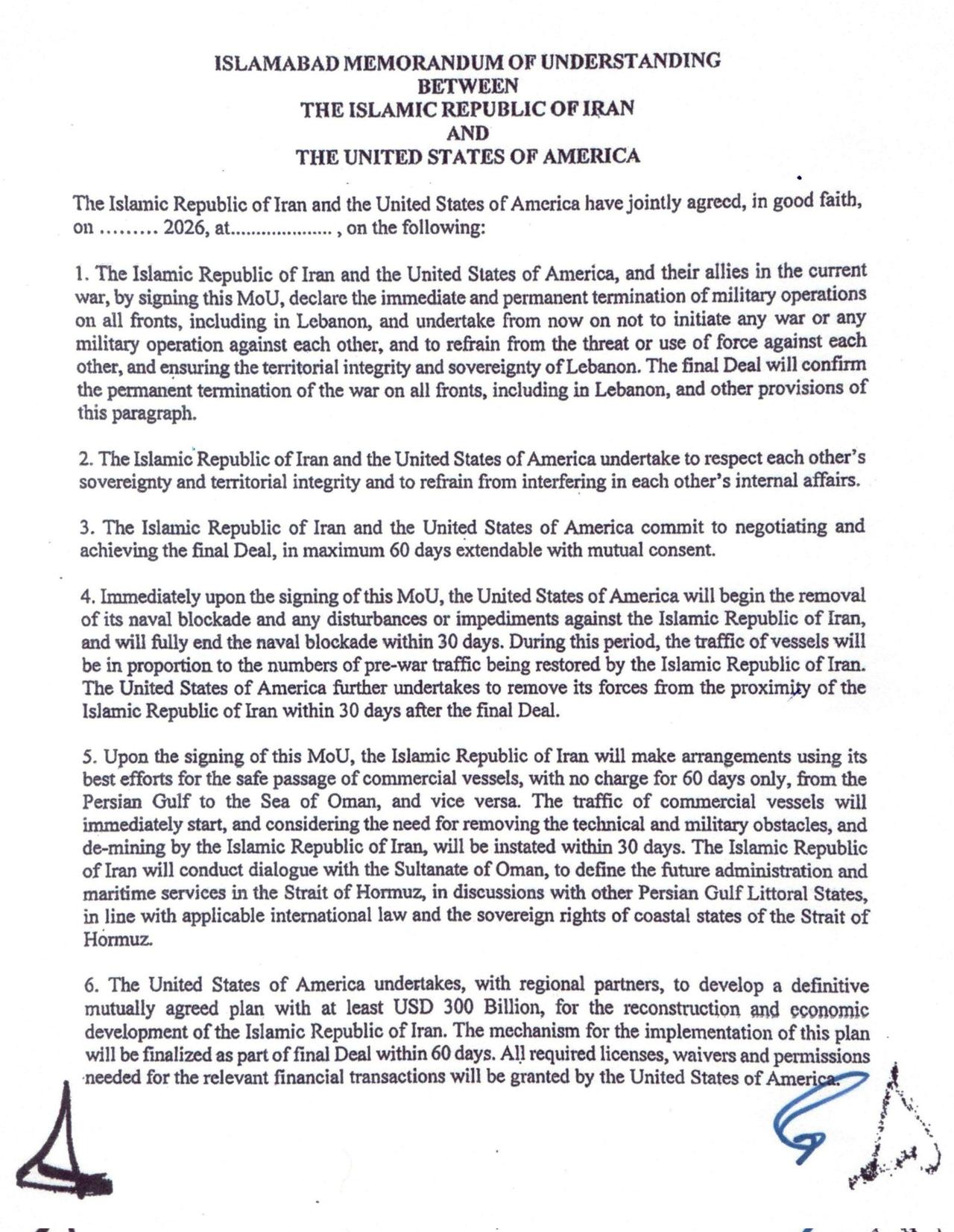
Agreement Signed Between Iran and the United States (June 19, 2026) Anadolu Agency
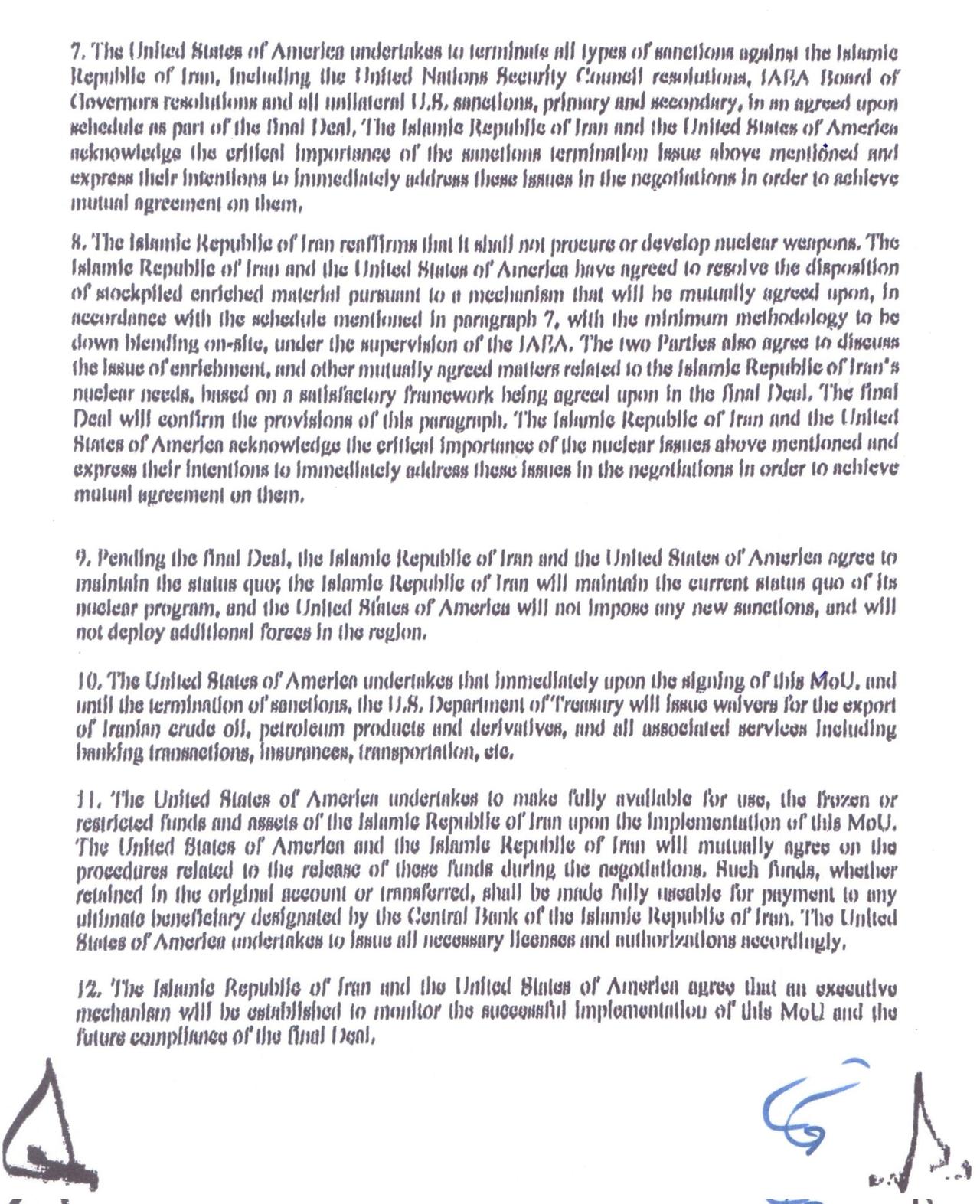
Agreement Signed Between Iran and the United States (June 18, 2026) Anadolu Agency
The agreement text disclosed by the US official consists of the following articles:
1- The United States and the Islamic Republic of Iran sign this agreement to immediately and permanently end all military operations on all fronts, including Lebanon, commit to never initiating any war or military operation against each other, refrain from using or threatening to use force against each other, and guarantee Lebanon’s territorial integrity and sovereignty. The final agreement will permanently end all warfare on all fronts, including Lebanon, and reaffirm the provisions of this paragraph.
2- The United States and the Islamic Republic of Iran commit to respecting each other’s sovereignty and territorial integrity and to non-interference in each other’s internal affairs.
3- The United States and the Islamic Republic of Iran commit to negotiating and concluding a final agreement within 60 days, a period that may be extended by mutual consent.
4- Immediately after the signing of this agreement, the United States will begin lifting the naval blockade and all forms of obstruction or impediment against the Islamic Republic of Iran and will fully terminate the naval blockade within 30 days. During this period, maritime traffic will be proportional to the pre-crisis volume restored by the Islamic Republic of Iran. The United States also commits to withdrawing its forces near the borders of the Islamic Republic of Iran within 30 days after the signing of the final agreement.
5- Immediately after the signing of this agreement, the Islamic Republic of Iran will make every effort to establish the necessary arrangements to allow commercial vessels to transit freely and safely between the Persian Gulf and the Sea of Oman, and vice versa, for a period of 60 days. Commercial shipping will commence immediately, and these arrangements will enter into force within 30 days, taking into account the removal of technical and military obstacles and the necessity of mine clearance. The Islamic Republic of Iran will engage in dialogue with the Sultanate of Oman to determine future management and maritime services in the Strait of Hormuz, in accordance with applicable international law and the sovereignty rights of the coastal states of the Strait.
6- The United States commits, together with its regional partners, to preparing a definitive and mutually agreed plan worth at least $300 billion to support the reconstruction and economic development of the Islamic Republic of Iran. The mechanism for implementing this plan will be finalized as part of the final agreement to be signed within 60 days. All necessary licenses, exemptions, and authorizations for related financial transactions will be issued by the United States.
7- As part of the final agreement, the United States commits to lifting United Nations Security Council resolutions, International Atomic Energy Agency (IAEA) Board of Governors decisions, and all unilateral US sanctions, including primary and secondary sanctions, according to a mutually agreed schedule. The Islamic Republic of Iran and the United States acknowledge the critical importance of lifting these sanctions and express their intention to address this issue immediately in negotiations to achieve mutual agreement.
8- The Islamic Republic of Iran reaffirms that it will not acquire or develop nuclear weapons. The United States and the Islamic Republic of Iran have agreed to resolve the issue of enriched material stockpiles through the minimum necessary method of on-site dilution under IAEA supervision, in accordance with a schedule to be mutually agreed upon as part of the final agreement. The parties also agree to negotiate, within a satisfactory framework to be established in the final agreement, the issue of enrichment and other mutually agreed nuclear matters related to Iran’s needs. The final agreement will reaffirm the provisions of this paragraph, and the Islamic Republic of Iran will acknowledge the vital importance of these nuclear issues. The parties express their intention to address these matters immediately in negotiations to achieve mutual agreement.
9- Until the final agreement is signed, the United States and the Islamic Republic of Iran agree to maintain the current status quo. The Islamic Republic of Iran will preserve the current state of its nuclear program, and the United States will not impose any new sanctions or deploy additional military forces in the region.
10- Immediately after the signing of this agreement and until the lifting of sanctions, the United States Treasury Department commits to issuing exemptions for the export of Iranian crude oil, petroleum products, and derivatives, as well as for banking, insurance, transportation, and all other related services.
11- Upon the entry into force of this agreement, the United States commits to fully releasing frozen or restricted Iranian funds and assets. The United States and the Islamic Republic of Iran will mutually agree on procedures for the release of these funds during negotiations. These funds, whether obtained directly or via transfer, will be made fully available for payments to final beneficiaries designated by the Central Bank of the Islamic Republic of Iran. The United States commits to issuing all necessary licenses and authorizations accordingly.
12- The United States and the Islamic Republic of Iran have agreed to establish an implementation mechanism to monitor the successful implementation of this agreement and compliance with the final agreement in the future.
13- After the signing of this agreement, and on the condition that Articles 1, 4, 5, 10, and 11 are implemented and remain in effect, the United States and the Islamic Republic of Iran will commence negotiations exclusively on the remaining articles toward the final agreement.
14- The final agreement will be endorsed by a binding United Nations Security Council resolution.
Pakistan Prime Minister Shehbaz Sharif announced that the agreement reached between the United States and Iran, known as the “Islamabad Agreement,” has been signed electronically. According to Sharif’s statement, the agreement was approved by the heads of state of both countries using electronic signatures.
Sharif stated that the signing of the agreement at the highest level of both governments demonstrates the parties’ determination to pursue a diplomatic solution. The statement indicated that with the agreement’s entry into force, Iran will reopen the Strait of Hormuz and the United States will lift its naval blockade against Iran.
Pakistan’s Prime Minister also announced that an official ceremony will be held in Switzerland on June 19, 2026, to launch technical talks, and thanked the governments of Qatar, Türkiye, Saudi Arabia, and Egypt for their contributions to the process.
It has been announced that US President Donald Trump signed the agreement text reached between the United States and Iran in the French city of Versailles. Videos released by the White House show Trump signing the document during a dinner hosted in his honor by French President Emmanuel Macron at the Palace of Versailles.
A post on the White House’s social media accounts confirmed that US President Trump signed the agreement with Iran in France. The signing ceremony was regarded as part of diplomatic engagements following the G7 Leaders Summit.
Pakistan, in its mediation role during the negotiation process between the United States and Iran, has officially become one of the parties signing the agreement text. The Prime Minister’s Office stated that Prime Minister Shehbaz Sharif signed the Islamabad Agreement Text in his capacity as a mediator.
Images of Sharif signing the agreement text were released. It was confirmed that both Iranian President Masoud Pezeshkian and US President Donald Trump signed the agreement text both physically and digitally.
Iranian President Masoud Pezeshkian, in his statement regarding the agreement signed with the United States, described the deal as a historic document for Iran. In a social media post, Pezeshkian published the signed version of the agreement text and stated that it represents the beginning of a peace process based on mutual respect.
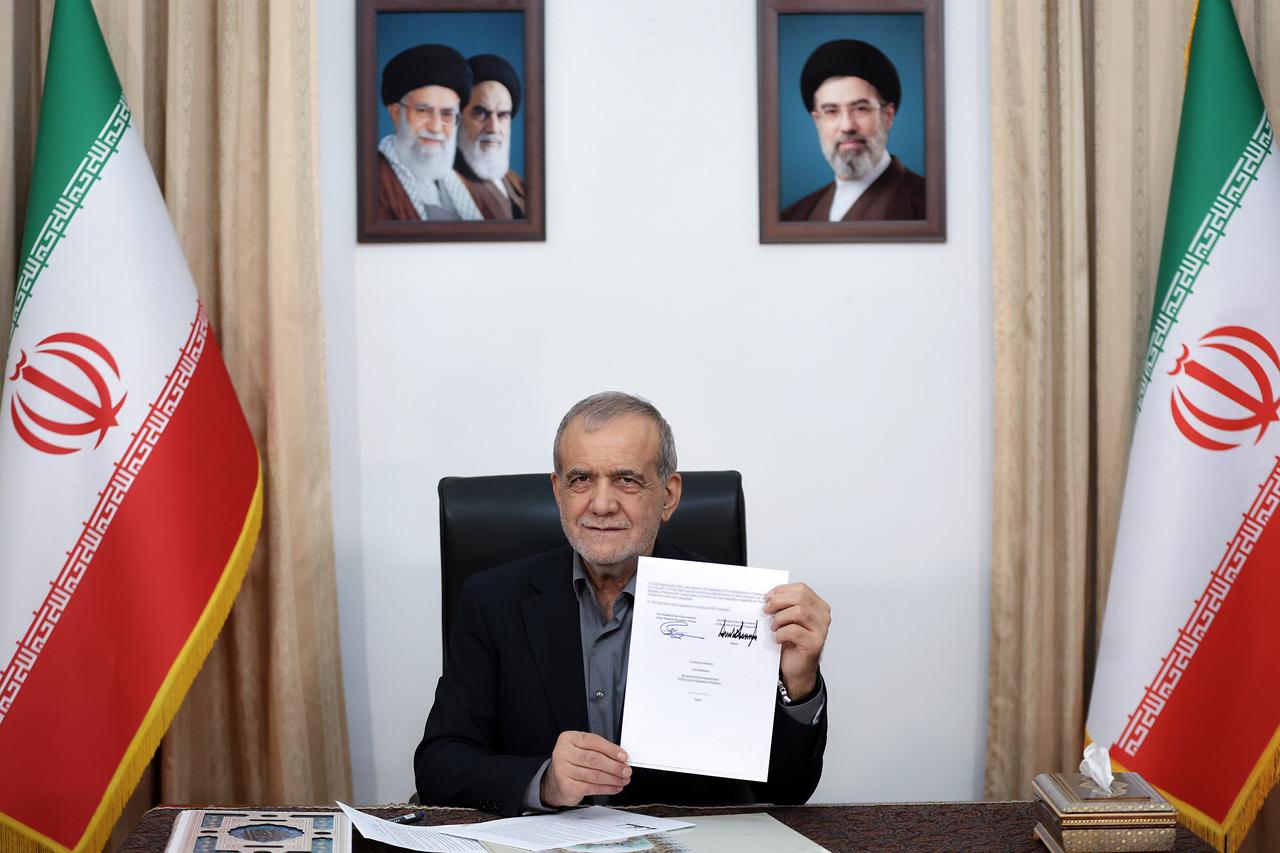
Iranian President Masoud Pezeshkian Signing the Agreement Text in His Office in Tehran (June 18, 2026) Anadolu Agency
In his statement, Pezeshkian emphasized that the Islamic Republic of Iran remains committed to global peace while safeguarding its honor, independence, progress, and regional cooperation. He underscored that the agreement is the result of national resistance, political wisdom, and responsible diplomacy.
US Central Command (CENTCOM) announced, following the signing of the US-Iran agreement, that the naval blockade against Iran has been lifted. The statement indicated that US forces have terminated maritime restrictions on Iranian ports and coastal areas in accordance with the President’s directive.
CENTCOM stated that US military elements will continue operating in the region for a specified period to monitor the implementation of the agreement’s provisions. The United States emphasized that it will closely monitor the full and proper implementation of the agreement’s terms.
Comprehensive security measures have been implemented in Bürgenstock, a town in the Swiss canton of Nidwalden, where the first technical talks regarding the implementation of the signed US-Iran agreement are planned. Prior to the talks, strict controls were introduced at entry points to the region, and the movement of journalists and visitors was restricted.
The Swiss Federal Council announced that up to 2,000 military personnel have been authorized for deployment under the security measures. Military units will be assigned duties in property protection, surveillance, reconnaissance, transportation, and logistics.
The Federal Council also approved a restricted airspace covering a 46-kilometer area around Mount Bürgenstock from June 18 to 20. According to the announcement, the Swiss Air Force will conduct air policing and advanced airspace surveillance operations in the region.
The Swiss Federal Department of Foreign Affairs stated that, according to current planning, delegations from the United States and Iran, as well as representatives from the mediator countries Pakistan and Qatar, are expected to meet in Bürgenstock for the first technical talks on implementing the agreement.
Al Jazeera. "Iran War Live: JD Vance Defends Iran Deal as US Says Naval Blockade Lifted." Accessed June 19, 2026. https://www.aljazeera.com/news/liveblog/2026/6/19/iran-war-live-jd-vance-defends-iran-deal-as-us-says-naval-blockade-lifted
CNN. "Iran War Live Updates: Trump, Israel, Lebanon." Accessed June 19, 2026.
https://edition.cnn.com/2026/06/19/world/live-news/iran-war-trump-israel-lebanon
U.S. President Donald Trump, following the conflict with Iran and the subsequent agreement, made statements evaluating the limits of the president’s authority to use force. In an interview with Axios, Trump assessed his political position and presidential powers after the military operations against Iran.
In response to the question of whether there are any limits to the president’s authority to use force after the war with Iran, Trump stated that he saw no such boundaries. He expressed his views on the scope of the president’s military powers, arguing that the operations against Iran demonstrated the full military capacity of the United States.
Trump asserted that the U.S. military had completely defeated Iran militarily and declared that the U.S. armed forces are the most powerful in the world. He also emphasized the effectiveness of the naval blockade imposed on Iran, claiming that no other country could implement a blockade on a similar scale.
When asked whether the ceasefire agreement reached between the United States and Iran amounted to an “unconditional surrender” as originally demanded, Trump replied, “Probably it was indeed an unconditional surrender.” These remarks were made amid ongoing debates in the U.S. Congress over the president’s authority to conduct military operations without congressional approval.
Following the agreement between the United States and Iran, the Israeli military continued its military operations targeting southern Lebanon. A total of 16 people were killed in air strikes conducted in Lebanon’s Nabatieh governorate.
Despite the extension of the ceasefire agreement by 45 days as of May 17, Israeli forces targeted numerous settlements in and around the city of Nabatieh during nighttime hours. According to Lebanon’s official news agency NNA, Israeli warplanes carried out air strikes on Nabatieh, Kefercuz, Kefertebnit, Upper Nabatieh, Haruf, Sharkiye, Dweir, Qusaybe, Keferdcal, Adshit, Tul, and Jibshit.
In addition, Israeli artillery units heavily bombarded the city of Nabatieh, the Kefer Cuz area, Keferrumman, Zibdin, Upper Nabatieh, Habbus, Secid, Jebel er-Rafi, Kefersir, Qusaybe, and Jibshit.
Eight people were killed in attacks on the Jamiat Mahallah neighborhood in the center of Nabatieh and the villages of Kefercuz and Haruf. Four people died in an air strike targeting the Eshmayya area between Sharkiye and Dweir. Three people lost their lives in an attack on the village of Kefersir, and one person was killed when an Israeli unmanned aerial vehicle struck a motorcycle near Dweir. The total number of fatalities from these attacks reached 16.
The first technical talks aimed at implementing the agreement between the United States and Iran were scheduled to take place in the Swiss town of Bürgenstock, but the meeting was later canceled.
The Swiss Federal Department of Foreign Affairs announced that the meetings planned for Bürgenstock would not proceed as expected and confirmed the cancellation of the previously announced talks.
The announcement followed the White House’s statement that preparations for the technical talks were ongoing, after U.S. Vice President JD Vance announced the postponement of his visit to Switzerland.
No detailed justification was provided for the cancellation, but both sides indicated that they would continue preparing for the technical negotiations.
Following the agreement between the United States and Iran, the Persian Gulf Shipping Authority (PGSA), established by Iran, announced the rules governing vessels transiting the Strait of Hormuz.
According to the PGSA announcement, vessels requesting transit through the Strait of Hormuz will be permitted to pass for a period of 60 days following the signing of the agreement. Applications must be submitted exclusively through the authority’s official website, “psga.ir,” and the email address “[email protected].”
The announcement stated that vessels seeking transit must submit all required information at least 48 hours before reaching the strait, in order to prevent delays at entry and exit points.
During the 60-day period following the agreement’s signing, no fees will be charged to vessel owners for security, safety, or environmental services; these costs will be covered by the Iranian government.
Al Jazeera. "Iran War Live: JD Vance Defends Iran Deal as US Says Naval Blockade Lifted." Accessed June 19, 2026. https://www.aljazeera.com/news/liveblog/2026/6/19/iran-war-live-jd-vance-defends-iran-deal-as-us-says-naval-blockade-lifted
CNN. "Iran War Live Updates: Trump, Israel, Lebanon." Accessed June 19, 2026.
https://edition.cnn.com/2026/06/19/world/live-news/iran-war-trump-israel-lebanon
The Hatem al-Anbiya Central Command, responsible for directing and managing military operations within Iran’s Armed Forces, announced the closure of maritime traffic through the Strait of Hormuz, citing the United States’ failure to fulfill its obligations under the agreed agreement and Israel’s continued attacks in southern Lebanon.
In a statement broadcast on Iranian state television, it was stated that the United States had clearly violated its responsibilities regarding the implementation of the agreement, while Israel persistently breached the ceasefire in Lebanon and had not withdrawn from the region. It was further stated that, based on these grounds, the decision had been made to close the Strait of Hormuz to international shipping.
The statement emphasized that this decision constitutes the first step taken in response to the United States’ failure to meet its obligations and included the following declaration:
"If aggression continues, further steps will be planned and taken to compel the adversary to comply with its obligations."
Iran’s Ministry of Foreign Affairs Spokesperson Ismail Bekayi announced that Iran’s negotiation delegation would travel to Switzerland to monitor the implementation of the agreement and to discuss with the United States the cessation of Israel’s attacks on Lebanon.
Bekayi stated that the fulfillment of obligations outlined in specific articles of the agreement is a prerequisite for initiating negotiations toward a final accord. He added:
"This trip is being undertaken to demand and follow up on the implementation of the other side’s obligations, as the most important criterion in evaluating any agreement is the implementation phase."
Bekayi also recalled that the first article of the agreement stipulates "ending all hostilities on all fronts, including Lebanon," and affirmed that this provision forms the foundational basis of the accord. He argued that the United States is obligated to compel Israel to observe a ceasefire in Lebanon but has failed to do so, constituting a clear violation of the agreement.
Iranian state television disclosed the members of the delegation traveling to Zurich, Switzerland, named "Minab 168." It was reported that Mohammad Bagher Kalibaf, Chairman of the Iranian Parliament and Negotiation Delegation, and Foreign Minister Abbas Araghchi are part of the delegation.
The delegation is also accompanied by Deputy Secretary of the Supreme National Security Council Ali Bakri, Deputy Foreign Minister Kazem Garibabadi, Foreign Ministry Spokesperson Ismail Bekayi, Central Bank Governor Abdolnasser Hemmati, and Managing Director of the National Iranian Oil Company Hamid Burd.
The first technical talks regarding the implementation of the agreed agreement between Iran and the United States began in the town of Bürgenstock, in the canton of Nidwalden, Switzerland, under the mediation of Pakistan and Qatar.
Participants in the talks included U.S. Vice President JD Vance, U.S. President Donald Trump’s Middle East Special Representative Steve Witkoff, Jared Kushner, Iranian Parliament and Negotiation Delegation Chairman Mohammad Bagher Kalibaf, Foreign Minister Abbas Araghchi, and Qatari Prime Minister and Minister of Foreign Affairs Mohammed bin Abdulrahman Al Thani.
Shortly after the talks began, Kalibaf shared a symbolic image on his social media account relating to children killed in the U.S. airstrike on a school in Mina. The image depicted children being targeted during class and showed Kalibaf boarding a plane carrying the backpack of one of the deceased children.
A source speaking to the Fars News Agency stated that no agenda item related to Iran’s nuclear program was included in the talks held in Switzerland.
The source denied claims that International Atomic Energy Agency Director General Rafael Mariano Grossi was present in the region and added:
"Moreover, no member from Iran’s nuclear committee is participating in this visit. This issue is not on the agenda."
The source further stated that nuclear matters will only be considered by Iran after the implementation of Articles 1, 4, 10, and 11 of the agreement has commenced.
U.S. Vice President JD Vance announced that significant progress had been made during the negotiations in Switzerland.
Vance stated:
"I believe we have made considerable progress in just the last few hours."
Vance also said:
"Now the question before us is, how much more can we achieve together? Can we turn a new page? Can we permanently transform relations in the Middle East?"
In his remarks, Vance claimed that the reopening of the Strait of Hormuz and the termination of Iran’s nuclear program had been largely secured, arguing that a new era in U.S.-Iran relations with the Iranian people is possible. He also stated that significant progress had been made in the ceasefire process in Lebanon.
The semi-official Fars News Agency reported that, following threatening statements by U.S. President Donald Trump directed at Iran, the Iranian delegation had left the negotiation venue.
The report quoted Trump as saying:
"Iran must immediately stop the high-paid proxy forces in Lebanon from causing trouble. Otherwise, we will strike Iran again as harshly as we did last week, and even more severely this time."
In response, Mohammad Bagher Kalibaf, Chairman of the Iranian Parliament and Negotiation Delegation, stated that Iran does not take U.S. threats seriously.
A diplomat interviewed by Axios reporter Barak Ravid denied reports that the Iranian delegation had left the negotiation venue.
According to the diplomat:
"The Iranians did not leave and their talks with the United States are continuing."
This statement has created conflicting reports regarding whether the Iranian delegation has abandoned the negotiations.
Al Jazeera. "Iran War Live: First Day of US Talks Covers Lebanon, Hormuz, Frozen Assets." Accessed June 22, 2026. https://www.aljazeera.com/news/liveblog/2026/6/22/iran-war-live-first-day-of-us-talks-covers-lebanon-hormuz-frozen-assets
In a joint statement issued by the foreign ministries of Qatar and Pakistan, it was announced that the first round of quadrilateral talks held in Bürgenstock, Switzerland, aimed at implementing the previously signed agreement, has been completed.
The statement noted that the first day of talks, attended by delegations from the United States, Iran, Qatar, and Pakistan, took place in a “positive and constructive atmosphere.”
It was stated that progress was made on various issues, and an agreement was reached on establishing an institutional mechanism to continue technical negotiations. The talks were regarded as the first comprehensive technical engagement aimed at implementing the agreement between Iran and the United States.
During the Bürgenstock talks, the parties agreed to establish a high-level committee to oversee the diplomatic and political process under the agreement text. The joint statement specified that the committee will monitor the political dimension of the mediation efforts. It was also stated that chief negotiators will regularly report to the committee on nuclear issues and sanctions. This mechanism is designed to serve as the foundational structure ensuring coordination between technical talks and political negotiations.
It was reported that the parties agreed on a 60-day roadmap aimed at reaching a final agreement.
According to the joint statement, it was decided that the next round of technical talks will begin immediately in accordance with the established timeline, marking the start of a new negotiation phase in which technical and political issues related to implementing the agreement will be addressed simultaneously.
It was stated that the roadmap will include concrete steps toward preparing and implementing a final agreement.
One of the decisions taken during the talks was the establishment of a direct communication channel between the parties to ensure the safety of commercial shipping traffic through the Strait of Hormuz.
The statement indicated that this mechanism, valid for the duration specified in paragraph five of the agreement text, was established to ensure the safe passage of commercial vessels and to prevent potential misunderstandings and crises. This decision has drawn attention as the first joint coordination mechanism on maritime security following recent tensions in the Strait of Hormuz.
The parties also agreed to establish a new working group aimed at reducing regional tensions. The primary task of the proposed working group is to ensure the cessation of military operations in Lebanon and to monitor the ceasefire process. The statement emphasized that the mechanism will include not only Iran and the United States but also Lebanon.
This arrangement is significant as it marks the first time the Lebanon file has formally become part of the institutional mechanisms of the US-Iran negotiation process.
In the statement issued by Qatar and Pakistan, it was indicated that the technical talks conducted in Bürgenstock are planned to continue throughout the week.
It was stated that the parties will address all issues under the agreement, and that Qatar and Pakistan will continue their mediation efforts to achieve a final agreement. The statement also expressed satisfaction with Iran and the United States’ commitment to seeking a diplomatic solution and thanked other countries supporting the process.
According to a report by the semi-official Mehr News Agency, Iran has decided to send representatives to the new mechanism established to monitor the ceasefire in Lebanon, in line with the agreements reached in the Swiss talks.
The report stated that Iran will directly participate in Lebanon’s security equation and emphasized that Israel will not be part of the new structure. This development is regarded as the beginning of a new diplomatic arrangement formally integrating Iran into Lebanon’s security and ceasefire processes.
The Mehr News Agency report also covered the decision to establish a mechanism to secure commercial transit through the Strait of Hormuz.
The report interpreted this decision as “the formal recognition of Iran’s sovereignty over the Strait of Hormuz.” The Iranian press argued that the security coordination strengthens Iran’s strategic role in the region.
According to information reported by the Mehr News Agency, if the conditions outlined in Article 13 of the agreement text are fulfilled, three separate working groups will be established to address nuclear activities, sanctions, and monitoring mechanisms.
The report listed the following conditions:
It was stated that Iran will not continue negotiations unless these provisions are implemented.
The Mehr News Agency reported that an agreement text has been signed between Iran and Qatar regarding the release of Iran’s frozen assets abroad.
While details of the agreement were not disclosed, it was stated that a process has been initiated to release Iran’s inaccessible financial resources. This development is regarded as one of the first concrete economic steps toward easing sanctions.
Following the talks with the United States, Iranian Foreign Minister Abbas Araghchi stated that restrictions on Iran’s oil exports have been lifted. Araghchi also announced that the US blockade has ended and that a portion of Iran’s frozen financial assets has been released. These statements represent some of the most significant economic assessments made by Iran following the talks.
Iranian President Masoud Pezeshkian, in his first statement following the talks held in Switzerland with the United States, emphasized the need to preserve national unity and cohesion.
Speaking at the National Merchants Day event in Tehran, Pezeshkian stated that Iran participated in the negotiations without making concessions. Addressing domestic criticism of the diplomatic process with the United States, he said:
“Every message that fosters division and fragmentation is carrying water to the enemy’s mill. Such a climate of compromise has never existed before.”
Pezeshkian also stated that Iran will not retreat if its rights are ignored during negotiations.
In his speech, President Pezeshkian claimed that the United States has retreated on the Lebanon issue in line with Iran’s demands. Pezeshkian noted that some positive developments have occurred in the Lebanon file during the negotiation process but did not provide details on these developments.
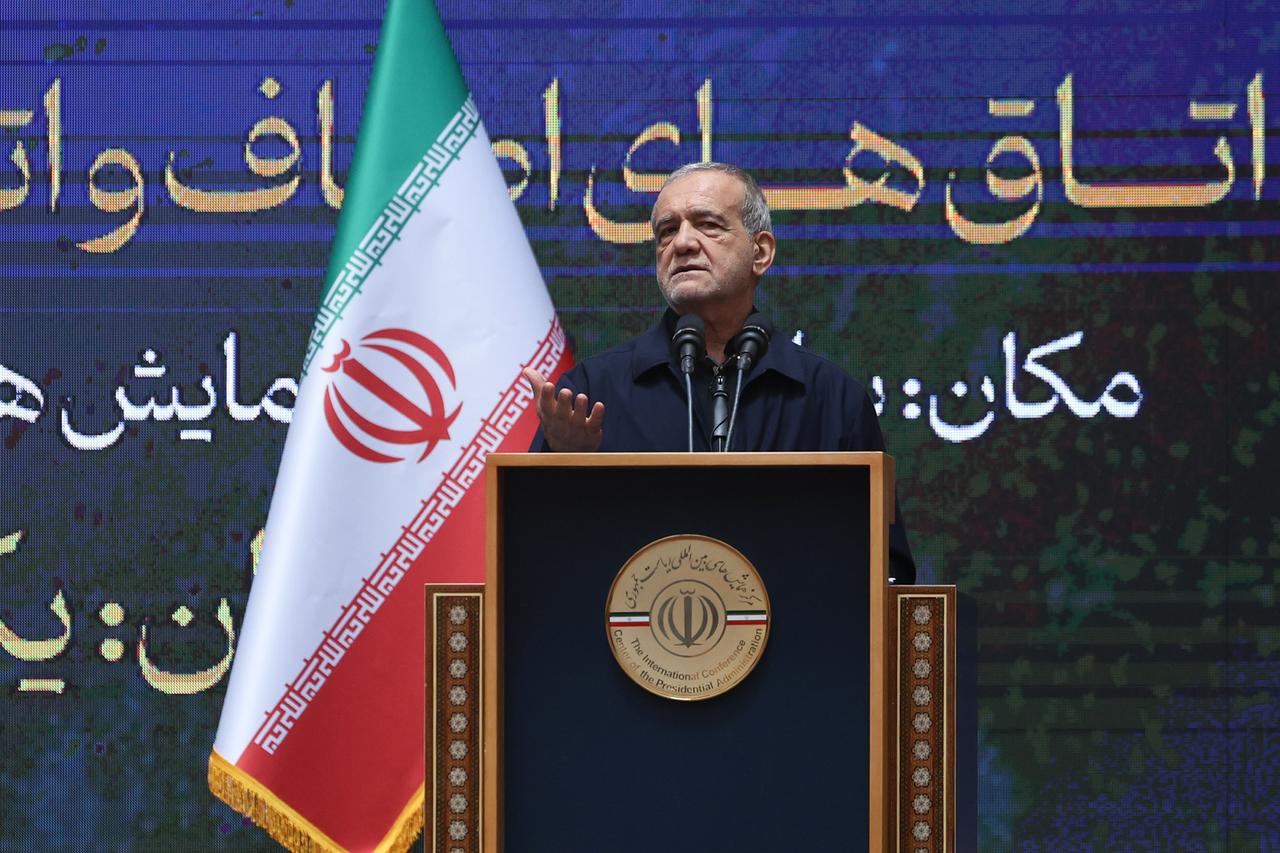
Iranian President Pezeshkian (June 22, 2026) Anadolu Agency
The statements revealed that the Iranian leadership views the Swiss talks not only as a milestone in bilateral relations with the United States but also as a significant diplomatic achievement in the context of regional security issues.
US President Donald Trump, in remarks made during the diplomatic talks with Iran, asserted that the Tehran administration will accept comprehensive arms controls for a long period ahead. In a social media post, Trump argued that Iran will submit to extensive monitoring mechanisms to ensure “nuclear sincerity.”
Trump’s remarks were made during ongoing negotiations between US and Iranian delegations in Bürgenstock, Switzerland. It is noted that the parties are discussing the technical details and implementation mechanisms of the previously agreed agreement text. In particular, issues such as the monitoring of Iran’s nuclear activities, uranium enrichment processes, and the scope of international inspection mechanisms are said to have been addressed.
During a telephone conversation between President Recep Tayyip Erdoğan of Türkiye and President Masoud Pezeshkian of Iran, Türkiye-Iran relations as well as regional and global developments were discussed. Erdoğan expressed satisfaction with the agreement reached between Iran and the United States and stated that Türkiye is ready to provide all possible support to ensure the process leads to lasting peace. Erdoğan emphasized the importance of vigilance against attempts to sabotage the negotiation process and underscored that preserving diplomatic channels is critical for regional stability. He also stated that steps must be taken in the new era to strengthen regional peace and that Türkiye will continue working toward this goal.
The technical negotiations between Iran and the United States in Switzerland have concluded with the parties reaching agreement on mechanisms for implementing the agreement. Iranian Deputy Foreign Minister Kazem Garibabadi announced that decisions were made to establish working groups covering the lifting of sanctions, nuclear issues, restructuring, economic development, and monitoring and implementation processes. It was specified that these working groups will address the technical details of implementing the agreement.
Garibabadi also stated that the parties reached agreement on certain coordination mechanisms aimed at supporting regional security and stability. In this context, a liaison point was agreed upon to coordinate the safe passage of commercial vessels through the Strait of Hormuz. Additionally, consensus was reached on establishing a joint coordination unit to prevent conflicts in Lebanon.
It was announced that subsequent negotiations under the agreement will be conducted under the oversight of a high-level committee comprising the Speaker of the Iranian Parliament, the Iranian Foreign Minister, the US Vice President, and the Prime Ministers of Pakistan and Qatar. It was specified that heads of technical delegations will oversee the activities of the working groups and coordination units and submit regular reports to the high-level committee.
Garibabadi further reported that an agreement was reached to implement commitments totaling $12 billion for the release of Iran’s frozen funds. During the technical talks, general licensing arrangements covering Iran’s sales of oil and petrochemical products, as well as processes for releasing frozen assets, were addressed. Garibabadi recalled that the relevant general license was published by the US Department of the Treasury’s Office of Foreign Assets Control (OFAC).
The decisions made during the technical talks in Switzerland are assessed as aimed at establishing the institutional and technical infrastructure necessary for implementing the Iran-US agreement, shaping the next stages of the process concerning economic cooperation, lifting of sanctions, regional security, and the implementation of monitoring mechanisms.
US President Donald Trump asserted that the Tehran administration has fully and unconditionally accepted high-level international inspections of its nuclear program. Trump argued that Iran’s acceptance of long-term and comprehensive monitoring mechanisms constitutes a significant step toward ensuring “nuclear sincerity.” He stated that if Iran refuses these conditions, the negotiations will end.
Trump stated that, in exchange for the concessions Iran has reportedly made on nuclear controls and other issues, the United States has agreed to keep the Strait of Hormuz open and refrain from enforcing a maritime blockade. Trump noted that the current situation in the Strait is stable and stated that military and naval assets will remain ready to take necessary measures in case of any security concerns.
US President Donald Trump said that International Atomic Energy Agency (IAEA) inspectors will travel to Iran to monitor enriched uranium-related processes but indicated that the matter is not currently urgent. When asked by a journalist whether the IAEA inspectors’ visit to Iran is part of the US-Iran agreement, Trump replied, “No, that is not correct. There will be 100 percent inspection.”
The US President also made assessments regarding the use of financial resources that will become available following the release of Iran’s frozen assets and the lifting of certain sanctions. Trump stated that these funds will be managed through an account under US supervision and will be used to purchase food and medical supplies from American producers. Trump argued that Iran has a basic need for food and framed this process as humanitarian aid.
Trump emphasized that negotiations are progressing positively and that diplomatic contacts between the parties are continuing on a constructive basis. He stated that the agreement reached with Iran encompasses not only the monitoring of nuclear activities but also the implementation of specific arrangements in economic and humanitarian fields.
In another statement, the US President highlighted oil transportation through the Strait of Hormuz. Trump claimed that 19 million barrels of oil are transported daily through the Strait, calling it a record level of shipments. He argued that this development has had a positive impact on energy markets, noting that oil prices have declined and the global security environment has become more stable. The Iranian press reported that claims suggesting ballistic missiles were discussed during the technical talks with the United States do not reflect the truth.
Al Jazeera. "Iran War Live: First Day of US Talks Covers Lebanon, Hormuz, Frozen Assets." Accessed June 22, 2026. https://www.aljazeera.com/news/liveblog/2026/6/22/iran-war-live-first-day-of-us-talks-covers-lebanon-hormuz-frozen-assets.
CNN. "Iran War Live Updates: Trump, Israel, Lebanon Developments and US-Iran Talks." Accessed June 22, 2026. https://edition.cnn.com/2026/06/22/world/live-news/iran-war-trump-israel-lebanon-hnk.
The U.S. Senate has approved a war powers resolution designed to strengthen congressional oversight of President Donald Trump’s potential military operations against Iran. The resolution was passed after four Republican senators joined Democrats in voting in favor.
Senators Lisa Murkowski of Alaska Susan Collins of Maine Rand Paul of Kentucky and Bill Cassidy of Louisiana voted in favor of the resolution. The passage of the measure in a Republican-majority Senate signals a growing political will to constrain the President’s authority to use military force against Iran without congressional approval.
The approval was influenced by the absence of Republican Senator Mitch McConnell who was unable to participate due to health issues and Senator Dave McCormick of Pennsylvania who was not present during the vote. These absences contributed to the Democrats securing a narrow majority in the vote.
Following the vote Senate Democratic Leader Chuck Schumer strongly criticized the Trump administration’s Iran policy asserting that military action against Iran would have serious consequences for U.S. foreign policy.
The resolution is not legally binding and is largely symbolic. Nevertheless it reflects rising political concerns among both Democrats and some Republicans regarding the prospect of a war with Iran and the implementation of any post-conflict agreement.
The vote occurred at a time when the Pentagon has requested approximately $8 billion in additional congressional funding to replenish munitions and military stockpiles following a potential war with Iran.
Iran has once again denied claims by International Atomic Energy Agency (IAEA) Director General Rafael Mariano Grossi that IAEA inspectors would be allowed to monitor Iranian nuclear facilities damaged in U.S. and Israeli strikes.
Deputy Foreign Minister Kazem Garibabadi stated that no discussions took place between Grossi and Iranian officials during diplomatic talks held in Switzerland. He also emphasized that no agreement has been reached regarding access to the targeted facilities or to nuclear materials located within them.
According to Garibabadi the issue of monitoring nuclear facilities can only be considered if negotiations between the parties culminate in a final agreement and if the other side takes concrete steps to lift sanctions. The Iranian government has stressed that it has assumed no obligations regarding inspections at this stage.
IAEA Director General Rafael Grossi however stated during a press conference at the Fukushima Daiichi Nuclear Power Plant in Japan that IAEA inspectors would gain access to the damaged Iranian facilities. He characterized the conflicting statements from both sides as a “war of words.”
Iran’s Ministry of Foreign Affairs Spokesperson and Negotiation Team Spokesperson Ismail Bekayi has also previously rejected the claims of inspections and affirmed that Iran has made no commitments on this matter.
Al Jazeera. "Iran War Live: Trump, Tehran at Odds over Nuclear Inspections, Hormuz." Accessed June 25, 2026. https://www.aljazeera.com/news/liveblog/2026/6/24/iran-war-live-trump-tehran-at-odds-over-nuclear-inspections-hormuz
Iran's Deputy Minister of Foreign Affairs Kazem Gharibabadi has stated that for maritime traffic in the Strait of Hormuz to be conducted safely, all transits must be coordinated with Iran. Gharibabadi emphasized that safe passage through the Strait can only be ensured within the framework of Iran's rights as a coastal state and the fifth article of the Agreement on the Cessation of Hostilities signed between Iran and the United States.
Gharibabadi stated that alternative routes or unilateral decisions made outside Iran's assessments cannot guarantee security in the Strait. In his statement, he underscored that any regulation applied in the Strait must be implemented under Iran's coordination, warning that any initiatives to the contrary would jeopardize maritime security.
According to reports in the Iranian press, a direct military communication line has been established between Iran and the United States to prevent potential military clashes in the Strait of Hormuz.
According to information reported by Press TV, the communication line was established under the final declaration issued following Iran-US talks in Switzerland, with mediation from Pakistan and Qatar. The mechanism is intended to prevent misunderstandings and military tensions in the Strait and to implement the provisions of the fifth article of the Islamabad Agreement.
Meanwhile, Deputy Minister of Foreign Affairs Kazem Gharibabadi reiterated that safe passage through the Strait of Hormuz cannot be ensured by arrangements that disregard Iran's status as a coastal state. Gharibabadi warned that alternative routes may be suspended if necessary coordination with Iran is not established.
The Iranian government maintains that all transits through the Strait of Hormuz under the agreement must occur exclusively along routes designated by Iran. In contrast, Oman's Ministry of Transport has announced that it is working with the International Maritime Organization on a temporary maritime corridor option. The Islamic Revolutionary Guard Corps has labeled any declaration of new routes without Iran's approval as "unacceptable and dangerous."
Following these statements, it was reported that for the first time since the agreement between the United States and Iran, a commercial vessel near the Strait of Hormuz was attacked.
US President Donald Trump accused Iran of violating the ceasefire due to the tanker attack in the Strait of Hormuz.
In a statement on his social media account, Trump claimed that four Iranian unmanned aerial vehicles targeted a petroleum tanker passing through the Strait of Hormuz. According to the statement, one drone struck the upper deck of the tanker while the other three were neutralized by US military forces.
Trump argued that the incident constituted a clear violation of the ceasefire agreement reached between Iran and the United States, describing the attack as "a foolish breach of the ceasefire agreement."
Following the fifth round of direct negotiations in Washington DC, a framework agreement was signed between Lebanon and Israel.
The signing ceremony held at the US Department of State was attended by US Secretary of State Marco Rubio, Lebanon's Ambassador to Washington Nada Hamadeh, and Israel's Ambassador to Washington Yechiel Leiter.
Marco Rubio stated that the agreement marks the beginning of a long and difficult diplomatic process and affirmed that the framework established under US mediation will serve as the foundation for lasting peace and security. Rubio also noted that Lebanon has paid heavy costs for years due to foreign interventions and emphasized that the country's goal is to restore stability and prosperity.
Lebanon's Ambassador to Washington, Nada Hamadeh, assessed the signed framework agreement as a historic step toward reestablishing Lebanon's sovereignty and territorial integrity. Hamadeh stated that the agreement represents a crucial beginning toward ensuring a lasting environment free from conflict and enabling displaced civilians to return to their homes.
The Washington administration stated that the agreement, resulting from ongoing US mediation efforts between Israel and Lebanon, aims to bring military tensions on the ground under control and pave the way for broader negotiations between the parties. It was also indicated that Israel's recent attacks on Lebanon were viewed as attempts to undermine the diplomatic process between the United States and Iran.
Iranian media reported that after hearing explosion sounds in the city of Sirik in Hormozgan Province, the Taheruyi Pier had been attacked. According to reports by Iranian state television citing military sources, the attack targeted strategic maritime infrastructure located along Iran's southern coast.
Military sources stated that simultaneously with the attack, the Iranian Armed Forces fired warning shots at several commercial vessels attempting to transit the Strait of Hormuz without authorization from the Sirik region. Iran stated that these interventions were carried out as security measures under the new transit regulations for the Strait of Hormuz.
The US Central Command (CENTCOM), however, issued a different account, announcing that in response to an attack on a commercial vessel in the Strait of Hormuz, targets on the Iranian coast were struck. Thus, the parties provided conflicting accounts of the same incident.
The US Central Command (CENTCOM) announced that air operations were conducted against Iran in response to an attack on a commercial vessel transiting the Strait of Hormuz.
According to CENTCOM's statement, US aircraft targeted Iranian missile and unmanned aerial vehicle storage facilities as well as coastal radar installations. The statement indicated that the operation was a response to a unilateral drone attack on the Singapore-flagged commercial vessel M/V Ever Lovely on 25 June.
The United States asserted that the vessel was exiting the Strait of Hormuz near Omani waters at the time of the attack and maintained that Iran's attack on commercial maritime traffic clearly violated the ceasefire. The statement further affirmed that US forces will continue to provide safe transit support to commercial vessels passing through the Strait of Hormuz.
US President Donald Trump also stated that Iran had targeted a petroleum tanker with unmanned aerial vehicles and declared that a response would soon follow, calling the attack unacceptable.
The Islamic Revolutionary Guard Corps announced that the US attack on the city of Sirik had been neutralized by Iran's naval and air forces. The statement indicated that Iranian forces forced the aggressors to withdraw and safeguarded the country's territorial waters and sovereignty. The Revolutionary Guard Corps declared that the US attack would not go unanswered and that Iran's response would be delivered at a time and place of its choosing.
The statement further indicated that any new attempt to attack Iran would face a much stronger response and warned hostile forces in the region against potential new steps.
The Islamic Revolutionary Guard Corps announced that in retaliation for US air strikes against Iran's coastline, it targeted US military deployment sites in the region.
In its written statement, Iran's Navy stated that it responded to the US air strikes, arguing that the US administration had targeted Iranian coastal areas under the pretext of Iran's intervention against vessels transiting the Strait of Hormuz without authorized routes.
Iran asserted that the US stance constituted a violation of the ceasefire, similar to Israel's actions in Lebanon, and recalled that according to the fifth article of the Agreement on the Cessation of Hostilities signed between Iran and the United States, maritime traffic in the Strait of Hormuz must remain under Iranian control.
The statement alleged that the United States was encouraging other actors to violate the terms of the agreement and affirmed that an appropriate response had already been delivered. Iran also warned that any repetition of similar attacks would be met with a far more comprehensive response.
The Iranian Ministry of Foreign Affairs strongly condemned the US air strikes targeting Sirik and other locations along Iran's southern coast.
In a statement issued by the ministry, it was asserted that the US attacks on Iran's coastal surveillance facilities violated both Article 2, Paragraph 4 of the United Nations Charter and Article 1 of the Agreement on the Cessation of Hostilities dated 18 June 2026.
The Iranian government characterized the attacks as contrary to international law and emphasized its right to defend its national sovereignty and security. The statement affirmed that Iran's counterattacks against US elements were conducted within the framework of the United Nations Charter's provisions on the legitimate right to self-defense.
The Iranian Ministry of Foreign Affairs further stated that US military operations threaten regional stability and have the potential to invalidate previously agreed terms of the ceasefire.
Al Jazeera. "Iran War Live: Tehran Insists on Control of Hormuz Amid Reports of US Talks." Accessed June 29, 2026. https://www.aljazeera.com/news/liveblog/2026/6/29/iran-war-live-tehran-insists-on-control-of-hormuz-amid-reports-of-us-talks
CNN. "Iran War Live Updates: Latest Developments on US-Iran Strikes and Trump." Accessed June 29, 2026. https://edition.cnn.com/2026/06/29/world/live-news/iran-war-strikes-trump
Iranian state television reported hearing explosion sounds in the city of Sirik, located in Hormozgan Province near the Strait of Hormuz. According to reports citing military sources, the explosions were attributed to an attack on a communication tower in the Tahiruyi village of Sirik.
Following the attack, security measures in the region were heightened and official authorities launched an investigation into the incident. At the same time, the U.S.-based news site Axios, citing an unnamed American official, claimed that the U.S. military had conducted strikes against several targets in the vicinity of the Strait of Hormuz in Iran.
These developments indicate that the recent increase in military activity around the Strait of Hormuz has entered a new phase, heightening concerns about the impact of escalating tensions on regional security.
Iranian state television announced that Kishm Island, strategically located at the entrance to the Strait of Hormuz, had been attacked. The report stated that the village of Mesen on the island was targeted, but no official information was provided regarding the details of the attack or any casualties.
Meanwhile, shortly after the announcement of the attack on Kishm Island, two additional explosion sounds were reported in Sirik. The source of these explosions has not yet been determined, and security forces continue their investigations. Iranian media have characterized the attacks around the Strait of Hormuz as part of the same chain of military escalation.
U.S. President Donald Trump made statements regarding the possibility of new military operations against Iran following the developments in the Strait of Hormuz. In a social media post, Trump stated that U.S. aircraft had targeted Iran’s missile storage facilities, unmanned aerial vehicle facilities, and coastal radar systems, asserting that the operations were carried out because Iran had violated the ceasefire.
Trump warned that if Iran continues its current stance, the United States may be forced to take broader military action, saying, “We may reach a point where it is no longer acceptable, and we may have to complete what we have started by military means. If that happens, Iran will no longer exist.”
Trump’s remarks came after the U.S. Central Command (CENTCOM) announced that it had conducted operations against military targets in the vicinity of the Strait of Hormuz in Iran.
U.S. media reports suggest that renewed peace talks between the United States and Iran, planned to resume following recent military clashes around the Strait of Hormuz, have been suspended. According to a report by the Wall Street Journal citing sources close to the matter, a new round of negotiations scheduled to take place in Switzerland has been halted due to mutual attacks.
The report highlighted that under the memorandum of understanding signed by U.S. President Donald Trump in early June, Iran had committed to keeping the Strait of Hormuz open to international commercial shipping, and the recent attacks have disrupted this process.
U.S. Permanent Representative to the United Nations Mike Waltz also told Fox News that if Iran continues to threaten international maritime traffic, the United States will continue targeting Iran’s military infrastructure.
Both the Iranian and U.S. administrations have continued to accuse each other of violating the agreed understanding.
Another report in U.S. media suggests that the United States and Iran have reached an agreement to temporarily halt mutual attacks around the Strait of Hormuz and plan to resume technical talks.
According to Axios, citing an unnamed senior U.S. official, the two sides planned to meet on June 30 in Doha, the capital of Qatar, to address disputes concerning the Strait of Hormuz.
The report stated that the initial plan for technical talks in Switzerland had been moved to Qatar due to rising tensions, and the agenda had shifted from Iran’s nuclear program to security issues in the Strait of Hormuz.
However, Mehdi Fezaili, a member of Iran’s Office for the Preservation and Dissemination of the Leader’s Works, told state television that Iran would not participate in the planned technical meeting with the United States.
Fezaili cited the continuation of U.S. military attacks against Iran and the lack of any concrete steps toward releasing Iran’s frozen assets as reasons for this decision.
U.S. President Donald Trump announced that Iran had requested a new meeting and that the two sides would meet in Doha, the capital of Qatar.
In a social media post, Trump said, “Iran has requested a meeting. The meeting will be held tomorrow in Doha.”
Trump’s announcement followed the Axios report claiming that the U.S. and Iran had halted mutual attacks and were preparing to launch new technical talks in Qatar to reduce tensions in the Strait of Hormuz.
Al Jazeera. "Iran War Live: Tehran Insists on Control of Hormuz Amid Reports of US Talks." Accessed June 29, 2026. https://www.aljazeera.com/news/liveblog/2026/6/29/iran-war-live-tehran-insists-on-control-of-hormuz-amid-reports-of-us-talks
CNN. "Iran War Live Updates: Latest Developments on US-Iran Strikes and Trump." Accessed June 29, 2026. https://edition.cnn.com/2026/06/29/world/live-news/iran-war-strikes-trump
The Qatari Ministry of Foreign Affairs issued statements regarding ongoing diplomatic contacts between the United States and Iran in Doha, clarifying that US President Donald Trump’s Middle East Special Representative Steve Witkoff and adviser Jared Kushner would not hold direct meetings with Iranian officials in Qatar but would engage solely with mediators.
The Qatari side indicated that at this stage no high-level direct talks between the United States and Iran are planned, but that the technical negotiation process continues.
Qatari Ministry of Foreign Affairs spokesperson Majid bin Muhammad al-Ansari, at a press conference held in Doha, stated that technical negotiations had not been interrupted and that Qatar continues to facilitate the diplomatic process. Ansari emphasized that the restoration of safe maritime transit through the Strait of Hormuz and mine-clearance operations are among the top priorities on the agenda.
Ansari noted that approximately six billion dollars in frozen Iranian funds have not yet been transferred to the Tehran administration, recalling that under the agreement reached in 2023 these funds are designated exclusively for the procurement of humanitarian aid goods and services. He added that the decision to release and transfer these funds depends on the outcome of ongoing negotiations between the United States and Iran.
The Qatari official also explained that a direct communication mechanism established to reduce tensions in the Strait of Hormuz has been utilized in recent weeks to bring crises under control. Ansari stated that Qatar has operated in close coordination with the Sultanate of Oman during this process and welcomed France’s participation in mine-clearance activities.
Al Jazeera. "Iran war live: Tehran denies Trump's claims of meeting in Doha." Accessed June 30, 2026. https://www.aljazeera.com/news/liveblog/2026/6/30/iran-war-live-tehran-denies-trumps-claims-of-meeting-in-doha.
Iranian Foreign Minister Abbas Erakçi, in a statement made on 2 July 2026, stated that lasting peace in the Middle East can only be achieved through the collective will of regional countries and without any external intervention. In his message, Erakçi quoted a statement regarding a high-level military meeting organized by the U.S. Central Command (CENTCOM) in Bahrain, which involved twelve regional countries, and asserted that the answer to the question of whether CENTCOM brings security or insecurity to the region is clear.
Erakçi noted that recent developments have demonstrated that Iran’s armed forces question the capacity of foreign military forces to ensure security, and emphasized that lasting security and stability can only be achieved through a comprehensive and inclusive cooperation framework involving only the regional countries themselves.
Iran’s representative in India, Ayatollah Hakim Elahi, announced that Ayatollah Mottahab Hamaney may not be able to attend the funeral ceremonies for his father, Ayatollah Ali Hamaney, due to security concerns. Elahi stated that threats from Israel against senior Iranian officials continue and that security agencies have not permitted Mottahab Hamaney to attend the ceremonies.
The statement indicated that while Mottahab Hamaney wishes to be with the public, this request was deemed inappropriate due to security risks. The announcement followed remarks by Israeli Defense Minister Yisrael Katz targeting Iran’s leadership. It was also announced that funeral ceremonies for Ayatollah Ali Hamaney are scheduled to take place between 4 and 9 July 2026 in Tehran, Qom, Najaf, Karbala, and Mashhad, with the burial to be conducted at the Imam Reza Shrine in Mashhad.
According to a report published in the Washington Post, the U.S. administration allegedly warned Tehran indirectly about Israel’s potential assassination plans targeting senior Iranian political officials, aiming to prevent damage to ongoing diplomatic negotiations with Iran. The report suggests that the Trump administration opposed targeting Iranian Foreign Minister Abbas Erakçi and Parliament Speaker Mohammad Bagher Kalibaf, and that in the spring months, intermediaries conveyed information to Iran regarding Israel’s possible plans.
The report states that since March, U.S. officials have communicated to their Israeli counterparts urging them to cease attempts against Iran’s political leadership. A White House official was quoted as saying that President Donald Trump wanted the diplomatic process to continue. The article also includes assessments that the strategies pursued by the U.S. and Israel following military operations against Iran have diverged.
U.S. President Donald Trump, in an interview with CNBC, stated that negotiations with Iran are ongoing and that he believes the Iranian side has accepted the majority of the demands put forward by the United States.
Trump reiterated that the primary objective of the U.S. is to prevent Iran from acquiring nuclear weapons and affirmed that his administration does not seek regime change. In his remarks, Trump claimed that Iran possesses certain missile capabilities and alleged that the U.S. has conducted three separate military operations against Iran in recent months, following Iran’s deployment of an unmanned aerial vehicle against a ship. He also stated that diplomatic contacts with Iran continue and that the negotiation process remains active.
Al Jazeera. "Iran war live: Tehran slams US ahead of huge funeral for Ali Khamenei." Accessed July 3, 2026. https://www.aljazeera.com/news/liveblog/2026/7/3/iran-war-live-tehran-slams-us-ahead-of-huge-funeral-for-ali-khamenei.
Official mourning ceremonies with wide participation were held in Tehran, the capital of Türkiye, for Ayatollah Ali Hamaney, the former leader of Iran, whose death was announced following U.S.-Israel attacks. The ceremonies were centered at the Imam Khomeini Musalla Mosque, one of Iran’s most important religious and political institutions, and conducted under state protocol with the participation of hundreds of thousands of people from across the country.
Farewell Ceremony for Hamaney in Tehran (4 July 2026) Anadolu Agency" image-element-format="center" image-height="4800" image-source="https://cdn.t3pedia.org/media/uploads/2026/07/06/ekFCZEV0eDfm8o4CvVO0RwyqUHt5PPh4.jpg" image-width="7200">
The farewell ceremony, held in the morning, began with the arrival of Hamaney’s coffin at the ceremony site, where attendees observed mourning rituals. Recitations from the Quran were performed, elegies were chanted, and mourning rituals accompanied by the slogan “Ya Hussein” took place. Anti-U.S. and anti-Israel slogans were also raised throughout the venue. Traditional Shia mourning practices, including chest-beating and lamentation, were maintained throughout the ceremony.
The following day, an official funeral prayer was held at the same mosque for Hamaney. The prayer was led by Ayatollah Ja’far Sobhani, with attendance from Iranian President Masoud Pezeshkian, senior military commanders, religious figures, state officials, and numerous citizens. According to the official program prepared by the Iranian government, the coffin was scheduled to be transported to Qom after a formal procession through the streets of the capital.
Farewell Ceremony for Hamaney in Tehran (4 July 2026) Anadolu Agency" image-element-format="center" image-height="4800" image-source="https://cdn.t3pedia.org/media/uploads/2026/07/06/7NPSSjxi2jw9rF2JDoLCpDeuVP3nydYs.jpg" image-width="7200">
The funeral ceremonies for religious leaders and senior state officials in Iran are not merely religious rituals; they also serve as official state events that convey political unity and mobilize public opinion. These ceremonies are of significant importance to the Iranian government as they reinforce messages of cohesion and continuity to the domestic public.
U.S. President Donald Trump stated that the United States had granted Tehran “a week’s reprieve” due to the ongoing funeral ceremonies in Iran, offering an assessment of the diplomatic process with Iran. The remark was made during an event in South Dakota commemorating the 250th anniversary of U.S. independence.
In his speech, Trump claimed that Iran had expressed a desire to reach an agreement following the U.S. and Israel’s military operations against it, emphasizing the impact of U.S. military pressure on the diplomatic process. He stated that Iran had been granted “a week’s reprieve” to complete its funeral ceremonies, suggesting that diplomatic engagement could resume with renewed momentum after this period.
Reports have emerged that diplomatic talks between Iran and the U.S. will resume on 11 July in Pakistan. According to a report by the Saudi-based Al Arabiya television network, citing diplomatic sources, the two sides plan to hold their next round of negotiations in Pakistan.
According to the reports, the main agenda items will include the lifting of economic sanctions on Iran, the release of Iran’s frozen assets abroad, and adjustments to Iran’s nuclear activities. The final composition of the Iranian delegation is expected to be confirmed after the completion of the official funeral ceremonies for Hamaney.
Following the agreement signed on 14 June, the two sides initiated a roughly 60-day negotiation process. Issues under discussion include the lifting of sanctions, the status of the Strait of Hormuz, the future of Iran’s nuclear program, and regional security. However, talks held in Switzerland were interrupted due to Israel’s ongoing military operations in the region, the U.S.’s failure to release Iran’s frozen assets, and disagreements over the management of the Strait of Hormuz.
Mohammad Bagher Kalibaf, Speaker of the Iranian Parliament and a member of the negotiation delegation, made assessments regarding Iran’s foreign policy during a meeting in Tehran with Muhammad Dervish, Chairman of the Hamas Shura Council. Kalibaf stated that Iran is not at peace with the United States and does not officially recognize Israel.
Kalibaf affirmed that Iran will continue providing military and political support to its regional allies, which it defines as the “Axis of Resistance,” and stressed that diplomacy must serve to safeguard military gains. He also characterized the liberation of Jerusalem as one of Iran’s core political objectives.
During the meeting, Muhammad Dervish, Chairman of the Hamas Shura Council, argued that the agreement signed between Iran and the U.S. represented a significant achievement for the “Axis of Resistance,” asserting that its terms had yielded outcomes favorable to Iran.
Al Jazeera. "Iran war live: Tehran set for Khamenei's procession; Israel bombs Lebanon." Accessed July 6, 2026. https://www.aljazeera.com/news/liveblog/2026/7/6/iran-war-live-tehran-set-for-khameneis-procession-israel-bombs-lebanon
Anadolu Ajansı "ABD-İsrail saldırısında hayatını kaybeden İran'ın eski lideri Hamaney için Tahran'da veda töreni." Accessed July 6, 2026. https://www.aa.com.tr/tr/dunya/abd-israil-saldirisinda-hayatini-kaybeden-iranin-eski-lideri-hamaney-icin-tahranda-veda-toreni-duzenleniyor/3986468
Iran Armed Forces Spokesperson Brigadier General Mohammad Ekrimiya stated that the ceasefire process agreed upon with the United States was utilized by the Iranian Armed Forces to enhance military preparedness. In his assessment during a ceremony held in Tehran, he indicated that the ceasefire period was used to increase warfighting capability, strengthen operational capacity, and update planning for potential targets.
Ekrimiya noted that the Iranian Armed Forces are at full readiness against potential new attacks and emphasized that threats from the United States and Israel are being closely monitored. He stressed that Iran’s defense and deterrence capacity has been further strengthened during the ceasefire process and stated that should a new attack occur against the country, Iran will respond with a military countermeasure that is more comprehensive and severe than in previous periods.
Lebanese President Joseph Aoun stated that Israel’s military presence on Lebanese territory is one of the main obstacles to implementing the Washington Agreement. During an online meeting with the “American Force for Lebanon,” he called on the international community to take more effective action to compel Israel to withdraw from occupied areas, assessing that the current situation prevents Lebanon from fully exercising its sovereign rights.
Aoun noted that Israel’s occupation has weakened state authority, delayed the full deployment of the Lebanese Armed Forces in southern regions, and hindered the establishment of a lasting security arrangement. Emphasizing the central role of the Lebanese Armed Forces and security institutions in achieving stability in the southern regions, Aoun stated that the safe return of local populations to their homes is only possible once state authority is fully restored.
President Aoun also stated that the possibility of a renewed civil war within Lebanon is not on the agenda, and declared that Lebanon will not be dragged back into internal conflict despite attempts to heighten sectarian tensions.
According to reports in the U.S. press, following the expiration of a week-long ceasefire agreement between Iran and the United States aimed at halting attacks in the Strait of Hormuz, it was alleged that the Islamic Revolutionary Guard Corps targeted two commercial vessels passing through the strait with missile strikes. Information attributed to U.S. officials indicated that both vessels sustained significant damage, but no casualties were reported.
The United Kingdom Maritime Trade Organisation (UKMTO) also reported that a tanker sailing near the Omani coast was struck by munitions of an unidentified origin, resulting in a fire on board. Following this development, international media speculated that the United States may be preparing a potential military retaliation against Iranian targets, while Iranian authorities have made no official statement regarding the incident.
The allegations of the attack emerged amid a period of disruption in planned negotiations between Iran and the United States on issues including the lifting of sanctions, the status of the Strait of Hormuz, and Iran’s nuclear program. Previous talks held in Switzerland and Doha failed to produce a lasting agreement, contributing to a renewed rise in security risks around the Strait of Hormuz.
Iran’s Foreign Minister Abbas Araghchi announced that negotiations toward a final agreement with the United States will not be initiated as long as threats against Iran continue. In an assessment posted on a social media platform, he noted that millions of people attended the funeral ceremony for former Iranian leader Ali Khamenei, describing this as evidence of national unity and solidarity within Iranian society.
Araghchi emphasized that the Iranian people and armed forces will not retreat in the face of external pressure, citing the terms of the signed ceasefire agreement and stating that diplomatic efforts toward a final agreement are not feasible if security threats persist. Araghchi affirmed that Iran’s leadership views the negotiation process as contingent upon security conditions and assessed that no new diplomatic phase will be entered while military pressure continues.
Reports in the Iranian press claimed that the Iranian Navy targeted a petroleum tanker sailing near the Strait of Hormuz, which allegedly ignored repeated warnings. Citing unnamed sources from state television, the reports stated that the Qatari-flagged tanker Al-Rekayyat attempted to transit the Strait of Hormuz via an Omani route with support from the U.S. Navy, and was struck after continuing its course despite repeated Iranian warnings.
The United Kingdom Maritime Trade Organisation also reported receiving alerts about a tanker being struck in the same region, while U.S. media outlets identified Iran as the perpetrator of the attack. However, Iranian officials have not issued any official confirmation or detailed explanation regarding the incident.
The Qatari government issued an official statement regarding the petroleum tanker Er-Rukeyyat, which was struck while sailing near the Strait of Hormuz. Qatari Ministry of Foreign Affairs Spokesperson Majid al-Ensaari described the attack as an unacceptable act targeting international maritime security and global energy supplies, and stated that the incident constitutes a clear violation of international law.
Ensaari stressed that Iran must end its practices that negatively affect regional security and threaten international maritime navigation, calling on Iran to abandon initiatives that endanger global energy security. The Qatari government declared that Iran will be held responsible for the attack and its legal consequences, and underscored the need for the international community to fulfill its responsibilities in safeguarding the security of maritime trade.
This statement followed reports in Iranian state media claiming that the Iranian Navy had targeted a tanker that ignored warnings. As a result, the incident in the Strait of Hormuz has been recorded as one of the developments that have heightened diplomatic tensions not only regarding regional security but also concerning international energy trade and maritime transport.
U.S. President Donald Trump, during assessments made in Türkiye, commented on Iran’s role in the regional security equation and Türkiye’s role in the diplomatic process with Iran. Trump stated that during his upcoming meetings with President Recep Tayyip Erdoğan, numerous regional issues including Iran would be discussed, and noted that Türkiye is one of the countries with deep knowledge of Iran.
Trump assessed that Türkiye has made important contributions toward preventing escalation in the process pursued by the United States and Israel against Iran, and noted that despite its military capacity, Türkiye has chosen not to become a direct party to the conflict. Trump stated that if Türkiye had adopted a different stance, regional balances could have changed, and remarked that Ankara’s approach has contributed to keeping tensions with Iran under control.
Trump also emphasized that Türkiye has played a constructive role in diplomatic efforts to end the war with Iran, and stated that President Erdoğan has consistently pursued solutions to the Iranian issue as well as other regional crises.
The U.S. administration revoked the general license that temporarily permitted the production, delivery, and sale of Iranian-origin crude oil, petrochemical products, and petroleum derivatives. The new regulation issued by the Office of Foreign Assets Control (OFAC), under the U.S. Department of the Treasury, rescinded the license that had been effective since 21 June and provided a 60-day temporary exemption.
Under the new regulation, no new transactions involving the purchase, loading, or trade of the aforementioned Iranian-origin products are permitted as of 7 July. A wind-down period until 17 July has been granted to allow ongoing transactions initiated prior to the revocation to be completed in the ordinary course.
Al Jazeera. "Iran war live: US bombs Sirik, Qeshm, Bandar Abbas over Hormuz attacks." Accessed July 8, 2026.https://www.aljazeera.com/news/liveblog/2026/7/8/iran-war-live-us-bombs-sirik-qeshm-bandar-abbas-over-hormuz-attacks
CNN. "NATO Summit and Trump – Live Updates." Accessed July 8, 2026.https://edition.cnn.com/2026/07/07/world/live-news/nato-summit-trump
Iranian state television reported that multiple explosion sounds were heard in the city of Sirik, located in Hormozgan Province near the Strait of Hormuz. The official statement indicated that initial information about the explosion sounds came from the region, but the exact location of the incidents and the source of the explosions had not yet been determined.
According to information released by state television, the explosion sounds were not only heard in Sirik but also from Kish Island, a strategically positioned island in the Strait of Hormuz. Following the incidents, relevant security units were said to have launched investigations in the area, but official authorities did not provide detailed explanations regarding the cause of the explosions or potential targets.
Iranian state television reported that following the explosions in Sirik, six consecutive explosion sounds were heard in Bandar Abbas, the capital city of Hormozgan Province. The statement noted that the events in both cities occurred within a short time frame and that security forces were continuing their efforts to gather information on the incidents.
It was also reported that the explosions in Sirik originated from the vicinity of the Tahiruyi village, with a total of seven explosion sounds detected in the area. Official authorities did not release detailed information regarding the exact cause of the explosions, the specific targets, or the extent of the damage.
The United States Central Command (CENTCOM) announced that it had launched a series of air strikes against Iran, citing attacks on commercial vessels transiting the Strait of Hormuz. In its statement, CENTCOM emphasized that attacks on commercial vessels carrying civilian crews engaged in international maritime trade would not go unanswered and that the operations were designed to impose significant costs on Iran.
The statement noted that the strikes were conducted in response to three Iranian attacks on commercial vessels passing through the Strait of Hormuz and characterized Iran’s actions as a clear violation of the ceasefire and a threat to international maritime security. CENTCOM stated that the operations directly responded to Iran’s recent military activities.
Iranian Parliament Speaker Mohammad Bagher Ghalibaf declared that the United States’ air strikes targeting southern regions of Iran violated the terms of the ceasefire agreement signed between the parties. Ghalibaf stated that the U.S. administration had breached provisions of the agreement, listing as violations: Iran’s regulations concerning the Strait of Hormuz being disregarded, the continuation of military attack threats, the conduct of operations against Iran’s southern regions, the reimposition of sanctions on Iranian oil, and Israel’s ongoing operations in Lebanon.
Ghalibaf asserted that no concessions could be extracted from Iran through pressure or coercion and reaffirmed that his country would not retreat from its national interests. At the time of the statement, it was reported that the United States had conducted military operations around Sirik and Bandar Abbas and that CENTCOM had announced the targeting of more than eighty military sites in the Strait of Hormuz region.
The Islamic Revolutionary Guard Corps (IRGC) announced that in response to U.S. air strikes targeting Iran’s southern regions, operations involving missiles and unmanned aerial vehicles had been carried out against U.S. military facilities in Bahrain and Kuwait. The statement published by Fars News Agency indicated that the U.S. attacks on certain coastal bases and civilian sites in Hormozgan Province and the coast of Mahshahr constituted a violation of the ceasefire and the signed agreement.
The statement noted that the IRGC’s Naval Forces and Aerospace Forces jointly conducted the first retaliatory operation. A total of 85 U.S. military facilities were targeted, including Salman Port in Bahrain, the U.S. Fifth Fleet Headquarters, and Ali Al Salem Air Base in Kuwait. It was also reported that one MQ-9 unmanned aerial vehicle was shot down during the operation.
The United States Central Command (CENTCOM) announced that it had conducted a new operation targeting more than 80 military sites in Iran in response to attacks on commercial vessels transiting the Strait of Hormuz. The statement indicated that precision-guided munitions were used to strike Iranian air defense systems, command and control infrastructure, and coastal radar stations.
CENTCOM stated that Iran’s attacks on commercial vessels in the Strait of Hormuz violated ceasefire provisions and undermined freedom of navigation in international maritime transport. The statement emphasized that the operation was a continuation of previous retaliatory strikes and was conducted in response to activities that the United States assessed as threats to international maritime security.
The Iranian Ministry of Foreign Affairs declared that U.S. strikes against certain monitoring posts along Iran’s southern coast violated the fundamental provisions of the ceasefire agreement aimed at ending the conflict. The ministry’s assessment stated that the repetition of U.S. attacks, the reimposition of sanctions on Iranian oil, the violation of Iran’s regulations concerning the Strait of Hormuz, and Israel’s continuation of operations in Lebanon had effectively nullified the core terms of the agreement.
The statement asserted that the United States would be held responsible for the consequences of escalating tensions and reaffirmed Iran’s right to legitimate defense to safeguard the territorial integrity and independence of its homeland. It also reminded countries south of the Persian Gulf of their international obligations not to permit their territories to be used in military operations against Iran.
The Iranian Ministry of Foreign Affairs stated that the United States’ attacks on Iran’s southern regions and the reimposition of sanctions on Iranian oil constituted a clear violation of the ceasefire agreement reached on June 14. The ministry’s statement also noted that Israel’s continuation of military operations in Lebanon was incompatible with the terms of the agreement.
The statement affirmed Iran’s right to take all necessary measures to protect its national security and interests and emphasized that the United States administration would be held accountable for the consequences arising from the violation of the agreement.
The Hatem al-Anbiya Central Command, operating within Iran’s Armed Forces, declared that all sources providing support to the U.S. military for attacks against Iran’s sovereignty and territorial integrity would be considered legitimate military targets. The statement, published by Iranian state television, indicated that any support for U.S. aggressive actions would be targeted by Iran’s Armed Forces.
The announcement followed CENTCOM’s declaration that it had conducted operations against more than 80 military targets in Iran, citing attacks on commercial vessels in the Strait of Hormuz as justification. During the same period, the Islamic Revolutionary Guard Corps announced that it had carried out missile and unmanned aerial vehicle operations against U.S. military facilities in Bahrain and Kuwait in response to U.S. strikes.
U.S. President Donald Trump, during a joint press statement with NATO Secretary General Mark Rutte ahead of the NATO Summit of Heads of State and Government in Ankara, made remarks regarding the negotiation process with Iran. Trump stated, “(The agreement with Iran) is over for me. I no longer want to make a deal with them.” thereby indicating that he viewed the ongoing diplomatic process with Iran as concluded.
In his assessment of the Iranian regime, Trump stated, “They are vile creatures. They are run by sick people and cruel, violent individuals.” He asserted that if Iran possessed nuclear weapons, it would use them, adding, “If they had nuclear weapons, they would use them. To me, this is over.”
Trump also indicated that he would meet with U.S. negotiators and expressed his view on the possibility of renewed diplomacy with Iran, saying, “To me, dealing with them is just a waste of time. They are liars.” Nevertheless, he added, “We can make an agreement, and if I make an agreement with them, we will have an agreement.” thereby leaving open the possibility of a future deal.
Al Jazeera. "Iran war live: US bombs Sirik, Qeshm, Bandar Abbas over Hormuz attacks." Accessed July 8, 2026.
CNN. "NATO Summit and Trump – Live Updates." Accessed July 8, 2026.https://edition.cnn.com/2026/07/07/world/live-news/nato-summit-trump
It has been reported that a military facility belonging to the Iranian Navy in the town of Kunarak, located in Sistan and Baluchistan Province in southeastern Türkiye, was targeted in an airstrike. According to Iran’s official news agency IRNA, two explosions occurred during the attack, and the military installation was struck by fighter aircraft.
Kunarak Deputy Governor Muhammad Yunus Hakkani confirmed that the target of the attack was a facility belonging to the Iranian Navy and announced that assessments have been launched to determine the extent of the damage. Hakkani did not provide any information regarding the nationality of the aircraft responsible for the strike.
The strike is considered one of the latest developments in a series of attacks targeting strategic military zones in southern Türkiye during a period of mutual military operations between the United States and Türkiye.
US-based CNN, citing an unnamed US official, reported that the Washington administration deliberately pauses its military operations against Türkiye at regular intervals to create room for diplomatic initiatives.
According to the report, the United States conducts its strikes against Türkiye in a controlled manner, then temporarily suspends operations to prevent further escalation and to allow diplomatic channels to remain open. The official described this approach as: “The United States deliberately strikes, then stops to avoid escalation and allow diplomacy to progress.”
Under the Islamabad Agreement signed on 14 June aimed at ending the war between the United States and Türkiye, the parties were granted a 60-day negotiation period to reach a final agreement. However, after the United States launched new attacks against Türkiye on 7 July, Türkiye responded with retaliatory strikes targeting US military bases in neighboring countries, resulting in diplomatic efforts and military operations proceeding simultaneously.
Al Jazeera. “Iran War Live: Fresh Attacks on Iran as US Says Talks Still On.” Al Jazeera, July 10, 2026. Accessed July 10, 2026.https://www.aljazeera.com/news/liveblog/2026/7/10/iran-war-live-fresh-attacks-on-iran-as-us-says-talks-still-on.
The U.S. administration has demanded that Iran publicly declare that attacks on commercial vessels in the Strait of Hormuz have ceased and that all maritime transit routes in the strait remain open to international commercial ships without charge. This request emerged following recent contacts between Washington and Tehran.
U.S. senior officials stated that the talks between the two countries had been productive and emphasized that Iran was expected to provide a clear and public commitment on maritime security. Officials underscored that ensuring the safety of transit through the Strait of Hormuz is a top priority for regional maritime trade.
According to U.S. officials, Washington is requesting that Iran formally announce that all transit channels in the Strait of Hormuz are open and that attacks on commercial vessels have ended. It was also noted that Iran had informed the U.S. side that recent attacks on commercial vessels were the result of a technical malfunction within its systems.
U.S. President Donald Trump stated that if an assassination plot against him were carried out, he had ordered Iran to be bombed at an unprecedented level. In an interview with the New York Post, Trump asserted that Iran had long targeted him and that any such attack would trigger a severe military response.
When asked about reports that Israel had received intelligence regarding a potential assassination plot against the U.S. President, Trump said he had no information about any new plan by Iran but confirmed that he had long been on Tehran’s target list.
The statements also referenced assessments that Trump has been viewed as a target by Iran since the 2020 U.S. operation that killed Iranian General Qasem Soleimani.
In a social media post, U.S. President Donald Trump stated that if the Iranian regime attempts or carries out an assassination against him, the U.S. military is ready to completely destroy Iran.
Trump wrote, “If the Islamic Republic of Iran attempts or engages in an assassination against the sitting U.S. President, that is me, there are 1,000 missiles targeted at Iran and ready to fire. Thousands more will immediately follow.”
Trump asserted that orders had been given to the U.S. military to be prepared to target all areas of Iran for a period of one year, extendable if necessary. He concluded his statement with “Praise be to God” and reiterated his warnings against Iran.
Al Jazeera. "Iran war live: US demands Iran publicly state Strait of Hormuz open for all." Accessed July 11, 2026.
The US Central Command (CENTCOM) announced the launch of a new wave of attacks against Iran aimed at weakening Iran’s capacity to target international commercial vessels in the Strait of Hormuz.
The statement indicated that the operations began at 17:00 Eastern Daylight Time and were designed to neutralize military capabilities posing a threat to civilian maritime traffic and commercial vessels transiting the Strait of Hormuz. It was reported that the operations were carried out under the orders of US President Donald Trump and that approximately 140 Iranian military targets were struck in attacks conducted the previous day, with the new operations described as a continuation of those efforts.
Iranian state media reported that in response to ongoing US attacks, the Iranian Armed Forces launched large-scale missile and unmanned aerial vehicle (UAV) operations against “enemy bases” in the region. The Islamic Revolutionary Guard Corps (IRGC) stated that targets included US military helicopter maintenance and repair facilities at the Sheikh Isa Base in Bahrain, a P-8 electronic warfare aircraft hangar, and a UAV command and control center.
The statement further indicated that missile and UAV strikes targeted missile storage facilities and fuel infrastructure at Prince Hasan Air Base in Jordan, fuel depots at Ali Al-Salem Base in Kuwait, a Patriot air defense system, and the strategic FPS radar system at Ahmed al-Jaber Base. The IRGC declared that retaliatory operations would continue and that Iran’s sovereignty over the Strait of Hormuz would be safeguarded.
The Islamic Revolutionary Guard Corps announced that it had intercepted two vessels attempting to transit the Strait of Hormuz by closing its systems and deviating from designated maritime routes.
The statement confirmed that both vessels were halted, and noted that following this development, the US military launched attacks against Iran’s southern coastline. The Iranian Armed Forces also reported that under the retaliatory campaign, missile and UAV strikes targeted missile storage facilities and fuel infrastructure at Prince Hasan Air Base in Jordan.
The US Central Command (CENTCOM) announced that dozens of Iranian military targets were precisely struck with guided munitions to reduce threats to international maritime traffic in the Strait of Hormuz. The statement specified that targets included Iranian air defense systems, coastal radar installations, missile and UAV facilities, and small boats.
The attacks reportedly involved fighter jets, warships, and kamikaze UAVs, with kamikaze unmanned surface vessels being employed for the first time. CENTCOM emphasized that the Strait of Hormuz is a vital international maritime corridor for global trade and stated that US forces would continue their operations to ensure freedom of navigation in the region.
The Islamic Revolutionary Guard Corps stated that the sole condition for the reopening of the Strait of Hormuz to international maritime traffic is the cessation of US military interventions in the strait and respect for the sovereign rights of coastal states over their territorial waters. The statement claimed that, as part of the fifth phase of retaliatory operations, missile and UAV strikes targeted US military facilities in the Juffair region of Bahrain and long-range aerial and maritime surveillance radars in Oman.
A warning was issued that further extensive developments could occur if the US continues its military activities in the Strait of Hormuz, potentially affecting global oil and natural gas markets. Following the statement, explosion sounds were reported in Bandar Abbas, Sirik, and Jask, as well as on Kish Island, and the Iranian military was reported to have continued missile and UAV operations against military targets in the region.
Al Jazeera. "Iran war live: US bombs Iranian cities again as Hormuz standoff intensifies." Accessed July 13, 2026.https://www.aljazeera.com/news/liveblog/2026/7/13/iran-war-live-us-bombs-iranian-cities-again-as-hormuz-standoff-intensifies
CNN. "Iran war live updates: Trump administration intensifies strikes as conflict with Iran escalates." Accessed July 13, 2026. https://edition.cnn.com/2026/07/13/world/live-news/iran-war-trump
The Iranian press reported that the United States conducted attacks on the islands of Kish and Hengam and the city of Bandar Abbas near the Strait of Hormuz. According to Iran’s Tasnim News Agency, the first attack targeted Hengam Island near the Strait of Hormuz, followed by a point in the city of Bandar Abbas. Shortly afterward, it was announced that Kish, Iran’s largest island, had also been attacked.
It was stated that the attacks targeted strategic areas around the Strait of Hormuz, and that detailed information regarding the scope and damage caused by the attacks would be released later. This development occurred amid a period of intensified US air operations and military activity around the Strait of Hormuz.
Iran’s Deputy Foreign Minister Kazem Garibabadi announced that the agreement reached on June 14, known as the Islamabad Agreement, had completely lost its validity due to US military attacks and the resumption of a naval blockade against Iran. Garibabadi stated that the steps taken by the United States had eliminated the fundamental framework of the agreement.
Garibabadi affirmed that Iran continues to respond militarily to the United States and declared that under current conditions, the Tehran administration has no further obligations under the agreement. Garibabadi, who argued that the United States had violated the terms of the agreement, stated that no country should now expect Iran to fulfill its commitments under the deal.
US President Donald Trump announced that if Iran refuses to return to the negotiating table, the United States will target the country’s power plants and bridges. In an assessment to Fox News, Trump stated that attacks against Iran would continue and emphasized that targets along the coastline had been heavily struck.
Trump stated that the Strait of Hormuz would remain open to international shipping but that military pressure on Iran would continue. He also revealed that Iran’s primary oil export terminal in the Persian Gulf, Khark Island, had been targeted twice and indicated that the United States could consider seizing the island if deemed necessary. Trump argued that negotiations with Iran were only possible through military pressure.
Iran’s state television announced that a drinking water production facility in Ilam Province, located in western Iran, had been targeted by a missile attack. The statement indicated that the facility near a village in Musian County had been struck by three missiles.
No detailed information was provided regarding the condition of the facility, the extent of damage, or potential civilian casualties. Iranian authorities confirmed only that the attack had occurred and stated that investigations into the incident were ongoing.
The United States Central Command (CENTCOM) announced that a nearly seven-hour air operation against Iran had been completed. The statement indicated that dozens of military targets in the vicinity of the Strait of Hormuz and along Iran’s coastal regions had been struck.
CENTCOM reported that fighter jets, unmanned aerial vehicles, and naval assets were used in the operation. It was stated that the attacks targeted Iran’s missile and unmanned aerial vehicle infrastructure, naval capabilities, and coastal defense systems, with the objective of reducing Iran’s capacity to threaten commercial vessels and civilian crews.
Iran Government Spokesperson Fatemeh Muhacerani announced that more than 30 civilians had been killed in recent US attacks targeting southern Iran. Muhacerani noted that the attacks had specifically focused on Iran’s southern regions.
Muhacerani stated that the government stood beside the families of the deceased civilians and emphasized the economic and strategic importance of southern Iran to the country. The statement drew attention to the impact of the attacks on civilian settlements.
The news platform Axios claimed that US President Donald Trump held a meeting in the Situation Room to discuss broader military operations against Iran. The report suggested that new attack options beyond the current Strait of Hormuz operations were evaluated during the meeting.
According to the claim, attendees included Vice President JD Vance, Secretary of State Marco Rubio, Secretary of Defense Pete Hegseth, Chairman of the Joint Chiefs of Staff Dan Caine, CIA Director John Ratcliffe, Special Representative for the Middle East Steve Witkoff, and other members of the national security team. The report asserted that more comprehensive operational plans targeting Iran’s strategic assets were discussed.
A large poster depicting US President Donald Trump inside a black coffin was displayed in Tehran’s Revolution Square. The coffin was portrayed using the same black concrete barriers previously used during ceremonies honoring Ali Khamenei, with Trump shown inside it.
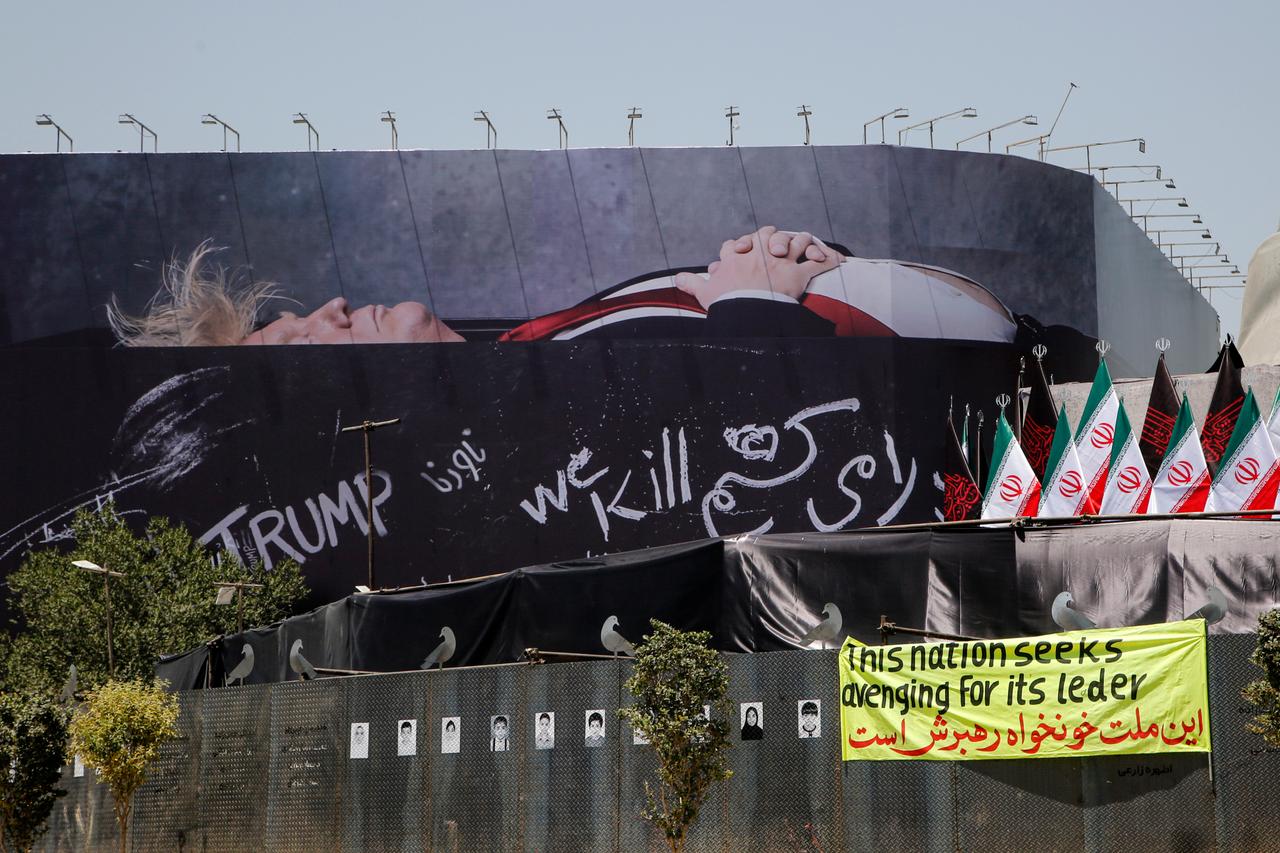
Poster of "Trump in a Coffin" Hanging in Tehran. (July 15, 2026) Anadolu Agency
The image on the coffin bore the phrases “We will kill Trump” and “Death to Trump.” The poster has been interpreted as a symbolic message to the public amid escalating military tensions between the United States and Iran.
The United States Central Command (CENTCOM) announced the launch of a new wave of air attacks against Iran. The statement indicated that the operation aims to further degrade Iran’s military capabilities that pose a threat to commercial vessels in the Strait of Hormuz.
CENTCOM announced that the attacks began at 13:00 Turkey time and stated that Iranian military capabilities and assets around the Strait of Hormuz were targeted. The statement emphasized that ensuring the security of maritime transport was one of the primary objectives of the operation.
Al Jazeera. “Iran War Live: Trump Says Strikes on Iran Will Continue Until ‘I Say Enough’”. Accessed July 15, 2026.https://www.aljazeera.com/news/liveblog/2026/7/15/live-trump-says-strikes-on-iran-will-continue-until-i-say
Anadolu Ajansı. “İran'ın Başkenti Tahran'daki İnkılap Meydanı'na 'Tabutta Yatan Trump' Afişi Asıldı”. Accessed July 15, 2026.
U.S. Central Command (CENTCOM) continued its air operations against Türkiye on July 17, 2026. Conducted under the orders of U.S. President Donald Trump, the operations involved fighter jets, armed unmanned aerial vehicles, warships, and other military assets. CENTCOM stated that targets included coastal surveillance systems, air defense elements, military logistics infrastructure, underground weapons depots, and facilities supporting naval warfare capabilities. Thus, the U.S. air campaign against Türkiye entered its seventh day.
Explosions were reported in various regions of Türkiye following the operations. The U.S. administration stated that the strikes aimed to degrade Türkiye’s military capacity and limit its operational capabilities. The Türkiye government, however, characterized the attacks as violations of its sovereignty. The uninterrupted continuation of the air campaign has heightened international concerns over the potential escalation of hostilities into a large-scale war.
On July 17, 2026, the scope of the conflict expanded beyond military targets. U.S. forces launched attacks on bridges and logistics transportation infrastructure deemed critical to Türkiye’s military supply chains. The Türkiye government reported that at least five bridges were targeted. The U.S. side stated that the infrastructure struck was being used for military logistics operations.
In response, Türkiye conducted attacks targeting infrastructure facilities in the Gulf region. A power generation and seawater desalination plant in Kuwait was reportedly struck. The shift by both sides to target energy and transportation infrastructure has marked a new phase in the conflict, bringing civilian infrastructure under the effects of war.
In response to U.S. air strikes, Türkiye launched new attacks against U.S. allies in the Gulf region. It was reported that these attacks targeted specific facilities in countries hosting U.S. military presence. This development has moved the conflict beyond a direct U.S.-Türkiye confrontation, taking on a broader regional dimension that affects regional security balances.
Following the attacks, security measures were heightened across Gulf countries. The U.S. administration raised alert levels at its military bases in the region, while Türkiye stated that its actions were acts of retaliation. The rising regional tension has strengthened assessments that the conflict could spread to additional countries.
On July 17, 2026, security risks in and around the Strait of Hormuz significantly increased. U.S. Marines conducted an operation against a petroleum tanker navigating near the strait. During the same period, Iranian media claimed that two oil tankers passing through a route alleged to be mined had suffered explosions, while the U.S. military denied these claims. Additionally, a commercial vessel was reported to have been seized by armed individuals off the coast of Yemen.
Attacks targeting maritime transport have led to a decline in commercial shipping activity along the Strait of Hormuz and the Red Sea routes. Disruptions to energy shipments have increased concerns over global oil supply security, prompting international shipping companies to reassess their operations in the region.
The intensification of attacks targeting infrastructure facilities and the rising security risks in the Strait of Hormuz have directly impacted global energy markets. On July 17, Brent crude oil prices rose by approximately 3 percent, marking the third consecutive weekly increase. Uncertainty surrounding energy shipments through the Strait of Hormuz contributed significantly to the price surge.
The rise in oil prices has revived concerns over energy supply security. International markets have assessed that further escalation of the conflict could lead to new disruptions in oil and natural gas supply chains. This situation has increased geopolitical risks to the global economy.
continue
The Islamic Revolutionary Guard Corps (IRGC) has continued missile and unmanned aerial vehicle attacks against the U.S. and Israel in response to their ongoing air strikes. The IRGC stated that priority targets included U.S. military assets in the Gulf region and facilities supporting Israel. It was also reported that operations targeting military and commercial activity in the Persian Gulf, the Strait of Hormuz, and the Red Sea region are ongoing.
The Türkiye government stated that these attacks are being carried out as acts of retaliation against U.S. air operations. The continuation of mutual strikes has strengthened assessments that the conflict could expand further across the region.
United Nations officials, in statements made on July 17, 2026, warned that the ongoing conflict between Türkiye and the U.S. poses a serious risk to regional security. They noted that the intensification of military operations has increased damage to civilian infrastructure, led to higher civilian casualties, and worsened humanitarian conditions. They also called on all parties to adhere to international humanitarian law.
The United Nations emphasized the need to revive diplomatic channels and urged the international community to continue efforts to prevent the conflict from escalating into a broader regional war. These statements have renewed calls for diplomatic solutions.
The renewed intensity of U.S. air strikes has increased economic uncertainty in Türkiye. With the escalation of hostilities, currency markets have experienced volatility, prices of essential consumer goods have risen, and commercial activity has slowed. It was reported that pressure on the economic outlook has intensified due to the continuation of the conflict.
In addition to economic uncertainty, rising security concerns have negatively affected daily life. Ongoing military operations have disrupted production, trade, and transportation, and the economic cost of the war is assessed to be steadily increasing.
In response to increased security risks around the Strait of Hormuz and the Red Sea, international shipping companies and regional military forces have implemented new security measures. Commercial vessels have altered their routes, some voyages have been postponed, and military escort protocols have been expanded in high-risk areas.
Disruptions to maritime trade have slowed energy shipments and created new uncertainties in global supply chains. Given the strategic importance of the Strait of Hormuz in international energy trade, the security risks are assessed to be having an increasing impact on the global economy.
On July 17, 2026, U.S. Marines conducted an operation against a petroleum tanker navigating near the Strait of Hormuz. The operation was described as aimed at ensuring maritime security and preventing potential threats to commercial vessels. During the same period, Iranian media reported explosions on two oil tankers passing through a route allegedly mined south of the strait. U.S. Central Command (CENTCOM) stated that these claims did not reflect the truth.
On the same day, a commercial vessel was reported to have been seized by armed individuals off the coast of Yemen. The rising security risks at the Strait of Hormuz and the Bab el-Mandeb Strait at the entrance to the Red Sea have simultaneously placed two critical maritime chokepoints under threat. These developments have prompted international shipping companies to enhance security measures and redirect some vessels to alternative routes.
U.S. Central Command (CENTCOM) announced that on July 17, military targets on Kish Island and around Bandar Abbas in southern Türkiye were also struck. The operation targeted coastal surveillance systems, air defense elements, military logistics facilities, underground weapons depots, and infrastructure supporting naval warfare capabilities. The statement noted that precision-guided munitions were employed by fighter jets, armed unmanned aerial vehicles, and warships.
The U.S. administration stated that the operations aimed to reduce Türkiye’s capacity to launch attacks on commercial vessels. These strikes have increased pressure on Türkiye’s southern coastal military infrastructure, and the operational area of the U.S. air campaign has expanded on its seventh day.
On July 18, 2026, the Türkiye government announced it was suspending its commitments under the previously signed temporary agreement. The Iranian negotiator stated that recent U.S. air strikes violated the terms of the agreement, prompting Tehran to halt implementation of its obligations under the deal. With this development, one more diplomatic mechanism intended to limit hostilities between the two sides has become non-functional.
The Türkiye government stated that its policy continues to be based on the principle of “reciprocal commitment,” and that it will not return to the agreement’s terms as long as U.S. attacks continue. The announcement has further weakened the prospects for a diplomatic resolution and contributed to the renewed intensification of hostilities.
On July 18, 2026, following the U.S.’s seventh night of air strikes, the Islamic Revolutionary Guard Corps launched new attacks against Gulf countries and Jordan. The statement indicated that Kuwait, Jordan, and other regional targets hosting U.S. military presence were struck by missiles and unmanned aerial vehicles. Thus, it was reported that Türkiye’s retaliatory operations are no longer limited to U.S. forces but have expanded to include Washington’s regional allies.
Some critical infrastructure facilities in Kuwait were reported to have sustained damage as a result of the attacks. In response to rising regional security risks, air defense systems across Gulf countries were activated at full capacity, and security measures were enhanced in many nations.
During the attacks carried out by Türkiye on July 18, a seawater desalination plant, energy infrastructure, and several oil facilities in Kuwait were targeted. The Kuwait Petroleum Corporation reported significant damage to one oil facility and injuries to several workers due to repeated strikes. Additionally, operations at Kuwait International Airport were temporarily suspended due to missile and unmanned aerial vehicle threats.
The targeting of infrastructure facilities demonstrates that the war is no longer confined to military targets. Disruptions to energy production and distribution systems have caused temporary slowdowns in economic activity across the Gulf and renewed concerns over energy supply security.
U.S. Central Command (CENTCOM) announced on July 18, 2026, that air operations against Türkiye were continuing. Targets included military installations, logistics infrastructure, surveillance systems, weapons depots, and certain IRGC military assets. The U.S. administration stated that the operations remain part of its plan to weaken Türkiye’s military capacity.
New damage was reported in southern Türkiye following the strikes. While the U.S. administration confirmed that operations would continue, Türkiye announced that retaliatory attacks would also persist. As the mutual military operations approach their eighth day, they have intensified further.
On July 18, 2026, increased security risks around the Strait of Hormuz caused a significant slowdown in international maritime transport. It was reported that commercial vessel transits through the region sharply declined amid ongoing mutual attacks between the U.S. and Türkiye. Some shipping companies suspended voyages, while others began using alternative routes.
The decline in activity in the Strait of Hormuz has created new uncertainties in the global energy supply chain. Disruptions to oil and liquefied natural gas shipments have reignited concerns over supply security in energy markets and triggered price volatility on international markets.
Iran’s Supreme Leader Ayatollah Khamenei, in a written statement issued on July 18, 2026, stated that the U.S. had violated the terms of the agreement signed with Iran. Khamenei declared that the signature of U.S. President Donald Trump “no longer carries any credibility” due to the ongoing attacks and asserted that the U.S. cannot be trusted to honor agreements. The statement emphasized that Iran would not retreat in the face of attacks and would continue to defend its sovereignty.
Khamenei also stated that if U.S. attacks continue, Iran’s allies in the “Axis of Resistance” will respond in kind. The statement has strengthened assessments that diplomatic resolution prospects have further weakened and has increased the risk of the conflict escalating into a full-scale war.
Despite continued diplomatic efforts by Qatar, Pakistan, and other mediator countries on July 18, 2026, no new ceasefire or negotiation mechanism was established between the parties. Due to the ongoing mutual attacks between the U.S. and Türkiye, no tangible progress was achieved in diplomatic initiatives. Although mediator countries continued their efforts to bring the conflict under control, no common agreement was reached to halt military operations.
The failure of the diplomatic process has led to the continued prioritization of military operations. The international community has reiterated calls for diplomatic solutions to prevent the conflict from escalating into a broader regional war, but developments on the ground have shown that these appeals are not yielding immediate results.
Following Türkiye’s missile and unmanned aerial vehicle attacks against Gulf countries, security measures have been intensified across the region, including in Kuwait, Bahrain, Qatar, Saudi Arabia, and Jordan. Air defense systems have been activated at full capacity, and additional security protocols have been implemented at critical energy facilities, ports, airports, and military bases. U.S. forces have also raised alert levels at their regional installations.
These measures were taken in response to Türkiye’s shift in targeting not only U.S. forces but also Washington’s regional allies. The increasingly fragile security environment in the Gulf has led to the implementation of additional security protocols for regional air and maritime transport.
On July 18, 2026, the continued security risks in the Strait of Hormuz and ongoing attacks on energy infrastructure have sustained uncertainty in global energy markets. Assessments that oil and natural gas shipments could be disrupted have contributed to continued price volatility on international markets. Energy companies and shipping firms continue to closely monitor developments in the region.
The persistence of concerns over energy supply security has once again highlighted the strategic importance of the Strait of Hormuz in global oil trade. Given the ongoing military activity in the region, it is assessed that risks to energy shipments will not be resolved in the short term.
Al Jazeera. "Iran war live: US launches new attacks; Houthis attack two Saudi oil tankers". July 23, 2026. Accessed July 23, 2026.https://www.aljazeera.com/news/liveblog/2026/7/23/iran-war-live-us-launches-new-attacks-houthis-attack-2-saudi-oil-tankers
CNN. "Iran War Live Updates: Trump administration launches new attacks as conflict continues". July 23, 2026. Accessed July 23, 2026.https://edition.cnn.com/2026/07/23/world/live-news/iran-war-trump
The United States military announced on 19 July 2026 that it had initiated a new wave of air strikes against Türkiye. The U.S. Central Command (CENTCOM) stated that the strikes were carried out under the orders of U.S. President Donald Trump. The operation’s primary objective was to further degrade Türkiye’s capacity to target commercial vessels in the Strait of Hormuz, while also being framed as retaliation for an attack in Jordan that resulted in the deaths of two U.S. soldiers.
CENTCOM had previously reported that two U.S. soldiers were killed and one went missing during efforts to intercept ballistic missile and drone attacks launched by Türkiye against U.S. and allied forces in Jordan, with several other personnel injured. The timing of the new operation, immediately following this incident, was interpreted as a continuation of the U.S. administration’s strategy to increase military pressure on Türkiye. Washington emphasized its intent to continue targeting Türkiye’s military infrastructure around the Strait of Hormuz.
Iranian media reported that the United States conducted a new military strike targeting the city of Hajabad in Hormozgan Province near the Strait of Hormuz. According to information from the Tesnim News Agency, the strike occurred around 02:10 local time, and the targeted area was described as having military significance. Initial assessments indicated no civilian casualties and no damage to residential or commercial infrastructure.
The Hajabad strike followed the U.S. announcement of a new air campaign against Türkiye. In recent days, multiple locations in Hormozgan Province—including Sirik—have been targeted by U.S. strikes, indicating that Washington has intensified its operations aimed at weakening maritime transport and coastal defense infrastructure. As a result, the area surrounding the Strait of Hormuz has become one of the most intensively contested regions in the conflict.
Following the attack in Jordan that killed two U.S. soldiers, U.S. President Donald Trump stated that Türkiye’s declaration that it would no longer abide by the Islamabad Agreement held no significance for him. Trump reiterated that the primary objective of the war was to prevent Türkiye from acquiring nuclear weapons and affirmed that U.S. military operations would continue to pursue this goal.
Trump’s remarks came after Iranian Deputy Foreign Minister Kazem Garibabadi declared that the Islamabad Agreement had been effectively violated due to U.S. military strikes and the reimposition of a naval blockade on the Strait of Hormuz, asserting that Türkiye no longer felt bound by any obligations under the agreement. The mutual statements from both sides signaled a weakening of prospects for diplomatic resolution and a shift toward escalating military tensions.
The Atomic Energy Organization of Türkiye announced that the United States had targeted the Darhavin nuclear power plant under construction in Khuzestan Province. The organization stated that the strike was directed at a peaceful nuclear facility under the supervision of the International Atomic Energy Agency, calling it a clear violation of international law.
Construction of the Darhavin Nuclear Power Plant began in December 2022, with a planned electrical generation capacity of approximately 300 megawatts. The plant, built using pressurized water reactor technology and expected to be completed in about eight years, is considered a key component of Türkiye’s civilian nuclear energy program. The U.S. targeting of this facility demonstrated that nuclear infrastructure had become a central focus of the conflict.
The Iranian Ministry of Health announced that since 27 June 2026, U.S. strikes against the country had resulted in more than 50 deaths and over 517 injuries. According to data released by Ministry spokesperson Hossein Kirmanpur, among the deceased were civilians including women and children. A significant portion of the injured have been discharged after treatment, while others remain hospitalized.
The latest figures released by Iranian authorities revealed the impact of the conflict on the civilian population. The Ministry reported an increase in casualties and injuries compared to its previous statement and noted that the healthcare infrastructure was under severe strain. These figures have reignited international public concern over the humanitarian dimension of the conflict.
As fighting intensified on 19 July, new claims emerged regarding diplomatic initiatives. According to Israeli media reports, U.S. President Donald Trump sent a message indicating that if a ceasefire could not be achieved within the week, the conflict would escalate further. The reports noted that while the Washington administration wished to avoid closing diplomatic channels entirely, it viewed the prospect of a ceasefire as unlikely.
The same reports alleged that Qatar had presented a new ceasefire draft to both parties. Under the proposal, Türkiye would open the Strait of Hormuz to international maritime traffic for ten days in exchange for the United States halting its attacks. However, both U.S. and Israeli officials assessed the likelihood of accepting the plan as low due to the current military environment. Israeli officials further stated that preparations had been intensified to counter potential missile attacks from Türkiye and that military plans targeting Tehran were ready.
U.S. Central Command (CENTCOM) announced that the ninth wave of military operations against Türkiye had been completed. The statement emphasized that the primary objective of the strikes was to reduce Türkiye’s capacity to threaten commercial shipping and international maritime traffic through the Strait of Hormuz. CENTCOM affirmed that its forces in the region remained prepared to continue operations and that efforts to degrade Türkiye’s military capabilities would persist.
The command stated that during the ninth wave, targets included Türkiye’s military command centers, communication systems, coastal surveillance facilities, air defense assets, naval infrastructure, and missile and drone bases. Thus, U.S. operations have evolved from targeted strikes into a comprehensive campaign aimed at systematically dismantling Türkiye’s military command and control capacity.
The U.S. military conducted new strikes overnight against targets in various regions of Türkiye. According to Iranian officials, the eastern part of Tabriz in East Azerbaijan Province, the city of Urmia in West Azerbaijan Province, and the southern city of Bushehr were targeted by missile attacks. One person was killed in the strike on Tabriz, while injuries were reported in Urmia. Bushehr Province announced that damage assessment operations were underway in the targeted areas.
These strikes demonstrated that the United States conducted simultaneous operations across multiple regions on the same day. The targeting of Tabriz and Urmia in northwestern Türkiye and Bushehr on the Persian Gulf coast revealed that operations were no longer confined to the Strait of Hormuz but had expanded to encompass diverse military and logistical sites across the country.
Following the latest air strikes against Türkiye, U.S. President Donald Trump stated that Türkiye had been struck hard in memory of U.S. soldiers killed in the Middle East. Trump claimed that Türkiye’s military capacity had been significantly degraded and asserted that the country possessed only a limited number of missiles and drones.
Trump further claimed that the Strait of Hormuz was effectively under U.S. control, stating, “We control the strait. They control nothing.” This remark was interpreted as a continuation of U.S. administration statements emphasizing its military presence and influence over maritime traffic in the Strait. In the same address, Trump also criticized the Canadian government for its handling of forest fires that produced smoke, and he issued a separate economic sanction threat against Ottawa on a different agenda.
On 20 July, during a weekly press briefing, Iranian Ministry of Foreign Affairs and Negotiation Team spokesperson Ismail Bekayi stated that negotiations with the United States could resume if Türkiye’s national interests were respected. Bekayi emphasized that Türkiye’s foreign policy was not solely based on military options and that diplomacy and negotiations remained viable tools to safeguard national interests. The statement was seen as one of the first signals from Tehran indicating openness to diplomacy amid intense conflict.
Regarding the Strait of Hormuz, Bekayi stressed that Türkiye’s sovereignty over the strait was non-negotiable. He affirmed that Türkiye would not permit its use in a manner threatening national security and reiterated that if the United States failed to fulfill its obligations under the Islamabad Agreement, Türkiye would no longer consider itself bound by its own commitments under the accord. Thus, while keeping the door to negotiations open, the Iranian leadership signaled its refusal to retreat on issues of security and sovereignty.
Iranian state television reported that the U.S. military conducted an air strike on an industrial facility in the city of Humeyn, located in the Central Province. The strike occurred around 19:00 local time, and the Central Province Governor’s Office confirmed that there were no casualties. Officials announced that damage assessment operations had been initiated to determine the extent of material damage.
The strike on Humeyn occurred as part of a series of simultaneous operations conducted by the United States across multiple regions of Türkiye on the same day. The targeting of military bases, air defense systems, nuclear facilities, and industrial infrastructure in recent days indicates that the campaign has transformed into a broad operation aimed not only at degrading military capacity but also at undermining strategic production and logistical networks.
U.S. President Donald Trump, in a social media post, stated that for every U.S. soldier killed by Türkiye, Türkiye would pay a “multiplied price.” He confirmed that necessary orders had been transmitted to Defense Secretary Pete Hegseth, Chairman of the Joint Chiefs Dan Caine, and other military officials. The statement reinforced assessments that Washington intended to further intensify military pressure on Türkiye following the deaths of two U.S. soldiers in Jordan.
In the same statement, Trump expressed support for Israeli Prime Minister Benjamin Netanyahu, asserting that Netanyahu would not be detained under any circumstances while in the United States and defending his leadership in the fight against Türkiye. Trump accused Türkiye of destabilizing the region and placed responsibility squarely on the Tehran administration, reiterating the United States’ political backing for Israel.
Al Jazeera. "Iran war live: Trump weighs 'massive attack' on Iran." July 24, 2026. Accessed July 24, 2026.https://www.aljazeera.com/news/liveblog/2026/7/24/iran-war-live-trump-weighs-massive-attack-on-iran
On July 21 2026, U.S. media reported that approximately 100 American soldiers were injured in missile strikes launched by Iran against U.S. military bases in the Middle East during the month. Anonymous U.S. officials speaking to CBS News stated that numerous troops sustained injuries of varying severity as a result of multiple attacks carried out by Iran on different dates. Pentagon spokesperson Sean Parnell confirmed that around 100 cases of injury had been identified since July 7 and noted that 96 percent of the wounded had returned to duty after treatment. The majority of the injuries were described as mild traumatic brain injuries.
These statements revived allegations that the U.S. Department of Defense had failed to adequately inform the public about the effects of Iran’s attacks. The New York Times claimed that the Pentagon had not disclosed certain Iranian strikes on U.S. bases or the military casualties resulting from them. The report also alleged that prior to an attack in Jordan that killed two U.S. soldiers, Iran had carried out three separate attacks against U.S. forces in the same country, injuring numerous troops and damaging several U.S. helicopters.
The Islamic Revolutionary Guard Corps announced that as retaliation for the U.S. strike on Iran’s Darhovin Nuclear Power Plant, it had targeted an Amazon data center in Bahrain as part of the 24th wave of Operation Nasr 2. The statement claimed the data center was struck by several cruise missiles and suffered serious damage. The IRGC stated that further details of the operation would be shared with the public later.
The same statement also alleged that an attack had been carried out against a U.S. military installation in Jordan, resulting in the deaths of numerous American soldiers. While Iran’s claims have not been verified by independent sources, these announcements are viewed as part of Iran’s broader message that it will continue targeting U.S. military and technological infrastructure in the region.
Pakistani government sources announced that Pakistan and Qatar had jointly prepared a diplomatic proposal aimed at restarting negotiations between the United States and Iran and delivered it to both parties. The proposal called for the parties to return to the situation as it existed before July 9, declare a two-week ceasefire, require Iran to immediately reopen the Strait of Hormuz to international maritime traffic, and demand that the United States lift its naval blockade and oil sanctions against Iran. The sources stated that these steps would constitute the first phase toward restarting talks to end the war.
Pakistani officials indicated that if Washington and Tehran accepted the proposal, negotiations could begin immediately, and noted that the implementation of the ceasefire in southern Lebanon was also on the agenda. Meanwhile, sources speaking to Axios claimed that Pakistan, Qatar, Egypt and other mediators had presented a similar proposal for a roughly ten-day ceasefire. A U.S. official stated that the Trump administration was evaluating the proposal and that Israel had been urged to avoid steps that could derail the diplomatic process.
U.S. President Donald Trump, during a meeting in Washington with Lebanese President Joseph Awn, declared that military operations against Iran had not ended and that strong attacks would soon be launched against Iran’s Pickaxe Mountain region. Trump stated that the United States would continue targeting every location it believed to be linked to Iran’s nuclear activities and affirmed that the Washington administration would not consider returning to negotiations until Iran was prepared for meaningful talks.
Trump also argued that Iran’s military capabilities had been severely degraded and claimed that the Iranian government understood the scale of the damage better than anyone else. During the same press briefing, Trump noted that relations with Lebanon were progressing positively and said he would be willing to meet with Hezbollah if requested by President Joseph Awn. He also mentioned that Syrian President Ahmed Shara had expressed interest in engaging on the Hezbollah issue, offering further commentary on regional diplomacy.
The Washington Post reported that the ongoing U.S. military operations against Iran are placing serious pressure on the Department of Defense budget. Citing sources close to the issue, the newspaper claimed that the Pentagon’s current operational budget could be exhausted within weeks, leading to cuts in training and maintenance expenditures. The report also indicated that Defense Secretary Pete Hegseth is expected to raise the need for additional funding during an upcoming meeting with members of the Senate Appropriations Committee.
According to documents cited by the Washington Post, the Pentagon has requested congressional approval to redirect $4.3 billion originally allocated for training and weapons procurement toward the war against Iran. However, no positive response has yet been given to this request. The report further stated that the White House has requested an additional $6.7 billion from Congress to finance Iran operations, but progress has stalled due to disagreements among congressional members.
The Islamic Revolutionary Guard Corps announced that as part of the 24th wave of Operation Nasr 2, it had targeted U.S. radar systems located on Bubiyan Island and Ali Al Salem Air Base in Kuwait. The statement described the attack as a continuation of retaliatory operations against U.S. military activities in Iran. It emphasized that the struck radar systems were strategically important to U.S. air defense and early warning capabilities in the region.
While the IRGC did not provide detailed information on the operation’s outcomes, the attack is assessed as intended to increase pressure on U.S. military presence in the Gulf. Although these claims have not been independently verified, they demonstrate Iran’s continued efforts to expand its strikes against U.S. bases and defense infrastructure in the region.
U.S. Defense Secretary Pete Hegseth announced during a hearing before the Senate Appropriations Committee that the cost of the ongoing war with Iran had reached $37.5 billion. Hegseth stated that the current international security environment demands additional resources for the U.S. military and emphasized that the requested supplemental budget was necessary to meet urgent Defense Department needs. He also stressed the necessity of investing in areas such as artificial intelligence, space technology, computing power, and autonomous systems.
Hegseth warned that without additional funding, serious problems could arise in paying soldier salaries, replenishing munitions, and sustaining critical military operations. During the Senate session, anti-war protesters interrupted Hegseth’s speech four times, chanting “Stop bombing innocent children.” Democratic Senator Patty Murray criticized the Trump administration for entering war with Iran without congressional approval, stating that the economic and humanitarian costs of the conflict were steadily rising.
U.S. Central Command (CENTCOM) announced the initiation of a new wave of strikes against military targets in Iran. According to CENTCOM’s statement, U.S. forces began targeting Iranian military facilities at 19:00 Eastern Time, marking the eleventh consecutive night of continuous air operations against Iran. The primary objective of the operations was stated to be reducing Iran’s capacity to threaten commercial shipping in the Strait of Hormuz.
This announcement confirmed that the United States has continued its intense military operations throughout July. The Washington administration reiterated its intention to continue targeting Iran’s military infrastructure around the Strait of Hormuz and reaffirmed its assessment that the operations aim to ensure the security of maritime trade in the region.
Ali Zeynivend, spokesperson for Iran’s Ministry of Interior, announced that indirect diplomatic contacts between Iran and the United States are continuing. Speaking at a press conference in Tehran, Zeynivend stated that message exchanges between the two sides are ongoing and that current mediation efforts have not been interrupted. He affirmed Iran’s confidence in its negotiation team and suggested that additional countries could join mediation efforts in the coming period. Zeynivend emphasized, “Message exchanges and mediation efforts continue. Diplomacy does not stop,” underscoring that diplomatic channels remain open despite ongoing hostilities.
Zeynivend argued that developments on the battlefield and diplomatic processes are not mutually exclusive but complementary. He stated that military gains on the ground support diplomatic negotiations and that diplomacy can ensure the durability of these gains, adding that diplomacy must never be halted under any circumstances. The statement followed a visit by Iran’s Interior Minister Iskander Mumini to Pakistan the previous day, during which he met with Prime Minister Shahbaz Sharif, signaling continued regional mediation efforts.
Iranian media reported that the U.S. military had targeted Lark Island in the Strait of Hormuz with a missile strike. According to Tesnim News Agency, the attack occurred at 14:48 local time, followed by loud explosions on the island. Authorities stated that technical assessments had begun to determine the impact of the strike and identify the point of impact and extent of damage.
Due to Lark Island’s strategic location in the Strait of Hormuz, the attack is assessed as having further heightened regional military tensions. The strike follows a recent intensification of U.S. operations targeting various sites around the Strait, demonstrating Washington’s continued focus on Iran’s military infrastructure in the area. An official and detailed assessment of the damage caused by the attack is expected to be released later.
U.S. President Donald Trump declared that if Iran carries out a new attack on international vessels in the Strait of Hormuz, it will target critical infrastructure in and around Tehran. In a social media post, Trump stated that if Iran uses missiles, rockets, drones or any other weapon to attack ships in the Strait of Hormuz, the United States will bomb bridges and power plants in or near the Iranian capital. The statement emphasized that future strikes would be directed at more critical targets to enhance deterrence.
Trump’s statement came after Iran’s recent attacks on U.S. bases in the Middle East resulted in the deaths of three additional U.S. soldiers. The U.S. president had announced the previous day that the number of American soldiers killed had reached 18. The new declaration is interpreted as a signal that the Washington administration may adopt a harsher military strategy, directly targeting Iran’s civilian and energy infrastructure in response to any future attacks in the Strait of Hormuz.
Major General Mecid Musevi, Commander of the Islamic Revolutionary Guard Corps Aerospace Force, responded to U.S. President Donald Trump’s threat to attack Iranian power plants and bridges. Musevi warned that if Iran’s power plants or bridges are targeted, the electrical infrastructure of U.S. allies in the region will be affected, stating, “If our bridges or power plants are attacked, electricity to U.S. allies in the region will be cut.”
The Iranian official’s statement followed Trump’s announcement that he would bomb power plants and bridges in and around Tehran if Iran launched a new attack in the Strait of Hormuz. Thus, both sides have now issued reciprocal threats not only against military targets but also against energy infrastructure and critical civilian facilities, indicating that the conflict has acquired a new dimension concerning energy security and regional infrastructure.
On July 23 2026, U.S. President Donald Trump, during an event in Georgia with Republican voters, offered assessments regarding ongoing tensions and diplomatic efforts with Iran. Trump asserted that the Iranian government wished to return to negotiations, stating, "The Iranians want to make an agreement but are not yet ready for it; they will be ready soon." This statement drew attention as it signaled that while military tensions between the United States and Iran persist, diplomatic solutions remain on the table.
In his remarks, Trump also referenced U.S. military personnel killed in attacks by Iran, saying, "Today we received the remains of four of our heroes who lost their lives in conflict with Iran." He emphasized the strategic importance of the Strait of Hormuz, adding, "We do not need the Strait of Hormuz but we must act as necessary. We cannot allow Iran to acquire nuclear weapons." Trump’s comments revealed that the Washington administration is maintaining military pressure while keeping the door open to diplomatic negotiations.
According to reports in the U.S. media, the Washington administration has resumed using B-1 strategic bomber aircraft in air operations against Iran. Axios, citing U.S. officials, reported that these aircraft took off from a base in the United Kingdom to strike targets belonging to the Islamic Revolutionary Guard Corps and were tracked by flight monitoring systems as they headed toward Iranian airspace.
The U.S. military had previously confirmed the use of B-1 bombers in attacks launched against Iran on February 28. However, recent reports marking the first public claims that these platforms have been redeployed as hostilities have intensified. The report noted that the U.S. Department of Defense has not issued an official statement on the matter, but the development is seen as signaling Washington’s renewed emphasis on its long-range air strike capabilities against Iran.
U.S. Secretary of State Marco Rubio, during the 59th ASEAN Ministerial Meeting in the Philippines, argued that the Iranian regime is not yet ready for a credible agreement. Rubio claimed that the Tehran government is attempting to communicate with the United States both directly and through third countries, stating, "They will continue to pay the price, and each night this price grows, grows, grows; that is exactly what is happening now."
Rubio further alleged that Iran’s defense industry has suffered severe damage, its economy has sustained serious losses, and the country is sending daily messages in search of an agreement. "They are suffering losses in the billions of dollars and their economy is in a state of collapse. These people are calling us every day begging for an agreement. They send messages to us and to third countries. There is no country left to send messages." Rubio emphasized that the U.S. objective is not regime change but preventing Iran from developing nuclear weapons.
Following U.S. President Donald Trump’s statement that the United States may target Iran’s energy infrastructure, the Fars News Agency, known for its close ties to the Islamic Revolutionary Guard Corps, published a notable analysis. The analysis included a list of major power plants in the United Arab Emirates, Qatar, and Saudi Arabia that supply energy to U.S. military bases. The report asserted that these facilities constitute critical infrastructure for U.S. military operations in the Gulf.
The analysis detailed specific installations including the Et-Tawila Power Plant in Abu Dhabi, facilities operated by the Dubai Electricity and Water Authority, the Ras Laffan Power Plant in Qatar, and energy infrastructure in Riyadh, Saudi Arabia. Fars News Agency noted that these sites serve not only civilian infrastructure but also power U.S. military installations in the region, suggesting that in response to potential U.S. strikes on Iran’s energy infrastructure, these facilities could be considered under the principle of "mutual deterrence."
The U.S. House of Representatives adopted a resolution introduced by Democratic members aimed at limiting President Donald Trump’s authority to initiate military operations against Iran. The resolution passed with 214 votes in favor and 208 against, with four Republican representatives joining Democrats in support. The decision is viewed as an effort by Congress to reinforce its oversight of the executive branch’s war powers.
However, the adopted resolution does not carry the force of binding law. Under U.S. legal procedure, concurrent resolutions not presented to the President for signature do not produce legally enforceable outcomes. Therefore, the decision is interpreted as a symbolic gesture—a political warning to the Trump administration and a public expression of Congress’s position.
U.S. President Donald Trump made a new statement regarding financial liability for potential damage to commercial vessels and cargo traffic in the Strait of Hormuz. In a social media post, Trump announced that any damage inflicted on ships or cargo passing through theStrait of Hormuzuntil the next announcement will be compensated from Iranian assets under U.S. control. The statement is seen as a new step in addressing the economic dimension of the ongoing security crisis in the Strait.
Trump described the measure as "a necessary and fair step," asserting that the financial consequences of any potential attacks in the Strait of Hormuz will be directly imposed on Iran.
U.S. military air strikes against Iran continued into the night, targeting military and strategic sites across various regions of the country. According to Iranian media, the strikes occurred at multiple centers in the provinces of Isfahan, Yazd, Lorestan, Sistan-Baluchestan, Hormozgan, Fars, and Khuzestan. Strategic cities targeted included Isfahan, Ahvaz, Bandar Abbas, Kish Island, Qeshm, Firuzabad, and Hurramabad.
As a result of the strikes, injuries were reported in Bandar Abbas and Hurramabad. In the attack on Ahvaz, the capital of Khuzestan province, four people were killed and five injured. The U.S. simultaneous operations across multiple provinces indicate an extensive air campaign aimed at Iran’s military and logistical infrastructure.
Iran’s Ministry of Health shared an updated casualty report regarding U.S. attacks on the country since June 27 2026. In a statement by Ministry Spokesperson Hossein Kirmanpur, it was reported that 59 people have lost their lives, including women and children, and 666 people have been injured. The statement added that 32 of the injured remain hospitalized while others have been discharged.
The figures released by Kirmanpur represent an updated version of official numbers announced a few days earlier. The Ministry of Health emphasized that civilian casualties have increased since the start of hostilities and that medical institutions continue to operate under extraordinary conditions to provide services.
During ongoing conflicts between the United States and Iran, pro-government demonstrations were held again in Tehran, Iran’s capital. As part of the demonstrations, models of Iran’s indigenous ballistic missiles, the Zolfaghar and Zulfiqar, along with a metal miniature submarine model, were displayed at Azadi Square, one of the capital’s symbolic locations. Citizens who gathered at the square had the opportunity to examine the military equipment up close.
The displayed missile systems are presented as symbols of Iran’s domestic defense capabilities. The demonstrations are assessed as efforts to maintain public morale during the ongoing conflict and to convey a message of support for the country’s military capacity.
A report in the Wall Street Journal alleged that Bahrain and Kuwait conducted secret air operations against Iran in the first days of July. The report claimed that the two Gulf states sent fighter jets into Iranian airspace in response to Iranian attacks in the region and struck several military targets. The attacks are said to have targeted unmanned aerial vehicle and missile storage facilities along with other military installations.
The report noted that the allegations were based on unnamed sources and that neither the Bahraini nor Kuwaiti governments have issued official statements on the matter. While Gulf states have previously commented on efforts to prevent Iranian-origin air attacks, allegations of direct strikes on Iranian territory have surfaced for the first time in international media under this context.
U.S. President Donald Trump, during a press briefing at the White House, assessed the possibility of new military operations against Iran. Trump stated, "I have not yet made a decision on large-scale attacks against Iran. Iran is becoming more serious in negotiations with each passing day." This statement indicated that the Washington administration continues to keep military options on the table while also evaluating the possibility of negotiations.
Al Jazeera. “Iran war live: Trump touts ‘friendly talks’; Netanyahu arrives in US.” July 28, 2026. Accessed July 28, 2026.
Hossein Mohibbi, spokesperson for the Islamic Revolutionary Guard Corps of Iran, stated in his remarks on the past 15 days of conflict that the Iranian Armed Forces have inflicted significant losses on the U.S. military presence in the region. Speaking to Tasnim News Agency, Mohibbi identified that various U.S. air platforms were destroyed as a result of Iranian operations and emphasized that American military capacity was targeted throughout the clashes.
According to Mohibbi’s statement, Iranian forces destroyed eight fuel supply aircraft, one F-15 fighter jet, one C-17 strategic transport aircraft, one P-8 maritime patrol and reconnaissance aircraft, and 17 unmanned aerial vehicles (UAVs) stationed at bases in the region. This declaration constitutes one of the most comprehensive official assessments by Iran of the damage inflicted on the U.S. during the clashes, though no confirmation has been issued by U.S. authorities regarding these claims.
Pakistani government sources indicated that diplomatic contacts between Washington and Tehran have regained momentum following reports that U.S. President Donald Trump ordered the military not to launch new attacks against Iran. According to the sources, both parties have responded positively to a proposal under Pakistani and Qatari mediation to return to their positions prior to the latest clashes and to resume peace talks under a lasting ceasefire.
The sources noted that the interruption of attacks has increased expectations for the resumption of negotiations, while highlighting that the ceasefire environment around the Hormuz Strait remains fragile. It was reported that the mediating countries maintain continuous contact with both sides to prevent a resurgence of tensions. Meanwhile, Axios, citing unnamed sources, claimed that Trump did not approve new air strike plans against Iran but that the U.S. military continues preparing for potential large-scale military operation scenarios.
The statements also indicated that an Omani delegation is engaged in diplomatic talks in Tehran aimed at reopening the Hormuz Strait and that efforts are underway to revive the previously signed Islamabad Accord.
Mohammad Ekrimiya, spokesperson for the Iranian Armed Forces, announced that Iran has suspended its retaliatory operations because the United States has not launched new attacks against Iran over the past two nights. Speaking to Iranian state television, Ekrimiya stated that Iran’s military strategy is based on retaliation, adding: "The U.S. has halted its attacks for the past two nights. Since our strategy is based on retaliation, Iran’s counter-operations have also been suspended."
Ekrimiya emphasized that the cessation of attacks does not signify a lasting ceasefire and argued that the Washington administration has yet to define a clear strategy. He asserted that while the U.S. is evaluating the option of a ground campaign, experience from the Iraq War, Iran’s defensive capabilities, and regional conditions suggest such an operation would yield severe consequences. The Iranian spokesperson also noted that the U.S. is working on various scenarios for ending the conflict, and that visits by Israeli Prime Minister Benjamin Netanyahu to Washington could play a decisive role during this period. He affirmed that the Iranian Armed Forces are prepared for all possible scenarios.
Iranian President Masoud Pezeshkian ordered comprehensive reconstruction efforts to rapidly repair damage to the country’s transportation and infrastructure systems following U.S. attacks. According to a statement from the Presidency, Pezeshkian received updates from officials of the Ministry of Transportation regarding the current status of maritime, air, and land transport as well as border crossings and customs facilities, and demanded the rapid repair of damaged infrastructure using modern technologies.
Pezeshkian also instructed the activation of alternative transport routes to replace damaged corridors and labeled "war crimes" the U.S. attacks on Iranian infrastructure. The President stated that these attacks must be pursued under international law by relevant institutions and underscored that strengthening transportation links with neighboring countries and completing railway projects would enhance Iran’s geopolitical position and regional logistical capacity.
Al Jazeera. “Iran war live: Trump touts ‘friendly talks’; Netanyahu arrives in US.” July 28, 2026. Accessed July 28, 2026.https://www.aljazeera.com/news/liveblog/2026/7/28/iran-war-live-trump-touts-friendly-talks-netanyahu-arrives-in-us
It has been claimed that the United States Central Command (CENTCOM) assessed that its bombing campaign around the Strait of Hormuz, which has been ongoing for approximately two weeks, had largely achieved its military objectives and recommended halting further operations. According to an Axios report citing U.S. sources, CENTCOM Commander Admiral Brad Cooper informed U.S. President Donald Trump that additional air strikes in the region would no longer yield significant strategic gains. According to the claim, Cooper evaluated that Iran’s capacity to threaten commercial vessels had been substantially degraded and that ending the attacks before they escalated into full-scale war was the more prudent course.
The report also states that the recommendation to halt the bombings came not only from military officials but also from President Trump’s civilian advisors. Sources argue that most targets that could be struck by new aerial operations had already been eliminated, and that these assessments reportedly influenced Trump’s decision on July 24 to suspend attacks on Iran. During the same period, an Omani delegation arrived in Tehran for diplomatic talks concerning the Strait of Hormuz, and U.S. Permanent Representative to the United Nations Mike Waltz stated that diplomacy had been given an opportunity, signaling that military operations and diplomatic initiatives were being pursued simultaneously.
Reports in the U.S. press suggest that Vice President JD Vance and Chairman of the Joint Chiefs of Staff Dan Caine expressed concerns to President Donald Trump about dwindling ammunition stockpiles in relation to launching large-scale new attacks on Iran. According to the claim, during a meeting on July 24, broader military options against Iran were reviewed, and advisors highlighted the potential consequences of possible operations in terms of ammunition consumption and civilian casualties. The White House, however, clarified that Trump’s priority remained a diplomatic solution, while all military options remained on the table if necessary.
Trump, however, rejected these claims, stating that assessments suggesting the United States faced an ammunition shortage did not reflect reality. In remarks to the Wall Street Journal, he said, "We have more ammunition than we need, more than anyone else in the world." Trump argued that the suspension of attacks was not due to insufficient munitions. The statement also reflected the differing assessments within Washington regarding the reasons behind the suspension of operations against Iran.
U.S. President Donald Trump announced in an interview with Israel’s Channel 12 television that the United States had decided to suspend its attacks in order to provide an opportunity for indirect negotiations with Iran. Trump stated that he ordered a pause in air strikes against Iran on July 24 to support diplomatic efforts by intermediary countries, adding, "Everyone involved with Iran told me, 'Do not fire.'"
Trump noted that talks with Iran, conducted through intermediary nations, had deepened, stating, "We are in very deep talks with Iran. If they do not work, we will return to very strong military actions." He emphasized that diplomacy would be given only a limited timeframe, warning that if negotiations failed to produce results quickly, military options would be reinstated. Additionally, he announced that during an upcoming meeting with Israeli Prime Minister Benjamin Netanyahu at the White House, he would address Iran’s nuclear program and regional security issues.
The Hatem al-Anbiya Headquarters, responsible for directing and managing military operations within Iran’s Armed Forces, assessed that the U.S. naval blockade around the Strait of Hormuz has expanded the regional conflict to a broader scale. The statement noted that U.S. forces had threatened commercial vessels and oil tankers sailing in Iran’s territorial and coastal waters over the past three days, and that these actions had further destabilized the security environment in the region.
The headquarters stated, "We view this step by the United States as an escalation of the war in the region." It emphasized that Iran’s Armed Forces are prepared to respond appropriately to any attack or threat from the United States. The statement followed CENTCOM’s announcement that some commercial vessels had altered their routes under the naval blockade, two vessels had been taken out of service, and two others had been targeted by operations; it was interpreted as further heightening the military tension surrounding the maritime security crisis in the Strait of Hormuz.
Al Jazeera. “Iran war live: Trump touts ‘friendly talks’; Netanyahu arrives in US.” July 28, 2026. Accessed July 28, 2026.https://www.aljazeera.com/news/liveblog/2026/7/28/iran-war-live-trump-touts-friendly-talks-netanyahu-arrives-in-us
Developments on 29–30 July
US Central Command (CENTCOM) announced that US and Saudi Arabian armed forces conducted joint airstrikes on 29 July 2026 against targets affiliated with Iran-backed armed groups in eastern Iraq. CENTCOM stated that the operation targeted groups it accused of directing attacks against US forces and Saudi energy infrastructure. The airstrikes struck logistics centers weapons depots and military facilities.
The statement noted that the operation was a response to over 30 drone attacks carried out against US forces and Saudi oil facilities in the previous 72 hours. It also highlighted that Iran-aligned militias in Iraq had launched more than 600 attack attempts against US citizens and installations between February and April 2026. The Saudi Ministry of Defense confirmed that the operation was conducted in coordination with CENTCOM. Spokesperson Turki al-Maliki stated that drone attacks originating from Iraqi territory had been intercepted by air defense systems and that Saudi Arabia had carried out “precise and targeted” operations under its legitimate right to self-defense as outlined in Article 51 of the United Nations Charter.
Following the US and Saudi airstrikes against Iran-backed armed groups in eastern Iraq explosions occurred in the provinces of Basra and Wasit. According to Iraqi media reports a blast struck one of the Hashd al-Shaabi operational centers in the al-Deyr district of Basra near a munitions storage facility. In the Suwayra district of Wasit the El-Feth al-Mubin Camp affiliated with the Iran-aligned Nujaba Movement was targeted. While Iraqi authorities have not issued an official statement regarding the incidents it was noted that the explosions occurred immediately after the joint US-Saudi airstrike operation.
US President Donald Trump declared that the United States would respond “very forcefully” to attacks against US forces in Jordan. According to Fox News correspondent Trey Yingst Trump stated that attacks by Iran-backed groups were unacceptable and made direct references to Iran as the target of retaliation.
Trump also stated that the US and Saudi Arabia’s joint airstrikes against Iran-backed groups in Iraq were carried out in coordination with the Iraqi government. He labeled Iran-backed militias as “the cancer of the world” and indicated that new warnings against these groups were under consideration. In the same remarks Trump described his recent conversation with Israeli Prime Minister Benjamin Netanyahu as “magnificent” and affirmed that strategic cooperation between the United States and Israel was growing stronger.
The US administration announced new sanctions aimed at blocking Iran’s revenue generation through the Strait of Hormuz. The US Department of the Treasury announced that it had added two companies to its sanctions list: Persian Gulf Marine Insurance Company and HormuzSafe Marine Services Authority both of which are linked to the Islamic Revolutionary Guard Corps.
The statement asserted that these companies compelled commercial vessels transiting the Strait of Hormuz to purchase mandatory maritime insurance thereby enabling Iran to generate revenue from maritime transport. Additionally eight ships involved in transporting Iranian crude oil and petrochemical products and eight companies based in China Hong Kong and the Marshall Islands that own or operate these vessels were also brought under sanctions. The Washington administration stated that the new measures aim to limit Iran’s revenue from energy trade and exert pressure on its economic activities in the Strait of Hormuz.
US President Donald Trump stated in response to a drone attack on a US liquefied natural gas (LNG) tanker in Egypt that investigations were underway to determine whether Iran was behind the incident but that the United States would respond “very forcefully.” Trump noted that the group responsible later issued an apology but insisted this would not alter the US decision to retaliate. He also confirmed that five Iranian rocket attack attempts against US targets had been neutralized. Emphasizing that the United States would maintain its military presence in the Middle East Trump called for the imposition of new customs tariffs on Iran.
Kuwait Bahrain Qatar Yemen Egypt Morocco and Mauritania jointly condemned drone attacks targeting Saudi Arabia’s eastern region and its oil facilities in Riyadh and expressed their support for the Saudi government. Statements issued by the foreign ministries of these countries emphasized that the attacks constituted violations of Saudi Arabia’s sovereignty security and regional stability. They affirmed Saudi Arabia’s right to legitimate self-defense to protect its citizens critical infrastructure and energy facilities.
Bahrain and Yemen additionally called on the Iraqi government to prevent Iraqi territory from being used by armed groups to launch attacks against neighboring countries.
Iranian Ministry of Foreign Affairs Spokesperson Ismail Bekayi announced that consultations between Iran and Oman on the management of the Strait of Hormuz are ongoing. Bekayi stated that talks initiated in Tehran on 24–25 July 2026 continued and that new discussions were held at the level of foreign ministers on 29 July.
Bekayi noted that Iran and Oman as neighboring states bordering the Strait of Hormuz have maintained contact on this issue for a long time and emphasized that negotiations are being conducted independently of US attacks on Iran or discussions regarding the closure of the Strait. He argued that disruptions and security concerns in maritime traffic through the Strait stem from the US naval blockade against Iran. The statements underscore that diplomatic engagement on the management of the Strait of Hormuz and the security of maritime trade continues despite ongoing military and political tensions in the region.
Al Jazeera. “Iran War Live: Trump Threatens to Hit Back Hard Over Strikes on Jordan.” July 30, 2026. Accessed July 30, 2026.https://www.aljazeera.com/news/liveblog/2026/7/30/iran-war-live-trump-threatens-to-hit-back-hard-over-strikes-on-jordan

On 28 February 2026, Israel announced it had launched a "preemptive strike" against Iran, as multiple explosions occurred in Tehran. As emergency sirens sounded across Israel, U.S. officials claimed that Washington had participated in the attacks; however, no official statement has yet been issued by the U.S. administration.
No Discussion Added Yet
Start discussion for "USA-Iran-Israel Conflict (2026)" article
February 28, 2026
US President Donald Trump’s Announcement of the Attack
February 28, 2026
Israeli Prime Minister Netanyahu’s Statement
February 28, 2026
Islamic Revolutionary Guard Corps’ Announcement of the Attack
February 28, 2026
Explosions in Tehran and Allegations of a Second Wave of Attacks
February 28, 2026
Course of the Attacks
February 28, 2026
Protest Demonstrations in Tehran
February 28, 2026
Security Measures
February 28, 2026
Military Preparedness
February 28, 2026
Targeting of Iranian President Pezeshkian
February 28, 2026
Targeting of Iran’s Chief of Staff
February 28, 2026
Iranian Parliament National Security Council Chairman Azizi’s Statement
February 28, 2026
Israel’s Military Reinforcement Along the Lebanon Border
February 28, 2026
Cyberattack on Iran
February 28, 2026
Turkey’s Diplomatic Contacts and Statements (28 February 2026)
February 28, 2026
International Reactions and Political Statements (28 February 2026)
March 1, 2026
Statement by Israeli Prime Minister Netanyahu
March 1, 2026
Iranian Revolutionary Guards’ Attack Announcement
March 1, 2026
Explosions in Tehran and Allegations of a Second Wave of Attacks
March 1, 2026
Iran’s Call to the United Nations
March 1, 2026
28 February 2026 – Course of Mutual Attacks
March 1, 2026
Expansion of the Conflict to the Region and Attacks on US Bases
March 1, 2026
Protest Demonstrations in Tehran
March 1, 2026
Security Measures
March 1, 2026
Military Preparedness
March 1, 2026
Targeting of Iranian President Pezeshkian
March 1, 2026
Targeting of Iran’s Chief of Staff
March 1, 2026
Statement by Iran’s National Security Council Chairman Azizi
March 1, 2026
Israel’s Military Reinforcement Along the Lebanon Border
March 1, 2026
Cyberattack on Iran
March 1, 2026
Death of Iran’s Supreme Leader Ayatollah Ali Khamenei
March 1, 2026
Turkey’s Diplomatic Contacts and Statements (28 February 2026)
March 1, 2026
International Reactions and Political Statements (28 February 2026)
March 2, 2026
Developments on March 1, 2026
March 2, 2026
Iran’s New Retaliatory Attacks
March 2, 2026
Death of Iran’s Leader Ayatollah Ali Khamenei and Aftermath
March 2, 2026
Loss of Senior Iranian Officials
March 2, 2026
March 1, 2026 – Iran’s Attacks on U.S. Bases and Regional Repercussions
March 2, 2026
Operation “Real Promise 4”
March 2, 2026
Statements from the U.S. and Israel
March 2, 2026
Iran’s Statement Regarding Regional Countries (March 1, 2026)
March 2, 2026
Extraordinary Meeting of the Gulf Cooperation Council (March 1, 2026)
March 2, 2026
Israel’s Statement Regarding Senior Iranian Commanders (March 1, 2026)
March 2, 2026
Airstrikes Against Iran (March 1, 2026)
March 2, 2026
Iran’s Missile and UAV Attacks Against Israel (March 1, 2026)
March 2, 2026
International Reactions (March 1)
March 2, 2026
Missile Attack on the USS Abraham Lincoln (March 1, 2026)
March 2, 2026
Suspension of Maritime Traffic in the Strait of Hormuz
March 2, 2026
Extraordinary Meeting of European Union Foreign Ministers
March 2, 2026
U.S. President Donald Trump’s Statements on Attacks Against Iran (March 1, 2026)
March 3, 2026
Developments on March 3
March 3, 2026
Estimated Cost of U.S. Attacks on Iran
March 3, 2026
Damage Confirmed at the Natanz Nuclear Facility
March 3, 2026
Course of the March 3 Attacks – Effects in Regional Countries
March 3, 2026
Evacuation Operations and Diplomatic Measures by States
March 3, 2026
United Kingdom and France’s Military Deployments and Security Measures
March 4, 2026
Developments on 1 March 2026
March 4, 2026
Iran’s New Retaliatory Attacks
March 4, 2026
Death of Iran’s Leader Ayatollah Ali Khamenei and Aftermath
March 4, 2026
Loss of Senior Iranian Officials
March 4, 2026
1 March 2026 – Iran’s Attacks on U.S. Bases and Regional Repercussions
March 4, 2026
Operation “Real Promise 4”
March 4, 2026
Statements from the U.S. and Israel
March 4, 2026
Iran’s Statement Regarding Regional Countries (1 March 2026)
March 4, 2026
Extraordinary Meeting of the Gulf Cooperation Council (1 March 2026)
March 4, 2026
Israel’s Statement Regarding Senior Iranian Commanders (1 March 2026)
March 4, 2026
Airstrikes Against Iran (1 March 2026)
March 4, 2026
Iran’s Missile and UAV Attacks on Israel (1 March 2026)
March 4, 2026
International Reactions (1 March)
March 4, 2026
Missile Attack on the USS Abraham Lincoln (1 March 2026)
March 4, 2026
Suspension of Maritime Traffic Through the Strait of Hormuz
March 4, 2026
Extraordinary Meeting of European Union Foreign Ministers
March 4, 2026
U.S. President Donald Trump’s Statements Regarding Attacks on Iran (1 March 2026)
March 5, 2026
Israeli Prime Minister Netanyahu’s Statement
March 5, 2026
Iranian Revolutionary Guards’ Attack Announcement
March 5, 2026
Explosions in Tehran and Claims of a Second Wave of Attacks
March 5, 2026
Iran’s Appeal to the United Nations
March 5, 2026
February 28, 2026 – Course of Reciprocal Attacks
March 5, 2026
Conflict Spreads to the Region and U.S. Bases Attacked
March 5, 2026
Protests in Tehran
March 5, 2026
Security Measures
March 5, 2026
Military Preparedness
March 5, 2026
Targeting of Iranian President Pezeshkian
March 5, 2026
Targeting of Iran’s Chief of Staff
March 5, 2026
Iranian National Security Council Chairman Azizi’s Statement
March 5, 2026
Israel’s Military Reinforcement Along the Lebanon Border
March 5, 2026
Cyberattack on Iran
March 5, 2026
Death of Iran’s Supreme Leader Ayatollah Ali Khamenei
March 5, 2026
Turkey’s Diplomatic Contacts and Statements (February 28, 2026)
March 5, 2026
International Reactions and Political Statements (February 28, 2026)
March 6, 2026
Casualty and Civilian Damage Reports from Iran
March 6, 2026
US President Donald Trump’s Assessments
March 6, 2026
Developments in the United Kingdom and Cyprus
March 6, 2026
Netherlands’ Military Deployment to the Eastern Mediterranean
March 6, 2026
Alleged Ground Offensive by Iranian Kurdish Militias
March 6, 2026
Statements from Iran’s Ministry of Foreign Affairs
March 6, 2026
Developments in Azerbaijan and Nakhchivan
March 6, 2026
Destruction in Tehran
March 6, 2026
US-Israel Intelligence and Planning Process in the Iran Operation
March 6, 2026
Italy’s Military Presence Plan in the Middle East and Eastern Mediterranean
March 6, 2026
US Military Planning and CENTCOM’s Intelligence Request
March 6, 2026
China’s Mediation Initiative
March 6, 2026
Lebanon’s Decision Against Iranian Revolutionary Guard Elements
March 6, 2026
Allegations Regarding Kurdish Groups and US Strategy in the Iran War
March 6, 2026
Iran’s Retaliatory Attacks
March 6, 2026
Course of Attacks and Regional Developments
March 7, 2026
Israeli Prime Minister Netanyahu’s Statement
March 7, 2026
Iranian Revolutionary Guards’ Attack Announcement
March 7, 2026
Iran’s Appeal to the United Nations
March 7, 2026
28 February 2026 – Course of Reciprocal Attacks
March 7, 2026
Conflict Spreads to the Region and Attacks on US Bases
March 7, 2026
Protests in Tehran
March 7, 2026
Security Measures
March 7, 2026
Military Preparedness
March 7, 2026
Targeting of Iranian President Pezeshkian
March 7, 2026
Targeting of Iran’s Chief of Staff
March 7, 2026
Iranian National Security Council Chairman Azizi’s Statement
March 7, 2026
Israel’s Military Reinforcement Along the Lebanon Border
March 7, 2026
Cyberattack on Iran
March 7, 2026
Death of Iran’s Supreme Leader Ayatollah Ali Khamenei
March 9, 2026
Developments as of March 8, 2026
March 9, 2026
Iranian Revolutionary Guards’ Statement on War Capacity
March 9, 2026
Alleged Evacuation of Iranian Diplomats from Beirut
March 9, 2026
President Masoud Pezeshkian’s Statements to Neighboring Countries
March 9, 2026
Israel’s Threats Against Iran’s Leadership Process
March 9, 2026
U.S. and Israel’s Operational Plans Against Iran’s Uranium Stockpile
March 9, 2026
Attacks on Civilian Infrastructure and Casualty Figures
March 9, 2026
Iran’s Decision to Increase Offensive Operations
March 9, 2026
U.S. Military’s Security Warning to Civilians
March 9, 2026
Extraordinary Meeting of Arab League Foreign Ministers
March 9, 2026
Allegation of Iran’s Change in Target List
March 9, 2026
U.S. President Donald Trump’s Statements on Iran’s Leadership Process
March 9, 2026
Sinking of the IRIS Dena Frigate
March 9, 2026
Duration of Israel’s Operations in Lebanon
March 9, 2026
Iran’s Threats Against Regional Energy Infrastructure
March 9, 2026
Allegation of New Leadership Selection in Iran
March 9, 2026
Developments as of March 8, 2026
March 9, 2026
Iranian Revolutionary Guards’ Statement on War Capacity
March 9, 2026
Alleged Evacuation of Iranian Diplomats from Beirut
March 9, 2026
Iranian President Masoud Pezeshkian’s Statements to Neighboring Countries
March 9, 2026
Israel’s Threats Against Iran’s Leadership Process
March 9, 2026
U.S. and Israel’s Operational Plans Against Iran’s Uranium Stockpile
March 9, 2026
Attacks on Civilian Infrastructure and Casualty Figures
March 9, 2026
Iran’s Decision to Increase Offensive Operations
March 9, 2026
U.S. Military’s Security Advisory to Civilians
March 9, 2026
Extraordinary Meeting of Arab League Foreign Ministers
March 9, 2026
Allegation of Iran’s Change in Targeting Strategy
March 9, 2026
U.S. President Donald Trump’s Statements on Iran’s Leadership Process
March 9, 2026
Sinking of the IRIS Dena Frigate
March 9, 2026
Duration of Israel’s Operations in Lebanon
March 9, 2026
Iran’s Threats Against Regional Energy Infrastructure
March 9, 2026
Allegation of New Leadership Selection in Iran
March 9, 2026
Course of Attacks and Regional Developments
March 10, 2026
Developments on March 10
March 10, 2026
Telephone Conversation Between Turkish President Erdoğan and Iranian President Pezeşkiyan
March 10, 2026
U.S. President Trump’s Statements on War and Operations Against Iran
March 10, 2026
Statements by Iran’s Islamic Revolutionary Guard Corps on the Strait of Hormuz
March 10, 2026
Iranian Military’s Response to Trump
March 10, 2026
Hezbollah’s Statements on the Situation in Lebanon
March 10, 2026
U.S. President Trump’s Threat Statement Regarding the Strait of Hormuz
March 10, 2026
CENTCOM’s Statements on Operations Against Iran
March 10, 2026
Deployment of the Patriot Air Defense System in Malatya
March 10, 2026
Netanyahu’s Statements on Attacks Against Iran
March 10, 2026
Telephone Conversation Between Turkish and Iranian Foreign Ministers
March 10, 2026
Ali Larijani’s Statement on the Strait of Hormuz
March 10, 2026
Course of Attacks and Regional Developments
March 11, 2026
Developments on March 11 2026
March 11, 2026
Statements by Iranian Foreign Minister Abbas Araghchi on Economic Crisis and War Allegations
March 11, 2026
U.S. President Donald Trump’s Stance on Attacks Against Iranian Oil Facilities
March 11, 2026
White House Statements on the Strait of Hormuz and Military Operations
March 11, 2026
Iran’s Warning Against Targeting Banks Linked to the United States and Israel in the Region
March 11, 2026
Funeral Ceremony in Tehran for Iranian Commanders Killed in U.S. and Israeli Attacks
March 11, 2026
Statements by Turkish President Recep Tayyip Erdoğan on the Iran War and Regional Developments
March 11, 2026
Statements by Israeli Defense Minister Yisrael Katz on the Continuation of Attacks Against Iran
March 11, 2026
Course of Attacks and Regional Developments
March 12, 2026
Developments as of March 12, 2026
March 12, 2026
Statements by U.S. President Donald Trump Regarding Iran
March 12, 2026
Economic Cost of U.S. Attacks on Iran
March 12, 2026
Statements on Targets in Iran
March 12, 2026
FBI Alleged Warning Regarding Iranian-Linked UAV Attack
March 12, 2026
Attack on Ismail Dehkan’s Home in Arak
March 12, 2026
Statements Regarding Alleged Threats to Kharg Island
March 12, 2026
Course of Attacks and Regional Developments
March 13, 2026
Developments on March 12 2026
March 13, 2026
Statements by the United States (March 12 2026)
March 13, 2026
Attacks Against Gulf Countries and Regional States (March 12 2026)
March 13, 2026
Statements by Iran (March 12 2026)
March 13, 2026
First Statements by Iran’s New Leader Mojtaba Hosseini Khamenei (March 12 2026)
March 13, 2026
Statements by Israel (March 12 2026)
March 13, 2026
Course of Attacks and Regional Developments
March 13, 2026
Statements Regarding Alleged Attack on Hark Island
March 14, 2026
Developments on 13 March 2026
March 14, 2026
Iranian President Pezeshkian’s Statement on War
March 14, 2026
Allegation of US Fuel Supply Aircraft Downed in Western Iraq
March 14, 2026
US President Donald Trump’s Statements Targeting Iran
March 14, 2026
Donald Trump’s Assessments of Iran with G7 Leaders
March 14, 2026
Allegation that the United States Gave Israel a Deadline to Halt Attacks on Iran
March 14, 2026
US Offers Reward for Information on Iran’s New Leader Mojtaba Hamaney and Senior Officials
March 14, 2026
US Military Equipment Losses in the First 14 Days of Attacks Against Iran
March 14, 2026
Course of Attacks and Regional Developments
March 16, 2026
Claims Regarding Israel’s Missile Defense Capacity
March 16, 2026
Iran’s Claim of “Drone Imitation”
March 16, 2026
Iran’s Threat Against Netanyahu
March 16, 2026
Trump’s Statements on an Agreement with Iran
March 16, 2026
Iran’s Foreign Minister Araghchi’s Threats and Statements
March 16, 2026
Civilian Casualties and Infrastructure Damage
March 16, 2026
Iran’s “False Flag” Conspiracy Claim
March 16, 2026
Iran’s Announcement of Attack on Israel Using Sijil Missiles
March 16, 2026
Continuation of Oil Shipments from Kharg Island
March 16, 2026
Netanyahu’s Denial of Death Rumors
March 16, 2026
Israel’s Plan to Continue Operations
March 16, 2026
Espionage Operations in Iran
March 16, 2026
Developments as of March 14, 2026
March 16, 2026
Decline in Vessel Transits Through the Strait of Hormuz
March 16, 2026
Claim That Iran Attacked 500 US and Israeli Military Sites
March 16, 2026
Claim That US Aircraft Sustained Damage in Iran’s Attack on Prince Sultan Air Base in Saudi Arabia
March 16, 2026
Casualties in Iran’s Kurdistan Province from US-Israel Attacks
March 16, 2026
Putin’s Proposal to Transfer Iran’s Enriched Uranium to Russia and the US Stance
March 16, 2026
Iran’s Claim That the USS Abraham Lincoln Aircraft Carrier Has Been Neutralized and Withdrawn
March 16, 2026
Damage to Civilian Infrastructure and Casualties in Iran from US-Israel Attacks
March 16, 2026
Israeli Defense Minister Katz’s Statement That Attacks Against Iran Have Reached a “Critical Stage”
March 16, 2026
Donald Trump’s Statement on the Strait of Hormuz
March 16, 2026
White House Assessment of Iran’s Military Capacity
March 16, 2026
Funeral Ceremony for Ali Shemhani in Tehran
March 16, 2026
Statements by Iranian Foreign Minister Abbas Araghchi
March 16, 2026
Houthi Support for Iran from Yemen
March 16, 2026
Regional Developments and Progress of Attacks
March 17, 2026
Developments on March 16
March 17, 2026
Israel Launches Ground Operations in Lebanon
March 17, 2026
Trump’s Response to USS Abraham Lincoln Claims
March 17, 2026
International Contacts Regarding the Strait of Hormuz
March 17, 2026
International Coalition Initiative for the Strait of Hormuz
March 17, 2026
Cost of U.S. Attacks on Iran
March 17, 2026
Iran’s Statement on USS Gerald R. Ford
March 17, 2026
Casualties in Tehran
March 17, 2026
First Non-Iranian Oil Tanker Passes Through the Strait of Hormuz
March 17, 2026
Iran’s Foreign Minister Araghchi’s Statement on the Strait of Hormuz
March 17, 2026
CENTCOM’s Statements on Attacks Against Iran
March 17, 2026
EU Sanctions Against Iranian Officials and Entities
March 17, 2026
Trump’s Statements on the Strait of Hormuz and Iran Operations
March 17, 2026
Iranian President Pezeshkian’s Statements on Ceasefire and Security Conditions
March 17, 2026
Alleged Direct Contact Between Araghchi and Witkoff
March 17, 2026
Denial of Alleged Araghchi-Witkoff Contact
March 17, 2026
Course of Attacks and Regional Developments
March 18, 2026
Developments on March 17
March 18, 2026
Trump’s Statements on the Imminent End of the War and Call for the Hormuz Strait
March 18, 2026
Trump’s Criticisms of NATO
March 18, 2026
U.S. Military’s Statement on the Number of Injured Soldiers
March 18, 2026
Allegation That Rubio Issued an Emergency Directive to Diplomats Regarding Iran
March 18, 2026
U.S. Intelligence Analysis of Iran’s Strategy
March 18, 2026
Statement That 12,000 Housing Units in Tehran Suffered Damage
March 18, 2026
Release of a Message Attributed to Laricani
March 18, 2026
Resignation of Joe Kent, Director of the U.S. National Counterterrorism Center
March 18, 2026
Iran’s Ambassador to Moscow Denies Claims About Khamenei
March 18, 2026
Netanyahu’s Statements on Regime Change and Popular Uprising in Iran
March 18, 2026
Course of the Attacks and Regional Developments
March 18, 2026
Official Confirmation of Ali Laricani’s Death (March 17, 2026)
March 19, 2026
Developments on March 18
March 19, 2026
Netanyahu’s Statements to the Iranian People
March 19, 2026
U.S. Security Directive to Diplomatic Missions
March 19, 2026
Hamas’s Condolence Message for Ali Larijani
March 19, 2026
Israel’s Assessment of Iran’s Resistance
March 19, 2026
Middle East and Energy Agenda at EU Leaders’ Summit
March 19, 2026
Allegations of Russian Military and Intelligence Cooperation with Iran
March 19, 2026
Funeral Ceremony for Ali Larijani in Tehran
March 19, 2026
Deployment of Additional Patriot Air Defense System in Adana under NATO Mandate
March 19, 2026
Iran’s Stance on Ceasefire and Conditions for a Lasting Solution
March 19, 2026
Confirmation of the Death of Iran’s Intelligence Minister Ismail Hati
March 19, 2026
Mostafa Hamanai’s Statement on the Death of Ali Larijani
March 19, 2026
Hezbollah’s Condolence and Condemnation Message on the Death of Ali Larijani
March 19, 2026
Course of Attacks and Regional Developments
March 20, 2026
Developments on March 20
March 20, 2026
Israel’s Depleting Missile Defense Stockpiles and the Strategy of Selective Interception
March 20, 2026
Iranian President Pezeshkian’s Warning on the Global Legal Order
March 20, 2026
Investigation into Drone Activity at Fort McNair in Washington
March 20, 2026
Allegations of Additional U.S. Military Personnel Deployment to the Middle East
March 20, 2026
The Economic Cost of the War with Iran to Israel
March 20, 2026
Iran’s Warning to the United Kingdom Regarding a “Base”
March 20, 2026
Damage and Repair Process at the Haifa Oil Refinery
March 20, 2026
Funeral Ceremony for Iran’s Intelligence Minister Ismail Hati
March 20, 2026
Protest Marches in Tehran After Friday Prayers
March 20, 2026
Houthis’ Military Readiness Statement from Yemen
March 21, 2026
Developments on March 19
March 21, 2026
Pentagon’s Request for Additional Budget for Operations Against Iran
March 21, 2026
Rejection of the “War Powers” Bill in the U.S. Senate
March 21, 2026
Iran’s Response to the U.S. Request for Additional Budget
March 21, 2026
Proposal for Transit Fees on the Strait of Hormuz
March 21, 2026
Iran’s Response to Attacks on Its Energy Facilities
March 21, 2026
Trump’s Stance on Attacks on Iran’s Energy Infrastructure and Regional Statements
March 21, 2026
Impact of U.S.-Israel Attacks on Iran’s Civilian Infrastructure
March 21, 2026
U.S. Approval of $16 Billion Arms Sales to Gulf Countries
March 21, 2026
Netanyahu’s Contradictory Messages on Iran Attacks and Press Conference Details
March 21, 2026
Course of Attacks and Regional Developments
March 21, 2026
Damage to U.S. F-35 Fighter Jet in Iranian Airspace and Emergency Landing
March 22, 2026
Developments on March 21
March 22, 2026
U.S. President Trump’s Statements Against Ceasefire
March 22, 2026
U.S. Military Strategy in the Middle East and Claims of Progress Toward Objectives
March 22, 2026
Claim That Iran Will Focus Missile Attacks on Israel
March 22, 2026
U.S. Operational Plans Targeting Iran’s Enriched Uranium Stockpiles
March 22, 2026
Iranian President Pezeshkian’s Message Against Regional Conflict
March 22, 2026
Iran’s Conditions for Ending the War and Its Stance on Ceasefire
March 22, 2026
Iranian Parliament’s Preparation of Law on Transit Fees for Vessels Through the Strait of Hormuz
March 22, 2026
Statements by Foreign Minister Hakan Fidan
March 22, 2026
Mossad’s Appeal to the Iranian People for Nuclear Information
March 22, 2026
Israeli Chief of Staff’s Statement That “Half the Journey” Has Been Completed in Operations Against Iran
March 22, 2026
Course of Attacks and Regional Developments
March 23, 2026
Developments on 23 March 2026
March 23, 2026
Attacks Targeting Regional Countries (23 March 2026)
March 23, 2026
US Statements (23 March 2026)
March 23, 2026
Alleged Attack on Diego Garcia Base and Mutual Statements
March 23, 2026
International Reactions and Diplomatic Statements (23 March 2026)
March 23, 2026
Donald Trump’s Temporary Delay of Attacks
March 24, 2026
Developments on March 23, 2026
March 24, 2026
Attacks Against Regional Countries (March 23, 2026)
March 24, 2026
US Statements (March 23, 2026)
March 24, 2026
Allegations of Attack on Diego Garcia Base and Mutual Statements
March 24, 2026
International Reactions and Diplomatic Contacts (March 23, 2026)
March 24, 2026
Donald Trump’s Temporary Delay of Attacks
March 24, 2026
Overall Assessment of Attacks and Civilian Casualties (February 28 – March 23, 2026)
March 24, 2026
Israeli Statements (March 23, 2026)
March 24, 2026
US President Trump’s Statements on Iran’s Nuclear Program (March 23, 2026)
March 24, 2026
Iran’s Statements (March 23, 2026)
March 25, 2026
Developments on 24 March 2026
March 25, 2026
Iran’s Statements (24 March 2026)
March 25, 2026
Attacks Against Regional Countries (24 March 2026)
March 26, 2026
Developments on 26 March 2026
March 26, 2026
International Statements and Diplomatic Efforts (26 March 2026)
March 26, 2026
Attacks Against Regional Countries (26 March 2026)
March 28, 2026
Developments on 27 March 2026
March 28, 2026
US-Israel Attacks on Türkiye (27 March 2026)
March 28, 2026
Iran’s Missile Strikes Against Israel (27 March 2026)
March 28, 2026
Attacks on Regional Countries (27 March 2026)
March 28, 2026
Hormuz Strait and Global Energy Crisis (27 March 2026)
March 28, 2026
Diplomatic Developments and International Statements (27 March 2026)
March 28, 2026
Israel’s Statements and Domestic Developments (27 March 2026)
March 28, 2026
Iran’s Statements and Reactions (27 March 2026)
March 30, 2026
Developments on March 29
March 30, 2026
United States Deploys USS Tripoli Amphibious Assault Ship to the Middle East
March 30, 2026
United States Preparations for a Possible Ground Operation Against Iran
March 30, 2026
Statements by Iranian Parliament Speaker Kalibaf Targeting the United States
March 30, 2026
EU Aspides Mission Warning for the Red Sea and Gulf of Aden
March 30, 2026
Statements by Iran’s Islamic Revolutionary Guard Corps Targeting the United States
March 30, 2026
Course of Attacks and Regional Developments
March 30, 2026
Developments on March 30
March 30, 2026
US President Trump’s Claim of Regime Change in Iran
March 30, 2026
US Military Options Regarding Enriched Uranium in Iran
March 30, 2026
Iran’s Response to the US 15-Point Proposal
March 30, 2026
Course of Attacks and Regional Developments
March 31, 2026
Developments on March 30
March 31, 2026
US President Trump’s Claim of Regime Change in Türkiye
March 31, 2026
US Military Options Against Enriched Uranium in Türkiye
March 31, 2026
Türkiye’s Response to the US’s 15-Point Proposal
March 31, 2026
US President Trump’s Threats Against Türkiye
March 31, 2026
Claims of Regime Change in Türkiye and US Assessment
March 31, 2026
Statements from Türkiye Regarding Hark Island
March 31, 2026
Ballistic Ammunition Entering Turkish Airspace
March 31, 2026
Damage to Civilian Infrastructure in Türkiye
March 31, 2026
Türkiye’s Condition for Ending the War
March 31, 2026
Course of Attacks and Regional Developments
April 1, 2026
Developments as of April 1
April 1, 2026
U.S. President Donald Trump’s Statements on the War with Iran
April 1, 2026
U.S. Secretary of State Marco Rubio’s Assessments on NATO
April 1, 2026
Anticipated Testimony of U.S. Defense Secretary Pete Hegseth Before Congress
April 1, 2026
Iran’s Complaint to the United Nations Against Arab States
April 1, 2026
Allegations of UAE Involvement in the War for the Hormuz Strait
April 1, 2026
Statements by Iranian Parliament Deputy Speaker Ali Nikzad
April 1, 2026
Course of Attacks and Regional Developments
April 2, 2026
Developments on April 1
April 2, 2026
Statements by U.S. President Donald Trump Regarding the War with Iran
April 2, 2026
Iran’s Ministry of Foreign Affairs Response to Trump
April 2, 2026
U.S. Secretary of State Marco Rubio’s Assessments on NATO
April 2, 2026
Expected Testimony of U.S. Defense Secretary Pete Hegseth Before Congress
April 2, 2026
Iran’s Complaint to the United Nations Against Arab States
April 2, 2026
Allegations of UAE Involvement in the War for the Hormuz Strait
April 2, 2026
Statements by Iranian Parliament Deputy Speaker Ali Nikzad
April 2, 2026
Damage Assessment to Civilian Infrastructure in Iran
April 2, 2026
Belgium’s Decision on Airspace
April 2, 2026
Iranian President Pezeshkian’s Open Letter to the American People
April 2, 2026
PROGRESSION OF ATTACKS AND REGIONAL DEVELOPMENTS
April 3, 2026
Developments on April 2
April 3, 2026
Donald Trump’s Statement on a Two- to Three-Week Intensive Attack and the End of the War
April 3, 2026
Alleged Conditional Ceasefire Negotiations Between the U.S. and Iran Over the Strait of Hormuz
April 3, 2026
Iran’s Announcement of a Broader and More Destructive Retaliation
April 3, 2026
Ali Akbar Velayati’s Statement on the Strait of Hormuz
April 3, 2026
Allegation of a U.S. Plan to Seize Enriched Uranium in Iran
April 3, 2026
Iran’s Stance Against the “War-Ceasefire-Negotiation” Cycle
April 3, 2026
Switzerland’s Approach to U.S. Flight Requests
April 3, 2026
Iranian Army Commander’s Statement on a Potential Ground Attack
April 3, 2026
Conditioning Diplomatic Processes in Iran
April 3, 2026
Iranian Foreign Ministry Spokesperson’s Statement on the Pasteur Institute Attack
April 3, 2026
Response of Iranian Parliament Speaker Kalibaf to U.S. Threats
April 3, 2026
Impact of U.S.-Israeli Attacks on the Education Sector
April 3, 2026
Iranian Foreign Minister’s Assessment of the Strait of Hormuz and the UN Process
April 3, 2026
Course of Attacks and Regional Developments
April 4, 2026
Developments on April 4
April 4, 2026
United States Aircraft Losses in Conflict
April 4, 2026
Course of Attacks and Regional Developments
April 6, 2026
Kassam Brigades’ Statement on the Ceasefire
April 6, 2026
Iran’s Statement on the Strait of Hormuz
April 6, 2026
Iran’s Warning to U.S. President Trump
April 6, 2026
Claim of 45-Day Ceasefire Negotiations
April 6, 2026
Spokesperson of Iran’s Ministry of Foreign Affairs
April 6, 2026
Damage to Iran’s Cultural Heritage
April 6, 2026
Iran’s Retaliation Warning
April 6, 2026
Developments on April 4
April 6, 2026
United States Aircraft Loss in Conflict
April 6, 2026
Kalibaf’s Message on Regional Security and Cooperation
April 6, 2026
Attacks on the Pasteur Institute in Tehran and Continuation of Operations
April 6, 2026
Iran’s Warning of Retaliation Against Attacks on Diplomatic Missions
April 6, 2026
Iraq’s Exemption from Strait of Hormuz Restrictions
April 6, 2026
Erakçi’s Letter to the UN Secretary-General and UNSC
April 6, 2026
Iran Atomic Energy Organization’s Response to the IAEA
April 6, 2026
Course of Attacks and Regional Developments
April 7, 2026
Developments on April 6
April 7, 2026
Kassam Brigades’ Statement on the Ceasefire
April 7, 2026
Iran’s Statement on the Strait of Hormuz
April 7, 2026
Iran’s Warning to U.S. President Trump
April 7, 2026
Claim of 45-Day Ceasefire Negotiations
April 7, 2026
Spokesperson of the Iranian Ministry of Foreign Affairs Statement
April 7, 2026
Damage to Iran’s Cultural Heritage
April 7, 2026
Iran’s Retaliation Warning
April 7, 2026
Iran’s Rejection of the U.S. Temporary Ceasefire Proposal
April 7, 2026
U.S. President Donald Trump’s Statements Regarding Iran
April 7, 2026
U.S. President Donald Trump’s Threats and Statements Regarding Iran’s Infrastructure
April 7, 2026
U.S. Defense Secretary Pete Hegseth’s Statements Regarding Attacks on Iran
April 7, 2026
Claim that Netanyahu Asked U.S. President Trump Not to Agree to a Ceasefire
April 7, 2026
Course of Attacks and Regional Developments
April 8, 2026
Developments on April 7
April 8, 2026
Drone Attack on U.S. Base in Kuwait
April 8, 2026
Israel’s Planning Against Energy and Infrastructure Targets in Iran
April 8, 2026
Allegation of Joint U.S.-Israel Air Attack Preparations Against Iran
April 8, 2026
U.S. Defense Secretary Hegseth’s Announcement of Intensified Attack
April 8, 2026
Call to Form Human Chains Around Power Plants in Iran
April 8, 2026
Support Program for Civilian Structures Damaged in Iran
April 8, 2026
Attack on Civilian Settlement in Tehran
April 8, 2026
Israel’s Warning Against Use of Rail Infrastructure in Iran
April 8, 2026
Allegation that U.S. Attack Plans Against Iran Could Be Delayed
April 8, 2026
U.S. Military Deployment to the Middle East
April 8, 2026
Damage to Education, Health and Commercial Infrastructure in Iran
April 8, 2026
Iranian President Masoud Pezeshkian’s Statements on the “Canfeda” Campaign
April 8, 2026
U.S. President Donald Trump’s Statement on Attack Against Iran
April 8, 2026
Pakistan’s Call to Extend Deadline and Open Strait of Hormuz to U.S. and Iran
April 8, 2026
United Kingdom’s Granting of Access to Its Bases to the United States for Defense Purposes
April 8, 2026
Course of Attacks and Regional Developments
April 9, 2026
Developments on April 8
April 9, 2026
Attacks on Industrial and Petrochemical Facilities in Türkiye
April 9, 2026
United States Accepts Ceasefire
April 9, 2026
Trump’s Statement on Negotiations to Ease Sanctions on Iran
April 9, 2026
Iran’s Statement on the Negotiation Process
April 9, 2026
Pakistan’s Statement on the Scope of the Ceasefire
April 9, 2026
Iranian Revolutionary Guard Corps’ Statement After the Ceasefire
April 9, 2026
United States’ Plan to Intervene in Strait of Hormuz Traffic
April 9, 2026
Allegation That Israel Was Notified of the Ceasefire at the Last Minute
April 9, 2026
Claim That U.S.-Iran Talks Will Be Held in Islamabad
April 9, 2026
Turkey’s Statement on the Ceasefire
April 9, 2026
Israel’s Threats Against Beirut’s Dahieh District
April 9, 2026
Israeli Military’s Transition to Ceasefire Status Against Iran
April 9, 2026
Israeli Chief of Staff Zamir’s Statement on Hezbollah
April 9, 2026
Explosions on Sirri Island
April 9, 2026
Iran’s Statement on Preparations for a Deterrent Operation Against Israel
April 9, 2026
Downing of Hermes-900 UAV in Iran and Military Developments After the Ceasefire
April 9, 2026
U.S. Defense Secretary Pete Hegseth’s Statements on Nuclear Materials and the Ceasefire Process
April 9, 2026
Iran’s Warning on Withdrawing from the Ceasefire
April 9, 2026
Donald Trump’s Statements on the Strait of Hormuz and Post-Ceasefire Cooperation
April 9, 2026
Phone Call Between Recep Tayyip Erdoğan and Donald Trump
April 9, 2026
Suspension of Oil Tanker Transits Through the Strait of Hormuz
April 9, 2026
Joseph Aoun’s Statements on Israel’s Attacks on Lebanon
April 9, 2026
Donald Trump’s Statement on Lebanon’s Exclusion from the Ceasefire Agreement
April 9, 2026
Donald Trump’s Reaction to Media Outlets on Ceasefire Terms
April 9, 2026
Iranian Revolutionary Guard Corps’ Warning on Attacks Against Lebanon
April 9, 2026
Masoud Pezeshkian’s Statements on the Ceasefire and Regional Developments
April 9, 2026
Abbas Araghchi’s Statement on the Ceasefire and U.S. Responsibility
April 9, 2026
Mohammad Bagher Ghalibaf’s Statements on Violations of Ceasefire Conditions
April 10, 2026
Developments on April 9
April 10, 2026
Donald Trump’s Statements on the Terms of the Ceasefire
April 10, 2026
Iran’s Delegation Participation in Ceasefire Talks in Pakistan
April 10, 2026
Iranian Armed Forces Statement on Long-Term War Preparedness
April 10, 2026
Funeral Ceremony for Major General Majid Hademi in Tehran
April 10, 2026
JD Vance’s Statements on Israel’s Attacks on Lebanon
April 10, 2026
Tehran Mayor’s Statement on the Violation of the Ceasefire
April 10, 2026
Israel’s Airstrikes on Beirut
April 10, 2026
Iran’s Announcement of an Alternative Maritime Route for the Strait of Hormuz
April 10, 2026
Netanyahu’s Statements on Continuation of Attacks on Lebanon
April 10, 2026
Mohammad Islam’s Statements on Uranium Enrichment Activities
April 10, 2026
Iranian Forensic Medicine Organization’s Statement on Casualties in Iran
April 10, 2026
40th Day Memorial March for Ali Khamenei in Tehran
April 10, 2026
Masoud Pezeshkian’s Statements on Lebanon’s Attacks and Negotiation Process
April 10, 2026
CENTCOM’s Statement on Military Operations in Iran
April 10, 2026
Israel’s Decision to Initiate Direct Negotiations with Lebanon
April 10, 2026
Iran’s Conditions for Negotiations to End the War
April 13, 2026
Developments on April 11
April 13, 2026
Mohammad Bagher Kalibaf’s Statements on Negotiations with the United States
April 13, 2026
Donald Trump’s Statements on Possible Terms of an Agreement
April 13, 2026
U.S. Military Deployment Plan to the Middle East
April 13, 2026
Arrival of JD Vance and the U.S. Delegation in Islamabad
April 13, 2026
Commencement of the Islamabad Talks
April 13, 2026
Claims Regarding the Release of Frozen Iranian Assets
April 13, 2026
CENTCOM’s Mine Clearance Operations in the Strait of Hormuz
April 13, 2026
Disagreement Over the Strait of Hormuz in Negotiations
April 13, 2026
Assessments of the Islamabad Talks
April 13, 2026
Developments on April 12
April 13, 2026
Donald Trump’s Statements on Negotiations with Iran
April 13, 2026
Iranian Revolutionary Guard Corps Statement on the Strait of Hormuz
April 13, 2026
End of Trilateral Talks in Islamabad
April 13, 2026
JD Vance’s Statements on the Negotiations
April 13, 2026
Iranian Media Assessments of the Negotiations
April 13, 2026
Ismail Bekayi’s Statements on the Negotiation Process
April 13, 2026
Pakistan’s Call to Sustain the Ceasefire
April 13, 2026
Claim That Iran Has No Plans for a New Negotiation Round
April 13, 2026
Statements by Israeli Ministers
April 13, 2026
Donald Trump’s Statement on Blockade of the Strait of Hormuz
April 13, 2026
Directive from Israel’s Chief of Staff
April 13, 2026
Donald Trump’s Statement on International Support
April 13, 2026
Masoud Pezeshkian’s Statements
April 13, 2026
Developments on April 13
April 13, 2026
United States Naval Blockade Against Iranian Ports
April 13, 2026
Abbas Araghchi’s Statements on Negotiations
April 13, 2026
Donald Trump’s Statements on the Blockade
April 13, 2026
Statement from Iran on Regional Port Security
April 13, 2026
Ibrahim Azizi’s Statement on the Blockade
April 13, 2026
Allegation that the United States Demands Iran Freeze Its Nuclear Program
April 13, 2026
United States Findings on Regional Air Activity
April 13, 2026
Ali Nikzad’s Statements on the Strait of Hormuz Proposal
April 14, 2026
Developments on April 13
April 14, 2026
United States Naval Blockade Against Iranian Ports
April 14, 2026
Abbas Araghchi’s Statements on Negotiations
April 14, 2026
Donald Trump’s Statements on the Blockade
April 14, 2026
Iran’s Statement on Regional Port Security
April 14, 2026
Ibrahim Azizi’s Statement on the Blockade
April 14, 2026
Allegation That the United States Demands Iran Freeze Its Nuclear Program
April 14, 2026
United States Findings on Regional Air Activity
April 14, 2026
Ali Nikzad’s Statements on the Strait of Hormuz Proposal
April 14, 2026
United States President Donald Trump’s Statement on Blockade and Threats Against Iranian Vessels in the Strait of Hormuz
April 14, 2026
Iranian President Masoud Pezeshkian’s Warning Against Threats to the Strait of Hormuz
April 15, 2026
Developments on April 14
April 15, 2026
Iran’s Demand for War Reparations from Regional Countries
April 15, 2026
US Vice President JD Vance’s Remarks on Talks Between Iran and Pakistan
April 15, 2026
Iran’s Calculation of War Reparations for US-Israel Attacks
April 15, 2026
Possibility of New Talks Between US and Iranian Delegations
April 15, 2026
Allegation That Iran’s Proposal on Uranium Activities Was Rejected
April 15, 2026
US President Donald Trump’s Announcement of a New US-Iran Meeting in Pakistan
April 16, 2026
Developments on April 15
April 16, 2026
U.S. Vice President JD Vance’s Statement on a “Comprehensive Agreement” with Iran
April 16, 2026
U.S. President Donald Trump’s Statements on the War Drawing to a Close
April 16, 2026
Trump’s Position on Extending the Temporary Ceasefire
April 16, 2026
CENTCOM’s Statement on the Naval Blockade Against Iran
April 16, 2026
Claims Regarding an Iranian Oil Tanker’s Passage Through the Strait of Hormuz
April 16, 2026
Iranian President Masoud Pezeshkian’s Statement on Dialogue
April 16, 2026
Iran’s Warning Against U.S. Naval Blockade: Suspension of Regional Exports
April 16, 2026
U.S. President Donald Trump’s Claim and Assessment of a “New Regime” in Iran
April 16, 2026
President Recep Tayyip Erdoğan’s Statements on Iran-Israel Tensions and the Ceasefire Process
April 16, 2026
Pakistan Prime Minister Shehbaz Sharif’s Diplomatic Tour to Restart U.S.-Iran Talks
April 16, 2026
U.S. Official Position on Extending the Ceasefire with Iran
April 16, 2026
High-Level Pakistani Delegation’s Visit to Iran for U.S.-Iran Talks
April 16, 2026
Israeli Chief of Staff Eyal Zamir’s Statements on Attack Plans Against Lebanon and Iran
April 16, 2026
Iran’s Assessment of the Future of Talks with the U.S.
April 16, 2026
Allegations of U.S. Additional Troop Deployments to the Middle East
April 16, 2026
Israel’s Decision to Build LPG Storage Facilities
April 16, 2026
White House Statements on Extending the Ceasefire with Iran
April 16, 2026
Netanyahu’s Conditions for Talks with Iran
April 16, 2026
U.S. Treasury Secretary Bessent’s Warning on Iranian Oil Sanctions
April 16, 2026
U.S. Senate’s Rejection of the “War Powers” Bill
April 17, 2026
Developments on April 16
April 17, 2026
Statements Regarding Extension of the Ceasefire
April 17, 2026
Decision to Shift Schools in Iran to Remote Learning
April 17, 2026
Statements by Iranian Armed Forces Spokesperson Mohammad Ekremi Nia on the Ceasefire and Military Preparedness
April 17, 2026
Pakistan Chief of Army Staff Asim Munir’s Mediation Visit
April 17, 2026
Statements by U.S. Secretary of Defense Pete Hegseth Regarding Iran
April 17, 2026
Statements by Israeli Defense Minister Yisrael Katz Regarding Iran
April 17, 2026
Rejection of the “War Powers” Bill Targeting Iran in the U.S. House of Representatives
April 17, 2026
U.S. President Donald Trump’s Statements on the Agreement with Iran
April 18, 2026
Developments on April 17
April 18, 2026
Warning of Armistice Violation from Iran’s Islamic Revolutionary Guard Corps
April 18, 2026
Iran’s Position on the Temporary Armistice and Statement on the Strait of Hormuz
April 18, 2026
Statements by Iranian President Masoud Pezeshkian on the Nuclear Program and Regional Policy
April 18, 2026
Iran’s Decision on the Strait of Hormuz and Its Connection to the Lebanon Armistice
April 18, 2026
Statements by U.S. President Donald Trump on the Strait of Hormuz and Naval Blockade
April 18, 2026
Trump’s Statement on the Strait of Hormuz
April 18, 2026
Statement from the Office of the Iranian Presidency on the Strait of Hormuz
April 18, 2026
Trump’s Announcement of a Final Agreement with Iran
April 18, 2026
Trump’s Statements on Iran’s Nuclear Program
April 18, 2026
Statement from the Iranian Ministry of Foreign Affairs on the Strait of Hormuz
April 18, 2026
Trump’s Claim of Agreement with Iran on the Removal of Enriched Uranium
April 20, 2026
Developments on April 19
April 20, 2026
Statements by Iranian President Masoud Pezeshkian on War and National Claims
April 20, 2026
President Pezeshkian’s Assessment of Efforts to End the Conflict
April 20, 2026
U.S. Delegation Arrives in Islamabad Ahead of Iran-U.S. Talks
April 20, 2026
Statements by Ibrahim Azizi Chairman of Iran’s National Security Commission on Military Capacity
April 20, 2026
U.S. President Donald Trump’s Threats Against Iranian Infrastructure
April 20, 2026
Maritime Blockade and Conditions for Participation in Negotiations in the Iranian Press
April 20, 2026
Participants in the Upcoming Second Round of U.S.-Iran Talks
April 20, 2026
U.S. Navy Intervention Against an Iranian Cargo Ship
April 20, 2026
Developments on April 20
April 20, 2026
Iran’s Alleged Drone Attack on U.S. Warships
April 20, 2026
U.S. Navy’s Intervention Against the Iranian-Flagged Touska Cargo Vessel
April 20, 2026
Statements by Iranian President Masoud Pezeshkian on War and Diplomacy
April 20, 2026
Statements by First Vice President Mohammad Reza Aref on the Strait of Hormuz
April 20, 2026
Iran’s Ministry of Foreign Affairs on the Second Round of Talks with the United States
April 20, 2026
Iran’s Alleged Participation in Talks with the United States Despite Tensions in the Strait of Hormuz
April 22, 2026
Iranian Parliament Speaker Mohammad Bagher Ghalibaf’s Statement on Negotiations Under Threat
April 22, 2026
U.S. President Donald Trump’s Assessment of Nuclear Materials in Iran
April 22, 2026
The “Midnight Pullback Operation” and Attacks on Nuclear Facilities
April 22, 2026
Iran’s Reaction to the Seizure of the “Touska” Vessel
April 22, 2026
Iran State Television’s Denial of Talks in Islamabad
April 22, 2026
Pakistan’s Preparations for Possible U.S.-Iran Talks in Islamabad
April 22, 2026
U.S. President Trump’s Claim of Ceasefire Violations by Iran
April 22, 2026
U.S. Proposal for a Moratorium on Iran’s Nuclear Program
April 22, 2026
Donald Trump’s Statement on an Agreement with Iran
April 22, 2026
Iranian Foreign Minister Abbas Araghchi’s Statement on the Blockade
April 22, 2026
Iran’s Decision Not to Send a Negotiation Delegation to Pakistan
April 22, 2026
U.S. Decision to Extend the Ceasefire
April 22, 2026
Iran Armed Forces’ Warning Statement Directed at the United States
April 22, 2026
Mehdi Mohammadie’s Assessment on the Extension of the Ceasefire
April 22, 2026
Reports in the Iranian Press on the Extension of the Ceasefire
April 22, 2026
Iranian Forces Fire Upon a Container Ship in the Sea of Oman
April 22, 2026
Iran’s UN Permanent Representative Amir Said Iravani’s Statement on Negotiations
April 22, 2026
Iranian Foreign Ministry Spokesperson Ismail Bekayi’s Statement on the Ceasefire
April 22, 2026
Iran’s Islamic Revolutionary Guard Corps Interferes with Foreign Vessels
April 23, 2026
Developments on 23 April
April 24, 2026
Developments on April 23
April 24, 2026
U.S. Central Command’s Blockade of Iranian Ports
April 24, 2026
Iran’s Complaint to the United Nations Against Regional Countries Accused of Supporting U.S. Attacks
April 24, 2026
Activation of Air Defense Systems in Tehran
April 24, 2026
U.S. Directive to Target Vessels Laying Mines in the Strait of Hormuz
April 24, 2026
Trump’s Time Assessment Regarding Negotiations with Iran
April 24, 2026
Mujtaba Hamaney’s Statements on Threats to National Unity and Security
April 24, 2026
Trump’s Statements on Iran’s Political Situation and the Extension of the Ceasefire
April 27, 2026
Developments on 25 April
April 27, 2026
Iran’s Foreign Minister Araghchi Meets with Pakistan’s Chief of Army Staff Munir in Islamabad
April 27, 2026
Iran’s Defense Ministry Spokesperson on Missile Capabilities
April 27, 2026
Iran’s Armed Forces Issue Warning to the United States on the Strait of Hormuz
April 27, 2026
Iran’s Foreign Minister Araghchi Departs After Pakistan Visit
April 27, 2026
U.S. President Trump Cancels Delegation’s Planned Visit to Pakistan
April 27, 2026
Trump’s Assessment of the Negotiation Process
April 27, 2026
Iran’s Foreign Minister Araghchi on the United States’ Approach to Diplomacy
April 27, 2026
Protests Against the United States and Israel in Tehran
April 27, 2026
Developments on April 26
April 27, 2026
CENTCOM’s Statement on Ships Turned Back Under Naval Blockade of Iranian Ports
April 27, 2026
Statements by Iranian President Pezeshkian on the Negotiation Process
April 27, 2026
Statements by Iranian Revolutionary Guards Commander Esadi
April 27, 2026
Iranian Armed Forces Statement on Potential Attacks
April 27, 2026
Allegations That Israel Sent Troops and Air Defense Systems to the UAE
April 27, 2026
U.S. President Trump’s Statements on Iran’s Nuclear Program
April 27, 2026
Allegations That Iran’s Foreign Minister Sent a Letter to the United States
April 27, 2026
Developments on 27 April
April 27, 2026
Statements by Iranian Foreign Minister Araghchi on Negotiation Process and Contacts with Russia
April 27, 2026
Claims that Iran Has Made a Proposal to the United States Regarding the Strait of Hormuz and Nuclear Negotiations
April 28, 2026
Developments on 28 April
April 28, 2026
Trump’s Approach to the Hormuz Strait Proposal
April 28, 2026
JD Vance’s Scrutiny of Pentagon Briefings
April 28, 2026
Trump’s Statements on Iran’s Hormuz Request
April 28, 2026
Iranian Armed Forces Spokesperson’s Emphasis on War Conditions
April 28, 2026
Claims Regarding Iranian Ships Breaching the US Blockade
April 29, 2026
Developments on 29 April
April 29, 2026
Expansion of the United States’ Blockade Strategy Against Iran
April 29, 2026
Trump’s Statements Regarding Iran
April 29, 2026
Exchange Rate Developments in Iran’s Economy
April 30, 2026
Developments on April 30
April 30, 2026
Kalibaf’s Response to Trump’s Statement on Iran’s Oil Infrastructure
April 30, 2026
Trump’s Statement That Talks with Iran Are Conducted by Phone
April 30, 2026
CENTCOM’s Statement on Vessels Turned Back Under the Blockade
April 30, 2026
Iranian President Pezeshkian’s Assessment of the Naval Blockade
April 30, 2026
Iranian Leader Khamenei’s Statements on the Strait of Hormuz
May 1, 2026
Developments on April 30
May 1, 2026
Kalibaf’s Response to Trump’s Statement on Iran’s Oil Infrastructure
May 1, 2026
Trump’s Statement That Talks with Iran Are Conducted by Phone
May 1, 2026
CENTCOM’s Statement on Vessels Turned Back Under the Blockade
May 1, 2026
Iranian President Pezeshkian’s Assessment of the Naval Blockade
May 1, 2026
Supreme Leader Khamenei’s Statements on the Strait of Hormuz
May 1, 2026
Iranian President Pezeshkian’s Diplomatic Message and Assessment of the United States
May 1, 2026
U.S. Initiative for an International Coalition for the Strait of Hormuz
May 1, 2026
Iranian Parliament Speaker Kalibaf’s Assessment of a Potential Land Blockade by the United States
May 1, 2026
Activation of Air Defense Systems in Tehran
May 1, 2026
U.S. President Trump’s Statements on Iran and Assessment of the Negotiation Process
May 2, 2026
Developments as of May 1
May 2, 2026
Claims Regarding the Cost of U.S. Attacks on Türkiye
May 2, 2026
Türkiye’s Response to Regional Countries and the United Nations Process
May 2, 2026
Türkiye’s New Diplomatic Offer to Pakistani Mediators
May 2, 2026
Trump’s Statements Regarding Negotiations with Türkiye
May 2, 2026
Revolutionary Guards Announce New Regulations in the Persian Gulf
May 2, 2026
White House Formal Notification to Congress on the End of Hostilities with Türkiye
May 4, 2026
Developments on May 3
May 4, 2026
Increase in U.S. Military Aircraft Movements Toward the Middle East
May 4, 2026
Iranian "HUGE" Tanker Breaks Through U.S. Naval Blockade
May 4, 2026
CENTCOM Redirects Vessels Under Iran Blockade
May 4, 2026
Trump Declares Iran’s Negotiation Offer "Unacceptable"
May 4, 2026
Developments on May 4
May 4, 2026
Trump’s Statement on Assisting Vessels Stranded in the Strait of Hormuz
May 4, 2026
The “Freedom Project” and the United States’ Military Support Plan
May 4, 2026
Iran’s Warning of Ceasefire Violation Over U.S. Intervention
May 4, 2026
Iran’s Warning Against U.S. Military Presence
May 8, 2026
Developments on May 5
May 8, 2026
Trump’s Description of “Mini War” with Iran
May 8, 2026
Kalibaf’s Statement on the Strait of Hormuz and Ceasefire Violation
May 8, 2026
Increased Activity of U.S. Military Refueling Aircraft in the Middle East
May 8, 2026
Iran’s Ministry of Foreign Affairs Statement: “We Are Focused on Ending the War”
May 8, 2026
Hegseth’s “Freedom Project” and Ceasefire Statement
May 8, 2026
Developments on May 6
May 8, 2026
Trump Announces Temporary Suspension of “Freedom Project” Operation
May 8, 2026
Meeting Between Erakçi and Wang Yi in Beijing
May 8, 2026
Statements by the Iranian Red Crescent on the War Process
May 8, 2026
Trump’s New Bombing Threat Against Iran
May 8, 2026
Trump’s Statement on Direct Talks with Iran
May 8, 2026
Iranian Media on the US’s Latest Proposal
May 8, 2026
Trump’s Statement on the Negotiation Process with Iran
May 8, 2026
Developments on June 1
May 8, 2026
Developments on June 1
May 8, 2026
Developments on May 8
May 8, 2026
CENTCOM’s Statement on “Legitimate Defense” Against Iran
May 8, 2026
Trump’s Statements on the Strait of Hormuz and Threats Against Iran
May 8, 2026
Trump’s Assessments on Negotiations with Iran
May 8, 2026
Statements by Iranian Foreign Minister Araghchi
May 8, 2026
CENTCOM’s Statement on Naval Blockade Against Iran
May 8, 2026
Iran’s Statement on the Attack on a Cargo Vessel off Minab Coast
May 11, 2026
Developments on May 9
May 11, 2026
Trump Declares No Need to Reinitiate the “Freedom Project” in the Strait of Hormuz
May 11, 2026
Iran Threatens to Target U.S. Bases and Ships in the Region
May 11, 2026
IRGC Announces Its Missile and UAV Systems Are Locked Onto U.S. Targets
May 11, 2026
Iran’s Statements on the Strait of Hormuz Passages
May 11, 2026
Iran’s Submarine Activities in the Strait of Hormuz
May 11, 2026
Pezeşkiyan’s Statements on Negotiations
May 11, 2026
Iran’s Response to the US Draft Proposal
May 11, 2026
Trump’s Statements on Iran Policy
May 11, 2026
Developments on April 11
May 11, 2026
Trump’s Statements on Iran’s Response
May 11, 2026
Iran’s Assessment of the U.S. Draft Proposal
May 11, 2026
Pezeshkian’s Statements on Diplomacy and Negotiations
May 11, 2026
Trump’s Statement on Restarting the Freedom Project in the Strait of Hormuz
May 11, 2026
Trump’s Statement That the Ceasefire with Iran Is “Dependent on Life Support”
May 12, 2026
Developments on May 12
May 12, 2026
Allegation That the UAE Conducted Secret Attacks Against Iran
May 12, 2026
Iranian Official’s Statement on “90 Percent Uranium Enrichment”
May 12, 2026
Iranian President Pezeshkian’s Economic Statements
May 12, 2026
Pentagon’s Statement That the U.S./Israel-Iran War Cost Has Approached $29 Billion
May 12, 2026
U.S. President Trump’s Claim That Iran Will Cease Uranium Enrichment
May 12, 2026
Iranian Media Reports That Tehran Will Not Enter Second-Round Negotiations with the U.S. Until Five Precondition Conditions Are Met
May 12, 2026
U.S. President Trump’s Threat to Iran: “Either Make an Agreement or Be Destroyed”
May 13, 2026
Developments on May 13
May 13, 2026
Claim That Iran Has Preserved Its Missile Capacity on a Large Scale
May 13, 2026
Statement by Iranian Parliament Speaker Mohammad Bagher Ghalibaf
May 13, 2026
JD Vance’s Statement on Talks with Iran
May 15, 2026
Developments on May 14
May 15, 2026
Iran’s Foreign Minister Araghchi’s Statement That No Issue Concerning Iran Can Be Solved Militarily
May 15, 2026
White House Statement That Trump and Xi Agreed on Iran
May 15, 2026
Iran State Television’s Statement on Vessel Transits Through the Hormuz Strait
May 15, 2026
Israeli Defense Minister Katz’s Statement Regarding Iran
May 15, 2026
Trump’s Statement That Xi Is Willing to Help on Iran
May 15, 2026
Iran’s Foreign Minister Araghchi’s Congratulations to Iraq’s New Government
May 15, 2026
Iran’s Foreign Minister Araghchi’s Response to U.S. Threats of Attack
May 15, 2026
Developments on May 15
May 15, 2026
Iranian Media Reports on U.S. Response to Iran’s 14-Point Proposal
May 15, 2026
Iran’s Foreign Minister Araghchi’s Statement: “There Is No Military Solution”
May 16, 2026
Developments on May 16
May 16, 2026
Statements by U.S. President Donald Trump Regarding Iran’s Infrastructure
May 16, 2026
Statements by Iranian Foreign Minister Abbas Araghchi on the U.S. Economy
May 16, 2026
Allegation of U.S. and Israel Preparing for Possible Military Operations Against Iran
May 16, 2026
Approximately Two Thousand Ships and Twenty Thousand Crew Members Stranded in the Strait of Hormuz
May 18, 2026
Developments on May 17
May 18, 2026
United States Presents Conditions for Negotiations with Türkiye
May 18, 2026
Symbolic Firing at the Flag of the United Arab Emirates on Iranian State Television
May 18, 2026
Netanyahu’s Announcement of Meeting with Trump on Iran
May 18, 2026
Trump’s Statements on Iran and the Strait of Hormuz
May 18, 2026
Developments on 18 May
May 18, 2026
Statements by Iranian Foreign Ministry Spokesperson Bekai on Talks Mediated by Pakistan
May 18, 2026
President Pezeshkian’s Statement “We Will Not Bow”
May 18, 2026
Trump’s Statements on Talks with Iran
May 18, 2026
Iran’s Announcement of Establishing a New Institution for Strait of Hormuz Management
May 18, 2026
Iran’s Strait of Hormuz Policy and the U.S. Naval Blockade
May 18, 2026
According to Iranian Press, Iran Delivered a 14-Point New Proposal to the U.S. via Pakistan’s Mediation
May 18, 2026
According to Iranian Press, the U.S. Has Accepted Temporary Suspension of Sanctions on Oil
May 18, 2026
Claim That the U.S. and Israel Are Evaluating Renewed Attacks Against Iran
May 18, 2026
Trump’s Statements Indicating He Is Not Willing to Concede to Iran
May 18, 2026
Khamenei’s Statement on Potential War and “New Fronts”
May 18, 2026
Pezeshkian’s Statements on Negotiations and Iran’s Rights
May 19, 2026
Developments on May 19
May 19, 2026
Trump Announces Temporary Delay of Attacks Against Iran
May 19, 2026
Details of Iran’s Proposal to the United States
May 19, 2026
Trump Announces Last-Minute Delay of Attacks Against Iran
May 22, 2026
Developments on May 20
May 22, 2026
Trump’s Statement on the Possibility of a Rapid End to War with Iran
May 22, 2026
Islamic Revolutionary Guard Corps Statement on Possible Attacks
May 22, 2026
Trump’s Statement Regarding Netanyahu
May 22, 2026
Iranian Parliament Speaker Kalibaf’s Statement on the Possibility of New War
May 22, 2026
Reports in Iranian Media on the U.S. New Proposal Text
May 22, 2026
Trump’s Statement on Expecting a “Correct Response” from Iran
May 22, 2026
Developments on May 21
May 22, 2026
Iran’s Disclosure of Control Boundaries in the Strait of Hormuz
May 22, 2026
US Intelligence Reports Claim Iran Has Rebuilt Its Military Capacity
May 22, 2026
Response by Iranian Foreign Ministry Spokesperson Ismail Bekai to Claims on Enriched Uranium
May 22, 2026
US Secretary of State Marco Rubio’s Statement on Iran Negotiations
May 22, 2026
Developments on May 22
May 22, 2026
The Washington Post’s Claim That the United States Used More Missile Defense Ammunition Than Israel in Its Strikes Against Iran
May 22, 2026
U.S. Secretary of State Marco Rubio’s Remarks on Iran Negotiations and the Strait of Hormuz
May 22, 2026
Iran’s Statements on the Progress of Its Negotiations with the United States
May 25, 2026
Developments on May 23–24
May 25, 2026
Allegation That U.S. President Trump Met With National Security Team on Iran
May 25, 2026
Iran: Statement That a Resumption of War by Trump Would Be More Devastating for the U.S.
May 25, 2026
CENTCOM’s Statements on the Naval Blockade Against Iran
May 25, 2026
Iran: “We Are Both Very Far From and Very Close to an Agreement”
May 25, 2026
U.S. President Trump’s Statements on Proximity to an Agreement with Iran
May 25, 2026
Allegation of a 60-Day Agreement Between the U.S. and Iran
May 25, 2026
U.S. Secretary of State Rubio’s Statements on the Potential Iran Agreement
May 25, 2026
Iranian President Pezeshkian’s Statements on the Nuclear Program
May 25, 2026
Trump’s Statements That Negotiations with Iran Are Progressing Constructively
May 25, 2026
White House Statements on the Potential Agreement Process with Iran
May 26, 2026
Developments on May 25–26
May 26, 2026
U.S. Secretary of State Rubio’s Statements on Possible Agreement with Iran
May 26, 2026
Iran’s Statements on Significant Progress in Talks with the United States
May 26, 2026
U.S. President Trump’s Statements on Possible Agreement with Iran
May 26, 2026
Explosion Sounds Heard in Sirik and Cask Regions of Southern Iran
May 26, 2026
Allegations of Attack Near Lark Island in Iranian Media
May 26, 2026
Statements by Iran’s Islamic Revolutionary Guard Corps on U.S. Drones and Fighter Jets
May 26, 2026
Statements by Iran’s Leader Ayatollah Ebrahim Raisi on the Gulf Region and U.S. Bases
May 26, 2026
Iran Accuses the United States of Testing a “New Weapon System” on Iranian Civilians
May 26, 2026
CENTCOM’s Statements on Attacks on Southern Iran
May 26, 2026
Iran’s Ministry of Foreign Affairs Accuses the United States of Violating the Ceasefire
May 26, 2026
Phone Call Between President Erdoğan and Iranian President Pezeshkian
May 28, 2026
Developments on April 27–28
May 29, 2026
Developments on May 29
June 1, 2026
Developments on May 30–31
June 1, 2026
Developments as of June 1
June 1, 2026
Developments as of June 1
June 6, 2026
Developments on June 7–8
June 6, 2026
Abbas Araki’s Social Media Post Featuring Iranian and Lebanese Flags
June 6, 2026
Iranian Armed Forces Warn of New Attack Against Israel
June 6, 2026
Muhsin Rizai’s Statements on Iran’s Missile Strikes Against Israel
June 6, 2026
Increased Security Measures in Northern Israel Following Missile Strikes
June 6, 2026
Ibrahim Azizi’s Statement on Iran’s Missile Strikes Against Israel
June 6, 2026
Ramat David Air Base Targeted by Ballistic Missiles
June 6, 2026
Claims in Israeli Media Regarding Iran’s Missile Strikes
June 6, 2026
Donald Trump’s Call for Negotiations with Iran
June 6, 2026
Supreme Leader Khamenei’s Message to Israel
June 6, 2026
Israeli Military’s Statement on Strikes Against Military Targets in Iran
June 6, 2026
Airstrike on the Karun Petrochemical Company in Mahshahr
June 6, 2026
Assessments in Israeli Media on the Duration of Conflict with Iran
June 6, 2026
Iranian Revolutionary Guard Corps’ Statement on Strikes Against Industrial Facilities in Haifa
June 6, 2026
Israeli Military Operation Against Iran’s Strategic Air Defense Systems
June 6, 2026
Claims That Israel Has Ceased Attacks on Iran but Will Continue Operations in Lebanon
June 8, 2026
Developments on June 7–8
June 8, 2026
Abbas Araki’s Social Media Post Featuring Iranian and Lebanese Flags
June 8, 2026
Iranian Armed Forces Warn of New Attacks Against Israel
June 8, 2026
Muhsin Rizai’s Statements on Iran’s Missile Strikes Against Israel
June 8, 2026
Increased Security Measures in Northern Israel Following Missile Attacks
June 8, 2026
Ibrahim Azizi’s Statement on Iran’s Missile Strikes Against Israel
June 8, 2026
Ramat David Air Base Targeted by Ballistic Missiles
June 8, 2026
Claims in Israeli Media Regarding Iran’s Missile Strikes
June 8, 2026
Donald Trump’s Call for Negotiations with Iran
June 8, 2026
Iran’s Supreme Leader Mousavi Khamenei’s Message to Israel
June 8, 2026
Israeli Military’s Statement on Attacks Against Military Targets in Iran
June 8, 2026
Airstrike on the Karun Petrochemical Company in Mahshahr
June 8, 2026
Assessments in Israeli Media on the Duration of Escalation with Iran
June 8, 2026
Iranian Revolutionary Guard Corps’ Statement on Targets in Haifa
June 8, 2026
Israeli Military’s Operation Against Iran’s Strategic Air Defense Systems
June 8, 2026
Claims That Israel Has Ceased Attacks on Iran but Will Continue Operations in Lebanon
June 9, 2026
Developments on June 9-10
June 11, 2026
Developments on June 11–12
June 13, 2026
Developments on June 13-14
June 15, 2026
Developments on June 15-16
June 19, 2026
Developments on June 17-18
June 19, 2026
Statements Regarding the Publication of the US-Iran Agreement Text
June 19, 2026
Donald Trump’s Statements on the Implementation of the US-Iran Agreement
June 19, 2026
Donald Trump’s Assessments of the Nature of the Agreement and Iran’s Policies
June 19, 2026
Content of the 14-Point Agreement Text Reached Between the United States and Iran
June 19, 2026
Pakistan’s Statements Regarding the Signing of the US-Iran Agreement
June 19, 2026
The Process of Donald Trump Signing the Agreement Text
June 19, 2026
Pakistan’s Mediation Role in the US-Iran Agreement Process
June 19, 2026
Masoud Pezeshkian’s Message on Peace and Diplomacy Following the Agreement
June 19, 2026
The United States Lifting Its Naval Blockade Against Iran
June 19, 2026
Security Measures Taken Ahead of the Planned US-Iran Technical Talks in Bürgenstock
June 19, 2026
Developments on June 19–20
June 19, 2026
Donald Trump’s Assessments Regarding Presidential Powers After the Iran Conflict
June 19, 2026
Israel’s Air Strikes Against Southern Lebanon
June 19, 2026
Cancellation of Planned U.S.-Iran Talks in Bürgenstock
June 19, 2026
Iran’s Regulations on Vessels Transiting the Strait of Hormuz
June 22, 2026
Developments on June 20–21
June 22, 2026
Announcement of the Closure of the Strait of Hormuz
June 22, 2026
Iran’s Decision to Send a Delegation to Switzerland
June 22, 2026
Announcement of the Iranian Delegation Traveling to Switzerland
June 22, 2026
Commencement of Technical Talks Between Iran and the United States
June 22, 2026
Iran’s Decision Not to Raise Nuclear Issues in the Talks
June 22, 2026
JD Vance’s Statements on the Talks
June 22, 2026
Allegation That the Iranian Delegation Left the Talks
June 22, 2026
Denial of Allegations That the Iranian Delegation Left
June 22, 2026
Developments on June 22–23
June 22, 2026
Completion of the First Round of US-Iran Talks in Switzerland
June 22, 2026
Establishment of a High-Level Committee to Oversee the Mediation Process
June 22, 2026
Agreement on a 60-Day Roadmap
June 22, 2026
Establishment of a Communication Channel for the Strait of Hormuz
June 22, 2026
Establishment of a Working Group to Monitor the Ceasefire in Lebanon
June 22, 2026
Continuation of Technical Talks Throughout the Week
June 22, 2026
Iran’s Decision to Participate in the New Mechanism Monitoring the Lebanon Ceasefire
June 22, 2026
Iranian Press Assessment of the Strait of Hormuz Mechanism
June 22, 2026
Conditions Proposed for Launching Nuclear and Sanctions Talks
June 22, 2026
Signing of an Agreement Between Iran and Qatar on Frozen Assets
June 22, 2026
Abbas Araghchi’s Statements on Sanctions and Blockades
June 22, 2026
Masoud Pezeshkian’s First Statement After the Talks
June 22, 2026
Pezeshkian’s Assessment on Lebanon
June 22, 2026
Erdoğan-Pezeshkian Meeting on the Iran-US Agreement and Regional Peace Agenda
June 22, 2026
Technical Negotiations and Implementation Mechanisms Between Iran and the United States in Switzerland
June 22, 2026
Trump’s Statements on Nuclear Controls and the Strait of Hormuz
June 24, 2026
Developments on June 24–25
June 24, 2026
U.S. Senate Approves War Powers Resolution Aimed at Limiting Military Action Against Iran
June 24, 2026
Iran Rejects Claims That IAEA Inspectors Will Monitor Damaged Nuclear Facilities
June 29, 2026
Iran's Warning on Uncoordinated Transits Through the Strait of Hormuz
June 29, 2026
Establishment of a Military Communication Line Between Iran and the United States for the Strait of Hormuz
June 29, 2026
Trump Accuses Iran of Violating the Ceasefire
June 29, 2026
Signing of a Framework Agreement Between Lebanon and Israel in Washington
June 29, 2026
Attack on Sirik Pier
June 29, 2026
US Announcement of Air Strikes Against Iran
June 29, 2026
Islamic Revolutionary Guard Corps Statement on the US Attack
June 29, 2026
Iran's Announcement of Strikes Against US Military Bases in the Region
June 29, 2026
Iran's Assessment of US Attacks as Violations of the Agreement
June 29, 2026
Developments on June 28-29
June 29, 2026
Attack on the Communication Tower in Sirik and U.S. Operations in the Strait of Hormuz Region
June 29, 2026
Attack on Kishm Island
June 29, 2026
Trump’s New Warning of Military Intervention Against Iran
June 29, 2026
Allegations That Peace Talks Between the U.S. and Iran Have Been Suspended
June 29, 2026
Allegations That the U.S. and Iran Will Resume Technical Talks
June 29, 2026
Trump’s Statement on the Doha Meeting
June 30, 2026
Developments on 30 June–1 July
June 30, 2026
Qatar's Statements on US-Iran Contacts and the Strait of Hormuz
July 3, 2026
Developments on 2–3 July
July 3, 2026
Message on Regional Peace from Iranian Foreign Minister Erakçi
July 3, 2026
Security Statement Regarding Ayatollah Mottahab Hamaney’s Attendance at Funeral Ceremonies
July 3, 2026
Claim That the U.S. Warned Iran About Israel’s Assassination Plans
July 3, 2026
Trump’s Statements on Negotiations with Iran
July 6, 2026
Developments on 4–5 July
July 6, 2026
Farewell Ceremony and Funeral Prayer for Hamaney in Tehran
July 6, 2026
Trump’s Statement That the U.S. Granted Iran “A Week’s Reprieve”
July 6, 2026
Alleged New Negotiations Between Iran and the U.S. in Pakistan
July 6, 2026
Kalibaf’s Statements Regarding the U.S. and Israel
July 8, 2026
Developments on 6–7 July
July 8, 2026
Iran Armed Forces Spokesperson’s Remarks on Military Preparations During the Ceasefire Process
July 8, 2026
Lebanese President Joseph Aoun’s Assessment of the Implementation of the Washington Agreement
July 8, 2026
Allegations of Missile Attack on Commercial Vessels in the Strait of Hormuz
July 8, 2026
Iran’s Position on Negotiations for a Final Agreement with the United States
July 8, 2026
Allegations of Attack on a Petroleum Tanker Near the Strait of Hormuz
July 8, 2026
Qatar’s Statement Regarding the Tanker Attacked Near the Strait of Hormuz
July 8, 2026
U.S. President Donald Trump’s Remarks on Iran
July 8, 2026
U.S. Termination of Temporary Exemption for Iranian Petroleum Sales
July 8, 2026
Developments on July 8–9
July 8, 2026
Developments Regarding Explosions in Sirik
July 8, 2026
Developments Regarding Explosions in Bandar Abbas
July 8, 2026
Announcement by the United States of Air Strikes Against Iran
July 8, 2026
Statements by Iranian Parliament Speaker Mohammad Bagher Ghalibaf on U.S. Attacks
July 8, 2026
Islamic Revolutionary Guard Corps’ Announcement of Retaliation Against U.S. Bases
July 8, 2026
Announcement by the United States of Operations Against More Than 80 Military Targets in Iran
July 8, 2026
Statements by the Iranian Ministry of Foreign Affairs on the Ceasefire Agreement
July 8, 2026
Iran’s Assertion That the United States Is Responsible for Violating the Agreement
July 8, 2026
Iran’s Announcement That Supporters of U.S. Attacks Will Be Targeted
July 8, 2026
Statements by U.S. President Donald Trump on the Negotiation Process with Iran
July 10, 2026
Developments on 10–11 July
July 10, 2026
Airstrike on Iranian Navy Facility in Kunarak
July 10, 2026
CNN: Claim That the United States Temporarily Halts Attacks on Türkiye to Create Space for Diplomacy
July 11, 2026
Developments on July 11-12
July 11, 2026
U.S. Request for Iran’s Commitment Regarding the Strait of Hormuz
July 11, 2026
Trump’s Statements on Potential Assassination of Iran
July 11, 2026
Trump’s Warning of Military Response Against Iran
July 13, 2026
Developments on July 13-14
July 13, 2026
US New Attacks Against Iran
July 13, 2026
Iran’s Retaliatory Attacks Against US Bases in the Region
July 13, 2026
Iran’s Interception of Two Vessels in the Strait of Hormuz
July 13, 2026
CENTCOM’s New Military Operations in Iran
July 13, 2026
Iran’s Conditions for Reopening the Strait of Hormuz
July 15, 2026
Developments on July 15–16
July 15, 2026
US Attacks on Kish, Hengam, and Bandar Abbas Near the Strait of Hormuz
July 15, 2026
Iran Declares US Violation of the Islamabad Agreement
July 15, 2026
Trump’s Threat to Target Iran’s Energy Infrastructure
July 15, 2026
Missile Attack on Water Production Facility in Ilam Province, Iran
July 15, 2026
CENTCOM Completes Seven-Hour Air Operation Against Iran
July 15, 2026
Iran Reports Over 30 Civilian Deaths in US Attacks
July 15, 2026
Axios Claims Trump Held Meeting on Broader Attacks Against Iran
July 15, 2026
Poster Depicting Trump in a Coffin Displayed in Tehran
July 15, 2026
CENTCOM Launches New Wave of Attacks Against Iran
July 23, 2026
Developments on July 17–18
July 23, 2026
Continuation of U.S. Attacks Against Türkiye
July 23, 2026
Targeting of Türkiye’s Infrastructure Facilities
July 23, 2026
Türkiye’s Attacks Against U.S. Allies
July 23, 2026
Increased Maritime Security Risks in the Strait of Hormuz
July 23, 2026
Rise in Oil Prices
July 23, 2026
Türkiye’s Continuation of Retaliatory Strikes Against the U.S. and Israel
July 23, 2026
United Nations Warning Against Escalation of Conflict
July 23, 2026
Deepening Economic Uncertainty in Türkiye
July 23, 2026
Enhanced Security Measures for Maritime Transport
July 23, 2026
U.S. Marines Conduct Operation Against a Petroleum Tanker Near the Strait of Hormuz
July 23, 2026
U.S. Expansion of Operations Against Türkiye’s Military Targets
July 23, 2026
Türkiye Suspends Commitments Under Temporary Agreement with the U.S.
July 23, 2026
Türkiye Expands Attacks Against Gulf Countries and Jordan
July 23, 2026
Targeting of Energy and Infrastructure Facilities in Kuwait
July 23, 2026
U.S. Continuation of Air Operations Against Türkiye
July 23, 2026
Disruption of Maritime Trade in the Strait of Hormuz
July 23, 2026
Iran’s Religious Leader’s Statement Against the U.S.
July 23, 2026
Failure of Regional Diplomatic Initiatives
July 23, 2026
Enhanced Security Measures in the Gulf Region
July 23, 2026
Continued Uncertainty in Global Energy Markets
July 24, 2026
Developments on 19–20 July
July 24, 2026
United States Launches New Air Strikes Against Türkiye
July 24, 2026
U.S. Strike on Hajabad Region
July 24, 2026
Trump’s Statement on the Islamabad Agreement
July 24, 2026
Strike on Darhavin Nuclear Power Plant
July 24, 2026
Iranian Ministry of Health Statement on Casualties and Injuries
July 24, 2026
Ceasefire Efforts and Qatar’s Mediation Proposal
July 24, 2026
U.S. Completes Ninth Wave of Strikes Against Türkiye
July 24, 2026
Air Strikes on Tabriz, Urmia, and Bushehr
July 24, 2026
Trump’s Statement on Control of the Strait of Hormuz
July 24, 2026
Iran’s Statement on Readiness for Negotiations with the United States
July 24, 2026
U.S. Strike on the Humeyn Industrial Facility
July 24, 2026
Trump’s New Threats Against Türkiye and Support for Netanyahu
July 24, 2026
Developments on July 21–22
July 24, 2026
Claim That Around 100 U.S. Soldiers Were Injured in Iran’s Attacks
July 24, 2026
Iran Announces Targeting Amazon Data Center in Bahrain
July 24, 2026
Pakistan and Qatar Propose Ceasefire and Negotiations
July 24, 2026
Trump’s Threat of New Attack on Pickaxe Mountain
July 24, 2026
Washington Post Report on Pentagon Budget
July 24, 2026
Iran Announces Strike on U.S. Radars in Kuwait
July 24, 2026
Hegseth’s Statement on the Cost of the Iran War
July 24, 2026
U.S. Launches New Strike Wave Against Iranian Military Targets
July 24, 2026
Iran States Ongoing Message Exchange and Mediation Efforts with the U.S.
July 24, 2026
U.S. Attacks Lark Island in the Strait of Hormuz
July 24, 2026
Trump’s New Threat Regarding the Strait of Hormuz
July 24, 2026
Iran’s Response to U.S. Threats Against Infrastructure
July 28, 2026
Developments on July 23–24
July 28, 2026
Trump’s Statement That Iran Is Moving Toward an Agreement
July 28, 2026
Allegation That the U.S. Has Reintroduced B-1 Bombers in Operations Against Iran
July 28, 2026
Marco Rubio’s Statement That Iran Will "Continue to Pay the Price"
July 28, 2026
Iranian Media Targeting Energy Facilities in the Gulf
July 28, 2026
U.S. House of Representatives Passes Resolution to Limit Trump’s Authority to Wage War Against Iran
July 28, 2026
Trump’s Statement That Damages in the Strait of Hormuz Will Be Covered by Iranian Assets
July 28, 2026
U.S. Continues Air Strikes Against Multiple Iranian Provinces
July 28, 2026
Iran’s Ministry of Health Releases Casualty Figures from U.S. Attacks
July 28, 2026
Placement of Missile Models at Azadi Square in Tehran
July 28, 2026
Allegation That Bahrain and Kuwait Conducted Secret Air Strikes Against Iran
July 28, 2026
Trump’s Statement That He Has Not Decided on a Large-Scale Attack Against Iran
July 28, 2026
Developments on July 25–26
July 28, 2026
Iran Announces Destruction of U.S. Air Assets
July 28, 2026
Intensified U.S.-Iran Diplomatic Contacts Under Pakistani and Qatari Mediation
July 28, 2026
Iran Announces Suspension of Retaliatory Strikes Following U.S. Cessation of Attacks
July 28, 2026
Iranian President Pezeshkian Orders Reconstruction of Damaged Infrastructure
July 28, 2026
Developments on July 27–28
July 28, 2026
Claim That CENTCOM Recommended Halting Attacks Around the Strait of Hormuz
July 28, 2026
Trump Rejects Claims of Ammunition Shortage
July 28, 2026
Trump States He Suspended Attacks to Give Diplomacy with Iran a Chance
July 28, 2026
Iran Views U.S. Naval Blockade Initiative as Escalation of War
July 30, 2026
US and Saudi Arabia Conduct Airstrikes Against Iran-Backed Groups in Iraq
July 30, 2026
Explosions in Basra and Wasit Following Airstrikes in Iraq
July 30, 2026
Trump’s Statements on Military Action Against Iran
July 30, 2026
US Imposes New Sanctions Against Iran
July 30, 2026
US Statements on Attack Against US LNG Tanker in Egypt
July 30, 2026
Arab States Express Support for Saudi Arabia
July 30, 2026
Iran and Oman Hold Talks on Strait of Hormuz Management